NewzIntel.com

    • Checkout Page
    • Contact Us
    • Default Redirect Page
    • Frontpage
    • Home-2
    • Home-3
    • Lost Password
    • Member Login
    • Member LogOut
    • Member TOS Page
    • My Account
    • NewzIntel Alert Control-Panel
    • NewzIntel Latest Reports
    • Post Views Counter
    • Privacy Policy
    • Public Individual Page
    • Register
    • Subscription Plan
    • Thank You Page

Category: Asia

  • MIL-OSI Global: Ne Zha 2: the record-breaking Chinese animated film showcases China’s ambition on the global stage

    Source: The Conversation – UK – By Ming Gao, Research Scholar of East Asia Studies in History Division, Lund University

    Ne Zha is a legendary child warrior from Chinese mythology, often depicted as a rebellious deity who defies fate to carve out his own destiny. Born as a demon, feared for his supernatural powers and doomed to live only three years, he struggles to overcome his destiny and forge his own path.

    A new Chinese film about the warrior has broken several box office records, including becoming the highest-grossing animated film of all time (beating Pixar’s Inside Out 2).

    Ne Zha 2 is a Chinese animated fantasy adventure film. That it is breaking so many records might seem surprising. It’s a sequel to a film that didn’t do as well, it’s not American and it’s not in English. But its record-breaking run seems to show no signs of slowing down. After debuting during the Chinese Lunar New Year, its success has seen it premiere abroad in regions such as wider Asia, North America and Australia.

    For years, Hollywood has dominated China’s box offices, but the release of Ne Zha 2 marks a significant milestone in China’s cinematic and cultural expansion. Its unprecedented box office performance seems to signal a shifting dynamic in the global film industry.


    Looking for something good? Cut through the noise with a carefully curated selection of the latest releases, live events and exhibitions, straight to your inbox every fortnight, on Fridays. Sign up here.


    It showcases China’s ambition and ability to produce world-class content that competes with western animation giants, like Disney and Pixar. It also plays a role in enhancing cultural confidence and soft power projection, which President Xi Jinping has emphasised for years.

    Capturing a feeling

    The story of Ne Zha, and its many adaptations, have long captivated Chinese people of all ages – including me. I fondly recall watching the 1979 version on a black-and-white TV with my family when I was little. The story originates from the Ming dynasty (1368 to 1644) novel Fengshen Yanyi (Investiture of the Gods) and over the centuries, it has been reinterpreted in various cultural forms of religion and literature.

    The original plotline of Ne Zha revolves around his rebellion against feudal patriarchal authority. This struggle is set against a backdrop of familial conflicts and even attempted patricide. In contrast, today’s reinterpretation recasts this mythological unruly child as a dutiful deity who fights for his clan’s interests by forging alliances, confronting rival factions and challenging the existing order.

    Ne Zha 2 trailer.

    As a commercial film, it has astutely tapped into the emotional needs of contemporary Chinese audiences in a society facing various challenges, such as economic downturn and rising unemployment. Themes of familial love and supportive parenting have struck a deep chord with Chinese audiences, offering both cultural and sentimental reassurance in uncertain times.

    Another clear resonance with domestic audiences lies in the themes of Chinese technological success and cultural excellence. This has cultivated a strong sense of cultural identity and national pride among Chinese people.

    In China, no words currently seem to better capture the feelings after watching the movie than “pride” and a sense of patriotism – both for the film’s visually striking animation techniques and for its depiction of China’s rich cultural traditions. However, the film needs to be understood within the broader contexts of China’s domestic landscape and its evolving position on the global stage.

    ‘Cultural confidence’

    Beyond entertainment, Ne Zha 2’s success fits within President Xi Jinping’s ideas on “cultural confidence,” which can be succinctly defined as a nation’s firm belief in the strength and vitality of its own culture. Since the film’s record-breaking performance, state media and various state-owned outlets have been actively echoing this narrative.

    People’s Daily, the official newspaper of the Communist Party of China, equates Ne Zha to China’s cultural confidence as a means to expand soft power and navigate uncharted territory. This emphasis on cultural confidence, however, is not merely state-driven.

    Ne Zha.
    Enlight Pictures

    The film’s director, Jiao Zi, has expressed his confidence in China’s traditional culture, stating: “China’s stories don’t need to deliberately cater to the west.” Instead, he believes that traditional Chinese culture is a vast treasure trove of inspiration, which is interesting to all.

    Indeed, Ne Zha is not an isolated success in drawing inspiration from traditional Chinese culture. Last year’s Black Myth: Wukong, a record-breaking gaming blockbuster, gained global attention at the 2024 Game Awards (the Oscars of the video games industry). Like Ne Zha, it’s based on another legendary 16th-century Chinese novel Xiyouji (Journey to the West). China’s official news agency, Xinhua, characterised the enduring popularity of these ancient tales as “part of a broader cultural renaissance”.

    Ne Zha’s success is emerging as a key example of China’s growing cultural identity, aligning with the cultural confidence discourse. A foreign ministry spokesperson has described Ne Zha as “a new bridge for exchanges” and “a fresh window for the world to see China”.

    Whether Ne Zha 2 achieves lasting international success remains to be seen. But one thing is clear – Chinese animation is no longer just for domestic audiences. The film’s popularity reflects China’s broader ambitions to expand its soft power alongside its growing economic and strategic influence.

    Ming Gao receives funding from the Swedish Research Council. This research was produced with support from the Swedish Research Council grant “Moved Apart” (nr. 2022-01864). Ming Gao is a member of Lund University Profile Area: Human Rights.

    – ref. Ne Zha 2: the record-breaking Chinese animated film showcases China’s ambition on the global stage – https://theconversation.com/ne-zha-2-the-record-breaking-chinese-animated-film-showcases-chinas-ambition-on-the-global-stage-249899

    MIL OSI – Global Reports –

    February 20, 2025
  • MIL-OSI Global: How satellites revolutionised climate change science

    Source: The Conversation – UK – By Will de Freitas, Environment + Energy Editor, UK edition

    aappp / shutterstock

    Until relatively recently, humans were limited by the horizon. Climate scientists of the early 20th century could gather data from the world around them and perhaps what they were able to see from a hot air balloon or plane. But the really big picture – the global snapshot – remained out of sight.


    This roundup of The Conversation’s climate coverage comes from our award-winning weekly climate action newsletter. Every Wednesday, The Conversation’s environment editor writes Imagine, a short email that goes a little deeper into just one climate issue. Join the 40,000+ readers who’ve subscribed.


    The first satellite of any kind was the USSR’s Sputnik 1, launched in 1957. But it wasn’t until the 1960s that satellites designed specifically to observe the Earth and its climate made it into orbit and gave us the first overview of weather patterns. By the 1970s Nasa’s Landsat satellites were able to monitor things like tree cover.

    Jonathan Bamber, a climate scientist at the University of Bristol, says this “revolutionised our ability to carry out a comprehensive and timely health check on the planetary systems we rely on for our survival”. Data that once required months or even years of fieldwork was suddenly available in the time it took a satellite to orbit the planet.

    These days, this data can be remarkably precise and detailed. Bamber says: “We can measure changes in sea level down to a single millimetre, changes in how much water is stored in underground rocks, the temperature of the land and ocean and the spread of atmospheric pollutants and greenhouse gases, all from space.”

    Here’s a map of sea level rise, from Bamber’s article highlighting five satellite images that show how fast our planet is changing:

    The sea is rising quickly – but not evenly.
    ESA/CLS/LEGOS, CC BY-SA

    “This image,” writes Bamber, “shows mean sea level trends over 13 years in which the global average rise was about 3.2mm a year. But the rate was three or four times faster in some places, like the south western Pacific to the east of Indonesia and New Zealand, where there are numerous small islands and atolls that are already very vulnerable to sea level rise.”


    Read more:
    Five satellite images that show how fast our planet is changing


    In recent years, scientists have used AI to sift through and analyse satellite data. Bamber’s latest research, published in January this year, illustrates this nicely.

    A team of scientists, lead by Tian Li also of the University of Bristol, gathered millions of satellite images of glaciers in Svalbard, a remote and icy archipelago in the Arctic Ocean. In their write up, they note that human researchers once painstakingly looked through this sort of data.

    “This process”, they write, “is highly labour-intensive, inefficient and particularly unreproducible as different people can spot different things even in the same satellite image. Given the number of satellite images available nowadays, we may not have the human resources to map every region for every year.”

    Their solution was to use AI to “quickly identify glacier patterns across large areas”. The satellite-AI combo meant they could examine Svalbard’s retreating glaciers – surely among the least accessible places on the planet – in “unprecedented scale and scope”.

    They found that 91% of the many glaciers that flow into the sea around the archipelago have been “shrinking significantly”. They note that the same types of glacier can be found across the Arctic, and “what happens to glaciers in Svalbard is likely to be repeated elsewhere”.


    Read more:
    We built an AI model that analysed millions of images of retreating glaciers – what it found is alarming


    Many of those glaciers can be found in Greenland, home of the northern hemisphere’s largest ice sheet. In research published earlier this month, Tom Chudley of Durham University used satellite images to assess crevasses (cracks in the glaciers) in Greenland.

    A large glacier in west Greenland flows into the sea. That iceberg filled fjord is several miles wide.
    Copernicus Sentinel / lavizzara / shutterstock

    Chudley also combined satellite images with computerised analysis. His work made use of “ArcticDEM”, three dimensional maps of the polar regions based on high resolution satellite images.

    “By applying image-processing techniques to over 8,000 maps, we could estimate how much water, snow or air would be needed to “fill” each crevasse across the ice sheet. This enabled us to calculate their depth and volume, and examine how they evolved.“

    His conclusion was very blunt: the Greenland ice sheet is falling apart.


    Read more:
    The Greenland ice sheet is falling apart – new study


    Health watchdogs

    Many of you will be well aware that satellites are being used to monitor the health of the planet. What’s less well known is the role they can play in monitoring human health.

    Dhritiraj Sengupta, a satellite scientist at Plymouth Marine Laboratory, says satellites have become Earth’s new health and nature watchdog. His article details how satellites can map mosquito breeding sites to combat malaria, for instance, or can identify air pollution hotspots in cities.

    In his own research, he’s used satellite-derived chlorophyll data to assess the risk of cholera. Chlorophyll is the green pigment in plants that helps them use sunlight to make their food and grow.

    “Many bacteria like Vibrio cholerae which causes cholera, thrive in stagnant water,” Sengupta writes. “My team worked with the European Space Agency to show that its presence can be modelled using the concentration of chlorophyll found on the surface of bodies of water.”


    Read more:
    How satellites have become Earth’s new health and nature watchdogs


    So far, so good. Satellites have undeniably been useful for climate scientists. But in the longer-term, the satellites themselves may have an unforeseen effect on the climate.

    Last year, SpaceX announced it would “deorbit” 100 of its Starlink satellites to burn up in the atmosphere. Fionagh Thomson is a space expert, also at Durham University. She says that “atmospheric scientists are increasingly concerned that this sort of apparent fly-tipping by the space sector will cause further climate change down on Earth.”

    Particles from the satellites themselves won’t have a huge effect compared to the “440 tonnes of meteoroids that enter the atmosphere daily, along with volcanic ash and human-made pollution from industrial processes on Earth.”

    But one team “recently, and unexpectedly, found potential ozone-depleting metals from spacecraft in the stratosphere, the atmospheric layer where the ozone layer is formed.” The worry is that satellite debris may help form certain types of clouds that lead to ozone loss and may add to the greenhouse effect.

    She notes that this is all uncertain and needs more research. “But,” she writes, “we’ve also learnt that if we wait until indisputable evidence is available, it may be too late, as with the loss of ozone. It’s a constant dilemma.”

    Something for SpaceX scientists to look into, perhaps, once they’ve finished rescuing stranded astronauts from the International Space Station.


    Read more:
    Satellites are burning up in the upper atmosphere – and we still don’t know what impact this will have on the Earth’s climate


    – ref. How satellites revolutionised climate change science – https://theconversation.com/how-satellites-revolutionised-climate-change-science-250312

    MIL OSI – Global Reports –

    February 20, 2025
  • MIL-OSI Europe: ASIA/MYANMAR – “I only kneel before God”: the last words of Father Martin Ye Naing Win

    Source: Agenzia Fides – MIL OSI

    Wednesday, 19 February 2025

    Archdiocese of Mandalay

    by Paolo AffatatoMandalay (Agenzia Fides) – When on the evening of February 14 a commando of ten armed men arrived at the rectory of the Church of Our Lady of Lourdes in the village of Kangyi Taw (in the Shwe Bo district of the Sagaing region), Father Donald Martin Ye Naing Win, a 44-year-old priest of the Archdiocese of Mandalay, fearlessly confronted the ten militiamen who threatened him. They had first threatened and silenced two women, teachers and parish workers, who were on the church premises and were helping the priest to organize classes for the children of the parish’s about 40 Catholic families. In the Sagaing region, affected by the clashes between the Burmese army and the resistance forces, the state system has collapsed, there are no public services and education is only guaranteed by spontaneous initiatives such as those of the parishes.It is the two women who were present at the events and are now in a protected place for security reasons who tell the details of the incident. Their testimony, which Fides has received, has already reached the Ministry of Justice of the National Unity Government (NUG) in exile, on which the People’s Defense Force (PDF) depends, which controls the territory in the so-called “liberated areas”, i.e. those taken from the control of the military junta by the opposition forces.The men who attacked Father Donald, the women reported, were in an an evident abnormal mental state, either due to alcohol or drugs. They came from the neighboring village. It is not clear why they attacked the priest with such violence, whom the leader ordered to kneel. Father Donald watched them and replied with the gentleness and inner peace that characterize him as a man and priest with an upright conscience: “I only kneel before God”. And then he continued quietly: “What can I do for you? Is there a matter we can discuss?”.One of the men responded to his words by striking him from behind with a dagger that was still in its sheath. However, with this weapon he accidentally hit the leader of the armed group. The leader, who was already in a state of drunkenness and rage, which was also due to Father Donald’s reaction, pulled out a knife and angrily attacked the priest, repeatedly stabbing him brutally in the body and neck. Father Donald did not utter a word or complain. He endured the senseless violence without reacting, like an innocent man, “like a lamb to the slaughter,” as the witnesses report. The other men stood by and watched the murder being carried out. The repeated blows to the throat almost severed the head from the body, which sank in a lake of blood. After the crime, the group of men left the scene.The women raised the alarm and called the villagers, who, in shock and tears, took the lifeless body with them. The soldiers of the People’s Defence Force were then alerted, who tracked down and arrested the attackers. The two women’s testimonies were recorded and sent to the Government of National Unity, which stressed in a statement that it was “deeply saddened by the murder of Father Donald Martin, a priest from Mandalay” and that it would “commit itself to punishing the alleged murderers according to the law”. “The People’s Defence Forces (PDF) of Shwebo district arrested ten suspects on the same day” and began the relevant investigations, the statement continued. “The accused belong to a local defence group,” the text said. “As it is known that they belong to the armed forces, the Government of National Unity and the Ministry of Defence will take legal action”, applying the law provided for the military. “The National Unity Government,” it concludes, “strongly condemns attacks on civilians, including religious leaders, by any organization.”As the Association for the Assistance of Political Prisoners (AAPP) explains, in the areas controlled by the resistance – which constitute a kind of “parallel state” – “there is no definitive legal framework to guide governance, administration and legislation.” In some liberated areas, “there is a judicial system with district judges who establish a procedure and, in some cases, apply their own legal framework.”On the other hand, in the current context, it is difficult to draft and implement completely new laws, so in many liberated areas, national laws are still applied. However, efforts are being made to selectively enforce laws that are “consistent with international human rights standards” enacted and amended by the army for Myanmar in recent years, with a focus on laws enacted by the country’s successive military juntas that “give the authorities excessive power and disproportionate punishments”. The AAPP points to the need for “comprehensive judicial reform” and a “fair and just system” in which no authority (judges, administrative bodies, local police officers and other armed groups), regardless of their status, “is above the law”.It is pointed out that, meanwhile, anyone accused of a crime must have the opportunity to defend themselves. Currently, in the liberated areas, a district judge has the power to impose the death penalty. If the accused is sentenced to death, he has de facto no right of appeal.(Agenzia Fides, 19/2/2025)
    Share:

    MIL OSI Europe News –

    February 20, 2025
  • MIL-OSI Security: Evansville Fentanyl Dealers Sentenced to a Combined Decade in Federal Prison for Manufacturing Counterfeit Drugs Using a Pill Press

    Source: Office of United States Attorneys

    EVANSVILLE— Ethan Parker, 31 and Joshua Harvey 33, of Evansville, have been sentenced for their parts in a fentanyl trafficking scheme. Parker was sentenced to four years in federal prison, followed by one year of supervised release after pleading guilty to possession and distribution of a tableting machine. Harvey was sentenced to 92 months in federal prison followed by five years of supervised release after pleading guilty to conspiracy to distribute fentanyl.

    According to court documents, between January 1, 2022, and April 4, 2022, Parker and Harvey conspired together to manufacture and distribute more than 40 grams of fentanyl laced pills to individuals in and around the city of Evansville.

    In the furtherance of the conspiracy, on multiple occasions in February and March of 2022, Harvey sold fentanyl-laced counterfeit pills in Evansville, Indiana, and Henderson, Kentucky. On March 23, 2022, Parker, communicating through an encrypted messaging application, agreed to sell Harvey 100 fentanyl-laced counterfeit pills for $350. On April 4, 2022, Harvey possessed approximately 31.9 grams of fentanyl-laced counterfeit pills with the intent to distribute them to dealers.

    On August 25, 2021, Parker sold a blue pill press, along with an Alprazolam imprinting die, for $1,400, knowing that the pill press would be used to manufacture a controlled substance. The die could be used to manufacture counterfeit Alprazolam (Xanax). On April 4, 2022, Parker was found in possession of another pill press and pill imprinting dies of various shapes and imprints for use in the manufacture of fentanyl-laced counterfeit pills.

    “Fentanyl dealers value their profits far more than the lives of our families and neighbors,” said John E. Childress, Acting United States Attorney for the Southern District of Indiana. “We must fight to save lives by investigating and prosecuting criminals who exploit the epidemic of substance use disorder to satisfy their own greed. Our office, the DEA, and the Evansville Police Department are committed to holding fentanyl traffickers accountable for pushing deadly poison on our streets.”

    “The charges against Mr. Parker and Mr. Harvey were necessary and justified. This case exemplified high level investigative work conducted by the Evansville-Vanderburgh County Drug Task Force in collaboration with the DEA Evansville HIDTA Task Force,” said DEA Assistant Special Agent in Charge Michael Gannon. “Mr. Parker and Mr. Harvey were responsible for distributing significant quantities of fake pills containing fentanyl. In addition, the investigation led to the seizure of two pill presses capable of manufacturing fake Xanax pills and fentanyl pills.  Taking two pill presses off the streets is a major win for our community. The DEA remains committed to working hand-in-hand with our partners to hold reckless drug dealers, who peddle poison to our communities, accountable for their actions and make our community safer.” 

    The Drug Enforcement Administration and the Evansville Police Department investigated this case. The sentences were imposed by U.S. District Judge Richard L. Young. This prosecution is part of the Indiana High Intensity Drug Trafficking Areas (HIDTA) program.

    Acting U.S. Attorney Childress thanked Assistant U.S. Attorney Todd S. Shellenbarger, who prosecuted this case.

    According to the Drug Enforcement Administration, as little as two milligrams of fentanyl can be fatal, depending on a person’s body size, tolerance, and past usage—a tiny amount that can fit on the tip of a pencil. Seven out of ten illegal fentanyl tablets seized from U.S. streets and analyzed by the DEA have been found to contain a potentially lethal dose of the drug.

    One Pill Can Kill: Avoid pills bought on the street because One Pill Can Kill. Fentanyl has now become the leading cause of death for adults in the United States. Fentanyl is a highly potent opioid that drug dealers dilute with cutting agents to make counterfeit prescription pills that appear to be Oxycodone, Percocet, Xanax, and other drugs. Fake prescription pills laced with fentanyl are usually shaped and colored to look like pills sold at pharmacies. For example, fake prescription pills known as “M30s” imitate Oxycodone obtained from a pharmacy, but when sold on the street the pills routinely contain fentanyl. These pills are usually round tablets and often light blue in color, though they may be in different shapes and a rainbow of colors. They often have “M” and “30” imprinted on opposite sides of the pill. Do not take these or any other pills bought on the street – they are routinely fake and poisonous, and you won’t know until it’s too late.

    ###

    MIL Security OSI –

    February 20, 2025
  • MIL-OSI Canada: Whale-sized exhibition coming to the Royal Alberta Museum | Une exposition gigantesque ouvre au Musée royal de l’Alberta

    This spring, meet the rulers of the ocean as Alberta’s government, in cooperation with the Royal BC Museum and MuseumsPartner, present Orcas: Our Shared Future, opening May 16.

    Alberta’s government is committed to supporting the province’s world-class museums and historic sites that tell our story to the world and provide all Albertans and visitors with immersive experiences. As one of the province’s major museums, the Royal Alberta Museum has entertained and educated visitors with engaging exhibitions for more than 57 years.

    “Orcas are some of the most fascinating creatures on earth, and I am thrilled that the Royal Alberta Museum is giving visitors the opportunity to learn more about these intelligent animals. Museums in our province offer countless memorable opportunities for learning and I know this much-anticipated exhibition will be sure to spark curiosity, while offering a deeper understanding of orcas.” 

    Tanya Fir, Minister of Arts, Culture and Status of Women

    The newest feature exhibition coming to the Royal Alberta Museum will be immersive and interactive, featuring life-size orca replicas, fossils, films, objects from popular culture and original artwork from the Indigenous peoples of the North American west coast.

    Long feared in Western cultures as “killer whales,” the exhibition traces the evolution of our beliefs about orcas, from fear to admiration and awe. Visitors will gain a new appreciation of these sophisticated animals, their complex social structures, stunning intelligence and the consequences of captivity.

    “We’re excited to once again fill our feature gallery with unique stories our visitors won’t find in our permanent exhibits. We look forward to bringing a bit of the ocean to Alberta and fostering a greater understanding and appreciation of the incredible world of orcas.”

    Meaghan Patterson, executive director, Royal Alberta Museum

    Quick facts

    • Orcas: Our Shared Future opens May 16 and runs until Oct. 19.
    • Entry to the exhibition is included with general admission, which can be purchased through the Royal Alberta Museum website or in person.
    • The previous feature exhibition, Angkor: The Lost Empire of Cambodia, welcomed more than 161,000 visitors.

    Related information

    • Royal Alberta Museum

    Plongez-vous dans les récits et la science qui entourent la majestueuse orque au Musée royal de l’Alberta.

    Le gouvernement de l’Alberta, en partenariat avec le Royal BC Museum et MuseumsPartner, vous invite ce printemps à découvrir les souverains de l’océan avec l’exposition Orques : un avenir commun, qui ouvrira ses portes le 16 mai prochain.

    Le gouvernement de l’Alberta s’est engagé à soutenir les musées et les lieux historiques de classe mondiale de la province, qui racontent notre histoire au monde entier et offrent des expériences immersives à toute la population albertaine et aux visiteurs de la province. Depuis plus de 57 ans, le Musée royal de l’Alberta, l’un des grands musées de la province, divertit et éduque ses visiteurs grâce à des expositions captivantes.

    « Les orques figurent parmi les créatures les plus fascinantes de la planète, et je suis ravie que le Musée royal de l’Alberta donne à ses visiteurs l’occasion de mieux les connaître. Les musées de notre province proposent des expériences d’apprentissage inoubliables, et je suis certaine que cette exposition tant attendue éveillera la curiosité tout en enrichissant notre compréhension de ces animaux intelligents. » 

    Tanya Fir, ministre des Arts, de la Culture et de la Condition féminine

    La toute nouvelle exposition du Musée royal de l’Alberta offrira une expérience immersive et interactive. Elle présentera des répliques d’orques grandeur nature, des fossiles, des films, des objets de la culture populaire et des œuvres d’art originales des peuples autochtones de la côte Ouest de l’Amérique du Nord.

    L’exposition retrace l’évolution de nos croyances, depuis la peur jusqu’à l’admiration et l’émerveillement, par rapport à cet animal longtemps redouté dans les cultures occidentales. Les visiteurs apprendront à mieux connaître la complexité de l’orque, ses structures sociales diversifiées, son intelligence stupéfiante et les conséquences de sa captivité.

    « Nous sommes ravis de présenter de nouveau dans notre galerie thématique des récits originaux que nos visiteurs ne découvriront pas dans nos expositions permanentes. Nous avons hâte d’apporter un souffle de l’océan en Alberta et de favoriser une compréhension et une appréciation meilleures du monde fascinant des orques. »

    Meaghan Patterson, directrice générale, Musée royal de l’Alberta

    En bref

    • L’exposition Orques : notre avenir commun sera présentée au musée du 16 mai au 19 octobre 2025.
    • La visite de l’exposition est comprise dans les droits d’entrée du musée, qui peuvent être payés en personne ou en ligne, dans le site web du Musée royal de l’Alberta.
    • L’exposition précédente, Angkor : l’empire perdu du Cambodge, a accueilli plus de 161 000 visiteurs.

    Renseignements connexes

    • Musée royal de l’Alberta (en anglais seulement)

    MIL OSI Canada News –

    February 20, 2025
  • MIL-OSI USA: Boozman, Colleagues Mark 80th Anniversary of Iwo Jima

    US Senate News:

    Source: United States Senator for Arkansas – John Boozman

    WASHINGTON—U.S. Senator John Boozman (R-AR) joined Senators Todd Young (R-IN) and Mark Warner (D-VA) to introduce a bipartisan resolution recognizing the 80th anniversary of the Battle of Iwo Jima. The major clash between U.S. and Japanese forces in World War II’s Pacific theater began on February 19, 1945, and lasted until March 26, 1945.

    “The 80th anniversary of the Battle of Iwo Jima is a solemn yet important reminder of the sacrifice of the Greatest Generation,” said Boozman. “The resilience and courage of our U.S. Marines was famously characterized as a display of uncommon valor. Decades later, we continue to remember and honor our servicemembers’ heroism. I am proud to join my colleagues in recognizing them, this milestone and the vital partnership between our nation and Japan today.”                            

    “For myself, every Marine, and many Americans, Iwo Jima is a symbol of duty and sacrifice,” said Young. “I’m proud to lead this resolution that recognizes the heroic servicemembers who gave their lives at Iwo Jima, honors those who fought in the battle, and reaffirms our reconciled friendship with Japan.” 

    “I’m proud to introduce this resolution to pay tribute to the service and the sacrifice of all the heroes who fought for our country at Iwo Jima, which included my late father, Marine Corporal Robert Warner. The 80th anniversary of this pivotal battle offers us an opportunity to reflect on the bravery and perseverance of the Greatest Generation, and is an enduring reminder about the power of courage and unity in the face of adversity,” said Warner. 

    More specifically, the resolution:

    • Honors the Marines, Sailors, Soldiers, Army Air Crew and Coast Guardsmen who fought bravely on Iwo Jima;
    • Remembers the brave servicemembers who lost their lives in the battle;
    • Commemorates the iconic and historic raising of the United States flag on Mount Suribachi that occurred on February 23, 1945;
    • Encourages Americans to honor the veterans of Iwo Jima; and
    • Reaffirms the bonds of friendship and shared values that have developed between the United States and Japan over the last 80 years.

    The resolution is also cosponsored by Senators Richard Blumenthal (D-CT), Dan Sullivan (R-AK), Chris Coons (D-CT), Catherine Cortez Masto (D-NV), Kevin Cramer (R-ND), Ruben Gallego (D-AZ), Ted Cruz (R-TX), Tim Kaine (D-VA), Joni Ernst (R-IA), Angus King (I-ME), Rick Scott (R-FL), Amy Klobuchar (D-MN), Thom Tillis (R-NC), Jacky Rosen (D-NV), Jack Reed (D-RI), Chris Van Hollen (D-MD), Elizabeth Warren (D-MA), Deb Fischer (R-NE), Tom Cotton (R-AR), Tammy Duckworth (D-IL), Jim Justice (R-WV), Mike Rounds (R-SD) and Adam Schiff (D-CA).

    Click here for full text of the resolution.

    MIL OSI USA News –

    February 20, 2025
  • MIL-OSI Economics: Apple debuts iPhone 16e: A powerful new member of the iPhone 16 family

    Source: Apple

    Headline: Apple debuts iPhone 16e: A powerful new member of the iPhone 16 family

    February 19, 2025

    PRESS RELEASE

    Apple debuts iPhone 16e: A powerful new member of the iPhone 16 family

    iPhone 16e joins the iPhone 16 lineup, featuring the fast performance of the A18 chip, Apple Intelligence, extraordinary battery life, and a 48MP 2-in-1 camera system — all at an incredible value

    CUPERTINO, CALIFORNIA Apple today announced iPhone 16e, a new addition to the iPhone 16 lineup that offers powerful capabilities at a more affordable price. iPhone 16e delivers fast, smooth performance and breakthrough battery life, thanks to the industry-leading efficiency of the A18 chip and the new Apple C1, the first cellular modem designed by Apple. iPhone 16e is also built for Apple Intelligence, the intuitive personal intelligence system that delivers helpful and relevant intelligence while taking an extraordinary step forward for privacy in AI. The 48MP Fusion camera takes gorgeous photos and videos, and with an integrated 2x Telephoto, it is like having two cameras in one, so users can zoom in with optical quality. When outside of cellular and Wi-Fi coverage, Apple’s groundbreaking satellite features — including Emergency SOS, Roadside Assistance, Messages, and Find My via satellite — help iPhone 16e users stay connected and get assistance when it matters most.1

    iPhone 16e will be available in two elegant matte finishes — black and white — with colorful cases available to accessorize. Pre-orders begin Friday, February 21, with availability beginning Friday, February 28.

    “iPhone 16e packs in the features our users love about the iPhone 16 lineup, including breakthrough battery life, fast performance powered by the latest-generation A18 chip, an innovative 2-in-1 camera system, and Apple Intelligence,” said Kaiann Drance, Apple’s vice president of Worldwide iPhone Product Marketing. “We’re so excited for iPhone 16e to complete the lineup as a powerful, more affordable option to bring the iPhone experience to even more people.”

    A Beautiful and Durable Design with Breakthrough Battery Life

    iPhone 16e is built to last, featuring splash, water, and dust resistance with a rating of IP68; the Ceramic Shield front cover with an advanced formulation that is tougher than any smartphone glass; and the toughest back glass in a smartphone.2 The 6.1-inch Super Retina XDR display with OLED technology has an edge-to-edge design that is perfect for watching HDR videos, playing games, and reading crisp text.3 iPhone 16e has the best battery life ever on a 6.1-inch iPhone, lasting up to six hours longer than iPhone 11 and up to 12 hours longer than all generations of iPhone SE.4 And with Face ID enabled by the TrueDepth camera system, users can securely unlock their iPhone, authenticate purchases, sign in to apps, and more. iPhone 16e also offers convenient charging options, including both wireless charging and USB-C for easy connection to a wide range of accessories.

    Performance and Connectivity

    iPhone 16e is powered by Apple’s latest-generation A18 chip, which enables fast, smooth performance, incredible power efficiency, and Apple Intelligence. The 6-core CPU is up to 80 percent faster than the A13 Bionic chip on iPhone 11, handling both everyday and intensive tasks with ease — from simple workloads, to more demanding actions with Apple Intelligence. The 4-core GPU powers stunning graphics performance and unlocks next-level mobile gaming on the go, enabling graphically demanding AAA titles and hardware-accelerated ray tracing for more realistic lighting and reflections. The 16-core Neural Engine is optimized for large generative models and runs machine learning (ML) models up to 6x faster than A13 Bionic.

    Expanding the benefits of Apple silicon, C1 is the first modem designed by Apple and the most power-efficient modem ever on an iPhone, delivering fast and reliable 5G cellular connectivity. Apple silicon — including C1 — the all-new internal design, and the advanced power management of iOS 18 all contribute to extraordinary battery life.

    Built for Apple Intelligence

    iPhone 16e is built for Apple Intelligence, unlocking exciting new capabilities that make iPhone even more helpful and powerful. With the Clean Up tool, it’s easy to remove distracting elements in images, and natural language search in the Photos app allows users to search for just about any photo or video by simply describing what they are looking for.

    Users can also explore creative new ways to express themselves visually with Image Playground, create the perfect emoji with Genmoj, and make their writing even more dynamic with Writing Tools. They can now type to Siri, and Siri is more conversational with the ability to follow along if users stumble over their words. Siri can also maintain context from one request to the next. With extensive product knowledge, Siri can answer thousands of questions about the features and settings of Apple products, so users can learn how to do things like take a screen recording or schedule a text message to send later.

    With access to ChatGPT seamlessly integrated into Writing Tools and Siri, users can choose to access ChatGPT’s expertise without jumping between applications, so they can get things done faster and easier than ever before. In addition, users can access ChatGPT for free without creating an account, and privacy protections are built in — their IP addresses are obscured and OpenAI won’t store requests. Users can choose whether to enable ChatGPT integration, and are in full control of when to use it and what information is shared with ChatGPT.

    Apple Intelligence marks an extraordinary step forward for privacy in AI and is designed to protect users’ privacy at every step. It starts with on-device processing, meaning that many of the models that power Apple Inteligence run entirely on device. For requests that require access to larger models, Apple’s groundbreaking Private Cloud Compute extends the privacy and security of iPhone into the cloud to unlock even more intelligence. When using Private Cloud Compute, users’ data is never stored or shared with Apple; it is used only to fulfill their request.

    Access Favorite Features and Unlock Visual Intelligence with the Action Button

    iPhone 16e features the Action button, allowing users to easily access a variety of functions with just a press. Once customized in Settings, the Action button can be used to quickly open the camera or flashlight; switch between Ring and Silent modes; recognize music with Shazam; activate Voice Memos, Focus, Translate, and accessibility features like Magnifier; or use Shortcuts for more options. The Action button can even access in-app functionality like launching the camera in Snapchat, unlocking a car door with FordPass, tracking a child’s sleep schedule with Napper, and more.

    The Action button on iPhone 16e also unlocks a new visual intelligence experience that builds on Apple Intelligence to help users learn about objects and places. Visual intelligence can summarize and copy text, translate text between languages, detect phone numbers or email addresses with the option to add to contacts, identify an animal or plant, and more. Visual intelligence also allows users to search Google so they can see where they can buy an item, or benefit from ChatGPT’s problem-solving skills. Users are in control of when third-party tools are used and what information is shared.

    A Powerful Camera System to Capture Any Moment

    The powerful 2-in-1 camera system on iPhone 16e is perfect for capturing everyday moments and important memories, including in Night mode and Portrait mode. Using computational photography, the 48MP Fusion camera takes super-high-resolution photos, so users can capture gorgeous images that balance light and detail. With an integrated 2x Telephoto, users have the equivalent of two cameras in one, and can zoom in with optical quality to get closer to the subject and easily frame their shot. And the front-facing TrueDepth camera with autofocus enables sharper close-ups and beautiful group selfies. The latest generation of HDR captures subjects and the background with true-to-life renderings of skin tones, while ensuring photos have bright highlights, rich mid-tones, and deep shadows.

    iPhone 16e takes stunning videos with the ability to record in 4K with Dolby Vision up to 60 fps, and users can stop and restart a recording for more flexibility when capturing the moment. iPhone 16e also records video in Spatial Audio for immersive listening with AirPods, Apple Vision Pro, or a surround sound system, and enables more ways to edit video sound with Audio Mix. Users can adjust their sound after capture to focus on the voice of the person on camera, make it sound like the video was recorded inside a professional studio, or position vocal tracks in the front and environmental noises in surround sound. With wind noise reduction, powerful ML algorithms automatically reduce unwanted noise for better audio quality.

    Groundbreaking Safety and Communication Capabilities

    iPhone 16e helps users stay connected and get assistance when it matters most. Apple’s satellite features help users text via satellite when they’re outside of cellular and Wi-Fi coverage. This includes Messages via satellite to text friends and family; Emergency SOS via satellite to connect with emergency services; and Roadside Assistance via satellite to reach a roadside assistance provider in case of car trouble. Users can also use the Find My app to share their location via satellite, reassuring friends and family of their whereabouts while traveling off the grid. Crash Detection on iPhone 16e can detect a severe car crash and automatically dial emergency services if a user is unconscious or unable to reach their iPhone.5

    Featuring iOS 18

    iOS 18 makes iPhone 16e more personal, capable, and intelligent than ever.6 With more customization options, users can give apps and widgets a new dark or tinted look and arrange them in any open space on the Home Screen. The controls at the bottom of the Lock Screen can be customized; Control Center has been redesigned to provide users with easier access to many of the things they use every day, including third-party apps; and new privacy protections include the ability to lock and hide apps to protect sensitive apps and the information inside them. iOS 18 also provides powerful updates for staying connected. In Messages, users can use text effects to bring words, phrases, sentences, and more to life. Tapbacks expand to include emoji, Genmoji, or stickers, and now users can schedule a message to send later. When messaging contacts who do not have an Apple device, the Messages app now supports RCS for richer media and more reliable group messaging when compared to SMS and MMS.

    Better for the Environment

    iPhone 16e is designed with the environment in mind. As part of Apple 2030, the company’s ambitious goal to be carbon neutral across its entire carbon footprint by the end of this decade, Apple is transitioning to renewable electricity for its manufacturing, and investing in wind and solar projects around the world to address the electricity used to charge all Apple products, including iPhone 16e. Today, all Apple facilities run on 100 percent renewable electricity — including the data centers that power Apple Intelligence.

    To achieve Apple 2030, the company is designing products with more recycled and renewable materials, which further drives down the carbon footprint. iPhone 16e features over 30 percent recycled content overall, including 100 percent recycled cobalt and 95 percent recycled lithium in the battery, 85 percent recycled aluminum in the enclosure, and more.7 Additionally, the main logic board and back glass of iPhone 16e are designed to be manufactured more efficiently, reducing the amount of raw materials needed. The packaging is also entirely fiber-based, bringing Apple closer to its goal of removing plastic from its packaging by the end of this year.8

    Pricing and Availability

    • iPhone 16e will be available in white and black in 128GB, 256GB, and 512GB storage capacities, starting at $599 (U.S.) or $24.95 (U.S.) per month for 24 months.
    • Apple offers great ways to save and upgrade to the latest iPhone. With Apple Trade In, customers can get up to $120 (U.S.) in credit when they trade in iPhone 11, or up to $170 (U.S.) in credit when they trade in iPhone 12. With a carrier offer, customers can get up to $400 (U.S.) in credit when they trade in iPhone 11, or up to $599 (U.S.) in credit when they trade in iPhone 12 to put toward an iPhone 16e. Customers can take advantage of these offers by visiting the Apple Store online or an Apple Store location. For carrier offer eligibility requirements and more details, see apple.com/shop/buy-iphone/carrier-offers. To see what their device is worth and for Apple Trade In terms and conditions, customers can visit apple.com/shop/trade-in.
    • Customers in 59 countries and regions, including Australia, Canada, China, France, Germany, India, Japan, Malaysia, Mexico, South Korea, Türkiye, the UAE, the UK, and the U.S., will be able to pre-order iPhone 16e beginning at 5 a.m. PST on Friday, February 21, with availability beginning Friday, February 28.
    • Apple Intelligence is available in localized English for Australia, Canada, Ireland, New Zealand, South Africa, the UK, and the U.S. Additional languages — including French, German, Italian, Portuguese (Brazil), Spanish, Japanese, Korean, Chinese (simplified), English (Singapore), and English (India) — will be available in April, with more languages coming over the course of the year, including Vietnamese. Some features, applications, and services may not be available in all regions or all languages.
    • Visual intelligence is available in iOS 18.2 or later on all iPhone 16 models. For more information on visual intelligence, visit support.apple.com/guide/iphone.
    • iPhone 16e Silicone Case will be available in five colors for $39 (U.S.): winter blue, fuchsia, lake green, black, and white.
    • AppleCare+ for iPhone provides unparalleled service and support. This includes unlimited incidents of accidental damage, battery service coverage, and 24/7 support from the people who know iPhone best. For more information, visit apple.com/support/products/iphone.
    • iCloud+ plans start at just $0.99 (U.S.) per month and offer up to 12TB of additional storage to keep photos, videos, files, and more safe in the cloud and available across devices. An iCloud+ subscription gives access to premium features such as unlimited event creation in the new Apple Invites app, as well as Private Relay, Hide My Email, and custom email domains. With Family Sharing, users can share their subscription with five other family members at no extra cost.
    • Customers who purchase iPhone 16e may receive three free months of Apple Music, Apple TV+, Apple Arcade, Apple News+, and Apple Fitness+, with a new subscription. Offer and services availability varies by region. See apple.com/promo for details.

    About Apple Apple revolutionized personal technology with the introduction of the Macintosh in 1984. Today, Apple leads the world in innovation with iPhone, iPad, Mac, AirPods, Apple Watch, and Apple Vision Pro. Apple’s six software platforms — iOS, iPadOS, macOS, watchOS, visionOS, and tvOS — provide seamless experiences across all Apple devices and empower people with breakthrough services including the App Store, Apple Music, Apple Pay, iCloud, and Apple TV+. Apple’s more than 150,000 employees are dedicated to making the best products on earth and to leaving the world better than we found it.

    1. Apple’s satellite features are included for free for two years starting at the time of activation of a new iPhone 14 or later. For Emergency SOS via satellite availability, visit support.apple.com/en-us/HT213426. Messages via satellite will be available in the U.S. and Canada in iOS 18 or later. SMS availability will depend on carrier. Carrier fees may apply. Users should check with their carrier for details. Roadside Assistance via satellite is currently available in the U.S. with AAA and Verizon Roadside Assistance, and in the UK with Green Flag. Participating roadside assistance providers may charge for services, and iPhone users who are not members can take advantage of their roadside assistance services on a pay-per-use basis. Apple’s satellite features were designed for use in open spaces with a clear line of sight to the sky. Performance may be impacted by obstructions such as trees or surrounding buildings.
    2. iPhone 16e is splash-, water-, and dust-resistant. It was tested under controlled laboratory conditions and has a rating of IP68 under IEC standard 60529 (maximum depth of 6 meters for up to 30 minutes). Splash, water, and dust resistance are not permanent conditions. Resistance might decrease as a result of normal wear. Do not attempt to charge a wet iPhone; refer to the user guide for cleaning and drying instructions. Liquid damage is not covered under warranty.
    3. The display has rounded corners that follow a beautiful curved design, and these corners are within a standard rectangle. When measured as a standard rectangular shape, the screen is 6.06 inches diagonally. The actual viewable area is smaller.
    4. All battery claims depend on the cellular network, location, signal strength, feature configuration, usage, and many other factors; actual results will vary. The battery has limited recharge cycles and may eventually need to be replaced. Battery life and charge cycles vary by use and settings. Battery tests are conducted using specific iPhone units. See apple.com/batteries and apple.com/iphone/compare for more information.
    5. Crash Detection is designed for four-wheel passenger vehicle crashes with certain mass, G-force, and speed profiles consistent with severe, life-threatening crashes. It was designed for severe, life-threatening, high-impact front and rear, side-swipe, T-bone, and rollover crashes. Crash Detection is available worldwide on iPhone 14 or later, Apple Watch Series 8 or later, Apple Watch SE, and Apple Watch Ultra or later.
    6. Some features may not be available for all countries or all areas. For more information on iOS 18, visit apple.com/ios/ios-18.
    7. All cobalt and lithium references use a mass balance allocation.
    8. Based on retail packaging as shipped by Apple. Breakdown of U.S. retail packaging by weight. Adhesives, inks, and coatings are excluded from calculations of plastic content and packaging weight.

    Press Contacts

    Blair Ranger

    Apple

    blair_ranger@apple.com

    Alex Kirschner

    Apple

    alexkirschner@apple.com

    Apple Media Helpline

    media.help@apple.com

    MIL OSI Economics –

    February 20, 2025
  • MIL-OSI Security: Jury Convicts Winnebago Woman for Second Degree Murder

    Source: Office of United States Attorneys

    Acting United States Attorney Matthew R. Molsen announced that on February 7, 2025, a jury found Michelle Lee Marr, 49, of Winnebago, Nebraska, guilty of second-degree murder and tampering with documents or evidence after an almost five-day federal trial in Omaha, Nebraska. United States District Judge Brian C. Buescher presided over the trial. Marr faces a maximum sentence of life in prison for the second-degree murder charge and a maximum 20 years in prison for the tampering with documents or evidence charge.

    On March 12, 2022, Marr contacted Winnebago EMS to report the victim was not waking up and requested an ambulance respond to her residence. EMS transported the victim to Twelve Clans Unity hospital. Due to the severity of his injuries, the victim was taken by helicopter to Mercy One Medical Center in Sioux City, Iowa.  The medical treatment team at Mercy determined the victim had brain trauma and swelling. Nurses also noted significant amounts of makeup applied to the victim’s face, which revealed bruising when removed, as well as numerous bruises on the victim’s body. On March 13, 2022, the victim succumbed to his injuries. A subsequent autopsy determined the victim’s cause of death to be blunt force trauma and the manner of death to be homicide. The pathologist testified the victim’s injuries were consistent with inflicted trauma as opposed to trauma which might result from some type of fall.

    Marr claimed to have been passed out from approximately 5:00 PM on March 11, 2022, until finding the victim on March 12, 2022. Social media evidence and evidence from Marr’s phone, found during the investigation, contradicted Marr’s claims. During the trial, witnesses testified to observing previous incidents of Marr physically assaulting the victim. 

    Marr will be sentenced on June 5, 2025, at 10:00 AM, before Judge Buescher in Omaha.

    This case was prosecuted in federal court because the offense was a felony and occurred on the Winnebago Indian Reservation in Nebraska.

    This case was investigated by the Federal Bureau of Investigation.

    MIL Security OSI –

    February 20, 2025
  • MIL-OSI Security: Lowell Man Pleads Guilty to Trafficking Methamphetamine Pills

    Source: Office of United States Attorneys

    Defendant sold thousands of the counterfeit “Adderall” pills supplied by the Asian Boyz gang

    BOSTON – A Lowell man pleaded guilty on Feb. 14, 2025 to trafficking methamphetamine pills supplied by three fellow Asian Boyz gang associates.

    Bill Phim, a/k/a “Bonez,” 36, pleaded guilty to two counts of conspiracy to distribute and to possess with intent to distribute 500 grams and more of methamphetamine, and two counts of distribution of and possession with intent to distribute 50 grams and more of methamphetamine.  U.S. District Court Judge Nathaniel M. Gorton scheduled sentencing for May 14, 2025.

    A long-term investigation proved that Asian Boyz gang members and associates had access to a plentiful supply of homemade methamphetamine pills marketed as the pharmaceutical product, Adderall. These pills were similar in shape, size, and appearance to genuine Adderall. On 12 different dates in 2022, Phim sold these counterfeit “Adderall” pills to an undercover agent. In total, Phim sold the undercover agent over 10,000 pills for more than $36,000.

    Phim’s supplier for the first five pill deals with the undercover agent was Asian Boyz gang member, Erickson Dao. Between February and May 2022, Dao gave Phim the pills from his home in Lowell shortly before Phim was planning to meet the undercover agent for the sales.  After the deals, Phim either returned to Dao’s house to split the cash paid by the undercover agent, or he used an electronic payments service to send Dao his share of the drug proceeds.

    For the next five deals, Phim conspired with Asian Boyz gang associate, Brian Gingras, to source the pills. Between May 2022 and September 2022, Gingras met Phim prior to the planned deals with the undercover agent to deliver the pills personally. The investigation revealed that Gingras was stashing the pills in a nearby storage unit.  

    For the final two pill sales with the undercover agent, alleged Asian Boyz gang member Marcus Holder allegedly delivered pills to Phim in Lowell immediately before Phim met the undercover agent, on Sept. 30, 2022, and again on Oct. 18, 2022.  

    The charges of conspiracy to distribute and to possess with intent to distribute 500 grams and more of methamphetamine. The charges of distribution of and possession with intent to distribute 50 grams and more of methamphetamine provides for a sentence of at least five years and up to 40 years in prison, at least four years and up to life of supervised release and a fine of up to $5 million.

    In January 2025, both Gingras and Dao pleaded guilty. Gingras is scheduled to be sentenced on April 15, 2025. Dao is scheduled to be sentenced on May 13, 2025. Holder has pleaded not guilty and his case is pending trial.  
     
    U.S. Attorney Leah B. Foley, Jodi Cohen, Special Agent in Charge of the Federal Bureau of Investigation, Boston Division and Superintendent Gregory C. Hudon of the Lowell Police Department made the announcement. Valuable assistance was provided by the Massachusetts State Police and the Billerica, Haverhill, North Andover and Salem Police Departments. Assistant U.S. Attorney Fred M. Wyshak, III of the Organized Crime & Gang Unit is prosecuting the case.

    This case is part of Project Safe Neighborhoods (PSN), a program bringing together all levels of law enforcement and the communities they serve to reduce violent crime and gun violence, and to make our neighborhoods safer for everyone. On May 26, 2021, the Department launched a violent crime reduction strategy strengthening PSN based on these core principles: fostering trust and legitimacy in our communities, supporting community-based organizations that help prevent violence from occurring in the first place, setting focused and strategic enforcement priorities and measuring the results.

    This case is also part of an Organized Crime Drug Enforcement Task Forces (OCDETF) operation. OCDETF identifies, disrupts, and dismantles the highest-level criminal organizations that threaten the United States using a prosecutor-led, intelligence-driven, multi-agency approach. Additional information about the OCDETF Program can be found at https://www.justice.gov/OCDETF.

    The details contained in the charging documents are allegations. The remaining defendant in the case is presumed innocent unless and until proven guilty beyond a reasonable doubt in a court of law.
     

    MIL Security OSI –

    February 20, 2025
  • MIL-OSI Economics: Secretary-General of ASEAN joins Ambassador of Canada to ASEAN for a working dinner

    Source: ASEAN

    Secretary-General of ASEAN, Dr. Kao Kim Hourn, this evening attended a working dinner hosted by Ambassador of Canada to ASEAN, H.E. Vicky Singmin, in Jakarta, Indonesia. They exchanged views on strengthening and deepening the ASEAN-Canada Strategic Partnership as well as discussed the new ASEAN-Canada Plan of Action (2026-2030).

    The post Secretary-General of ASEAN joins Ambassador of Canada to ASEAN for a working dinner appeared first on ASEAN Main Portal.

    MIL OSI Economics –

    February 20, 2025
  • MIL-OSI Security: Defense News: USCGC Clarence Sutphin Jr. rescues seven mariners

    Source: United States Navy

    Following a distress signal from the mariners, the Coastguardsmen embarked a rigid-hull inflatable boat to offer assistance. After determining the vessel was no longer sea worthy, the Coastguardsmen brought the mariners back to their ship. Devastator provided back-up support during the operation.

    None of the mariners appeared to be injured.

    “Providing assistance at sea to mariners in distress is a core Coast Guard mission,” said Coast Guard Lt. Michael O’Dell, Clarence Sutphin, Jr.’s commanding officer. “It is inherently dangerous, but the team executed without hesitation – without fear – to extend their compassion to people in a dire situation. I’m incredibly proud of to be a part of this team.”

    Clarence Sutphin, Jr. is forward deployed to the U.S. 5th Fleet area of operations as part of Patrol Forces Southwest Asia. Devastator is an Avenger-class mine countermeasures ship also forward deployed to U.S. 5th Fleet. Both ships help ensure maritime security and stability in the Middle East region.

    The U.S. 5th Fleet area of operations encompasses about 2.5 million square miles of water area and includes the Arabian Gulf, Gulf of Oman, Red Sea and parts of the Indian Ocean. The expanse is comprised of 20 countries and includes three critical choke points at the Strait of Hormuz, the Suez Canal and the Strait of Bab al Mandeb at the southern tip of Yemen.

    MIL Security OSI –

    February 20, 2025
  • MIL-OSI Security: Japan: IAEA Samples Water with Experts from China, Korea and Switzerland

    Source: International Atomic Energy Agency – IAEA

    The IAEA Director General and his team have been collecting water samples off the coast of Fukushima Daiichi nuclear power station, with scientists from China, Korea and Switzerland, as part of additional measures to promote transparency and build trust in the region, during the ongoing release of ALPS-treated water from the plant.

    MIL Security OSI –

    February 20, 2025
  • MIL-OSI United Kingdom: International Day for Commemorating Air Crash Victims and their Families 2025

    Source: United Kingdom – Executive Government & Departments

    AAIB remembers all those affected by air accidents

    Thursday, 20th February 2025 is the International Day Commemorating Air Crash Victims and Their Families.

    Recent events in the USA, South Korea, Brazil and Kazakhstan remind us of the impact these events have on the loved ones of those involved.

    Our dedicated team remains committed to conducting thorough and independent investigations, working to improve aviation safety and prevent future accidents.

    We acknowledge the profound impact these events have on families and will continue to ensure they are treated with respect and are kept informed throughout our investigation process.

    Share this page

    The following links open in a new tab

    • Share on Facebook (opens in new tab)
    • Share on Twitter (opens in new tab)

    Updates to this page

    Published 19 February 2025

    MIL OSI United Kingdom –

    February 20, 2025
  • MIL-OSI: 100x Leverage, Double Deposit Bonus, and $50 Welcome Bonus at BexBack – Start Trading with No KYC

    Source: GlobeNewswire (MIL-OSI)

    SINGAPORE, Feb. 19, 2025 (GLOBE NEWSWIRE) — With Bitcoin’s price fluctuating below $100,000, many analysts predict a prolonged period of high volatility in the crypto market. Holding spot positions may struggle to generate short-term profits in such conditions. As a result, 100x leverage futures trading has become the preferred tool for seasoned investors looking to maximize potential gains in this volatile market. BexBack Exchange is ramping up its efforts to offer traders unmatched promotional packages. The platform now features a 100% deposit bonus, a $50 welcome bonus for new users, and 100x leverage on cryptocurrency trading, providing exceptional opportunities for investors.

    What Is 100x Leverage and How Does It Work?

    Simply put, 100x leverage allows you to open larger trading positions with less capital. For example:

    Suppose the Bitcoin price is $100,000 that day, and you open a long contract with 1 BTC. After using 100x leverage, the transaction amount is equivalent to 100 BTC.

    One day later, if the price rises to $105,000, your profit will be (105,000 – 100,000) * 100 BTC / 100,000 = 5 BTC, a yield of up to 500%.

    With BexBack’s deposit bonus

    BexBack offers a 100% deposit bonus. If the initial investment is 2 BTC, the profit will increase to 10 BTC, and the return on investment will double to 1000%.

    Note: Although leveraged trading can magnify profits, you also need to be wary of liquidation risks.

    How Does the 100% Deposit Bonus Work?

    The deposit bonus from BexBack cannot be directly withdrawn but can be used to open larger positions and increase potential profits. Additionally, during significant market fluctuations, the bonus can serve as extra margin, effectively reducing the risk of liquidation.

    About BexBack?

    BexBack is a leading cryptocurrency derivatives platform that offers 100x leverage on BTC, ETH, ADA, SOL, and XRP futures contracts. It is headquartered in Singapore with offices in Hong Kong, Japan, the United States, the United Kingdom, and Argentina. It holds a US MSB (Money Services Business) license and is trusted by more than 500,000 traders worldwide. Accepts users from the United States, Canada, and Europe. There are no deposit fees, and traders can get the most thoughtful service, including 24/7 customer support.

    Why recommend BexBack?

    No KYC Required: Start trading immediately without complex identity verification.

    100% Deposit Bonus: Double your funds, double your profits.

    High-Leverage Trading: Offers up to 100x leverage, maximizing investors’ capital efficiency.

    Demo Account: Comes with 10 BTC in virtual funds, ideal for beginners to practice risk-free trading.

    Comprehensive Trading Options: Feature-rich trading available via Web and mobile applications.

    Convenient Operation: No slippage, no spread, and fast, precise trade execution.

    Global User Support: Enjoy 24/7 customer service, no matter where you are.

    Lucrative Affiliate Rewards: Earn up to 50% commission, perfect for promoters.

    Take Action Now—Don’t Miss Another Opportunity!

    If you missed the previous crypto bull run, this could be your chance. With BexBack’s 100x leverage and 100% deposit bonus and $50 bonus for new users (complete one trade within one week of registration), you can be a winner in the new bull run.

    Sign up on BexBack now, claim your exclusive bonus and start accumulating more BTC today!

    Website: www.bexback.com

    Contact: business@bexback.com

    Contact:
    Amanda
    business@bexback.com

    Disclaimer: This content is provided by BexBack. The statements, views and opinions expressed in this column are solely those of the content provider. The information provided in this press release is not a solicitation for investment, nor is it intended as investment advice, financial advice, or trading advice. It is strongly recommended you practice due diligence, including consultation with a professional financial advisor, before investing in or trading cryptocurrency and securities. Please conduct your own research and invest at your own risk.

    Photos accompanying this announcement are available at:

    https://www.globenewswire.com/NewsRoom/AttachmentNg/714b490f-cc1c-412f-beb4-9b3dc1ec2e06

    https://www.globenewswire.com/NewsRoom/AttachmentNg/36cd0ec5-a1f7-4760-b807-c2db6a7c6909

    https://www.globenewswire.com/NewsRoom/AttachmentNg/508c5eb7-e23a-4a46-ab45-202db77ee998

    https://www.globenewswire.com/NewsRoom/AttachmentNg/f9cd05d1-9e67-4cc0-be44-b7a42a2a1bdc

    The MIL Network –

    February 20, 2025
  • MIL-OSI Asia-Pac: CEPA forum held

    Source: Hong Kong Information Services

    The Hong Kong Special Administrative Region Government and the Ministry of Commerce today co-organised a forum on the Second Agreement Concerning Amendment to the Mainland & Hong Kong Closer Economic Partnership Arrangement (CEPA) Agreement on Trade in Services (Amendment Agreement II).

    The forum aimed to familiarise business sectors with the liberalisation measures and implementation arrangements of the Amendment Agreement II signed by both sides under the CEPA framework on October 9, 2024.

    The Hong Kong SAR Government thanked the central government for its support for the Hong Kong SAR, with the Ministry of Commerce and relevant authorities actively responding to the Hong Kong SAR Government’s proposal of further opening up the Mainland market to Hong Kong in trade in services and signing the Amendment Agreement II, enabling more Hong Kong businesses and professionals to enter the Mainland market with more preferential treatment.

    Representatives from over 20 central ministries and Hong Kong SAR Government bureaus and departments briefed participants at the forum on the content and implementation arrangements of the Amendment Agreement II as well as the criteria and procedures for application for preferential treatment, and answered questions from the trade.

    Over 350 people, including representatives from local and foreign chambers of commerce, consulates, major trade associations and professional sectors, participated in the forum.

    To be implemented on March 1, the Amendment Agreement II introduces new liberalisation measures across a number of service sectors where Hong Kong enjoys competitive advantages, thus making it easier for Hong Kong service suppliers and professionals to set up enterprises and develop businesses in the Mainland.

    MIL OSI Asia Pacific News –

    February 20, 2025
  • MIL-OSI Security: Defense News: NUWC Division, Keyport embraces wartime readiness culture

    Source: United States Navy

    Led by NUWC Division, Keyport wartime readiness director Troy Kelley and chief logistician Wendy Kierpiec, the WRAT is focused on ensuring the command’s ability to anticipate and respond to warfighter needs across the entire spectrum of operations, from peacetime to active conflict. Its goal is to achieve initial operational capability for wartime readiness by Sept. 30, 2025.

    The team includes senior command leaders, technical experts from each department, and advisory and ad-hoc members with specialized subject matter expertise. Its work is part of a broader effort to shift the Navy’s focus from peacetime efficiency to wartime effectiveness, driven by the need to counter the growing potential for military and economic challenges from China between now and 2027, a period known as the “Davidson window.”

    This period takes its name from Adm. Phil Davidson, former commander of U.S. Indo-Pacific Command, who warned, in testimony to Congress four years ago, about the potential for China to take action against Taiwan by 2027.

    Kelley elaborated on the need to adopt a posture of wartime effectiveness.

    “Everything we [currently] do is about return on investment: How can we produce more with less and be the most efficient organization out there,” said Kelley. “When you get into a time of conflict, that measure flips the opposite way. Effectiveness becomes your measure.”

    To drive this shift, the WRAT has been developing wartime response plans, identifying and addressing readiness gaps, improving command communication, and establishing a crisis response center to coordinate and respond to wartime-related activities.

    Kierpiec, who developed the command’s wartime concept of operations and crisis response posture, emphasized the importance of being prepared for any scenario and the need for a flexible, adaptable response plan.

    “We haven’t had to tackle in so many decades, and since the end of the Cold War, we’ve downsized a lot of our military resources,” said Kierpiec. “As a result, we’re building the airplane as we’re flying it—we’re still figuring things out and developing our plans and processes in real time, which can be difficult, but it’s also an opportunity for us to be innovative and adaptable in our approach.”

    Kierpiec stressed the need to prepare for various wartime scenarios, including communication disruptions, damage or destruction to military assets, and contested environments where commercial transportation and shipping may be restricted, necessitating the use of other means to deploy personnel. She added that these challenges would likely be particularly pronounced in the context of a war in the Indo-Pacific Command area of operation, given its distance from Keyport.

    “We’ve got approximately 7,000 nautical miles between Keyport and the Straits of Taiwan,” said Kierpiec. “How do we overcome that from a logistics perspective? What’s the communication flow? Who would we be getting direction and orders from? How can we still provide our expertise to support the problem from stateside? Or should we be sending someone out there, and how do we get them out there? Do we have to get them on a military transport aircraft? Are they prepared to go in theater?”

    These are among the many questions the WRAT has been actively working to address through planning, exercises and drills.

    Held monthly in the CRC, the drills use realistic wartime scenarios to assess and refine the team’s communication strategies, response times and logistical capabilities. To simulate real-world conditions, they are unannounced and involve the use of secure communication channels and classified networks.

    Common scenarios include responding to an attack on a naval vessel, providing emergency repairs to a damaged ship, and supporting a large-scale military operation in a contested or degraded environment.

    Each of the command’s departments is represented during these drills, with key personnel assuming the roles of watch stander, battle watch captain and assistant battle watch captain. The watch stander monitors and reports on the command’s crisis response efforts, while the battle watch captain oversees the crisis response and provides strategic guidance, and the assistant battle watch captain supports the battle watch captain as needed.

    The team must work together to assess the situation, develop a response plan and allocate resources as needed. It is evaluated on its ability to collaborate, make decisions quickly and decisively, and communicate effectively both internally and with higher headquarters.

    Jeff Kistler, head of NUWC Division, Keyport’s Information Technology Support Services Branch, and Amy Abbott, the command’s emergency management officer, have been instrumental in establishing and maintaining the CRC. Kistler oversees its IT infrastructure, while Abbott manages its operational and procedural aspects.

    “We’ve spent hundreds of hours developing things that make us as lethal and prepared as possible,” said Abbott. “We’ve spent a lot of time really pulling apart the nuts and bolts of our processes. We’ve developed standard operating procedures, directives and desk guides, and we’ve developed them in such a way that anybody could walk in, sit at a departmental desk, open the book from page one and know what they’re doing without guidance.”

    Kistler stressed the CRC’s vital role in enabling the command to quickly respond to and support naval operations in real-world scenarios.

    “If we’re in a wartime scenario and there are casualties out in the fleet, we may be called upon to help get that ship back into the fight,” said Kistler. “[Providing that type of support] takes a lot of knowledge of what Keyport does, and that’s the kind of expertise that our personnel in the room collectively bring to the table.”

    Effective communication is crucial in such situations, and to this end, Kistler is tasked with ensuring the command’s communication systems are robust and reliable. This involves developing redundant communication paths, planning for continuity of operations in the event of disruptions or outages, and identifying and mitigating single points of failure in the CRC’s command and control systems.

    A key aspect of wartime readiness is the ability to anticipate ways in which one may need to pivot and redirect resources to address emerging priorities and gaps.

    “To support wartime efforts, we need to be able to pivot and change the way we conduct our business, prioritize our business and increase the tempo of our operations,” said Bryan Duffey, head of NUWC Division, Keyport’s Enterprise Systems Engineering Division and WRAT team lead for his division’s parent unit, the Fleet Readiness Department. “We need to be able to redirect resources to reinforce priority areas, increase op tempo areas, or leverage other technical capabilities and skills to fill emerging gaps.

    Duffey is responsible for ensuring his department is prepared to support the fleet during wartime. In the event of a conflict, this support would involve providing expeditionary repair capabilities and technical expertise for ship and submarine maintenance and repair.

    Among Kierpiec’s top priorities is identifying and addressing NUWC Division, Keyport’s readiness gaps and pivot points. The latter are capabilities the command has today that might need to be expanded or accelerated to support the warfighter.

    One pivot point of particular interest is NUWC Division, Keyport’s additive manufacturing capability.

    “We have a pretty a robust infrastructure in place for that,” said Kierpiec. “How would we respond to a request to do additive manufacturing for potentially a different customer? Maybe we get asked to make helicopter blades because [another customer] cannot for some reason. How could we rise to that occasion?”

    Wartime readiness gaps often stem from the challenges of operating in a contested or denied environment. These can include disruptions to communications and logistics, limited access to transportation and the need for rapid technical support to address emerging fleet requirements.

    According to program analyst Havalah Noble, WRAT team co-lead for the Unmanned and Theater Undersea Warfare Systems Department, the command is on track to meet its wartime readiness goals.

    “I feel like Keyport is ready and we will meet the NAVSEA and Navy goals of the Davidson window of 2027,” said Noble. “We’re perpetuating a culture of readiness now and there is urgency and dedication and vigilance in the practice, and it is important that we continue to do this work.”

    Command policy officer Melissa Berry, who oversees policy for the WRAT, agrees.

    “I think the clarity coming down from the Chief of Naval Operations and from NAVSEA on what we’re trying to accomplish, has really resonated with the team and provided a sense of urgency,” Berry said. “I am optimistic that come 2027, we will be in a strong place.”

    But the real goal of the 2027 target is not to get ready for war, but to make war unnecessary.

    “We want to demonstrate that our Navy is prepared to fight a war in 2027, but obviously our goal is to not have to do that,” said Jack Smith, lead exercise planner for the Naval Sea Systems Command’s Warfighting Readiness Directorate and a WRAT team lead for the Undersea Weapons Department. “We want to demonstrate the strength and the capability, so that potential enemies decide that 2027 is not when they want to fight a war.”

    Abbott emphasized the importance of wartime preparedness not just at work, but also at home.

    “We need to be thinking not only about how we support our warfighters who are out there on the water, but also how we support our brothers, our sisters, our husbands, our wives and other family members out there,” said Abbott. “This means being prepared at home, having discussions with our families, and having a plan in place, so that we can take care of our loved ones and be the best asset we can be for our warfighters in a time of crisis.”

    Abbott recommends having an emergency kit, establishing local emergency contacts, drafting powers of attorney for children’s care, and planning for how to manage everyday responsibilities such as school schedules and childcare in the event of a crisis.

    For additional resources and guidance on emergency preparedness, visit Ready.gov.

    Naval Undersea Warfare Center Division, Keyport is headquartered in the state of Washington on the Puget Sound, about 10 miles west of Seattle. To provide ready support to Fleet operational forces at all major Navy homeports in the Pacific, NUWC Division, Keyport maintains detachments in San Diego, California and Honolulu, Hawaii, and remote operating sites in Guam; Japan; Hawthorne, Nevada; and Portsmouth, Virginia. At NUWC Division, Keyport, our diverse and highly skilled team of engineers, scientists, technicians, administrative professionals and industrial craftsmen work tirelessly to develop, maintain and sustain undersea warfare superiority for the United States.

    Are you ready to join one of the largest and most dynamic employers in Kitsap County? We are continually hiring engineers, scientists and other STEM professionals—as well as talented experts in business, finance, logistics and support roles—so if you are eager to be at the forefront of undersea research and development, we want you on our team. Explore our exciting job opportunities at nuwckeyport.usajobs.gov and take the first step toward building your career at NUWC Division, Keyport.

    MIL Security OSI –

    February 20, 2025
  • MIL-OSI: Haivision Releases Sixth Annual Broadcast Transformation Report, Showcasing Key Industry Shifts and Emerging Technologies

    Source: GlobeNewswire (MIL-OSI)

    MONTREAL, Feb. 19, 2025 (GLOBE NEWSWIRE) — Haivision (TSX: HAI), a leading global provider of mission-critical, real-time video networking and visual collaboration solutions, today announced the release of its sixth annual Broadcast Transformation Report.

    This industry-leading report provides valuable insights into the state of technology adoption in the broadcast sector, based on responses from nearly 900 broadcast and media professionals—the highest number Haivision has surveyed—between November and December 2024.

    The 2025 Broadcast Transformation Report explores how the industry is embracing innovative technologies while continuing to navigate key challenges such as budget constraints and workforce shortages. As broadcasters seek to enhance operational efficiency and scalability, the report identifies major trends shaping the future of live video contribution and production.

    Key findings from the 2025 Broadcast Transformation Report:

    • SRT adoption soars, widening the gap with RTMP: SRT usage grew by 9%, rising from 68% in 2024 to 77% in 2025. It is the most widely used transport protocol among this year’s respondents, while RTMP, in second place, is used by 58%.
    • Demand for efficiency fuels 5G usage: 76% of broadcasters using cellular networks now rely on 5G, with 21% planning adoption within a year. The top benefits include greater bandwidth (55%), lower latency (50%), and cost savings (31%).
    • Broadcasters accelerate AI adoption: 25% of broadcasters are using AI (up from 9% in 2024), with 64% believing it will have the biggest impact on the industry in the next five years.
    • Hybrid on-premise and cloud usage becomes mainstream: While 86% use cloud technology in some capacity, 49% of total respondents rely on it for less than a quarter of their workflows (up from 43% in 2024), emphasizing continued dependence on on-premise solutions.
    • HEVC catches up with H.264: HEVC usage has reached 70%, up from 50% in 2021, bringing it closer to H.264’s leading position at 79%.

    “The findings in this year’s Broadcast Transformation Report reveal both the exciting innovations and the persistent challenges facing broadcasters today,” said Marcus Schioler, Vice President of Marketing at Haivision. “From the continued expansion of SRT, 5G, and AI to the measured adoption of cloud technologies, broadcast ecosystems are evolving to leverage new tools that drive efficiency, enhance production quality, and future-proof their operations.”

    The Haivision Broadcast Transformation Report 2025 is available for download here: https://www3.haivision.com/broadcast-report-2025-press

    About Haivision

    Haivision is a leading global provider of mission-critical, real-time video networking and visual collaboration solutions. Our connected cloud and intelligent edge technologies enable organizations globally to engage audiences, enhance collaboration, and support decision-making. We provide high-quality, low-latency, secure, and reliable live video at a global scale. Haivision open-sourced its award-winning SRT low-latency video streaming protocol and founded the SRT Alliance to support its adoption. Awarded four Emmys® for Technology and Engineering from the National Academy of Television Arts and Sciences, Haivision continues to fuel the future of IP video transformation. Founded in 2004, Haivision is headquartered in Montreal and Chicago with offices, sales, and support located throughout the Americas, Europe, and Asia. To learn more, visit Haivision at www.haivision.com.

    Jennifer Gazin
    514.334.5445 ext 8309
    jgazin@haivision.com

    The MIL Network –

    February 20, 2025
  • MIL-OSI Global: DEI programs are designed to help white people too – here’s how

    Source: The Conversation – USA – By Liza Bondurant, Associate Professor of Secondary Math Education, Mississippi State University

    Many DEI programs support students with a disability, about a fifth of whom are white. simonkr/E+ via Getty Images

    While diversity, equity and inclusion may on the surface seem focused on certain groups, in fact DEI programs benefit people from all walks of life – including white people.

    President Donald Trump and other conservatives have increasingly attacked such initiatives as discriminatory based on the presumption that they benefit only students of color and members of the LGBTQ+ community.

    Most recently, Trump issued an executive order on Jan. 20, 2025, directing federal agencies, including the Department of Education, to eliminate support for DEI positions and projects. The order labels them “illegal and immoral discrimination” and “radical and wasteful.”

    The impact of this sweeping order has been seismic across the U.S. government, private sector and in education in particular as universities have begun eliminating or rebranding their DEI programs and the Department of Education has removed any initiative and even any document or material that referenced diversity, equity or inclusion.

    As professors of education who have studied DEI programs in higher education, we believe these attacks represent a misconception about which groups DEI higher education programs actually support. The reality is, DEI policies help a wide range of people access and succeed in college regardless of their racial or ethnic background.

    Breaking down DEI funding by race

    It’s a challenge to determine the exact percentages of federal DEI funding allocated to groups of students broken down by race and ethnicity. There is limited publicly available data.

    Broadly speaking, a large majority of people within most racial and ethnic groups receive some kind of federal funding – some of which is connected to DEI programs. That includes 81% of Black students, 74% of American Indian/Alaska Native students, 72% of Hispanic or Latino students, 70% of white students, and 66% of Asian students, according to a 2023 report from the National Center for Education Statistics based on data during the 2019-20 academic year.

    The center’s data does not indicate whether those grants were explicitly designated for DEI initiatives. For example, Pell Grants are need-based, but not explicitly DEI.

    That said, DEI initiatives encompass a broad range of programs that support various underrepresented groups, including first-generation college students and students with disabilities. They also benefit women and veterans. Each of these groups invariably includes many white students.

    University DEI programs support underrepresented students from all kinds of backgrounds, such as those who are the first in their family to attend college, about half of whom are white.
    AP Photo/Darron Cummings

    First-generation students

    At most universities, a portion of DEI funding is dedicated to programs designed to support the success of first-generation students, or students whose parents did not graduate from college.

    DEI initiatives enhance first-generation students’ academic success by addressing their unique challenges, such as financial constraints, cultural adjustments and unfamiliarity with college environments. They do this through tailored support programs, inclusive learning communities and mentorship opportunities.

    Research shows that first-generation students are likely to adopt what psychologists call performance avoidance goals – such as the fear of looking incompetent – so they play it safe and don’t try too hard, which can hinder their academic success. But DEI efforts such as faculty engagement programs and dorm communities that mix academics and social support help foster supportive environments that mitigate those challenges.

    National data shows that 56% of college students are first-generation attendees. White students represent 46% of that group, more than any other single race.

    Students with disabilities

    People with disabilities make up the largest minority group in America – and represent a growing share of college students.

    Disability access is a vital yet often overlooked component of DEI efforts, with 20.5% of undergraduate students reporting a disability. Many institutions address this through disability services, which ensure students receive such appropriate testing accommodations as extended exam times, classroom support and access to assistive technology.

    Accommodations for individuals with both sensory and physical disabilities are universally accepted and ensure access to everyone regardless of their ability. DEI initiatives, particularly those focusing on accessibility and support services, play a pivotal role in ensuring students with disabilities have equal opportunities to succeed.

    Given that disabilities affect people from every ethnicity, gender and socioeconomic background, the erasure of DEI programs that support them hurts all groups – and that includes white people, who made up 21.1% of all undergraduate students with disabilities in the 2019-20 academic year.

    We believe it is particularly critical to fund programs that include students with disabilities because, in the past, public providers did not create equitable opportunities for all.

    Before the passage of key legislation such as the Rehabilitation Act of 1973 and the Americans with Disabilities Act of 1990, students with disabilities were often excluded from mainstream educational settings or received inadequate support. Even since those laws were enacted, enforcement has been inconsistent, and gaps in accessibility persist today.

    Women and veterans

    In addition to those two groups, DEI programs also target women and veterans.

    For women, who make up more than half of college students, they promote equity in male-dominated fields such as science, technology, engineering and math, and leadership roles in government, academia and the private sector.

    For veterans, DEI programs provide tailored resources like academic support, mental health services and career transition assistance that recognize the unique challenges some of them face in higher education.

    The GI Bill, which provides financial assistance to veterans pursuing higher education, has also gotten caught up in Trump’s DEI purge. While it wasn’t designed back in 1944 as a DEI initiative – and has often failed to ensure equitable access for Black veterans – the Department of Veterans Affairs has recently tried to provide targeted support to veterans of diverse backgrounds. Trump’s order ended those programs.

    While veterans make up only 6% of undergraduate students, the majority of them – about 60% – are white, with 16% Black, 14% Hispanic and 3% Asian.

    Close to home

    Collectively, those groups and others have benefited from the over US$1 billion in grants the Education Department has allocated to DEI programs since 2021.

    Diversity encompasses a lot more than just race, and that’s why DEI programs are intended to benefit a broad range of people who historically have been underrepresented at universities or have lacked support.

    For both of us, the end of these types of programs hits close to home. One of us is white, and one of us is Black, but we’ve both benefited from DEI initiatives aimed at first-generation college students and women.

    We also both have family members who are veterans or who have disabilities and who have received financial support and resources that made a significant difference in their ability to go to college.

    Most American families – even if they don’t realize it – can tell a similar story of how programs aimed at diversity, equity and inclusion helped them achieve the American dream.

    Trump’s order describes DEI programs as “illegal and immoral discrimination programs” and says Americans deserve “a government committed to serving every person with equal dignity and respect.”

    In our view, the orders are more likely to have the opposite effect.

    The authors do not work for, consult, own shares in or receive funding from any company or organization that would benefit from this article, and have disclosed no relevant affiliations beyond their academic appointment.

    – ref. DEI programs are designed to help white people too – here’s how – https://theconversation.com/dei-programs-are-designed-to-help-white-people-too-heres-how-248989

    MIL OSI – Global Reports –

    February 20, 2025
  • MIL-OSI: Ataccama and Concord Partner to Accelerate Data Modernization in Regulated Industries

    Source: GlobeNewswire (MIL-OSI)

    BOSTON, Feb. 19, 2025 (GLOBE NEWSWIRE) — Ataccama, the data trust company, today announced a strategic partnership with Concord USA, LLC (“Concord”), a leading technology consultancy, to tackle the complex challenges of data modernization in highly regulated industries. This partnership builds on Ataccama’s Solution Partner Program to support joint enterprise clients to accelerate data-driven digital transformation and deliver measurable business value.

    Many organizations struggle to achieve high-quality, trusted data due to siloes created by legacy systems and fragmented data environments. This creates unstructured, inconsistent data that complicates analytics. These issues are magnified in highly regulated sectors like healthcare and financial services where inaccuracies can have costly—even critical—consequences. For example, healthcare requires 99.9% data accuracy to support confident decision-making and meet stringent regulatory standards, far exceeding the 80% threshold acceptable in other industries.

    Ataccama’s unified data trust platform tackles these challenges by enabling organizations to catalog and classify their data, giving them clarity on its health and origin, and allowing them to improve the quality of their data by fixing all identified issues. With data cleansed, standardized, and consolidated into a single, trusted source of truth, organizations are empowered to make informed, compliant decisions and drive meaningful outcomes.

    Concord brings a proven track record in healthcare and financial services, specializing in digital transformation and seamless data migration for Fortune 500 clients. Together, Ataccama and Concord help organizations modernize data ecosystems, and achieve digital transformation with the confidence that comes from trusted, high-quality data.

    “Healthcare and insurance organizations face some of the most complex data challenges, from fragmented legacy systems to meeting stringent regulatory requirements,” said Florin Ibrani, Chief Executive Officer at Concord. “Our partnership with Ataccama better enables highly-regulated organizations to future-proof their data infrastructure and achieve the data accuracy and availability required to advance their modernization goals confidently.”

    “Data trust is non-negotiable in healthcare and insurance—where inaccuracies can have costly, even critical, consequences,” said Jessica Goulart, vice president of Partnerships at Ataccama. “Our solution partner program supports consultancies and system integrators to provide the implementation services to support our joint clients to implement the Ataccama unified data trust platform for data quality, catalog, lineage, observability and master data management. Through our partnership with Concord, we help organizations overcome their regulated industry challenges and advance their digital transformation initiatives to drive success.”

    For more information about the Ataccama Partner Program, visit the Ataccama Partner Hub.

    About Ataccama
    Ataccama is the data trust company. Organizations worldwide rely on Ataccama ONE, the unified data trust platform, to ensure data is accurate, accessible, and actionable. By integrating data quality, lineage, observability, governance, and master data management into a single solution, Ataccama enables businesses to unlock value from their data for AI, analytics, and operations. Trusted by hundreds of global enterprises, Ataccama helps organizations drive innovation, reduce costs, and mitigate risk. Recognized as a Leader in the 2024 Gartner Magic Quadrant for Augmented Data Quality and the 2025 Magic Quadrant for Data and Analytics Governance, Ataccama continues to set the standard for trusted data at scale. Learn more at www.ataccama.com.

    About Concord
    Concord USA, LLC (“Concord”) is a next-generation technology consultancy focused on experience, data, and cloud engineering & modernization. Based in Minneapolis, Minnesota, with supporting operations across the United States, Latin America, Eastern Europe, and India, Concord serves leading enterprises and innovators in the healthcare, technology, consumer, manufacturing, distribution, and financial services industries. With a unique combination of industry expertise, technology know-how, and project execution reliability, Concord helps customers unlock business value by solving their most difficult data and technology problems. For more information, visit concordusa.com.

    The MIL Network –

    February 20, 2025
  • MIL-OSI: Condor Well in Uzbekistan Flows at 1,300 boepd After Workover Operation

    Source: GlobeNewswire (MIL-OSI)

    CALGARY, Alberta, Feb. 19, 2025 (GLOBE NEWSWIRE) — Condor Energies Inc. (“Condor” or the “Company”) (TSX: CDR), a Canadian based energy transition company is pleased to provide an update on the eight gas fields production enhancement project it operates in Uzbekistan.

    On a recent workover operation, a potential gas pay section was identified using advanced cased-hole logging tools and reprocessed existing 3-D seismic data which provided significant formation imaging improvements. Prior to the workover, the well had watered out and was not producing. After perforating 23 meters of this newly identified 60-meter interval, the well began flowing at over 1,100 boepd based on a 24-hour production test and has increased to 1,300 boepd during the past 5 days as the completion fluid has now been recovered.

    At least five additional well candidates have been identified with similar geologic characteristics using a combination of legacy data and reprocessed 3-D seismic data. Over the coming weeks, these wells will be evaluated to identify potential pay intervals and perforated accordingly. The Company is currently operating two workover rigs and a wireline unit. A third workover rig and second wireline unit with advanced evaluation tools from a North American based services provider is mobilizing to Uzbekistan.

    Average production for the fourth quarter of 2024 was 10,510 boepd, up 5% from the third quarter of 2024 and yielded Q4 sales revenues of CA$20.9 million. Production was hampered in the latter part of December 2024 and January 2025 mainly from natural decline rates, as the two workover rigs focused on evaluating shallower Cretaceous-aged, stacked channel sands that had not previously been penetrated on the fields. Despite gas flowing to surface, wellhead pressures were not sufficient to match the existing flowline gathering system pressures. This was likely due in part to having limited zonal isolation to prevent water flows and also not having perforating charges that fully penetrated through two existing casing strings to provide unimpeded access to these gas reservoirs. Given that gas presence was confirmed at surface, Condor will further evaluate these Cretaceous channel sands as part of its 2025 infill well drilling campaign. Both workover rigs have now resumed work on Carbonate formation intervals and production for the past 5 days has averaged 11,455 boepd as newly perforated Carbonate zones begin flowing.

    Don Streu, President and CEO of Condor commented: “The material production gains from the ongoing workover program and facility enhancements highlights the capital efficiencies realized from our production enhancement approach. We are continuing to execute our production growth plans in 2025 by adding a third workover rig, drilling a four well vertical and horizontal infill program, continued artificial lift and in-field water separation installations, expanded regions of 3D seismic reprocessing, and field compression. The collaborative working relationship with the national company, JSC “Uzbekneftegaz (“UNG”) and national technical institutes has been instrumental in these early successes.”

    ABOUT CONDOR ENERGIES INC

    Condor Energies Inc is a TSX-listed energy transition company that is uniquely positioned on the doorstep of European and Asian markets with three distinct first-mover initiatives: increasing natural gas and condensate production from its existing fields in Uzbekistan; an ongoing project to construct and operate Central Asia’s first LNG ‘lower carbon fuel’ diesel substitution facility in Kazakhstan; and a separate initiative to develop and produce critical minerals from brines in Kazakhstan. Condor has already built a strong foundation for reserves, production and cashflow growth while also striving to minimize its environmental footprint.

    FORWARD-LOOKING STATEMENTS

    Certain statements in this news release constitute forward-looking statements under applicable securities legislation. Such statements are generally identifiable by the terminology used, such as “anticipate”, “appear”, “believe”, “intend”, “expect”, “plan”, “estimate”, “budget”, “outlook”, “scheduled”, “may”, “will”, “should”, “could”, “would”, “in the process of” or other similar wording. Forward-looking information in this news release includes, but is not limited to, information concerning: the timing and ability to complete workovers on the next five well candidates and have them produce at commercial gas rates; the timing and ability to mobilize a third workover rig and second wireline unit; the timing and ability to access and evaluate future Cretaceous channel sands; the timing and ability to execute the 2025 work plan, including adding a third workover rig, drilling a four well vertical and horizontal infill program, continued artificial lift and in-field water separation installations, expanded regions of 3D seismic reprocessing, and field compression; and the timing and ability to maintain a collaborative working relationship with UNG and national technical institutes.

    ABBREVIATIONS

    The following is a summary of abbreviations used in this news release:

    boepd barrels of oil equivalent per day*
    CA$ Canadian dollar
    MM million
       

    * Barrels of oil equivalent (“boe”) are derived by converting gas to oil in the ratio of six thousand standard cubic feet (“Mscf”) of gas to one barrel of oil based on an energy conversion method primarily applicable at the burner tip and does not represent a value equivalency at the wellhead. Given the value ratio based on the current price of crude oil as compared to natural gas is significantly different from the energy equivalency of 6 Mscf to 1 barrel, utilizing a conversion ratio at 6 Mscf to 1 barrel may be misleading as an indication of value, particularly if used in isolation.

    The TSX does not accept responsibility for the adequacy or accuracy of this news release.

    For further information, please contact Don Streu, President and CEO or Sandy Quilty, Vice President of Finance and CFO at 403-201-9694.

    The MIL Network –

    February 20, 2025
  • MIL-OSI Economics: ADB Supports Digital Transformation of Uzbekistan’s Water Sector

    Source: Asia Development Bank

    MANILA, PHILIPPINES (19 February 2025) — The Asian Development Bank (ADB) approved a $125 million loan to support the Government of Uzbekistan in modernizing water management, improving water security, and increasing access to safe and reliable water in the country. 

    The Climate-Smart Water Management Improvement Project will improve asset management and sustainability of service delivery, while strengthening the institutional capacity of the country’s national water utility. This will help decision making and enhance water management and energy-use efficiency, contributing to climate change mitigation efforts.

    “Uzbekistan’s water resources are under acute threat from climate change and inefficient usage,” said ADB Country Director for Uzbekistan Kanokpan Lao-Araya. “ADB’s project introduces smart water management systems to improve water usage, reduce energy consumption, and increase operational efficiency to lower Uzbekistan’s carbon footprint.” 

    The project will support the Joint Stock Company Uzsuvtaminot (the national water utility) and its regional branches in completing the installation of an ongoing nationwide bulk flow metering and telemetry system on the main water resource’s locations. The project will also carry out an asset inventory and prepare onsite geographic mapping for all existing water supply and wastewater infrastructure, including about 4 million customer connections. 

    An integrated package of climate-smart, IT-based utility management systems will be launched, including relevant training for the national water utility staff. The project will also improve customer centers by providing new financial management software that will lead to transparent financial statements based on international standards. 

    The project will promote transformative digital solutions and technologies to decrease operational expenditure, increase workforce efficiency, and enhance customer engagement and satisfaction.

    This year marks the 30th anniversary of the partnership between ADB and the Republic of Uzbekistan. Since the Republic of Uzbekistan joined ADB in 1995, the bank has committed public sector loans, grants, and technical assistance totaling $14.3 billion to the country.

    ADB is committed to achieving a prosperous, inclusive, resilient, and sustainable Asia and the Pacific, while sustaining its efforts to eradicate extreme poverty. Established in 1966, it is owned by 69 members—49 from the region.

    MIL OSI Economics –

    February 20, 2025
  • MIL-OSI United Nations: New Permanent Representative of Lao People’s Democratic Republic Presents Credentials to the Director-General of the United Nations Office at Geneva

    Source: United Nations – Geneva

    Daovy Vongxay, the new Permanent Representative of Lao People’s Democratic Republic to the United Nations Office at Geneva, today presented his credentials to Tatiana Valovaya, the Director-General of the United Nations Office at Geneva.

    Prior to his appointment to Geneva, Mr. Vongxay had been serving as Director-General of the Department of International Organizations at the Ministry of Foreign Affairs of Lao People’s Democratic Republic since 2021.  He also served as Deputy Director-General of the Department from December 2016 to June 2018. He served as Deputy Permanent Representative and Minister Counselor at the Permanent Mission of the Lao People’s Democratic Republic to the United Nations in New York from July 2018 to August 2021.  He also served at the Mission as Second and First Secretary from January 2011 to February 2014.

    Other posts Mr. Vongxay has held include Director of the United Nations Economic and Social Affairs Division at the Department of International Organizations at the Ministry of Foreign Affairs from March 2014 to November 2016; and Deputy Director of the Dialogue Partners Relations Division at the Department of the Association of Southeast Asian Nations at the Ministry from 2009 to 2010.  He was a desk official in various divisions of the Department starting October 1997.

    Mr. Vongxay has a Master of Science in International Cooperation Policy from Ritsumeikan Asia Pacific University, Oita, Japan (2006-2008); a post graduate diploma in translation and interpretation from Macquarie University in Sydney, Australia (January-December 1999); and a bachelor of arts from the National University of Laos (1992-1997).  He was born on 2 September 1975 in Houaphan Province, Lao People’s Democratic Republic, and is married with a daughter and a son.

    _________

    Produced by the United Nations Information Service in Geneva for use of the media; 
    not an official record. English and French versions of our releases are different as they are the product of two separate coverage teams that work independently.


    CR.25.053E

    MIL OSI United Nations News –

    February 20, 2025
  • MIL-OSI United Nations: Human Rights Council to Hold its Fifty-Eighth Regular Session from 24 February to 4 April 2025

    Source: United Nations – Geneva

    The United Nations Human Rights Council will hold its fifty-eighth regular session from 24 February to 4 April 2025 at the Palais des Nations in Geneva, starting with its high-level segment from 24 to 26 February, when dignitaries representing more than 100 Member States will address the Council.

    The session will open at 9 a.m. on Monday, 24 February under the Presidency of Ambassador Jürg Lauber of Switzerland. Delivering statements at the opening will be the Secretary-General of the United Nations, António Guterres; the President of the United Nations General Assembly , Philemon Yang; the United Nations High Commissioner for Human Rights, Volker Türk; as well as the Chief of the Federal Department of Foreign Affairs of Switzerland, Ignazio Cassis. The Council will be meeting in room XX of the Palais des Nations.

    On Monday, 3 March, the Council is scheduled to hear a global update by the High Commissioner for Human Rights on the situation of human rights around the world. The general debate on his global update will start following his presentation of a number of country-specific reports and updates.

    During the session, the Council will hold 30 interactive dialogues with the High Commissioner, his Office and designated experts, with Special Procedure mandate holders and investigative mechanisms, and with Special Representatives of the Secretary-General. The Council will also hold five enhanced interactive dialogues and one high-level dialogue, as well as nine general debates.

    The Council will also hold the annual high-level panel discussion on human rights mainstreaming with a focus on the thirtieth anniversary of the Beijing Declaration and Platform for Action; the biennial high-level panel on the death penalty ; panel discussions on early warning and genocide, HIV response and leaving no one behind, and on rights to work and to social security ; the annual interactive debate on the rights of persons with disabilities; the annual discussion on the rights of the child; and a commemoration of the International Day for the Elimination of Racial Discrimination.

    The Council will examine the situation of human rights in a number of countries under its various agenda items, including the situation in the occupied Palestinian territory, Eritrea, Sudan, South Sudan, Nicaragua, Afghanistan and Myanmar under agenda item two; in Iran, Syria, Venezuela, Ukraine, Belarus, the Democratic People’s Republic of Korea, and Myanmar under agenda item four; and in Mali, Haiti, Ukraine, the Democratic Republic of the Congo, South Sudan and Central African Republic under agenda item 10.

    The final outcomes of the Universal Periodic Review of 14 States will also be considered, namely those of Norway, Albania, Democratic Republic of the Congo, Côte d’Ivoire, Portugal, Bhutan, Dominica, Democratic People’s Republic of Korea, Brunei Darussalam, Costa Rica, Equatorial Guinea, Ethiopia, Qatar and Nicaragua. 

    Towards the end of the session, the Council will appoint three new members of the Expert Mechanism on the Rights of Indigenous Peoples.

    A detailed agenda and further information on the fifty-eighth session can be found on the session’s webpage . Reports to be presented are available here. 

    First Week of the Session 

    The fifty-eighth regular session will open at 9 a.m. on Monday, 24 February with a short opening meeting, followed by the start of the high-level segment, which will continue until 26 February, and during which the Council will hear addresses by more than 100 dignitaries. Intervening during the high-level segment will be the annual high-level panel discussion on human rights mainstreaming in the afternoon of 24 February and the biennial high-level panel on the death penalty in the morning of Tuesday, 25 February. The general segment will follow the conclusion of the high-level segment in the afternoon of Wednesday, 26 February.

    On Thursday, 27 February, the Council will hold an interactive dialogue on the High Commissioner’s report on the occupied Palestinian territory, including East Jerusalem, and the obligation to ensure accountability and justice, followed by enhanced interactive dialogues on the situation of human rights in Eritrea and on the High Commissioner’s report on Sudan, with the assistance of the designated Expert. Friday, 28 February, will see the conclusion of the discussion on Sudan, followed by an enhanced interactive dialogue on the report of the Commission on Human Rights in South Sudan. This will be followed by three interactive dialogues, the first on the report of the Group of Human Rights Experts on Nicaragua, the second with the Special Rapporteur on the situation of human rights in Afghanistan, and the third on the High Commissioner’s oral update on Myanmar.

    Second Week of the Session 

    At the beginning of the second week, on the morning of Monday, 3 March, the Council will hear the High Commissioner’s global update, then conclude the interactive dialogue on the High Commissioner’s oral update on Myanmar. This will be followed by the presentation of reports on the activities of the Office of the High Commissioner in Colombia, Guatemala and Honduras, and of another report on Cyprus, and oral updates on Sri Lanka and Nicaragua. The Council will then begin the general debate under agenda item two, namely the annual report of the High Commissioner for Human Rights and reports of the Office of the High Commissioner and the Secretary-General, which will conclude on Tuesday, 4 March. The Council will subsequently begin its considerations under agenda item three on the promotion and protection of all human rights, holding interactive dialogues with the Special Rapporteur on torture and other cruel, inhuman or degrading treatment or punishment and with the Special Rapporteur on freedom of religion or belief.

    On the morning of Wednesday, 5 March, the Council will hold a panel on early warning and genocide prevention, then conclude its interactive dialogue with the Special Rapporteur on freedom of religion or belief. This will be followed by an enhanced interactive dialogue on the report of the Office of the High Commissioner on transitional justice. Another panel will be held on Thursday, 6 March on HIV response and leaving no one behind, in addition to two interactive dialogues with the Special Rapporteur on the situation of human rights defenders and the Special Rapporteur in the field of cultural rights. A third panel will be held in the morning of Friday, 7 March on rights to work and to social security, followed by two interactive dialogues with the Special Rapporteur on the right to adequate housing and the Independent Expert on the rights of persons with albinism.

    Third Week of the Session 

    The Council will start its third week on Monday, 10 March with a focus on disability, beginning with an interactive dialogue with the Special Rapporteur on the rights of persons with disabilities, to be followed by the annual debate on the rights of persons with disabilities. The day will conclude with an interactive dialogue with the Independent Expert on foreign debt, which will continue in the morning of Tuesday, 11 March. Two more interactive dialogues will also be held on Tuesday with the Special Rapporteur on the right to food and the Special Rapporteur on the promotion and protection of human rights and fundamental freedoms while countering terrorism.

    Wednesday, 12 March will see a further three interactive dialogues with the Special Rapporteur on the right to privacy, and the Special Representatives of the Secretary-General on violence against children and on children and armed conflict, the latter of which will conclude on Thursday, 13 March. The focus on children will continue on Thursday, with the Council also holding its annual discussion on the rights of the child, the theme of which will be early childhood development, and starting an interactive dialogue with the Special Rapporteur on the sale of children, which will conclude on Friday, 14 March.

    On Friday, an interactive dialogue with the Special Rapporteur on the human right to a healthy environment will precede the presentation of reports by the open-ended intergovernmental working group on transnational corporations and other business enterprises with respect to human rights, the Secretary-General, the High Commissioner and his Office, followed by the start of the general debate on agenda item three.

    Fourth Week of the Session

    The first day of the Council’s fourth week, Monday 17 March, will be devoted to concluding the general debate on agenda item three. From Tuesday, 18 March, consideration of agenda item four, human rights situations that require the Council’s attention, will begin. First on the schedule is a joint interactive dialogue with the Special Rapporteur and the independent international fact-finding mission on the situation of human rights in Iran, followed by interactive dialogues with the independent international commission of inquiry on Syria, the fact-finding mission on Venezuela and the independent international commission of inquiry on Ukraine.

    On Wednesday, 19 March, after the conclusion of the dialogue with the commission of inquiry on Ukraine, three more separate interactive dialogues will be held with the group of independent experts on the situation of human rights in Belarus and with the Special Rapporteurs on the situation of human rights in the Democratic People’s Republic of Korea and in Myanmar.

    Thursday, 20 March, will see the Council hear the presentation of the High Commissioner’s report on the Democratic People’s Republic of Korea and his oral update of the situation of human rights in Venezuela. This will be followed by the general debate on agenda item four, which will conclude on the morning of Friday, 21 March. On Friday, the Council will also hold an interactive dialogue with the Special Rapporteur on minority issues, before beginning considerations under agenda item five on human rights bodies and mechanisms. After hearing the presentation of reports by the Forum on Minority Issues, the Social Forum, and the Special Procedures of the Council, it will commence the general debate on agenda item five.

    Fifth Week of the Session 

    The Council will start its fifth week on Monday, 24 March with its consideration under agenda item six of the final outcomes of the Universal Periodic Reviews of 14 States: Norway, Albania, Democratic Republic of the Congo, Côte d’Ivoire, Portugal, Bhutan, Dominica, Democratic People’s Republic of Korea, Brunei Darussalam, Costa Rica, Equatorial Guinea, Ethiopia, Qatar and Nicaragua. This consideration will continue through to the morning of Wednesday, 26 March, after which the Council will hold a general debate on agenda item six. This will be followed by the presentation of the reports of the High Commissioner and the Secretary-General under agenda item seven, namely the human rights situation in Palestine and other occupied Arab territories, and the general debate on this agenda item. The general debate under agenda item eight – follow-up and implementation of the Vienna Declaration and Programme of Action – is also scheduled to commence on Wednesday afternoon.

    Ending racism will be the Council’s theme for Thursday, 27 March. After concluding the debate under agenda item eight, it will hear the presentation of the report of the intergovernmental working group on the effective implementation of the Durban Declaration and Programme of Action, then hold its general debate on agenda item nine, namely racism, racial discrimination, xenophobia and related forms of intolerance, follow-up to and implementation of the Durban Declaration and Programme of Action. From 2:30 to 4:30 p.m., the Council will also hold a meeting in commemoration of the International Day for the Elimination of Racial Discrimination.

    Friday, 28 March will begin with the conclusion of the debate under agenda item nine, followed by three interactive dialogues conducted under agenda item 10 on technical assistance and capacity-building. The first dialogue will be with the Independent Expert on the situation of human rights in Mali; the second on the High Commissioner’s report on the situation of human rights in Haiti, with the participation of the Independent Expert on the subject; and the third on the High Commissioner’s oral update on the situation of human rights in Ukraine.

    Sixth Week of the Session 

    Monday, 31 March is a United Nations holiday. On Tuesday, 1 April, the Council will hold an enhanced interactive dialogue on oral updates by the High Commissioner and by the team of international experts on the Democratic Republic of the Congo, followed by an interactive dialogue on the report of the Office of the High Commissioner on technical assistance and capacity building for South Sudan and a high-level dialogue on the Central African Republic. At the end of the day, the Council will hear the annual presentation of the High Commissioner on technical cooperation and his oral update on Georgia, and the presentation of the report of the Board of Trustees of the Voluntary Fund for Technical Cooperation, followed by the general debate on agenda item 10.

    The general debate will conclude on Wednesday, 2 April, and the Council will then start to act on draft decisions and resolutions, appoint three new members of the Expert Mechanism on the Rights of Indigenous Peoples, and adopt the report of the fifty-eighth regular session, before closing the session on Friday, 4 April.

    The Human Rights Council 

    The Human Rights Council is an inter-governmental body within the United Nations system, made up of 47 States, which is responsible for strengthening the promotion and protection of human rights around the globe. The Council was created by the United Nations General Assembly on 15 March 2006 with the main purpose of addressing situations of human rights violations and making recommendations on them.

    The composition of the Human Rights Council at its fifty-eighth session is as follows: Albania (2026); Algeria (2025); Bangladesh (2025); Belgium (2025); Benin (2027); Bolivia (2027); Brazil (2026); Bulgaria (2026); Burundi (2026); Chile (2025); China (2026); Colombia (2027); Costa Rica (2025); Côte d’Ivoire (2026); Cuba (2026); Cyprus (2027); Czechia (2027); Democratic Republic of the Congo (2027); Dominican Republic (2026); Ethiopia (2027); France (2026); Gambia (2027); Georgia (2025); Germany (2025); Ghana (2026); Iceland (2027); Indonesia (2026); Japan (2026); Kenya (2027); Kuwait (2026); Kyrgyzstan (2025); Malawi (2026); Maldives (2025); Marshall Islands (2027); Mexico (2027); Morocco (2025); Netherlands (2026); North Macedonia (2027); Qatar (2027); Republic of Korea (2027); Romania (2025); South Africa (2025); Spain (2027); Sudan (2025); Switzerland (2027); Thailand (2027); and Viet Nam (2025).

    The term of membership of each State expires in the year indicated in parentheses.

    The President of the Human Rights Council in 2025 is Jürg Lauber (Switzerland). The four Vice-Presidents are Tareq Md Ariful Islam (Bangladesh), Razvan Rusu (Romania), Paul Empole Losoko Efambe (Democratic Republic of the Congo) and a fourth Vice-President to be elected later from the Group of Latin American and Caribbean States. Mr. Efambe will also serve as Rapporteur of the Geneva-based body.

    The dates and venue of the fifty-eighth session are subject to change.

    Information on the fifty-eighth session can be found here , including the annotated agenda and the reports to be presented.

    For further information, please contact Pascal Sim (simp@un.org), Matthew Brown (matthew.brown@un.org) or David Díaz Martín (David.diazmartin@un.org)

    ___________

    Produced by the United Nations Information Service in Geneva for use of the media; 
    not an official record. English and French versions of our releases are different as they are the product of two separate coverage teams that work independently.


    HRC.25.001E

    MIL OSI United Nations News –
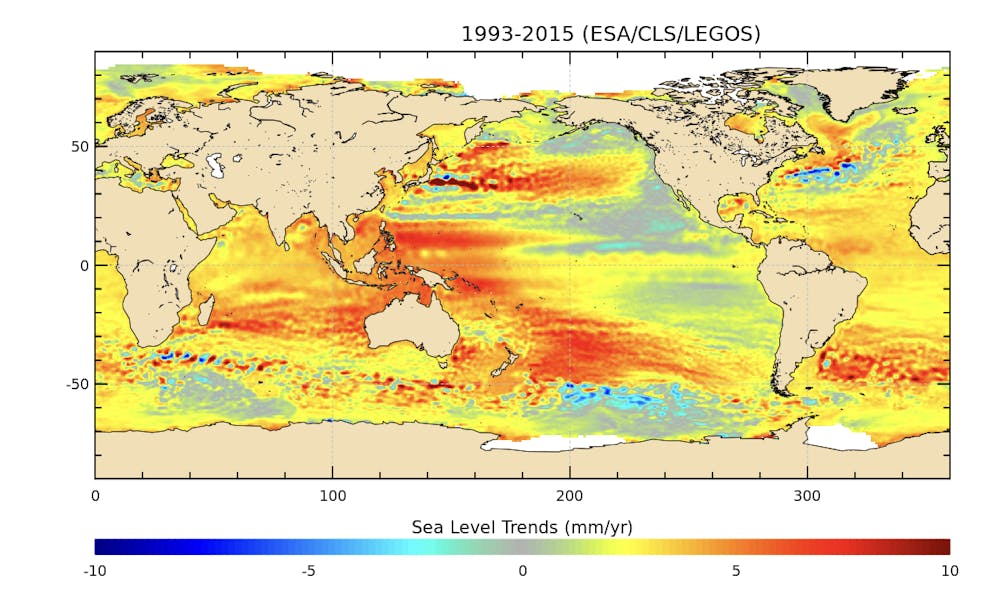
    February 20, 2025
  • MIL-OSI Asia-Pac: LCQ7: Recordable Offences

    Source: Hong Kong Government special administrative region

    LCQ7: Recordable Offences
    LCQ7: Recordable Offences
    *************************

         Following is a question by the Hon Gary Zhang and a written reply by the Secretary for Security, Mr Tang Ping-keung, in the Legislative Council today (February 19):Question:     A central repository of criminal records in Hong Kong is maintained by the Police Operational Nominal Index Computer System, which is managed by the Criminal Records Bureau of the Hong Kong Police Force (HKPF). According to publicly available information, the list of Recordable Offences (the list) has been updated as of December 2003. In this connection, will the Government inform this Council:(1) whether the HKPF has updated the list since 2004; if so, of a breakdown of the offences newly-added and removed by date of update;(2) given that the Government, in its reply to a question from a Member of this Council on April 13, 2016, indicated that the relevant information would be made available to the public by the HKPF upon completion of the review of the list, whether the review has been completed; if it has been completed, when the HKPF will make public the list, and whether it has considered making public the updated list on a regular basis; if it has not been completed, of the reasons for that;(3) of the principles or considerations adopted by the HKPF in revising the list of offences; and(4) Whether the HKPF will review the list regularly; if so, of the timetable; if not, the reasons for that?Reply:President,     Under section 59 of the Police Force Ordinance (Cap. 232), the Hong Kong Police Force (HKPF) may retain all identifying particulars of a person who has been arrested for or convicted of an offence. Such records are kept primarily for the purpose of assisting the Police in discharging their statutory duties of preventing, detecting and investigating crimes.      The reply to the Member’s question is as follows:(1) Since 2004, the HKPF has made 29 amendments to the list of Recordable Offences (the list). Please refer to the Annex for details.(2) The HKPF has completed the review of the list, and has made the latest list public(see www.police.gov.hk/info/doc/List_of_offences_kept_in_police_convictio_records_en.pdf for details).(3) In amending the list, the HKPF follows a number of guiding principles, which include:

    the gravity of the offence;
    the prevalence of the offence;
    the harm that has been or could be inflicted on persons or properties;
    whether heavier penalty could be imposed under the law upon a second or subsequent conviction of such an offence; and 
    whether the offence is purely regulatory in nature.

         Apart from the above principles, where a term of imprisonment, including a suspended sentence, is imposed upon conviction for any offence, that conviction will be recorded irrespective of whether the offence is on the list.(4) The HKPF will continue to review and revise the list from time to time in response to the implementation of new legislations and changes in the existing laws.

     
    Ends/Wednesday, February 19, 2025Issued at HKT 14:05

    NNNN

    MIL OSI Asia Pacific News –

    February 20, 2025
  • MIL-OSI Asia-Pac: LCQ19: Attracting strategic enterprises in advanced manufacturing industries

    Source: Hong Kong Government special administrative region

         Following is a question by the Hon Yim Kong and a written reply by the Deputy Financial Secretary, Mr Michael Wong, in the Legislative Council today (February 19):Question:     The Office for Attracting Strategic Enterprises (OASES) commenced operation in December 2022, which was tasked with attracting industries of strategic importance to Hong Kong (including advanced manufacturing industries) to pursue development in Hong Kong. Some analyses have pointed out that investments in advanced manufacturing industries focus on technology and capital, and the number of jobs created is limited. There are also views that although automation and intelligentisation may reduce the number of jobs in traditional manufacturing industries, they also create jobs in technical maintenance, research and development as well as management. In this connection, will the Government inform this Council:(1) how it will assess the effectiveness of OASES’ work carried out in 2023 and last year;(2) whether it has compiled statistics on the investment amount and the numbers of employees hired by the enterprises related to advanced manufacturing industries; how the Government will assess the effectiveness of the policies implemented in 2023 and last year on attracting strategic enterprises in advanced manufacturing industries covering such aspects as taxation, financing and talents, so as to ensure that the objectives of attracting investments and creating employment opportunities can be achieved; and(3) whether it has assessed if the manpower trained by local universities caters for the needs of the future development of advanced manufacturing industries; whether the Government will, in attracting the strategic enterprises concerned, implement plans to support manpower training in the light of the development needs of the enterprises, such as setting up vocational training funds and encouraging enterprises to collaborate with universities and vocational training schools to offer training courses related to advanced manufacturing industries to nurture the required talents for the enterprises?Reply:President,     The Office for Attracting Strategic Enterprises (OASES) is dedicated to attracting enterprises from industries of strategic importance to Hong Kong. Its work includes identifying target strategic enterprises, understanding their needs and providing customised facilitation support and one-stop services to strategic enterprises that are establishing their presence in Hong Kong. My reply to the questions raised by the Hon Yim Kong is as follows:(1) Since its commencement of operation in December 2022, OASES has reached out proactively to high-potential and representative strategic enterprises from around the globe. Despite the complicated and ever-changing economic environment in recent years, substantive progress has been achieved by OASES over the past two years. So far, 66 strategic enterprises have been brought to Hong Kong, and they are from the four strategic industries, i.e. life and health technology, artificial intelligence and data science, financial technology and advanced manufacturing and new energy technology. Among them, around 80 per cent plan to establish their global or regional headquarters in Hong Kong. It is estimated that in the coming years, they will invest about $42 billion in total and create more than 17 000 jobs.     OASES also continues to follow up on the development and needs of strategic enterprises that have established their presence in Hong Kong. By assisting and accelerating the plans of strategic enterprises to use Hong Kong as their base to tap into the Mainland market or expand overseas, it would thereby speed up the diversification and transformation of Hong Kong’s industries. This would also further strengthen Hong Kong’s role as a “super connector” and “super value-adder”, and attract more overseas enterprises to use Hong Kong as a base to tap into the Mainland market, while supporting Mainland enterprises to “go global”.(2) Based on the information from OASES, amongst the 66 strategic enterprises that have established their presence in Hong Kong, 12 belong to the advanced manufacturing and new energy technology industry. They include companies with a market capitalisation/valuation of over $10 billion, and are engaging in cutting-edge technologies. The enterprises have either established or plan to establish research and development (R&D) centres and/or production bases in Hong Kong, while 75 per cent of them plan to establish international or regional headquarters in Hong Kong. OASES has closely followed up on the development and needs of these strategic enterprises, and provided them with customised facilitation support. For example, a series of matching activities with parties such as innovation and technology (I&T) parks, universities and research institutes, chambers of commerce and professional bodies were arranged to speed up their commencement of operation in Hong Kong. It is estimated that in the coming few years, the aforementioned advanced manufacturing enterprises alone will invest around $5.6 billion in Hong Kong and create more than 1 800 jobs. By establishing or expanding their operations in Hong Kong, these strategic enterprises from the advanced manufacturing sector will also attract upstream, midstream and downstream partners from their industry chains to come to Hong Kong. This would accelerate the development of the advanced manufacturing industry, and assist the upgrading and transformation of the traditional manufacturing industry, thereby building a more vibrant ecosystem for the industry and creating more high-quality job opportunities.     In fact, with a view to promoting the development of new industrialisation in Hong Kong, the Government has been using various measures to encourage the manufacturing industry (including the advanced manufacturing industry) to upgrade and transform through the use of I&T. The implementation of such measures is progressing as scheduled. On tax measures, the Government offers tax concessions to enterprises engaging in R&D activities in Hong Kong. The qualifying R&D expenditures of such enterprises enjoy an enhanced tax deduction, with the first $2 million of the total expenditure eligible for a 300 per cent tax deduction, and the amount beyond $2 million eligible for a 200 per cent deduction. There is no cap on the amount of enhanced tax deduction, and it applies to all eligible enterprises. The Inland Revenue Department is still processing the tax returns and assessments for the year of assessment 2023/24 and does not further classify the relevant statistics into traditional or advanced manufacturing mode in the assessment of profits tax so is unable to provide the relevant statistics.     The Government also provides funding support to further promote new industralisation. For instance, the New Industrialisation Funding Scheme (NIFS), aiming to subsidise manufacturers to set up new smart production lines in Hong Kong, targets to increase the cumulative number of smart production lines funded under the scheme to at least 130 in 2027. As at January 2025, 63 applications have been supported by the NIFS Vetting Committee (Vetting Committee), involving more than 100 production lines in total. The progress is satisfactory. Besides, the $10 billion New Industrialisation Acceleration Scheme (NIAS) was set up by the Government in September 2024 to provide funding support on a matching basis for enterprises in strategic industries including advanced manufacturing and new energy technology. The first project under NIAS was supported by the Vetting Committee in early 2025, with the total project cost estimated at around $600 million and the expected NIAS funding amount at around $200 million. With enterprises actively participating in the two funding schemes, the Government is glad to see that they are making use of I&T to achieve smart production so as to enhance competitiveness.     Meanwhile, the Government is increasing investment and guiding more market capital to invest in I&T industries. For instance, it was announced in the 2024 Policy Address to set up a $10 billion I&T Industry-Oriented Fund to create a fund-of-funds and channel more market capital to invest in specified emerging and future industries of strategic importance, including areas such as advanced manufacturing, so as to systematically build an I&T ecosystem. Furthermore, the Policy Address also announced the optimisation of the Innovation and Technology Venture Fund by redeploying at most $1.5 billion to set up funds jointly with the market, on a matching basis, to invest in start-ups of strategic industries including advanced manufacturing and new energy technology, thereby strengthening the Hong Kong I&T ecosystem.(3) Post-secondary institutions in Hong Kong can flexibly offer programmes that meet market needs and to engage with relevant industry stakeholders for timely adjustment of programme content to enhance the learning experience of students. The Education Bureau has also been supporting different policy bureaux/departments in policy areas related to manpower and training needs.     In order to nurture local talents, the New Industrialisation and Technology Training Programme was launched in August 2018. It subsidises local enterprises on a 2 (Government): 1 (enterprise) matching basis to train their staff in advanced technologies, especially training related to new industrialisation.     OASES has all along been promoting and encouraging strategic enterprises that have established their presence in Hong Kong to consider participating in the talent training programmes launched by the Government to support talent nurturing. Meanwhile, OASES has also been promoting and encouraging these enterprises to engage with universities and research institutes to discuss potential research collaborations and matters related to talent development, so that there would be more avenues to nurture talents to meet the needs of the enterprises.

    MIL OSI Asia Pacific News –

    February 20, 2025
  • MIL-OSI Asia-Pac: High Level Committee, under the chairmanship of Union Home Minister and Minister of Cooperation Shri Amit Shah approves Rs.1554.99 crore of additional Central assistance to five States

    Source: Government of India (2)

    High Level Committee, under the chairmanship of Union Home Minister and Minister of Cooperation Shri Amit Shah approves Rs.1554.99 crore of additional Central assistance to five States

    Andhra Pradesh, Nagaland, Odisha, Telangana and Tripura to get funds for floods/ flash flood, landslides, cyclonic storm that occurred during 2024

    This shows the resolve of the Central Government under the leadership of Prime Minister Shri Narendra Modi to help the people of five States who faced these natural disasters

    During financial year 2024-25, Central Government has released Rs. 18,322.80 crore to 27 States in SDRF and Rs. 4,808.30 crore from NDRF to 18 States

    Posted On: 19 FEB 2025 10:52AM by PIB Delhi

    The High-Level Committee (HLC), under the Chairmanship of the Union Home Minister and Minister of Cooperation Shri Amit Shah, has approved Rs.1554.99 crore of additional Central assistance under the National Disaster Response Fund (NDRF) to five States, affected by flood, flash flood, landslides, cyclonic storm during year 2024. This shows the resolve of the Central Government under the leadership of Prime Minister Shri Narendra Modi to help the people of five States who faced these natural disasters.

    The HLC approved central assistance of Rs.1554.99 crore to five States from NDRF, subject to an adjustment of 50% of the opening balance for the year available in the SDRF. Out of the total amount of Rs.1554.99 crore, Rs 608.08 crore has been approved for Andhra Pradesh, Rs 170.99 crore for Nagaland, Rs 255.24 crore for Odisha, Rs. 231.75 crore for Telangana and Rs. 288.93 crore for Tripura.

    This additional assistance is over and above the funds released by the Centre to the States in the State Disaster Response Fund (SDRF), already placed at the disposal of the States. During the financial year 2024-25, the Central Government has released Rs. 18,322.80 crore to 27 States in SDRF and Rs. 4,808.30 crore from NDRF to 18 States, Rs. 2208.55 crore from the State Disaster Mitigation Fund (SDMF) to 14 States and Rs. 719.72 crore from National Disaster Mitigation Fund (NDMF) to 08 States.

    The Central Government had deputed Inter-Ministerial Central Teams (IMCTs) to these States, immediately after the calamities, without waiting for the receipt of a formal Memorandum.

    *****

    RK / VV / RR / PS

    (Release ID: 2104569) Visitor Counter : 155

    Read this release in: Hindi

    MIL OSI Asia Pacific News –

    February 20, 2025
  • MIL-OSI Asia-Pac: LCQ15: Hong Kong Common Law Practical Training Course

    Source: Hong Kong Government special administrative region

         Following is a question by Professor the Hon Priscilla Leung and a written reply by the Secretary for Justice, Mr Paul Lam, SC, in the Legislative Council today (February 19):
     
    Question:
     
         Regarding the Hong Kong Common Law Practical Training Course (Training Course) co-organised by the Hong Kong International Legal Talents Training Academy and the Supreme People’s Court, will the Government inform this Council:
     
    (1) how the Government assesses the actual effectiveness of the Training Course in promoting exchanges on the legal systems between Hong Kong and the Mainland, including whether there are any specific assessment indicators or supporting data;
     
    (2) of the specific feedback from the Mainland judges participating in the Training Course on the learning of Hong Kong’s common law system; whether the Government will collect and make public such feedback on a regular basis, so as to enhance the transparency of the Training Course; and
     
    (3) whether the Government will consider expanding the scope of the target participants of future legal talent training programmes to include judges or legal professionals from other regions; if so, whether it has assessed how such an approach will enhance the influence of Hong Kong’s legal system in the international community?

    Reply:
     
    President, 
     
         Concerning the question raised by Professor the Hon Priscilla Leung, our reply is as follows:
     
    (1) The Hong Kong Common Law Practical Training Course co-organised by the Hong Kong International Legal Talents Training Academy and the Supreme People’s Court was held in Hong Kong from January 6 to 17, 2025.
     
         25 judges from the Supreme People’s Court, the High People’s Court of Guangdong Province and courts of the nine Mainland cities in the Guangdong-Hong Kong-Macao Greater Bay Area participated in the two-week course, which was the inaugural programme of the Academy after its launch. Through lectures, dialogues and visits etc., the course provided Mainland judges with a comprehensive overview of the operation and practice of Hong Kong’s common law system, including topics such as contract law, company law, matrimonial and family law, civil and criminal procedures, arbitration and how courts in Hong Kong and the Mainland deal with foreign-related cases. Speakers (including judges and legal officers, and senior legal practitioners in Hong Kong and members of the Hong Kong International Legal Talents Training Expert Committee) had in-depth exchanges with Mainland judges on various topics.
     
         A number of dialogue sessions were organised, inviting speakers to communicate directly with participants on the same topic. For example, at the dialogue session entitled “Different Roles in Safeguarding the Rule of Law”, the Academy invited a Legislative Council member, representatives of the Department of Justice, the Hong Kong Bar Association and the Law Society of Hong Kong to engage in a dialogue on their role in safeguarding the rule of law, in which Mainland judges also had exchanges. At the dialogue session entitled “Handling of Foreign-related Law Proceedings: Comparison between Mainland and Hong Kong”, the Academy invited four senior legal practitioners to exchange views with Mainland judges on the similarities and differences in handling foreign-related cases. Through dialogue, mutual understanding and exchange between the two legal systems was promoted.
     
         Besides, at the end of the course, the Academy collected feedbacks from participants to assess the effectiveness of the course.
     
    (2) From the feedback forms, more than 95 per cent of Mainland judges indicated that the topics covered in the course were relevant to their work, contents were vivid and in-depth, speakers’ presentation were clear and detailed, and suggested that specialised training on individual topics could be organised in the future. During the graduation sharing, Mainland judges expressed the view that the course was informative, professional, persistent, progressive and productive, enabling them to gain a better understanding of the operation of the common law system in Hong Kong and its differences from those of the Mainland, as well as to strengthen their confidence in dealing with foreign-related cases, in particular those Hong Kong-related cases.
     
         The Academy will continue to collect comments on each training project and report to the Panel on Administration of Justice and Legal Services of the Legislative Council on a regular basis. At the same time, the Academy will improve and enhance its follow-up work based on the feedbacks.
     
    (3) In future, the Academy will collaborate with different institutions to conduct capacity-building projects for the Mainland, local and international legal professionals, for example, the Academy and the Ministry of Justice would jointly organise the National Training Course for Talents Handling Foreign-Related Arbitration (Hong Kong) in late-February this year, which will provide training to 80 corporate legal advisers, senior arbitrators, lawyers and arbitration practitioners handling foreign-related arbitration. In addition, the Academy will co-organise the Climate Change and International Trade Law Conference with the United Nations Commission on International Trade Law (UNCITRAL) on March 14 this year. The Academy will also provide training to Hong Kong’s local legal professionals in relation to the Mainland’s legal system and conduct capacity-building projects in co-operation with more international organisations. Through a series of training programmes, the Academy could, on the one hand, provide training for local, Mainland and regional legal professionals, and at the same time, enable Hong Kong to develop into a centre for legal capacity-building and to enhance the influence of Hong Kong’s common law system in the international community.

    MIL OSI Asia Pacific News –

    February 20, 2025
  • MIL-OSI Asia-Pac: Result of tenders of RMB Sovereign Bonds held on February 19, 2025

    Source: Hong Kong Government special administrative region

    Result of tenders of RMB Sovereign Bonds held on February 19, 2025
    Result of tenders of RMB Sovereign Bonds held on February 19, 2025
    ******************************************************************

    The following is issued on behalf of the Hong Kong Monetary Authority:     Result of the tenders of RMB Sovereign Bonds held on February 19, 2025: 

    Tender Result

    *********************************************************************

    Tender Date
    :
    February 19, 2025

    Bonds available for Tender
    :
    2-year RMB Bonds

    Issuer
    :
    The Ministry of Finance of the People’s Republic of China

    Issue Number
    :
    BCMKFB25004

    Issue and Settlement Date
    :
    February 21, 2025

    Maturity Date
    :
    February 21, 2027 (or the closest coupon payment date)

    Application Amount
    :
    RMB 9,899 million

    Issue Amount
    :
    RMB 3,500 million

    Average accepted Coupon Rate
    :
    1.69 per cent

    Highest accepted Coupon Rate(Bonds’ Coupon)
    :
    1.75 per cent

    Lowest accepted Coupon Rate
    :
    1.55 per cent

    Allocation Ratio (At Highest accepted Coupon Rate)
    :
    Approximately 7.41 per cent

    Tender Result

    *********************************************************************

    Tender Date
    :
    February 19, 2025

    Bonds available for Tender
    :
    3-year RMB Bonds

    Issuer
    :
    The Ministry of Finance of the People’s Republic of China

    Issue Number
    :
    BCMKFB25005

    Issue and Settlement Date
    :
    February 21, 2025

    Maturity Date
    :
    February 21, 2028 (or the closest coupon payment date)

    Application Amount
    :
    RMB 8,249 million

    Issue Amount
    :
    RMB 3,000 million

    Average accepted Coupon Rate
    :
    1.71 per cent

    Highest accepted Coupon Rate(Bonds’ Coupon)
    :
    1.80 per cent

    Lowest accepted Coupon Rate
    :
    1.60 per cent

    Allocation Ratio (At Highest accepted Coupon Rate)
    :
    Approximately 2.28 per cent

    Tender Result

    *********************************************************************

    Tender Date
    :
    February 19, 2025

    Bonds available for Tender
    :
    5-year RMB Bonds

    Issuer
    :
    The Ministry of Finance of the People’s Republic of China

    Issue Number
    :
    BCMKFB25006

    Issue and Settlement Date
    :
    February 21, 2025

    Maturity Date
    :
    February 21, 2030 (or the closest coupon payment date)

    Application Amount
    :
    RMB 8,055 million

    Issue Amount
    :
    RMB 3,000 million

    Average accepted Coupon Rate
    :
    1.81 per cent

    Highest accepted Coupon Rate(Bonds’ Coupon)
    :
    1.88 per cent

    Lowest accepted Coupon Rate
    :
    1.70 per cent

    Allocation Ratio (At Highest accepted Coupon Rate)
    :
    Approximately 22.94 per cent

    Tender Result

    *********************************************************************

    Tender Date
    :
    February 19, 2025

    Bonds available for Tender
    :
    10-year RMB Bonds

    Issuer
    :
    The Ministry of Finance of the People’s Republic of China

    Issue Number
    :
    BCMKFB25007

    Issue and Settlement Date
    :
    February 21, 2025

    Maturity Date
    :
    February 21, 2035 (or the closest coupon payment date)

    Application Amount
    :
    RMB 6,185 million

    Issue Amount
    :
    RMB 2,000 million

    Average accepted Coupon Rate
    :
    2.00 per cent

    Highest accepted Coupon Rate(Bonds’ Coupon)
    :
    2.08 per cent

    Lowest accepted Coupon Rate
    :
    1.85 per cent

    Allocation Ratio (At Highest accepted Coupon Rate)
    :
    Approximately 2.50 per cent

    Tender Result

    *********************************************************************

    Tender Date
    :
    February 19, 2025

    Bonds available for Tender
    :
    30-year RMB Bonds

    Issuer
    :
    The Ministry of Finance of the People’s Republic of China

    Issue Number
    :
    BCMKFB25008

    Issue and Settlement Date
    :
    February 21, 2025

    Maturity Date
    :
    February 21, 2055 (or the closest coupon payment date)

    Application Amount
    :
    RMB 3,336 million

    Issue Amount
    :
    RMB 1,000 million

    Average accepted Coupon Rate
    :
    2.27 per cent

    Highest accepted Coupon Rate(Bonds’ Coupon)
    :
    2.37 per cent

    Lowest accepted Coupon Rate
    :
    2.00 per cent

    Allocation Ratio (At Highest accepted Coupon Rate)
    :
    Approximately 52.14 per cent

     
    Ends/Wednesday, February 19, 2025Issued at HKT 12:55

    NNNN

    MIL OSI Asia Pacific News –

    February 20, 2025
  • MIL-OSI Asia-Pac: Speech by FS at Consensus Hong Kong 2025 (English only)

    Source: Hong Kong Government special administrative region

    Speech by FS at Consensus Hong Kong 2025 (English only)
    Speech by FS at Consensus Hong Kong 2025 (English only)
    *******************************************************

         Following is the speech by the Financial Secretary, Mr Paul Chan, at Consensus Hong Kong 2025 today (February 19): Michael (Chairman of Consensus Hong Kong, Mr Michael Lau), Sara (Chief Executive Officer of CoinDesk, Ms Sara Stratoberdha), distinguished guests, industry leaders and innovators, friends from around the world,      It is my pleasure to be here at Consensus Hong Kong 2025. Let me begin by expressing my heartfelt gratitude to CoinDesk for choosing Hong Kong as the first Asian city for hosting this iconic conference. Your decision underscores Hong Kong’s growing prominence as a global hub for Web3 and crypto innovation. This event also reflects our commitment to building a thriving digital asset ecosystem.  Vast potential of Web3 and AI      Consensus 2025 is a congregation of Web3 talent from around the world, and its agenda reflects the most pressing topics and trends in the Web3 space today. From the convergence of AI and blockchain to the tokenisation of real-world assets (RWA), crypto and consumers, and DeFi 2.0 (decentralised finance), the discussions here are set to shape the future landscape of digital finance and the digital economy.      One of the most exciting developments is, of course, the intersection of AI and blockchain, where “dencetralised AI” can unlock many new applications and opportunities. For example, AI can assist blockchain platforms in performing more accurate credit assessments, improving smart contract audits, providing tailored investment advice, and more.      Globally, the application of Web3 in finance is gaining traction. Blockchain innovations not just reduce transaction costs but also enhance market transparency, and the efficiency and accessibility of financial services. Indeed, we are seeing more institutional adoption where traditional banks, asset managers and brokers increasingly integrate digital assets into their offerings. The benefits are clear. The World Economic Forum, for example, estimates that financial institutions could free up some US$100 billion per year by leveraging distributed ledger technology for collateral management.      Hong Kong, with its advanced financial infrastructure and robust regulatory environment, is at the forefront of this transformation. Hong Kong has already made history by issuing the world’s first tokenised government green bonds in 2023, followed by a groundbreaking multi-currency issuance in 2024.       Beyond finance, Web3 plus AI innovations are inspiring a host of applications in the real economy. From streamlining supply chain management to enhancing game players’ experience; and from improving healthcare management to making agricultural and industrial production more intelligent, they are empowering and transforming business operations and public services.        Rapid tech innovation does not come without challenges. Often, the progress of innovation outpaces regulatory response, creating gaps that can lead to substantial risks. The fallout from several crypto exchanges’ failures in recent years serves as vivid reminders that we must pay attention to market integrity, investor protection, money laundering and cybersecurity risks, as financial products and services continue to innovate and digitalise.      On a positive note, the history of financial innovations shows that we learnt and adapted fast, and put in better guardrails and became more resilient. The key to success lies in maintaining an open, fair, balanced and forward-looking regulatory approach that is conducive to the sustainable and responsible development of financial innovation, including Web3. Hong Kong’s unparalleled advantages      This is the path taken by Hong Kong. While some major jurisdictions have recently begun to embrace cryptocurrencies, which has undoubtedly fuelled a boom of the crypto market, Hong Kong stands out as a market with consistent, predictable, forward-looking policies, and a balanced regulatory framework. For innovators and companies committed to building the future of Web3, or financial institutions looking to bridge traditional and digital finance, Hong Kong is where you want to be.       Our regime is premised on the “same activity, same risk, same regulation” principle, which ensures a level playing field for all market participants. In this regard, Hong Kong has already put in place a licensing regime for digital asset trading platforms. Our Securities and Futures Commission has already issued nine such licences, with more in the pipeline. We are also advancing on the regulation of stable coins, and have introduced the relevant piece of legislation.      To facilitate further innovation, regulatory sandboxes have been set up by our regulators to allow innovators to test and refine their ideas, and to get early regulatory feedback. Besides, initiatives like the Hong Kong Monetary Authority’s Project Ensemble are accelerating the development of tokenisation ecosystems, covering RWAs like fixed income, investment funds, green finance and trade finance.      Indeed, this pro-innovation and collaborative regulatory approach is a unique value proposition of Hong Kong to Web3 innovators and participants.      AI is constantly evolving and increasingly applied to finance. Its convergence with blockchain will create more use cases, with both new opportunities to be captured, and challenges to be addressed. Hong Kong has set out a clear policy stance on the use of AI in financial services. The Government and financial regulators are working closely with the industry to monitor technology and market development and establish a transparent supervisory framework.      Hong Kong’s commitment to Web3 extends beyond regulation. We are investing heavily in the related infrastructure and talent development. Our Cyberport and Science Park have become vibrant hubs for Web3 innovation and fintech, while our universities and partnerships with the industry are nurturing generations of blockchain experts. Through talent admission schemes, we are also attracting top-notch professionals from around the world, ensuring that Hong Kong remains at the cutting edge of technological advancement. Concluding remarks      Ladies and gentlemen, while the tides of change may ebb and flow, the quest for innovation has never stopped. The digital asset market today may somewhat resemble the early days of all great transformative paradigms: as new frontiers emerge, there will always be champions of progress and cautious observers. What remains true is that the market ultimately rewards those who dare to innovate, and adapt and persevere.      The tides of change are upon us, and Hong Kong is ready to ride the wave. As the Web3 ecosystem continues to evolve, Hong Kong will remain a stable, open and vibrant market for digital assets. I am confident that global companies and institutions will join force with us to lead its development.      Once again, my heartfelt thanks to CoinDesk for hosting this event in Hong Kong. I wish you all a productive and inspiring event over the next two days. And do remember to take some time to enjoy Hong Kong, Asia’s world city. Thank you.

     
    Ends/Wednesday, February 19, 2025Issued at HKT 12:30

    NNNN

    MIL OSI Asia Pacific News –

    February 20, 2025
  • MIL-OSI Asia-Pac: LCQ17: Cracking down on online defamation and cyber-bullying

    Source: Hong Kong Government special administrative region

    LCQ17: Cracking down on online defamation and cyber-bullying
    LCQ17: Cracking down on online defamation and cyber-bullying
    ************************************************************

         Following is a question by Prof the Hon Chow Man-kong and a written reply by the Secretary for Security, Mr Tang Ping-keung, in the Legislative Council today (February 19): Question:      In September 2023, the Mainland issued the Guiding Opinions on Punishing Illegal and Criminal Acts of Cyberviolence in accordance with the Law (the Opinions), with a view to punishing illegal and criminal activities of cyberviolence in accordance with the law, effectively safeguarding citizens’ rights and interests, and maintaining order in the cyberspace. There are views that the Government should draw on the experience and improve the legislation concerned. In this connection, will the Government inform this Council: (1) of the respective numbers of persons who were prosecuted and convicted in each of the past three years for allegedly disseminating inappropriate information or making inappropriate speech on the Internet (including contravening data protection principles under the Personal Data (Privacy) Ordinance (Cap. 486), and committing offences such as criminal intimidation, blackmail or defamation, etc.), and set out the details of each case by the nature of crimes; (2) given that it has been reported that the Government has completed a consultancy study on addressing the issue of false information, whether the authorities have examined if the existing legislation is adequate in combating false information, defamation and bullying behaviour in the cyberspace; if they have, of the details; and (3) given that the Opinions stresses that “the focus must be on cracking down on malicious initiators, organizers, malicious promoters, and those who refuse to take corrective action after repeated education”, and crimes committed under specific circumstances (such as cyberviolence committed against a minor or disabled person, and cyberviolence committed by organizing an “Internet water army” and “thugs”) “carry a harsh penalty in accordance with the law”, whether the authorities will make reference to the aforesaid principles in reviewing and updating the existing legislation, particularly focusing on Internet users who publicly or privately make speech not based on facts and intend to launch malicious attacks, and add a provision to enable victims to recover losses through legal channels from users or service providers who publish defamatory statements, so as to combat defamation and bullying behaviour online in a more targeted manner; if so, of the details; if not, the reasons for that? Reply:President,         The Internet is not an unreal world that is beyond the law. As far as the existing legislation in Hong Kong is concerned, most of the laws enacted to prevent crimes in the real world are in principle applicable to the online world, including social media and mobile communication softwares. Any illegal acts involving criminal offences would be regulated by the relevant legislation, regardless of whether such acts occur online.         After consulting the Home and Youth Affairs Bureau (HYAB), the Constitutional and Mainland Affairs Bureau and the Department of Justice (DoJ), consolidated reply in response to the Member’s question is provided as follows: (1) Disseminating inappropriate information or making inappropriate remarks on the Internet may constitute an offence under section 64 of the Personal Data (Privacy) Ordinance (Cap. 486) (PDPO), which provides for disclosure of personal data without consent, commonly known as the “doxxing” offence. Since the offence came into effect in October 2021, as at December 31, 2024, the Office of the Privacy Commissioner for Personal Data arrested a total of 63 persons, with 32 of them being convicted. Meanwhile, the Hong Kong Police Force (HKPF) conducted investigations targeting the offence of doxxing causing specified harm to the data subject or any family member of the data subject under section 64(3C) of the PDPO. As at the third quarter of 2024, 34 persons were arrested, with 18 of them being convicted.      According to the records of the DoJ, no prosecution for “publishing libel known to be false” provided under section 5 of the Defamation Ordinance (Cap. 21) was initiated in the past three years. As of the third quarter of 2024, a total of 1 006 persons have been prosecuted for offences such as criminal intimidation under section 24 of the Crimes Ordinance (Cap. 200) or blackmail under section 23 of the Theft Ordinance (Cap. 210), of which 450 have been convicted.           The above figures include cases committed on the Internet. The Government does not maintain breakdown of online and offline figures. (2) HYAB has earlier hired consultant to study the experiences and measures of other countries and regions in dealing with false information. According to information provided by HYAB, the Government has completed a consultancy study on how to deal with false information, and will continue to closely monitor the issue of false information. Generally speaking, the dissemination of information by the media in Hong Kong has improved compared to the past, but this does not mean that we do not need to be wary of false information and other online defamation and bullying. (3) As mentioned in the first part of the reply, the existing laws in Hong Kong for preventing crimes are, in principle, applicable to the online world and the above-mentioned relevant offences are applicable to online conduct. Making inappropriate comments online may also constitute other offences, such as contravention of the data protection principles as set out in Schedule 1 of the PDPO.      As regards online remarks or information which are not based on facts, there are mechanisms under the existing legal framework demanding the removal of inappropriate messages to combat online defamation and cyber-bullying. For instance, under section 159AAL of the Crimes Ordinance, in cases where intimate images (including falsified ones that have been altered) are published without consent, the court, having regard to the circumstances, may order the defendant or any other persons to remove, delete or destroy the intimate images concerned. Section 66M of the PDPO also empowers the Privacy Commissioner for Personal Data to demand actions to cease disclosure of “doxxing” contents. Upon noticing the circulation of inappropriate messages on the Internet, the HKPF will actively investigate and take enforcement action in a timely manner. They will also require service providers to remove the messages as appropriate. The parties concerned may also apply to the High Court for an injunction as and where necessary.           The Government reinstates that members of the public have to act legally and responsibly when using the Internet, and should not commit any criminal offence. We will devote full efforts to crack down unlawful acts on the Internet, and take enforcement actions in accordance with the existing legislation, as well as to review the applicability and effectiveness of the laws from time to time.

     
    Ends/Wednesday, February 19, 2025Issued at HKT 12:30

    NNNN

    MIL OSI Asia Pacific News –

    February 20, 2025
←Previous Page
1 … 827 828 829 830 831 … 1,154
Next Page→
NewzIntel.com

NewzIntel.com

MIL Open Source Intelligence

  • Blog
  • About
  • FAQs
  • Authors
  • Events
  • Shop
  • Patterns
  • Themes

Twenty Twenty-Five

Designed with WordPress