Category: Asia

  • MIL-OSI: Ragnarok M: Classic Has Successfully Launched in Southeast Asia

    Source: GlobeNewswire (MIL-OSI)

    Seoul, South Korea, Feb. 19, 2025 (GLOBE NEWSWIRE) — GRAVITY Co., Ltd. (NasdaqGM: GRVY) (“Gravity” or “Company”), a developer and publisher of online and mobile games, announced that GRAVITY Interactive, Inc., Gravity’s wholly-owned subsidiary, has officially launched Ragnarok M: Classic, an MMORPG Mobile game, in 9 regions of Southeast Asia on February 14, 2025 and the early success has been made after the official launch in the launching markets.

    Ragnarok M: Classic was officially launched in 9 regions in Southeast Asia on February 14, 2025, available for download on both Mobile and PC. Additionally, since the pre-registration in Southeast Asia began on November 14, 2024, it has reaffirmed its strong popularity and interest among local users by surpassing 1 million registrations as of January, 2025. 

    Ragnarok M: Classic has ranked first in free download of Apple App Store in 3 regions of Thailand, Philippines and Malaysia, second in Singapore and third in Indonesia after pre-registration download on November 14, 2024. After its official launch, the game ranked second in free download of Google Play in Thailand, fifth in Singapore and ninth in Philippines. In addition, it has ranked second in top grossing of Apple App Store in Thailand, fourth in Philippines and tenth in Indonesia, and tenth in top grossing of Google Play in Philippines and eleventh in Thailand.     

    Gravity stated, “To celebrate the official launching of Ragnarok M: Classic, we provide a variety of special events and we hope users to participate and enjoy the rewards”.

    [Gravity Official Website]
    http://www.gravity.co.kr

    [Ragnarok M: Classic Google Play Download Page]
    https://play.google.com/store/apps/details?id=com.gravityus.romzeny.aos

    [Ragnarok M: Classic Apple App Store Download Page]
    https://apps.apple.com/us/app/ragnarok-m-classic/id6602882281

    [Ragnarok M: Classic Official Website]
    https://classic.ragnaroketernallove.com/

    [Ragnarok M: Classic Official Facebook Page]
    https://www.facebook.com/RagnarokMClassic/

    [Ragnarok M: Classic Official Discord Community]

    https://discord.gg/romclassic

    About GRAVITY Co., Ltd. —————————————————

    Gravity is a developer and publisher of online and mobile games. Gravity’s principal product, Ragnarok Online, is a popular online game in many markets, including Japan and Taiwan, and is currently commercially offered in 91 regions. For more information about Gravity, please visit http://www.gravity.co.kr.

    Contact:

    Mr. Heung Gon Kim
    Chief Financial Officer
    Gravity Co., Ltd.
    Email: kheung@gravity.co.kr

    Ms. Jin Lee
    Ms. Yujin Oh
    IR Unit
    Gravity Co., Ltd.
    Email: ir@gravity.co.kr
    Telephone: +82-2-2132-7801

    The MIL Network

  • MIL-OSI: Mimecast Welcomes Adenike Cosgrove as Chief Marketing Officer

    Source: GlobeNewswire (MIL-OSI)

    LEXINGTON, Mass., Feb. 19, 2025 (GLOBE NEWSWIRE) — Mimecast, a global cybersecurity leader transforming the way businesses manage and mitigate human risk, announced today the appointment of Adenike (Nikki) Cosgrove as Chief Marketing Officer.

    Drawing on more than twenty years of cybersecurity experience, Nikki will lead Mimecast’s global marketing organization driving strategic growth and positioning in new and existing markets to further establish Mimecast as the clear industry leader in Human Risk Management.

    Nikki brings a wealth of expertise to Mimecast. She joins the organization from Proofpoint (following their 2016 acquisition of Return Path Email Fraud Protection), where she spent more than nine years, most recently as regional CMO for EMEA, leading product and strategic marketing operations.

    An accomplished cybersecurity executive, Nikki’s expertise spans the spectrum of product and business strategy including growth marketing, strategic communications, analyst relations, and competitive intelligence. Prior to Proofpoint, Nikki worked as lead EMEA advisor to security and risk professionals for Forrester Research and Canalys, where she developed a deep understanding of CISO challenges and helped clients with their information and cybersecurity strategies.

    “Nikki’s expertise in our sector, coupled with her strategic leadership, business acumen and marketing pedigree, perfectly positions her to lead Mimecast’s marketing organization as we cement our reputation as industry leader in Human Risk Management,” said CEO, Marc van Zadelhoff. “The last year at Mimecast has been marked by innovation and strategic growth, including three industry-shaping acquisitions and global expansion. Nikki is joining us at an incredibly exciting time for the business and will play a key role in how we take this momentum forward across our global markets.”

    Nikki holds a Bachelor of Engineering degree from the University of Hull and a Master of Research, Telecommunications, from University College London. Nikki has lived in Japan, Hong Kong, Zimbabwe, and Nigeria, and currently resides in London.

    “As the threat landscape evolves and cybercriminals increasingly target individuals, securing human risk has never been more critical,” said Nikki Cosgrove. “I’m excited to step into the role of Chief Marketing Officer and apply my experience to accelerate Mimecast’s momentum, strengthen our market leadership, and drive strategies that deliver even greater value to our customers worldwide.”

    To learn more about Mimecast visit here.

    About Mimecast

    Mimecast is a leading cybersecurity company transforming the way businesses manage and mitigate human risk. Its AI-powered, API-enabled connected Human Risk Management platform is purpose-built to protect organizations from the spectrum of cyber threats. Integrating cutting-edge technology with human-centric pathways, our platform enhances visibility and provides strategic insight that enables decisive action and empowers businesses to protect their collaborative environments, safeguard their critical data and actively engage employees in reducing risk and enhancing productivity. More than 42,000 businesses worldwide trust Mimecast to help them keep ahead of the ever-evolving threat landscape. From insider risk to external threats, with Mimecast customers get more. More visibility. More insight. More agility. More security.

    Mimecast is either a registered trademark or trademark of Mimecast Services Limited in the United States and/or other countries. Proofpoint is a registered trademark of Proofpoint, Inc. in the United States and other countries.   All other third-party trademarks and logos contained in this press release are the property of their respective owners.

    A photo accompanying this announcement is available at https://www.globenewswire.com/NewsRoom/AttachmentNg/5230c472-fe83-4608-a7a3-a314fe8e701e

    The MIL Network

  • MIL-OSI Economics: Secretary-General of ASEAN meets with Commander of the US Pacific Fleet

    Source: ASEAN

    Secretary-General of ASEAN, Dr. Kao Kim Hourn, today met with Admiral Stephen Koehler, Commander of the US Pacific Fleet, at the ASEAN Headquarters/ASEAN Secretariat. The two sides exchanged views on the cooperation between ASEAN and the US, notably in the area of maritime security. Dr. Kao welcomed the US commitment to advancing defence cooperation with ASEAN, among other things.

    The post Secretary-General of ASEAN meets with Commander of the US Pacific Fleet appeared first on ASEAN Main Portal.

    MIL OSI Economics

  • MIL-OSI Economics: Ambassador of New Zealand to ASEAN presents Letter of Credence to the Secretary-General of ASEAN

    Source: ASEAN

    JAKARTA, 19 February 2025 – Ambassador Joanna Jane Anderson presented her Letter of Credence as Ambassador of New Zealand to ASEAN to the Secretary-General of ASEAN, Dr. Kao Kim Hourn, at the ASEAN Headquarters/ASEAN Secretariat today.

    Secretary-General Dr. Kao congratulated Ambassador Anderson on her assumption of office and reaffirmed ASEAN’s commitment to further strengthening relations with New Zealand. He highlighted the significance of Ambassador Anderson’s tenure as ASEAN and New Zealand are preparing for the Commemorative Summit to mark the 50th Year of ASEAN-New Zealand dialogue relations in November 2025, in Kuala Lumpur, Malaysia. The Secretary-General also acknowledged New Zealand’s steadfast support for ASEAN Community-building efforts, and its active participation in ASEAN-led mechanisms.

    Ambassador Anderson thanked Secretary-General Dr. Kao for the warm welcome. She was honoured to assume the role as Ambassador of New Zealand to ASEAN during a significant period for the ASEAN–New Zealand partnership, which celebrates its 50th anniversary this year. She looked forward to working with ASEAN Member States and the ASEAN Secretariat in further strengthening New Zealand’s ties and cooperation with ASEAN during her term of office.

    Ambassador Anderson succeeds Ambassador Stuart Donald Cave Calman, who completed his tenure on 24 January 2025.

    The post Ambassador of New Zealand to ASEAN presents Letter of Credence to the Secretary-General of ASEAN appeared first on ASEAN Main Portal.

    MIL OSI Economics

  • MIL-OSI Economics: Secretary-General of ASEAN meets with the Chairman of the Singapore Institute of International Affairs

    Source: ASEAN

    Secretary-General of ASEAN, Dr. Kao Kim Hourn, today met with Chairman of the Singapore Institute of International Affairs (SIIA) Associate Professor Simon Tay, at the ASEAN Headquarters/ASEAN Secretariat. They discussed the preparations for the 2nd ASEAN Think Tanks Summit, and also exchanged views on regional and global issues.

    The post Secretary-General of ASEAN meets with the Chairman of the Singapore Institute of International Affairs appeared first on ASEAN Main Portal.

    MIL OSI Economics

  • MIL-OSI United Kingdom: expert reaction to study looking at genetic and lifestyle factors, and premature death, ageing and age-related diseases

    Source: United Kingdom – Executive Government & Departments

    A paper published in Nature Medicine looks at the contribution of genetic and lifestyle factors to risk of premature death, ageing, and age-related diseases. 

    Prof Felicity Gavins, Professor of Pharmacology at Brunel University of London, and Royal Society Wolfson Fellow, said:

    “This is an exciting study.  The fact that most of the risk factors identified are modifiable highlights an enormous opportunity for prevention.  By addressing social inequalities, promoting healthy behaviours and reducing harmful exposures, we can really make a meaningful difference in reducing age-related diseases and premature mortality.

    “However, some caution is needed.  This is an observational study, so further research is needed to confirm causal relationships, especially before any long-term policy changes are made.  Furthermore, targeted interventions will be essential to translating these findings into real-world impact.”

    Dr Stephen Burgess, Group Leader at the MRC Biostatistics Unit, University of Cambridge, said:

    “This is a large and detailed investigation into the predictors of major causes of mortality in a UK-based population.  It provides further demonstration supporting previous research that, in the majority of cases, our genes do not determine our future.  There are exceptions, including rare conditions that are caused by a single genetic variation.  But for the majority of conditions that Western people die from, disease risk is more strongly attributable to modifiable risk factors and our wider environment, as shaped by our upbringing and choices.  Genetics can load the dice, but it is up to us how we play our hand.

    “A limitation of the work is that it does not highlight particular risk factors, nor can it make specific causal claims about what would happen if we changed our risk factors and environment.”

    Prof Frances Flinter, Emeritus Professor of Clinical Genetics, Guy’s and St Thomas’ NHS Foundation Trust; and Member of the Nuffield Council on Bioethics, said:

    “This is a very impressive, thorough and detailed analysis of a vast amount of genetic and non-genetic data from the UK Biobank.  The authors compare the relative contributions to ageing and premature mortality of genetic susceptibility markers (polygenic risk scores) and environmental factors, which they refer to as the ‘exposome’ (including alcohol, diet, smoking, housing, type of heating, weight in childhood etc).

    “Overall, polygenic risk scores (PRS) for twenty-two major diseases explained less than 2% of additional variation in mortality, whereas the exposome explained 17%.  In particular, the exposome explained a greater proportion of the variation than polygenic risk scores for the incidence of disease of the lung, heart and liver, whereas polygenic risk scores explained a greater proportion of the variation than the exposome for dementia and breast, prostate and colorectal cancers.

    “The risk of premature mortality was lower in Black, Asian and ethnicities other than white, even after adjustment for socio-demographic deprivation factors, which is currently unexplained.

    “With so much focus on genetic determinism these days, it is good to be reminded of the significance of environmental contributions to health, particularly as the risk factors are known and many can be modified.”

    Prof Ilaria Bellantuono, Professor in Musculoskeletal Ageing; and Co-Director of The Healthy Lifespan Institute, University of Sheffield, said:

    “This important study comprehensively confirms what smaller studies have suggested: multiple socioeconomic and environmental factors significantly influence the risk of developing age-related diseases.  More critically, it highlights that health is shaped by multiple interacting factors.  This has important policy implications, meaning that policies targeting only one or two of these factors will have limited impact on extending healthspan.  The findings support the need for an integrated, multi-faceted approach to prevention and to identify the most influential domains for intervention (smoking, socioeconomic status and deprivation, physical activity, sleep and mental and physical wellness including tiredness, as well as early life exposures including height and body size at 10 years and maternal smoking around birth).

    “The study is rigorously conducted and transparently acknowledges its limitations, which are inevitable in research of this nature.”

    Dr Julian Mutz, King’s Prize Research Fellow at the Social, Genetic & Developmental Psychiatry Centre, King’s College London, said:

    “The study by Argentieri, van Duijn, and colleagues sought to tease apart the relative contributions of environmental exposures (termed the “exposome”) and genetic risk on biological ageing and premature mortality.

    “The authors analysed data from the UK Biobank, a unique resource with a wealth of information on sociodemographic characteristics, health records, genetics and biomarker data from half a million UK residents.

    “They employed a complex analytical design to identify environmental exposures that were independently associated with biological ageing (defined using a proteomic ageing clock that they developed in a previous high-profile study) and mortality, while minimising the risk of reverse causation, confounding and correlation between exposures.  The approach is elegant, though certain assumptions warrant caution.  For example, the finding that many exposures independently associated with mortality (e.g., diet or mental health) were not associated with the proteomic ageing clock (or had an association in the opposite direction) does not necessarily mean that these exposures do not impact ageing biology.

    “Key findings from the study were that a higher income, Asian or Black ethnic background, higher levels of physical activity and living with a partner were associated with lower mortality risk and a protein-predicted age younger than chronological age.  Smoking, living in council housing (reflecting socio-economic status) and the frequency of feeling tired were associated with higher mortality risk and a protein-predicted age older than chronological age.

    “Each of the 25 independent exposures that the authors identified was associated with incident diseases and ageing biomarkers.

    “To investigate the relative contribution of the environmental exposures compared to genetics, the authors calculated polygenic scores for 22 diseases.  Polygenic scores aggregate the small effects of many common genetic variants to estimate an individual’s predisposition to specific traits or diseases.  However, there are several caveats to this approach: first, polygenic scores only capture part of the genetic risk; and second, many environmental exposures also have a genetic component.  The broad headline of the press release that “environmental factors affect health and ageing more than our genes” should be viewed in light of these limitations.

    “One of the most interesting findings from this study is the comparison of the contributions of chronological age and sex (both non-modifiable risk factors), environmental exposures and polygenic scores across several disease endpoints.  For example, for certain diseases (e.g., dementia), genetics appears to be more important.

    “A key implication of the study is that there is a broad range of modifiable risk factors that could be targeted to reduce the risk of premature mortality and age-related disease.  How successful this will be remains to be seen.  We already know much about the health-promoting effects of lifestyle interventions, such as physical activity and smoking cessation, but a significant intention–behaviour gap remains.

    “The authors have, for the most part, carefully highlighted that the observed associations may not be causal.”

    Prof Kevin McConway, Emeritus Professor of Applied Statistics, Open University, said:

    “This new study involves a large dataset, using data from almost half a million participants in the UK Biobank, data on 164 different environmental exposures (using ‘exposure’ in the broad epidemiologists’ sense, from smoking and intake of various foods, to how plump they were at age 10, to their ethnicity) and (for some of them) genetic and blood measures too.  It’s big data, and the researchers use some big-data methods.

    “The aim was to quantify the contributions of environmental exposures and genetics to aging and premature mortality, taking into account many aspects of people’s environment rather than concentrating on a few risk factors determined in advance.

    “The results are interesting, and I think they do support the researchers’ view that we can learn more by looking at many environmental exposures together rather than trying to pick them off one (or a few) at a time.  However, there are some important limitations (as the researchers make clear).

    “It would be easy to dismiss this new research by saying that all they have really found is that, if you want to be healthy in old age, you need to give up smoking, do some exercise and not be poor, and we already knew that.  But that’s not (in my view) the important finding at all.  The important finding is that you get more by looking at more aspects of the environment, if you have enough good data to do that – but that needs careful statistical analysis, including aspects that this study could not do itself.  However I think there are good reasons not to pay too much attention to the exact numerical results in the paper, for reasons I’ll come to.

    “This is an observational study – the UK Biobank researchers did not choose how the participants acted, but only observed and recorded what they said and did.  Like all observational studies, the findings are about correlations and associations, not about cause and effect.  The statistical methods used by the researchers can’t determine whether the associations between exposures and ill health and mortality, that they observed, are there because the exposures cause the ill health and mortality.  They might, or they might not.

    “The way the researchers filtered out exposures that might have showed up as associated with ill health only because they were correlated with other exposures, or because the exposure was actually caused by ill health (reverse causation, as it’s called), does to some extent make it a bit more likely that the associations they mainly report on are ones of cause and effect – but they certainly can’t confirm that they are cause and effect.  The researchers say, in their conclusion, that their results indicate that interventions based on environmental exposures are possibly (my emphasis) the best starting point for improving age-related health, but they add that “future causal modelling [that is, research that specifically looks at cause and effect, which uses different methodology] will be needed to study specific exposures of interest.”

    “In view of these issues about cause, it’s unfortunate that the press release uses a lot of language that implies the associations are indeed reflecting cause and effect.  They talk about the impact of environmental factors on mortality and aging.  If something isn’t causing the ill health, ‘impact’ is the wrong word – if you change a factor that is correlated with ill health but doesn’t cause it, you won’t change the level of ill health.

    “And when the release says that environmental factors explained 17% of the variation in risk of death, compared to less than 2% for genetic predisposition, this is presenting a misleading picture of what is reported in the research paper.  The paper talks about additional mortality variation (in addition to the variation explained by age and biological sex, which are the most important factors, unsurprisingly, along with smoking).  And in this context, statisticians are using ‘variation explained’ to mean something statistically technical that has nothing direct to do with cause and effect, even though it sounds as if it does.

    “There are other important limitations.  The UK Biobank population isn’t typical of the general UK population.  And the exposures were all measured at only one time point, when people first entered the UK Biobank study.  Therefore, even though the UK Biobank is a major study that goes on through time, these findings can’t, for instance, look at the impact on ill health if someone gives up smoking, or becomes wealthier, or changes what they eat.  The researchers emphasise the importance of studying what leads to ill health across the life course, not just at one or a few time points, but like most studies using UK Biobank data, they could not actually do that in this study, beyond looking at some things that participants said about their childhood when they entered the study.

    “There is no implication that the 25 independent environmental factors that were identified in this research are the most important environmental factors, or the only important ones.  The filtering process that removed factors that might have been correlated to strongly with other factors, or might have been liable to reverse causation, may have removed some that were in fact important to health.  (I’m not saying that they should not have been removed, in the light of the overall aims of this study – just that removing them could have led to something being missed.)

    “And obviously the researchers could only take into account environmental exposures that were recorded in the UK Biobank data, and that’s not everything.  The early life exposures, mentioned in the press release and the paper as being important, were actually recorded alongside all the others when people entered the study, so based on what they recalled, and not actually followed up over time.

    “Ideally in a study like that using a big and complicated data set, researchers would model the data statistically using just part of the data set, and then check with the rest of the data set whether the findings hold and are not just a statistical fluke.  These researchers did that, splitting the data on English UK Biobank participants into two and checking the results from one half on the other half, and then checking several aspects of the statistical modelling by validating the results on data from UK Biobank participants in Scotland and Wales.  That’s good, but not ideal, because the Scottish and Welsh participants are likely to be too similar to the English participants to give an independent enough validation.

    “It’s interesting that the research paper says that they sought to validate the findings using a different study based in Rotterdam, which would have been much better than the Scottish and Welsh UK Biobank data.  But they could not do that because the Rotterdam study did not have enough recorded environmental exposures that matched those in the UK Biobank.  They point out that this is likely to be a more widespread problem, because there’s no standard way across different studies of this kind to choose which exposures to record, or how to define them.

    “I have to say that I personally wouldn’t pay too much attention to any of the exact figures on associations that are given in the paper.  That’s partly because of the limitations I’ve mentioned (and the researchers give more limitations in the paper).  But it’s mainly because the data set is big and complicated, and the statistical methods used involved many stages and are complicated.  The researchers had to make a long series of choices on which data to analyse and how to analyse it.  Another team of researchers would not have made the same choices in each case.  That doesn’t mean that this team is wrong and another team would be right – just that there often isn’t a clear best choice to be made.  And other choices would have led to different findings, in terms of the detailed numbers at least.

    “Statisticians sometimes refer to the series of choices of how to analyse a data set, not entirely seriously, as ‘researcher degrees of freedom’.  This study has a lot of researcher degrees of freedom.  The researchers did check out some of their choices by carrying out sensitivity analyses, but that doesn’t get near to dealing with every choice they had to make.  If time and money were no object, it would be very interesting to see what a different research team made of the same data – but in the real world, that’s not going to happen.

    “One final point about the press release.  It says that 23 of the 25 independent environmental factors, identified in the research as contributing to the association between environmental exposure and ill health, ‘are modifiable’.  The research paper says only that they are potentially modifiable.  This sounds like a nit-pick, and maybe it is – but look at the factors (in Figure 2d in the paper, which shows the 25 along with age and biological sex).  Smoking is modifiable, even if it can be hard for individuals to make that modification.  But for some of the others it’s not easy to see what the modification might be.  How do you modify things so that you are living with a partner, if you currently aren’t?  (Living with a partner is associated with better health.)  How do you modify how often you feel fed up, or how often you feel unenthusiastic?  These potential modifications could maybe be done, but saying they are ‘modifiable’ is too much of a simplification.  And it’s certainly important to understand that modifying some of them would be possible only by changes in society – it’s not just a question of individuals choosing what to do.  (It also bears repeating that this study, because of the issues about cause and effect, can’t actually tell us with any certainty whether modifying these facts would actually change health anyway.)”

    Dr Divyangana Rakesh, Lecturer and Researcher in the Department of Neuroimaging, Institute of Psychiatry, Psychology & Neuroscience, King’s College London, said:

    “This study makes clear just how much our environment shapes aging and mortality, and it is not surprising that environmental risk often outweighs genetic risk.  The authors used a rigorous approach to show that while genetics play a role in specific diseases, our environment – from socioeconomic status to lifestyle factors – shapes overall health trajectories in powerful ways.  We see this in developmental research as well, where environmental factors, including socioeconomic status and deprivation, play a crucial role in shaping children’s outcomes.  Findings like these reinforce the urgent need to address environmental determinants of health if we want to support healthy development and aging for everyone.”

    Prof Joyce Harper, Head of the Reproductive Science and Society Group, UCL Institute for Women’s Health, UCL, said:

    “This extensive study systematically examined environmental factors linked to aging using data from the UK Biobank.  The researchers conducted an exposome-wide analysis of all-cause mortality in a cohort of 492,567 individuals and investigated how these exposures influenced a proteomic age clock.  Their findings identified 25 independent environmental factors associated with both mortality risk and proteomic aging.

    “It is so great to see this brilliant study from Oxford Population Health.  In today’s society, so many are trying to get a quick fix to improve health and longevity, but this study and others are showing the importance of our lifestyle and environment on healthy aging.  It is the first study to show how the combined effect of individual exposures affects us through the life course.  I hope people are listening.”

    ‘Integrating the environmental and genetic architectures of aging and mortality’ by M. Austin Argentieri et al. was published in Nature Medicine at 10.00am UK time on Wednesday 19 February 2025.

    DOI: 10.1038/s41591-024-03483-9

    Declared interests

    Prof Felicity Gavins: “No conflicts.”

    Prof Frances Flinter: “No CoI.”

    Prof Ilaria Bellantuono: “I am funded by the Michael J Fox Foundation, Dunhill Medical Trust.  I co-lead UkAgeNet (https://ukagenet.co.uk/ ) and I am co-director of the Healthy Lifespan Institute.”

    Dr Julian Mutz: “I report no conflicts.”

    Prof Kevin McConway: “Previously a Trustee of the SMC and a member of its Advisory Committee.”

    Dr Divyangana Rakesh: “I have no conflicts of interest to declare.”

    Prof Joyce Harper: “No conflicts. I am writing a book on health and happiness over 50 but I do not think that conflicts.”

    For all other experts, no reply to our request for DOIs was received.

    MIL OSI United Kingdom

  • MIL-OSI: Broctagon Partners with Level2 to Simplify Strategy Creation for AXIS CRM Brokers

    Source: GlobeNewswire (MIL-OSI)

    LONDON, Feb. 19, 2025 (GLOBE NEWSWIRE) —

    Level2 and Broctagon Partner to Bring No-Code Automated Trading to Brokers Using AXIS CRM
    This innovative collaboration aims to simplify the strategy creation process for brokers and all their traders currently using Broctagon’s AXIS CRM platform.

    Level2’s intuitive no-code EA solution allows traders of all experience levels to easily create, deploy, and automate strategies using a fully visual, drag-and-drop approach. This no-code approach eliminates the need for technical expertise, enabling traders to configure strategies, analyse performance, and execute trades with ease. By integrating Level2’s capabilities, brokers utilising Broctagon’s AXIS CRM – known for its multi-tier IB module, prop trading features, and API app marketplace – will now be able to offer their traders cutting-edge automated trading tools that drive engagement and unlock greater market potential.

    Key Features for Active Traders:

    • No-Code, Visual Strategy Creation: Level2’s platform allows traders to configure and deploy strategies through an intuitive interface, without any coding skills required.
    • Real-Time Backtesting: Traders can instantly test their strategies using historical data, gaining valuable insights to optimise performance and make data-driven decisions in real time.
    • Seamless Analysis to Execution: With Level2’s visual tools, traders can connect market insights directly to execution, streamlining the entire trading process for increased efficiency.
    • Collaborative Social Trading: Level2 introduces a community-driven approach to trading, where users can share, follow, and collaborate on strategies, enhancing engagement and empowering traders of all skill levels.

    “Broctagon is a forward-thinking organisation that prioritises innovation. Through this partnership, we’ve created a solution that will make technical analysis and fully automated trading more accessible than ever before, giving Axis CRM brokers a competitive edge to captivate traders and drive demand” — Andrew Grevett, Co-founder & CEO of Level2. “Algorithmic trading has traditionally been reserved for those with coding expertise, creating a barrier for many traders. Level2’s no-code EA builder removes that barrier, revolutionising the way traders of all skill levels access and implement automated strategies. By partnering with Level2, Broctagon reinforces its commitment to innovation, empowering all AXIS FX CRM brokers with cutting-edge automation tools that drive engagement, retention, and trading volume” — Don Guo, Founder & CEO of Broctagon

    About Level2
    Level2 is a pioneering technology company focused on transforming the way active traders engage with financial markets. Through its intuitive, fully visual platform, Level2 simplifies strategy creation and automation for traders of all experience levels, eliminating the need for complex coding or technical expertise. With a commitment to innovation and accessibility, Level2 is helping shape the future of active trading by making professional-grade tools available to a broader audience, driving smarter, more efficient trading.

    About Broctagon Fintech Group
    Broctagon Fintech Group is a leading multi-asset liquidity and FX technology provider headquartered in Singapore, with over 15 years of global presence in Hong Kong, Malaysia, India, Cyprus, Thailand, and China. We specialize in performance-driven, bespoke solutions, serving over 350 clients in more than 50 countries with our liquidity aggregator technology, brokerage and prop trading solutions, and enterprise blockchain development.

    Users can experience Level2 now or contact us to arrange a personalised demonstration.

    Contact

    Co-founder & CEO
    Andrew Grevett
    Level2
    andrew@trylevel2.com

    A photo accompanying this announcement is available at https://www.globenewswire.com/NewsRoom/AttachmentNg/fe7bd9b0-2951-46f0-b696-453b6ae50c34

    The MIL Network

  • MIL-OSI China: China’s science foundation receives 500-mln-yuan donation to aid young researchers

    Source: China State Council Information Office 2

    The National Natural Science Foundation of China has accepted a 500-million-yuan (about 69.7 million U.S. dollars) donation to fund basic research led by young PhD researchers.
    The donation will focus on supporting women grantees as well as those from western regions and the Guangdong-Hong Kong-Macao Greater Bay Area.
    According to Dou Xiankang, head of the foundation, the voluntary donation was made by Chinese tech giant Tencent, which owns the all-in-one social media app WeChat. The grant responds to the nation’s call for bolstering fundamental research.
    Dou said the two sides would work together to further strengthen talent cultivation, project funding, and international cooperation, setting an example to attract more high-tech enterprises and social resources to scientific research.
    The foundation is a major source of China’s scientific research funding, providing competitive grants to scientists committed to basic research. In recent years, it has explored more avenues to ensure the long-term development of scientific funding.

    MIL OSI China News

  • MIL-OSI Economics: Spam and phishing in 2024

    Source: Securelist – Kaspersky

    Headline: Spam and phishing in 2024

    The year in figures

    • 27% of all emails sent worldwide and 48.57% of all emails sent in the Russian web segment were spam
    • 18% of all spam emails were sent from Russia
    • Kaspersky Mail Anti-Virus blocked 125,521,794 malicious email attachments
    • Our Anti-Phishing system thwarted 893,216,170 attempts to follow phishing links
    • Chat Protection in Kaspersky mobile solutions prevented more than 60,000 redirects via phishing links from Telegram

    Phishing and scams in 2024

    Phishing for travelers

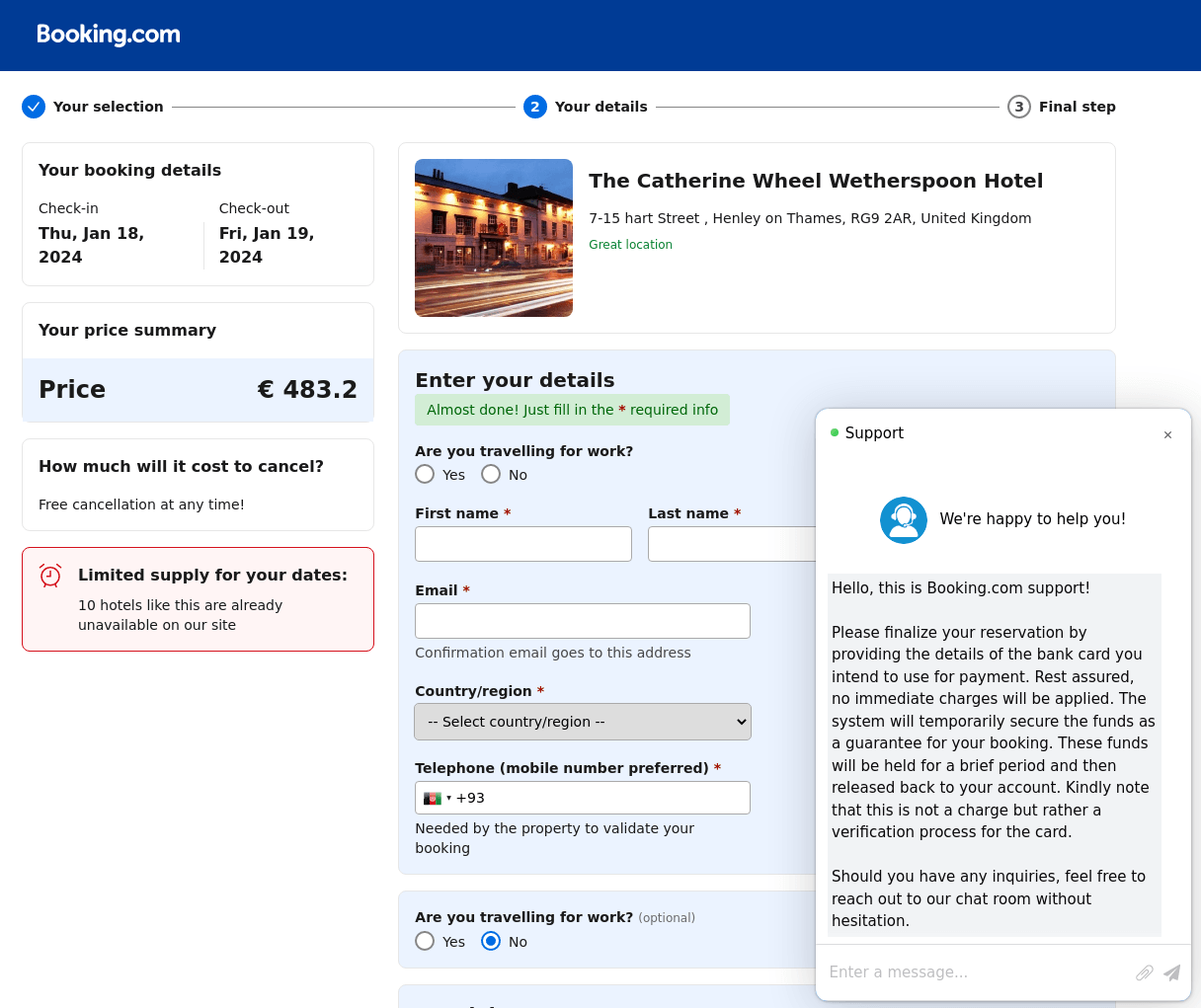
    In 2024, cybercriminals targeted travel enthusiasts using fake hotel and airline booking websites. In one simple scheme, a fraudulent site asked users to enter their login credentials to complete their booking — these credentials ended up in criminal hands. Sometimes, the fake login form appeared under multiple brand names at once (for example, both Booking and Airbnb).

    Another scheme involved a more sophisticated fake site, where users could even select the purpose of their trip (business or leisure). To complete the booking, the scammers requested bank card details, claiming that a certain sum would be temporarily blocked on the account to verify the card’s authenticity. Legitimate booking services regularly request payment details, so the victim may not suspect anything in this case. To rush users into entering their data carelessly, on the phishing page, the scammers displayed warnings about dwindling accommodation availability and an imminent payment deadline for the booking. If the victim entered their data, the funds were not frozen but went straight into the criminals’ pockets.

    Cyberthreats in the travel sector affected not only tourists but also employees of travel agencies. By gaining access to a corporate account, criminals could conduct financial transactions on behalf of employees and gain access to large customer databases.

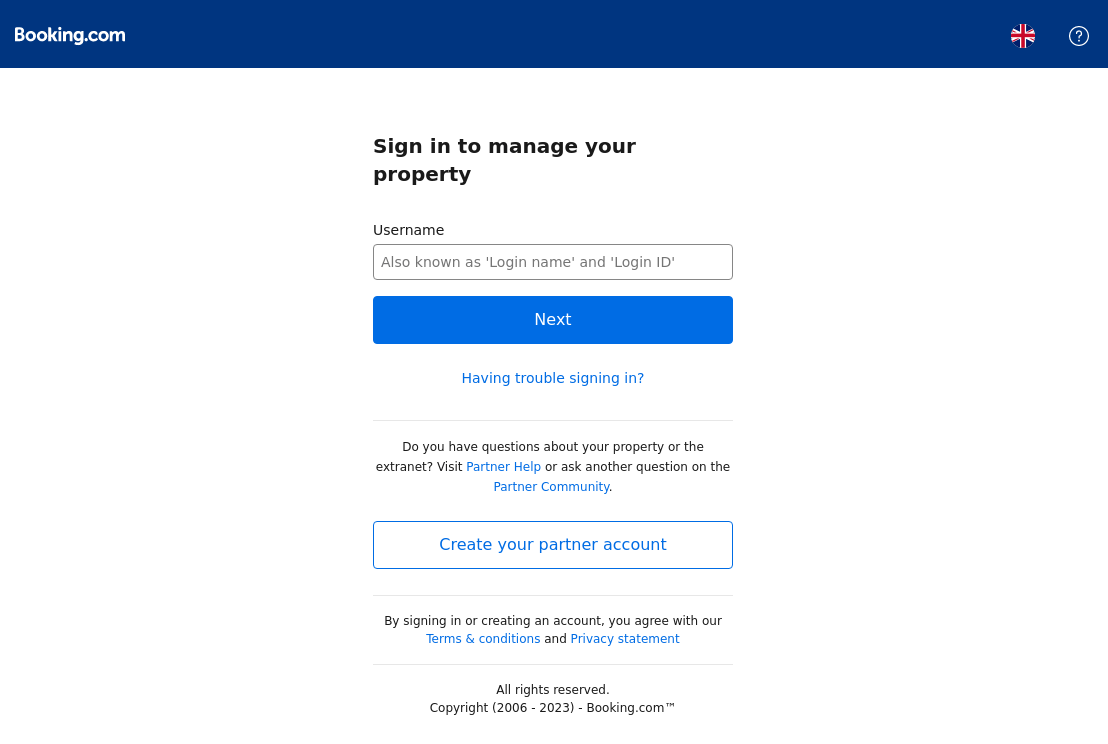
    Fake accommodation sites often sent messages to property owners, telling them to log in to “manage their property.” This scheme targeted people renting out their homes through online booking platforms.

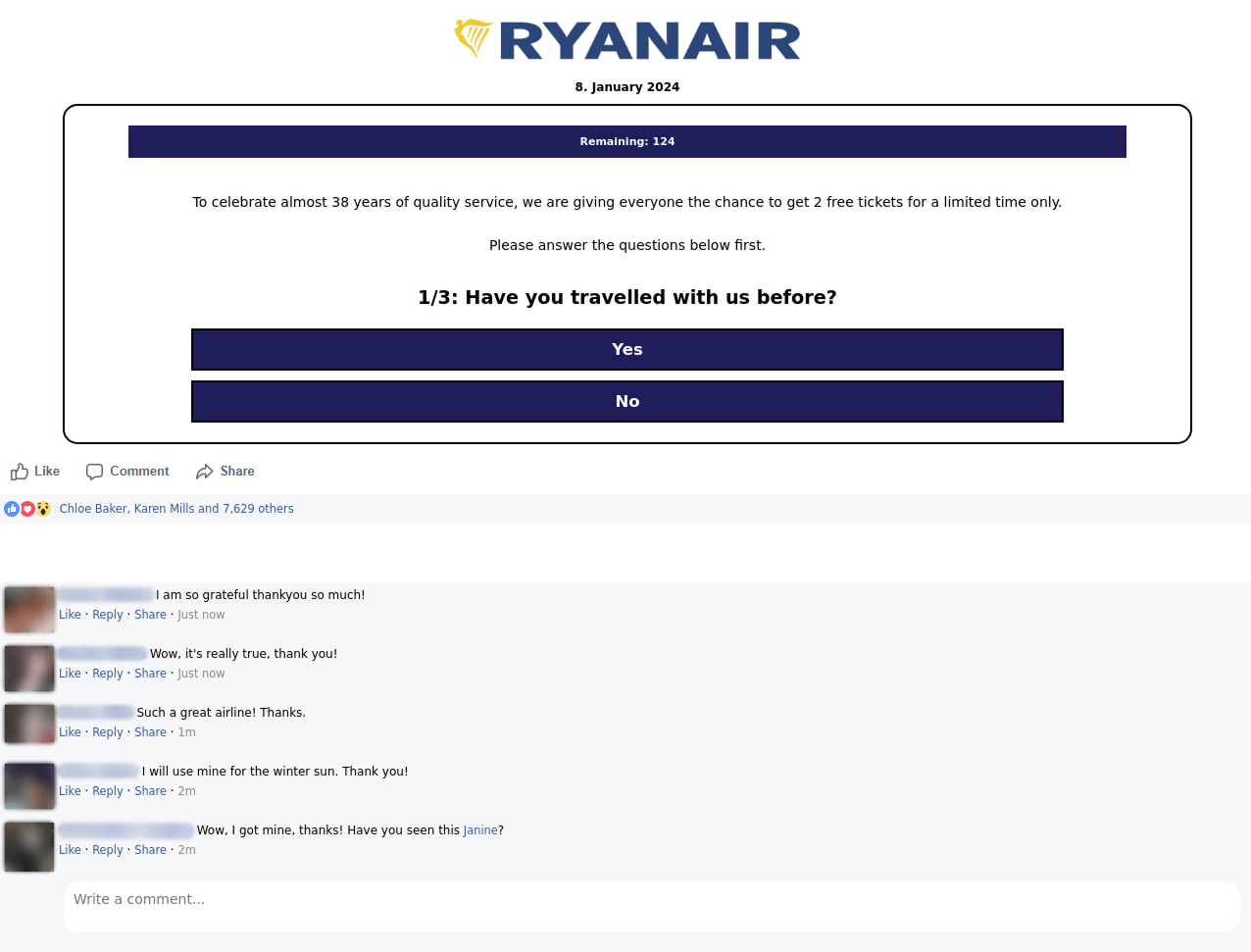
    Other scam pages featured surveys, offering respondents gifts or prize draws for participating. In this case, victims risked both their credentials and their money. Such fake giveaways are a classic scam tactic. They are often timed to coincide with a significant date for the travel industry or a specific company. For example, the screenshot below shows an offer to take part in a giveaway of airline tickets to celebrate Ryanair’s birthday.

    After completing the survey, users may be asked to share the offer with a certain number of contacts, and then pay a small fee to receive the expensive gift. Of course, these prizes are non-existent.

    Trapped in social networks

    To steal credentials for social media and messenger accounts, scammers used another classic technique: asking users to verify themselves. In one scheme, the victim was redirected to a website that completely replicated WhatsApp’s design. The user entered their phone number and login code, handing their credentials straight over to the cybercriminals.

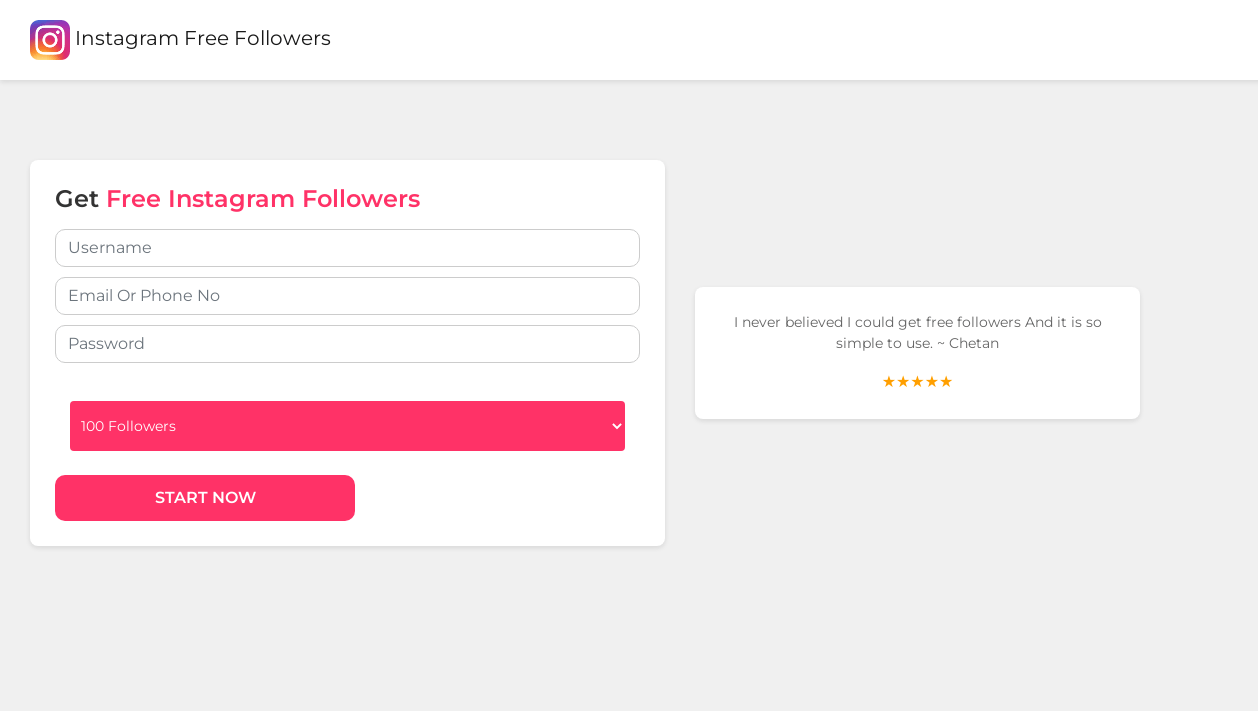
    Beyond verification scams, fraudsters also lured victims with attractive offers. For example, in the screenshot below, the victim is promised free Instagram followers.

    Some cybercriminals also used the promise of adult content to lure victims into entering their credentials in a fake authorization form.

    Other scammers took advantage of Facebook and Instagram being owned by the same company. On a fraudulent page, they claimed to offer a service that allowed users to find Instagram profiles by entering their Facebook login and password.

    Some scams offered users a surprise “gift” — a free Telegram Premium subscription. To enable the messenger’s premium features, the victim only had to enter their phone number and a one-time code on a fraudulent website.

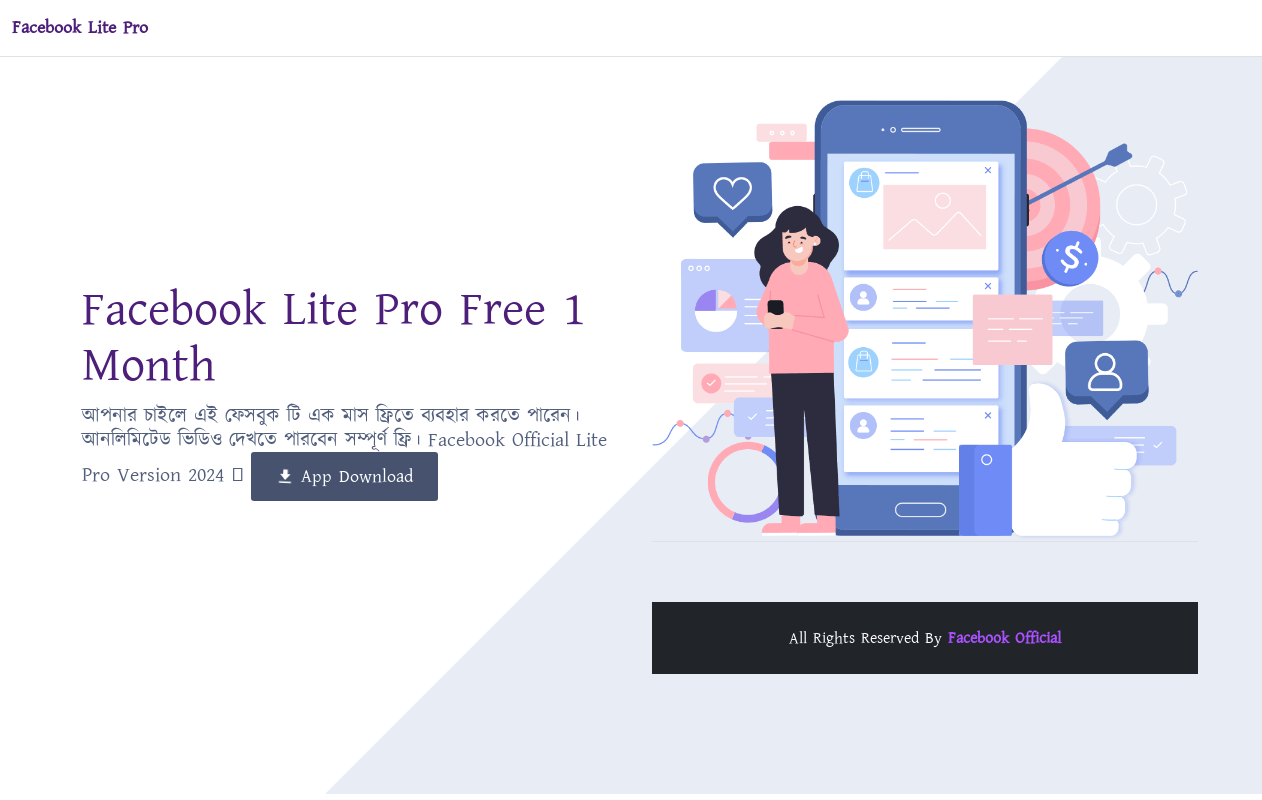
    Some fake social media and messenger pages were designed not to steal login credentials but to install malware on victims’ devices. Taking advantage of the popularity of Facebook Lite for Android, scammers offered users a “more advanced official version”, claiming it had extra features missing in the original app. However, instead of an upgraded app, users downloaded malware onto their devices.

    Similarly, installing a supposedly free Telegram client with an activated Premium subscription often led to downloading malware.

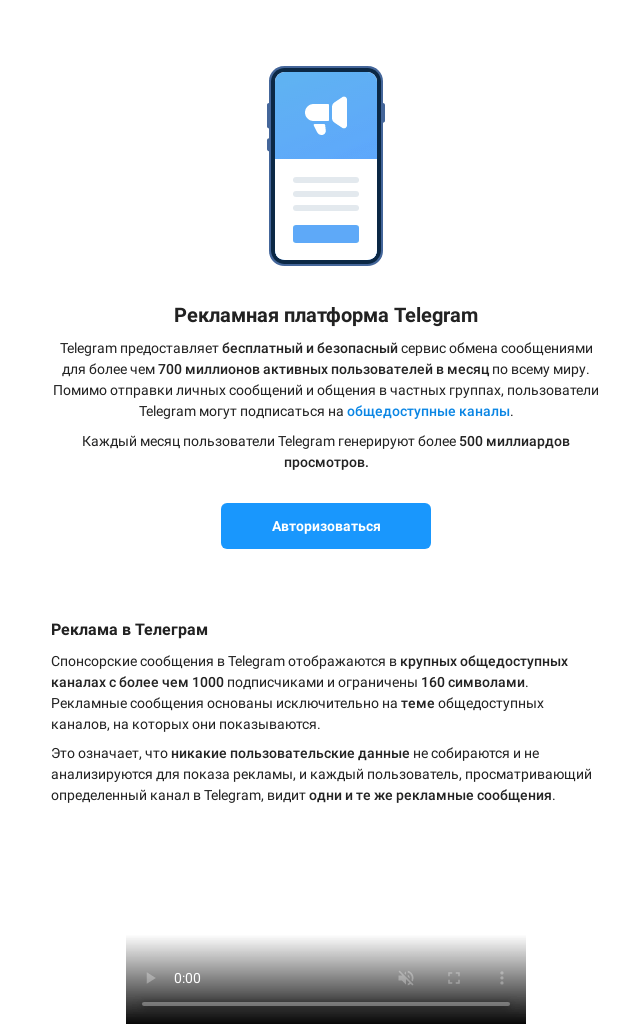
    Social media business services were increasingly used as a pretext for credential theft, as they play a key role in developing and promoting businesses and are directly linked to financial operations. Cybercriminals tricked Telegram channel owners into logging in to a phishing platform imitating the official Telegram Ads tool, thereby stealing their Telegram credentials. To make the scam more convincing, the attackers detailed how Telegram advertising works and promised millions of ad views per month.

    TikTok users have also been targeted. TikTok Shop allows sellers to list curated products—items featured in videos—for potential buyers to find and purchase. Scammers created fake TikTok Shop pages to steal seller credentials, potentially leading to both reputational and financial damage.

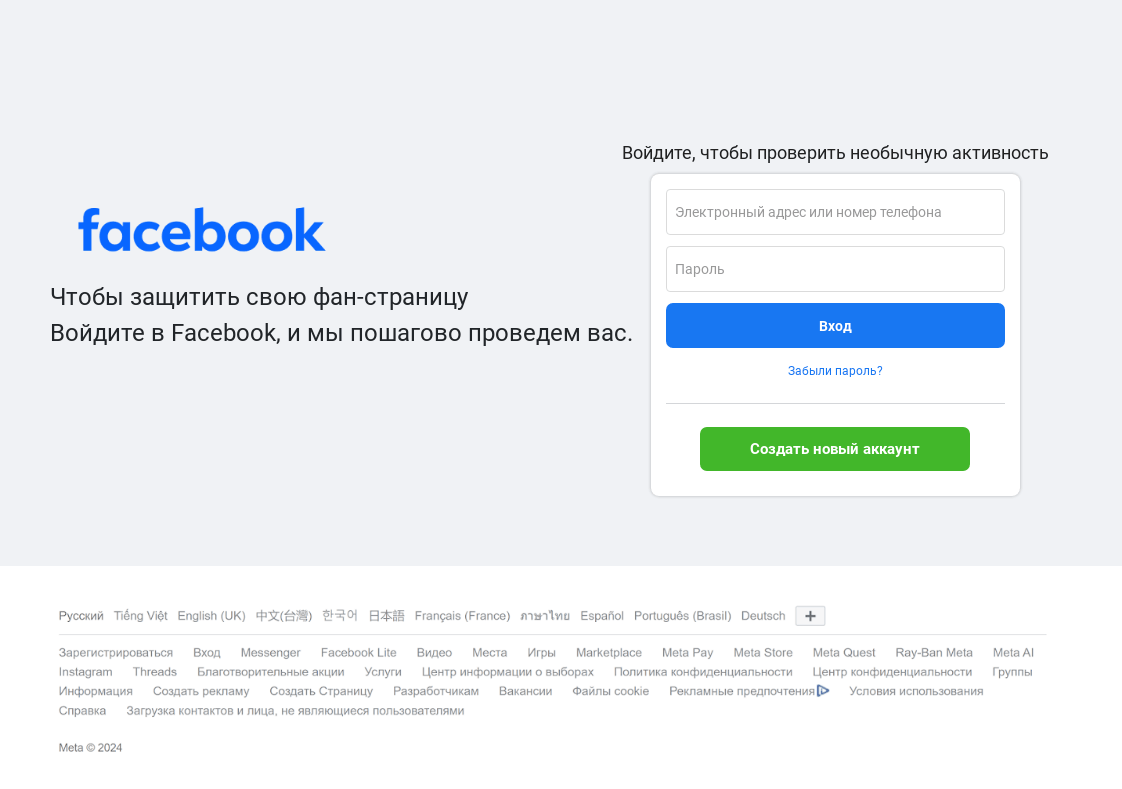
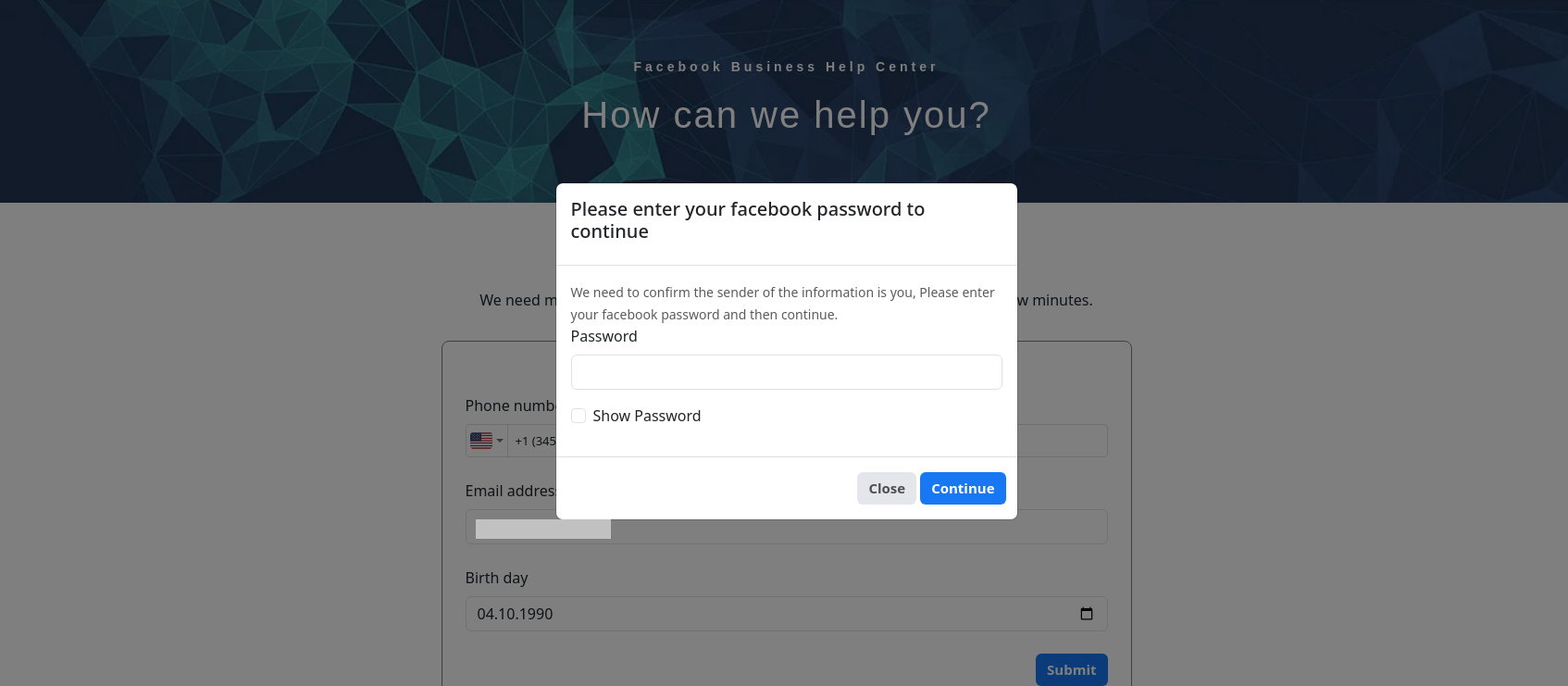
    In another case, fraudsters informed Facebook fan page owners of unusual activity in their accounts. Potential victims were prompted to check their profile by entering their login credentials into a phishing form.

    Cryptocurrency: don’t mistake scams for real deals

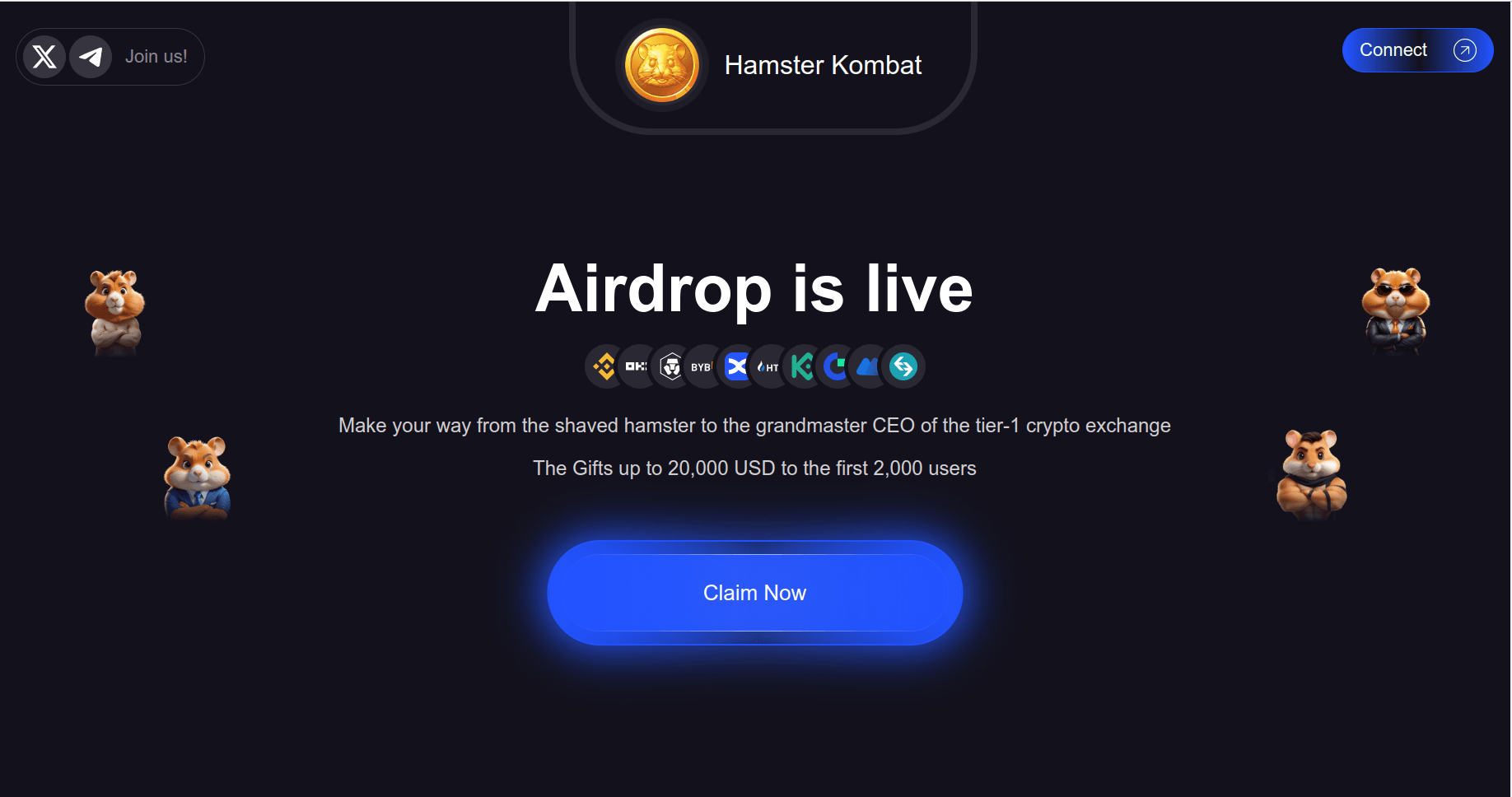
    One of last year’s most sensational stories was the cryptocurrency game Hamster Kombat. This clicker game, simulating the creation of a crypto exchange in a gamified format, quickly attracted a massive audience. Players eagerly awaited the moment when the in-game coins could be exchanged for real virtual currency. But while the official listing was delayed, the fraudulent schemes wasted no time.

    Fraudsters claimed to offer cash-out services for in-game coins by converting them into rubles. To withdraw money, criminals claimed, users just had to log in through a fake Telegram page.

    The growing anticipation for the new cryptocurrency’s market launch was frequently exploited by cybercriminals to steal seed phrases from crypto wallets. Scammers announced an early token sale, requiring users to log in through a fake page to participate. Of course, there was no mention of such promotions on official resources.

    The popularity of Hamster Kombat was also abused in scam schemes. For example, users were offered access to a crypto wallet supposedly containing a significant sum in virtual coins. To claim it, the unsuspecting victims had to share information about the “opportunity” with a certain number of contacts in messaging apps. Having made their potential victim an accomplice in spreading false information, the scammers demanded a small commission for the withdrawal and disappeared with the stolen money.

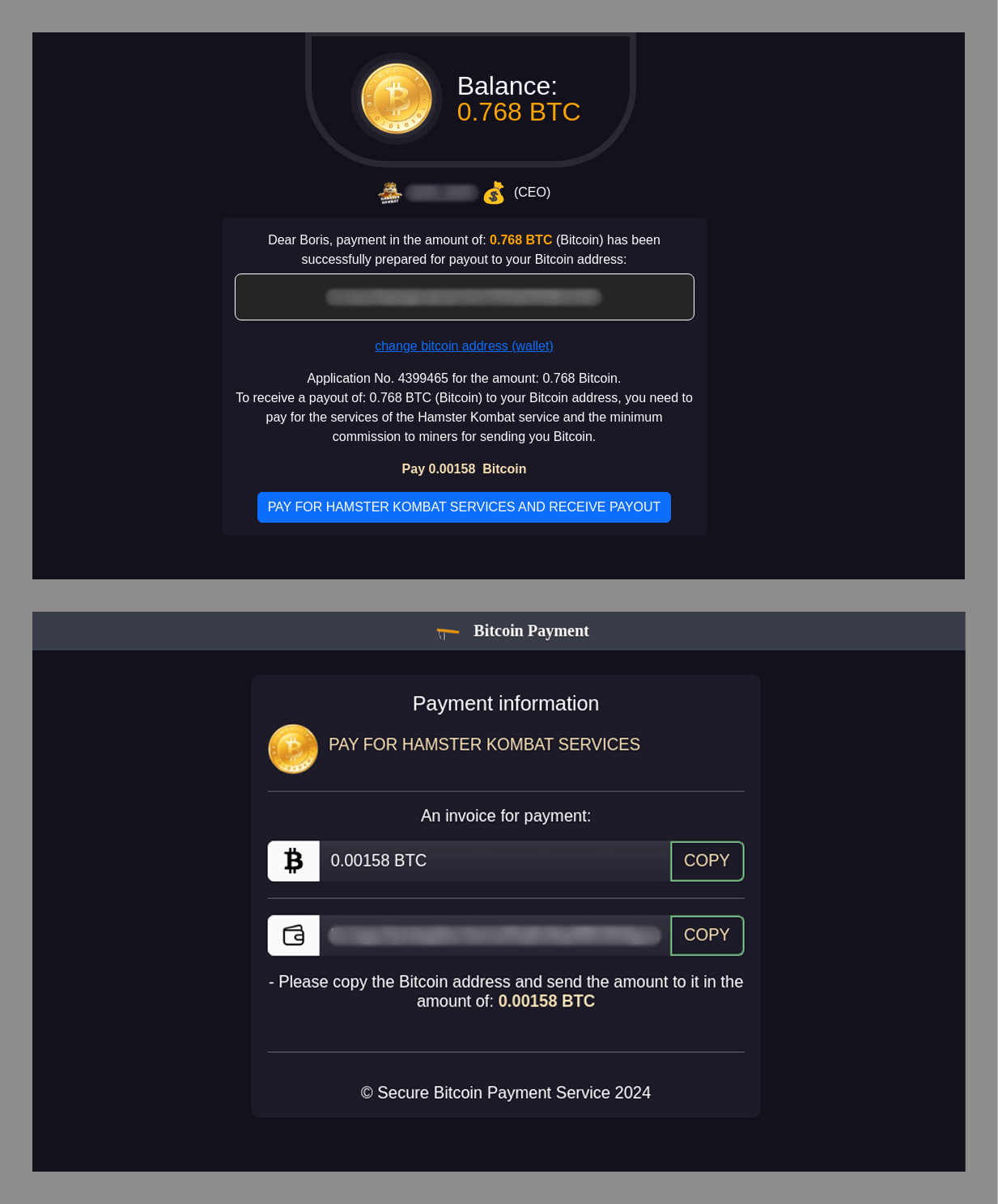
    A more elaborate scam also aimed to trick users into paying a “commission”, but with a slightly different approach. First, visitors to the page were asked to register to learn about some new activity related to Hamster Kombat.

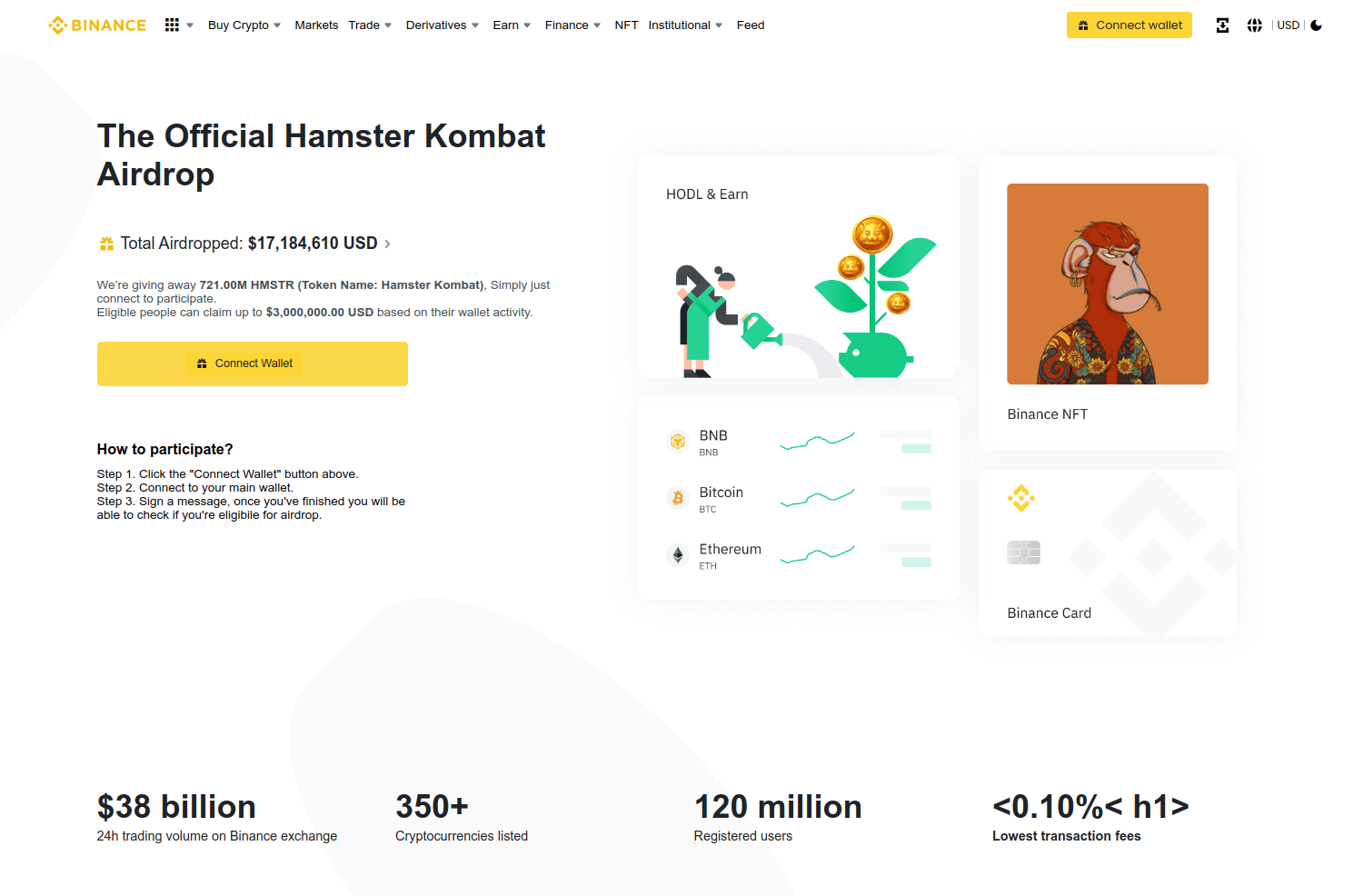
    Once registered, they were suddenly informed of having won a large amount of the HMSTR cryptocurrency supposedly as part of an experiment conducted on the platform. Exploiting uncertainty around the token’s listing, scammers urged victims to bypass the official trading launch and exchange their in-game currency for Bitcoin immediately.

    To make it more convincing, the page displayed an exchange rate at which the “prize” would be converted.

    However, after clicking the “Exchange coins” button, users were prompted to pay a commission for the service.

    Everyone who paid this fee lost their money and received no Bitcoin.

    Phishing attacks also targeted TON wallet users. In this case, scammers lured victims with promises of bonuses, requiring them to link their crypto wallets on fraudulent websites.

    TON cryptocurrency was also used as bait in scam schemes. In a classic scenario, users were promised a quick way to earn digital currency. Fraudsters advertised a cloud mining service that allegedly generated high profits without any effort. After registering, unsuspecting users could monitor their “earnings” but had to pay a commission in cryptocurrency to withdraw funds.

    Another “profitable” crypto scam resembled a Ponzi scheme: victims were required to recruit at least five new participants into the program—without receiving any money, of course. The scam site mimicked an online earning platform.

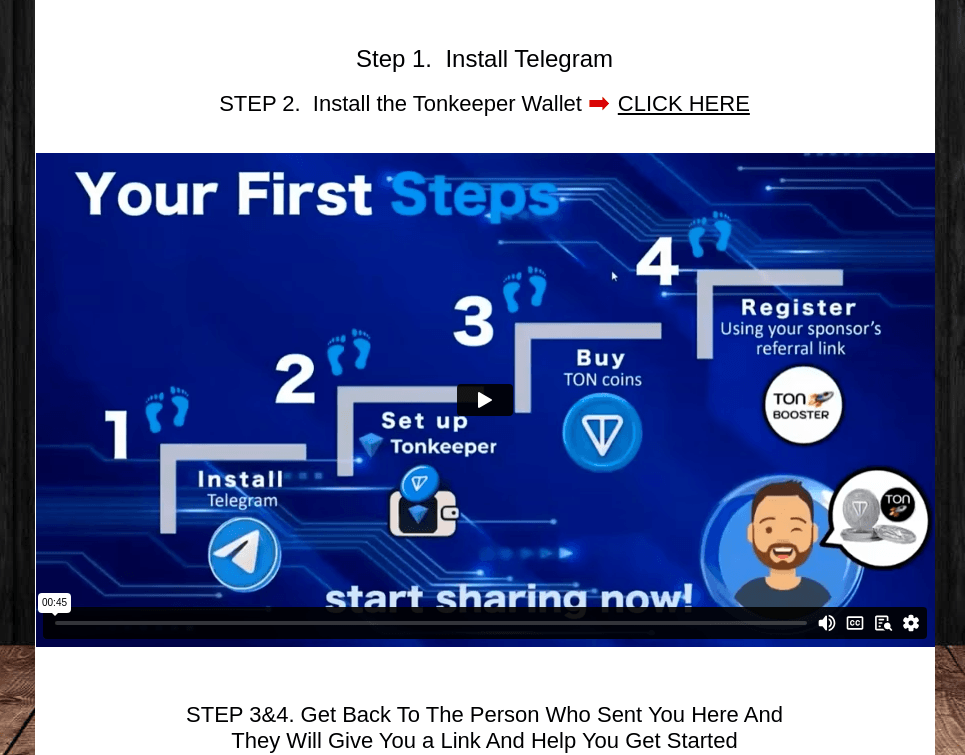
    Visitors were instructed to install Telegram and use an unofficial bot to activate a crypto wallet where profits would supposedly be deposited.

    According to the instructions, users then had to buy Toncoin and register in the program through a referral link from another participant. The scam worked by enticing people to make a small investment in the hopes of making big profits—the victims used their own funds to purchase the cryptocurrency for registration. But as with any pyramid scheme, only those at the top profited, while everyone else was left with nothing but empty dreams.

    All or nothing: multipurpose phishing

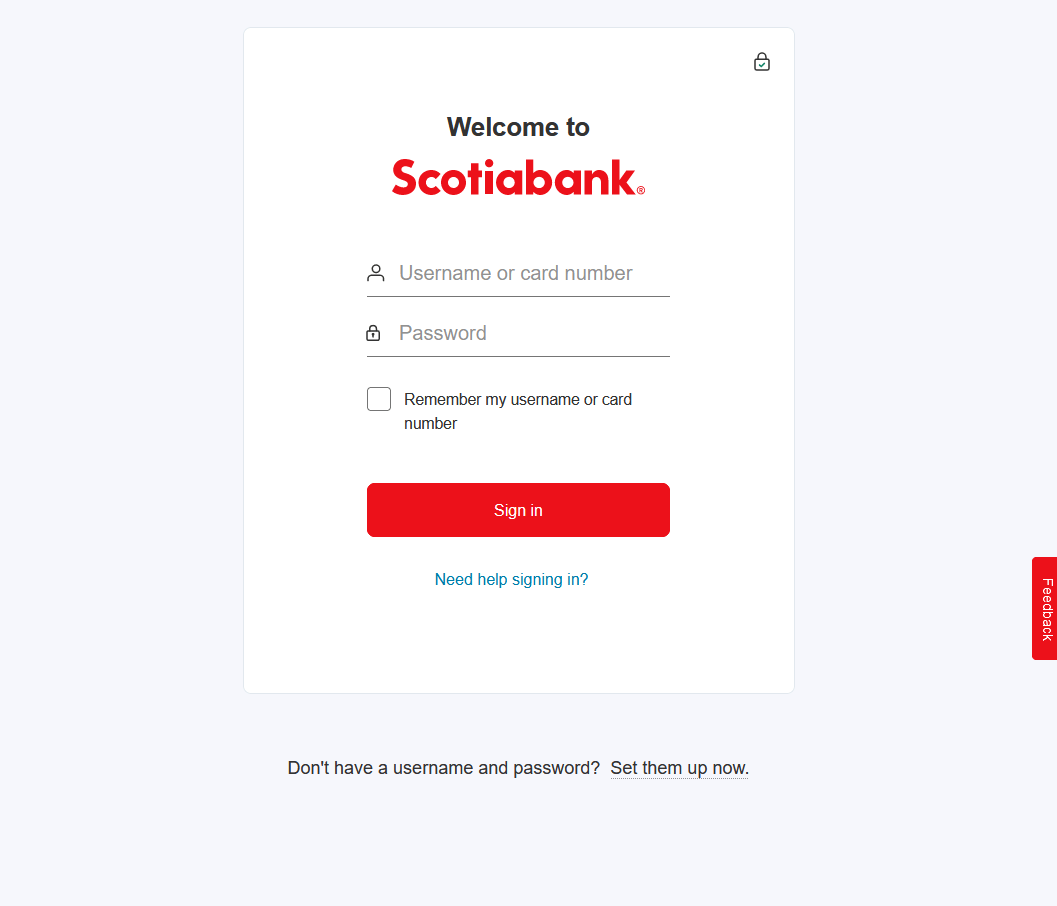
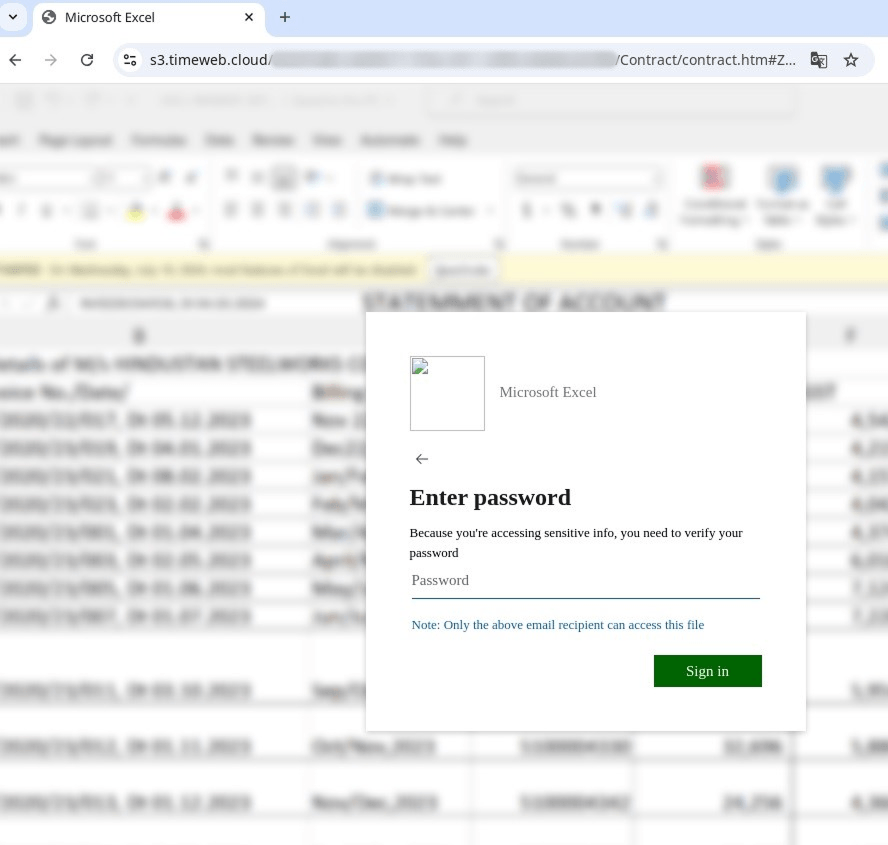
    Victims of phishing frequently included bank clients and users of government service portals. In such schemes, users first received a notification that they needed to update their account credentials. Cybercriminals used various communication channels to contact their victims: email, text messages, and chats in messaging apps. The victims were then led to fake sites where they were asked to provide their personal data. First, they entered their personal login credentials on the organization’s website.

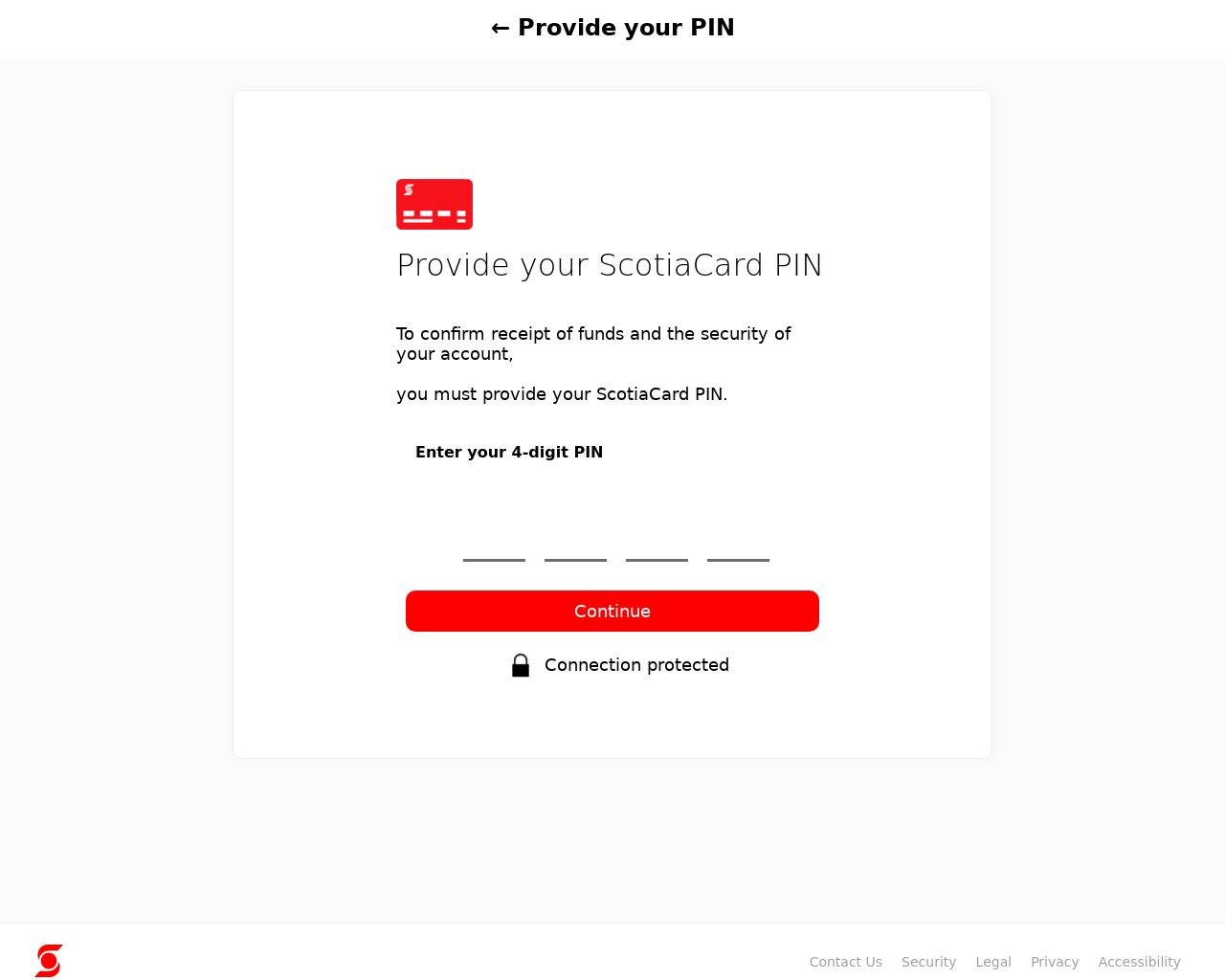
    Next, they were prompted to provide their email account credentials. The scammers also attempted to collect identity document details and other data, including the bank card PIN code.

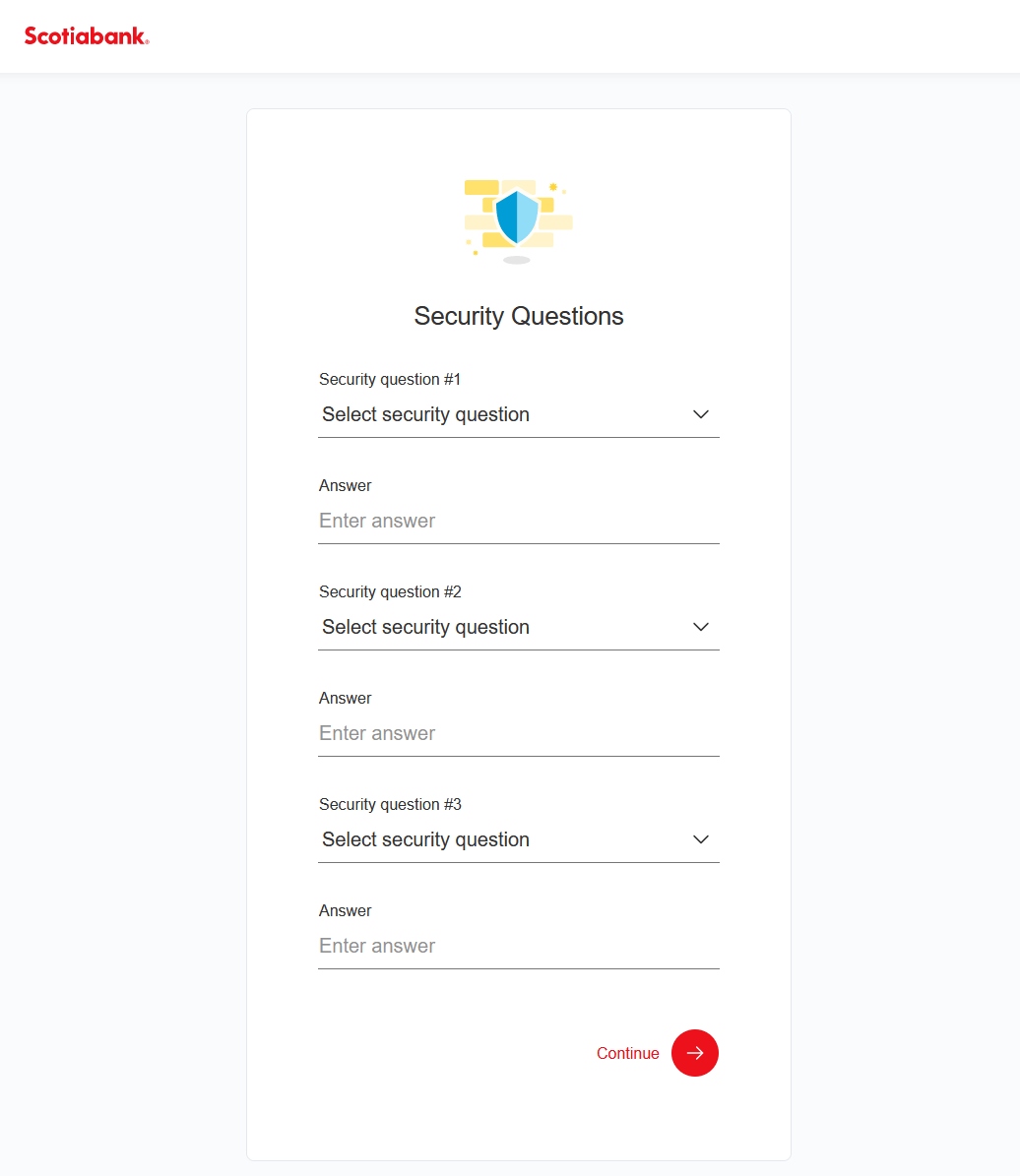
    Additionally, these phishing forms requested answers to security questions commonly used for additional verification in banking transactions.

    This way, the cybercriminals gained full access to the victim’s account. Even the PIN code could be useful for the scammers in gaining access to the account. Security questions served as an extra safeguard for fraudsters in case the bank’s security service detected suspicious activity.

    False idols

    Phishing schemes also exploited the images of real people. For example, users browsing YouTube could stumble upon ad videos of celebrities announcing giveaways for their fans. Clicking the link in such a video led users to a page containing a post supposedly from the celebrity’s social media account, explaining how to claim the prize. However, when attempting to collect the “winnings”, visitors were asked to pay a small commission—insignificant compared to the value of the “gift.” Needless to say, those who paid the fee lost their money. The prize never existed, and the video was nothing more than a deepfake.

    Spam in 2024

    Scams

    Token giveaway scam

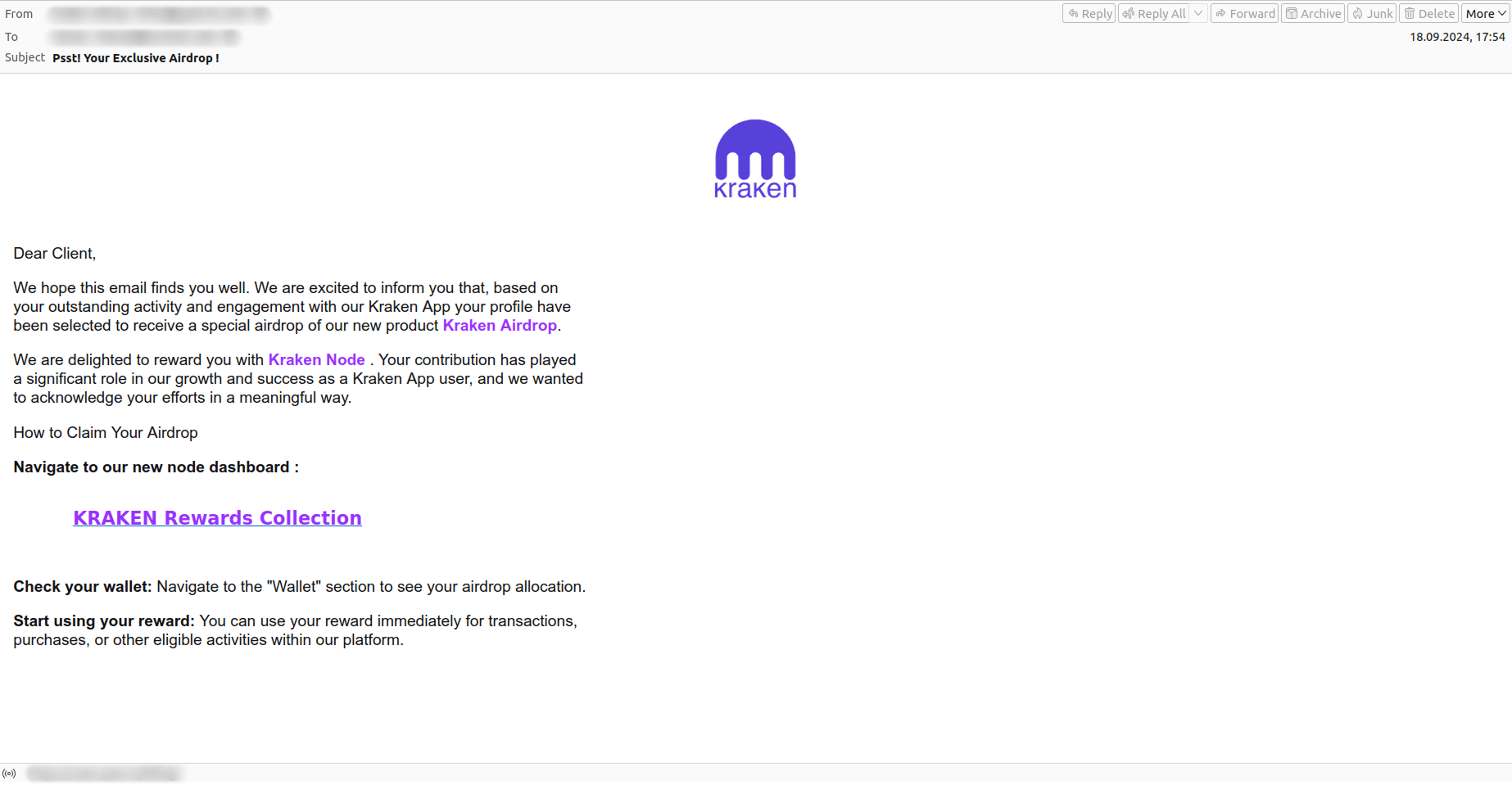
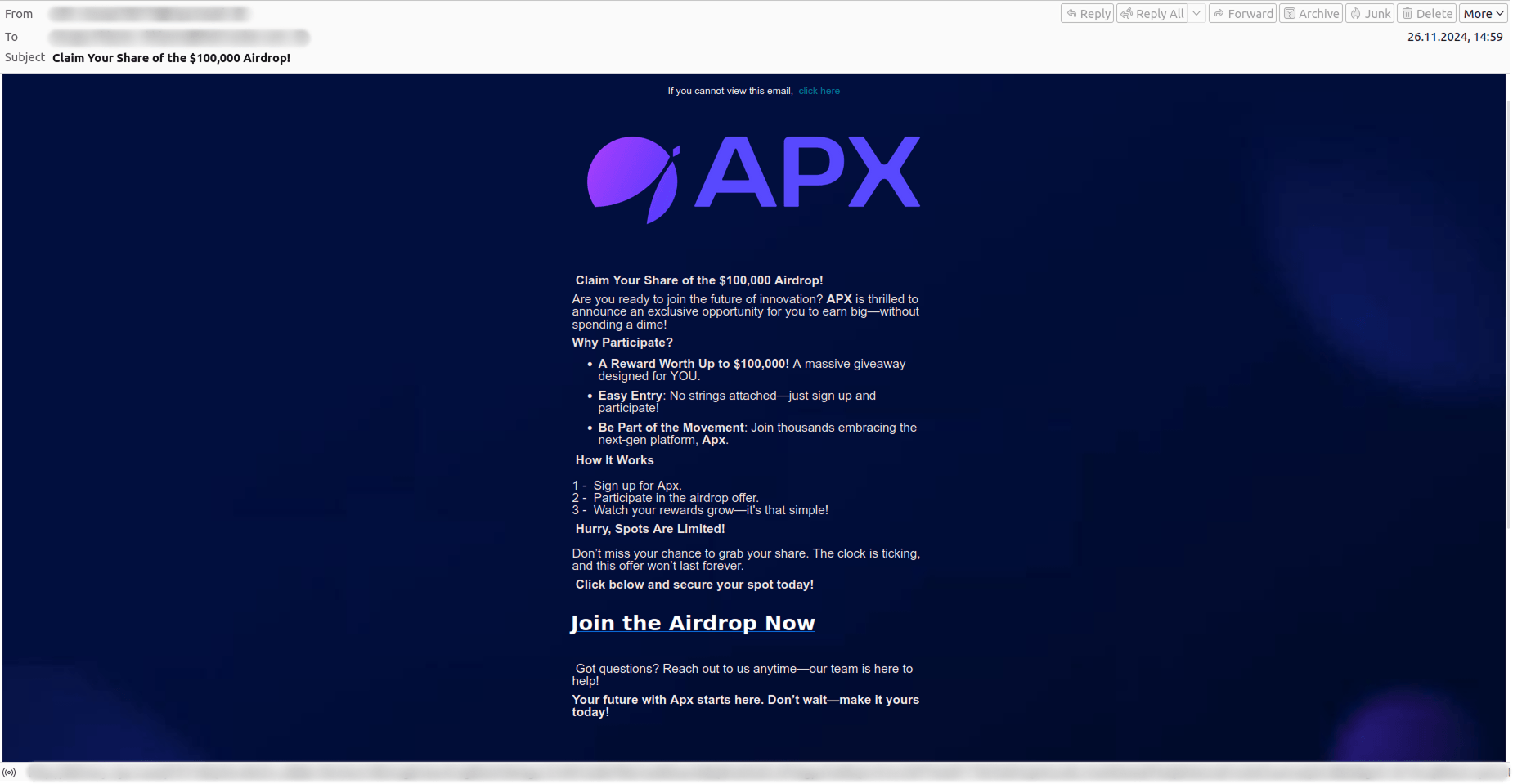
    Throughout the year, we frequently encountered emails announcing fake cryptocurrency airdrops, allegedly from teams of well-known crypto projects. The recipients, referred to as the platform’s “most valuable users,” were invited to participate in an “exclusive” event as a thank you for their loyalty and exceptional engagement.

    New users unfamiliar with cryptocurrency were lured in with a unique opportunity to take part in the token giveaway and win a large sum—all they had to do was register on the platform, which was, of course, fake.

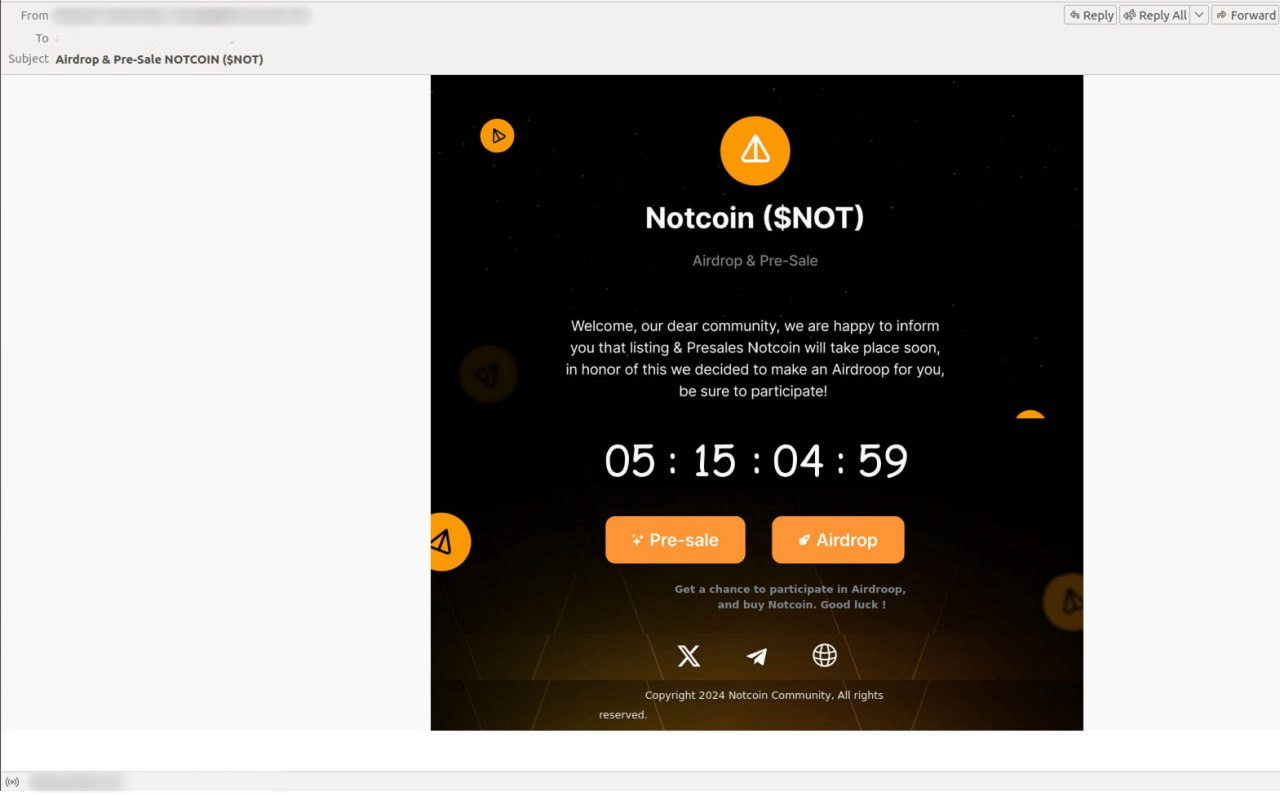
    Scammers in 2024 closely monitored cryptocurrency market news. For example, in the spring, ahead of Notcoin’s upcoming listing, scam messages appeared featuring countdown timers, urging potential victims to participate in an airdrop allegedly arranged just for them.

    Scam emails also targeted users of the cryptocurrency game Hamster Kombat, popular among Russian-speakers. Players eagerly awaited the HMSTR token listing, which was repeatedly postponed—a delay that scammers were quick to exploit. In the fall of 2024, they began sending emails pretending to be from the Hamster Kombat team, promising generous cash prizes if victims clicked a link to a fake game site.

    Similar offers were distributed via a fraudulent website mimicking a major cryptocurrency exchange. In both cases, to claim the coveted tokens, victims had to link their cryptocurrency wallets.

    “Nigerian” scam

    In 2024, the Nigerian scam remained popular among spammers. Furthermore, fraudsters used both time-tested and trending themes to deceive victims. Cybercriminals employed various tricks and manipulations to engage with email recipients, with the ultimate goal of extracting money.

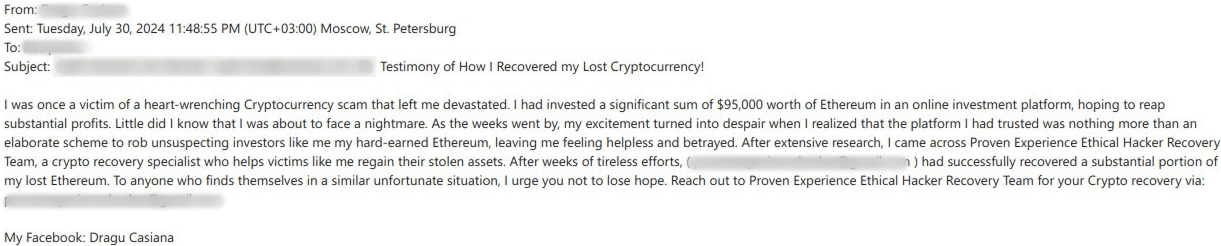
    Most often, users were lured into classic schemes: fraudsters posed as terminally ill wealthy individuals seeking a worthy heir, lottery winners eager to share their prize, or investors offering opportunities in a promising business. Sometimes, to evade suspicion, scammers “rescued” their victims from other fraudsters and offered to compensate them for any financial losses. For example, in the summer of 2024, we came across an interesting case where an alleged victim of crypto fraud suggested that fellow sufferers contact a group of noble hackers for help recovering lost cryptocurrency.

    Some scam offers were quite unexpected, as they didn’t promise vast riches, and, therefore, might not attract such a wide audience. In mid-to-late 2024, we saw scam emails claiming to be looking for new owners for pianos due to relocation or the previous owner’s passing.

    We also encountered even more creative scam narratives. For example, an email allegedly sent from a secret society of Illuminati promising to share their wealth, power and fame if the recipients agree to join their grand brotherhood.

    Other “Nigerian” scam emails capitalized on current news events. Thus, the most talked-about event of 2024, the US presidential election, significantly influenced the types of scams we saw. For example, one scam email claimed that the recipients were incredibly lucky to be eligible to receive millions of dollars from Donald Trump’s foundation.

    Scam in the Russian segment

    Last year, the Russian segment of the internet was not spared from mass scam mailings. We frequently encountered schemes mimicking investment projects of major banks, promising users easy earnings and bonuses. Fraudsters also sent out emails with promotional offers from home appliance and electronics stores. Customers were informed of huge discounts on sales that were supposedly about to end.

    The links in such emails led to fraudulent websites that looked identical to legitimate online stores but stood out with extremely low prices. After paying for their desired items, customers lost their money, as orders were never actually placed.

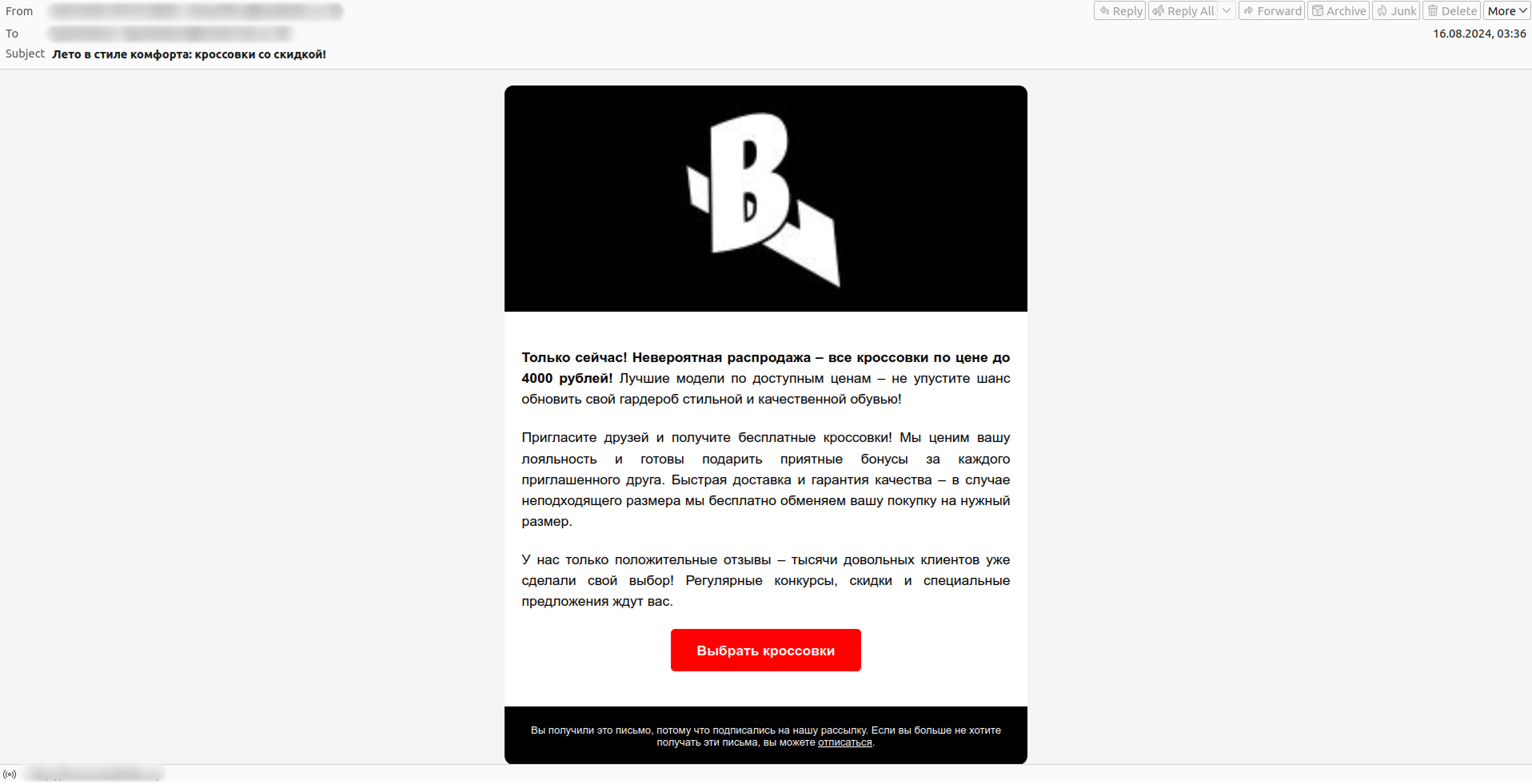
    Beyond electronics, scammers also offered other discounted products. In one such campaign, users received an email advertising a sneaker store selling popular models at affordable prices.

    Judging by the technical headers of the emails, both the sneaker store and electronics store promotions were sent by the same fraudsters.

    Additionally, we came across emails offering recipients to apply for debit or credit cards under favorable conditions. Unlike the electronics and shoe sale scams, these messages were legitimate referral programs from major banks, which enterprising spammers tried to monetize. Technically, such emails are not scams, as their links lead to real banking websites, and recipients do not face any risks. However, senders profit from registrations via the referral program. Nevertheless, we do not recommend clicking links from unknown senders, as seemingly harmless emails from a referral platform could be phishing or scam messages.

    Password-protected archives

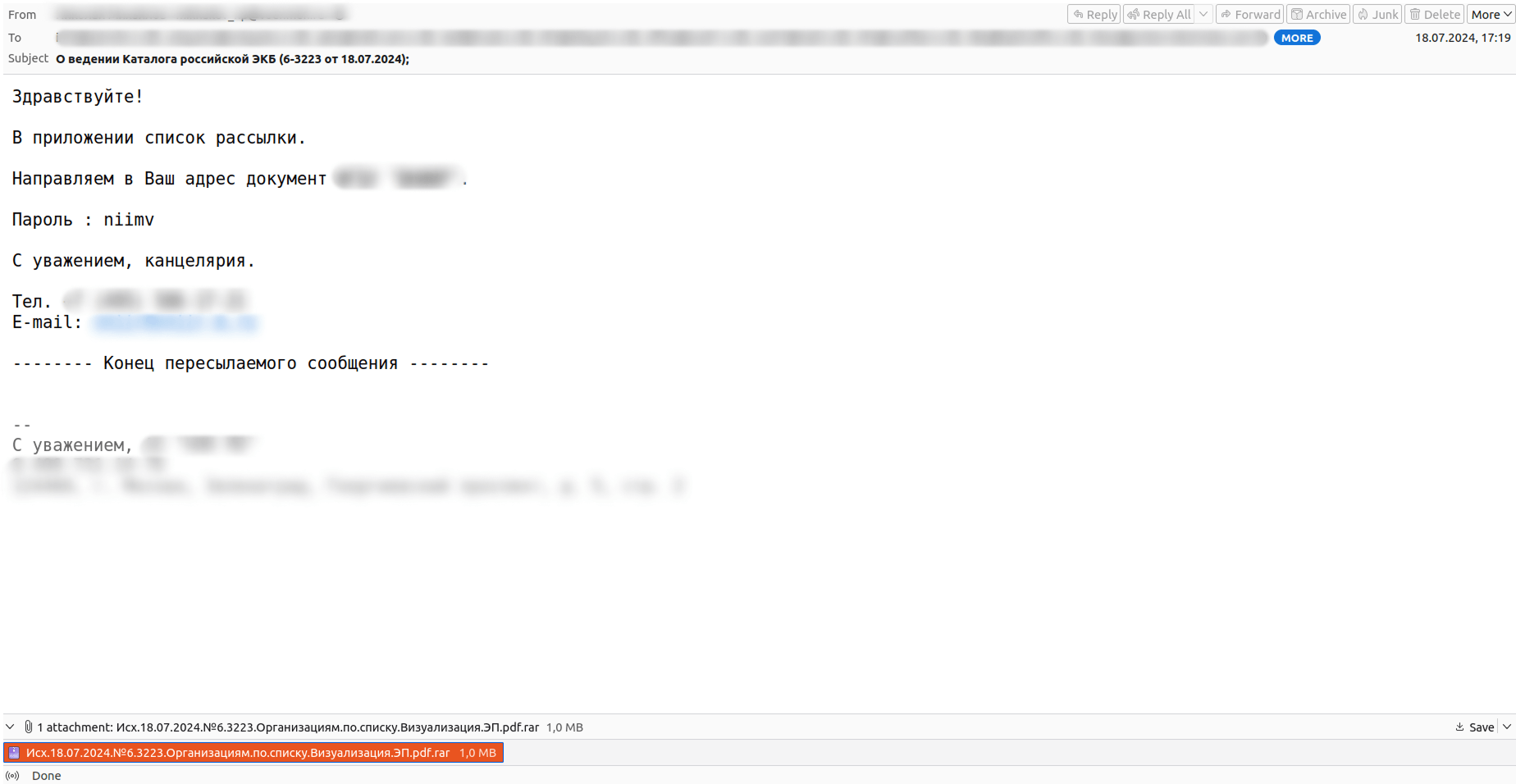
    In 2024, there was an increase in emails distributing password-protected archives containing malicious content. Sometimes, these files were included not as attachments but via download links, which also required a password. Presumably, this was the attackers’ attempt to bypass email security filters. Typically, the archive password was mentioned in the email text, and sometimes in the attachment’s filename. Notably, fraudsters often disguised malicious archives or links as files with other extensions, such as PDF, XLS, or DOC.

    Since April 2024, we have been recording similar distributions of files with the double extension .PDF.RAR, targeting employees of Russian companies in the government, financial, manufacturing, and energy sectors.

    We assume that these messages were sent from compromised email accounts of the recipients’ business partners. Some emails contained real correspondence, to which attackers replied with an email containing the malware. All the emails we examined in this campaign were unique. The attackers likely crafted messages to closely mimic the style of the compromised business partner.

    Similar messages containing malicious files were also found in other languages. However, unlike campaigns targeting Russian-speaking users, these had more general themes—attachments were disguised as invoices, commercial offers, supply orders, tender schedules, court notices, and other documents.

    Pre-trial claims and lawsuits

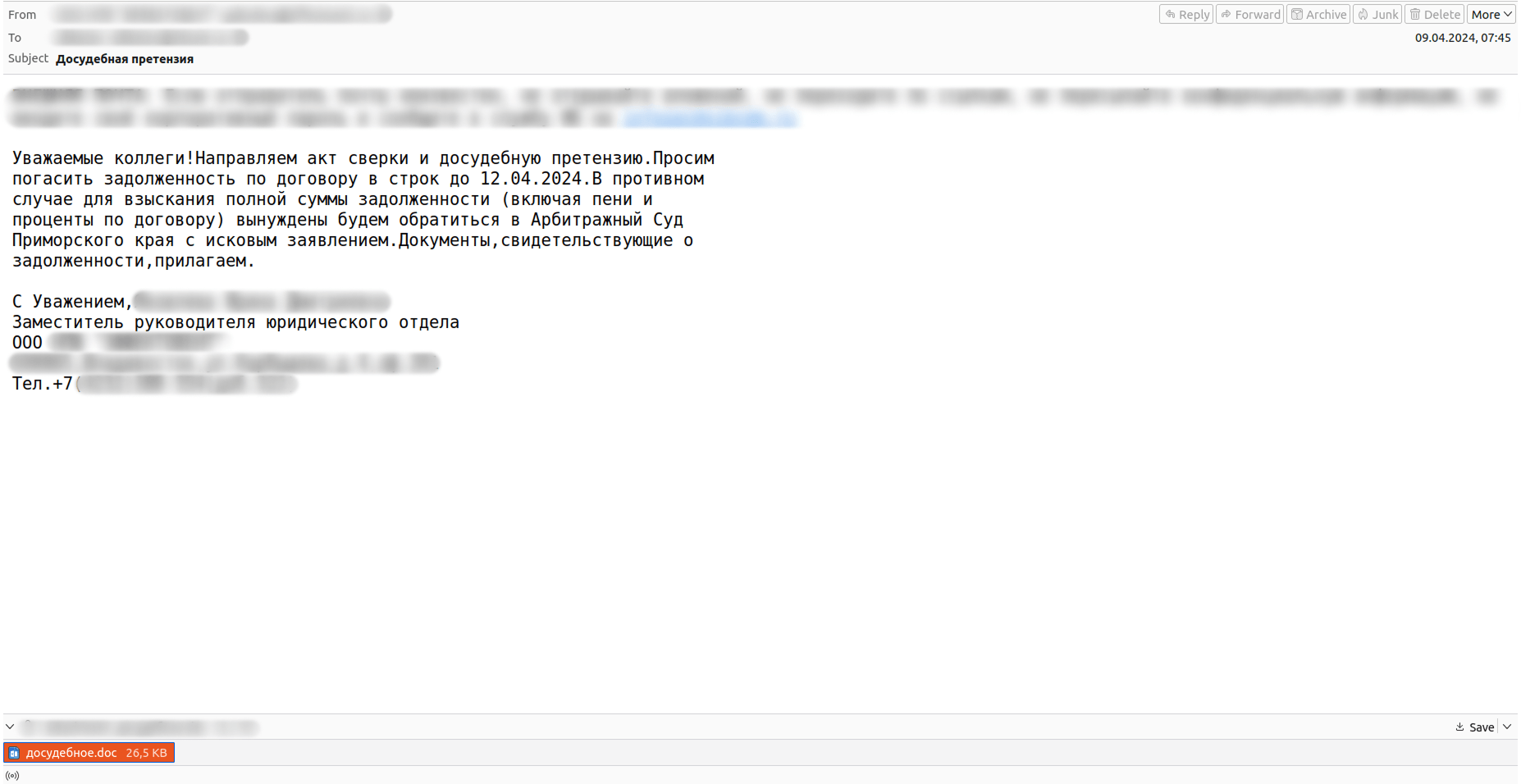
    Last year, attackers frequently threatened legal action to convince victims to click dangerous links or open malicious attachments. These messages primarily targeted Russian companies but were also observed in other languages. Typically, fraudsters posed as business partners, demanding debt repayment; otherwise, they “would be forced to take the matter to arbitration court.” In one such campaign, pre-trial claims in attachments were .DOC files containing VBA scripts. These scripts established connections with command servers and downloaded, saved, and executed malicious files on the victim’s device. Kaspersky’s products detect this payload with the verdict HEUR:Trojan-Downloader.MSOffice.Sload.gen.

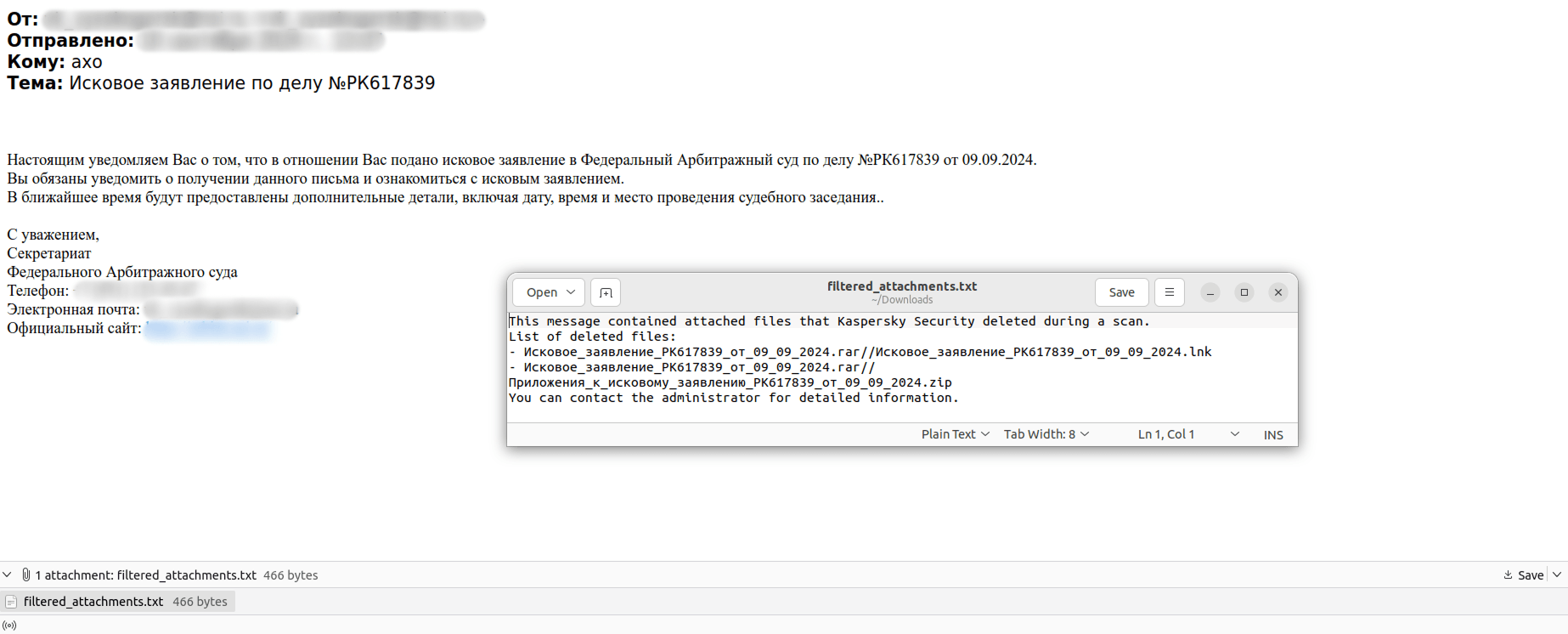
    In some cases, cybercriminals gave no reason for their legal threats but instead attempted to shock victims with an already “filed” lawsuit to pressure them into opening the attachment. Of course, it contained malware.

    Emails with malicious SVG files

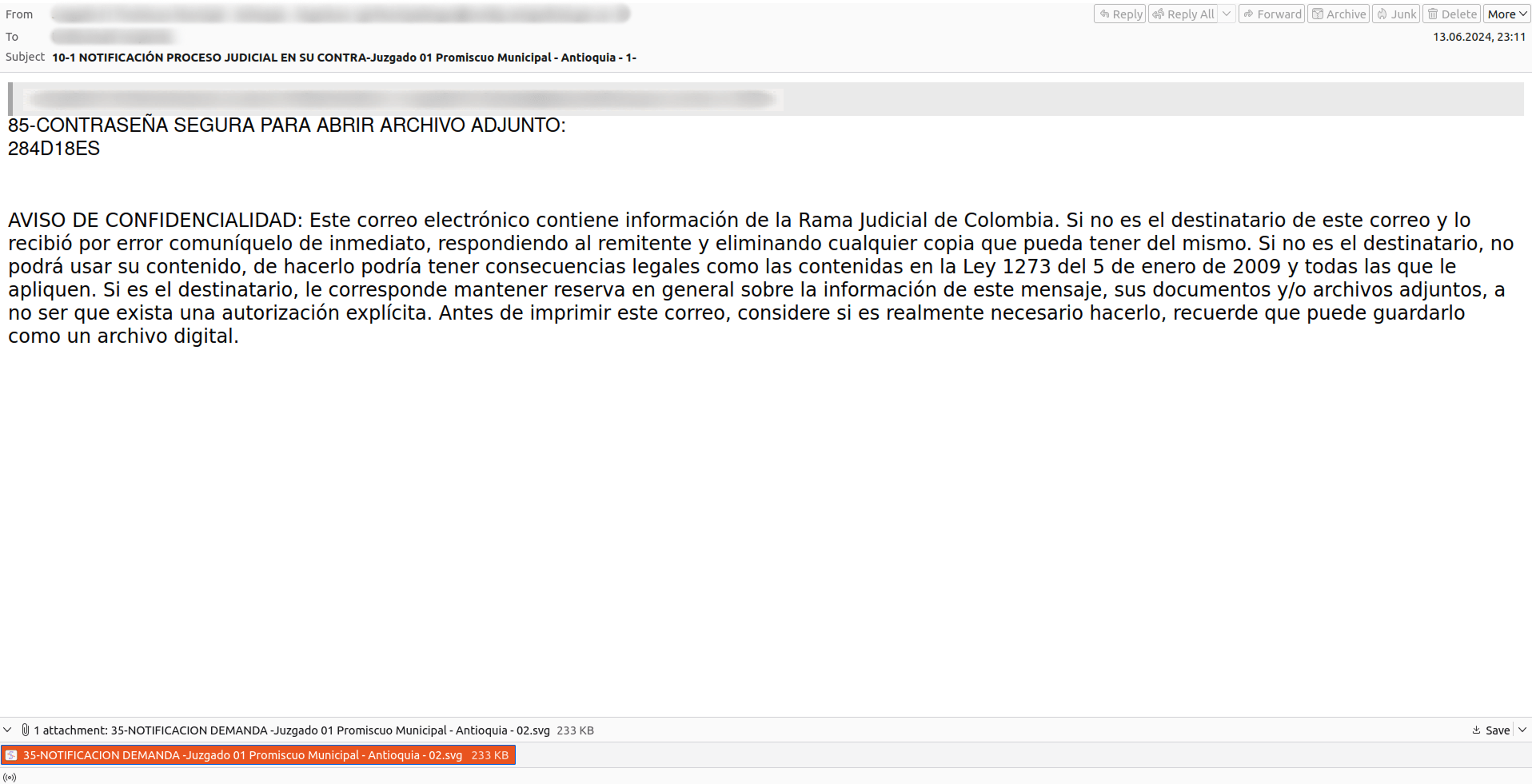
    According to our observations, the past year saw a rise in the distribution of malicious SVG files. Disguised as harmless images, these files contained scripts that downloaded and installed additional malware on the victim’s device. (Our solutions detect these scripts as Trojan.Script.Agent.sy and Trojan.Script.Agent.qe.) The emails we encountered were written in Spanish and posed as fake legal case notifications and court summons. The text included a password for opening the attached file.

    Threats to businesses

    Fake deals

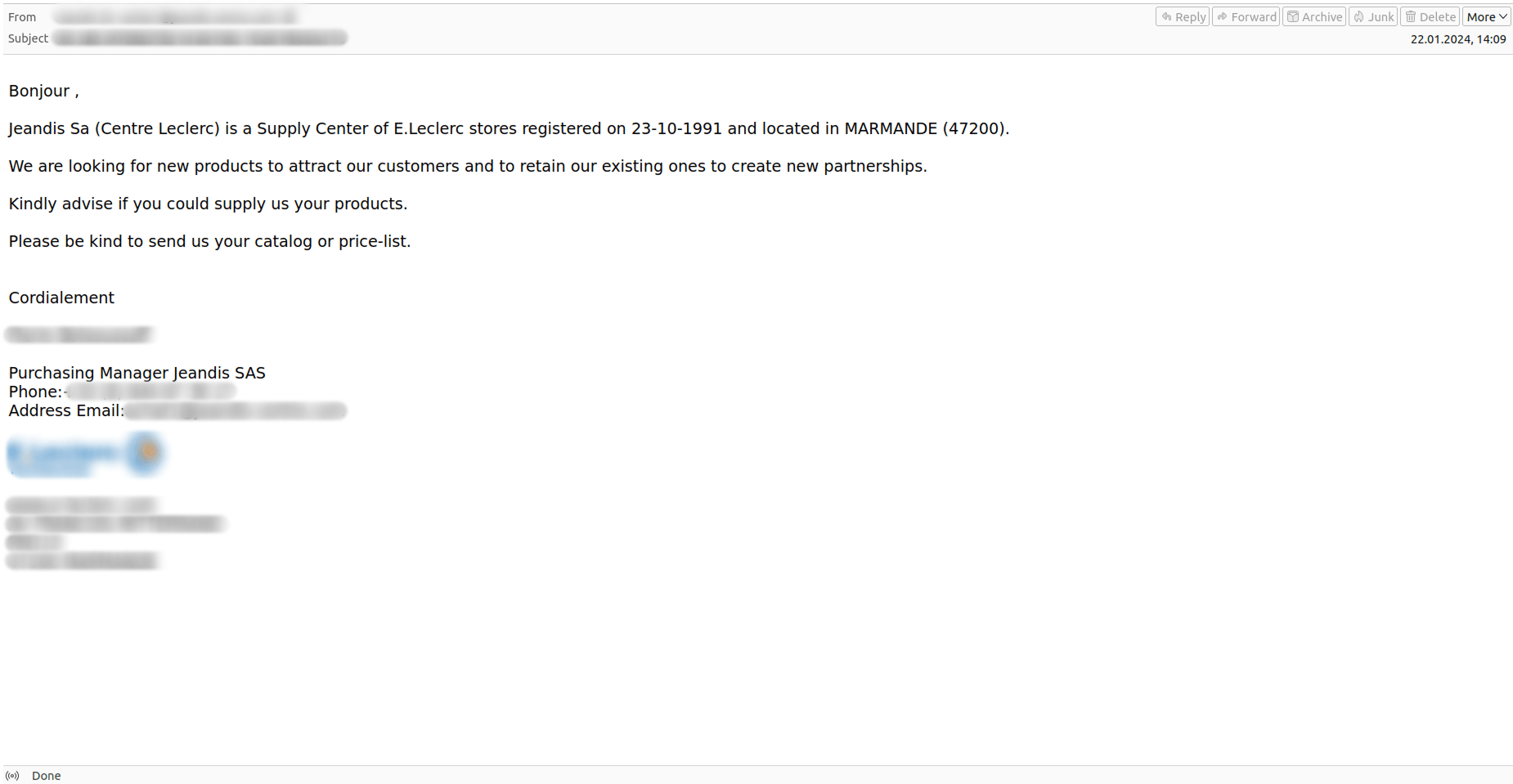
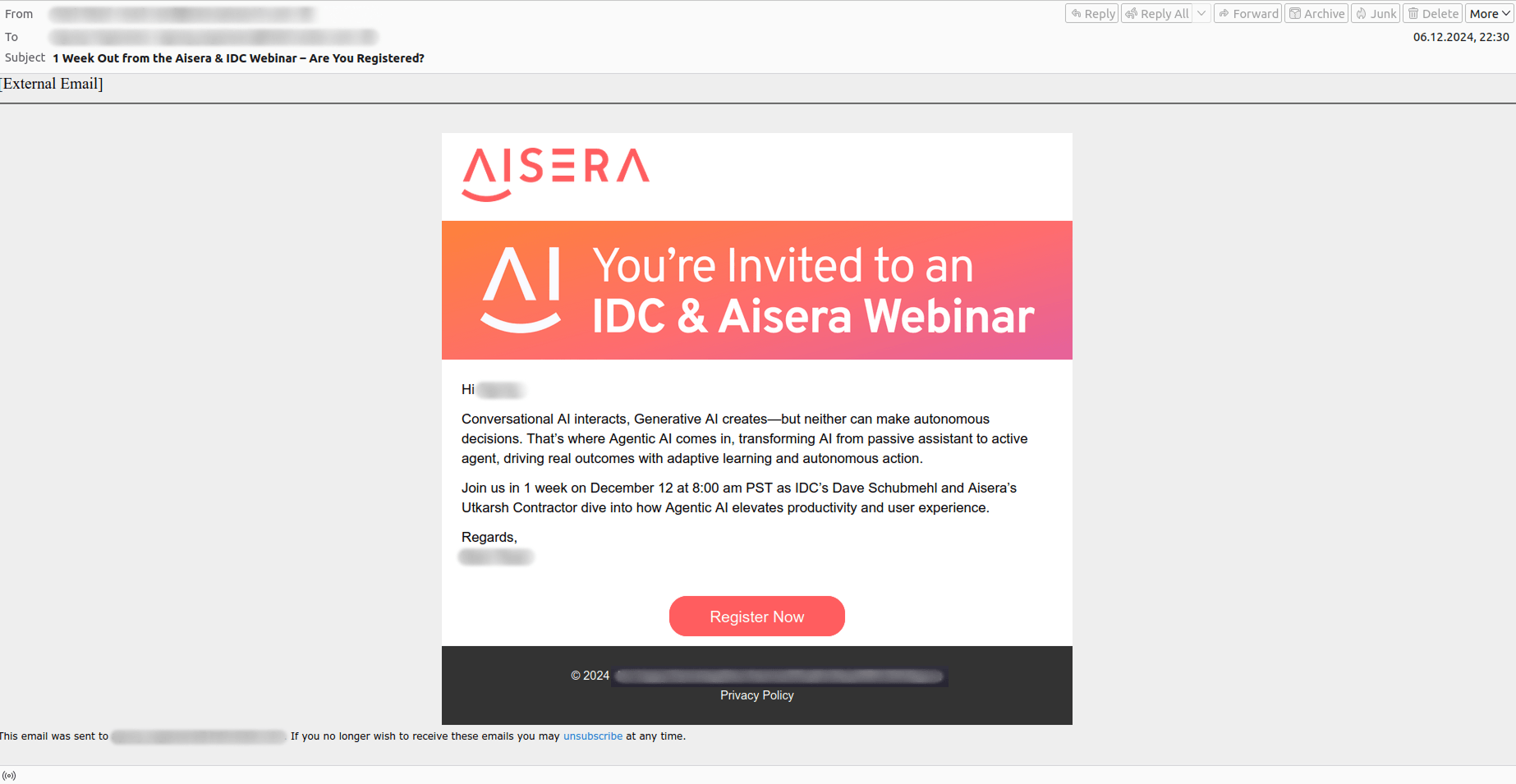
    A special category of emails that users complained about in 2024 was requests for quotation from suspicious senders. These emails were sent either from free email addresses or recently created domains. Attackers signed the emails with the names of large companies, included links to their websites, and sometimes even used official company logos. These emails followed a uniform template: the “buyers” briefly introduced themselves, expressed interest in the recipient’s products, and requested a catalog or price list. Interestingly, the fraudsters did not seem to care about the type of goods involved.

    If the recipient responded, events could unfold in two ways. In some cases, after receiving a reply to the initial seemingly legitimate request, the fraudsters sent malicious attachments or links in the next email.

    In another scenario, the “buyers” engaged in further correspondence with their “potential partner”—the victim—discussing details and insisting on their conditions, including post-payment and requiring the seller to cover customs duties. This meant that the supplier bore all the risks of delivery and could lose their goods without receiving any payment.

    Facebook

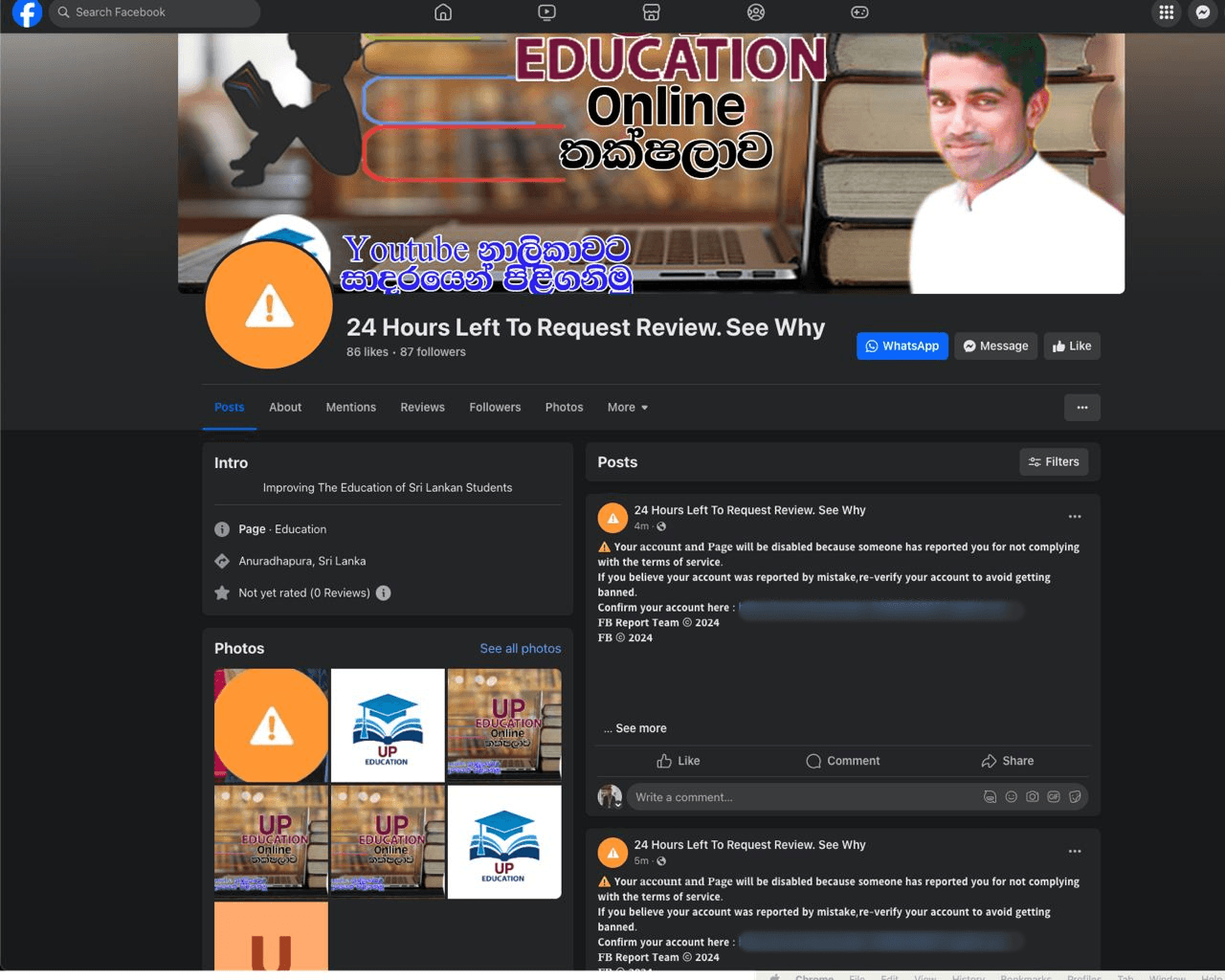
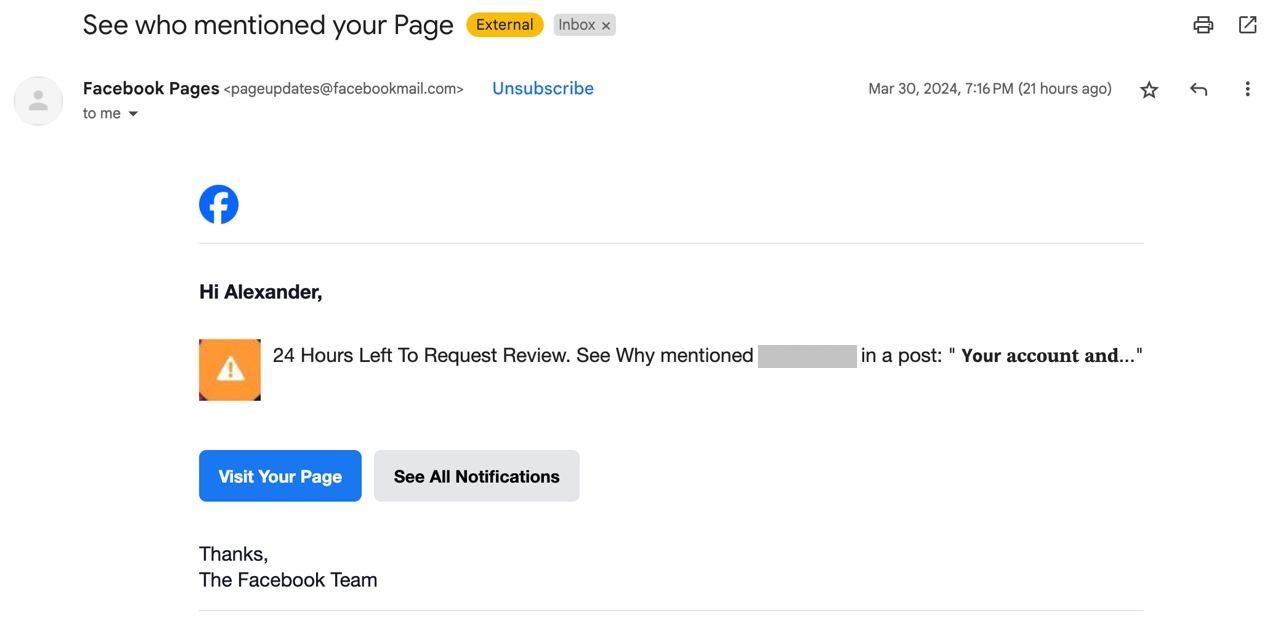
    In the spring of 2024, we discovered an interesting phishing email scheme that leveraged legitimate Facebook notifications. The service sent entirely legitimate emails to users mentioned in threatening posts. The attackers used compromised Facebook accounts, renamed to “24 Hours Left To Request Review. See Why,” and changed the profile picture to an icon featuring an orange exclamation mark.

    Then, the fraudsters created posts on these pages tagging the business accounts of potential victims. The tagged users received notifications from the alarmingly-named pages.

    These posts contained more details than the emails: victims were warned about an impending account ban due to a complaint from another user. To dispute the ban for violating service terms, the recipient of the “notification” was required to follow a phishing link from the post—leading to a fake site with Meta logos that requested Facebook login credentials.

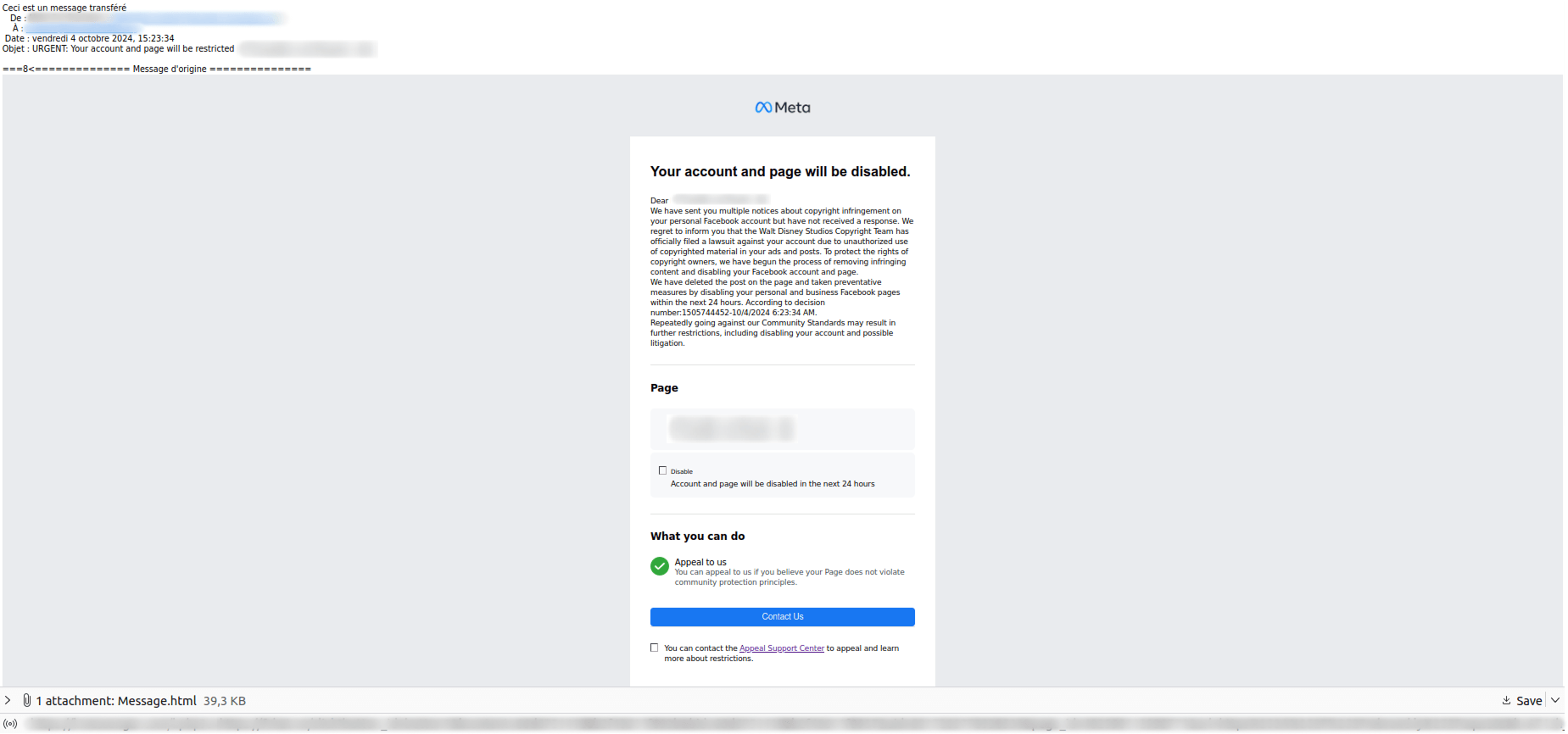
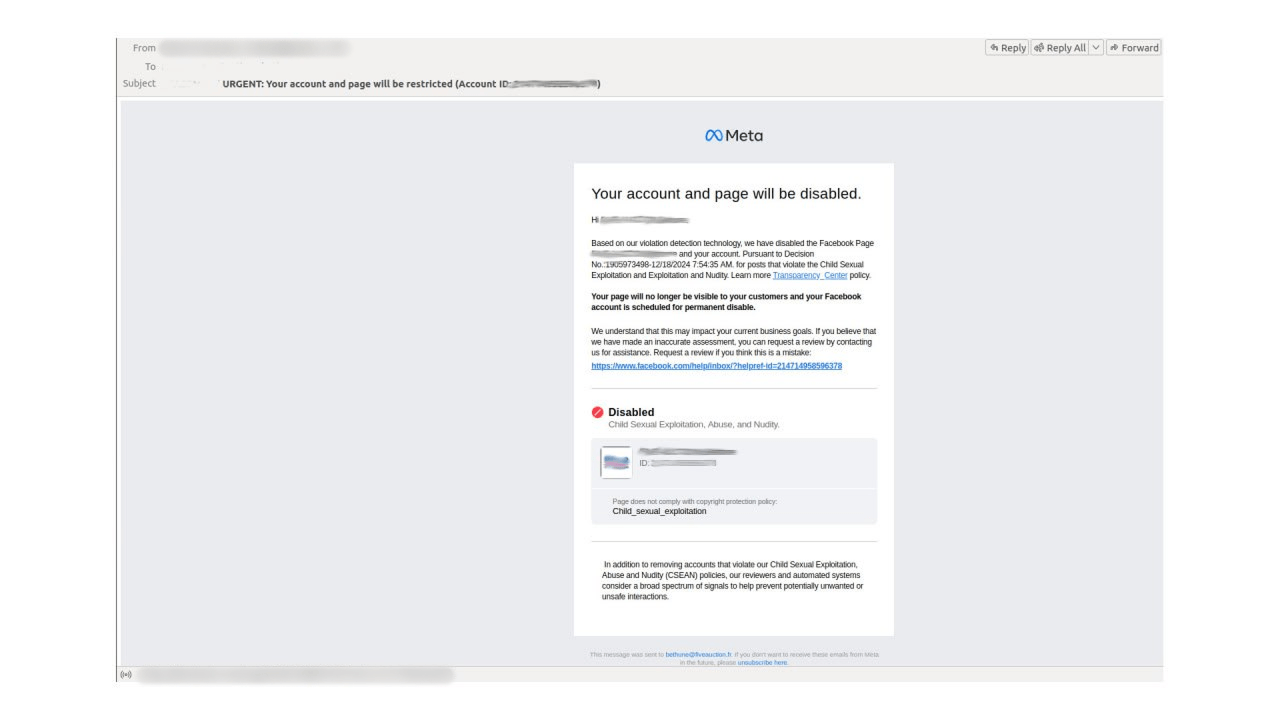
    We also found phishing emails containing legitimate Facebook links in October 2024, but this time without using the platform’s infrastructure. These emails contained notifications of lawsuits for copyright infringement and the removal of unlawful posts from the recipient’s profile. The target was warned that their personal and business pages would be blocked within 24 hours, pressuring them to take hasty and careless action.

    However, they were immediately offered the chance to appeal by contacting the “Appeal Support Center.” The link in the email led to a phishing site disguised as Meta’s support service, where the victim was also asked to enter their profile password. To make the phishing link more convincing, a legitimate mechanism for redirecting users to external Facebook resources was used.

    At the end of 2024, we noticed an email campaign targeting companies promoting their business pages on Facebook. These emails mimicked official Meta for Business notifications and threatened to block the user’s account and business page for violating the platform’s rules and community policies.

    To dispute these accusations, the fraudsters urged the profile owners to click a link to contact “Facebook support” in a legitimate messenger. However, in reality, the victim was communicating with the owner of a fan page called “Content Moderation Center,” imitating an official support service employee. The scam could have been identified by the “Fan Page” label in the chat, though it was easy to miss.

    News agenda

    In 2024, scammers continued to exploit news agenda in spam campaigns.

    During the UEFA Euro 2024 football championship in Germany, emails began to appear offering merchandise with UEFA EURO 2024 logos.

    After Pavel Durov’s arrest in Paris, we noticed English-language messages calling for donations to supposedly fund his legal defense.

    In the fall of last year, a scam campaign began circulating, offering not-yet-released MacBook Pro M4 devices at low prices or even for free. The links in these emails led to fake websites imitating major marketplaces.

    Before Black Friday, we recorded a surge in spam offering exclusive discounts. The links in these messages lured victims to sites disguised as marketplaces, electronics stores, and financial institutions.

    B2B spam campaigns

    Online promotion services

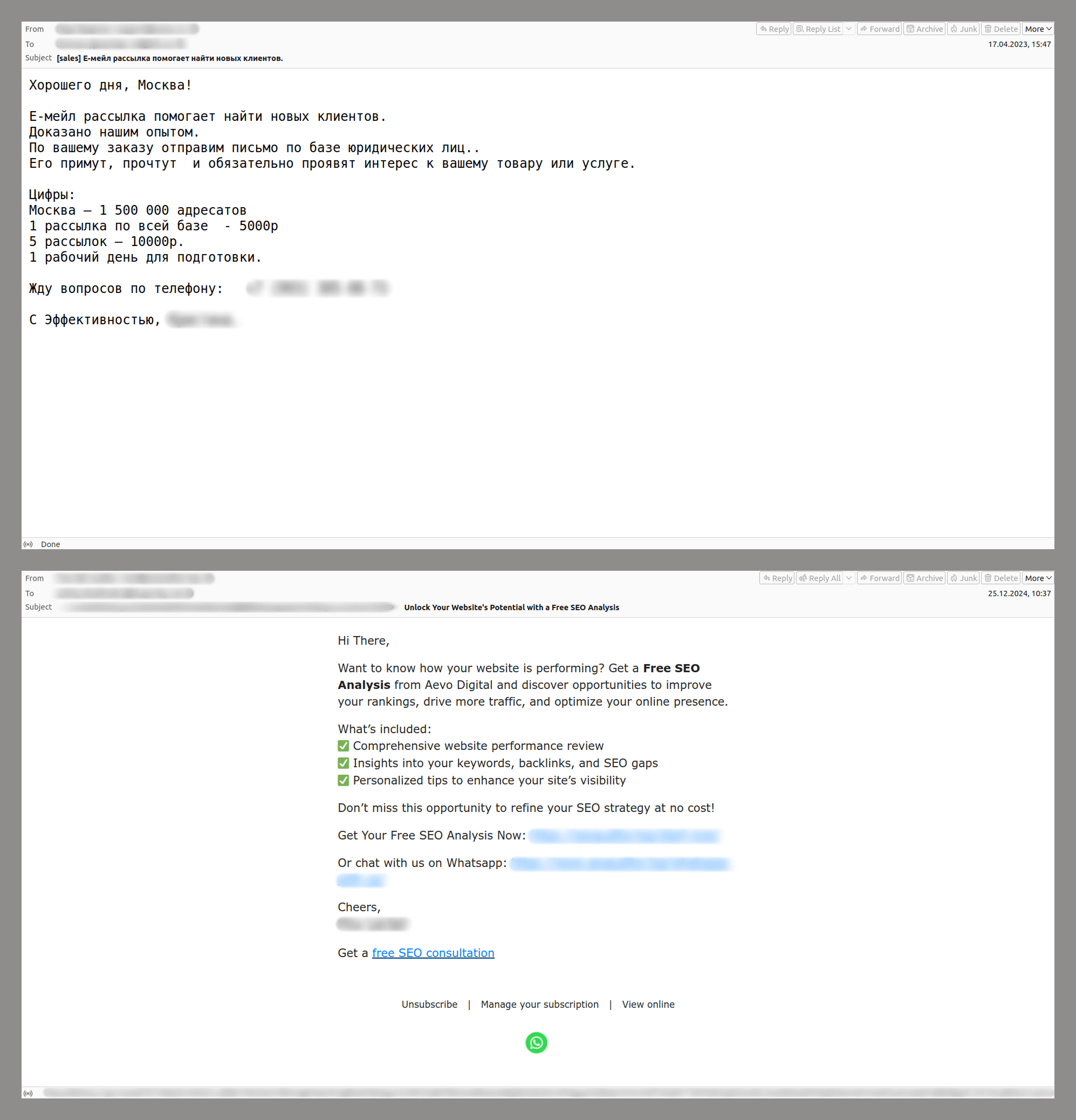
    One of the most common categories of spam email in 2024, complained of frequently by our corporate clients, was commercial offers for online promotion. Users were offered services such as creating or redesigning websites, setting up SEO tools, and purchasing databases with potential client contacts and other information. Other advertised services included guest post placement with backlinks to the client’s site, writing positive reviews, removing negative reviews, and creating personalized email campaigns. While these messages are not malicious or fraudulent, they are mass-distributed and unsolicited, causing inconvenience to users. The popularity of this type of spam is likely driven by the development of digital marketing tools and the search for new clients for small- and medium-sized businesses amid growing online competition.

    Buying likes and followers on social media

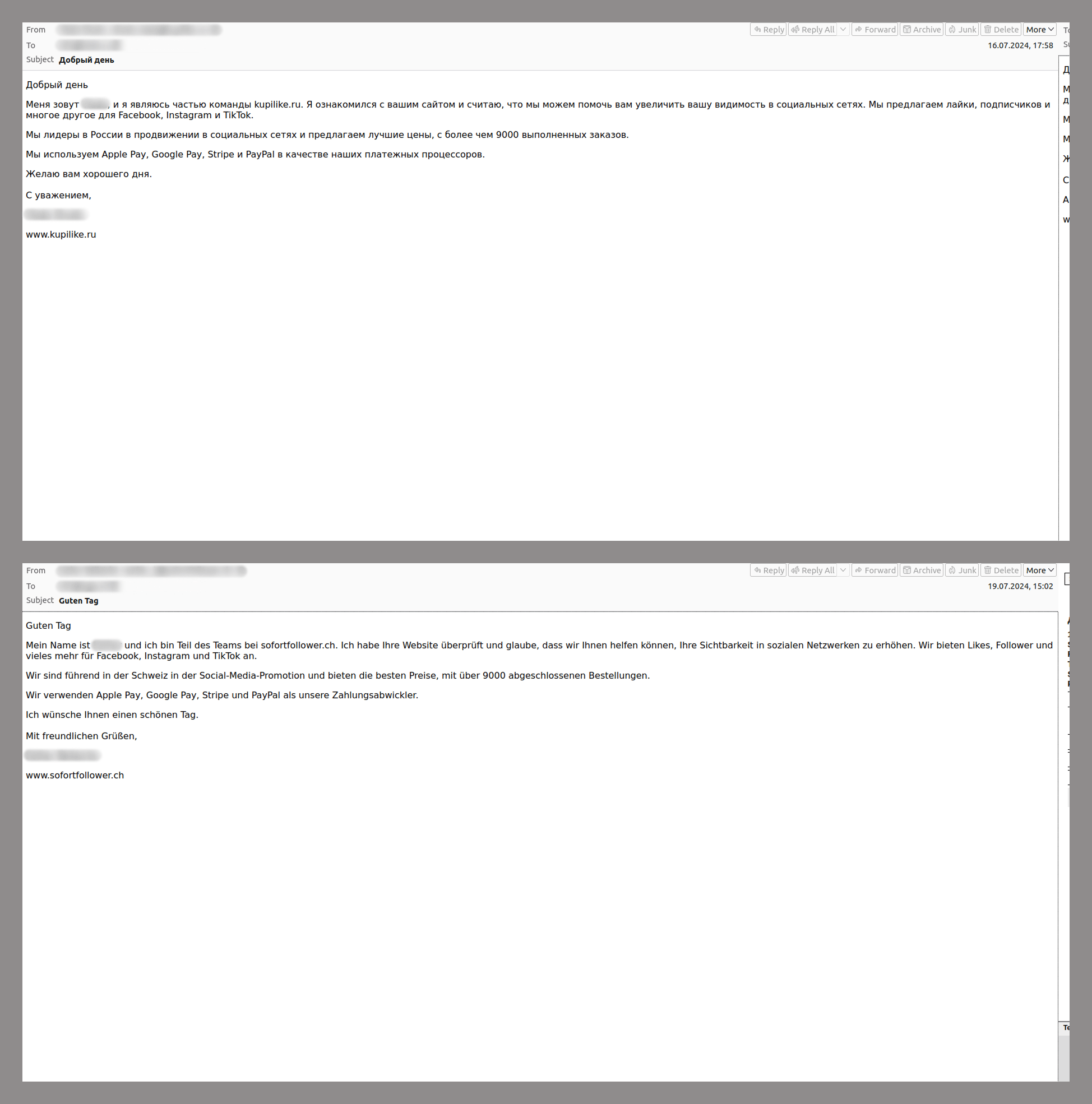
    We also frequently encountered business offers for the online promotion of company accounts on social media. Spammers sell fake likes and followers. They often pose as employees of real social media marketing firms, claiming to be industry leaders. At the end of their emails, the spammers included a link to a marketing platform and payment options for their services. One such campaign, which we observed throughout the past year and is still active, stood out due to the variety of languages used in the emails and the diversity of domain names. With these tactics, the spammers aimed to reach a global audience.

    AI in B2B emails

    The growing popularity of neural networks has led companies to actively integrate AI into their business processes. We assume that clients of such organizations, in turn, are drawn to service offers that incorporate neural networks. As a natural consequence of this trend, AI-driven solutions began appearing in spam campaigns advertising online marketing services.

    Spammers emphasized using AI, particularly ChatGPT, to perform various business tasks. We identified the following themes in these emails:

    • Attracting website traffic
    • Creating advanced lead generation strategies
    • Developing unique approaches tailored to a brand’s identity
    • Producing and publishing content
    • Launching personalized multi-channel marketing campaigns
    • Creating custom videos for YouTube channels

    Other topics also appeared in spam emails, but they all shared the same goal—enhancing business processes and attracting potential clients.

    Another particularly popular category of spam related to neural networks was advertising online events. Last year, we encountered numerous examples of emails promoting webinars about the promising capabilities and practical applications of AI in business operations.

    Targeted phishing in 2024

    In 2024, two main trends were observed in targeted phishing:

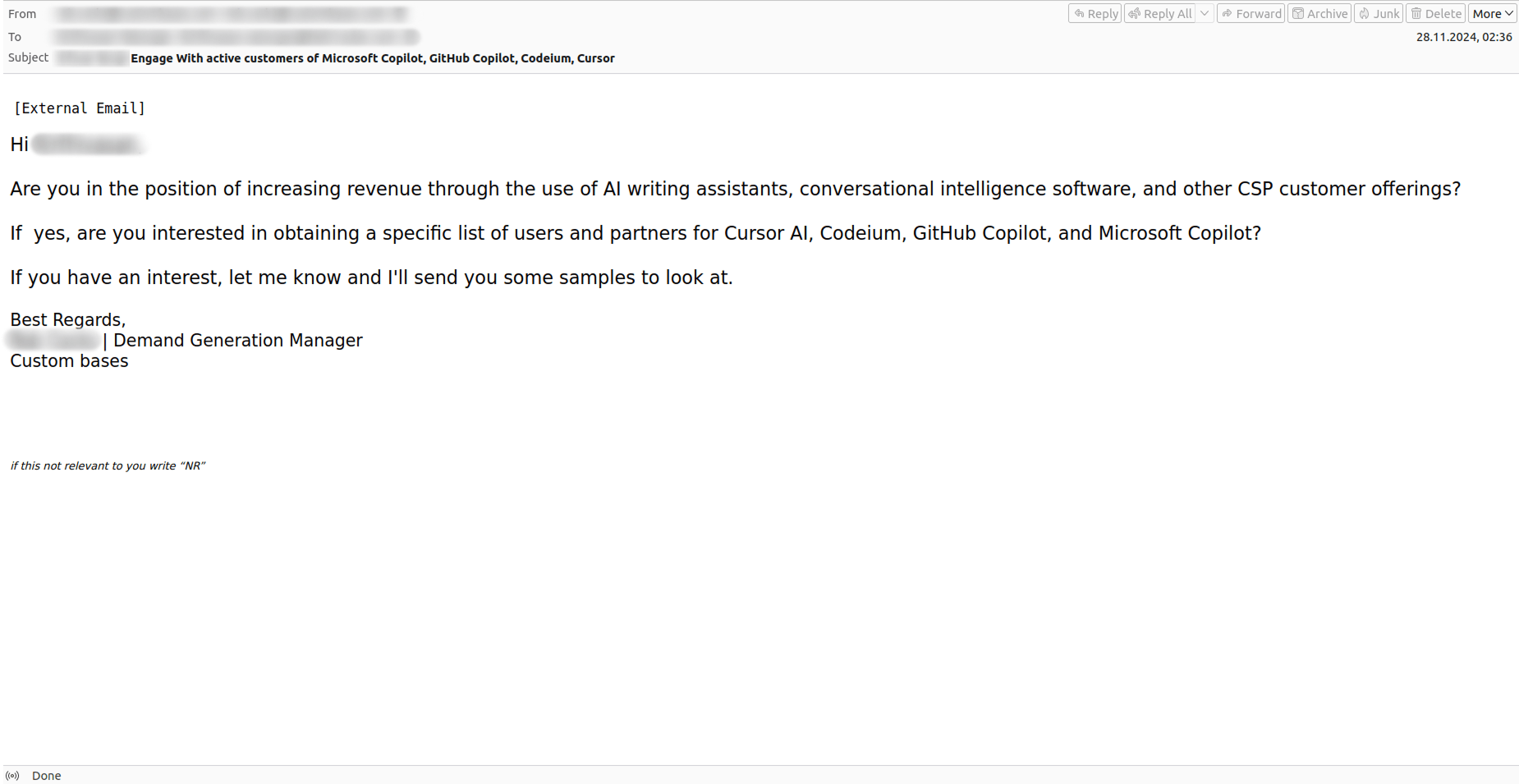
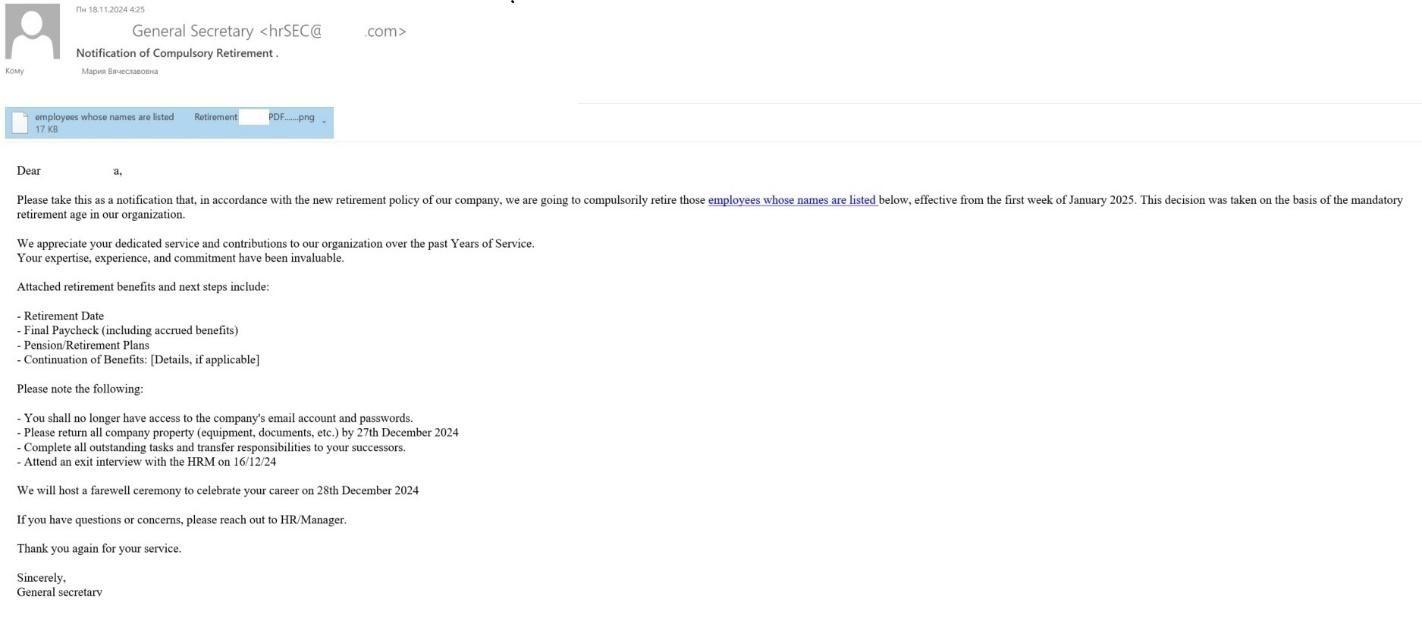
    1. Notifications on behalf of a company’s HR department. Employees were asked to fill out or sign a document, such as a vacation schedule, accessible via a link in an email. Sometimes, instead of routine requests, attackers resorted to more extravagant tactics—such as inviting employees to check if they were on a list of staff to be dismissed.

    Phishing email from HR

    In all these cases, the common factor was that clicking the link led the employee to a phishing login page instead of the actual corporate portal. Most often, attackers targeted Microsoft accounts, though some phishing forms mimicked internal corporate resources.

    Fake login form

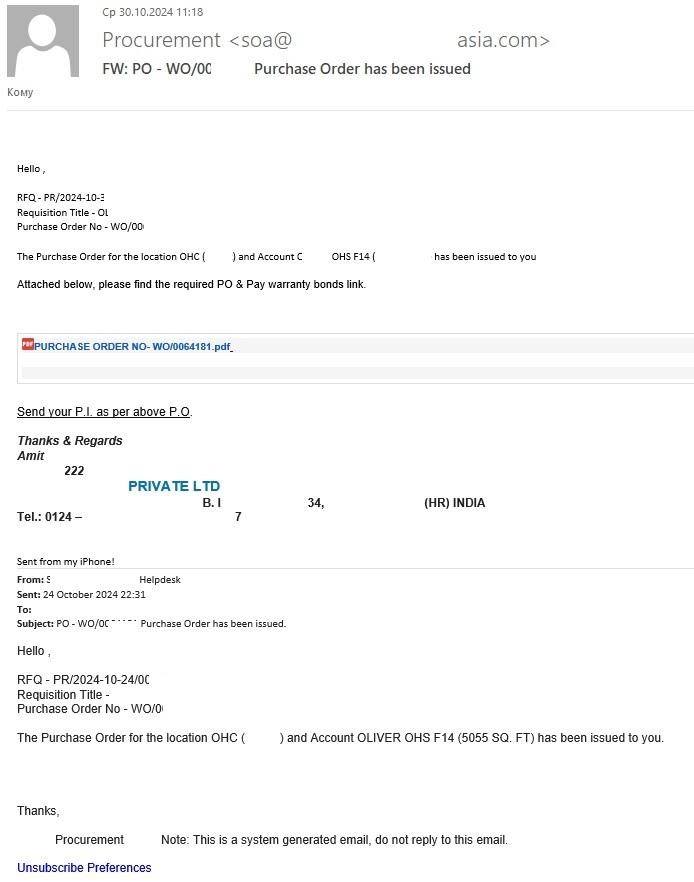
    1. Emails from a seller to a buyer, or vice versa. One common scheme involved a buyer or seller asking the victim to review an offer or respond to questions about product delivery and required specifications. These emails contained attached documents that actually concealed phishing links.

    Example of a phishing email from a seller

    When attempting to open the attachment, the user was redirected to a phishing page. As in the previous case, these fake forms harvested Microsoft credentials and corporate account logins.

    Fake password entry form

    Statistics: phishing

    The number of phishing attacks in 2024 increased compared to the previous year. Kaspersky solutions blocked 893,216,170 attempts to follow phishing links—26% more than in 2023.

    Number of Anti-Phishing triggerings, 2024 (download)

    Map of phishing attacks

    Users from Peru (19.06%) encountered phishing most often. Greece (18.21%) ranked second, followed by Vietnam (17.53%) and Madagascar (17.17%). They are closely followed by Ecuador (16.90%), Lesotho (16.87%) and Somalia (16.70%). The final places in the TOP 10 are occupied by Brunei (16.55%), Tunisia (16.51%) and Kenya (16.38%).

    Country/territory Share of attacked users*
    Peru 19.06
    Greece 18.21
    Vietnam 17.53
    Madagascar 17.17
    Ecuador 16.90
    Lesotho 16.87
    Somalia 16.70
    Brunei 16.55
    Tunisia 16.51
    Kenya 16.38

    * Share of users who encountered phishing out of the total number of Kaspersky users in the country/territory, 2024

    Top-level domains

    The most common domain zone hosting phishing sites remains the COM zone (29.78%)—its popularity has increased one and a half times compared to 2023. In second place is the XYZ domain (7.10%), which ranked fifth last year, followed by TOP (6.97%), which retained its position in the top ten. Next, with a slight margin from each other, are the ONLINE (4.25%) and SITE (3.87%) domain zones, where phishing sites were less actively hosted last year. The Russian RU domain (2.23%) and the global NET domain (2.02%) are in sixth and seventh place, respectively. Following them are CLICK (1.41%) and INFO (1.35%)—the year before, these zones were not frequently used. Closing the top ten is another national domain: UK, with a share of 1.33%.

    Most frequent top-level domains for phishing pages, 2024 (download)

    Organizations targeted by phishing attacks

    The rating of organizations targeted by phishers is based on the detections of the deterministic component in the Anti-Phishing system on user computers. The component detects all pages with phishing content that the user has tried to open by following a link in an email message or on the web, as long as links to these pages are present in the Kaspersky database.

    In 2024, the highest number of attempts to access phishing links blocked by Kaspersky solutions was associated with pages imitating various web services (15.75%), surpassing global internet portals (13.88%), which held the top position in 2023. The third and fourth positions in last year’s top ten also swapped places: banks moved ahead (12.86%), overtaking online stores at 11.52%. Attackers were also interested in social media (8.35%) and messengers (7.98%): attacks targeting them strengthened their positions in the ranking. For websites imitating delivery services, we observed a decline in phishing activity (6.55%), while the share of payment systems remained unchanged at 5.82%. Also included in the list of the most frequently targeted organizations were online games (5.31%) and blogs (3.75%).

    Distribution of organizations targeted by phishers, by category, 2024 (download)

    Statistics: spam

    Share of spam in email traffic

    In 2024, spam emails accounted for 47.27% of the total global email traffic, an increase of 1.27 p.p. compared to the previous year. The lowest spam levels were recorded in October and November, with average shares dropping to 45.33% and 45.20%, respectively. In December, we observed a seemingly slight upward trend in junk emails, resulting in the fourth quarter of the year being the calmest. Spam activity peaked in the summer, with the highest number of emails recorded in June (49.52%) and July (49.27%).

    Share of spam in global email traffic, 2024 (download)

    In the Russian internet segment, the average spam share exceeded the global figure, reaching 48.57%, which is 1.98 p.p. higher than in 2023. As in the rest of the world, spammers were least active at the end of the year: in the fourth quarter, 45.14% of emails were spam. However, unlike global trends, in Runet, we recorded four months during which the spam share exceeded half of all traffic: March (51.01%), June (51.53%), July (51.02%), and September (51.25%). These figures identified the third quarter as the most active, with a share of 50.46%. December was the calmest month, and interestingly, despite spam levels being generally high or the same in Russia, the number of spam emails in December was lower than the global figure: 44.56%.

    Share of spam in Runet email traffic, 2024 (download)

    Countries and territories where spam originated

    We continue to observe an increase in the share of spam sent from Russia—from 31.45% to 36.18%. The United States and mainland China, which held second and third place last year, swapped positions, with China’s share increasing by 6 p.p. (17.11%) and the US share decreasing by 3 p.p. (8.40%). Kazakhstan, which entered the top twenty for the first time last year, rose from eighth to fourth place (3.82%), pushing Japan (2.93%) down, and causing Germany, previously in fifth place, to drop one position with a share of 2.10%. India’s share slightly decreased, but the country moved up two positions from last year to seventh place. Conversely, the amount of spam sent from Hong Kong more than doubled (1.75%), allowing this territory to take eighth place in the top twenty. Next come Brazil (1.44%) and the Netherlands (1.25%), whose shares continued to decline.

    TOP 20 countries and territories where spam originated in 2024 (download)

    Malicious email attachments

    In 2024, Kaspersky solutions detected 125,521,794 attempts to open malicious email attachments, ten million fewer than the previous year. Interestingly, one of the peaks in email antivirus detections occurred in April—in contrast to 2023, when this month had the lowest malicious activity. In January and December, we observed a relative decrease in detections, while increases were noted in spring and autumn.

    Number of email antivirus detections, 2024 (download)

    The most common malicious email attachments were Agensla stealers (6.51%), which ranked second last year. Next were Badun Trojans (4.51%), which spread in archives disguised as electronic documents. The Makoob family moved from eighth to third place (3.96%), displacing the Noon spyware (3.62%), which collects browser passwords and keystrokes. The malicious Badur PDFs, the most common attachments in 2023, dropped to fifth place with a 3.48% share, followed by phishing HTML forms from the Hoax.HTML.Phish family (2.93%). Next in line were Strab spyware Trojans (2.85%), capable of tracking keystrokes, taking screenshots, and performing other typical spyware actions. Rounding out the top ten were SAgent VBS scripts (2.75%), which were not as actively used last year, the Taskun family (2.75%), which maintained its previous share, and PDF documents containing phishing links, Hoax.PDF.Phish (2.11%).

    TOP 10 malware families distributed as email attachments, 2024 (download)

    The list of the most widespread malware reflects trends similar to the distribution of families, with a few exceptions: the Hoax.HTML.Phish variant of malicious HTML forms dropped two positions (2.20%), and instead of a specific Strab Trojan sample, the top ten included the ISO image Trojan.Win32.ISO.gen, distributed via email (1.39%).

    TOP 10 malicious programs distributed as email attachments, 2024 (download)

    Countries and territories targeted by malicious mailings

    In 2024, users in Russia continued to face malicious email attachments more frequently than other countries, although the share of email antivirus detections in this country decreased compared to last year, to 11.37%. China ranked second (10.96%), re-entering the top twenty after several years. Next came Spain (8.32%), Mexico (5.73%), and Turkey (5.05%), which dropped one position each with a slight decline in malicious attachments. Switzerland (4.82%) took sixth place, appearing in the ranking for the first time. Following them were Vietnam (3.68%), whose share declined, and the UAE (3.24%), which strengthened its position in the ranking. Also among frequent targets of malicious spam were users from Malaysia (2.99%) and Italy (2.54%).

    TOP 20 countries and territories targeted by malicious mailings, 2024 (download)

    Conclusion

    Political and economic crises will continue to provide new pretexts for fraudulent schemes. In some cases presented in the 2024 report, we can observe the “greed” of cybercriminals: the use of two different company brands on the same page; a credible fake of a resource aimed not at stealing credentials but at stealing money; comprehensive questionnaires that can lead not only to loss of access to funds but also to identity theft. Such multi-layered threats may become a new trend in phishing and scam attacks.

    We continue to observe major news events being exploited in spam campaigns that promise easy earnings and discounted goods or services. The growing user interest in artificial intelligence tools is actively being leveraged by spammers to attract an audience, and this trend will undoubtedly continue.

    MIL OSI Economics

  • MIL-OSI Asia-Pac: HK committed to Web3 ecosystem

    Source: Hong Kong Information Services

    Financial Secretary Paul Chan

    It is my pleasure to be here at Consensus Hong Kong 2025. Let me begin by expressing my heartfelt gratitude to CoinDesk for choosing Hong Kong as the first Asian city for hosting this iconic conference. Your decision underscores Hong Kong’s growing prominence as a global hub for Web3 and crypto innovation. This event also reflects our commitment to building a thriving digital asset ecosystem.

    Vast potential of Web3 and AI

    Consensus 2025 is a congregation of Web3 talent from around the world, and its agenda reflects the most pressing topics and trends in the Web3 space today. From the convergence of AI and blockchain to the tokenisation of real-world assets (RWA), crypto and consumers, and DeFi 2.0 (decentralised finance), the discussions here are set to shape the future landscape of digital finance and the digital economy.

    One of the most exciting developments is, of course, the intersection of AI and blockchain, where decentralised AI can unlock many new applications and opportunities. For example, AI can assist blockchain platforms in performing more accurate credit assessments, improving smart contract audits, providing tailored investment advice, and more.

    Globally, the application of Web3 in finance is gaining traction. Blockchain innovations not just reduce transaction costs but also enhance market transparency, and the efficiency and accessibility of financial services. Indeed, we are seeing more institutional adoption where traditional banks, asset managers and brokers increasingly integrate digital assets into their offerings. The benefits are clear. The World Economic Forum, for example, estimates that financial institutions could free up some US$100 billion per year by leveraging distributed ledger technology for collateral management.

    Hong Kong, with its advanced financial infrastructure and robust regulatory environment, is at the forefront of this transformation. Hong Kong has already made history by issuing the world’s first tokenised government green bonds in 2023, followed by a groundbreaking multi-currency issuance in 2024.

    Beyond finance, Web3 plus AI innovations are inspiring a host of applications in the real economy. From streamlining supply chain management to enhancing game players’ experience; and from improving healthcare management to making agricultural and industrial production more intelligent, they are empowering and transforming business operations and public services.

    Rapid tech innovation does not come without challenges. Often, the progress of innovation outpaces regulatory response, creating gaps that can lead to substantial risks. The fallout from several crypto exchanges’ failures in recent years serves as vivid reminders that we must pay attention to market integrity, investor protection, money laundering and cybersecurity risks, as financial products and services continue to innovate and digitalise.

    On a positive note, the history of financial innovations shows that we learnt and adapted fast, and put in better guardrails and became more resilient. The key to success lies in maintaining an open, fair, balanced and forward-looking regulatory approach that is conducive to the sustainable and responsible development of financial innovation, including Web3.

    Hong Kong’s unparalleled advantages

    This is the path taken by Hong Kong. While some major jurisdictions have recently begun to embrace cryptocurrencies, which has undoubtedly fuelled a boom of the crypto market, Hong Kong stands out as a market with consistent, predictable, forward-looking policies, and a balanced regulatory framework. For innovators and companies committed to building the future of Web3, or financial institutions looking to bridge traditional and digital finance, Hong Kong is where you want to be.

    Our regime is premised on the “same activity, same risk, same regulation” principle, which ensures a level playing field for all market participants. In this regard, Hong Kong has already put in place a licensing regime for digital asset trading platforms. Our Securities & Futures Commission has already issued nine such licences, with more in the pipeline. We are also advancing on the regulation of stable coins, and have introduced the relevant piece of legislation.

    To facilitate further innovation, regulatory sandboxes have been set up by our regulators to allow innovators to test and refine their ideas, and to get early regulatory feedback. Besides, initiatives like the Hong Kong Monetary Authority’s Project Ensemble are accelerating the development of tokenisation ecosystems, covering RWAs like fixed income, investment funds, green finance and trade finance.

    Indeed, this pro-innovation and collaborative regulatory approach is a unique value proposition of Hong Kong to Web3 innovators and participants.

    AI is constantly evolving and increasingly applied to finance. Its convergence with blockchain will create more use cases, with both new opportunities to be captured, and challenges to be addressed. Hong Kong has set out a clear policy stance on the use of AI in financial services. The Government and financial regulators are working closely with the industry to monitor technology and market development and establish a transparent supervisory framework.

    Hong Kong’s commitment to Web3 extends beyond regulation. We are investing heavily in the related infrastructure and talent development. Our Cyberport and Science Park have become vibrant hubs for Web3 innovation and fintech, while our universities and partnerships with the industry are nurturing generations of blockchain experts. Through talent admission schemes, we are also attracting top-notch professionals from around the world, ensuring that Hong Kong remains at the cutting edge of technological advancement.

    Concluding remarks

    Ladies and gentlemen, while the tides of change may ebb and flow, the quest for innovation has never stopped. The digital asset market today may somewhat resemble the early days of all great transformative paradigms: as new frontiers emerge, there will always be champions of progress and cautious observers. What remains true is that the market ultimately rewards those who dare to innovate, and adapt and persevere.

    The tides of change are upon us, and Hong Kong is ready to ride the wave. As the Web3 ecosystem continues to evolve, Hong Kong will remain a stable, open and vibrant market for digital assets. I am confident that global companies and institutions will join force with us to lead its development.

    Once again, my heartfelt thanks to CoinDesk for hosting this event in Hong Kong. I wish you all a productive and inspiring event over the next two days. And do remember to take some time to enjoy Hong Kong, Asia’s world city. Thank you.

    Financial Secretary Paul Chan gave these remarks at Consensus Hong Kong 2025 on February 19.

    MIL OSI Asia Pacific News

  • MIL-OSI Security: USCGC Clarence Sutphin Jr. Rescues Seven Mariners

    Source: United States Naval Central Command

    U.S. CENTRAL COMMAND AREA OF RESPONSIBILITY —

    Crewmembers of the U.S. Coast Guard fast-response cutter USCGC Clarence Sutphin, Jr. (WPC-1147) and the mine countermeasures ship USS Devastator (MCM 6) rescued seven mariners from a disabled vessel in the international waters of the Central Arabian Gulf, Feb. 18.

    Following a distress signal from the mariners, the Coastguardsmen embarked a rigid-hull inflatable boat to offer assistance. After determining the vessel was no longer sea worthy, the Coastguardsmen brought the mariners back to their ship. Devastator provided back-up support during the operation.

    None of the mariners appeared to be injured.

    “Providing assistance at sea to mariners in distress is a core Coast Guard mission,” said Coast Guard Lt. Michael O’Dell, Clarence Sutphin, Jr.’s commanding officer. “It is inherently dangerous, but the team executed without hesitation – without fear – to extend their compassion to people in a dire situation. I’m incredibly proud of to be a part of this team.”

    Clarence Sutphin, Jr. is forward deployed to the U.S. 5th Fleet area of operations as part of Patrol Forces Southwest Asia. Devastator is an Avenger-class mine countermeasures ship also forward deployed to U.S. 5th Fleet. Both ships help ensure maritime security and stability in the Middle East region.

    The U.S. 5th Fleet area of operations encompasses about 2.5 million square miles of water area and includes the Arabian Gulf, Gulf of Oman, Red Sea and parts of the Indian Ocean. The expanse is comprised of 20 countries and includes three critical choke points at the Strait of Hormuz, the Suez Canal and the Strait of Bab al Mandeb at the southern tip of Yemen.

    MIL Security OSI

  • MIL-OSI: MFH’s Majority-Owned Subsidiary Aifinity Base Limited Plans to Manufacture Advanced Liquid Cooling Solutions for Nvidia® Chip-Powered AI Data Centers and High-Performance Computing

    Source: GlobeNewswire (MIL-OSI)

    NEW YORK, Feb. 19, 2025 (GLOBE NEWSWIRE) — Mercurity Fintech Holding Inc. (the “Company,” “we,” “us,” “our company,” or “MFH”) (Nasdaq: MFH), a digital fintech group, today announced the formation of a majority-owned subsidiary in Hong Kong, Aifinity Base Limited (“Aifinity”). Aifinity plans to manufacture advanced liquid cooling panels specifically tailored for artificial intelligence (AI) infrastructure, high-performance computing (HPC), and more specifically, to improve the efficiency and performance of Nvidia® chip-powered GPUs and other high-performance AI accelerators.

    Aifinity Base Limited, will focus on addressing the growing challenge of managing heat in increasingly powerful artificial intelligence (“AI”) systems. By combining innovative liquid cooling technology with smart, easy-to-deploy components, Aifinity intends to manufacture cooling panels to handle the intense heat generated by modern AI computing systems, provided that it can install its manufacturing machinery and equipment properly and timely. In the future, Aifinity aims to expand the cooling panel manufacturing further into comprehensive cooling solutions.

    Aifinity’s Strategic Focus Areas:

    • Next-generation liquid cooling technologies for AI infrastructure and high-density computing
    • Advanced manifold cooling systems optimized for AI accelerators
    • Quick-coupling solutions for efficient cooling system deployment
    • High-efficiency cooling components for data center operations
    • Comprehensive thermal management solutions for AI clusters

    Market Opportunity and Growth Strategy

    With the exponential growth in AI computing power and the increasing adoption of high-performance GPUs, Aifinity believes that the demand for advanced thermal management solutions has never been greater. The Company views this environment as a great opportunity to provide a comprehensive approach that spans customized cooling solutions for diverse AI computing environments, integrated smart monitoring systems for optimal performance, and energy-efficient designs that significantly reduce operating costs. Aifinity plans to leverage its holding company’s network to work closely with leading hardware manufacturers to develop optimized cooling solutions that address the specific needs of next-generation AI infrastructure.

    “Today’s AI systems generate intense heat, and they need cooling solutions that can keep up,” said Shi Qiu, CEO of the Company, the parent company of Aifinity. “Through Aifinity Base Limited, we would like to enter into the thermal management industry and later arrive at the forefront of thermal management innovation.”

    About Mercurity Fintech Holding Inc.
    Mercurity Fintech Holding Inc. is a digital fintech company with subsidiaries specializing in distributed computing, business consulting and financial brokerage business. Our dedication to compliance, innovation, and operational excellence ensures that we remain a trusted partner in the rapidly transforming digital financial landscape. For more information, please visit the Company’s website at https://mercurityfintech.com.

    Forward-Looking Statements
    This announcement contains forward-looking statements within the meaning of the safe harbor provisions of the Private Securities Litigation Reform Act of 1995. All statements other than statements of historical fact in this announcement are forward-looking statements. These forward-looking statements involve known and unknown risks and uncertainties and are based on current expectations and projections about future events and financial trends that the Company believes may affect its financial condition, results of operations, business strategy and financial needs. Investors can identify these forward-looking statements by words or phrases such as “may,” “will,” “expect,” “anticipate,” “aim,” “estimate,” “intend,” “plan,” “believe,” “potential,” “continue,” “is/are likely to” or other similar expressions. The Company undertakes no obligation to update forward-looking statements to reflect subsequent occurring events or circumstances, or changes in its expectations, except as may be required by law. Although the Company believes that the expectations expressed in these forward-looking statements are reasonable, it cannot assure you that such expectations will turn out to be correct, and the Company cautions investors that actual results may differ materially from the anticipated results.

    For more information, please contact:
    International Elite Capital Inc.
    Vicky Chueng
    Tel: +1(646) 866-7989
    Email: mfhfintech@iecapitalusa.com

    The MIL Network

  • MIL-OSI Economics: Panasonic Wins Appeal Case Filed by Dyson Regarding Nanocare EH-NA0G Hair Dryer

    Source: Panasonic

    Headline: Panasonic Wins Appeal Case Filed by Dyson Regarding Nanocare EH-NA0G Hair Dryer

    Osaka, Japan – Panasonic Corporation (“Panasonic”) announced today (February 19, 2025) that the Intellectual Property High Court of Japan delivered a judgment dismissing the appeal (the “Appeal Court Decision”) regarding a lawsuit brought by Dyson KK (“Dyson”) against Panasonic seeking an injunction against advertisements for the nanocare EH-NA0G Hair Dryer (the “Lawsuit”).
    Dyson filed the Lawsuit with the allegation that Panasonic’s advertisements for the nanocare EH-NA0G Hair Dryer were misleading for consumers and seeking an injunction against them. The court of first instance (Tokyo District Court) ruled on April 27, 2023, that the advertisements were not misleading for consumers and did not violate the Unfair Competition Prevention Act, but Dyson appealed the judgment to the court of second instance.
    The Appeal Court Decision fully upheld Panasonic’s arguments, stating that Panasonic’s experiments of the Hair Dryer are reasonable, and ruled that the advertisements are based on the results of such experiments. At the same time, the court noted that the Dyson’s experiment methodologies, even taken together with those for the second instance, are inappropriate, and judged all the Dyson’s appeals are baseless. Panasonic achieved a complete victory once again in the court of second instance.
    Nanoe technology is supported by long years of research and development and its value is highly appreciated by customers. Panasonic will continue to provide customers with correct information on the commercial value of nanocare hair dryers while adhering to pertinent laws, regulations, and guidelines.

    MIL OSI Economics

  • MIL-OSI China: ‘Ne Zha 2’ premieres in Hong Kong as box office surges

    Source: China State Council Information Office 3

    The much-awaited Chinese mainland’s animated blockbuster “Ne Zha 2” premiered on Tuesday night in Hong Kong and was scheduled to officially hit Hong Kong theaters on Saturday.

    A sequel to the 2019 hit “Ne Zha 1,” “Ne Zha 2” continues to build on the beloved Chinese mythology surrounding the character and has been celebrated as a milestone for Chinese animation. It has already garnered significant attention in both Hong Kong and Macao, breaking records for the number of distributors and daily screenings for a Chinese mainland film in Hong Kong.

    “We are honored to bring this world-class, phenomenon-level animation to Hong Kong and Macao, allowing viewers to experience the charm of Ne Zha in theaters,” said a representative with Emperor Motion Pictures, a co-distributor of the film, hoping that “Ne Zha 2” will be loved here as much as in the Chinese mainland.

    Since its release in the Chinese mainland during the Chinese New Year, “Ne Zha 2” has proved a smashing success at the box office, with total earnings worldwide, including pre-sales, surpassing 12.3 billion Chinese yuan (1.72 billion U.S. dollars) as of Tuesday evening.

    This figure positions the film ahead of “Inside Out 2,” making it the highest-grossing animated film globally. 

    MIL OSI China News

  • MIL-OSI Security: IAEA Director General Joins International Experts for Seawater Sampling Near Fukushima

    Source: International Atomic Energy Agency – IAEA

    International Atomic Energy Agency (IAEA) Director General Rafael Mariano Grossi joined scientists from the People’s Republic of China, the Republic of Korea, and Switzerland, along with IAEA experts, as they collected seawater samples near the Fukushima Daiichi nuclear power station. (Dean Calma/IAEA)

    International Atomic Energy Agency (IAEA) Director General Rafael Mariano Grossi joined scientists from the People’s Republic of China, the Republic of Korea, and Switzerland, along with IAEA experts, as they collected seawater samples near the Fukushima Daiichi nuclear power station (FDNPS) today.

    The activity is part of the additional measures established after China and Japan agreed to extend the sampling and testing of ALPS treated water which TEPCO – operator of the FDNPS – started to discharge in August 2023.

    The IAEA agreed with Japan in September to implement additional measures to facilitate the broader participation from other stakeholder countries in the monitoring of ALPS-treated water.

    “By welcoming countries to engage directly in sampling and analysis under the additional measures, Japan is increasing transparency, understanding, and trust, particularly in the region.” said Director General Grossi. “Through these efforts, third parties can independently verify that water discharge levels are, and will continue to be, in strict compliance and consistent with international safety standards.”

    During the sampling today, scientists from the Third Institute of Oceanography in China, the Korean Institute for Nuclear Safety in Republic of Korea and the Spiez Laboratory in Switzerland collected seawater samples from a boat in the vicinity of the FDNPS.

    Director General Grossi collected seawater samples from a boat in the vicinity of the FDNPS.

    The samples will be analysed by the IAEA laboratories in Monaco, by laboratories in Japan and in the participating laboratories from China, Korea and Switzerland, each members of the IAEA’s Analytical Laboratories for the Measurement of Environmental Radioactivity (ALMERA) network, chosen to ensure a high level of proficiency and expert data.

    “Additional measures focus on expanding international participation and transparency, allowing hands-on independent measurements of the concentration level of the water,” said Director General Grossi. “This work is conducted within agreed parameters set by the IAEA in its role as an independent, impartial and technical organisation.”

    Additionally, IAEA experts stationed at the Agency’s office at FDNPS conduct regular independent on-site analyses of the batches of treated water. The Agency has confirmed that the tritium level in the ten batches of ALPS treated water already released was far below Japan’s operational limit.

    The IAEA initiated the first practical steps of the additional measures in October last year when Agency staff carried out marine sampling with international experts from China, Republic of Korea and Switzerland.

    MIL Security OSI

  • MIL-OSI Asia-Pac: Car hailing regime in progress

    Source: Hong Kong Information Services

    The Government is working towards finalising a regulatory framework within this year, that aims to ensure car hailing platforms will provide safe and quality car services to the public.

    Commissioner for Transport Angela Lee made the remarks at a media session today after meeting representatives from the taxi trade on the regulation of ride hailing platforms.

    “We have been communicating closely with the taxi trade all along through the regular liaisons with the Transport Department.

    “As transpired at this morning’s meeting with the Transport Advisory Committee’s working group, we had a very good and constructive discussion on the views on how (online car) hailing platforms should be regulated in the future.

    “I think we heard quite a lot that most of the trade associations in the taxi industry actually support expressing views through a peaceful means and through established channels.”

    Ms Lee added that the working group will also meet representatives of car hailing platforms this afternoon.

    “The process, mainly, is for the working group to engage their views on the future regulation of car hailing platforms.

    “I think the overall objective is to ensure that the general public will have services of good quality, and they can safeguard their best interests.”

    MIL OSI Asia Pacific News

  • MIL-OSI Economics: Secretary-General of ASEAN officiates the Opening Ceremony of the Exhibition on ASEAN-Russia Cooperation in Civilian Nuclear Energy and Technologies

    Source: ASEAN

    Secretary-General of ASEAN, Dr. Kao Kim Hourn, today officiated the Opening Ceremony of the Exhibition on ASEAN-Russia Prospects of Cooperation in Civilian Nuclear Energy and Technologies, where he delivered remarks that welcomed greater collaboration with ASEAN’s partners in the area of civilian nuclear energy. This event highlights the partnership between ASEAN and Russia in advancing civilian nuclear energy as part of regional cooperation in energy, innovation, and technology.

    Download the full remarks here.

    The post Secretary-General of ASEAN officiates the Opening Ceremony of the Exhibition on ASEAN-Russia Cooperation in Civilian Nuclear Energy and Technologies appeared first on ASEAN Main Portal.

    MIL OSI Economics

  • MIL-OSI: Beincom Charts a Course for Community Growth and Innovation with 2025 Roadmap

    Source: GlobeNewswire (MIL-OSI)

    HO CHI MINH CITY, Vietnam, Feb. 19, 2025 (GLOBE NEWSWIRE) — Beincom, the social platform redefining how online communities connect and engage, recently unveiled an ambitious roadmap for 2025. Showcased at a recent event, the roadmap underscores Beincom’s commitment to fostering a vibrant ecosystem driven by user engagement and cutting-edge technology.

    The year 2025 promises to be transformative for Beincom, with key initiatives aimed at building a robust community and solidifying its place as a leader in the social networking space.

    Early 2025 will see Beincom officially operate as a fully integrated Web2-Web3 platform, moving beyond the ‘laying the foundation’ phase. All web3 features, including the highly anticipated $BIC token and $BIC Wallet, will be implemented on the mainnet, empowering users with new ways to interact and transact within the platform. Simultaneously, the debut of Beincom’s NFT marketplace will open doors for users to explore the exciting world of digital asset ownership.

    As 2025 progresses, Beincom will focus on expanding the utility of the $BIC token and exploring innovative revenue-generation models that benefit both the platform and its users. User experience remains paramount, with ongoing enhancements designed to make Beincom even more intuitive and enjoyable. The platform will also broaden the applications of NFTs, further integrating them into the Beincom experience.

    In the third quarter of 2025, Beincom plans a significant upgrade to the $MedalLegends platform and introduces integration between Group & Chat to strengthen community bonds and facilitate meaningful interactions.

    Culminating the year, Beincom will launch Deep-Ads and Token-Paid Direct Messaging (TPDM V1) features, offering novel approaches to advertising and creating more value-driven communication between users. The introduction of the Social Hub (V1) will further enhance Beincom’s ability to serve as a central hub for online communities, providing unparalleled tools and resources. As part of its ambitious plans, Beincom aims to host the “Community of the Year 2025 Awards”, continuing its tradition of honoring the most impactful communities on the platform.

    Beincom’s 2025 roadmap clearly signals its dedication to innovation and its vision for a future where online communities are more connected, empowered, and engaged than ever before.

    About Beincom:

    Beincom is a pioneering SocialFi platform on a mission to connect communities, provide real value, and promote creativity through blockchain technology. With a vision to become a leading “social hub”, Beincom is committed to continuously developing, innovating, and creating a sustainable ecosystem for its users.

    Register to become an early user of Beincom at: Sign Up

    For more details about Beincom, visit: X | Fanpage | Website

    Media contact:
    Beincom Global Ltd.
    Contact person: Mr. Nguyen Thuong – Associate Growth & Marketing Manager
    Email: marketing-growth@beincom.com

    Disclaimer: This content is provided by Beincom. The statements, views, and opinions expressed in this content are solely those of the sponsor and do not necessarily reflect the views of this media platform. We do not endorse, verify, or guarantee the accuracy, completeness, or reliability of any information presented. This content is for informational purposes only and should not be considered as financial, investment, or trading advice. Readers are strongly encouraged to conduct their own research and consult with a qualified financial advisor before investing in or trading cryptocurrency and securities .Please conduct your own research and invest at your own risk.

    Photos accompanying this announcement are available at:

    https://www.globenewswire.com/NewsRoom/AttachmentNg/f91dfbb1-90d4-4040-8b7a-f8078e0df232

    https://www.globenewswire.com/NewsRoom/AttachmentNg/34f0aa02-45f2-445b-bbaa-0b5c3fd8dc6a

    https://www.globenewswire.com/NewsRoom/AttachmentNg/cd0b2e10-2642-40c0-a297-1c425216e622

    The MIL Network

  • MIL-OSI Asia-Pac: TDC Chairman named

    Source: Hong Kong Information Services

    The Government today announced the appointment of Prof Frederick Ma to succeed Peter Lam as Chairman of the Trade Development Council from June 1, 2025, to May 31, 2027.

    Secretary for Commerce & Economic Development Algernon Yau said with extremely profound experience in public service as well as the commercial sector, Prof Ma is well suited for taking up the council chairmanship.

    Mr Yau expressed confidence that Prof Ma would lead the council to make every effort in assisting enterprises to embrace the challenges arising from the ever changing global trading landscape and actively tap new markets and business opportunities, with a view to further promoting Hong Kong’s development as an international trade centre.

    The commerce chief also thanked Mr Lam for his tremendous contributions during his tenure in promoting Hong Kong’s advantages and opportunities.

    He added that under Mr Lam’s chairmanship, the council has successfully promoted Hong Kong as a two way global investment and business hub and assisted Hong Kong companies in further exploring the business opportunities in the Mainland and overseas brought by the nation’s dual circulation strategy, with outstanding achievements particularly in promoting the city in the Guangdong-Hong Kong-Macao Greater Bay Area and emerging markets under the Belt & Road Initiative.

    MIL OSI Asia Pacific News

  • MIL-OSI China: ‘Ne Zha 2’ crowned world’s highest-grossing animated film

    Source: China State Council Information Office 3

    The record-breaking “Ne Zha 2” has now officially become the highest-grossing animated film of all time.

    A new poster to mark “Ne Zha 2” becoming the No. 1 animated film of all time. [Image courtesy of CMC Pictures]

    By Wednesday noon, the unstoppable Chinese animated sensation had grossed 12.42 billion yuan ($1.71 billion) worldwide according to Chinese box office tracker Maoyan Pro. This surpasses Disney and Pixar’s “Inside Out 2,” which claimed the top spot in animation history in 2024 by grossing $1.69 billion, per Box Office Mojo statistics. 

    As a result, “Ne Zha 2” has become the highest-grossing animated film globally and the eighth-highest-grossing film of all time, regardless of animation or live-action. Notably, it stands as the only Chinese or Asian film in a club dominated by Hollywood cinematic juggernauts.

    This is just one of many impressive milestones the film has achieved since its debut on Jan. 29, the first day of the Chinese New Year. Its accomplishments include becoming the highest-grossing Chinese film ever, the highest-grossing film in a single market globally, the first film to surpass $1 billion in a single market, and the first non-Hollywood film to enter the coveted billion-dollar club. 

    “Thanks to the support of countless audiences, we have been able to achieve these miraculous accomplishments,” said Wang Jing, executive producer of “Ne Zha 2,” during an event promoting movie-themed tourism on Feb. 17 at the China National Film Museum in Beijing. “Rooted in Chinese culture, ‘Ne Zha 2’ reflects the spirit of constant innovation and striving to move upward, embodied by Chinese animators, filmmakers and audiences, showcasing the brilliance of Chinese culture to the world.”

    “Congratulations to director Jiaozi and all Chinese animators,” said fellow animator Wang Yunfei, president of Its Cartoon Animation Studio. “Animation is an art form that creates new worlds and new life, which is why I still love it after 25 years in the industry.” Wang told China.org.cn that he hopes Chinese animators will embrace the belief that the journey itself is invaluable at this historic moment. “If you do not climb high mountains, you will not know how high the sky is. Keep your passion alive and continue forging ahead,” he said.

    A still from “Ne Zha 2.” [Image courtesy of Enlight Media]

    “Ne Zha 2” was developed over five years with a 4,000-strong team, featuring new characters, epic battle sequences and 1,900 special effects shots. In the film’s climactic battle, there are 200 million characters, showcasing wild imagination, a visual feast and immense workloads. The film involved the combined efforts of 138 Chinese animation and VFX companies, including teams that worked on previous animated hits and sci-fi blockbusters such as “Monkey King: Hero Is Back,” “Boonie Bears,” “Jiang Ziya: Legend of Deification” and “The Wandering Earth.”

    On social media, many animators who worked on the movie have expressed their excitement and happiness about joining the project, while a few also shared how exhausting the creative process was and how much of a perfectionist director Jiaozi is, challenging them to push their limits. Chen Xuguang, director of the Institute of Film, Television and Theatre at Peking University, noted that the film showcases the collaborative power of China’s creative ecosystem and signals an upgrade in both the film industry and its aesthetic standards.

    Wang Shiyong, founder and CEO of Wuhan-based 2:10 Animation, and his team contributed to many visually spectacular scenes in “Ne Zha 2.” He expressed pride in the film’s achievements and emphasized its significance to the Chinese animation industry. “The film’s outstanding box office performance will attract more investment and talent to the animation industry, injecting strong vitality into its development,” he said.

    As this world-class film climbs the global top 10 box office chart, its achievements have already stunned both domestic and international audiences, as well as industry insiders, showcasing the prowess and potential of Chinese cinema, culture and its market. Maoyan Pro analysts have now revised their projection for its total earnings to 15.1 billion yuan, which would be enough to place the film at No. 5 on the all-time global box office chart.

    The film drew significant international attention and interest after it opened overseas last week in North America, Australia, New Zealand, Fiji and Papua New Guinea. The film earned $7.2 million in North America from Feb. 14 through Sunday, setting a record for the highest opening weekend for any Chinese-language film in the past 20 years. Despite showing in only 660 theaters, it ranked No. 5 on the weekend chart, competing with Marvel’s “Captain America: Brave New World” which was shown in more than 4,000 theaters. In Australia, it secured third place with $1.5 million over the weekend.

    A new international poster to mark “Ne Zha 2.” [Image courtesy of Enlight Media]

    Both overseas critics and audiences have expressed their enjoyment of the movie. For example, critic Simon Abrams from RogerEbert.com wrote that “Ne Zha 2” is a “rare sequel that amplifies both its action and drama” without sacrificing much of what worked in the first movie, adding: “It’s also a rare blockbuster that offers something worthwhile for a wide-ranging audience.” Another critic, Fred Topel from Deadline.com, called the Chinese blockbuster “visually engaging,” noting that, “The rendering of martial arts battles is as graceful as DreamWorks Animation’s ‘Kung Fu Panda’ series. The myriad creatures should appeal to international fans of fantasy epics like ‘Game of Thrones’ and ‘The Lord of the Rings.’” On Rotten Tomatoes, its audience score has reached 99%, and on IMDb, it has also received an impressive 8.4/10 based on more than 4,300 user ratings.

    Distributors announced on Tuesday that the film will be released in China’s Hong Kong and Macao on Feb. 22, with plans to roll out in various international territories later this year, including Malaysia, Saudi Arabia, Japan and Greece.

    Additionally, “Ne Zha 2” is generating a ripple effect beyond movie theaters, showcasing how its positive influence extends to culture, tourism, catering, merchandise and stock markets, further boosting China’s vibrant consumption and dynamic economy.

    MIL OSI China News

  • MIL-OSI Economics: Building Resilience in Education Systems

    Source: Asia Development Bank

    In 2022, a flood in Bangladesh shut down 5,000 schools, disrupting the education of 1.5 million students. The COVID-19 pandemic forced school closures across Asia for more than a year, causing significant learning losses and reducing students’ future earning potential. As disasters, conflicts, and other crises become more frequent and severe, education systems must develop strategies to minimize their impact.

    Building Resilience in Education Systems presents 13 chapters on strengthening education system resilience, written specifically for policy makers and practitioners. The book examines diverse contexts, the sources of school disruptions, and key lessons learned. Featuring insights from Asia, Africa, and Latin America, it underscores that while solutions will vary by country, every nation can leverage its resources to build a more resilient education system.

    “In a world where greater unpredictability is what is most predictable, this volume is timely. The losses from the recent disruptions to education systems can be lessened if the world learns from them what has worked and what has not—and why. This volume brings together an excellent set of rigorously prepared chapters that will facilitate this learning.”

    — Emmanuel Jimenez 
    Director General, Independent Evaluation Department, Asian Development Bank

    MIL OSI Economics

  • MIL-OSI Economics: Samsung R&D Institute India, Bangalore inaugurates Samsung Innovation Campus at Karnataka’s First Women-Only Engineering College

    Source: Samsung

     
    Samsung R&D Institute India, Bangalore (SRI-B) inaugurated Samsung’s flagship global citizenship programme, the Samsung Innovation Campus (SIC), at Karnataka’s first all-women’s engineering college, Geetha Shishu Shikshana Sangha (GSSS) Institute of Engineering and Technology for Women, Mysore. This initiative underscores Samsung’s unwavering commitment to advancing gender equality in STEM and fostering a new generation of women leaders in technology.
     
    Launched in September 2022, the SIC programme comprises an extensive curriculum focused on core technology skills including Artificial Intelligence/Machine Learning, Big Data, and Coding & Programming, especially designed by Samsung’s global R&D experts to make India’s youth industry-ready. The students enrolled in this initiative will get an opportunity to undergo expert offline and online training at a classroom facility, and work on innovative projects under the guidance of mentors from SRI-B and GSSS Institute.
     
    “At Samsung, we believe innovation thrives when opportunities are inclusive. It brings us immense pride to inaugurate Samsung Innovation Campus (SIC) at Karnataka’s first women’s engineering college, a space where bright young minds will explore, experiment, and push the boundaries of technology. Aligned with the government’s #DigitalIndia and #MakeinIndia campaigns, it empowers students to drive technological progress from within the country. We look forward to moulding future women leaders as they create, innovate, and transform the world with technology,” said Mohan Rao Goli, Corporate Vice President and Managing Director, SRI-B.


    In 2024, Samsung Southwest Asia expanded its SIC reach by enrolling 3,500 students, up from 3,000 in 2023. Samsung’s ongoing commitment to corporate social responsibility, through initiatives such as SIC and Samsung Solve for Tomorrow (SFT), highlights its mission to nurture and train India’s future-tech leaders. Through these programmes, Samsung continues to support India’s youth, equipping them with the skills that not only advance their personal and professional growth but also empower India as a global technology hub.
     
    “Our collaboration with SRI-B ensures maximum impact, providing industry-relevant courses and niche skills, strong technical foundations, and practical exposure through capstone projects. This initiative reinforces our commitment to powering #DigitalIndia by bridging the digital skills gap and preparing women for the future workforce. Through a structured curriculum, the students will gain hands-on experience in problem-solving and emerging technologies, enhancing both employability and innovation. We deeply appreciate SRI-B for this invaluable partnership, which empowers young women technologists to drive technological advancements,” said Anupama B Pandit, Secretary, GSSS (R), Mysore.
     
    SRI-B has established SICs in seven other institutes in Karnataka, including BNM Institute of Technology, Cambridge Institute of Technology (Main & North Campuses), Don Bosco Institute of Technology, KLE Institute of Technology, RNS Institute of Technology (RNSIT) Bengaluru, as well as one in IIIT-Kurnool, training over 800 students with the necessary skills to secure relevant opportunities in the field of technology.

    MIL OSI Economics

  • MIL-OSI China: China unveils top archaeological discoveries of 2024

    Source: People’s Republic of China – State Council News

    BEIJING, Feb. 19 — Six significant archaeological sites in China were named the top new discoveries in 2024, announced Wednesday at an annual forum hosted by the Chinese Academy of Social Sciences.

    The Dadong paleolithic site in Helong City, Jilin Province, is among the honorees. This site is the largest and most culturally rich Upper Paleolithic discovery in northeast Asia, renowned for providing the region’s clearest and oldest cultural sequences.

    The Xiatang neolithic site in Xianju County, Zhejiang Province, is also on the list. This site is crucial evidence of China’s 10,000-year cultural history, providing new material for the study of regional cultural evolution and the history of rice farming.

    Another major discovery is the Wuwangdun Tomb in Huainan City, Anhui Province. This tomb is the largest, highest-ranking, and most complex burial site from the ancient Chu state, dating back over 2,200 years. The excavation offers valuable insights into burial practices and the culture of the Chu state, especially following its migration eastward.

    Other honored sites include the Siwa site in Gansu Province, which features a Majiayao culture settlement dating back about 5,000 years; the Zhouyuan site in Shaanxi Province, known for its large rammed-earth structures from the pre-Zhou Dynasty period; and the Jingdezhen ceramic industry sites in Jiangxi Province, which span more than 600 years and encompass the Yuan (1271-1368), Ming (1368-1644) and Qing (1636-1912) dynasties.

    The forum, first held in 2002, serves as a platform for announcing and exchanging the latest archaeological achievements and findings in China.

    MIL OSI China News

  • MIL-OSI Economics: Asian Development Blog: Get Moving: Smarter Logistics Can Boost Efficiency and Cut Costs in South Asia

    Source: Asia Development Bank

    Enhancing multimodal transport, standardization, and digital integration can improve efficiency, reduce costs, and strengthen manufacturing in India, Bangladesh, and Nepal’s logistics sectors.

    The logistics sectors of India, Bangladesh, and Nepal face remarkably similar constraints that are central to their governments’ plans to expand the industries that rely heavily on logistics. 

    In each country, roads – the most heavily used form of transport – are overburdened, leading to a variety of problems, including slow and unpredictable delivery times. A lack of standardization in warehousing facilities means time is wasted on unpacking and repacking pallets to fit shelving racks following different standards.

    Insufficient multimodal infrastructure means that cargo cannot easily move between trains, trucks, and ships. These hindrances affect both economies and the environment alike, in that an inefficient logistics sector is a cost borne by both consumers, in the form of higher product prices, and the environment, in the form of added emissions from idling vehicles.

    India, for its part, has made the most progress in recent years toward alleviating logistics inefficiencies in the service of its broader economy, particularly in manufacturing. 

    India’s logistics sector, once plagued by inefficiencies, is undergoing a positive transformation. With a market size of approximately $200 billion, India transports 4.6 billion tons of freight annually. 

    The sector is projected to double in size by 2030, driven by aggressive expansion in road, rail, shipping and air freight. Recent improvements in road infrastructure, dedicated freight corridors and use of technological advancements in the logistics supply chain have set the stage for a more efficient logistics network. 

    India’s logistics sector now includes all key components needed for a modern economy, such as seamless transport across different modes (road, rail, air, and sea), efficient customs processing for domestic and international trade, and better management of ports, airports, and land borders. 

    From that and other significant policy reforms, India’s manufacturing sector has been on a steady growth trajectory, underpinned by significant policy and infrastructural reforms including in its logistics sector. India continues to experience rapid growth in its Manufacturing Purchasing Managers’ Index (PMI). 

    The latest Manufacturing PMI for December 2024 remains firmly within the expansionary zone, fueled by new business gains and robust demand. According to the RBI’s Industrial Outlook Survey, manufacturing firms anticipate further enhancements in Q4 FY25 and Q1 FY26. 

    India’s export landscape has also undergone substantial growth, with merchandise and services exports increasing significantly over the past two decades. Goods exports rose from $48.5 billion in 2000 to $467.5 billion in 2022. 

    Despite the recent very large outlays in infrastructure and policy reforms, India’s logistics sector is still confronted by several challenges also faced by Nepal and Bangladesh, where heavy investment in infrastructure is also still needed. 

    The transformation of the logistics sector is pivotal in fostering regional integration and economic development across South Asia.

    Like India, the logistics sectors of Bangladesh and Nepal need greater consolidation for regulatory bodies in the logistics sector, overarching standardization, and better institutional coordination. In Bangladesh, congestion in external trade is an additional complication.

    The development of the logistics sector has a profound impact on economic competitiveness and the environment. Improved logistics efficiency enhances supply chain resilience, reduces transaction costs, and boosts export competitiveness. 

    The integration of digital technologies and standardized processes facilitates smoother movement of goods, which is crucial for manufacturing growth and reduced greenhouse gas emissions.

    Logistics sector reforms are also expected to create substantial employment opportunities, both in urban and rural areas. The increased demand for skilled logistics workers, driven by private sector investments and process efficiency, will contribute to job creation. 

    Additionally, the digitization and automation of logistics processes will generate new types of employment, aligning with the evolving needs of the sector.

    Historically, Bangladesh has not fared well in the competitiveness and logistics rankings. For example, in the 2019 World Economic Forum’s Global Competitiveness Index, Bangladesh ranked 105th out of 141 countries, lagging other Asian nations such as India (68), Viet Nam (67), and Indonesia (50). Bangladesh ranked 88th of 139 in World Bank’s 2023 Logistics Performance Index, while India ranked 38th globally, up from 44th in 2019. 

    Bangladesh heavily relies on road-based cargo movement, with railways accounting for only about 4% of passenger and freight transport. Given the country’s dense population, expanding the road network poses significant challenges. 

    Therefore, shifting to rail transport and upgrading the rail network, including gauge conversion, could significantly enhance the logistics sector, improving efficiency in cargo evacuation and greener movement of goods. 

    Further, development of a multi-modal logistics park will be essential to facilitate freight aggregation and distribution, multimodal freight transport, integrated storage and warehousing, technology support, and value-added services. All of this contributes to a reduction in transit time and a streamlining of export processes. 

    Problems in Nepal are much more fundamental and revolve around basic infrastructure such as roads. Nepal, with its unique geographical challenges, can benefit from India’s experience in logistics sector reforms. Nepal should adopt a strategic approach to infrastructure development, focusing on improving road and rail connectivity to facilitate the movement of goods. 

    They also need to establish institutional arrangements for logistics planning at the national and local levels. Nepal can also leverage digitization and process reforms to enhance the efficiency and reliability of its logistics network. Logistics sector development is critical for paving the way for the economic diversification that Bangladesh and Nepal need as they transition away from least developed country status. 

    The transformation of the logistics sector is pivotal in fostering regional integration and economic development across South Asia.

    MIL OSI Economics

  • MIL-OSI Economics: Trump 2.0 is shaking up the world

    Source: GlobalData

    Join GlobalData’s webinar to explore the impact of disruptive shifts in geopolitics

    Which parts of the US President Donald Trump’s geopolitical agenda matters most for global business risks and opportunities? Trump’s bid to settle the Russia-Ukraine war without including Ukrainian or European officials in discussions is the latest in a series of foreign policy moves that include moves to annex Greenland, reclaim the Panama Canal, and “clear out” the Gaza Strip. GlobalData’s latest Strategic Intelligence webinar will focus on the Trump administration’s policies towards US adversaries, including China, Russia, and Iran.

    This insightful webinar from the Strategic Intelligence team at GlobalData, a leading data and analytics company, takes place on Thursday, 20 February 2025 at 4pm GMT/11am EST. You can register here

    Our panel of experts for this webinar are Carolina Pinto, Analyst in the Strategic Intelligence team; Christopher Granville, Managing Director, Global Political & Policy Research, TS Lombard; and Grace Fan, Managing Director, Global Policy Research and Disruptive Themes Research, TS Lombard.

    Granville and Fan say: “Trump’s first month back in the White House has opened a disruptive new chapter in global geopolitics, with shockwaves from his early moves on trade to foreign policy already rippling across borders and industries. This indispensable webinar will offer our incisive analysis of Trump 2.0’s initial geopolitical gambits, framed within the intricate web of the US’s three traditional adversaries (China, Russia, Iran, and proxies) and amid the powder keg of two live conflicts. We will examine the complex interplay of these issues not only from a bilateral perspective (US versus adversary country) but also touching on their profound reverberations on the wider US alliance network (from Europe to Asia) as well as the global economy, with high-stakes ramifications ahead for investors, capital markets and global supply chains.”

    Pinto adds: “Supply chain disruptions are becoming worse and more frequent. Geopolitical fractures are a leading cause of this trend. This webinar will explore whether Trump’s America First agenda will raise or ease geopolitical tensions.”

    Register now for GlobalData’s Trump shaking up the world webinar on Thursday 20 February 2025 at 4pm GMT/11am EST.

    MIL OSI Economics

  • MIL-OSI Economics: India robotic surgical systems market to record 10% CAGR during 2024-36, driven by increasing adoption, says GlobalData, says GlobalData

    Source: GlobalData

    India robotic surgical systems market to record 10% CAGR during 2024-36, driven by increasing adoption, says GlobalData, says GlobalData

    Posted in Medical Devices

    The installation of a surgical robot at the All India Institute of Medical Sciences (AIIMS) in Delhi recently marks a testament to the Indian government’s commitment to narrowing the disparity between public and private healthcare services in terms of quality and technological advancements. In light of this context, the market for robotic surgical systems in India is projected to expand at a compound annual growth rate (CAGR) of around 10% through 2036, forecasts GlobalData, a leading data, and analytics company.

    GlobalData’s report, “Robotic Surgical Systems Market Size by Segments, Share, Regulatory, Reimbursement, Installed Base and Forecast to 2036” reveals that India’s market is projected to constitute around 6% of the Asia-Pacific market in 2024, bolstered by government initiatives aimed at increasing the adoption of surgical robotics.

    Recently, the AIIMS in Delhi has introduced a state-of-the-art surgical robot within its General Surgery Department. This acquisition positions AIIMS as one of the first government hospitals in India to embrace such advanced technology. The robot offers surgeons a magnified, 3D view of the surgical area and features robotic arms for exceptional dexterity, allowing for precise procedures, especially in intricate dissection and suturing in confined anatomical spaces.

    Divya Soni, Medical Devices Analyst at GlobalData, comments: “Robotic-assisted surgeries not only enhance precision and minimize errors but also signify a fundamental transformation in healthcare delivery. These advanced procedures hold the potential to improve long-term outcomes, expedite recovery periods, and redefine the dynamics between surgeon and patient. Governmental support can be instrumental in overcoming barriers such as high cost and lack of enough specialized training, thereby ensuring equitable healthcare access for all socio-economic strata.”

    In a significant development, Apollo Cancer Centre in Kolkata has also recently reached a notable milestone by successfully conducting India’s first robotic-assisted excision of a rare prostatic stromal tumor. This achievement underscores the increasing implementation of robotic surgery throughout the nation, providing new hope to patients suffering with rare and complicated conditions.

    Soni concludes: “The integration of robotics into public healthcare facilities signifies a pivotal moment in the standardization of high-quality healthcare across public and private sectors. This advancement is anticipated to transform surgical procedures, providing insight into the future of medical treatment in India.”

    MIL OSI Economics

  • MIL-OSI Asia-Pac: Tourism Board Chairman named

    Source: Hong Kong Information Services

    The Government today announced the appointment of Peter Lam to succeed Pang Yiu-kai as Chairman of the Hong Kong Tourism Board (HKTB). Mr Lam’s appointment is effective from April 1, 2025 until March 31, 2028.

    In addition, Jeffrey Lam, Nikki Ng and Melissa Pang were announced as new members of the HKTB, effective from April 1, 2025 until March 31, 2027.

    Secretary for Culture, Sports & Tourism Rosanna Law commented that Peter Lam, who previously served as the board’s chairman previously, possesses rich experience in promoting tourism in Hong Kong.

    “With his diverse experiences in business management and public services, along with a strong vision, Mr Lam is the best candidate to lead the HKTB and the tourism sector of Hong Kong to reach new heights.

    “Under his leadership, the board will advance further while promoting Hong Kong worldwide and showcasing its charms, so that visitors will indulge in pleasure when staying in this city, thinking about it, and returning time and again.”

    Miss Law expressed her gratitude to Pang Yiu-kai for his distinguished contributions to the HKTB, stating that his exemplary leadership helped the board to overcome various challenges during the pandemic and subsequently to drive a recovery in Hong Kong tourism.

    She also welcomed the three new appointees, and thanked outgoing member Lam Ho-yi for her contributions to the board’s work.

    Appointments to the Tourism Board are made by Chief Secretary in exercise of powers delegated by Chief Executive and pursuant to section 9 of the Hong Kong Tourism Board Ordinance.

    MIL OSI Asia Pacific News

  • MIL-OSI USA: ICYMI—Hagerty Joins Squawk Box on CNBC to Discuss Budget Resolution, DOGE

    US Senate News:

    Source: United States Senator for Tennessee Bill Hagerty

    WASHINGTON—United States Senator Bill Hagerty (R-TN), a member of the Senate Appropriations, Banking, and Foreign Relations Committees and former U.S. Ambassador to Japan, today joined Squawk Box on CNBC to discuss the negotiations between the White House and Congress on the Budget Resolution, along with the Department of Government Efficiency (DOGE) uncovering wasteful and fraudulent spending.

    *Click the photo above or here to watch*

    Partial Transcript

    Hagerty on the Budget Resolution negotiations: “There’s been a lot that’s been done by executive order, but in this case, we’re working very closely, again, with the House and the Senate together, and we’ll work closely with the White House as well. We’re coming up into a point where the American public really expects us to deliver. It’s about energy independence. It’s about our national defense. It’s about bringing inflation down. All of this has to be addressed, also in the context of the broader tax cuts that President Trump wants to see in place, because that will have long-term positive implications for the economy. So, it’s a complex process. The House is working at pace on its product. We’re moving forward in the Senate, and I’m certain the White House is going to step in, and we’re going to have to bring all of this together pretty soon […] I think the conversations are on a regular basis between Leader [John] Thune, and also Budget [Committee Chairman Lindsey] Graham, as well as with [the Speaker of] the House, Mike Johnson. I think they’re working very closely. Mike Johnson obviously has a higher hurdle. He’s got a very narrow margin to navigate with. They put a product together right now, a larger product. Senator Graham, the Budget Committee [Chairman], who put something together, that would be a little bit slimmer, really focused just on energy independence, national defense, and the Coast Guard. But what we’re trying to do is keep things moving forward and make certain that we’ve got options as we come into the spring here. But what I want to do, and I’m setting process aside, I’m not too hung up on whether it’s one bill, two bills, or three bills. I think President Trump feels the same way. We just need to deliver on what the American public has asked us to do. And that is to step up, bring inflation under control, get energy independence back on the forefront, and get our southern border corrected and fixed once and for all when it’s all said and done.”

    Hagerty on DOGE’s discoveries of wasteful spending: “The critical aspect of it here is that DOGE has been underway for three weeks. We’ve got to start moving in the right direction. We’re looking at a situation now where we’ve got a thirty-seven trillion-dollar budget deficit that is so significant, and we’ve got to begin moving again in the right direction to become more fiscally responsible. I think what DOGE is uncovering is the fact that there’s a considerable amount of waste, fraud, and abuse that’s in the system. If we go about the process of systematically uncovering that, two things will happen. One is that there’ll be immediate opportunities that DOGE will uncover that they can address. The other more significant component is that they’re going to be signaling back to the legislative branch that we’ve got major areas that we can come in, reform, modify, and cut, but the whole streamlining process ought to have, in the long run, not only the impact of reducing the deficit spending, but also increasing our efficiency as a nation. Both of those things combined, I think, will have very positive implications for our deficit, for our fiscal situation, in the long run. And I think it’s something that we’ve absolutely got to get started on. I think the American public are ready for it.”

    Hagerty on the success of confirming Trump’s cabinet nominees: “In terms of President Trump’s influence, the American public spoke loud and clear. We’re cognizant of that here in the Senate. The point is President Trump is entitled to his team. He’s put together an incredible team. They’re very disruptive. I think what we want to see, what the American public wants to see, is real change, and you’ve got people coming into office to do that.”

    Hagerty on the Democrats in disarray: “The Democrat party is coming unraveled. And I think frankly, a lot of their allies in the media are as well, because I’ve heard the term ‘constitutional crisis’ over and over again. And now that we’re presiding in the United States Senate, because the Republicans have taken the majority, I’ve had the benefit of sitting there on the Senate floor listening to, time and again, my Democrat colleagues coming in saying that if, for example, Russ Vought, who is now our OMB Director, were he to be confirmed as OMB Director, millions of people would die, that we’re in a constitutional crisis. This isn’t happening. There are not people piling up dead on the streets. And this crying wolf constantly, I think, just discredits the Democrat party. They need to figure out where their core is. They need to get back to the basics and join us in governing, rather than just these shrill cries, again, because I think people are just becoming numb to it.”

    Hagerty on negotiations to end the Russia-Ukraine war: “You’ve heard a lot of speculation about what’s taking place. One thing I want to be careful to do, Joe, is not get ahead of the negotiating team. Last night in Riyadh, they agreed to put a high-level team together to focus on bringing this to resolution. I think what we all want to see is an end to the death, to the carnage. What’s happened in Ukraine has been absolutely awful. I think we’d all like to see that come to an end. President Trump has clearly been focused on that. I’ll let that team get to the point of negotiating the details, and the last thing I’m going to do is try to get ahead of them and start speculating right now. But I think one thing is clear: the American public wants to see this come to an end. I think the world needs to see this come to an end as well, and I’m hopeful that that’s going to happen post haste.”

    Hagerty on the transparency of the Trump Administration: “In terms of bringing the country along, I’d go back to election day where seventy-five percent of the American public said that we were on the wrong track. They want to see change. I think that opens the opportunity for us. And if you look at what’s happening right now, President Trump is holding daily press conferences. That’s transparency that we’ve not seen in the past four years, and I think that’s refreshing to the American people. As you say, they may or may not agree with a particular policy point, but what we’ve seen is transparency at a level that we have not for many years.”

    Hagerty on resignations within the federal government: “This is disruption. Look, I’m from a corporate background, when you’ve got a situation like we’re facing right now, with amounts of debt and deficit spending that we’re dealing with, you’ve got to come in and deal with it in a very rapid pace. Some people are uncomfortable with that; I get it. They can find another place to work. I also lived in the first Administration; I served in President Trump’s first Administration. There were a number of people that resigned for high sounding reasons, but I think it really was having to do with their own career and where they hope to land next. So, I think we should just let this move forward. Again, it’s early in the process. There’s going to be disruption; there’s going to be change, but I think overall we’re moving the direction that the American public wants to see us move.”

    MIL OSI USA News

  • MIL-Evening Report: Politics with Michelle Grattan: Danielle Wood on how to trim back housing regulations

    Source: The Conversation (Au and NZ) – By Michelle Grattan, Professorial Fellow, University of Canberra

    Housing supply in Australia will be a key battleground in the election campaign. With home ownership more and more out of reach for young and not so young Australians, red tape and low productivity are strangling the builder industry just when it needs to be stepping up.

    The productivity Commission, the government’s independent think tank, has a new report report pointing to ways governments need to address the issues. In this podcast we talk to commission chair Danielle Wood about the housing challenge, as well as Australia’s parlous productivity performance generally and her drive to get some fresh ideas on how to improve it.

    On one of the report’s main recommendation, cutting red tape for construction approvals, Wood says,

    I like to think of regulation as a bit like a hedge. […] There’s almost an unwavering tendency for it to grow over time if you don’t clip it back. And I think in housing that’s particularly true. You have multiple levels of government involved, particularly local governments and state governments. Lots of different policy objectives in play. So obviously, quality and safety being pivotal, local amenity, heritage, traffic, environmental, accessibility.
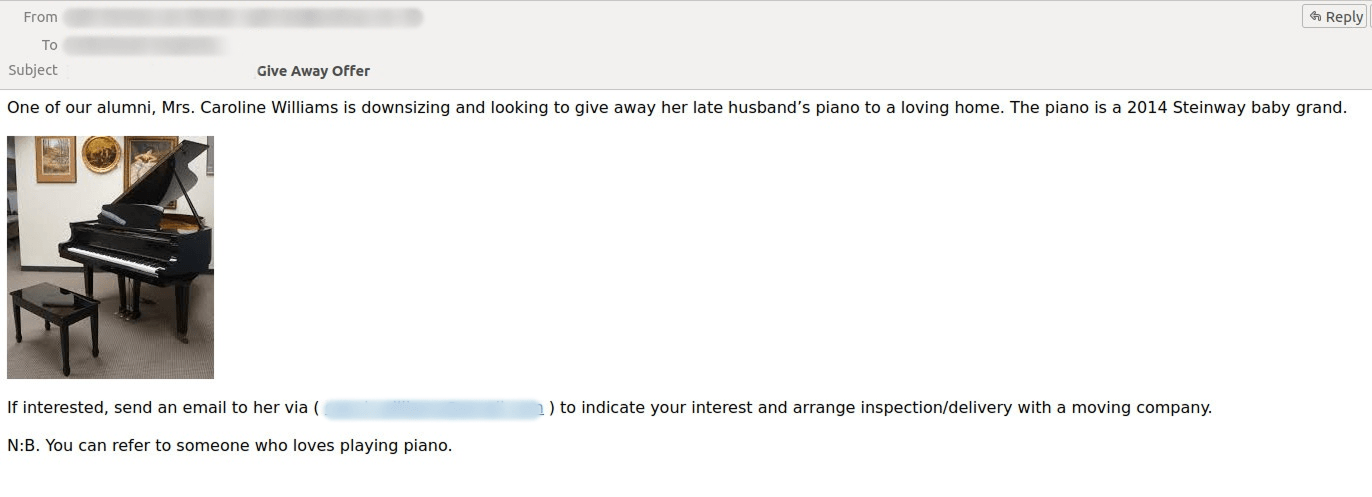
    Lots and lots of decisions are taken, often without considering the trade off. And every time we add new regulations or more complex regulations, that imposes a cost. And ultimately that is a drag on housing, productivity and supply.

    So what should be done?

    We’ve certainly said we think there should be a good look at the national construction code, which is one source of regulatory burden where we think there’s scope to improve. I would love to see state governments – and I think they are turning their mind to this – to look at this question of just the sheer amount of regulation, the timeframes for approvals and look to ways to streamline the burden and also help develop and builders coordinate their way through that process more smoothly.

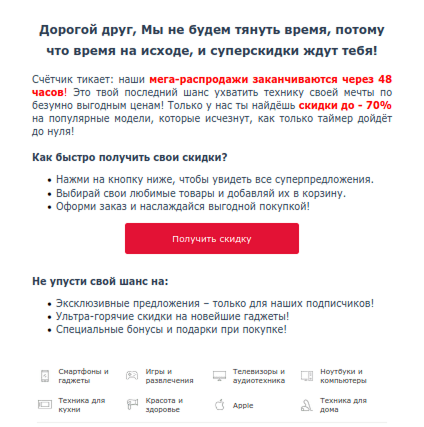
    On why productivity in construction in particular has fallen so far, Wood explains,

    You do not see many sectors go backwards in productivity  over that sort of time horizon. One reason is that our homes are bigger and better quality. So I think that is worth noting. If we adjust for that, productivity has declined, but only by 12% rather than 50%.

    We haven’t seen the same sort of innovation in homebuilding that we’ve seen in other parts of the economy. We still essentially build most houses the same way we did 100 years ago so we haven’t had that technological change driver of productivity. It’s an industry that’s characterised by lack of scale.

    And then there are workforce challenges as well. And, you know, we all hear a lot about the challenge of attracting and retaining skilled trades workers. You know, that can make it hard, particularly building.

    The Productivity Commission asked for submissions from the public on how to improve Australia’s productivity more generally. Wood is happy with how the initiaive is going,

    It’s been worth the effort. We’ve actually ended up with more than 500 submissions in the end, And they’re from a mix from individuals, from businesses, from organisations. But for me, the beauty is being able to hear from people that we wouldn’t normally hear from in our reviews and the point is that all of us interact with aspects of government policy every day in our lives and I think we absolutely heard that through the submissions.

    There were some fun ones there – high quality Japanese public toilets, more freely available free coffee. But more generally, I mean, we heard from small business owners about impacts of red tape and regulation [and] lots of interest in education policy. Unsurprisingly, again, it touches a lot of our lives, but looking for things like more work experience in schools, trying to build more industry-relevant skills into higher education.

    Michelle Grattan does not work for, consult, own shares in or receive funding from any company or organisation that would benefit from this article, and has disclosed no relevant affiliations beyond their academic appointment.

    ref. Politics with Michelle Grattan: Danielle Wood on how to trim back housing regulations – https://theconversation.com/politics-with-michelle-grattan-danielle-wood-on-how-to-trim-back-housing-regulations-250260

    MIL OSI AnalysisEveningReport.nz

  • MIL-OSI USA: Cantwell Votes NO On Advancing Lutnick for Commerce Secretary; Slams His Enthusiasm for Inflationary Tariffs

    US Senate News:

    Source: United States Senator for Washington Maria Cantwell

    02.18.25

    Cantwell Votes NO On Advancing Lutnick for Commerce Secretary; Slams His Enthusiasm for Inflationary Tariffs

    In speech on Senate floor, Cantwell says Trump’s pick to lead the Dept. of Commerce will rubber-stamp tariffs, slow domestic chip manufacturing, and hang NOAA out to dry; Cantwell also stresses: “Now is not the time to cut FAA staffing”

    WASHINGTON, D.C. – Today, U.S. Senator Maria Cantwell (D-WA), a senior member of the Senate Finance Committee and ranking member of the Senate Committee on Commerce, Science, and Transportation, voted against confirming Howard Lutnick, President Donald Trump’s nominee to serve as Secretary of the Department of Commerce.

    In a speech delivered on the Senate floor, Sen. Cantwell urged her colleagues to follow suit.

    The next Secretary of Commerce will have to deal with a wide-ranging, growing list of issues, from trade and exports […], expanding broadband, weather forecasting, patent issues, export controls on A.I., and figuring out some of the most thorny issues related to how we move our country forward, generally, in commerce. So it’s fair to say that if the Commerce Secretary doesn’t get it right, the American people and our American economy pay the price. Unfortunately, I believe that Howard Lutnick, the President’s nominee, isn’t the right person for this job at this point in time,” Sen. Cantwell said.

    The Senate ultimately confirmed Lutnick 51-45.

    Earlier this month, Sen. Cantwell also voted against advancing Lutnick out of the Committee on Commerce, Science, and Transportation and to the full Senate for consideration. At the time, she expressed her concerns with Lutnick’s support for President Trump’s proposed tariffs. She also pointed to Lutnick’s failure to commit to fully allocating the funds approved by Congress under the Cantwell-led CHIPS & Science Act, as well as his waffling on whether he’d protect NOAA – including NOAA’s crucial missions and functions, and the workforce delivering those services to the American people. Sen. Cantwell had previously questioned Lutnick on these topics in a committee hearing the week prior – video of that hearing is HERE.

    Sen. Cantwell on FAA and Aviation Safety:

    “I would just say this: now is not the time to cut FAA staffing,” Sen. Cantwell said on the Senate floor today. “It is critically clear to me that we need these air traffic controllers, and so we have to make these investments. We should be working together, right now, on aviation. The most important thing? Let’s work together for the benefit of the flying public to come up with the best solutions that we can implement in aviation safety. Taking a broad brush and just cutting people out of the FAA — when oftentimes they’re the people that are helping you get that safety — is not what we should be doing right now.”

    During her tenure as chair of the Senate Committee on Commerce, Science, and Transportation, Sen. Cantwell sounded the alarm about the staffing shortage of air traffic controllers, need for more FAA safety inspectors, a series of aviation incidents and near-misses on and around runways, and the midair blowout of a door plug in January 2024. Last year, the Committee’s Aviation Subcommittee also highlighted FAA’s shortage of at least 800 airway transportation systems specialists – commonly known as technicians –  during a December 2024 hearing on “Air Traffic Control Systems, Personnel, and Safety”. Dave Spero, president of the Professional Aviation Safety Specialists (PASS), the union representing FAA technicians, testified about the importance of closing the shortage and boosting this segment of the FAA workforce in order to keep FAA’s air traffic control systems and equipment safely running.

    She led the passage of the FAA Reauthorization Act, signed into law in May 2024, which boosts controller staffing, ensuring a five-year commitment to maximum hiring and training to close the current staffing gap. The law requires upgraded safety technologies – giving controllers better visibility into runway traffic – to be installed at every large and medium airport nationwide. The law also includes stricter safety standards for aircraft operators and plane manufacturers, as well as provisions to put more FAA safety inspectors on factory floors.

    On Feb. 6, Sen. Cantwell sent a letter to Secretary of Transportation Sean Duffy calling on him to ensure that Elon Musk stays out of the Federal Aviation Administration (FAA), citing Musk’s clear conflicts of interest.

    Sen. Cantwell on Tariffs:

    “In my conversations with Mr. Lutnick and before his Commerce Committee hearing, he made it very clear that he intends to be very enthusiastic about the President’s plans for tariffs,” Sen. Cantwell said today. My constituents want to see inflation come down, and they want us to lower costs, not increase them. Now that President Trump is teasing out even more tariffs in the coming days on autos, pharmaceuticals,  and semiconductors, it’s going to drive up costs for consumers […] We can’t afford inflation. We want prices to come down. Whether that’s on housing, or whether that’s on pharmaceuticals, or whether that’s on food prices, we know that tariffs can increase prices.”

    Earlier this month, Sen. Cantwell delivered a major speech on the Senate floor arguing that the president’s arbitrary tariffs would threaten domestic job creation and economic growth in an Information Age. She outlined a strategy focused on building coalitions, growing exports, and establishing principles to support innovation in the Information Age – video of that speech is HERE.

    In Washington state, two out of every five jobs are tied to trade and trade-related industries.  Combined, the state imported $1.21 billion worth of steel and aluminum last year – and the major industries and employers in Washington that rely on steel and aluminum include aerospace, shipbuilding, utilities, and electronics. When President Trump imposed steel tariffs in 2018, our trading partners immediately responded by imposing tariffs of their own on Washington products, especially agriculture, including cherries, apples, pears, and potatoes. Nationally, across all industries, the steel and aluminum tariffs resulted in a decrease in production worth about $3.4 billion per year, according to an ITC report.  More information on how President Trump’s proposed tariffs on goods from Mexico, Canada, and China would affect consumers and businesses in the State of Washington can be found HERE.

    Sen. Cantwell has remained a steadfast supporter of free trade to grow the economy in the State of Washington and nationwide. Sen. Cantwell was the leading voice in negotiations to end India’s 20% retaliatory tariff on American apples, which was imposed in response to tariffs on steel and aluminum and devastated Washington state’s apple exports. India had once been the second-largest export market for American apples, but after President Trump imposed tariffs on steel and aluminum in his first term, India imposed retaliatory tariffs in response and U.S. apple exports plummeted. The impact on Washington apple growers was severe: Apple exports from the state dropped from $120 million in 2017 to less than $1 million by 2023.  In September 2023, following several years of Sen. Cantwell’s advocacy, India ended its retaliatory tariffs on apples and pulse crops which was welcome news to the state’s more than 1,400 apple growers and the 68,000-plus workers they support.

    Sen. Cantwell on Semiconductor Manufacturing:

    “We learned during the chips crisis that even the cost of a used car went up $2,000. That’s because chips were at a shortage — car industries, trucking industries couldn’t even get enough chips to make and ship cars, and then the consequence was even used cars went up $2,000. So we don’t want to recreate that again,” Sen. Cantwell said today. “We want a Commerce Secretary who is going to fight for the CHIPS & Science investment that’s already been made in the electronic manufacturing process in the United States and keep the semiconductor industry right here. But unfortunately, Mr. Lutnick, before the Committee, would not commit to standing by the commitments of the term sheets the Department of Commerce has already signed.”

    Sen. Cantwell was the main architect and key negotiator of the CHIPS & Science Act. In her position as Commerce chair, she was instrumental in securing the science R&D funding authorizations in the 11th hour of negotiations. A key component of the legislation is the Regional Technology and Innovation Hubs (Tech Hubs) program that was authored by Sen. Cantwell to strengthen U.S. economic and national security with investments in regions across the country. Earlier this month, the American Aerospace Materials Manufacturing Center (AAMMC) in Spokane was awarded $48 million from the program to establish the first-of-its-kind testbed facility in the United States focused on developing advanced thermoplastic materials – new types of lightweight, heat-moldable, and recyclable materials that can replace metal in aircraft parts. The AAMMC will serve as the nation’s hub for creating and testing these innovative materials that are essential for more rapidly building fuel-efficient and environmentally friendly aircraft. 

    Sen. Cantwell on NOAA:

    “When asked for the record, ‘Should NOAA be dismantled, as called for in Project 2025?’, Mr. Lutnick would only say he’ll figure it out once he’s confirmed,” Sen. Cantwell said today. “We needed a bigger commitment to NOAA. NOAA already supplies a big, important aspect of what we deal with, with weather forecasting, tracking extreme weather, hurricanes, wildfires, managing our fisheries, operating ships that conduct important charting for national security. Mr. Lutnick gave very tepid support for NOAA.”

    Project 2025 calls for NOAA to be “dismantled and many of its functions eliminated,” calling it part of the “climate change alarm industry.” NOAA provides critical services to the Nation including weather forecasts, extreme storm tracking and monitoring, tools to enable communities to adapt to sea level rise and climate change, supporting fisheries management, and conserving marine mammals and other protected species.

    Sen. Cantwell is a champion of NOAA and helped secure $3.3 billion in NOAA investments in the Inflation Reduction Act to help communities prepare for and adapt to climate change, boost science needed to understand changing weather and climate patterns, and invest in advanced computer technologies that are critical for extreme weather prediction and emergency response. Her Fire Ready Nation Act, bipartisan legislation to strengthen NOAA’s ability to help forecast, prevent, and fight wildfires, passed the Commerce committee unanimously earlier this month and now heads to the full Senate for consideration.

    Video of Sen. Cantwell’s speech on the Senate floor today is available HERE, and transcript HERE.

    MIL OSI USA News