Union Home Minister and Minister of Cooperation Shri Amit Shah releases “Indian Renaissance: The Modi Decade” book in New Delhi Past 10 years of Prime Minister Shri Narendra Modi’s tenure have marked the end of one era and the beginning of another
Whether as CM or now as PM, Modi Ji has taken a transformative decision every year, bringing significant change
Whenever India’s history is written, even the harshest critics will acknowledge Modi Ji’s 10 years of governance in golden letters
Some leaders talk about separating Southern India; in their time, they divided the country multiple times, How long will they keep dividing?
Modi Ji has mastered the art of true leadership—something that leaders who only seek newspaper headlines will never understand
India’s history will be categorized into three phases: before and after independence, before and after the Emergency, and before and after Modi Ji’s era
Posted On: 30 JAN 2025 10:10PM by PIB Delhi
Union Home Minister and Minister of Cooperation Shri Amit Shah today released “Indian Renaissance: The Modi Decade” book in New Delhi. On this occasion, Union Minister for Housing and Urban Affairs Shri Manohar Lal, Rajya Sabha MP Shri Kartikeya Sharma, the book’s editor Dr. Aishwarya Pandit, and several other distinguished personalities were present.
Union Home Minister and Minister of Cooperation Shri Amit Shah said that in the past 10 years of Prime Minister Shri Narendra Modi’s tenure have marked the end of an era and the beginning of a new one. He emphasized that whenever India’s history is rewritten, even Modi Ji’s staunchest critics will acknowledge these 10 years in golden letters.
He further said that in 2014, India entered a new era, receiving a stable government after three decades, leading to success in every part of the country. Shri Shah mentioned that this transformation has been interpreted in various ways, with a foreign newspaper even writing that while India attained independence on August 15, 1947, it was under Modi Ji’s leadership in 2014 that the country truly gained freedom from colonial influences.
Shri Amit Shah said that our country gained freedom from a long period of colonial rule on 15 August 1947. He further highlighted that India is one of the world’s oldest civilizations, known for its openness—whether in embracing new ideas, welcoming foreign citizens, or accepting diverse languages.
Union Home Minister and Minister of Cooperation Shri Amit Shah noted that India is the only country in the world that has embraced multiple civilizations, modified its own traditions, and continued its journey while preserving its essence. He emphasized that India is unique in its ability to sustain numerous languages, cultures, dialects, and religions, all coexisting with mutual respect while progressing together as a nation.
Shri Amit Shah stated that under the leadership of Prime Minister Shri Narendra Modi, numerous reforms have taken place across various sectors, accelerating overall growth. He highlighted that the size and scale of every sector have expanded significantly. He emphasized that no one could have imagined that during the world’s biggest pandemic, COVID-19, India would manage the crisis most efficiently. Through the use of technology, the country successfully vaccinated its 1.3 billion population and seamlessly provided vaccination certificates. He also noted that India was among the first to develop a COVID-19 vaccine and supplied it to over 100 countries.
Union Home Minister and Minister of Cooperation, Shri Amit Shah, stated that in the future, India’s history will be divided into three distinct parts. The first part will be “India before Independence and after Independence,” the second part will be “India before Emergency and after Emergency,” and the third part will be “India before Modi Ji and after Modi Ji.” He emphasized that when a leader guides his nation with hard work, diligence, a clean heart, and a visionary approach, history cannot ignore him.
Shri Amit Shah highlighted that during the 25th and 50th anniversaries of India’s independence, programs were primarily held in schools, panchayats, and government buildings, with resolutions passed in legislative assemblies and Parliament. However, the 75th anniversary of independence was celebrated on a much larger scale, with over 8 lakh programs organized despite the challenges of the Covid-19 pandemic. He credited PM Modi for ensuring that the new generation learns about the freedom movement from 1857 to 1947 and that the unsung heroes of independence receive their due recognition. He added that PM Modi encouraged the nation to take pride in its achievements over the past 75 years and inspired citizens to commit to making India a fully developed nation by August 15, 2047.
Shri Amit Shah asserted that PM Modi has set a clear target for India to become a fully developed nation by 2047. He remarked that what started as the Prime Minister’s resolution has now become the collective aspiration of 130 crore Indians. He expressed confidence that India’s youth will be the driving force behind making the country the number one global power by 2047. He added, Modi Ji recognizes that if every Indian takes a single step forward, the country will advance by 130 crore steps.
Referring to the Covid-19 pandemic, Shri Amit Shah recalled how the entire country obeyed PM Modi’s call for a ‘Janta Curfew’ and stayed indoors. He compared this response to the public’s reaction to the appeal for fast made by former Prime Minister Lal Bahadur Shastri, indicating that it was one of the rare moments when citizens wholeheartedly followed a leader’s call. He addressed government critics by stating that lighting a lamp may not eradicate Covid-19, but it certainly raised awareness and vigilance among the people.
Shri Amit Shah emphasized that to truly understand Modi Ji’s journey, one must look beyond his tenure from 2001 to 2025 and consider his 40 years of service before that. He described Modi Ji as someone who has always prioritized the welfare of others and never used public funds for personal benefit. Shri Shah praised PM Modi for implementing bold reforms and making tough decisions that the public has continuously supported, leading to his repeated electoral victories.
Shri Amit Shah said that the last 10 years of PM Modi’s leadership serve as the foundation for India’s next 25 years, known as “Amrit Kaal.” He believes that the efforts made in the past decade, combined with those to come, will propel India to the top position globally. He stated that no one can counter the newfound self-confidence of the Indian people. Home Minister highlighted various welfare initiatives, including providing houses to 60 crore poor people, gas connections, toilets, drinking water, free medical treatment up to ₹5 lakh, and 5 kg of free food grains, among other benefits. He credited Modi Ji with launching a revolutionary transformation in both Gujarat and Delhi.
Shri Amit Shah said, some leaders talk about separating Southern India; in their time, they fragmented the country multiple times. He questioned them, how long will they keep dividing?
Shri Amit Shah underscored that PM Modi’s achievements have been recognized worldwide. He pointed out that Modi Ji is the only global leader today who has been honored with the highest civilian awards from 16 different countries. Shri Shah compared Modi Ji to Mahatma Gandhi, stating that after Gandhi ji, Modi Ji is the only leader to have prioritized cleanliness on a national scale, ensuring the construction of toilets for 13 crore households.
Reflecting on the country’s progress over the past decade, Shri Amit Shah stated that 10 years ago, India’s governance was marked by policy paralysis, whereas today, it is defined by a “politics of performance.” He expressed confidence that by 2047, India will be fully developed, will dominate the global stage, and will retain its deep-rooted cultural and national identity.
Shri Dharmendra Pradhan meets delegation from University of Southampton UoS Delhi NCR campus will offer high quality education driven by research, innovation and real-world applications to both Indian and international students – Shri Dharmendra Pradhan
Posted On: 30 JAN 2025 9:48PM by PIB Delhi
Union Minister for Education, Shri Dharmendra Pradhan, met with a delegation from the University of Southampton and the British Council in India today in New Delhi. Also present at the meeting were Secretary of the Department of Higher Education, Shri Vineet Joshi; President and Vice-Chancellor of the University of Southampton, Prof. Mark E. Smith; Country Director of the British Council in India, Ms. Alison Barrett MBE; along with other officials from the Ministry.
Shri Dharmendra Pradhan highlighted that as a globally top-100 university and the first foreign institution to establish a campus in India, the University of Southampton Delhi NCR campus will provide high-quality education rooted in research, innovation, and real-world applications for both Indian and international students. He emphasized that this initiative marks a crucial step in India’s journey toward the internationalization of education, supporting the Study in India program and advancing global education standards domestically, as envisioned in NEP 2020.
During the discussion, Prof. Smith briefed the Minister on the progress of the University of Southampton’s Delhi NCR campus.
CIL supports 3rd Coal India Ranchi Marathon 2025 CIL believe in empowering communities not just through energy but also by promoting health and well-being – Dr. Ranjan
Posted On: 30 JAN 2025 9:45PM by PIB Delhi
Coal India Ltd (CIL) under the aegis of Ministry of Coal (MoC) is promoting sports activities among the professional runners of the country who will propel the country towards Vikshit Bharat. For the 3rd consecutive year, CIL, the holding company, is supporting Coal India Ranchi Marathon 2025 with sponsorship support of Rs. 1 Crore from the Coal India Sports Promotion Association (CISPA) fund for conducting a mega event through its subsidiary Central Coalfields Limited (CCL) in Ranchi, Jharkhand on 9th February, 2025.
As a responsible Corporate Entity, CIL and its subsidiaries has continuously contributing to social upliftment by implementing impactful Corporate Social Responsibility(CSR) new initiatives across the nation in alignment with the government’s vision and setting new benchmarks in the CSR domain for others.
The upcoming marathon, open exclusively to the runners (male and female), who are staying in any part of the country can participate in any of the four categories i.e, Full Marathon, Half Marathon, 10 Km and 5 Km.
Registrations are currently open online (https://centralcoalfields.in/cilranchimarathon) and enthusiastic runners from across the country are encouraged to participate in this exhilarating upcoming event, which is aimed at inspiring a culture of health and wellness among the youths. The said website was inaugurated by Shri Nilendu Kr. Singh, CMD, CCL in presence of dignitaries including Directors in Ranchi.
Dr. Vinay Ranjan, Director (P &IR), CIL said: “We believe in empowering communities not just through energy but also by promoting health and well-being of an individual. This marathon symbolizes endurance, perseverance and values that resonate with our corporate ethos.” He further emphasized that this upcoming marathon is not just a race but a celebration of fitness, resilience and unity.
Shri Amitabh Kumar Singh, HOD, Welfare, CIL said that the company is promoting sports and other activities within and outside the company for collective commitment to a healthy lifestyle and social responsibility. “Through this type of marathon, we aim to promote physical fitness, mental well-being, and a spirit of camaraderie among participants, which is important for the young population,” he said.
The upcoming CIL Marathon 2025 not only celebrates athletic excellence but also reinforces the company’s dedication to nation-building beyond energy production.
The Union Minister for Coal and Mines, Shri G. Kishan Reddy, held a review meeting of NLC India Limited (NLCIL) projects at Chennai today along with Smt. VismitaTej, Additional Secretary to Government of India, Ministry of Coal. Shri Prasanna Kumar Motupalli, CMD, NLCIL, Functional Directors and Senior officials of NLC India Limited were present in the review meeting.
In his address Union Minister of Coal and Mines, Shri Kishan Reddy, highlighted the larger vision of the Prime Minister in creating a “Viksit Bharat” by 2047 as a part of which, reforms were being undertaken in the mining sector. He lauded NLCIL as one of the best performing Public Sector Companies in India. He appreciated the diversification of the company into renewable energy sector on a large scale, stating that it is the first PSU in the country to cross one(1) GW of renewable energy.
The Minister appreciated the NLCIL’s foray into capacity addition in coal mining through its coal mines at Talabira, South Pachwara, North Dhadu, Machhakata and Patrapara. He also lauded NLCIL’s efforts in constructing 3 x 800 MW Thermal Power Project at Talabira which was inaugurated by Prime Minister. Coal Minister has also expressed his appreciation on NLCIL’s sincere efforts in Renewable Energy Capacity addition in large scale in states of Rajasthan, Assam and Andaman & Nicobar Islands and in other green initiatives.
The Minister pointed out that NLCIL was one of the oldest PSUs in the country, patronized and visited by several past National leaders including Presidents, Prime Ministers, VIPs, which continued even today. He called upon NLCIL to explore avenues to boost tourism which had a lot of potential and scope for creating awareness among children and students.
The Union Minister of Coal & Mines further informed that NLCIL management has been asked to explore the possibilities for implementation of enhanced Accident Insurance Cover scheme for the workers and employees of NLC India Limited, in a period of two months. The Minister assured NLCIL of the fullest support and co-operation from the Coal Ministry and called upon the NLCIL family to continue its remarkable journey in its energy production, in line with vision of the Prime Minister Shri Narendra Modi. Noting that NLCIL was a pioneer in several CSR activities, he said that, NLCIL had a big, sprawling township in Neyveli consisting of more than one lakh population and three crore trees.
On the occasion, the Minister for Coal & Mines, Shri G. Kishan Reddy, virtually inaugurated a museum, aptly named “Parampariyam”, created at Neyveli by NLC India Limited. He also inaugurated a new Mobile App “NLCIL WINGS” and a new version of NLCIL Internet Website virtually.
In line with the Special Campaign 4.0’s “Waste to Wealth” initiative by the Government of India, NLCIL had conceptualized, planned and created a Museum depicting the journey of NLCIL over the years since its inception in 1956. The museum, located in the heart of Neyveli Township, was created by transforming the erstwhile Doordarshan Kendra TV Relay Station building, constructed in the 1980s. The building, which was kept unused for years, was originally inaugurated by the legendary singer Bharat Ratna Late Smt. M.S.Subbulakshmi in 1984.The “Parampariyam” NLCIL Museum showcases vivid images, exhibits, photographs and artefacts chronicling the company’s history – from the discovery of peat in 1828, to the formation of NLCIL in 1956, and its remarkable growth over the decades.
Speaking on the occasion, NLCIL CMD Shri Prasanna Kumar Motupalli said that the review of NLCIL’s projects and future plans was comprehensive with valuable guidance and inputs offered by the Union Minister on behalf of the Ministry of Coal. The unwavering support from the Minister and the Ministry of Coal would help NLCIL in its future endeavours for a brighter, sustainable future.
Union Minister of State for Power and New and Renewable Energy Shri Shripad Yesso Naik chairs the 1st meeting of Group of Ministers constituted for addressing issues related to viability of distribution utilities in the country Smart Meters to be the game changers
SERCs/ State Government to ensure timely & cost reflective tariff – DISCOMs should get fair cost of electricity
New technologies to be adopted by DISCOMs for optimising Power Purchase Cost & Demand forecasting
Need for innovative financing and out of the box solutions from members
Posted On: 30 JAN 2025 9:23PM by PIB Delhi
Union Minister of State for Power and New & Renewable Energy Shri Shripad Yesso Naik, as chairperson of the Group of Ministers, held a virtual meeting here today with Group of Ministers constituted for addressing issues related to viability of distribution utilities.
Shri A. K Sharma, Energy Minister, Uttar Pradesh, Shri Gottipati Ravi Kumar, Energy Minister, Andhra Pradesh, Shri Pradyuman Singh Tomar, Energy Minister, Madhya Pradesh, Shri V Senthil Balaji, Minister of Electricity, Tamil Nadu, Smt Meghana Deepak Sakore Bordikar, Minister of State for Energy, Maharashtra and Shri Heeralal Nagar, Minister of State for Energy, Rajasthan who are the members of the Group attended the meeting. The meeting was also attended by senior officials from Central and State Government and officials from Power Finance Corporation Ltd.
In his welcome address Energy Minister, Government of Uttar Pradesh, Shri Arvind Kumar Sharma, convenor of the Group, commended the measures taken by the Government of India for improving the operational efficiency and financial viability of the Distribution Utilities. He remarked that pro-active measures by Ministry of Power will have far reaching impact on making country’s distribution sector stronger and healthier. He advocated for adopting and investing in technology in the distribution sector. He emphasised on the need for timely and adequate payment of Government Department Dues and subsidy by the State Governments and effective redressal of consumer grievances.
In his opening remarks, Union Minister highlighted that the financial viability of electricity distribution utilities, or DISCOMs lies at the heart of India’s energy sector and is very critical for the entire value chain. These entities are the lifeline of our electricity supply chain, connecting power generation to millions of homes, businesses, and industries. However, they face significant challenges that affect not only their financial health but also the sustainability of entire Power Sector value chain. He mentioned that year on year gap between the average cost of supply (ACS) and the average revenue realized (ARR) is eroding the financial stability of the Utilities which needs to be brought down. This gap is largely due to under-recovery of costs esp. power purchase costs, non-cost reflective tariffs, distribution losses, etc. He expressed concern about the AT&C losses which are far above the global average of 6–8% and the need to improve it by improving network, adopting new technologies and improving the billing and collection efficiency. He mentioned about the roles that each stakeholder should play in improving the viability of these utilities especially in the context of the investment required to cater to growing energy demand in the country. He further mentioned about the Gujarat DISCOMs and suggested to understand the steps taken by Gujarat distribution utilities to improve their financial performance.
Energy Minister, Government of Andhra Pradesh, Shri Gottipati Ravi Kumar mentioned about priority being given by the State Government for development of Renewable Energy. He also highlighted the progress made by the State under PM KUSUM and PM Surya Ghar: Muft Bijli Yojana.
Energy Minister, Government of Madhya Pradesh, Shri Pradyuman Singh Tomar emphasised on the need for accurate energy accounting and auditing for reducing line losses and the need to have effective consumer grievance redressal mechanism at each level of Government.
Electricity Minister, Government of Tamil Nadu, Thiru V.Senthil Balaji highlighted the reforms undertaken by the State Government and the role of Smart Metering in improving the revenues of the distribution utilities.
Minister of State (Energy), Government of Maharashtra, Smt. Meghana Deepak Sakore Bordikar mentioned about the initiative taken by the State under Mukhyamantri Saur Krushi Vahini Yojana which would help in improving quality of supply of power to farmers and reduce power purchase costs for utilities.
Minister of State (Energy), Government of Rajasthan Shri Heeralal Nagar highlighted the rich renewable energy potential of the State and the projects taken by State under Hybrid Annuity Model for providing low cost day time supply of power for agricultural purposes.
It was agreed that with rich experience of the group, innovative and out of the box solutions will be explored to steer the distribution sector on the path of financial viability. Also, it was agreed to convene further meetings in the member States.
Group of Ministers on Viability of Distribution Utilities
The Constitution of the GoM is as follows:
Hon’ble Minister of State for Power and New and Renewable Energy, Govt. of India – Chairman
Energy Minister, Uttar Pradesh- member-cum-convenor
Energy Minister, Andhra Pradesh- member
Energy Minister, Rajasthan- member
Energy Minister, Tamil Nadu- member
Energy Minister, Madhya Pradesh- member
Energy Minister, Maharashtra- member
The Terms of Reference (ToR) for the GoM are as under:
Analyze debt scenario in key States
Identify parameters that need to be monitored to ensure borrowings are productive
Identify States that are in urgent need for liquidity support and design a fiscal discipline program to enable them to avoid a debt trap.
Recommend guidelines for investment plan with respect to capital expenditure targeted at overall improvement – ensure adequate technical and financial due-diligence, equity investment by State Government, suitable mechanism for realization through tariff.
Suggest measures for improvement in the overall health of the distribution sector to attract further investment from private participants in the value chain
Devi Ahilyabai Holkar: A Visionary Leader Who Embodied Strength and Compassion – Prof. Uma Vaidya Indira Gandhi National Centre for the Arts (IGNCA) organized a special lecture on the life and legacy of Devi Ahilyabai Holkar,
Posted On: 30 JAN 2025 8:36PM by PIB Delhi
The Indira Gandhi National Centre for the Arts (IGNCA), in collaboration with the Lokmata Ahilyabai Trishatabdi Samaroh Samiti, organized a special lecture on the life and legacy of Devi Ahilyabai Holkar, titled ‘Devi Ahilya – Empress Renunciate’. The lecture was delivered by Prof. Uma Vaidya, former Vice-Chancellor of Kavikulaguru Kalidas Sanskrit University, Ramtek, Maharashtra. The event was chaired by Padma Vibhushan Dr. Sonal Mansingh, a former Member of Parliament and Trustee of IGNCA. Adding to the distinguished presence was Dr. Sachchidanand Joshi, Member Secretary of IGNCA, and Prof. ShashiPrabha Kumar, Chairperson of IIAS, Shimla. Prof. Richa Kamboj , HoD, Kaladarsana Division was also present. The enriching session delved into the extraordinary life of Devi Ahilyabai, a ruler whose leadership, compassion, and foresight continue to inspire generations.
Professor Uma Vaidya gave an in-depth discussion on the social, cultural, and administrative contributions of the people’s queen, Devi Ahilyabai Holkar. She presented an elaborate and insightful account of Ahilyabai Holkar’s 70 years of life and work, focusing on the meanings of the words Devi and Ahilya. While delivering her lecture Prof. Vaidya said, “It is a great privilege to speak about Devi Ahilyabai Holkar, a masterpiece in God’s creation. Her life exemplifies the values of a true leader-someone who not only ruled with grace but nurtured her people like her own children. Etymologically, the name ‘Ahalya’ can be interpreted as ‘unploughed land,’ symbolising purity and pristine nature. The name Ahilya embodies purity, symbolising strength and resilience. This essence resonates with Devi Ahilyabai’s character, reflecting her unwavering determination and virtuous leadership. Through her life and actions, she exemplified the qualities her name represents, leaving an enduring legacy of compassion and dedication.
In Indian tradition, the term Devi is used not only to signify a ‘shining lady’ but also denotes divinity. Ahilyabai’s leadership embodied this divine essence, as she cared for her subjects (Praja) with the devotion of a mother, earning her the title of ‘Lokmata’. Ahilyabai’s life trajectory is both inspiring and rare, particularly during an era dominated by foreign rule. Her contributions spanned economic, political, diplomatic, and military domains, complemented by her philanthropy and commitment to public service. She stands as an exemplar of a woman ruler who balanced strength and compassion, values and action. Ahilyabai truly deserves the title ‘Empress Renunciate’- a leader who wielded power selflessly for the welfare of her people. She epitomised values, character, and a spirit of renunciation, leaving an indelible mark as a woman leader whose impact transcends time.
In her chair address, Dr. Sonal Mansingh highlighted various events from Devi Ahilyabai’s life, shedding light on her remarkable personality and accomplishments. She mentioned that during Raghoba’s intent to attack Indore, Devi Ahilyabai displayed exemplary courage, foresight, and strategic acumen, serving as a source of inspiration for all of us. Meanwhile, Prof. Shashi Prabha Kumar introduced the programme and later presented a summary of Prof. Uma Vaidya’s speech to the audience.
Expressing his thoughts, Dr. Sachchidanand Joshi said, “It is a matter of pride for us that the entire nation is celebrating the tri-centenary of ‘Punyashloka’ Ahilyabai. Commemorating her 300th birth anniversary is a way to honour our social commitment and recall the spirituality deeply ingrained in our country. We all know that the kind of work Ahilyabai Holkar accomplished amidst the complex challenges of her time can serve as an inspiration to anyone. At the end of the program, Professor Richa Kamboj expressed her gratitude to the speakers, guests, and visitors.
On the occasion of Martyrs’ Day, the National Archives of India (NAI), in collaboration with the National Gandhi Museum, the National Film Archives of India- NFDC and Prasar Bharati Archives, successfully hosted a special exhibition titled “Journey of the Mahatma: Through His Own Documents.”
The exhibition was inaugurated by Shri Arun Singhal, Director General, National Archives of India, in the absence of Ms. Tara Gandhi Bhattacharjee, Grand-daughter of Mahatma Gandhi and Chairperson, National Gandhi Museum, who was unable to attend due to a sudden health issue.
Dr. A. Annamalai, Director, National Gandhi Museum, delivered the welcome address, followed by the presidential address by Shri Arun Singhal. Dr. Sudha Gopalakrishnan, Executive Director, India International Centre, New Delhi, and Dr. Michael A. Pal, Director, Austrian Cultural Forum, New Delhi, graced the occasion as Guests of Honour, appreciating the joint efforts of the National Archives of India and the National Gandhi Museum, in collaboration with the National Film Archives of India- NFDC and Prasar Bharati Archives. The event concluded with a vote of thanks delivered by Shri Naoroibam Raju Singh, Deputy Director (i/c), National Archives of India.
On this occasion, a flipbook titled “Special Exhibition: Journey of the Mahatma – Through His Own Documents, Audio and Video” was also released.
The exhibition offered a unique glimpse into Mahatma Gandhi’s life and legacy through rare photographs, documents, and recordings. It featured 30 panels on his education, time in South Africa, key Indian freedom movements. It also highlighted his work for social justice, communal harmony, and peace during Partition.
The exhibition is open to the public until 28th February 2025, attracting citizens, students, historians, and Gandhi enthusiasts, providing valuable insights into Gandhi’s philosophy of nonviolence, justice, and peace.
India Lights Up India Gate to Mark World Neglected Tropical Diseases Day 2025 Shining a Spotlight on the Fight Against Neglected Tropical Diseases
Posted On: 30 JAN 2025 8:15PM by PIB Delhi
On the occasion of World Neglected Tropical Diseases (NTDs) Day 2025, India reaffirmed its commitment to eliminating NTDs by illuminating the iconic India Gate in vibrant hues of purple and orange. This symbolic act is part of a global movement to light up iconic landmarks across the world to raise awareness about NTDs and emphasize the importance of collective action to combat these debilitating diseases.
The event was organized by the Ministry of Health and Family Welfare to highlight India’s progress in the fight against NTDs, with a special focus on Lymphatic Filariasis (LF) and Visceral Leishmaniasis (VL). LF, which threatens 404 million people in India, damages the lymphatic system and can lead to the abnormal enlargement of body parts, causing pain, and severe disability. VL or Kala-Azar, which is at the cusp of elimination in India, can cause severe debility, malnutrition and loss of ability to work. These diseases have long remained neglected on the global health agenda, perpetuating stigma and social exclusion.
Talking about this initiative, Smt. Aradhana Patnaik, Addl. Secretary and MD (NHM) said “By engaging communities and creating a people’s movement, we have almost achieved our ambitious elimination goals”. She lauded India’s achievements in tackling NTDs and stressed the need for increased awareness. “NTDs disproportionately affect the poor and vulnerable. We must elevate our messaging and focus on achieving the ambitious and winnable elimination targets through strong coordination and community involvement,” she noted.
The illumination of India Gate was accompanied by a nukkad natak (street play) which engaged the public and reinforced the importance of behavioral change and participation in health initiatives like Mass Drug Administration (MDA) rounds for LF.
World NTD Day 2025 serves as a reminder of the global and national commitment to eliminate these diseases and ensure equitable health outcomes for all. India’s efforts, grounded in community participation and robust policy actions, are pivotal to achieving the vision of an NTD-free world.
The Prime Minister, Shri Narendra Modi reaffirmed India’s growing dominance in the space sector, expressing confidence in the country’s capabilities and future potential.
In a post on X, the Prime Minister said;
“When it comes to the space sector, bet on India!”
Meeting of Government with Leaders of Political Parties held today Meeting attended by 52 Leaders from 36 political parties
Posted On: 30 JAN 2025 7:59PM by PIB Delhi
A meeting was held under the Chairmanship of Shri Raj Nath Singh, Union Minister of Defence with Leaders of political parties today (30th January, 2025) in Parliament House Complex, New Delhi to discuss issues relating to ensuing Budget Session of Parliament, 2025. The meeting was called by Shri Kiren Rijiju, Union Minister of Parliamentary Affairs. The meeting was also attended by Union Minister for Health & Family Welfare and Ministry of Chemicals & Fertilizers, Shri Jagat Prakash Nadda, who is also Leader of the House in Rajya Sabha, Minister of State (Independent Charge) of the Ministry of Law & Justice and Minister of State in the Ministry of Parliamentary Affairs, Shri Arjun Ram Meghwal and Minister of State in the Ministry of Parliamentary Affairs and Minister of State in the Ministry of Information and Broadcasting, Dr. L. Murugan. In total, the meeting was attended by 52 Leaders from 36 political parties including Ministers.
At the outset, Shri Rajnath Singh, Minister of Defence made introductory remarks and welcomed all the Leaders attending the meeting and thereafter, Minister of Parliamentary Affairs conducted the meeting. He informed the leaders that the Budget Session, 2025 of Parliament will commence on Friday the 31st January, 2025 and subject to exigencies of Government Business, the session may conclude on Friday the 4th April, 2025. During this period, both the Houses will be adjourned for recess on Thursday, the 13th of February, 2025 to reassemble on Monday, the 10th of March, 2025 to enable the Standing Committees to examine the Demands for Grants of various Ministries/Departments and make their Reports thereon. The Session will provide a total of 27 sittings (09 sittings in first part and 18 sittings in second part) spread over a period of 64 days.
Shri Rijiju further stated that Session will mainly be devoted to the Financial Business relating to Union Budget for 2025-26 and discussion on the Motion of Thanks on President’s Address. However, essential Legislative and other Business will also be taken up during the Session. He mentioned that Economic survey of India and Union Budget for 2025-26 will be presented to Parliament on Friday, the 31st of January, 2025 and the Saturday, 1st February, 2025 respectively. He also informed thattentatively 16 items of legislative business and 3 items of financial business have been identified for being taken up during this session.
The Minister of Parliamentary Affairs also stated that the Government is prepared and ready to discuss any other important issue on the floors of the Houses as per rules of both Houses. Leaders of different political parties expressed their views on various issues likely to be raised by them during the forthcoming Budget Session of Parliament and assured the Government to provide full co-operation. He also thanked all the Hon’ble Leaders for attending the meeting, expressing their views and for their active and effective participation.
LIST OF BILLS LIKELY TO BE TAKEN UP DURING BUDGET SESSION, 2025
I – LEGISLATIVE BUSINESS
The Banking Laws (Amendment) Bill, 2024
The Railways (Amendment) Bill, 2024
The Disaster Management (Amendment) Bill, 2024
The Oilfields (Regulation and Development) Amendment Bill, 2024
The Boilers Bill, 2024
The Readjustment of Representation of Scheduled Tribes in Assembly Constituencies of the State of Goa Bill, 2024
The Waqf (Amendment) Bill, 2024
The Mussalman Wakf (Repeal) Bill, 2024
The Bills of Lading Bill, 2024
The Carriage of Goods by Sea Bill, 2024
The Coastal Shipping Bill, 2024
The Merchant Shipping Bill, 2024
The Finance Bill, 2025
The Protection of Interests in Aircraft Objects Bill, 2025
The “Tribhuvan” Sahkari University Bill, 2025
The Immigration and Foreigners Bill, 2025
II – FINANCIAL BUSINESS
Discussion and voting on Demands for Grants for the year 2025-26 and introduction, consideration and passing/return of the related Appropriation Bill.
Discussion and voting on Second and Final Batch of Supplementary Demands for Grants for the year 2024-25 and introduction, consideration and passing/return of the related Appropriation Bill.
Discussion and voting on Demands for Excess Grants for the year 2021-22 and introduction, consideration and passing/return of the related Appropriation Bill.
The Prime Minister, Shri Narendra Modi has posted a video capturing special moments from the Beating Retreat Ceremony, where the Armed Forces honored India’s freedom fighters in a unique way.
In his post on X, Prime Minister Modi expressed the significance of the ceremony, saying:
“Special moments from the Beating Retreat Ceremony, in which the Armed Forces honoured our freedom fighters in a unique way.”
The Prime Minister, Shri Narendra Modi has shared a glimpses of his month-long engagements in January 2025, reflecting his unwavering commitment to building a Viksit Bharat.
Throughout the month, Shri Modi was actively involved in significant policy decisions, global diplomatic engagements, and transformative initiatives aimed at strengthening India’s development and international standing.
Sharing detailed information about his engagements, Shri Modi wrote on X;
“January 2025 in pictures…
The journey towards a Viksit Bharat marches ahead with full vigour!
National Accounts Division of the Ministry of Statistics and Programme Implementation (MoSPI) organised a half day consultation on ‘Estimation of Informal Sector in Gross Domestic Product (GDP)’ on 30th January,2025 in Tagore Chamber, SCOPE Convention Centre, New Delhi.
The consultation was organized to broad base the consultation on the current effort of the Ministry to revise the base year of GDP from 2011-12 to 2022-23. It was aimed to discuss improvement in the methodology as well as incorporation of new data sources in the estimation of informal sector of the economy in the revised GDP series. As per National Accounts Statistics, the informal sector contributed about 45% to the total GDP of the economy in FY 2022-23. From the labour perspective, about 61% of women workers in non-agriculture sector are working in informal sector enterprises as per Periodic Labour Force Survey(PLFS) in 2023-24.
The inaugural session of the workshop was graced by Shri Sanjeev Sanyal, Member- PM Economic Advisory Council, who in his key note address, emphasised the changing nature of informality in the economy due to digital penetration in various sectors. He highlighted the case of UPI payments, gig workers, social influencers, self-employment generated by digital intermediation platforms, yoga teaching to highlight the evolving landscape of economic transactions.
Dr. Saurabh Garg, Secretary Ministry of Statistics & Programme Implementation underscored the importance of robust estimation of the contribution of informal economy and efforts currently being undertaken by MoSPI in this direction. He highlighted that Ministry is exploring enhanced use of administrative data sources like GST & digital payment system and has also started preparation for Statistical Business Register. He informed that starting January,2025 monthly statistics on employment from Periodic Labour Force Survey and quarterly estimates for contribution of unincorporated (informal) sector through survey of unincorporated sector enterprises will be available. He urged the ministries/ departments to examine their administrative databases, which can supplement the survey-based estimates of informal economy and actively participate in the consultative exercise started by MoSPI in making the estimation of GDP robust in respect of informal economy. Secretary, MoSPI also highlighted various policy interventions of the Government to address challenges associated with informality.
In the last 7 years, 7 crore people have transitioned to more secure, formal jobs as per EPFO.
As per ILO’s World Social Protection Report 2024-26, India’s Social Protection coverage doubled from 24.4% to 48.8%.
e-Shram Portal acts as one stop solution providing easy access to central and state government welfare schemes for over 300 million workers of unorganized sector.
Pradhan Mantri Shram Yogi Maan-dhan (PM-SYM), a pension scheme for unorganized workers, was launched in February 2019 to ensure old age protection.
Total gross enrolment under Atal Pension Yojana have crossed 7 crore mark in October,2024.
There were technical sessions on data sources and methodology being used in compilation of Gross Value Added (GVA) in National Accounts Statistics. The industries such as Agriculture & Allied activities, certain manufacturing activities, construction, trade, road transport, hotel & restaurants, personal services were highlighted as having high informality. Key aspects of Annual Survey of Unincorporated Sector Enterprises (ASUSE), which is a regular annual survey conducted by MoSPI since 2021-22 is a major source for measuring economic activity- wise productivity in informal sector. A presentation was made by Ministry of Textiles highlighting the informal nature of economic activities in Textile Industry and available administrative and survey-based data sources.
The consultation was attended by representatives from various Government Ministries & Departments, Research Institutions and Industry Associations & officers of MoSPI. The participants of the discussion supported the initiative of MoSPI to augment survey data with administrative data sources. Discussions veered around exploring databases like PM Street Vendor’s AtmaNirbhar Nidhi (PM SVANidhi), Pehchan Cards to artisans (handicrafts), data on workers available with organizations such as Tea Board, Coffee Board, State Construction Boards, District Industry Centres, availability of district level estimates from ASUSE, capturing seasonal activities through surveys, measuring digital economy through ASUSE and input output framework, improving coverage of informal sector in Education, improving coverage of gig economy, social influencers, use of alternate sources of data like remote sensing and satellite data.
Secretary, MoSPI invited research institutions, academia and industry associations, to take up studies on topics pertaining to alternate data sources and methodological improvements floated by MoSPI. Through such series of discussions, the Ministry has taken steps towards realizing the goal of Viksit Bharat by robust estimation of GDP.
364 trains operated from Prayagraj on Mauni Amavasya by Railways: Shri Ashwani Vaishnaw Follow the instructions of the administration for safe and smooth travel:Shri Vaishnaw
Posted On: 30 JAN 2025 6:38PM by PIB Delhi
Indian Railway operated 364 outward trains from various stations of Prayagraj for the convenience of the devotees returning home after taking holy dip in Sangam on the day of Mauni Amavasya, this is a new record of trains run in a single day during Prayagraj Mahakumbh. Along with this, 77 inward trains were also operated by the Railways during this period. Outward trains included 142 regular and 222 Mahakumbh Mela special trains.
While addressing the media in New Delhi, Union Railway Minister Shri Ashwini Vaishnav today said that 364 trains were operated from Prayagraj on the day of Mauni Amavasya. The team of all the senior officials of the Railways is monitoring the entire situation in real time from the war room located in Rail Bhavan, trains are being operated in constant coordination with the state government. Chairman & CEO,Railway Board and the GMs of all the three Railway Zones are in touch with the Mela administration and the State government to ensure smooth travel of the devotees to their homes. He has requested all the devotees who have come for Sangam Snan (Bath) to follow the instructions given by the administration. The Railways has created large holding areas for the passengers where they can sit and wait for the train in their area. After that, leave for the railway station to board the train as per the instructions given by the administration.
On Mauni amavasya, 280 trains were operated by North Central Railway, including inward and outward, while North Eastern Railway operated 73 trains and Northern Railway operated 88 trains. North Central Railway operated the highest number of 157 Maha Kumbh Mela special trains. Northern Railway operated 28 and Northeast Railway operated 37 trains. Indian Railways is operating 360 special trains today to ensure the safe and comfortable return of devotees to their homes.
During the entire period of the Mela, the Railways has planned to operate about 13,450 trains, which includes 10,028 regular trains and more than 3400 special trains. So far, more than 1900 special trains have been operated. Railways has clarified that all trains are being operated as per plan. In the light of the information given earlier, some trains are being run by changing the route while the terminal station of some trains has been changed to Subedarganj instead of Prayagraj.
With robust and high end Common computing facility in place, India all set to launch its own safe & secure indigenous AI model at affordable cost soon: Shri Ashwini Vaishnaw Compared to global models costing 2.5 to 3 dollars per hour usage, India’s AI Model will cost less than less than 100 rupees per hour after 40% government subsidy; Attractive half yearly & annual plans will make it more affordable
Multiple foundational models for Indian context, in Indian languages, likely to be ready later this year will help researchers, students & people at large for its low cost, fast computing & prompt results.
To begin with, 18 citizen centric applications pertaining to agriculture sector, learning disability & climate change to be part of this AI Model
DeepSeek will get hosted on Indian servers after security protocol checks so that users, coders, developers can benefit from its Open Source Code
Posted On: 30 JAN 2025 6:07PM by PIB Delhi
India is all set to launch its own safe & secure indigenous AI model at an affordable cost. Union Minister for Electronics & Information Technology, Railways, Information & Broadcasting, Shri Ashwini Vaishnaw today announced this in New Delhi at Electronics Niketan. Interacting with the media, the Union Minister said that the Indian AI model is a timely step as India is a trusted nation among the comity of nations & therefore it will help India emerge as a more reliable technological powerhouse of ethical AI solutions in the days to come. Backed by a high-end common computing facility, the India AI mission is now closer to customising indigenous AI solutions for the Indian context using Indian languages. He said that scientists, researchers, developers and coders are working on multiple foundational models in this regard & with the given pace, the Union Minister expressed hope that the Indian AI model is likely to be ready within 6 months.
The AI model is beginning with the computation facility of roughly 10000 GPUs. Soon the remaining 8693 GPUs will be added. It will largely benefit researchers, students & developers in the beginning. The Technical partners who are participating in the mission have expressed a lot of confidence in the ability of the mission to deliver its objective of democratising access to computing & that too at a very competitive rate. Government has decided to give it to the users for less than 100 rupees per GPU after subsidising the 40% of the cost. Compared to global models costing 2.5 to 3 dollars per hour usage, India’s AI Model will cost less than less than 100 rupees per hour after 40% government subsidy. The attractive half yearly & annual plans will further make it more affordable.
Within 10 months of the launch of India AI Mission, Ministry of Electronics & Information Technology, is able to get an unprecedented response & create a high end & robust common computing facility of about 18,693 Graphic Processing Unit, GPUs ready for use. It is about nine times of what Open Source Model DeepSeek has & about two third of what ChatGPT has. Answering queries of the media, the Union Minister said that DeepSeek can get hosted on Indian servers after security checks so that coders, developers & designers can take benefit of its Open Source code.
Safety and ethical deployment of AI Model remains top priority for the government. Expressing this commitment, the Union Minister announced that India is establishing an AI Safety Institute, adopting a techno-legal approach.
The Key safety-related projects in this regard include following 8 simultaneous efforts to ensure the privacy of data along with ethical auditing of algorithmic efficiency.
Machine Unlearning (IIT Jodhpur)
Synthetic Data Generation (IIT Roorkee)
AI Bias Mitigation Strategy (NIT Raipur)
Explainable AI Framework (Defence Institute of Advanced Technology, Pune & Minecraft Technologies)
AI Ethical Certification Framework (Tool Nishpaksh being developed at IIIT Delhi & TEC)
AI Algorithm Auditing Framework (Tool Parakh being developed by Civic Data Labs )
AI Governance Testing Framework (Amrita Vidyapeetham & Telecom Engineering Centre)
In addition, Watermarking and labeling, Deep fake detection tools, Real time identification and mitigation, AI risk management are five other projects AI Mission is running to make India’s AI model safe & secure from a privacy point of view. This initiative aims to benefit researchers, students, and the public with its low-cost, fast computing capabilities and its prompt results. The Indian AI Model will help promote innovation & develop citizen centric better governance tools including many industrial uses having humongous potential to harness technological benefits for the people at large.
Common Compute Facility is the strong foundation for Democratic AI Development
Under the India AI Mission, a huge computing infrastructure has been developed, surpassing global benchmarks in a short time. The facility now houses 18,693 GPUs, including 12,896 H100, 1,480 H200, and 7,200 MI 200 300 units, significantly exceeding the initial target of 10,000 GPUs. To put this capacity into perspective, DeepSeek was trained on 2,000 GPUs, while ChatGPT required 25,000 GPUs. This vast computing power will not only accelerate research, model training, help ethical AI algorithm development and foster innovation in India’s AI ecosystem.
A common compute platform has been created, ensuring accessibility to all stakeholders. Approximately 10,000 GPUs are already available, and technical partners have expressed confidence in the mission’s capability to deliver world-class AI solutions. Following approval, this facility will soon be operational for widespread use.
India’s Own AI Model: Built for Local Context
Over the past one & half year, India has been developing a robust AI ecosystem framework to support its own foundational AI model. This model will address Indian linguistic and contextual needs while eliminating biases, ensuring inclusivity and promoting fairness. Leading developers and researchers are working towards completing multiple foundational models within 8 to 10 months, leveraging algorithmic efficiency to achieve cost-effective and timely development.
Experts believe that India’s AI model will meet the country’s diverse requirements, bringing forth a high level of innovation tailored for Indian users.
AI Applications to Benefit Citizens
The India AI Mission focuses on developing AI applications in critical sectors such as agriculture, healthcare, weather forecasting, and disaster management. Eighteen applications have been identified in these domains to harness AI for societal benefits. The initiative will address challenges such as climate change, learning disabilities, and agritech solutions, ensuring AI contributes to the well-being of millions.
Affordable Compute Facility for AI Development
India’s Compute facility is being offered at highly competitive rates. The cost per GPU hour is approximately ₹115.85, significantly lower than the global benchmark of $2.5–$3 per hour. High-end computing will be available at ₹150 per hour, with a 40% government subsidy reducing the cost to less than ₹100 per hour for common Compute access. This affordability ensures democratized AI access, empowering startups and researchers alike.
The initiative offers competitive six-month and annual compute rate packages. The facility has garnered international appreciation, including recognition at Davos, reinforcing India’s position as a trusted global AI hub.
Future Roadmap and Sustainability
The India AI Mission operates under a four-year sunset clause with long-term sustainability. As India advances in its semiconductor journey, the government is strategically developing its ecosystem with clarity and systematic planning. With over $30 billion invested in the semiconductor mission, India’s AI aspirations align with its broader technological vision.
The Union Minister said that DeepSeek and other foundational models can be hosted on Indian servers, similar to previous initiatives like LLaMA. He added, AI’s real impact lies in industrial applications beyond chatbots and image generation, It will address real-world challenges such as:
Health of oil drilling rigs
Railway ticketing optimization
Soil health monitoring for agriculture
Weather and cyclone prediction
The mission also emphasizes AI safety through real-time detection tools, deep-fake mitigation, and robust AI risk management strategies. Stanford ranks India among the top nations in AI education, with 240 universities offering AI courses and 100 universities equipped with 5G labs.
With a focus on democratic, inclusivity, affordability, and innovation, India is set to emerge as a global AI powerhouse, shaping the future of artificial intelligence for societal and industrial advancements.
NHRC, India takes suo motu cognisance of the reported death of 474 homeless persons within a span of 56 days during this winter season in Delhi About 80 percent of the unidentified dead bodies in Delhi reported being of homeless individuals
The lack of availability of essential protective measures such as warm clothing, blankets, and adequate shelters cited as the reasons
The Commission issues notices to the Chief Secretary and the Commissioner of Police, Delhi calling for a detailed report in the matter within one week
Posted On: 30 JAN 2025 5:55PM by PIB Delhi
The National Human Rights Commission (NHRC), India has takensuo motucognisance of a media report that according to the Centre for Holistic Development (CHD), an NGO working with the homeless, about 474 persons have lost their lives within a span of 56 days during this winter season in Delhi. Reportedly, these deaths have taken place between 15th December, 2024 to 10th January, 2025, due to the unavailability of essential protective measures such as warm clothing, blankets, and adequate shelters. According to the reported claim of the NGO, about 80 percent of the unidentified dead bodies in Delhi are believed to be homeless individuals.
The Commission has observed that the contents of the news report, if true, raise a serious violation of human rights. Therefore, it has issued notices to the Chief Secretary and the Commissioner of Police, Delhi calling for a detailed report in the matter within one week.
According to the media report, carried on 16th January, 2025, many shelters in the National Capital are unable to meet the demand and those, that are available, often lack essential facilities like heating and hot water, leaving the individuals exposed to the bitter cold. Citing a few specific examples of the people living on the streets, the media report has also stated that they are facing numerous health challenges including respiratory infections, skin ailments flair-ups and deteriorating mental health.
Raksha Rajya Mantri Shri Sanjay Seth presented awards to the best Marching Contingents and Tableaux of Republic Day Parade 2025 at Rashtriya Rangshala Camp in Delhi on January 30, 2025. Shri Sanjay Seth also conferred special prizes to CPWD Tableau and artists of cultural performance, along with six mementos to the representatives of the tractor companies.
Three panels of judges were constituted to assess the performance of Marching Contingents from the Services & Central Armed Police Forces (CAPF)/other auxiliary forces and tableaux from various States/Union Territories (UTs) & Ministries/Departments of the Central Government.The panels have declared the following results:
Best Marching Contingent among Services –Jammu & Kashmir Rifles Contingent
Best Marching Contingent among CAPFs/other auxiliary forces– Delhi Police Marching Contingent
Ministry of Tribal Affairs (Janjatiya Gaurav Varsh)
Special Prize:
Central Public Works Department (75 years of Constitution of India)
‘Jayati Jai Mamah Bharatam’ Dance Group
In addition, an online poll was conducted on the MyGov portal from January 26 to 28, 2025 for the citizens to vote for their favourite tableau and Marching Contingents as ‘Popular Choice Category. The results are as under:
Best Marching Contingent among Services– Signals Contingent
Best Marching Contingent among CAPFs/other auxiliary Forces– CRPF Marching Contingent
3rd – Uttarakhand (Uttarakhand: Cultural Heritage and Adventure Sports)
Best tableau from Central Ministries/Departments– Ministry of Women & Child Development (Multifaceted journey of women and children nurtured under the Ministry’s comprehensive schemes)
Raksha Rajya Mantri in his address recalled the words of Prime Minister Shri Narendra Modi that the participation of individuals in Republic Day Parade showcases the love & dedication of people towards the nation. Shri Sanjay Seth emphasised on the fact that all the tableaux showcased creativity through the structures. Reiterating the vision of Prime Minister Shri Narendra Modi of Viksit Bharat by 2047, he stated that it is not the contribution of just one person but the resolve of 140 crore Indians to make the country one of the strongest nation in the world.
Shri Sanjay Seth thanked the Ministry of Culture for taking up the challenge of creating a new Guinness World Record of 5,000 artists in the Cultural Performance. He stressed that the people from all over the country were impressed by the performance. As part of the event, Raksha Rajya Mantri also witnessed three cultural performances by the Tableaux Artists.
The following text contains opinion that is not, or not necessarily, that of MIL-OSI –
Chairwoman McClain’s Statement on the U.S. House Passing the Born-Alive Abortion Survivors Protection Act
Washington, January 23, 2025
WASHINGTON – House Republican Conference Chair Lisa McClain (R-Mich.) released the following statement on the U.S. House of Representatives passing the Born-Alive Abortion Survivors Protection Act:
“Democrats don’t want born-alive babies to get life-saving medical care. This is insane. They prefer to do nothing—letting born-alive babies die in the delivery room. Their position is more extreme than communist countries like North Korea and China,” McClain said. “Fortunately, House Republicans just stepped up and passed a law to save babies’ lives. I am proud of Congresswoman Ann Wagner for her tireless effort on this legislation.”
Source: United States Senator for Illinois Tammy Duckworth
January 29, 2025
[WASHINGTON, D.C.] – Today, U.S. Senator Tammy Duckworth (D-IL)—a member of the Senate Committee on Commerce, Science and Transportation (CST)—pressed Howard Lutnick, President Trump’s nominee for Secretary of Commerce, on whether he would obey an illegal order from President Trump, such as following through on the President’s dangerous freeze of billions in federal grant funding. In her remarks, Duckworth underscored that the chaos and confusion caused by pausing these legally obligated funds to grant recipients would ultimately make America less globally competitive, stifle innovation and hurt businesses and jobs. Duckworth’s full remarks can be found on the Senator’s YouTube.
“Businesses, tech hubs and other grant recipients should not have to tune in each week to learn whether the funding Congress appropriated for them will actually come through,” said Duckworth. “I made it clear to Mr. Lutnick that this kind of chaos that President Trump unleashed will make America less globally competitive, not more. Any Secretary of Commerce must understand how critical it is that grant funding is disbursed on time, without delay, to support our farmers, boost manufacturing and keep our economy strong.”
Duckworth highlighted that the Economic Development Administration recently awarded $51 million to the Illinois Fermentation and Agriculture Biomanufacturing (iFAB) Tech Hub, which would support its work to strengthen American innovation and ensure our country remains a global leader in the agricultural sector while growing good-paying jobs across the Midwest. This is just one example of the many kinds of critical grants the Department of Commerce is in charge of distributing.
Duckworth is a proven leader in securing international investments that drive commerce and job growth in Illinois—all while strengthening economic ties with Indo-Pacific nations and improving security in the region. As a member of the U.S. Senate Foreign Relations Committee, Duckworth led a bipartisan delegation of her Senate colleagues to Taiwan last year to further enhance our bilateral economic ties, including deepening our trade ties on chip manufacturing and agricultural investments.
In 2023, Duckworth traveled to Japan where she met with government, trade and economic leaders as well as corporate and business officials to highlight how Illinois is uniquely positioned for greater investment and increased exports with international partners as a hub of agriculture manufacturing and technology. Specifically, Duckworth advocated on behalf of Illinois farmers to increase Japan’s importation of ethanol, corn, soybean, pork and other goods. As a result of her advocacy, Duckworth also helped secure Japan’s open market to all U.S. biofuels as well as Japan’s commitment to double Japan’s ethanol imports from the U.S. by 2030.
Duckworth also led an official visit to Thailand, Indonesia and the Philippines to meet with government and business leaders and discuss opportunities that would increase cooperation in areas of mutual interest, such as economic investments, regional stability and national security. In 2022, Duckworth led a Congressional delegation to Taiwan and South Korea to help strengthen economic ties between our people, specifically highlighting how Illinois is uniquely positioned for greater investment and increased exports with international partners as a hub of agriculture, manufacturing and technology.
Duckworth championed the Inflation Reduction Act, which was signed into law in 2022, providing $500 million to expand the number of service stations that offer low-carbon ethanol and biodiesel, made from Illinois corn and soybeans and also has incentives to make these low-carbon biofuels even lower-carbon than today. These climate-smart investments in Midwestern-grown fuels will also reduce our reliance on foreign oil.
-30-
Source: United States Senator for Nevada Cortez Masto
Washington, D.C. – Today, U.S. Senators Catherine Cortez Masto (D-Nev.) and John Cornyn (R-Tex.) introduced bipartisan legislation to prevent businesses from claiming a foreign tax credit or deduction against taxes paid to fund the Russian government’s war machine. Currently, businesses paying taxes in foreign countries are eligible to claim a tax credit or deduction in the United States to reduce the burden of double taxation. There are certain hostile countries to which this tax credit does not apply, including North Korea and Iran, and Cortez Masto’s HONOR Act would add Russia to that list.
In September 2023, Russia President Vladimir Putin illegally suspended the U.S-Russia Tax Treaty. Following a letter from Senators Cortez Masto and Cornyn, the United States Department of the Treasury retaliated by suspending benefits for Russian businesses and investors. The HONOR Act would take this suspension one step further and prevent businesses funding Putin’s illegal war in Ukraine from receiving tax breaks in the United States. This bill would ensure U.S. taxpayers are not subsidizing Putin’s oppressive government.
“We should not be giving tax breaks to businesses that are funding the Putin regime. It’s that simple,” said Senator Cortez Masto. “This bipartisan legislation expands upon current Treasury Department policy, holds Russia accountable for its criminal activity in Ukraine, and protects American national security.”
“Businesses that continue to engage with Russia are enriching Putin’s oppressive regime,” said Senator Cornyn. “This commonsense bill would force these businesses to give up their foreign tax credits and deductions for taxes paid to Russia, which subsidize the Russian war apparatus.”
Senator Cortez Masto has consistently advocated for the U.S. to stand up to Russian aggression and support Ukrainian sovereignty. She has voted to pass bipartisan legislation to support Ukraine and helped pass bipartisan economic sanctions that were signed into law to hold Russia accountable for its illegal invasion of Ukraine. She voted in support of sanctions against Russia and its Nord Stream 2 pipeline, and she supported similar sanctions in the 2020 and 2021 National Defense Authorization Acts.
our years since the military seized power and arbitrarily detained members of the democratically elected Government on 1 February 2001, the situation in Myanmar continues to deteriorate, with devastating consequences for civilians.
The Secretary-General condemns all forms of violence and calls on all parties to the conflict to exercise maximum restraint, uphold human rights and international humanitarian law, and prevent further incitement of violence and intercommunal tensions. He reiterates his concern regarding the military’s stated intention to hold elections amid intensifying conflict, including aerial bombardment and widespread human rights violations and without conditions that permit the people of Myanmar to freely and peacefully exercise their political rights, including safety and security.
Over 19.9 million people in Myanmar – more than one-third of its population – need humanitarian assistance, compared to one million before the military took over four years ago. Unimpeded access must be assured to enable the UN and its partners to continue to deliver humanitarian assistance and essential services.
The Secretary-General renews his calls for greater cooperation among all stakeholders to bring an end to the hostilities and help the people of Myanmar forge a path towards an inclusive democratic transition and return to civilian rule. The Secretary-General also appeals to countries in the region to grant access to safety and protection for those fleeing conflict and persecution and for the international community to provide greater support to countries, including Bangladesh, hosting refugees from Myanmar.
The Secretary-General’s Special Envoy, Julie Bishop, remains actively engaged with all stakeholders, in close cooperation with ASEAN, in the search of a Myanmar-led resolution to the crisis.
A viable future for Myanmar must ensure safety, accountability, and opportunity for all its communities, including the Rohingya, and address the root causes of conflict, discrimination and disenfranchisement in all its forms. The Secretary-General reaffirms the unwavering support of the United Nations to the people of Myanmar in these efforts.
The world’s major shipping companies say they won’t be sending vessels back to the Red Sea any time soon despite a pledge by Iran-backed Houthi militants in Yemen not to attack them as long as the ceasefire in Gaza holds.
French shipping and logistics company CMA CGM said in a statement on January 25 that the improved stability was “a positive but fragile sign” for the industry, and that it would continue to prioritise alternative routes.
Since November 2023, one month after the war in Gaza began, the Houthis have launched missile and drone attacks against roughly 190 commercial and naval ships in the Red Sea’s Bab al-Mandab Strait. The group claims to have carried out attacks on vessels connected with Israel, or heading to its ports, in solidarity with Palestinians in the Gaza Strip. Though this has not always been the case.
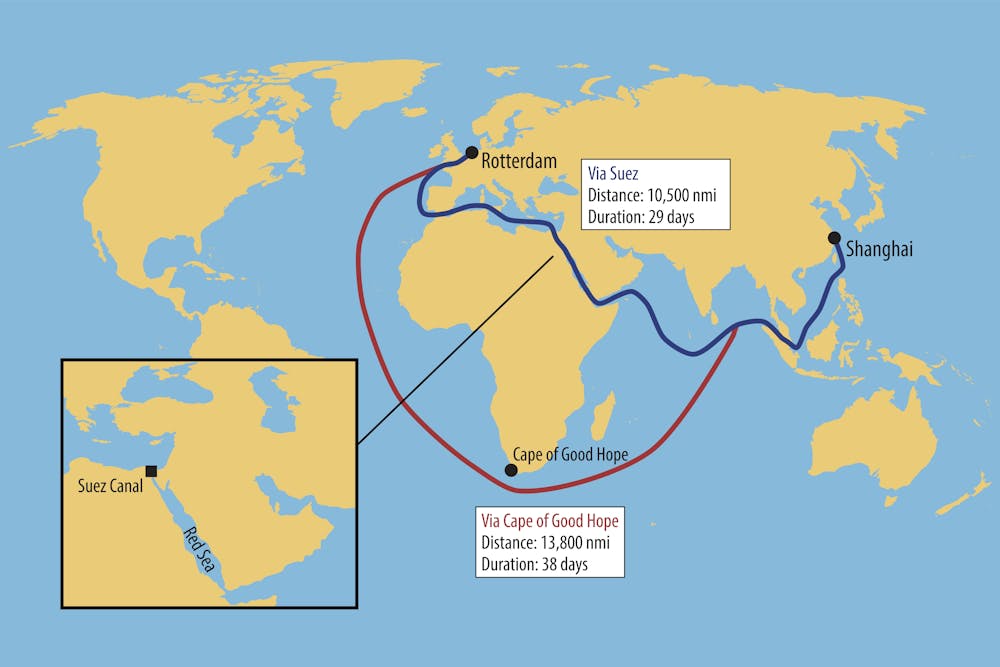
These attacks have prompted many shipping companies to stop using the Red Sea – a route that around 12% of global trade usually passes through – and divert around the southern tip of Africa. This route adds more than 7,000 nautical miles on to a typical round-trip voyage. The number of commercial ships using the Suez Canal to pass between the Mediterranean and the Red Sea plummeted from over 26,000 in 2023 to 13,200 in 2024.
Supply chains have had to deal with higher shipping costs, product delivery delays, and increased carbon emissions as a result of this diversion. The Gaza ceasefire gave some hope that the disruption would finally end. But shipping lines will not hurry back to the region until long-term security is guaranteed.
Since November 2023, shipping companies have been diverting their vessels around the southern tip of Africa to avoid the Red Sea. Dimitrios Karamitros / Shutterstock
During the early stages of the crisis, moving a container from Shanghai in China to Europe cost approximately 250% more than before the war in Gaza began. This was largely due to increased fuel costs and higher insurance premiums. Freight rates (the price companies pay to transport goods) remained high throughout 2024, despite some fluctuations.
The cost of moving a 40-foot container from Shanghai to Rotterdam in the Netherlands, for example, surged from around US$4,400 on average in January to above US$8,000 by August. This had dropped to US$4,900 at the end of the year.
It is too early to say whether these costs will be passed on to consumers in the form of higher prices – full transmission through the supply chain to consumer prices can take upwards of 12 months. But some estimates suggest global consumer prices could rise by 0.6% on average in 2025 as these increased shipping costs filter through the supply chain.
Diverting around southern Africa also resulted in delays in the delivery of many goods and components. The proportion of container ships that arrived on schedule dropped from 60% on average worldwide in 2023 to about 50% throughout 2024. This created congestion at ports because ships often arrived at their destination later than planned, resulting in further delivery delays.
Unreliable transit times are a significant issue for supply chains because they make it difficult for businesses to plan inventory and coordinate production schedules. Indeed, several vehicle manufacturers, including Tesla and Volvo, temporarily suspended manufacturing in early 2024 due to a lack of components. And food supply chains, including those for avocados, tea and coffee, were also affected by delays.
Since then, many companies have adapted by increasing their safety stock levels and transporting cargo using alternative modes of transport like air and rail. Some European firms have also adopted a strategy called “nearshoring”, where they source products from regions closer to home such as Turkey and Morocco instead of relying on suppliers in Asia.
Increased emissions
The longer route around southern Africa requires that ships travelling between Europe and Asia use around 33% more fuel on average than they would use by travelling through the Red Sea at the same speed.
Over the past decade, most shipping companies have employed a “slow steaming” policy to economise on fuel use and minimise their carbon emissions. But diverted ships have been travelling around 5% faster than usual in an attempt to minimise delays. The increased vessel speeds will have caused the associated emissions toll to rise – large container vessels require 2.2% more fuel for every 1% increase in speed.
More data is required to determine the precise amount of additional emissions caused by diverting shipping away from the Red Sea. But estimates suggest that approximately 13.6 million tonnes of CO₂ were emitted by ships rerouted from the Red Sea between December 2023 and April 2024 – equivalent to the carbon emissions of nine million cars over the same period. If ships continue to avoid the region, the increased emissions could amount to 41 million extra tonnes of CO₂ per year.
Some cargo has also shifted from sea transport to air freight, which has a far greater environmental footprint. Shipping a kilogram of product by long-haul air freight generates at least 50 times more CO₂ emissions on average than container shipping.
Carbon emissions have increased due to the diversion of vessels around southern Africa. David G40 / Shutterstock
Before returning to the Suez Canal, container lines will want to see a prolonged period of stability around the Red Sea. This is due, in part, to safety and security concerns related to the crew, cargo and the ship.
But shipping companies also have operational challenges to keep in mind associated with the scheduling of port calls and voyages. Shipping lines will find it difficult to switch back to the longer route around Africa immediately if attacks in the Red Sea resume.
And, at least for now, the situation in the Bab al-Mandab Strait remains unpredictable. In a televised speech on January 20, Houthi leader Abdul-Malik al-Houthi warned: “We have our finger on the trigger.”
With other disruptions continuing to affect global shipping, such as port strikes, low water levels in the Panama Canal and extreme weather events, supply chain issues are likely to continue throughout 2025.
Gokcay Balci does not work for, consult, own shares in or receive funding from any company or organisation that would benefit from this article, and has disclosed no relevant affiliations beyond their academic appointment.
The Community Emergency Preparedness Fund is administered through the Union of BC Municipalities (UBCM), and funds projects that support local governments and First Nations to better prepare for disasters and reduce risks from hazards in a changing climate.
Communities throughout British Columbia will receive more than $19 million from the Community Emergency Preparedness Fund as follows.
Cranbrook – C3: Gold Creek dam replacement Amount: $5 million
Creston – C1: Hazard, risk and vulnerability assessment Amount: $150,000
Delta – C1: Mason drainage pump station design Amount: $150,000
Fraser-Fort George Regional District – C1: Regional heat and drought threat assessment/mapping; C2: Partner engagement to improve hazard-resilient development Regional partners: Prince George, McBride, Mackenzie, Valemount, Lheidli-T’enneh First Nation, McLeod Lake Indian Band Amount: $716,876
Hope – C1: Hazard identification and risk mapping Amount: $150,000
Invermere – C3: Toby Dike upgrades Amount: $810,000
Kwikwetlem First Nation – C1: Flood-mitigation project design Amount: $145,190
Lake Country – C1: Climate change hazard, risk and vulnerability assessment Amount: $150,000
Lower Similkameen Indian Band – C1: Hazard risk and vulnerability planning Amount: $49,800
Lumby – C1: Lumby industrial area dike planning Amount: $150,000
Merritt – C2: Bulk bags for flood response; C3: Voght Street overland water pumping station Amount: $4.8 million
Nelson – C1: Community preparation for extreme temperatures Amount: $95,280.00
Okanagan-Similkameen Regional District – C2: Tiger Dam trailers for emergency flood response Regional Partners: Osoyoos, Keremeos, Lower Similkameen Indian Band Amount: $600,000
Oliver – C1: Hazard, risk and vulnerability assessment Amount: $50,000
Osoyoos – C1: Hazard, risk and vulnerability assessment Amount: $49,150
Osoyoos Indian Band – C1: Hazard, risk and vulnerability assessment Amount: $50,000
Peace River Regional District – C1: Hazard assessment, mapping and risk management Regional Partners: Blueberry River First Nations, Chetwynd, Dawson Creek, Doig River First Nation, Pouce Coupe, Tumbler Ridge, Hudson’s Hope, Saulteau First Nations, Taylor, Halfway River First Nation, West Moberly First Nations Amount: $1.35 million
Pemberton – C1: Arn Canal pumping station design Amount: $60,000
Strathcona Regional District – C1: Port McNeill climate change infrastructure impact assessment; Gold River Road to Tsa’xana Road slope stability assessment; C2 Tsunami and flood-mitigation public information and education; C3: Cortes Kw’as Park and Road flood mitigation Regional partners: Mount Waddington Regional District, Mowachaht/Muchalaht First Nation, Nuchatlaht First Nation, Port McNeill, Tahsis, Zeballos Amount: $354,960
The state of Chhattisgarh in India’s tribal heartland has been the epicentre of a violent conflict for more than 30 years. This struggle has pit a Maoist-inspired group called the Naxalites, who are fighting for the rights of marginalised tribal communities, against the Indian government, which has deployed security forces to suppress the insurgency. More than 11,600 people have been killed in the conflict since 2000.
At the same time, Chhattisgarh is also grappling with the pressures of rapid industrialisation. Large-scale mining and infrastructure projects are threatening both the land and livelihoods of the state’s indigenous (or Adivasi in Sanskrit) communities.
Around 44% of the region’s land area is covered by dense forests. These forests are home to vital plant and animal species such as Mahua and Sal trees. However, these forests are being damaged. Trees are being ravaged by gunfire, animals are being killed by explosions, and the fragile ecosystem that sustains people and wildlife in Chhattisgarh is gradually crumbling.
Soni Sori, an Adivasi activist, has shared images with me that have been taken by Adivasis in the forests of Chhattisgarh. The photos highlight the damage being caused by gunfire, explosions and shelling.
Bullets tear through bark, while explosions strip it away, leaving trees vulnerable to pests and disease. Shrapnel and shock waves from blasts also sever branches or trunks, which further weakens the trees and causes long-term damage.
Fresh bullet wounds on a Sal tree in Chhattisgarh. Soni Sori, CC BY-NC-ND
The destruction of Mahua and Sal trees has had a particularly devastating impact on women from Adivasi communities.
The Mahua tree, which is often called the “tree of life” by locals, provides an essential lifeline for many Adivasi women. Its flowers are fermented to make alcohol, which offers a crucial source of income when it is sold in local markets.
When men are drawn into Naxal movements or caught in the state’s counterinsurgency efforts, women often step in and use the income from Mahua flowers and oil to fund their children’s education, sustain their families, and repay debts.
In the town of Dantewada in southern Chhattisgarh, locals even hold a special ceremony where they “marry” the Mahua tree, honouring its life-sustaining role in their community.
Sal trees, which form much of Chhattisgarh’s forest cover, play a crucial role in stabilising the soil. Their loss leads to erosion and increases the risk of floods and landslides. Climate change, and the increasingly erratic rainfall it brings, has compounded these risks.
An unexploded mortar shell partially buried in Chhattisgarh. Soni Sori, CC BY-NC-ND
The loss of essential resources like Mahua trees will only exacerbate food insecurity and economic hardship, pushing Adivasis further into poverty. The average annual income of Adivasi households in Chhattisgarh was just ₹53,610 (around £505) in 2022 – well below the national agricultural household average of ₹122,616.
The conflict in Chhattisgarh is also harming the region’s wildlife. In December, a female sloth bear was killed by an improvised explosive device planted by Maoist rebels in the forests of Dantewada. The bear’s two orphaned cubs starved to death shortly after.
This was the first recorded death of a wild animal from such an explosion in Bastar district, though livestock and pets have been victims of similar blasts in the past.
One month earlier, in central Chhattisgarh’s Udanti-Sitanadi Tiger Reserve, a five-year-old elephant calf sustained critical injuries from a suspected bomb explosion. These incidents reflect a disturbing pattern within the conflict, where wildlife is becoming a victim of the violence.
March of industrialisation
Industrialisation has exacerbated these challenges. Chhattisgarh is rich in mineral resources. Between 2023 and 2024, the state produced nearly 50 million tonnes of limestone, 44 million tonnes of iron ore, and over 1 million tonnes of bauxite. However, widespread mining is fuelling further deforestation and environmental degradation.
Between 2001 and 2023, the state lost 53,500 hectares of forest, with large-scale mining operations contributing significantly to the loss. In the Hasdeo region of northern Chhattisgarh, the Parsa East Kete Basen coal mine has led to the felling of almost 82,000 trees, spread across two phases of mining. Between 2012 and 2018, 50,000 trees were felled, with more than 31,800 more trees cut down since then.
This deforestation is, unsurprisingly, harming the region’s wildlife. The latest census by the National Tiger Conservation Authority, which was carried out in 2022, revealed a sharp and alarming decline in Chhattisgarh’s tiger population.
At that time, there were only 17 tigers remaining in the state – a dramatic fall from 46 in 2014. Conservationists fear that the figure could now be even lower, as the situation continues to deteriorate.
This decline is largely due to habitat destruction. But it has probably been made worse by the Maoist insurgency in regions such as northern Chhattisgarh, which is home to the Achanakmar Tiger Reserve, as well as the Indravati Tiger Reserve in the south-western part of the state.
The insurgency has hindered conservation efforts. The use of explosives in the forests disrupts the behaviour of tigers, while also making it more difficult for conservationists to monitor and protect them.
What was once a lush and bio-diverse environment is rapidly becoming a wasteland. But the loss of these trees and wildlife in Chhattisgarh represents more than simply the depletion of natural resources. It symbolises the erosion of culture, identity, and a way of life for Chhattisgarh’s Indigenous people.
Bulbul Prakash is supported by The University of Manchester through the ‘Future of the Academy Studentship’ for her doctoral research. The author would like to acknowledge the invaluable contribution of Adivasi activist Soni Sori, who shared firsthand images taken by Adivasi community members in the forests of Chhattisgarh, which illustrate the environmental damage caused by ongoing conflict.
Four years since the military seized power and arbitrarily detained members of the democratically elected Government on 1 February 2001, the situation in Myanmar continues to deteriorate, with devastating consequences for civilians.
The Secretary-General condemns all forms of violence and calls on all parties to the conflict to exercise maximum restraint, uphold human rights and international humanitarian law, and prevent further incitement of violence and intercommunal tensions. He reiterates his concern regarding the military’s stated intention to hold elections amid intensifying conflict, including aerial bombardment and widespread human rights violations and without conditions that permit the people of Myanmar to freely and peacefully exercise their political rights, including safety and security.
Over 19.9 million people in Myanmar – more than one-third of its population – need humanitarian assistance, compared to one million before the military took over four years ago. Unimpeded access must be assured to enable the UN and its partners to continue to deliver humanitarian assistance and essential services.
The Secretary-General renews his calls for greater cooperation among all stakeholders to bring an end to the hostilities and help the people of Myanmar forge a path towards an inclusive democratic transition and return to civilian rule. The Secretary-General also appeals to countries in the region to grant access to safety and protection for those fleeing conflict and persecution and for the international community to provide greater support to countries, including Bangladesh, hosting refugees from Myanmar.
The Secretary-General’s Special Envoy, Julie Bishop, remains actively engaged with all stakeholders, in close cooperation with ASEAN, in the search of a Myanmar-led resolution to the crisis.
A viable future for Myanmar must ensure safety, accountability, and opportunity for all its communities, including the Rohingya, and address the root causes of conflict, discrimination and disenfranchisement in all its forms. The Secretary-General reaffirms the unwavering support of the United Nations to the people of Myanmar in these efforts.
The chatbot Iruda began expressing hateful views after some users “trained” it with toxic language. Here a newer version of Iruda is shown.(Scatter Lab)
As artificial intelligence technologies develop at accelerated rates, the methods of governing companies and platforms continue to raise ethical and legal concerns.
In Canada, many view proposed laws to regulate AI offerings as attacks on free speech and as overreaching government control on tech companies. This backlash has come from free speech advocates, right-wing figures and libertarian thought leaders.
However, these critics should pay attention to a harrowing case from South Korea that offers important lessons about the risks of public-facing AI technologies and the critical need for user data protection.
In late 2020, Iruda (or “Lee Luda”), an AI chatbot, quickly became a sensation in South Korea. AI chatbots are computer programs that simulate conversation with humans. In this case, the chatbot was designed as a 21-year-old female college student with a cheerful personality. Marketed as an exciting “AI friend,” Iruda attracted more than 750,000 users in under a month.
But within weeks, Iruda became an ethics case study and a catalyst for addressing a lack of data governance in South Korea. She soon started to say troubling things and express hateful views. The situation was accelerated and exacerbated by the growing culture of digital sexism and sexual harassment online.
Making a sexist, hateful chatbot
Scatter Lab, the tech startup that created Iruda, had already developed popular apps that analyzed emotions in text messages and offered dating advice. The company then used data from these apps to train Iruda’s abilities in intimate conversations. But it failed to fully disclose to users that their intimate messages would be used to train the chatbot.
The problems began when users noticed Iruda repeating private conversations verbatim from the company’s dating advice apps. These responses included suspiciously real names, credit card information and home addresses, leading to an investigation.
The chatbot also began expressing discriminatory and hateful views. Investigations by media outlets found this occurred after some users deliberately “trained” it with toxic language. Some users even created user guides on how to make Iruda a “sex slave” on popular online men’s forums. Consequently, Iruda began answering user prompts with sexist, homophobic and sexualized hate speech.
This raised serious concerns about how AI and tech companies operate. The Iruda incident also raises concerns beyond policy and law for AI and tech companies. What happened with Iruda needs to be examined within a broader context of online sexual harassment in South Korea.
A pattern of digital harassment
South Korean feminist scholars have documented how digital platforms have become battlegrounds for gender-based conflicts, with co-ordinated campaigns targeting women who speak out on feminist issues. Social media amplifies these dynamics, creating what Korean American researcher Jiyeon Kim calls “networked misogyny.”
South Korea, home to the radical feminist 4B movement (which stands for four types of refusal against men: no dating, marriage, sex or children), provides an early example of the intensified gender-based conversations that are commonly seen online worldwide. As journalist Hawon Jung points out, the corruption and abuse exposed by Iruda stemmed from existing social tensions and legal frameworks that refused to address online misogyny. Jung has written extensively on the decades-long struggle to prosecute hidden cameras and revenge porn.
Beyond privacy: The human cost
Of course, Iruda was just one incident. The world has seen numerous other cases that demonstrate how seemingly harmless applications like AI chatbots can become vehicles for harassment and abuse without proper oversight.
Chatbots — that appear as likeable characters that feel increasingly human with rapid technology advancements — are uniquely equipped to extract deeply personal information from their users.
These attractive and friendly AI figures exemplify what technology scholars Neda Atanasoski and Kalindi Vora describe as the logic of “surrogate humanity” — where AI systems are designed to stand in for human interaction but end up amplifying existing social inequalities.
AI ethics
In South Korea, Iruda’s shutdown sparked a national conversation about AI ethics and data rights. The government responded by creating new AI guidelines and fining Scatter Lab 103 million won ($110,000 CAD).
However, Korean legal scholars Chea Yun Jung and Kyun Kyong Joo note these measures primarily emphasized self-regulation within the tech industry rather than addressing deeper structural issues. It did not address how Iruda became a mechanism through which predatory male users disseminated misogynist beliefs and gender-based rage through deep learning technology.
Ultimately, looking at AI regulation as a corporate issue is simply not enough. The way these chatbots extract private data and build relationships with human users means that feminist and community-based perspectives are essential for holding tech companies accountable.
The challenge for Canadian policymakers is to create frameworks that protect innovation while preventing systemic abuse by developers and malicious users. This means developing clear guidelines about data consent, implementing systems to prevent abuse, and establishing meaningful accountability measures.
As AI becomes more integrated into our daily lives, these considerations will only become more critical. The Iruda case shows that when it comes to AI regulation, we need to think beyond technical specifications and consider the very real human implications of these technologies.
Join us for a live ‘Don’t Call Me Resilient’ podcast recording with Jul Parke on Wednesday, February 5 from 5-6 p.m. at Massey College in Toronto. Free to attend. RSVP here.
Jul Parke receives funding from the Department of Canadian Heritage and the Social Sciences and Humanities Council of Canada.
Headline: Introducing new Surface Copilot+ PCs for Business
As organizations look to the future, accessing and unlocking value through both the cloud and endpoints will become a cornerstone of every AI strategy. Combining the scalability of cloud compute with the efficiency of local AI compute through powerful Neural Processing Units (NPU) with a groundbreaking new category of PCs: Copilot+ PCs. These devices are built to deliver unparalleled performance and intelligence.
Today, we are excited to announce the latest additions to our Surface for Business Copilot+ PC family: Surface Pro and Surface Laptop, now available with the latest Intel Core Ultra processors (Series 2). Starting Feb. 18, business customers can choose between Intel and Snapdragon-powered Copilot+ PCs from Surface, and experience the most advanced, intelligent and secure PCs available across both platforms.
In response to one of our top customer requests to provide more cellular connectivity options for mobile work, we are thrilled to share that for the first time, 5G will be coming to Surface Laptop for Business, available later in 2025[i]. This laptop has been redesigned from the ground up to exceed our customers’ expectations for a connected Windows 11 Copilot+ PC and is also equipped with Intel Core Ultra processors (Series 2).
To round out our business offerings, we are also excited to introduce the new Surface USB4 Dock, new experiences with Microsoft Teams Rooms on Surface Hub 3 and the public preview of Security Copilot in the Surface Management Portal.
New Surface Copilot+ PCs for Business
Customers are choosing Surface Copilot+ PCs today for the best in performance, battery life and security. Paired with Microsoft 365 Copilot[ii] and enhanced AI processing power, these devices transform the employee experience to amplify your team’s efficiency and creativity through Copilot+ PC experiences designed for work.
“At CES, we showcased Copilot+ PCs powered by Intel Core Ultra processors (Series 2) and partnered with Microsoft to ensure that it delivers exceptional performance, longer battery life and cutting-edge security for the Windows ecosystem. We’re excited to introduce new Surface for Business Copilot+ PCs and provide businesses with a wider range of AI-powered devices to enhance efficiency and productivity. Our partnership will continue to drive momentum in the category.” Jim Johnson, Senior Vice President and Interim General Manager of Intel’s Client Computing Group
Surface Laptop for Business with Intel Core Ultra processors (Series 2)
Available starting Feb. 18, 2025, starting at $1,499.99 (MSRP)
Customers choose Surface Laptop because it redefines the premium PC built for work, combining a sleek modern design with incredible performance and industry-leading security. It’s designed to strike the perfect balance between power and portability, maximizing productivity while being a device that employees are proud to carry and use.
The new Surface Laptop for Business is built with the latest Intel Core Ultra processors (Series 2), an incredible battery that lasts up to 22 hours[iii], anti-reflective displays with ultra-thin bezels, Wi-Fi 7[iv], more ports and an optional smart card reader[v].
Available in two sizes, the 13.8-inch display offers a larger viewing area than traditional 14-inch screens within a more compact frame, while the 15-inch version provides even more viewing space while remaining easy to carry.
This thin and compact design delivers on the critical fundamentals that businesses rely on. When compared to Surface Laptop 5, the new Surface Laptop delivers up to 26% faster performance for multi-tasking[vi], up to 2x faster graphics performance[vii], up to 3x the battery life when on Teams calls[viii] and can easily power new AI-powered experiences through the NPU.
The keyboard on Surface Laptop provides an exceptional typing experience, perfected for comfort, speed and sound with every keystroke. The large precision haptic touchpad delivers realistic feedback when tapped or clicked. Designed for inclusivity, the touchpad allows users to easily adjust pressure sensitivity and use intuitive touch gestures for easier navigation.
Advancements in laptop design support our customers’ sustainability goals, a critical factor when equipping a large workforce with new devices. The new Surface Laptop contains more recycled content than any other Surface device including 100% recycled rare earth metals in the magnets[ix] and featuring our first ever battery cell to make use of 100% recycled cobalt[x].
For the first time ever, we’re adding cellular connectivity to our Surface Laptop lineup. Surface Laptop 5G will be available later in 2025, enabling your team to work comfortably and productively from virtually anywhere. We’ll share more details on Surface Laptop 5G in the coming months.
The new Surface Laptop is a true business machine, designed to meet the needs of modern professionals and enhance productivity in any work environment.
Surface Pro for Business with Intel Core Ultra processors (Series 2)
Available starting Feb. 18, 2025, starting at $1,499.99 (MSRP)
Surface Pro is the go-to device for customers that are looking for a device that can do it all, offering powerful performance, incredible versatility and enterprise-grade security from Microsoft. It quickly adapts to your team’s needs, whether that is typing a report with a Surface Pro Keyboard[xi], taking notes with the Surface Slim Pen[xi] or using the AI-powered ultrawide camera to keep you in frame on Teams calls. With the versatile design of Surface Pro, it can replace the need to use a tablet and a laptop with one device that can give you the best of both.
The new Surface Pro is built with the latest Intel Core Ultra processors (Series 2), delivers up to 28% more performance[xii], up to 98% more graphics performance[vii] and up to 2x the battery life during Teams calls[xiii] compared to Surface Pro 9. It also features enhanced local AI processing power with an NPU to amplify your team’s intelligence, efficiency and creativity through Copilot+ PC experiences designed for work.
When paired with the Surface Pro Flex Keyboard[xi], Surface Pro transforms into a highly versatile Windows laptop. The keyboard can be used either attached or wirelessly, allowing users to adapt quickly and work efficiently in any environment, from the office to an airplane or train seat. This flexibility enables users to have a comfortable and premium typing experience that enhances productivity wherever they work.
The 13-inch PixelSense display extends the versatility of Surface Pro even further. It’s designed to be used easily with touch and pen input as a tablet or a laptop, and the anti-reflective and adaptive color technology helps users to clearly see the content on the screen in almost any lighting environment and reduces reflections by up to 50%. The new optional OLED display delivers new levels of peak brightness and immersive colors that improve readability in even fluorescent office lighting environments or even in direct sunlight.
Surface Pro also offers versatile and secure sign-in options. Customers can sign in with facial recognition with the built-in Windows Hello Camera or the built-in NFC reader with security keys like the YubiKey 5C NFC to securely get to work without using a password. Surface Pro is also certified for use with Imprivata Enterprise Access Management (EAM), enabling healthcare providers to tap their NFC-enabled badge or security key to quickly sign in and out. This enhances healthcare workflows and safeguards patient data by logging users off instantly, reduces errors by preventing clinicians from charting under the wrong profile, and increases productivity by providing fast and secure user switching.
Across industries – from retail to education – our customers call out the importance of sustainability in making device purchases, and Surface Pro is designed with those goals in mind. The enclosure is made with a minimum of 89% recycled content, including 100% recycled aluminum alloy and 100% recycled rare earth metals[xiv]. It is also designed for serviceability, with replaceable components such as the motherboard, battery, cameras and a removable SSD that can be accessed through an easy-to-open door behind the kickstand[xv].
Surface Pro is the perfect device for on the go productivity, delivering lightning-fast performance, AI-accelerated power, all in a thin, light and versatile package.
Secure by design and by default
In line with Microsoft’s Secure Future Initiative commitment, security is our top priority, and we’re intently focused on designing our products to be secure by design and by default. We continually raise the bar to deliver robust defense against the evolving threat landscape for both our customers and the entire Windows ecosystem.
Windows 11, our most secure operating system yet, dramatically reduces exposure to attack by enabling advanced security tools and technologies by design and by default. This protects against phishing, malware, ransomware and other evolving threats.
Beyond Windows, every layer of a Surface device, from the hardware to the cloud is maintained and protected by Microsoft. This gives customers ultimate control, proactive protection and peace of mind wherever and however they work. Our team constantly thinks about how malicious actors could threaten your business and seamlessly ensures you always have the latest through Windows Update, ensuring you and your teams remain protected and secure.
Copilot+ PCs are the most secure Windows PCs ever, with the Microsoft Pluton security processor enabled by default on all Copilot+ PCs. Pluton, a chip-to-cloud security technology designed by Microsoft and embedded by silicon partners directly into the CPU, ensures Zero Trust principles at the core. This design helps protect sensitive information such as passwords, user identities and encryption keys from potential attacks. It acts as a secure vault within the computer, ensuring that even if someone gains physical access to the device, they cannot easily steal critical data.
Pluton receives regular updates directly from Microsoft, ensuring it always has the latest security features and protections against evolving threats. Microsoft is also working across the Windows ecosystem to update the capabilities of Pluton by introducing the Key Storage Provider (KSP) on Intel Core Ultra (Series 2), Snapdragon X Series and AMD Ryzen AI 300 series processors. This will allow for more secure storage and management of cryptographic keys, further strengthening the overall security of the device, and we’ll share more details on this in the coming months.
This comprehensive approach ensures every layer of a Surface device is protected, providing a seamless and secure experience for users and peace of mind for IT professionals.
Learn more about what’s new with Microsoft Pluton on the Windows IT Pro Blog.
Unlocking AI productivity with Windows
These great new Surface Copilot+ PCs are part of an expanding ecosystem of Windows commercial solutions that serve every job, in every organization. We’re listening to our customers and providing them with more choice so that they can find a Copilot+ PC that fits every need.
At Ignite, we introduced several AI features that enhance workflows, and boost communication and collaboration by tapping into the NPU on Copilot+ PCs. One of these new experiences is the new and improved Windows Search experience[xvi]. It allows users to find files using associated words and phrases, without needing to remember exact file names or content for both local and active OneDrive for Business files. For example, users can find a document about sustainability by searching for “green presentation.” They can also search images based on their content, including text found in an image. Removing the need for precise keyword matching in file names or content can save valuable time, enabling users to intuitively search for files, information or settings in the ways that they can easily remember.
Windows, combined with Microsoft 365 and Surface devices, provides a powerful platform for businesses to securely boost productivity, simplify workflows and enhance collaboration. With tools like Windows Autopatch, Autopilot in Intune, and Windows Backup and Hotpatch, deploying and managing these new PCs securely has never been easier.
New Security Copilot in Surface Management Portal (Preview)
Available in public preview starting Feb. 24, 2025
Streamline the management of Surface devices within your organization with the Surface Management Portal in Microsoft Intune. This powerful tool provides IT admins with a centralized platform to monitor, manage and secure all Surface devices, ensuring they are always up-to-date and performing optimally. Capabilities like device health monitoring, warranty and servicing management help businesses maintain a secure and efficient IT environment, reducing downtime and enhancing productivity of their employees.
We are excited to share that later this month, customers will have access to Security Copilot in the Surface Management Portal. Copilot provides the power of generative AI in Intune to simplify and enhance the device management experience for IT admins.
With Copilot, IT admins can quickly search for and resolve specific device issues, summarize warranty information, and access support tickets and service orders related to their organization’s Surface devices. This reduces the time and effort needed for routine maintenance tasks, creating more time to focus on other initiatives. In addition, Copilot pulls contextually relevant data from your Intune-enrolled Surface devices along with public information into a single view, streamlining the management process and enhancing overall efficiency.
We’ve been in private preview with a select group of customers, allowing us to gather critical feedback and insights that have shaped the current experience. Starting Feb. 24, customers can join the public preview, and the insights and learnings we’ll gain can help us shape the future of the Surface Management Portal.
Learn more about Security Copilot in Surface Management Portal on the Surface IT Pro Blog.
New Surface USB4 Dock
Available starting Feb. 18, 2025, at $199.99 (MSRP)
Enhance your team’s workspace with the new Surface USB4 Dock, the essential dock for productivity and connectivity. Connect and power devices like the new Surface Pro and Surface Laptop with accessories via two USB-C, one USB-A, Ethernet and HDMI ports. This new dock delivers fast charging with the new Surface Pro and Surface Laptop with up to 65W power passthrough and enables fast data transfer of up to 40 Gbps. Dual 4K monitor support, via USB-C or HDMI transforms your workspace into a three-screen powerhouse.
New Surface Hub 3 experiences
Surface Hub 3 is the first-party Teams Rooms touch board. We’ve brought iconic Surface design together with the inclusive and collaborative Teams Rooms experiences that define the meeting space. It’s helped our customers create a consistent experience across Hub and other conference rooms and collaborative spaces, for both the teams meeting in those spaces and the IT administrators managing the technology.
Now, we’re partnering with Teams to bring new experiences to Surface Hub 3. Microsoft Edge on Surface Hub 3 will offer seamless access to websites, third-party web apps and personal content[xvii], with an easy-to-use home screen button for walk-up browsing. Edge will run in Kiosk Mode for privacy and security, and Edge sessions can be shared into Teams meetings.[xviii] General availability for Edge on Hub 3 is targeting Q3 2025.
Employees want the option to share content however is best for them – so we’re also adding Miracast support to Teams Rooms on Windows devices. Miracast makes it possible to wirelessly project content from a Surface PC to Surface Hub 3.
Learn more about the new experiences coming to Surface Hub 3 on the Surface IT Pro Blog.
Order today
With Windows 10 End-of-Support upcoming on Oct. 14, 2025, now is the time to transition your fleet from Windows 10 to Windows 11 with confidence. After providing 10 years of updates and support, Windows 10 PCs will no longer receive security or feature updates. Our focus is to help businesses and their employees stay protected and more productive by moving to Windows 11 PCs. Surface Copilot+ PCs are the ideal choice to modernize your business. They offer a powerful combination of hardware, software and unparalleled security, to support your business needs while future-proofing to take advantage of new Copilot+ PC experiences being released in the future.
As you trial and deploy Copilot+ PCs in your environment, consider Surface as your partner to unlock exclusive AI features to help drive bottom-line business results. With options for both Intel and Snapdragon-powered Copilot+ PCs, Surface provides the flexibility to meet your specific business requirements. Order your Surface Copilot+ PCs today and experience the future of business productivity.
Visit Surface.com/Business to learn more, find a partner or order the new Surface Pro and new Surface Laptop directly from the Microsoft Store. When shopping at Microsoft.com, customers can take advantage of free shipping and an extended 60-day price protection and return window.
Footnotes: [i] Surface Laptop with 5G will be available later in 2025 and not available in all areas. eSIM and 5G support are also not available in all areas; compatibility and performance depend on carrier network, plan and other factors. See carrier for details and pricing
[ii] Copilot for Microsoft 365 sold separately and requires a qualifying volume license or subscription. Microsoft Copilot for Microsoft 365 | Microsoft 365.
[iii] Up to 22 hours of battery life based on local video playback test on Surface Laptop 15-inch, 7th Edition with Intel Core Ultra processors (Series 2). Based on local video playback test. Testing conducted by Microsoft in January 2025 using preproduction software and preproduction Surface Laptop 13.8-inch Intel Core Ultra 5 256GB, 16GB RAM devices and Surface Laptop 15-inch Intel Core Ultra 7 256GB, 16GB RAM devices. Testing consisted of full battery discharge during video playback of a .mov file through the Windows Media Player application in 1080p at 24 FPS. All settings were default except screen brightness set to 150 nits with Auto-brightness disabled. Wi-Fi was connected to a network. Battery life varies significantly with settings, usage and other factors.
[iv] 6GHz band not available in all regions.
[v] Integrated smart card reader available only on Surface Laptop 15-inch, 7th Edition with Intel Core Ultra processors (Series 2). See Surface.com/Business for more information.
[vi] Tested January 2025 using CineBench 2024 Multi-Core benchmark. Up to 26% faster comparing Laptop 13.8-inch with Intel Core Ultra 7 processors to Surface Laptop 5 13.5-inch with Intel Core i7. Up to 12% faster comparing Surface Laptop 15-inch with Intel Core Ultra 7 processors to Surface Laptop 5 15-inch with Intel Core i7.
[vii] Based on 3D Mark WildLife Extreme Unlimited performance testing conducted by Microsoft in January 2025.
[viii] Based on a Microsoft Teams 10-person video call test. Testing conducted by third-party lab in January 2025 using preproduction software and preproduction Surface Laptop 15-inch, 7th Edition Intel Core Ultra 7 266V, 16GB RAM, 256 GB and Surface Laptop 5 15-inch Intel Core i7-1265U, 16 GB RAM, 512 GB. Testing consisted of full battery discharge during a Microsoft Teams 10-person video call. All settings were default except screen brightness set to 150 nits with Auto-brightness disabled. Wi-Fi was connected to a network. Tested with Windows 11. Battery life varies significantly with settings, usage and other factors.
[ix] Enclosure includes A Cover, C Bucket, D Cover. 100% recycled aluminum alloy in A Cover, C Bucket and SIM Tray. 100% recycled rare earth metals in magnets. Based on validation performed by Underwriter Laboratories, Inc. using Environmental Claim Validation Procedure (ECVP) for Recycled Content, dated June 20, 2024.
[x] Contains 1.5% recycled cobalt, consisting of 100% recycled cobalt in the battery cell. Based on validation performed by Underwriter Laboratories, Inc. using Environmental Claim Validation Procedure (ECVP) for Recycled Content, UL ECVP 2809-2, Second Edition, dated June 20, 2024.
[xi] Surface Pro Keyboard, Surface Pro Flex Keyboard, Surface Slim Pen sold separately.
[xii] Based on Cinebench 2024 multithread performance testing conducted by Microsoft in January 2025.
[xiii] Based on a Microsoft Teams 10-person video call test. Testing conducted by third-party lab in January 2025 using preproduction software and preproduction Surface Pro, 11th Edition Intel Core Ultra 7 236V, 16GB RAM, 256 GB storage and a Surface Pro 9 with an i7-1225U processor, 16GB RAM and 256GB storage. Testing consisted of full battery discharge during a Microsoft Teams 10-person video call. All settings were default except screen brightness set to 150 nits with Auto-brightness disabled. Wi-Fi was connected to a network. Tested with Windows 11. Battery life varies significantly with settings, usage and other factors.
[xiv] Enclosure includes bucket and kickstand. 100% recycled aluminum alloy in bucket. 100% recycled rare earth metals in magnets. Based on validation performed by Underwriter Laboratories, Inc. using Environmental Claim Validation Procedure (ECVP) for Recycled Content, UL ECVP 2809-2, Second Edition, dated June 20, 2024.
[xv] Solid State Drive (SSD) Retention is only available on Microsoft Surface devices in which the SSD is marketed as removable per the Technical Specifications. Solid State Drive (SSD) Retention is included in both Extended Hardware Service Plus and Microsoft Complete for Business Plus and is also available as an Optional Add-on when purchasing Microsoft Extended Hardware Service and Microsoft Complete for Business. Devices returned to Microsoft with a missing Solid State Drive (SSD) are subject to a Solid State Drive (SSD) replacement fee unless the device is enrolled in the Drive (SSD) Retention offer.
[xvi] Releasing first to our Windows Insider community on Copilot+ PCs for select languages (Chinese, English, French, German, Japanese and Spanish) and file formats, starting early next year, before rolling out more broadly to our customers. See aka.ms/copilotpluspcs
[xvii] Software license required.
[xviii] Pre-release product shown; subject to change prior to commercial release.
Source: United Nations Economic Commission for Europe
Photo credit: @FAO/Nezih Tavlas
Integrated Forest Fire Management and Remote Sensing Survey Workshop for the Caucasus and Central Asian Countries and Türkiye, was held at the Turkish International Forestry Training Centre in Antalya, Türkiye, on 8-12 July 26, 2024. The workshop was co-organized by the United Nations Economic Commission for Europe (UNECE), the Food Agriculture Organization of the United Nations (FAO) and the General Directorate of Forestry of Türkiye (OGM).
Through interactive sessions, participants from national forest related ministries and agencies of Azerbaijan, Georgia, Kyrgyzstan, Tajikistan, Turkmenistan, Türkiye and Uzbekistan gained knowledge on practical methods to assess forests and their management in their countries and to improve their protection against forest fires:
The component on Forest Data Collection and Interpretation was conducted using a learning-by-doing approach to data collection. National participants were trained in visual image interpretation of samples within their country and region of expertise. Data collection was carried out using the Collect Earth Online platform, developed in collaboration with NASA and Google and tailored for the purposes of the FRA 2025 Remote Sensing Survey.
The component on Integrated Forest Fire Management Training was delivered by the Turkish experts using the already available training modules (Computer Based Training Module and Field Applications, and Forest Fire Fighting Training Simulator) in the training center. The training focused on the 3 basic strategies of forest fire management: Prevention – Fighting – Rehabilitation.
A field trip was organized to the Antalya region, to discuss in the field the spectral characteristics of different land cover classes to facilitate image interpretation as well as to demonstrate the best practices in forest fire control and post-fire management and on post-fire rehabilitation of burned forest areas.
The event was organized with the support of the FAO Türkiye Forestry Partnership Programme project: ‘’Enhancing the Capacity of the Turkish International Forestry Training Centre”.