Source: Northern Territory Police and Fire Services
The Northern Territory Police Force is currently investigating a single vehicle fatal crash that occurred in Kulgera this morning.
Around 11:40am, the Joint Emergency Services Communication Centre received reports that a vehicle had rolled on its side along the Stuart Highway approximately 3 kilometres from Kulgera.
Emergency services deployed from Alice Springs and Marla and the two vehicle occupants, a male and a female, were located deceased at the scene.
The Stuart Highway is now closed in both directions and police urge road users to avoid the area where possible.
Major Crash Investigation Unit have carriage and investigations are ongoing.
The number of lives lost on Territory roads now stands at 14.
The 2025 federal election resulted in some unexpected outcomes, including the loss by the Greens Leader, Adam Bandt, of his seat in the House of Representatives. The new Greens leader is Senator Larissa Waters.
Does it matter that a party leader sits in the Senate, and why do the leaders of major parties almost always come from the lower House?
The answer is that by convention, rather than an express constitutional requirement, the prime minister sits in the lower house of parliament. Parties with aspirations to form government therefore choose leaders from among their members in the lower house.
Prime ministers in the House of Lords
Historically, in the United Kingdom, prime ministers could sit in either house. In the 19th century, most prime ministers sat in the House of Lords, and two started in the House of Commons and ended their prime ministership in the Lords.
But in the 20th century, the convention developed of the prime minister holding a seat in the House of Commons.
This was for three reasons. First, as a matter of practicality, the House of Commons is where the main work of government occurs, and the prime minister’s involvement is needed.
Second, according to convention, the monarch appoints as prime minister the person who commands the confidence of the lower house, which is hard to do from outside it.
Third, the House of Lords is not elected, and therefore does not have a democratic mandate. It ceased to be acceptable in the United Kingdom for an unelected person to govern as prime minister.
When the Conservative prime minister, Harold Macmillan, resigned suddenly for health reasons in 1963, Lord Home was appointed as Conservative Party leader and prime minister. He renounced his earldom and then ran successfully in a byelection for a seat in the House of Commons.
A prime minister in the Senate?
In Australia, the position is different because the Senate is elected by the people. A senator can therefore be regarded as having a democratic mandate, although he or she represents a state, rather than being elected by a particular electorate.
Section 64 of the Commonwealth Constitution requires ministers to be either a member of the House of Representatives or the Senate, with a three month leeway period to become elected. But it does not require that the prime minister sit in the House of Representatives. It is instead a matter of custom, practicality and convention.
When the prime minister, Harold Holt, went missing while swimming in the ocean in December 1967, the Liberal Party chose Senator John Gorton as its new leader.
Gorton was appointed prime minister on January 10 1968, despite being a Senator, but resigned from the Senate on February 1 1968 and was elected to fill the vacancy in Holt’s lower House seat on February 24.
Gorton was therefore prime minister while being a Senator for three weeks, and prime minister without a seat in parliament at all for just over three weeks. It was generally accepted that as prime minister, he should sit in the lower house.
Premiers in state upper houses
At the state level, premiers have sometimes sat in the upper house, at least for a short period.
One notable example is that of Hal Colebatch in Western Australia. In 1919, Colebatch, who was a member of the Western Australian Legislative Council, was acting premier, while the premier, Henry Lefroy, was at a conference in Melbourne. There was an outbreak of Spanish flu in the eastern states. In scenes reminiscent of the COVID pandemic, Colebatch gained immense popularity by slamming shut the state border. His own premier was even prevented from returning home.
Lefroy eventually resigned as premier, and Colebatch replaced him, despite sitting in the Legislative Council. But Colebatch did not last long in the job. He tried, but failed, to find a lower house seat to move to. In addition, his health was failing, as was his popularity after rioting during a wharf strike led to the death of a worker. So Colebatch resigned as premier, having spent his entire premiership as a member of the Legislative Council.
In New South Wales, when the Labor premier, Neville Wran, surprised his colleagues by resigning in May 1986, the party elected Barrie Unsworth as its leader.
Unsworth was a member of the Legislative Council. He was nonetheless appointed as premier. A Labor backbencher in the Legislative Assembly resigned to allow Unsworth to contest his safe Labor seat. Despite a large swing against him, Unsworth narrowly won the seat by 54 votes and continued as premier until 1988.
Leaders of major and minor parties
The main problem with a prime minister or premier sitting in the upper house is that the government is formed from the lower house, and the prime minister or Premier must be the person who holds its confidence. This is difficult when there is no direct accountability to the lower house, as it cannot question a prime minister or premier who sits in the other house.
For this reason, parties that could potentially win government will ordinarily choose a leader from among their members in the lower House, and politicians with leadership ambition will often seek to transfer from the upper to the lower house to enhance their chances to lead.
Due to the Senate’s proportional voting system, minor parties are more likely to have greater numbers in the Senate than the House of Representatives. It is therefore logical that their leadership should come from the Senate, especially when they are unlikely to have the numbers in the lower House to form a government. But for major parties, their leader is ordinarily chosen from among the members of the House of Representatives, in case government beckons.
Anne Twomey has received funding from the ARC and sometimes does consultancy work for Parliaments, governments and inter-governmental bodies.
Queensland Senator Larissa Waters is the new leader of the Australian Greens, following a two-hour partyroom meeting held in the wake of the party’s lacklustre performance in the May 3 election.
Waters was elected unopposed.
New South Wales Senator Mehreen Faruqi will continue as Greens deputy, while South Australian Senator Sarah Hanson-Young will be the Greens Manager of Business.
Besides having an apt surname for an ecological party leader, what do we know about Waters?
And as Australia’s 48th parliament prepares to sit, what might we expect from her leadership of the country’s largest minor party?
Who is Larissa Waters?
Waters first entered parliament in 2011, following a career as an environmental lawyer.
She was the first Greens senator to be elected in Queensland and is now the second-longest serving Green in parliament after Hanson-Young.
Born in Canada, Waters’ tenure was briefly interrupted in 2017–2018 when she discovered she had breached section 44 of the Constitution by failing to renounce her dual citizenship.
Waters is the second woman after Christine Milne to lead the party. She has leadership experience, serving as Senate leader since 2020 and co-deputy leader prior to that.
Waters’ re-election on May 3 for another six-year term will ensure leadership stability following the unexpected departure of her predecessor, Adam Bandt.
Beyond her clear passion for environmental protection, Waters has dedicated her time in parliament to advancing gender equity, ending gender-based violence, and addressing corporate donations and influence in politics.
She made international news in 2017 when she became the first politician to breastfeed in federal parliament.
New direction?
So what does new leadership mean for the direction of the Greens and the role the party will play in the new parliament?
Will it opt for pragmatism or hold firm on principle?
Will it continue to campaign hard on a diverse set of policy issues, or choose to focus more on its core environmental offering?
Waters is viewed by many in the party as a compromise candidate between Faruqi and Hanson-Young, who according to speculation, were also considering a tilt at the leadership. Faruqi represents the more radical wing of the Greens, while Hanson-Young is a prominent moderate figure who would likely have pushed the party closer to the political centre and faced resistance from elements of the membership.
Given this, Waters is expected to play a unifying role, much like Bandt did during his tenure.
While the Greens held all their seats up for re-election in the Senate, they were close to a wipe-out in the lower house, where they lost three of their four members from the previous parliament.
The party will likely concentrate in future elections on expanding and then retaining their presence in the Senate.
In the lower house, Queensland will be a major focus for the Greens as they try to win back seats they lost at the election – Griffith and Brisbane. Waters’ leadership should help with this aim.
Senate power
Waters will conceivably command more power than Bandt, given the Greens will hold the sole balance of power in the new Senate.
She’s pledged to keep Labor accountable, while urging the government to “be brave” and “actually do what the country needs them to do”.
There’s now no excuse for the Labor Party not to take the climate crisis seriously, to take real action on the housing crisis, to genuinely tackle the cost of living. People deserve more than just tinkering. They deserve real reform that will help them in their daily lives, and nature cannot be put last like it has been for so long.
This, together with the presentation of Waters as a leader who represents continuity, suggests any changes to the party’s approach will likely focus on presentation rather than policy.
Waters is now tasked with reframing the 2025 election result as a moment of short-term pain and setting the party on a path of long-term gain.
Whether or not this will be achieved, and how important Waters’ leadership will be to achieving this, remains to be seen.
How was Waters selected?
The Greens’ leadership selection relies entirely on the federal party room. Unlike the Labor Party, where members have a say on who becomes leader, grassroots Greens are excluded from the process.
Like Waters, all previous leaders – Adam Bandt, Richard Di Natale, Christine Milne and party founder Bob Brown – were elected unopposed, reflecting the party’s consensus style of decision making.
In 2020, there was an unsuccessful push to include the membership base in the leadership process. A “one member, one vote” option received majority support in a party-wide plebiscite. But it failed to meet the two-thirds majority required to force a change.
Nathan Fioritti does not work for, consult, own shares in or receive funding from any company or organisation that would benefit from this article, and has disclosed no relevant affiliations beyond their academic appointment.
New taskforce to focus on high visibility patrols in Glenorchy CBD
Thursday, 15 May 2025 – 4:21 pm.
Tasmania Police is stepping up its focus on reducing anti-social behaviour and retail crime in the Glenorchy municipality, launching Taskforce Respect, a new community campaign involving high visibility patrols in the CBD and shopping areas. Inspector Jason Klug said the aim of Taskforce Respect was to enhance public safety and community confidence in the Glenorchy CBD, stretching also into Moonah and Claremont, with officers targeting recidivist offenders and anti-social behaviour. “Tasmania Police’s high-visibility foot patrols will continue in retail precincts to disrupt and reduce incidents of crime, with a particular focus on known and repeat offenders,” Inspector Klug said. “We’ll also be using drug detection dogs, CCTV footage and CBD exclusion orders to help achieve our goals of helping keep the community safe.” Recidivist offenders and youth crime will be a key focus of Taskforce Respect, with Tasmania Police data showing just 57 people made up 50 per cent of youth crime charges across the state in 2024. “Our message to these people is simple, if you are offending in the Glenorchy area, then we will be looking out for you,” Inspector Klug said. “Our aim is to ensure a safer, more welcoming environment for businesses, residents and visitors.” Inspector Klug said there was a deliberate use of the word ‘respect’ in naming the new taskforce, which began operation on Monday, May 12. “Our message is about instilling a basic respect for one another in our community,” Inspector Klug said. “It is a message, aimed particularly at our youth, in which we say acts of violence and abuse, and acts of retail crime and theft, like we have seen in the past, are unacceptable. “We want to help people understand the importance of respect, that is, respect for each other, respect for your community and respect for those businesses and retailers that are operating in our city.” Taskforce Respect will build upon successful policing initiatives Operation Swipe in Glenorchy (December 2024) and Operation Saturate (ongoing) across greater Hobart. Tasmania Police continues to work in partnership with Glenorchy City Council, businesses and stakeholders such as Metro Tasmania to prevent, resolve and investigate issues of crime and anti-social behaviour that occur in public spaces. Supporting police, Crime Stoppers Tasmania ambassador Mark Mewis said Crime Stoppers welcomed the initiative and sought to remind the public that community safety was the responsibility of all Tasmanians. “Everyone should be able to enjoy our public spaces without fear or intimidation, and we can further support the police by reporting anti-social behaviour and those engaged in such behaviour anonymously through Crime Stoppers,” Mr Mewis said. As part of the official launch of Taskforce Respect, Tasmania Police’s new Poli community outreach van was in attendance to help engage with the Glenorchy community. Launched in April, Poli has been developed to increase police visibility and improve engagement in the community. “Poli is staffed by members of the Community Engagement Services team, along with local officers, who can discuss local crime issues and provide crime prevention and general advice to residents and business owners. Poli staff can also provide information and resources about personal, residential and business safety, as well as child safety and safeguarding,” Inspector Klug said. Information on crimes in the Glenorchy community can be provided to police on 131 444 or to Crime Stoppers Tasmania on 1800 333 000 or crimestopperstas.com.au – information can be provided anonymously. If you are in immediate need of police assistance, call Triple-Zero (000) in an emergency.
SINGAPORE, May 15, 2025 (GLOBE NEWSWIRE) — Leading global advisory, broking and solutions company, WTW (NASDAQ: WTW) today announced the appointment of Luke Ware as Head of Asia, in addition to his current position as Head of Corporate Risk & Broking, Asia, effective immediately.
In his new dual capacity, Luke will work closely with all WTW business leaders across Risk & Broking and Health, Wealth & Career to drive innovation, advance and deliver WTW solutions, and serve the people, risk and capital needs of the company’s clients in Asia. Luke brings over 20 years of broking and risk management experience and has worked extensively in the insurance sector across markets in Australia, London and Asia.
Pamela Thomson-Hall, Head of International at WTW, said: “Luke has played a pivotal role in the growth and success of our Asia region. He has consistently demonstrated strategic vision, strong leadership and a client-first mindset. Luke’s ability to drive performance, while fostering collaboration across teams, makes him ideally suited to accelerate WTW’s growth and enhance the value we bring to our clients and colleagues in Asia.”
Commenting on his appointment, Luke said, “I’m honoured to take on this expanded role and excited about the opportunity to work even more closely with our talented colleagues across all our businesses in Asia. We are focused on accelerating our presence in the region to achieve the best outcomes for our clients. In today’s complex and volatile environment, this requires a thorough understanding of our clients’ needs. With the breadth of our solutions, I believe we can help our clients transform their tomorrows into actionable opportunities and business success.”
Based in Singapore, Luke will continue to report to Pamela Thomson-Hall.
About WTW
At WTW (NASDAQ: WTW), we provide data-driven, insight-led solutions in the areas of people, risk and capital. Leveraging the global view and local expertise of our colleagues serving 140 countries and markets, we help organizations sharpen their strategy, enhance organizational resilience, motivate their workforce and maximize performance.
Working shoulder to shoulder with our clients, we uncover opportunities for sustainable success—and provide perspective that moves you. Learn more at wtwco.com.
A soft consumer and global uncertainty have led to a downgrade to GDP expectations, with additional interest rate cuts needed to improve spending momentum.
Seven of the twelve HSI categories recorded spending growth for the month, led by Insurance (+1.6 per cent), Hospitality (+1.4 per cent) and Communications & Digital (+0.7 per cent). The increase seen in hospitality spending was likely driven by the Easter-Anzac Day ‘super holiday’ period. April also featured the lead-up to the Federal election, recovery from ex-Tropical Cyclone Alfred, and newly announced tariffs by the Trump administration.
Spending on Utilities fell 2.0 per cent in the month, the largest decline across all categories, with decreases seen in electricity, gas, water and council services. Transport (-0.8 per cent), Education (-0.7 per cent) and Household Services (-0.7 per cent) also declined.
“Another soft month for household spending reinforces our view that a slower than expected consumer recovery is unfolding. This trend, along with global economic uncertainty, led us to recently downgrade our Australian GDP forecast for 2025,” said CBA Senior Economist, Belinda Allen.
“While moderating inflation, February’s RBA rate cut and lower utility and petrol bills are improving purchasing power, households clearly remain deliberate with their spending choices. The recent pause of additional tariffs between the U.S. and China could improve sentiment going forward, however we expect it will take additional interest rates cuts to improve momentum in consumer spending.
“We maintain our call for the RBA to cut rates by 25 basis points next week , with a forecast end of year cash rate of 3.35 per cent.”
The annual rate of spending across home ownership status saw a surprising shift in April – renters have typically recorded the weakest spending over the past two years however this has now switched with renters leading annual growth in spending (+2.4 per cent), followed by those with a mortgage (2.2 per cent) and outright homeowners most sluggish (+0.7 per cent).
“Renters in particular have increased discretionary spending which suggests that while consumers are making cutbacks in some areas, many are still making trade-offs and allocating a share of their wallet to areas like hospitality and recreation and more so in April given the additional public holidays,” commented Ms Allen.
Queensland recorded the strongest household spending growth in April of the states and territories, rising 0.8 per cent following a rebound from ex-tropical cyclone Alfred in March, when the state posted the softest growth of all states at just 0.2 per cent.
15 May 2025 – The US-Israel proposition to control the distribution of supplies under the guise of humanitarian aid raises grave humanitarian, ethical, security and legal concerns, says international medical organization Médecins Sans Frontières/Doctors Without Borders (MSF).
Making aid conditional on forced displacement and vetting of the population is another tool in the ongoing campaign of ethnic cleansing of the Palestinian population. MSF firmly rejects and condemns any plan that further reduces availability of aid and subjugates it to Israeli military occupation objectives.
We are witnessing, in real time, the creation of conditions for the eradication of Palestinian lives in Gaza, says MSF.
The obstruction of humanitarian aid is a direct violation of UN Security Council Resolution 2720, which calls for the unimpeded delivery of humanitarian aid to civilians. Claims that aid is being diverted by Hamas remain unverified and in no way justify such measures. As the occupying power, Israel must facilitate impartial humanitarian assistance for the population in need.
UN, EU member states, and all those with influence over Israel,including Australia, must urgently use their political and economic leverage to stop the instrumentalisation of aid. Humanitarian supplies, food, fuel and medicines must be allowed to reach the population of Gaza now.
Since Israel’s resumption of attacks and its total blockade of aid on 2 March, Gaza has become a hell on earth for Palestinians. The survival of Palestinians lies at the mercy of Israeli authorities, who are denying the entire population access to food, water, medical care and shelter. Israel continues to pursue its campaign of ethnic cleansing by deliberately destroying the conditions necessary for life.
Organisations including World Central Kitchen and the World Food Programme (WFP) have announced that they have no more food stocks available in Gaza: most community kitchens and bakeries have closed. MSF medical teams in Gaza City have seen a 32 per cent increase in the number of patients presenting with malnutrition over the past two weeks.
Dwindling fuel stocks are limiting the ability to desalinate and distribute water. Those health facilities that still function – already critically inadequate in number and capacity for the population – are still being attacked and are suffering from rapidly diminishing stocks of medications and other essential supplies. MSF teams in Gaza have received no supplies for 11 weeks and face critical shortages of essential medical items such as sterile compresses and sterile gloves.
Israel’s evacuation orders and established no-go military zones now cover 70 per cent of Gaza. The population has been forcibly transferred from one place to another, while not a single area of Gaza has been spared from attacks. The desperateness of the situation is such that MSF teams have treated and discharged patients only to see them return with new injuries.
Israeli’s plan to instrumentalise aid is a cynical response to the very humanitarian crisis they created. If they wished, Israel and its allies could lift the blockade today and let humanitarian aid reach all those in Gaza whose survival depends on it.
MSF is an international, medical, humanitarian organisation that delivers medical care to people in need, regardless of their origin, religion, or political affiliation. MSF has been working in Haiti for over 30 years, offering general healthcare, trauma care, burn wound care, maternity care, and care for survivors of sexual violence. MSF Australia was established in 1995 and is one of 24 international MSF sections committed to delivering medical humanitarian assistance to people in crisis. In 2022, more than 120 project staff from Australia and New Zealand worked with MSF on assignment overseas. MSF delivers medical care based on need alone and operates independently of government, religion or economic influence and irrespective of race, religion or gender. For more information visit msf.org.au
AUCKLAND – 15 May 2025 – New national data from The Drug Detection Agency (TDDA), New Zealand’s leading workplace drug tester, shows methamphetamine (meth) is growing and making up a disproportionate share of non-negative workplace drug test results.
The proportion of meth detections has jumped since the start of the year:
January: 13.7% February: 18.2% March: 24.9%.
Data is taken from TDDA’s Imperans reporting platform. Samples were taken between 1 Jan and 31 March. They are representative of meth detections versus other test results, and encompass a broad set of industries across the nation.
“Our data is showing us that more people are turning to meth when it comes to the range of drugs available, such as cannabis,” says Glenn Dobson, CEO of TDDA. “The surge is consistent with rising wastewater statistics and confirms that meth supply remains readily available nationwide. When access to supply is this easy, increased consumption often follows. This has serious implications for workplace safety and productivity.”
With meth now accounting for over a fifth of drug-related workplace testing results, and nearly 25% in March alone, employers and regulators alike may need to reassess risk exposure and response.
The top 10 locations showing high instances of methamphetamine detection are:
· Central North – 30.6%
· Taranaki – 27.9%
· Auckland East – 25.8%
· Taupo/Rotorua – 25%
· North Harbour – 23.6%
· Auckland West – 23.2%
· Northland – 21.7%
· Canterbury – 20%
· Southland – 13.7%
· Otago – 10.5%.
“Our frontline data tells a confronting story, meth use is more than a big-city issue. We’re seeing higher proportions of meth detections in smaller regions like the Central North, The Lakes and Taranaki. This is about safety as well as businesses and communities under pressure. Employers must stay alert, have clear workplace substance policies, and be ready to act on suspicions compliantly and quickly,” says Dobson.
If you suspect meth use at work:
Follow your drug and alcohol policy
Initiate the appropriate procedures as outlined in your policy, which may include a reasonable cause drug test.
Observe and record
Note physical signs like sweating, agitation, and rapid speech. Avoid confrontation and document your observations. If required, remove them from safety-sensitive tasks immediately Meth can cause impulsive, erratic, and unpredictable behaviour. Prioritise safety and take them off tools, machinery, or driving duties without delay.
Methodology
Testing data from 1 January 2025 and 31 March 2025 is aggregated from 27 clinic and 60 mobile clinic operations throughout New Zealand. Data from preemployment, post incident, regular and random testing has been combined. All amphetamine type substances (ATS) are accounted for in testing results. Testing methods included urine and oral fluid screening. Data is reported into the TDDA Imperans platform, anonymised, and represents a snapshot of drug trends across New Zealand workplaces and industries.
About The Drug Detection Agency
The Drug Detection Agency (TDDA) is a leader in workplace substance testing with more than 300 staff, 90 mobile health clinics, 65 locations throughout Australasia, and processing more than 250,000 tests annually. TDDA was established in 2005 to provide New Zealand and Australian businesses with end-to-end workplace substance testing, education and policy services. TDDA holds ISO17025 accreditation for workplace substance testing in both AU and NZ. Refer to the IANZ and NATA websites for TDDA’s full accreditation details. Learn more about TDDA at https://tdda.com/.
Source: The Conversation (Au and NZ) – By Shahram Akbarzadeh, Convenor, Middle East Studies Forum (MESF), and Deputy Director (International), Alfred Deakin Institute for Citizenship and Globalisation, Deakin University
US President Donald Trump’s visit to Arab states in the Middle East this week generated plenty of multibillion-dollar deals. He said more than US$1 trillion (A$1.5 trillion) worth of deals had been signed with Saudi Arabia alone, though the real total is likely much lower than that.
Qatar also placed an order for 210 Boeing aircraft, a deal worth a reported US$96 billion (A$149 billion). Trump will no doubt present these transactions as a major success for US industry.
The trip also helped counter concerns about US disengagement from the Middle East. For more than a decade, local elites have viewed Washington’s attention as shifting away from the region.
This trip was a reaffirmation of the importance of the Middle East – in particular the Gulf region – to US foreign policy. This is an important signal to send to Middle Eastern leaders who are dealing with competing interests from China and, to a lesser extent, Russia.
And from a political standpoint, Trump’s lifting of sanctions on Syria and meeting with the former rebel, now president, Ahmed al-Sharaa was very significant – both symbolically and practically.
Until recently, al-Sharaa was listed by the United States as a terrorist with a US$10 million (A$15 million) bounty on his head. However, when his forces removed dictator Bashar al-Assad from power in December, he was cautiously welcomed by many in the international community.
The US had invested considerable resources in removing Assad from power, so his fall was cause for celebration, even if it came at the hands of forces the US had deemed terrorists.
This rapid turn-around is dizzying. In practice, the removal of sanctions on Syria opens the doors to foreign investment in the reconstruction of the country following a long civil war.
It also offers an opportunity for Saudi Arabia and Qatar, as well as Turkey, to expand their influence in Syria at the expense of Iran.
For a leader who styles himself a deal-maker, these can all be considered successful outcomes from a three-day trip.
However, Trump avoided wading into the far more delicate diplomatic and political negotiations needed to end Israel’s war against Hamas in Gaza and find common ground with Iran on its nuclear program.
No solution in sight for the Palestinians
Trump skirted the ongoing tragedy in Gaza and offered no plans for a diplomatic solution to the war, which drags on with no end in sight.
The president did note his desire to see a normalisation of relations between Arab states and Israel, without acknowledging the key stumbling block.
While Saudi Arabia and United Arab Emirates have no love for Hamas, the Gaza war and the misery inflicted on the Palestinians have made it impossible for them to overlook the issue. They cannot simply leapfrog Gaza to normalise relations with Israel.
In his first term, Trump hoped the Palestinian issue could be pushed aside to achieve normalisation of relations between Arab states and Israel. This was partially achieved with the Abraham Accords, which saw the UAE and three other Muslim-majority nations normalise relations with Israel.
Trump no doubt believed the Israel-Hamas ceasefire agreed to just before his inauguration would stick – he promised as much during the US election campaign.
But after Israel unilaterally broke the ceasefire in March, vowing to press on with its indiscriminate bombing of Gaza, he’s learned the hard way the Palestinian question cannot easily be solved or brushed under the carpet.
The Palestinian aspiration for statehood needs to be addressed as an indispensable step towards a lasting peace and regional stability.
It was telling that Trump did not stop in Israel this week. One former Israeli diplomat says it’s a sign Israeli Prime Minister Benjamin Netanyahu has lost his leverage with Trump.
There’s nothing that Netanyahu has that Trump wants, needs or [that he] can give him, as opposed to, say, the Saudis, the Qataris, [or] the Emiratis.
More harsh rhetoric for Iran
Trump also had no new details or initiatives to announce on the Iran nuclear talks, beyond his desire to “make a deal” and his repeat of past threats.
At least four rounds of talks have been held between Iran and the United States since early April. While both sides are positive about the prospects, the US administration seems divided on the intended outcome.
The US Middle East special envoy Steve Witkoff and Secretary of State Marco Rubio have called for the complete dismantling of Iran’s capacity to enrich uranium as a sure safeguard against the potential weaponisation of the nuclear program.
Trump himself, however, has been less categorical. Though he has called for the “total dismantlement” of Iran’s nuclear program, he has also said he’s undecided if Iran should be allowed to continue a civilian enrichment program.
Iran’s capacity to enrich uranium, albeit under international monitoring, is a red line for the authorities in Tehran – they won’t give this up.
The gap between Iran and the US appears to have widened this week following Trump’s attack on Iran as the “most destructive force” in the Middle East. The Iranian foreign minister, Abbas Araghchi called Trump’s remarks “pure deception”, and pointed to US support for Israel as the source of instability in the region.
None of this has advanced the prospects of a nuclear deal. And though his visit to Saudi Arabia, Qatar and the UAE was marked by pomp and ceremony, he’ll leave no closer to solving two protracted challenges than when he arrived.
Shahram Akbarzadeh receives funding from Australian Research Council. He is affiliated with the Middle East Council on Global Affairs, a non-profit research centre in Doha, Qatar.
Worker cooperatives may sound like something out of the 19th century, but they still exist in the age of global capitalism.
In Spain, for instance, the Mondragon Corporation is a huge worker-run cooperative based around 95 collectives – the largest cooperative in the world.
Worker cooperatives produce products or services. But they are run very differently. Workers can become members of the cooperative they work for by buying a share of the business. This gives them a vote in how the business is run and a share of net income, after costs have come out.
Co-ops do not have external shareholders – the profits stay with workers. Rather than bosses deciding and workers carrying out the tasks, worker cooperatives are based on democratic principles. Big decisions are discussed and then voted on, and each member gets one vote. They offer a direct way for workers to control their production and shape the economy.
In Australia, these models peaked in the 1980s. Most are gone, though a few older cooperatives are still running, such as Tasmanian recycling cooperative Resource Work Collective, founded in 1993.
In recent years, there’s been renewed interest in the model. The Earthworker cooperative network focused on Victoria’s Latrobe Valley. The goal: find new types of employment and products in a coal area undergoing transition.
Coal plants in the Latrobe Valley provided jobs for generations of workers. Their closure poses real challenges. Pictured: worker hardhats left on the fence at Hazelwood Power Station after it closed in 2017. Dorothy Chiron/Shutterstock
How well does the model work?
Mondragon is the most well-known example. Founded in 1956 in the Basque region of northern Spain, Mondragon grew and became self-sustaining. It has developed supporting institutions such as research and development companies and even a university. It also established a credit union, which attracted capital and provided loans to cooperatives.
While Mondragon is a successful example, these organisations face a number of barriers to their survival.
Critics have argued worker cooperatives tend to fail as workers do not understand the market for their products, but Mondragon undercuts this criticism.
Worker cooperatives can have difficulties raising capital. Some banks can be reluctant to invest as they may lack familiarity or sympathy with the model.
Instead, workers may put some or all of their savings into the organisation to get it started. Taking these kinds of risks means some workers may be focused on getting immediate rewards, rather than investing surplus funds or building up cash reserves.
Workers can sometimes choose to transform a successful cooperative into a capitalist enterprise to achieve greater capital gains.
Surprisingly, trade unions are generally hostile and suspicious of worker cooperatives. Union organisers may fear worker-owners could see little need for trade unions in representing their interests, or that cooperatives could undercut union wages and conditions to remain competitive.
To date, worker cooperatives have had a limited impact in Australia, despite the relatively strong historical position of workers.
Compared to member cooperatives and other types, worker’s cooperatives tend to be short lived in Australia. That’s because most were formed by workers after an industrial dispute or to maintain employment during economic downturns.
In 1987, for instance, workers retrenched by a major communications company decided to form a co-op which became the Electronic Service Centre in Fairfield, New South Wales. A later example is Abrasiflex, a NSW company bought by workers facing retrenchment in 1993. Both cooperatives failed by the early 2000s.
Their popularity peaked in the 1980s, when the model was promoted by state Labor governments. Policymakers saw them as a short term means to resolve unemployment, rather than a long term means to secure economic democracy.
The model lost traction in the early 1990s due to an economic downturn, capital shortfalls and changing political circumstances.
New energy
The idea for Earthworker came from discussions between unionists and environmentalists over job creation and the environment. Earthworker founders were influenced by the Green Bans.
As the project’s website states:
Conflict can occur between environmentalists who want to shut down certain industries, and unionists who want to protect jobs […] we should work together for a “just transition” and create jobs that aren’t just better for the earth, but for workers too.
In this respect, Earthworker has much in common with the Cleveland Model in the United States, which links green business, local economic development and fair labour practices.
Earthworker only formally became a cooperative in 2011, though discussions date back to the late 1990s. In 2016, the network bought a hot water tank manufacturer in Morwell and began making their own tanks and solar hot water systems as the Earthworker Energy Manufacturing Co-operative. The cooperative is aimed at helping the Latrobe Valley’s transition away from coal power jobs.
Morwell and other Latrobe Valley towns are losing coal jobs. But new industries and business models are emerging. AustralianCamera/Shutterstock
Earthworker promotes the payment of trade union wage rates and conditions. The goal is to build a network of cooperatives supporting each other to build economies of scale.
Their other cooperatives include Earthworker Construction (residential construction, landscaping and maintenance) and Earthworker Smart Energy (improving thermal efficiency and comfort in homes). These cooperatives are generally small, with 10 members or fewer.
Another cooperative, Redgum Cleaning, closed down in 2023. It was not viable due to staff shortages, increased costs and work cancellations during the pandemic. Paying union rates in a competitive industry also assisted its demise.
By contrast, the Earthworker Energy Manufacturing Co-operative has found a way to survive in a competitive market.
Niche or mainstream?
Australian worker cooperatives ensure manufacturing and services remain locally owned and controlled. Could they expand? It’s possible.
Capital remains a major issue for Australian worker cooperatives such as Earthworker. Without capital, it’s hard to scale. Government efforts to expand domestic manufacturing often overlook this model.
The Earthworker network points to one future for Australian worker cooperatives. Despite the failures of the past, Earthworker’s focus on building a network of sustainable businesses rather than a single cooperative is a promising path.
Gregory Patmore has received funding from the Australian Research Council and the Business Council of Co-operatives and Mutuals.
In an extraordinary concession, the Fair Work Commission has acknowledged labour hire firms may face millions of dollars in retrospective liabilities under Labor’s “same job same pay” laws – even leading to workers losing their jobs.
In its decision of 7 May 2025 (published Monday 12 May) relating to Glencore’s Bulga coal mine in New South Wales, the FWC considered arguments from labour hire firms Skilled and WorkPac that they would be impacted by increases in the retrospective value of annual leave and sick/personal leave entitlements of their employees, should the same job same pay order be made.
Despite ultimately making the order, the FWC found:
“… the fact that making a regulated labour hire arrangement order would increase the liabilities of each of Skilled and WorkPac for accrued annual leave and personal leave (which must be paid out in some circumstances), weighs in favour of a conclusion that it would not be fair and reasonable to make the orders sought.”
Further, in the case of WorkPac:
“… I accept that many arrangements could become wholly unviable for WorkPac’s business and it would need to consider its options to respond to those challenges, which may include terminating those arrangements which are commercially unsustainable. WorkPac’s employees may be immediately and adversely affected if those arrangements are terminated…”
And, in the case of Skilled:
“Skilled has no right to recover this increase in liability from Bulga or anyone else. Because Skilled only earns a small profit margin on the labour hire employees it supplies to the mine, the increased leave liability arising from the making of a regulated labour hire arrangement order would exceed the profit margin earned by (Skilled) under its supply contract with Bulga over the life of that contract.”
AREEA Chief Executive Steve Knott AM said the decision confirmed long-held concerns that “same job same pay” could mean “hundreds of millions of dollars in retrospective leave liabilities”.
“In late 2023, AREEA raised concerns with the Albanese Government that its proposed same job same pay laws could unleash retrospective leave liability costs on the mining industry, potentially ranging in the hundreds of millions,” he said.
“The government paid lip service in response – implementing a partial fix that would apply only in very limited circumstances. This issue needs to be urgently revisited.
“The FWC has finally been forced to acknowledge the unfair, unreasonable and unsustainable impacts of same job same pay orders on labour hire firms in the mining industry, going so far as to admit contracts may be terminated and employees may lose their jobs.
“Evidence was accepted that labour hire firms have limited ability to recover unplanned increases in both prospective costs and retrospective leave liabilities, and their ability to commercially service contracts may be put at real risk.
“Yet, remarkably, such impacts apparently do not weigh heavily enough in the favour of a same job same pay order being “not fair and reasonable” when balanced against labour hire employees and direct hired employees having a pay differential.
“Retrospective cost increases driven by government policy is a killer for investor certainty and business confidence. How could any firm confidently invest and do business in Australia when such concerns can be cavalierly brushed aside?
“The Albanese Government said the laws would not impact on firms retrospectively. It should act to ensure this commitment is upheld and protect the sanctity of commercial arrangements lawfully and compliantly entered into under the laws of the land at the time.
“At stake are thousands of jobs, billions of dollars in investment capital and many billions more in government revenues to fund national programs and infrastructure.”
Another challenging outcome of the Bulga mine same job same pay decision is that relatively inexperienced labour hire employees will soon be paid at the same rates as their vastly more experienced direct-hired counterparts.
This outcome was accepted, but also didn’t weigh heavily enough against the making of the order.
“As a result, labour hire trade assistants with as little as 12 months’ experience will receive pay rises of up to $40,000 per annum, bringing them into parity with experienced heavy machinery operators who have been employed at the mine for more than 10 years,” Mr Knott said.
“Given the Albanese Government said the laws would not result in unfair pay parity between inexperienced and highly experienced employees, these types of outcomes may play out adversely in the marketplace.”
Source: The Conversation (Au and NZ) – By Darren Roberts, Conjoint Associate Professor in Clinical Pharmacology and Toxicology, St Vincent’s Healthcare Clinical Campus, UNSW Sydney
A number of Australian states including New South Wales, Victoria and South Australia have issued warnings in recent weeks about the risks of eating wild mushrooms.
Mushrooms generally grow in cooler and wetter times. Although these conditions are present in some parts of Australia for much of the year, in many parts of the country, mushroom growth is seen around this time (autumn and early winter).
Wild mushrooms can be easily accessible in public spaces, including parks, nature strips and forests. They’re also found in people’s gardens.
Wild mushrooms attract attention for many reasons, including a new or unexpected location, their interesting colours and shapes, or sometimes because they look similar to edible varieties.
So what do you need to know about the risks of eating wild mushrooms? And what’s the best way to stay safe?
The health risks of eating wild mushrooms
Eating toxic wild mushrooms can have varied effects on people. The reaction can depend on the person, but mostly depends on the type of mushroom.
The most common consequences are gastrointestinal, for example nausea, abdominal pain, vomiting and diarrhoea. Less commonly, people can experience sleepiness, confusion or vision changes including hallucinations.
Fortunately, most people experiencing these reactions will fully recover as their body eliminates the toxins.
But some people suffer severe poisoning requiring admission to hospital. And eating certain high-risk mushrooms can result in permanent damage to vital organs such as the liver or kidneys, or even death.
It’s possible death cap mushrooms are found elsewhere in Australia, but we just haven’t seen them yet.
Incidents are increasing
Recent alerts from NSW and SA show the annual number of calls to poisons information centres about mushroom poisoning is increasing.
In NSW for example, the Poisons Information Centre responded to 363 calls in 2024 regarding exposures to wild mushrooms in NSW and the ACT, an increase of 26% compared to 2023.
Roughly half of calls to poisons information centres relate to exposures among young children under the age of five. While most children didn’t have any symptoms, this volume of calls pertaining to young kids is still worrying. A number of these children required assessment and monitoring in hospital.
Many calls to poisons information centres also involve adolescents and adults who forage and eat wild mushrooms. Some consume mushrooms as a food, while others seek their hallucinogenic effects. This group is usually symptomatic when the poisons information centre is contacted, and many require treatment in hospital.
Adults tend to have more severe symptoms because they consume more than children. Most adults who contact poisons information centres with symptoms have eaten wild mushrooms that were foraged outside of a guided tour with an expert.
Not all cases of mushroom poisoning are notified to a poisons information centre, so it’s very likely these case counts represent a significant underestimation of the actual number of exposures and poisonings.
All this suggests we may need more public health messaging around the dangers of wild mushrooms.
Some tips for avoiding poisoning
There’s no easy way to know if a wild mushroom is edible or poisonous, so we advise people against foraging for, and eating, wild mushrooms.
Outside perhaps of an organised tour with an expert, the only mushrooms people should eat are those purchased from a reputable supermarket, grocer or market.
Wild mushrooms can pop up in your garden overnight and toddlers learn about their environment by touching and putting things in their mouths. So it’s worth pre-emptively removing any wild mushrooms from areas where young children play. Wear gloves and discard mushrooms in rubbish bins for landfill.
Some websites, such as iNaturalist, allow people to upload pictures of wild mushrooms so experts may be able to help identify them. However, the quality of the photos can affect an expert’s ability to identify the mushroom species correctly.
If you’re going to use a platform like this, consider taking pictures from multiple angles, showing the top of the cap, under the cap, the stem, the size of the mushroom and the trees that it was found close to.
Research has suggested certain apps may not be reliable on their own for identifying mushrooms.
If you decide to eat wild mushrooms, as well as taking lots of photos, keep samples. In the event you or someone else gets sick, it may be possible for a mycologist (mushroom expert) to identify the mushroom consumed. Knowing the mushroom species can help determine which treatments are required, if any.
Finally, note it’s not possible to detoxify mushrooms. Washing, peeling, cooking or drying a mushroom does not deactivate or remove the toxins.
Who to call if you’re worried
If you or someone you know develops any symptoms from eating a wild mushroom, immediately contact the Poisons Information Centre on 13 11 26 for advice. This is a national phone number that will direct you to the nearest poisons information centre, 24 hours a day.
Even if a child or someone else has no symptoms after eating a potentially poisonous mushroom, call before symptoms develop. Symptoms can take many hours to present with Amanita phalloides, so being asymptomatic is not necessarily reassuring.
In a medical emergency, for example seizures, collapse or unconsciousness, call 000.
Darren Roberts is the Medical Director of the NSW Poisons Information Centre and a clinical toxicologist at Royal Prince Alfred Hospital, Sydney, NSW.
Former CFA Board Chair and long-time volunteer Kerry Murphy PSM AFSM was farewelled today by family, friends, colleagues and brigade members at a memorial service at Mt Macedon Fire Brigade.
Kerry had been a CFA member for 52 years and was honoured for a lifetime of public service, dedication and achievement not only within this organisation, but by the broader community.
His memorial service, attended by CFA members who he mentored and supported over many decades, heard of his skill as a strategic thinker and problem solver.
Colleagues recalled his leadership as brigade captain during the Ash Wednesday fires of 1983 when he protected the township of Mt Macedon, and in providing a calming presence during the recovery phase. He held many roles within CFA and continued to provide guidance to members across the organisation throughout his long career as a volunteer.
Kerry’s role as CFA’s Board Chair from 2007 to 2012, and his commitment to representing the voice of the volunteer in the organisation, were recognised and highlighted, particularly in the aftermath of the 2009 fires, overseeing CFA as it implemented the changes required to improve the response to future fires.
His honours included the Public Service Medal, Australian Fire Services Medal, Centenary Medal, National Medal and CFA Life Membership.
Speakers reflected that Kerry’s legacy was of someone who was regarded as a caring, trusted and deeply respected friend who had left a mark on all who met him.
At the conclusion of today’s service, CFA members formed a guard of honour outside the Mt Macedon Station to farewell Kerry Murphy for a final time.
A fully laden cattle truck rolled at Nangkita this morning.
Just before 10am Thursday 15 May, emergency services were called to Nangkita Road, Nangkita (near Willowburn Drive), after reports a cattle truck had rolled. Patrols arrived to find the truck down an embankment and in a creek.
The driver, a 29-year-old man from Craigmore was taken to hospital with non-life-threatening injuries and he will undergo mandatory blood tests. Due to the location of the truck, the number of cattle injured is currently unknown.
A heavy vehicle tow truck is at the scene and PIRSA personnel are in attendance to assist with euthanasia of the animals.
Nangkita Road is currently closed and road users are asked to avoid the area.
The investigation into the circumstances of the crash is ongoing.
Nicolas Cage has made a career from his highly entertaining scenery chewing. He follows a performance style he calls “Nouveau Shamanic” – an exaggerated form of method acting where he acts according to the character’s impulses. This allows for the wild, unpredictable outbursts his characters are known for.
Cage films are also usually about masculinity: its worst excesses, the parameters restricting it, and what ennobling versions of it might look like.
The Surfer, a new Australian feature film from Irish director Lorcan Finnegan, leans right into masculinity as a theme.
Our unnamed protagonist (Cage) is returning to his former Australian home from the United States. He is newly divorced, and trying to buy a beachside property to win back his family.
He takes his teenage son (Finn Little) for a surf near the property, but they are run off by an unfriendly pack of locals.
Returning alone to the beachside car park to make some calls, he is besieged there over the next several days by the same gang. They are led by a terrifying middle-aged Andrew Tate-esque influencer, Scally (Julian McMahon), who runs the beach like a combination of a frat bro party and wellness retreat.
The protagonist’s fast descent into dishevelled, dehydrated delirium as the group’s hazing escalates, fuels much of the first two acts.
Fish out of water
It is impossible to think of an actor other than Cage who could make a character like this so enjoyable to watch.
From the first moments, he seems pathetic: giving his uninterested teenage son metaphorical speeches about surfing, losing arguments on the phone with his broker and real estate agent, reeking of pomposity and desperation.
The sense of a man out of his depth is compounded by his Americanness contrasting with the particular brand of Australian masculinity the locals display. Both types are brash and entitled, but with entirely different ways of expressing it.
This is a man out of his depth. Madman Entertainment
Cage’s distinctively American confidence has no resistance to the terrifying switches of Australian masculinity from friendly to teasing to violent.
“Don’t live here, don’t surf here,” they hiss at him on first meeting, forcing him to retreat, cowed, to the car park, where he remains for most of the rest of the film.
The wide-open and the claustrophobic
What a stroke of genius it is to use this single location.
Filmed in Yallingup, Western Australia, The Surfer beautifully captures the natural surroundings, stunning views and shimmering heat of Australian coastal summer.
At the same time, a confined, interstitial semi-urban feature like a beachside car park feels so bleak and uninviting. The only amenities are an overpriced coffee cart, ancient payphone and a dingy toilet block.
The beachside car park feels so bleak and uninviting. Madman Entertainment
As a film setting, it is both a spectacular wide-open vista and stiflingly claustrophobic – a perfect mechanism for The Surfer’s psychological horror.
It must have been attractive in getting the script funded as well. With such an affordable location, more of the budget would have been freed up for a big name like Cage.
A modern Wake in Fright
With its oppressive setting, overexposed orange and yellow light and grade, and a sweaty spiral into madness, The Surfer invites comparisons to Wake in Fright, Ted Kotcheff’s 1971 brutal depiction of Australian men and their drinking culture.
Both take place at Christmas and feature an antagonist who enjoys confidently explaining their dubious moral worldview to everyone. However, Wake in Fright’s horror lingers because we know the culture remains even after the hero escapes it. The Surfer struggles a little more in landing the ending.
The film’s depiction of masculinity echoes Wake In Fright. Madman Entertainment
For the mean, violent, misogynistic villains to be defeated, it would be unsatisfying for Cage to stoop to their level. This means – without spoiling too much – Cage remains an oddly passive character throughout the film, while others perform the avenging actions.
The only way the protagonist’s masculinity can be resurrected as upright, ethical and empowering is for the character to literally turn his back on the vengeance we’ve been waiting for him to deliver.
It’s not that the film has an inarticulate grasp of its own politics, but more that the otherwise terrific script by Thomas Martin feels written into a difficult corner.
A blast along the way
I don’t want to imply that this ending means The Surfer isn’t an absolute blast along the way. A lot of the fun is in anticipating each dreadful humiliation – and it somehow turning out worse than you could have expected.
A spilled coffee leads to drinking recycled wastewater which leads to chewing on a dead rat, and we still haven’t reached the lowest rung on the ladder of indignities that Cage’s character suffers.
In less skilled hands this could feel nasty or gross, but the hallucinatory quality of Finnegan’s direction makes it feel almost sublime. And Cage’s pleading, groaning, sobbing and gibbering feel believable and relatable.
The pathos works – and it’s pretty funny too.
The Surfer is in cinemas from today and streaming on Stan from June 15.
Grace Russell does not work for, consult, own shares in or receive funding from any company or organisation that would benefit from this article, and has disclosed no relevant affiliations beyond their academic appointment.
Nicolas Cage has made a career from his highly entertaining scenery chewing. He follows a performance style he calls “Nouveau Shamanic” – an exaggerated form of method acting where he acts according to the character’s impulses. This allows for the wild, unpredictable outbursts his characters are known for.
Cage films are also usually about masculinity: its worst excesses, the parameters restricting it, and what ennobling versions of it might look like.
The Surfer, a new Australian feature film from Irish director Lorcan Finnegan, leans right into masculinity as a theme.
Our unnamed protagonist (Cage) is returning to his former Australian home from the United States. He is newly divorced, and trying to buy a beachside property to win back his family.
He takes his teenage son (Finn Little) for a surf near the property, but they are run off by an unfriendly pack of locals.
Returning alone to the beachside car park to make some calls, he is besieged there over the next several days by the same gang. They are led by a terrifying middle-aged Andrew Tate-esque influencer, Scally (Julian McMahon), who runs the beach like a combination of a frat bro party and wellness retreat.
The protagonist’s fast descent into dishevelled, dehydrated delirium as the group’s hazing escalates, fuels much of the first two acts.
Fish out of water
It is impossible to think of an actor other than Cage who could make a character like this so enjoyable to watch.
From the first moments, he seems pathetic: giving his uninterested teenage son metaphorical speeches about surfing, losing arguments on the phone with his broker and real estate agent, reeking of pomposity and desperation.
The sense of a man out of his depth is compounded by his Americanness contrasting with the particular brand of Australian masculinity the locals display. Both types are brash and entitled, but with entirely different ways of expressing it.
This is a man out of his depth. Madman Entertainment
Cage’s distinctively American confidence has no resistance to the terrifying switches of Australian masculinity from friendly to teasing to violent.
“Don’t live here, don’t surf here,” they hiss at him on first meeting, forcing him to retreat, cowed, to the car park, where he remains for most of the rest of the film.
The wide-open and the claustrophobic
What a stroke of genius it is to use this single location.
Filmed in Yallingup, Western Australia, The Surfer beautifully captures the natural surroundings, stunning views and shimmering heat of Australian coastal summer.
At the same time, a confined, interstitial semi-urban feature like a beachside car park feels so bleak and uninviting. The only amenities are an overpriced coffee cart, ancient payphone and a dingy toilet block.
The beachside car park feels so bleak and uninviting. Madman Entertainment
As a film setting, it is both a spectacular wide-open vista and stiflingly claustrophobic – a perfect mechanism for The Surfer’s psychological horror.
It must have been attractive in getting the script funded as well. With such an affordable location, more of the budget would have been freed up for a big name like Cage.
A modern Wake in Fright
With its oppressive setting, overexposed orange and yellow light and grade, and a sweaty spiral into madness, The Surfer invites comparisons to Wake in Fright, Ted Kotcheff’s 1971 brutal depiction of Australian men and their drinking culture.
Both take place at Christmas and feature an antagonist who enjoys confidently explaining their dubious moral worldview to everyone. However, Wake in Fright’s horror lingers because we know the culture remains even after the hero escapes it. The Surfer struggles a little more in landing the ending.
The film’s depiction of masculinity echoes Wake In Fright. Madman Entertainment
For the mean, violent, misogynistic villains to be defeated, it would be unsatisfying for Cage to stoop to their level. This means – without spoiling too much – Cage remains an oddly passive character throughout the film, while others perform the avenging actions.
The only way the protagonist’s masculinity can be resurrected as upright, ethical and empowering is for the character to literally turn his back on the vengeance we’ve been waiting for him to deliver.
It’s not that the film has an inarticulate grasp of its own politics, but more that the otherwise terrific script by Thomas Martin feels written into a difficult corner.
A blast along the way
I don’t want to imply that this ending means The Surfer isn’t an absolute blast along the way. A lot of the fun is in anticipating each dreadful humiliation – and it somehow turning out worse than you could have expected.
A spilled coffee leads to drinking recycled wastewater which leads to chewing on a dead rat, and we still haven’t reached the lowest rung on the ladder of indignities that Cage’s character suffers.
In less skilled hands this could feel nasty or gross, but the hallucinatory quality of Finnegan’s direction makes it feel almost sublime. And Cage’s pleading, groaning, sobbing and gibbering feel believable and relatable.
The pathos works – and it’s pretty funny too.
The Surfer is in cinemas from today and streaming on Stan from June 15.
Grace Russell does not work for, consult, own shares in or receive funding from any company or organisation that would benefit from this article, and has disclosed no relevant affiliations beyond their academic appointment.
What does the City of Greater Bendigo, local company CVGT Employment and a footy tipping competition have in common? The answer is Lake Weeroona!
In 2021 CVGT’s CEO Jason Russell, won the Bendigo Advertiser’s Footy Tipping competition with the prize being 100 square metres of turf from another local company Coolabah Turf.
CVGT Employment, who also facilitate the City’s Parks and Open Space apprenticeship program, approached the City wishing to donate the turf to a local project. The City gratefully accepted the offer and decided to use the turf on a newly irrigated parcel of land at Lake Weeroona located at the railway end of the lake.
City of Greater Bendigo Sports Fields and Reserves Coordinator Tyrone Downie said this was a terrific gesture by CVGT and the City was pleased to accept the turf donation to help grass an area at the northern end of the lake.
“Best of all the City’s Parks and Open Space apprentices will lay the turf, making this project a truly great collaboration between the City and CVGT,” Mr Downie said.
“The City has recently installed new irrigation in this area so the turf donation has come at a great time.
“Lake Weeroona is Greater Bendigo’s most visited and loved parklands and this project will help improve the northern end of the lake area.”
CVGT Employment CEO Jason Russell said trying to find a local community project to donate 100square metres of turf to has been an interesting problem to have, and why it has taken a few years to resolve.
“Coolabah Turf have been really supportive and understanding through the process,” Mr Russell said.
“We are thrilled to donate it to the City for this project that not only beautifies this open space at Lake Weeroona but also gives the City’s CVGT apprentices a chance to work on a great collaborative project. We look forward to seeing the end result.”
Coolabah Marketing Manager Josh Kerr said Coolabah Turf are passionate about building healthy communities, one green space at a time, ditching screen time for green time and inspiring active bodies and healthy minds.
“We have a great relationship with the City of Greater Bendigo and are proud to supply instant turf for the Lake Weeroona project for the community to enjoy,” Mr Kerr said.
Source: Australian Parliamentary Secretary to the Minister for Industry
The Albanese Labor Government continues to deliver more jobs, with ABS Labour Force data today showing a record number of Australians in paid work and unemployment remaining low.
It is the only time since records began that the unemployment rate has been in the low 4s concurrently with headline and underlying inflation in the RBA’s target band.
The number of employed people in Australia has reached 14,642,700 with 64.4 per cent of the population now in a job and the participation rate is at 67.1 per cent, both near record highs.
The unemployment rate remains low at 4.1 per cent, and a total of 89,000 new jobs were created in April.
This is another very encouraging set of jobs data which shows the progress we are making together in our economy.
More than 1.1 million jobs have now been created under the Albanese Government, a higher rate of employment growth than any major advanced economy.
Full‑time work was up by 59,500. The number of women in work was up by 65,300 jobs.
Today’s jobs figures follow data yesterday showing annual real wages have grown for 18 consecutive months.
Inflation is down, real wages are up, unemployment is low, interest rates have started to fall, every taxpayer is getting a tax cut and all this means living standards are growing again.
Minister for Employment and Workplace Relations Amanda Rishworth welcomed the jobs growth.
“Under Labor, more people are working, earning more and keeping more of what they earn,” Minister Rishworth said.
“Delivering more jobs and higher wages is one of the best ways we can support Australians with cost‑of‑living pressures.”
Treasurer Jim Chalmers said the resilient labour market is helping us weather global uncertainty.
“Amid all the uncertainty and volatility in the global economy, our labour market remains an encouraging source of strength,” Treasurer Chalmers said.
“Low unemployment and much lower inflation is a remarkable combination and means we are well placed and well prepared for the challenges coming at us from abroad.”
Nicolas Cage has made a career from his highly entertaining scenery chewing. He follows a performance style he calls “Nouveau Shamanic” – an exaggerated form of method acting where he acts according to the character’s impulses. This allows for the wild, unpredictable outbursts his characters are known for.
Cage films are also usually about masculinity: its worst excesses, the parameters restricting it, and what ennobling versions of it might look like.
The Surfer, a new Australian feature film from Irish director Lorcan Finnegan, leans right into masculinity as a theme.
Our unnamed protagonist (Cage) is returning to his former Australian home from the United States. He is newly divorced, and trying to buy a beachside property to win back his family.
He takes his teenage son (Finn Little) for a surf near the property, but they are run off by an unfriendly pack of locals.
Returning alone to the beachside car park to make some calls, he is besieged there over the next several days by the same gang. They are led by a terrifying middle-aged Andrew Tate-esque influencer, Scally (Julian McMahon), who runs the beach like a combination of a frat bro party and wellness retreat.
The protagonist’s fast descent into disheveled, dehydrated delirium as the group’s hazing escalates, fuels much of the first two acts.
Fish out of water
It is impossible to think of an actor other than Cage who could make a character like this so enjoyable to watch.
From the first moments, he seems pathetic: giving his uninterested teenage son metaphorical speeches about surfing, losing arguments on the phone with his broker and real estate agent, reeking of pomposity and desperation.
The sense of a man out of his depth is compounded by his Americanness contrasting with the particular brand of Australian masculinity the locals display. Both types are brash and entitled, but with entirely different ways of expressing it.
This is a man out of his depth. Madman Entertainment
Cage’s distinctively American confidence has no resistance to the terrifying switches of Australian masculinity from friendly to teasing to violent.
“Don’t live here, don’t surf here,” they hiss at him on first meeting, forcing him to retreat, cowed, to the car park, where he remains for most of the rest of the film.
The wide-open and the claustrophobic
What a stroke of genius it is to use this single location.
Filmed in Yallingup, Western Australia, The Surfer beautifully captures the natural surroundings, stunning views and shimmering heat of Australian coastal summer.
At the same time, a confined, interstitial semi-urban feature like a beachside car park feels so bleak and uninviting. The only amenities are an overpriced coffee cart, ancient payphone and a dingy toilet block.
The beachside car park feels so bleak and uninviting. Madman Entertainment
As a film setting, it is both a spectacular wide-open vista and stiflingly claustrophobic – a perfect mechanism for The Surfer’s psychological horror.
It must have been attractive in getting the script funded as well. With such an affordable location, more of the budget would have been freed up for a big name like Cage.
A modern Wake in Fright
With its oppressive setting, overexposed orange and yellow light and grade, and a sweaty spiral into madness, The Surfer invites comparisons to Wake in Fright, Ted Kotcheff’s 1971 brutal depiction of Australian men and their drinking culture.
Both take place at Christmas and feature an antagonist who enjoys confidently explaining their dubious moral worldview to everyone. However, Wake in Fright’s horror lingers because we know the culture remains even after the hero escapes it. The Surfer struggles a little more in landing the ending.
The film’s depiction of masculinity echoes Wake In Fright. Madman Entertainment
For the mean, violent, misogynistic villains to be defeated, it would be unsatisfying for Cage to stoop to their level. This means – without spoiling too much – Cage remains an oddly passive character throughout the film, while others perform the avenging actions.
The only way the protagonist’s masculinity can be resurrected as upright, ethical and empowering is for the character to literally turn his back on the vengeance we’ve been waiting for him to deliver.
It’s not that the film has an inarticulate grasp of its own politics, but more that the otherwise terrific script by Thomas Martin feels written into a difficult corner.
A blast along the way
I don’t want to imply that this ending means The Surfer isn’t an absolute blast along the way. A lot of the fun is in anticipating each dreadful humiliation – and it somehow turning out worse than you could have expected.
A spilled coffee leads to drinking recycled wastewater which leads to chewing on a dead rat, and we still haven’t reached the lowest rung on the ladder of indignities that Cage’s character suffers.
In less skilled hands this could feel nasty or gross, but the hallucinatory quality of Finnegan’s direction makes it feel almost sublime. And Cage’s pleading, groaning, sobbing and gibbering feel believable and relatable.
The pathos works – and it’s pretty funny too.
The Surfer is in cinemas from today and streaming on Stan from June 15.
Grace Russell does not work for, consult, own shares in or receive funding from any company or organisation that would benefit from this article, and has disclosed no relevant affiliations beyond their academic appointment.
Source: Northern Territory Police and Fire Services
A 43-year-old male has been arrested following a pedestrian strike that occurred this morning in Palmerston.
Around 9:55am, the Joint Emergency Services Communication Centre received reports that a woman on a mobility scooter had been struck by a vehicle while using a pedestrian crossing on Temple Terrace.
The 65-year-old woman was thrown from her scooter and suffered multiple injuries to her leg, pelvis and ribs. Emergency Services attended the scene, and she was taken to Royal Darwin Hospital in a serious but stable condition.
Police established a crime scene, and the 43-year-old driver, who remained at the scene, returned a positive roadside drug test and was arrested.
One Temple Terrace outbound lane remains closed, and police urge motorists to avoid the area where possible.
Police urge anyone with information about the incident to make contact on 131 444. Please quote reference number P25132429. Anonymous reports can be made through Crime Stoppers on 1800 333 000.
Source: Secondary teachers question rationale for changes to relationship education guidelines
The tree-filled linear park at the northern entrance to Te Waihorotiu Station has reached another big milestone on its journey to completion.
The eastern section of Te Hā Noa from Lorne Street to Albert Park is now open to the public, with widened footpaths, fewer traffic lanes, wooden seating, new trees and landscaped resting places, all reflecting its te reo Māori name.
Te Hā Noa is a name gifted by mana whenua. Te Hā is about life’s essence – to breathe – and Noa is about being free in the journey to experience your surroundings.
Four trees were crane-lifted from trucks into new street-side seating areas earlier this month, watched over by the ancient trees of Albert Park.
The new trees – pūriri, pōhutukawa, titoki and rewarewa – and around 600 new plants underneath are another milestone in the transformation of midtown’s station neighbourhood.
Auckland Council’s midtown regeneration programme is ensuring the area will be ready when the City Rail Link (CRL) and Te Waihorotiu Station open.
Jenny Larking, Auckland Council Head of City Centre Programmes, says the new streets and spaces are like a leafy ‘living room’ for people in midtown.
“Like any international city with an underground rail system, our streets and spaces need to be tailormade to cater for an influx of people. The area had to undergo radical change to make sure the City Rail Link was optimised at street level. The fruits of that change are becoming really clear now,” she says.
Councillor Richard Hills recognises that trees provide shade and shelter, attract birdlife, counter the heat effects of an urban space like this, and absorb carbon.
“Recent urban heat assessments show our city is warming, especially in the city centre. These stunning native trees will not only help reduce those effects, but will contribute to the growing network of green infrastructure flourishing across the city centre and the region.
“Visitors, residents, workers and students will be able to walk or sit beneath these trees and amongst the new planting to enjoy a fresh perspective on the city centre, with no doubt many more native birds and insects enjoying their new habitats as well. It’s another big step forward in the development of Te Hā Noa,” he says.
In time, Te Hā Noa will form a green link across the city, linking two much-loved city parks – Rangipuke / Albert Park and Waikōkota / Victoria Park.
Victoria Street is one of three east-west streets purpose-designed for the station neighbourhood. In the regeneration, Wellesley Street is becoming an important central city bus interchange, and the upgraded Victoria Street is making the connection between walking, cycling, high frequency bus routes, and the train station easier and safer. Mayoral Drive will be the east-west route for the balance of vehicle movements.
This latest milestone follows the mid-section of Victoria Street’s Te Hā Noa, between Elliott Street and Queen Street, which opened in October 2024.
Read about the opening of the first section of Te Hā Noa atOurAuckland.
[embedded content]
Another big station milestone
As the linear park at the station’s Victoria Street entrance reaches this milestone, the station itself is gleaming with finishing touches.
Four thousand rods designed to mimic the stems of raupo (reeds) and the movement of water are now in place in the main entrance of Te Waihorotiu Station. Points of light among the reeds reflect a starlit sky and provide functional lighting at the gateway to the station.
A kauri carving at the centre was designed in collaboration with Paraone Luiten-Apirana ((Ngāti Hikairo, Ngāi Tūhoe, Te Arawa) and the station’s main artist Graham Tipene (Ngāti Whātua, Ngāti Kahu, Ngāti Hine, Ngāti Haua, Ngāti Manu).
The carving represents Horotiu, the kaitiaki or guardian looking after the people and supporting the abundance of life-giving energy in the area.
During his 14-year Test career “King Kohli” has been the backbone of the Indian batting line-up, and his absence is a huge blow as the Indians prepare to tour England next month.
The megastar scored 9,230 runs in 123 Tests at an average of 46.85, including 30 centuries.
These numbers put him in the top five Indian test batsmen of all time, but his legacy extends far beyond his batting achievements.
He made his Test debut in 2011 against the West Indies and played his final match against Australia in January.
He scored centuries against every country he played against, with more than half of these coming overseas.
His seven Test centuries in Australia is the second most by an overseas batsman.
He was at his peak between 2014 and 2019, when he averaged more than 60 in Test cricket and became one of the “fab four” (the world’s best Test batsmen) alongside Steve Smith, Kane Williamson and Joe Root.
His tenure from 2014 to 2022 was a golden age for Indian Test cricket.
India won 40 of 68 Tests (59%) in this period and did not lose a Test series at home. India was the number one ranked Test team in the world from 2016–20 and won its first Test series in Australia in 2018–19.
These statistics make Kohli one of the most successful Test captains of all time.
Beyond these numbers, he was a charismatic and aggressive captain who redefined India’s approach to Test cricket by bringing a more competitive edge to the team.
Mandatory fitness testing and improved dieting and recovery practices, which redefined the team’s standards, are attributed to Kohli’s leadership.
Similarly, Indian success was strongly contributed to by Kohli encouraging the development of a world-class pace bowling attack, which marked a significant shift from the spin-heavy approach of Indian cricket.
Controversies
While Kohli’s energy, passion and intensity contributed to his success as batsman and captain, they also led to numerous confrontations with opposition players, which some believed to be disrespectful and arrogant.
His intense celebrations and assertive body language also drew criticism from conservative cricketing audiences.
Kohli’s collision with Sam Konstas during the Boxing Day Test versus Australia.
Many of these controversies have occurred in Australia, where Kohli enjoyed a love-hate relationship with Australian players and crowds.
Examples include flipping the bird to the crowd, making sandpaper gestures (in reference to the 2018 Australian ball tampering scandal, also known as Sandpapergate) and shoulder-barging young Australian batsman Sam Konstas.
What will his Test legacy be?
For more than a decade, Kohli has been the heartbeat of the Indian Test team, and his retirement marks the end of an era.
He reshaped the mindset of Indian cricket and cultivated a faster, fitter, fiercer, more successful team.
Kohli was also one of the greatest ambassadors of Test cricket, and has played a significant role in ensuring the game remains relevant in an era increasingly dominated by T20 cricket.
He made Test cricket aspirational again because he wanted it to thrive. He knew India needed to dominate the hardest format to be respected.
His social media reach (272 million followers on Instagram and 67.8 million on X) is more than Tiger Woods, LeBron James and Tom Brady combined, and was even referred to by LA2028 Olympics organisers when they announced cricket’s entry into the games.
Love him or hate him, he elevated the spectacle of Test cricket. His electric energy brought the best out of India and its opponents and made him impossible to ignore when batting or fielding.
Nobody is irreplaceable, but nobody can replace Virat.
The authors do not work for, consult, own shares in or receive funding from any company or organisation that would benefit from this article, and have disclosed no relevant affiliations beyond their academic appointment.
ER Report: Here is a summary of significant articles published on EveningReport.nz on May 15, 2025.
Ferocity, fitness and fast bowling: how Virat Kohli revolutionised Indian cricket Source: The Conversation (Au and NZ) – By Vaughan Cruickshank, Senior Lecturer in Health and Physical Education, University of Tasmania Virat Kohli announced his retirement from Test cricket on Monday. While his Instagram message just said this was the “right time”, his poor recent Test form, mental fatigue and desire to spend more time with
Curious Kids: if our eyes see upside down, how does the brain flip the picture? Source: The Conversation (Au and NZ) – By Daniel Joyce, Senior Lecturer in Psychology, University of Southern Queensland I heard that we see upside down, but our brain flips the image. How does it do that? –Jasmine, Mount Evelyn, Victoria Our eyes work thanks to light. Objects we can see are either sources of light
Return of the huia? Why Māori worldviews must be part of the ‘de-extinction’ debate Source: The Conversation (Au and NZ) – By Nic Rawlence, Associate Professor in Ancient DNA, University of Otago A museum specimen of the extinct huia. Wikimedia Commons/Auckland Museum collection, CC BY-SA The recent announcement of the resurrection of the dire wolf generated considerable global media attention and widespread scientific criticism. But beyond the research questions,
After an autocratic leader was toppled in Bangladesh, democratic renewal remains a work in progress Source: The Conversation (Au and NZ) – By Intifar Chowdhury, Lecturer in Government, Flinders University Last July, a powerful student-led uprising in Bangladesh toppled the authoritarian, corrupt government led for 15 years by Prime Minister Sheikh Hasina. Bangladesh now shows modest signs of democratic recovery. Months into its tenure, a transitional government has reopened political
Greenpeace flagship Rainbow Warrior to return for 40th anniversary of French bombing By Russel Norman The iconic Greenpeace flagship Rainbow Warrior will return to Aotearoa this year to mark the 40th anniversary of the bombing of the original campaign ship at Marsden Wharf in Auckland by French secret agents on 10 July 1985. The return to Aotearoa comes at a pivotal moment — when the fight to
Can we confront cancel culture by finding common ground between moderate leftists and ‘wokists’? Source: The Conversation (Au and NZ) – By Hugh Breakey, Deputy Director, Institute for Ethics, Governance & Law, Griffith University A.C. Grayling’s new book Discriminations: Making Peace in the Culture Wars sees the renowned philosopher wading into the ethical minefields of “woke” activism, cancellation, and conservative backlash. Filled with thoughtful analysis, deep reflection, and fascinating
Justice on demand? The true crime podcasts serving up Erin Patterson’s mushroom murder trial Source: The Conversation (Au and NZ) – By Kate Cantrell, Senior Lecturer – Writing, Editing, and Publishing, University of Southern Queensland The trial of the so-called “mushroom cook” Erin Patterson, currently underway in the Victorian town of Morwell, continues to generate global attention. The mother of two is charged with three counts of murder and
This 6-point plan can ease Australia’s gambling problems – if our government has the guts Source: The Conversation (Au and NZ) – By Charles Livingstone, Associate Professor, School of Public Health and Preventive Medicine, Monash University WHYFRAME/Shutterstock We have a refreshed and revitalised Australian government, enriched with great political capital. During the last term of parliament before the election, opportunities to address Australia’s raging gambling habit were neglected. Could this
Whatever happened to Barbie’s feet? Podiatrists studied 2,750 dolls to find out Source: The Conversation (Au and NZ) – By Cylie Williams, Professor, School of Primary and Allied Health Care, Monash University elinaxx1v/Shutterstock What do you get when a group of podiatrists (and shoe lovers) team up with a Barbie doll collector? A huge opportunity to explore how Barbie reflects changes in the types of shoes women
Economic pessimism is behind the drift of voters to minor parties and independents Source: The Conversation (Au and NZ) – By Viet Nguyen, Principal Research Fellow, Macroeconomics Research Program, Melbourne Institute of Applied Economic and Social Research, The University of Melbourne Growing economic pessimism appears to have pushed many voters away from Australia’s two major parties, Labor and the Coalition. Support for minor parties and independents has doubled
A law change will expand who we remember on Anzac Day – the New Zealand Wars should be included too Source: The Conversation (Au and NZ) – By Alexander Gillespie, Professor of Law, University of Waikato The New Zealand Wars memorial in new Plymouth. Wikimedia Commons, CC BY-SA Anzac Day has come and gone again. But – lest we forget – war and its consequences are not confined to single days in the calendar. Nor
Newly discovered frog species from 55 million years ago challenges evolutionary tree Source: The Conversation (Au and NZ) – By Roy M. Farman, Adjunct Associate Lecturer, School of Biological, Earth and Environmental Sciences, UNSW Sydney Australian Green Tree Frog (_Litoria caerulea_). indrabone/iNaturalist, CC BY-NC Australian tree frogs today make up over one third of all known frog species on the continent. Among this group, iconic species such
Two lizard-like creatures crossed tracks 355 million years ago. Today, their footprints yield a major discovery Source: The Conversation (Au and NZ) – By John Long, Strategic Professor in Palaeontology, Flinders University Marcin Ambrozik The emergence of four-legged animals known as tetrapods was a key step in the evolution of many species today – including humans. Our new discovery, published today in Nature, details ancient fossil footprints found in Australia that
Politics with Michelle Grattan: Andrew Leigh on more productive work in the age of AI Source: The Conversation (Au and NZ) – By Michelle Grattan, Professorial Fellow, University of Canberra Australia’s productivity performance has stagnated for years, and Treasurer Jim Chalmers has declared addressing this is a second term priority. “Productivity” is now an added part of the remit of Assistant Minister Andrew Leigh, along with his responsibility for competition,
Caitlin Johnstone: Israel admits it bombed a hospital to kill a journalist for doing journalism Report by Dr David Robie – Café Pacific. – COMMENTARY: By Caitlin Johnstone The IDF has admitted to bombing a hospital in order to assassinate a prominent Palestinian journalist in Gaza, Hassan Aslih, explicitly stating that they assassinated him for engaging in journalistic activities. The official Israel Defense Forces account made the following post on
Men are shaving off their eyelashes on TikTok. Here’s why that might be a bad idea Source: The Conversation (Au and NZ) – By Amanda Meyer, Senior Lecturer, Anatomy and Pathology, James Cook University Bhatakta Manav/Shutterstock Videos of men removing their eyelashes, by trimming or shaving, have been circulating on social media in recent weeks. This trend is based on the idea short eyelashes look more masculine. Hair can tell us
Soon, your boss will have to pay your wages and super at the same time. Here’s how everyone could benefit Source: The Conversation (Au and NZ) – By Helen Hodgson, Professor, Curtin Law School and Curtin Business School, Curtin University Dragon Images/Shutterstock If you have a job in Australia, you’ve probably noticed each of your payslips has a section telling you how much superannuation will be paid alongside your wages. But while your wages are
What is the ‘glass cliff’ phenomenon – and why do women often find themselves on the precipice? Source: The Conversation (Au and NZ) – By Kerrie-Anne Hammermeister, PhD Candidate in the School of Humanities and Communication, University of Southern Queensland GoodStudio/Shutterstock Speaking to the media after being named leader of the Liberal Party, Sussan Ley was asked if this appointment was an example of the “glass cliff effect”. Ley said “I don’t
Fiji Indians in NZ ‘not giving up’ on Pasifika classification struggle By Susana Suisuiki, RNZ Pacific Waves presenter/producer, and Christina Persico, RNZ Pacific bulletin editor The co-founder of Auckland’s Fiji Centre is concerned that Indo-Fijians are not classified as Pacific Islanders in Aotearoa. This week marks the 146th anniversary of the arrival of the first indentured labourers from British India to Fiji, who departed from Calcutta.
But beyond the research questions, there are other issues we must consider – in particular, the lack of Indigenous voices in discussions about de-extinction.
It is undeniable that biotechnology company Colossal Biosciences achieved a major scientific breakthrough. It has successfully changed the genome of a vertebrate species, introduced desired traits, and created apparently healthy hybrid wolf pups.
The main scientific criticisms were that genetically engineering gray wolves with dire wolf traits doesn’t constitute de-extinction. And regardless of the achievement, we still have to ask whether we should bring back extinct species in the first place.
But given the company’s goals of resurrecting species significant to Indigenous groups, including the thylacine (Tasmanian tiger) and the moa, it is vital Indigenous views contribute to decisions.
Gene technologies in conservation
Colossal Biosciences’ achievement shows the potential of new gene-editing technologies to contribute to conservation efforts. This could include introducing desirable traits into threatened species or removing harmful ones.
It could even mean creating ecological equivalents of extinct species, as the company has suggested.
In Aotearoa New Zealand, hapori Māori (tribal groups) are the kaitiaki (guardians) of many threatened taonga (treasured) species. There is growing international interest in the resurrection of some of New Zealand’s extinct birds, including the moa, Haast’s eagle and huia, despite Māori concerns.
Their voices in this debate are crucial, as are those of other Indigenous groups when biotech proposals are relevant to them.
Colossal Biosciences has an Indigenous Council (made up of North American Indian Nations) and has established an advisory committee for the thylacine de-extinction project with Indigenous representation.
New Zealand has lost several bird species, including the moa, Haast’s eagle and huia. Paul Martinson, CC BY-SA
But in our engagements with Māori from around the country over the past decade, we’ve found virtually no Māori support for the de-extinction of taonga species.
Lost ecosystems and opportunity costs
One reason we have heard involves a lack of suitable habitats for de-extinct species. Most of Aotearoa New Zealand is highly modified, with only 25% of native forest remaining. This requires ongoing predator control.
That means there are very few suitable sites to release de-extinct species. For some lost ecosystems, there is no suitable analogue at all. The effort required to establish and manage sites would be substantial.
There would also need to be ongoing financial resourcing to support kaitiaki responsibilities, which would be expected of Māori communities within whose rohe (traditional boundaries) de-extinct species might be released.
In our view, kaitiaki prefer gene technology funding to be spent on applications that support their guardianship role, such as environmental DNA. Or they would like it expanded for the management of remaining and often threatened taonga species.
Without new funding, there is a real opportunity-cost risk of money being pulled from other areas, potentially resulting in further extinctions of endangered taonga species.
In all likelihood, maintaining a genetically diverse population of a de-extinct species (with at least 500 individuals) would be a challenging exercise, given how slowly New Zealand’s taonga species breed.
Treaty breaches and tikanga
Without meaningful Māori support and involvement, the release of a de-extinct species would effectively constitute a breach of Article Two of te Tiriti o Waitangi (the Treaty of Waitangi). The te reo Māori version states Māori have exclusive rights to taonga.
This is also the essence of the Waitangi Tribunal WAI262 claim that Māori have intellectual property rights over flora and fauna. Māori have whakapapa (genealogy) relationships with taonga species and a moral obligation to look after their welfare and the taiao (environment) they are in.
This has led to concerns that altering the whakapapa of an existing species to resemble another species is unnatural and disrespectful (compared to natural hybridisation). This could have negative consequences for hybrid species as well as other organisms and the taiao.
Hybrids may not be sufficiently adapted to existing threats (such as introduced mammalian predators) or the new environments they find themselves in. Conversely, they could be so well adapted they disrupt the ecosystem and become a pest.
There are long-held concerns that Māori have been excluded from conversations about applying gene technologies. This is despite the successful use of tikanga-based frameworks (customs) for evaluating specific uses of the technologies in individual cases.
These concerns include potential biopiracy, bioprospecting and trademarking of taonga species by overseas companies. They are echoed in submissions to the draft Gene Technology Bill, which all but eliminates Māori consultation on the release of genetically modified organisms into the environment.
Looking to the future
Without substantive Māori involvement, internationally led and resourced de-extinction of a taonga species could well become yet another negative colonisation experience.
Such conversations need to involve a wide range of Māori, and employ tikanga-based protocols, to ensure sufficiently thorough and holistic evaluation of potential de-extinction projects.
There is currently nothing to stop biotechnology companies utilising specimens of taonga species housed in museums worldwide.
We argue that addressing these issues and reaching a national consensus should be a prerequisite for any application of gene-editing technology in conservation, whether it is to suppress pest species or support struggling taonga species.
Many of the concerns raised by Māori will no doubt be shared by Indigenous people around the world. They need to be part of the conversation and critical commentary around de-extinction and potential reintroduction of organisms into the wild. Their knowledge of environmental management, which dates back hundreds to tens of thousands of years, is something we must learn from.
Phillip Wilcox receives research funding from various NZ government sources. He is co-chair of Te Ira Tātai Whakaeke Trust, a Māori-owned charitable trust aimed at promoting ethically appropriate use of genomic technologies for the benefit of Māori communities, particularly Māori health.
Nic Rawlence does not work for, consult, own shares in or receive funding from any company or organisation that would benefit from this article, and has disclosed no relevant affiliations beyond their academic appointment.
I heard that we see upside down, but our brain flips the image. How does it do that?
–Jasmine, Mount Evelyn, Victoria
Our eyes work thanks to light. Objects we can see are either sources of light themselves – like a candle or a phone screen – or light bounces off them and makes its way to our eyes.
First, light passes through the optical components of the eyes such as the cornea, pupil and lens.
Together, they help focus the light onto the retina that senses light, while also controlling the intensity of light to help us see well while avoiding damage to the eye.
The function of the lens is to correctly focus light that comes from objects at different distances. This process is known as accommodation.
While performing this important task, light passing through the lens becomes inverted. This means that light from the top of the object falls lower on the retina than light from the bottom, which falls higher on the retina.
So, light exiting the lens to land on the retina is indeed flipped upside down. But that doesn’t mean the brain is actually flipping the picture “back”. Here’s why.
The orientation doesn’t actually matter
While the light being interpreted by the brain is “upside down” compared to the real world, the question is: is that actually a problem for us?
From your own experience you can tell the answer is probably no. We seem to navigate and interact with the world just fine.
So, where in the brain is the image flipped or rotated 180 degrees to be the “right way up” again?
You may be surprised to learn that vision scientists reject the idea a flipping or rotation needs to happen at all. This is because of how our brains process visual information.
The object you perceive is “encoded” by the firing of various neurons – brain cells that process information – in various locations in the brain. This pattern of firing is what encodes the information about the object you’re focusing on. That info takes into account the object’s relation to everything else in the scene, your body in the world, and your movements.
As long as the relative encodings of these are all consistent with one another, as well as stable, there’s no need for a flip to happen at all.
We can function with ‘upside down’ goggles!
Several studies have looked at how we adapt to large changes in visual input by asking people to wear goggles that flip the image coming in.
This means the image lands on the retina the “right way up”, so to speak, but upside down from what the brain has learned it should be.
In the 1930s, two scientists in Austria performed the Innsbruck Goggle Experiments. For weeks or even months at a time, participants in these studies wore goggles that altered the way the world around them looked. This included goggles that turn the incoming image upside down.
As you can imagine, people wearing these goggles at first found it really difficult to get by in their day-to-day activities. They would stumble and bump into things.
But this was temporary.
Participants reported seeing the world upside-down for the first few days, with difficulties navigating the environment, including trying to step over ceiling lights that appeared to them as on the floor.
Around the fifth day, however, performance seemed to improve. Things that were at first seen upside down now appeared the right way up, and this tended to improve with more time.
In other words, with continued exposure to the upside-down world, the brain adapted to the changed input.
More recent studies are beginning to identify which areas of the brain are involved in being able to adapt to changes in visual input, and what the limits of our ability to adapt might be.
Daniel Joyce does not work for, consult, own shares in or receive funding from any company or organisation that would benefit from this article, and has disclosed no relevant affiliations beyond their academic appointment.
AUSTRAC has ordered the appointment of an external auditor to Mercedes Benz Financial Services Australia after raising concerns about the financier’s compliance with the AML/CTF Act. Among the concerns were serious issues such as assuming most customers were low risk, a lack of systems to identify and escalate suspicious matters, and inadequate transaction monitoring.
Residential aged care providers can express interest in receiving a free, onsite menu and mealtime review from an accredited practising dietitian. The review will help you get ready for the new Aged Care Quality Standard 6: Food and nutrition, starting 1 July. Express interest by 9 June.
An artist’s beautiful oil painting capturing her eldest grandchild’s curiosity has won the Living Arts Space Small Portrait Prize.
Lou Tehan won the $2,000 prize for her portrait, Sylvie Confounded by Life, using oil on board.
Darren Crothers was highly recommended for his vibrant artwork, Cheryl, using oil paint on linen and he received the $500 award.
As a City of Greater Bendigo initiative, the Small Portrait Prize was launched to complement the exclusive international exhibition Frida Kahlo: In her own image at Bendigo Art Gallery. The Mexican artist was famous for her extraordinary portraits.
The Small Portrait Prize attracted a wide range of portraits from local artists inspired by people in the Greater Bendigo community.
Arts Officer, First Nations Michellie Charvat shortlisted the submissions and 29 finalists were chosen to have their work displayed in the Living Arts Space, located in the Bendigo Visitor Centre on Pall Mall.
The winner and highly commended artist were selected by Bendigo Art Gallery Curatorial Manager Lauren Ellis.
Ms Ellis said judging the Small Portrait Prize was not easy.
“It revealed a very impressive display of the artistic talent here in Greater Bendigo,” Ms Ellis said.
“The winning painting immediately caught my eye as I began looking through the 29 works.
“The dramatic and moody light, sophisticated use of colour, and the very enigmatic subject. It has timeless and very modern qualities. As I deliberated, this was the work I kept coming back to, and that is a quality of a great painting – one that keeps drawing you back.
“In the highly commended category, this is clearly an accomplished painter who has deftly combined confident, expressive brushwork and delicately rendered lifelike details. The beautiful cool colours in the palette offer a sense of this subject’s calm and insightful nature. A wonderful portrait.”
Lou Tehan created the winning portrait from a photograph of her first grandchild Sylvie.
“Sylvie is a very wise curious and intuitive 12-year-old. The painting was from a photographed portrait. Initially in this painting I hoped to just capture an accurate image but as the painting evolved, I realised I had captured Sylvie’s quirky sense of curiosity,” Lou said.
“Being somewhat reticent initially Sylvie seems to now be enjoying her brush with fame.
“I am very grateful to the Living Art Space for the opportunity to exhibit and no one was more surprised than I to be the winner. The calibre of the exhibition is beautiful in its diversity and skill. I am therefore humbled by the acknowledgement of my work.”
The Small Portrait Prize exhibition is free and open daily from 9am to 4:30pm at the Bendigo Visitor Centre on Pall Mall until Sunday July 20.
The emergence of four-legged animals known as tetrapods was a key step in the evolution of many species today – including humans.
Our new discovery, published today in Nature, details ancient fossil footprints found in Australia that upend the early evolution timeline of all tetrapods. It also suggests major parts of the story could have played out in the southern supercontinent of Gondwana.
This fossil trackway whispers that we have been looking for the origin of modern tetrapods in the wrong time, and perhaps the wrong place.
The first feet on land
Tetrapods originated a long time ago in the Devonian period, when strange lobe-finned fishes began to haul themselves out of the water, probably around 390 million years ago.
This ancestral stock later split into two main evolutionary lines. One led to modern amphibians, such as frogs and salamanders. The other led to amniotes, whose eggs contain amniotic membranes protecting the developing foetus.
Today, amniotes include all reptiles, birds and mammals. They are by far the most successful tetrapod group, numbering more than 27,000 species of reptiles, birds and mammals.
They have occupied every environment on land, have conquered the air, and many returned to the water in spectacularly successful fashion. But the fossil record shows the earliest members of this amniote group were small and looked rather like lizards. How did they emerge?
The oldest known tetrapods have always been thought to be primitive fish-like forms like Acanthostega, barely capable of moving on land.
Acanthostega, an early tetrapod that lived about 365 million years ago, was a member of the ancestral stock that gave rise to amphibians and amniotes. The authors
Most scientists agree amphibians and amniotes separated at the start of the Carboniferous period, about 355 million years ago. Later in the period, the amniote lineage split further into the ancestors of mammals and reptiles-plus-birds.
Now, this tidy picture falls apart.
A curious trackway
Key to our discovery is a 35 centimetre wide sandstone slab from Taungurung country, near Mansfield in eastern Victoria.
The slab is covered with the footprints of clawed feet that can only belong to early amniotes, most probably reptiles. It pushes back the origin of the amniotes by at least 35 million years.
Mansfield slab, dated between 359-350 million years old, showing positions of early reptile tracks. The authors
Despite huge variations in size and shape, all amniotes have certain features in common. For one, if we have limbs with fingers and toes, these are almost always tipped with claws – or nails, in the case of humans.
In other tetrapod groups, real claws don’t occur. Even claw-like, hardened toe tips seen in some amphibians are extremely rare.
Claws usually leave obvious marks in footprints, providing a clue to whether a fossil footprint was made by an amniote.
Close up showing the oldest known tracks with hooked claws from Mansfield, Victoria. Left, photo; right, optical scan. The authors
The oldest clawed tracks
The previous oldest fossil record of reptiles is based on footprints and bones from North America and Europe around 318 million years ago.
The oldest record of reptile-like tracks in Europe is from Silesia in Poland, a new discovery also revealed in our paper. They are around 328 million years old.
However, the Australian slab is much older than that, dated to between 359 and 350 million years old. It comes from the earliest part of the Carboniferous rock outcropping along the Broken River (Berrepit in the Taungurung language of the local First Nations people).
This area has long been known for yielding many kinds of spectacular fossil fishes that lived in lakes and large rivers. Now, for the first time, we catch a glimpse of life on the riverbank.
Fossil hunters search the Carboniferous red sandstone in the Mansfield area of Victoria. Such outcrops recently yielded the trackways of the world’s oldest reptile. John Long
Two trackways of fossil footprints cross the slab’s upper surface, one of them overstepping an isolated footprint facing the opposite direction. The surface is covered with dimples made by raindrops, recording a brief shower just before the footprints were made. This proves the creatures were moving about on dry land.
All the footprints show claw marks, some in the form of long scratches where the foot has been dragged along.
The shape of the feet matches that of known early reptile tracks, so we are confident the footprints belong to an amniote. Our short animation below gives a reconstruction of the ancient environment around Mansfield 355 million years ago, and shows how the tracks were made.
A short animation showing the creature making the tracks and its scientific significance. By Flinders University and Monkeystack Productions.
Rewriting the timeline
This find has a massive impact on the origin timeline of all tetrapods.
If amniotes had already evolved by the earliest Carboniferous, as our fossil shows, the last common ancestor of amniotes and amphibians has to lie much further back in time, in the Devonian period.
We can estimate the timing of the split by comparing the relative lengths of different branches in DNA-based family trees of living tetrapods. It suggests the split took place in the late Devonian, maybe as far back as 380 million years ago.
This implies the late Devonian world was populated not just by primitive fish-like tetrapods, and intermediate “fishapods” like the famous Tiktaalik, but also by advanced forms including close relatives of the living lineages. So why haven’t we found their bones?
The location of our slab provides a clue.
Big evolutionary questions
All other records of Carboniferous amniotes have come from the northern hemisphere ancient landmass called Euramerica that incorporated present-day North America and Europe. Euramerica also produced the great majority of Devonian tetrapod fossils.
The new Australian fossils come from Gondwana, a gigantic southern continent that also contained Africa, South America, Antarctica and India.
In all of this vast landmass, which stretched from the southern tropics down across the South Pole, our little slab is currently the only tetrapod fossil from the earliest part of the Carboniferous.
The Devonian record is scarcely much better. The Gondwana fossil record of early tetrapods is shockingly incomplete, with enormous gaps that could conceal – well, just about anything.
This find now raises a big evolutionary question. Did the first modern tetrapods, our own distant ancestors, emerge in the temperate Devonian landscapes of southern Gondwana, long before they spread to the sun-baked semi-deserts and steaming swamps of equatorial Euramerica?
It’s quite possible. Only more fieldwork, bringing to light new discoveries of Devonian and Carboniferous fossils from the old Gondwana continents, might one day answer that question.
We acknowledge the Taungurung people of Mansfield area where this scientific work has taken place.
John Long receives funding from the Australian Research Council.
Grzegorz Niedzwiedzki receives funding from the Swedish Research Council and the European Research Council.
Per Ahlberg receives funding from the European Research Council and the Knut & Alice Wallenberg Foundation.


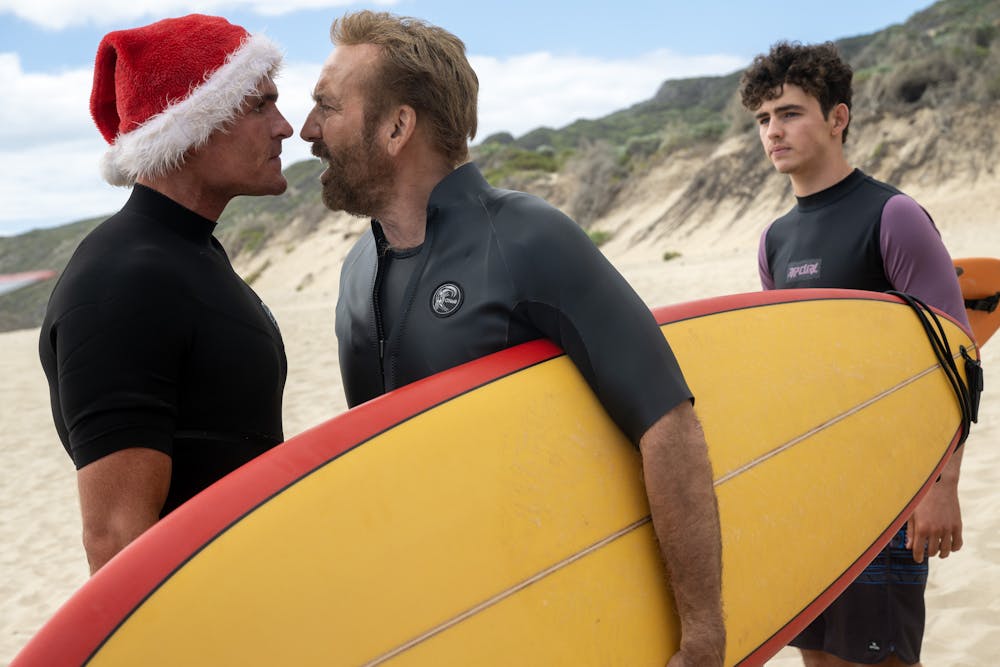


_(48719602456).jpg)


