Category: Australia

  • MIL-OSI Australia: Can artificial intelligence save the Great Barrier Reef?

    Source: University of South Australia

    13 February 2025

    Australian researchers are designing a global real-time monitoring system to help save the world’s coral reefs from further decline, primarily due to bleaching caused by global warming.

    Coral reefs worldwide are dying at an alarming rate, with 75% of reefs experiencing bleaching-level heat stress in the past two years.

    The World Heritage-listed Great Barrier Reef (GBR), considered the jewel in the crown of coral reefs worldwide and one of Australia’s most significant ecological and tourism assets, has been decimated by severe bleaching events since 2016, exacerbated by ongoing crown-of-thorns starfish outbreaks and coastal development.

    A collaborative project led by the University of South Australia (UniSA), with input from Queensland and Victorian researchers, is integrating remote sensing technologies with machine learning, artificial intelligence and Geographic Information Systems (GIS) to monitor and hopefully stall the damage to the world’s most fragile marine ecosystems.

    A multimodal platform will distil all research data relating to coral reefs, including underwater videos and photographs, satellite images, text files and time-sensor readings, onto a central dashboard for real-time global monitoring.

    UniSA data analyst and lead researcher Dr Abdullahi Chowdhury says that a single centralised model will integrate all factors affecting coral reefs and provide environmental scientists with real-time predictions.

    “At the moment we have separate models that analyse substantial data on reef health – including bleaching levels, disease incidence, juvenile coral density and reef fish abundance – but these data sets are not integrated, and they exist in silos,” Dr Chowdhury says.

    “Consequently, it is challenging to see the ‘big picture’ of reef health or to conduct large scale, real-time analyses.”

    The researchers say an integrated system will track bleaching severity and trends over time; monitor crown-of-thorns starfish populations and predation risks; detect disease outbreaks and juvenile coral levels; and assess reef fish abundance, diversity, length, and biomass.

    “By centralising all this data in real time, we can generate predictive models that will help conservation efforts, enabling earlier intervention,” according to Central Queensland University PhD candidate Musfera Jahan, a GIS data expert.

    “Our coral reefs are dying very fast due to climate change – not just in Australia but across the world – so we need to take serious action pretty quickly,” Ms Jahan says.

    Coral reefs are often referred to as the “rainforests of the sea”. They make up just 1% of the world’s ocean area but they host 25% of all marine life.

    The technology will bring together datasets from organisations like the National Oceanic and Atmospheric Administration (NOAA), the Monterey Bay Aquarium Research Institute (MBARI), the Hawaii Undersea Research Laboratory (HURL) and Australia’s CSIRO.

    “The future of coral reef conservation lies at the intersection of technology and collaboration. This research provides a roadmap for harnessing these technologies to ensure the survival of coral reefs for generations to come,” the researchers say.

    The study has been published in the journal Electronics.

     A video accompanying this release is available: How can we save our coral reefs from dying?

    …………………………………………………………………………………………………………………

    Media contact: Candy Gibson M: +61 434 605 142 E: candy.gibson@unisa.edu.au
    Lead researcher: Dr Abdullahi Chowdhury E: abdullahi.chowdhury@unisa.edu.au

    Other articles you may be interested in

    MIL OSI News

  • MIL-OSI New Zealand: Universities – Deep dive on deep-water reefs finds new marine species – Vic

    Source: Te Herenga Waka—Victoria University of Wellington

    Marine researchers from Te Herenga Waka—Victoria University of Wellington have discovered a species of sea squirt that is thought to be new to science.

    The sea squirt was found off Rakiura Stewart Island while the researchers were exploring marine communities that live on the area’s deep-water reefs.

    “We were off Port Pegasus at the southern end of Rakiura and we could see all these really unusual ‘egg’ shapes on the seafloor. Closer inspection revealed they were large, 30 cm tall sea squirts that we haven’t found in any other part of Aotearoa,” said Professor James Bell, a marine biologist at the university.

    Marine ecologist Mike Page, an emeritus scientist from the National Institute of Water and Atmospheric Research, confirmed the sea squirt is likely to be a new species that is yet to be named.

    Sea squirts, also known as ascidians, play a key role in maintaining water quality. They are filter feeders—creatures that feed on nutrients in the water column.

    “Unusually, sea squirts dominated the marine communities on the deep-water reefs that we explored off Stewart Island. We typically find sponges are the dominant player on deep-water reefs in other parts of the country,” said Professor Bell.

    The new species of sea squirt was found at a depth of 115 metres.

    “The water off Stewart Island was really clear down at this depth. This probably reflects the fact there are no major rivers draining into the sea and there are still large areas of native forest on the island.”

    Video footage of the reefs shows many different species of sea squirt, varying in colour from bright white to pinks, blues, and yellows.

    The footage was taken using a remotely operated vehicle (ROV) that can film in waters of more than 100 m deep.

    “Finding this sea squirt is a reminder that we still have so much to learn about the rich diversity of life in the ocean. It’s also a reminder of the need to ensure we protect our marine environment and the unique species it supports,” said Professor Bell.

    The ROV used by the researchers to collect video footage was purchased with funding from the George Mason Charitable Trust.

    MIL OSI New Zealand News

  • MIL-OSI Canada: New appointments to Agricultural Products Marketing Council

    The council is a public agency that oversees agricultural marketing boards and commissions to ensure they are implementing governance best practices, provides policy advice to the minister of Agriculture and Irrigation, and administers legislation for the agricultural industry and government.

    “This is an important board, whose membership includes people with excellent agricultural credentials and experience. It provides the government with advice to ensure our ag industry remains competitive and innovative, while attracting investment, creating jobs and putting food on the tables of Alberta families and families across the country and around the world.”

    RJ Sigurdson, Minister of Agriculture and Irrigation

    Three appointees are returning for a second term, including the new council chair, John Buckley, and vice-chair, Henricus Bos. The new chair and vice-chair will assume their executive positions effective March 21, 2025. The third appointment for a second term is council member John Guelly.

    Susan Novak continues to serve as the government’s representative.

    “I am honoured to be appointed chair of the Marketing Council board. I’ve enjoyed the past three years on council, particularly helping amalgamate the former wheat and barley commissions and our continued focus on marketing board and commission bylaws. I look forward to working with my fellow council members, our boards and commissions and Minister Sigurdson to help ensure agriculture remains a strong and thriving sector in Alberta.”

    John Buckley, chair of the Alberta Agricultural Products Marketing Council

    Three other members are either completing their terms or have decided to resign due to other priorities. They will be replaced by three new council members, who will infuse new ideas and perspectives into the council. They are:

    • Ian Chitwood
    • Susan Schafers
    • David Moss

    The new council members will start their first term on March 21, 2025.

    The government appoints council members using an open and competitive application and members are chosen based on experience and credentials.

    Quick facts

    • The Alberta Agricultural Products Marketing Council is established under the Marketing of Agricultural Products Act. The council currently has seven members, including a Government of Alberta representative.
    • Council members can serve a maximum of two consecutive terms (one term is three years) and are appointed by an order-in-council.

    Related information – Biographies

    John Buckley: John and his wife operate a cow-calf operation southwest of Cochrane. John has 40 years of experience in the livestock industry. John has been active in his community and industry and continues to be involved with a number of organizations and groups. His passion for rangelands, specifically grasslands, fuels his desire to operate in such a way that leaves the land in a better state than when he started operating on it, creating opportunity for future generations.

    Henricus Bos: Hennie is a farmer, on-farm processor and industry leader. He has filled many leadership roles in the Alberta and Canadian dairy industry as director and chair of Alberta Milk, as well as commissioner at the Canadian Dairy Commission. Being involved provincially and nationally in the dairy industry, combined with Bles-Wold yogurt processing experience, Hennie knows the industry and supply management well. Hennie holds a bachelor of science in dairy science and has completed several governance and business courses.

    John Guelly: John is a third-generation grain and oilseed farmer from north-central Alberta. He, his wife and two children have been farming for more than 30 years. John was a regional director for Alberta Canola from 2015-2021 (chair from 2019-2021), and has served on numerous other local, provincial, and national boards and committees in the agricultural industry. John graduated from the University of Alberta with a B.Sc. in agricultural engineering and previously worked full-time in manufacturing, as well as consulting while operating the farm.

    Ian Chitwood: Ian is a farmer and a professor who works with students to advance agriculture. Ian has extensive board experience with Alberta Canola, Agsafe Alberta and Verb Theatre. Ian has a PhD in business from Athabasca University, a MBA, a M.A., and a B.Comm from the University of Alberta.

    Susan Schafers: Susan is a second-generation pullet and cattle farmer who is past chair for Egg Farmers of Alberta and current chair for Parkland County’s Agricultural Service Board. Susan has broad experience serving on local, provincial and national boards as well as various committees. She has strong governance training and experience in facilitation and consensus building. She holds a B.Sc. in agriculture and food business management from the University of Alberta.

    David Moss: David is the director of business development (Animal Agriculture) for TELUS Agriculture. Previously, he was the general manager of the Canadian Cattle Association where he led the animal health file and worked closely with the Government of Canada and the Canadian Food Inspection Agency on numerous files, including co-chairing the working group responsible for Canada regaining negligible-risk status for bovine spongiform encephalopathy (BSE) by the World Organization for Animal Health. He was co-founder and vice-president of AgriClear LP, an enterprise level online agri-business marketplace joint venture with the TMX Group. He has also held executive roles at ITS Global and Livestock Identification Services. An entrepreneur by nature, David has been in the agriculture industry his entire career. He helped build ranch-to-retail alliances in the United States, Australia and South America and brings a focus on innovation, data technology, and international business knowledge and experience. David holds a master of arts in Leadership Studies from the University of Guelph, a bachelor of management from the University of Lethbridge, and a master’s certificate in project management from York University. He serves on numerous industry committees and is an active volunteer in his Okotoks community.

    Susan Novak: Susan has a wealth of experience in leading policy, programs and people. She received her PhD in animal science from the University of Alberta and completed a post-doctoral fellowship at Laval University. Susan started her career at Agriculture and Irrigation as the provincial horse specialist, and now is the executive director of the animal health and assurance branch. She also has a wealth of experience delivering agriculture research funding programming to support a competitive and sustainable agriculture industry in Alberta.

    Frank Robinson: Frank has a PhD from the University of Guelph and has been a University of Alberta professor for 35 years. He has worked with broiler breeder chickens to improve reproductive fitness. He has taught introductory animal science classes to more than 1,000 students with a focus on experiential learning. Frank has served as vice-provost and dean of students at the University of Alberta. He has fulfilled leadership roles in several agricultural and academic boards and associations. He was inducted into the Alberta Agriculture Hall of Fame in 2006.

    MIL OSI Canada News

  • MIL-OSI Australia: NSW Government appoints first statutory Agriculture Commissioner

    Source: New South Wales Premiere

    Published: 13 February 2025

    Released by: Minister for Agriculture


    The Minns Labor Government is continuing work to ensure the New South Wales farmers and agriculture industry are safeguarded into the future with the appointment of Alison Stone as the state’s first statutory Agriculture Commissioner.

    Committed to during the state election and legislated last year, the Commissioner will provide independent advice, conduct reviews and make recommendations to the NSW Government on agricultural matters, including productivity, land use conflict and food security.

    Commissioner Stone has over 40 years of experience across primary industries equipping her to provide informed advice to the NSW Government on future proofing this vital industry.

    This experience has included 25 years as a farmer, policy experience across Land, Natural Resources, Foresty, Heritage and Wildlife Roles and experience in disaster resilience, response and recovery having led the codesign process for the Disaster Wise Communities Network.

    Further, the Commissioner served on the NSW Government’s cornerstone Regional Advisory Council, the Victorian Fisheries Co-Management Council and the Commonwealth Government’s Forest Industry Advisory Council.

    As Agriculture Commissioner, Ms Stone will serve an initial three-year term with work to include:

    • Assisting the NSW Government in developing an ongoing system for defining, identifying, and mapping agricultural lands throughout the State
    • Progressing the pilot of a Farm Practices Panel, which will look at ways to reduce conflict between agricultural producers and neighbours on a broader scale
    • Providing input and advice to address challenges related to critical renewable energy infrastructure to support our energy transition and the impact it can have on landholders
    • Promoting a coordinated and collaborative approach across the Commonwealth Government, the NSW Government and local government in relation to agricultural matters
    • Work with the Net Zero Commissioner promoting a cohesive approach to policy making.

    The appointment of the state’s first Statutory Agriculture Commissioner is part of the Minns Labor Government’s ongoing work to ensure regional communities and farmers can thrive. This work has included the following:

    • The appointment of the state’s first Independent Biosecurity Commissioner Dr Marion Healy
    • The creation of the $450 million Regional Development Trust Fund to deliver sustainable and strategic investment that make a real difference to regional communities
    • A historic investment of $947 million in biosecurity protection and enforcement.

    NSW Minister for Agriculture Tara Moriarty said:

    “The Minns Government has delivered another key election commitment by ensuring farmers and the agricultural sector has a dedicated and independent Agriculture Commissioner to advise me and the Government on best options for matters such as land planning in regional NSW.

    “Ms Stone’s extensive career across both the public and private sectors has made her a respected leader in agriculture and the Government is endorsing her for this role because she has a proven track record of resolving complex and contentious issues in areas such as land management reform.

    “With 25 years of hands-on experience as a livestock farmer, she also understands the realities of rural life and the challenges faced by our farming communities.

    “The appointment of a statutory Agricultural Commissioner marks an exciting new chapter for agriculture in NSW, and I look forward to working alongside Ms Stone to champion our farmers, protect valuable agricultural land, and build a stronger, more resilient agricultural sector.

    Ms Alison Stone, endorsed to be the first statutory NSW Agriculture Commissioner said:

    “Agriculture is the backbone of our state, and my role is to collaborate with government, landowners and industry leaders to drive tangible, on-the-ground  outcomes and practices to ensure NSW has a strong and prosperous agriculture sector.”

    “NSW’s primary industries sector is one of the most diverse in the country, with a wide range of agricultural commodities and farming systems. While this presents challenges, it also creates valuable opportunities for growth and innovation.

    “One of my key priorities is helping government to protect and support our agricultural land, ensuring productivity remains on the government’s agenda alongside its priorities for renewable energy and housing.

    “I am honoured to be endorsed by the NSW Government for the first statutory Agriculture Commissioner and to work alongside Minister Moriarty and the farming sector to build a more resilient and prosperous future.

    MIL OSI News

  • MIL-OSI Australia: NSW Government rebuilding TAFE with multi-year pay deal

    Source: New South Wales Premiere

    Published: 13 February 2025

    Released by: Minister for Industrial Relations, Minister for Skills, TAFE and Tertiary Education


    The Minns Labor Government has secured a multi-year pay deal with TAFE NSW teachers, benefiting nearly 9,000 teaching staff. Over 90 per cent of teaching staff, backed by the NSW Teachers Federation, voted to accept the government’s 10.5% baseline pay offer, higher than ever offered under the former government.

    This comes after a decade long wages cap by the former Liberal-National Government that left thousands of teachers underpaid and in insecure employment.  

    Nearly two thirds of NSW Public sector workers and their union have now signed wage agreements with the NSW Government.

    The deal, which delivers on the Government’s election commitment to rebuild TAFE NSW, consists of:

    • A 3.5% pay rise, plus a 0.5% superannuation boost for 2024-25;
    • A 3% pay rise annually in both 2025-26 and 2026-27, plus a further 0.5% increase to super in 2025-26.

    Additionally, the Government will undertake reforms within 12 months to remove TAFE NSW from the former Government’s “Smart and Skilled” competitive market, a key recommendation of the NSW VET Review.

    This means TAFE NSW will no longer compete with the private training providers for funding and instead will have a more predictable annual budget.

    These changes will slash red tape and give teachers more time to focus on the actual teaching of students.

    In addition, the Minns Labor Government has transitioned more than 1700 casual teachers and delivery support staff from the beginning of this semester into permanent roles, providing long-overdue job security and stability for staff who have endured years of uncertainty.

    80% of the TAFE NSW teaching workforce now enjoy greater job security, ensuring a stable, experienced workforce to deliver training in priority industries such as construction, manufacturing, and healthcare.

    Minister for Industrial Relations, Sophie Cotsis said:

    “This pay agreement with TAFE NSW teaching staff reaffirms the Minns Labor Government’s industrial relations framework is working.

    “It recognises not only the important service our teachers and educators provide but acknowledges and rewards their efforts.

    “This is a good step forward but there is always more work to do to ensure we have the best public service in the world.”

    Minister for Skills, TAFE and Tertiary Education, Steve Whan said:    

    “I’m delighted that the TAFE NSW teaching staff have agreed to the Government’s offer, recognising their contribution to the state. Our teachers are on the front line of delivering the skills education to fill shortages in our critical industries and we value them.”  

    “We’ve heard from teachers that they want to see reform in TAFE NSW, and alongside the increase in pay, this agreement builds on reform by no longer requiring TAFE NSW to compete with private training providers for funding.

    “Removing TAFE NSW from the competitive (Smart and Skilled) market was a key recommendation of the Government’s VET Review.  It will result in a major reduction in administrative burden for TAFE NSW, but more importantly it enhances the recognition that TAFE NSW is the core provider of vocational training in NSW.  

    “Funding certainty and a stable and secure vocational training workforce are crucial to meeting the increasing demand for skilled workers across several critical industries NSW communities rely on every day.” 

    NSW Teachers Federation President, Henry Rajendra said:  

    “The Federation enthusiastically welcomes the strengthening of TAFE NSW, with more than 1700 teachers transitioning from casual to permanent role starting earlier this term.

    We also commend the removal of the constraints of the contestable funding market on TAFE NSW, and the introduction of a new three-year enterprise agreement that delivers solid pay increases to some of the most essential educators in NSW.  

    “These are a clear demonstration of the NSW Government’s commitment to rebuilding a strong and stable TAFE NSW. 

    “As the heart of the vocational education and training sector in Australia, TAFE NSW is critical to delivering the education and skills for our students, communities and economy across NSW. 

    “TAFE NSW has a proven track record of excellence, delivering dependable public education that meets individual, industry and community needs.” 

    MIL OSI News

  • MIL-OSI NGOs: ‘Silencing our voices’: Greenpeace Australia Pacific slams charity restrictions in electoral reform

    Source: Greenpeace Statement –

    CANBERRA, 12 FEB 2025—Greenpeace Australia Pacific has warned that the Electoral Reform Bill that has just passed the Parliament contains a restriction that will severely curtail the ability of charities to do critical advocacy work during election campaigns.

    “The Electoral Reform Bill that has just passed the Senate severely restricts charitable organisations from using their funding to speak out about critical policy issues or to provide independent information and policy analysis during election campaigns. It hinders the ability of independent organisations to hold parties and candidates to account when it matters most,” said Dr Susie Byers, Head of Advocacy, Greenpeace Australia Pacific. 

    “Charities are an independent voice for progress on issues that affect every aspect of voter’s lives—from climate and energy to education, health, and human rights. Efforts like scorecards and analysis of parties’ policies are essential sources of information on the issues that matter most to all of us. 

    “The restrictions in the Electoral Reform Bill would force charities to create new and completely separate fundraising streams explicitly for the purposes of advocacy at election time. This administrative complexity and major barrier to fundraising will make campaigning at election time extremely difficult. 

    “Effectively locking charities out of election campaigns weakens our democracy and paves the way for vested interests to push through harmful policies without scrutiny or accountability from independent actors. 

    “We are deeply disappointed that what will be one of the last acts of this Parliament is to quiet the voices of millions of Australians who contribute to our community via charitable and non-government organisations. 

    “Greenpeace Australia Pacific stands with all charities working to advocate for better social, environmental and economic outcomes in our society, and will hold the government to its commitment to work with us to resolve issues for the sector.

    —ENDS—

    For more information or to arrange an interview please contact Vai Shah on 0452 290 082 or [email protected].

    MIL OSI NGO

  • MIL-OSI New Zealand: Going for growth: supermarkets on notice

    Source: New Zealand Government

    The Government is seeking to bolster supermarket competition to deliver a better deal for shoppers, Economic Growth Minister Nicola Willis says.

    “Studies have shown that New Zealand shoppers pay more for kitchen staples than their counterparts in the United Kingdom, Ireland and Australia.

    “The market lacks competition with three large entities, two of whom don’t compete in the same island, effectively controlling 82 per cent of the market.

    “We need more competition to put downward pressure on prices and deliver a better deal for shoppers.

    “The weekly supermarket shop makes up a significant proportion of most people’s weekly budget and contributes massively to their cost of living.

    “Therefore, I am determined to remove unnecessary regulatory hurdles that discourage new entrants from entering the market.

    “Additional steps could include cracking down on predatory pricing, ensuring all competitors have fair access to products, assisting new entrants to access suitable land and properties for development and assisting them to attract international capital.”

    Nicola Willis announced the intention to strengthen competition in the supermarket sector at the release of a progress report on the work being done to shift New Zealand to a higher growth track. 

    “The Going For Growth snapshot details more than 80 actions that have either been completed since the Government took office or are underway.

    “Economic growth is key to raising living standards, creating higher-paying jobs,and delivering the vital public services New Zealanders want and deserve.

    “New Zealanders have been through a tough time with high inflation pushing up interest rates and driving the economy into recession.

    “lnflation is now back under control but to deliver the opportunities and high-quality public services people expect we need to build a stronger, wealthier and more resilient economy that benefits all New Zealanders.

    “Going For Growth details how the Government is going about that task. 

    “It sets out the five pillars driving our push for economic growth: Developing talent, Competitive business settings, Promoting global trade and investment, Innovation, technology and science and infrastructure for growth.

    “Under each pillar are actions already underway to support growth, with more to come.

    “To grasp the opportunities in front of us, we must lean in and boldly pursue the things that will make this country the wealthier country we want it to be. 

    “We must adopt a ‘yes’ mentality when sometimes it is easier to say ‘no’.”

    Notes to editors: Going For Growth can be found here www.goingforgrowth.govt.nz

    MIL OSI New Zealand News

  • MIL-OSI New Zealand: Speech to New Zealand Economics Forum

    Source: New Zealand Government

    Tēna koutou katoa. Greetings everyone.
    Thank you Matt for the introduction and can I acknowledge the presence of former Australian Prime Minister Scott Morrison. It’s a pleasure to have you back in the country.
    It’s also a pleasure to be here to speak at this event for the third year in a row. 
    The world is changing. Fast. Orthodoxies are being challenged. De-globalisation, tariffs, counter tariffs, artificial intelligence, conflict, cynicism about national institutions, extreme climatic events, increasing competition for food, energy, minerals and other resources.  
    Leaders around the world are being compelled to act more boldly than they have for several decades.
    Where once countries could take for granted their position in the world, it is now unquestionable that we need to place ourselves in the driver’s seat for our national interests.
    These issues are not just the concern of diplomats, leaders and elites.  
    People the world over are increasingly feeling the effects of declining living standards, soaring prices, unaffordable housing and incomes that are not  keeping up. 
    Is it any wonder that there is a growing sense that the benefits of progress are not being evenly shared or that citizens are questioning the institutions and conventions they were raised to rely on?  
    It’s hard not to look back on the past few decades and see complacency. 
    Where once there was an assumption about the inevitability of economic growth – a given to be traded off against a host of other values – that stance now seems blissfully naïve.  
    From the United Kingdom, to the European Union, to China, to the United States, there is a growing realisation that growth must be fought for and that, even once achieved, can easily slide away.
    We in New Zealand are not immune to these trends. In fact, we are at a moment of inflection.  
    After three years of struggle, many Kiwis feel poorer, less financially secure and less hopeful about their futures. The cost of living is a daily concern.
    New Zealanders have been through the wringer. Where once there was triumphalism about our response to, and recovery, from the COVID-19 pandemic, there is now a realisation that we are still paying the economic price for the disruption it wreaked.  
    The aftershocks of extended lock-downs included a generational spike in inflation and the cost of living, extraordinary interest rate hikes, ongoing disruption to migration flows, massive increases in Government debt and a structural deficit in the government books.  
    These blows landed on an economy that had being showing cracks for decades. 
    New Zealand already faced longstanding issues of low productivity growth, low capital intensity in our firms, low levels of competition in many sectors, challenges in attracting and retaining skills and talent, low uptake of innovation, declining housing affordability and a growing tail of New Zealanders leaving school without basic skills. Today, as Kiwis suffer the real-life effects of economic problems, it’s become even more urgent that we address these complex challenges. 
    For the economists in this room these observations about our economic problems can be understood as data points.
    For many Kiwis, it is more personal, more visceral and far harder to stomach. The cost of living is too high and they need to see a path out.
    Despite falling inflation and interest rates and rising business and consumer confidence, many New Zealanders tell me they still can’t get on top of their bills – even though they’re working harder than ever, that they are worried about whether they’ve saved enough for their retirement, and are concerned about their kids’ prospects should they stay in New Zealand.
    My message to those New Zealanders is this: it’s tough right now, but our country has far better years ahead of it.  
    It’s easy to lose sight of the reasons to be optimistic, but let’s be confident about how great New Zealand’s potential is.
    In a world facing multiple challenges, we have some extraordinary advantages. We’re a safe, secure country with established trading relationships and a reputation as a good place to do business. We are blessed with abundant natural resources – everything from ocean to freshwater, fertile land to minerals and temperate weather. 
    In a world worried about food security, we have the world’s best farmers, feeding more than 40 million people with levels of efficiency and sustainability that are the envy of the world. We have a long history of stable democracy, strong institutions and rule of law. We’ve produced world-leading scientific breakthroughs from splitting the atom to the Hamilton Jet Boat. Our entrepreneurs and innovators have converted their ideas into world-beating successes – from  Oscar-winning digital effects to rockets in space.
    New Zealand has what it takes to succeed, but for too long we’ve put up stop signs and road cones when we should have been putting our pedal to the metal. 
    Our Government’s mission is to make the most of New Zealand’s potential so we can grow the economy and ease the cost of living for New Zealanders. 
    Our plan is simple: remove the barriers that have held back growth and create the conditions that will allow businesses to create better paying jobs, more financial security for our families, and more income to pay for world-class education and health services.
    Today I am releasing a document that shows how our Government is putting that plan into action. “Going for Growth” is a snapshot of the Government’s activity in five key areas, all designed to ease the cost of living and grow our economy.
    The document identifies more than 80 separate initiatives that have been completed or are underway.  Don’t worry, I’m not about to list them all. 
    But I do encourage you to give it a read.  Going for Growth will be updated on a regular basis and we are actively seeking your feedback on its content and any actions you think should be added or prioritized. 
    The document focusses on five areas which are essential to improving the performance of the New Zealand economy.

    Developing talent by lifting education and skills:  Too many of our kids have been leaving school without the basics they need to succeed in an increasingly demanding world. This is a moral failure.  It’s also a fiscal and economic timebomb. Our Government is improving our education system to deliver a better deal for Kiwi kids.
    Competitive business settings: Excessive and badly-designed regulations have slowed New Zealand down, added costs and prevented too many good ideas from become reality. Several of our major sectors lack competition and consumers are paying the price. Our Government is removing red tape, reducing compliance costs and promoting competition to deliver a better deal for Kiwi consumers.
    Promoting global trade and investment: New Zealand is a small country, geographically distant from many of the world’s large economies. We need to keep pursuing trade relationships and international connections not only to get good prices for our exports, but also to keep up with emerging technologies and to access the world’s talent and capital. Our Government is growing our trade relationships and rolling out the welcome mat for international investment so we can deliver better paying jobs for Kiwis.
    Innovation, technology and science:  New Zealand’s science system is not geared up for the future economy. Our businesses have often been slow to invest in the technology needed to make them more productive. We’re modernizing our science and innovation system so we can deliver a better deal for Kiwi businesses who want to use science and tech to grow.
    Infrastructure for growth:  New Zealand’s Resource Management system has been weaponised against development, adding cost, slowing things down and stopping too many projects. Despite abundant land, housing remains unaffordable for too many. Major infrastructure projects are too slow, too expensive and too few. Our Government is removing roadblocks to delivery of housing and infrastructure and fast-tracking major developments so we can deliver better living standards for New Zealanders.

    Some of you will be familiar with the work we already have underway in each of these areas. Today I want to share some thoughts about a few areas where I think more reform is needed.
    Number One. Driving greater competition in sectors that are vital to our national interests, including banking, grocery and electricity.  
    The economic impetus for this is clear. Strong competition protects consumer interests, it puts downward pressure on costs, it incentivises innovation and investment, it supports efficient allocation of resources and it drives productivity.
    When I look around the business landscape today I see too many sectors where market power has been entrenched to the detriment of everyday people.
    New Zealand has seen significant mergers and consolidation across major industries. Big fish have been swallowing the little fish and regulatory barriers have stopped new fish from entering the pond. 
    While many super-sized businesses have flourished, in too many cases the Kiwis they sell to have experienced higher prices, fewer choices and a worse deal all round.
    In my view, law-makers and regulators have been far too complacent about diminishing levels of competition in vital areas. Large-scale mergers have been repeatedly allowed in major industries, with so-called efficiency prioritised over the interests of consumers.
    Well-intended regulations have become a moat, stopping challengers from disrupting the status quo. 
    The result?  A raw deal for Kiwi consumers. 
    The dominance of big fish has also made it difficult for many small businesses to grow into larger businesses. 
    We see it in the banking industry which the Commerce Commission has described as a highly profitable, two-tier oligopoly. The Government is taking action to address this.
    And we see it in the supermarket sector in which three large entities, two of whom don’t compete in the same island, effectively control 82 per cent of the market. 
    The result, as the Commerce Commission reported in 2022, is that competition between grocery retailers is muted, profits are high, product ranges are limited and shoppers pay higher prices than people in many other countries. 
    In this environment it is almost impossible for a new entrant to establish a foothold in the New Zealand market.
    Even if they are able to battle their way through the thicket of resource management and overseas investment regulation, they are confronted in many cases by an absence of suitable land for new supermarket developments. It has been land-banked by the established players.
    Some of our best food producers also tell me they are struggling because of the duopolistic practices of the major players. 
    If Kiwi food producers can’t afford to keep their products on New Zealand supermarket shelves, how are they ever going to grow to the point where they can export overseas?
    The supermarket lobby will find 1000 different ways to say this is not the case, but it is. 
    The OECD has this to say about the New Zealand supermarket sector:
    “Two major players dominate the market through their portfolio of different brands.  As a result, they can extract higher prices from consumers (oligopoly power) but also exert ‘oligopsony power’ on their suppliers, passing on costs and uncertainty to them, with the threat of removing products from shelves if suppliers disagree”
    Studies have shown that New Zealand supermarkets were the most expensive for kitchen staples compared with the UK, Ireland and Australia.
    If you doubt the findings of the OECD, research papers, or the Commerce Commission, just ask the everyday Mums and Dads at the checkout:
    Kiwi shoppers feel ripped-off.  
    I think of PK, the Kiwi man who went viral on Tik Tok, sharing how he cried when he discovered how much cheaper the food was when he moved to Australia. I think of the parents in the supermarket aisle, putting back the chocolate biscuits as the weekly shop blows their budget – again.  And I think of all those people who endure gut-wrenching anxiety as they watch their items being scanned and the numbers tallying up on the till.
    The weekly supermarket shop makes up a significant proportion of most people’s weekly budget and contributes massively to their cost of living.
    They deserve to know they are getting a fair deal.
    Right now, I don’t think they are.  I’m ready to pull out all the stops to get them a fairer deal.
    The supermarkets will fight back I’m sure. It’s a fight worth having.
    So what can the Government do?
    Let me reassure you, we are not going to open our own grocery chain. There will be no KiwiShop. 
    Instead I’d like to see another competitor enter the supermarket scene to  disrupt the major players, drive down prices and increase options for Kiwi shoppers.
    Over the past 12 months, international supermarket chains and local investors have expressed interest in entering the New Zealand grocery market. 
    I want to help them succeed.
    We owe it to Kiwi shoppers to help remove the barriers that could get in the way of a new entrant.
    That could include removing unnecessary regulatory hurdles in the Overseas Investment Act, Resource Management Act and the entire regulatory maze; helping them to access suitable land and properties for development; helping them to attract capital; cracking down on predatory pricing and ensuring they have fair access to products. 
    If a new grocery chain opened up here it would deliver massive gains for Kiwi shoppers.  So I’m up for actions needed to help make it happen.
    At the same time, the Government must continue our efforts to hold the existing supermarket chains accountable to their customers and suppliers. 
    That means enhancing consumer protections and correcting power imbalances between suppliers and supermarkets. It means strengthening the Grocery Supply Code, enforcing action against non-compliance and illegal conduct, introducing a Wholesale Code to enhance access for smaller retailers, introducing disclosure standards for consumer complaints and responding to further recommendations the Commerce Commission makes.
    Commerce Minister Andrew Bayly has already been pushing hard in this space. This year we’re dialling up the pressure.
    The major supermarket chains should listen up: our Government is on the side of Kiwi shoppers and we will act to defend their interests.
    Number two:  The Government’s approach to procurement.
    The Government is a huge player in the New Zealand economy. Every year it procures billions of dollars worth of goods and services.
    Those doing the procuring understandably play close attention to prices.  That is as it should be. We want value for money. 
    But getting value is not just about cost. Getting value is also about assessing the contribution particular contracts can make to New Zealand as a whole.
    The Government wants the Government agencies doing the procuring to assess the value as well as the cost of contracts. 
    Small and medium-sized businesses say that too often they can’t effectively bid for Government contracts because of the complexity of official procurement processes. 
    I am reviewing the Government procurement rules that cause this and will soon be recommending changes to Cabinet. I want to ensure value to New Zealand is properly considered when government agencies are picking suppliers, ensuring a more level playing field, improving the ability of smaller businesses to bid and giving more small and medium sized Kiwi businesses the opportunity to grow and become global players.
    Third, tax settings.
    New Zealand must ensure our tax settings are competitive with other countries who seek to lure our talent, ideas and jobs.
    We need to ensure the New Zealand tax system does not discourage businesspeople from investing in their businesses and does not deter foreign investment. 
    I am considering a range of proposals to make our tax settings more competitive over time.
    Fourth, affordable energy.
    Alongside the supermarket bill, electricity prices are a major pain point for Kiwi households.  Spiking prices and uncertain supply are also a major barrier to industry and the jobs it supports.
    As we look out to the world, it’s clear that those choosing to invest in manufacturing, data centers and technological parks will increasingly ask themselves: does the country that we want to invest in have secure, affordable and renewable energy? 
    New Zealand is pretty well-positioned for that. We already have abundant levels of renewable energy. 
    The question is, are we well positioned to bring on new generation at the pace needed to keep both security of supply and affordability? 
    That’s a question the Government is very much engaged in. 
    The Energy Competition Task Force has published proposals to give consumers more control over energy costs. In addition, independent reviewers will report to Ministers in the middle of the year on the performance of the energy market.  
    My view is that the world’s surging demand for renewable energy has changed the game. It’s time to think much more boldly about the actions the Government may need to take to incentivise new generation, security of supply and affordable electricity.
    Fifth, savings.
    Finally, I want to see KiwiSaver working as well as possible for New Zealanders. Commerce Minister Andrew Bayly already has work underway to enable Kiwisaver providers to make greater investments in private assets, to generate good returns for savers and ensure more Kiwi savings can be deployed for investment here at home.  
    I want to see KiwiSaver balances grow, both to make Kiwis better off in retirement and to grow our collective national savings. I am taking advice on options for achieving that with a view to taking recommendations to Cabinet.
    Let me finish by providing you with some perspective. 
    Our domestic context is challenging. Internationally we are arguably operating in a more complex, faster changing world than at any time in history. 
    But, when I look around the world, there is nowhere I would rather build a business or raise a family than here in New Zealand.
    But the world doesn’t owe us a living. We have to compete hard to deliver for our national interests and the interests of New Zealanders. 
    Our Government’s plan to grow the economy is about making the most of New Zealand’s many advantages, removing barriers that are holding Kiwis back and competing for our share of the world’s wealth.
    This is not an abstract mission.  It goes to the heart of what matters to New Zealanders. 
    To create better paying jobs and make Kiwis more financially secure, we must grow our economy.
    To deliver better health services and schools, we must grow our economy.
    To make New Zealand more resilient to global challenges, we must grow our economy.
    This Government backs New Zealanders to succeed. I know you do too. I wish you a successful conference and look forward to hearing your ideas.  Let’s go for growth.

    MIL OSI New Zealand News

  • MIL-OSI Australia: Statement from NSW Health Secretary Susan Pearce AM

    Source: New South Wales Health – State Government

    This morning, I was made aware of an utterly disgusting video circulating on social media. NSW Health immediately launched an investigation and contacted NSW Police, who are also investigating.
    The appalling comments and hate speech from the individuals in this video do not represent, and never have, the views or values of NSW Health – this includes the 180,000 dedicated, caring and kind people who make up our workforce.
    NSW Health is committed to fostering an environment of respect and inclusivity. We are proud to provide safe, compassionate and high-quality care to all people across the diverse communities of NSW we serve. 
    We understand this disturbing video has caused distress. I can assure you we are treating this matter incredibly seriously.
    There is absolutely no place in NSW Health for these views or behaviour.
    NSW Health condemns the views expressed and behaviour demonstrated in this video and I assure everyone that every person in NSW receives safe, respectful care in our hospitals and health services.

    MIL OSI News

  • MIL-OSI NGOs: London: Activists stage ‘Ecocide Babe’ stunt outside courts as Shell trial begins

    Source: Amnesty International –

    Photo op: Activist to hold a ‘baby’ that has simulated crude oil congealed around its mouth highlighting the public health impact of environmental devastation caused by Shell in Nigeria

    Location & date: Royal Courts of Justice, Thursday 13 February at 9am

    Ogale and Bille communities vs Shell trial starts that day

    On Thursday 13 February, Amnesty International UK, the Movement for the Survival of the Ogoni People (MOSOP), AFRICA: Seen & Heard and Justice 4 Nigeria are marking the start of the Ogale and Bille communities vs Shell trial with the stunt ‘Ecocide Babe’ by British-Nigerian artist-activist The Crude Madonna outside the Royal Courts of Justice.

    In the performance, The Crude Madonna – representing Niger Delta womanhood and resistance – will wear traditional Nigerian dress and gold-painted Shell-shaped medallions saying ‘hell’ and ‘oil’ coated with ‘crude oil’ and hold the Ecocide Babe Alera (which means ‘it is enough’ in the local Khana language) with crude oil congealed around the baby’s mouth.

    Created by artists The Crude Madonna and THE DnA FACTORY MRSS, the Ecocide Babe  symbolises the devastating effect of oil pollution on fertility, pregnancy and infant health in the region as well as its overall impact on communities and the environment caused by Shell’s 60 years of oil spills and leaks due to poorly maintained pipelines, wells and inadequate clean-up attempts that have ravaged the health and livelihoods of many of the 30 million people living in the Niger Delta – most of whom live in poverty.

    This is the first stage of the trial that will take place in London throughout 2025. More than 13,500 Ogale and Bille residents in the Niger Delta have filed claims against Shell over the past decade demanding the company clean up oil spills that they say have wrecked their livelihoods and caused widespread devastation to the local environment. They can’t fish anymore because their water sources, including their wells for drinking water, are poisoned and the land is contaminated which has killed plant life, meaning communities can no longer farm.    

    Shell plc is domiciled in London and should be legally responsible for the environmental failures of its subsidiary company, the Shell Petroleum Development Company of Nigeria. 

    Details of event

    Who: Amnesty International UK, Movement for the Survival of the Ogoni People, AFRICA: Seen & Heard and Justice 4 Nigeria

    What: Spokespeople available for comment, and photo opportunity outside court. Supporters will hold a banner and placards saying: ‘Shell: Own up, Clean up, Pay up’.

    Where: Royal Courts of Justice, the Strand, London, WC2A 2LL

    When: Thursday 13 February. Photo opportunity 9:00-10:30am; court proceedings start at 10:30am.

    MIL OSI NGO

  • MIL-OSI New Zealand: The Risk of Adverse Events Associated with Mesh and Non-Mesh Repair of Groin Hernias: A literature review

    Source: New Zealand Ministry of Health

    Summary

    In light of the pause on use of mesh in urogynaecology procedures in New Zealand in 2023, and the hernia mesh report in Australia (Health Issues Centre 2019), the Ministry of Health began a review of the literature on the use of mesh in inguinal (also known as groin) hernia repair. 

    This showed that use of mesh in groin hernia repair was associated with reduced rates of hernia recurrence, neurovascular injury and urinary retention (with no gender difference) and reduced or similar rates of post-operative pain, operative time, hospital stay length and time to return to usual activities compared to non-mesh groin hernia repair. Non-mesh repair was associated with a lower risk of seroma formation (fluid collection). Ongoing pain affecting activities of daily living was self-reported in a proportion of patients in whom mesh was used in groin hernia repair.

    MIL OSI New Zealand News

  • MIL-Evening Report: A new report card shows inequality in Australia isn’t as bad as in the US – but we’re headed in the wrong direction

    Source: The Conversation (Au and NZ) – By Cameron Allen, Senior Research Fellow, Monash University

    Shutterstock

    It’s hard to remember a time the United States seemed as tense and divided as it does today. That should serve as a stark reminder of just how important it is to monitor the health of our own nation.

    Today, our new report card on Australia’s progress will be launched in Canberra. It assesses progress on 80 economic, social and environmental targets and models a range of policy shifts that could boost progress.

    We find that progress on more than half of these targets has either stagnated or is going backwards. And growing inequalities threaten the wellbeing of many Australians.

    Our report comes on the heels of America’s own State of the Nation report, which puts the US near the bottom of global rankings on inequality, violence, trust and polarisation.

    The situation in Australia is not yet as dire. However, our results signal a need to start thinking long-term and take bold action on inequality to avoid a similar fate.

    Not an A+ student overall

    Our report draws on the 17 UN Sustainable Development Goals (SDGs) to select a broad and balanced set of 80 economic, social and environmental indicators.

    Each of our indicators can be grouped under one of these 17 goals and includes a 2030 target. We use this target to evaluate progress and allocate “traffic lights” that tell us about the direction in which the country is moving.

    We also benchmark Australia against peer nations from the OECD, including the US.

    The overall outlook for Australia is mixed. We aren’t completely on track to meet any of the 17 SDGs. And on some indicators, Australia is actually going backwards, away from the target.

    Many areas of concern centre on increasing inequality. These include:

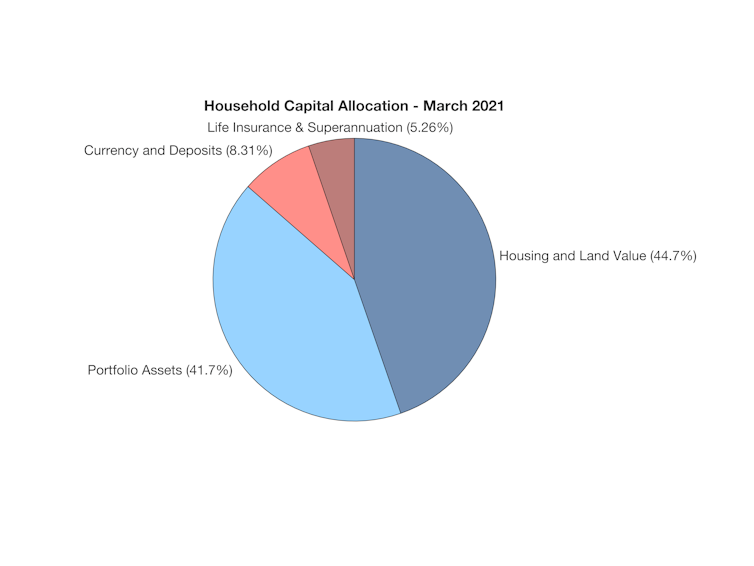
    • a 30% decline in the share of wealth held by the bottom 40% of Australians since 2004
    • almost 20% of Australians living in financial stress
    • over 40% of lower-income renter households living in housing stress
    • household debt levels now exceed Australia’s annual gross domestic product (GDP).

    There are also some broader economic concerns. Australia’s level of investment in innovation is nearly 40% below OECD averages. Economic complexity – which measures the sophistication and diversity of what our economy produces – has fallen behind Honduras, Armenia and Uganda.

    And there’s been a rapid decline in education outcomes for students from lower socio-economic groups.

    Shining in some areas

    On the other hand, Australia is on track and actually leading our peers in life expectancy, road fatalities, tertiary education, water efficiency and government debt.

    We’re also above average on closing gender gaps in both income and political representation. Australia also has very low homicide rates and high feelings of safety and trust compared to our peers.

    Australia has made some progress on gender equality.
    Andrii Zastrozhnov/Shutterstock

    In some key areas, Australia is actually trending rapidly towards SDG targets.

    The gender gap in superannuation, for example, has fallen from 53% in 2014 to 21% in 2021.

    The share of renewable electricity in our national energy grid has climbed to 35% and greenhouse gas emissions are steadily falling.

    And rates of unemployment, underemployment and youth unemployment have all declined to within or closer to SDG target levels of below 5-6%.

    How does the US compare?

    America’s State of the Nation report, which tracks progress on a range of similar measures to our report, paints a bleak picture.

    There are only four measures where the US performs in the top 20% of high-income countries – economic output, productivity, years of education and long-term unemployment.

    Compared to Australia, the US outperforms us on average per-capita income, investments in research and development and knowledge-based capital, economic complexity, household debt and broadband connection speeds.

    But despite their apparent economic success, mental health and life satisfaction have deteriorated. Social connections are fraying with increased social isolation, polarisation and eroding trust.

    Tragically, suicide rates, fatal overdoses and shootings have increased.

    Far worse on some measures

    In areas where Australia is also trending backwards, things in the US are often far worse.

    Income and wealth inequality, for example, are much higher in the US. The top 1% of Americans hold around 35% of wealth – compared to 24% for the top 1% of Australians.

    US welfare payments are almost 90% below the poverty line and the poverty rate is 30% higher than in Australia. Yet US government debt as a share of GDP is almost double that of Australia.

    This stark contrast suggests America’s approach to pursuing material prosperity is undermining social wellbeing, with rising inequalities fuelling social tensions and polarisation.

    Bold action needed

    For the first time, our new report models two future scenarios for Australia, exploring policies that reverse negative trends and accelerate progress towards SDG targets by 2050.

    Our modelling shows that with increased policy ambition, Australia can halve poverty and reduce income inequality by a third. We can also boost health, education and productivity, improve biodiversity, and deliver net-zero greenhouse gas emissions.

    To do it, we’d need to increase public investment by around 7% a year over 10 years in key areas such as education and health, disaster resilience, sustainable food, energy and urban systems and the natural environment.

    Our modelling shows that with these measures, Australia could achieve 90% of our Sustainable Development Goal targets by 2050.

    Without them, our future prosperity is projected to stagnate and decline by 2050, reaching just 55% progress towards our targets and with GDP around A$300 billion lower than our more ambitious scenario.

    There’s a famous aphorism that in the long run, economic productivity is almost everything. The social fissures in the US despite a strong economy would suggest otherwise.

    Australia should take note and take action to ensure the long-term sustainable prosperity of our nation.

    Cameron Allen receives funding from the Australian Research Council.

    John Thwaites is Chair of Monash Sustainable Development Institute and Climateworks Centre which receive funding for research, education and action projects from the Commonwealth and state governments as well as from philanthropy and industry. He is a former Deputy Premier of Victoria (1999 – 2007)

    ref. A new report card shows inequality in Australia isn’t as bad as in the US – but we’re headed in the wrong direction – https://theconversation.com/a-new-report-card-shows-inequality-in-australia-isnt-as-bad-as-in-the-us-but-were-headed-in-the-wrong-direction-249579

    MIL OSI AnalysisEveningReport.nz

  • MIL-Evening Report: ‘Multiple red flags’: ASIC’s court case against Star executives shows the risks of complacency

    Source: The Conversation (Au and NZ) – By Elizabeth Sheedy, Professor – Risk governance, culture, remuneration, Macquarie University

    This week the corporate regulator is taking on executives and directors of Star Entertainment in the Federal Court, in a landmark case for Australian corporate governance.

    ASIC will allege that despite multiple red flags that should have prompted internal investigation, directors at Star sat on their hands while accepting the considerable perks of the office.

    Historically, ASIC has not been willing to go after apparently lax directors and executives and there are questions about its effectiveness as a regulator. Will this time be different?

    What is Star accused of?

    The case against Star Entertainment, like so many others, boils down to “acting with reasonable care and diligence” in respect of risk management. Did Star’s board and executives sufficiently focus on the well-known risks of money-laundering and criminal association in the operation of its casinos in Sydney and Queensland?

    ASIC will seek to show that they did not. It is suing several former directors and executives, including the former chief executive, in a case expected to last six weeks. The defendants deny they breached their duties.

    Warnings were ‘ignored’

    In the first days of hearings, ASIC told the court the board had been given evidence of money-laundering risks from high-rollers with ties to criminal organisations, but that those warnings were ignored.

    The court was told the board and executives were “incurious and complacent” about alleged criminal activity and money-laundering, with wads of cash delivered in a blue Esky and in paper bags to a private gambling room.

    If the allegations are proven, it won’t be just the shareholders who have suffered. Anti-money-laundering laws exist because criminals need to clean their ill-gotten gains, or make them appear legitimate. While not alleged in this instance, in general, money-laundering enables crimes such as scams, fraud, child exploitation and drug/sex trafficking. There are many victims throughout society.

    The issues at Star were uncovered by journalists in 2021. This was the catalyst for the NSW Independent Casino Commission to set up a review by Adam Bell SC. On August 31 2022, Bell handed down his findings into The Star casino’s suitability to hold a casino licence in NSW in a 946-page report.

    Two months later, the NSW commission announced it had suspended Star’s licence indefinitely, fined the casino $100 million, and appointed an independent manager.

    Share price tanked

    Since 2021, the share price for Star Entertainment Group has collapsed from $3.76 to 13 cents today, wiping billions in market value.

    It is true that Star Entertainment has been hurt by factors other than the financial allegations identified by Bell. But the collapse in revenue suggests the casino operator’s business model was inherently reliant on money-laundering. Strip that out, and what remains is a business that will likely not survive without a white knight.

    To what extent can the directors be blamed for these failures? Based on the defences used during the Bell inquiry, they may claim they were not involved in the complex, day-to-day management of operations. Executives failed to inform them of risk-management issues. But are these adequate excuses?

    According to the Australian Institute of Company Directors, of which the Star Entertainment directors were all alumni, directors must “apply an enquiring mind […] test information put before them by management and proactively consider what other information they require”. Bear in mind the handsome remuneration received by the directors to perform their oversight duties. The former chairman, John O’Neill, received a total of $484,500 in financial year 2021.

    For this sort of money, shareholders might reasonably expect some tough questions would be asked, especially given the red flags that came to light. The internal audit team or external independent advisers could have been charged with further investigating issues of concern.

    Putting directors on notice

    Unfortunately, the scandal at Star Entertainment is not an isolated case of risk-governance failure. A royal commission found the directors of Crown Casino also failed properly to manage the risks of money-laundering.

    The financial crime regulator, Austrac, has identified similar failures at the Commonwealth Bank of Australia, Westpac and Adelaide’s Sky City casino. Turning to cyber risk, it is clear that firms such as Medibank and Latitude Financial have failed to protect sensitive customer data.

    While most of the above listed companies have been fined by regulators, the consequences for individual directors have been limited or non-existent. And herein lies the problem – lack of accountability breeds inattention, indolence and recklessness.

    Where is the incentive for directors to ask those tough questions of the executive, to rock the boat on a nice cosy board? The reputation of ASIC as an ineffective corporate regulator has not served either shareholders or the Australian public well.

    That is why the outcome of this case is so important. A win would put directors on notice that risk governance is a serious matter and they need to do more to earn their substantial fees.

    Elizabeth Sheedy is on the advisory board of the Financial Integrity Hub and was previously on the board of the Australian Compliance Institute. In the past she has received research funding from financial institutions that have been accused of money-laundering, and from the Australian Compliance Institute.

    ref. ‘Multiple red flags’: ASIC’s court case against Star executives shows the risks of complacency – https://theconversation.com/multiple-red-flags-asics-court-case-against-star-executives-shows-the-risks-of-complacency-249599

    MIL OSI AnalysisEveningReport.nz

  • MIL-OSI Europe: Answer to a written question – Mexican national security strategy under government headed by President Sheinbaum – E-002686/2024(ASW)

    Source: European Parliament

    The fight against organised crime is a shared challenge and priority for the EU and Mexico. The EU closely follows the Mexican government’s new security strategy,

    As indicated in the reply to your Question E -002382/2024 from 31 October 2024, the EU remains committed to cooperating with and supporting Mexico to address security and drug trafficking, notably through the programme of the EU with Latin America and the Caribbean against Transnational Organised Crime EL PACCTO[1] and the Cooperation Program between Latin America, the Caribbean and the EU on drug policy COPOLAD[2].

    The EU makes use of the appropriate tools to ensure a sound management of EU funds at all stages of the project management cycle, notably through monitoring and evaluation.

    Reinforcing EU-Mexico cooperation in the fight against firearms trafficking is also a shared priority. The EU seeks to improve international cooperation of law enforcement services.

    The EU has been encouraging Mexico to increase its involvement in the operational actions of the European Multiplatform against criminal threats (EMPACT) firearms and of the network of Police Specialized in Arms Trafficking (red ARCO), which is part of the EU programme El PACCTO.

    Regarding allegations that a percentage of firearms seized in Mexico is originating from EU Member States, the Commission underlines that it has no access to the operations of exportation, as it is a national competence. EU law governing the export of firearms for civilian use[3] has safeguards to ensure legal transactions.

    The EU recently adopted a recast Regulation that introduces, inter alia, more safeguards such as the issue of a user statement regarding the final use, the need for a proof of receipt and the possibility to carry out post-shipment checks.

    • [1] https://elpaccto.eu/en/
    • [2] https://copolad.eu/en/
    • [3] Regulation (EU) No 258/2012.
    Last updated: 12 February 2025

    MIL OSI Europe News

  • MIL-Evening Report: Stan’s Invisible Boys carries the tradition of real, gritty Aussie teen drama, while smashing it into something new

    Source: The Conversation (Au and NZ) – By Damien O’Meara, Lecturer, School of Media and Communication, RMIT University

    Stan

    Stan’s new series Invisible Boys follows four young gay men as they understand and explore their identities while living in Geraldton, a regional town in Western Australia.

    Charlie Roth (Joseph Zada), Zeke Calogero (Aydan Clafiore), Kade “Hammer” Hammersmith (Zach Blampied) and Matt Jones (Joe Klocek) represent four very different young men. Yet they share the experience of feeling invisible because of their sexuality.

    An adaptation of Holden Sheppard’s novel of the same name, the story challenges linear narratives of progress and typical ideals of queer life. It also shows how such mentalities can lead gay and bisexual men growing up in regional Australia to feel invisible, as they often don’t fit the neat narratives associated with “progress”.

    Invisible Boys is an example of what my colleague Whitney Monaghan and I have termed a queer storyworld, which centres LGBTQIA+ stories, communities and issues in complex and nuanced ways.


    Read more:
    We studied two decades of queer representation on Australian TV, and found some interesting trends


    Aussie teen drama is gritty and real

    Australian teen drama found international success in the 1990s. Series such as Heartbreak High (1994–99) and Sweat (1996) included underrepresented stories of cultural diversity and diverse sexuality, and were promoted with reference to their “gritty” themes.

    The terms “gritty” and “real” have become key markers of the Aussie teen drama. Journalist Grace Back notes how Heartbreak High’s appeal lay in its characters having to “grapple with gritty issues”.

    Similarly, Janine Kelly from the Australian Children’s Television Foundation describes More Than This (2022) as a “real, gritty and powerful series [that] reflects the diversity of the suburban Australian public-school environment.”

    The trailer for Invisible Boys features a review describing the show as “powerful, topical and all too real”, placing it alongside the bold teen dramas that have come before.

    But I’d argue no previous teen drama has been quite as truthful in its representation of some young gay and bisexual men’s experiences.

    Sexual desire in the gay teen narrative

    Invisible Boys is set in 2017, against the backdrop of the highly visible and divisive same-sex marriage survey.

    The show examines how gay teen sex manifests in environments that often aren’t very visible. In the first five minutes, we see 17-year-old Charlie attempting to have sex at a beat – a public space where gay men seek anonymous sexual intimacy.

    Later, an inciting incident occurs when Charlie uses an app to arrange a sexual encounter with an older married man in his home, before being caught by his wife.

    Joseph Zada plays Charlie, a young gay man living in Geraldton.
    Stan

    Invisible Boys examines how the sexual desires of gay and bisexual men do not hibernate in the face of oppression.

    Research shows some older gay adolescents (under 18) seek out and have positive experiences of sex with older men. That these experiences exist means they should have a place in teen dramas, to examine and drive important conversations.

    Queer as Folk (1999–2000) faced criticism for its underage sex storyline from the broader public and the LGBTQIA+ community alike, wherein the series opens with 15-year-old Nathan (Charlie Hunnam) seeking and finding a sexual partner on the gay scene in Manchester.

    However, this story was based in something real: the oppressive Section 28 laws in England that made it illegal for gay and bisexual men under 18 to explore their sexuality. This drove them to spaces where they could remain anonymous.

    Invisible Boys tackles the reality of gay and bisexual life in a regional town. Other teen series in other markets, such as Heartstopper (2022–), present a somewhat normative view of queer teen life under banners of “love is love”. And while this story is true for some, it has been told.

    Invisible Boys gives audiences something that will challenge their worldview.
    Stan

    Challenging gay respectability politics

    Respectability politics is the view that “marginalised groups must demonstrate that they adhere to normative values before they will be accepted or granted rights by dominant groups”. We see this in the dominance of homonormative representation in Australian TV, which sees heterosexual norms being applied to LGBTQIA+ people – as well as in its exclusion of gay sex.

    Invisible Boys challenges the dominance of gay respectability politics in the teen drama genre.

    While older Australian series such as Dance Academy (2010–13) (admittedly aimed at younger teen audiences) explored queer sexuality through chaste kisses and teen angst, primetime series such as Please Like Me (2013–16) and In Our Blood (2022) made headway by telling complex, intimate stories of gay men.

    Similarly, the horny gay teen isn’t hidden away in Invisible Boys – nor are his choices always comfortable.

    A sign for streamers and Australian TV

    Streaming services have often struggled to nail Australia’s television sensibility. Netflix’s Tidelands (2018) was criticised for not quite capturing what made Australian series appealing, while Stan’s Eden (2021) was met with similar critiques.

    More recently, Prime Video’s Deadloch (2023–) and the Netflix reboot of Heartbreak High (2022–24) have signalled a shift to something more suited to local viewers.

    Yet the creators of Heartbreak High made certain decisions that stood out to local viewers, such as not including school uniforms (likely to appeal to a global audience). Invisible Boys does not dilute the specificity of regional Aussie experiences.

    The series challenges the way gay adolescence is often understood by broader communities.
    Stan

    In the tradition of iconic teen dramas from 1970s and 1990s, such as Class of ‘74 (1974–75), the original Heartbreak High (1994–99), and Sweat (1996), the series is willing to go there by tackling the inconvenient truths of teenage life.

    As someone who grew up gay in regional Australia, it feels like an authentic representation of my own experience. There’s something universal about Charlie, Zeke, Kade and Matt’s stories of not fitting in, and of being invisible to be safe.

    Most striking is the way the series captures the complicated mix of joy and fear – the clash of opportunity and consequence – that accompanies becoming visibly gay in these environments.

    Invisible Boys is streaming on Stan.

    Damien O’Meara does not work for, consult, own shares in or receive funding from any company or organisation that would benefit from this article, and has disclosed no relevant affiliations beyond their academic appointment.

    ref. Stan’s Invisible Boys carries the tradition of real, gritty Aussie teen drama, while smashing it into something new – https://theconversation.com/stans-invisible-boys-carries-the-tradition-of-real-gritty-aussie-teen-drama-while-smashing-it-into-something-new-248126

    MIL OSI AnalysisEveningReport.nz

  • MIL-Evening Report: Nocturnal basking and deep diving may not be enough to keep crocodiles cool in a warming world

    Source: The Conversation (Au and NZ) – By Kaitlin Barham, Wildlife ecology researcher, The University of Queensland

    Australia Zoo

    Crocodiles are hardy creatures, capable of adjusting their behaviour to cope with the heat of the tropics. But there’s a limit to their endurance.

    Our new research shows the average body temperature of estuarine (saltwater) crocodiles in Far North Queensland has risen steadily over the past 15 years. The peaks align with heatwaves during El Niño events.

    We tagged and tracked 203 crocodiles in the Steve Irwin Wildlife Reserve on Cape York Peninsula, to find out how they respond to rising temperatures. We know from our previous research that crocodiles can change their behaviour to quickly cool down, and might do this by diving deeper, seeking shade or hauling themselves out onto the riverbank at night.

    We found hot crocodiles displayed more of these cooling behaviours, but this was not always enough to keep their body temperature under control. Crocodile diving performance decreased at body temperatures above 31–33°C. This could compromise other behaviours necessary for feeding, fleeing or reproducing.

    Crocodile researchers gathered around a trap site by the Wenlock River, Queensland.
    Australia Zoo

    How do crocs keep cool?

    Crocodiles, like other reptiles, are “ectotherms”. This means their bodies heat up or cool down depending on the temperature of the surrounding environment.

    They can’t control or adjust their own internal thermostat like birds or mammals. Instead, they regulate their body temperature by moving to a more comfortable place.

    On hot nights the water stays warm, but the air cools down. So crocodiles will move onto the river bank at night to cool off. We call this “nocturnal basking”.

    During the day, they might dive down really deep where it’s a bit cooler. Or they might lie on the bank in the shade with their mouth gaping wide, or sit in a cool freshwater creek.

    Last year, we published research using data from thumb-sized temperature loggers implanted under the crocodile’s skin. By tracking when their body temperatures rose or fell rapidly, we were able to record “active cooling” and “active warming” periods during the day and night.

    Active warming tended to occur on winter afternoons, and was likely achieved through basking in the sun on riverbanks and sand flats.

    Active cooling was more common on hot summer nights. We think the crocodiles were either taking advantage of cool night air through nocturnal basking, or spending time in shady spots along the river.

    But there’s a limit to how much warming crocodiles can take. Previous research has shown crocodiles have shorter dives at body temperatures above 32-33°C. This can reduce their ability to hunt for food or seek shelter.

    How will crocs cope with climate change?

    In our new research, we wanted to find out if crocodiles can reduce their exposure to high temperatures through active cooling behaviour.

    With the help of Australia Zoo’s croc team, we tagged and tracked 203 wild estuarine crocodiles in the Wenlock and Ducie rivers of the Steve Irwin Wildlife Reserve, between 2008 and 2023.

    During this time, the average air temperature in Far North Queensland rose by 0.08–0.30°C. Top temperatures peaked during El Niño events (2010 and 2016), whereas minimum temperatures peaked during La Niña events (2020–23).

    We collected data on crocodile body temperature, daily distance travelled and diving behaviour. Then we compared it to local air temperatures.

    We found body temperatures increased alongside rising air temperatures and peaked during El Niños such as the summer of 2015–16.

    Almost all crocodiles spent time cooling during heatwaves. The hottest crocodiles switched almost exclusively to cooling behaviours, rather than warming behaviours. But in many cases their body temperatures still exceeded 32–34°C and their diving performance suffered.

    Even when summer air temperatures rocketed to 40°C, crocodiles were able to limit their body temperature to 34°C. This feat demonstrates impressive resilience to heat.

    Crocodile researchers on the Wenlock River, Queensland.
    Australia Zoo

    What’s next for Queensland’s crocs?

    While most estuarine crocodiles in Queensland are found in the north of the state, the occasional vagrant makes its way south below its natural range into more populated areas.

    This includes the crocodile spotted around Inskip Point near K’gari (Fraser Island) on the Sunshine Coast just last week.

    The crocodile population has grown since hunting was banned in 1974. So it is reasonable to wonder about the possibility of a southern expansion as warming continues. But there is currently no evidence to suggest Queensland’s crocodile population is moving south, or that this will become a concern in the near future with a warming climate.

    Our new research shows crocodiles in the tropics are responding to higher temperatures. However, very little is known about how crocodiles in the southern, cooler part of their range behave in response to these conditions. This information could help to more effectively manage crocodiles and protect the general public.

    Crocodiles are remarkably resilient predators that have evolved to survive in tropical conditions. Our research suggests they have the capacity to buffer themselves against the worst of the heat our current climate throws at them, without leaving their local river system.

    But the trajectory of future climate change, coupled with the new findings, suggests crocodiles might struggle in a warmer world.

    Kaitlin Barham receives funding from the Australian Research Council. The Holsworth Wildlife Research Endowment – Equity Trustees Charitable Foundation & the Ecological Society of Australia funded travel to the field site for this research. She is affiliated with The University of Queensland.

    Craig E. Franklin receives funding from the Australian Research Council and Wildlife Warriors. He is affiliated with The University of Queensland.

    Ross Dwyer has been funded by grants from the Australian Research Council and the Queensland government for crocodile research in wild and captive environments. He is affiliated with The University of the Sunshine Coast.

    ref. Nocturnal basking and deep diving may not be enough to keep crocodiles cool in a warming world – https://theconversation.com/nocturnal-basking-and-deep-diving-may-not-be-enough-to-keep-crocodiles-cool-in-a-warming-world-248655

    MIL OSI AnalysisEveningReport.nz

  • MIL-Evening Report: Removing babies is still harming First Nations families, almost two decades after the apology to Stolen Generations

    Source: The Conversation (Au and NZ) – By Sam Burrow, PhD candidate, School of Population and Global Health, The University of Western Australia

    Belinda Howell/Getty Images

    Today marks 17 years since the apology to Australia’s Indigenous peoples for the forced removal of Aboriginal and Torres Strait Islander children from their families between the mid-1800s and 1970s.

    Yet, communities and researchers are concerned that child protection systems are creating “another stolen generation” and a “crisis in infant removals”.

    Statistics tell us Indigenous children are 11 times more likely to be removed by child protection systems than non-Indigenous children. Indigenous babies aged under one are at greatest risk.

    But beyond the data, what do parents tell us about this experience?

    Our recent study reviewed all the studies available about child protection processes in the perinatal period (during pregnancy and the year following birth) in Australia and across the world.

    We looked at parents’ experiences across the board, with a special interest in whether First Nations families had been included in existing research.

    What we already knew

    Whistleblowers, including a former Aboriginal family support officer, have reported distressing child protection processes, including the removal of babies immediately following delivery.

    Families that interact with child protection systems often already face multiple and complex forms of adversity. This can include poverty, homelessness, racism, intergenerational trauma, family violence, disability, mental illness, substance use and incarceration.

    The perinatal period offers a unique window for early intervention and family support to reduce the risk of removal.

    This could involve greater help accessing suitable housing and addressing family violence, and enhancing access to health care that is culturally safe and trauma-informed, before and after birth.

    What we found

    Our systematic review examined 24 studies about child protection services becoming involved with families during pregnancy and the first year after birth. This included research from Australia, the United Kingdom, Canada, the United States, New Zealand and Sweden.

    We looked at what parents told researchers about their experiences and found striking similarities, regardless of where they lived.

    Globally, there were comparatively few studies including First Nations families. But both Indigenous and non-Indigenous parents reported punitive processes that had an enduring impact on the health and wellbeing of the parent and family.

    They also agreed that early, transparent, compassionate and culturally appropriate support was required to address their needs. These included legal support to understand court processes, as well as being able to access health care without fear it could lead to removal.

    Four themes emerged from these lived experiences. Here, we’ve included the voices of Aboriginal mothers who participated in a 2023 Australian study to illustrate the importance of these issues to Indigenous families.

    1. A lack of support before and after removal

    Parents often found the birth of their babies life-changing. However many believed child protection services didn’t adequately understand their experience or inform and support them at this time.

    Mothers felt confused and overwhelmed, experiencing symptoms of post-traumatic stress disorder and enduring grief following the removal of their babies.

    Bridget*, an Aboriginal mother, told researchers:

    There is no support… I think they should help towards improving family and helping family before taking a child away. It should be the absolute last option.

    Mothers were left confused and grieving after removals.
    Solstock/Getty Images

    2. Devastating impact on relationships and wellbeing

    Mothers often felt isolated and described negative interactions not only with child protection workers but also partners and families.

    Fear of removal also prevented mothers from seeking antenatal care or professional support services, further compromising health and wellbeing.

    Stacey said:

    You have to do what they want; they control everything… who you hang out with, what you do […] There is no fixing the family… What they say goes or they take your kids.

    3. Feeling powerless in the system

    Many mothers had been in care themselves. They felt unfairly punished, because it was assumed they would not be capable parents due to past and present trauma.

    First-time parents felt especially powerless to prove their parenting capacity.

    Stacey said removing a baby from a first-time mum causes

    a lot of stress and impact on everyone involved… It’s causing a lot of pain… give us the chance to be with our child to build that bond first.

    Parents described surveillance framed as support, a lack of professional transparency, and often unexpected and acutely painful removals.

    4. Harmful judgements and stereotypes

    Insufficient support for poverty and homelessness before removal made it impossible to meet child protection requirements.

    A mother who was homeless at the time her baby was removed said:

    We had got secure accommodation with family. […] We weren’t doing any drugs; we were on the methadone… we had a caseworker…

    They led us to believe we’re keeping her… [then] they handed me a piece of paper and said, “We’re taking your baby”. I was in shock… I felt like I was ambushed.

    Parents with complex health issues also felt judged according to negative stereotypes and traditional, white, middle-class standards.

    Some parents lost welfare entitlements and housing because babies had been removed, compounding their difficulties.

    Some mothers felt ambushed by the process.
    New Africa/Shutterstock

    Where to from here?

    In Australia, current Indigenous-led research and the work of Aboriginal state, territory, and national children’s commissioners is critical to guiding the development of support for families to stay together and thrive.

    Parents and researchers are united about the immediate need for child protection systems to:

    • provide early and sustained family-centred support during pregnancy and beyond
    • address families’ practical and material needs, including poverty and homelessness
    • train professionals to reduce power imbalances and build trusted relationships
    • offer trauma-informed and culturally matched support services
    • provide immediate and ongoing mental health support if babies are removed.

    Renna (a co-author on this article and also a proud Walbunja woman from the Yuin Nation, academic and social worker) reflects on the removal of her baby not long before the apology.

    Eighteen years later, I know we will never feel whole, left with empty arms, a life stolen, the shadow festers and grows.

    Special thanks to our review co-authors Melissa O’Donnell, Lisa Wood, Colleen Fisher and Renée Usher, our expert advisory group, the Stan Perron Charitable Foundation and the original participants and researchers whose primary studies made our review and this article possible.

    *Names have been changed for privacy.


    If this article has raised issues for you, or if you’re concerned about someone you know, call Lifeline on 13 11 14. 13YARN is a free and confidential 24/7 national crisis support line for Aboriginal and Torres Strait Islander people who are feeling overwhelmed or having difficulty coping. Call 13 92 76.

    Sam Burrow receives a PhD scholarship from the Stan Perron Charitable Foundation.

    Renna Gayde is affiliated with SAFeST start coalition, a stream of the Replanting the Birthing Trees Project.

    ref. Removing babies is still harming First Nations families, almost two decades after the apology to Stolen Generations – https://theconversation.com/removing-babies-is-still-harming-first-nations-families-almost-two-decades-after-the-apology-to-stolen-generations-249353

    MIL OSI AnalysisEveningReport.nz

  • MIL-OSI Global: How Valentine’s Day was transformed by the Industrial Revolution and ‘manufactured intimacy’

    Source: The Conversation – USA – By Christopher Ferguson, Associate Professor of History, Auburn University

    A popular Victorian-era Valentine Day’s card. Valentine Card by Jonathan King,1860-1880, London Museum., CC BY

    When we think of Valentine’s Day, chubby Cupids, hearts and roses generally come to mind, not industrial processes like mass production and the division of labor. Yet the latter were essential to the holiday’s history.

    As a historian researching material culture and emotions, I’m aware of the important role the exchange of manufactured greeting cards played in the 19th-century version of Valentine’s Day.

    At the beginning of that century, Britons produced most of their valentines by hand. By the 1850s, however, manufactured cards had replaced those previously made by individuals at home. By the 1860s, more than 1 million cards were in circulation in London alone.

    The British journalist and playwright Andrew Halliday was fascinated by these cards, especially one popular card that featured a lady and gentleman walking arm-in-arm up a pathway toward a church.

    Halliday recalled watching in fascination as “the windows of small booksellers and stationers” filled with “highly-coloured” valentines, and contemplating “how and where” they “originated.” “Who draws the pictures?” he wondered. “Who writes the poetry?”

    In 1864 he decided to find out.

    Manufactured intimacy

    Today Halliday is most often remembered for his writing on London beggars in a groundbreaking 1864 social survey, “London Labour and the London Poor.” However, throughout the 1860s he was a regular contributor to Charles Dickens’ popular journal “All the Year Round,” in which he entertained readers with essays addressing various facets of ordinary British daily existence, including family relations, travel, public services and popular entertainments.

    In one essay for that journal – “Cupid’s Manufactory,” which was later reprinted in 1866 in the collection “Everyday Papers” – Halliday led his readers on a guided tour of one of London’s foremost card manufacturers.

    Inside the premises of “Cupid and Co.,” they followed a “valentine step by step” from a “plain sheet of paper” to “that neat white box in which it is packed, with others of its kind, to be sent out to the trade.”

    Touring ‘Cupid’s Manufactory’

    “Cupid and Co.” was most likely the firm of Joseph Mansell, a lace-paper and stationary company that manufactured large numbers of valentines between the 1840s and 1860s – and also just happened to occupy the same address as “Mr. Cupid’s” in London’s Red Lion Square.

    The processes Halliday described, however, were common to many British card manufacturers in the 1860s, and exemplified many industrial practices first introduced during the late 18th century, including the subdivision of tasks and the employment of women and child laborers.

    Halliday moved through the rooms of “Cupid’s Manufactory,” describing the variety of processes by which various styles of cards were made for a range of different people and price points.

    He noted how the card with the lady and gentleman on the path to the church began as a simple stamped card, in black and white – identical to one preserved today in the collections of the London Museum – priced at one penny.

    A portion of these cards, however, then went on to a room where a group of young women were arranged along a bench, each with a different color of “liquid water-colour at her elbow.” Using stencils, one painted the “pale brown” pathway, then handed it to the woman next to her, who painted the “gentleman’s blue coat,” who then handed it to the next, who painted the “salmon-coloured church,” and so forth. It was much like a similar group of female workers depicted making valentines in the “Illustrated London News” in the 1870s.

    These colored cards, Halliday noted, would be sold for “sixpence to half-a-crown.” A portion of these, however, were then sent on to another room, where another group of young women glued on feathers, lace-paper, bits of silk or velvet, or even gold leaf, creating even more ornate cards sometimes sold for 5 shillings and above.

    All told, Halliday witnessed “about sixty hands” – mostly young women, but also “men and boys,” who worked 10 hours a day in every season of the year, making cards for Valentine’s Day.

    Yet, it was on the top floor of the business that Halliday encountered the people who arguably fascinated him the most: the six artists who designed all the cards, and the poets who provided their text – most of whom actually worked offsite.

    Here were the men responsible for manufacturing the actual sentiments the cards conveyed – and in the mid-19th century these encompassed a far wider range of emotions than the cards produced by Hallmark and others in the 21st century.

    A spectrum of ‘manufactured emotions’

    Many Victorians mailed cards not only to those with whom they were in love, but also to those they disliked or wished to mock or abuse. A whole subgenre of cards existed to belittle the members of certain trades, like tailors or draper’s assistants, or people who dressed out of fashion.

    A Valentine’s Day card produced sometime between 1860 and 1880.
    © The Trustees of the British Museum, CC BY-NC-SA

    Cards were specifically designed for discouraging suitors and for poking fun of the old or the unattractive. While some of these cards likely were exchanged as jokes between friends, the consensus among scholars is that many were absolutely intended to be sent as cruel insults.

    Furthermore, unlike in the present day, in the 19th century those who received a Valentine were expected to send one in return, which meant there were also cards to discourage future attentions, recommend patience, express thanks, proclaim mutual admiration, or affirm love’s effusions.

    Halliday noted the poet employed by “Cupid’s” had recently finished the text for a mean-spirited comic valentine featuring a gentleman admiring himself in a mirror:

    Looking at thyself within the glass,
    You appear lost in admiration;
    You deceive yourself, and think, alas!
    You are a wonder of creation.

    This same author, however, had earlier completed the opposite kind of text for the card Halliday had previously highlighted, featuring the “lady and gentleman churchward-bound”:

    “The path before me gladly would I trace,
    With one who’s dearest to my constant heart,
    To yonder church, the holy sacred place,
    Where I my vows of Love would fain impart;
    And in sweet wedlock’s bonds unite with thee,
    Oh, then, how blest my life would ever be!”

    These were very different texts by the very same man. And Halliday assured his readers “Cupid’s laureate” had authored many others in every imaginable style and sentiment, all year long, for “twopence a line.”

    Halliday showed how a stranger was manufacturing expressions of emotions for the use of other strangers who paid money for them. In fact, he assured his readers that in the lead up to Valentine’s Day “Cupid’s” was “turning out two hundred and fifty pounds’ worth of valentines a week,” and that his business was “yearly on the increase.”

    Halliday found this dynamic – the process of mass producing cards for profit to help people express their authentic emotions – both fascinating and bizarre. It was a practice he thought seemed like it ought to be “beneath the dignity of the age.”

    And yet it thrived among the earnest Victorians, and it thrives still. Indeed, it remains a core feature of the modern holiday of Valentine’s Day.

    This year, like in so many others, I will stand at a display of greeting cards, with many other strangers, as we all try to find that one card designed by someone else, mass-produced for profit, that will convey our sincere personal feelings for our friends and loved ones.

    Christopher Ferguson does not work for, consult, own shares in or receive funding from any company or organization that would benefit from this article, and has disclosed no relevant affiliations beyond their academic appointment.

    ref. How Valentine’s Day was transformed by the Industrial Revolution and ‘manufactured intimacy’ – https://theconversation.com/how-valentines-day-was-transformed-by-the-industrial-revolution-and-manufactured-intimacy-247441

    MIL OSI – Global Reports

  • MIL-Evening Report: Do parties win elections because of their leaders, or in spite of them? History shows it’s a bit of both

    Source: The Conversation (Au and NZ) – By Pandanus Petter, Postdoctoral Research Fellow, School of Politics and International Relations, Australian National University

    The upcoming federal election will see the incumbent Labor prime minister, Anthony Albanese, face off against Liberal opposition leader, Peter Dutton. We’ll likely see a strong focus on the personal qualities and performance of the two leaders.

    We tend to think a popular leader can win an election for their party while an unpopular one can lose it. Much of the commentary on the Coalition’s 2022 election loss, for example, centred on the widespread dislike of Scott Morrison.

    But how much do party leaders actually affect their party’s vote share, and ultimately, the outcome of an election? We looked at 40 years of opinion polling to find out.

    Our research

    Opinion polls in Australia have been conducted since the 1940s, but it was not until the 1980s that they began to regularly ask questions about leader satisfaction and voting intention. In recent decades, the proliferation of polls has seen a greater consistency in question wording and protocols.

    We have been analysing the polling data on government popularity and responsiveness in Australia. This enables us to track and compare leaders over an extended period.

    We’ve crunched the numbers on voter intention and leader satisfaction from September 1985 until December 2024.

    We can cross-reference these statistics to show which prime ministers and opposition leaders were a net benefit to their party (more popular than their party overall) and which were a net drag (less popular than their party).

    Prime ministers: who helped and who hindered?

    By this measure, the prime minister who provided the most electoral benefit to their party was Kevin Rudd between 2007 and 2010.

    Rudd achieved some of the highest levels of voter satisfaction recorded since the early Bob Hawke years, averaging 60% satisfaction, a 14-point net benefit for his party.


    His popularity declined considerably just before his replacement by Julia Gillard in 2010, and never fully recovered when he became prime minister again in 2013.

    John Howard ranks second, with Morrison and Albanese (so far) sharing third place in terms of satisfaction. However, there’s a larger difference between Albanese’s personal popularity and his party’s vote intention.

    Morrison’s tenure in office was skewed by the COVID pandemic, which saw a “rally around the flag” effect, seeing a spike in voters’ trust in government.

    Paul Keating comes at the bottom of the list. His personal popularity trailed his party’s by eight percentage points on average, with an upset victory in 1993 not enough to win over the public to defeat a resurgent Howard in 1996.

    Similiarly, Tony Abbott, although party leader when the Coalition returned to power after the Rudd-Gillard-Rudd years, was consistently less popular than his party – by seven points in opposition and four as prime minister.

    What about opposition leaders?

    Among opposition leaders, Rudd again tops the list. He was more popular than Labor overall in the year prior to winning the election in December 2007, peaking at 65.5% satisfaction.

    Mark Latham comes in second, perhaps surprisingly. This is due, at least in part, to the unpopularity of the Coalition government at the time.

    The opposition leader who represents the greatest drag on their party was Andrew Peacock in the late 1980s, in what was his second incarnation as Liberal leader.


    Overall, prime ministers have a greater impact on their party’s fortunes than opposition leaders. This is expected as incumbency has advantages, with prime ministers usually given more opportunity for media attention, greater recognition with the public, and hopefully a record of achievements in government to point to.

    Prime ministers register a net gain to their party of about four percentage points, compared with minus three points for opposition leaders.

    Labor leaders show a net gain to their party of two points, compared to minus four points for their Liberal counterparts.

    The personalisation of politics

    Since at least the 1970s, political leaders have attracted increasing attention in democratic elections around the world.

    This trend has not been restricted to countries with presidential systems, such as the United States. It’s also playing out in parliamentary systems such as Australia’s and the United Kingdom’s. This is despite the fact voters elect local members to parliament, rather than voting for the prime minister directly.


    Read more:
    Strong political leaders are electoral gold – but the trick is in them knowing when to stand down


    This profound shift in democratic politics has been based on several social changes.

    First, the rise of television, and more recently social media, has provided the visual images that direct voters’ attention towards the leader.

    While television’s heyday has passed – in both the 2019 and 2022 elections, the Australian Election Study surveys show more people followed the election on the internet than on television – visual images of the leaders dominate the media, both traditional and social.

    Second, party de-alignment has seen voters moving away from their traditional party loyalties, with the personalities of the leaders filling this gap.

    In the 1960s, around one in ten voters said they did not identify with a party, compared with one in four in the 2022 election.

    Third, the unprecedented expansion in university education has produced critical voters who are more volatile in their voting than any groups in the past.

    One factor that can sway their vote is policies, but another is the leader they find most competent.

    What does this mean for the next election?

    For Australian voters, leaders matter, rightly or wrongly, for evaluating the performance of a government and choosing which party to vote for.

    As we close in on an election in 2025, voters will be looking to Albanese and Dutton. In the chart below, we can see that while on average Dutton has been only marginally beneficial for his party compared with Albanese, this gap has narrowed in the latter half of 2024.


    Although Albanese started at a historically very strong position, it appears his popularity began to decline in May 2023. The defeat of the Voice to Parliament Referendum in November sped up the decline.

    Dutton received a short-term boost after the result, after which his popularity declined and then has steadily built over time. Current projections indicate the next election will likely be close-run.

    It also appears the two current leaders, whatever their other merits, have fallen short of the levels reached by the most popular prime ministers and opposition leaders of the past.

    Albanese’s early popularity has waned, while the Coalition and Dutton’s fortunes rise in step with one another.

    This reflects a return to a normal vote share for the party after their loss in 2022. While it may prove problematic for the government, it doesn’t necessarily indicate a meteoric increase in Dutton’s personal popularity.

    Pandanus Petter is employed at the Australian National University with funding from The Australian Research Council.

    Ian McAllister receives funding from the Australian Research Council.

    ref. Do parties win elections because of their leaders, or in spite of them? History shows it’s a bit of both – https://theconversation.com/do-parties-win-elections-because-of-their-leaders-or-in-spite-of-them-history-shows-its-a-bit-of-both-248868

    MIL OSI AnalysisEveningReport.nz

  • MIL-Evening Report: Hate speech on X surged for at least 8 months after Elon Musk takeover – new research

    Source: The Conversation (Au and NZ) – By Michael Jensen, Associate professor, Institute for Governance and Policy Analysis, University of Canberra, University of Canberra

    Kemarrravv13/Shutterstock

    Hate speech on X was consistently 50% higher for at least eight months after tech billionaire Elon Musk bought the social media platform, new research has found.

    The research looked at the prevalence of overt hate speech including a wide range of racist, homophobic and transphobic slurs.

    The study, published today in PLOS ONE, was conducted by a team of researchers led by Daniel Hickney from the University of California, Berkeley.

    It clearly demonstrates how a platform initially invented to help friends and family stay in touch has now metamorphosed into a place where hate speech is prolific. This is especially concerning given hate speech online has been linked to violent hate crimes offline.

    A long list of promises

    On October 27 2022, Musk officially purchased X (then known as Twitter) for US$44 billion and became its CEO. His takeover was accompanied by promises to reduce hate speech on the platform and tackle bots and other inauthentic accounts.

    But after he bought X, Musk made several changes to the platform to reduce content moderation. For example, in November 2022 he fired much of the company’s full time workforce. He also fired outsourced content moderators who tracked abuse on X, despite research showing social medial platforms with high levels of content moderation contain less hate speech.

    The following month, Musk also disbanded the platform’s Trust and Safety Council – a volunteer advisory group of independent human rights leaders and academics formed in 2016 to fight hate speech and other problems on the platform.

    Previous research has shown hate speech increased on X immediately after Musk took over. So too did the prevalence of most types of bots.

    This new study is the first to show that this wasn’t an anomaly.

    Hate speech including homophobic, racist and transphobic slurs was significantly higher on X after Elon Musk bought the platform. The black lines represent standard errors.
    Hickey et al., 2025 / PLOS One

    More than 4 million posts

    The study examined 4.7 million English language posts on X from the beginning of 2022 through to June 9 2023. This period includes the ten months before Musk bought X and the eight months afterwards.

    The study measured overt hate speech, the meaning of which was clear to anyone who saw it – speech attacking identity groups or using toxic language. It did not measure covert types of hate speech, such as coded language used by some extremist groups to spread hate but plausibly deny doing so.

    As well as measuring the amount of hate speech on X, the study also measured how much other users engaged with this material by liking it.

    The researchers’ access to X data was cut off during the study due to a policy change by the platform, replacing free access to approved academic researchers with payment options which are generally unaffordable. This significantly hampered their ability to collect sample posts. But they don’t mention whether it affected their results.

    A clear increase in hate

    The study found “a clear increase” in the average number of posts containing hate speech following Musk’s purchase of X. Specifically, the volume of posts containing hate speech was “consistently” 50% higher after Musk took over X compared to beforehand – a jump from an estimated average of 2,179 to 3,246 posts containing hate speech per week.

    Transphobic slurs saw the highest increase, rising from an average of roughly 115 posts per week before Musk’s acquisition to an average of 418 afterwards.

    The level of user engagement with posts containing hate speech also increased under Musk’s watch. For example, the weekly rate at which hate speech content was liked by users jumped by 70%.

    The researchers say these results suggest either hate speech wasn’t taken down, hateful users became more active, the platform’s algorithm unintentionally promoted hate speech to users who like such content – or a combination of these possibilities.

    The study also detected no decrease in the activity of inauthentic accounts on X. In fact, it found a “potential increase” in the number of bot accounts partly based on a large upswing in posts promoting cryptocurrency, which are typically associated with bots.

    An important data-driving deep dive

    There were a number of limitations to the study. For example, it only measured hate speech posts in English, which accounts for only 31% of posts on the platform.

    Even so, the study is an important, data-driven deep dive into the state of X. It shows it is a platform where hate speech is prolific. It also shows Musk has failed to fulfil his earlier promises to address problems on X such as hate speech and bot activity.

    As Musk himself said at the White House earlier this week: “Some of the things I say will be incorrect and should be corrected”.

    Michael Jensen receives funding from the Australian Research Council, Bayer, and the Australian Department of Defence Science and Technology Group.

    ref. Hate speech on X surged for at least 8 months after Elon Musk takeover – new research – https://theconversation.com/hate-speech-on-x-surged-for-at-least-8-months-after-elon-musk-takeover-new-research-249603

    MIL OSI AnalysisEveningReport.nz

  • MIL-Evening Report: 3.5 kilometres underwater, scientists found a staggeringly energetic particle from outer space

    Source: The Conversation (Au and NZ) – By Luke Barnes, Lecturer in Physics, Western Sydney University

    An artist’s impression of a high-energy particle travelling through the KM3NeT neutrino telescope. KM3NeT

    Three and a half kilometres beneath the Mediterranean Sea, around 80km off the coast of Sicily, lies half of a very unusual telescope called KM3NeT.

    The enormous device is still under construction, but today the telescope’s scientific team announced they have already detected a particle from outer space with a staggering amount of energy.

    In fact, as the team report in Nature, they found the most energetic neutrino anyone has ever seen – and it represents a tremendous leap forward in exploring the uncharted waters of the extreme universe.

    To explain why it’s such a remarkable discovery, we need to understand what KM3NeT is, what it’s looking for, and what it saw.

    What is KM3NeT?

    KM3NeT is a gigantic deep sea telescope being built by an international collaboration of more than 300 scientists and engineers from 21 countries.

    At the site off Sicily, and another off the coast of Provence in France, KM3NeT will be made up of more than 6,000 light detectors hanging in the pitch-black depths. When the telescope is complete, it will cover about a cubic kilometre of sea.

    The KM3NeT telescope will eventually have more than 6,000 detectors like this one floating in the depths of the Mediterranean watching for tell-tale flashed of blue light.
    N Busser / CNRS

    Down deep, KM3NeT is shielded from ordinary sources of light, such as the Sun. It is also shielded from other particles like electrons and protons, which are absorbed by the water long before they reach the detectors. So what does it see?

    What is KM3NeT looking for?

    Of all the particles that physicists have discovered, only the elusive neutrino can reach all the way down to KM3NeT.

    The neutrino is an elementary particle with no electric charge and only a very tiny mass. It interacts with matter so weakly that it can pass through kilometres of ocean – and even thousands of kilometres of Earth itself – to reach the detector. That’s why KM3NeT is at the bottom of the sea: to see neutrinos, and only neutrinos.

    But won’t the neutrinos pass through the detector, too? Yes, almost all of them.

    When a high-energy particle passes through KM3NeT, the detectors register the tell-tale blue flashes and allow scientists to figure out how fast the particle was going and where it came from.
    KM3NeT

    But very rarely, a neutrino will crash right into a water molecule. When it does, it can pack an enormous punch.

    The energy of the neutrino can create many more particles. As these particles blast through the water, they create a bluish glow. That’s what KM3NeT detectors see.

    By analysing this bluish light, and by timing each flash, scientists can reconstruct the original energy of the neutrino, and the direction from which it came. (Either that, or they’ve just clocked one of those deep-sea glowing fish travelling at nearly the speed of light.)

    The most energetic neutrino ever detected

    On February 13 2023, KM3NeT detected a neutrino travelling so fast it had 30 times more energy than any previously detected.

    The amount of energy is 220 petaelectronvolts, but that doesn’t mean much to a non-particle physicist. It’s hard to imagine, but let’s try.

    The neutrino had 100 trillion times more energy than a typical particle at the centre of the Sun. It’s a trillion times more energy than medical X-rays, and ten billion times more than the most dangerous radioactive particles. Earth’s biggest particle accelerators can’t produce a particle with even one ten thousandth of this energy.

    Short story: it’s a lot of energy for one particle.

    Making neutrinos in space

    Neutrinos interact with matter very weakly, so how could a single neutrino have been given so much energy? What sort of cosmic event could create such a particle?

    That’s the exciting part: we don’t know.

    We know there are colossal explosions in the universe, such as supernovas: when a star exhausts its fuel and collapses. And there are gamma ray bursts, which are even more energetic explosions of supermassive stars, or collisions of neutron stars. These create extremely energetic neutrinos.

    But there are other candidates. Supermassive black holes at the centre of galaxies have millions to billions of times as much mass as the Sun.

    As matter is swallowed by these black holes, it is accelerated to extreme speeds, and becomes wrapped around intense magnetic fields. The particles that aren’t swallowed can be shot out at extreme speeds. These “active galactic nuclei” are another way that the universe could create extreme neutrinos.

    Third, the neutrinos could be created more locally (cosmically speaking). Explosions and active galactic nuclei also create cosmic rays: extremely energetic protons and electrons.

    These could stream across the universe towards us, before colliding with a particle of light along the way. That collision can create an energetic neutrino.

    How can we find the source?

    Here’s where the Australian connection comes in. KM3NeT tells us this neutrino came from a particular spot in the southern sky.

    If it came from an extreme explosion or an active galactic nucleus, we might hope to spot the source with other telescopes. In particular, both supernova remnants and active galactic nuclei can be spotted using radio waves.

    Australia has the biggest radio telescopes in the southern hemisphere. The Australian Square Kilometre Array Pathfinder (ASKAP) has mapped a lot of the southern sky, and found many supernova remnants and active galactic nuclei.

    My colleagues and I at Western Sydney University are using ASKAP to follow up on KM3NeT detections like this one. For this particular neutrino, there are no obvious candidates in the radio sky that it came from.

    However, KM3NeT doesn’t provide a very accurate position, so we can’t be completely sure. We’ll keep looking.

    KM3NeT is still under construction, and ASKAP continues to survey the sky. Our window on the extreme universe is just opening up.

    Luke Barnes does not work for, consult, own shares in or receive funding from any company or organisation that would benefit from this article, and has disclosed no relevant affiliations beyond their academic appointment.

    ref. 3.5 kilometres underwater, scientists found a staggeringly energetic particle from outer space – https://theconversation.com/3-5-kilometres-underwater-scientists-found-a-staggeringly-energetic-particle-from-outer-space-249590

    MIL OSI AnalysisEveningReport.nz

  • MIL-Evening Report: To achieve real growth, the NZ government needs to relax the rules around housing

    Source: The Conversation (Au and NZ) – By James Graham, Senior Lecturer in Economics, University of Sydney

    Ufuk Zivana/Shutterstock

    Prime Minister Christopher Luxon wants New Zealand to “go for growth”.

    But his plan, focused on reforming foreign investment, planning and competition laws, as well as boosting the tourism and mining sectors, is hampered by a fundamental reality of New Zealand’s economy: much of the country’s capital is tied up in unproductive (and expensive) housing.

    While this issue is not new, with New Zealand’s economy once described as “a housing market with bits tacked on”, the solution may lie in making housing more readily available through deregulation and policy reform. This would free up capital for drivers of growth such as infrastructure and business investment.


    Pie chart of household capital allocation.
    Household capital allocation March, 2021. Data source: RBNZ Household Balance Sheet.
    Author provided

    The temptation of housing

    Rapidly growing house prices over the past two decades have provided strong incentives to direct investment to the housing market.

    On average, the price of a typical house has grown by around 8% per year, far outpacing household income growth. For example, in 2005 the median house price was roughly five times the average household income. By the middle of the pandemic house values had ballooned to nine times the average income.

    Soaring prices have made residential investment extremely profitable for a long time. This means savings and investments have tended to flow into residential property rather than other productive sectors of the economy.

    Constraints on housing supply

    The problem is that in recent decades additional residential investment has not led to a substantial increase in new homes.

    Local and central government rules and regulations have long hampered the construction of new houses. Instead, more investment in real estate has generally led to even higher prices.

    As concerning as this is, it does not mean investments in housing have been misplaced. Rather, high prices and profits are what the market required in order to encourage those willing to build (few that there are) despite the costs, delays and uncertainties associated with bureaucratic battles with councils, planners and local NIMBY groups.

    Banning property speculation might have kept prices down and reallocated investment to other productive uses. But in the absence of those speculators, the supply constraints would not have been any looser. Lower prices mean lower returns over building costs, leading to even fewer houses built.

    Shifting capital out of the housing market in this way would not have benefited the country – we might have produced more and goods and services but fewer homes in which to live.

    Chirstopher Luxon speaks in parliament.
    Christopher Luxon is pushing forward his plan for growth focused on reforming foreign investment, planning and competition laws, as well as boosting the tourism and mining sectors.
    Hagen Hopkins/Getty Images

    Reforming housing supply

    Fortunately, New Zealand has made meaningful progress on housing supply recently. For example, Auckland and Lower Hutt changed zoning laws in the 2010s making it easier to build, and Wellington City has recently followed suit.

    These changes have led to local construction booms and, crucially, lower house prices and rents.

    More recently, central governments of both stripes introduced policies like the National Policy Statement on Urban Development, Medium Density Residential Standards, and housing growth targets for local councils.

    These reforms make it easier to build, reduce house prices and mean less investment capital is required for each new house built. So these policies have the dual benefit of improving housing affordability and freeing up capital for other productive sectors of the economy.

    As prices come down, New Zealanders will no longer need to pour nine times their income into a home.

    That will free up funds for investments in new bridges and tunnels, small businesses, and exciting new startups that will help drive innovation and generate the long-run growth we seek.

    New Zealand need not give up its housing dreams in order to get business moving. Rather, it can do both.

    All that requires is for local and central government to continue to let people build the housing they want so that we can free up the capital our infrastructure and businesses need.

    The Conversation

    James Graham has received research funding from the Australian Housing and Urban Research Institute and is a member of Sydney YIMBY.

    ref. To achieve real growth, the NZ government needs to relax the rules around housing – https://theconversation.com/to-achieve-real-growth-the-nz-government-needs-to-relax-the-rules-around-housing-249000

    MIL OSI AnalysisEveningReport.nz

  • MIL-OSI USA: Durbin Condemns Tulsi Gabbard’s Nomination To Serve As Director Of National Intelligence

    US Senate News:

    Source: United States Senator for Illinois Dick Durbin
    February 12, 2025
    WASHINGTON – In a speech on the Senate floor, U.S. Senate Democratic Whip Dick Durbin (D-IL) outlined his serious concerns with Tulsi Gabbard, President Trump’s nominee to be the Director of National Intelligence ahead of her confirmation vote. Durbin began his remarks by highlighting the history of the Office of the Director of National Intelligence, which was established after the September 11th terrorist attacks.
    “[September 11 led to the creation] of the Office of the Director of National Intelligence, which oversees the 18 intelligence agencies that span the CIA, Defense Department, State Department, Energy Department, and others. It is now essential to modern safety in America. But yet, the President—Donald Trump—has selected a person who has little or no experience to lead this critical part of America’s security apparatus: her name is Tulsi Gabbard,” Durbin said.
    “During President Trump’s first term, he made clear his fondness for certain leaders of the world that are controversial such as Viktor Orban of Hungary, Vladimir Putin of Russia, and Kim Jong Un of North Korea. So, he ends up picking a person to run America’s intelligence network who shares similarly terrible judgment on critical security matters. Tulsi Gabbard is infamous fordefending despots and other autocratic leaders in the world—including Vladimir Putin and Bashar al-Assad—and traitors to the United States such as Edward Snowden. And her fondness for these oppressive, anti-democratic regimes does not go unreciprocated—they know her [and] they like her,” Durbin continued.  
    Durbin then highlighted examples on the floor of the anti-democratic regimes who are cheering for Ms. Gabbard’s confirmation—including hosts of Russian media who believe her nomination will “dismantle America,” and some on Russian state channels have even referred to her as their “girlfriend.” Russian state TV also called her a Russian “comrade” in President Trump’s emerging cabinet. A pro-Putin propagandist Vladimir Soloviev once called Gabbard “our friend.”  Later, when asked if she was “some sort of Russian agent?” Soloviev replied: “yes.” In a profile in a Russian state newspaper, it said of Gabbard’s nomination: “The C.I.A. and the F.B.I. are trembling,” noting that Ukrainians consider her “an agent of the Russian state.”
    “Imagine that. The person tapped to head America’s intelligence community—being called a puppet of an adversary’s country by that very same country. It seems too ridiculous to be true. But I’m sorry to say it is. To merely join America’s intelligence community—never mind lead it—candidates must go through vigorous background checks and earn security clearances… If Tulsi Gabbard was applying for an entry-level position, her relationship with Russia would disqualify her for the job. Why, then, would we trust her to [head the entire intelligence network] given the examples that abound of Tulsi Gabbard proving publicly, shamelessly, and carelessly her sympathies for nations that undermine U.S. interests and security. That is unexplainable and irresponsible,” Durbin continued.
    “Our allies depend on us as much as we depend on their security and to share critical intelligence. Now, they are looking at us in disbelief that we would let someone like Tusli Gabbard with such an appalling record anywhere near the leadership of the intelligence community. Intelligence professionals from Canada and the United Kingdom—which are members of the critical Five Eyes intelligence alliance along with the U.S., Australia, and New Zealand—have expressed concern about even working with her if she is in charge. In order to keep Americans safe throughout the world, we need to have the trust of our allies,” Durbin said.
    Durbin then spoke about the impacts Ms. Gabbard’s confirmation would have on supporting our Ukrainian ally and their defense against Russia. Since Russia’s full-scale invasion, Gabbard has taken Russia’s side—claiming ‘Russia had legitimate security concerns,’ and blaming NATO, one of our most significant security alliances.
    “Let me be clear: Supporting democracies has not historically been a partisan matter,” Durbin continued. “For example, contrast Tulsi Gabbard’s nonsense with former President Ronald Reagan’s clear-eyed understanding of the danger of the communist Russian empire. Nearly 40 years ago, he stood at the Brandenburg Gate in West Berlin and famously challenged the Soviet Union to ‘tear down this wall.’ Reagan understood the true nature and threat of the Russians. And we have all seen the horrific costs of Russia’s war in Ukraine and increasing attacks against NATO allies.” 
    “Is there a deal to be made to end this war? Perhaps. But doing so must be with the best intelligence available—a clear eye about who we are negotiating with and long-term guarantees of the security of Ukraine, of Europe, and the transatlantic alliance. One would think that any American president navigating such difficult waters would want a top official to serve as the head of National Intelligence. Tulsi Gabbard fails that test,” Durbin said.
    Durbin concluded, “Tulsi Gabbard would not be qualified for an entry-level position within our intelligence community. And she is not qualified to lead it. Period. Some of the President’s cabinet nominees are hard to imagine because they are so unqualified. But for the position of DNI—putting someone unqualified in charge is not funny at all. It is life or death dangerous.”
    Video of Durbin’s remarks on the Senate floor is available here.
    Audio of Durbin’s remarks on the Senate floor is available here.
    Footage of Durbin’s remarks on the Senate floor is available here for TV Stations.
    -30-

    MIL OSI USA News

  • MIL-OSI: Pinnacle Bankshares Corporation Announces Quarterly Cash Dividend of 25 Cents per Share

    Source: GlobeNewswire (MIL-OSI)

    ALTAVISTA, Va., Feb. 12, 2025 (GLOBE NEWSWIRE) — Pinnacle Bankshares Corporation (“Pinnacle” or the “Company”) (OTCQX: PPBN), the one-bank holding company for First National Bank (the “Bank”), announced today that its Board of Directors declared a cash dividend of $0.25 per share on February 11, 2025, payable March 7, 2025, to shareholders of record as of February 21, 2025.

    The $0.25 per share cash dividend is equal to the $0.25 dividend paid last quarter and marks the fiftieth consecutive quarter that a dividend has been declared.

    “Pinnacle is pleased to provide a cash dividend of $0.25 per share to our shareholders this quarter,” stated Aubrey H. Hall, III, President and Chief Executive Officer for both the Company and the Bank. Mr. Hall further commented, “This return on investment is consistent with the cash dividend paid in the fourth quarter of 2024 and is based on our continued solid performance.”

    Pinnacle Bankshares Corporation is a locally managed community banking organization serving Central and Southern Virginia. The one-bank holding company of First National Bank serves market areas consisting primarily of all or portions of the Counties of Amherst, Bedford, Campbell, Halifax, and Pittsylvania, and the Cities of Charlottesville, Danville, and Lynchburg. The Company has a total of nineteen branches with one branch in Amherst County within the Town of Amherst, two branches in Bedford County; five branches in Campbell County, including two within the Town of Altavista, where the Bank was founded; one branch in the City of Charlottesville, three branches in the City of Danville; three branches in the City of Lynchburg; and three branches in Pittsylvania County, including one within the Town of Chatham. A Loan Production Office and a full-service branch have recently been opened in the South Boston area of Halifax County. First National Bank is in its 117th year of operation.

    This press release may contain “forward-looking statements” within the meaning of federal securities laws that involve significant risks and uncertainties. Any statements contained herein that are not historical facts are forward-looking and are based on current assumptions and analysis by the Company. These forward-looking statements, including statements made in Mr. Hall’s quotes may include, but are not limited to, statements regarding the credit quality of our asset portfolio in future periods, the expected losses of nonperforming loans in future periods, returns and capital accretion during future periods, our cost of funds, the maintenance of our net interest margin, future operating results and business performance and our growth initiatives. Although we believe our plans and expectations reflected in these forward-looking statements are reasonable, our ability to predict results or the actual effect of future plans or strategies is inherently uncertain, and we can give no assurance that these plans or expectations will be achieved. Factors that could cause actual results to differ materially from management’s expectations include, but are not limited to: changes in consumer spending and saving habits that may occur, including increased inflation; changes in general business, economic and market conditions; attracting, hiring, training, motivating and retaining qualified employees; changes in fiscal and monetary policies, and laws and regulations; changes in interest rates, inflation rates, deposit flows, loan demand and real estate values; changes in the quality or composition of the Company’s loan portfolio and the value of the collateral securing loans; changes in macroeconomic trends and uncertainty, including liquidity concerns at other financial institutions, and the potential for local and/or global economic recession; changes in demand for financial services in Pinnacle’s market areas; increased competition from both banks and non-banks in Pinnacle’s market areas; a deterioration in credit quality and/or a reduced demand for, or supply of, credit; increased information security risk, including cyber security risk, which may lead to potential business disruptions or financial losses; volatility in the securities markets generally, including in the value of securities in the Company’s securities portfolio or in the market price of Pinnacle common stock specifically; and other factors, which could cause actual results to differ materially from future results expressed or implied by such forward-looking statements. These risks and uncertainties should be considered in evaluating the forward-looking statements contained herein, and you should not place undue reliance on such statements, which reflect our views as of the date of this release.

    CONTACT: Pinnacle Bankshares Corporation, Bryan M. Lemley, 434-477-5882 or bryanlemley@1stnatbk.com

    The MIL Network

  • MIL-OSI: Red Cat Raises Up to $20 Million in Debt Financing

    Source: GlobeNewswire (MIL-OSI)

    SAN JUAN, Puerto Rico, Feb. 12, 2025 (GLOBE NEWSWIRE) — Red Cat Holdings, Inc. (Nasdaq: RCAT) (“Red Cat”), a drone technology company integrating robotic hardware and software for military, government, and commercial operations, today announced it has entered into an agreement for up to $20 million and closed on the initial tranche of $16.5 Million in debt financing with The Lind Partners, a New York based institutional fund manager (“Lind”). Details of the agreement include:

    • Debt Financing convertible at $16.15 share price
    • Initial Tranche proceeds of $15 million
    • 1 million warrants exercisable at $15.00 per share non cashless

    Additionally, Red Cat has applied for $58 million in debt financing from the Department of Defense Office of Strategic Capital (OSC). OSC implements strategies and partnerships to accelerate and scale private investment in critical supply chain technologies needed for national security. They have identified 14 critical technology areas vital to maintaining the United States’ national security. These have been grouped into three categories as found in the 2023 National Defense Science and Technology Strategy.

    • Seed Areas of Emerging Opportunity
    • Effective Adoption Areas
    • Defense-Specific Areas

    The investment is expected to provide Red Cat with the working capital needed to scale up production and the ongoing development of its Arachnid Family of Systems, which includes Black Widow™, Edge 130, and a new line of FANG™ First-Person View (FPV) drones. The goal of the Family of Systems is to meet the needs of the U.S. Department of Defense and NATO Allies for drone systems that are low-cost, portable, field repairable, and recoverable.

    “The recent financing will allow us to expedite and expand the Edge 130 factory and build-out and ramp up mass production of the Black Widow,” said Jeff Thompson. Red Cat CEO. “As a company focused on technology that advances the Department of Defense capabilities, we are a strong candidate for the Office of Strategic Capital’s low-cost debt program. The potential total financing of $93 million is the least dilutive option for our shareholders.”

    About Red Cat, Inc. 
    Red Cat (Nasdaq: RCAT) is a drone technology company integrating robotic hardware and software for military, government, and commercial operations. Through two wholly owned subsidiaries, Teal Drones and FlightWave Aerospace, Red Cat has developed a Family of Systems. This includes the Black Widow™, a small unmanned ISR system that was awarded the U.S. Army’s Short Range Reconnaissance (SRR) Program of Record contract. The Family of Systems also includes TRICHON™, a fixed wing VTOL for extended endurance and range, and FANG™, the industry’s first line of NDAA compliant FPV drones optimized for military operations with precision strike capabilities. Learn more at www.redcat.red.

    About The Lind Partners
    The Lind Partners manages institutional funds that are leaders in providing growth capital to small- and mid-cap companies publicly traded in the US, Canada, Australia and the UK. Lind’s funds make direct investments ranging from US$1 to US$30 million, invest in syndicated equity offerings and selectively buy on market. Having completed more than 150 direct investments totaling over US$1.5 Billion in transaction value, Lind’s funds have been flexible and supportive capital partners to investee companies since 2011.

    Forward-Looking Statements 
    This press release contains “forward-looking statements” that are subject to substantial risks and uncertainties. All statements, other than statements of historical fact, contained in this press release are forward-looking statements. Forward-looking statements contained in this press release may be identified by the use of words such as “anticipate,” “believe,” “contemplate,” “could,” “estimate,” “expect,” “intend,” “seek,” “may,” “might,” “plan,” “potential,” “predict,” “project,” “target,” “aim,” “should,” “will,” “would,” or the negative of these words or other similar expressions, although not all forward-looking statements contain these words. Forward-looking statements are based on Red Cat Holdings, Inc.’s current expectations and are subject to inherent uncertainties, risks and assumptions that are difficult to predict. Further, certain forward-looking statements are based on assumptions as to future events that may not prove to be accurate. These and other risks and uncertainties are described more fully in the section titled “Risk Factors” in the final prospectus related to the public offering filed with the Securities and Exchange Commission. Forward-looking statements contained in this announcement are made as of this date, and Red Cat Holdings, Inc. undertakes no duty to update such information except as required under applicable law. 

    Contacts:

    INVESTORS:
    E-mail: Investors@redcat.red

    NEWS MEDIA:
    Indicate Media
    Phone: (347) 880-2895
    Email: peter@indicatemedia.com 

    The MIL Network

  • MIL-OSI Global: Why ‘low carbon’ roses are flown around the world

    Source: The Conversation – UK – By Will de Freitas, Environment + Energy Editor, UK edition

    Grown in Ecuador (Équateur en français), sold in Paris. Robert Crum / shutterstock

    As you read this, planes full of roses are heading from east Africa and South America to almost every corner of the world. If you buy someone a rose this Valentine’s Day, it may be in the air right now or perhaps in a refrigerated warehouse in the Netherlands.

    A huge logistical operation ensures those flowers are timed to be perfectly in bloom on the 14th. From flower farm to bouquet can take just a few days. In all, hundreds of millions of roses will be shipped internationally this week, and many will die before they can be sold.

    Can all this flying be justified?

    You’re reading the Imagine newsletter – a weekly synthesis of academic insight on solutions to climate change, brought to you by The Conversation. I’m Will de Freitas, energy and environment editor, covering for my colleague Jack Marley who is lovesick. This week, we’re looking at flowers.

    Many people don’t realise just how far a Valentine’s rose has probably travelled. Though roses can be grown in the UK (and some species are native), most of them won’t flower for at least another few months.

    Jill Timms and David Bek, academics at the University of Coventry who have researched the global flower trade point out: “This sort of localised growing does not satisfy the demand for volume, variety and year-round supply, or indeed guarantee sustainability in terms of energy, pesticide use and so on.”

    This means most roses are imported from countries with more land, more sunshine, and a cheaper workforce. Major growers include Colombia, Ecuador, Kenya and Ethiopia. The Netherlands is actually the biggest exporter of roses, partly due to its own production in greenhouses but mostly thanks to its position as a crucial hub for the global trade. Flowers sent to the UK from the Netherlands were probably grown elsewhere.

    To ensure they stay fresh, those flowers are kept cool as they’re transported in a series of refrigerated lorries, planes or boats, while some are sprayed with chemicals to freeze them.

    “Geography matters,” say Timms and Bek. “Some flowers travel by sea, some cargo plane and others in the hold of passenger jets, all with very different carbon footprints.”


    Read more:
    Valentine’s Day: five ways to ensure your flowers are ethical


    Low-carbon flowers, a long way away

    Figuring out a flower’s carbon footprint is not straightforward. Jennifer Lavers and Fiona Kerslake from the University of Tasmania compared cut flowers grown in heated or refrigerated greenhouses in the Netherlands with those grown in Kenya.

    “Maintaining the controlled environmental conditions inside these [Dutch] buildings requires artificial light, heat and cooling, so each rose grown in The Netherlands contributes an average of around 2.91kg of CO₂ to the atmosphere.”

    “In contrast”, they write, “a single rose grown on a farm in Kenya contributes only 0.5kg. This is largely because Kenyan hot houses do not use artificial heating or lighting, and most farm workers walk or cycle to work. As a result, flowers grown in tropical regions are sometimes considered low-carbon (of course, this doesn’t always factor in international transport).”


    Read more:
    Sustainable shopping: your guilt-free guide to flowers this Valentine’s Day


    Paul D. Larson of the University of Manitoba points out that, while local production would ground some of the international flower flights, “growing flowers in greenhouses can use as much energy as shipping them [to North America] from Colombia by air freight”.

    Larson, a professor of supply chain management, does highlight one major issue with “low carbon” flowers in the global south, however:

    “Since flowers are not classified as edible, they are often exempt from pesticide regulations. Thus, many flower production workers in Ecuador and Colombia have suffered from respiratory problems, rashes and eye infections caused by exposure to toxic chemicals in fertilizers, fungicides and pesticides.”


    Read more:
    Valentine’s Day: COVID-19 wilted the flower industry, but sustainability still a thorny issue


    The flower trade in Ecuador and Colombia was actually engineered a few decades ago to try and stem the flow of cocaine into the US, says Jay L. Zagorsky, an associate professor at Boston University’s business school.

    “One part of the strategy was to convince farmers in Colombia to stop growing coca leaves – a traditional Andean plant that provides the raw ingredient for making cocaine – by giving them preferential access to US markets if they grew something else.”

    Whether this policy helped stop drug production is unclear, says Zagorsky, but American domestic rose growing has collapsed and “many businesses in Colombia and Ecuador started growing and shipping flowers north”.


    Read more:
    Americans spend millions of dollars on Valentine’s Day roses. I calculated exactly how much


    No one expects you to know exactly how a flower was grown, what conditions were like for workers, or to conduct a full “life cycle assessment” of their carbon footprint. But what can you do to help this Valentine’s Day?

    Timms and Bek, the flower trade experts at Coventry University, wrote about five ways to ensure your flowers are ethical. They contrast flowers grown in the Netherlands and Kenya and say that “your priorities need to guide your purchase: environmental issues include carbon footprint, chemical use, ecological degradation and water use; social issues include health and safety standards, gender discrimination, precarious employment and land rights.”

    ref. Why ‘low carbon’ roses are flown around the world – https://theconversation.com/why-low-carbon-roses-are-flown-around-the-world-249769

    MIL OSI – Global Reports

  • MIL-OSI Australia: CSL Behring’s Gene Therapy HEMGENIX® (etranacogene dezaparvovec-drlb) Four Years Post-Infusion Data Continue to Show Sustained Efficacy and Safety in Adults with Hemophilia B

    Source: CLS Limited

    CSL Behring’s Gene Therapy HEMGENIX® (etranacogene dezaparvovec-drlb) Four Years Post-Infusion Data Continue to Show Sustained Efficacy and Safety in Adults with Hemophilia B

    • 94 percent of patients eliminated factor IX prophylaxis and remained free of continuous prophylaxis through four years post-treatment
    • Mean factor IX activity levels were sustained at near normal levels of 37% through four years post-treatment, reinforcing the efficacy of HEMGENIX in the treatment of hemophilia B
    • Phase 3 HOPE-B data showed that a one-time treatment with HEMGENIX provided long-term bleed protection as mean adjusted annualized bleeding rate (ABR) for all bleeds was reduced by approximately 90% from lead-in as compared to year four

    KING OF PRUSSIA, Pa., Feb. 7, 2025 /PRNewswire/ — Global biotechnology leader CSL (ASX:CSL; USOTC:CSLLY) today announced the four-year results from the pivotal HOPE-B study confirming the long-term durability and safety of a one-time infusion of HEMGENIX® (etranacogene dezaparvovec-drlb) for adults living with hemophilia B. In an oral presentation at the 18th Annual Congress of the European Association for Haemophilia and Allied Disorders (EAHAD), data showed that through four years, HEMGENIX continues to deliver elevated and sustained factor IX activity levels, can offer long-term and greater bleed protection compared to prophylactic treatment, can eliminate the need for routine factor IX prophylaxis, and maintains a favorable safety profile. Approved in 2022 by the U.S. Food and Drug Administration (FDA), HEMGENIX is the first gene therapy for the treatment of adults with hemophilia B who currently use factor IX prophylaxis therapy, or have current or historical life-threatening bleeding, or have repeated, serious spontaneous bleeding episodes. It is also the only approved gene therapy for hemophilia B that can treat adult patients with and without AAV5 neutralizing antibodies thereby providing the potential for a greater number of eligible patients to be treated.

    “Hemophilia B can cause spontaneous bleeds into the joints, resulting in extreme pain and progressive, arthritis-like damage, which can lead to permanent physical debility,” said Steven Pipe, MD, Professor of Pediatrics and Pathology, Laurence A. Boxer Research Professor of Pediatrics and Communicable Diseases, Pediatric Medical Director, Hemophilia and Coagulation Disorders Program Director, Special Coagulation Laboratory University of Michigan. “These results underscore the ability of HEMGENIX to offer long-term bleed protection with a one-time treatment, resulting in dramatic decreases in all annual bleed rates, including joint bleeds, and sustained independence from regular prophylactic infusions.”

    In the Phase III, open-label, single-dose, single-arm HOPE-B trial, 54 adult male participants with severe or moderately severe hemophilia B, with or without preexisting AAV5 neutralizing antibodies, were infused with a single dose of HEMGENIX. Of the 54 participants who received HEMGENIX, 51 completed four years of follow-up. HEMGENIX produced mean factor IX levels of 41.5 IU/dL (n=50) at year one, 36.7 IU/dL (n=50) at year two, 38.6 IU/dL (n=48) at year three and 37.4 IU/dL (n=47) at year four post-infusion. In addition, mean adjusted annualized bleeding rate (ABR) for all bleeds was reduced by approximately 90% from lead-in (4.16, n=54) as compared to year four (0.40, n=51). Furthermore, joint bleeds were reduced from a mean ABR of 2.34 at lead-in to 0.09 during year four. In year four, 94% of patients remained free of continuous prophylaxis treatment. No patients returned to continuous prophylaxis between year three and year four.

    There were no serious adverse events related to treatment with HEMGENIX. HEMGENIX was generally well-tolerated, with a total of 96 treatment-related adverse events (AEs), 92 (96%) of which occurred in the first six months post-treatment. The most common adverse events were an increase in alanine transaminase (ALT), for which nine (16.7%) participants received supportive care with reactive corticosteroids for a mean duration of 81.4 days (standard deviation: 28.6; range: 51-130 days).

    “These data continue to instill confidence in the clinical benefits of HEMGENIX, highlighting the remarkable impact of this one-time treatment to reduce the frequency of bleeds in people with hemophilia B and improve quality of life by alleviating the burden of ongoing factor IX prophylactic treatment,” said Andres Brainsky, Vice President R&D Hematology at CSL. “CSL is committed to continuing to provide ongoing data analyses of HEMGENIX, ensuring that healthcare providers and patients have the necessary information to make informed decisions about treatment options. We are proud to continue to provide life-changing treatment options to the hemophilia community.” 

    The multi-year clinical development of HEMGENIX was led by uniQure (Nasdaq: QURE) and sponsorship of the clinical trials transitioned to CSL after it licensed global rights to commercialize the treatment. Additionally, CSL established a post-marketing registry, which will be informative to all stakeholders and will generate additional evidence on the long-term safety, efficacy, and durability of gene therapy. HEMGENIX has also been granted conditional marketing authorization by the European Commission (EC) for the European Union and European Economic Area, the UK’s Medicines and Healthcare products Regulatory Agency (MHRA), as well as authorization by Health Canada, Switzerland’s Swissmedic and provisional approval by Australia’s Therapeutic Goods Administration (TGA).

    For more information on HEMGENIX, please visit www.Hemgenix.com.

    About the Pivotal HOPE-B Trial
    The pivotal Phase III HOPE-B trial is an ongoing, multinational, open-label, single-arm study to evaluate the safety and efficacy of HEMGENIX. Fifty-four adult hemophilia B patients classified as having moderately severe to severe hemophilia B and requiring prophylactic factor IX replacement therapy were enrolled in a prospective, six-month or longer observational period during which time they continued to use their current standard of care therapy to establish a baseline Annual Bleeding Rate (ABR). After at least the six-month lead-in period, patients received a single intravenous administration of HEMGENIX at a 2×10^13 gc/kg dose. Patients were not excluded from the trial based on pre-existing neutralizing antibodies (NAbs) to AAV5.

    A total of 54 patients received a single dose of HEMGENIX in the pivotal trial, with 51 patients completing at least four years of follow-up. The primary endpoint in the pivotal HOPE-B study was ABR 52 weeks after achievement of stable factor IX expression (months 7 to 18) compared with the six-month lead-in period. For this endpoint, ABR was measured from month seven to month 18 after infusion, ensuring the observation period represented a steady-state factor IX transgene expression. Secondary endpoints included assessment of factor IX activity.

    No serious treatment-related adverse reactions were reported. One death resulting from urosepsis and cardiogenic shock in a 77-year-old patient at 65 weeks following dosing was considered unrelated to treatment by investigators and the sponsor company. A serious adverse event of hepatocellular carcinoma was determined to be unrelated to treatment with HEMGENIX by independent molecular tumor characterization and vector integration analysis. No inhibitors to factor IX were reported. 

    About Hemophilia B
    Hemophilia B is a life-threatening rare disease caused by a mutation on the F9 gene, resulting in low levels of functional clotting factor IX. People with the condition are particularly vulnerable to bleeds in their joints, muscles, and internal organs, leading to pain, swelling, and joint damage. Treatments for moderate to severe hemophilia B typically include life-long prophylactic infusions of factor IX to temporarily replace or supplement low levels of the blood-clotting factor.

    About HEMGENIX®
    HEMGENIX is a gene therapy that reduces the rate of abnormal bleeding in eligible people with hemophilia B by enabling the body to continuously produce factor IX, the deficient protein in hemophilia B. It uses AAV5, a non-infectious viral vector, called an adeno-associated virus (AAV). The AAV5 vector carries the Padua gene variant of Factor IX (FIX-Padua) to the target cells in the liver, generating factor IX proteins that are 5x-8x more active than normal. These genetic instructions remain in the target cells, but generally do not become a part of a person’s own DNA. Once delivered, the new genetic instructions allow the cellular machinery to produce stable levels of factor IX.

    Important Safety Information (ISI)

    What is HEMGENIX®?
    HEMGENIX®, etranacogene dezaparvovec-drlb, is a one-time gene therapy for the treatment of adults with hemophilia B who:

    • Currently use Factor IX prophylaxis therapy, or
    • Have current or historical life-threatening bleeding, or
    • Have repeated, serious spontaneous bleeding episodes.

    HEMGENIX is administered as a single intravenous infusion and can be administered only once.

    What medical testing can I expect to be given before and after administration of HEMGENIX?
    To determine your eligibility to receive HEMGENIX, you will be tested for Factor IX inhibitors. If this test result is positive, a retest will be performed 2 weeks later. If both tests are positive for Factor IX inhibitors, your doctor will not administer HEMGENIX to you. If, after administration of HEMGENIX, increased Factor IX activity is not achieved, or bleeding is not controlled, a post-dose test for Factor IX inhibitors will be performed.

    HEMGENIX may lead to elevations of liver enzymes in the blood; therefore, ultrasound and other testing will be performed to check on liver health before HEMGENIX can be administered. Following administration of HEMGENIX, your doctor will monitor your liver enzyme levels weekly for at least 3 months. If you have preexisting risk factors for liver cancer, regular liver health testing will continue for 5 years post-administration. Treatment for elevated liver enzymes could include corticosteroids.

    What were the most common side effects of HEMGENIX in clinical trials?
    In clinical trials for HEMGENIX, the most common side effects reported in more than 5% of patients were liver enzyme elevations, headache, elevated levels of a certain blood enzyme, flu-like symptoms, infusion-related reactions, fatigue, nausea, and feeling unwell. These are not the only side effects possible. Tell your healthcare provider about any side effect you may experience.

    What should I watch for during infusion with HEMGENIX?
    Your doctor will monitor you for infusion-related reactions during administration of HEMGENIX, as well as for at least 3 hours after the infusion is complete. Symptoms may include chest tightness, headaches, abdominal pain, lightheadedness, flu-like symptoms, shivering, flushing, rash, and elevated blood pressure. If an infusion-related reaction occurs, the doctor may slow or stop the HEMGENIX infusion, resuming at a lower infusion rate once symptoms resolve.

    What should I avoid after receiving HEMGENIX?
    Small amounts of HEMGENIX may be present in your blood, semen, and other excreted/secreted materials, and it is not known how long this continues. You should not donate blood, organs, tissues, or cells for transplantation after receiving HEMGENIX.

    Please see full prescribing information for HEMGENIX.

    You are encouraged to report negative side effects of prescription drugs to the FDA. Visit www.fda.gov/medwatch, or call 1-800-FDA-1088.

    You can also report side effects to CSL Behring’s Pharmacovigilance Department at 1-866-915-6958. 

    About CSL
    CSL (ASX:CSL; USOTC:CSLLY) is a global biotechnology company with a dynamic portfolio of lifesaving medicines, including those that treat haemophilia and immune deficiencies, vaccines to prevent influenza, and therapies in iron deficiency and nephrology. Since our start in 1916, we have been driven by our promise to save lives using the latest technologies. Today, CSL – including our three businesses: CSL Behring, CSL Seqirus and CSL Vifor – provides lifesaving products to patients in more than 100 countries and employs 32,000 people. Our unique combination of commercial strength, R&D focus and operational excellence enables us to identify, develop and deliver innovations so our patients can live life to the fullest. For inspiring stories about the promise of biotechnology, visit CSL.com/Vita and follow us on Twitter.com/CSL.

    For more information about CSL, visit CSL.com.

    Media Contacts
    Etanjalie Ayala, CSL Behring
    Mobile: +1 610 297 1069
    Email: etanjalie.ayala@cslbehring.com

    Stephanie Fuchs, CSL Behring
    Mobile: +49 151 58438860
    Email: Stephanie.Fuchs@cslbehring.com

    SOURCE CSL Behring

    MIL OSI News

  • MIL-OSI Australia: Doorstop interview – Merimbula

    Source: Prime Minister of Australia

    When registering for the Prime Minister’s mailing list, please note the following information:

    • Your registration is voluntary, if you do not wish to provide your personal information (name, email and state of residence) we will not be able to include you in the Prime Minister’s mailing list.
    • The Prime Minister’s mailing list is hosted by Campaign Monitor and therefore personal information that you provide will be disclosed to and/or used by Campaign Monitor to facilitate communications with you.

    Your personal information will be used for the purpose of providing you with updates and news relating to the Prime Minister and not for any other purpose except as authorised or required by the Privacy Act 1988 (Cth).

    For more information on Campaign Monitor and this website’s privacy practices, see the website privacy statement.

    MIL OSI News

  • MIL-OSI: Innofactor updates its Dividend Distribution Policy

    Source: GlobeNewswire (MIL-OSI)

    Innofactor Plc Other information disclosed according to the rules of the Exchange, on February 12, 2025, at 18:00 Finnish time

    Innofactor Plc’s Board of Directors has confirmed the company’s updated Dividend Distribution Policy on February 12, 2025. According to the renewed policy, the company will generally not pay dividends in the future but will instead use the retained earnings for growth-enhancing measures.

    According to the previous policy, the aim of the company was to pay a dividend regularly each year. The goal was to pay about half of the result for the financial period in dividends, taking into account the company’s financial position, possible corporate reorganizations and other development needs.

    Espoo, February 12, 2025

    INNOFACTOR PLC

    Sami Ensio, CEO

    Additional information:
    Sami Ensio, CEO
    Innofactor Plc
    Tel. +358 50 584 2029
    sami.ensio@innofactor.com

    Distribution:
    NASDAQ Helsinki
    Main media
    www.innofactor.com

    Innofactor
    Innofactor is the leading driver of the modern digital organization in the Nordic Countries for its about 1,000 customers in commercial and public sector. Innofactor has the widest solution offering and leading know-how in the Microsoft ecosystem in the Nordics. Innofactor has about 600 enthusiastic and motivated top specialists in Finland, Sweden, Denmark and Norway. www.innofactor.com #AIDriven #PeopleFirst #BeTheRealYou

    The MIL Network

  • MIL-OSI USA: Adjusting Imports of Aluminum into The United States

    US Senate News:

    Source: The White House
    class=”has-text-align-center”>BY THE PRESIDENT OF THE UNITED STATES OF AMERICA A PROCLAMATION
         1.  On January 19, 2018, the Secretary of Commerce (Secretary) transmitted to me a report on his investigation into the effect of imports of aluminum on the national security of the United States under section 232 of the Trade Expansion Act of 1962, as amended (19 U.S.C. 1862) (section 232).  The Secretary found and advised me of the Secretary’s opinion that aluminum is being imported into the United States in such quantities and under such circumstances as to threaten to impair the national security of the United States.
         2.  In Proclamation 9704 of March 8, 2018 (Adjusting Imports of Aluminum Into the United States), I concurred in the Secretary’s finding that aluminum was being imported into the United States in such quantities and under such circumstances as to threaten to impair the national security of the United States, and decided to adjust the imports of aluminum articles by imposing a 10 percent ad valorem tariff on such articles imported from most countries.  Proclamation 9704 further stated that any country with which the United States has a security relationship is welcome to discuss alternative ways to address the threatened impairment of the national security caused by imports from that country, and noted that, should the United States and any such country arrive at a satisfactory alternative means to address the threat to the national security such that I determine that imports from that country no longer threaten to impair the national security, I may remove or modify the restriction on aluminum articles imports from that country and, if necessary, adjust the tariff as it applies to other countries, as the national security interests of the United States require.
         3.  In Proclamation 9704, I also directed the Secretary to monitor imports of aluminum articles and inform me of any circumstances that in the Secretary’s opinion might indicate the need for further action under section 232 with respect to such imports.  Pursuant to Proclamation 9704, the Secretary was authorized to provide relief from the additional duties, based on a request from a directly affected party located in the United States, for any aluminum article determined not to be produced in the United States in a sufficient and reasonably available amount or of a satisfactory quality, or based upon specific national security considerations.  Proclamation 9776 of August 29, 2018, and Proclamation 9980 of January 24, 2020, similarly authorized the Secretary to provide relief from certain tariffs on other aluminum products and derivatives set forth in those proclamations.
         4.  In subsequent proclamations, the President adjusted the tariffs applicable to aluminum articles imports from Argentina, Australia, Canada, Mexico, the European Union (EU), and the United Kingdom (UK), after engaging in discussions with each of those parties on alternative ways to address the threat to the national security from such imports.
         5.  The Secretary has informed me that, notwithstanding the 10 percent ad valorem tariff imposed by Proclamation 9704 that mitigated the threatened impairment of our national security, aluminum imports into the United States have continued at unacceptable levels as the global aluminum excess capacity crisis continues.  In addition, the exclusion of certain countries and products from the tariff and efforts by foreign producers to circumvent the tariff have undermined the purpose of Proclamation 9704, which was to adjust the level of imports of aluminum to remove the threatened impairment of the national security.  This has again resulted in aluminum smelter capacity utilization rates in the domestic aluminum industry that are well below the target level recommended in the Secretary’s January 19, 2018, report.  This indicates that the initial tariff of 10 percent ad valorem is not high enough to address the threatened impairment to our national security posed by aluminum imports. 
         6.  In particular, the Secretary has informed me that global primary aluminum capacity has continued to increase, fueled by expansions in the People’s Republic of China (China) and South America, which is seen in rising aluminum imports that continue to weigh on the price domestic aluminum producers may charge.  There has also been a significant increase in Chinese investment in Mexico, driven by massive Chinese government subsidies and the continued ability to exploit loopholes in U.S. trade policy.  
         7.   Domestic aluminum producers have been forced to idle additional production and shut down facilities.  Two primary aluminum smelters within the United States have closed since Proclamation 9704 was promulgated.  In addition, U.S. primary aluminum production decreased by 30 percent from 2020 to 2024, and U.S. smelter capacity utilization was only 52 percent in 2024.  Overcapacity for primary aluminum has harmed downstream aluminum producers, including producers of aluminum extrusions and aluminum sheet.  To allow U.S. aluminum producers to restart production and to incentivize new capacity, additional adjustments to section 232 tariffs on aluminum need to be made, including limiting exemptions and increasing the tariff rate.
         8.  The Secretary has informed me that imports of aluminum articles from countries that are excluded from the tariff regime or have alternative arrangements have remained significantly elevated at levels that once again threaten to impair the national security of the United States.  The volume of U.S. imports of aluminum articles from Argentina, Australia, Canada, Mexico, EU countries, and the UK in 2024 was approximately 14 percent higher than the average volume of such imports in 2015 through 2017.  In particular, the volume of U.S. imports of primary aluminum from Canada in 2024 was approximately 18 percent higher than the average volume for 2015 through 2017.
    Notwithstanding Proclamation 10782 of July 10, 2024, which imposed higher tariffs on certain aluminum imports from Mexico, imports of aluminum from Mexico have continued to surge beyond historical volumes. The volume of U.S. imports of aluminum articles from Mexico in 2024 was approximately 35 percent higher than the average volume for 2015 through 2017. Proclamation 10782 did not resolve the surge of imports of aluminum from Mexico.  Mexican producers are using unfair trade to gain market share in the United States and are leveraging their access to unfairly traded global primary aluminum to do so.  I understand that Mexican producers are commingling primary aluminum from China and the Russian Federation (Russia) with primary aluminum from other countries to produce downstream aluminum articles.  These practices are distortive and provide continued outlets to absorb the massive amount of global excess capacity and must be remedied.  The volume of U.S. imports of primary aluminum from Australia has also surged and in 2024 was approximately 103 percent higher than the average volume for 2015 through 2017.  Australia has disregarded its verbal commitment to voluntarily restrain its aluminum exports to a reasonable level.
         9.  These volume increases occurred even though demand for aluminum in the United States and Canada (the market measured by industry) has generally remained flat, averaging about 20 percent since 2018.
         10.  These increasing import volumes support the conclusion that aluminum producers in countries subject to the additional ad valorem tariff proclaimed in Proclamation 9704 are engaging in transshipment or further processing of upstream aluminum products in countries that have since been exempted from that tariff.  Foreign producers have shifted assembly or manufacturing operations to third countries, such as Mexico.  For example, Chinese producers are using Mexico’s general exclusion from the tariff to funnel Chinese aluminum to the United States through Mexico while avoiding the tariff. 
         11.  The Secretary has informed me that producers in countries that remain subject to the ad valorem tariff have continued to evade the tariff by processing covered aluminum articles into additional downstream derivative products that were not included in the additional ad valorem tariffs proclaimed in Proclamation 9704 and Proclamation 9980.  Foreign producers are continuing to expand downstream production to absorb the global excess capacity.  Imports of additional derivative aluminum products have increased significantly since the issuance of Proclamation 9704 and Proclamation 9980, eroding the domestic industry’s customer base and resulting in depressed demand for aluminum articles produced in the United States.
         12.  The Secretary has also informed me of the impact of the product exclusion process authorized by Proclamation 9704, Proclamation 9776, and Proclamation 9980 and implemented by subsequent regulations.  This process has resulted in exclusions for a significant volume of imports, in a manner that undermines the purpose of the section 232 measures and threatens to impair the national security of the United States.  Certain general approved exclusions remain in effect for entire tariff lines of aluminum imports, notwithstanding the domestic industry’s potential to produce many excluded products. 
         13.  I determine that these developments and modifications to the original tariff regime as proclaimed in Proclamation 9704 have undermined the regime’s national security objectives by preventing the domestic aluminum industry (including derivatives) from achieving sustained production capacity utilization of at least 80 percent, as determined in the Secretary’s January 19, 2018, report.  I also determine that the modifications failed to achieve their articulated objectives.  As a result, I determine that these modifications have resulted in significantly increasing imports of aluminum articles that once again threaten to impair the national security of the United States.
         14.  In light of the Secretary’s findings, I have determined that it is necessary and appropriate to adjust the tariff proclaimed by Proclamation 9704, as amended, and the tariff proclaimed by Proclamation 9980, as amended, to increase the tariff rate from 10 percent ad valorem to 25 percent ad valorem.  These actions are necessary and appropriate to remove the threatened impairment of the national security of the United States. 
         15. In light of the Secretary’s findings regarding the alternative agreements with Argentina proclaimed in Proclamation 9758 of May 31, 2018; Australia proclaimed in Proclamation 9758; Canada proclaimed in Proclamation 9893 of May 19, 2019, and Proclamation 10106 of October 27, 2020; Mexico proclaimed in Proclamation 9893 and Proclamation 10782 of July 10, 2024; the European Union proclaimed in Proclamation 10327 of December 27, 2021, and Proclamation 10690 of December 28, 2023; and the United Kingdom proclaimed in Proclamation 10405 of May 31, 2022, I have decided that it is necessary to terminate these agreements as of March 12, 2025.  As of March 12, 2025, all imports of aluminum articles and derivative aluminum articles from Argentina, Australia, Canada, Mexico, EU countries, and the UK shall be subject to the additional ad valorem tariff proclaimed in Proclamation 9704, as amended, with respect to aluminum articles and Proclamation 9980, as amended, with respect to derivative aluminum articles.  Imports of aluminum articles and derivative aluminum articles from Argentina, Australia, Canada, Mexico, EU countries, and the UK shall be subject to the revised tariff rate of 25 percent ad valorem established in clause 2 of this proclamation, commensurate with the tariff rate imposed on such articles imported from most other countries.  In my judgment, these modifications are necessary to address the significantly increasing imports of aluminum articles and derivative aluminum articles from these sources, which threaten to impair the national security of the United States.  Replacing the alternative agreements with the additional ad valorem tariffs will be a more robust and effective means of ensuring that the objectives articulated in the Secretary’s January 19, 2018, report and subsequent proclamations are achieved.
         16.  In light of the information provided by the Secretary that the significant increase of imports of certain derivative aluminum articles has depressed demand for aluminum articles produced by domestic aluminum producers, I have determined that it is necessary to adjust the tariff proclaimed in Proclamation 9704 and Proclamation 9980 to apply to additional derivative aluminum articles.
         17.  I have also determined that it is necessary to terminate the product exclusion process as authorized in clause 3 of Proclamation 9704, clause 1 of Proclamation 9776, and clause 2 of Proclamation 9980. 
         18.  Section 232, as amended, authorizes the President to take action to adjust the imports of an article and its derivatives that are being imported into the United States in such quantities or under such circumstances as to threaten to impair the national security of the United States.
         19.  Section 604 of the Trade Act of 1974, as amended, authorizes the President to embody in the Harmonized Tariff Schedule of the United States (HTSUS) the substance of statutes affecting import treatment, and actions thereunder, including the removal, modification, continuance, or imposition of any rate of duty or other import restriction.
         NOW, THEREFORE, I, DONALD J. TRUMP, President of the United States of America, by the authority vested in me by the Constitution and the laws of the United States of America, including section 301 of title 3, United States Code, section 604 of the Trade Act of 1974, as amended, and section 232, do hereby proclaim as follows:
         (1) The provisions of Proclamation 9758 with respect to imports of aluminum articles from the Argentina; Proclamation 9758 with respect to imports of aluminum articles from the Australia; Proclamation 9893 and Proclamation 10106 with respect to imports of aluminum articles from Canada; Proclamation 9893 and Proclamation 10782 with respect to imports of aluminum articles and derivative aluminum articles from Mexico; Proclamation 10327 and Proclamation 10690 with respect to imports of aluminum articles and derivative aluminum articles from the European Union; and Proclamation 10405 with respect to imports of aluminum articles and derivative aluminum articles from the United Kingdom shall be ineffective as of 12:01 a.m. eastern time on March 12, 2025.  The provisions of clause 1 of Proclamation 9980 as applicable to imports of derivative aluminum articles from Argentina, Australia, Canada, and Mexico shall be ineffective as of 12:01 a.m. eastern time on March 12, 2025; all imports of aluminum articles and derivative aluminum articles from these countries shall be subject to the additional ad valorem tariffs proclaimed in Proclamation 9704, as amended, and Proclamation 9980, as amended.  Imports of aluminum articles and derivative aluminum articles from Argentina, Australia, Canada, Mexico, EU countries, and the United Kingdom will be subject to the revised tariff rate of 25 percent ad valorem established in clauses (2) and (3) of this proclamation, commensurate with the tariff rate imposed on such articles imported from most countries, as amended by this proclamation.
         (2) As of 12:01 a.m. on March 12, 2025, the tariff proclaimed by Proclamation 9704, as amended, and the tariff proclaimed by Proclamation 9980, as amended, are adjusted to increase the respective tariff rates from an additional 10 percent ad valorem to an additional 25 percent ad valorem. 
         (3) Clause 2 of Proclamation 9704, as amended, is further amended in the second sentence by deleting “and” before “(k)”; replacing “11:59 p.m. eastern standard time on December 31, 2025” after (k) with “12:01 a.m. eastern time on March 12, 2025”; and inserting before the period at the end: “, and (l) on or after 12:01 a.m. on March 12, 2025, at a revised rate of an additional 25 percent ad valorem rate, from all countries except from Russia.”
         (4) The first two sentences of clause 1 of Proclamation 9980 are revised to read as follows:
         (5) Except as otherwise provided in this proclamation, all imports of derivative aluminum articles specified in Annex I to this proclamation or any subsequent annex published in the Federal Register pursuant to this Proclamation shall be subject to an additional 25 percent ad valorem rate of duty, with respect to goods entered for consumption, or withdrawn from warehouse for consumption, on or after the Commerce certification date in accordance with clause 9.  For any derivative aluminum article identified in Annex I that is not in Chapter 76 of the HTSUS, the additional ad valorem duty shall apply only to the aluminum content of the derivative article.  These rates of duty, which are in addition to any other duties, fees, exactions, and charges applicable to such imported derivative aluminum articles, shall apply to imports of derivative aluminum articles described in Annex I to this proclamation from all countries, except Russia, but shall not apply to derivative aluminum articles processed in another country from aluminum articles that were smelted and cast in the United States.  Further, all imports of derivative aluminum articles specified in Annex I to this proclamation that are the product of Russia and all imports of derivative aluminum articles specified in Annex I to this proclamation where any amount of primary aluminum used in the manufacture of the derivative aluminum articles is smelted in Russia, or the derivative aluminum articles are cast in Russia, shall be subject to the 200 percent ad valorem rate of duty established in Proclamation 10522, with respect to goods entered for consumption, or withdrawn from warehouse for consumption, on or after the Commerce certification date in accordance with clause 9.  Primary aluminum is defined as new aluminum metal that is produced from alumina (or aluminum oxide) by the electrolytic Hall-Heroult process.  The Secretary shall continue to monitor imports of the derivative articles described in Annex I to this proclamation, and shall, from time to time, in consultation with the United States Trade Representative, the Secretary of Defense, or other officials as appropriate, review the status of such imports with respect to the national security of the United States.
         (6)  The Secretary shall not consider any new product exclusion requests under clause 3 of Proclamation 9704, clause 1 of Proclamation 9776, or clause 2 of Proclamation 9980, or renew any such product exclusions in effect as of the date of this proclamation.  Granted product exclusions shall remain effective until their expiration date or until excluded product volume is imported, whichever occurs first.  The Secretary shall take all actions, including publication in the Federal Register, necessary to terminate the product exclusion process.  In addition, all general approved exclusions shall be ineffective as of March 12, 2025, and the Secretary shall publish a notice in the Federal Register to this effect.  I have determined that this is necessary to ensure that these general exclusions do not allow high volumes of imports, including of products that the domestic industry can produce and supply, to undermine the objectives articulated in the Secretary’s January 2018 report and relevant subsequent proclamations.  Following the elimination of quantitative restrictions on certain sources pursuant to this proclamation, and subject to any restrictions set forth in or pursuant to other provisions of applicable law, imports of any aluminum article or derivative article from any source and in any quantity will be available to domestic importers, provided that the additional ad valorem tariffs are paid upon entry or withdrawal from warehouse for consumption. For purposes of implementing the requirements in this proclamation, importers of aluminum derivative articles shall provide to CBP any information necessary to identify the aluminum content used in the manufacture of aluminum derivative articles imports covered by this Proclamation.  CBP is hereby authorized and directed to publish regulations or guidance implementing this requirement as soon as practicable.
         (7)  Within 90 days after the date of this proclamation, the Secretary shall establish a process for including additional derivative aluminum articles within the scope of the ad valorem duties proclaimed in Proclamation 9704, as amended, Proclamation 9980, as amended, and clause 5 of this proclamation.  In addition to inclusions made by the Secretary, this process shall provide for including additional derivative aluminum articles at the request of a producer of an aluminum article or derivative aluminum article within the United States, or an industry association representing one or more such producers, establishing that imports of a derivative aluminum article have increased in a manner that threatens to impair the national security or otherwise undermine the objectives set forth in the Secretary’s January 19, 2018 report or any Proclamation issued pursuant thereto.  When the Secretary receives such a request from a domestic producer or industry association, it shall issue a determination regarding whether or not to include the derivative aluminum article or articles within 60 days of receiving the request. 
         (8)  The provisions of clause 3 of Proclamation 9704, clause 1 of Proclamation 9776, and clause 2 of Proclamation 9980, or any other provisions authorizing the Secretary to grant relief for certain products from the additional ad valorem duties or quantitative restrictions set forth in the prior proclamations described herein are hereby revoked, except to the extent required to implement clause 5 of this proclamation. 
         (9) The modifications made by this proclamation with respect to derivative aluminum articles identified in the annex that are not in chapter 76 of the HTSUS shall be effective upon public notification by the Secretary of Commerce, that adequate systems are in place to fully, efficiently, and expediently process and collect tariff revenue for covered articles. 
         (10) Any aluminum article or derivative article, except those eligible for admission under “domestic status” as defined in 19 CFR 146.43, that is subject to the duty imposed by this proclamation and that is admitted into a U.S. foreign trade zone on or after the Commerce certification date, in accordance with clause 9, may be admitted only under “privileged foreign status” as defined in 19 CFR 146.41, and will be subject upon entry for consumption to any ad valorem rates of duty related to the classification under the applicable HTSUS subheading.
         (11)  The United States International Trade Commission, in consultation with the Secretary, the Commissioner of United States Customs and Border Protection (CBP) within the Department of Homeland Security, and the heads of other relevant executive departments and agencies, shall revise the HTSUS so that it conforms to the amendments and effective dates directed in this proclamation within ten days of the date of this proclamation.  The Secretary is authorized and directed to publish any such modifications to the HTSUS in the Federal Register.
         (12) CBP shall prioritize reviews of the classification of imported aluminum articles and derivative aluminum articles and, in the event that it discovers misclassification resulting in loss of revenue of the ad valorem duties proclaimed herein, it shall assess monetary penalties in the maximum amount permitted by law.In addition, CBP shall promptly notify the Secretary regarding evidence of any efforts to evade payment of the ad valorem duties proclaimed herein through processing or alteration of aluminum articles or derivative aluminum articles as a disguise or artifice prior to importation.In such circumstances, the Secretary shall consider the processed or altered aluminum articles or derivative aluminum articles for inclusion as derivative aluminum articles pursuant to clause 5 of this proclamation.
         (13) No drawback shall be available with respect to the duties imposed pursuant to this proclamation.
         (14) The Secretary may issue regulations and guidance consistent with this proclamation, including to address operational necessity.
         (15)  Any provision of a previous proclamation or Executive Order that is inconsistent with the actions taken in this proclamation is superseded to the extent of such inconsistency.
         IN WITNESS WHEREOF, I have hereunto set my hand thistenth day of February, in the year of our Lord two thousand twenty-five, and of the Independence of the United States of America the two hundred and forty-ninth.

    MIL OSI USA News