Category: Australia

  • MIL-OSI Australia: President’s message | February 2025

    Source: Australian Human Rights Commission

    UN decisions confirm Australia’s human rights obligations to refugees and people seeking asylum sent offshore

    The Refugee Convention is the international community’s commitment to work together to protect people fleeing violence and persecution. When Australia agreed to be bound by the Refugee Convention and its 1967 protocol, we agreed to protect refugees who came to our country seeking safety.

    Australia has provided safety and a new life in peace and freedom for hundreds of thousands of refugees and their families. They have contributed richly to our society. But over the years, key parts of our refugee policies have hardened. Instead of protecting people seeking safety who arrive by boat, successive Australian governments have harmed them, detaining them indefinitely and transferring them to remote offshore islands.

    The Commission has long held concerns about these policies and two important recent UN Human Rights Committee decisions confirm that Australia has breached the human rights of people transferred offshore.

    The two cases involved 25 people who came to Australia by boat in 2013 and 2014 seeking safety. They were first detained in Australia and then forcibly removed to Nauru, a tiny island nation some 3,000 kilometres off the Australian coast. They were detained there under arrangements agreed between Australia and Nauru and funded by Australia. In the group, 24 were children at the time. All but one of the group were found to be refugees.

    The UN Committee’s decisions documented the harm experienced by the group and the degree of control exercised by Australia over the arrangements in Nauru. The Committee concluded that their human rights were breached, and that Australia was responsible for the breaches on Nauru. As Committee member Mahjoub El Haiba said: “Where there is power or effective control, there is responsibility. The outsourcing of operations does not absolve States of accountability.”

    The decision is an important vindication for the affected people. The UN Committee called on Australia to compensate the victims, prevent similar violations and align its laws and policies with its human rights obligations. The Australian Government should implement the ruling. The decision is timely as Australia is still transferring people to Nauru. Around 100 people who came to our country seeking safety are currently on Nauru after being transferred there by Australia.

    The UN decision, which drew on the Commission’s work, is also internationally significant as other countries look to copy aspects of Australia’s harmful policies.

    Instead of prompting a race to the bottom, Australia should be taking the lead on protecting people fleeing violence and persecution and encouraging others to follow our example.   
     

    Hugh de Kretser

    MIL OSI News

  • MIL-OSI Australia: (WIP) Growing ESG complexity in the year ahead: what companies can expect

    Source: Allens Insights

    ESG continues to evolve 10 min read

    As stakeholder expectations on Environment, Social and Governance (ESG) issues continue to evolve, we are seeing a movement build from voluntary standards to domestic regulation. Concurrently, the opposition to ESG-related action is adding to uncertainty and complexity when it comes to legal compliance and alignment with global high watermarks.

    In this Insight, we take stock of the ESG journey and reflect on the trends to look out for in 2025 and beyond.

    Key takeaways

    • Growing uncertainty around upcoming ESG legislation is expected to raise complexity and costs for companies in achieving regulatory compliance. The shift from a more global consensus on climate and environmental commitments, ESG due diligence and reporting requirements may result in deeper fragmentation of laws across jurisdictions, presenting new challenges for companies navigating competing pro- and anti-ESG regulatory trends.
    • Companies that are revisiting their sustainability and ESG-related claims and commitments amid heightened reputational and legal exposures over ‘greenwashing’ risk will need to continue to balance accuracy and appropriateness of public commitments with the risk of being perceived as laggards by their stakeholders, including scrutiny of perceived ‘greenhushing’ or ‘greywashing’.
    • Litigation risk remains a key challenge for businesses navigating ESG obligations and evolving stakeholder expectations. Potential claims are expanding to include directors’ duties and emerging intersectional ESG issues, including nature and biodiversity, human rights and plastics. Non-judicial forums such as complaints to OECD National Contact Points are likely to remain attractive for stakeholders seeking behavioural change.
    • Regardless of whether companies and their directors elect to recalibrate their ESG policies, companies should ensure they are satisfied that their chosen course of action is in the best interests of the company, and retain evidence to support that view and regarding the reasonable grounds for key decisions.

    Who in your organisation needs to know about this?

    Boards; general counsel and legal; sustainability; regulatory and compliance; cultural heritage and communities teams; external affairs.

    A recap of 2024

    New ESG legislation, an uptick in regulatory enforcement and the rising expectations of investors and other stakeholders are elevating ESG issues to the top of boardroom agendas.

    In 2024, we saw the multi-jurisdictional trend of new ESG due diligence and reporting laws continue in places like the EU and California, adding to recent regulatory developments in Australia, the US, the UK, Canada and elsewhere. Australian companies have been responding, even if not directly in scope, as these new legal requirements flow through from customers and clients.

    Combating alleged ‘greenwashing’ and ‘bluewashing’—being claims that environmental and social disclosures are false, misleading or have no reasonable basis—has become an enforcement priority for Australia’s corporate regulators. In November 2024, the Australian Securities and Investments Commission (ASIC) confirmed greenwashing and misleading conduct involving ESG claims would remain an enforcement priority in 2025.

    Activists and strategic litigants have deployed strategies in and out of the courtroom seeking to influence corporate behaviour. While the majority of cases have commenced in the US, Australia consistently comes a close second, with cases increasingly focusing on the intersection between the environment and human rights, including the rights of First Nations peoples.

    Alongside these developments, the backlash against ESG action increased in 2024 and was a key issue during elections in the US and across the EU. In the US, laws have been passed restricting ESG-related investment decisions, which have impacted investment flows, while legal challenges have delayed the implementation of the US Securities and Exchange Commission’s climate-related financial disclosure rules. Some financial institutions and asset managers are moving away from membership of voluntary ESG commitments, such as the Net Zero Asset Managers and Net Zero Banking Alliance initiatives.1 

    Looking ahead to 2025

    Deregulation may increase uncertainty and complexity for companies

    The conversation around deregulation is already becoming more pronounced in 2025, in light of recent political developments and as ESG regulatory changes take effect.

    Upon commencing his second term in office on 20 January 2025, President Trump’s executive orders have so far included:

    • withdrawing the US from the Paris Agreement (for a second time); and
    • revoking the country’s financial commitments under the United Nations Framework Convention on Climate Change and the US International Climate Finance Plan.

    His nominations to environmental protection and corporate regulatory agencies may foreshadow a further rollback of measures on:

    • anti-pollution;
    • emissions reduction; and
    • climate-related financial disclosures.

    The wave of new executive orders has already sought to wind back the Biden Administration’s ESG policies (including those encouraging the uptake of electric vehicles).

    In the EU, the outcome of a new omnibus proposal aiming to streamline various Green Deal sustainability regulations is due to be released by 26 February 2025. It is possible the proposal will include delays in implementation, while a recently leaked European Commission strategy paper for streamlining the Commission’s regulatory processes suggests there may be a greater focus on reducing the regulatory burden for small and medium-sized companies.

    This uncertainty around upcoming ESG legislation is likely to mean increased complexity and costs for companies associated with achieving regulatory compliance. A move away from a more global consensus on ESG due diligence and reporting requirements may result in deeper fragmentation of laws across jurisdictions. Companies will continue to face challenges in navigating these pro- and anti-ESG regulations across different jurisdictions.

    At the same time, disasters such as the Los Angeles fires will keep ESG issues in the public consciousness, and deregulation is unlikely to be aligned with the evolving high watermark to which stakeholders are holding companies to account. We anticipate an increase in ESG litigation as activists continue to pursue behavioural change by governments and companies in the courts.

    ESG as a ‘dirty word’: greenhushing and greywashing

    While many companies continue to take voluntary action on ESG issues, some are revisiting their ESG commitments in light of the increasingly contested and politicised environment, as well as the heightened reputational and legal exposures associated with sustainability and ESG-related public claims and commitments.

    The paring back of existing commitments will continue to be scrutinised by regulators and civil society, and we anticipate that allegations of ‘greenhushing’ or ‘greywashing’ may develop.

    ‘Greenhushing’ refers to deliberately withholding information about sustainability goals and achievements.

    ‘Greywashing’ refers to setting strategies and policies that are too watered down, unambitious, qualified or ambiguous to result in meaningful change. 

    ASIC Chair Joe Longo has described greenhushing as ‘just another form of greenwashing’, which ‘risks misleading by omission’, referring to the annual Net Zero Report issued by South Pole which highlighted a substantial decrease in climate communications across a number of sectors.

    Companies will need to continue to balance accuracy and appropriateness of commitments while maintaining flexibility in the changing political environment, with the risk of being perceived as laggards by their stakeholders.

    The ESG litigation field expands

    Despite the mixed successes of recent ESG claims, we expect activists will continue to pursue strategic litigation to extract concessions from governments and companies and effect behavioural change.

    ESG claims have expanded beyond the traditional higher-emitting sectors. Stakeholders are looking more widely at targets and potential claims with the objective of disrupting capital flows, including scrutinising companies’ exposure through their financing activities and broader value chains. We expect that financial institutions will remain a target of stakeholder scrutiny, and that claims and complaints will continue to explore the intersection between climate change and issues such as nature and biodiversity, human rights and plastics. The use of new technologies such as AI and carbon capture and storage (or CCS) is also attracting activist scrutiny.

    In 2025, decisions from the International Court of Justice and Australian courts may clarify legal obligations related to climate change, particularly in tort law, potentially impacting future corporate liability for alleged climate change impacts.

    Non-curial avenues such as the OECD National Contact Points and UN Special Procedures are already a well-tested forum on ESG issues. Complainants are likely to be interested in exploring the recent updates to the OECD Guidelines on matters such as climate change and biodiversity. The Australian National Contact point may also be utilised by stakeholders in response to the three-year modified liability regime under the new mandatory climate-related financial reporting regime introduced from 1 January 2025, which prevents private litigation in respect of certain ‘protected statements’ for a period of time.

    International discussions will continue to influence private actors

    Despite failures by state parties to reach agreement at 2024’s UN biodiversity and plastic forums, discourse surrounding the negotiations appears to be sharpening corporate and civil society focus, including through an uptick in plastics-related litigation and campaigns. The next UN biodiversity COP taking place in Rome in February this year, and international negotiations will continue on a treaty to address the full lifecycle of plastic—from production to design and disposal.

    Another emerging focus area for companies is Indigenous Cultural and Intellectual Property (ICIP), particularly in the life sciences and mining sectors. A new treaty on genetic resources and traditional knowledge was concluded at the international level in 2024 under the auspices of the World Intellectual Property Organization (WIPO), which will require inventors to disclose the source of genetic resources and associated traditional knowledge in patent applications. After many years of diplomatic efforts by countries including Australia, this is the first multilateral treaty specifically relating to traditional knowledge, and efforts continue to protect traditional cultural expressions at the international level. It remains to be seen how this significant step at the international level will affect the discourse concerning the need for sui generis ICIP legislation in Australia.

    Subject matter trends 

    Implications of US exit from international climate change commitments and shift in domestic energy policy

    The United States’ withdrawal from the Paris Agreement introduces a new element of uncertainty for global efforts to address climate change. It remains to be seen whether the Trump Administration’s decision will leave the US as an outlier in international climate and energy policy, or if it may have a broader chilling effect on global cooperation on climate change and other emerging environmental issues.

    President of the European Commission, Ursula Von der Leyen, has already reaffirmed that ‘Europe will stay the course’ and reaffirmed the EU’s commitments to the Paris Agreement. A net zero-focused bipartisan alliance of 24 State Governors has also vowed to sustain and advance climate action in the US.  

    The new US administration has also embarked on a significant gear change in US domestic energy policy.

    • Executive orders have been effected to declare a ‘national energy emergency’.
    • This expedites the permitting of oil and gas projects (specifically in Alaska) and temporarily suspends new federal offshore wind leasing pending an environmental and economic review.
    • The US Federal Reserve has also withdrawn from the Network for Greening the Financial System—an international group of central banks, including the Reserve Bank of Australia, that analyses the economic fallout from climate change.
    • The Office of Management and Budget also ordered a temporary pause on grant funding by federal agencies for activities implicated by the new executive orders, including renewable energy and climate and atmospheric research programs. The order was subsequently rescinded after an urgent legal challenge by non-profits successfully sought an injunction.

    These changes are likely to lead to legal challenges, further adding to the uncertainties faced by businesses navigating the new energy policy environment. As the Trump Administration seeks to encourage investment in the oil and gas sectors, we also expect stakeholders to intensify their scrutiny of companies’ exposure to higher-emitting projects.

    Methane emissions

    International initiatives to reduce methane emissions have been gaining industry and national support:

    • the World Bank’s Global Flaring and Methane Reduction (GFMR) Partnership is now active in over a dozen countries and has been endorsed by 57 companies.
    • the Global Methane Pledge launched at COP26 in 2021 by the EU and US has received 159 country endorsements as of 2024, including Australia’s.

    Several countries have moved to impose stricter regulations on methane emissions. In May 2024, the EU introduced its Methane Regulation requiring increased monitoring, detection and reduction of methane emissions. Additional import restrictions will extend to gas imported into the Eurozone from 2027. In November 2024, the United States Environmental Protection Agency announced new regulations on the emission of methane from crude-oil and natural gas facilities.

    New and expanded gas projects (and related infrastructure and supply chains) remain a focus of campaigning and shareholder activism on fugitive methane emissions by organisations such as Market Forces.

    Biodiversity and nature

    Countries are moving to implement their national commitments under the Kunming-Montreal Global Biodiversity Framework.

    • Australia’s Nature Repair Market is set to open for business in 2025, operating in a similar fashion to the existing carbon market, to incentivise projects to protect and restore the environment through biodiversity credits.
    • The EU’s Regulation on Nature Restoration entered into force in August 2024, and the Canadian Government has moved to legislate a Nature Accountability Bill as part of its 2030 Nature Strategy released in June 2024.
    • However, the future of the Canadian bill is now uncertain due to the suspension of all parliamentary business after Parliament was prorogued on 6 January 2025 following the resignation of Prime Minister Justin Trudeau. While Canada’s next general election is scheduled for 20 October 2025, opposition parties have foreshadowed a no-confidence motion when the next parliamentary session resumes on 24 March which, if successful, may trigger an early vote.

    Several jurisdictions are also moving to address deforestation in supply chains, with measures including import restrictions and due diligence requirements.

    • The EU’s Regulation on Deforestation-free Products will enter into effect from 30 December 2025 and require certain commodities and derived products to be ‘deforestation-free’ if placed, made available on or exported through the EU common market.

    The UK is also developing its own Forest Risk Commodity Regulation,2 which would also impose commodity-based restrictions and due diligence requirements.

    Plastics pollution and the circular economy

    A growing number of jurisdictions are introducing restrictions on plastic products, including single-use and microplastics.

    • The EU’s Single Use Plastic Directive came into force in 2024, and the European Commission has proposed additional measures to prevent the unintentional release of plastic pellets.
    • In the US, the State of California has commenced proceedings against Exxon Mobil and PepsiCo Inc in relation to allegedly misleading the public regarding plastics pollution.
    • In Australia, the ACCC commenced enforcement proceedings against Clorox Australia Pty Ltd in April 2024 for alleged greenwashing over claims relating to its ‘GLAD’ plastic bag products.
    The right to water

    From the Murray-Darling Basin to the Great Barrier Reef and beyond, we expect to see preservation of, and access to, water resources increase in priority for stakeholders as an issue that crosses geographical and jurisdictional boundaries.

    Access to water and sanitation is recognised as a fundamental human right by the UN General Assembly, and stakeholders are raising issues around water security, water quality, contamination by microplastics and Per- and Polyfluoroalkyl Substances (PFAS) chemicals, access to water resources for agriculture, and ensuring First Nations peoples’ interests and connection to water are taken into account.

    Modern slavery reporting reforms

    In December 2024, the federal Attorney-General’s Department (AGD) published the Government’s response to the 2023 statutory review of the Modern Slavery Act 2018 (Cth) (MSA). The response follows the appointment of Australia’s first national Anti-Slavery Commissioner, who is expected to lead in the implementation of modern slavery reporting reforms.

    The Government has agreed (in full, in part, or in principle) to 25 of the 30 recommendations from the review, including the need to strengthen the compliance and enforcement framework under the MSA. The Government agreed in principle to the introduction of a penalty regime—details are not yet available, but the Government is expected to consult with stakeholders in 2025.

    One issue that remains unresolved is the status of proposals for mandatory human rights due diligence (HRDD) by reporting entities under the MSA. The Government has ‘noted’ the recommendation to introduce HRDD; however, it has indicated that the AGD will engage with stakeholders on HRDD as part of the next stage of implementation.

    The introduction of mandatory HRDD would align Australia with a number of jurisdictions that have introduced supply chain due diligence requirements, most notably the EU’s Corporate Sustainability Due Diligence Directive adopted by the European Parliament in 2024. The Canadian Government has proposed new supply chain due diligence legislation, while a parliamentary review of the UK’s modern slavery legislation has recommended the introduction of due diligence obligations.

    The timeline for legislative amendments to the MSA may be complicated by the federal election, which is due to occur before 17 May 2025.

    Navigating AI in the employment context

    As AI technologies advance, companies will need to navigate the social issues raised due to the use of AI in the workplace.

    Already, we are seeing increasing use of AI in hiring practices such as the screening of job applications. Based on how the algorithm was trained, AI can perpetuate biases, potentially leading to harmful or discriminatory outputs for individuals, groups or communities and arguably resulting in adverse human rights impacts.

    In the US, we are seeing court cases alleging unlawful discrimination where AI tools have been used for hiring, insurance claims and rental applications.3 We anticipate Australian businesses may face similar claims if AI is used without accounting for the risk of inherent bias.

    The rate of change brought by advancements in AI technology is not only front of mind for employers, but also for employees concerned about its implications. In October 2024, it was reported that Cbus and its employees had agreed to a first-of-its-kind enterprise agreement dealing with protections for employees if or when the super fund introduces AI technologies. The agreement contains an agreed definition of AI, and provides that Cbus must consult with staff on any changes that impact them in relation to AI.

    Rights of First Nations peoples

    In 2025, the Joint Standing Committee on Aboriginal and Torres Strait Islander Affairs is set to continue its inquiry into the Truth and Justice Commission Bill 2024. The Bill seeks to establish a Commission to make recommendations to Parliament on historic and ongoing injustices against First Nations Australians. The Australian Law Reform Commission is also taking submissions as part of its review of the ‘future acts’ regime in the Native Title Act 1993 (Cth), with a final report to be delivered by December 2025. For more, see our Insight.

    There are increasing demands on industry to consult First Nations stakeholders in their decision-making and operations, and to engage in benefit-sharing with Traditional Owners, with an emerging focus on the clean energy sector. The First Nations Clean Energy Network has published Best Practices Principles to help First Nations communities in Australia to share in the benefits of renewable energy projects, including calling for Free, Prior, and Informed Consent (FPIC) standards to apply throughout the lifecycle of projects.

    We expect that international, ‘soft law’ standards will continue to evolve. For example, the International Council of Mining and Metals (ICMM) recently updated its Indigenous Peoples and Mining Position Statement to emphasise the responsibility of mining companies to achieve FPIC through meaningful engagement and good faith negotiation with Traditional Owners. Although the new standard goes beyond the current position in the Native Title Act and many cultural heritage laws in Australia, it is possible it will become a benchmark for mining companies in Australia—see our Insight.

    Addressing misconduct impacting First Nations peoples also remains an enforcement priority for ASIC.

    Diversity and inclusion

    Diversity, equity and inclusion policies and initiatives have also become the subject of backlash in the United States through three executive orders signed by President Trump, with one executive order foreshadowing regulatory action to ‘encourage’ private sector employers to dismantle diversity programs that have been based on federal anti-discrimination law.

    This backlash has already placed diversity on the political agenda in Australia, and the discussion around diversity policies and initiatives is likely to increase in the lead-up to the federal election this year.

    Company culture and governance issues in the spotlight

    Corporate culture is an ongoing boardroom issue and recent examples underscore the importance of accountability, transparency and strong and ethical corporate governance.

    • Cultural concerns: in the wake of federal Respect@Work reforms, a number of prominent Australian brands have been in the spotlight regarding whistleblower complaints on cultural issues. Widespread media reporting has led some companies to launch internal investigations to respond to shareholder concern and address reputational damage in the community.
    • Regulatory scrutiny: in addition to reputational damage, there is also now a real prospect of scrutiny from regulators in relation to corporate cultural issues. In its updated enforcement priorities announced on 14 November 2024, ASIC reaffirmed its commitment to addressing governance and directors’ duties failures as an enduring enforcement priority for 2025. As an example, ASIC commenced proceedings against Regional Express Holdings Limited and several of its directors for engaging in misleading and deceptive conduct and for contraventions of continuous disclosure obligations in relation to ASX announcements about the company’s financial position prior to entering into voluntary administration in July 2024.
    Navigating complexities in AI and ESG reporting

    As ESG reporting obligations expand in Australia and overseas, AI will become an increasingly attractive tool for companies seeking to reduce the time needed for data gathering and drafting.

    However, the use of AI may also present legal, regulatory and reputational risk:

    • Environmental impacts associated with the training and use of AI models. This includes increased demand for electricity consumption; the water footprint associated with training and maintaining AI models; and electronic waste generation.
    • Susceptibility to bias, which may result in errors that could lead to misleading statements or discriminatory outputs.
    • Privacy concerns from the use of sensitive or personal information without consent. Privacy law reforms introduced in late 2024 require companies to disclose when they will be using AI automated decision-making (see our Insight).
    • Human rights implications such as discrimination or potential harm to vulnerable groups such as children or workers in the AI supply chain.
    • Regulatory scrutiny on the use of AI, as indicated by the increased regulatory guidance available to companies, including Australia’s new Voluntary AI Safety Standard, the European Parliament’s AI regulations, and ASIC’s report on ‘Governance arrangements in the face of AI innovation’.

    Actions you can take now

    • Regardless of whether ESG policies are recalibrated in light of growing uncertainty around legislative frameworks and the anti-ESG backlash, companies and directors should ensure they are satisfied that their chosen course of action is in the best interests of the company, and gather evidence to support that view.
    • The influence of new legislation is being felt on companies even where not directly in scope. Consider adopting a higher water mark approach appropriate to the company’s risk profile and appetite to future proof against evolving stakeholder expectations and regulatory requirements.
    • Understand the scope of the company’s voluntary commitments and what these entail, including in international law.
    • When refreshing policies and procedures, look at these through the lens of emerging areas of focus. Consider if your policies fit for purpose and reflect emerging risk areas.
    • Consider the role of legal—privilege can be a useful tool where appropriate, given the regulatory and risk environment.

    MIL OSI News

  • MIL-Evening Report: Around 3% of us will develop a brain aneurysm in our lives. So what is it and how do you treat it?

    Source: The Conversation (Au and NZ) – By Theresa Larkin, Associate Professor of Medical Sciences, University of Wollongong

    Elif Bayraktar/Shutterstock

    Australian radio host Kyle Sandilands announced on air yesterday that he has a brain aneurysm and needs urgent brain surgery.

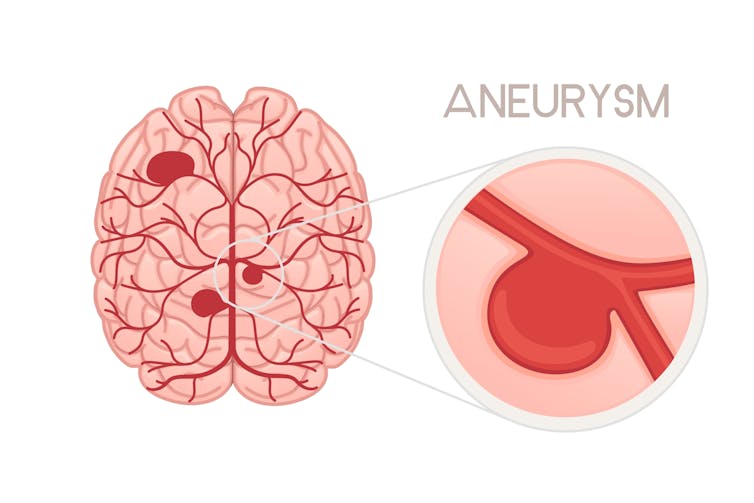
    Typically an aneurysm occurs when a part of the wall of an artery (a type of blood vessel) becomes stretched and bulges out.

    You can get an aneurysm in any blood vessel, but they are most common in the brain’s arteries and the aorta, the large artery that leaves the heart.

    Many people can have a brain aneurysm and never know. But a brain (or aortic) aneurysm that ruptures and bursts can be fatal.

    So, what causes a brain aneurysm? And what’s the risk of rupture?

    Weakness in the artery wall

    Our arteries need strong walls because blood is constantly pumped through them and pushed against the walls.

    An aneurysm can develop if there is a weak part of an artery wall.

    The walls of arteries are made of three layers: an inner lining of cells, a middle layer of muscle and elastic fibres, and a tough outer layer of mostly collagen (a type of protein). Damage to any of these layers causes the wall to become thin and stretched. It can then balloon outward, leading to an aneurysm.

    Genetics and certain inherited disorders can cause weak artery walls and brain aneurysms in some people.

    For all of us, our artery walls become weaker as we age, and brain aneurysms are more common as we get older. The average age for a brain aneurysm to be detected is 50 (Sandilands is 53).

    Females have a higher risk of brain aneurysm than males after about age 50. Declining oestrogen around menopause reduces the collagen in the artery wall, causing it to become weaker.

    An illustration showing a brain aneurysm.
    A brain aneurysm occurs when a part of the wall of an artery balloons out.
    Alfmaler/Shutterstock

    High blood pressure can increase the risk of a brain aneurysm. In someone with high blood pressure, blood inside the arteries is pushed against the walls with greater force. This can stretch and weaken the artery walls.

    Another common condition called atherosclerosis can also cause brain aneurysms. In atherosclerosis, plaques made mostly of fat build up in arteries and stick to the artery walls. This directly damages the cell lining, and weakens the muscle and elastic fibres in the middle layer of the artery wall.

    Several lifestyle factors increase risk

    Anything that increases inflammation or causes atherosclerosis or high blood pressure in turn increases your risk of a brain aneurysm.

    Smoking and heavy drinking affect all of these, and nicotine directly damages the artery wall.

    Sandilands mentioned his cocaine use in discussing his diagnosis. He said:

    The facts are, a life of cocaine abuse and partying are not the way to go.

    Indeed, cocaine abuse increases the risk of a brain aneurysm. It causes very high blood pressure because it causes arteries to spasm and constrict. Cocaine use is also linked to worse outcomes if a brain aneurysm ruptures.

    Stress and a high-fat diet also increase inflammation. High cholesterol can also cause atherosclerosis. And being overweight increases your blood pressure.

    A study of more than 60,000 people found smoking and high blood pressure were the strongest risk factors for a brain aneurysm.

    Is it always a medical emergency?

    About three in 100 people will have a brain aneurysm, varying in size from less than 5mm to more than 25mm in diameter. The majority are only discovered while undergoing imaging for something else (for example, head trauma), because small aneurysms may not cause any symptoms.

    Larger aneurysms can cause symptoms because they can press against brain tissues and nerves.

    Sandilands described “a lot of headache problems” leading up to his diagnosis. Headaches can be due to minor leaks of blood from the aneurysm. They indicate a risk of the aneurysm rupturing in subsequent days or weeks.

    Less than one in 100 brain aneurysms will rupture, often called a “brain bleed”. This causes a subarachnoid haemorrhage, which is a type of stroke.

    If it does occur, rupture of a brain aneurysm is life-threatening: nearly one in four people will die within 24 hours, and one in two within three months.

    If someone’s brain aneurysm ruptures, they usually experience a sudden, severe headache, often described as a “thunderclap headache”. They may also have other symptoms of a stroke such as changes in vision, loss of movement, nausea, vomiting and loss of consciousness.

    Surgeons performing brain surgery under lights.
    Surgery can repair a brain aneurysm, and stop it from rupturing.
    Roman Zaiets/Shutterstock

    Surgery can prevent a rupture

    Whether surgery will be used to treat a brain aneurysm depends on its size and location, as well as the age and health of the patient. The medical team will balance the potential benefits with the risks of the surgery.

    A small aneurysm with low risk of rupture will usually just be monitored.

    However, once a brain aneurysm reaches 7mm or more, surgery is generally needed.

    In surgery to repair a brain aneurysm, the surgeon will temporarily remove a small part of the skull, then cut through the coverings of the brain to place a tiny metal clip to close off the bulging part of the aneurysm.

    Another option is endovascular (meaning within the vessel) coiling. A surgeon can pass a catheter into the femoral artery in the thigh, through the aorta to the brain. They can then place a coil inside the aneurysm which forms a clot to close off the aneurysm sac.

    After either surgery, usually the person will stay in hospital for up to a week. It can take 6–8 weeks for full recovery, though doctors may continue monitoring with annual imaging tests for a few years afterwards.

    You can lower your risk of a brain aneurysm by not smoking, moderating alcohol intake, eating a healthy diet, exercising regularly and maintaining a healthy weight.

    The Conversation

    The authors do not work for, consult, own shares in or receive funding from any company or organisation that would benefit from this article, and have disclosed no relevant affiliations beyond their academic appointment.

    ref. Around 3% of us will develop a brain aneurysm in our lives. So what is it and how do you treat it? – https://theconversation.com/around-3-of-us-will-develop-a-brain-aneurysm-in-our-lives-so-what-is-it-and-how-do-you-treat-it-248882

    MIL OSI AnalysisEveningReport.nz

  • MIL-Evening Report: Parliament condemns antisemitism, but can’t avoid the blame game

    Source: The Conversation (Au and NZ) – By Michelle Grattan, Professorial Fellow, University of Canberra

    Independent Allegra Spender spearheaded a condemnation of antisemitism by federal parliament – but the debate was mired in partisanship.

    The opposition tried to prevent the government bringing on the Spender motion in the House of Representatives, because it said it wanted something stronger and would not be able to amend the motion.  

    Coalition speakers repeatedly used the debate to attack the government for not, in its view, doing enough to combat antisemitism, particularly after the pro-Palestine demonstration at the Opera House in the wake of the Hamas atrocities of October 7 2023.

    Eventually the Spender motion was passed without dissent. It said the House:

    • deplores the appalling and unacceptable rise in antisemitism across Australia – including violent attacks on synagogues, schools, homes, and childcare centres

    • unequivocally condemns antisemitism in all its forms and

    • resolves that all parliamentarians will work constructively together to combat the scourge of antisemitism in Australia.

    Opposition Leader Peter Dutton said Spender had agreed to delete words in an earlier version that would have condemned “all similar hatred directed to any groups in our community”.

    “The member agreed to that form of words being struck out because we don’t think that was necessary. And we also think it is inexplicable to try and mount the argument that this sort of hatred and this sort of racism and this sort of antisemitism is being conveyed against any other pocket of the Australian community.”

    Dutton said the opposition had voted against the government bringing on the motion “because it stopped us from moving amendments […] which would have strengthened the motion and provided stronger support to the community.”

    Spender said combating antisemitism was not just a matter of laws but also of culture.

    “We must lead by example. The message from our parliament today must be unambiguous. We will not stand for hate. We will not stand for abuse.

    “We will not abide intimidation. We will not tolerate the terrorising of any part of our community. We are united against antisemitism. Words must be backed by action, but words matter, particularly those of the parliament.”

    Spender will seek to strengthen the anti-hate bill currently being considered by the parliament.

    The motion was seconded by Jewish Labor MP Josh Burns, who said: “the last six months have been like no other I’ve experienced in this country. And my grandparents came to this country looking for a safe haven for the Jewish people. And over the last six months, we’ve seen cars set alight. We’ve seen synagogues burnt down. We’ve seen Jewish homes and businesses marked. And we have seen childcare centres being burnt down.”

    Anthony Albanese said: “We know that antisemitism has given dark shadows across generations. I say to Jewish Australians, live proudly, stand tall, you belong here and Australia stands with you.”

    Former Minister for Indigenous Australians, Linda Burney, accused a previous Coalition speaker, Andrew Wallace, who criticised the government, of being “corrosive” on “an issue where we should be coming together”.

    In the Senate, crossbencher Jacqui Lambie moved the same motion as Spender. The opposition unsuccessfully tried to amend it to embrace mandatory sentencing. A member from independent Lidia Thorpe was also defeated and the motion was passed on the voices.

    The Conversation

    Michelle Grattan does not work for, consult, own shares in or receive funding from any company or organisation that would benefit from this article, and has disclosed no relevant affiliations beyond their academic appointment.

    ref. Parliament condemns antisemitism, but can’t avoid the blame game – https://theconversation.com/parliament-condemns-antisemitism-but-cant-avoid-the-blame-game-249015

    MIL OSI AnalysisEveningReport.nz

  • MIL-OSI Australia: Report of the Online Safety Act Review released

    Source: Australian Ministers 1

    The Minister for Communications, the Hon Michelle Rowland MP, today tabled the Report of the Statutory Review of the Online Safety Act 2021.
     
    The independent review examined the operation and effectiveness of the Act and considered whether additional protections are needed to combat online harms, including those posed by emerging technologies.
     
    The report makes 67 recommendations to strengthen Australia’s online safety laws, including changes to existing complaints schemes for those experiencing online harms, stronger penalties for non-compliance by online services, increased transparency requirements for online services, and changes to governance arrangements for the Office of the eSafety Commissioner.
     
    In line with a key recommendation of the review, the Government has already committed to legislate a Digital Duty of Care. This will put the legal onus on platforms to keep users safe and help prevent online harms.
     
    The Albanese Government announced the independent review in November 2023, bringing forward its commencement by a year.
     
    Completed by Ms Delia Rickard PSM, the review was informed by extensive stakeholder engagement, including 72 meetings with industry, civil society, academia, law enforcement, and domestic and international government bodies. The review also considered over 2,200 responses submitted through public consultation.
     
    The Government is continuing to carefully consider all recommendations put forward in the report and will respond in due course.
     
    Read the final report: www.aph.gov.au/Parliamentary_Business/Tabled_Documents/9184

    Quotes attributable to the Minister for Communications, the Hon Michelle Rowland MP:
     
    “The Albanese Government is committed to ensuring the online world is a safe experience for all.
     
    “Our Government has been proactive in ensuring our legislative framework remains fit-for-purpose. That’s why we’ve wasted no time in committing to legislate a Digital Duty of Care to place the onus on online services to keep their users safe.
     
    “We are committed to strengthening our online safety laws to protect Australians – particularly young Australians.”
     

    MIL OSI News

  • MIL-OSI Australia: New learning small business platform can help your NFP

    Source: Australian Department of Revenue

    The ATO’s small business online learning platform provides flexible and free courses to build knowledge for all stages of operating a business or organisation. NFPs share many tax obligations with small businesses, and the online learning is a valuable resource to help you avoid common mistakes and understand the tax and super obligations of your NFP better.

    Essentials for your small businessExternal Link can enhance your knowledge of tax and super with a learning path tailored to support your NFP, at a time that is convenient for you. Key features of the learning platform include:

    • instructional videos and infographics
    • tailored options to access courses that are important to you
    • key information you can export to your personal device
    • bookmark options for courses or specific content that you can share.

    You can also save your progress and jump back into a course when you’re ready again.

    Some content that NFPs might find useful includes:

    With over 20 short courses on offer, Essentials to strengthen your small business is likely to have a course that suits your NFP’s needs.

    MIL OSI News

  • MIL-OSI Australia: Don’t wait, lodge your NFP self-review return now

    Source: Australian Department of Revenue

    If your not-for-profit (NFP) organisation needs to lodge the NFP self-review return, don’t worry, there is still time for you to lodge.

    Non-charitable NFPs with an active Australian business number (ABN) that self-assess as income tax exempt have until 31 March 2025 to lodge their 2023-24 return.

    The return must be lodged to notify us of your NFP’s eligibility to self-assess as income tax exempt.

    But before you lodge the return, it’s a good idea to check whether your organisation is ready to lodge. Our NFP self-review return – update, connect and lodge overview provides a step-by-step guide to setting up access to lodge your return online.

    The guide is a great way to identify any action you need to take to ensure you have everything you need to lodge by the due date. It covers:

    • checking your NFP’s ABN details
    • setting up myID and linking it to Relationship Authority Manager (RAM)
    • reviewing your income tax exemption eligibility
    • lodgment options.

    The NFP self-review return question guide is another great tool that lists all the questions in the return, so you can prepare your answers before lodging.

    If you need more help with getting ready to lodge, there are plenty of useful tools and information available to help you understand the NFP self-review return and to prepare, including the NFP self-review return factsheet.

    MIL OSI News

  • MIL-OSI New Zealand: Hipkins must rule out Te Pāti Māori attempt to break democracy

    Source: ACT Party

    Responding to Te Pāti Māori’s call for an unelected Te Tiriti Commissioner to veto legislation from Parliament, ACT Leader David Seymour says:

    “ACT would like to thank Te Pāti Māori for being so honest about the fact they don’t support rule by elected Parliament. Ironically, they’ve shown voters electing the next Parliament what’s at stake if they vote Labour, the Greens, or Te Pāti Māori.

    “If we take Te Pāti Māori seriously, it would be one vote, for one party, once. A person who ‘needs to be Māori’ would have a veto on all laws.

    “If breaking democracy is a bottom line for Te Pāti Māori, Labour and the Greens need to rule out ever being in Government with them, or they’ll never be in Government with anyone. New Zealand voters will see to it, and Labour and the Greens will be collateral damage.

    “Labour and the Greens need to decide if they’re still serious parties. Labour and the Greens faced a test when the Speaker asked for their votes to censure Te Pati Māori’s haka last year. They voted against the Speaker and with Te Pati Māori. If they can do that to Parliamentary debate, what else are they up for?

    “Te Pāti Māori’s latest crazy demand also shows why they oppose the Treaty Principles Bill. It is about all New Zealanders having an equal say through democratic processes. Te Pāti Māori want the opposite.

    “The Treaty Principles Bill would prevent our founding document from being twisted to justify these kinds of constitutional travesties. Te Tiriti promised the same rights for all New Zealanders. That should include the right to cast a vote and have your values put into action by Parliament, without an unelected Commissioner vetoing your democratic choices on behalf of one group of New Zealanders.”

    MIL OSI New Zealand News

  • MIL-Evening Report: As Trump deportations intensify, Pacific Island nations worry they could be overwhelmed

    Source: The Conversation (Au and NZ) – By Henrietta McNeill, Research fellow, Australian National University

    In his first term, Donald Trump deported far fewer people from the United States than his three predecessors: Barack Obama, George W. Bush and Bill Clinton.

    Just weeks into his second term, however, Trump is making the deportation of immigrants one of his top priorities. Immigration raids on those who have overstayed their visas and non-citizens with criminal histories have already commenced, with arrests increasing dramatically in recent days.

    His administration has announced plans to build a migrant detention facility at Guantanamo Bay in Cuba that could hold up to 30,000 people awaiting deportation. Trump has also threatened to use a little-known law from 1798 to speed up the process, bypassing immigration courts.

    While much of the attention has focused on the hundreds of thousands of migrants at risk of being deported to Latin America, many Pacific islanders are likely to be ordered to leave, as well.

    A list from the US Immigration and Customs Enforcement of people with “final orders of removal” includes some 350 migrants from Fiji, 150 from Tonga and 57 people from Samoa, among others.

    Unsurprisingly, Trump’s threats have invoked fear across the Pacific. Prominent Fijian lawyer Dorsami Naidu told the ABC:

    We’ve had lots of people who have served prison sentences in America get sent back to Fiji where they introduce different kinds of criminal activities that they are well-groomed in.

    It should be noted, though, that not all of the people with orders to leave have been convicted of serious crimes. Many have simply overstayed their visas or may have only committed a minor infraction. Most want to turn their lives around.

    Lack of support

    Criminal deportations from the US, Australia and New Zealand have increased dramatically over the past decade, yet there is still a crucial lack of funding to support reintegration services.

    Concerns about the repercussions of criminal deportations are particularly high in Tonga, which received more than 1,000 returnees from 2009–20, nearly three-quarters of whom were from the US.

    One Tongan commentator suggested Trump’s decision would “unleash a wave of deportees that could drown Tonga and other Pacific nations in crisis”.

    Though some Tongan returnees are accepted back into families and societies, many struggle. A large number left the country when they were young and often have limited understanding of the local language and culture. As such, they experience difficulties reintegrating into society.

    My research shows that some deported Pacific islanders with criminal histories may turn “back to what they know” in the absence of support, which at times means involvement in the drug trade if there are no other means of gainful employment.

    In countries like Tonga where there is an escalating methamphetamine problem and a lack of employment opportunities, this is understandably concerning.

    Tonga, like other Pacific countries, struggles to fund organisations that crucially assist with deported peoples’ reintegration needs in order to prevent the risk of (re)offending. The countries deporting these individuals (such as the US, New Zealand or Australia) rarely provide any assistance, despite repeated requests from Pacific governments and non-governmental organisations.

    Can these countries negotiate instead?

    Countries can push back against Trump’s decisions to deport their citizens. Colombia was the first to do so, when President Gustavo Petro initially refused to allow military planes carrying deported migrants to land.

    Petro’s refusal was met with fury in Washington. Trump threatened a number of retaliatory trade measures, prompting Petro to eventually relent.

    Pacific states have previously tried to push back against deportations during the COVID pandemic. Samoa and Tonga, for instance, used diplomatic channels to request a “pause” on removals while they grappled with the unfolding health crisis.

    Australia and New Zealand complied with the request, but the US did not. Instead, it used punitive measures to force states into continue receiving deportations.

    For instance, the US blacklisted Samoan and Tongan nationals from the list of states eligible for seasonal work visas, affecting these countries’ economies. They were not returned to the list until they “complied” with US removals.

    International law mandates that countries accept their own citizens if they are deported. Those that refuse are deemed “deviant states”, which can cause problems for both the deporting state and returnees trapped in limbo.

    However, there are other ways of delaying deportation orders.

    For example, Samoa has requested additional information from the countries trying to deport Samoans and will not issue travel documents (for example, a passport) until this request is complied with. This information includes evidence of an individual’s connection to Samoa and family ties in the country.

    Samoan authorities maintain this helps organisations like the Samoa Returnees Charitable Trust find their families and arrange appropriate accommodation, aiding with their reintegration.

    Countries like Colombia and Samoa are acting in the interests of their citizens. While many have legitimate concerns about returnees potentially turning to crime once they are in their home countries, these states also want to challenge the perception that all migrants are criminals.

    As Petro, the Colombian president, was quick to point out:

    They are Colombians. They are free and dignified, and they are in their homeland where they are loved […] The migrant is not a criminal. He is a human being who wants to work and progress, to live life.

    Henrietta McNeill does not work for, consult, own shares in or receive funding from any company or organisation that would benefit from this article, and has disclosed no relevant affiliations beyond their academic appointment.

    ref. As Trump deportations intensify, Pacific Island nations worry they could be overwhelmed – https://theconversation.com/as-trump-deportations-intensify-pacific-island-nations-worry-they-could-be-overwhelmed-248900

    MIL OSI AnalysisEveningReport.nz

  • MIL-OSI China: US stocks extend losses on tariff concerns

    Source: China State Council Information Office

    A trader works on the floor of the New York Stock Exchange in New York, the United States, on Feb. 3, 2025. [Photo/Xinhua]

    U.S. stocks ended lower on Monday, as investors reacted to the Donald Trump administration’s planned tariff rollout.

    The Dow Jones Industrial Average fell 122.75 points, or 0.28 percent, to 44,421.91. The S&P 500 sank 45.96 points, or 0.76 percent, to 5,994.57. The Nasdaq Composite Index shed 235.49 points, or 1.20 percent, to 19,391.96.

    Six of the 11 primary S&P 500 sectors ended in red, with technology and consumer discretionary leading the laggards by losing 1.80 percent and 1.35 percent, respectively. Meanwhile, consumer staples and utilities led the gainers by going up 0.68 percent and 0.46 percent, respectively.

    The tariffs, originally set to take effect Tuesday, include 25 percent duties on goods from Canada and Mexico and 10 percent on Chinese imports, with Canadian energy imports facing a reduced 10 percent rate.

    After a Monday morning call with Mexico’s President Claudia Sheinbaum, Trump agreed to postpone tariffs on Mexican imports for a month following Sheinbaum’s commitment to deploying troops at the border to curb fentanyl trafficking and illegal immigration.

    Later on Monday, Trump said the tariffs on Canada announced on Saturday “will be paused for a 30 day period” to see whether or not a final economic deal with Canada can be structured.

    U.S. major indexes narrowed losses in the morning session thanks to the latest development.

    “This is a very fluid and evolving situation,” said Victoria Greene at G Squared Private Wealth. “For now, our baseline thesis is the bulk of these are transitory and likely more watered down with concessions. We are on top of developments and watching how this may affect earnings, the U.S. dollar and inflation.”

    While concerns persist over potential price hikes and economic strain, Wells Fargo Investment Institute noted Monday that the administration’s “targeted and gradual approach” aims to mitigate disruptions to U.S. growth.

    Paul Christopher, head of global investment strategy at the institute, emphasized that services remain the primary economic driver, while the industrial sector continues to struggle with weak pricing power amid a manufacturing downturn.

    “It’s probably going to take several quarters to have a noticeable impact,” Christopher said. “You could eventually see some higher prices, but not right away.”

    MIL OSI China News

  • MIL-OSI Australia: Medium grants of up to $10,000 now available through City’s Community Grants Program

    Source: State of Victoria Local Government 2

    Applications for grants of up to $10,000 are now open for the City of Greater Bendigo’s Community Medium Grants category to support local groups to undertake projects that align with the objectives of the City’s Council Plan or a Local Community Plan.

    City of Greater Bendigo Manager Community Partnerships Andie West said each year Council allocates approximately $850,000 through the Community Grants Program and its various grant categories.

    “It’s an important program and we want to see as many groups as possible accessing funding through the program,” Ms West said.

    “The Medium Grants category provides up to $10,000 to help community groups afford things that are essential for them to function and that support activities that will align with the aims of the Greater Bendigo’s Council Plan 2021-2025 Mir wimbul or a local community plan.

    “The Community Grants Program is fantastic for local groups as they would often not be able to undertake important activities that benefit our community without this funding.

    “To be considered for a community grant, applicants must be a registered legal entity such as an incorporated association.  However, if you are informal group or individual your application can be submitted by an auspice organisation.

    “Before applying, groups should consider if there is a clear need for their activity, if there is community support for their activity and if they have the resources needed to deliver the activity.”

    Applications for the Medium Grants will close on Wednesday February 26, 2025.

    MIL OSI News

  • MIL-OSI Australia: Moo-ving rescue after calf falls down mine shaft

    Source: Victoria Country Fire Authority

    CFA crews staged an udderly remarkable rescue over the weekend after a young calf fell down an abandoned mineshaft in Yarck, in the state’s northeast.

    The Oscar Rescue Support Unit was alerted to a calf in distress at around 8:57 am on Saturday morning. Upon arrival crews found the calf trapped approximately 20 metres underground.  

    Using a carefully rigged rope system and a harness, rescue personnel worked together over approximately three hours to steer the operation to success.  

    Remarkably the young calf was completely uninjured. 

    Oscar Fire Brigade 1st Lieutenant Karl Shay praised the team’s coordination and problem-solving skills in handling the tricky rescue. 

    “It was fairly complex situation, before we could get down the shaft to reach the animal we needed to remove a stump that was blocking the entrance,” Karl said. 

    “I think the calf knew we were there to help, it was very calm throughout the whole process. 

    “Once we got the ropes on, we were able to safely bring the calf to safety. 

    “It’s not every day you get called to a rescue like this, but we’ll always be there when needed, whether it’s for people, property or livestock.” 

    Karl added that the rescue served as a timely reminder to the community to always call for help in situations like this and leave things to the trained professionals.   

    “Obviously these types of situations can be very distressing for pet and livestock owners. But in this situation the family involved made the correct decision to call 000 and wait for help to arrive,” he said. 

    The dairy-tired calf was safely reunited with its very relieved mum.

    Submitted by CFA Media

    MIL OSI News

  • MIL-OSI Australia: Funds flowing for new crisis and transitional housing

    Source: Ministers for Social Services

    The Albanese Labor Government has announced that 42 projects across Australia will receive a share of $100 million building hundreds of new crisis and transitional homes for thousands of women and children impacted by family and domestic violence, and older women at risk of homelessness.

    Funded under the Housing Australia Future Fund (HAFF), the Crisis and Transitional Accommodation Program (CTAP) funds the building, remodelling or purchase of new or expanded crisis or transitional accommodation.

    The funding is part of the Albanese Government’s ambitious housing reform agenda, as well as our commitment, along with states and territories, to end gender‑based violence within one generation.

    Since coming to office, the Albanese Government is investing nearly 20 times more funding in crisis and transitional accommodation and programs than the previous Coalition government did in a decade.

    CTAP aligns with the Government’s broader housing and women’s safety agendas, including the National Plan to End Violence against Women and Children 2022–2032, the National Housing Infrastructure Facility and builds on the work of existing emergency and crisis accommodation programs like the Safe Places Emergency Accommodation Program.

    A range of projects have been selected under CTAP, including projects that will be tailored to support culturally and linguistically diverse women and children, First Nations women and children, and older women.

    Hundreds of applications were received, demonstrating the critical need for secure housing across Australia after a decade of neglect by the Coalition. Those applications were assessed through an open, competitive grants process and all successful projects clearly demonstrated how the projects will meet the needs of women and children experiencing violence and older women at risk of homelessness.

    Our Government’s separate $100 million investment in the Safe Places Emergency Accommodation Program through the 2024 Inclusion Round is already bringing the total number of emergency accommodation places delivered under the program across Australia to around 1,500.

    Once all Safe Places projects are complete, more than 11,000 women and children experiencing family and domestic violence will be able to be supported each year, with this additional funding going towards helping thousands more.

    More information about the Crisis and Transitional Accommodation Program and the Safe Places Program is available from the Department of Social Services website.

    If you or someone you know is experiencing, or at risk of experiencing, domestic, family, or sexual violence, call 1800 737 732, text 0458 737 732 or visit www.1800RESPECT.org.au for online chat and video call services.

    Connect with 13YARN Aboriginal & Torres Strait Islander Crisis Supporters on 13 92 76, available 24/7 from any mobile or pay phone, or visit www.13yarn.org.au No shame, no judgement, safe place to yarn.

    If you are concerned about your behaviour or use of violence, you can contact the Men’s Referral Service on 1300 766 491 or visit www.ntv.org.au

    Quotes attributable to Minister for Housing and Homelessness, Clare O’Neil MP

    “Family and domestic violence is a scourge on our society which has a huge impact on vulnerable women and kids.

    “Labor knows that having a safe place to go can be the difference between leaving a violent relationship or staying. That’s what these projects are about – empowering some of the most vulnerable people in our community with a safe place to go.

    “42 organisations will be funded around the country to deliver hundreds of new crisis and emergency homes, resulting in more women and children having secure accommodation when they need it most.

    “We know that these groups are two of the most at risk for not having a safe place to call home, and this housing insecurity can lead to other disadvantages, and it’s a measure of any society how it protects its most vulnerable, and our Government is investing to secure a safer future for women.”

    Quotes attributable to Minister for Social Services, Amanda Rishworth MP

    “Family and domestic violence is one of the leading causes of homelessness and housing uncertainty for women and children across Australia, and we know there is an increased demand for emergency accommodation.

    “The impact of family and domestic violence ripples across communities and it is why, along with states and territories, our Albanese Labor Government is committed to ending violence against women and children in one generation. As Minister, I have thought about this issue every day in my portfolio.

    “This critical CTAP investment, along with our previous investment in the Safe Places Emergency Accommodation program, will ensure that women and children experiencing violence have a safe place to go and don’t have to choose between housing and their safety.”

    MIL OSI News

  • MIL-Evening Report: How can you help your child make friends?

    Source: The Conversation (Au and NZ) – By Gretchen Geng, Professor in Innovative Education Futures, Flinders University

    One of the things children (and parents) may worry about at the start of the new school year is, will I have friends?

    This could be true for children starting or changing schools or simply going back to a new year with different class arrangements.

    How can parents talk to their kids about making friends?

    Why is it important to have friends?

    We research young people’s wellbeing and provide programs to schools on how to talk about mental health.

    Having lasting, meaningful friendships is extremely important for children’s health, development and wellbeing.

    They can validate young people’s aspirations and interests and help them feel like they belong. Friends can also help ease feelings of loneliness and anxiety, making it easier for children to engage in new activities and connect with others.

    On top of this, friendships can act as a “buffer” against bullying by providing emotional support if it does happen. Research also suggests, if children don’t have a supportive friendship network, they are more prone to be bullied at school.

    Having friends can help children feel like they belong.
    Monkey Business Images/ Shutterstock

    Help your child build confidence

    Some children find it harder to make friends than others. If your child is shy or introverted they may find it hard to meet new people.

    Let them know it is OK to start small. You don’t have to make ten best friends all at once! Making friends takes time and even just one or two good friends can make a big difference.

    To break the ice, encourage simple actions such as saying “hello” or offering a compliment: “That’s a cool handball” or “I love your Taylor Swift bracelet”.

    Encourage your child to do activities with other kids they enjoy. They can play a particular game or sport or do craft, dancing or reading. Tell them how it’s possible to be friends with lots of different kinds of people.

    Talk about the importance of friendship

    Research shows it’s important for parents to offer encouragement and guidance about friendships. This can lead to better quality friendships (how well friends get along) as children grow up.

    Parents can start to talk to their child about the importance of friendships from a young age. Some questions parents could ask include “Who did you play with today?”, “What did you like about playing with them?”, “What games did you play”.

    Parents can also start conversations about the value of friends and friendship. For example, parents could ask their child about the importance of sharing with friends (“it actually feels great to share and make your friends happy”).

    It’s important for parents to support their child’s friendships.
    DGL Images/ Shutterstock

    Encourage your child to talk

    Over time, children’s concept of friendships changes. Younger children view friends as somebody you can play with, while older children see friends as people they can trust and can share emotions and thoughts with.

    Research shows, parents can also help this transition with advice and encouragement. Encourage your child to express their feelings and talk about what happens at school, so you can work through any issues or tricky things together.

    This does not have to be a formal talk. You could chat while you are doing something else – like drawing, playing chess or throwing a ball.

    To create a safe space for your child to freely express their feelings and emotions, avoid being judgemental or critical. Instead, ask questions, like “if you do it again, will you do it differently?” or “was that a kind decision?”

    Encourage active listening

    You can also encourage your child to be a good and supportive friend.

    One way to do this is by being an active listener. This is about understanding what someone is saying (and possibly taking action because of it), not simply “hearing” what is said.

    You can suggest your child takes a deep breath and lets the other child finish what they are trying to say, instead of interrupting and talking over people.

    Active listening is a skill parents can practise with their child. Make a game and have fun doing it. Try it in the car, over the dinner table or in another informal setting.


    Deb Agnew and Shane Pill also developed versions of the Big Talks for Little People program on which this article is based.

    Gretchen Geng works for Flinders University. Big Talks for Little People receives funding from Breakthrough Mental Health Research Foundation, Little Heroes Foundation, Medibank, BeyondBank, and the South Australian Education Department.

    Phillip Slee works for Flinders University. Big Talks for Little People receives funding from Breakthrough Mental Health Research Foundation, Little Heroes Foundation, Medibank, BeyondBank, and the South Australian Education Department.

    ref. How can you help your child make friends? – https://theconversation.com/how-can-you-help-your-child-make-friends-248534

    MIL OSI AnalysisEveningReport.nz

  • MIL-Evening Report: Do big tech companies have a ‘duty of care’ for users? A new report says they do – but leaves out key details

    Source: The Conversation (Au and NZ) – By Lisa M. Given, Professor of Information Sciences & Director, Social Change Enabling Impact Platform, RMIT University

    PV Productions/Shutterstock

    Large social media companies should have to proactively remove harmful content from their platforms, undergo regular “risk assessments” and face hefty fines if they don’t comply, according to an independent review of online safety laws in Australia.

    The federal government will today release the final report of the review conducted by experienced public servant Delia Rickard, more than three months after receiving it.

    The review comes a few months after Meta announced it will stop using independent fact checkers to moderate content on Facebook, Instagram and Threads.

    Rickard’s review contains 67 recommendations in total. If implemented, they would go a long way to making Australians safer from abusive content, cyberbullying and other potential harms encountered online. They would also align Australia to international jurisdictions and address many of the same problems targeted by the social media ban for young people.

    However, the recommendations contain serious omissions. And with a federal election looming, the review is not likely to be acted upon until the next term of government.

    Addressing online harms at the source

    The review recommends imposing a “digital duty of care” on large social media companies.

    The federal government has already committed to doing this. However, legislation to implement a digital duty of care has been on hold since November, with discussions overshadowed by the government’s social media ban for under 16s.

    The digital duty of care would put the onus on tech companies to proactively address a range of specific harms on their platforms, such as child sexual exploitation and attacks based on gender, race or religion.

    It would also provide several protections for Australians, including “easily accessible, simple and user-friendly” pathways to complain about harmful content. And it would position Australia alongside the United Kingdom and the European Union, which already have similar laws in place.

    Online service providers would face civil penalties of 5% of global annual turnover or A$50 million (whichever is greater) for non-compliance with the duty of care.

    Two new classes of harm – and expanded powers for the regulator

    The recommendations also call for a decoupling of the Online Safety Act from the National Classification Scheme. That latter scheme legislates the classification of publications, films and computer games, providing ratings to guide consumers to make informed choices for selecting age-appropriate content.

    This shift would create two new classes of harm: content that is “illegal and seriously harmful” and “legal but may be harmful”. This includes material dealing with “harmful practices” such as eating disorders and self-harm.

    The review’s recommendations also include provisions for technology companies to undergo annual “risk assessments” and publish an annual “transparency report”.

    The review also recommends adults experiencing cyber abuse, and children who are cyberbullied online, should wait only 24 hours following a complaint before the eSafety Commission orders a social media platform to remove the content in question. This is down from 48 hours.

    It also recommends lowering the threshold for identifying “menacing, harassing, or seriously offensive” material to that which “an ordinary reasonable person” would conclude is likely to have an effect.

    The review also calls for a new governance model for the eSafety Commission. This new model would empower the eSafety Commissioner to create and enforce “mandatory rules” (or codes) for duty of care compliance, including addressing online harms.

    The need to tackle misinformation and disinformation

    The recommendations are a step towards making the online world safer for everybody. Importantly, they would achieve this without the problems associated with the government’s social media ban for young people – including that it could violate children’s human rights.

    Missing from the recommendations, however, is any mention of potential harms from online misinformation and disinformation.

    Given the speed of online information sharing, and the potential for artificial intelligence (AI) tools to enable online harms, such as deepfake pornography, this is a crucial omission.

    From vaccine safety to election campaigns, experts have raised ongoing concerns about the need to combat misinformation.

    A 2024 report by the International Panel on the Information Environment found experts, globally, are most worried about “threats to the information environment posed by the owners of social media platforms”.

    In January 2025, the Canadian Medical Association released a report showing people are increasingly seeking advice from “problematic sources”. At the same time technology companies are “blocking trusted news” and “profiting” from “pushing misinformation” on their platforms.

    In Australia, the government’s proposed misinformation bill was scrapped in November last year due to concerns over potential censorship. But this has left people vulnerable to false information shared online in the lead-up to the federal election this year. As the Australian Institute of International Affairs said last month:

    misinformation has increasingly permeated the public discourse and digital media in Australia.

    An ongoing need for education and support

    The recommendations also fail to provide guidance on further educational supports for navigating online spaces safely in the review.

    The eSafety Commission currently provides many tools and resources for young people, parents, educators, and other Australians to support online safety. But it’s unclear if the change to a governance model for the commission to enact duty of care provisions would change this educational and support role.

    The recommendations do highlight the need for “simple messaging” for people experiencing harm online to make complaints. But there is an ongoing need for educational strategies for people of all ages to prevent harm from occurring.

    The Albanese government says it will respond to the review in due course. With a federal election only months away, it seems unlikely the recommendations will be acted on this term.

    Whichever government is elected, it should prioritise guidance on educational supports and misinformation, along with adopting the review’s recommendations. Together, this would go a long way to keeping everyone safe online.

    Lisa M. Given receives funding from the Australian Research Council. She is a Fellow of the Academy of the Social Sciences in Australia and the Association for Information Science and Technology, and an Affiliate of the International Panel on the Information Environment.

    ref. Do big tech companies have a ‘duty of care’ for users? A new report says they do – but leaves out key details – https://theconversation.com/do-big-tech-companies-have-a-duty-of-care-for-users-a-new-report-says-they-do-but-leaves-out-key-details-248995

    MIL OSI AnalysisEveningReport.nz

  • MIL-OSI Australia: NSW Government backs Upper Hunter’s industrial future

    Source: New South Wales Government 2

    Headline: NSW Government backs Upper Hunter’s industrial future

    Published: 4 February 2025

    Released by: Minister for the Hunter, Minister for Planning and Public Spaces


    The Future Land Use and Enabling Works project for Liddell Power Station has been approved by the Minns Labor Government, which will see the former power station, demolished, remediated and transformed for future industrial land uses.

    The approval of the State Significant Development, south of Muswellbrook, will mean more jobs and industrial opportunities for the Upper Hunter.

    Spanning around 143 hectares, the Future Land Use and Enabling Works project is expected to generate more than $260 million in Capital Investment Value (CIV) for the Upper Hunter Region as well as 100 full time equivalent jobs.

    Remediation works will include:

    • Demolition of the power station
    • Construction and operation of a borrow pit for capping, civil works and recontouring of the site
    • Recontouring and revegetation of the site
    • Construction and operation of a landfill for the disposal of asbestos contaminated soil and material from demolished infrastructure.

    In 2023, the Liddell Power Station came to the end of its technical life and was formally closed, with the proponent AGL committing to remediate the site for a cleaner future.

    Following the assessment from the Department of Planning, Housing and Infrastructure (DPHI) the approval has strict conditions of consent to manage biodiversity, water and traffic impacts. Works are now expected to commence within the next 3 months and are expected to continue over the next ten years.

    The Upper Hunter has long been an industrial powerhouse and this approval is only the most recent planning determination that indicates a broader Government support for the Upper Hunter to remain an industrial centre.

    The approval also comes shortly after the Minns Government launched its Industrial Lands Action Plan (PDF 977.79KB) which sets out a new approach to plan, secure, and manage the supply of industrial lands to deliver new jobs, drive investment and support local economies.

    The Minns Labor Government will continue to support robust investment and job opportunities in regional NSW.

    For more information, visit the web page on the Liddell Future Land Use and Enabling Works Project.

    Project layout and disturbance areas of the Liddell Future Land Use and Enabling Works Project.

    Minister for Planning and Public Spaces Paul Scully said:

    “Under the Minns Government, we have a planning system that is supporting the renewable energy transition, approving projects that will support our communities, energy security and emissions reductions.

    “With up to 100 jobs generated during construction and operation, this project will benefit the local economy, local communities and provide indirect benefits to local services throughout the life of project.

    “This project is one of many that is part of the state’s growing renewable energy infrastructure that plays a vital role in powering our economy for generations to come.”

    Minister for the Hunter Yasmin Catley said:

    “The $260 million project injects a major capital investment within the Upper Hunter and will support dozens of new, local jobs.

    “The Liddel Power Station is an important part of the Hunter’s history and this project represents the significant investment opportunities that lay ahead for the region.

    “Today’s announcement further shores up our region as an industrial powerhouse, that will attract jobs, investment and innovation for decades to come.”

    Duty MLC for the Upper Hunter Emily Suvaal said:

    “This approval is welcome news for our area and shows the Minns Labor Government’s continued support for the future of the Upper Hunter.

    “As the chair of the inquiry into Beneficial and Productive Postmining Land Use, I am hugely supportive of the Minns Government working with proponents to see industrial sites rehabilitated and renewed for future use.

    “This means continued employment, investment and innovation for our region.”

    MIL OSI News

  • MIL-OSI Australia: Arrests – Firearm incident – Coconut Grove

    Source: Northern Territory Police and Fire Services

    The Northern Territory Police Force has arrested three offenders after a serious assault with a firearm occurred in Coconut Grove overnight.

    Around 7:05pm, police received reports that a 23-year-old man had been seriously injured by offenders who had arrived in a black Mazda 3 at a residence on Litchfield Court, Coconut Grove.

    On Police and St John Ambulance arrival it was confirmed that the man had been shot in the legs. The victim was conveyed to Royal Darwin Hospital in a stable condition while detectives identified the alleged offenders were known to the victim.  

    Shortly after the incident, police confirmed that the vehicle involved was not stolen and was allegedly being borrowed by someone who was not the registered owner.

    Multiple units, including detectives from the Crime Command, the Territory Response Group, Katherine general duties and the Northern Investigations Section deployed and began tracking the vehicle.

    Shortly before 4am, a tyre deflation device was successfully deployed outside Katherine and two men, aged 19 and 22, and a 22-year-old woman were arrested without incident.

    Multiple edged weapons were found within the vehicle but the firearm allegedly used has yet to be located.

    Assistant Commissioner Travis Wurst said, “Major Crime and Northern Investigations teams are continuing to investigate this targeted attack and we are urging anyone with information to come forward.

    “I would like to commend every officer involved in the safe apprehension of these alleged offenders.

    “Anyone with information, particularly on the whereabouts of the firearm, can make contact with police on 131 444 and quote reference P25034096.” 

    MIL OSI News

  • MIL-OSI China: Global celebrations of Chinese New Year

    Source: People’s Republic of China – State Council News

    Global celebrations of Chinese New Year

    Updated: February 4, 2025 09:28 Xinhua
    A woman presents Hanfu attire in Kuala Lumpur, Malaysia, Feb. 2, 2025. A Hanfu-themed gathering in celebration of the Chinese Lunar New Year, or the Spring Festival, was held here on Sunday. [Photo/Xinhua]
    Guests take part in a closing bell ceremony held by Nasdaq and the Chinese Consulate General in New York in celebration of the Chinese Lunar New Year, in New York, the United States, Jan. 27, 2025. [Photo/Xinhua]
    Students from the art troupe of the High School Affiliated to Renmin University of China perform during the Chinese New Year Showcase in Chicago, the United States, Feb. 1, 2025. [Photo/Xinhua]
    Tunisian Chinese learners practice Chinese calligraphy during a cultural event held at a bookstore in celebration of the Chinese New Year, also known as the Spring Festival, in Tunis, Tunisia, Feb. 1, 2025. [Photo/Xinhua]
    A person in Monkey King costume plays Mahjong during a Chinese New Year celebration at Camden Market in London, Britain, Feb. 1, 2025. [Photo/Xinhua]
    Performers pose for photos during a Chinese New Year celebration at Camden Market in London, Britain, Feb. 1, 2025. [Photo/Xinhua]
    People watch a performance during a celebration of the Chinese New Year in Madrid, Spain, Jan. 31, 2025. [Photo/Xinhua]
    A decoration of a snake is seen on the show window of a bookstore in Turin, Italy, Jan. 31, 2025. Exhibition boards and posters about the Chinese New Year are displayed on the streets of Turin as part of the festival celebration. [Photo/Xinhua]
    Dragon dancers perform in a celebration of the Chinese New Year at Denpasar in Bali Province, Indonesia, Feb. 1, 2025. [Photo/Xinhua]
    A woman interacts with a lion dancer during an event celebrating the Chinese New Year in Wellington, New Zealand, Feb. 1, 2025. [Photo/Xinhua]
    Local residents learn to make decorative Chinese knots during an event celebrating the Chinese New Year at the Auckland Art Gallery in Auckland, New Zealand, Feb. 1, 2025. [Photo/Xinhua]
    A tourist poses for a photo with a mascot during a celebration of the Chinese New Year in Melbourne, Australia, Feb. 1, 2025. [Photo/Xinhua]
    A lion dance is staged during a celebration of the Chinese New Year in Melbourne, Australia, Feb. 1, 2025. [Photo/Xinhua]
    Members of a Yingge team perform the traditional Chaoyang Yingge dance during the Spring Festival temple fair in Frankfurt, Germany, on Jan. 31, 2025. The Yingge team from Shantou, south China’s Guangdong province, offered a rich cultural feast in Frankfurt to friends from all over the world through their Chaoyang Yingge dance, a unique art form combining drama, dance, and martial arts. [Photo/Xinhua]

    MIL OSI China News

  • MIL-Evening Report: Australia won’t escape the fallout of the Trump trade chaos

    Source: The Conversation (Au and NZ) – By Scott French, Senior Lecturer in Economics, UNSW Sydney

    In a hectic 24 hours of trade diplomacy, US President Donald Trump has paused his threatened 25% tariffs on US imports from Canada and Mexico, while keeping 10% tariffs on imports from China.

    Australian companies with operations in Canada or Mexico such as Rio Tinto, whose Canadian operations export billions of dollars of aluminium to the US, have won a temporary reprieve. But the risk of weaker economic growth in China will weigh heavily on companies that export to our largest trading partner.

    And Trump has hinted all US imports of aluminium and copper, including from Australia, may be his next target.

    The Treasurer Jim Chalmers said on Tuesday that although Australia is not immune when there are escalating trade tensions, “we are pretty well-placed to navigate them.”

    However, even if Australia manages to stay out of Trump’s sights, Australians cannot expect to come out of a trade war unscathed. Due to the complexity of global supply chains, it is difficult to predict exactly how Australia would be affected, but here are a few key factors that would likely come into play.

    Our largest trading partner

    About 40% of Australia’s exports go to China, making it the biggest destination by far, according to data for 2023 from UN Comtrade. Most of this is Australian iron ore and other minerals that are used in China’s construction and manufacturing sectors.

    If Trump’s tariffs further slow the
    already sluggish Chinese economy, this will reduce demand for the goods it buys from Australia.

    If China’s demand for iron ore falls significantly, this will not only hurt the Australian mining sector, but it could trigger a fall in the Australian dollar, making the things Australians buy from abroad more expensive.

    But the size of the impact of the latest tariffs on China remains to be seen. China has already absorbed the tariffs from the first Trump administration, and the latest increase is much smaller than the 60% tariff he previously proposed.

    Trade diversion

    The one positive effect for Australia of US tariffs on other countries is that, because they raise the price of other countries’ exports to the US, they may make some Australian exports more competitive. This is something economists call trade diversion. For example, the tariffs on Canadian aluminium would have shifted US demand toward aluminium produced in Australia.

    The tariffs on China will divert relatively little trade to Australia because there is not much overlap between the products China and Australia export to the US.

    But China’s retaliatory tariffs could make a significant impact. China responded to the US tariffs imposed during Trump’s first term with tariffs on American wheat and other agricultural products. A similar move this time could create an opening for Australian farmers to fill the gap.

    But it is not all good news. The US exports diverted away from the Chinese market will also compete with Australian products in other countries. So, while Australian wheat may become more competitive in China, US wheat may displace Australia’s in the Philippines.

    A weaker Aussie dollar?

    Tariffs also tend to cause the currency of the country imposing them to rise because they reduce demand for goods denominated in foreign currencies.

    The flip side is a weaker Australian dollar, which dropped to a five-year low after the tariffs were flagged. The currency has now fallen nearly 10% since November.

    Again, this raises the cost of imports to Australia, which could lift inflation.

    Network disruption

    If the tariffs on Canada and Mexico are confirmed in 30 days’ time, the greatest impact will be in the supply chain disruption they will cause.

    Analyses of the tariffs Trump imposed on China in 2018 found most of the cost was borne by US businesses that use imported inputs. But because North American production networks are so highly integrated, and have been for decades, the effect of tariffs on Canada and Mexico will be much more disruptive to all North American producers.

    As economic networks expert Ben Golub explains, the concern is not just that auto prices will rise, but that if key parts of the production network fail, such as if small but important intermediate suppliers go out of business, the effects of the tariffs could cascade into major disruptions.

    Eventually, businesses will develop alternative supply chains, but the short-run pain could be considerable.

    For Australians, this could mean higher prices and supply disruptions, not just for the products we buy from the US, but for anything that depends on a North American supplier at any stage in the production process.

    We are still feeling the effects of the supply chain disruptions caused by COVID, including the jump in inflation in 2021 and 2022 and the subsequent high interest rates and global backlash against incumbent political parties. That includes Donald Trump’s return to the Oval Office.

    Similar disruptions may be in store if this skirmish becomes a major global trade war. Even if Trump’s promised tariffs never actually materialise, we may still see the same effects on a smaller scale because the trade policy uncertainty from just the threat of a trade war has similar effects on business activity as actual tariffs.

    Whatever transpires, even if Australia can escape direct involvement in a trade war, it cannot escape the shockwaves that reverberate through the global economy. The question is whether it will be a ripple or a tsunami.

    Scott French does not work for, consult, own shares in or receive funding from any company or organisation that would benefit from this article, and has disclosed no relevant affiliations beyond their academic appointment.

    ref. Australia won’t escape the fallout of the Trump trade chaos – https://theconversation.com/australia-wont-escape-the-fallout-of-the-trump-trade-chaos-248883

    MIL OSI AnalysisEveningReport.nz

  • MIL-OSI New Zealand: Universities – Public lecture: Global famine after nuclear war – Vic

    Source: Victoria University of Wellington – Te Herenga Waka

    US climate scientist Professor Alan Robock will deliver a public lecture on 10 February 2025 about the environmental and human impacts of a nuclear winter.

    Professor Robock is a distinguished professor of climate science in the Department of Environmental Sciences at Rutgers University in New Jersey, and an expert in climate change, geoengineering, and the climatic effects of nuclear war. (ref. https://people.envsci.rutgers.edu/robock/ )

    The lecture will explore the devastating effects of nuclear conflict, and propose policy changes that could reduce the risk of nuclear war and lead to the abolition of nuclear weapons.

    Lecture details

    5.30–7 pm, Monday 10 February

    Lecture Theatre 2

    Rutherford House

    33 Bunny Street

    Pipitea, Wellington.

    MIL OSI New Zealand News

  • MIL-OSI Australia: Interview – ABC Tropical North

    Source: Australian Ministers for Education

    ROB KIDD [HOST]: One of the big challenges that parents in regional and rural areas can face is what to do when kids start to look at tertiary studies. Traditionally, kids have had to leave home and head to the city, and that’s not always something that they really want to do or even have to do. But a new study hub will allow students to complete higher ed studies and stay in their hometowns. Funding has been announced for Regional University Study Hubs in Clermont and Moranbah, with hopes that they could actually be open by mid-year. Federal Assistant Minister for Education and Regional Development, Anthony Chisholm, here with the ABC’s Jenae Madden.

    ANTHONY CHISHOLM [ASSISTANT MINISTER]: What these hubs do is create an environment for people to thrive and learn. The staff who are appointed to run these centres come with good experience, so they’ve often got a degree themselves. They might be from a teaching background, or they might be from a community background, and they provide great mentorship to those students who are coming in. You’ve got to remember that a lot of the people studying at these centres are often first in family, so they don’t have an experience of studying at a higher education institution. So, that can be quite daunting. So, to have that support and give people the confidence, but also someone to turn to when you need help, these centres provide a remarkable service to those communities and those people who are studying for the first time. 
    They often have some meeting rooms where you can go and be by yourself and do your online tutorials, do that in private. Then they have some bigger areas where you can study by yourself, but in an environment where there’s other people who are dedicated and studying at the same time. And then you’ll often have people who are there as part of the workforce, who are there to answer questions or provide support and give people that encouragement they need or answer a question when they need it as well. So, they often operate outside of normal day hours. So, if you are working during the day or you’ve got caregiving responsibilities during the day and you need a quiet space at night, quite often they’re open later into the evening as well. They’re in the centre of town, so they’re easily accessible and they’re providing that service for people to go and study and have that opportunity to do that locally.

    JENAE MADDEN [JOURNALIST]: The stats say that half of young people across the country have tertiary education. Meanwhile, those in Clermont and Moranbah, that’s only at 16 per cent. Can you talk to us a little bit about this gap?

    CHISHOLM: There is no doubt there’s a gap between those living in rural and remote locations versus those in the cities when it comes to tertiary study. And it can be the remoteness, it can be the cost, it can be the thought of having to move away from home to study. All those things, I imagine, are factors. By having these centres, it means that you don’t have to move away. One of the other tasks that they do is they get out amongst the local high schools and communities and let people know that this service now exists, so that people who might be in Year 11 or 12 or maybe didn’t pursue study straight after school, they can go, alright, this is here in my local community, I can stay, live at home, enjoy that support, but study. And as I mentioned, the exciting thing from what I’ve seen is that a lot of the people who are studying at these centres are studying in the health field, are studying in the education field, and they’re exactly the type of workers that we need in these communities. These centres are making a significant contribution already across the country, and I’m confident that these two in Clermont and Moranbah will also do that.

    MADDEN: I guess there’s a focus on these study hubs, but are there opportunities for jobs in the region later on?

    CHISHOLM: Absolutely and the best examples of the centres that I’ve seen have a good link with local industry, and I’d expect that to be the case here, given the nature of Moranbah and Clermont and what the work is happening there, whether it be in mining or whether it be in renewable energy. There’s a wealth of opportunities, and I’d be very confident that these centres, once established, will have a really good industry linkage. We’ll also have that when it comes to local high schools, so that we can see those younger people identifying that, yes, I can stay and study locally, and there’s a range of jobs that I can go into as a result. That’s the perfect example of why these things will be significant contribution.

    MADDEN: The Clermont and Moranbah study hubs, they were announced in May. I’m wondering if there’s something new, like, has there been additional money given to this? I think it was 2 million initially.

    CHISHOLM: So, that was a State Government commitment to building the infrastructure and the State Government announcing they would help build new facilities out of their mining fund that they had. Our announcement today is that we’ll support them to establish themselves and give them some operational funds to employ those coordinators.

    MADDEN: Okay and what are the figures there?

    CHISHOLM: It’ll be negotiated between the Federal Government and the proponents. But for instance, it’s normally in the hundreds of thousands of dollars, and it can also include some money if they do need additional money for infrastructure. But that’s worked through with the proponents and the Federal Government.

    MADDEN: So, is there a baseline that’s being committed to or something like that?

    CHISHOLM: Well, it’s basically support to establish them, and then those negotiations will happen between the Education Department and the proponents.

    KIDD: Assistant Minister for Education and Regional Development, Anthony Chisholm there speaking with Jenae Madden.

    MIL OSI News

  • MIL-OSI Australia: National Children’s Commissioner welcomes national review of healthcare for trans and gender diverse children

    Source: Australian Human Rights Commission

    The National Children’s Commissioner Anne Hollonds has welcomed the Federal Health Minister’s announcement of a national review of healthcare for trans and gender diverse children. 

    Announced by Health Minister Mark Butler on Friday, the review will be led by the National Health and Medical Research Council and will examine aspects of children’s gender-affirming care, including the use of puberty blockers.

    Commissioner Anne Hollonds said: ‘In order to safeguard the best interests of children, it’s important that the healthcare we provide for children is based on the highest possible standards, and that these standards are regularly and rigorously evaluated.

    ‘This national review will provide national guidelines to ensure consistency in evidence-based healthcare and hopefully will lead to longitudinal research.

    “It’s also important that young people across our country have equitable access to healthcare. Currently it’s a postcode lottery and there are too many communities where children and their families cannot access comprehensive medical services, including mental health care and specialist clinical services for trans and gender diverse children.

    “I welcome this review and the opportunity it provides to ensure a consistent approach across all states and territories for the delivery of healthcare services for young people who are trans and gender diverse.  

    “Importantly, this national review will also help to put the focus on the needs of children, not the politics, and make the wellbeing of Australia’s children a national priority.

    ENDS | Media contact: media@humanrights.gov.au or +61 457 281 897 

    MIL OSI News

  • MIL-OSI New Zealand: We’ve heard you.

    Source: ACT Party

    The Government has been getting it in both ears over new climate commitments it’s made under the Paris Agreement.

    James Shaw and Jacinda Ardern signed us up to impossible targets. Climate Change Minister Simon Watts is trying to make them workable.

    As ACT’s Agriculture and Rural Communities spokesman, I’m writing to say: We’ve heard you.

    As a signatory to the Paris Agreement, New Zealand is required to sign up to increasingly ambitious emissions targets. That’s what has led to the Climate Change Minister’s latest commitment.

    However, ACT has heard serious concern over the economic impact of the Government’s commitment, including costs likely to be lumped on farmers.

    Yesterday, the Herald interviewed David Seymour about the Paris Agreement:

    We know New Zealand farmers are the most efficient in the world, and it does not make sense to reduce New Zealand food production only to see other less efficient farmers overseas picking up the slack.

    In short, ACT is listening, and we encourage you to pass on your concerns to the Climate Change Minister and your local MP.

    Meanwhile, ACT’s Ministers in the Government are delivering common sense, affordable policy in key areas that affect farmers such as replacing the handbrake that is the RMA, simplifying freshwater farm plans, and stopping the implementation of last Government’s attack on property rights with their directive on Significant Natural Areas. I’ve also lodged a member’s bill in Parliament’s ballot to stop councils from considering local emissions when granting resource consents.

    ACT is determined not to sacrifice farmers and growers at the altar of the climate gods. There is more work to be done to return to common sense, and I hope we’ll have your support.

    MIL OSI New Zealand News

  • MIL-OSI Security: Cope North 25 Send Off

    Source: United States INDO PACIFIC COMMAND

    As Cope North 25 approaches, members of the 35th Logistics Readiness Squadron (LRS) and Traffic Management Office (TMO) are ensuring the seamless shipment of essential cargo to Andersen Air Force Base, Guam. The annual multinational exercise strengthens ties between the U.S., Australia and Japan, enhancing interoperability and regional security in the Indo-Pacific.

    “Right now, the squadrons are getting ready to ship their cargo off to go and support the mission for Cope North over in Guam,” said Senior Airman Rhett Hammon, 35th LRS inbound cargo technician. “What we’re doing here is ensuring that everything that is being shipped is strapped, packaged and weighed properly, and we’re working with the loadmasters to get them ready to go.”

    Cope North 25 serves as a platform for combined air tactics, techniques and procedures, ensuring participating nations can operate effectively in real-world scenarios. To facilitate this, LRS and TMO personnel are responsible for coordinating logistics, verifying load safety, and processing necessary documentation.

    “Our responsibility here is to train the base on how to prepare their cargo and get all the paperwork together in order to ship it out when the time comes, be it exercise or deployment,” said Staff Sgt. Shanks, 35th LRS air transportation technician.

    Much of the cargo consists of maintenance tools and equipment crucial to the 13th Fighter Generation Squadron’s ability to sustain operations during the exercise.

    “Without sending this cargo there, they would not even be able to participate, or it would severely limit their capabilities to meet their objectives in the exercise,” Shanks said.

    Beyond logistical coordination, Cope North 25 also provides a valuable experience for participating Airmen.

    “This will actually be my first time going to Cope North, but I’m excited to go and support everyone up there and learn new things outside of my comfort zone,” Hammon said.

    As preparations continue, Misawa Air Base remains committed to ensuring mission success, strengthening alliances, and contributing to a free and open Indo-Pacific.

    MIL Security OSI

  • MIL-OSI Australia: Creating a Respect and Equality framework

    Source: Australian Education Union

    04 February 2025

    On average, one Australian woman is killed every week by a partner or former partner. Male perpetrators are also responsible for 95 per cent of violence against men and 94 per cent against women.

    Primary prevention organisation Our Watch aims to stop gendered violence before it starts, by targeting the underlying “cultures of gender inequality, sexism and disrespect” that CEO Patty Kinnersly explains are “prevalent and normalised across our communities – including within our education systems”.

    TAFE “can be part of the change,” Kinnersly says, “by challenging gender stereotypes, such as encouraging more women to take trade roles and more men to take caring roles – and by ensuring educational workplaces are safe and equal for all genders”.

    Our Watch has developed an evidence-based, step-by-step framework for TAFE called Respect and Equality. Between 2019 and 2021, Our Watch refined the framework through pilot partnerships at five VET institutions in Victoria.

    Now the program is rolling out nationwide, driven by new ‘positive-duty’ legislation requiring TAFE to proactively guard against discrimination and violence, rather than responding after it occurs. Canberra Institute of Technology (CIT), the ACT’s largest public vocational education provider, was the first TAFE outside Victoria to undertake a Respect and Equality framework partnership.

    The whole-of-institution challenge

    Gender equity is easy for TAFE to endorse in principle, and some institutes already have some relevant policies or staff training programs, but at a whole-of-institution level, it’s harder to generate “real, actionable commitments to making meaningful progress”, says Terra Starbird, CIT’s assistant director of workplace inclusion.

    While developing Respect and Equality, Our Watch had noticed the ad-hoc nature of equity initiatives across TAFE. Different departments might act independently without talking to each other. Or individual staffers might be personally dedicated to creating an equitable working and learning environment but lack the seniority to galvanise wider change. If those people leave, their institutional knowledge and change-making impetus leave with them.

    “Intentionality in this work is so important,” Starbird says, “as it ensures that our efforts are deliberate, tangible, focused, and monitored, while effectively tackling the issues.”

    CIT began its Respect and Equality journey in 2023 with a plan to have an active Gender Equity Action Plan (GEAP) in place by 1 July 2024, as an ACT Public Service requirement. Starbird and her colleagues found Respect and Equality “a natural fit” because its “structured, best-practice approach” allowed CIT to develop a GEAP that was “tailored to our unique vocational education context”.

    Step 1

    Establish a cross-institutional working group

    Respect and Equality simultaneously considers five domains where TAFE can set standards for positive behaviours: as a workplace; among students; in teaching and learning; in industry and community relations; and in communications.

    Over a series of six meetings, Our Watch facilitators help the TAFE induct, train and guide a working group that integrates expertise from senior executives, business operations, HR, marketing and communications, educators and student services. Starbird coordinated CIT’s Gender Equity Working Group alongside her colleague Sam Launt, CIT’s inclusion, diversity, equity, and accessibility (IDEA) coordinator.

    “Our working group was diverse, with staff from all walks of life and across all domains of CIT,” says Starbird. “It is this diversity of lived experience, expertise, and perspectives that genuinely enriched and made this GEAP something we are all immensely proud of.”

    Kinnersly says a key function of the working group is “getting leadership buy-in”, because real change happens when TAFE leaders are involved as ‘sponsors’ of gender equity from the very beginning.

    But for Starbird, the real value of the cross-institute approach was “ensuring that we contextualised actions for each domain and spoke to the individuals who would be doing the work, rather than applying a top-down or blanket approach”. She calls these people “champions” – those who “drive the work, empower others by showing how it can be contextualised for different settings, and celebrate best practice”.

    She’s particularly proud of liaising with the CIT Student Association (CITSA) to ensure students participated in the working group, and strongly recommends other TAFE institutes do the same from the outset. “Involving students is best practice and widely used in the university sector; however, this is still an emerging practice in the vocational education sector.”

    Step 2

    Self-assessment of current practices

    “The first step of any meaningful change is reflection,” Starbird says. So, in late 2023, the Gender Equity Working Group took an honest look across the institution to understand current attitudes and actions towards gender equity. “This included existing practices, policies, programs, resources, and initiatives.”

    The working group used Our Watch’s self-assessment tool to evaluate the picture they’d assembled. They measured CIT’s equity practices against a series of goals for TAFE, which Our Watch had previously established in partnership with Victorian TAFE institutes during Respect and Equality’s pilot phase.

    This process took approximately six months and overlapped with CIT’s development of its next Reconciliation Action Plan. This encouraged the working group to consider inclusion activities through an intersectional lens, building more valuable cross-institutional connections.

    For Starbird, the self-assessment is a hugely important part of the process – and she would not recommend rushing it: “It will let you know where you are, including where you are excelling and areas for improvement.”

    Crucially, it identified CIT’s quiet achievers: “That some areas and individual staff were undertaking great, industry-leading work in the gender equity space, which was not widely known across CIT.” These champions became role models “to support other people that were earlier on in their gender equity journey”.

    Step 3

    Develop a Gender Equity Action Plan

    The CIT working group spent several co-development sessions drafting its GEAP with the support of Our Watch, beginning by imagining an absolutely aspirational action plan with no restrictions on budget, time or resources. Then the group began to reintroduce practical limitations, balancing CIT’s strategic priorities with the strengths and weaknesses identified during the self-assessment phase.

    They also met with staff in key areas who would be responsible for actually delivering the plan’s proposed actions, “to ensure they were feasible, sustainable, and impactful”.

    This is where the framework’s holistic nature really revealed its worth. “The importance of a whole-of-institute approach and using genuinely consultative co-design methods cannot be overstated and was instrumental in CIT being able to achieve a completed GEAP,” says Starbird.

    The plan takes proactive steps to prevent discrimination in three main ways. It embeds equity into CIT’s policies, resources, structures, and processes. It empowers staff and students to be “everyday allies and champions for gender equity”. And it helps CIT better understand and monitor gender-based inequity, harassment, bullying and violence – and better support staff and students who’ve experienced it.

    Says Starbird: “It is our roadmap for meaningful change that will continue to build as we learn, upskill, and roll up our sleeves to do the work ahead.”

    Step 4

    Implement and monitor the GEAP

    CIT’s GEAP only launched in September 2024, and while it’s still early days for Starbird one unexpected benefit of Respect and Equality has been the increased sense of community and shared purpose it’s fostered among participants – both working group members and those who were consulted during the self-assessment stage.

    “We were able to find other allies in this process, some of whom have since joined the working group. The initiative helped build stronger connections to CIT’s broader strategic goals in the inclusion and equity space,” she says.

    The GEAP forms a benchmark for CIT’s longer-term progress. Starbird says that over the next two years, the changes set out in the plan will be adopted incrementally, “with ongoing reviews to gauge effectiveness and adapt as needed”.

    One finding during CIT’s self-assessment was that the institute needed to engage with data more meaningfully. So, as part of implementing the plan, CIT will “improve how we collect, monitor, and report on data and use this data to make long-term, sustainable plans, ensuring we provide ongoing professional development to support all staff in this endeavour”.

    For Our Watch CEO Kinnersly, the benefits of the Respect and Equality framework are clear: “It means creating a work environment where staff at CIT feel safe, valued and respected and where we foster respectful learning environments that attract and retain students to address critical skill shortages.”

    As part of the national rollout, Our Watch has created an online community of practice where the TAFE institutes that have participated in Respect and Equality can share insights, challenges and surprises from their common VET context, borrow approaches from each other and build mutual support on what will be a long and bumpy road to equity.

    “No single GEAP is going to ‘fix’ gender equity overnight, nor should you expect to achieve perfection in your first GEAP,” says Starbird. “For anyone who asks when this work will be finished, my reply is this: when we live in a society free from all gender-based violence and discrimination.

    “Until then, we will keep working together to be part of the solution, as this is going to take the contribution of all of us across all sectors of society.”

    Mel Campbell

    This article was originally published in The Australian TAFE Teacher, Spring 2024

    MIL OSI News

  • MIL-Evening Report: What are cooling blankets? Can they really help me sleep?

    Source: The Conversation (Au and NZ) – By Linda Grosser, Research Associate, Behaviour-Brain-Body Research Centre, University of South Australia

    EGHStock/Shutterstock

    You wake up exhausted from yet another hot night of tossing and turning, with very little sleep.

    So you might be tempted to buy a “cooling blanket” after reading rave reviews on social media. Or you might have read online articles with taglines such as:

    Stop waking up in a puddle of sweat with our roundup of the best cooling blankets – including a top-rated option from Amazon that ‘actually works’.

    But what are cooling blankets? And can they help you get a restful night?

    We know a cooler bedroom is best

    First, let’s look at why a cooler environment helps us sleep better at night.

    Our body’s internal temperature has a circadian rhythm, meaning it fluctuates throughout the day. A couple of hours before bed, it drops about 0.31°C to help you fall asleep. It will drop about another 2°C across the night to help you stay asleep.

    During sleep, your internal temperature and skin work together to achieve a balance between losing and producing heat. Your skin has sensors that pick-up changes in the environment around you. If it gets too warm, these sensors let your body know, which may cause you to kick-off blankets or bed clothes and wake more often leading to poorer sleep quality.

    Sleep quality is an important component of sleep health ensuring you get the physical, mental and emotional benefits that come from a good night’s sleep.

    The ideal temperature for sleep varies depending on the season and type of bedding you have but falls between 17°C and 28°C. Keeping your sleeping environment within this range will help you to get the best night’s rest.

    So what are cooling blankets?

    Cooling blankets are designed to help regulate your body temperature while you sleep.

    Different technologies and materials are used in their design and construction.

    We’re not talking about hospital-grade cooling blankets that are used to reduce fever and prevent injury to the nervous system. These use gel pads with circulating water, or air-cooling systems, connected to automatic thermostats to monitor someone’s temperature.

    Instead, the type of consumer-grade cooling blankets you might see advertised use a blend of lightweight, breathable materials that draw moisture away from the skin to help you stay cool and dry through the night. They look like regular blankets.

    Common materials include cotton, bamboo, silk or the fibre Lyocell, all of which absorb moisture.

    Manufacturers typically use a thread count of 300-500, creating air pockets that enhance airflow and moisture evaporation.

    Some blankets feature a Q-Max rating, which indicates how cool the fabric feels against your skin. The higher the value, the cooler the fabric feels.

    Others feature phase change materials. These materials were developed by NASA for space suits to keep astronauts comfortable during a spacewalk where temperatures are from roughly -157°C to 121°C. Phase change materials in cooling blankets absorb and hold heat producing a cooling effect.

    Some cooling blankets use NASA technology developed for space suits.
    Summit Art Creations/NASA/Shutterstock

    Do they work?

    If you believe online reviews, yes, cooling blankets can cool you down and help you sleep better in warmer weather or if you get too hot using normal sheets and blankets.

    However, there is little scientific research to see if these consumer-grade products work.

    In a 2021 study exploring sleep quality, 20 participants slept for three nights under two different conditions.

    First, they slept with regular bed sheets in an air-conditioned room with the temperature set to their preference. Then, they used cooling bed sheets in an air-conditioned room where the temperature was set 3°C higher than their preference.

    Participants reported good sleep quality in both conditions but preferred the warmer room with its cooling sheets.

    This may suggest the use of cooling bedding may help provide a more comfortable night’s sleep.

    But everyone’s cooling needs varies depending on things like age, health, body temperature, the space you sleep in, and personal preferences.

    So while these products may work for some people who may be motivated to leave a good review, they may not necessarily work for you.

    Are they worth it?

    There’s a wide variety of cooling blankets available at different prices to suit various budgets. Positive customer reviews might encourage a purchase, especially for individuals experiencing disrupted sleep at night due to heat.

    Yet, these cooling blankets have limited scientific research to show they work and to say if they’re worth it. So it’s up to you.

    Lots of choice, but little scientific evidence to back them.
    Screenshot Google Shopping

    What else can I do if I’m a hot sleeper?

    If a cooling blanket isn’t for you, there are other things you can do to stay cool at night, such as:

    • using air conditioning or a fan

    • placing a damp towel under or over you

    • wearing lightweight or minimal sleepwear and avoiding thick or synthetic fabrics, such as nylon, that can trap heat

    • if you usually share a bed, on hot nights, consider sleeping by yourself to avoid excess body heat from your partner.

    On a final note, if you often struggle with hot, disturbed sleep, you can check in with your health-care provider. They can see if there is a medical explanation for your disturbed sleep and advise what to try next.

    Luana Main will receive funding from the NHMRC to investigate the effects of climate change on an unrelated topic starting later this year.

    Linda Grosser does not work for, consult, own shares in or receive funding from any company or organisation that would benefit from this article, and has disclosed no relevant affiliations beyond their academic appointment.

    ref. What are cooling blankets? Can they really help me sleep? – https://theconversation.com/what-are-cooling-blankets-can-they-really-help-me-sleep-244158

    MIL OSI AnalysisEveningReport.nz

  • MIL-OSI New Zealand: Local News – Porirua set to host another massive Waitangi Day event

    Source: Porirua City Council

    You can expect another awesome Waitangi Day event in Porirua.
    Waitangi Day at Te Rauparaha Park on Thursday 6 February, runs from midday to 5pm and will feature live music performances from homegrown talent PERE and Kings.
    Also hitting the stage will be Swiss, The Voice Australia’s Roland Williams, Ella Monnery and Hoseah Partsch, and Leisure Tomlins.
    Don’t miss cultural performances by Mana Whenua me te Kāhui Kuratea, and visiting Canadian Indigenous group the Kumugwe Cultural Society.
    The fun continues inside Te Rauparaha Arena and Pātaka Art + Museum, with lots of free activities for tamariki and art and history to discover.
    Visitors will also have the chance to check out the many stalls set up on Te Rauparaha Park, as well as choosing from a range of tasty kai options from food trucks located along Norrie St.
    The popular free waka tours are also returning for the day, giving people the chance to paddle around Te-Awarua-o-Porirua Harbour, thanks to Toa Waka Ama.
    “Last year we welcomed more than 30,000 people into our city centre for Waitangi Day, with many coming from outside of Porirua,” says Porirua Mayor Anita Baker.
    “The range of musicians, performers, activities, stalls and kai on offer means there will be something for everyone.”
    Last year the event was named Best Arts, Culture or Heritage Event at the NZEA Event Awards.
    This year’s event has a zero waste kaupapa, so remember to pack your keep cups for inu (drinks) and kai (food), and is smoke and vape free.
    There are plenty of ways to get to Te Rauparaha Park for Waitangi Day – walk, scoot or bike to the city centre if coming from nearby.
    As it’s a public holiday Council parking is free in the city, although there will be fewer available parks due to event road closures. Visitors are encouraged to catch the train to Porirua city and make the five-minute walk around the waterfront to the action. Some mobility parking spaces will be available at Te Rauparaha Arena.

    MIL OSI New Zealand News

  • MIL-OSI Australia: Charges after reckless behaviour

    Source: South Australia Police

    A 19-year-old man from the southern suburbs has been charged after allegedly riding train tops and accessing the roofs of buildings in the Adelaide CBD.

    Public Transport Safety Section are currently investigating a small number of similar incidents where a group of young people filmed themselves trespassing on buildings in Adelaide and riding dangerously on the outside of trains before posting it online.

    About 12pm Monday 3 February, following an investigation, police attended a Port Noarlunga address and arrested a 19-year-old man who is alleged to have been involved in these incidents.

    The man was charged with being unlawfully on premises and offences under the Passenger Transport Regulations. The male was also issued with a three-month Transit Barring Order barring him from using all forms of public transport or entering onto any public transport infrastructure.

    The male has been granted police bail to appear at Adelaide Magistrates Court on 19 March.

    The investigation is ongoing to identify further people involved. Police would like to remind the public of the obvious dangers of travelling on the outside of trains and accessing restricted areas on buildings. This type of behaviour is reckless and irresponsible and could end in death or serious injury, or the death of or injury of innocent parties.

    Anyone caught partaking in this kind of behaviour can expect police action. Members of the public who witness any suspicious behaviour should call the police assistance line at the time on 131 444 or 000 in an emergency.

    Anyone with information that may assist is asked to contact Crime Stoppers at www.crimestopperssa.com.au or on 1800 333 000 – You can remain anonymous.

    MIL OSI News

  • MIL-Evening Report: Bees count from left to right just like some humans, apes and birds – new research

    Source: The Conversation (Au and NZ) – By Scarlett Howard, Lecturer, School of Biological Sciences, Monash University

    Stock Holm/Shutterstock

    Picture writing the numbers 1 to 5 in a horizontal line, from smallest to largest. Where did you put 1? If you placed 1 on the left and 5 on the right, you share this preference with most humans.

    Humans are not alone in this preference. Some other primates, and even some birds, also order small-to-large quantities from left to right. Although, some animals do prefer to order quantities from right to left.

    This is known as the mental number line, and it shows how brains typically organise information. But why do our brains do this?

    To investigate how and why brains order numbers, it’s sometimes useful to step back in time. How did a common ancestor of humans and insects order information? To find out, we can compare the results of humans and bees: we last shared a common ancestor more than 600 million years ago.

    Two recent studies on bees have revealed a lot about how tiny brains order numbers.

    One study, conducted by a team in Europe, showed that bees prefer to order lower numbers on the left and higher numbers on the right, just like many humans. Our new study, led by Jung-Chun (Zaza) Kuo and her supervisory team, has explored how numbers and space interact in the bee brain.

    ‘Number’ and ‘space’

    As humans, we link the concepts of “space” and “number”. This means there is a logic to how we order numbers (typically from left to right in ascending order: 1, 2, 3, 4 … and so on).

    Studies have shown humans may also have a vertical – bottom to top – preference when processing numerical information efficiently.

    There may also be educational influences, especially due to language and writing direction. Some languages, like English, write from left to right. Others, such as Japanese, Chinese, Korean, Hebrew or Arabic, can be written in other directions. Writing direction can influence how we prefer to order numbers.

    Meanwhile, honeybees are efficient learners and show evidence of being tiny mathematicians. In past research, they have been shown to add and subtract, understand the concept of zero, use symbols to represent numbers, order quantities, categorise numbers by odd or even, and show evidence of linking numbers to spatial information like size.

    The competency bees show around numbers makes them an ideal animal to look at how number and space interact in a miniature brain.

    Do bees have a mental number line?
    Scarlett Howard

    How did we test bees in our study?

    We gave freely flying bees sugar water for visiting an image of three circles printed on a card: this was our “reference number”. The card was hung in the centre of a large circular screen, with a drop of sugar water on a platform underneath it.

    As the bees repeatedly visited the reference number, they learned an association between the number three, the centre of the circular screen, and a reward. In between visits, bees took the sugar water back to their hive to be made into honey.

    After bees had learned to associate number (three) and space (middle) with a reward, we tested them on numbers higher and lower than three, to see if they had linked space and number.

    We showed bees images of a higher number (four circles) and a lower number (two circles). Two identical images of four shapes were shown simultaneously on the left and right sides of the screen. If bees preferred the larger number on the right, they would fly to the quantity of four presented on the right more than when four was presented on the left.

    We did the same for the smaller number of two shapes. If bees preferred four circles on the right and two circles on the left, that would reveal they have a left-to-right mental number line, like humans.

    We also tested if bees had a preference to order numbers upwards or downwards, and found no preference for linking space and number vertically. However, bees did prefer options that were towards the bottom of the circular screen.

    The image on the left (a) shows a diagram of the screen apparatus. In the right panel (b) we see a bee flying towards an image of three yellow dots on a grey background.
    Jung-Chun (Zaza) Kuo

    So, how does the bee mental number line work?

    The study by the European team found bees have a consistent left-to-right mental number line. This means they prefer to order lower numbers on the left and higher numbers on the right.

    Our study has confirmed bees prefer to order higher numbers on the right. But we also found bees preferred to visit the right side of the screen. The preference of bees to order numbers from left-to-right and to visit the right side of the circular screen interacted in an intriguing way.

    The bees in our study showed a preference for higher numbers on the right, but not for lower numbers on the left. This could be because the right-side bias we observed cancelled out the preference for smaller numbers on the left.

    Taken together, the findings of both studies confirm that bees do possess a left-to-right mental number line and also that they have a bias towards the right side of their visual space.

    Our team suggests such biases – for example, how most humans are right-handed – may be an important part of how brains make sense of ordering information in the world.

    The birds and the bees (and the apes)

    By looking at the behaviours of animals, we can sometimes learn more about ourselves.

    These two recent studies on bees show there is a complex interaction between ordering numbers and how spatial relationships are processed by an insect brain.

    We now know that the preference to order numbers from left to right exists in several very different animal groups: insects, birds and apes. Perhaps evolution has landed on this preference as an advantageous way to process complex information.

    Scarlett Howard has received funding from the Australian Research Council and Air Force Office of Scientific Research.

    Adrian Dyer receives funding from the Alexander von Humboldt Foundation, the Air Force Office of Scientific Research and the Australian Research Council.

    ref. Bees count from left to right just like some humans, apes and birds – new research – https://theconversation.com/bees-count-from-left-to-right-just-like-some-humans-apes-and-birds-new-research-242116

    MIL OSI AnalysisEveningReport.nz

  • MIL-OSI Australia: ACCC sweep uncovers concerning online shopping return policies and terms and conditions

    Source: Australian Competition and Consumer Commission

    The ACCC has conducted a sweep of more than two thousand Australian retail websites and has found some businesses using terms and conditions that may contravene the Australian Consumer Law (ACL).

    As part of this sweep, business’ return policies and website terms and conditions were reviewed, some of which raised concerns as being potentially misleading for consumers.

    “Our sweep has found numerous examples of practices that could potentially mislead or deceive consumers regarding their rights to exchange, refund or return a product,” ACCC Deputy Chair Catriona Lowe said.

    “Under the Australian Consumer Law consumers have basic rights when buying products and services, known as consumer guarantees. These rights are separate from any warranties offered by a business and cannot be taken away by anything a business says or does.”

    The sweep identified several potentially misleading statements in the terms and conditions of a number of the websites reviewed, including:

    • imposing time-limits for returning a faulty product;
    • imposing blanket ‘no refund’ conditions on sales or specialised items;
    • referring to manufacturer warranties as the only avenue for consumers to claim remedies for faulty goods, and;
    • placing restrictions on consumers’ right to a remedy, including stating that delivery fees paid for faulty items were non-refundable and charging restocking fees if customers returned faulty items.

    Problematic statements found during the sweep included:

    • “Items that have been opened and used cannot be exchanged or refunded”;
    • “Made to order products cannot be returned”;
    • “Sale items cannot be returned, exchanged or refunded” and;
    • “In the unlikely event that your item arrives damaged or faulty, please notify the store within 30 days of delivery to receive a replacement”.

    As a result of the sweep’s findings, the ACCC sent warning letters to several businesses whose returns policies or terms and conditions raised concerns under the ACL.

    “Our action led to the majority of businesses changing or removing concerning statements from their websites and improving consumer guarantee messages to consumers,” Ms Lowe said.

    “While we did identify some concerning practices during this sweep, we were pleased to find that many websites had information that advised consumers of their consumer guarantee rights under the Australian Consumer Law.”

    Under the ACL, businesses should not be making statements, written or verbally, to the following effect about faulty products:

    • No refunds are permitted under any circumstances;
    • No refunds are provided for sale or specialised items;
    • To be eligible for a refund, the consumer has a limited timeframe, from receipt of the good, to return the product;
    • Returns will be subject to a processing, restocking or repair fee;
    • No refunds are provided for opened or used items under any circumstances;
    • Delivery fees are non-refundable;
    • Customers must pay for delivery for returned items.

    “The ACCC is committed to improving business compliance with consumer guarantees and will continue to actively monitor this area, and where appropriate, take enforcement action,” Ms Lowe said.

    “We encourage all businesses to review their return policies and terms and conditions to ensure they comply with the law.”

    Consumers should report any potentially misleading or deceiving statements to the ACCC: Report a consumer issue

    Notes for editors:

    There are nine consumer guarantees that apply to products. They include guarantees that a product sold to a consumer must be of acceptable quality, fit for any stated purpose, and match its description.

    The three consumer guarantees that apply to services are that businesses must provide them using reasonable care and skill, they must be fit for any stated purpose, and they must be supplied within a reasonable time where the time is not otherwise agreed between the consumer and the business.

    Businesses may offer other warranties, but these are extra promises that a business can choose to make in addition to the consumer guarantees. A warranty cannot replace, change or take away a consumer’s basic legal rights.

    Depending on the nature of the problem, remedies can include a refund, a repair or replacement and/or compensation for reasonably foreseeable loss or damage caused by the failure to meet the consumer guarantee.

    Consumer guarantees do not apply if the consumer simply changed their mind, found the product cheaper somewhere else, or decided they no longer liked it or had no use for it. Consumer guarantees also do not apply if a consumer misused the product in a way that caused the problem.

    The ACCC has been advocating for law reform to the consumer guarantees provisions, and welcomes the Federal Government’s commitment to work with state and territory consumer affairs ministers to design proposed civil prohibitions and penalties for breaches of the consumer guarantee and supplier indemnification provisions of the ACL. This would introduce penalties for:

    • businesses which fail to provide a remedy for consumer guarantees failures, when they are legally required to do so under the consumer guarantees, and
    • manufacturers which fail to reimburse suppliers for consumer guarantees failures for which the manufacturers are responsible.

    These amendments would significantly change business incentives to comply with their consumer guarantee obligations under the ACL, as well as more effectively supporting consumers in securing their statutory consumer guarantee rights.

    Background

    The ACCC conducted a sweep of retail websites operating in Australia. The ACCC then reviewed statements to assess whether the statement sought to restrict consumers’ consumer guarantee rights, and if so whether any further action was warranted, having regard to the size of the business, additional context on the website surrounding the statement, and consumer reports about those businesses.

    As a result, numerous website statements that raised concerns under the ACL were identified. The ACCC subsequently sent warning letters to several businesses to notify them of our concerns, educate them on their obligations under the ACL, and improve compliance with the ACL.

    Improving industry compliance with consumer guarantees is one of the ACCC’s compliance and enforcement priorities and has been a priority for a number of years. In 2024/25, the ACCC is particularly focused on consumer guarantees relating to consumer electronics and targeting misconduct by retailers in connection with delivery timeframes.

    In November 2024, furniture and homewares retailer Koala & Tree Pty Ltd, trading as Koala Living, paid penalties of $56,340 after the ACCC issued it with three infringement notices for making false or misleading statements about consumers’ rights to remedies for faulty products, including for representing that a consumer’s right to seek remedies for faulty products was limited to 72 hours.

    In March 2024, the ACCC instituted Federal Court proceedings against Mosaic Brands Limited for allegedly misrepresenting consumer guarantee rights in the terms and conditions published on eight of its brands websites and making false or misleading representations to consumers about delivery times.

    In February 2024, the Federal Court ordered Mazda Australia Pty Ltd to pay $11.5 million in penalties for engaging in misleading and deceptive conduct and making false or misleading representations to nine consumers about their consumer guarantee rights.

    MIL OSI News