Category: Australia

  • MIL-Evening Report: The ARIA charts are about to undergo a big change. It could be a boost for local artists

    Source: The Conversation (Au and NZ) – By Catherine Strong, Associate Professor, Music Industry, RMIT University

    The Australian Recording Industry Association (ARIA), the organisation responsible for collating and publishing Australia’s music charts, has just announced the biggest overhaul of its methods in more than a decade.

    From September, the ARIA charts will be divided according to the release date of entries. Anything older than two years will be moved into a new “ARIA on replay” chart, with the exception of some music re-entering the charts after more than a decade.

    The stated aim of the reforms is to better connect Australian audiences with new, and particularly Australian, music. They are part of a series of interventions from different groups aimed at solving the nation’s ongoing music “crisis”.

    Why is this happening?

    ARIA is responding to two related trends through implementing this new chart system.

    The first is that the charts are increasingly dominated by old “catalogue” music. Creative Australia reports the ARIA’s Top 100 charts went from having almost 100% new singles (less than two years old) in 2018, to 70% new singles in 2024.

    This is related to a fundamental change in what is being counted.

    In 2014, ARIA expanded its sources from point-of-sale data (such as CD sales and iTunes downloads) to include plays on streaming services (such as Spotify and YouTube), which are now the most popular means of music consumption.

    People will typically buy a physical/iTunes single or album once. But they might listen to a song on Spotify hundreds of times, and each of these listens count as far as the ARIA charts are concerned.

    This explains the resurgence of old releases that find new audiences through media (such as Stranger Things boosting Kate Bush’s Running Up That Hill), as well as perennial favourites that never seem to be dislodged (Fleetwood Mac’s Rumours album has been in the ARIA Top 50 albums chart for more than 400 weeks).

    The second trend is the decline of Australian music in the charts. Research shows the ARIA’s singles and albums charts have become more homogeneous in recent decades, rather than more diversified.

    Artists from North America and the United Kingdom are dominating Australian charts more than ever. Many of them sit in the charts for extended periods, at the expense of homegrown talent.

    How streaming platforms changed the game

    A major challenge for artists on streaming platforms is discoverability, or visibility.

    Decisions made by platform-employed playlist curators and AI algorithms aren’t well understood, and are hard to influence. Yet they make a huge difference to how many people will encounter a piece of music.

    The inclusion of streaming data in the ARIA charts back in 2014 was presented as a way to more accurately assess what people were listening to.

    This new plan to separate old and new releases has a more interventionist agenda, attempting to “remove barriers for new Australian music”.

    It can be seen as a response to the overarching narrative of a “crisis” plaguing the Australian music industry – one which extends to existential challenges for live music, and the careers of musicians and other industry workers.

    The ARIA’s decision to put their finger on the scales of chart success shows how pressing this crisis narrative has become.

    What difference will it make?

    Even if Australian artists are better represented in future ARIA charts, material challenges will remain.

    Actual sales and streams may remain relatively low. Even with millions of streams, the value returned to artists is often too small to maintain a living.

    For most artists, a sustainable music career requires that visibility be translated into other revenue sources, such as live performances, merchandise sales, and media licensing deals.

    That said, ARIA’s aim of increasing discoverability for local acts seems likely to have some pay-off. Acts with their names in the new charts will enjoy extra visibility and prestige. If even a small number of opportunities arise from this, it could make a big difference to them, the local industries surrounding them, and the local audiences that will discover them.

    ARIA’s intervention is part of a patchwork of responses from industry, government, and communities to Australia’s music woes. Another recent response came from a New South Wales government scheme which will reward overseas headliners (through reduced venue fees) for including an Australian opening act in their show.

    State and federal governments are also investing in local music development and export. The surprising exception to this is previous trailblazer Victoria, which recently cut almost all contemporary music funding.

    ARIA’s new approach is emphasising the message that Australian music should be valued. Tracking how this approach plays out – as well as which Australian artists benefit – will help ensure a healthy music ecosystem in the future.

    Catherine Strong has received funding from the Victorian Music Development Office.

    Ben Green receives funding from the Australian Research Council and the Australasian Performing Right Association.

    ref. The ARIA charts are about to undergo a big change. It could be a boost for local artists – https://theconversation.com/the-aria-charts-are-about-to-undergo-a-big-change-it-could-be-a-boost-for-local-artists-259788

    MIL OSI AnalysisEveningReport.nz

  • MIL-Evening Report: Magpies may not be a pesky Australian import – new research finds their ancestors thrived in NZ a long time ago

    Source: The Conversation (Au and NZ) – By Vanesa De Pietri, Senior Research Fellow in Palaeontology, University of Canterbury

    Shutterstock/Russ Jenkins

    For many New Zealanders, the Australian magpie is a familiar, if sometimes vexing, sight. Introduced from Australia in the 1860s, magpies are known for their territorial dive-bombing during nesting season, which has cemented their reputation as an unwelcome import.

    But our new research reveals a fascinating twist in this narrative.

    For more than two decades, we have been unearthing fossils from sites near St Bathans in Central Otago. These sites, once at the bottom of a large prehistoric lake, offer the only significant insight into Aotearoa New Zealand’s land vertebrates from about 16 to 19 million years ago.

    This unique window into the past has recently revealed fossils belonging to an ancient relative of the Australian magpie. This discovery suggests magpies have a much deeper connection to Aotearoa than previously thought, challenging common perceptions about their “Aussie immigrant” status.

    Together with fossils of other songbirds from St Bathans, these discoveries reshape our understanding of what it means for a species to be “native”. They paint a picture of a dynamic, ever-changing land, rather than a static pre-human ecosystem.

    An ancient relative

    We named the species we describe in our research the St Bathans currawong (Miostrepera canora). It lived in New Zealand about 19 to 16 million years ago during the Early Miocene.

    This bird, roughly the same size as today’s Australian magpie, was a cracticine – a group of songbirds that includes modern currawongs, magpies and butcherbirds. Its discovery challenges the very notion of what is “native” or “introduced” on a geological timescale.

    We often regard magpies as an undesirable Australian species that lacks a place in the New Zealand ecosystem. However, its close relatives did live here in the past, and likely did so until a cooling climate limited their habitat near the end of the Miocene, about five million years ago.

    The pied currawong is native to eastern Australia and Lord Howe Island. It is one of three currawong species in the genus Strepera and closely related to butcherbirds and Australian magpies.
    D. Gordon E. Robertson, CC BY-SA

    The presence of this ancient magpie ancestor strongly suggests an over-water dispersal event from Australia to Zealandia early in the evolution of the magpie-currawong group.

    We propose this colonisation was likely helped by a diverse subtropical or warm-temperate flora then present in New Zealand. This vegetation created a hospitable environment for species arriving from across the Tasman.

    Currawongs eat a wide variety of fruits, insects and small animals. New Zealand’s Miocene flora included many fruit-bearing trees, of which puriri and taraire are two survivors, and offered abundant food.

    New Zealand’s ever-shifting ecosystems

    Our research at the St Bathans fossil sites reveals a past far from a static, unchanging paradise prior to human arrival.

    We know from numerous pollen studies that New Zealand’s forests were changing continuously for millions of years. This continual reworking of the composition and distribution of forests challenges the common conservation aim to return New Zealand to a pre-human ecological state.

    Indeed, during the Miocene, New Zealand’s forests would have been unrecognisable to modern eyes. They boasted numerous eucalypts, laurels and casuarinas – plants more typical of Australian forests in Queensland today. This rich floral diversity supported a broader range of fauna, including the newly described currawong, illustrating how different ancient Aotearoa was.

    Authors Vanesa De Pietri and Trevor Worthy excavating fossils at the St Bathans site in Central Otago.
    Paul Scofield, CC BY-SA

    A symphony of ancient songbirds

    Further research by our team on other fossil songbirds (of the bird order passeriformes) from St Bathans paints an even richer picture of ancient avian life.

    Our analysis of the diversity of tiny leg bones indicates the Early Miocene New Zealand bush had significantly more kinds of songbirds than it did just before human arrival.

    Our studies demonstrate the presence of potentially up to 17 different songbirds in the Early Miocene fauna. This ancient choir included species varying in size from a large honeyeater (of the bird family Meliphagidae), which was bigger than today’s tūī, to a tiny New Zealand wren. Several different families are also represented.

    These findings suggest Zealandia had a far greater diversity of songbirds during the Early Miocene than in the Holocene (past 11,000 years).

    The legacy of Miocene climate cooling

    Why did these diverse ancient songbirds, including the St Bathans currawong, disappear?

    Research points to a dramatic global climate shift. Starting around 13 million years ago, during the later part of the Middle Miocene, New Zealand experienced a period of rapid cooling. This profound climatic change triggered a drastic loss in floral diversity throughout the Middle and Late Miocene.

    Many plants that thrived in warmer climates went extinct. This loss of plant life had devastating cascading effects on birds. The disappearance of numerous fruiting trees meant the decline and eventual local extinction of birds such as currawongs and certain pigeons that relied on these food sources.

    Lower habitat complexity and fewer kinds of food led to a significant decrease in the number of songbird species.

    The story of the St Bathans currawong and the rich songbird diversity of ancient New Zealand serves as a powerful reminder that ecosystems are not static. They are constantly evolving, shaped by climatic shifts, geological events and dispersal across the ocean.

    Understanding this deep history allows us to view concepts such as “native” and “introduced” with more nuance. We then appreciate that the biodiversity we have today is but one snapshot in a long, dynamic and ever-unfolding story.

    Change is to be expected and ongoing, as seen in the newest of New Zealand’s native birds – the barn owl and Australian wood duck – which self-introduced in the past decade.

    Vanesa De Pietri receives funding from the the Royal Society Te Apārangi Marsden Fund.

    Paul Scofield receives funding from the Royal Society of New Zealand.

    Trevor H. Worthy received funding from the ARC for this project several years ago.

    ref. Magpies may not be a pesky Australian import – new research finds their ancestors thrived in NZ a long time ago – https://theconversation.com/magpies-may-not-be-a-pesky-australian-import-new-research-finds-their-ancestors-thrived-in-nz-a-long-time-ago-258795

    MIL OSI AnalysisEveningReport.nz

  • MIL-OSI USA: News 06/25/2025 Blackburn Praises Commerce Committee’s Passage of Her Bipartisan Bill to Hold World Anti-Doping Agency Accountable for Chinese Doping Scandal

    US Senate News:

    Source: United States Senator Marsha Blackburn (R-Tenn)
    WASHINGTON, D.C. – Today, U.S. Senator Marsha Blackburn (R-Tenn.) released the following statement after the Senate Commerce Committee advanced her bipartisan Restoring Confidence in the World Anti-Doping Agency Act, which would permanently provide the Office of National Drug Control Policy (ONDCP) the authority to withhold membership dues to the World Anti-Doping Agency (WADA) if the organization fails to ensure athletes are competing in drug-free Olympic and Paralympic Games.
    Last week, Senator Blackburn led a hearing to hold WADA accountable for its refusal to investigate Chinese swimmers who tested positive for performance-enhancing drugs before the Tokyo Olympics.
    “Since the Chinese doping scandal came to light, WADA has done everything it can to intimidate advocates for fair play and stonewall Congress,” said Senator Blackburn. “With the Commerce Committee passing my bipartisan Restoring Confidence in the World Anti-Doping Agency Act, we have sent a message to WADA that accountability and oversight are coming. We won’t be silenced by WADA or any international organization that tries to strong arm the United States in our mission to promote fair play in sports.”
    RESTORING CONFIDENCE IN THE WORLD ANTI-DOPING AGENCY ACT
    Last year, reporting revealed that more than two dozen Chinese swimmers tested positive for performance enhancing drugs one month before the 2021 Tokyo Olympics. The Chinese Anti-Doping Agency secretly cleared the swimmers of the doping.
    When WADA learned of these positive tests, the agency chose not to intervene or require China to follow WADA rules. Over a dozen of these swimmers competed in the 2021 Olympic Games, winning several medals, including gold.
    Last summer, new reporting revealed two additional Chinese swimmers – including one who competed in the 2024 Paris Olympics – tested positive in 2022 for a banned drug but were secretly cleared of doping by Chinese authorities.
    The Restoring Confidence in the World Anti-Doping Agency Act would: 
    Allow the ONDCP to withhold up to the full amount of membership dues to WADA. The U.S. is the WADA’s greatest contributor, which makes this a powerful tool.
    Authorize ONDCP to use all available tools to ensure that WADA fully implements all governance reforms, including a proper conflict-of-interest policy, and that independent athletes from the United States and other democratic countries, or representatives of such athletes, have a decision-making role on WADA’s Executive Committee and governing bodies.
    The Restoring Confidence in the World Anti-Doping Agency Act is co-sponsored by U.S. Senators Chris Van Hollen (D-Md.), Shelley Moore Capito (R-W.Va.), Richard Blumenthal (D-Conn.), Roger Wicker (R-Miss.), Lisa Blunt Rochester (D-Del.), and Ben Ray Luján (D-N.M.). It was introduced in the House by Representatives John Moolenar (R-Mich.) and Raja Krishnamoorthi (D-Ill.).
    Click here for bill text.
    RELATED

    MIL OSI USA News

  • MIL-OSI New Zealand: NZ SUPER FUND STAKEHOLDER UPDATE

    Source: New Zealand Super Fund

    Portfolio Update – The value of the NZ Super Fund has mirrored the performance of global risk assets over the past couple of months, dropping to $74 billion following US President Donald Trump’s “Liberation Day” tariff announcements on 2 April and subsequently recovering to pass $83 billion.

    Periods of volatility are part and parcel of running a growth-focused portfolio, which we continue to believe is the investment strategy best suited to our mandate and to our purpose, Sustainable Investment Delivering Strong Returns to All New Zealanders.

    As a long-term investor, we are able to ride out, and even take advantage of, short-term market volatility. For example, one of our most successful active strategies over the past few years is Strategic Tilting. This strategy is based on our belief that investments tend to return to fair value over time and that, given our long-term investment horizon, we can improve our risk-adjusted returns by reducing our exposure to assets we believe are over-priced assets in favour of holding assets we believe offer value.

    As we have seen during the GFC and at the outset of the Covid pandemic, this strategy can generate losses over the short to medium term: our operational independence and our clearly defined governance model are essential to the success of this strategy.

    Market Conditions

    Financial markets remain closely attuned to developments in U.S. trade policy and ongoing tariff negotiations under the Trump Administration. These policy uncertainties, combined with concerns over the recently released federal budget – which is projected to significantly widen the U.S. fiscal deficit – have heightened investor caution.

    As a result, long-term U.S. Treasury yields have risen, driven in part by increased investor demand for alternative sovereign debt instruments. Notably, Japanese Government Bonds (JGBs) have seen a pickup in yields, offering a relatively attractive option for investors seeking safety and yield diversification. This shift in sentiment has also contributed to a modest depreciation of the U.S. dollar against major currencies.

    Global economic activity expanded at a moderate pace in Q1, but recent indicators suggest a softening in momentum across several economies. Inflation remains broadly in line with central bank targets, helped by subdued energy prices. In response to the cooling outlook, central banks in New Zealand, Australia, and the Eurozone have eased monetary policy, while the U.S. Federal Reserve held interest rates steady.

    Adding to global uncertainty, escalating geopolitical tensions in the Middle East have driven a sharp increase in commodity prices, particularly in oil markets. These developments are likely to be a key source of market volatility in the near term.

    The NZ Super Fund in the Budget

    The amount of money the government is required to contribute to the Super Fund is determined by a formula set out in Section 43 of our Act (the New Zealand Superannuation and Retirement Income Act 2001).

    It is a complicated-looking calculation, but the most important inputs are the expected nominal GDP and net cost of superannuation over the following 40 years and the size of the Super Fund.

    If nominal GDP or the size of the Super Fund is higher than expected (or if the net cost of superannuation is lower), the Government is required to contribute a lower amount.

    These forecasts are updated by Treasury every six months at the Budget Economic and Fiscal Update (BEFU) and the Half-Year Economic and Fiscal Update (HYEFU).

    At the last HYEFU, Treasury forecast that the government would be able to make its first withdrawal from the Super Fund in 2031 ($96 million).

    Last month’s updated numbers, published alongside Finance Minister Nicola Willis’s 2025 Budget, forecast that the first withdrawal would come in 2028 ($32 million). 2036 remains the year where withdrawals are forecast to pass $1 billion for the first time.

    Reductions in forecast government contribution have been a trend for the past few years, driven by higher-than-expected returns from the Super Fund and lower-than-previously-expected future net superannuation costs.    

    The Elevate Fund

    The Budget also contained the news that the Government would divert this year’s capital contribution of $61 million to the Elevate Fund, along with a further $39 million from the government’s capital allowance.

    This $100 million commitment provides some welcome certainty for NZGCP, whom the Guardians appointed to manage Elevate in line with the legislation that established the fund in 2019 (the Venture Capital Fund Act), and matches the approach taken by the previous government when it first set up Elevate.

    We look forward to continuing to work with NZGCP to maintain Elevate’s contribution to increasing the venture capital available to New Zealand entities and developing New Zealand’s venture capital markets to function more effectively. 

    Minister of Finance’s Letter of Expectations

    We have now published our response to the Letter of Expectations 2025/26 that we received earlier this year from Finance Minister Nicola Willis.

    Click here to read the Minister’s letter, and here to read our response. 

    Guardians staffer elected to ILPA board

    Del Hart, our Head of External Investments and Partnerships, was recently elected to the Board of the Institutional Limited Partners Association. With 618 institutional members drawn from 50 countries, the ILPA is an important industry advocate and thought leader.

    Private markets are growing and changing rapidly. Del’s perspective will be of great value as we continue to refine our thinking about investing in this asset class.

    Industry recognises Leadership Team member’s career and contribution

    Paula Steed, recently appointed as Guardians GM Technology (and previously GM Strategy and Shared Services), has been inducted as a Fellow of the Chartered Accountants Association of Australia and New Zealand (CAANZ). Fellowships are given for outstanding career achievements or contributions to the profession, as decided by CAANZ members.  

    NZ Super Fund Scholarship winner

    Avondale College alumna Chana Malungahu is the latest recipient of the NZ Super Fund AUT Business Scholarship – Pacific. Chana, who enrolled at AUT in the second semester last year, is currently studying business strategy, international business management, and entrepreneurship and innovation, and working towards a Bachelor of Business degree. 

    AUT Business School announced the award of this scholarship via their LinkedIn page.

    Annual Report voted best in Australasia

    For the fourth time in five years the Guardians’ annual report has been named Report of the Year at this year’s ARA awards. Judges described the report as “designed to engage readers and effectively communicate the organisation’s messages … customer centric and easy to understand.”

    Read our Annual Report for FY24 here.

    The Judges’ comments and a full list of award winners can be found on the ARA website.

    In the news

    Guardians Board member (and former Senior Investment Strategist at the NZ Super Fund) Sue Brake and CalPERS Chief Investment Officer (and former Chief Investment Officer at the NZ Super Fund) Stephen Gilmore talk about the Total Portfolio Approach to investing with Thinking Ahead Institute Associate Director Isabella Martin – the latest in Isabella’s Investing for the Future series of podcasts.

    The Guardians is gearing up to combine a multitude of investment data models across the organisation into a central model-of-models, which should lead to better investment decisions and cost savings. Maaike van Tol, our Director of Portfolio Design, recently sat down with the Investment Innovation Institute’s Director of Content, Wouter Klijn, to talk about how a comprehensive data analytics function can lead to more meaningful conversations, better investment decisions, and lower costs. Read Wouter’s report here.   

    Sustainable Investment Analyst Laumanu Mafi recently featured on RadioNZ’s Pacific Waves programme, where she and host Susana Suisuiki discussed some of the difficulties Pacific women face in accessing the retirement benefits they need. An economist by training, Laumanu spent three years on the investment team at Tonga’s Retirement Fund Board before joining the Guardians two years ago. Go to RNZ Pacific to listen to their conversation.

    Congratulations to former Guardians Board member Mark Tume, winner of the Invest New Zealand – Te Tohu Kahukura Māori Leadership in Finance Award at the recent INFINZ awards. A full list of award winners can be found here.

    MIL OSI New Zealand News

  • MIL-OSI Australia: Man charged with sexual abuse of children

    Source: New South Wales Community and Justice

    Man charged with sexual abuse of children

    Thursday, 26 June 2025 – 12:46 pm.

    Tasmania Police has charged a man from southern Tasmania with child sexual abuse offences, including five counts of rape, as part of an ongoing investigation.The man, aged in his 50s, was previously charged in December 2023 with multiple historical sexual offences against three children under the age of 12.Following further inquiries and interviews by the Southern Sex Crimes Investigation Unit, the man was recently arrested and faces charges of sexual abuse against two more children.The man was bailed with strict conditions and will reappear in the Hobart Magistrates Court in late September.If you suspect child abuse, report it on 131444 or if the child is in immediate danger, call 000.You can also report anonymously to Crime Stoppers Tasmania on 1800 333 000 or crimestopperstas.com.auThe Tasmanian Government’s Keeping Children Safe website is available at https://keepingchildresafe.tas.gov.au/Support for victim survivors, if required, is available through Arch https://arch.tas.gov.au/ or via https://keepingchildrensafe.tas.gov.au/get-support/

    MIL OSI News

  • MIL-Evening Report: Oil shocks in the 1970s drove rapid changes in transport. It could happen again if Middle East tensions continue

    Source: The Conversation (Au and NZ) – By Hussein Dia, Professor of Future Urban Mobility, Swinburne University of Technology

    The Image Bank/Getty

    As the world watches the US–Iran situation with concern, the ripple effect from these events are reaching global oil supply chains – and exposing their fragility.

    If Iran closes the Strait of Hormuz as it is considering, it would restrict the global oil trade and trigger energy chaos.

    Petrol in some Australian cities could hit A$2.50 a litre according to some economists. As global instability worsens, other experts warn price spikes are increasingly likely.

    What would happen next? There is a precedent: the oil shocks of the 1970s, when oil prices quadrupled. The shock drove rapid change, from more efficient cars to sudden interest in alternative energy sources. This time, motorists would likely switch to electric vehicles.

    If this crisis continues or if another one flares up, it could mark a turning point in Australia’s long dependence on foreign oil.

    What would an oil shock mean?

    Australia currently imports 80% of its liquid fuels, the highest level on record. If the flow of oil stopped, we would have about 50 days worth in storage before we ran out.

    Our cars, buses, trucks and planes run overwhelmingly on petrol and diesel. Almost three-quarters (74%) of these liquid fuels are used in transport, with road transport accounting for more than half (54%) of all liquid fuels. Australia is highly exposed to global supply shocks.

    The best available option to reduce dependence on oil imports is to electrify transport.

    How does Australia compare on EVs?

    EV uptake in Australia continues to lag behind global leaders. In 2024, EVs accounted for 9.65% of new car sales in Australia, up from 8.45% in 2023.

    In the first quarter of 2025, EVs were 6.3% of new car sales, a decline from 7.4% in the final quarter of 2024.

    Norway remains the global leader, with battery-electric passenger cars making up 88.9% of sales in 2024. The United Kingdom also saw significant growth – EVs hit almost 20% of new car registrations in 2024.

    In China, EVs made up 40.9% of new car sales in 2024. The 12.87 million cars sold represent three-quarters of total EV sales worldwide.

    One reason for Australia’s sluggishness is a lack of reliable public chargers. While charging infrastructure is expanding, large parts of regional Australia still lack reliable access to EV charging.

    Until recently, Australia’s fuel efficiency standards were among the weakest in the OECD. Earlier this year, the government’s new standards came into force. These are expected to boost EV uptake.

    Could global tensions trigger faster action?

    If history is any guide, oil shocks lead to long-term change.

    The 1970s oil shocks triggered waves of energy reform.

    When global oil prices quadrupled in 1973–74, many nations were forced to reconsider where they got their energy. A few years later, the 1979 Iranian Revolution caused another major supply disruption, sending oil prices soaring and pushing much of the world into recession.

    Huge increases in oil prices drove people to look for alternatives during the 1970s oil shocks.
    Everett Collection/Shutterstock

    These shocks drove the formation of the International Energy Agency in 1974, spurred alternative energy investment and led to advances in fuel-efficiency standards.

    Much more recently, Russia’s invasion of Ukraine pushed the European Union to face up to its reliance on Russian gas and find alternatives by importing gas from different countries and accelerating the clean energy shift.

    Clearly, energy shocks can be catalysts for long-term structural change in how we produce and consume energy.

    The new crisis could do the same, but only if policy catches up.

    If fuel prices shot up and stayed there, consumer behaviour would begin to shift. People would drive less and seek alternate forms of transport. Over time, more would look for better ways to get around.

    But without stronger support such as incentives, infrastructure and fuel security planning, shifting consumer preferences could be too slow to matter.

    A clean-energy future is more secure

    Cutting oil dependency through electrification isn’t just good for the climate. It’s also a hedge against future price shocks and supply disruptions.

    Transport is now Australia’s third-largest source of greenhouse gas emissions. Now that emissions are falling in the electricity sector, transport will be the highest emitting sector emissions source as soon as 2030.

    Building a cleaner transport system also means building a more resilient one. Charging EVs on locally produced renewable power cuts our exposure to global oil markets. So do biofuels, better public transport and smarter urban planning.

    Improving domestic energy resilience isn’t just about climate targets. It’s about economic stability and national security. Clean local energy sources reduce vulnerability to events beyond our control.

    What can we learn from China?

    China offers a compelling case study. The nation of 1.4 billion faces real oil security challenges. In response, Beijing has spent the past decade building a domestic clean energy ecosystem to reduce oil dependency and cut emissions.

    This is now bearing fruit. Last year, China’s oil imports had the first sustained fall in nearly two decades. Crude oil imports fell 1.5%, while oil refinery activity also fell due to lower demand.

    China’s rapid uptake of EVs has clear energy security benefits.
    pim pic/Shutterstock

    China’s green energy transition was driven by coordinated policy, industrial investment and public support for clean transport.

    China’s rapid shift to EVs and clean energy shows how long-term planning and targeted investment can pay off on climate and energy security.

    What we do next matters

    The rolling crises of 2025 present Australian policymakers a rare alignment of interests. What’s good for the climate, for consumers and for national security may now be the same thing.

    Real change will require more than sustained high petrol prices. It demands political will, targeted investment and a long-term vision for clean, resilient transport.

    Doing nothing has a real cost – not just in what we pay at the service station, but in how vulnerable we remain to events a long way away.

    Hussein Dia receives funding from the Australian Research Council, the iMOVE Australia Cooperative Research Centre, Transport for New South Wales, Queensland Department of Transport and Main Roads, Victorian Department of Transport and Planning, and Department of Infrastructure, Transport, Regional Development, Communications and the Arts.

    ref. Oil shocks in the 1970s drove rapid changes in transport. It could happen again if Middle East tensions continue – https://theconversation.com/oil-shocks-in-the-1970s-drove-rapid-changes-in-transport-it-could-happen-again-if-middle-east-tensions-continue-259670

    MIL OSI AnalysisEveningReport.nz

  • MIL-OSI Submissions: Australia – SMEs resilient in the face of rising costs – CBA

    Source: Commonwealth Bank of Australia (CBA)

    With around 90 per cent of small to medium enterprises (SMEs) having experienced an increase in costs in the past year, keeping up with utilities, supplier and marketing costs is proving ever more challenging.

    Key findings:

    • New research commissioned by CommBank shows 89 per cent of small to medium enterprises (SMEs) have experienced an increase in business costs in the past 12 months.
    • Utility bills, including phone, internet and electricity bills, are by far the greatest contributor to the increased costs (66 per cent), while nearly half (47 per cent) have seen supplier costs soar.
    • These increases are followed by marketing (29 per cent), staff (26 per cent), and accounting software costs (25 per cent).
    • On average, business costs have increased by 10 per cent, however 40 per cent of SMEs who have experienced a rise report increases of more than 10 per cent.

    Justine Dalrymple, owner of Front Room Hair in Sydney’s lower North Shore suburb of Crows Nest, prides herself on not only the high standard of service her salon offers to local customers, but the community she’s been able to build around her business.

    “What I love the most about being a small business owner is the opportunity to bring the community together. We are so blessed that we get to make fri

    MIL OSI – Submitted News

  • MIL-OSI Australia: Regional property markets continue momentum amid national growth

    Source: Premier of Victoria

    Author – Denton Pugh, NAB Executive for Home Lending. Originally published on News.com.au.

    We might be deep into the winter months, but there’s definite signs of warmth returning to Australia’s property market.

    Home values across the country have nudged higher again, rising 0.5% in May and lifting the national index 1.7% over the first five months of the year. And every capital city recorded growth. A sign that confidence in the market is continuing to grow.

    NAB Executive for Home Lending Denton Pugh

    We’re seeing this confidence play out in people like Emily Chalk, a 32-year-old first-home buyer who recently bought a home just outside of Rockhampton, in regional Queensland. She’d spent six months looking for a place to call home.

    A conversation with her banker helped her understand how the Government’s Home Guarantee Scheme could help get her into her first home sooner than she thought. Within weeks she’d bought a home in the town she grew up in.

    Stories like Emily’s are becoming increasingly more common.

    It’s not just upgraders or investors sitting on equity returning to the market. Many first-home buyers have been waiting for banks to reduce home lending rates so they can not only borrow more but also have that confidence to take the leap into homeownership.

    New NAB home lending data shows lending to first home buyers is up 16% since February, and up 32% to home buyers more broadly.

    While interest rates are still relatively high, recent rate cuts are helping. With these cuts combined with initiatives like the Home Guarantee Scheme, we’re starting to see more people take that first step into homeownership.

    Of course, we can’t ignore the bigger picture. While monthly growth is returning, the annual pace of property price increases has slowed. Not great news for investors but good news for those trying to break into the market.

    We’re also seeing strong momentum in regional markets; a trend that’s been building since the pandemic years and is not going away.

    In fact, Queensland regional hotspots dominated our list of the five hottest regional markets so far in 2025*. Toowoomba, Burnett, Springfield-Redbank, and the Sunshine Coast Hinterland all ranked high for home loan activity. Geelong in Victoria was the only non-Queensland regional hotspot to break into the top five.

    1. Toowoomba – QLD
    2. Burnett – QLD
    3. Springfield – Redbank – QLD
    4. Geelong – VIC
    5. Sunshine Coast Hinterland – QLD
    6. Mandurah – WA
    7. Loganlea – QLD
    8. Ballarat – VIC
    9. Maryborough – QLD
    10. Mackay – QLD

    It may be the weather, or the lifestyle, but regional markets offer more than just charm and appealing work life balance. They offer affordability and the potential for long-term growth. For buyers like Emily, the appeal of staying close to family, and finding space for a young family was strong.

    “I already know most of my neighbours, I definitely didn’t have that when I was living in Brisbane,” first-home buyer, Emily Chalk.

    This continued momentum is promising, but it also highlights one of the biggest challenges still facing the market – we need more homes.

    Lower rates are helping on the demand side, but affordability and supply remain big hurdles. Addressing those issues will take time, commitment, and smart policy. Particularly when it comes to getting new housing built in the places people want to live.

    The winter months are usually quieter for the housing market, however, with most economists expecting further interest rate cuts this year, winter activity is expected to be a little higher than usual, continuing to build for the busier spring period.

    More information:

    • *NAB proprietary home lending data between January – April 2025 vs the year prior.

    MIL OSI News

  • MIL-Evening Report: ER Report: A Roundup of Significant Articles on EveningReport.nz for June 26, 2025

    ER Report: Here is a summary of significant articles published on EveningReport.nz on June 26, 2025.

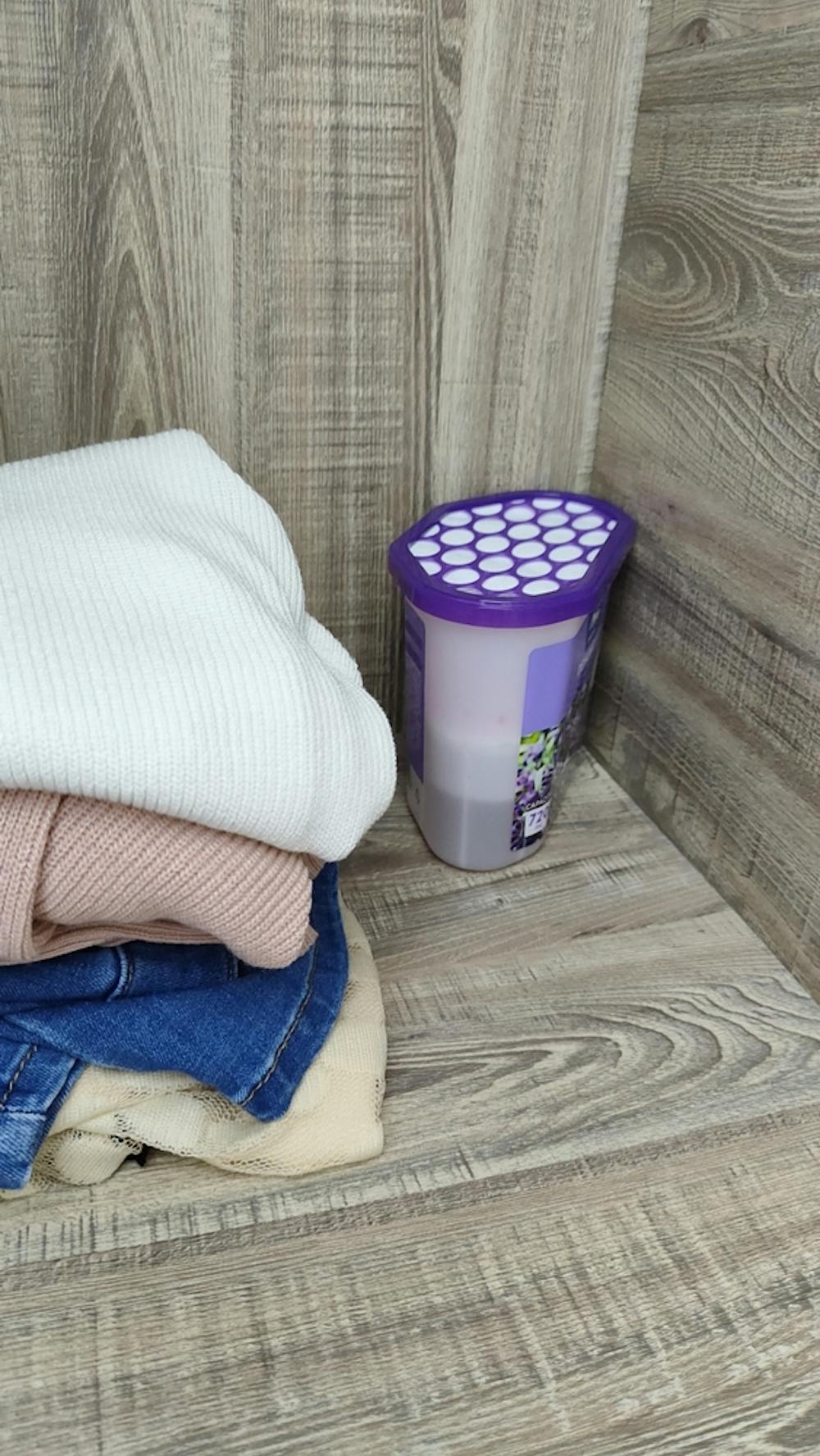
    ‘Do not eat’: what’s in those little desiccant sachets and how do they work?
    Source: The Conversation (Au and NZ) – By Kamil Zuber, Senior Industry Research Fellow, Future Industries Institute, University of South Australia towfiqu ahamed/Getty Images When you buy a new electronic appliance, shoes, medicines or even some food items, you often find a small paper sachet with the warning: “silica gel, do not eat”. What exactly

    ‘I’m dreading birthing in such a system’: what Indigenous women globally think of birth care and what they’d like to see instead
    Source: The Conversation (Au and NZ) – By Nina Sivertsen, Associate Professor, College of Nursing and Health Sciences, Flinders University Pregnancy and having a baby can be a special time. And families want to feel safe and trust their maternity care. But when we reviewed the evidence, we found many Indigenous families globally face unfair

    Iran accuses US over ‘torpedoed diplomacy’ – passes bill to halt UN nuclear watchdog cooperation
    BEARING WITNESS: By Cole Martin in occupied Bethlehem Kia ora koutou, I’m a Kiwi journo in occupied Bethlehem, here’s a brief summary of today’s events across the Palestinian and Israeli territories from on the ground. At least 79 killed and 391 injured by Israeli forces in Gaza over the last 24 hours, including 33 killed

    Parenthood or podium? It’s time Australian athletes had the support to choose both
    Source: The Conversation (Au and NZ) – By Jasmine Titova, PhD Candidate, CQUniversity Australia When tennis legend Serena Williams retired in 2022, she stated: If I were a guy, I wouldn’t be writing this because I’d be out there playing and winning while my wife was doing the physical labour of expanding our family. Many

    Papua New Guinea police blame overrun system for prison breakouts
    By Margot Staunton, RNZ Pacific senior journalist Police in Papua New Guinea say the country’s overrun courts and prisons are behind mass breakouts from police custody. Chief Superintendent Clement Dala made the comment after 13 detainees escaped on Tuesday in Simbu Province, including eight who were facing murder charges. Dala said an auxiliary policeman who

    Stable public housing in the first year of life boosts children’s wellbeing years down the track – new research
    Source: The Conversation (Au and NZ) – By Jaimie Monk, Research Fellow, Motu Economic and Public Policy Research Phil Walter/Getty Images New Zealand’s unaffordable housing market means low-income families face big constraints on their accommodation options. This involves often accepting housing that is insecure, cold, damp or in unsuitable neighbourhoods. But little is known about

    From HAL 9000 to M3GAN: what film’s evil robots tell us about contemporary tech fears
    Source: The Conversation (Au and NZ) – By Adam Daniel, Associate Lecturer in Communication, Western Sydney University © 2025 Universal Studios. All Rights Reserved. Filmgoers have long been captivated by stories about robots. We are fascinated by their utopian promise, their superhuman intelligence and, in the case of the cyborg, their often uncanny resemblance to

    Yes, Victoria’s efforts to wean households off gas have been dialled back. But it’s still real progress
    Source: The Conversation (Au and NZ) – By Trivess Moore, Associate Professor in Property, Construction and Project Management, RMIT University MirageC/Getty On the question of gas, Victoria’s government faces pressure from many directions. The Bass Strait wells supplying Australia’s most gas-dependent state are running dry. Gas prices shot up in 2020 and have stayed high.

    From HAL 9000 to ME3AN: what film’s evil robots tell us about contemporary tech fears
    Source: The Conversation (Au and NZ) – By Adam Daniel, Associate Lecturer in Communication, Western Sydney University © 2025 Universal Studios. All Rights Reserved. Filmgoers have long been captivated by stories about robots. We are fascinated by their utopian promise, their superhuman intelligence and, in the case of the cyborg, their often uncanny resemblance to

    Remote cave discovery shows ancient voyagers brought rice across 2,300km of Pacific Ocean
    Source: The Conversation (Au and NZ) – By Hsiao-chun Hung, Senior Research Fellow, School of Culture, History & Language, Australian National University Ritidian beach, Guam. Hsiao-chun Hung In a new study published today in Science Advances, my colleagues and I have uncovered the earliest evidence of rice in the Pacific Islands – at an ancient

    500,000 Australians live with mental illness but don’t qualify for the NDIS. A damning new report says they need more support
    Source: The Conversation (Au and NZ) – By Sebastian Rosenberg, Associate Professor, Health Research Institute, University of Canberra, and Brain and Mind Centre, University of Sydney stellalevi/Getty Half a million Australians are living with moderate to severe mental illness, but they don’t qualify for the National Disability Insurance Scheme (NDIS) and cannot access the support

    ‘I’m not going to give up’: how to help more disadvantaged young people go to uni and TAFE
    Source: The Conversation (Au and NZ) – By Lucas Walsh, Professor and Director of the Centre for Youth Policy and Education Practice, Monash University Oliver Rossi/ Getty Images On Wednesday, Education Minister Jason Clare hailed an increase in the numbers of Australians starting a university degree. In 2024, there was a 3.7% increase in Australian

    New climate reporting rules start on July 1. Many companies are not ready for the change
    Source: The Conversation (Au and NZ) – By Rachel Baird, Senior Lecturer , University of Tasmania PaeGAG/Shutterstock A new financial year starts on July 1. For Australia’s large companies, that means new rules on climate-related disclosures come into force. These requirements are the culmination of years of planning to ensure companies disclose climate-related risks and

    Whose story is being told — and why? 4 questions museum visitors should ask themselves this school holidays
    Source: The Conversation (Au and NZ) – By Olli Hellmann, Associate Professor of Political Science, University of Waikato The winter school holidays will mean families across Aotearoa New Zealand will be looking for indoor activities to entertain children. With millions of visitors each year, museums focused on the country’s history will inevitably play host to

    Philly psychology students map out local landmarks and hidden destinations where they feel happiest
    Source: The Conversation (Au and NZ) – By Eric Zillmer, Professor of Neuropsychology, Drexel University Rittenhouse Square Park in Center City made it onto the Philly Happiness Map. Matthew Lovette/Jumping Rocks/Universal Images Group via Getty Images What makes you happy? Perhaps a good night’s sleep, or a wonderful meal with friends? I am the director

    Macron invites all New Caledonia stakeholders for Paris talks
    By Patrick Decloitre, RNZ Pacific correspondent French Pacific desk French President Emmanuel Macron has sent a formal invitation to “all New Caledonia stakeholders” for talks in Paris on the French Pacific territory’s political and economic future to be held on July 2. The confirmation came on Thursday in the form of a letter sent individually

    Opposition starts on challenge of crafting (yet another) energy policy
    Source: The Conversation (Au and NZ) – By Michelle Grattan, Professorial Fellow, University of Canberra The opposition is commencing the challenging task of framing a new energy policy, including deciding whether to stick by its commitment to net zero emissions by 2050. Liberal leader Sussan Ley, appearing at the National Press Club, announced a Coalition

    Election flows reveal nearly 90% of Greens preferenced Labor ahead of Coalition
    Source: The Conversation (Au and NZ) – By Adrian Beaumont, Election Analyst (Psephologist) at The Conversation; and Honorary Associate, School of Mathematics and Statistics, The University of Melbourne Minor party preference flows for the federal election have been released, with Labor winning Greens preferences by 88.2–11.8, while the Coalition won One Nation preferences by 74.5–24.5.

    Australia’s native bees struggled after the Black Summer fires – but a world-first solution brought them buzzing back
    Source: The Conversation (Au and NZ) – By Kit Prendergast, Postdoctoral Researcher, Pollination Ecology, University of Southern Queensland Kit Prendergast (@bee.babette_performer) After a devastating bushfire, efforts to help nature recover typically focus on vertebrates and plants. Yet extreme fires can threaten insects, too. After the Black Summer fires of 2019–20, I embarked on world-first research

    Wild swings in the oil price make the Reserve Bank’s job harder
    Source: The Conversation (Au and NZ) – By John Hawkins, Head, Canberra School of Government, University of Canberra It looks, at least for now, as though tensions in the Middle East are easing somewhat. It appears much less likely Iran will try to close the Strait of Hormuz, through which flows about a fifth of

    MIL OSI AnalysisEveningReport.nz

  • MIL-Evening Report: ER Report: A Roundup of Significant Articles on EveningReport.nz for June 26, 2025

    ER Report: Here is a summary of significant articles published on EveningReport.nz on June 26, 2025.

    ‘Do not eat’: what’s in those little desiccant sachets and how do they work?
    Source: The Conversation (Au and NZ) – By Kamil Zuber, Senior Industry Research Fellow, Future Industries Institute, University of South Australia towfiqu ahamed/Getty Images When you buy a new electronic appliance, shoes, medicines or even some food items, you often find a small paper sachet with the warning: “silica gel, do not eat”. What exactly

    ‘I’m dreading birthing in such a system’: what Indigenous women globally think of birth care and what they’d like to see instead
    Source: The Conversation (Au and NZ) – By Nina Sivertsen, Associate Professor, College of Nursing and Health Sciences, Flinders University Pregnancy and having a baby can be a special time. And families want to feel safe and trust their maternity care. But when we reviewed the evidence, we found many Indigenous families globally face unfair

    Iran accuses US over ‘torpedoed diplomacy’ – passes bill to halt UN nuclear watchdog cooperation
    BEARING WITNESS: By Cole Martin in occupied Bethlehem Kia ora koutou, I’m a Kiwi journo in occupied Bethlehem, here’s a brief summary of today’s events across the Palestinian and Israeli territories from on the ground. At least 79 killed and 391 injured by Israeli forces in Gaza over the last 24 hours, including 33 killed

    Parenthood or podium? It’s time Australian athletes had the support to choose both
    Source: The Conversation (Au and NZ) – By Jasmine Titova, PhD Candidate, CQUniversity Australia When tennis legend Serena Williams retired in 2022, she stated: If I were a guy, I wouldn’t be writing this because I’d be out there playing and winning while my wife was doing the physical labour of expanding our family. Many

    Papua New Guinea police blame overrun system for prison breakouts
    By Margot Staunton, RNZ Pacific senior journalist Police in Papua New Guinea say the country’s overrun courts and prisons are behind mass breakouts from police custody. Chief Superintendent Clement Dala made the comment after 13 detainees escaped on Tuesday in Simbu Province, including eight who were facing murder charges. Dala said an auxiliary policeman who

    Stable public housing in the first year of life boosts children’s wellbeing years down the track – new research
    Source: The Conversation (Au and NZ) – By Jaimie Monk, Research Fellow, Motu Economic and Public Policy Research Phil Walter/Getty Images New Zealand’s unaffordable housing market means low-income families face big constraints on their accommodation options. This involves often accepting housing that is insecure, cold, damp or in unsuitable neighbourhoods. But little is known about

    From HAL 9000 to M3GAN: what film’s evil robots tell us about contemporary tech fears
    Source: The Conversation (Au and NZ) – By Adam Daniel, Associate Lecturer in Communication, Western Sydney University © 2025 Universal Studios. All Rights Reserved. Filmgoers have long been captivated by stories about robots. We are fascinated by their utopian promise, their superhuman intelligence and, in the case of the cyborg, their often uncanny resemblance to

    Yes, Victoria’s efforts to wean households off gas have been dialled back. But it’s still real progress
    Source: The Conversation (Au and NZ) – By Trivess Moore, Associate Professor in Property, Construction and Project Management, RMIT University MirageC/Getty On the question of gas, Victoria’s government faces pressure from many directions. The Bass Strait wells supplying Australia’s most gas-dependent state are running dry. Gas prices shot up in 2020 and have stayed high.

    From HAL 9000 to ME3AN: what film’s evil robots tell us about contemporary tech fears
    Source: The Conversation (Au and NZ) – By Adam Daniel, Associate Lecturer in Communication, Western Sydney University © 2025 Universal Studios. All Rights Reserved. Filmgoers have long been captivated by stories about robots. We are fascinated by their utopian promise, their superhuman intelligence and, in the case of the cyborg, their often uncanny resemblance to

    Remote cave discovery shows ancient voyagers brought rice across 2,300km of Pacific Ocean
    Source: The Conversation (Au and NZ) – By Hsiao-chun Hung, Senior Research Fellow, School of Culture, History & Language, Australian National University Ritidian beach, Guam. Hsiao-chun Hung In a new study published today in Science Advances, my colleagues and I have uncovered the earliest evidence of rice in the Pacific Islands – at an ancient

    500,000 Australians live with mental illness but don’t qualify for the NDIS. A damning new report says they need more support
    Source: The Conversation (Au and NZ) – By Sebastian Rosenberg, Associate Professor, Health Research Institute, University of Canberra, and Brain and Mind Centre, University of Sydney stellalevi/Getty Half a million Australians are living with moderate to severe mental illness, but they don’t qualify for the National Disability Insurance Scheme (NDIS) and cannot access the support

    ‘I’m not going to give up’: how to help more disadvantaged young people go to uni and TAFE
    Source: The Conversation (Au and NZ) – By Lucas Walsh, Professor and Director of the Centre for Youth Policy and Education Practice, Monash University Oliver Rossi/ Getty Images On Wednesday, Education Minister Jason Clare hailed an increase in the numbers of Australians starting a university degree. In 2024, there was a 3.7% increase in Australian

    New climate reporting rules start on July 1. Many companies are not ready for the change
    Source: The Conversation (Au and NZ) – By Rachel Baird, Senior Lecturer , University of Tasmania PaeGAG/Shutterstock A new financial year starts on July 1. For Australia’s large companies, that means new rules on climate-related disclosures come into force. These requirements are the culmination of years of planning to ensure companies disclose climate-related risks and

    Whose story is being told — and why? 4 questions museum visitors should ask themselves this school holidays
    Source: The Conversation (Au and NZ) – By Olli Hellmann, Associate Professor of Political Science, University of Waikato The winter school holidays will mean families across Aotearoa New Zealand will be looking for indoor activities to entertain children. With millions of visitors each year, museums focused on the country’s history will inevitably play host to

    Philly psychology students map out local landmarks and hidden destinations where they feel happiest
    Source: The Conversation (Au and NZ) – By Eric Zillmer, Professor of Neuropsychology, Drexel University Rittenhouse Square Park in Center City made it onto the Philly Happiness Map. Matthew Lovette/Jumping Rocks/Universal Images Group via Getty Images What makes you happy? Perhaps a good night’s sleep, or a wonderful meal with friends? I am the director

    Macron invites all New Caledonia stakeholders for Paris talks
    By Patrick Decloitre, RNZ Pacific correspondent French Pacific desk French President Emmanuel Macron has sent a formal invitation to “all New Caledonia stakeholders” for talks in Paris on the French Pacific territory’s political and economic future to be held on July 2. The confirmation came on Thursday in the form of a letter sent individually

    Opposition starts on challenge of crafting (yet another) energy policy
    Source: The Conversation (Au and NZ) – By Michelle Grattan, Professorial Fellow, University of Canberra The opposition is commencing the challenging task of framing a new energy policy, including deciding whether to stick by its commitment to net zero emissions by 2050. Liberal leader Sussan Ley, appearing at the National Press Club, announced a Coalition

    Election flows reveal nearly 90% of Greens preferenced Labor ahead of Coalition
    Source: The Conversation (Au and NZ) – By Adrian Beaumont, Election Analyst (Psephologist) at The Conversation; and Honorary Associate, School of Mathematics and Statistics, The University of Melbourne Minor party preference flows for the federal election have been released, with Labor winning Greens preferences by 88.2–11.8, while the Coalition won One Nation preferences by 74.5–24.5.

    Australia’s native bees struggled after the Black Summer fires – but a world-first solution brought them buzzing back
    Source: The Conversation (Au and NZ) – By Kit Prendergast, Postdoctoral Researcher, Pollination Ecology, University of Southern Queensland Kit Prendergast (@bee.babette_performer) After a devastating bushfire, efforts to help nature recover typically focus on vertebrates and plants. Yet extreme fires can threaten insects, too. After the Black Summer fires of 2019–20, I embarked on world-first research

    Wild swings in the oil price make the Reserve Bank’s job harder
    Source: The Conversation (Au and NZ) – By John Hawkins, Head, Canberra School of Government, University of Canberra It looks, at least for now, as though tensions in the Middle East are easing somewhat. It appears much less likely Iran will try to close the Strait of Hormuz, through which flows about a fifth of

    MIL OSI AnalysisEveningReport.nz

  • MIL-OSI Global: ‘I’m dreading birthing in such a system’: what Indigenous women globally think of birth care and what they’d like to see instead

    Source: The Conversation – Global Perspectives – By Nina Sivertsen, Associate Professor, College of Nursing and Health Sciences, Flinders University

    Pregnancy and having a baby can be a special time. And families want to feel safe and trust their maternity care.

    But when we reviewed the evidence, we found many Indigenous families globally face unfair treatment during pregnancy and birth. This can include racism, neglecting cultural aspects of their care, or using health care poorly designed to accommodate their needs.

    We found similar themes in research involving more than 1,400 Indigenous women, Elders, fathers, family members and health workers from locations including Australia, New Zealand, Canada, the United States, Greenland and Sápmi (parts of Norway, Sweden, Finland and Russia).

    Many Indigenous families felt disrespected. They said hospital staff often didn’t understand their cultures or give them basic rights during their maternity care, such as being listened to, included in decision-making, or giving informed consent.

    As a result, some families felt hesitant to seek care in mainstream hospitals. As one Indigenous woman told us during recent Australian research submitted for publication:

    I’m dreading birthing in such a system.

    But there are alternatives.

    What can hospitals do?

    There is a clear need to improve birthing services and cultural safety in mainstream hospitals with a focus on respecting the beliefs, practices and traditions of all families, including Indigenous ones.

    For example, many Indigenous families view childbirth as a communal event with extended family support. But hospital policies that limit the number of support people often disregard these important cultural practices.

    Indigenous families also need to get the type of health care they trust and feel comfortable with. Ideally this might involve staff with sound cultural knowledge and who can support families clinically in a culturally safe way.

    Aboriginal patient liaison officers are sometimes available in hospitals or health services. But there are not often enough, they have to service entire facilities, and they provide cultural support not clinical patient care.

    Indigenous families may also want to access a specific type of care. One example is “continuity of care”, where the same midwife or a small team of midwives, supports the family through the whole pregnancy. Ideally, these midwives should be Indigenous or, if not, be trained in supporting Indigenous families with respect and understanding.

    What is ‘birthing on Country’?

    For Indigenous women living in rural and remote areas, being sent away from home to give birth in a city hospital can be really hard.

    Sometimes women and families are evacuated from their home communities and have to stay for weeks or months in temporary accommodation in the city, both before and after birth, or if their baby is born pre-term and needs extra care. This temporary accommodation can be far from the hospital.

    All this takes place in unknown cities and towns, without family support, and sometimes away from their other children cared for by the community back home.

    This makes it harder for mums who need extra support, and can get in the way of starting breastfeeding and bonding with their baby.

    Again, there is an alternative. For many Indigenous families, giving birth is not just about having a baby. It’s also a spiritual and cultural event that strengthens their identity and connection to Country. A “birthing on Country” model of care, which respects Indigenous traditions and knowledge, reinforces that.

    This is midwife-led care designed for and with Indigenous communities. It doesn’t mean you have to birth in rural and remote spaces, but it is a model of care that focuses on culture, and can also be implemented in the city.

    Ideally, families would see the same midwife or team of midwives and use the “birthing on Country” model.

    What else can we do?

    Maternity services can be led by Indigenous people, which many women prefer. But Indigenous staff make up about 3.1% of the Australian health workforce.

    So it is crucial to engage non-Indigenous staff in building relationships and to support Indigenous families in their right to receive culturally safe care.

    This can start with better training for staff, not only to understand and respond to an Indigenous person’s individual needs, but to know when and how to speak up, call out or report racist or disrespectful behaviour.

    This is everyone’s problem

    A health system you can trust should be safe for everyone. If some people feel unsafe or face discrimination when getting care, this not only affects them, it affects everyone.

    For instance, when Indigenous women avoid or delay going to the hospital because of past bad experiences or discrimination, it can lead to health problems that could have been prevented.

    This not only harms the women, it puts more pressure on the public health system, which affects us all.

    By talking about these issues, we hope all Australians begin to care about the safety of all women during pregnancy and birth.

    The authors do not work for, consult, own shares in or receive funding from any company or organisation that would benefit from this article, and have disclosed no relevant affiliations beyond their academic appointment.

    ref. ‘I’m dreading birthing in such a system’: what Indigenous women globally think of birth care and what they’d like to see instead – https://theconversation.com/im-dreading-birthing-in-such-a-system-what-indigenous-women-globally-think-of-birth-care-and-what-theyd-like-to-see-instead-256877

    MIL OSI – Global Reports

  • MIL-OSI Global: ‘I’m dreading birthing in such a system’: what Indigenous women globally think of birth care and what they’d like to see instead

    Source: The Conversation – Global Perspectives – By Nina Sivertsen, Associate Professor, College of Nursing and Health Sciences, Flinders University

    Pregnancy and having a baby can be a special time. And families want to feel safe and trust their maternity care.

    But when we reviewed the evidence, we found many Indigenous families globally face unfair treatment during pregnancy and birth. This can include racism, neglecting cultural aspects of their care, or using health care poorly designed to accommodate their needs.

    We found similar themes in research involving more than 1,400 Indigenous women, Elders, fathers, family members and health workers from locations including Australia, New Zealand, Canada, the United States, Greenland and Sápmi (parts of Norway, Sweden, Finland and Russia).

    Many Indigenous families felt disrespected. They said hospital staff often didn’t understand their cultures or give them basic rights during their maternity care, such as being listened to, included in decision-making, or giving informed consent.

    As a result, some families felt hesitant to seek care in mainstream hospitals. As one Indigenous woman told us during recent Australian research submitted for publication:

    I’m dreading birthing in such a system.

    But there are alternatives.

    What can hospitals do?

    There is a clear need to improve birthing services and cultural safety in mainstream hospitals with a focus on respecting the beliefs, practices and traditions of all families, including Indigenous ones.

    For example, many Indigenous families view childbirth as a communal event with extended family support. But hospital policies that limit the number of support people often disregard these important cultural practices.

    Indigenous families also need to get the type of health care they trust and feel comfortable with. Ideally this might involve staff with sound cultural knowledge and who can support families clinically in a culturally safe way.

    Aboriginal patient liaison officers are sometimes available in hospitals or health services. But there are not often enough, they have to service entire facilities, and they provide cultural support not clinical patient care.

    Indigenous families may also want to access a specific type of care. One example is “continuity of care”, where the same midwife or a small team of midwives, supports the family through the whole pregnancy. Ideally, these midwives should be Indigenous or, if not, be trained in supporting Indigenous families with respect and understanding.

    What is ‘birthing on Country’?

    For Indigenous women living in rural and remote areas, being sent away from home to give birth in a city hospital can be really hard.

    Sometimes women and families are evacuated from their home communities and have to stay for weeks or months in temporary accommodation in the city, both before and after birth, or if their baby is born pre-term and needs extra care. This temporary accommodation can be far from the hospital.

    All this takes place in unknown cities and towns, without family support, and sometimes away from their other children cared for by the community back home.

    This makes it harder for mums who need extra support, and can get in the way of starting breastfeeding and bonding with their baby.

    Again, there is an alternative. For many Indigenous families, giving birth is not just about having a baby. It’s also a spiritual and cultural event that strengthens their identity and connection to Country. A “birthing on Country” model of care, which respects Indigenous traditions and knowledge, reinforces that.

    This is midwife-led care designed for and with Indigenous communities. It doesn’t mean you have to birth in rural and remote spaces, but it is a model of care that focuses on culture, and can also be implemented in the city.

    Ideally, families would see the same midwife or team of midwives and use the “birthing on Country” model.

    What else can we do?

    Maternity services can be led by Indigenous people, which many women prefer. But Indigenous staff make up about 3.1% of the Australian health workforce.

    So it is crucial to engage non-Indigenous staff in building relationships and to support Indigenous families in their right to receive culturally safe care.

    This can start with better training for staff, not only to understand and respond to an Indigenous person’s individual needs, but to know when and how to speak up, call out or report racist or disrespectful behaviour.

    This is everyone’s problem

    A health system you can trust should be safe for everyone. If some people feel unsafe or face discrimination when getting care, this not only affects them, it affects everyone.

    For instance, when Indigenous women avoid or delay going to the hospital because of past bad experiences or discrimination, it can lead to health problems that could have been prevented.

    This not only harms the women, it puts more pressure on the public health system, which affects us all.

    By talking about these issues, we hope all Australians begin to care about the safety of all women during pregnancy and birth.

    The authors do not work for, consult, own shares in or receive funding from any company or organisation that would benefit from this article, and have disclosed no relevant affiliations beyond their academic appointment.

    ref. ‘I’m dreading birthing in such a system’: what Indigenous women globally think of birth care and what they’d like to see instead – https://theconversation.com/im-dreading-birthing-in-such-a-system-what-indigenous-women-globally-think-of-birth-care-and-what-theyd-like-to-see-instead-256877

    MIL OSI – Global Reports

  • MIL-OSI China: 2025 Future Close-Up global youth exchange program gets underway

    Source: People’s Republic of China – State Council News

    Young delegates from 14 countries and regions, including China, Russia, Saudi Arabia, Germany, Australia and Brazil, pose for a group photo with organizers of the 2025 Future Close-Up at the youth exchange program’s launch ceremony on June 24. 

    On June 24, the 2025 Future Close-Up global youth exchange and visit program kicked off at the headquarters of Chinese Internet giant Tencent in Shenzhen, Guangdong Province. Themed Guangdong, Hong Kong and Macao: Driving High-Quality Development in the Greater Bay Area (GBA), this year’s event brings together young delegates from 14 countries and regions including China, Russia, Saudi Arabia, Germany, Australia and Brazil to explore innovation across the region and China’s approach to regional cooperation, and gain a deeper understanding of the forces driving the country’s high-quality development.

    Future Close-Up was collaboratively launched in 2023 by China International Communications Group (CICG) Center for the Americas (CICG Center for Americas) and Tencent’s Marketing and Public Relations Department.

    From June 23 to 30, the participants will travel to Shenzhen, Dongguan, Hengqin and Guangzhou in Guangdong, as well as Hong Kong Special Administrative Region, for exchange activities.

    Members of this year’s Future Close-Up are influential figures in their fields, including entrepreneurs, scientists, scholars and opinion leaders. This edition of the program will feature a forum on urban innovation and cultural exchange in the GBA, offering international youth a platform to deepen their understanding of the region’s innovation ecosystem and facilitating mutual learning between urban cultures.

    At the launch ceremony, Zhang Jun, General Manager of Tencent’s Marketing and Public Relations Department, said he believes the event can connect people from different regions and cultural backgrounds. “With this vision in mind, we launched the Future Close-Up program, which has brought together over 100 young people from 35 countries and regions over the past three years,” Zhang added.

    “Future Close-Up has always been about opening a window for young people around the world to a more meaningful understanding of China. At the same time, their participation helps us broaden our appreciation for the diversity of global cultures,” said Tao Xing, the Future Close-Up program representative from the CICG Center for Americas, at the ceremony.

    “This year, we have invited international youth to visit the vibrant GBA. We hope you will embrace the journey with open minds, observe with curiosity, reflect on what you encounter and gain a uniquely personal experience of China,” he continued.

    The young delegates also shared their excitement and expectations for their upcoming journey.

    Torry Ko, Senior Strategy Manager for the Asia-Pacific region at Australian tech company MOLOCO, said he was especially interested in learning how leading firms like Tencent are tapping into the strengths of the GBA to fuel their rapid growth. “China’s tech industry is at the forefront globally,” he said.

    “I first came to Shenzhen 16 years ago, when I was studying in China. It’s incredible to see how much the city has changed. I am looking forward to learning more about the innovation driving China’s ongoing reform and development,” Ko added.

    Iuliia Bautdinova, a finance and communications analyst at multinational aerospace corporation Airbus from Russia, said she was drawn to Future Close-Up after hearing strong recommendations from previous participants. “My expectation is to get to know how people live here and what they do when they work with the future,” Bautdinova said. She is eager to take a closer look at the GBA’s renowned electronics and information industry and its ongoing development.

    Hugo Fontanel from France is interested in China’s digital transformation. The omnichannel lead at British multinational pharmaceutical company ViiV Healthcare expects “to learn more about the economic development of China, especially in the tech industry.” He also looks forward to meeting more international youth who share a passion for cross-cultural exchange and adventure.

    After the launch ceremony, the delegates visited Tencent’s digital exhibition hall, where they delved into the company’s innovations in AI, cloud computing and smart city technologies through immersive experiences. They also toured Mindray Bio-Medical Electronics Co. Ltd. to explore its research and development achievements in the medical device field.

    MIL OSI China News

  • MIL-OSI Australia: ACT Government delivers funding boost for community health organisations

    Source: Northern Territory Police and Fire Services


    As part of ACT Government’s ‘One Government, One Voice’ program, we are transitioning this website across to our . You can access everything you need through this website while it’s happening.


    Released 20/06/2025

    More than $2.4 million in targeted funding will support ACT community organisations to continue delivering critical health and wellbeing services across the Territory.

    The one-off funding injection will assist ACT Health Directorate funded non-government organisations to address increasing costs and demand for services.

    Minister for Health and Mental Health Rachel Stephen-Smith said the ACT Government is committed to backing the sector during a time of growing need.

    “Canberra’s community organisations are essential partners in supporting people’s health and wellbeing, particularly those doing it tough,” Minister Stephen-Smith said.

    “This additional funding recognises the increasing costs these organisations are facing, and ensures they can continue delivering the supports so many Canberrans rely on every day.

    “We’ve worked closely with the sector to understand the pressures on the ground and provide funding that responds directly to those challenges.”

    A wide range of services and supports will benefit from the funding, including chronic illness care, mental health, perinatal support, trauma counselling, and after-hours medical care.

    Organisations receiving funding in 2025 include:

    • Capital Region Cancer Relief (ACT Eden Monaro Cancer Support)
    • Arthritis ACT
    • Asthma ACT
    • Diabetes Australia
    • Epilepsy ACT
    • Haemophilia Foundation
    • RSI Overuse Association
    • Community Services #1 and Capital Region Community Services consortium
    • Australian Breastfeeding Association
    • Kidsafe ACT
    • Women’s Health Matters
    • Canberra After-hours Locum Medical Service
    • Companion House
    • Directions Health Services
    • Winnunga Nimmityjah Aboriginal Health and Community Services
    • Clybucca Dreaming
    • Palliative Care ACT
    • Wellways
    • Marymead CatholicCare – Stepping Stones
    • ASHM

    This latest funding builds on the ACT Government’s ongoing work to strengthen commissioning practices across the health and community sectors, ensuring services are aligned with community needs, sustainable over time and responsive to change.

    “We remain committed to a partnership approach with community organisations and consumers, grounded in evidence, collaboration and a shared goal of better outcomes for Canberrans,” Minister Stephen-Smith said.

    – Statement ends –

    Rachel Stephen-Smith, MLA | Media Releases

    «ACT Government Media Releases | «Minister Media Releases

    MIL OSI News

  • MIL-OSI Australia: Call for information – Serious assault – Dundee Beach

    Source: Northern Territory Police and Fire Services

    Police are calling for information in relation to a serious assault that occurred at Dundee Beach around 11:00pm on Friday 20 June 2025.

    It is alleged that there had been a minor motor vehicle crash involving a car and buggy on Lepanto Street, Dundee Beach. Following the crash the driver of the car is alleged to have been assaulted by a group of people, and sustained injuries to his face requiring him to be flown via CareFlight helicopter to Royal Darwin Hospital.

    Police would like to speak with the occupants of the buggy and urge anyone with information about the incident to make contact on 131 444. Please quote reference NTP2500063173. Anonymous reports can be made through Crime Stoppers on 1800 333 000 or online via http://crimestoppersnt.com.au/.

    MIL OSI News

  • MIL-Evening Report: ‘I’m dreading birthing in such a system’: what Indigenous women globally think of birth care and what they’d like to see instead

    Source: The Conversation (Au and NZ) – By Nina Sivertsen, Associate Professor, College of Nursing and Health Sciences, Flinders University

    Pregnancy and having a baby can be a special time. And families want to feel safe and trust their maternity care.

    But when we reviewed the evidence, we found many Indigenous families globally face unfair treatment during pregnancy and birth. This can include racism, neglecting cultural aspects of their care, or using health care poorly designed to accommodate their needs.

    We found similar themes in research involving more than 1,400 Indigenous women, Elders, fathers, family members and health workers from locations including Australia, New Zealand, Canada, the United States, Greenland and Sápmi (parts of Norway, Sweden, Finland and Russia).

    Many Indigenous families felt disrespected. They said hospital staff often didn’t understand their cultures or give them basic rights during their maternity care, such as being listened to, included in decision-making, or giving informed consent.

    As a result, some families felt hesitant to seek care in mainstream hospitals. As one Indigenous woman told us during recent Australian research submitted for publication:

    I’m dreading birthing in such a system.

    But there are alternatives.

    What can hospitals do?

    There is a clear need to improve birthing services and cultural safety in mainstream hospitals with a focus on respecting the beliefs, practices and traditions of all families, including Indigenous ones.

    For example, many Indigenous families view childbirth as a communal event with extended family support. But hospital policies that limit the number of support people often disregard these important cultural practices.

    Indigenous families also need to get the type of health care they trust and feel comfortable with. Ideally this might involve staff with sound cultural knowledge and who can support families clinically in a culturally safe way.

    Aboriginal patient liaison officers are sometimes available in hospitals or health services. But there are not often enough, they have to service entire facilities, and they provide cultural support not clinical patient care.

    Indigenous families may also want to access a specific type of care. One example is “continuity of care”, where the same midwife or a small team of midwives, supports the family through the whole pregnancy. Ideally, these midwives should be Indigenous or, if not, be trained in supporting Indigenous families with respect and understanding.

    What is ‘birthing on Country’?

    For Indigenous women living in rural and remote areas, being sent away from home to give birth in a city hospital can be really hard.

    Sometimes women and families are evacuated from their home communities and have to stay for weeks or months in temporary accommodation in the city, both before and after birth, or if their baby is born pre-term and needs extra care. This temporary accommodation can be far from the hospital.

    All this takes place in unknown cities and towns, without family support, and sometimes away from their other children cared for by the community back home.

    This makes it harder for mums who need extra support, and can get in the way of starting breastfeeding and bonding with their baby.

    Again, there is an alternative. For many Indigenous families, giving birth is not just about having a baby. It’s also a spiritual and cultural event that strengthens their identity and connection to Country. A “birthing on Country” model of care, which respects Indigenous traditions and knowledge, reinforces that.

    This is midwife-led care designed for and with Indigenous communities. It doesn’t mean you have to birth in rural and remote spaces, but it is a model of care that focuses on culture, and can also be implemented in the city.

    Ideally, families would see the same midwife or team of midwives and use the “birthing on Country” model.

    What else can we do?

    Maternity services can be led by Indigenous people, which many women prefer. But Indigenous staff make up about 3.1% of the Australian health workforce.

    So it is crucial to engage non-Indigenous staff in building relationships and to support Indigenous families in their right to receive culturally safe care.

    This can start with better training for staff, not only to understand and respond to an Indigenous person’s individual needs, but to know when and how to speak up, call out or report racist or disrespectful behaviour.

    This is everyone’s problem

    A health system you can trust should be safe for everyone. If some people feel unsafe or face discrimination when getting care, this not only affects them, it affects everyone.

    For instance, when Indigenous women avoid or delay going to the hospital because of past bad experiences or discrimination, it can lead to health problems that could have been prevented.

    This not only harms the women, it puts more pressure on the public health system, which affects us all.

    By talking about these issues, we hope all Australians begin to care about the safety of all women during pregnancy and birth.

    The authors do not work for, consult, own shares in or receive funding from any company or organisation that would benefit from this article, and have disclosed no relevant affiliations beyond their academic appointment.

    ref. ‘I’m dreading birthing in such a system’: what Indigenous women globally think of birth care and what they’d like to see instead – https://theconversation.com/im-dreading-birthing-in-such-a-system-what-indigenous-women-globally-think-of-birth-care-and-what-theyd-like-to-see-instead-256877

    MIL OSI AnalysisEveningReport.nz

  • MIL-Evening Report: ‘Do not eat’: what’s in those little desiccant sachets and how do they work?

    Source: The Conversation (Au and NZ) – By Kamil Zuber, Senior Industry Research Fellow, Future Industries Institute, University of South Australia

    towfiqu ahamed/Getty Images

    When you buy a new electronic appliance, shoes, medicines or even some food items, you often find a small paper sachet with the warning: “silica gel, do not eat”.

    What exactly is it, is it toxic, and can you use it for anything?

    The importance of desiccants

    That little sachet is a desiccant – a type of material that removes excess moisture from the air.

    It’s important during the transport and storage of a wide range of products because we can’t always control the environment. Humid conditions can cause damage through corrosion, decay, the growth of mould and microorganisms.

    This is why manufacturers include sachets with desiccants to make sure you receive the goods in pristine condition.

    The most common desiccant is silica gel. The small, hard and translucent beads are made of silicon dioxide (like most sands or quartz) – a hydrophilic or water-loving material. Importantly, the beads are porous on the nano-scale, with pore sizes only 15 times larger than the radius of their atoms.

    Silica gel looks somewhat like a sponge when viewed with scanning electron microscopy.
    Trabelsi et al. (2009), CC BY-NC-ND

    These pores have a capillary effect, meaning they condense and draw moisture into the bead similar to how trees transport water through the channelled structures in wood.

    In addition, sponge-like porosity makes their surface area very large. A single gram of silica gel can have an area of up to 700 square metres – almost four tennis courts – making them exceptionally efficient at capturing and storing water.

    Is silica gel toxic?

    The “do not eat” warning is easily the most prominent text on silica gel sachets.

    According to health professionals, most silica beads found in these sachets are non-toxic and don’t present the same risk as silica dust, for example. They mainly pose a choking hazard, which is good enough reason to keep them away from children and pets.

    However, if silica gel is accidentally ingested, it’s still recommended to contact health professionals to determine the best course of action.

    Some variants of silica gel contain a moisture-sensitive dye. One particular variant, based on cobalt chloride, is blue when the desiccant is dry and turns pink when saturated with moisture. While the dye is toxic, in desiccant pellets it is present only in a small amount – approximately 1% of the total weight.

    Indicating silica gel with cobalt chloride – ‘fresh’ on the left, ‘used’ on the right.
    Reza Rio/Shutterstock

    Desiccants come in other forms, too

    Apart from silica gel, a number of other materials are used as moisture absorbers and desiccants. These are zeolites, activated alumina and activated carbon – materials engineered to be highly porous.

    Another desiccant type you’ll often see in moisture absorbers for larger areas like pantries or wardrobes is calcium chloride. It typically comes in a box filled with powder or crystals found in most hardware stores, and is a type of salt.

    Kitchen salt – sodium chloride – attracts water and easily becomes lumpy. Calcium chloride works in the same way, but has an even stronger hygroscopic effect and “traps” the water through a hydration reaction. Once the salt is saturated, you’ll see liquid separating in the container.

    Closet and pantry dehumidifiers like this one typically contain calcium chloride which binds water.
    Healthy Happy/Shutterstock

    I found something that doesn’t seem to be silica gel – what is it?

    Some food items such as tortilla wraps, noodles, beef jerky, and some medicines and vitamins contain slightly different sachets, labelled “oxygen absorbers”.

    These small packets don’t contain desiccants. Instead, they have chemical compounds that “scavenge” or bond oxygen.

    Their purpose is similar to desiccants – they extend the shelf life of food products and sensitive chemicals such as medicines. But they do so by directly preventing oxidation. When some foods are exposed to oxygen, their chemical composition changes and can lead to decay (apples turning brown when cut is an example of oxidation).

    There is a whole range of compounds used as oxygen absorbers. These chemicals have a stronger affinity to oxygen than the protected substance. They range from simple compounds such as iron which “rusts” by using up oxygen, to more complex such as plastic films that work when exposed to light.

    Some of the sachets in your products are oxygen absorbers, not desiccants – but they may look similar.
    Sergio Yoneda/Shutterstock

    Can I reuse a desiccant?

    Although desiccants and dehumidifiers are considered disposable, you can relatively easily reuse them.

    To “recharge” or dehydrate silica gel, you can place it in an oven at approximately 115–125°C for 2–3 hours, although you shouldn’t do this if it’s in a plastic sachet that could melt in the heat.

    Interestingly, due to how they bind water, some desiccants require temperatures well above the boiling point of water to dehydrate (for example, calcium chloride hydrates completely dehydrate at 200°C).

    After dehydration, silica gel sachets may be useful for drying small electronic items (like your phone after you accidentally dropped it into water), keeping your camera dry, or preventing your family photos and old films from sticking to each other.

    This is a good alternative to the questionable method of using uncooked rice, as silica gel doesn’t decompose and won’t leave starch residues on your things.

    Kamil Zuber does not work for, consult, own shares in or receive funding from any company or organisation that would benefit from this article, and has disclosed no relevant affiliations beyond their academic appointment.

    ref. ‘Do not eat’: what’s in those little desiccant sachets and how do they work? – https://theconversation.com/do-not-eat-whats-in-those-little-desiccant-sachets-and-how-do-they-work-258398

    MIL OSI AnalysisEveningReport.nz

  • MIL-OSI USA: Vought Refuses to Rule Out More Illegal End-Runs Around Congress & Refuses to Detail How Trump Will Execute Cuts If Rescissions Bill Passes—Murray Urges Congress to Reject Package in its Entirety

    US Senate News:

    Source: United States Senator for Washington State Patty Murray

    ***WATCH and READ: Senator Murray’s opening remarks***

    ***WATCH: Senator Murray questioning Director Vought***

    ***WATCH and READ: Senator Schatz’s testimony***

    ***FACT SHEET: Rescission Package Would Devastate Local Public Radio, TV Stations Across America***

    ***FACT-FICTION: Trump’s Rescission Package Would Gut Bipartisan Foreign Policy Investments***

    Washington, D.C. — Today, during a Senate Appropriations Committee hearing on President Trump’s $9.4 billion rescission request—U.S. Senator Patty Murray (D-WA), Vice Chair of the Senate Appropriations Committee, underscored in how Republicans passing the package would devastate local public radio and TV stations nationwide, gut investments Congress has made to support longstanding bipartisan foreign policy objectives, and undermine the bipartisan annual appropriations process.

    Senator Murray and her colleagues pressed Office of Management and Budget (OMB) Director Russell Vought on all manner of details on the request and this administration’s actions, and Senator Murray specifically pressed Vought on his plans for future rescissions requests, lack of details about the current rescission package, and his plans to illegally withhold even more funding.

    Senators Brian Schatz (D-HI), Ranking Member of the State, Foreign Operations, and Related Programs Subcommittee, and Eric Schmitt (R-MO) also provided testimony on President Trump’s $9.4 billion rescission request.

    [KEY TAKEAWAYS]

    Throughout the hearing, Director Vought faced bipartisan pushback over the sweeping cuts in the package, his refusal to provide detail about what exactly the administration will cut if the package passes, and his insistence on justifying the proposed cuts with a highly-selective list of previously funded projects despite the fact that this administration now has discretion over how funding is allocated—and President Trump himself signed a majority of the funding into law himself.

    Among much else, Director Vought:

    • Refused to rule out doing an end-run around Congress through his illegal notion of a “pocket rescission.”
    • Refused to rule out doing an end-run around Congress through an illegal scheme to request sweeping deferrals under the Impoundment Control Act, run out the clock, and then unilaterally impound funding.
    • Refused to commit to getting out the funding that the Government Accountability Office has determined he is illegally impounding.
    • Repeatedly lied about this administration’s and his own office’s actions—even going so far as to absurdly claim: “We have not impounded any funding.” This despite the fact that the Government Accountability Office has now twice ruled he has illegally impounded funds in its first investigation findings (not to mention courts across America)—and despite the fact that at the very same hearing, Vought insisted impoundment is an option on the table.
    • Refused to spell out exactly how the Trump administration will cut specific programs if the rescissions package passes.

    [MURRAY’S OPENING REMARKS]

    “After Congress failed to pass full-year bills in the FY25, it is so important we pass full-year spending bills that deliver the investments that our communities need. And this hearing today asks a very important question: will Congress stand up and protect its constitutional power of the purse—and will this Committee band together to finally say, ‘enough is enough,’ and show bipartisanship still matters? Or will we, for the first time ever, pass an entirely partisan rescissions package and jeopardize the bipartisan work? I hate to be blunt—but that question is at the heart of this first rescissions request, which would gut bipartisan investments in foreign assistance, reliable local news, and high-quality educational programming,” said Senator Murray in her opening remarks. “I have offered to the Chair and others in this room to do what this Committee has always done: consider bipartisan rescissions in our bills through the annual process, which is the right way to do it. …. If President Trump and Director Vought get their way—and Republicans pass this package—they will not only gut the heart of compromise that this Committee is built around, but zero out longstanding bipartisan investments.”

    [TRUMP’S PLANS FOR MORE RESCISSION PACKAGES]

    Senator Murray began her questioning by emphasizing that Congress passes funding bills after bipartisan negotiations, and partisan rescissions packages that cut up bipartisan spending deals undermine that bipartisan negotiation process: “When I cut a deal with Chair Collins, or Senator Graham, or any of my Republican colleagues, there may be parts of it I do not like or they do not like—but we know what we agreed to and passed into law is something we can count on. And that is absolutely essential to getting the 60 votes to make this Appropriations process work. But what we are here today talking about is one party rescinding funding provided with 60 votes with just a simple majority. And if that becomes the new normal for how this body operates, that is going to make Appropriations bills extremely hard to negotiate. So, as we consider this package, this committee deserves to understand the whole picture of this administration’s plans before making a decision on this request.”

    Senator Murray asked, “So, if this package passes, do you intend to send more rescission requests to Congress?”

    Director Vought declined to rule the possibility out, stating, “Senator, that’s up to the President. It’s certainly an option that I’ve stated publicly that we will strongly consider but that’s up to the President. And you know, we will take that on a week-by-week basis. But there is more honestly than $9.4 billion that we have identified. There’s $163 billion in fiscal year 26 that we have identified for less spending than prior budgets.”

    “So, these were bills that this Committee approved on a bipartisan basis, how many packages are you talking about? And what they are?” pressed Senator Murray.

    “Again, we have—no decisions on those have been made. But we do want to see how successful this effort is,” said Director Vought, in part.

    Senator Murray said: “Correct, and I will just remind all of us that the Appropriations Committee worked on those in a bipartisan way. They were not partisan packages that were sent up. So, what I’m hearing you answer me is that there will be more. You don’t know how many more but there will be more so this Committee and this Congress could spend a lot of time going forward on requests for cuts if this package passes.”

    [VOUGHT REFUSES TO RULE OUT “POCKET RESCISSIONS,” MASS DEFERRALS]

    Senator Murray continued by pressing Director Vought on his plans to continue illegally impounding funds already appropriated by Congress, “Director Vought, when asked about this request, you have said that no matter how Congress acts on this request, impoundment is still ‘on the table.’ And, in an acknowledgement of how unpopular your cuts to bipartisan priorities are, you even publicly said you may well try to do an end-run around Congress by requesting rescissions in the last 45 days of the fiscal year, and then pretending that even if Congress fails to approve them, you can rescind those funds anyway. So, let me tell you: that is not how the law works. The President does not have a line-item-veto—much less a retroactive line-item veto. Your notion of this ‘pocket rescission’ defies common sense—and by the way the plain text of the law.”

    Senator Murray asked, “Director Vought, will you commit to this Committee that you will not attempt to do an end-run around Congress with this so-called ‘pocket rescission’—something members on both sides of this dais have made clear is outright illegal?”

    Director Vought refused to commit to not attempt the tactic, instead defending its potential use: “Senator, there’s a lot of mischaracterizations into my previous comments. I would just say that we believe that we have, under the law, numerous options with regards to how to achieve savings including rescissions that are timed at the end of the fiscal year. General Accounting Office has articulated that earlier in the life of the Impoundment Control Act.”

    “This should be a yes or no, and what I hear from you is all kinds of word salad to make sure you are letting us know that you intend to do things that are outside the intent of the law,” pushed back Senator Murray.

    “And it has also been reported that you are considering sending Congress a massive ‘deferral’ package under the ICA in an attempt to run out the clock and avoid legal scrutiny of this administration’s illegal freeze before ultimately impounding the funds at the end of the fiscal year,” Senator Murray said. “Can you commit to this Committee that there be no deferral package?”

    “We certainly are aware of the deferral provisions in the Impoundment Control Act. There are specific statutory requirements there. That if we are in a situation where funds may meet those definitions. They are certainly on the table but again we have made no decisions. The President has not made any decisions with regard to those different tools that exist. And so I’m here to talk about one package and there’s been one decision on one package, $9.4 billion,” responded Director Vought.

    “Director Vought, I just want to be clear to all of us about what’s going on here: you are actually telling Congress, in total disregard for Congress’s Article 1 powers, you and the president will just impound or rescind funds that you don’t agree with on your own,” said Senator Murray. “And Congress, I will say to all of my committee, should not stand that from this President or any President in the future. And I think that’s really important as we consider this. ”

    [REFUSAL TO PROVIDE DETAILS ON HOW ADMIN WILL MAKE CUTS]

    Senator Murray ended her questioning by addressing the complete lack of information that the Trump administration has provided about how it will seek to make the sweeping cuts it proposes: “Director Vought, to justify the $8.3 billion you propose in foreign assistance, you’ve argued that these funds were used by the Biden Administration for ‘woke’ programs or things not aligned to Trump priorities. That’s not how this works. Whatever the Biden Administration may or may not have done, most of what you are proposing, as has been talked about here, to rescind is Congress provided this Administration in the FY25 CR—the same CR that President Trump signed into law in March. And while Congress has provided instructions for target countries, and sectors, and purposes, this administration has flexibility to determine how best to meet those bipartisan objectives. So, you are waving around a tiny, cherry-picked list of past initiatives funded by those accounts. It’s irrelevant when the simple fact is you and this administration now determine how those funds are being provided by Congress and are specifically put to use. And yet, conveniently, you have not spelled out for this Committee and the public what you plan to cut if this package passes, even if you ask us to vote on it.”

    “So, will you tell us specifically, and I’m going to ask you two questions, tell us specifically which global health programs—malaria, TB, polio, funding for GAVI—are you going to cut?” inquired Senator Murray.

    Director Vought replied, “We have two main reductions in global health.”

    Senator Murray pressed, “Can you tell us specifically on any of those today?”

    “We have $500 million for family planning and $400 million to PEPFAR,” said Director Vought, again not noting specific programs or initiatives he plans to cut.

    Senator Murray continued, “But you’re not going to tell us what programs—ok. Will you tell us specifically where—the Philippines, Pacific Islands, Jordan—you’re planning to undermine American interests?”

    Director Vought replied: “Of course not. We have been very clear in all the administration’s priorities that all of our commitments in regard to Jordan and Egypt are maintained,” Director Vought said in part.

    “I assume you are unwilling to share which humanitarian crises this administration plans to walk away with, which is what we would be voting on—and that is critical information,” said Senator Murray.

    [MURRAY’S CLOSING STATEMENT]

    In closing, Senator Murray said:

    “Thank you very much Chair Collins for holding this hearing. This really is an important discussion with really enormous stakes for our communities, with local news that they rely on, whether they’ll go dark. For the world, will America keep its commitments and continue leading on the global stage? And for this Committee, will we keep focused on bipartisan funding bills or will we give that up to spend our time on a wave of partisan rescissions?

    “I’ve made really clear where I stand. I want us to keep working together to write bipartisan bills that allow us to be a strong voice for our constituents. That’s going to prove very difficult, and maybe even impossible, if this body goes down the path Trump is now calling for, a path that would let partisan rescissions rip up our bipartisan agreements.

    “I hope my colleagues will join me in rejecting this destructive request outright, and ensuring decisions about what we fund, and even potential rescissions, are made by us through the annual appropriations process.”

    MIL OSI USA News

  • MIL-OSI USA: Vought Refuses to Rule Out More Illegal End-Runs Around Congress & Refuses to Detail How Trump Will Execute Cuts If Rescissions Bill Passes—Murray Urges Congress to Reject Package in its Entirety

    US Senate News:

    Source: United States Senator for Washington State Patty Murray

    ***WATCH and READ: Senator Murray’s opening remarks***

    ***WATCH: Senator Murray questioning Director Vought***

    ***WATCH and READ: Senator Schatz’s testimony***

    ***FACT SHEET: Rescission Package Would Devastate Local Public Radio, TV Stations Across America***

    ***FACT-FICTION: Trump’s Rescission Package Would Gut Bipartisan Foreign Policy Investments***

    Washington, D.C. — Today, during a Senate Appropriations Committee hearing on President Trump’s $9.4 billion rescission request—U.S. Senator Patty Murray (D-WA), Vice Chair of the Senate Appropriations Committee, underscored in how Republicans passing the package would devastate local public radio and TV stations nationwide, gut investments Congress has made to support longstanding bipartisan foreign policy objectives, and undermine the bipartisan annual appropriations process.

    Senator Murray and her colleagues pressed Office of Management and Budget (OMB) Director Russell Vought on all manner of details on the request and this administration’s actions, and Senator Murray specifically pressed Vought on his plans for future rescissions requests, lack of details about the current rescission package, and his plans to illegally withhold even more funding.

    Senators Brian Schatz (D-HI), Ranking Member of the State, Foreign Operations, and Related Programs Subcommittee, and Eric Schmitt (R-MO) also provided testimony on President Trump’s $9.4 billion rescission request.

    [KEY TAKEAWAYS]

    Throughout the hearing, Director Vought faced bipartisan pushback over the sweeping cuts in the package, his refusal to provide detail about what exactly the administration will cut if the package passes, and his insistence on justifying the proposed cuts with a highly-selective list of previously funded projects despite the fact that this administration now has discretion over how funding is allocated—and President Trump himself signed a majority of the funding into law himself.

    Among much else, Director Vought:

    • Refused to rule out doing an end-run around Congress through his illegal notion of a “pocket rescission.”
    • Refused to rule out doing an end-run around Congress through an illegal scheme to request sweeping deferrals under the Impoundment Control Act, run out the clock, and then unilaterally impound funding.
    • Refused to commit to getting out the funding that the Government Accountability Office has determined he is illegally impounding.
    • Repeatedly lied about this administration’s and his own office’s actions—even going so far as to absurdly claim: “We have not impounded any funding.” This despite the fact that the Government Accountability Office has now twice ruled he has illegally impounded funds in its first investigation findings (not to mention courts across America)—and despite the fact that at the very same hearing, Vought insisted impoundment is an option on the table.
    • Refused to spell out exactly how the Trump administration will cut specific programs if the rescissions package passes.

    [MURRAY’S OPENING REMARKS]

    “After Congress failed to pass full-year bills in the FY25, it is so important we pass full-year spending bills that deliver the investments that our communities need. And this hearing today asks a very important question: will Congress stand up and protect its constitutional power of the purse—and will this Committee band together to finally say, ‘enough is enough,’ and show bipartisanship still matters? Or will we, for the first time ever, pass an entirely partisan rescissions package and jeopardize the bipartisan work? I hate to be blunt—but that question is at the heart of this first rescissions request, which would gut bipartisan investments in foreign assistance, reliable local news, and high-quality educational programming,” said Senator Murray in her opening remarks. “I have offered to the Chair and others in this room to do what this Committee has always done: consider bipartisan rescissions in our bills through the annual process, which is the right way to do it. …. If President Trump and Director Vought get their way—and Republicans pass this package—they will not only gut the heart of compromise that this Committee is built around, but zero out longstanding bipartisan investments.”

    [TRUMP’S PLANS FOR MORE RESCISSION PACKAGES]

    Senator Murray began her questioning by emphasizing that Congress passes funding bills after bipartisan negotiations, and partisan rescissions packages that cut up bipartisan spending deals undermine that bipartisan negotiation process: “When I cut a deal with Chair Collins, or Senator Graham, or any of my Republican colleagues, there may be parts of it I do not like or they do not like—but we know what we agreed to and passed into law is something we can count on. And that is absolutely essential to getting the 60 votes to make this Appropriations process work. But what we are here today talking about is one party rescinding funding provided with 60 votes with just a simple majority. And if that becomes the new normal for how this body operates, that is going to make Appropriations bills extremely hard to negotiate. So, as we consider this package, this committee deserves to understand the whole picture of this administration’s plans before making a decision on this request.”

    Senator Murray asked, “So, if this package passes, do you intend to send more rescission requests to Congress?”

    Director Vought declined to rule the possibility out, stating, “Senator, that’s up to the President. It’s certainly an option that I’ve stated publicly that we will strongly consider but that’s up to the President. And you know, we will take that on a week-by-week basis. But there is more honestly than $9.4 billion that we have identified. There’s $163 billion in fiscal year 26 that we have identified for less spending than prior budgets.”

    “So, these were bills that this Committee approved on a bipartisan basis, how many packages are you talking about? And what they are?” pressed Senator Murray.

    “Again, we have—no decisions on those have been made. But we do want to see how successful this effort is,” said Director Vought, in part.

    Senator Murray said: “Correct, and I will just remind all of us that the Appropriations Committee worked on those in a bipartisan way. They were not partisan packages that were sent up. So, what I’m hearing you answer me is that there will be more. You don’t know how many more but there will be more so this Committee and this Congress could spend a lot of time going forward on requests for cuts if this package passes.”

    [VOUGHT REFUSES TO RULE OUT “POCKET RESCISSIONS,” MASS DEFERRALS]

    Senator Murray continued by pressing Director Vought on his plans to continue illegally impounding funds already appropriated by Congress, “Director Vought, when asked about this request, you have said that no matter how Congress acts on this request, impoundment is still ‘on the table.’ And, in an acknowledgement of how unpopular your cuts to bipartisan priorities are, you even publicly said you may well try to do an end-run around Congress by requesting rescissions in the last 45 days of the fiscal year, and then pretending that even if Congress fails to approve them, you can rescind those funds anyway. So, let me tell you: that is not how the law works. The President does not have a line-item-veto—much less a retroactive line-item veto. Your notion of this ‘pocket rescission’ defies common sense—and by the way the plain text of the law.”

    Senator Murray asked, “Director Vought, will you commit to this Committee that you will not attempt to do an end-run around Congress with this so-called ‘pocket rescission’—something members on both sides of this dais have made clear is outright illegal?”

    Director Vought refused to commit to not attempt the tactic, instead defending its potential use: “Senator, there’s a lot of mischaracterizations into my previous comments. I would just say that we believe that we have, under the law, numerous options with regards to how to achieve savings including rescissions that are timed at the end of the fiscal year. General Accounting Office has articulated that earlier in the life of the Impoundment Control Act.”

    “This should be a yes or no, and what I hear from you is all kinds of word salad to make sure you are letting us know that you intend to do things that are outside the intent of the law,” pushed back Senator Murray.

    “And it has also been reported that you are considering sending Congress a massive ‘deferral’ package under the ICA in an attempt to run out the clock and avoid legal scrutiny of this administration’s illegal freeze before ultimately impounding the funds at the end of the fiscal year,” Senator Murray said. “Can you commit to this Committee that there be no deferral package?”

    “We certainly are aware of the deferral provisions in the Impoundment Control Act. There are specific statutory requirements there. That if we are in a situation where funds may meet those definitions. They are certainly on the table but again we have made no decisions. The President has not made any decisions with regard to those different tools that exist. And so I’m here to talk about one package and there’s been one decision on one package, $9.4 billion,” responded Director Vought.

    “Director Vought, I just want to be clear to all of us about what’s going on here: you are actually telling Congress, in total disregard for Congress’s Article 1 powers, you and the president will just impound or rescind funds that you don’t agree with on your own,” said Senator Murray. “And Congress, I will say to all of my committee, should not stand that from this President or any President in the future. And I think that’s really important as we consider this. ”

    [REFUSAL TO PROVIDE DETAILS ON HOW ADMIN WILL MAKE CUTS]

    Senator Murray ended her questioning by addressing the complete lack of information that the Trump administration has provided about how it will seek to make the sweeping cuts it proposes: “Director Vought, to justify the $8.3 billion you propose in foreign assistance, you’ve argued that these funds were used by the Biden Administration for ‘woke’ programs or things not aligned to Trump priorities. That’s not how this works. Whatever the Biden Administration may or may not have done, most of what you are proposing, as has been talked about here, to rescind is Congress provided this Administration in the FY25 CR—the same CR that President Trump signed into law in March. And while Congress has provided instructions for target countries, and sectors, and purposes, this administration has flexibility to determine how best to meet those bipartisan objectives. So, you are waving around a tiny, cherry-picked list of past initiatives funded by those accounts. It’s irrelevant when the simple fact is you and this administration now determine how those funds are being provided by Congress and are specifically put to use. And yet, conveniently, you have not spelled out for this Committee and the public what you plan to cut if this package passes, even if you ask us to vote on it.”

    “So, will you tell us specifically, and I’m going to ask you two questions, tell us specifically which global health programs—malaria, TB, polio, funding for GAVI—are you going to cut?” inquired Senator Murray.

    Director Vought replied, “We have two main reductions in global health.”

    Senator Murray pressed, “Can you tell us specifically on any of those today?”

    “We have $500 million for family planning and $400 million to PEPFAR,” said Director Vought, again not noting specific programs or initiatives he plans to cut.

    Senator Murray continued, “But you’re not going to tell us what programs—ok. Will you tell us specifically where—the Philippines, Pacific Islands, Jordan—you’re planning to undermine American interests?”

    Director Vought replied: “Of course not. We have been very clear in all the administration’s priorities that all of our commitments in regard to Jordan and Egypt are maintained,” Director Vought said in part.

    “I assume you are unwilling to share which humanitarian crises this administration plans to walk away with, which is what we would be voting on—and that is critical information,” said Senator Murray.

    [MURRAY’S CLOSING STATEMENT]

    In closing, Senator Murray said:

    “Thank you very much Chair Collins for holding this hearing. This really is an important discussion with really enormous stakes for our communities, with local news that they rely on, whether they’ll go dark. For the world, will America keep its commitments and continue leading on the global stage? And for this Committee, will we keep focused on bipartisan funding bills or will we give that up to spend our time on a wave of partisan rescissions?

    “I’ve made really clear where I stand. I want us to keep working together to write bipartisan bills that allow us to be a strong voice for our constituents. That’s going to prove very difficult, and maybe even impossible, if this body goes down the path Trump is now calling for, a path that would let partisan rescissions rip up our bipartisan agreements.

    “I hope my colleagues will join me in rejecting this destructive request outright, and ensuring decisions about what we fund, and even potential rescissions, are made by us through the annual appropriations process.”

    MIL OSI USA News

  • MIL-OSI Australia: Move to improve: Exercise eases depression and anxiety in kids

    Source:

    26 June 2025

    With more than three-quarters of children and teens experiencing depression or anxiety, parents are desperate for effective solutions. Now, new research from the University of South Australia shows that something as simple as regular exercise could be a powerful intervention to support young people’s mental health.

    In the largest meta-meta-analysis of 375 clinical trials involving more than 38,000 young people, UniSA researchers found that when children took part in structured exercise programs, their symptoms of depression and anxiety improved. Specifically, the study found that:

    • Anxiety improved most through low-intensity, resistance exercises, such as light weights or gentle circuit activities.
    • Depression improved most through moderate-intensity, mixed-mode and resistance training, including circuits that combine aerobic and strength programs, particularly in programs lasting less than three months.

    The biggest improvements in depression symptoms occurred in programs lasting fewer than 12 weeks, suggesting that benefits can emerge relatively quickly – especially for children aged 12 and over.

    No significant differences were seen among the frequency of exercise sessions per week.

    Children with depression and ADHD also showed the greatest improvements from exercise.

    Lead researcher, UniSA’s Dr Ben Singh says the findings present parents with a non-invasive, low-cost solution to combat poor mental health in kids.

    “Depression and anxiety are among the most prevalent mental health issues affecting children and teenagers worldwide,” Dr Ben Singh says.

    “Evidence-based treatment guidelines often recommend cognitive behaviour therapy and antidepressants as first-line interventions, yet 40-60% of children don’t receive treatment or fail to gain sufficient benefits, so we clearly need alternatives.

    “Exercise is a low-cost, widely accessible strategy that could make a real difference to children’s mental health. And while people know that exercise is generally good for your health and wellbeing, there is little evidence that shows how exercise works for kids nor the types of exercise that might work better than others.

    “Our study draws together global evidence to show that gentle, light-intensity exercise is highly effective in reducing anxiety in children and teens, while medium-intensity programs that combine resistance and aerobic training – like circuits with weights – can counteract depression.

    “Importantly, it demonstrates how exercise is an effective, accessible, lifestyle intervention that can immediately improve mental health issues in children, without first defaulting to medicines.”

    Senior researcher, UniSA’s Prof Carol Maher says the findings reiterate the importance of exercise for mental health.

    “Exercise should be a core part of mental health care for children and teens, whether at school, in the community, or clinical settings,” Prof Maher says.

    “Short, structured programs that include strength training or a mix of activities seem especially promising, but simply exercising, even for short amounts of time will deliver benefits.

    “And for parents, rest assured – you certainly don’t need to fork out money for a gym membership or training program; play-based activities, games, and sport are all valuable forms of movement that can support mental wellbeing.

    “The key message is simple: get active and keep active. Even short bursts of movement can make a real difference to a child’s mental health and wellbeing – especially for those who are struggling”.

    …………………………………………………………………………………………………………………………

    Contact for interview:  Dr Ben Singh E: Ben.Singh@unisa.edu.au
    Media contact: Annabel Mansfield M: +61 479 182 489 E: Annabel.Mansfield@unisa.edu.au

    Other articles you may be interested in

    MIL OSI News

  • MIL-Evening Report: Parenthood or podium? It’s time Australian athletes had the support to choose both

    Source: The Conversation (Au and NZ) – By Jasmine Titova, PhD Candidate, CQUniversity Australia

    When tennis legend Serena Williams
    retired in 2022, she stated:

    If I were a guy, I wouldn’t be writing this because I’d be out there playing and winning while my wife was doing the physical labour of expanding our family.

    Many elite athletes end their sporting careers prematurely to have children, with the physical burden of pregnancy one of many barriers.

    Despite these barriers, a growing number of elite athletes are proving motherhood and elite sport are compatible and even complementary – but they need better support.

    Responding to this need, the Australian Institute of Sport (AIS) today announced new recommendations in this space, which are the most comprehensive of their kind globally.

    Just seven years out from Brisbane 2032 Olympics and Paralympics, this clearer new policy could give confidence to countless Australian athletes who are determined to become parents as well as striving for the podium.

    The push for more support

    Women can train safely during and after pregnancy but it is often practical challenges – like a lack of contract security, ranking and categorisation protection and limited access to parenting facilities – that prevent them from continuing in their sport.

    In Australia, Olympic sprint kayaker Alyce Wood, marathon runner Genevieve Gregson and water polo player Keesja Gofers have gone on to reach personal bests and career-highs after having children. These athletes have highlighted the challenges and gaps they faced along the way, despite organisational support for athlete mums improving in recent years.

    Alongside others athlete mums, they are now advocating for better support systems.

    This call to action has become increasingly urgent as women’s sport experiences unprecedented growth through increased visibility, investment and professionalisation.

    Research driving change

    Our CQUniversity research team partnered with the AIS and the Queensland Academy of Sport to develop national evidence-based recommendations to guide sporting organisations in how to support pregnant and parenting athletes.

    Underpinning these recommendations was a comprehensive series of studies spanning four years.

    The project began by exploring global findings to understand the barriers and enablers faced by elite athletes during preconception, pregnancy, postpartum and parenting.

    Our research found elite athletes encounter more than 30 unique barriers during these critical windows, including:

    • challenges planning pregnancy around sporting competitions
    • the physical impacts of pregnancy and childbirth
    • training considerations
    • the logistics and cost of caring for an infant while travelling.

    Central to these findings was sporting organisations’ lack of pregnancy and parenting policies.

    A subsequent review found only 22 out of 104 (21%) national sporting organisations had at least one policy detailing support for pregnant and parenting athletes.

    Listening to athletes and staff

    To better understand the gaps, our research team met with more than 60 elite women athletes, support staff (like coaches and health professionals) and organisational staff across 25 sports.

    We investigated the experiences and needs of elite athlete mothers and those planning children.

    We discovered the vast majority were unhappy with the level of pregnancy and parenting support provided by sporting organisations.

    They cited a lack of clear frameworks and women’s health education, prevailing stigma, discrimination and limited access to parenting facilities as key barriers.

    As one athlete shared:

    No one ever talks about it [starting a family] in my environment. It feels like a taboo topic because it’s kind of expected that it’s something you think about after sport. Like, your priority should be training and performing.

    Another athlete described:

    I’ve got a lot of friends who have also tried [returning after children] and have just not wanted to return because of the environment and lack of [organisational] support […] you have to go back to club level and then work your way back up to state and national level without any help or support.

    This input helped shape the AIS recommendations, which are the most comprehensive of their kind globally.

    They comprise of 19 policy recommendations and 89 practice recommendations (practical, actionable steps for sporting organisations to follow).

    The guide is also the first to include a suite of resources including pregnancy and return-to-sport plan templates, checklists, frameworks and helpful resources to support implementation.

    With the adoption of these recommendations, athletes will be able to:

    • disclose pregnancy on their own terms (excluding required medical clearances and safety precautions)
    • develop and regularly review a comprehensive, individualised plan guiding them through preconception, pregnancy, postpartum and parenting, in collaboration with relevant staff
    • take time away from their sport during preconception, pregnancy and postpartum without facing financial or ranking/categorisation implications
    • have continued access to facilities, services and relevant professionals during preconception, pregnancy and postpartum
    • maintain their preferred level of engagement with the sporting organisation while taking parenting leave.

    Sporting organisations adopting the recommendations should:

    • implement accessible pregnancy policies
    • educate athletes and staff on reproductive health
    • provide essential parenting facilities like designated breastfeeding and childcare spaces.

    The recommendations mark a significant step forward for women’s sport, directly addressing longstanding barriers. They will ensure women athletes receive the same basic rights and privileges standard for parents in most Australian workplaces.

    Jasmine Titova received funding from the Australian Institute of Sport and the Australian Government’s Research Training Program.

    Melanie Hayman does not work for, consult, own shares in or receive funding from any company or organisation that would benefit from this article, and has disclosed no relevant affiliations beyond their academic appointment.

    ref. Parenthood or podium? It’s time Australian athletes had the support to choose both – https://theconversation.com/parenthood-or-podium-its-time-australian-athletes-had-the-support-to-choose-both-257725

    MIL OSI AnalysisEveningReport.nz

  • MIL-OSI Australia: Colac HQ seeks support volunteers

    Source:

    CFA’s District 6 Headquarters Brigade is calling for new volunteers to help with support roles in the area.

    The HQ brigade is quite unique compared to other brigades as they undertake a range of roles to help our operational firefighters without the need to jump on the back of a fire truck.

    In particular, the brigade is searching for new or existing CFA members to be part of the District Driving Unit and Logistics Unit.

    District 6 HQ Brigade Secretary Tracy Wood said both of these roles are non-operational and undertake interesting activities to help support CFA during an emergency.

    “The driving unit provides critical support to our members by driving vehicles and trailers to the fireground or incident, transporting crew members and helping facilitate vehicle changeovers and relocations,” Tracy said.

    “Those interested would need a current driving license, experience in towing and reversing trailers and confidence to drive in all conditions including nighttime, gravel roads, rain and smoky environments.

    “The logistics unit provides ground support at incidents, help setting up and packing up gear, assisting with the distribution of catering and restocking supplies.

    “Again these members would need a current driving license, good communication skills, navigational skills and the ability to lift and move heavy objects is also desirable.

    “Members don’t need to be available all the time. We’re trying to build a team with a mix of people who can help at different times including daytime and after hours.

    “This role could be especially suitable for shift workers or newly retired people who are looking for a way to contribute to helping the community during an emergency, without the need to be a firefighter.

    “Joining our brigade is also a great venture for meeting new people and building a greater sense of inclusion within the local area.

    “All of our members have grown very close and we always welcome any new volunteers with open arms.”

    The HQ brigade is based in Colac but would provide support for our brigades across the Colac Otway and Corangamite shire area.

    Those interested in joining, or want to learn more, can contact Jessica Brittain on 0477 551 503 or visit www.cfa.vic.gov.au/volunteer to give us a hand. 

    Submitted by CFA Media

    MIL OSI News

  • MIL-OSI: Electronic Health Records (EHR) Market Valued at USD 33.45 Billion in 2024, Set to Grow at 4.59% CAGR Through 2032 | AnalystView Market Insights

    Source: GlobeNewswire (MIL-OSI)

    San Francisco, USA, June 25, 2025 (GLOBE NEWSWIRE) — The Electronic Health Records (EHR) market was valued at USD 33,451.20 million in 2024 and is projected to grow at a CAGR of 4.59% from 2025 to 2032. This growth is driven by the global shift toward digital healthcare infrastructure, government mandates for record standardization, and the rising demand for efficient patient data management across hospitals, clinics, and ambulatory care centers. EHR systems are digital versions of a patient’s paper chart, offering real-time, patient-centered records that make information instantly and securely available to authorized users. They are critical for improving coordination between care providers, minimizing medical errors, and enhancing overall clinical outcomes.

    Government initiatives worldwide are playing a key role in promoting EHR adoption. Programs such as the U.S. HITECH Act, the EU’s digital health transformation goals, and India’s Ayushman Bharat Digital Mission are pushing healthcare providers toward digitization. At the same time, the rise of value-based care, telehealth, and mobile health applications has increased the need for interoperable and cloud-based EHR systems. The market is witnessing significant technological advancements, including integration with AI, predictive analytics, and mobile platforms, which enable better clinical decision-making and patient engagement. However, challenges such as high implementation costs, data privacy concerns, and interoperability issues between different systems remain key hurdles, particularly in emerging markets.

    North America dominates the global EHR market, backed by strong digital infrastructure and initiatives like the U.S. HITECH Act, which allocated over $35 billion to promote EHR adoption. Meanwhile, Asia-Pacific is emerging as the fastest-growing region, fueled by rising healthcare investments—India’s health budget rose 13% in 2023—and national digitization drives like China’s “Healthy China 2030.” Supportive policies, growing urbanization, and expanding patient volumes are accelerating EHR integration across the region, attracting global players and investors alike.

    Unlock in-depth insights and forecasts – Get your FREE sample report of the EHR market today: https://analystviewmarketinsights.com/request_sample/AV4020

    Key Players- Detailed Competitive Insights

    • Cerner Corporation
    • GE Healthcare
    • Veradigm LLC
    • Epic Systems Corporation
    • eClinicalWorks
    • Greenway Health, LLC
    • NextGen Healthcare, Inc.
    • Medical Information Technology, Inc.
    • CPSI
    • AdvancedMD, Inc.
    • Allscripts Healthcare Solutions
    • MEDHOST
    • Athenahealth
    • McKesson Corporation
    • Siemens Healthineers
    • Oracle Corporation

    Market Dynamics

    Drivers

    1. Government Mandates and Incentives: Many countries are accelerating Electronic Health Records (EHR) adoption through targeted policies. In the U.S., CMS’s Promoting Interoperability Program ties Medicare reimbursements to EHR usage. Germany’s Hospital Future Act allocated €4.3 billion for digital upgrades, while Australia’s My Health Record achieved over 90% population coverage. India’s Ayushman Bharat Digital Mission aims to create a unified health ID system, promoting seamless data exchange. These initiatives are driving global healthcare digitalization and fostering integrated patient care systems.
    2. Rising Demand for Streamlined Healthcare Delivery: For example, Mayo Clinic uses integrated EHRs to reduce duplication, streamline workflows, and access real-time patient data—cutting documentation time and improving care coordination across departments and specialties. 
    3. Growth in Telehealth and Remote Monitoring: The global shift toward telemedicine post-COVID-19 has increased the need for centralized digital records that can be accessed remotely. This trend is pushing both public and private healthcare providers to invest in cloud-based and interoperable EHR systems.
    4. Data-Driven Decision Making in Healthcare: As data becomes a core asset in personalized medicine and value-based care models, EHRs serve as critical repositories of patient history, lab reports, medications, and imaging data.

    Challenges

    • High Implementation and Maintenance Costs: The cost of deploying EHR software, training staff, and maintaining IT infrastructure can be prohibitive for small healthcare facilities, especially in developing nations.
    • Interoperability and Data Security Concerns: Although EHRs are designed to improve information sharing, achieving true interoperability across different systems remains a challenge. Moreover, the sensitive nature of health data makes security and compliance with data protection regulations (like HIPAA and GDPR) a critical issue.

    Opportunities

    • Integration with AI and analytics in EHRs enables predictive insights—such as Mount Sinai Hospital using AI models within EHRs to identify sepsis risk early, improving response time and patient outcomes. This innovation is driving demand for intelligent, data-driven systems.
    • Mobile and Cloud-Based EHRs: The adoption of mobile health apps and cloud platforms enables real-time access to health data, especially beneficial in rural and underserved regions.

    Regional Insights

    North America

    North America holds 42.50% of the global EHR market, driven by the U.S.’s early adoption and digital health funding. Epic Systems powers major hospital networks like Kaiser Permanente, while Canada’s Infoway initiative accelerates EHR integration, ensuring secure, interoperable data across provinces.

    Europe

    Europe is a mature yet fragmented market for EHRs. Countries like Germany, the UK, and the Netherlands are progressing well in EHR integration, while others lag due to privacy concerns and inconsistent digital policies. The EU’s push toward unified health records under the European Health Data Space initiative could streamline EHR adoption across member states.

    Asia-Pacific

    The Asia-Pacific region is projected to witness the fastest growth during the forecast period. Rapid urbanization, increased healthcare spending, and the digitalization efforts in countries like India, China, and Australia are major contributors. Government-backed programs such as India’s Ayushman Bharat Digital Mission and China’s Smart Healthcare initiative are significantly driving EHR deployment.

    Latin America & Middle East

    Both regions are gradually embracing EHR systems. Brazil, Saudi Arabia, and the UAE have initiated digital health reforms. However, budget constraints and a lack of infrastructure remain key barriers. International partnerships and private investments are expected to unlock growth potential in these markets.

    TABLE OF CONTENT

    1. Electronic Health Records Market Overview
    1.1. Study Scope
    1.2. Market Estimation Years
    2. Executive Summary
    2.1. Market Snippet
    2.1.1. Electronic Health Records Market Snippet By Product
    2.1.2. Electronic Health Records Market Snippet By Type
    2.1.3. Electronic Health Records Market Snippet By Business Model
    2.1.4. Electronic Health Records Market Snippet By Application
    2.1.5. Electronic Health Records Market Snippet By End Use
    2.1.6. Electronic Health Records Market Snippet by Country
    2.1.7. Electronic Health Records Market Snippet by Region
    2.2. Competitive Insights
    3. Electronic Health Records Key Market Trends
    3.1. Electronic Health Records Market Drivers
    3.1.1. Impact Analysis of Market Drivers
    3.2. Electronic Health Records Market Restraints
    3.2.1. Impact Analysis of Market Restraints
    3.3. Electronic Health Records Market Opportunities
    3.4. Electronic Health Records Market Future Trends
    4. Electronic Health Records Industry Study
    4.1. PEST Analysis
    4.2. Porter’s Five Forces Analysis
    4.3. Growth Prospect Mapping
    4.4. Regulatory Framework Analysis
    5. Electronic Health Records Market: Impact of Escalating Geopolitical Tensions
    5.1. Impact of COVID-19 Pandemic
    5.2. Impact of Russia-Ukraine War
    5.3. Impact of Middle East Conflicts
    6. Electronic Health Records Market Landscape
    6.1. Electronic Health Records Market Share Analysis, 2024
    6.2. Breakdown Data, by Key Manufacturer
    6.2.1. Established Players’ Analysis
    6.2.2. Emerging Players’ Analysis
    7. Electronic Health Records Market – By Product
    7.1. Overview
    7.1.1. Segment Share Analysis, By Product, 2024 & 2032 (%)
    7.1.2. On-premises
    7.1.3. Web & Cloud-Based EHR
    8. Electronic Health Records Market – By Type
    8.1. Overview
    8.1.1. Segment Share Analysis, By Type, 2024 & 2032 (%)
    8.1.2. Acute
    8.1.3. Outpatient
    8.1.4. Post Acute
    9. Electronic Health Records Market – By Business Model
    9.1. Overview
    9.1.1. Segment Share Analysis, By Business Model, 2024 & 2032 (%)
    9.1.2. Licensed Software
    9.1.3. Technology Resale
    9.1.4. Subscriptions
    9.1.5. Professional Services
    9.1.6. Others
    10. Electronic Health Records Market – By Application
    10.1. Overview
    10.1.1. Segment Share Analysis, By Application, 2024 & 2032 (%)
    10.1.2. Cardiology
    10.1.3. Neurology
    10.1.4. Radiology ………

    Reasons to Invest in the EHR Market

    1. Essential Role in Modern Healthcare Systems
      EHRs are no longer optional but a fundamental part of modern healthcare. As hospitals strive to improve patient care, safety, and efficiency, EHRs serve as a backbone for digital health ecosystems.
    2. Regulatory Push and Compliance Standards
      Investment in compliant EHR systems helps healthcare providers align with stringent data protection laws while avoiding penalties and securing patient trust.
    3. Increasing Healthcare Expenditure
      Globally, healthcare budgets are expanding. A significant portion is being directed toward digital infrastructure, making EHR vendors prime beneficiaries of government and institutional funding.
    4. Rising Adoption of Cloud and AI Technologies
      EHR vendors integrating cloud capabilities and AI features offer enhanced scalability, analytics, and patient engagement. These smart EHRs are more future-proof and attractive to investors.
    5. Long-Term Cost Benefits for Healthcare Providers
      Despite initial costs, EHR systems lead to long-term savings by reducing administrative workload, avoiding duplication of tests, and minimizing errors.

    Future Outlook

    The Electronic Health Records (EHR) market is poised for a tech-driven evolution, with AI integration, cloud-based platforms, and interoperability leading the way. By 2032, real-time data exchange, as seen in the U.K.’s NHS Federated Data Platform and India’s Ayushman Bharat Digital Mission, will become standard.

    Growing cybersecurity investments and patient-centric innovations are redefining EHR functionality. With global healthcare systems embracing value-based care, the market is set for intelligent, adaptive, and patient-connected growth worldwide.

    Discover the Full Study : https://analystviewmarketinsights.com/reports/report-highlight-electronic-health-records-market

    Explore More Research Titles in the Healthcare Category by AnalystView Market Insights:

    The MIL Network

  • MIL-OSI Australia: Cash Converters and Mobile Travel Agents pay penalties for allegedly breaching Franchising Code of Conduct

    Source: Australian Ministers for Regional Development

    Franchisors Cash Converters Pty Ltd and MTA – Mobile Travel Agents Pty Ltd (MTA) have each paid a $16,500 penalty after the ACCC issued both companies with an infringement notice after they each allegedly breached the Franchising Code of Conduct.

    The ACCC alleges that second-hand goods retailer and pawn broker Cash Converters, and travel agency MTA, each failed to meet their obligation to annually update or confirm franchisor information on the Franchise Disclosure Register as required by the Franchising Code of Conduct.

    The Franchise Disclosure Register is an online register hosted and administered by the Department of the Treasury. It is a free service intended to give prospective franchise buyers, current franchisees and professional advisers access to information provided by franchisors.

    “The requirement for franchisors to maintain accurate and up-to-date public profiles on the Register ensures prospective franchisees and other stakeholders have clear and accurate information to help them make informed business decisions, including whether to enter into a franchise agreement,” ACCC Deputy Chair Mick Keogh said.

    “A franchisor’s failure to maintain up-to-date information on the Register undermines transparency for prospective franchisees, and the reliability and integrity of the Register.”

    The ACCC will continue to monitor the franchising sector’s compliance with the Franchising Code of Conduct including the Register obligations.

    “The Franchising Code of Conduct applies to franchising in Australia to help address some of the problems caused by the power imbalance in the franchise relationship,” Mr Keogh said.

    “Failure to comply with the requirements of the Franchising Code of Conduct may result in penalties or other enforcement action by the ACCC.”

    One of the ACCC’s enduring compliance and enforcement priorities is to ensure that small businesses receive the protections of competition and consumer laws, including mandatory industry codes such as the Franchising Code of Conduct.

    More information for current and potential franchisees, and for franchisors, is available on the ACCC website at Franchising Code of Conduct.

    Background

    MTA is an Australian-based travel agency offering personal travel planning services. It has approximately 488 franchisees and operates nationally.

    Cash Converters offers buying and selling of second-hand goods, pawn broking and personal loans. In Australia, it has about 74 franchisee-owned stores and 79 corporate-owned stores.

    Notes to editors

    The ACCC is responsible for regulating industry codes that are prescribed under the Competition and Consumer Act, including the Franchising Code of Conduct. The Franchising Code of Conduct is a mandatory national code that regulates the conduct of franchising participants towards each other.

    The Franchising Code of Conduct sets out, among other things:

    • franchisors’ disclosure requirements
    • how disputes between parties to a franchise agreement should be resolved, and 
    • when franchisors must include or update information on the RegisterThe ACCC can issue an infringement notice when it has reasonable grounds to believe a person or business as contravened certain provisions of an industry code.

    A person or business is not regarded as having contravened the provision of the industry code merely by paying the penalty specified in an infringement notice.

    On 18 March 2025, the Government announced it will provide $7.1 million over two years to strengthen the ACCC’s enforcement of the Franchising Code of Conduct. This funding uplift enables the ACCC to undertake more education, enforcement and engagement in the franchising sector.

    MIL OSI News

  • MIL-OSI Australia: Australian Gas Networks in Court over alleged greenwashing in renewable gas campaign

    Source: Australian Ministers for Regional Development

    The ACCC has launched Federal Court action against gas distributor Australian Gas Networks Limited alleging it made false and misleading representations in its ‘Love Gas’ TV and digital advertising campaign.

    The ACCC alleges Australian Gas Networks misled millions of consumers when it represented, in ads that ran during 2022 and 2023, that the gas it distributes to households on its network will be renewable within a generation.

    Australian Gas Networks did not have reasonable grounds for making the unqualified claim about the future of gas, which featured in advertisements run on free-to-air television, streaming services and on YouTube, the ACCC alleges.

    “We allege that Australian Gas Networks engaged in greenwashing in its ‘Love Gas’ ad campaign,” ACCC Chair Gina Cass-Gottlieb said.

    “We allege that the ads overstated the likelihood of Australian Gas Networks overcoming significant technical and economic barriers to distribute renewable gas to households within a generation.”

    “It is not currently possible to distribute renewable gas at scale and at an economically viable price, and throughout 2022 and 2023 it was highly uncertain whether, and if so when, this would be possible,” Ms Cass-Gottlieb said.

    “We allege that even though Australian Gas Networks knew the future of renewable gas was uncertain, it made an unqualified representation to consumers that it would distribute renewable gas to households within a generation.”

    “We say these ads were intended to encourage consumers to connect to, or remain connected to, Australian Gas Networks’ distribution network and to purchase gas appliances for their homes, based on the misleading impression they would receive ‘renewable gas’ within a generation,” Ms Cass-Gottlieb said.

    “We consider that consumers were deprived of the opportunity to make fully informed choices, in accordance with their values, about the most appropriate energy sources for use in their homes, the household appliances they should invest in, and the steps they could take to reduce greenhouse gas emissions.”

    The claims by Australian Gas Networks were contained in four advertisements which all featured a young girl and her father using gas appliances in the home for cooking, bathing or heating. The advertisements then fast-forward in time to show the girl, now portrayed as a young adult, engaging in the same household activities.

    The ads featured a voiceover stating the following, or similar:

    • Some things never change, but the flame we use will.
    • It’s becoming renewable.
    • Controllable, reliable gas.
    • For this generation and the next.

    The final frame of each ad featured the company’s logo next to a green flame, and the words; “Love gas. Love a renewable gas future”; or just “Love Gas”.

    The ads did not contain any qualifications, fine print or disclaimers.

    “Businesses that make false or misleading environmental claims make it harder for consumers to support businesses that are genuinely working to reduce their environmental impact,” Ms Cass-Gottlieb said.

    “Businesses that make environmental claims about the future must have reasonable grounds for those claims, or they will be taken to be misleading under the Australian Consumer Law. Businesses must take care when they promote emissions-reduction measures that their claims can be backed up with evidence, and that they are realistic about emerging energy technologies and when changes are likely to be achieved. Misleading claims not only break the trust of consumers, they also breach the Australian Consumer Law.”

    The ACCC is seeking declarations, penalties, costs and other orders.

    Background

    The “Love Gas” advertising campaign ran between 20 March 2022 to 2 October 2022 and again from 1 August 2023 to 15 October 2023.

    Australian Gas Networks is one of Australia’s largest gas infrastructure businesses. It owns and operates gas transmission and distribution pipelines.

    Australian Gas Networks distributes natural gas to around 1.3 million homes and businesses, principally in Victoria and South Australia, as well as in Queensland, New South Wales and the Northern Territory.

    The ACCC commenced this investigation after receiving complaints about Australian Gas Networks from consumers and the Australian Conservation Foundation.

    In December 2023, the ACCC published its guidance for businesses on making environmental and sustainability claims. It sets out what the ACCC considers to be misleading conduct and good practice when making such claims, to help businesses provide clear, accurate and trustworthy information to consumers about the current and future environmental performance of their business.

    Images from the Love Gas Advertisements

    MIL OSI News

  • MIL-OSI Australia: Audio grabs: wait to lodge tax time reminder

    Source: New places to play in Gungahlin

    The Australian Taxation Office (ATO) is warning taxpayers not to lodge their tax returns until their income statement is marked as ‘tax ready’ and data has been pre-filled by the ATO.

    Assistant Commissioner Rob Thomson reminds taxpayers to wait to lodge their income tax return in the audio grabs. More information is available in the media release: ATO warns taxpayers: Don’t lodge yet!

    Audio grab 1:

    Tax time isn’t a race! If you wait to lodge until late July, the ATO has done some of the work for you by pre-filling data about your income, interest from your bank, your health insurance details and any payments from government agencies to make sure you get it right the first time.

    Rob Thomson: wait to lodge audio grab 1External Link

    Audio grab 2:

    Lodging before the ATO completes pre-fill of your information means there’s a much higher chance of you having to submit an amendment. This takes more time and may delay any refund you receive. Wait until late July to allow the ATO to prefill essential information from your bank, employer, health insurer and any payments from government agencies.

    Rob Thomson: wait to lodge audio grab 2External Link

    Audio grab 3:

    Last year 142,000 people who lodged in the first 2 weeks of July had to lodge amendments, or had their returns investigated and amended by the ATO to fix inaccuracies in their return.

    Rob Thomson: wait to lodge audio grab 3External Link

    Audio grab 4:

    We know people like to get their tax return out of the way, but in this case, we’re actually encouraging procrastination! Waiting until late July to lodge means the ATO’s done a bit of the work for you and pre-filled information into your tax return. You just need to check the info, add any deductions and make sure it’s good to go!

    Rob Thomson: wait to lodge audio grab 4External Link

    Audio grab 5:

    The great news is the ATO is telling taxpayers to do nothing – spend your weekend at the footy, with the fam, getting a pie. If you wait a couple of weeks, by late July the ATO will have prefilled a lot of data into your tax return making it easier to do your taxes and helping to make sure you get it right!

    Rob Thomson: wait to lodge audio grab 5External Link

    Audio grab 6:

    Get prepared for tax time by grabbing any receipts or records you’ve collected throughout the year and checking the ATO’s occupation guides to see what you can and cannot claim. Then once the ATO has finished pre-filling in late July, you can lodge with confidence!

    Rob Thomson: wait to lodge audio grab 6External Link

    Audio grab 7:

    Tax time isn’t a race! If you wait until late July, we will have pre-filled a bunch of data into your return for you, like wage income, bank interest and your private health insurance data. This will make it easier for you to get it right the first time you lodge.

    Rob Thomson: wait to lodge audio grab 7External Link

    Notes to journalists

    MIL OSI News

  • MIL-OSI Australia: ATO warns taxpayers: Don’t lodge yet!

    Source: New places to play in Gungahlin

    The Australian Taxation Office (ATO) is warning taxpayers not to lodge their tax returns until their income statement is marked as ‘tax ready’ and data has been pre-filled by the ATO.

    Last year 142,000 people who lodged in the first 2 weeks of July had to lodge amendments, or had their returns investigated and amended by the ATO to fix inaccuracies in their tax return, for example, income that had not been declared properly.

    ATO Assistant Commissioner Rob Thomson said that waiting until late July allows for the ATO to prefill information in your tax return.

    ‘We know doing your tax return is something to tick off your to-do list each year, but there’s no need to rush. The best time to lodge is from late July once everything is ready.’

    ‘We pre-fill information from your employer, banks, government agencies and health funds into your tax return to help you get it right the first time – regardless of whether you use a registered tax agent or lodge yourself,’ Mr Thomson said.

    Waiting for this information to be pre-filled reduces the likelihood of mistakes or omissions, which can often result in taxpayers having to submit an amendment which can cause issues and delays for taxpayers.

    ‘If you wait until late July to lodge, all you need to do is check your information, add anything that’s missing and include any deductions or offsets that you’re eligible for.’

    ‘If you’re keen to get your ducks in a row before you lodge, make sure you have all the necessary records, ensure your personal information and bank details are up to date and check the ATO occupation guides to see what deductions you may be able to claim.’

    ‘The ATO is also encouraging taxpayers to download the ATO app and set up a strong digital identity to protect themselves this tax time to ensure your interactions online are safe and secure. The app not only allows you to keep records of your work and general expenses but it will keep your information safe, including notifying you of any suspicious activity on your account,’ Mr Thomson said.

    Once your employer has finalised your income statement, it will be marked as ‘tax ready’. Taxpayers can check if their income statement is ‘tax ready’, as well as if pre-fill is available in myTax prior to lodging or in the ATO app.

    Notes to journalists

    MIL OSI News

  • MIL-OSI Economics: News release: CanREA Summit examines renewables investment in Canada’s current financial landscape

    Source: – Press Release/Statement:

    Headline: News release: CanREA Summit examines renewables investment in Canada’s current financial landscape

    At Clean Power Finance Canada—CanREA Summit 2025, finance and energy industry experts highlighted massive opportunities for investors, developers and policymakers to build a clean, affordable and resilient energy future for all Canadians.

    Toronto, June 25, 2025— More than 200 people attended the second edition of Clean Power Finance Canada—CanREA Summit, a full-day conference presented by CIBC and held at CIBC Square in downtown Toronto today.

    This annual event brings together clean energy companies and investment experts to discuss the particularities of investing in renewable energy and energy storage projects, aiming to understand the current financial landscape of Canada’s clean-energy industry, which stands ready to build modular, scalable, clean energy projects at pace to serve Canadian industries, businesses and homes.

    “Clean electricity is a strategic Canadian advantage, and Canada is open for business: CanREA is currently tracking more than 18 GW of new clean energy projects, representing more than $34 billion in investment, and there continues to be massive opportunities for investors, developers and policymakers to collaborate in building a cleaner energy future for Canadians,” said Vittoria Bellissimo, CanREA’s President and CEO.

    “As global electricity demand continues to rise, we must accelerate the planning and execution of clean energy projects to ensure affordable, reliable and sustainable power for our industries, businesses and households.”

    Many leading Canadian finance and energy experts highlighted the critical role of strategic investments and policy support in accelerating Canada’s clean energy transition in the current geopolitical landscape.

    “As markets across Canada continue to seek new energy sources, the clean electricity sector has a unique opportunity to satisfy some of those needs and CIBC is ready to support our clients’ ambitions in the sector,” said James Brooks, Managing Director & Co-Head, Energy, Infrastructure & Transition, Global Investment Banking, CIBC.

    Roman Dubczak (Deputy Chair at CIBC Capital Markets), delivered the Summit’s opening remarks, alongside CanREA’s Bellissimo, followed by a keynote address from Sashen Guneratna (Managing Director, Investments, at Canada Infrastructure Bank).

    In the opening plenary, “Global trends, local impacts: How will international trade and energy policies affect Canada’s clean energy markets,” moderator Michelle Chislett (Executive VP at Northland Power) and panelists James Brooks (Managing Director and Co-Head of Energy, Infrastructure and Investment Banking at CIBC), Elizabeth Kaiga (CCO of Energy Systems, North America at DNV) and Ryan Lax (Counsel, Torys LLP) provided informed answers to urgent questions about the current global trade and energy landscape and how to navigate these turbulent times.

    Other highlights included:

    In “Cutting edge: Financing emerging clean power technologies,” panelists delved into the innovative tech poised to burst onto the clean-power scene—and the supply chains required to service them.

    In “Indigenous equity financing: Funding opportunities for clean energy partnerships,” speakers identified well-known obstacles and various financing and investment solutions for Indigenous communities seeking equity partnerships.

    In “Mapping the political landscape: Policy insights for Canada’s clean power industry,” speakers discussed Canada’s current energy and electricity policies as the cornerstone of our economic growth and national sovereignty.

    In “Canada’s Renewable Energy Market Outlook 2025,” representatives of CanREA and Dunsky Energy + Climate Advisors offered a preview of their upcoming report, launching in September 2025, which will present a comprehensive forecast and analysis of the future costs and market outlook for wind energy, solar energy and energy storage technologies across Canada.

    At the annual “CanREA Connects Ontario” networking reception, nearly 300 industry professionals capped off the Summit with drinks, laughs and discussions about the day’s topics.

    “This year’s Clean Power Finance Canada—CanREA Summit investigated the financial mechanisms driving Canada’s clean energy future and examined how we can ensure the investment needed to accelerate the deployment of all the affordable clean power we will need in the coming years,” said Wesley Johnston, CanREA’s Vice President, Business Development, Finance and Operations.

    “This event is about more than just capital—it’s about collaboration between developers, investors, Indigenous partners and policymakers, to get clean energy projects built on time and on budget.”

    CanREA wishes to thank all attendees, moderators and speakers for helping to make the Clean Power Finance Canada—CanREA Summit a success. A special word of thanks to our Presenting Sponsor CIBC, as well as Platinum Sponsors Vancity Community Investment Bank (VCIB) & Northland Power, Gold Sponsors DNV, Gowling WLG & Dunsky Energy + Climate Advisors, Silver Sponsors Goldwind, EDF, LCAB & Osler, and Bronze Sponsors Innergex, Compass Energy Consulting, RES Group, TACT, KPMG, Hub International, PCL Construction, Phoventus & Nordex.

    Photos

    Photo: More than 200 people attended the second annual Clean Power Finance Canada—CanREA Summit, held June 25 in downtown Toronto. This full-day conference, hosted by the Canadian Renewable Energy Association (CanREA), brings together industry leaders and investment experts, aiming to open dialogue between Canada’s finance and clean power industries.

    Photo: Roman Dubczak, Deputy Chair at CIBC Capital Markets, delivered opening remarks from the Summit’s Presenting Sponsor, CIBC.

    Photo: The opening plenary, “Global trends, local impacts: How will international trade and energy policies affect Canada’s clean energy markets,” featured moderator Michelle Chislett (Executive VP at Northland Power) and panelists James Brooks (Managing Director and Co-Head of Energy, Infrastructure and Investment Banking at CIBC), Elizabeth Kaiga (CCO of Energy Systems, North America at DNV) and Ryan Lax (Counsel, Torys LLP).

    Quotes

    “As markets across Canada continue to seek new energy sources, the clean electricity sector has a unique opportunity to satisfy some of those needs and CIBC is ready to support our clients’ ambitions in the sector.”
    —James Brooks, Managing Director & Co-Head, Energy, Infrastructure & Transition, Global Investment Banking CIBC

    “Clean electricity is a strategic Canadian advantage, and Canada is open for business: CanREA is currently tracking more than 18 GW of new clean energy projects, representing more than $34 billion in investment, and there continues to be massive opportunities for investors, developers and policymakers to collaborate in building a cleaner energy future for Canadians. As global electricity demand continues to rise, we must accelerate the planning and execution of clean energy projects to ensure affordable, reliable and sustainable power for our industries, businesses and households.”
    —Vittoria Bellissimo, President and CEO, Canadian Renewable Energy Association (CanREA)

    “This year’s Clean Power Finance Canada—CanREA Summit investigated the financial mechanisms driving Canada’s clean energy future and examined how we can ensure the investment needed to accelerate the deployment of all the affordable clean power we will need in the coming years. This event is about more than just capital—it’s about collaboration between developers, investors, Indigenous partners and policymakers, to get clean energy projects built on time and on budget.”
    —Wesley Johnston, Vice President, Business Development, Finance and Operations, Canadian Renewable Energy Association (CanREA)

    For interview opportunities, please contact:

    Michaela Ianni, Communications SpecialistCanadian Renewable Energy Association613-805-4465communications@renewablesassociation.ca

    About CanREA

    The Canadian Renewable Energy Association (CanREA) is the voice for wind energy, solar energy and energy storage solutions that will power Canada’s energy future. We work to create the conditions for a modern energy system through stakeholder advocacy and public engagement. Our diverse members are uniquely positioned to deliver clean, low-cost, reliable, flexible and scalable solutions for Canada’s energy needs. Follow us on Bluesky and LinkedIn. Subscribe to our newsletter. Learn more at renewablesassociation.ca. 

    The post News release: CanREA Summit examines renewables investment in Canada’s current financial landscape appeared first on Canadian Renewable Energy Association.

    MIL OSI Economics

  • MIL-OSI Australia: One-size-fits-all approach does not work for autistic adults

    Source:

    26 June 2025

    In a world that is often overwhelming for people with autism, a new study by Australian and US researchers is calling for a rethink in how calming spaces and sensory rooms are designed.

    Feedback from an online survey of 96 autistic adults around the world reveals some common themes, including the importance of music, nature, solitude, and the ability to customise their environment.

    However, what also emerged from the study – recently published in Autism in Adulthood – is that autistic adults often experience the world in profoundly different ways and what might be soothing for one person could be overstimulating or distressing for another.

    Lead author, UniSA PhD candidate Connor McCabe, says that spaces must offer choice and not be based on child-focused designs that don’t reflect the needs of autistic adults.

    “Our research highlights the incredible diversity of sensory needs within the autistic community and the importance of offering flexibility and personal control within these spaces,” McCabe says.

    Key sensory factors such as lighting, sound and touch were shown to have a major influence on participants’ ability to relax.

    For example, dim or adjustable lighting, TV, books, video games, natural environments and sounds were frequently cited as beneficial, but while certain trends emerged, the authors caution against a one-size-fits-all approach.

    “That’s why it’s so important that these spaces offer choice – adjustable lighting, varied seating, different soundscapes and – above all – privacy.”

    The study, which also involved Dr Nigel Newbutt from the University of Florida, found that traditional sensory room elements such as vibration or motion-based stimulation, projected visuals on walls, and standard sensory toys were not rated as particularly helpful.

    Instead, participants called for more natural elements, including views of greenery, calming water features, and even animal interactions.

    Co-author, UniSA Cognitive Psychology Professor Tobias Loetscher, says the survey respondents consistently emphasised the need to control aspects of their environment, such as noise levels, temperature, and even who is allowed in the space.

    McCabe is currently winding up a second study that involves co-designing a VR sensory room with autistic adults.

    This research project aligns with the next steps – exploring the use of customisable virtual reality to provide flexible, cost-effective sensory environments tailored to individual preferences.

    “This VR sensory experience differs quite largely from what is typically found in a sensory room, as the virtual aspect allows much more freedom in terms of the environments we can create, and the stimulation that can be provided.”

    “With virtual reality, people can engage in calming activities like virtual forest walks or immersive soundscapes without needing large physical spaces,” McCabe says.

    A video explaining the findings is available here.

    Notes for editors

    “Insights into sensory and relaxation preferences to inform the design of calming spaces and sensory rooms for autistic adults” is published in Autism in Adulthood. DOI: 10.1089/aut.2024.0088. For a copy of the full paper, email candy.gibson@unisa.edu.au

    …………………………………………………………………………………………………………………………

    Media contact: Candy Gibson M: +61 434 605 142 E: candy.gibson@unisa.edu.au

    Other articles you may be interested in

    MIL OSI News

  • MIL-Evening Report: Stable public housing in the first year of life boosts children’s wellbeing years down the track – new research

    Source: The Conversation (Au and NZ) – By Jaimie Monk, Research Fellow, Motu Economic and Public Policy Research

    Phil Walter/Getty Images

    New Zealand’s unaffordable housing market means low-income families face big constraints on their accommodation options. This involves often accepting housing that is insecure, cold, damp or in unsuitable neighbourhoods.

    But little is known about the impact of housing type early in life on children’s wellbeing over time.

    Using data from nearly 6,000 children in the Growing Up in New Zealand study, our new research compared outcomes for children provided with public housing support during the crucial earliest years (pregnancy through to nine months) with those in other types of housing.

    What we found supports ongoing investment in secure, quality housing as a way to reduce inequalities in New Zealand – particularly for those with very young children.

    Importantly, by the age of 12, children who started life in public housing had higher levels of wellbeing than some of their peers.

    Tracking wellbeing

    For our project, we used data on the type of housing at nine months of age, as well as mothers’ assessments of children’s social and emotional development across the period when the children were two to nine years old.

    The final data we used were the children’s own responses regarding their quality of life at 12 years old.

    Housing was categorised into four types: private ownership (52.3% of children), public rental (9.1%), private rental (35.8%) or other (2.9%).

    The New Zealand government provides housing subsidies to approximately 7% of the population. Public housing comprises around 4% of the country’s housing stock.

    Demand for help has remained high, with 20,300 people on the waitlist for social housing in December 2024. At the same time, Kāinga Ora has axed 212 housing projects because they did not stack up financially, or were in the wrong locations.

    Housing influences behaviour

    Throughout our research, we found children who began life in public housing were the group facing the most disadvantage. They exhibited higher levels of behavioural difficulties in early childhood than those in other housing types.

    These behavioural difficulties include conduct, hyperactivity and emotional or peer relationship problems. However, their difficulty scores declined more steeply over time, getting closer to their peers by age nine.

    In contrast, children’s trajectories of prosocial behaviour, such as being kind and helpful, were the same for each group.

    By 12, self-reported wellbeing for children who started life in public housing was at or above that of their peers in private rentals, despite being in the most disadvantaged group in their early years.

    These results are different to the outcomes seen in similar research from Australia which found children in public housing had widening gaps in wellbeing compared with their peers in privately owned houses.

    In New Zealand, factors such as strong relationships with important adults such as parents and teachers, and reduced exposure to bullying, were found to be more strongly associated with quality of life at this age than housing type or frequency of moving house.

    The importance of a stable home

    Our work focuses on the early years of a child’s life where security, financial stability and a warm, dry home are important for children’s healthy development. Public housing filled this need for many low-income families.

    Despite the positive results seen at 12, gaps in behavioural development between children from the public housing group and their peers were apparent when children started school.

    These differences in school readiness mean these children are likely to need wider support to ensure they can make the most of long-term educational opportunities.

    But overall, having access to public housing in infancy appears to have cumulative benefits for vulnerable children in New Zealand, providing a stable base for families as children start their lives.

    Jaimie Monk received funding from the Ministry of Business, Innovation and Employment Endeavour Programme for this research and has previously received funding from the Ministry of Social Development.

    ref. Stable public housing in the first year of life boosts children’s wellbeing years down the track – new research – https://theconversation.com/stable-public-housing-in-the-first-year-of-life-boosts-childrens-wellbeing-years-down-the-track-new-research-259534

    MIL OSI AnalysisEveningReport.nz