Category: Business

  • MIL-OSI Russia: Construction of heating network for Biryulevskaya metro line has begun

    Translartion. Region: Russians Fedetion –

    Source: Moscow Government – Government of Moscow –

    Specialists from the Moscow City Economy Complex have begun relocating the heating network in the area of the future ZIL metro station for the construction of the new Biryulevskaya metro line. In total, work to remove heating networks will be carried out at nine sites for the construction of the new line.

    In four areas, work is being carried out using a technology called tunnel heating network installation, which is rare for the capital’s heating system.

    “Using tunnel technology for laying the heating network allows us to reduce inconveniences for city residents. Thus, the work time is reduced and the relocation of third-party communications is minimized: water supply and sanitation networks, sewerage, gas supply, communications and others. Thanks to this technology, the costs of improvement are also reduced,” said Denis Bashuk, Managing Director of PJSC MOEK.

    Construction and installation work on laying the heating network in the area of the future ZIL station of the Biryulevskaya metro line is carried out using a tunnel boring machine at depths of 12 to 22 meters. The total length of the four sections is over 1.3 thousand meters (the combined length of two parallel lines). Communication tunnels will pass under the railway lines and the Moscow Central Circle, Lisitsky and Bratyev Ryabushinskikh streets, as well as Likhachev Avenue.

    The remaining engineering infrastructure facilities for the Biryulevskaya line are currently being designed, with construction planned to begin in the spring of 2025. In total, specialists will lay over 8.5 kilometers of heating network with a diameter of 100 to 1.4 thousand millimeters.

    The Moscow City Economy Complex noted that PJSC MOEK is actively involved in the development of the city’s transport infrastructure, including as part of the expansion of the capital’s metro. If necessary, the company uses tunnel boring machines during the construction of new lines. In particular, in 2024, a 93-meter-long heating network was laid under Profsoyuznaya Street in the technical zone of the Akademicheskaya metro station of the Kaluzhsko-Rizhskaya line at a depth of 16 meters. This was necessary to switch the load from the previously operating heating network and remove it from the construction zone of the new Troitskaya line.

    The Biryulevskaya Line is a radial branch of the Moscow Metro that will serve the southern districts of the capital. Its length will be over 22 kilometers. Ten stations will be built on it. The line will run from the territory of the former ZIL industrial zone to the districts of Zapadnoye and Vostochnoye Biryulyovo.

    Please note: This information is raw content directly from the source of the information. It is exactly what the source states and does not reflect the position of MIL-OSI or its clients.

    Please Note; This Information is Raw Content Directly from the Information Source. It is access to What the Source Is Stating and Does Not Reflect

    https: //vv.mos.ru/nevs/ite/151481073/

    MIL OSI Russia News

  • MIL-OSI Russia: The city has put two premises in historic buildings in the Central Administrative District up for auction

    Translartion. Region: Russians Fedetion –

    Source: Moscow Government – Government of Moscow –

    They put it up for city auction two commercial premises free-use in the Arbat district. They are located in buildings recognized as cultural heritage sites. This was reported by the head of the capital’s Department of Competition Policy Kirill Purtov.

    “The Arbat district is one of the main tourist spots in the capital. Business projects implemented here usually show high profitability. Now entrepreneurs can purchase premises located in historical buildings on Arbat Street and 2nd Smolensky Lane at auctions. The area of the objects is 233.3 and 358.8 square meters. The winners of the auctions will be able to open almost any type of business in them, taking into account the requirements for the preservation of cultural heritage sites,” said Kirill Purtov.

    The first room, with an area of 358.8 square meters, is located in the basement of the Church of St. Nicholas the Wonderworker Revealed at 18/1 Arbat Street, Building 2. The building was constructed in 1912 under the direction of architect Leonid Stezhensky.

    The second lot is a 233.3 square meter space on the fourth floor of the Orlovs’ apartment building, built in 1906. This legacy of the architect Vladimir Sherwood is located at the address: 2nd Smolensky Lane, Building 1/4.

    Activities related to the protection, preservation and use of objects must be coordinated withDepartment of Cultural Heritage of the City of Moscow.

    The deadline for applications to participate in the auction will be April 3; open auctions will be held on April 15. To participate, you must register on the Roseltorg online platform and have an enhanced qualified electronic signature.

    The capital puts various properties up for auction, and the Moscow investment portal acts as a showcase for them. In the section “Property from the city” Information about the lots is published, including photographs, documentation, conditions and form of implementation.

    Development of electronic services for business corresponds to the objectives of the national project “Data Economy and Digital Transformation of the State” and the regional project of the city of Moscow “Digital Public Administration”.

    Please note: This information is raw content directly from the source of the information. It is exactly what the source states and does not reflect the position of MIL-OSI or its clients.

    Please Note; This Information is Raw Content Directly from the Information Source. It is access to What the Source Is Stating and Does Not Reflect

    https: //vv.mos.ru/nevs/ite/151486073/

    MIL OSI Russia News

  • MIL-OSI Russia: Industrial vacancies to be presented at Quarry Workshop festival

    Translartion. Region: Russians Fedetion –

    Source: Moscow Government – Government of Moscow –

    The Professions of the Future Center invites city residents to the Quarry Workshop, an industrial employment festival, on March 25. There, you can interview potential employers and take the most sought-after positions.

    “Industry is a strategically important sector that creates the basis for sustainable economic development. An area where engineering ideas and scientific achievements are embodied in real products and services, improving the quality of life. As Sergei Sobyanin noted

    in the strategy for the development of the social protection system of Moscow until 2030, the city offers residents to develop their human resources potential and successfully integrate into the largest labor market in the country. The festival “Career Workshop” is a unique opportunity for job seekers to become part of a dynamically developing industrial sector. At the event, participants will get acquainted with current offers and receive valuable advice from career experts. For those who are just starting their professional path in this direction, short educational programs lasting up to 3.5 months are available,” said Andrey Tarasov, Director of the Moscow Employment Service, Head of the Professions of the Future Center.

    The enterprises of the holding company “Roselectronics”, which is part of the state corporation “Rostec”, will present their vacancies: the Scientific Research Institute of Automatic Equipment named after Academician V.S. Semenikhin, the concern “Avtomatika”, the Scientific Research Center for Electronic Computer Engineering, the Central Scientific Research Institute “Cyclone”, the scientific and production association “Angstrem” and others.

    Applicants will be offered employment in the positions of process engineer, designer, assembler of electronic equipment and devices, fitter, turner, milling machine operator, operator of CNC machines, roofer and other blue-collar jobs.

    The event will take place on March 25 from 2:00 PM to 4:00 PM at the address: Shchepkina Street, Building 38, Building 1. Participation is free, but advance registration is required. registration.

    How the Professions of the Future Center Helps Employers Select PersonnelDevelop soft skills and start your own business: what programs does the employment service offer to Muscovites

    The Moscow City Employment Service is the largest state personnel operator that helps residents of the capital find work. Its structure includes employment offices, many of which are located in the My Documents government service centers. The flagship centers are open at the following addresses: Kuusinen Street, Building 2, Building 1, and Shabolovka Street, Building 48. The specialized My Career employment center is located on Sergiya Radonezhskogo Street (Building 1, Building 1).

    In the center “Professions of the Future” on Shchepkina Street (38 Building 1) you can master one of 75 in-demand specialties in various sectors of the economy in a maximum of 3.5 months. Career mentors will help you find a job after completing your studies. The center’s partners include more than three thousand employers. In addition, it implements a comprehensive career guidance program for ninth-grade students.

    Please note: This information is raw content directly from the source of the information. It is exactly what the source states and does not reflect the position of MIL-OSI or its clients.

    Please Note; This Information is Raw Content Directly from the Information Source. It is access to What the Source Is Stating and Does Not Reflect

    https: //vv.mos.ru/nevs/ite/151475073/

    MIL OSI Russia News

  • MIL-OSI Russia: The capital’s pharmaceutical plant has confirmed its status as an industrial complex

    Translartion. Region: Russians Fedetion –

    Source: Moscow Government – Government of Moscow –

    The pharmaceutical plant located in Zelenograd, one of the leading pharmaceutical companies in Russia, has confirmed its status as an industrial complex. The company will continue to receive tax benefits, which will allow it to further significantly reduce its financial burden. This was reported by the Deputy Mayor of Moscow for Transport and Industry Maxim Liksutov.

    “Sergey Sobyanin defined the development of the pharmaceutical complex as one of the city’s key priorities. A number of projects are being implemented in the capital to strengthen the country’s medicinal sovereignty and there is a pool of comprehensive tools to support enterprises. Among them is the assignment of the status of an industrial complex, which provides for a special tax regime for companies. Thus, one of the capital’s pharmaceutical plants has confirmed the right to a special status, which will allow it to continue to receive tax benefits. Today, the enterprise produces a wide range of drugs and vaccines in accordance with international quality standards. Since the beginning of the year, the plant has produced more than 890 thousand packages of drugs, including drugs for the treatment of renal failure, hemostatic agents for local use, immunomodulators, bronchodilators and local anesthetics for the Russian and foreign markets,” said Maxim Liksutov.

    For the company “Binnofarm Group” the property tax has been halved, and the rental rate has been reduced fivefold – to 0.3 percent of the cadastral value of the site. The plant uses the saved funds for its own development.

    “Today, the site is undergoing final preparations for the launch of production of drugs based on monoclonal antibodies against rheumatoid arthritis and for the treatment of osteoporosis. The first batches of drugs will enter civilian circulation by the end of 2025 – beginning of 2026,” said the Minister of the Moscow Government, head of the capital’s Department of Investment and Industrial Policy

    Anatoly Garbuzov.

    Previously, assistance from the Moscow Fund for the Support of Industry and Entrepreneurship was attracted to implement this project in the form of compensation for part of the interest on an investment loan in the amount of 1.5 billion rubles.

    According to the plant’s corporate director for production activities, Anatoly Yaglenko, production will be launched in about a month. This global project required large-scale investments and the construction of new capacities at the plant from scratch. The support that the enterprise receives from the city helps reduce the tax burden.

    Medicines based on monoclonal antibodies are modern medicines and can significantly improve the quality of life of patients, and their production makes a significant contribution to the fight against complex diseases.

    Previously The Mayor of Moscow said on increasing the volume of drug production in January by 12.3 percent with the support of the city.

    Production of drugs for the treatment of oncological and autoimmune diseases to be established in Zelenograd

    Please note: This information is raw content directly from the source of the information. It is exactly what the source states and does not reflect the position of MIL-OSI or its clients.

    Please Note; This Information is Raw Content Directly from the Information Source. It is access to What the Source Is Stating and Does Not Reflect

    https: //vv.mos.ru/nevs/ite/151478073/

    MIL OSI Russia News

  • MIL-OSI Russia: Master classes, lectures, professional testing: the forum of capital colleges has begun in Moscow

    Translartion. Region: Russians Fedetion –

    Source: Moscow Government – Government of Moscow –

    A large-scale college forum has begun in the capital. On March 19–21, schoolchildren and their parents will be able to get acquainted with the capital’s colleges at Gostiny Dvor, take part in master classes on more than 140 in-demand professions, undergo professional testing, and meet with famous speakers and artists. This was reported by Anastasia Rakova, Deputy Mayor of Moscow for Social Development.

    “In recent years, the labor market has seen a huge demand for specialists with secondary vocational education (SVE). In turn, colleges are increasingly becoming a choice for further career paths for schoolchildren. In order to maintain the interest of children and give them the opportunity to get acquainted with the wide opportunities that SVE now offers, today we opened a three-day forum of capital colleges in Gostiny Dvor. 48 educational organizations will take part in it. Here, every schoolchild will be able to practically assess their predisposition to a particular direction, literally “touch” the specialty and feel which professions may be interesting to them,” noted Anastasia Rakova.

    She added that a separate program has been prepared for parents, for whom this period is also difficult. They will meet with experts in the field of psychology and adolescent personality development. Parents will be able to talk to college representatives and ask all the questions they have about admission and the children’s further adaptation.

    In the morning and afternoon hours, the forum will be available only for organized visits by Moscow schoolchildren, and from 17:30 – for everyone.

    On March 19, doctor, journalist and TV presenter Sergei Malozemov will tell how to stick to a healthy diet and stay active while studying. At a lecture by communications trainer and digital etiquette expert Keti Sapovich, you can learn about the basics of eco-friendly communication, and at a speech by figure skater and TV presenter Evgenia Medvedeva, you can learn how to properly use the opportunities of a metropolis in your profession.

    As part of the evening program, psychologist Anetta Orlova will share advice on how to cope with stress during exams, and Konstantin Sidorkov, director of work with artists at a major IT company, will talk about how secondary vocational education helps people get jobs in successful Russian companies.

    On March 20, three-time Olympic champion Maria Kiseleva will share the secrets of achieving goals, and blogger Alexander Ivanov will talk about the demand for scientific specialties. In the evening, there will be an awards ceremony for the winners of the first Moscow college film festival “Profession in the frame”, as well as a lecture by the creative director of the design company Alisa Bokha.

    On March 21, Doctor of Biological Sciences Vyacheslav Dubynin will talk about the effective work of the brain under stress, and Seda Kasparov’s voice coach will talk about the secrets of successful communication. Somnologist Roman Buzunov will give the children advice on how to properly rest under intense study conditions.

    Each day, the lecture hall will close with a concert program. In addition, more than 120 master classes will be held within the forum. Using virtual reality technologies, schoolchildren will try themselves in the role of racers and drone pilots, master the skills of 3D modeling and additive technologies, and get acquainted with advanced welding and robotics techniques. They will be able to learn the basics of programming and auto mechanics, as well as reveal their potential in the field of beauty, floristry and medicine.

    Detailed information about the in-demand professions and specialties taught in the capital’s colleges is available in the section“Colleges” on the portal“School. Moscow”, in the telegram channel“Colleges of Moscow” And community of the same name on the social network VKontakte.

    Most Moscow college students start working while still studyingSobyanin approved priorities for the development of the Moscow education system

    Please note: This information is raw content directly from the source of the information. It is exactly what the source states and does not reflect the position of MIL-OSI or its clients.

    Please Note; This Information is Raw Content Directly from the Information Source. It is access to What the Source Is Stating and Does Not Reflect

    https: //vv.mos.ru/nevs/ite/151488073/

    MIL OSI Russia News

  • MIL-OSI Russia: How Moscow companies are implementing digital technologies in business

    Translartion. Region: Russians Fedetion –

    Source: Moscow Government – Government of Moscow –

    Moscow companies that have completed the pilot part of the federal project “Labor Productivity” have begun to implement digital technologies to improve the efficiency of business processes. Comprehensive support in this regard is provided to enterprises by the regional Moscow Competence Center and the federal ANO “Digital Technologies of Productivity”, created in 2021 as part of the implementation of the national project “Labor Productivity”. This was reported by Maria Bagreeva, Deputy Mayor of Moscow, head of the capital’s Department of Economic Policy and Development.

    “Companies that participated in pilot projects have already achieved significant results due to lean technologies. The next step is the implementation of digital solutions to improve efficiency. We offer participants in the federal project comprehensive support – from diagnosing bottlenecks to selecting and implementing advanced automation and digitalization solutions. This allows businesses not only to optimize the use of manual labor, but also to abandon it where there are digital services that significantly increase productivity and competitiveness,” emphasized Maria Bagreeva.

    The project offers Moscow companies various services and programs for digitalization and automation. This allows for the optimization of operations and the improvement of business process efficiency. Over 600 digital solutions covering key areas of activity are available to enterprises. For example, they are helped to debug supply chains, improve customer service, implement a video analytics system with artificial intelligence and technological process monitoring programs. In addition, the services facilitate the automation of warehouse logistics and the introduction of biometric identification of employees using a facial recognition algorithm.

    Three participants in the federal project have already begun implementing digital technologies to improve productivity. All enterprises that have completed the first phase of the federal project are expected to join the project.

    For example, the company “GS Cosmetics” is going to increase the efficiency of the brewing shop by introducing digital technologies into the processes of accounting, control and planning. For this purpose, additional functions will be introduced into the 1C system and a special mobile application for operators will be developed. Thanks to the innovations, the speed of operations will increase, the volume of production will increase, the number of defects will be minimized and production losses will be reduced.

    Logistics company LogLab intends to implement neural network video analytics to improve the efficiency of warehouse employees. Artificial intelligence will analyze video from cameras in the warehouse, which will speed up the processing of goods, reduce the time for acceptance and shipment, and reduce the likelihood of errors in counting and identifying products. All this can significantly increase the throughput of the warehouse and improve safety and management efficiency.

    The SV Teips company plans to use the WMS warehouse business process automation system to improve the efficiency of logistics operations and reduce costs. The service will help improve inventory accuracy, reduce product processing time, reduce the likelihood of errors and prevent the risks of shortages and surpluses. In addition, warehouse analytics will improve, personnel and storage costs will decrease, and the quality of customer service will increase.

    The national project “Labor Productivity” was implemented in Moscow in 2022-2024 at the expense of the city budget. Earlier, Sergei Sobyanin reported, that all 419 capital participants of the national project have completed the pilot stage and are now independently implementing a culture of continuous improvement.

    As part of the federal project “Labor Productivity”, which is part of the national project “Efficient and competitive economy”, Moscow companies continue to increase labor productivity at enterprises. Applications for participation are accepted on the website of the regional Moscow Competence Center.

    19 residents of the Technopolis Moscow SEZ have completed the pilot stage of the national project “Labor Productivity”

    Please note: This information is raw content directly from the source of the information. It is exactly what the source states and does not reflect the position of MIL-OSI or its clients.

    Please Note; This Information is Raw Content Directly from the Information Source. It is access to What the Source Is Stating and Does Not Reflect

    https: //vv.mos.ru/nevs/ite/151428073/

    MIL OSI Russia News

  • MIL-OSI Economics: OEUK news UK energy supply chain at risk as 90% eye overseas markets 19 March 2025

    Source: Offshore Energy UK

    Headline: OEUK news

    UK energy supply chain at risk as 90% eye overseas markets

    19 March 2025

    Offshore Energies UK’s 2025 Supply Chain report says building on the UK’s unique industrial strengths in energy production is key to unlocking the Government’s ambition to grow the nation’s economy and build the future of the North Sea.  

    Drawing on over 50 years of successful North Sea oil and gas operations, the offshore energy industry’s supply chain has the potential to power the UK’s drive to produce secure, sustainable and ever cleaner energy. But without a pipeline of projects enabled by pragmatic policy to anchor them here in the UK, OEUK’s sentiment survey reveals nine companies out of every 10 see more attractive opportunities to grow their business overseas due to uncertainty and a less positive business environment at home. 

    The report sets out the barriers the industry faces including low revenues from renewables and declining investor confidence while outlining the actions both industry and government can take to ensure a homegrown energy future. It sets out key steps industry and government can take to anchor world class offshore energy companies in the UK. These include industry initiatives aimed at fostering better collaboration across the supply chain plus moves to ensure that government champions the UK energy supply chain capability in offshore wind, hydrogen, and carbon capture and storage (CCS). 

    Forming an extensive and vital network across the country from Shetland to Southampton and from Morecambe Bay to the Eastern Seaboard of England, the UK’s offshore energy supply chain comprises hundreds of businesses supporting the industry throughout its lifecycle from installing wind turbines, producing oil and gas and decommissioning offshore installations.  

    As an integrated ecosystem, this supply chain delivers products and services to energy producers and includes FTSE 100 companies as well as small to medium enterprises developing new technologies and providing specialist capabilities. It encompasses companies involved in designing mooring systems, manufacturing specialist valves, installing high voltage subsea cables, maintaining pipelines transporting energy and carbon and removing offshore structures from the seabed with many developing global leadership in floating offshore wind and decommissioning.  

    Katy Heidenreich, OEUK’s supply chain and people director, says:  

    “The UK is competing internationally for energy investment so it’s concerning that many offshore energy supply chain firms see more attractive opportunities to grow their business overseas. We’ve set out key steps industry and government can take to position the UK as first choice for the offshore energy supply chain companies.   

    “To grow the whole UK’s economy, we need energy policy that supports continued investment in homegrown oil and gas alongside an acceleration of renewable energy. This must be addressed, and we are working with our members to bring positive solutions to the table.  

    “It’s good to export our expertise but that should never come at a cost to work we need to get done in the UK. Around 60% of companies surveyed for the report are diversifying into offshore wind, hydrogen and carbon capture and storage but business revenues from renewables and CCS still represent a relatively low proportion as they make up between zero and a fifth of their turnover.  

    “OEUK is currently engaging with critical government consultations on the future of our North Sea from industrial strategy to oil and gas licensing, environmental impact and a new fiscal regime. It’s vital we get this right to create a positive business environment in the UK for our supply chain. 

    “The offshore energies industry supports the sectors Britain needs to build its future. Steel, cement, ship building, glass, car making and many more rely on the energy and technologies we produce, including carbon capture which can offset and futureproof their energy-intensive operations. With between 60-80% of the capabilities required to lead the energy transition to net zero emissions, our companies and highly skilled people are committed partners in delivering secure, and affordable homegrown energy.

    “The UK government is rightly ambitious to develop the clean power capabilities to support its industrial strategy, but this goal must be delivered in a way that builds our supply chain capability. The prize is a homegrown energy future, not one that is imported.” 

    Current challenges highlighted by the OEUK’s report include harnessing oil and gas revenues from the UK’s still significant reserves so supply chain companies can survive and thrive.  

    The report outlines how through initiatives including alliance contracting, shared inventory systems and a drive to promote good procurement practice, are supporting efforts to create an attractive commercial environment. These are helping operators, developers, major contractors and suppliers of all sizes work better together.

    OEUK’s report comes as decisions made in the coming months will not only shape the North Sea’s future but also its ability to unlock investment in low carbon technologies while continuing to deliver the energy security the UK needs. It highlights there must be collective recognition that a sustainable future is one that enables the supply chain to remain anchored in the UK while adapting and growing as new energy opportunities arise. 


    Share this article

    MIL OSI Economics

  • MIL-OSI Banking: Arcane stealer: We want all your data

    Source: Securelist – Kaspersky

    Headline: Arcane stealer: We want all your data

    At the end of 2024, we discovered a new stealer distributed via YouTube videos promoting game cheats. What’s intriguing about this malware is how much it collects. It grabs account information from VPN and gaming clients, and all kinds of network utilities like ngrok, Playit, Cyberduck, FileZilla and DynDNS. The stealer was named Arcane, not to be confused with the well-known Arcane Stealer V. The malicious actor behind Arcane went on to release a similarly named loader, which supposedly downloads cheats and cracks, but in reality delivers malware to the victim’s device.

    Distribution

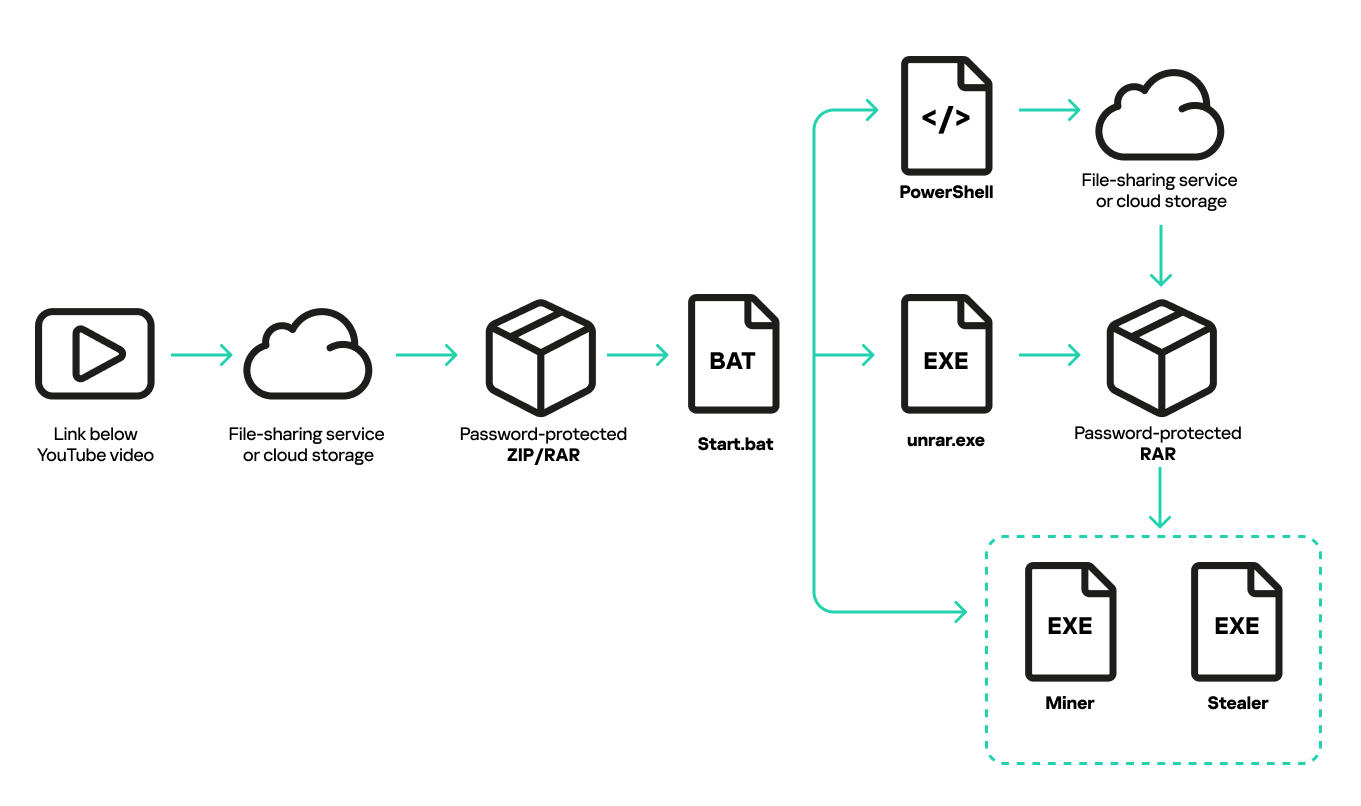
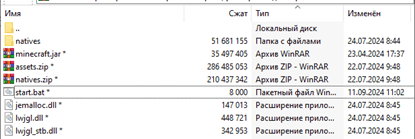
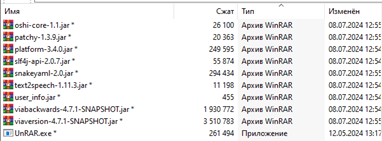
    The campaign in which we discovered the new stealer was already active before Arcane appeared. The original distribution method started with YouTube videos promoting game cheats. The videos were frequently accompanied by a link to an archive and a password to unlock it. Upon unpacking the archive, the user would invariably discover a start.bat batch file in the root folder and the UnRAR.exe utility in one of the subfolders.

    Archive root

    Contents of the “natives” subfolder

    The contents of the batch file were obfuscated. Its only purpose was to download another password-protected archive via PowerShell, and unpack that with UnRAR.exe with the password embedded in the BATCH file as an argument.

    Contents of the obfuscated start.bat file

    Following that, start.bat would use PowerShell to launch the executable files from the archive. While doing so, it added every drive root folder to SmartScreen filter exceptions. It then reset the EnableWebContentEvaluation and SmartScreenEnabled registry keys via the system console utility reg.exe to disable SmartScreen altogether.

    Key commands run by start.bat

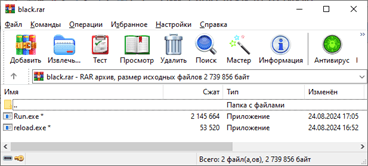
    The archive would always contain two executables: a miner and a stealer.

    Contents of the downloaded archive

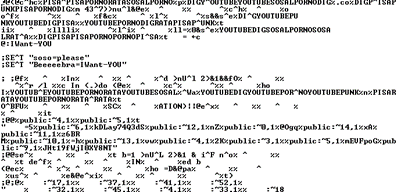
    The stealer was a Phemedrone Trojan variant, rebranded by the attackers as “VGS”. They used this name in the logo, which, when generating stealer activity reports, is written to the beginning of the file along with the date and time of the report’s creation.

    Phemedrone and VGS logos

    Original distribution scheme

    Arcane replaces VGS

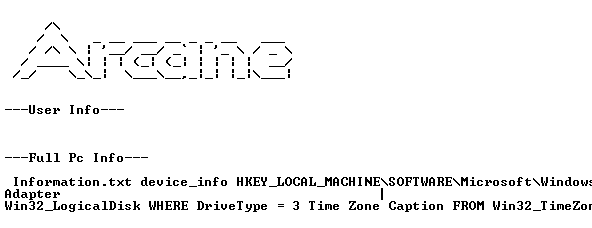
    At the end of 2024, we discovered a new Arcane stealer distributed as part of the same campaign. It is worth noting that a stealer with a similar name has been encountered before: a Trojan named “Arcane Stealer V” was offered on the dark web in 2019, but it shares little with our find. The new stealer takes its name from the ASCII art in the code.

    Arcane logo

    Arcane succeeded VGS in November. Although much of it was borrowed from other stealers, we could not attribute it to any of the known families.

    Arcane gets regular updates, so its code and capabilities change from version to version. We will describe the common functionality present in various modifications and builds. In addition to logins, passwords, credit card data, tokens and other credentials from various Chromium and Gecko-based browsers, Arcane steals configuration files, settings and account information from the following applications:

    • VPN clients: OpenVPN, Mullvad, NordVPN, IPVanish, Surfshark, Proton, hidemy.name, PIA, CyberGhost, ExpressVPN
    • Network clients and utilities: ngrok, Playit, Cyberduck, FileZilla, DynDNS
    • Messaging apps: ICQ, Tox, Skype, Pidgin, Signal, Element, Discord, Telegram, Jabber, Viber
    • Email clients: Outlook
    • Gaming clients and services: Riot Client, Epic, Steam, Ubisoft Connect (ex-Uplay), Roblox, Battle.net, various Minecraft clients
    • Crypto wallets: Zcash, Armory, Bytecoin, Jaxx, Exodus, Ethereum, Electrum, Atomic, Guarda, Coinomi

    In addition, the stealer collects all kinds of system information, such as the OS version and installation date, digital key for system activation and license verification, username and computer name, location, information about the CPU, memory, graphics card, drives, network and USB devices, and installed antimalware and browsers. Arcane also takes screenshots of the infected device, obtains lists of running processes and Wi-Fi networks saved in the OS, and retrieves the passwords for those networks.

    Arcane’s functionality for stealing data from browsers warrants special attention. Most browsers generate unique keys for encrypting sensitive data they store, such as logins, passwords, cookies, etc. Arcane uses the Data Protection API (DPAPI) to obtain these keys, which is typical of stealers. But Arcane also contains an executable file of the Xaitax utility, which it uses to crack browser keys. To do this, the utility is dropped to disk and launched covertly, and the stealer obtains all the keys it needs from its console output.

    The stealer implements an additional method for extracting cookies from Chromium-based browsers through a debug port. The Trojan secretly launches a copy of the browser with the “remote-debugging-port” argument, then connects to the debug port, issues commands to visit several sites, and requests their cookies. The list of resources it visits is provided below.

    • https://gmail.com,
    • https://drive.google.com,
    • https://photos.google.com,
    • https://mail.ru,
    • https://rambler.ru,
    • https://steamcommunity.com,
    • https://youtube.com,
    • https://avito.ru,
    • https://ozon.ru,
    • https://twitter.com,
    • https://roblox.com,
    • https://passport.yandex.ru

    ArcanaLoader

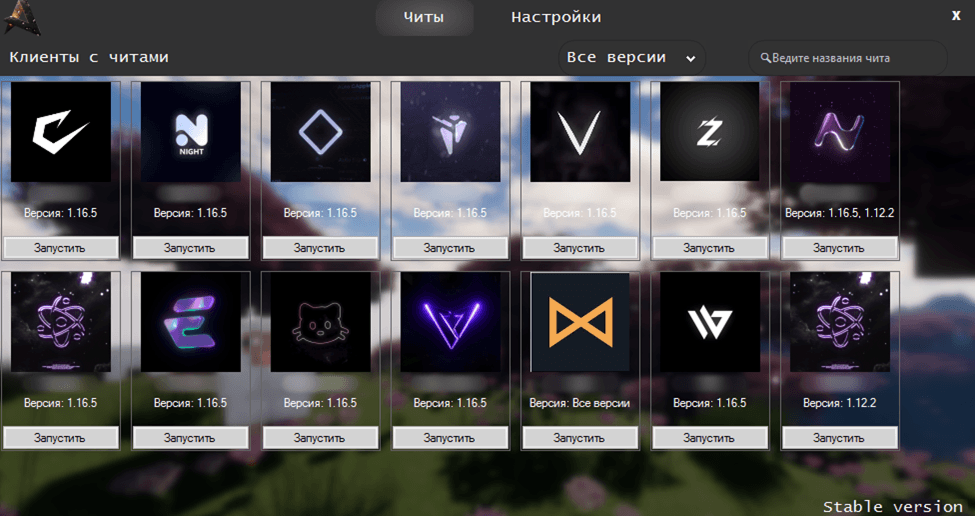
    Within a few months of discovering the stealer, we noticed a new distribution pattern. Rather than promoting cheats, the threat actors shifted to advertising ArcanaLoader on their YouTube channels. This is a loader with a graphical user interface for downloading and running the most popular cracks, cheats and other similar software. More often than not, the links in the videos led to an executable file that downloaded an archive with ArcanaLoader.

    ArcanaLoader

    See translation
    Читы Cheats
    Настройки Settings
    Клиенты с читами Clients with cheats
    Все версии All versions
    Введите название чита Enter cheat name
    Версия: 1.16.5 Version: 1.16.5
    Запустить Start
    Версия: Все Версии Version: All versions

    The loader itself included a link to the developers’ Discord server, which featured channels for news, support and links to download new versions.

    Discord server invitation

    See translation

    You have been invited to Arcana Loader
    548 online
    3,156 users
    Accept invitation

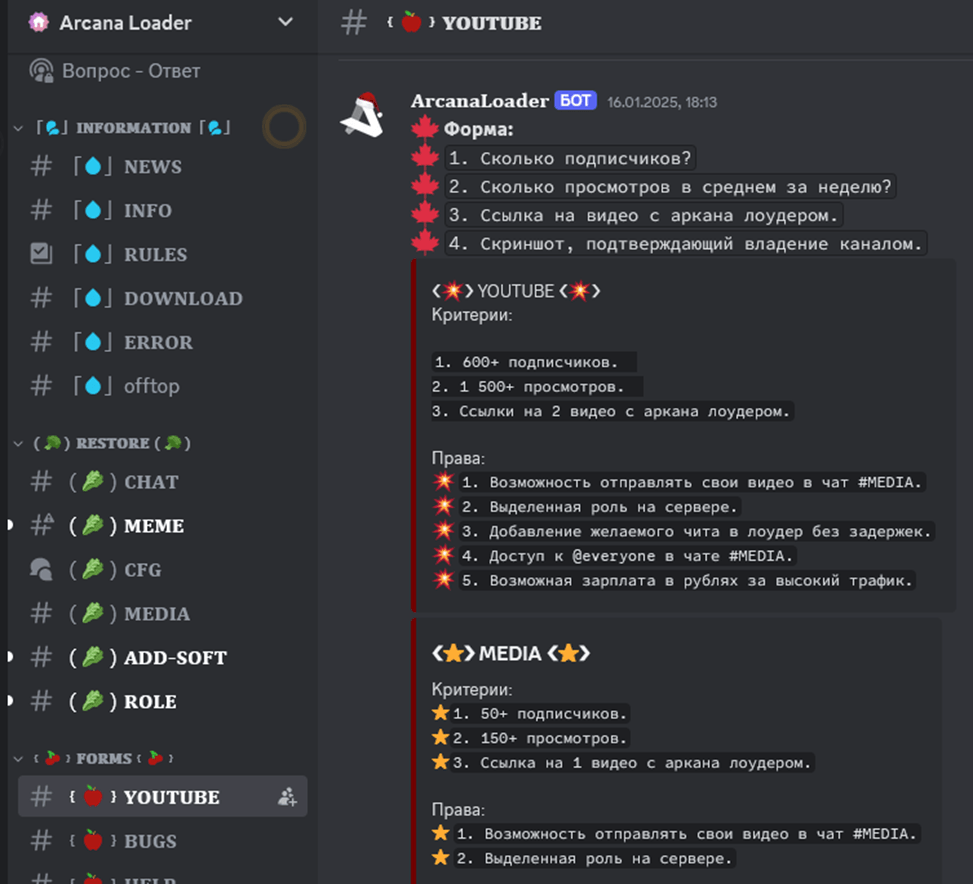
    At the same time, one of the Discord channels posted an ad, looking for bloggers to promote ArcanaLoader.

    Looking for bloggers to spread the loader

    See translation

    ArcanaLoader BOT
    Form:
    1. Total subscribers
    2. Average views per week
    3. Link to ArcanaLoader video
    4. Screenshot proof of channel ownership
    YOUTUBE
    Criteria:
    1. 600* subscribers
    2. 1,500+ views
    3. Links to 2 Arcana Loader videos
    Permissions:
    1. Send your videos to the #MEDIA chat
    2. Personal server role
    3. Add cheat to loader without delay
    4. Access to @everyone in the #MEDIA chat
    5. Possible compensation in rubles for high traffic
    MEDIA
    Criteria:
    1. 50+ subscribers
    2. 150+ views
    3. Link to 1 ArcanaLoader video
    Permissions:
    1. Send your videos to the #MEDIA chat
    2. Personal server role

    Sadly, the main ArcanaLoader executable contained the aforementioned Arcane stealer.

    Victims

    All conversations on the Discord server are in Russian, the language used in the news channels and YouTube videos. Apparently, the attackers target a Russian-speaking audience. Our telemetry confirms this assumption: most of the attacked users were in Russia, Belarus and Kazakhstan.

    Takeaways

    Attackers have been using cheats and cracks as a popular trick to spread all sorts of malware for years, and they’ll probably keep doing so. What’s interesting about this particular campaign is that it illustrates how flexible cybercriminals are, always updating their tools and the methods of distributing them. Besides, the Arcane stealer itself is fascinating because of all the different data it collects and the tricks it uses to extract the information the attackers want. To stay safe from these threats, we suggest being wary of ads for shady software like cheats and cracks, avoiding links from unfamiliar bloggers, and using strong security software to detect and disarm rapidly evolving malware.
    MIL OSI Global Banks

  • MIL-OSI Asia-Pac: PARLIAMENT QUESTION: ISROs PROGRAMMES FOR STUDENTS

    Source: Government of India (2)

    Posted On: 19 MAR 2025 4:06PM by PIB Delhi

    The Union Cabinet chaired by the Prime Minister Shri Narendra Modi today approved the ‘Incentive Scheme for promotion of low-value BHIM-UPI transactions Person to Merchant (P2M)’ for the financial year 2024-25 in the following manner:

                 i.        The incentive scheme for promotion of low-value BHIM-UPI transactions (P2M) will be implemented at an estimated outlay of 1,500 crore, from 01.04.2024 to 31.03.2025.

                ii.        Only the UPI (P2M) transactions upto 2,000/- for Small Merchants are covered under the scheme.


    Category

    Small Merchant

    Large Merchant

    Up to Rs. 2k

    Zero MDR / Incentive (@0.15%)

    Zero MDR / No Incentive

    Over Rs. 2k

    Zero MDR / No Incentive

    Zero MDR / No Incentive


               iii.        Incentive at the rate of 0.15% per transaction value will be provided for transactions upto Rs.2,000 pertaining to category of small merchants.

              iv.        For all the quarters of the scheme, 80% of the admitted claim amount by the acquiring banks will be disbursed without any conditions.

                v.        The reimbursement of the remaining 20% of the admitted claim amount for each quarter will be contingent upon fulfilment of the following conditions:

    a)    10% of the admitted claim will be provided only when the technical decline of the acquiring bank will be less than 0.75%; and

    b)    The remaining 10% of the admitted claim will be provided only when the system uptime of the acquiring bank will be greater than 99.5%.


    Benefits:

    i.      Convenient, secure, faster cash flow, and enhanced access to credit through digital footprints.

    ii.     Common citizens will benefit from seamless payment facilities with no additional charges.

    iii.    Enable small merchants to avail of UPI services at no additional cost. As small merchants are price-sensitive, incentives would encourage them to accept UPI payment.

    iv.    Supports the Government’s vision of a less-cash economy through formalizing and accounting the transaction in digital form.

    v.     Efficiency gain- 20% incentive is contingent upon banks maintaining high system uptime and low technical decline. This will ensure round-the-clock availability of payment services to citizens.

    vi.    Judicious balance of both the growth of UPI transactions and the minimum financial burden on the Government exchequer.


    Objective:

    ·        Promotion of indigenous BHIM-UPI platform. Achieving the target of 20,000 crore total transaction volume in FY 2024-25.

    ·        Supporting the payment system participants in building a robust and secure digital payments infrastructure.

    ·        Penetration of UPI in tier 3 to 6 cities, especially in rural & remote areas by promoting innovative products such as feature phone based (UPI 123PAY) & offline (UPI Lite/UPI LiteX) payment solutions.

    ·     Maintain a high system uptime & minimize technical declines.

    Background:

    Promotion of digital payments is an integral part of the Government’s strategy for financial inclusion and provide wide-ranging payment options to the common man. The expenditure incurred by the digital payment industry while providing services to its customers / merchant is recovered through the charge of Merchant Discount Rate (MDR).

    As per RBI, MDR upto 0.90% of transaction value is applicable across all card networks. (for Debit cards). As per NPCI, MDR upto 0.30% of transaction value is applicable for UPI P2M transaction. Since January 2020, to promote digital transactions, MDR was made zero for RuPay Debit Cards and BHIM-UPI transactions through amendments in section 10A in the Payments and Settlement Systems Act, 2007 and section 269SU of the Income-tax Act, 1961.

    In order to support the payment ecosystem participants in effective delivery of services, “Incentive scheme for promotion of RuPay Debit Cards and low-value BHIM-UPI transactions (P2M)” has been implemented with due approval by the Cabinet. Year-wise incentive payout by the Government (in Rs. crore) during the last three financial years:

    Financial Year

    Gol Payout

    RuPay Debit Card

    BHIM-UPI

    FY2021-22

    1,389

    432

    957

    FY2022-23

    2,210

    408

    1,802

    FY2023-24

    3,631

    363

    3,268

    The incentive is paid by the Government to the Acquiring bank (Merchant’s bank) and  thereafter shared among other stakeholders: Issuer Bank (Customer’s Bank), Payment Service Provider Bank (facilitates onboarding of customer on UPI app / API integrations) and App Providers (TPAPs).

    *****

    MJPS/BM

    (Release ID: 2112772) Visitor Counter : 6

    MIL OSI Asia Pacific News

  • MIL-OSI Asia-Pac: Cabinet approves Incentive scheme for promotion of low-value BHIM-UPI transactions (P2M)

    Source: Government of India (2)

    Posted On: 19 MAR 2025 4:05PM by PIB Delhi

    The Union Cabinet chaired by the Prime Minister Shri Narendra Modi today approved the ‘Incentive Scheme for promotion of low-value BHIM-UPI transactions Person to Merchant (P2M)’ for the financial year 2024-25 in the following manner:

                 i.        The incentive scheme for promotion of low-value BHIM-UPI transactions (P2M) will be implemented at an estimated outlay of 1,500 crore, from 01.04.2024 to 31.03.2025.

                ii.        Only the UPI (P2M) transactions upto 2,000/- for Small Merchants are covered under the scheme.


    Category

    Small Merchant

    Large Merchant

    Up to Rs. 2k

    Zero MDR / Incentive (@0.15%)

    Zero MDR / No Incentive

    Over Rs. 2k

    Zero MDR / No Incentive

    Zero MDR / No Incentive


               iii.        Incentive at the rate of 0.15% per transaction value will be provided for transactions upto Rs.2,000 pertaining to category of small merchants.

              iv.        For all the quarters of the scheme, 80% of the admitted claim amount by the acquiring banks will be disbursed without any conditions.

                v.        The reimbursement of the remaining 20% of the admitted claim amount for each quarter will be contingent upon fulfilment of the following conditions:

    a)    10% of the admitted claim will be provided only when the technical decline of the acquiring bank will be less than 0.75%; and

    b)    The remaining 10% of the admitted claim will be provided only when the system uptime of the acquiring bank will be greater than 99.5%.


    Benefits:

    i.      Convenient, secure, faster cash flow, and enhanced access to credit through digital footprints.

    ii.     Common citizens will benefit from seamless payment facilities with no additional charges.

    iii.    Enable small merchants to avail of UPI services at no additional cost. As small merchants are price-sensitive, incentives would encourage them to accept UPI payment.

    iv.    Supports the Government’s vision of a less-cash economy through formalizing and accounting the transaction in digital form.

    v.     Efficiency gain- 20% incentive is contingent upon banks maintaining high system uptime and low technical decline. This will ensure round-the-clock availability of payment services to citizens.

    vi.    Judicious balance of both the growth of UPI transactions and the minimum financial burden on the Government exchequer.


    Objective:

    ·        Promotion of indigenous BHIM-UPI platform. Achieving the target of 20,000 crore total transaction volume in FY 2024-25.

    ·        Supporting the payment system participants in building a robust and secure digital payments infrastructure.

    ·        Penetration of UPI in tier 3 to 6 cities, especially in rural & remote areas by promoting innovative products such as feature phone based (UPI 123PAY) & offline (UPI Lite/UPI LiteX) payment solutions.

    ·     Maintain a high system uptime & minimize technical declines.

    Background:

    Promotion of digital payments is an integral part of the Government’s strategy for financial inclusion and provide wide-ranging payment options to the common man. The expenditure incurred by the digital payment industry while providing services to its customers / merchant is recovered through the charge of Merchant Discount Rate (MDR).

    As per RBI, MDR upto 0.90% of transaction value is applicable across all card networks. (for Debit cards). As per NPCI, MDR upto 0.30% of transaction value is applicable for UPI P2M transaction. Since January 2020, to promote digital transactions, MDR was made zero for RuPay Debit Cards and BHIM-UPI transactions through amendments in section 10A in the Payments and Settlement Systems Act, 2007 and section 269SU of the Income-tax Act, 1961.

    In order to support the payment ecosystem participants in effective delivery of services, “Incentive scheme for promotion of RuPay Debit Cards and low-value BHIM-UPI transactions (P2M)” has been implemented with due approval by the Cabinet. Year-wise incentive payout by the Government (in Rs. crore) during the last three financial years:

    Financial Year

    Gol Payout

    RuPay Debit Card

    BHIM-UPI

    FY2021-22

    1,389

    432

    957

    FY2022-23

    2,210

    408

    1,802

    FY2023-24

    3,631

    363

    3,268

    The incentive is paid by the Government to the Acquiring bank (Merchant’s bank) and  thereafter shared among other stakeholders: Issuer Bank (Customer’s Bank), Payment Service Provider Bank (facilitates onboarding of customer on UPI app / API integrations) and App Providers (TPAPs).

    *****

    MJPS/BM

    (Release ID: 2112771) Visitor Counter : 17

    MIL OSI Asia Pacific News

  • MIL-OSI Asia-Pac: Cabinet approves implementation of revised Rashtriya Gokul Mission with enhanced allocation for the years 2024-25 and 2025-26

    Source: Government of India (2)

    Posted On: 19 MAR 2025 4:19PM by PIB Delhi

    The Union Cabinet, chaired by the Prime Minister Shri Narendra Modi, has today approved the Revised Rashtriya Gokul Mission (RGM) to boost growth in livestock sector.  Implementation of revised RGM, as Central Sector component of Development Programmes scheme is being done with an additional outlay of Rs.1000 crore that is total outlay of Rs.3400 crore during 15th Finance Commission cycle from 2021-22 to 2025-26.

    Two New activities added are: (i) One-time assistance of 35% of the capital cost for establishment of Heifer Rearing Centres to Implementing Agencies for creation of 30 housing facilities having total 15000 heifers and (ii) To encourage farmers to purchase High genetic merit (HGM) IVF heifers to provide 3% interest subvention on loan taken by the farmer from milk unions / financial institutions/ banks for such purchase.  This will help in systemic induction of high yielding breeds.

    The revised Rashtriya Gokul Mission is approved with an allocation Rs.3400 crore during 15th Finance Commission cycle (2021-22 to 2025-26).

    The scheme is for continuation of ongoing activities of Rashtriya Gokul Mission- strengthening of semen stations, Artificial Insemination network, implementation of bull production programme, accelerated breed improvement programme using sex sorted semen, skill development, farmer awareness, support for innovative activities including establishment of Centre of Excellence, strengthening of Central Cattle Breeding Farms and strengthening of Central Cattle Breeding Farms without any change in the pattern of assistance in any of these activities.

    With the implementation of the Rashtriya Gokul Mission and other efforts of the Government, milk production has increased by 63.55% in the last ten years, along with the availability of milk per person, which was 307 grams per day in 2013-14, has increased to 471 grams per day in 2023-24. Productivity has also increased by 26.34% in the last ten years.

    The Nationwide Artificial Insemination Programme (NAIP) under the RGM provides free of cost Artificial Insemination (AI) at the farmer’s doorstep in 605 districts across the country where the baseline AI coverage was below 50%. Till date, over 8.39 crores animals have been covered and 5.21crores farmers have been benefitted. RGM has also been at the forefront in bringing the latest technological interventions in breeding to the farmer’s doorstep. A total of 22 in vitro fertilization (IVF) labs have been set up across the country under the State Livestock Boards (SLBs) or in Universities and over 2541 HGM calves have been born. Two path breaking steps in Atmanirbhar technology are the Gau Chip and Mahish Chip, genomic chips for indigenous bovines developed by National Dairy Development Board (NDDB) and ICAR National Bureau of Animal Genetic Resources (NBAGR) and Gau Sort indigenously developed sex sorted semen production technology developed by NDDB.

    The scheme is set to significantly boost milk production and productivity, ultimately increasing farmers’ incomes. It focuses on the protection and preservation of India’s indigenous bovine breeds through systematic and scientific efforts in bull production and the development of indigenous bovine genomic chips. Additionally, in Vitro Fertilization (IVF) has become an established technology, due to the initiatives taken under the scheme. This initiative will not only enhance productivity but also improves livelihoods of 8.5 crores farmers engaged in Dairying.

    *****

    MJPS/BM

    (Release ID: 2112789) Visitor Counter : 9

    MIL OSI Asia Pacific News

  • MIL-OSI Asia-Pac: Cabinet approves setting up of a new Brownfield Ammonia-Urea Complex Namrup IV Fertilizer Plant within the existing premises of Brahmaputra Valley Fertilizer Corporation Limited (BVFCL), Namrup, Assam

    Source: Government of India (2)

    Posted On: 19 MAR 2025 4:09PM by PIB Delhi

    The Union Cabinet, chaired by the Prime Minister Shri Narendra Modi, has today approved the proposal for setting up of a new Brownfield Ammonia-Urea Complex of 12.7 Lakh Metric Tonnes (LMT) annual capacity of Urea production within the existing premises of Brahmaputra Valley Fertilizer Corporation Limited (BVFCL), Namrup Assam, with an estimated total project cost of Rs.10,601.40 Crore with Debt Equity ratio of 70:30 through a Joint Venture (JV), under the New Investment Policy, 2012 read with its amendments on 7th October, 2014. The tentative overall time schedule for commissioning of Namrup-IV Project is 48 months.

    Additionally, the Cabinet also approved the National Fertilizers Limited (NFL)’s equity participation of 18% in relaxation to the limits prescribed in Department of Public Enterprises (DPE) guidelines; and constitution of an Inter-Ministerial Committee (IMC) to oversee the process of setting up of Namrup-IV Fertilizer Plant.

    In the proposed JV, equity pattern will be as under:

    (i)     Government of Assam:                                                            40%

    (ii)    Brahmaputra Valley Fertilizer Corporation Limited (BVFCL):    11%

    (iii)   Hindustan Urvarak & Rasayan Limited (HURL):                       13%

    (iv)  National Fertilizers Limited (NFL):                                           18%

    (v)    Oil India Limited (OIL):                                                             18%

    BVFCL’s share of equity shall be in lieu of tangible assets.

    The project will increase the domestic Urea production capacity in the country especially in the North-Eastern region. It will meet the growing demand of Urea fertilizers of North East, Bihar, West Bengal, Eastern Uttar Pradesh, and Jharkhand. The establishment of Namrup-IV unit will be more energy efficient. It will also open avenues for additional direct and indirect employment opportunity to the people of the area. It shall help achieve the vision of self-reliance in Urea in the country.

    *****

    MJPS/BM

    (Release ID: 2112775) Visitor Counter : 133

    MIL OSI Asia Pacific News

  • MIL-OSI Asia-Pac: GAGANYAAN-1 MISSION

    Source: Government of India (2)

    Posted On: 19 MAR 2025 4:01PM by PIB Delhi

    Gaganyaan Programme is currently approved with a financial sanction of ~20,193 Crores. The envisaged expenditure is categorised into Revenue (~ 341 Crores) and Capital (~19852 Crores) elements catering to necessary technology development activities and undertaking uncrewed/ crewed flight missions. (Total: 8 Nos.).

    There has been a revision in the scope and financial sanction of Gaganyaan Programme. The vision for space in the Amrit kaal envisages including other things, creation of an operational Bharatiya Antariksh Station by 2035 and Indian Crewed Lunar Mission by 2040. Towards building these new capabilities to enable longer duration Indian human space missions, various technologies have to be developed and validated. As per the revised scope, demonstration of these technologies is planned through eight missions (2 Crewed+ 6 Uncrewed) in a phased manner.

    ISRO together with collaborating national agencies is responsible for development of various technologies which are planned to be demonstrated in this mission. Private enterprises are contributing enormously to the programme specifically in areas such as realization of launch vehicle systems, sub-systems and critical structures (simulated Crew Module/ Crew Module) for ground/ flight test program, Crew Module Recovery Models, Virtual reality based training simulators, realization of various subsystems of indigenous Environment Control and Life Support System (ECLSS) as well as avionics packages for ground simulations. Some of these contributing private enterprises are Tata Advanced Systems Limited, Tata Elxsi, Larsen & Toubro, Walchand nagar Industries, Manjira Machine Builders, Godrej Aerospace, Data Patterns India, Centum Electronics etc.

    The Government of India has announced reforms, on June, 2020, in the space sector towards enabling the private players to provide end-to-end services towards enhancing the Indian space economy to a significant level. Indian Space Policy-2023 was released in April 2023 as an overarching, composite and dynamic framework to implement the space reform vision. It helps to promote greater participation of Non-Governmental Entities (NGEs) in the value chain of space economy in order to develop robust, innovative and competitive space ecosystem aiming for a larger share of India in global space economy. It also enables the NGEs to make use of infrastructure created through public funds. Further, amendment was made to the Foreign Direct Investment policy for space sector, enabling higher threshold of foreign investments in various space domains. Indian National Space Promotion and Authorisation Centre {IN-SPACe), a single-window agency, was formed under Department of Space, to promote, regulate and authorize space activities of Non-Governmental Entities {NG Es). Further, in order to carry out space activities, the facilities across various ISRO centres will also be permitted for use by private sector through IN-SPACe. New Space India Ltd (NSIL}, a CPSE under the Department of Space will transfer the matured technologies developed by ISRO to Indian industries. ISRO will also nurture Indian space industries by sharing its experiences on quality and reliability protocols, documentation, testing procedures etc. Announcement of Opportunities and initiatives like ‘Atmanirbharta in development of space technologies/ products/ systems through Indian industry’ are also being undertaken offering challenges in new domains of space technology.

    This information was given by Union Minister of State (Independent Charge) for Science and Technology, Earth Sciences, MoS PMO, Department of Atomic Energy, Department of Space, Dr. Jitendra Singh in a written reply in the Lok Sabha today.

    ***

    NKR/PSM

    (Release ID: 2112766) Visitor Counter : 36

    MIL OSI Asia Pacific News

  • MIL-OSI Russia: SPbGASU student squad fighters took part in an international project in Egypt

    Translartion. Region: Russians Fedetion –

    Source: Saint Petersburg State University of Architecture and Civil Engineering – Saint Petersburg State University of Architecture and Civil Engineering – SSO “Wheel of Fortune”

    On March 13, the winter season of Russian student teams at the international construction site run by JSC CONCERN TITAN-2 – the construction of the El Dabaa NPP in Egypt – ended. The participants of the combined student construction team “Wheel of Fortune” also included five students from SPbGASU. One of them, Ekaterina Bushueva, a sixth-year student of the construction faculty of our university, was the team leader.

    The team worked within the project for two months. For some, it was not the first such experience, and some were on an international project for the first time.

    Andrey Repin, commander of the SSO “Friday”, a third-year student of the construction faculty of SPbGASU, shared his impressions: “This was my second trip to Egypt, but it was just as unusual as the first: this time the winter stage acquired a larger scale – more people, detachment events and emotions. Moreover, on this trip we were part of the St. Petersburg delegation and had to show a high level at creative events, thereby presenting our regional branch in the best light. I think we coped with this.”

    Elena Ozerova, a second-year student at the Faculty of Civil Engineering, was on an international project for the first time: “My two-month work experience at the construction site of the El Dabaa NPP in Egypt as part of the Wheel of Fortune team was not just professional development, but also a unique opportunity to get acquainted with the culture and history of Egypt, as well as to become part of a large-scale international project. The work in cooperation with the TITAN-2 company was organized at the highest level. The tasks that were set for us were interesting and required the application of knowledge acquired at the university. This experience will certainly be useful in my future career.”

    Darya Lopukhina, a third-year student at the construction faculty, said: “I will remember the trip to Egypt to work at the nuclear power plant for a long time. It was the first time I was abroad at a conscious age, and it was very interesting to observe how people live. During these two months, we managed not only to work, but also to go on excursions to Alexandria, Cairo, Giza. I was very pleased with this work and thought about further cooperation on foreign projects of “CONCERN TITAN-2”.

    To get into international work projects, it is necessary to pass a thorough selection among students of construction specialties who have worked for at least two seasons in the ranks of Russian student brigades.

    Please note: This information is raw content directly from the source of the information. It is exactly what the source states and does not reflect the position of MIL-OSI or its clients.

    MIL OSI Russia News

  • MIL-OSI Asia-Pac: Hong Kong Customs combats counterfeit goods activities (with photo)

    Source: Hong Kong Government special administrative region

    Hong Kong Customs combats counterfeit goods activities (with photo) 
    On March 14, Customs inspected two outgoing consignments in a courier logistics centre in Kwun Tong. With the assistance of the trademark owner, about 150 suspected counterfeit mobile phones with an estimated value of about $105,000 were seized. After in-depth investigations, a company in Kwun Tong was identified as the suspected consignor of the batch of suspected counterfeit goods.
     
    Subsequently, Customs officers on March 17 conducted a controlled delivery operation and arrested a 36-year-old man who was suspected to be connected with the case inside the aforesaid consignor. About 5 100 suspected counterfeit mobile phones with an estimated market value of about $3.5 million were seized.
     
    With the suspicion that another company in Kwun Tong was involved in the case, Customs officers immediately conducted a search at the company on the same day. About 3 900 suspected counterfeit mobile phones with an estimated value of about $2.8 million were further seized, and a 55-year-old man who was suspected to be connected with the case was also arrested. 
     
    The two arrested persons have been released on bail pending further investigation. Investigations are ongoing, and the likelihood of further arrests is not ruled out.
     
    Customs reminds consumers to procure goods at reputable shops and to check with the trademark owners or their authorised agents if the authenticity of a product is in doubt. Traders should also be cautious and prudent in merchandising since selling counterfeit goods is a serious crime, and offenders are liable to criminal sanctions.
     
    Under the Trade Descriptions Ordinance, any person who import, export, sells or possesses for sale any goods with a forged trademark commits an offence. The maximum penalty upon conviction is a fine of $500,000 and imprisonment for five years.
     
    Members of the public may report any suspected counterfeiting activities to Customs’ 24-hour hotline 182 8080 or its dedicated crime-reporting email account (crimereport@customs.gov.hkIssued at HKT 18:03

    NNNN

    MIL OSI Asia Pacific News

  • MIL-OSI Asia-Pac: Government steps to increase 5G connectivity in the country

    Source: Government of India

    Posted On: 19 MAR 2025 3:26PM by PIB Delhi

    Government of India has undertaken following projects, with funding from Digital Bharat Nidhi (DBN), to increase telecommunication connectivity in remote areas :-

    1. Comprehensive Telecom Development Plan (CTDP) for mobile connectivity in the North Eastern Region, Andaman & Nicobar islands and Lakshadweep islands with projects costing over ₹4,050 crore.

    2. Scheme for providing mobile services in Left Wing Extremism (LWE) affected areas and Aspirational Districts with projects costing over ₹13,179 crore.

    3. 4G Saturation Project for providing 4G mobile services in uncovered villages with projects costing over ₹26,300 crore.

    4. Amended BharatNet project to provide broadband connectivity to the Gram Panchayats (GPs) and villages.


    The Government has taken several steps to increase 5G connectivity in the country, including in remote and tribal areas. These initiatives are listed as below:-

    i.          Auction of spectrum for 5G mobile services.

    ii.         Financial reforms to rationalize Adjusted Gross Revenue (AGR), Bank Guarantees (BGs) and interest rates.

    iii.        Removal of Spectrum Usage Charges for spectrum acquired in auction of 2022 and thereafter.

    iv.        Simplification of procedure for SACFA (Standing Advisory Committee on Radio Frequency Allocations) clearance.

    v.         Launch of PM GatiShakti Sanchar portal and RoW (Right of Way) Rules to streamline RoW permissions and clearance of installation of telecom infrastructure.

    vi.        Time-bound permission for use of street furniture for installation of small cells and telecommunication line.


    Since its launch in October 2022, 4.69 lakhs 5G Base Transceiver Stations (BTSs) have been installed across the country which is one of the fastest roll out of 5G mobile services in the world. At present, 5G mobile services are available in 99.6% of the districts in the country. Further, 2.95 lakh 5G BTSs have been set up in the last financial year (2023-24).

    This information was given by the Minister of State for Communications and Rural Development, Dr. Pemmasani Chandra Sekhar in a written reply to a question in Lok Sabha today.

    *****

    Samrat/Allen


    (Release ID: 2112741) Visitor Counter : 87

    MIL OSI Asia Pacific News

  • MIL-OSI Asia-Pac: BFAC appreciates Tourism Commission and MPFA’s committed efforts in outlining long-term development for Hong Kong’s tourism industry and operating eMPF Platform

    Source: Hong Kong Government special administrative region

    BFAC appreciates Tourism Commission and MPFA’s committed efforts in outlining long-term development for Hong Kong’s tourism industry and operating eMPF Platform 
         The Business Facilitation Advisory Committee held its 56th meeting today (March 19). At the meeting, the Tourism Commission briefed members on the Development Blueprint for Hong Kong’s Tourism Industry 2.0 (Blueprint 2.0) promulgated at the end of last year. The Mandatory Provident Fund Schemes Authority (MPFA) and eMPF Outreach Team also briefed members on the eMPF Platform.

         Blueprint 2.0 proposes four positions, four development strategies and 133 measures for Hong Kong’s tourism development in the coming five years. The four positions of Hong Kong’s tourism industry are (i) reinforcing the role of an international tourism hub and a core demonstration zone for multi-destination tourism; (ii) highlighting the unique elements of Hong Kong’s local cultural characteristics that are irreplaceable and unrepeatable and making good use of its positioning as the East-meets-West centre for international cultural exchange, with a view to achieving “shaping tourism with cultural activities and promoting culture through tourism”; (iii) upholding Hong Kong’s positioning as a city with high-quality tourism experiences; and (iv) stressing the importance of quality over quantity in development to build Hong Kong into a demonstration point for sustainable tourism.   
         The eMPF Platform was launched in June 2024 to centralise the administrative tasks dispersed across various trustees’ platforms by providing one-stop services, and facilitate the standardisation, streamlining and automation of the Mandatory Provident Fund (MPF) scheme administration processes, thereby enhancing operational efficiency of the MPF System and reducing administration costs. The MPFA anticipated that all MPF trustees will complete onboarding the Platform by 2025. 
         The Committee also received the work reports of its three task forces:
     
    Wholesale and Retail Task Force (WRTF)
    ———————————————
       —————————————————————
     Task Force on Business Liaison Groups (BLGTF)
    —————————————————–
          The Committee also expressed appreciation of the commitment and achievements of the bureaux and departments in continuously implementing the business facilitation measures under the Be the Smart Regulator Programme to enhance their business licensing services.

         Papers for the Committee meeting are available at 
    www.gov.hk/en/business/supportenterprises/bf/advisory/index.htmIssued at HKT 18:00

    NNNN

    MIL OSI Asia Pacific News

  • MIL-OSI Asia-Pac: ULIP Surpasses 100 Crore API Transactions: Enabling Seamless, Smart, and Sustainable Logistics

    Source: Government of India (2)

    ULIP Surpasses 100 Crore API Transactions: Enabling Seamless, Smart, and Sustainable Logistics

    From Data to Decisions, ULIP is Driving Ease of Doing Business in India: Union Commerce and Industry Minister Shri Piyush Goyal

    Posted On: 19 MAR 2025 3:05PM by PIB Delhi

    Unified Logistics Interface Platform (ULIP) has reached a significant milestone, recording 100 crore API transactions, reinforcing its role as a game-changer in India’s logistics sector. This achievement marks a significant step toward building a world-class, technology-driven logistics ecosystem that fuels industrial growth under Make in India and accelerates the vision of Viksit Bharat 2047.

    The Union Minister of Commerce & Industry Shri Piyush Goyal, commended the achievement, stating, “ULIP’s success wouldn’t have been possible without the collaborative efforts of our users, logistics stakeholders and govt. departments who are leveraging API integrations to create impactful solutions. This milestone brings to life our Prime Minister’s vision of a seamless logistics ecosystem that strengthens Ease of Doing Business and positions Bharat as a global trade and manufacturing powerhouse. We remain committed to expanding ULIP’s capabilities, making Indian logistics more agile, resilient, and globally competitive.”

    By bridging critical data gaps, ULIP enables automation, real-time cargo tracking, and streamlined regulatory compliance, benefiting businesses across industries. Processing an average of 1 crore API transactions weekly, ULIP continues to drive widespread adoption and democratizes access to logistics data, ensuring equal opportunities for businesses of all sizes. This digital disruption is reshaping the competitive landscape, breaking monopolistic control, and empowering MSMEs, start-ups, and large enterprises alike.

    ULIP has also significantly impacted the manufacturing sector with companies such as Prism Johnson, Asian Paints, and Tata Steel leveraging its APIs to streamline transporter verification, automate processes, and strengthen supply chains.

    Meanwhile, ULIP’s multi-modal APIs across road, rail, ocean, and air provide real-time shipment ETAs, ensuring just-in time inventory management and cost savings for manufacturers.

    Beyond logistics, ULIP is accelerating sustainability efforts, helping businesses like Century Plywoods and TCIL choose greener transport options, cut emissions, and align with India’s carbon reduction goals.

    Transporters and logistics service providers—including Cuttack Carriers, Road Pilot, and Intugine—are enabling digital documentation, automated gate processes, and seamless freight movement, reducing delays and congestion at hubs.

    Alongside private sector players, state and central government departments are leveraging the digital gateway for data-driven decision-making.

    ULIP is not just modernizing logistics, it is revolutionizing how goods move, businesses operate, and industries thrive in a digitally connected world. With greater visibility and smarter decision-making, the platform is playing a vital role in building a self-reliant India.

    Launched by Prime Minister Shri Narendra Modi under the National Logistics Policy (NLP) on 17th September 2022, to create an integrated, efficient, and technology-driven logistics sector. Since its inception, the platform has been actively driving this vision forward and connects 43 systems from 11 ministries through 129 APIs, covering more than 1,800 data fields, enabling comprehensive data access for stakeholders. With over 1,300 registered companies, 350+ agreements signed, and 100 crore+ API transactions processed, ULIP has emerged as a powerful tool for driving operational efficiency, and innovation in India’s logistics sector.

    About NLDSL:

    NICDC Logistics Data Services Ltd. (NLDSL) has been at the forefront of transforming India’s logistics sector through its innovative solutions like Logistics Data Bank (LDB) and ULIP. By leveraging advanced technology, NLDSL has enhanced efficiency, transparency, and digitization within the industry.

    The company was established on December 30, 2015, with the primary objective of harnessing Information and Communication Technology (ICT) to enhance efficiency in the Indian logistics sector. It is a joint venture between the Government of India represented by National Industrial Corridor Development and Implementation Trust (NICDIT) and Japanese IT major NEC Corporation.

    ***

    Abhishek Dayal/Abhijith Narayanan


    (Release ID: 2112727) Visitor Counter : 10

    MIL OSI Asia Pacific News

  • MIL-OSI Asia-Pac: Strengthening of the Cooperative Sugar Mills

    Source: Government of India (2)

    Posted On: 19 MAR 2025 3:01PM by PIB Delhi

    The Government of India has taken the following steps for strengthening of Cooperative Sugar Mills (CSMs):-

    1. Relief from Income Tax to Cooperative Sugar Mills: Sugar factories operating in the co-operative sector in certain States of India pay to sugarcane growers a final amount, often referred to as Final Cane Price (FCP) which is over and above the Statutory Minimum Price (SMP) fixed by the Central Government under the Sugarcane Control Order, 1996.

    The payment of FCP by the co-operative sugar factories over and above the SMP for purchase of sugarcane had resulted into tax litigation. The co-operative sugar factories were claiming this excess payment as business expenditure whereas the same has been disallowed in the assessment on the ground that the excess price paid for purchase of sugar cane over and above SMP is in the nature of appropriation/distribution of profit and hence not allowable as deduction.

    In order to provide certainty in this matter and to encourage co-operative movement in sugar sector, a new clause (xvii) was inserted to amend sub-section (1) of section 36 of

    the Income-tax Actto provide that the amount paid for purchase of sugarcane by the co-operative societies engaged in the manufacture of sugar at a price which is equal to or less than the price fixed by or fixed with the approval of the Government, including price fixation by State Governments through State-level Acts/Orders or other legal instruments that regulate the purchase price for sugarcane, including State Advised Price, which may be higher than the Statutory Minimum Price/Fair and Remunerative Price fixed by the Central Government shall be allowed as deduction for computing business income of the sugar co-operative factories w.e.f. 01.4.2016.

    1. Resolving decades old pending issues related to income tax demand on Cooperative Sugar Mills: The provision at SI. No (i) above resolved the issue of treatment of additional payment for sugar price by CSMs as an income distribution to farmers w.e.f.01.04.2016. However, pending demands and litigation still persisted in respect of assessment years(AYs) prior to 2016-

    17. Therefore, to conclude the matter logically and to extend the benefit of the abovementioned relief to all the applicable years, section 155 of the Act has been amended to insert a new sub- section (19) vide Finance Act, 2023, w.e.f. 01 April 2023. It provides that in the case of a sugar mill cooperative, where any deduction in respect of any expenditure incurred for the purchase of sugarcane has been claimed by an assessee and such deduction has been disallowed wholly or partly in any previous year commencing on or before the 1ª day of April, 2014, the Assessing Officer shall, on the basis of an application made by such assessee in this regard, recompute the total income of such assessee for such previous year. The Assessing Officer shall allow such deduction to the extent such expenditure is incurred at a price which is equal to or less than price fixed or approved by the Government for that previous year. CBDT has also issued Standard Operating Procedure in this regard on 27.07.2023.

    1. Rs 10,000 crore loan scheme through NCDC for strengthening of Cooperative Sugar Mills: Ministry of Cooperation has launched a new scheme named ‘Grant-in-aid to NCDC for Strengthening of Cooperative Sugar Mills’, under which Government of India has provided grant of Rs.1,000 crore to NCDC during financial year 2022-23 and 2024-25. NCDC will use this grant to provide loans up to Rs. 10,000 crores to Cooperative Sugar Mills, for setting up ethanol plants or for setting up cogeneration plants or for working capital or for all three purposes. NCDC has so far sanctioned 87 loans of ₹ 9893.12 crore to 48 CSMs.

    For ease of CSMs availing loan for setting up of ethanol plants under the scheme, NCDC has revised its funding pattern from 70:30 to 90:10 wherein the society has to raise only 10% of the project cost and 90% of the project cost will be provided by NCDC subject to technical and financial viability of the project. Further,for benefit of the Cooperative Sugar Mills, NCDC has reduced its floating rate of interest for term loan to 8.50% under the scheme.

      1. Preference in purchase of ethanol to Cooperative Sugar Mills: Oil Marketing Companies (OMCs) are according top priority to CSMs participating in ethanol procurement cycles. So far, 24,650 KL ethanol worth ₹ 25.50 crore have been procured by OMCs from 11 CSMs.
      2. Enhancing ethanol production of Cooperative Sugar Mills by converting their molasses-based ethanol plants into multi feed ethanol plants: Ministry of Cooperation has taken initiative for conversion of existing molasses-based ethanol plants of CSMs into multi feed ethanol plants.As that they can operate their distilleries throughout the year, under this initiative CSMs will get following benefits:
    1. NCDC will provide a term loan under funding pattern of 90:10, with 90% from the society and 10% from NCDC.
    2. On March 6, 2025, the Department of Food and Public Distribution issued a Gazette Notification notifying the revised scheme titled “Scheme for Financial Assistance to Cooperative Sugar Mills (CSMs) for Converting Their Existing Sugarcane-Based Feedstock Ethanol Plants into Multi-Feedstock-Based Plants to Utilize Grains Such as Maize and Damaged Food Grains (DFG) for Enhancing and Augmenting Ethanol Production Capacity”, exclusively for cooperative sugar mills. Under the scheme, Central Government will bear the interest subvention on the loan availed by them at a rate of either 6% per annum or 50% of the interest rate charged by the lending institution, whichever is lower, for a period of five years, including a one-year moratorium.
    3. Cooperative sugar mills availing the benefit of interest subvention will be given Priority-1 by OMCs to facilitate their transition from single-feed ethanol plants to multi-feed ethanol plants.

    This was stated by the Minister of Cooperation, Shri Amit Shah in a written reply to a question in the Rajya Sabha.

    *****

    RK/VV/ASH/RR/PR/PS

    (Release ID: 2112725) Visitor Counter : 42

    MIL OSI Asia Pacific News

  • MIL-OSI Asia-Pac: Facilities to Local People by South Eastern Coalfields Limited

    Source: Government of India (2)

    Posted On: 19 MAR 2025 2:59PM by PIB Delhi

    The facilities provided by South Eastern Coalfields Limited (SECL) under CSR through various CSR activities are related to different themes viz. Healthcare, Education, Water Supply, Rural Development, etc., primarily for development of local populace residing within 25 KMs from SECL project sites/ mines/ Area HQ/ Company HQ and also for people residing in the operating state of SECL i.e. Chhattisgarh and Madhya Pradesh. Moreover, SECL also provides a wide range facilities to the local populace by providing safe & free drinking water, better roads, organising periodical medical check-up camps/eye camps in affected and nearby villages, free OPD facilities in the dispensary / hospitals of the Company and vocational training to landless people displaced by the project.

    Further, SECL also provides facilities at the various R&R sites such as buildings for primary schools, shopping centres, buildings for community centres, buildings for health centres, wells, hand pumps, approach roads, Electric poles and electric wires and playgrounds as per the Act/Policy.

    Further, SECL has a range of welfare initiatives in place for its employees/workers. These initiatives focus on improving the well-being, safety, and quality of life for human capital. The key welfare measures by SECL to its workers are:

    1. Health and Medical Facilities

    • Healthcare Centres: SECL runs a number of health centres and dispensaries across its mining areas, providing primary and emergency medical care to employees and their families. The central Hospitals at Area provide emergency medical services and inpatient treatment to employees and their families.
    • Free Medical Services: Employees and their dependents are offered free medical treatment, including in-house medical care and the provisions of treatment at empanelled hospitals.
    • Medical Camps: Periodic health check-up camps are organized to monitor the health status of workers, especially in areas like respiratory health, which is critical for mining personnel

    2. Housing and Accommodation

    • Residential Quarters: SECL provides residential facilities to its employees, especially in mining regions where housing is a critical concern. These quarters are maintained and offer basic amenities.
    • Family Welfare: Efforts are made to ensure that the families of employees have access to amenities like clean drinking water, electricity and sanitation.

    3. Education and Skill Development

    • Schools for Children: SECL runs schools in its mining areas, providing education to the children of employees.
    • Scholarships and reimbursement of Tuition Fee: Scholarships are provided to the children of employees who excel in their academic pursuits. There are provisions of reimbursement of tuition fee of the dependents of employee for engineering and medical education au government institutes.
    • Skill Development Programs: SECL organizes various training and development programs to upskill its employees, improving their employability and career growth opportunities.

    4. Retirement Benefits

    • Pension and Gratuity: SECL offers comprehensive retirement benefits, including Coal Mines Pension Scheme, Gratuity, and Coal Mines Provident Fund (CMPF) to its employees.
    • Post-Retirement Welfare: SECL has welfare schemes in place for retired employees, offering post-retirement medical benefits and other postretirement support services.

    5. Financial Assistance and Loans

    • Housing Loans/ Car Loan: SECL provides employees with low-interest loans to construct or purchase houses and/or car.

    6. Cultural and Recreational Activities

    • Sports and Recreation: SECL encourages employees to participate in sports and cultural activities. The company organizes sports events, cultural festivals, and competitions for both employees and their families.
    • Clubs and Societies: Employees and their families can engage themselves in social and recreational clubs within the company, helping foster a healthy work-life balance.

    7. Women’s Welfare

    • SECL ensures equal opportunities for women in its workforce, with policies in place to prevent discrimination and promote gender equality.
    • Women employees are also provided with maternity leave, childcare facilities, creche at workplace and other benefits to balance work and family responsibilities.

    Further, the facilities provided to Contractors’ Workers in SECL are as follows:

    • First Aid facility in Mines Premises.
    • Medical OPD and indoor facility in company hospital are being provided to contractor workers on producing I/Card.
    • Drinking Water and sanitary facilities.
    • Personal Protection/ Safety Equipment as per terms of contract
    • Ambulance facility.
    • Canteen and Creche facility.
    • Group Personal Accident Insurance as per terms of contract.
    • Corporate salary package with Eight Nationalized Banks viz SBI, PNB, BOB, UCO Bank, BOI, Indian bank, UBI. The aforesaid Banks are also providing personal accidental insurance coverage of Rs. 40 Lakhs in case of death or for permanent total disability and other facilities as per MoU signed between Coal India Ltd and different banks.
    • Social Security as per statute, including ex-gratia of Rs 15 lakh to the next of kin of contractor worker in case of mine accident and even during Covid -19, similar amount was also paid to the next kin of contractor workers of SECL who died due to COVID-19.
    • The contractor workers are also covered under CMPF/EPF & Employees Compensation ACT. In addition, contractor workers are paid minimum Wages (Central) engaged in non- mining activities and in case of contractor workers engaged in mining activities are being paid wages as per High Power Committee of CIL. (HPC Wages are midway between wages prescribed by Central Government under the Minimum Wages Act 1948 for the workers employed in the scheduled employment for non- coal mines and the wages payable to the lowest category of regular workers i.e Cat-I of NCWA-XI for CIL and SCCL.)
    • Education facility to the children of Contractor workers in project school of SECL is also being provided.

    Various development works done in the concerned districts of Chhattisgarh by SECL during last five years (year-wise) and the current year i.e. 2024-25, under Corporate Social Responsibility (CSR) head (Sector-wise) is detailed hereunder:

    (Rs. in Crore)

    Financial Year

    Healthcare

    Education

    Water

    Supply

    Environmental Sustainability

    Rural

    Development

    Others

    Total

    2019-20

    18.50

    0.91

    0.69

    5.62

    1.94

    56.99

    84.65

    2020-21

    26.44

    4.74

    0.24

    0.11

    2.24

    4.56

    38.33

    2021-22

    45.55

    15.32

    0.00

    4.36

    5.14

    9.45

    79.82

    2022-23

    35.72

    12.77

    0.00

    0.42

    2.48

    7.89

    59.28

    2023-24

    32.07

    7.25

    0.00

    0.24

    6.54

    6.97

    53.07

    2024-25(Current)

    13.40

    5.12

    0.00

    1.09

    4.25

    1.49

    25.35

    Total

    171.68

    46.11

    0.93

    11.84

    22.59

    87.35

    340.50


    District wise CSR expenditure of SECL in Chhattisgarh State is detailed below:

                                                                                                                                 (Rs. in Crore)

    Name of District in Chhattisgarh

    2019-20

    2020-21

    2021-22

    2022-23

    2023-24

    2024-25

    Grand Total


    Balrampur

    0.42


    0.11


    0.92

    1.45


    Balrampur-Ramanujganj


    3.52


    3.52


    Bastar


    0.21


    0.04


    0.24


    Bilaspur

    21.65

    11.45

    10.32

    0.96

    1.98

    4.18

    50.54


    Gaurella-Pendra-Marwahi


    0.2


    0.2


    Janjgir-Champa


    0.25


    0.25


    Korba

    0.99

    4.51

    7

    5.41

    11.74

    8.99

    38.64


    Koriya

    0.12

    0.01

    0.32

    0.06

    3.69


    4.2


    Raigarh

    0.36

    1.36

    7.25

    5.96

    1.67

    3.86

    20.47


    Raipur

    0.02

    0.27

    0.31

    2.83

    6.31

    0.69

    10.42


    Surajpur

    1.15

    1.11

    0.89

    0.73

    0.66


    4.53


    Surguja


    2.93

    1.6

    0.18

    0.6

    0.59

    5.91


    Other districts of Chhattisgarh

    58.49

    12.88

    10.88

    25.52

    9.29

    2.13

    119.19


    Administrative Expenditure in CG

    0.49

    3.33

    2.33

    2.73

    3.02


    11.9


    Grand Total

    83.69

    37.86

    45.07

    44.49

    39

    21.35

    271.46


    Overall, SECL’s CSR expenditure reflects a strategic shift towards targeted investments, adapting to evolving community needs while maintaining a strong focus on improving health, education, environmental sustainability, rural development projects etc.

    The details of the development works done under other heads in various districts of Chhattisgarh during each of the last five years and the current year is as under:

    • Providing filtered Mine water in various villages.
    • Construction of Community/ Multipurpose Hall.
    • Modification of existing Stadiums.
    • Construction of Boundary Wall of Schools/Townships, etc.
    • Construction of Sewerage Treatment Plants
    • Construction of Approach Road/Village Road, etc.
    • Construction of Cement concrete road with pavement, culverts, etc.
    • Strengthening and widening of existing roads.
    • Re-carpeting of PWD Road.
    • Construction of Hostels.
    • Construction of Badminton Court, Tennis Court, etc.
    • Addition of ICU Unit at Hospital.
    • Construction/Modernisation of Sport Complex.

    This information was given by Union Minister of Coal and Mines Shri G. Kishan Reddy in a written reply in Lok Sabha today.

    ****

    Shuhaib T

    (Release ID: 2112724) Visitor Counter : 46

    MIL OSI Asia Pacific News

  • MIL-OSI Asia-Pac: Coal Gasification Initiative

    Source: Government of India (2)

    Posted On: 19 MAR 2025 2:58PM by PIB Delhi

    The coal gasification initiatives taken by the Government are as under:

    (i) On January 24, 2024 the Government has approved an outlay of ₹ 8,500 crore as financial incentive, for promotion of coal/lignite gasification projects for both government PSUs as well as private sector.

    (ii) Government has also approved investment by Coal India Limited (CIL) in joint ventures of CIL-BHEL and CIL-GAIL for undertaking coal gasification projects.

    (iii) In 2022, a new sub-sector, “Production of Syngas leading to coal gasification,” was created under the NRS linkage auctions policy to support this initiative. Further under this sector the government has allowed auction with a floor price at the notified price of the regulated sector, for the projects commissioning within the next seven years.

    (iv) 50% rebate in the revenue share for coal used in gasification has been introduced in commercial coal block auctions, provided that at least 10% of the total coal production is used for gasification purposes.

    Coal is one of the most abundant natural resources in the country. Coal gasification technology enables conversion of coal into syngas (synthetic gas), which can be used to produce downstream products like methanol, ammonium nitrate, Synthetic Natural Gas (SNG) and Fertilizers etc. Coal gasification technology provides alternative use of coal promoting environmental sustainability to align with vision of developed India 2047.

    The Government has not conducted any specific impact assessment of the financial incentive scheme for coal gasification projects.

    Coal India Limited (CIL), a CPSE under Ministry of Coal, has secured Khattali Chhoti Graphite Block in Madhya Pradesh, India through e- auction of critical mineral blocks conducted by Ministry of Mines. Besides, CIL has also signed Non-Disclosure Agreement with an Argentinian company and an Australian company for acquisition of lithium assets in Argentina.

    The Government has, inter-alia, taken the following steps to reduce India’s import dependency and build supply chain resilience in critical minerals:

    • Central Government has been empowered to exclusively auction mining lease and composite license for 24 critical minerals, with an aim to increase exploration and mining of critical minerals and ensure self-sufficiency in their supply.
    • The Government has announced in the Union Budget 2024-25 the setting up of a Critical Mineral Mission for a harmonized approach in areas including domestic production, recycling, overseas acquisition of critical mineral assets and research & development (R&D).

    This information was given by Union Minister of Coal and Mines Shri G. Kishan Reddy in a written reply in Lok Sabha today.

    ****

    Shuhaib T                                                                                    

    (Release ID: 2112723) Visitor Counter : 61

    MIL OSI Asia Pacific News

  • MIL-OSI Asia-Pac: President of India Smt. Droupadi Murmu to grace the Udyam Utsav at Amrit Udyan, Rashtrapati Bhavan tomorrow

    Source: Government of India

    President of India Smt. Droupadi Murmu to grace the Udyam Utsav at Amrit Udyan, Rashtrapati Bhavan tomorrow

    Celebration of Micro, Small & Medium Enterprises (MSMEs) at Amrit Udyan from March 20 to March 30, 2025

    Posted On: 19 MAR 2025 2:47PM by PIB Delhi

    The Ministry of MSME is organizing “Udyam Utsav” at Rashtrapati Bhavan from March 20, 2025, to March 30, 2025, an event to celebrate the spirit of MSMEs across the country, aimed to empower and encourage MSMEs, thereby bringing India’s vibrant heritage closer to its citizens at Rashtrapati Bhavan.

    The Hon’ble President of India, Smt Droupadi Murmu will grace the occasion and visit the Utsav on 20th March 2025 at Rashtrapati Bhavan in the august presence of Ministry officials.

    The key highlights of the event would be:

    • Seven pavilions showcasing diverse product segments, including Heritage & Handicrafts, Organic & Agro-based products, Green MSME Technologies, Women Entrepreneurs, PM Vishwakarma & Tribal Entrepreneurs, Khadi & Village Industries (APRATIM), and MSME Business Support Pavilion.
    • Around 60 stalls, having products for sale and display by artisans and entrepreneurs.
    • A dedicated pavilion highlighting PM Vishwakarma Scheme of the Ministry of MSME and Tribal Entrepreneurs will showcase trades covered under the Scheme with toolkits and  live pottery demonstration.
    • Additional attractions include food stalls offering a variety of cuisine, AR/VR experiences, and traditional crafts. A model of Chandrayaan will be a central highlight ensuring an immersive experience.
    • Activities such as Hunar Sangeet, Nukkad Natak, Saree Draping Sessions, and Rajasthani Puppet Maker demonstrations will add vibrancy to the event.

    The Utsav is open to the public from March 20, 2025 to 30, 2025 between 10 AM and 8 PM. Entry will be through Gate Number 35 of the Rashtrapati Bhavan (where North Avenue meets Rashtrapati Bhavan). Online and free of cost Bookings can be done on https://visit.rashtrapatibhavan.gov.in/plan-visit/amrit-udyan/rE/mO


    ****

    SK

    (Release ID: 2112718) Visitor Counter : 24

    MIL OSI Asia Pacific News

  • MIL-OSI Asia-Pac: PARLIAMENT QUESTION: SCHEMES TO PROMOTE ENTREPRENEURSHIP AND INNOVATION AMONGST SC

    Source: Government of India (2)

    Posted On: 19 MAR 2025 2:14PM by PIB Delhi

    The Government has introduced various Schemes to promote entrepreneurship and innovation amongst Scheduled Castes. The Venture Capital Fund for Scheduled Castes (VCF-SC), with a corpus of Rs. 750 crore, provides concessional finance ranging from Rs. 10 lakh to Rs. 15 crore at a 4% coupon rate. This fund is managed by IFCI Venture Capital Ltd.

    Additionally, the Ambedkar Social Innovation and Incubation Mission (ASIIM), supports SC students, researchers, and entrepreneurs in Technology Business Incubators (TBIs) and Atal Incubation Centers (AICs). Under ASIIM, Rs. 30 lakh equity funding is provided over three years to help start-ups in sectors such as agriculture technology, IT, environment, waste management, and green energy. As of now, 245 SC-owned companies have been sanctioned financial assistance of ₹588.4 crore under the Venture Capital Fund for Scheduled Castes, including ASIIM.

    Currently, the Government has no plans to establish a Social Innovation Hub to facilitate business ventures and startups for the SC community. However, it continues to promote entrepreneurship and innovation through existing initiatives such as ASIIM and VCF-SC. Additionally, steps have been taken to simplify access to credit through PM SURAJ—a digital interface for all financial inclusion Schemes of the Department of Social Justice & Empowerment and providing mentorship support and market linkages to strengthen the entrepreneurial ecosystem for Scheduled Castes and other marginalized communities.

    This information was provided by UNION MINISTER FOR SOCIAL JUSTICE AND EMPOWERMENT, DR. VIRENDRA KUMAR, in a written reply to a question in Rajya Sabha today.

    *****

    VM

    (Rajya Sabha US Q2197)

    (Release ID: 2112696) Visitor Counter : 51

    MIL OSI Asia Pacific News

  • MIL-OSI Asia-Pac: NATIONAL PROGRAMME FOR DAIRY DEVELOPMENT

    Source: Government of India (2)

    Posted On: 19 MAR 2025 2:10PM by PIB Delhi

    Department of Animal Husbandry & Dairying (DAHD) is implementing “National Programme for Dairy Development (NPDD)”scheme across the country since Feb-2014. The scheme has been restructured/ realigned in July 2021 for implementation from 2021-22 to 2025-26 with the following two components:

    (i)   The Component ”A” of NPDD focuses on creating/strengthening of infrastructure for quality milk testing equipment as well as primary chilling facilities for State Cooperative Dairy Federations/ District Cooperative Milk Producers’ Union/SHGs/Milk Producer Companies/Farmer Producer Organizations.

    (ii) The Component ‘B’ of the NPDD scheme “Dairying through Cooperatives” aims to increase sale of milk and dairy products by increasing farmer’s access to organized market, upgrading dairy processing facilities and marketing infrastructure and enhancing the capacity of producer owned institutions.

    Under Component A of NPDD scheme, 110 projects have been approved across the country including Tamil Nadu  with the total outlay of Rs.2247.46 crore. (including Central Share of Rs.1658.29 crore) and under Component B of NPDD scheme, 22 projects have been approved with a total project cost of Rs.1130.62 crore (including Loan amount of Rs.705.53 crore, Grant of Rs.329.70 crore & participating institution (PI) contribution of Rs.93.38 crore) during last five years (2019-20 to 2023-24). Out of the total 132 projects approved under the scheme, 52 have been completed. In Tamilnadu, 4 projects have been approved with the total outlay of Rs.177.61 crore. (including Central Share of Rs.133.42 crore) during last five years (2019-20 to 2023-24). Out of these 4 projects, 2 have been completed under NPDD scheme.

    Total 16041 dairy cooperative societies have been organised & 15.31 lakh farmers/milk producers have been enrolled under NPDD scheme during last five years (2019-20 to 2023-24). Tamilnadu Cooperative Milk Producers Federation Limited (TCMPFL) has informed that total 3.79 lakh farmers belonging to 9235 cooperative societies in Tamil Nadu have benefitted by getting remunerative price for their produce and the scheme made producers to supply their milk with easy access.

    Dairy Plant Capacity of 1.82 Lakh litre per day (LLPD) has been enhanced under NPDD scheme during last three year (2021-22 to 2023-24). In addition, TCMPFL has informed that milk processing plant and value added product capacity created other than NPDD scheme in the State of Tamil Nadu is as under:

    Sr. No.

    Scheme/Funding

    Activity created

    1.

    Pradhan Mantri Formalisation of Micro Food Processing Enterprises (PMFME)

    Milk processing plant of capacity 2.00 lakh litre per day

    2.

    National Agriculture Development Programme (NADP).

    Paneer Plant of capacity 2000 Kilogram per day at Coimbatore

    3

    TCMPFL Fund

    Ice Cream Plant of capacity 30,000 litre per day at Coimbatore at Madurai

    4.

    National Bank for Agriculture and Rural Development (NABARD)

    Production capacity of Butter, Ghee & Paneer with capacity of 5000 Kilogram per day, 2000 litre per day & 1000 Kilogram per day respectively at Virudhunagar District Milk Union.

    5.

    Milk Union Fund

    Curd plant of capacity 10,000 Litre per day Kanchipuram-Tiruvallur District Milk Union


    Under Comp B of NPDD, Japan International Cooperation Agency (JICA) assisted programme, loan has been provided with subsidized rate of interest @1.50% for the eligible institutions for creations of dairy infrastructure in the interest of  farmers and cooperative societies.

    This information was given by Union Minister of State, Ministry of Fisheries, Animal Husbandry and Dairying, Prof. S.P. Singh Baghel, in a written reply in Rajya Sabha on 19th March, 2025.

    *****

    AA

    (Release ID: 2112693) Visitor Counter : 82

    MIL OSI Asia Pacific News

  • MIL-OSI Asia-Pac: ROADMAP FOR PRIVATE PARTNERSHIP IN THE LIVESTOCK SECTOR

    Source: Government of India (2)

    Posted On: 19 MAR 2025 2:09PM by PIB Delhi

    The Department of Animal Husbandry and Dairying (DAHD) framed the National Livestock Policy in 2013 to address key challenges hindering the growth of the livestock sector. These challenges include shortage of feed and fodder, low productivity, livestock health, livestock and environment, knowledge gap, and inadequate infrastructure for marketing, processing and value addition.

    The policy aims to increase livestock productivity and production sustainably while improving farmers’ livelihoods. It also focuses on strengthening research and development initiatives to improve productivity, biosecurity and profitability in the sector. The policy promotes the conservation and genetic improvement of indigenous livestock and poultry breeds. It also aims to enhance feed and fodder availability to meet livestock nutrition requirements and achieve optimal productivity.

    The National Livestock Mission (NLM) is being implemented since 2014-15 on the lines of the National Livestock Policy 2013 wherein the activities were undertaken for development of feed and fodder by providing financial assistance, conservation of threatened breeds and providing breeding stock to the farmers for livelihood development. Realigned in 2021-22, the NLM has three sub-missions.

    1. Sub-mission on Breed Development of Livestock and Poultry proposes to bring sharp focus on entrepreneurship development and breed improvement in poultry, sheep, goat and piggery through NLM-Entrepreneurship Development Programme (EDP-NLM) by providing 50 percent capital subsidy for the establishment of breed multiplication farms.
    2. Sub-mission on feed and fodder development is continuing to address the challenges of feed and fodder, the Government is promoting partnership with public and private companies for production of quality (breeder, foundation and certified) fodder seeds, besides promoting Entrepreneurship in fodder development.
    3. The sub-mission on Extension and Innovation is implemented with an activity of Research and Innovation, including Livestock Insurance. The scheme has further been modified in February 2024 to expand its scope by including the conservation and genetic improvement of indigenous breeds of horses, camels, and donkeys; fodder development from waste lands and degraded forest lands, and entrepreneurship in fodder seed processing.

    Furthermore, the Department with cooperation of private industry has adopted a PPP approach for the establishment of Highly Pathogenic Avian Influenza (HPAI)-free poultry compartments. These compartments are managed by private enterprises that adhere to strict biosecurity protocols, including surveillance measures. This initiative facilitates the export of poultry and poultry products, even during outbreaks in other parts of the country.

    Under the Entrepreneurship Development Programme (EDP) of National Livestock Mission (NLM), the Central Government provides a 50 percent capital subsidy for the establishment of breed multiplication farms. Eligible beneficiaries include individual farmers, Farmers Producer Organizations (FPOs), Farmers Cooperative Societies (FCOs), Joint Liability Groups (JLGs), and Section 8 companies. Similarly, 50% subsidy is provided for the establishment of feed and fodder units including silage production, Total Mixed Ration (TMR) plants, and fodder seed processing and grading infrastructure.  Under NLM-EDP, a total of 3295 projects have been approved with a project cost of ₹ 2381.12 crore, with a subsidy of ₹1,098.63 crore. Additionally, to increase the production of quality fodder seed, 100 percent financial support is available for Central Government and other credible institutions engaged in producing certified, foundation, and breeder seed.

    In addition, the Department of Animal Husbandry and Dairying (DAHD) is implementing the Animal Husbandry Infrastructure Development Fund (AHIDF) to promote private-sector investments. This fund incentivizes investments by individual entrepreneurs, private companies, MSMEs, Farmers Producer Organizations (FPOs), Section 8 companies, and dairy cooperatives. Under AHIDF, the Central Government provides a three percent (3%) interest subvention on loans, allowing eligible entities to avail term loans up to 90 percent of the project cost from any scheduled bank, NABARD, NCDC, or NDDB. The AHIDF supports the establishment of dairy processing and value addition infrastructure, meat processing and value addition infrastructure, animal feed plants, breed improvement and multiplication farms for cattle, buffalo, sheep, goat, and pig, veterinary vaccine and drug production facilities, animal waste-to-wealth management (agri-waste management), and primary wool processing infrastructure. The AHIDF actively encourages private sector investment in veterinary drugs and vaccine infrastructure, further strengthening India’s animal health and production ecosystem. Till date, an interest subvention of ₹293 crore has led to the leveraging of a total investment of ₹16582 crore in 353 projects under AHIDF.

    This information was given by Union Minister of State, Ministry of Fisheries, Animal Husbandry and Dairying, Prof. S.P. Singh Baghel, in a written reply in Rajya Sabha on 19th March, 2025.

    *****

    AA

    (Release ID: 2112691) Visitor Counter : 71

    MIL OSI Asia Pacific News

  • MIL-OSI Asia-Pac: LCQ21: Promoting development of Hong Kong’s capital market

    Source: Hong Kong Government special administrative region

    LCQ21: Promoting development of Hong Kong’s capital market 
    Question:
     
         Recently, six departments of the Central Authorities jointly announced the Implementation Plan on Promoting the Inflow of Medium to Long-term Capital into the Market, so as to steadily expand the scale of investment and improve the supply and structure of funds in the capital market. Moreover, it has been reported that as pointed out by the Governor of the People’s Bank of China, the proportion of the country’s foreign exchange reserves allocated to Hong Kong’s assets will be substantially increased to support the development of Hong Kong’s capital market. In this connection, will the Government inform this Council:
     
    (1) whether the Government has discussed with the relevant Mainland authorities the specific details (such as the target level of the allocation proportion, the types of assets to be allocated and the amount involved) and the implementation timetable for increasing the allocation of the country’s foreign exchange reserves to Hong Kong’s assets; if so, of the details; if not, the reasons for that;
     
    (2) whether the Government will study with the Mainland regulatory authorities the establishment of a mechanism for channelling capital, so as to promote the investment of the country’s foreign exchange reserves and some of the Mainland medium to long-term capital (such as the National Social Security Fund, commercial insurance funds and pension funds) in Hong Kong’s capital market;
     
    (3) whether the Government will actively consider making good use of the funds under its control, such as charitable trust funds, university endowment funds and funds managed by different government departments, to jointly increase investment in Hong Kong stocks, so as to play a leading role and boost market confidence; if so, of the details; if not, the reasons for that; and
     
    (4) as it has been reported that the Deputy Director of the Liaison Office of the Central People’s Government in the Hong Kong Special Administrative Region (SAR) has recently proposed to promote the publication of a White Paper on Hong Kong’s Capital Market (the White Paper), whether the SAR Government will implement the formulation of the White Paper; if so, whether it will study collecting various financial institutions’ views in areas such as market regulation, transaction costs and corporate governance?
     
    Reply:
     
    President,
     
         In consultation with the Securities and Futures Commission (SFC) and Hong Kong Exchanges and Clearing Limited (HKEX), my consolidated reply to the four parts of the question is as follows:
     
         During his remarks at the Asian Financial Forum in January 2025, the Governor of the People’s Bank of China said that a thriving capital market serves as the core and backbone of Hong Kong as an international financial centre. It will encourage quality enterprises to get listed and issue bonds in Hong Kong, and continuously enhance and expand the connectivity mechanisms between the Mainland and Hong Kong for stocks, bonds, wealth management products and interest rate swaps. It will also deepen the financial co-operation within the Guangdong-Hong Kong-Macao Greater Bay Area, and increase the allocation of our country’s foreign exchange reserves in assets in Hong Kong, so that the financial development in Hong Kong will embrace a broader future. The Hong Kong Special Administrative Region Government and financial regulators will continue to co-ordinate closely with relevant Mainland authorities as always to support the integration and healthy development of the Mainland and Hong Kong capital markets. We will also discuss with the Mainland further expansion and enhancement arrangements for mutual market access between capital markets of the two places, so as to better meet the needs of residents in both places for cross-market and diversified asset allocation, as well as attract more Mainland and international fund flows into Hong Kong.
     
         The Government very much welcomes and is grateful to the increase in allocation of the national foreign exchange reserves in assets in Hong Kong, which is a recognition of Hong Kong’s investment environment and the quality of our products. The specific details (such as funding distribution or timetable) will be considered by relevant Mainland institutions and announced as necessary. The Government and financial regulators have been maintaining communication with the Mainland financial regulators on financial market matters and will fully support related work. In fact, we need to strengthen our efforts in optimising the market and utilising our own attractiveness to encourage more Mainland and overseas institutions and individual investors to participate in trading Hong Kong stocks. In the face of challenges from the external environment in the past few years, the Government has been striving to continuously improve market liquidity through taking forward specific enhancement measures. Specifically, the Government set up the Task Force on Enhancing Stock Market Liquidity in 2023 to review the factors affecting market liquidity and put forward improvement recommendations on different areas such as listing regime, market structure, trading mechanism, etc. The Government together with the SFC and HKEX have taken forward various measures, including enhancing the specialist technology listing regime, reforming GEM, facilitating listing of overseas issuers, implementing arrangements for trading under severe weather, establishing the regime for share repurchase and treasury, narrowing the trading spread, etc. We have also been actively attracting overseas capital through different channels, including consolidating traditional sources of funds and opening up new capital sources.
     
         As our country’s economy demonstrates resilience with breakthroughs in key technologies, and as the enhancement measures that we have implemented begin to bear fruit, the sentiment and trading in the Hong Kong stock market have improved since last year. From the beginning of this year, stock market trading has become even more active, with average daily turnover until February exceeding $220 billion, an increase of close to 70 per cent over that of 2024. Last year, Hong Kong was one of the world’s four largest initial public offering (IPO) markets, with total IPO funds raised exceeding $87 billion, up nearly 90 per cent year-on-year. As of the end of February this year, HKEX was processing over 100 listing applications, demonstrating increasing confidence of companies in raising funds in Hong Kong. HKEX and the SFC will continue their efforts in strengthening the competitiveness of the stock market by facilitating corporate financing, promoting product innovation, and improving trading and risk management efficiency.
     
         As regards investment of funds under the Government, funds established by the Government or operated by Government departments have specific purposes and management mechanisms. The relevant funds need to formulate appropriate investment strategies based on factors such as its size, overall risk tolerance, liquidity needs, etc, so as to achieve target returns, cash flow or specific policy objectives through different asset allocations. It is not appropriate to formulate uniform asset allocation recommendations or restrictions for the investment of relevant funds.
     
         The Government has been implementing various reforms for the development of the capital market, including establishing listing avenues for new economy and technology enterprises with weighted voting rights structures, facilitating overseas issuers to raise funds in Hong Kong, etc. As also mentioned in the 2025-26 Budget, the key to consolidating and enhancing the strengths of Hong Kong as an international financial centre lies in institutional innovation, product innovation, a critical mass of enterprises and financial connectivity. To dovetail with the latest economic trends and corporate needs, HKEX and the SFC are taking forward a comprehensive review of the listing regime, which will review listing requirements and post-listing ongoing obligations, evaluate listing-related regulations and arrangements to improve the vetting process, optimise the thresholds for dual primary listing and secondary listing, and review the market structure, including exploring the establishment of an over-the-counter trading market. HKEX and the SFC will conduct in-depth review in each area, with a view to putting forward enhancement proposals in different areas by batches when they are ready within this year for market consultation. Meanwhile, the Government will also collect market views through various channels from time to time, including the financial regulators and the Financial Services Development Council, so as to formulate relevant development strategies in a timely manner.
    Issued at HKT 15:15

    NNNN

    MIL OSI Asia Pacific News

  • MIL-OSI Africa: Ghana Bolsters Mining Sector Growth Through Local Content Participation

    Source: Africa Press Organisation – English (2) – Report:

    CAPE TOWN, South Africa, March 19, 2025/APO Group/ —

    Ghana is ramping up efforts to enhance local content participation in the mining industry, aiming to maximize the beneficiation of its mineral resources. By supporting small-scale miners, promoting local procurement and ensuring international firms hire and train local staff, Ghana is catalyzing employment creation, revenue generation for local businesses and driving GDP growth through the expansion of the mining industry. 

    The upcoming Mining in Motion Summit, taking place from June 2-4 in Accra, will highlight the role of local mining entities in industry expansion, showcasing the collaboration between the government and international partners to accelerate economic growth through increased local participation. 

    Ghana’s commitment to local involvement is yielding substantial results, with the small-scale gold mining sector employing one million people, indirectly supporting 4.5 million more and generating over $5 billion (https://apo-opa.co/4hMUCLw) in export revenue in 2024 alone. 

    To further empower local players, the government has introduced key policy reforms and a series of financing and skills training programs. In January 2025, Ghana announced the establishment of the Gold Board (https://apo-opa.co/4bZaBop) – set to launch in March 2025 – which will consolidate gold output from small-scale and industrial mining projects for international exports. The initiative aims to streamline gold commercialization for small-scale miners while enabling them to secure funding through certificates of gold sales. 

    In August 2024, Ghana also unveiled plans for a Cooperative Mining Policy (https://apo-opa.co/4c1IncJ) designed to establish community mining cooperatives. The cooperatives will provide training, register miners and issue concessions, fostering job creation and formalizing the sector. 

    In parallel, the Environmental Protection Agency and the Ministry of Lands and Natural Resources secured World Bank funding in April 2024 to implement the Ghana Landscape Restoration and Small-Scale Mining Project (https://apo-opa.co/42dyXrf). The project seeks to enhance the formalization of small-scale mining operations through District Mining Committees. Furthermore, the Minerals and Mining (Local Content & Local Participation) Regulations, 2020, require international firms to procure Ghanaian goods and services in their operations, enhancing the participation of local firms in project development and maintenance. 

    With several large-scale projects underway, including Goldstone’s Homase Mine, Atlantic Lithium’s Ewoyaa Project, the Cardinal Namdini Gold Mine and Newmont’s Ahafo North Project, the policy continues to strengthen local content participation in Ghana’s mining sector. 

    Amidst these developments, the Mining in Motion Summit will serve as a platform for high-level discussions and networking, addressing key trends and advancements in local content development within Ghana’s mining industry. 

    Stay informed about the latest advancements, network with industry leaders and engage in critical discussions on key issues impacting ASGM and medium- to large-scale mining in Ghana. Secure your spot at the Mining in Motion 2025 Summit by visiting www.MininginMotionSummit.com. For sponsorship opportunities or delegate participation, contact Sales@ashantigreeninitiative.org.

    MIL OSI Africa

  • MIL-OSI Asia-Pac: LCQ3: Privatisation of listed companies

    Source: Hong Kong Government special administrative region

    LCQ3: Privatisation of listed companies 
    Question:
     
         It has been reported that in the first half of last year, a total of 14 listed companies in Hong Kong announced that they would be delisted, with the companies’ market capitalisation reaching as high as $66 billion, including some relatively renowned enterprises to be delisted through privatisation. In this connection, will the Government inform this Council:
     
    (1) whether it knows the respective numbers of listed companies delisted from the Hong Kong stock market and delisted through privatisation last year, as well as the market capitalisation of the companies involved; whether it has reviewed the reasons for the wave of delisting of listed companies last year and its impact on the Hong Kong stock market, and whether it has assessed the trend of the wave of privatisation of listed companies of this year; if it has assessed, of the details, and whether it has measures in place to abate the relevant impact, so as to prevent the excessive privatisation from undermining the attractiveness of Hong Kong stocks; and
     
    (2) whether it knows if relevant regulatory bodies have plans to improve the delisting mechanism so as to allow delisted companies more time and flexibility in the delisting process; if they have, of the specific measures and timetable?
     
    Reply:
     
    President,
     
         With Hong Kong being an international financial centre, the Government has been utilising our unique advantage of enjoying strong support of the motherland and being closely connected to the world under “one country, two systems” in enhancing the competitiveness of the financial services industry and promoting high-quality market development. In recent years, the Government, in collaboration with the Securities and Futures Commission (SFC) and Hong Kong Exchanges and Clearing Limited (HKEX), has taken forward reforms in different aspects of the securities market and implemented a series of enhancement measures, so as to attract more enterprises and investors to participate in investment and financing activities in Hong Kong, inject vitality into our market and enhance liquidity.
     
         To facilitate more quality enterprises to list and raise funds in Hong Kong, we have provided tailored listing mechanisms based on the needs of different enterprises, including establishing listing avenues for new economy and technology enterprises with weighted voting rights structures, reforming the listing mechanism for small and medium enterprises, broadening the financing channels for overseas issuers, clarifying the timetable for listing application vetting process. We have also introduced a new treasury share regime and relaxed the restrictions on issuers’ share repurchases to provide issuers with greater flexibility, and strived to increase disclosure by listed companies and improve corporate governance. To enhance the trading mechanism and efficiency, we have implemented severe weather trading and conducted a review on reduction of minimum price spread, and are advancing preparatory work for the uncertificated securities market regime to lay a solid foundation for further opening up new markets and attracting new capital.
     
         As our country’s economy demonstrates resilience with breakthroughs in key technologies, the enhancement measures for the securities market begin to bear fruit. Last year, the trading volume of securities market hit new highs, with the total market capitalisation increased by 14 per cent year-on-year and the average daily turnover surged by close to 30 per cent year-on-year. Hong Kong is also one of the world’s four largest initial public offering (IPO) markets, welcoming listings of 71 companies within the year with over $87 billion of IPO funds raised, up nearly 90 per cent year-on-year. As of February this year, the HKEX was processing over 100 listing applications, demonstrating increasing confidence of companies in the Hong Kong securities market.
     
         In consultation with the SFC and the HKEX, my reply to the two parts of the question is as follows:
     
    (1) In 2024, there were 32 and 16 companies whose listing was cancelled pursuant to the delisting procedures under the Listing Rules or delisted through privatisation, with market capitalisation of approximately $17.7 billion and $122.6 billion respectively.
     
         Over the past five years, the average number of companies that were delisted through privatisation was 21 per year. Apart from the 16 companies in 2024, the number of companies delisted through privatisation from 2020 to 2023 were 26, 30, 17 and 14 respectively. The number of companies delisted through privatisation accounted for less than one per cent of the total number of listed companies, and there was no upward trend. During the same period, the number of newly listed companies on the HKEX was 118 on average. The impact of delisting through privatisation on the overall market is not significant.
     
         The reasons of privatisation of companies vary. For example, a company’s major shareholders or management may, through privatisation, prevent a takeover, maintain control over the company, and avoid outside influence on the company. As an internationally-aligned securities market, the SFC and the HKEX will continue to provide a fair and transparent acquisition and privatisation mechanism in accordance with the relevant provisions of the Codes on Takeovers and Mergers and Share Buy-backs and the Listing Rules, in order to facilitate listed companies to choose different paths for corporate development based on their own operational needs.
     
    (2) As regards the delisting mechanism, in accordance with the relevant provisions of the Listing Rules, the HKEX may cancel the listing of securities of Main Board companies that have been suspended for 18 consecutive months or securities of GEM companies that have been suspended for 12 consecutive months. The reasons for suspension include (but are not limited to) insufficient public float of the issuer’s securities; the issuer does not have sufficient business operations or does not have assets of sufficient value to support its operations; the issuer has not published its results in accordance with the relevant requirements under the Listing Rules; or the issuer or its business is no longer suitable for listing. The HKEX in general will provide guidance on resumption of trading within three months of the issuer’s suspension, and will give listed issuers sufficient time to address relevant matters and follow up. Generally speaking, when handling cases on resumption of trading, the HKEX will make an assessment based on specific facts and circumstances of individual issuers. For example, when assessing the issuer’s business, the HKEX will consider the issuer’s business operation model, business scale and performance, source of funds, customer base size and type, internal control mechanism, etc., and will make reference to the practices and standards of the relevant industry.
     
         As mentioned by the Financial Secretary in the 2025-26 Budget, the SFC and the HKEX will further take forward a comprehensive review of the listing regime in reviewing listing requirements and post-listing ongoing obligations, evaluating listing-related regulations and arrangements to improve the vetting process, optimising the thresholds for dual primary listing and secondary listing, and reviewing the market structure. Through the reform, we hope to better align with the latest economic trends and corporate needs, enhance the competitiveness of Hong Kong’s listing platform and further attract different companies to raise funds in Hong Kong. At the same time, the review aims to attract more investors, especially patient capital and overseas long-term investors, to participate and increase their allocation of Hong Kong stocks.
     
         During the review process, we will continue to maintain close communication with the industry to fully understand the needs of different market participants. We also welcome Members and stakeholders to provide their opinions on different measures and practical operational arrangements to the regulator and the HKEX. Thank you, President.
    Issued at HKT 13:15

    NNNN

    MIL OSI Asia Pacific News

  • MIL-OSI Asia-Pac: LCQ10: Developing Hong Kong into a fashion design hub in Asia

    Source: Hong Kong Government special administrative region

    LCQ10: Developing Hong Kong into fashion design hub in Asia 
    Question:
     
    As proposed by the Chief Executive in the 2023 Policy Address, the Hong Kong Fashion Design Week (Fashion Week), branded as Hong Kong Fashion Fest (Fashion Fest), would be held annually starting from 2024. In the 2024 Policy Address, it is proposed to make the new flagship Fashion Week an annual signature event to develop Hong Kong into a fashion design hub in Asia. It has been reported that the inaugural Fashion Fest was held in early December last year with resounding success. In this connection, will the Government inform this Council:
     
    (1) whether it has compiled statistics on the performance of the inaugural Fashion Fest, including the number of participants, the countries or regions from which the participants or attendees of the Fashion Fest came, and the media effectiveness, etc.;
     
    (2) of the plans and measures in place to make the Fashion Fest an annual signature event with more international and spectacular elements (including how to step up overseas publicity on the Fashion Fest in the international fashion arena, the industrial and commercial sectors, ‍etc.), and to reinforce Hong Kong’s positioning as the premier textile and fashion hub in the Asian region; and
     
    (3) as I have learnt that the fashion collections of an overseas brand were well received and successfully sold at the inaugural Fashion Fest, and the brand’s founder cum designer subsequently moved to Hong Kong to develop his/her career and business, whether the Government will consider adopting more proactive policy incentives and initiatives (e.g. reduction of profits tax and business registration fees) to attract brands and designers from the Mainland and regions along the Belt and Road such as Southeast Asia to move to Hong Kong to set up their presence, so as to establish more Asian international brands based in Hong Kong?
     
    Reply:
     
    President,
     
    The Chief Executive has announced in his 2024 Policy Address to make the Hong Kong Fashion Design Week an annual signature event, developing Hong Kong into a fashion design hub in Asia. The Culture, Sports and Tourism Bureau (CSTB) has branded the event as Hong Kong Fashion Fest to consolidate different fashion design events and introduce innovative elements and affiliate activities annually, promoting Hong Kong’s fashion and textile design brands as well as promoting Hong Kong as a prime destination for hosting major cultural and creative events.
     
         In consultation with Invest Hong Kong (InvestHK), my reply to the question raised by the Hon Sunny Tan is as follows:
     
    (1) The inaugural Hong Kong Fashion Fest was funded by the Cultural and Creative Industries Development Agency (CCIDA) under the CSTB, with the core programmes took place from November 20 to December 4, 2024. During the period, the CCIDA carried out online and offline publicity and promotion, and invited local and international media to Hong Kong to experience in person the atmosphere of Hong Kong fashion scene. The inaugural Hong Kong Fashion Fest gathered around 160 000 participants from the industries and the public across 25 countries or regions. More than 500 media outlets and related representatives attended the events, and the event-related videos on social media garnered over 4.6 million views.
     
    (2) The inaugural Hong Kong Fashion Fest fully showcased Hong Kong’s potential and advantages as a fashion design hub in Asia, laying the foundation for its future development into an annual signature event.
     
    Preparation work for the Hong Kong Fashion Fest 2025 commenced at the end of last year. The CCIDA will fund and promote potential fashion design projects that align with the objectives of the Hong Kong Fashion Fest through the CreateSmart Initiative (CSI), and actively encourage collaboration within the local fashion industry. We will continue to promote the Hong Kong Fashion Fest to countries in Europe and along the Belt and Road, attracting prestigious fashion brands and industry players to Hong Kong to participate in the event and expand their collaboration opportunities with international fashion organisations and brands. We will also continue to optimise and enrich the content of the Hong Kong Fashion Fest, actively introducing different types of fashion design events to further strengthen the international appeal and influence of the Hong Kong Fashion Fest, fostering Hong Kong’s role as a prominent textile and fashion hub in Asia.
     
    On publicity, the CCIDA will adopt comprehensive public relations and marketing strategies, such as utilising digital media promotions, inviting local and overseas fashion celebrities to participate in the event, and organising networking activities for industry stakeholders, etc. in order to enhance the international visibility of the Hong Kong Fashion Fest and local fashion design.
     
    (3) The Hong Kong Fashion Fest creates a platform for local and overseas fashion designers and brands, as well as industry leaders and relevant professionals, by providing opportunities for exchanges and showcasing their works. We are pleased to note that a local fashion designer has received multiple inquiries for retail and business collaborations from both local and international sources after showcasing his works at the inaugural Hong Kong Fashion Fest. The fashion designer subsequently met with the leading figures in French fashion design industry to discuss potential collaborations for entering the French market. In addition, a Southeast Asian fashion designer has successfully increased her brand’s exposure and sold a few thousand high-end fashion pieces through her participation in the international fashion show of the Hong Kong Fashion Fest. Eventually, she decided to continue developing her fashion career and business in Hong Kong. We believe that the Hong Kong Fashion Fest will help attract more international brands and talents from Asia to establish their base in Hong Kong.
     
    Hong Kong offers an ideal business environment for foreign investors, featuring the advantages of low tax rates and a simple tax system, as well as simple and efficient procedures for foreign entrepreneurs to register their companies and apply for work visas. The CCIDA will actively liaise with InvestHK to provide support for local and overseas fashion brands seeking to develop their businesses in Hong Kong, and assist creative talent and enterprises in establishing themselves here.
    Issued at HKT 11:25

    NNNN

    MIL OSI Asia Pacific News

  • MIL-OSI Europe: The EBA launches call for papers for its 2025 Policy Research Workshop

    Source: European Banking Authority

    The European Banking Authority (EBA) today launched a call for papers in view of its 14th Policy Research Workshop taking place on 18-19 November 2025 and titled “Bridging capital and growth – the role of financial structures and intermediaries”. The deadline for submitting papers is 6 June 2025.

    The workshop aims to bring together economists and researchers from supervisory authorities and central banks, as well as leading academics, to discuss and explore policies that can ensure innovation in a context of competition and risk arbitrage, while ensuring financial stability.

    In preparation for the workshop, the EBA invites the submission of policy-oriented, preferably empirical, research papers on the following topics:

    • the impact of global capital flows on market efficiency and the role of financial intermediation;
    • access to finance by entrepreneurs ensuring that capital is used in the most productive ways;
    • provision of mechanisms for managing risk and how regulatory frameworks can contribute to the functioning  and stability of financial intermediaries;
    • incorporation of environmental, social, and governance (ESG) to support sustainable development and growth;
    • progress in digital finance initiatives and better alignment with regulation and policies.

    Interested parties can download here the detailed call for papers, which includes additional information on the proposed topics for the papers, composition of the programme committee and contact details for the submission of papers. The submission deadline is 6 June 2025.

    Contributors will be notified by mid-September 2025.

    MIL OSI Europe News