Category: Business

  • MIL-OSI USA: Rosen Helps Lead Effort Calling for Large‑Scale Expansion of Humanitarian Aid to Gaza, Return of Hostages, and Resumption of Negotiations to End the War

    US Senate News:

    Source: United States Senator Jacky Rosen (D-NV)

    WASHINGTON, DC – U.S. Senator Jacky Rosen (D‑NV) joined Senators Schiff, Schatz, and Schumer in leading a letter to Secretary of State Marco Rubio and Special Envoy to the Middle East Steve Witkoff raising alarm over the worsening humanitarian crisis and starvation in Gaza. The letter urges a large‑scale expansion of humanitarian aid, calls for immediately bringing all the hostages home, endorses  a return to the negotiating table to end the war, and supports a permanent end to Hamas rule in Gaza.
    “The acute humanitarian crisis in Gaza is also unsustainable and worsens by the day. Hunger and malnutrition are widespread, and, alarmingly, deaths due to starvation, especially among children, are increasing,” wrote the Senators. “The ‘Gaza Humanitarian Foundation’ has failed to address the deepening humanitarian crisis and contributed to an unacceptable and mounting civilian death toll around the organization’s sites. To prevent the situation from getting even worse, we urge you to advocate for a large-scale expansion of humanitarian assistance and services throughout the Gaza Strip, including through the use of experienced multilateral bodies and NGOs that can get life-saving aid directly to those in need and prevent diversion.” 
    “The Israeli hostages, held in Gaza by Hamas since their brutal attack on Israel on October 7th, have suffered far too long, as have their families. It is imperative that those still living be brought home as soon as possible, before more perish as the war drags on. And it is essential that the remains of those presumed killed – including Americans Omer Neutra and Itay Chen – be reunited with their loved ones. After many months of despair, it is long past time to bring all of the hostages home,” wrote the Senators. 
    The full text of the letter is available HERE.
    Senator Rosen has been leading the push for Hamas to release the remaining hostages and has been calling for increased humanitarian aid for innocent civilians in Gaza. As Ranking Member of the Senate Foreign Relations Committee’s Subcommittee on the Near East, Senator Rosen led a hearing focused on the Middle East, where she raised the importance of humanitarian access and a negotiated ceasefire that brings the hostages home. Earlier this year, she traveled to Israel, the West Bank, Jordan, and Iraq, discussing the war in Gaza and humanitarian aid in several of her diplomatic engagements. Senator Rosen also led a bipartisan, bicameral resolution demanding the safe release of hostages still held by Hamas. In January, she applauded the agreement between Israel and Hamas to pause fighting and secure hostage releases.

    MIL OSI USA News

  • MIL-OSI China: China’s high-level opening up is powering global growth

    Source: People’s Republic of China – State Council News

    An aerial drone photo taken on May 29, 2025 shows cargo ships berthing at a container dock of Qingdao Port in Qingdao, east China’s Shandong province. [Photo/Xinhua]

    China’s approach to substantive, high-quality opening up is proving to be a critical endeavour for a safe and mutually progressive future. This can clearly be seen in a series of high-profile exhibitions and trade fairs held in recent weeks, such as the 3rd China International Supply Chain Expo (CISCE) and the 9th China-South Asia Expo (CSAE). Both events attracted dozens of trade contracts, economic agreements and cutting-edge technology innovations that have produced significant potential for robust global engagement. 

    “China’s policy of attracting foreign investment will not change and the door to openness will only open wider,” said Chinese Commerce Minister Wang Wentao in a recent meeting with Nvidia CEO Jensen Huang. 

    Factor in visa-free entries and multisector offerings for investors, and it is clear that the path to embracing high-quality growth and modernization is promising. Here is how.

    First, the 3rd CISCE is proof that China is bringing proponents of global innovation together. After all, breakthrough innovations spanning industry-specific technologies, new robotics and clean energy applications send a powerful signal that China is willingly opening up more sectors for foreign investors and exhibitors alike. Innovative measures such as a “Debut Zone” at the CISCE provided a melting pot for over 100 internationally competitive products to feature in a market that has a track-record of easing market access – both within and beyond the region. 

    These measures reflect a conscious push from China to create an environment for trading partners conducive to weathering the tide of protectionism, and generating enduring business-to-business linkages. It shows in the rampant increase in investments from major enterprises in China’s cutting-edge technology sector, where the benefit of secure supply chains, firm and dependable government support, strong resilience against external shocks and deep R&D indigenization, affords vital strategic advantages. With heads of notable foreign enterprises making exactly this case this month, and new quality productive forces creating new inroads, it is clear that China is offering to share the dividends of long-term modernization.

    The Regional Comprehensive Economic Partnership (RCEP), long viewed as a fixture of future trade advancement and trade liberalization in the Asia-Pacific, also merits significant confidence. China’s own contribution to bringing together the motivations of RCEP partner countries makes that point clear: The 9th CSAE saw nearly 1.4 billion yuan in new economic agreements, a vital value addition on the back of China’s 4th RCEP Regional (Shandong) Import Commodity Expo. China’s ability to convene a broad range of stakeholders, including the heads of major multinationals, partner group governments, budding entrepreneurs and international suppliers, demonstrates a forward-looking approach to high-standard opening up, and one where the policies undergirding high quality opening – cross-border data governance, streamlined financial support for foreign firms, and robust multisector investments in domestic R&D sectors – are conducive to the future demands of developing and developed economies alike. 

    As China looks to further evolve new quality productive forces and elevate its reforms of management frameworks, these are powerful endorsements of an innovation-focused development model and evidence of China’s stronger global economic integration. 

    China’s visa-free entry measures have also played a meaningful role in propelling trade and travel connectivity when it matters most. The country’s visa-free access now spans dozens of countries, indicating a conscious investment in foreign exposure that has seen foreign entries soar beyond 13.6 million so far this year. Growing overseas receptivity to China creates fresh incentives for spending, in turn revitalizing core consumer industries at home, and enabling domestic and foreign firms to exercise healthy competition for cost-effective and high-quality product offerings. 

    The move also helps bring down transaction costs and generates pathways to setting up new small and medium-sized enterprises through easier market access. It has also helped business participation soar in major trade expos, from the Canton Fair to the CSAE and CISCE. The China-Malaysia mutual visa free agreement, and new pacts spanning Latin American states, further demonstrate China’s deepening collaboration with the Global South – a vital indication to bring down trade barriers and prepare the ground for more inclusive, and growth-receptive economic architecture. 

    Glimmers of that architecture can be seen in China and Latin America’s regular convenings on a shared future, including ministerial level convenings of the China-Community of Latin American and Caribbean States (CELAC) Forum. This is important because major sectors such as renewable energy and digital technology are fast altering the productivity and manufacturing heft of many Latin American states, helping to empower local industries from the ground up. As China deepens its opening up with an eye on bolstering people-to-people exchanges, prospects of future business integration, public-private partnerships and deeper unity within the Global South merit considerable optimism. 

    China plans to enhance its pilot free trade zones by promoting innovative reforms and integrated development, aiming to elevate them into advanced platforms for higher-level openness and stronger reform momentum. Such efforts underline a commitment to bolstering mechanisms for high-quality cooperation under the Belt and Road Initiative, a consolidating factor for many countries taking part in major Chinese expos and trade fairs this year. 

    The China-South Asia Expo – which traces its origins back to 2013, the year of the launch of the Belt and Road Initiative (BRI) – is a case in point. Participating exhibitors can view trade exhibitions as major avenues to promote BRI-linked market access, as the initiative provides a framework for infrastructure financing and allows partner states to promote specialty products, and consider deeper integration into regional supply chains. China’s active promotion of key BRI corridors, including the China-Pakistan Economic Corridor, sends a powerful message that the path to high-standard opening up is driven by a desire to extend modernization benefits to BRI partners overseas. 

    China’s large and open market provides shared opportunities worldwide, and will keep fueling global economic expansion and dynamism. Using new productive forces to inject further resilience, vitality and international outreach in this market is therefore a critical indicator that China is supportive of mutual collaborations and an equitable, growth-friendly future for all.

    Hannan Hussain is co-founder and senior expert at Initiate Futures, an Islamabad-based policy think tank.

    Opinion articles reflect the views of their authors, not necessarily those of China.org.cn.

    MIL OSI China News

  • MIL-OSI Europe: New climate finance goal adopted at COP29

    Source: Government of Sweden

    After long negotiations, the UN Climate Change Conference COP29 concluded on 24 November 2024 with a decision on a New Collective Quantified Goal on Climate Finance (NCQG). The NCQG encompasses USD 300 billion annually. However, decisions on other negotiating points were postponed to next year’s COP30 in Brazil.

    MIL OSI Europe News

  • MIL-OSI Europe: Benjamin Dousa’s visit to Egypt to focus on trade and humanitarian issues

    Source: Government of Sweden

    On 26–27 May, Minister for International Development Cooperation and Foreign Trade Benjamin Dousa is travelling to Cairo. He is accompanying a business delegation to promote Swedish exports and increased trade with Egypt. Mr Dousa will also meet with humanitarian organisations to discuss issues such as the acute and unacceptable situation in Gaza.

    MIL OSI Europe News

  • MIL-OSI Europe: World’s first framework for digital governance adopted by UN

    Source: Government of Sweden

    On 22 September, the Global Digital Compact (GDC), the first framework for global governance of digital technology, was adopted in connection with the UN Summit of the Future in New York. The Swedish Government was represented by Minister for Energy, Business and Industry and Deputy Prime Minister Ebba Busch. The GDC is one of the most concrete aspects of the multilateral Pact for the Future adopted by UN Member States ahead of the 2024 General Assembly. Other key discussions addressed the UN’s Sustainable Development Goals (SDGs) for 2030, energy policy, development issues and how to achieve the global climate goals.

    MIL OSI Europe News

  • MIL-OSI USA: Senator Murray, Health Insurance Marketplace Experts Lay Out How Republicans’ Refusal to Extend Health Care Tax Credits Will Spike Premiums & Health Care Costs for Millions

    US Senate News:

    Source: United States Senator for Washington State Patty Murray

    KFF: Individual market insurers are requesting the largest premium increases in more than 5 years; Out-of-pocket premium payments will go up by 75 percent if the tax credits expire

    In Washington state, expiration of health care tax credits will kick 80,000 people off health coverage

    Senator Murray has been fighting for months to extend tax credits that help working families afford health care and has introduced legislation to make them permanent

    ***Watch full press conference HERE; download HERE***

    Washington, D.C. Today, U.S. Senator Patty Murray (D-WA), a senior member and former Chair of the Senate Health, Education, Labor and Pensions (HELP) Committee, held a virtual press conference with Jeanne Lambrew, Director of Health Care Reform at The Century Foundation and a former senior official in the Obama administration official who worked on the passage and implementation of the Affordable Care Act (ACA), and Washington Health Benefit Exchange CEO Ingrid Ulrey, to discuss—and sound the alarm on—how Republicans’ refusal to extend critical ACA tax credits that help families and small businesses who purchase their own health insurance on the marketplace will spike premiums and raise health care costs for people in Washington state and across the country.

    At the end of this year, enhanced premium tax credits Congress enacted to lower the cost of health care for working people who buy health insurance on their own are set to expire. For months, Republicans have refused to extend them, including recently as part of their partisan reconciliation bill, the One Big Beautiful Bill Act—which was explicitly designed to extend expiring tax credits, and included trillions of dollars in tax breaks for billionaires.

    If Republicans continue to refuse to extend the health care tax credits, 22 million Americans across the country—including more than 216,000 people in Washington state—will see their health care costs and premiums skyrocket in January. The expiration of these tax credits is estimated to drive up out-of-pocket premium payments by an average of over 75 percent for Americans who rely on ACA health plans for coverage, and these higher costs will push 4.2 million people off their health coverage over the next decade—including an estimated 80,000 people in Washington state. Right now, health insurers and state regulators are finalizing premium rates for next year, and marketplace insurers are requesting the largest premium increases in more than 5 years. In Washington state, health insurers have already requested to hike their rates by one fifth—people who purchase health insurance through the marketplace may see their premiums rise between 4.7 percent and 23.6 percent, depending on the plan. A fact sheet from the Washington Health Benefit Exchange on the enhanced premium tax credits and what their expiration would mean for people in Washington state is HERE.

    “While the health care tax credits Republicans refused to extend may not expire until the end of the year, insurers are setting their rates right now, and when credits expire—rates go higher. Marketplace insurers are right now requesting the largest premium increases in more than 5 years. In Washington state, health insurers have already requested to hike their rates by over 20 percent, in no small part because of what Republicans have done—or rather, refused to do,” said Senator Murray. “When premiums spike next year, I am going to make sure everyone knows it’s because Republicans chose to make health care more expensive. Not on accident. Not for reasons unknown. But because Republicans decided to do nothing and let costs skyrocket. Because Republicans decided we can afford to shovel trillions of dollars towards tax breaks for billionaires, but we can’t afford to help working families get health care.”

    Senator Murray played a critical role in passing the enhanced premium tax credits in the American Rescue Plan in 2021 and extending them in the Inflation Reduction Act in 2022, and she has been fighting for months to make sure these important health care tax credits don’t expire, including cosponsoring legislation—the Health Care Affordability Act—that would make them permanent.

    “The expiring ACA Marketplace tax credits are critical to keeping meaningful coverage within reach for millions of Americans,” said Jeanne Lambrew, Director of Health Care Reform at The Century Foundation and a former senior official in the Obama administration official who worked on the passage and implementation of the Affordable Care Act (ACA). “Unless Republicans come to the table to lower costs for families by extending these tax credits, Americans across the country are going to see their premiums skyrocket—especially in rural areas and places where access to health care is already challenging.”

    Enhanced premium tax credits help more than 216,000 Washingtonians afford health coverage and are especially important for older and rural residents, small business owners and self-employed people in our state. If Congress allows them to expire, people will be angry and upset by steep premium increases starting in January 2026. Many will drop coverage and everyone in our state will feel the pain of ripple effects across our health care system and economy,” said Ingrid Ulrey, Chief Executive Officer for Washington Health Benefit Exchange. “These tax credits work. They help make coverage more affordable for working people, families and small businesses all over the state.”

    Senator Murray’s remarks, as delivered, are below:

    “Thank you all for joining me today. You know, Republicans have been trying to tell some big fat lies about their big, awful bill, especially when it comes to health care.

    “So, we are here to set the record straight, and to give America a stark warning. When Republicans lined up behind Trump, and jammed through a bill they hardly liked, and hardly even read—they didn’t just vote to throw trillions of dollars in tax cuts at some of the richest people in the world, they also voted to throw working families to the wolves and throw America’s health care into chaos.

    “From cutting Medicaid, something they first said they weren’t doing and now are pretending they want to undo. To shuttering hospitals, something they first said would not happen and then said they could cover with a Band-Aid.

    “To approving Trump’s sabotage of the ACA marketplace something that will kick millions of families off their coverage.

    “To refusing to extend health care tax credits, something that will send premiums skyrocketing, and push another 4.2 million people off their insurance.

    “Let’s be clear about just how big of a deal that is. Right now, these tax credits—passed entirely by Democrats—are saving millions of people across the country hundreds of dollars a month!

    “In Washington state, we have over 200,000 people—who are saving around $1,300 a year on average.

    “But instead of extending that support for working class families, instead of putting health care first, Republicans put billionaires first.

    “And now families are going to be the one stuck footing the cost for Republicans’ big, ugly bill. And unfortunately, the consequences of Republican actions—which they keep trying to deny—are coming sooner than Republicans might think.

    “Because, while the health care tax credits they refused to extend may not expire until the end of this year, insurers are setting their rates right now, and when credits expire—rates go higher.

    “Marketplace insurers are right now requesting the largest premium increases in more than 5 years.

    “In Washington state, health insurers have already requested to hike their rates by over 20 percent, in no small part because of what Republicans have done—or rather, refused to do.

    “Combined with Republican ACA sabotage? That could push as many as 150,000 people off their health care coverage across our state. To say nothing of the people who will get pushed off Medicaid in 2027 and beyond.

    “This is going to be catastrophic—which is why it’s so important we sound the alarm for families about what is coming down the pike.

    “And I want to sound the alarm for Republicans too—if you don’t come to the table ASAP to fix this, you are not going to be able to spin your way out of this reality.  

    “When over 15 million people lose their health care due to Republican health care cuts and sabotage, you are not going to convince them everything is A-Okay.

    “When hospitals shutter because Republicans gutted their funding, you can’t just pretend everything is sunshine and nothing is wrong.

    “When insurance companies jack up premiums across the country and millions of families lose the health care tax credits that saved them thousands of dollars because Republicans refused to lift a finger, you’re not going to get by, by sticking your heads in the sand.

    “You are the ones who put American health care on this collision course. You may try to ignore the warnings, you may try to ignore the voices back home speaking out, but you’re not going to be able to avoid the responsibility.

    “When premiums spike next year, I am going to make sure everyone knows it’s because Republicans chose to make health care more expensive.

    “Not on accident. Not for reasons unknown. But because Republicans decided to do nothing and let costs skyrocket.

    “Because Republicans decided we can afford to shovel trillions of dollars towards tax breaks for billionaires, but we can’t afford to help working families get their health care.

    “They couldn’t be more wrong.

    “So, I’m really glad to be joined today by two speakers who are experts on the ACA tax credits and they can lay out what their expiration will mean for families in Washington state and across the country.”

    MIL OSI USA News

  • MIL-OSI China: Study tour boom fuels China’s countryside revival

    Source: People’s Republic of China – State Council News

    Children draw pictures beside the fields at Yuxin Town of Nanhu District in Jiaxing City, east China’s Zhejiang Province, April 27, 2024. (Xinhua/Lan Hongguang)

    “Traveling thousands of miles is better than reading thousands of books” is a proverb many Chinese parents have faith in, and its sentiment is fueling the rise of study tours, particularly during the ongoing summer vacation in China.

    Integrating educational content with holiday vibes, these tours typically involve visits to prestigious universities, museums and cultural heritage sites.

    And now a shift is underway — parents, schools and travel agencies are turning away from bustling cities and opting for the tranquil countryside when making holiday arrangements for children and teens, aiming to help them broaden their horizons and get close to nature.

    In northeast China, where cornfields stretch far and wide, Ma Zhihai demonstrated how to use stone axes and iron sickles, both traditional farming tools that are unfamiliar to many urbanites, to an attentive study tour group.

    The 62-year-old farmer from Changchun, Jilin Province, works as a part-time guide at a corn museum in his village. With a collection of nearly 10,000 items, the museum often caters to groups of local students.

    “The oldest exhibits date back to dynasties 1,000 years ago,” Ma said, viewing the collections as a living textbook preserving China’s farming culture.

    Ma’s village is among China’s many rural areas that are tapping into the potential of educational tours and opening a new gateway to rural revitalization. Data shows that this booming market neared a scale of 147 billion yuan (20.6 billion U.S. dollars) in 2023 and is projected to hit 242 billion yuan by 2026.

    Featuring wild landscapes, rich histories and folk cultures, China’s rural areas have natural advantages for study field trips.

    “Look, I caught a crab!” a girl exclaimed in a paddy field that is also used for crab breeding. Mud spots on her face marked her triumph and also her study results.

    The field in Zhoujiazhuang, a village in north China’s Hebei Province, allows rice and crabs to coexist, while also serving as a dedicated base for educational tours. Students on the tour were seen planting rice seedlings and taking notes on the ideal water temperature for crab cultivation.

    “It’s so fun. I’m even thinking about raising a crab myself now,” one boy said.

    Attracted by such niche experiences, many of the tourists visiting Zhoujiazhuang are now willing to remain there longer, with overnight stays increasing notably. Ranging from brief snapshot visits to deeper immersion in a slow-paced way of life, rural tourism is gaining new vitality.

    This positive trend is also a result of the progress China’s rural areas have made in their development of infrastructure and living environments. Today, over 90 percent of administrative villages across the country are covered by the 5G network, and more than 300,000 village-level logistics facilities have been put into use.

    Thanks to a government push to stimulate consumption and the country’s efforts to promote comprehensive rural revitalization, a multitude of study tour campsites have sprouted across rural China. By giving full play to local tourism resources, they are emerging as a new form and key driver of rural revitalization.

    In southwest China’s Yunnan Province, a popular tourist destination, travelers are attracted by the opportunity to learn about ceramics, bamboo weaving and ethnic-minority embroidery handicrafts. Meanwhile, in Yudong Village in east China’s Zhejiang Province, which is known for its folk arts, the likes of travelers, artists and farmers sit down together to paint picturesque scenery.

    Rural residents are deeply involved in this wave — and their incomes have increased markedly via sales of specialty foods and the running of guesthouses.

    In a village of Zhongyi Township, southwest China’s Chongqing Municipality, workshops on local dances, tea and desserts have created more than 200 jobs and spawned over 20 derivative products, like noodles and honey beverages, achieving a remarkable 43-percent repurchase rate on multiple e-commerce platforms.

    Zhongyi was once among the poorest towns in Chongqing — its local average annual income was less than 10,000 yuan in 2019.

    Capitalizing on the “tourism-plus-educational-tour” model, Zhongyi recorded 189,000 tourist trips in 2024, generating 9.88 million yuan in revenue — with the average income of locals increasing by 32 percent compared with 2020.

    “We have designed 10 tours involving different routes, transforming Zhongyi into a live-scenario classroom that teaches about bees while representing traditional farming and folk customs,” said Liu Chengyong, an educational tour guide.

    Liu is a native of Zhongyi. In 2020, he returned to his hometown and joined a collective that organizes study tours. He led other young entrepreneurs to tap into the market and design compelling educational programs. Now, the company can handle 1,300 visits each day.

    The transformation of Zhongyi has convinced more young people like Liu to return home and pitch in. Over the past three years, the town has attracted over 100 young entrepreneurs, giving rise to new jobs like “countryside CEO” and study tour guide.

    Young returnees in rural areas also help address the lack of guides and breathe new life into rural revitalization with fresh eyes and business philosophies.

    Ni Shuna, who was born in the 1990s, operates an ecological agricultural company based in a town under the administration of Hangzhou, the capital of Zhejiang. Seeing the potential of educational tours, Ni’s team designed activities such as fruit picking, orchard tours and starry-night camping, making her company a multi-functional leisure business that integrates catering, entertainment and education.

    “Kids come here to increase their knowledge and broaden their horizons. It’s worthwhile to see their eyes gleam with curiosity and gratification,” Ni said.  

    MIL OSI China News

  • MIL-OSI Banking: Korea Urges Collective Action on Corruption at First APEC High-Level Dialogue Incheon, Republic of Korea | 31 July 2025 Issued by the APEC High-Level Dialogue on Anti-Corruption Cooperation Issued by the APEC High-Level Dialogue on Anti-Corruption Cooperation

    Source: APEC – Asia Pacific Economic Cooperation

    At the opening of the first-ever APEC High-Level Dialogue on Anti-Corruption Cooperation (AHDAC), Vice-Chairperson Myung Soon Lee of the Anti-Corruption and Civil Rights Commission (ACRC) of the Republic of Korea called on member economies to treat transparency and accountability as fundamental pillars of economic resilience and sustainable growth.

    “Today, we face an unprecedented situation marked by rising global economic uncertainty, escalating geopolitical tensions and an accelerating pace of technological transformation,” Lee said in his opening remarks. “Against this backdrop, transparency, fairness and accountability are no longer merely optional values; they have become prerequisites for sustainable growth and international cooperation.”

    “Corruption undermines the investment environment, erodes public trust and weakens democratic governance. Moreover, corruption poses a serious obstacle to building the open and innovative economic community that the Asia-Pacific region aspires to build.”

    “The anti-corruption issues discussed at today’s high-level dialogue are not challenges confined to anti-corruption agencies alone,” he said. “They represent shared responsibilities of all stakeholders, including the private sector, to build a trust-based market order, ensure a fair competitive environment and foster a sustainable economic system.”

    He outlined three key priorities for advancing anti-corruption cooperation in APEC: combating cross-border corruption, enhancing private sector integrity and expanding education and training.

    “Corruption is becoming increasingly covert, transcending borders through digital assets, international procurement and complex financial systems,” Lee noted. “It is imperative that we institutionalize international cooperation in investigations, asset recovery and law enforcement mechanisms.”

    On private sector collaboration, Lee called for stronger corporate integrity frameworks and protection for whistleblowers. “Corruption cannot be eradicated solely through government efforts; it requires active engagement and collaboration from the private sector.”

    He also underscored the importance of education in fostering a long-term culture of integrity, citing Korea’s tailored programs for youth, public officials and businesses. “These efforts lay a solid foundation for reducing corruption throughout society and fostering a culture of integrity.”

    Lee urged participants to move from vision to implementation. “Today’s high-level dialogue must not be merely declaratory in nature, but must serve as a platform for identifying actionable tasks. We are living in an era where transparency is a key to competitiveness and integrity drives sustainable growth.”

    Concluding his remarks, he reaffirmed Korea’s commitment to regional cooperation. “The ACRC and the Government of the Republic of Korea stand fully prepared to actively contribute to such international anti-corruption solidarity. Through this dialogue, I hope that APEC will further advance as a regional platform that presents best practices, including those in the area of anti-corruption, to the global community.”


    For more information or media inquiries, please contact:
    [email protected]

    MIL OSI Global Banks

  • MIL-OSI Banking: APEC Economies Step Up Cooperation on Digital Policy Challenges Incheon, Republic of Korea | 29 July 2025 APEC Digital Economy Steering Group

    Source: APEC – Asia Pacific Economic Cooperation

    APEC member economies have concluded a two-day meeting of the Digital Economy Steering Group in Incheon, Republic of Korea, with renewed momentum to strengthen cross-border collaboration on digital regulation, online safety and sustainability.

    From artificial intelligence (AI) to online scams and environmental impact, the meeting focused on the critical balance between enabling innovation and safeguarding users, particularly vulnerable groups such as women, youth, as well as small businesses.

    “There is growing recognition that growth in the digital economy must go hand in hand with trust, inclusion and responsibility,” said Ichwan Makmur Nasution, Chair of the Digital Economy Steering Group (DESG). “The solutions we’re exploring are not only about technology. They’re about protecting people, building resilience and ensuring no one is left behind.”

    Throughout the meeting, delegates grappled with how to align digital regulations across borders without stifling innovation. Conversations around data privacy, cybersecurity and AI governance reflected the diversity of legal systems and policy approaches in the region, while underscoring a shared urgency to create interoperable, forward-looking digital frameworks.

    One of the central policy dialogues examined how economies can better manage harmful online content, misinformation and abuse. These issues threaten not only individual safety but also social trust and economic participation. The discussion highlighted the disproportionate impact of online harms on women and youth, urging greater investment in digital literacy, user protection and responsible platform governance.

    As part of its forward agenda, the group examined the environmental footprint of AI and digital infrastructure. From growing energy demands to electronic waste, members explored how policy and innovation can work together to reduce the sector’s impact while supporting continued digital growth.

    Ongoing and proposed APEC-funded projects covered a wide range of priorities, from AI policy cooperation and Privacy Enhancing Technologies (PETs) to micro, small and medium enterprises’ access to digital trade.

    “This meeting reinforced the strategic value of DESG as a platform for shared learning and joint action,” said Nasution. “It’s not just about exchanging views. It’s about building alignment where possible and respecting diversity where needed, so that our cooperation continues to deliver real value to people across the APEC region.”

    Held under the APEC 2025 theme “Building a Sustainable Tomorrow,” the DESG meeting was part of the broader Third Senior Officials’ Meeting (SOM3) hosted by Korea. During this meeting cluster, there will be over 30 events related to digital innovation, including at the upcoming APEC Digital Ministerial Meeting and the Global Digital and AI Forum to be held on 4-5 August.


    For further information or media inquiries, please contact:

    [email protected]

    MIL OSI Global Banks

  • MIL-OSI Europe: The fight against inflation has been won

    Source: Government of Sweden

    Inflation in Sweden has decreased and the target is expected to be reached this year. At the same time, the labour market situation has worsened and unemployment has risen. The Swedish economy is expected to remain in recession until 2025, but recovery is approaching. These are the conclusions of the Ministry of Finance in a new economic forecast. The Government’s inflation-focus is now shifting from fighting to monitoring, while Sweden will be built to be more prosperous.

    MIL OSI Europe News

  • MIL-OSI Europe: Swedish economy in recession, but brighter prospects ahead

    Source: Government of Sweden

    Inflation in Sweden is slightly below the 2 per cent target. At the same time, economic activity is weak. The Swedish economy is in recession, but recovery is around the corner. These are the conclusions of a new economic forecast by the Ministry of Finance. The Government’s efforts to build a stronger Swedish economy continue. According to Minister for Finance Elisabeth Svantesson, reforms in the forthcoming autumn budget are expected to amount to around SEK 60 billion.

    MIL OSI Europe News

  • MIL-OSI Europe: Sweden increases support for heating and electricity supply in Ukraine by SEK 500 million

    Source: Government of Sweden

    The Government has approved an additional SEK 500 million in support for heating and electricity supply in Ukraine. According to World Bank calculations, the support could help generate electricity for 185 000 people, making this Sweden’s largest contribution yet to Ukrainian energy supply. 

    MIL OSI Europe News

  • MIL-OSI Australia: Free webinar to help local hospitality and retail businesses beat the power bills

    Source: New South Wales Ministerial News

    The City of Greater Bendigo is holding a free webinar to provide local hospitality and retail businesses with energy saving advice.

    The Smart Energy Solutions for Hospitality and Retail Businesses webinar will take place from 4 to 5pm on Wednesday August 6 as part of the City’s Beat the Power Bills program.

    City of Greater Bendigo Climate Change and Environment Acting Manager Ian McBurney said the session is tailored specifically for small to medium operators in cafes, restaurants, bars, shops, and service-based retail.

    “It will provide practical advice on understanding energy bills, identifying costly inefficiencies in day-to-day operations, and assessing the value of upgrades like solar, batteries, or switching off gas,” Mr McBurney said.

    “The webinar will be presented by the City’s Zero Emissions Business Officer Tim Drylie and will cut through the jargon and provide hospitality and retail owners with the facts they need to make informed, cost-saving decisions.”

    The webinar is free to attend. 

    MIL OSI News

  • MIL-OSI Banking: Burkina Faso: African Development Bank supports youth entrepreneurship in rural areas

    Source: African Development Bank Group
    The African Development Bank and the Government of Burkina Faso launched the third phase of the incubator program of the Support Project for Youth Employment and Skills Development in Rural Areas (PADEJ-MR in the French acronym) on July 15, 2025, in Ouagadougou, the capital of Burkina Faso

    MIL OSI Global Banks

  • MIL-OSI Europe: Sweden and the United States enter into new nuclear power agreement

    Source: Government of Sweden

    Sweden and the United States have entered into a new agreement to further the development of new nuclear power. Minister for Energy, Business and Industry Ebba Busch has signed a memorandum of understanding (MoU) on bilateral nuclear cooperation in Washington, D.C. with US Secretary of Energy Jennifer Granholm. This agreement aims to strengthen cooperation between Sweden and the United States to support the development of new nuclear power. 

    MIL OSI Europe News

  • MIL-Evening Report: 5 reasons why wind farms are costing more in Australia – and what to do about it

    Source: The Conversation (Au and NZ) – By Magnus Söderberg, Professor and Director, Centre for Applied Energy Economics and Policy Research, Griffith University

    Saeed Khan/Getty

    Building a solar farm in Australia is getting about 8% cheaper each year as panel prices fall and technology improves, according to an official new report. Battery storage costs are falling even more sharply, dropping 20% over the past year alone.

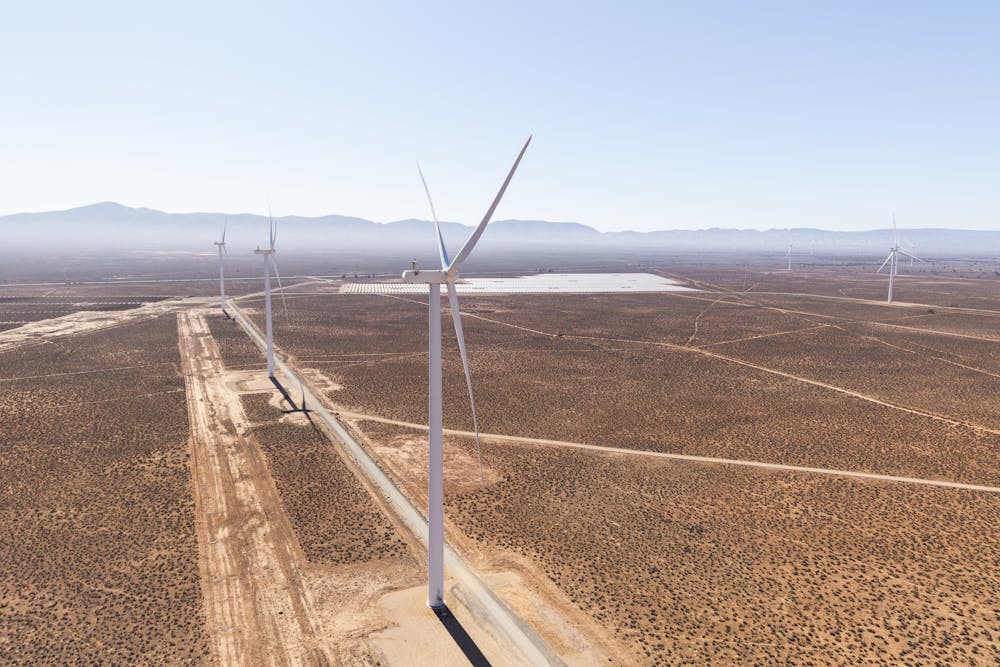
    But the same can’t be said for wind farms, the second-largest source of renewable energy in Australia. Onshore wind costs actually rose about 8% in 2023–24 and another 6% in 2024–25.

    The findings are contained in the GenCost 2024–25 report by CSIRO and the Australian Energy Market Operator, released this week.

    Rising costs are putting real pressure on the wind industry, undermining investor confidence. Developers of offshore wind projects are walking away, and even cheaper on-shore wind projects are under strain. Even as wind energy becomes a mainstay in China, the United States and Germany, the industry faces real headwinds in Australia.

    This is surprising. Wind, like solar, was projected to get steadily cheaper. The fuel is free and turbines are getting better and better. Instead, wind in Australia has remained stubbornly expensive. Solving the problem will be challenging. But solutions have to be found fast if Australia is to reach the goal of 82% renewable power in the grid by 2030 – now less than five years away.

    Australia has no offshore wind projects up and running – and cost spikes may put planned projects at risk.
    Obatala-photography/Shutterstock

    Five reasons why this is happening

    Here’s what’s going on:

    1. Global supply chains have been disrupted

    The cost of steel, copper, fibreglass and other materials vital for wind turbines shot up during the pandemic. As a result, turbine prices rose almost 40% between 2020 and 2022. While input costs have fallen, turbine prices remain high. Solar panels can be churned out in factories, but modern wind turbines are massive, complex structures that require specialised manufacturing and logistics. That makes them more sensitive to global price fluctuations.

    2. Good wind is often in remote places

    Australia’s best wind resources are typically far from cities and existing grid infrastructure. Connecting far-flung wind farms such as Tasmania’s Robbins Island to the grid can require new and very expensive transmission lines. Remote sites mean extra costs such as temporary worker accommodation. The GenCost report notes this has added about 4% to wind project budgets in 2024–25 compared with the year before.

    Many other countries rely heavily on offshore wind, because wind blows more strongly and reliably over oceans. Unfortunately, spiking costs are likely to further delay the arrival of offshore wind in Australia. GenCost projects the first offshore wind projects in Australia will face even steeper costs.

    Good wind resources are often located in remote areas of Australia.
    Brook Mitchell/Stringer via Getty

    3. Local construction and labour costs have soared

    Australia faces a shortage of workers with the skills to build and maintain wind farms, resulting in higher wages and recruitment costs. Wind developers say construction costs have become a real issue. Wind farms are more labour-intensive than solar.

    4. Interest rates have raised financing costs

    Wind farms require large upfront investments and lengthy construction periods. Even a small increase in interest rates can make them unviable – and interest rates have been high for some time.

    5. Reliability concerns, regulatory delay and community opposition

    According to US researchers, technical issues have emerged for some new wind turbines, creating unexpected costs for developers. The long, complex process of getting permits, carrying out environmental assessments and building community support is pushing out project timelines, increasing costs and uncertainty for developers.

    Will solar take over?

    Solar faces far fewer challenges. Solar panels are mass-produced, meaning costs are steadily driven down through economies of scale. Panels can be deployed quickly and solar farms tend to face less community opposition.

    Wind turbines have to spin to function, while solar panels have no moving parts (though systems that track the Sun do). As a result, solar farms require less maintenance and are more reliable.

    It’s no surprise large-scale solar has been on a record-breaking run, growing 20-fold between 2018 and 2023.

    Solar panels make electricity during daylight hours, especially in summer. By contrast, wind tends to produce more power at night and during winter months. This is why wind is so useful to a green grid.

    Generating power from both wind and sunshine can slash how much storage is needed to ensure grid reliability, lowering overall system costs. A balanced mix of wind, solar and storage will meet Australia’s electricity needs more efficiently and reliably than just solar and storage, according to the International Renewable Energy Agency and independent researchers.

    Could wind come back?

    Making wind more viable will take work. Potential solutions do exist, such as expanding the skilled workforce and investing in specialised ships and equipment to install turbines offshore.

    Shipping large turbines from Denmark or China is expensive. To avoid these costs, it could make sense to encourage local manufacturing of large and heavy parts such as the main tower.

    Other options include finding lower-cost turbine suppliers and streamlining regulatory processes.

    Rising material and labour costs have driven up the cost of wind turbines. Pictured: turbine blades in China’s Jiangsu province in 2022 about to be shipped to Australia.
    Xu Congjun/Future Publishing via Getty Images

    The newly announced expansion of the government’s Capacity Investment Scheme could help reduce risks and give certainty, alongside public investment in new transmission lines.

    If nothing is done or if new measures don’t help, wind is likely to stall while solar and storage race ahead.

    That’s not the worst outcome. Australia could get a long way by relying on batteries and pumped hydro to store power from solar during the day and release it in the evenings, as California is doing. But this strategy involves trade offs, such as higher storage-capacity needs and the risk of insufficient power during long cloudy periods.

    For Australia to optimise its mix of renewables and storage, policymakers will have to tackle wind’s cost challenges. Effective action could lower costs, accelerate project timelines and bolster flagging investor confidence.

    Magnus Söderberg does not work for, consult, own shares in or receive funding from any company or organisation that would benefit from this article, and has disclosed no relevant affiliations beyond their academic appointment.

    ref. 5 reasons why wind farms are costing more in Australia – and what to do about it – https://theconversation.com/5-reasons-why-wind-farms-are-costing-more-in-australia-and-what-to-do-about-it-262126

    MIL OSI AnalysisEveningReport.nz

  • MIL-Evening Report: ER Report: A Roundup of Significant Articles on EveningReport.nz for July 31, 2025

    ER Report: Here is a summary of significant articles published on EveningReport.nz on July 31, 2025.

    5 reasons why wind farms are costing more in Australia – and what to do about it
    Source: The Conversation (Au and NZ) – By Magnus Söderberg, Professor and Director, Centre for Applied Energy Economics and Policy Research, Griffith University Saeed Khan/Getty Building a solar farm in Australia is getting about 8% cheaper each year as panel prices fall and technology improves, according to an official new report. Battery storage costs are

    Sporty spice: how romance fiction is adding a new dynamic to sports fandom
    Source: The Conversation (Au and NZ) – By Kasey Symons, Lecturer of Communication, Sports Media, Deakin University Sports fans might love their teams, cheer or curse each game’s result and admire their favourite athletes, but we rarely associate sports with romance. However, that may be slowly changing thanks to the recent spike in the popularity

    Just as NZ began collecting meaningful data on rainbow communities, census changes threaten their visibility
    Source: The Conversation (Au and NZ) – By Lori Leigh, Research Fellow in Public Health, University of Otago Getty Images New Zealand’s 2023 census was the first to collect data on gender identity and sexual orientation, showing one in 20 adults identify as LGBTQIA+. But just as reports from this more inclusive census are being

    Big tech says AI could boost Australia’s economy by $115 billion a year. Does the evidence stack up?
    Source: The Conversation (Au and NZ) – By Uri Gal, Professor in Business Information Systems, University of Sydney Imaginima / Getty Images AI is on the agenda in Canberra. In August, the Productivity Commission will release an interim report on harnessing data and digital technology such as AI “to boost productivity growth, accelerate innovation and

    Progress on Closing the Gap is stagnant or going backwards. Here are 3 things to help fix it
    Source: The Conversation (Au and NZ) – By Madeleine Pugin, Research Fellow, School of Government and International Relations, Griffith University The Productivity Commission’s latest data on Closing the Gap progress represents an unsurprisingly grim overview of the socioeconomic inequalities experienced by Aboriginal and Torres Strait Islander peoples. Closing the Gap is the plan federal and

    More than 2 in 5 young Australians are lonely, our new report shows. This is what could help
    Source: The Conversation (Au and NZ) – By Michelle H. Lim, Associate Professor, Sydney School of Public Health, University of Sydney Oliver Rossi/Getty Images Loneliness is not a word often associated with young people. We tend to think of our youth as a time spent with family, friends and being engaged with school and work

    How migrant business owners turn their identity into an asset, despite some bumps along the way
    Source: The Conversation (Au and NZ) – By Shea X. Fan, Associate Professor, Human Resource Management, Deakin University Odua Images/Shutterstock Too often, it’s anti-immigration sentiment dominating headlines in Australia. But a quieter story is going untold. Migrants are not just fitting into Australian society, they’re actively reshaping it through entrepreneurship. Starting a business is difficult

    The Man from Hong Kong at 50: how the first ever Australian–Hong Kong co-production became a cult classic
    Source: The Conversation (Au and NZ) – By Gregory Ferris, Senior Lecturer, Media Arts & Production, University of Technology Sydney LMPC via Getty Images A cinematic firecracker of a film exploded onto international screens 50 years ago this week, blending martial arts mayhem, Bond-esque set pieces, casual racism – and a distinctly Australian swagger. From

    Rules for calculating climate risk in financial reporting by NZ businesses need revisiting – new research
    Source: The Conversation (Au and NZ) – By Martien Lubberink, Associate Professor of Accounting and Capital, Te Herenga Waka — Victoria University of Wellington Andrew MacDonald/Getty Images The recent International Court of Justice (ICJ) decision on climate action marked a significant step forward in formalising an idea many already accept: climate inaction is not merely

    Climate justice victory at the ICJ – the student journey from USP lectures to The Hague
    By Vahefonua Tupola in Suva The University of the South Pacific (USP) is at the heart of a global legal victory with the International Court of Justice (ICJ) delivering a historic opinion last week affirming that states have binding legal obligations to protect the environment from human-induced greenhouse gas emissions. The case, hailed as a

    Climate justice victory at the ICJ – the student journey from USP lectures to The Hague
    By Vahefonua Tupola in Suva The University of the South Pacific (USP) is at the heart of a global legal victory with the International Court of Justice (ICJ) delivering a historic opinion last week affirming that states have binding legal obligations to protect the environment from human-induced greenhouse gas emissions. The case, hailed as a

    Kamchatka earthquake is among top 10 strongest ever recorded. Here’s what they have in common
    Source: The Conversation (Au and NZ) – By Dee Ninis, Earthquake Scientist, Monash University Today at about 11:30am local time, a magnitude 8.8 earthquake struck off the coast of Russia’s Kamchatka Peninsula in the country’s far east. Originating at a depth of roughly 20 kilometres, today’s powerful earthquake – among the ten strongest in recorded

    Kamchatka earthquake is among top 10 strongest ever recorded. Here’s what they have in common
    Source: The Conversation (Au and NZ) – By Dee Ninis, Earthquake Scientist, Monash University Today at about 11:30am local time, a magnitude 8.8 earthquake struck off the coast of Russia’s Kamchatka Peninsula in the country’s far east. Originating at a depth of roughly 20 kilometres, today’s powerful earthquake – among the ten strongest in recorded

    Tsunami warnings are triggering mass evacuations across the Pacific – even though the waves look small. Here’s why
    Source: The Conversation (Au and NZ) – By Milad Haghani, Associate Professor and Principal Fellow in Urban Risk and Resilience, The University of Melbourne Last night, one of the ten largest earthquakes ever recorded struck Kamchatka, the sparsely populated Russian peninsula facing the Pacific. The magnitude 8.8 quake had its epicentre in the sea just

    NAPLAN is just one test. Here’s what to do if your child’s results were in the bottom bands
    Source: The Conversation (Au and NZ) – By Sally Larsen, Senior Lecturer in Education, University of New England Rawpixel/ Getty Images The latest round of NAPLAN results are out, along with a string of news reports about “students falling behind” and “failing”, and experts sounding the “alarm” about school progress. In March, all Australian students

    Inflation slows again — but is it enough for the Reserve Bank to cut interest rates?
    Source: The Conversation (Au and NZ) – By Stella Huangfu, Associate Professor, School of Economics, University of Sydney Doublelee/Shutterstock Inflation is moving in the right direction, but new figures released today may not be soft enough to trigger a cut in official interest rates in August. The Australian Bureau of Statistics released the June quarter

    With the UK and France moving toward recognising Palestine, will Australia now follow suit?
    Source: The Conversation (Au and NZ) – By Donald Rothwell, Professor of International Law, Australian National University One of the smallest and most exclusive clubs in the world belongs to states. The US Department of State puts the number of independent recognised states at 197, while others count 200. The United Nations, meanwhile, has 193

    With the UK and France moving toward recognising Palestine, will Australia follow suit?
    Source: The Conversation (Au and NZ) – By Donald Rothwell, Professor of International Law, Australian National University One of the smallest and most exclusive clubs in the world belongs to states. The US Department of State puts the number of independent recognised states at 197, while others count 200. The United Nations, meanwhile, has 193

    An underwater observatory keeping the pulse of the Southern Ocean for nearly 30 years yields fresh results
    Source: The Conversation (Au and NZ) – By Christopher Traill, PhD Candidate Southern Ocean biogeochemistry, University of Tasmania Elizabeth Shadwick In a world affected by climate change, the Southern Ocean plays an outsized role. It absorbs up to 40% of the human-caused emissions taken up by the oceans while also being home to some of

    MIL OSI AnalysisEveningReport.nz

  • MIL-OSI USA: Lummis Praises President’s Working Group Report on Digital Assets

    US Senate News:

    Source: United States Senator for Wyoming Cynthia Lummis

    July 30, 2025

    Washington, D.C. –  U.S. Senator Cynthia Lummis (R-WY) Chair of the U.S. Senate Banking Subcommittee on Digital Assets, released the following statement applauding the impactful efforts of the President’s Working Group on Digital Asset Markets to continue to secure America’s position as the global financial services leader. 

    “I’m overjoyed we finally have a president who understands the transformative power of digital assets and distributed ledger technology to build America’s financial future,” said Lummis. “I’ve been working on many of the proposals found in President Trump’s report since I took office in 2021, and I look forward to partnering with him to deliver on these transformational policies.”

    Since taking office, Senator Lummis has led the charge on the following policies contained in the President’s Working Group report:

    • Senator Lummis has consistently pressured the Federal Reserve Board and Federal Reserve Banks for their failure to follow existing Federal law on providing master accounts to eligible depository institutions engaged in digital asset activities, resulting in the withdrawal of President Biden’s nominee for Vice Chair of Supervision at the Fed, Sarah Bloom Raskin.
    • She has also been the top advocate on Capitol Hill to end Operation Chokepoint 2.0 and ensure that Federal banking regulators do not discriminate against crypto companies—exposing a secret instruction from the Federal Reserve to consider reputation risk and “controversial commentary” in regulating banks engaged in crypto activities.
    • Building off of Wyoming 2019 legislation, Senator Lummis introduced legislation creating a financial technology sandbox for digital asset companies in 2022, and is currently working on a similar proposal as part of the Senate Banking Committee’s comprehensive market structure legislation.
    • She is also the leading advocate on Capitol Hill to integrate digital assets into our nation’s tax code, having introduced legislation in 2022, 2023 and 2025 to create a de minimis exemption for small digital asset purchases, end the double taxation of digital asset miners and stakers, close the wash sale loophole, enable mark to market accounting and end the unfair application of the corporate alternative minimum tax (CAMT). 

    MIL OSI USA News

  • MIL-OSI New Zealand: Greenpeace – Luxon opens the door to billions in taxpayer-funded oil field decommissioning costs

    Source: Greenpeace

    In an act of climate denial, the Luxon Government is today planning to pass legislation to try to restart offshore oil and gas exploration, but they are also slipping in a further amendment that opens the door to taxpayers picking up the billion dollar tab to decommission oil and gas infrastructure.
    “Attempting to restart offshore oil and gas exploration is bad enough, given advice from the International Energy Agency that we can’t burn existing known fossil fuel reserves if we are to avoid dangerous global heating. When you’re in a hole the first step to escape is to stop digging,” says Greenpeace Aotearoa Executive Director Dr. Russel Norman.
    “The environment movement will fight any new offshore oil and gas exploration just like we did when John Key was Prime Minister.
    “But this legislation is even worse: Luxon is proposing to overturn existing law that makes oil companies automatically responsible for the costs of decommissioning oil and gas fields.”
    Under existing law, even if an existing operator onsells an end-of-life oil and gas field to a shell company, which then goes bankrupt when faced with the costs of decommissioning, the original operator is still responsible for the cost.
    “Luxon is changing the legislation so that the Minister of Resources and the Minister of Finance are given total ministerial discretion to approve the onselling of the depleted field, and if they approve and the final operator goes bankrupt, the original oil field operator is NOT responsible for the decommissioning costs. The government will end up with the cost.
    “New Zealand taxpayers will be the ones that will be picking up the cost of cleaning up after oil companies abandon exhausted oil fields. Costs that could run into billions of dollars,” says Dr. Norman.
    “New Zealand has already learnt an expensive lesson in how the oil industry operates. The Tui oil field passed through a number of hands before it was finally sold to an offshore oil company Tamarind that had little money, and Tamarind went bankrupt when faced with the cost of decommissioning the exhausted field. New Zealand taxpayers were stung for $300million to clean up the mess and plug the wells, which was only completed in June 2025.
    “After the Tui field fiasco, the law was changed to make sure oil field operators were responsible for the clean up costs, regardless of how many shell companies to which it was onsold.
    “The oil industry hated the changes to the law on liability for decommissioning costs as much as they hated the ending of offshore oil and gas exploration. And now they have their chance to pass on the costs to the taxpayers and you can be sure they will take it.
    “As the New Zealand oil and gas industry enters its sunset phase, the costs of plugging the wells and cleaning up all the seafloor pipes etc will run into the billions.
    “This fossil fuel-obsessed government has given in to pressure from the oil industry and opened the door to making taxpayers pick up the costs of cleaning up after them.
    “This is part of a trend by this backward-looking Luxon government which has allocated $200m to help invest in new gas fields.
    “Last month, it brought embarrassing shame to New Zealand by pulling out of the international Beyond Oil and Gas coalition, which has pledged to phase out fossil fuels.”
    “New Zealand will have energy security, lower prices and low emissions by investing in solar, wind, geothermal, storage, efficiency and demand side management. That is our future, not the nonsense being promoted by Luxon and Shane Jones.”
    Resources
    The 2021 amendments to make oil companies responsible for decommissioning costs:

    MIL OSI New Zealand News

  • MIL-OSI Europe: Inter-agency initiative to attract and retain international expertise

    Source: Government of Sweden

    The shortage of workers with sought-after skills is one of the main obstacles to growth for companies in Sweden and has also become an obstacle to regional development. In light of this, the Government is allocating SEK 25 million in 2024 to strengthen coordination of the ongoing efforts of eleven government agencies linked to attracting and retaining international expertise.

    MIL OSI Europe News

  • MIL-OSI Europe: Strong engagement for Sweden’s mobilised efforts to boost global competitiveness and foreign trade

    Source: Government of Sweden

    On 9 April, Minister for Energy, Business and Industry and Deputy Prime Minister Ebba Busch and Minister for International Development Cooperation and Foreign Trade Johan Forssell gathered leading actors in Team Sweden for a high-level meeting. The aim was to jointly foster better conditions for improved global competitiveness and foreign trade, and bolster Sweden’s position internationally. The Government organised the meeting to discuss the work already in progress and the joint path forward.

    MIL OSI Europe News

  • MIL-OSI: Euronet Worldwide Reports Second Quarter 2025 Financial Results – Highlighted by 13% Operating Income Growth

    Source: GlobeNewswire (MIL-OSI)

    • Digital growth strategy accelerated with the announced acquisition of leading credit card issuing platform
    • Ren signs agreement with top tier United States bank
    • Money Transfer expands digital remittance through Google partnership
    • Money Transfer enters Japanese market with acquisition of Kyodai Remittance
    • Operating margin expansion of 112 basis points

    LEAWOOD, Kan., July 30, 2025 (GLOBE NEWSWIRE) — Euronet (“Euronet” or the “Company”) (NASDAQ: EEFT), a global leader in payments processing and cross-border transactions, announced today second quarter 2025 financial results.

    Euronet reports the following consolidated results for the second quarter 2025 compared with the same period of 2024:

    • Revenues of $1,074.3 million, a 9% increase from $986.2 million (6% increase on a constant currency1 basis).
    • Operating income of $158.6 million, an 18% increase from $134.3 million (13% increase on a constant currency basis).
    • Adjusted EBITDA2 of $206.2 million, a 16% increase  from $178.2 million (11% increase on a constant currency basis).
    • Net income attributable to Euronet of $97.6 million, or $2.27 diluted earnings per share, compared with $83.1 million, or $1.73 diluted earnings per share.
    • Adjusted earnings per share3 of $2.56, a 14% increase from $2.25. 

    See the reconciliation of non-GAAP items in the attached financial schedules.   

    “I’m very pleased with the business’ constant currency operating profit growth of 13% and the margin expansion of 112 basis points—on its own, this is exciting.  But, I’m more excited about our accomplishments to further our digital strategy through the acquisition of a leading credit card issuing platform – CoreCard – and the signing of a Ren agreement with one of the top three banks in the United States. 

    The acquisition of CoreCard fits nicely with our Ren platform. As described in a separate press release, this is not just a credit issuing platform, it’s a platform serving leading brands in the US, processing at scale, tried and tested. This premier product gives us yet more opportunity to go after the $10 billion issuing market where the market growth rates are much stronger outside the United States, which aligns strongly with our global business where more than 75% of our revenues are from outside the United States.  Moreover, another exciting aspect of the issuing business is its margin opportunity, nearing 50 percent.  It’s these kinds of initiatives that have contributed to our 20-year double digit growth rate and will continue to drive future growth – focused on digital payments.  This acquisition is directly in line with our strategy to shift a stronger mix of our business toward the digital economy. 

    Not only did we advance our digital agenda with the credit issuing platform, we just signed an agreement with one of the top three banks in the United States for the deployment of our Ren ATM operating and switching product.  While we have had many successes with Ren outside the US, this is not just the first agreement in the US we’ve signed, but it is with super impressive top-tiered bank – a real testament to the value proposition of Ren”, said Michael J. Brown, Euronet’s Chairman and Chief Executive Officer.

    Segment and Other Results

    The EFT Processing Segment reports the following results for the second quarter 2025 compared with the same period or date in 2024:

    • Revenues of $338.5 million, an 11% increase from $305.4 million (6% increase on a constant currency basis).
    • Operating income of $84.6million, a 6% increase from $79.9 million (1% increase on a constant currency basis).
    • Adjusted EBITDA of $110.6 million, a 5% increase from $105.0 million (no change on a constant currency basis).
    • Total of 57,326 installed ATMs as of June 30, 2025, a 5% increase from 54,736. We operated 56,760 active ATMs as of June 30, 2025, a 5% increase from 54,005 as of June 30, 2024.

    Constant currency revenue, operating income, and adjusted EBITDA growth in the second quarter 2025 was driven by market expansion, growth across most existing markets and the addition of access fees and an increase in interchange fees in certain markets. 

    The epay Segment reports the following results for the Q2 2025 compared with the same period or date in 2024:

    • Revenues of $280.1 million, a 7% increase from $260.9 million (5% increase on a constant currency basis).
    • Operating income of $31.1 million, a 19% increase from $26.2 million (17% increase on a constant currency basis).
    • Adjusted EBITDA of $32.8 million, a 17% increase from $28.0 million (15% increase on a constant currency basis).
    • Transactions of 1,107 million, consistent with prior year.
    • POS terminals of approximately 721,000 as of June 30, 2025, a 3% increase from 703,000.
    • Retailer locations of approximately 354,000 as of June 30, 2025, a 4% increase from 340,000.

    Constant currency revenue growth was driven by continued payments and digital media growth. Operating income and adjusted EBITDA grew faster than revenue, driven by a shift in product mix and effective operating expense management. Transaction growth from payments and digital media was offset by a decrease in low margin mobile transactions in India.

    The Money Transfer Segment reports the following results for the Q2 2025 compared with the same period or date in 2024:

    • Revenues of $457.9 million, a 9% increase from $421.8 million (6% increase on a constant currency basis).
    • Operating income of $65.6 million, a 39% increase from $47.3 million (33% increase on a constant currency basis).
    • Operating margin expansion of 296 basis points
    • Adjusted EBITDA of $71.6 million, a 33% increase from $54.0 million (28% increase on a constant currency basis).
    • Total transactions of 46.1 million, a 4% increase from 44.3 million.
    • Total digital transactions of 5.8 million, a 29% increase from 4.5 million.
    • Network locations of approximately 631,000 as of June 30, 2025, an 8% increase from approximately 586,000.

    Constant currency revenue growth was primarily driven by growth in cross-border transactions, partially offset by a decrease in intra-US transactions. Direct-to-consumer digital transactions grew by 29%, reflecting continued consumer demand for digital products. Operating income and adjusted EBITDA growth outpaced revenue growth due to gross margin expansion and leverage of scale. Additionally, the Money Transfer segment continued to expand both its market footprint through the acquisition of a 60% interest in Kyodai Remittance as well as its industry leading global payments network to now reach 4.1 billion bank accounts, 3.2 billion wallet accounts and 631,000 payment locations.

    Corporate and Other reports $22.7 million of expense for the second quarter 2025 compared with $19.1 million for the second quarter 2024. The increase in corporate expenses is largely from the increase in long-term share-based compensation.

    Balance Sheet and Financial Position
    Unrestricted cash and cash equivalents on hand was $1,329.3 million as of June 30, 2025, compared to $1,393.6 million as of March 31, 2025. Total indebtedness was $2,438.1 million as of June 30, 2025, compared to $2,202.5 million as of March 31, 2025. Availability under the Company’s revolving credit facilities was approximately $884.2 million as of June 30, 2025. 

    The change in net cash is the result of cash generated from operations, working capital fluctuations and share repurchases of $2.3 million shares for $247 million during the second quarter.

    Outlook
    Taking into consideration recent trends in the business and the global economy, the Company anticipates its 2025 adjusted EPS will grow 12% to 16% year-over-year, consistent with its 10- and 20-year compounded annualized growth rates. This outlook does not include any changes that may develop in foreign exchange rates, interest rates or other unforeseen factors.

    Non-GAAP Measures
    In addition to the results presented in accordance with U.S. GAAP, the Company presents non-GAAP financial measures, such as constant currency financial measures, operating income, adjusted EBITDA, and adjusted earnings per share. These measures should be used in addition to, and not a substitute for, revenues, operating income, net income and earnings per share computed in accordance with U.S. GAAP. We believe that these non-GAAP measures provide useful information to investors regarding the Company’s performance and overall results of operations. These non-GAAP measures are also an integral part of the Company’s internal reporting and performance assessment for executives and senior management. The non-GAAP measures used by the Company may not be comparable to similarly titled non-GAAP measures used by other companies. The attached schedules provide a full reconciliation of these non-GAAP financial measures to their most directly comparable U.S. GAAP financial measure.

    The Company does not provide a reconciliation of its forward-looking non-GAAP measures to GAAP due to the inherent difficulty in forecasting and quantifying certain amounts that are necessary for GAAP and the related GAAP and non-GAAP reconciliation, including adjustments that would be necessary for foreign currency exchange rate fluctuations and other charges reflected in the Company’s reconciliation of historic numbers, the amount of which, based on historical experience, could be significant.  

    (1) Constant currency financial measures are computed as if foreign currency exchange rates did not change from the prior period. This information is provided to illustrate the impact of changes in foreign currency exchange rates on the Company’s results when compared to the prior period.

    (2) Adjusted EBITDA is defined as net income excluding, to the extent incurred in the period, interest expense, income tax expense, depreciation, amortization, share-based compensation and other non-cash purchase accounting adjustments, non-operating or non-recurring items that are considered expenses or income under U.S. GAAP. Adjusted EBITDA represents a performance measure and is not intended to represent a liquidity measure.

    (3) Adjusted earnings per share is defined as diluted U.S. GAAP earnings per share excluding, to the extent incurred in the period, the tax-effected impacts of: a) foreign currency exchange gains or losses, b) share-based compensation, c) acquired intangible asset amortization, d) non-cash income tax expense, e) non-cash investment gain f) other non-operating or non-recurring items and g) dilutive shares relate to the Company’s convertible bonds. Adjusted earnings per share represent a performance measure and is not intended to represent a liquidity measure. 

    Conference Call and Slide Presentation
    Euronet Worldwide will host an analyst conference call on July 31, 2025, at 9:00 a.m. Eastern Time to discuss these results. The call may also include discussion of Company developments on the Company’s operations, forward-looking information, and other material information about business and financial matters. The conference call and accompanying slide show presentation will be accessible via webcast by following the link posted on http://ir.euronetworldwide.com.  Participants wanting to access the conference call by telephone should dial (800)715-9871 (USA) or (646)307-1963 (international).

    A webcast replay will be available beginning approximately one hour after the event at http://ir.euronet worldwide.com and will remain available for one year.

    About Euronet Worldwide, Inc.
    A global leader in payments processing and cross-border transactions, Euronet moves money in all the ways consumers and businesses depend upon. This includes money transfers, credit/debit processing, ATMs, point-of-sale services, branded payments, currency exchange and more. With products and services in more than 200 countries and territories provided through its own brand and branded business segments, Euronet and its financial technologies and networks make participation in the global economy easier, faster and more secure for everyone. Visit the company’s website at www.euronetworldwide.com.

    Starting in Central Europe in 1994, Euronet now supports an extensive global real-time digital and cash payments network that includes 57,326 installed ATMs, approximately 1.2 million EFT point-of-sale terminals and a growing portfolio of outsourced debit and credit card services which are under management in 69 countries; card software solutions; a prepaid processing network of approximately 721,000 point-of-sale terminals at approximately 354,000 retailer locations in 64 countries; and a global money transfer network of approximately 631,000 locations serving 200 countries and territories with digital connections to 4.1 billion bank accounts, 3.2 billion digital wallet accounts and 4.0 billion Visa debit cards through Visa Direct payments. Euronet serves clients from its corporate headquarters in Leawood, Kansas, USA, and 67 worldwide offices. For more information, please visit the company’s website at www.euronetworldwide.com.

    Cautionary Statement Regarding Forward-Looking Statements
    This communication contains “forward-looking statements” within the United States Private Securities Litigation Reform Act of 1995. You can identify these statements and other forward-looking statements in this document by words such as “may,” “will,” “should,” “can,” “could,” “anticipate,” “estimate,” “expect,” “predict,” “project,” “future,” “potential,” “intend,” “plan,” “assume,” “believe,” “forecast,” “look,” “build,” “focus,” “create,” “work,” “continue,” “target,” “poised,” “advance,” “drive,” “aim,” “forecast,” “approach,” “seek,” “schedule,” “position,” “pursue,” “progress,” “budget,” “outlook,” “trend,” “guidance,” “commit,” “on track,” “objective,” “goal,” “strategy,” “opportunity,” “ambitions,” “aspire” and similar expressions, and variations or negative of such terms or other variations thereof. Words and terms of similar substance used in connection with any discussion of future plans, actions, or events identify forward-looking statements. 

    Forward-looking statements by their nature address matters that are, to different degrees, uncertain, such statements regarding the transactions contemplated by the Agreement and Plan of Merger (the “Merger Agreement’), dated as of July 30, 2025, by and among CoreCard, Euronet and Genesis Merger Sub Inc. (the “Transaction”), including the expected timing of the closing of the Transaction; future financial and operating results; benefits and synergies of the Transaction; future opportunities for the combined company; the conversion of equity interests contemplated by the Merger Agreement; the issuance of common stock of Euronet contemplated by the Merger Agreement; the expected filing by Euronet with the SEC of the Registration Statement and the proxy statement/prospectus; the ability of the parties to complete the proposed Transaction considering the various closing conditions and any other statements about future expectations that constitute forward-looking statements within the meaning of the Private Securities Litigation Reform Act of 1995, Section 27A of the Securities Act of 1933 and Section 21E of the Securities Exchange Act of 1934. All such forward-looking statements are based upon current plans, estimates, expectations and ambitions that are subject to risks, uncertainties and assumptions, many of which are beyond the control of Euronet and CoreCard, that could cause actual results to differ materially from those expressed in such forward-looking statements. Key factors that could cause actual results to differ materially include, but are not limited to, the expected timing and likelihood of completion of the Transaction, including the timing, receipt and terms and conditions of any required governmental and regulatory approvals of the Transaction; the occurrence of any event, change or other circumstances that could give rise to the termination of the definitive agreement; the possibility that CoreCard’s shareholders may not approve the Transaction; the risk that the parties may not be able to satisfy the conditions to the Transaction in a timely manner or at all; risks related to disruption of management time from ongoing business operations due to the Transaction; the risk that any announcements relating to the Transaction could have adverse effects on the market price of Euronet’s common stock; the risk that the Transaction and its announcement could have an adverse effect on the parties’ business relationships and business generally, including the ability of CoreCard or Euronet to retain customers and retain and hire key personnel and maintain relationships with their suppliers and customers, and on their operating results and businesses generally; the risk of unforeseen or unknown liabilities; customer, shareholder, regulatory and other stakeholder approvals and support; the risk of potential litigation relating to the Transaction that could be instituted against CoreCard or its directors and/or officers; the risk associated with third party contracts containing material consent, anti-assignment, transfer or other provisions that may be related to the Transaction which are not waived or otherwise satisfactorily resolved; the risk of rating agency actions and Euronet’s ability to access short- and long-term debt markets on a timely and affordable basis; the risk of various events that could disrupt operations, including: conditions in world financial markets and general economic conditions; inflation; the war in Ukraine and the related economic sanctions; and military conflicts in the Middle East.

    These risks, as well as other risks related to the proposed Transaction, will be described in the Registration Statement that will be filed with the SEC in connection with the proposed Transaction. While the list of factors presented here and the list of factors to be presented in the Registration Statement are considered representative, no such list should be considered to be a complete statement of all potential risks and uncertainties. Additional factors that may affect future results are contained in each company’s filings with the SEC, including each company’s most recent Annual Report on Form 10-K, as it may be updated from time to time by quarterly reports on Form 10-Q and current reports on Form 8-K, all of which are available at the SEC’s website http://www.sec.gov. Euronet regularly posts important information to the investor relations section of its website. Any forward-looking statements made in this release speak only as of the date of this release. Except as may be required by law, neither Euronet nor CoreCard intends to update these forward-looking statements and undertakes no duty to any person to provide any such update under any circumstances.

    Important Information for Investors and Stockholders
    In connection with the proposed transaction, Euronet plans to file with the SEC a registration statement on Form S-4 (the “Registration Statement”), which will include a proxy statement of CoreCard that also constitutes a prospectus of Euronet, and any other documents in connection with the transaction. After the Registration Statement has been declared effective by the SEC, the definitive proxy statement/prospectus will be sent to the holders of common stock of CoreCard. INVESTORS AND SHAREHOLDERS OF CORECARD AND EURONET ARE URGED TO READ THE PROXY STATEMENT/PROSPECTUS AND ANY OTHER DOCUMENTS FILED OR TO BE FILED WITH THE SEC IN CONNECTION WITH THE TRANSACTION WHEN THEY BECOME AVAILABLE, AS THEY WILL CONTAIN IMPORTANT INFORMATION ABOUT EURONET, CORECARD, THE TRANSACTION AND RELATED MATTERS. The registration statement and proxy statement/prospectus and other documents filed by Euronet or CoreCard with the SEC, when filed, will be available free of charge at the SEC’s website at www.sec.gov. Alternatively, investors and stockholders may obtain free copies of documents that are filed or will be filed with the SEC by Euronet, including the registration statement and the proxy statement/prospectus, on Euronet’s website at https://ir.euronetworldwide.com/for-investors, and may obtain free copies of documents that are filed or will be filed with the SEC by CoreCard, including the proxy statement/prospectus, on CoreCard’s website at https://investors.CoreCard.com/. The information included on, or accessible through, Euronet’s or CoreCard’s website is not incorporated by reference into this press release.

    No Offer or Solicitation
    This press release is not intended to and shall not constitute an offer to sell or the solicitation of an offer to buy any securities, nor shall there be any sale of securities in any jurisdiction in which such offer, solicitation or sale would be unlawful prior to appropriate registration or qualification under the securities laws of such jurisdiction. No offering of securities shall be made except by means of a prospectus meeting the requirements of Section 10 of the Securities Act of 1933, as amended.

    Participants in the Solicitation
    Euronet and CoreCard and their respective directors, executive officers and other employees may be deemed to be participants in the solicitation of proxies from CoreCard’s shareholders in connection with the proposed Transaction. A description of participants’ direct or indirect interests, by security holdings or otherwise, will be included in the proxy statement/prospectus relating to the proposed Transaction when it is filed with the SEC. Information regarding Euronet’s directors and executive officers is contained in the definitive proxy statement, dated April 4, 2025, for its 2025 annual meeting of stockholders, and in Euronet’s Annual Report on Form 10-K for the fiscal year ended December 31, 2024. Information regarding CoreCard’s directors and executive officers is contained in CoreCard’s definitive proxy statement, dated April 14, 2025, for its 2025 annual meeting of shareholders, and CoreCard’s Annual Report on Form 10-K for the fiscal year ended December 31, 2024. Additional information regarding ownership of Euronet’s securities by its directors and executive officers, and of ownership of CoreCard’s securities by its directors and executive officers, is included in each such person’s SEC filings on Forms 3 and 4. These documents and the other SEC filings described in this paragraph may be obtained free of charge as described above under the heading “Important Information for Investors and Stockholders.”

     EURONET WORLDWIDE, INC.
     Condensed Consolidated Balance Sheets
     (in millions)
      As of    
      June 30,   As of
      2025   December 31,
      (unaudited)   2024
    ASSETS          
    Current assets:          
    Cash and cash equivalents $ 1,329.3   $ 1,278.8
    ATM cash   937.4     643.8
    Restricted cash   40.3     9.2
    Settlement assets   1,547.1     1,522.7
    Trade accounts receivable, net   328.4     284.9
    Prepaid expenses and other current assets   353.8     297.1
    Total current assets   4,536.3     4,036.5
               
    Property and equipment, net   365.0     329.7
    Right of use lease asset, net   152.5     132.1
    Goodwill and acquired intangible assets, net   1,160.4     1,048.1
    Other assets, net   340.7     288.1
    Total assets $ 6,554.9   $ 5,834.5
               
    LIABILITIES AND EQUITY          
    Current liabilities:          
    Settlement obligations $ 1,547.1   $ 1,522.7
    Accounts payable and other current liabilities   898.3     842.3
    Current portion of operating lease obligations   55.0     48.3
    Short-term debt obligations   1,434.8     812.7
    Total current liabilities   3,935.2     3,226.0
               
    Debt obligations, net of current portion   1,002.3     1,134.4
    Operating lease obligations, net of current portion   100.8     87.4
    Capital lease obligations, net of current portion   1.0     1.4
    Deferred income taxes   64.4     71.8
    Other long-term liabilities   87.8     84.3
    Total liabilities   5,191.5     4,605.3
    Total equity   1,363.4     1,229.2
    Total liabilities and equity $ 6,554.9   $ 5,834.5
     EURONET WORLDWIDE, INC.
     Consolidated Statements of Operations
     (unaudited – in millions, except share and per share data)
       Three Months Ended
       June 30,
      2025     2024  
    Revenues $ 1,074.3     $ 986.2  
               
    Operating expenses:          
    Direct operating costs, exclusive of depreciation   620.6       580.8  
    Salaries and benefits   173.5       158.0  
    Selling, general and administrative   87.8       79.4  
    Depreciation and amortization   33.8       33.7  
    Total operating expenses   915.7       851.9  
    Operating income   158.6       134.3  
               
    Other income (expense):          
    Interest income   6.2       5.9  
    Interest expense   (28.2 )     (20.1 )
    Foreign currency exchange loss, net   (5.7 )     1.5  
    Other income   0.4       0.8  
    Total other expense, net   (27.3 )     (11.9 )
    Income before income taxes   131.3       122.4  
               
    Income tax expense   (33.6 )     (39.2 )
    Net income   97.7       83.2  
    Net loss attributable to noncontrolling interests   (0.1 )     (0.1 )
    Net income attributable to Euronet Worldwide, Inc. $ 97.6     $ 83.1  
    Add: Interest expense from assumed conversion of convertible notes, net of tax   0.1       1.0  
    Net income for diluted earnings per share calculation $ 97.7     $ 84.1  
    Earnings per share attributable to Euronet          
    Worldwide, Inc. stockholders – diluted $ 2.27     $ 1.73  
               
    Diluted weighted average shares outstanding   42,954,631       48,700,270  
     EURONET WORLDWIDE, INC.
    Reconciliation of Net Income to Operating Income (Expense) to Operating Income (Expense) and Adjusted EBITDA
     (unaudited – in millions)

    .

      Three months ended June 30, 2025
      EFT
    Processing
    epay Money
    Transfer
    Corporate
    Services
    Consolidated
    Net income                         $ 97.7
    Add: Income tax expense                           33.6
    Add: Total other expense, net                           27.3
    Operating income (expense) $ 84.6   $ 31.1   $ 65.6   $ (22.7 )   $ 158.6
    Add: Depreciation and amortization   26.0     1.7     6.0     0.1       33.8
    Add: Share-based compensation               13.8       13.8
    Earnings before interest, taxes, depreciation, amortization, share-based
    compensation (Adjusted EBITDA)
    $ 110.6   $ 32.8   $ 71.6   $ (8.8 )   $ 206.2

    .

      Three months ended June 30, 2024
      EFT
    Processing
    epay Money
    Transfer
    Corporate
    Services
    Consolidated
    Net income                         $ 83.2
    Add: Income tax expense                           39.2
    Add: Total other expense, net                           11.9
    Operating income (expense) $ 79.9   $ 26.2   $ 47.3   $ (19.1 )   $ 134.3
    Add: Depreciation and amortization   25.1     1.8     6.7     0.1       33.7
    Add: Share-based compensation               10.2       10.2
    Earnings before interest, taxes, depreciation, amortization, share-based
    compensation (Adjusted EBITDA) (1)
    $ 105.0   $ 28.0   $ 54.0   $ (8.8 )   $ 178.2


    (1)
    Adjusted EBITDA is a non-GAAP measure that should be considered in addition to, and not a substitute for, net income computed in accordance with U.S. GAAP.

     EURONET WORLDWIDE, INC.
     Reconciliation of Adjusted Earnings per Share
     (unaudited – in millions, except share and per share data)
     
      Three Months Ended
      June 30,
      2025     2024  
    Net income attributable to Euronet Worldwide, Inc. $ 97.6     $ 83.1  
    Foreign currency exchange loss (gain)   5.7       (1.5 )
    Intangible asset amortization (1)   4.7       6.5  
    Share-based compensation (2)   13.8       10.2  
    Income tax effect of above adjustments (3)   (13.7 )     4.3  
    Non-cash investment gain (4)   (0.4 )      
    Non-cash GAAP tax expense (5)   3.0       1.9  
    Adjusted earnings (6) $ 110.7     $ 104.5  
    Adjusted earnings per share – diluted (6) $ 2.56     $ 2.25  
    Diluted weighted average shares outstanding (GAAP)   42,954,631       48,700,270  
    Effect of adjusted EPS dilution of convertible notes   (176,123 )     (2,781,818 )
    Effect of unrecognized share-based compensation on diluted shares
    outstanding
      406,912       420,305  
    Adjusted diluted weighted average shares outstanding   43,185,420       46,338,757  

    (1) Intangible asset amortization of $4.7 million and $6.5 million are included in depreciation and amortization expense of $33.8 million and $33.7 million for both the three months ended June 30, 2025 and June 30, 2024, in the consolidated statements of operations.

    (2) Share-based compensation of $13.8 million and $10.2 million are included in salaries and benefits expense of $173.5 million and $158.0 million for the three months ended June 30, 2025 and June 30, 2024, respectively, in the consolidated statements of operations.

    (3) Adjustment is the aggregate U.S. GAAP income tax effect on the preceding adjustments determined by applying the applicable statutory U.S. federal, state and/or foreign income tax rates. 

    (4) Non-cash investment gain of $0.4 million is included in other income in the consolidated statement of operations.

    (5) Adjustment is the non-cash GAAP tax impact recognized on certain items such as the utilization of certain material net deferred tax assets and amortization of indefinite-lived intangible assets.

    (6) Adjusted earnings and adjusted earnings per share are non-GAAP measures that should be considered in addition to, and not as a substitute for, net income and earnings per share computed in accordance with U.S. GAAP. 

    The MIL Network

  • MIL-Evening Report: Politics with Michelle Grattan: independent MP Allegra Spender on making tax fairer for younger Australians

    Source: The Conversation (Au and NZ) – By Michelle Grattan, Professorial Fellow, University of Canberra

    With parliament now finished its first fortnight’s session, attention will soon be on the government’s August 19-21 economic reform roundtable, bringing together business, unions, experts and community representatives to pursue consensus on ways to lift Australia’s flagging productivity.

    Independent member for Wentworth Allegra Spender is one of the 25 participants invited to the roundtable. She’s particularly focused on tax reform and last week held a tax roundtable of her own.

    Spender joined the podcast to talk about making tax fairer, the need for greater economic reform, climate policy, the social media ban for under 16s, a ceasefire in Gaza, and more.

    On her ambitions on tax policy, Spender says income tax indexation is something that would benefit younger, working Australians:

    Myself and actually another number of crossbenchers […] wrote to both the government and the opposition last term, really pushing for tax indexation. And really the heart of this is startling statistics from last term. The [Reserve Bank of Australia] put out some information that showed that bracket creep was a bigger impost on average households’ budgets than the RBA increases in the interest rate.

    […] Just to give you two statistics about young working people: households over the age of 65, in the last 10 odd years, have grown their wealth by around 50%. Households under the age of 35 have not grown their worth at all, pretty much. So they are going backwards relative to the rest of the country. A household, two households, both on a $100,000, sitting next to each other. If [one] household is retired, they have to pay on average half the tax of a working age household.

    Spender says the system is stacked against young people, who “are really struggling economically compared to previous generations”.

    It’s in your early and midlife that you need money for housing, to raise kids and everything else. So we don’t have a tax system that works for younger people. We have a tax system that burdens younger people strongly and then actually gives people more tax breaks when they’re older, and normally wealthier.

    On climate targets, Spender says while she’ll be guided by the yet-to-be-provided Climate Change Authority’s advice, she wants to see Australia “try and lead other countries” – pointing to the United Kingdom, which has set a target to cut emissions by at least 81% by 2035.

    The Climate Change Authority put out their interim guidance to say that a target within 65 to 75% [emissions reduction on 2005 levels] was both achievable from an economic point of view and also appropriate towards a scientific point of view.

    My view is that we should be at the very top end of that. Now, if the Climate Change Authority significantly reviews, you know, revises down their targets, I will reconsider. But I think really what we should be doing is to say how can we be as ambitious as possible. And the reason I think that is important is actually, you know, from a business point of view, ambition and certainty is what they need to make the big investments that will actually achieve it.

    Ambition is needed from a scientific point of view, because if we took, say, less than 75% [emissions reduction], and the rest of the world did too, we would be looking at outcomes that are catastrophic for Australia. Regular days in Sydney and Melbourne that are above 50 degrees. A huge loss of coral reef. Continued adverse weather events.

    On the news that the government will include YouTube in its social media ban for under 16s, Spender says it’s now up to social media companies to make their websites safer to lift the bans.

    My eldest daughter [who’s 12] has a strong view on this. And she’s actually a big fan of the ban. She was like, ‘I just don’t understand how it makes sense to leave YouTube in and TikTok out’. […] She’s not on social media, but other people are, and she finds it sometimes frustrating.

    But I think the challenge on this is always going to be the implementation. I think it’s fiendishly complicated to implement. I think genuinely the most valuable part of this ban is actually the signal to families and parents about what is expected and what isn’t.

    […] I think the ball’s in the social media companies’ courts. If they want to move to a life beyond the ban, they need to show how they can make their platforms safe for younger Australians, because I don’t think they have delivered that to date. So I’d be open if they can provide the evidence of how they can change things. I’m always open minded to reversing or changing those bans. But at the moment, [social media] isn’t safe.

    Michelle Grattan does not work for, consult, own shares in or receive funding from any company or organisation that would benefit from this article, and has disclosed no relevant affiliations beyond their academic appointment.

    ref. Politics with Michelle Grattan: independent MP Allegra Spender on making tax fairer for younger Australians – https://theconversation.com/politics-with-michelle-grattan-independent-mp-allegra-spender-on-making-tax-fairer-for-younger-australians-262225

    MIL OSI AnalysisEveningReport.nz

  • MIL-OSI Europe: Government makes concerted effort for image of Sweden

    Source: Government of Sweden

    The Government will task the Swedish Institute with establishing and coordinating a Team Sweden group to create positive interest and confidence in Sweden abroad. This initiative is being presented today, 9 April, at a high-level meeting that includes discussions and a presentation of the work on Sweden’s strategy for foreign trade, investment and global competitiveness (the foreign trade strategy) with leading actors within Team Sweden. Minister for Business, Industry and Innovation Ebba Busch and Minister for International Development Cooperation and Foreign Trade Johan Forssell hosted the meeting.

    MIL OSI Europe News

  • MIL-OSI China: China issues over 2.6 trillion yuan in new local government bonds

    Source: People’s Republic of China – State Council News

    China’s local governments issued new bonds worth over 2.6 trillion yuan (about 365.71 billion U.S. dollars) in the first six months of this year, data from the Ministry of Finance showed on Wednesday.

    Of the total, general-purpose bond issuance came in at 452 billion yuan for the period and special-purpose bond issuance amounted to over 2.1 trillion yuan.

    From January to June, local government bonds were issued with an average term of 15.9 years and at an average interest rate of 1.92 percent.

    By the end of last month, China’s outstanding local government debts stood at approximately 51.95 trillion yuan, the ministry said.

    China has pledged a more proactive fiscal policy this year to shore up sustained economic and social development.

    The country plans to issue 4.4 trillion yuan of local government special-purpose bonds in 2025, marking an increase of 500 billion yuan from last year, according to this year’s government work report.

    MIL OSI China News

  • MIL-OSI Europe: Clear decrease in inflation in Sweden

    Source: Government of Sweden

    Inflation has decreased considerably and is expected to continue to do so, while unemployment is expected to rise. Subdued growth, combined with the weak labour market outlook, means that the Swedish economy is expected to remain in recession until 2025. These are the conclusions of the Ministry of Finance in a new economic forecast.

    MIL OSI Europe News

  • MIL-OSI: Caliber Sets Date for Second Quarter 2025 Earnings Announcement & Investor Conference Call

    Source: GlobeNewswire (MIL-OSI)

    SCOTTSDALE, Ariz., July 30, 2025 (GLOBE NEWSWIRE) — Caliber (NASDAQ: CWD), a real estate investor, developer, and manager, today announced that it will release its second quarter 2025 financial results after the close of the stock market on Wednesday, August 13, 2025. Management invites all interested parties to its webcast/conference call the same day at 5:00 pm ET to discuss the results.

    Investors and interested parties can access the live earnings call by dialing (800) 715-9871 (domestic) or (646) 307-1963 (international) and ask to join the Caliber call or use conference ID 7312901.

    To listen to the call online, investors can visit the investor relations page of Caliber’s website at https://ir.caliberco.com/. The webcast replay of the conference call will be available on Caliber’s website shortly after the call concludes.

    Additional details:
    The news release and presentation materials will also be available on the Investor Relations site under “Financial Results”.

    About Caliber (CaliberCos Inc.)
    With over $2.9 billion in Managed Assets, Caliber’s 16-year track record of managing and developing real estate is built on a singular goal: to make money in all market conditions, specializing in hospitality, multi-family residential, and multi-tenant industrial. Our growth is fueled by performance and a key competitive advantage: we invest in projects, strategies, and geographies that global real estate institutions often overlook. Integral to this advantage is our in-house shared services group, which gives Caliber greater control over our real estate and enhanced visibility into future investment opportunities. There are multiple ways to participate in Caliber’s success: invest in Nasdaq-listed CaliberCos Inc. and/or invest directly in our Private Funds.

    Forward-Looking Statements
    This press release contains “forward-looking statements” that are subject to substantial risks and uncertainties. All statements, other than statements of historical fact, contained in this press release are forward-looking statements. Forward-looking statements contained in this press release may be identified by the use of words such as “anticipate,” “believe,” “contemplate,” “could,” “estimate,” “expect,” “intend,” “seek,” “may,” “might,” “plan,” “potential,” “predict,” “project,” “target,” “aim,” “should,” “will” “would,” or the negative of these words or other similar expressions, although not all forward-looking statements contain these words. Forward-looking statements are based on the Company’s current expectations and are subject to inherent uncertainties, risks and assumptions that are difficult to predict. Further, certain forward-looking statements are based on assumptions as to future events that may not prove to be accurate. These and other risks and uncertainties are described more fully in the section titled “Risk Factors” in the final prospectus related to the Company’s public offering filed with the SEC and other reports filed with the SEC thereafter. Forward-looking statements contained in this announcement are made as of this date, and the Company undertakes no duty to update such information except as required under applicable law.

    CONTACTS:
    Caliber Investor Relations:
    Ilya Grozovsky
    +1 480-214-1915
    Ilya@CaliberCo.com

    The MIL Network

  • MIL-OSI Economics: New Development Bank and SANRAL sign ZAR7 billion loan agreement for South Africa Roads Infrastructure

    Source: New Development Bank

    Johannesburg, South Africa – on July 22, 2025, The New Development Bank (NDB) and the South African National Roads Agency Soc Limited (SANRAL) have today signed a landmark loan agreement worth ZAR7 billion to finance the rehabilitation and expansion of key national road segments. This strategic partnership reflects a shared commitment to modernizing South Africa’s transport infrastructure, reducing logistics costs, and boosting economic growth.

    The loan agreement will fund critical upgrades including the widening of highways, rehabilitation of bridges, and improvement of intersections along major freight corridors. These infrastructure enhancements are expected to significantly reduce travel times, improve road safety, and facilitate smoother movement of goods and people across the country.

    To optimise financial efficiency, the loan is denominated in South African Rand (ZAR), which helps reduce debt financing charges by mitigating currency risk and aligning repayment obligations with local revenue streams.

    South Africa’s transport sector plays a vital role in the national economy, and efficient road networks are essential for supporting trade, tourism, and job creation. By investing in the modernization of its road infrastructure, SANRAL aims to lower transportation costs for the majority of road users in South Africa, enhance connectivity between urban and rural areas, and stimulate inclusive economic development.

    This financing aligns with the New Development Bank’s mission to support sustainable infrastructure projects that foster regional integration and economic resilience. As Mr. Monale Ratsoma, Chief Financial Officer, explained, “This loan agreement with SANRAL demonstrates the New Development Bank’s commitment to partnering with South Africa in building resilient and efficient infrastructure that drives economic transformation. We are proud to support projects that will improve the quality of life for millions of South Africans.”

    From SANRAL’s perspective, Reginald Demana, Chief Executive Officer, emphasised, “The investment from the New Development Bank is a vital step towards upgrading our national road network. It will enable us to deliver safer, more reliable roads that underpin economic growth and social development.

    The signing ceremony took place in Johannesburg at NDB’s Africa Regional Office and was attended by senior officials from both organisations, highlighting the strong cooperation between the New Development Bank and South African government agencies.
    Background Information

    New Development Bank

    NDB was established by Brazil, Russia, India, China and South Africa to mobilize resources for infrastructure and sustainable development projects in BRICS and other emerging market economies and developing countries, complementing the existing efforts of multilateral and regional financial institutions for global growth and development.

    For more information on NDB, please visit www.ndb.int

    South African National Roads Agency LTD

    The South African National Roads Agency (SANRAL) is an independent, statutory company. South Africa’s Ministry of Transport is the sole shareholder and owner of SANRAL. Its mandate focuses on building and maintaining roads to enhance connectivity and development in South Africa.

    MIL OSI Economics

  • MIL-OSI Banking: Money Market Operations as on July 30, 2025

    Source: Reserve Bank of India


    (Amount in ₹ crore, Rate in Per cent)

      Volume
    (One Leg)
    Weighted
    Average Rate
    Range
    A. Overnight Segment (I+II+III+IV) 5,95,643.06 5.34 1.00-6.30
         I. Call Money 20,087.24 5.37 4.75-5.42
         II. Triparty Repo 3,97,447.20 5.33 5.25-5.63
         III. Market Repo 1,75,488.07 5.35 1.00-5.65
         IV. Repo in Corporate Bond 2,620.55 5.49 5.35-6.30
    B. Term Segment      
         I. Notice Money** 84.75 5.24 5.00-5.35
         II. Term Money@@ 372.50 5.10-5.75
         III. Triparty Repo 2,755.00 5.48 5.45-5.50
         IV. Market Repo 68.81 5.50 5.50-5.50
         V. Repo in Corporate Bond 0.00
      Auction Date Tenor (Days) Maturity Date Amount Current Rate /
    Cut off Rate
    C. Liquidity Adjustment Facility (LAF), Marginal Standing Facility (MSF) & Standing Deposit Facility (SDF)
    I. Today’s Operations
    1. Fixed Rate          
    2. Variable Rate&          
      (I) Main Operation          
         (a) Repo          
         (b) Reverse Repo          
      (II) Fine Tuning Operations          
         (a) Repo          
         (b) Reverse Repo          
    3. MSF# Wed, 30/07/2025 1 Thu, 31/07/2025 1,408.00 5.75
    4. SDFΔ# Wed, 30/07/2025 1 Thu, 31/07/2025 94,716.00 5.25
    5. Net liquidity injected from today’s operations [injection (+)/absorption (-)]*       -93,308.00  
    II. Outstanding Operations
    1. Fixed Rate          
    2. Variable Rate&          
      (I) Main Operation          
         (a) Repo          
         (b) Reverse Repo          
      (II) Fine Tuning Operations          
         (a) Repo          
         (b) Reverse Repo Tue, 29/07/2025 3 Fri, 01/08/2025 46,058.00 5.49
      Fri, 25/07/2025 7 Fri, 01/08/2025 1,25,008.00 5.49
    3. MSF#          
    4. SDFΔ#          
    D. Standing Liquidity Facility (SLF) Availed from RBI$       10,299.21  
    E. Net liquidity injected from outstanding operations [injection (+)/absorption (-)]*     -1,60,766.79  
    F. Net liquidity injected (outstanding including today’s operations) [injection (+)/absorption (-)]*     -2,54,074.79  
    G. Cash Reserves Position of Scheduled Commercial Banks          
         (i) Cash balances with RBI as on July 30, 2025 9,72,816.78  
         (ii) Average daily cash reserve requirement for the fortnight ending August 08, 2025 9,56,146.00  
    H. Government of India Surplus Cash Balance Reckoned for Auction as on¥ July 30, 2025 0.00  
    I. Net durable liquidity [surplus (+)/deficit (-)] as on July 11, 2025 5,38,578.00  

    @ Based on Reserve Bank of India (RBI) / Clearing Corporation of India Limited (CCIL).

    – Not Applicable / No Transaction.

    ** Relates to uncollateralized transactions of 2 to 14 days tenor.

    @@ Relates to uncollateralized transactions of 15 days to one year tenor.

    $ Includes refinance facilities extended by RBI.

    * Net liquidity is calculated as Repo+MSF+SLF-Reverse Repo-SDF.

    Ajit Prasad          
    Deputy General Manager
    (Communications)    

    Press Release: 2025-2026/811

    MIL OSI Global Banks

  • MIL-Evening Report: Grief is the Thing with Feathers comes to the stage with a glorious intensity of purpose

    Source: The Conversation (Au and NZ) – By Huw Griffiths, Associate Professor of English Literature, University of Sydney

    Brett Boardman/Belvoir

    The idea of the titular Crow in Ted Hughes’ poems is wild, untameable and irreducible to words. In an early poem in the sequence, words come at Crow from all angles but he just ignores them. Finally, “Words retreated, suddenly afraid / Into the skull of a dead jester / Taking the whole world with them”.

    Crow just yawns: “long ago / He had picked that skull empty”. A figure that is ancient and beyond the reach of gods or human belief systems, Hughes’ Crow resists ever being pinned down or fully understood.

    In Max Porter’s 2015 novella, Grief is the Thing with Feathers, a version of Hughes’ Crow enters the life of a bereaved Dad, newly left to look after his two sons after the death of his wife.

    Dad is a literary scholar, writing a book about Ted Hughes, and Crow is a metaphor come to life, some version of the endless grief through which he is living.

    But Porter’s Crow is not quite the same thing as Hughes’ irredeemable half-myth/half-beast. This crow cares: “I do eat baby rabbits, plunder nests, swallow filth, cheat death […] But I care, deeply. I find humans dull except in grief”. And he is self-aware, too – aware that Hughes’ mythical beast image can also just be a performance, a piece of schtick: “I do this, perform some unbound crow stuff, for him”.

    Now, a new adaptation of the novella brings the story to the Belvoir stage.

    Devastation and renewal

    Toby Schmitz as both Dad and Crow is just brilliant. He exactly captures the messy contradictions of this situation, shifting between the quiet melancholy and stifled rage of the widower and the restless, contradictory energies of Crow.

    The latter he performs in recognisable Schmitz fashion: a leery and mischievous outsider, challenging the audience and holding their attention just as much as he teases, taunts and cajoles both Dad and his two sons.

    His performance brings out the humour of Porter’s book, the sense of its own absurdity that shadows his story of devastation and tentative renewal.

    Toby Schmitz as both Dad and Crow is just brilliant.
    Brett Boardman/Belvoir

    Also on stage are Philip Lynch and Fraser Morrison as the two boys, doing a great job (as the characters do in Porter’s book) of providing an emotional antidote to the wheeling terror that sometimes spins off Dad’s encounter with Crow.

    Schmitz adapted the book with director, Simon Phillips, and designer, Nick Schlieper. They have only very subtly altered the text in ways that enable a dynamic live performance, conversations between Dad, Crow and Boys.

    Tying the piece together are compelling video direction and live music. The former is genuinely exciting, as it etches the presence of Crow’s mythology across the stage, aided by Craig Wilkinson’s work as illustrator, clearly taking inspiration from Hughes’ original illustrator, Leonard Baskin. Composer and cellist, Freya Schack-Arnott provides a stunning and emotional soundtrack throughout, at times improvising to the action.

    An intensity of purpose

    Porter’s novel is ten years old this year. It has been ridiculously successful for a slender (114 pages) and apparently unconventional book.

    Seeming to imitate some of the conventions of 20th century modernism (non-linear narratives; stream-of-consciousness; an interplay of myth and reality; shifting perspectives from miniscule detail to grand narrative), it should not have been destined to occupy the best-seller list.

    And, yet, multiple awards later, it remains in regular rotation on the central displays of high street bookstores around the world. It has been adapted for the stage before, in a successful production in London starring Cillian Murphy in 2019, and in a less well-received 2025 film starrring Benedict Cumberbatch.

    Philip Lynch and Fraser Morrison as the two boys provide an emotional antidote.
    Brett Boardman/Belvoir

    It would be easy to dismiss this success as something to do with the aesthetic world within which it situates itself. Careful to use Faber and Faber’s classic font, Albertus (something it shares with the Belvoir production when passages are projected above the stage), the book is an elegant product that advertises its own self-conscious literariness.

    But this assessment would miss the brilliance, the sophistication and the tender power of Porter’s writing, as well as the way that the book has already got there before you.

    Porter plays with his own contemporary taming of older and wilder literary traditions. If Hughes’ Crow has been domesticated in Porter’s use of him (I can’t imagine Hughes’ Crow leaving us with the line, “Just be kind and look out for your brother”), he knows that this sentimentality is now hard-earned and not to be ignored.

    What this production adds to Porter’s beautiful book is an intensity of purpose. This is a gloriously collaborative effort, from theatre makers at the height of their powers, to communicate the beauty that persists through the pain and degradation that life throws at us.

    Grief is the Thing with Feathers is at Belvoir St Theatre, Sydney, until August 24.

    Huw Griffiths does not work for, consult, own shares in or receive funding from any company or organisation that would benefit from this article, and has disclosed no relevant affiliations beyond their academic appointment.

    ref. Grief is the Thing with Feathers comes to the stage with a glorious intensity of purpose – https://theconversation.com/grief-is-the-thing-with-feathers-comes-to-the-stage-with-a-glorious-intensity-of-purpose-260414

    MIL OSI AnalysisEveningReport.nz