NewzIntel.com

    • Checkout Page
    • Contact Us
    • Default Redirect Page
    • Frontpage
    • Home-2
    • Home-3
    • Lost Password
    • Member Login
    • Member LogOut
    • Member TOS Page
    • My Account
    • NewzIntel Alert Control-Panel
    • NewzIntel Latest Reports
    • Post Views Counter
    • Privacy Policy
    • Public Individual Page
    • Register
    • Subscription Plan
    • Thank You Page

Category: Business

  • MIL-OSI: Hyperscale Data Subsidiary Ault Capital Group to Purchase Up to $10 Million of XRP for Expansion of its Financial Services Business

    Source: GlobeNewswire (MIL-OSI)

    LAS VEGAS, May 28, 2025 (GLOBE NEWSWIRE) — Hyperscale Data, Inc. (NYSE American: GPUS), a diversified holding company (“Hyperscale Data” or the “Company”), today announced that its wholly owned subsidiary, Ault Capital Group, Inc. (“ACG”) intends to purchase up to $10 million in XRP, the digital asset developed by Ripple Labs and native to the XRP Ledger, by the end of 2025. The XRP, when purchased, will be deemed a crypto asset and held on the Company’s balance sheet at fair value with changes recognized in operating expenses on the consolidated statements of operations. This strategic move is designed to support the Company’s broader expansion into financial services through ACG.

    “ACG plans to expand its financial services division and broaden the services it offers beyond lending, including cryptocurrency-based products on a decentralized exchange and tokenization of real-world assets. We’ve been successful in the lending business for the past four years, and now we are looking to expand. We expect XRP to be an important part of ACG’s future in the financial services industry,” said Milton “Todd” Ault III, Executive Chairman of Hyperscale Data.

    XRP is purpose-built for enterprise-grade financial use cases, offering fast, secure and low-cost transaction fees using blockchain technology — features that position it as an attractive asset for powering innovative financial services. ACG plans to leverage XRP and the XRP Ledger to support cross-border settlement, real-time payment systems, and decentralized financial applications, all designed to meet the needs of modern financial markets. The Company believes that acquiring XRP is a strategic enhancement of liquidity and provides infrastructure support for a range of blockchain-enabled financial products. It represents an important step towards integrating modern digital asset solutions into ACG’s next-generation financial services model.

    Hyperscale Data notes that acquisitions of XRP are subject to various risks and uncertainties, one or more which could result in the planned acquisitions being curtailed, delayed or terminated, including, but not limited to: the volatility in XRP market price; the inability of the Company to have sufficient capital to purchase the intended amount of XRP; and regulatory challenges, consents or approvals, if necessary. The Company will continue to monitor market conditions and may increase or decrease its holdings of XRP as it deems appropriate.

    For more information on Hyperscale Data and its subsidiaries, Hyperscale Data recommends that stockholders, investors and any other interested parties read Hyperscale Data’s public filings and press releases available under the Investor Relations section at hyperscaledata.com or available at www.sec.gov.

    About Hyperscale Data, Inc.

    Through its wholly owned subsidiary Sentinum, Inc., Hyperscale Data owns and operates a data center at which it mines digital assets and offers colocation and hosting services for the emerging artificial intelligence (“AI”) ecosystems and other industries. Hyperscale Data’s other wholly owned subsidiary, ACG, is a diversified holding company pursuing growth by acquiring undervalued businesses and disruptive technologies with a global impact.

    Hyperscale Data expects to divest itself of ACG on or about December 31, 2025 (the “Divestiture”). Upon the occurrence of the Divestiture, the Company would solely be an owner and operator of data centers to support high-performance computing services, though it may at that time continue to mine Bitcoin. Until the Divestiture occurs, the Company will continue to provide, through ACG and its wholly and majority-owned subsidiaries and strategic investments, mission-critical products that support a diverse range of industries, including an AI software platform, social gaming platform, equipment rental services, defense/aerospace, industrial, automotive, medical/biopharma and hotel operations. In addition, ACG is actively engaged in private credit and structured finance through a licensed lending subsidiary. Hyperscale Data’s headquarters are located at 11411 Southern Highlands Parkway, Suite 190, Las Vegas, NV 89141.

    On December 23, 2024, the Company issued one million (1,000,000) shares of a newly designated Series F Exchangeable Preferred Stock (the “Series F Preferred Stock”) to all common stockholders and holders of the Series C Convertible Preferred Stock on an as-converted basis. The Divestiture will occur through the voluntary exchange of the Series F Preferred Stock for shares of Class A Common Stock and Class B Common Stock of ACG (collectively, the “ACG Shares”). The Company reminds its stockholders that only those holders of the Series F Preferred Stock who agree to surrender such shares, and do not properly withdraw such surrender, in the exchange offer through which the Divestiture will occur, will be entitled to receive the ACG Shares and consequently be stockholders of ACG upon the occurrence of the Divestiture.

    Forward-Looking Statements

    This press release contains “forward-looking statements” within the meaning of Section 27A of the Securities Act of 1933, as amended, and Section 21E of the Securities Exchange Act of 1934, as amended. These forward-looking statements generally include statements that are predictive in nature and depend upon or refer to future events or conditions, and include words such as “believes,” “plans,” “anticipates,” “projects,” “estimates,” “expects,” “intends,” “strategy,” “future,” “opportunity,” “may,” “will,” “should,” “could,” “potential,” or similar expressions. Statements that are not historical facts are forward-looking statements. Forward-looking statements are based on current beliefs and assumptions that are subject to risks and uncertainties.

    Forward-looking statements speak only as of the date they are made, and the Company undertakes no obligation to update any of them publicly in light of new information or future events. Actual results could differ materially from those contained in any forward-looking statement as a result of various factors. More information, including potential risk factors, that could affect the Company’s business and financial results are included in the Company’s filings with the U.S. Securities and Exchange Commission, including, but not limited to, the Company’s Forms 10-K, 10-Q and 8-K. All filings are available at www.sec.gov and on the Company’s website at hyperscaledata.com.

    Hyperscale Data Investor Contact:
    IR@hyperscaledata.com or 1-888-753-2235

    The MIL Network –

    May 28, 2025
  • MIL-OSI: Netcompany- Major shareholder announcement

    Source: GlobeNewswire (MIL-OSI)

    Company announcement
    No. 14/2025

    28 May 2025

    Netcompany Group A/S (“Netcompany”) hereby announces the following notification received pursuant to section 38 of the Danish Capital Markets Act from Danske Bank A/S, regarding their direct and indirect holdings and voting rights in Netcompany.

    On 27 May 2025 Danske Bank A/S informed Netcompany, that Danske Bank A/S on 14 March 2023 directly and indirectly via Danica Pension Livsforsikringsaktieselskab, Investeringsforeningen DI, Investeringsforeningen DI Select, Kapitalforeningen DI Institutional, Danske Bank A/S, and Sicav Capital LUX controlled 2,465,823 voting rights corresponding to 4.93% of the total voting rights in the Company. Their direct and indirect voting rights at the previous announcement was 5.00%.

    This announcement is in accordance with section 30 of the Danish Capital Markets Act.

    For further information, please see the attached notification form.

    Additional information
    For additional information, please contact:

    Netcompany Group A/S
    Thomas Johansen, CFO, + 45 51 19 32 24
    Frederikke Linde, Head of IR, +45 60 62 60 87

    Attachments

    • 14. Notification form DB
    • 14. Netcompany – Major shareholder announcement – DB

    The MIL Network –

    May 28, 2025
  • MIL-OSI Economics: Development Asia: Closing Learning Gaps Through Scalable and Innovative Solutions

    Source: Asia Development Bank

    Focused, scalable interventions can bridge learning gaps, as demonstrated by Pratham’s Read India initiative.

    Prioritizing interactive, student-centered teaching methods has proven successful. Finland’s holistic model emphasizes collaboration and creativity, while Kenya’s “Tusome” project has trained teachers in participatory learning strategies, significantly improving literacy rates. When students are actively engaged in their learning, they become more motivated and perform better.

    Adaptive assessments and real-time quiz platforms like Class Saathi are helping teachers identify learning gaps instantly and tailor instruction accordingly. These methods not only reduce the burden of manual grading but also create a continuous feedback loop that supports individual learning progress.

    Countries like Singapore are shifting toward holistic evaluations that nurture emotional intelligence and creativity alongside academic achievement. Similarly, Japan is adopting personalized learning frameworks to ensure that no child is left behind. Schools embracing inclusive innovation—whether through policy, pedagogy, or technology—are seeing measurable improvements in participation and learning outcomes.

    Low-tech and offline solutions can also be leveraged. Some tools are specifically designed to function without internet or electricity, ensuring equitable access to personalized learning even in the most remote schools. Pilot programs have shown that when solutions are tailored to local contexts, even minimal infrastructure can support meaningful educational improvements. Countries like Rwanda are prioritizing early learning to establish strong foundations in literacy and numeracy.

    Collaborative efforts between governments and organizations are bridging infrastructure gaps, equipping schools with essential resources and tools.

    When designed with simplicity and scalability in mind, educational technology can enhance learning in diverse and underserved environments.

    MIL OSI Economics –

    May 28, 2025
  • MIL-OSI Russia: Marat Khusnullin: 25 infrastructure facilities will be restored in Antratsit, LPR, by the end of the year

    Translation. Region: Russian Federal

    Source: Government of the Russian Federation – An important disclaimer is at the bottom of this article.

    This year, 25 infrastructure facilities, including 52.5 km of roads, will be repaired in the city of Antratsit in the Luhansk People’s Republic. The work is being carried out by the Stavropol Territory and the state company Avtodor, Deputy Prime Minister Marat Khusnullin reported.

    This year, 25 infrastructure facilities will be repaired in the city of Antratsit in the Luhansk People’s Republic, including 52.5 km of roads

    “Both state-owned companies and the sponsoring regions are working together to create comfortable living conditions for people in the reunited regions. Stavropol Krai will repair five schools and kindergartens in the territory under its sponsorship, and renew the roofs of 17 multi-story buildings. Specialists will also replace the road surface on a 19.5-kilometer section of the Rovenki-Anthracite highway. In turn, Avtodor has begun repairing more than 30 km of the Uspenka-Anthracite road. The road is part of the route to Lugansk, but it is quite difficult to drive on it now, because the roadway resembles an obstacle course, and motorists have to make a detour through Krasny Luch,” said Marat Khusnullin.

    The road surface of the highway has not been updated for decades, so specialists will be building the road practically from scratch.

    “We have now started laying asphalt concrete on 33 km of the highway. We have already laid 12 km of the lower layer of the pavement. After the work is completed, residents of the Antratsitovsky district will receive a smooth, high-quality road surface, and the arrangement of the road. All this together will save about half an hour on the road. We will finish by the end of this year,” added Vyacheslav Petushenko, Chairman of the Board of the state-owned company Avtodor.

    Please note: This information is raw content directly from the source of the information. It is exactly what the source states and does not reflect the position of MIL-OSI or its clients.
    MIL OSI Russia News –

    May 28, 2025
  • MIL-OSI Russia: Interview with Alexey Overchuk for Rossiyskaya Gazeta

    Translation. Region: Russian Federal

    Source: Government of the Russian Federation – An important disclaimer is at the bottom of this article.

    Alexey Overchuk: Developing the economy together with Eurasian partners is more profitable than doing it alone

    S. Bolotov: What were the countries striving for when they agreed to establish the union and did they manage to get what they wanted?

    A. Overchuk: The Eurasian Union is an economic integration association of five states of Northern Eurasia. If we proceed from the theory of integration, then the development of economies and the improvement of people’s living standards depend on freedom of trade and accessibility to large foreign markets. Russia is a large market, due to which it is an economic center of attraction for neighboring economies. For the countries of the region, Russia is the geographically closest country, whose trade accessibility is determined by its decision to develop common markets for goods, services, capital and labor with them. At the same time, Russia receives benefits not only from economic integration, but also other advantages. By promoting the well-being of our neighbors, we create conditions for our own creative development, and this is no longer just an economic category.

    The processes taking place in the post-Soviet space have deeper roots than the framework of interaction defined by the EAEU law. In some ways, this promotes the development of integration, and in others, it slows it down. Therefore, the joint advancement of the countries of the Eurasian five is a constant testing of a possible path of coordinated development based on mutual respect for interests and consensus decision-making. States never have completely coinciding interests, so the results of integration do not always coincide with their expectations, but all participants share an understanding of the fundamental reasons for integration and receive benefits from it.

    Imagine if we didn’t have the EAEU today? It would mean that we are fenced off from our closest neighbors by customs barriers and technical regulations. Manufacturers from Russia and partner countries would incur much higher costs for moving goods across borders, and they would need to specifically adapt their products to the requirements of individual country markets. As a result, they would have worse competitive conditions in the markets of neighboring countries and less income.

    The GDP growth in the EAEU member states in recent years speaks for itself – plus 4.4% for the EAEU as a whole in 2024. This is significantly higher than the global average rate, estimated at 3.3%.

    Our countries are jointly strengthening transport and logistics connectivity both within the EAEU and with our closest neighbors. The plan to connect the EAEU with China’s “One Belt, One Road” initiative is being implemented, and we are jointly developing the “North-South” international transport corridor, as well as other transcontinental land routes that allow us to better realize our competitive advantages in Greater Eurasia.

    Last year, we took a very important step towards stimulating the development of industrial cooperation ties and creating conditions for the inclusion of small economies of the union in this process.

    GDP growth in the EAEU member states speaks for itself – 4.4% in 2024 against the world average of 3.3%

    The EAEU has moved to practical support for industry by subsidizing the interest rate on loans for projects involving representatives of three or more EAEU member states. Business is beginning to master this tool, which allows for lower lending costs. The first projects have already been approved.

    The issue of extending similar support measures to agriculture is currently being considered at the Eurasian Economic Commission. I do not rule out that in the future we will put forward a proposal to stimulate the strengthening of cooperative ties in the construction of transport and logistics facilities.

    S. Bolotov: Economists say that a market of at least 300 million people is needed for serious investments in modern production to pay off. The USA, the European Union, China or India have such a population and market, but the EAEU countries have about 185 million people. Where can we find more consumers?

    A. Overchuk: Our union is a large common market, where all five member states are interested in the growth of their economies. To do this, it is necessary not only to create better conditions for doing business in the common domestic market, but also to promote goods from the EAEU for export. Access to foreign markets is necessary to gain advantages from the economy of size, increase sales and income growth, and to do this, it is necessary to negotiate better conditions with foreign partners. When it comes to concluding free trade agreements, our five countries together have a stronger negotiating position.

    The EAEU already has such agreements with Vietnam and Serbia, and another one has been in force since May 15, 2025, with Iran. This is in addition to our 185 million people, plus approximately another 190 million. We are now close to signing agreements with two countries, and negotiations are still underway, which will also improve the accessibility of foreign markets for EAEU producers. Of course, there is no direct calculation here, each agreement is unique and in each case covers certain product positions, but in general, this expands the opportunities for investment recoupment.

    At the same time, it is not only free access to the market and its capacity that are important. Interest in purchasing the final imported product also depends on the participation of a particular country in the international supply chain, the availability of investments and corresponding jobs on its territory. Then you get a competitive product that will be produced, bought and consumed. This is precisely why we are developing industrial cooperation and transport connectivity both within the EAEU and the CIS, and with the countries of Greater Eurasia.

    S. Bolotov: How big can a free trade area become?

    A. Overchuk: Perhaps we should not speak in terms of creating a large free trade zone. The signing of each agreement is the result of an agreed balance of benefits and losses that may arise if it comes into force. There are economies with which our five, for various reasons, will probably not come to such decisions very soon.

    At the same time, we see that Eurasia has enormous creative potential, where the countries of the north and south strive for development and do a lot for this. There are such international associations as the SCO and ASEAN, BRICS, building relations on mutual respect of the participating parties. For our part, we consider the EAEU as the center of economic crystallization of Northern Eurasia, which has achieved a high level of social and economic development, and has also generally solved the problems of food and energy security. This makes our five an attractive partner for the countries of the Global South, which still cannot overcome the consequences of colonial dependence on the countries of Western Europe.

    Eurasia has enormous creative potential, where the countries of the north and south strive for development and do a lot for this

    Many of these countries are drawn to Russia. We see this both from the number of world leaders who visited our country on May 9 and from the participation and discussions within the framework of the Russia-Africa forums. These are dozens of states with a population of billions of people, and each of them has its own characteristics and interests. The world is diverse, and approaches to building mutually beneficial and respectful relations can be much more variable than the creation of free trade zones.

    In 2015, President Vladimir Vladimirovich Putin put forward the initiative of the Greater Eurasian Partnership. Its implementation involves the creation of an open integration circuit on the Eurasian continent through the consolidation of the efforts of all states and regional associations based on the EAEU, SCO and ASEAN. This is about linking national and regional projects, creating conditions for socio-economic progress and equalizing the levels of development of individual countries based on strengthening transport and logistics connectivity, technological re-equipment and strengthening cultural and humanitarian ties. This is a major civilizational project that is just beginning to take shape, and work on it is more comprehensive than negotiations on the creation of free trade zones with individual countries.

    S. Bolotov: And the EAEU itself does not plan to expand?

    A. Overchuk: The attractiveness of international integration associations is determined by their benefits for the participating states and how they position themselves. The EAEU is a young integration association, it is only ten years old. It is still in the formation stage. Many issues still need to be resolved, and much still needs to be agreed upon.

    The business community and people in the five EAEU countries are beginning to realize the advantages of union integration. They see that intra-union trade has fewer barriers and is more convenient than trade with third countries, which is proven by its faster growth rates. This is especially noticeable in the example of Armenia and Kyrgyzstan, which joined somewhat later and in a short time, thanks to the accessibility of a large market, have significantly raised their economies and living standards. The economy of Kazakhstan is actively developing, where a large number of significant industrial, energy, and transport and logistics investment projects are being implemented and where agriculture is reaching a new level. Belarus, with which Russia has deep integration relations within the Union State, is successfully developing high-added-value production. In the context of the formation of a multipolar world, the growth of tariff barriers, the decline in the effectiveness of the WTO system, the breakdown of international supply chains and the growth of economic threats, all countries of the world will strive to find regional partners with whom they can establish sustainable integration ties. As global challenges mount, our neighbors will want greater predictability for their economies and will see the EAEU as a kind of “safe haven” where they are treated with respect and their interests are taken into account.

    It is also necessary to understand that our integration association is developing on the basis of a balance of interests of the five member states. It has already managed to turn into a very complex system, has formed its own law, has acquired requirements and is actively promoting international trade and economic relations. The accession of new states to the union will already be a more complex process than, for example, several years ago. If someone decides to go this way, then they will have to do a lot to comply with our standards and rules.

    At the same time, when coordinating the possibility of joining a particular country, member states will decide what level of integration and with whom best meets their interests. We also understand that this is a mutual process. For our part, by granting interested countries the status of an observer state, we allow them to get a better idea of the internal structure of the EAEU and make a more informed choice. Today, Iran, Uzbekistan and Cuba are observers of the EAEU.

    Along with this, due to deep historical, cultural, humanitarian and economic ties, there is a high degree of integration with the CIS member states, which allows them to a large extent to receive similar integration advantages from proximity to Russia. The EAEU member states form the backbone of the CIS, which predetermines the trajectory of convergence of the EAEU and CIS law. Such work is underway.

    The EAEU is open not only to the countries of the post-Soviet space. In addition, the EAEU member states are already adopting multilateral agreements that are accessible for accession by states that are not part of our integration association. So there are many ways for mutually beneficial integration.

    S. Bolotov: Prices for gas, other fuel and raw materials, as well as food from Russia for partners in the EAEU are significantly lower than on the international market. Will it not turn out that our country will give them more than it receives in return?

    A. Overchuk: These are our allies and closest neighbors. Our well-being largely depends on their proximity to Russia. We are interested in our countries developing together, their standard of living rising, their economy growing, and us all prospering together. If the EAEU consists of successful countries connected by numerous threads, then we will ensure our peaceful development. Accessibility of resources and a common market are the basis for the common well-being of us and our neighbors.

    Such mutual dependence imposes a special responsibility on Russia as the largest economy in our integration. It is necessary to calculate the consequences of decisions taken for countries that have transferred part of their sovereignty to the level of the EAEU. Therefore, we have introduced a rule to check all regulatory legal acts being prepared for compliance with the law of the union.

    S. Bolotov: No one objects to the free movement of goods, but when it comes to labor migration, doubts arise. Will this not harm Russia’s national interests?

    A. Overchuk: This is indeed a very complex topic, and there are different points of view. The demographic situation, demand for labor and its cost are such that in order to develop the economy and curb inflation, it is necessary to attract labor migrants. Of course, part of this problem can be solved by introducing advanced technologies and increasing labor productivity, but this is a longer-term solution that requires investments, which are especially expensive today.

    On the other hand, all over the world, and Russia is no exception, the influx of labor migrants creates problems caused not only by the peculiarities of the labor market, but also by cultural differences, ignorance of laws and the language barrier, which leads to the formation of isolated national diasporas, an increase in crime and conflict situations. We are all watching how the replacement of the indigenous population in Europe is taking place, and many do not feel positive about it. The question is how to make the problems of labor migration less painful for society.

    The EAEU law helps to relieve some of the tension associated with the movement of labor between countries. It allows citizens of Armenia, Belarus, Kazakhstan, Kyrgyzstan, and Russia working outside their countries to enjoy the same rights as citizens of the country where they live and work. They are subject to the same personal income taxes. The absence of differences in the treatment of citizens of the EAEU member states creates better conditions for the integration of these people into our society, affects their quality of life, makes them confident in their rights, less dependent on diasporas, and largely cuts the ground from under the feet of crime associated with labor migration. This largely explains why we would like to expand the EAEU at the expense of countries that send us the largest number of labor migrants.

    Of course, there are differences due to traditions and culture. Knowledge of the language of the host country is also very important. Historically, in the former USSR, Russian is the language of interethnic communication, which, in addition to familiarization with the great Russian literature, culture, science and education, allows people from different countries to communicate with each other, live side by side, develop together, conduct business, work, negotiate and avoid conflicts.

    Unfortunately, perhaps, in all post-Soviet countries the establishment of independence was associated with distancing from Russia and a reduction in the use of the Russian language. Attempts to displace the Russian language from the spheres of education, culture and public administration are still ongoing. To a large extent, this is facilitated by countries unfriendly to us, striving to reduce Russia’s influence in the region by dividing our peoples and perfectly understanding the importance of the Russian language as a link between the entire space of Northern Eurasia.

    At the same time, knowledge of foreign languages opens access to new knowledge, cultures and better employment conditions. In our region, the truth is that the successful development of post-Soviet countries is directly dependent on their proximity to Russia, access to the Russian education system, culture and ability to communicate with each other in Russian.

    Today, having received some negative experience, our neighbors are coming to understand the importance of the Russian language and the Russian education system for their further development. There is a growing awareness that the distance from Russia has had a negative impact on the quality of education. Hence, neighbors are seeing an increased demand for children to study in schools with instruction in Russian, especially if the classes are taught by teachers who have come from Russia.

    That is why we receive requests to send Russian teachers, conduct internships in Russia for Russian language teachers, build Russian schools that operate according to Russian educational standards, organize branches of Russian universities, increase quotas for admission of young people to Russian universities, hold days of Russian culture, support Russian theater in their countries, and much more. And this is what our departments are actively engaged in today.

    The Russian language is the common heritage of all countries of Northern Eurasia, and the International Organization for the Russian Language was established by the CIS member states to disseminate and protect it.

    We must not fall for the bait of those who, acting on the principle of “divide and rule”, seek to distance post-Soviet states and people from Russia, who just over thirty years ago had the same passports as us and who continue to gravitate towards Russia. Many can still say that we were born in the same country, we are united by a common history, values and belonging to a single civilization, they want their children and grandchildren to think the same way – this is what we strive to preserve. So why follow the lead of those who seek to destroy it? Therefore, we patiently carry out creative work to preserve and spread the Russian language, our education and culture in the countries of the former USSR.

    It is these efforts that will provide the level of knowledge necessary for the conflict-free integration of labor migrants into our society. And this is most important, since the success of economic integration and the common future of our countries depend on the relations between people.

    Historically, in the former USSR, Russian is the language of interethnic communication

    S. Bolotov: What is better for Russia, to be the most European country in Asia or the most Asian country in Europe?

    A. Overchuk: Our history spans many centuries, during which the peoples inhabiting Northern Eurasia, including the Slavs, absorbed much from both Asia and Europe. At the same time, unlike the Western civilization that places itself above others and the colonial empires built by the Europeans, the peoples of our countries developed at the expense of their own resources and mutual trade, generously shared among themselves, as was the case under the USSR, even the latter, and carefully treated the traditions and culture of all the peoples inhabiting the vast space from the Carpathians to the Pacific Ocean. This is precisely why a unique civilizational community of peoples was formed in Northern Eurasia, which for many centuries has retained the ability to self-recovery, maintain human relationships and develop together.

    The Mongol Empire, which had united this vast space, broke up into separate uluses, leaving behind elements of state administration and a financial system that still exist today, memories of the Great Silk Road, and a tolerant attitude towards diverse cultures and religions. Parts of this eastern empire were gathered by the Moscow Principality into the Russian Empire, which took much from the West and passed the baton to the Soviet Union, under which the peoples who inhabited it, having made a leap in their social and economic development, formed the basis that allowed them to transform into new independent states.

    Modern Northern Eurasia, of which Russia is a part, consists of independent states that are united by a common great history, values, trade and economic ties and belonging to a unique Eurasian civilization that cannot be called either Asian or European. And the task of Eurasian integration is to preserve this heritage and create conditions for a common prosperous future for the numerous peoples inhabiting this vast space.

    Source – “Rossiyskaya Gazeta”

    Please note: This information is raw content directly from the source of the information. It is exactly what the source states and does not reflect the position of MIL-OSI or its clients.

    MIL OSI Russia News –

    May 28, 2025
  • MIL-OSI Economics: Zanubis in motion: Tracing the active evolution of the Android banking malware

    Source: Securelist – Kaspersky

    Headline: Zanubis in motion: Tracing the active evolution of the Android banking malware

    Introduction

    Zanubis is a banking Trojan for Android that emerged in mid-2022. Since its inception, it has targeted banks and financial entities in Peru, before expanding its objectives to virtual cards and crypto wallets.

    The main infection vector of Zanubis is impersonating legitimate Peruvian Android applications and then misleading the user into enabling the accessibility permissions. Once these permissions are granted, the malware gains extensive capabilities that allow its operators to steal the user’s banking data and credentials, as well as perform remote actions and control the device without the user’s knowledge.

    This Android malware is undergoing continuous development, and we have seen new samples extending their data exfiltration and remote-control functionality as well as new obfuscation methods and deceptive tactics. The threat actors behind Zanubis continue to refine its code – adding features, switching between encryption algorithms, shifting targets, and tweaking social engineering techniques to accelerate infection rates. These updates are often aligned with recurring campaigns, suggesting a deliberate effort to keep the malware relevant and effective.

    To understand how the Trojan reached its current stage, we need to look back at its origins and the early signs of what was to come. Join us in this blogpost as we take a closer look at the malware’s evolution over time.

    2022: From zero to threat

    Zanubis was first observed in the wild around August 2022, initially targeting financial institutions and cryptocurrency exchange users in Peru. At the time of its discovery, the malware was distributed through apps disguised as a PDF reader, using the logo of a well-known application to appear legitimate and lure victims into installing it.

    In its early stages, Zanubis used to employ a much simpler and more limited approach compared to the functionality we would explore later. The malware retrieved its configuration and the package names of all the targeted applications by reaching a hardcoded pastebin site and parsing its data in XML/HTML format.

    Upon startup, the malware would collect key information from the infected device. This included the contact list, the list of installed applications, and various device identifiers, such as the manufacturer, model, and fingerprint. The Trojan also performed specific checks to identify whether the device was a Motorola, Samsung, or Huawei, suggesting tailored behavior or targeting based on brand.

    Additionally, the malware attempted to collect and bypass battery optimization settings, likely to ensure it could continue running in the background without interruption. All of the gathered information was then formatted and transmitted to a remote server using the WebSocket protocol. For that, Zanubis used a hardcoded initial URL to establish communication and exfiltrate the collected data and also received a small set of commands from the C2 server.

    The malware operated as an overlay-based banking Trojan that abused Android’s accessibility service. By leveraging accessibility permissions, the malware was able to run silently in the background, monitoring which applications were currently active on the device. When it detected that a targeted application was opened, it immediately displayed a pre-generated overlay designed to mimic the legitimate interface. This overlay captured the user’s credentials as they were entered, effectively stealing sensitive information without raising suspicion.

    Zanubis targeted 40 banking and financial applications in Peru. The malware maintained a predefined list of package names corresponding to these institutions, and used this list to trigger overlay attacks. This targeting strategy reflected a focused campaign aimed at compromising users of financial services through credential theft.

    At that point, the malware appeared to be under active development – code obfuscation had not yet been implemented, making the samples fully readable upon decompilation. Additionally, several debugging functions were still present in the versions captured in the wild.

    2023: Multi-feature upgrade

    In April 2023, we identified a new campaign featuring a revamped version of Zanubis. This time, the malicious package masqueraded as the official Android application of SUNAT (Superintendencia Nacional de Aduanas y de Administración Tributaria), Peru’s national tax and customs authority. It copied both the name and icon of the legitimate app, making it appear authentic to unsuspecting users.

    Shift to obfuscation

    Unlike earlier versions, this variant introduced significant changes in terms of stealth. The code was fully obfuscated, making manual analysis and detection more difficult. After decompilation, it became clear that in order to sophisticate the malware analysis, the threat actors used Obfuscapk, a widely used obfuscation framework for Android APKs. Obfuscapk combines multiple techniques, including a range of obfuscators and so-called “confusers”. These techniques vary in complexity: from basic measures like renaming classes, adding junk code, and replacing method signatures, to more advanced strategies such as code RC4 encryption and control-flow obfuscation. The goal was to hinder reverse engineering and slow down both static and dynamic analysis, giving the operators more time to execute their campaigns undetected.

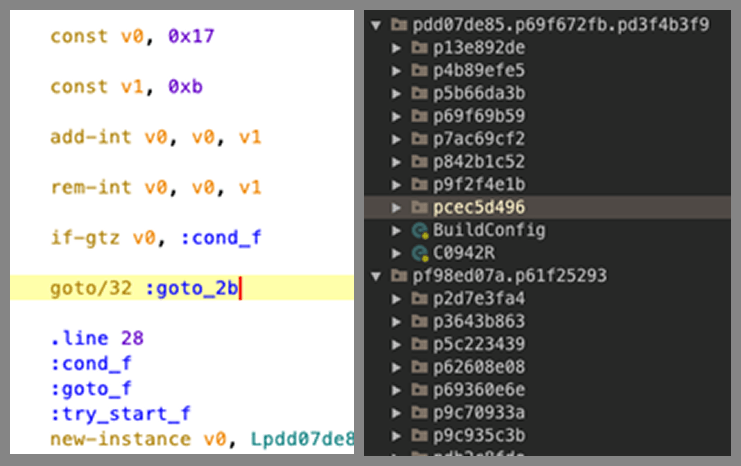
    Junk code (on the left) and renaming (on the right) obfuscation methods applied to the malicious implant

    Once installed and executed, the malware began setting up its internal components, including various classes, functions, and the SharedPreferences object, which are essential for the Trojan’s operation. The latter typically stores sensitive configuration data such as C2 server URLs, encryption keys, API endpoints, and communication ports.

    Deceptive tricks

    Throughout all versions of Zanubis, a key step in its execution flow has been to ensure it has accessibility service permissions, which are crucial for its overlay attacks and background monitoring. To obtain these, the malware checks if it is running for the first time and whether the necessary permissions have been granted. If not, it employs a deceptive tactic to manipulate the user into enabling them, a feature that varies between versions.

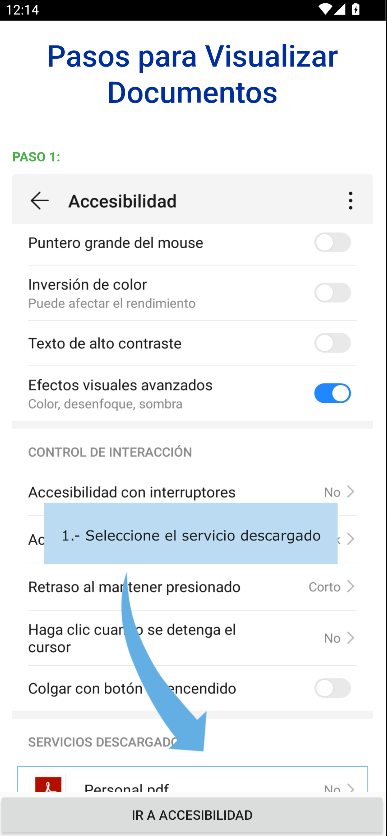
    In the 2023 version, the malware displayed a fake instructional webpage using WebView, claiming that additional permissions were needed to view a document – a plausible excuse, given the app’s disguise as an official application. On this page, a prominent button labeled “Ir a Accesibilidad” (“Go to Accessibility”) was presented. Once tapped, the button triggered a redirection to the system’s Accessibility Settings screen or directly to the specific panel for enabling accessibility features for the malicious app, depending on the device model.

    Instructions to trick the user into enabling Accessibility Permissions

    Translation:

    “Steps to view documents”, “1. Select the downloaded file”.

    This trick relies heavily on social engineering, leveraging trust in the app’s appearance and the user’s lack of awareness about Android’s permission system. Once accessibility permissions are granted, the malware silently enables additional settings to bypass battery optimization, ensuring it can remain active in the background indefinitely, ready to execute its malicious functions without user intervention.

    With background access secured, the malware loads a legitimate SUNAT website used by real users to check debts and tax information. By embedding this trusted page in a WebView, the app reinforces its disguise and avoids raising suspicion, appearing as a normal, functional part of SUNAT’s official services while continuing its malicious activity in the background.

    Data harvesting

    Just like earlier versions, the malware began by collecting device information and connecting to its C2 server to await further instructions. Communication with the C2 API was encrypted with RC4 using a hardcoded key and Base64-encoded. Once initialization was complete, the malware entered a Socket.IO polling loop, sleeping for 10 seconds between checks for incoming events emitted by the C2 server. This time, however, the list of available commands had grown significantly, expanding the malware’s capabilities far beyond previous versions.

    When a targeted app was detected running on the device, this version of Zanubis took one of two actions to steal user data, depending on its current settings. The first method involved keylogging by tracking user interface events such as taps, focus changes, and text input, effectively capturing sensitive information like credentials or personal data. These logs were stored locally and later sent to the C2 server upon request. Alternatively, Zanubis could activate screen recording to capture everything the user did within the app, sending both visuals and interaction data directly to the server.

    SMS hijacking

    Another new feature introduced in this campaign is SMS hijacking, a critical technique for compromising bank accounts and services that rely on SMS for two-factor authentication. Once instructed by the C2 server, Zanubis set itself as the default SMS app on the device, allowing it to intercept all incoming messages via a custom receiver. This gave the malware access to verification codes sent by banks and other sensitive services, and even the ability to delete them before the user could see them, effectively hiding its activity.

    These actions remained completely hidden from the user. Even if the user attempted to regain control and set their default SMS app back to normal, Zanubis would block that possibility.

    Fake updates

    One of the most invasive and deceptive behaviors exhibited by Zanubis was triggered through the bloqueoUpdate (“update lockout” in English) event, which simulated a legitimate Android system update. When activated, the malware locked the device and prevented any normal interaction, rendering it almost completely unusable. Attempts to lock or unlock the screen were detected and locked, making it nearly impossible for the user to interrupt the process.

    Before displaying the fake update overlay, the malware could send a warning notification claiming that an urgent update was about to be installed, advising the user not to interact with the device. This increased the credibility of the ruse and reduced the chances of user interference.

    Behind this fake update, Zanubis continued operating silently in the background, performing malicious tasks such as uninstalling apps, intercepting SMS messages, changing system settings, and modifying permissions, all without the victim’s awareness.

    Fake update blocking the user from making use of the phone

    Translation:

    “Some screen components are being updated, please keep your device connected to the internet and wait approximately 30 minutes for the update to finish”. “Do not lock or interact with the device”.

    2024: Continuous development

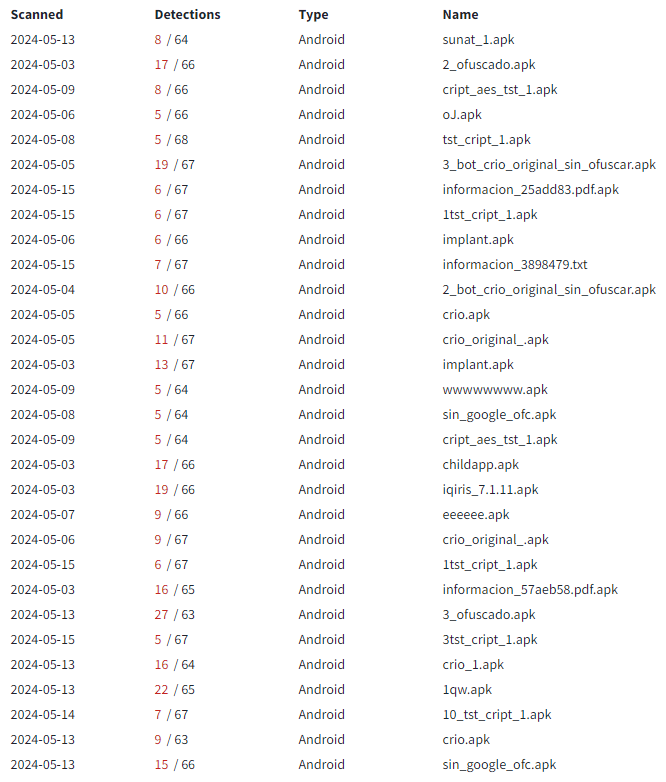
    During 2024, we continued monitoring Zanubis on various resources, including third-party platforms. In early May, we detected the appearance of new variants in the wild, particularly observed on VirusTotal. Over 30 versions of the malware were uploaded from Peru, revealing the developer’s efforts to test and implement new functionalities and features into the malware.

    Samples uploaded to VirusTotal

    Reinforced encryption

    In these newer iterations of Zanubis, the developers implemented mechanisms to protect hardcoded strings, aiming to complicate analysis and reduce detection rates. The threat actors used a key derived via PBKDF2 to encrypt and decrypt strings on-the-fly, relying on AES in ECB mode. This method allowed the implant to keep critical strings hidden during static analysis, only revealing them when needed during execution.

    Source strings were not the only data encrypted in these new implants. The communication between the C2 and the malware was also protected using AES in ECB mode, which indicates a shift from the use of RC4 in previous samples. Unlike the hardcoded key used for string encryption, in this case, a new 32-byte key was randomly generated each time data was about to be sent.

    Device credential stealing

    Among the most critical actions performed by this version of Zanubis was the theft of device credentials. Once active in the background, the malware constantly monitored system events triggered by other applications. When it detected activity related to authentication that needed the input of a PIN, password, or pattern, it attempted to identify the type of authentication being used and captured the corresponding input.

    The malware monitored specific signals that indicated the user was interacting with the lock screen or a secure input method. When these were identified, the malware actively collected the characters entered or gestures used. If it detected that the input was invalid, it reset the authentication tracking to avoid storing invalid data. Once the input process was completed and the user moved on, the malware sent the collected credentials to the C2 server.

    Device credentials collected by Zanubis

    Expanding scope

    This version of the malware continued to target banking applications and financial institutions in Peru, expanding its reach to include virtual card providers, as well as digital and cryptocurrency wallets. This update added 14 new targeted applications, increasing the scope of its attacks and broadening the range of financial services it can exploit.

    2025: Latest campaign

    In mid-January of 2025, we identified new samples indicating an updated version of Zanubis. The updates range from changes in the malware distribution and deception strategy to code modifications, new C2 commands, and improved filtering of target applications for credential theft.

    New distribution tactics

    Zanubis previously impersonated Peru’s tax authority, SUNAT. However, in this new campaign, we have identified two new Peruvian entities being spoofed: a company in the energy sector and a bank that was not previously abused.

    The Trojan initially disguises itself as two legitimate apps from the targeted companies, each crafted to exploit a specific user need. For the energy company, the malicious APK is distributed under names like “Boleta_XXXXXX” (“bill”) or “Factura_XXXXXX” (“invoice”), deceiving users into believing they are verifying a supposed bill or invoice.

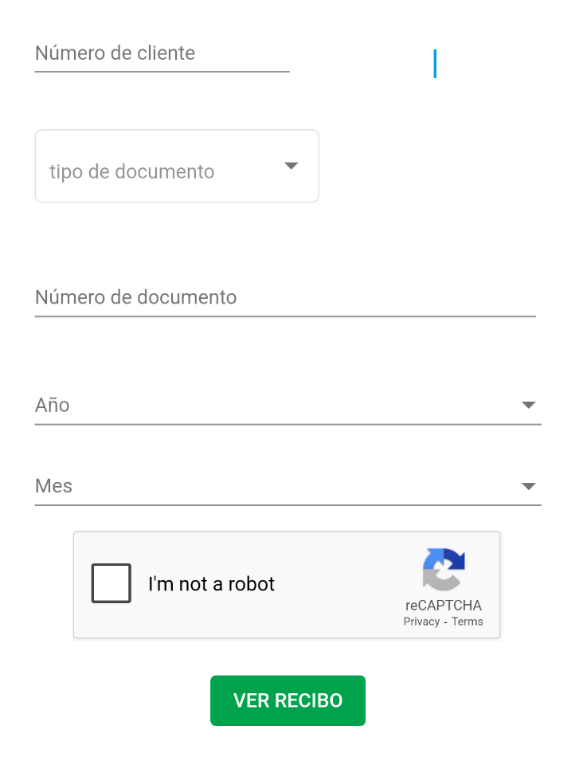
    Fake screen designed to verify invoices

    Meanwhile, for the bank, victims are enticed to download the malware under the guise of instructions from a fake bank advisor. This setup acts as the initial dropper for the malware, using familiar, trusted contexts to ensure successful installation.

    Follow your advisor’s instructions message from the fake bank app

    Silent installation

    Once the user downloads and launches the lure app, a screen appears with the company’s logo, stating that necessary checks are in progress. Meanwhile, in the background, the dropper attempts to silently install the final payload, Zanubis, which is embedded in the initial malware’s internal resources (res/raw/). To retrieve the APK, the dropper leverages the PackageInstaller class. This installation process occurs without any user involvement, as there are no prompts or warnings to alert the victim. By utilizing PackageInstaller, the malware writes the APK to the device in the background and completes the installation automatically, unnoticed. This technique is employed to evade detection. After installation, an intent is sent to signal that the package has been successfully installed.

    Sharpening targets

    In the latest iteration of the malware, the scope of targeted entities has been significantly narrowed, with a clear focus on banks and financial institutions. The once-broad range of targets, including cryptocurrency wallets, has been abandoned.

    This strategic shift suggests an intention to streamline the attack efforts and concentrate on sectors that manage the most sensitive and valuable data, such as banking credentials and financial transactions. By honing in on these high-stakes targets, the malware becomes even more dangerous, as it now focuses on the most lucrative avenues for cybercriminals.

    Who’s behind?

    Based on our ongoing analysis of Zanubis, several indicators suggest that the threat actors behind the malware may be operating from Peru. These indicators include, for instance, the consistent use of Latin American Spanish in the code, knowledge of Peruvian banking and government agencies, and telemetry data from our systems and VirusTotal.

    The focus on Peruvian entities as targets also strongly indicates that the threat actors behind Zanubis are likely based in Peru. These regional indicators, combined with the malware’s ongoing financial fraud campaigns, point to a well-organized operation focused on exploiting local institutions.

    Conclusions

    Zanubis has demonstrated a clear evolution, transitioning from a simple banking Trojan to a highly sophisticated and multi-faceted threat. The malware has been continuously refined and enhanced, incorporating new features and capabilities. Its focus remains on high-value targets, particularly banks and financial institutions in Peru, making it a formidable adversary in the region.

    Furthermore, the attackers behind Zanubis show no signs of slowing down. They continue to innovate and adjust their tactics, shifting distribution methods to ensure the malware reaches new victims and executes silently. This constant refinement demonstrates that Zanubis is not a transient threat but an ongoing, persistent menace, capable of further mutations to fulfill the financial goals of its developers.

    As Zanubis continues to evolve and adapt, it is crucial for users and organizations alike to stay vigilant. The threat landscape is constantly changing, and this malware’s ability to evolve and target new victims makes it an ever-present risk that cannot be ignored.

    Indicators of compromise

    Zanubis 2025 version
    81f91f201d861e4da765bae8e708c0d0
    fd43666006938b7c77b990b2b4531b9a
    8949f492001bb0ca9212f85953a6dcda
    45d07497ac7fe550b8b394978652caa9
    03c1e2d713c480ec7dc39f9c4fad39ec
    660d4eeb022ee1de93b157e2aa8fe1dc
    8820ab362b7bae6610363d6657c9f788
    323d97c876f173628442ff4d1aaa8c98
    b3f0223e99b7b66a71c2e9b3a0574b12
    7ae448b067d652f800b0e36b1edea69f
    0a922d6347087f3317900628f191d069
    0ac15547240ca763a884e15ad3759cf1
    1b9c49e531f2ad7b54d40395252cbc20
    216edf4fc0e7a40279e79ff4a5faf4f6
    5c11e88d1b68a84675af001fd4360068
    628b27234e68d44e01ea7a93a39f2ad3
    687fdfa9417cfac88b314deb421cd436
    6b0d14fb1ddd04ac26fb201651eb5070
    79e96f11974f0cd6f5de0e7c7392b679
    84bc219286283ca41b7d229f83fd6fdc
    90221365f08640ddcab86a9cd38173ce
    90279863b305ef951ab344af5246b766
    93553897e9e898c0c1e30838325ecfbd
    940f3a03661682097a4e7a7990490f61
    97003f4dcf81273ae882b6cd1f2839ef
    a28d13c6661ca852893b5f2e6a068b55
    b33f1a3c8e245f4ffc269e22919d5f76
    bcbfec6f1da388ca05ec3be2349f47c7
    e9b0bae8a8724a78d57bec24796320c0
    fa2b090426691e08b18917d3bbaf87ce

    MIL OSI Economics –

    May 28, 2025
  • MIL-OSI Africa: President Ramaphosa highlights importance of US Working Visit

    Source: South Africa News Agency

    President Cyril Ramaphosa has underscored the significance of his recent working visit to the United States, telling Parliament that the engagement was both necessary and timely, given the critical role the US continues to play in South Africa’s economic landscape. 

    “The United States continues to play such a big role in the life of our economy. It was necessary and important for us to go and engage with them, because many of our people’s jobs are dependent on our economic dealings with the United States,” President Ramaphosa said on Tuesday.

    The President was responding to questions from Members of the National Assembly, with economic growth and the cost of living being among issues for deliberation.

    Last week, the President concluded a successful working visit to the United States of America, supported by a delegation of Ministers, eminent South Africans, business and labour. 

    The visit was aimed at resetting and revitalising bilateral relations between South Africa and the US.

    The President explained that the objective of the trip was to engage with the US government to discuss tariffs, investments, and other related matters. It was also to encourage the US President to attend the G20 Summit which South Africa will host and to promote investment by American companies in South Africa and South African companies in the US. 

    He reiterated that the primary goal of the working visit was to reset the relationship between the two countries, recognising the significant economic and political ties. 

    The delegation aimed to address the deteriorating relationship, which was a concern for many in South Africa, and to ensure mutual economic benefits.

    “The issue of relations between South Africa and the United States was an issue that occupied many people’s minds in our country, and many had raised concerns about the deteriorating relationship between our two countries, having recognised the important role that both our countries play in each other’s economy, apart from various political relations, diplomatic relations, and we realised that the impact on our country’s economy would be adverse unless we were able to repair or reset the relationship between our two countries,” the President said. 

    The President highlighted the importance of the United States as a trading partner, with over 600 American companies invested in South Africa, and vice versa.

    READ | SA and US have ‘everything to gain’ from closer relations

    On the economic and sectoral impact, President Ramaphosa detailed that the sectors that would be affected by the relationship with the United States including the agriculture and automotive sector.

    He added that the visit aimed to protect jobs and investments in these sectors by maintaining strong economic ties.

    “A number of our jobs, some of the sectors that would be affected would be agriculture, the auto sector and steel and aluminium sector, and a number of other sectors that make machines, and the mining sector, where we sell critical minerals to the United States, would be adversely affected if the relations were not straightened out. So it was to this end that we were motivated to reset that relationship,” the President explained.

    President Ramaphosa said the second objective was to set up a process of engagement between the United States and South Africa. 

    “There had hitherto been a process of disengaging, where we were no longer really engaging at government level to deal with issues that governments normally deal with on an ongoing basis. And we wanted to engage on tariffs, on investments and related matters,” the President said.

    G20 and resetting relations

    On the Group of Twenty (G20) the President said that the trip aimed to highlight the significance of the G20 process and to encourage US participation.

    “The third objective was to discuss the G20 and to highlight the important role that a country like the United States, which is the largest economy in the world, plays in the activities of the G20 which we are so deeply immersed in and having the responsibility of leading and that it’s important for the United States to engage with the G20 process, and ultimately to entice the leader of the United States to come to the leaders’ summit at the end of the year,” the President said. 

    The President emphasised that despite public perceptions, the delegation had meaningful discussions with President Trump and his representatives, fostering ongoing engagement. 

    He added that the engagement process initiated after the trip has led to discussions on tariffs and investments, indicating a positive reset of relations.

    The reset of relations is believed to have been achieved, with ongoing discussions expected to continue through the G20 process.
    “We do believe that we achieved those objectives. The engagement with the American government has started soon after we left Washington…and there are discussions that are happening in relation to tariffs, in relation to investments, and we’ve believed that we have reset the relationship. 

    “Despite what we could have seen on television, we were able to have a much more meaningful discussion and meeting with President Trump and his representatives during the quiet room where we had lunch together and had meaningful exchanges on a number of issues. And we do believe that the engagement will continue through the G20 process,” the President said.  – SAnews.gov.za

    MIL OSI Africa –

    May 28, 2025
  • MIL-OSI Video: Chief Economists Outlook studio session trailer

    Source: World Economic Forum (video statements)

    With uncertainty continuing to shape global markets, understanding the path forward is more important than ever. We asked leading economists to share their views on what lies ahead—and how we can navigate this evolving landscape.

    The World Economic Forum is the International Organization for Public-Private Cooperation. The Forum engages the foremost political, business, cultural and other leaders of society to shape global, regional and industry agendas. We believe that progress happens by bringing together people from all walks of life who have the drive and the influence to make positive change.

    World Economic Forum Website ► http://www.weforum.org/
    Facebook ► https://www.facebook.com/worldeconomicforum/
    YouTube ► https://www.youtube.com/wef
    Instagram ► https://www.instagram.com/worldeconomicforum/ 
    Twitter ► https://twitter.com/wef
    LinkedIn ► https://www.linkedin.com/company/world-economic-forum
    TikTok ► https://www.tiktok.com/@worldeconomicforum
    Flipboard ► https://flipboard.com/@WEF

    #WorldEconomicForum

    https://www.youtube.com/watch?v=RAlZMDM6oWE

    MIL OSI Video –

    May 28, 2025
  • MIL-OSI Video: The Briefing Room | Chief Economists Outlook May 2025

    Source: World Economic Forum (video statements)

    With uncertainty continuing to shape global markets, understanding the path forward is more important than ever. We spoke with leading economists—Jinny Yan of ICBC Standard, Guy Miller of Zurich Insurance and Sandra Phlippen of ABN AMRO Bank—who shared their insights on what to expect and how to navigate the changes to come.

    The World Economic Forum’s Chief Economists Outlook May 2025 edition is out now: https://wef.ch/chiefeconmay25

    #chiefeconomists25 #GlobalEconomy #Trade

    The World Economic Forum is the International Organization for Public-Private Cooperation. The Forum engages the foremost political, business, cultural and other leaders of society to shape global, regional and industry agendas. We believe that progress happens by bringing together people from all walks of life who have the drive and the influence to make positive change.

    World Economic Forum Website ► http://www.weforum.org/
    Facebook ► https://www.facebook.com/worldeconomicforum/
    YouTube ► https://www.youtube.com/wef
    Instagram ► https://www.instagram.com/worldeconomicforum/ 
    Twitter ► https://twitter.com/wef
    LinkedIn ► https://www.linkedin.com/company/world-economic-forum
    TikTok ► https://www.tiktok.com/@worldeconomicforum
    Flipboard ► https://flipboard.com/@WEF

    #WorldEconomicForum

    https://www.youtube.com/watch?v=dcEadzxYjqY

    MIL OSI Video –

    May 28, 2025
  • MIL-OSI Russia: Rosneft held a competition in information modeling

    Translation. Region: Russian Federal

    Source: Rosneft – Rosneft – An important disclaimer is at the bottom of this article.

    As part of a large-scale IT Marathon, the Rosneft Research Institute in Ufa held a competition in information modeling among the Company’s enterprises. Rosneft is one of the leaders in this field.

    Hundreds of objects have been designed in the Company using information modeling technologies. The information model helps to confirm the possibility of safe operation. Subsequently, the digital project is used at the stages of reconstruction and technical re-equipment of objects. The competition committee evaluated the models created by design institutes and implemented at production facilities.

    Following the results of two stages, TomskNIPIneft won among scientific institutes. Tomsk specialists presented an information model of an oil pumping station with a capacity of 99 million tons per year and an area of 100 hectares.

    Among the production enterprises, Bashneft-Polus won. The employees of the enterprise shared their experience in using 62 information models of equipment, well pads, buildings, structures operated at two fields.

    Competitions in information modeling are aimed at popularizing modern design technologies, replicating successful practices, and exchanging experiences between specialists.

    Information models developed by the company’s corporate institutes are effective at all stages of the life cycle of capital construction projects. At the design stage, they help improve the quality of estimate documentation, minimizing possible errors, which subsequently reduces the time for construction and installation work. At the construction stage, information models help monitor the progress of work, issue comments on deviations from the project, and record progress using laser scanning. At the operation stage, “digital twins” allow planning the technical maintenance of the facility.

    Reference:

    The Rosneft IT Marathon has been held since 2019. Over 6 years, 19 competitions have been held, which involved more than 6,700 participants from 13 countries and 140 cities. IT competitions solve strategic tasks of the oil and gas industry, give impetus to the development of the education system, revealing new facets of interaction with higher education institutions.

    Participants in IT competitions master new technologies, promising areas of digitalization and robotics, which allows them to improve their professional competencies. In response, the company receives fresh ideas, non-standard solutions and new approaches to the challenges facing the oil and gas industry.

    Department of Information and Advertising of PJSC NK Rosneft May 28, 2025

    Please note: This information is raw content directly from the source of the information. It is exactly what the source states and does not reflect the position of MIL-OSI or its clients.
    MIL OSI Russia News –

    May 28, 2025
  • MIL-OSI Asia-Pac: Algernon Yau to visit Japan

    Source: Hong Kong Information Services

    Secretary for Commerce & Economic Development Algernon Yau will depart for Tokyo, Japan, tomorrow to attend the Asia-Pacific Telecommunity (APT) Ministerial Meeting and meet government officials and business leaders there.

    During the two-day meeting to be held on Friday and Saturday, Mr Yau and participating ministers will attend discussion sessions on various topics related to information and communications technology development.

    They include sustainable digital infrastructure and accessibility, inclusive digital innovation and growth, secure and trusted digital environment, and empowering the Asia-Pacific industry’s role in digital transformation.

    The ministerial meeting will adopt a joint statement to further foster regional collaboration.

    The APT is an intergovernmental organisation with the aim of promoting information and communication technology development in the Asia-Pacific region. It has 38 members, four associate members and 140 affiliate members from private companies and academia.

    During his stay in Tokyo, Mr Yau will promote Hong Kong’s business advantages and opportunities to government officials and business leaders there.

    The commerce chief will return to Hong Kong on Saturday evening. Under Secretary for Commerce & Economic Development Bernard Chan will be the Acting Secretary during Mr Yau’s absence.

    MIL OSI Asia Pacific News –

    May 28, 2025
  • MIL-OSI: BW Offshore: Acquires FPSO Nganhurra to leverage redeployment opportunities

    Source: GlobeNewswire (MIL-OSI)

    Acquires FPSO Nganhurra to leverage redeployment opportunities

    BW Offshore has signed an agreement to acquire the FPSO Nganhurra, securing a high-quality production unit in a market where comparable opportunities are becoming increasingly scarce. The transaction includes a limited upfront payment, with additional consideration contingent upon the successful redeployment of the unit before June 2027.

    With visible project opportunities emerging over the next few years, having this asset in place enhances our ability to offer timely and competitive redeployment solutions to our clients, strengthening our strategic position relative to industry peers.

    “The acquisition of the FPSO Nganhurra represents a strategic decision to capitalise on a compelling market opportunity. Given the limited availability of suitable FPSOs for redeployment, securing this unit places BW Offshore in a strong, competitive position,” said Marco Beenen, the CEO of BW Offshore.

    The FPSO Nganhurra is a purpose-built FPSO, constructed in 2006, with a production capacity of 100,000 barrels per day and a storage capacity of 900,000 barrels. It operated offshore Western Australia until 2018 and was later laid up in Malaysia. The unit’s mooring system supports operation across varied offshore conditions, enhancing flexibility and reducing costs for future redeployment.

    The unit will have minimal lay-up costs and presents limited downside risk from recycling, ensuring prudent capital management while we assess redeployment options.

    For further information, please contact:
    Ståle Andreassen, CFO, +47 91 71 86 55

    IR@bwoffshore.com or www.bwoffshore.com

    About BW Offshore:
    BW Offshore engineers innovative floating production solutions. The Company has a fleet of FPSOs with potential and ambition to grow. By leveraging four decades of offshore operations and project execution, the Company creates tailored offshore energy solutions for evolving markets world-wide. BW Offshore has around 1,100 employees and is publicly listed on the Oslo stock exchange.

    This information is subject to the disclosure requirements pursuant to Section 5-12 the Norwegian Securities Trading Act

    The MIL Network –

    May 28, 2025
  • MIL-OSI: Canadian Credit Market Reaches $2.5 Trillion in Outstanding Balances, with Gen Z Canadians Accounting for 10% of Credit Growth

    Source: GlobeNewswire (MIL-OSI)

    Key findings from TransUnion report:

    • New-to-credit Canadians led to greater credit participation, accounting for $2.6 billion in new credit balances in Q1 2025
    • Subprime consumers are almost twice as likely to go delinquent within 12 months of opening new credit cards, compared to their pre-pandemic cohorts
    • Growing concerns around Canadian consumers experiencing economic strain

    TORONTO, May 28, 2025 (GLOBE NEWSWIRE) — The first quarter of 2025 saw mixed outcomes in the Canadian credit market, according to TransUnion’s Q1 2025 Credit Industry Insights Report (CIIR). Growth was fuelled by increased borrowing from young Canadians and newcomers. Consumer balances for non-mortgage products rose across most products, driven primarily by below prime consumers. Subprime consumers continued to struggle as their delinquency rates rose at significantly higher rates than prime and above consumers. Regional differences in cost of living and economic conditions also led to varying delinquency trends across provinces.

    Gen Z Consumers Accelerated Overall Credit Participation with 30.6% Year-Over-Year Growth in New Balances

    After the decline in interest rates and inflation in late 2024, Canadians’ total outstanding balances across all credit products grew by 4.7% year-over-year (YoY) and total outstanding credit debt reached $2.5 trillion in Q1 2025. Continued credit expansion, propelled by younger consumers, including new Canadians entering the credit market, was a key driver of this growth.

    As Gen Z consumers continued to participate in the credit market, outstanding balances within this generation have grown 30.6% from the prior year, contributing $12 billion or 10.3% of total new balance growth. Canadian newcomers also represent a significant portion of the growing credit market, driving $2.6 billion in new credit balances, a 6.3% increase YoY.

    “As a growing share of Gen Z consumers actively engage with credit, lenders face a pivotal opportunity to shape lifelong financial relationships,” said Matt Fabian, director of financial services research and consulting at TransUnion Canada. “This generation values digital-first experiences, personalized education and brands that align with their values. Prioritizing credit education, fostering early loyalty and offering seamless, mobile-friendly solutions will be key to staying relevant and building trust with these new-to-market borrowers.”

    Non-Mortgage Balances Continue to Grow, Driven by Below Prime Consumers

    Non-mortgage debt grew 2.4% as consumer balances continued to increase across most products. However, total non-mortgage debt did not grow equally across all risk tiers. Below prime average consumer balances grew 4.4%, with subprime consumers contributing the highest increase at 6.3%, while prime plus and super prime consumer balances remained mostly flat.

    Risk Tier Avg. Non-Mortgage Balances per Consumer YoY Change in Non-Mortgage Balances YoY Change in Consumer Card Balances YoY Change in Consumer Personal Loan Balances
    Super Prime $26,355 0.10%   -0.30%   4.50%  
    Prime Plus $26,301 0.10%   1.10%   4.50%  
    Prime $24,983 3.30%   6.20%   4.90%  
    Near Prime $29,681 3.80%   5.90%   4.70%  
    Subprime $23,638 6.30%   5.50%   6.70%  

    The YoY growth in average balances among below prime consumers may be due to these consumers utilizing more credit to augment disposable income in the face of elevated prices. This trend was seen particularly with the growth in credit card and personal loan balances, as these are traditionally the products used by consumers for liquidity. Below prime consumer average balances across these products grew at a faster rate than overall borrower balance growth during this period.

    Additionally, the data shows regional disparities in the YoY growth rates of non-mortgage debt, although province rankings did not change from the previous quarter. P.E.I. and Newfoundland had the highest average debt per borrower, while Quebec and Manitoba had the lowest. While the gap between the highest and lowest average debt balances across provinces may not appear substantial, even modest differences in average debt per consumer can significantly influence delinquency rates. Consumers in provinces with higher average debt levels may be more susceptible to increases in interest rates as well as higher everyday living costs, making them more vulnerable to financial strain and increasing the likelihood of delinquency, particularly during economic downturns.

    “The rise in balances from higher-risk and more vulnerable credit consumers signals a critical moment for lenders to reassess risk strategies and engagement models. Proactive credit monitoring, tailored financial support and early intervention tools can mitigate potential delinquencies while still maintaining consumer access to credit,” said Fabian. “At the same time, consumers should continue to build financial resilience by understanding their credit profiles, seeking guidance when needed and using credit responsibly. Empowered, informed borrowers are key to a healthier credit ecosystem.”

    Ranking Average Consumer Non-Mortgage Debt Balance by Province
           
      Q1 2024 Q1 2025 YoY Change
    Canada $25,786 $26,415 2.44%  
    PEI $27,696 $29,364 6.02%  
    NL $27,876 $28,775 3.23%  
    BC $27,656 $28,585 3.36%  
    AB $28,304 $28,403 0.35%  
    ON $26,880 $27,544 2.47%  
    SK $26,683 $26,972 1.08%  
    NS $24,266 $24,929 2.73%  
    NB $23,675 $24,497 3.47%  
    QC $22,152 $22,756 2.72%  
    MB $20,268 $20,802 2.63%  

    Lower Canada Consumer Credit Index Reflects Weakening Market Conditions

    Economic uncertainty has recently muted credit demand while supply remains strong. Additionally, uncertainty has shifted some credit behaviours as consumers balances have increased while credit performance has remained relatively stable from prior year, driving the Canada Consumer Credit Index to 100.3, down almost 6 points from the prior year.

    Differing Impact of Economic Volatility Across Risk Tiers

    A widening financial divide is emerging among credit consumers across Canada. While recent improvements in inflation and interest rates have provided relief for some, enabling them to reduce debt and strengthen their financial positions, others continue to face significant challenges. These consumers are still grappling with the prolonged effects of past economic volatility, highlighting an uneven recovery and growing disparity in financial resilience.

    Overall consumer-level serious delinquency (consumers 60 days or more delinquent on any credit product) was up 11 basis points YoY to 2.71% in Q1 2025. This increase was driven in part by the recent growth in new-to-credit consumers, who generally carry higher risk in their early years due to their limited credit experience. Even with the recent increase, the current levels of delinquency are similar to those seen prior to the pandemic.

    Subprime consumers have become more likely to experience delinquency soon after opening a new product, with the delinquency rate within the first six months of opening a new credit account doubling between 2020 and 2024. This is particularly evident for below prime credit card and personal loans, where consumers may be more sensitive to interest rates. Subprime consumers that opened a credit card in 2023 or 2024 were 1.7x–2.0x as likely to go delinquent within the first 12 months of holding that card than those who opened a card in 2020. These findings further demonstrate the increased vulnerability that subprime borrowers have to macroeconomic factors such as higher interest rates and increased cost of living.

    Delinquency (90+ DPD) in the First 12 Months on Subprime Card Originations
      Q1 2020 Q1 2021 Q1 2022 Q1 2023 Q1 2024
    12 Months on Book 6.46%  9.18%  11.86%  12.68%  10.76% 

    Geography is also playing a role in the vulnerability or resilience of consumers. A 16 basis point YoY increase in serious consumer delinquencies led to Alberta continuing to have the highest rate across all provinces in Q1 2025, driven by the volatility in oil and gas prices that play a large role in Alberta’s economy. While Quebec remained the province with the lowest rate of delinquencies, it had a seven basis point increase YoY.

    “We’ve seen volatility in delinquency rates attributed to a mix of regional economic pressures and demographic factors. Regional variations in both cost of living as well as wage growth, along with pressure from macro-economic cycles, disproportionately impact specific regions, and hence some provinces have had more volatile consumer credit performance,” Fabian said. “These findings underscore the importance of regionally tailored lending policies and support systems to address the unique challenges faced by those households. Additionally, consumers in more vulnerable areas should stay vigilant in keeping current on payments, monitoring credit and building emergency savings.”

    About TransUnion (NYSE: TRU)

    TransUnion is a global information and insights company with over 13,000 associates operating in more than 30 countries, including Canada, where we’re the credit bureau of choice for the financial services ecosystem and most of Canada’s largest banks. We make trust possible by ensuring each person is reliably represented in the marketplace. We do this by providing an actionable view of consumers, stewarded with care.

    Through our acquisitions and technology investments we have developed innovative solutions that extend beyond our strong foundation in core credit into areas such as marketing, fraud, risk and advanced analytics. As a result, consumers and businesses can transact with confidence and achieve great things. We call this Information for Good® — and it leads to economic opportunity, great experiences and personal empowerment for millions of people around the world.

    For more information visit: www.transunion.ca

    For more information or to request an interview, contact:

    Contact: Katie Duffy
    E-mail: katie.duffy@ketchum.com
    Telephone: +1 647-772-0969

    Photos accompanying this announcement are available at

    https://www.globenewswire.com/NewsRoom/AttachmentNg/a2ac9d72-919c-465a-a6a5-bd6b61735e35

    https://www.globenewswire.com/NewsRoom/AttachmentNg/d0b862de-42f0-43d1-91d5-95001a3f413e

    The MIL Network –

    May 28, 2025
  • MIL-OSI: JD.com to Hold Annual General Meeting on June 20, 2025

    Source: GlobeNewswire (MIL-OSI)

    BEIJING, May 28, 2025 (GLOBE NEWSWIRE) — JD.com, Inc. (“JD.com” or the “Company”) (NASDAQ: JD and HKEX: 9618 (HKD counter) and 89618 (RMB counter)), a leading supply chain-based technology and service provider, today announced that it will hold its annual general meeting of shareholders (the “AGM”) at Building A, No. 18 Kechuang 11 Street, Yizhuang Economic and Technological Development Zone, Daxing District, Beijing 101111, People’s Republic of China, on June 20, 2025 at 3:00 p.m. (Hong Kong time).

    No proposal will be submitted for shareholder approval at the AGM. Instead, the AGM will serve as an open forum for shareholders of record to discuss Company affairs with management.

    Holders of record of Class A ordinary shares and Class B ordinary shares of the Company at the close of business on May 27, 2025 (Hong Kong time) are entitled to notice of, and to attend, the AGM or any adjournment or postponement thereof.

    The Company has filed its annual report on Form 20-F, including its audited financial statements, for the fiscal year ended December 31, 2024, with the U.S. Securities and Exchange Commission (the “SEC”). The Company’s annual report can be accessed on the investor relations section of its website at https://ir.jd.com, as well as on the SEC’s website at www.sec.gov.

    About JD.com, Inc.

    JD.com is a leading supply chain-based technology and service provider. The Company’s cutting-edge retail infrastructure seeks to enable consumers to buy whatever they want, whenever and wherever they want it. The Company has opened its technology and infrastructure to partners, brands and other sectors, as part of its Retail as a Service offering to help drive productivity and innovation across a range of industries.

    Safe Harbor Statement

    This announcement contains forward-looking statements. These statements are made under the “safe harbor” provisions of the U.S. Private Securities Litigation Reform Act of 1995. These forward-looking statements can be identified by terminology such as “will,” “expects,” “anticipates,” “future,” “intends,” “plans,” “believes,” “estimates,” “confident” and similar statements. JD.com may also make written or oral forward-looking statements in its periodic reports to the U.S. Securities and Exchange Commission (the “SEC”), in announcements made on the website of the Hong Kong Stock Exchange, in its annual report to shareholders, in press releases and other written materials and in oral statements made by its officers, directors or employees to third parties. Statements that are not historical facts, including statements about JD.com’s beliefs and expectations, are forward-looking statements. Forward-looking statements involve inherent risks and uncertainties. A number of factors could cause actual results to differ materially from those contained in any forward-looking statement, including but not limited to the following: JD.com’s growth strategies; its future business development, results of operations and financial condition; its ability to attract and retain new customers and to increase revenues generated from repeat customers; its expectations regarding demand for and market acceptance of its products and services; trends and competition in China’s e-commerce market; changes in its revenues and certain cost or expense items; the expected growth of the Chinese e-commerce market; laws, regulations and governmental policies relating to the industries in which JD.com or its business partners operate; potential changes in laws, regulations and governmental policies or changes in the interpretation and implementation of laws, regulations and governmental policies that could adversely affect the industries in which JD.com or its business partners operate, including, among others, initiatives to enhance supervision of companies listed on an overseas exchange and tighten scrutiny over data privacy and data security; risks associated with JD.com’s acquisitions, investments and alliances, including fluctuation in the market value of JD.com’s investment portfolio; natural disasters and geopolitical events; change in tax rates and financial risks; intensity of competition; and general market and economic conditions in China and globally. Further information regarding these and other risks is included in JD.com’s filings with the SEC and the announcements on the website of the Hong Kong Stock Exchange. All information provided herein is as of the date of this announcement, and JD.com undertakes no obligation to update any forward-looking statement, except as required under applicable law. 

    For investor and media inquiries, please contact:

    Investor Relations
    Sean Zhang
    +86 (10) 8912-6804
    IR@JD.com 

    Media Relations
    +86 (10) 8911-6155
    Press@JD.com 

    The MIL Network –

    May 28, 2025
  • MIL-OSI: Management changes in Spar Nord Bank A/S

    Source: GlobeNewswire (MIL-OSI)

    Company announcement no. 17

    Management changes in Spar Nord Bank A/S

    Agreements have been reached regarding the step down of Lasse Nyby and John Lundsgaard

    In continuation of the completed voluntary takeover offer from Nykredit Realkredit A/S (Nykredit), whereby Nykredit acquired the majority shareholding in Spar Nord Bank A/S (Spar Nord), agreements have been entered into with the board of directors of Spar Nord, whereby Lasse Nyby will resign as CEO of Spar Nord and John Lundsgaard as managing director of Spar Nord.

    Lasse Nyby and John Lundsgaard will both resign from Spar Nord’s executive board no later than on 30 June 2025.

    Kjeld Johannesen, chairman of Spar Nord’s board of directors, says: “The agreed resignation is a natural extension of Nykredit’s acquisition of the majority shareholding in Spar Nord today. Lasse Nyby and John Lundsgaard have both been part of the bank’s executive board for more than 25 years. They both have a large share of the credit for Spar Nord’s development from a regional bank to a nationwide bank today. This is the reason why Spar Nord is contributing with great strength to a new and merged bank that will be an attractive alternative to the largest listed banks. On behalf of the board of directors, we would like to express our gratitude to Lasse Nyby and John Lundsgaard for their great and dedicated work.”

    Questions may be directed to Kjeld Johannesen on +45 40 19 15 55.

    Attachment

    • No. 17 – Management changes in Spar Nord Bank AS

    The MIL Network –

    May 28, 2025
  • MIL-OSI: Management changes in the Nykredit Group – Nykredit Bank A/S

    Source: GlobeNewswire (MIL-OSI)

    Company announcement

    Management changes in the Nykredit Group
    In connection with Spar Nord Bank A/S becoming part of the Nykredit Group, changes are expected to be made to the boards of directors and executive managements of the companies in the Nykredit Group.

    Lasse Nyby to become Deputy Chairman of Nykredit A/S and Nykredit Realkredit A/S
    On Monday, 2 June, 2025, a general meeting in Nykredit Realkredit A/S is expected to be convened, to be held on 24 June, 2025, at which it is proposed that Lasse Nyby – the current CEO of Spar Nord Bank A/S – joins the Board of Directors of Nykredit Realkredit A/S. Lasse Nyby will continue on the Board of Directors of Nykredit A/S, which he has been a member of since 2007. Lasse Nyby is expected to be appointed Deputy Chairman of the two boards at the following board meetings.

    Preben Sunke will continue as Deputy Chairman of Nykredit A/S and Nykredit Realkredit A/S, and as such, going forward, there will be two deputy chairmen of the boards of directors of those two companies.

    Nykredit A/S and Nykredit Realkredit A/S are the ultimate parent companies in the Nykredit Group’s corporate structure. The Nykredit Group’s business activities are based in Nykredit Realkredit A/S, and the activities are conducted both through Nykredit Realkredit A/S and the group subsidiaries. Nykredit Realkredit A/S is wholly owned by Nykredit A/S, whose sole purpose is to own Nykredit Realkredit A/S.

    Nykredit’s Group Executive Board to be expanded with Martin Kudsk Rasmussen
    The Group Executive Board of Nykredit Realkredit A/S is expected to be expanded on 24 June, 2025, with the addition of Martin Kudsk Rasmussen, who has up until now been a member of the Executive Management of Spar Nord Bank A/S. Together with current Group Executive Director, Tonny Thierry Andersen, Martin Kudsk Rasmussen will be responsible for the entire Banking area in the Nykredit Group. The responsibilities of the remaining members of the Group Executive Board remain unchanged.

    The Group Executive Board of Nykredit Realkredit A/S will then consist of Group Chief Executive, Michael Rasmussen and the Group Executive Directors; Anders Jensen, David Hellemann, Martin Kudsk Rasmussen, Pernille Sindby and Tonny Thierry Andersen.

    Regarding the changes to the Board of Directors and the Group Executive Board, Merete Eldrup, Chairman of the Board of Directors of Nykredit A/S and Nykredit Realkredit A/S, states:

    “With his extensive management experience and solid insight into the financial sector, Lasse Nyby is already a key capacity of the Board of Directors of Nykredit A/S. Now he will also join the Board of Directors of Nykredit Realkredit A/S and will on both boards take a prominent role as Deputy Chairman. I look forward to that. The Board of Directors is also pleased to add Martin Kudsk Rasmussen to the Group Executive Board of Nykredit. Martin has significant competencies and experience from the financial sector, and during his time at Spar Nord, he has been an important factor in Spar Nord’s impressive development.

    With Spar Nord as part of the Nykredit Group, we will show even more customers the benefits of a customer-owned bank that takes a different position in the market. At the same time, we maintain a strong focus on continuing to invest in our partnerships in Totalkredit and other partnerships. Myself and the Board of Directors look forward to continuing this work together with the Group Executive Board based on the direction that the group’s ’Winning the Double’ strategy continues to set.”

    Group Chief Executive, Michael Rasmussen states:
    “I look forward to continuing the good cooperation with Lasse Nyby in his new position on the Board of Directors. I am also pleased to welcome Martin Kudsk Rasmussen to the Group Executive Board. Throughout his career, Martin has demonstrated that he possesses significant competencies in the banking area. We are now joining forces as two strong banks that are both experiencing growth, customer inflows and high customer satisfaction to make us even stronger in the competition with the largest listed banks. Tonny Thierry Andersen and Martin Kudsk Rasmussen will play an important managerial role in building on the key strengths of both Spar Nord and Nykredit across the combined and – with Spar Nord as part of the group – significantly larger Banking area of the Nykredit Group.”

    About his new role as Deputy Chairman of the boards of directors of Nykredit Realkredit A/S and Nykredit A/S, Lasse Nyby states:
    “There is reason to be proud of what we have created together in Spar Nord. Although it is of course sad to end more than 200 years of independence, there is certainly also reason to be pleased that Spar Nord contributes with great strength to a new and merged bank, which with its customer-ownership will be a very attractive alternative to the largest listed competitors. It has been a pleasure and a privilege to have been at the helm of Spar Nord for almost 25 years. Now I look forward to taking on a new role and, together with the rest of the Board of Directors, developing a strong group for the benefit of both customers and employees.”

    About his new role on Nykredit’s Group Executive Board, Martin Kudsk Rasmussen states:
    “Spar Nord and Nykredit Bank are a good match. By combining local presence and drive with a unique customer ownership, we are building a powerful bank that will stand strong in the battle for customers and employees. I look forward to stepping into a new role and, together with talented colleagues, contributing to a bank that combines the best of two worlds and understands the importance of having a local presence close to customers with strong competencies and competitive products throughout the country.”

    Changes in Spar Nord Bank A/S and Nykredit Bank A/S
    On Monday, 2 June, 2025, a general meeting of Spar Nord Bank A/S is expected to be convened, to be held on 24 June, 2025, where it is proposed that the current Board of Directors of Spar Nord Bank A/S elected by the general meeting be replaced by Michael Rasmussen, Anders Jensen, Tonny Thierry Andersen, Pernille Sindby and David Hellemann. These five individuals are currently also members of the Board of Directors of Nykredit Bank A/S. Jannie Skovsen, Rikke Marie J. Christiansen and Gitte Holmgaard will continue as employee-elected board members of Spar Nord Bank A/S.

    The executive managements of Nykredit Bank A/S and Spar Nord Bank A/S are expected to be changed after 24 June, 2025, so that the members of the executive managements of the two companies will be identical.

    This means that the new Board of Directors of Spar Nord, which will take office after the general meeting on 24 June, 2025, is expected to make changes to the Executive Management of Spar Nord Bank A/S. Søren Kviesgaard and Dan Erik Krarup Sørensen, who are currently members of the Executive Management of Nykredit Bank A/S, are expected to join the Executive Management of Spar Nord, while Martin Kudsk Rasmussen and Carsten Levring Jakobsen, who are currently members of the Executive Management of Spar Nord, will continue in the Executive Management. Similarly, Carsten Levring Jakobsen and Martin Kudsk Rasmussen are expected to join the Executive Management of Nykredit Bank A/S. Carsten Levring Jakobsen will – in addition to his position in the Executive Management of Spar Nord and Nykredit Bank – also continue in a central role in the Nykredit Group, also after the merger.

    In connection with the merger of Nykredit Bank A/S and Spar Nord Bank A/S, which is expected to take effect in spring 2026, Martin Kudsk Rasmussen is expected to resign from the executive management of the two banks to join the board of directors of the merged bank.

    Spar Nord Bank A/S has announced that John Lundsgaard and Lasse Nyby will resign as members of the Executive Management of Spar Nord Bank A/S no later than 30 June, 2025.

    Group Chief Executive, Michael Rasmussen states:
    “I would like to thank the current members of the Executive Management of Spar Nord. They have played a crucial role in ensuring that Spar Nord is today a strong and well-run bank in growth. With the new and significant roles for Martin Kudsk Rasmussen and Carsten Levring Jakobsen, we ensure that the high level of competence and important perspectives from Spar Nord are brought into the further work of merging our two banks for the greatest possible benefit and joy for our customers. This has been important to us. A special thanks also goes to John Lundsgaard. With his 25 years as part of Spar Nord’s Executive Management, John has played a major role in Spar Nord’s strong position in the market today, and I am pleased that – even after leaving Spar Nord’s Executive Management – he has agreed to be available to Nykredit’s Group Executive Board in the period to come while we begin the integration of our two banks.”

    Contact and further information
    Attached to this announcement is a group chart for Nykredit.

    Any questions can be directed to Nykredit’s Head of Press Relations Orhan Gökcen on +45 31 21 06 39.

    Attachments

    • Group chart 28-05-2025
    • Management changes in the Nykredit Group

    The MIL Network –

    May 28, 2025
  • MIL-OSI: Management changes in the Nykredit Group – Nykredit Realkredit A/S

    Source: GlobeNewswire (MIL-OSI)

    Company announcement

    Management changes in the Nykredit Group
    In connection with Spar Nord Bank A/S becoming part of the Nykredit Group, changes are expected to be made to the boards of directors and executive managements of the companies in the Nykredit Group.

    Lasse Nyby to become Deputy Chairman of Nykredit A/S and Nykredit Realkredit A/S
    On Monday, 2 June, 2025, a general meeting in Nykredit Realkredit A/S is expected to be convened, to be held on 24 June, 2025, at which it is proposed that Lasse Nyby – the current CEO of Spar Nord Bank A/S – joins the Board of Directors of Nykredit Realkredit A/S. Lasse Nyby will continue on the Board of Directors of Nykredit A/S, which he has been a member of since 2007. Lasse Nyby is expected to be appointed Deputy Chairman of the two boards at the following board meetings.

    Preben Sunke will continue as Deputy Chairman of Nykredit A/S and Nykredit Realkredit A/S, and as such, going forward, there will be two deputy chairmen of the boards of directors of those two companies.

    Nykredit A/S and Nykredit Realkredit A/S are the ultimate parent companies in the Nykredit Group’s corporate structure. The Nykredit Group’s business activities are based in Nykredit Realkredit A/S, and the activities are conducted both through Nykredit Realkredit A/S and the group subsidiaries. Nykredit Realkredit A/S is wholly owned by Nykredit A/S, whose sole purpose is to own Nykredit Realkredit A/S.

    Nykredit’s Group Executive Board to be expanded with Martin Kudsk Rasmussen
    The Group Executive Board of Nykredit Realkredit A/S is expected to be expanded on 24 June, 2025, with the addition of Martin Kudsk Rasmussen, who has up until now been a member of the Executive Management of Spar Nord Bank A/S. Together with current Group Executive Director, Tonny Thierry Andersen, Martin Kudsk Rasmussen will be responsible for the entire Banking area in the Nykredit Group. The responsibilities of the remaining members of the Group Executive Board remain unchanged.

    The Group Executive Board of Nykredit Realkredit A/S will then consist of Group Chief Executive, Michael Rasmussen and the Group Executive Directors; Anders Jensen, David Hellemann, Martin Kudsk Rasmussen, Pernille Sindby and Tonny Thierry Andersen.

    Regarding the changes to the Board of Directors and the Group Executive Board, Merete Eldrup, Chairman of the Board of Directors of Nykredit A/S and Nykredit Realkredit A/S, states:

    “With his extensive management experience and solid insight into the financial sector, Lasse Nyby is already a key capacity of the Board of Directors of Nykredit A/S. Now he will also join the Board of Directors of Nykredit Realkredit A/S and will on both boards take a prominent role as Deputy Chairman. I look forward to that. The Board of Directors is also pleased to add Martin Kudsk Rasmussen to the Group Executive Board of Nykredit. Martin has significant competencies and experience from the financial sector, and during his time at Spar Nord, he has been an important factor in Spar Nord’s impressive development.

    With Spar Nord as part of the Nykredit Group, we will show even more customers the benefits of a customer-owned bank that takes a different position in the market. At the same time, we maintain a strong focus on continuing to invest in our partnerships in Totalkredit and other partnerships. Myself and the Board of Directors look forward to continuing this work together with the Group Executive Board based on the direction that the group’s ’Winning the Double’ strategy continues to set.”

    Group Chief Executive, Michael Rasmussen states:
    “I look forward to continuing the good cooperation with Lasse Nyby in his new position on the Board of Directors. I am also pleased to welcome Martin Kudsk Rasmussen to the Group Executive Board. Throughout his career, Martin has demonstrated that he possesses significant competencies in the banking area. We are now joining forces as two strong banks that are both experiencing growth, customer inflows and high customer satisfaction to make us even stronger in the competition with the largest listed banks. Tonny Thierry Andersen and Martin Kudsk Rasmussen will play an important managerial role in building on the key strengths of both Spar Nord and Nykredit across the combined and – with Spar Nord as part of the group – significantly larger Banking area of the Nykredit Group.”

    About his new role as Deputy Chairman of the boards of directors of Nykredit Realkredit A/S and Nykredit A/S, Lasse Nyby states:
    “There is reason to be proud of what we have created together in Spar Nord. Although it is of course sad to end more than 200 years of independence, there is certainly also reason to be pleased that Spar Nord contributes with great strength to a new and merged bank, which with its customer-ownership will be a very attractive alternative to the largest listed competitors. It has been a pleasure and a privilege to have been at the helm of Spar Nord for almost 25 years. Now I look forward to taking on a new role and, together with the rest of the Board of Directors, developing a strong group for the benefit of both customers and employees.”

    About his new role on Nykredit’s Group Executive Board, Martin Kudsk Rasmussen states:
    “Spar Nord and Nykredit Bank are a good match. By combining local presence and drive with a unique customer ownership, we are building a powerful bank that will stand strong in the battle for customers and employees. I look forward to stepping into a new role and, together with talented colleagues, contributing to a bank that combines the best of two worlds and understands the importance of having a local presence close to customers with strong competencies and competitive products throughout the country.”

    Changes in Spar Nord Bank A/S and Nykredit Bank A/S
    On Monday, 2 June, 2025, a general meeting of Spar Nord Bank A/S is expected to be convened, to be held on 24 June, 2025, where it is proposed that the current Board of Directors of Spar Nord Bank A/S elected by the general meeting be replaced by Michael Rasmussen, Anders Jensen, Tonny Thierry Andersen, Pernille Sindby and David Hellemann. These five individuals are currently also members of the Board of Directors of Nykredit Bank A/S. Jannie Skovsen, Rikke Marie J. Christiansen and Gitte Holmgaard will continue as employee-elected board members of Spar Nord Bank A/S.

    The executive managements of Nykredit Bank A/S and Spar Nord Bank A/S are expected to be changed after 24 June, 2025, so that the members of the executive managements of the two companies will be identical.

    This means that the new Board of Directors of Spar Nord, which will take office after the general meeting on 24 June, 2025, is expected to make changes to the Executive Management of Spar Nord Bank A/S. Søren Kviesgaard and Dan Erik Krarup Sørensen, who are currently members of the Executive Management of Nykredit Bank A/S, are expected to join the Executive Management of Spar Nord, while Martin Kudsk Rasmussen and Carsten Levring Jakobsen, who are currently members of the Executive Management of Spar Nord, will continue in the Executive Management. Similarly, Carsten Levring Jakobsen and Martin Kudsk Rasmussen are expected to join the Executive Management of Nykredit Bank A/S. Carsten Levring Jakobsen will – in addition to his position in the Executive Management of Spar Nord and Nykredit Bank – also continue in a central role in the Nykredit Group, also after the merger.

    In connection with the merger of Nykredit Bank A/S and Spar Nord Bank A/S, which is expected to take effect in spring 2026, Martin Kudsk Rasmussen is expected to resign from the executive management of the two banks to join the board of directors of the merged bank.

    Spar Nord Bank A/S has announced that John Lundsgaard and Lasse Nyby will resign as members of the Executive Management of Spar Nord Bank A/S no later than 30 June, 2025.

    Group Chief Executive, Michael Rasmussen states:
    “I would like to thank the current members of the Executive Management of Spar Nord. They have played a crucial role in ensuring that Spar Nord is today a strong and well-run bank in growth. With the new and significant roles for Martin Kudsk Rasmussen and Carsten Levring Jakobsen, we ensure that the high level of competence and important perspectives from Spar Nord are brought into the further work of merging our two banks for the greatest possible benefit and joy for our customers. This has been important to us. A special thanks also goes to John Lundsgaard. With his 25 years as part of Spar Nord’s Executive Management, John has played a major role in Spar Nord’s strong position in the market today, and I am pleased that – even after leaving Spar Nord’s Executive Management – he has agreed to be available to Nykredit’s Group Executive Board in the period to come while we begin the integration of our two banks.”

    Contact and further information
    Attached to this announcement is a group chart for Nykredit.

    Any questions can be directed to Nykredit’s Head of Press Relations Orhan Gökcen on +45 31 21 06 39.

    Attachments

    • Management changes in the Nykredit Group
    • Group chart 28-05-2025

    The MIL Network –

    May 28, 2025
  • MIL-OSI Africa: Ghana’s Environment Minister to Champion Innovation, Sustainability at Mining in Motion 2025

    Source: Africa Press Organisation – English (2) – Report:

    ACCRA, Ghana, May 28, 2025/APO Group/ —

    The Mining in Motion Summit (MininginMotionSummit.com) is pleased to announce the participation of Hon. Ibrahim Murtala Muhammed, Ghana’s Minister for Environment, Science, Technology and Innovation, as a speaker. Hon. Muhammed’s involvement underscores the government’s commitment to environmentally responsible mining, technological innovation and scientific advancement in the extractive sector. 

    As the head of the ministry leading innovation and sustainability, Hon. Muhammed is spearheading initiatives to align mining operations with national development goals and environmental stewardship. His efforts include forging partnerships with global public and private stakeholders to implement science-based solutions and sustainable practices. In April 2025, the Minister met with Park Kyongsig, Ambassador of the Republic of Korea (apo-opa.co/45r33JW) to Ghana, to explore bilateral cooperation on climate change and environmental protection. Their discussions centered on leveraging Korean expertise to restore water bodies impacted by illegal mining and address the root causes of environmental degradation. 

    In February 2025, Hon. Muhammed reiterated the government’s commitment (apo-opa.co/4dV4wKZ) to leveraging local innovation as a driver of economic growth, particularly within key industries like mining, which continues to play a vital role in Ghana’s economy. Gold exports reached $11.6 billion in 2024, accounting for 57% of the country’s total export revenue, highlighting the sector’s significance in national development. In line with modernization efforts, the government, through the Minerals Commission of Ghana (apo-opa.co/3H8AM0P), is equipping the next generation of workers with skills in emerging technologies such as drones, which are being deployed to support automation and improve sector monitoring. 

    Under the World Bank-funded Ghana Landscape Restoration and Small-Scale Mining Project (apo-opa.co/4kHR9Qr), the country is actively addressing land degradation and promoting sustainable practices among artisanal and small-scale miners, ensuring mining sector contribution to economic growth and long-term environmental and social sustainability. 

    At Mining in Motion, Hon. Muhammed will engage with key stakeholders from the mining industry, academia and civil society to exchange insights on policy, innovation and the future of mineral resource governance in Ghana. 

    The summit, led by the Ashanti Green Initiative under the leadership of Oheneba Kwaku Duah, Prince of the Ashanti Kingdom, is hosted in partnership with the World Bank and the World Gold Council. 

    MIL OSI Africa –

    May 28, 2025
  • MIL-OSI United Kingdom: Public urged to report suspected waste crime as new heatmaps published

    Source: United Kingdom – Government Statements

    Press release

    Public urged to report suspected waste crime as new heatmaps published

    New maps published showing nearly 17,000 reports of waste crime across England in 2023 and 2024, demonstrating offending is rife

    Amid a government clampdown on rogue waste operators to clean up Britain’s streets, the Environment Agency has today (Wednesday 28 May) published new heatmaps showing the densest areas of waste crime reports in England.   

    Across England, 16,773 reports of suspected waste crime were submitted from 1 January 2023 to 31 December 2024. The maps show the highest number of reports were concentrated in the West Midlands (2,008 reports), Yorkshire (1,791 reports) and East Anglia (1,678 reports). 

    With the data demonstrating that criminals blighting towns, cities and countryside are active across the country, the Environment Agency is urging the public to report more suspected offending as it looks to shut rogue operators out of the waste industry for good. 

    Waste criminals cost the economy an estimated £1 billion every year. Estimates suggest a staggering 34,000 million tonnes of waste is illegally managed annually, enough to fill Wembley Stadium 30 times over or 4 million skips – but the true scale of offending is likely far greater due to under-reporting of incidents. 

    Under their Plan for Change, the government has confirmed rogue operators caught transporting and dealing with waste illegally will face up to five years in prison under new legislation. Longer prison sentences for rogue waste operators and new powers for councils to crush vehicles involved in waste crime will act as a strong deterrent and ensure the full force of the law comes down hard on those trashing the nation’s communities. 

    Emma Viner, Enforcement & Investigations Manager at the Environment Agency, said:

    Waste crime is toxic. Criminals steal business from legitimate operators, trash local communities, harm the environment, and avoid paying taxes which fund public services. 

    As a nation, we must stand united against criminals, working together to stop them. We can all play our part by taking steps to keep waste away from criminals in the first place and reporting any suspected wrongdoing.

    Circular Economy Minister Mary Creagh said:

    Through our Plan for Change, this government will crack down on the waste cowboys, seize and crush fly-tippers’ vans, and clean up Britain. 

    We will not stand idly by while organised crime groups profit from an avalanche of rubbish burying our communities and undercutting legitimate business.

    The Environment Agency’s National Waste Crime Survey shows just 25% of all waste crime incidents are thought to be reported. Every piece of information the Environment Agency receives is crucial in helping them to bring offenders to justice. The earlier an incident is reported to the regulator, the quicker it can deal with it and prevent an escalation. 

    To do so, the public can submit reports via the Environment Agency’s 24-hour incident hotline on 0800 80 70 60 or to Crimestoppers via their website or by calling 0800 555 111, which is always 100% anonymous. 

    To prevent criminals getting their hands on waste in the first place, the public is urged to use only waste carriers listed on the public register to take away their rubbish. 

    Jacob Hayler, Executive Director of the Environmental Services Association, said:

    Waste crime harms the environment, damages communities and threatens legitimate waste services.  

    As citizens, we each have a duty of care, not only to stop our waste from falling into the wrong hands, but to report suspected illegal handling and dumping of waste when we see it – helping the regulatory authorities to catch and punish those responsible.

    Dan Cooke, Director of Policy, Communications and External Affairs at CIWM, said: 

    Waste crime at all levels continue to cause misery and anxiety to people and communities across the UK. Importantly, it also restricts the opportunities for local economies to thrive, as well as often causing real environmental harm.  

    We’ll continue to work with CIWM members, local authorities, and regulators to promote best practice and deploy all available resources in the ongoing pursuit of high-quality environments enabling thriving local economies for businesses and communities.

    The publication of the heatmaps comes amid the Environment Agency’s ongoing #WasteCrimeWednesday social media campaign, which targets the public, the waste industry, and waste criminals themselves as the regulator looks to stop waste crime for good. 

    As the environmental regulator for waste businesses operating in England, the Environment Agency uses an intelligence-based approach with its partners to bring waste criminals to justice through tough enforcement action and prosecutions. Its investigations helped secure numerous convictions in relation to waste crime in 2023 and 2024.

    Case studies

    West Midlands

    • In September 2023, a Worcestershire-based director and his company were ordered to pay nearly £110,000 following a case brought by the Environment Agency for the unlawful storage, treatment and disposal of waste without an environmental permit. Environment Agency officers found evidence the G R Shorthouse Ltd site in Hopton Wafers was being used for the storage of scrap metal, burning of wood waste, and unauthorised use of construction and demolition waste, offending described by the sentencing judge as an intentional and flagrant breach of the law aggravated by previous convictions and financial motivation. 
    • In March 2025, a Droitwich-based business was made to pay more than £52,000 after failing to comply with a demand for information about the materials they accepted. The information was required from Tetron Welbeck Limited Liability Partnership to allow the Environment Agency to conduct an audit of the site to ensure waste within the correct category was being accepted. 

    Yorkshire 

    • Following a successful prosecution by the Environment Agency, Stuart Bedford was sentenced to 12 months’ imprisonment for running waste operations in Bradford and Doncaster without the required environmental permit and keeping waste at the sites in a manner likely to pollute the environment or harm human health, while Vicky Bedford was sentenced to a 12-month community order and 15 days rehabilitation activity requirement for her involvement. 
    • Elsewhere, in June 2023, an East Yorkshire man received a suspended sentence and was ordered to pay £2,000 in compensation and costs, after illegally storing hazardous waste and running an illegal waste site in Aldbrough. An investigation by the Environment Agency found Stephen Coates was storing abandoned corroding chemical drums, intermediate bulk containers, shipping containers, old tyres and flooring materials appearing to contain asbestos on his land next to a residential house during a five-period from March 2017 to March 2022. 

    East Anglia

    • Another successful prosecution by the Environment Agency in 2023 saw a 29-year-old man whose lorry was used to dump illegal mixed waste at a Kent industrial estate jailed. James Atkins was sentenced to a 16-month jail term, with Her Honour Judge Loram KC telling the court that he was responsible for the ‘planned and cynical dumping of waste’, which was described as ‘sophisticated’. 

    • Elsewhere, an Essex man was jailed and ordered to pay costs of £85,000 for illegally importing and burning waste.

    Share this page

    The following links open in a new tab

    • Share on Facebook (opens in new tab)
    • Share on Twitter (opens in new tab)

    Updates to this page

    Published 28 May 2025

    MIL OSI United Kingdom –

    May 28, 2025
  • MIL-OSI Asia-Pac: LCQ14: Handling water mains leakage

    Source: Hong Kong Government special administrative region

    LCQ14: Handling water mains leakage 
    Question:
     
         It is learnt that the issue of water mains leakage in Hong Kong has become increasingly serious in recent years. There are views that the Water Supplies Department (WSD) should address this problem promptly to ensure the efficient use of water resources. In this connection, will the Government inform this Council:
     
    (1) of the total volume of fresh water leaked from private water mains in each of the 18 districts in the territory in the past five years; and the following information on the top 10 private housing courts with the most severe water mains leakage: (i) name; (ii) year of completion; (iii) volume of water leakage involved; (iv) number of Repair Notices (RNs) and Disconnection Notices (DNs) received from the WSD; (v) number of times the water supply was suspended by the WSD; and (vi) repairs to the leaking water mains;
     
    (2) given that according to the WSD’s website, the number of RNs issued by the WSD under Section 16 of the Waterworks Ordinance (Cap. 102) (the Ordinance) was around 700 to 1 000 per year in the past 10 years with no apparent downward trend while the number of DNs issued under Section 11 of the Ordinance and the number of disconnection cases under Section 10 of the Ordinance have shown a decreasing trend, whether the WSD has studied the reasons for this situation;
     
    (3) given that according to the WSD’s website, the leakage rate of government water mains was approximately 13.4 per cent in 2024, and the WSD has also set a target to reduce the leakage rate to 10 per cent or below by 2030, but there are views that the aforesaid rate fails to cover the leakage situation of all water mains (e.g. leakage from non-government water mains), whether the WSD has plans to consolidate and make public the complete statistics concerned, and give an account of the annual amount of water loss from the water mains in the territory and the reasons for such loss in its annual reports; if so, of the details; if not, the reasons for that; and
     
    (4) whether the WSD has plans to set up a committee to take full responsibility for and handle water mains leakage, and to expedite the implementation of “smart waterworks” through coordinating work across different departments and introducing new technologies, so as to further implement “smart leakage control”; if so, of the details and the timetable; if not, the reasons for that?
     
    Reply:
     
    President,
     
         The Water Supplies Department (WSD) has been striving to enhance the management and maintenance of water mains and apply new technologies to enable effective operation of the water supply networks.
     
         Regarding government water mains, the WSD implemented a territory-wide water mains replacement and rehabilitation programme between 2000 and 2015 to replace and rehabilitate about 3???000 kilometres long aged water mains (including fresh and salt water mains), thereby raising the operational condition of the water supply networks. Since 2015, the WSD has implemented multi-pronged measures in phases, through establishment of Water Intelligent Network (WIN) and formulation and implementation of risk-based water mains improvement works under a risk-based asset management programme for water mains to continuously maintain the healthiness of the water supply networks and reduce the risks of water main bursts or leaks. Through these measures and efforts over the years, the leakage rate of fresh water mains has dropped from over 25 per cent in 2000 to around 13.4 per cent in 2024. 
     
         The replies to various parts of the Hon Yung Hoi-yan’s question are as follows:
     
    (1) Regarding the leakage of private fresh water mains (Note), the WSD calculates the volume of water loss in the communal service of a building by deducting the total fresh water consumption recorded by all water meters of individual units in the building from the master meter reading of the building to help monitor the fresh water leakage in the communal service of the building. The WSD has installed master meters in public housing estates across the territory and is currently installing master meters in private buildings in phases. Since not all buildings have been equipped with master meters, the WSD can currently only estimate the leakage rate and total volume of water loss of private fresh water mains over the past five years by referencing the volume of fresh water loss in buildings with master meters installed. The estimated results are as follows:
     

    CategoriesMIL-OSI

    Post navigation

    Year     As mentioned by the Hon Yung Hoi-yan, the WSD will follow up with the housing estates concerned regarding cases of suspected leakages in private fresh water mains and will issue Repair Notices (RNs) as necessary under section 16 of the Waterworks Ordinance (the Ordinance). If no follow-up action had been taken by the deadline, the WSD will, taking into account the actual circumstances (e.g. larger scale of repair, more complicated pipe connections which require longer time for project planning and repair arrangement, etc), issue Disconnection Notices (DNs) in accordance with section 11 of the Ordinance for non-compliant cases with the RNs, where no valid justification are provided, to arrange for suspension of water supply to reduce fresh water loss. 
     
         The issuance of RNs or DNs to private housing estates involves case-specific circumstances. To avoid public misinterpretation and doubt, we consider it inappropriate to unilaterally provide the names of the housing estates.
     
    (2) In recent years, the WSD has allocated resources to actively follow up the leakage in private fresh water mains. If water loss is identified, the WSD will issue RNs to owners as early as possible, requiring them to properly repair the leaking fresh water mains so as to reduce fresh water wastage. The WSD has also stepped up publicity targeting at property management companies for enabling them to distinguish between the maintenance responsibilities of the inside service in individual flats and that of the communal service in a building. This helps property management companies depict the respective responsibilities to fresh water consumers so that the water mains repair works can be carried out promptly. Also, the WSD actively provides technical support to consumers with difficulties for early compliance of the RNs. According to the WSD’s record, most of the consumers have complied with the RNs and repaired the leaking water mains, resulting in a decrease in the number of DNs issued and the number of water disconnection cases executed by the WSD under sections 11 and 10 of the Ordinance respectively.
     
    (3) The WSD has consistently addressed the public concerns on the leakage of government water mains by providing the annual leakage rate of government water mains in its annual reports, and has emphasised the target of reducing the leakage rate of fresh water mains of government network (as a percentage of total water supply) to 10 per cent or below by 2030.
     
         As for the leakage of private fresh water mains, since many private housing estates still do not have master meters installed, the WSD is unable to fully grasp accurate data on the volume of water leakage of private housing estates in Hong Kong. As mentioned earlier, the leakage rate (as a percentage of total water supply) in 2024 was estimated to be approximately 11.6 per cent. We understand that the public is concerned about the leakage of private fresh water mains. As more private buildings progressively install master meters, the WSD will publish the leakage rate of private fresh water mains in future annual reports in a timely manner, following the practice adopted for the leakage rate of government water mains.
     
    (4) The WSD has set up the Standing Committee on Unaccounted for Water, chaired by the Deputy Director of Water Supplies, with functions including monitoring the leakage situation of government water mains and private fresh water mains, and steering and co-ordinating the water loss management work of different divisions within the WSD, etc. In June 2024, the WSD established the Digital Water Office to drive for digitalisation of water supply services, to formulate and expedite the development of smart water strategy, and to implement a series of digitalisation projects and measures in phases such as the expansion and upgrade of WIN to fully cover the fresh water supply networks and gradually upgrade the sensors for monitoring the water flow and water pressure of water mains to collect real-time data. Advanced Metering Infrastructure systems are also being installed in private buildings to monitor real-time water consumption for early detection of leaking fresh water mains. While the full digitalisation of water supply system is being implemented in a progressive manner, the water loss will be further improved gradually. The WSD will also actively maintain close contact with relevant stakeholders to explore different solutions for facilitating reduction of water loss.
     
    Note: According to the WSD, the leakage of private fresh water mains includes the leakage of the communal service in various buildings (private buildings and public housing estates).
    Issued at HKT 17:32

    NNNN

    MIL OSI Asia Pacific News –

    May 28, 2025
  • MIL-OSI Asia-Pac: Fraudulent website and internet banking login screen related to China Construction Bank (Asia) Corporation Limited

    Source: Hong Kong Government special administrative region

    Fraudulent website and internet banking login screen related to China Construction Bank (Asia) Corporation Limited 
    The HKMA wishes to remind the public that banks will not send SMS or emails with embedded hyperlinks which direct them to the banks’ websites to carry out transactions. They will not ask customers for sensitive personal information, such as login passwords or one-time password, by phone, email or SMS (including via embedded hyperlinks).
     
    Anyone who has provided his or her personal information, or who has conducted any financial transactions, through or in response to the website or login screen concerned, should contact the bank using the contact information provided in the press release, and report the matter to the Police by contacting the Crime Wing Information Centre of the Hong Kong Police Force at 2860 5012.
    Issued at HKT 17:35

    NNNN

    CategoriesMIL-OSI

    MIL OSI Asia Pacific News –

    May 28, 2025
  • PM Modi: Northeast India Now Front-Runner, Not Just Frontier, Shares an Article on Region’s Rise

    Source: Government of India

    Source: Government of India (4)

    Prime Minister Narendra Modi on Wednesday shared an article written by Union Minister of communications and North Eastern Region Jyotiraditya Scindia. PM Modi stated that Northeast India is no longer a frontier, but the front runner.

    In a post on X, the Prime Minister’s Office said, “Northeast India is no longer a frontier, it’s the front-runner. Union Minister Shri @JM_Scindia pens down a detailed article on the region’s rise as a strategic hub for trade, connectivity, and India’s $30-trillion vision for Viksit Bharat. Give it a glance!”

    The PMO’s post was in response to an article shared by Scindia on X.

    Earlier today, Scindia said that the Northeast holds key to a $30-trillion economy.

    “Northeast holds key to a $30-trillion economy…I pen down my article on how the Northeast is transforming into India’s strategic gateway to Southeast Asia — powering trade, connectivity, and our $30-trillion ambition towards a Viksit Bharat.,” the minister posted.

    At the recently concluded ‘Rising North East Investors Summit 2025,’ Scindia said that the northeastern region has emerged as a hub of global partnership and mutual interest.

    The minister informed that the two-day summit drew an unprecedented Rs 4.3 lakh crore investment proposal, setting the stage for the Northeast Region (NER) to become India’s next economic powerhouse.

    “We will continue B2G and B2B dialogues, where the Ministry for DoNER will act as a bridge between investors and state governments – to ensure that each approved project translates swiftly into reality,” he assured.

    Delegations from over 80 countries – ranging from Japan to Europe to ASEAN nations — attended the summit, and there was one unanimous sentiment: India’s future lies in the Northeast.

    The Centre adopted a “whole-of-government” approach for the development of the northeastern region and created eight high-level task forces across key sectors: agriculture, sports, investment promotion, tourism, economic corridors, infrastructure, textiles and handicrafts, and animal husbandry, allowing each state to chart its own roadmap.

    Prime Minister Narendra Modi has assured that the Northeast now offers top-tier talent across various sectors, encouraging industries and investors to leverage the region’s immense potential.

    (With inputs from IANS)

    May 28, 2025
  • MIL-OSI Europe: The EBA releases final technical package for its 4.1 reporting framework to support identification and assessment of crypto asset providers and the Pillar 3 data hub

    Source: European Banking Authority

    The European Banking Authority (EBA) today published the final technical package for version 4.1 of its reporting framework. This package will support the assessment and identification of significant crypto asset providers. It will also support the centralisation of institutions’ prudential disclosures in the EBA Pillar 3 data hub, which shall facilitate access and usability of this information to all users, including institutions. This framework will apply as of the second half of 2025.

    The draft technical package provides the standard specifications which include the validation rules, the data point model (DPM) and the XBRL taxonomies to support the following reporting obligations:

    • Pillar 3 templates included in the comprehensive Implementing Technical Standards (ITS) on Pillar 3 disclosures, for the purpose of the Pillar 3 data hub.
    • Own initiative guidelines on reporting of data that competent authorities will need for the purpose of their supervisory tasks and for significance assessment (MiCAR reporting Guidelines).
    • Integration of Instant Payments reporting ITS into DPM and taxonomy
    • A series of validation rules have been added to the ESG ad-hoc data collection module.

    Background and Next steps

    A draft version of the technical package for the 4.1 reporting framework was published at the end of March 2025. The final version published today includes corrections and addresses the feedback provided from the revision of the draft technical package by various stakeholders.

    In June 2024, the EBA published its plan for the implementation of DPM 2.0. The draft technical package for version 4.1 published today, continues the transition to DPM 2.0 and to the new glossary, as announced in June. This draft technical package includes a version of the data dictionary contents in both formats the DPM 1.0 and the new format DPM 2.0.

    The FAQs published in December 2024 providing additional explanations on the transition to DPM 2.0 and a new glossary period remain a good source of information. In addition, the EBA is providing a presentation explaining the use of DPM-XL language for validation rules

    MIL OSI Europe News –

    May 28, 2025
  • MIL-Evening Report: View from the Hill: Liberals and Nationals patch things up and announce a shadow ministry

    Source: The Conversation (Au and NZ) – By Michelle Grattan, Professorial Fellow, University of Canberra

    Two Victorian Liberal women, Jane Hume and Sarah Henderson, have been dumped and a key numbers man has been promoted from the backbench to the shadow cabinet in the new frontbench announced by Coalition leaders Sussan Ley and David Littleproud.

    Hume was the high-profile finance spokeswoman last term and central in the disastrous work-from-home election policy debacle.

    Henderson was shadow education minister, and complained after the election about not being able to get some of her policy out. She said in a statement she was “very disappointed” not to be included in the shadow ministry. “I regret that a number of high performing Liberal women have been overlooked or demoted in the new ministry”.

    Alex Hawke, who was numbers man for Scott Morrison, and has played that role for Ley, becomes shadow minister for industry and innovation as well as manager of opposition business in the House of Representatives.

    The shadow ministry was unveiled after a Nationals party meeting earlier on Wednesday formally signed off on re-forming the Coalition, just over a week after it had dramatically split.

    Senator Jacinta Nampijinpa Price, who defected from the Nationals in a vain hope of becoming deputy Liberal leader, is shadow minister for defence industry, outside the shadow cabinet. Price has lost out by her move – she would have been in the shadow cabinet if she had stayed in the Nationals. She indicated on Wednesday night she would continue to speak widely on issues.

    The post of “government efficiency” that Peter Dutton created for Price has been scrapped.

    As expected, Liberal deputy Ted O’Brien, who carried the nuclear debate for the opposition in the last term, becomes shadow treasurer. The deputy leader has the right to choose their own portfolio.

    Apart from O’Brien, the opposition economic team includes James Paterson in finance, Andrew Bragg in productivity, deregulation and housing, and Tim Wilson in industrial relations, employment and small business.

    This is a promotion for Paterson, considered a good performer on national security issues last term, and a big reward for Wilson for dislodging teal MP Zoe Daniel. There is a partial recount in Wilson’s seat of Goldstein at Daniel’s request, but he is considered safe.

    The opposition’s Senate leader Michaelia Cash receives the plum job of shadow foreign minister, while Angus Taylor, who ran unsuccessfully for leader, becomes shadow defence minister.

    Andrew Hastie, who wanted to move from the defence post, is in home affairs. Hastie decided not to run for leader after the election but is seen as positioning himself for a bid at some point in the future. He told the ABC this week: “Timing is really important in political life”.

    Kerrynne Liddle is shadow minister for Indigenous Australians, as well as having social services. Angie Bell becomes shadow minister for the environment while Dan Tehan is spokesman on energy and emissions reduction.

    Jonathon Duniam becomes education spokesman. Julian Leeser takes over shadow attorney-general, a position he held early last term before he resigned over the Voice.

    The Nationals, who wanted a stronger economic voice, have
    won the position of shadow assistant treasurer, which goes to Pat Conaghan.

    For their part, the Liberals have sliced off part of the infrastructure portfolio, held by the Nationals’ Bridget Mckenzie, to create a new shadow ministry for urban infrastructure and cities, which goes to Queensland senator James McGrath.

    Gisele Kapterian, who as of late Wednesday was only three votes ahead of teal Nicolette Boele for the Sydney seat of Bradfield, will become a shadow assistant minister if she wins.

    For Ley, the shadow frontbench reflects a juggling act of rewarding supporters while seeking to not excessively alienate those who opposed her.

    She was reluctant to be drawn on her dumping of Hume, who supported Taylor in the leadership. “I don’t reflect on private conversations. I will say this; These are tough days and having been through many days like this myself in my parliamentary career, I recognise that.”

    Tensions in the Nationals

    Though the Coalition is back together, ructions within the Nationals are continuing, with the longer-term implications for Littleproud unclear.

    Two former Nationals leaders, Michael McCormack and Barnaby Joyce, have been excluded from frontbench positions. Both had been critical of breaking the Coalition.

    McCormack welcomed the Coalition rejoining, but said “we should never have been apart”. Of his exclusion from the frontbench, he told reporter in his home city of Wagga Wagga, “I’m disappointed, but life goes on”.

    Nationals Colin Boyce, from Queensland, attacked Littleproud on Wednesday saying, “How can you support a bloke who misled the party room?” Boyce, speaking on Sky, said the party room had not been told “the whole truth about the conversations, the letters, the little extras that were demanded”.

    It was later revealed Littleproud had asked for Nationals shadow ministry to have freedom to freelance on policy. This was rejected by Ley, which Littleproud then accepted.

    The Coalition now faces a defining coming battle over whether to stay committed to the target of reducing emissions to net zero by 2050.

    Joyce – under whom the Nationals signed up to net zero – flagged he would push for change.

    He said net zero was a disaster for the economy and the environment, and most importantly for “poor people because they can’t afford their power bills”.

    Nationals senator Matt Canavan, who ran for the leadership against Littleproud, is a constant campaigner against net zero.

    Hastie this week described net zero as “a straitjacket that I’m already getting out of”.

    Ley was confident she and Littleproud could work well together. “Personally, David and I will be friends. I think a woman who got her start in the shearing sheds of western Queensland can always find something to talk about over a steak and a beer, David, with you, the person who represents those communities now.”

    Michelle Grattan does not work for, consult, own shares in or receive funding from any company or organisation that would benefit from this article, and has disclosed no relevant affiliations beyond their academic appointment.

    – ref. View from the Hill: Liberals and Nationals patch things up and announce a shadow ministry – https://theconversation.com/view-from-the-hill-liberals-and-nationals-patch-things-up-and-announce-a-shadow-ministry-257335

    MIL OSI Analysis – EveningReport.nz –

    May 28, 2025
  • MIL-OSI China: Announcement on Open Market Operations No.100 [2025]

    Source: Peoples Bank of China

    Announcement on Open Market Operations No.100 [2025]

    (Open Market Operations Office, May 28, 2025)

    The People’s Bank of China conducted reverse repo operations in the amount of RMB215.5 billion through quantity bidding at a fixed interest rate on May 28, 2025.

    Details of the Reverse Repo Operations

    Maturity

    Rate

    Bidding Volume

    Winning Bid Volume

    7 days

    1.40%

    RMB215.5 billion

    RMB215.5 billion

    Date of last update Nov. 29 2018

    2025年05月28日

    MIL OSI China News –

    May 28, 2025
  • MIL-OSI: XRP News: Nimanode Launches $NMA Token Presale as their AI Agents Set to Transform Web3 Automation

    Source: GlobeNewswire (MIL-OSI)

    LEEDS, United Kingdom, May 28, 2025 (GLOBE NEWSWIRE) — Nimanode, which is the first full-scale platform that allows users, even non-technical ones to build, deploy, and monetize AI agents on the XRP Ledger has attracted whales in the Crypto space to the XRP Blockchain.

    With the XRP futures trading on Nasdaq, fresh momentum across the Ripple ecosystem has ignited with the accelerating institutional adoption, compliance upgrades, and smart contract innovations like hooks gaining traction. Nimanode’s Launch is positioned to capture the wave of demand for AI-powered automation on the XRP Ledger.

    The XRP-powered Nimanode has officially kicked off its presale, with strong momentum already building across the XRP community. As interest surges, early participants are positioning $NMA as one of XRPL’s most promising utility tokens with many believing it could emerge as the network’s next breakout altcoin of 2025.

    Buy $NMA Token Now

    $NMA serves as both the utility and governance token across the entire Nimanode ecosystem, unlocking features ranging from agent deployment and marketplace access to staking rewards and protocol voting.

    Key Features of Nimanode

    Zero-Code Agent Builder – Launch sophisticated AI agents without writing a line of code

    DeFi Autopilot Agent – Maximize returns as agents autonomously rebalance across XRPL yield pools.

    Risk & Compliance Agents – Monitor wallet safety, dApp risks, and jurisdictional compliance in real-time.

    Agent Marketplace – Buy, license, or monetize AI agents in a decentralized marketplace for digital work.

    Tokenomics Snapshot

    • Token Ticker: $NMA
    • Total Supply: 200,000,000
    • Presale Allocation: 90,000,000
    • Utilities: Agent deployment, licensing, staking rewards, governance, marketplace incentives

    Join $NMA Presale

    Don’t Miss Out

    The last cycle gave us DeFi protocols and NFTs. This cycle is shaping up to be about autonomous infrastructure and Nimanode is at the heart of it.

    Nimanode isn’t just another presale, but bridging a gap in the rising demand for infrastructure that blends automation, AI, and blockchain. As the first AI agent platform on XRPL, the response from the market has been overwhelmingly bullish.

    Secure your $NMA allocation now — this could be your best chance to get in early on the next major leap in XRP-powered infrastructure.

    Join Presale Now

    Connect with Nimanode

    Website: https://nimanode.com

    Twitter/X: https://x.com/nimanodeai

    Telegram: https://t.me/nimanodeAI

    Whitepaper: https://docs.nimanode.com

    Contact:
    Nick Lambert
    contact@nimanode.com

    Disclaimer: This is a paid post and is provided by Nimanode. The statements, views, and opinions expressed in this content are solely those of the content provider and do not necessarily reflect the views of this media platform or its publisher. We do not endorse, verify, or guarantee the accuracy, completeness, or reliability of any information presented. We do not guarantee any claims, statements, or promises made in this article. This content is for informational purposes only and should not be considered financial, investment, or trading advice. Investing in crypto and mining-related opportunities involves significant risks, including the potential loss of capital. It is possible to lose all your capital. These products may not be suitable for everyone, and you should ensure that you understand the risks involved. Seek independent advice if necessary. Speculate only with funds that you can afford to lose. Readers are strongly encouraged to conduct their own research and consult with a qualified financial advisor before making any investment decisions. However, due to the inherently speculative nature of the blockchain sector—including cryptocurrency, NFTs, and mining—complete accuracy cannot always be guaranteed. Neither the media platform nor the publisher shall be held responsible for any fraudulent activities, misrepresentations, or financial losses arising from the content of this press release. In the event of any legal claims or charges against this article, we accept no liability or responsibility. Globenewswire does not endorse any content on this page.

    Legal Disclaimer: This media platform provides the content of this article on an “as-is” basis, without any warranties or representations of any kind, express or implied. We assume no responsibility for any inaccuracies, errors, or omissions. We do not assume any responsibility or liability for the accuracy, content, images, videos, licenses, completeness, legality, or reliability of the information presented herein. Any concerns, complaints, or copyright issues related to this article should be directed to the content provider mentioned above.

    A photo accompanying this announcement is available at https://www.globenewswire.com/NewsRoom/AttachmentNg/12db745f-7e4e-497f-8b4d-60dcaabce7a5

    The MIL Network –

    May 28, 2025
  • MIL-OSI Russia: Entrepreneurs can purchase historical buildings in the center of the capital

    Translation. Region: Russian Federal

    Source: Moscow Government – Government of Moscow –

    Entrepreneurs will be able to purchase two buildings with the status of cultural heritage sites on Vorontsovskaya Street. This was reported by Ekaterina Solovieva, Minister of the Moscow Government, Head of the Moscow Department of City Property.

    “Buildings in the center of the capital are especially in demand among investors, as they allow opening and developing businesses in areas with high traffic and good business and tourist activity. Cultural heritage site of regional significance

    “The city estate of M.F. Kotov – T.G. Fomina, late 18th – 19th century. Outbuilding, late 18th – early 19th century, 1845, 1865” is located on Vorontsovskaya Street (house 7, buildings 1 and 2). The buildings are a two-minute walk from the Marksistskaya metro station and a five-minute walk from the Taganskaya metro station,” said Ekaterina Solovyova.

    The total area of the two-story ensemble, which is part of the city estate, exceeds 1.1 thousand square meters. The buildings are not currently in use. Investors will need to carry out restoration and reconstruction work and adapt them for modern use in accordance with scientific and design documentation for the preservation of cultural heritage sites.

    “The city regularly puts up commercial real estate for general use at open auctions – such lots may include non-residential premises, detached buildings, including those with land plots. The submission of applications for participation in the auction for the sale of a building in the Tagansky District will end on June 17, and the open auction will be held on June 27,” said the head of the Moscow City Department for Competition Policy

    Kirill Purtov.

    To participate in the auction, you must register ononline platform “RoselTorg” and enhanced qualified electronic signature.

    According to Dmitry Ryabov, General Director of the City Property Management Center, the buildings can be used for various commercial purposes: opening a restaurant, hotel, art gallery, or adapting them for other types of business.

    Information about objects put up for open auctions is published onMoscow investment portal. You can study the lot documentation and rules for conducting auctions in the section “Property from the city”.

    The development of electronic services for entrepreneurs is being implemented within the framework of the national project “Data Economy”.

    Get the latest news quicklyofficial telegram channel the city of Moscow.

    Please note: This information is raw content directly from the source of the information. It is exactly what the source states and does not reflect the position of MIL-OSI or its clients.
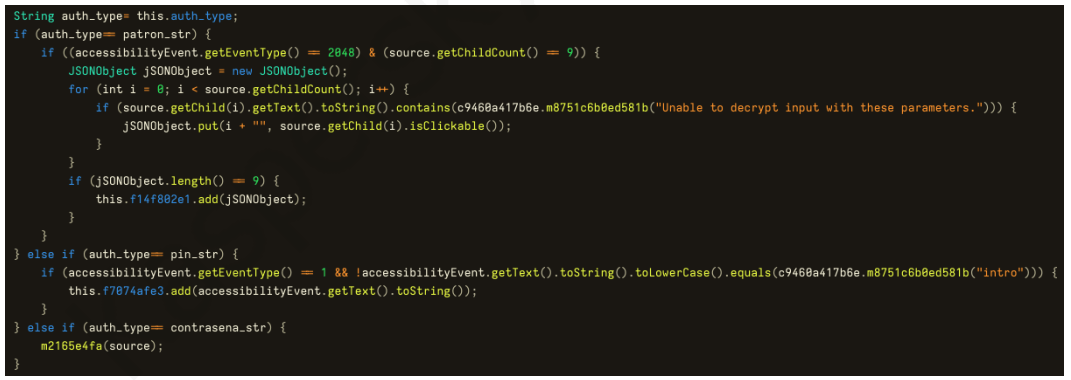
    Please Note; This Information is Raw Content Directly from the Information Source. It is access to What the Source Is Stating and Does Not Reflect

    https: //vv.mos.ru/nevs/ite/154435073/

    MIL OSI Russia News –

    May 28, 2025
  • MIL-OSI: Form 8.3 – [BENCHMARK HOLDINGS PLC – Opening Disclosure – 23 05 2025] – (CGAML)

    Source: GlobeNewswire (MIL-OSI)

    FORM 8.3

    PUBLIC OPENING POSITION DISCLOSURE/DEALING DISCLOSURE BY
    A PERSON WITH INTERESTS IN RELEVANT SECURITIES REPRESENTING 1% OR MORE
    Rule 8.3 of the Takeover Code (the “Code”)

    1.        KEY INFORMATION

    (a)   Full name of discloser: CANACCORD GENUITY ASSET MANAGEMENT LIMITED (for Discretionary clients)
    (b)   Owner or controller of interests and short positions disclosed, if different from 1(a):
            The naming of nominee or vehicle companies is insufficient. For a trust, the trustee(s), settlor and beneficiaries must be named.
    N/A
    (c)   Name of offeror/offeree in relation to whose relevant securities this form relates:
            Use a separate form for each offeror/offeree
    BENCHMARK HOLDINGS PLC
    (d)   If an exempt fund manager connected with an offeror/offeree, state this and specify identity of offeror/offeree: N/A
    (e)   Date position held/dealing undertaken:
            For an opening position disclosure, state the latest practicable date prior to the disclosure
    23 MAY 2025
    (f)   In addition to the company in 1(c) above, is the discloser making disclosures in respect of any other party to the offer?
            If it is a cash offer or possible cash offer, state “N/A”
    N/A

    2.        POSITIONS OF THE PERSON MAKING THE DISCLOSURE

    If there are positions or rights to subscribe to disclose in more than one class of relevant securities of the offeror or offeree named in 1(c), copy table 2(a) or (b) (as appropriate) for each additional class of relevant security.

    (a)      Interests and short positions in the relevant securities of the offeror or offeree to which the disclosure relates following the dealing (if any)

    Class of relevant security: 0.1p ORDINARY
      Interests Short positions
    Number % Number %
    (1)   Relevant securities owned and/or controlled: 20,240,500 2.7296    
    (2)   Cash-settled derivatives:        
    (3)   Stock-settled derivatives (including options) and agreements to purchase/sell:        
    TOTAL: 20,240,500 2.7296    

    All interests and all short positions should be disclosed.

    Details of any open stock-settled derivative positions (including traded options), or agreements to purchase or sell relevant securities, should be given on a Supplemental Form 8 (Open Positions).

    (b)      Rights to subscribe for new securities (including directors’ and other employee options)

    Class of relevant security in relation to which subscription right exists:  
    Details, including nature of the rights concerned and relevant percentages:  

    3.        DEALINGS (IF ANY) BY THE PERSON MAKING THE DISCLOSURE

    Where there have been dealings in more than one class of relevant securities of the offeror or offeree named in 1(c), copy table 3(a), (b), (c) or (d) (as appropriate) for each additional class of relevant security dealt in.

    The currency of all prices and other monetary amounts should be stated.

    (a)        Purchases and sales

    Class of relevant security Purchase/sale Number of securities Price per unit
    None      

    (b)        Cash-settled derivative transactions

    Class of relevant security Product description
    e.g. CFD
    Nature of dealing
    e.g. opening/closing a long/short position, increasing/reducing a long/short position
    Number of reference securities Price per unit
    NONE        

    (c)        Stock-settled derivative transactions (including options)

    (i)        Writing, selling, purchasing or varying

    Class of relevant security Product description e.g. call option Writing, purchasing, selling, varying etc. Number of securities to which option relates Exercise price per unit Type
    e.g. American, European etc.
    Expiry date Option money paid/ received per unit
    NONE              

    (ii)        Exercise

    Class of relevant security Product description
    e.g. call option
    Exercising/ exercised against Number of securities Exercise price per unit

    (d)        Other dealings (including subscribing for new securities)

    Class of relevant security Nature of dealing
    e.g. subscription, conversion
    Details Price per unit (if applicable)
    NONE      

    4.        OTHER INFORMATION

    (a)        Indemnity and other dealing arrangements

    Details of any indemnity or option arrangement, or any agreement or understanding, formal or informal, relating to relevant securities which may be an inducement to deal or refrain from dealing entered into by the person making the disclosure and any party to the offer or any person acting in concert with a party to the offer:
    Irrevocable commitments and letters of intent should not be included. If there are no such agreements, arrangements or understandings, state “none”

    NONE

    (b)        Agreements, arrangements or understandings relating to options or derivatives

    Details of any agreement, arrangement or understanding, formal or informal, between the person making the disclosure and any other person relating to:
    (i)   the voting rights of any relevant securities under any option; or
    (ii)   the voting rights or future acquisition or disposal of any relevant securities to which any derivative is referenced:
    If there are no such agreements, arrangements or understandings, state “none”

    NONE

    (c)        Attachments

    Is a Supplemental Form 8 (Open Positions) attached? NO
    Date of disclosure: 28 MAY 2025
    Contact name: MARK ELLIOTT
    Telephone number: 01253 376539

    Public disclosures under Rule 8 of the Code must be made to a Regulatory Information Service.

    The Panel’s Market Surveillance Unit is available for consultation in relation to the Code’s disclosure requirements on +44 (0)20 7638 0129.

    The Code can be viewed on the Panel’s website at www.thetakeoverpanel.org.uk.

    The MIL Network –

    May 28, 2025
  • MIL-OSI: BEST CRYPTO TO BUY NOW: Kaanch Network Nears Exchange Listing as Presale Stage 6 Heats Up

    Source: GlobeNewswire (MIL-OSI)

    Final Call at $0.32 Before Price Doubles to $0.64

    DUBAI, United Arab Emirates, May 28, 2025 (GLOBE NEWSWIRE) — The crypto presale scene is packed — but few projects are moving with the momentum and delivery of Kaanch Network. Stage 6 of the presale is now live at $0.32, and with over $1.31M raised and an exchange listing expected by June, this may be your last opportunity to buy before the public market launch.

    Current Price: $0.32
    Next Stage Price: $0.64
    Fixed Token Supply: 58 Million
    Over $1.3M Already Raised
    Listing Imminent — June Timeline
    Exchange Teaser from BitMart

    Why Kaanch Is Leading the Pack

    This isn’t influencer hype. Kaanch Network is delivering real infrastructure, already live:

    • 1.4 million transactions per second
    • 0.8-second finality
    • 3,600-node validator network
    • Cross-chain compatibility with Ethereum, Solana, BNB
    • .knch domain system for decentralized identity
    • Live staking during presale with up to 30% APY

    While others are still drafting whitepapers, Kaanch is already building.

    Why Stage 6 May Be Your Last Window

    Stage 5 sold out. Stage 6 is moving fast. When it ends:

    • Token price doubles to $0.64
    • Exchange listing opens public access
    • Demand spikes with staking, governance, validator onboarding
    • Presale-exclusive benefits disappear

    With a fixed 58M supply, the entry price matters and $0.32 could be the last floor before full market exposure.

    Infrastructure That’s Already Working

    While most projects launch on hope and hype, Kaanch Network is launching on code and credibility. This is a Layer 1 blockchain already processing transactions and staking before the presale even ends.

    Secure your KNCH at $0.32 now before Stage 6 closes.

    About Kaanch Network

    Kaanch Network is a next-generation Layer 1 blockchain designed for speed, scalability, and security. Built from the ground up with real-time infrastructure.

    Contact:
    Ved Singh
    info@kaanch.com

    Disclaimer: This is a paid post and is provided by Kaanch Network. The statements, views, and opinions expressed in this content are solely those of the content provider and do not necessarily reflect the views of this media platform or its publisher. We do not endorse, verify, or guarantee the accuracy, completeness, or reliability of any information presented. We do not guarantee any claims, statements, or promises made in this article. This content is for informational purposes only and should not be considered financial, investment, or trading advice. Investing in crypto and mining-related opportunities involves significant risks, including the potential loss of capital. It is possible to lose all your capital. These products may not be suitable for everyone, and you should ensure that you understand the risks involved. Seek independent advice if necessary. Speculate only with funds that you can afford to lose. Readers are strongly encouraged to conduct their own research and consult with a qualified financial advisor before making any investment decisions. However, due to the inherently speculative nature of the blockchain sector—including cryptocurrency, NFTs, and mining—complete accuracy cannot always be guaranteed. Neither the media platform nor the publisher shall be held responsible for any fraudulent activities, misrepresentations, or financial losses arising from the content of this press release. In the event of any legal claims or charges against this article, we accept no liability or responsibility. Globenewswire does not endorse any content on this page.

    Legal Disclaimer: This media platform provides the content of this article on an “as-is” basis, without any warranties or representations of any kind, express or implied. We assume no responsibility for any inaccuracies, errors, or omissions. We do not assume any responsibility or liability for the accuracy, content, images, videos, licenses, completeness, legality, or reliability of the information presented herein. Any concerns, complaints, or copyright issues related to this article should be directed to the content provider mentioned above.

    Photos accompanying this announcement are available at:

    https://www.globenewswire.com/NewsRoom/AttachmentNg/788f53aa-7548-43d7-99ab-9cf1057c56aa

    https://www.globenewswire.com/NewsRoom/AttachmentNg/b5c6060b-4378-43be-a909-189f9aa8c5f3

    The MIL Network –

    May 28, 2025
  • MIL-OSI: MEXC Futures Grid Bot Sets Traders on Fast-Track to Yields Under Multiple Market Conditions

    Source: GlobeNewswire (MIL-OSI)

    VICTORIA, Seychelles, May 28, 2025 (GLOBE NEWSWIRE) — MEXC, a leading global cryptocurrency exchange, has taken center stage on the crypto market with the release of the Futures Grid Bot on May 21, 2025. The new product provides users with a host of advantages and is unique as a market offering with an entry threshold as low as 10 USDT and high leverage rates for improved capital efficiency.

    The MEXC Futures Grid Bot is an advanced trading instrument that opens up entirely new opportunities for traders in terms of leveraging available assets via innovative approaches. The principle of grid trading relies on applying a fully automated strategy that lets traders set multiple equidistant buy and sell orders within a predetermined price range. The given method allows traders to generate profits based on any market sentiment and at lowered risks.

    Traders who rely on the Futures Grid Bot yield profits by taking advantage of market-induced price fluctuations. This lets traders use the Futures Grid Bot to generate profits, regardless of bull or bear markets.

    MEXC designed the Futures Grid Bot with a number of distinct advantages, which make it highly attractive to a wide range of trader audiences. Apart from the low entry threshold, the bot grants high leverage rations, uninterrupted operation, and low transaction fees.

    Among the potential users of the bot are short-sell traders, giving them effective risk dispersal in case of market falls. Leveraged traders and those seeking risk mitigation can also benefit from the Futures Grid Bot, as it can help them distribute dense orders. The automated nature of the bot makes it ideal for full-time traders, freeing them from monitoring their trades nonstop. Novice traders will find the Futures Grid Bot an excellent stepping stone into their trading careers, considering its low 10 USDT entry threshold and that the instrument automatically adjusts its parameters to suit their modes.

    The workflow of the Futures Grid Bot has been intentionally simplified and streamlined to ensure that both novice and professional traders can use its interface with minimal navigation. In order to initiate their first trade with the Futures Grid Bot, users must first determine the price range of their orders within the price range that suits their requirements. The next step is setting the trade intervals into an equidistant grid and placing buy and sell orders within each grid cell. Futures Grid Bot takes over as the final step, launching automated buy-low and sell-high orders.

    The MEXC exchange is confident that the Futures Grid Bot will prove to be a valuable addition to the platform’s ever-expanding range of products. The functionality of the bot and its ability to allow traders to generate positive yields under different market conditions makes it an attractive instrument for both novice and professional users, upping the exchange’s market status and audience inflow.

    About MEXC

    Founded in 2018, MEXC is committed to being “Your Easiest Way to Crypto.” Serving over 40 million users across 170+ countries, MEXC is known for its broad selection of trending tokens, everyday airdrop opportunities, and low trading fees. Our user-friendly platform is designed to support both new traders and experienced investors, offering secure and efficient access to digital assets. MEXC prioritizes simplicity and innovation, making crypto trading more accessible and rewarding.

    MEXC Official Website| X | Telegram |How to Sign Up on MEXC

    For media inquiries, please contact MEXC PR Manager Lucia Hu: lucia.hu@mexc.com

    Source

    Contact:
    Lucia Hu
    lucia.hu@mexc.com

    Disclaimer: This is a paid post and is provided by MEXC. The statements, views, and opinions expressed in this content are solely those of the content provider and do not necessarily reflect the views of this media platform or its publisher. We do not endorse, verify, or guarantee the accuracy, completeness, or reliability of any information presented. We do not guarantee any claims, statements, or promises made in this article. This content is for informational purposes only and should not be considered financial, investment, or trading advice.Investing in crypto and mining-related opportunities involves significant risks, including the potential loss of capital. It is possible to lose all your capital. These products may not be suitable for everyone, and you should ensure that you understand the risks involved. Seek independent advice if necessary. Speculate only with funds that you can afford to lose. Readers are strongly encouraged to conduct their own research and consult with a qualified financial advisor before making any investment decisions. However, due to the inherently speculative nature of the blockchain sector—including cryptocurrency, NFTs, and mining—complete accuracy cannot always be guaranteed.Neither the media platform nor the publisher shall be held responsible for any fraudulent activities, misrepresentations, or financial losses arising from the content of this press release. In the event of any legal claims or charges against this article, we accept no liability or responsibility. Globenewswire does not endorse any content on this page.

    Legal Disclaimer: This media platform provides the content of this article on an “as-is” basis, without any warranties or representations of any kind, express or implied. We assume no responsibility for any inaccuracies, errors, or omissions. We do not assume any responsibility or liability for the accuracy, content, images, videos, licenses, completeness, legality, or reliability of the information presented herein. Any concerns, complaints, or copyright issues related to this article should be directed to the content provider mentioned above.

    A photo accompanying this announcement is available at https://www.globenewswire.com/NewsRoom/AttachmentNg/e37e5d22-879d-4ec6-8e51-f1169985ec65

    The MIL Network –

    May 28, 2025
←Previous Page
1 … 638 639 640 641 642 … 2,041
Next Page→
NewzIntel.com

NewzIntel.com

MIL Open Source Intelligence

  • Blog
  • About
  • FAQs
  • Authors
  • Events
  • Shop
  • Patterns
  • Themes

Twenty Twenty-Five

Designed with WordPress