Source: People’s Republic of China – State Council News
Cable-stayed bridge across Yinjiang River in China’s Jiangsu joined together
Source: People’s Republic of China – State Council News
Cable-stayed bridge across Yinjiang River in China’s Jiangsu joined together
Source: People’s Republic of China – State Council News
Wuhu Longwan Yangtze River tunnel starts operation
Source: People’s Republic of China – State Council News
New train schedule takes effect in China
Source: GlobeNewswire (MIL-OSI)
SANTA CLARA, Calif., July 01, 2025 (GLOBE NEWSWIRE) — Silvaco Group, Inc. (“Silvaco”) (NASDAQ: SVCO), a provider of TCAD, EDA software, and SIP solutions that enable semiconductor design and digital twin modeling through AI software and innovation, today announced that Wavetek has adopted Silvaco’s Victory TCAD™ solution for the development of next-generation Gallium Nitride (GaN) devices targeting high-performance connectivity applications in 5G, Wi-Fi, and IoT markets.
As demand for high-efficiency, high-frequency GaN devices continues to rise, Wavetek is leveraging Silvaco’s advanced simulation tools to design and optimize high electron mobility transistors (HEMT) and pseudomorphic HEMTs (pHEMT). Silvaco’s Victory TCAD solution delivers accurate GaN-based device models, enabling rapid prototyping and robust device performance evaluation before fabrication.
“Silvaco’s Victory TCAD platform gives us the ability to precisely model GaN device behavior under real-world conditions,” said Dr. Barry Lin, CTO of Wavetek. “This level of insight is critical for achieving the performance and reliability targets demanded by next-generation RF and power applications.”
Silvaco’s Victory suite supports a wide range of advanced technologies including RF, Power, Photonics, CMOS, Memory, and Display. With powerful device simulation, process modeling, and parameter extraction capabilities, Victory TCAD helps leading semiconductor companies accelerate R&D cycles and reduce time-to-market.
“We are pleased to support Wavetek in their development of cutting-edge GaN technologies,” said Eric Guichard, Ph.D., Senior Vice President and General Manager of Silvaco’s TCAD Division. “Our simulation solutions are engineered to meet the rigorous demands of modern semiconductor innovation in high-frequency and Wide Band-gap market segments.”
For more information about Silvaco’s Victory TCAD platform, visit www.silvaco.com.
About Silvaco Group, Inc.
Silvaco is a provider of TCAD, EDA software, and SIP solutions that enable semiconductor design and digital twin modeling through AI software and innovation. Silvaco’s solutions are used for semiconductor and photonics processes, devices, and systems development across display, power devices, automotive, memory, high performance compute, foundries, photonics, internet of things, and 5G/6G mobile markets for complex SoC design. Silvaco is headquartered in Santa Clara, California, and has a global presence with offices located in North America, Europe, Brazil, China, Japan, Korea, Singapore, and Taiwan. Learn more at silvaco.com.
Contacts
Media Relations:
Tiffany Behany, press@silvaco.com
Investor Relations:
Greg McNiff, investors@silvaco.com
Source: US Global Legal Monitor
The following is a guest post by Clare Feikert-Ahalt, a senior foreign law specialist at the Law Library of Congress covering the United Kingdom and several other jurisdictions. Clare has written numerous posts for In Custodia Legis, including Revealing the Presence of Ghosts; Weird Laws, or Urban Legends?; FALQs: Brexit Referendum; 100 Years of “Poppy Day” in the United Kingdom; and Mr. Bates vs. The Post Office Spurs Possible Law Change.
Yesterday’s post described the historic status of the Chagos Archipelago and the United Kingdom’s (UK) power over the territory. Today’s post describes the new agreement, which returns sovereignty over the Chagos Archipelago and allows for the continued use of the UK-US military base.
On May 22, 2025, the United Kingdom and Mauritius signed an agreement that “recognis[es] the wrongs of the past” with regards to the Chagos Archipelago. The agreement transfers sovereignty of the British Indian Ocean Territory (BIOT) from the UK to Mauritius, while providing the UK with “rights and authorities [over Diego Garcia] that the United Kingdom requires for the long-term, secure and effective operation of the Base.”
The agreement, which took over two years and 13 rounds of negotiations to achieve, secures British interests in Diego Garcia, including an area of 12 nautical miles surrounding the island, for 99 years. The agreement provides the UK with the right to access, maintain, and invest in the base, along with the ability to use it for defense purposes. It places a binding obligation on both parties to ensure the secure and effective operation of the base. The UK’s secretary of state for defence notes the agreement achieves the “secured unrestricted access to, and use of, the base, as well as control over movement of all persons and all goods on the base and control of all communication and electronic systems.”
Any activities on the wider islands of the Chagos Archipelago, such as the construction of any structure, artificial island, sensor, or barrier within 24 nautical miles, must be approved through a joint decision process between the UK and Mauritius, which serves as an “effective veto” of development in the islands surrounding Diego Garcia as the UK does not want other countries, particularly those hostile to the UK, to have a presence near this facility.
The 99 years can be extended for a further 40 years if both parties agree, and it may be extended again thereafter. The estimated cost to UK for 99 years “is £101 million [annually] and the net present value of payments under the treaty is £3.4 billion” (approximately US$136 million and US$4.6 billion respectively) accounting for approximately 0.2% of the defense budget. The government has stated this is less than the cost of running an aircraft carrier, without aircraft, for a year.
The agreement provides for the resettlement of the residents of Diego Garcia, known as the Chagossians, on the islands of the Chagos Archipelago, with the exception of Diego Garcia. It also provides for the establishment of a trust fund of £40 million (approximately US$54 million) to benefit Chagossians and an annual grant of £45 million (approximately US$61 million) for 25 years to fund projects that promote economic development and welfare in Mauritius. Article 11 of the agreement states that it “constitutes the full and final settlement of all claims by Mauritius in relation to the Chagos Archipelago.”
The treaty was laid before both Houses of Parliament on May 22, 2025, and either of the Houses of Parliament may object to its ratification until July 3, 3035.
The Defense Facility on Diego Garcia
The secretary of state for defence for the UK stated “[t]he importance of Diego Garcia cannot be overstated” and a government press release announcing the agreement notes that the base is central to both the UK and US’s emergency planning and operations, with the base serving as:
“a critical logistics hub at a strategic location, with a full range of facilities that acts as a key refueling and resupply station for naval and air operations. This enables power projection and global reach, allowing for rapid and flexible deployment of our forces across the Middle East, East Africa, and South Asia.”
While most of the work on, and capabilities of, Diego Garcia are not disclosed, the secretary of state for defence and the UK prime minister have publicly acknowledged that the base supports operations, including those related to counter-terrorism, in the Middle East, East Africa, and South Asia. Public statements detail that the base houses:
The presence of the base in the center of the Indian Ocean also helps to safeguard an important trade route, through which “a third of the world’s bulk cargo and two-thirds of global oil shipments are transported.”
The US Navy describes the facility on Diego Garcia as “the tip of the spear” and states that it “provides logistic support to operational forces forward deployed to the Indian Ocean and Persian Gulf areas of responsibility in support of national policy objectives.”
The prime minister stated that the agreement is vital to the UK’s defence and intelligence, and for securing the safety and security of the British people at this time. He stated “… the base was under threat” from legal challenges by Mauritius, and the government believes there is no viable alternative to protect the base and secure the islands surrounding it.
The prime minister further noted that if the UK disregarded any future legal judgements, “international organisations and other countries would act on them. And that would undermine the operation of the base.” The UK was particularly concerned at the prospect of other countries establishing a presence in the islands surrounding Diego Garcia, or conducting training exercises nearby, which could impact the operation of the base, and that it would be unable to prevent this without an agreement.
The prime minister has described the base as “one of the most significant contributions we make to our security relationship with the United States.” The UK foreign secretary stated the US was unhappy with the uncertainty created by the situation and “strongly encouraged [the UK] to strike a deal.” It was against this background that negotiations were commenced and the treaty was made.
Reaction to the Agreement
The opposition conservative party has been critical of the agreement, stating that the government “prioritised heeding the most pessimistic legal advice” concerning the potential of legal judgments. The opposition further stated that the agreement puts the defense facility at risk due to Mauritius’ ties to Russia and China. The UK shadow secretary of state said in parliament that “[t]he Government should not be surrendering strategically vital sovereign territory, especially when we face such threats, and they certainly should not be paying billions for the privilege”, noting further that the agreement does not offer any protection to the Chagossians.
Internationally, the agreement has been backed by the UK’s “Five Eyes” partners, which include the United States, Canada, Australia, and New Zealand. Japan, India, and the African Union have also welcomed the agreement. US President Donald Trump expressed his support for the agreement and US Secretary of State Marco Rubio, stated that while the administration is not a party to the agreement, it “remain[s] responsible for operating the U.S. Naval Support Facility on Diego Garcia, which continues to play a vital role in supporting forward-deployed operational forces and advancing security across the region.”
The US secretary of state stated:
“The Trump Administration determined that this agreement secures the long-term, stable, and effective operation of the joint U.S.-UK military facility at Diego Garcia. This is a critical asset for regional and global security.”
While the agreement has been welcomed by the UK and several of its allies, the United Nations has condemned the agreement, issuing a press release stating:
“By maintaining a foreign military presence of the United Kingdom and the United States on Diego Garcia and preventing the Chagossian people from returning to Diego Garcia, the agreement appears to be at variance with the Chagossians’ right to return, which also hinders their ability to exercise their cultural rights in accessing their ancestral lands from which they were expelled.”
The UN has urged the UK to “apply a human rights-based approach in addressing historical injustices against the Chagossian people.”
Additional Law Library of Congress Resources on the Laws of Mauritius and the UK
Subscribe to In Custodia Legis – it’s free! – to receive interesting posts drawn from the Law Library of Congress’s vast collections and our staff’s expertise in U.S., foreign, and international law.
Distinguished ambassadors, dignitaries, and academic leaders gathered on Thursday, 26th June, at Tsinghua University in China (www.Tsinghua.edu.cn) to mark the official launch of the Hazem Ben-Gacem Arab Scholars Program, a landmark initiative to empower students from Arab League countries through world-class education while fostering academic excellence and cross-cultural collaboration.
This year, the Scholars Program will support six students from Arab League nations who are pursuing postgraduate courses at the historic university. This program is understood to be the first scholarship established at Tsinghua University specifically for students from Arab nations and aims to strengthen Sino-Arab relations.
Tsinghua University is a top-ranked Chinese university with a strong reputation in technology and engineering, often compared to MIT. Established in 1911, Tsinghua University has 20 colleges and 90 undergraduate programs, enabling it to offer a wide array of academic disciplines. Tsinghua alumni have made significant contributions to the economic, cultural, and technological development of China and also represent many of the nation’s political elite.
Hazem Ben-Gacem, Founder and Chief Executive of BlueFive Capital, said: “For more than a thousand years, the Arab region and China have been bound by a vibrant exchange of goods, knowledge, and cultural dialogue. By enabling exceptional Arab students to study at Tsinghua, China’s pinnacle of academic excellence, we aim to develop leaders who will carry forward this agelong spirit of curiosity and collaboration, ensuring that the Arab-China relationship evolves as a beacon of cooperation in an increasingly fragmented world.”
Professor Yang Bin, Vice Chancellor of Tsinghua University Council, expressed the university’s sincere gratitude for Mr. Hazem Ben-Gacem’s generous donation. He noted that in recent years, Tsinghua has implemented a series of strategic initiatives to enhance its global impact, with particular emphasis on deepening engagement and cooperation with Arab League member states, which has significantly advanced cultural exchanges between both sides. The newly established Hazem Ben-Gacem Arab Scholars Program, funded by Mr. Hazem Ben-Gacem’s donation, will support six incoming full-time master’s students from Arab League countries. Professor Yang emphasized that this initiative will not only motivate recipients to pursue academic excellence but also serve as an important milestone in strengthening the friendship between Tsinghua and the Arab world. It vividly embodies the shared values of openness, inclusiveness, mutual respect, and the pursuit of common progress across cultures and borders.
The Hazem Ben-Gacem Arab Scholars Program will begin this academic year (2025-2026).
Distributed by APO Group on behalf of Tsinghua University Education Foundation (TUEF).
Media contact:
Leila Ben Hassen
leila@Bluejaycommunication.com
Hashtags:
#Education #Scholarship #ArabScholarsProgram #Philantropy #TUEF
About Hazem Ben-Gacem:
Hazem Ben-Gacem is the Founder and Chief Executive of BlueFive Capital. Until September 2024, he was co-Chief Executive Officer at Investcorp, the Middle East’s largest non-sovereign private equity firm, chairing most of its private equity and infrastructure investment committees and overseeing all Investcorp’s activities in the Middle East, South East Asia, Japan, and China. Prior to that, Hazem led Investcorp’s European private equity and its global technology investment businesses. During his 30-year tenure, Hazem directly led over 40 private equity investments across most world regions. Hazem began his career in New York as a member of the M&A team at Credit Suisse First Boston.
Hazem has previously been a donor for different scholarship programs with Harvard University, Harvard Medical School, Harvard Kennedy School, and Oxford University.
Hazem serves on the Executive Boards of the Harvard Kennedy School of Government and St Anthony’s College at Oxford University, and the Dean’s Council of the Harvard Medical School. In 2017, he founded the Harvard Office in Tunisia, the first formal presence for Harvard in the Arab world.
For more information, please visit www.BlueFiveCapital.com
About Tsinghua University Education Foundation (TUEF):
Founded in 1994, it is the first university education foundation established in China following the reform and opening up of China. The objective of TUEF is to foster the development of education in China, improve educational quality and academic research, advocate the culture and vision of Tsinghua University, and strive for philanthropic support from domestic and international organizations and individuals.
TUEF actively raises social resources, constantly optimizes project management, and steadily promotes the preservation and appreciation of value in efforts to help Tsinghua University move towards the goal of becoming a globally leading university. TUEF fully leverages the advantages of scientific and technological talents in Tsinghua University, supports public welfare services, and boosts social progress and human welfare through the development of education.
For more information, please visit www.Tsinghua.edu.cn
Translation. Region: Russian Federal
Source: People’s Republic of China in Russian – People’s Republic of China in Russian –
Source: People’s Republic of China – State Council News
QINGDAO, July 1 (Xinhua) — An exhibition of sculptures by Shanghai Cooperation Organization (SCO) countries titled “Light of Unity in Harmony” opened in Qingdao, east China’s Shandong Province, on Thursday.
The exhibition, which will run until July 6, features 48 sculptures created by artists from Russia, Kazakhstan, Uzbekistan, Kyrgyzstan, Pakistan, Iran and other countries. At the same time, the exhibition also features sculptures by Chinese artists dedicated to cultural figures from India, Tajikistan and other countries.
A Xinhua reporter saw numerous city residents and tourists visiting the exhibition pavilion, who came here and admired the sculptures. Some stopped for a long time in front of the sculptures, contemplating and thinking intently, while others took pictures together in front of their favorite works.
The opening of the SCO Sculpture Exhibition, which is the first event of the SCO Summer 2025 program, marks the beginning of the SCO Summer 2025 series of events. During this period, Qingdao will host more than one hundred events in such areas as culture and art, tourism promotion, exhibitions and festivals, education and study, sports and recreation.
In early July 2024, China assumed the rotating presidency of the SCO for 2024-2025. It was previously announced that the organization’s next summit would be held this fall in the Chinese city of Tianjin. -0-
African Export-Import Bank (Afreximbank) (www.Afreximbank.com) has successfully completed upsizing its reserve-based lending facility in favour of Oando Oil Limited to US$375 million. The company’s pay down of the original US$525-million facility, secured in 2019, to US$100 million in 2024 created significant headroom for refinancing and enhancing Oando’s financial flexibility.
The upsizing, led by Afreximbank, with support from Mercuria Asia Resources PTE Limited (Mercuria), which marks a key milestone in Oando’s strategic capital management, will support Oando’s ambition to achieve production of 100,000 barrels of oil per day and 1.5 billion cubic feet of gas per day by the end of 2029, effectively boosting Nigeria’s oil output and reinforcing the country’s position in the global energy market. The upsizing is further expected to drive local economic growth by creating jobs, improving infrastructure, and fostering technological advancements in the oil and gas sector.
Commenting on the development, Wale Tinubu, Group Chief Executive, Oando PLC and Executive Chairman, Oando Energy Resources said:
“We are pleased to have completed the upsizing of our RBL facility, a strategic milestone that reinforces our commitment as Operator of the Oando-NEPL JV to maximizing the value of our expanded asset portfolio. Our Joint Venture holds extensive reserves with the potential to generate over $11 billion in net cash flows to Oando over the assets’ life. This working capital facility is a critical enabler towards efficiently extracting and monetizing these resources. We appreciate the continued partnership of Afreximbank and Mercuria, whose unwavering support underscores their alignment with our long-term focus on maximizing production, optimizing asset performance, and delivering sustainable value to all stakeholders”.
In his own comments, Mr. Haytham Elmaayergi, Executive Vice President, Global Trade Bank, Afreximbank, described the transaction as a critical step in advancing Afreximbank’s strategy for promoting local content in Africa’s oil and gas sector.
“Afreximbank remains a longstanding financial partner to Oando PLC and its affiliates and has consistently supported the company’s growth and expansion initiatives. We are delighted that Mercuria, one of the world’s largest independent energy and commodities groups and one of our partners, has brought its global expertise and financial backing to the transaction, further strengthening Oando’s ability to execute its production growth strategy.”
Distributed by APO Group on behalf of Afreximbank.
Media Contact:
Vincent Musumba
Communications and Events Manager (Media Relations)
Email: press@afreximbank.com
Follow us on:
Twitter
Facebook
LinkedIn
Instagram
About Afreximbank:
African Export-Import Bank (Afreximbank) is a Pan-African multilateral financial institution mandated to finance and promote intra- and extra-African trade. For over 30 years, the Bank has been deploying innovative structures to deliver financing solutions that support the transformation of the structure of Africa’s trade, accelerating industrialisation and intra-regional trade, thereby boosting economic expansion in Africa. A stalwart supporter of the African Continental Free Trade Agreement (AfCFTA), Afreximbank has launched a Pan-African Payment and Settlement System (PAPSS) that was adopted by the African Union (AU) as the payment and settlement platform to underpin the implementation of the AfCFTA. Working with the AfCFTA Secretariat and the AU, the Bank has set up a US$10 billion Adjustment Fund to support countries effectively participating in the AfCFTA. At the end of December 2024, Afreximbank’s total assets and contingencies stood at over US$40.1 billion, and its shareholder funds amounted to US$7.2 billion. Afreximbank has investment grade ratings assigned by GCR (international scale) (A), Moody’s (Baa1), China Chengxin International Credit Rating Co., Ltd (CCXI) (AAA), Japan Credit Rating Agency (JCR) (A-) and Fitch (BBB-). Afreximbank has evolved into a group entity comprising the Bank, its equity impact fund subsidiary called the Fund for Export Development Africa (FEDA), and its insurance management subsidiary, AfrexInsure (together, “the Group”). The Bank is headquartered in Cairo, Egypt
For more information, visit: www.Afreximbank.com
Translation. Region: Russian Federal
Source: People’s Republic of China in Russian – People’s Republic of China in Russian –
Source: People’s Republic of China – State Council News
BEIJING, July 1 (Xinhua) — A freight train carrying goods from the Guangdong-Hong Kong-Macao Greater Bay Area departed from Zengcheng Railway Station in Guangzhou City, capital of south China’s Guangdong Province, on Thursday, and will cross the border at Horgos Port in northwest China’s Xinjiang Uygur Autonomous Region to Kazakhstan. The goods on board mainly include dishwashers, refrigerators and clothing, worth about 15.3 million yuan, the Guangzhou Daily reported, citing local customs information.
In recent years, the pace of urbanization in Central Asian countries has accelerated, and local consumers’ demand for various goods has increased significantly. A wide range of goods produced in the Guangdong-Hong Kong-Macao Greater Bay Area, including household appliances, clothing and footwear, are popular in the Central Asian market.
“The trains to Central Asian countries mainly carry consumer goods produced in the Guangdong-Hong Kong-Macao Greater Bay Area. The return trains carry agricultural and food products from Central Asia,” said Li Siqiang, an official with the International Freight Train Management Company of Guangzhou Transport Investment Corporation.
“China-Central Asia train services are highly efficient, low-cost and flexible. The transportation time is about 10-15 days, more than twice as fast as sea transportation. It is suitable for transporting goods such as electronic products and auto parts,” said Xiao Shuailun, a manager at a local supply chain company.
Since May 2021, when China-Central Asia freight train services from Guangzhou were first launched, there have been 126 departures of such trains, carrying goods worth more than RMB 1.6 billion. -0-
Translation. Region: Russian Federal
Source: People’s Republic of China in Russian – People’s Republic of China in Russian –
Source: People’s Republic of China – State Council News
BEIJING, July 1 (Xinhua) — The Central Folk Instrument Orchestra of China recently gave a gala concert “Ode to Peace” in Beijing under the direction of conductor Vyacheslav Valeev.
The Russian conductor was specially invited to the musical event, which took place on the stage of the National Centre for the Performing Arts (NCPA) of China. The orchestra’s programs also featured pianist Elena Endeberya.
The concert, dedicated to the theme “Peace,” featured four Chinese and Russian classical works, namely the Fantasy-Symphony for Folk Orchestra in F major, Fantasy on Themes by Ryabinin for Piano and Orchestra, as well as “Ode to the Yellow River” and “Ode to Peace” from the second part of the Chinese folk orchestral music work “The Yellow River.” -0-
Translation. Region: Russian Federal
Source: People’s Republic of China in Russian – People’s Republic of China in Russian –
Source: People’s Republic of China – State Council News
BEIJING, July 1 (Xinhua) — The roar of container ships in the port of Lianyungang (Jiasu Province, east China) and the hoot of China-Europe freight trains sound in unison. “Steel caravans” loaded with photovoltaic panels and precision instruments set off from the banks of the Yangtze River to the deserts of Central Asia. And on the shelves of Jiangsu stores, dried fruits from Central Asia look tempting, spreading a subtle aroma; cotton yarn from Central Asia dances briskly between the machines of textile factories, adding a special flavor to the “Made in Jiangsu” brand… According to the latest data from Nanjing Customs, in the first five months of 2025, Jiangsu Province’s export volume to five Central Asian countries amounted to 8.9 billion yuan, up 21.4 percent year on year.
As part of the high-quality construction of the Belt and Road, Jiangsu and Central Asia are entering a “golden period” of cooperation together, local newspaper Xinhua Daily reported.
Engineering projects are like a “steel frame”, trade flows are like “digital channels”, and high-level mutual visits and the implementation of policies and initiatives are “bridge pillars”, which are all involved in building the “Golden Bridge of the Silk Road” between Jiangsu and Central Asia. Despite the thousands of mountains and rivers separating them, thanks to the close industrial ties, Jiangsu and the Central Asian region have achieved deep integration. With unprecedented depth and breadth, the two sides continue to strengthen the foundation of mutually beneficial cooperation.
Uzbekistan, the most populous country in Central Asia and a key hub on the ancient Silk Road, has been accelerating its industrialization in recent years and has been actively working with Jiangsu to develop practical cooperation.
From the construction of a new district in Samarkand to the processing plant of the Almalyk Mining and Metallurgical Plant… The equipment of the Chinese engineering giant – Xuzhou Construction Machinery Group Co., Ltd. (XCMG) – has become the “standard equipment” for infrastructure construction for industrialization in Central Asia. “In Uzbekistan, XCMG equipment is present at almost all large construction sites,” said Sun Si, the responsible project manager of XCMG Corporation. Over the past three years, XCMG equipment exports to Uzbekistan have exceeded 2 billion yuan, and the current stock of such equipment in the country exceeds 8,000 units. Close partnerships have been formed with many local large construction companies, equipment rental companies and mining companies.
As the e-commerce data and platform services of SOHO Holding intersect in the Central Asian digital space, the “Golden Bridge of the Silk Road” between Jiangsu and Central Asia will build more industrial highways. In January this year, SOHO Holding opened a representative office in Kazakhstan. This trading platform, located in the hinterland of Central Asia, will help enterprises in Jiangsu Province and other parts of the country to develop the Central Asian market.
“We are creating not only a trading platform, but also a high-speed channel for industrial integration,” explained the project manager in charge. The main areas of cooperation were the creation of B2C e-commerce and car trade platforms, as well as the construction of foreign warehouses in Kazakhstan. According to the set goals, this cooperation will allow SOHO Holding to achieve a bilateral trade volume of USD 1 billion with Central Asia in 5 years.
“Good products from Jiangsu” appear one after another on the market of Central Asian countries, and high-quality products from Central Asia continuously fill the shelves of stores in Jiangsu Province. “Last year, 14,800 tons of barley and 2,700 tons of feed wheat flour from Kazakhstan arrived in China on 11 China-Europe freight trains,” said a responsible executive of SUMEC International Technology Co., Ltd., which signed a framework agreement on cooperation in the field of agricultural products for 2024 with Kazakhstan’s Fort LLP worth about 500 million yuan. The company uses the direct purchase model from the manufacturer to reduce costs. In the future, it also plans to actively build a complete supply system for agricultural products within the framework of the Belt and Road Initiative, using Kazakhstan’s breadbasket.
Crossing deserts and seas, linking the East and Central Asia, China-Europe freight trains, like racing “steel dragons,” carry hopes for cooperation and development opportunities. Since the launch of China-Europe freight train services, a total of more than 14,000 trains have been sent from Jiangsu to Central Asia with wagons loaded at 100 percent. Jiangsu Province has firmly held its position as the main transit corridor to Central Asia. -0-
Source: GlobeNewswire (MIL-OSI)
San Francisco, USA, July 01, 2025 (GLOBE NEWSWIRE) — Market Dynamics
The Automotive Tire Pressure Monitoring System (TPMS) market was valued at US$ 8,940.29 million in 2024 and is projected to grow at a robust CAGR of 12.91% from 2025 to 2032, reflecting increasing global emphasis on vehicle safety and performance. This impressive growth trajectory is fueled by a combination of regulatory mandates and consumer demand for enhanced driving safety. As underinflated tires contribute to poor fuel efficiency, tire wear, and accident risk, TPMS is becoming a crucial component in modern vehicles.
Regulatory mandates across developed economies such as the United States, European Union, Japan, and China have made TPMS installation mandatory in all new vehicles. These regulations are significantly propelling market demand, particularly for Direct TPMS (DTPMS), which offers higher accuracy compared to Indirect TPMS (ITPMS). Furthermore, with the rise in global vehicle production and sales, especially in emerging markets where automotive demand is rapidly increasing, the adoption of Tire Pressure Monitoring Systems (TPMS) as a standard safety feature is becoming more widespread. In 2022, global motor vehicle production reached 85.4 million units, marking a 5.7% increase from 2021, according to the European Automobile Manufacturers Association. Many countries have introduced regulatory mandates requiring TPMS installation to enhance road safety by providing drivers with real-time tire pressure information, thereby reducing the risk of accidents caused by underinflated tires.
Unlock exclusive insights with our detailed sample report (Please enter your Corporate Email ID to get priority access@ https://www.analystviewmarketinsights.com/request_sample/AV4027
Key Attributes:
| Report Attributes | Details |
| No. of Pages | 269 |
| Forecast Period | 2025 – 2032 |
| Estimated Market Value (USD) in 2025 | $8,940.29 Million |
| Compound Annual Growth Rate (CAGR) | 12.91% |
| Regions Covered | North America (U.S., and Canada) Europe (Germany, UK, France, Italy, Spain, The Netherlands, Sweden, Russia, Poland, Rest of Europe) Asia Pacific (China, India, Japan, South Korea, Australia, Indonesia, Thailand, Philippines, Rest of APAC) Latin America (Brazil, Mexico, Argentina, Colombia, Rest of LATAM) The Middle East and Africa (Saudi Arabia, UAE, Israel, Turkey, Algeria, Egypt, Rest of MEA) |
Key Drivers
Restraints
Opportunities
Market segmentation :
GLOBAL AUTOMOTIVE TIRE PRESSURE MONITORING SYSTEM MARKET, BY PRODUCT TYPE- MARKET ANALYSIS, 2019 – 2032
GLOBAL AUTOMOTIVE TIRE PRESSURE MONITORING SYSTEM MARKET, BY VEHICLE TYPE- MARKET ANALYSIS, 2019 – 2032
GLOBAL AUTOMOTIVE TIRE PRESSURE MONITORING SYSTEM MARKET, BY COMPONENT- MARKET ANALYSIS, 2019 – 2032
GLOBAL AUTOMOTIVE TIRE PRESSURE MONITORING SYSTEM MARKET, BY SALES CHANNEL- MARKET ANALYSIS, 2019 – 2032
Regional Insights
North America
North America remains a leading market for TPMS, primarily driven by regulatory enforcement and high consumer awareness. The U.S. is the dominant player due to early legislation mandating TPMS and widespread OEM adoption. The region is also a hotspot for aftermarket sales, supported by a well-established automotive service ecosystem.
Europe
Europe follows closely, with countries like Germany, France, and the U.K. leading TPMS penetration. The region’s strong focus on vehicle safety and environmental concerns (such as CO2 emission reduction) has fostered widespread TPMS adoption. Moreover, the European Union’s General Safety Regulation (GSR) continues to enforce TPMS requirements across all new vehicle segments.
Asia-Pacific
The Asia-Pacific region, led by China, Japan, South Korea, and India, is emerging as the fastest-growing market. China’s TPMS mandate for new vehicles starting 2019 has significantly boosted local demand. Additionally, rising disposable incomes, rapid urbanization, and growing automotive manufacturing hubs in India and Southeast Asia offer enormous growth potential. However, aftermarket awareness and infrastructure still lag behind developed markets.
Latin America & Middle East Africa
These regions are in the nascent stages of TPMS adoption. While vehicle ownership is rising, the lack of strict safety norms and consumer education limits the market. Nonetheless, growing automotive imports and gradual economic development are creating long-term opportunities.
Looking For a Detailed Full Report? Please review it here @ https://www.analystviewmarketinsights.com/reports/report-highlight-automotive-tire-pressure-monitoring-system-market
Reasons to Invest in the TPMS Market
Related Links
Wafer-Level Chip Scale Package Market
Semiconductor Gas Delivery System Market
Rapid Thermal Processing Equipment Market
Source: People’s Republic of China – State Council News
Flag-raising ceremony, reception held to mark 28th anniversary of Hong Kong’s return to motherland
HONG KONG, July 1 — The government of China’s Hong Kong Special Administrative Region (HKSAR) on Tuesday held a flag-raising ceremony and a reception to celebrate the 28th anniversary of Hong Kong’s return to the motherland.
Vice Chairman of the National Committee of the Chinese People’s Political Consultative Conference Leung Chun-ying, Chief Executive of the HKSAR John Lee, and Zhou Ji, director of the Liaison Office of the Central People’s Government in the HKSAR, as well as officials from the Office for Safeguarding National Security of the Central People’s Government in the HKSAR, the Office of the Commissioner of the Chinese Foreign Ministry in the HKSAR, and the Hong Kong Garrison of the Chinese People’s Liberation Army, attended the flag-raising ceremony at the Golden Bauhinia Square on Tuesday morning.
As the Hong Kong Police Silver Band performed “Ode to the Motherland,” the flag-guarding team marched in unison, escorting the national flag of the People’s Republic of China and the flag of the HKSAR into the Golden Bauhinia Square.
With the majestic national anthem playing, the flag bearers raised the national and regional flags skyward, and the vibrant rose slowly, fluttering in the wind. Attendees stood in solemn attention, singing the national anthem. A helicopter flew over Hong Kong’s iconic Victoria Harbour, displaying the national and regional flags, while a fireboat from the Hong Kong Fire Services Department performed a water salute in the harbor.
Following the ceremony, a grand reception was hosted by the HKSAR government in the Hong Kong Convention and Exhibition Centre.
Addressing the reception, HKSAR Chief Executive John Lee said that since taking office, the current HKSAR government has forged ahead with reforms to build a safe and stable Hong Kong, and striven to develop the economy and improve people’s livelihood, and such efforts are gradually delivering results.
Looking ahead, Lee pledged to safeguard high-quality development with high-level security, speed up the development of the Northern Metropolis, and improve people’s livelihood proactively.
“As long as we are determined to fully seize the opportunities, keep enhancing our value and competiveness, undertake reforms for progress and foster innovation, I am confident the wisdom and experience of the people of Hong Kong will help our Pearl of the Orient shine brighter than ever on the world stage,” Lee said.
Earlier in the morning, the Liaison Office of the Central People’s Government in the HKSAR, the Office for Safeguarding National Security of the Central People’s Government in the HKSAR, the Office of the Commissioner of the Chinese Foreign Ministry in the HKSAR, and the Hong Kong Garrison of the Chinese People’s Liberation Army, also held flag-raising ceremonies.
Translation. Region: Russian Federal
Source: People’s Republic of China in Russian – People’s Republic of China in Russian –
Source: People’s Republic of China – State Council News
BEIJING, July 1 (Xinhua) — As a friendly neighbor, China hopes Thailand will maintain stability and development, Foreign Ministry spokesperson Mao Ning said Tuesday.
She made the statement at a regular departmental press conference, answering a question related to the fact that the Constitutional Court of Thailand suspended Prime Minister Phetongthan Shinawatra from her duties on Tuesday.
“This is Thailand’s internal matter. I will not comment on it,” Mao Ning said. “As a friendly neighbor, China hopes Thailand will maintain stability and development,” she added. -0-
Translation. Region: Russian Federal
Source: People’s Republic of China in Russian – People’s Republic of China in Russian –
Source: People’s Republic of China – State Council News
BEIJING, July 1 (Xinhua) — Wang Huning, a member of the Standing Committee of the Political Bureau of the Communist Party of China (CPC) Central Committee and chairman of the National Committee of the Chinese People’s Political Consultative Conference (CPPCC), met with Marinko Kavara, vice-speaker of the House of Representatives of the Parliamentary Assembly of Bosnia and Herzegovina (BiH), in Beijing on Tuesday.
Wang Huning said that in recent years, under the strategic leadership of Chinese President Xi Jinping and the BiH Presidency, the two countries have maintained strong political mutual trust and close people-to-people and cultural exchanges, and achieved fruitful results in trade and economic cooperation.
Wang Huning noted that this year marks the 30th anniversary of the establishment of diplomatic relations between China and BiH. China is ready to cooperate with BiH to implement the important consensus reached by the heads of state of the two countries, as well as to deepen cooperation with BiH on the basis of equality, mutual respect, mutual benefit and win-win.
Wang Huning added that the CPPCC National Committee is willing to make new contributions to promoting the development of bilateral relations.
M. Kawara highly praised the concept of building a community with a shared future for mankind and the Belt and Road Initiative put forward by Xi Jinping.
M. Kawara said that BiH firmly adheres to the one-China principle and is ready to deepen practical cooperation with China in various fields to promote new development of bilateral relations. -0-
Translation. Region: Russian Federal
Source: People’s Republic of China in Russian –
Source: People’s Republic of China – State Council News
TAIYUAN, July 1 (Xinhua) — From AI-powered data analytics platforms to drones roaming the skies, young Generation Z farmers in China are actively adopting modern farming methods, redefining the very essence of being a farmer.
Zoomers are generally defined as people born between 1995 and 2009 who grew up with access to the internet and digital technologies from an early age.
Born and raised in a farming family in Yicheng County, north China’s Shanxi Province, 21-year-old Wang Huan still remembers the hardships of traditional farming in the pre-drone era of his childhood.
“Back then, my family members had to carry tanks on their backs, manually spraying pesticides and fertilizers in the scorching summer sun. It seemed like there would be no end to the work,” he says.
For Wang Huan, now an experienced drone pilot, the technology has revolutionized his life and work. He says a drone can spread two tons of fertilizer in just over a day, compared to four to five days it used to take farmers to do the same amount of work.
In addition to drones, the young farmer also mastered other modern agricultural equipment: combines, seeders and balers.
Stories like these are common across rural China. Ding Zehui, a native of Wanrong County in Shanxi Province, returned to his hometown after graduating from college last year to become a farmer.
The 22-year-old joined a local cooperative that provides agricultural machinery rental services. He also convinced his family to buy an unmanned seed drill equipped with a Beidou navigation system, as it can operate around the clock, greatly improving the accuracy and efficiency of sowing.
“Agricultural machinery is becoming more sophisticated, with air-conditioned cabins and more convenient controls. This has significantly improved working conditions,” the young man noted.
As momentum for rural revitalization and agricultural modernization gathers pace in China, a new generation of tech-savvy young farmers like Wang Huan and Ding Zehui are aggressively adopting artificial intelligence, big data, advanced technology and smart machines to transform traditional farming methods once based on simple tools and backbreaking physical labor.
Official data shows that the comprehensive mechanization rate of cultivation, planting and harvesting of agricultural crops in China has exceeded 75 percent. Moreover, as of 2024, more than 2.2 million units of agricultural machinery across the country have been equipped with the Beidou navigation system, helping them achieve world-leading levels of efficiency and precision in operation.
The rise of smart farming is also giving farming a new, attractive image that is attracting young Chinese to the field. Unlike older generations, who often viewed farming as a humble, physically demanding job, today’s young Gen Z farmers bring a greater sense of pride and purpose to the job.
“When you see a sea of wheat ready to be harvested at the end of a hard day’s work, no words can describe the sense of satisfaction you feel at that moment,” says Ding Zehui.
Hashtags like “Zoomer tractor drivers” and “Zoomers transform their farm” regularly trend on Chinese social media, while creative videos like “drone farmer’s diary” and “AI pig farming vlog” go viral, racking up countless views. Last year, a video of young Chinese farmer Gao Yinghao arriving at his own wedding in a combine harvester caused a wave of admiration online.
Wang Shumin, Wang Huan’s father and head of a local agricultural cooperative, said three of his son’s classmates, inspired by his example, joined the cooperative this year and quickly learned to operate various types of farm machinery.
“They learn quickly, are genuinely passionate about farming and aren’t afraid of hard work,” he said. “Their results have exceeded my expectations.” -0-
Translation. Region: Russian Federal
Source: People’s Republic of China in Russian – People’s Republic of China in Russian –
Source: People’s Republic of China – State Council News
HOUSTON, July 1 (Xinhua) — U.S. President Donald Trump on Monday signed a memorandum to tighten policies toward Cuba, including restrictions on some financial transactions and travel.
According to a White House fact sheet, the memo prohibits tourist travel by U.S. citizens to Cuba, requires mandatory records of all travel-related transactions for at least five years and regular compliance audits.
The Trump administration seeks to end economic practices that disproportionately benefit the Cuban government, military, intelligence, and security services.
The memorandum prohibits direct or indirect financial transactions with entities controlled by the Cuban military, such as Grupo de Administracion Empresarial SA /GAESA/ and its subsidiaries. A growing number of Cubans and entities are now prohibited from doing business with Americans as the decades-long U.S. economic embargo intensifies.
D. Trump has always taken a tough stance on Cuba. On the first day of his second term, he returned the island nation to the U.S. list of state sponsors of terrorism, reversing the decision of his predecessor, Joseph Biden.
In the final days of his first presidential term in 2021, D. Trump called Cuba a “state sponsor of terrorism.”
Cuban Foreign Minister Bruno Rodriguez Parrilla called the memorandum “criminal behavior that violates the human rights of the entire nation.”
“The presidential memorandum against Cuba, released today by the US government, intensifies the aggression and economic blockade that punishes the entire Cuban people and is the main obstacle to our development,” Minister X wrote on social media. –0–
Translation. Region: Russian Federal
Source: People’s Republic of China in Russian – People’s Republic of China in Russian –
Source: People’s Republic of China – State Council News
NEW DELHI, July 1 (Xinhua) — At least six people, including two women, were killed and several others injured in a powerful blast at a fireworks factory in India’s southern Tamil Nadu state, local police said by telephone.
The blast, which led to a massive fire, took place at a factory in a village in Virudunagar district. Bodies of six people have been recovered so far and the injured have been admitted to a local hospital.
The rescue operation is ongoing. The cause of the explosion is being investigated. –0–
Source: The Conversation – Global Perspectives – By Davide Foffa, Research Fellow in Palaeobiology, University of Birmingham
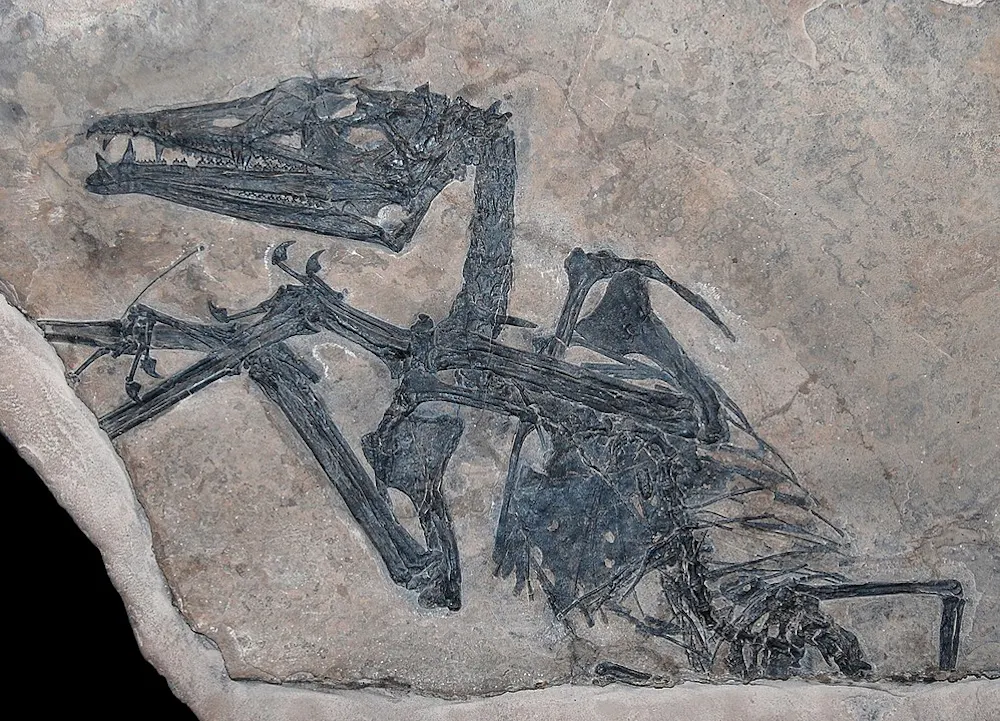
Ever since the first fragments of pterosaur bone surfaced nearly 250 years ago, palaeontologists have puzzled over one question: how did these close cousins of land-bound dinosaurs take to the air and evolve powered flight? The first flying vertebrates seemed to appear on the geological stage fully formed, leaving almost no trace of their first tentative steps into the air.
Taken at face value, the fossil record implies that pterosaurs suddenly originated in the later part of the Triassic period (around 215 million years ago), close to the equator on the northern super-continent Pangaea. They then spread quickly between the Triassic and the Jurassic periods, about 10 million years later, in the wake of a mass extinction that was most likely caused by massive volcanic activity.
Most of the handful of Triassic specimens come from narrow seams of dark shale in Italy and Austria, with other fragments discovered in Greenland, Argentina and the southwestern US. These skeletons appear fully adapted for flight, with a hyper-elongated fourth finger supporting membrane-wings. Yet older rocks show no trace of intermediate gliders or other transitional forms that you might expect as evidence of pterosaurs’ evolution over time.
There are two classic competing explanations for this. The literal reading says pterosaurs evolved elsewhere and did not reach those regions where most have been discovered until very late in the Triassic period, by which time they were already adept flyers. The sceptical reading notes that pterosaurs’ wafer-thin, hollow bones could easily vanish from the fossil record, dissolve, get crushed or simply be overlooked, creating this false gap.
For decades, the debate stalled as a result of too few fossils or too many missing rocks. This impasse began to change in 2020, when scientists identified the closest relatives of pterosaurs in a group of smallish upright reptiles called lagerpetids.
From comparing many anatomical traits across different species, the researchers established that pterosaurs and lagerpetids shared many similarities including their skulls, skeletons and inner ears. While this discovery did not bring any “missing link” to the table, it showed what the ancestor of pterosaurs would have looked like: a rat-to-dog-sized creature that lived on land and in trees.
This brought new evidence about when pterosaurs may have originated. Pterosaurs and lagerpetids like Scleromochlus, a small land-dwelling reptile, diverged at some point after the end-Permian mass extinction. It occurred some 250 million years ago, 35 million years before the first pterosaur appearance in the fossil record.
Pterosaurs and their closest kin did not share the same habitats, however. Our new study, featuring new fossil maps, shows that soon after lagerpetids appeared (in southern Pangaea), they spread across wide areas, including harsh deserts, that many other groups were unable to get past. Lagerpetids lived both in these deserts and in humid floodplains.
They tolerated hotter, drier settings better than any early pterosaur, implying that they had evolved to cope with extreme temperatures. Pterosaurs, by contrast, were more restricted. Their earliest fossils cluster in the river and lake beds of the Chinle and Dockum basins (southwest US) and in moist coastal belts fringing the northern arm of the Tethys Sea, a huge area that occupied today’s Alps.
Scientists have inferred from analysing a combination of fossil distributions, rock features and climate simulations that pterosaurs lived in areas that were warm but not scorching. The rainfall would have been comparable to today’s tropical forests rather than inland deserts.
This suggests that the earliest flying dinosaurs may have lived in tree canopies, using foliage both for take-off and to protect themselves from predators and heat. As a result of this confined habitat, the distances that they flew may have been quite limited.
We were then able to add a fresh dimension to the story using a method called ecological niche modelling. This is routinely used in modern conservation to project where endangered animals and plants might live as the climate gets hotter. By applying this approach to later Triassic temperatures, rainfall and coastlines, we asked where early pterosaurs lived, regardless of whether they’ve shown up there in the fossil record.
Many celebrated fossil sites in Europe emerge as poor pterosaur habitat until very late in the Triassic period: they were simply too hot, too dry or otherwise inhospitable before the Carnian age, around 235 million years ago. The fact that no specimens have been discovered there that are more than about 215 million years old may be because the climate conditions were still unsuitable or simply because we don’t have the right type of rocks preserved of that age.
In contrast, parts of the south-western US, Morocco, India, Brazil, Tanzania and southern China seem to have offered welcoming environments several million years earlier than the age of our oldest discoveries. This rewrites the search map. If pterosaurs could have thrived in those regions much more than 215 million years ago, but we have not found them there, the problem may again lie not with biology but with geology: the right rocks have not been explored, or they preserve fragile fossils only under exceptional conditions.
Our study flags a dozen geological formations, from rivers with fine sediment deposits to lake beds, as potential prime targets for the next breakthrough discovery. They include the Timezgadiouine beds of Morocco, the Guanling Formation of south-west China and, in South America, several layers of rock from the Carnian age, such as the Santa Maria Formation, Chañares Formation and Ischigualasto Formation.
Pterosaurs were initially confined to tropical treetops near the equator. When global climates shifted and forested corridors opened, pterosaurs’ wings catapulted them into every corner of the planet and ultimately carried them through one of Earth’s greatest extinctions. What began as a tale of missing fossils has become a textbook example of how climate, ecology and evolutionary science have come together to illuminate a fragmentary history that has intrigued paleontologists for over two centuries.
Davide Foffa is funded by Marie Skłodowska-Curie Actions: Individual (Global) Fellowship (H2020-MSCA-IF-2020; No.101022550), and by the Royal Commission for the Exhibition of 1851–Science Fellowship
Alfio Alessandro Chiarenza receives funding from The Royal Society (Newton International Fellowship NIFR1231802)
Emma Dunne does not work for, consult, own shares in or receive funding from any company or organisation that would benefit from this article, and has disclosed no relevant affiliations beyond their academic appointment.
– ref. How pterosaurs learned to fly: scientists have been looking in the wrong place to solve this mystery – https://theconversation.com/how-pterosaurs-learned-to-fly-scientists-have-been-looking-in-the-wrong-place-to-solve-this-mystery-259063
MIL OSI –
Source: The Conversation – Africa (2) – By Aleksi Ylönen, Professor, United States International University
More than three decades after unilaterally declaring independence from Somalia, Somaliland still seeks international recognition as a sovereign state. Despite a lack of formal acknowledgement, the breakaway state has built a relatively stable system of governance. This has drawn increasing interest from global powers, including the United States. As regional dynamics shift and great-power competition intensifies, Somaliland’s bid for recognition is gaining new currency. Aleksi Ylönen has studied politics in the Horn of Africa and Somaliland’s quest for recognition. He unpacks what’s at play.
The Somali National Movement is one of the main clan-based insurgent movements responsible for the collapse of the central government in Somalia. It claims the territory of the former British protectorate of Somaliland. The UK had granted Somaliland sovereign status on 26 June 1960.
The Somali government tried to stomp out calls for secession. It orchestrated the brutal killing of hundreds of thousands of people in northern Somalia between 1987 and 1989.
But the Somali National Movement declared unilateral independence on 18 May 1991 and separated from Somalia.
With the collapse of the Somali regime in 1991, the movement’s main enemy was gone. This led to a violent power struggle between various militias.
This subsided only after the politician Mohamed Egal consolidated power. He was elected president of Somaliland in May 1993.
Egal made deals with merchants and businessmen, giving them tax and commercial incentives to accept his patronage. As a result, he obtained the economic means to consolidate political power and to pursue peace and state-building. It’s something his successors have kept up with since his death in 2002.
Successive Somaliland governments continue to engage in informal diplomacy. They have aligned with the west, particularly the US, which was the dominant power after the cold war, and the former colonial master, the UK. Both countries host significant Somaliland diaspora communities.
The US and the UK have for decades flirted with the idea of recognising Somaliland, which they consider a strategic partner. However, they have been repeatedly thrown back by their respective Somalia policies. These have favoured empowering the widely supported Mogadishu government to reassert its authority and control over Somali territories.
This Somalia policy has been increasingly questioned in recent years, in part due to Mogadishu’s security challenges. In contrast, the Hargeisa government of Somaliland has largely shown it can provide security and stability. It has held elections and survived as a state for the last three decades, though it has faced political resistance and armed opposition.
As new global powers rise, Somaliland administrations have pursued an increasingly diverse foreign policy, with one goal: international recognition.
Hargeisa hosts consulates and representative offices of Djibouti, Ethiopia, Kenya, Taiwan, the UK and the European Union, among others.
The government has also engaged in informal foreign relations with the United Arab Emirates. The Middle Eastern monarchy serves as a business hub and a destination of livestock exports. Many Somalilanders migrate there.
Somaliland maintains representative offices in several countries. These include Canada, the US, Norway, Sweden, the UK, Saudi Arabia, Turkey and Taiwan. Hargeisa has alienated China because it has collaborated with Taiwan since 2020. Taiwan is a self-ruled island claimed by China.
On 1 January 2024, Somaliland’s outgoing president Muse Bihi signed a memorandum of understanding with Ethiopian prime minister Abiy Ahmed for increased cooperation. Bihi implied that Ethiopia would be the first country to formally recognise Somaliland. The deal caused a sharp deterioration of relations between Addis Ababa and Mogadishu.
Abiy later moderated his position and, with Turkish mediation, reconciled with his Somalia counterpart, President Hassan Mohamud.
The US, like other great powers, has been interested in Somaliland because of its strategic location. It is on the African shores of the Gulf of Aden, across from the Arabian Peninsula. Its geographical position has gained currency recently as Yemeni Houthi rebels strike maritime traffic in the busy shipping lanes. Somaliland is also well located to curb piracy and smuggling on this global trade route.
The US Africa Command set up its main Horn of Africa base at Camp Lemonnier in Djibouti in 2002. This followed the 11 September 2001 attacks.
Read more:
Somaliland’s quest for recognition: UK debate offers hint of a sea change
In 2017, China, which had become the main foreign economic power in the Horn of Africa, set up a navy support facility in Djibouti. This encouraged closer collaboration between American and Somaliland authorities. The US played with the idea of establishing a base in Berbera, which hosts Somaliland’s largest port.
With Donald Trump winning the US presidential election in 2024, there were reports of an increased push for US recognition of Somaliland. This would allow the US to deepen its trade and security partnerships in the volatile Horn of Africa region.
Since March 2025, representatives of the Trump administration have engaged in talks with Somaliland officials to establish a US military base near Berbera. This would be in exchange for a formal but partial recognition of Somaliland.
Stronger US engagement with Somaliland risks neglecting Somalia.
Mogadishu depends on external military assistance in its battle against the advancing violent Islamist extremist group, Al-Shabaab. It also faces increasing defiance from two federal regions, Puntland and Jubaland.
US recognition would reward Hargeisa for its persistent effort to maintain stability and promote democracy. However, it could encourage other nations to recognise Somaliland. This would deliver a blow to Somali nationalists who want one state for all Somalis.
Aleksi Ylönen is affiliated with the Center for International Studies, Iscte-Instituto Universitário de Lisboa, and is an associate fellow at the HORN International Institute for Strategic Studies.
– ref. Somaliland’s 30-year quest for recognition: could US interests make the difference? – https://theconversation.com/somalilands-30-year-quest-for-recognition-could-us-interests-make-the-difference-255399
MIL OSI –
Source: The Conversation – Global Perspectives – By Dilnoza Ubaydullaeva, Lecturer in Government – National Security College, Australian National University
Since US President Donald Trump took office this year, one theme has come up time and again: his rule is a threat to the US-led international order.
As the US political scientist John Mearsheimer famously argued, the liberal international order
was destined to fail from the start, as it contained the seeds of its own destruction.
This perspective has gained traction in recent years. And now, Trump’s actions have caused many to question whether a new world order is emerging.
Trump has expressed a desire for a new international order defined by multiple spheres of influence — one in which powers like the US, China and Russia each exert dominance over distinct regions.
This vision aligns with the idea of a “multipolar” world, where no single state holds overarching global dominance. Instead, influence is distributed among several great powers, each maintaining its own regional sphere.
This architecture contrasts sharply with earlier periods – the bipolar world of the Cold War, dominated by the US and the Soviet Union; and the unipolar period that followed, dominated by the US.
What does this mean for the world order moving forward?
We’ve seen this shift taking place in recent months. For example, Trump has backed away from his pledge to end the war between Russia and Ukraine and now appears to be leaving it to the main protagonists, and Europe, to find a solution.
Europe, which once largely spoke in a unified voice with the US, is also showing signs of policy-making which is more independent. Rather than framing its actions as protecting “Western democratic principles”, Europe is increasingly focused on defining its own security interests.
In the Middle East, the US will likely maintain its sphere of influence. It will continue its unequivocal support for Israel under Trump.
The US will also involve itself in the region’s politics when its interests are at stake, as we witnessed in its recent strikes on Iranian nuclear facilities.
This, along with increasing economic ties between the US and Gulf states, suggests US allies in the region will remain the dominant voices shaping regional dynamics, particularly now with Iran weakened.
Yet it’s clear Trump is reshaping US dynamics in the region by signaling a desire for reduced military and political involvement, and criticising the nation building efforts of previous administrations.
The Trump administration now appears to want to maintain its sphere of influence primarily through strong economic ties.
Meanwhile, other poles are emerging in the Global South. Russia and China have deepened their cooperation, positioning themselves as defenders against what they frame as Western hegemonic bullying.
Trump’s trade policies and sanctions against many nations in the Global South have fuelled narratives (spread by China and Russia) that the US does not consistently adhere to the rules it imposes on others.
Trump’s decision to slash funding to USAID has also opened the door to China, in particular, to become the main development partner for nations in Africa and other parts of the world.
And on the security front, Russia has become more involved in many African and Middle Eastern countries, which have become less trustful and reliant on Western powers.
In the Indo-Pacific, much attention has been given to the rise of China and its increasingly assertive posture. Many of Washington’s traditional allies are nervous about its continued engagement in the region and ability to counter China’s rise.
Chinese leader Xi Jinping has sought to take advantage of the current environment, embarking on a Vietnam, Malaysia and Cambodia push earlier this year. But many nations continue to be wary of China’s increasing influence, in particular the Philippines, which has clashed with China over the South China Sea.
Not all countries, however, are aligning themselves neatly with one pole or another.
For small states caught between great powers, navigating this multipolar environment is both a risk and an opportunity.
Ukraine is a case in point. As a sovereign state, Ukraine should have the freedom to decide its own alignments. Yet, it finds itself ensnared in great power politics, with devastating consequences.
Other small states are playing a different game — pivoting from one power to another based on their immediate interests.
Slovakia, for instance, is both a NATO and EU member, yet its leader, Robert Fico, attended Russia’s Victory Day Parade in May and told President Vladimir Putin he wanted to maintain “normal relations” with Russia.
Then there is Central Asia, which is the centre of a renewed “great game,” with Russia, China and Europe vying for influence and economic partnerships.
Yet if any Central Asian countries were to be invaded by Putin, would other powers intervene? It’s a difficult question to answer. Major powers are reluctant to engage in direct conflict unless their core interests or borders are directly threatened.
As a result, Central Asian states are hedging their bets, seeking to maintain relations with multiple poles, despite their conflicting agendas.
While it is still early to draw definitive conclusions, the events of the past few months underscore a growing trend. Smaller countries are expressing solidarity with one power, but pragmatic cooperation with another, when it suits their national interests.
For this reason, regional power blocs seem to be of increasing interest to countries in the Global South.
For instance, the China-led Shanghai Cooperation Organisation has become a stronger and larger grouping of nations across Eurasia in recent years.
Trump’s focus on making “America Great Again,” has taken the load off the US carrying liberal order leadership. A multipolar world may not be the end of the liberal international order, but it may be a reshaped version of liberal governance.
How “liberal” it can be will likely depend on what each regional power, or pole, will make of it.
Dilnoza Ubaydullaeva does not work for, consult, own shares in or receive funding from any company or organisation that would benefit from this article, and has disclosed no relevant affiliations beyond their academic appointment.
– ref. Trump’s worldview is causing a global shift of alliances – what does this mean for nations in the middle? – https://theconversation.com/trumps-worldview-is-causing-a-global-shift-of-alliances-what-does-this-mean-for-nations-in-the-middle-257113
MIL OSI –
Source: Republic of Taiwan – Ministry of Foreign Affairs
June 27, 2025
The Inter-Parliamentary Alliance on China (IPAC) issued a statement on June 27 condemning China for an alleged plot to engineer a collision with a car carrying Vice President Hsiao Bi-khim during a visit to the Czech Republic in March 2024 when she was serving as vice president-elect. It denounced China for conspiring to engage in an act of state terrorism and said that the planning of such an overt act of politically motivated violence in a foreign country represented the crossing of a threshold and disregard for international diplomatic norms. Expressing solidarity with Vice President Hsiao and with Taiwanese citizens who may be subject to coercion by the Chinese state while traveling abroad, the statement also emphasized that Taiwan’s future should be determined by the Taiwanese people and called upon the governments of IPAC member countries to condemn the PRC’s unacceptable actions.
The Ministry of Foreign Affairs sincerely appreciates IPAC taking a stand and urging nations to strongly condemn China for seeking to engage in unlawful activities in other countries that amount to state terrorism. The contempt for international diplomatic norms, violent disregard for personal safety, and deliberate and worsening attempts to suppress Taiwan displayed by China in its actions are a clear demonstration of its exceedingly disgraceful and unscrupulous behavior. This is unacceptable to the international community. MOFA once again strongly condemns China and solemnly demands that it issue an apology.
Source: Republic of Taiwan – Ministry of Foreign Affairs
June 27, 2025
No. 223
Minister of Foreign Affairs Lin Chia-lung hosted a welcome luncheon on June 26 for Takayuki Kobayashi, former Japanese Minister in Charge of Economic Security and current member of the House of Representatives. They exchanged views on issues such as integrated diplomacy, response strategies for countering gray-zone tactics, and Taiwan-Japan cooperation in third countries.
Minister Lin stated that since assuming office, he had been proactively implementing integrated diplomacy. He said that the policy combined the strengths of the public and private sectors to expand Taiwan’s international presence and promote the Diplomatic Allies Prosperity Project, which aimed to deepen substantive and mutually beneficial relations with diplomatic allies and like-minded countries. He added that Taiwan was pleased that the Japanese government had recently bolstered strategic partnerships with Palau, Paraguay, Guatemala, and other diplomatic allies of Taiwan, and thanked Japan for actively advancing cooperative relations with Taiwan’s allies. He emphasized that Taiwan and Japan faced similar regional security and economic challenges and that the two sides should enhance collaboration and joint strategic responses.
Furthermore, he indicated that the industries of Taiwan and Japan were highly complementary and that, in the face of China’s aggressive pursuit of global high-tech industry dominance, Taiwan and Japan should work together to build non-red supply chains and boost economic resilience and industrial competitiveness to ensure that democracies steadily keep pace with technological developments worldwide.
Representative Kobayashi stated that Taiwan and Japan had a close friendship in terms of history, the economy, and personnel exchanges. He expressed hope that the visit would increase his understanding of Taiwan. In addition, he affirmed his desire to help further Taiwan-Japan ties in the future, which would contribute to safeguarding regional peace and stability.
Also in attendance at the luncheon were Taipei University of Marine Technology President Lu Yao-zhi, Institute for National Defense and Security Research Chief Secretariat Office Director Lin Yen-hung, and Japan-Taiwan Exchange Association Taipei Office Chief Representative Kazuyuki Katayama. The atmosphere was lively and cordial. (E)
Source: European Parliament
Question for written answer E-002514/2025
to the Commission
Rule 144
Harald Vilimsky (PfE), Georg Mayer (PfE)
The draft resolution on energy-intensive industries (2025/2536 (RSO)) raises questions about dependence on third countries, energy prices, the EU supply chain law and new sustainability guidelines. Reducing dependence on Russia was declared a strategic goal, but new dependencies on third countries such as China and the USA have developed instead. Energy prices in the EU are extraordinarily high by global standards. This has led to companies either cutting back on production or relocating to third countries. The EU supply chain law and new sustainability guidelines represent a massive hurdle for companies.
Submitted: 23.6.2025
Source: European Parliament
This paper analyses the geopolitical implications of the Agreement between the European Union and the Southern Common Market (Mercosur), focusing on its potential for enhanced interregional cooperation. It explores how this agreement aligns with each region’s strategic interests, expanding on opportunities that arise while remaining realistic about the likelihood of implementation. This assessment takes place in a fluid geopolitical context, characterised by the United States of America’s major revision of the post-1945 world order, an increasing assertiveness displayed by China and Russia and a relative decline of Europe and Latin America both in terms of economic output and contributions to global governance. The paper concludes by discussing various ratification scenarios and offering a set of policy recommendations.
Translation. Region: Russian Federal
Source: People’s Republic of China in Russian – People’s Republic of China in Russian –
Source: People’s Republic of China – State Council News
HEFEI, July 1 (Xinhua) — A meeting will be held next Monday to establish the International Deep Space Exploration Association (IDSEA), which will be China’s first international aerospace science and technology organization.
The association, which will be headquartered in Hefei, Anhui Province, east China, will aim to build the capacity of other developing countries to develop technologies for deep space exploration.
IDSEA will focus on deep space exploration, which includes exploration of the Moon, other planets and asteroids, and will promote international cooperation.
Wang Zhongmin, director of the International Cooperation Center of the China Deep Space Laboratory, said IDSEA aims to become an inclusive academic platform that will benefit developing countries in particular.
“We are trying to reach out to as many developing countries as possible and, by initiating small-scale but effective programs such as CubeSat satellite development and educational training, we hope to give these countries access to advanced space technologies that were once unavailable to them,” Wang Zhongmin said.
Deep space exploration has long been the preserve of a few countries, primarily due to the significant capital requirements, high demands on technology and specialists. “The vast majority of countries may face a technological monopoly. It is necessary for deep space exploration technologies to go beyond their current limited applications and become generally available, benefiting the entire population of the planet,” Wang Zhongmin noted.
Although China is not a pioneer in space exploration, it has quickly become a significant player in the field, while demonstrating its commitment to cooperation with other countries.
In April this year, China announced that seven institutions from six countries – France, Germany, Japan, Pakistan, Britain and the United States – had received permission to use lunar samples collected by China’s Chang’e-5 mission for scientific research.
The China National Space Administration (CNSA) announced international cooperation opportunities for the Tianwen-3 mission to collect samples from Mars and send them back to Earth in April this year, inviting partners from around the world to jointly advance Mars exploration. The Tianwen-3 mission, an important part of China’s planetary exploration program, is scheduled to launch around 2028, according to the CNSA. Collecting samples from Mars is the most technically challenging space exploration mission since the Apollo program. -0-
Translation. Region: Russian Federal
Source: People’s Republic of China in Russian – People’s Republic of China in Russian –
Source: People’s Republic of China – State Council News
TOKYO, July 1 (Xinhua) — A man died after being stabbed to death at a law office in Tokyo’s Ikebukuro Ward on Tuesday, local media reported.
The incident occurred at around 11:50 a.m. local time, according to the Tokyo Metropolitan Police Department. A man in his 50s, allegedly armed with a knife, attacked one of the officers. He was taken to hospital unconscious and later died, national broadcaster NHK reported.
Following the incident, the suspect surrendered to the police at the nearest police station. He was arrested on suspicion of attempted murder.
Authorities are investigating the cause of the incident. –0–
Translation. Region: Russian Federal
Source: People’s Republic of China in Russian – People’s Republic of China in Russian –
Source: People’s Republic of China – State Council News
NEW DELHI, July 1 (Xinhua) — At least 35 people were killed and more than 30 injured in a powerful blast at a chemical plant in India’s southern Telangana state, local authorities said on Tuesday.
The death toll rose after more bodies were found buried in the rubble during a rescue operation overnight.
The blast occurred at around 9:48 am local time on Monday in the Pashamilaram industrial area, located about 48 km northwest of Hyderabad, the state capital.
According to police, there were about 150 workers at the plant at the time of the explosion, 90 of whom were in the affected area.
The cause of the explosion has not yet been revealed. Initially, it was assumed that the reactor had exploded. However, officials later denied this claim. –0–
Translation. Region: Russian Federal
Source: People’s Republic of China in Russian – People’s Republic of China in Russian –
Source: People’s Republic of China – State Council News
HOHHOT, July 1 (Xinhua) — Air China’s C909 passenger jet successfully completed a Hohhot-Ulaanbaatar flight on Tuesday, marking the official launch of the Chinese carrier’s first international route served by the aircraft.
As it became known, flights CA757/8, operated by C909 aircraft, are carried out between the city of Hohhot (the administrative center of the Inner Mongolia Autonomous Republic) and the capital of Mongolia in both directions seven times a week.
“Based on the characteristics of the C909 aircraft, we conducted an in-depth study of flight procedures, runway conditions, navigation equipment, and developed a detailed flight operation process,” said Liu Yongguang, the captain of the aircraft that carried out the first flight on the route.
The C909 is a turbofan regional airliner developed by China itself, seating 78-97 people and having a range of 2,225 km to 3,700 km. It complies with international civil aviation regulations and is the first of its kind independently developed by China.
According to the data, a total of 166 C909 aircraft have been delivered to the market to date, serving more than 700 air routes and carrying more than 24 million passengers.
The C909 was a breakthrough in the commercial operation of domestic jet airliners and explored the development path of the entire life cycle of Chinese-made commercial aircraft, Chen Yong, chief designer of the aircraft, told Xinhua News Agency.
Let us recall that on June 28, the aircraft of this type, previously known as ARJ21, celebrated the ninth anniversary of its first flight. -0-
Source: United States House of Representatives – Congressman John Garamendi – Representing California’s 3rd Congressional District
WASHINGTON DC – Today, Representative John Garamendi (D-CA-8) released the following statement regarding the Israel-Iran conflict.
“America cannot afford to repeat the mistakes of the past. We must not allow Prime Minister Netanyahu to sucker us into another endless Middle East war. We must de-escalate and return to the negotiating table to achieve what we all want: an Iran that never obtains a nuclear weapon.”
“Israel’s attack was a dangerous escalation that has already resulted in the deaths of hundreds of civilians in both Iran and Israel. War with Iran is not in the interest of the United States, and robust diplomacy remains the best option for achieving long-term peace, regional stability and an Iran with no nuclear weapons. Further escalation is a threat to regional stability, risks drawing the U.S. into a wider conflict, and puts thousands of American servicemembers in harm’s way.
“The JCPOA negotiated by President Obama was our best chance at ensuring that Iran could not build a nuclear weapon. Unfortunately, Donald Trump ripped up this critical treaty. Trump may have killed that signature deal that was negotiated by Russia, China, France, the U.K., Germany, the European Union and the United States. There is still room for the administration to negotiate a new deal to prevent Iran from developing a nuclear weapon. We should be focused on reviving diplomatic efforts—not threatening military escalation or considering the use of bunker buster bombs. This is a dangerous path.”
###