Source: Republic of Taiwan – Ministry of Foreign Affairs
Notice of website maintenance
Date:2025-05-16
Data Source:Public Diplomacy Coordination Council
The Ministry of Foreign Affairs website (www.mofa.gov.tw) and its subdomains, including the Youth Programs website (www.youthtaiwan.net) and the Minister’s Mailbox (eyes.mofa.gov.tw), will be unavailable due to maintenance work from Friday, May 23, 19:00 (Taipei time) to Saturday, May 24, 20:00 (Taipei time). We apologize for any inconvenience this may cause.
Source: Republic of Taiwan – Ministry of Foreign Affairs
May 20, 2025
No. 165
Former President Tsai Ing-wen visited Europe from May 10 to 19, traveling to Lithuania and Denmark before continuing to the United Kingdom. On May 15, the first day of her stay in the United Kingdom, she visited the UK Parliament at the invitation of British-Taiwanese All-Party Parliamentary Group (APPG) Cochairs Sarah Champion MP and Lord Rogan. She was warmly welcomed by parliamentarians from across the political spectrum.
The former president met with House of Commons Speaker Sir Lindsay Hoyle and took part in a reception at the House of Lords, where she delivered a speech. She exchanged greetings with nearly 50 parliamentarians and staff, including former Lord Speaker Baroness D’Souza, House of Lords Deputy Speaker Baroness Finlay, Trade Envoy to Taiwan Lord Faulkner, Labour Friends of Taiwan Chair Navendu Mishra MP, former Conservative Party leader Sir Iain Duncan Smith MP, Conservative Shadow Minister for Innovation and Technology Ben Spencer MP, and Liberal Democrat Foreign Affairs Spokesperson Calum Miller MP.
In her address at the House of Lords, former President Tsai said that the growing threat of antidemocratic forces was testing democracy around the world, adding that this demonstrated the need for Taiwan and the United Kingdom to work together in defense of freedom and democracy. She commended the House of Commons for passing a motion last November clarifying that United Nations General Assembly Resolution 2758 made no reference to Taiwan. This was important in countering reckless behavior in the Taiwan Strait, she explained. Highlighting Taiwan’s position on the front line of defending democracy, former President Tsai said that Taiwan was a critical deterrent to China’s expansionist ambitions and would continue to contribute to protecting democratic values.
APPG Cochair Champion noted that Taiwan and the United Kingdom had a deep friendship and shared core values. She said that the United Kingdom should continue to pay attention to peace and stability across the Taiwan Strait, which she added were essential to global security and prosperity. Cochair Champion noted that in recent years the Taiwan-UK partnership had deepened. She expressed hope that cooperation would expand in semiconductors, artificial intelligence, renewable energy, advanced manufacturing, economic resilience, and other areas.
Former President Tsai also delivered a speech titled “In an Era of Shifting World Order: Taiwan as a Stabilizing Force” at her alma mater, the London School of Economics and Political Science (LSE). The event was moderated by incoming LSE Law School Dean Andrew Murray, who represented the university and LSE President Larry Kramer. Around 100 people, including General Counsel Elizabeth Messud, attended the speech. In her remarks, former President Tsai noted that the international community was experiencing a reassignment of security responsibilities and a rebalancing of trade relations. She said that to appropriately respond to multiple challenges such as economic fragmentation, political extremism, and military conflict, the function of multilateralism was becoming even more important. The former president emphasized that Taiwan had shown a high degree of resilience in turbulent times in the past, such as during supply chain restructuring, and had proven to be a trustworthy and competitive strategic partner. She added that Taiwan was ready to play a more proactive role in the new world order by further deepening cooperation with democratic countries and contributing to the global trade system. Her remarks were enthusiastically received by the audience.
During her visit to the United Kingdom, former President Tsai also gave an address at Cambridge University, met with faculty and students at the School of Oriental and African Studies, attended a forum hosted by the Royal United Services Institute, and met with Taiwanese people working in the United Kingdom on technology startups and in the arts.
Taiwan-UK relations have witnessed significant progress in recent years. In 2023, the United Kingdom signed the Enhanced Trade Partnership arrangement with Taiwan, becoming the first European country to establish a formal economic and trade framework with Taiwan. The United Kingdom is Taiwan’s fourth-largest trading partner in Europe, third-largest source of investment, and fifth-most popular destination for Taiwanese students studying abroad. The countries collaborate closely in fields such as technological innovation, renewable energy, and societal resilience. Taiwan will further work together with the United Kingdom and other like-minded countries to advance democratic resilience and prosperity. It looks forward to the United Kingdom continuing to demonstrate its commitment to security in the Indo-Pacific region by deploying naval vessels through the Taiwan Strait and taking other concrete actions.
Source: Republic of Taiwan – Ministry of Foreign Affairs
State visit by Palauan President Whipps concludes; successfully deepens bilateral relations
Date:2025-05-24
Data Source:Department of East Asian and Pacific Affairs
May 24, 2025 No. 173
President of the Republic of Palau Surangel S. Whipps, Jr. and his delegation concluded a successful state visit to Taiwan on the morning of May 24. Following President Lai Ching-te’s December visit to Pacific allies entitled “Smart and Sustainable Development for a Prosperous Austronesian Region” and Minister of Foreign Affairs Lin Chia-lung’s January trip to Palau as special presidential envoy and head of an industrial fact-finding mission, this visit marked the further deepening of diverse and robust cooperation between Taiwan and Palau under the Diplomatic Allies Prosperity Project. It also underlined the significant accomplishments that the two countries had achieved thanks to their staunch commitment to jointly promoting sustainable development.
During his visit, President Whipps met with President Lai, attended a state banquet, and together with President Lai witnessed the signing of bilateral agreements on technical cooperation and diplomatic staff training and cooperation. Accompanied by Minister Lin, President Whipps also visited industries related to the Diplomatic Allies Prosperity Project in central and southern Taiwan. The tour reflected Taiwan’s continuing efforts to strengthen the resilience of Palau’s tourism-centered economy through integrated diplomacy and demonstrated the substantive success of bilateral collaboration.
Leaving Taiwan today, the Palauan delegation was seen off at the airport by Vice Minister of Foreign Affairs Remus Li-kuo Chen. Since establishing diplomatic ties 26 years ago, Taiwan and Palau have enjoyed a solid friendship, mutual trust, and steadfast cooperation across all domains. The Ministry of Foreign Affairs will continue to uphold the close and cordial cooperative partnership between the two countries, promote the Diplomatic Allies Prosperity Project, and deepen bilateral relations. It will also work with Palau to advance peace, stability, and prosperity in the Indo-Pacific. (E)
Former President Tsai Ing-wen visited Europe from May 10 to 19, traveling to Lithuania and Denmark before continuing to the United Kingdom. On May 15, the first day of her stay in the United Kingdom, she visited the UK Parliament at the invitation of British-Taiwanese All-Party Parliamentary Group (APPG) Cochairs Sarah Champion MP and Lord Rogan. She was warmly welcomed by parliamentarians from across the political spectrum.
The former president met with House of Commons Speaker Sir Lindsay Hoyle and took part in a reception at the House of Lords, where she delivered a speech. She exchanged greetings with nearly 50 parliamentarians and staff, including former Lord Speaker Baroness D’Souza, House of Lords Deputy Speaker Baroness Finlay, Trade Envoy to Taiwan Lord Faulkner, Labour Friends of Taiwan Chair Navendu Mishra MP, former Conservative Party leader Sir Iain Duncan Smith MP, Conservative Shadow Minister for Innovation and Technology Ben Spencer MP, and Liberal Democrat Foreign Affairs Spokesperson Calum Miller MP.
In her address at the House of Lords, former President Tsai said that the growing threat of antidemocratic forces was testing democracy around the world, adding that this demonstrated the need for Taiwan and the United Kingdom to work together in defense of freedom and democracy. She commended the House of Commons for passing a motion last November clarifying that United Nations General Assembly Resolution 2758 made no reference to Taiwan. This was important in countering reckless behavior in the Taiwan Strait, she explained. Highlighting Taiwan’s position on the front line of defending democracy, former President Tsai said that Taiwan was a critical deterrent to China’s expansionist ambitions and would continue to contribute to protecting democratic values.
APPG Cochair Champion noted that Taiwan and the United Kingdom had a deep friendship and shared core values. She said that the United Kingdom should continue to pay attention to peace and stability across the Taiwan Strait, which she added were essential to global security and prosperity. Cochair Champion noted that in recent years the Taiwan-UK partnership had deepened. She expressed hope that cooperation would expand in semiconductors, artificial intelligence, renewable energy, advanced manufacturing, economic resilience, and other areas.
Former President Tsai also delivered a speech titled “In an Era of Shifting World Order: Taiwan as a Stabilizing Force” at her alma mater, the London School of Economics and Political Science (LSE). The event was moderated by incoming LSE Law School Dean Andrew Murray, who represented the university and LSE President Larry Kramer. Around 100 people, including General Counsel Elizabeth Messud, attended the speech. In her remarks, former President Tsai noted that the international community was experiencing a reassignment of security responsibilities and a rebalancing of trade relations. She said that to appropriately respond to multiple challenges such as economic fragmentation, political extremism, and military conflict, the function of multilateralism was becoming even more important. The former president emphasized that Taiwan had shown a high degree of resilience in turbulent times in the past, such as during supply chain restructuring, and had proven to be a trustworthy and competitive strategic partner. She added that Taiwan was ready to play a more proactive role in the new world order by further deepening cooperation with democratic countries and contributing to the global trade system. Her remarks were enthusiastically received by the audience.
During her visit to the United Kingdom, former President Tsai also gave an address at Cambridge University, met with faculty and students at the School of Oriental and African Studies, attended a forum hosted by the Royal United Services Institute, and met with Taiwanese people working in the United Kingdom on technology startups and in the arts.
Taiwan-UK relations have witnessed significant progress in recent years. In 2023, the United Kingdom signed the Enhanced Trade Partnership arrangement with Taiwan, becoming the first European country to establish a formal economic and trade framework with Taiwan. The United Kingdom is Taiwan’s fourth-largest trading partner in Europe, third-largest source of investment, and fifth-most popular destination for Taiwanese students studying abroad. The countries collaborate closely in fields such as technological innovation, renewable energy, and societal resilience. Taiwan will further work together with the United Kingdom and other like-minded countries to advance democratic resilience and prosperity. It looks forward to the United Kingdom continuing to demonstrate its commitment to security in the Indo-Pacific region by deploying naval vessels through the Taiwan Strait and taking other concrete actions.
State visit by Palauan President Whipps concludes; successfully deepens bilateral relations
Date:2025-05-24 Data Source:Department of East Asian and Pacific Affairs
May 24, 2025No. 173President of the Republic of Palau Surangel S. Whipps, Jr. and his delegation concluded a successful state visit to Taiwan on the morning of May 24. Following President Lai Ching-te’s December visit to Pacific allies entitled “Smart and Sustainable Development for a Prosperous Austronesian Region” and Minister of Foreign Affairs Lin Chia-lung’s January trip to Palau as special presidential envoy and head of an industrial fact-finding mission, this visit marked the further deepening of diverse and robust cooperation between Taiwan and Palau under the Diplomatic Allies Prosperity Project. It also underlined the significant accomplishments that the two countries had achieved thanks to their staunch commitment to jointly promoting sustainable development. During his visit, President Whipps met with President Lai, attended a state banquet, and together with President Lai witnessed the signing of bilateral agreements on technical cooperation and diplomatic staff training and cooperation. Accompanied by Minister Lin, President Whipps also visited industries related to the Diplomatic Allies Prosperity Project in central and southern Taiwan. The tour reflected Taiwan’s continuing efforts to strengthen the resilience of Palau’s tourism-centered economy through integrated diplomacy and demonstrated the substantive success of bilateral collaboration.Leaving Taiwan today, the Palauan delegation was seen off at the airport by Vice Minister of Foreign Affairs Remus Li-kuo Chen. Since establishing diplomatic ties 26 years ago, Taiwan and Palau have enjoyed a solid friendship, mutual trust, and steadfast cooperation across all domains. The Ministry of Foreign Affairs will continue to uphold the close and cordial cooperative partnership between the two countries, promote the Diplomatic Allies Prosperity Project, and deepen bilateral relations. It will also work with Palau to advance peace, stability, and prosperity in the Indo-Pacific. (E)
Source: People’s Republic of China – Ministry of National Defense
BEIJING, May 28 — In recent days, the 47th Chinese naval escort taskforce, which is undertaking escort mission in the Gulf of Aden, has organized multi-subject training for its special operations forces (SOF) members based on the actual situation of the escort mission. The training covered gunnery, visit, board, search, and seizure (VBSS), confrontation between red and blue forces, and other subjects, aiming to enhance the capabilities of the SOF members in performing diversified tasks.
Source: People’s Republic of China – State Council News
BEIJING, May 28 — China’s Cross-Border Interbank Payment System (CIPS) and the central bank of the United Arab Emirates (UAE) have signed a memorandum of understanding to enhance cross-border payment cooperation, the People’s Bank of China (PBOC), China’s central bank, announced on Wednesday.
The signing is expected to improve payment infrastructure and the efficiency of cross-border payments, according to an online statement by the PBOC, which administers and regulates CIPS.
Accordingly, CIPS and the central bank of the UAE will work together to develop a cross-border payment connectivity program, which will provide local currency clearing services for financial institutions in the Middle East and North Africa.
The two sides will also deepen exchanges on risk management and compliance, and make cross-border payment systems safer and more stable, according to the statement.
Source: People’s Republic of China – State Council News
BEIJING, May 28 — China has released an implementation plan for the digital transformation of the electronic information manufacturing industry, setting a goal for major enterprises to achieve a numerical control rate of over 85 percent in key production processes by 2027.
Released by the Ministry of Industry and Information Technology along with other government organs, the plan underscores the electronic information manufacturing industry as a strategic, fundamental, and pioneering sector of the national economy.
With a large overall scale, long industrial chains, and broad coverage, it plays a key role in integrating the real and digital economies, advancing new industrialization and fostering new quality productive forces, according to the plan.
The plan further outlines that by 2027, new information infrastructure will be largely established to support the digital transformation and intelligent upgrading of the electronic information manufacturing industry. This infrastructure will see advanced computing and artificial intelligence deeply integrated into industry development.
It envisions that by 2030, a relatively sound data infrastructure system for the electronic information manufacturing industry will be in place, and an industrial database will be largely completed. By then, a number of flagship smart products will be developed, and a digital ecosystem will take shape.
The efficiency and quality of the digital transformation will see significant improvements, and new breakthroughs in moving up towards the top end of the global value chain are expected to be achieved by 2030.
Efforts will be made to promote digital transformation across the entire industrial chain and speed up the trial and adoption of innovative products such as smart wearable devices and intelligent robots, according to the plan.
Source: People’s Republic of China in Russian – People’s Republic of China in Russian –
Source: People’s Republic of China – State Council News
FUZHOU, May 28 (Xinhua) — The Fujian Provincial Coast Guard conducted regular law enforcement patrols in waters near the Kinmen Islands on Wednesday, the China Coast Guard said in a statement.
Since early May, the local coast guard has been continuously stepping up patrols of the waters off Kinmen to carry out special law enforcement operations related to the summer fishing moratorium, said Zhu Anqing, spokesman for the East China Sea Division of the China Coast Guard.
This, he said, has effectively strengthened the management and control of the relevant waters, properly protected the legitimate rights and interests, as well as the safety of life and property of Chinese fishermen, including those from Taiwan, and reliably ensured normal shipping and operational procedures in the Xiamen-Jinmen marine area. -0-
Source: People’s Republic of China in Russian – People’s Republic of China in Russian –
Source: People’s Republic of China – State Council News
BEIJING, May 28 (Xinhua) — China will pilot a policy allowing holders of ordinary passports from Saudi Arabia, Oman, Kuwait and Bahrain visa-free entry to the country for 30 days from June 9, 2025 to June 8, 2026, Foreign Ministry spokesperson Mao Ning said on Wednesday.
At a press briefing, Mao Ning outlined the details of China’s recently announced decision to unilaterally grant visa-free entry to the four Gulf countries.
According to the diplomat, citizens of these countries arriving in China for business, tourism, visiting relatives or friends, on exchange programs or for transit purposes for up to 30 days do not need to obtain an entry visa.
“Considering that the United Arab Emirates and Qatar have introduced a mutual visa-free regime with China since 2018, the visa-free regime now covers all countries of the Cooperation Council for the Arab States of the Persian Gulf. We invite more and more friends from the GCC countries to visit our country whenever they want, in the format of spontaneous travel,” Mao Ning said. -0-
Source: People’s Republic of China in Russian – People’s Republic of China in Russian –
Source: People’s Republic of China – State Council News
JERUSALEM/SANAA, May 28 (Xinhua) — Israeli warplanes on Wednesday struck the main airport of the Yemeni capital Sanaa and several aircraft belonging to Houthi forces, the Israeli army said in a statement.
The attack destroyed the last aircraft used by Houthi forces, Israeli Defense Minister Israel Katz said in a statement.
“This is a clear signal and a direct continuation of our policy: whoever opens fire on Israel will pay a high price,” he warned.
He noted that Israel would continue to strike Yemeni ports and strategic infrastructure used by the Houthis and their allies. “The airport in Sanaa will be destroyed again and again,” the statement said.
The Israeli minister also warned that the Houthis would find themselves “under a sea and air blockade.”
Airport CEO Khaled al-Shayef confirmed that a fourth Yemeni national airline plane, Yemenia Airline Company, was destroyed in Israeli airstrikes on Wednesday morning.
Since November 2023, the Houthis, who control much of northern Yemen, have carried out regular missile and drone strikes on Israel. They say they are doing so in solidarity with Palestinians in Gaza amid the ongoing Israeli-Palestinian conflict. The group has said it will stop the attacks if Israel ends its military operations and blockade of Gaza. –0–
Source: People’s Republic of China in Russian – People’s Republic of China in Russian –
Source: People’s Republic of China – State Council News
BRUSSELS, May 28 (Xinhua) — The situation in Gaza remains “unbearable,” European Union (EU) High Representative for Foreign Affairs and Security Policy Kaja Kallas said on Wednesday.
A senior diplomat in a post on social media site X accused Israel of carrying out strikes that “go beyond what is necessary.”
K. Kallas condemned the “disproportionate use of force” by Israeli troops in Gaza and called for a return to the ceasefire to ensure the release of hostages and pave the way for a lasting, negotiated peace.
“Israel’s military operation in Gaza, the disproportionate use of force and the loss of civilian lives cannot be tolerated,” Kallas said in a statement, adding that continued attacks on civilian infrastructure are “unacceptable.”
Insisting that humanitarian aid “must never be politicized or militarized,” Kallas stressed the central role of the UN in providing aid.
“We once again urge the immediate, unimpeded and sustained resumption of assistance on a scale commensurate with the needs of the civilian population in Gaza,” she stressed. –0–
Source: People’s Republic of China in Russian – People’s Republic of China in Russian –
Source: People’s Republic of China – State Council News
MADRID, May 28 (Xinhua) — At least five people, including two minors aged 5 and 16, were killed when a boat carrying about 180 migrants capsized at the entrance to the port of La Restinga on El Hierro, one of the Canary Islands, local authorities said.
The incident occurred as the boat was being towed to a dock to allow migrants from sub-Saharan Africa to disembark. Local officials also said one infant was missing.
Search and rescue efforts are ongoing and more bodies may be found in the coming hours. –0–
Source: People’s Republic of China in Russian – People’s Republic of China in Russian –
Source: People’s Republic of China – State Council News
BRUSSELS, May 28 (Xinhua) — The European Union formally lifted almost all economic sanctions on Syria on Wednesday, adopting a political agreement aimed at supporting the country’s reconstruction, the EU Council said in a press release.
The EU will lift all restrictive measures related to trade, investment and finance, except those based on security considerations, the press release said.
As part of the package, 24 organisations, including the Central Bank of Syria and companies involved in key sectors such as oil production and refining, cotton production and telecommunications, are exempted from the EU asset freeze.
According to the EU Council, several media outlets and television channels were also removed from the sanctions list. –0–
When the computer or phone you’re using right now blinks its last blink and you drop it off for recycling, do you know what happens?
At the recycling center, powerful magnets will pull out steel. Spinning drums will toss aluminum into bins. Copper wires will get neatly bundled up for resale. But as the conveyor belt keeps rolling, tiny specks of valuable, lesser-known materials such as gallium, indium and tantalum will be left behind.
Those tiny specks are critical materials. They’re essential for building new technology, and they’re in short supply in the U.S. They could be reused, but there’s a problem: Current recycling methods make recovering critical minerals from e-waste too costly or hazardous, so many recyclers simply skip them.
Sadly, most of these hard-to-recycle materials end up buried in landfills or get mixed into products like cement. But it doesn’t have to be this way. New technology is starting to make a difference.
A treasure trove of critical materials is often overlooked in e-waste, including gallium in LEDs, indium in LCDs, and tantalum in surface mount capacitors. Ansan Pokharel/West Virginia University, CC BY
As demand for these critical materials keeps growing, discarded electronics can become valuable resources. My colleagues and I at West Virginia University are developing a new technology to change how we recycle. Instead of using toxic chemicals, our approach uses electricity, making it safer, cleaner and more affordable to recover critical materials from electronics.
Even worse, nearly half the electronics that people in Northern America sent to recycling centers end up shipped overseas. They often land in scrapyards, where workers may use dangerous methods like burning or leaching using harsh chemicals to pull out valuable metals. These practices can harm both the environment and workers’ health. That’s why the Environmental Protection Agency restricts these methods in the U.S.
The tiny specks matter
Critical minerals are in most of the technology around you. Every phone screen has a super-thin layer of a material called indium tin oxide. LEDs glow because of a metal called gallium. Tantalum stores energy in tiny electronic parts called capacitors.
All of these materials are flagged as “high risk” on the U.S. Department of Energy’s critical materials list. That means the U.S. relies heavily on these materials for important technologies, but their supply could be easily disrupted by conflicts, trade disputes or shortages.
Right now, just a few countries, including China, control most of the mining, processing and recovery of these materials, making the U.S. vulnerable if those countries decide to limit exports or raise prices.
At West Virginia University’s Department of Mechanical, Materials and Aerospace Engineering, I and materials scientist Edward Sabolsky asked a simple question: Could we find a way to heat only specific parts of electronic waste to recover these valuable materials?
If we could focus the heat on just the tiny specks of critical minerals, we might be able to recycle them easily and efficiently.
This equipment isn’t very different from the microwave ovens you use to heat food at home, just bigger and more powerful. The basic science is the same – electromagnetic waves cause electrons to oscillate, creating heat.
In our approach, though, we’re not heating water molecules like you do when cooking. Instead, we heat carbon, the black residue that collects around a candle flame or car tailpipe. Carbon heats up much faster in a microwave than water does. But don’t try this at home; your kitchen microwave wasn’t designed for such high temperatures.
West Virginia University researchers are using this experimental microwave reactor to recycle critical materials from end-of-life electronics. Ansan Pokharel/West Virginia University, CC BY
In our recycling method, we first shred the electronic waste, mix it with materials called fluxes that trap impurities, and then heat the mixture with microwaves. The microwaves rapidly heat the carbon that comes from the plastics and adhesives in the e-waste. This causes the carbon to react with the tiny specks of critical materials. The result: a tiny piece of pure, sponge-like metal about the size of a grain of rice.
This metal can then be easily separated from leftover waste using filters.
So far, in our laboratory tests, we have successfully recovered about 80% of the gallium, indium and tantalum from e-waste, at purities between 95% and 97%. We have also demonstrated how it can be integrated with existing recycling processes.
Many important technologies, from radar systems to nuclear reactors, depend on these special materials. While the Department of Defense uses less of them than the commercial market, they are a national security concern.
We’re planning to launch larger pilot projects next to test the method on smartphone circuit boards, LED lighting parts and server cards from data centers. These tests will help us fine-tune the design for a bigger system that can recycle tons of e-waste per hour instead of just a few pounds. That could mean producing up to 50 pounds of these critical minerals per hour from every ton of e-waste processed.
If the technology works as expected, we believe this approach could help meet the nation’s demand for critical materials.
How to make e-waste recycling common
One way e-waste recycling could become more common is if Congress held electronics companies responsible for recycling their products and recovering the critical materials inside. Closing loopholes that allow companies to ship e-waste overseas, instead of processing it safely in the U.S., could also help build a reserve of recovered critical minerals.
But the biggest change may come from simple economics. Once technology becomes available to recover these tiny but valuable specks of critical materials quickly and affordably, the U.S. can transform domestic recycling and take a big step toward solving its shortage of critical materials.
Terence Musho has received funding from Defense Advanced Research Projects Agency, the National Science Foundation and the Department of Energy.
Source: The Conversation – USA – By Nicholas J. Cull, Professor of Communication, USC Annenberg School for Communication and Journalism
The bluegrass group Della Mae plays at an orphanage in Kyrgyzstan on its State Department-sponsored American Music Abroad tour in 2012.Photo: Paul Rockower
Previous U.S. administrations have realized this, including during President Donald Trump’s first term, when his team, led by Assistant Secretary of State for Educational and Cultural Affairs Marie Royce, raised the Bureau of Educational and Cultural Affairs budget to an all-time high.
Modern Jazz Quartet traveled to Germany in 1960 as jazz ambassadors on a State Department-sponsored tour.
Giving politics a human dimension
Government-funded cultural diplomacy is an old practice. In 1889, President Benjamin Harrison’s government hosted a delegation of leaders from Latin America on a 5,000-mile rail tour around the American heartland as a curtain raiser for the first Pan-American conference. The visitors met a variety of American icons, from wordsmith Mark Twain to gunsmiths Horace Smith and Daniel B. Wesson.
President Teddy Roosevelt initiated the first longer-term cultural exchange program by spending money raised from an indemnity imposed on the Chinese government for its mishandling of the Boxer Rebellion, during which Western diplomats had been held hostage. The program, for the education of Chinese people, included study in the U.S. In contrast, European powers did nothing special with their share of the money.
This work went into high gear during the 1950s. The U.S. sought to stitch postwar Germany back into the community of nations, so that nation became a particular focus. Programs linked emerging global leaders to Americans with similar interests: doctor to doctor; pastor to pastor; politician to politician.
Visits gave a human dimension to political alignment, and returnees had the ability to speak to their countrymen and women with the authority of personal experience.
From jazz to promoting peace
The globally focused International Visitor Leadership Program built early-career relationships between U.S. citizens and young foreign leaders who later played a central role in aligning their nations with American policy.
British Prime Minister Margaret Thatcher’s note from 10 Downing Street about her 1967 exchange visit to the US – ‘Forevermore I shall be a true friend to the United States.’ U.S. Department of State
Current programs include bringing emerging highfliers in tech, music and sports to the U.S. to connect to and be mentored by Americans in the same field and then go home to be part of a living network of enhanced understanding. Such programs are in danger of being cut under Trump.
Five U.S. hip-hop artists traveled to Harare, Zimbabwe, in 2024 to perform for audiences and collaborate with local artists as part of the State Department’s Next Level program. U.S. Department of State
Personal experience conquers stereotypes
How exactly does this work advance U.S. security?
I see these exchanges as the national equivalent to the advice given to a diplomat in kidnap training: Try to establish a rapport with your hostage-taker so that they will see the person and be inclined to mercy.
The Bureau of Educational and Cultural Affairs is the part of the Department of State that cultivates empathy and implicitly counters the claims of America’s detractors with personal experience. Quite simply, it is harder to hate people you really know. More than this, exchanged people frequently become the core of each embassy’s local network.
Of course, an exchange program is just one part of a nation’s reputational security.
Reputation flows from reality, and reality is demonstrated over time. Historically, America’s reputation has rested on the health of the country’s core institutions, including its legal system and higher education as well as its standard of living.
U.S. reputational security has also required reform.
In the 1950s, when President Dwight Eisenhower faced an onslaught of Soviet propaganda emphasizing racism and racial disparities within the U.S., he understood that an effective response required that the U.S. not only showcase Black achievement but also be less racist. Civil rights became a Cold War priority.
As lawmakers in Washington debate federal spending priorities, building relationships through cultural tools may not survive budget cuts. Historically, both sides of the political aisle have failed to appreciate the significance of investing in cultural relations.
In 2013, when still a general heading Central Command, Jim Mattis, later Trump’s secretary of defense, was blunt about what such lack of regard would mean. In 2013 he told Congress: ‘If you don’t fund the State Department fully, then I need to buy more ammunition, ultimately.“
Nicholas J. Cull does not work for, consult, own shares in or receive funding from any company or organization that would benefit from this article, and has disclosed no relevant affiliations beyond their academic appointment.
Source: Government of the Russian Federation – An important disclaimer is at the bottom of this article.
This year marks the 25th anniversary of the international exhibition.
Mikhail Mishustin visited the exhibition “Metalworking – 2025”. With the Minister of Industry and Trade Anton Alikhanov and the Minister of Science and Higher Education Valery Falkov
May 28, 2025
Mikhail Mishustin visited the exhibition “Metalloobrabotka – 2025”. The stand of LASSARD LLC. General Director of LASSARD LLC Oleg Nefedov gives explanations
May 28, 2025
Mikhail Mishustin visited the exhibition “Metalloobrabotka – 2025”. The stand of LASSARD LLC. General Director of LASSARD LLC Oleg Nefedov gives explanations
May 28, 2025
Mikhail Mishustin visited the exhibition “Metalloobrabotka – 2025”. The stand of LASSARD LLC. General Director of LASSARD LLC Oleg Nefedov gives explanations
May 28, 2025
Previous news Next news
Mikhail Mishustin visited the exhibition “Metalworking – 2025”. With the Minister of Industry and Trade Anton Alikhanov and the Minister of Science and Higher Education Valery Falkov
The International Specialized Exhibition “Equipment, Devices and Tools for the Metalworking Industry” – “Metalloobrabotka” has been held since 1984 and is one of the largest international industry expositions in the machine tool industry. This year is the 25th anniversary international exhibition. The event will be attended by more than 1.2 thousand companies, including about 840 from 50 regions of Russia, as well as exhibitors from Belarus, China, India, Korea, Italy, Turkey and South Korea.
The exhibition’s business program is focused on applied tasks and strategic issues of development of basic industries.
The key focus of the business part is on the implementation of the national project “Production and Automation Tools” – its goals and key indicators, government support measures, as well as issues of technological leadership as a priority area of industrial policy, including issues of import independence, development of scientific and technical potential and training of highly qualified personnel.
The event serves as a key platform for presenting advanced developments in the machine tool industry, and also contributes to the formation of sustainable production and technological chains. The exhibition is aimed at promoting industrial cooperation, strengthening ties between manufacturers, suppliers and consumers, implementing domestic solutions and expanding import-independent supplies of equipment and components.
Please note: This information is raw content directly from the source of the information. It is exactly what the source states and does not reflect the position of MIL-OSI or its clients.
Source: People’s Republic of China – State Council News
BEIJING, May 28 — Leading financial institutions, including Goldman Sachs, J.P. Morgan and Morgan Stanley, have recently raised their forecasts concerning China’s GDP growth in 2025, given that China’s pro-growth policies are helping the Chinese economy maintain its growth momentum, while recent China-U.S. trade talks in Geneva have also yielded substantive results.
Goldman Sachs released a research report on May 13, in which it decided to raise its forecast for China’s GDP growth in 2025 by 0.6 percentage points, elevating it from 4 percent to 4.6 percent.
“We are raising our forecasts for China’s 2025 export value growth to 0 from -5 percent previously,” said Shan Hui, chief China economist at Goldman Sachs. Accordingly, within the GDP breakdown by the expenditure approach, Goldman Sachs raised the net export contribution to China’s GDP growth prediction from -0.5 percentage points to 0.1 percentage points.
Nomura, meanwhile, also increased China’s GDP growth forecast in a report released on May 19. According to the report, the easing of trade tensions between China and the U.S. is a material positive for China’s economy, especially for Q2, as exporters might try to front-load their shipments before the 90-day tariff pause ends. In addition, retail sales in China produced a robust performance in Q1 with the support of its expanded trade-in program.
Notably, China’s National Bureau of Statistics revealed that retail sales of consumer goods, a major indicator of the country’s consumption strength, had expanded 5.1 percent year on year in China in April.
“As such, we have raised our Q2 GDP growth forecast from 3.7 percent year on year to 4.8 percent, and slightly raised both Q3 and Q4 growth forecasts from 3.6 percent to 4 percent. For the entire year, we have increased our GDP growth forecast to 4.5 percent year on year from 4 percent,” said Lu Ting, chief China economist at Nomura.
J.P. Morgan revised China’s GDP growth forecast to 4.8 percent year on year from 4.1 percent. Zhu Haibin, chief China economist at J.P. Morgan, cited a slew of pro-growth measures as major contributors to sound economic growth amid trade headwinds.
“Since the end of September last year, China has witnessed the most profound and extensive policy adjustment in recent years,” Zhu said, adding that China has proposed a raft of more proactive fiscal policy measures this year, including setting the deficit-to-GDP ratio at around 4 percent and issuing more government bonds to shore up the economy.
Morgan Stanley raised China’s GDP growth forecast by 0.3 percentage points to 4.5 percent, citing improving household and public consumption in China in 2025.
According to Xing Ziqiang, chief China economist at Morgan Stanley, the key driver of personal consumption growth will likely be the consumption goods trade-in program, with coverage expanded to include less-durable goods. He added that public consumption growth is also expected to rise thanks to the government debt swap program.
“AI breakthroughs this year have reminded the market about China’s often-overlooked supply chain and innovation strength abundance, supported by a robust ecosystem that integrates infrastructure, data, talent and energy. We believe the AI revolution will give a boost to China’s potential GDP over the medium term by generating more labor equivalent value,” said Xing.
Financial institutions, including Standard Chartered and UBS, have also published views that the Chinese economy had displayed strong resilience amid uncertainties — with helpful fiscal and monetary policies taking effect.
“Data showed strong growth in retail sales of goods subsidized as part of the government’s consumer goods trade-in program and solid expansion in infrastructure and manufacturing investment, supported by frontloaded government bond issuance. These factors likely will remain supportive for growth in Q2,” read a Standard Chartered report released on May 21.
Thomas Fang, head of China global markets at UBS, said this basket of government policies has sent a strong signal to stabilize growth, injecting solid and predictable confidence into the real economy and capital market.
Moreover, several high-profile bankers have visited China recently, including Chair of Citigroup John Dugan and CEO of Carlyle Group Harvey Schwartz. They have expressed optimism about the prospects of China’s economic development and willingness to commit to long-term cooperation with China.
Source: People’s Republic of China – State Council News
Xinjiang’s Alashankou port handles over 3,000 China-Europe freight trains in Jan-May
URUMQI, May 28 — As of Monday, the Alashankou Port in northwest China’s Xinjiang Uygur Autonomous Region had handled over 3,000 China-Europe (Central Asia) freight train trips this year, providing a significant boost to the stability and smooth operation of global industrial and supply chains, according to railway authorities.
Alashankou is a crucial hub connecting China with Central Asia and Europe. Currently, 123 China-Europe (Central Asia) freight train routes operate via the Alashankou Port, connecting 21 countries, including Germany and Poland.
These trains transport more than 200 categories of goods, ranging from new energy vehicles and mechanical parts to electronics and daily consumer goods.
“We operate a 24/7 ‘green channel’ to ensure the smooth operation of China-Europe freight trains,” said Yang Peng, a staff member of the Alashankou railway station.
“This year, the station has handled an average of over 21 China-Europe freight train trips daily, with a peak of 30 trips in a single day,” Yang added.
In recent years, Xinjiang’s railway authorities have consistently enhanced port logistics capacity, with the region now handling over 50 percent of China’s total China-Europe freight train volume.
In 2024 alone, the region’s Horgos and Alashankou ports processed 16,400 China-Europe freight train trips, up 14 percent year on year.
Source: People’s Republic of China – State Council News
China’s National Immigration Administration (NIA) has projected a daily average of 2.15 million cross-border trips nationwide during the upcoming Dragon Boat Festival break, an increase of 12.2 percent compared with the holiday period last year.
The peak of cross-border travel is anticipated on June 1.
Dragon Boat Festival, also known as Duanwu Festival, falls on the fifth day of the fifth month in the Chinese lunar calendar. This year, it was celebrated on May 31, and the holiday runs from May 31 to June 2.
Major aviation hubs are expected to see a steady increase in passenger traffic, with Shanghai Pudong International Airport projecting 100,000 daily border crossings.
During the Dragon Boat Festival holiday, multiple dragon boat races and related events will be held in Guangdong Province, Hong Kong and Macao.
Coinciding with Children’s Day on June 1 and the weekend, the holiday is expected to spur a surge in outbound travel from the Chinese mainland and home visits by Hong Kong and Macao residents.
Land border checkpoints connecting Hong Kong and Macao are expected to see a notable increase in traffic. Luohu Port in Shenzhen City is expected to handle a daily average of 230,000 crossings, while the Gongbei checkpoint in Zhuhai City is projected to see a daily average of 367,000 crossings.
The NIA has urged border authorities to closely monitor cross-border traffic and port operations, providing regular updates to assist travelers. The agency also required adequate staff arrangements to ensure Chinese citizens spend no longer than 30 minutes queuing for entry and exit.
Source: People’s Republic of China – State Council News
The Chinese mainland will continue to actively promote exchanges and cooperation across the Taiwan Strait to benefit compatriots on both sides, a mainland spokesperson said on Wednesday.
Chen Binhua, a spokesperson for the State Council Taiwan Affairs Office, emphasized that the mainstream public opinion in Taiwan, which advocates for peace, development, enhanced exchanges and cooperation, cannot be ignored. “The desire of people across the Strait to strengthen bonds and the enthusiasm of Taiwan compatriots to participate in events like the Straits Forum cannot be suppressed,” he told a regular press briefing.
Authorities are accelerating preparations for the 17th Straits Forum, with details to be announced soon, Chen added. Since its inception in 2009, the forum has served as a vital platform for fostering extensive cross-Strait interactions and cooperation.
Chen criticized Taiwan’s Democratic Progressive Party authorities for imposing restrictions on people from Taiwan attending the forum, calling it another attempt to obstruct cross-Strait exchanges. “This once again exposes their malicious intent to suppress people-to-people exchanges and proves that Lai Ching-te’s claims of willingness to engage with the mainland are nothing but empty words,” he said.
Regarding the resumption of direct cross-Strait sea passenger routes, Chen said that full restoration would significantly facilitate travel and exchanges.
“There are no obstacles from the mainland side,” Chen said, noting that the mainland has made all necessary preparations.
He urged the island to heed public and industry demands and promptly resume services.
Source: People’s Republic of China – State Council News
Chinese Premier Li Qiang returned to Beijing on Wednesday aboard a chartered plane after paying an official visit to Indonesia and attending the ASEAN (the Association of Southeast Asian Nations)-China-GCC (the Gulf Cooperation Council) Summit in Malaysia.
Li was seen off from the airport by Malaysian Transport Minister Anthony Loke Siew Fook, Chinese Ambassador to Malaysia Ouyang Yujing and Chinese Ambassador to ASEAN Hou Yanqi.
Source: People’s Republic of China – State Council News
The nine-day 78th World Health Assembly concluded on Tuesday, during which member states adopted the much-anticipated global pandemic agreement and approved the base program budget of over 4 billion U.S. dollars for 2026-2027.
The World Health Organization (WHO) noted that the adoption of the Pandemic Agreement culminated more than three years of intensive negotiations launched by governments in response to the devastating impacts of the COVID-19 pandemic, driven by the goal of making the world safer from and more equitable in response to future pandemics.
“The WHO pandemic agreement will run among the most significant achievements in the history of this organization and of global health,” WHO Director-General Tedros Adhanom Ghebreyesus said after the global pact’s adoption, underscoring that it places humanity in a stronger position than ever before to prepare for and respond to pandemics.
Delegates at the Assembly approved a base program budget of 4.2 billion dollars for 2026-2027, fully based on the Fourteenth General Program of Work, the global health strategy developed by the UN specialized agency for the next four years. The budget presented to the Assembly was decreased from an initial 5.3 billion dollars submitted to the executive board in February.
The Assembly adopted a range of decisions and resolutions, including strengthening health financing globally, adopting a new global traditional medicine strategy, galvanizing global support for a lead-free future, committing to improve nutrition for mothers and young children, updating global action plan on antimicrobial resistance and setting a voluntary target to halve the health impacts of air pollution by 2040.
In addition, the decisions and resolutions passed by the Assembly also address areas such as lung health, kidney health, rare diseases, skin diseases, digital health, medical imaging, health and care workforce, nursing and midwifery.
Chinese Vice Premier Liu Guozhong, also a member of the Political Bureau of the Communist Party of China Central Committee, attended the Assembly and delivered a speech at a high-level welcoming ceremony. The Chinese delegation participated in the review of over 70 agenda items throughout the Assembly, hosted three thematic side events and held exchange activities with the WHO and delegations from relevant countries.
Source: People’s Republic of China – State Council News
China will trial a policy granting ordinary passport holders from Saudi Arabia, Oman, Kuwait and Bahrain visa-free entry into China up to 30 days from June 9, 2025, to June 8, 2026, Chinese foreign ministry spokesperson Mao Ning said on Wednesday.
At a daily press briefing, Mao elaborated on China’s recent announcement of a unilateral visa-free policy for the four Gulf countries on a trial basis.
Nationals from these four countries traveling to China for business, sightseeing, visiting relatives or friends, exchanges or transit for up to 30 days will not be required to obtain a visa for entry, Mao said.
“With the United Arab Emirates and Qatar that have implemented reciprocal visa-free policies with China since 2018, China now grants visa-free treatment to all GCC (Gulf Cooperation Council) countries. We welcome more friends from the GCC countries to embark on an impromptu trip to China,” Mao said.
Source: People’s Republic of China – State Council News
A total of 5,420 companies were listed on the domestic stock market at the end of April 2025, according to the China Association for Public Companies.
The Shanghai stock exchange had 2,284 listed companies at the end of April, Shenzhen had 2,871 and Beijing had 265.
State-owned holding companies accounted for 27 percent of all listed firms, and non-state-owned holding companies for 73 percent.
Three provinces — Guangdong, Zhejiang and Jiangsu — contributed 42.58 percent of the total number of companies listed on the Chinese stock market.
In terms of market capitalization, there were 119 companies each with a market value exceeding 100 billion yuan (13.89 billion U.S. dollars), and 1,398 companies each with a market value ranging from 10 billion to 100 billion yuan.
Ten companies made initial public offerings on the domestic stock market in April, raising a combined total of 8.27 billion yuan, while four companies were delisted.
Source: ASEAN – Association of SouthEast Asian Nations
WE, the Member States of the Association of Southeast Asian Nations (ASEAN), the Cooperation Council for the Arab States of the Gulf (GCC), and the People’s Republic of China, gathered on the occasion of the ASEAN-GCC-China Summit on 27 May 2025, in Kuala Lumpur, Malaysia;
ACKNOWLEDGING the long-lasting and deeply-rooted historical and civilisational linkage and economic ties among ASEAN, GCC, and China;
Download the full statement here.
The post Joint Statement of The Association of Southeast Asian Nations (ASEAN), The Cooperation Council for the Arab States of the Gulf (GCC), and The People’s Republic of China (ASEAN-GCC-China Summit) appeared first on ASEAN Main Portal.
The World Economic Forum’s Saadia Zahidi sat down with three experts for a briefing on the latest Chief Economists Outlook. ABN Amro Chief Economist Sandra Philippen, Zurich Insurance Chief Market Strategist & Economist Guy Miller, and ICBC Standard Bank Chief China Economist Jinny Yan offered their perspectives on a relatively downbeat outlook, and where we go from here.
Watch the session here: https://www.weforum.org/stories/2025/05/the-briefing-room-chief-economists-outlook-may-2025/
Links:
Chief Economists Outlook May 2025: https://www.weforum.org/publications/chief-economists-outlook-may-2025/
Related podcasts:
The global economy ‘at a crossroads’ ahead of Davos: Chief Economists Outlook (https://www.weforum.org/podcasts/radio-davos/episodes/chief-economists-outlook-ralph-ossa-wto/)
Slow growth and the cost of debt: the World Bank’s Chief Economist on the global outlook (https://www.weforum.org/podcasts/radio-davos/episodes/chief-economists-outlook-world-bank-indermit-gill/)
How leaders can prepare teams for the future of work: ADP’s Chief Economist (https://www.weforum.org/podcasts/meet-the-leader/episodes/jobs-tasks-future-of-work-adp-chief-economist/)
Check out all our podcasts on wef.ch/podcasts (http://wef.ch/podcasts) :
YouTube: https://www.youtube.com/@wef
Radio Davos (https://www.weforum.org/podcasts/radio-davos) – subscribe (https://pod.link/1504682164) : https://pod.link/1504682164
Meet the Leader (https://www.weforum.org/podcasts/meet-the-leader) – subscribe (https://pod.link/1534915560) : https://pod.link/1534915560
Infectious diseases such as gonorrhea or chlamydia are often overlooked factors that affect fertility in men. Accumulating evidence suggests that a common single-celled parasite called Toxoplasma gondii may also be a contributor: An April 2025 study showed for the first time that “human sperm lose their heads upon direct contact” with the parasite.
I am a microbiologist, and my lab studies Toxoplasma. This new study bolsters emerging findings that underscore the importance of preventing this parasitic infection.
In addition to eggs, tissue cysts present in the meat of warm-blooded animals can spread toxoplasmosis as well if they are not destroyed by cooking to proper temperature.
While most hosts of the parasite can control the initial infection with few if any symptoms, Toxoplasma remains in the body for life as dormant cysts in brain, heart and muscle tissue. These cysts can reactivate and cause additional episodes of severe illness that damage critical organ systems.
While immunocompromised patients are most at risk for testicular toxoplasmosis, it can also occur in otherwise healthy individuals. Imaging studies of infected mice confirm that Toxoplasma parasites quickly travel to the testes in addition to the brain and eyes within days of infection.
Knowing that Toxoplasma can reside in male reproductive organs has prompted analyses of fertility in infected men. A small 2021 study in Prague of 163 men infected with Toxoplasma found that over 86% had semen anomalies.
Not all studies, however, produce a link between toxoplasmosis and sperm quality.
Toxoplasma can directly damage human sperm
Toxoplasmosis in animals mirrors infection in humans, which allows researchers to address questions that are not easy to examine in people.
Testicular function and sperm production are sharply diminished in Toxoplasma-infected mice, rats and rams. Infected mice have significantly lower sperm counts and a higher proportion of abnormally shaped sperm.
In that April 2025 study, researchers from Germany, Uruguay and Chile observed that Toxoplasma can reach the testes and epididymis, the tube where sperm mature and are stored, two days after infection in mice. This finding prompted the team to test what happens when the parasite comes into direct contact with human sperm in a test tube.
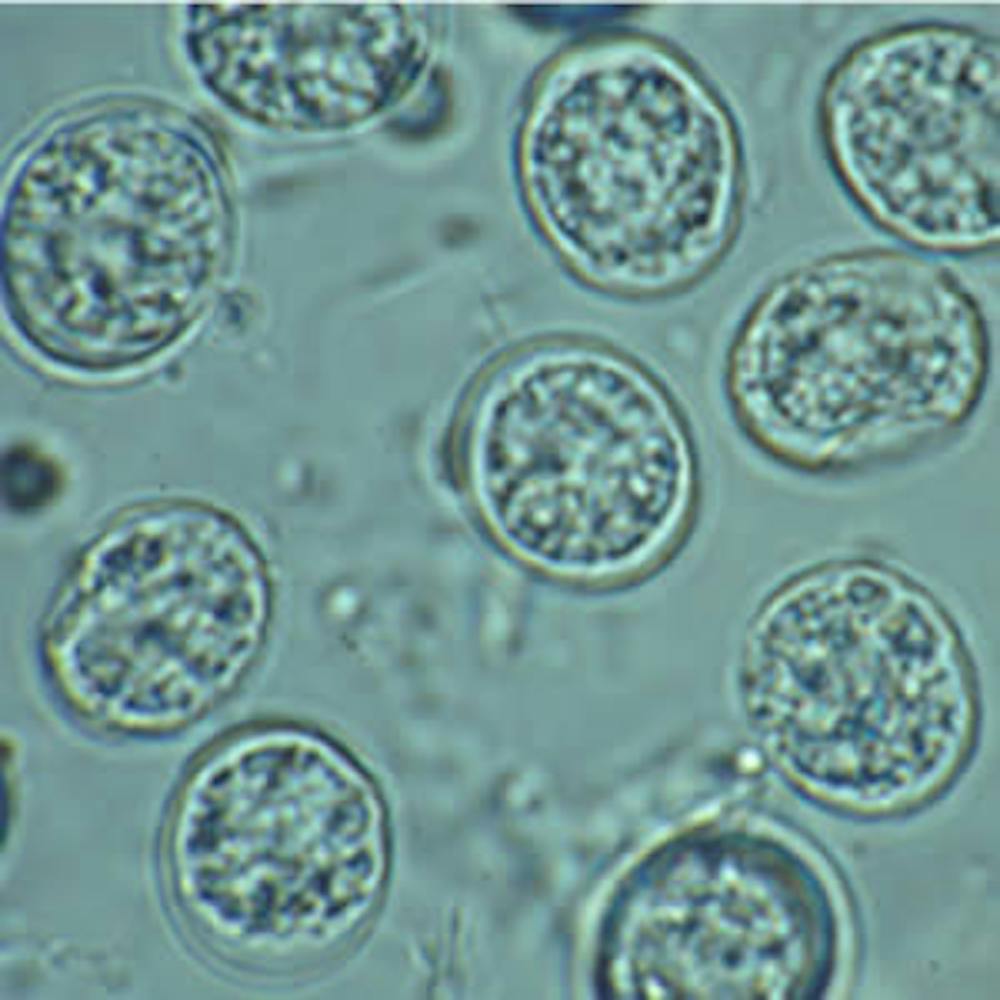
After only five minutes of exposure to the parasite, 22.4% of sperm cells were beheaded. The number of decapitated sperm increased the longer they interacted with the parasites. Sperm cells that maintained their head were often twisted and misshapen. Some sperm cells had holes in their head, suggesting the parasites were trying to invade them as it would any other type of cell in the organs it infiltrates.
The researchers speculate that the harmful effects Toxoplasma may have on sperm could be contributing to large global declines in male fertility over the past decades.
Sperm exposed to Toxoplasma. Arrows point to holes and other damage to the sperm; asterisks indicate where the parasite has burrowed. The two nonconfronted controls at the bottom show normal sperm. Rojas-Barón et al/The FEBS Journal, CC BY-SA
Preventing toxoplasmosis
The evidence that Toxoplasma can infiltrate male reproductive organs in animals is compelling, but whether this produces health issues in people remains unclear. Testicular toxoplasmosis shows that parasites can invade human testes, but symptomatic disease is very rare. Studies to date that show defects in the sperm of infected men are too small to draw firm conclusions at this time.
Additionally, some reports suggest that rates of toxoplasmosis in high-income countries have not been increasing over the past few decades while male infertility was rising, so it’s likely to only be one part of the puzzle.
Regardless of this parasite’s potential effect on fertility, it is wise to avoid Toxoplasma. An infection can cause miscarriage or birth defects if someone acquires it for the first time during pregnancy, and it can be life-threatening for immunocompromised people. Toxoplasma is also the leading cause of death from foodborne illness in the United States.
Source: People’s Republic of China in Russian – People’s Republic of China in Russian –
Source: People’s Republic of China – State Council News
Moscow, May 28 (Xinhua) — Speaking at the 13th International Meeting of High Representatives Responsible for Security Issues on Wednesday, Russian Foreign Minister Sergei Lavrov said that the next round of direct talks between Russia and Ukraine will be announced soon.
According to him, in the new round of negotiations with Ukraine, the Russian side will continue to insist that Ukraine repeal discriminatory laws.
“At these negotiations, on May 16 in Istanbul, we insisted on the abolition of these discriminatory laws, and we will continue to do so at the next round of direct negotiations, which we will announce in the very near future,” said S. Lavrov.
In his opinion, peace negotiations are better than war, but in order to successfully end the conflict in Ukraine, its root causes must be eliminated.
He also noted that one of Russia’s key demands is the return of Ukraine to a neutral, non-aligned and non-nuclear status.
“Let me remind you that the neutral, non-aligned and non-nuclear status of Ukraine was solemnly proclaimed in the declaration of independence of this country, adopted in 1991,” said S. Lavrov. –0–
Source: People’s Republic of China in Russian – People’s Republic of China in Russian –
Source: People’s Republic of China – State Council News
Moscow, May 28 /Xinhua/ — Russia’s approaches remain principled and unchanged, the new security architecture must be equal and indivisible. This was stated by Russian President Vladimir Putin in a video address to participants of the 13th International Meeting of High Representatives Responsible for Security Issues.
“All states must receive firm guarantees of their own security, but not at the expense of the security and interests of other countries,” said the Russian leader.
He noted that it is important to make the Eurasian continent “a space of peace and stability, an example of sustainable economic, social and cultural development.”
“We believe that the basis for creating such a universal security system could be the existing and well-proven multilateral formats of interaction, such as the Shanghai Cooperation Organization, the Eurasian Economic Union, the Collective Security Treaty Organization, the Association of Southeast Asian Nations and others,” said V. Putin.
He also called on the meeting participants to draw on past experience when building joint work, recalling that 2025 will mark 80 years since the end of World War II, which had a dramatic impact on the development of the international community.
The 13th International Meeting of High Representatives Responsible for Security Issues is taking place in Moscow on May 27-29. –0–