Category: China

  • MIL-OSI China: China to boost policy mix to ensure sustained growth in 2025

    Source: People’s Republic of China – State Council News

    BEIJING, March 6 — China will intensify its macroeconomic policy this year, with a significant increase in government spending and a greater focus on consumption and innovation to chart a path of steady growth amid a complex global landscape.

    Senior government officials elaborated on specific pro-growth measures ranging from interest rate cuts to increased funding for small firms, at a press conference held Thursday on the sidelines of the third session of the 14th National People’s Congress.

    STRONGER FISCAL SUPPORT

    China will have a 4-percent deficit-to-GDP ratio and a government deficit of 5.66 trillion yuan (about 790 billion U.S. dollars) in 2025, according to the government work report submitted to the national legislature for deliberation.

    Both figures are at their highest levels in recent years, indicating strengthened counter-cyclical adjustment, Minister of Finance Lan Fo’an said at the press conference. The country will issue 4.4 trillion yuan of local government special-purpose bonds and 1.3 trillion yuan of ultra-long special treasury bonds.

    Analysts believe the expanding fiscal expenditure will shore up sustained economic and social development.

    There will be over 5 trillion yuan of government spending on construction investment this year, said Zheng Shanjie, head of the National Development and Reform Commission.

    “We will support private enterprises in investing in emerging and future industries, and introduce a number of attractive major projects in areas such as railways, nuclear power, water conservancy, and major scientific and technological infrastructure,” Zheng said.

    SUPPORTIVE MONETARY POLICY

    China will cut reserve requirement ratios (RRRs) and interest rates when appropriate this year, in line with domestic and international economic and financial conditions, as well as the performance of financial markets, said Pan Gongsheng, governor of the People’s Bank of China, the country’s central bank.

    The average RRR for China’s financial institutions now stands at 6.6 percent, and there is still room for further reduction, Pan said.

    According to the government work report, China will adopt a moderately loose monetary policy this year.

    Pan said the central bank will utilize multiple tools to offer adequate liquidity and bring down financing costs.

    Strengthened supportive measures will be seen in key areas and weak links including green finance, micro and small firms, and pension finance, Pan said.

    CONSUMPTION AS PRIMARY DRIVER

    As consumption continues to serve as the primary driving force for the economy, improving consumer sentiment will remain high on the government’s work agenda.

    Zheng said that government funding for the national consumer goods trade-in program will increase from 150 billion yuan last year to 300 billion yuan in 2025.

    The trade-in program, launched a year ago, has played a vital role in revitalizing consumer markets. In 2024, it led to sales exceeding 1.3 trillion yuan, including over 6.8 million vehicles, 56 million home appliances and 1.38 million e-bikes.

    There will also be further policies to bolster services consumption this year, Commerce Minister Wang Wentao said, citing measures to open the telecom, medical services and education sectors, and to increase the diversified supply of health, elderly care, child care and domestic services.

    More efforts will be made to innovate services consumption scenarios to meet people’s diversified and high-quality consumption needs in an improved manner, Wang said.

    DYNAMIC FORCES

    With its remarkable progress in technological innovation in 2024, the country will step up efforts to drive the development of new quality productive forces this year.

    Zheng said that China will establish a national venture capital guidance fund to drive nearly 1 trillion yuan of local and private funds to invest in tech firms in a market-oriented manner.

    Efforts will also be made to nurture a talent pool, including strategic scientists, outstanding entrepreneurs, top-tier engineers, master artisans and other highly skilled professions, Zheng said, adding that an open and inclusive innovation ecosystem will be created.

    From AI models like DeepSeek to humanoid robots and intelligent cars, China continues to make significant technological strides. Last year, high-tech manufacturing and equipment manufacturing accounted for 16.3 percent and 34.6 percent of China’s total industrial output, respectively.

    DEFUSING LOCAL DEBT RISK

    In 2024, China unveiled a major local government debt replacement program worth 6 trillion yuan, with an annual quota of 2 trillion yuan from the same year. The program allows local governments to issue new bonds to replace hidden debts.

    Bonds issued through the program last year saw an average reduction in local debt interest rates of over 2.5 percentage points. It is estimated that these bonds will reduce interest payments by over 200 billion yuan over five years, significantly easing funding pressures and interest costs for local governments, Lan noted.

    China’s local government debt risks have been effectively mitigated, he said.

    With eased debt burdens, local governments are capable of earmarking more funds for education and health care to improve people’s well-being and supporting technological innovation and consumption for high-quality development, analysts said.

    Lan said that the Ministry of Finance will guide the timely replacement of local debts this year, promote the transformation of local financing vehicles, and resolutely curb new hidden debts.

    MIL OSI China News

  • MIL-OSI China: Domestic demand unlocks new growth opportunities: official

    Source: People’s Republic of China – State Council News

    BEIJING, March 6 — Expanding China’s domestic demand will create new opportunities for growth across multiple sectors, an official said in the latest episode of the China Economic Roundtable, an all-media talk show hosted by Xinhua News Agency.

    Domestic demand is a “home market that will not move away,” and its growth will increase the country’s market capacity and bolster economic circulation, according to Huang Lianghao, an official of the Research Office of the State Council.

    Huang made the remarks while discussing this year’s government work report, which was submitted to the national legislature for deliberation on Wednesday. Domestic demand will be made the main engine and anchor of economic growth, according to the report.

    “We should adopt a comprehensive approach and identify key areas to unleash all potential of domestic demand,” the official said.

    Increasing spending power is one of the key measures to boost consumption outlined in the report. According to Huang, this is the most fundamental task aiming to ensure that people have enough money to spend.

    Huang also called for efforts to address the most pressing issues hindering consumption, as well as to improve the overall consumption experience and boost people’s willingness to spend.

    MIL OSI China News

  • MIL-OSI China: Improving people’s well-being remains China’s policy priority: official

    Source: People’s Republic of China – State Council News

    BEIJING, March 6 — Improving people’s living standards remains a priority for China’s government work this year, Huang Lianghao, an official with the Research Office of the State Council, said in the latest episode of the China Economic Roundtable, an all-media talk show hosted by Xinhua News Agency.

    “This year’s government work report emphasizes prioritizing people’s livelihoods,” Huang said, adding that a series of measures for education, social insurance, and medical and health services will be introduced to meet the people’s needs.

    On social insurance, the country has pledged to allocate more financial support to increase basic pension benefits for urban and rural residents, provide child care subsidies, and strengthen care for functionally impaired elderly people, according to the government work report, which was unveiled on Wednesday.

    Economic development and livelihood improvements provide mutual reinforcement, particularly amid economic headwinds and insufficient effective demand, he said.

    “Through policies to enhance living standards, the government aims to promote a positive interplay between improvements to people’s lives, demand expansion and economic growth,” he added.

    MIL OSI China News

  • MIL-OSI USA: Remarks by President Trump in Joint Address to Congress

    US Senate News:

    Source: The White House
    class=”has-text-align-center”>U.S. Capitol
    Washington, D.C.
    9:19 P.M. EST
    (March 4, 2025)
         THE PRESIDENT:  Thank you.  (Applause.)  Thank you very much.  Thank you very much.  It’s a great honor.  Thank you very much. 
    Speaker Johnson, Vice President Vance, the first lady of the United States — (applause) — members of the United States Congress, thank you very much.  
    And to my fellow citizens, America is back.  (Applause.)
    AUDIENCE:  USA!  USA!  USA! 
    THE PRESIDENT:  Six weeks ago, I stood beneath the dome of this Capitol and proclaimed the dawn of the golden age of America.  From that moment on, it has been nothing but swift and unrelenting action to usher in the greatest and most successful era in the history of our country. 
    We have accomplished more in 43 days than most administrations accomplished in four years or eight years, and we are just getting started.  (Applause.)  Thank you. 
    I return to this chamber tonight to report that America’s momentum is back, our spirit is back, our pride is back, our confidence is back, and the American dream is surging bigger and better than ever before.  (Applause.)  The American dream is unstoppable, and our country is on the verge of a comeback, the likes of which the world has never witnessed and perhaps will never witness again.  There’s never been anything like it.  (Applause.)
    The presidential election of November 5th was a mandate like has not been seen in many decades.  We won all seven swing states, giving us an electoral college victory of 312 votes.  (Applause.)  We won the popular vote —
    REPRESENTATIVE GREEN:  (Inaudible.)
    THE PRESIDENT:  — by big numbers and won counties in our country —
    AUDIENCE:  Booo —
    AUDIENCE:  USA!  USA!  USA!
    REPRESENTATIVE GREEN:  You are — you have no right to cut Medicaid.
    AUDIENCE:  USA!  USA!  USA! 
    THE PRESIDENT:  — and won counties in our country 2,700 to 525 on a map that reads almost completely red for Republican.  (Applause.) 
    Now, for the first time in modern history, more Americans believe that our country is headed in the right direction than the wrong direction.  In fact, it’s an astonishing record: 27-point swing, the most ever.  (Applause.)
    Likewise, small-business optimism saw its single largest one-month gain ever recorded. 
    SPEAKER JOHNSON:  Mr. President —
    THE PRESIDENT:  A 41-point jump.
    (Speaker Johnson strikes the gavel.) 
         SPEAKER JOHNSON:  Members are directed to uphold and maintain decorum in the House and to cease any further disruptions.  That’s your warning.
    REPRESENTATIVE GREEN:  He has no mandate to cut Medicaid.
    SPEAKER JOHNSON:  Members are engaging in willful and continuing breach of decorum, and the chair is prepared to direct the sergeant at arms to restore order to the joint session.  (Applause.)
    Mr. Green, take your seat.  Take your seat, sir. 
    REPRESENTATIVE GREEN:  He has no mandate to cut Medicaid.
    SPEAKER JOHNSON:  Take your seat.
    (Cross-talk.) 
    Finding that members continue to engage in willful and concerted disruption of proper decorum, the chair now directs the sergeant at arms to restore order.  (Applause.)  Remove this gentleman from the chamber.  (Applause.)
    REPRESENTATIVE GREEN:  Shame on all of you.
         (Members of the audience sing “Na Na Hey Hey Kiss Him Goodbye.”)
         (Cross-talk.)
         You have no mandate.
    SPEAKER JOHNSON:  Members are directed to uphold and maintain decorum in the House.
    Mr. President, you can continue.
    THE PRESIDENT:  Thank you.
    Over the past six weeks, I have signed nearly 100 executive orders and taken more than 400 executive actions — a record — to restore common sense, safety, optimism, and wealth all across our wonderful land.  The people elected me to do the job, and I’m doing it.  (Applause.)
    In fact, it has been stated by many that the first month of our presidency — it’s our presidency — (applause) — is the most successful in the history of our nation by many.  (Applause.)  And what makes it even more impressive is that — do you know who number two is?  George Washington.  How about that?  (Laughter and applause.)  How about that?  I don’t know about that list, but we’ll take it. 
    Within hours of taking the oath of office, I declared a national emergency on our southern border — (applause) — and I deployed the U.S. military and Border Patrol to repel the invasion of our country.  And what a job they’ve done. 
    As a result, illegal border crossings last month were, by far, the lowest ever recorded. Ever.  (Applause.)  They heard my words, and they chose not to come.  Much easier that way. 
    In comparison, under Joe Biden, the worst president in American history — (applause) — there were hundreds of thousands of illegal crossings a month, and virtually all of them, including murderers, drug dealers, gang members, and people from mental institutions and insane asylums, were released into our country.  Who would want to do that?
    This is my fifth such speech to Congress, and, once again, I look at the Democrats in front of me, and I realize there is absolutely nothing I can say to make them happy or to make them stand or smile or applaud.  Nothing I can do.  I could find a cure to the most devastating disease — a disease that would wipe out entire nations, or announce the answers to the greatest economy in history or the stoppage of crime to the lowest levels ever recorded, and these people sitting right here will not clap, will not stand, and certainly will not cheer for these astronomical achievements.  They won’t do it no matter what.
    Five times I’ve been up here.  It’s very sad, and it just shouldn’t be this way.  (Applause.)
    So, Democrats sitting before me, for just this one night, why not join us in celebrating so many incredible wins for America?  For the good of our nation, let’s work together and let’s truly make America great again.  (Applause.)
    Every day, my administration is fighting to deliver the change America needs, to bring a future that America deserves, and we’re doing it.  This is a time for big dreams and bold action. 
    Upon taking office, I imposed an immediate freeze on all federal hiring, a freeze on all new federal regulations, and a freeze on all foreign aid.  (Applause.)  I terminated the ridiculous Green New Scam.  I withdrew from the unfair Paris Climate Accord, which was costing us trillions of dollars that other countries were not paying.  (Applause.)  I withdrew from the corrupt World Health Organization.  (Applause.)  And I also withdrew from the anti-American U.N. Human Rights Council.  (Applause.)
    We ended all of Biden’s environmental restrictions that were making our country far less safe and totally unaffordable.  And importantly, we ended the last administration’s insane electric vehicle mandate, saving our autoworkers and companies from economic destruction.  (Applause.)
    To unshackle our economy, I have directed that for every 1 new regulation, 10 old regulations must be eliminated, just like I did in my very successful first term.  (Applause.)  And in that first term, we set records on ending unnecessary rules and regulations like no other president had done before. 
    We ordered all federal workers to return to the office.  They will either show up for work in person or be removed from their job.  (Applause.)  
    And we have ended weaponized government, where, as an example, a sitting president is allowed to viciously prosecute his political opponent, like me.  How did that work out? (Laughter.)  Not too good.  (Applause.)  Not too good. 
    And I have stopped all government censorship and brought back free speech in America.  It’s back.  (Applause.) 
    And two days ago, I signed an order making English the official language of the United States of America.  (Applause.)  
    I renamed the Gulf of Mexico the Gulf of America.  (Applause.) 
    And, likewise, I renamed — for a great president, William McKinley — Mount McKinley again.  (Applause.)  Beautiful Alaska.  We love Alaska.
    We’ve ended the tyranny of so-called diversity, equity, and inclusion policies all across the entire federal government and, indeed, the private sector and our military.  (Applause.)  And our country will be woke no longer.  (Applause.)
    We believe that whether you are a doctor, an accountant, a lawyer, or an air traffic controller, you should be hired and promoted based on skill and competence, not race or gender.  Very important.  (Applause.)  You should be hired based on merit.  And the Supreme Court, in a brave and very powerful decision, has allowed us to do so.
    Thank you.  Thank you very much.  Thank you.  (Applause.)
    We have removed the poison of critical race theory from our public schools.  And I signed an order making it the official policy of the United States government that there are only two genders: male and female.  (Applause.) 
    I also signed an executive order to ban men from playing in women’s sports.  (Applause.) 
         Three years ago, Payton McNabb was an all-star high school athlete — one of the best — preparing for a future in college sports.  But when her girls’ volleyball match was invaded by a male, he smashed the ball so hard in Payton’s face, causing traumatic brain injury, partially paralyzing her right side, and ending her athletic career.  It was a shot like she’s never seen before.  She’s never seen anything like it.
    Payton is here tonight in the gallery.  And, Payton, from now on, schools will kick the men off the girls’ team or they will lose all federal funding.  (Applause.) 
    And if you really want to see numbers, just take a look at what happened in the woman’s boxing, weightlifting, track and field, swimming, or cycling, where a male recently finished a long-distance race five hours and 14 minutes ahead of a woman for a new record by five hours.  Broke the record by five hours. 
    It’s demeaning for women, and it’s very bad for our country.  We’re not going to put up with it any longer.  (Applause.) 
    What I have just described is only a small fraction of the commonsense revolution that is now, because of us, sweeping the entire world.  Common sense has become a common theme, and we will never go back.  Never.  Never going to let that happen.  (Applause.)
    Among my very highest priorities is to rescue our economy and get dramatic and immediate relief to working families.  As you know, we inherited from the last administration an economic catastrophe and an inflation nightmare.  Their policies drove up energy prices, pushed up grocery costs, and drove the necessities of life out of reach for millions and millions of Americans.  They’ve never had anything like it. 
    We suffered the worst inflation in 48 years but perhaps even in the history of our country. They’re not sure.  As president, I’m fighting every day to reverse this damage and make America affordable again.  (Applause.)
    Joe Biden especially let the price of eggs get out of control.
    AUDIENCE:  Booo —
    THE PRESIDENT:  The egg price is out of control, and we’re working hard to get it back down. 
    Secretary, do a good job on that.  You inherited a total mess from the previous administration.  Do a good job.  (Applause.) 
    A major focus of our fight to defeat inflation is rapidly reducing the cost of energy.  The previous administration cut the number of new oil and gas leases by 95 percent, slowed pipeline construction to a halt, and closed more than 100 power plants.  We are opening up many of those power plants right now.  (Applause.) 
    And, frankly, we have never seen anything like it.  That’s why, on my first day in office, I declared a national energy emergency.  (Applause.)  As you’ve heard me say many times, we have more liquid gold under our feet than any nation on Earth and by far.  And now I’ve fully authorized the most talented team ever assembled to go and get it.  It’s called drill, baby, drill.  (Applause.) 
    My administration is also working on a gigantic natural gas pipeline in Alaska — among the largest in the world — where Japan, South Korea, and other nations want to be our partner with investments of trillions of dollars each.  There’s never been anything like that one.  It will be truly spectacular.  It’s all set to go.  The permitting is gotten.
    And later this week, I will also take historic action to dramatically expand production of critical minerals and rare earths here in the USA.  (Applause.)  
    To further combat inflation, we will not only be reducing the cost of energy, but we’ll be ending the flagrant waste of taxpayer dollars.  (Applause.)  And to that end, I have created the brand-new Department of Government Efficiency – DOGE. (Applause.) Perhaps you’ve heard of it — perhaps — which is headed by Elon Musk, who is in the gallery tonight.  (Applause.)
    Thank you, Elon.  He’s working very hard.  He didn’t need this.  (Laughs.)  He didn’t need this.  Thank you very much.  We appreciate it.  Everybody here, even this side, appreciates it, I believe.  (Applause.)  They just don’t want to admit that.
    Just listen to some of the appalling waste we have already identified.
    $22 billion from HHS to provide free housing and cars for illegal aliens.
    $45 million for diversity, equity, and inclusion scholarships in Burma.
    $40 million to improve the social and economic inclusion of sedentary migrants.  Nobody knows what that is.  (Laughter.) 
    $8 million to promote LGBTQI+ in the African nation of Lesotho, which nobody has ever heard of.  (Laughter.)
    $60 million for Indigenous peoples and Afro-Colombian empowerment in Central America.  $60 million.
    $8 million for making mice transgender.  (Laughter.)  This is real.
    $32 million for a left-wing propaganda operation in Moldova.
    $10 million for male circumcision in Mozambique.
    $20 million for the Arab “Sesame Street” in the Middle East.  It’s a program.  $20 million for a program.
    $1.9 billion to recently created decarbonization of homes committee, headed up — and we know she’s involved — just at the last moment, the money was passed over — by a woman named Stacey Abrams.  Have you ever heard of her?
    AUDIENCE:  Booo —
    THE PRESIDENT:  A $3.5 million consulting contract for lavish fish monitoring.
    $1.5 million for voter confidence in Liberia.
    $14 million for social cohesion in Mali.
    $59 million for illegal alien hotel rooms in New York City. 
    AUDIENCE:  Booo —
    THE PRESIDENT:  He’s a real estate developer.  He’s done very well.
    $250,000 to increase vegan local climate action innovation in Zambia.
    $42 million for social and behavior change in Uganda.
    $14 million for improving public procurement in Serbia.
    $47 million for improving learning outcomes in Asia.  Asia is doing very well with learning.  (Laughter.)  Don’t know what we’re doing.  We should use it ourselves.
    And $101 million for DEI contracts at the Department of Education, the most ever paid.  Nothing even like it.
    Under the Trump administration, all of these scams — and there are far worse, but I didn’t think it was appropriate to talk about them.  They’re so bad.  Many more have been found out and exposed and swiftly terminated by a group of very intelligent, mostly young people, headed up by Elon.  And we appreciate it.  We’ve found hundreds of billions of dollars of fraud.  (Applause.)
    And we’ve taken back the money and reduced our debt to fight inflation and other things.  Taken back a lot of that money.  We got it just in time. 
    AUDIENCE MEMBERS:  (Inaudible.)
    THE PRESIDENT:  This is just the beginning.  The Government Accountability Office, a federal government office, has estimated annual fraud of over $500 billion in our nation, and we are working very hard to stop it.  We’re going to.
    We’re also identifying shocking levels of incompetence and probable fraud in the Social Security program for our seniors and that our seniors and people that we love rely on.  Believe it or not, government databases list 4.7 million Social Security members from people aged 100 to 109 years old.
    THE PRESIDENT:  It lists 3.6 million people from ages 110 to 119.  I don’t know any of them.  I know some people that are rather elderly, but not quite that elderly.  (Laughter.) 
    3.47 million people from ages 120 to 129. 
    3.9 million people from ages 130 to 139.
    3.5 million people from ages 140 to 149.
    And money is being paid to many of them, and we’re searching right now. 
    In fact, Pam, good luck.  Good luck.  You’re going to find it.
    But a lot of money is paid out to people because it just keeps getting paid and paid, and nobody does — and it really hurts Social Security and hurts our country.
    1.3 million people from ages 150 to 159.  And over 130,000 people, according to the Social Security databases, are age over 160 years old.  
    We have a healthier country than I thought, Bobby.  (Laughter and applause.)
    Including, to finish, 1,039 people between the ages of 220 and 229; one person between the age of 240 and 249; and one person is listed at 360 years of age.
    AUDIENCE MEMBER:  Joe Biden!  (Laughter.)
    THE PRESIDENT: More than 100 years older than our country. 
    But we’re going to find out where that money is going, and it’s not going to be pretty. 
    By slashing all of the fraud, waste, and theft we can find, we will defeat inflation, bring down mortgage rates, lower car payments and grocery prices, protect our seniors, and put more money in the pockets of American families.  (Applause.) 
    And today, interest rates took a beautiful drop — big, beautiful drop.  It’s about time.
    And in the near future, I want to do what has not been done in 24 years: balance the federal budget.  We’re going to balance it.  (Applause.) 
    With that goal in mind, we have developed in great detail what we are calling the gold card, which goes on sale very, very soon.  
         For $5 million, we will allow the most successful, job-creating people from all over the world to buy a path to U.S. citizenship.  It’s like the green card but better and more sophisticated.  (Laughter.)  And these people will have to pay tax in our country.  They won’t have to pay tax from where they came.  The money that they’ve made, you wouldn’t want to do that, but they have to pay tax, create jobs.
    They’ll also be taking people out of colleges and paying for them so that we can keep them in our country, instead of having them being forced out.  Number one at the top school, as an example, being forced out and not being allowed to stay and create tremendous numbers of jobs and great success for a company out there.
    So, while we take out the criminals, killers, traffickers, and child predators who were allowed to enter our country under the open border policy of these people — the Democrats, the Biden administration — the open border, insane policies that you’ve allowed to destroy our country — we will now bring in brilliant, hardworking, job-creating people.  They’re going to pay a lot of money, and we’re going to reduce our debt with that money.  (Applause.)
    Americans have given us a mandate for bold and profound change.  For nearly 100 years, the federal bureaucracy has grown until it has crushed our freedoms, ballooned our deficits, and held back America’s potential in every possible way.  The nation founded by pioneers and risk-takers now drowns under millions and millions of pages of regulations and debt. 
    Approvals that should take 10 days to get instead take 10 years, 15 years, and even 20 years before you’re rejected.  Meanwhile, we have hundreds of thousands of federal workers who have not been showing up to work. 
    My administration will reclaim power from this unaccountable bureaucracy, and we will restore true democracy to America again. (Applause.)  Any federal bureaucrat who resists this change will be removed from office immediately — (applause) — because we are draining the swamp.  It’s very simple.  And the days of rule by unelected bureaucrats are over.  (Applause.)
    And the next phase of our plan to deliver the greatest economy in history is for this Congress to pass tax cuts for everybody.  They’re in there.  They’re waiting for you to vote.  (Applause.) 
    And I’m sure that the people on my right — I don’t mean the Republican right, but my right right here — I’m sure you’re going to vote for those tax cuts, because, otherwise, I don’t believe the people will ever vote you into office.  So, I’m doing you a big favor by telling you that.  (Applause.)
    But I know this group is going to be voting for the taxes.  (Applause.)
    Thank you.  It’s a very, very big part of our plan.  We had tremendous success in our first term with it.  A very big part of our plan.  We’re seeking permanent income tax cuts all across the board.
    And to get urgently needed relief to Americans hit especially hard by inflation, I’m calling for no tax on tips, no tax on overtime, and no tax on Social Security benefits for our great seniors.  (Applause.) 
    (Addressing Speaker Johnson.)  Good luck.
    And I also want to make interest payments on car loans tax deductible but only if the car is made in America.  (Applause.)  
    And, by the way, we’re going to have growth in the auto industry like nobody has ever seen.  Plants are opening up all over the place.  Deals are being made.  Never seen. That’s a combination of the election win and tariffs. 
    It’s a beautiful word, isn’t it? 
    That, along with our other policies, will allow our auto industry to absolutely boom.  It’s going to boom.  Spoke to the majors today — all three — the top people, and they’re so excited.  In fact, already, numerous car companies have announced that they will be building massive automobile plants in America, with Honda just announcing a new plant in Indiana, one of the largest anywhere in the world.  (Applause.) 
    And this has taken place since our great victory on November 5th, a date which will hopefully go down as one of the most important in the history of our country.  (Applause.)  
    In addition, as part of our tax cuts, we want to cut taxes on domestic production and all manufacturing.  And just as we did before, we will provide 100 percent expensing.  It will be retroactive to January 20th, 2025, and it was one of the main reasons why our tax cuts were so successful in our first term, giving us the most successful economy in the history of our country.  First term — we had a great first term.  (Applause.) 
    If you don’t make your product in America, however, under the Trump administration, you will pay a tariff and, in some cases, a rather large one.  Other countries have used tariffs against us for decades, and now it’s our turn to start using them against those other countries.
    On average, the European Union, China, Brazil, India, Mexico, and Canada — have you heard of them? — and countless other nations charge us tremendously higher tariffs than we charge them.  It’s very unfair.  India charges us auto tariffs higher than 100 percent.  China’s average tariff on our products is twice what we charge them.  And South Korea’s average tariff is four times higher.  Think of that: four times higher.  And we give so much help militarily and in so many other ways to South Korea, but that’s what happens.
    This is happening by friend and foe.  This system is not fair to the United States and never was.  And so, on April 2nd — I wanted to make it April 1st, but I didn’t want to be accused of April Fool’s Day.  (Laughter.)  Just one day, which cost us a lot of money.  (Laughter.)  But we’re going to do it in April. I’m a very superstitious person. April 2nd, reciprocal tariffs kick in.  And whatever they tariff us — other countries — we will tariff them.  That’s reciprocal, back and forth.  (Applause.)  Whatever they tax us, we will tax them.
    If they do non-monetary tariffs to keep us out of their market, then we will do non-monetary barriers to keep them out of our market.  There’s a lot of that too.  They don’t even allow us in their market.
    We will take in trillions and trillions of dollars and create jobs like we have never seen before.  I did it with China, and I did it with others.  And the Biden administration couldn’t do anything about it because it was so much money.  They couldn’t do anything about it.
    We have been ripped off for decades by nearly every country on Earth, and we will not let that happen any longer.  (Applause.) 
    Much has been said over the last three months about Mexico and Canada, but we have very large deficits with both of them.  But even more importantly, they have allowed fentanyl to come into our country at levels never seen before, killing hundreds of thousands of our citizens and many very young, beautiful people — destroying families.  Nobody has ever seen anything like it. 
    They are, in effect, receiving subsidies of hundreds of billions of dollars.  We pay subsidies to Canada and to Mexico of hundreds of billions of dollars.  And the United States will not be doing that any longer.  We’re not going to do it any longer.  (Applause.)
    Thanks to our America First policies we’re putting into place, we have had $1.7 trillion of new investment in America in just the past few weeks.  (Applause.)  The combination of the election and our economic policies — the people of SoftBank, one of the most brilliant anywhere in the world, announced a $200 billion investment.  OpenAI and Oracle — Larry Ellison — announced $500 billion investment, which they wouldn’t have done if Kamala had won.  (Applause.)
    Apple announced $500 billion investment.  Tim Cook called me.  He said, “I cannot spend it fast enough.”  It’s going to be much higher than that, I believe.  They’ll be building their plants here, instead of in China. 
    And just yesterday, Taiwan Semiconductor — the biggest in the world, most powerful in the world, has a tremendous amount — 97 percent of the market, announced a $165 billion investment to build the most powerful chips on Earth right here in the USA.  (Applause.) 
    And we’re not giving them any money.  Your CHIPS Act is a horrible, horrible thing.  We give hundreds of billions of dollars, and it doesn’t mean a thing.  They take our money, and they don’t spend it.  All that meant to them — we’re giving them no money.  All that was important to them was they didn’t want to pay the tariffs, so they came and they’re building.  And many other companies are coming.  
    We don’t have to give them money.  We just want to protect our businesses and our people.  And they will come because they won’t have to pay tariffs if they build in America.  And so, it’s very amazing.
    You should get rid of the CHIP Act.  And whatever is left over, Mr. Speaker, you should use it to reduce debt or any other reason you want to.  (Applause.) 
    Our new trade policy will also be great for the American farmer — I love the farmer — (applause) — who will now be selling into our home market, the USA, because nobody is going to be able to compete with you.  Because those goods that come in from other countries and companies, they’re really, really in a bad position in so many different ways.  They’re uninspected.  They may be very dirty and disgusting, and they come in and they pour in, and they hurt our American farmers.
    The tariffs will go on agricultural product coming into America.  And our farmers, starting on April 2nd — it may be a little bit of an adjustment period.  We had that before, when I made the deal with China.  Fifty billion dollars of purchases, and I said, “Just bear with me,” and they did.  They did.  Probably have to bear with me again, and this will be even better.  
    That was great.  The problem with it was that Biden didn’t enforce it.  He didn’t enforce it.  Fifty billion dollars of purchases, and we were doing great, but Biden did not enforce it.  And it hurt our farmers, but our farmers are going to have a field day right now.
    So, to our farmers, have a lot of fun.  I love you too.  I love you too.  (Applause.)  It’s all going to happen.
    And I have also imposed a 25 percent tariff on foreign aluminum, copper, lumber, and steel, because if we don’t have, as an example, steel and lots of other things, we don’t have a military and, frankly, we just won’t have a country very long.
    Here today is a proud American steelworker, fantastic person from Decatur, Alabama.  Jeff Denard has been working at the same steel plant for 27 years in a job that has allowed him to serve as the captain of his local volunteer fire department; raise seven children with his beautiful wife, Nicole; and over the years, provide a loving home for more than 40 foster children.  So great, Jeff.  (Applause.) 
    Thank you, Jeff.  Thank you, Jeff.  (Applause.)
    Stories like Jeff’s remind us that tariffs are not just about protecting American jobs.  They’re about protecting the soul of our country.  Tariffs are about making America rich again and making America great again.  And it’s happening, and it will happen rather quickly.
    There will be a little disturbance, but we’re okay with that.  It won’t be much. 
    AUDIENCE MEMBER:  No, we’re not!
    THE PRESIDENT:  No, you’re not.  Oh.  (Laughter.)
    And look — and look where Biden took us.  Very low.  The lowest we’ve ever been.
    Jeff, I want to thank you very much.
    And I also want to recognize another person who has devoted herself to foster care community.  She worked so hard on it.  A very loving person.  Our magnificent first lady of the United States.  (Applause.)
    Melania’s work has yielded incredible results, helping prepare our nation’s future leaders as they enter the workforce.  
    Our first lady is joined by two impressive young women — very impressive: Haley Ferguson, who benefited from the first lady’s Fostering the Future initiative and is poised to complete her education and become a teacher, and Elliston Berry, who became a victim of an illicit deepfake image produced by a peer.  With Elliston’s help, the Senate just passed the Take It Down Act — 
    This is so important.  Thank you very much, John.  John Thune, thank you.  (Applause.)  Stand up, John.  Thank you, John.  (Applause.)  Thank you all very much.  Thank you.
    And thank you to John Thune and the Senate.  A great job.
    — to criminalize the publication of such images online.  This terrible, terrible thing.  And once it passes the House, I look forward to signing that bill into law.  Thank you.  
    And I’m going to use that bill for myself too, if you don’t mind — (laughter) — because nobody gets treated worse than I do online.  Nobody.  (Laughter.) 
    That’s great.  Thank you very much to the Senate.  Thank you.
    But if we truly care about protecting America’s children, no step is more crucial than securing America’s borders.  Over the past four years, 21 million people poured into the United States.  Many of them were murderers, human traffickers, gang members, and other criminals from the streets of dangerous cities all throughout the world.  Because of Joe Biden’s insane and very dangerous open border policies, they are now strongly embedded in our country, but we are getting them out and getting them out fast.  (Applause.)
    And I want to thank Tom Homan.  And, Kristi, I want to thank you.  And Paul of Border Patrol, I want to thank you.  What a job they’ve all done.  Everybody.  Border Patrol, ICE.  Law enforcement, in general, is incredible.  We have to take care of our law enforcement.  (Applause.)  We have to. 
    Last year, a brilliant 22-year-old nursing student named Laken Riley — the best in her class, admired by everybody — went out for a jog on the campus of the University of Georgia.  That morning, Laken was viciously attacked, assaulted, beaten, brutalized, and horrifically murdered.  Laken was stolen from us by a savage illegal alien gang member who was arrested while trespassing across Biden’s open southern border and then set loose into the United States under the heartless policies of that failed administration.  It was indeed a failed administration.
    He had then been arrested and released in a Democrat-run sanctuary city — a disaster — before ending the life of this beautiful young angel.
    With us this evening are Laken’s beloved mother, Allyson, and her sister, Lauren.  (Applause.)
    Last year, I told Laken’s grieving parents that we would ensure their daughter would not have died in vain.  That’s why the very first bill I signed into law as your 47th president mandates the detention of all dangerous criminal aliens who threaten public safety.  It’s a very strong, powerful act.  (Applause.)  It’s called the Laken Riley Act.  (Applause.) 
    So, Allyson and Lauren, America will never, ever forget our beautiful Laken Hope Riley.  (Applause.)
    Thank you very much.
    Since taking office, my administration has launched the most sweeping border and immigration crackdown in American history, and we quickly achieved the lowest numbers of illegal border crossers ever recorded.  Thank you.  (Applause.)
    The media and our friends in the Democrat Party kept saying we needed new legislation.  “We must have legislation to secure the border.”  But it turned out that all we really needed was a new president.  (Applause.) 
    AUDIENCE:  Trump!  Trump!  Trump!
    THE PRESIDENT:  Thank you.
    Joe Biden didn’t just open our borders.  He flew illegal aliens over them to overwhelm our schools, hospitals, and communities throughout the country.  Entire towns, like Aurora, Colorado, and Springfield, Ohio, buckled under the weight of the migrant occupation and corruption like nobody has ever seen before.  Beautiful towns destroyed.
    Now, just as I promised in my Inaugural Address, we are achieving the great liberation of America.  (Applause.)
    But there still is much work to be done. 
    Here tonight is a woman I have gotten to know: Alexis Nungaray from Houston.  Wonderful woman.  Last June, Alexis’s 12-year-old daughter, her precious Jocelyn, walked to a nearby convenience store.  She was kidnapped, tied up, assaulted for two hours under a bridge, and horrifically murdered.  Arrested and charged with this heinous crime are two illegal alien monsters from Venezuela, released into America by the last administration through their ridiculous open border.
    The death of this beautiful 12-year-old girl and the agony of her mother and family touched our entire nation greatly. 
    Alexis, I promised that we would always remember your daughter — your magnificent daughter.  And earlier tonight, I signed an order keeping my word to you.  
    One thing I have learned about Jocelyn is that she loved animals so much.  She loved nature.  Across Galveston Bay from where Jocelyn lived in Houston, you will find a magnificent national wildlife refuge. A pristine, peaceful, 34,000-acre sanctuary for all of God’s creatures on the edge of the Gulf of America.
    Alexis, moments ago, I formally renamed that refuge in loving memory of your beautiful daughter, Jocelyn.
    So, Mr. Vice President, if you would, may I have the order?  (Applause.)
    (The president holds up the executive order.)
    Thank you very much. 
    All three savages charged with Jocelyn and Laken’s murders were members of the Venezuelan prison gang — the toughest gang, they say, in the world — known as Tren de Aragua.  Two weeks ago, I officially designated this gang, along with MS-13 and the bloodthirsty Mexican drug cartels, as foreign terrorist organizations.  (Applause.)  They are now officially in the same category as ISIS, and that’s not good for them. 
    Countless thousands of these terrorists were welcomed into the U.S. by the Biden administration, but now every last one will be rounded up and forcibly removed from our country, or, if they’re too dangerous, put in jails, standing trial in this country, because we don’t want them to come back ever.
    With us this evening is a warrior on the front lines of that battle, Border Patrol agent Roberto Ortiz.  Great guy.  (Applause.)  
    In January, Roberto and another agent were patrolling by the Rio Grande, near an area known as Cartel Island — doesn’t sound too nice to me — when heavily armed gunmen started shooting at them.  Roberto saw that his partner was totally exposed, in great danger, and he leapt into action, returning fire and providing crucial seconds for his fellow agent to seek safety, and just barely.  I have some of the prints of that event, and it was not good. 
    Agent Ortiz, we salute you for your great courage and for your line of fire that you took and for the bravery that you showed.  We honor you, and we will always honor you.  Thank you, Roberto, very much.  (Applause.)  Thank you, Roberto. 
    And I actually got to know him on my many calls to the border.  He’s a great, great gentleman.
    The territory to the immediate south of our border is now dominated entirely by criminal cartels that murder, rape, torture, and exercise total control — they have total control over a whole nation — posing a grave threat to our national security.  The cartels are waging war in America, and it’s time for America to wage war on the cartels, which we are doing.  (Applause.)
    Five nights ago, Mexican authorities, because of our tariff policies being imposed on them — think of this — handed over to us 29 of the biggest cartel leaders in their country.  That has never happened before.  They want to make us happy.  (Applause.)  First time ever.
    But we need Mexico and Canada to do much more than they’ve done, and they have to stop the fentanyl and drugs pouring into the USA.  They’re going to stop it.  
    I have sent Congress a detailed funding request laying out exactly how we will eliminate these threats to protect our homeland and complete the largest deportation operation in American history, larger even than current record holder, President Dwight D. Eisenhower, a moderate man but someone who believed very strongly in borders.  Americans expect Congress to send me this funding without delay so I can sign it into law. 
    So, Mr. Speaker, John Thune, both of you, I hope you’re going to be able to do that.  Mr. Speaker, thank you.  Mr. Leader, thank you.  Thank you very much.  And let’s get it to me.  I’ll sign it so fast, you won’t even believe it.  (Applause.)
    And as we reclaim our sovereignty, we must also bring back law and order to our cities and towns.  (Applause.)  In recent years, our justice system has been turned upside down by radical-left lunatics.  Many jurisdictions virtually ceased enforcing the law against dangerous repeat offenders while weaponizing law enforcement against political opponents like me.
    My administration has acted swiftly and decisively to restore fair, equal, and impartial justice under the constitutional rule of law, starting at the FBI and the DOJ.  
    Pam, good luck.  Kash, wherever you may be, good luck.  (Applause.)  Good luck.  Pam Bondi, good luck.  So important.  Going to do a great job.  (Applause.)  
    Kash, thank you.  Thank you, Kash.  (Applause.)
    They have already started very strong.  They’re going to do a fantastic job.  You’re going to be very proud of them. 
    We’re also, once again, giving our police officers the support, protection, and respect they so dearly deserve.  They have to get it.  They have such a hard, dangerous job, but we’re going to make it less dangerous.  The problem is the bad guys don’t respect the law, but they’re starting to respect it, and they soon will respect it.
    (Cross-talk.)
    This also includes our great fire departments throughout the country.  Our firemen and women are unbelievable people, and I will never forget them.  And besides that, they voted for me in record numbers, so I have no choice.  (Applause.)
    One year ago this month, 31-year-old New York police officer Jonathan Diller — unbelievably wonderful person and a great officer — was gunned down at a traffic stop on Long Island.  I went to his funeral.  The vicious criminal charged with his murder had 21 prior arrests, and they were rough arrests too.  He was a real bad one.
    The thug in the seat next to him had 14 prior arrests and went by the name of “Killer.”  He was Killer.  He killed other people.  They say a lot of them. 
    I attended Officer Diller’s service, and when I met his wife and one-year-old son, Ryan, it was very inspirational, actually.  His widow’s name is Stephanie, and she is here tonight.  Stephanie, thank you very much, Stephanie.  Thank you very much.  (Applause.)
    Stephanie, we’re going to make sure that Ryan knows his dad was a true hero — New York’s Finest.  And we’re going to get these cold-blooded killers and repeat offenders off our streets, and we’re going to do it fast.  Got to stop it. 
    They get out with 28 arrests.  They push people into subway trains.  They hit people over the back of the head with baseball bats.  We got to get them out of here. 
    I’ve already signed an executive order requiring a mandatory death penalty for anyone who murders a police officer.  And, tonight, I’m asking Congress to pass that policy into permanent law.  (Applause.)
    I’m also asking for a new crime bill, getting tough on repeat offenders while enhancing protections for America’s police officers so they can do their jobs without fear of their lives being totally destroyed.  They don’t want to be killed.  We’re not going to let them be killed.
    Joining us in the gallery tonight is a young man who truly loves our police.  His name is D.J. Daniel.  He is 13 years old, and he has always dreamed of becoming a police officer.  (Applause.)
    But in 2018, D.J. was diagnosed with brain cancer.  The doctors gave him five months at most to live.  That was more than six years ago.  (Applause.)
    Since that time, D.J. and his dad have been on a quest to make his dream come true, and D.J. has been sworn in as an honorary law enforcement officer, actually, a number of times.  Pec- — the police love him.  The police departments love him. 
    And tonight, D.J., we’re going to do you the biggest honor of them all.  I am asking our new Secret Service director, Sean Curran, to officially make you an agent of the United States Secret Service.  (Applause.)
    (Director Curran presents Mr. Daniel with a Secret Service Agent credential.)
    AUDIENCE:  D.J.!  D.J.!  D.J.!
    THE PRESIDENT:  Thank you, D.J. 
    D.J.’s doctors believe his cancer likely came from a chemical he was exposed to when he was younger.  Since 1975, rates of child cancer have increased by more than 40 percent.  Reversing this trend is one of the top priorities for our new presidential commission to make America healthy again, chaired by our new secretary of Health and Human Services, Robert F. Kennedy, Jr.  (Applause.) 
    AUDIENCE MEMBER:  MAHA, baby!
    THE PRESIDENT:  With the name “Kennedy,” you would have thought everybody over here would have been cheering.  (Laughter.)  How quickly they forget.  
    Our goal is to get toxins out of our environment, poisons out of our food supply, and keep our children healthy and strong.  
    As an example, not long ago — you can’t even believe these numbers — 1 in 10,000 children had autism. 1 in 10,000.  And now it’s 1 in 36.  There’s something wrong.  One in 36.  Think of that. 
    So, we’re going to find out what it is, and there’s nobody better than Bobby and all of the people that are working with you — you have the best — to figure out what is going on.  
    Okay, Bobby?  Good luck.  It’s a very important job.  Thank you.  (Applause.)  Thank you.  Thank you.
    My administration is also working to protect our children from toxic ideologies in our schools. 
         A few years ago, January Littlejohn and her husband discovered that their daughter’s school had secretly socially transitioned their 13-year-old little girl.  Teachers and administrators conspired to deceive January and her husband, while encouraging her daughter to use a new name and pronouns — “they/them” pronouns, actually — all without telling January, who is here tonight and is now a courageous advocate against this form of child abuse.  January, thank you.  Thank you.  Thank you very much.  (Applause.)  Thank you.  Thank you. 
    Stories like this are why, shortly after taking office, I signed an executive order banning public schools from indoctrinating our children with transgender ideology.  (Applause.) 
    I also signed an order to cut off all taxpayer funding to any institution that engages in the sexual mutilation of our youth.  (Applause.)  And now I want Congress to pass a bill permanently banning and criminalizing sex changes on children and forever ending the lie that any child is trapped in the wrong body.  This is a big lie.  (Applause.)
    And our message to every child in America is that you are perfect exactly the way God made you.  (Applause.)
         Because we’re getting wokeness out of our schools and out of our military, and it’s already out, and it’s out of our society.  We don’t want it.  Wokeness is trouble.  Wokeness is bad.  It’s gone.  It’s gone.  And we feel so much better for it, don’t we?  Don’t we feel better?  (Applause.)  
         Our service members won’t be activists and ideologues.  They will be fighters and warriors.  They will fight for our country.           And, Pete, congratulations.  Secretary of Defense, congratulations.  (Applause.)
         And he’s not big into the woke movement, I can tell you.  (Laughter.)  I know him well. 
         I am pleased to report that, in January, the U.S. Army had its single best recruiting month in 15 years and that all armed services are having among the best recruiting results ever in the history of our services.  (Applause.)  What a difference.
         And you know it was just a few months ago where the results were exactly the opposite.  We couldn’t recruit anywhere.  We couldn’t recruit.  Now we’re having the best results, just about, that we’ve ever had.  What a tremendous turnaround.  It’s really a beautiful thing to see.  People love our country again.  It’s very simple.  They love our country, and they love being in our military again.  So, it’s a great thing.  And thank you very much.  Great job.  Thank you.  (Applause.)
         We’re joined tonight by a young man, Jason Hartley, who knows the weight of that call of duty.  Jason’s father, grandfather, and great-grandfather all wore the uniform. 
         Jason tragically lost his dad, who was also a Los Angeles County sheriff’s deputy, when he was just a boy, and now he wants to carry on the family legacy of service.  Jason is a senior in high school, a six-letter varsity athlete — a really good athlete, they say — a brilliant student, with a 4.46 — that’s good — GPA.  (Laughter.)  And his greatest dream is to attend the U.S. Military Academy at West Point.  (Applause.) 
         And, Jason, that’s a very big deal getting in.  That’s a hard one to get into.  But I’m pleased to inform you that your application has been accepted.  You will soon be joining the Corps of Cadets.  (Applause.) 
         Thank you.  Jason, you’re going to be on the Long Gray Line, Jason. 
         As commander in chief, my focus is on building the most powerful military of the future.  As a first step, I’m asking Congress to fund a state-of-the-art Golden Dome missile defense shield to protect our homeland, all made in the USA.  (Applause.) 
         And Ronald Reagan wanted to do it long ago, but the technology just wasn’t there, not even close.  But now we have the technology.  It’s incredible, actually.  And other places, they have it: Israel has it.  Other places have it.  And the United States should have it too.  Right, Tim?  Right?  (Applause.)  They should have it too.  So, I want to thank you. 
         But it’s a very important.  This is a very dangerous world.  We should have it.  We want to be protected.  And we’re going to protect our citizens like never before.
         To boost our defense industrial base, we are also going to resurrect the American shipbuilding industry, including commercial shipbuilding and military shipbuilding.  (Applause.)
         And for that purpose, I am announcing tonight that we will create a new Office of Shipbuilding in the White House and offer special tax incentives to bring this industry home to America, where it belongs. 
         We used to make so many ships.  We don’t make them anymore very much, but we’re going to make them very fast, very soon.  It will have a huge impact.          To further enhance our national security, my administration will be reclaiming the Panama Canal, and we’ve already started doing it.  (Applause.)
         Just today, a large American company announced they are buying both ports around the Panama Canal and lots of other things having to do with the Panama Canal and a couple of other canals. 
         The Panama Canal was built by Americans for Americans, not for others, but others could use it.  But it was built at tremendous cost of American blood and treasure.  Thirty-eight thousand workers died building the Panama Canal.  They died of malaria.  They died of snake bites and mosquitoes.  Not a nice place to work.  They paid them very highly to go there, knowing there was a 25 percent chance that they would die.  The most expensive project, also, that was ever built in our country’s history, if you bring it up to modern-day costs.
         It was given away by the Carter administration for $1, but that agreement has been violated very severely.  We didn’t give it to China.  We gave it to Panama, and we’re taking it back.  (Applause.)
         And we have Marco Rubio in charge.  Good luck, Marco.  (Laughter and applause.)  Now we know who to blame if anything goes wrong.  (Laughter.) 
    No, Marco has been amazing, and he’s going to do a great job.  Think of it.  He got a hundred votes.  (Applause.)  You know, he was approved with, actually, 99, but the 100th was this gentleman, and I feel very certain — so, let’s assume he got 100 votes.  And I’m either very, very happy about that or I’m very concerned about it.  (Laughter.) 
         But he’s already proven — I mean, he’s a great gentleman.  He’s respected by everybody.  And we appreciate you voting for Marco.  He’s going to do a fantastic job.  Thank you.  (Applause.)  Thank you.  He’s doing a great job.  Great job. 
         And I also have a message tonight for the incredible people of Greenland.  (Laughter.)  We strongly support your right to determine your own future, and, if you choose, we welcome you into the United States of America. 
         We need Greenland for national security and even international security, and we’re working with everybody involved to try and get it.  But we need it, really, for international world security.  And I think we’re going to get it.  One way or the other, we’re going to get it.  
    We will keep you safe.  We will make you rich.  And together, we will take Greenland to heights like you have never thought possible before.  
         It’s a very small population but very, very large piece of land and very, very important for military security.
         America is once again standing strong against the forces of radical Islamic terrorism. 
         Three and a half years ago, ISIS terrorists killed 13 American service members and countless others in the Abbey Gate bombing during the disastrous and incompetent withdrawal from Afghanistan — not that they were withdrawing; it was the way they withdrew.  Perhaps the most embarrassing moment in the history of our country.  
         Tonight, I am pleased to announce that we have just apprehended the top terrorist responsible for that atrocity, and he is right now on his way here to face the swift sword of American justice.  (Applause.)
         And I want to thank, especially, the government of Pakistan for helping arrest this monster. 
         This was a very momentous day for those 13 families, who I actually got to know very well, most of them, whose children were murdered, and the many people that were so badly — over 42 people — so badly injured on that fateful day in Afghanistan.  What a horrible day.  Such incompetence was shown that when Putin saw what happened, I guess he said, “Wow, maybe this is my chance.”  That’s how bad it was.  Should have never happened.  Grossly incompetent people. 
         I spoke to many of the parents and loved ones, and they’re all in our hearts tonight.  Just spoke to them on the phone.  We had a big call.  Every one of them called, and everybody was on the line, and they did nothing but cry with happiness.  They were very happy — as happy as you can be under those circumstances.  Their child, brother, sister, son, daughter was killed for no reason whatsoever. 
         In the Middle East, we’re bringing back our hostages from Gaza.  In my first term, we achieved one of the most groundbreaking peace agreements in generations: the Abraham Accords.  (Applause.) 
    And now we’re going to build on that foundation to create a more peaceful and prosperous future for the entire region.  A lot of things are happening in the Middle East.  People haven’t been talking about that so much lately with everything going on with Ukraine and Russia, but a lot of things are happening in the Middle East.  It’s a rough neighborhood, actually.
         I’m also working tirelessly to end the savage conflict in Ukraine.  Millions of Ukrainians and Russians have been needlessly killed or wounded in this horrific and brutal conflict with no end in sight. 
         The United States has sent hundreds of billions of dollars to support Ukraine’s defense with no security, with no anything.  (Applause.)
         Do you want to keep it going for another five years? 
         SENATOR WARREN:  Yes!
         THE PRESIDENT:  Yeah.  Yeah, you would say — Pocahontas says, “Yes.”  (Laughter.)
         AUDIENCE MEMBERS:  Booo —
         THE PRESIDENT:  Two thousand people are being killed every single week — more than that.  They’re Russian young people.  They’re Ukrainian young people.  They’re not Americans.  But I want it to stop.
         Meanwhile, Europe has sadly spent more money buying Russian oil and gas than they have spent on defending Ukraine, by far.  Think of that.  They’ve spent more buying Russian oil and gas than they have defending.  And we’ve spent, perhaps, $350 billion.  Like taking candy from a baby, that’s what happened.  And they’ve spent $100 billion.  What a difference that is.  And we have an ocean separating us, and they don’t. 
         But we’re getting along very well with them, and lots of good things are happening. 
         Biden has authorized more money in this fight than Europe has spent by billions and billions of dollars.  It’s hard to believe that they wouldn’t have stopped it and said, at some point, “Come on.  Let’s equalize.  You got to be equal to us.”  But that didn’t happen.
         Earlier today, I received an important letter from President Zelenskyy of Ukraine.  The letter reads, “Ukraine is ready to come to the negotiating table as soon as possible to bring lasting peace closer.”  “Nobody wants peace more than the Ukrainians,” he said.  (Applause.)  “My team and I stand ready to work under President Trump’s strong leadership to get a peace that lasts.  We do really value how much America has done to help Ukraine maintain its sovereignty and independence.  Regarding the agreement on minerals and security, Ukraine is ready to sign it at any time that is convenient for you.” 
         I appreciate that he sent this letter.  Just got it a little while ago.  
         Simultaneously, we’ve had serious discussions with Russia and have received strong signals that they are ready for peace.  Wouldn’t that be beautiful?  Wouldn’t that be beautiful?  (Applause.)  Wouldn’t that be beautiful?
         It’s time to stop this madness.  It’s time to halt the killing.  It’s time to end this senseless war.  If you want to end wars, you have to talk to both sides. 
         Nearly four years ago, amid rising tensions, a history teacher named Marc Fogel was detained in Russia and sentenced to 14 years in a penal colony.  Rough stuff. 
         The previous administration barely lifted a finger to help him.  They knew he was innocent, but they had no idea where to begin.  But last summer, I promised his 95-year-old mother, Malphine, that we would bring her boy safely back home.          After 22 days in office, I did just that, and they are here tonight.  (Applause.) 
         To Marc and his great mom, we are delighted to have you safe and sound and with us. 
         As fate would have it, Marc Fogel was born in a small, rural town — in Butler, Pennsylvania — have you heard of it? — where his mother has lived for the past 78 years.
         I just happened to go there last July 13th for a rally. That was not pleasant.  (Laughter.)  And that is where I met his beautiful mom, right before I walked onto that stage.  And I told her I would not forget what she said about her son.  And I never did, did I?  Never forgot.  
         Less than 10 minutes later, at that same rally, gunfire rang out, and a sick and deranged assassin unloaded eight bullets from his sniper’s perch into a crowd of many thousands of people.           My life was saved by a fraction of an inch, but some were not so lucky.  Corey Comperatore was a firefighter, a veteran, a Christian, a husband, a devoted father, and, above all, a protector. 
         When the sound of gunshots pierced the air — it was a horrible sound — Corey knew instantly what it was and what to do.  He threw himself on top of his wife and daughters and shielded them from the bullets with his own body.
         Corey was hit really hard.  You know the story from there.  He sacrificed his life to save theirs. 
         Two others — very fine people — were also seriously hit.  But thankfully, with the help of two great country doctors, we thought they were gone, and they were saved.  So, those doctors had great talent. 
         We’re joined by Corey’s wife, Helen, who was his high school sweetheart, and their two beloved daughters, Allyson and Kaylee.  Thank you.  (Applause.)
         To Helen, Allyson, and Kaylee, Corey is looking down on his three beautiful ladies right now, and he is cheering you on.  He loves you.  He is cheering you on. 
         Corey was taken from us much too soon, but his destiny was to leave us all with a shining example of the selfless devotion of a true American patriot.  It was love like Corey’s that built our country, and it’s love like Corey’s that is going to make our country more majestic than ever before.  
         I believe that my life was saved that day in Butler for a very good reason.  I was saved by God to make America great again.  I believe that.  (Applause.)  Thank you. 
         Thank you.  Thank you very much.  
         From the patriots of Lexington and Concord to the heroes of Gettysburg and Normandy, from the warriors who crossed the Delaware to the trailblazers who climbed the Rockies, and from the legends who soared at Kitty Hawk to the astronauts who touched the Moon, Americans have always been the people who defied all odds, transcended all dangers, made the most extraordinary sacrifices, and did whatever it took to defend our children, our country, and our freedom.
         And as we have seen in this chamber tonight, that same strength, faith, love, and spirit is still alive and thriving in the hearts of the American people.  Despite the best efforts of those who would try to censor us, silence us, break us, destroy us, Americans are today a proud, free, sovereign, and independent nation that will always be free, and we will fight for it till death. 
         We will never let anything happen to our beloved country, because we are a country of doers, dreamers, fighters, and survivors. 
         Our ancestors crossed a vast ocean, strode into the unknown wilderness, and carved their fortunes from the rock and soil of a perilous and very dangerous frontier.  They chased our destiny across a boundless continent.  They built the railroads, laid the highways, and graced the world with American marvels, like the Empire State Building, the mighty Hoover Dam, and the towering Golden Gate Bridge. 
         They lit the world with electricity, broke free of the force of gravity, fired up the engines of American industry, vanquished the communists, fascists, and Marxists all over the world, and gave us countless modern wonders sculpted out of iron, glass, and steel.  
         We stand on the shoulders of these pioneers who won and built the modern age, these workers who poured their sweat into the skylines of our cities, these warriors who shed their blood on fields of battle and gave everything they had for our rights and for our freedom.  
         Now it is our time to take up the righteous cause of American liberty, and it is our turn to take America’s destiny into our own hands and begin the most thrilling days in the history of our country. 
         This will be our greatest era.  
         With God’s help, over the next four years, we are going to lead this nation even higher, and we are going to forge the freest, most advanced, most dynamic, and most dominant civilization ever to exist on the face of this Earth. 
         We are going to create the highest quality of life, build the safest and wealthiest and healthiest and most vital communities anywhere in the world. 
         We are going to conquer the vast frontiers of science, and we are going to lead humanity into space and plant the American flag on the planet Mars and even far beyond.  (Applause.)
         And, through it all, we are going to rediscover the unstoppable power of the American spirit, and we are going to renew unlimited promise of the American dream. 
         Every single day, we will stand up and we will fight, fight, fight for the country our citizens believe in and for the country our people deserve.  (Applause.)  Thank you.  Thank you.
         AUDIENCE MEMBERS:  Fight!  Fight!  Fight!
         THE PRESIDENT:  My fellow Americans, get ready for an incredible future, because the golden age of America has only just begun.  It will be like nothing that has ever been seen before. 
         Thank you.  God bless you.  And God bless America.  (Applause.)
         Thank you.  Thank you, everybody.  Thank you.  Thank you very much.  Thank you very much.  Thank you. 
    Thank you very much.  Appreciate it.
    Thank you very much.
                                 END                11:00 P.M. EST

    MIL OSI USA News

  • MIL-OSI USA: ICE arrests Chinese citizen charged with sex trafficking

    Source: US Immigration and Customs Enforcement

    PORTLAND, Maine – An unlawfully present Chinese national charged with sex trafficking now faces removal to China after a U.S. Immigration and Customs Enforcement investigation. Tian Tao, 54, a citizen of China, was arrested by Rockland Police and ICE for sex trafficking violations and entered ICE custody Feb. 20. He remains in ICE custody pending removal.

    “Illicit massage parlors are notoriously difficult to investigate, but collaboration between our special agents and local police allowed us to bring a significant consequence to a person charged with a serious crime in our community. There is no place in New England for people who exploit and traffic vulnerable people. Working together, we prove that actions have consequences – in this case, the consequence is removal from the United States,” said ICE Homeland Security Investigations New England Special Agent in Charge Michael J. Krol.

    Local police in Lincoln County received information in 2023 regarding a potential illicit massage parlor operating in the county. ICE was contacted to assist in the investigation and developed information allegedly tying Tao to other illicit massage parlors in the area. With this information, Rockland Police obtained a state warrant and arrested Tao for sex trafficking.

    Tao entered the United States lawfully in 2016 but violated the terms of his admission.

    This case was investigated by ICE alongside the Kennebec County Sheriff’s Office and the Rockland Police Department.

    Members of the public can report crimes and suspicious activity by dialing 866-DHS-2-ICE or completing the online tip form.

    MIL OSI USA News

  • MIL-OSI United Nations: With Yemen Poised for Renewed Conflict, Insufficient Aid and Environmental Crisis, Security Council Hears Political Process, Humanitarian Funding Urgently Needed

    Source: United Nations General Assembly and Security Council

    “Numbers in My Next Briefings Will Be Worse,” Says Emergency Relief Coordinator

    Fear of Yemen plunging back into widespread conflict is “palpable”, the United Nations’ top official in that country told the Security Council today, calling on the parties to refrain from military posturing and instead agree on a nationwide ceasefire.

    “I see and hear the deep frustration of the Yemeni people who continue to bear the heavy burden of a decade of war” and whose grinding hardship “only deepens”, said Hans Grundberg, Special Envoy of the Secretary-General for Yemen.  He added that gross domestic product (GDP) per capita has more than halved, the Yemeni rial in Government-controlled areas has fallen by 50 per cent in the last year and poverty has surged across the country.

    Even though large-scale ground operations have not resumed since the UN-mediated truce was implemented in April 2022, he reported that military activity continues.  On that, he voiced concern over recent reports of shelling, drone attacks, infiltration attempts and mobilization campaigns recently witnessed in Ma’rib, Al Jawf, Shabwa and Ta’iz.  Relatedly, he warned against a rise in rhetoric from the parties, who are pre-positioning themselves publicly for military confrontation.  Words, intent and signals matter, and “escalatory discourse can have real consequences”, he added.

    Stressing that his team remains “undeterred” amid enormous challenges, he highlighted its recent, relentless engagement with both Yemeni and international stakeholders.  To settle the conflict, the parties must agree on a nationwide ceasefire and a mechanism to implement it.  Furthermore, he underlined the need for a political process that includes “a broad spectrum of Yemenis that will allow this conflict to settle once and for all”.

    While welcoming the continued cessation of attacks by Ansar Allah on vessels in the Red Sea and targets in Israel during the last month, he emphasized that “enabling environments for peace can be fragile and fleeting” and “positive developments must be put on a more-permanent footing”.  Reiterating his determination to convene the parties at any opportunity to end this decade-long conflict, he stated:  “We owe it to the millions of Yemenis not to waver or falter in our determination on this.”

    “I am not here to defend programmes, spreadsheets and institutions, but people,” said Tom Fletcher, Under-Secretary-General for Humanitarian Affairs and Emergency Relief Coordinator.  Severe funding cuts are a “body blow”, he stressed.  Humanitarian coordinators are analysing where to make dramatic cuts, as well as “the implications of the tough choices we are making on which lives not to save”, he added.  On the United States’ designation of the Houthis as a foreign terrorist organization, he said that it is vital to ensure civilians in Yemen have access to essential food and medicine — whether through commercial or humanitarian channels.

    Continuing, he observed that 9.6 million women and girls in Yemen are in severe need of life-saving humanitarian assistance, while 1.5 million girls remain out of school — preventing them from breaking cycles of discrimination.  “As your funding for Yemen evaporates, the numbers in my next briefings will be worse,” he warned, adding that more women will die and more will be forced into survival sex, begging, coerced prostitution, human trafficking and selling their children.  And yet, he noted, women remain on the frontlines of survival and recovery — 40 per cent of the Yemen Humanitarian Fund goes to women-led organizations, most of which are local.

    Also briefing the Council today was Nesmah M. Ali, civil-society representative from the Peace Track Initiative, who said that Yemen’s myriad crises have weakened State institutions, collapsed social protection systems and created multidimensional insecurities.  Recalling that she was forced to leave her hometown in 2020, she stated:  “I am a migrant of conflict and climate change.”  The war has devastated Yemen’s environment, she said, adding that attacks on oil refineries and ports, landmines in fields and coastal areas and destruction of power stations and water systems have left that country in ruins.

    And climate change is deepening Yemen’s crisis, she stressed, as floods displace landmines, complicate demining actions and exacerbate pre-war intertribal conflicts over scarce resources.  While women are disproportionately affected by climate change and more vulnerable to natural disasters, their stories of determination — “amid vanishing fish, ruined crops and deferred dreams” — highlight their unwavering strength, and she urged the Council to prioritize the impact of climate change and conflict on gender equality.

    Council Members Condemn Detentions

    In the ensuing discussion, many Council members condemned the ongoing detention by the Houthis — officially known as Ansar Allah — of UN personnel and the tragic death of a World Food Programme (WFP) staff member in their captivity.

    Among them was Panama’s delegate, who called for the immediate and unconditional release of all humanitarian and diplomatic personnel, as well as respect for their fundamental human rights.  The representative of France urged the Houthis to end all threats and disinformation campaigns against humanitarian actors.  Picking up that thread, the United Kingdom’s delegate expressed support for the UN’s decision to pause humanitarian operations in Saada, describing this pause as “a direct consequence” of the Houthi threat undermining the security and safety of aid workers.

    United States Designates Houthis as Terrorist Organization, Others Urge Dialogue

    The representative of the United States said that her country is taking concrete steps to eliminate the Houthis’ capabilities by designating them as a foreign terrorist organization and using targeted sanctions to deprive them of illicit revenues.  “Our sanctions seek to preserve space for legitimate activities that support Yemenis living in Houthi-controlled territory who bear no responsibility for the Houthis’ malign actions,” she stressed.  Washington, D.C., will also take steps to stop Iran’s support for Houthi terrorism, and she added:  “We will take action against the Houthis should they resume their reckless attacks in the Red Sea and surrounding waterways and on Israel.”

    However, her counterpart from the Russian Federation called on the United States Government to reconsider its decision to designate Ansar Allah as a terrorist organization, stressing that “openly antagonising one of the key sides to the conflict will do no good”.  The voices of all political forces must be considered, and the ineffective logic of maximum pressure abandoned, he stressed, drawing attention to Moscow’s proposal to create a framework for collective security in the Persian Gulf.

    Pakistan’s delegate also emphasized the critical role of dialogue, highlighting regional initiatives led by Saudi Arabia and Oman.  He also noted that there have been no new attacks on commercial shipping since the onset of the ceasefire in Gaza.  “While we unequivocally condemn such attacks,” he added that it is crucial to acknowledge that “the absence of the attacks coincides with the maintenance of the ceasefire in Gaza”. 

    While also welcoming the pause in attacks in the Red Sea and on Israel, the representative of the Republic of Korea voiced concern over the Houthis’ “repeatedly declared” readiness to resume such attacks if the hard-won ceasefire and hostage deal in Gaza breaks down.  “This is simply unacceptable,” he asserted.

    Speakers Underline Nexus between Conflict and Environment

    On the fragile situation on the ground, the speaker for Greece said that “the risk of military escalation has not eclipsed”.  As a historic seafaring nation, Greece supports the freedom of navigation and is committed to safeguarding maritime security in the region.  Highlighting the interconnectedness of climate, peace and security, he said that the FSO Safer and the Greek-flagged MV Sounion cases demonstrated the conflict’s environmental and humanitarian consequences.

    The convergence of prolonged conflict, environmental degradation and climate change has created a perfect storm of crises in Yemen, echoed Denmark’s delegate, Council President for March, speaking in her national capacity.  As the world’s third-most vulnerable country to climate change, Yemen is highly affected by climate-induced disasters, she observed, urging the Council to ensure that climate considerations are integrated into peacebuilding strategies, local mediation efforts and a future peace settlement process.

    Also highlighting the impact of climate change and conflict on food and water insecurity, the representative of Slovenia — whose country is a founding member of the Global Alliance to Spare Water from Armed Conflicts — called for the protection and development of water resources and infrastructure in Yemen.  “We strongly believe that water issues can be an entry point for grassroots dialogue and mutual understanding between parties, as well as empowering women,” he added. 

    Painting a grim picture of the dire humanitarian situation in Yemen, Sierra Leone’s delegate — who also spoke for Algeria, Guyana and Somalia — called for increased support for the 2025 Humanitarian Response Plan. “Despite shrinking aid budgets, we recognize the tireless efforts of humanitarian organizations and their personnel to meet the urgent needs of the Yemeni people,” he said.  China’s representative also urged States to increase humanitarian assistance and prioritize food security, emphasizing that “a political solution is a fundamental way out of the Yemeni issue”.

    Yemen’s Speaker Urges Aid Organizations Relocate to Aden

    As the conflict enters its eleventh year, the Yemeni people aspire to peace, said that country’s representative. However, these aspirations could not materialize due to the destructive approach of Iran-backed Houthi militias who rejected all efforts to that end, he said, welcoming the United States’ designation of the Houthis as a terrorist organization.  He underscored the importance of strategic partnerships to support the Government’s efforts to end the coup, restore State institutions and extend State authority over all Yemeni soil. 

    He further stressed that, despite the economic, humanitarian, social and institutional challenges caused by the war, the Government is making “tremendous efforts” to address currency depreciation and unemployment.  Condemning the ongoing detention of international personnel, he cautioned that the militias “will not stop their blackmailing of the international community”.  Accordingly, he urged the UN and other international organizations to transfer their headquarters to Aden, the temporary capital.

    MIL OSI United Nations News

  • MIL-OSI Australia: Interview with FIVEAA Breakfast with David Penberthy and Will Goodings

    Source: Australian Government – Minister of Foreign Affairs

    Sonya Feldhoff, Host: This is a breakfast that is the biggest breakfast not only in South Australia. So, let’s get this right, this is all over the country and for the 23rd year running, it is hosted by Senator Penny Wong, who joins us now. Senator, thank you for your time.

    Penny Wong, Foreign Minister: Good morning to everybody. Happy, well, it’s not quite IWD because we hold this breakfast the closest day to, but happy almost International Women’s Day.

    Feldhoff: Now, this is your 23rd year as host, but I want to take a moment because this breakfast wouldn’t be without the person who founded it and led it for the first, what, 10 or 11 years? Senator Rosemary Crowley.

    Foreign Minister: Yes that’s right, who passed away just recently. And look, on International Women’s Day and at this breakfast, you’ve heard me talk about the importance of remembering and honouring women who’ve gone before and who’ve paved the way, as well as thinking about what more we have to do. And it’s really important for us to honour Rose today. I mean, she was the first woman the Labor Party sent to Canberra, elected in the early 80s, which seems remarkable that it took that long. First woman to be a Minister from South Australia in the Federal Parliament. And one of the things she did, as you said Sonya, was establish this breakfast. And I remember I was actually on her breakfast committee before I went into Parliament, helping organise it. It was smaller then and it’s grown year on year and it was something Rosemary was so committed to. So, it’s really wonderful to be able to honour her today.

    Feldhoff: And we talk about those important things that she did. But having sat next to her on several occasions, she had a fiery, fire in her belly. She had a sense of humour. She was an amazingly fun woman to be around.

    Foreign Minister: She really was. She had a great sense of humour, very witty, sometimes quite bawdy. I remember.

    Jules Schiller, Host: Bawdy.

    Foreign Minister: Bawdy, yes.

    Feldhoff: She was.

    Foreign Minister: I’d say Rose, Rose, I can’t say that.

    Feldhoff: She was an amazing woman. So, we remember her today and I think that she’ll be in the minds of many people today.

    Foreign Minister: Absolutely.

    Schiller: Let’s get to your portfolio, Penny.

    Foreign Minister: Can’t we just talk about this? This is much more, this is much more relaxed.

    Schiller: Well, I’ll hit you with a quote because I think this is a good quote to sum up what’s happened. Vladimir Lenin said ‘there are decades where nothing happens and there are weeks when decades happen.’ Does that sum up what’s happened this week with some momentous kind of tectonic plate shifting with alliances and, you know, support for Ukraine and not support for Ukraine? How are you handling everything?

    Foreign Minister: Okay, well, first, I don’t think the Australian Foreign Minister should be quoting Lenin. So, I’m just going to leave that with you. But you’re right, I mean, I think tectonic is probably the, you know, the phrase that people have been using which is, you know, this is a very different time. I’ve said for some time President Trump and the Trump administration have said they were going to do things differently. So, we ought not be surprised about that. And what’s important is that we remain cool headed and disciplined, work together and navigate what is a very changing world, in Australia’s national interests. And that’s certainly how I will approach it and how the Prime Minister is approaching it.

    Feldhoff: Is your job as Foreign Minister more difficult today than it was a week ago? Given what we’ve seen in the last week.

    Foreign Minister: I probably measure it in slightly longer terms. Before the election I did think a lot about what sort of world we were in and I talked about the fact that how many changes, how much there was moving in the international landscape and certainly since the election I think we’ve continued to see that. And it’s very important that one, to remain cool headed and calm and to work as we are to try and maximise Australia’s relationships, to elevate our presence in the region and to work with others across the world in support of those international rules which matter to us. I talk about relationships, rules and region, and that’s really defined what we have done this term and what I’ve done as your Foreign Minister.

    Schiller: We had Chinese warships obviously doing live fire exercises and that was big news. You know, Virgin flight kind of reported it and that was all. Have you been speaking to your Chinese counterparts about how that unfolded and maybe you’d like to see it happen differently next time?

    Foreign Minister: Oh, absolutely. I mean, I spoke to the Prime Minister when that happened and I was actually in South Africa for the G20 and had a bilateral meeting with Foreign Minister Wang Yi scheduled and we agreed that I would speak very directly and clearly to the Chinese about our views. Obviously, we also operate in international waters. Australia does, and we support the international laws which enable countries to operate in those waters, which are international waters. So, not Australia’s territorial waters. But when we do so, and if we engage in these sorts of exercises, we do give much more notice. You do issue what’s called a notice to airmen – still men, I’m afraid, Sonya – which is to ensure that all aircraft and vessels in the area are aware. But we also give earlier notice. And what I said very clearly to the Foreign Minister of China is that our expectation is that notice such as Australia would give in the South China Sea or elsewhere where we operate would be what we would expect.

    Feldhoff: You’re listening to 891 ABC Radio Adelaide. Sonya and Jules here with you for breakfast, broadcasting here from the Convention Centre which will host the International Women’s Day Breakfast, the biggest one in the country.

    Foreign Minister: I’m just going to tell your listeners that this is, we are sitting at a desk, being very good and talking to each other as these massive number of women and some men walk in and lots of school kids, I can see, who got up early. So, it’s pretty busy.

    Feldhoff: This is the thing, isn’t it? We’ve got a whole heap of school kids here and when we take it, look at the message for girls and women. But people generally, you know, I think a lot of us would have felt unsettled with the talk of nuclear weapons from Emmanuel Macron yesterday. As you talk to these women and men who will be in the room today, do you have a sense of optimism? Because I think there would be a lot of people at the moment for whom that would be far away.

    Foreign Minister: Well, first, just on the number of young women, that’s one of the things I have really sought to do as host, and that is to increase the number of schools that attend. And we’ve been really pleased at how that’s been taken up, because I think part of what matters today is that mix across generations and that you get women who’ve done a lot and been around a lot and have seen a lot engaging with girls, school kids who are at the beginning of their adult life and having that discussion. Optimism, I suppose. I think that we have agency so we have the capacity to do what we can do and we should do that. So, we should be talking about de-escalation, we should be talking about engagement and dialogue, because we know that to avert, to keep peace, you need both deterrence, but you also need reassurance and you need to engage as an international player in a way that provides both deterrence and reassurance. That’s how you ensure stability and peace. So, I suppose I think of it much more as what can we do? And we should focus on maximising what we can do rather than wringing our hands about what others are doing.

    Schiller: I know you have to go, Penny, but just message to women listening. I mean, I was thinking of younger women, especially because they’re facing – you’ve got Andrew Tate, they’ve got revenge porn, you know, all this, all these threats to, kind of things to overcome for them. Like, I guess women of your generation were. So, what’s your message to women on this day?

    Foreign Minister: Well, can I message both men and women? First I would say what I said about marriage equality. There’s nothing to fear from equality. Equality is about all of us having an opportunity and the world is a better place where we all have an opportunity. And what I’d say to young women is what I always say, is that women can do anything.

    Feldhoff: On that note, we’ll make sure you get to where you need to be to make sure you can do anything. Senator Penny Wong, who will be hosting this breakfast for the 23rd time consecutively. Thank you so much.

    Foreign Minister: Thank you. And can I just plug for the ABC? Know that they didn’t ask me to do this. Thank you so much for your support for this over so many years. It’s part of the, you know, what Adelaide does and we really appreciate the ABC support.

    Schiller: Thank you, Penny.

    MIL OSI News

  • MIL-OSI Australia: Interview with ABC Adelaide Breakfast with Sonya Feldhoff and Jules Schiller

    Source: Australian Government – Minister of Foreign Affairs

    Sonya Feldhoff, Host: This is a breakfast that is the biggest breakfast not only in South Australia. So, let’s get this right, this is all over the country and for the 23rd year running, it is hosted by Senator Penny Wong, who joins us now. Senator, thank you for your time.

    Penny Wong, Foreign Minister: Good morning to everybody. Happy, well, it’s not quite IWD because we hold this breakfast the closest day to, but happy almost International Women’s Day.

    Feldhoff: Now, this is your 23rd year as host, but I want to take a moment because this breakfast wouldn’t be without the person who founded it and led it for the first, what, 10 or 11 years? Senator Rosemary Crowley.

    Foreign Minister: Yes that’s right, who passed away just recently. And look, on International Women’s Day and at this breakfast, you’ve heard me talk about the importance of remembering and honouring women who’ve gone before and who’ve paved the way, as well as thinking about what more we have to do. And it’s really important for us to honour Rose today. I mean, she was the first woman the Labor Party sent to Canberra, elected in the early 80s, which seems remarkable that it took that long. First woman to be a Minister from South Australia in the Federal Parliament. And one of the things she did, as you said Sonya, was establish this breakfast. And I remember I was actually on her breakfast committee before I went into Parliament, helping organise it. It was smaller then and it’s grown year on year and it was something Rosemary was so committed to. So, it’s really wonderful to be able to honour her today.

    Feldhoff: And we talk about those important things that she did. But having sat next to her on several occasions, she had a fiery, fire in her belly. She had a sense of humour. She was an amazingly fun woman to be around.

    Foreign Minister: She really was. She had a great sense of humour, very witty, sometimes quite bawdy. I remember.

    Jules Schiller, Host: Bawdy.

    Foreign Minister: Bawdy, yes.

    Feldhoff: She was.

    Foreign Minister: I’d say Rose, Rose, I can’t say that.

    Feldhoff: She was an amazing woman. So, we remember her today and I think that she’ll be in the minds of many people today.

    Foreign Minister: Absolutely.

    Schiller: Let’s get to your portfolio, Penny.

    Foreign Minister: Can’t we just talk about this? This is much more, this is much more relaxed.

    Schiller: Well, I’ll hit you with a quote because I think this is a good quote to sum up what’s happened. Vladimir Lenin said ‘there are decades where nothing happens and there are weeks when decades happen.’ Does that sum up what’s happened this week with some momentous kind of tectonic plate shifting with alliances and, you know, support for Ukraine and not support for Ukraine? How are you handling everything?

    Foreign Minister: Okay, well, first, I don’t think the Australian Foreign Minister should be quoting Lenin. So, I’m just going to leave that with you. But you’re right, I mean, I think tectonic is probably the, you know, the phrase that people have been using which is, you know, this is a very different time. I’ve said for some time President Trump and the Trump administration have said they were going to do things differently. So, we ought not be surprised about that. And what’s important is that we remain cool headed and disciplined, work together and navigate what is a very changing world, in Australia’s national interests. And that’s certainly how I will approach it and how the Prime Minister is approaching it.

    Feldhoff: Is your job as Foreign Minister more difficult today than it was a week ago? Given what we’ve seen in the last week.

    Foreign Minister: I probably measure it in slightly longer terms. Before the election I did think a lot about what sort of world we were in and I talked about the fact that how many changes, how much there was moving in the international landscape and certainly since the election I think we’ve continued to see that. And it’s very important that one, to remain cool headed and calm and to work as we are to try and maximise Australia’s relationships, to elevate our presence in the region and to work with others across the world in support of those international rules which matter to us. I talk about relationships, rules and region, and that’s really defined what we have done this term and what I’ve done as your Foreign Minister.

    Schiller: We had Chinese warships obviously doing live fire exercises and that was big news. You know, Virgin flight kind of reported it and that was all. Have you been speaking to your Chinese counterparts about how that unfolded and maybe you’d like to see it happen differently next time?

    Foreign Minister: Oh, absolutely. I mean, I spoke to the Prime Minister when that happened and I was actually in South Africa for the G20 and had a bilateral meeting with Foreign Minister Wang Yi scheduled and we agreed that I would speak very directly and clearly to the Chinese about our views. Obviously, we also operate in international waters. Australia does, and we support the international laws which enable countries to operate in those waters, which are international waters. So, not Australia’s territorial waters. But when we do so, and if we engage in these sorts of exercises, we do give much more notice. You do issue what’s called a notice to airmen – still men, I’m afraid, Sonya – which is to ensure that all aircraft and vessels in the area are aware. But we also give earlier notice. And what I said very clearly to the Foreign Minister of China is that our expectation is that notice such as Australia would give in the South China Sea or elsewhere where we operate would be what we would expect.

    Feldhoff: You’re listening to 891 ABC Radio Adelaide. Sonya and Jules here with you for breakfast, broadcasting here from the Convention Centre which will host the International Women’s Day Breakfast, the biggest one in the country.

    Foreign Minister: I’m just going to tell your listeners that this is, we are sitting at a desk, being very good and talking to each other as these massive number of women and some men walk in and lots of school kids, I can see, who got up early. So, it’s pretty busy.

    Feldhoff: This is the thing, isn’t it? We’ve got a whole heap of school kids here and when we take it, look at the message for girls and women. But people generally, you know, I think a lot of us would have felt unsettled with the talk of nuclear weapons from Emmanuel Macron yesterday. As you talk to these women and men who will be in the room today, do you have a sense of optimism? Because I think there would be a lot of people at the moment for whom that would be far away.

    Foreign Minister: Well, first, just on the number of young women, that’s one of the things I have really sought to do as host, and that is to increase the number of schools that attend. And we’ve been really pleased at how that’s been taken up, because I think part of what matters today is that mix across generations and that you get women who’ve done a lot and been around a lot and have seen a lot engaging with girls, school kids who are at the beginning of their adult life and having that discussion. Optimism, I suppose. I think that we have agency so we have the capacity to do what we can do and we should do that. So, we should be talking about de-escalation, we should be talking about engagement and dialogue, because we know that to avert, to keep peace, you need both deterrence, but you also need reassurance and you need to engage as an international player in a way that provides both deterrence and reassurance. That’s how you ensure stability and peace. So, I suppose I think of it much more as what can we do? And we should focus on maximising what we can do rather than wringing our hands about what others are doing.

    Schiller: I know you have to go, Penny, but just message to women listening. I mean, I was thinking of younger women, especially because they’re facing – you’ve got Andrew Tate, they’ve got revenge porn, you know, all this, all these threats to, kind of things to overcome for them. Like, I guess women of your generation were. So, what’s your message to women on this day?

    Foreign Minister: Well, can I message both men and women? First I would say what I said about marriage equality. There’s nothing to fear from equality. Equality is about all of us having an opportunity and the world is a better place where we all have an opportunity. And what I’d say to young women is what I always say, is that women can do anything.

    Feldhoff: On that note, we’ll make sure you get to where you need to be to make sure you can do anything. Senator Penny Wong, who will be hosting this breakfast for the 23rd time consecutively. Thank you so much.

    Foreign Minister: Thank you. And can I just plug for the ABC? Know that they didn’t ask me to do this. Thank you so much for your support for this over so many years. It’s part of the, you know, what Adelaide does and we really appreciate the ABC support.

    Schiller: Thank you, Penny.

    MIL OSI News

  • MIL-OSI Security: New Hampshire Man Sentenced for Conspiring to Sell Stolen Government Property

    Source: Office of United States Attorneys

    Christopher Hagan, formerly of North Berwick, received items from an employee of a national defense contractor and employees of the Defense Logistics Agency

    PORTLAND, Maine:  A New Hampshire man was sentenced today in U.S. District Court in Portland for conspiring to transport stolen property in interstate commerce and conspiring to sell stolen government property. 

    U.S. District Judge John A. Woodcock, Jr. sentenced Christopher Hagan, 33, to 12 months plus one day in prison to be followed by three years of supervised release. He was also fined $10,000, ordered to forfeit $150,000, and will be required to refile his tax returns for five years. Hagan pleaded guilty on May 13, 2024.

    According to court records, between October 2017 and September 2021, Hagan obtained stolen government items which he resold on online forums. One of Hagan’s coconspirators, Jonathan Chaisson, 34, of New Hampshire was employed by a national defense contractor based in New Hampshire and received used and/or broken Advance Target Pointer Illuminator Aiming Laser (ATPIAL) devices designated for military and law enforcement use. Chaisson stole or converted new and used parts and components to repair the ATPIALs and provided Hagan with the repaired devices to sell.

    Hagan also conspired with Wade Walker, 45, and Michael Humphrey, 46, both of Texas, to steal and sell military equipment from the Defense Logistics Agency (DLA), an agency of the United States Department of Defense. Both Walker and Humphrey were employed by the DLA Red River Army Depot facility in Texarkana, Texas. On multiple dates in 2019 and in 2020, Humphrey transferred stolen government property to Walker for resale, and Walker provided the stolen property to Hagan for further resale. Through the investigation, agents determined that Hagan had at least one customer in China.

    On July 24, 2023, Chaisson pleaded guilty to conspiring to transport stolen property in interstate commerce and was sentenced to probation for two years. On October 31, 2023, Humphrey pleaded guilty to conspiring to sell stolen government property and was sentenced to probation for two years. On January 8, 2024, Walker pleaded guilty to conspiring to sell stolen government property and was sentenced to probation for three years.

    The United States Department of Commerce – Office of Export Enforcement and the Defense Criminal Investigative Service investigated the case with assistance from Homeland Security Investigations (HSI).

    “That Mr. Hagan and his conspirators would exploit their connections to the defense industry to put their own financial gain ahead of the nation’s security is unconscionable,” said Acting U.S. Attorney Craig M. Wolff. “The U.S. Attorney’s Office commends the remarkable interagency cooperation that underpinned this complex and important investigation.”

    “The Defense Criminal Investigative Service (DCIS), the law enforcement arm of the Department of Defense (DoD) Office of Inspector General, is fully committed to protecting the integrity of the DoD supply chain,” said Patrick J. Hegarty, Special Agent in Charge of the DCIS Northeast Field Office. “Profiting from the sale of stolen DoD property undermines the mission of the Defense Logistics Agency and negatively impacts our military members. This investigation demonstrates DCIS’ commitment to work with our law enforcement partners and the Department of Justice to hold accountable those who harm the DoD.”

    “By stealing sensitive military technology and selling it to China, Christopher Hagan along with those he conspired with, prioritized greed and personal gain over U.S. national security,” said Special Agent in Charge James Guanci, U.S. Department of Commerce, Office of Export Enforcement, Boston Field Office. “This case serves as a strong reminder that those who betray the trust of the American people will be held accountable.”

    ###

    MIL Security OSI

  • MIL-OSI Economics: Transcript of COM Regular Press Briefing, March 6, 2025

    Source: International Monetary Fund

    March 6, 2025

    SPEAKER:  Ms. Julie Kozack, Director of the Communications Department, IMF

     *  *  *  *  *

    MS. KOZACK: Good morning, everyone, and welcome to this IMF press briefing. It is very good to see you all, both those of you who are here in person and, of course, our colleagues online as well.

    I am Julie Kozak, Director of the Communications Department. As usual, this briefing is embargoed until 11 a.m. Eastern Time in the U.S. I will start with a short announcement and then take your questions in person on Webex and via the Press Center. 

    The 2025 Spring Meetings of the IMF and World Bank Group will take place from Monday, April 21 through Saturday, April 26. Press registration to attend the spring meetings in person in Washington D.C. is now open and you can register through www.IMFconnect.org. 

    And with that, I will now open the floor for your questions. For those connecting virtually, please turn on both your camera and microphone when speaking. And with that, over to you. 

    QUESTIONER: If the Congress does not approve the future agreement, as it is established by the local law, does the IMF give the money to Argentina? 

    MS. KOZACK: Okay, so that is a question on Argentina. Any other questions on Argentina? I do not see any hands up in the room. Let us go online. QUESTIONER: Do you think we are already in the final stage? And what remains to announce the Staff Agreement with the IMF?

    QUESTIONER: Good morning. I was wondering about also there have been versions of a new loan up to $20 billion and the first deployment of $8 billion this year. Can you confirm that, or can you give us an insight into the fresh funds that could be coming in the new agreement? And also, when can we expect a signing of the letter of intent? 

    QUESTIONER: So, my question is about the Congress. President Milei confirmed that the staff-level agreement must be approved by the Parliament as indicated by the Argentine law. So, is that also a requirement from the IMF itself or could the President sign a decree avoiding the current law that requires the staff-level agreement to be approved by Parliament. 

    QUESTIONER: I want to ask about the scope of the potential agreement with Argentina. There are reports out saying it could be as high, or there is an expectation it could be as high as $20 billion.

    QUESTIONER: I think a few people have already asked, but when [do] you expect to reach a staff-level agreement, whether, as the Argentine government has said, it is only the final numbers that need to be agreed and not other technical aspects? And whether the IMF requires that the entirety of the SLA be reviewed by Congress for approval or if whether a general outline produced by the government will be enough? 

    MS. KOZACK: Okay, very good. So, with that, let me go ahead and talk about Argentina. So, first, I just want to start by saying, as I think many of you know, both the Managing Director and the First Deputy Managing Director recently met with the Argentine authorities. And as they recently emphasized, we are continuing to make good progress toward a program, and we are working constructively with the Argentine authorities in this regard. The authorities’ stabilization and growth plan is delivering significant results.

    It has made notable strides in reducing inflation, stabilizing the economy, and fostering a return to growth in the country, and poverty is finally beginning to decline in Argentina. To sustain these early gains, there is a shared understanding about the need to continue to adopt a consistent set of fiscal, monetary and exchange rate policies, while very importantly, advancing growth enhancing reforms. And the new program would build on the progress achieved so far while also addressing Argentina’s remaining challenges. 

    Now, with respect to some of the questions regarding Congressional approval, we do take note of President Milei’s commitment to seek congressional support for a new IMF supported program. As we have often said in the past, strong ownership and broad support are key to the program’s success, 

    Here, I want to emphasize, though, that securing congressional support is a decision of the authorities as legislated in Argentine domestic law. And at the same time, of course, as I just noted, broad political and social support can enhance program implementation. Questions regarding the specific process on achieving or seeking congressional support should be addressed really to the Argentine authorities because it is a matter of domestic law. 

    From our side, as I noted, the negotiations are continuing in a constructive manner. In terms of the process from the IMF side. Once the negotiations are completed, as with any IMF program or proposed program, the final arrangement, the documents, will require approval of the IMF’s Executive Board. And we will provide further updates as we have them. 

    With respect to some of the questions about the details of the negotiations, the potential size of the program. All I can say right now is this is still under discussion as part of the ongoing and constructive dialogue that we are having with the authorities. And we will provide an update when we have more information that we can share with you. 

    QUESTIONER: On Lebanon, so following recent reports that the Lebanese government is in discussions with IMF over a potential deal on its financial default in public debt. I just want to see if the IMF can confirm these reports. If so, what does it look like? Are there any contingencies to this? And will there be an IMF mission visiting Lebanon? Thank you. 

    MS. KOZACK: So, what I can share on Lebanon is that an IMF team will visit Lebanon very soon, March 10th to 14th. This mission is aimed at, of course, meeting the new authorities, discussing Lebanon’s recent economic developments, its reconstruction needs, and the authorities’ economic priorities in the near-term. This is a fact-finding mission that will take place. But beyond this fact-finding mission, as we look ahead, future next steps could include helping the authorities to formulate a comprehensive economic reform program.

    Our staff continues to be closely engaged with the authorities. We are providing policy advice and capacity development to help the authorities’ efforts to rebuild Lebanon’s economy and institutions in coordination with other international partners. And that is what I have for now on Lebanon. 

    QUESTIONER: I wanted to ask you about what is happening in the United States. The trade wars have begun, and we are seeing some impact already, both in terms of market reaction and a lot of volatility in the markets, ups, and downs. We are also seeing some interesting developments in terms of bond markets and yields; it is going to increase the cost of borrowing. So, I wanted to ask you if you, at this point, I know we’ve asked this question before, but I wonder if you’ve got an additional assessment, as we’re now seeing some of these policies that had been promised taking effect, and whether you can say now whether you’re expecting an impact on the global economy and also on the U.S. economy and the affected economies that have been targeted thus far — China, Canada, Mexico. 

    QUESTIONER: As a follow up to [that] question, does the IMF consider that the ongoing developments of the U.S. tariffs and trade wars would push other nations to seek more trade relations and more alliances with other economic organizations and trade organizations such as BRICS, for example, or others? And broadly speaking, what is the IMF assessment of the global fragmentation that is going on right now? Do you see that it is slowing down or opposite it is moving faster, taking into account the latest developments in the United States?

    QUESTIONER: I would like to focus on the development of 10 years of U.S. bond yield movement. The 10-year bond yield now decreased, dropping substantially. And what does it mean? What is the implication of the movement? Does it represent some U.S. recession or U.S. economy? 

    QUESTIONER: With the tariffs actually now in place, has the IMF undertook a study to determine the potential impact on small island states that are heavily dependent on flows and goods and commodities coming out of the United States, more specifically, those countries within the Caribbean region who are very much dependent and could face significant inflationary pressures based on these tariffs?

    MS. KOZACK: So, first I want to just step back a little bit to recognize that we have seen now several new and significant developments over the past few days. The U.S. has imposed tariffs on Canada and Mexico as well as additional tariffs on China. Canada and China have, in response, announced tariffs on some U.S. goods and other measures. And Mexico has indicated that it will provide more details in the coming days.

    And as we have said before, you know, while assessing the full impact of tariffs on economic activity and inflation will depend on many factors, we do expect to provide an analysis of this, certainly at the global level and for the most affected countries at the time of our World Economic Outlook update in April. And of course we will also cover this issue, I imagine, in some of the regional updates where relevant. And I want to also emphasize that as part of our bilateral surveillance with countries, the individual Article IV reports this topic will also be covered to the extent that the countries are affected. 

    What I can say today is that if sustained the impact of the U.S. tariffs on Canada and Mexico can be expected to have a significant adverse economic impact on those countries given their very strong integration and exposure to the U.S. market. 

    Now, more broadly, there were some questions about financial market movements. So let me also just step back for a moment on some of these, and here I want to refer to some remarks that our Managing Director has been making recently. As she’s been saying, we are now in the midst of significant transformations, and these include the rapid advance of AI to changing patterns of capital flows and trade. She has also been mentioning that trade is no longer the engine of global growth that it used to be. 

    For example, during the period of 2000 to 2019, global trade growth reached nearly 6 percent on an annual basis, whereas over the more recent period of 2022 to 2024, global trade is growing closer to 3 percent. So global trade growth has been on a downward — has declined. And of course, it is in this more global context that governments are recalibrating their approaches and adjusting policies. 

    I also want to recognize, of course, that we have seen increased volatility in financial markets. We see that in indicators such as the VIX. We also have seen indicators of global uncertainty showing an increase. And what will be critical to assess what the economic impact of this will be — will be whether these trends are short-lived or whether they are sustained. Generally speaking, our research shows that both historically and across countries, sustained periods of elevated uncertainty can be associated with both households and firms holding back on consumption and investment decisions. And as I said, we will be providing a comprehensive analysis of our views on the global economy and individual economies as part of the World Economic Outlook that will be released in April. 

    On the specific question on U.S. bond yields, we do recognize of course, that U.S. bond yields have moved lower since the beginning of the year. And it does seem that on that basis markets may be reappraising or reassessing their views, particularly on the outlook for monetary policy. I will stop there and move on.

    QUESTIONER: When is the IMF Board expected to review and approve the next disbursement for Ukraine? Are there any remaining conditions or procedural steps that Ukraine must fulfill before approval? And the Ukrainian government is engaging in debt restructuring efforts with its creditors. How does the IMF assess Ukraine’s debt sustainability and what role does this play in bord’s decision making process regarding future disbursement announcements?

    QUESTIONER: So, to follow up on previous question. In February, you stated, that Ukraine would have access to about U.S. $900 million for the next review. Now we are speaking about $400 million. So, why the IMF has made a decision to adjust to the total sum of disbursement that will be provided to Ukraine?

    QUESTIONER: And do you think that it can impact financial stability of Ukrainian economy or there is no risk for them? 

    QUESTIONER: How do you expect the freezing of the U.S. aid for Ukraine might impact the program you have already on course right now? And how does this affect the global plan that had been made like a year ago or two years ago now? 

    QUESTIONER: I just want to follow up the last question about the impact — what the impact Trump administration is doing. Does this impact the IMF projections on Ukraine this and next year? 

    QUESTIONER: An adjacent question, maybe related to the prospect for ending the war. And, you know, we have seen economic developments in Russia continue to percolate along even though the war has been going on and there have been sanctions. Have you started to look at what the end of the war could mean for both the Russian and Ukrainian economies in terms of, you know, perhaps, you know, assuming that there would be an end of sanctions once there was a cessation of hostilities, whether that would give a boost to the Russian economy, maybe the European economy in general could lower costs, things like that? So just kind of walk us through what you are seeing there. 

    MS. KOZACK: Okay, let me go ahead on Ukraine. So, just to bring everyone up to speed. So, on February 28th, the IMF staff, and the Ukrainian authorities reached a staff-level agreement on the Seventh Review of the four-year EFF arrangement. This is subject to approval of the IMF’s Executive Board. Ukraine is expected to draw, as noted, about U.S. $400 million, and that would bring total disbursements under the program to U.S. $10.1 billion.

    I just want to note that program performance in Ukraine remains strong. All of the end December quantitative performance criteria were met, and understandings were reached between the Ukrainian authorities and IMF staff on a set of policies and reforms to sustain macroeconomic stability. The structural reform agenda in Ukraine is continuing to make good progress, and there are strong commitments from the Ukrainian authorities in a number of other areas. 

    Now on some of the specific questions, first on the matter of the disbursement, what I can say there is that it is not unusual over the life of a program for the pattern of disbursements to shift based on evolving balance of payments needs. And that is what has happened in this case. It is also important to emphasize that the overall size of the program, which is $15.6 billion, remains unchanged. And so that shift in disbursement pattern reflects the shifting balance of payments pattern for Ukraine. 

    So, on the issue the debt restructuring and debt process, what I can say there is that restoring debt sustainability in Ukraine hinges on continued implementation of the authority’s debt restructuring strategy, where completing the treatment of the GDP warrants remains important. And it also hinges very much on continuation of the revenue-based fiscal adjustment strategy, which is supported under the program. And as you know, Ukraine’s debt has been assessed in the last review to be sustainable on a forward-looking basis contingent on these two areas that I just mentioned. And of course, there will be a revised debt sustainability assessment as part of the ongoing review. 

    With respect to the other question, what I can say here is that the Ukrainian economy, you know, has shown continued resilience despite the challenges arising from the war. At the time of the Seventh Review, the last review, we estimated GDP growth to be 3.5 percent in 2024. But we did expect it at that time to moderate to 2 to 3 percent in 2025. And that was reflecting some headwinds from labor constraints and damage to energy infrastructure, given the ongoing war. It is the case in general for Ukraine, and we have been saying this throughout the life of the program, that the outlook remains exceptionally uncertain, especially as the war continues and it is taking a heavy toll on Ukraine’s people, economy, and infrastructure. 

    On the more recent developments that you were referring to, we are following these developments very closely. It is premature at the moment to comment on them, but we are following them, and we will make an assessment in due course.

    And on your question, the answer is essentially the same. We are following the developments very closely, and we will, as developments evolve, be undertaking obviously an assessment of what a peace deal could potentially look like and what would be the implications for all of the involved parties. 

    QUESTIONER: Julie, can you on the basis of having studied previous conflicts ending, can you just give us divorced from Ukraine and Russia, but just can you give us an indication of what generally happens when a conflict ends, what that means? And is there anything that we can draw on, at least just from history? 

    MS. KOZACK: So, I do not have, you know, off the top of my head a piece of research that I can kind of point to in terms of the interest analysis. What I certainly can say is that we always, for all of our member countries, hope for peace and stability in all of our member countries. And I think at that moment this is really what I can say. But I take note of the importance of your point, and we will, I have no doubt, in due course be conducting all of the necessary analysis as events unfold.

    QUESTIONER: I have two questions mainly on Egypt. as Egypt is scheduled for 10th of March for the discussion of the Fourth Review of the EFF for the country, what are we expecting from this meeting? And if you please, could you update us on the RSF facility worth $1.2 billion for the country? Thank you so much. 

    QUESTIONER: I would second exactly those questions. And just to add to that, I know it says on the IMF Executive Board calendar that the Board will be discussing waivers of non-observance for some of the performance criteria related to Egypt’s loan program and modifications for others. Are you able to tell us any more about exactly which criteria the Board will be looking at? And on the RSF, if you are able to give us any more detail about the prospective value of that. I know it has been put at $1 billion before. A related question, not on Egypt but on Gaza. I would be interested to know if the IMF has begun to think, whether internally or with partners in the region, about what its potential role would be in funding a reconstruction plan for Gaza given the $50 billion, upwards of $50 billion, cost of any reconstruction. 

    QUESTIONER: I may repeat questions about the value of current tranche to be given to Egypt and the timing of when the central bank of Egypt to receive it. And also, I have another question about the program of state assets selling. Will we witness some steps, new steps in that program? Could it be connected with the decision to be taken in March?

    MS. KOZACK: And any other questions on Egypt? All right. And then I have a question that came in through the Press Center. I am going to read it out loud – ’Does the IMF’s approval of the fourth tranche to Egypt require Egypt to implement some reforms? And when will the Fifth Review of the loan be held? What is the estimated size of the loan allocated to Egypt, and here will it be dispersed in installments or in one lump sum?’

    On Egypt – on March 10th, our Executive Board will be discussing Egypt’s Article IV consultation and the fourth review under the EFF. It will also be discussing at the same time Egypt’s request for an RSF, the Resilience and Sustainability Facility. Subject to completion by the Executive Board, the authorities, would have access to $1.2 billion under the EFF. So, under the EFF program. And then in addition, subject again to approval by our Executive Board, the size of the RSF would be about U.S. $1.3 billion. Regarding the RSF, like all of the IMF programs, the RSF is also delivered in tranches. So, it is not one lump sum up front. It is a phased program where tranches are dispersed on the basis of conditions being met. 

    And with respect to some of the other questions, what I can say today is just that we will provide, of course, more details following the Board meeting and on the question of waivers and modifications and also the questions on the state-owned enterprises. And again, the board meeting will be on March 10th. 

    QUESTIONER: I have two questions related to Japan. Firstly, amid rising uncertainty due to President Trump’s tariff policy, I would like to ask you — ask your thoughts on whether the Bank of Japan, currently in a rate hike phase, should continue raising rate or take more cautious approach in assessing the impact. And secondly, President Trump recently made remarks suggesting that Japan and China are engaging in currency devaluation. I would appreciate it if you share your views on Japan’s foreign exchange policy. Thank you. 

    MS. KOZACK: So, maybe just stepping back to give a bit of context on Japan. What I can say on Japan is that on the growth side, growth this year is expected to strengthen, and we also expect inflation to converge to the Bank of Japan’s 2 percent target by the end of 2025. 

    In 2024, growth in Japan slowed due to some temporary supply disruptions. But since then, we have seen a strengthening in growth driven by domestic demand, particular — particularly private consumption in Japan and rising wages. And we expect this to continue into 2025, where we project growth, at the time of the January WEO, we projected growth at 1.1 percent for Japan in 2025. And of course, just to say that we will be updating this projection as part of the April forecast. 

    Looking at inflation — headline and core inflation, as I said, are expected to decline gradually toward the 2 percent target. We have been supportive of the Bank of Japan’s recent monetary policy decisions. We believe that these decisions will help anchor inflation expectations at the 2 percent target but also given balance risks around inflation, our assessment has been that further hikes in the policy interest rate should continue to be data dependent, and they should proceed at a gradual pace over time. 

     With respect to the question on the exchange rate, what I can say there is that the Japanese authorities have affirmed their commitment to a flexible exchange rate regime. Japan’s flexible exchange rate regime has helped the country or has helped the economy absorb the impact of shocks. And it also supports the focus of monetary policy on price stability. And at the same time, what I can say is that that flexible exchange rate regime is helping maintain an external position that is in line with fundamentals. 

    QUESTIONER: Could you give us an update on the negotiations for Ethiopia, please? And on El Salvador, the deal that you agreed on in December and was approved a couple of weeks ago involves the government not increasing its exposure to Bitcoin. Government has continued to buy through the Office of Bitcoin, which is linked to the presidential palace. But yesterday the Fund said that these purchases do not increase the government’s exposure to Bitcoin. Could you please explain that? 

    QUESTIONER: Also on El Salvador, obviously he was saying to not to not buy it as a government reserve. I just wanted to, I guess, contrast to the U.S. I mean, President Trump has very much announced a digital assets reserve, including Ethereum and other coins, as well as Bitcoin. And I wondered if the IMF could – can you comment on the U.S. program or how would you distinguish the two countries and why the IMF might be taking a different approach?

    MS. KOZACK: All right, let me go ahead and take the El Salvador question in Ethiopia and then we will go back. I see many hands up online. 

    So, on El Salvador, as you know, last week our Executive Board approved a 40-month Extended Fund Facility, EFF, for U.S. $1.4 billion and with an immediate disbursement of $113 million. The program is expected to catalyze financial and technical support from other IFIs. And this will lead to a combined total over the program period of about U.S. $3.5 billion of support for El Salvador. The goals of the program are to restore fiscal sustainability, rebuild external and financial buffers, strengthen governance and transparency, and ultimately create the conditions for stronger and more resilient growth. 

    Regarding Bitcoin, in particular, the program aims to address the risks associated with the Bitcoin project to protect consumers and investors, as well as to limit potential fiscal costs. So, to start, there were recent legal reforms that have made the acceptance of Bitcoin voluntary, and taxes can be paid only in U.S. dollars. Under the program, the government has committed to not accumulate for their Bitcoins at the level of the overall public sector. 

    Regarding the recent increase in Bitcoin holding by the Strategic Bitcoin Reserve Fund, the authorities have confirmed that these are consistent with the agreed program conditionality, and we do remain engaged with the authorities on this important issue. 

    And then, to your question. We are obviously closely monitoring President Trump’s announcement in this area. The Presidential Working Group on Digital Asset Markets has not yet completed its work. So, we do not yet have details on the implementation of this proposal, but we will come back in due course. 

    And then turning to the question on Ethiopia. So just an update on Ethiopia. On January 17th, the IMF Executive Board completed the Second Review of the arrangement, the ECF arrangement for Ethiopia, and that allowed for a drawdown of about U.S. $245 million. The ECF arrangement supports the authorities’ reforms to address macroeconomic imbalances, restore external debt sustainability, and lay the foundation for strong private sector-led growth. 

    I can also just remind you that the Managing Director recently traveled to Ethiopia. She was there February 8th and 9th. She met with Prime Minister Abiy and his team to take stock of the economic reforms and the progress that is being made in the country. And she also took the opportunity to meet with other stakeholders, including representatives of the private sector. 

    QUESTIONER: My question is on USAID. USAID has now totally stopped its business. And to what extent do you see the impact, especially on lower income countries at the global level? And should you consider using your facility to support them just in case? 

    MS. KOZACK: So, on this issue, we are obviously again paying close attention to developments, and we are working with our country authorities. But it is, at the same time, it is too early to really say what the precise impact may be. And so, we will come back in due course. For now, we are monitoring.

    QUESTIONER: I have a question on Senegal. Following a recent audit of the country’s debt, it was found to be 99.7 percent of GDP. That was in 2023. And I know that IMF has said before that Senegal debt was stable even though it was high. I am wondering if that is the figure that you still consider sustainable. And then also with regards on talks of a new IMF program, I am wondering if Senegal could be asked to reimburse previous dispersion under this reporting period. 

    QUESTIONER: Still on Senegal, as soon as the report from the Audit Supreme Court was released, we saw rating agency downgrading Senegal sovereign notes. So, the country is now stuck. It cannot raise funds from the internal market, and it cannot go in a very comfortable position in international markets while they still face a lot of challenges. So, I am wondering why the IMF is working fast and bold to find a solution for Senegal in the midterm or even long-term. Is there any situation where IMF can provide a short-term, I mean, short-term relief to the country so they can go through these hard moments in a very soft way? 

    MS. KOZACK: So, on Senegal, what I can say is that we are actively engaged in discussions with the authorities with respect to the Court of Auditors Report and the associated misreporting under the IMF program. The Court of Auditors Report was released on February 12th. The Court confirmed that the fiscal deficit and debt were under reported during the period of 2019 to 2023.

    So, what we are doing is working closely with the authorities in their efforts to preserve fiscal and debt sustainability. We are working actively to advance on our discussions following the publication of the report, and we are also working with the authorities on measures to correct and remedy the misreporting that took place. What I can add is that the resolution of the misreporting in line with IMF policy is a precondition for discussions of any future financial assistance by the IMF.

    And with respect to potential consequences, I can say that the IMF does not impose any sanctions for misreporting cases. It is up to our Executive Board to decide on the next steps. And those next steps, you know, could include a waiver. And that waiver could — it could also include; it could be a waiver without a request for reimbursement. So, all of those discussions on Senegal are now underway. We are actively, very much working with the authorities, supporting as much as possible their efforts on fiscal and debt sustainability, as I said. And we will come back and report back when we have more information on Senegal. 

    I have a question here online that I am going to read. It came from the Press Center on Thailand. And the question is – ‘The upcoming World Bank IMF Annual Meetings in Thailand will bring significant attention to Southeast Asia’s economic outlook. From the from IMF’s perspective, how can Thailand best leverage this opportunity to address regional challenges such as digital transformation, climate change adaptation, and income inequality? And what collaborative initiatives between the IMF and Thailand are being planned to ensure lasting economic benefits for the country beyond the meetings themselves?’ 

    So, on this very important question, a very nice question, actually, what I can say is that we are very much looking forward to having Thailand host the annual meetings in 2026. So, this will be in October of 2026. Every three years, we do our Annual Meetings abroad. 2026, October will be Thailand. So, mark your calendar. I can also add that preparations are underway. The Fund, the IMF staff are working hand in hand with the Thai authorities to make this a highly successful event and showcasing the significant strides that Thailand has made since it last hosted our annual meetings in 1991. So, it will be 25 years when we get to 2026. 

    The Managing Director recently met with Bank of Thailand’s Governor Sethaput at the AlUla Conference in Saudi Arabia. They discussed the preparations for the annual meetings and agreed that it would be a very good opportunity to showcase on the global stage the region’s dynamism and economic activities. And of course, the meetings will also allow Thailand to position itself as a key contributor to the international economic dialogue and to gather views and experiences from countries throughout the membership of the IMF and the World Bank. 

    This ongoing close relationship leading up to and beyond, we hope, the Annual Meetings will focus on prioritizing reform reforms that are necessary to ensure the lasting benefits for Thailand and building the relationships and the shared policy, dialogue and experiences we hope will deepen our engagement, our excellent engagement and relationship with Thailand and will be sustained even past the Annual Meetings in 2026.

    QUESTIONER: My question is, what are the IMF growth projections for Jordan amid the ongoing impact of the Gaza war? And when will the Third Review under the EFF begin? And are any adjustments expected to the war’s region effect on Jordan’s economy? 

    MS. KOZACK: So, what I can share on Jordan is that the Executive Board on December 12th completed the Article IV Consultation with Jordan and the Second Review under the EFF arrangement. The mission for the next review, which will be the Third Review, is expected to take place in April.

    What I can also say is that Jordan has demonstrated resilience and maintained macroeconomic stability throughout the prolonged regional conflict. This resilience reflects the authority’s continued implementation of sound macroeconomic policies and progress with reforms. While recent developments in the region, particularly the ceasefire agreements, give rise to some cautious optimism, uncertainty, of course, in Jordan does remain high. And with respect to the growth projections, what I can say is that growth in 2024 was 2.3 percent. We are projecting growth at 2.5 percent in 2025 and a further increase in growth in 2026 to 3 percent. But like in all countries, we will be updating these projections as both part of our April World Economic Outlook Global Forecast, and also, of course, the team will be doing a full assessment of the Jordanian economy as part of their mission in April 

    And so, with this, I’m going to bring this press briefing to a close. Thank you all very much. Thank you very much for participating today. As a reminder, the briefing is embargoed until 11 a.m. Eastern Time in the U.S. The transcript, as always, will be made available later today on IMF.org. And in case of clarifications or additional questions, please reach out to my colleagues at media@IMF.org. And I wish everyone a wonderful day, and I look forward to seeing you next time. Thank you very much. 


    * * * * *


    IMF Communications Department
    MEDIA RELATIONS

    PRESS OFFICER: Boris Balabanov

    Phone: +1 202 623-7100Email: MEDIA@IMF.org

    MIL OSI Economics

  • MIL-OSI Russia: Transcript of COM Regular Press Briefing, March 6, 2025

    Source: IMF – News in Russian

    March 6, 2025

    SPEAKER:  Ms. Julie Kozack, Director of the Communications Department, IMF

     *  *  *  *  *

    MS. KOZACK: Good morning, everyone, and welcome to this IMF press briefing. It is very good to see you all, both those of you who are here in person and, of course, our colleagues online as well.

    I am Julie Kozak, Director of the Communications Department. As usual, this briefing is embargoed until 11 a.m. Eastern Time in the U.S. I will start with a short announcement and then take your questions in person on Webex and via the Press Center. 

    The 2025 Spring Meetings of the IMF and World Bank Group will take place from Monday, April 21 through Saturday, April 26. Press registration to attend the spring meetings in person in Washington D.C. is now open and you can register through www.IMFconnect.org. 

    And with that, I will now open the floor for your questions. For those connecting virtually, please turn on both your camera and microphone when speaking. And with that, over to you. 

    QUESTIONER: If the Congress does not approve the future agreement, as it is established by the local law, does the IMF give the money to Argentina? 

    MS. KOZACK: Okay, so that is a question on Argentina. Any other questions on Argentina? I do not see any hands up in the room. Let us go online. QUESTIONER: Do you think we are already in the final stage? And what remains to announce the Staff Agreement with the IMF?

    QUESTIONER: Good morning. I was wondering about also there have been versions of a new loan up to $20 billion and the first deployment of $8 billion this year. Can you confirm that, or can you give us an insight into the fresh funds that could be coming in the new agreement? And also, when can we expect a signing of the letter of intent? 

    QUESTIONER: So, my question is about the Congress. President Milei confirmed that the staff-level agreement must be approved by the Parliament as indicated by the Argentine law. So, is that also a requirement from the IMF itself or could the President sign a decree avoiding the current law that requires the staff-level agreement to be approved by Parliament. 

    QUESTIONER: I want to ask about the scope of the potential agreement with Argentina. There are reports out saying it could be as high, or there is an expectation it could be as high as $20 billion.

    QUESTIONER: I think a few people have already asked, but when [do] you expect to reach a staff-level agreement, whether, as the Argentine government has said, it is only the final numbers that need to be agreed and not other technical aspects? And whether the IMF requires that the entirety of the SLA be reviewed by Congress for approval or if whether a general outline produced by the government will be enough? 

    MS. KOZACK: Okay, very good. So, with that, let me go ahead and talk about Argentina. So, first, I just want to start by saying, as I think many of you know, both the Managing Director and the First Deputy Managing Director recently met with the Argentine authorities. And as they recently emphasized, we are continuing to make good progress toward a program, and we are working constructively with the Argentine authorities in this regard. The authorities’ stabilization and growth plan is delivering significant results.

    It has made notable strides in reducing inflation, stabilizing the economy, and fostering a return to growth in the country, and poverty is finally beginning to decline in Argentina. To sustain these early gains, there is a shared understanding about the need to continue to adopt a consistent set of fiscal, monetary and exchange rate policies, while very importantly, advancing growth enhancing reforms. And the new program would build on the progress achieved so far while also addressing Argentina’s remaining challenges. 

    Now, with respect to some of the questions regarding Congressional approval, we do take note of President Milei’s commitment to seek congressional support for a new IMF supported program. As we have often said in the past, strong ownership and broad support are key to the program’s success, 

    Here, I want to emphasize, though, that securing congressional support is a decision of the authorities as legislated in Argentine domestic law. And at the same time, of course, as I just noted, broad political and social support can enhance program implementation. Questions regarding the specific process on achieving or seeking congressional support should be addressed really to the Argentine authorities because it is a matter of domestic law. 

    From our side, as I noted, the negotiations are continuing in a constructive manner. In terms of the process from the IMF side. Once the negotiations are completed, as with any IMF program or proposed program, the final arrangement, the documents, will require approval of the IMF’s Executive Board. And we will provide further updates as we have them. 

    With respect to some of the questions about the details of the negotiations, the potential size of the program. All I can say right now is this is still under discussion as part of the ongoing and constructive dialogue that we are having with the authorities. And we will provide an update when we have more information that we can share with you. 

    QUESTIONER: On Lebanon, so following recent reports that the Lebanese government is in discussions with IMF over a potential deal on its financial default in public debt. I just want to see if the IMF can confirm these reports. If so, what does it look like? Are there any contingencies to this? And will there be an IMF mission visiting Lebanon? Thank you. 

    MS. KOZACK: So, what I can share on Lebanon is that an IMF team will visit Lebanon very soon, March 10th to 14th. This mission is aimed at, of course, meeting the new authorities, discussing Lebanon’s recent economic developments, its reconstruction needs, and the authorities’ economic priorities in the near-term. This is a fact-finding mission that will take place. But beyond this fact-finding mission, as we look ahead, future next steps could include helping the authorities to formulate a comprehensive economic reform program.

    Our staff continues to be closely engaged with the authorities. We are providing policy advice and capacity development to help the authorities’ efforts to rebuild Lebanon’s economy and institutions in coordination with other international partners. And that is what I have for now on Lebanon. 

    QUESTIONER: I wanted to ask you about what is happening in the United States. The trade wars have begun, and we are seeing some impact already, both in terms of market reaction and a lot of volatility in the markets, ups, and downs. We are also seeing some interesting developments in terms of bond markets and yields; it is going to increase the cost of borrowing. So, I wanted to ask you if you, at this point, I know we’ve asked this question before, but I wonder if you’ve got an additional assessment, as we’re now seeing some of these policies that had been promised taking effect, and whether you can say now whether you’re expecting an impact on the global economy and also on the U.S. economy and the affected economies that have been targeted thus far — China, Canada, Mexico. 

    QUESTIONER: As a follow up to [that] question, does the IMF consider that the ongoing developments of the U.S. tariffs and trade wars would push other nations to seek more trade relations and more alliances with other economic organizations and trade organizations such as BRICS, for example, or others? And broadly speaking, what is the IMF assessment of the global fragmentation that is going on right now? Do you see that it is slowing down or opposite it is moving faster, taking into account the latest developments in the United States?

    QUESTIONER: I would like to focus on the development of 10 years of U.S. bond yield movement. The 10-year bond yield now decreased, dropping substantially. And what does it mean? What is the implication of the movement? Does it represent some U.S. recession or U.S. economy? 

    QUESTIONER: With the tariffs actually now in place, has the IMF undertook a study to determine the potential impact on small island states that are heavily dependent on flows and goods and commodities coming out of the United States, more specifically, those countries within the Caribbean region who are very much dependent and could face significant inflationary pressures based on these tariffs?

    MS. KOZACK: So, first I want to just step back a little bit to recognize that we have seen now several new and significant developments over the past few days. The U.S. has imposed tariffs on Canada and Mexico as well as additional tariffs on China. Canada and China have, in response, announced tariffs on some U.S. goods and other measures. And Mexico has indicated that it will provide more details in the coming days.

    And as we have said before, you know, while assessing the full impact of tariffs on economic activity and inflation will depend on many factors, we do expect to provide an analysis of this, certainly at the global level and for the most affected countries at the time of our World Economic Outlook update in April. And of course we will also cover this issue, I imagine, in some of the regional updates where relevant. And I want to also emphasize that as part of our bilateral surveillance with countries, the individual Article IV reports this topic will also be covered to the extent that the countries are affected. 

    What I can say today is that if sustained the impact of the U.S. tariffs on Canada and Mexico can be expected to have a significant adverse economic impact on those countries given their very strong integration and exposure to the U.S. market. 

    Now, more broadly, there were some questions about financial market movements. So let me also just step back for a moment on some of these, and here I want to refer to some remarks that our Managing Director has been making recently. As she’s been saying, we are now in the midst of significant transformations, and these include the rapid advance of AI to changing patterns of capital flows and trade. She has also been mentioning that trade is no longer the engine of global growth that it used to be. 

    For example, during the period of 2000 to 2019, global trade growth reached nearly 6 percent on an annual basis, whereas over the more recent period of 2022 to 2024, global trade is growing closer to 3 percent. So global trade growth has been on a downward — has declined. And of course, it is in this more global context that governments are recalibrating their approaches and adjusting policies. 

    I also want to recognize, of course, that we have seen increased volatility in financial markets. We see that in indicators such as the VIX. We also have seen indicators of global uncertainty showing an increase. And what will be critical to assess what the economic impact of this will be — will be whether these trends are short-lived or whether they are sustained. Generally speaking, our research shows that both historically and across countries, sustained periods of elevated uncertainty can be associated with both households and firms holding back on consumption and investment decisions. And as I said, we will be providing a comprehensive analysis of our views on the global economy and individual economies as part of the World Economic Outlook that will be released in April. 

    On the specific question on U.S. bond yields, we do recognize of course, that U.S. bond yields have moved lower since the beginning of the year. And it does seem that on that basis markets may be reappraising or reassessing their views, particularly on the outlook for monetary policy. I will stop there and move on.

    QUESTIONER: When is the IMF Board expected to review and approve the next disbursement for Ukraine? Are there any remaining conditions or procedural steps that Ukraine must fulfill before approval? And the Ukrainian government is engaging in debt restructuring efforts with its creditors. How does the IMF assess Ukraine’s debt sustainability and what role does this play in bord’s decision making process regarding future disbursement announcements?

    QUESTIONER: So, to follow up on previous question. In February, you stated, that Ukraine would have access to about U.S. $900 million for the next review. Now we are speaking about $400 million. So, why the IMF has made a decision to adjust to the total sum of disbursement that will be provided to Ukraine?

    QUESTIONER: And do you think that it can impact financial stability of Ukrainian economy or there is no risk for them? 

    QUESTIONER: How do you expect the freezing of the U.S. aid for Ukraine might impact the program you have already on course right now? And how does this affect the global plan that had been made like a year ago or two years ago now? 

    QUESTIONER: I just want to follow up the last question about the impact — what the impact Trump administration is doing. Does this impact the IMF projections on Ukraine this and next year? 

    QUESTIONER: An adjacent question, maybe related to the prospect for ending the war. And, you know, we have seen economic developments in Russia continue to percolate along even though the war has been going on and there have been sanctions. Have you started to look at what the end of the war could mean for both the Russian and Ukrainian economies in terms of, you know, perhaps, you know, assuming that there would be an end of sanctions once there was a cessation of hostilities, whether that would give a boost to the Russian economy, maybe the European economy in general could lower costs, things like that? So just kind of walk us through what you are seeing there. 

    MS. KOZACK: Okay, let me go ahead on Ukraine. So, just to bring everyone up to speed. So, on February 28th, the IMF staff, and the Ukrainian authorities reached a staff-level agreement on the Seventh Review of the four-year EFF arrangement. This is subject to approval of the IMF’s Executive Board. Ukraine is expected to draw, as noted, about U.S. $400 million, and that would bring total disbursements under the program to U.S. $10.1 billion.

    I just want to note that program performance in Ukraine remains strong. All of the end December quantitative performance criteria were met, and understandings were reached between the Ukrainian authorities and IMF staff on a set of policies and reforms to sustain macroeconomic stability. The structural reform agenda in Ukraine is continuing to make good progress, and there are strong commitments from the Ukrainian authorities in a number of other areas. 

    Now on some of the specific questions, first on the matter of the disbursement, what I can say there is that it is not unusual over the life of a program for the pattern of disbursements to shift based on evolving balance of payments needs. And that is what has happened in this case. It is also important to emphasize that the overall size of the program, which is $15.6 billion, remains unchanged. And so that shift in disbursement pattern reflects the shifting balance of payments pattern for Ukraine. 

    So, on the issue the debt restructuring and debt process, what I can say there is that restoring debt sustainability in Ukraine hinges on continued implementation of the authority’s debt restructuring strategy, where completing the treatment of the GDP warrants remains important. And it also hinges very much on continuation of the revenue-based fiscal adjustment strategy, which is supported under the program. And as you know, Ukraine’s debt has been assessed in the last review to be sustainable on a forward-looking basis contingent on these two areas that I just mentioned. And of course, there will be a revised debt sustainability assessment as part of the ongoing review. 

    With respect to the other question, what I can say here is that the Ukrainian economy, you know, has shown continued resilience despite the challenges arising from the war. At the time of the Seventh Review, the last review, we estimated GDP growth to be 3.5 percent in 2024. But we did expect it at that time to moderate to 2 to 3 percent in 2025. And that was reflecting some headwinds from labor constraints and damage to energy infrastructure, given the ongoing war. It is the case in general for Ukraine, and we have been saying this throughout the life of the program, that the outlook remains exceptionally uncertain, especially as the war continues and it is taking a heavy toll on Ukraine’s people, economy, and infrastructure. 

    On the more recent developments that you were referring to, we are following these developments very closely. It is premature at the moment to comment on them, but we are following them, and we will make an assessment in due course.

    And on your question, the answer is essentially the same. We are following the developments very closely, and we will, as developments evolve, be undertaking obviously an assessment of what a peace deal could potentially look like and what would be the implications for all of the involved parties. 

    QUESTIONER: Julie, can you on the basis of having studied previous conflicts ending, can you just give us divorced from Ukraine and Russia, but just can you give us an indication of what generally happens when a conflict ends, what that means? And is there anything that we can draw on, at least just from history? 

    MS. KOZACK: So, I do not have, you know, off the top of my head a piece of research that I can kind of point to in terms of the interest analysis. What I certainly can say is that we always, for all of our member countries, hope for peace and stability in all of our member countries. And I think at that moment this is really what I can say. But I take note of the importance of your point, and we will, I have no doubt, in due course be conducting all of the necessary analysis as events unfold.

    QUESTIONER: I have two questions mainly on Egypt. as Egypt is scheduled for 10th of March for the discussion of the Fourth Review of the EFF for the country, what are we expecting from this meeting? And if you please, could you update us on the RSF facility worth $1.2 billion for the country? Thank you so much. 

    QUESTIONER: I would second exactly those questions. And just to add to that, I know it says on the IMF Executive Board calendar that the Board will be discussing waivers of non-observance for some of the performance criteria related to Egypt’s loan program and modifications for others. Are you able to tell us any more about exactly which criteria the Board will be looking at? And on the RSF, if you are able to give us any more detail about the prospective value of that. I know it has been put at $1 billion before. A related question, not on Egypt but on Gaza. I would be interested to know if the IMF has begun to think, whether internally or with partners in the region, about what its potential role would be in funding a reconstruction plan for Gaza given the $50 billion, upwards of $50 billion, cost of any reconstruction. 

    QUESTIONER: I may repeat questions about the value of current tranche to be given to Egypt and the timing of when the central bank of Egypt to receive it. And also, I have another question about the program of state assets selling. Will we witness some steps, new steps in that program? Could it be connected with the decision to be taken in March?

    MS. KOZACK: And any other questions on Egypt? All right. And then I have a question that came in through the Press Center. I am going to read it out loud – ’Does the IMF’s approval of the fourth tranche to Egypt require Egypt to implement some reforms? And when will the Fifth Review of the loan be held? What is the estimated size of the loan allocated to Egypt, and here will it be dispersed in installments or in one lump sum?’

    On Egypt – on March 10th, our Executive Board will be discussing Egypt’s Article IV consultation and the fourth review under the EFF. It will also be discussing at the same time Egypt’s request for an RSF, the Resilience and Sustainability Facility. Subject to completion by the Executive Board, the authorities, would have access to $1.2 billion under the EFF. So, under the EFF program. And then in addition, subject again to approval by our Executive Board, the size of the RSF would be about U.S. $1.3 billion. Regarding the RSF, like all of the IMF programs, the RSF is also delivered in tranches. So, it is not one lump sum up front. It is a phased program where tranches are dispersed on the basis of conditions being met. 

    And with respect to some of the other questions, what I can say today is just that we will provide, of course, more details following the Board meeting and on the question of waivers and modifications and also the questions on the state-owned enterprises. And again, the board meeting will be on March 10th. 

    QUESTIONER: I have two questions related to Japan. Firstly, amid rising uncertainty due to President Trump’s tariff policy, I would like to ask you — ask your thoughts on whether the Bank of Japan, currently in a rate hike phase, should continue raising rate or take more cautious approach in assessing the impact. And secondly, President Trump recently made remarks suggesting that Japan and China are engaging in currency devaluation. I would appreciate it if you share your views on Japan’s foreign exchange policy. Thank you. 

    MS. KOZACK: So, maybe just stepping back to give a bit of context on Japan. What I can say on Japan is that on the growth side, growth this year is expected to strengthen, and we also expect inflation to converge to the Bank of Japan’s 2 percent target by the end of 2025. 

    In 2024, growth in Japan slowed due to some temporary supply disruptions. But since then, we have seen a strengthening in growth driven by domestic demand, particular — particularly private consumption in Japan and rising wages. And we expect this to continue into 2025, where we project growth, at the time of the January WEO, we projected growth at 1.1 percent for Japan in 2025. And of course, just to say that we will be updating this projection as part of the April forecast. 

    Looking at inflation — headline and core inflation, as I said, are expected to decline gradually toward the 2 percent target. We have been supportive of the Bank of Japan’s recent monetary policy decisions. We believe that these decisions will help anchor inflation expectations at the 2 percent target but also given balance risks around inflation, our assessment has been that further hikes in the policy interest rate should continue to be data dependent, and they should proceed at a gradual pace over time. 

     With respect to the question on the exchange rate, what I can say there is that the Japanese authorities have affirmed their commitment to a flexible exchange rate regime. Japan’s flexible exchange rate regime has helped the country or has helped the economy absorb the impact of shocks. And it also supports the focus of monetary policy on price stability. And at the same time, what I can say is that that flexible exchange rate regime is helping maintain an external position that is in line with fundamentals. 

    QUESTIONER: Could you give us an update on the negotiations for Ethiopia, please? And on El Salvador, the deal that you agreed on in December and was approved a couple of weeks ago involves the government not increasing its exposure to Bitcoin. Government has continued to buy through the Office of Bitcoin, which is linked to the presidential palace. But yesterday the Fund said that these purchases do not increase the government’s exposure to Bitcoin. Could you please explain that? 

    QUESTIONER: Also on El Salvador, obviously he was saying to not to not buy it as a government reserve. I just wanted to, I guess, contrast to the U.S. I mean, President Trump has very much announced a digital assets reserve, including Ethereum and other coins, as well as Bitcoin. And I wondered if the IMF could – can you comment on the U.S. program or how would you distinguish the two countries and why the IMF might be taking a different approach?

    MS. KOZACK: All right, let me go ahead and take the El Salvador question in Ethiopia and then we will go back. I see many hands up online. 

    So, on El Salvador, as you know, last week our Executive Board approved a 40-month Extended Fund Facility, EFF, for U.S. $1.4 billion and with an immediate disbursement of $113 million. The program is expected to catalyze financial and technical support from other IFIs. And this will lead to a combined total over the program period of about U.S. $3.5 billion of support for El Salvador. The goals of the program are to restore fiscal sustainability, rebuild external and financial buffers, strengthen governance and transparency, and ultimately create the conditions for stronger and more resilient growth. 

    Regarding Bitcoin, in particular, the program aims to address the risks associated with the Bitcoin project to protect consumers and investors, as well as to limit potential fiscal costs. So, to start, there were recent legal reforms that have made the acceptance of Bitcoin voluntary, and taxes can be paid only in U.S. dollars. Under the program, the government has committed to not accumulate for their Bitcoins at the level of the overall public sector. 

    Regarding the recent increase in Bitcoin holding by the Strategic Bitcoin Reserve Fund, the authorities have confirmed that these are consistent with the agreed program conditionality, and we do remain engaged with the authorities on this important issue. 

    And then, to your question. We are obviously closely monitoring President Trump’s announcement in this area. The Presidential Working Group on Digital Asset Markets has not yet completed its work. So, we do not yet have details on the implementation of this proposal, but we will come back in due course. 

    And then turning to the question on Ethiopia. So just an update on Ethiopia. On January 17th, the IMF Executive Board completed the Second Review of the arrangement, the ECF arrangement for Ethiopia, and that allowed for a drawdown of about U.S. $245 million. The ECF arrangement supports the authorities’ reforms to address macroeconomic imbalances, restore external debt sustainability, and lay the foundation for strong private sector-led growth. 

    I can also just remind you that the Managing Director recently traveled to Ethiopia. She was there February 8th and 9th. She met with Prime Minister Abiy and his team to take stock of the economic reforms and the progress that is being made in the country. And she also took the opportunity to meet with other stakeholders, including representatives of the private sector. 

    QUESTIONER: My question is on USAID. USAID has now totally stopped its business. And to what extent do you see the impact, especially on lower income countries at the global level? And should you consider using your facility to support them just in case? 

    MS. KOZACK: So, on this issue, we are obviously again paying close attention to developments, and we are working with our country authorities. But it is, at the same time, it is too early to really say what the precise impact may be. And so, we will come back in due course. For now, we are monitoring.

    QUESTIONER: I have a question on Senegal. Following a recent audit of the country’s debt, it was found to be 99.7 percent of GDP. That was in 2023. And I know that IMF has said before that Senegal debt was stable even though it was high. I am wondering if that is the figure that you still consider sustainable. And then also with regards on talks of a new IMF program, I am wondering if Senegal could be asked to reimburse previous dispersion under this reporting period. 

    QUESTIONER: Still on Senegal, as soon as the report from the Audit Supreme Court was released, we saw rating agency downgrading Senegal sovereign notes. So, the country is now stuck. It cannot raise funds from the internal market, and it cannot go in a very comfortable position in international markets while they still face a lot of challenges. So, I am wondering why the IMF is working fast and bold to find a solution for Senegal in the midterm or even long-term. Is there any situation where IMF can provide a short-term, I mean, short-term relief to the country so they can go through these hard moments in a very soft way? 

    MS. KOZACK: So, on Senegal, what I can say is that we are actively engaged in discussions with the authorities with respect to the Court of Auditors Report and the associated misreporting under the IMF program. The Court of Auditors Report was released on February 12th. The Court confirmed that the fiscal deficit and debt were under reported during the period of 2019 to 2023.

    So, what we are doing is working closely with the authorities in their efforts to preserve fiscal and debt sustainability. We are working actively to advance on our discussions following the publication of the report, and we are also working with the authorities on measures to correct and remedy the misreporting that took place. What I can add is that the resolution of the misreporting in line with IMF policy is a precondition for discussions of any future financial assistance by the IMF.

    And with respect to potential consequences, I can say that the IMF does not impose any sanctions for misreporting cases. It is up to our Executive Board to decide on the next steps. And those next steps, you know, could include a waiver. And that waiver could — it could also include; it could be a waiver without a request for reimbursement. So, all of those discussions on Senegal are now underway. We are actively, very much working with the authorities, supporting as much as possible their efforts on fiscal and debt sustainability, as I said. And we will come back and report back when we have more information on Senegal. 

    I have a question here online that I am going to read. It came from the Press Center on Thailand. And the question is – ‘The upcoming World Bank IMF Annual Meetings in Thailand will bring significant attention to Southeast Asia’s economic outlook. From the from IMF’s perspective, how can Thailand best leverage this opportunity to address regional challenges such as digital transformation, climate change adaptation, and income inequality? And what collaborative initiatives between the IMF and Thailand are being planned to ensure lasting economic benefits for the country beyond the meetings themselves?’ 

    So, on this very important question, a very nice question, actually, what I can say is that we are very much looking forward to having Thailand host the annual meetings in 2026. So, this will be in October of 2026. Every three years, we do our Annual Meetings abroad. 2026, October will be Thailand. So, mark your calendar. I can also add that preparations are underway. The Fund, the IMF staff are working hand in hand with the Thai authorities to make this a highly successful event and showcasing the significant strides that Thailand has made since it last hosted our annual meetings in 1991. So, it will be 25 years when we get to 2026. 

    The Managing Director recently met with Bank of Thailand’s Governor Sethaput at the AlUla Conference in Saudi Arabia. They discussed the preparations for the annual meetings and agreed that it would be a very good opportunity to showcase on the global stage the region’s dynamism and economic activities. And of course, the meetings will also allow Thailand to position itself as a key contributor to the international economic dialogue and to gather views and experiences from countries throughout the membership of the IMF and the World Bank. 

    This ongoing close relationship leading up to and beyond, we hope, the Annual Meetings will focus on prioritizing reform reforms that are necessary to ensure the lasting benefits for Thailand and building the relationships and the shared policy, dialogue and experiences we hope will deepen our engagement, our excellent engagement and relationship with Thailand and will be sustained even past the Annual Meetings in 2026.

    QUESTIONER: My question is, what are the IMF growth projections for Jordan amid the ongoing impact of the Gaza war? And when will the Third Review under the EFF begin? And are any adjustments expected to the war’s region effect on Jordan’s economy? 

    MS. KOZACK: So, what I can share on Jordan is that the Executive Board on December 12th completed the Article IV Consultation with Jordan and the Second Review under the EFF arrangement. The mission for the next review, which will be the Third Review, is expected to take place in April.

    What I can also say is that Jordan has demonstrated resilience and maintained macroeconomic stability throughout the prolonged regional conflict. This resilience reflects the authority’s continued implementation of sound macroeconomic policies and progress with reforms. While recent developments in the region, particularly the ceasefire agreements, give rise to some cautious optimism, uncertainty, of course, in Jordan does remain high. And with respect to the growth projections, what I can say is that growth in 2024 was 2.3 percent. We are projecting growth at 2.5 percent in 2025 and a further increase in growth in 2026 to 3 percent. But like in all countries, we will be updating these projections as both part of our April World Economic Outlook Global Forecast, and also, of course, the team will be doing a full assessment of the Jordanian economy as part of their mission in April 

    And so, with this, I’m going to bring this press briefing to a close. Thank you all very much. Thank you very much for participating today. As a reminder, the briefing is embargoed until 11 a.m. Eastern Time in the U.S. The transcript, as always, will be made available later today on IMF.org. And in case of clarifications or additional questions, please reach out to my colleagues at media@IMF.org. And I wish everyone a wonderful day, and I look forward to seeing you next time. Thank you very much. 


    * * * * *


    IMF Communications Department
    MEDIA RELATIONS

    PRESS OFFICER: Boris Balabanov

    Phone: +1 202 623-7100Email: MEDIA@IMF.org

    https://www.imf.org/en/News/Articles/2025/03/06/tr030625-transcript-of-com-regular-press-briefing

    MIL OSI

    MIL OSI Russia News

  • MIL-OSI USA: Ernst Exposes Concerning Ties to China in Critical Defense Program

    US Senate News:

    Source: United States Senator Joni Ernst (R-IA)
    WASHINGTON – During a Senate Committee on Small Business and Entrepreneurship hearing, Chair Joni Ernst (R-Iowa) demonstrated why it is critical to pass her INNOVATE Act to strengthen due diligence of foreign ties for recipients of the Small Business Innovation Research (SBIR) and Small Business Technology Transfer (STTR) programs.
    During the hearing, Ernst exposed how inconsistent vetting standards within the programs have allowed companies with ties to China to receive hundreds of millions of tax dollars for critical defense research, including the company of one of the witnesses testifying before the committee.
    Click here to watch Chair Ernst’s questioning.
    Ernst questioned Triton Systems Executive Vice President Dr. Ken Mahmud on concerning ties between his company’s chief executive officer and a Chinese Communist Party-backed investment firm, CITIC Capital Acquisition Corp. These ties are especially concerning because Triton has received more than 900 SBIR awards amounting to more than $350 million. Mahmud acknowledged China’s ties to Triton but failed to address concerns that taxpayer-funded technology, including sensitive intellectual property, ended up benefitting China.
    Ernst’s INNOVATE Act would address this by closing loopholes and strengthening the due diligence assessment of foreign risks to prevent malign foreign actors from stealing innovation that is critical to national security. It would also require agencies to claw back awards if taxpayer-funded intellectual property is exposed to America’s foreign adversaries.

    MIL OSI USA News

  • MIL-OSI Global: Where Trump’s outbursts have left Ukraine and Europe

    Source: The Conversation – UK – By Sam Phelps, Commissioning Editor, International Affairs

    This article was first published in The Conversation UK’s World Affairs Briefing email newsletter. Sign up to receive weekly analysis of the latest developments in international relations, direct to your inbox.


    It has not been a good week for relations between the US and Ukraine. After a meeting in the Oval Office between the two countries’ presidents descended into acrimony before the eyes of the world, the minerals deal that Donald Trump had said would be the first step towards a ceasefire with Russia was temporarily called off.

    Ukraine’s president, Volodymyr Zelensky has since tried to salvage the relationship, announcing that he is ready to sign the minerals deal at “any time and in any convenient format”. Trump, on the other hand, has continued to fume. He took to his Truth Social media platform on March 3 to slam Zelensky’s remarks to reporters that the end to the war “is still very, very far away”.

    “This is the worst statement that could have been made by Zelensky, and America will not put up with it for much longer,” Trump wrote. “This guy doesn’t want there to be peace as long as he has America’s backing.”

    The following day, Trump paused US military aid to Ukraine. And he has now suspended intelligence sharing, cutting off the flow of information that has been critical to Ukraine’s ability to hit strategic targets inside Russia.


    Sign up to receive our weekly World Affairs Briefing newsletter from The Conversation UK. Every Thursday we’ll bring you expert analysis of the big stories in international relations.


    According to Stefan Wolff and Tetyana Malyarenko, who are both regular contributors to our coverage of the war in Ukraine, neither of these two moves will have an immediate game-changing effect on the war. But, in their view, they do increase pressure on Ukraine to accept whatever peace deal Trump will ultimately make with Putin.

    Trump’s manoeuvring poses not only a threat to Ukraine, but the rest of Europe too. As Wolff and Malyarenko report, European nations are now scrambling to strengthen their own security. Following Friday’s White House showdown, the EU revealed plans to mobilise an additional €800 billion (£670 million) for European defence. European leaders were reportedly close to agreeing a deal for this plan as this newsletter was being written.

    The challenges Europe faces on the way to becoming strategically independent from the US are enormous, write Wolff and Malyarenko. But a stronger, and more independent Europe, will be crucial for the war in Ukraine moving forward – particularly as the effects of the US aid suspension hit.


    Read more:
    Europe-Nato ‘coalition of the willing’ scrambles for collective response to hostility from Trump and threat from Putin


    As Veronika Poniscjakova of the University of Portsmouth writes, the battlefield advantage in Ukraine is now overwhelmingly with Russia. The Russian military is putting intense pressure on Ukrainian troops in the Kherson oblast in the south of the country.

    According to Poniscjakova, Russian forces are now reportedly attempting to cross the Dnipro river, which would allow them a clear run at the strategically important port city of Kherson. Reporting from the frontlines has described Russian assaults on Dnipro crossings as “suicide missions” that are involving heavy Russian casualties.


    Read more:
    Russia launching ‘suicide missions’ across strategic Dnipro river as pause in US aid hampers defence


    Russian forces are trying to seize a foothold across Ukraine’s Dnipro River.
    Institute for the Study of War

    Since returning to the White House, Trump has echoed some of Putin’s favourite claims. He has stated that Ukraine does not have any cards to play, is unwilling to do a peace deal and has to give up land to Russia.

    In the view of Natasha Lindstaedt, a professor in the Department of Government at the University of Essex, Trump’s support for Putin threatens security worldwide. It plays perfectly into the hands of China, she writes, which could now be emboldened to expedite its plan to annex Taiwan.

    All of this, Lindstaedt says, will make the US more vulnerable. In her view, the US is more secure and prosperous when it is working in partnership with its allies to ensure security, stability, free trade and investment. “If the US were to even reduce its security commitments to Nato by 50%, estimates suggest trade with members would fall by US$450 billion,” Lindstaedt says.


    Read more:
    How Trump’s spat with Zelensky threatens the security of the world – including the US


    Back in the Oval Office, Friday’s meeting was undoubtedly a major setback for Zelensky. He left the meeting publicly weakened, with Trump telling him to “come back when you’re ready for peace”.

    But Zelensky is not the first leader to walk out of a face-to-face meeting with their tail between their legs. In this piece, Marcus Holmes of the William & Mary Global Research Institute and Nicholas John Wheeler of the University of Birmingham draw a historical parallel in a 1961 summit between the then US president, John F. Kennedy, and the Soviet premier, Nikita Khrushchev, in Vienna.


    Read more:
    Trump and Zelensky: when face-to-face diplomacy goes wrong it can be disastrous – especially if the whole world is watching


    At that time, Kennedy admitted that Khrushchev “beat the hell out of me”, leaving him convinced that tensions with the Soviet Union would escalate. “It’s going to be a cold winter,” he remarked afterwards.

    But, as Holmes and Wheeler write, there was one crucial difference: Kennedy and Khrushchev’s bruising exchange happened behind closed doors. Zelensky was forced to experience his own Vienna moment in front of the world. This, they say, could make it even harder for Zelensky to recover politically.

    The art of the deal

    At no point in the meeting did Trump and Vance seek a resolution to their disagreement with Zelensky or attempt to find common ground. Holmes and Wheeler call this a “domination ritual” – designed to make clear that Ukraine is in no position to set terms.

    In this piece, Andrea Caputo, a professor of strategy & negotiation at the University of Lincoln, breaks down Trump’s negotiation style. Unlike typical US negotiators who are thought to avoid emotional expression, Trump uses anger and confrontation to dominate discussions and control narratives.

    He frames negotiations in zero-sum terms, where every deal must have a clear winner and loser. This, Caputo says, reinforces his public image as a strong leader.

    Caputo argues that Zelensky should have structured negotiations around US economic interests rather than western unity or moral imperatives. Otherwise, he is speaking a negotiation language that Trump doesn’t understand.


    Read more:
    How to negotiate with Trump: forget principles and learn to speak the language of business


    In the high-stakes arena of international security, Caputo says that understanding your counterpart’s negotiation style isn’t just good practice – it may be essential for survival.


    World Affairs Briefing from The Conversation UK is available as a weekly email newsletter. Click here to get updates directly in your inbox.


    ref. Where Trump’s outbursts have left Ukraine and Europe – https://theconversation.com/where-trumps-outbursts-have-left-ukraine-and-europe-251661

    MIL OSI – Global Reports

  • MIL-OSI Global: Money laundering plays a key role in every part of the illegal drugs industry – here’s how it works

    Source: The Conversation – UK – By Mark Berry, Lecturer In Criminology, Bournemouth University

    R Mendoza/Shutterstock

    The global illicit drugs trade is estimated to be worth at least half a trillion US dollars each year. Drugs such as cocaine, methamphetamine and heroin generate large revenues all along their supply chains, from where the products (and precursor materials) are grown or made – principally Colombia and Bolivia, China, Afghanistan, and the “golden triangle” of Myanmar, Laos and Thailand – to wherever the finished drugs are consumed.

    Earnings in the illicit drug trade are variable. Few people will make the kind of money that once put the Mexican former cartel boss Joaquín “El Chapo” Guzmán on the Forbes list of global billionaires. But while drug “kingpins” are the industry’s biggest individual earners, they do not hold the majority of the drug money that is generated throughout the global supply chain.

    Despite their frequent glamorisation in film and TV portrayals, drug cartels are basically international logistics companies. They work with distributors in different countries who deliver the drugs to regional wholesalers, who in turn supply the local retailers (dealers) who sell drugs to individuals.

    Everyone along the supply chain takes their cut, with most people making much more modest incomes than the millionaire drug traffickers of narcocorrido lore. In our interviews with illicit drug entrepreneurs in the US and UK, we routinely spoke to sellers whose incomes ranged from pocket money to providing a moderately comfortable life.


    Illicit drug use is damaging large parts of the world socially, politically and environmentally. Patterns of supply and demand are changing rapidly. In our longform series Addicted, leading experts bring you the latest insights on drug use and production as we ask: is it time to declare a planetary emergency?


    Around 70% to 80% of the overall revenue generated by illicit drugs is shared among the many wholesale and street-level dealers in destination countries such as the UK and US, where the price per gram is at its highest. How this money moves and is used to sustain the illicit drug trade should be an important part of any worthwhile counter-narcotics strategy. But it rarely is.

    Professional money launderers

    The people and organisations responsible for laundering drug revenues – that is, transforming them into untraceable money that can easily be spent, or into assets that can be held or sold – often exist under the radar of law enforcement and the media.

    Yet the ways illicit drug money is laundered are hardly a mystery. Techniques include wire transfers to offshore bank accounts, investments in shell companies or deposits in cash businesses, and buying foreign currencies or (to a small extent) cryptocurrencies. In addition, the straightforward physical transportation of cash across national borders is an often-used method known as a “bulk cash transfer”.

    The largest players in the illicit drugs industry, such as international cartels, national distributors and large-scale wholesalers, often use professional money launderers – some of whom have seemingly reputable jobs in the financial sector. In one recent case, US financial regulators fined TD Bank US$3 billion (£2.4 billion) – a record penalty for a bank – for facilitating the laundering of millions of dollars of drug cartel money.

    Over six years, more than 90% of the bank’s transactions went unmonitored, enabling “three money laundering networks to collectively transfer more than US$670 million through TD Bank accounts”. Then-US attorney general Merrick Garland commented: “By making its services convenient for criminals, [TD Bank] became one.”

    Video: CBC News.

    Some money laundering networks are as global as the drug supply chains they service. In June 2024, the US Department of Justice’s (DoJ) multi-year “Operation Fortune Runner” investigation saw LA-based associates of Mexico’s Sinaloa drug cartel charged with conspiring with money-laundering groups linked to a Chinese underground banking network. According to the IRS’s head of criminal investigation, Guy Ficco:

    Drug traffickers generate immense amounts of cash through their illicit operations. This case is a prime example of Chinese money launderers working hand-in-hand with drug traffickers to try to legitimise profits generated by drug activities.

    According to the DoJ, “many wealthy Chinese nationals” barred from transferring large amounts to the US by the Chinese government’s capital flight restrictions seek informal alternatives to the conventional banking system – including via schemes to launder illicit drug money. The DoJ explained how this works:

    The China-based investor contacts an individual who has US dollars available to sell in the United States. This seller of US dollars provides identifying information for a bank account in China, with instructions for the investor to deposit Chinese currency (renminbi) in that account. Once the owner of the account sees the deposit, an equivalent amount of US dollars is released to the buyer in the United States.

    These arrangements are not unique to Chinese actors. Similar arrangements occur throughout the world, including schemes to leverage the black market peso exchange and the Hawala international money transfer system.

    Professional launderers are both creating and exploiting vulnerabilities in the global financial system. Such corruption allows suspicious transactions to occur without proper checks or oversight. This not only reduces transparency in the financial system but erodes public trust in it.

    How cartels launder their money

    International drug cartels and national wholesalers have a smaller markup on their transactions, compared with retailers. But because they are responsible for moving enormous quantities of illicit drugs, they still generate millions of dollars worth of revenue.

    The most prolific known drug distributors in US history, Margarito Flores Jr and his twin brother Pedro, delivered billions of dollars worth of cocaine, heroin and methamphetamines to their US and Canadian wholesale clients between 1998 and 2009. They were working for Guzmán and Ismeal “El Mayo” Zambada García, then leaders of the Sinaloa cartel, as well as the Mexican Beltrán Leyva brothers whose cartel bore their surname.

    Today, Margarito Flores Jr trains law enforcement across the US in the methods he and his brother used to traffic drugs and run their business. In January 2015, both men were sentenced to 14 years for drug trafficking – Margarito Flores Jr would later reach out to one of this article’s authors (R.V. Gundur) after reading his book, Trying to Make It: The Enterprises, Gangs, and People of the American Drug Trade, which includes a comprehensive account of the Flores crew’s activities.

    In a subsequent interview, he told us: “My brother and I estimate that, if we added up all of the money we sent back to Mexico over the decade we sold drugs, it was probably more than US$3.5 billion.”

    The billions they remitted to Mexico were used by Guzmán, Zambada and the Beltrán Levya brothers not only to expand their drug businesses, but to corrupt powerful figures such as Mexico’s former secretary of public security, Genaro García Luna.

    García Luna, who was Mexico’s highest-ranking law enforcement official from 2006 to 2012, was sentenced to nearly 40 years in prison in October 2024 after being found guilty of taking millions of dollars in bribes from the Sinaloa cartel, as well as enabling the trafficking of more than a million kilograms of cocaine into the US. Flores explained to us:

    It’s important to understand that corruption impacts people at all levels of government. Our payoffs included local police and other people in the community, up to higher-positioned people in government. Lots of that money ended up funding the violent conflicts between cartels.

    While there has been widespread coverage of cartel drug money being laundered through high-profile businesses and banks such as Wachovia and HSBC, Flores suggested that “the money involved in the drug trade is a lot more than anybody really can understand”. The reason for this, he said, is that it’s very hard to track the flow of hard cash via lorries, boats, planes and even drones. Flores told us:

    It’s a misconception that everyone who makes a lot of money in drugs or other illegal business makes an effort to launder their money. My brother and I held much of what we earned in cash. We knew the government could eventually take everything [else].

    The twins were right: in time, that’s exactly what the US government did.

    ‘Everyday’ money laundering

    In our study of money laundering strategies used by people involved in the illicit drug trade in the UK and US, we found that street dealers do not typically undertake sophisticated laundering processes. Rather, they spend their cash on food and other routine living expenses. One independent UK drug dealer, whose experience was typical of many, used the money earned from his cocaine sales to buy groceries and pay bills for himself and his daughter.

    Spending money, even small amounts, gained through illegal activities is a money laundering offence – albeit one that is seldom prosecuted. As a result, these everyday activities that return illicit drug money to the legal economy are not well accounted for – even though the street value of drugs drives global market value estimates.

    Business-savvy street dealers can earn gross revenues that approach the earnings of high-paid white-collar workers. But they must disguise their earnings’ origins before they can spend them, of course, and various tactics are used to do this.

    Some dealers solicit close friends or family members to act as “strawmen”. These are people willing to put assets paid for by illicit drug money – such as cars, properties or even businesses – in their names on behalf of the dealer. Idris Elba’s character Stringer Bell in HBO’s The Wire was an accurate portrayal of someone investing in legal enterprises using illicit drug money.

    A guide to Stringer Bell’s character in The Wire. Video: Just an Observation.

    These strategies occur wherever illegal enterprise exists, and have done for well over a century. In the US, we interviewed wholesalers who had used family members to own houses and other properties on their behalf. This is done to mitigate against the risk of asset forfeiture should they be convicted of a crime. If an illicit enterprise can create a plausible beneficial owner who is not involved in crime, then the asset is harder to seize. This is why the Donald Trump administration’s recent suspension of beneficial owner oversight is problematic from a drug enforcement perspective.

    In liberal democracies, governments cannot investigate someone’s finances simply because they are related to criminals. The dirty money that is put into their accounts can also be disguised as legitimate income making it difficult to identify, although thorough investigations may uncover it.

    In the UK, we also talked to successful drug retailers who had set up local businesses in their own names. The EU’s law enforcement agency, Europol, has reported similar activities throughout Europe.

    Legal businesses are a common – and often hard-to-detect – vehicle to launder drug money. Bars, clubs, gyms, and hair, nail and tanning salons can be readily set up with drug money, as large cash infusions to establish a business are often not well scrutinised. These businesses are comparatively easy to run with significant cash flows, providing suitable cover for dirty money.

    For example, a beauty salon, especially one that offers high-value boutique services, could easily incorporate drug revenue into its financial accounts by reporting sales that do not occur. Tanning salons can be set up with little expense since they require only sunbeds and the rental of a property.

    Along with bars, clubs and salons, construction companies and restaurants stand out as other cash-intensive businesses with high volumes of transactions – characteristics that make good fronts for laundering money.

    It’s hard to spot a ‘dirty’ business

    There is no surefire way to tell whether a business is a laundering front. While some may look like enterprises struggling to stay afloat, others develop into viable operations that eventually no longer need dirty money to sustain them.

    Some drug dealers incorporate laundering practices within their legitimate jobs. Tradespeople such as electricians or plumbers, for example, can launder money by generating invoices for fake jobs, then reporting the income on their tax returns.

    In both the UK and US, tax authorities are not charged with evaluating the veracity of the funds reported, and are generally satisfied once tax is paid. In other words, they generally trust declared income as proof of legal business activity. Moreover, they, along with the police, lack the resources to investigate these businesses for money laundering.

    Through their legal businesses, many drug dealers pay significant taxes on their illegal revenue, and thus contribute to the economy.

    Paying income tax effectively renders this income laundered. It can be invested and used to set up other businesses, or to purchase cars and properties without suspicion. It can also bolster credit ratings, and improve access to legal financial services such as bank loans.

    Many small-time drug dealers start legal businesses in order to exit the illicit drug trade. We interviewed one cocaine dealer who had used his drug money to set up a retail electronics store; once it was successful, he stopped dealing. Similarly, the person behind a semi-legitimate nitrous oxide enterprise used his proceeds to set up a legitimate alcohol delivery service.

    Through self-laundering, these modest drug dealers transform their proceeds of crime into spendable cash – and may eventually leave criminality behind altogether.

    The (losing) battle against laundered money

    Across the world, anti-money laundering efforts against organised criminal gangs are notoriously ineffective.

    The Financial Action Task Force (FATF) – an intergovernmental organisation formed in 1999 to combat money laundering and the financing of terrorism – assesses financial regulators’ anti-money laundering controls all over the world. Countries designated as a risk that require monitoring are placed on the task force’s “grey list”, while severe, high-risk countries go on its “black list”. Being put on these lists can result in a withdrawal of international investment and implementation of sanctions by other countries.

    Although developing countries have often scored badly in their assessments, there has been some progress. While Kenya remained on the grey list in 2024, for example, it was found to have strengthened its measures to tackle both money laundering and terrorist financing. In the same year, though, Lebanon was added to the grey list over concerns on both counts.

    The FATF’s evaluation processes are designed to provide an objective assessment of whether a country has implemented its anti-money laundering and counter-terrorist financing recommendations. However, the success of the FATF’s anti-money laundering controls remains unclear.

    Video: The Financial Action Task Force.

    Often lost in the criminal financing narrative is the role of bulk cash transfers. Even in a world that is moving to cashless transactions, cash generally remains the primary currency of both the illicit drug trade and corruption.

    The biggest and most successful drug traffickers have significant cash reserves which are used to pay workers, replace drugs that are lost or seized, accrue assets, and bribe key officials.

    Reflecting on his former illicit enterprise, Margarito Flores observed: “For every kilo of cocaine or heroin or methamphetamine we sold in the US, at least a kilo of cash went back to Mexico.” For deals in Europe, Flores said: “Given the markup the further away you trade, the amount of cash sent back could be even higher – I would estimate it to be a kilo and a half.”

    Flores described the ineptitude of law enforcement in policing cash that was leaving the US:

    No matter how careful we were, my brother and I lost a handful of loads of drugs heading north [from Mexico into the US]. Heading south was different: we just had the money put on tractor trailers and had it driven it across the border. We never lost a dollar. That’s where politicians don’t pay enough attention. That cash lets traffickers keep doing business.

    Focus on the money as well as the drugs

    So long as demand for illicit drugs exists, the industry will continue – and the revenue it generates will be laundered.

    We believe that to curb the drugs trade, enforcement strategies need to go beyond simply capturing drugs and focus much more on capturing the money. Governments should go after reserves held not only by drug cartels but high-level distributors, such as those who replaced the Flores twins, and also wholesalers. People like these – comparatively high earners in destination countries – are the backbone of the illicit drugs trade.

    Transnational law enforcement should prioritise detecting and seizing bulk cash transfers. These high-volume proceeds underwrite the wellbeing of drug trafficking organisations. Digital tools, such as machine learning and artificial intelligence, can be developed to create new techniques to track and trace suspicious transactions, although they alone won’t solve all laundering problems.

    Corruption of officials also remains a problem. Governments need to ensure their officials are well paid and sufficiently monitored in their roles – be they working in government, border control, banks, police departments or prisons. Unfortunately, the US has shirked its leadership in global anti-corruption efforts with the recent halting of the enforcement of the Foreign Corrupt Practices Act, which bans the bribing of foreign officials.


    Read more:
    Mexico’s drug corruption has more to do with US demand than crooked politicians


    Anti-money laundering efforts need to be consistently supported and required. Lamentably, the US has undermined its anti-money laundering toolkit by suspending the enforcement of beneficial ownership information reporting requirements. Establishing beneficial ownership helps financial institutions to identify parties that are hiding their financial interests, which can be an indication of money laundering or other criminal activity.

    Similarly, foreign investment in producer countries can strengthen their capacity to counter laundering by supporting intelligence infrastructure and improved training. Recent cuts to USAid and the reduction of US State Department efforts in these areas is another indication that the US will no longer lead in these domains.

    As cash businesses provide an easy mechanism for cleaning money, moving to a cashless society that uses digital transactions may help ensure that money is traceable. At the same time, cryptomarkets provide a minor, but potentially increasing, pathway to hiding dirty money digitally.

    Ultimately, we should recognise the decades-long “war on drugs” for what it is: a policy costing trillions of dollars that combined mass incarceration with insufficient public health investment, and which has harmed the very communities the illicit drug trade affects the most. It is a difficult balance, but the pathway forward needs to reorient the objectives regarding drugs: invest in people, then go after the money that keeps the cartels, distributors and wholesalers afloat.


    For you: more from our Insights series:

    To hear about new Insights articles, join the hundreds of thousands of people who value The Conversation’s evidence-based news. Subscribe to our newsletter.

    Mark Berry received funding from the Dawes Trust for a prestigious PhD scholarship to undertake work that informs the contents of this article.

    R.V. Gundur received funding from the Economic and Social Research Council to undertake work that informs the contents of this article. He is also a professional member of the International Compliance Association.

    The authors wish to thank Margarito Flores Jr (kingpintoeducator.com) for his help with this article.

    ref. Money laundering plays a key role in every part of the illegal drugs industry – here’s how it works – https://theconversation.com/money-laundering-plays-a-key-role-in-every-part-of-the-illegal-drugs-industry-heres-how-it-works-251288

    MIL OSI – Global Reports

  • MIL-OSI: Jayud Global Logistics Appoints Hu Mengmeng as Chief Financial Officer

    Source: GlobeNewswire (MIL-OSI)

    SHENZHEN, China, March 06, 2025 (GLOBE NEWSWIRE) — Jayud Global Logistics Limited (NASDAQ: JYD) (“Jayud” or the “Company”), a leading end-to-end supply chain solution provider based in Shenzhen specializing in cross-border logistics, today announced the appointment of Ms. HU Mengmeng as Chief Financial Officer, effective March 1, 2025. She succeeds Ms. Lin Bao, who is stepping down from her position as CFO for personal reasons.

    Ms. Hu (46) brings over 20 years of extensive experience in the shipping and logistics sector, having held senior financial positions at several renowned multinational companies, including Maersk, CSAV Shipping Co, Ltd, and CMA CGM. Her expertise spans comprehensive financial management, strategic cost control, cash flow optimization, and cross-border operations.

    “On behalf of the Board and the entire Jayud team, I would like to express our sincere gratitude to Ms. Lin Bao for her dedicated service and significant contributions as CFO,” said Xiaogang Geng, Chairman of the Board and CEO of Jayud Global Logistics. “We respect her decision to step down and wish her all the best in her future endeavors.”

    “We are delighted to welcome Ms. Hu to our executive leadership team. Her wealth of experience in financial management within the logistics industry, coupled with her strategic vision and proven track record of optimizing financial operations, will be instrumental as we expand our global footprint and enhance shareholder value.”

    “I am honored to join Jayud Global Logistics at such an exciting time in the Company’s development,” said Ms. Hu. “I see tremendous opportunity to drive sustainable growth, leveraging my experience in the logistics sector to optimize financial strategies, enhance operational efficiency, and create additional value for our shareholders and customers.”

    Ms. Lin Bao will remain with the Company for a period to ensure a smooth transition of responsibilities to Ms. Hu. This transition period will facilitate knowledge transfer and maintain operational continuity in the Company’s financial management.

    Before joining Jayud, Ms. Hu served as Financial Director at Shihua Youshi Education Technology (Shenzhen) Co., Ltd. from 2017 to 2024, where she developed and implemented medium to long-term financial strategies and led comprehensive financial management initiatives. Previously, she held positions as Audit Manager at CMA CGM (China) Co., Ltd. Shenzhen Branch, Finance Manager at CSAV Shipping Co., Ltd., and Cost Manager at Maersk (China) Shipping Co., Ltd.

    Ms. Hu holds a Bachelor’s degree in Economics with a specialization in International Finance from Shenyang University of Technology. She is fluent in Chinese, Cantonese, and English.

    About Jayud Global Logistics Limited
    Jayud Global Logistics Limited is one of the leading Shenzhen-based end-to-end supply chain solution providers in China, focusing on cross-border logistics services. Headquartered in Shenzhen, the Company benefits from the unique geographical advantages of providing a high degree of support for ocean, air, and overland logistics. The Company has established a global operation nexus featuring logistic facilities throughout major transportation hubs in China and globally, with footprints in 12 provinces in Mainland China and 16 countries across six continents. Jayud offers a comprehensive range of cross-border supply chain solution services, including freight forwarding, supply chain management, and other value-added services. With its strong service capabilities and research and development capabilities in proprietary IT systems, the Company provides customized and efficient logistics solutions and develops long-standing customer relationships. For more information, please visit the Company’s website: https://ir.jayud.com.

    Forward-Looking Statements
    Certain statements in this announcement are forward-looking statements. These forward-looking statements involve known and unknown risks and uncertainties and are based on the Company’s current expectations and projections about future events that the Company believes may affect its financial condition, results of operations, business strategy, and financial needs, including the expectation that the Offering will be successfully completed. Investors can identify these forward-looking statements by words or phrases such as “may”, “will”, “expect”, “anticipate”, “aim”, “estimate”, “intend”, “plan”, “believe”, “is/are likely to”, “potential”, “continue” or other similar expressions. The Company undertakes no obligation to update or revise publicly any forward-looking statements to reflect subsequent occurring events or circumstances, or changes in its expectations, except as may be required by law. Although the Company believes that the expectations expressed in these forward-looking statements are reasonable, it cannot assure you that such expectations will turn out to be correct, and the Company cautions investors that actual results may differ materially from the anticipated results and encourages investors to review other factors that may affect its future results in the Company’s registration statement and other filings with the SEC.

    For more information, please contact:

    Jayud Global Logistics Limited
    Investor Relations Department
    Email: ir@jayud.com  

    Investor Relations Contact:
    Matthew Abenante, IRC
    President
    Strategic Investor Relations, LLC
    Tel: 347-947-2093
    Email: matthew@strategic-ir.com

    The MIL Network

  • MIL-OSI: FormFactor Partners with Delft Circuits to Revolutionize Quantum Computing Interfacing

    Source: GlobeNewswire (MIL-OSI)

    LIVERMORE, Calif., March 06, 2025 (GLOBE NEWSWIRE) — FormFactor, Inc. (NASDAQ: FORM), a leader in precision test and measurement solutions, and Delft Circuits, an innovator in high-density cryogenic cabling solutions, have teamed up to integrate Delft Circuits’ Cri/oFlex® product portfolio into FormFactor’s cryogenic test systems. This partnership addresses the growing demand for scalable, high-density interconnect solutions in quantum computing, enabling the industry to meet growing demands for computation power and efficient system interfacing.

    As quantum technology continues to evolve, systems must support higher channel densities to meet increasing computational requirements. FormFactor’s systems, currently equipped with 12 ISO-100 ports supporting up to 300 channels, will now integrate Delft Circuits’ high-density Cri/oFlex® cabling. This partnership enables up to 160 channels per port, with a total of 1920 channels, improving the overall performance and scalability of quantum systems, especially in environments where space and efficiency are critical.

    “Delft Circuits’ technology perfectly complements our systems, allowing us to offer our customers some of the highest channel densities in the industry while maintaining the precision and reliability FormFactor is known for,” said Thomas Fries, VP and GM, Emerging Growth Business Unit, FormFactor.

    Key Benefits of the Partnership:

    • Increased Channel Density: Delft Circuit’s Cri/oFlex® cabling provides up to 160 channels per port, enabling 1920 channels in total—driving the scalability needed for next-generation quantum computers.
    • Tailored for Space-Constrained Environments: Designed specifically for high-density interfacing in compact quantum computing fridges, facilitating seamless integration in limited spaces.
    • Scalable Pathway for Growth: Initial support for 80-160 channels with mK node and SMP-SMP jumpers, with future scalability to meet accelerating roadmaps.

    “Our partnership with FormFactor underscores the value of Cri/oFlex® technology in addressing the critical needs of quantum computing infrastructures. We are excited to bring our expertise to their robust portfolio and help advance the industry’s progress,” said Daan Kuitenbrouwer, Chief Commercial Officer and Founder at Delft Circuits.

    The collaboration is ideally positioned to transform quantum computing interfacing by offering a comprehensive solution that combines precision measurement with cutting-edge cabling technology—accelerating the scalability and reliability of next-generation quantum systems for researchers, developers, manufacturers, and infrastructure providers alike.

    About FormFactor
    FormFactor, Inc. (NASDAQ: FORM), is a leading provider of essential test and measurement technologies along the full IC life cycle – from characterization, modeling, reliability, and design debug, to qualification and production test. Semiconductor companies rely upon FormFactor’s products and services to accelerate profitability by optimizing device performance and advancing yield knowledge. The Company serves customers through its network of facilities in Asia, Europe, and North America. For more information, visit the Company’s website at www.formfactor.com.

    About Delft Circuits
    Delft Circuits is a leading provider of dedicated quantum hardware, dedicated to supplying the best hardware for the quantum engineer and industry. With a focus on designing and developing i/o cabling solutions, the company has established itself as a trusted partner for leading national laboratories, blue-chip corporations, and ambitious professors. With a beachhead market in the quantum industry, Delft Circuits has already realized hundreds of i/o modules for almost a hundred customers. As an independent, dedicated quantum hardware supplier, the company is committed to pioneering i/o for advanced technologies. Delft Circuits proprietary cabling solutions were referenced by DARPA as the world’s state of the art. Investors in Delft Circuits include QuVest Capital, Scholt Group and High Tech Gründerfonds (HTGF). For more information, please visit: https://www.delft-circuits.com

    Forward-Looking Statements:

    This press release contains forward-looking statements within the meaning of the “safe harbor” provisions of the federal securities laws. These statements are based on management’s current expectations and beliefs as of the date of this release, and are subject to a number of risks and uncertainties, many of which are beyond the Company’s control, that could cause actual results to differ materially from those described in the forward-looking statements. These forward-looking statements include, but are not limited to, statements regarding the impact of this new partnership. Forward-looking statements may contain words such as “may,” “might,” “will,” “expect,” “plan,” “anticipate,” “forecast,” and “continue,” the negative or plural of these words and similar expressions, and include the assumptions that underlie such statements. The following factors, among others, could cause actual results to differ materially from those described in the forward-looking statements: changes in demand for the Company’s products; customer-specific demand; market opportunity; anticipated industry trends; the availability, benefits, and speed of customer acceptance or implementation of new products and technologies; and other factors, including those set forth in the Company’s most current annual report on Form 10-K, quarterly reports on Form 10-Q and other filings by the Company with the U.S. Securities and Exchange Commission. In addition, there are varying barriers to international trade, including restrictive trade and export regulations such as the US-China restrictions, dynamic tariffs, trade disputes between the U.S. and other countries, and national security developments or tensions, that may substantially restrict or condition our sales to or in certain countries, increase the cost of doing business internationally, and disrupt our supply chain. No assurances can be given that any of the events anticipated by the forward-looking statements within this press release will transpire or occur, or if any of them do so, what impact they will have on the results of operations or financial condition of the Company. Unless required by law, the Company is under no obligation (and expressly disclaims any such obligation) to update or revise its forward-looking statements whether as a result of new information, future events, or otherwise.

    FormFactor Investor Contact
    Stan Finkelstein
    Investor Relations
    (925) 290-4273
    ir@formfactor.com

    The MIL Network

  • MIL-OSI NGOs: Chinese International Women’s Day activist: ‘Feminism is a way of life’

    Source: Amnesty International –

    Li Tingting was one of five feminist activists arrested by Chinese police for organizing a campaign highlighting sexual harassment ahead of International Women’s Day 2015. Ten years on, she assesses a decade of women’s rights progress – and setbacks – in China.

    It was March 2015, and our plan was simple. My four fellow activists and I would distribute stickers on subways and buses in cities across China to raise public awareness about sexual harassment. Our message was clear: sexual harassment is not a matter of “bad luck” or something to be silently endured. It is a social issue that must be addressed and resolved.

    But on the eve of our action, and two days before International Women’s Day (IWD) 2015, we were arrested and detained for 37 days, on charges of “picking quarrels and provoking trouble”. We became known as the ‘Feminist Five’.

    This is now seen as a significant moment in China’s feminist movement. But for me personally, the arrest also had a profound impact.

    I never anticipated being detained so quickly. During my time in custody, I reminded myself every day to stay strong, persistent, and patient, believing firmly in my innocence. After my release, I carried the trauma of my experience, but I also found support from both international and domestic allies, and from my family. When my parents agreed to an interview with Al Jazeera, the police surrounded our village, blocking foreigners from entering. They detained my parents in a house, forbidding them from leaving or going to work. My parents were terrified, yet they did not place much blame on me.

    This experience profoundly deepened my understanding of China’s censorship system and the political sensitivity surrounding feminist issues. Feminism had been completely stigmatized as a dangerous political ideology, a ‘threat’ that needed to be contained.

    The All-China Women’s Federation (an off-shoot of the Chinese Communist Party) even went so far as to label feminism as a “Western ideology,” advocating instead for adherence to their interpretation of Marxist views on women and deliberately distinguishing it from Western feminist principles.

    MIL OSI NGO

  • MIL-OSI United Nations: Leveraging South-South and triangular cooperation: inclusive and technological innovations for urban health and disaster risk reduction

    Source: UNISDR Disaster Risk Reduction

    Time: 8:00 New York | 13:00 Geneva | 19:00 Bangkok | 21:00 Incheon 
    Date: 12, 19, 26 March 2025 (Wednesdays)
    (Three 120-minute online sessions and one post-course survey)
    Workshop Language: English with simultaneous interpretation in Arabic, Chinese, French, Portuguese, Russian, Spanish and International Sign Language.

    Background

    Resilient and inclusive cities are key to achieving global commitments such as the 2030 Agenda for Sustainable Development, the Sendai Framework for Disaster Risk Reduction, and the Paris Agreement on Climate Change. These cities ensure no one is left behind by actively involving all community members, particularly marginalized groups like persons with disabilities, older persons, among others in resilience planning and decision-making. The Sendai Framework emphasizes that inclusive disaster risk reduction (DRR) is essential for effective risk management, while the 2030 Agenda highlights the importance of inclusivity in achieving Sustainable Development Goal 11, which aims to make cities inclusive, safe, resilient, and sustainable. The Pact for the Future (2024) further underscores the need to empower all individuals, regardless of their background, to contribute meaningfully to the design and implementation of urban resilience strategies.

    Technological solutions play a crucial role in disaster risk reduction and management by enhancing early warning systems, real-time monitoring, and rapid response capabilities. Countries and cities are increasingly adopting and sharing innovative solutions, such as satellite-based remote sensing, AI-powered predictive analytics, and IoT-enabled sensors, to detect hazards and improve disaster preparedness. Collaborative initiatives, including joint research, technology transfers, and capacity-building programs, enable developing countries to leverage cost-effective, context-specific innovations. Mobile applications, digital communication platforms, and drone technology—often co-developed through South-South and Triangular Cooperation—enhance response efforts, fostering resilience and data-driven decision-making across at-risk regions.

    In addition to these principles, South-South and Triangular Cooperation (SSTC) offers valuable opportunities to foster knowledge sharing, capacity building, and technology exchange among countries in the Global South. The Buenos Aires outcome document of BAPA+40 (2019) underscores the role of local authorities, women, and youth in advancing South-South and Triangular Cooperation and promoting inclusive societies to achieve sustainable development. By leveraging South-South and Triangular Cooperation, cities can adopt innovative solutions to address disaster risks, including the use of technology for early warning systems, data analytics, and inclusive infrastructure design. This approach aligns with global efforts, such as WHO’s Healthy Cities initiative, which integrates public health into urban planning to enhance resilience, inclusivity, and well-being. Through South-South and Triangular Cooperation, the use of technology, and a focus on inclusivity, cities can strengthen their disaster risk reduction capacities and better prepare for challenges such as climate change, urbanization, and other emerging risks.

    Since 2020, UNOSSC, UNDRR GETI, PAHO/WHO have jointly organized four certificate online training programmes. These programs focused on leveraging South-South and Triangular Cooperation, disaster risk reduction, and integrating health emergency response and preparedness into building resilient cities and societies, addressing various phases of the COVID-19 pandemic, including outbreak response, emergency management, and recovery. The training series has been highly successful, attracting over 9,800 live session participants and over 6,500 self-paced learners from 155 countries and territories.

    Building on its success, the fifth joint training will be held in March 2025 by UNDRR, UNOSSC and PAHO/WHO, aiming to provide a foundation for engaging multi-level governments and diverse stakeholders, particularly the most at-risk groups—such as women, older persons, and person with disabilities—in disaster risk reduction, health emergency, and disaster risk management. The course will emphasize the importance of a whole-of-society approach, the use of technology, and the facilitation of South-South and Triangular Cooperation in creating inclusive, resilient and healthy cities, featuring practical tools and examples.  

    Course Objective:

    This training serves as an introductory training for urban leaders, planners, and practitioners, aiming to:

    • Increase awareness and understanding for managing complex urban disaster risks, health emergencies, and disaster risk management, leveraging technology, and facilitating South-South and Triangular Cooperation;
    • Introduce useful concepts and tools to strengthen inclusion, especially the inclusion of persons with disabilities and older persons in urban disaster risk management;
    • Better prepare city stakeholders and engage them in making cities resilient and inclusive for future crises, health and non-health emergencies and uncertainties;
    • Facilitate learning through South-South and Triangular Cooperation and sharing of experience; 
    • Inspire and motivate whole-of-society to play a key and active role in securing resilient, inclusive and sustainable urban futures.

    Expected outcome:

    By the end of this training, participants shall be able to:

    • Describe disaster risk reduction, health emergency and disaster risk management, South-South and Triangular Cooperation, use of technology, and the whole-of-society approach for creating inclusive, resilient and healthy cities;
    • Apply concepts and tools such as the Disaster Resilience Scorecard for Cities – Inclusion of Persons with Disabilities, the Disability Inclusion in Hospital Disaster Risk Management Tool (INGRID-H), and health facilities strategic risk assessment;
    • Provide examples of good practices and relevant solutions by local government authorities and diverse stakeholders in inclusive and technology-driven disaster risk reduction, health emergency response preparedness, and South-South and Triangular Cooperation.

    Targeted Audience

    Local and national government officials in charge of disaster risk reduction and management, urban development and planning and public health emergency preparedness, national associations of municipalities, urban resilience and development practitioners, as well as civil society, private sector, and academia.

    The course is open to all participants from both developed and developing countries. Participants from Least Developed Countries (LDCs) and Small Island Developing States (SIDs) are highly encouraged.

    No. of Trainees: 

    Maximum 1,000 participants can attend the live training sessions, on a first come first served basis. 

    Facilitators:

    Experts from UNDRR, UNOSSC, and PAHO with guest speakers representing various stakeholder groups, e.g., older persons, youth, women, person with disabilities, local and national governments, and academic network.

    Post-course Survey

    To enable evidence-based course evaluation, a post-course survey will be disseminated to participants to collect feedback on the course content and organization, as well as understanding participants’ development needs for follow-up and to facilitate future programmatic designing.

    Certificate:

    Certificate of participation will be given only to participants who attend all three training sessions live and complete a post-course survey. 

    Programme

    Date Program

    Wed, 12 Mar 2025

    8 AM NY EST

    9 PM KST

    (120 minutes)

    Session 1: Inclusion of Persons with Disabilities in Disaster Risk Reduction (led by UNDRR)

    • Welcome Remarks by UNOSSC, PAHO and UNDRR
    • Course introduction
    • Introduction to Disaster risk reduction (DRR), urban resilience and Making Cities Resilient 2030 (MCR2030)
    • Disability Inclusive Disaster Risk Reduction (DiDRR)
    • Practical tool for strengthening meaningful participation and accessibility of persons with disabilities in DRR
    • Case examples and experience sharing from local governments and stakeholders
    • Mini quiz

    Wed, 19 Mar 2025

    8 AM NY EST

    9 PM KST

    (120 minutes)

    Session 2: Older Persons and Disability Inclusive Urban Health Emergencies and Disaster Risk Management (led by PAHO/WHO)

    • Welcome & introduction
    • Mini quiz
    • Resilient Cities for All: Addressing Health Emergencies and Disaster Risks for the older persons
    • Disability Inclusion in Health Facilities Disaster Risk Management

    Wed, 26 Mar 2025

    8 AM NY EST

    9 PM KST

    (120 minutes)

    Session 3: Leveraging Technological Innovation for Urban Disaster Risk Reduction and Management (led by UNOSSC)

    • Welcome & introduction
    • Panel Presentations
    • Q&A and Panel conclusion
    • Training Wrap-up
    • Closing Remarks by UNOSSC, PAHO and UNDRR

    Organizers

    The United Nations Office for Disaster Risk Reduction (UNDRR) Global Education and Training Institute (GETI) was established in 2010 to develop a new cadre of professionals in disaster risk reduction and climate change adaptation to build disaster resilient societies. GETI has a global mandate to provide capacity building support to mainstream disaster risk reduction and climate change adaptation into sustainable development; convene and support inter-city learning to strengthen resilience (Making Cities Resilient); and to provide capacity building and best practice sharing support to national training institutions working on resilience issues. Based in Incheon, the Republic of Korea, UNDRR GETI is also the global secretariat of the Making Cities Resilient 2030 (MCR2030).

    The United Nations Office for South-South Cooperation (UNOSSC) was established to promote, coordinate and support South-South and triangular cooperation (SSTC) globally and within the United Nations system. UNOSSC initiated the “Global South-South Development Center Phase II” (2025-2030), with full funding support from the Government of China, which aims to facilitate practical SSTC initiatives globally in advancing the Sustainable Development Goals (SDGs).

    Pan American Health Organization (PAHO/WHO) Health Emergencies Department works with countries of the American Region to increase the health sector resilience to emergencies and disasters. PAHO’s priority is to deliver rapid, predictable, and comprehensive support to Member States in terms of prevention, risk reduction, preparedness, surveillance, response, and early recovery in case of any threat to human health, including outbreaks or disasters caused by natural phenomena, biological, chemical or radiological agent, human activities, conflicts or any other hazard. When national capacities are overwhelmed, PAHO is ready to lead and coordinate the international health response to contain disasters, including outbreaks, and to provide effective relief and recovery to affected populations. 

    For more information, contact:

    MIL OSI United Nations News

  • MIL-OSI Europe: MOTION FOR A RESOLUTION on the white paper on the future of European defence – B10-0149/2025

    Source: European Parliament

    Reinis Pozņaks, Adam Bielan, Rihards Kols, Cristian Terheş, Alberico Gambino, Alexandr Vondra, Aurelijus Veryga, Jadwiga Wiśniewska, Joachim Stanisław Brudziński, Michał Dworczyk, Roberts Zīle, Sebastian Tynkkynen, Bogdan Rzońca, Carlo Fidanza, Ondřej Krutílek, Veronika Vrecionová, Geadis Geadi
    on behalf of the ECR Group

    B10‑0149/2025

    European Parliament resolution on the white paper on the future of European defence

    (2025/2565(RSP))

    The European Parliament,

     having regard to the ‘Strategic Compass for Security and Defence – For a European Union that protects its citizens, values and interests and contributes to international peace and security’, which was approved by the Council on 21 March 2022 and endorsed by the European Council on 25 March 2022,

     having regard to the national security strategies of the Member States,

     having regard to Council Decision (CFSP) 2017/2315 of 11 December 2017 establishing permanent structured cooperation (PESCO) and determining the list of participating Member States[1],

     having regard to Regulation (EU) 2021/697 of the European Parliament and of the Council of 29 April 2021 establishing the European Defence Fund and repealing Regulation (EU) 2018/1092[2],

     having regard to Regulation (EU) 2023/1525 of the European Parliament and of the Council of 20 July 2023 on supporting ammunition production (ASAP)[3],

     having regard to Regulation (EU) 2023/2418 of the European Parliament and of the Council of 18 October 2023 on establishing an instrument for the reinforcement of the European defence industry through common procurement (EDIRPA)[4],

     having regard to European Court of Auditors (ECA) special report 04/2025 of 6 February 2025 entitled ‘EU military mobility – Full speed not reached due to design weaknesses and obstacles en route’[5],

     having regard to the report by Enrico Letta of 18 April 2024 entitled ‘Much more than a market’, and in particular the section ‘Promoting peace and enhancing security: towards a Common Market for the defence industry’,

     having regard to the report by Mario Draghi of 9 September 2024 entitled ‘The future of European competitiveness’, and in particular chapter four thereof, ‘Increasing security and reducing dependencies’,

     having regard to the report by Sauli Niinistö of 30 October 2024 entitled ‘Safer Together – Strengthening Europe’s Civilian and Military Preparedness and Readiness’,

     having regard to the North Atlantic Treaty,

     having regard to the Madrid Summit Declaration issued by NATO heads of state or government participating in the meeting of the North Atlantic Council in Madrid on 29 June 2022,

     having regard to the NATO 2022 Strategic Concept of 29 June 2022 and the Vilnius Summit Communiqué issued by NATO heads of state and government participating in the meeting of the North Atlantic Council in Vilnius on 11 July 2023,

     having regard to the three joint declarations on EU-NATO cooperation signed on 8 July 2016, 10 July 2018 and 10 January 2023,

     having regard to the Washington Summit Declaration issued by the NATO heads of state or government participating in the North Atlantic Council in Washington, D.C. on 10 July 2024,

     having regard to Rule 136(2) of its Rules of Procedure,

    A. whereas, following the deteriorating geopolitical context and security environment in recent years, the strengthening of European defence, the bolstering of Europe’s operational capabilities and the ramping up of defence production are key initiatives that must be undertaken for ensuring peace, fostering development and strengthening unity between citizens and the Member States, and will contribute decisively to peace on our continent and towards ensuring the long-term security of Ukraine;

    B. whereas the recognition that Russia is the most significant threat to Europes security for the foreseeable future is paramount, and all Member States must therefore ensure a widespread increase in defence production and operational capabilities in order to ensure that credible deterrence is restored on the European continent, while simultaneously recognising that the instability in the southern neighbourhood must be fully taken into consideration;

    C. whereas, in light of the worsening external environment and despite the efforts made in recent years to enhance the EU’s crisis preparedness through new legislation, mechanisms and tools across various policy areas, the EU and its Member States remain vulnerable to multiple crisis scenarios;

    D. whereas the Commissioner for Defence and Space, Andrius Kubilius, and the Vice-President of the Commission / High Representative of the Union for Foreign Affairs and Security Policy, Kaja Kallas, have been jointly tasked with producing a white paper on the future of European defence within the first 100 days of the mandate of the new Commission; whereas this paper aims to move from political objectives expressed in general terms to specific and quantifiable objectives, and to constitute an element of defence planning;

    E. whereas the timing of the white paper may coincide with a review of the Strategic Compass threat analysis, as well as with possible proposals for a revision of the Strategic Compass, as the majority of its commitments are due for completion by 2025;

    F. whereas the white paper’s principal focus must be to outline a clear plan for how the Member States can address and overcome their growing need for greater financial, operational and logistical resources for their national armed forces and intelligence services;

    G. whereas the white paper must ensure that an effective and financeable strategy that counters hybrid warfare can be realised, particularly one that counters the ongoing attacks on subsea infrastructure that are essential for global energy transport and digital communications, as approximately 99 % of global data traffic is reliant on undersea fibre-optic cables;

    H. whereas the undersea network of the Member States consists of 39 such cables, ensuring connectivity across the Mediterranean, North Sea and Baltic Sea; whereas recent undersea cable disruptions are often dismissed as maritime accidents; whereas emerging technologies and rapid advancements in autonomous underwater drones and deep-sea espionage capabilities create key vulnerabilities that are being exploited by hostile state and non-state actors;

    I. whereas the white paper must ensure complementarity with NATO’s Strategic Concept as NATO is and must remain the principal security guarantor for the Euro-Atlantic area;

    1. Reiterates its firm support for initiatives aimed at strengthening the European defence and deterrence capacity, addressing hybrid and cyber threats, promoting industrial cooperation in the defence sector, and providing the Member States and their allies with high-quality defence products in the required quantities and at short notice; underlines that these objectives require vision, concreteness and shared commitments, both in the strictly military field and in the industrial, technological and intelligence sectors;

    2. Emphasises that the EU must adopt a comprehensive, all-encompassing approach to civilian and military preparedness and readiness, involving both government and society as a whole, as European defence is confronted with increasingly complex challenges that demand a shift in approach, in particular regarding artificial intelligence (AI), cybersecurity and multi-domain operational strategies; considers the importance of strengthening cooperation with NATO and like-minded countries and engaging with the United States to increase the resilience of the transatlantic relationship;

    3. Expects the white paper on the future of European defence to differentiate between short-term and long-term plans and objectives, to predominantly address defence sector capability issues, industrial competitiveness and investment needs, as well as to frame the overall approach to EU defence integration, with the aim of strengthening the Member States’ abilities to respond to threats – particularly in the context of Russia’s continuing war of aggression in Ukraine, combined with evolving geopolitical challenges to Europe’s southern flank, and increased military capabilities of hostile state and non-state actors – reinforce EU-NATO cooperation, ensure more efficient Member State defence spending, improve coordination between the Member States, and strengthen strategic partnerships while prioritising the transatlantic relationship;

    4. Underlines that Europe must take on greater responsibility and welcomes the fact that higher Member State investment in defence is already accelerating the consolidation of the EU’s Defence Technological and Industrial Base (EDTIB), which includes a number of large multinational companies, mid-caps and over 2 000 small and medium-sized enterprises (SMEs); stresses that the different EU initiatives and regulations should work together to incentivise this process, rather than presenting obstacles; underlines the importance of improving coherence and coordination between EU instruments and programmes of common European interest for defence;

    5. Reiterates, in this regard, that it will also be important to promptly adopt the European defence industry programme (EDIP), in order to support the European defence industrial strategy (EDIS), adopted in March 2024, which aims to enhance the EU’s defence readiness and specifically its industrial capacity;

    6. Encourages the expansion of financial support to future European defence spending initiatives that promote the mass development of operational capabilities and strategic enablers, along with a robust enhancement of civil defence infrastructure to ensure the national resilience of the Member States;

    7. Welcomes the announcement of the proposal for the exemption of defence spending from EU limitations on public spending – a first, fundamental step in the right direction;

    8. Recalls that on 31 January 2025, 19 of the Member States sent a letter urging the European Investment Bank (EIB) to take a stronger role in financing security and defence, in particular re-evaluating the EIB’s list of excluded activities, increasing funding for defence-related investments and exploring the issuance of ‘defence bonds’;

    9. Calls on the EIB to further review its policy on defence investment; welcomes the EIB’s decision to update the definition of eligible dual-use projects, but notes that its lending policy still excludes the financing of ammunition and weapons, as well as equipment or infrastructure exclusively dedicated to military use; underlines that more should be done to enable access to financing and facilitate the de-risking of defence projects across the financial institutions;

    10. Urges the Member States to support the establishment of a defence, security and resilience bank to serve as a multilateral lending institution designed to provide low-interest, long-term loans that can support key national security priorities such as rearmament, defence modernisation, rebuilding efforts in Ukraine and the buying back of critical infrastructure currently owned by hostile non-EU countries;

    11. Encourages EU defence actions aimed at supporting, initiating and incentivising better Member State coordination as Member States are the principal customers of defence equipment, and stresses that any EU initiative for defence must aim to reach a critical mass of capability development, support an appreciable share of Europe’s overall defence investments and support its defence industrial tools with financial means that have a structural effect, without coming at the expense of national defence spending;

    12. Encourages the Member States to promote cooperation between different European defence firms to encourage the combining of resources and competencies, in order to spur innovation and the development of modern military equipment;

    13. Considers that the strategic environments in which many EU common security and defence policy (CSDP) missions are present are radically deteriorating, with an ongoing war of aggression by Russia in Ukraine and its spillover effect into Moldova and the South Caucasus, a wave of coup d’états in the Sahel region and renewed terrorist campaigns in Somalia and Mozambique, all of which demonstrate the need for the white paper to ensure flexibility in a 360 degree approach to European security that strives towards building a credible and capable deterrence capacity for the Member States, and ensures that Member State civilian and military personnel can deter and respond rapidly to the growing threat environment;

    14. Recognises that the current geopolitical paradigm is the result of decades of underinvestment in European security and over-reliance on allies and partners; considers it a key priority of the white paper to outline an actionable plan to revitalise and advance deterrence along the periphery of Europe with a combination of joint civilian and military training missions that specialise in combined arms training, counter-unmanned aerial vehicle (C-UAV) and counter-improvised explosive device (C-IED) capabilities, and enhance interoperability and interchangeability among the Member States and non-EU countries;

    15. Calls for the white paper to ensure that the CSDP’s access to planning, resources and logistics is utilised in a manner that permits the CSDP to become the primary enabler of civilian crisis management during emergencies, and can be used as a practice hub for societal resilience and recovery in the face of both human-induced and natural disasters;

    16. Stresses that the white paper should promote close coordination between the EU and NATO to aid our collective defence and deterrence efforts, as well as the alliance’s effort to promote cooperative security through defence capacity-building and its open door policy;

    17. Calls for the white paper to outline how the EU and NATO should collaborate on building an integrated approach to the Black Sea, with a view to strengthening partnership in the areas of security, energy and connectivity; calls for the EU to redouble joint efforts by the EU and NATO to strengthen the deterrence and resilience of the Eastern Partnership countries by developing maritime defence capabilities, enhancing maritime interoperability, providing capabilities to deter and defend against cyber intrusions and attacks, expanding intelligence-sharing and maintaining modern outfitting of national armed forces;

    18. Highlights that Russia’s aggression against Ukraine and Iran’s aggression against Israel have demonstrated the use of drones at an unprecedented scale in modern warfare, urges the Member States to utilise the European Peace Facility, Permanent Structured Cooperation, the European Defence Agency and other available and future instruments to ensure that investment, development and joint procurement of counter unmanned aerial systems (C-UAS) and airborne electronic attack (AEA) equipment are prioritised, and to integrate C-UAS and AEA into the strategic doctrine of CSDP military training missions;

    19. Concurs with the ambition of enhancing the European pillar within NATO, with a view to augmenting strategic complementarity, by increasing the amount and range of NATO advanced training courses between European allies and partners to ensure that the Member States close the gap with the United States in operational capabilities and effectiveness; stresses that the development of EU operational capabilities can go hand in hand with the deepening of EU-NATO cooperation;

    20. Emphasises that the rise of asymmetric transnational threats has increasingly blurred the distinction between external and internal security, as well as between military and non-military security, and that this shifting landscape necessitates a comprehensive and adaptive approach to security at EU level; underlines that the Member States’ increases in defence spending should be complementary to the EU’s overall security strategy, which must evolve in response to changes in the strategic environment;

    21. Recognises that NATO and leading allies such as the United States and the United Kingdom are playing a crucial role in coordinating and leading the efforts to support Ukraine militarily not only with weapons, ammunition and equipment, but also intelligence and data; considers Russia’s ongoing war of aggression as further evidence that the most important countries for European security remain the United States and United Kingdom, as the war continues to reveal profound structural faults in EU security and defence architecture and unacceptable shortfalls in its capabilities;

    22. Highlights the need to ensure the security of the Black Sea region by assisting in the demining of Ukraine’s seawaters and to encourage the Member States to offer joint training exercises in this regard, with an emphasis on the development of maritime mine counter measure capabilities and critical seabed infrastructure protection;

    23. Underlines the importance of undersea cables and in this regard expresses worry about the recent series of cable disruptions in the Baltic Sea, which raise concerns about hybrid warfare tactics, particularly plausible deniability in state-sponsored sabotage; recalls that Russia’s increased naval presence, also through its shadow fleet, in European waters, highlights the vulnerabilities of seabed infrastructure; stresses the need to expand NATO and EU naval coordination for Baltic Sea patrols, enhance surveillance and defensive capabilities, increase investment in undersea surveillance technologies and strengthen partnerships with private telecom and energy companies for real-time monitoring of undersea threats;

    24. Encourages the Member States to provide specialised opportunities for SMEs in the European defence sector so they have the capacity to participate in the bidding process via measures such as creating a pre-approved list of companies to facilitate a speedier engagement process, introducing private equity firms that invest in SMEs into the procurement process, assisting SME growth through incubation and capital investment, reducing the complexities of bidding for contracts, and devising an internal effort to reform the amount of time taken to address contract details;

    25. Encourages the Member States to support binding commitments in their defence budgets that ensure a minimum expenditure in the field of research and development spending, in order to ensure that SME engagement and a spillover effect into the civilian marketplace can be tangibly supported;

    26. Emphasises that the Member States’ ambitions to achieve defence readiness should also be advanced through partnerships and prioritise, where possible, the integration of the Ukrainian Defence Technological and Industrial Base into the wider European Defence Technological and Industrial Base (EDTIB) and transatlantic defence technological and industrial cooperation, with a particular emphasis on joint drone and munitions development;

    27. Encourages initiatives such as the EU’s Act in Support of Ammunition Production (ASAP) to serve as a standard for advancing the much-needed increase in munitions and capabilities required for our armed forces, using ASAP as a basis for combining credible and effective multi-domain conventional force capabilities, missile defences, space support, drone development and various other key capabilities as outlined in the EDA’s Capability Development Plan;

    28. Stresses that the white paper must include an outline of institutional reforms that reinforce changes in procurement regulations and intellectual property frameworks, as well as leveraging tax incentives to promote defence-related innovation; emphasises that any such changes must be designed to ensure speed and efficiency within the procurement process and management life cycle of Member State weapons systems;

    29. Encourages speedy financing for enhancing military mobility in a manner that guarantees the upgrading of infrastructure for dual-use military and civilian purposes, contributes to the EU’s defence capabilities and realises a fully operational military Schengen area; underlines that such investments offer significant economic and security benefits; calls on the Commission to act on the recommendations of the 2025 ECA special report on military mobility and to give greater importance to the military assessment during the selection process for dual-use projects;

    30. Stresses that military mobility requires the elimination of regulatory bottlenecks that hinder the delivery of capabilities and limit the investment required to modernise defence capabilities and improve military mobility; emphasises, therefore, that the removal of obstacles, implementation of flow-monitoring and optimisation of systems for addressing cross-border threats are crucial and must be reflected in the white paper;

    31. Urges the Commission to consider financing that ensures that anti-access/area denial capabilities and civil-military fusion are prioritised within any infrastructure development objectives, particularly along the eastern flank;

    32. Supports initiatives for industrial reinforcement actions that benefit SMEs or mid-caps, demonstrate a contribution to the creation of new forms of cross-border cooperation or involve the creation of new infrastructure, facilities or production lines, or the establishment of new or the ramping-up of existing manufacturing capacities of crisis-relevant products;

    33. Encourages the Member States to prioritise the pre-deployment of personnel and capabilities in support of the eastern flank, combined with a follow-on forces and rapid deployment capability that ensures effective border security and deterrence against both hybrid warfare and Russian military manoeuvres;

    34. Underlines the Arctic’s strategic importance within the EU’s defence framework, underscoring the need for strengthened deterrence and defence capabilities in close coordination with NATO; emphasises that this cooperation is essential to address the intensifying militarisation and resource competition operated by Russian and Chinese activities in the region, and to counterbalance their expanding influence and military presence;

    35. Encourages the Member States to ensure closer synergies with national joint training and evaluation centres in Eastern Partnership countries, while also ensuring that there is widespread Member State representation in CSDP missions throughout the Eastern Partnership region, and to encourage greater participation of non-EU countries in these missions, particularly non-EU countries that have hosted successfully completed CSDP missions;

    36. Considers outer space to be an increasingly contested area, with the weaponisation of space on the rise, space security becoming an ever more critical and contested issue, and a growing rush to militarise space infrastructure; highlights the need to prioritise the defence and security of space as a critical part of Europe’s defence, and underscores the importance of securing Europe’s space capabilities and infrastructure, both on land and in orbit, to ensure continuous, secure access to data and communications;

    37. Recognises the important role that emerging disruptive technologies such as quantum computing and AI will play in our future relations with Russia and China, and calls for increasing Europe’s resilience to emerging disruptive technologies in all CSDP missions and operations;

    38. Considers that hybrid threats in the years to come will see the systematic combination of information warfare, agile combat manoeuvres, mass cyber warfare and emerging and disruptive technologies from seabed to space, with both advanced air-breathing and space-based surveillance and strike systems deployed, all of which will be enabled by advanced AI, quantum computing, increasingly ‘intelligent’ drone swarm technologies, offensive cyber capabilities, hypersonic missile systems, and nanotech and bio-warfare;

    39. Underlines the importance of civil defence and preparedness in the medium and long term, including the need to establish adequate civil protection infrastructure and planning for emergency situations; calls for the EU, its Member States and local governments to ensure the necessary investments for those purposes and a dedicated investment guarantee programme within the EIB for crisis-proofing and civil defence infrastructure;

    40. Instructs its President to forward this resolution to the European Council, the Council, the Commission, in particular the President of the Commission, the Commissioner for Defence and Space and the other competent Commissioners, the Vice-President of the Commission / High Representative of the Union for Foreign Affairs and Security Policy, the UN Secretary-General, the NATO Secretary General, the President of the NATO Parliamentary Assembly, the EU security and defence agencies and the governments and parliaments of the Member States and partner countries.


    MIL OSI Europe News

  • MIL-OSI Europe: MOTION FOR A RESOLUTION on the white paper on the future of European defence – B10-0146/2025

    Source: European Parliament

    Rasa Juknevičienė, Nicolás Pascual de la Parte, Riho Terras, Michael Gahler, David McAllister, Sebastião Bugalho, Andrzej Halicki
    on behalf of the PPE Group

    B10‑0146/2025

    European Parliament resolution on the white paper on the future of European defence

    (2025/2565(RSP))

    The European Parliament,

     having regard to the Treaty on the Functioning of the European Union (TFEU),

     having regard to Title V of the Treaty on European Union (TEU), in particular Chapter Two, Section Two thereof on provisions on the common security and defence policy (CSDP),

     having regard to the Versailles Declaration adopted on 11 March 2022 at the informal meeting of Heads of State or Government,

     having regard to the Strategic Compass for Security and Defence – For a European Union that protects its citizens, values and interests and contributes to international peace and security, which was approved by the Council on 21 March 2022 and endorsed by the European Council on 24 March 2022,

     having regard to the national security strategies of the Member States,

     having regard to the Civilian CSDP Compact – Towards more effective civilian missions, approved by the Council on 22 May 2023,

     having regard to Council Decision (CFSP) 2022/1968 of 17 October 2022 on a European Union Military Assistance Mission in support of Ukraine (EUMAM Ukraine)[1],

     having regard to Council Decision (CFSP) 2024/890 of 18 March 2024 amending Decision (CFSP) 2021/509 establishing a European Peace Facility[2],

     having regard to Regulation (EU) 2019/452 of the European Parliament and of the Council of 19 March 2019 establishing a framework for the screening of foreign direct investments into the Union[3],

     having regard to Regulation (EU) 2021/697 of the European Parliament and of the Council of 29 April 2021 establishing the European Defence Fund and repealing Regulation (EU) 2018/1092[4],

     having regard to Regulation (EU) 2023/1525 of the European Parliament and of the Council of 20 July 2023 on supporting ammunition production (ASAP)[5],

     having regard to Regulation (EU) 2023/2418 of the European Parliament and of the Council of 18 October 2023 on establishing an instrument for the reinforcement of the European defence industry through common procurement (EDIRPA)[6],

     having regard to Regulation (EU) 2024/1252 of the European Parliament and of the Council of 11 April 2024 establishing a framework for ensuring a secure and sustainable supply of critical raw materials and amending Regulations (EU) No 168/2013, (EU) 2018/858, (EU) 2018/1724 and (EU) 2019/1020[7],

     having regard to the Commission proposal of 18 April 2023 for a regulation of the European Parliament and of the Council laying down measures to strengthen solidarity and capacities in the Union to detect, prepare for and respond to cybersecurity threats and incidents (COM(2023)0209),

     having regard to the joint communication from the Commission and the High Representative of the Union for Foreign Affairs and Security Policy of 21 February 2025 on an EU Action Plan on Cable Security (JOIN(2025)0009),

     having regard to the joint communication from the Commission and the High Representative of the Union for Foreign Affairs and Security Policy of 10 March 2023 on a European Union Space Strategy for Security and Defence (JOIN(2023)0009),

     having regard to Commission Recommendation (EU) 2023/2113 of 3 October 2023 on critical technology areas for the EU’s economic security for further risk assessment with Member States[8],

     having regard to the joint communication from the Commission and the High Representative of the Union for Foreign Affairs and Security Policy of 10 November 2022 entitled ‘Action plan on military mobility 2.0’ (JOIN(2022)0048),

     having regard to the joint communication from the Commission and the High Representative of the Union for Foreign Affairs and Security Policy of 18 May 2022 on the Defence Investment Gaps Analysis and Way Forward (JOIN(2022)0024),

     having regard to the joint communication from the Commission and the High Representative of the Union for Foreign Affairs and Security Policy of 10 March 2023 on the update of the EU Maritime Security Strategy and its Action Plan entitled ‘An enhanced EU Maritime Security Strategy for evolving maritime threats’ (JOIN(2023)0008),

     having regard to the joint communication from the Commission and the High Representative of the Union for Foreign Affairs and Security Policy of 5 March 2024 entitled ‘A new European Defence Industrial Strategy: Achieving EU readiness through a responsive and resilient European Defence Industry’ (JOIN(2024)0010),

     having regard to the report by the High Representative of the Union for Foreign Affairs and Security Policy of 20 June 2024 entitled ‘Common Foreign and Security Policy Report – Our priorities in 2024’,

     having regard to the political guidelines for the next European Commission 2024-2029 by Ursula von der Leyen entitled ‘Europe’s choice’, published on 18 July 2024,

     having regard to the report by Enrico Letta entitled ‘Much more than a market’, published in April 2024, and in particular the section thereof entitled ‘Promoting peace and enhancing security: towards a Common Market for the defence industry’,

     having regard to the report by Mario Draghi of 9 September 2024 on the future of European competitiveness and in particular Chapter Four thereof on increasing security and reducing dependencies,

     having regard to the report by Sauli Niinistö of 30 October 2024 entitled ‘Safer Together: Strengthening Europe’s Civilian and Military Preparedness and Readiness’,

     having regard to the North Atlantic Treaty of 1949,

     having regard to the Madrid Summit Declaration adopted by NATO heads of state and government at the North Atlantic Council meeting in Madrid on 29 June 2022,

     having regard to the NATO 2022 Strategic Concept and to the NATO Vilnius Summit Communiqué issued by NATO heads of state and government at the North Atlantic Council meeting in Vilnius on 11 July 2023,

     having regard to the joint declarations on EU-NATO cooperation signed on 8 July 2016, 10 July 2018 and 10 January 2023,

     having regard to the ninth progress report on the implementation of the common set of proposals endorsed by EU and NATO Councils on 6 December 2016 and 5 December 2017, submitted jointly by the Vice-President of the Commission / High Representative of the Union for Foreign Affairs and Security Policy and the NATO Secretary General to the Council of the EU and the NATO Council on 13 June 2024,

     having regard to the Washington Summit Declaration issued by the NATO heads of state and government participating in the North Atlantic Council meeting in Washington on 10 July 2024,

     having regard to Ukraine’s victory plan presented by the President of Ukraine, Volodymyr Zelenskyy, to the European Council on 17 October 2024,

     having regard to the speeches and statements made at the Munich Security Conference on 14-16 February 2025,

     having regard to the statements made at the Leaders Meeting on Ukraine, held in London on 2 March 2025,

     having regard to the temporary halt of all United States military aid to Ukraine,

     having regard to the statement by the President of the Commission of 4 March 2025 on the defence package, the ReArm Europe Plan,

     having regard to Rule 55 of its Rules of Procedure,

    A. whereas the security situation in Europe has seen an unprecedented deterioration over the past years; whereas there is a common understanding that Europe needs to be able to effectively address European security challenges and achieve a state of defence readiness;

    B. whereas Russia’s war of aggression against Ukraine has been a watershed moment in European history; whereas Putin’s war of aggression against Ukraine is widely recognised as an attack on the European peace order established after the Second World War and on the global order as a whole;

    C. whereas despite previous signs and warnings, many countries have not taken the necessary defence measures; whereas the goal of committing 2 % of gross domestic product (GDP) to defence spending agreed by NATO members in 2014 is still not being met by all NATO members in the EU; whereas the gap between the 2 % goal and the actual defence spending by EU Member States amounts to EUR 1 770 billion over the 2006-2022 period[9]; whereas in 2024, 16 EU Member States that are also NATO allies were expected to exceed NATO’s 2 % defence investment guideline, compared to only nine in 2023;

    D. whereas as a result of these investment gaps, numerous reports, notably the Defence Investment Gaps Analysis of May 2022, have analysed a worrying capability gap in European defence;

    E. whereas the Draghi report highlighted a funding need of EUR 500 billion in European defence for the next decade and highlights a combination of structural weaknesses affecting the competitiveness of the EU’s defence technological and industrial base (EDTIB), and identifies fragmentation, insufficient public defence investment and limited access to financing as obstacles to a capable EDTIB; whereas the lending policy of the European Investment Bank (EIB) excludes the financing of ammunition and weapons, as well as equipment or infrastructure exclusively dedicated to military and police use;

    F. whereas the Niinistö report underlines the fact that the EU and its Member States are not yet fully prepared for the most severe cross-sectoral or multidimensional crisis scenarios, especially given the further deteriorating environment outside of the EU; whereas it insists that this preparedness is necessary for the EU and its Member States to signal to potential adversaries that they will not be able to outlast the EU; whereas it deplores the fact that the EU lacks a common plan in the event of armed aggression and underlines that the EU needs to rethink the way it defines its security;

    G. whereas Russia’s continued armament efforts and its cooperation with other authoritarian powers on armaments, vastly surpassing European stocks and production capacities, pose the most serious and unprecedented threat to world peace as well as to the security and territory of the EU and its Member States; whereas the Russian regime is strengthening its ties in particular with the autocratic leaderships of China, Iran and North Korea in order to achieve its objectives;

    H. whereas the EU is also facing the most diverse and complex range of non-military threats since its creation, exacerbated by Russia’s war of aggression against Ukraine, including foreign information manipulation and interference, cyberattacks, attacks against underwater infrastructure, economic pressures, food and energy blackmailing, instrumentalisation of migration and subversive political influence; whereas the EU should take these kind of threats seriously in its defence and security policies;

    I. whereas the recent actions and statements by the US administration have further increased concerns about the future stance of the US vis-à-vis Russia, NATO and the security of Europe;

    J. whereas the EU’s security environment has deteriorated not only in eastern Europe, but also in countries in the EU’s southern neighbourhood partnership and beyond;

    K. whereas the disastrous impact of past or ongoing wars, instability, insecurity, poverty and climate change in the Sahel region, north-eastern Africa and Libya poses serious risks to the EU’s security and its economic and trade interests; whereas the instability and insecurity in the southern neighbourhood and the Sahel region are closely interlinked with and remain an ongoing challenge for EU external border management and mitigation of illegal migration;

    L. whereas European security is linked to stability on the African continent, and the growing presence of non-European actors is testament to the lack of sufficient security and diplomatic engagement in the region to effectively counter the challenges and protect its strategic interests;

    M. whereas the Black Sea has shifted from a secondary to a primary military theatre for the EU and NATO, and, alongside the Baltic Sea, has become a pivotal strategic region for European security in countering the Russian threat;

    N. whereas the Arctic region is becoming increasingly important in terms of economic development and transport, while at the same time facing challenges linked to climate change and militarisation, as well as those resulting from increasing geopolitical competition and migration;

    O. whereas China, driven by the ambition to become a global superpower, is eroding the rules-based international order by increasingly pursuing assertive foreign and hostile economic and competition policies and exporting dual-use goods deployed by Russia on the battlefield against Ukraine, thereby threatening European security and interests; whereas China is also investing tremendously in its armed forces, using its economic power to quash criticism worldwide, and is striving to assert itself as the dominant power in the Indo-Pacific region; whereas China, by intensifying its confrontational, aggressive and intimidating actions against some of its neighbours, particularly in the Taiwan Strait and the South China Sea, poses a risk to regional and global security as well as to the EU’s economic interests; whereas China has promoted an alternative narrative for many years, challenging human rights, democratic values and open markets in multilateral and international forums; whereas China’s increasing influence in international organisations has impeded positive progress and further excluded Taiwan from rightful and meaningful participation in these organisations;

    P. whereas in 2023, Parliament and the Council concluded agreements on the European defence industry reinforcement through common procurement act (EDIRPA) and the Act in Support of Ammunition Production (ASAP), which, as short-term and emergency measures, aim to encourage the joint procurement of defence products, ramp up the European defence industry’s production capacity, and replenish depleted stocks;

    Q. whereas in 2024, the Commission proposed the establishment of a European defence industrial strategy (EDIS) and a European defence industry programme (EDIP), addressing, in particular, the improvement of EU defence capabilities and the governance, security of supply and integration of the Ukrainian defence technological and industrial base (DTIB) into its EU counterpart, the EDTIB;

    R. whereas building defence capabilities and adapting them to military needs requires a common strategic culture and shared threat perception and assessment, as well as the development of solutions to be combined in doctrine and concepts;

    S. whereas in the light of the above challenges and analyses, the President of the European Commission tasked the Commissioner for Defence and Space and the High Representative of the Union for Foreign Affairs and Security Policy with drafting a white paper on the future of European defence, which is due to be published on 19 March 2025;

    1. Believes that the white paper on the future of European defence must put forward concrete measures and options to the members of the European Council so that truly groundbreaking and much needed efforts can be made, in the shortest possible time frames, which must address the following pressing needs: to urgently and substantially increase defence capabilities, overcome fragmentation in the European defence industry market, enhance the capacity of the EDTIB, promptly identify and implement pragmatic solutions for the considerable funding needs, deepen EU-NATO cooperation through a robust European pillar in NATO, and ensure an increase in our military support to Ukraine and other neighbouring countries that share our European values;

    2. Calls on Council President António Costa to immediately convene the European Council, based on the conclusions of the white paper, so that EU leaders can agree on immediate and far-reaching decisions to implement the European Defence Union as laid out in Article 42(2) TEU and elaborate on the measures identified in the white paper; urges both the Council and the Commission to identify clear and concrete priorities for the short, medium and long term, with a corresponding timeline of actions;

    3. Reiterates its previous calls to take seriously the direct and indirect threat of a Russian attack against the EU and to prepare urgently, without any further delay, to do the utmost to improve European military capacities in order to ensure that Europe is ready for the most extreme military contingencies; calls therefore for the threat analysis of the EU’s Strategic Compass to be updated and upgraded to a threat assessment and for the measures within the compass to be adapted accordingly, in order to reflect the threat magnitude in our threat environment;

    4. Strongly believes that Europeans must take on greater responsibility within NATO, especially when it comes to ensuring security on the European continent, and hence underlines that a strong and robust European pillar in NATO is the best way to foster our transatlantic security and ensure the security of all Europeans; recalls that a true transatlantic partnership means shared responsibility, joint efforts and equal burden-sharing;

    5. Stresses the importance of learning from Ukraine’s experience in countering Russian aggression and calls for immediate measures to enhance the security and defence of the EU’s north-eastern border with Russia and Belarus by establishing a comprehensive and resilient defence line across land, air and maritime domains to counter military and hybrid threats; emphasises the need to coordinate and integrate national efforts through EU regulatory and financial instruments to accelerate implementation;

    6. Stresses that Europe continues to stand firmly on the side of Ukraine as it courageously fights for our European way of life, and recalls its conviction that it is on the Ukrainian battlefields that the future of Europe will be decided; reiterates thus that the EU will support Ukraine for as long as it takes for Ukraine to win this war, as a forced surrender by Ukraine and acceptance of a ‘peace’ treaty on Putin’s terms could accelerate the timeline for Russia to shift its aggression toward the EU or NATO; urges the EU, accordingly, to develop a ‘Ukraine strategy’, outlining clear objectives for the support of Ukraine’s defence capabilities and the integration of the Ukrainian DTIB into the EDTIB, and to find the necessary resources to implement such a strategy, while supporting European defence industry activities in Ukraine in order to ramp up local production and enhance cooperation between Ukrainian and EU defence companies; underscores that such a Ukraine strategy must be an integral part of a ‘European defence’ strategy; calls on the EU Member States to commit at least 0.25 % of their GDP to military aid for Ukraine;

    7. Emphasises the need for a holistic approach to European security, ensuring that all EU policies incorporate defence and security dimensions, supported by both regulatory and financial instruments;

    8. Believes that the EU should develop economic cooperation contingency plans to prepare for mutual support in the event of large-scale security crises, and should deepen economic and defence industrial dialogues in relation to early warnings of hard, hybrid and cyberthreats, in order to foster mutual support planning, protection of critical infrastructure, maritime and underwater safety, and other forms of deeper defence industrial cooperation; calls, in cooperation with NATO, for an enhanced response to Russia’s hybrid war that aims at destabilising not only Ukraine but the whole European continent;

    Addressing capability gaps

    9. Underlines the need to urgently address the gaps in military equipment and ammunition by building on the success of the EDIRPA and ASAP programmes and to swiftly finalise EDIP so that, through common procurement, our common European and Ukrainian capabilities are increased and our stocks of crucial defence equipment and ammunition are replenished; welcomes EDIP’s potential to improve the defence capabilities of the EU and its Member States, to strengthen security of supply and to improve the effectiveness and coherence of EU efforts through new governance structures; stresses that EDIP’s financial envelope will fall well short of meeting the ambitions laid out in EDIP and calls, therefore, for additional funding sources to be identified immediately and to include exploring the possibility of reallocations within the current multiannual financial framework (MFF), notably with regard to European defence projects of common interest and to the Ukraine support instrument that currently lacks any funding; stresses, with regard to the threat assessment of a possible Russian attack on EU and NATO territory within the next few years, the urgent need for EDIP to be implemented swiftly and for additional and substantial funding to be provided for joint European defence efforts before the next MFF;

    10. Calls for the need for a significant increase in availability of strategic enablers in the air, maritime, underwater, space and cyber domains to be addressed without delay;

    11. Suggests that successful Permanent Structured Cooperation (PESCO) and European Defence Fund (EDF) projects be prioritised along the lines of known capability gaps and that sufficient funding be ensured for projects that have proven to deliver; calls for the closure of PESCO projects that do not deliver results and/or do not provide added value in the closing of capability gaps and/or European defence readiness; stresses, in the light of the limited financial envelope of the EDF, that duplicated efforts, especially in crucial capability areas such as the hypersonic interceptor or future main battle tank systems, waste EU tax payers’ money, will prolong development efforts and thus increase the probability of procurement of such capabilities from the US, thus undermining the ambition laid out in EDIS;

    12. Calls for the architecture of the EU Defence Industrial Toolbox to be rationalised, as more financial resources alone will not ensure success, since it is even more important that these resources are spent in a more efficient and effective manner;

    13. Underlines the need to ensure coherence of output between the EU’s Capability Development Plan (CDP) and Coordinated Annual Review on Defence and the NATO capability targets, without delay, to foster complementarity and to prevent dysfunctional duplications; calls for a concrete action plan to be drawn up, including a clear timeline for each priority in line with both the CDP and the NATO Defence Planning Process;

    14. Welcomes the proposal for European defence projects of common interest on the development of common capabilities which go beyond the financial means of an individual Member State, such as a European air shield, autonomous space access and space surveillance, transport and communication capabilities, sovereign digital infrastructures, sovereign cloud infrastructure, long-range precision strike capabilities and integrated air defence, as well as complex maritime and underwater protective assets; stresses that the EU’s efforts in missile defence need to be aligned and integrated with NATO support for the European Sky Shield Initiative, driven by EU Member States; stresses the need to ensure adequate funding, to be established well before 2028, in order to deliver results with regard to the threat analyses of a possible Russian attack against EU and NATO territory within the next few years;

    15. Calls for the establishment of EU-specific rapid response strategies for underwater infrastructure protection operating in alignment with NATO while maintaining EU autonomy; encourages investment in advanced detection and surveillance systems for underwater infrastructure monitoring;

    16. Calls for the EU to further accelerate the implementation of military mobility; believes that the EU has to move from ‘mobility’ to ‘military logistics’; stresses the need for significant investment in military mobility infrastructure to enhance cargo airlift capabilities, camps, fuel infrastructure through depots, ports, air, sea and rail transport platforms, railway lines, waterways, roads, bridges and logistic hubs; stresses that this must be done in cooperation with NATO by drafting a strategic plan for developing mobility;

    17. Underlines the need to quickly agree on additional common European military forces, given that the Rapid Deployment Capacity (RDC) designed as a crisis management instrument provides only a limited European capability to react and support NATO efforts in the event of Russian aggression against EU and NATO territory; recommends, therefore, that the Helsinki Headline Goal of 1999 be revived and that the RDC be gradually extended to ultimately establish a European corps of 60 000 troops, which should be part of a permanent EU structure while being integrated into NATO’s force model;

    18. Recommends the establishment of a security of supply regime, including joint strategic stocks of raw materials and critical parts, to ensure the availability of raw materials and components needed for the production of defence products, and to allow production cycles to be ramped up faster and shortened;

    Fostering the EU’s defence technological and industrial base (EDTIB)

    19. Calls for a significant increase in common procurement by EU Member States of required European defence equipment and capabilities; calls on the Member States to aggregate demand by procuring defence equipment jointly, with the possibility of granting the Commission a mandate to procure on their behalf, ideally ensuring a long-term planning horizon for the EDTIB, thus improving the EDTIB’s production capacities and the interoperability of the European armed forces, and making efficient use of taxpayers’ money through economies of scale;

    20. Underlines the outstanding success of the EU’s first joint procurement instrument, EDIRPA, by incentivising joint procurement by Member States; believes that there is a need to continue mechanisms similar to EDIRPA and ASAP while increasing the share of funding for joint procurements compared to support measures for research and development;

    21. Believes that the development of the EU’s joint capability should be based on risk analysis provided in threat assessments and on the impact of projects on mitigating the EU’s joint security risks;

    22. Believes that it is necessary to conduct systematic analyses of lessons learned from the war in Ukraine from a technology usage perspective, and analyses of the necessity of EU and NATO standards in comparison to how they affect the cost of technology and products compared to their usage effectiveness;

    23. Stresses that EDIP must actively facilitate the participation of small and medium-sized enterprises and new market entrants through simplified access to funding, reduced regulatory barriers, and dedicated support mechanisms for scaling up operations; emphasises that EDIP should be designed as a stepping stone towards greater European sovereignty in defence production;

    24. Highlights the need to support the development of pan-European value chains in EU defence cooperation by involving companies throughout the EU in the production of defence equipment and by distributing production facilities throughout the EU in order to improve security of supply, increase attractiveness of EU defence cooperation and, above all, enhance the resilience of the supply network, thus reducing our vulnerability in the event of an armed attack;

    25. Calls for the review and adaptation of current and future legislation with regard to negative effects on the EDTIB, especially concerning production capacities and security of supply; calls for an extended mapping, in cooperation with the EDTIB, to identify all horizontal hindrances in the current legislation; calls for a detailed action plan to be developed to resolve the issues as soon as possible; underlines the need to review, simplify and harmonise the current framework for export licences and intra-EU transfer licences, as well as for cross-certification of equipment, as one of the priorities to foster better cooperation within the market and among Member States;

    26. Strongly underlines the need to significantly increase our investment in emerging and disruptive technologies and structures in defence, taking care not to disperse our resources across too many projects, including cyber defence, outer space, complex underwater protective assets, novel materials and manufacturing, artificial intelligence, quantum computing, cloud computing and sovereign cloud infrastructure, high-performance computing, the internet of things, robotics, biotechnology and nanotechnology;

    27. Calls on the Commission to leverage the full dual-use potential of space technologies, considering space as both a new operating domain and a critical enabler of multi-domain operations; underlines that the EU currently has a substantial gap in space capabilities compared to its main competitors and stresses that, in order to address this gap in space technologies, already existing flagship projects (i.e. Copernicus and Galileo) should be enhanced for defence applications; suggests, furthermore, that the EU should urgently pursue the development of its IRIS2 constellation, together with the development of further EU common projects, for example, for space domain awareness and space-based missile early-warning applications;

    28. Recalls the increasing threats of cyber warfare and underlines the need for the EU to establish an EU cyber defence coordination centre to monitor, detect and respond to cyberthreats in real time;

    29. Highlights the importance of the involvement of other industrial actors that do not undertake defence-related activities as potential partners in scaling up production when necessary;

    30. Calls for the EU to foster stronger collaboration between our armed forces, academia, industries and investors;

    Ensuring pragmatic sources of finance

    31. Calls on the Commission to bring forward a legislative proposal containing a binding commitment for Member States to reach a minimum threshold of 3 % of their GDP on defence expenditure by 2026, with the need to further increase it to 4 % by 2028 and to commit at least 0.5 % of their GDP to EU common defence; stresses that, in the light of three decades of underinvestment, the current threat to the EU requires much higher defence investment, while underlining that the EU budget can only complement but can never replace the efforts of the Member States in that regard; emphasises that national defence investment by Member States will continue to serve as the backbone of defence readiness, while EU funding and its role in harmonising and streamlining the processes may have an important impact in enhancing and multiplying these efforts; calls for the EU and its Member States to work and agree on specific ways and means to achieve a short- to long-term substantial increase in public and private investment in defence and security on the national and European levels;

    32. Welcomes the Commission’s announcement on the ReArm Europe Plan;

    33. Welcomes the Commission’s proposal to activate the national escape clause of the Stability and Growth Pact;

    34. Welcomes the Commission’s proposal for a new instrument providing EUR 150 billion in loans to Member States for joint defence investment;

    35. Welcomes the Commission’s announcement of its plans to direct more funds towards defence-related investment, including making it possible for cohesion policy programmes to be used;

    36. Calls for a system of European defence bonds to be explored for financing large-scale military investments up front, ensuring urgent capability development; calls for clear allocation criteria prioritising joint capability development, research and innovation, and military mobility infrastructure; calls, along the same lines, for the use of unused ‘coronabonds’ for defence instruments to be explored;

    37. Underlines the role of public-private partnerships which are essential to finance defence investment; proposes, therefore, a dedicated EU instrument incentivising private investment in defence following the example of InvestEU;

    38. Welcomes the Commission’s announcement of its plans to take action to mobilise private capital through an acceleration of the Savings and Investment Union and through the EIB; calls for an urgent revision of the EIB’s lending policy and immediate flexibility to remove current restrictions on financing ammunition, weapons and equipment or infrastructure dedicated to military use; stresses that this fundamental reform is necessary to unlock significant investment potential for the European defence sector, and to foster risk-sharing instruments to facilitate commercial bank lending to the sector; urges the EIB to take the necessary steps to facilitate private investment in defence, ensuring that the financial landscape supports the growing needs of the industry;

    39. Demands a review of past and new legislation and taxonomy to ensure that they are best suited to advance our European defence industry;

    40. Believes that environmental, social and governance criteria and taxonomy rules and their interpretation by rating agencies are an obstacle to ensuring increased public finance for defence and hence calls on the Commission to address this issue by, among other things, adapting the regulation on sustainability‐related disclosures in the financial services sector[10] with a view to explicitly ruling out a classification of the defence industry as sustainably or socially harmful;

    Supporting innovation

    41. Calls for the establishment of an EU agency, inspired by the US’s Defense Advanced Research Projects Agency, as part of the European Defence Agency, which should be solely responsible for supporting research in emerging and disruptive technologies, equipped with an adequate amount of venture capital; emphasises the need for expanded research and development funding to ensure participation by all Member States through the creation of specialised ‘hubs’;

    42. Believes in the need to increase the funding for academic research programmes to cooperate with the defence industry to ensure long-term in-depth research in defence;

    Finalising the common market for defence

    43. Urges Member States to stop invoking Article 346 TFEU as a means of avoiding the application of the Procurement Directive[11], thus undermining the common market for defence; calls on the Commission to close this loophole by immediately launching a review of this directive, as well as of the Intra-Community Transfer Directive[12], which is scheduled for the second half of 2025, and to recast both regulations as soon as possible with a view to strengthening the common market for defence, as well as to introducing flexibility with regard to crisis situations like those we are currently facing;

    44. Calls for the transformation of NATO standards into EU legislation in order to facilitate the interoperability of European armed forces while strengthening our capacity to negotiate these standards within NATO and to enforce the consistent implementation of these standard in practice;

    45. Presses for a common European certification scheme for weapons systems and a move beyond the current system of national certification in order to speed up the introduction of weapons systems into the armed forces of Member States;

    Fostering effective governance

    46. Deplores the lack of cohesion and effectiveness of EU defence structures and instruments resulting from the loose institutional connection between the Council and the Commission, which not only significantly limits the added value and the effectiveness of cooperation in the EU framework but also results in the ineffective use of taxpayers’ money;

    47. Calls for the creation of a permanent Council of EU defence ministers;

    48. Suggests that the Commissioner for Defence and Space should become the head of the European Defence Agency and should also be nominated as the coordinator for PESCO projects by recasting the respective Council decisions;

    49. Encourages the creation of a ‘defence readiness board’ as proposed in EDIP, led by the Defence Commissioner, which should meet frequently in different configurations, for example, EU defence ministers, national procurement directors and industry representatives;

    50. Believes that the Defence Commissioner should exercise supervision over the EU Military Committee, the EU Military Staff and military operations;

    51. Suggests that the funding for PESCO and the European Defence Agency be transferred into the common EU budget;

    52. Highlights the need for enhanced and effective parliamentary scrutiny in the area of defence, given its importance and the effects on other areas of increasing investment in defence; calls, therefore, for the establishment of an interinstitutional agreement ensuring Parliament’s access to classified information and the provision of physical infrastructure to that end, allowing for committee meetings to be conducted under the classification of EU restricted, or an even higher security classification;

    Fostering EU-NATO complementarity

    53. Calls for a true strategic partnership between the EU and NATO, in full respect of the agreed guiding principles of cooperation, as well as the decision-making autonomy of both organisations, and underlines that only together can we ensure our security and long-term prosperity;

    54. Underlines the need for an agreement on the exchange of classified information between the EU and NATO;

    55. Calls for the establishment of a regular joint armament conference between the EU and NATO in order to coordinate and align efforts with regard to capability development;

    56. Recalls the need to ensure frequent EU-NATO meetings and summits on political and experts levels, in an inclusive, non-discriminatory and reciprocal manner;

    57. Calls for the EU to reinforce the Structured Dialogue with NATO on the defence industry in order to enhance cooperation in key areas such as interoperability and standardisation;

    Fostering cooperation with non-EU partners

    58. Recalls that there is no alternative to strong and sustainable transatlantic cooperation and thus believes that every effort must be made to foster transatlantic cooperation in every field of the military and defence sectors, while recalling the need to foster European defence and develop our sovereignty;

    59. Underlines the need to enhance our partnership with like-minded countries, particularly those in Europe, such as the UK and Norway; calls for an EU-UK broad security pact, also covering key subjects such as energy, migration and critical minerals; points to the added value of fostering our relationships with global partners such as the US, Japan and Australia;

    °

    ° °

    60. Instructs its President to forward this resolution to the Council, the Commission, the Vice-President of the Commission / High Representative of the Union for Foreign Affairs and Security Policy and the parliaments and governments of the EU Member States and NATO member countries.

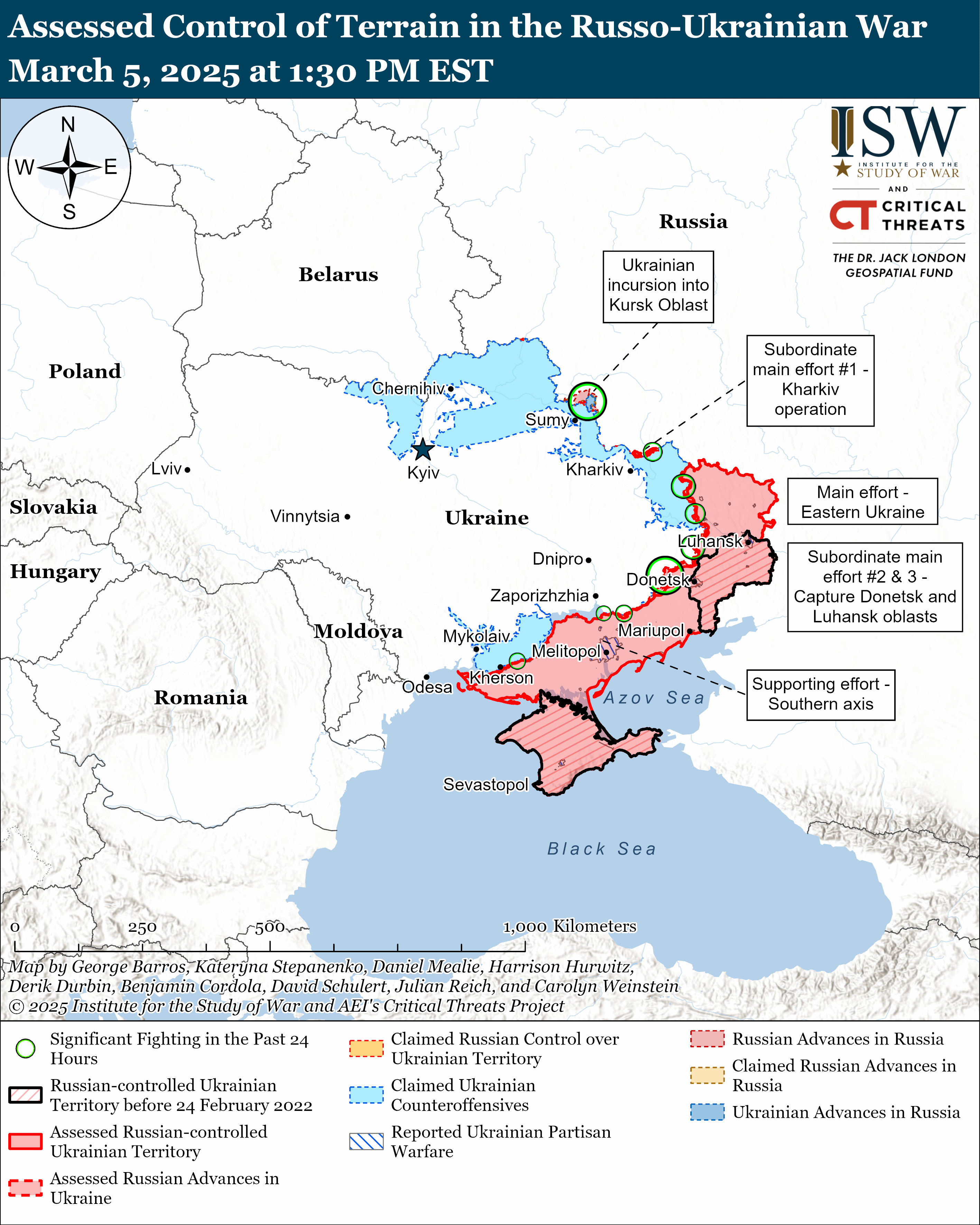
    MIL OSI Europe News

  • MIL-OSI Europe: MOTION FOR A RESOLUTION on the white paper on the future of European defence – B10-0150/2025

    Source: European Parliament

    B10‑0150/2025

    European Parliament resolution on the white paper on the future of European defence

    (2025/2565(RSP))

    The European Parliament,

     having regard to Rule 136(2) of its Rules of Procedure,

    A. whereas the EU is currently under attack, with hybrid incidents inside its borders, a large-scale war in its neighbourhood, and a realignment of global powers, all presenting real risks to the security of the EU and its citizens and requiring immediate, ambitious and decisive action;

    B. whereas the Commissioner for Defence and Space and the High Representative of the Union for Foreign Affairs and Security Policy are expected to present a white paper on the future of European defence on 19 March 2025, which should serve as a roadmap for such action;

    1. Urges the EU to act immediately to ensure its ability to protect its citizens, deter its enemies, support its allies and become a powerful defender of the rules-based international order and the principles of the European security architecture; urges the EU and its Member States to define a coherent, comprehensive and actionable strategy to achieve this; expects the Commission to present a proposal for such a strategy in its white paper on the future of European defence;

    2. Is firmly convinced that a united EU can overcome all the challenges it faces and become a global power for peace, security, human rights and sustainable development, but that this requires a strong EU budget or additional European financial instruments, a reliable and sovereign industrial basis, a full spectrum of European military capabilities, including strategic enablers, and an integrated command allowing all national forces to act under a unified structure at the service of the EU, alone or in complementarity with other allied forces;

    3. Believes that the strategy must include a renewed threat assessment, reflecting the recent unprecedented changes in the EU’s geopolitical context, a plan for supporting Ukraine against Russia’s war of aggression, as a key action to defend the EU’s values and protect its citizens and territory, a roadmap to close the capability gap, restore deterrence and enable autonomous EU action, and a plan to finance such vital transformations in the EU’s capacity to act;

    4. Stresses its firm commitment to continued close cooperation with NATO to reinforce deterrence, collective defence and interoperability; calls nonetheless for the development of a fully-capable European Pillar of NATO able to act autonomously whenever necessary;

    Assessing our threats and challenges

    5. Is convinced that the EU needs to define its foreign policy goals and strategic defence doctrine, identifying the most pressing challenges, systemic threats and rival actors, and to shape its defence strategy accordingly;

    6. Strongly believes that Europe is today facing the most profound military threat to its territorial integrity since the Second World War; believes that Russia and its allies are currently the most significant threat to our security and that of EU candidate countries and partners, and reiterates its condemnation in the strongest terms of Russia’s unprovoked, illegal and unjustified war of aggression against Ukraine; notes, however, that the instability in our southern neighbourhood, the rise in Chinese military power, the increased aggressiveness of some middle powers and the behaviour of the Trump administration, which appears ready to jeopardise transatlantic cooperation on common security and make a deal with the Russian aggressor at the expense of Ukrainian and European security, which are one and the same, must also be fully taken into consideration;

    7. Highlights the fact that on assessments by several European intelligence services, Russia will be ready to attack EU territory within 3 to 10 years, particularly if there is a ceasefire in its aggression against Ukraine that does not lead to a just and lasting peace; notes with deep concern that the Russian armed forces have grown in size and gained valuable battlefield experience, unlike any European forces with the exception of those of Ukraine, aims to have a 1.5 million-strong military by 2026 and has significantly ramped up its armaments production, making it an extremely worrisome threat for the EU’s security and for peace in Europe and globally;

    8. Strongly condemns Russia’s escalating hybrid warfare tactics within the EU and its neighbourhood, which encompass both non-physical and physical actions, including attacks on critical infrastructure and disruption of elections; highlights that Russia’s strategic doctrine includes significant conventional conflict in its conception and execution of hybrid war and conceives hybrid wars as the main line of future military development, rather than a temporary phenomenon; calls for the EU to immediately and significantly step up its ability to defend, attribute and punish hybrid warfare waged within its territory and that of candidate countries;

    9. Condemns all countries that are providing military equipment, financial support or any other form of assistance to Russia, thereby enabling and intensifying its ongoing aggression; warns of the very serious risks resulting from a widening of the Russian war of aggression against Ukraine; is deeply concerned that the involvement of Iran and North Korea will provide them with important lessons to modernise their military capabilities, and may accelerate their paths towards nuclearisation;

    10. Reaffirms its grave concerns about China’s increasing military investments and capabilities; expresses serious concerns about the renewed Chinese and Russian commitment to further strengthen their military ties and condemns China’s supplying of components and equipment to Moscow’s military industry;

    11. Notes with concern the increase in both intra and inter-state conflicts in the EU’s wider neighbourhood, in part driven by the hegemonic ambitions of several middle powers, the presence of aggressive non-state actors and by the fragility of several states; also notes that this leads to clear threats to the EU’s security, namely by fostering terrorism and increasing the destabilisation of populations, often forcing their displacement;

    12. Is deeply concerned by the recent actions of the Trump administration, which distance it from the values that have been at the core of its relationship with the EU, namely democracy, the rule of law, freedom of speech and support for the rules-based international order; regrets, in this regard, the votes of the US Government, aligned with the Russian Government, in the UN General Assembly and the UN Security Council on resolutions about the third anniversary of Russia’s war of aggression, as well as the unilateral decision to end Russia’s international isolation and to propose a normalisation of relations between them; strongly condemns any attempt to blame Ukraine, the victim, for the actions of the aggressor, Russia; urges the US Government to maintain maximum pressure on Russia until the latter agrees to a just and lasting peace for Ukraine; rejects any attempt by the US Government to impose a new security architecture on the EU and its Member States, and reiterates that any negotiation of such a security architecture must take place with the EU at the table; is deeply concerned by the actions of the US Government towards NATO and the doubts raised regarding the United States’ commitment to the security of the European continent; supports the peace process for Ukraine launched by European leaders, together with Ukraine, on 2 March 2025 in London, which seeks a just and lasting peace for Ukraine, and must be based on full respect for Ukraine’s independence, sovereignty and territorial integrity, the principles of international law, accountability for Russia’s war crimes and crime of aggression, Russian payments for the massive damage caused in Ukraine and credible security guarantees for Ukraine;

    13. Concurs with the assessment of the Strategic Compass that the EU is surrounded by instability and conflicts, but notes that in the meantime the situation has changed dramatically; believes that, altogether, these developments produce an encirclement of Europe that reduces its scope for the pursuit of democratically defined and autonomous interests and values, and that this requires an immediate response; recognises the evolving nature of global security threats and therefore calls for the EU to conduct more frequent threat assessments, as they are the precondition for a realistic and successful planning of capabilities and operations;

    Supporting Ukraine

    14. Urges the EU and its Member States, together with international partners and NATO allies, to immediately increase their military support to Ukraine in order to assist it in exercising its legitimate right to self-defence against the Russian war of aggression according to Article 51 of the UN Charter; calls, in this regard, for the swift adoption of the next military aid package, which should be the largest to date and reflect the level of ambition this juncture calls for; calls on the Member States, international partners and NATO allies to lift all restrictions on the use of Western weapons systems delivered to Ukraine against military targets in Russian territory; calls for a significant increase in the financing of military support to Ukraine; calls on the Member States, together with their G7 partners, to immediately seize all frozen Russian assets in order to maintain and step up the EU’s response to Ukraine’s military needs;

    15. Urges the Member States to immediately engage in joint procurement of additional capabilities, in particular ammunition for air defence and artillery, as well as any capabilities in which US assistance has played a key role thus far; further urges them to plan in advance for a possible sudden stop in US military assistance;

    16. Welcomes the continued support for the Ukrainian Armed Forces through the EU Military Assistance Mission in support of Ukraine, which has already trained more than 60 000 Ukrainian troops, and calls on the mission to continue training as many troops as possible; stresses the importance of specific training modules aimed at developing the capacities of existing and future officers of the Ukrainian Armed Forces across all levels and in accordance with their needs; emphasises that the mission should also act as a platform for the exchange of best practices that would ensure that European forces also benefit from the lessons learnt on the battlefield by the Ukrainian Armed Forces; calls on the Member States to further expand training operations for the Ukrainian Armed Forces, including training operations in Ukrainian territory;

    17. Insists on the paramount importance of cooperation with, and the integration of, the Ukrainian defence industry into the EU’s defence technological and industrial base (EDTIB), which offers clear advantages for both sides, and calls for speedier integration of the Ukrainian defence industry; recalls the importance of the European Defence Industry Programme (EDIP) to that effect, and highlights the urgency of properly financing EDIPs Ukraine Support Instrument, which is currently not budgeted; calls on the Commission to include Ukraine and its defence industry in all its defence industrial programmes;

    18. Praises the ‘Danish Model’ for support to Ukraine, which consists of procuring defence capabilities produced directly in Ukraine; urges the EU and its Member States to strongly support this model and to make full use of its potential, as there is an underutilisation of Ukraine’s defence industrial capacity, estimated at around 50 %, and it brings many advantages to both sides, such as cheaper equipment, speedier and safer logistics as well as greater ease of training and maintenance;

    19. Calls for the EU and its Member States to actively work towards maintaining and achieving the broadest possible international support for Ukraine and identifying a peaceful solution to the war that must be based on full respect for Ukraine’s independence, sovereignty and territorial integrity, the principles of international law, accountability for Russia’s war crimes and the crime of aggression, and Russian payments for the massive damage caused in Ukraine; urges the EU and its Member States to participate in establishing robust future security guarantees for Ukraine;

    Closing the capabilities gap and restoring deterrence

    20. Strongly believes that strengthening Europe’s security and defence requires not just a simple increase in ambition and action, but a complete overhaul of the way we act and invest in our security and defence, such that from now on we plan, innovate, develop, purchase, maintain and deploy capabilities together, in a coordinated and integrated fashion, while making full use of the complementary competences of all actors in Europe, including NATO;

    21. Calls on the Commission to come up with a complete programme for defence, including against hybrid attacks, ensuring that planning, research, development, procurement and management of capabilities are all done through a European lens, and that all EU funds are used as a stimulus to joint EU action, instead of perpetuating the present state of market fragmentation, divergent and incompatible capabilities, and superfluous and wasteful investments; considers EDIP to be a good step forward and as such calls for its swift adoption;

    22. Recognises that the starting point must be a realistic assessment of the current capabilities and capability gap; calls on the Commission, with the support of the European Defence Agency and in cooperation with NATO, to identify critical defence capability gaps and shortfalls in the EU, in particular for strategic enablers, where the Member States have fallen behind and become dependent on non-European allies; furthermore, calls on the Commission to transform the capability gaps into clear industrial targets that can be the object of planning and programming and benefit from an industrial policy;

    23. Declares the EDTIB to be a strategic asset of the EU, and as such considers that the Commission should be tasked with its mapping and monitoring, so as to safeguard the EU’s strengths, reduce its vulnerabilities, avoid crises, and provide it with an effective and efficient industrial policy; calls on the Commission to draw on the EU Military Committee’s expertise in the definition of defence industries’ priorities and the formulation of defence initiatives in order to ensure alignment between industrial capabilities and military needs; recalls the importance of ensuring that the EDTIB is present in all Member States, distributing the burden and the benefits equitably, and preventing its disruption by a targeted attack on a particular area;

    24. Strongly believes that EU support for the production and procurement of defence products should focus on stimulating the EDTIB, increasing production volumes and ensuring the development of native European solutions for key capabilities, in particular for domains of action where we have so far relied on support from allies, and thus be oriented towards EU-based companies; rejects a scenario in which EU funds contribute to perpetuating or deepening dependences on non-European actors, whether for production of capabilities or their deployment; notes with concern that the vast majority of EU defence investment is diverted to defence industry players outside the EU; highlights that our investments should also contribute to bringing our European allies closer together, first and foremost Ukraine, but also Norway and the UK, finding synergies between complementary industrial strengths and bolstering the interoperability of our fighting forces; states, however, that joining common projects in defence and security requires a steadfast commitment to the EU’s values and norms and demands that any industrial partnerships with non-EU allies include strong safeguards on technology transfer and design authority, ensuring that we do not face restrictions on the use of the capabilities acquired; highlights that EU funds will provide opportunities for the defence industry, but also require a commitment to give priority to orders linked to ensuring European security and defence, in particular in times of crisis;

    25. Urges the Member States to radically change the way they procure defence products, choosing common procurement by default, and to consider tasking the Commission with undertaking joint procurement on their behalf; considers that all products procured in the EU, particularly those supported by EU funds, must respect strong safeguards on technology transfer and design authority;

    26. Welcomes all measures that allow a faster and more effective ramp-up of production of defence products in Europe, in particular those that are most needed for a land war; calls for a change in paradigm from a ‘flow’ approach to a ‘stock’ approach, with stock piles of materiel ready for a sustained increase in demand; notes, in this regard, the advantages offered by mechanisms such as advance purchase agreements, the establishment of ‘ever-warm’ facilities and the creation of defence readiness pools; calls on the Commission to support the Member States in developing wartime economic cooperation contingency plans with close partners to prepare for mutual support in the case of large-scale security crises involving them directly, and to deepen wartime economic dialogues with European and global partners;

    27. Highlights that the EDTIB cannot thrive without a true single market for defence; emphasises, in this regard, the need for an effective regulatory framework aimed at encouraging innovation and cross-border cooperation in production, procurement and investment; insists on the need to remove barriers to market entry for defence products across the EU and calls on the Commission to act upon the results of the reviews of the Directives on the transfer of defence-related products[1] and defence procurement[2], considering the obstacles and costs imposed by the current fragmented framework for certification of defence products; calls on the Commission to propose a regulation for common rules on the certification of defence products and the creation of a European defence certification authority; underlines at the same time the importance of maintaining fruitful competition between different undertakings in the single market for defence; calls on the Commission to propose a regulation on the standardisation of defence products with binding industrial standards, taking advantage of the lessons learnt from the implementation of NATO defence standards;

    28. Stresses the need for greater transparency and convergence at the national and European levels on arms exports; points out the need for the Member States to respect the EU Common Position on Arms Exports, while acknowledging their competences in their defence acquisition policies;

    29. Underlines the importance of Permanent Structured Cooperation (PESCO) in improving and harmonising the EU’s defence capabilities; reiterates its regret that Member States continue to not make full use of the PESCO framework; reiterates its call on the Vice-President of the Commission / High Representative of the Union for Foreign Affairs and Security Policy and the Member States, and with the involvement of the Commission, to assess projects and their potential regularly and comprehensively with a view to streamlining the current set of projects to a small set of priority projects; believes that priority projects must focus on reducing our dependencies regarding strategic enablers, such as battlefield command and control (C2), aerial and satellite intelligence, surveillance and recognition, satellite communication, air defence and suppression of enemy air defences, military mobility, strategic and tactical air transport and aerial refuelling, missile and deep strike capabilities, drone and anti-drone technologies, combat engineering and wet-gap crossing, and airborne electronic attack; believes that these could be European Defence Projects of Common Interest (EDPCI); regrets that Parliament is not in a position to properly scrutinise PESCO projects and calls for a change of paradigm for the governance of EDPCIs, such that Parliament is adequately involved; reiterates its call on the Member States to provide an implementation report on PESCO projects to Parliament at least twice a year;

    30. Calls on the Commission to propose an EU drones package, focusing on drone and anti-drone systems and auxiliary capabilities, containing plans and funds to stimulate research and development, which should learn from the Ukrainian experience and be open to the participation of Ukraine’s highly innovative companies, as well as an industrial programme dedicated to the joint development, production and procurement of drones and anti-drone systems, and a regulation on the use of drones in civilian and military contexts;

    31. Calls on the Commission to step up the ambition of the European Defence Fund, both quantitatively and qualitatively, and to better align its work programme with the capability planning exercises; recalls that the EU’s investment in defence research and innovation is much lower than that of its industrial competitors; considers that part of the investment from the European Defence Fund (EDF) should be designed to foster partnerships between academia, ministries of defence and the defence industry, and to the creation of dedicated research centres for defence; highlights the importance of promoting the participation of the most innovative high-tech companies from the civilian sector in the EDF;

    32. Recalls that the EDTIB is currently facing a shortage of skilled workers, and calls on the Commission and the Member States to develop a strategy to train, upskill and reskill workers; considers that funding from defence programmes must be paired with requirements regarding benefits for workers and communities where the investments are located, making the European defence industry a source of high-quality jobs and earning the EDTIB broad support from the population;

    33. Calls for the EU and its Member States to quickly improve the state of military mobility and logistics, removing all unnecessary obstacles that slow down the speed at which the EU can react to threats and deploy its forces;

    34. Calls for the EU to develop a comprehensive set of instruments to detect, prevent and react to hybrid attacks and threats and protect the Union’s citizens and assets, including critical infrastructure, but also democratic institutions and processes; reiterates its call on the Member States, the European External Action Service and the Commission to consider the creation of a well-resourced and independent structure tasked with identifying, analysing and documenting foreign information manipulation and interference (FIMI) threats against the EU as a whole to increase situational awareness and threat intelligence sharing, and develop attribution capabilities and countermeasures in relation to FIMI;

    35. Stresses the importance of enhanced intelligence sharing and information exchange among the Member States and EU institutions, including Parliament, to improve situational awareness and to be able to better anticipate and counter threats to collective security and define common lines of action under the common security and defence policy (CSDP), particularly in the area of crisis management; calls on the Member States to use the EU Intelligence Analysis Centre (EU INTCEN) as an effective intelligence-sharing body to share intelligence securely, formulate a common strategic culture and provide strategic information to better anticipate and respond to crises within and outside the EU; reiterates its call for the deployment of intelligence-gathering capacities in all CSDP missions and operations, which would provide information to the EU INTCEN, EU military staff, the EU’s Military Planning and Conduct Capability (MPCC) and the Civilian Planning and Conduct Capability;

    36. Welcomes the Niinistö report and its recommendations for strengthening Europe’s civilian and military preparedness and resilience; supports the adoption of a whole-of-society approach to resilience, involving the active engagement of the EU institutions, the Member States, civil society and individual citizens in strengthening the Union’s security framework; urges the EU to increase the alignment of existing EU instruments and policies, as well as that between EU and national policies, pioneering a ‘preparedness in all policies’ approach to security and defence, ensuring they do not generate contradictory obligations or jeopardise overall defence objectives, especially during a security crisis; expects the upcoming EU strategy on preparedness to offer details of the implementation of the report;

    Enabling autonomous EU action

    37. Recalls that the Strategic Compass provides the EU and its Member States with a framework for strengthening the EU’s security and defence and for advancing towards a common forward-looking strategic culture; reiterates that the Strategic Compass’s ambitious aims and milestones can only be achieved with the corresponding political will, adequate financial contributions and openness to cooperation where necessary; calls for the Member States to take all the necessary steps and decisions and fully implement the Strategic Compass; reiterates its call to strengthen the EU-s MPCC, establishing it as the preferred command and control structure for EU military operations and providing it with adequate premises, staff, enhanced command and control, and effective communication and information systems for all CSDP missions and operations, including those of the Rapid Deployment Capacity; insists that the Rapid Deployment Capacity must achieve full operational capability in the first half of 2025 at the latest, with at least 5 000 troops; calls on the Member States to urgently pursue a more ambitious pace and scale of command integration and joint operational capability, with the goal of enabling the EU to conduct large-scale operations independently, without reliance on non-EU countries for any capability, including strategic enablers; stresses that the EU and its Member States cannot develop consistent foreign and defence policies without strong support for democratic and agile structures and decision-making processes; underlines that further institutional discussions on removing the unanimity requirement to enhance cooperation should be explored;

    38. Underlines that in the current geopolitical context, the need for continuing to operationalise Article 42(7) of the Treaty on European Union (TEU) on mutual assistance, ensuring solidarity among Member States, especially those whose geographical position leaves them directly exposed to imminent threats and challenges, regardless of whether or not they are NATO members, is of utmost importance; calls on the Vice-President of the Commission / High Representative of the Union for Foreign Affairs and Security Policy to present concrete steps towards developing a true EU solidarity policy, including by clarifying the practical arrangements in the event of a Member State triggering Article 42(7) TEU;

    39. Notes that EU candidate countries are frequently the target of destabilisation campaigns, and thus calls for the EU to ensure them greater support, in order to preserve stability and security and increase defence cooperation, especially in the fight against disinformation and hybrid warfare; is concerned that otherwise it will act as an invitation to Russia to invade them before they finally join the EU;

    40. Reiterates the importance of EU-NATO cooperation, as NATO remains, for those states that are members of it, an important pillar of their collective defence, such that EU-NATO cooperation should continue, in particular in areas such as information exchange, planning, military mobility and exchange of best practices; highlights that all EU-NATO cooperation must be mutually beneficial and inclusive and respect the EU’s capacity to act autonomously; remains concerned, in this respect, that Türkiye, a NATO member and EU candidate country, excludes Cyprus from cooperation with NATO, hampering an enhanced relationship between the EU and NATO;

    41. Underlines the need for a strong EU defence pillar within NATO, able to act autonomously from, and in complementarity with, NATO, turning the transatlantic alliance into a more equal partnership, and granting the necessary security guarantees to the EU, its Member States and whoever else they deem it necessary to extend them to;

    42. Considers it essential to formalise a security and defence partnership with the United Kingdom as a means of strengthening European security and the European pillar of NATO, in particular in the context of Russia’s war of aggression against Ukraine; underlines, in this regard, the importance of closer cooperation on information and intelligence sharing, military mobility, security and defence initiatives, crisis management, cyber defence, hybrid threats, FIMI and in jointly addressing shared threats;

    43. Calls on the Commission and the Member States to ensure that all instruments of external action, including development aid and cooperation, are aligned with the EU’s security objectives, fostering resilient societies by promoting inclusive economic growth, good governance and human rights; emphasises the crucial role that diplomacy and development cooperation play alongside military efforts in ensuring long-term international security; underscores that sustainable peace cannot be achieved through military measures alone, but requires comprehensive strategies that address the root causes of instability, such as poverty, inequality, governance failures and climate change;

    Financing our security and defence

    44. Considers that, in order to be able to protect its citizens, deter its enemies, support its allies and become a powerful actor in the defence of a rules-based international order, the EU requires an immediate, substantial and sustained investment in security and defence, in particular at EU level, using a mix of public and private funds and incentivising better spending and better collective action; calls for the EU and the Member States to urgently agree on concrete financial solutions to finance security and defence-related investments; welcomes the ReArmEU initiative by the Commission as an important first step towards swift action;

    45. Recalls that the Commission has estimated the funding needed at EUR 500 billion over the next 10 years (2025-2034), including EUR 400 billion to strengthen Member States’ defence capabilities and EUR 100 billion to support Ukraine; notes higher estimates, such as a Bruegel study referring to EUR 250 billion annually in the event that the United States withdraws its military presence from Europe; highlights that the cost of isolated action is much higher than the cost of joint action, and that the EU and its Member states can also increase their preparedness by making current investment more efficient and coordinated; highlights that the cost of non-preparedness and the consequent loss of autonomy and potential military defeat is much higher than the cost of acting decisively now;

    46. Strongly supports increased investments in our security and defence to ensure that the EU and its Member States are able to face all types of threats, from hybrid to conventional, and establish strong deterrence, while reducing dependences; notes that insecurity, social exclusion and poverty are persistently weaponised by our enemies, as they make large swaths of people more vulnerable to hostile propaganda and anti-democratic narratives; demands therefore that the increased investments in our security and defence come on top of the important investments in social cohesion and welfare, and not instead of them; calls instead for a comprehensive EU investment strategy, based on a permanent fiscal capacity that addresses both vulnerabilities in military capabilities and in the social fabric, empowering us to fight all threats to our values, social model, security and defence; underlines that this pressing investment requires raising public financial resources quickly and in substantial volumes and that this should be based on the principle of social solidarity and a fair redistribution of wealth within our European societies; calls therefore on the Commission to propose new own resources and taxes on the stakeholders benefiting from the current economic and security situation, notably through windfall profits, in order to ensure a fair and sustainable contribution to our collective resilience; recalls that investing in security and defence brings many additional benefits for European society besides greater security and autonomy, and contributes to the desire to make the EU’s economy more competitive;

    47. Warns that simply increasing national defence spending without addressing coordination issues, redundant efforts, and misaligned strategies could be counterproductive as it may exacerbate force integration challenges and drive up procurement costs for all Member States by intensifying competition between them; is therefore concerned by the Commission’s proposals in ReArmEU to activate the escape clause of the Stability and Growth Pact for defence investments, which would change the fiscal rules without creating more fiscal space and without accompanying it with proposals for increased coordinated or joint spending; recalls that any exemption should take into account the need to avoid moral hazard and avoid rewarding countries with long-standing inadequacies in their security and defence spending; demands that the Commission and the Member States design any exemptions for defence spending ramp-up in a way that incentivises coordinated spending and ensures the definition of such investments takes into account all threats, including hybrid, and the need to improve military mobility, resilience and security of communications and the availability of skilled workers;

    48. Calls therefore for the bulk of the effort to serve EU-level action; regrets that the Commission’s ReArmEU initiative is mostly based on national expenditure; furthermore calls for the EU and its Member States to give prominent coordination roles to the Commission and the European Defence Agency in new financing instruments, which should be coupled with a complete programme for defence, including against hybrid attacks, ensuring that planning, development, procurement and management of capabilities is done together, in groupings of significant numbers of Member States, and often with the Commission and the European Defence Agency acting on their behalf;

    49. Recognises that the present multiannual financial framework (MFF) is unable to provide sufficient resources for security and defence, and rejects any increases in security and defence spending in the present and future MFFs at the expense of cohesion policy funds, as proposed by the Commission in its ReArmEU initiative; calls on the Commission and the Member States to adapt the cohesion policy funds to a new geopolitical reality, shifting from a reactive, crisis-response stance to a more proactive policy focused on resilience; underlines that the EU budget alone cannot fill the defence spending gap, but has an important role to play; calls for additional EU-wide and European solutions to bridge the gap until the next MFF; highlights the importance of future MFFs in transforming the current immediate increases in security and defence into structural and sustainable EU-level efforts to ensure the EU’s security and defence;

    50. Notes the proposals to make use of readily available sources of capital to finance security and defence, namely the unspent funds of NextGenerationEU and potential financial lines from the European Stability Mechanism, similar to the programme put together during the response to the COVID-19 pandemic; believes that these options could be explored, but would fall short of the needs estimated by the Commission;

    51. Calls therefore on the Commission to raise common debt to provide the Union with the fiscal capacity to borrow in exceptional and crises situations, present and future, taking into account the experience and lessons learnt from NextGenerationEU, as we are now experiencing a pressing need to boost security and defence to protect the EU’s citizens, restore deterrence and support our allies, first and foremost Ukraine; notes additional ideas to create a rearmament bank or a special purpose vehicle with pooled national guarantees to ensure Member States have easier access to markets; underlines that the meaningful involvement of Parliament as one arm of the budgetary authority in the governance of future EU defence spending is a sine qua non; reiterates that the governance of whatever instrument is used should be such that it gives rise to a European defence programme that uses the funds to solve coordination problems in planning, developing, procuring, maintaining and deploying capabilities, reduces dependencies from non-European countries, supports the EDTIB and ultimately enables the EU and its close allies to act autonomously and in a coordinated manner;

    52. Recognises the importance of mobilising private capital into security and defence; recalls, however, that, as governments remain the sole procurers of military capabilities, private capital will not replace public capital in the security and defence sector; calls on the Commission and the European Investment Bank (EIB) to consider an investment guarantee programme, similar to InvestEU, to assist in this effort; calls on the EIB to re-evaluate the list of excluded activities, to adjust its lending policy to increase the volume of available funding in the field of security and defence, and to investigate earmarked debt issuance for funding security and defence projects; calls for more consistent support for companies by reducing unnecessary administrative burdens and simplifying procedures, in particular by increasing information-sharing between public authorities, upholding the once-only principle and making full use of digital technologies; calls for the EU to start preparing emergency procedures for projects established in response to major crises or wars;


    °

    ° °

    53. Instructs its President to forward this resolution to the European Council, the Council, the Vice-President of the Commission / High Representative of the Union for Foreign Affairs and Security Policy, the President of the Commission and competent Commissioners, the EU security and defence agencies, and the governments and parliaments of the Member States.


    MIL OSI Europe News

  • MIL-OSI Europe: MOTION FOR A RESOLUTION on the white paper on the future of European defence – B10-0145/2025

    Source: European Parliament

    B10‑0145/2025

    European Parliament resolution on the white paper on the future of European defence

    (2025/2565(RSP))

    The European Parliament,

     having regard to Articles 24(1), 42, 43 and 45 of the Treaty on European Union (TEU),

     having regard to the national security strategies of the Member States,

     having regard to Regulation (EU) 2023/1525 of the European Parliament and of the Council of 20 July 2023 on supporting ammunition production (ASAP)[1],

     having regard to Regulation (EU) 2023/2418 of the European Parliament and of the Council of 18 October 2023 on establishing an instrument for the reinforcement of the European defence industry through common procurement (EDIRPA)[2],

     having regard to the Strategic Compass for Security and Defence,

     having regard to Commission Recommendation (EU) 2023/2113 of 3 October 2023 on critical technology areas for the EU’s economic security for further risk assessment with Member States[3],

     having regard to the joint communication from the Commission and the High Representative of the Union for Foreign Affairs and Security Policy of 10 March 2023 entitled ‘European Union Space Strategy for Security and Defence’ (JOIN(2023)0009),

     having regard to the report by Sauli Niinistö of 30 October 2024 entitled ‘Safer Together – Strengthening Europe’s Civilian and Military Preparedness and Readiness’,

     having regard to the report by Mario Draghi of 9 September 2024 entitled ‘The future of European competitiveness’,

     having regard to Special Report 04/2025 of the European Court of Auditors of 5 February 2025 entitled ‘EU military mobility: Full speed not reached due to design weaknesses and obstacles en route’,

     having regard to the three Joint Declarations on EU-NATO cooperation signed on 8 July 2016, 10 July 2018 and 10 January 2023,

     having regard to the Madrid Summit Declaration adopted by the NATO heads of state and government at the North Atlantic Council meeting in Madrid on 29 June 2022,

     having regard to the NATO 2022 Strategic Concept and the 2023 NATO Summit in Vilnius,

     having regard to the opening remarks made by US Secretary of Defense Pete Hegseth in Brussels at the Ukraine Defense Contact Group meeting of 12 February 2025,

     having regard to the talks held in Riyadh, Saudi Arabia, on 18 February 2025 between US and Russian negotiators,

     having regard to Rule 136(2) of its Rules of Procedure,

    A. whereas the Commission announced the release of a white paper on the future of European defence, co-authored by Commissioner for Defence and Space Andrius Kubilius and Vice-President of the Commission / High Representative of the Union for Foreign Affairs and Security Policy Kaja Kallas, by 19 March 2025; whereas this document will be the first of its kind produced by the EU and emulates similar documents published by Member States;

    B. whereas the white paper must respect the limits set by the TEU in terms of foreign policy and defence and it must take note of the international context and the strategic environment in order to provide a perspective and proposals that will enable the strengthening of Europe’s security;

    C. whereas the white paper on the future of European defence will provide the framework for future defence projects and regulations and will be a key point of reference for incoming negotiations on the next multiannual financial framework;

    D. whereas the international order is profoundly destabilised and is restructuring; whereas the international rules and organisations that emerged from the Second World War and then from the end of the Cold War are in crisis; whereas international relations are increasingly characterised by uncertainty, and the tendency to resort to armed force to resolve international disagreements is growing;

    E. whereas Russia’s large-scale invasion of Ukraine in 2022 has profoundly destabilised the security order in Europe; whereas this unilateral aggression has accelerated the integration of Sweden and Finland into NATO; whereas this war has considerably deteriorated relations and exchanges between Russia and the countries of Europe;

    F. whereas the war in Ukraine has highlighted the chronic underinvestment by Member States in their armed forces; whereas the stocks of arms and ammunition in Europe are largely insufficient; whereas certain critical military capabilities are not possessed by any European military; whereas the infrastructure that is essential for the security and proper functioning of European societies and economies is vulnerable; whereas some Member States have encountered significant difficulties in deploying and transporting military resources within the EU itself;

    G. whereas the relations between the United States and China will structure, to a large extent, the future of international relations in the 21st century; whereas the United States no longer has the will to maintain the same level of military involvement in Europe; whereas the US Secretary of Defence has expressly spoken of a ‘division of labour’ between allies, with the Americans prioritising the Pacific region, while emphasising that Europeans must be responsible for the defence of Europe and must increase their capabilities accordingly;

    H. whereas the European Union is composed of 27 sovereign states, with each having the sovereign right to determine its own foreign and defence policy;

    I. whereas it is in the interest of the Member States to adopt a common policy on matters of common interest to them; whereas enhanced cooperation on defence matters is mutually beneficial if it improves the security of the Member States against any direct aggression or if it increases their capacity to respond to any threat to their territorial integrity, sovereignty or prosperity;

    J. whereas the European defence market is too fragmented; whereas for a single armament type, there can be several or even dozens of different varieties of equipment in the EU, representing a collective loss of resources because of duplication, and preventing economies of scale;

    K. whereas Article 24(1) TEU stipulates that decisions related to the common foreign and security policy and the common security and defence policy are taken unanimously by the Council; whereas Article 24(1) TEU also stipulates that the EU cannot adopt legislative acts on foreign affairs and defence; whereas Article 36 TEU stipulates that Parliament has a consultative role;

    L. whereas, on 30 January 2025, 19 EU countries sent a letter to the European Investment Bank calling for it ‘to play an even stronger role in providing investment funding and leveraging private funding for the security and defence sector’;

    1. Stresses that diplomatic and defence policy issues are primarily the prerogative of the Member States, which remain the most relevant and the only legitimate political units in the international order; respects the right of every Member State to determine its own foreign and security policy; insists on the importance of maintaining the principle of unanimity in the Council for all decisions related to the common foreign and security policy and the common security and defence policy;

    2. Underlines that strengthening the Member States’ militaries, based on threats, is necessary to compensate for the security deficit caused by decades of underinvestment and the gradual disengagement of the United States; emphasises that this rearmament policy led by the Member States must not aim to escalate tensions in Europe, but rather aim to reach a level that will deter any hostile actions, establish a continental balance and maintain peace;

    3. Notes that the United States remains the EU’s main military ally and is an essential member of NATO; insists that, irrespective of the political orientation of the White House, US foreign policy will continue to make the Asia-Pacific region a geostrategic priority and to perceive Europe as a secondary theatre; stresses that Member States must no longer subcontract their security and defence to other powers;

    4. Underlines that NATO is a crucial partner in the collective defence architecture in Europe; takes note of the ambition of building a European pillar within NATO; considers that a greater contribution from European states within the alliance must, for the sake of consistency, result in a more balanced distribution of command posts in favour of European military personnel; stresses that stepping up the defence capabilities of European states can go hand in hand with the deepening of EU-NATO cooperation with due respect for the neutrality of the EU Member States that are not part of the NATO alliance;

    5. Highlights the need to overcome the fragmentation of the EU’s internal market for defence products through greater cooperation between Member States and to collectively work on the interoperability of military capabilities; calls on the Member States to encourage cross-border defence procurement in order to strengthen intra-European industrial cooperation and achieve the objective of European strategic autonomy;

    6. Stresses that greater cooperation in the defence sector must actively involve defence SMEs, not only large defence actors, and serve as a platform for SME development, providing greater opportunities for them to contribute to the EU’s technological base and enhance European strategic autonomy;

    7. Notes, however, that the strengthening of the European defence industry must not result in the attribution of new competences to the Commission, which would be in breach of the Treaties and would undermine the sovereignty of Member States without increasing efficacy; reiterates, therefore, that decision-making regarding military requirements, the prioritisation of capability development and the purchase of defence products should remain within the remit of Member States; underlines that, despite the need for increased cooperation in the field of defence, such as on joint procurement and joint production, the Member States must retain full sovereignty over their arms export policies;

    8. Calls for the co-legislators to establish the principle of a European preference in future European defence regulations, including in the European defence industrial plan, so that European funds benefit European companies on European soil, which will enhance our industrial defence capabilities and will reduce our dependences on non-EU countries; recalls that this regulation must in no way restrict the freedom of the Member States to determine their own arms procurement and import/export policy;

    9. Calls on the NATO-affiliated Member States to cooperate in order to identify and fill critical capability gaps by building on and complementing NATO’s Defence Planning Process targets, which are required for sustained full-spectrum operations, including space systems and launchers, long-range missiles, integrated air and missile defence systems, ammunition production, artificial intelligence (AI), maritime drone capability, command and control capability, electronic warfare systems and air-to-air refuelling capacity;

    10. Calls on non-neutral Member States to adequately invest in their infrastructure to guarantee optimal military mobility across Europe in line with their respective military agreements and alliances;

    11. Emphasises the importance for European states to have the capacity and a framework to act independently within the NATO framework where possible and outside of the NATO framework if necessary; points out that the Rapid Deployment Capacity, an inter-state initiative under the control of the Member States, only comprised of 5 000 troops, does not allow for the possibility of engagement in a context of intense combat; reaffirms that it is in the Member States’ interest to strengthen their ability to fight together by conducting joint training and exercises that enhance the interoperability of the various national instruments;

    12. Expresses the need to consider European defence in all its dimensions, including land, air, naval, space and cybernetic; notes that contemporary strategic issues have a growing naval dimension and that the powers challenging the international order are deploying naval capabilities at regional level; stresses the importance of European cooperation at sea and welcomes the current progress of Operation Aspides, the lessons from which must be put to good use; stresses that European strategic autonomy has a maritime and naval dimension, and that European navies should cooperate more closely to ensure the protection of their maritime areas, as well as their underwater or surface infrastructure; stresses that the principle of freedom of navigation must be protected and calls, therefore, for an increase in surveillance and the ability to react quickly in the event of threats arising in European seas;

    13. Notes that space will increasingly become a key aspect of power and sovereignty; underlines that the Member States must maintain and guarantee their independent access to space; welcomes the launch of Ariane 6, but is concerned by the accumulated delays; draws attention to the need for the space sector to be industrialised to increase the number of rockets launched to put European satellites into orbit; welcomes the launch of the European satellite constellation IRIS², which should enable secure communications solutions for sovereign and military issues by 2030; emphasises the need for the future EU space law not to hamper the competitiveness of European companies and to apply constraints on non-EU players; notes the importance of Galileo, Europe’s global navigation satellite system;

    14. Underlines that, unlike the United States (Buy America Act) and China (Government Procurement Law), the European space industry is not shielded from international competition and does not benefit from a European preference; calls on the Member States and the Commission to implement a European preference in space industry procurement and promote innovation, research and development; stresses that the European Space Agency’s principle of geographical return hampers innovative European SMEs and start-ups from receiving adequate funding and contributes to the fragmentation of the European space industry; calls on the European Space Agency to abolish the principle of geographical return and adopt an innovative and efficiency-based approach to space procurement rather than a geographically driven one;

    15. Underlines that the strengthening of European defence capabilities will require significant financing; calls on banks, pension funds, insurance companies and other actors in the Member States to simplify and significantly increase the financing of projects and companies operating in the field of defence; insists that in the context of the urgent need to increase defence spending, financial institutions should not consider investments in the field of defence to be damaging for their reputation; rejects, however, the idea of issuing joint debt, such as defence Eurobonds, to support defence spending;

    16. Notes the growing importance of AI in warfare, particularly in the development of drones and autonomous weapons; recognises the indigenous AI advances in warfare made by Ukraine and Israel, demonstrating that the Member States are equally capable of developing similar capabilities; highlights that recent breakthroughs, such as the one made by the Chinese AI computing start-up DeepSeek, demonstrate the feasibility of cost-competitive AI systems; calls on the Member States to accelerate the development of AI capabilities; underlines that the AI Act[4], set to be implemented in 2025, creates uncertainty regarding the production and development of dual-use AI systems, an ambiguity that could hinder the development of essential defence industry products; calls for this issue to be clarified to ensure that the European defence industry is not disadvantaged compared to its American and Chinese counterparts;

    17. Stresses that a strong civilian manufacturing industry, particularly in the steelmaking, automotive, aerospace and shipbuilding sectors, is essential for deterrence and for maintaining long-term military and industrial capabilities in the event of conflict; notes the decline of these industries since the 1990s, especially in western Europe; calls on the Commission and the Council to safeguard the manufacturing industries that are vital to national security, including through the use of tariffs; urges the Commission to revise the Green Deal and revoke the net-neutrality goal, since it destroys manufacturing competitiveness and is responsible for the deindustrialisation of key industries in the Member States; stresses that the relocation of essential manufacturing industries to non-EU countries is counterproductive both in terms of global environmental impact and national security;

    18. Expresses concern over the growing dependence of the European defence industry on foreign components, particularly rare earths and semiconductors, which are essential for advanced military technologies; calls on the Member States to intensify efforts to develop domestic rare earth mining and semiconductor manufacturing capabilities to safeguard the autonomy of the European defence industry in the event of conflicts or severe supply chain disruptions;

    19. Welcomes the Dutch Government’s decision to tighten export control rules on advanced lithography systems, which are essential for semiconductor production; stresses that EU technological transfers to non-EU countries have significantly contributed to the rise of foreign competition and the deindustrialisation of Europe; encourages the Member States to impose stricter export controls on critical dual-use technologies and manufacturing products;

    20. Notes that 80 % of EU data is stored and managed in the United States and other non-EU countries, where it may be subject to extraterritorial intervention under the Foreign Intelligence Surveillance Act, the CLOUD Act, or China’s Data Security Law; stresses that protecting critical industrial and government data is essential to ensuring national security; welcomes the Swiss Government Cloud programme as a step toward cloud sovereignty and encourages the Member States to implement similar initiatives; encourages the Member States to strengthen regulations on telecommunications service providers, which are predominantly based outside Europe, creating a significant dependence on external actors;

    21. Instructs its President to forward this resolution to Commissioner for Defence and Space Andrius Kubilius, Vice-President of the Commission / High Representative of the Union for Foreign Affairs and Security Policy Kaja Kallas, the Commission, the European Council and the parliaments and governments of the Member States.


    MIL OSI Europe News

  • MIL-OSI Europe: MOTION FOR A RESOLUTION on the white paper on the future of European defence – B10-0144/2025

    Source: European Parliament

    B10‑0144/2025

    European Parliament resolution on the white paper on the future of European defence

    (2025/2565(RSP))

    The European Parliament,

     having regard to the common security and defence policy (CSDP) and the common foreign and security policy (CFSP) of the EU,

     having regard to the Treaty on European Union, and in particular Article 42 thereof,

     having regard to Title III, Article 3 of the Protocol on the concerns of the Irish people on the Treaty of Lisbon,

     having regard to the announced publication of the white paper on the future of European defence on 19 March 2025,

     having regard to the Helsinki Accords,

     having regard to the various European defence projects of recent years,

     having regard to Rule 136(2) of its Rules of Procedure,

    A. whereas, in line with the Treaties, the CSDP is part of the CFSP and is considered a policy framework through which Member States can develop a European strategic culture of security and defence, address conflicts and crises together, protect the Union and its citizens and strengthen international peace and security;

    B. whereas Article 42(2) TEU states that the Union’s CSDP must be compatible with the common security and defence policy established within the framework of the North Atlantic Treaty Organisation (NATO), under the North Atlantic Treaty;

    C. whereas NATO is largely dominated by the United States, and NATO membership entails a mandatory complementarity and compatibility of European weapons systems with US systems, hence impeding the strategic and operational autonomy of Member States and other European countries;

    D. whereas at the NATO Summit in Bucharest in 2008, the US Government pushed for Ukrainian NATO membership against the opinion of several Member States; whereas following the Russian invasion, the United States pushed EU Member States to systematically increase the quantity and quality of arms deliveries to Ukraine;

    E. whereas different Member States have different military and security policies, including policies of military neutrality;

    F. whereas the United States saw windfall benefits from the Ukraine war through an increase of US shale gas exports to the European Union; whereas the US Government now unjustly wishes to control Ukrainian mineral resources and negotiate an end to the war in Ukraine with Putin, without involving Ukraine and the European Union;

    G. whereas unlike nuclear weapon states such as India and the People’s Republic of China, NATO and Russia refuse to commit to a ‘no first use’ policy, whereby they would formally refrain from using nuclear weapons, except in retaliation to an attack by an enemy power using weapons of mass destruction;

    H. whereas the US Government has launched a high number of wars and military operations that violated international law and the principles of the Charter of the United Nations; whereas, in light of 2024 advisory opinions of the International Court of Justice, the United States’ ongoing military support for Israel might make it complicit in genocide and illegal occupation; whereas the participation of EU Member States in violations of international law, including in wars of aggression and military invasions contrary to international law against countries such as the former Yugoslavia, Afghanistan, Iraq and Libya, have undermined global adherence to the principles of international law;

    I. whereas the United States has forwardly deployed new B61-12 gravity bombs on the territory of EU Member States, increasing the risk that these Member States will fall victim to preventive or retaliatory strikes related to US foreign policy;

    J. whereas Russia’s repeated acts of war and aggression, starting with the war against Georgia in 2008, the annexation of Crimea in 2014 and the ongoing illegal war of aggression against Ukraine, as well as an increasing number of acts of sabotage on critical infrastructure, have been factors in creating and exacerbating tensions;

    K. whereas Article 41(2) TEU prohibits charging expenditure arising from operations with military or defence implications to the Union budget;

    L. whereas the Commission has nevertheless launched several European defence projects over the last few years, including the European Defence Industrial Development Programme (EDIDP), the Preparatory Action on Defence Research (PADR), the European Defence Fund (EDF), the European Defence Industry Reinforcement through common Procurement Act (EDIRPA), the Act in Support of Ammunition Production (ASAP) and, most recently, the European Defence Industrial Strategy (EDIS) and the European Defence Industry Programme (EDIP);

    M. whereas according to 2023 Stockholm International Peace Research Institute figures, EU Member States, together with the United Kingdom, already spend more nominally on defence than all other countries in the world combined, with the exception of the United States;

    N. whereas in April 2021, the Commission estimated that increased cooperation between Member States in the field of security and defence could save between EUR 25 billion and EUR 100 billion every year;

    O. whereas the Commission’s Directorate-General for International Partnerships (DG INTPA) is planning to shut down more than four out of five of its hubs worldwide, reducing its diplomatic presence from around 100 delegations to 18 hubs;

    P. whereas in 2024, EU leaders agreed to cut EUR 2 billion from the EU’s external action budget in the multiannual financial framework for 2021-2027; whereas several Member States, such as France and Belgium, have also made cuts and reforms to their diplomacy services;

    Q. whereas Commission President Ursula von der Leyen has proposed a new common instrument to boost military spending across the EU to unlock up to EUR 800 billion of additional defence spending over the coming years;

    R. whereas even the military spending of the United States, which maintains over 700 military installations in over 70 countries, does not exceed 3.46 % of its GDP;

    S. whereas, nevertheless, the US Government, certain Member States and NATO and Commission officials are pushing for a further massive increase in defence expenditure, from an average of 1.9 % of GDP to 5 %;

    T. whereas even the military-oriented Niinisto Report, entitled ‘Safer Together –Strengthening Europe’s Civilian and Military Preparedness and Readiness’ highlights the fact that threats to the security of European citizens, including increasingly frequent and intense extreme weather events, such as megadroughts, floods and heatwaves, and the risk of new pandemics, would require massive investment in public services;

    U. whereas while the Draghi report on the future of European competitiveness highlights the need for massive investment in a variety of sectors, including energy, pharmaceuticals and transport, the Commission has placed seven Member States under an excessive deficit procedure, pushing for harsh austerity and structural reforms in social and public expenses;

    V. whereas a further massive increase in military expenditure will instead lead to cuts in public services, and in social, climate and environmental spending throughout Europe, endangering the social and human security of European citizens;

    W. whereas the Commission is nonetheless considering the suspension of economic governance rules for military expenses;

    X. whereas the Commission has failed to present a fully autonomous assessment of European defence needs and priorities, relying instead on NATO assessments of critical gaps in defence capability;

    Y. whereas Türkiye, a NATO member, illegally occupies 37 % of Cyprus, an EU Member State;

    Z. whereas in international relations theory the ‘security dilemma’ refers to a phenomenon whereby actions, such as arms procurement, taken by a state actor to increase its own security provokes reactions from other states, such as increased arms procurement or preventive attacks, that ultimately lead to a decrease rather than an increase in the original state’s security;

    AA. whereas the 1975 Final Act of the Conference on Security and Cooperation in Europe, concluded in Helsinki between the United States, Canada, the Soviet Union and all of the countries of Europe, except Albania, played an important role in easing tensions between East and West during the Cold War;

    AB. whereas the Cold War collective security acquis has been systematically undermined by the United States’ withdrawal from the Anti-Ballistic Missile Treaty (ABM), the Intermediate-Range Nuclear Forces Treaty (INF) and the Open Skies Treaty, systematically followed by Russian withdrawals, and by the Russian withdrawal from the Treaty on Conventional Armed Forces in Europe and from the Comprehensive Nuclear Test Ban Treaty;

    AC. whereas a new European security architecture will have to apply the principles of peaceful coexistence between countries with different political systems and offer security guarantees to all parties in order to avoid Europe being divided once again into two diametrically opposed blocs;

    Towards a European collective security architecture

    1. Recalls that the Treaties consider the CSDP part of the CFSP; asks, therefore, that any defence initiative at EU level be subordinated to a clear foreign and security policy and strategy for peace on the European continent;

    2. Rejects the militarisation of the EU and any belligerent objectives of the CSDP;

    3. Notes with great concern the diminishing respect for international and humanitarian law by parties all around the world, with Israel, Russia and the United States being flagrant examples; reiterates the need for European independence in shaping foreign and defence policy;

    4. Considers that in light of the United States’ past and ongoing violations of international law and the negative impact of US military interventions on neighbouring regions, the foreign, security and defence policy of the Union and Member States can no longer be aligned with the framework of the North Atlantic Treaty Organisation (NATO); calls, therefore, on the European Council to start the process of revising the EU Treaties to remove this requirement from the TEU;

    5. Recalls that NATO and the EU are distinct organisations which serve very different purposes and whose membership is not even identical; regrets the conflation of NATO, a military alliance, with the EU;

    6. Is extremely worried by the fact that there are still more than 13 000 nuclear weapons scattered around the world, many of which can be deployed within minutes and could cause the end of humankind; notes with concern that despite a stated commitment to the Non-Proliferation Treaty, NATO’s nuclear member states invested USD 271 billion in nuclear weapons modernisation and maintenance between 2019 and 2023, while in 2023 China and Russia were the second and third largest spenders, with budgets of USD 11.9 billion and USD 8.3 billion respectively;

    7. Believes that NATO’s refusal to commit to a ‘no first use’ policy on nuclear weapons and the forward deployment of US nuclear weapons in Europe increases the risk of Europe becoming a target of nuclear strikes; demands, therefore, the withdrawal of US nuclear weapons from the territory of Member States; is deeply concerned about nuclear threats to European security, including veiled warnings about the use of tactical nuclear weapons and Russia’s lowering of its threshold for using nuclear weapons;

    8. Urges the Member States to work on a new long-term collective security architecture for Europe inspired by the principles of the Helsinki process and including the concept of mutual security guarantees; notes that a fundamental aspect of such an approach is respect for the sovereignty and territorial integrity of all nations and a commitment to international law;

    9. Insists that a new European security architecture apply the principles of peaceful coexistence between countries with different political systems, and offer security guarantees to all parties;

    10. Calls on the Commission, in light of multiple threats ranging from climate-related catastrophes to pandemics, to abandon a narrow focus on military security and develop a policy centred on human security as defined in United Nations General Assembly resolution 66/290, which states that ‘human security is an approach to assist Member States in identifying and addressing widespread and cross-cutting challenges to the survival, livelihood and dignity of their people’ and calls for ‘people-centred, comprehensive, context-specific and prevention-oriented responses that strengthen the protection and empowerment of all people’;

    11. Calls on the Commission and Member States to seek inspiration from Austria, which has enshrined neutrality in its constitution, committing not to join military alliances and not to permit the establishment of any foreign military bases on its territory;

    12. Calls on the Commission and Member States to also look to the example set by Ireland, with its tradition of military neutrality; recalls that this tradition includes an active approach towards peace support operations and crisis management, contributions to conflict resolution and peacebuilding, work for human rights and development, and efforts to promote disarmament and the elimination of weapons of mass destruction;

    13. Regrets the attacks on Irish neutrality and recalls that the people of Ireland were guaranteed continued military neutrality, underpinned by a commitment to only undertake operations with a United Nations mandate, ahead of their ratification of the Lisbon Treaty;

    14. Reiterates its call on Türkiye, a NATO member, to withdraw its troops from Cyprus, an EU Member State, and to work constructively towards finding a viable and peaceful solution based on the relevant UN resolutions;

    15. Calls for unanimity voting on defence issues to be maintained within the Council to promote consensus-based solutions that foster much-needed unity;

    Diplomacy as the cornerstone of European security

    16. Believes that diplomacy should remain a cornerstone of EU foreign policy;

    17. Recalls that conflict prevention is paramount to any security and defence strategy; underlines the fact that diplomacy prevents and ends wars, and that every euro invested in conflict prevention saves around EUR 16 later on;

    18. Believes that, given the deteriorating security situation on several fronts and increasing geopolitical tensions, preventive diplomacy requires sustained and enhanced attention; calls, therefore, on the Commission and Member States to immediately reverse the cutbacks made to diplomatic representations;

    19. Believes that its systematic alignment with US foreign policy, most recently with regard to Israeli war crimes, ethnic cleansing and genocidal practices against Palestinians, has dramatically reduced the EU’s global diplomatic credibility and therefore worsened its security situation;

    20. Recalls that the participation of EU Member States in illegal military operations and the support for violations of international law abroad gravely endangers the security of EU citizens; urges the Commission and Member States to explore a non-aligned foreign and security policy stance based on the principles of the UN Charter, including peaceful conflict resolution, diplomacy and multilateralism;

    21. Believes that Europe has much to gain from diversifying its relations and maintaining diplomatic connections with as many countries as possible around the world;

    Arms control, disarmament and non-proliferation

    22. Is deeply concerned that world military expenditure continues to rise to new record levels; highlights the fact that an arms race will not create security for European citizens, but instead, in line with the security dilemma, heighten the risk of violent conflict; calls on the Commission to actively promote new arms control treaties;

    23. Recalls that the EU strategy against the proliferation of weapons of mass destruction made non-proliferation a central goal of the EU’s CFSP, stating that ‘our objective is to prevent, deter, halt and, where possible, eliminate proliferation of concern worldwide’; calls, therefore, on Member States to sign and ratify the Treaty on the Prohibition of Nuclear Weapons;

    24. Notes that arms exports, also of small and light weapons, can fuel conflict and global terrorism and destabilise entire regions, states and societies, thereby thwarting sustainable development and crisis management efforts; calls on the Commission and Member States to strictly apply Council Common Position 2008/944/CFSP of 8 December 2008 defining common rules governing control of exports of military technology and equipment in order to avoid a worsening of the security situation in the EU’s immediate neighbourhood;

    25. Calls for the creation of a Directorate-General for Disarmament and Arms Control at the Commission;

    26. Demands an immediate arms embargo against Israel and any other country directly or indirectly involved in armed conflict, except in the case of those that are the victim of invasion by others, in order to stop EU complicity in war crimes, ethnic cleansing and genocidal practices, whether perpetrated by Israel or any other country; calls on the Commission and Member States to base their foreign and security policy on the principles of the Charter of the United Nations and international law;

    Defence expenditure

    27. Urges the Commission and Member States to offer full transparency and a critical audit of the current defence expenditure within the Union, detailing why it estimates that European countries would be unable to defend themselves with budgets already vastly superior to those of most of the world’s countries;

    28. Notes with concern that the Commission has presented a new EUR 150 billion common defence fund; believes that an increase in defence spending is not the solution to finding a lasting peace and that cuts in the EU structural funds should not be used for this purpose, given how vital these funds are to the development of local communities across the EU;

    29. Notes that the share of GDP is not an adequate measure for the efficiency and impact of defence expenditure; calls on the Commission and Member States not to enter an arms race through a massive increase in defence budgets at the expense of both human and social security;

    30. Regards the NATO demand for complementarity and compatibility of European weapons systems with US systems as incompatible with European strategic autonomy; regrets that the Commission and the Council have failed to present a detailed assessment of European critical defence capability gaps; calls on both institutions to present such an assessment, including specific priorities, before considering increased defence expenditure; recalls that these should focus on defensive tasks, not on building capacities for military intervention all over the world;

    31. Recalls Commission estimates that increased cooperation between Member States in the field of security and defence could save up to EUR 100 billion every year; calls, in this regard, for inspiration to be drawn from existing intra-European cooperation structures, such as BACA, the Belgian-Dutch Naval cooperation BeNeSam and the Nordic Defence Cooperation, including Denmark, Finland, Iceland, Norway and Sweden, which have increased the efficiency of the participating nations’ national defence, and to explore common synergies and facilitate efficient common solutions;

    32. Considers that the military cooperation commitments that may be assumed in collective security organisations should be considered in light of strict respect for the UN Charter;

    33. Rejects the allocation of appropriations on the EU budget to the EU’s militarisation; calls for the reallocation of EU budget funds earmarked for the ongoing militarisation of the EU and its programmes to respond to the social and economic needs of citizens and promote cohesion between Member States;

    34. Highlights the fact that there can be neither autonomy nor security without digital sovereignty; calls on the Commission to prioritise the development of a democratic, public-led digital stack that includes digital infrastructure as a service, and universal platforms, such as search engines and foundation AI models, governed by new public institutions with public and civil society representation;

    35. Calls for heightened cooperation between Member States on sectoral issues of critical infrastructure protection, such as submarine cables;

    Defence industry

    36. Recalls that over the past three years, the EU has adopted a number of new initiatives on defence, and that the new Commissioner for Defence and Space believes that an additional investment of EUR 500 billion is needed in the coming decade, though other sources speak of EUR 700 billion;

    37. Recalls that the previous EU programmes have been implemented with a lack of transparency with regard to the application of EU ethical guidelines, and that decision-making is extremely opaque and heavily influenced by arms industry lobbyists;

    38. States that without ethics in investment choices, the EU will contribute to the creation of a more dangerous and lawless world order, where imperialist powers can disregard international law without facing consequences, while countries of the global south are exploited for their resources;

    39. Calls, in addition, for the EU to adopt a policy of transparent, mission-oriented military spending, with more conscious spending at the service of a defined foreign policy to ensure greater efficiency;

    40. Recalls that under Article 41(2) TEU expenditure arising from operations having military or defence implications may not be charged to the EU budget; calls for a strict application of this article; demands a retroactive review of corresponding defence funds and budget lines and for their termination where needed;

    41. Expresses deep concern about the increased subsidies and public support for the military-industrial complex amid record total global military expenditure of USD 2 443 billion in 2023, making 2023 the ninth consecutive year in which military expenditure increased;

    42. Demands that European public money go to European companies and emphasises that public European companies should, by definition, remain in Europe, while private companies can relocate their activities if they so wish;

    43. Observes that leading arms companies have benefited shamelessly from the war in Ukraine; notes that Lockheed Martin alone distributed USD 6.8 billion of cash to shareholders in dividends and share repurchases in 2024; demands that windfall profits be taxed to finance climate adaptation, public health and housing, which are also components of a broader understanding of security;

    44. Considers that the use of public money should systematically correspond to a proportional public return on investment and not finance corporate profit;

    45. Stresses that focusing our resources, notably research and development spending, on the military sector will also slow down the development of other strategic industries with civilian purposes, such as renewable energy or pharmaceuticals;

    46. Adds that military spending does not address any of the major social or environmental challenges, and that, worse still, it reinforces polluting and energy-consuming industrial models, thus increasing pressure on resources and the climate, particularly critical materials;

    47. Believes that a massive increase in purchases of US-made goods would not only be detrimental to the European economy but would equally prolong Europe’s military dependence on the United States, while creating new industrial and technological constraints;

    48. Demands that the defence industry continue to be excluded from qualifying for the sustainability criteria with regard to investment;

    49. Calls for EIB financing to be strictly limited to civilian projects, excluding dual-use items;

    Reprioritising public services and social spending

    50. Is deeply concerned that militarisation, and specifically the ReArm Europe plan, is being used to further attack public services across the EU, which are already facing the suffocating effects of austerity measures imposed by the Commission;

    51. Is appalled by the fact that the Commission is willing to bend fiscal rules such as the Stability and Growth Pact to finance military spending, but considers it impossible to raise spending to fund crumbling public services and support social and economic upward convergence in Member States;

    52. Firmly insists that health, education, green mobility, climate adaptation, climate mitigation, biodiversity, food security and digital transition are elements of human security and should be considered priorities that require investments rather than budgetary cuts;

    53. Calls, in line with the concept of human security, for a reprioritisation of public services and social welfare spending, as well as for investments in fighting climate change, as imperative prerequisites for guaranteeing that people live in a safe and secure environment;

    °

    ° °

    54. Instructs its President to forward this resolution to the Council, the Commission, the Vice-President of the Commission / High Representative of the Union for Foreign Affairs and Security Policy and the European External Action Service.


    MIL OSI Europe News

  • MIL-OSI Europe: Written question – IMEC’s strategic importance and development challenges – E-000876/2025

    Source: European Parliament

    Question for written answer  E-000876/2025
    to the Commission
    Rule 144
    Afroditi Latinopoulou (PfE)

    The India-Middle East-Europe Economic Corridor (IMEC) is a critical initiative to strengthen geo-economic connectivity between Asia, the Middle East and Europe, with the aim of diversifying trade routes and reducing the EU’s dependence on China and the Suez Canal.

    The agreement to implement the corridor was signed at the G20 in 2023, with the participation of the EU and the US. The IMEC acts as a Western counterweight to China’s Belt and Road Initiative, which creates problems for European countries hosting Chinese strategic investments. The European Union must address the critical issues of political stability and financing for part of the project in order to ensure its sustainability.

    In view of the above:

    • 1.What measures has the Commission put in place to accelerate the implementation of the IMEC and the necessary port/railway infrastructure?
    • 2.How does the Commission plan to protect the corridor from external crises, such as the blockade of the Red Sea by the Houthis?
    • 3.Given the potential of the BRI in Europe and the strategic importance of the IMEC, how will the Commission ensure that the corridor does not become economically dependent on third powers, such as Türkiye or Iran, thereby strengthening the interests of European states?

    Submitted: 27.2.2025

    Last updated: 6 March 2025

    MIL OSI Europe News

  • MIL-OSI USA: 03.06.2025 Senate Approves Coast Guard Authorization Act Unanimously

    US Senate News:

    Source: United States Senator for Texas Ted Cruz

    WASHINGTON, D.C. – U.S. Senator Ted Cruz (R-Texas), Chairman of the Senate Commerce Committee, Ranking Member Maria Cantwell (D-Wash.), and Sens. Dan Sullivan (R-Alaska) and Tammy Baldwin (D-Wis.), introduced the Coast Guard Authorization Act of 2025, and it passed the Senate by unanimous consent. The bipartisan measure was agreed to at the end of last year by leaders of both the Senate Commerce Committee and House Transportation and Infrastructure Committee, but the session ended before final passage could occur. The bill authorizes funding to strengthen the Coast Guard’s ability to protect our borders, facilitate maritime commerce, unleash American energy, bolster deterrence efforts, and improve support for Coast Guard personnel and their families.
    Sen. Cruz delivered the following remarks on the Senate floor regarding the Coast Guard Authorization Act of 2025:
    “The United States Coast Guard is essential to protecting our Nation’s maritime borders from threats like illegal drugs, illegal immigration, and transnational crime.  The Coast Guard saves American lives and ensures that commerce flows smoothly at our ports.  
    “The Coast Guard Authorization Act of 2025 is bipartisan legislation that Senator Cantwell and I negotiated and agreed to with House Transportation & Infrastructure Committee Chairman Sam Graves and Ranking Member Rick Larsen.  It authorizes funding to bolster the Coast Guard’s critical missions of border security, facilitating maritime commerce, and enforcing the rule of law in domestic and international waters.
    “I want to draw attention to several key provisions in this bill.
    “Last year, the Coast Guard seized over 106 metric tons of cocaine.  Unfortunately, cartels are now using technology like miniature, remote-controlled drone ships to smuggle drugs across our maritime border.  Without this legislation, the Coast Guard would remain unable to prosecute criminals using these remote-controlled, autonomous vessels.  
    “The Coast Guard Authorization Act of 2025 expands the Coast Guard’s and Customs and Border Protection’s use of cutting-edge tools like Tactical Maritime Surveillance Systems, which are blimp-based radar systems—to find and interdict drug runners, poachers, and human traffickers at the Texas-Mexico border in the Gulf of America, in San Diego, Key West, and San Juan Puerto Rico.  
    “I ask my colleagues to stand with me and support President Trump’s vision of protecting our borders from drugs and illegal immigrants and of building ships to revitalize the Coast Guard’s fleet.  I urge my colleagues to support the Coast Guard Authorization Act.”
    Read the bill text here.
    BACKGROUND
    The Coast Guard Authorization Act of 2025 makes several enhancements to the Coast Guard’s operations by:

    Expanding efforts to interdict and prosecute illicit drug trafficking. The Maritime Drug Law Enforcement Act will now ensure the United States can prosecute drug traffickers who utilize remote-controlled or autonomous vessels to smuggle illegal narcotics.

    Protecting personnel from illicit drug exposure. All Coast Guard installations will be required to maintain a supply of medication to treat opioid overdoses, including fentanyl.

    Upgrading icebreaker fleet. The bill directs the Coast Guard to establish a replacement plan for aging icebreaking tug fleets and expedite the delivery of new icebreakers.

    Addressing grossly negligent operations of vessels. With the steady rise of vessel traffic on U.S. waterways, individuals who operate a vessel in a grossly negligent manner and cause serious bodily injury will be held accountable with appropriate criminal penalties.

    Mapping Arctic maritime routes. The Arctic Circle has strategic economic and military significance for the United States. This provision would promote American interests in the region and improve emergency response capabilities and infrastructure needed to support vessel traffic.

    Increasing the Coast Guard’s deterrence capabilities. With increased instances of illegal fishing operations and illicit drug trafficking in the South China Sea, it is critical that the United States Coast Guard and Taiwan Coast Guard Administration conduct joint and integrated maritime operational and leadership training to combat violations of maritime law and threats to our national security.

    Improving the livelihoods of Coast Guard families. The Coast Guard will grant a cash allowance to pregnant officers to purchase maternity-related uniform items, allow the Coast Guard to acquire more housing, and identify Coast Guard duty locations in which there is a misalignment between the basic allowance for housing and prevailing housing costs.

    Refining procedures to prevent and respond to sexual assaults. The Coast Guard will establish confidential reporting for sexual harassment, strengthen protective orders for victims, and provide access to the Department of Defense’s Defense Sexual Assault Incident Database. The bill also overhauls the transfer process for victims and allows victims of sex-related offenses to request temporary separation.

    Requiring the Coast Guard Academy to study its safety infrastructure. The Coast Guard Academy will be required to modify policy related to sexual assault matters, install electronic locking mechanisms to secure cadet rooms and common spaces, and update the Academy’s Board of Visitors to ensure better Congressional oversight and engagement.

    Adding units to the Coast Guard’s Junior Reserve Officers’ Training Corps (JROTC) program. The bill will increase the number of units from 14 to 20 to better recruit and retain a robust and well-qualified Coast Guard officer corps.

    With about 2,000 Coast Guard personnel stationed in Texas, the Service’s men and women have contributed significantly to Texas’s border security and economy. The Coast Guard Authorization Act of 2025 will specifically help Texans by:

    Allowing the Coast Guard to use a proven, performance-driven approach for inspecting foreign flag tank vessels.An overwhelming majority of the Coast Guard’s gas carrier compliance exams are conducted in Texas. Performance-driven examinations will allow the Coast Guard to work more efficiently and advance President Trump’s direction to ‘Unleash American Energy.’

    Establishing safety zones for space activities and offshore energy development activities. Texas is home to a robust commercial space and energy industry, and this authority allows the Coast Guard to establish safety zones in support of space launches and recovery, as well as offshore energy development activities, ensuring more job growth and greater energy security.

    Streamlining the process of data sharing between the Coast Guard and U.S. Customs and Border Protection.Tactical maritime surveillance systems (TMSS) at the Coast Guard Station on South Padre Island will be used for the purposes of data integration and information sharing with U.S. Customs and Border Protection to aid in the detection and interdiction of illegal aliens and fish poachers.

    Upgrading Coast Guard facilities to support border security operations and future aviation missions. The bill specifically requires studies on improving Texas-based Coast Guard Stations on South Padre Island, Port Aransas, and Port O’Connor, as well as the Coast Guard Air Station in Corpus Christi.

    MIL OSI USA News

  • MIL-OSI USA: Kaine & Cornyn Introduce Bipartisan Bill to Strengthen Security, Combat Corruption and Drug Trafficking in the Caribbean

    US Senate News:

    Source: United States Senator for Virginia Tim Kaine

    WASHINGTON, D.C. – Today, U.S. Senator Tim Kaine (D-VA), Ranking Member of the Senate Foreign Relations Subcommittee on the Western Hemisphere, and U.S. Senator John Cornyn (R-TX), a member of the Senate Foreign Relations Committee, introduced the Caribbean Basin Security Authorization Act, bipartisan legislation to improve security cooperation, combat drug trafficking, strengthen the rule of law, counter malign influence from China and Russia, and expand natural disaster resilience in the Caribbean region.

    “What happens in the Caribbean affects the security and economic prosperity of the United States,” said Kaine. “This bipartisan legislation is critical to promoting stability, countering China’s growing influence, and combating drug cartel activity in the region. Not only will I continue to urge the Administration to carry out the foreign assistance investments that Congress has previously voted to fund, I will continue to push for legislation like this one to work with our partners to protect our national security.”

    The Caribbean Basin Security Authorization Act would boost support for the Caribbean Basin Security Initiative (CBSI), a foreign assistance program that began in 2009 and includes Antigua and Barbuda, the Bahamas, Barbados, Dominica, the Dominican Republic, Grenada, Guyana, Jamaica, St. Kitts and Nevis, St. Lucia, St. Vincent and the Grenadines, Suriname, and Trinidad, and Tobago. Specifically, the legislation would:

    • Authorize funding between Fiscal Years 2025-2029 for CBSI to promote citizen safety, security, and rule of law; prioritize efforts to combat corruption; counter malign influence from the China, Russia, Iran, and other authoritarian regimes; and promote strategic engagement, including consultation with civil society and the private sector.
    • Require the Secretary of State, in consultation with the United States Agency for International Development (USAID), the U.S. International Development Finance Corporation, and the Inter-American Foundation, to promote efforts to improve disaster response and resilience.
    • Require the Secretary of State, in consultation with USAID, to submit an implementation plan for CBSI within 180 days of enactment.
    • Encourage increased law enforcement collaboration between CBSI beneficiaries and Haiti – a country that is on the brink of collapse.
    • Promote greater U.S. interagency cooperation in implementing CBSI.

    Full text of the bill is available here.

    MIL OSI USA News

  • MIL-OSI Canada: Premier announces new measures to defend B.C. from Trump tariffs

    Source: Government of Canada regional news

    Premier David Eby has announced new tariff-response measures with the intention of bringing forward legislation that will defend British Columbians, workers and businesses from U.S. President Donald J. Trump’s tariffs on Canadian goods and energy.

    “The White House started a trade war we didn’t want, and we must answer with strength,” Premier Eby said. “We are responding to this unprecedented attack with several targeted measures and in the coming weeks we will arm ourselves with even more tools as next steps to fend off a sustained economic aggression.”

    The B.C. government intends to introduce tariff-response legislation in the coming days that will give the Province new tools to defend B.C. jobs and businesses and respond swiftly and nimbly to emerging challenges brought on by Trump’s trade war. This would enable a range of responses, including the ability to remove interprovincial trade barriers, mandating that low-carbon fuels added to gasoline and diesel be produced in Canada, and allowing B.C. to apply tolls/fees to U.S. commercial vehicles using B.C. infrastructure to travel to Alaska.

    “The tariffs imposed by Trump are a profound mistake and are hurting families on both sides of the border,” Premier Eby said. “My team will continue to work hard every day to defend British Columbians through this and come out stronger on the other side. Every option is on the table.”

    The Province’s initial response to tariffs includes directing the BC Liquor Distribution Branch to immediately stop buying American liquor from “red” states and remove red-state brands from the shelves of public liquor stores. The B.C. government and Crown corporations have also been directed to buy Canadian goods and services first.

    The counter-measures are a first step and part of a Team Canada approach that includes 25% tariffs on $155 billion worth of imported U.S. products imposed by the federal government, as well as additional measures from other provinces and territories.

    First ministers have also agreed to take meaningful action to reduce barriers to internal trade and labour mobility by June 1, 2025. The B.C. government’s plan to fight back against the tariffs and defend British Columbians includes:

    1. responding to U.S. tariffs with tough counter-actions and outreach to American decision-makers;
    2. strengthening B.C.’s economy by expediting projects and supporting industry and workers; and
    3. diversifying trade markets for B.C. products so British Columbia is less reliant on U.S. markets and customers, including by breaking down domestic trade barriers.

    As part of this approach, B.C. is moving full steam ahead on new actions to seize economic opportunities and find new trade markets to reduce B.C.’s reliance on the U.S.

    The Province is accelerating approvals and permits on major projects that are ready to move forward to create good jobs and support B.C.’s economy in the face of tariffs. The initial list of projects is valued at $20 billion in investment and is expected to create 8,000 family-supporting jobs, especially in rural and remote communities.

    To support B.C.’s strong tariff response and ensure actions are swift, responsive and co-ordinated, Premier Eby has established a trade and economic security task force to bring together business, labour and Indigenous leadership. A new task force on agriculture and the food economy will help ensure B.C.’s food supply and food economy continue to grow in the face of tariffs, a B.C. softwood advisory council is developing a diplomatic and trade strategy to fight for B.C.’s interests in the ongoing softwood lumber dispute, and a new cabinet committee is co-ordinating the whole-of-government approach the Province is taking.

    Quick Facts:

    • Estimates indicate 25% tariffs on Canadian mineral exports will cost American companies more than US$11 billion and have a profound effect on the U.S. defence industry, energy production and manufacturing.  
    • The share of B.C.’s goods exports to the U.S. dropped to 52.8% in 2024, compared to 65.8% in 2000. At the same time, B.C. has expanded its trade relationships with key Asian markets, including China and South Korea.
    • In comparison, approximately 88% of Alberta’s goods exports and an average of 76.1% of Ontario and Quebec’s goods exports went to the U.S. in 2024. This places B.C. in a relatively better position than other provinces when it comes to mitigating the impacts of U.S. tariffs. However, the impact would still be significant.
    • Some sectors are more reliant on the U.S. for exports. For example, in 2024, B.C. exported all its natural gas and electricity and 74.8% of its softwood lumber to the U.S.
    • For goods coming into B.C., U.S. imports make up 34.5% of total incoming trade, including machinery and equipment, agriculture and food, as well as energy products

    Learn More:

    To learn more about B.C.’s response to unjustified U.S. tariffs, visit: https://www2.gov.bc.ca/gov/content/employment-business/tariffs

    To read the First Ministers March 5, 2025, statement on reducing interprovincial trade barriers, visit: https://www.pm.gc.ca/en/news/statements/2025/03/05/first-ministers-statement-eliminating-internal-trade-barriers

    MIL OSI Canada News

  • MIL-Evening Report: ‘Orgasms are a marvellous happiness’. Shere Hite gave voice to female sexuality in a landmark book – but the backlash was fierce

    Source: The Conversation (Au and NZ) – By Camilla Nelson, Associate Professor in Media and Journalism, University of Notre Dame Australia

    Owen Franken/Corbis via Getty Images

    In our feminist classics series we revisit influential works.


    Shere Hite’s The Hite Report was quickly dubbed a “sexual revolution in 600 pages”. It did something nobody had considered worth doing: investigating women’s sexuality by asking them to share their thoughts and feelings, then relaying those reflections to readers in women’s own words.

    This might not sound unusual today. But in 1976, it was incendiary.

    Based on a survey of 3,000 women distributed by the New York Chapter of the National Organisation for Women (the feminist group co-founded by Betty Friedan), more than 75% of the book comprises narrative responses to open ended survey questions.

    It includes a plethora of startlingly frank – for its time – and explicitly detailed opinions, anecdotes, complaints and criticisms about sex, masturbation and orgasm. The book is an extraordinarily rich cultural artefact in the archive of human intimacy.

    Unsurprisingly, the women who responded to Hite’s survey thoroughly enjoyed sex. “Orgasm is the ultimate pleasure – which women often deny themselves, but men never do,” claimed one. “Orgasms are a marvellous happiness”, added another. “Orgasm cancels out rage and longing for at least 48 hours,” said yet another.

    But it was the manner in which Hite’s respondents got their orgasms that made the book a scandal. “I think masturbation is essential to one’s health,” said one respondent. “[A]s I learned in my marriage – a partner is not always good sexually, though he may be wonderful in other ways.”

    Masturbation is better than “bad sex with an incompatible partner”, explained another respondent. “The only way I can have an orgasm is by masturbating,” said another.

    ‘A complex nature’

    The Hite Report did not attempt to define a sexual norm, or produce a representative survey sample, or pretend its data could be generalised to an entire population. But it did contain some statistical findings.

    The most significant of these – the source of the book’s notoriety – was that only 30% of women surveyed reported being able to regularly or reliably reach orgasm through heterosexual intercourse. And yet, 80% reported they could easily and regularly reach orgasm through clitoral stimulation, which was frequently obtained through masturbation, either alone, or with their partner.

    In her preface Hite argued that the canonical sexological works of the past 100 years – including the works of Sigmund Freud, Alfred Kinsey, and William Masters and Virginia Johnson – had constructed female sexuality “as essentially a response to male sexuality and intercourse”. She set out to demonstrate that “female sexuality might have a complex nature of its own”.

    Hite argued sex was a cultural institution, not a biological one. Historically, men had defined sex in terms of their own needs and preferences, then mandated their preferences as biological.

    Freud, for example, knew female orgasm could be reliably obtained through clitoral stimulation, but defined clitoral orgasm as an “immature orgasm” and orgasm arising from heterosexual intercourse as a “mature orgasm”. He then labelled women who could not achieve orgasm in the required way “frigid” and “hysterical”.

    The Hite Report is organised into eight chapters or themes, starting with “Masturbation”, followed by “Orgasm”, “Intercourse”, “Clitoral Stimulation”, “Lesbianism”, “Sexual Slavery”, “The Sexual Revolution” and “Older Women”. In a concluding chapter, Hite reflects on the issues raised by survey participants.

    In the chapter “Lesbianism”, a significant number of heterosexual-identified women confess same sex attraction, or else identify as bisexual. They also describe lesbian sexuality as “more variable”, and the “physical actions more mutual”.

    “The basic difference with a woman is that there’s no end,” claimed one respondent, “[…] it’s like a circle, it goes on and on.”

    “Lesbianism” sits in stark contrast to the chapter on “Sexual Slavery”, where Hite seeks to investigate why women pursue unequal sexual relationships, especially where respondents claim to receive little or no sexual pleasure.

    “Having a man love me and want to have sex with me is necessary to my happiness,” claimed one respondent. “Sex makes me feel I am a woman to my husband instead of just a live-in maid,” added another.

    “I’ve never heard a word of praise from my husband in 21 years except while having intercourse,” claimed yet another. “While I resent this, I still love him […] ”

    Wildly successful

    Many women applauded the book. Author Erica Jong, writing in The New York Times, called it a “revelation”. Others warned of a possible male backlash. “It seems that women are finally reporting the facts of their own sex,” wrote journalist Ellen Willis in the Washington Post, “and men are putting on the earmuffs of fear and retreating to deeper fantasies.”

    This backlash was not long in coming. Playboy apocryphally dubbed it “The Hate Report”, a label regularly recycled in media outlets around the world, including by female journalists. One male journalist, writing in the Miami Herald, argued women could not be regarded as truthful or reliable witnesses to their own lives. “What annoys me about The Hite Report,” he wrote, “is its smug assumption that just because women made these comments, they’re true”.

    Despite – or perhaps because of – this controversy, the book was wildly successful. It was translated into ten different languages – including French, Spanish, German, Italian, Hebrew and Japanese – and sold over 2 million copies within the first 12 months.

    It remains the 30th bestselling book of all time, with 50 million copies sold in 45 countries, including two recently translated editions in China, where it sparked conversations among intellectuals interested in formerly taboo western culture.

    Faking orgasms

    Born in smalltown Missouri, Hite gained a masters degree in social history and in 1967 moved to New York to enrol in a PhD program at Columbia University. She left when conservative faculty members refused to allow her to complete her dissertation on female sexuality. Hite worked as a model to pay her tuition fees. She joined the National Organisation for Women when they protested the sexism of the Olivetti advertising campaigns, after Hite was cast as an “Olivetti girl” for the typewriter company.

    Increasingly tagged as a “man-basher” after the publication of her book, Hite’s public persona was conventionally, almost theatrically feminine. She revelled in a contemporary Baroque aesthetic; a mirage of red lipstick, froufrou dresses, pancake-style makeup and tousled orange or platinum curls. And she spoke about sex in explicit detail, in a voice that was earnest, articulate and unembarrassed.

    Hite did not “discover” the clitoral orgasm. Instead, by centring women’s experiences, and taking their reflections seriously, her work threw into question centuries of sexological studies. These studies had either pathologised normal female sexual functioning or else insisted any pleasure women derived from sex had to be a by-product of conventional heterosexual intercourse.

    Even Masters and Johnson, who, in their reports from 1966 onwards, clinically proved all female orgasms were the result of clitoral stimulation, had insisted on the centrality of coitus.

    As Hite told television show host Geraldo in 1977,

    Masters and Johnson made a tremendous step forward in that they studied, and showed clinically, for the first time, that all orgasms are caused by clitoral stimulation, and we really have them to thank for that. However, when they described how it’s done – the thrusting of the penis causes the vaginal lips to move, which causes the skin that’s connected to the clitoris to move, which causes the glands to move over the clitoris, which supposedly gives you orgasm. But that doesn’t work for most women.

    And yet, although the participants in Hite’s study were overwhelmingly educated and politically progressive, many confessed they felt compelled to fake an orgasm during intercourse to please a man.

    “I ‘perform’ and boost his ego and confidence,” claimed one. “I do not like to think of myself as a performer but I feel judged and also judge myself when I don’t have an orgasm.” “[M]en do expect it, so I often force myself […],” said another.

    Participants also claimed how a woman was seen to orgasm mattered. “I don’t show the signs you’re supposed to,” worried one. “They think because I don’t pant, scream and claw I haven’t had one,” said another. “I used to go out of my way to offer all the mythical Hollywood signs,” revealed another.

    One participant even suggested the whole issue of sex was so politically fraught that, “Maybe sex would be better if we’d never heard of orgasm”.

    Respondents also told Hite the “sexual revolution” of the 1960s and 1970s had intensified, rather than reduced, gender prejudices and double standards.

    Sexual violence

    Another breathtaking aspect of the book is the way participants’ answers are shot through with sexual violence. On the issue of sexual coercion, for example, one participant replied, “I’m not supposed to say ‘no’ since I’m legally married”.

    On a question about the use of force in sex, another replied, “Only with my husband.” (In 1976, marital rape was legal and “acceptable” in most western nations.)

    Rape myths are also common. “I define as rape someone you don’t know who attacks you,” said one respondent. “I never defined it as […] someone you know. If you define rape that way, every woman has been raped over and over.”

    Another suggested rape wasn’t rape if a victim gave up fighting. “He really raped me, but not in the legal way. I couldn’t prevent him, in other words.”

    Hite identified toxic gender stereotypes as the major driver of sexual violence, especially the belief that “a man’s need for ‘sex’ is a strong and urgent ‘drive’” which women were obligated to satisfy. “Women aren’t always free to not have sex,” explained one respondent.

    Archival insights

    The Hite archive is housed in the Schlesinger Library of the Radcliffe Institute at Harvard University. It comprises over 250 filing boxes and folios, occupying more than 30 metres of shelf space. Most of the material relates to Hite’s public career as a sex researcher, with a small scattering of personal papers.

    I was at Harvard doing research for a book on Hite’s contemporary Andrea Dworkin. Although the two feminists exist as polar opposites in the public imagination, they thoroughly agreed with one another, and enjoyed a supportive working relationship. And so I wanted to take a look.

    Among the publishing agreements, speaking invitations, publicity material and the copies of the edited and revised questionnaires that formed the basis of the 1976 report – which are printed in vermillion – an occasional note flips out.

    One, a seemingly unpublished open letter titled “Dear Women”, bears the traces of the intense, frequently misogynistic and overtly hostile media scrutiny that marked Hite’s wild catapult to fame.

    “Sometimes I feel I am dying here in the midst of all this,” she writes, “without the support of anyone”.

    Another, scrawled in a flamboyant purple felt tip pen in the midst of her 1977 book tour of France, reads, “I know that I have done something good – but somehow I feel evil […] When did that start?”

    There are also letters from readers. One, sent from Milan in the wake of the controversy that accompanied the Italian edition of the book, bears the typewritten subject line “Personal”. It reads:

    Dear Ms Hite,
    I am 43 years old and have never written a fan letter in my life until today. But I feel a moral obligation to tell you that your ‘Report’ has rehabilitated me in my own eyes. After years of thinking there was something wrong with me, your book has shown me I’m normal.

    Hite’s “Dear Women” letter describes the extraordinary challenges, including the financial challenges, she faced both before and after the book was published.

    Macmillan, after purchasing the rights to the book, went cold on the project when the commissioning editor resigned or, as Hite phrases it, “quit/was fired depending on your point of view”. The publisher made no plan to promote the book and assigned a 22-year-old man to answer any media queries.

    Hite decided to step in, when, working in the publisher’s offices late one evening, she found a letter from her male publicist declining an invitation to discuss The Hite Report on TV as “he thought my book/subject might be too ‘ticklish’ for television”.

    Hite’s contract with Macmillan gave her little or no control over international editions of the book (and severely limited the income she could take from royalties, before it was ruled unconscionable by a court). In 1978, she “flew around the world twice” attempting to stop the book from being sensationalised.

    In France, the publisher had promised Hite a plain print cover, but was overruled by an all-male advertising department who “printed a cover with a nude woman”. In the second printing, the publisher agreed to revert to plain text.

    In Israel, entire sections of the first edition text were censored. Protests by local journalists led to the publisher engaging an Israeli feminist to re-translate the work.

    In Japan, the male translator produced a translation that was “so embarrassed and vague that it made absolutely no sense”. But on this occasion, a sympathetic female editor stepped in to rewrite entire sections of the manuscript.

    Hite’s Australian reception ranked among the most hostile. Her research assistant described the trip as “hideous”, alleging Hite had “never before encountered” such “vicious attitudes” as those exhibited by male journalists.

    Hite’s research assistant revealed in a separate letter that Hite’s doctors had “absolutely forbid her to do anything but rest for the next few months” after the Australian trip.

    Later life

    In her preface, Hite writes that she hoped to start a conversation through which men and women might “begin to devise more kind, generous, and personal ways of relating”.

    Sadly, this was not what happened. Hite went on to release four major reports on human sexuality, including a report on male sexuality, one on women and love, and one on the family. Then in 1996, she revoked her US citizenship and moved to Germany, saying the media’s hostility towards her made it impossible to continue working.

    Living in Germany, and later in Paris and London, she published her autobiography, The Hite Report on Shere Hite, and The Hite Reader, containing a selection of her published work. She died in 2020, aged 77.

    What marks the Hite Report as an artefact from another era is less the peculiar patois of the “Age of Aquarius”, than the way in which Hite’s respondents so often defined their identities through their husband’s, whether as a wife, former wife, or woman destined to be a wife. “Wifedom” is the default state.

    Equally, what makes the book disturbing, is the reality of sexual violence and coercion that lurks in so many answers, even when respondents are not being questioned about violence or coercion directly.

    With shocked recognition, the reader realises society has not changed nearly as much as some would like to think. The fact it has changed at all is partly due to the second sexual revolution ignited by Hite’s work.

    Camilla Nelson does not work for, consult, own shares in or receive funding from any company or organisation that would benefit from this article, and has disclosed no relevant affiliations beyond their academic appointment.

    ref. ‘Orgasms are a marvellous happiness’. Shere Hite gave voice to female sexuality in a landmark book – but the backlash was fierce – https://theconversation.com/orgasms-are-a-marvellous-happiness-shere-hite-gave-voice-to-female-sexuality-in-a-landmark-book-but-the-backlash-was-fierce-246150

    MIL OSI AnalysisEveningReport.nz

  • MIL-OSI USA: Crapo Reintroduces Legislation to Preserve Idaho’s 190th Fighter Squadron

    US Senate News:

    Source: United States Senator for Idaho Mike Crapo
    Washington, D.C.–Since 1991, the U.S. Air Force fighter fleet has been severely reduced.  U.S. Senators Mike Crapo (R-Idaho) and John Hickenlooper (D-Colorado) reintroduced the Fighter Force Preservation and Recapitalization Act, S. 873, to preserve U.S. Air Force (USAF) fighter force structure and prioritize the recapitalization of the 39 service-retained, combat-coded fighter squadrons available to the U.S. Secretary of Defense to respond globally to world events.
    “Highly-trained, experienced and prepared forces are a key component of our country’s national defense,” said Crapo.  “Closures of fighter squadrons within the U.S. Air Force’s Reserve component mean a permanent loss of these experienced pilot and maintainers.  We must preserve and protect National Guard fighter squadrons, like the Idaho Air National Guard’s 190th Fighter Squadron, from force reductions that could harm our national security.  This is a critical priority as we continue to face threats from foreign adversaries like Russia, China and Iran.”
    “A strategy for the future of our Air National Guard fighter fleets strengthens our national security,” said Hickenlooper.  “Our bipartisan bill directs the Air Force to update all National Guard fighter squadrons, including the Buckley-based 140th Wing, in order to preserve their flying missions and retain their experienced pilots.”
    “Passage of the Fighter Force Preservation and Recapitalization Act of 2025 is crucial to ensuring our Air Force remains ready and lethal,” said Major General Tim Donnellan, Adjutant General of Idaho and Commander of the Idaho National Guard.  “The Idaho Air National Guard’s 190th Fighter Squadron has a long history of operational excellence, and sustaining its capabilities and the expertise of its pilots is vital to protecting and defending America and its interests. As threats continue to evolve, maintaining a modernized and fully equipped fighter fleet is critical to preventing conflict and winning wars. We appreciate the continued support of our leaders in Congress who recognize the indispensable role the Air National Guard plays in delivering security around the globe.”
    “Air National Guard fighter wings operate at 1/3rd the cost of their active-duty counterparts but still provide the same ‘fight-tonight’ capability,” said Major General Laura Clellan, Adjutant General of Colorado.  “By acting as a retention net for talent exiting active duty and serving as a cost-effective model to both develop and retain fighter pilots, the Air National Guard presents the nation with an unrivaled value proposition. Throw in the secondary uses of Air Guardsman domestically such as wildfire mitigation, homeland airspace defense, and manpower for civil support all for a fraction of the cost of an active-duty Wing; the Air Guard’s value proposition truly is unparallelled. By providing 30% of the fighter force, for 1/3rd the cost, Air National Guard fighter wings operate as a shining example of efficient and effective use of taxpayer dollars. It’s simple, we provide more for less, without sacrificing capability.”
    “Our ability to fight and win the wars of the future will require robust combat air power,” said Major General Francis McGinn (Ret.), National Guard Association of the United States President.  “The Air National Guard is a critical part of that equation, making up 30 percent of USAF combat air power with only 7 percent of the total Air Force budget. The Fighter Force Preservation and Recapitalization Act will ensure the Air National Guard, the USAF reserve, and the active component have the modernized fleet they need to deter and deny our enemies. I thank Sen. Crapo, Sen. Hickenlooper, and their colleagues for their continued support of our the National Guard community.”
    Idaho’s 190th Fighter Squadron has deployed frequently, supporting combat operations across Southwest Asia.  Notable missions include its largest deployments, which occurred in 2020 in support of Operation Freedom’s Sentinel and in 2016 in support of Operation Inherent Resolve, as well as past support for Operations Enduring Freedom (2008), Iraqi Freedom (2007, 2003) and Southern Watch (2003).  The unit is set to deploy again in 2025.
    Crapo and Hickenlooper led introduction of the bill in the 118th Congress.  The Fiscal Year 2025 National Defense Authorization Act contained a portion of the previous version of the Fighter Force Preservation and Recapitalization Act that requires the U.S. Air Force to develop a plan to sustain and recapitalize fighter fleets for the Air National Guard.
    Of the 25 ANG Fighter Squadrons in existence today, 15 do not have a recapitalization or modernization plan to replace retiring legacy fighters.  The Fighter Force Preservation and Recapitalization Act would:
    Raise the minimum number of fighters in the Air Force inventory, requiring nearly two-thirds of aircraft to be combat capable;
    Establish a robust reporter requirement to track Air Force Fighter force structure, giving Congress oversight authority of force structure modifications;
    Prioritize recapitalization of Active Duty, Reserve and ANG units that are “service-retained” (i.e. not assigned to combatant commander) to maximize fighter assets; and
    Require a report on recapitalization of ANG fighter squadrons.
    Senators Jim Risch (R-Idaho), Mark Kelly (D-Arizona), Jim Banks (R-Indiana), Elissa Slotkin (D-Michigan), Rick Scott (R-Florida), Gary Peters (D-Michigan), Todd Young (R-Indiana), Angela Alsobrooks (D-Maryland), Ted Cruz (R-Texas), Chris Van Hollen (D-Maryland), Amy Klobuchar (D-Minnesota), Michael Bennet (D-Colorado), Alex Padilla (D-California), Tina Smith (D-Minnesota) and Ruben Gallego (D-Arizona) joined as original co-sponsors.
    Representatives Don Bacon (R-Nebraska) and Jason Crow (D-Colorado) are leading identical companion legislation in the U.S. House of Representatives.
    The Fighter Force Preservation and Recapitalization Act is supported by the National Guard Association of the Untied States (NGAUS) and the Enlisted Association of the National Guard of the United States (EANGUS).
    Bill text available HERE.

    MIL OSI USA News

  • MIL-Evening Report: US trade wars with China – and how they play out in Africa

    Source: The Conversation (Au and NZ) – By Lauren Johnston, Associate Professor, China Studies Centre, University of Sydney

    Since taking office, US president Donald Trump has implemented policies that have been notably hostile towards China. They include trade restrictions. Most recently, a 20% tariff was added to all imports from China and new technological restrictions were imposed under the America First Investment Policy. This isn’t the first time US-China tensions have flared. Throughout history the relationship has been fraught by economic, military and ideological conflicts.

    China-Africa scholar and economist Lauren Johnston provides insights into how these dynamics may also shape relations between Africa and China.

    How has China responded to hostile US policies?

    First, China tends to have a defiant official response. It expresses disappointment, then states that the US policy position is not helpful to any country or the world economy.

    Second, China makes moves domestically to prioritise the interests of key, affected industries.

    Third, China will sometimes impose retaliatory sanctions.

    In 2018, for instance, China imposed a 25% tariff on US soybeans, a critical animal feed source. The US Department of Agriculture had to compensate US soybean farmers for their lost income.

    Another example is how, following US tech sanctions, China took a more independent technology path. It has channelled billions into tech funds. The goal is to make financing available for Chinese entrepreneurs and to push technological boundaries in areas of US sanction, such as semiconductors. These efforts are backed up by subsidies and tax reductions. In some cases, the Chinese state will invest directly in tech companies.

    More recently, China retaliated to the US trade war by
    announcing tariffs on 80 US products. China is set to place 15% tariffs on certain energy exports, including coal, natural gas and petroleum. An additional 10% tariffs will be placed on 72 manufactured products including trucks, motor homes and agricultural machinery.

    Agricultural trade has been hard hit. The day the US announced a 10% tariff on Chinese imports, China announced “an additional 15% tariff on imported chicken, wheat, corn and cotton originating from the US”. Also, “sorghum, soybeans, pork, beef, aquatic products, fruits, vegetables and dairy products will be subject to an additional 10% tariff”.

    How have these Chinese responses affected Africa?

    We can’t say for certain that China’s response to US trade tensions has explicitly affected its Africa policy, but there are some notable coincidences.

    Less than one month after Trump’s return to the White House in 2025, and soon after the first tariffs were slapped on China’s exports to the US, China announced new measures to foster China-Africa trade efforts. The policy package aims to “strengthen economic and trade exchanges between China and Africa.”

    This is the latest in a series of Chinese actions.

    In January 2018 trade hostilities began to escalate after Trump imposed a first round of tariffs on all imported washing machines and solar panels. These had an impact on China’s exports to the US.

    Later the same year, China imposed 25% tariffs on US soy bean imports and took steps to reduce dependence on US agricultural products. China also took steps to expand trade with Africa, agricultural trade in particular.

    In September 2018, Beijing hosted the Forum on China and Africa Cooperation summit, a triennial head of state gathering. It was announced that China would set up a China-Africa trade expo and foster deeper agricultural cooperation. In the days after the summit, China’s Ministry of Agriculture and Rural Affairs was already acting on this. A gathering of African agricultural ministers took place in Changsha, Hunan province.

    Hunan province has since taken centre stage in China-Africa relations. It’s now the host of a permanent China-Africa trade exhibition hall and a larger biennial China-Africa economic and trade exhibition (known as CAETE).

    Hunan also hosts the pilot zone for In-Depth China-Africa Economic and Trade Cooperation. The zone has numerous initiatives designed to overcome obstacles to China-Africa trade and investment, like support in areas of law, technology and currency, and vocational training.

    Finally, the zone is located in a bigger free-trade zone that is better connected to Africa by air, water and land corridors. African agricultural exports to China pass through Hunan, where local industry either uses these imports or distributes them across the country to retailers.

    Companies in Hunan are well placed to play a key role in supporting China-Africa trade, capitalising on the opportunities left by China-US hostilities.

    Hunan’s agritech giant Longping High-Tech, for instance, is investing in Tanzanian soybean farmers.

    Hunan is also home to China’s construction manufacturing and electronic transportation frontier. This includes global construction giant Sany, which produces heavy industry machinery for the construction, mining and energy sectors. China’s global electronic vehicle manufacturing BYD and its electronic railway industry are also in Hunan. They have deep and increasing interests in Africa and can also support China’s key minerals and tech race with the US.

    As US-China hostility enters a new era, what are the implications for China-Africa relations?

    As my new working paper sets out, African countries are, for example, responding to the new opportunities from China.

    At the end of 2024, while the world waited for Trump’s second coming, various African countries made moves to strengthen economic ties with China, Hunan province especially.

    In December 2024, Tanzania became the first African country to open an official investment promotion office in the China-Africa Cooperation Pilot Zone in Changaha.

    In November 2024, both the China-Africa Economic and Trade Expo in Africa and the China Engineering Technology Exhibition were held in Abuja, Nigeria. Equivalent events were hosted in Kenya.

    Early in 2025 in Niamey, Niger, a joint pilot cooperation zone was inaugurated , and which is direct partner of the China-Africa Pilot zone in Hunan.

    As China moves away from US agricultural produce, for instance, African agricultural producers can benefit. Substitute African products and potential exports will enjoy a price boost, and elevated Chinese support.

    China’s newly elevated interest in African development and market potential will bring major prospects. The question will be whether African countries are ready to grasp them, and to use that potential to foster an independent development path of their own.

    Lauren Johnston does not work for, consult, own shares in or receive funding from any company or organisation that would benefit from this article, and has disclosed no relevant affiliations beyond their academic appointment.

    ref. US trade wars with China – and how they play out in Africa – https://theconversation.com/us-trade-wars-with-china-and-how-they-play-out-in-africa-249609

    MIL OSI AnalysisEveningReport.nz