NewzIntel.com

    • Checkout Page
    • Contact Us
    • Default Redirect Page
    • Frontpage
    • Home-2
    • Home-3
    • Lost Password
    • Member Login
    • Member LogOut
    • Member TOS Page
    • My Account
    • NewzIntel Alert Control-Panel
    • NewzIntel Latest Reports
    • Post Views Counter
    • Privacy Policy
    • Public Individual Page
    • Register
    • Subscription Plan
    • Thank You Page

Category: China

  • MIL-OSI China: Lion, dragon dances staged in Cambodia to celebrate Chinese New Year

    Source: China State Council Information Office 3

    Folk artists perform a lion dance in front of the Royal Palace in Phnom Penh, Cambodia, on Jan. 28, 2025. [Photo/Xinhua]

    Folk artists performed lion and dragon dances in Cambodia on Tuesday to celebrate the Chinese New Year, or the Spring Festival, which will fall on Wednesday.

    The dancers from eight different troupes jointly staged at the Royal Palace in the capital Phnom Penh and were greeted by Cambodian Deputy Prime Minister and Royal Palace Minister Kuy Sophal.

    Spring Festival, social practices of the Chinese people in celebration of the traditional New Year, was inscribed on UNESCO’s representative list of the intangible cultural heritage of humanity on Dec. 4, 2024.

    Diep Sophal, a history professor at the University of Cambodia, said the festival is broadly celebrated in the Southeast Asian country, particularly among Cambodians living in urban areas.

    “Days prior to the New Year, Cambodian people of Chinese descent always clean and decorate their houses with red color paper-cuts, flowers, red lanterns and Chinese couplets,” he told Xinhua.

    The professor said lion dance is usually invited by traditional Chinese families to perform as a symbolic ritual to usher in the Spring Festival and to ward off bad luck and evil spirits.

    “Cambodian people celebrate, make offerings, or hold other Chinese rituals during the Chinese New Year because they believe that these will increase their luck,” Sophal said.

    “I am happy to see that the peoples of the two nations have joined hands to build a culture of peace, a culture of good coexistence,” he added.

    Folk artists perform a dragon dance near the Royal Palace in Phnom Penh, Cambodia, on Jan. 28, 2025.  [Photo/Xinhua]

    MIL OSI China News –

    January 31, 2025
  • MIL-OSI China: Chinese fantasy epic film ‘Creation of the Gods II: Demon Force’ hits North American big screen

    Source: China State Council Information Office 3

    Chinese live-action, fantasy epic film “Creation of the Gods II: Demon Force” opened Wednesday, the Chinese Lunar New Year’s Day, in a limited theatrical release in North America.

    The highly-anticipated film is being released by Well Go USA Entertainment in Mandarin with English subtitles in over 180 selected theaters in more than 30 cities across North America, including Los Angeles, San Francisco, Las Vegas, Austin, Chicago, New York, Boston, Toronto, Vancouver and a few other cities with a large overseas Chinese population.

    The film is available in IMAX theaters starting Wednesday and will be available in both IMAX and other theaters starting Friday.

    Based on the Ming Dynasty (1368-1644) novel “Fengshen Yanyi,” or “The Investiture of the Gods,” the film is the second instalment of the Fengshen Trilogy and the sequel to 2023’s box office hit “Creation of the Gods I: Kingdom of Storms,” which grossed over 373 million U.S. dollars worldwide.

    Directed by Chinese filmmaker Wuershan, “Creation of the Gods II: Demon Force” stars Huang Bo, Yu Shi, Naernaxi, Chen Muchi, Kris Phillips (known in China as Fei Xiang), Naran among others.

    The film, released simultaneously in China and the United States, is a huge success in China with an impressive debut of 477 million yuan (around 65.78 million U.S. dollars), according to Chinese movie-ticketing and film data platform Maoyan.

    It has received positive feedback from Chinese moviegoers with a rating of 9.2 points out of 10 from over 49,000 viewers on the Maoyan platform. 

    MIL OSI China News –

    January 31, 2025
  • MIL-OSI China: ‘Creation of the Gods II’ brings Chinese mythology to global audiences

    Source: China State Council Information Office 3

    The creators of the epic fantasy sequel “Creation of the Gods II: Demon Force” said the new film will showcase the beauty and wonders of Chinese culture and mythology to audiences worldwide.

    The cast and crew of “Creation of the Gods II: Demon Force” pose for a photo at the premiere in Beijing, Jan. 29, 2025. [Photo courtesy of Beijing Culture]

    Pop icon and actor Kris Phillips reprises his role as the main villain, King Zhou, in the second installment of Wuershan’s ambitious trilogy. However, he also took on another crucial role in this film: translation.

    “I have seen the film six or seven times already on various occasions because I was working on the English subtitles for its international release,” Phillips said. During the Spring Festival, “Creation of the Gods II: Demon Force” debuted in Chinese theaters and was simultaneously screened in nearly 20 countries and regions, including North America, Australia and the United Kingdom, starting Jan. 29, the first day of Chinese New Year.

    Phillips emphasized the importance of accurate translation: “I particularly cared about the English translation because it was essential for global audiences to understand ‘Creation of the Gods,’ a complex story filled with numerous characters. There were many Chinese terms, such as ‘Kunlun’ and the distinction between immortals and gods, that foreign viewers might not understand. Therefore, I had to find ways within the subtitle lines to include explanatory information.”

    A still from “Creation of the Gods II: Demon Force” shows King Zhou, portrayed by Kris Phillips. [Photo courtesy of Beijing Culture]

    As a Chinese American who has immersed himself in both cultures for decades, Phillips was well-suited for the role. Once his English subtitles were completed, translations into other languages, such as French and German, followed based on his work.

    In the wake of the first film’s success, overseas audiences actively pushed for a simultaneous release of the sequel. “Now we have done it, fulfilling our promise,” director Wuershan said. “We will let audiences around the world experience the charm of Chinese culture.”

    After dedicating more than a decade to creating and crafting the trilogy, Wuershan saw “Creation of the Gods I: Kingdom of Storms” earn 2.64 billion yuan ($363 million) at the box office in 2023. The film became a cultural phenomenon, launching and revitalizing the careers of both young and veteran actors like Yu Shi and Kris Phillips.

    The second film, “Demon Force,” also based on the Ming dynasty novel “The Investiture of the Gods,” follows Ji Fa, the future founding king of the Zhou dynasty, and strategist Jiang Ziya as they defend their homeland, Xiqi. With the support of Kunlun immortals Yang Jian and Ne Zha, the heroes face off against the formidable demonic army of King Zhou’s Shang dynasty, commanded by the cunning Grand Preceptor Wen Zhong and the fierce female general Deng Chanyu.

    A still from “Creation of the Gods II: Demon Force” depicts an epic battle scene infused with magic. [Photo courtesy of Beijing Culture]

    Before the film’s premiere in Beijing on Jan. 29, the cast and crew toured eight cities to promote it, starting in Zhengzhou, Henan province. Wuershan noted that they had visited Zhengzhou many times to explore museums and draw inspiration from local culture during the creative process, as this area was the heart of the Shang dynasty and its capital. The crew also visited other historic sites and museums across China, including locations in Shaanxi province, where the Zhou dynasty originated, to gather ideas for props and costumes.

    “Integrating traditional culture into the ‘Creation of the Gods’ trilogy is something I am passionate about,” Wuershan said. “Traditional culture needs to come alive, blend with our lives, and become a source of strength. In areas such as costumes, character designs, weapons, and sets, we invited many inheritors of intangible cultural heritage to collaborate on the designs. We hope to demonstrate that Chinese traditional culture is still powerful and encourage more inheritors of intangible cultural heritage to join us in building this mythological epic.”

    Even the two new significant characters are deeply rooted in Chinese culture. Deng Chanyu is a Mulan-style warrior, inspired in part by Lady Fu Hao, the first Chinese female general and royal consort during the Shang dynasty. The crew visited Fu Hao’s tomb and memorial site for research, and actor Nashi dedicated 506 days to training and filming. “History gives me strength, inspiration, and motivation, driving me to bring the brilliance of the character Deng Chanyu to the big screen,” she said.

    Still photos from “Creation of the Gods II” showcase Deng Chanyu and Wen Zhong, two major new characters in the film. [Photo courtesy of Beijing Culture]

    For the role of Grand Preceptor Wen Zhong, actor Wu Hsing-kuo — also a theater actor and Peking Opera performer — deliberately integrated movements and techniques from traditional opera into the character’s gestures and fighting styles. His approach aimed to ensure that Wen not only maintained a dignified posture but also embodied the essence of Chinese aesthetics.

    The furious charge of iron-shod hooves, dazzling displays of magic, and the presence of mythical beasts come together to create striking visual moments, reflecting the crew’s dedication to their craft. Since work began in June 2014, the “Creation of the Gods” trilogy has involved extensive preparation, filming and post-production, now in its eleventh year. The “Demon Force” production team included 14 creative departments and over 11,000 staff members from 21 countries and regions. This vast team managed all aspects of the film, including acting, stunts, filming, props and special effects. Every detail was meticulously crafted, contributing to a vivid and engaging Chinese mythological epic.

    The film benefited from the support of an Oscar-winning team. Barrie M. Osborne, known for his work on “The Lord of the Rings” trilogy, served as a production consultant. James Schamus, who contributed to the Oscar-winning “Crouching Tiger, Hidden Dragon,” consulted on the script. Tim Yip, who won the Oscar for best art direction for “Crouching Tiger, Hidden Dragon” in 2001, took on the role of art and costume design consultant. Douglas Hans Smith, recognized for his work on “Independence Day,” which won the Oscar for best visual effects in 1997, served as the film’s senior visual effects supervisor. This collaboration of artistic vision and rich traditional Chinese culture results in a stunning array of visuals.

    A poster for “Creation of the Gods II: Demon Force.” [Photo courtesy of Beijing Culture]

    “After the first movie laid the foundation and introduced the characters, the second installment broadens the narrative to feature epic battles between gods and demons. It is truly a brilliant and amazing film!” Phillips told China.org.cn.

    MIL OSI China News –

    January 31, 2025
  • MIL-OSI China: China sees new daily box office revenue record on Chinese New Year 2025

    Source: China State Council Information Office 3

    China’s daily box office reached a new milestone on Wednesday, the Spring Festival, also known as Chinese New Year, generating an impressive 1.805 billion yuan (about 249 million U.S. dollars) in earnings.

    The number of moviegoers on the day totaled 35.15 million. Both the box office revenue and moviegoer count surpassed the previous records set on the 2021 Chinese New Year, the China Film Administration said on Thursday. 

    MIL OSI China News –

    January 31, 2025
  • MIL-OSI USA: Cortez Masto Cosponsors Bipartisan Bill to Combat Illegal Fentanyl

    US Senate News:

    Source: United States Senator for Nevada Cortez Masto
    Washington, D.C. – Today, U.S. Senator Catherine Cortez Masto (D-Nev.) joined Senators Bill Cassidy, M.D. (R-La.), Chuck Grassley (R-Iowa), Martin Heinrich (D-N.M.) and 10 colleagues in introducing the Halt Lethal Trafficking (HALT) Fentanyl Act to combat illegal fentanyl and keep communities safe.
    This legislation makes permanent the temporary classification of fentanyl-related substances as Schedule I of the Controlled Substances Act (CSA). This permanent scheduling will give law enforcement the tools they need to keep extremely lethal and dangerous drugs off our streets and ensure scientists can research and better understand these substances. Overdoses, largely driven by fentanyl, are the leading cause of death among young adults 18 to 45 years old. Synthetic opioids like fentanyl account for 66 percent of the total U.S. overdose deaths.
    “Far too many Nevadans have lost their lives due to fentanyl, and we need to give law enforcement the tools they need to keep our communities safe,” said Senator Cortez Masto. “My bipartisan bill will keep this deadly drug off our streets, save lives, and make it easier for law enforcement to bring drug traffickers to justice.”
    The HALT Fentanyl Act would permanently schedule illicitly produced fentanyl-related substances as Schedule I drugs and streamline the regulatory process for scientists seeking approval from the U.S. Department of Health and Human Services (HHS) to research Schedule I substances. The drug’s Schedule I classification is set to expire on March 31, 2025.  Senators Cortez Masto, Cassidy, Grassley, and Heinrich were joined by U.S. Senators Roger Marshall (R-Kan.), Todd Young (R-Ind.), Steve Daines (R-Mont.), Eric Schmitt (R-Mo.), Maggie Hassan (D-N.H.), Shelley Moore Capito (R-V.W.), Ruben Gallego (D-Ariz.), Mike Rounds (R-S.D.), John Kennedy (R-La.), and Jeanne Shaheen (D-N.H.) in introducing the legislation. A one-pager can be found here and the bill text can be found here.
    According to the U.S. Centers for Disease Control and Prevention (CDC), there were an estimated 107,543 drug overdose deaths in the U.S. in 2023. This was primarily fueled by synthetic opioids, including illegal fentanyl, which are largely manufactured in Mexico from raw materials supplied by China. The U.S. House of Representatives passed the HALT Fentanyl Act in March 2023. 

    MIL OSI USA News –

    January 31, 2025
  • MIL-OSI China: China’s exports to over 160 countries, regions achieve growth in 2024

    Source: China State Council Information Office

    China’s exports to over 160 countries and regions saw growth in 2024, according to the General Administration of Customs (GAC).

    The country’s exports grew 7.1 percent year on year, reaching 25.45 trillion yuan (about 3.55 trillion U.S. dollars) last year, marking the eighth consecutive year of growth, according to the latest data released by the GAC.

    Exports to Brazil, the United Arab Emirates and Saudi Arabia increased by 23.3 percent, 19.2 percent and 18.2 percent year on year, respectively. Exports to ASEAN countries and nations participating in the Belt and Road Initiative grew by 13.4 percent and 9.6 percent, respectively. Meanwhile, exports to traditional markets, such as the European Union and the United States, rose by 4.3 percent and 6.1 percent, respectively.

    Lyu Daliang, a GAC official, said that despite growing uncertainties and challenges, China’s exports — characterized by a wide range of products — are expected to remain resilient and dynamic, supported by both incremental and existing policies. 

    MIL OSI China News –

    January 31, 2025
  • MIL-OSI China: China’s urban rail transit trips up 9.5 pct in 2024

    Source: China State Council Information Office

    The number of passenger trips operated by China’s urban rail transit networks in 2024 grew by around 2.8 billion, or 9.5 percent from a year earlier, official data showed.

    A total of 32.24 billion passenger trips were handled by the network last year, according to the Ministry of Transport.

    By Dec. 31, 2024, the total operating length of 325 urban rail transit lines across 54 Chinese cities reached 10,945.6 kilometers.

    Last year, China added 748 kilometers of new rail lines, with 18 new urban rail transit lines becoming operational. 

    MIL OSI China News –

    January 31, 2025
  • MIL-OSI China: Chinese commercial reusable rocket firms target new heights in new year

    Source: China State Council Information Office

    Building on the remarkable progress achieved in recent years, China’s commercial reusable rocket developers are poised to reach new heights over the next 12 months.

    Guowang and Spacesail, two of China’s major low Earth orbit (LEO) satellite internet constellations, will have tens of thousands of satellites in orbit in the future, creating a robust market foundation for the country’s commercial launches.

    Vast market demand will serve as a powerful driving force, propelling continuous innovation and breakthroughs in reusable rocket technology, while accelerating the widespread application of new technologies, materials, processes and testing methods, said Meng Xianbo, chief strategy officer of Galactic Energy, a Beijing-based rocket developer.

    Galactic Energy is currently working on two types of reusable rockets. The PALLAS-1 is a two-stage reusable rocket fueled by liquid oxygen and kerosene. Weighing around 290 tonnes at launch, it can carry up to 8 tonnes to LEO. This rocket is set to make its debut flight in the first half of 2025, kicking off commercial operations with two planned missions this year.

    Based on the PALLAS-1 design, the PALLAS-2 rocket features a boosted LEO payload capacity of 30 tonnes and is expected to wrap up assembly and testing in the course of 2025.

    LandSpace’s Zhuque-3 rocket, meanwhile, completed a 10-kilometer vertical takeoff and landing recovery test in September 2024. This mission used a single-stage rocket with liquid oxygen and methane engines, marking the first time a Chinese rocket had completed vertical takeoff and landing recovery.

    The company revealed that the Zhuque-3 rocket is slated for its inaugural launch in 2025 — with three missions planned for the year.

    “These launches will deliver a combined payload capacity of around 60 tonnes, and we are targeting the successful recovery of the rocket’s first stage within these three missions,” said Zhang Changwu, CEO of LandSpace.

    The commercial reusable rocket SQX-2Y, developed by i-Space, completed a vertical take-off and landing flight test on Nov. 2, 2023. Subsequently, it conducted its second flight test mission on Dec. 10, 2023.

    The company said valuable data and experience gained from these two SQX-2Y flight tests will contribute to key technological innovations for its medium-to-large reusable liquid oxygen-methane launch vehicle, named SQX-3.

    According to the company, the SQX-3 launch vehicle is scheduled to perform its first orbital launch and recovery test mission in December 2025.

    Following the recovery of its first stage, it will undergo maintenance and inspection before being equipped with a new second stage. The rocket is then planned to conduct its first reuse flight test mission in June 2026, said Ji Haibo, deputy general manager of the company.

    The maritime recovery platform for the SQX-3 rocket’s maiden flight mission commenced construction in November 2024, Ji added.

    Another rocket startup, Deep Blue Aerospace, announced last year that it plans to carry out commercial suborbital flights in 2027, using the company’s reusable rocket Nebula-1.

    The oxygen/kerosene-fueled Nebula-1, the company’s first reusable launch vehicle, completed 10 of the 11 key verification tasks during its first high-altitude vertical recovery flight test on Sept. 22, 2024.

    The Nebula-1 rocket will conduct extensive high-altitude recovery tests in 2025 and 2026. These tests aim to verify the feasibility and stability of the technology, while also accumulating critical data for ultimate orbit entry and recovery, according to the company.

    Huo Liang, founder and chairman of this company, said advancements in rocket reusability will drive down space travel costs — making it accessible to the general public rather than remaining a niche luxury.

    “We look forward to sending more people to space, inspiring broader interest in cosmic exploration, and expanding humanity’s understanding of the universe,” Huo added. 

    MIL OSI China News –

    January 31, 2025
  • MIL-OSI: Preferred Bank Announces Fire Relief Donations

    Source: GlobeNewswire (MIL-OSI)

    LOS ANGELES, Jan. 30, 2025 (GLOBE NEWSWIRE) — Preferred Bank (NASDAQ: PFBC), (the “Bank”) one of the larger independent California banks, today reported that the Board of Directors had approved a significant donation to benefit fire relief efforts on the Los Angeles area.

    Li Yu, Chairman and CEO, commented, “The recent wildfires in Southern California have been devastating and one of the worst disasters in the history of Southern California. As a company headquartered in the heart of Los Angeles, the fires have been particularly impactful for many of our associates, clients and communities. To support recovery efforts, the Board and executive management have authorized a donation in the amount of $250,000 to be split among four organizations that provide resources and relief to those impacted.

    Those Organizations are:

    • Tzu-Chi – USA
    • Pasadena Community Foundation
    • Alliance for a Better Community
    • Los Angeles Fire Department Foundation

    “In addition, the Bank is also going to match any contribution any employee has already made, or will make, to the wildfire relief efforts on top of the $250,000 donation. The amount the Bank matches will be awarded to the organization the employee donated to. We are pleased to be able to make this contribution and look forward to helping the impacted communities of Southern California rebuild.”  

    About Preferred Bank

    Preferred Bank is one of the larger independent commercial banks headquartered in California. The Bank is chartered by the State of California, and its deposits are insured by the Federal Deposit Insurance Corporation, or FDIC, to the maximum extent permitted by law. The Bank conducts its banking business from its main office in Los Angeles, California, and through twelve full-service branch banking offices in California (Alhambra, Century City, City of Industry, Torrance, Arcadia, Irvine (2), Diamond Bar, Pico Rivera, Tarzana and San Francisco (2)), one branch in Flushing, New York and a branch office in the Houston, Texas suburb of Sugar Land. In addition, the Bank also operates a loan production office in Sunnyvale, California. Preferred Bank offers a broad range of deposit and loan products and services to both commercial and consumer customers. The Bank provides personalized deposit services as well as real estate finance, commercial loans and trade finance to small and mid-sized businesses, entrepreneurs, real estate developers, professionals and high net worth individuals. Although originally founded as a Chinese-American Bank, Preferred Bank now derives most of its customers from the diversified mainstream market but does continue to benefit from the significant migration to California of ethnic Chinese from China and other areas of East Asia.

    AT THE COMPANY:   AT FINANCIAL PROFILES:
    Edward J. Czajka   Jeffrey Haas
    Executive Vice President   General Information
    Chief Financial Officer   (310) 622-8240
    (213) 891-1188   PFBC@finprofiles.com

    The MIL Network –

    January 31, 2025
  • MIL-OSI China: Chinese tourists rediscover ancient cultural marvels during Spring Festival

    Source: People’s Republic of China – State Council News

    BEIJING, Jan. 30 — The Spring Festival, or Chinese New Year, is typically a time for family reunions and visits with friends. However, this year Ren Jun and his family decided to celebrate it in a different way.

    They set off on an adventure across northwest China, exploring ancient Buddhist caves in the mountains, discovering the secrets of temples, and even stepping into a 2,000-year-old underground tomb in the heart of the Gobi Desert.

    “We’re from the south, and our daughter’s really into the culture of the northwestern region, so we thought it’d be a great idea to come check it out during this long break,” Ren said.

    In recent years, driven by a growing interest in traditional Chinese culture and greater consumption power, an increasing number of people have been choosing to spend the Spring Festival holiday exploring the country’s splendid cultural wonders.

    The Spring Festival, the most important festival in China, fell on Jan. 29 this year, with an eight-day public holiday break running from Jan. 28 to Feb. 4. During the 40-day travel rush surrounding the holiday, China is once again experiencing the world’s largest annual migration, with tourism accounting for a significant share of this travel surge.

    Since Jan. 1, flight bookings to destinations known for their cultural heritage, such as the cities of Datong, Yangzhou, Quanzhou and Jingdezhen, have doubled compared to last year, according to data from Meituan Travel.

    By the second day of the holiday, tickets for major attractions like the Palace Museum in Beijing were already sold out for the entire holiday, while the Emperor Qinshihuang’s Mausoleum Site Museum in Xi’an in northwest China’s Shaanxi Province had only a few remaining tickets for the last three days of this holiday.

    Fueled by rising demand for more immersive travel experiences, travel agencies are offering group tours led by scholars who provide expert guidance during the journey.

    Ren’s tour group was led by Xing Yaolong, a scholar with the Chinese Association of Dunhuang and Turfan Studies. With years of expertise as an expert guide, Xing has observed a “larger appetite” for cultural experiences among tourists.

    Using Dunhuang’s Mogao Grottoes, a treasure trove of ancient Buddhist relics and art, as an example, Xing noted that more and more people are willing to dip into their pockets for visits to the exclusive, higher-priced caves with restricted access.

    Riding this wave, niche travel agencies have been popping up. Having had trouble finding a satisfactory guided tour to culture-rich Shanxi Province in north China, Ding Manwen, a former documentary filmmaker, founded “The Seekers” in 2023 — a travel agency dedicated to cultural heritage tours.

    Today, the agency offers not only in-depth tours to Shanxi but also a dozen other trips to destinations such as south China’s Guangdong, east China’s Fujian and southwest China’s Yunnan, with all available during this Spring Festival holiday.

    “As the people enjoy greater material wealth, their hunger for spiritual enrichment has only grown. Moreover, the elderly, especially retirees, are now playing a key role in driving cultural and tourism consumption,” said Wang Lei, a professor at the school of government management, Beijing Normal University.

    Instead of flocking to popular landmarks, many travelers have opted to visit charming, lesser-known ancient towns and villages that are buzzing with vibrant folk traditions during the Spring Festival.

    A few days prior to the festival, a young man nicknamed “Daodao” shared his unique experience in Zhanqi Village in east China’s Anhui Province on popular Chinese social network and lifestyle-sharing platform Xiaohongshu, also known as rednote.

    “As dusk falls, the village comes alive, with the sky glowing under a sea of colorful fish-shaped lanterns, swaying gently as they’re carried by the crowd. The air hums with the infectious energy of village galas, cheers echoing through the crowd, as locals and tourists alike get swept up in the lively dance, moving to the rhythm of folk music,” he shared in a short video, adding that he had returned to the village the following day to learn more about the fish-shaped lanterns.

    To promote the fish-shaped lantern culture, an 800-year-old intangible cultural heritage item, local authorities have established workshops dedicated to this craft, while sharing schedules and locations of lantern performances on social media for the convenience of tourists.

    From temple fairs to carnivals — a wide range of events celebrating intangible cultural heritage can be found all over China these days.

    For those unable to make it in person, there is the option of soaking up the festive vibes online. This year’s Spring Festival Gala, broadcast by China Media Group on Chinese New Year’s Eve, featured significant intangible cultural heritage content and garnered 16.8 billion views across all media platforms.

    “Gorgeous! I want to travel to Wuxi and Chongqing after watching this,” commented a user on the microblogging site, Weibo, in response to the gala.

    “Only by understanding our roots can we know where we are headed,” said another user.

    MIL OSI China News –

    January 31, 2025
  • MIL-OSI USA: At Hearing, Army Secretary Nominee Agrees with Warren’s Right to Repair Cost-Cutting Recommendations

    US Senate News:

    Source: United States Senator for Massachusetts – Elizabeth Warren
    January 30, 2025
    Nominee to lead the Army agrees to work with her on tackling costly repair restrictions for the military, a cost cutting recommendation Warren shared with Elon Musk
    Warren: “[W]hen right-to-repair restrictions are in place, it’s bigger profits for giant defense contractors, but also higher prices for DoD, and longer wait times for service members who need to get equipment repaired so they’re ready to go.” 
    Video of Exchange (YouTube)
    Washington, D.C. – U.S. Senator Elizabeth Warren (D-Mass.), Ranking Member of the Senate Armed Services Subcommittee on Personnel, questioned Mr. Dan Driscoll, nominee for Secretary of the Army, about his views on enhancing the Army’s right to repair its own equipment and his commitments to address the revolving door between the Pentagon and contractors. 
    Earlier this month, Senator Warren wrote to the Department of Government Efficiency (DOGE) recommending $2 trillion in proposals to save taxpayers money, including tackling repair restrictions that the Government Accountability Office found “could save billions of dollars.” At the hearing, Mr. Driscoll agreed with this recommendation.
    The Department of Defense pays contractors hundreds of billions of dollars annually to purchase weapons systems and other equipment. However, the equipment is often subject to contractor-imposed restrictions on how servicemembers can diagnose, repair, and maintain their own equipment, leaving servicemembers unable to conduct necessary fixes and beholden to contractors no matter how harsh the environment. Mr. Driscoll “unequivocally” agreed with Senator Warren that right-to-repair restrictions impact national security and military readiness, and said these delays mean equipment deployment is “not scalable in an actual conflict.” 
    A root cause of defense contractor profiteering is the revolving door between senior Pentagon officials and large defense contractors. Senator Warren’s investigation found nearly 700 instances of former high-ranking officials working at the top 20 defense contractors. Mr. Driscoll agreed to work with Senator Warren to address the revolving door issues. 
    Senator Warren secured a provision, with bipartisan support, in the Senate version of the National Defense Authorization Act (NDAA) that would prohibit the Department of Defense from contracting with companies that do not provide fair and reasonable access to repair materials. In December 2024, Senator Warren introduced the Servicemember Right-to-Repair Act, which included that provision, and would also require cost-saving proposals to cut sustainment costs without reducing performance requirements, mandate a report on cost-saving strategies to enhance transparency, and require DoD to assess the cost-effectiveness of access to intellectual property throughout a program’s life cycle. 
    Transcript: Hearing to Consider the Nomination of Mr. Daniel P. Driscoll to be Secretary of the ArmySenate Armed Services CommitteeJanuary 30, 2025
    Senator Elizabeth Warren: Thank you, Mr. Chairman. Congratulations on your nomination, Mr. Driscoll. So what I’d like to do is continue the conversation we started in my office. The Army buys a lot of stuff, from tanks to helicopters. They buy a lot of stuff from big defense contractors. Those giant companies often sneak restrictions into the contracts. They hog up the software rights or the technical data, all  to prevent service members from being able to repair their own equipment. So today I would like to talk through an example so we can see the difference in banks with the Army is not hamstrung by right-to-repair restrictions. 
    Last year, the Army needed a new cover for a safety clip, but the contractor told the Army they couldn’t have it for months and these safety clips would cost $20 a pop. Now, thankfully, the Army had managed to keep right-to-repair restrictions out of this contract and was able to 3D-print the part in less than an hour for a total cost of 16 cents. 
    Now, Mr. Driscoll, does being able to get the parts we need in hours – maybe minutes – instead of months, and for nickels instead of dollars help U.S. readiness and national security? 
    Mr. Dan Driscoll, nominee for Secretary of the Army: Unequivocally, Senator. 
    Senator Warren: Good. You know, when right-to-repair restrictions are in place, it’s bigger profits for giant defense contractors, but also higher prices for DoD, and longer wait times for service members who need to get equipment repaired so they’re ready to go. 
    Chairman Wicker has an acquisition reform agenda which calls for a complete review of data rights across the Department of Defense. I think that is exactly right because it would help put the Army fully in command of the equipment that it has paid so much for. 
    So Mr. Driscoll, let me ask you, if confirmed, will you work with this committee to identify more opportunities where the Army can save money and time by making their own parts and fixing their own equipment? 
    Mr. Driscoll: If confirmed, unequivocally, Senator.  
    Senator Warren: Would you like to expand on that at all? 
    Mr. Driscoll: This type of innovation happening in the private sector at scale in a lot of ways seems to have not trickled into the Army as much. If we think about engagement with a peer like China, being able to repair our parts in areas around the world will be crucial to that. And, if we are having six-month delays in CONUS and paying 100x the rate, that is not scalable in an actual conflict, and so I’m totally supportive, Senator.  
    Chair Wicker: That was a very good answer, Mr. Driscoll. 
    Senator Warren: It was an excellent answer. Thank you Mr. Chairman. You know, right-to-repair restrictions have truly gotten out of control. And they threaten our national security. In some cases, the Army cannot even write its own training manual without a signoff off from a contractor. My Servicemember Right to Repair Act would help fix this problem. 
    But a root cause of this defense contractor profiteering is the revolving door between senior Pentagon officials and big defense contractors. Last year, I released a report that found 700 instances of top 20 DoD contractors hiring former high-ranking officials. 
    Do you think this is a problem, Mr. Driscoll? 
    Mr. Driscoll: I do, Senator. 
    Senator Warren: When government officials cash in on their public service by lobbying, advising, or serving as board members and executives for the companies that they used to regulate, it undermines public officials’ integrity and it casts doubt on the fairness of government contracting and it costs DoD a lot of money. We owe it to our taxpayers and we owe it to our men and women in uniform to fix this broken system. I look forward to working with you on this, Mr. Driscoll. 
    Mr. Driscoll: Thank you, Senator. 
    Senator Warren: Thank you. I yield back. 

    MIL OSI USA News –

    January 31, 2025
  • MIL-OSI USA: January 30th, 2025 Heinrich, Cassidy, Grassley Introduce Bipartisan Halt All Lethal Trafficking of Fentanyl Act

    US Senate News:

    Source: United States Senator for New Mexico Martin Heinrich

    Bipartisan legislation would permanently place fentanyl-related substances into Schedule I of the Controlled Substances Act, helping law enforcement combat fentanyl trafficking, while advancing scientific and medical research

    WASHINGTON — Today, U.S. Senators Martin Heinrich (D-N.M.), Bill Cassidy (R-La.), and Chuck Grassley (R-Iowa) introduced the bipartisan Halt All Lethal Trafficking of (HALT) Fentanyl Act to permanently classify fentanyl-related substances (FRS) as Schedule I drugs under the Controlled Substances Act. This permanent scheduling will give law enforcement the tools they need to keep extremely lethal and dangerous drugs off our streets and ensure scientists can research and better understand these substances.

    “We’re losing nearly 75,000 Americans each year to illicit fentanyl overdoses. I refuse to accept this reality, and that’s why I’m working to deliver tools law enforcement personnel need to keep deadly fentanyl off our streets and out of our communities,”said Heinrich. “Permanently scheduling fentanyl and its analogues will help federal and local law enforcement crack down on illegal trafficking and allow prosecutors to build stronger, longer-term criminal cases. Our HALT Fentanyl Act will help stop the flow of these deadly drugs into our communities and save lives.”

    Background:

    The Centers for Disease Control and Prevention (CDC) estimates that there were 107,543 overdose deaths in the United States in 2023. Fentanyl and fentanyl-related substances accounted for nearly 75,000 of those deaths. Since 1999, the overdose crisis has increasingly been characterized by deaths involving these illicitly manufactured synthetic opioids, such as fentanyl-related substances (FRS), which are commonly sold through illicit drug markets for their fentanyl-like effect, and are often mixed with heroin or other drugs, such as cocaine, or pressed in to counterfeit prescription pills. During this same period, overdose deaths involving synthetic opioids (excluding methadone) increased 103-fold. By comparison, overdose deaths involving heroin and prescription opioids increased 2.5-fold and 4.1-fold, respectively.

    Traffickers are continually altering the chemical structure of fentanyl to evade regulation and prosecution, sometimes with tragic results. Since 2013, China has been the principal source of fentanyl, fentanyl-related substances, and the precursor chemicals from which they are produced. Chinese product is commonly shipped to Mexico and smuggled into the U.S’s illicit drug market. Traffickers have favored fentanyl-related substances to skirt around committing the crime of trafficking fentanyl and fentanyl analogues. In 2023, the Drug Enforcement Administration (DEA) seized nearly 12,000 pounds of illicit fentanyl, including fentanyl powder and more than 78 million pills laced with illicit fentanyl. The 2023 seizures were equivalent to more than 388.8 million lethal doses of fentanyl.

    In 2018, as an initial response to this unprecedented crisis, the DEA issued a temporary scheduling order that placed FRS in Schedule I, under the Controlled Substances Act (CSA), after classifying it as an imminent hazard to public safety. Previously, Congress has only closed this loophole temporarily by designating fentanyl-related substances as Schedule I drugs. Congress has extended the FRS temporary scheduling order several times, most recently on December 21, 2024, with a measure that expires on March 31, 2025.

    Heinrich’s HALT Fentanyl Act would finally make permanent the scheduling of illicitly produced fentanyl-related substances as Schedule I drugs and streamline the regulatory process for scientists seeking approval from the U.S. Department of Health and Human Services (HHS) to research Schedule I substances.

    Clear and Enforceable Criminal Penalties for Fentanyl Trafficking:

    A permanent scheduling of FRS is necessary to make penalties for criminals clear and enforceable under the Drug Enforcement Administration (DEA), reducing the supply and availability of illicitly manufactured FRS. The HALT Fentanyl Act places the strongest controls and penalties on FRS, which have no accepted medical use and a high abuse potential.

    Specifically, the HALT Fentanyl Act will permanently impose the following quantity-based federal trafficking penalties on FRS:

    • Mandatory minimum penalties: 5 years for 10 grams or more (10 years for second offense); and 10 years for 100 grams or more (20 years for second offense).
    • Discretionary maximum penalties: 40 years for 10 grams or more (life for second offense); and life for 100 grams or more.

    Expanded Scientific and Medical Research

    More closely aligning the research and registration process for schedule I substances, including FRS, with Schedule II substances will facilitate increased FRS research. By accommodating more medical research into fentanyl-related substances, the bill would establish a new, streamlined registration process for research funded by the Department of Health and Human Services (HHS), the Department of Veterans Affairs (VA), or under an Investigative New Drug (IND) exemption from the Food and Drug Administration (FDA).

    Specifically, the HALT Fentanyl Act will enhance our understanding of these illicitly manufactured substances by:

    • Allowing researchers in the same institution to participate in multiple scientific studies.
    • Permitting researchers with ongoing studies to examine newly added schedule I substances.
    • Allowing researchers to manufacture small quantities of FRS without a separate registration.

    Support for the HALT Fentanyl Act

    The HALT Fentanyl Act is led by Heinrich, Cassidy, and Grassley. The legislation is cosponsored by U.S. Senators Maggie Hassan (D-N.H.), Ruben Gallego (D-Ariz.), Roger Marshall (R-Kan), Todd Young (R-Ind.), Steve Daines (R-Mont.), Eric Schmitt (R-Mo.), Shelley Moore Capito (R-W.Va,), Catherine Cortez Masto (D-Nev.), Mike Rounds (R-S.D.), John Kennedy (R-La.), Jeanne Shaheen (D-N.H.), Angus King (I-Maine), and Mark Kelly (D-Ariz.).

    Full text of the HALT Fentanyl Act can be found here.

    A section-by-section summary of the HALT Fentanyl Act can be found here.

    MIL OSI USA News –

    January 31, 2025
  • MIL-OSI USA: Cassidy, Grassley, Heinrich Lead Reintroduction of Legislation to Combat Illegal Fentanyl

    US Senate News:

    Source: United States Senator for Louisiana Bill Cassidy
    WASHINGTON – U.S. Senators Bill Cassidy, M.D. (R-LA), Chuck Grassley (R-IA), and Martin Heinrich (D-NM) led 11 colleagues in reintroducing the Halt Lethal Trafficking (HALT) Fentanyl Act. This legislation makes permanent the temporary classification of fentanyl-related substances as Schedule I of the Controlled Substances Act (CSA). Drug overdoses, largely driven by fentanyl, are the leading cause of death among young adults 18 to 45 years old. Synthetic opioids like fentanyl account for 66 percent of the total U.S. overdose deaths. The drug’s Schedule I classification is set to expire on March 31, 2025. 
    “The Biden administration’s open border was an invitation to drug cartels smuggling Chinese fentanyl into the U.S., fueling the U.S. overdose epidemic,” said Dr. Cassidy. “Law enforcement must have the tools necessary to combat this trend. We cannot let this Schedule I classification lapse.”
    “Today, roughly 150 Americans will die from fentanyl poisoning. Cartels’ fuel this crisis by marketing their poison as legitimate prescription pills. They also avoid regulation by chemically altering the drugs to create powerful fentanyl knock-offs,” said Senator Grassley. “Congress closed that loophole by temporarily classifying fentanyl related substances under Schedule 1. The HALT Fentanyl Act would make permanent fentanyl related substances’ Schedule 1 classification and ensure law enforcement has the tools they need to combat these deadly drugs.”
    “We’re losing more than 100,000 Americans each year to illicit fentanyl overdoses. I refuse to accept this reality, and that’s why I’m working to deliver tools law enforcement personnel need to keep deadly fentanyl off our streets and out of our communities,” said Senator Heinrich. “Permanently scheduling fentanyl and its analogues will help federal and local law enforcement crack down on illegal trafficking and allow prosecutors to build stronger, longer-term criminal cases. Our HALT Fentanyl Act will help stop the flow of these deadly drugs into our communities and save lives.”  
    Cassidy, Grassley, and Heinrich were joined by U.S. Senators Roger Marshall (R-KS), Todd Young (R-IN), Steve Daines (R-MT), Eric Schmitt (R-MO), Maggie Hassan (D-NH), Shelley Moore Capito (R-VW), Ruben Gallego (D-AZ), Catherine Cortez Masto (D-NV), Mike Rounds (R-SD), John Kennedy (R-LA), and Jeanne Shaheen (D-NH) in introducing the legislation.
    The legislation also removes barriers that impede the ability of researchers to conduct studies on fentanyl-related substances and allows for exemptions if such research provides evidence that it would be beneficial for specific substances to be classified differently than Schedule I, such as for medical purposes.  
    From August 2021 to August 2022, a record-breaking 107,735 Americans lost their lives to drug overdoses. The surge was primarily fueled by synthetic opioids, including illegal fentanyl, which are largely manufactured in Mexico from raw materials supplied by China. In 2022, there were over 50.6 million fentanyl-laced fake prescription pills seized by the U.S. Drug Enforcement Administration (DEA), more than doubling the amount seized in 2021. 
    Click here for a one-pager. Click here for a section-by-section.
    Background
    According to the U.S. Centers for Disease Control and Prevention (CDC), there were an estimated 107,543 drug overdose deaths in the U.S. in 2023. This was primarily fueled by synthetic opioids, including illegal fentanyl, which are largely manufactured in Mexico from raw materials supplied by China. In 2022, there were over 50.6 million fentanyl-laced fake prescription pills seized by the U.S. Drug Enforcement Administration (DEA), more than doubling the amount seized in 2021. 
    The U.S. House of Representatives passed the HALT Fentanyl Act in March 2023. 

    MIL OSI USA News –

    January 31, 2025
  • MIL-OSI USA: Markey, Pressley Bill Renaming Post Office on Dorchester Ave Signed into Law Last Month by President Biden

    US Senate News:

    Source: United States Senator for Massachusetts Ed Markey
    Washington (January, 29, 2025) – Today, Senator Edward J. Markey (D-Mass.) and Congresswoman Ayanna Pressley (MA-07) marked the Lunar New Year by celebrating the enactment of their legislation to name the U.S. Postal Service office on Dorchester Avenue in Boston after the late Caroline Chang (1940-2018), a community leader and lifelong AAPI activist in Boston’s Chinatown community. The bill passed the House in February of last year and was signed into law by President Biden in November.
    “I am proud that our legislation to honor community leader, public servant, and activist Caroline Chang is law,” said Senator Markey. “Caroline Chang played an instrumental role in Boston’s Asian American community and her decades of public service to her community will now finally be physically memorialized.”
    “Who we honor in our federal buildings and monuments matters, and I am so thrilled that Caroline Chang is getting the recognition she deserves for her lifelong service to Boston, the Massachusetts 7th, and our Commonwealth,” said Congresswoman Pressley. “I was especially honored to celebrate the Lunar New Year with Caroline’s family and celebrate the enactment of this bill, the very first federal building in the Commonwealth to be named in honor of an AAPI individual. This is a living tribute to her life, values, and incredible impact she’s had on Boston’s Chinatown community and beyond. I’m grateful to Caroline’s family, our community partners, our Senate colleagues, and President Biden for working with us to get this bill over the finish line.”
    “Caroline dedicated her life to ensure all people were treated equally and fairly. Born to an immigrant family, Caroline spoke for those who couldn’t speak for themselves. She saw firsthand, discrimination towards her community and did something about it. She recognized the deficiencies in health care in minority neighborhoods, and did something about it. She recognized shortages in affordable housing, and did something about it. Her career and achievements will forever be remembered through the dedication of this post office in her name,” said Russell Eng, Caroline Chang’s nephew. “Our family is proud of Caroline’s work, and are very grateful to Congresswoman Pressley, her incredible staff, the Massachusetts delegation to Congress and the Senate, President Biden for signing this law, and especially the Asian Community of Massachusetts for nominating her.
    “The Asian American community is forever great full for the work of Caroline Chang in uplifting the needs and rights of the Chinese Immigrant community. She is a pioneer in our community to fight for equal access to government resources for the public good. Many of our non profit community organizations such as South Cove Health Center, Asian American Civil Association, Asian American  Community Development Corporation and Chinese Historical Society are the fruit of Caroline’s work,” said Suzanne Lee, Founder of Chinese Progressive Association. “We are excited to have the Post Office named in honor of her. There’s no better representation of public service than Caroline Chang.”
    There are currently 617 postal facilities in Massachusetts. Of those facilities renamed, only one honors a woman and five honor a person of color. With the enactment of this bill, the USPS office at 25 Dorchester Avenue is now the first federal building in Massachusetts to be named after an AAPI individual.
    Caroline Chang spent her life serving the Boston Chinatown community. Born and raised in Chinatown, Caroline served as an interpreter in her early life for community members seeking medical care. In 1970, Boston Mayor Kevin White appointed Chang as the manager of Chinatown’s Little City Hall, where she advocated on behalf of residents. Chang went on to receive her law degree from Suffolk Law School in 1970 and spent more than 30 years with the United States Department of Health and Human Services as the Regional Manager for the Office for Civil Rights, making her the highest-ranking Asian American in the federal government in New England at the time.
    Throughout her years of public service, Caroline Chang played a founding role in several organizations that continue to serve the Boston Chinatown community, including:
    The South Cove Community Health Center
    The Asian Community Development Corporation (ACDC)
    The Chinese Historical Society of New England (CHSNE)
    The Harry H. Dow Memorial Legal Assistance Fund
    The Asian American Civic Association (AACA)
    The Greater Boston Chinese Golden Age Center
    A copy of the bill text can be found here, and Caroline’s biography is available here. 

    MIL OSI USA News –

    January 31, 2025
  • MIL-OSI USA: Barrasso: Confirm Doug Burgum and Chris Wright to Lead America’s Golden Age of Energy Dominance

    US Senate News:

    Source: United States Senator for Wyoming John Barrasso
    WASHINGTON, D.C. – U.S. Senator John Barrasso (R-Wyo.), Senate Majority Whip, today spoke on the Senate floor ahead of confirmation votes for Governor Doug Burgum, President Donald J. Trump’s nominee to be the Secretary of the Interior, and Chris Wright, President Donald J. Trump’s nominee to be the Secretary of Energy.
    Click HERE to watch Senator Barrasso’s remarks.
    Sen. Barrasso’s remarks as prepared:
    “I rise today to talk about prices, energy, and the economy.
    “My message is simple: Unleashing American energy will help lower prices. It is essential.
    “Energy is often called the master resource. By controlling our own energy production, we control our own future.
    “Not long ago, America was the leading producer of energy in the world. President Trump made America energy independent for the first time in decades.
    “That changed in four short years under the prior administration. We went from energy dominance to energy dependence.
    “The previous administration went on a regulatory rampage. It was disastrous. The result was painfully high prices for food and for fuel.
    “Suddenly, Washington was attacking energy producers and energy workers in states like my home state of Wyoming. America found itself turning to adversaries for energy.
    “Let me ask a simple question.
    “Does anyone believe we were better off relying on dictators in China, Russia, Venezuela and Iran to power America?
    “Does anyone believe we were better off when energy prices were sky high?
    “Were Americans more prosperous?
    “The answer is no.
    “For the past four years, the previous administration treated energy as the enemy.
    “Governor Doug Burgum and Chris Wright will treat American energy as the God-given blessing it is.
    “Available, affordable, reliable, American energy is an asset.
    “Energy is the source of American strength. It is a solution to bring down painfully high prices.
    “America is an energy superpower. We should act like it.
    “Working together, Governor Burgum and Chris Wright will be a powerhouse energy team.
    “Governor Burgum grew up in Arthur, North Dakota – population: 400.
    “He studied business at Stanford University. He built Great Plains, a software company, into a global public company.
    “As Governor of North Dakota for the last 8 years, he drove his state’s transformation into an energy and technology leader.
    “Instead of blocking energy production, he invited and incentivized companies to operate in North Dakota. In turn, his state produced more and more energy.
    “In his Senate hearing, Governor Burgum explained this success.
    “He said, ‘We live in a time of tremendous abundance, and we can access that abundance by prioritizing innovation over regulation.’
    “He is spot on.
    “I questioned Governor Burgum in the Energy and Natural Resources Committee.
    “We have more than 600,000 acres of federal land in Wyoming that were previously approved for energy production.
    “The previous administration never offered those acres for lease.
    “It also blocked using land even though energy explorers purchased the right to that land over 4 years ago.
    “I am glad Governor Burgum committed to quickly address this issue. He will take the common-sense action of unlocking our lands for oil and gas production.
    “Chris Wright is also an innovative leader.
    “He studied nuclear fusion at the Massachusetts Institute of Technology. He then worked in solar and geothermal engineering.
    “At Liberty Energy – a fracking company he founded and where he is currently the CEO – Wright’s creative, data-driven leadership kickstarted the American fracking revolution.
    “What I like most about Mr. Wright is that he tells the truth about energy production.
    “He acknowledges climate change is real. He knows more American energy is the solution, not the problem. His energy realism is welcomed news.
    “When I spoke with Mr. Wright in the Energy and Natural Resources Committee, we agreed about the need for an all-of-the-above energy strategy,including nuclear energy.
    “Mr. Wright agrees with me that it is not in America’s best interest to be dependent on imported uranium from Russia.
    “Congress passed my legislation to ban the import of Russian uranium in the United States. The Secretary of Energy has discretion to provide waivers to companies to import Russian uranium.
    “I am pleased that Mr. Wright committed to using these waivers only in very limited and extreme circumstances.
    “He also pledged to work with us to end uranium imports from Communist China.
    “These are positive steps towards rebuilding America’s nuclear supply.
    “Both Governor Burgum and Mr. Wright are optimistic about America’s energy future.
    “I strongly support them. They are America’s energy all stars.
    “They have laid out an inspiring vision for lowering prices, building up our energy supply, and dealing with our adversaries from a position of strength.
    “Later today, the Senate will vote to confirm Governor Burgum. Chris Wright’s confirmation will soon follow. They deserve strong support here in the Senate.
    “With their leadership, the age of climate alarmism is over. The golden age of American energy dominance is here.”

    MIL OSI USA News –

    January 31, 2025
  • MIL-OSI: AI Expert’s Video Presentation on Trump and Musk’s Plan to Rebuild America’s Economy with Artificial Intelligence

    Source: GlobeNewswire (MIL-OSI)

    WASHINGTON, Jan. 30, 2025 (GLOBE NEWSWIRE) — A quiet but powerful revolution is underway in the United States, one that will define global power for the next century. Backed by President Donald Trump and led by Elon Musk, this groundbreaking collaboration represents a bold vision for America’s future: to dominate the global race for artificial intelligence and redefine what economic and technological leadership looks like.

    James Altucher of Paradigm Press Group, a 40-year veteran in AI and emerging technologies, calls this partnership a “game-changing moment in history” in his recent video presentation. Altucher explains, “This isn’t just a new development in AI—it’s the foundation for an entirely new way of life. We’re building systems that will not only enhance productivity but also shape how governments, industries, and economies function for decades.”

    A New Kind of Power

    According to Altucher, artificial intelligence is no longer just a tool; it’s becoming the engine of economic and military power. “In the past, wars were won with weapons. Today, they’ll be won with intelligence—real intelligence,” he said.

    While details of this initiative remain closely guarded, Altucher hints that what is being developed has the capacity to disrupt not only industries but also global power structures. “What’s happening now is unlike anything we’ve seen before. This isn’t incremental innovation—it’s a leap forward that will put America ahead in ways the rest of the world can’t catch up to.”

    Altucher describes this as “a national effort” that will integrate AI into every aspect of society, from infrastructure to defense. “Imagine systems that think faster than humans, anticipate problems before they occur, and can adjust to threats in real time. That’s where we’re heading.”

    Why Timing Matters

    With other global powers, like China, heavily investing in artificial intelligence, Altucher emphasizes the importance of the United States taking action now. “This isn’t about keeping up; it’s about staying ahead,” he said. “If we hesitate, the balance of power will shift. But with the right strategy, we can secure America’s leadership for the next 50 years.”

    President Trump’s decision to roll back restrictive AI regulations has already paved the way for private-sector innovation, enabling Musk and his collaborators to take AI development to new heights.

    “This is a rare moment where government and private industry are working hand in hand,” Altucher said. “Trump’s leadership and Musk’s vision are aligning to create something that will define the future.”

    The Shadow Players

    Altucher also notes that while Musk is the face of this effort, an overlooked company is playing a pivotal role in its execution. “Behind every major breakthrough, there’s always an unsung hero,” he said. “This company is the key to making the system work—without it, the entire vision collapses.”

    Shaping the World’s Future

    Altucher concludes that the implications of this AI alliance go far beyond technological advancement. “This isn’t just about making systems smarter. It’s about creating a future where intelligence drives everything—economies, governments, and everyday life,” he said. “It’s a defining moment for the United States, and those paying attention now are witnessing history in the making.”

    With Trump’s administration enabling AI innovation and Musk leading the charge, America is not just preparing for the future—it’s building it.

    About James Altucher

    James Altucher of Paradigm Press Group is a leading authority on artificial intelligence and emerging technologies. With over four decades of expertise, Altucher has been at the forefront of identifying technological shifts and their impact on industries and society.

    Media Contact:
    Derek Warren
    Public Relations Manager
    Paradigm Press Group
    Email: dwarren@paradigmpressgroup.com

    The MIL Network –

    January 31, 2025
  • MIL-OSI USA: In Intelligence Hearing, King Raises Questions About Director of National Intelligence Nominee’s Judgement

    US Senate News:

    Source: United States Senator for Maine Angus King
    WASHINGTON, D.C. — In an open cabinet confirmation hearing of the Senate Select Committee on Intelligence (SSCI) considering the nomination of former Congresswoman Tulsi Gabbard for Director of National Intelligence, U.S. Senator Angus King (I-ME) questioned the candidate’s decision-making in the past. In the conversation with Gabbard, King questioned her about a House resolution she introduced in 2020 calling for all charges to be dropped against Edward Snowden, a former National Security Agency (NSA) intelligence contractor who was indicted on espionage charges before fleeing to Russia where he was granted asylum.
    “You introduced a bill in 2020 that was essentially a pardon. It basically said all charges should be dropped. You had a lot of ‘whereas’s’ is in that bill, where did the factual basis for those whereas clauses come from,” asked Senator King.
    “Senator if I recall, in that bill, came from publicly available information,” said Gabbard.
    “I see. And were you aware that there was a bipartisan committee report from the House Intelligence Committee in 2016 on Snowden activities,” questioned Senator King.
    “I don’t recall specifically at that time, but I am aware of that committee’s report and executive summary that was reported publicly. I did not have access to the classified report that that summary was based on,” replied Gabbard.
    “Did you read that report prior to filing your bill in 2020,” asked Senator King.
    “Senator, I don’t recall specifically. I remember reading a lot of materials prior to filing that bill,” responded Gabbard.
    “Well, the bipartisan committee report, the first item: ‘Edward Snowden perpetrated the largest and most damaging public release of classified information in U.S. intelligence history and goes on to say Snowden caused tremendous damage to national security, and the vast majority of the documents he stole have nothing to do with programs impacting individual privacy.’ But you don’t recall ever seeing the work of that committee,” asked Senator King.
    “I’m aware of those conclusions drawn,” said Gabbard.
    “You are aware now; were you aware at the time,” questioned Senator King “You introduced a bill in Congress, along with Congressman Matt Gaetz, to essentially pardon him, so he broke the law, but it wasn’t all that serious. Is that what you thought in 2020.”
    “I take very seriously upholding our Constitution, and have sworn an oath to support and defend that Constitution over eight times in my life, my statements in the past have been reflective of the egregious and illegal programs that were exposed in that leak,” replied Gabbard.
    “But you ignore the vast majority, as the committee found bipartisan. I think Devin Nunes was the chair. Adam Schiff was the Vice Chair. The conclusion was that the vast majority of these things that he released had nothing to do with Constitutional rights, the Fourth Amendment, but indeed were enormous compromises of our national security,” said Senator King.
    A member of the Senate Select Committee on Intelligence and the Senate Armed Services Committee, Senator King is recognized as a thoughtful voice on national security and foreign policy issues. In addition to his committee work, Senator King serves on the Congressional-Executive Commission on China, the Senate North Atlantic Treaty Organization (NATO) Observer Group, and is co-chair of the Cyberspace Solarium Commission — which has had dozens of recommendations become law. He has introduced bipartisan legislation to establish a commission tasked with developing a comprehensive whole-of-government approach for how the United States should address the economic, security and diplomatic challenges posed by China.
    Recently, Senator King published an Op-Ed and spoke with CNN regarding his positions on the advise and consent process of Cabinet-Level nominees.

    MIL OSI USA News –

    January 31, 2025
  • MIL-OSI Global: International students’ housing challenges call for policy action

    Source: The Conversation – Canada – By Edward R. Howe, Professor, School of Education, Thompson Rivers University

    Canada is a top destination for international students, with over one million studying at various levels in 2023. International students contribute billions of dollars to the Canadian economy and much more to our social fabric.

    But recent policy changes and increased public scrutiny have created a challenging environment for these students and the higher education institutions that host them.

    After a decade of rapid growth, the federal government has implemented a two-year cap on international student permits, reducing undergraduate admissions by 35 per cent in 2024 and an additional 10 per cent in 2025.

    This controversial decision aims to address growing concerns about the impact of international students and unchecked immigration on Canada’s economy, housing and public services.

    An ongoing longitudinal research study at Thompson Rivers University (TRU) , which engages international students’ views and experiences through both surveys and interviews, sheds light on the lived experiences of international students amid these dramatic policy shifts. I have led this research with international graduate student research assistants.

    Shifts from 2016 to 2024: housing

    The first round of our study drew on a 2016 survey of more than 100 international students at TRU, and interviews with 14 from the same pool. We recently surveyed a further 215 international TRU students and conducted in-depth interviews with 14 more participants from various nations including India and China, across a range of undergraduate and graduate programs.

    Our newest research findings revealed major challenges faced by international students, particularly in housing and finances. This echoes other findings that indicate the housing situation for international students has worsened over the past decade.

    Over 55 per cent of students reported difficulties finding suitable accommodations, with many experiencing systemic racial discrimination in the rental market. Financial struggles were also prevalent, with about one-third of participants indicating insufficient financial support or uncertainty about their financial situation.


    Read more:
    International students are not to blame for Canada’s housing crisis


    Racism, concern for post-graduate work

    On a positive note, fewer students reported experiencing racism on campus in 2024 than in 2016.

    In 2016, when students were asked to say to what extent they agreed with the statement “I encountered racism at university,” there were a wide range of statements: 14 per cent strongly agreed and 21 per cent agreed; 25 per cent strongly disagreed; 16 per cent disagreed and 23 per cent were undecided.

    This was the only question that had such a pattern of responses spread evenly across the five-point scale. In 2024, only 13.5 per cent agreed or strongly agreed with this statement.

    But in interviews, many students commented upon encountering racism and exploitation when job hunting or searching for housing accommodations. For example, one student reported that when seeking to renegotiate a lease due to problems with a roommate, the landlord threatened to take action to revoke their student visa.


    Read more:
    International university grads speak about aspirations and barriers


    In surveys and interviews, students lamented the dearth of co-op programs, work-integrated learning and experiential opportunities for their future success in Canada. This aligns with recent data from the Canadian Bureau for International Education, which found that 70 per cent of international students plan to apply for post-graduate work permits, and 57 per cent intend to seek permanent residency.

    Students’ thoughts on ‘internationalization’

    Our recent study also asked students their thoughts on “internationalization,” as universities and government policy have used this term to promote Canada as an international, global and multicultural society with globally focused curricula and opportunities for international study abroad.

    Students’ responses fell into three main themes: cross-cultural exchange, mutual learning and community building, and personal growth through international experiences. These findings were consistent across different nationalities and genders, suggesting a shared understanding of internationalization among diverse student groups.

    A student carrying a backpack walks on campus at Trinity Western University in Langley, B.C., in 2017.

    To address these challenges and support international students, our research recommends that universities continue to diversify their pools of international students by increasing scholarships for students from marginalized regions.

    This matters in the wake of the recent announcement to reduce immigration targets from 485,000 in 2024 to 365,000 by 2027. This policy direction creates uncertainty for many international students hoping to build their futures in Canada.

    This shift comes as public support for immigration has dramatically decreased, reaching an all-time low. Fifty-eight per cent of Canadians now believe the country accepts too many immigrants — a 31-point increase since 2022.

    We also suggest fostering deeper cross-cultural understanding among university staff and domestic students, establishing program-specific student support centres with peer mentoring. The fragile school-to-work transition needs to be better facilitated through co-op education and other work-integrated learning opportunities. Action from policymakers to address systemic barriers in housing and employment is also needed.

    Welcoming destination for global talent

    International students contribute significantly to Canada’s economy, cultural diversity and multicultural society.

    Government, educators, universities and employers have roles to play in reframing the “internationalization” of higher education. There is a need to balance economic rationales with social and academic outcomes, including a focus on global citizenship education for all students.

    In the shadow of Donald Trump’s second presidency in the United States, which is amplifying xenophobic rhetoric and action against migrants, and amid major shifts in Canada’s federal landscape, it is important to take inventory of how changing government immigration policies can have a profound impact on Canada.

    It is crucial to consider the perspectives of international students. Their insights matter for helping to shape policies and practices that affect their educational experiences, future opportunities in Canada and the very social fabric of Canada.

    By addressing students’ challenges and the barriers they encounter, and by supporting their successes, we can ensure that Canada remains a welcoming destination for global talent.

    Surbhi Sagar and Athira Pushpamgathan contributed to this research and co-authored this story.

    Edward R. Howe does not work for, consult, own shares in or receive funding from any company or organisation that would benefit from this article, and has disclosed no relevant affiliations beyond their academic appointment.

    – ref. International students’ housing challenges call for policy action – https://theconversation.com/international-students-housing-challenges-call-for-policy-action-230833

    MIL OSI – Global Reports –

    January 31, 2025
  • MIL-OSI USA: Chairwoman McClain’s Statement on the U.S. House Passing the Born-Alive Abortion Survivors Protection Act

    Source: US House of Representatives Republicans

    The following text contains opinion that is not, or not necessarily, that of MIL-OSI –

    Chairwoman McClain’s Statement on the U.S. House Passing the Born-Alive Abortion Survivors Protection Act

    Washington, January 23, 2025

    WASHINGTON – House Republican Conference Chair Lisa McClain (R-Mich.) released the following statement on the U.S. House of Representatives passing the Born-Alive Abortion Survivors Protection Act: 

    “Democrats don’t want born-alive babies to get life-saving medical care. This is insane. They prefer to do nothing—letting born-alive babies die in the delivery room. Their position is more extreme than communist countries like North Korea and China,” McClain said. “Fortunately, House Republicans just stepped up and passed a law to save babies’ lives. I am proud of Congresswoman Ann Wagner for her tireless effort on this legislation.”

    MIL OSI USA News –

    January 31, 2025
  • MIL-OSI USA: Tuberville Speaks on Importance of Boosting U.S. Economy to Help Struggling Seniors

    US Senate News:

    Source: United States Senator Tommy Tuberville (Alabama)

    WASHINGTON – Yesterday, during a Senate Special Committee on Aging hearing, U.S. Senator Tommy Tuberville (R-AL) asked about common misconceptions surrounding tariffs and how they can be used to stimulate the economy and create job growth. During the discussion, Sen. Tuberville also focused on the unprecedented amount of credit card debt in our country and how Congress can help Americans return to financial stability. Sen. Tuberville also addressed reining in the unsustainable expansion of the federal welfare system.

    Read Senator Tuberville’s remarks below or watch on YouTube or Rumble.

    TUBERVILLE: “Thank you, Mr. Chairman. Thanks for being here this afternoon, fellas.

    Mr. Ferry, a lot of misconceptions about, floating around the media about tariffs and how they’ll hurt the American economy. Can you speak to how tariffs, if they’re done right, will boost the economy?”

    MR. JEFF FERRY: “Thank you for the question, Senator. That’s an absolutely true statement. Tariffs done right will stimulate our economy. I just want to say, following on from what Mr. Lawson said, that there is no money tree. The percentage of old people in our economy continues to grow, I’m sitting here as a living, breathing example of that. And we have fewer people in work earning, in a sense, less real wages than 50 years ago when we had four working people for every retired person. Now, we’re getting close to two, I think. So, we need to make this economy grow and we need to raise the real incomes and the value of the production of every single worker.

    Tariffs are a key way we can do that because what tariffs do is they handicap imports and they allow domestic production to grow. We want to tariff the high value, highly productive, high growth manufacturing sectors, which is roughly three quarters of the entire manufacturing sector in the United States. And by doing so, we will produce more cars, more computers, more machinery, more machine tools, more medical equipment, and more steel, and more aluminum and all of that. All those industries pay higher wages.

    As an example, the average large steel company is, today, paying its average steel worker over a hundred-thousand dollars a year. The average steel worker no longer works with hot molten metal. He works in a computer control room. And tariffs are a key way to stop the handicap this economy has due to an overvalued dollar and due to trade cheating, from countries like China and Germany. So, they’re an absolutely essential tool.”

    TUBERVILLE: “Do you do you see an increase in job opportunities with increased tariffs?”

    MR. JEFF FERRY: “Yes. I mean mathematically well, yes. We will see a higher labor force participation rate with increased tariffs because domestic production will rise, and those jobs will attract people to get off the sofa and go out and get those jobs. But most crucially, I see a transition from people working for places like Jimmy John’s at minimum wage, into high value jobs, which not only pay more today, but offer them career opportunities to get on a rising escalator.”

    TUBERVILLE: “Thank you. Mr. Antoni, Americans are upside down in credit card debt. 1.17 trillion dollars. Eighty-five percent of Americans have credit cards, eighty-five percent of Americans over 65 have a credit card. What can be done at the congressional level to encourage savings and keep more money in the pockets of Americans when it comes to credit.”

    MR. E.J. ANTONI: “Sir, thank you for the question. A big disincentive to save has historically been inflation because as your money is sitting there in the bank, or even if it’s in in equities, whatever the case may be, much of the growth that it’s experiencing is simply just the dollar losing value. So, it doesn’t really, there’s not really much of an incentive there. If you want to get rid of inflation and you want to not only incentivize people to save, but disincentivize them from borrowing, you got to get inflation down. And I think the way you have to do that is by cutting government spending.

    The only other thing I would add is to help the people who are already in so much credit card debt, who are suffering with the combination of high credit card debt and high interest rates, is you need to get the interest rates down. And the interest rate is simply a price. It’s the price to borrow money. If you want to reduce the price of something, reduce the demand. So, reduce the demand for borrowed money. All marginal spending by this congress is by definition borrowed. So, if you reduce that spending, you will also reduce the demand for borrowed money and help bring interest rates down.”

    TUBERVILLE: “Thank you. Mr. Bragdon, you talk a lot about this unsustainable expansion of the federal welfare programs that have caused massive increases in spending, particularly SNAP. SNAP spending has grown by more than seventy-three percent since the last Farm Bill. It’s predicted we’ll spend more on SNAP in the next ten years than we have in the last two decades. This is over the top.

    So, what’s your thoughts here on this massive increase in the TFP and what recommendation do you have to address this farm bill with SNAP?”

    MR. TARREN BRAGDON: “Senator, thank you for the question. I think it’s really twofold.

    One, the authority for setting the food stamp program, the SNAP program, really relies on Congress. And when you look at what the Biden administration did with the Thrifty Food Plan by just through guidance, literally, a bureaucrat with a pen and a power trip, dramatically increasing that benefit, and then that going, as my colleague said, into borrowed money and increasing interest rates.

    You also took away the incentive that people have to go into the workforce because it pays more not to work. And as I talked about, it drives even higher food inflation because SNAP benefits can only be used for food. And as we saw with the research that I cited, that drives increased demand and raises food prices.

    I think there’s really twofold things that need to be done within the SNAP program. One is greater anti-fraud measures. If you look at the improper payments, that’s fraud and waste within the SNAP program, that’s primarily driven by individuals who are receiving benefits, who are no longer eligible, either because an income change, they moved or some other benefit change or life change.

    The second piece is really looking at how do we effectively use work requirements for working age, able-bodied adults. We’ve seen this work well with adults with no kids and disabilities. We recommend that pro-work, anti-poverty policy be expanded to more working-age adults who have school age children.”

    Senator Tommy Tuberville represents Alabama in the United States Senate and is a member of the Senate Armed Services, Agriculture, Veterans’ Affairs, HELP, and Aging Committees.

    MIL OSI USA News –

    January 31, 2025
  • MIL-OSI Global: Red Sea crisis: supply chain issues set to continue despite Gaza ceasefire

    Source: The Conversation – UK – By Gokcay Balci, Lecturer in Sustainable Freight Transport and Logistics, University of Leeds

    A large container ship passing through the Suez Canal in Egypt. byvalet / Shutterstock

    The world’s major shipping companies say they won’t be sending vessels back to the Red Sea any time soon despite a pledge by Iran-backed Houthi militants in Yemen not to attack them as long as the ceasefire in Gaza holds.

    French shipping and logistics company CMA CGM said in a statement on January 25 that the improved stability was “a positive but fragile sign” for the industry, and that it would continue to prioritise alternative routes.

    Since November 2023, one month after the war in Gaza began, the Houthis have launched missile and drone attacks against roughly 190 commercial and naval ships in the Red Sea’s Bab al-Mandab Strait. The group claims to have carried out attacks on vessels connected with Israel, or heading to its ports, in solidarity with Palestinians in the Gaza Strip. Though this has not always been the case.

    These attacks have prompted many shipping companies to stop using the Red Sea – a route that around 12% of global trade usually passes through – and divert around the southern tip of Africa. This route adds more than 7,000 nautical miles on to a typical round-trip voyage. The number of commercial ships using the Suez Canal to pass between the Mediterranean and the Red Sea plummeted from over 26,000 in 2023 to 13,200 in 2024.

    Supply chains have had to deal with higher shipping costs, product delivery delays, and increased carbon emissions as a result of this diversion. The Gaza ceasefire gave some hope that the disruption would finally end. But shipping lines will not hurry back to the region until long-term security is guaranteed.

    Since November 2023, shipping companies have been diverting their vessels around the southern tip of Africa to avoid the Red Sea.
    Dimitrios Karamitros / Shutterstock

    During the early stages of the crisis, moving a container from Shanghai in China to Europe cost approximately 250% more than before the war in Gaza began. This was largely due to increased fuel costs and higher insurance premiums. Freight rates (the price companies pay to transport goods) remained high throughout 2024, despite some fluctuations.

    The cost of moving a 40-foot container from Shanghai to Rotterdam in the Netherlands, for example, surged from around US$4,400 on average in January to above US$8,000 by August. This had dropped to US$4,900 at the end of the year.

    It is too early to say whether these costs will be passed on to consumers in the form of higher prices – full transmission through the supply chain to consumer prices can take upwards of 12 months. But some estimates suggest global consumer prices could rise by 0.6% on average in 2025 as these increased shipping costs filter through the supply chain.

    Diverting around southern Africa also resulted in delays in the delivery of many goods and components. The proportion of container ships that arrived on schedule dropped from 60% on average worldwide in 2023 to about 50% throughout 2024. This created congestion at ports because ships often arrived at their destination later than planned, resulting in further delivery delays.

    Unreliable transit times are a significant issue for supply chains because they make it difficult for businesses to plan inventory and coordinate production schedules. Indeed, several vehicle manufacturers, including Tesla and Volvo, temporarily suspended manufacturing in early 2024 due to a lack of components. And food supply chains, including those for avocados, tea and coffee, were also affected by delays.

    Since then, many companies have adapted by increasing their safety stock levels and transporting cargo using alternative modes of transport like air and rail. Some European firms have also adopted a strategy called “nearshoring”, where they source products from regions closer to home such as Turkey and Morocco instead of relying on suppliers in Asia.

    Increased emissions

    The longer route around southern Africa requires that ships travelling between Europe and Asia use around 33% more fuel on average than they would use by travelling through the Red Sea at the same speed.

    Over the past decade, most shipping companies have employed a “slow steaming” policy to economise on fuel use and minimise their carbon emissions. But diverted ships have been travelling around 5% faster than usual in an attempt to minimise delays. The increased vessel speeds will have caused the associated emissions toll to rise – large container vessels require 2.2% more fuel for every 1% increase in speed.

    More data is required to determine the precise amount of additional emissions caused by diverting shipping away from the Red Sea. But estimates suggest that approximately 13.6 million tonnes of CO₂ were emitted by ships rerouted from the Red Sea between December 2023 and April 2024 – equivalent to the carbon emissions of nine million cars over the same period. If ships continue to avoid the region, the increased emissions could amount to 41 million extra tonnes of CO₂ per year.

    Some cargo has also shifted from sea transport to air freight, which has a far greater environmental footprint. Shipping a kilogram of product by long-haul air freight generates at least 50 times more CO₂ emissions on average than container shipping.

    Carbon emissions have increased due to the diversion of vessels around southern Africa.
    David G40 / Shutterstock

    Before returning to the Suez Canal, container lines will want to see a prolonged period of stability around the Red Sea. This is due, in part, to safety and security concerns related to the crew, cargo and the ship.

    But shipping companies also have operational challenges to keep in mind associated with the scheduling of port calls and voyages. Shipping lines will find it difficult to switch back to the longer route around Africa immediately if attacks in the Red Sea resume.

    And, at least for now, the situation in the Bab al-Mandab Strait remains unpredictable. In a televised speech on January 20, Houthi leader Abdul-Malik al-Houthi warned: “We have our finger on the trigger.”

    With other disruptions continuing to affect global shipping, such as port strikes, low water levels in the Panama Canal and extreme weather events, supply chain issues are likely to continue throughout 2025.

    Gokcay Balci does not work for, consult, own shares in or receive funding from any company or organisation that would benefit from this article, and has disclosed no relevant affiliations beyond their academic appointment.

    – ref. Red Sea crisis: supply chain issues set to continue despite Gaza ceasefire – https://theconversation.com/red-sea-crisis-supply-chain-issues-set-to-continue-despite-gaza-ceasefire-248469

    MIL OSI – Global Reports –

    January 31, 2025
  • MIL-OSI Global: Canada’s electric vehicle industry is facing existential threats — here’s how it can still flourish

    Source: The Conversation – Canada – By Charles Conteh, Professor of Public Policy and Administration, Department of Political Science, Brock University

    The electric vehicle (EV) industry has been one of the most defining technological trends of the past decade, transforming the automotive sector while fuelling advancements in manufacturing.

    Yet after billions of taxpayer dollars have been invested, the EV industry in Canada is facing headwinds. Chief among these are the trade tariff threats from U.S. President Donald Trump.

    For a country with an automotive sector that exports 91 per cent of its parts to the U.S., the threats feel existential. They may also be seen as a betrayal of the centuries-long economic and cultural partnership between two neighbours sharing one of the world’s longest and most porous borders.

    Adding to these international headwinds are three other obstacles within the EV industry: high costs, limited battery range and sparse battery charging infrastructure. These concerns continue to affect firms here in Canada, with the likes of Stellantis juggling high inventory, slow sales and falling revenue.

    These challenges have sparked skepticism about the future of EVs in Canada and whether the federal and provincial governments’ multi-billion-dollar investments in the industry are wise.

    As researchers who study Canada and other countries’ innovation policy initiatives amid breakneck changes in technologies and markets, we argue that Canada has every reason to ratchet up its commitments in the months and years ahead.

    Along with artificial intelligence, EV represents the emergent frontier of advanced manufacturing in the digital age. Winners of this innovation race will stand to dominate the global market for the foreseeable future.

    The case for staying the course

    Despite current challenges, EVs remain the future of the automotive sector. Even conservative estimates suggest that by 2040, around three-quarters of new car sales will be fully electric globally.

    Canada’s position in the EV industry is stronger than recent news coverage indicates. The country ranked first among 30 countries in a 2024 EV battery supply chain report, outperforming even China.

    This ranking reflects Canada’s vast reserves of critical minerals essential for EV battery production and its burgeoning battery manufacturing sector.

    Over the past few years, Canada has attracted significant investments from manufacturers like Umicore, Northvolt and Volkswagen-owned PowerCo.

    Canada has reasons to be optimistic about EV and energy storage demand. While concerns about U.S. protectionism loom, Canada’s commitment to zero-emission vehicles ensures fiscal incentives and policies that will likely boost short-term demand.

    On the environmental, social and governance front, Canada outperforms many of its global competitors in battery manufacturing. Though by no means perfect, the country’s climate change policy ambitions, clean electricity grid and commitment to sustainable mining position it as a global leader in the EV space.

    Advanced manufacturing

    Canada’s robust innovation ecosystem for advanced manufacturing is another key strength. A prime example is the Ontario Vehicle Innovation Network (OVIN).

    OVIN commercializes advanced automotive technologies and manages the development, testing, piloting and uptake of transportation and infrastructure technologies. It operates seven regional technology development sites across Ontario, including in Waterloo, Hamilton, Windsor-Essex, Durham and Toronto.

    By serving as a bridge between government, industry and researchers, OVIN has become a model for multi-level governance, with projects jointly funded by the federal and provincial governments and close working relationships with municipalities.

    As the EV industry navigates economic and policy challenges, initiatives like OVIN are crucial for driving long-term growth and competitiveness.

    The road ahead

    While Canada’s automotive innovation ecosystem is generally robust, it requires some calibration to overcome current challenges and claim the next frontier of the global EV race.

    In particular, Canada needs to consolidate its EV innovation ecosystem by integrating the upstream of its domestic supply chain assets with the downstream of its technology commercialization and adoption.

    In other words, this means getting more critical minerals to market and making sure a substantial portion of the materials mined in Canada are processed and used domestically to build batteries and vehicles, so the entire EV production cycle benefits Canada’s economy.

    Such an endeavour will require Canada to establish the right policies, regulations and financial support to tap into its vast reserves of critical minerals to supply the country’s battery plants.

    It is the presence of these reserves that made Canada attractive to the automakers in the first place. Leveraging them wisely will be critical for the country’s long-term success in the EV industry.

    Charles Conteh receives funding from the Social Sciences and Humanities Research Council of Canada.

    Tia Henstra does not work for, consult, own shares in or receive funding from any company or organisation that would benefit from this article, and has disclosed no relevant affiliations beyond their academic appointment.

    – ref. Canada’s electric vehicle industry is facing existential threats — here’s how it can still flourish – https://theconversation.com/canadas-electric-vehicle-industry-is-facing-existential-threats-heres-how-it-can-still-flourish-248103

    MIL OSI – Global Reports –

    January 31, 2025
  • MIL-OSI Security: IAEA Sees Operational Safety Commitment at Novovoronezh Nuclear Power Plant in Russia

    Source: International Atomic Energy Agency – IAEA

    An International Atomic Energy Agency (IAEA) team of experts said that the operator of the Novovoronezh Nuclear Power Plant (NPP) in the Russian Federation has shown a commitment to enhancing operational safety.

    Requested by the Government of the Russian Federation, the Operational Safety Review Team (OSART) mission ran from 13 to 30 January. The Team reviewed operational safety in Units 4 and 6 of the Novovoronezh NPP. An OSART mission was previously completed for Unit 5 in 2015.

    OSART missions independently assess safety performance against the IAEA’s safety standards. The aim is to advance operational safety by proposing recommendations and, where appropriate, suggestions for improvement.

    The Novovoronezh NPP is located in the Voronezh region, about 600 kilometres south of Moscow. The plant is owned by State Atomic Energy Corporation Rosatom (ROSATOM) and operated by Novovoronezh NPP, a subsidiary of the Rosenergoatom Joint Stock Company. The plant consists of seven units. Units 1, 2 and 3 are permanently shutdown and under decommissioning. Units 4, 5, 6 and 7 are operating. All units are pressurized water reactors (VVERs); Units 4 and 5 are VVER-V179 (417 MWe) and VVER-187 (1000 MWe), respectively. Units 6 and 7 are both VVER-392M (1180 MWe). Russia has 36 nuclear power reactors in operation, providing almost 20 per cent of the country’s total electricity production.

    The team reviewed operating practices in Units 4 and 6 in the areas of leadership and management for safety, training and qualification, operations, maintenance, technical support, radiation protection, chemistry and accident management. The team was composed of seven experts from Belarus, Brazil, China, the Islamic Republic of Iran and South Africa, as well as four IAEA staff members and an observer from Russia.

    To make its assessment, the team reviewed documents from the Novovoronezh plant on its main technical features, staff organization and responsibilities, and its operational programmes, procedures and performance prior to the mission. During the mission, the team observed the plant in operation, examined indicators of its performance and held in-depth discussions with plant personnel.

    The OSART team observed that the staff at the plant are knowledgeable and professional and are committed to improving the operational safety and reliability of the plant.

    The team identified one good practice to be shared with the nuclear industry globally:

    • The main control room operators at Novovoronezh NPP have access to an electronic display for real-time indication of hydrogen ignition risk inside the containment building in the case of a severe accident.

    The mission also provided some suggestions to further improve safety, including that the plant should consider enhancing:

    • The consistent use of tools to minimize human error.
    • The quality of maintenance activities.
    • The arrangements for the monitoring and reporting of equipment condition and material deficiencies to ensure that any degradation is identified and reported.

    “We are grateful to the international experts of the IAEA for conducting a comprehensive inspection at two power units of the Novovoronezh NPP – Unit 4 and Unit 6. This is a reputable team with over 282-years combined operational experience in the nuclear power industry. According to the mission results, the plant received suggestions to enhance further the operational safety performance of Units 4 and 6,” said Vladimir Povarov, Director of Novovoronezh NPP. “The mission confirmed that there was good alignment between the plant practices and the requirements in the IAEA standards.”

    “Three of the four Novovoronezh NPP power units in operation have already successfully undertaken an IAEA international peer review. And we plan for power Unit 7 to be subjected to this procedure in the future,” Povarov added.

    The team provided a draft report of the mission to the plant management. They will have the opportunity to make factual comments on the draft. These comments will be reviewed by the IAEA, and the final report will be submitted to the Government within three months.

    Background

    General information about OSART missions can be found on the IAEA website. An OSART mission is designed as a review of programmes and activities essential to operational safety. It is not a regulatory inspection, nor is it a design review or a substitute for an exhaustive assessment of the plant’s overall safety status.

    Follow-up missions are standard components of the OSART programme and are typically conducted within two years of the initial mission.

    The IAEA Safety Standards provide a robust framework of fundamental principles, requirements and guidance to ensure safety. They reflect an international consensus and serve as a global reference for protecting people and the environment from the harmful effects of ionizing radiation.

    MIL Security OSI –

    January 31, 2025
  • MIL-OSI China: Tourists visit 31st Zigong Int’l Dinosaur Lantern Show in Zigong, China’s Sichuan

    Source: People’s Republic of China – State Council News

    Tourists visit 31st Zigong Int’l Dinosaur Lantern Show in Zigong, China’s Sichuan

    Updated: January 30, 2025 21:16 Xinhua
    Light installations are pictured at the 31st Zigong International Dinosaur Lantern Show in Zigong, southwest China’s Sichuan Province, Jan. 17, 2025. The national-level intangible cultural heritage project Zigong lantern show boasts a long history, as it can be traced back to the Tang (618-907) and Song (960-1279) dynasties. In 1964, Zigong held the first lantern show celebrating the Spring Festival. So far, making colorful lanterns has become a popular industry here, with Zigong lanterns having been displayed in more than 80 countries and regions. Making a Zigong lantern involves many craftsmen, including art designers, bench workers, mechanics, electricians and paper-hanging workers. The complete process can hardly be found in other places in China. [Photo/Xinhua]
    Light installations are pictured at the 31st Zigong International Dinosaur Lantern Show in Zigong, southwest China’s Sichuan Province, Jan. 17, 2025. [Photo/Xinhua]
    Tourists visit the 31st Zigong International Dinosaur Lantern Show in Zigong, southwest China’s Sichuan Province, Jan. 17, 2025. [Photo/Xinhua]
    A worker colors a lantern at a workshop in Zigong, southwest China’s Sichuan Province, Jan. 14, 2025. [Photo/Xinhua]
    A drone photo shows tourists visiting the 31st Zigong International Dinosaur Lantern Show in Zigong, southwest China’s Sichuan Province, Jan. 17, 2025. [Photo/Xinhua]
    A drone photo shows light installations at the 31st Zigong International Dinosaur Lantern Show in Zigong, southwest China’s Sichuan Province, Jan. 17, 2025. [Photo/Xinhua]
    A worker decorates a lantern at a workshop in Zigong, southwest China’s Sichuan Province, Jan. 14, 2025. [Photo/Xinhua]
    Tourists visit the 31st Zigong International Dinosaur Lantern Show in Zigong, southwest China’s Sichuan Province, Jan. 17, 2025. [Photo/Xinhua]
    Tourists visit the 31st Zigong International Dinosaur Lantern Show during trial operation in Zigong, southwest China’s Sichuan Province, Jan. 14, 2025. [Photo/Xinhua]
    A drone photo shows light installations at the 31st Zigong International Dinosaur Lantern Show in Zigong, southwest China’s Sichuan Province, Jan. 17, 2025. [Photo/Xinhua]
    This combo photo shows a child’s drawing (L) and light installations of the drawing at the 31st Zigong International Dinosaur Lantern Show during trial operation in Zigong, southwest China’s Sichuan Province, Jan. 14, 2025. [Photo/Xinhua]

    MIL OSI China News –

    January 31, 2025
  • MIL-OSI China: 9th Asian Winter Games to be held in Harbin on Feb. 7

    Source: People’s Republic of China – State Council News

    9th Asian Winter Games to be held in Harbin on Feb. 7

    Updated: January 30, 2025 21:40 Xinhua
    This aerial photo taken on Jan. 27, 2025 shows Heilongjiang Ice Events Training Center Multifunctional Hall in Harbin, northeast China’s Heilongjiang Province. The 9th Asian Winter Games will take place in Harbin, capital of northeast China’s Heilongjiang Province from Feb. 7 to 14, 2025. The Games will feature six sports, 11 disciplines and 64 events. The ice events will be held in Harbin, using the existing venues from the 1996 Asian Winter Games, while the snow events will be in Yabuli, 193 km from Harbin. The regional games will be staged in China for the third time, following Harbin in 1996 and Changchun, capital city of Jilin Province, in 2007. [Photo/Xinhua]
    This aerial photo taken on Jan. 27, 2025 shows Heilongjiang Ice Events Training Center Speed Skating Oval in Harbin, northeast China’s Heilongjiang Province. [Photo/Xinhua]
    This aerial photo taken on Jan. 16, 2025 shows Yabuli Ski Resort in Yabuli, northeast China’s Heilongjiang Province. [Photo/Xinhua]
    This aerial photo taken on Jan. 26, 2025 shows the night view of the Harbin Ice-Snow World in Harbin, northeast China’s Heilongjiang Province. [Photo/Xinhua]
    This aerial photo taken on Jan. 21, 2025 shows Harbin Pingfang District Curling Arena in Harbin, northeast China’s Heilongjiang Province. [Photo/Xinhua]
    This aerial photo taken on Jan. 16, 2025 shows Slopestyle Stadium and Big Air Stadium at the Yabuli Ski Resort in Yabuli, northeast China’s Heilongjiang Province. [Photo/Xinhua]
    This aerial photo taken on Jan. 16, 2025 shows Biathlon Gymnasium at the Yabuli Ski Resort in Yabuli, northeast China’s Heilongjiang Province. [Photo/Xinhua]
    This aerial photo taken on Jan. 27, 2025 shows Harbin Sport University Student Skating Rink in Harbin, northeast China’s Heilongjiang Province. [Photo/Xinhua]
    This aerial photo taken on Jan. 27, 2025 shows the Athletes’ Village for the ice sports competitions, the Main Press Center and Harbin International Conference, Exhibition and Sports Center, the venue for the opening and closing ceremonies, in Harbin, northeast China’s Heilongjiang Province. [Photo/Xinhua]
    This aerial photo taken on Jan. 27, 2025 shows Harbin Ice Hockey Arena in Harbin, northeast China’s Heilongjiang Province. [Photo/Xinhua]

    MIL OSI China News –

    January 31, 2025
  • MIL-OSI United Kingdom: Minister for Latin America and Caribbean speech at RUSI Latin American Security Conference 2025

    Source: United Kingdom – Executive Government & Departments

    Parliamentary Under-Secretary of State for Latin America and Caribbean, Baroness Chapman of Darlington, gave a speech at the RUSI Latin American Security Conference 2025.

    Thank you, Malcolm. I was just saying to Malcolm before that the last time I was here was to hear Douglas Alexander speak. This was at a time before Brexit, before COVID.

    We had a coalition government – he was the Shadow Foreign Secretary then, and much in the world has changed since.

    And it’s been far too long – that was, I think 2014, so 11 years ago. And I hope that I’ll be back here – well let’s see if I’m invited back here after this morning!

    Anyway, thank you Malcolm for that warm introduction.

    And good morning, everyone – bom dÍa, buenos dias a todos y todas.

    If you are joining us from Latin America, as I believe some people are online. Thank you for getting up so early – muchismas gracias.

    My Spanish is atrocious, but I am getting some lessons, so hopefully that will be improving soon. And as the Brazilian Ambassador reminded me yesterday, a little bit of Portuguese wouldn’t go amiss either, so I’ll be working on that.

    Before I say anything else, I want to thank RUSI for bringing us together for the third Latin American Security Conference – and to all of your for making this a priority.

    I have a passion for Latin America, and it is great when you get the opportunity to be in a room full of other people that share that view.

    When I meet with Latin American leaders, they tell me that they do feel that they have an important role to play alongside the UK.

    Nobody has told me that they feel ignored by the UK – which is good – but they have all said that they have the desire to be more included in the future.

    The geopolitics that we all spend our time trying to understand and to shape, drives and shapes the prospects for many of the people in Latin America – whether that’s climate change, economic growth and security, in every sense, they are priorities there exactly as they are priorities for us here.

    The war in Ukraine, the conflict in the Middle East, the role of China, US elections – all influence the politics of Latin America.

    Throw in the descent of Venezuela into autocracy, and our as-yet un-ending tragedy that is Haiti – and we have got a lot to talk about together.

    As we approach 200 years of bilateral relations with Brazil, Argentina and Colombia, we should consider how far we’ve come, but also what needs to come next.

    Speaking recently to the next generation of officer cadets at the Royal Naval College at Dartmouth, some 200 years since the days when John Illingworth and Admiral Lord Cochrane supported growing independence across the region, our defence and security co-operation is strong. In Latin America there is pride in our past relationships, and a strong sense that we should do more, not less, together in the future.

    Combatting serious organised crime to protect communities here as well as there, including the heinous trade in human misery that is illegal migration; getting urgent humanitarian relief to those bearing the brunt of natural disasters across the region; pursuing Antarctic science and wider marine protection.

    Perhaps the fact that the UK has positive relationships in Latin America, the fact that it is a relatively safe, peaceful, democratic region, means the spotlight doesn’t rest on it all that often from here in the UK.

    But I see an open, growing, industrious region of the world, without which this government will find it that much harder to achieve our missions of growth, security and climate action.

    Looking across Latin America, the lesson is clear. Without security, you can’t have growth. And without growth, climate action is impossible.

    As we’ve all said hundreds of times – the first responsibility of every government, the bedrock on which the economy sits, and the ultimate guarantor of everything we hold dear, is security.

    While the focus of our attention is rightly on the wars in Europe and the Middle East, Latin America has led the news twice in recent days here in the UK.

    Extraordinary as that is – and I know because I’ve spoken to them, that Colombia and Panama do not always welcome the reason for this attention – there is a place for Latin American countries in geopolitics now that is changing.

    With attention, I think, being positive, comes opportunity.

    Panama – no longer on the financial services grey list; stable, democratic, and inviting infrastructure investment from the UK. We’re seen as a respectful, trusted partner, and they want to do business with us.

    Latin American countries really do want to work with the UK. They see the long-term value in the tailored offer from the investment and security space. We can be proud of it, but we need to make it easier for countries in Latin America to do business with us.

    And I would like to thank Ecuador particularly at the moment, for their term on the Security Council.

    Because we have so much in common with them as independent nations – we must all stand firm in the face of Russia’s invasion of Ukraine, particularly as Russia turns its sights on Latin America as a key target for disinformation, because we know the truth.

    This illegal and unprovoked war by a Permanent Member of the UN Security Council is a flagrant violation of the UN Charter, and the principles of sovereignty and territorial integrity.

    It makes us all, wherever we are, less safe.

    And with so much strong support for Ukraine from across Latin America. I know you will all be looking forward to hearing from Yaroslav Brisiuck from the Ministry of Foreign Affairs later today – on deepening dialogue and cooperation with Latin America and the Caribbean.

    We are not the only country who sees Latin America’s strategic relevance and weight.

    We know our allies in the US are considering their approach as well. The fact that Secretary Rubio’s first foreign trip is to the region, and that he spoke in his confirmation hearing about the positive relationships as well as the challenges that the US faces there demonstrates the centrality of Latin America for US foreign Policy.

    This is no bad thing. And whilst we will not always agree on the specifics every day of this approach or that, we believe that we must continue to be in close dialogue with the region and the US, to work towards common goals.

    When it comes to China’s engagement in the region, we must understand why so many Latin American countries pursue partnerships with China on development, investment and trade.

    But our job – where we can – is to provide Latin America with a choice. An alternative that many say that they want. Maybe not always cheaper, but better.

    From now on, our approach to China will be consistent – cooperating where we can, competing where we have different interests, and challenging where we must.

    But the most important thing about this, is consistency.

    The schizophrenic posturing doesn’t work.

    It’s about calm, straightforward diplomacy, never ignoring issues where we fundamentally disagree, such as the detention of Jimmy Lai.

    But cooperating where it’s in our interests, especially on climate and growth.

    But we know that sustainable growth can’t happen without security.

    Criminal gangs are multinational. Their power to feed off misery while making billions feeds of weak state institutions, drives corruption, deforestation, drug deaths and sex trafficking.

    They pursue profit at any cost, with little cost to themselves, through the production and trafficking of cocaine and other illegal drugs,  destroying lives, communities, and ecosystems in the process.

    Where organised crime gangs are in competition with the state – this is why our role in supporting the peace process in Colombia… this shows us why, it is so vital.

    Illegal mining, deforestation, and the loss of species, human rights abuses, organised immigration crime, channelling of illicit finance, modern slavery, I could go on.

    The impact is being felt now in Latin America, and on the streets of Britain,
    Most of the world’s cocaine produced in Latin America.  

    It transits through Ecuador, Peru, and Bolivia, before being trafficked via increasingly complex, global routes, entering the UK via European ports.

    But let’s be honest with ourselves about this.

    It is cocaine demand in this country that is fuelling so much misery and insecurity across Latin America.

    A kilo of cocaine was valued at approximately £1,600 – at the start of its journey in Latin America.

    But by the time it reaches the UK, its value leaps by more than 1600% to more than £28,000. And that is one hell of a margin. That’s why this trade is so pervasive.

    We are with working France and the Netherlands and European partners, on joint approaches to tackle maritime cocaine trafficking from Latin America into the UK. And we are working with our partners across the region on this as well.

    This includes £19 million from the UK across six Latin American countries over five years. This is not just about seizures.

    We’re backing our partners’ efforts, following the money, building stronger regional links,  and tackling the flow of illicit finance.

    In Ecuador – we are working with our partners to make sure fewer vulnerable people fall prey to transnational drugs cartels, whether as victims and perpetrators of Serious Organised Crime, as well as working alongside US law enforcement, to conduct regular counternarcotic and other illicit trafficking operations in the Caribbean Sea.

    Talking face to face with the brave, specialist law enforcement teams in Ecuador, Colombia and the Caribbean, it is clear to me just how much they value UK expertise and support. And how much value we can add to their operations, because we listen to their needs, respect their expertise and are partners with them for the long term.

    In Peru, Brazil, Brazil, and Ecuador – we are working together to make financial investigations into mining and logging crimes more effective.

    In Colombia – working with state institutions to improve the enforcement of environmental law is at the heart of our work for forest protection.

    Because we can’t protect a single stick of rainforest. It is regional governments that do that. But we can help them with the tools they need to do the job.

    Access to satellite imagery, intelligence and security co-operation, support with judicial processes, police kit, registration of vehicles. Where we can help, we must.

    The Home Office is working with the courageous Colombian police in Bogotá – as part of their work developing key partnerships to identify and disrupt threats to the UK Border, from illegal migration and the trafficking of drugs.

    Together, we are now using advanced technical equipment, enhanced analytical and detection techniques, and improved intelligence flows – to strengthen border security and our collective ability to detect and prevent the movement of cocaine to the UK and Europe, especially in Brazil, Colombia, Ecuador, Panama and Peru.

    I have also made it my priority in my early months in the job to improve our departmental cooperation with the Home Office, The MoD and the NCA. The new Joint Home Office/FCDO Migration Unit will strengthen the cooperation in Whitehall and our efforts on the Ground.

    The Latin America that hundreds of thousands of UK citizens a year visit today is 660 million people strong and counting – with a combined GDP of nearly $6 trillion.

    And happily, in all my visits to the region as well as our conversations in the UK, our partners across Latin America have made it clear that they share this government’s ambition – to achieve long-term, resilient growth, and bring opportunity to people across our countries.

    This is something we are working together to achieve across a vast range of work.

    In Chile, during my visit at the start of the year, I saw how Anglo-American are introducing innovative, safer, and more responsible mining techniques.

    Extraordinary, as someone who comes from the North East of England, married to the son of Welsh miners, to see a remotely operated mine. Without mining obviously there is no decarbonisation, but this is mining that has been done from the centre of Santiago, out in a mine with nobody underground, nobody’s life at risk. It is really something to behold.

    When I travelled to President Sheinbaum’s inauguration, in Mexico we signed a new Memorandum of Understanding with the Mexican Ministry for Agriculture and Rural Development – which will boost trade, advance sustainable agriculture, and renew our partnership.

    And at the end of last year,  the UK became the first European nation to accede to the growing Indo-Pacific trade bloc, the Trans-Pacific Partnership, or ‘CPTPP’, joining Chile, Mexico, and Peru.

    This makes our collective GDP £12 trillion, means zero tariffs for more than 90% of exports between members, and opens up market opportunities across three continents.

    And building on the four agreements with the region we already have – this does represent a huge opportunity for businesses.

    Of course, none of this is possible if the bigger picture is not in place – which bring me to peace and democracy.

    Latin America is now home to many stable democracies – we share so many values.

    And we are working together to uphold human rights, and the rule of law, across the region and at the UN.

    When it comes to the Falkland Islands, our position is steadfast, and our commitment to defending the Falkland Islanders’ right of self-determination will not waiver.

    Only the Falkland Islanders can and should decide their own future.

    This approach underpins the South Atlantic cooperation agreement with Argentina – announced by the Foreign Secretary and former Argentine Foreign Minister Diana Mondino, last September.

    We are grateful for our work in partnership and our dialogue on these issues with Argentina.

    When it comes to Colombia, this government will  advocate for implementation of the 2016 peace  agreement, as a priority.

    We have learned ourselves, through Northern Ireland, that no piece of paper achieves peace. It’s that consistent work of decades by political and community leaders that keeps peace. Peace is hard, requires constant vigilance, but the UK is with Colombia, for the long term, of this journey.

    But the impact of Venezuela’s catastrophic leadership is being felt across the region.

    That is why the UK sanctioned 15 new members of Nicolas Maduro’s regime, who are responsible for undermining democracy, and committing serious human rights abuses – on 10 January, the same day he asserted power illegitimately in Venezuela once again.

    And at a time where we know that you’re all worried about the wider impacts of the abhorrent violence in Haiti, as well as providing £28 million a year to the multilateral institutions still operating on the ground to support the population,  we are providing £5 million to the Kenyan-led Multinational Security Support Mission – working to bring about the stability that is so desperately needed, to pave the way for free and fair elections.

    However far away that prospect feels today, we must never give up hope.

    No country can do right by its citizens, or play its part in the world, when people live in fear and without hope.

    Our determination to tackle climate change and biodiversity loss binds us together. The region is home to so many of the natural assets on which our global prosperity depends.

    A quarter of the world’s tropical rainforest, including the mighty Amazon, and massive deposits of the metals and minerals we all need to make a leap to clean energy.

    The government welcomes the strong leadership we’re seeing from within the region. Building on generations of care led by indigenous people, and decades of pioneering innovation.

    We’re working together with Brazil, to make the next big climate summit in Belém a success, and I’m delighted that Brazil and Chile are working with us through the finance mission of the new Global Clean Power Alliance that the Prime Minister launched at the G20 in Rio with President Lula last year.

    When it comes to minerals that are critical to the transition away from fossil fuels, and toward clean energy, including two thirds of the world’s lithium, the reserves that we need for batteries, Latin America has the resources, and the UK holds the markets and the institutions.

    So we’re working together – across government in the UK and with businesses, and with partners across the region – to take a strategic approach to deliver more diversified and secure supply chains, while raising standards, and mining more responsibly.

    So to close I just want to thank RUSI for making it a priority to bring us together to discuss how the UK, Latin America and our wider partners and allies can work together even more effectively for our shared security and prosperity.

    I’ve sensed a real appetite for this from our partners across the region, but I want all of us here in the UK to be ambitious about what is possible when we work with Latin America.

    And I want us all to recognise the importance of Latin American leadership in changing what is possible at a global level as well, on the challenges and opportunities we face.

    Sure – this government here can improve our economy, we can do better on our security, and our borders, we can do our bit to reduce carbon emissions and support work against climate change.

    We can do that without changing our approach to Latin America. But how much better, and how much more successful, and how much more secure any gains we make will be if we work alongside our partners, our allies in Latin America, now and in the years ahead.

    Thank you.
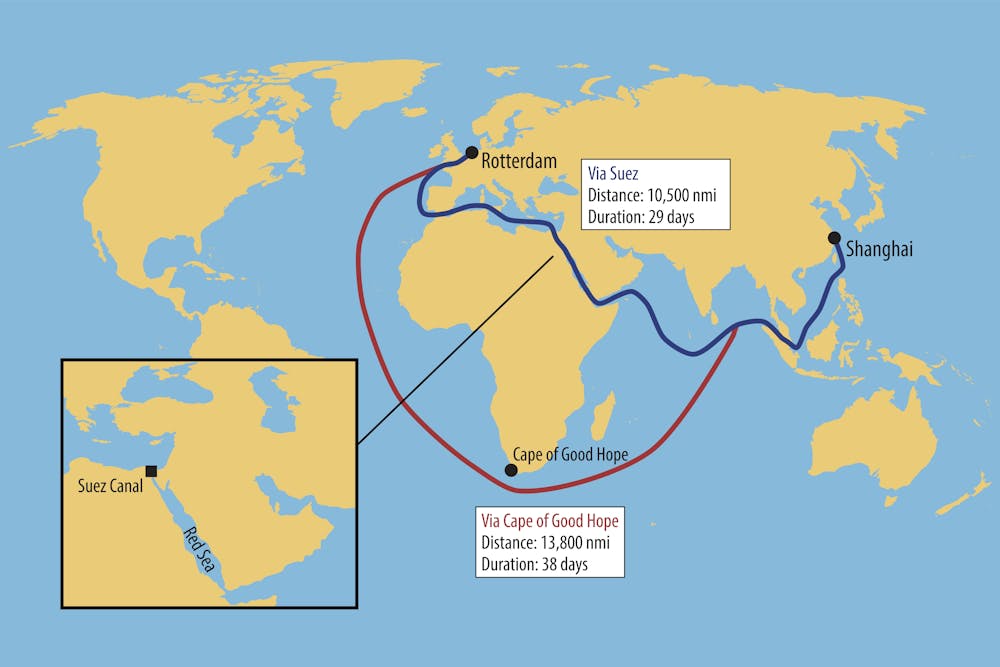
    Updates to this page

    Published 30 January 2025

    MIL OSI United Kingdom –

    January 31, 2025
  • MIL-OSI: Radware Delivers AI-Driven DDoS Protection for TelemaxX Telekommunikation’s Scrubbing Center

    Source: GlobeNewswire (MIL-OSI)

    MAHWAH, N.J., Jan. 30, 2025 (GLOBE NEWSWIRE) — Radware® (NASDAQ: RDWR), a global leader in application security and delivery solutions for multi-cloud environments, today announced it expanded its relationship with TelemaxX Telekommunikation GmbH. TelemaxX is leveraging Radware’s AI-powered DefensePro® X DDoS Protection to advance the network and application security services offered to customers through its scrubbing center.

    Headquartered in Karlsruhe, Germany, TelemaxX is a leading regional provider of integrated IT solutions, specializing in telecommunications and data centers, as well as cloud and managed services. Today, TelemaxX operates five high-security data centers in Germany’s Karlsruhe Technology Region, one of Europe’s top centers for innovation. To support its business, TelemaxX also uses Radware’s Cyber Controller platform, a security management, orchestration, and automation solution.

    “Working with Radware, we’ve found a partner that can grow step-by-step with our business requirements and customers’ needs,” said Heiko Kreisz, head of internet from TelemaxX. “Through this technology expansion, we can scale our services and help our customers stay ahead of emerging threats while maintaining the integrity and availability of their networks.”

    This includes protection against Web DDoS Tsunami attacks, a new aggressive form of HTTPS Flood that targets web applications and APIs. According to Radware’s H1 2024 Global Threat Analysis Report, Web DDoS attacks surged globally 265% during the first six months of 2024 compared to the second half of 2023.

    “As the number and sophistication of DDoS attacks increase exponentially, the demand for state-of-the-art AI-driven protection has never been greater,” said Michael Giesselbach, Radware’s regional director in Germany. “Working with TelemaxX, we can meet the needs of growing organizations and improve their security posture while they focus on their core business activities.”

    Using AI-powered advanced behavioral algorithms, DefensePro X provides automated, adaptive DDoS protection from fast-moving, high-volume, encrypted or zero-day threats. It defends against IoT-based, Burst, DNS and TLS/SSL attacks, ransom DDoS campaigns, IoT botnets, phantom floods, and other types of cyber threats.

    Radware has received numerous awards for its DDoS mitigation, application and API protection, web application firewall, and bot detection and management solutions. Industry analysts such as Aite-Novarica Group, Gartner, GigaOm, IDC, KuppingerCole and QKS Group continue to recognize Radware as a market leader in cyber security.

    About Radware
    Radware® (NASDAQ: RDWR) is a global leader in application security and delivery solutions for multi-cloud environments. The company’s cloud application, infrastructure, and API security solutions use AI-driven algorithms for precise, hands-free, real-time protection from the most sophisticated web, application, and DDoS attacks, API abuse, and bad bots. Enterprises and carriers worldwide rely on Radware’s solutions to address evolving cybersecurity challenges and protect their brands and business operations while reducing costs. For more information, please visit the Radware website.

    Radware encourages you to join our community and follow us on: Facebook, LinkedIn, Radware Blog, X, YouTube, and Radware Mobile for iOS.

    ©2025 Radware Ltd. All rights reserved. Any Radware products and solutions mentioned in this press release are protected by trademarks, patents, and pending patent applications of Radware in the U.S. and other countries. For more details, please see: https://www.radware.com/LegalNotice/. All other trademarks and names are property of their respective owners.

    Radware believes the information in this document is accurate in all material respects as of its publication date. However, the information is provided without any express, statutory, or implied warranties and is subject to change without notice.

    The contents of any website or hyperlinks mentioned in this press release are for informational purposes and the contents thereof are not part of this press release.

    Safe Harbor Statement
    This press release includes “forward-looking statements” within the meaning of the Private Securities Litigation Reform Act of 1995. Any statements made herein that are not statements of historical fact, including statements about Radware’s plans, outlook, beliefs, or opinions, are forward-looking statements. Generally, forward-looking statements may be identified by words such as “believes,” “expects,” “anticipates,” “intends,” “estimates,” “plans,” and similar expressions or future or conditional verbs such as “will,” “should,” “would,” “may,” and “could.” For example, when we say in this press release that through this partnership, we can meet the needs of growing organizations and improve their security posture, we are using forward-looking statements. Because such statements deal with future events, they are subject to various risks and uncertainties, and actual results, expressed or implied by such forward-looking statements, could differ materially from Radware’s current forecasts and estimates. Factors that could cause or contribute to such differences include, but are not limited to: the impact of global economic conditions, including as a result of the state of war declared in Israel in October 2023 and instability in the Middle East, the war in Ukraine, and the tensions between China and Taiwan; our dependence on independent distributors to sell our products; our ability to manage our anticipated growth effectively; a shortage of components or manufacturing capacity could cause a delay in our ability to fulfill orders or increase our manufacturing costs; our business may be affected by sanctions, export controls, and similar measures, targeting Russia and other countries and territories, as well as other responses to Russia’s military conflict in Ukraine, including indefinite suspension of operations in Russia and dealings with Russian entities by many multi-national businesses across a variety of industries; the ability of vendors to provide our hardware platforms and components for the manufacture of our products; our ability to attract, train, and retain highly qualified personnel; intense competition in the market for cyber security and application delivery solutions and in our industry in general, and changes in the competitive landscape; our ability to develop new solutions and enhance existing solutions; the impact to our reputation and business in the event of real or perceived shortcomings, defects, or vulnerabilities in our solutions, if our end-users experience security breaches, if our information technology systems and data, or those of our service providers and other contractors, are compromised by cyber-attackers or other malicious actors or by a critical system failure; outages, interruptions, or delays in hosting services; the risks associated with our global operations, such as difficulties and costs of staffing and managing foreign operations, compliance costs arising from host country laws or regulations, partial or total expropriation, export duties and quotas, local tax exposure, economic or political instability, including as a result of insurrection, war, natural disasters, and major environmental, climate, or public health concerns, such as the COVID-19 pandemic; our net losses in the past two years and possibility we may incur losses in the future; a slowdown in the growth of the cyber security and application delivery solutions market or in the development of the market for our cloud-based solutions; long sales cycles for our solutions; risks and uncertainties relating to acquisitions or other investments; risks associated with doing business in countries with a history of corruption or with foreign governments; changes in foreign currency exchange rates; risks associated with undetected defects or errors in our products; our ability to protect our proprietary technology; intellectual property infringement claims made by third parties; laws, regulations, and industry standards affecting our business; compliance with open source and third-party licenses; and other factors and risks over which we may have little or no control. This list is intended to identify only certain of the principal factors that could cause actual results to differ. For a more detailed description of the risks and uncertainties affecting Radware, refer to Radware’s Annual Report on Form 20-F, filed with the Securities and Exchange Commission (SEC), and the other risk factors discussed from time to time by Radware in reports filed with, or furnished to, the SEC. Forward-looking statements speak only as of the date on which they are made and, except as required by applicable law, Radware undertakes no commitment to revise or update any forward-looking statement in order to reflect events or circumstances after the date any such statement is made. Radware’s public filings are available from the SEC’s website at www.sec.gov or may be obtained on Radware’s website at www.radware.com.

    Media Contact:
    Gerri Dyrek
    Radware
    Gerri.Dyrek@radware.com 

    The MIL Network –

    January 31, 2025
  • MIL-OSI China: Various events held to celebrate Spring Festival across China

    Source: People’s Republic of China – State Council News

    Various events held to celebrate Spring Festival across China

    Updated: January 30, 2025 17:52 Xinhua
    Folk artists stage a dragon dance show in Tancheng County, east China’s Shandong Province, Jan. 29, 2025. People enjoy various activities to celebrate the Chinese New Year which fell on Jan. 29 this year. [Photo/Xinhua]
    A folk artist performs a face-changing show at a temple fair in Hengyang, central China’s Hunan Province, Jan. 29, 2025. [Photo/Xinhua]
    A drone photo shows tourists visiting a tourism street in Leling County, east China’s Shandong Province, Jan. 29, 2025. [Photo/Xinhua]
    Tourists visit a cultural tourism area in Fengnan District of Tangshan City, north China’s Hebei Province, Jan. 29, 2025. [Photo/Xinhua]
    Tourists take photos of light installations in Datong, north China’s Shanxi Province, Jan. 29, 2025. [Photo/Xinhua]
    Folk artists stage a molten iron fireworks show at a temple fair in Luoyang, central China’s Henan Province, Jan. 29, 2025. [Photo/Xinhua]
    Tourists visit a cultural tourism area in Anshun City, southwest China’s Guizhou Province, Jan. 29, 2025. [Photo/Xinhua]
    A drone photo shows folk artists performing a lion dance in the air in Tule Village of Yuxiang Town in Yongji City, north China’s Shanxi Province, Jan. 29, 2025. [Photo/Xinhua]
    Tourists walk on a road decorated with lanterns in Xuan’en County, central China’s Hubei Province, Jan. 29, 2025. [Photo/Xinhua]
    Tourists select creative cultural products in Wuxing District of Huzhou, east China’s Zhejiang Province, Jan. 29, 2025. [Photo/Xinhua]
    An aerial drone photo taken on Jan. 29, 2025 shows people visiting the Fenghuang ancient town in Xiangxi Tujia and Miao Autonomous Prefecture, central China’s Hunan Province. [Photo/Xinhua]
    A drone photo shows tourists visiting the Hukou Waterfall on the Yellow River, in Jixian County, north China’s Shanxi Province on Jan. 29, 2025. [Photo/Xinhua]
    Tourists visit the Mingsha Mountain and Crescent Spring scenic spot in the city of Dunhuang, northwest China’s Gansu Province, Jan. 30, 2025. [Photo/Xinhua]
    An aerial drone photo taken on Jan. 29, 2025 shows a view of Nanhu Park in Nanning, south China’s Guangxi Zhuang Autonomous Region. [Photo/Xinhua]

    MIL OSI China News –

    January 30, 2025
  • MIL-OSI China: Defense Ministry Spokesperson’s Remarks on Recent Media Queries Concerning the Military on January 17, 2025 2025-01-21 The Lai Ching-te administration, in collusion with foreign forces, has been making constant provocations for “Taiwan independence”.

    Source: People’s Republic of China – Ministry of National Defense 2

    On the morning of January 17, 2025, Senior Colonel Wu Qian, Director General of the Information Office of the Ministry of National Defense (MND) and Spokesperson for the MND, answered recent media queries concerning the military.

    Senior Colonel Wu Qian, spokesperson for the Ministry of National Defense (MND) of the People’s Republic of China (PRC), answers recent media queries concerning the military on January 17, 2025. (mod.gov.cn/Photo by Li Xiaowei)

    (The following English text is for reference. In case of any divergence of interpretation, the Chinese text shall prevail.)

    I have one piece of information at the top.

    According to the cooperation plan between the Chinese and French militaries, General Wu Yanan, Commander of the PLA Southern Theatre Command and Rear Admiral Guillaume Pinget, Joint Commander of the French Armed Forces in the Asia-Pacific had a video phone call on the morning of January 17. They had an in-depth exchange of views on issues of common interest.

    Question: After an earthquake struck the city of Rikaze in Xizang, President Xi Jinping made important instructions. The PLA and the PAP are actively involved in rescue and disaster relief efforts. Please share more information on it.

    Wu Qian: On January 7, a 6.8-magnitude earthquake jolted Dingri County in the city of Rikaze in Xizang Autonomous Region and caused heavy casualties. President Xi Jinping attached great importance to the disaster relief work and gave important instructions. He emphasized that every effort be made to search for and rescue survivors, treat the injured, and minimize fatalities.

    Military organs and troops at all levels resolutely implemented the important instructions of President Xi and the CMC, making all out efforts to protect the safety of people’s lives and property and ensure social stability. The CMC Joint Operations Command Center promptly activated the emergency response mechanism and guided the PLA Western Theater Command and PAP troops to organize ground and air forces to effectively carry out rescue operations. As of January 15, the PLA and the PAP had all together deployed 2,055 service members and 869 militia personnel, 20 transport aircraft, helicopters, and unmanned aerial vehicles, as well as 297 sets of vehicles and engineering equipment. They have rescued 27 people, relocated 2,756 people, set up 21 field medical support stations, treated and provided medical service to 22,359 injured, constructed 2,812 tents or portable houses, provided more than 95,000 portions of hot meals, transported disaster relief supplies of over 4,300 tons, and cleared more than 4,700 cubic meters of debris.

    When the people are affected by disasters, the military will come to their rescue. When the military and the people unite, there is no challenge we cannot overcome. The Tibetan for “Hello, PLA” echoing through the earthquake-stricken area reflects the profound bond between the military and the people. Standing together with the people in earthquake-stricken areas, the people’s military put into practice the fundamental mission of serving the people wholeheartedly with concrete actions, and built an unbreakable great wall of steel to protect the people.

    Question: Since the beginning of 2025, the PLA and the PAP have commenced their annual military training, making an all out effort to meet the military’s centenary goal. Please provide more information about this.

    Wu Qian: In 2025, military training will focus on responding to real security threats, enhance training under real combat scenarios, strengthen exercises on joint operations system, and fully leverage the deterring and conflict-preventing functions of military training. We will implement the arrangements made at the on-site meeting on basic training and the on-site meeting on combined training, conduct training in accordance with the new basic training outline, and address challenging issues by extensively conducting cross-service mixed formations training. We will give priority to training on new equipment such as new-type fighter jets, vessels and missiles, actively explore training in emerging fields such as unmanned systems and intelligent technologies, and create new growth points for combat capabilities. We will use more “technology+” and “cyber+” methods to solve training problems and advance innovations in technology-enhanced training. We will continue to carry out joint exercises and training with the armed forces of relevant countries and regions on more subjects, expand the scale of forces, increase joint training time, actively participate in international military sports competitions, and promote in-depth and practical training exchanges and cooperation between China and foreign countries.

    Question: General Liu Zhenli, Chief of the Joint Staff Department of the CMC, led a delegation to visit Malaysia and Indonesia. Please brief us more on the bilateral military relations between China and these two countries.

    Wu Qian: General Liu Zhenli, member of the CMC and Chief of the Joint Staff Department of the CMC, visited Malaysia and Indonesia from January 6 to 12. During the visit, the two sides exchanged views on issues of mutual interest, such as the relations between the two countries and militaries, and international and regional situation. The visit aimed at implementing the important consensus reached between the leaders of China and these two countries, enhance strategic communication, deepen cooperation, and elevate the mil-to-mil relationship to new heights.

    Both Malaysia and Indonesia are friendly neighbors of China across the sea. Under the strategic guidance of President Xi Jinping and the leaders of these two countries, China-Malaysia and China-Indonesia relations have witnessed rapid and comprehensive growth, and started a new chapter of building a community with a shared future. As an important part of bilateral relationship, the mil-to-mil relations have also made positive progress. Sound exchanges and cooperation have been realized in high-level exchanges, joint training and exercises, maritime security, and multilateral coordination under the ASEAN framework. We stand ready to work together with the two militaries to further consolidate strategic mutual trust, strengthen personnel exchanges, extend substantive cooperation, jointly uphold international fairness and justice, work together to implement the Global Security Initiative (GSI) and make joint contributions to peace, stability and prosperity of the region and beyond.

    Question: The first Type 076 amphibious assault ship PLANS Sichuan had its launching and commissioning ceremony recently in Shanghai, which received wide media coverage around the world. According to media of the Taiwan region, the ship has astonishing capabilities for three-dimensional landing operations, and the deployment of the ship would be the most dangerous moment for Taiwan. Some foreign news outlets also claimed that the ship will break regional balance of military power and bring unstable factors. What’s your comment?

    Wu Qian: It is a common practice for countries around the world to develop weapons and equipment in accordance with their national defense requirements. China’s independent development and construction of the Type 076 amphibious assault ship is a normal arrangement consistent with China’s national security needs and the overall development of the PLA Navy. The goal is to safeguard national sovereignty, security and development interests and better protect peace and stability in the region and beyond. The vessel is a new-type amphibious assault ship independently developed by China. It applies electromagnetic catapult and arresting technology, and can carry fixed-wing aircraft, helicopters and amphibious equipment. The ship has strong capabilities for amphibious and far-seas operations. After its launching, the ship will conduct equipment adjustments, mooring trials and sea trials.

    China stays committed to the path of peaceful development and a defense policy that is defensive in nature. The launching of the ship is a normal arrangement in the development of the PLA Navy. It is not targeted at any specific entity, region or country.

    Question: According to media reports, China’s military exchanges with foreign countries witnessed solid progress with many highlights in the year 2024. Please brief us more information.

    Wu Qian: In 2024, officers, soldiers and civilian personnel engaged in military diplomacy carried forward our fine traditions and made innovative efforts in our undertaking, and continued to improve the quality and efficiency of international military cooperation. First, shaping a favorable strategic environment. Staying in line with the directions set by head-of-state diplomacy, the Chinese military maintained close and practical military cooperation with Russia; progressively restored strategic communications and institutionalized dialogues with the US; deepened strategic communications with European countries, and engaged in exchanges with defense authorities and militaries from dozens of other countries. Second, safeguarding national sovereignty and security. We lodged diplomatic representations and released information in a timely way to respond to provocations and violations made by certain countries on the Taiwan question and the South China Sea issue, refuting the wrong words and deeds of relevant parties. Third, expanding multilateral diplomacy. As the host, the Chinese military successfully held the 11th Beijing Xiangshan Forum and the West Pacific Naval Symposium. We also actively participated in multilateral events like the Shangri-La Dialogue and the Defense Ministers’ Meeting of the Shanghai Cooperation Organization to make our voice heard on multilateral stages. Fourth, deepening cooperation on joint training and exercises. For the first time, our troops participated in Exercise Peace Unity in Africa and Exercise Formosa in Brazil, which contributed to regional peace and stability. Fifth, fulfilling the responsibilities of a major country. China’s Blue Helmets (peacekeepers) stayed on their combat posts in war zones; Channel 16 (of the PLAN vessel-protection task forces) remains a code for peace in the Gulf of Aden and waters off the coast of Somalia; the Ark Peace, the PLAN hospital ship provided medical services to people of 13 countries in Asia and Africa; and humanitarian demining courses were organized for Cambodia and Laos. The Chinese military has been taking concrete actions to deliver hope, warmth and strength.

    In the new year, staff for military diplomacy will continuously act on Xi Jinping Thought on Strengthening the Military and Xi Jinping Thought on Diplomacy in promoting military diplomacy. We will uphold the concept of building a community with a shared future for mankind and go all out to achieve the centenary goal of the PLA.

    Question: According to media reports, the Chinese military’s oxygen supply support system for plateau units has achieved initial results in recent years, effectively meeting the oxygen needs of troops stationed at high altitudes. Please provide more information about this.

    Wu Qian: President Xi and the CMC have always cared for the well-being and health of officers and soldiers stationed on the plateau regions, and have paid close attention to the issue of providing them with adequate oxygen supply. In recent years, we have developed a plateau oxygen supply support system covering large areas, establishing permanent storage points and a tiered distribution network. This system ensures that our troops on the plateau have access to oxygen during routine duties and can carry portable oxygen supplies during mobile operations. The transition from using oxygen solely for life-saving purposes to using it for improving health and conducting operations has significantly decreased the incidence of plateau-related diseases and acute altitude sickness among military personnel.

    First, we have constructed more permanent oxygen production and supply stations, and equipped more oxygen generators to high-altitude units, making oxygen supply available at the soldiers’ bedside. Second, mobile oxygen production facilities, like oxygen-generating cabins, have been deployed to mission areas, effectively overcoming the challenge of sustaining oxygen supply in remote locations. Third, portable individual oxygen supply devices have been issued to to troops, allowing for flexible utilization based on mission requirements. Fourth, we have intensified our efforts in technological innovation, initiating multiple projects for the development of new oxygen production and supply equipment.

    It is cold in the border areas, yet the troops there are full of passion. For a long time, border defense troops stationed on the plateau have guarded the borders in extremely harsh conditions, making great sacrifices for the country and the people. Their dedication to the country will never be forgotten, and their well-being always tugs at the heartstrings of the people.

    Question: It is reported that a naval vessel recently rescued a sick fisherman while performing a mission in the waters of Huangyan Dao. Could you please give us more details about it?

    Wu Qian: Recently, a Chinese fisherman on Qiongqionghai 03003, who was fishing near Huangyan Dao, suddenly suffered from gastric bleeding. The replenishment ship Qinghaihu of the PLA Navy, which was operating in the vicinity, promptly responded and transferred the ailing fisherman aboard for initial medical treatment. It then navigated to waters east of Yongxing Dao, where a rescue helicopter from the Sansha Maritime Search and Rescue Sub-center airlifted the fisherman to the People’s Hospital of Sansha City for further treatment. The fisherman has now been discharged from the hospital and is in stable condition. The Chinese military will continue to protect the safety of the people’s lives and property and contribute to peace and stability in the South China Sea.

    Question: According to the “Taiwan Central News Agency”, Lai Ching-te, leader of the Taiwan region recently said that countries like China and Russia threaten the rule-based international order and undermine peace and stability in the Indo-Pacific region and beyond. Therefore, Taiwan needs to continue to raise “defense budget” and enhance “defense capabilities.” What’s your comment?

    Wu Qian: Lai Ching-te and his kind have betrayed their ancestors and what he said was far away from the truth. International documents including the Cairo Declaration and the Potsdam Proclamation have confirmed that the Taiwan region should be returned to China. Such fact is an important part of the post-WWII international order. The victory and outcome of the WWII must be respected and safeguarded. There is no other status of the Taiwan region in the international law than being a part of China.

    The Lai Ching-te administration, in collusion with foreign forces, has been making constant provocations for “Taiwan independence”. It is now the biggest source of chaos that undermines peace and stability across the Taiwan Strait and the Asia Pacific. We warn the Lai Ching-te administration and separatists for “Taiwan independence” that any attempt to seek independence by force is just like holding back the tide with a broom, and will eventually lead to self-destruction. Those seeking “Taiwan independence” will never have a good end. The PLA will spare no effort to fight separatism and promote national reunification. We have full confidence that the Taiwan region will return to the motherland and will have a better future after its return.

    Wu Qian: The Chinese Spring Festival of the Year of the Snake is just around the corner. In Chinese tradition, the snake is a symbol of wisdom and vitality It also implies adapability and the conquering of the unyielding with the yielding. As families reunite to bid farewell to the past and embrace the future, I would like to extend warm New Year wishes to you all on behalf of my colleagues. Rest assured that the Chinese military will continue to stand by your side, offering warmth and protection. We will always be the sturdy support you can count on. May our country prosper and our people live in harmony.

    Senior Colonel Wu Qian, spokesperson for the Ministry of National Defense (MND) of the People’s Republic of China (PRC), answers recent media queries concerning the military on January 17, 2025. (mod.gov.cn/Photo by Li Xiaowei)

    MIL OSI China News –

    January 30, 2025
  • MIL-Evening Report: Grattan on Friday: Dutton walks more softly on China, with election in mind

    Source: The Conversation (Au and NZ) – By Michelle Grattan, Professorial Fellow, University of Canberra

    When Peter Dutton was asked this week  whether a Coalition government would continue  to foster trade relations with China, he declared unequivocally that “the relationship with China will be much stronger  than it is under the Albanese government”.

    Two points stood out: Dutton’s own positive rhetoric, and his apparent confidence about the future of Australia-China relations.

    It’s not unusual for opposition leaders to undertake a makeover, to their person or policy, as an election approaches. Anthony Albanese lost weight and acquired new glasses. Earlier, he’d made Labor a small policy target.

    Dutton is simultaneously attempting a softening on some fronts – while retaining the “hard man” image on others.

    Mid-last year Dutton said: “I’m pro-China and the relationship that we have with them. I want that trading relationship to increase. […] We need to make sure we strengthen the trading relationship because there are many businesses here who rely on it. But we have to be realistic about working to keep peace […] we live in a very uncertain time. The Prime Minister also says that we live in the most precarious period since the Second World War, and he’s right, and we need to work hard at peace as well.”

    Contrast Dutton as defence minister in 2021. “Does the Chinese government wish to occupy other countries? Not in my judgement. But they do see us as tributary states. And that surrender of sovereignty and abandonment of any adherence to the international rule of law is what our country has fought against since Federation.”

    It’s not that Dutton has changed his views on China. Rather, he’s camouflaged them with a softer tone, and in what he chooses to emphasise. Of course circumstances have changed – Australia now has a much better relationship with China. But significantly, Dutton needs to appeal to the local Chinese-Australian voters.

    At the 2022 election, the Liberals took a big hit among voters of Chinese heritage.

    The party’s review of its election performance, undertaken by former party director Brian Loughnane and frontbencher Jane Hume, said: “In the top 15 seats by Chinese ancestry the swing against the Party (on a 2PP basis) was 6.6%, compared to 3.7% in other seats. There are more than 1.2 million people of Chinese heritage living in Australia today. Rebuilding the Party’s relationship with the Chinese community must be a priority during this term of Parliament.”

    Marginal Labor seats that are targets for the Liberals, where the Chinese vote is significant, include Reid and Bennelong in NSW and Chisholm and Aston in Victoria.

    Dutton (and the PM) will attend a Lunar New Year celebration in Box Hill in Melbourne this weekend.

    It’s notable that David Coleman, named by Dutton last weekend as the opposition’s new spokesman on foreign affairs, has worked extensively with the Chinese community. One of the contenders for the post was the high-performing James Paterson. There may have been stronger arguments for keeping Paterson in home affairs, but his very hawkish stand on China might have been in the mix.

    Talking up the positive side of the Coalition’s record on China, Dutton harked back to the signing of the free trade agreement under the Abbott government, and said “we want there to be mutual respect in the relationship”.

    Over its years in government the Coalition’s relationship with China has varied between pragmatic friendship and suspicious negativity. After relatively smooth sailing in the Abbott period, things soured when the Turnbull government called China out over foreign interference, introducing legislation, and banned Huawei from the 5G network. Then relations plunged dramatically when the Morrison government demanded an inquiry into the origins and handling of the outbreak of COVID in Wuhan.

    Despite Dutton’s confidence, it’s more than possible that managing the China relationship after the election could be trickier than it has been during this one, no matter who is in power.

    The Albanese government can claim the greatly-improved bilateral relationship as one of its major foreign policy achievements. China has brought Australia out of the deep freeze, lifting the $20 billion worth of trade barriers it had imposed. Dialogue and ministerial exchanges have resumed. Anthony Albanese has been welcomed in China.

    But this week’s speculation relating to the new Chinese artificial intelligence platform DeepSeek is just the latest reminder of perennial security suspicions about the penetration of Chinese technology.(Incidentally, Dutton has an account on the Chinese-owned TikTok – despite it being banned from official government devices – in part to engage with the local Chinese community, as well as with younger people generally.)

    Australia’s minerals industry is potentially vulnerable to Chinese displeasure. The Senate in the next fortnight will consider the government’s Future Made in Australia legislation, that provides a tax incentive for processing critical minerals. The Chinese have a global stranglehold on this processing – and have shown a willingness to weaponise it, for example against Japan. China’s multi-billion dollar funding of nickel processing in Indonesia has had a dire impact on producers here in Australia.

    The change of government in Australia certainly facilitated the improvement in the bilateral relationship, but that improvement was also strongly driven by China’s own interests. Similarly, the future of the relationship is more in China’s hands than in Australia’s.

    China expert Richard McGregor, from the Lowy Institute, says:“ Relations with China are inherently volatile.

    “The day-by-day relationships have returned to  a degree of normality. But all of the structural stresses which created antagonism are still there.”

    These include China’s “military assertiveness in the region, competition between  the US and China, Australia’s concern about foreign interference and hacking, China’s efforts to build their power in the Pacific at the expense of Australia. None of that has gone away,” McGregor says. The single biggest change of recent years “is that “China has become much more powerful and is far more willing to throw its weight around”.

    Separate to any hiccups in the bilateral relationship, Australia could find itself caught in the crossfire if there is a serious deterioration in the US-China relationship under Donald Trump – notably if his tariff policy leads to a trade war. Simon Jackman, from the University of Sydney, warns that if US policy hit the (already struggling) Chinese economy, that would affect Australian exporters.

    “US tariffs or import bans that slowed China’s economy would cause some short to medium headaches for Australian exporters,” Jackman says. “As in Trump Mark 1 and COVID, Australian export industries would find themselves looking for opportunities elsewhere, if global supply chains had to re-equilibrate in response to an upheaval in the US-China trade relationship.”

    Ironically, the earlier search for diversified markets when the Chinese imposed their restrictions on Australian producers would have helped prepare exporters for such a contingency.

    Michelle Grattan does not work for, consult, own shares in or receive funding from any company or organisation that would benefit from this article, and has disclosed no relevant affiliations beyond their academic appointment.

    – ref. Grattan on Friday: Dutton walks more softly on China, with election in mind – https://theconversation.com/grattan-on-friday-dutton-walks-more-softly-on-china-with-election-in-mind-248561

    MIL OSI Analysis – EveningReport.nz –

    January 30, 2025
←Previous Page
1 … 601 602 603 604 605 … 730
Next Page→
NewzIntel.com

NewzIntel.com

MIL Open Source Intelligence

  • Blog
  • About
  • FAQs
  • Authors
  • Events
  • Shop
  • Patterns
  • Themes

Twenty Twenty-Five

Designed with WordPress