Category: Commerce

  • MIL-OSI USA: Union County Disaster Recovery Center To Close

    Source: US Federal Emergency Management Agency

    Headline: Union County Disaster Recovery Center To Close

    Union County Disaster Recovery Center To Close

    HARRISBURG, Pa. – The joint Disaster Recovery Center located in Union County will permanently close Saturday, October 5 at 6 p.m. 

    Residents who continue to need the services available at a DRC can visit one of the other centers: 

    • Hepburn Volunteer Fire Company, 615 East Route 973 Highway, Cogan Station, Lycoming County 
    • Penn-York Retreat Center, 266 Northern Potter Rd., Ulysses, Potter County, 
    • Knoxville Community Center, 301 Main St., Knoxville Tioga County.

    These centers are open Monday to Saturday, 8 a.m. to 6 p.m. Individuals and households impacted by Tropical Storm Debby from August 9-10 in Lycoming, Potter, Tioga and Union counties can visit any DRC to receive help and information. 

    Disaster survivors who have not yet applied for FEMA assistance can apply at a Disaster Recovery Center, apply online at DisasterAssistance.gov, use the FEMA App on your phone, or call 800-621-3362. If you use a relay service such as video relay service, captioned telephone service or others, give FEMA your number for that service when you apply.

    The deadline for applying to FEMA for disaster assistance is November 12.

    You can visit a DRC for help with other parts of the disaster recovery process. If you received a letter from FEMA about your application status, visit a DRC to learn more about next steps. DRC staff can help you submit additional information or supporting documentation for FEMA to continue to process your application. At a DRC you can also meet with representatives from Commonwealth of Pennsylvania agencies and the U.S. Small Business Administration (SBA). 

    For more information on Pennsylvania’s disaster recovery, visit the Pennsylvania Emergency Management Agency Facebook page, fema.gov/disaster/4815 and facebook.com/FEMA.  

     ###                                                                                             

    FEMA’s mission is helping people before, during, and after disasters. FEMA Region 3’s jurisdiction includes Delaware, the District of Columbia, Maryland, Pennsylvania, Virginia and West Virginia. Follow us on X at x.com/FEMAregion3 and on LinkedIn at linkedin.com/company/femaregion3.

    Disaster recovery assistance is available without regard to race, color, religion, nationality, sex, age, disability, English proficiency, or economic status. If you or someone you know has been discriminated against, call FEMA toll-free at 833-285-7448. If you use a relay service, such as video relay service (VRS), captioned telephone service or others, give FEMA the number for that service. Multilingual operators are available (press 2 for Spanish and 3 for other languages).

    erika.osullivan

    MIL OSI USA News

  • MIL-OSI USA: Readout of the U.S. Presidential Delegation’s Travel to Mexico for the Inauguration of Claudia  Sheinbaum

    US Senate News:

    Source: The White House
    From September 30 – October 2, First Lady Jill Biden traveled to Mexico City, Mexico as the Head of the U.S. Presidential Delegation to the inauguration of President Claudia Sheinbaum Pardo. The First Lady was joined by United States Ambassador to Mexico, Ken Salazar; U.S. Secretary of the Department of Health and Human Services, Xavier Becerra; U.S. Administrator of the Small Business Administration, Isabel Casillas Guzman; U.S. Senator Chris Coons of Delaware; U.S. Senator Chris Murphy of Connecticut; U.S. Representative of the 44th District of California and Chair of the Congressional Hispanic Caucus, Nanette Barragán; Deputy Assistant to the President and White House Social Secretary, Carlos Elizondo; and Mayor of Tucson, Arizona, Regina Romero.
    During the visit, the First Lady delivered remarks at a reception hosted by Ambassador Salazar, where she highlighted the Biden-Harris Administration’s commitment to strengthening the partnership between the United States and Mexico. The First Lady and Ambassador Salazar also attended a dinner hosted by President Sheinbaum the evening before the inauguration, where she met with and congratulated President Sheinbaum. In addition to attending the President’s inauguration, the First Lady and the Delegation attended a luncheon in honor of President Sheinbaum. Concluding their travel, the First Lady and members of the Delegation visited the Museo Frida Kahlo to celebrate the shared cultural connections between the United States and Mexico. 

    MIL OSI USA News

  • MIL-OSI Asia-Pac: Food and Consumer Affairs Minister of State planted sapling under “Ek Ped Maa ke Naam” campaign

    Source: Government of India (2)

    Posted On: 03 OCT 2024 4:50PM by PIB Delhi

    A plantation drive under the leadership of Hon’ble Minister of State for Consumer Affairs, Food & Public Distribution, Smt. Nimuben Jayantibhai Bambhaniya was organized on 01.10.2024 at Food Corporation of India (FCI) Depot, Mayapuri, New Delhi , under the “Ek Ped Maa ke Naam” campaign.

    As a part of the Swachhata Hi Sewa (SHS)- 2024 and pre-cursor to the implementation phase of Specail Campaign 4.0, the senior officers of the Department of Food and Public Distribution inspected the various sections of the Department on 01.10.2024. They also sensitized the staff about the importance of cleanliness in every day life.

    Warehousing Development and Regulatory Authority distributed safety gears to Safai Mitras as a part of Swachhata Hi Seva 2024 Campaign on 01.10.2024.

    National Sugar Institute (NSI), Kanpur  cleaned  an  identified black spot (Cleanliness Target Unit)  as a part of their contribution to the SHS-2024.

    Indian Grain Storage Management & Research Institute (IGMRI), Hapur, cleaned the dumping yard  area in front of its Staff Colony on Meerut Road  and the site was transformed by filling it with soil. Additionally, a hedge was also planted to maintain  the cleanliness of the area and enhance the aesthetic appeal of the location.

    Details of activities by Food Corporation of India and its Regional/ Zonal Offices 01.10.2024:-

    Food Corporation of India HQ, New Delhi, carried out a mass cleanliness rally at nearby areas from Headquarter to Shankar Market to Shivaji Bridge Railway Station and back to Headquarter with local vendors participating in the program. The program was flagged off by Executive Director (P) with a motivational speech on importance of Swachhata in one’s daily life and routine.


    As a Swachhata Hi Seva (SHS) 2024 initiative, FCI ZO (East) conducted a Cleanliness Drive across the office premises and showed their commitment to creating of a cleaner, healthier environment and reinforcing the importance of hygiene/sanitation in our daily life.

    Regional Office, Nagaland, organized mass cleanliness campaign in which their dedicated staffs and Safai Mitras participated enthusiastically.

       The Employees of Regional Office, Ranchi, took out a Mass Cleanliness rally with banners and placards to promote the message of Swachhata in everyday life.

    In line with activities under Swachhata Hi Seva 2024, employees of Zonal Office, Guwahati participated in a walkathon.  They also removed garbage from the identified Black spot at Gandhi Manap, Guwahati.

    A Mass cleanliness drive was organized by employees of Zonal Office North, Noida to show their commitment towards Swachhata.

    Details of activities by Central Warehousing Corporation (CWC) under SHS 2024 on 01.10.2024:-

    A cleanliness drive was organized at Central Warehouse, Surajpur during the  Swachhata Abhiyan.

    Cleanliness drive at Regional Office, Ahmedabad:

    *****


    Nihi Sharma

    (Release ID: 2061558) Visitor Counter : 46

    MIL OSI Asia Pacific News

  • MIL-OSI Asia-Pac: IIFT organizes regional conference of Asian and African chair holders of WTO Chairs Programme in New Delhi

    Source: Government of India (2)

    IIFT organizes regional conference of Asian and African chair holders of WTO Chairs Programme in New Delhi

    Conference highlights need for aligned trade strategies, digital solution for trade barriers and climate-responsive global trade norms

    Posted On: 03 OCT 2024 4:50PM by PIB Delhi

    The Indian Chair of the World Trade Organization (WTO) Chairs Programme (WCP) organised a  regional conference of the Asian and African Chairs on the theme Fostering Resilient and Responsible Trade for Changing Global Order at Vanijya Bhawan, New Delhi on 27thand 28thSeptember, 2024. The Indian Institute of Foreign Trade (IIFT) represented through its centres, namely, the Centre for Trade and Investment Law (CTIL) and the Centre for WTO Studies (CWS) administers the WTO Chair in India. The conference was inaugurated by Shri Ajay Bhadoo, Additional Secretary, Department of Commerce, Government of India.

    The key takeaways from the Conference are: (i) necessity of aligning regional and multilateral trade strategies for coherent global norms; (ii) importance of addressing barriers to trade using digital tools to ensure inclusivity and equal opportunities for all nations and stakeholders in international trade and (iii) critical need for robust climate action that accommodates the unique challenges faced by developing countries.

    Several dignitaries including India’s Ambassador and Permanent Representative to the WTO Dr. Senthil Pandian C.; Deputy Director General, WTO, Amb. Xiangchen Zhang; Vice Chancellor, IIFT, Prof. Rakesh Mohan Joshi; Head and Professor, CTIL and India Chair, WCP, Prof. James J. Nedumpara; Permanent Representative of France to the WTO, H.E. Ms. Emmanuelle Ivanov-Durand and H.E. Mr. Jung Sung Park, Deputy Permanent Representative of the Republic of Korea to the WTO addressed the gathering.

    The conference provided an opportunity for WTO chairholders, leading scholars, trade experts, and policymakers from across Asia and Africa to discuss ways and means of fostering resilient and responsible trade in a dynamic global economy.

    The Conference, over the two days, included seven thematic sessions on a broad array of topics relating to resilient and responsible trade, a keynote address by Henry J. Braker Professor of Commercial Law at The Fletcher School of Law and Diplomacy, Tufts University, United States, Prof. Joel Trachtman and a special address by CEO, NITI Aayog, Shri B. V. R. Subrahmanyam.

    The Conference also focused on critical issues at the intersection of global trade and sustainability. The discussions highlighted the need for coherence in trade strategies, the challenges of inclusive digital transformation, and the importance of responsible practices in critical mineral extraction with a specific focus on Asia and Africa regions. The event emphasized collaborative approaches to support developing countries in navigating complex trade dynamics and achieving sustainable development goals.

    In the thematic sessions, the representatives from the WCP Chairs from Asian and African institutions presented their ideas and experiences from a national, regional and multilateral perspective. The sessions covered topics such as regional aspects in international trade law, green industrial policies, critical minerals for a clean energy future, WTO dispute settlement system and sustainable climate actions.

    A roundtable of WCP Chairs was also held during the Conference to deliberate on collaborations between WCP Chairs of Asia and Africa. During the roundtable, the WCP Chairs discussed the role that the WTO could play in facilitating the network and the different ways in which the WCP Chairs could exchange knowledge, and experience and engage in academic partnerships under the aegis of WTO Chairs Programme.

    ***

    AD/VN/CNAN

    (Release ID: 2061557) Visitor Counter : 92

    MIL OSI Asia Pacific News

  • MIL-OSI Asia-Pac: Commerce and Industry Minister Shri Piyush Goyal and US Secretary of Commerce Ms. Gina Raimondo co-chair India-U.S. CEO Forum

    Source: Government of India (2)

    Commerce and Industry Minister Shri Piyush Goyal and US Secretary of Commerce Ms. Gina Raimondo co-chair India-U.S. CEO Forum

    Forum stands as indispensable catalyst for economic cooperation between India and US; serves as key advisory body to India-US Commercial Dialogue

    Posted On: 03 OCT 2024 5:59PM by PIB Delhi

    The India-U.S. CEO Forum, chaired jointly by Union Minister of Commerce and Industry, Government of India, Shri Piyush Goyal, and US Secretary of Commerce, Ms. Gina Raimondo was held today in Washington D.C., USA.

    The India-U.S. CEO Forum convened as a platform to allow private sector members to develop and provide recommendations to the Indian and US governments that reflect the private sector’s views, concerns and suggestions about the creation of an environment in which the bilateral economic links are strengthened. The Forum works in tandem with, and provides inputs to, government-to-government U.S.-India Commercial Dialogue.

    The Forum is co-chaired from Private Sector by Mr. N. Chandrasekaran, Chairman, Tata Sons, and Mr. James Taiclet, President and Chief Executive Officer, Lockheed Martin. This is the third time the Forum has been convened since its reconstitution in November 2022 by the Governments of India and the USA and saw participation from 16 CEOs. Both governments appreciated the Forum’s progress on initiatives and its achievements over the past two years.

    The CEOs, under the seven working groups, presented priority areas to create stronger partnerships and boost growth across various critical areas such as Entrepreneurship and Promoting Small Businesses, Healthcare and Pharmaceuticals, Aerospace and Defence, ICT and Digital Infrastructure, Energy, Water and Environment, Infrastructure and Manufacturing, Financial Services, Trade and Investments, among others.

    Both sides deliberated on the progress made as of the last meeting of the Forum in March 2023, including the launching of innovation handshake and a knowledge sharing platform called NIHIT (Network for Innovation and Harnessing Investments and Trade).

    Government representatives and CEOs reaffirmed their commitment to strengthening commercial and trade ties, driving economic growth and innovation, and fostering a resilient bilateral partnership.

    Earlier during the day, Minister Goyal began his third day of the U.S. tour with the offering of a floral tribute at the Mahatma Gandhi Memorial across the Embassy of India in Washington D.C. in remembrance of his 155th birth anniversary.

    The Minister of Commerce and Industry met with the U.S. Secretary of Commerce Ms. Gina Raimondo over a luncheon meeting and discussed areas of mutual interests. They discussed the pathway for strengthening bilateral cooperation in critical minerals supply chains as recommended by the US-India CEO forum. They also discussed opportunities to increase US investments in India especially in some of the new industrial cities being planned in India.

    ***

    AD/VN/CNAN

    (Release ID: 2061595) Visitor Counter : 73

    MIL OSI Asia Pacific News

  • MIL-OSI USA: Administrator Samantha Power at a Press Gaggle in Lviv

    Source: USAID

    ADMINISTRATOR SAMANTHA POWER: I just met with a great group of Ukrainians here at the IT Cluster. This is an innovation hub supported by the Government of Ukraine and by USAID. I have learned from Ukrainian entrepreneurs, and I’ll just give you one example of the kinds of innovations that are happening. 

    Knopka is a member of the IT Cluster here that is revolutionizing medical alert systems. Traditionally, medical alert systems are not wireless. This matters for Ukraine because they would not work during power outages. Power outages have been a real issue for hospitals during the war. So, one Ukrainian entrepreneur here developed a system called “Knopka”. If anything abnormal happens with a patient’s vital signs or the patient indicates that they need care, Knopka sends an alert out to doctors’ and nurses’ phones using cellular data. As long as their phones have some charge left. These doctors and nurses know exactly where to go and who to help us, even when there is no power during the blackout. Knopka technology is 30 percent cheaper than other medical alert systems. While those other systems can often take weeks or even months to install, Knopke’s technology can be installed in just one day. 

    Supported by USAID, Knopka is growing fast. It has already been installed in 30 hospitals in Ukraine and one in Poland, and now Knopka is in talks with hospitals and clinics in Canada and the United States. Those hospitals and clinics are considering acquiring its system, too. Just in the past six months, Knopka’s workforce has expanded from 20 to 35 employees. Knopka’s Founder and CEO said, “Despite the challenges of war, we demonstrate Ukraine’s capacity for innovation and the talent behind it.” 

    So, it is this capacity for innovation that has driven Ukraine’s ability to retain business despite being more than two and a half years into Putin’s brutal invasion. In the tech sector alone, 95 percent of Ukraine’s 5,000 tech companies, including household names like Grammarly and GitLab, have retained their national and global contracts, together powering a full 12 percent of Ukraine’s exports. Since 2022, indeed Ukraine’s tech sector has grown seven percent, contributing $14 billion to Ukraine’s economy.  

    Ukraine’s business leaders in the tech sector and beyond it, are harnessing their creativity and their resilience to lead the country into the future and at USAID, we have been privileged to do what we can to support that effort. Since 2022, we have directly deployed more than $260 million to support businesses in Ukraine, from relocating and restoring the operations of companies on the front lines, to running reskilling programs to train Ukrainians in high demand trades like construction and transportation, to increasing access for businesses and for startups to affordable financing. 

    This support has itself unlocked $232 million in new investments to Ukrainian companies. This helps them expand operations, hire Ukrainians, and this investment allows them to provide much needed tax revenue to support Ukraine’s defense.

    At the same time, we are working closely with our partners in the Ukrainian government to help them shape the business environment. International businesses describe for us the policy and regulatory reforms that they need to be convinced to invest in Ukraine. So, we are working closely with our partners in the Ukrainian government to improve transparency, to reduce opportunities for self-dealing, and to make the judiciary more independent. All of these are critical steps to building confidence that contracts will be honored and investment regulations will be enforced. 

    And finally, we are thrilled to be able to support Ukraine’s ambition to become a global leader in e-governance. As all of you Ukrainians here well know, the revolutionary Diia app that we have supported for years makes it possible for Ukrainians to access all kinds of services. It allows Ukrainian entrepreneurs to register companies, apply for permits, begin procurement processes, and more. By registering on the Diia City platform, Ukrainian and international companies alike, can access benefits that incentivize them to do business in Ukraine – benefits like reduced taxation and legal and financing support. In the first quarter of this year alone, businesses registered on Diia’s City have contributed over four billion Hryvni tax revenue to the Government of Ukraine, that is the equivalent of nearly $100 million. And, these are taxes, of course, that can be used to rebuild schools, to heat homes in winter and to fuel Ukraine’s defense.

    Businesses, like the ones I met with today, are working to build a future where the ingenuity of the Ukrainian people drives progress. Driving that progress not only here in Ukraine, but in places all around the world that will continue to benefit from the products, services, and ideas developed here. 

    Thank you so much, and I look forward to your questions. 

    QUESTION (via translation): How much monetary equivalent has the U.S. government financed in technology in Ukraine and especially western Ukraine?

    ADMINISTRATOR POWER: We will have to get back to you with the precise figure, especially with the geographic breakdown that you are looking for. But, I am sure someone on the team can provide that. 

    QUESTION (via translation): If you think about long term supporting perspective, where does [the] U.S. government see Ukraine in [the] future? Is it technological? Is it [an] agrarian country? Is it a country of construction?  

    ADMINISTRATOR POWER: Thank you for that question. As someone who works at an Agency that addresses food insecurity all around the world, I know firsthand the terrible harm that Putin caused by preventing Ukrainian agricultural exports from leaving Ukraine. I saw kids in sub-Saharan Africa who were hungrier because the food prices went up so much because Ukrainian agricultural exports were blocked by Putin’s forces. So, we are in awe of Ukraine’s farmers and its innovators who have found a way, despite the war, to increase agricultural exports now basically to their pre-war levels. And, we recognize that Ukraine’s farmers, as is evidenced by Ukraine’s flag, are foundational to this country’s economy. Ukraine’s agriculture is also a huge part of Ukraine’s identity, and it is a huge part of keeping people fed around the world. 

    But, what is really exciting about what we see in the Lviv IT Cluster is the diversification of Ukraine’s economy. And, seeing the steady growth of IT services as exports in this country, gives us, I think, an indication of where the future can take Ukraine. There are apparently 307,000 tech professionals now in Ukraine, and that is a seven percent increase from last year. Ukraine is becoming famous all around the world for the Diia app. Many citizens in other countries who see the Diia app are very jealous of Ukrainians. The simplicity and the government accountability that makes life better and easier for citizens is something many countries would wish to have. The more people learn in Silicon Valley and elsewhere about the kind of innovation that is happening at a place like this, the more we will see investment and increased exports in IT services.

    We are, of course, also seeing a lot of innovation in other manufacturing sectors. Because of Russia’s brutal attacks, Ukraine has had to innovate in the defense sector. Even drones, which are being manufactured now in Ukraine, have broad civilian appeal for farmers and other sectors around the world. Ukraine is a home to many critical minerals that provides economic opportunity in the future. And, of course, as Ukraine shifts its energy economy to renewables, that will be something, I’m sure, of great interest outside this country.

    My point is not to specify, again, any particular trajectory for Ukraine. It is simply to take note of the incredible innovation and resources that will power Ukraine’s economy in the future. And, of course, it is young people that will drive even more innovation and more ideas of what can come from Ukraine beyond even what I have mentioned today. When I think of all of the innovation that has occurred in Ukraine, just since the full-scale invasion, I marvel at imagining what this country and the Ukrainian people can do in peacetime. And, now Ukraine is more famous than it was before Putin’s full-scale invasion, for the resilience, but also the creativity and innovation of its people. 

    QUESTION: Ms. Power, I’m very thankful for your generous support that USAID has been giving to both private sector, state institutions, and civil society in Ukraine for years. But, I wanted to ask – I know that from my own feelings – I see that USAID is an institution that is caring [for] both people. And, besides funding, both in trends and investments, we do need people, and we do understand that Ukraine, for boosting its innovations and its economy, needs [to] bring people back. We have six to seven million abroad, we have people dying on the front line, and we have a very low birth rate. Is it something that is in your concern, and that USAID would think about, and would think of some special projects to help, somehow, help this situation.

    ADMINISTRATOR POWER: Well, this is something, actually, I discussed yesterday with President Zelenskyy. It is absolutely critical for Ukraine’s future that its population here is thriving. It is crucial, for example, that the tech professionals who are being groomed here, see themselves as having a full future here where they don’t feel they need to move to Silicon Valley. 

    What USAID is doing is looking at many of the reasons that Ukrainians feel compelled to leave. So, one of the things I discussed with the President is the safety of schools. USAID has invested in refurbishing and rendering more secure around 10,000 bunkers in schools. In Kharkiv, we’ve actually been involved in building a school that is entirely underground because of the situation there. So, education is one example where, as we think about where to make our investments, we do so thinking about a parent who wants nothing more in the world than to keep their children safe. 

    The other core dimension of our work that is designed, of course, to keep people here or to draw people back, is work on helping the economy grow. When people cannot find work, they go to try to find work somewhere else. So, being very specific about which programs can help create jobs for Ukrainians is another example of this kind of work. 

    But, in the future, when peace comes back to Ukraine, there will be tremendous opportunities for jobs and, of course, for people to experience the safety that they once knew. And, that is when we and the European Union and, of course, the government and the people here will need to be very intentional on how we advertise all the opportunities that will exist in what will then be a stronger economy and a stronger democracy.

    This is why the reforms, tackling corruption, strengthening the judiciary, and making the regulatory environment for business more attractive, none of those reforms can wait. And, if that reform effort can continue to progress, it will make Ukraine, on the other side of war, a place that businesses flock to, even more than we are able to get them to come now.

    The very last thing I would say is the obvious, which is a huge part of ensuring or increasing the likelihood that people stay in Ukraine is that the 50-country coalition continues to support Ukraine’s defense. And, that is why the very significant defense package that President Biden just announced is an important part of the answer to your question. More air defense means that citizens can feel safer and that they are less likely to leave the country. That is why we, in the United States, understand that attracting people to stay in Ukraine is a whole-of-U.S.-government enterprise. 

    Thank you.

    MIL OSI USA News

  • MIL-OSI Security: Ohio Man Agrees to Plead Guilty to Interstate Transportation of Stolen Andy Warhol Art Print

    Source: Federal Bureau of Investigation (FBI) State Crime Alerts (b)

    LOS ANGELES – An Ohio man has agreed to plead guilty to a federal criminal charge for trafficking a stolen Andy Warhol print worth at least $175,000. 

    Image Source: Federal Plea Agreement

    Brian Alec Light, 58, of Hudson, Ohio (formerly a resident of downtown Los Angeles), is expected to plead guilty in the coming weeks to one count of interstate transportation of stolen goods. His initial appearance in federal court is scheduled for October 28.

    According to his plea agreement, a thief stole the Warhol print – a trial proof depicting former Soviet Union leader Vladimir Lenin and was print number 44 of 46 total Warhol made – from the victim’s home in Los Angeles County in early 2021. The victim informed law enforcement of its theft soon after, as well as the original gallery in West Hollywood that sold him the artwork. Days after the theft, the thief brought the artwork to a pawnshop, which purchased it. The pawnshop’s owner contacted Light for help selling the artwork, which Light knew was stolen. Light contacted an auction house to sell the print within weeks of its theft. Light told the pawnshop owner to drop off the Warhol at the auction house in Beverly Hills so that it could be transported to Dallas for inspection and sale, which the pawnshop owner did.

    The auction house shipped the Warhol artwork to Dallas where it was to be inspected and included in an upcoming auction in the spring of 2021. An employee of the auction house in Dallas reached out to the gallery in West Hollywood for its opinion of the piece. The gallery immediately recognized the piece as the stolen piece of art. As a result, the gallery notified the auction house of its stolen nature and notified the FBI. When the FBI questioned Light about it, he lied and created a fake receipt purporting to show that he bought the print before it was stolen. 

    Upon pleading guilty, Light will face a statutory maximum sentence of 10 years in federal prison. 

    As part of his plea agreement, Light will forfeit the stolen artwork retrieved by law enforcement.

    The FBI’s Art Crime Team is investigating this matter.

    Assistant United States Attorney Erik Silber, Senior Counsel in the Criminal Division and Assistant United States Attorneys Dominique Caamano and Matthew O’Brien, of the Environmental Crimes and Consumer Protection Section, are prosecuting this case.

    MIL Security OSI

  • MIL-OSI Security: Former Executive at Irvine-Based Company That Marketed Faulty Stem Cell Products Sentenced to Three Years in Federal Prison

    Source: Federal Bureau of Investigation (FBI) State Crime Alerts (b)

    LOS ANGELES – The imprisoned founder and CEO of an Orange County-based company that marketed stem cell-based products linked to multiple hospitalizations was sentenced today to 36 months in federal prison – consecutive to his current prison sentence.

    John Warrington Kosolcharoen, 53, most recently of Rancho Santa Margarita, was sentenced by United States District Judge Otis D. Wright II, who also scheduled a December 3 restitution hearing in this case.

    Kosolcharoen pleaded guilty on August 26 to one count of introducing an unapproved new drug into interstate commerce with the intent to defraud and mislead. Kosolcharoen is currently in custody serving a sentence for a separate, unconnected conviction.

    “Exploiting the hopes of patients suffering from serious illnesses is not merely greedy, it’s cruel,” said United States Attorney Martin Estrada. “My office will continue to aggressively prosecute those who take advantage of victims’ fears and anxieties to line their pockets.” 

    “Misleading the public about the safety and effectiveness of purported cures and treatments is illegal,” said Principal Deputy Assistant Attorney General Brian M. Boynton, head of the Justice Department’s Civil Division. “The department will work with its law enforcement partners to prosecute individuals who market potentially dangerous products for personal gain.” 

    Beginning in 2016, Kosolcharoen created two companies, the Irvine-based Liveyon LLC and the San Diego-based Genetech Inc., to manufacture and distribute injectable stem cell products made from human umbilical cord blood. Liveyon marketed the products under different brand names, including “ReGen.”

    Kosolcharoen and others misrepresented ReGen as suitable for the treatment of a variety of conditions, such as lung and heart diseases, autoimmune disorders, Alzheimer’s disease, Parkinson’s disease, and others. Liveyon marketed the products throughout the United States until about April 2019 using advertising materials that contained multiple false and misleading statements about their purported safety and effectiveness.

    In recent years, the U.S. Food and Drug Administration (FDA) has warned consumers that patients seeking cures and remedies for serious diseases and conditions may be misled about unapproved stem cell products that are illegally marketed, have not been shown to be safe or effective, and, in some cases, may have significant safety issues that put patients at risk. Stem cell products are regulated by FDA, and generally they must have FDA approval before being introduced into interstate commerce.

    Kosolcharoen misled the FDA about Liveyon’s activities by directing Liveyon’s purchase orders to falsely state that the stem cell products were being sold “for research purposes only.” In 2018, FDA and the Centers for Disease Control and Prevention (CDC) received reports of patients in multiple states requiring hospitalization for bacterial infections after receiving Liveyon products. Kosolcharoen admitted that he and others fraudulently induced customers into purchasing stem cell-derived Liveyon products by, among other things, misleading the public about the cause and severity of adverse events suffered by Liveyon patients, and falsely reporting and concealing material facts regarding the outcome of an FDA inspection of Genetech. According to FDA records, that inspection documented evidence of significant deviations from good manufacturing and tissue practices.

    FDA’s Office of Criminal Investigations; the FBI; Amtrak Office of Inspector General; Defense Criminal Investigative Service; the U.S. Department of Health and Human Services Office of Inspector General; the U.S. Department of Labor Employment Benefits Security Administration; and the California Department of Health Care Services investigated this matter.

    Assistant United States Attorneys Mark Aveis of the Major Frauds Section and David H. Chao of the General Crimes Section, Assistant Director Ross S. Goldstein and Trial Attorneys Meredith B. Healy, Kathryn A. Schmidt and Peter J. Leininger of the Justice Department’s Consumer Protection Branch prosecuted this case.

    MIL Security OSI

  • MIL-OSI USA: WATCH: Padilla Keynotes California Natural Resources Agency 30×30 Partnership Summit

    US Senate News:

    Source: United States Senator Alex Padilla (D-Calif.)

    WATCH: Padilla Keynotes California Natural Resources Agency 30×30 Partnership Summit

    WATCH: Padilla highlights work to conserve California public lands in conversation with Secretary Wade CrowfootSACRAMENTO, CA — Today, U.S. Senator Alex Padilla (D-Calif.) delivered a keynote address at the California Natural Resources Agency’s (CNRA) 30×30 Partnership 2024 Summit. The summit brought together conservation leaders, policymakers, and advocates at CNRA’s Sacramento headquarters to highlight California’s progress conserving 30 percent of the state’s lands and coastal waters by 2030 as part of the global 30×30 initiative.
    Padilla highlighted several efforts to create new, and expand existing, national monuments to protect California’s public lands, advance tribally-led conservation efforts, and meet California’s conservation goals, including successfully securing the expansion of the San Gabriel Mountains and Berryessa Snow Mountain National Monuments.
    The summit built on the momentum outlined in California’s recently released Pathways to 30×30 Annual Report, which highlights the state’s progress toward its conservation goals and outlines key steps for the coming years. California is only six million acres of land and half a million acres of coastal waters away reaching its 30×30 goals.
    Video of Senator Padilla’s full remarks is available here.
    Key Excerpts:
    It was not that long ago when Governor Newsom signed the executive order in the fall of 2020, calling for 30×30, preserving our lands and waters for not just the next generation, but for future generations. And we did it because we knew of the importance and the urgency of tackling climate and its impacts. We knew it was important because we believe in science.
    It wasn’t just bold and audacious but so well thought out that it inspired the Biden-Harris Administration soon thereafter, in January 2021, to call on the nation to achieve a 30×30 objective as well. So as the adage goes, so goes California, so goes the nation.
    When you grow up in a community like Pacoima, a proud working-class community, you had these visions of the mountains, and if you’re really, really lucky as a kid, you get taken on a field trip, maybe to go camping, maybe on a hike. And when you’re able to experience that, in the mountains that you see each and every day, and yet you feel like it’s a whole world away, we know what the impact means of these designations, these protections, improving access to the outdoors for the millions of people who didn’t have it before.
    Chuckwalla… and Sáttítla in northern California. Together, they represent another 800,000 acres of public lands that we can and will protect in the state of California. And we know that it’s not just because of the quantity, again, the metrics, but the quality, the thoughtful biodiversity assessments that have been done.
    All the projects that we take on, we’re going to continue to need to work together, and judging by the energy and the spirit in this room, I know we will continue to work together because every proposal that has come my way has begun with a local vision and a local effort of organizing, mobilizing, educating, building that coalition that creates the momentum for us to be able to do our part.
    Senator Padilla has consistently advocated for protecting California’s public lands and coastal waters. Most recently, Padilla, Senator Laphonza Butler (D-Calif.), and Representative Adam Schiff (D-Calif.-30) called on President Biden to use his authority under the Antiquities Act of 1906 to designate the Sáttítla National Monument in northern California. Additionally, Padilla, Butler, and Representative Raul Ruiz (D-Calif.-25) introduced bicameral legislation earlier this year to create the Chuckwalla National Monument and expand Joshua Tree National Park while urging President Biden to designate the monument. Padilla’s Protecting Unique and Beautiful Landscapes by Investing in California (PUBLIC) Lands Act, legislation that would restore and expand protections for over one million acres of California’s public lands, advanced out of the Senate Committee on Energy and Natural Resources.
    Last month, Senator Padilla and Representative Salud Carbajal (D-Calif.-24), along with Representatives Jimmy Panetta (D-Calif.-19) and Julia Brownley (D-Calif.-26), welcomed the National Oceanic and Atmospheric Administration’s (NOAA) announcement of their final environmental impact statement for the Chumash Heritage National Marine Sanctuary, marking an important step toward the designation of the Sanctuary. Previously, Padilla and Carbajal wrote to NOAA and the U.S. Department of Commerce to express their strong support for swiftly designating the Sanctuary while facilitating the development of offshore wind energy.

    MIL OSI USA News

  • MIL-OSI USA: Empty podium: Adam Gray dodges first CA-13 debate

    Source: US National Republican Congressional Committee

    The following text contains opinion that is not, or not necessarily, that of MIL-OSI –


    October 3, 2024


    Adam Gray dodging last night’s Spanish-language debate in Mendota showed he would rather hide than face tough questions about his record of raising the gas tax and food costs.

    “Self-serving Sacramento politician Adam Gray prefers to run from tough questions than explain why he repeatedly voted to make the cost of living more expensive for hardworking Valley families.” – NRCC Spokesperson Ben Petersen

    In case you missed it…

    Duarte debates empty podium, Gray skips Mendota’s Spanish-language debate
    SJV Sun
    Reid Stone

    Latino voters in the hotly-contested 13th Congressional District fumed over former Asm. Adam Gray’s (D–Merced) decision to skip out on the nationally-watched race’s sole Spanish-translated debate. 

    Driving the news: The Mendota Chamber of Commerce hosted a debate for the 13th District on Wednesday evening, but only Rep. John Duarte (R–Modesto) showed up. 

    Duarte is running for reelection against Gray in a rematch from 2022 that was separated by only 564 votes, one of the closest in the nation. 

    Despite Gray’s no-show, the Chamber of Commerce went ahead with the event with only Duarte.

    The big picture: California’s 13th Congressional District is one of a handful of so-called “majority-making” races in the 2024 contest to control the House of Representatives.

    Duarte squeaked out a victory against Gray in 2022, winning the nation’s closest House contest that year and helping cement a slim majority for now-former Speaker Kevin McCarthy.

    Since his election, Duarte has carved a staunch moderate stance. He was ranked the most moderate Republican in the House, per rankings from the conservative Heritage Foundation.

    What they’re saying: Mendota Mayor Victor Martinez was not surprised Gray did not attend the debate. 

    “It’s not a surprise that Adam Gray did not show up for our Latino community,” Martinez said. “He never does. That’s why I’m supporting Congressman Duarte. He is always here for us when we need him. Our community is behind John because he supports us.” 

    Other 13th District voters agreed with Martinez, arguing that the ex-Assemblyman’s no-show indicates Gray does not care about the Latino community. 

    “He turns his back on the Latino community every chance he gets,” voter Alex Chavez said. “Just look at his ads, they have fancy sheriffs, big farmers, and rich guys, but never people who look like me. Adam Gray isn’t for the Latino community and everyone knows it.”

    Voter Yoshi Trujillo said, “Makes sense that Adam Gray didn’t show up tonight. Sure, it’s the only opportunity for people in our community to hear from him in our language, but that isn’t important to him clearly. He has lost a lot of support from people around here who know that he doesn’t like our Latino community.”

    Read more here.


    MIL OSI USA News

  • MIL-OSI USA: Rhode Island Commerce Approves Incentive Agreements for REGENT Craft to Grow Manufacturing Operations in the State

    Source: US State of Rhode Island

    Published on Thursday, October 03, 2024

    PROVIDENCE, RI — Tonight, the Board of Directors of the Rhode Island Commerce Corporation approved incentive awards to REGENT Craft, Inc. (REGENT) ahead of the development of a new manufacturing facility in North Kingstown’s Quonset Business Park.

    The incentive awards include $1M under the First Wave Closing Fund Act to support REGENT’s operational expansion in Rhode Island and $3M under the Rebuild Rhode Island Tax Credit Act.

    REGENT will lease a new 255,000-square-foot facility in Quonset for 25 years to manufacture its innovative seaglider technology. 

    In addition, REGENT’s previous award under the Qualified Jobs Incentive Act, approved in June of 2022, was amended to reflect a new hiring schedule. REGENT’s job commitment is 300 over 10 years, with a potential of up to 750. The company is expected to meet its first-year job commitment one year earlier than originally expected, on January 1, 2025. 

    “The expansion of REGENT Craft will strengthen Rhode Island’s position as a leader in innovative and green transportation solutions,” said Governor Dan McKee. “This project will create a significant number of high-quality, good-paying jobs that align with our goal of raising incomes for all Rhode Islanders.”

    “Rhode Island is a hub for innovative, cutting-edge marine tech companies, and REGENT Craft’s expansion here helps bolster that,” said Secretary of Commerce Liz Tanner. “This partnership is the perfect example of how Rhode Island is fostering economic growth through innovation, and we look forward to the long-term benefits this expansion will bring to our communities.”

    “Quonset is pleased that REGENT will continue to grow along with the hundreds of other companies here at the Business Park, enjoying continued success that will create jobs for Rhode Islanders and economic growth for our state,” said Steven J. King, Managing Director of Quonset Development Corporation

    REGENT Craft, Inc. was founded in 2020 and specializes in the design and manufacturing of all-electric, hydrofoiling wing-in-ground-effect (WIG) seaglider vessels. The seagliders provide a unique mode of transportation, offering the speed of an airplane with the operational cost of a boat, thus revolutionizing regional transportation with zero emissions.

    “REGENT is growing quickly, creating new well-paying jobs every month, and looking forward to expanding into our new manufacturing facility,” said Billy Thalheimer, Co-founder and CEO, REGENT. “Not only will this make Rhode Island the manufacturing capital of seagliders in the U.S.; it will also continue the state’s leadership in composites manufacturing and the Blue Economy.”

    To watch a video on REGENT’s key milestones in Rhode Island, click here.

    For more information about REGENT, click here.

    MIL OSI USA News

  • MIL-OSI Economics: Secretary-General of ASEAN to participate in the 44th and 45th ASEAN Summits and Related Summits, hosted by Lao PDR

    Source: ASEAN

    At the invitation of H.E. Sonexay Siphandone, Chair of ASEAN for 2024 and Prime Minister of Lao People’s Democratic Republic (Lao PDR), Secretary-General of ASEAN, Dr. Kao Kim Hourn, will lead the ASEAN Secretariat’s Delegation to participate in the 44th and 45th ASEAN Summits and Related Summits, including ASEAN Leaders’ Interface with Representatives of ASEAN Inter-Parliamentary Assembly (AIPA), ASEAN Leaders’ Interface with Representatives of ASEAN Business Advisory Council (ASEAN-BAC) and ASEAN Leaders’ Interface with Representatives of ASEAN Youth, which will convene in Vientiane, Lao PDR, on 8-11 October 2024, under the theme “ASEAN: Enhancing Connectivity and Resilience.” Prior to participating in the ASEAN Summits and Related Summits, Dr. Kao will also partake in the 24th ASEAN Economic Community (AEC) Council Meeting, ASEAN Investment Forum, ASEAN Foreign Ministers’ Meeting, 28th ASEAN Political-Security Community (APSC) Council Meeting, 35th ASEAN Coordinating Council (ACC) Meeting, ASEAN Business and Investment Summit and a Special Reception hosted by Professor Klaus Schwab, Founder and Executive Chairman of the World Economic Forum, on 7- 8 October 2024. During his stay in Vientiane, Dr. Kao is scheduled to meet bilaterally with leaders and heads of delegations of ASEAN’s external partners countries and international organizations in order to further strengthen existing cooperation, explore untapped areas of collaboration and advance ASEAN Community building goals. The series of meetings will serve as important platforms to take stock of the progress of ASEAN’s key initiatives, set future priorities and reaffirm ASEAN’s role in fostering regional peace, security, stability, and sustainable economic growth.
    The post Secretary-General of ASEAN to participate in the 44th and 45th ASEAN Summits and Related Summits, hosted by Lao PDR appeared first on ASEAN Main Portal.

    MIL OSI Economics

  • MIL-OSI Australia: Take part in Renter Services Review

    Source: Government of Victoria 2

    Consumer Affairs Victoria is inviting renters and people living in retirement housing to take part in a review of our services.

    We fund several renting and retirement housing programs run by not-for-profit community organisations across the state. These programs help at-risk Victorians manage issues or disputes about their housing.

    For example, advocates provide information and advice, help negotiating with rental providers and estate agents, assistance preparing for court or tribunal hearings and connections to other services.

    The housing market and demand for renter support services has changed since the programs started. We want to know how our services are working and ways we can improve to suit your needs.

    You can take part in the review by visiting the Engage Victoria website. We have published a discussion paper to help guide feedback. Feedback is open until 30 October 2024.

    This review is part of a larger consultation to improve our programs. We recently invited feedback on our Domestic Building Legal Service.

    MIL OSI News

  • MIL-OSI Australia: Unsafe products seized from Melbourne Royal Show

    Source: Government of Victoria 2

    Consumer Affairs Victoria (CAV) and Melbourne Royal Show organisers are warning parents and carers to be on the lookout for unsafe children’s toys, after CAV safety inspectors found more than 500 non-compliant products at the Show yesterday.

    The products were seized from a sole trader operating a pop-up stall and include:

    • Light up butterfly headbands with accessible button batteries
    • Light up fairy wings with accessible button batteries
    • Light up wands with accessible button batteries
    • Light up alien toys without the required product safety labelling
    • Yo-yo water balls which are banned and pose a strangulation risk.

    Button batteries pose a serious health risk to children and other vulnerable people. If ingested, they can burn through the oesophagus (swallowing tube) in just two hours, causing internal burns, severe bleeding or death.

    Yo-yo water balls are children’s toys made up of a soft synthetic ball filled with liquid or air, with a long elastic cord attached to hold the toy from. They have been banned in Australia since 2011 because of the serious risk that the long cord can wrap around a child’s neck and cause strangulation.

    CAV safety inspectors have been on site throughout the show to check compliance with the mandatory safety and information standards under the Australian Consumer Law (ACL).

    This year, our inspectors examined 380 showbags and the vast majority passed the test, with 13 items failing to meet standards. The items were either removed or modified, where appropriate, to meet mandatory product safety laws.

    Director of CAV Nicole Rich urged consumers to exercise caution and said CAV would remain vigilant in protecting the community.

    ‘Our inspectors seized the unsafe products as soon as they found them. I urge all parents and carers who attended the show to check the items they bought to ensure any button batteries are out of reach for children.’

    ‘We have removed the immediate danger by seizing these dangerous products and we are considering further appropriate action in relation to this matter.’

    Melbourne Royal CEO Brad Jenkins said as soon as CAV alerted them to the breach, they acted immediately and removed the exhibitor in question from the Showgrounds.

    ‘The health and wellbeing of our Show patrons is our number one priority. We appreciate having a close working relationship with CAV to ensure the highest of safety standards and laws are adhered to by exhibitors and Showbag vendors when it comes to selling products.’

    If you’re unsure about the safety of a product you have bought or seen for sale, call us on 1300 55 81 81.

    If you suspect someone has ingested a button battery, call the Poisons Information Centre on 13 11 26 for urgent advice. If they’re struggling to breathe, call 000 immediately.

    Maximum penalties under the ACL for supplying banned or non-compliant goods are $2.5 million for individuals and $50 million for companies.

    MIL OSI News

  • MIL-OSI Russia: We invite you to the advanced track of the Acceleration program “Healthy Life Technologies 2.0”

    MILES AXLE Translation. Region: Russian Federation –

    Source: State University of Management – Official website of the State –

    The State University of Management and LAB Business Studio LLC are opening enrollment for the advanced track of the Healthy Life Technologies 2.0 Acceleration Program.

    Both students and graduates of Russian universities who completed their bachelor’s, specialist’s, master’s or postgraduate studies no earlier than 2022 are invited to participate.

    The advanced track program will have 3 key areas:

    Business model, competencies and pitch Market, data and analytics Thinking and readiness for responsibility

    Over the course of 6 weeks, participants will be able to check the completeness of the team and distribute areas of responsibility, focus the product on market needs, confirm the presence of a large market for the product, choose a suitable investment strategy, prepare a professional pitch deck and data room.

    Participation in the program is free. The number of places is limited.

    The accelerator will be held online, the in-person final will take place at the Boiling Point of the State University of Management on December 7, 2014.

    Applications are accepted until October 9 via the link. The decision on the team composition will be made on October 14, and the accelerator is scheduled to start on October 21, 2024.

    Additional information can be found on the official website of the project.

    The acceleration program is being implemented with the financial support of the ANO “National Technology Initiative Platform”.

    Subscribe to the TG channel “Our GUU” Date of publication: 10/4/2024

    Технологии здоровой жизни 2.0»….” data-yashareImage=”https://guu.ru/wp-content/uploads/yaSE_A58TI.jpg” data-yashareLink=”https://guu.ru/%d0%bf%d1%80%d0%b8%d0%b3%d0%bb%d0%b0%d1%88%d0%b0%d0%b5%d0%bc-%d0%bd%d0%b0-%d0%bf%d1%80%d0%be%d0%b4%d0%b2%d0%b8%d0%bd%d1%83%d1%82%d1%8b%d0%b9-%d1%82%d1%80%d0%b5%d0%ba-%d0%b0%d0%ba%d1%81%d0%b5%d0%bb/”>

    Please note: This information is raw content directly from the source of the information. It is exactly what the source states and does not reflect the position of MIL-OSI or its clients.

    Please note; This information is raw content directly from the information source. It is accurate to what the source is stating and does not reflect the position of MIL-OSI or its clients.

    We invite you to the advanced track of the Acceleration program “Healthy Life Technologies 2.0”

    EDITOR’S NOTE: This article is a translation. Apologies should the grammar and or sentence structure not be perfect.

    MIL OSI Russia News

  • MIL-OSI Economics: [SDC24] Keynote: A Decade of Innovation and a Journey Toward AI for All

    Source: Samsung

    Samsung Electronics showcased its vision and innovations in software, services and platforms during the Samsung Developer Conference 2024 (SDC24) on October 3 at the San Jose McEnery Convention Center in San Jose, California.
     
    Celebrating the tenth anniversary of Samsung Developer Conference, SDC24 welcomed approximately 3,000 developers, partners and media from around the world under the theme “AI for All — A Decade of Open Innovation and Beyond.”
     
    Samsung Newsroom attended SDC24 to observe the possibilities of a new future powered by AI.
     
     
    Personalized and Secure AI Experiences
    The event commenced with a keynote address by Jong-Hee (JH) Han, Vice Chairman, CEO and Head of Device eXperience (DX) Division at Samsung Electronics. During his speech, Han unveiled a vision of delivering more personalized and secure experiences through multi-device AI technology.
     
    “In the future, Samsung devices will recognize who is speaking and deliver a customized experience. What’s more, connected devices and sensors throughout the home will be able to recognize your location to provide another level of personalization,” he said. “As Samsung has the widest range of devices from mobile to TVs and home appliances, I believe we are best positioned to provide this customized AI experience.”
     
    ▲ Vice Chairman JH Han delivers his speech at SDC24.
     
    Daehyun Kim, Executive Vice President and Head of Global AI Center, Samsung Research, outlined the company’s AI research direction and security technology strategy.
     
    “We have more solutions that protect your privacy without compromising game-changing technology and experiences, for both on-device AI and cloud AI experiences,” he said. “Our generative AI for text, images and speech has come to life through work with our partners and plays a crucial role in shaping our vision for the future of AI.”
     
    ▲ EVP Daehyun Kim explains the intersection of AI and security.
     
     
    AI-Driven Innovations for Smarter Experiences
    Samsung is integrating AI across its portfolio to enhance customer experiences. The company announced plans to extend One UI beyond mobile devices to become the software experience for all Samsung consumer products.
     
    “As we want more people to benefit from AI experiences, we will be expanding a selection of these Galaxy AI experiences beyond our flagship devices into our A series and continue to bring Galaxy AI to the entire Galaxy ecosystem,” said Sally Hyesoon Jeong, Executive Vice President and Head of Framework R&D, Mobile eXperience (MX) Business.
     
    She also gave attendees a sneak peek into the forthcoming One UI 7. The beta version will be available to developers before the end of this year.
     
    “We’re exploring a brand new UX design,” Jeong added. “One UI 7 will bring a fresh new look to the entire interface.”
     
    ▲ EVP Sally Hyesoon Jeong previews One UI 7.
     
    “We’ve been working on new ways to integrate Bixby into our AI home to control appliances and improve experiences,” said Young Ah Lee, Vice President and Head of UX, Digital Appliances (DA) Business. “Our latest update for Bixby leverages AI technology to make your interactions with appliances as easy as talking to a friend.”
     
    ▲ VP Young Ah Lee discusses user experiences with Bespoke AI home appliances.
     
    Moon-soo Kim, Vice President and Head of Application S/W R&D, Visual Display (VD) Business, shared how the upgraded Bixby helps users find and enjoy tailored TV content with simple voice commands. Meanwhile, Samsung AI Cast allows AI-generated materials from mobile devices to be sent directly to Samsung TVs.
     
    “These kinds of interactions make Samsung TVs truly the best experience for AI interoperability,” he said.
     
    ▲ VP Moon-soo Kim highlights the new features of Samsung’s AI TVs.
     
    In January of this year, Samsung launched Samsung Visual eXperience Transformation (VXT) — a next-generation content management solution. Alex YW Lee, Executive Vice President and Head of Visual eXperience PM, Visual Display (VD) Business, showcased how users can create and organize B2B displays with AI and access a broad range of Pre-Integrated Repeatable Solutions from partners.
     
    “As we look ahead to the future of VXT, we’re continuing to find new ways to partner with developer communities,” he said. “Join us in shaping this new ecosystem and producing the world’s best apps and services on VXT.”
     
    ▲ EVP Alex YW Lee emphasizes the importance of AI in the B2B space.
     

    Platform Innovation and Responsible AI
    In addition, Samsung revealed the latest SmartThings updates that rely on open collaboration and AI to offer more personalized and seamless user experiences.
     
    “We just released Home Insight,” said Jaeyeon Jung, Executive Vice President and Head of SmartThings, Device Platform Center. “Designed to understand the way you live, it provides timely home reports and delivers recommendations tailored to your usage patterns, preferences and even the time of year.”
     
    ▲ EVP Jaeyeon Jung introduces the newest SmartThings services.
     
    Hobum Kwon, Vice President and Head of Platform, Samsung Research, highlighted how Tizen OS includes AI models powered by Samsung’s neural processing unit chips and offers improved connectivity with Galaxy devices.
     
    “Tizen’s clean software architecture ensures that Tizen devices receive OS upgrades for up to seven years,” he said.
     
    ▲ VP Hobum Kwon presents the newest features of Tizen OS.
     
    Platform innovation is propelled by advanced security technology.
     
    “Samsung is committed to advancing AI responsibly, and we have three core AI ethics principles — fairness, transparency and accountability — that guide everything we do,” said Shin Baik, Head of Security Assurance, Device Platform Center. “We believe that automating vulnerability detection is essential to keeping pace with this evolving threat landscape. This means that we use AI technology to conduct automated security checks on new products. You’ll see this first on Tizen products, and we’ll continue rolling this capability out across Samsung’s entire product and service portfolio.”
     
    ▲ Shin Baik, Head of Security Assurance, stresses the need for responsible AI innovation.
     
     
    Building Tomorrow With Developers and Partners
    Throughout the presentation, attendees witnessed Samsung’s latest software technologies and developer support initiatives. Samsung will continue growing its AI ecosystem through open collaboration with developers and partners to reinforce the company’s competitive edge in the AI era.
     
    ▲ Developers and partners watch the keynote at SDC24.

    MIL OSI Economics

  • MIL-OSI Economics: Scam Information and Event Management

    Source: Securelist – Kaspersky

    Headline: Scam Information and Event Management

    While trying to deliver malware on victims’ devices and stay on them as long as they can, sometimes attackers are using quite unusual techniques. In a recent campaign starting in 2022, unknown malicious actors have been trying to mine cryptocurrency on victims’ devices without user consent; they’ve used large amounts of resources for distribution, but what’s more, used multiple unusual vectors for defense evasion and persistence. One of these vectors was abusing the open-source SIEM “Wazuh” agent.

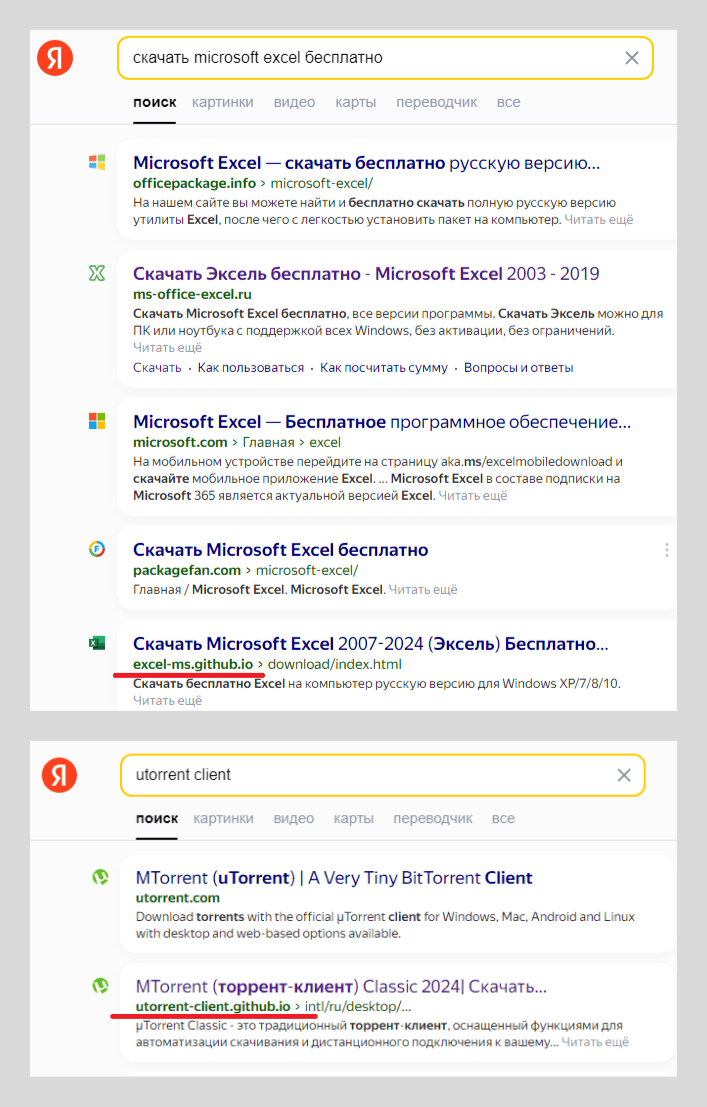
    We are quite sure that this campaign was a global one, but in this article, we’ll focus on an infection chain that, according to our telemetry, was targeting mainly Russian-speaking users. The attackers distributed the malicious files using websites for downloading popular software (uTorrent, Microsoft Office, Minecraft, etc.) for free. These websites were shown to users in the top search results in Yandex. Malware was also distributed through Telegram channels targeted at crypto investors and in descriptions and comments on YouTube videos about cryptocurrency, cheats and gambling.

    Infection

    The attackers were advertising their websites in Yandex search results. Users would see these malicious sites in the top results when searching for resources freely distributing popular software like uTorrent, MS Excel, MS Word, Minecraft, Discord and so on.

    Links to malicious websites in Yandex search results

    The frontend of these websites is a copy of either the official software website or a known piracy website distributing this kind of software:

    Malicious websites

    The attackers are running multiple Telegram channels distributing the malware in question. These channels are most definitely targeted at cryptocurrency owners or cheating gamers: they are offered to download specific software that presumably might be of interest to them. To prevent anyone trying to disclose information about these channels and the fraudulent activity of their creators, the administrators disabled message forwarding, screenshots, and previews of these channels in the Telegram web-version.

    Malware in the attackers’ Telegram channel

    Even more, the malware was also distributed via YouTube. The attackers uploaded numerous videos in English from multiple accounts which were presumably stolen. It’s also possible that the video content was downloaded from other YouTube channels and reuploaded without the authors’ consent. In the video description and in the top comment the attackers left links to their resources and instructions on how to launch the malware. Some of these links redirected users immediately to malicious websites, while others led to the aforementioned Telegram channels. We have also seen links to known IP logging websites, allowing the malicious actors to collect the IP addresses of anyone who follows the link and gets redirected to the malware-carrying website.

    Examples of videos with malicious links in their description or comments

    Comment with a link to a malicious Telegram channel

    Persistence and defense evasion

    After visiting the attackers’ website or channel, users might download a ZIP file being falsely advertised as popular software. Inside the archive is an MSI file and a TXT file with a password required for installation. There are also instructions on how to install the software, in which the attackers recommend disabling any installed antivirus and Windows Defender beforehand. In many cases, the instructions and the password are also provided on the websites and channels from which the user downloaded the malicious archive.

    Content of text file

    When launched, the MSI file asks for the password from the TXT file, which is one of the first countermeasures against sandbox analysis. If the user specifies the right password, the CustomAction field value of the MSI file is executed — this is effectively a VB script. This script launches a BAT file which extracts the next element of the attack chain from an encrypted archive. The first step is to escalate privileges by adding another BAT file to autorun, granting SYSTEM privileges for a single execution. After that, the system reboots.

    CustomAction field value in the MSI file

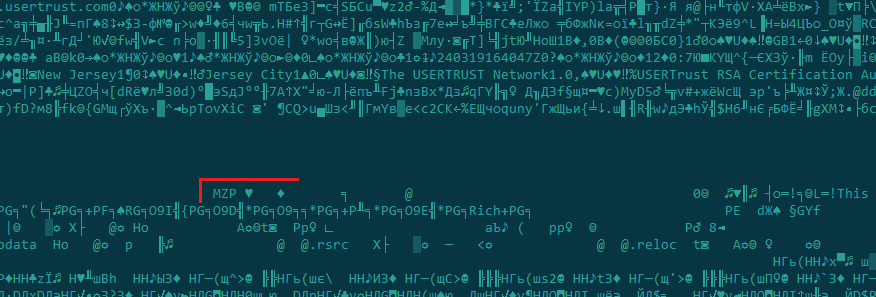
    The BAT file from autorun extracts the encrypted RAR archive and runs the “start” command with two DLL files as arguments — these were previously extracted from the archive. One of these files is a legitimate AutoIt interpreter and the second is a legitimate dynamic library with a valid digital signature. The malicious payload is an A3X script which was compiled into an EXE file and injected right inside the second DLL file signature.

    Malicious payload hidden inside a legit dynamic library signature

    This technique is interesting for two reasons. First, the A3X script is added to the signature in such a way that its validity remains intact and the whole file is still considered as signed, even with the payload. Such a malicious addition is almost impossible to detect without file content analysis. Second, the AutoIt interpreter has an interesting way of reading files that were specified in its launch argument. The file is scanned for a specific AutoIt signature which is present only in compiled scripts, and all other contents of the file are ignored. This behavior allows the attackers to hide their malicious payload anywhere in the file where it won’t be harmful for the container itself.

    Signature at the beginning of the A3X script

    Placing malicious payloads in an arbitrary section of a file is not new. Such techniques have been used not only with AutoIt, but with other platforms too. But what makes this attack stand out is the bypass of signature verification, making it possible for the payload-bearing file to seem legitimate.

    File with payload successfully bypasses signature verification

    If the “start” command failed, the BAT file removes the entire directory with the installed files, including itself. Otherwise, the malicious A3X implant is launched, which checks all active processes in attempt to find anything related to debugging or anti-malware products. If anything is found, the script immediately exits, as you can see in the snippet of deobfuscated code below.

    Security process name check by malicious implant

    The compiled A3X script contains multiple FileInstall function calls. This function takes two arguments: a path to the file that will be installed, and its destination path. Before compilation, this call just copies the file from its source path to its destination, but during the compilation the interpreter stores the files for installation right inside the compiled script.

    The resulting file contains not only the executable code itself, but also additional malicious files which will be installed directly from the implant. These files are required for persistence and to execute the next steps of the infection chain. The files are installed to the following paths:

    For persistence purposes, the directories containing the installed files have system, hidden and read-only attributes. In addition, using the icacls utility, the implant forbids all users across all domains to remove these folders, change their permissions, own them, add any files or subdirectories, write to them any attributes (including extended ones), or remove files from them.

    Files are copied to directories with unusual names for a reason. For example, the folder name “Classic.{BB64F8A7-BEE7-4E1A-AB8D-7D8273F7FDB6}” is treated specially by Windows Shell: Explorer will find the GUID in its name and treat it as a link — in this case to the Action Center. As a result, the user will not be able to view the contents of the directory.

    Malicious directory in Explorer

    After installing all the necessary files, the implant establishes persistence using WMI by creating filters which are activated by common events — common enough to guarantee filter activation. For each created filter, a polling frequency is specified. When a filter is activated, a specific command is executed using the __FilterToConsumerBinding class.

    • Once every three minutes, the netcat utility masked as StartMenuExperienceHost.exe is launched with the C&C address of the attackers (sportjump[.]ru) and “-e cmd.exe” as its arguments. It is then used as a reverse shell by the attackers.
    • Once every five to ten minutes, files named “nun.bat” are executed. They are copies of the same file which starts the next step of the infection chain. The attackers created two copies to increase the chance of malware execution, but if there are no outages, both of them are launched.
    • Once every fifteen minutes, the next step of the infection chain is launched directly via the “start” command.

    All these methods are used again for a better persistence by launching the “insta.bat” file right before the end of the A3X implant execution.

    Launch of the netcat utility

    Persistence is established not only through WMI; the implant also directly starts netcat, the “nun.bat” files, and the “start” command. After that, it also abuses the registry keys “Image File Execution Options”, “Debugger” and “MonitorProcess” with the same goals.

    One of the most interesting things about some variants of the malware is the download and use of the Wazuh SIEM agent for remote access and telemetry harvesting. To ensure that the attackers can execute any arbitrary command on the victim’s device, during the agent installation, the “remote_commands” option is set.

    Installation and launch of the Wazuh agent

    The first stage of the A3X implant collects the following information: computer name, username, OS version and architecture, CPU name, data about the GPU and installed AV software. All this information along with the current time is sent to a special Telegram bot chat controlled by the attackers. We’ve also seen some of the malware variants sending a screenshot of the user’s desktop or installing a malicious browser extension, which may replace cryptocurrency wallets in the clipboard.

    Malicious browser extension

    The next stage of the infection chain consists of two DLL files, that use the same technique as the first stage: a legitimate AutoIt interpreter and another A3X implant, located in the signature of the legitimate dynamic library. This implant is the final payload in the malware variant described here. It injects into a newly created explorer.exe process memory an open-source miner named SilentCryptoMiner, which contains the URL of the attacker’s mining configuration. This configuration specifies the cryptocurrency to be mined, the wallet, and so on. In the analyzed variants, we could see that the attackers mostly use anonymous cryptocurrencies like Monero or Zephyr.

    Example of the miner configuration

    Aside from its main purpose of generating cryptocurrency, SilentCryptoMiner can also hide its own activity from the processes specified in the “stealth-targets” argument and stop processes from the “kill-targets” process names list.

    Attack geography

    Most of the attacks with this infection chain targeted Russian users (87.63%). After that, the other top ten countries with the highest number of users affected by these attacks were Belarus, India, Uzbekistan, Kazakhstan, Germany, Algeria, Czech Republic, Mozambique, and Turkey.

    TOP 10 countries where users were affected by the described infection chain, June — August 2024 (download)

    Conclusion

    The attack described in this article vividly illustrates the fact that even mass campaigns can be quite complex and open up a wide range of opportunities for attackers. As a result of the multistage infection chain, the attackers can establish persistence in users’ systems in multiple ways, gaining full access. Even though the main goal of the attackers is to make profit by stealthily mining cryptocurrency, some variants of the malware can perform additional malicious activity, such as replacing cryptocurrency wallets in the clipboard and taking screenshots. The most interesting action in this attack was the implementation of unusual techniques like using an SIEM agent as backdoor, adding the malicious payload to a legitimate digital signature, and hiding directories containing malicious files.

    It’s important to mention that the websites, videos, and Telegram channels created by the attackers primarily target users seeking free versions of popular software or videogame cheats. This audience makes an easy target for the attackers because they are open to installing unofficial software from obscure sources and disabling security measures.

    Our products detect this malware with the following names:

    • HEUR:Trojan-Dropper.OLE2.Agent.gen
    • HEUR:Trojan.BAT.Agent.gen
    • HEUR:Trojan.VBS.Agent.gen
    • Trojan.Script.AutoIt.ak
    • Trojan.BAT.Agent.cix
    • Trojan.BAT.Miner.id
    • HEUR:Trojan.Multi.Agent.gen
    • PDM:Trojan.Win32.Generic

    MITRE ATT&CK Matrix

    Tactic Technique ID Technique
    Resource Development T1608.006 Stage Capabilities: SEO Poisoning
    T1608.001 Stage Capabilities: Upload Malware
    Execution T1204.001 User Execution: Malicious Link
    T1204.002 User Execution: Malicious File
    T1059.010 Command and Scripting Interpreter: AutoHotKey & AutoIT
    T1059.003 Command and Scripting Interpreter: Windows Command Shell
    T1059.005 Command and Scripting Interpreter: Visual Basic
    Persistence T1546.012 Event Triggered Execution: Image File Execution Options Injection
    T1546.003 Event Triggered Execution: Windows Management Instrumentation Event Subscription
    Privilege Escalation T1053.005 Scheduled Task/Job: Scheduled Task
    Defense Evasion T1055 Process Injection
    T1562.001 Impair Defenses: Disable or Modify Tools
    T1497 Virtualization/Sandbox Evasion
    T1027.009 Obfuscated Files or Information: Embedded Payloads
    T1027.010 Obfuscated Files or Information: Command Obfuscation
    T1036.008 Masquerading: Masquerade File Type
    T1564.001 Hide Artifacts: Hidden Files and Directories
    Discovery T1518.001 Software Discovery: Security Software Discovery
    T1033 System Owner/User Discovery
    T1082 System Information Discovery
    T1497 Virtualization/Sandbox Evasion
    Collection T1113 Screen Capture
    Impact T1496 Resource Hijacking
    Exfiltration T1041 Exfiltration Over C2 Channel

    Indicators of compromise

    Hashes
    b5b323679524d52e4c058b1a3dd8dee7
    4efa8ca01d7c566ff1b72f4ebf57cf2c
    10f888a9aa8082651adeff4790675fd5
    30dd26075a5ca7a4861e9214a99d0495
    60efc41c30fd9ab438e88c6011df5c38
    961fa114e9eb92016977940f7c97cdd9
    1457e18b453d8cefc34047e1b0fbf76f
    284418b6a9c70cc30ef14df3a87c24da
    5788631016d8bc495f4f2614f9a7bbe0
    a9bc00e5e8a17df95bd5b8c289a12b31
    a9bd813679517c846dcf36454baa6170
    a99f3f8736d7d3001aa5eb6202123948
    a802ce130be6546b76d4b54f72d14645
    ae9e83d1031462cb5e58b4525036670c
    b25f9490f6d80f9de5a9c02cc344f9f9
    cffc70e4fb7363024fcc3590755fa846
    e9154a7613a8f8baf67ec3b696c9cb12
    f213f94729b294c01a0df21800c4e395
    2e68f4438ce59c868af01b535c98060d
    839471243f9c4a294c42fabf636f7cad
    4b0d76262dd82985d330b02190a880c0
    1a5d955be79046a3288b869e44e87404
    f8342fd3e32dcf9832dff3e923ef530b
    20b6ac10f657963245940c9bcd25a346
    33c7c22e33e134ec3ddfc6be8ee1f1ee
    2e4146c1a93c0bfe0f4e9ea53b8da7ee
    827eca9ec457f3c5180f602832f44955
    e3b6142df6a7c73a99736082fbae2fa6
    4bdcbc7ec1929d9b1ebcc4d01d605b05
    0da6e1036ca5d8231ee94a4db8c48728
    098872e9e39bd4cd0e4debd4b397b555
    0305f8a9dee464f56023411e7b0924df
    be8b6452aa874904f116f9b7cdfe343b
    6c0416f719ceca15f9e9c4f210c64fb0
    25b90fa3b21875157c6f33b7e1b6e8d7
    14b7429205955056f1763553f82fe244

    URL-addresses
    excel-ms.github[.]io/Windows/MS-Excel.zip
    utorrent-client.github[.]io
    gta-5rp.github[.]io/Windows/GTArp.zip
    mssg[.]me/eahcu
    linktr[.]ee/excel_ms
    linktr[.]ee/utorrent_client
    nyaera[.]ru/wp-includes/uploads/art/utorrent.zip
    nyaera[.]ru/wp-includes/uploads/My/MS-Excel.zip
    github[.]com/lidiyakamalova89/www/raw/main/Ver.1.4.1.zip
    raw.githubusercontent[.]com/lidiyakamalova89/www/main/Ver.1.4.1.zip
    raw.githubusercontent[.]com/radominator7204/dsz/main/Install.zip
    sportjump[.]ru
    gamesjumpers[.]com
    gamejump[.]site
    alljump[.]ru
    pastebin[.]com/raw/F87y7zJV
    pastebin[.]com/raw/uU34Qunt
    rentry[.]co/mi9fomgo/raw

    MIL OSI Economics

  • MIL-Evening Report: There’s a renewed push to scrap junior rates of pay for young adults. Do we need to rethink what’s fair?

    Source: The Conversation (Au and NZ) – By Kerry Brown, Professor of Employment and Industry, School of Business and Law, Edith Cowan University

    NT_Studio/Shutterstock

    Should young people be paid less than their older counterparts, even if they’re working the same job? Whether you think it’s fair or not, it’s been standard practice in many industries for a long time.

    The argument is that young people are not fully “work-ready” and require more intensive employer support to develop the right skills for their job.

    But change could be on the horizon. Major unions and some politicians are pushing for reform – arguing “youth wages” should be scrapped entirely for adults.

    Why? They say the need to be fairly paid for equal work effort, as well as economic considerations such as the high cost of living and ongoing housing crisis, mean paying young adults less based on their age is out of step with modern Australia.

    So is there a problem with our current system, and if so, how might we go about fixing it?

    What are youth wages?

    In Australia, a youth wage or junior pay rate is paid as an increasing percentage of an award’s corresponding full adult wage until an employee reaches the age of 21.

    This isn’t the case in every industry – some awards require all adults to be paid the same minimum rates.

    But for those not covered by a specific award, as well as those working in industries including those covered by the General Retail Industry Award, Fast Food Industry Award and Pharmacy Industry Award, employees younger than 21 are not paid the full rate.

    Why pay less?

    Conventionally, junior rates have been thought of as a “training wage”. Younger people are typically less experienced, so as they gain more skills on the job over time, they are paid a higher hourly rate.

    But there are a few key problems with this approach, which may not be relevant given many employers’ expectations for their workers to start “job-ready” and a lack of consistency in the training they provide.

    Training up and developing skills is an important part of building any career. But it isn’t always provided by their employers.

    Many young adults undergo training prior to starting work and at their own expense.
    Best smile studio/Shutterstock

    Many young workers train themselves in job-related technical education and short courses, often at their own expense and prior to starting work.

    Employers reap the benefit of this pre-employment training and so a “wage discount” for younger workers may be irrelevant in this instance.

    None of this is to say employers aren’t offering something important when they take on young employees.

    Younger workers coming into employment relatively early have access to more than just a paid job, but also become part of a team, with responsibilities and job requirements that support “bigger-picture” life skills.

    Those who employ them may be contributing to their broader social and cultural engagement, something that could be considered part of a more inclusive training package. Whether that justifies a significant wage discount is less clear.


    Read more:
    Why real wages in Australia have fallen while they’ve risen in most other OECD countries


    Calls for a rethink

    There are growing calls for a rethink on the way we compensate young people for their efforts.

    An application by the Shop Distributive and Allied Employees’ Association – the union for retail, fast food and warehousing workers – seeks to remove junior rates for adult employees on three key awards. This action will be heard by the Fair Work Commission next year.

    Sally McManus, Secretary of the Australian Council of Trade Unions, said the peak union body will lobby the government to legislate such changes if this application fails. The Greens have added their support.

    That doesn’t have to mean abolishing youth wages altogether. But 21 years of age is a high threshold, especially given we get the right to major adult responsibilities such as voting and driving by 18.

    A transition strategy could consider gradually lowering this threshold, or increasing the wage percentages over time.

    Lessons from New Zealand

    We wouldn’t be the first to make such a bold change if we did.

    Our geographically and culturally close neighbour, New Zealand, has already removed the “youth wage” – replacing it with a “first job” rate and a training wage set at 80% of the full award rate in 2008.

    A common argument against abolishing youth wages – and increasing the minimum wage in general – is that it will stop businesses hiring young people and thus increase unemployment.

    But a 2021 study that examined the effects of New Zealand’s experience with increasing minimum wages – including this change – found little discernible difference in employment outcomes for young workers.

    The authors did note, however, that New Zealand’s economic downturn post-2008 had a marked effect on the employment of young workers more generally.

    New Zealand has already taken major steps in reforming junior pay rates.
    Stephan Roeger/Shutterstock

    What’s fair?

    It’s easy to see how we arrived at the case for paying younger adults less. But younger workers should not bear the burden of intergenerational inequity by “losing out” on wages in the early part of their working life.

    The debate we see now echoes the discussions about equal pay for equal work value run in the 1960s and ‘70s in relation to women’s unequal pay.

    We were warned that paying women the same as men would cause huge economic dislocation. Such a catastrophe simply did not come to pass.

    Kerry Brown is a member of the National Tertiary Education Union.

    ref. There’s a renewed push to scrap junior rates of pay for young adults. Do we need to rethink what’s fair? – https://theconversation.com/theres-a-renewed-push-to-scrap-junior-rates-of-pay-for-young-adults-do-we-need-to-rethink-whats-fair-240548

    MIL OSI AnalysisEveningReport.nz

  • MIL-OSI Africa: Deputy President confident his working visit will attract international investors

    Source: South Africa News Agency

    Deputy President Paul Mashatile says he is confident that his working visit to the United Kingdom and Ireland will improve trade and investment relations, which have been stagnant for years. 

    The Deputy President spoke during an engagement with the South African Chamber of Commerce (SACC) in London on Thursday. The SACC is an umbrella organisation and conduit for trade, community and investment into and out of South Africa.

    The country’s second-in-command is in the United Kingdom for the second leg of his working visit to improve trade and investment relations between the nations and to woo investors following his travels to Ireland. 

    READ | SA, Ireland eye improved trade

    His interactions were centred on various issues, including the Government of National Unity (GNU), energy, infrastructure, and the measures to foster a favourable environment for trade and investment.

    The country’s second-in-command reiterated that the political environment in South Africa is stable for investment because of the newly established GNU, which has been operational for less than 100 days and is already yielding results.

    “Our numerous meetings with potential investors have revealed a shift in their attitudes and perceptions towards South Africa, indicating an optimistic outlook. 

    “Our alliance, based not on personal sentiments but on the aspiration to enhance South Africa and, consequently, the lives of our citizens, will undoubtedly sustain the GNU administration for five years.” 

    However, he said they will measure the GNU’s success based on the number of employment and entrepreneurs they assist in establishing sustainable enterprises.

    “Businesses hope to continue working with the government in the public-private partnership that has reduced load shedding, improved transport and logistics infrastructure, and strengthened national capacity to combat crime and corruption,” the Deputy President said. 

    Shifting his focus to energy, he stated that investors have demonstrated that ending the load shedding that began in 2007 is the most positive news. 

    “They confirmed that it allows them to conduct business without uncertainty. The elimination of power outages was largely due to a series of measures implemented by the State-owned power utility, Eskom and government over the past two years.”

    He also told the SACC that government was addressing the obstacles in the freight logistics system that continue to impede competitiveness and undermine economic growth. 

    “We are on a mission to create and sustain a bankable investment pipeline of priority, credible, quality and high-impact projects that span the country through Infrastructure South Africa, the primary driver of the National Infrastructure Plan 2050,” he explained. 

    Mashatile believes that the SACC plays an essential role in engaging with businesses to promote bilateral trade and investment links between the United Kingdom and South Africa. 

    “It is our responsibility as leaders in our respective regions to foster an atmosphere that encourages entrepreneurship, fosters innovation, and drives inclusive growth.”

    In addition, he expressed his desire to increase South Africa’s exports of valuable goods and services to the United Kingdom. 

    “It is excellent that the two countries already exchange food and beverages. It is critical that we collaborate to create strategies to accelerate international trade and investment.”

    Mashatile announced that the State was simplifying regulatory procedures through the Red Tape Task Team, making it easier for businesses to operate and invest locally.

    READ | Govt determined to deal with SA’s mounting challenges – Mashatile

    He concluded his address with South Africa’s stance on peace and stability in Africa and globally, stressing that the nation is anti-war and pro-peace. 

    “We reaffirm our commitment to the inviolability of sovereignty and the importance of national security.

    “More immediately, we support [silencing the guns]. We want to see peaceful and mutual coexistence between Russia, Ukraine, Israel, Sudan, and the rest of the globe, because war is terrible for business.” – SAnews.gov.za

    MIL OSI Africa

  • MIL-OSI Africa: SA a trusted partner in delivering global business services

    Source: South Africa News Agency

    SA a trusted partner in delivering global business services

    South Africa is a trusted partner in delivering key global business services such as financial risk, regulatory support and digital services to United Kingdom investors, says Deputy Minister of Trade, Industry and Competition Andrew Whitfield.

    The Deputy Minister delivered the keynote address during the South Africa-UK roundtable on Global Business Services (GBS) in London. The session was hosted by Business Process Enabling South Africa in London. 

    “With a highly skilled, English-speaking workforce, South Africa has positioned itself as a go-to hub for outsourcing services ranging from legal support to digital transformation. 

    “South Africa’s competitive advantage in offering cutting-edge solutions at a fraction of the cost, saving companies up to 50% compared to other outsourcing destinations puts our country in good stead,” Whitfield explained.

    According to the Department of Trade, Industry and Competition, the roundtable formed part of a high-level mission to the United Kingdom (UK) which is being led by Deputy President Paul Mashatile. The visit is focused on promoting South Africa as a premier investment destination.

    READ | UK investors encouraged to establish their business operations in SA

    Whitfield highlighted that the South African global business services (GBS) sector has evolved from traditional call centre services into providing high-value, complex services that meet the needs of global investors.

    He added that the UK remained South Africa’s largest source market for GBS, accounting for over 56 000 jobs and generating £650 million in revenue through partnerships with leading UK firms such as British Gas, Scottish Power, and Virgin Atlantic.

    Whitfield emphasised that since the introduction of the GBS incentive, more than 50 global companies have established operations in South Africa, generating R40 billion in export revenue. 

    The primary objective of the incentive which became effective from 1 January 2019, is to create employment in South Africa through servicing offshore activities. The secondary objectives of the programme are to:
    – Create employment opportunities for the youth (age 18-34 years); and
    – Contribute to the country’s export revenue from offshoring services.

    Growth 

    He added that the workforce has grown significantly, from 26 700 jobs in 2015 to over 104 000 today. 

    In addition, the GBS Masterplan is playing an important role in this growth shifting the focus from low-cost call centres to more sophisticated, high-value services, such as data analytics, financial services, and digital risk management.

    “Our GBS sector offers far more than cost savings; it delivers quality outcomes with proven resilience. South Africa has shown an exceptional ability to adapt, including the successful implementation of flexible work-from-home models. 

    “Additionally, we have not experienced any electricity outages for over 190 days, which is a critical factor for global businesses seeking reliable operations,” said the Deputy Minister.

    Looking ahead, Whitfield said the GBS Masterplan envisions creating up to 500 000 cumulative jobs by 2030, through continued expansion and new investments. 

    The Global Business Services Masterplan was signed by the department and stakeholders on 18 November 2021.

    The Masterplan process brings together government, industry, social partners and labour to set a common vision and action agenda for developing and growing the sector.

    “We will work tirelessly with all stakeholders to realise this high-growth scenario, particularly as global businesses increasingly look to South Africa as a destination for innovative digital services and niche sector solutions.”

    Furthermore, he urged UK businesses to explore the lucrative opportunities in South Africa’s GBS sector.

    “Our value proposition is clear, quality services, major cost savings, and a stable environment. We invite British investors to take advantage of the opportunities our dynamic sector offers and contribute to its continued growth.

    “Ultimately, this is a key sector to realising the Government of National Unity’s apex priority to rapid economic growth and job creation,” he said.

    The Deputy Minister was pleased with the positive engagements and sentiment from GBS companies present, who have a healthy pipeline to expand their operations in South Africa in the next 12 months. –SAnews.gov.za


    Edwin

    MIL OSI Africa

  • MIL-OSI Russia: Financial news: 10/04/2024, the deposit auction of the Moscow Small Business Lending Assistance Fund will take place

    MILES AXLE Translation. Region: Russian Federation –

    Source: Moscow Exchange – Moscow Exchange –

    Please note: This information is raw content directly from the source of the information. It is exactly what the source states and does not reflect the position of MIL-OSI or its clients.

    Please note; This information is raw content directly from the information source. It is accurate to what the source is stating and does not reflect the position of MIL-OSI or its clients.

    https://www.moex.com/n73754

    Category24-7, MIL-AXIS, Moscow, Moskov Stotsk Exchange, Russians Savings, Russian Federation, Russians Language, Russian economy

    Post navigation


    Archives

    Archives Privations of the Police Proudly would trust WordPress

    Parameters
    Date of the deposit auction 10/04/2024
    Placement currency RUB
    Maximum amount of funds placed (in placement currency) 235,000,000.00
    Placement period, days 11
    Date of deposit 10/04/2024
    Refund date 10/15/2024
    Minimum placement interest rate, % per annum 19.00
    Conditions of imprisonment, urgent or special Urgent
    Minimum amount of funds placed for one application (in placement currency) 235,000,000.00
    Maximum number of applications from one Participant, pcs. 1
    Auction form, open or closed Open
    Basis of the Agreement General Agreement
     
    Schedule (Moscow time)
    Preliminary applications from 12:00 to 12:10
    Applications in competition mode from 12:10 to 12:15
    Setting a cut-off percentage or declaring the auction invalid until 12:25
       
    Additional terms Placement of funds with the possibility of early withdrawal of the entire deposit amount and payment of interest accrued on the deposit amount at the rate established by the deposit transaction, in the event of non-compliance of the Bank with the requirements established by paragraph 2.1. of the Regulation “On the procedure for selecting banks for placing funds of the Moscow Small Business Lending Assistance Fund in deposits (deposits) under the GDS” (as amended on the date of the deposit transaction), early withdrawal at the “on demand” rate, payment of interest at the end of the term, without replenishment

    EDITOR’S NOTE: This article is a translation. Apologies should the grammar and or sentence structure not be perfect.

    MIL OSI Russia News

  • MIL-OSI Economics: AML Focus newsletter published

    Source: Isle of Man

    The Isle of Man Financial Services Authority has published the second edition of its AML Focus newsletter.

    The publication, which is available to view on the Authority’s website, showcases the many workstreams taking place in relation to Anti-Money Laundering and Countering the Financing of Terrorism (AML/CFT) supervision.

    An insight is provided into recent developments, including the findings of thematic reviews and questionnaires, details of forthcoming events, proposed legislative changes, and collaborations with UCM and compliance professionals.

    There is also an update on compliance matters in relation to beneficial ownership, and an article exploring the pros and cons of Artificial Intelligence (AI) in the workplace, particularly in relation to customer onboarding.

    We hope you find the contents of interest and please contact the team at aml@iomfsa.im with any ideas for future topics.

    Newsletter contents

    1 Welcome from the Head of AML/CFT Supervision

    2 Acting on your feedback

    3 Compliance forum / Countering Financial Crime Conference

    4&5 Summary of thematic reviews

    6 Introduced Business webinar / Human Trafficking factsheet

    7 Spotlight on beneficial ownership compliance

    8 Legislative updates / UCM collaboration

    9 National Risk Assessment

    10&11 Pros and cons of AI in the workplace

    12 Questions and Answers

    MIL OSI Economics

  • MIL-OSI Russia: Marat Khusnullin together with Kokhir Rasulzoda held a meeting of the intergovernmental commission on economic cooperation between Russia and Tajikistan

    MILES AXLE Translation. Region: Russian Federation –

    Source: Government of the Russian Federation – An important disclaimer is at the bottom of this article.

    The 20th meeting of the Intergovernmental Commission on Economic Cooperation between the Russian Federation and the Republic of Tajikistan was held in Dushanbe under the chairmanship of Deputy Prime Minister of Russia Marat Khusnullin and Prime Minister of Tajikistan Kohir Rasulzoda.

    Previous news Next news

    Marat Khusnullin together with Kokhir Rasulzoda held a meeting of the intergovernmental commission on economic cooperation between Russia and Tajikistan

    “Russia and Tajikistan maintain high dynamics of bilateral contacts. Constructive interaction has been established, all issues are discussed promptly thanks to our direct contacts. Our economic ties demonstrate high rates of development. Russia remains a key trading partner of Tajikistan. The volume of trade turnover for the first eight months of 2024 increased by 14%, both imports and exports are growing. Interregional cooperation is on the rise. More than 70 Russian regions have already established business contacts with the republic in a wide range of areas. I thank my colleagues for their fruitful work. I am confident that our mutually beneficial large-scale cooperation will develop in the future, and we will make every effort to achieve this,” said Marat Khusnullin.

    The Deputy Prime Minister emphasized that an important step in the development of Russian-Tajik relations was, among other things, the agreement reached on the construction of the Center for Gifted Children in Dushanbe and a new building for the Russian Drama Theater named after V. Mayakovsky. At present, the design assignments and general plans have been signed and a state registration certificate has been received. It is planned to begin construction directly this year.

    Prime Minister of Tajikistan Kokhir Rasulzoda noted the stability of development of Russian-Tajik relations in a wide range of areas. According to him, bilateral personal meetings are a good opportunity to resolve a number of issues and discuss important topics aimed at socio-economic cooperation of both states. The Republic of Tajikistan adheres to strategic partnership and alliance with Russia, and also intends to take further steps to develop Russian-Tajik partnership, the Prime Minister of Tajikistan noted.

    At the meeting, the parties discussed details of cooperation in the areas of trade, industry, customs, agriculture, culture, education, tourism, and also defined plans for the further development of bilateral relations.

    In conclusion, Marat Khusnullin and Kokhir Rasulzoda signed the protocol of the 20th meeting of the Intergovernmental Commission on Economic Cooperation between the Russian Federation and the Republic of Tajikistan, as well as the Program of Economic Cooperation between the Government of the Russian Federation and the Government of the Republic of Tajikistan until 2027.

    In addition, within the framework of the intergovernmental commission, a memorandum of cooperation was signed between the Chamber of Commerce and Industry of the Republic of Tajikistan and the RVB company (Wildberries and Russ), as well as a memorandum between VisionLabs and the State Unitary Enterprise Smart City on cooperation aimed at developing joint projects in the field of digitalization.

    Please note: This information is raw content directly from the source of the information. It is exactly what the source states and does not reflect the position of MIL-OSI or its clients.

    Please note; This information is raw content directly from the information source. It is accurate to what the source is stating and does not reflect the position of MIL-OSI or its clients.

    http://government.ru/nevs/52896/

    EDITOR’S NOTE: This article is a translation. Apologies should the grammar and or sentence structure not be perfect.

    MIL OSI Russia News

  • MIL-OSI: Biz2Credit to Host “Small Business, Inflation, and the Economy in 2024” Online Town Hall on Tuesday, Oct. 8, with U.S. Representatives Nick LaLota (R-NY) and Sylvia Garcia (D-TX)

    Source: GlobeNewswire (MIL-OSI)

    NEW YORK, Oct. 04, 2024 (GLOBE NEWSWIRE) — Biz2Credit will host U.S. Representatives Nick LaLota (R, NY-01) and Sylvia Garcia (D, TX-29) to discuss the state of the small business economy in 2024 and the actions that Congress is taking to support business owners. The virtual forum will take place on Tuesday, October 8, at 2:00 p.m. (EDT) and will explore topics including:

    • Challenges for small business owners in 2024 and looking into 2025.
    • Initiatives the Federal government is considering next that may provide further economic support to American small businesses.
    • How a President Harris or President Trump will address small business issues.
    • Preparing for what’s coming next with Biz2Credit’s review of business financing options as 2024 closes and amid the recent interest rate cut by the Federal Reserve.
    • Biz2Credit’s research and insights on primary data from small business owners.

    This online forum will give business owners a chance to hear from Rep. LaLota, a member of the House Committee on Small Business, and Rep. Garcia, who has helped provide crucial aid to Texas small businesses. They will discuss the small business environment in their districts, provide insights on how the Federal government and private industry are collaborating to help entrepreneurs, and respond to questions from constituents and business owners. To register for this event, click here.

    “We are thrilled to have Rep. LaLota and Rep. Garcia join our online Town Hall and discuss their positions on small business, the current economic environments in their home districts, and how Washington can best support entrepreneurial growth,” said Rohit Arora, CEO of Biz2Credit and one of the nation’s leading experts in small business finance.

    U.S. Representative Nick LaLota (R, NY-01) was sworn into office in January 2023. Inspired by his family’s history of service, he graduated from the U.S. Naval Academy and reached the rank of Lieutenant. Later, he earned his MBA at Hofstra University’s Zarb School of Business and his J.D. from Hofstra’s Maurice A. Deane School of Law. As a member of the Amityville Board of Trustees, he focused on reducing taxes and improving services. Today, in Congress, he advocates for lower taxes, energy independence, and the protection of constitutional freedoms. As a member of the House Committee on Small Business, he serves as chair of the Subcommittee on Contracting and Infrastructure and is a member of the Subcommittee on Economic Growth, Tax, and Capital Access.

    “I’m excited to join the Biz2Credit Small Business Town Hall to tackle the challenges and opportunities our small businesses face,” said Rep. LaLota. “As a proud member of the House Small Business Committee, I know just how crucial these businesses are to our economy. I’ll keep pushing for policies that strengthen small businesses as the backbone of America!”

    U.S. Representative Sylvia R. Garcia (D, TX-29) was sworn into Congress in January 2019 and thereby became the first Latina to represent Texas in her district. She graduated from Texas Woman’s University with a degree in social work and political science, and later graduated from the Thurgood Marshall School of Law at Texas Southern University. Rep. Garcia has served as a social worker and a legal aid lawyer and later as Presiding Judge of the Houston Municipal System, Houston City Controller, and Harris County Commissioner. After serving in the Texas State Senate, she was elected to represent Texas’s 29th Congressional District 29 and became the first Hispanic member of the Houston Congressional Delegation and one of the first two Latinas to represent Texas in the Congress. She has long been an advocate for working families and economic development.

    “Small businesses are the backbone of our communities and the start of so many American Dreams. Women and minority entrepreneurs, especially in the Latino community, have been driving our recovery with strength and resilience,” said Rep. Garcia, who serves as the Vice Ranking Member of the House Financial Services Committee. “It’s our job in Congress to ensure they have the tools and resources to keep thriving. I’m excited to join Rep. LaLota and Biz2Credit to talk about how we can make that happen.”

    About Biz2Credit
    Founded in 2007, Biz2Credit has helped thousands of companies access more than $10 billion in small business financing. The company is expanding its industry-leading Biz2X® technology in custom digital platform solutions for banks and other financial institutions, investors, and service providers. Visit http://www.biz2credit.com, Instagram, Facebook, and X (formerly Twitter).

    Media Contact: John Mooney, (908) 720-6057, john@overthemoonpr.com

    The MIL Network

  • MIL-OSI USA: Disaster Recovery Center Opens in Joliet

    Source: US Federal Emergency Management Agency 2

    strong>SPRINGFIELD – A FEMA/State Disaster Recovery Center will open Friday, October 4, 2024, to help residents kickstart their recovery after the July 13 – 16, 2024, severe storms, tornadoes, straight-line winds and flooding.

    Specialists from FEMA, the state of Illinois and the U.S. Small Business Administration will be at the center to help survivors apply for federal disaster assistance, upload documents, get their questions answered in person, access other types of help that may be available and learn ways to make their property more disaster resistant.

    The center will be open at the following location, days and hours:

    Will County Center for Community Concerns
    2455 Glenwood Ave
    Joliet, IL 60435
    Hours: Mon. – Fri. 8 a.m. – 7 p.m., Sat. 7 a.m. – 12 p.m., Closed Sundays

    Additional recovery centers will be opening in other impacted counties soon. To find the center nearest you, visit FEMA.gov/DRC. Survivors may visit any center for assistance.

    Assistance in languages other than English, including American sign language, and translated materials are available at these centers. Disaster Recovery Center locations are chosen for their accessibility, with the goal of reaching as many people as possible. Accessible parking spaces are available at all centers. 

    Survivors don’t need to visit a Disaster Recovery Center to apply for FEMA assistance. To apply without visiting a center, go online to DisasterAssistance.gov, download the FEMA mobile app or call the FEMA Helpline at 800-621-3362. If you use a relay service such as video relay service, captioned telephone service or others, give FEMA your number for that service when you apply.

    For even more information about the disaster recovery operation in Illinois, visit www.fema.gov/disaster/4819.  

    MIL OSI USA News

  • MIL-OSI: Hut 8 Operations Update for September 2024

    Source: GlobeNewswire (MIL-OSI)

    19.5 EH/s and 762 MW under management in mining with path to 33.5 EH/s

    Announced partnership with BITMAIN to host next-generation ASIC miner with purchase option to reach 20 EH/s of self-mining

    GPU-as-a-service subsidiary generating revenue with first cluster fully online

    Outstanding balance of Anchorage Digital loan equitized at price of $16.395 per share

    MIAMI, Oct. 04, 2024 (GLOBE NEWSWIRE) — Hut 8 Corp. (Nasdaq | TSX: HUT) (“Hut 8” or the “Company”), a leading, vertically integrated operator of large-scale energy infrastructure and one of North America’s largest Bitcoin miners, today released its operations update for September 2024.

    “We made significant strides in scaling our compute layer across Bitcoin mining and AI this month,” said Asher Genoot, CEO of Hut 8. “In partnership with Bitmain, we launched a next-generation, DLC-cooled ASIC miner. We are targeting a 15 EH/s hosting deployment at our Vega site in the Texas Panhandle by H1 2025, which is expected to generate ~$135 million in annualized hosting revenue on a fully ramped basis. The agreement’s purchase option creates a clear path to 20 EH/s of self-mining capacity by allowing us to fully acquire the hosted machines for our fleet. This deal demonstrates our commitment to pushing the mining industry forward while positioning for expansion into AI data centers.”

    “Our GPU-as-a-service vertical is now fully operational and generating revenue. As we advance discussions with potential partners to expand our digital infrastructure layer across Bitcoin mining and AI compute, we remain committed to maintaining balance sheet strength and creative structuring. To that end, we have also enhanced our financial position by fully converting our ~$38 million Anchorage Digital loan into equity at $16.395 per share of common stock, which represents a 51% premium to the Company’s 20-day VWAP through the day prior to the signing of the equitization agreement.”

    Highlights:

    • Announced partnership with BITMAIN to host U3S21EXPH ASIC miner in H1 2025 with path to 20 EH/s of self-mining capacity; partnership is expected to generate ~$135 million in annualized hosting revenue on a fully ramped basis
    • Brought 1,000 NVIDIA H100 GPUs online and began generating revenue for new GPU-as-a-service subsidiary Highrise AI, Inc.
    • Announced equitization of ~$38 million Anchorage Digital loan at a price of $16.395 per share
    • Continued construction of Ionic Digital’s Cedarvale site and remain on track to complete site buildout by December

    Operating Metrics

    Average during the period unless otherwise noted September 2024 August 2024
    Total energy capacity under management1,2,3 762 MW 762 MW
    Total deployed miners under management4 189.9K 179.5K
    Total hashrate under management5 19.5 EH/s 18.5 EH/s
         
    Self-Mining6    
    Deployed miners7 58.6K 58.5K
    Deployed hashrate8 5.6 EH/s 5.6 EH/s
    Bitcoin produced1,9 85 BTC 87 BTC
    Bitcoin on balance sheet1 9,106 BTC 9,105 BTC
         
    Managed Services2,10    
    Energy capacity under management1 582 MW 582 MW
    Deployed miners under management 140.8K 130.5K
    Hashrate under management 14.9 EH/s 13.9 EH/s
         
    Hosting    
    Deployed miners under management11,12 76.7K 76.7K
    Hashrate under management13 8.6 EH/s 8.5 EH/s
         

    Energy Infrastructure Platform1

            Current/Contracted Revenue Stream(s)14
    Site Location Owner Power
    Capacity
    Self-
    Mining
    Managed
    Services
    Hosting HPC Power
    Sales
    Vega15 Texas Panhandle Hut 8 205 MW     Yes16    
    Medicine Hat Medicine Hat, AB Hut 8 67 MW Yes        
    Salt Creek Orla, TX Hut 8 63 MW Yes        
    Alpha Niagara Falls, NY Hut 8 50 MW Yes   Yes    
    Drumheller17 Drumheller, AB Hut 8 42 MW          
    Kelowna Kelowna, BC Hut 8 1.1 MW       Yes  
    Mississauga Mississauga, ON Hut 8 0.9 MW       Yes  
    Vaughan Vaughan, ON Hut 8 0.6 MW       Yes  
    Vancouver II Vancouver, BC Hut 8 0.5 MW       Yes  
    Vancouver I Vancouver, BC Hut 8 0.3 MW       Yes  
    King Mountain18 McCamey, TX Hut 8 (JV) 280 MW Yes Yes Yes   Yes
    Iroquois Falls19 Iroquois Falls, ON Hut 8 (JV) 120 MW         Yes
    Kingston19 Kingston, ON Hut 8 (JV) 110 MW         Yes
    North Bay19 North Bay, ON Hut 8 (JV) 40 MW         Yes
    Kapuskasing19 Kapuskasing, ON Hut 8 (JV) 40 MW         Yes
    Cedarvale3 Barstow, TX Managed 215 MW   Yes      
    East Stiles Midland, TX Managed 30 MW   Yes      
    Rebel Midland, TX Managed 25 MW   Yes      
    Stiles Midland, TX Managed 20 MW   Yes      
    Garden City Midland, TX Managed 12 MW   Yes      
    Total     1,322 MW          
                     

    Upcoming Conferences & Events:

    • October 7–9, 2024: Yotta 2024
    • October 15, 2024: USC Marshall Energy Business Summit 2024
    • November 13–14, 2024: Cantor Fitzgerald Crypto, Digital Assets & AI Infrastructure Conference 2024
    • November 19, 2024: Craig-Hallum 15th Annual Alpha Select Conference
    • November 19, 2024: Benzinga Future of Digital Assets Conference 2024
    Notes:
    (1) As of the end of the period
    (2) Includes all Self-Mining, Managed Services, and Hosting infrastructure, including 100% of the energy capacity at the King Mountain site, which is owned by the King Mountain JV in which the Company has a 50% membership interest and a Fortune 200 renewable energy producer has the remaining 50% membership interest (the “King Mountain JV”).
    (3) Includes 215 megawatts assuming full capacity at Cedarvale, which was first energized in April and is currently under construction.
    (4) Includes all miners that are racked with power and networking, rounded to the nearest 100, in Self-Mining, Managed Services, and Hosting infrastructure with power and networking, including all miners at the King Mountain site.
    (5) Includes all Self-Mining, Managed Services, and Hosting hashrate, including 100% of the hashrate at the King Mountain site.
    (6) Self-Mining operations for Hut 8 include 100% of operations at the King Mountain site.
    (7) Deployed miners are defined as those physically racked with power and networking, rounded to the nearest 100; deployed self-mining miners net of the 50% share of the King Mountain JV held by Hut 8’s joint venture partner was 49.6K during September and 49.5K during August.
    (8) Indicates the target hashrate of all deployed miners; deployed self-mining hashrate net of the 50% share of the King Mountain JV held by Hut 8’s joint venture partner was 4.7 EH/s during September and August, respectively.
    (9) Bitcoin produced net of the 50% share of the King Mountain JV held by Hut 8’s joint venture partner was 72 BTC during September and 74 BTC during August.
    (10) The Managed Services figures reflected in this table include the Self-Mining and Hosting metrics from the sites where Hut 8’s Managed Services business is an additional service layer in the operation of the site (at King Mountain, Rebel, Stiles, East Stiles, and Garden City). As a result, the sum of the Self-Mining, Managed Services, and Hosting numbers will not add up to the “Total energy capacity under management”, “Total deployed miners under management”, and “Total hashrate under management” figures that are also reflected in the table.
    (11) Miners are rounded to the nearest 100.
    (12) 42.6K deployed miners under management net of the 50% share of the King Mountain JV held by Hut 8’s joint venture partner during September and August, respectively.
    (13) 4.7 EH/s under management net of Hut 8’s joint venture partner’s 50% share of the King Mountain JV during September and August, respectively.
    (14) Reflects revenue sources to Hut 8, its subsidiaries, and/or joint ventures in which they participate.
    (15) Site is currently under development.
    (16) Anticipated to begin generating revenue in H1 2025
    (17) Site currently shut down; Hut 8 maintaining lease with option value of re-energizing site.
    (18) Owned by a JV between Hut 8 and a Fortune 200 renewable energy producer in which Hut 8 has an approximately 50% membership interest.
    (19) Owned by a JV between Hut 8 and Macquarie in which Hut 8 has an approximately 80% membership interest.
       

    About Hut 8 

    Hut 8 Corp. is an energy infrastructure operator and Bitcoin miner with self-mining, hosting, managed services, and traditional data center operations across North America. Headquartered in Miami, Florida, Hut 8 Corp. has a portfolio comprising twenty sites: eleven Bitcoin mining, hosting, and Managed Services sites in Alberta, New York, and Texas, five high performance computing data centers in British Columbia and Ontario, and four power generation assets in Ontario. For more information, visit http://www.hut8.com and follow us on X (formerly known as Twitter) at @Hut8Corp.

    Cautionary Note Regarding Forward–Looking Information

    This press release includes “forward-looking information” and “forward-looking statements” within the meaning of Canadian securities laws and United States securities laws, respectively (collectively, “forward-looking information”). All information, other than statements of historical facts, included in this press release that address activities, events or developments that Hut 8 expects or anticipates will or may occur in the future, including such things as future business strategy, competitive strengths, goals, expansion and growth of the business, operations, plans and other such matters is forward-looking information. Forward-looking information is often identified by the words “may”, “would”, “could”, “should”, “will”, “intend”, “plan”, “anticipate”, “allow”, “believe”, “estimate”, “expect”, “predict”, “can”, “might”, “potential”, “predict”, “is designed to”, “likely” or similar expressions. Specifically, such forward-looking information included in this press release includes statements relating to our path to increase our EH/s under management to 33.5 EH/s, our path to increase self-mining EH/s to 20 EH/s through the purchase option with Bitmain, the timing and potential revenues for the hosting deployment at our Vega site, our plans to expand into AI data centers, our discussions with potential partners to expand our digital infrastructure layer across Bitcoin mining and AI compute, our commitment to balance sheet strength and creative structuring, and the timing to complete the Cedarvale site buildout for Ionic Digital.

    Statements containing forward-looking information are not historical facts, but instead represent management’s expectations, estimates and projections regarding future events based on certain material factors and assumptions at the time the statement was made. While considered reasonable by Hut 8 as of the date of this press release, such statements are subject to known and unknown risks, uncertainties, assumptions and other factors that may cause the actual results, level of activity, performance or achievements to be materially different from those expressed or implied by such forward-looking information, including but not limited to, security and cybersecurity threats and hacks; malicious actors or botnet obtaining control of processing power on the Bitcoin network; further development and acceptance of the Bitcoin network; changes to Bitcoin mining difficulty; loss or destruction of private keys; increases in fees for recording transactions in the Blockchain; erroneous transactions; reliance on a limited number of key employees; reliance on third party mining pool service providers; regulatory changes; classification and tax changes; momentum pricing risk; fraud and failure related to digital asset exchanges; difficulty in obtaining banking services and financing; difficulty in obtaining insurance, permits and licenses; internet and power disruptions; geopolitical events; uncertainty in the development of cryptographic and algorithmic protocols; uncertainty about the acceptance or widespread use of digital assets; failure to anticipate technology innovations; the COVID19 pandemic, climate change; currency risk; lending risk and recovery of potential losses; litigation risk; business integration risk; changes in market demand; changes in network and infrastructure; system interruption; changes in leasing arrangements; failure to achieve intended benefits of power purchase agreements; potential for interrupted delivery, or suspension of the delivery, of energy to mining sites and other risks related to the digital asset mining and data center business. For a complete list of the factors that could affect Hut 8, please see the “Risk Factors” section of Hut 8’s Transition Report on Form 10-K, available under the Company’s EDGAR profile at http://www.sec.gov, and Hut 8’s other continuous disclosure documents which are available under the Company’s SEDAR+ profile at www.sedarplus.ca and EDGAR profile at www.sec.gov.

    Hut 8 Corp. Investor Relations
    Sue Ennis
    ir@hut8.com

    Hut 8 Corp. Media Relations
    media@hut8.com

    The MIL Network

  • MIL-OSI: Qylur Awarded SBIR Phase II Contract for a Tactical AI Spectrum Classifier Systems (TASCS)

    Source: GlobeNewswire (MIL-OSI)

    Sunnyvale, CA, Oct. 02, 2024 (GLOBE NEWSWIRE) — Qylur Intelligent Systems announces it has been selected by AFWERX for a Direct-to-Phase II contract in the amount of $1.25M focused on a new Tactical AI Spectrum Classifier Systems (TASCS) to address the most pressing challenges in the Department of the Air Force (DAF). The Air Force Research Laboratory and AFWERX have partnered to streamline the Small Business Innovation Research (SBIR) and Small Business Technology Transfer (STTR) process by accelerating the small business experience through faster proposal to award timelines, changing the pool of potential applicants by expanding opportunities to small business and eliminating bureaucratic overhead by continually implementing process improvement changes in contract execution. The DAF began offering the Open Topic SBIR/STTR program in 2018 which expanded the range of innovations the DAF funded and now on September 17th, 2024, Qylur has started its journey to create and provide innovative capabilities that will strengthen the national defense of the United States of America.

    “Our mission has always been to leverage our unique AI experience and innovative AI-based intelligent machine solutions in the service of protecting life and our way of life” said Dr. Lisa Dolev, Founder and CEO of Qylur. “The spectrum environment is growing increasingly complex and more contested from both adversarial and unintentional sources. We are honored, through this SBIR contract, to be further extending our technology with new agile autonomous spectrum capabilities to help maintain spectrum superiority in support of Air Force mission imperatives.”

    The views expressed are those of the author and do not necessarily reflect the official policy or position of the Department of the Air Force, the Department of Defense, or the U.S. government.

    About Qylur Intelligent Systems

    Qylur Intelligent Systems is an AI the systems company with breakthrough technologies that redefine intelligent machine capabilities for both the commercial and defense sectors. At the heart of Qylur’s innovation is its pioneering Mission Autonomous AI, delivering transformative software and hardware solutions for next-generation intelligent systems. Its flagship offerings include the SNIM® AI platform and the Q Sentinel, the world’s first fully autonomous self-service security screening solution. With a portfolio of patented AI core technologies, and under the visionary leadership of Founder and CEO Dr. Lisa Dolev—an accomplished technology entrepreneur and inventor with over 35 years of expertise in security and defense—Qylur continues to shape the future of AI-driven intelligent machines, visit http://www.Qylur.com.

    About AFRL

    The Air Force Research Laboratory is the primary scientific research and development center for the Department of the Air Force. AFRL plays an integral role in leading the discovery, development, and integration of affordable warfighting technologies for our air, space and cyberspace force. With a workforce of more than 12,500 across nine technology areas and 40 other operations across the globe, AFRL provides a diverse portfolio of science and technology ranging from fundamental to advanced research and technology development. For more information, visit afresearchlab.com.

    About AFWERX

    As the innovation arm of the DAF and a directorate within the Air Force Research Laboratory, AFWERX brings cutting-edge American ingenuity from small businesses and start-ups to address the most pressing challenges of the DAF. AFWERX employs approximately 370 military, civilian and contractor personnel at five hubs and sites executing an annual $1.4 billion budget. Since 2019, AFWERX has executed over 6,200 new contracts worth more than $4.7 billion to strengthen the U.S. defense industrial base and drive faster technology transition to operational capability. For more information, visit: http://www.afwerx.com.

    The MIL Network

  • MIL-OSI Russia: Putin and Sobyanin opened an innovative practical platform in Rudnev

    MILES AXLE Translation. Region: Russian Federation –

    Source: Moscow Government – Government of Moscow –

    On the Day of Secondary Vocational Education, Russian President Vladimir Putin, Moscow Mayor Sergei Sobyanin and Russian Minister of Education Sergei Kravtsov opened the Rudnevo practical training site for Moscow colleges.

    “We have started building a large area related to education. This is secondary vocational education. This building where we are is an intercollegiate center for training specialists on high-tech equipment. Next, a laboratory complex is being built. Next, a building for the Stankin University is being built, where there will be a student training center, their laboratories and production areas. Next, a building for the production of Rostec machine tools will be built. So this is a large machine-building complex that will be a center of competence for our country,” the Moscow Mayor said.

    The Rudnevo site is the first innovative educational space for practical training of qualified personnel taking into account the needs of the Moscow economy, which is the largest production and scientific-engineering center of Russia. More than 4.5 thousand enterprises operate here and over 750 thousand people work.

    Educational platform “Rudnevo”

    The college training platform was created taking into account the new concept of secondary vocational education (SVE) development. The capital’s industrial enterprises took part in the development of the project. Advanced training programs, workshops equipped with the most modern equipment, close cooperation with future employers ensure high quality training of sought-after specialists.

    The educational platform is located in the industrial park “Rudnevo”, which is part of the special economic zone “Technopolis Moscow”. College students will study on the same territory with industrial partners – future employers.

    “The site’s capacity allows for training more than three thousand people per year. Practical classes are conducted by the most competent and experienced master teachers and employees of partner employers. Students from 15 Moscow colleges will be the first to undergo practical training here. A Center for Professional Competencies has also been created on the site. Its tasks include updating educational programs and forecasting the emergence of new competencies,” he wrote in his

    telegram channel Sergei Sobyanin.

    Source: Sergei Sobyanin’s Telegram channel @mos_sobyanin

    The building with a total area of 9.1 thousand square meters houses a high-tech complex, which includes 21 workshops and laboratories. It is as close as possible to the conditions of real production. Here, students will be able to practice professional skills in production conditions in such areas and specialties as:

    — mechanical engineering (assembly mechanic, turner, milling machine operator, operator of CNC machines, general machine operator, welder (manual and partially mechanized welding – surfacing), adjuster of machines and equipment in mechanical processing, specialist in the quality control department);

    — electronics (installer of electronic equipment and devices, assembler of electronic equipment and devices, adjuster of electronic equipment and devices, SMD line operator);

    — automation of production (specialist in servicing mechatronic and robotic systems, fitter of control and measuring instruments and automation, specialist in additive technologies);

    — aviation industry, including unmanned aircraft systems (UAS) (aircraft electrical equipment fitter, aircraft equipment assembler, aircraft composite parts assembler, unmanned aircraft system operator up to 30 kilograms).

    Thanks to cooperation with residents of the Rudnevo Industrial Park, all conditions for training have been created on the site. Workshops and laboratories are equipped with equipment that is installed in production facilities, and the training programs take into account the needs of future employers.

    The training and production complex of the site includes three blocks.

    The industrial block consists of a section where CNC machines are installed, laboratories for metrology, standardization and certification, precision digital measurements, mechanical engineering design, as well as testing grounds for turning, milling machines, and metalworking and welding work.

    The UAS production site includes areas for programming, installation of aviation and electronic equipment, final assembly of UAS, modeling and manufacturing of molds, composite materials, unit and modular assembly, as well as laboratories for aerodynamics, aeromechanics and UAS data analysis.

    The multi-profile unit consists of metalworking and electrical installation workshops, laboratories for technical systems control, materials science and composite materials, pneumatic and hydraulic systems.

    The uniqueness of the workshops is that they allow for a full-fledged production process to be organized. At the UAS site, students will be able to manufacture drone bodies, solder electronic boards, program, assemble, pilot, and decipher flight data, and in the mechanical engineering zone, they will be able to do metalwork and evaluate the quality of finished products.

    Large industrial enterprises take part in the practical training of students. Among them are the Moscow machine-building plants Avangard and Skorost, the production complex Salut, the National Helicopter Manufacturing Center named after M.L. Mil and N.I. Kamov, the Moscow Design and Production Complex Universal named after A.I. Privalov, the companies Gaskar Group, Kronstadt, Aeromax, Nyukon Energy, CARS, Vemina Aviaprestige, Monolith, Aeropribor-Voskhod.

    Preparing students at the educational site “Rudnevo”

    The capacity of the Rudnevo educational site allows it to train more than three thousand students per year.

    In the 2024/2025 academic year, practical training will be provided to students from 15 secondary specialized educational institutions. These include Polytechnic College No. 8 named after I.F. Pavlov, Polytechnic College named after N.N. Godovikov, Moscow State Educational Complex, College of Communications No. 54 named after P.M. Vostrukhin, College of Automation and Information Technology No. 20, Educational Complex “Yugo-Zapad”, Moscow Industrial College, College of Architecture, Design and Reengineering No. 26, College of Hospitality Industry and Management No. 23, Police College, Moscow College of Business Technologies, College of Modern Technologies named after M.F. Panov, College of Entrepreneurship No. 11, First Moscow Educational Complex and Technological College No. 24.

    Depending on the specialty, students will be able to complete a single professional module in one of the courses or work on site for the entire period of study. In addition, they will have the opportunity to find employment at a partner enterprise. In this case, you can complete your studies according to an individual schedule.

    Practical classes will be conducted by competent and experienced master teachers, as well as representatives of partner employers. In total, 42 masters of industrial training from Moscow colleges and 40 current employees of industrial enterprises of the capital will be able to teach at the site.

    A center of professional competencies has been created on the basis of the site. Here they will be engaged in updating educational programs taking into account the prospective development of science and production technologies, forecasting the emergence of new competencies based on the transformation of production and including them in training programs, as well as methodological support for industrial training masters and improving their pedagogical and professional skills. Cooperation with the country’s leading engineering universities, such as the Moscow State Technological University (MSTU) “Stankin” and the Moscow State Technical University named after N.E. Bauman, will help solve these problems.

    In addition, an entrance control of students’ readiness to master programs at the Rudnevo educational platform is provided. For this purpose, the center of professional competencies will interact with partner colleges, providing them with methodological and consulting support.

    Each student has an individual work place on the site. The logistics of the classrooms are well thought out: for example, there are areas for project and group work. Modern public spaces will make extracurricular time comfortable.

    In the coworking space, students can work on projects, discuss ideas, and analyze situations they have considered in class. The assembly hall is designed for conferences and business events.

    The college has a 147-seat canteen where students on a budget are provided with free hot meals. On the third floor there is a cafe whose products are produced and sold by students of Moscow food colleges.

    In addition to the practical training platform for colleges, the Moscow Government, together with MSTU Stankin, is implementing a project within the framework of which the first competence center for the machine tool industry in the country is being created in Rudnev.

    The 19.5 thousand square meter building will house a tool and equipment testing center, an expert analysis center, a design bureau, pilot production, a reverse engineering center, and a numerical control center.

    The center will be able to train and practice about a thousand students per year. The site also organizes pilot and small-scale production of specialized products.

    On the industrial policy of the city of Moscow

    Modern Moscow is the largest industrial and scientific-engineering center of Russia. There are more than 4.5 thousand industrial enterprises in the capital, employing more than 750 thousand people.

    Every year, 150 new technology companies open in Moscow and dozens of investment projects are implemented, providing the city with additional jobs. By 2030, the number of industrial production facilities will increase to 5.5 thousand, and their employees – to 850 thousand. The total area of industrial infrastructure will grow from 14 million square meters to 21 million.

    The manufacturing industry is the driving force behind Moscow’s economic development.

    “I will say about industry that in general it is actively developing. Over the past five years, I reported, the manufacturing industry has doubled,” said Sergei Sobyanin.

    By the end of 2024, private and public investment will amount to 310 billion rubles. According to forecasts, by 2030 they will grow by 620 billion rubles – to 930 billion rubles.

    One of the effective measures to support the city is the localization of industrial enterprises in the special economic zone “Technopolis Moscow”. This is the center for the development of the capital’s advanced high-tech industry, which includes six sites with a total area of more than 280 hectares. More than 1.5 million square meters of industrial and public-business areas have been built here. The plan is to increase this figure to 3.8 million square meters by 2030.

    Today, there are more than 220 enterprises operating in Technopolis Moscow, 112 of which have resident status and receive tax preferences. Residents are exempt from paying property, land and transport taxes for 10 years, and the income tax rate for them is only two percent instead of 20.

    During the operation of the special economic zone, companies invested about 330 billion rubles in the development of their high-tech production facilities and created 22 thousand jobs. The volume of investments from the Moscow budget amounted to almost 135 billion rubles.

    Innovative developments of enterprises can be applied in various fields – from microelectronics to medicine and space. Among them are optical multiplexers, portable ultrasound machines, mobile ventilator complexes, multifunctional amphibious robots designed for reconnaissance and liquidation of consequences of accidents at various flooded objects, nuclear power plants and mines.

    Another tool for developing Moscow industry is clustering. By 2030, more than 13 inter-industry clusters will operate in Moscow – this is over seven million square meters of production space and 100 thousand jobs.

    Thus, one of the largest pharmaceutical clusters in the country, which includes 13 companies, is successfully operating at the Alabushevo site of the Technopolis Moscow special economic zone. A photonics and microelectronics cluster has also opened there, with 61 companies participating. Total investments in this site amounted to 137.9 billion rubles, of which 7.9 billion rubles were invested by the Moscow Government. Total investments will grow to 353 billion rubles by 2030.

    Two years ago, the Moscow cluster of electric vehicle manufacturing began its work. It included 64 companies, most of which receive benefits from the city. In particular, they are exempt from paying property, land and transport taxes.

    One of the important projects is the construction of the first gigafactory in Russia for the production of batteries. The city has signed an offset contract for the supply of batteries for public electric transport. The total purchase amount will be 172 billion rubles over six years. The enterprise will produce 50 thousand batteries per year, which will cover about 40 percent of the needs of the Russian market. The opening of the production will create 900 new jobs. The total investment in the project is 52 billion rubles, of which 25 billion rubles were allocated by the Moscow Government, and 27 billion are private funds.

    On behalf of the President of the Russian Federation Vladimir Putin, a new industrial park was opened in Rudnevo in 2023. Federal Center for Unmanned Aircraft Systems. Today it unites 11 leading developers and manufacturers of unmanned aircraft systems. The enterprises have created more than 2.8 thousand jobs. Investments in the industrial park “Rudnevo” amounted to 97 billion rubles, of which 20 billion rubles are private funds, and 77 billion rubles were invested by the Government of Moscow. By 2030, a total of 490 billion rubles will be invested.

    Work is currently underway to form food and construction clusters in TiNAO.

    The food cluster will build over 800 thousand square meters of industrial space and create 11.4 thousand jobs. Private investments will reach almost 90 billion rubles.

    The opening of the construction cluster will create 30 thousand jobs. More than 1.6 million square meters of industrial real estate will be built within its boundaries. Private investments will amount to almost 145 billion rubles.

    In the capital it is being created shipyard for the production of electric ships. Its capacity will occupy 23 thousand square meters. Commissioning is scheduled for the first quarter of 2025. The enterprise will provide more than 500 new high-tech jobs. Investments from the Moscow Government amount to more than 4.6 billion rubles.

    In addition, two new large industrial clusters will appear in TiNAO – automobile manufacturing and eco-industrial. In total, almost 23 thousand highly qualified jobs will be created there.

    Sobyanin named innovative clusters that will be created in New Moscow

    A cluster of innovative technologies in the field of construction is being created on the basis of OOO “Innovative Technology Plant – Monarch”. Last year, the first stage was put into operation – this is an experimental plant with an area of 26.6 thousand square meters. The volume of investments amounted to 3.4 billion rubles. Today, 500 people work here.

    A glass cluster is also being built in TiNAO. 120 hectares will be allocated for it for facilities with a total area of 840 thousand square meters. 9.6 thousand jobs will appear here. Investments will exceed 105 billion rubles. The implementation of the project will allow to cover the need for special glass, including medical glass.

    The elevator construction industry is quite promising for investment. The departure of foreign companies from the domestic market opens up new opportunities for capital enterprises to occupy vacant niches. Thus, on the basis of the Karacharovsky Mechanical Plant, a cluster of elevator construction and vertical transport of Moscow is being formed, which will accelerate the development and localization of vertical transport production in Russia.

    The National Space Center is being built on the territory of the Khrunichev State Research and Production Space Center. This is a large-scale project implemented jointly with Roscosmos. According to preliminary estimates, about 27 thousand jobs will be created on the site.

    Moscow has historically had a strong scientific base. Today, in the R sphere

    There are 735 higher education institutions (excluding branches) in Russia. At the same time, every fifth university is located in Moscow, which confirms the presence of significant human resources potential in the capital and the high level of training of students for work in high-tech enterprises.

    Today in Moscow, specialists in engineering and technical fields are trained at the Bauman Moscow State Technical University, the Stankin Moscow State Technological University, the Moscow Institute of Physics and Technology, the Lomonosov Moscow State University, the National Research Nuclear University MEPhI, the MISiS University of Science and Technology and other leading universities.

    In order to increase the number of qualified personnel annually graduating for the industrial sector, the Moscow Government is modernizing the system of secondary vocational education and implementing accelerated training of engineering personnel.

    Industrial Park “Rudnevo”

    “Rudnevo” is an industrial park within the SEZ “Technopolis Moscow”, built in the east of the city in record time to accommodate critically important production. This is an example of a modern high-tech industrial park, where it is convenient to work, study, create production and educational clusters.

    Construction work in Rudnev began at the end of 2020. During the construction of production buildings, domestic materials were used (for a number of items, import substitution was 100%) and modern technologies, which made it possible to reduce construction time by 35-50 percent, and the cost of work by 10-15 percent.

    Currently, 21 production buildings with a total area of 377 thousand square meters have been erected, including a pilot production facility and a design bureau. Additional production buildings are in the active stage of construction, as well as a social infrastructure building, which will house laboratories, office space, a training center and other social facilities for company employees.

    In the future, 21 thousand highly qualified jobs will be created at the enterprises in Rudnev, primarily for residents of the rapidly developing Moscow districts of Kosino-Ukhtomsky, Vykhino-Zhulebino and Nekrasovka, as well as the urban district of Lyubertsy in the Moscow region.

    Thanks to the SEZ regime, companies – residents of Rudnev receive significant tax benefits. In particular, they are exempt from property, transport and land taxes. The income tax rate for them is only two percent. Residents have a free customs zone regime and land lease benefits.

    In addition to the Federal Center for Unmanned Aircraft Systems, the Rudnevo Industrial Park also houses a production building for the Almaz-Antey Air Defense Concern and an industrial complex for PJSC Yakovlev, which currently produces wing kits for the MS-21 medium-range aircraft.

    In addition, enterprises producing ATMs, electrical capacitors, absorbent linen, equipment for industrial waste sorting, and others have set up their production facilities in Rudnev.

    Please note: This information is raw content directly from the source of the information. It is exactly what the source states and does not reflect the position of MIL-OSI or its clients.

    Please note; This information is raw content directly from the information source. It is accurate to what the source is stating and does not reflect the position of MIL-OSI or its clients.

    https://vvv.mos.ru/major/themes/11847050/

    EDITOR’S NOTE: This article is a translation. Apologies should the grammar and or sentence structure not be perfect.

    MIL OSI Russia News

  • MIL-OSI Russia: Sobyanin spoke about the development of secondary vocational education in Moscow

    MILES AXLE Translation. Region: Russian Federation –

    Source: Moscow Government – Government of Moscow –

    Today, 275 thousand students study in Moscow colleges, and by 2030 their number will double to 420 thousand. This was announced by Moscow Mayor Sergei Sobyanin during the opening of the practical training site for Moscow colleges “Rudnevo”. The event was attended by Russian President Vladimir Putin and Russian Minister of Education Sergei Kravtsov.

    “We plan to double the number of students studying in colleges and graduates in five years. Thus, the number of students in colleges and higher education institutions will be comparable. Which, in general, is necessary for the economy today. What do we plan to do? We have two thousand real laboratories, workshops. We plan to update them by 100 percent by 2027. To make both laboratories and workshops modern,” said Sergei Sobyanin.

    In addition, according to the Mayor of Moscow, it is planned to build 400 thousand square meters of campuses, renovate existing sites and create shared-use centers.

    Today, there are 178 colleges operating in Moscow. Most specialists are trained for the IT sector, industry, creative industry and construction. Thanks to the high quality of training, graduates of the capital’s colleges quickly find work, Sergei Sobyanin said in on your telegram channel.

    Source: Sergei Sobyanin’s Telegram channel @mos_sobyanin

    Secondary vocational education is actively developing throughout the country. More than 65 percent of all workers are specialists with secondary vocational education, noted Sergey Kravtsov.

    “It is important that the programs in colleges have become as practice-oriented as possible. About 80 percent of the educational process is practice. We updated the standards together with the industries. New 400 standards, directly with the enterprises for the requirements that the enterprises need. We do not forget about general education: Russian, mathematics, history, new history textbooks for colleges from this year and education. Each college has an education advisor,” said Sergey Kravtsov.

    Colleges prepare specialists that industries need. Some of the students begin their professional activities while still studying. According to Sergey Kravtsov, today more than 90 thousand college students are employed in the military-industrial complex.

    “The measures that are being implemented increase the prestige of blue-collar jobs. Last year, 1.25 million applications were submitted to colleges. Three people per place on average, in some specialties – nine people per place. 62.5 percent of ninth-graders choose colleges. In particular, career guidance helps, which we have been conducting in schools since last year from the sixth grade, when children come to colleges and to production facilities,” said Sergey Kravtsov.

    Labor market in Moscow

    The capital’s labor market is one of the largest and most diversified in the world. More than 8.6 million people are employed in the city’s economic sectors. Moscow has a constant need for qualified personnel, as well as a minimal level of unemployment.

    75 percent of employers are interested in specialists with secondary vocational education. Demand for college graduates is observed in such industries as industry, transport, logistics, construction, trade and information technology (IT).

    “Today, 75 percent of secondary vocational education personnel are required. At the same time, we train 63 percent of specialists with higher education in Moscow, and only 18 percent of secondary vocational education specialists. And another 19 percent of short programs are workers,” added Sergei Sobyanin.

    At the same time, the professional training system is primarily focused on specialists with higher education. There is an imbalance between the needs of the market and the capabilities of the professional education system. The demand for mid-level specialists with decent salaries is a stable trend in the capital’s labor market.

    The city pays special attention to the development of the secondary vocational education system. Currently, there are 178 colleges in the capital, including 71 private, 44 federal and 63 colleges under the jurisdiction of the Moscow Government. More than 270 thousand students study there, including almost 130 thousand people receive education in city colleges.

    20.6 thousand students study in city colleges in IT fields. 20.1 thousand people receive education in the industrial sector, 14.7 thousand Muscovites in creative industries and construction, 14.2 thousand and 13.4 thousand students in transport and healthcare, respectively. 12.9 thousand city residents study specialties related to hospitality, nine thousand students in education and social spheres, and 6.5 thousand people in security and law. 3.2 thousand Muscovites receive education in finance and trade, 1.5 thousand in culture and art, and 0.4 thousand students in sports.

    Last year, 93 percent of city college graduates found jobs.

    In 2023, an additional program of career guidance and career testing for ninth-graders was introduced. Thanks to this, graduates were able to get acquainted with modern professions taught in Moscow colleges. The program aroused great interest among teenagers and their parents. More than 60 thousand schoolchildren took free career testing, and over 70 percent of its participants decided to enroll in secondary vocational education institutions.

    Professional auditions, excursions to employers and interactive quests: Moscow ninth-graders completed a comprehensive career guidance program

    In 2024, the Moscow Government doubled the number of Moscow schoolchildren who graduated from city colleges nine classes. In total, 16 thousand additional budget places were created in popular areas. These include medicine, security, finance, information technology, hospitality, creative industries, industry, construction and transport.

    As a result, about 45 thousand students entered city colleges. Of these, about 36 thousand ninth-grade graduates study on a budget basis.

    The increase in budget places satisfies the demand of young people to obtain promising and in-demand specialties, allowing them to begin professional activities as early as 18–19 years of age.

    It is planned that by 2030 the number of students in Moscow (city, federal and private) colleges will grow to 420 thousand. Admission will increase by 53 percent: more than 150 thousand students will enroll in colleges annually – primarily ninth-grade graduates from the capital and other regions. Secondary vocational education programs will be taught to 11th-grade graduates and adults who want to obtain a popular and promising specialty.

    Modernization of the secondary vocational education system

    Increasing the number of college students is an important component of the modernization of the secondary vocational education system carried out by the Moscow Government. It is based on two basic principles:

    — relevance and demand — educational programs are developed with the participation of employers and professional associations;

    — practical orientation — students are immersed in a professional environment from the first year, and practical classes make up at least 70 percent of the total training time and are conducted under the guidance of experienced mentors.

    Sergei Sobyanin: At least 70% of classes in Moscow colleges will be practical

    As part of the modernization of the secondary vocational education system, the infrastructure and content of educational programs are being updated. This work includes several aspects.

    Constant interaction with enterprises and work at their request. For this purpose, colleges cooperate with many organizations. Today, among the partners of the capital’s institutions of secondary vocational education are more than three thousand employers. Among them are the state corporation Rostec, the State Unitary Enterprise Moscow Metro, JSC Sheremetyevo Security, PJSC MOEK, JSC Concern VKO Almaz-Antey, OOO Glavstroy, PJSC MGTS, PJSC Rostelecom, GUP Mosgortrans, PJSC Sberbank of Russia, PJSC Gazprom, the association of Russian automobile dealers, OOO Inzhenerstroy, OOO Spetsgrad, JSC Moscow Automobile Plant Moskvich, JSC NPP Toriy, the holding company United Confectioners and other companies.

    For the second year, a unique practice has been implemented — conducting a qualification exam in the conditions of a real production process. Its successful completion provides an opportunity to receive a rank and a job offer at the same time. In addition, employers participate in the development of the content and criteria for assessing the final demonstration exam and are part of the examination committee.

    Updating educational programs. The content of educational programs is formed on the basis of a competency profile compiled jointly with the professional community and industry representatives. In total, city colleges provide training in 170 specialties.

    By September 1, 2024, 60 percent of the programs currently being studied by 43 thousand college students have been updated. By the 2026/2027 academic year, all educational programs will be brought up to the new standard. In addition, a system for adapting programs to new technologies and changing labor market needs will be created. The main objective is to train a student who is ready to start full-time work immediately after graduation.

    “One of the most important problems is the quality of teachers. Since we have a large production potential, we are solving this problem. Reducing the training time to three years, today – four years. We are simply compressing some programs so that the guys can enter real life faster,” said Sergei Sobyanin.

    The duration of training is reduced by increasing its intensity. This academic year, the number of four-year programs has been reduced by 70 percent. Starting from the 2025/2026 academic year, all preparatory programs will be designed for two years for those who have completed 11th grade and three years for ninth-graders.

    Multidisciplinary and increasing the level of qualification. Students have the opportunity to master not one, but even two or three professions during their studies. This increases the competitiveness of young specialists in the labor market.

    For example, in the specialty “mechanical engineering technology”, a graduate receives the basic qualification of “technician-technologist”, as well as the opportunity to work in the professions of “general profile machine operator”, “setter of machines and manipulators with program control”, “controller of machine and metalwork works”.

    The city is forming a mandatory level of training quality for each profession. The minimum standard of qualification level will be the third category, and for some specialties – the fourth.

    Previously, college graduates received no higher than a second degree. They were not allowed to work in complex types of production. The guys had to be trained further. As a result, the wages of young specialists were low.

    Digitalization of education using the services of “MES College”. Since September 2024, teachers and students of 47 city colleges have had access to the electronic services of the “Moscow Electronic School” to prepare for classes (“MESH”). This improved the quality of education and made the educational process more accessible and convenient for all participants.

    Currently, the “MES” is being finalized to meet the specifics and objectives of professional education. It will be completed by 2026. Specialized forms of control and certification will be introduced, a student portfolio, an electronic grade book, personal student and teacher accounts, as well as an electronic library of materials for teachers will be created.

    The MES library will feature a set of materials designed for modern formats and teaching technologies: electronic lesson plans with video assignments and tests, interactive applications, virtual laboratories, electronic teaching aids, and digital textbooks.

    Improving the material and technical base of secondary vocational education. A practical training site for Moscow colleges operates in the Rudnevo industrial park. In 2024–2025, it is planned to open two more similar sites — Pechatniki and Yug. Their educational capacity will allow them to train 20,000 students annually, as well as adults who want to get a new specialty.

    A large-scale process of equipping colleges with new modern equipment has begun. Thus, by the end of 2024, it is planned to update and create about 650 educational laboratories and workshops. In 2025, 1,450 workshops will be updated, and in 2026-2027 – another 300 workshops.

    In total, it is planned to re-equip about 2050 laboratories and workshops. This will allow practical and laboratory work to be carried out at a modern technological level using equipment installed at the capital’s enterprises.

    It is planned to build seven innovative educational campuses with a total area of almost 400 thousand square meters to accommodate more than 60 thousand students. Among them are colleges in the fields of creative industry, information technology, healthcare, hospitality, industry, transport, construction and others. The buildings are designed for modern educational technologies taking into account the best world practices. There will be ergonomic premises with a comfortable educational environment and the effect of complete immersion in the profession.

    The new campuses will feature professional workshops, as well as internal and external full-cycle production sites for students to practice their complex skills in conditions close to reality. The educational space will include coworking spaces and transformable rooms for group and project work.

    In addition, the plans include a major overhaul of the Moscow Technological College and the Moscow College of Management, Hotel Business and Information Technology “Tsaritsyno”. These are three buildings with a total area of 50 thousand square meters.

    By 2031, it is planned to completely renew the infrastructure of city colleges.

    Expansion of the career guidance program for schoolchildren. In the 2024/2025 academic year, the program will cover eighth-graders in addition to ninth-graders. It is expected that about 100 thousand Moscow schoolchildren will be able to take part in it.

    One of the new areas will be student-to-school mentoring. Senior students will visit schools and talk about college education, share their success stories, and help kids make the right choice.

    The pool of employers — project partners — will expand. In the new academic year, schoolchildren will visit companies operating in all sectors of the city’s economy. They will get acquainted with high-tech equipment and talk to specialists.

    In particular, excursions to the territories of industrial enterprises of the special economic zone “Technopolis Moscow”, professional tests and master classes with the best employees of resident companies are planned.

    Particular attention will be paid to working with parents. Saturday meetings are planned at career guidance centers with labor market experts and college representatives.

    You can find out more about the in-demand professions and specialties taught in the capital’s colleges on the portal “School. Moscow”, in the section “Atlas of Professions” and podcast “The Key to the Profession”. Useful content about secondary vocational education is also published in the telegram channel “Moscow education” and the group of the same name on the social network “VKontakte”.

    Raising the prestige of secondary vocational education. In 2024, the Moscow Government established grants for capital colleges for achieving high results in teaching students.

    In total, it is planned to award 20 grants: three first-degree grants of 40 million rubles, seven second-degree grants of 25 million rubles, and 10 third-degree grants of 15 million rubles.

    When determining grant recipients, students’ results in passing qualification and demonstration exams, victories in professional skills championships, as well as graduate employment results and other achievements will be taken into account.

    The grant funds are planned to be used for additional material incentives for teachers and masters of industrial training who have achieved high results in their work. This will become an additional incentive for improving the quality of secondary vocational education in Moscow.

    The first colleges to receive grants will be determined based on the results of the 2024/2025 academic year. In the future, incentive funds are planned to be awarded to the best secondary vocational education institutions annually.

    Please note: This information is raw content directly from the source of the information. It is exactly what the source states and does not reflect the position of MIL-OSI or its clients.

    Please note; This information is raw content directly from the information source. It is accurate to what the source is stating and does not reflect the position of MIL-OSI or its clients.

    https://vvv.mos.ru/major/themes/11848050/

    EDITOR’S NOTE: This article is a translation. Apologies should the grammar and or sentence structure not be perfect.

    MIL OSI Russia News

  • MIL-Evening Report: OECD comparisons reveal an unflattering picture of inequality in NZ – could that change?

    Source: The Conversation (Au and NZ) – By Colin Campbell-Hunt, Emeritus Professor in Business, University of Otago

    Getty Images

    Recent research showing the richest New Zealanders pay less tax than their counterparts in nine similar OECD countries raises, yet again, serious questions about wealth, equality and fairness.

    How unequal is the distribution of income in New Zealand? How do we compare with some of the countries we might benchmark against? And, if we don’t like what we see, can we change it?

    The metric most widely used by economists to measure inequality in incomes is called the Gini coefficient (named after the Italian statistician Corrado Gini who developed it).

    It brings together income data across all households, typically divided into groupings of 10% or 20% of the total. When there is no inequality of incomes between groups, Gini equals zero. When the top group captures all income, Gini equals 1.

    Measuring inequality

    The graph below shows Gini coefficients, before taxes and welfare payments (known as “transfers”), for all 37 countries in the OECD in 2019 (before the COVID pandemic disrupted household surveys). Ginis are ranked left to right, from least to most unequal.


    The Gini before taxes and transfers is a measure of the inequality produced by the structures of a country’s economy: the way value chains operate, the markets for products and services, the scarcity of certain skills, rates of unionisation, and so on.

    This gives us a measure of structural inequalities in a country. Governments, however, use taxes and transfers to shift income between households. They take taxes from some and boost incomes of the more disadvantaged.

    Ginis of incomes after taxes and transfers give us a measure of how well members of a society can support similar standards of living. They are shown in the following graph, again from least to most unequal. These give us a measure of social inequalities.


    Focusing just on social inequality, it is no surprise Scandinavian countries are among the least unequal, as well as Canada and Ireland. Neither is it surprising the UK and US approach the highest levels of social inequality in the OECD.

    Inequalities in Australia and New Zealand lie between these, but further from the Scandinavians and closer to the Anglo-Americans.

    Social inequality in NZ

    When we look at the difference between structural and social inequalities, we can see the extent to which taxes and transfers – government redistribution of income – reduce inequality.

    As we can see, New Zealand’s structural inequality, shaped by the economic reforms of the mid-1980s, is middling by comparison to other OECD countries.

    But New Zealand’s social inequality lies near the bottom third of OECD measures. A halving of top income tax rates in the mid-1980s and the rollback of the welfare state in the 1990s (after then finance minister Ruth Richardson’s 1991 “mother of all budgets”) significantly contributed to this.

    The downward columns in the following graph show the effect of government redistributive measures, ranked from most to least active. The result of these government redistributions in New Zealand is weaker even than in the laissez-faire economies of the United Kingdom and United States.


    Where does NZ sit?

    How do New Zealand’s inequalities compare with countries we might choose to benchmark against?

    Below, the Scandinavian countries famous for their egalitarian social systems are shown in orange. In green are countries that tolerate slightly higher social inequality: Sweden, Canada and Ireland.

    And the UK and US – exemplars of free-market capitalism that were the models for New Zealand’s reforms of the mid-1980s – are highlighted in grey.


    Reducing inequality

    How hard would it be to change? Could New Zealand, for example, reduce its level of social inequality to match Canada? Absolutely, yes.

    Other OECD data show Canada significantly cut its inequalities between 2010 and 2019. The country moved from a position identical to Luxembourg (haven for Europe’s wealthy) to be roughly level with Sweden.

    To match Canada’s level now, New Zealand would need to reduce structural inequalities further, or redistribute about as much as Norway and Denmark do. It can be done, in other words.

    Indeed, Finland shows government redistributions can transform some of the worst levels of structural inequality to produce outcomes comparable to other Scandinavian countries.

    New Zealand can aspire to goals for social equality matching those in the upper half of OECD countries. Beyond revisions to taxation and transfers, inequalities in health and education would also need to come down to reduce the social and economic costs of poverty and disadvantage that should bring shame to us all.


    The author acknowledges the contribution of data provided by Max Rashbrooke.


    Colin Campbell-Hunt does not work for, consult, own shares in or receive funding from any company or organisation that would benefit from this article, and has disclosed no relevant affiliations beyond their academic appointment.

    ref. OECD comparisons reveal an unflattering picture of inequality in NZ – could that change? – https://theconversation.com/oecd-comparisons-reveal-an-unflattering-picture-of-inequality-in-nz-could-that-change-239306

    MIL OSI AnalysisEveningReport.nz