Category: CTF

  • MIL-OSI Canada: Celebrating Canadian Citizenship: Diversity, Resilience and a Shared Future

    Source: Government of Canada News

    Statement

    Ottawa, May 26, 2025—The Honourable Lena Metlege Diab, Minister of Immigration, Refugees and Citizenship, issued the following statement today to mark the start of Citizenship Week, which runs from May 26 to June 1, 2025:

    “Each year, Citizenship Week offers our country an occasion to reflect on the meaning of citizenship. Canada is a mosaic that includes Canadians of all backgrounds and cultures, and that holds at its centre the histories of Indigenous Peoples and our commitment to reconciliation. This week, and every week, we embrace the shared rights and responsibilities that come with Canadian citizenship and remember the common values that define us as Canadians. We also take this moment to recognize that our diversity is our strength and to collectively recommit to building a better future for all who live here.

    “As Minister of Immigration, Refugees and Citizenship, a proud Lebanese Canadian, and the daughter of immigrants, taking this week to celebrate our newest citizens is especially meaningful to me.

    “It takes incredible courage to face the challenges and uncertainty of a new place, and to seek better opportunities and security for one’s family. As Canadians, it is our responsibility to continue to highlight the value that immigration brings to Canada, and to protect the inherent rights and dignity of those who seek to call it home.

    “I encourage people across the country to attend one of the many citizenship ceremonies open to the public this week. Being part of this important milestone in someone’s life is an honour and a privilege.

    “Every day across the country, Canadians find ways to show pride in their citizenship and exercise their rights as citizens, whether through volunteering in their communities, speaking up on issues of importance, learning our official languages, voting in elections, or celebrating national milestones. Each individual act is an affirmation of all there is to celebrate about being Canadian.

    “To those becoming citizens this week: your stories, your skills, and your decision to make this country home strengthen our nation, and your contributions and resilience will help carry us all forward.

    “This Citizenship Week, let us come together in celebration of our shared Canadian identity and all that unites us.”

    For further information (media only), please contact:

    Renée LeBlanc Proctor
    Press Secretary
    Minister’s Office
    Immigration, Refugees and Citizenship Canada
    Renee.Proctor@cic.gc.ca

    Media Relations
    People and Communications Sector
    Immigration, Refugees and Citizenship Canada
    613-952-1650
    media@cic.gc.ca

    MIL OSI Canada News

  • MIL-OSI Australia: Temporary closure of Byfield National Park section and adjacent beach

    Source: Tasmania Police

    Issued: 23 May 2025

    The Sandy Point section of Byfield National Park and adjacent beach will be temporarily closed from 26 May 2025 to 30 May 2025 for public safety and park preservation.

    Feral animal control – including feral foxes, feral cats and feral pigs – upholds the key values of the park and protects nesting seabirds, turtles, and the ground-dwelling, black-breasted buttonquail.

    The Sandy Point section of Byfield National Park forms part of the Shoalwater and Corio Bays Area Ramsar site and supports breeding populations of seabirds, including the vulnerable little tern, and is home to at least 21 other species of seabird and shorebirds.

    Marine turtles nest along the Farnborough and Sandy Point foredunes, and turtle nests are directly impacted by feral animal predation.

    The black-breasted button-quail is a ground-dwelling bird that inhabits the coastal semi-evergreen microphyll vine thicket to vine forest communities, and is vulnerable to predation from cats and foxes, as well as habitat degradation from pigs.

    Under the National Recovery Plan for the Black-breasted buttonquail, implementing feral animal control programs is a management action to help the recovery of this important species.

    We advise the public to continue to monitor Park Alerts, abide by signage, and to follow the instructions of Rangers.

    MIL OSI News

  • MIL-OSI Australia: $5 million for projects turning trash into treasure

    Source: Tasmania Police

    Issued: 26 May 2025

    Eight projects are turning old materials into innovative new products with support from the $5 million Circular Economy Investment Program.

    From a robotic pallet dismantler to a food rescue mission, the successful projects pave the way towards a less-wasteful society – where waste is never wasted.

    With grants of between $250,000 and $750,000 from the Queensland Government, recipients will revolutionise a range of key industries, rethinking how we handle waste and what it can be repurposed for.

    By prioritising keeping materials in circulation, not only will we be reducing landfill and boosting recycling rates; we will be reducing the reliance on brand-new materials.

    Acting Deputy Director-General at the Department of the Environment, Tourism, Science and Innovation Kahil Lloyd said these projects showcase the potential to unleash economic opportunities by reducing, reusing and recycling valuable materials.

    “These projects will not only help to reduce the roughly 10 million tonnes of waste produced in Queensland each year but also innovate a range of industries and support up to 72 local jobs.

    “From a robotic pallet dismantler to innovative recycling approaches for mattresses, medical plastics and truck tarpaulins; these projects go beyond a one-size fits all approach to tackling waste.

    “Queensland is working towards becoming a zero-waste society with ambitious targets to reduce, reuse and recycle wherever possible.

    “For every three jobs in landfill, there are nine jobs in recycling.

    “The Queensland Government is developing a new Queensland Waste Strategy to help boost recycling and unlock economic opportunities.

    “These projects are a great example of how we can support Queensland businesses and capitalise on the opportunities that come from reducing, reusing and recycling.

    Learn more about the Circular Economy Investment Program successful projects.

    MIL OSI News

  • MIL-OSI New Zealand: Know the dangers when heading out on small recreational water crafts this summer

    Source: Maritime New Zealand

    More than half of New Zealand’s recreational craft fatalities during 2022 occurred on vessels under six metres in length.

    Dinghies and inflatable watercraft come with inherent risks, so it important to keep safety practices in mind when using these to ensure you come home safe this summer.

    Maritime NZ’s Recreational Craft Harm Prevention Lead, Victoria Slade says making sure you have planned your journey and have correct safety equipment is critical, even if you are on an in-shore waterway or just off the coast.

    “The likes of dinghies, kayaks, canoes and inflatables have a range of risks users wouldn’t encounter on larger vessels.

    “They can lack the stability you will have on a larger vessel, and if tipped out, can be difficult to get back into or re-float should they end upside down.

    “Always wear a properly fitted lifejacket when on board dinghies and inflatables – More than half of the people who died in recreational craft activities in 2022 were not wearing a lifejacket.

    While there were just over 1900 injuries claims through ACC relating to incidents on small craft in 2022.

    “These injury statistics show that a fun day out on the water can easily turn, having lasting and significant consequences.

    “Even if you are taking a short journey in a dingy or small vessel, you need to plan for what could potentially go wrong.

    “Marine weather can change quickly and is often different to what is forecast on shore. Even on in-land bodies of water.

    “It is essential to carry two waterproof ways to call for help. Having cellphones, or beacons, even out on a small paddle could be lifesaving,” she says.

    When planning a trip, it is important to consider how many people your vessel can safely carry.

    “If you are going from land to another vessel, you are better off making multiple trips, than one and overloading a vessel.

    “Overloading a small vessel can reduce a vessels stability and make it more susceptible to capsize,” Victoria Slade says.

    Maritime NZ also wants to remind people of the importance of watching out for other water users, and thinking about other vessels on the water.

    “Make sure you are visible to all the vessels around you. When on the water in a smaller craft the size of larger vessels may mean it is difficult to spot dinghies, kayaks or inflatables.

    “We want everyone to have fun this summer, but most importantly come home safe.

    “A key piece of work we are undertaking with the sector is our Safer Boating Forum’s 2023 -25 Recreational Craft Strategy. We want to see the number of fatal incidents drop by a quarter and reduce the preventable injuries by just over 10%,” Victoria Slade says.

    MIL OSI New Zealand News

  • MIL-OSI New Zealand: Health and safety risks need to be a top priority for all operators

    Source: Maritime New Zealand

    Maritime NZ is reaffirming to commercial operators the need to understand and meet their health and safety obligations, including when staff are sent to work overseas.

    This comes after Sealord was sentenced for failing in its duty of care, by allowing its workers to be exposed to asbestos while working on-board the vessel, Will Watch. It was owned by an overseas subsidiary of Sealord.

    “It is good to see Sealord take accountability and plead guilty prior to a trial needing to take place,” Maritime NZ’s General Manager Investigations, Pete Dwen says.

    At the time the exposed asbestos was reported, the vessel was operating out of Mauritius and New Zealand based Sealord employees were being seconded (job placement) to work on it.  

    While crew were seconded from Sealord, they were subject to the terms and conditions of their New Zealand employment agreement.

    Maritime NZ investigated this because Sealord failed to ensure the safety of its workers prior to them leaving to undertake the work.

    “Sealord failed in its responsibility to keep its workers safe,” Pete Dwen says.

    “There should have been better consultation between Sealord and United Fame Investments (who is the subsidiary vessel owner) about the risks the asbestos posed to the workers. Sealord also should have done more to identify the risks or hazards the exposure to asbestos fibres on-board presented to its workers,” he says.

    Senior staff members at Sealord monitored the vessel’s health and safety operations and provided input to its operating procedures. This oversight should have identified the issues with asbestos on Will Watch.  

    Maritime NZ guidance, states it is up to operators and other business that work on ships to manage asbestos; and operators have a general duty to eliminate or minimise exposure to airborne asbestos in the workplace.

    “On top of the New Zealand guidelines and legislation, the International Maritime Organization says ‘asbestos should be managed properly,’ if identified,” Pete Dwen says.

    Sealord failed to carry out adequate asbestos risk assessments, effectively consult with its subsidiary on the risks associate with it, and keep its workers safe.

    When Maritime NZ raised issues around the asbestos, Sealord stated it did not believe it posed a risk.

    “Understanding the risks on-board a vessel is important for operators. Everyone deserves to be safe at work, and be protected against risks such as asbestos.

    “Employers need to know the safety of staff is their responsibility, even if the workers are sent elsewhere and are not directly under their supervision,” Pete Dwen says.

    MIL OSI New Zealand News

  • MIL-OSI New Zealand: Be familiar with the unfamiliar this summer

    Source: Maritime New Zealand

    Over the summer many people in New Zealand will be heading to new locations and participating in recreational water activities in spots away from their normal go to spots.

    With more people out on the water, there are more instances of harm.

    Between December 2021 and the end of March 2022, ACC received around 2700 injury claims relating to recreational craft activities. Compared to a monthly average of just under 300 claims for the other eight months of the year.

    In 2022 19 died while undertaking activities on recreational craft.

    When in unfamiliar waters, it is important to understand the local bylaws and risks.

    “Crossing a bar is different to sailing in a lake, which is different from kayaking in a river.

    “If you’re not prepared before you head out onto the water, especially in an unfamiliar location, you are putting yourself and others at risk, says Maritime NZ Principal Advisor Recreational Craft, Matt Wood.

    The first step is to understand the local bylaws in the area you are holidaying in, and what is expected of you when you are in charge of the vessel you are managing.

    These can range from speed and lifejacket rules through to getting vessels in and out of the water.

    “There are some rules that apply to all water users, no matter where they are in the country, these are national maritime rules, such as keeping at a safe speed and respecting the give way rules.

    “If in doubt, check out the laws by via the relevant council’s website.

    “No matter what vessel you are using, it is expected that you and those on-board your vessel are wearing a properly fitted life jacket and that there is two forms of communication on-board,” Matt Wood says. 

    Weather conditions can change rapidly throughout the country, underscoring the importance of monitoring forecasts before the journey.

    “On big bodies of water weather can change from the shore to the middle of a lake, or from an inlet, to off-shore.

    “Being prepared can be a lifesaver,” Matt Wood says.

    Check MarineMate. It is a free app that allows you to access information on tide times, boat ramp locations and more.

    For general water safety rules click here

    MIL OSI New Zealand News

  • MIL-OSI New Zealand: Better to be safe than sorry, when planning trips on the water over the holiday period

    Source: Maritime New Zealand

    Maritime NZ, and its Safer Boating Forum partners want everyone planning on heading out on the water this summer to keep safety top of mind.

    A key goal in the new Safer Boating Forum Recreational Craft Strategy is to reduce the number of preventable fatalities by a quarter over the next two years. 

    “It is hugely important to plan activities on the water and think of the potential risks. This means understanding the weather conditions, knowing what the rules are in the area you are in and being well-prepared before hitting the water. Going out prepared gives you the best chance possible to come home safely,” Principal Advisor Recreational Craft Matt Wood says.

    There are approximately two million people participating in recreational craft activities every year in New Zealand. Tragically, on average 17 people die every year while undertaking recreational craft activities. Summer/spring is a particularly high risk period, seeing an increase in the number of people injured and killed while undertaking recreational craft activities.

    During the holiday period, people across the country will be heading away to different locations around New Zealand, and sometimes they leave their safety practices at home.

    “Before you go out think about the conditions, know the capability of your vessel, whether you have the knowledge and skills to undertake the trip and if you have the necessary safety equipment.

    “If the conditions aren’t suitable, it’s not worth the risk. Check the marine weather and understand what it means for the area you looking to head out to. Likewise, there can be different rules around the country, so it’s important to understand what is expected of you as a skipper before you leave the land,” Matt Wood says.

    Checkout Marinemate or Metservice for the relevant weather conditions. While you can get information on local bylaws on the websites of the relevant territorial authority.

    Most incidents happen suddenly, resulting in people entering the water with little or no warning.

    “Wearing a properly fitted lifejacket is the best step you can make to give yourself the best opportunity should you end up in the water unexpectedly,” Matt Wood says.

    Additionally, on average three quarters of water related fatalities occur in spring and summer.

    “Never take a complacent approach when heading onto the water, just because you are on holiday, doesn’t mean you safety should as well.

    “Safety starts with preparation. You need to have the proper equipment for the activity you’re undertaking, and know how to use it before hitting the water.

    “Improving the knowledge of our recreational users will help to bring more people home safely from days on the water,” says Matt Wood.

    For information on how to be safe out on the water head to saferboating.org.nz

    MIL OSI New Zealand News

  • MIL-OSI New Zealand: Boat users urged to follow safety code

    Source: Maritime New Zealand

    Maritime NZ is urging reacreational boat users to take greater caution and follow the Boating Safety Code, following several alarming incidents and near misses this summer.

    Maritime NZ is urging recreational boat users to take greater caution and follow the Boating Safety Code, following several alarming incidents and near misses this summer.

    Maritime NZ Principal Advisor Recreational Craft Matt Wood said while most boaties seem to follow good practice, examples such as the rescue of Will Fransen off the coast of Whangamatā and various collisions around the country showed many were still risking their lives.

    “We’re really pleased Mr Fransen made it home alive but we urge all boaties to not rely on luck as he did. In that incident, the fisherman was not adequately prepared – especially considering he was skippering alone offshore. To start with, he was not wearing a lifejacket and he did not have a personal locator beacon (PLB) on him.

    “Had he worn a personal locator beacon (PLB), he could have sent an alert immediately that would have been sent to all vessels in the area and he could have been rescued very quickly. The kayaker rescued off Palliser Bay this week, did have a PLB on him and so when his mobile phone stopped working he used that to alert the Rescue Coordination Centre NZ, which sent a helicopter and police boat to get him.”

    Mr Wood said that kayaker did several things right as he wore a lifejacket and wetsuit, and had two forms of waterproof communication on him: a mobile phone in waterproof bag and a PLB.

    “Most incidents happen suddenly, and people enter the water with little or no warning and there is no time to put a life jacket on or grab your phone. Wearing a properly fitted lifejacket gives you the best opportunity for survival should you end up in the water unexpectedly. Everyone out on the water should always have two waterproof ways to call for help and if you’re alone, one of these should be on your body.”

    The Boating Safety Code says:

    • Wear your lifejacket
    • Take two waterproof ways to call for help
    • Check the marine weather forecast
    • Avoid alcohol
    • Be a responsible skipper

    Maritime NZ and its partners promote the code through engagement and education with recreational craft users and their associations, and ongoing communications and advertising campaigns.

    In the past two years, Maritime NZ also provided more than $1.6 million in community grants to 45 projects and initiatives aimed at reducing fatalities and risks.

    A key purpose of the fund is to support campaigns and collaboration led by the members of New Zealand’s Safer Boating Forum, a coalition of organisations, chaired by Maritime NZ, dedicated to improving safety in the recreational boating sector.

    Mr Wood says it is disappointing that some people still choose not to following the safety protocols.

    “I also want to reiterate that it’s an offence to expose other water users to unnecessary risk and regional council harbourmasters are on the water around the country monitoring for risky and illegal behaviour.

    “We ask people to know, understand and follow the rules for the area they are boating in to limit the danger they put themselves and others in. And follow the Boating Safety Code every time you go on the water,” he says.

    For more information about how to be safe on the water, visit saferboating.org.nz.

    Maritime NZ and its partners continue to deliver the national compliance campaign “No Excuses” over the holiday period. This campaign involves 14 regional councils and so far 1500 interactions with boaties have been recorded. Those interactions show 90% of vessels had enough life jackets on board, 77% of boaties were wearing life jackets, and there were 440 instances of non-compliance identified with 101 infringement referrals and 63 infringements issued on the spot.

    During the holiday period we were advised of approximate 20 incidents involving recreational craft. The worst was a fatality that occurred in the Marlborough Sounds on 23 December, there were also several serious collisions in other parts of the country and some involved the reporting of unsafe behaviour.

    MIL OSI New Zealand News

  • MIL-OSI Economics: Secretary-General of ASEAN Attends the Signing Ceremony of the Kuala Lumpur Declaration on ASEAN 2045: Our Shared Future

    Source: ASEAN

    Secretary-General of ASEAN, Dr. Kao Kim Hourn, took part in the Signing Ceremony of the Kuala Lumpur Declaration on ASEAN 2045: Our Shared Future. This marks a milestone for ASEAN as it embarks on a new chapter in its Community-building process for the next 20 years, towards a resilient, innovative, dynamic, and people-centred ASEAN.


    Download the ASEAN Community Vision 2045: https://asean.org/book/asean-2045-our-shared-future-2/
    Read more on the ASEAN Community Vision 2045 : https://asean.org/book/frequently-asked-questions-on-asean-2045-our-shared-future/

    The post Secretary-General of ASEAN Attends the Signing Ceremony of the Kuala Lumpur Declaration on ASEAN 2045: Our Shared Future appeared first on ASEAN Main Portal.

    MIL OSI Economics

  • MIL-OSI NGOs: Greenpeace Calls for Global Recognition and Urgent Actions at the First Global Congress of Indigenous Peoples and Local Communities from the 3 Forest Basins

    Source: Greenpeace Statement –

    Brazzaville, Republic of Congo — May 26, 2025 — Greenpeace is delighted to support and endorse the first World Congress of Indigenous Peoples and Local Communities of Forest Basins, scheduled for May 26-30, 2025 in Brazzaville, Republic of Congo. This historic gathering brings together indigenous leaders, community representatives, conservationists and international allies determined to defend the planet’s most critical forest ecosystems.

    Villagers of Lokolama welcome the international Expedition Team on their arrival. A team from Greenpeace Africa are working with local partners to conduct scientific research in the village of Lokolama, 45 km from Mbandaka. The team aim to identify the presence of tropical peatlands in the region, and to measure its depth. © Kevin McElvaney / Greenpeace

    Forests across the Amazon, Congo and Borneo-Mekong–Papua-Southeast Asia are cradles of biodiversity and cultural heritage. These critical ecosystems hold the key to the planet’s climate stability—yet they are under relentless threat from deforestation, illegal logging, land grabbing, and extractive industries. Indigenous Peoples and Local Communities have been the true custodians of these lands for generations, harnessing ancient knowledge and sustainable practices that are vital in the fight against climate change and biodiversity loss.

    Bonaventure Bondo, Forest Campaigner for the Congo Basin at Greenpeace Africa, declared:

    “Indigenous peoples and Local Communities are the guardians of the world’s remaining forest. In the Congo Basin, they implement local solution-based initiatives to protect forests and preserve biodiversity using their traditional knowledge. This Congress is a call to the World: Recognize and co-power Indigenous Peoples and Local Communities to lead the way in sustainably protecting our forestsfor their well-being and the future of the entire planet.”

    Romulo Batista, Senior Campaigner at Greenpeace Brazil, emphasized:

    In the Amazon, Indigenous Peoples protect millions of hectares of forest in their demarcated and undemarcated territories. Global leaders and international financiers should respect their territories and invest in their solutions, not in agribusiness and mining activities that threaten and invade their lands, forests and rivers.”

    Amos Sumbung, Forest Campaigner at Greenpeace Southeast Asia (Indonesia), insisted:

    “In Southeast Asia, our forests are being ripped apart faster than ever. The largest remaining forest  in this region is Papua – Indonesia, which should not be destroyed and should be defended at all costs.  Indigenous leadership is the only way to stop this destruction. This gathering must be a turning point—where Indigenous Peoples and Local Communities voices are heard, and their rights are prioritized in global climate policies.”

    As a staunch supporter of environmental justice and the rights of Indigenous Peoples, Greenpeace urges the global community and calls on governments, international organizations, and civil society to:

    • Recognize and uphold the tenure rights of Indigenous Peoples and Local Communities.
    • Ensure direct access to finance for  Indigenous Peoples and Local Communities to lead and scale up their own forest solutions initiatives.
    • Incorporate Indigenous knowledge into climate and biodiversity science and policies at all levels.
    • Commit to concrete actions that protect both forests and the cultures that depend on them.

    Together, we can build a future where forests thrive, biodiversity flourishes, and Indigenous Peoples are co-powered as stewards of the planet.The future of the planet depends on the guardianship of its Indigenous peoples and Local Communities. Greenpeace stands with them in demanding urgent actions.

    Contacts:

    Raphael Mavambu, Media and Communications, [email protected], Greenpeace Africa

    Tracy Makheti, Global Digital & Engagement Lead, [email protected], Greenpeace Africa

    MIL OSI NGO

  • MIL-OSI Africa: What’s on the cybersecurity horizon: Kaspersky shares cybersecurity trends for the Middle East, Turkiye and Africa

    Source: Africa Press Organisation – English (2) – Report:

    JOHANNESBURG, South Africa, May 26, 2025/APO Group/ —

    At its annual Cyber Security Weekend for the Middle East, Turkiye and Africa (META) region, Kaspersky (www.Kaspersky.co.za) Global Research and Analysis Team presented cybersecurity trends, including ransomware, advanced persistent threats (APTs), supply chain attacks, mobile threats, AI and IoT developments.

    Kaspersky experts constantly track highly sophisticated attacks. Specifically, they are monitoring 25 APT groups currently active in the META region, including well-known ones such as SideWinder, Origami Elephant, and MuddyWater. The rise of creative exploits for mobile and further development of techniques aimed at evading detection are among the trends Kaspersky is seeing in these targeted attacks.

    On a broader level, the first quarter of 2025 showed that Turkiye and Kenya had the highest number of users affected by web incidents (online threats) – 26.1% and 20.1% respectively. They were followed by Qatar (17.8%), Nigeria (17.5%) and South Africa (17.5%).

    Ramsomware remains one of the most destructive cyberthreats. According to Kaspersky data, the share of users affected by ransomware attacks increased by 0.02 p.p to 0.44% from 2023 to 2024 globally. In the Middle East the growth is 0.07 p.p. to 0.72%, in Africa: 0.01 p.p. growth to 0.41%, in Turkiye 0,06 p.p. growth to 0.46%. Attackers often don’t distribute this type of malware on a mass scale, but prioritise high-value targets, which reduces the overall number of incidents. While ransomware is not increasing largely, that doesn’t mean that it becomes less dangerous.

    In the Middle East ransomware affected a higher share of users due to rapid digital transformation, expanding attack surfaces and varying levels of cybersecurity maturity. Ransomware is less prevalent in Africa due to lower levels of digitisation and economic constraints, which reduce the number of high-value targets. However, as countries like South Africa and Nigeria expand their digital economies, ransomware attacks are on the rise, particularly in the manufacturing, financial and government sectors. Limited cybersecurity awareness and resources leave many organisations vulnerable, though the smaller attack surface means the region remains behind global hotspots.

    Ransomware trends

    • AI tools are increasingly being used in ransomware development, as demonstrated by FunkSec, a ransomware group that emerged in late 2024 and quickly gained notoriety by surpassing established groups like Cl0p and RansomHub with multiple victims claimed in December alone. Operating under a Ransomware-as-a-Service (RaaS) model, FunkSec employs double extortion tactics — combining data encryption with exfiltration — targeting sectors such as government, technology, finance, and education in Europe and Asia. The group’s heavy reliance on AI-assisted tools sets it apart, with its ransomware featuring AI-generated code, complete with flawless comments, likely produced by Large Language Models (LLMs) to enhance development and evade detection. Unlike typical ransomware groups demanding millions, FunkSec adopts a high-volume, low-cost approach with unusually low ransom demands, further highlighting its innovative use of AI to streamline operations.
    • In 2025, ransomware is expected to evolve by exploiting unconventional vulnerabilities, as demonstrated by the Akira gang’s use of a webcam (http://apo-opa.co/4kgMYLu) to bypass endpoint detection and response systems and infiltrate internal networks. Attackers are likely to increasingly target overlooked entry points like IoT devices, smart appliances or misconfigured hardware in the workplace, capitalising on the expanding attack surface created by interconnected systems. As organisations strengthen traditional defenses, cybercriminals will refine their tactics, focusing on stealthy reconnaissance and lateral movement within networks to deploy ransomware with greater precision, making it harder for defenders to detect and respond in time.
    • The proliferation of LLMs tailored for cybercrime will further amplify ransomware’s reach and impact. LLMs marketed on the dark web lower the technical barrier to creating malicious code, phishing campaigns and social engineering attacks, allowing even less skilled actors to craft highly convincing lures or automate ransomware deployment. As more innovative concepts such as RPA (Robotic Process Automation) (http://apo-opa.co/3YXevJq) and LowCode (http://apo-opa.co/3YZwrmB), which provide an intuitive, visual, AI-assisted drag-and-drop interface for rapid software development, are quickly adopted by software developers, we can expect ransomware developers to use these tools to automate their attacks as well as new code development, making the threat of ransomware even more prevalent.

    “Ransomware is one of the most pressing cybersecurity threats facing organisations today, with attackers targeting businesses of all sizes and across every region, including META. Ransomware groups continue to evolve by adopting techniques, such as developing cross-platform ransomware, embedding self-propagation capabilities and even using zero-day vulnerabilities that were previously affordable only for APT actors. There is also a shift toward exploiting overlooked entry points — including IoT devices, smart appliances, and misconfigured or outdated workplace hardware. These weak spots often go unmonitored, making them prime targets for cybercriminals,” said Sergey Lozhkin, Head of META and APAC regions in Global Research and Analysis Team at Kaspersky. “To stay secure, organisations need a layered defense: up-to-date systems, network segmentation, real-time monitoring, robust backups, and continuous user education”.

    Kaspersky encourages organisations to follow these best practices to safeguard their assets:

    • Always keep software updated on all the devices you use to prevent attackers from exploiting vulnerabilities and infiltrating your network.
    • Focus your defense strategy on detecting lateral movements and data exfiltration to the Internet. Pay special attention to outgoing traffic to detect cybercriminals’ connections to your network. Set up offline backups that intruders cannot tamper with. Make sure you can access them quickly when needed or in an emergency.
    • Provide your SOC team with access to the latest threat intelligence and regularly upskill them with professional training. Use the latest Threat Intelligence (http://apo-opa.co/4mxFxRu) information to stay aware of the actual Tactics, Techniques, and Procedures (TTPs) used by threat actors.
    • Enable ransomware protection for all endpoints. There is a free Kaspersky Anti-Ransomware Tool for Business (http://apo-opa.co/4kbrz6f) that shields computers and servers from ransomware and other types of malware, prevents exploits and is compatible with already installed security solutions.

    To protect the company against a wide range of threats, use solutions from the Kaspersky Next (http://apo-opa.co/4mPmnqL) product line that provide real-time protection, threat visibility, investigation and response capabilities of EDR and XDR for organisations of any size and industry. Depending on your current needs and available resources, you can choose the most relevant product tier and easily migrate to another one if your cybersecurity requirements are changing.

    MIL OSI Africa

  • MIL-OSI Africa: Al Ahli Tripoli and APR win again, Basketball Africa League (BAL) playoffs in South Africa set

    Source: Africa Press Organisation – English (2) – Report:

    KIGALI, Rwanda, May 26, 2025/APO Group/ –Al Ahli Tripoli v MBB (https://apo-opa.co/4jl5OzN)
    Nairobi City Thunder v APR (https://apo-opa.co/43ulBq3)

    STANDINGS: https://BAL.NBA.com/standings  

    MIL OSI Africa

  • MIL-OSI Africa: Rock art and tomb discoveries in Morocco reveal ancient connections to the wider world

    Source: The Conversation – Africa – By Hamza Benattia, Prehistory, Universitat de Barcelona

    When people think of ancient burials in North Africa, they often picture Egypt’s pyramids and monuments. But new discoveries show that north-western Africa also has a deep and fascinating prehistoric past.

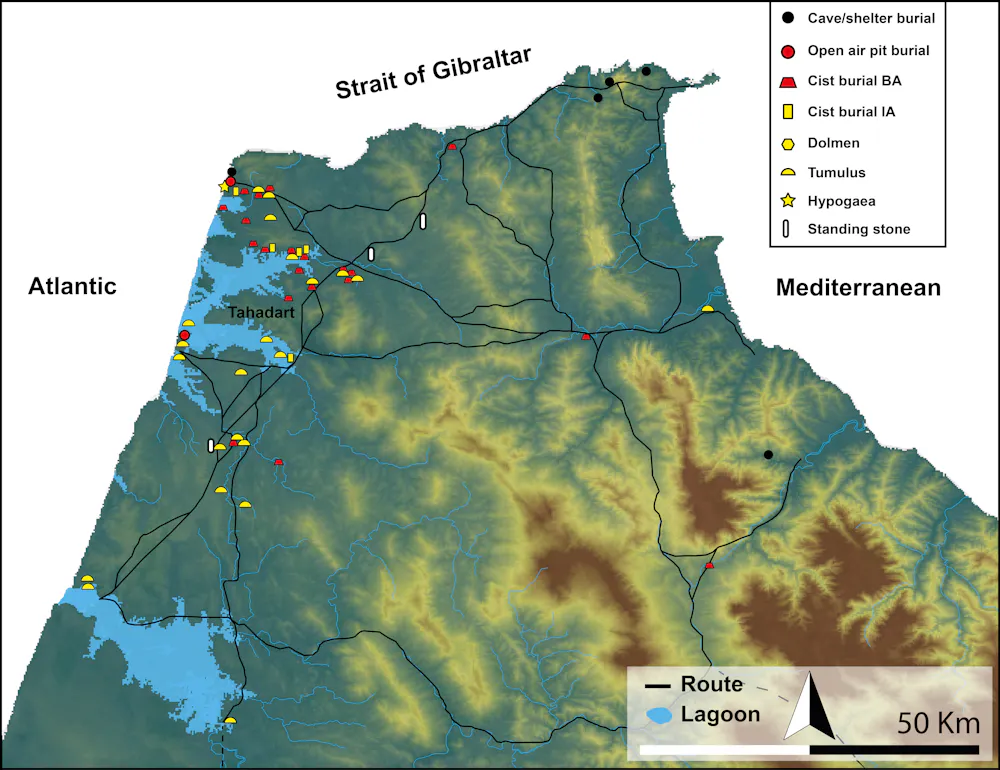
    Map of the Tangier Peninsula and main sites mentioned. H Benattia.

    Morocco’s Tangier Peninsula is particularly interesting. The peninsula sits at Africa’s north-western edge, where the Mediterranean Sea meets the Atlantic Ocean. At just 14 kilometres from Europe across the Strait of Gibraltar, this area has long been a natural crossroads between continents and cultures.

    I’m an archaeologist and PhD student who specialises in north Africa’s later prehistoric periods, between 3800 BC and 500 BC. My research explores how ancient communities responded to environmental changes, and how they moved and connected with other communities across regions.

    The assumption to date has been that the Tangier Peninsula was uninhabited and isolated in late prehistoric times. As part of my PhD research I wanted to explore whether this was true, or whether the area had simply been overlooked by previous archaeological work.

    Through the Kach Kouch and Tahadart Archaeological Projects, we studied both the Atlantic and Mediterranean zones of the peninsula.

    Team members Arnau Pou, Andrea González and Eusebio Medina taking measurements at a cist burial.

    Our goal was to revisit the region using modern archaeological methods and technologies, including radiocarbon dating. To understand how this region may have been connected to the wider world in prehistoric times, we used Geographic Information System software to model possible ancient communication routes and surveyed the landscape through satellite and drone imagery. At a later stage, alongside a team of early career Moroccan archaeologists from the National Institute of Archaeology and Heritage, we carried out field surveys and excavations.

    What we discovered exceeded all expectations. Far from being empty and isolated, the Tangier Peninsula is filled with evidence that people lived, died and held ceremonies there over thousands of years.

    Our hope is that our findings will reframe north-western Africa as a cultural crossroads that has connected regions for thousands of years. This region could reshape our understanding of later prehistory across the Atlantic and Mediterranean worlds.

    A prehistoric ritual and funerary landscape

    Our study, published in African Archaeological Review, presents the discovery of dozens of new archaeological sites, including prehistoric burials, rock art sites and standing stones.

    Distribution of rock art. H Benattia.

    Distribution of burials, standing stones and communication routes. H Benattia.

    Until now, research on rock art and burials in north Africa focused on areas like the Nile Valley, the Sahara or the Atlas Mountains. Our discoveries reveal that Morocco’s north-western coast was a major cultural hub in the Bronze Age, over 4,000 years ago.

    The diversity of burial practices, ritual sites, symbolic rock art and unique megalithic monuments reflect a rich prehistoric heritage that transcends modern geographic, political and cultural boundaries. It also highlights the longstanding exchanges and contacts of this region with the Mediterranean, the Atlantic and the Sahara.

    One of the most remarkable sites we excavated is at Daroua Zaydan, near modern-day Tangier. There we uncovered a cist burial, a small stone chamber made from four upright stone slabs covered by a larger stone slab. A crescent-shaped arrangement of stones likely marked the access to the burial chamber.

    Excavation process of the Daroua Zaydan cist burial.

    Although the grave had been looted in the past, we recovered several human bones outside the cist. One of them was radiocarbon dated to 2118–1890 BC. This date aligns with similar burial traditions across the Strait of Gibraltar in Iberia, and with Early Bronze Age settlement activity at Kach Kouch, about 65km south-east of Daroua Zaydan.

    Cist cemeteries had been documented in the region before, but most were excavated during the early to mid-20th century. At the time, archaeologists didn’t have the methods that can now shed light on important details such as how they were built and when they were used. Daroua Zaydan marks the first radiocarbon-dated cist burial in north-west Africa.

    Monuments, ritual deposits and Atlantic connections

    Our findings suggest the existence of a complex prehistoric ritual landscape at the Tangier Peninsula. This landscape was likely connected to other areas of the Atlantic and Mediterranean through a shared ritual and symbolic “language”.

    Ballintober type sword recovered from the bed of the river Loukkos and currently held at the Staatliche Museen zu Berlin. Claudia Plamp.

    One clue is a Bronze Age sword found in the 1920s in the Loukkos river. It was likely made in Britain or Ireland and may have arrived in Africa through Atlantic exchange networks. The sword was likely deliberately thrown to the river — a ritual practice documented along rivers in Atlantic Europe. This suggests that communities in northern Morocco were part of a broader cultural and symbolic world that connected the late prehistoric Atlantic.

    The stone circle at Mzoura. H Benattia.

    Another example is the stone circle at Mzoura, made up of 176 standing stones. This site, excavated in the 1930s, is unique in north Africa. But it closely resembles other stone circles in Atlantic Europe like Stonehenge. During our fieldwork we also discovered new standing stones and rock art, located along prehistoric communication routes. This suggests they may have been used as territorial markers or ritual sites.

    Dotted composition at Ghar el Manzla. Enhanced with DStretch.

    Before our research, a single painted rock shelter, that of Magara Sanar, was known in north-western Morocco. We have now documented 17 painted and 5 engraved rock shelters.

    The variety of symbols and scenes includes dotted patterns, geometric lines and human-shaped figures. They suggest strong links to Iberian, Atlantic and Saharan prehistoric art.

    Human-shaped figures and dotted composition at Ghar Dchar Alouch. Enhanced with DStretch.

    Why this matters

    Looted cist burial at Oued Ksiar.

    Our research does more than just fill a blank spot on the archaeological map. It opens up new avenues for archaeological exploration in the region. The Tangier Peninsula is home to a rich and largely undocumented late prehistoric heritage. It deserves more attention from researchers, policymakers and the wider public.

    Further protection measures are necessary as the region is undergoing rapid urban development. Tourism is growing and there’s been extensive looting. We hope our work will lead to more archaeological investigations, including new excavations and radiocarbon dating of key sites.

    – Rock art and tomb discoveries in Morocco reveal ancient connections to the wider world
    – https://theconversation.com/rock-art-and-tomb-discoveries-in-morocco-reveal-ancient-connections-to-the-wider-world-256931

    MIL OSI Africa

  • MIL-OSI Africa: Do you live near a dam holding mine waste? 6 questions to ask

    Source: The Conversation – Africa – By Charles MacRobert, Associate Professor, Stellenbosch University

    Mining is essential to modern lifestyles. Copper, iron and other mined products are vital to the products many people take for granted, like electronic devices. Being able to buy these goods quite easily may give a person a false sense of how difficult it is to extract the elements they’re made of.

    Mining involves the removal of mineral-rich rock from the ground and processing it to extract the high-value minerals. Depending on the mineral, this quantity can be as low as a few grams in a tonne of rock.

    For example, removing a tiny quantity of platinum from rock requires finely grinding the rock. The fine material that remains once the platinum is removed is known as tailings.

    Every mining operation produces tailings. This can be coarse, like instant coffee granules, or fine, like cocoa powder. Tailings are typically mixed with water to form a liquid slurry that can be pumped and transported easily.

    Slurry is kept in specially designed tailings dams. The designs are unique and depend on what is being mined and the local area.

    Unfortunately, the history of mining is stained with examples of poorly managed dams that collapse, spilling the slurry, which is sometimes toxic. This can cause serious environmental, social and economic damage.

    Kafue River before contamination by copper mine waste. De Agostini/Getty Images

    One such mine disaster happened in February 2025 in Zambia at the Sino-Metals Leach Zambia copper mine. Over 50 million litres of toxic waste flowed over the dam’s wall into the Mwambashi River. From there it flowed into one of the largest and longest Zambian rivers, the Kafue.

    The pollution travelled further than 100km from the dam, contaminating the river, and killing fish and livestock on nearby farms. The Zambian government had to shut down municipal water to the city of Kitwe to protect residents from consuming the polluted water.

    This should not have happened, because steps have been taken to ensure proactive management of dams. In 2020, the Global Industry Standard on Tailings Management introduced a new set of safety measures and standards.

    Many mines are proactively embracing these standards. This enhances community trust in tailings dams. But other mines are not engaging with communities that might be affected by dams. Or communities may feel unsure what to ask the mines.

    We are geotechnical engineers who have studied tailings dam collapses. Here, we outline six questions people living near mines should ask mine management to ensure they understand the key hazards and risks in their communities.

    1. How far will the slurry flow?

    Each tailings dam has a zone of influence. This is determined by analysing what would happen if the slurry breached the dam walls and started to flow out. It is an estimate of the area which would be swamped by tailings if the dam failed.

    Generally, tailings disasters have caused significant damage up to a distance of 5km from the dam. If the tailings slurry gets into a river, it can flow hundreds of kilometres downstream.


    Read more: Burst mining dam in South Africa: what must be done to prevent another disaster


    Zones of influence are often determined for extreme events, like once in a lifetime storms or large earthquakes. But zones of influence could also include places affected by dust or water pollution from the mine.

    If you can see a tailings dam from where you live or work you should consider yourself within the zone of influence.

    2. Who is responsible for the dam?

    Clearly defined roles and responsibilities for day-to-day operation should be in place in every mine. There should be suitably qualified engineers appointed to carry out monitoring and maintenance of the dam. There need to be enough qualified people to cope with the size of the dam.

    The management structure should set out how day-to-day issues related to the tailings dam are discussed between workers on the ground in mines and top management, and how solutions are found. Mines should also keep audit and inspection reports on their tailings dams, and records should be kept over the long term (because tailings dams are often operational for several decades).

    3. What about the environment?

    Mines should have plans to reduce the impact that tailings dams have on the environment. These would have been informed by public participation. The plans must state what monitoring is in place to measure the impacts of dust and water (groundwater and surface water).

    The true extent of impacts only becomes apparent once the mine starts operating. So, the public should hold mines accountable for commitments made. Mines should satisfy communities that monitoring is continuing to identify and track the dam’s environmental impacts.

    Closure plans should also be continuously communicated to mining-affected communities. This will assure the community that when the miners leave, they won’t be left with a dangerous dam near their homes, with no one to look after it.

    4. Will the tailings dam be safe when it rains?

    A common way that tailings dams fail is when water or slurry washes over the dam sidewalls. This washes away the support. It is known as overtopping, and can happen in storms or if too much tailing is pumped into the dam.

    Overtopping is best managed by keeping the water a certain distance below the dam wall. Mine management must measure this regularly and control how much tailing they pump to the dam. Their task is to make sure that even in a severe storm the level will stay well below the top of the dam wall.

    5. Has the dam always behaved as expected?

    Small failure incidents such as sloughs, slides and bulges where dam walls move but no slurry is released can occur. Mines should investigate and report these, detailing likely causes and mitigation measures implemented.

    Publicly available satellite imagery can easily show where mine tailings dams are becoming unstable. Mines should be transparent and provide explanations for these to avoid any speculation over whether the dam is stable or not.

    6. What alterations have been made?

    Sometimes dams must be changed to accommodate changes in mining or the extraction process. These changes could include how fast the dam is being built, moving the position of the dam wall, or placing material at the base of the wall to stabilise it.

    The unexpected consequences of alterations to a tailings dam could be water seeping out and creating damp spots, leading to dam walls sagging or cracking. If left unchecked this can lead to structural failure.

    When substantial changes are made to a dam’s design, mines need to demonstrate that sufficient consideration has gone into making these changes.

    – Do you live near a dam holding mine waste? 6 questions to ask
    – https://theconversation.com/do-you-live-near-a-dam-holding-mine-waste-6-questions-to-ask-256517

    MIL OSI Africa

  • MIL-OSI Africa: Secretary-General’s message on the occasion of Africa Day [scroll down for French version]

    Source: United Nations – English

    n Africa Day, we celebrate a continent rich in heritage, vibrant in diversity and remarkable in its contributions to our global community.

    Africa is home to the world’s youngest population and fast becoming a powerhouse in renewable energy and technological innovation.

    Yet, Africa bears the scars of historic injustices.  The legacies of slavery, colonialism, apartheid, and systemic racism still cast long shadows, and entrenched inequalities affect Africans and people of African descent to this day.

    This year’s theme calls for confronting these shameful legacies. I renew my call for reparatory justice that is grounded in accountability, reconciliation and equity. 

    The Pact for the Future, adopted in September, urges greater African representation – particularly at the Security Council – and reforms to the international financial system to support African countries with financing and debt relief. The Pact, through the Global Digital Compact, also seeks to close the digital divide and promote the responsible use of AI technologies.

    At a time when barriers are being erected, Africa leads by example. The African Continental Free Trade Area promises to usher in a new era of economic integration, opening the door to jobs, growth and prosperity.

    At the same time, we must support Africa’s efforts to expand its clean-energy sector, and ensure that the minerals that are critical to the renewables revolution benefit Africans first and most.

    Throughout, we will continue standing with Africa to silence the guns, tackle terrorism, and safeguard human rights for all.

    On this Africa Day, let us recommit to not only addressing past wrongs, but also to building a sustainable future for the people of Africa grounded in peace, dignity, and opportunity for all.

    ***
    En cette Journée de l’Afrique, nous célébrons un continent qui se distingue par son riche patrimoine, son éclatante diversité et ses formidables apports à la communauté internationale.

    L’Afrique abrite la population la plus jeune du monde et s’impose peu à peu comme un poids lourd des énergies renouvelables et de l’innovation technologique.

    Pourtant, l’Afrique porte encore les stigmates des injustices passées. Le spectre de l’esclavage, du colonialisme, de l’apartheid et du racisme systémique hante toujours le continent, et les Africains et les personnes d’ascendance africaine restent en proie à des inégalités profondément ancrées.

    Le thème de cette année nous exhorte à regarder en face cet héritage honteux et je demande une nouvelle fois que soit mise en place une justice réparatrice fondée sur la responsabilité, la réconciliation et l’équité.

    Le Pacte pour l’avenir, adopté en septembre, invite instamment à accroître la représentation de l’Afrique, notamment au sein du Conseil de sécurité, et à réformer le système financier international pour qu’il puisse mieux répondre aux besoins des pays africains en matière de financements et d’allègement de la dette. Ce Pacte, par l’intermédiaire du Pacte numérique mondial, vise également à réduire la fracture numérique et à promouvoir l’utilisation responsable des technologies d’intelligence artificielle.

    À l’heure où sont érigées de nouvelles barrières, l’Afrique montre l’exemple. Ainsi, la Zone de libre-échange continentale africaine promet de faire entrer le continent dans une nouvelle ère d’intégration économique, en ouvrant la voie à l’emploi, à la croissance et à la prospérité.

    Parallèlement, nous devons soutenir l’action menée par l’Afrique pour développer le secteur des énergies propres et veiller à ce que les Africains soient les premiers à bénéficier des minéraux qui sont au cœur de la révolution des énergies renouvelables.

    Jusqu’au bout, nous resterons mobilisés aux côtés de l’Afrique pour faire taire les armes, lutter contre le terrorisme et protéger les droits humains de toutes et tous.

    En cette Journée de l’Afrique, réaffirmons notre engagement non seulement à réparer les torts du passé, mais aussi à construire pour les peuples d’Afrique un avenir durable, fondé sur la paix, la dignité et l’égalité des chances pour tous.

    ***
     

    MIL OSI Africa

  • MIL-OSI Global: Rock art and tomb discoveries in Morocco reveal ancient connections to the wider world

    Source: The Conversation – Africa – By Hamza Benattia, Prehistory, Universitat de Barcelona

    When people think of ancient burials in North Africa, they often picture Egypt’s pyramids and monuments. But new discoveries show that north-western Africa also has a deep and fascinating prehistoric past.

    Morocco’s Tangier Peninsula is particularly interesting. The peninsula sits at Africa’s north-western edge, where the Mediterranean Sea meets the Atlantic Ocean. At just 14 kilometres from Europe across the Strait of Gibraltar, this area has long been a natural crossroads between continents and cultures.

    I’m an archaeologist and PhD student who specialises in north Africa’s later prehistoric periods, between 3800 BC and 500 BC. My research explores how ancient communities responded to environmental changes, and how they moved and connected with other communities across regions.

    The assumption to date has been that the Tangier Peninsula was uninhabited and isolated in late prehistoric times. As part of my PhD research I wanted to explore whether this was true, or whether the area had simply been overlooked by previous archaeological work.

    Through the Kach Kouch and Tahadart Archaeological Projects, we studied both the Atlantic and Mediterranean zones of the peninsula.

    Our goal was to revisit the region using modern archaeological methods and technologies, including radiocarbon dating. To understand how this region may have been connected to the wider world in prehistoric times, we used Geographic Information System software to model possible ancient communication routes and surveyed the landscape through satellite and drone imagery. At a later stage, alongside a team of early career Moroccan archaeologists from the National Institute of Archaeology and Heritage, we carried out field surveys and excavations.

    What we discovered exceeded all expectations. Far from being empty and isolated, the Tangier Peninsula is filled with evidence that people lived, died and held ceremonies there over thousands of years.

    Our hope is that our findings will reframe north-western Africa as a cultural crossroads that has connected regions for thousands of years. This region could reshape our understanding of later prehistory across the Atlantic and Mediterranean worlds.

    A prehistoric ritual and funerary landscape

    Our study, published in African Archaeological Review, presents the discovery of dozens of new archaeological sites, including prehistoric burials, rock art sites and standing stones.

    Until now, research on rock art and burials in north Africa focused on areas like the Nile Valley, the Sahara or the Atlas Mountains. Our discoveries reveal that Morocco’s north-western coast was a major cultural hub in the Bronze Age, over 4,000 years ago.

    The diversity of burial practices, ritual sites, symbolic rock art and unique megalithic monuments reflect a rich prehistoric heritage that transcends modern geographic, political and cultural boundaries. It also highlights the longstanding exchanges and contacts of this region with the Mediterranean, the Atlantic and the Sahara.

    One of the most remarkable sites we excavated is at Daroua Zaydan, near modern-day Tangier. There we uncovered a cist burial, a small stone chamber made from four upright stone slabs covered by a larger stone slab. A crescent-shaped arrangement of stones likely marked the access to the burial chamber.

    Although the grave had been looted in the past, we recovered several human bones outside the cist. One of them was radiocarbon dated to 2118–1890 BC. This date aligns with similar burial traditions across the Strait of Gibraltar in Iberia, and with Early Bronze Age settlement activity at Kach Kouch, about 65km south-east of Daroua Zaydan.

    Cist cemeteries had been documented in the region before, but most were excavated during the early to mid-20th century. At the time, archaeologists didn’t have the methods that can now shed light on important details such as how they were built and when they were used. Daroua Zaydan marks the first radiocarbon-dated cist burial in north-west Africa.

    Monuments, ritual deposits and Atlantic connections

    Our findings suggest the existence of a complex prehistoric ritual landscape at the Tangier Peninsula. This landscape was likely connected to other areas of the Atlantic and Mediterranean through a shared ritual and symbolic “language”.

    One clue is a Bronze Age sword found in the 1920s in the Loukkos river. It was likely made in Britain or Ireland and may have arrived in Africa through Atlantic exchange networks. The sword was likely deliberately thrown to the river — a ritual practice documented along rivers in Atlantic Europe. This suggests that communities in northern Morocco were part of a broader cultural and symbolic world that connected the late prehistoric Atlantic.

    Another example is the stone circle at Mzoura, made up of 176 standing stones. This site, excavated in the 1930s, is unique in north Africa. But it closely resembles other stone circles in Atlantic Europe like Stonehenge. During our fieldwork we also discovered new standing stones and rock art, located along prehistoric communication routes. This suggests they may have been used as territorial markers or ritual sites.

    Before our research, a single painted rock shelter, that of Magara Sanar, was known in north-western Morocco. We have now documented 17 painted and 5 engraved rock shelters.

    The variety of symbols and scenes includes dotted patterns, geometric lines and human-shaped figures. They suggest strong links to Iberian, Atlantic and Saharan prehistoric art.

    Why this matters

    Our research does more than just fill a blank spot on the archaeological map. It opens up new avenues for archaeological exploration in the region. The Tangier Peninsula is home to a rich and largely undocumented late prehistoric heritage. It deserves more attention from researchers, policymakers and the wider public.

    Further protection measures are necessary as the region is undergoing rapid urban development. Tourism is growing and there’s been extensive looting. We hope our work will lead to more archaeological investigations, including new excavations and radiocarbon dating of key sites.

    Hamza Benattia, director of the Tahadart Archaeological Project, received funding from the National Institute of Archaeology and Heritage of Morocco (INSAP), the Prehistoric Society Research Fund, the Stevan B. Dana Grant of the American Society of Overseas Research, the Mediterranean Archaeological Trust Grant, the Barakat Trust Early Career Award, the Centre Jacques Berque Research Grant, the Institute of Ceutan Studies Research Fund and the University of Castilla La Mancha.

    ref. Rock art and tomb discoveries in Morocco reveal ancient connections to the wider world – https://theconversation.com/rock-art-and-tomb-discoveries-in-morocco-reveal-ancient-connections-to-the-wider-world-256931

    MIL OSI – Global Reports

  • MIL-OSI Global: Do you live near a dam holding mine waste? 6 questions to ask

    Source: The Conversation – Africa – By Charles MacRobert, Associate Professor, Stellenbosch University

    Mining is essential to modern lifestyles. Copper, iron and other mined products are vital to the products many people take for granted, like electronic devices. Being able to buy these goods quite easily may give a person a false sense of how difficult it is to extract the elements they’re made of.

    Mining involves the removal of mineral-rich rock from the ground and processing it to extract the high-value minerals. Depending on the mineral, this quantity can be as low as a few grams in a tonne of rock.

    For example, removing a tiny quantity of platinum from rock requires finely grinding the rock. The fine material that remains once the platinum is removed is known as tailings.

    Every mining operation produces tailings. This can be coarse, like instant coffee granules, or fine, like cocoa powder. Tailings are typically mixed with water to form a liquid slurry that can be pumped and transported easily.

    Slurry is kept in specially designed tailings dams. The designs are unique and depend on what is being mined and the local area.

    Unfortunately, the history of mining is stained with examples of poorly managed dams that collapse, spilling the slurry, which is sometimes toxic. This can cause serious environmental, social and economic damage.

    One such mine disaster happened in February 2025 in Zambia at the Sino-Metals Leach Zambia copper mine. Over 50 million litres of toxic waste flowed over the dam’s wall into the Mwambashi River. From there it flowed into one of the largest and longest Zambian rivers, the Kafue.

    The pollution travelled further than 100km from the dam, contaminating the river, and killing fish and livestock on nearby farms. The Zambian government had to shut down municipal water to the city of Kitwe to protect residents from consuming the polluted water.

    This should not have happened, because steps have been taken to ensure proactive management of dams. In 2020, the Global Industry Standard on Tailings Management introduced a new set of safety measures and standards.

    Many mines are proactively embracing these standards. This enhances community trust in tailings dams. But other mines are not engaging with communities that might be affected by dams. Or communities may feel unsure what to ask the mines.

    We are geotechnical engineers who have studied tailings dam collapses. Here, we outline six questions people living near mines should ask mine management to ensure they understand the key hazards and risks in their communities.

    1. How far will the slurry flow?

    Each tailings dam has a zone of influence. This is determined by analysing what would happen if the slurry breached the dam walls and started to flow out. It is an estimate of the area which would be swamped by tailings if the dam failed.

    Generally, tailings disasters have caused significant damage up to a distance of 5km from the dam. If the tailings slurry gets into a river, it can flow hundreds of kilometres downstream.


    Read more:
    Burst mining dam in South Africa: what must be done to prevent another disaster


    Zones of influence are often determined for extreme events, like once in a lifetime storms or large earthquakes. But zones of influence could also include places affected by dust or water pollution from the mine.

    If you can see a tailings dam from where you live or work you should consider yourself within the zone of influence.

    2. Who is responsible for the dam?

    Clearly defined roles and responsibilities for day-to-day operation should be in place in every mine. There should be suitably qualified engineers appointed to carry out monitoring and maintenance of the dam. There need to be enough qualified people to cope with the size of the dam.

    The management structure should set out how day-to-day issues related to the tailings dam are discussed between workers on the ground in mines and top management, and how solutions are found. Mines should also keep audit and inspection reports on their tailings dams, and records should be kept over the long term (because tailings dams are often operational for several decades).

    3. What about the environment?

    Mines should have plans to reduce the impact that tailings dams have on the environment. These would have been informed by public participation. The plans must state what monitoring is in place to measure the impacts of dust and water (groundwater and surface water).

    The true extent of impacts only becomes apparent once the mine starts operating. So, the public should hold mines accountable for commitments made. Mines should satisfy communities that monitoring is continuing to identify and track the dam’s environmental impacts.

    Closure plans should also be continuously communicated to mining-affected communities. This will assure the community that when the miners leave, they won’t be left with a dangerous dam near their homes, with no one to look after it.

    4. Will the tailings dam be safe when it rains?

    A common way that tailings dams fail is when water or slurry washes over the dam sidewalls. This washes away the support. It is known as overtopping, and can happen in storms or if too much tailing is pumped into the dam.

    Overtopping is best managed by keeping the water a certain distance below the dam wall. Mine management must measure this regularly and control how much tailing they pump to the dam. Their task is to make sure that even in a severe storm the level will stay well below the top of the dam wall.

    5. Has the dam always behaved as expected?

    Small failure incidents such as sloughs, slides and bulges where dam walls move but no slurry is released can occur. Mines should investigate and report these, detailing likely causes and mitigation measures implemented.

    Publicly available satellite imagery can easily show where mine tailings dams are becoming unstable. Mines should be transparent and provide explanations for these to avoid any speculation over whether the dam is stable or not.

    6. What alterations have been made?

    Sometimes dams must be changed to accommodate changes in mining or the extraction process. These changes could include how fast the dam is being built, moving the position of the dam wall, or placing material at the base of the wall to stabilise it.

    The unexpected consequences of alterations to a tailings dam could be water seeping out and creating damp spots, leading to dam walls sagging or cracking. If left unchecked this can lead to structural failure.

    When substantial changes are made to a dam’s design, mines need to demonstrate that sufficient consideration has gone into making these changes.

    The authors do not work for, consult, own shares in or receive funding from any company or organisation that would benefit from this article, and have disclosed no relevant affiliations beyond their academic appointment.

    ref. Do you live near a dam holding mine waste? 6 questions to ask – https://theconversation.com/do-you-live-near-a-dam-holding-mine-waste-6-questions-to-ask-256517

    MIL OSI – Global Reports

  • MIL-OSI Europe: Christine Lagarde: Earning influence: lessons from the history of international currencies

    Source: European Central Bank

    Speech by Christine Lagarde, President of the ECB, at an event on Europe’s role in a fragmented world organised by Jacques Delors Centre at Hertie School in Berlin, Germany

    Berlin, 26 May 2025

    Over the past 80 years, the global economy thrived on a foundation of openness and multilateralism – underpinned by US leadership. By championing a rules-based international system and anchoring the dollar as the world’s reserve currency, the United States set the stage for trade to flourish and finance to expand.

    This global order proved immensely beneficial to the European Union, whose founding liberal principles aligned seamlessly with it. But today it is fracturing.

    Multilateral cooperation is being replaced by zero-sum thinking and bilateral power plays. Openness is giving way to protectionism. There is even uncertainty about the cornerstone of the system: the dominant role of the US dollar.

    All else equal, this fracturing can pose risks for Europe. Our economy is deeply integrated into the global trading system, with exports accounting for close to one-fifth of our value added and supporting 30 million jobs.

    Any change in the international order that leads to lower world trade or fragmentation into economic blocs will be detrimental to our economy.

    But – with the right policy responses – there could also be opportunities. The changing landscape could open the door for the euro to play a greater international role.

    Today, the euro is the second global currency, accounting for around 20% of foreign exchange reserves, compared with 58% in the case of the US dollar. Increasing the international role of the euro can have positive implications for the euro area.

    It would allow EU governments and businesses to borrow at a lower cost, helping boost our internal demand at a time when external demand is becoming less certain.

    It would insulate us from exchange rate fluctuations, as more trade would be denominated in euro, protecting Europe from more volatile capital flows.

    It would protect Europe from sanctions or other coercive measures.

    In short, it would allow Europe to better control its own destiny – giving us some of what Valéry Giscard d’Estaing called the “exorbitant privilege” 60 years ago.

    So, how likely is this change to happen? History suggests that it is far from guaranteed. The euro will not gain influence by default – it will have to earn it.

    For the euro to increase its global status, history tells us that we need to build on three foundations – each of them critical for success.

    First, Europe must ensure it has a solid and credible geopolitical foundation by maintaining a steadfast commitment to open trade and underpinning it with security capabilities.

    Second, we must reinforce our economic foundation to make Europe a top destination for global capital, enabled by deeper and more liquid capital markets.

    Third, we must bolster our legal foundation by defending the rule of law – and by uniting politically so that we can resist external pressures.

    Before we explore each of these three foundational components, let us observe what recent history can teach us.

    Shifts in the global currency landscape

    Shifts in the global currency landscape are not unprecedented in monetary history. There have been previous episodes where the world’s leading reserve currency issuer has taken steps that have called that leadership into question, without ultimately jeopardising it.

    For example, the US dollar took over from the pound sterling as the world’s leading reserve currency in the mid-1920s, with its share in foreign exchange reserves rising to 64% by 1931. But this leading position did not stop the United States taking measures to unilaterally change the international monetary order.

    For instance, in 1933 President Roosevelt suspended gold convertibility to fight the deflationary forces of the Great Depression. He dismissed European demands for fixed exchange rates with the argument that “the sound internal economic system of a nation is a greater factor in its well-being than the price of its currency”.[1]

    Then again in the 1970s President Nixon ended the Bretton Woods system by unilaterally suspending dollar convertibility to gold and imposing a 10% import tariff.

    Faced with growing imbalances between US current account deficits and the surpluses of western Europe and Japan, Treasury Secretary John Connally declared that “no longer can considerations of friendship, or need, or capacity justify the United States carrying so heavy a share of the common burdens.”[2]

    On both occasions, there was a decline in the standing of the US dollar as a foreign reserve currency. In the 1930s, it fell from over 60% to around 20% of global foreign exchange reserves. In the 1970s, it fell from about 70% to 50% two decades later.

    But on neither occasion was there a robust alternative currency that could take over at short notice. In the 1930s, the pound sterling was already declining, while in the 1970s the Deutsche Mark and the Yen were backed by markets that were too small.

    So, instead, investors flocked to gold. The share of gold in foreign reserves increased by about 20 percentage points in the 1930s to 97% and almost doubled to 60% in the 1970s.[3]

    Today, there is a key difference compared with previous eras. With the euro as the world’s second-largest currency, there is another international currency alongside the dollar. But this has not yet convinced investors.

    Over recent years, the dollar’s share in global foreign exchange reserves has fallen, with its current level of 58% being the lowest since 1994. In parallel, central banks have been accumulating gold at a record pace – almost matching the levels seen during the Bretton Woods era.[4] The share of gold in global foreign reserves[5] has reached around 20%, surpassing that of the euro.[6]

    As previously mentioned, we can identify three essential foundations for international currency usage, without which a currency cannot succeed on the global stage. And in each case, we can see that Europe has many of the key ingredients for success, but we need to bring them together to reinforce the foundations. Action is in order.

    The geopolitical foundation

    The starting point is a credible geopolitical foundation – which rests on both a country’s role in global trade and the strength of its military alliances.

    A currency’s exposure to trade is especially important, as it provides the initial pathway to wider international use. In the mid-1920s, for example, the dollar overtook the pound sterling as the leading form of trade credit before it became the leading reserve currency.[7]

    Once a currency captures a larger share of trade invoicing, its role in international banking and finance, and ultimately as a reserve asset, becomes self-reinforcing. Higher demand for the currency enhances its role as a store of value and further encourages investors to hold it.[8]

    As a major actor in global trade, Europe already has a key ingredient of a strong geopolitical foundation, creating the potential for a virtuous circle of euro internationalisation to unfold.

    The EU has the largest network of trade agreements in the world. Europe is the number one trading partner for 72 countries, which together represent almost 40% of world GDP.[9] And this status is reflected in the share of the euro as an invoicing currency, which stands at around 40%, more than double its share as a reserve currency.

    Europe can press home this advantage by continuing to forge new trade agreements. And we should make clear that we support a win-win approach to trade, ensuring that we are the most attractive partner to make deals with.

    The ECB can also help make the euro more attractive for euro-denominated trade. We are working on a potential digital euro and pursuing initiatives to enhance cross-border payments in euro, which could potentially facilitate international cross-border transactions in the future.

    And by extending swap and repo lines to key partners, we safeguard against euro liquidity shortages abroad disrupting the smooth transmission of our monetary policy – which in turn encourages those partners to transact more in euro.

    But there is a limit to how much a currency can grow simply by virtue of being open to trade. In fact, the euro’s share of global export invoicing is already as large as that of the US dollar, but we are not closing the gap in reserve currency status.

    This is because investors – and especially official investors – also seek geopolitical assurance in another form: they invest in the assets of regions that are reliable security partners and can honour alliances with hard power. So a credible geopolitical foundation must also rest on robust military partnerships.

    This dual strength is essentially what we can learn from the US dollar’s dominance. It is not just a product of economic fundamentals but it is also powerfully reinforced by US security guarantees. These guarantees not only deepen trade ties[10], but have been shown to boost a currency’s share in foreign reserves by up to 30 percentage points.[11]

    We are now seeing a major shift in Europe towards rebuilding our hard power, with important initiatives underway at the national and EU levels. And we should be clear that following through with this effort is a precondition for the euro to become more widely used.

    The economic foundation

    Trade and military power are important for establishing demand for an international currency. But to satisfy this demand, investors need appropriate assets to invest in.

    This is why a strong economic foundation – one that provides opportunities for growth and opportunities to invest in growth – is equally essential.

    There is a virtuous circle between growth, capital markets and international currency usage. Growth generates robust rates of return, which make investors want to hold assets in a particular currency. And capital markets provide investment opportunities and channel funds back into growth.

    At the same time, if capital markets provide a sufficient supply of “safe assets”, investors can hedge their exposures efficiently. When a shock hits and riskier investments lose value, safer assets rise in value. That provides a complete ecosystem for investments in the currency.

    The US dollar’s rise to dominance in the interwar period was certainly driven by this virtuous circle. The development of US capital markets boosted growth – with each 1 percentage point increase in market capitalisation yielding 0.5 percentage points more growth[12] – while simultaneously establishing the foundation for dollar dominance. The depth and liquidity of the US Treasury market in turn provided an efficient hedge for investors.

    Europe has all the elements it needs to produce a similar cycle. But so far, we have not been able to put all the pieces together.

    Despite our large single market, we have fallen behind the US in terms of growth performance and market returns. Since 2000, US labour productivity per hour has grown twice as much as in the euro area, mainly driven by the tech sector, and US markets have delivered returns that are around five times as high as those of European markets.[13]

    Despite our large savings, we have made little progress in integrating our capital markets to channel more of our funds into growth. 60% of household equity investment goes into home country markets even though there may be greater opportunities abroad.

    And despite our strong aggregate fiscal position – our debt-to-GDP ratio is 89%, compared with 124% in the United States – we provide relatively few safe assets. Recent estimates suggest that outstanding sovereign bonds rated at least AA are just below 50% of GDP in the EU and above 100% in the US.[14]

    The conclusion for Europe is clear: if we truly want to see the global status of the euro grow, we must first reform our domestic economy.

    That means moving forwards with the priorities identified in recent reports: completing the Single Market, enabling start-ups, reducing regulation and building the savings and investment union. And it means avoiding a piecemeal approach, where we make progress where it is easy and dither where it is hard, else we will never kick-start the positive cycle.

    Moreover, in this new geopolitical landscape, the case for acting in a European way has never been stronger.

    Each individual country of course needs to make sure that its national policies support growth. But we also need to be mindful of self-defeating fragmentation. For example, we all agree that Europe needs to build up its strategic industries to avoid excessive dependencies – as Mario Draghi and Enrico Letta emphasised in their recent reports. But we will not succeed if we have 27 different policies for these industries.

    Nowadays there are also more policy goals that qualify as European public goods, notably strengthening European defence. But due to the free-rider problem, defence is a good that is likely to be undersupplied. Moreover, joining forces to procure equipment and develop new technologies – leading to economies of scale and more interoperability – will result in greater operational effectiveness than if all 27 Member States go it alone.

    Economic logic tells us that public goods need to be jointly financed. And this joint financing could provide the basis for Europe to gradually increase its supply of safe assets.

    The legal foundation

    Geopolitical strength and faster growth can go a long way towards strengthening the euro’s international role. But maintaining demand for the currency will also depend on our ability to uphold a robust legal and institutional foundation.

    Ultimately, currencies achieve and maintain their reserve status if the institutions and policies backing them consistently safeguard investor confidence in their long-term value.[15]

    For example, historically, the US dollar’s pre-eminence has rested on the strength and stability of US fiscal and monetary institutions. The Federal Reserve System’s credible commitment to controlling inflation, combined with the unparalleled liquidity of the US Treasury market, created a perception of minimal sovereign risk. This made the dollar a safe haven during global economic turbulence and recessions.[16]

    Since 1970, there have been 34 instances of simultaneous sovereign debt and financial crises globally, but the US has remained immune to such “twin crises”.[17]

    However, when doubts emerge about the stability of the legal and institutional framework, the impact on currency use is undeniable.

    These doubts have materialised in the form of highly unusual cross-asset correlations since 2 April this year, with the US dollar and US Treasuries experiencing sell-offs even as equities fell. The same doubts are also cited by investors who are turning to gold: two-fifths say they are doing so as a hedge against rising geopolitical risk.[18]

    Given this context, the EU has a legitimate reason to turn its commitment to predictable policymaking and the rule of law into a comparative advantage.

    This commitment is baked into how the EU works. The positive side of our often slow and complicated decision-making processes is that checks and balances are always respected. We have also enshrined into law the independence of our key institutions, like the ECB, in ways that are hard for politicians to threaten.

    But relying on the fact that our bureaucratic systems are hard to change is not enough. In the current geopolitical environment, we are facing increasing external pressures to take actions that jeopardise the rule of law. And we will only be able to resist these pressures if we are more politically united and able to speak with a single voice.

    As we potentially enter a renewed era of great power rivalry, with countries being asked to take sides, we are likely to find ourselves under pressure to make decisions that are not necessarily in our own interest.

    But if we take this opportunity to unite and, preferably, to reform our institutional structure by enabling more qualified majority voting in areas where a single veto has often held back the collective interests of the 26 other countries, that would enable us to act decisively as a united Europe. We would then be in a much stronger position to defend and uphold our values and, as a result, to defend and uphold global confidence in our currency.

    Conclusion

    Let me conclude.

    In the history of the international monetary system, there are moments when the foundations that once seemed unshakeable begin to shift.

    The Belgian-American economist Robert Triffin described this with great clarity. He observed that nations’ confidence in the international monetary system depends on the reliability of the reserve currency, which, in his words, is “highly dependent on individual countries’ decisions”.

    But moments of change can also be moments of opportunity. The ongoing changes create the opening for a “global euro moment”.

    This is a prime opportunity for Europe to take greater control of its own destiny. But this is not a privilege that will simply be given to us. We have to earn it.

    MIL OSI Europe News

  • MIL-OSI Europe: Telephone conversation with the Prime Minister of Japan

    Source: Government of Italy (English)

    26 Maggio 2025

    The President of the Council of Ministers, Giorgia Meloni, had a telephone conversation today with the Prime Minister of Japan, Shigeru Ishiba.

    The conversation highlighted the shared satisfaction with the path undertaken to constantly strengthen bilateral relations. In this context, President Meloni confirmed her intention to pay an official visit to Japan in the coming months in order to further deepen the fruitful dialogue between Rome and Tokyo and, while there, to also visit the Italian pavilion at the Osaka Expo.

    The two leaders also discussed the main international issues, including the war in Ukraine, the Middle East  and the Indo-Pacific, agreeing to remain in close contact ahead of the upcoming G7 Summit in Kananaskis.

    MIL OSI Europe News

  • MIL-OSI United Nations: Education on Standardization meeting

    Source: United Nations Economic Commission for Europe

    Background

    The START-Ed Initiative was established by the decision of the Working Party 6 in November 2012. The START-Ed Initiative has the following two major tasks:

    (1) Promotion of standards-awareness in the educational establishments with the elaboration of the 15-module programme on standardization developed in 2012

    (2) Assisting in sharing best practices in teaching standards to different audiences.

    Expected attendance: WP.6 Bureau, members and observers, and secretariat 


    Draft agenda

    Item

    Subject

    Timing

    1a

    Roll call

    0

    1b

    Reminder of WP.6 procedures

    5

    1c

    Approval of the agenda

    5

    2

    Guest speaker: Prof. Kayo Ito (Chubu University, Japan) [Bio & PPT] – 30 minutes (15 minutes presentation followed by discussion / QA) on “Student Oriented Education about Standardization.”

    30

    3

    Future activities of the initiative

    25

    4

    Update from the secretariat

    10

    5

    Any other business

    15

    Next meeting: 11 November 2025 hybrid, Geneva

    MIL OSI United Nations News

  • MIL-OSI United Nations: Education on Standardization Initiative meeting

    Source: United Nations Economic Commission for Europe

    Background

    The START-Ed Initiative was established by the decision of the Working Party 6 in November 2012. The START-Ed Initiative has the following two major tasks:

    (1) Promotion of standards-awareness in the educational establishments with the elaboration of the 15-module programme on standardization developed in 2012

    (2) Assisting in sharing best practices in teaching standards to different audiences.

    Expected attendance: WP.6 Bureau, members and observers, and secretariat 


    Draft agenda

    Item

    Subject

    Timing

    1a

    Roll call

    0

    1b

    Reminder of WP.6 procedures

    5

    1c

    Approval of the agenda

    5

    2

    Guest speaker: Prof. Kayo Ito (Chubu University, Japan) [Bio & PPT] – 30 minutes (15 minutes presentation followed by discussion / QA) on “Student Oriented Education about Standardization.”

    30

    3

    Future activities of the initiative

    25

    4

    Update from the secretariat

    10

    5

    Any other business

    15

    Next meeting: 11 November 2025 hybrid, Geneva

    MIL OSI United Nations News

  • MIL-OSI China: China launches first environmental inspections under new regulations

    Source: People’s Republic of China – State Council News

    BEIJING, May 26 — China has initiated the fourth phase of the third round of central environmental protection inspections, the first since a new set of regulations on ecological and environmental protection inspections came into force.

    The inspections, approved by the Communist Party of China Central Committee and the State Council, will cover five provincial-level regions and three centrally-administered state-owned companies, said the central leading group for the inspection work of ecological and environmental protection on Monday.

    Inspection teams will be dispatched to Shanxi, Inner Mongolia, Shandong, Shaanxi, and Ningxia. The teams will conduct both regional inspections and coordinated inspections of the Yellow River Basin.

    They will also inspect China Huaneng Group Co., Ltd., China Datang Corporation Ltd., and State Power Investment Corporation Limited.

    The inspections will last about one month. During the period, each team will establish dedicated telephone hotlines and postal mailboxes for the public to submit reports and complaints regarding any environmental protection issues related to the inspected entities.

    MIL OSI China News

  • MIL-OSI China: Moody’s affirming ratings offers positive reflection of Chinese economic prospects: ministry

    Source: People’s Republic of China – State Council News

    Moody’s affirming ratings offers positive reflection of Chinese economic prospects: ministry

    BEIJING, May 26 — Moody’s decision to affirm China’s A1 ratings on Monday is a positive reflection of the improving prospects for the country’s economy, the Chinese Ministry of Finance said.

    Since the fourth quarter of last year, the Chinese government has implemented a series of macroeconomic policies, economic indicators have improved, market expectations and confidence have stabilized, and the medium and long-term sustainability of debt has improved, the ministry said.

    The global economy is facing multiple risks and challenges, including insufficient momentum, escalating geopolitical conflicts, and a volatile international economic and trade order, leading to increased uncertainty in regard to economic performance, it noted.

    Against this backdrop, China’s economy has secured a strong start, with high-quality development trending positively. Production and consumption demand are steadily rising, and the stability and coordination of economic operations are improving, demonstrating strong resilience and vibrant dynamism, it said.

    Moving forward, a series of incremental and existing policies will work in concert to provide solid support for high-quality economic development, the ministry said.

    Regardless of changes in the external environment, China will remain confident and focused, concentrating on managing its own affairs well, it noted.

    MIL OSI China News

  • MIL-OSI New Zealand: Prosecution a reminder, recreational skippers’ must take simple steps to prevent collisions

    Source: Maritime New Zealand

    The sentencing of a recreational skipper in the Christchurch District Court yesterday afternoon [Tuesday, November 21] is a reminder to skippers of recreational boats – there are simple steps they must take to prevent collisions and keep others safe.

    The sentencing followed a collision between a recreational power boat and a kayak in Lyttelton on 14 January 2023.

    The skipper of the power boat did not operate the vessel as required under Part 22 of the Maritime Rules, causing the collision with a kayak and serious injuries to the paddler.

    Maritime NZ’s Manager General Regulatory Operations South, John Drury says the Maritime Rules to prevent collisions are practical ways to help keep all vessels – and the people on them – safe. All recreational (and commercial) skippers must understand them.

    The Maritime Rules include: keeping a proper look out at all times, travelling at safe speed, using all available means to determine if there is a risk of collision, and powered vessels keeping out of the way of vessels under oars or sail. This means taking account of the harbour conditions, adjusting your speed and ensuring you can see adequately in front of you – particularly when you know there are a high number of recreational water users in the area.

    “You can’t assume it is safe but instead, you must make sure it is safe,” Mr Drury says.

    “Always keep a proper look out, and if there is any doubt, then the skipper must act as if they might collide with another boat or a swimmer in the water – slow down, be ready to stop, and power boats give way.”

    Maritime NZ recommends those heading out on the water undertake a day skipper’s course, understand the Maritime Rules and local bylaws and fully understand how to manage the vessels they are in charge of.

    The collision prevention and navigation Maritime Rules can be found on the Maritime NZ website, and local bylaws are published by the local regional authority.

    Sentencing notes

    Last month, the skipper of the power boat pleaded guilty to one charge under section 65 of the Maritime Transport Act of operating his power boat in a manner that caused unnecessary danger or risk.

    Yesterday, the court sentenced him to a $5,200 fine and ordered him to pay $13,473 reparation. In doing so, the Judge noted the significant injuries suffered by the victim, the risk of more serious harm occurring, and the inherent vulnerability of small craft water users.

    The Judge also acknowledged the skipper’s guilty plea, his remorse and the steps he took immediately after the incident to assist the victim, including applying his maritime knowledge and taking the victim directly to the boat ramp where an ambulance was able to meet them.

    Incident summary

    The collision occurred at about 3pm on a Saturday afternoon. The conditions were sunny, with a moderate breeze of around 15 knots, and waves of about 20cm. The harbour was busy with other recreational users, typical of a mid-summer weekend in Lyttelton.

    The 7.4m power boat was travelling at round 18 knots (33 kmph) with two people on board returning from a fishing trip.

    Four kayakers in three kayaks were paddling west towards Governor’s Bay. The group was spread out, padding in white kayaks wearing high visibility clothing. The skipper of the powerboat did not see the kayakers and collided with the victim directly. 

    The skipper immediately stopped his powerboat and provided assistance to the badly injured victim, transporting him to the nearby boat ramp where an ambulance met them.  

    MIL OSI New Zealand News

  • MIL-OSI New Zealand: Maritime NZ’s response to TAIC’s report on safety at ports

    Source: Maritime New Zealand

    Health and safety on ports is a major priority for Maritime NZ.

    “Everyone has the right to be safe when they go to work,” Maritime NZ’s Director, Kirstie Hewlett says.

    “Any incident on a port is one too many, and everyone at Maritime NZ extends their thoughts to those who have been injured at ports, as well as to the friends and families who have lost loved ones.”

    TAIC makes a number of recommendations aimed at improving safety standards on ports. Currently, Maritime NZ and WorkSafe share designation overseeing health and safety at ports, several of the recommendations are directed to the two regulators.

    From 1 July 2024, Maritime NZ will take over the designation as the sole regulator on ports.

    “We partially accept two of the recommendations that have been directed to us by the Commission, and fully accept the other two” Ms Hewlett says.

    “It recommends the regulators aim to take a more proactive role in driving safety on ports. We partially accept this recommendation, as we believe our assessments focused on critical risks on ports, with WorkSafe NZ, is proactive monitoring activity and looks at individual operators. We agree that there is always more opportunity to work proactively and we welcome the additional funding that comes with our designation extension from 1 July 2024, so we can carry out more proactive monitoring on ports.

    We are proud of the proactive work we have done with the sector through the Port Health and Safety Leadership Group. This group, made up of both regulators, and Chaired by Maritime NZ, has port and stevedore chief executives, the Port Industry Association, and unions and has built a relationship of trust and made significant progress on health and safety on ports.

    The Leadership Group earlier this year released a Port Sector Insights Picture and Action Plan to make ports safer. The insights pictures shows where, and why harm is happening on ports. The Plan was created from operator and regulator incident and notification data, and also worker perspectives. It outlines actions to address these harms. Significant progress has been made on implementing some of the actions since it was released.

    Two of these actions show the Commission’s recommendations are already being implemented. Work is continuing to develop more consistent safety standards on ports, with a draft Approved Code of Practice for loading and discharging cargo on ports and on ships currently out for consultation.

    The Leadership Group also has actions underway to continuously improve safety and share good practice. This includes completion of a platform where people can access new safety technologies, and the development of a work programme on good practice guidance that will sit under the ACOP. The Leadership Group is working to ensure this information is accessible for the industry and the workers.

    A further action under the plan is to improve workforce training, capability and understanding of risks. This includes whether future standards will be backed by the regulator (Maritime NZ), as recommended by TAIC. Decisions on this potential backing will need to be made by the relevant ministers.

    “The critical thing for us all to remember is that Health and safety is everyone’s responsibility and we want there to be a culture in the sector that reflects the need to take a safety-first approach to operations. We look forward to continuing our collaborative work with operators and workers on ports to improve safety,” Ms Hewlett says. 

    MIL OSI New Zealand News

  • MIL-OSI New Zealand: Fishing company to offer watchkeeping training following enforceable undertaking

    Source: Maritime New Zealand

    An enforceable undertaking between Maritime NZ and a North Island fishing company is helping to fund a range tools to help improve safety knowledge in the commercial fishing sector, and assist in training of rescue organisations.

    Following the grounding of the Bilyara, on Ohinau Island off the Coromandel in April 2020 Maritime NZ started an investigation into the incident.

    The investigation found the grounding put the lives of the crew and the environment at risk.

    It was established that the Penwarden Holdings owned vessel grounded due to the crew failing to properly keepwatch. 

    “We know watchkeeping issues contribute to a significant number of incidents for commercial operators,” General Manager Investigation, Pete Dwen says.

    An enforceable undertaking is an agreement between Maritime NZ and a duty holder (vessel owner or operator) made under the Health and Safety at Work Act 2015 (HSWA).

    It is entered into voluntarily by the duty holder following a breach (including an alleged breach) of HSWA and, once in place, is legally binding.

    It is generally used as an alternative to prosecution. It must include appropriate amends to victims and commitments that would promote health and safety at that work place, the wider industry and the community.

    The near $190,000 undertaking will see Penwarden Holdings develop training modules for personnel in the industry. These resources will be used by both the company and the wider sector. The training is expected to be available in about 12 – 18 months’ time. The modules will be advertised via industry publications.

    Pete Dwen says the enforceable undertaking was agreed to as it proposed a range of benefits for a variety of different groups.

    “The nature of the proposals demonstrate benefits to the workplace, community and industry. In particular the resources to be developed in respect of watchkeeping, aligns with Maritime New Zealand’s strategic focus,” he says.

    As well as the development of the modules, Penwarden Holdings will supply a vessel for training exercises to the Auckland Rescue Helicopter Trust, and donate $35,000 to the response charity.

    “Response agencies such as ARHT play a significant role in helping those in need, and we know being able to undertaking a training exercise on a vessel such as those operated by Penwarden Holdings will be hugely valuable,” Pete Dwen says. 

    MIL OSI New Zealand News

  • MIL-OSI New Zealand: Port of Auckland Limited sentenced over fatal 2020 incident

    Source: Maritime New Zealand

    Sentencing of major port company a reminder of the risks on New Zealand’s ports.

    Today, Port of Auckland Limited (POAL) was sentenced after pleading guilty to two charges under the Health and Safety at Work Act 2015. The charges were filed by Maritime NZ after stevedore Pala’amo Kalati was killed by a falling container on 30 August 2020.

    Following the death of Mr Kalati, a comprehensive investigation was undertaken by Maritime NZ. Everyone involved and the staff at Maritime NZ wish to extend their condolences to Mr Kalati’s family and to his co-worker who was in the vicinity with him at the time of the incident.

    Maritime NZ Director, Kirstie Hewlett says his death was a manifestation of the risk caused and contributed to by POAL’s failures around stevedore safety.

    “Those failures were long standing and systemic, putting many stevedores at risk for an extended period of time,” Ms Hewlett says.

    Changes were also made to processes around the time of the incident due to the COVID-19 pandemic. This lessened the oversight while undertaking work such as what was occurring when the incident happened.

    Prior to the incident occurring, Mr Kalati and a colleague were working on board as lashers discharging containers from the MV Constantinos P. A crane was operating adjacent to the two men. It was lifting pairs of containers off the vessel when a third container was accidentally lifted as well. The third container detached and fell, killing Mr Kalati.

    “While nothing can bring Mr Kalati back to his family or change the impact on his co-worker, who was also present. This tragic incident as well as two other fatal incidents in April 2022, highlighted the need to review and make changes to health and safety on New Zealand ports.

    “It is good to see POAL take responsibility for its actions and pleading guilty.

    “Over the last 20 months, Maritime NZ alongside our partners in the Port Health and Safety Leadership Group has undertaken a significant programme of work to reduce harm on New Zealand’s ports.

    “Since the Leadership Group was set-up POAL has and continues to be a key contributor in the work to bring down instances of harm on New Zealand ports.

    “We want there to be a culture in the sector that reflects the need to take a safety-first approach to operations.

    “Port workers need to be safe at work,” Kirstie Hewlett says.

    MIL OSI New Zealand News

  • MIL-OSI New Zealand: Prosecution follows April collision between power boat and ferry near Russell

    Source: Maritime New Zealand

    Following a collision between a twin-engine recreational power boat and the ferry, Waitere, in Russell earlier this year, Maritime NZ has charged the power boat’s skipper.

    The collision occurred at about midday on 13 April 2023, when Waitere (also known as the Blue Ferry ) was travelling from Russell to Paihia.

    Maritime NZ’s Deputy Chief Executive Regulatory Operations, Deb Despard, says Maritime NZ personnel undertook a thorough investigation in response to this incident.

    “Investigators carried out interviews, examined the scene, reviewed documents and gathered other relevant evidence connected to the incident,” she says.

    The ferry’s skipper was severely injured, some of the passengers suffered lesser injuries and the ferry was badly damaged. It sunk a few hours after the collision. There was some damage to the power boat, but no one on board it at the time was injured.

    Ms Despard says one charge has been filed in the Auckland District Court against the skipper of the power boat. The charge has been filed under section 65 of the Maritime Transport Act 1994.

    As the matter is now before the Court, Maritime NZ cannot make further comment.

    Editors’ notes:

    • Section 65 of the Maritime Transport Act makes it an offence to operate a vessel in a manner causing unnecessary danger or risk to any other person or property.
    • Maximum penalties the Court can impose against an individual are a fine of up to $10,000 or a prison term of up to one year.
    • Maritime NZ will not be releasing documents while the matter is before the Court. Some documents might be available from the Court on application in accordance with the District Court (Access to Court Documents) Rules 2017. 

    MIL OSI New Zealand News

  • MIL-OSI Asia-Pac: Health chief attends HA convention

    Source: Hong Kong Information Services

    Secretary for Health Prof Lo Chung-mau today attended the opening ceremony of the Hospital Authority (HA) Convention 2025 and met multiple high-level delegations from the Mainland and overseas for in-depth exchanges on healthcare co-operation and development.

    At the opening ceremony, Prof Lo witnessed the successful national accreditation of the Queen Mary Hospital Chest Pain Centre, making it the first chest pain centre in Hong Kong established in accordance with the national accreditation standards.

    He said the establishment of a chest pain centre can improve the efficiency of acute chest pain diagnosis and speed up the time for patients to receive cardiac surgery, thereby lowering the death rate, shortening the hospitalisation period and reducing the hospital readmission rate.

    The health chief also noted that the adoption of the national accreditation standards by the Hong Kong Special Administrative Region will also facilitate integration into the overall national development by fully utilising Hong Kong’s advantage of having the motherland’s  strong support and close connection with the world, with a view to demonstrating the excellence of the national healthcare standards to the international community, and helping promote the development of the national accreditation standards of chest pain centres into an internationally recognised standard.

    Over the course of the convention, Prof Lo met multiple delegations from the Mainland and overseas and attended various events, taking the opportunity to promote medical co-operation and exchanges.

    Among others, Prof Lo met Guangdong Health Commission Director-General Liu Liqun and his delegation to explore the exchange of healthcare talent between the two places, and to discuss healthcare collaboration projects, such as the Elderly Health Care Voucher Greater Bay Area Pilot Scheme and the cross-boundary use of electronic health records.

    After the meeting, both sides attended the welcoming ceremony for the Mainland Healthcare Talents Visiting Programmes.

    Prof Lo was pleased to note that since the 2022 launch of the visiting programmes, 80 outstanding doctors and two batches of about 170 nurses in total from the Mainland have come to the HA on exchange, while more than 25 specialists have also been arranged by the authority to conduct exchanges at public hospitals in Beijing, Shanghai and Guangdong.

    Afterwards, Prof Lo and the Consul General of France in Hong Kong & Macau Christile Drulhe jointly witnessed the signing of the Declaration of Intent between the HA and the National Conference of University Hospital General Managers of France.

    The signing of the declaration formally establishes a strategic collaborative partnership between the two organisations in deepening mutual exchanges, promoting the joint development of hospital services and exchange of medical expertise.

    MIL OSI Asia Pacific News

  • MIL-OSI Security: Police appeal for urgent help to find missing vulnerable man

    Source: United Kingdom London Metropolitan Police

    Officers are appealing for assistance to help find a vulnerable 35-year-old man who has been missing for two days.

    Bashir Marhoon, from Russell Square, Camden, was last seen by his carers at his home, on Saturday, 24 May at 18:00hrs.

    Police are becoming increasingly worried about his safety due to the challenges Bashir has with day-to-day tasks.

    Bashir is 5’8, of medium build, with black hair and wears glasses. He was last seen wearing a navy baseball style shirt, with a red image on the front, dark navy jogging bottoms and black trainers.

    He walks with a limp and is known to sometimes engage with strangers, though lacks the capacity to understand fully what he may be doing.

    Officers believe he may be travelling across London using public transport. He has an Oyster card and is fascinated with public transport.

    Detective Chief Inspector Sarb Kaur from the Met’s Central North Command said: “We are very worried about Bashir’s safety and would urge anyone who may have seen him to contact police. Please approach Bashir with care as he may be confused and suffers with learning difficulties.

    “Bashir’s family are understandably incredibly concerned.

    “Local officers have been carrying out a number of enquiries in an effort to trace him and we are now turning to the public for help. Please get in touch if you have seen Bashir.

    “As time passes we are growing increasingly anxious about his welfare.”

    Bashir’s mum, Faridah, said: “We are very worried as he is very vulnerable and often rides the trains and buses to the end of the journey.

    “We urgently need the public’s help to find him. Please take a look at these images we are making public today and get in touch with the police if you have any information.”

    If you see Bashir, please call 999 providing the reference 5841/24MAY.

    If you believe you have seen him in the past two days, or have any other information about his whereabouts, please call 101 providing the same reference.

    MIL Security OSI