Category: CTF

  • MIL-OSI Europe: Poland’s presidential election was competitive but affected by deep polarization, international observers say

    Source: Organization for Security and Co-operation in Europe – OSCE

    Headline: Poland’s presidential election was competitive but affected by deep polarization, international observers say

    A voter casts his ballot during the first round of the presidential election in Poland. Warsaw, 18 May 2025 (OSCE/Katya Andrusz) Photo details

    WARSAW, 19 May 2025 – The first round of Poland’s presidential election offered voters a genuine choice between political options, but it took place against a background of deep political polarization that also impacted some key state institutions involved in the electoral process, international observers said in a statement today.
    The joint observation mission from the OSCE Office for Democratic Institutions and Human Rights (ODIHR) and the Parliamentary Assembly of the Council of Europe (PACE) found that the electoral legal framework is adequate to hold democratic elections. However, some aspects would benefit from further revision as many prior recommendations remain unaddressed. Concerns were raised about the independence of the judiciary, including the court chamber responsible for validating election results, potentially weakening public trust.
    “The election campaign so far has demonstrated Poland’s strength as a dynamic democracy, but to strengthen it further the deep trenches of political polarization must be addressed through inclusive dialogue that bridges political and ideological divides,” said Dunja Mijatović, who headed the ODIHR observation mission. “At the same time, the inflammatory messaging by some candidates that targeted migrants, the LGBTI community, and ethnic and religious groups, including xenophobic and anti-Ukrainian overtones, raised serious concern.”
    The authorities took largescale and proactive efforts to protect the election process from multiple attempts at foreign interference, disinformation, and cyberattacks, but the coordination between the institutions working in this area as well as public communication about the protective measures used require further strengthening. While attempted cyberattacks and disinformation campaigns surged in the run-up to the election, state institutions said they had identified and mitigated these threats.
    “The first round of Poland’s presidential election was professionally managed, but deep political divisions, unresolved constitutional crises, weak safeguards against campaign abuses and foreign interference from Russia and others threaten the integrity of the process,” said Liliana Tanguy, Acting Head of the PACE Delegation. “As the country heads into the second round, it is a pivotal moment for all stakeholders to strengthen transparency and uphold democratic standards, and for all Polish citizens to make their voices heard in shaping the nation’s democratic future.”
    The election administration managed the election efficiently at all levels, but its decision-making process was not always transparent. Election day itself was calm and the process was professional and well organized, but the secrecy of the vote was often not ensured.
    The freedoms of expression, assembly and association were respected in a vibrant campaign. While the interaction between candidates was mostly respectful, at times the campaign tone turned personal and confrontational. Intolerant messaging targeting vulnerable communities was also observed, including online.  In the absence of sufficient regulation, public officials at various levels and across the political spectrum frequently campaigned on behalf of candidates, and the line between official duties and campaign activities often appeared blurred. Women remain underrepresented in public and political life and their involvement as speakers at campaign events and in campaign leadership remained limited. Only two out of the 13 presidential candidates were women.
    While there have been some recent improvements to media freedom, including a reduction in litigation against journalists, the media landscape remains highly polarized, limiting voters’ access to impartial information. ODIHR’s media monitoring found clear patterns of biased coverage across both public and private outlets. Overall, the limited access of voters to comprehensive information needed for making a fully informed choice highlighted the need for systematic media reforms.
    The international election observation to the Polish presidential election totalled 67 observers from 30 countries, consisting of 34 ODIHR-deployed experts and long-term observers, and 33 parliamentarians and staff from PACE.
    Media contacts:
    Katya Andrusz, ODIHR: +48 609 522 266 or katya.andrusz@odihr.pl
    Ivi-Triin Odrats, PACE: +33 607 067773 or Ivi-Triin.ODRATS@coe.int

    MIL OSI Europe News

  • Landslide at gold mine in Indonesia’s Papua kills six; 14 missing

    Source: Government of India

    Source: Government of India (4)

    Torrential rains forced a halt on Monday to Indonesia’s search for 14 missing in its easternmost region of Papua after a landslide killed six workers at a gold mine and injured four, officials said.

    The rains had triggered Friday’s landslide, which hit a small mine run by residents of the Arfak mountains of West Papua province, said Abdul Muhari, the spokesperson of Indonesia’s disaster mitigation agency.

    Authorities will resume on Tuesday their search for those missing after the disaster, which engulfed temporary shelters used by miners.

    The search effort was hampered by “damaged roads and mountainous tracks as well as bad weather”, Yefri Sabaruddin, the head of a team of 40 rescuers, including police and military officials, who retrieved five bodies, told Reuters.

    Travelling to the site required 12 hours from the nearest town, he said.

    Monday’s tally was updated from an earlier figure of one dead and 19 missing.

    Small-scale and illegal mining has often led to accidents in Indonesia, where mineral resources are located in remote areas, in conditions difficult for authorities to regulate.

    The number of casualties could rise.

    At least 15 people died in the collapse of an illegal gold mine in West Sumatra province last September after a landslide caused by heavy rains.

    Another landslide in a gold mine on Sulawesi island killed at least 23 people in July last year.

    –Reuters

  • MIL-OSI Asia-Pac: Food pacts signed with Mainland

    Source: Hong Kong Information Services

    The Environment & Ecology Bureau and the General Administration of Customs (GACC) today signed two operation agreements on meat and dairy products exported to the Mainland, facilitating food trade between Hong Kong and the Mainland.

    Secretary for Environment & Ecology Tse Chin-wan said the Memorandum of Understanding on the Inspection, Quarantine & Hygiene Requirements for Meat Products Exported from Hong Kong to the Mainland, and the Cooperation Arrangement for the Export of Dairy Products from Hong Kong to the Mainland, will further facilitate bilateral food trade and the development of meat and dairy products businesses in Hong Kong.

    “Upon implementation of the arrangements, Hong Kong-manufactured meat and dairy products meeting the requirements set out in the co-operation agreements will be allowed to be imported into the Mainland.”

    The two agreements put in place the monitoring of food safety from the source for Hong Kong-manufactured meat and dairy products exported to the Mainland. They will cover requirements for testing the sources of food raw materials and food manufacturers on production management, including storage and transportation of food products.

    The Centre for Food Safety will discuss with the GACC the operational details of the agreements. The centre will also organise seminars to help the trade better understand the requirements of the agreements.

    MIL OSI Asia Pacific News

  • MIL-OSI: Mark Cuban Foundation and Corteva Bring Free AI Bootcamp to Indianapolis, Des Moines Area Teens

    Source: GlobeNewswire (MIL-OSI)

    INDIANAPOLIS, May 19, 2025 (GLOBE NEWSWIRE) — The Mark Cuban Foundation is proud to announce its bootcamp in partnership with Corteva. The program will bring back the highly acclaimed Artificial Intelligence (AI) Bootcamp to Indianapolis, Indiana, while expanding its reach for the first time to Des Moines, Iowa area high schools. This collaboration emphasizes the Foundation’s mission to reach students in underserved and previously unconnected regions, providing them with opportunities to engage with innovative technology.

    Corteva’s global headquarters and crop protection business unit is located in Indianapolis, while its seed business is based in Johnston, Iowa, near Des Moines.

    “We leverage AI tools throughout our innovation pipeline to deliver leading seed and crop protection products to farmers worldwide,” said Brian Lutz, vice president of agricultural solutions at Corteva. “We’re excited to collaborate with the Mark Cuban Foundation for the third consecutive year to help students gain experience with AI, and to understand the remarkable capabilities of this technology.”

    The program aims to provide students with a foundational understanding of artificial intelligence and its applications to future careers. Students can select from six tracks: healthcare, arts and entertainment, business and entrepreneurship, computer science, sports science, or education and career readiness. Driven by the belief that fostering interest in AI at a young age is crucial for preparing the next generation for their future, the AI Bootcamps are introductory and accessible to students in 9-12 grade with an interest in technology. Students do not need any familiarity with computer science or programming to attend.

    This free AI Bootcamp is hosted for underserved high school students with a transparent focus on underrepresented communities, first-generation college students, and those from low to moderate-income households. The AI Bootcamp Program provides students with lunch and a snack, transportation assistance, and technology equipment during bootcamp.

    “As AI continues to become an undeniable force in all of our lives, it’s crucial that we open the door to this knowledge, especially to young people who want to explore it,” said Mark Cuban, founder. “While technology expands and becomes more advanced, it becomes more critical that we ensure our students are prepared when they apply for schools or jobs in the future. Thanks to our work with Corteva, the bootcamp will offer an avenue to explore this fascinating field of technology to any student, no matter their means.”

    This year’s bootcamps, taking place on November 1st, 8th, and 15th is hosted and staffed by Corteva, a global pure-play agriculture company that combines industry-leading innovation, high-touch customer engagement and operational execution to deliver solutions for the world’s most pressing agriculture challenges.

    Corteva hosted a camp last year and is one of more than 25 host companies selected to host camps across the U.S. in 2025.

    Apply for the bootcamp at: markcubanai.org.

    Watch Mark Cuban’s message about Mark Cuban Foundation’s AI bootcamps and access the full media kit here.

    To learn more, visit markcubanai.org.

    This bootcamp is facilitated with support from Mark Cuban Foundation AI Bootcamp

    Program’s media partner, Notified, a globally trusted technology partner for investor relations, public relations and marketing professionals.

    About Mark Cuban Foundation’s AI Bootcamp Initiative
    The Mark Cuban Foundation is a 501(c)(3) private non-profit led by entrepreneur and investor Mark Cuban. The AI Bootcamps Program at MCF seeks to inspire young people with emerging technology so that they can create more equitable futures for themselves and their communities. Over 3 consecutive Saturdays underserved 9th -12th grade students learn what AI is and isn’t, where they already interact with AI in their own lives, the ethical implications of AI systems, and much more. Learn more about the no-cost AI Bootcamp program at markcubanai.org.

    About Corteva
    Corteva, Inc. (NYSE: CTVA) is a global pure-play agriculture company that combines industry-leading innovation, high-touch customer engagement and operational execution to profitably deliver solutions for the world’s most pressing agriculture challenges. Corteva generates advantaged market preference through its unique distribution strategy, together with its balanced and globally diverse mix of seed, crop protection, and digital products and services. With some of the most recognized brands in agriculture and a technology pipeline well positioned to drive growth, the company is committed to maximizing productivity for farmers, while working with stakeholders throughout the food system as it fulfills its promise to enrich the lives of those who produce and those who consume, ensuring progress for generations to come. More information can be found at www.corteva.com.

    The MIL Network

  • MIL-OSI: Form 8.3 – Craneware Plc

    Source: GlobeNewswire (MIL-OSI)

    8.3

    PUBLIC OPENING POSITION DISCLOSURE/DEALING DISCLOSURE BY
    A PERSON WITH INTERESTS IN RELEVANT SECURITIES REPRESENTING 1% OR MORE
    Rule 8.3 of the Takeover Code (the “Code”)

    1.        KEY INFORMATION

    (a)   Full name of discloser: Rathbones Group Plc
    (b)   Owner or controller of interests and short positions disclosed, if different from 1(a):
            The naming of nominee or vehicle companies is insufficient. For a trust, the trustee(s), settlor and beneficiaries must be named.
     
    (c)   Name of offeror/offeree in relation to whose relevant securities this form relates:
            Use a separate form for each offeror/offeree
    Craneware Plc
    (d)   If an exempt fund manager connected with an offeror/offeree, state this and specify identity of offeror/offeree:  
    (e)   Date position held/dealing undertaken:
            For an opening position disclosure, state the latest practicable date prior to the disclosure
    16/05/2025
    (f)   In addition to the company in 1(c) above, is the discloser making disclosures in respect of any other party to the offer?
            If it is a cash offer or possible cash offer, state “N/A”
    No

    2.        POSITIONS OF THE PERSON MAKING THE DISCLOSURE

    If there are positions or rights to subscribe to disclose in more than one class of relevant securities of the offeror or offeree named in 1(c), copy table 2(a) or (b) (as appropriate) for each additional class of relevant security.

    (a)      Interests and short positions in the relevant securities of the offeror or offeree to which the disclosure relates following the dealing (if any)

    Class of relevant security: 1p Ord
      Interests Short positions
      Number % Number %
    (1)   Relevant securities owned and/or controlled: 2,118,117 5.98%    
    (2)   Cash-settled derivatives:        
    (3)   Stock-settled derivatives (including options) and agreements to purchase/sell:        

            TOTAL:

    2,118,117 5.98%    

    All interests and all short positions should be disclosed.

    Details of any open stock-settled derivative positions (including traded options), or agreements to purchase or sell relevant securities, should be given on a Supplemental Form 8 (Open Positions).

    (b)      Rights to subscribe for new securities (including directors’ and other employee options)

    Class of relevant security in relation to which subscription right exists:  
    Details, including nature of the rights concerned and relevant percentages:  

    3.        DEALINGS (IF ANY) BY THE PERSON MAKING THE DISCLOSURE

    Where there have been dealings in more than one class of relevant securities of the offeror or offeree named in 1(c), copy table 3(a), (b), (c) or (d) (as appropriate) for each additional class of relevant security dealt in.

    The currency of all prices and other monetary amounts should be stated.

    (a)        Purchases and sales

    Class of relevant security Purchase/sale Number of securities Price per unit
    1p Ordinary Shares Sale 110 2180p

    (b)        Cash-settled derivative transactions

    Class of relevant security Product description
    e.g. CFD
    Nature of dealing
    e.g. opening/closing a long/short position, increasing/reducing a long/short position
    Number of reference securities Price per unit
             

    (c)        Stock-settled derivative transactions (including options)

    (i)        Writing, selling, purchasing or varying

    Class of relevant security Product description e.g. call option Writing, purchasing, selling, varying etc. Number of securities to which option relates Exercise price per unit Type
    e.g. American, European etc.
    Expiry date Option money paid/ received per unit
                   

    (ii)        Exercise

    Class of relevant security Product description
    e.g. call option
    Exercising/ exercised against Number of securities Exercise price per unit
             

    (d)        Other dealings (including subscribing for new securities)

    Class of relevant security Nature of dealing
    e.g. subscription, conversion
    Details Price per unit (if applicable)
           

    4.        OTHER INFORMATION

    (a)        Indemnity and other dealing arrangements

    Details of any indemnity or option arrangement, or any agreement or understanding, formal or informal, relating to relevant securities which may be an inducement to deal or refrain from dealing entered into by the person making the disclosure and any party to the offer or any person acting in concert with a party to the offer:
    Irrevocable commitments and letters of intent should not be included. If there are no such agreements, arrangements or understandings, state “none”
    None

    (b)        Agreements, arrangements or understandings relating to options or derivatives

    Details of any agreement, arrangement or understanding, formal or informal, between the person making the disclosure and any other person relating to:
    (i)   the voting rights of any relevant securities under any option; or
    (ii)   the voting rights or future acquisition or disposal of any relevant securities to which any derivative is referenced:
    If there are no such agreements, arrangements or understandings, state “none”
    None

    (c)        Attachments

    Is a Supplemental Form 8 (Open Positions) attached? No
    Date of disclosure: 19/05/2025
    Contact name: Chinwe Enyi – Compliance Department
    Telephone number: 0151 243 7053

    Public disclosures under Rule 8 of the Code must be made to a Regulatory Information Service.

    The Panel’s Market Surveillance Unit is available for consultation in relation to the Code’s disclosure requirements on +44 (0)20 7638 0129.

    The Code can be viewed on the Panel’s website at.

    The MIL Network

  • MIL-OSI: Hyra Holdings Approves $500M Innovation Fund and IPO Roadmap to 2030 at 2025 AGM

    Source: GlobeNewswire (MIL-OSI)

    HANOI, Vietnam, May 19, 2025 (GLOBE NEWSWIRE) — Hyra Holdings, a global innovation group investing in frontier technologies, today announced that shareholders have formally approved three landmark initiatives during its 2025 Annual General Meeting (AGM). These include the launch of the $500 million Hyra Combinator Venture Fund, a major expansion of the company’s decentralized AI infrastructure, and an official roadmap to IPO by 2030.

    The 2025 Annual General Meeting marks a strategic turning point in Hyra Holdings’ global expansion journey

    Accelerating Innovation Across AI, Blockchain, and Web3
    Since 2024, Hyra Holdings has launched three pioneering platforms that redefine the decentralized technology landscape:

    • Hyra Network: A Layer-3 blockchain designed for ultra-scalable, cross-chain Web3 applications.
    • Hyra AI: The world’s first edge-powered, decentralized artificial intelligence infrastructure.
    • Hyra Bid: A reverse auction marketplace powered by blockchain for fair, transparent bidding.

    Hyra’s ecosystem surpassed 1 million global users, with active operations and strategic expansions in Singapore, Dubai, and the United States—positioning the company as a key enabler of the next-generation digital economy.

    2M+ Edge AI Devices and $30M Data Center in Asia
    Hyra AI now powers over 2 million edge AI devices across 205+ countries and territories, delivering a combined 360,000 TFLOPS of compute power—projected to reach 918,000 TFLOPS by the end of 2025.

    “We are shifting the AI paradigm from cloud to edge,” said Chung Tran, Founder and Chairman of Hyra Holdings. “Real-time AI now lives on the devices people already use—smartphones, routers, and personal nodes.”

    To support this decentralized infrastructure, Hyra will begin construction in Q4/2025 on Hyra Zone, a sovereign AI data center based in Asia. The facility’s $30 million Phase 1 investment has already been approved at the AGM.

    $500M Hyra Combinator Fund – Fueling Deep-Tech Ventures
    Hyra’s new venture arm, the Hyra Combinator Fund, aims to raise $500 million by 2030. The fund will utilize a blended capital structure, combining institutional investments, venture partnerships, and public-private co-investment.

    Its goal: incubate and accelerate 150+ startups in the fields of AI, Fintech, Web3, and Quantum Computing—particularly in emerging and undercapitalized markets.

    “We’re not just deploying capital—we’re building the infrastructure, networks, and systems that future innovation depends on,” said Mr. Tran Nam Chung.

    IPO Roadmap: A Hybrid Global Strategy
    Hyra Holdings reaffirmed its IPO roadmap to 2030, evaluating listing options across Singapore, Dubai, and the United States.

    The company will maintain its Hybrid Holding Model, combining centralized strategic direction at the group level with decentralized execution across product companies: Hyra AI, Hyra Network, and Hyra Digital.

    Hyra’s 2030 targets include:

    • 9 core products launched
    • Active presence in 30+ countries
    • 1 billion TFLOPS in decentralized compute power

    About Hyra Holdings
    Hyra Holdings is a global innovation group founded in 2021 and headquartered in Singapore. With operations across Southeast Asia, the Middle East, and the United States, Hyra invests in and builds foundational technologies for the intelligent digital economy—including decentralized AI, Web3 infrastructure, and next-gen digital services. Its portfolio spans product ecosystems, venture funding, and strategic partnerships to enable decentralized innovation and inclusive growth.

    Media Contact
    Website: https://hyraholdings.com
    Press Inquiries: press@hyraholdings.com
    LinkedIn: https://linkedin.com/company/hyraholdings

    Photos accompanying this announcement are available at

    https://www.globenewswire.com/NewsRoom/AttachmentNg/11aef9ad-480a-46c1-b3c3-2f4ef34a5110

    https://www.globenewswire.com/NewsRoom/AttachmentNg/1350a58b-0e96-49d7-9d2c-c4629262fc5f

    The MIL Network

  • MIL-OSI Global: For a Canadian in London, King Charles’ Royal Garden Party inspires sustainability education

    Source: The Conversation – Canada – By Janice Denoncourt, Associate Professor in Intellectual Property and Innovation Law, Nottingham Trent University

    On a glorious afternoon recently, I had the good fortune to attend a specially themed Education and Skills Garden Party hosted at Buckingham Palace in London to celebrate the contributions of educators in the United Kingdom and beyond.

    As a Canadian citizen living and working in education in the United Kingdom, I was invited to attend by the High Commission of Canada in London.

    The occasion provided a relaxing yet exciting opportunity to reflect on my involvement embedding sustainability into education related to innovation and intellectual property (IP) rights law.

    Royal Gardens as oasis

    King Charles has been a lifelong supporter of sustainability education, which is a new addition to the curricula. For me, the Royal garden and lake beautifully highlighted concerns with sustainability.

    The King’s Royal garden at the Palace is an oasis in the city of London, alive with foliage and wildlife that guests may stroll around and explore. According to the event leaflet: “A survey of the Garden by the London Natural History Society revealed a wealth of flora and fauna, some quite rare species.”

    Garden parties are a special way for members of the Royal Family to speak to a broad range of people, all of whom have made a positive impact on their community. Today these events are a way to recognize and reward public service.

    A network of sponsors is used to invite guests, including lord-lieutenants, societies and associations, government departments and local government, as well as representatives of various churches and other faiths.

    Charles first marked the issue of pollution in 1970 when he was a 21-year-old student. The King continues to champion his lifelong passion regarding the importance of the health of the environment and living sustainably.

    ‘The garden party at Buckingham Palace for Queen Victoria’s Golden Jubilee,’ painting by Frederick Sargent, 1887.
    (Royal Collection (U.K.) 407255/Wikipedia)

    Why intellectual property and sustainability?

    Since 2004, I have been an innovation, intellectual property rights and business law educator. My research group contributed to a publication called The Guide to The Sustainable Development Goals (SDGs), developed to explore the connections between the United Nation’s 17 SDGs, sustainable development and IP.

    Intellectual property is of concern because we need to envision and build a common future with innovation and creativity. How sustainability challenges are overcome depends on the commercialization of new green technology catalysts.

    However, this process is complex. Choosing between solar versus wind, or hydro, geothermal or tidal energy technologies involves making difficult choices. IP rights, such as patents, provide practical scientific information about new green technologies. This information helps society to prioritize public, private and alternative financing to support climate change mitigation and adaptation.

    Canadian firms have patented numerous climate change mitigation technologies.

    For example, the Toronto-based WhalePower has significantly advanced fluid dynamics and has filed Canadian, European Union, United States, Chinese and Indian patents to protect its new technology. Their award-winning invention, inspired by the bumpy flippers of humpback whales, results in more efficient and reliable wind turbine blades.


    Read more:
    Here’s why UK tides are soon going to play a much bigger part in powering your home


    This “tubercle” technology, named for a rounded point of a bone, also has applications for hydroelectric turbines and for revolutionizing fan design. These blades, featuring tubercles (bumps) on the leading edge, reduce aerodynamic drag and improve performance. WhalePower also generates revenue by licensing its patented technology to other companies to use in wind turbines.

    Patents encourage knowledge sharing

    Patents encourage knowledge sharing, because the way the invention works must be disclosed, rather than kept secret.

    For example, new tidal energy inventors can read Whalepower’s patents and be inspired to further advance the new technology with additional incremental innovations.

    A granted patent is published for free online and digitally tagged using globally recognized classification codes to facilitate easy searching by scientists, investors and financiers. The data collected on the patent register is also used to design new climate innovation research studies and inform policy-making.

    In this manner, IP often stimulates investment by providing the legal rights needed to justify longer-term investment in a changing landscape of innovation.

    Long-term investment into green technology is a form of environmental stewardship that I discuss in more detail in my article “Companies and UN 2030 Sustainable Development Goal 9 Industry, Innovation and Infrastructure.” IP rights support firms like Whalepower by enabling knowledge tools that can bring sustainable development goals closer to fruition.

    Patent attorneys and Earthshot Prize

    The significant role of IP rights in promoting sustainability gained a higher profile when the United Kingdom’s Chartered Institute of Patent Attorneys (CIPA) became an Official Nominator for the annual Earthshot Prize launched by Prince William’s Royal Foundation in 2020.

    CIPA helps to identify and nominate solutions for the environmental challenges that the prize aims to address. One nominated solution that uses DNA sequencing and nature’s own colours to create sustainable dyes to reduce the use of water and harmful chemicals in the fashion industry, Colorifix, was a runner-up in the 2023 edition.


    Read more:
    Can marketing classes teach sustainability? 4 key insights


    CIPA provides crucial IP rights checks to finalists, ensuring that their innovations have no outstanding IP issues. This partnership is an example of how the Royal Family works together with CIPA to use the power of IP to help solve sustainability challenges.

    As the King stated when he was Prince of Wales in 2017: “Mine is not a new commitment, but perhaps you will allow me to restate my determination to join you in continuing to do whatever I can, for as long as I can, to maintain not only the health and vitality of the ocean and all that depends upon it, but also the viability of that greatest and most unique of living organisms — nature herself.”

    Janice Denoncourt is affiliated with the British Association for Canadian Studies (BACS)..

    ref. For a Canadian in London, King Charles’ Royal Garden Party inspires sustainability education – https://theconversation.com/for-a-canadian-in-london-king-charles-royal-garden-party-inspires-sustainability-education-256869

    MIL OSI – Global Reports

  • MIL-OSI Global: The rise of psychedelic capitalism: Work harder and be happy about it?

    Source: The Conversation – Canada – By Kevin Walby, Associate Professor of Criminal Justice, University of Winnipeg

    Once stigmatized and outlawed, psychedelics are moving from the counterculture to the mainstream. From Prince Harry’s use of psilocybin to National Football League quarterback Aaron Rodgers’ adventures with ayahuasca, our media is awash with accounts of their professed benefits.

    Hundreds of universities around the world are now engaging in psychedelic research. And psychedelic legalization initiatives are taking hold.

    Psychedelics are becoming big business. Just as private capital flooded the cannabis sector years ago, a psychedelic gold rush is underway.

    Wealthy entrepreneurs are investing in the psychedelic industry while biotechnology start-ups are raising capital and running clinical trials on novel psychedelic molecules. Venture capitalists are eyeing the prospects of a new lucrative mass market.

    The authors of this article have a new book out: ‘Psychedelic Capitalism’ published by Fernwood.
    (Fernwood)

    Three causes for concern

    To date, most debates about psychedelics have offered little critical analysis of their relationship to the political economy of modern capitalism and broader power structures. In our new book Psychedelic Capitalism, we make three central claims about the so-called psychedelic renaissance.

    First, the medicalization of psychedelics is likely to restrict access and reinforce existing health and social inequalities.

    Second, the corporatization of psychedelics will enable economic elites to dominate the market while appropriating the vast reservoir of knowledge built up by Indigenous communities, public institutions and underground researchers.

    And third, rather than representing progressive drug reform, the limited legalization of select psychedelics for medical use will help to entrench and sustain the drug war and the criminalization of most drug use.

    Ignoring community knowledge

    Across North America, we’re seeing a medicalization of psychedelics, where a range of problems are presented as treatable by these substances. This is happening in a way that boosts corporate control of the process and pushes aside community and Indigenous knowledge.

    We have seen this scenario play out in Australia. Substances such as psilocybin and MDMA are legally available, but only through a doctor’s prescription and at great financial cost — raising questions about equity, access and who these therapies are for.

    Framing psychedelics as pharmaceutical commodities and individualized health-care solutions reinforces the prohibitionist narrative that these substances are unsuitable for use outside of the medical context. This narrative shifts attention away from how medicalized use might perpetuate a neoliberal ideology — locating mental “disorder” within an individual, rather than addressing more systemic causes such as poverty, inequality and social exclusion.

    It also disregards centuries of traditions created by Indigenous community use, as well as the values of the psychedelic underground.

    A system built on expensive individual therapy, medically trained gatekeepers and hyper-controlled clinical access is not the model that most advocates have envisioned.

    A pill-only model for productivity and happiness

    The foundations of psychedelic capitalism were largely created by public innovation at the public’s expense and are now in the process of being taken over by private capital.

    Psychedelic conferences increasingly resemble corporate trade shows. The psychedelic tourism industry continues to expand and cater to elite clients. For-profit companies like Mind Medicine and Compass Pathways are eliminating psychotherapy from their treatment protocols and embracing a “pill-only” model favoured by Big Pharma.

    Psychedelics, including microdosing and psychedelic-assisted therapy, are marketed as a way for the general population to extract more work out of their already overworked lives, and to be happy about it in the process.

    Companies are competing to capture intellectual property to harness profits from existing compounds and erect legal barriers around new chemicals and their applications.

    The for-profit ketamine industry already offers a glimpse into the future of corporatized psychedelic therapy. This includes a lack of attention to risks, deceitful marketing and little consideration to therapeutic care.

    There has been a surge of new patent applications (and granted patents) in the U.S. on substances such as psilocybin, LSD, DMT, 5-MeO DMT and mescaline that seek to secure exclusivity, monopolize supply chains and privatize knowledge that already exists in the public domain.

    Psychedelics have been swept up into the well-rehearsed capitalist playbook where private players are fabricating exclusionary rights over what are ultimately the products of collective human struggle and intellectual achievement.

    Medical legalization of psychedelics

    The medicalized approach to psychedelic mainstreaming also connects to drug law and policy.

    Across North America, the biomedical approach is the main influence on drug law and the primary avenue for psychedelic access in most jurisdictions. This approach is widely supported by psychedelic capitalists who have a financial stake in medical legalization and want to limit legal access to anything outside of the medical-pharma frame.

    In the United States, places like Oregon and Colorado have more holistic legal models that include elements of community control to prevent corporate capture. But most state initiatives remain limited in scope and are centred around medicalized therapy, particularly for military veterans. Even in Oregon, which has been lauded for its progressive drug policies, there has been an unmistakable drift toward medicalization.

    Canada’s cannabis industry exemplifies how processes of legalization can become intertwined with the interests of corporate-dominated industries.

    As Michael Devillaer, professor of psychiatry and behavioural neurosciences and author of Buzz Kill (2024), has explained, the cannabis industry has prioritized profit maximization, product promotion and increased consumption at the expense of public health concerns.

    What is best for public interest?

    As the medical legalization of psychedelics deepens, we are likely to see the intensification of criminal penalties for recreational and other uses.

    In fact, police seizures of psychedelics like psilocybin in the U.S. have increased in recent years. Global arrests for the transportation of compounds such as ayahuasca, iboga and peyote have also increased.

    These problems are likely to be exacerbated by systems of bifurcated scheduling, where a drug product is placed in a different class from the active ingredient or substance.

    For example, if the U.S. Food and Drug Administration (FDA) were to approve psilocybin for depression or MDMA for PTSD, it is likely that only FDA-approved medicinal psilocybin and MDMA products would be rescheduled, while the substances themselves would continue to be prosecuted as restricted narcotics.

    It is in the public interest to move beyond a myopic focus on medical legalization to a more open, decriminalized model of public access. An approach like this would not only mitigate the threats associated with corporate capture, it would also reduce the harms associated with criminalization and the war on drugs.

    Community-controlled decriminalization is a better path to mainstreaming psychedelics than relinquishing power to the medical industry and pharmaceutical cartels that provide monopolized services to primarily affluent customers.

    And treating drug use and dependence as a public health issue and incentivizing harm reduction and support services for at-risk populations would go a long way to mitigating the tragedies of the drug war.

    Kevin Walby receives funding from the Social Sciences and Humanities Research Council of Canada.

    Jamie Brownlee does not work for, consult, own shares in or receive funding from any company or organisation that would benefit from this article, and has disclosed no relevant affiliations beyond their academic appointment.

    ref. The rise of psychedelic capitalism: Work harder and be happy about it? – https://theconversation.com/the-rise-of-psychedelic-capitalism-work-harder-and-be-happy-about-it-253003

    MIL OSI – Global Reports

  • MIL-OSI Global: When friendship is treated as essential, what happens to young adults who don’t have any?

    Source: The Conversation – Canada – By Laura Eramian, Associate Professor, Department of Sociology and Social Anthropology, Dalhousie University

    All participant names in this story are pseudonyms.

    What does it mean to have few or no friends in a time when social connection is seen as key to a healthy and fulfilling life? This is the question at the centre of our recent research study on modern friendship in an Atlantic Canadian city.

    Friendship is having a cultural moment. From journalists to physicians, a wide range of experts have pointed to friendship and social connection as being vital for people to live good and healthy lives and as a way to combat a growing “loneliness epidemic.”

    But not everyone experiences friendship in the same way. Andrew, a student in his mid-20s who took part in our study, identified as having no friends. He told us:

    “I do feel sad and lonely a lot. But I also feel kind of at peace, because I’m pretty introverted. I do want my alone time. So I kind of struggle going back and forth between liking not having friends and then also hating it. It’s just those two are always in conflict.”

    Andrew’s experience reflects the broader tensions many people feel about modern friendship. While friendship is widely valued, western culture also prizes self-sufficiency and sees virtues in introversion.

    These ideals can affirm a desire for solitude, but they don’t stop people from worrying about the negative effects of living friendless lives. These conflicting messages can leave people unsure of how to feel about living without friends.


    Ready to make a change? The Quarter Life Glow-up is a new, six-week newsletter course from The Conversation’s UK and Canada editions. Every week, we’ll bring you research-backed advice and tools to help improve your relationships, your career, your free time and your mental health – no supplements or skincare required. Sign up here to start your glow-up at any time.


    Exploring friendlessness in adulthood

    In our study, we interviewed 21 men and women to understand experiences of friendlessness. Over half were in the “quarter life” phase, meaning they were in their 20s or 30s. They ranged from young professionals, to students, to minimum wage workers.

    Some participants had rich family lives, professional lives or spousal relationships. Others were almost entirely socially isolated. Still, all participants saw lacking friends as something they struggled with, thought about or needed to justify to others.

    Some participants had strong family ties, but still struggled with friendships. Young parents spend time with their daughter on Family Day in Vancouver in 2018.
    (Shutterstock)

    Research has shown that being alone doesn’t always mean people are lonely and that people may give different meanings to their solitude.

    Since we recruited “friendless” rather than “lonely” people for our study, we didn’t assume that people without friends were lonely. Instead, we aimed to understand how they experienced life without friends.

    Why people struggle to make friends

    Participants in our study reported a range of challenges to making friends, as well as insights into what it’s like not to have them.

    Challenges included lacking regular encounters with others due to the structures of school or work or having quit social media and lost touch with friends. Some were disappointed by friendships in the past, or reported other priorities over making friends.

    For example, Tim, a lawyer in his 30s, explained there are many “metrics” of a good life, and that he had no friends because he had chosen to put his time into his career and family.

    Melissa, an administrative assistant in her 20s, felt she always ended up in “lopsided” friendships where she gave more than she received.

    Andrew explained that he no longer had friends at university after moving out of residence, a problem compounded by the public health restrictions of the COVID-19 pandemic.

    However, the pandemic didn’t necessarily cause new friendship challenges. Most of our participants said they already had no friends, so lockdown orders didn’t change anything.

    Friendless but not always lonely

    Our study revealed two key narratives people told about the relation of friendlessness to loneliness. On the one hand, they reported intense loneliness and said they suffered without friends. On the other hand, people said having no friends afforded opportunities for self-sufficiency and independence.

    Crucially, there was no clear distinction between participants who claimed to be lonely or not lonely. Rather, participants often told conflicting stories of feeling lonely without friends or feeling good about being alone or self-reliant.

    Participants reported a range of challenges to making friends, as well as insights into what it’s like not to have them.
    (Shutterstock)

    Melissa, for example, talked about her profound loneliness, yet also spoke with pride about how she has learned to get herself out of any situation because she had no one to rely on.


    Read more:
    Lonely extroverts, happy hermits: why being alone isn’t the same as being lonely – and why it matters


    Regardless of the degree of loneliness they reported, our quarter-life participants often felt shame or stigma for being friendless. Some of our participants imagined others thought there was something wrong with them.

    If you have experienced these feelings, you aren’t alone. While people may blame themselves or feel shame, as social scientists, we believe the causes of friendlessness or loneliness are bigger than individuals and their choices.

    Making friends isn’t just a personal challenge

    To formulate solutions to social disconnection, it’s not enough to simply ask, “why don’t people just go and make friends?” While friendship often appears to be a matter of personal choice and mutual liking, like all social relationships, it can be enabled or constrained by the broader ways our societies are organized.

    If there is a loneliness epidemic, it can’t be understood solely as a matter of individual choice or the pitfalls of social media or other technology. It also needs to be seen as a structural condition born of infrastructural and policy failures that require collective solutions to address.

    A better question might be: is friendship accessible to people? Are there enough free, inclusive public spaces where people can gather to meet or make friends? How do the rigid, often unpredictable work schedules faced by many young adults make it difficult to cultivate friendships?

    You may recognize these barriers in your own life and feel disconnected not because you aren’t trying, but because the conditions for connection are so often missing.

    If our society values friendship as much as it claims in the quest to combat loneliness, then collectively we could be doing much more to create social spaces and policies that enable social connection.

    Laura Eramian receives funding from the Social Sciences and Humanities Research Council of Canada.

    Peter Mallory receives funding from the Social Sciences and Humanities Research Council of Canada.

    ref. When friendship is treated as essential, what happens to young adults who don’t have any? – https://theconversation.com/when-friendship-is-treated-as-essential-what-happens-to-young-adults-who-dont-have-any-253814

    MIL OSI – Global Reports

  • MIL-OSI Global: Believe it or not, there was a time when the US government built beautiful homes for working-class Americans to deal with a housing crisis

    Source: The Conversation – USA – By Eran Ben-Joseph, Professor of Landscape Architecture and Urban Planning, Massachusetts Institute of Technology (MIT)

    The U.S. Housing Corporation built nearly 300 homes in Bremerton, Wash., during World War I. National Archives

    In 1918, as World War I intensified overseas, the U.S. government embarked on a radical experiment: It quietly became the nation’s largest housing developer, designing and constructing more than 80 new communities across 26 states in just two years.

    These weren’t hastily erected barracks or rows of identical homes. They were thoughtfully designed neighborhoods, complete with parks, schools, shops and sewer systems.

    In just two years, this federal initiative provided housing for almost 100,000 people.

    Few Americans are aware that such an ambitious and comprehensive public housing effort ever took place. Many of the homes are still standing today.

    But as an urban planning scholar, I believe that this brief historic moment – spearheaded by a shuttered agency called the United States Housing Corporation – offers a revealing lesson on what government-led planning can achieve during a time of national need.

    Government mobilization

    When the U.S. declared war against Germany in April 1917, federal authorities immediately realized that ship, vehicle and arms manufacturing would be at the heart of the war effort. To meet demand, there needed to be sufficient worker housing near shipyards, munitions plants and steel factories.

    So on May 16, 1918, Congress authorized President Woodrow Wilson to provide housing and infrastructure for industrial workers vital to national defense. By July, it had appropriated US$100 million – approximately $2.3 billion today – for the effort, with Secretary of Labor William B. Wilson tasked with overseeing it via the U.S. Housing Corporation.

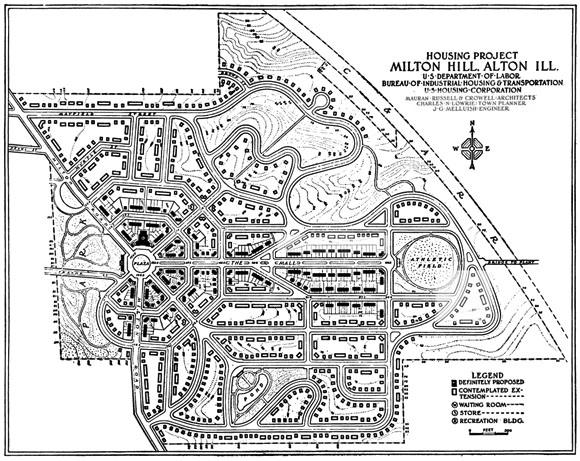
    Over the course of two years, the agency designed and planned over 80 housing projects. Some developments were small, consisting of a few dozen dwellings. Others approached the size of entire new towns.

    For example, Cradock, near Norfolk, Virginia, was planned on a 310-acre site, with more than 800 detached homes developed on just 100 of those acres. In Dayton, Ohio, the agency created a 107-acre community that included 175 detached homes and a mix of over 600 semidetached homes and row houses, along with schools, shops, a community center and a park.

    Designing ideal communities

    Notably, the Housing Corporation was not simply committed to offering shelter.

    Its architects, planners and engineers aimed to create communities that were not only functional but also livable and beautiful. They drew heavily from Britain’s late-19th century Garden City movement, a planning philosophy that emphasized low-density housing, the integration of open spaces and a balance between built and natural environments.

    Milton Hill, a neighborhood designed and developed by the United States Housing Corporation in Alton, Ill.
    National Archives

    Importantly, instead of simply creating complexes of apartment units, akin to the public housing projects that most Americans associate with government-funded housing, the agency focused on the construction of single-family and small multifamily residential buildings that workers and their families could eventually own.

    This approach reflected a belief by the policymakers that property ownership could strengthen community responsibility and social stability. During the war, the federal government rented these homes to workers at regulated rates designed to be fair, while covering maintenance costs. After the war, the government began selling the homes – often to the tenants living in them – through affordable installment plans that provided a practical path to ownership.

    A single-family home in Davenport, Iowa, built by the U.S. Housing Corporation.
    National Archives

    Though the scope of the Housing Corporation’s work was national, each planned community took into account regional growth and local architectural styles. Engineers often built streets that adapted to the natural landscape. They spaced houses apart to maximize light, air and privacy, with landscaped yards. No resident lived far from greenery.

    In Quincy, Massachusetts, for example, the agency built a 22-acre neighborhood with 236 homes designed mostly in a Colonial Revival style to serve the nearby Fore River Shipyard. The development was laid out to maximize views, green space and access to the waterfront, while maintaining density through compact street and lot design.

    At Mare Island, California, developers located the housing site on a steep hillside near a naval base. Rather than flatten the land, designers worked with the slope, creating winding roads and terraced lots that preserved views and minimized erosion. The result was a 52-acre community with over 200 homes, many of which were designed in the Craftsman style. There was also a school, stores, parks and community centers.

    Infrastructure and innovation

    Alongside housing construction, the Housing Corporation invested in critical infrastructure. Engineers installed over 649,000 feet of modern sewer and water systems, ensuring that these new communities set a high standard for sanitation and public health.

    Attention to detail extended inside the homes. Architects experimented with efficient interior layouts and space-saving furnishings, including foldaway beds and built-in kitchenettes. Some of these innovations came from private companies that saw the program as a platform to demonstrate new housing technologies.

    One company, for example, designed fully furnished studio apartments with furniture that could be rotated or hidden, transforming a space from living room to bedroom to dining room throughout the day.

    To manage the large scale of this effort, the agency developed and published a set of planning and design standards − the first of their kind in the United States. These manuals covered everything from block configurations and road widths to lighting fixtures and tree-planting guidelines.

    A single-family home in Bremerton, Wash., built by the U.S. Housing Corporation.
    National Archives

    The standards emphasized functionality, aesthetics and long-term livability.

    Architects and planners who worked for the Housing Corporation carried these ideas into private practice, academia and housing initiatives. Many of the planning norms still used today, such as street hierarchies, lot setbacks and mixed-use zoning, were first tested in these wartime communities.

    And many of the planners involved in experimental New Deal community projects, such as Greenbelt, Maryland, had worked for or alongside Housing Corporation designers and planners. Their influence is apparent in the layout and design of these communities.

    A brief but lasting legacy

    With the end of World War I, the political support for federal housing initiatives quickly waned. The Housing Corporation was dissolved by Congress, and many planned projects were never completed. Others were incorporated into existing towns and cities.

    Yet, many of the neighborhoods built during this period still exist today, integrated in the fabric of the country’s cities and suburbs. Residents in places such as Aberdeen, Maryland; Bremerton, Washington; Bethlehem, Pennsylvania; Watertown, New York; and New Orleans may not even realize that many of the homes in their communities originated from a bold federal housing experiment.

    These homes on Lawn Avenue in Quincy, Mass., in 2019 were built by the U.S. Housing Corporation.
    Google Street View

    The Housing Corporation’s efforts, though brief, showed that large-scale public housing could be thoughtfully designed, community oriented and quickly executed. For a short time, in response to extraordinary circumstances, the U.S. government succeeded in building more than just houses. It constructed entire communities, demonstrating that government has a major role and can lead in finding appropriate, innovative solutions to complex challenges.

    At a moment when the U.S. once again faces a housing crisis, the legacy of the U.S. Housing Corporation serves as a reminder that bold public action can meet urgent needs.

    Eran Ben-Joseph does not work for, consult, own shares in or receive funding from any company or organization that would benefit from this article, and has disclosed no relevant affiliations beyond their academic appointment.

    ref. Believe it or not, there was a time when the US government built beautiful homes for working-class Americans to deal with a housing crisis – https://theconversation.com/believe-it-or-not-there-was-a-time-when-the-us-government-built-beautiful-homes-for-working-class-americans-to-deal-with-a-housing-crisis-253512

    MIL OSI – Global Reports

  • MIL-OSI Global: Tomato trade dispute between the US and Mexico is boiling over again – with 21% tariffs due in July

    Source: The Conversation – USA – By Andrew Muhammad, Professor of Agriculture and Resource Economics, University of Tennessee

    The country of origin – Mexico – is noted on the label of a package of Campari tomatoes for sale in the produce section of a Safeway grocery store on March 4, 2025, in Denver. AP Photo/David Zalubowski

    Although technically they’re a fruit, tomatoes are one of the most-consumed vegetables, according to the U.S. Department of Agriculture. Among the fresh produce the nation buys from foreign countries, tomatoes often rank first or second, behind avocados.

    This trade is now jeopardized because the Trump administration has revived a three-decade-old effort to limit imports.

    As economists who study global trade issues affecting agricultural commodities and processed food products, we have assessed the benefits of imported tomatoes and other products on consumers and businesses. Fresh tomato imports ensure year-round availability for consumers, contribute significantly to the U.S. economy by generating billions in sales and supporting thousands of jobs, and promote competitive pricing that benefits both consumers and businesses.

    New import restrictions could put all that at risk because domestic production cannot satisfy national demand. For tomatoes, like steel and other products, efforts to reverse trade imbalances can decrease consumer satisfaction and potentially destroy more jobs and economic activity than they create.

    Initiating a dumping investigation

    This tussle over tomatoes began in the 1990s.

    At that time, unprecedented growth in tomato imports from Mexico prompted U.S. producers to ask the Clinton administration to investigate whether they were being sold at unfairly low prices. If that were the case, it would violate both World Trade Organization rules and U.S. trade policy.

    The U.S. responded with an antidumping investigation, conducted by the Department of Commerce and U.S. International Trade Commission. The agencies were tasked with seeing if imports are being sold in the U.S. at less than fair market value – the definition of dumping.

    Dumping can harm domestic producers by depressing local prices to compete with imports, causing financial distress. An antidumping duty is essentially a tariff.

    The Commerce Department ruled against Mexican producers, finding that they had engaged in dumping, but reached an agreement with them. Mexican tomato exporters agreed to set minimum prices, leading the U.S. to call off its investigation. The U.S. and Mexico have subsequently entered into a string of suspension agreements over the years.

    The first was implemented in 1996, and the most recent took effect in 2019 during President Donald Trump’s prior term after his administration had threatened to impose a 17.5% tomato tariff.

    Squashing the tomato suspension agreement

    But in April 2025, the Commerce Department announced that it would withdraw from the latest tomato suspension agreement. The Trump administration plans to begin to impose, starting in July, antidumping duties of 21% on fresh tomatoes imported from Mexico.

    It is not obvious at this stage if American importers and consumers will bear the full burden of this tariff, or if Mexican tomato exporters will absorb this cost.

    This move is supposed to benefit fresh tomato producers in the U.S. – most of which are in Florida, with a significantly smaller number located in California. The tariffs could, however, hurt produce distributors, wholesalers and retailers, as well as American consumers.

    People in the U.S. have become accustomed to buying fresh tomatoes to toss into their salads and stuff into their sandwiches year-round, even though in most of the country you can only harvest field-grown tomatoes in the warmest months of the year.

    Focusing only on fresh tomatoes

    This dispute doesn’t involve all the tomatoes and tomato products Americans eat.

    U.S. tomato production is split into two main categories. Fresh tomatoes are usually purchased in a supermarket’s fresh produce section, to be consumed whole, chopped or sliced. This dispute is about those tomatoes.

    The other kind is processing tomatoes, which companies use for making tomato paste, canned or stewed tomatoes and tomato sauce. California leads the nation in processing tomato production. Unlike fresh tomatoes, where the U.S. imports far more than it produces or exports, the U.S. is actually running a trade surplus in processed tomato products.

    When the North American Free Trade Agreement was implemented in January 1994, U.S. fresh tomato production was more than four times the quantity of imported fresh tomatoes: 3.7 billion pounds (1.7 million metric tons) produced versus only 870 million pounds (400,000 metric tons) imported.

    Domestic production has steadily declined since then, while imports have increased. Imported fresh tomatoes are now twice as plentiful: 2.2 billion pounds (1 million metric tons) were grown in the U.S. in 2023, compared with 4.4 billion pounds (2 million metric tons)“ imported .

    This happened as Americans were eating more fresh tomatoes than ever: almost 20 pounds (9 kilograms) per capita in 2023.

    Mexico supplies most of the fresh tomatoes Americans buy in supermarkets.
    Justin Sullivan/Getty Images

    Influx didn’t clearly affect prices

    In 2024, fresh tomato imports totaled US$3.6 billion, with $3.1 billion coming from Mexico. This was a 367% increase since NAFTA took effect, adjusted for inflation.

    Given that costs of production are lower in Mexico for many products, especially in the fresh produce sector where labor costs are less than half U.S. levels, you might figure that this arrangement has kept prices for fresh tomatoes in the U.S. low. But there’s little evidence to support that. Instead, the opposite seems true.

    In 1995, the price that U.S. importers paid of Mexican tomatoes was 31 cents per pound. Since then, import prices have steadily increased to 74 cents per pound in 2024. They have often exceeded prices paid to American farmers and kept pace with the overall rise in food prices the past three decades.

    While restricting imported Mexican tomatoes might benefit U.S. tomato producers by making it easier for them to raise their prices, there are other factors to consider. Imports play a crucial role in boosting economic activity and creating jobs. According to a recent study, these imports generated a total economic impact of more than $8 billion.

    The extra $5 billion comes from all the value-added activities associated with getting that produce from the border to consumers. That total economic impact supports approximately 47,000 U.S. jobs tied to tomato storage, distribution, wholesaling and retailing.

    We would expect antidumping duties on imported fresh tomatoes to increase prices, and reduce the amount of fresh tomatoes Americans can buy. That would also shrink some of the economic impact and eliminate some of the jobs spurred by the imported tomato boom.

    The authors do not work for, consult, own shares in or receive funding from any company or organization that would benefit from this article, and have disclosed no relevant affiliations beyond their academic appointment.

    ref. Tomato trade dispute between the US and Mexico is boiling over again – with 21% tariffs due in July – https://theconversation.com/tomato-trade-dispute-between-the-us-and-mexico-is-boiling-over-again-with-21-tariffs-due-in-july-255813

    MIL OSI – Global Reports

  • MIL-OSI Global: Leaders can promote gender equity without deepening polarization − here’s how

    Source: The Conversation – USA – By Colleen Tolan, Postdoctoral Researcher for the Center for Women in Business, Rutgers University

    Dialogue can make a difference. Pixelfit/E+/Getty Images

    Americans largely agree that women have made significant gains in the workplace over the past two decades. But what about men? While many Americans believe women are thriving, over half believe men’s progress has stalled or even reversed.

    To make matters more complex, recent research has revealed a massive divide along gender and partisan lines. The majority of Republican men think full gender equity in America has been achieved, while the majority of Democratic women think there’s still work to be done.

    As researchers at the Rutgers Center for Women in Business, we think this divide matters a lot. And for business leaders, this gap isn’t just a social or political issue. It’s a leadership challenge with direct implications for team cohesion and morale. If gender equity efforts are seen by some employees as a loss rather than a collective gain, leaders risk inadvertently entrenching division.

    When equity feels like a loss

    Efforts to advance gender equity often come with the reassurance that equality isn’t a zero-sum game – that women’s advancement need not come at men’s expense. Data backs this up, showing, for example, that having gender-diverse executive teams can boost company profits by as much as 21%.

    Yet workers’ perceptions of gender equity efforts tell another story.

    For example, 61% of Americans believe changing gender norms have made it easier for women to be successful at work, but only 36% say the same for men. What’s more, 61% of men think women have equal job opportunities, but only 33% of women believe the same thing.

    These differences reveal an important truth: Perception, not policy alone, shapes how equity efforts are received.

    Involving men in the equity conversation

    Research suggests men and women associate power with different psychological outcomes. Men are more likely to associate power with control, while for women, power is more often linked to a feeling of freedom. As a result, efforts to share power may feel more liberating to women but destabilizing to men – particularly to those already in power.

    But this doesn’t mean one’s gain needs to come at another’s expense – just that people make sense of change through the lens of their own identities and experiences.

    When men perceive progress for women as a threat to their status or opportunity, resistance grows, even in the face of data suggesting otherwise. This cycle becomes especially difficult to break because it requires challenging one’s own beliefs, which isn’t always easy.

    This is why learning about others’ experiences is so useful. For example, a man and a woman might be equally ambitious and capable, but perhaps only one of them experiences being routinely interrupted in meetings. These differences in personal history and lived experience shape how work environments are interpreted and therefore navigated.

    Understanding this diversity of perspectives and discussing lived experiences can help gender equity efforts become more effective. Building a truly equitable future requires acknowledging that feelings about efforts required to reach that future may differ widely.

    With that in mind, here are some best practices for leaders to consider as they navigate the changing landscape.

    Preparing for differences in perspective

    Avoid zero-sum thinking. If men think gender equity efforts will erode their opportunities or diminish their own power, they’ll disengage. Leaders should instead frame equity as essential to team and business success – and ground conversations in metrics that show how inclusion drives outcomes.

    Know that the stakes may vary. Women may see gender equity as a matter of justice or even survival, and when stakes are existential, compromise can be difficult. At the same time, they may experience organizational progress toward gender equity as a personal win. Publicizing these changes and their mutually beneficial gains can help to create a more cohesive team where everyone can thrive.

    Be aware that different clocks are ticking. Some men may view change as happening too quickly, destabilizing established norms. Women, on the other hand, may feel progress is too slow, given centuries of systemic inequity. Holding both views as worthy of respect requires teamwork. Encourage dialogue where the goal is mutual understanding rather than unity.

    Building coalitions around shared experiences

    Promote policies that benefit everyone. By promoting policies such as hybrid work and parental leave that benefit everyone, workplaces will attract and retain a more diverse workforce, which leads to greater innovation. Encourage men to take advantage of these policies and ensure your company culture makes it acceptable to do so. This enables men to actually experience the benefit of these initiatives. Align efforts around shared values – such as the desire for healthier families, better education or stronger economies.

    Use both/and thinking. Supporting men who express fears about status loss can open space for dialogue. Provide that space. At the same time, acknowledge the ongoing struggles women continue to face and their fears about workplaces returning to “the way they used to be.” One viewpoint does not need to negate the other.

    Prioritize lived experience. Rather than insisting that everyone see gender equity the same way, find ways for men to experience mutually beneficial initiatives. Then, encourage dialogue about experiences rather than ideas.

    Bridge divides with dialogue

    Mixed mentorship matters. Pairing employees with mentors of different backgrounds – across gender, race, age, department or seniority level – can help them cultivate curiosity and learn from one another.

    Activate resource groups. Groups focused on cross-cultural engagement provide employees with a platform to discuss challenges, share experiences and collaborate on inclusion initiatives. Additionally, encouraging allies to participate in employee resource groups and business resource groups fosters increased openness and understanding. Leaders can support groups by providing resources, visibility and executive sponsorship.

    Embrace discomfort. In general, people work to avoid feeling uncomfortable. However, discomfort is often necessary for growth. Starting with this premise and encouraging thoughtful, open and honest discussions about sensitive topics and potential fears can help foster transparency and build trust. Leaders can facilitate these conversations through town halls, roundtable discussions or dedicated dialogue sessions.

    Progress depends not just on metrics and policies but on trust, communication and humility. When people feel seen and heard – whether they’re feeling empowered or uncertain – they’re more likely to engage.

    In other words, the real opportunity isn’t to win an argument about whether gender equity is “done,” but to build organizations where everyone can see a future for themselves in the workplace – and feel as if they have a role in shaping it.

    The authors do not work for, consult, own shares in or receive funding from any company or organization that would benefit from this article, and have disclosed no relevant affiliations beyond their academic appointment.

    ref. Leaders can promote gender equity without deepening polarization − here’s how – https://theconversation.com/leaders-can-promote-gender-equity-without-deepening-polarization-heres-how-254921

    MIL OSI – Global Reports

  • MIL-OSI Global: Cutting HIV aid means undercutting US foreign and economic interests − Nigeria shows the human costs

    Source: The Conversation – USA – By Kathryn Rhine, Associate Professor of General Internal Medicine, University of Colorado Anschutz Medical Campus

    A large number of children are born with HIV in Nigeria. Kristian Buus/Corbis News via Getty Images

    A little over two decades ago, addressing Nigeria’s HIV crisis topped U.S. President George W. Bush’s priorities. Africa’s most populous nation had 3.5 million HIV cases, and the disease threatened to destabilize the region and ultimately compromise U.S. interests. These interests included securing access to Nigeria’s substantial oil reserves, maintaining regional military stability and protecting trade partnerships worth billions.

    Following years of agitation from AIDS activists, Bush launched the President’s Emergency Plan for AIDS Relief, or PEPFAR, in 2003. This U.S.-led HIV treatment program has since saved tens of millions of lives around the globe.

    While living in Nigeria for my work as a medical anthropologist, I witnessed PEPFAR’s rollout and saw firsthand how the powerful therapies it provided transformed Nigerian lives. The women I worked with told me they could finally put aside the fears of death or abandonment that had consumed their days. Instead, they could focus on a newly expanded horizon of possibilities: building careers, finding love, having healthy children.

    Now, however, a serious threat to preventing and treating HIV worldwide looms. The Trump administration’s decision to substantially restrict access to a vital HIV prevention tool – PEPFAR-funded preexposure prophylaxis, or PrEP – would cut off ongoing treatment for millions of people and block future access for countless others who need this protection.

    The Trump administration aims to cut HIV prevention funding.

    The timing is devastating: Scientists recently made a major advance in HIV prevention. Named the 2024 Breakthrough of the Year by the journal Science, the drug lenacapavir offers six months of HIV protection with one injection. Unlike previous PrEP options that required daily pills, which created significant barriers to consistent access and adherence, this twice-yearly injection dramatically simplifies prevention.

    By undermining access to a treatment that has been essential to reducing HIV rates, the Trump administration’s new restrictions threaten to derail two decades of bipartisan investment in eliminating HIV globally. The consequences extend well beyond individual lives.

    Afterlife of aid

    “Some people that have it, they choose to be wicked and just spread it all around,” confided Elizabeth, a woman I interviewed during my time in Nigeria. I am using a pseudonym to protect her privacy. “They say, ‘Somebody gave it to me, so I am going to spread it too.’ But if they know that they can live positively with the virus, it would reduce their evil thoughts.”

    Elizabeth’s words reveal a concerning dynamic: When hope for treatment disappears, a dangerous desperation can take its place. Patients who feel abandoned by health care systems might lose motivation to protect others from HIV. They may also stop seeking medical care, abandon prevention measures and turn away from future aid.

    Cultural anthropologists use the phrase “the afterlife of aid” to describe what happens after global aid programs are withdrawn or drastically reduced. Communities are left not just without resources but with a lasting sense of betrayal that undermines their willingness to seek help, creating cycles of skepticism that can persist for generations.

    Treatment as hope

    In my fieldwork, I’ve witnessed how managing life with the virus involves far more than taking medications. It requires carefully navigating personal relationships, family obligations, cultural expectations and hopes for the future.

    Many of the women I worked with had contracted HIV from their husbands or boyfriends. Some even suspected their partners’ positive status but were unable to protect themselves. Before these medications, women – both HIV positive and HIV negative – had to choose between risking rejection or risking transmission.

    The welfare of entire families depends on access to HIV medication. Here, a woman who is the sole provider of several children takes antiretroviral treatment.
    Saurabh Das/AP Photo

    Elizabeth and David’s story illustrates these challenges. They had been together for more than a year when David proposed. “When I sensed he was serious about marriage, I knew I had to tell him my status,” Elizabeth told me during one of our many conversations. Though initially shocked, he remained committed to their relationship.

    Elizabeth had maintained a decade of careful adherence to her HIV treatment, but the couple still struggled with consistent condom use. David described using condoms as akin to “eating candy with the wrapper still on it.” He also was eager to have a baby. While PrEP had greatly reduced transmission risk, it placed the full burden of protecting her husband on Elizabeth.

    The path Elizabeth navigated highlights how Nigerian cultural expectations complicated their situation. When proving one’s fertility is often considered essential to establishing gender identity, the pressure to have sex without protection created additional tension. Moreover, Elizabeth’s need to balance her own health needs with her husband’s desires reflected the delicate negotiation many Nigerian women face between personal well-being and marriage.

    As Elizabeth prepared for the birth of their child, she expressed both joy and anxiety: “I have to stay healthy for both of them now.”

    Politicizing global health

    Previous interruptions in aid foreshadow what’s at stake when shifts in U.S. political priorities compromise global health funding.

    Consider the global spike in maternal and child mortality when President Ronald Reagan instituted the Mexico City Policy, often referred to as the “global gag rule.” It blocked U.S. funding to all international nongovernmental organizations that provided or even referred abortion services.

    This policy has been repeatedly implemented by Republican administrations – including those of George H.W. Bush, George W. Bush and Donald Trump during his first term – and subsequently rescinded by Democratic presidents, creating a disruptive cycle of funding uncertainty. Among these affected organizations are recipients of PEPFAR funds.

    The human cost of this policy pendulum is measurable and significant. Researchers have found that when this law is enacted, nations across the globe suffer increased death rates for newborns and mothers as well as jumps in HIV cases. In countries heavily dependent on U.S. aid, the Mexico City Policy has resulted in approximately 80 additional child deaths and nine additional maternal deaths per 100,000 live births annually and about one additional HIV infection per 10,000 uninfected people.

    The Trump administration reinstated the global gag rule in 2017.
    Erik McGregor/LightRocket via Getty Images

    My research in Nigeria also reveals the fragile progress that now hangs in the balance. Before treatments arrived, HIV ravaged Nigerian communities. In 2001, nearly 6% of the population had HIV, totaling around 3.5 million people. The Hausa language reflected this trauma: Terms for AIDS also meant “lifeless body” and “nearby grave.”

    Following the rollout of HIV treatments, Nigeria’s cases dropped dramatically – by 2010, prevalence had fallen to 4.1%. Declines continued steadily as treatment access expanded from 360,000 people in 2010 to over 1 million by 2018. This progress was heavily dependent on international support, with PEPFAR and other global donors providing over 80% of the US$6.2 billion spent fighting HIV in Nigeria between 2005 to 2018.

    In 2019, around 1.3% of the population had HIV, or 1.9 million people.

    From personal choice to global security

    What’s at stake isn’t just increasing HIV rates. The Trump administration’s reductions in foreign aid threaten to unravel over two decades of U.S. investment in global security and economic growth.

    Public health crises rarely stay contained within national boundaries. When health systems fail in West Africa, diseases can quickly spread overseas and require costly emergency responses. The 2014 Ebola outbreak demonstrated this reality, when cases reached America and prompted a $5.4 billion emergency response. Similarly, the 2009 H1N1 influenza pandemic, which infected around 60 million Americans, showed how quickly infectious diseases circle the globe when surveillance and containment systems are inadequate.

    Inconsistent aid, in turn, undermines American global leadership and creates openings for competing powers to establish their influence. China has actively exploited these gaps, establishing bilateral trade with Africa reaching $295 billion in 2024. While the U.S. reduced its global health engagement during previous administrations, China expanded its global health diplomacy, partnering on issues ranging from infectious disease prevention and control to health emergency response and health technology innovation.

    Meanwhile, restrictions in PrEP access risk recreating the same impossible choices women faced at the advent of the epidemic: choosing between disclosing their status and risking abandonment; accepting unprotected sex and risking transmission, or refusing unprotected sex and risking violence or loss of economic support.

    I believe the result is a far less safe world where preventable suffering continues, hard-won progress unravels and the promise of an AIDS-free generation remains unfulfilled.

    Kathryn Rhine has received funding from the National Endowment for the Humanities, the Andrew W. Mellon Foundation, the Wenner Gren Foundation, the American Philosophical Society, the West African Research Association, the American Council of Learned Societies, Fulbright programs, the National Science Foundation, and the National Security Education Program. These views are her own and not those of her institution.

    ref. Cutting HIV aid means undercutting US foreign and economic interests − Nigeria shows the human costs – https://theconversation.com/cutting-hiv-aid-means-undercutting-us-foreign-and-economic-interests-nigeria-shows-the-human-costs-253705

    MIL OSI – Global Reports

  • MIL-OSI Global: In what order did the planets in our solar system form?

    Source: The Conversation – USA – By Christopher Palma, Teaching Professor of Astronomy & Astrophysics, Penn State

    An artistic rendition of our solar system, including the Sun and eight planets. vjanez/iStock via Getty Images

    Curious Kids is a series for children of all ages. If you have a question you’d like an expert to answer, send it to CuriousKidsUS@theconversation.com.


    Are planets in the solar system that are closer to the Sun older than the ones further away? – Gavriel, age 10, Paducah, Kentucky


    A cloud of collapsing gas created our Sun, the first thing to form in our solar system. This happened about 4½ billion years ago.

    Then the planets began to emerge, as the billions of particles of gas and dust left over from the Sun’s formation became a flattened disk.

    Known as a protoplanetary disk, it was enormous and surrounded the Sun for billions of miles. Within the disk, the gas and dust particles started to collide, solidify and stick together, like snowflakes clumping together to form snowballs.

    As the particles clung together, the microscopic grains became pebble-size objects and then grew and grew. Some became rocks the size of baseballs, others the size of a house, and a few as big as a planet.

    This process, called accretion, is how everything in the solar system – planets, moons, comets and asteroids – came into being.

    Telescopes can see young solar systems being born. This image is a protoplanetary disk from a distant star in the Milky Way galaxy.
    NASA/ALMA/ESO/NAOJ/NRAO/A.Isella;/B.Saxton/NRAO/AUI/NSF

    The ice line

    By studying computer models and observing the creation of other star systems, astronomers like us have learned a lot about the early days of our solar system.

    When the Sun was still forming and the protoplanetary disk was making planets, there was a distance from the Sun where it was cold enough for ice to gather. That place, the ice line – sometimes called the snow line – was in what’s now the asteroid belt, which is between Mars and Jupiter.

    Today, of course, ice is found on almost every planet, even on Mercury. But back then, only the young protoplanets beyond the ice line were cold enough to have it. The ice, gas and dust, slamming into each other for millions of years, accumulated into enormous bodies that ultimately became giant planets – Jupiter, Saturn, Uranus and Neptune.

    While all this was happening, the smaller planets inside the ice line were forming too. But with less raw material to work with, Mercury, Venus, Earth and Mars took much longer.

    Today, it’s believed that Jupiter and Saturn, the largest planets, were the first to fully form, both within a few million years. Uranus and Neptune were next, within 10 million years. The inner planets, including Earth, took at least 100 million years, maybe more.

    To put it another way, the four planets closest to the Sun are the youngest; the two planets farthest out, the next youngest; and the two in between, the oldest. The difference in age between the youngest and oldest planets is perhaps 90 million years.

    That sounds like an enormous age difference, but in space, 90 million years isn’t really that long – less than 1% of the total time the universe has been around. One way to consider it: Think of Earth as a little sister with a big brother, Jupiter, who’s 2 or 3 years older.

    Taken by the Hubble Space Telescope in 2019, this is a photo of Jupiter, the fifth planet out from the Sun.
    NASA/JPL-Caltech/SwRI/MSSS/Kevin M. Gill (CC-BY)

    Location, location, location

    Soon after formation the giant worlds began to migrate, moving inward toward the Sun or outward away from the Sun, before finally settling into their final orbits.

    For instance, Neptune migrated outward, switching places with Uranus, and pushed a lot of the small, icy bodies into the Kuiper Belt, a place in the outer solar system that’s home to dwarf planets Pluto, Eris and Makemake and millions of comets.

    Meanwhile, Jupiter moved inward, and its massive gravity forced some forming planets into the Sun, where they disintegrated. Along the way, Jupiter flung some smaller rocks out of the solar system altogether; the rest went to the asteroid belt.

    But most critically, as Jupiter settled into its own orbit, it moved all of the forming objects and likely finalized the location of the remaining inner planets, including Earth.

    All of Jupiter’s tugging helped put our planet in the so-called “Goldilocks zone,” a place just the right distance from the Sun, where Earth could have liquid water on its surface and the right temperature for life to evolve. If Jupiter hadn’t formed the way it did, it’s entirely possible life would not have ignited on Earth – and we would not be here today.


    Hello, curious kids! Do you have a question you’d like an expert to answer? Ask an adult to send your question to CuriousKidsUS@theconversation.com. Please tell us your name, age and the city where you live.

    And since curiosity has no age limit – adults, let us know what you’re wondering, too. We won’t be able to answer every question, but we will do our best.

    Lucas Brefka receives funding from a NASA Exoplanet Research Program grant.

    Christopher Palma does not work for, consult, own shares in or receive funding from any company or organization that would benefit from this article, and has disclosed no relevant affiliations beyond their academic appointment.

    ref. In what order did the planets in our solar system form? – https://theconversation.com/in-what-order-did-the-planets-in-our-solar-system-form-252262

    MIL OSI – Global Reports

  • MIL-OSI Global: Space tourism’s growth blurs the line between scientific and symbolic achievement – a tourism scholar explains how

    Source: The Conversation – USA – By Betsy Pudliner, Associate Professor of Hospitality and Technology Innovation, University of Wisconsin-Stout

    Blue Origin’s NS-31 flight lifted off on April 14, 2025. Justin Hamel/Getty Images

    On April 14, 2025, Blue Origin launched six women – Aisha Bowe, Amanda Nguyễn, Gayle King, Katy Perry, Kerianne Flynn and Lauren Sánchez – on a suborbital journey to the edge of space.

    The headlines called it a historic moment for women in space. But as a tourism educator, I paused – not because I questioned their experience, but because I questioned the language. Were they astronauts or space tourists? The distinction matters – not just for accuracy, but for understanding how experience, symbolism and motivation shape travel today.

    In tourism studies, my colleagues and I often ask what motivates travel and makes it a meaningful experience. These women crossed a boundary by leaving Earth’s surface. But they also stepped into a controversy about a symbolic one: the blurred line between astronaut and tourist, between scientific achievement and curated experience.

    This flight wasn’t just about the altitude they flew to – it was about what it meant. As commercial space travel becomes more accessible to civilians, more people are joining spaceflights not as scientists or mission specialists, but as invited guests or paying participants. The line between astronaut and space tourist is becoming increasingly blurred.

    Blue Origin’s NS-31 flight brought six women to the edge of space.

    In my own work, I explore how travelers find meaning in the way their journeys are framed. A tourism studies perspective can help unpack how experiences like the Blue Origin flight are designed, marketed and ultimately understood by travelers and the tourism industry.

    So, were these passengers astronauts? Not in the traditional sense. They weren’t selected through NASA’s rigorous training protocols, nor were they conducting research or exploration in orbit.

    Instead, they belong to a new category: space tourists. These are participants in a crafted, symbolic journey that reflects how commercial spaceflight is redefining what it means to go to space.

    Space tourism as a niche market

    Space tourism has its origins in 1986 with the launch of the Mir space station, which later became the first orbital platform to host nonprofessional astronauts. In the 1990s and early 2000s, Mir and its successor, the International Space Station, welcomed a handful of privately funded civilian guests – most notably U.S. businessman Dennis Tito in 2001, often cited as the first space tourist.

    Space tourism has since evolved into a niche market selling brief encounters to the edge of Earth’s atmosphere. While passengers on the NS-31 flight did not purchase their seats, the experience mirrors those sold by commercial space tourism providers such as Virgin Galactic.

    Like other forms of niche tourism – wellness retreats, heritage trails or extreme adventures – space travel appeals to those drawn to novelty, exclusivity and status, regardless of whether they purchased the ticket.

    These suborbital flights may last just minutes, but they offer something far more lasting: prestige, personal storytelling and the feeling of participating in something rare. Space tourism sells the experience of being somewhere few have visited, not the destination itself. For many, even a 10-minute flight can fulfill a deeply personal milestone.

    Tourist motivation and space tourism’s evolution

    The push-and-pull theory in tourism studies helps explain why people might want to pursue space travel. Push factors – internal desires such as curiosity, an urge to escape or an eagerness to gain fame – spark interest. Pull factors – external elements such as wishing to see the view of Earth from above or experience the sensation of weightlessness – enhance the appeal.

    Space tourism taps into both. It’s fueled by the internal drive to do something extraordinary and the external attraction of a highly choreographed, emotional experience.

    Participants in space tourism wear branded jumpsuits with the company’s logo, pose for photos and talk to the media about their experience.
    AP Photo/Tony Gutierrez

    These flights are often branded – not necessarily with flashy logos, but through storytelling and design choices that make the experience feel iconic. For example, while the New Shepard rocket the women traveled in doesn’t carry a separate emblem, it features the company’s name, Blue Origin, in bold letters along the side. Passengers wear personalized flight suits, pose for preflight photos and receive mission patches or certificates, all designed to echo the rituals of professional space missions.

    What’s being sold is an “astronaut-for-a-day” experience: emotionally powerful, visually compelling and rich with symbolism. But under tourism classifications, these travelers are space tourists – participants in a curated, short-duration excursion.

    Representation and marketing experience

    The image from the Blue Origin flight of six women boarding a rocket was framed as a symbolic victory – a girl-power moment designed for visibility and celebration – but it was also carefully curated.

    This wasn’t the first time women entered space. Since its inception, NASA has selected 61 women as astronaut candidates, many of them making groundbreaking contributions to space science and exploration. Sally Ride, Mae Jemison, Christina Koch and Jessica Meir not only entered space – they trained as astronauts and contributed significantly to science, engineering and long-duration missions. Their journeys marked historic achievements in space exploration rather than curated moments in tourism.

    Recognizing their legacy is important as commercial spaceflight creates new kinds of unique, tailored experiences, ones shaped more by media performance than by scientific milestones.

    The Blue Origin flight was not a scientific mission but rather was framed as a symbolic event. In tourism, companies, marketers and media outlets often create these performances to maximize their visibility. SpaceX has taken a similar approach with its Inspiration4 mission, turning a private orbital flight into a global media event complete with a Netflix documentary and emotional storytelling.

    The Blue Origin flight sold a feeling of progress while blending the roles between astronaut and guest. For Blue Origin, the symbolic value was significant. By launching the first all-female crew into suborbital space, the company was able to claim a historic milestone – one that aligned them with inclusion – without the cost, complexity or risk associated with a scientific mission. In doing so, they generated enormous media attention.

    Tourism education and media literacy

    In today’s world, space travel is all about the story that gets told about the flight. From curated visuals to social media posts and press coverage, much of the experience’s meaning is shaped by marketing and media.

    Understanding that process matters – not just for scholars or industry insiders, but for members of the public, who follow these trips through the narratives produced by the companies’ marketing teams and media outlets.

    Another theory in tourism studies describes how destinations evolve over time – from exploration, to development, to mass adoption. Many forms of tourism begin in an exploration phase, accessible only to the wealthy or well connected. For example, the Grand Tour of Europe was once a rite of passage for aristocrats. Its legacy helped shape and develop modern travel.

    As more people travel to a destination over time, it moves through the tourism area life cycle. During the early exploration phase, the destination has only a few tourists.
    Coba56/Wikimedia Commons

    Right now, space tourism is in the exploration stage. It’s expensive, exclusive and available only to a few. There’s limited infrastructure to support it, and companies are still experimenting with what the experience should look like. This isn’t mass tourism yet, it’s more like a high-profile playground for early adopters, drawing media attention and curiosity with every launch.

    Advances in technology, economic shifts and changing cultural norms can increase access to unique destinations that start as out of bounds to a majority of tourists. Space tourism could be the next to evolve this way in the tourism industry. How it’s framed now – who gets to go, how the participants are labeled and how their stories are told – will set the tone moving forward. Understanding these trips helps people see how society packages and sells an inspirational experience long before most people can afford to join the journey.

    Betsy Pudliner is affiliated with International Council of Hotel, Restaurant and Institutional Educators.

    ref. Space tourism’s growth blurs the line between scientific and symbolic achievement – a tourism scholar explains how – https://theconversation.com/space-tourisms-growth-blurs-the-line-between-scientific-and-symbolic-achievement-a-tourism-scholar-explains-how-255284

    MIL OSI – Global Reports

  • MIL-OSI Video: U.S. Army Special Operations Helicopters being AWESOME for 12 minutes | ASMR | Army Lethality

    Source: US Army (video statements)

    Just because we like you, here’s footage of the 160th Special Operations Aviation Regiment training. You’re welcome.

    Video by 160 PAO

    About the U.S. Army:
    The Army Mission – our purpose – remains constant: To deploy, fight and win our nation’s wars by providing ready, prompt & sustained land dominance by Army forces across the full spectrum of conflict as part of the joint force.
    Interested in joining the U.S. Army?
    Visit: spr.ly/6001igl5L
    Connect with the U.S. Army online:
    Web: https://www.army.mil
    Facebook: https://www.facebook.com/USarmy/
    X: https://www.twitter.com/USArmy
    Instagram: https://www.instagram.com/usarmy/
    LinkedIn: https://www.linkedin.com/company/us-army
    #USArmy #Soldiers #Military #Army

    https://www.youtube.com/watch?v=x1b0tux7WQk

    MIL OSI Video

  • MIL-OSI United Kingdom: Grants of £3,000 available for local festivals across the Lancaster district Festival organisers across the Lancaster district are being invited to apply for small grants of £3,000 to help them grow and reach new audiences.

    Source: City of Lancaster

    Festival organisers across the Lancaster district are being invited to apply for small grants of £3,000 to help them grow and reach new audiences.

    The funding is being made available by Lancaster City Council via the UK Shared Prosperity Fund and is part of ongoing efforts to support festivals that celebrate the local area and help to attract visitors.

    Councillor Martin Bottoms, cabinet member with responsibility for Morecambe regeneration and local economy, said: “Festivals bring our communities together, support local talent, and make our district a vibrant place to live, work and visit. These small grants are designed to give organisers a helping hand to develop and expand their reach.”

    The closing date for applications is 5pm on Friday May 30.

    The earliest start date for projects is July 1 and they need to have taken place by the end of March 2026. For more details of the fund and how to apply visit www.lancaster.gov.uk/ukspf.

    The UK Shared Prosperity Fund aims to improve pride in place and increase life chances across the UK investing in communities and place, supporting local business, and people and skills. For more information, visit https://www.gov.uk/government/publications/uk-shared-prosperity-fund-prospectus

    Last updated: 19 May 2025

    MIL OSI United Kingdom

  • MIL-OSI USA: May 20: NFFE-IAM, IAM Union to Welcome Minority Business Development Agency Employees Back to Work After Administrative Leave, RIF Threats

    Source: US GOIAM Union

    WASHINGTON, May 19, 2025—The National Federation of Federal Employees (NFFE-IAM) and the IAM Union (International Association of Machinists and Aerospace Workers) will gather outside the Department of Commerce on Tuesday, May 20, at 8:30 a.m. to welcome back employees of the Minority Business Development Agency (MBDA). 

    Approximately 35 employees, represented by NFFE-IAM, had been placed on administrative leave and faced a Reduction in Force (RIF) threat. Now returning to their jobs, they will be greeted with signs of support and solidarity.

    Federal workers are the backbone of our nation, providing essential services that keep our country running.

    Event Details:

    What: IAM Union and NFFE-IAM to host a visibility event to welcome back MBDA workers

    When: Tuesday, May 20, 2025, from 8:30 a.m. to 9:15 a.m.

    Where: Department of Commerce, 1401 Constitution Avenue, NW, Washington, D.C. (supporters will gather at the 14th Street main entrance)

    Who: IAM Union, NFFE-IAM, labor allies, and community supporters

    RSVP: Interested reporters can RSVP by emailing Bethany Shelton (bshelton@iamaw.org).

    Supporters will hold signs welcoming the MBDA workers back and thanking them for their work. Members of Congress, elected officials, and local community leaders are invited to attend this event.

    The IAM Union and NFFE-IAM invite members of the media to attend and cover this event. Visuals and interview opportunities will be available.

    The IAM Union (International Association of Machinists and Aerospace Workers) is one of North America’s largest and most diverse industrial trade unions, representing approximately 600,000 active and retired members in the aerospace, defense, airlines, railroad, transit, healthcare, automotive, and other industries. 

    goIAM.org | @IAM_Union

    Share and Follow:

    MIL OSI USA News

  • MIL-OSI: Cornerstone Strategic Investment Fund, Inc. Announces Completion of Rights Offering

    Source: GlobeNewswire (MIL-OSI)

    NEW YORK, May 19, 2025 (GLOBE NEWSWIRE) — Cornerstone Strategic Investment Fund, Inc. (the “Fund”) (NYSE American: CLM) (CUSIP: 21924B302) is pleased to announce the completion of its one-for-three rights offering which expired on Friday, May 16, 2025 (the “Offering”). Under the terms of the Offering, record date stockholders were entitled to purchase one newly issued share of common stock of the Fund for every three rights held. The subscription price for each newly issued share was determined to be $7.30 which, under the terms of the prospectus, was equal to the greater of (i) 112% of net asset value per share as calculated at the close of trading on the date of expiration of the Offering and (ii) 80% of the market price per share at such time.

    Based on preliminary results provided by the Fund’s subscription agent, the Fund received requests for approximately $173 million of its shares. The Fund anticipates issuing over-subscription shares under the additional subscription privilege. 

    The subscription price is higher than the original estimated subscription price of $6.61. It is anticipated that shares will be issued on or about Thursday, May 22, 2025. Stockholders are encouraged to contact their broker regarding the specifics of their account. Newly issued shares will not be entitled to the Fund’s distribution to stockholders for the month of May 2025.

    Cornerstone Strategic Investment Fund, Inc. is a closed-end, diversified management investment company and is registered with the U.S. Securities & Exchange Commission (“SEC”) under the Investment Company Act of 1940, as amended.

    Cornerstone Strategic Investment Fund, Inc. is traded on the NYSE American under the trading symbol “CLM”. The Fund’s investment adviser is Cornerstone Advisors, LLC, which also serves as the investment adviser to another closed-end fund, Cornerstone Total Return Fund, Inc. (NYSE American: CRF). For more information regarding Cornerstone Strategic Investment Fund, Inc. or Cornerstone Total Return Fund, Inc. please visit www.cornerstonestrategicinvestmentfund.com, and www.cornerstonetotalreturnfund.com.

    Past performance is no guarantee of future performance. An investment in the Fund is subject to certain risks, including market risk. In general, shares of closed-end funds often trade at a discount from their net asset value and at the time of sale may be trading on the exchange at a price that is more or less than the original purchase price or the net asset value. An investor should carefully consider the Fund’s investment objective, risks, charges and expenses. Please read the Fund’s disclosure documents before investing.

    In addition to historical information, this report contains forward-looking statements, which may concern, among other things, domestic and foreign markets, industry and economic trends and developments and government regulation and their potential impact on the Fund’s investment portfolio. These statements are subject to risks and uncertainties, including the factors set forth in the Fund’s disclosure documents, filed with the SEC, and actual trends, developments and regulations in the future and their impact on the Fund could be materially different from those projected, anticipated or implied. The Fund has no obligation to update or revise forward-looking statements.

    The MIL Network

  • MIL-OSI: Cornerstone Total Return Fund, Inc. Announces Completion Of Rights Offering

    Source: GlobeNewswire (MIL-OSI)

    NEW YORK, May 19, 2025 (GLOBE NEWSWIRE) — Cornerstone Total Return Fund, Inc. (the “Fund”) (NYSE American: CRF) (CUSIP: 21924U300) is pleased to announce the completion of its one-for-three rights offering which expired on Friday, May 16, 2025 (the “Offering”). Under the terms of the Offering, record date stockholders were entitled to purchase one newly issued share of common stock of the Fund for every three rights held. The subscription price for each newly issued share was determined to be $6.97 which, under the terms of the prospectus, was equal to the greater of (i) 112% of net asset value per share as calculated at the close of trading on the date of expiration of the Offering and (ii) 80% of the market price per share at such time.

    Based on preliminary results provided by the Fund’s subscription agent, the Fund received requests for approximately $207 million of its shares. The Fund anticipates issuing over-subscription shares under the additional subscription privilege. 

    The subscription price is higher than the original estimated subscription price of $6.29. It is anticipated that shares will be issued on or about Thursday, May 22, 2025. Stockholders are encouraged to contact their broker regarding the specifics of their account. Newly issued shares will not be entitled to the Fund’s distribution to stockholders for the month of May 2025.

    Cornerstone Total Return Fund, Inc. is a closed-end, diversified management investment company and is registered with the U.S. Securities & Exchange Commission (“SEC”) under the Investment Company Act of 1940, as amended.

    Cornerstone Total Return Fund, Inc. is traded on the NYSE American under the trading symbol “CRF”. The Fund’s investment adviser is Cornerstone Advisors, LLC, which also serves as the investment adviser to another closed-end fund, Cornerstone Strategic Investment Fund, Inc. (NYSE American: CLM). For more information regarding Cornerstone Strategic Investment Fund, Inc. or Cornerstone Total Return Fund, Inc. please visit www.cornerstonestrategicinvestmentfund.com, and www.cornerstonetotalreturnfund.com.

    Past performance is no guarantee of future performance. An investment in the Fund is subject to certain risks, including market risk. In general, shares of closed-end funds often trade at a discount from their net asset value and at the time of sale may be trading on the exchange at a price that is more or less than the original purchase price or the net asset value. An investor should carefully consider the Fund’s investment objective, risks, charges and expenses. Please read the Fund’s disclosure documents before investing.

    In addition to historical information, this report contains forward-looking statements, which may concern, among other things, domestic and foreign markets, industry and economic trends and developments and government regulation and their potential impact on the Fund’s investment portfolio. These statements are subject to risks and uncertainties, including the factors set forth in the Fund’s disclosure documents, filed with the SEC, and actual trends, developments and regulations in the future and their impact on the Fund could be materially different from those projected, anticipated or implied. The Fund has no obligation to update or revise forward-looking statements.

    The MIL Network

  • MIL-OSI Economics: RBI grants “In-principle” Approval to Emirates NBD Bank PJSC, UAE for setting up a Wholly Owned Subsidiary (WOS) in India

    Source: Reserve Bank of India

    The Reserve Bank of India (RBI) has decided to grant “in-principle” approval to Emirates NBD Bank PJSC for setting up a Wholly Owned Subsidiary (WOS) in India, under the “Scheme for Setting up of WOS by foreign banks in India”.

    Emirates NBD Bank PJSC is currently carrying on banking business in India in branch mode through its branches located in Chennai, Gurugram and Mumbai. The in-principle approval has been granted to the bank for setting up a WOS through conversion of its existing branches in India.

    The RBI would consider granting a licence for commencement of banking business in WOS mode under Section 22 (1) of the Banking Regulation Act, 1949 to Emirates NBD Bank PJSC, on being satisfied that the bank has complied with the requisite conditions laid down by RBI as part of “in-principle” approval.

    (Puneet Pancholy)  
    Chief General Manager

    Press Release: 2025-2026/369

    MIL OSI Economics

  • MIL-OSI Economics: Reserve Bank of India cancels the licence of HCBL Co-operative Bank Ltd., Lucknow

    Source: Reserve Bank of India

    The Reserve Bank of India (RBI), vide order dated May 19, 2025, has cancelled the licence of “HCBL Co-operative Bank Ltd., Lucknow”. Consequently, the bank ceases to carry on banking business, with effect from the close of business on May 19, 2025. The Commissioner and Registrar of Cooperative, Uttar Pradesh has also been requested to issue an order for winding up the bank and appoint a liquidator for the bank.

    The Reserve Bank cancelled the licence of the bank as:

    1. The bank does not have adequate capital and earning prospects. As such, it does not comply with the provisions of Section 11(1) and Section 22 (3) (d) read with Section 56 of the Banking Regulation Act, 1949.

    2. The bank has failed to comply with the requirements of Sections 22(3) (a), 22 (3) (b), 22(3)(c), 22(3) (d) and 22(3)(e) read with Section 56 of the Banking Regulation Act, 1949.

    3. The continuance of the bank is prejudicial to the interests of its depositors.

    4. The bank with its present financial position would be unable to pay its present depositors in full; and

    5. Public interest would be adversely affected if the bank is allowed to carry on its banking business any further.

    2. Consequent to the cancellation of its licence, “HCBL Co-operative Bank Ltd., Lucknow” is prohibited from conducting the business of ‘banking’ which includes, among other things, acceptance of deposits and repayment of deposits as defined in Section 5(b) read with Section 56 of the Banking Regulation Act, 1949 with immediate effect.

    3. On liquidation, every depositor would be entitled to receive deposit insurance claim amount of his/her deposits up to a monetary ceiling of ₹5,00,000/- (Rupees five lakh only) from Deposit Insurance and Credit Guarantee Corporation (DICGC) subject to the provisions of DICGC Act, 1961. As per the data submitted by the bank, 98.69% of the depositors are entitled to receive full amount of their deposits from DICGC. As on January 31, 2025, DICGC has already paid ₹21.24 crore of the total insured deposits under the provisions of Section 18A of the DICGC Act, 1961 based on the willingness received from the concerned depositors of the bank.

    (Puneet Pancholy)  
    Chief General Manager

    Press Release: 2025-2026/371

    MIL OSI Economics

  • MIL-OSI Asia-Pac: Speech by CE at Welcome Dinner for Global Prosperity Summit 2025 (English only) (with photos)

    Source: Hong Kong Government special administrative region

    Following is the speech by the Chief Executive, Mr John Lee, at the Welcome Dinner for the Global Prosperity Summit 2025 today (May 19):

    President Wu Hailong of China Public Diplomacy Association, Commissioner Cui Jianchun (Commissioner of the Ministry of Foreign Affairs of the People’s Republic of China in the Hong Kong Special Administrative Region), Mrs Regina Ip (Convenor of the Non-official Members of the Executive Council and Chairperson of Savantas Policy Institute), Professor Yang Jiemian, Chairman of the Academic Advisory Council of Shanghai Institutes for International Studies, Mr Iñaki Amate, Chair of the European Chamber of Commerce in Hong Kong, distinguished guests, ladies and gentlemen, 
    Given today’s global turmoil, connectivity has never been more important. In a time of economic uncertainty, Hong Kong serves as a welcoming financial harbour. Here, information, capital, goods and people flow freely, thanks to our common law system and a legal regime similar to that of many of the world’s leading financial hubs. With economies everywhere seeking security, seeking ways of boosting their economy, Hong Kong is proving highly attractive to them.

    MIL OSI Asia Pacific News

  • MIL-OSI Asia-Pac: Erick Tsang promotes GBA in Egypt

    Source: Hong Kong Information Services

    Secretary for Constitutional & Mainland Affairs Erick Tsang and Commissioner for the Development of the Guangdong-Hong Kong-Macao Greater Bay Area Maisie Chan are on a duty visit to Egypt from May 17 to 20 to promote the development opportunities of the Guangdong-Hong Kong-Macao Greater Bay Area (GBA).

    During his stay in the Egyptian capital, Cairo, Mr Tsang met Chinese Ambassador to Egypt Liao Liqiang and exchanged views with representatives of the political and business sectors.

    Mr Tsang today attended the Guangdong-Hong Kong-Macao Greater Bay Area-Africa (Egypt) Economic & Trade Cooperation Exchange Conference and delivered a speech to promote the development opportunities of the GBA to the political and business sectors.

    He said that with the central authorities’ full support, the Hong Kong Special Administrative Region and other bay area cities complement each other’s strengths and work closely together to promote the GBA’s high-quality development.

    Mr Tsang also noted that Hong Kong possesses the institutional advantages of “one country, two systems”, with a business environment that is highly market-oriented and internationalised, underpinned by the rule of law, a free flow of capital, a robust financial regulatory regime, a simple and low tax regime, and a global pool of professional talent.

    He encouraged enterprises to capitalise on Hong Kong’s unique advantages of having the staunch support of the motherland and being closely connected to the world by establishing a foothold in the city and tapping into the huge GBA market.

    Mr Tsang added that Hong Kong, as a world-renowned metropolis and China’s most internationalised city, should play its unique roles and functions as a super connector and super value-adder, commence more international co-operation, contribute to the country’s high-quality opening up and development, and further enhance its global influence in the changing international landscape.

    He will depart for Hong Kong this afternoon, arriving on May 20.

    MIL OSI Asia Pacific News

  • MIL-OSI Asia-Pac: Trade facilitation pact signed

    Source: Hong Kong Information Services

    The Commerce & Economic Development Bureau and the General Administration of Customs (GACC) today signed the Cooperation Arrangement on Single Window – a trade facilitation measure between Hong Kong and the Mainland.

    The co-operation arrangement was signed by Secretary for Commerce & Economic Development Algernon Yau and Minister of the GACC Sun Meijun.

    Noting that the Mainland is Hong Kong’s largest partner in trade in goods with frequent cross-boundary trade, Mr Yau said the Single Window provides a one-stop electronic platform for the trade to lodge various types of documents for trade declaration and cargo clearance.

    The arrangement will allow collaboration and interconnectivity of the systems of the two places to reach new heights, enhancing the existing mechanism of exchange and co-operation as well as exploring different areas of collaboration, he added.

    The bureau has been implementing the Single Window in three phases, with the first two phases in full service since 2020 and 2023 respectively, covering 42 types of trade documents. Phase 3 services will be rolled out in batches from 2026 onwards.

    The GACC and the Customs & Excise Department launched the Mainland-Hong Kong “Single Submission for Dual Declaration” Scheme in 2024, covering all cargo imported from the Mainland through land boundary control points. The scheme spares enterprises the time and manpower required for declaration and minimises operating costs.

    It covers all cargo passing through land boundary control points between the two places starting today, enabling industry stakeholders to reuse road cargo information when submitting to the systems of both sides. The scheme will be reprovisioned in Phase 3 of the Single Window. 

    MIL OSI Asia Pacific News

  • MIL-OSI USA: U.S. hydropower generation expected to rise by 7% in 2025 following last year’s record low

    Source: US Energy Information Administration

    In-brief analysis

    May 19, 2025


    We expect U.S. hydropower generation will increase by 7.5% in 2025 but will remain 2.4% below the 10-year average in our May Short-Term Energy Outlook (STEO). Hydropower generation in 2024 fell to 241 billion kilowatthours (BkWh), the lowest since at least 2010; in 2025, we expect generation will be 259.1 BkWh. This amount of generation would represent 6% of the electricity generation in the country.

    About half of the hydropower generating capacity in the country is in the western states of Washington, Oregon, and California, so we closely monitor precipitation patterns in this region to inform our hydropower outlook.

    Precipitation conditions have been mixed across the western United States since October. According to the WestWide Drought Tracker, more precipitation than normal has fallen in northern California, Oregon, and the eastern half of Washington state. Some areas in southeastern Oregon received record precipitation between October 2024 and April 2025. In contrast, precipitation was below normal in parts of Washington, Montana, Idaho, and Southern California.

    Accumulation from winter precipitation tends to peak by April 1. The snowpack accumulation at higher elevations serves as a natural reservoir that melts gradually as temperatures rise in the late spring and early summer, leading to increased waterflow through dams.

    Northwest and Rockies
    We expect hydropower generation in the Northwest and Rockies region to be 125.1 BkWh, which is a 17% increase compared with 2024 and 4% less than the 10-year average. Our hydropower forecast is informed by the water supply outlook from the National Oceanic and Atmospheric Administration’s Northwest River Forecast Center (NWRFC).

    On May 1, NWRFC released its latest April–September water supply forecast for the Pacific Northwest, part of the larger Northwest and Rockies region as modeled in the STEO. The NWRFC forecasts the region will have a below-normal water supply compared with the past 30 years in the northern portion of the basin, which includes the Upper Columbia River Basin, and above- to near-normal water supply in the southern portion, which includes the Snake River Basin. Water supply conditions at The Dalles Dam, located near the mouth of the Columbia River on the border between Washington and Oregon, reflect those of the upstream Columbia River system. The forecast at The Dalles Dam as of May 1 was 85% of normal for the same period.


    California
    We forecast hydropower generation in California to be 28.5 BkWh in our May STEO, which is 6% less than last year’s generation. This total would be 15% more than the 10-year average.

    As of April 1, reservoir levels in most major reservoirs in California were above the historical average for this time of year. The two largest reservoirs in the state, Shasta and Oroville, were at 113% and 121% of the historical average, respectively. According to the California Department of Water Resources, snowpack conditions as of April 1 were at 118% of normal for the Northern Sierra Nevada, 92% for Central Sierra, and 83% in Southern Sierra Nevada regions. Warmer-than-normal temperatures in April led to some early snowmelt across the state. As of the beginning of May, snowpack conditions were at 81% of normal for the Northern Sierra Nevada, 73% for Central Sierra, and 53% for the Southern Sierra portion.


    Principal contributor: Lindsay Aramayo

    MIL OSI USA News

  • MIL-OSI USA: Attorney General Alan Wilson announces indictments against additional defendants for trafficking fentanyl and other drugs in the “Devil in Disguise” investigationRead More

    Source: US State of South Carolina

    (COLUMBIA, S.C.) – South Carolina Attorney General Alan Wilson announced that additional South Carolina State Grand Jury indictments were unsealed today in the narcotics trafficking investigation known as “Devil in Disguise.” To date, ten indictments have been issued in five counties against 108 defendants on over 380 narcotics and related charges. This investigation has primarily focused on fentanyl trafficking and associated overdoses.

    “These new State Grand Jury indictments are the result of the hard work of law enforcement, prosecutors, and staff from many jurisdictions,” Attorney General Wilson said. “We will continue to aggressively fight drug traffickers with every resource we have. Soon, we’ll also have a new tool to charge fentanyl traffickers if their drugs kill someone, thanks to the fentanyl-induced homicide bill just passed by the legislature, which we’ve been working to get for three years,” he added.

    According to the Greenville County Coroner’s Office, Greenville County had 278 drug-related overdose deaths in 2022, most of which were related to fentanyl trafficking. In response to the growing number of overdose deaths, the Greenville County Drug Enforcement Unit (DEU) began an investigation to fight this problem.  The DEU then coordinated with resources from the South Carolina Law Enforcement Division, the Pickens County Sheriff’s Office, and the United States Department of Homeland Security.  A South Carolina State Grand Jury investigation marshalling these and other combined resources has been proceeding since August 2023, resulting in the indictments unsealed from January 2024 through today.  Under the South Carolina State Grand Jury, law enforcement and prosecutors have used traditional and advanced law enforcement techniques to move the investigations forward.

    Mexican cartel organizations provide multiple major sources of supply for cocaine, fentanyl, and methamphetamine. Cartels would have members of their organization already within the United States fly to different locations to distribute shipments of cocaine, ultimately resulting in hundreds of kilograms being trafficked into South Carolina. Mexican cartels would coordinate with members of their organization who are in prison in the United States to have large loads of fentanyl smuggled into the US, then have other members of the organization transport the drugs to South Carolina. Fentanyl is being used to adulterate heroin, cocaine, methamphetamine, and other illegal drugs.

    To date, the Devil in Disguise investigation, through controlled purchases and seizures, has recovered over 44 kilograms of cocaine, 4 kilograms of fentanyl, and 10 kilograms of methamphetamine, among other drugs. The investigation has also seized over $1,000,000 cash in alleged narcotics proceeds, as well as multiple firearms, including assault rifles.  The investigation has revealed that members of the various conspiracies have historically moved more than 540 kilograms of fentanyl since January of 2020, along with historical trafficking of approximately 850 kilograms of cocaine and 500 kilograms of methamphetamine. 

    Previously in this investigation, the State Grand Jury has indicted alleged fentanyl dealers for murder, accessory before the fact to murder, and conspiracy to commit murder for their alleged role in distributing fentanyl to victims who died from resulting overdoses. Other charges brought to date as a result of this investigation include trafficking in fentanyl, trafficking in methamphetamine, trafficking heroin, trafficking cocaine, money laundering, and illegal possession of a weapon, as well as possession, possession with intent to distribute, and distribution charges for the various narcotics involved. Both Attorney General Wilson and Senior Assistant Deputy Attorney General Creighton Waters thanked all the agencies for their dedicated efforts in the Devil in Disguise investigation. 

    Bond hearings for some of the newer defendants will occur on Monday, May 19, 2025, before the Honorable Heath P. Taylor at the Richland County Courthouse.

    The case was investigated by the South Carolina State Grand Jury, which was assisted in this case by a partnership of the Attorney General’s State Grand Jury Division, the South Carolina Law Enforcement Division, Thirteenth Circuit Solicitor Walt Wilkins’ Office, the United States Attorney’s Office, the United States Department of Homeland Security, the Greenville County Multi-Jurisdictional Drug Enforcement Unit, South Carolina National Guard Counterdrug Task Force, Greenville County Sheriff’s Office, Pickens County Sheriff’s Office, Anderson County Sheriff’s Office, Greenville County Coroner’s Office, Pickens County Coroner’s Office, Easley Police Department, Pickens Police Department, Greenville Police Department, Travelers Rest Police Department, Greer Police Department, Mauldin Police Department, and the Fountain Inn Police Department.

    The cases will be prosecuted by State Grand Jury Section Chief Attorney S. Creighton Waters, as well as Assistant Attorney General Jennifer McKellar, Assistant Attorney General Jason Anders, and Assistant Attorney General Walt Whitmire.

    Attorney General Wilson stressed that all defendants are presumed innocent unless and until they are proven guilty in a court of law.

    MIL OSI USA News

  • MIL-OSI Security: Critical measures needed to fight money laundering and terrorist financing

    Source: Interpol (news and events)

    19 May 2025

    VIENNA, Austria – Countries need to take critical measures to target the huge illicit profits generated by drug trafficking, human trafficking, migrant smuggling, and frauds and scams, international organisations urged today, warning that behind every dollar laundered is a victim – a family destroyed, a life lost, a community damaged.

    This was the urgent call to action by leaders from the Financial Action Task Force (FATF), INTERPOL and the UN Office on Drugs and Crime (UNODC) in Vienna today, at a high-level side event on the first day of the 34th Session of the Commission on Crime Prevention and Criminal Justice (CCPCJ).

    Prioritising an economic and financial crime approach to crime prevention is critical to reduce the harm that crime causes to our societies, and to ensure financial stability and economic growth.

    At today’s CCPCJ, FATF, INTERPOL and UNODC collectively called on governments to improve asset recovery efforts to remove organized crime and terrorist groups’ ability to expand value and territory, and to cooperate internationally to make financial investigations more targeted and effective.

    Finance ministers have called for greater efforts to fight crime and terrorism by cutting off the profits which enable them. The FATF, the global watchdog on illicit finance covering over 200 jurisdictions, responded to this call by tightening standards for asset recovery.

    Assessments of the FATF Global Network found that almost 80 per cent of countries are at low or moderate level of effectiveness on asset recovery.

    UNODC Executive Director Ghada Waly said:

    “This is a call to action to define innovative and scalable solutions to combat economic crime. Let us work together through our partnerships and use the opportunity of this CCPCJ and the 15th UN Crime Congress in 2026 to accelerate collective responses against criminal and terrorist financing to ensure our financial systems are drivers of peace, security, and prosperity.”

    FATF President Elisa de Anda Madrazo said:

    “The FATF is committed to providing countries with the tools and the international forum to collectively tackle the challenges we all face today. This is critical to financial stability, development, peace, and security. Global defences against illicit finance are only as strong as our weakest link, so we are sounding the alarm so that all countries work together to meet the complex, transnational threats of today. We cannot let crime thrive.”

    From the operational perspective, INTERPOL has implemented its recently launched Silver Notice, designed to improve the speed and effectiveness of international cooperation in targeting criminal assets. Currently, 51 countries that are part of the pilot have indicated they will make use of the new Notice to request information on assets worldwide.

    INTERPOL Acting Executive Director of Police Services Cyril Gout said:

    “Illicit finance is not just one of many criminal threats – it is the enabler of them all. This is why INTERPOL focuses on developing and delivering innovative tools to facilitate international law enforcement cooperation and tackle illicit financial flows. We are proud to serve as a bridge between international commitments and national action.”

    The three leaders highlighted their recent collective work in developing practical tools for practitioners to dramatically improve their capabilities in working across jurisdictional lines, with FATF President Elisa de Anda Madrazo noting that, “Criminals do not confine themselves within national borders, so we need to ensure that our borders do not provide opportunities for criminals to hide money and frustrate our pursuit of them.”

    Later this year, the three organizations, together with the Egmont Group of Financial Intelligence Units, will release practical guidance for practitioners on key avenues of international collaboration.

    The leaders stressed the strengthening of the FATF’s international standards on anti-money laundering and terrorism financing and called for accelerated progress on cooperating across borders and capacity building ahead of the UN 2026 Crime Congress, to be hosted by the United Arab Emirates.

    They also recognized the positive impact of Member States increasingly working with the private sector and civil society on joint approaches to fighting financial crime and welcomed the acceleration of operational work through public private partnerships and task forces.

    High-level participants at the event, “Global Call to Action to Combat Money Laundering and the Financing of Terrorism: International Cooperation”, discussed the critical steps that Member States must take to dramatically improve international cooperation to fight money laundering and terrorist financing, including capacity building, the effective implementation of the risk-based approach, public-private partnerships, and innovating through new technologies.

    The 15th UN Crime Congress, Abu Dhabi, 25 – 30 April 2026, will provide its Member States the opportunity to grapple with these difficult issues and to commit to scalable and innovative responses to financial crime.

    MIL Security OSI

  • MIL-OSI: Flexera appoints Mike Jerich to President to capitalize on next wave of company growth

    Source: GlobeNewswire (MIL-OSI)

    ITASCA, Ill., May 19, 2025 (GLOBE NEWSWIRE) — Flexera, the global leader in technology spend and risk management, today announced the appointment of Mike Jerich as President. Jim Ryan will remain CEO. This leadership appointment comes at a time of continued growth and momentum across Flexera’s product portfolio and customer base.

    Jerich brings over 25 years of experience in the enterprise technology sector, with a proven track record of driving operational excellence, scaling global teams, and ensuring customer retention. Most recently, he served as Chief Executive Officer at HungerRush, where he was instrumental in helping hone their strategic framework as a leading provider of restaurant technology solutions. Jerich also previously held senior leadership positions at ServiceMax (now PTC), FinancialForce, IPC Systems, IntelePeer and Level 3 Communications.

    “I’m honored to join Flexera at such a pivotal moment,” said Jerich. “With a powerful platform for FinOps, ITAM and SaaS management, we are uniquely positioned to help organizations gain visibility and insight over their technology spend and risk, regardless of the type of technology, where it lives or who owns it. I look forward to working with our talented team to accelerate innovation, strengthen our partner relationships and drive customer value.”

    As President, Jerich will be responsible for overseeing day-to-day operations, executing the company’s strategic vision, and expanding its global presence across ITAM, FinOps and SaaS Management.

    “Mike is a thoughtful, strategic technology leader with the vision, energy, and a strong operational discipline needed to drive consistent growth while we scale into our next phase,” said Jim Ryan, CEO of Flexera. “His appointment marks a new chapter in our journey—one that’s focused on impact, innovation, and capitalizing on momentum.”

    The announcement follows a series of recent milestones for Flexera, including:

    • Record company growth in 2024, driven by increasing customer and partner demands to optimize IT spend, mitigate increasing risk and rationalize complexity
    • The acquisition of Spot, bolstering the Flexera FinOps portfolio with AI-enabled Kubernetes cost management and commitment management provided by the Eco, Ocean, Elastigroup and CloudCheckr products; this comes one year after the acquisition of Snow Software
    • The launch of its Cloud License Management capability, empowering FinOps and ITAM teams to optimize software running in the cloud and drive impactful cost savings
    • Flexera executive team additions of experienced, results-driven leaders including Greg Petraetis as Chief Revenue Officer (formerly of SAP and Employ) and Leslie Alore as Senior Vice President of Marketing (formerly of Ivanti and Iron Mountain)

    As organizations navigate increasing financial pressure and volatile global market conditions, Flexera continues to deliver actionable insight at the intersection of ITAM, FinOps and SaaS management for hybrid IT environments.

    Follow Flexera

    About Flexera
    Flexera helps organizations understand and maximize the value of their technology, saving billions of dollars in wasted spend. Powered by the Flexera Technology Intelligence Platform, our award-winning IT asset management, FinOps and SaaS management solutions provide comprehensive visibility and actionable insights on an organization’s entire IT ecosystem. This intelligence enables IT, finance, procurement, FinOps and cloud teams to address skyrocketing costs, optimize spend, mitigate risk and identify opportunities to create positive business outcomes. More than 50,000 global organizations rely on Flexera and its Technopedia reference library, the largest repository of technology asset data. Learn more at flexera.com.

    For more information, contact:
    Ciri Haugh
    Flexera
    publicrelations@flexera.com

    A photo accompanying this announcement is available at https://www.globenewswire.com/NewsRoom/AttachmentNg/5a044b8a-18cb-4595-9dcf-4caffe2179c5

    The MIL Network

  • MIL-OSI: Sagtec Global Delivers 8,000 Speed+ Licenses and 200 units of FoodKiosk Machines in UAE, Marking Major Milestone in Regional Rollout

    Source: GlobeNewswire (MIL-OSI)

    KUALA LUMPUR, Malaysia, May 19, 2025 (GLOBE NEWSWIRE) — Sagtec Global Limited (NASDAQ: SAGT) (“Sagtec” or the “Company”), a leading provider of customizable software solutions, today announced the successful delivery of 8,000 Speed+ Cloud-Based Smart Ordering System licenses and 200 FoodKiosk smart self-service machines to its exclusive UAE partner, SMD Tech – FZCO (“SMD Tech”). The delivery is invoiced at US$1,345,000, representing a substantial commercial milestone in Sagtec’s strategic expansion into the Middle East and reinforcing its role as a key enabler in the region’s food and beverage (F&B) and retail digital transformation.

    The delivery, which forms part of the previously announced five-year Master Dealership Agreement with SMD Tech, represents 80% fulfillment of the initial 10,000-license commitment. The integration of 200 FoodKiosk machines adds a critical hardware component to the Speed+ ecosystem, enabling a fully automated and seamless customer ordering experience in both dine-in and quick-service environments.

    “This milestone delivery not only affirms Sagtec’s commitment to executing at scale but also signals strong demand from F&B operators seeking intelligent digital solutions,” said Kevin Ng, Chairman, Executive Director and CEO of Sagtec Global. “Together with SMD Tech, we are enabling the digital transformation of service infrastructure across Dubai and the wider UAE, combining smart software with physical automation for a complete end-to-end solution.”

    The installed Speed+ platform enables real-time order management, advanced analytics, and automated marketing integration. Coupled with the FoodKiosk terminals, businesses can now reduce wait times, optimize manpower, and boost customer engagement—key priorities in a competitive, experience-driven market.

    SMD Tech’s robust local presence and deep domain knowledge continue to accelerate deployment across key commercial zones, including malls, airports, and major F&B franchise groups.

    “We’re proud to see Speed+ and FoodKiosk adoption growing rapidly,” said Mr. Ahmed Al Mansoori, Managing Director of SMD Tech. “This partnership is transforming customer journeys in the UAE and delivering tangible operational efficiencies to our clients.”

    The deployment coincides with growing regional demand for contactless ordering and smart automation. According to Grand View Research, the Middle East’s cloud-based POS market is projected to reach US$1 billion by 2030, underlining the value of Sagtec’s integrated approach.

    About Sagtec Global Limited

    Sagtec is a leading provider of customizable software solutions, primarily serving the Food & Beverage (F&B) sector. The Company also offers software development, data management, and social media management to enhance operational efficiency across various industries. Additionally, Sagtec operates power-bank charging stations at 300 locations across Malaysia through its subsidiary, CL Technology (International) Sdn Bhd.

    For more information on the Company, please log on to https://www.sagtec-global.com/.

    About SMD Tech – FZCO

    SMD Tech – FZCO is a technology-focused enterprise based in the United Arab Emirates, specializing in digital infrastructure, IoT solutions, and enterprise transformation. With a mission to empower businesses through innovative software and hardware integration, SMD Tech delivers cutting-edge solutions tailored to the region’s fast-evolving digital ecosystem. The company is committed to driving operational excellence and future-ready growth for its clients.

    Contact Information:

    Sagtec Global Limited Contact:
    Ng Chen Lok
    Chairman, Executive Director & Chief Executive Officer
    Phone: +6011-6217 3661
    Email: info@sagtec-global.com

    The MIL Network