Category: DJF

  • MIL-OSI USA: Founder of Lender Service Convicted for Role in Multimillion-Dollar PPP Fraud Scheme

    Source: US State of North Dakota

    A federal jury convicted Stephanie Hockridge, a founder of the lender service provider Blueacorn, on Friday in connection with a scheme to fraudulently obtain tens of millions of dollars in COVID-19 relief money guaranteed by the U. S. Small Business Administration (SBA) through the Paycheck Protection Program (PPP).

    According to court documents and evidence presented at trial, Hockridge, also known as Stephanie Reis, 42, of Rio Grande, Puerto Rico, and previously of Arizona, conspired with others to submit false and fraudulent PPP loan applications, including by fabricating documents that falsified income and payroll in order to receive loan funds for which they were not eligible.

    “This defendant exploited a national emergency to personally profit from a taxpayer-funded program intended to support vulnerable individuals and small businesses,” said Matthew R. Galeotti, Head of the Justice Department’s Criminal Division. “This conviction demonstrates the Department’s commitment to holding individuals accountable for defrauding the government and wasting taxpayer money.”

    “During a time of crisis in our country, this defendant abused the generosity of the American people by stealing money dedicated to the survival of small businesses to fraudulently enrich herself,” said Acting U. S. Attorney Nancy E. Larson for the Northern District of Texas. “We are proud of the diligent work of our law enforcement partners to hold her accountable and bring her to justice. Make no mistake, our efforts to bring such fraudsters to justice are ongoing.”

    “Hockridge’s conviction demonstrates the FBI’s continued commitment to protecting taxpayer-funded programs from fraud and abuse,” said Assistant Director Jose A. Perez of the FBI Criminal Investigative Division. “This program was designed to provide critical funds to those struggling during a national crisis, not line the pockets of people seeking to exploit government assistance. The FBI remains committed to pursuing anyone who abuses the public trust for personal gain.”

    “Ms. Hockridge defrauded the federal government of millions of dollars in pandemic relief funds for her own personal gain and has been brought to justice,” said Special Agent in Charge Jon Ellwanger of the Office of Inspector General for the Board of Governors of the Federal Reserve System and Consumer Financial Protection Bureau (CFPB) Western Region. “We are proud to have worked with our federal law enforcement partners to hold Ms. Hockridge accountable.”

    “Exploiting the Small Business Administration’s pandemic relief programs for personal gain is an egregious theft of taxpayer funds,” said Deputy Inspector General Sheldon Shoemaker of the SBA Office of Inspector General. “SBA OIG will aggressively root out fraud to protect the integrity of SBA’s programs, which are intended to provide vital assistance to the nation’s small businesses. I want to thank the U. S. Attorney’s Office and our law enforcement partners for their dedication and commitment to seeing justice served.”

    “This verdict is a victory for justice, accountability, and the American public,” said Special Agent in Charge Christopher J. Altemus Jr. of the IRS Criminal Investigation (IRS-CI) Dallas Field Office. “In a time of crisis, the Paycheck Protection Program was created as a lifeline to keep small businesses afloat and families fed. Ms. Hockridge saw it as an opportunity to enrich herself. Driven by greed, she used her business to steal millions of dollars intended for those in need. The women and men of IRS-CI will continue to protect what’s right and stand firmly with the honest business owners who play by the rules.”

    As proven at trial, Hockridge co-founded Blueacorn in April 2020, purportedly to assist small businesses and individuals in obtaining PPP loans. To get larger loans for certain PPP applicants, Hockridge and her co-conspirators fabricated documents, including payroll records, tax documentation, and bank statements. Hockridge and her co-conspirators charged borrowers kickbacks based on a percentage of the funds received.

    As part of the scheme, Hockridge and others offered a personalized service to their clients called “VIPPP” to help potential borrowers complete PPP loan applications. Hockridge recruited co-conspirators to work as VIPPP referral agents and coach borrowers on how to submit false PPP loan applications. To get more kickbacks from borrowers and a higher percentage of lender fees from the SBA, Hockridge and her co-conspirators submitted PPP loan applications that they knew contained materially false information. In total, Hockridge and her coconspirators processed tens of millions of dollars in fraudulent PPP loans. Hockridge was convicted of conspiracy to commit wire fraud and acquitted of four counts of wire fraud. She is scheduled to be sentenced on Oct. 10 and faces up to 20 years in prison.

    The FBI, IRS-CI, the Special Inspector General for Pandemic Recovery, Federal Reserve Board-CFPB Office of Inspector General, and SBA OIG investigated the case.

    Acting Assistant Chief Philip Trout of the Criminal Division’s Fraud Section, Trial Attorneys Elizabeth Carr and Ryan McLaren of the Criminal Division’s Money Laundering and Asset Recovery Section, and Assistant U. S. Attorney Matthew Weybrecht for the Northern District of Texas are prosecuting the case.

    The Fraud Section leads the Criminal Division’s prosecution of fraud schemes that exploit the PPP. Since the enactment of the CARES Act, the Fraud Section has prosecuted over 200 defendants in more than 130 criminal cases and has seized over $78 million in cash proceeds derived from fraudulently obtained PPP funds, as well as numerous real estate properties and luxury items purchased with such proceeds. More information can be found at www. justice. gov/criminal/criminal-fraud/cares-act-fraud

    MLARS’s Bank Integrity Unit investigates and prosecutes banks and other financial institutions, including their officers, managers, and employees, whose actions threaten the integrity of the individual institution or the wider financial system.

    Anyone with information about allegations of attempted fraud involving COVID-19 can report it by calling the Justice Department’s National Center for Disaster Fraud (NCDF) Hotline via the NCDF Web Complaint Form at www. justice. gov/disaster-fraud/ncdf-disaster-complaint-form. 

    MIL OSI USA News

  • MIL-OSI USA: Jacksonville Property Management Company to Pay Compensation and Penalties for Imposing Unlawful Charges on U.S. Military Servicemembers

    Source: US State of North Dakota

    The Justice Department resolved an enforcement matter against JWB Real Estate Management for violating the Servicemembers Civil Relief Act (SCRA) when it imposed illegal early termination charges on military servicemembers who terminated their leases after receiving military relocation orders.

    JWB Property Management, a property management company based in Jacksonville, Florida, imposed early termination fees on at least six members of the U.S. military after they attempted to terminate their leases in accordance with the SCRA.  

    As a result of the Department’s enforcement, JWB will be required to pay over $39,000 in compensation to the affected servicemembers, as well as a $25,000 civil penalty. The company will also make changes to its policies and training to ensure that it complies with the SCRA in the future.

    “Our military families already shoulder the burden of military-ordered moves and deployments,” said Assistant Attorney General Harmeet K. Dhillon of the Justice Department’s Civil Rights Division. “We will not allow them to be penalized by landlords for answering the call of duty for service.”

    “The U.S. Attorney’s Office for the Middle District of Florida is committed to protecting the rights of all our servicemembers,” said U.S. Attorney Gregory W. Kehoe for the Middle District of Florida. “Our servicemembers make tremendous sacrifices to protect the rights and freedoms of our citizens and we will combat all forms of discrimination against them to help ensure that they are able to fulfill their military obligations.”

    The Department’s enforcement of the SCRA is conducted by the Civil Rights Division’s Housing and Civil Enforcement Section. Since 2011, the Department has obtained over $483 million in monetary relief for over 148,000 servicemembers through its enforcement of the SCRA. For more information about the department’s SCRA enforcement efforts, please visit www.servicemembers.gov.

    Servicemembers and their dependents who believe that their rights under the SCRA may have been violated should contact the nearest Armed Forces Legal Assistance Program Office. Office locations can be found at legalassistance.law.af.mil.

    MIL OSI USA News

  • MIL-OSI Security: Mexican National Admits to Possessing with the Intent to Distribute Heroin, Among Other Charges in the District of Utah

    Source: US FBI

    SALT LAKE CITY, Utah – A Mexican National, living in the United States illegally, pleaded guilty in court today to drug, firearm, and immigration crimes in the District of Utah.

    Kevin Enrique Sanchez-Carrillo, 25, a Mexican native and citizen, living illegally in Draper, Utah, was initially indicted on April 8, 2025. On May 20, 2025, a felony information was filed charging Sanchez-Carrillo with possession of heroin with intent to distribute, alien in possession of a firearm, eluding examination or inspection by immigration officers, and failure to register.

    According to court documents and admissions made at Sanchez-Carrillo’s change of plea hearing, on April 3, 2025, law enforcement executed search warrants on Sanchez-Carrillo’s apartment in Draper, Utah and his vehicle. During the search of his apartment, law enforcement located, among other things, 100 grams or more of field-tested heroin, a Smith and Wesson 9MM handgun, ammunition, and $7,750 in United States currency. Sanchez-Carrillo admitted that he knowingly possessed and intended to distribute the heroin for profit and that he knew he was restricted from possessing the firearm, which affected interstate commerce, as an alien illegally and unlawfully in the United States.  

    Additionally, court documents reveal that Sanchez-Carrillo admitted that he entered the United States on or after December 14, 2023, and eluded examination and inspection by immigration officers until his apprehension on April 3, 2025. Sanchez-Carrillo also admitted that after being in the United States illegally for 30 days or longer, he deliberately failed to apply for registration. Court documents reveal that Sanchez-Carrillo had not applied for registration at the time he was found by immigration officers in Salt Lake County, Utah, and remains unregistered.

    Sanchez-Carrillo is scheduled to be sentenced September 4, 2025, at 10:30 a.m. in courtroom 3.4 before a U.S. District Court Judge at the Orrin G. Hatch United States District Courthouse in downtown Salt Lake City.

    Acting United States Attorney Felice John Viti of the District of Utah made the announcement.

    The case is being investigated jointly by the FBI Salt Lake City Field Office and Immigration and Customs Enforcement and Removal Operations (ICE-ERO).

    The U.S. Attorney’s Office for the District of Utah is prosecuting the case.

    This case is part of Operation Take Back America, a nationwide initiative that marshals the full resources of the Department of Justice to repel the invasion of illegal immigration, achieve the total elimination of cartels and transnational criminal organizations (TCOs), and protect our communities from the perpetrators of violent crime. Operation Take Back America streamlines efforts and resources from the Department’s Organized Crime Drug Enforcement Task Forces (OCDETF) and Project Safe Neighborhoods (PSN).

    MIL Security OSI

  • MIL-OSI Global: Iran is considering closing the strait of Hormuz – why this would be a major escalation

    Source: The Conversation – UK – By Basil Germond, Professor of International Security, Department of Politics, Philosophy and Religion, Lancaster University

    Faced with the prospect of continuing Israeli airstrikes and further American involvement, Iran’s parliament has reportedly approved plans to close the strait of Hormuz.

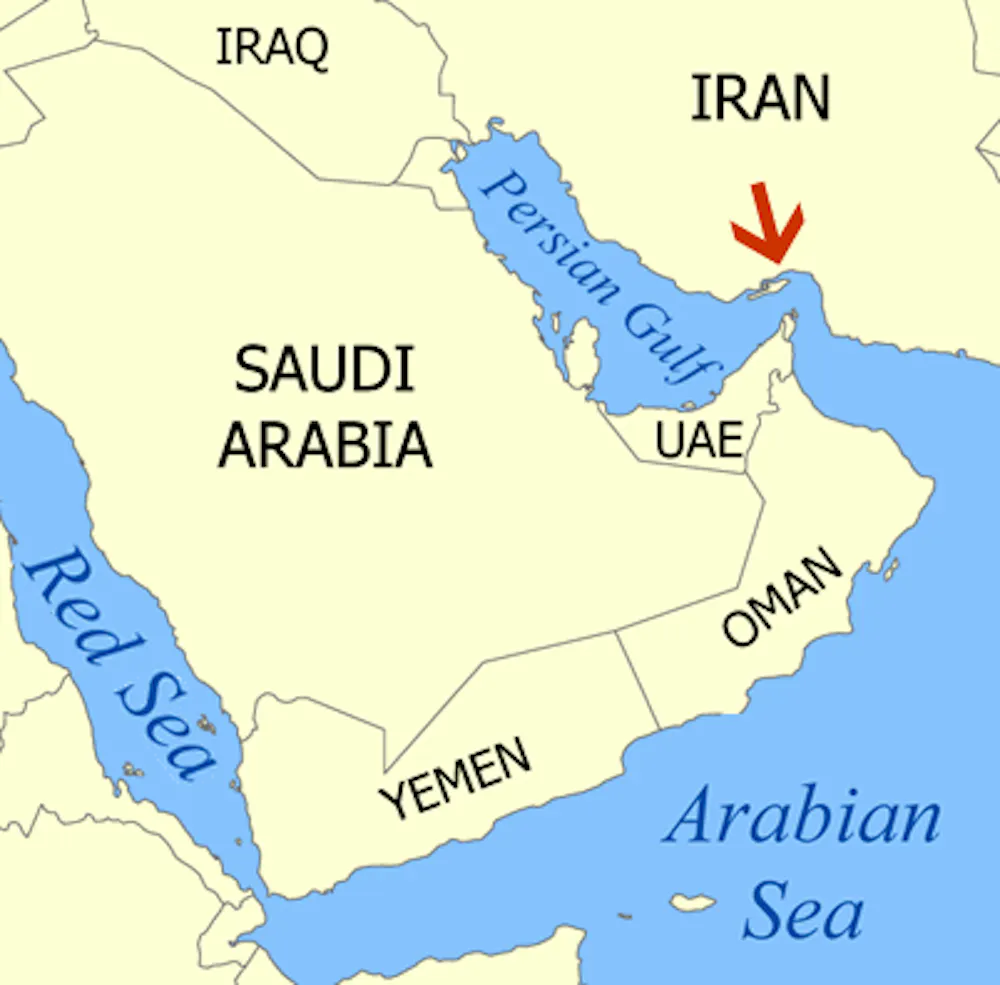
    This is potentially a very dangerous moment. The strait of Hormuz is an important shipping lane through which 20% of the world’s oil transits – about 20 million barrels each day.

    The waterway connects the Persian Gulf and the Gulf of Oman. Iran can either disrupt maritime traffic or attempt to “close” the strait altogether. These are distinctly different approaches with different risks and outcomes.


    Get your news from actual experts, straight to your inbox. Sign up to our daily newsletter to receive all The Conversation UK’s latest coverage of news and research, from politics and business to the arts and sciences.


    The first option is to try and disrupt maritime traffic like Yemen’s Houthi rebels have been doing in the Red Sea since winter 2024. This can be done by attacking passing ships with rockets and drones.

    There are already reports that Iran has started to jam GPS signals in the strait, which has the potential to severely interfere with passing ships, according to US-based maritime analyst Windward.

    Disruption of this kind is likely to deter shipping companies from using this route for fear of casualties and loss of cargo. Shipping companies that want to avoid the Red Sea can always use alternative shipping lanes, such as the Cape of Good Hope route. As inconvenient as that is, there is no such option in the case of the Gulf.

    As we’ve seen with Houthis’ attacks, such disruptions have impacts on oil price, but also ripple effects on stock markets and inflation. Although the US and its western allies can absorb these economic effects – certainly for a while – disrupting the strait would still demonstrate that Tehran has some leverage.

    The credibility factor

    The second option – “closing” the strait would involve interdicting all maritime traffic. This is akin to a blockade. And for it to work, as we have seen in the Black Sea with Russia’s failed attempt at blockading Ukraine, a blockade must be credible enough to deter all traffic.

    Iran has a number of ways to block the strait. It could deploy mines in the waters around the choke point and sink vessels to create obstacles. Iran would also likely use its navy, including submarines, to engage those attempting to break the blockade; use electronic and cyber attacks to disrupt navigation; and threaten civilian traffic and regional ports and oil infrastructure with drones and rockets.

    It’s worth noting that Iran still has plenty of short-range rockets. Israel claims to have destroyed much of its longer range ballistic-missile capability, but it is understood that the country still has a stockpile of short-range missiles that could be effective in targeting ships and infrastructure in the Gulf as well as US bases in the region.

    Recent events have shown up Iran as a bit of a paper tiger. It has made bold claims about its plan to retaliate and the military strength it has to do so. Yet with almost no air power capabilities (apart from drones and missiles) and limited naval power – and with its proxies either defeated or on the back foot – Iran is no longer in a position to project power in the region.

    Iran’s response to the current Israeli attacks have not managed to inflict any major damage or achieve any strategic or political objectives. It’s hard to see a change on the battlefield as things stand.

    Vital waterway: 20% of the world’s oil transts through the Strait of Hormuz.
    w:en:Kleptosquirrel/Wikimedia Commons, CC BY-SA

    For this reason, Tehran’s best option is to target the strait of Hormuz, which has the potential to cause a significant spike in oil prices, leading to a major disruption of the global economy.

    Short of being able to rival the US or Israel on the battlefield, Iran might decide to use asymmetrical means of disruption (in particular missile and drone attacks on civilian shipping) to affect the global economy. Closing or disrupting the strait would be an effective way of doing that.

    A blockade, even a partial one, would offer Tehran some options on the diplomatic scene. For instance, it has been reported that the US asked China to convince Iran not to close the strait. This demonstrates that Tehran can use the threat of a blockade to its advantage on the diplomatic front. But for this to work, the blockade needs to be effective and thus sustained.

    What would be the effect of a blocking the Strait?

    Disrupting traffic in the strait could drag Gulf states – Iraq, Kuwait, Saudi Arabia, UAE, Bahrain and Qatar – into the conflict, since their interests will be directly affected. It’s important to consider how they might respond and whether this will drive them closer to the US – and even Israel, as was already happening with the Abraham Accords and the tentative, but shaky, rapprochement between Saudi Arabia and Israel.


    Read more:
    US joins Israel in attack on Iran and ushers in a new era of impunity


    These are all things Iran would have factored into its calculations a year ago when Israel was targeting its proxies, including Hezollah, Hamas and the various Shia militias it funds in Iraq and elsewhere. But now, given that it has suffered an enormous military setback, which has hurt the regime’s prestige and credibility – including, importantly, at home – Tehran is more likely to downplay these risks. I would expect it to proceed with its blockade plans.

    Even if China voices concerns, like it did regarding the Houthis’ attacks, this is unlikely to change the decision. The regime is cornered. If the leaders believe they could be toppled, they are likely to consider the risks worth taking, particularly if they feel it could give them diplomatic leverage.

    The US has enough naval and air power to disrupt such a blockade. It can preemptively destroy Iran’s mine-laying forces. It can also target missile launch sites inland and respond to threats as and when they arise.

    This is likely to prevent Iran from completely closing the strait. But it won’t prevent the Islamic republic from disrupting maritime trade enough to have serious effects on the world economy. This might well be one of the last cards the regime has to play, both on the battlefield and in the diplomatic arena.

    Basil Germond does not work for, consult, own shares in or receive funding from any company or organisation that would benefit from this article, and has disclosed no relevant affiliations beyond their academic appointment.

    ref. Iran is considering closing the strait of Hormuz – why this would be a major escalation – https://theconversation.com/iran-is-considering-closing-the-strait-of-hormuz-why-this-would-be-a-major-escalation-259562

    MIL OSI – Global Reports

  • MIL-OSI Video: ECB Forum on Central Banking – 2025

    Source: European Central Bank (video statements)

    The theme of the 2025 ECB Forum on Central Banking is “Adapting to change: macroeconomic shifts and policy responses ”. The Forum will take place from 30 June to 2 July 2025 in Sintra.

    https://www.youtube.com/watch?v=_6ksmjoOKYM

    MIL OSI Video

  • MIL-OSI Video: ECB Forum on Central Banking | Young Economist Prize 2025

    Source: European Central Bank (video statements)

    Young economists have a vital role to play in shaping Europe’s future. Every year we recognise this through the Young Economist Prize, a research competition that offers talented students the chance to share their fresh perspectives on today’s challenges.

    Finalists are invited to the annual ECB Forum on Central Banking, and the overall winner is awarded €10,000.

    https://www.youtube.com/watch?v=yGHBVn1QUiQ

    MIL OSI Video

  • MIL-OSI USA: Kean Introduces Bill to Protect Vulnerable Areas from Severe Weather Threats

    Source: US Representative Tom Kean, Jr. (NJ-07)

    Contact: Riley Pingree

    (June 23, 2025) WASHINGTON, D.C. — Representative Tom Kean, Jr. (NJ-07) introduced H.R. 3771, the Protecting Coasts and Cities from Severe Weather Act. This legislation would increase the observations, understanding, and forecasting of coastal flooding and storm surge events, to address weather observation gaps in highly vulnerable areas.

    The goal of the program is to increase the development and extension of accurate, effective, and actionable forecasts and warnings for the loss of life and economic losses from coastal flooding and surge events.

    This legislation is included in H.R. 3816, the Weather Act Reauthorization Act, a broader legislative package aimed at strengthening how we communicate and respond to severe weather, which Congressman Kean recently cosponsored.

    “In New Jersey, we know what a devastating impact flooding can have on our communities, and it is imperative that we take proactive steps before severe weather strikes again,” said Congressman Kean. “The Protecting Coasts and Cities from Severe Weather Act will strengthen our forecasting capabilities and provide families, first responders, and local leaders with the tools they need to respond faster and more effectively. This legislation will improve our ability to observe, understand, and predict severe weather events. It will reduce their impact and ensure our communities are better prepared and protected when it counts.”

    You can read more about this bill here.

       ###

    MIL OSI USA News

  • MIL-OSI Africa: Intense cold front to hit SA midweek 

    Source: South Africa News Agency

    The South African Weather Service (SAWS) has warned that an intense cold front is expected to make landfall on Wednesday over the south-western parts of South Africa, bringing a significant shift in weather conditions across the region.

    “The cold front is expected to be accompanied by heavy rainfall with a risk of localised flooding over the western parts of the Western Cape, especially in low-lying and poorly drained areas on Wednesday into Thursday [25-26 June 2025],” Head of Disaster Risk Reduction at the SAWS, Rudzani Malala, said on Monday.

    The public has been cautioned that wet and slippery roads may result in dangerous driving conditions. 

    “Motorists should exercise caution and adhere to safety measures. Strong and gusty winds over the interior may cause localised damage to structures and uproot trees. Cold to very cold conditions can be expected, along with possible snowfall over the western mountain ranges of the Western Cape, spreading into the south-western interior of the Northern Cape.

    “Strong and gusty winds over the interior may cause localised damage to structures and uproot trees. Cold to very cold conditions can be expected, along with possible snowfall over the western mountain ranges of the Western Cape, spreading into the south-western interior of the Northern Cape,” Malala explained.

    READ | Western Cape prepares for severe cold, wet weather

    The maritime forecast includes gale-force winds and very rough seas, with wave heights between 5.5 metres to 7.5 metres, along the coastlines of the Northern Cape and Western Cape.

    These conditions will lead to disruptions to fishing and port operations, an increased risk of vessels capsizing, accidents at sea, and hazardous shoreline conditions. 

    Coastal residents and beachgoers are urged to exercise caution.

    “As the system progresses eastwards, it will affect the Eastern Cape, which is already vulnerable to weather-related impacts. The key concern here is strong, damaging winds that are expected across most parts of the province on Thursday, 26 June 2025.

    “Furthermore, interior winds are expected to pick up and spread over the remainder of eastern provinces on Thursday and Friday, 26 and 27 June 2025, with daytime temperatures dropping to the cold category,” he said.

    READ | Cold front in the Eastern Cape brings strong winds

    Call to heed weather reports

    The weather service called on communities to follow daily weather reports and heed severe weather warnings.

    “This means following weather reports on radio, television, newspapers, social media, websites and staying attuned to what disaster management authorities have to say. This needs to be in each person’s daily routine. It is that important – a matter of life and death,” Malala said.

    Additionally, the South African Weather Service will continue to monitor any further developments relating to the weather systems and will issue subsequent updates as required. 

    Furthermore, intermediate updates may be followed on X (@SAWeatherServic), Facebook (South African Weather Service) or other SAWS supported social media platforms.

    “Impact Based Weather Warnings, if any, will continue to be issued via the system I have just elaborated on. As I have said, we need to work more closely with stakeholders to ensure to it that we save lives and property.

    “Dissemination efforts aside, the South African Weather Service will continue with its elaborate public education and awareness programme, which includes own initiative mass events and piggybacking on other governmental events to equip vulnerable communities with information that could save lives and property.

    “We will also carry on with our quarterly community radio programme targeted at vulnerable communities, partnering with disaster management authorities, municipal emergency services, and humanitarian bodies such as Red Cross International for an impactful collaboration,” he said. –SAnews.gov.za

    MIL OSI Africa

  • MIL-OSI Africa: Call to treat municipalities like businesses to attract skilled staff

    Source: South Africa News Agency

    Minister of Cooperative Governance and Traditional Affairs, Velenkosini Hlabisa, has called for a differentiated approach to tackling the challenges facing municipalities. 

    This includes improving funding, providing better remuneration for councillors, and attracting skilled staff to rural areas.

    “We need to adopt a style where our municipalities will be run like businesses. But to do so, we need to take a bold and new approach on structuring funding and remuneration of councillors, because if our councillors are paid peanuts, they will spend most of their time on other jobs and only pay lip service as councillors,” Hlabisa said on Monday. 

    The Minister was speaking at a high-level dialogue with political parties in South Africa as part of the ongoing review of the 1998 White Paper on Local Government. 

    Hlabisa said the remuneration of councillors, municipal managers, and Section 56 employees should be a topic for discussion.

    “If you want to attract them to deep rural municipalities, there should be a discussion that, to attract competent engineers, competent accountants and competent municipal managers from big cities to deep rural municipalities, the remuneration must compensate those people so that they can go and serve our rural municipalities.” 

    Government officials and relevant stakeholders should engage with honesty while reviewing the White Paper and come up with recommendations on these important issues.

    In April, Hlabisa officially published a discussion document on the Review of the 1998 White Paper on Local Government. 

    This document, published under Notice No. 6118 (Gazette: 52498), initiated a national discussion aimed at producing a revised White Paper on Local Government by March 2026.

    The launch of the review process involved over 300 delegates from various sectors, with political parties having until 30 June 2025 to submit their contributions.

    The review process aims to inspire fresh thinking, facilitate honest reflection, and promote decisive action toward establishing a local government system that effectively serves the people of South Africa.

    The gathering stressed the need for political parties to engage in shaping the future of municipalities. 

    The Minister took the time to highlight the poor performance of many municipalities, citing audit outcomes, financial mismanagement, and distressed municipalities. 

    “We also know that the public holds the opinion that the majority of municipalities are not doing well. There are indeed municipalities that are doing well, even if it may not be said, excellent. 

    “Unfortunately, these few well-performing municipalities are overshadowed by the majority that are not doing well. Year after year, the audit outcomes show that few municipalities get a clean bill.”

    The Minister acknowledged the essential role of political parties and expressed eagerness for their contributions and involvement.

    “We can improve the White Paper on Local Government. Local government is where policies become services, promises become infrastructure, and governance becomes tangible. 

    “Local government is at the coalface of service delivery and the closest to the people; it is the sphere that must be strengthened in terms of human resources, capacitated in terms of capabilities, and be made financially resourced to focus on maximum service delivery.”

    In addition, he stated that the involvement of traditional and Khoi-San leaders in local government must be engaged to ensure their maximum participation and contribution in advancing democracy and service delivery. – SAnews.gov.za

    MIL OSI Africa

  • MIL-OSI Africa: Correctional Services cracks down on contraband at Tshwane facility

    Source: South Africa News Agency

    Monday, June 23, 2025

    An unannounced raid at the Odi Correctional Centre has led to the discovery of a myriad of contraband material, including cellphones, drugs and WiFi routers.

    This is according to Correctional Services National Commissioner Makgothi Thobakgale who spoke to the media following the late-night raid.

    “We are here to restore order. We are here to restore the security protocols that are supposed to prevail here. So far, we have found 30 cellphones, cellphone accessories [and] three routers. 

    “We found…slopes that are loaded with nyaope, mandrax tablets, crystal meth, dagga and we found offenders that are…buying from the kiosk and reselling to offenders.

    “Others actually barter their items for food. It’s a problem for us because…if an offender doesn’t have enough food because they are exchanging their food for substances, it disturbs their ability to attend rehabilitation programs,” he said.

    The Commissioner explained that the correctional centre was targeted following a tipoff.

    “The second reason is that it is a small centre that is in a township and most instances, those centres are hubs of [the] selling of illegal substances. 

    “The third reason is that we also wanted to identify offenders that, given their classification, we might have to change their classification from low and medium to high risk given the contraband that we found in their possession,” Thobakgale added.
    At least two offenders have been identified for relocation in this regard.

    “There are officials that are [also] going through disciplinary processes. Even here, there are two officials that have been suspended.  That is the work that management has been doing but we have identified that we need to come in and strengthen their hand in dealing with contraband and in ensuring that the centre is free from illegal substances and objects,” Thobakgale explained. – SAnews.gov.za

    MIL OSI Africa

  • MIL-OSI Africa: SIU strikes on former Lotteries Commission official

    Source: South Africa News Agency

    Monday, June 23, 2025

    The Special Investigating Unit (SIU) has obtained a court order preventing former National Lotteries Commission (NLC) senior manager, Sanele Dlamini, from accessing his pension benefits until the finalisation of a civil case against him.

    The civil case relates to the alleged illegal disbursement of some R6 million in NLC funds signed off by Dlamini to the Motheo Sports and Entertainment Foundation.

    “The SIU’s investigation revealed that an NLC-funded project – a sports complex – was never initiated, and supporting documents, including progress reports and financial statements, were falsified. 

    “Mr Dlamini, who facilitated the irregular disbursement of R3 million to the Motheo Sports and Entertainment Foundation, co-signed the fraudulent progress report without verifying the site or documentation, enabling the unlawful payout,” the SIU said in a statement.

    The corruption busting unit explained that it turned to the courts for a freezing order to “limit the risk of a hollow judgment if funds were released, noting concerns that Mr. Dlamini may lack sufficient assets to satisfy future claims”.

    “The interdict bars Mr. Dlamini from accessing his pension benefits until the SIU’s main case, a civil recovery action tied to the misallocation of R6 million in NLC grant funds, is concluded. 

    “The fourth respondent, Liberty’s Corporate Selection Umbrella Retirement Fund, has been directed to assess and disclose the value of Dlamini’s pension within 60 days. This preservation is intended to ensure that funds remain available for potential recovery should the SIU succeed in its claim,” the statement read. – SAnews.gov.za

    MIL OSI Africa

  • MIL-OSI USA: Former Governors in Senate: GOP Reconciliation Bill will Slash Medicaid Services, SNAP

    US Senate News:

    Source: United States Senator for Maine Angus King
    WASHINGTON, D.C. — Today, U.S. Senator Angus King (I-ME) led a number of his Senate colleagues who previously served as state governors to communicate to Republican leadership the devastating impacts of the Senate reconciliation bill on states. In a letter to Senate Majority Leader John Thune, Senate Finance Committee Chairman Mike Crapo and Senate Agriculture, Nutrition and Forestry Committee Chairman John Boozman, the former governors lay out their significant concerns about how this partisan bill will place incredible burdens on state budgets, ultimately reducing critical services like Medicaid and SNAP.
    The former Governors began, “We write as a group of former governors to share our perspective on the impact that the Senate reconciliation bill will have on state budgets. We have significant concerns about how this bill passes incredible burdens onto state budgets in order to finance tax cuts that disproportionately benefit ultra-wealthy taxpayers and ultimately reduce long-term economic growth.”
    “The impact of these cuts – some of which are even deeper in the reconciliation bill released by the Senate Finance Committee – will also be especially felt by hospitals, nursing homes, and other health facilities particularly in rural communities,” the group continued. “More uninsured patients mean reduced revenues, increased costs for services, and a greater burden of uncompensated care for hospitals, all of which may result in staff or service reductions. And when costs for uncompensated care go up, states and localities often must step in and provide additional funds to keep these vital community health providers afloat. Estimates suggest that 338 rural hospitals nationwide are at risk of closing due to the House reconciliation bill, including two in Maine, two in South Dakota, two in Nevada, three in Idaho, six in Virginia, and five in North Carolina.”
    “The reconciliation bill also cuts over $200 billion from the Supplemental Nutrition Assistance Program (SNAP) through 2034—the largest reduction in the program’s history— and shifts billions in benefit costs from the federal government to states for the first time. States, which have historically only overseen eligibility, are unprepared to absorb this financial burden. Based on data from 2023, states would be responsible for substantial new costs: $36 million in Maine, $984 million in Florida, $176 million in Virginia, $84 million in West Virginia, $130 million in Colorado, and $16 million in Nebraska. The reconciliation bill also shifts the majority of administrative cost burden onto states, requiring them to cover 75% of the cost-share instead of 50%, further straining state budgets. Many states will be forced to reduce access to food assistance, cut other essential services, raise taxes, or potentially opt out of SNAP altogether,” the Senators highlighted.
    The former Governors concluded, “Red and blue states alike must balance their budgets, which means every dollar in added federal cost must be made up by either raising new revenues or making harmful cuts. If the reconciliation bill is passed, even in the best of times, states would need to spend billions more to provide similar or equal Medicaid and SNAP services and benefits. Should a severe economic downturn occur, states will be faced with an even more dire budgetary outlook. Tax increases at the state level would have to be considerable to fully fill the gap, something most states will not be able to do. If unemployment rises, our constituents will be reliant on these services more than ever — a failure to provide them or limit their scope would only result in pushing more people into poverty. This outcome, however, is avoidable. It is not too late to reverse course instead of cutting critical programs and shifting massive costs on to state taxpayers to offset tax cuts benefiting the wealthiest taxpayers.”
    Joining King on the letter are Senators Mark Warner (D-VA), Tim Kaine (D-VA), Maggie Hassan (D-NH), John Hickenlooper (D-CO), and Jeanne Shaheen (D-NH).
    The full text of the letter can be found here and below.
    +++
    Dear Majority Leader Thune, Chairman Crapo, and Chairman Boozman:
    We write as a group of former governors to share our perspective on the impact that the Senate reconciliation bill will have on state budgets. We have significant concerns about how this bill passes incredible burdens onto state budgets in order to finance tax cuts that disproportionately benefit ultra-wealthy taxpayers and ultimately reduce long-term economic growth.
    The reconciliation bill proposes what would be the largest Medicaid cut in history. According to the nonpartisan Congressional Budget Office’s analysis of the similar House passed reconciliation bill, cuts to Medicaid and Affordable Care Act coverage, along with the failure to extend enhanced premium tax credits, will result in at least $1 trillion in cuts to health coverage and lead to 16 million people losing access to healthcare coverage. Across the country, more than 78 million people rely on Medicaid and the Children’s Health Insurance Program – all of whom will be affected by these cuts in some capacity, and it is disingenuous to insist otherwise.
    As Medicaid is a joint federal-state program, states will see cuts to their Medicaid programs totaling nearly $800 billion. For example, under the House-passed bill, state cuts over the next 10 years would total $2 billion in New Hampshire, $13 billion in Missouri, $19 billion in New Jersey, $5 billion in Iowa, $10 billion in Colorado, and nearly $5 billion in West Virgina. States will be forced to raise taxes or make cuts to these critical healthcare services or other important priorities, like education, childcare, housing, or disaster relief and recovery efforts. In fact, recent evidence shows that when states lose Medicaid funding, it is often Medicaid benefits that help seniors and people with disabilities, like coverage for home- and community-based care, that are first to be cut.
    The impact of these cuts – some of which are even deeper in the reconciliation bill released by the Senate Finance Committee – will also be especially felt by hospitals, nursing homes, and other health facilities particularly in rural communities. More uninsured patients mean reduced revenues, increased costs for services, and a greater burden of uncompensated care for hospitals, all of which may result in staff or service reductions. And when costs for uncompensated care go up, states and localities often must step in and provide additional funds to keep these vital community health providers afloat. Estimates suggest that 338 rural hospitals nationwide are at risk of closing due to the House reconciliation bill, including two in Maine, two in South Dakota, two in Nevada, three in Idaho, six in Virginia, and five in North Carolina.
    The reconciliation bill also cuts over $200 billion from the Supplemental Nutrition Assistance Program (SNAP) through 2034—the largest reduction in the program’s history— and shifts billions in benefit costs from the federal government to states for the first time. States, which have historically only overseen eligibility, are unprepared to absorb this financial burden. Based on data from 2023, states would be responsible for substantial new costs: $36 million in Maine, $984 million in Florida, $176 million in Virginia, $84 million in West Virginia, $130 million in Colorado, and $16 million in Nebraska. The reconciliation bill also shifts the majority of administrative cost burden onto states, requiring them to cover 75% of the cost-share instead of 50%, further straining state budgets. Many states will be forced to reduce access to food assistance, cut other essential services, raise taxes, or potentially opt out of SNAP altogether.
    As former governors, we are concerned that state governments will be forced to absorb both the administrative burden and the human cost of implementing and enforcing these changes, all while attempting to meet the basic needs of constituents left without assistance. SNAP currently supports 42 million Americans—including children, seniors, people with disabilities, and veterans—and provides vital economic stability during downturns. If these changes are enacted, millions of people—including families with children, seniors, people with disabilities, and veterans—would see their food assistance either eliminated entirely or reduced significantly. This will destabilize state budgets and unravel the basic assistance program that helps people weather economic hardship.
    Red and blue states alike must balance their budgets, which means every dollar in added federal cost must be made up by either raising new revenues or making harmful cuts. If the reconciliation bill is passed, even in the best of times, states would need to spend billions more to provide similar or equal Medicaid and SNAP services and benefits. Should a severe economic downturn occur, states will be faced with an even more dire budgetary outlook. Tax increases at the state level would have to be considerable to fully fill the gap, something most states will not be able to do. If unemployment rises, our constituents will be reliant on these services more than ever – a failure to provide them or limit their scope would only result in pushing more people into poverty. This outcome, however, is avoidable. It is not too late to reverse course instead of cutting critical programs and shifting massive costs on to state taxpayers to offset tax cuts benefiting the wealthiest taxpayers.
    We stand ready and willing to work with you and Congressional Republicans on bipartisan legislation that is fiscally responsible, provides relief for middle-class taxpayers and their families, and spurs economic growth and investment. We understand that difficult tradeoffs are often necessary, however, we believe that these goals can be achieved without making cuts to essential services that everyday Americans rely upon.
    Sincerely,

    MIL OSI USA News

  • MIL-OSI United Kingdom: Armed Forces Day flag raised to mark Armed Forces Week

    Source: Northern Ireland City of Armagh

    Lord Mayor Alderman Stephen Moutray, NI Veterans Commissioner Mr David Johnstone, NI District RBL Chairman Mr Colin Ward and NI District RBL Women’s section Chairman Mrs Janet Ochiltree at the raising of the Armed Forces Day Flag on Monday 23 June at Craigavon Civic and Conference Centre.

    This morning (Monday 23 June), a large delegation, led by Lord Mayor Alderman Stephen Moutray, gathered at Craigavon Civic and Conference Centre for a ceremony to raise the Armed Forces Day flag at the start of Armed Forces Week.

    He was joined by NI Veterans Commissioner, Mr David Johnstone, representatives from the Royal British Legions across the borough, the Royal Irish Fusiliers, NI RBL Motorcycle Branch and Regenerate Veterans Group as well as Alderman Paul Greenfield, Alderman Margaret Tinsley, Councillor Kyle Moutray, Councillor Kyle Savage, Councillor Lavelle McIlwrath, Councillor Kate Evans, Councillor Julie Flaherty, Councillor Tim McClelland and Councillor Peter Haire.

    During Armed Forces Week, the Armed Forces Day flag is raised on buildings and landmarks around the UK. It culminates with Armed Forces Day on Saturday 28 June.

    For further information on Armed Forces Day click here.

    MIL OSI United Kingdom

  • MIL-OSI United Kingdom: Unaudited Annual Accounts 2024-25 now available for public inspection

    Source: Scotland – City of Aberdeen

    The North East Scotland Pension Fund’s unaudited Annual Accounts for the financial year 2024/25 are now available for inspection until 14 July 2025.

    The accounts provide information which can help the public assess how the Pension Fund has performed during the year and understand its position as at 31 March 2025.

    A copy of the accounts is available in the Council and Democracy page of Aberdeen City Council’s website.

    MIL OSI United Kingdom

  • MIL-OSI Russia: Chinese Foreign Ministry: China calls on international community to help de-escalate Israeli-Iranian conflict

    Translation. Region: Russian Federal

    Source: People’s Republic of China in Russian – People’s Republic of China in Russian –

    Source: People’s Republic of China – State Council News

    BEIJING, June 23 (Xinhua) — China has called on the international community to step up efforts to help de-escalate the Israeli-Iranian conflict and prevent regional turmoil from further affecting global economic growth, Foreign Ministry spokesperson Guo Jiakun said Monday.

    The Chinese diplomat made this statement at a regular departmental press conference, commenting on the report that the Iranian parliament had come to the conclusion that it was necessary to close the Strait of Hormuz, but the final decision rests with the country’s Supreme National Security Council.

    The Persian Gulf and its surrounding waters are an important route for international trade in goods and energy, Guo Jiakun stressed, adding that maintaining security and stability in the region is in the common interests of the international community. -0-

    MIL OSI Russia News

  • MIL-OSI Russia: China Coast Guard Fujian Province Conducts Regular Patrols in Waters Off Kinmen

    Translation. Region: Russian Federal

    Source: People’s Republic of China in Russian – People’s Republic of China in Russian –

    Source: People’s Republic of China – State Council News

    FUZHOU, June 23 (Xinhua) — The China Coast Guard (CCG) in east China’s Fujian Province conducted regular patrols in waters off Kinmen for law enforcement purposes on Monday, the China Coast Guard’s regional bureau said.

    Zhu Anqing, spokesman for the BOC’s East China Sea Bureau, said the Fujian agency had organized the formation of a fleet since early June to strengthen regular patrols and inspections in waters adjacent to Kinmen, including special law enforcement operations related to the summer fishing moratorium.

    These measures have an effective impact on strengthening control in the relevant waters, protecting the legitimate rights and interests, as well as the safety of life and property of Chinese fishermen, including those from Taiwan. This effectively guarantees the normal order of navigation and fishing activities in the Xiamen-Jinmen waters, Zhu Anqing said. -0-

    MIL OSI Russia News

  • MIL-OSI Canada: Seizure of contraband at Bath Institution 

    Source: Government of Canada News (2)

    June 23, 2025 – Bath, Ontario – Correctional Service Canada

    On June 17, 2025, as a result of the vigilance of staff members, a package containing contraband was seized at Bath Institution, a medium security federal institution.

    The seized package included “shatter” (cannabis concentrate), with a total estimated institutional value of $52,000.

    The Correctional Service of Canada (CSC) uses a number of tools to prevent drugs from entering its institutions. These tools include ion scanners and detector dogs to search buildings, personal property, inmates, and visitors.

    CSC has heightened measures to prevent contraband and unauthorized items from entering its institutions in order to help ensure a safe and secure environment for everyone. CSC also works in partnership with the police to take action against those who attempt to introduce contraband or unauthorized items into correctional institutions.

    CSC has set up a telephone tip line for all federal institutions so that it may receive additional information about activities relating to security at CSC institutions. These activities may be related to drug use or trafficking that may threaten the safety and security of visitors, inmates, and staff members working at CSC institutions.

    The toll-free number, 1‑866‑780‑3784, helps ensure that the information shared is protected and that callers remain anonymous.

    Associated links

    -30-

    MIL OSI Canada News

  • MIL-OSI USA: Bowman, Unintended Policy Shifts and Unexpected Consequences

    Source: US State of New York Federal Reserve

    Thank you for the invitation to join you today.1 As the Federal Reserve’s Vice Chair for Supervision, I am responsible for, among other things, leading the Board’s Division of Supervision and Regulation in its work to promote the safe and sound operation of the U.S. banking system. While this includes the specific activities of bank supervision and regulation, the financial system reaches far beyond the banking system. Regulators must also monitor the effects of activities that extend outside this perimeter, for example activities that have migrated from banks to non-banks, or when there are broader market implications of regulatory actions and their potential effects on financial stability. Regulations should not be created in a static world of “set it and forget it.”
    Today, my remarks will focus specifically on how the passage of time—with underlying changes in the composition of the economy and the financial system, interest rate shifts, and patterns and preferences of banking and financial activity—can lead to unintended policy application and unexpected consequences. Regulators should consider these broader evolving dynamics as they craft regulations to endure beyond today’s circumstances.
    Typically, these effects are not contemplated in the scope of the usual cost-benefit analysis, as shifts occur over time after a new rule or regulation is implemented or enacted. But shifts can, in effect, become new policy choices with consequences that can pose significant issues.
    One shift in particular is that of the supplementary leverage ratio increasingly becoming the binding capital constraint for the largest banks in the United States. The U.S. banking system includes two basic types of capital requirements: risk-based requirements that impose a capital “charge” based on the underlying risk of a particular activity, and leverage-based requirements that do not differentiate based on the risk characteristics of underlying assets. And while leverage-based capital requirements are generally intended to operate as a backstop to risk-based requirements, changes in the financial system and the broader economy can alter this relationship between capital requirements. This shift in the nature of leverage-based capital requirements, from backstop to binding constraint, was not driven by a deliberate policymaking process, but rather by the maintenance of a high level of reserves in the banking system, as well as the introduction of liquidity requirements that compelled banks to replace loans with high-quality liquid assets.2
    Monetary Policy and Economic OutlookBefore turning to the main theme of my remarks, I would like to give a brief update on my outlook for the economy and monetary policy.
    At the Federal Open Market Committee (FOMC) meeting last week, the Committee voted to maintain the target range for the federal funds rate at 4-1/4 to 4‑1/2 percent and to continue to reduce the Federal Reserve’s securities holdings. I supported this decision because the data shows a solid labor market and I would like to see further confirmation that inflation is close to our 2 percent target on a sustained basis.
    If inflation remains near its current level or continues to move closer to our target, or if the data show signs of weakening in labor market conditions, it would be appropriate to consider lowering the policy rate, moving it closer to a neutral setting.
    At this point, we have not seen significant economic impacts from trade developments or other factors, and the U.S. economy has continued to be resilient despite some slowing in economic growth. Private domestic final purchases (PDFP) growth slowed to a moderate pace in the first quarter, even as activity was partly boosted by a pull-forward of spending on motor vehicles and high-tech equipment ahead of the implementation of tariffs. Although the pull-forward of spending appears to be unwinding, retail and motor vehicle sales through May provide further evidence that PDFP has softened so far this year.
    The labor market appears to remain solid, with payroll employment rising about 140,000 per month, on average, in April and May, only slightly below the average monthly gains over the past two quarters. This pace of job gains appears consistent with the unemployment rate remaining at a low 4.2 percent through May, which is roughly unchanged since the middle of last year.
    The labor market appears to be stable near estimates of full employment, with layoffs remaining low. The number of job openings relative to job seekers has moved roughly sideways since the middle of last year at, or a touch below, the pre-pandemic level. And the labor market no longer appears to be especially tight or a significant source of inflation pressures, as most wage growth measures have slowed closer to a pace consistent with 2 percent inflation.
    Turning to inflation, we have seen a welcome return to further moderation of personal consumption expenditures (PCE) inflation over the past three months. The May consumer and producer price reports suggest that 12-month core PCE inflation stood at 2.6 percent in May, down meaningfully from its elevated reading of 2.9 percent at the end of last year. Similar to the past two years, elevated monthly inflation readings in January and February have been followed by low readings as we move into the spring.
    On a 12-month basis, core PCE goods inflation has picked up somewhat since last December, but this has been more than offset by a considerable slowing in core PCE services inflation. It appears that any upward pressure from higher tariffs on goods prices is being offset by other factors and that the underlying trend in core PCE inflation is moving much closer to our 2 percent target than is currently apparent in the data. With housing services inflation on a sustained downward trajectory, and other core services inflation already consistent with 2 percent inflation, only core goods inflation remains somewhat elevated likely reflecting limited passthrough from tariffs.
    With economic growth slowing, it is possible that recent softness in aggregate demand could be starting to translate into weaker labor market conditions. While still strong, the labor market appears to be less dynamic, with modest hiring rates, layoffs edging up from low levels, and job gains concentrated in just a few industries. With inflation on a sustained trajectory toward 2 percent, softness in aggregate demand, and signs of fragility in the labor market, I think that we should put more weight on downside risks to our employment mandate going forward.
    Despite progress on lowering inflation, there are potential upside risks if negotiations result in higher tariffs or if firms raise goods prices independent of any tariff pass-through. Although we have not seen evidence of disruptive impacts on supply chains, changes in global trade patterns could lead to an increase in prices for goods and services. The current conflict in the Middle East or other geopolitical tensions could also lead to higher commodity prices.
    I am certainly attentive to these inflation risks, but I am not yet seeing a major concern, as some retailers seem unwilling to raise prices for essentials due to high price sensitivity among low-income consumers and as supply chains appear to be largely unaffected so far.
    Measures of policy and economic uncertainty have receded from recent highs, and measures of consumer and business sentiment have also improved in recent weeks after having dropped considerably. These developments reinforce my view that concerns will subside as more clarity emerges on trade policy. Businesses appear to be resuming investment and hiring decisions, as they feel increasingly confident that less favorable trade outcomes are unlikely to occur.
    I remain focused on how new policies evolve and whether future data releases will provide perspective about their economic impacts. On trade policy, I expect that negotiations will ultimately result in lower tariff rates than are currently in place, consistent with the resumption of financial market optimism. Further, should we see effects on inflation this year, I expect that increased slack in the economy will limit this to a small, one-off impact.
    Small and one-off price increases this year should translate only into a small drag on real activity. I also expect that less restrictive regulations, lower business taxes, and a more friendly business environment will likely boost supply and largely offset any negative effects on economic activity and prices.
    In considering the risks to achieving our dual mandate, I fully supported the revised characterization of uncertainty and the balance of risks in our most recent monetary policy statement, pointing to the diminished uncertainty and removing the emphasis on risks to both sides of our mandate. In my view, it was appropriate to recognize that the balance of risks has shifted. In fact, the data have not shown clear signs of material impacts from tariffs and other policies. I think it is likely that the impact of tariffs on inflation may take longer, be more delayed, and have a smaller effect than initially expected, especially because many firms front-loaded their stocks of inventories. And, all considered, ongoing progress on trade and tariff negotiations has led to an economic environment that is now demonstrably less risky. The change in our monetary policy statement appropriately incorporates this shift in the balance of risks as well as the rapid improvement in many measures of uncertainty.
    As we think about the path forward, it is time to consider adjusting the policy rate. As inflation has declined or come in below expectations over the past few months, we should recognize that inflation appears to be on a sustained path toward 2 percent and that there will likely be only minimal impacts on overall core PCE inflation from changes to trade policy. We should also recognize that downside risks to our employment mandate could soon become more salient, given recent softness in spending and signs of fragility in the labor market.
    Before our next meeting in July, we will have received one additional month of employment and inflation data. If upcoming data show inflation continuing to evolve favorably, with upward pressures remaining limited to goods prices, or if we see signs that softer spending is spilling over into weaker labor market conditions, such developments should be addressed in our policy discussions and reflected in our deliberations. Should inflation pressures remain contained, I would support lowering the policy rate as soon as our next meeting in order to bring it closer to its neutral setting and to sustain a healthy labor market. In the meantime, I will continue to carefully monitor economic conditions as the Administration’s policies, the economy, and financial markets continue to evolve.
    It is important to note that monetary policy is not on a preset course. At each FOMC meeting, my colleagues and I will make our decisions based on the incoming data and the implications for and risks to the outlook, guided by the Fed’s dual-mandate goals of maximum employment and stable prices. I will also continue to meet with a broad range of contacts as I assess the appropriateness of our monetary policy stance.
    Bringing inflation in line with our price-stability goal is essential for sustaining a healthy labor market and fostering an economy that works for everyone in the longer run.
    Policy Shifts and Unintended ConsequencesIn my responsibilities over bank regulation and supervision at the Federal Reserve, I intend to apply a pragmatic approach. We will review data and evidence, identify problems that need to be resolved, and develop efficient solutions to address those identified issues.3 While the regulatory authority of the Federal Reserve is primarily related to the banking system, the consequences of banking regulation and supervisory efforts are not limited to the banking system. Bank regulation and supervision affect how financial activities are conducted, the cost and availability of credit and financial services, and even what types of entities provide those services. While it is important to consider the consequences of regulatory actions as they evolve over time, in cases where regulation may create or exacerbate financial stability risks, we must examine whether those risks are justified by the safety and soundness benefits of the regulation.
    Bank-affiliated broker-dealers play a critical role in U.S. capital markets, including in Treasury market intermediation activities. Today I will discuss the lessons we have learned about how bank regulatory requirements, specifically leverage ratios in the United States, can have unintended consequences. Leverage ratio impacts on bank-affiliated broker-dealers can have broader impacts, including market impacts like those observed in Treasury market intermediation activities. Once we’ve identified “emerging” unintended consequences—issues that were not contemplated during the development of a regulatory approach—we must consider how to revisit earlier regulatory and policy decisions.
    As I will discuss in greater detail shortly, regulators must act quickly to address the growing problems with increasingly binding leverage ratios. In 2021, in connection with the expiration of temporary, emergency changes to the supplementary leverage ratio (SLR), the Federal Reserve committed to “soon” inviting public comment on potential modifications.4 Over four years later, a proposal has not been issued, and problems with Treasury market intermediation continue to emerge. The time has come for the federal banking agencies to revisit leverage ratios and their impacts on the Treasury markets.
    Looking at the Data: Treasury Market FunctioningAs a first step in this pragmatic approach, it is important to look at what the data says about Treasury market functioning. This is a necessary first step before we determine whether there are issues or problems that can be addressed through adjustments to bank regulatory requirements.
    A review of Treasury market data provides a history of growing issues with Treasury market functioning. In recent years, U.S. policy debates have highlighted the need to take preventative measures to ensure smooth market functioning. One issue that continues to persist is low levels of Treasury market liquidity as the Board’s semiannual Financial Stability Report noted.5 In addition, some dealers experienced balance sheet pressure in intermediating record volumes of Treasury market transactions in the spring, at a time when reports from market participants also indicated reduced demand from other Treasury investors.6
    A survey of market participants from the Fed’s most recent Financial Stability Report noted that more than a quarter of respondents cited Treasury market functioning as a risk to the U.S. financial system and the broader global economy. This was an increase from the same survey conducted last fall when 17 percent of those surveyed cited Treasury market functioning as a risk.7
    Recent changes to Treasury market clearing activities from the Securities and Exchange Commission’s central clearing requirement for U.S. Treasuries were implemented to improve Treasury market functioning. Once fully implemented, these changes may improve market functioning. The Federal Reserve’s Standing Repo Facility may also help to promote smooth functioning in the Treasury market. But it is unclear how the ongoing increases in the volume of Treasury issuance, the volume of Treasury securities outstanding, and changes to the Fed’s balance sheet over time, may also affect market liquidity.
    Treasury markets have experienced stress events as recently as the September 2019 repo market stress, and the so-called “dash for cash” in March of 2020. In early April, we also saw strains in Treasury cash markets. Although markets continued to function, there were unexpected moves in Treasury yields, with an initial drop in yields followed by a sharp increase that seems to have been driven in part by the unwinding of the swap spread trade by leveraged investors in response to declining swap spreads.
    We do not know exactly what circumstances may lead to a future stress event or how it will manifest, and continuing to impose unwarranted limits on dealers’ intermediation capacity could exacerbate a future stress event in this critical market. But we do know that these events have raised concerns about the resilience of U.S. Treasury markets. Therefore, we should continue to actively monitor indicators of market functioning. Recent trends in both market liquidity indicators and survey responses suggest that this problem has persisted and may be becoming more severe. Low liquidity can create more volatility in prices, exacerbate the effects of market shocks, and threaten market functioning.
    Identifying the Problem: Looking Beyond Treasury Market IntermediationLarge bank-affiliated primary dealers play a vital role in the intermediation of U.S. Treasury markets. These dealers are subject to, not insulated from, the effect of banking regulation. While many factors can affect market liquidity, including the growing volume of Treasury issuance, Treasury market saturation, and interest rate volatility, we must consider whether some of the pressure is a byproduct of bank regulation. Due to the role of large banks in the intermediation of Treasury markets, there is a direct link between banking regulation and Treasury market liquidity, particularly when it comes to the growth of “safe” assets in the banking system and the increase in leverage-based capital requirements becoming the binding capital constraint on some large banks. In 2018, the Federal Reserve along with the Office of the Comptroller of the Currency (OCC) proposed significant changes to the enhanced supplementary leverage ratio (eSLR) that applies to the largest banks.8 These revisions were never finalized, but the intent behind them was to return the eSLR to its traditional role as a backstop capital requirement instead of what has become a substantial balance sheet constraint.
    The proposed change was designed to promote resilience in the banking system and to protect financial stability, while also maximizing credit availability and economic growth throughout the credit cycle.9 During the COVID-19 pandemic, the Federal Reserve addressed constraints on the ability of U.S. banks to support efficient Treasury market functioning by temporarily excluding Fed reserves and Treasuries from the denominator of the SLR.10
    The central role of bank-affiliated broker-dealers in Treasury market intermediation has led us to take a close look at bank regulatory requirements to clarify how these requirements, particularly their calibration, may impact Treasury market functioning. Although designed to address low risk activities, like Treasury market intermediation, leverage ratios have become increasingly binding as a bank capital constraint as market conditions change.
    While issues around the use of leverage ratios require close examination, a solid capital foundation in the banking system is critical to support safety and soundness and financial stability. Revisiting the calibration of leverage ratios to ensure that they remain backstops instead of creating binding constraints, especially in times of stress, should not be interpreted as a critique of the role of capital in a robust regulatory and supervisory framework.
    But to be clear, the consequences of an overly restrictive leverage ratio go well beyond just Treasury market intermediation, and impact a wide range of low-risk activities. Leverage capital requirements do not differentiate between the risk of different asset classes or exposures.
    However, in periods when bank balance sheets are expanding—like the significant deposit inflows during COVID-19—leverage capital requirements can unintentionally become the binding constraint on both banks and their affiliates. This increases the amount of required capital as bank balance sheets grow, regardless of the underlying risk. When constrained in this way, bank-affiliated primary dealers may pull back on the market intermediation of low-risk assets like U.S. Treasuries. A binding leverage capital requirement can create perverse incentives for banks to shift their balance sheets into higher risk assets, since doing so could generate larger returns without requiring additional capital. This is simply a cause and effect of overly restrictive leverage capital.
    The fact of leverage ratios becoming increasingly binding is evident in simple metrics like the ratio of risk-weighted assets to total leverage exposure. These are, respectively, the denominators of risk-based capital ratios and the SLR. Shortly after the SLR was adopted in the U.S. in the mid-2010s, this ratio stood at 48 percent in the aggregate for the eight largest U.S. banks, the global systemically important banks (G-SIBs). Since then, the ratio of risk-weighted assets to total leverage exposure has declined and currently stands at 40 percent, primarily due to higher reserves and other types of high-quality liquid assets on bank balance sheets. This downward trend results in the SLR increasingly becoming the binding constraint and reflects banks’ growing holdings of high-quality liquid assets, most of which carry a risk weight of zero under risk-based capital ratios but have a 100 percent weighting under leverage capital ratios.
    Efficient SolutionsOne example of the SLR’s unintended consequence is the erosion of liquidity in U.S. Treasury markets because it is driven, in part, by leverage ratio requirements increasingly becoming the binding constraints on the largest U.S. banks. This example also illustrates the necessity of evaluating tradeoffs in regulation and speaks to a larger issue with the calibration of leverage.
    The banking regulators are uniquely positioned to both analyze and remediate components of the bank regulatory framework that may disrupt banks’ participation in low-risk, but economically critical activities. This includes the exacerbation of Treasury market illiquidity. Treasury markets play a critical role in the U.S. and global financial systems, and we should be proactive in addressing the unintended consequences of bank regulation, while ensuring the framework continues to promote safety, soundness, and financial stability.11 We should start by addressing potential constraints on Treasury market functioning before issues arise, lessening impacts from stress, and mitigating the need to intervene in future market events.
    On Wednesday, the Board is scheduled to consider specific amendments to the eSLR, which is the requirement that applies at both the holding company and bank levels of the largest U.S. banks. While I do not want to front-run the proposal, I will note that the proposal’s goal is to address a long-identified—and growing—problem with the calibration of this leverage requirement. The proposal would solicit public comment on the impacts of this miscalibration, potential fixes, and work to develop an appropriate and effective solution. This proposal takes a first step toward what I view as long overdue follow-up to review and reform what have become distorted capital requirements. This proposal, while meaningful, addresses only one element of the capital framework. More work on capital requirements remains, especially to consider how they have evolved and whether changes in market conditions have revealed issues that should be addressed.
    In a few weeks, on July 22, the Federal Reserve will host a conference to bring together a wide range of thought leaders to discuss the U.S. bank capital framework, including the design and calibration of leverage ratios. Fixing the design and calibration of leverage capital requirements will not resolve every issue with U.S. Treasury market functioning. But, simple reforms to return leverage ratio requirements to their traditional role as a capital backstop could improve Treasury market functioning by building resilience in advance of future stress events. And this could reduce the chances that we would need to intervene in Treasury markets should a future stress event arise. While we know well the issues created by the eSLR, there are many potential improvements that could address other issues within the capital framework.
    As I have noted previously, a broader set of reforms could include amending not only the leverage capital ratio, but also G-SIB surcharge requirements. We should also reconsider capital requirements for a wider range of banks, including the SLR’s application to banks with more than $250 billion in assets, Tier 1 leverage requirements, and the calibration of the community bank leverage ratio.
    The unintended shift over time in the eSLR increasingly becoming a binding capital constraint demonstrates that we need to think about regulatory policies in a dynamic way based on the evolution in the banking and financial systems, and the broader economy.
    Other examples of regulations that must take into account the impact of economic growth and inflation include elements of the G-SIB surcharge, as well as regulatory thresholds that define the broader categories of banks. Thresholds like the $10 billion definition of a “community bank” and the $700 billion in total assets and $75 billion for cross-jurisdictional activity separating Category II and III banks determine which regulatory requirements apply to each group.
    One way to prevent the original calibration from becoming divorced from the foundational policy decisions over time is to index the relevant G-SIB surcharge coefficients and regulatory thresholds to nominal gross domestic product. While approaches like indexing thresholds and requirements can make our regulations more robust and durable over time, we should also acknowledge the essential role of supervision as a tool to promote safety and soundness, and financial stability. Just as our capital requirements are intended to operate in a complementary manner, so do regulation and supervision act in a complementary way.
    These are only a handful of relevant examples, but they are representative of an effective approach to regulatory reform. Regulations should not be created in a static world of “set it and forget it.” The economy evolves over time, as do the banking and financial systems and the needs of businesses and consumers.
    Increasingly, regulators are expected to conduct a more thorough and detailed analysis as part of the ordinary rulemaking process, which includes a proposal’s costs and benefits. Yet, over time, we tend to devote fewer resources to the work of conducting maintenance of our regulations. Maintenance of the regulatory system should include reviewing the basis for earlier policy decisions, considering whether the policies embedded in regulations have been distorted over time through market developments, and examining whether emerging issues in the market should lead to further review and revision.
    Closing ThoughtsThank you for the opportunity to join you today and to provide my views on the U.S. economic outlook and current regulatory proposals. In the United States, regulatory policy objectives are prescribed by law, and bank regulators focus primarily on promoting the safe and sound operation of U.S. banks, and financial stability. Despite this limited purpose, we must understand the consequences of regulations, which can extend well beyond the banking system. Recent trends—including providing more fact-based and analytical support for proposals—are a positive step in achieving responsible regulation.
    But we need a broad commitment to follow the approach I have just described. We must consider relevant data and information, identify the source of any problems or opportunity for greater efficiency, and then develop targeted and effective policy solutions and approaches.

    1. The views expressed here are my own and are not necessarily those of my colleagues on the Federal Reserve Board or the Federal Open Market Committee. Return to text
    2. See 12 CFR 249.3; 249.20 (defining categories of high-quality liquid assets based on asset characteristics). Return to text
    3. See Michelle W. Bowman, “Taking a Fresh Look at Supervision and Regulation (PDF),” (speech at the Georgetown University McDonough School of Business, Psaros Center for Financial Markets Policy, Washington, D.C., June 6, 2025). Return to text
    4. Board of Governors of the Federal Reserve System, “Federal Reserve Board Announces that the Temporary Change to its Supplementary Leverage Ratio (SLR) for Bank Holding Companies Will Expire as Scheduled on March 31,” press release, March 19, 2021, (“To ensure that the SLR—which was established in 2014 as an additional capital requirement—remains effective in an environment of higher reserves, the Board will soon be inviting public comment on several potential SLR modifications. The proposal and comments will contribute to ongoing discussions with the Department of the Treasury and other regulators on future work to ensure the resiliency of the Treasury market.”). Return to text
    5. See Board of Governors of the Federal Reserve System, Financial Stability Report (PDF) (Washington, D.C., April 2025), 10–11. Return to text
    6. Board of Governors, Financial Stability Report, at 32. Return to text
    7. See Board of Governors, Financial Stability Report, at 3. Return to text
    8. See Office of the Comptroller of the Currency and Federal Reserve System (2018), “Regulatory Capital Rules: Regulatory Capital, Enhanced Supplementary Leverage Ratio Standards for U.S. Global Systemically Important Bank Holding Companies and Certain of Their Subsidiary Insured Depository Institutions; Total Loss-Absorbing Capacity Requirements for U.S. Global Systemically Important Bank Holding Companies,” Federal Register, vol. 83 (April 19), pp. 17317–27. Return to text
    9. See Office of the Comptroller of the Currency and Federal Reserve System (2018), “II. Revisions to the Enhanced Supplementary Leverage Ratio Standards,” Federal Register, vol. 83 (April 19), p. 17319, paragraph 3: “Leverage capital requirements should generally act as a backstop to the risk-based requirements. If a leverage ratio is calibrated at a level that makes it generally a binding constraint through the economic and credit cycle, it can create incentives for firms to reduce participation in or increase costs for low-risk, low-return businesses.” Return to text
    10. See, for example, Federal Reserve System (2020), “Temporary Exclusion of U.S. Treasury Securities and Deposits at Federal Reserve Banks from the Supplementary Leverage Ratio (PDF),” Federal Register, vol. 85, (April 14), pp. 20578–79. Return to text
    11. For more information, see the press release in note 4 indicating that the Board would seek comment on changes to the SLR. Return to text

    MIL OSI USA News

  • MIL-OSI Security: IAEA and Romania to Launch Global Nuclear Emergency Response Exercise

    Source: International Atomic Energy Agency – IAEA

    Fire trucks and an emergency response helicopter are positioned to provide support during a national nuclear emergency exercise in Romania in October 2023. (Photo: C. Torres Vidal/IAEA)

    The International Atomic Energy Agency (IAEA) and Romania will launch tomorrow, 24 June, the world’s largest and most complex international nuclear emergency exercise, simulating a severe accident at Romania’s Cernavodă Nuclear Power Plant.

    Such exercises are held every three to five years and are based on simulated events hosted by IAEA Member States.

    Over two days, more than 75 countries and 10 international organizations will take part in the ConvEx-3 (2025)—a full-scale exercise designed to test global readiness for a nuclear or radiological emergency with cross-border consequences. Participation will occur both on-site in Romania and remotely from other countries.

    As nuclear use expands globally, its success hinges on strong safety standards and constant vigilance, said IAEA Director General Rafael Mariano Grossi. “This exercise is a clear demonstration of the international community’s commitment to protect people and the environment by working together, across borders and systems, when every minute counts.”

    “Hosting ConvEx-3 is both a responsibility and an opportunity for Romania,” said Cantemir Ciurea-Ercău, President, National Commission for Nuclear Activities Control (CNCAN). “Two decades after we hosted the first ConvEx-3, we are proud to again contribute to strengthening global nuclear emergency preparedness. In today’s interconnected world, effective preparedness must transcend borders—this exercise reflects our shared commitment to safety, cooperation and transparency.”

    Romania, bordering five countries, last hosted such an exercise in 2005. Cernavodă is the country’s only nuclear power plant, situated roughly 160 kilometres east of Bucharest, close to the Black Sea. During the 36-hour exercise, participants will simulate real-time decisions, emergency communications and international coordination under the Convention on Early Notification of a Nuclear Accident (Early Notification Convention) and the Convention on Assistance in the Case of a Nuclear Accident or Radiological Emergency (Assistance Convention). These will include protective actions such as simulated evacuation and iodine distribution, public outreach and communication, medical response coordination, and the management of food and trade restrictions based on radiological assessments.

    The IAEA will activate its Incident and Emergency Centre (IEC) and test critical tools like the Unified System for Information Exchange (USIE), a secure platform for designated contact points from IAEA Member States, and the International Radiation Monitoring System (IRMIS) platform. Member States will also activate their national emergency centres, request or offer assistance, share monitoring data, and coordinate cross-border protective actions and messaging to their populations.

    The ConvEx-3 (2025) was developed by SNN Nuclearelectrica and CNCAN, with international coordination by the Inter-Agency Committee on Radiological and Nuclear Emergencies (IACRNE), which includes the World Health Organization, World Meteorological Organization, European Commission, Food and Agriculture Organization of the United Nations, INTERPOL and others.

    About Convention Exercises

    Convention Exercises, or ConvEx, are held to test the operational arrangements of the Early Notification Convention and the Assistance Convention.  The goal is to evaluate and further improve the international framework for emergency preparedness and response. ConvEx are prepared at three levels of complexity:

    • ConvEx-1 is designed to test emergency communication links with contact points in Member States that need to be available 24 hours a day, seven days a week, and to test the response times of these contact points.
    • ConvEx-2 is designed to test specific parts of the international framework for emergency preparedness and response, for example to rehearse the appropriate use of communication procedures; to practice procedures for international assistance; and to test the arrangements and tools used for assessment and prognosis in a nuclear or radiological emergency.
    • ConvEx-3 is a full-scale exercise designed to evaluate international emergency response arrangements and capabilities for a severe nuclear or radiological emergency over several days, regardless of its cause.

    Photos from the ConvEx-3 will be made available here.

    MIL Security OSI

  • MIL-OSI Security: Man at Center of Alien Kidnapping and Smuggling Conspiracy Pleads Guilty

    Source: Office of United States Attorneys

    Defendants Kidnapped Two Women, Demanded Ransom, Instigated Shootout in Charlottesville’s Belmont Neighborhood

    CHARLOTTESVILLE, Va. –  A Texas man, who conspired to kidnap and transport aliens and held multiple victims for ransom before instigating a deadly shootout in a quiet, Charlottesville neighborhood, pled guilty recently to federal charges as part of Operation Take Back America.

    Ricardo Franco Ordaz, 26, of Cedar Creek, Texas, pled guilty to one count of conspiracy to kidnap and one count of transporting an alien resulting in death. At sentencing, Ordaz faces a maximum possible penalty of life in prison.

    “Human trafficking and human smuggling generate violence and are real threats to our community and the Justice Department will take all appropriate steps to hold accountable those who attempt to profit off of others trying to enter the country illegally,” Acting United States Attorney Zachary T. Lee said today. “This case serves as an example of the deadly consequences that can occur when individuals use human beings as currency. I am grateful to the Department of Homeland Security and our state and local partners for their work to bring this case to justice.”

    According to court documents, in early January of 2023, Ordaz, his co-defendant Jordan Perez, and other co-conspirators, kidnapped multiple victims and held them for ransom, knowing these individuals had entered the United States illegally.

    As part of the scheme, Ordaz arranged to pick up two victims from an area near the United States-Mexico border and bring them to a house near Austin, Texas. Once there, Ordaz, and others, held both victims against their will and under armed guard, then called and messaged the victims’ families and friends demanding cash ransom in exchange for their release.

    Ordaz exchanged one of the victims in Texas for $5,000 cash, and on January 8, 2023, Perez and a co-conspirator transported another victim to Charlottesville, Virginia, where they arranged to exchange that victim for $10,000 in cash.

    During the exchange, when it was revealed that the full $10,000 ransom was not available, an argument and shootout ensued, during which Perez, and another coconspirator, brandished firearms that resulted in the death of one of the kidnappers.

    Perez is scheduled to go to trial in December 2025.

    This case is part of Operation Take Back America, a nationwide initiative that marshals the full resources of the Department of Justice to repel the invasion of illegal immigration, achieve the total elimination of cartels and transnational criminal organizations (TCOs), and protect our communities from the perpetrators of violent crime. Operation Take Back America streamlines efforts and resources from the Department’s Organized Crime Drug Enforcement Task Forces (OCDETFs) and Project Safe Neighborhood (PSN).

    Homeland Security Investigations in Harrisonburg investigated the case with assistance from the Charlottesville Police Department, Albemarle County Police Department, and HSI Austin, Texas.

    Assistant U.S. Attorney Sally J. Sullivan is prosecuting the case.

    MIL Security OSI

  • MIL-OSI Security: Man at Center of Alien Kidnapping and Smuggling Conspiracy Pleads Guilty

    Source: Office of United States Attorneys

    Defendants Kidnapped Two Women, Demanded Ransom, Instigated Shootout in Charlottesville’s Belmont Neighborhood

    CHARLOTTESVILLE, Va. –  A Texas man, who conspired to kidnap and transport aliens and held multiple victims for ransom before instigating a deadly shootout in a quiet, Charlottesville neighborhood, pled guilty recently to federal charges as part of Operation Take Back America.

    Ricardo Franco Ordaz, 26, of Cedar Creek, Texas, pled guilty to one count of conspiracy to kidnap and one count of transporting an alien resulting in death. At sentencing, Ordaz faces a maximum possible penalty of life in prison.

    “Human trafficking and human smuggling generate violence and are real threats to our community and the Justice Department will take all appropriate steps to hold accountable those who attempt to profit off of others trying to enter the country illegally,” Acting United States Attorney Zachary T. Lee said today. “This case serves as an example of the deadly consequences that can occur when individuals use human beings as currency. I am grateful to the Department of Homeland Security and our state and local partners for their work to bring this case to justice.”

    According to court documents, in early January of 2023, Ordaz, his co-defendant Jordan Perez, and other co-conspirators, kidnapped multiple victims and held them for ransom, knowing these individuals had entered the United States illegally.

    As part of the scheme, Ordaz arranged to pick up two victims from an area near the United States-Mexico border and bring them to a house near Austin, Texas. Once there, Ordaz, and others, held both victims against their will and under armed guard, then called and messaged the victims’ families and friends demanding cash ransom in exchange for their release.

    Ordaz exchanged one of the victims in Texas for $5,000 cash, and on January 8, 2023, Perez and a co-conspirator transported another victim to Charlottesville, Virginia, where they arranged to exchange that victim for $10,000 in cash.

    During the exchange, when it was revealed that the full $10,000 ransom was not available, an argument and shootout ensued, during which Perez, and another coconspirator, brandished firearms that resulted in the death of one of the kidnappers.

    Perez is scheduled to go to trial in December 2025.

    This case is part of Operation Take Back America, a nationwide initiative that marshals the full resources of the Department of Justice to repel the invasion of illegal immigration, achieve the total elimination of cartels and transnational criminal organizations (TCOs), and protect our communities from the perpetrators of violent crime. Operation Take Back America streamlines efforts and resources from the Department’s Organized Crime Drug Enforcement Task Forces (OCDETFs) and Project Safe Neighborhood (PSN).

    Homeland Security Investigations in Harrisonburg investigated the case with assistance from the Charlottesville Police Department, Albemarle County Police Department, and HSI Austin, Texas.

    Assistant U.S. Attorney Sally J. Sullivan is prosecuting the case.

    MIL Security OSI

  • MIL-OSI Security: Seven Georgians Indicted for Operating Online Fentanyl, Meth Marketplace

    Source: Office of United States Attorneys

    Defendants Allegedly Distributed Illegal Drugs on Dark Web’s “WallStreetBets” Vendor Account

    ATHENS, Ga. – Seven Georgia residents are charged by federal indictment with allegedly conspiring to ship thousands of parcels containing fentanyl and methamphetamine across the United States and in the Middle District of Georgia utilizing the dark web vendor account “WallStreetBets.” The final defendants were arraigned in federal court this week following arrests and seizures resulting from the ongoing investigation.

    The following defendants are charged with one count of conspiracy to distribute fentanyl and methamphetamine and face a maximum of life in prison: Steven Ehizojie Oboite, 32, of Conyers, Georgia; Eric Xavier Bechet, 31, of Dunwoody, Georgia; Jabari Ayinde Cooper, 29, of Atlanta, Georgia; Rashad Cortese Kinloch, 28, of Dunwoody; Myron Ned Stodghill, 31, of Fairburn, Georgia; Reginald Tyrone Douglas, 31, of Dunwoody; and Joshua Jamal Charles, 25, of Atlanta.

    Stodghill and Cooper were arraigned before U.S. Magistrate Judge Charles Weigle on June 18; the remaining defendants had arraignment hearings between May 22 and June 12. The indictment was returned by a federal grand jury on May 14 and was unsealed on May 19. All defendants were remanded to federal custody except Cooper and Kinloch, who were released on bond.

    Search warrants were executed on May 19 at locations in the metro Atlanta area, with federal agents seizing the following: approximately five kilograms of fentanyl-based powder; approximately one kilogram of cocaine; a pill press with multiple die casts and molds; six firearms; several pounds of marijuana; approximately 200 pills; two cold cryptocurrency wallets; a Jeep Wrangler; and a Tesla Model S.

    The indictment alleges that a dark web vendor controlled by Oboite and Bechet called WallStreetBets—first operating on the White House Market on the dark web as WallStreetBets and later operating on the Darkode Market on the dark web as WallStreetBet—began distributing large quantities of fentanyl, methamphetamine and other controlled substances sometime before March 2021 by shipping parcels of the illegal drugs from Georgia to many other locations within the United States, including in the Middle District of Georgia. The “Previous Vendor Feedback” section on the Darkode Market reported 2,777 previous sales with a 95% vendor rating for WallStreetBets/WallStreetBet.

    The WallStreetBets packages shared common characteristics like padded or bubble-wrap lined mailing envelopes of varying colors; prepaid shipping labels generated by a third-party postage provider that accepts cryptocurrency as a form of payment; the sender’s name was a business name that did not exist; the return address was the address of seemingly random single-family residences or apartment complexes in Georgia; and the packages typically contained pieces of candy in addition to the controlled substances. The WallStreetBets/WallStreetBet vendor page offered pills for sale that were purported to be oxycodone, Adderall and Percocet, in addition to crystal methamphetamine and fentanyl-based powders.

    The indictment alleges that Oboite and Bechet controlled the WallStreetBets/WallStreetBet vendor accounts across several dark web markets, including Darkode, Bohemia and Dark Matter. It is alleged that Oboite and Bechet obtained illegal drugs on behalf of WallStreetBets from several sources, including Stodghill. Oboite and Bechet directed co-conspirators Cooper, Kinloch, Douglas and Charles to package the orders, print shipping labels and ship the parcels via the United States Postal Service to customer addresses throughout the United States, including addresses in the Middle District of Georgia. The indictment alleges that the seven co-conspirators shipped thousands of packages containing illegal drugs.

    If anyone has information about this case, including potential overdoses related to purchases made from WallStreetBets, they are urged to contact the FBI Atlanta Field Office at 770-216-3000.

    The FBI and the United States Postal Inspection Service (USPIS) are investigating the case, with assistance from the IRS, the Drug Enforcement Administration (DEA), the Georgia Bureau of Investigation (GBI) and the Athens-Clarke County Police. This case is being investigated as part of an FBI-led interagency Joint Criminal Opioid and Darknet Enforcement (J-CODE) operation. J-CODE brings together experts from the DEA, the Postal Inspection Service, the Homeland Security Investigations, as well as the Department of Defense and the Customs and Border Protection, along with the FBI.

    Assistant U.S. Attorney Daniel Peach is prosecuting the case for the Government.

    An indictment is only an allegation of criminal conduct, and all defendants are presumed innocent until and unless proven guilty in a court of law beyond a reasonable doubt.

    MIL Security OSI

  • MIL-OSI Security: Seven Georgians Indicted for Operating Online Fentanyl, Meth Marketplace

    Source: Office of United States Attorneys

    Defendants Allegedly Distributed Illegal Drugs on Dark Web’s “WallStreetBets” Vendor Account

    ATHENS, Ga. – Seven Georgia residents are charged by federal indictment with allegedly conspiring to ship thousands of parcels containing fentanyl and methamphetamine across the United States and in the Middle District of Georgia utilizing the dark web vendor account “WallStreetBets.” The final defendants were arraigned in federal court this week following arrests and seizures resulting from the ongoing investigation.

    The following defendants are charged with one count of conspiracy to distribute fentanyl and methamphetamine and face a maximum of life in prison: Steven Ehizojie Oboite, 32, of Conyers, Georgia; Eric Xavier Bechet, 31, of Dunwoody, Georgia; Jabari Ayinde Cooper, 29, of Atlanta, Georgia; Rashad Cortese Kinloch, 28, of Dunwoody; Myron Ned Stodghill, 31, of Fairburn, Georgia; Reginald Tyrone Douglas, 31, of Dunwoody; and Joshua Jamal Charles, 25, of Atlanta.

    Stodghill and Cooper were arraigned before U.S. Magistrate Judge Charles Weigle on June 18; the remaining defendants had arraignment hearings between May 22 and June 12. The indictment was returned by a federal grand jury on May 14 and was unsealed on May 19. All defendants were remanded to federal custody except Cooper and Kinloch, who were released on bond.

    Search warrants were executed on May 19 at locations in the metro Atlanta area, with federal agents seizing the following: approximately five kilograms of fentanyl-based powder; approximately one kilogram of cocaine; a pill press with multiple die casts and molds; six firearms; several pounds of marijuana; approximately 200 pills; two cold cryptocurrency wallets; a Jeep Wrangler; and a Tesla Model S.

    The indictment alleges that a dark web vendor controlled by Oboite and Bechet called WallStreetBets—first operating on the White House Market on the dark web as WallStreetBets and later operating on the Darkode Market on the dark web as WallStreetBet—began distributing large quantities of fentanyl, methamphetamine and other controlled substances sometime before March 2021 by shipping parcels of the illegal drugs from Georgia to many other locations within the United States, including in the Middle District of Georgia. The “Previous Vendor Feedback” section on the Darkode Market reported 2,777 previous sales with a 95% vendor rating for WallStreetBets/WallStreetBet.

    The WallStreetBets packages shared common characteristics like padded or bubble-wrap lined mailing envelopes of varying colors; prepaid shipping labels generated by a third-party postage provider that accepts cryptocurrency as a form of payment; the sender’s name was a business name that did not exist; the return address was the address of seemingly random single-family residences or apartment complexes in Georgia; and the packages typically contained pieces of candy in addition to the controlled substances. The WallStreetBets/WallStreetBet vendor page offered pills for sale that were purported to be oxycodone, Adderall and Percocet, in addition to crystal methamphetamine and fentanyl-based powders.

    The indictment alleges that Oboite and Bechet controlled the WallStreetBets/WallStreetBet vendor accounts across several dark web markets, including Darkode, Bohemia and Dark Matter. It is alleged that Oboite and Bechet obtained illegal drugs on behalf of WallStreetBets from several sources, including Stodghill. Oboite and Bechet directed co-conspirators Cooper, Kinloch, Douglas and Charles to package the orders, print shipping labels and ship the parcels via the United States Postal Service to customer addresses throughout the United States, including addresses in the Middle District of Georgia. The indictment alleges that the seven co-conspirators shipped thousands of packages containing illegal drugs.

    If anyone has information about this case, including potential overdoses related to purchases made from WallStreetBets, they are urged to contact the FBI Atlanta Field Office at 770-216-3000.

    The FBI and the United States Postal Inspection Service (USPIS) are investigating the case, with assistance from the IRS, the Drug Enforcement Administration (DEA), the Georgia Bureau of Investigation (GBI) and the Athens-Clarke County Police. This case is being investigated as part of an FBI-led interagency Joint Criminal Opioid and Darknet Enforcement (J-CODE) operation. J-CODE brings together experts from the DEA, the Postal Inspection Service, the Homeland Security Investigations, as well as the Department of Defense and the Customs and Border Protection, along with the FBI.

    Assistant U.S. Attorney Daniel Peach is prosecuting the case for the Government.

    An indictment is only an allegation of criminal conduct, and all defendants are presumed innocent until and unless proven guilty in a court of law beyond a reasonable doubt.

    MIL Security OSI

  • MIL-OSI Video: Join the Smurfs and speak up for a better world! | UN ActNow and UNICEF #ActNow

    Source: United Nations (video statements)

    The Smurfs are joining forces with the United Nations ActNow campaign and the United Nations Children’s Fund (UNICEF) to encourage people, especially children, to Speak Up & Speak Out to empower themselves and others, and to create a blueprint for a better world. Rihanna, Hannah Waddingham, Billie Lourd and Amy Sedaris want you to know that everyone – every child – has the right to be treated fairly, and to speak up and be heard! Our voices all matter and we are loudest when we speak together. So, #ActNow! For more information, visit https://www.un.org/en/actnow. #ActNow

    https://www.youtube.com/watch?v=c8mfXDHmPAg

    MIL OSI Video

  • MIL-OSI Africa: The International Monetary Fund (IMF) Resident Representative pays farewell call on Minister for Foreign Affairs and Tourism

    Source: Africa Press Organisation – English (2) – Report:

    Download logo

    The International Monetary Fund (IMF) Resident Representative, Mrs. Aissatou Diallo called on the Minister for Foreign Affairs and Tourism, Mr. Sylvestre Radegonde as part of her farewell tour this Monday 23rd June 2025 at Maison Quéau de Quinssy.

    Among the issues discussed was the forecasted growth in the Tourism sector in the coming months. Minister Radegonde explained that one main challenge encountered was air connectivity which was often a deterrent to potential visitors.

    During their meeting, Mrs. Diallo described Seychelles as a success story in the IMF, saying that the country has consistently performed at a high level throughout their programmes and that it was considered to be a role model. She described her 3-year tenure as one which was productive and rewarding.

    Minister Radegonde personally thanked Mrs. Diallo for the work done during her tenure as the first IMF Resident Representative and wished her much success in her upcoming posting.

    – on behalf of Ministry of Foreign Affairs and Tourism, Republic of Seychelles.

    MIL OSI Africa

  • MIL-OSI Africa: How a volunteer group grew into a Ugandan tech leader

    Source: Africa Press Organisation – English (2) – Report:

    Download logo

    Ten years ago, the ICT Association of Uganda (ICTAU) was a small, volunteer-run organization with limited capacity. It had one staff member, a working board, and little visibility among decision-makers. Uganda’s tech sector was expanding, but ICTAU lacked the structure and support needed to keep up.

    With stronger governance and support from the NTF V FastTrackTech project in Uganda, ICTAU is now shaping policy, supporting start-ups, and building a more inclusive digital economy.

    A decade ago, coordination among tech companies was weak. Many worked in isolation, unaware of the benefits of joining a larger network. Governance was also a challenge. Without a professional secretariat or strong leadership, the association could not consistently deliver value to its members.

    Gideon Nkurunungi, who joined ICTAU in 2022 and became CEO the next year, says that early on, the association had little influence. ‘We didn’t have proper systems in place. Most members weren’t active. We weren’t running events or engaging in policy discussions. There was potential, but no structure to realise it.’

    Strategic support sparks change

    That started to change when ICTAU partnered with the International Trade Centre’s Netherlands Trust Fund V (NTF V) FastTrackTech project.

    One of the first areas of support was internal governance. The board expanded to include more diverse expertise, and the organization established a permanent secretariat. This included the creation of the CEO role, which brought in professional leadership for the first time.

    NTF V FastTrackTech also helped ICTAU develop programmes focused on start-up support, export readiness, and certification. Members received training in agile and lean start-up methods, connected with international buyers, and exhibited at global events.

    Inclusion was another key focus. NTF V FastTrackTech encouraged ICTAU to increase support for women-led and youth-led businesses. This led to the formation of a Women in Tech chapter and more women joining the board.

    New spaces for dialogue and networking

    The changes quickly produced results. ICTAU launched the National ICT Summit and the CIO breakfast series, both of which created new spaces for dialogue and networking. Members could now meet face to face, showcase products, and exchange ideas. These events also increased the association’s profile with government, donors, and international partners.

    ICTAU also began engaging more actively in policy. It hosted roundtables, consulted on draft legislations, and crafted reports on sector trends and challenges. Members had new ways to make their voices heard.

    Membership growth followed. The association has grown from around 100 members at the start of the NTF V partnership to over 300 today. These include students, startups, non-governmental organizations, professionals, and larger companies.

    ‘Members are more involved now. They attend events, ask questions, and share experiences. We’ve become a proper community, not just a database,’ says Nkurunungi.

    ’Having structure and a clear direction lets us serve more people and deliver better results,’ says Nkurunungi. ‘The work we’re doing now lays the foundation for the next ten years.’

    Plans for mentorship

    Uganda is one of East Africa’s fastest-growing economies, with a rising wave of fintech, foodtech, software and data startups. Start-ups play a key role in driving economic growth, creating high-value jobs and advancing national development.

    Building on the FastTrackTech foundation, ICTAU is planning a series of new initiatives. A startup chapter is being developed to offer more targeted support to early-stage companies. A mentorship programme is also in the pipeline, linking local entrepreneurs with experienced mentors from other regions.

    The association will continue its work on policy engagement and certification, aiming to keep members aligned with global standards. Regular events and published insights will remain key features of ICTAU’s work.

    ‘We’re not treating FastTrackTech as a one-off project,’ says Nkurunungi. ‘It has shaped the way we work, and we’re keeping that approach.’

    About the project

    The Netherlands Trust Fund V (NTF) (July 2021 – June 2025) is based on a partnership between the Ministry of Foreign Affairs of The Netherlands and the International Trade Centre. The programme supports MSMEs in the digital technologies and agribusiness sectors. Its ambition is two-fold: to contribute to an inclusive and sustainable transformation of food systems, partially through digital solutions, and drive the internationalization of tech start-ups and export of IT&BPO companies in selected Sub-Saharan African countries.

    – on behalf of International Trade Centre.

    MIL OSI Africa

  • MIL-OSI Africa: New Study Shows the Coca-Cola System has an Economic Impact of $10.4 Billion Across its Value Chain in Africa, Supporting More Than 1 Million Jobs

    Source: Africa Press Organisation – English (2) – Report:

    Download logo

    • Across 54 African markets, The Coca-Cola Company and its authorized bottlers, collectively known as the Coca-Cola system, contributed $10.4 billion in economic activity across its value chain in 2024.
    • The Coca-Cola system and its value chain supported more than 1 million jobs in retail, agriculture, manufacturing, transport and services in Africa.
    • The Coca-Cola system purchased $4.3 billion from suppliers in Africa in 2024, representing 83% of the system’s total procurement on the continent.

    The Coca-Cola Company (www.Coca-ColaCompany.com) today announced the results of a comprehensive, Africa-wide socio-economic impact study during the 2025 U.S.-Africa Business Summit in Luanda, Angola.

    The study shows that the Coca-Cola system, made up of The Coca-Cola Company and its authorized bottlers, working with a wide network of suppliers, manufacturers, service providers and customers, contributed $10.4 billion in value-added economic activity across its value chain in Africa in 2024.

    The Coca-Cola system supported more than 1 million jobs across its value chain on the continent in sectors like retail, agriculture, manufacturing, transport and services. This included 36,800 direct Coca-Cola system jobs, plus 987,000 indirect jobs that are supported across the value chain, meaning the system collectively supported 27 additional jobs for every job it directly creates.

    The study, conducted by global consultancy Steward Redqueen, shows that the system invested $4.3 billion in the African economy in 2024 through the purchase of goods and services from local suppliers, representing 83% of its total procurement.

    “Our long-standing presence in Africa, working with locally owned bottlers and suppliers, allows us to drive more sustainable growth and contribute to the continent’s development,” said Luisa Ortega, president of the Africa operating unit of The Coca-Cola Company. “Our unique operating model allows us to make a lasting impact in local communities.”

    The company’s portfolio in Africa includes a wide range of brands in several beverage categories. Ingredients and packaging used by the Coca-Cola system in Africa are mostly locally sourced, supplied, produced, manufactured and distributed.

    “The Coca-Cola Company’s commitment to Africa remains steadfast,” Ortega said. “The Coca-Cola system has announced investments of nearly $1.2 billion on the continent over the next five years, and we are hopeful that stable and predictable policy environments will enable more investments in the months and years ahead. Additionally, the Coca-Cola system will invest nearly $25 million by 2030 to help address critical water-related challenges in local communities in 20 African markets.”

    This study highlights the Coca-Cola system’s role in Africa’s long-term growth and driving more sustainable development across the continent. The approach adopted by Steward Redqueen integrates client-provided operational data with trusted third-party economic sources and industry benchmarks. More than just measuring direct contributions, the analysis uncovers economic interlinkages, showing how the Coca-Cola system drives production, generates income, and supports employment across a spectrum of industries and geographies.

    Teodora Nenova, Managing Partner at Steward Redqueen added: “Our impact assessment reveals the wide-reaching economic footprint of the Coca-Cola system across Africa. The findings highlight the scale of the Coca-Cola system’s local presence and its ongoing contribution to economic opportunity and livelihoods across the continent.”

    – on behalf of Coca-Cola.

    Follow on Social Media:
    Instagram: https://apo-opa.co/44cezqb
    Facebook: https://apo-opa.co/3HSjxBe
    LinkedIn: https://apo-opa.co/4ezr18B

    About The Coca-Cola Company:
    The Coca-Cola Company (NYSE: KO) is a total beverage company with products sold in more than 200 countries and territories. Our company’s purpose is to refresh the world and make a difference. We sell multiple billion-dollar brands across several beverage categories worldwide. Our portfolio of sparkling soft drink brands includes Coca-Cola, Sprite and Fanta. Our water, sports, coffee and tea brands include Dasani, smartwater, vitaminwater, Topo Chico, BODYARMOR, Powerade, Costa, Georgia, Fuze Tea, Gold Peak and Ayataka. Our juice, value-added dairy and plant-based beverage brands include Minute Maid, Simply, innocent, Del Valle, fairlife and AdeS. We’re constantly transforming our portfolio, from reducing sugar in our drinks to bringing innovative new products to market. We seek to positively impact people’s lives, communities and the planet through water replenishment, packaging recycling, sustainable sourcing practices and carbon emissions reductions across our value chain. Together with our bottling partners, we employ more than 700,000 people, helping bring economic opportunity to local communities worldwide. Learn more at www.Coca-ColaCompany.com.

    MIL OSI Africa

  • MIL-OSI Africa: With farm co-ops, Senegal improves its agri-food value chains

    Source: Africa Press Organisation – English (2) – Report:

    Download logo

    Agricultural cooperatives let farmers pool their resources so they can get better prices for their produce and access more markets, including international ones.

    In Senegal, nearly one-third of mango and onion producers belong to one of 29 new or modernized cooperatives established by the PACAO programme. These cooperatives have forged  new links among farmers, businesses that process foods, and exporters who can sell those goods abroad.

    Improving these value chains boosts food security, stimulate economic growth, and create sustainable jobs.

    ‘Before forming our cooperative, we each worked on our own, with no coordination,’ said Cheikh Mbacké Mboup. He’s an agricultural engineer by training with 42 years of experience in farming. ‘This prevented us from pooling our resources and negotiating better prices. We were scattered, and that limited our ability to produce and sell effectively.’ 

    He’s currently serving as the chairman of the Fruit, Vegetable, and Livestock Producers’ Cooperative, known by its French acronym  (COOPROFEL). Based about 70 kilometres from the capital Dakar, in Keur Mbir Ndao, the cooperative now has 635 members.

    Created in 2007, COOPROFEL overhauled its organizational structure and operations in 2021, with support from the International Trade Centre (ITC) though the Programme of Assitance for Competitiveness in West Africa – Senegal Component (PACAO-Senegal).

    It’s one of 29 cooperatives that worked with the programme, bringing together nearly 70,000 producer-members who work with mangoes and onions. These cooperatives alone account for 31% of national onion production and 29% of mango production.

    COOPROFEL, which operates in the mango and onion value chains, faced many challenges before teaming up with PACAO-Senegal.

    Better organization in value chains

    With the programme’s support, COOPROFEL members received training on good agricultural practices, marketing, leadership, communication, organizational management, and financial management. These trainings were complemented by the development of a financial and accounting procedures manual, allowing for better traceability of operations.

    Organization is essential to the competitiveness of value chains and improves producers’ access to markets and inputs. Marianne Diattara has been a producer for over 25 years, and is now deputy general treasurer of COOPROFEL.

    ‘Now, the market is much more accessible. Recently, we took part in major trade fairs organized in Dakar,’ she said.

    ‘Today, our mangoes are exported to countries like Belgium, Spain, France, the Netherlands, and Morocco. As for onions, the cooperative has helped us better organize our production and sell at higher prices. We now have more stable incomes,’ said Amadou Thiam, Vice President of COOPROFEL.

    A business partner of COOPROFEL, Mamadou Ndiaye, Sales Manager at TropicaSem, confirms this success. ‘We’ve been working with COOPROFEL since 2023. Last year, we sold them over 78 tons of seeds. The cooperative is one of our best clients.”

    The cooperatives can steer their produces through the value chain so the mangoes and onions can be turned into new products. Those processed goods fetch higher prices than the fresh fruit, creating jobs and growing incomes.

    Mangoes are sold fresh but also as purée, jam, smoothies, flour, vinegar, and more. Processed onion products are also found in supermarket shelves across Senegal and in weekly markets.

    These products go through several stages: the farmer who harvests them, the cooperative that aggregates and sells them, the factory that processes them, and the distributor who places them on shelves or exports them. By organizing agricultural cooperatives, PACAO-Senegal strengthens a vital link in this chain and facilitates market access for cooperative members.

    But the value chain is not just about products. It’s also about people, like Cheikh Mbacké Mboup, Marianne Diattara and Amadou Thiam. It’s about the farmers that PACAO-Sénégal has supported, whose incomes have risen thanks to better organization. It’s about their business partners – customers and suppliers – whose operations have expanded. And it’s about the consumer, who has access to quality local products. 

    By structuring value chains, PACAO-Sénégal creates a virtuous circle by promoting agricultural cooperative societies. 

    – on behalf of International Trade Centre.

    MIL OSI Africa

  • MIL-OSI Banking: Students Across Delhi NCR Reimagine the Future with Samsung Solve for Tomorrow

    Source: Samsung

    Classrooms lit up with curiosity, corridors buzzed with conversations around innovation, and young students stood confidently pitching bold ideas for a better tomorrow. The recent Samsung Solve for Tomorrow roadshows and open houses have been igniting minds across cities, and Delhi NCR was no exception.
     
    Samsung Solve for Tomorrow, launched on April 29, 2025, is more than just a national innovation challenge. It is a call to action for India’s youth — an invitation to step up, identify real-world issues, and build technology-based solutions that can impact lives. The programme equips students with design thinking tools, mentorship from Samsung leaders and IIT Delhi faculty, investor connects, and prototyping support. It also offers INR 1 crore to the top four winning teams.
     
    As part of the outreach, the Samsung team visited Mamta Modern School in Vikaspuri, Kamal Model Sr. Sec. School in Mohan Garden, DAV Sector 14 in Gurgaon, St. Teresa School in Indirapuram, and WCTM Gurgaon. In these open houses, students interacted with programme facilitators, asked questions, explored case studies from previous seasons, and began shaping their own problem statements.
     
    At the New Delhi leg of the roadshow, the excitement was palpable. Students from schools gathered with ideas ranging from AI-based solutions for senior citizen care to sustainable energy innovations and mental health apps tailored for teens.
     
    Among them was Aarna Kaushal, a class 11 student, who has been deeply moved by the sight of overflowing landfills in her city. Inspired by the programme, she’s now working on a smart segregation system for waste collection. “Samsung Solve for Tomorrow made me feel like someone is finally listening to students like us. I’m not just dreaming anymore — I’m planning, researching and designing,” said Aarna.
     
    For Bhumika Rawal, it was the experience of watching kids around her struggle with dyslexia that sparked an idea. “I want to create a voice-based learning app that helps kids learn at their own pace. The roadshow helped me shape that dream into a project,” said Bhumika, her eyes lit with determination.
     
    The energy in these sessions went beyond pitches and prototypes. Students discussed the importance of inclusion, accessibility, climate responsibility, and rural connectivity. They learnt that ideas don’t have to be perfect to be powerful — they just need to be rooted in purpose.
     
    As the Samsung Solve for Tomorrow roadshows continue to travel across India, they’re not just spreading awareness about the programme — they’re awakening a generation of problem-solvers and change-makers.
     
    India is full of young innovators. Samsung is providing them the tools, the platform, and the confidence to build something meaningful.
     
    With open houses like these, Samsung is doing more than scouting for the next big idea — it’s investing in the next generation of changemakers who believe that solving for tomorrow begins today.

    MIL OSI Global Banks

  • MIL-OSI USA: NIST Releases Extensive Video Update on Champlain Towers South Investigation

    Source: US Government research organizations

    NCST Champlain Tower South Collapse Investigation | Technical Update (June 2025)

    The National Institute of Standards and Technology’s (NIST’s) National Construction Safety Team (NCST) has released an extensive video update on its investigation into the June 2021 partial collapse of the Champlain Towers South building in Surfside, Florida. The update reviews the investigation’s history and progress, shares preliminary findings, and highlights potential impacts that this complex investigation could have on building codes and standards.

    In the video, investigative lead Judith Mitrani-Reiser and co-lead Glenn Bell explain how the team has determined that some of the hypotheses they are considering for how the failure occurred have a higher likelihood than others. The team has reviewed two dozen hypotheses, relying on extensive physical evidence, imagery, historical records, witness interviews, remote sensing data, laboratory testing, computer modeling and more.  

    “As we have shared in previous updates, there were many design and construction problems that weakened the building from the start,” said Mitrani-Reiser. “These deficiencies posed many potential failure initiation possibilities both in the pool deck and the tower, and each is being carefully considered so that we can narrow our focus to the most likely ones and seek to rule out others.”

    The two experts describe the extensive planning and coordination that helped the team systematically work through analyses, testing and modeling to arrive at its preliminary findings. They note that from NIST’s initial deployment of a preliminary reconnaissance team in the first 48 hours after the collapse, this investigation has relied on collaboration with local authorities and expertise from across the federal government, private industry and academia.

    Researchers used a saw to cut into a steel-reinforced concrete slab following a slab-column connection test at the University of Washington. The cut reveals shear cracking and failure at the surface.

    Credit: NIST

    Higher-Likelihood Collapse Hypotheses

    Bell walks viewers through three hypotheses with higher likelihood, beginning with the failure of one of the typical slab-column connections in the pool deck. He describes factors that contributed to low margins of safety in the pool deck, including understrength of the building’s original structural design relative to the requirements of the building code. Additionally, he notes that steel reinforcement was not placed where it should have been, leading to significantly diminished strength of the pool deck slab and slab-column connections. He also points to heavy planters that were not in the original design, as well as a rehabilitation of the pool deck decades earlier that added sand and pavers, increasing the load on a system that was already functionally and structurally inadequate. The team also found corrosion of the steel reinforcement in the pool deck concrete, which can weaken the slabs and slab-column connections.  

    “While there is strong evidence that the collapse initiated in the pool deck, we have not ruled out a failure initiation in the tower,” said Bell. “The fact that the pool deck collapsed before the tower does not preclude the possibility that there was some initiating event in the tower that set off the collapse of the very vulnerable pool deck.”

    Some of the design, construction and degradation issues found in the pool deck are also evident in the building tower and present other plausible hypotheses that the team continues to pursue. In addition to the misplacement of steel reinforcement within slabs and columns, some basement columns had prolonged exposure to water due to ponding and flooding in the garage. This can cause corrosion of the steel reinforcement and deteriorate the concrete. The team therefore also considers it a higher likelihood that the collapse was initiated by either the diminished strength of the columns in the tower or the failure of a slab-beam-column joint in the southernmost column line of the east part of the tower, close to where the tower joined the pool deck.

    Replicas of Champlain Towers South building components were tested until failure at the University of Minnesota. This image shows a failed connection between the pool deck slab-beam and the slab-drop-beam.

    Credit: NIST

    Lower-Likelihood Collapse Hypotheses

    The investigation team determined that there is a lower likelihood that the partial collapse was initiated by two potential problems beneath the building: voids known as “karst” or pile failure. Mitrani-Reiser explains how satellite data was used to look for gradual settling or sinking of the ground in the general area of Champlain Towers South. None was seen in the area in the five years before the partial collapse, nor was localized sinking observed near the building in the days leading up to the tragedy.

    The team found no evidence of karst in the limestone on which the foundation sits, and careful studies of the limestone showed it has features that actually inhibit the formation of karst. Team members calculated that the foundation pile capacity shown on the design drawings was sufficient to carry the building loads and laboratory and nondestructive testing of pile concrete showed adequate material strength. Finally, the basement slab did not show any distress or trauma that would indicate karst formation or pile failure, such as cracking or sinking.

    Bell also notes as a lower likelihood scenario the separation of the pool deck/street-level slab from the south basement wall.  

    Preliminary Findings Rely on Broad Range of Evidence  

    In the past few months, the team has updated the collapse timeline based on interviews and records, modeling results, and new analyses of audio and digital evidence.  

    Although there is very little video from the night of the collapse, every image was meticulously analyzed to determine its precise perspective and identify clues that could inform the timeline, such as changes to reflections of light on building surfaces, such as a wall.

    Mitrani-Reiser describes how team members made a breakthrough by using a novel approach to analyzing videos. They compared the soundwaves of the audio recorded by two videos from different parts of the building to find and correlate patterns of sounds in each video. This helped pinpoint when the videos overlapped in time and provided insight into what was happening in the building by comparing the building’s movement at the same time on two different floors. All audiovisual evidence in NIST’s possession has now been timestamped.

    Mitrani-Reiser also notes the importance of social science research to develop carefully crafted interviews that have helped to elicit important memories not reported elsewhere. Information gained in these interviews has helped confirm the collapse timeline, in tandem with the video evidence.  

    A NIST NCST investigator examines the underside of a test specimen following a slab-beam-column test at the University of Minnesota. 

    Credit: NIST

    Implications for the Future

    “Two clear questions coming out of this investigation are why the design and construction problems were not discovered when Champlain Towers South was built, and how do we evaluate the structural safety of existing buildings?” said Bell.

    While the video presentation does not offer recommendations for changes to codes or practice, it does highlight some areas that industry experts could consider. These include how special inspections that are mandated for safety might impact construction quality control by giving builders a false sense of security that someone else will catch their errors later.

    Mitrani-Reiser also shares that the investigation found no records from the original construction of the building, and few from its early life, and notes the importance of records retention going beyond initial drawings to include “quality assurance records and, particularly, peer review reports where they exist.”

    Finally, Mitrani-Reiser calls on the engineering and construction professions to take seriously the apparent lack of quality control and quality assurance found in the case of Champlain Towers South. She noted that, “this tragic event has revealed flaws in our systems, and quality is at the heart of it.”

    The team is finalizing its analysis and has begun drafting its investigation report, which is expected to be completed in 2026. 

    MIL OSI USA News