When it was time for Horcasitas to be sentenced by a judge, Pelkey’s family knew they wanted to make a statement – known as a “victim impact statement” – explaining to the judge who Pelkey had been when he was alive.
They found they couldn’t get the words right.
The solution for them turned out to be having Pelkey speak for himself by creating an AI-generated avatar that used his face and voice, allowing him to “talk” directly to the judge.
In Arizona, a judge allowed an AI avatar of a deceased crime victim to “read” an impact statement.
This marked the first time a United States court had allowed an AI-generated victim to make this kind of beyond-the-grave statement, and likely the first time something like this had occurred anywhere in the world.
How was the AI avatar made and received?
The AI avatar was created by Pelkey’s sister Stacey Wales and her husband Tim, with Stacey writing the words “spoken” by Pelkey – words that were not taken from anything he actually said when he was alive but based on what she believed he would have said.
Stacey Wales explained how she came to create an AI video of her brother to allow him to deliver his own victim impact statement.
The avatar was created by using samples of Pelkey’s voice from videos that had been recorded before his death and photos the family had of him – specifically a photo used at his funeral.
In the video, Pelkey “says” he believes in forgiveness and “a God who forgives”, and that “in another life” he and Horcasitas could have been friends.
After the video was played in court, Judge Todd Lang, who had allowed the AI statement to be delivered, stated he “loved” the AI, adding he “heard the forgiveness” contained in it. He further stated he felt the forgiveness was “genuine”.
Judge Todd Lang’s reaction to Chris Pelkey’s AI victim impact statement.
In the end, Horcasitas was sentenced to the maximum of ten-and-a-half years – more than the nine years the prosecution was seeking but equal to what Pelkey’s family asked for in their own victim impact statements.
Could this happen in Australia?
In general, court rules are similar across Australian states and territories and it would be unlikely these technological advances would be acceptable in Australian sentencing courts.
These rules allow victims or their families to read their statement to courts, but this is limited to written statements usually edited by the prosecution, although victims may include drawings and photos where approved.
A victim will generally read their own statement to the court. However, where the victim has died, family members can make a statement speaking to their own trauma and loss.
Sometimes victims ask the prosecutor to read their statement, or the prosecutor merely hands over a written statement to the judge.
To date, no Australian court has permitted family members to speak for the deceased victim personally and family members are generally limited to describing harms they have directly suffered.
Victims may also be cross-examined by defence counsel on the statements’ content.
Creating an AI avatar would be time-consuming and expensive for prosecutors to edit. Cross-examination by the defence would be impossible.
Compared to the US, there is generally far less tolerance in Australian courts for dramatic readings of statements or using audio-visual materials.
In the US, victims enjoy greater freedom to invoke emotions, explore personal narratives and even show videos of the deceased, all to give the court a better sense of the victim as a person.
The use of an AI avatar, therefore, is not too far from what is already allowed in most US courts.
Despite these allowances, there is still concern the emotional impact of a more direct statement from an AI victim could be used to manipulate the court by putting words into the victim’s virtual mouth.
As can be seen in the Arizona sentencing, Judge Lang was clearly affected by the emotions generated by the AI Pelkey.
Changes to Australian law would be needed to ban use of AI recordings specifically. But even without such changes, Australian sentencing practice is already so restrictive as to essentially preclude such technology.
It seems Australia is some ways from joining Arizona in allowing an AI avatar of a deceased person speaking from “beyond the grave”.
The authors do not work for, consult, own shares in or receive funding from any company or organisation that would benefit from this article, and have disclosed no relevant affiliations beyond their academic appointment.
This week, Aotearoa New Zealand officially celebrates Matariki for the fourth time, marked by the reappearance in the night sky of the star cluster also known as the Pleiades.
Yet, ironically, the accompanying celebrations and the legislation that declares Matariki a public holiday miss the mark. They fail to promote and protect the country’s dark skies, which are crucial to seeing the stars in this small constellation.
While the law recognises Matariki’s significance to Māori culture and heritage as the beginning of the Māori New Year, it does not acknowledge that it is predicated on the visual presence of the star cluster.
Even where Matariki is not visible owing to weather conditions, the ability to see other celestial markers is important (for example Puanga/Puaka, also known as Rigel). Light pollution is a visual barrier to experiencing these important stars.
Since the passage of the legislation, local councils across the country have marked the public holiday with various light displays. This year will be no different, with illuminated artworks, projections and lightboxes at Matariki festivals in several cities.
Tirama Mai (bringing the light) will return to Ōtautahi Christchurch with brightly lit displays. Tāmaki Makaurau Auckland will see some of its most popular sites, including Queen Street, lit up as part of Tūrama, a series of large-scale, illuminated art installations.
After initially ignoring Māori advice that fireworks are not appropriate to celebrate Matariki, many local councils have now abandoned them. But festivities will no doubt continue to contribute to light pollution and ignore the need to protect dark skies at night.
These ill-conceived festivities are not surprising given the legislation fails to even mention dark skies. This is exacerbated by New Zealand emerging as a major player in the increasingly commercialised space sector which has developed rapidly since the first rocket lifted off from Mahia peninsula in 2017.
Much of Aotearoa’s landmass has some of the darkest skies on the planet. Based on land area, 74% of the North Island and 93% of the South Island rest beneath night skies that are either pristine or degraded only near the horizon. Indeed, the area affected by direct illumination is very low.
Yet, intense urbanisation means only 3% of the population regularly experience such skies. About half of all New Zealanders can no longer see the Milky Way in winter.
At present, there is no explicit domestic law protecting dark skies, nor any international laws. The law declaring Matariki a public holiday missed an important opportunity to provide such protection.
To address this issue, a petition was presented to parliament in January 2023 calling for national legislation to promote and protect dark skies. In March this year, parliament responded it would not take further actions “due to other priorities on the government’s resource management reform work programme”.
This is not surprising. Nevertheless, we call on the government to develop legislation for the governance of dark skies in Aotearoa New Zealand that incorporates mātauranga Māori (Māori knowledge).
While there are a variety of ways this could be achieved, controlling light pollution is the crux of the issue. Light pollution emanates both from unmitigated urban lighting as well as the expansion of satellite constellations, which is steadily forming a global net of moving points of light in space.
An incremental approach could be a government-backed education programme to raise awareness of light pollution, followed by the development of a national policy for its control. An amendment to the Matariki public holiday law could then follow in recognition of the national interest.
We are aware the challenges ahead are many. Yet, protecting dark skies is vital from a Māori perspective. Practically, such protections are crucial to the enjoyment and honouring of Matariki as we continue to risk disconnection from one of our most important natural features.
Shea Esterling receives funding from the Borrin Foundation.
William Grant does not work for, consult, own shares in or receive funding from any company or organisation that would benefit from this article, and has disclosed no relevant affiliations beyond their academic appointment.
When we think about animals, we tend to think of furry four-legged mammals. But 95% of all animal species are invertebrates – bees, butterflies, beetles, snails, worms, octopuses, starfish, corals, spiders and many many more. These creatures make us happy, pollinate flowers, keep soils healthy, clean water, build reefs, maintain oceans and bring colour and wonder to our homes, cities, farms and wild places.
When a mammal or bird goes extinct in Australia, it’s big news. But invertebrates have gone extinct much more frequently – and with much less attention. Since colonisation, an estimated 9,000 invertebrates have gone extinct – and one or two more go extinct every week.
Invertebrates face five big challenges: climate change, habitat destruction, natural resource extraction, pollution and invasive species. For the most part, efforts to conserve them are in their infancy in Australia, likely due to the historic undervaluing of smaller animals and little critters. There are shining exceptions such as the incredible conservation success of the Lord Howe Island stick insect, but such examples are vanishingly rare.
The good news? Because invertebrates live everywhere, the opportunity to help is often literally on our doorsteps. Simple actions can help, such as planting native species, leaving logs in the garden and avoiding insecticides.
Meet some of the threatened one thousand
Threatened invertebrates live in every Australian state and territory and in our major cities. Of the almost 1,000 threatened species, 27% are snails and slugs, 25% are insects, 19% are corals, 17% are crayfish and 5% are spiders. Here are some you may come across.
Bogong moth (Agrotis infusa). These moths once filled the night skies in their billions. Now they’re listed as endangered because the cool alpine caves they rely on to escape summer heat are warming with climate change. These migratory moths fly across southern Australia, navigating to their mountain refuges each summer using the stars and earth’s magnetic field. Help map their migration to protect them.
Bogong moths migrate to cool caves in the Australian Alps in summer. Kate Umbers, CC BY
Atlas moth (Attacus wardi). This giant tropical moth with a 22 cm wingspan is now considered vulnerable due to habitat destruction and introduced weeds. If you live near Darwin, planting the native Atlas Croton tree will help feed its very hungry caterpillars.
Mangrove ant-blue butterfly (Acrodipsas illidgei). These endangered butterflies lay eggs on grey mangrove trees home to acrobat ants (Crematogaster species), which carry the eggs into its nests. When the caterpillars hatch, they eat ant larvae while in turn nourishing the ant colony with sugary secretions. Mangrove destruction, pesticide runoff and threats to their ant partners pose real threats. Protecting mangroves in southeast Queensland and reporting sightings of butterflies and ants on iNaturalist will help.
Sydney Hawk dragonfly (Austrocordulia leonardi). This strikingly coloured endangered dragonfly is largely found in Sydney. Changes to local waterways and the deep pools its aquatic larvae need threaten the species. Restoring local waterways will help.
Dural land snails (Pommerhelix duralensis). These endangered snails are found only in north-western Sydney and the lower Blue Mountains. They cruise through leaves and rocks munching on fungi and helping add compost to forest soils. You might catch a glimpse during light rain. Help them by leaving large patches of undisturbed native undergrowth – habitat loss poses the biggest threat.
Hairy bee (Leioproctus douglasiellus). This critically endangered burrowing bee lives only in and around Perth. Its numbers have fallen due to habitat loss and pesticides. Leaving patches of open soil in your garden and planting shallow flowers can help these short-tongued bees get nectar.
Giant Gippsland earthworm (Megascolides australis). This iconic earthworm can grow up to 1.5 metres long. It only lives in a patch of southern Gippsland in Victoria and is endangered in part due to farming practices such as ploughing. These gentle giants famously gurgle as they move through their tunnels keeping soil healthy. Local landholders can help by leaving patches of land along stream banks as worm conservation habitat.
Tasmanian live-bearing sea stars (Parvulastra vivipara). Most sea stars lay eggs. Not this species, which gives birth to live young. They’re endangered because they live in intertidal waters of south-eastern Tasmania affected by shoreline development and invasive species. Look carefully and you might see one as it grazes on algae-covered rocks. Join local events to tackle invasive species and log any sightings on iNaturalist.
Invertebrates bring us delight and wonder. Here’s how we can help those in trouble.
Plant flowers. Providing food for pollinators and other wonderful flower-visiting insects can help year-round.
Keep part of your garden a bit wild. If you leave logs, leaves and open soil in your garden, you make space for shiny beetles, singing crickets, native bees and other ground-dwellers.
The creek is beautiful. Help restore waterways, make a pond, learn about local water bugs and support local wetlands.
Be clever with pest control. Avoid snail baits and cancel regular broad-spectrum sprays, as these can harm many non-target species. Use critter-friendly alternatives to protect the whole food chain.
Let the stars shine. Switch off lights at night if safe or close your curtains to help nocturnal creatures such as moths and orb-weaving spiders.
Log your sightings. Conservation scientists need as much data as possible on invertebrates to understand how they are doing out there. Upload your bug photos to iNaturalist.
Kate Umbers receives funding from the Australian Research Council, Commonwealth DCCEEW, Hermon Slade Foundation, and Holsworth Foundation. She is affiliated with Invertebrates Australia, Biodiversity Council, co-chair of the IUCN Grasshopper Specialist Group, and is on the Conservation Committee for the Australian Entomological Society.
Kenny Wolfe is affiliated with Invertebrates Australia.
Megan Head is affiliated with Invertebrates Australia.
Shawan Chowdhury is affiliated with Monash University and Invertebrates Australia.
Tanya Latty co-founded and volunteers for conservation organisation Invertebrates Australia. She receives funding from the Australian Research Council, NSW Saving our Species, and Agrifutures Australia
If you’ve got a dodgy tummy, diarrhoea and have been vomiting, it’s easy to blame a “tummy bug” or “off food”.
But which is it? Gastro or food poisoning?
What’s the difference anyway?
What’s gastroenteritis?
Gastroenteritis, or gastro for short, is a gut infection caused by a virus, bacterium or other microbe.
The gut is teeming with cells including healthy microbes and the cells lining the gut. But when viruses, bacteria and other microbes start to invade your gut, they colonise, build up in large numbers and eventually cause the cells lining the gut to inflame. The “-itis” at the end of gastroenteritis means inflammation.
So where do these gastro-causing microbes come from? Eating contaminated food is often the source.
However you can acquire these microbes in other ways. For example, if you touch a surface where someone sick from viral gastroenteritis had vomited on, that virus could transfer to your hands. And if your hands touched your mouth, you in turn could contract viral gastroenteritis.
What’s food poisoning?
Food poisoning refers to getting sick from eating food contaminated with chemicals, microbes or toxins.
For example if you ate food contaminated with insecticides or methyl alcohol (methanol) that would count as food poisoning. If you ate puffer fish or poisonous mushrooms that would count too. But food poisoning doesn’t include the effects of eating a food you’re allergic to.
The vast majority of food poisonings are as a result of food contaminated by microbes and their toxins. When you eat or drink them it’s like a missile strike. The toxins in particular can rapidly cause inflammation and damage the lining of the gut.
Food poisoning (or foodborne gastroenteritis) is also common in Australia. It accounts for about one-third of all cases of gastroenteritis or an estimated 5.4 million cases every year.
How can we tell the two apart?
Both gastroenteritis and food poisoning have symptoms such as diarrhoea, vomiting, nausea, abdominal cramps, fever and headaches. But these symptoms can come on in different ways.
Viral gastroenteritis, such as with norovirus, usually causes symptoms 24–48 hours after exposure, which can last for one to two days.
But food poisoning after eating microbial toxins can come on very quickly. For example, toxins from the bacterium Staphylococcus aureus can cause symptoms within 30 minutes of eating contaminated food, such as undercooked meat. Fortunately, symptoms usually get better within 24 hours.
Symptoms don’t always come on so quickly in all cases of bacterial food poisoning. For example, it can take as long as 70 days between exposure to Listeria and symptoms occurring, although, on average it’s about three weeks. This long incubation period can make it difficult to work out if a particular food is responsible for someone getting sick.
As a general guide food poisoning occurs quite quickly (within hours of eating contaminated food) while gastroenteritis can take a day or more after eating to get sick. But there is no hard and fast rule.
It can take weeks from eating soft cheese contaminated with Listeria before you have symptoms. In Green/Shutterstock
How do I prevent them?
The same precautions when handling food apply to preventing both gastroenteritis and food poisoning. These steps not only lower your risk of being affected in the first place, they lower your risk of you infecting others.
Wash your hands thoroughly with soap and water before preparing food. Use separate cutting boards and utensils for raw and cooked foods to help avoid cross-contamination. Cook food thoroughly and store it at safe temperatures.
Gastroenteritis can involve transmission of microbes through means other than food, for instance, via poo on your hands if you don’t wash your hands after using the toilet or after changing a child’s nappy. So wash your hands afterwards.
To prevent others from becoming sick, make sure you quickly disinfect contaminated surfaces thoroughly after someone vomits or has diarrhoea. First, put on gloves and wash surfaces with hot water and a detergent. Then disinfect using household bleach containing 0.1% hypochlorite.
How can I get better?
Treating both gastroenteritis and food poisoning focuses on preventing dehydration and relieving symptoms.
To avoid dehydration, drink plenty of fluids. For moderate or severe cases, you can buy commercial oral rehydration solution from a pharmacy.
You can also make your own oral rehydration solution by adding 6 teaspoons of sugar, ½ teaspoon of salt and ½ teaspoon of sodium bicarbonate to a litre of water. You can splash in some cordial for taste.
If symptoms are severe or persist you should see your GP or go to the emergency department.
Vincent Ho does not work for, consult, own shares in or receive funding from any company or organisation that would benefit from this article, and has disclosed no relevant affiliations beyond their academic appointment.
Source: The Conversation – USA – By Jeffrey Fields, Professor of the Practice of International Relations, USC Dornsife College of Letters, Arts and Sciences
People observe fire and smoke from an Israeli airstrike on an oil depot in Tehran, Iran, on June 15, 2025. Stringer/Getty Images
The two countries have been particularly hostile to each other since Iranian students took over the U.S. Embassy in Tehran in November 1979, resulting in economic sanctions and the severing of formal diplomatic relations between the nations.
Some of the major events in U.S.-Iran relations highlight the differences between the nations’ views, but others arguably presented real opportunities for reconciliation.
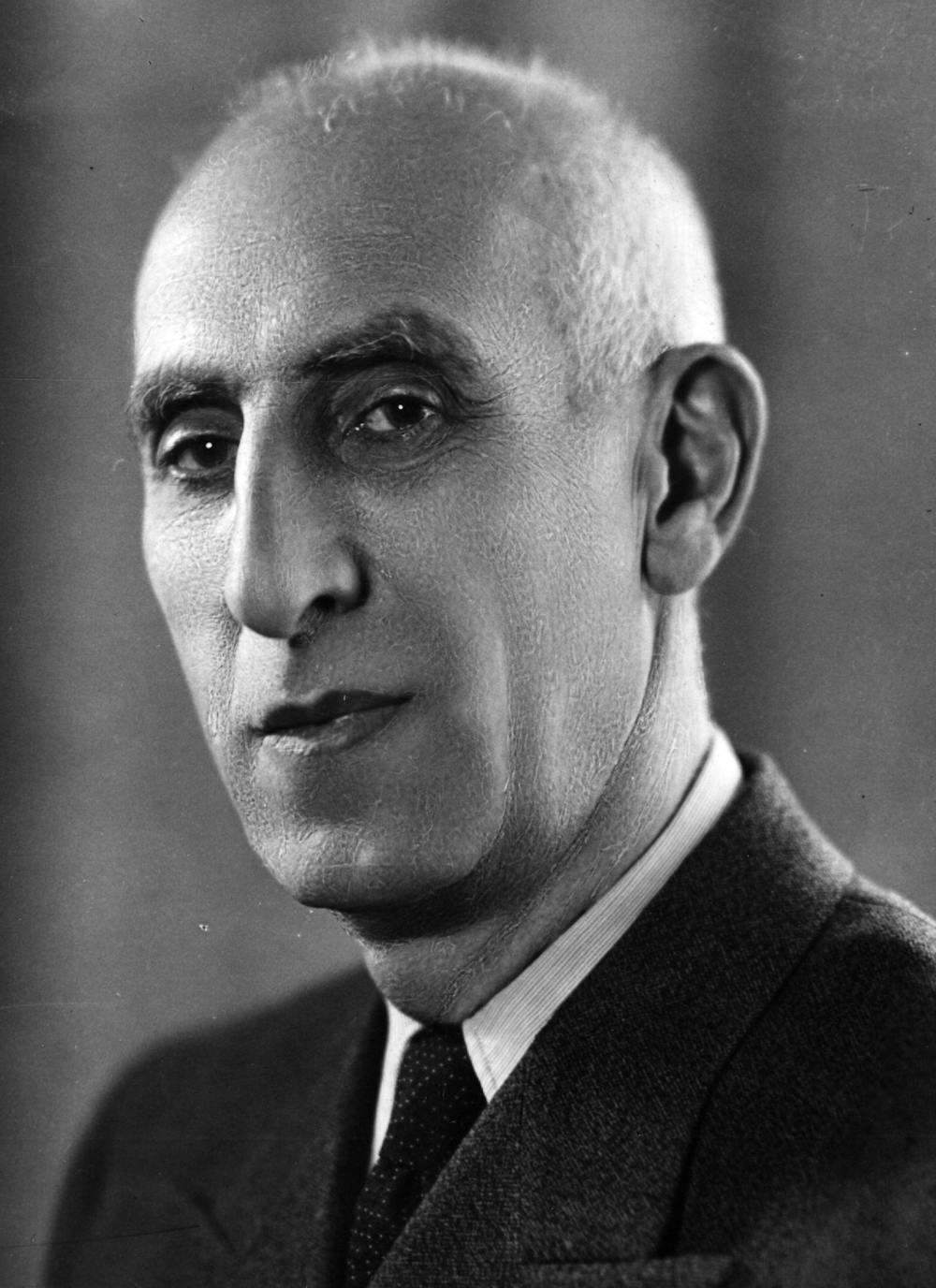
In 1951, the Iranian Parliament chose a new prime minister, Mossadegh, who then led lawmakers to vote in favor of taking over the Anglo-Iranian Oil Company, expelling the company’s British owners and saying they wanted to turn oil profits into investments in the Iranian people. The U.S. feared disruption in the global oil supply and worried about Iran falling prey to Soviet influence. The British feared the loss of cheap Iranian oil.
President Dwight Eisenhower decided it was best for the U.S. and the U.K. to get rid of Mossadegh. Operation Ajax, a joint CIA-British operation, convinced the Shah of Iran, the country’s monarch, to dismiss Mossadegh and drive him from office by force. Mossadegh was replaced by a much more Western-friendly prime minister, handpicked by the CIA.
Demonstrators in Tehran demand the establishment of an Islamic republic. AP Photo/Saris
1979: Revolutionaries oust the shah, take hostages
After more than 25 years of relative stability in U.S.-Iran relations, the Iranian public had grown unhappy with the social and economic conditions that developed under the dictatorial rule of Shah Mohammad Reza Pahlavi.
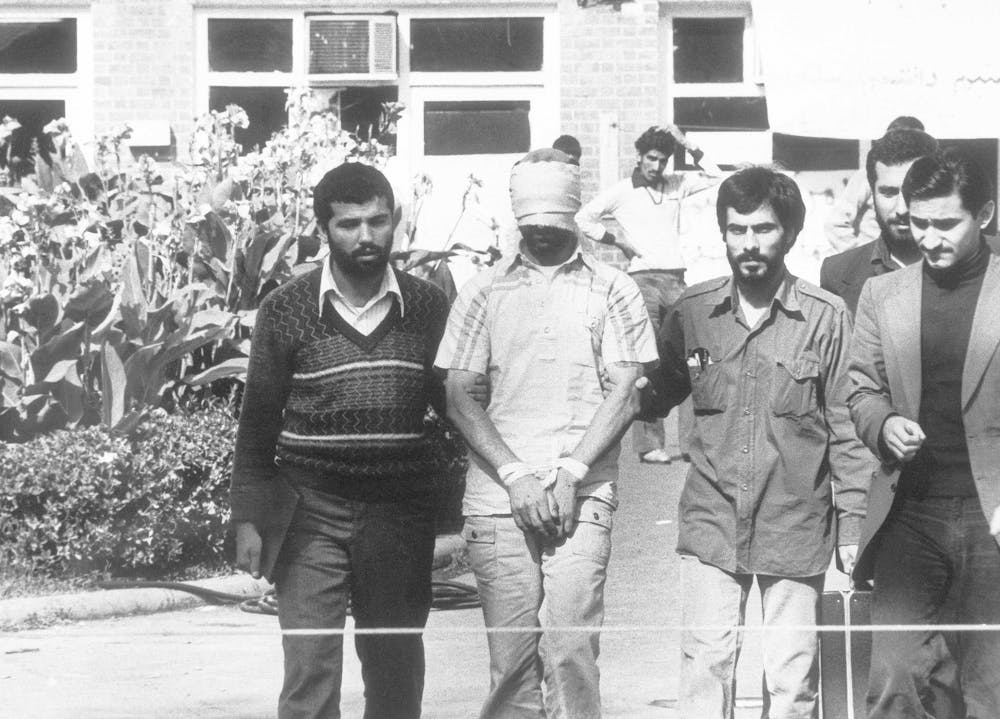
Iranian students at the U.S. Embassy in Tehran show a blindfolded American hostage to the crowd in November 1979. AP Photo
In October 1979, President Jimmy Carter agreed to allow the shah to come to the U.S. to seek advanced medical treatment. Outraged Iranian students stormed the U.S. Embassy in Tehran on Nov. 4, taking 52 Americans hostage. That convinced Carter to sever U.S. diplomatic relations with Iran on April 7, 1980.
Two weeks later, the U.S. military launched a mission to rescue the hostages, but it failed, with aircraft crashes killing eight U.S. servicemembers.
The shah died in Egypt in July 1980, but the hostages weren’t released until Jan. 20, 1981, after 444 days of captivity.
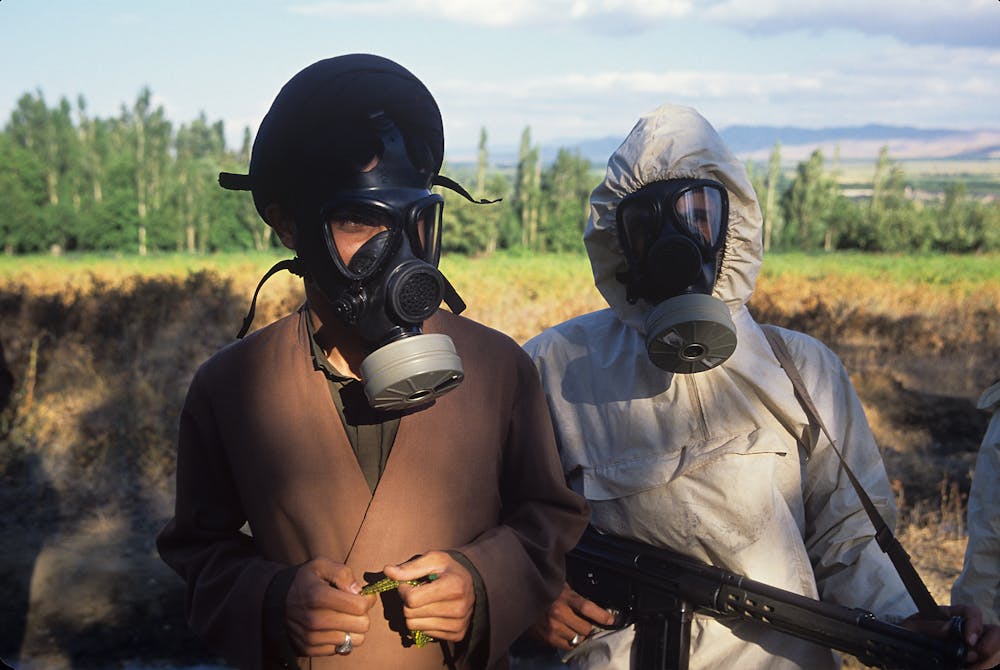
An Iranian cleric, left, and an Iranian soldier wear gas masks to protect themselves against Iraqi chemical-weapons attacks in May 1988. Kaveh Kazemi/Getty Images
The U.S. was concerned that the conflict would limit the flow of Middle Eastern oil and wanted to ensure the conflict didn’t affect its close ally, Saudi Arabia.
U.S. officials moderated their usual opposition to those illegal and inhumane weapons because the U.S. State Department did not “wish to play into Iran’s hands by fueling its propaganda against Iraq.” In 1988, the war ended in a stalemate. More than 500,000 military and 100,000 civilians died.
1981-1986: US secretly sells weapons to Iran
The U.S. imposed an arms embargo after Iran was designated a state sponsor of terrorism in 1984. That left the Iranian military, in the middle of its war with Iraq, desperate for weapons and aircraft and vehicle parts to keep fighting.
The last shipment, of anti-tank missiles, was in October 1986. In November 1986, a Lebanese magazine exposed the deal. That revelation sparked the Iran-Contra scandal in the U.S., with Reagan’s officials found to have collected money from Iran for the weapons and illegally sent those funds to anti-socialist rebels – the Contras – in Nicaragua.
At a mass funeral for 76 of the 290 people killed in the shootdown of Iran Air 655, mourners hold up a sign depicting the incident. AP Photo/CP/Mohammad Sayyad
Either during or just after that exchange of gunfire, the Vincennes crew mistook a passing civilian Airbus passenger jet for an Iranian F-14 fighter. They shot it down, killing all 290 people aboard.
The U.S. called it a “tragic and regrettable accident,” but Iran believed the plane’s downing was intentional. In 1996, the U.S. agreed to pay US$131.8 million in compensation to Iran.
1997-1998: The US seeks contact
In August 1997, a moderate reformer, Mohammad Khatami, won Iran’s presidential election.
U.S. President Bill Clinton sensed an opportunity. He sent a message to Tehran through the Swiss ambassador there, proposing direct government-to-government talks.
Shortly thereafter, in early January 1998, Khatami gave an interview to CNN in which he expressed “respect for the great American people,” denounced terrorism and recommended an “exchange of professors, writers, scholars, artists, journalists and tourists” between the United States and Iran.
However, Supreme Leader Ayatollah Ali Khamenei didn’t agree, so not much came of the mutual overtures as Clinton’s time in office came to an end.
In his 2002 State of the Union address, President George W. Bush characterized Iran, Iraq and North Korea as constituting an “Axis of Evil” supporting terrorism and pursuing weapons of mass destruction, straining relations even further.
Inside these buildings at the Natanz nuclear facility in Iran, technicians enrich uranium. AP Photo/Vahid Salemi
That was a violation of the terms of the Nuclear Nonproliferation Treaty, which Iran had signed, requiring countries to disclose their nuclear-related facilities to international inspectors.
One of those formerly secret locations, Natanz, housed centrifuges for enriching uranium, which could be used in civilian nuclear reactors or enriched further for weapons.
Starting in roughly 2005, U.S. and Israeli government cyberattackers together reportedly targeted the Natanz centrifuges with a custom-made piece of malicious software that became known as Stuxnet.
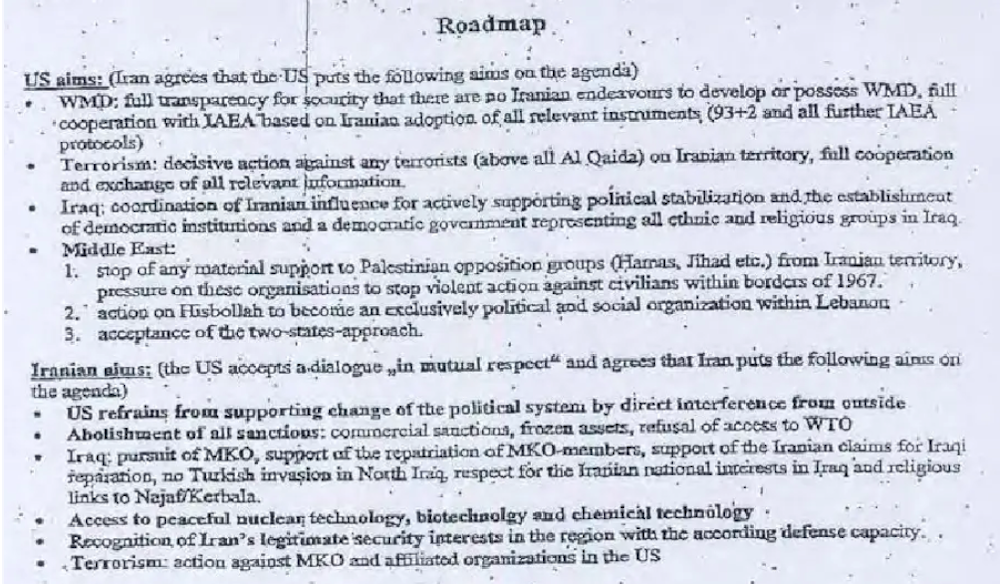
An excerpt of the document sent from Iran, via the Swiss government, to the U.S. State Department in 2003, appears to seek talks between the U.S. and Iran. Washington Post via Scribd
In May 2003, senior Iranian officials quietly contacted the State Department through the Swiss embassy in Iran, seeking “a dialogue ‘in mutual respect,’” addressing four big issues: nuclear weapons, terrorism, Palestinian resistance and stability in Iraq.
Hardliners in the Bush administration weren’t interested in any major reconciliation, though Secretary of State Colin Powell favored dialogue and other officials had met with Iran about al-Qaida.
When Iranian hardliner Mahmoud Ahmadinejad was elected president of Iran in 2005, the opportunity died. The following year, Ahmadinejad made his own overture to Washington in an 18-page letter to President Bush. The letter was widely dismissed; a senior State Department official told me in profane terms that it amounted to nothing.
After a decade of unsuccessful attempts to rein in Iran’s nuclear ambitions, the Obama administration undertook a direct diplomatic approach beginning in 2013.
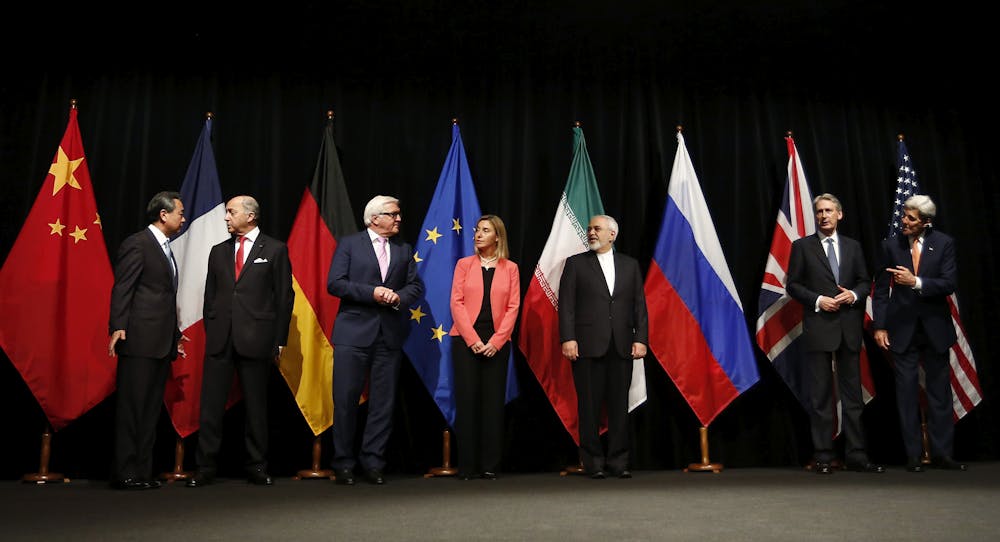
Iran, the U.S., China, France, Germany, Russia and the United Kingdom signed the deal in 2015. It severely limited Iran’s capacity to enrich uranium and mandated that international inspectors monitor and enforce Iran’s compliance with the agreement.
In return, Iran was granted relief from international and U.S. economic sanctions. Though the inspectors regularly certified that Iran was abiding by the agreement’s terms, President Donald Trump withdrew from the agreement in May 2018.
2020: US drones kill Iranian Maj. Gen. Qassem Soleimani
At the time, the Trump administration asserted that Soleimani was directing an imminent attack against U.S. assets in the region, but officials have not provided clear evidence to support that claim.
Hamas’ brazen attack on Israel on Oct. 7, 2023, provoked a fearsome militarized response from Israel that continues today and served to severely weaken Iran’s proxies in the region, especially Hamas – the perpetrator of the attacks – and Hezbollah in Lebanon.
2025: Trump 2.0 and Iran
Trump saw an opportunity to forge a new nuclear deal with Iran and to pursue other business deals with Tehran. Once inaugurated for his second term, Trump appointed Steve Witkoff, a real estate investor who is the president’s friend, to serve as special envoy for the Middle East and to lead negotiations.
Negotiations for a nuclear deal between Washington and Tehran began in April, but the countries did not reach a deal. They were planning a new round of talks when Israel struck Iran with a series of airstrikes on June 13, forcing the White House to reconsider is position.
Jeffrey Fields receives funding from the Carnegie Corporation of New York and Schmidt Futures.
Source: United States Senator for Virginia Tim Kaine
VIDEO OF KAINE’S REMARKS IS AVAILABLE HERE.
WASHINGTON, D.C. – Today, U.S. Senator Tim Kaine (D-VA), a member of the Senate Health, Education, Labor and Pensions (HELP) Committee, hosted a spotlight forum with Senator Chris Murphy (D-CT) to highlight how President Donald Trump and Republicans’ bill would make major cuts to vital programs that families rely on, including Medicaid and SNAP, in order to pay for massive tax breaks for the wealthy.
“We’re here because of the reconciliation bill … which we call the ‘Big Beautiful Betrayal.’ And my Republican colleagues are trying to pass it by a party-line vote without including us in any of the discussions about what’s in the bill. But it would be disastrous for this country,” said Kaine as he began the forum. “We’ll do everything we can to try and defeat it.”
Kaine continued, “President Trump and congressional Republicans are championing this BBB and it reflects choices – affirmative, calculated decisions about who to help and who to harm … But we don’t have to make a choice to harm middle-class and working people. We don’t have to do that. We can cut taxes for working- and middle-class families without cutting crucial programs that these families rely on. We can choose not to give additional tax breaks to those who have already been so benefitted in the past by tax breaks.
“The top 20 percent of households will receive nearly 70 percent of the tax cuts in the House bill. That is an upside-down priority,” Kaine continued. “According to the nonpartisan Congressional Budget Office … 16 million Americans nationwide will lose health care coverage under the House bill, and that includes more than 300,000 Virginians.
“According to our Joint Economic Committee, the House bill … would cut SNAP, the Supplemental Nutrition Assistance Program, by 20 percent, slashing away a crucial safety net for about 200,000 Virginians – 800,000 get SNAP benefits [in total in Virginia]. The benefits are modest – $4.70 per day – but 200,000 of those 800,000 will either have their $4.70 benefit reduced or completely eliminated,” said Kaine. “SNAP fights hunger fast. When it’s slashed, families will feel hunger a lot faster.”
Kaine continued, “If we take a second and just tally things up: the tax plan would boot millions off health care, take food from the mouths of hungry children and families, cut taxes for millionaires and billionaires, and drive up the deficit by 3 trillion, although I saw the Senate version actually knocks it up even further, maybe as high as $5 trillion. This is before you start factoring in historic and illegal tariffs that the administration is levying on the same everyday people who are suffering by these cuts,” Kaine said.
“The Yale Budget Lab found that when you factor in both the reconciliation bill and the President’s tariff actions, the bottom 80 percent of American households are going to be worse off. So I truly hope my Republican colleagues will have a change of heart and rework this product, and we’re sure going to give them an opportunity to do it with all the amendments that we’re going to offer—very targeted amendments that will pose some really important choices for them. They could take out all of the SNAP and Medicaid cuts by scaling back the tax cuts for the wealthy, and still have a bill that costs the same as it is. This legislation is going to harm Virginians and harm Americans,” Kaine concluded.
Source: United States Senator for Virginia Tim Kaine
VIDEO OF KAINE’S FLOOR SPEECH IS AVAILABLE HERE.
WASHINGTON, D.C.—Today, U.S. Senator Tim Kaine (D-VA), a member of the Senate Armed Services and Foreign Relations Committees, spoke on the Senate floor about a war powers resolution he filed this week to express concern about the escalating violence in the Middle East and its potential to pull the U.S. into conflict. The resolution requires that any U.S. participation in offensive hostilities against Iran be explicitly authorized by Congress through a declaration of war or specific authorization for use of military force. It does not prevent the U.S. from defending itself from an imminent attack. The resolution is privileged, meaning that the Senate will be required to promptly consider and vote upon the resolution.
“There’s no part of the Constitution that’s more important than the Article One provision making plain that the United States should not be at war without a vote of Congress,” said Kaine. “Yet the news of the day suggests that we are potentially on the verge of a war with Iran.”
“I was elected to the Senate in 2012, having served as a Governor from 2006 to 2010 during a tremendous upsurge in the two wars in Iraq and Afghanistan. I visited our troops multiple times in the green zones in Baghdad and in Afghanistan. I went to the deployments and the homecomings. I went to the wakes and the funerals,” Kaine continued. “And I told myself when I came to the Senate that if I ever had the chance to stop this nation from getting into an unnecessary war, I would do everything I could to stop us.”
“I happen to believe that the United States engaging in a war against Iran – a third war in the Middle East since 2001 – would be a catastrophic blunder for this country,” Kaine said. “I think there are some in this body who have a different point of view than me on that point, but I think we should all be able to agree in the fundamental constitutional principle that says we shouldn’t be in a war if Congress doesn’t have the guts to debate it and vote on it. We should all – having taken an oath to the Constitution – at least support the principle that war is something that should be for Congress to declare.”
“Our Constitution has, accordingly, with studied care, vested the question of war with the legislature,” said Kaine. “Other countries don’t do this, but the Framers of our Constitution in 1787 decided we’re going to be different. Before we send troops in harm’s way where they could be killed, where they could be injured, where they could see people that they love – their colleagues killed and injured – before we’re going to send troops in harm’s way in war, we want to see the people’s elected bodies – both houses – have a debate about what the stakes are and whether we should force our troops into harm’s way and potentially lose their lives. And that debate will be in full view of the American public, so the American public can understand what’s at stake and then they can call their representatives or write them a letter and tell them what they think about whether war is necessary and whether the sacrifice we ask of our troops should be the ultimate sacrifice that we are often asking of them in war.”
“The question for this body that we will grapple with over the course of the next couple of weeks is whether the United States should be in another war in the Middle East – in particular, whether we should allow war to start without us, whether we should hide in the tall grass, rather than exercise our constitutional responsibility under Article One. This is fundamentally a debate about Congress being true to its oath of office and actually also being true to the obligations we have to our public,” Kaine said. “The Framers put this in the Constitution so that we wouldn’t be at war without a debate in front of the public.”
“If we have that debate and we decide that war is in the national interest, then the troops go into war knowing that the civilian leadership of this country have had the hard debate in view of the American public and decided that the stakes are sufficient to ask people to make the ultimate sacrifice,” Kaine said. “How dare we ask people to make the ultimate sacrifice if we don’t have the guts to have a debate and decide whether a war is in the interest of this country?”
“We need to have this debate in front of the American public,” Kaine said. “Let them watch us debate the stakes of this – and it might be that colleagues in this body or in the House think a war with Iran is a good idea. Let them put a war authorization on the table. Let’s debate that. Let’s debate that in front of Virginians and Kansans and Californians and hear what our constituents have to say. Let’s debate that in the full view of people whose spouses are in the military or whose kids are in the military. Let’s have that debate in front of them and hear what they think before we cast a vote that would be one of the most serious votes that you ever cast on the floor of a body like this. But we should not allow a war of the magnitude of this to begin with Congress hiding.”
“I will be asking my colleagues to support my simple resolution as early as next week. No war without a vote of Congress. I’ll be asking my colleagues to support it and uphold the oath we’ve all taken to support the Constitution that established that most unusual principle, most unique principle, that is part of what makes this nation special,” Kaine concluded.
For years, Kaine has been a leading voice in Congress raising concerns over presidents’ efforts to expand the use of military force without congressional authorization. In 2017, Kaine wrote a piece in TIME warning of the consequences if President Donald Trump pulled out of the nuclear deal with Iran. In 2018, Kaine wrote a piece in The Atlantic warning that Trump was blundering toward war with Iran. In March 2020, Congress passed Kaine’s bipartisan war powers resolution to prevent further escalation of hostilities with Iran without congressional authorization. In 2023, the Senate passed bipartisan legislation led by Kaine to repeal the 1991 and 2002 Authorizations for Use of Military Force (AUMFs) and formally end the Gulf and Iraq wars.
Source: United States Senator for Commonwealth of Virginia Mark R Warner
WASHINGTON – U.S. Sen. Mark R. Warner (D-VA) today applauded the Senate passage of the Guiding and Establishing National Innovation for U.S. Stablecoins (GENIUS) Act, bipartisan legislation to bring much-needed oversight and standards to the $250 billion stablecoin market, and released the following statement:
“For too long, stablecoins have operated in a regulatory gray area, putting consumers, markets, and national security at risk. The GENIUS Act changes that by creating guardrails for responsible innovation, setting high standards for issuers, and reining in potential abuses by big tech and bad actors.
“Many of us have deep concerns about how members of the Trump family have used crypto technologies to evade scrutiny, conceal financial entanglements, and profit off the public trust. We must remain vigilant in exposing and stopping these abuses. But our outrage over that corruption cannot prevent us from building a foundation for responsible innovation in this space. If we don’t lead, others will, and not in ways that reflect our interests or democratic values. With the GENIUS Act, the U.S. will finally begin to set the rules of the road to support innovation while protecting consumers and our national security.”
Source: People’s Republic of China in Russian – People’s Republic of China in Russian –
Source: People’s Republic of China – State Council News
On June 16, the broadcast of the TV series “Catchphrases from the Classics, Favorite by Xi Jinping” (international version) was launched in five Central Asian countries. In this regard, the President of Kazakhstan Kassym-Jomart Tokayev expressed his warm congratulations.
Launched by China Media Group (CMG), the TV series “Xi Jinping’s Favorite Classical Quotes” (International Edition) carefully selects quotations from Chinese classical poetry and prose masterpieces used by Chinese President Xi Jinping in important speeches, articles and talks. They focus on themes of open cooperation, technological development, environmental protection and cultural innovation. With an international approach and vivid storytelling, the TV project explains to Central Asian audiences the deep historical and cultural roots of the Chinese leader’s ideas on governance, and also showcases the diversity of China’s modernization.
Source: People’s Republic of China in Russian – People’s Republic of China in Russian –
Source: People’s Republic of China – State Council News
On June 6, a ceremony was held in Lhasa to launch the filming of the documentary film “The Story of Time,” dedicated to the 60th anniversary of the founding of the Xizang Autonomous Region.
Pictured: Title page of the script for the documentary film “The History of Time”
The documentary, using the “road trip plus memory lane” narrative method, follows the footsteps of 70-year-old Tsering Lhamo from Chamdo to Lhasa. With a professional eye and dynamic film language, the film vividly shows how the remote rural areas of the past have been transformed into vibrant new settlements; how ancient Lhasa, weaving together historical heritage and modern energy, has shone with a new, never-before-seen noble light.
Source: People’s Republic of China in Russian – People’s Republic of China in Russian –
Source: People’s Republic of China – State Council News
Astana, June 18 (Xinhua) — China and five Central Asian countries on Tuesday reaffirmed their firm support for each other’s independence, sovereignty and territorial integrity, as well as the principles of sovereign equality and the inviolability of borders, according to the Treaty of Eternal Good-Neighborliness, Friendship and Cooperation signed by China, Kazakhstan, Kyrgyzstan, Tajikistan, Turkmenistan and Uzbekistan.
According to the document, the six countries also reaffirmed their determination to jointly build a closer China-Central Asia community with a shared future.
All parties stressed that they would not use force or threaten to use it and would resolve disputes peacefully. States committed to supporting each other’s development paths and models chosen in accordance with national conditions and to supporting each other’s positions on issues of fundamental interest.
The parties must not enter into any alliances or groups directed against the other parties and must not support any actions hostile to the other parties, the agreement says.
All parties expressed their willingness to cooperate in the areas of trade, economy, investment, infrastructure connectivity, engineering and technology, energy (including hydro and renewable energy), transport, mineral resources, agriculture, ecology and environmental protection, processing industry, science and technology, as well as other areas of mutual interest, on the basis of equality and mutual benefit.
The states also agreed to cooperate within the framework of bilateral and multilateral mechanisms to jointly combat terrorism, separatism, extremism and transnational organized crime. –0–
Source: People’s Republic of China in Russian – People’s Republic of China in Russian –
Source: People’s Republic of China – State Council News
“Lu Ban Workshop” is a Chinese brand of international cooperation in vocational education, which has now become an important platform for technology transfer and talent training in the joint construction of the “Belt and Road”. In November 2022, the first “Lu Ban Workshop” in Central Asia was launched in Tajikistan. Over the next year, Lu Ban Workshops were launched in Kazakhstan, Kyrgyzstan and other countries. This project not only opened up opportunities for Central Asian youth, but also built a bridge of understanding between the people of China and the Central Asian region.
Lu Ban’s workshops, opened in several Central Asian countries, have achieved good results and reflect three main features of practical cooperation between China and the region. First, it is demand-driven, when all specialties are selected taking into account the actual needs of the industries of Central Asian countries. Second, it is technology adaptation, that is, an organic combination of China’s advanced technologies in infrastructure construction, new energy sources, etc., with local resources and development conditions. Third, it is sustainability, when, based on the medium- and long-term development strategies of countries, not only the current problem of shortage of qualified personnel is solved, but also special attention is paid to the development of the ability for independent economic development. China has always promoted cooperation with Central Asian countries in the field of vocational education on the basis of equality and win-win cooperation, which reflects the Chinese concept of “benevolence, sincerity, mutual benefit and inclusiveness” towards neighboring countries.
In the long term, Lu Ban Workshops will continue to play the role of a technology incubator and talent reservoir, providing a steady impetus to long-term cooperation between China and Central Asian countries. As generations of local talents grow and individual joint projects steadily advance, Lu Ban Workshops will become a source of new energy for cooperation between China and Central Asia, laying a solid foundation for building a closer community of shared destiny between China and the region.
Author: Yang Jin, Deputy Director of the Central Asia and Caucasus Department, Institute of Russian, East European and Central Asian Studies, Chinese Academy of Social Sciences
Associate Health Minister David Seymour says the Government is delivering on its promise to cut red tape and give Kiwis greater access to more treatments, starting with melatonin and medicinal psilocybin.
“Many New Zealanders have asked me why people can buy melatonin overseas but they can’t buy it from their local pharmacy. Medsafe has assessed this and decided there’s no reason why it shouldn’t be available on pharmacy shelves right here at home,” says Mr Seymour.
Melatonin, a medicine used to treat insomnia and jet lag, has previously been tightly restricted in New Zealand. Right now, only a few melatonin products are approved for people aged over 55.
“In time, adults will be able to buy melatonin directly from a pharmacy with no prescription needed. This is a commonsense decision that will make melatonin more accessible in New Zealand than in many other countries and encourage suppliers bring more products to our shelves.
Melatonin will remain prescription-only for children and adolescents, following expert clinical advice to ensure proper oversight when used by younger patients.
“In another win for patients, Medsafe has also approved the prescription of medicinal psilocybin outside of clinical trials for the first time in New Zealand,” says Mr Seymour.
“Psilocybin remains an unapproved medicine, but a highly experienced psychiatrist has been granted authority to prescribe it to patients with treatment-resistant depression.
“This is huge for people with depression who’ve tried everything else and are still suffering. If a doctor believes psilocybin can help, they should have the tools to try.
“The psychiatrist involved has previously prescribed psilocybin in clinical trials and will operate under strict reporting and record-keeping requirements.
“New Zealand is now in line with Australia, where authorised prescribers have been using psilocybin in clinical settings for some time.
“Kiwis shouldn’t be left counting sheep or desperate for options when other countries are already using these medicines. The Government is committed to putting patients first.”
Maritime NZ has filed two charges against KiwiRail after completing a comprehensive and wide-ranging investigation into the grounding of the Interislander ferry, Aratere last year.
The Aratere grounded just north of Picton on 21 June last year, it had 47 people on-board at the time. Thankfully, all passengers and crew were safely returned to shore. The ferry was re-floated the following evening.
Maritime NZ’s Chief Executive, Kirstie Hewlett, says the two charges filed against KiwiRail under the Health and Safety at Work Act 2015 relate to failures by the operator to keep crew and passengers safe while on-board the ferry.
“This was a complex incident and important investigation given it focussed on KiwiRail bringing in new systems to older vessels and broader safety management. It required us to look at systems, policies and procedures, culture, within KiwiRail in relation to the incident. A significant number of interviews were conducted, as well as collating and reviewing a substantial amount of relevant documentation and evidence.
“The time taken to undertake this investigation, collate and review the evidence, and decide on compliance action is consistent with other complex and major incidents.
As we have now filed charges in court, we cannot talk about what our investigation found,” Kirstie Hewlett says.
Charges:
Charge 1: s48 charge – in that it had a duty as a PCBU, namely to ensure, so far as reasonably practicable, the health and safety of those passengers and crew who would sail aboard the Aratere and that failure exposed crew members and passengers to the risk of death or serious injury. Maximum penalty $1.5m
Charge 2: s49 charge under HSWA – in that it had a duty as a PCBU, failed to ensure, so far as is reasonably practicable, the health and safety of those passengers and crew who would sail aboard the Aratere. Maximum penalty: $500,000
Fire and Emergency New Zealand has handed back the Victoria Park New World to the building’s owners, following yesterday’s fire.
Incident Controller Phil Larcombe says fire crews have left the site, more than 24 hours after the fire started.
“This was a challenging fire, because it was initially too dangerous to fight the fire from inside the building,” he says.
“I want to acknowledge all the firefighters, commanders, and operational support who worked so hard to battle the fire for many hours.
“At the height of the fire there were 23 trucks and 80 firefighters, as well as support personnel.
“We also appreciate the excellent support from New Zealand Police, Hato Hone St John, and Auckland Emergency Management, as well as the building’s owners.
“We were very relieved that all people in the supermarket were able to get out quickly and safely yesterday.
“This is a very good time for all businesses to check that their own fire evacuation schemes are in place and meet requirements.”
The cause of the fire has not yet been determined.
Covering period of Wednesday 18th – Monday 23rd June – After a week of crisp, cold days, MetService is forecasting a shift in the weather as rain moves over the country on Thursday, and showers lingering into Friday morning. While some spots start the day under cloud with a few showers about, the eastern South Island is shaping up as the best spot for viewing Matariki or Puanga— and others may get lucky with clearer skies too.
Rain moves onto the western South Island late Wednesday continuing into Thursday with some places possibly seeing heavier rain and even thunderstorms. Meanwhile, eastern areas will notice increasing cloud, with patchy rain expected for Southland, inland Otago, and inland Canterbury.
On Thursday, rain and wind spread across the North Island, with wetter weather expected out west. Eastern areas like Wairarapa, Tairāwhiti Gisborne, and Hawke’s Bay will also see some rain, though it should be brief as the weather system moves through.
So, what does this mean for Friday morning’s Matariki and Puanga viewing?
MetService meteorologist Mmathapelo Makgabutlane says, “Showers will still be hanging around, especially in western parts of both islands and the upper North Island, and with showers comes cloud. But there may be gaps – and some spots might be lucky enough to catch a glimpse. Check out MetService’s Cloud Forecast for the outlook for your spot.”
“Eastern parts of the South Island look most promising – Canterbury near the coast, Marlborough, and maybe even Nelson,” Makgabutlane says.
The rest of Friday will bring a similar mix of passing showers and dry spells.
“But rain or shine, this year’s theme Matariki mā Puanga – Celebrating Together will still ring true, giving us a chance to gather indoors or out,” Makgabutlane says.
The weekend looks to bring a classic Kiwi winter pattern: a few showers here and there, but also plenty of fine breaks.
“The rain radar will be your friend this long weekend! There will be chances to enjoy some time outdoors,” Makgabutlane adds.
Inland Otago and the Mackenzie Basin have been sitting under low cloud and cold conditions. While Saturday might bring a brief improvement, the cloud could return before the weekend’s out. Overnight temperatures will reflect that too – after a short-lived increase, Sunday morning looks to dip below zero again.
The New Zealand Super Fund has again been awarded a perfect score in the annual GSR (governance, sustainability, resilience) scoreboard published by international sovereign wealth fund experts GlobalSWF.
Introduced in 2020, GlobalSWF’s GSR scoreboard ranks sovereign wealth funds and public pension funds against 25 criteria including transparency and accountability, governance structure and processes, ethical standards and policies, and alignment with sustainable development goals.
The Guardians is one of nine sovereign investors to sit at the top of this year’s scoreboard. In preparing these rankings, GlobalSWF analyses 200 Sovereign Wealth Funds and Public Pension Funds, which manage US$ 29.4 trillion on behalf of 80 countries. It is the fifth successive year the Super Fund has received full marks.
Jo Townsend, CEO of Super Fund manager the Guardians of New Zealand Superannuation, said the GSR scoreboard is based on a comprehensive evaluation of factors that are important to the Fund’s long-term success.
“I am very pleased to see our team’s hard work recognised by GlobalSWF,” said Ms Townsend.
On Tuesday 17 June, The Royal Children’s Hospital (RCH) and the Good Friday Appeal hosted a special event to thank community groups and fundraisers for their incredible efforts in raising a record-breaking $23,822,792 for the 2025 Appeal.
The evening was hosted by Vascular Access Specialist Nurse Consultant Eloise Borello and Novalie Morris, a current RCH patient and rising star who captivated the audience with her warmth and charm.
Chief Executive Officer of The Royal Children’s Hospital Dr Peter Steer addressed attendees to express his heartfelt gratitude to the community and supporters of the Appeal. He outlined how the funds will support life-changing advancements at the hospital, including a $3 million contribution towards regional health services.
Representing CFA was Deputy Chief Officer Alen Slijepcevic and members from Bulla, Craigieburn, Pomonal, Werribee, and Epping brigades.
CFA has proudly supported the Good Friday Appeal for 74 years, and in 2025, our volunteers — with the support of their generous local communities — raised an impressive $1,888,912. This brings CFA’s total contribution over the years to a remarkable $41 million.
Across the state, CFA volunteers could be seen at traffic lights and in fire trucks collecting donations in their local communities, continuing a long-standing tradition of support for the RCH.
Funds raised through the Good Friday Appeal help ensure the hospital remains at the forefront of paediatric care, offering world-class treatment, the latest medical equipment, and vital research to give sick children the best possible start in life.
To learn more about the extraordinary impact of this support, we encourage you to read the latest Community Report, which highlights the many initiatives made possible through the funds raised and showcases the large number of volunteers, partners and donors who come from across Victoria to support the RCH.
The Fifth Circuit Court of Appeals recently limited a nationwide injunction to only Texas, giving the Administration the greenlight to resume processing initial DACA applications for all other states
WASHINGTON, D.C. — U.S. Senators Alex Padilla, Ranking Member of the Senate Judiciary Immigration Subcommittee, and Adam Schiff (both D-Calif.) joined U.S. Senate Democratic Whip Dick Durbin (D-Ill.), Ranking Member of the Senate Judiciary Committee and lead author of the Dream Act, and Senate Democrats in urging U.S. Citizenship and Immigration Services to resume processing initial applications for the Deferred Action for Childhood Arrivals (DACA) program, following a ruling in the Fifth Circuit Court of Appeals that narrowed an earlier injunction to just Texas and allowed USCIS to start processing initial DACA applications from all other states.
The Senators began by highlighting thepopularsupportfor providing Dreamers a pathway to citizenship, writing: “Noncitizens brought to the United States as children, often known as Dreamers, are American in every way but their immigration status. Many only know this country as their home, and they contribute every day to this great nation by paying taxes and serving in critical roles, such as police officers, teachers, and nurses. Americans overwhelmingly support providing Dreamers a path to citizenship, and in December 2024, President Trump stated that he supported protections for Dreamers to remain in the United States.”
“Consistent with this statement, we implore you to use your authority at United States Citizenship and Immigration Services (USCIS) to resume processing initial applications for Deferred Action for Childhood Arrivals (DACA) and provide such protections for Dreamers immediately,” continuedthe Senators.
Sunday, June 15, marked the thirteenth anniversary of the DACA program via policy memorandum in 2012. Since then, more than 825,000 people have received deferred action pursuant to DACA, empowering recipients to bolster their careers and contribute an estimated $140 billion to the U.S. economy in spending power and $40 billion in combined federal, payroll, state, and local taxes.
In 2021, U.S. District Court Judge Andrew Hanen halted the DACA program and enjoined USCIS from approving any new DACA applications nationwide. While the program was enjoined, USCIS has continued to accept and hold initial applications, and in 2022, the Department of Homeland Security published the DACA Final Rule, codifying the 2012 memorandum establishing DACA into regulation. More than 100,000 initial DACA applications are pending with USCIS.
On January 17, 2025, the Fifth Circuit Court of Appeals issued a decision limiting Judge Hanen’s injunction to just Texas.
“Pursuant to the order, in Texas, DACA must resume as a limited program providing protection from deportation for current DACA recipients, but without access to work authorization or driver’s licenses as part of those renewals. This order went into effect on March 11, giving USCIS the authority to start processing initial DACA applications from states other than Texas. However, nearly three months later, USCIS has not made any public announcement on whether new DACA applications will be processed; nor has the agency begun processing initial applications that have been pending with the agency for years,” added the Senators.
“We urge you to begin processing these DACA applications immediately, consistent with the Fifth Circuit decision and existing regulations, and to ensure Dreamers eligible to file initial DACA applications can do so as soon as possible,” concluded the Senators.
In addition to Padilla, Schiff, and Durbin, the letter is signed by U.S. Senators Tammy Baldwin (D-Wis.), Michael Bennet (D-Colo.), Richard Blumenthal (D-Conn.), Cory Booker (D-N.J.), Chris Coons (D-Del.), Catherine Cortez Masto (D-Nev.), Tammy Duckworth (D-Ill.), John Fetterman (D-Pa.), Ruben Gallego (D-Ariz.), Kirsten Gillibrand (D-N.Y.), Maggie Hassan (D-N.H.), Martin Heinrich (D-N.M.), John Hickenlooper (D-Colo.), Mazie Hirono (D-Hawai’i), Tim Kaine (D-Va.), Mark Kelly (D-Ariz.), Andy Kim (D-N.J.), Angus King (I-Maine), Amy Klobuchar (D-Minn.), Ben Ray Luján (D-N.M.), Edward Markey (D-Mass.), Jeff Merkley (D-Ore.), Patty Murray (D-Wash.), Gary Peters (D-Mich.), Jack Reed (D-R.I.), Jacky Rosen (D-Nev.), Bernie Sanders (I-Vt.), Brian Schatz (D-Hawai’i), Jeanne Shaheen (D-N.H.), Elissa Slotkin (D-Mich.), Tina Smith (D-Minn.), Chris Van Hollen (D-Md.), Mark Warner (D-Va.), Raphael Warnock (D-Ga.), Elizabeth Warren (D-Mass.), Peter Welch (D-Vt.), Sheldon Whitehouse (D-R.I.), and Ron Wyden (D-Ore.).
Full text of the letter to USCIS is available here.
Source: United States Senator Alex Padilla (D-Calif.)
WATCH: Padilla Delivers Floor Speech Following His Forcible Removal From DHS Press Conference
WATCH: Padilla: “If this Administration is this afraid of just one Senator with a question, colleagues, imagine what the voices of tens of millions of Americans peacefully protesting can do.”
“If that is what the Administration is willing to do to a United States Senator for having the [audacity] to simply ask a question, imagine what they’ll do to any American who dares to speak up. If what you saw happen can happen when the cameras are on, imagine not only what can happen — but what is happening — in so many places where there are no cameras.”
Video of Senator Padilla’s full speech can be viewed here and downloaded here.
WASHINGTON, D.C. — Today, U.S. Senator Alex Padilla (D-Calif.), Ranking Member of the Senate Judiciary Immigration Subcommittee, spoke on the Senate floor following his forcible removal from Secretary of Homeland Security Kristi Noem’s press conference, where he was thrown to the ground and handcuffed after attempting to ask a question. Padilla delivered a strong rebuke to the Trump Administration’s unprecedented militarization of Los Angeles and called for his colleagues on both sides of the aisle, as well as the American people, to speak up against Trump’s abuse of power.
Last week, Trump deployed approximately 4,000 National Guard troops and 700 active-duty Marines to Los Angeles amid unrest caused by his indiscriminate immigration raids across the region. Padilla flew to Los Angeles to conduct oversight over the Trump Administration’s unprecedented military deployment to California — without Governor Newsom’s consent — and was in the high-security Los Angeles Federal Building for a scheduled oversight meeting with the commanding general in charge of the military presence in the region before law enforcement escorted him into Secretary Noem’s briefing room.
“The Trump Administration has done everything in their power but to provide transparency to the American people about their mission in Los Angeles. And so last week, I chose to go home to try to get answers from the Administration as they are literally militarizing our city.”
“I want to share what I learned. I want to share what I heard because it should shock the conscience of our country.”
In the hopes of learning new information after having his requests ignored for months, Padilla tried to ask a question in response to Noem’s demonizing rhetoric toward immigrants and Los Angeles’ democratically elected leadership.
“At one point, the United States Secretary of Homeland Security said that the purpose of federal law enforcement and the purpose of the United States military was to ‘liberate’ Los Angeles from our governor and our mayor. To somehow liberate us from the very people that we democratically elected to lead our city and our state.”
“Colleagues, let that fundamentally un-American mission statement sink in. That is not a mission focused on public safety. And that simply is not, and cannot be, the mission of federal law enforcement and the United States military.”
“To my colleagues on both sides of the aisle, are we truly prepared to live in a country where the President can deploy the Armed Forces to decide which duly elected governors and mayors should be allowed to lead their constituents? Is that really the precedent that we’re okay with setting?”
“Throughout the country’s history, we’ve had conflict, we’ve had tumult, but we’ve never had a tyrant as a commander-in-chief.”
Padilla detailed his own background as the proud son of immigrants from Mexico who left behind his MIT engineering degree to protest against the vile anti-immigrant rhetoric in the 1990s that a Republican governor up for reelection spread across California. He said he felt he had to speak out against the Trump Administration’s “un-American” scapegoating of immigrants and California, and detailed the violent reaction to his question.
“So last week, when I heard something so blatantly un-American from the Secretary of Homeland Security, a cabinet official — of course I was compelled, both as a Senator and as an American, to speak up.”
“But before I could even get out my question, I was physically and aggressively forced out of the room — even as I repeatedly announced I was a United States Senator, and I had a question for the Secretary. And even as the National Guardsman and the FBI agent who served as my escorts and brought me into that press briefing room stood by, silently, knowing full well who I was.”
“You’ve seen the video. I was pushed and pulled, struggled to maintain my balance. I was forced to the ground — first on my knees and then flat on my chest. And as I was handcuffed and marched down a hallway, repeatedly asking why am I being detained, not once did they tell me why.”
Padilla expressed his gratitude for the immense support for him and his family that poured in since his forcible removal. However, he emphasized that this fight was not about him but about the fundamental democratic rights of all Americans across the country.
“If you watched what unfolded last week and thought what happened is just about one politician and one press conference, you’re missing the point.”
“If that is what the Administration is willing to do to a United States Senator for having the [audacity] to simply ask a question, imagine what they’ll do to any American who dares to speak up. If what you saw happen can happen when the cameras are on, imagine not only what can happen — but what is happening — in so many places where there are no cameras.”
“Colleagues, this isn’t about me. In fact, it’s not just about immigrant communities or even just the State of California. It’s about every single American who values their Constitutional rights. It’s about anyone who’s ever exercised their First Amendment rights, or anyone who’s ever disagreed with a president, or anyone who simply values our democracy and wants to keep it.”
Padilla set the record straight on Republican misinformation on undocumented immigrants as Trump has used the same playbook when the headlines turn against him: scapegoat immigrants and manufacture a crisis. Public reporting shows that the majority of immigrants currently in ICE custody have no prior criminal conviction, and under 10 percent of immigrants taken into ICE custody since October have serious criminal convictions. Yet, President Trump has blamed immigrants to distract from his failed policies, including Republicans’ billionaire-first budget reconciliation bill that would cut critical services like health care and nutrition for millions of working families across the country.
As President Trump takes unprecedented action to militarize Los Angeles without justification or the Governor’s request, Padilla warned of the stakes for cities across the United States and American democracy.
“Donald Trump is continuing to test the boundaries of his power. And he’s surrounded himself with yes-men and underqualified attack dogs — from the DHS Secretary to the FBI Director to the Secretary of Defense — who will rubberstamp every anti-democratic step he takes.”
“This Administration’s officials and maybe not all, but many Republicans in Congress may choose not to do their job, but they cannot stop me from doing mine.”
“Again, if you really think this is just about immigrants and immigration, it’s time to wake up. What’s happening is not just a threat to California; it’s a threat to everyone in every state. If Donald Trump can bypass the Governor and activate the National Guard to put down protests on immigrant rights, he can do it to suppress your rights, too. If he can deploy the Marines to Los Angeles without justification, he can deploy them to your state, too. And if he can ignore due process, strip away First Amendment rights, and disappear people to foreign prisons without their day in court, he can do it to you too.”
“California is just the test case for the rest of the country. Last week for many was a warning shot. But I pray that it also serves as a wakeup call.”
Padilla concluded his speech with a call to action for Angelenos and millions of Americans to stand up and keep peacefully protesting against the Trump Administration’s attack on fundamental rights.
“It doesn’t matter if you’re a Republican, or a Democrat, or an Independent — we all have a responsibility to speak up and to push back, before it’s too late. So I do encourage people to keep peacefully protesting. There’s nothing more patriotic than to peacefully protest for your rights.”
“Because no one will liberate Los Angeles but Angelenos. No one will redeem America but Americans. No one is coming to save us but us.”
“And we know that the cameras are not on in every corner of the country. But if this Administration is this afraid of just one Senator with a question, colleagues, imagine what the voices of tens of millions of Americans peacefully protesting can do.”
Senator Padilla has been outspoken in calling out the Immigration and Customs Enforcement (ICE) raids in Los Angeles and Trump’s misguided deployment of the National Guard and U.S. Marine Corps. This weekend, Padilla led the entire Senate Democratic Caucus in demanding that President Trump immediately withdraw all military forces from Los Angeles and cease all threats to deploy the National Guard or active-duty servicemembers to American cities. Last week, Padilla and Senator Adam Schiff (D-Calif.) demanded answers regarding the Trump Administration’s decision to deploy approximately 700 Marines to Los Angeles. Padilla has spoken at a spotlight hearing and on the Senate floor multiple times to blast President Trump for manufacturing a crisis by launching indiscriminate ICE raids across Los Angeles and deploying the National Guard and active-duty servicemembers to the region. He also joined all Senate Judiciary Committee Democrats today in calling on Chairman Grassley to schedule Department of Homeland Security Secretary Noem for a broad oversight hearing for testimony before the committee.
Padilla’s full remarks as prepared for delivery are available below:
[Mr./Madam] President,
Over the last two weeks in Los Angeles – my hometown – we’ve seen masked federal agents in tactical gear ordered into our communities . . .
We’ve seen a disturbing pattern of extreme and cruel immigration enforcement operations, targeting non-violent people at places of worship, schools, and courthouses.
All to meet an arbitrary quota.
Now, we’re seeing President Trump federalize and deploy the National Guard without the Governor’s consent . . .
Active-duty Marines have been deployed, escalating tensions in our city . . .
All without coordination with the state and local law enforcement.
Despite repeated requests for justification for these extreme actions…and after months of little to no response from the Administration on their aggressive and theatrical immigration raids…
The Trump administration has done everything in their power BUT provide transparency to the American people about their mission in Los Angeles.
So last week, I went home to try to get answers from the administration as they militarize our city.
What I heard should shock the conscience of our country.
One of the first items on my schedule last Thursday was a meeting with General Guillot, the four-star general in charge of U.S. Northern Command at the Federal Building in west Los Angeles, where they are overseeing these military operations.
When the United States military is deployed domestically…
When our own troops are deployed against the wishes of the Governor for the first time since 1965, against the wishes of the mayor, against even the wishes of local law enforcement — then we’re in uncharted territory.
So in an effort to do my duty to conduct congressional oversight — and to try to get answers from the Department of Defense that state and local officials were not receiving— I went to the federal building in West LA.
I was met at the entrance by a National Guardsman and an FBI agent, who escorted me through the security screening and up to a conference room for my scheduled briefing.
While waiting for my scheduled briefing with General Guillot, I learned that Homeland Security Secretary Kristi Noem was holding a press conference just down the hall and that the press conference was causing my briefing to be delayed.
The thought occurred to me that maybe I could attend and listen in, in the hopes of hearing Secretary Noem provide some new information that could help us make sense of what was happening.
I asked and was escorted by my National Guard and FBI escorts into the press conference. They opened the door for me. They accompanied me into the press briefing room.
It was there that I listened as the United States Secretary of Homeland Security said that the purpose of federal law enforcement and the United States military was to “liberate” Los Angeles from our governor and our mayor . . .
. . . To somehow liberate us from the very people we democratically elected to lead our city and our state.
Colleagues, let that fundamentally un-American mission statement sink in.
That’s not a mission focused on public safety.
That simply is not, and cannot be, the mission of federal law enforcement and the United States military.
To my colleagues on the other side of the aisle, are you truly prepared to live in a country where the President can deploy the armed forces to decide which duly elected governors and mayors should be allowed to lead their constituents?
Is that really the precedent you’re okay with setting?
As Secretary Noem herself said last year when serving as Governor of South Dakota, “If Joe Biden federalizes the National Guard, that would be a direct attack on states’ rights.”
Throughout the country’s history, we’ve had conflict, and we’ve had tumult. But we have never had a tyrant as a commander-in-chief.
That’s not by coincidence!
It’s because the American people have always been willing to speak up and exercise their First Amendment right to protest – especially when our fundamental rights have been threatened.
As the proud son of immigrants from Mexico, it’s that same right I came to revere when marching through the streets of Los Angeles in 1994 alongside friends and family protesting against the vile anti-immigrant rhetoric that was growing in California.
It was that year that a Republican Governor up for reelection and down in the polls, turned to scapegoating immigrants to try to improve his political standing.
That fight is what got me to leave an engineering career behind and dedicate myself to influencing government and politics. So, I’ve seen this before. Californians have seen this before.
So last week, when I heard something so blatantly un-American from the Secretary of Homeland Security — I was compelled, both as a Senator AND as an American, to speak up.
But before I could even get out my question, I was physically and aggressively forced out of the room — even as I announced I was a United States Senator, and I had a question for the Secretary.
And even as the National Guardsman and FBI agent who escorted me into the press conference stood by, silently, knowing full well who I was.
You’ve seen the video.
I was pushed and pulled, struggling to maintain my balance.
I was forced to the ground — first to my knees and then flat on my chest.
As I was handcuffed and marched down a hallway, I repeatedly asked why I was being detained. Not once did they tell me why.
In that moment, a lot of questions run through your head.
Where are they taking me?
Am I being arrested?
What will a city already on edge from being militarized think when they see their Senator has been handcuffed just for trying to ask a question? Or . . .
What will my wife and our three boys think?
I also remember asking myself: if this aggressive escalation is the result of speaking up against the abuses and overreach of the Trump administration, was it really worth it?
But colleagues, how many Americans in our nation’s history have marched, have protested, have shed blood and lost their lives to protect our rights?
How many Americans have served in wars overseas to protect our freedoms here at home?
And how many Americans in the year 2025 see a vindictive president on a tour of retribution, unrestrained by the majority of this separate but co-equal branch of government in this building, and wonder if it’s worth it to stand up or to speak out?
If a United States Senator is too afraid to speak up, how can we expect any other American to do the same?
Colleagues, you know me.
I’m not aware of anyone who would describe me as a flamethrower. I try to be respectful and considerate to every member of this body— regardless of your politics.
So I want to thank all of my colleagues on both sides of the aisle who reached out to share messages of support — whether it was public or in private.
In means a great deal to me and my family.
But if you watched what unfolded last week and thought this was about one politician or one press conference, you’re missing the point.
If that’s what this Administration will do to a United States Senator for having the audacity to simply ask a question, imagine what they’ll do to any American who dares to speak up.
If that’s what can happen when the cameras are on, imagine not only what can happen — but what is happening — when the cameras are off.
This isn’t about me. In fact, it’s not even just about immigrant communities or about Californians.
It’s about every single American who values their constitutional rights. It’s about anyone who’s ever exercised their First Amendment rights, or ever disagreed with a president, or who simply values living in a democracy and wants to keep it.
The President will tell you this is about undocumented immigrants, and about law and order and about targeting dangerous, violent criminals.
But we know differently.
Public data released by the administration shows that the majority of immigrants currently in ICE custody do not have a prior criminal conviction.
And new reporting shows that less than 10 percent of immigrants taken into ICE custody since October have serious criminal convictions.
Less than 10 percent!
Two weeks ago, Donald Trump was at the lowest point in his presidency so far.
He was drowning in a week of terrible headlines.
The American people were finally waking up to the realities of the budget reconciliation bill that will cut health care, nutrition assistance, and good paying clean energy jobs in order to cut taxes for billionaires.
He was losing his tariff wars as the costs of everyday goods were continuing to rise.
His promises to end Russia’s invasion of Ukraine were falling flat.
He’d been handed loss after loss in federal court.
And maybe the most embarrassing part was his public breakup with Elon Musk.
But we know what happens when the headlines turn on Donald Trump. Donald Trump turns to the same tired playbook he always has: when in doubt, scapegoat immigrants. And manufacture a crisis to distract the media from your failures.
That’s the reason he ramped up ICE raids in California.
And when Californians took to the streets to peacefully protest, that’s the reason he bypassed the Governor and federalized the National Guard. And as things began to settle in Los Angeles, he escalated even further by sending in the Marines.
He wants the spectacle — not just to distract, but to justify his undemocratic crackdowns and his authoritarian power grabs.
That’s the reason why even while the vast majority of protests have remained peaceful, the President, the Vice President, and their allies have called protestors insurrectionists!
Yes, this is the same man who provoked an actual insurrection on our Capitol on January 6th.
The same man who incited a violent mob, carrying confederate flags, against Congress.
The same man who then pardoned the convicted felons who assaulted our brave Capitol Police officers.
Trump is testing the boundaries of his power. And he’s surrounded himself with yes-men and underqualified attack dogs — from the DHS Secretary to the FBI Director to the Secretary of Defense — who will rubberstamp every anti-democratic step he takes.
This Administration’s officials and Congressional Republicans may choose not to do their job, but they cannot stop me from doing mine.
And I refuse to let immigrants be pawns on the path to fascism.
Again, if you really think this is just about immigrants, it’s time to wake up.
What’s happening isn’t just a threat to California, it’s a threat to everyone in every state.
If Donald Trump can bypass the Governor and activate the National Guard to put down protests for immigrant rights, he can do it to suppress your rights, too.
If he can deploy Marines to Los Angeles without justification, he can deploy them to your city, too.
If he can ignore due process, strip away First Amendment rights, and disappear people to foreign prisons without their day in court, he can do it to you too.
California is just Trump’s test case for the rest of the country.
Last week was a warning shot.
But I pray that it can be our wakeup call, too.
We’ve now seen Trump threaten to do the same in other cities run by elected Democrats.
It doesn’t matter if you’re a Republican, a Democrat, or an independent — we all have a responsibility to speak up and to push back, before it’s too late.
So I encourage people to keep peacefully protesting. There’s nothing more patriotic than peacefully protesting for your rights.
No one will liberate Los Angeles but Angelenos.
No one will redeem America but Americans.
No one is coming to save us but us.
The cameras won’t always be on.
But if this Administration is this scared of just one Senator with a question, imagine what the voices of tens of millions of Americans in the streets can do.
Thank you, [Mr./Madam] President, I yield the floor.
Source: United States Senator Alex Padilla (D-Calif.)
Padilla, Schiff Condemn Trump Administration Decision to Terminate $3.7 Billion in Clean Energy Grants, Urge DOE to Reinstate Them
SenatorsPadilla and Schiff: “These unlawful terminations represent a significant setback for American energy independence, and they undermine California and America’s leadership in the globally competitive clean energy industry.”
“These grants were provided through legally binding contract agreements between recipients and the federal government and, therefore, cannot be canceled on a political whim.”
WASHINGTON, D.C — Today, U.S. Senators Alex Padilla and Adam Schiff (both D-Calif.) condemned the Trump Administration’s decision to terminate $3.7 billion in federal funding for clean energy projects across the country, including $845 million in California, and called on the Administration to reinstate them. In the letter to U.S. Department of Energy (DOE) Chris Wright, the Senators note that these grants were previously awarded through legally binding contract agreements between recipients and the federal government and cannot be canceled on a political whim.
The projects targeted include the National Cement Company of California which lost $500 million for their Lebec Net-Zero Project to focus on carbon capture and the development of carbon-neutral cement, a manufacturing process that is notoriously emissions-intensive, $270 million for implementing carbon capture at a natural gas power plant in Yuba City, and $75 million for a project focused on testing new technology at Gallo Glass Company furnaces in Modesto.
“These grants were provided through legally binding contract agreements between recipients and the federal government and, therefore, cannot be canceled on a political whim. DOE claims that the agency evaluated the investments “on a case-by-case basis to identify waste of taxpayer dollars,” and yet your agency has not provided any information to Congress detailing waste of any kind,” wrote the Senators.
“DOE’s attacks on cutting-edge clean energy projects run counter to our shared interest in boosting energy production, innovation, and economic vitality. The United States cannot afford to halt our progress and hinder American companies’ efforts to move beyond outdated technologies if we hope to remain competitive and truly energy dominant around the globe. These irrational cancellations will increase energy prices, hamper innovation, and set us backwards as we strive toward a clean energy future. We ask that you reinstate the $3.7 billion in canceled OCED funding so that we may bolster American energy production and maintain our competitive edge,” concluded the Senators.
A list of DOE awards terminated is available here.
Full text of the letter is available here and below:
Dear Secretary Wright:
We write with deep concern regarding the U.S. Department of Energy’s (DOE) terminations of energy projects in California that were supported by the Office of Clean Energy Demonstrations (OCED). These unlawful terminations represent a significant setback for American energy independence, and they undermine California and America’s leadership in the globally competitive clean energy industry. We urge you to work with recipients to reinstate their grant awards.
On May 30, DOE canceled $3.7 billion in funding for 24 clean energy projects around the country, including in Alabama, Arizona, California, Illinois, Kentucky, Louisiana, Massachusetts, Michigan, Nevada, New York, Ohio, Texas, Washington, and Wyoming. In California alone, DOE terminated $845 million in project funding. These terminations are unnecessarily harmful to California’s industries, who often push the cutting edge of innovation forward.
One of the largest cancellations targeted the National Cement Company of California Inc., which lost $500 million for their Lebec Net-Zero Project to focus on carbon capture and the development of carbon-neutral cement, a manufacturing process that is notoriously emissions-intensive. Not only would this project have accelerated decarbonization efforts, but it would have also created hundreds of local jobs in construction and plant operations. Another canceled project in California was $270 million for implementing carbon capture at a natural gas power plant in Yuba City. This project, which supported the same traditional sources of energy that the Trump DOE claims to support, would have helped reduce 95 percent of CO2 emissions from the plant and provided Northern California with more low-carbon electricity. DOE canceled another $75 million for a project focused on testing new technology at Gallo Glass Company furnaces in Modesto. This project would have reduced natural gas use by 70 percent and would have used union labor to produce glass for California’s wine industry.
These grants were provided through legally binding contract agreements between recipients and the federal government and, therefore, cannot be canceled on a political whim. DOE claims that the agency evaluated the investments “on a case-by-case basis to identify waste of taxpayer dollars,” and yet your agency has not provided any information to Congress detailing waste of any kind. These terminations follow your agency’s May 15 announcement that DOE would review 179 awards totaling over $15 billion for projects dedicated to updating power grids and supporting the domestic manufacture of batteries, which has created significant chaos and uncertainty in America’s energy and manufacturing sectors.
Additionally, it has been reported that DOE may be planning to close OCED, which has contributed to more than 70 percent of staff in that office departing the agency. In 2021, Congress directed the establishment of OCED in the bipartisan Infrastructure Investment and Jobs Act. OCED’s mission is to advance large-scale demonstration projects to accelerate the deployment and market adoption of energy technologies like clean hydrogen, carbon management, advanced nuclear reactors, and long-duration energy storage. Until recently, these were bipartisan initiatives.
DOE’s attacks on cutting-edge clean energy projects run counter to our shared interest in boosting energy production, innovation, and economic vitality. The United States cannot afford to halt our progress and hinder American companies’ efforts to move beyond outdated technologies if we hope to remain competitive and truly energy dominant around the globe. These irrational cancellations will increase energy prices, hamper innovation, and set us backwards as we strive toward a clean energy future. We ask that you reinstate the $3.7 billion in canceled OCED funding so that we may bolster American energy production and maintain our competitive edge.
Increases in primary care funding must be passed onto nurses to fix chronic staff shortages so New Zealanders can get in to see their doctors, the Nurses Organisation Tōputanga Tapuhi Kaitiaki o Aotearoa (NZNO) says.
The Government funds GP clinics based on the number of enrolled patients they have, regardless of the services they receive, through what’s called the capitation system.
NZNO College of Primary Care Nurses chair Tracey Morgan says a capitation increase of 4% last year was widely condemned as forcing general practices to hike their fees.
Capitation funding for this year is set to increase to 9.13% conditional on general practices agreeing to limit any fee rises to 3%, according to documentsleaked to NZ Doctor. The cost-pressure uplift for those who don’t limit their fee rises will be an increase of 6.43%.
Nurses are urging primary care employers to pass this funding increase onto them via their wages, Tracey Morgan says.
“This will help stem the flow of nurses out of primary care and into hospitals.
“A skilled nursing workforce is desperately needed to keep care in the community, ease pressure on hospital emergency departments and prevent long term conditions worsening.
“During collective agreement bargaining last year, primary care nurses were 16-18% behind their hospital-based colleagues in pay. The employers told the union that if the money was available, they would willingly pass it on to nurses.”
Primary care nurses will receive a 3% increase in July through their collective agreement which also gave them a further 5% on ratification earlier this year, Tracey Morgan says.
“However, this will still have them 10% behind hospital nurses with the same qualifications.
“The Government claims it is focused on shorter wait times for New Zealanders to get in to see their doctor. The ability to recruit and retain primary health nurses is vital to achieving this,” Tracey Morgan says.
This year marks the 75th anniversary of the outbreak of the Korean War, a pivotal moment in global history and a significant chapter in New Zealand’s military heritage. A national commemorative service will be held at Pukeahu National War Memorial Park in Wellington on Wednesday 25 June 2025 from 11am.
“The 25th of June is a day where people can take the opportunity to honour and reflect on the courage and sacrifice of New Zealanders who served in the Korean War,” said Stacey Richardson, Director Office of the Secretary at Manatū Taonga Ministry for Culture and Heritage.
The commemoration is held on the anniversary of the beginning of the Korean War on 25 June 1950 when communist North Korean forces crossed the 38th Parallel into South Korea.
“New Zealand was one of the first nations to respond to the United Nations Security Council’s call for military assistance following the invasion of South Korea in June 1950.
“Over 6,000 New Zealanders served during the Korean War. Around 4,700 New Zealand Army personnel served in Kayforce, with about 1300 others on Royal New Zealand Navy frigates.
“The ramifications of this war were felt across the world and in Aotearoa. Forty-five New Zealanders lost their lives, and many more were wounded or affected by the conflict”.
“Our national commemorations provide a space for individual and collective reflection. They bring together veterans, service personnel, communities and members of the public to honour together and reflect on the enduring legacy of war.
“As we reflect, we can also look forward. We acknowledge the enduring bonds forged between Aotearoa and the Republic of Korea, which have shaped the strong partnership our nations enjoy today,” said Richardson.
Veterans, their whānau, and members of the public are warmly invited to attend the national commemoration. Anyone who would like to attend should arrive at the Hall of Memories at Pukeahu National War Memorial Park at 10.45am for an 11.00am start.
The Palestine Forum of New Zealand notes with deep appreciation the public statement issued today by ninety‑five New Zealand lawyers urging the Government to adopt a stronger stance on Israel amid escalating tensions in the Middle East.
We stand in solidarity with these respected members of the legal profession who, in highlighting international law, human rights, and the principles underpinning New Zealand’s foreign policy, are calling for moral and political leadership from our nation.
Their call comes at a critical juncture: New Zealand’s vote at the UN in support of the resolution recommending Israel’s withdrawal from occupied territories was a step in the right direction. However, it must now be followed by coherent action—politically, diplomatically, and legally—consistent with our international obligationsscoop.co.nz+12scoop.co.nz+12scoop.co.nz+12.
We concur with the lawyers’ analysis:
ThatIsrael’s occupation of Palestinian landviolates international law.
Thatincreasing violence and civilian suffering, particularly in Gaza and the West Bank, demand concrete responses.
That New Zealand’s standing as a principled actor in world affairs calls for bothclear condemnationof abuses andactive supportfor measures that uphold international law, including:
Support for ICC proceedings and arrest warrants for war crimes suspects;
The use oftargeted sanctions;
Suspension of government contracts and investment ties with entities complicit in occupation;
Advocacy for animmediate ceasefire, unimpeded humanitarian access, and humanitarian visas for Palestinians fleeing conflict.
As legal voices within our own legal fraternity have acknowledged, our Government holdsnot only a right but a dutyto lead—ahead of electoral cycles—by placing human rights and international justice at the heart of its foreign policy.
We call on the Government to honour these principles by engaging thoughtfully with the lawyers’ briefing, committing publicly to concrete measures, and joining the global community in holding violators of international law to account.
Today’s call by our country’s legal community is both timely and courageous. We affirm their voices. And we renew our call for New Zealand to do the same.
From hand-sized lantern sharks that glow in the deep sea to bus-sized whale sharks gliding through tropical waters, sharks come in all shapes and sizes.
Despite these differences, they all face the same fundamental challenge: how to get oxygen, heat and nutrients to every part of their bodies efficiently.
Our new study, published today in Royal Society Open Science, shows that sharks follow a centuries-old mathematical rule – the two-thirds scaling law – that predicts how body shape changes with size. This tells us something profound about how evolution works – and why size really does matter.
What is the two-thirds scaling law?
The basic idea is mathematical: surface area increases with the square of body length, while volume increases with the cube. That means surface area increases more slowly than volume, and the ratio between the two – crucial for many biological functions – decreases with size.
This matters because many essential life processes happen at the surface: gas exchange in the lungs or gills, such as to take in oxygen or release carbon dioxide, but also heat loss through skin and nutrient uptake in the gut.
These processes depend on surface area, while the demands they must meet – such as the crucial task of keeping the body supplied with oxygen – depend on volume. So, the surface area-to-volume ratio shapes how animals function.
Whale sharks are as big as buses, while dwarf lanternsharks (pictured here) are as small as a human hand. Chip Clark/Smithsonian Institution
Despite its central role in biology, this rule has only ever been rigorously tested in cells, tissues and small organisms such as insects.
Until now.
Why sharks?
Sharks might seem like an unlikely group for testing an old mathematical theory, but they’re actually ideal.
For starters, they span a huge range of sizes, from the tiny dwarf lantern shark (about 20 centimetres long) to the whale shark (which can exceed 20 metres). They also have diverse shapes and lifestyles – hammerheads, reef-dwellers, deep-sea hunters – each posing different challenges for physiology and movement.
Plus, sharks are charismatic, ecologically important and increasingly under threat. Understanding their biology is both scientifically valuable and important for conservation.
Sharks are ecologically important but are increasingly under threat. Rachel Moore
How did we test the rule?
We used high-resolution 3D models to digitally measure surface area and volume in 54 species of sharks. These models were created using open-source CT scans and photogrammetry, which involves using photographs to approximate a 3D structure. Until recently, these techniques were the domain of video game designers and special effects artists, not biologists.
We refined the models in Blender, a powerful 3D software tool, and extracted surface and volume data for each species.
Then we applied phylogenetic regression – a statistical method that accounts for shared evolutionary history – to see how closely shark shapes follow the predictions of the two-thirds rule.
Sharks follow the two-thirds scaling rule almost perfectly, as seen in this 3D representation. Joel Gayford et al
What did we find?
The results were striking: sharks follow the two-thirds scaling rule almost perfectly, with surface area scaling to body volume raised to the power of 0.64 – just a 3% difference from the theoretical 0.67.
This suggests something deeper is going on. Despite their wide range of forms and habitats, sharks seem to converge on the same basic body plan when it comes to surface area and volume. Why?
One explanation is that what are known as “developmental constraints” – limits imposed by how animals grow and form in early life – make it difficult, or too costly, for sharks to deviate from this fundamental pattern.
Changing surface area-to-volume ratios might require rewiring how tissues are allocated during embryonic development, something that evolution appears to avoid unless absolutely necessary.
But why does it matter?
This isn’t just academic. Many equations in biology, physiology and climate science rely on assumptions about surface area-to-volume ratios.
These equations are used to model how animals regulate temperature, use oxygen, and respond to environmental stress. Until now, we haven’t had accurate data from large animals to test those assumptions. Our findings give researchers more confidence in using these models – not just for sharks, but potentially for other groups too.
As we face accelerating climate change and biodiversity loss, understanding how animals of all sizes interact with their environments has never been more urgent.
This study, powered by modern imaging tech and some old-school curiosity, brings us one step closer to that goal.
Jodie L. Rummer receives funding from the Australian Research Council. She is affiliated with the Australian Coral Reef Society, as President.
Joel Gayford receives funding from the Northcote Trust.
Source: People’s Republic of China – State Council News
Top two seeds Carlos Alcaraz and Jack Draper both advanced to the second round of the men’s singles at the Queen’s Club Championships on Tuesday.
Spain’s Alcaraz arrived in London fresh off his second consecutive French Open title. The world No. 2 overcame a late challenge from lucky loser Alex Walton to win his first grass-court match of the season 6-4, 7-6(7).
Alcaraz had initially been scheduled to face fellow Spaniard Alejandro Davidovich Fokina in the opening round, but the world No. 28 withdrew just hours before the match due to illness following his recent wedding.
“I didn’t know his game, which shot is his best,” Alcaraz talked about his opponent Walton from Australia. “What I tried is not to think about him but myself. I tried to play as good as I can and that’s all.”
Earlier, Draper thrilled the home crowd at Andy Murray Arena with a commanding 6-3, 6-1 victory over American Jenson Brooksby.
“I feel good. I feel confident. I feel relaxed. Like I said on court, I’m happy to be home. I’m happy to be playing in front of home crowd,” said the 23-year-old British No. 1.
Draper will next face Australian Alexei Popyrin, while Alcaraz is set to play compatriot Jaume Munar.
Source: People’s Republic of China – State Council News
Fluminense and Borussia Dortmund drew their opening Group F match in the FIFA Club World Cup 0-0 in the MetLife Stadium in New Jersey.
Brazilian side Fluminense had the better of the game, but a good performance from Borussia goalkeeper Gregor Kobel and some solid defending limited the clear chances they were able to create.
The game was just two minutes old when Borussia defender Ramy Bensebaini saw the first yellow card and a minute later Fluminense striker Jhon Arias fired over after a swift exchange of passes.
Fluminense had the best of the opening exchanges with Rene firing well over from a decent position as the Brazilian side looked sharper than a Borussia side that had not played a competitive game for a month.
Karim Adeyemi created a decent chance for the Germans as he found space on the left and drilled a pass across the face of goal, with Serhou Guirassy colliding with Fluminense goalkeeper Fabio, as he stretched for the ball.
Nonato and Arias (again) fired just wide from outside of the penalty area as Fluminense continued to threaten and yet another Arias shot needed to be pushed wide by Kobel.
Borussia tried to keep hold of the ball at the start of the second half, but continued to struggle against the energy of a rival that was able to frustrate attempts to play out from defense, with Hercules going close before Kobel stayed down after a collision.
The goalkeeper was able to continue after several minutes of treatment, with his side looking to interrupt Fluminense’s rhythm with a series of niggling fouls.
Agustin Canobbio was guilty of a weak finish when he should have scored, before Everaldo and Nonato produced a double save from Kobel.
Meanwhile, Jobe Bellingham made his Borussia debut as the German side continued striving to get some control, although the German side’s best players continued to be central defenders Niklas Sule and Waldemar Anton, with Sule almost winning the game at the end for Borussia with a shot from distance following a corner.
Our cultural touchstones series looks at influential works.
Gilles Deleuze was one of the most original and imaginative thinkers of postwar France. A lifelong teacher, he spent most of his career at the University of Paris VIII, influencing generations of students but largely shunning the mantle of public intellectual.
His complex, creative books mix philosophy, literature, film and politics – not to give clear answers, but to spark new ways of thinking.
Written at a time when the Cold War was ending, computers were becoming more common, and the internet was beginning to connect institutions, the essay describes the emergence of a new kind of society – one not ruled by a single stern voice but by the soft hum of networks.
How societies work
Postscript was written as an update to the work of Deleuze’s contemporary Michel Foucault, who had died in 1984. Deleuze called it a “postscript” not just because of its brevity (it’s only around 2,300 words in English translation) but to highlight he wasn’t refuting Foucault, just building on his work.
From the 18th to early 20th centuries, Foucault had argued, Western societies were “disciplinary societies”. Schools, factories, prisons and hospitals – institutions with walls, schedules, routines and clear expectations – moulded behaviour. People were trained, observed, tested and corrected as they passed from one institution to the next.
But in the late 20th century, Deleuze saw something shifting. He thought the stodgy old disciplinary institutions were “in a generalized crisis” due to technological advances and a new form of capitalism that demanded more flexibility in workers and consumers.
New systems of management and technology were starting to reshape people without sending them through traditional institutions. Deleuze wrote presciently, for example, that “perpetual training tends to replace the school, and continuous control to replace the examination”.
In business, he saw a growing idea of “salary according to merit”, transforming work into “challenges, contests, and highly comic group sessions” – something much at odds with the old model of the standard wage and the assembly line. Traditional government institutions like hospitals and the classic factory were embracing the model of the corporation, driven always by a profit motive and the need for better human tools.
To Deleuze, all this meant people were becoming more “free-floating” – they could be still playing socially useful roles but were being gently steered into them. This greater freedom, however, required a new system to keep everyone in line. He called this “modulation” to underline its dynamic, enveloping nature.
Like nudging, but everywhere
Deleuze described modulation as “a self-deforming cast that will continuously change from one moment to the other”. He meant that people were beginning to live in an environment where everything shape-shifts to encourage or discourage us in the right direction without explicitly putting up walls.
A prime example of how modulation has since become commonplace is nudging – the use of psychological techniques, often subtle and data-driven, to shape people’s behaviour.
Nudging didn’t really exist in 1990, but governments and tech companies use nudges all the time now. We’re nudged to eat healthier, buy, save, recycle, donate. Web sites use “dark patterns” – tricky designs that steer (or nudge) us toward certain choices. Social media feeds use algorithms to exclude us if we say the wrong thing. In fact, entire teams of behavioural scientists operate behind the scenes to manipulate many aspects of our lives.
Nudges can be good and can save us from poor choices, but their newfound moral acceptability (sometimes called libertarian paternalism) is very much a clue that Deleuze’s control society has arrived.
Control in your pocket
Deleuze, who died in 1995, wrote Postscript before the advent of the smartphone, but he foresaw that an “electronic collar” would assume a central role in society. He envisaged a “computer that tracks each person’s position – licit or illicit – and effects a universal modulation.”
Smartphones more than fit the bill. In the old disciplinary ways, they track where we go, what we search for, what we buy, how many steps we take, even how well we sleep. But if we apply Deleuze’s ideas to these phones, detailed surveillance is no longer their most important function. Our phones present and curate options.
In effect, they shape how we see the world. When you scroll through news or social media, for instance, you’re reading about a version of the world built just for you, designed to keep you looking, clicking and reacting – and keep you very finely attuned to what is acceptable or dangerous behaviour.
In Deleuze’s terms, this is pure modulation: not a forceful “No” but a softly spoken, “How about this?” Your phone doesn’t lock you in – it draws you in. It shapes what you see, rewards your cooperation, ignores your silence, and always keeps score. And it does this 24/7. You might unlock it hundreds of times a day. And each time it’s updated to guide your next move more precisely.
At the same time our phones quietly turn us into a set of credentials useful for regulating physical access to workplaces, bank accounts, information: In the societies of control, writes Deleuze, “what is important is no longer either a signature or a number, but a code: the code is a password.”
Data points not people?
Deleuze warned that, in a control society: “Individuals have become ‘dividuals,’ and masses have become samples, data, markets, or ‘banks.’” A dividual to Deleuze is a person transformed into a set of data points and metrics.
You are your credit rating, your search history, your likes and clicks – a different dataset to every institution. Such fragments are used to make decisions about you until they effectively replace you. In fact, for Deleuze a dividual has internalised this treatment and thinks of themselves as a net worth, a mortgage size, a car value – psychological anchors for control.
He illustrates this point with healthcare, predicting a
new medicine ‘without doctor or patient’ that singles out potential sick people and subjects at risk, which in no way attests to individuation.
How many health decisions are now made for us collectively before we ever see a doctor? We should be grateful for advances in public health and epidemiology, but this has certainly impacted our individuality and how we are treated.
Hard to detect
An unsettling part of Deleuze’s perspective is that control doesn’t usually feel like control. It’s often dressed up as convenience, efficiency or progress. You set up internet-linked video cameras because then you can work from home. You agree to long terms and conditions because your banking app won’t work otherwise.
One problem is there are no longer clear barriers we can rail against. As Deleuze said:
In disciplinary societies one was always starting again (from school to the barracks, from the barracks to the factory), while in control societies one is never finished with anything.
Control doesn’t always crush – it can enable. Digital networks bring real freedom, economic possibility, even joy. We move more easily – both mentally and geographically – than ever before. But while we move, it always inside a kind of invisible map shaped by capitalism.
It’s no conspiracy because nobody has the whole map. So it’s difficult to work out exactly what action, if any, to take. As Deleuze concludes: “The coils of a serpent are even more complex than the burrows of a molehill.”
So what can we do?
Postscript doesn’t offer a political program beyond the sardonic comment that:
Many young people strangely boast of being ‘motivated’ […] It’s up to them to discover what they’re being made to serve.
There are ways to resist control. Some people demand more privacy or digital rights. Others opt out selectively – logging off, turning off, refusing to be nudged. Some look to art as a way of resisting its smooth grip. These acts – however small – may offer what Deleuze and his collaborator, the French psychiatrist and philosopher Félix Guattari, called lines of flight: creative ways to move not just against control, but beyond it.
The real message of Postscript, however, is its invitation to consider a timeless perspective. Any society must have a way to make people useful. So, what kind of society do we want? What kinds of restrictions are we willing to live under? And, crucial to this current age, how explicit should control be?
Cameron Shackell does not work for, consult, own shares in or receive funding from any company or organisation that would benefit from this article, and has disclosed no relevant affiliations beyond their academic appointment.
Today, the Prime Minister, Mark Carney, met with the President of the Republic of Korea, Lee Jae Myung, at the 2025 G7 Leaders’ Summit in Kananaskis, Alberta.
Canada and Korea hold a dynamic trade and investment relationship. As Canada diversifies its trade and defence relationships, and rearms its armed forces, the relationship between Canada and Korea has immense potential to prosper further. To that end, Prime Minister Carney and President Lee agreed to deepen co-operation between the two nations.
The Prime Minister underscored Canada’s role as a stable and reliable Pacific nation and its support for a free and open Indo-Pacific region.
Prime Minister Carney and President Lee agreed to remain in close contact.