Category: DJF

  • MIL-OSI Russia: Mikhail Mishustin held a meeting with the Prime Minister of the Republic of Armenia Nikol Pashinyan

    Translation. Region: Russian Federal

    Source: Government of the Russian Federation – Government of the Russian Federation –

    An important disclaimer is at the bottom of this article.

    The meeting took place on the sidelines of the International Environmental Conference

    Previous news Next news

    Meeting of Mikhail Mishustin with Prime Minister of Armenia Nikol Pashinyan

    The heads of government discussed current issues of Russian-Armenian relations in the trade and economic, scientific and technological, and cultural and humanitarian spheres.

    Drive

    Mikhail Mishustin and Nikol Pashinyan noted the importance of creating favorable conditions for the implementation of joint projects in various fields.

    Please note: This information is raw content obtained directly from the source of the information. It is an accurate report of what the source claims and does not necessarily reflect the position of MIL-OSI or its clients.

    .

    MIL OSI Russia News

  • MIL-OSI Russia: Marat Khusnullin: The new building for counselors in Artek is 70% ready

    Translation. Region: Russian Federal

    Source: Government of the Russian Federation – Government of the Russian Federation –

    An important disclaimer is at the bottom of this article.

    Roofing work has been completed in the camp counselors’ accommodation building, which is being built on the territory of the Solnechny camp of the Artek International Children’s Center in Crimea. This was reported by Deputy Prime Minister Marat Khusnullin.

    “The International Children’s Center “Artek” is a place where true friendship is born and strengthened, where children from all over the country and the world learn mutual understanding, trust and joint creativity. The construction of a modern building for the teaching staff of the camp “Solnechny” is another step towards creating high-quality conditions for those who inspire and guide the younger generation. The new building with an area of over 12 thousand square meters is designed for 400 people. It will provide comfortable conditions for the employees to live and relax: living rooms, coworking spaces, universal classrooms, recreation areas and all the necessary utility rooms. The roof has already been installed at the facility, the facade work and the installation of utility networks for the facility are nearing completion. The facility is over 70% complete. More than 130 specialists are working at the construction site,” said Marat Khusnullin.

    In addition, work is actively underway to install internal engineering systems, and finish the rooms and corridors. Also, as part of the project, work is being carried out to install a new block-modular boiler house with a capacity of 18 MW.

    “The camp counselor’s building is being built using modular technology. The modules were delivered to the construction site with finished living rooms and bathrooms. Currently, work on installing engineering protection against landslide processes is also nearing completion on the site, and landscaping work has begun. The construction of the building is planned to be completed by the end of 2025,” noted Karen Oganesyan, General Director of the Unified Customer Production and Consulting Company.

    By the end of 2025, it is also planned to complete the construction of the Center for Innovative Educational Technologies, which is designed for 1.2 thousand students. In addition to classrooms, there will be art and rehearsal halls, an amphitheater, modern workshops, a universal hall for 700 seats and much more.

    The construction and reconstruction of capital construction projects of the International Children’s Center “Artek” are carried out within the framework of the comprehensive state program “Construction”, supervised by the Ministry of Construction.

    Please note: This information is raw content obtained directly from the source of the information. It is an accurate report of what the source claims and does not necessarily reflect the position of MIL-OSI or its clients.

    .

    MIL OSI Russia News

  • MIL-OSI Russia: Financial news: Notice of liquidation, AB “ASPECT” (JSC)

    Translation. Region: Russian Federal

    Source: Central Bank of Russia –

    An important disclaimer is at the bottom of this article.

    Full company name

    JOINT-STOCK BANK “ASPECT” (Joint-Stock Company)

    Abbreviated company name

    AB “ASPEKT” (JSC)

    Registration number

    608

    Date of registration by the Bank of Russia

    10/26/1990

    Primary state registration number

    1027739326207 (07.10.2002)

    Address from the charter

    129327, Moscow, st. Lenskaya, 28

    Actual address

    129327, Moscow, st. Lenskaya, 28

    Charter

    Date of approval of the latest version of the charter: 01.12.2015, agreed changes to the charter: other changes (20.12.2018)

    Authorized capital

    RUB 45,300,000.00, date of change in the authorized capital: 01.11.2002

    License (date of issue/last replacement)Banks with a basic license are banks that have a license that has the word “basic” in its name. All other active banks are banks with a universal license.

    The license was revoked by the order of the Bank of Russia OD-809 dated 12.04.2019

    Participation in the deposit insurance system

    Yes

    Brand name in English

    Joint Stock Bank “Aspect”, “Aspect – Bank”

    Please note: This information is raw content obtained directly from the source of the information. It is an accurate report of what the source claims and does not necessarily reflect the position of MIL-OSI or its clients.

    .

    MIL OSI Russia News

  • MIL-OSI Russia: Heads of SCO media discussed ways to further deepen exchanges and cooperation

    Translation. Region: Russian Federal

    Source: People’s Republic of China in Russian – People’s Republic of China in Russian –

    An important disclaimer is at the bottom of this article.

    Source: People’s Republic of China – State Council News

    ZHENGZHOU, July 24 (Xinhua) — Fu Hua, director general of China’s Xinhua News Agency, held separate meetings with media executives attending the Shanghai Cooperation Organization (SCO) Media and Think Tank Summit in Zhengzhou, capital of central China’s Henan Province, on Thursday.

    Fu Hua welcomed media representatives and think tanks from SCO countries to come together to discuss ways to strengthen solidarity and cooperation and build a broad consensus on sustainable development within the SCO.

    The Xinhua Director-General expressed the hope that all parties will jointly tell stories of friendship and cooperation for common development, common prosperity and common promotion of peace, bringing wisdom and strength to building a beautiful home for the SCO.

    All parties agreed that the SCO Media and Think Tank Summit, held ahead of the organization’s summit in Tianjin, serves as a bridge for deepening cooperation and striving for common development.

    Director General of the Union of News Agencies of the Organization of Islamic Cooperation Mohammed Al Yami expressed his willingness to share stories about China with Arabic-speaking audiences and expressed hope for more fruitful results in cooperation with Xinhua on news exchange.

    Director General of the Belarusian Telegraph Agency (BelTA) Irina Akulovich called China an important defender of the international order. She promised to deepen exchanges with Xinhua and open a new chapter in practical cooperation between the two agencies.

    Director of the Kyrgyz National News Agency Kabar Mederbek Shermetaliev expressed hope to further strengthen personnel exchanges and mutual learning with Xinhua, thereby contributing to the establishment of closer cooperation between Kyrgyzstan and China within the SCO framework.

    Director General of the Russian news agency TASS Andrei Kondrashov expressed TASS’s readiness to deepen and expand its strategic partnership with Xinhua, contributing to the development of Russian-Chinese relations of comprehensive partnership and strategic interaction, entering a new era.

    The SCO Media and Think Tank Summit, jointly organized by Xinhua, the Chinese Academy of Social Sciences and the Henan Provincial People’s Government under the leadership of the State Council Information Office, is being held in Zhengzhou from July 23 to 27. –0–

    Please note: This information is raw content obtained directly from the source of the information. It is an accurate report of what the source claims and does not necessarily reflect the position of MIL-OSI or its clients.

    .

    MIL OSI Russia News

  • MIL-OSI United Nations: Statement attributable to the Spokesperson for the Secretary-General – on the Joint Press Statement on Climate Change at the China–EU Summit

    Source: United Nations secretary general

    The Secretary-General welcomes the commitment of China and the European Union to strengthen cooperation on climate change and drive the global just transition. As two of the world’s largest economies, the Secretary-General believes it is critical that China and the European Union continue to work together to ensure that COP30 in Brazil represents a major turning point in the global effort to address the climate crisis.
     
    The Secretary-General reiterates his call to all G20 countries to present 2035 NDCs that are economy-wide, cover all emissions, align with the 1.5-degree goal and define a credible pathway to transition away from fossil fuels as agreed at the First Global Stocktake.

    MIL OSI United Nations News

  • MIL-OSI New Zealand: Strengthening primary care to better meet patient needs

    Source: New Zealand Government

    The Government is taking further action to ensure Kiwis can see a doctor, focusing on improved funding for rural practices, faster access to primary care, and a stronger pipeline of locally trained GPs, Health Minister Simeon Brown says.
     

    • Updating GP funding to better reflect patient needs
    • Setting a new health target for faster GP access
    • Backing GP training and retention

    “We want all New Zealanders to be able to see a GP when they need one, regardless of where they live,” Mr Brown says.

    “In rural areas especially, GP clinics with only one doctor or closed books makes it harder for patients to get timely appointments. We’re committed to changing that.

    “The health system should reflect the needs of patients, wherever they live in New Zealand. That’s why we’re making changes to the way GP clinics are funded to ensure money goes where it’s needed most.”

    The government’s funding method for GP clinics, known as capitation, will be updated for the first time in more than 20 years. This is proposed to take effect from 1 July 2026.

    “The current model is outdated and doesn’t reflect the needs of patients. The revised formula will go beyond just age and sex, to also include multimorbidity, rurality, and socioeconomic deprivation.

    “These changes will better distribute funding to where it’s needed most, so that GP clinics with a higher needs population of enrolled patients will receive more funding to care for them.”

    The Government is also introducing a new national health target to drive timely access to primary care.

    “People shouldn’t have to wait weeks to see a doctor. Delays can lead to poorer health outcomes, more pressure on hospitals, and growing frustration for patients. We’re focused on delivering timely, quality care that puts patients first.”

    “This new target will be developed in partnership with the primary care sector and is proposed to ensure that more than 80 per cent of people can see a primary care provider within one week, taking effect from 1 July 2026. It will take effect from 1 July 2026 and aligns with the target of ensuring 80 percent of people receive faster access to primary mental health and addiction services within one week.”

    The Government is also making targeted investments in general practice training to strengthen the GP workforce and support long-term retention.

    “The General Practice Education Programme (GPEP), delivered by the Royal New Zealand College of General Practitioners, is the only accredited training and education pathway in New Zealand for doctors wanting to specialise as GPs. Vocational training through GPEP takes a minimum of three years to complete, but currently only the first year of training is funded. 

    “We are increasing funding for this programme to ensure it is valued and supported in the same way as other medical specialist training programmes.”

    As part of this investment, the Government is funding:
     

    • Training fees in 2025 for doctors in their second, third, and post-third year of GPEP to encourage completion of their training
    • Exam and preparation costs for around 200 GPEP trainees who have completed, or nearly completed, training but not yet taken the fellowship exam
    • Full ongoing training and education costs for approximately 400 GPEP year 2 and 3 trainees each year

    “Our goal is to make general practice a more attractive and sustainable career path, especially in rural and high-needs communities, so we can bring more doctors into the areas that need them most.

    “By fully covering training and exam costs, we’ll enable hundreds of doctors to complete the pathway to becoming GPs, giving them the support they need to finish their training and enter the health workforce – building a stronger pipeline of experienced GPs who can train and mentor the next generation.

    “This Government knows that primary care is the cornerstone of the health system, which is why we’re committed to making it more accessible and responsive to the unique needs of communities.

    “Improving access, particularly in rural and underserved areas, will help ease pressure on hospitals and ensure New Zealanders get timely, quality care when and where they need it,” Mr Brown says.

    MIL OSI New Zealand News

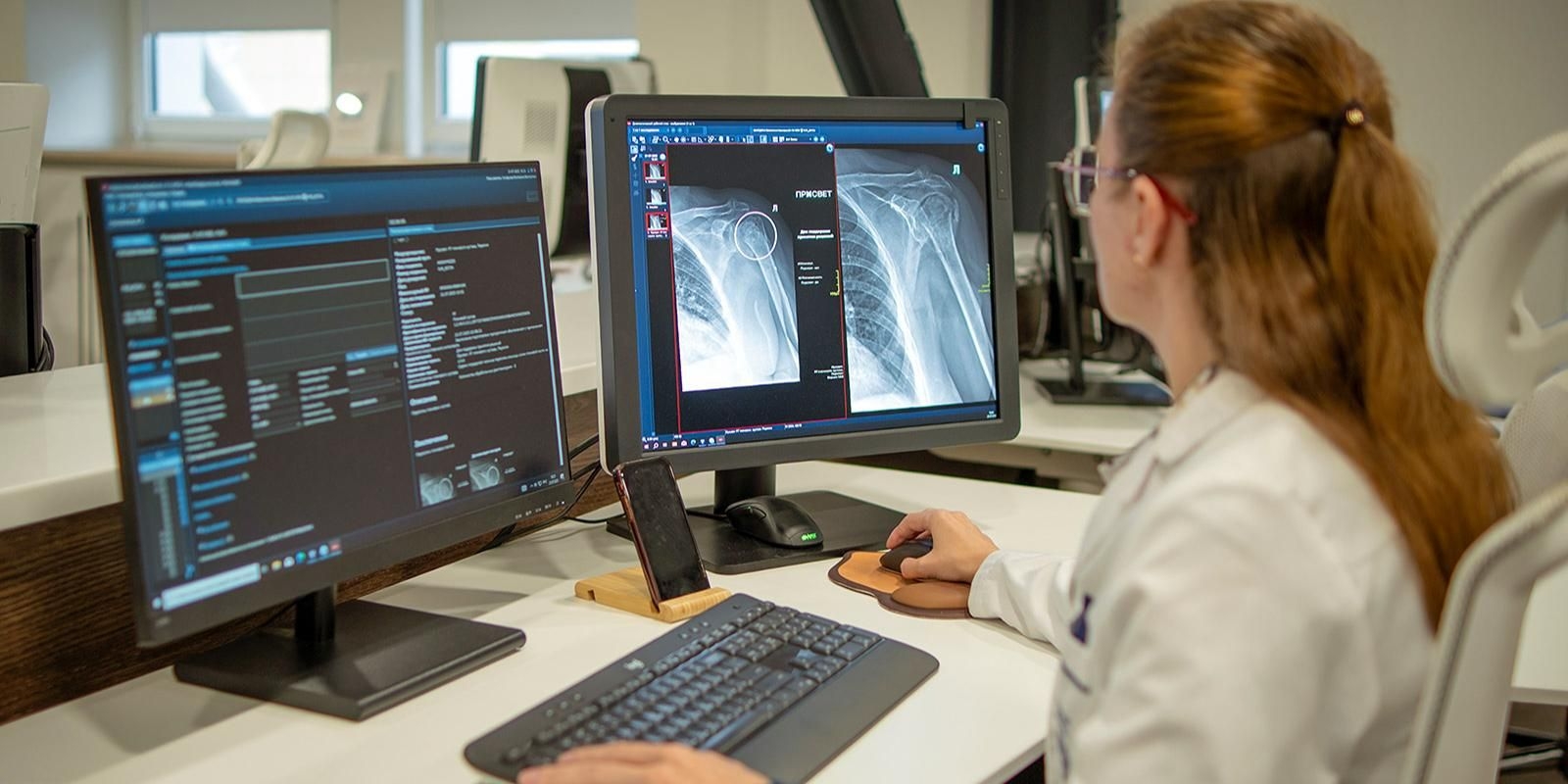
  • MIL-OSI Russia: Health and Technology – Moscow Launches AI Service for Diagnosing Shoulder Fractures

    Source: Moscow Health Care Department 

    Moscow has deployed a new artificial intelligence (AI) service to detect shoulder fractures on X-ray images. This marks the 41st clinical area where the radiologists utilize computer vision technologies, according to Yuri Vasilev, Chief Officer of Radiology at the Moscow Health Care Department.

    Moscow Health Care Department Launches AI Service for Diagnosing Shoulder Fractures.

    Moscow is continually advancing the integration of artificial intelligence technologies into practical healthcare applications. The algorithm assists doctors by automatically highlighting suspicious areas indicating potential fractures and performing necessary measurements on the images. This accelerates the interpretation of studies and enhances the accuracy of injury detection. Vasilev emphasized the service’s critical importance in trauma centers, where efficiency and diagnostic precision are paramount for timely treatment and reducing complication risks. This integration of AI into traumatology advances Moscow’s ongoing development of digital medicine, integrating the service into the city’s comprehensive neural network infrastructure, which now operates across 41 modalities.

    “The shoulder joint is one of the most complex anatomical areas for interpreting X-ray images,” Vasiliev noted. “Even minor deviations in the patient’s position during the examination can affect visualization accuracy, demanding exceptional doctor attentiveness. This AI algorithm acts as an additional filter, serving as a reliable auxiliary tool to increase analysis accuracy.”

    “The shoulder joint is one of the most complex anatomical challenges for X-ray interpretation,” Vasiliev noted. “Even minor patient positioning variations can compromise visualization accuracy, requiring exceptional clinical vigilance. This AI algorithm functions as a diagnostic filter, providing a reliable auxiliary tool to enhance analytical precision.”

    Timely fracture diagnosis is crucial for determining treatment tactics. Delays increase risks of complications, including improper bone fusion, chronic pain, and limited mobility. AI implementation minimizes these risks by enabling earlier therapy initiation. 

    Moscow’s integration of smart algorithms into healthcare, as part of a five-year experiment in computer vision, now includes over 200 AI services participating in the project. Approximately 100 algorithms have been integrated into the city’s medical information system, with about 50 currently analyzing medical images in real-time streaming mode.

    The project is led by the Moscow Social Development Complex, based on the Center for Diagnostics and Telemedicine of the Moscow Healthcare Department, in collaboration with the city’s Department of Information Technology. It aligns with the goals of the Moscow Medicine Development Strategy until 2030, aiming to improve the quality and accessibility of medical care for residents.

    MIL OSI Russia News

  • MIL-OSI Russia: Healthcare and Technology – Moscow Launches AI Service to Diagnose Shoulder Fractures

    Translation. Region: Russian Federal

    Source: Moscow Department of Health

    Moscow has introduced a new artificial intelligence (AI) service to detect shoulder fractures on X-rays. This is the 41st clinical area in which radiologists are using computer vision technology, according to Yuri Vasilev, head of the radiology department at the Moscow Health Department.


    The Moscow Department of Health is launching an artificial intelligence service for diagnosing shoulder fractures.

    Moscow continues to advance the integration of artificial intelligence technologies into practical applications in the healthcare sector. The algorithm assists doctors by automatically highlighting suspicious areas indicating possible fractures and performing the necessary measurements on images. This speeds up the interpretation of studies and increases the accuracy of injury detection. Vasiliev emphasized the critical importance of this service in trauma centers, where the efficiency and accuracy of diagnostics are of paramount importance for timely treatment and reducing the risk of complications. This integration of AI into traumatology contributes to the further development of digital medicine in Moscow, integrating the service into the city’s comprehensive neural network infrastructure, which currently operates in 41 areas.

    “The shoulder joint is one of the most difficult anatomical areas to interpret X-ray images,” Vasilev noted. “Even minor deviations in the patient’s position during the examination can affect the accuracy of the visualization, which requires exceptional care from the physician. This AI algorithm acts as an additional filter, serving as a reliable auxiliary tool to improve the accuracy of the analysis.”

    “The shoulder joint is one of the most challenging anatomical problems for radiographic interpretation,” Vasiliev noted. “Even minor deviations in patient position can affect the accuracy of imaging, requiring exceptional clinical vigilance. This AI algorithm functions as a diagnostic filter, serving as a reliable auxiliary tool to improve the accuracy of analysis.”

    Timely diagnosis of fractures is critical to determining treatment tactics. Delays increase the risk of complications, including malunion, chronic pain, and limited mobility. The introduction of AI minimizes these risks, allowing treatment to begin at an earlier stage.

    As part of a five-year computer vision experiment in Moscow, more than 200 AI services participating in the project have been integrated into the healthcare sector. About 100 algorithms have been integrated into the city’s medical information system, about 50 of which are currently analyzing medical images in real time.

    The project is led by the Moscow Social Development Complex based at the Diagnostics and Telemedicine Center of the Moscow Health Department in cooperation with the city’s Information Technology Department. It is in line with the goals of the Moscow Medicine Development Strategy until 2030, aimed at improving the quality and accessibility of medical care for residents.

    MIL OSI Russia News

  • MIL-OSI Canada: Coroner’s inquest will review death of Jeremy Charles Myrhaug

    The circumstances surrounding the death of Jeremy Charles Myrhaug will be reviewed during a coroner’s inquest, scheduled for Monday, Sept. 8 until Friday, Sept. 19, 2025.

    The inquest will be held at the Burnaby Coroners’ Court (20th floor, 4720 Kingsway, Metrotower II, Metrotown, Burnaby), starting at 9:30 a.m. on Monday, Sept. 8.

    On Jan. 8, 2020, Jeremy Charles Myrhaug’s death was reported to the BC Coroners Service. It followed events involving members of the Salmon Arm Royal Canadian Mounted Police. Jeremy Charles Myrhaug was 40 years old at the time of his death.

    Under Section 18(2) of the Coroners Act, inquests are mandatory for any deaths that occur while a person was detained by or in the custody of a peace officer.

    A coroner’s inquest is a non-fault-finding public inquiry that serves three primary functions:

    • to determine the facts related to a death, including the identity of the deceased and how, when, where and by what means the individual came to their death, as well as a classification for the death;
    • to make recommendations, where appropriate and supported by evidence, to prevent deaths in similar circumstances; and
    • to ensure public confidence that the circumstances surrounding the death of an individual will not be overlooked, concealed or ignored.

    Presiding coroner John Knox and a jury of five people will hear evidence from witnesses under oath to determine the facts surrounding this death. The jury will have the opportunity to make recommendations, as outlined above, though the jury must not make any finding of legal responsibility or express any conclusion of law.

    Anyone attending the inquest, including media, is prohibited from broadcasting and publishing inquest proceedings, including over social media. Supreme Court-accredited media are permitted to record the proceeding solely for the accuracy of their notes; the recording is not to be broadcast in any form. Accredited media members must provide proof to the sheriff and always visibly display their accreditation when they are recording or using electronic devices in court. Recording for any other purpose, or by anyone without appropriate accreditation, is strictly prohibited. 

    Learn More:

    For more information on inquests, visit: https://www2.gov.bc.ca/gov/content/life-events/death/coroners-service/inquest-schedule-jury-findings-verdicts

    To learn about the BC Coroners Service, visit: http://www.gov.bc.ca/coroners/

    MIL OSI Canada News

  • MIL-OSI USA: AG Brown files a lawsuit against Fidelity Information Services to protect the personal data of people who apply for or receive food assistance benefits

    Source: Washington State News

    SEATTLE – Attorney General Nick Brown today filed a breach of contract lawsuit against Fidelity Information Services (FIS) to block the company from illegally disclosing the private, personal data of more than one million Washington residents who receive or applied for food assistance benefits to the federal government for its deportation efforts.

    Since 2015, FIS has served as the contractor for Washington’s Department of Social and Health Services (DSHS) to deliver benefit payments to recipients. DSHS administers food assistance programs including the federally funded Supplemental Nutrition Assistance Program (SNAP) and the state-funded Food Assistance Program (FAP). FAP provides food benefits to people who would be eligible for SNAP but are excluded from the federal program because of their immigration status.

    “People who need food assistance for themselves and their families should be able to trust that their data will be protected and kept private,” Brown said. “If a contractor fails to uphold the terms they’ve agreed to, we will hold them accountable under the law.”

    Washington law requires that the information of public benefits applicants and recipients be protected from unauthorized disclosure or improper use. Additionally, the contract with FIS requires the company to get DSHS’s express written consent before disclosing this information and to follow DSHS policies and rules protecting recipients’ information.

    Nevertheless, FIS informed DSHS on May 9 that it intended to turn over the personal data of SNAP cardholders and data about transactions to the U.S. Department of Agriculture (USDA). That came in the wake of guidance from USDA incorrectly claiming it could use federal food benefits law to obtain SNAP data directly from contractors, rather than state agencies, to use for the Trump administration’s immigration enforcement efforts.

    DSHS told FIS on May 14 that the agency does not consent to the disclosure of confidential information to USDA, and FIS initially pledged that it would refrain from sharing the data until authorized. But since then, as USDA has continued its efforts to collect personal data of SNAP recipients, FIS failed to respond to repeated requests from DSHS asking for confirmation that it would not turn over any data without DSHS’s express consent.

    In the complaint, filed in Thurston County Superior Court, Brown argues that DSHS is entitled to a court order blocking FIS from disclosing confidential information to USDA and a declaration that unauthorized disclosure would constitute a breach of contract. The complaint also asks the court to determine that any unauthorized disclosure of confidential and personally identifiable information would violate the Washington Consumer Protection Act and the Washington Law Against Discrimination.

    Brown is asking the court to order FIS not to disclose any confidential information to any third party without the express written consent of DSHS.

    A copy of the complaint is available here.

    -30-

    Washington’s Attorney General serves the people and the state of Washington. As the state’s largest law firm, the Attorney General’s Office provides legal representation to every state agency, board, and commission in Washington. Additionally, the Office serves the people directly by enforcing consumer protection, civil rights, and environmental protection laws. The Office also prosecutes elder abuse, Medicaid fraud, and handles sexually violent predator cases in 38 of Washington’s 39 counties. Visit www.atg.wa.gov to learn more.

    Media Contact:

    Email: press@atg.wa.gov

    Phone: (360) 753-2727

    General contacts: Click here

    Media Resource Guide & Attorney General’s Office FAQ

    MIL OSI USA News

  • MIL-OSI USA: Case dismissed: WSDOT seeks sanctions against former employee and his lawyers over baseless lawsuit

    Source: Washington State News 2

    OLYMPIA – The Washington State Department of Transportation is asking a judge to sanction both the law firm and the former employee who spent more than a year pursuing an unfounded lawsuit against the agency, only to later drop the case when confronted with evidence he likely destroyed text messages in violation of a court order.

    In court filings (PDF 355KB), WSDOT asks to be reimbursed for the taxpayer dollars required to defend the case. WSDOT argues that, early on, the Citizen Action Defense Fund law firm had ample evidence that the case was not “well-grounded in fact,” as required by court rules. In addition, it asks the judge to sanction former employee Scott Smith for not following a court order to save text messages from a crucial period. Smith initially said the messages didn’t exist. When the state presented evidence of the texts from other individuals’ phones, Smith changed his story, claiming they were “lost.”

    WSDOT previously requested a forensic examination of Smith’s phone. “That suspicious timing and other facts make it highly likely these ‘lost’ text messages were deleted by Smith himself, though only a forensic examination of his phone could ascertain that with certainty,” the WSDOT court filing states. Before the court could rule on WSDOT’s request for a forensic review of his phone, Smith withdrew his case.

    Defendants are not typically entitled to their costs and fees when successfully defending a lawsuit. However, because Smith and his attorneys pursued the case knowing the claims were baseless, and because the state asserts Smith destroyed text messages, WSDOT is asking the court to order Smith and Citizen Action Defense Fund to pay its costs and fees for defending the case as a sanction. The amount of these fees would be determined in a separate hearing.

    Smith left WSDOT in November 2023. In March 2024, Smith filed a lawsuit claiming WSDOT retaliated against him as part of an alleged conspiracy to cover up the effects of Washington’s cap-and-invest program on fuel prices. Depositions and extensive documents produced in discovery disproved Smith’s allegations.

    In April 2024, an outside investigation likewise did not substantiate any of Smith’s claims, including his claims about the integrity of the state’s transportation forecast.

    In February 2025, WSDOT informed Citizen Action Defense Fund that the agency might seek sanctions because the firm pursued the lawsuit despite having received numerous records disproving Smith’s claims. WSDOT offered to not seek sanctions if the law firm ended the case. Instead, Citizen Action Defense Fund rejected WSDOT’s offer and insisted on prolonging the baseless lawsuit, thereby increasing the cost to taxpayers.

    During the subsequent proceedings, WSDOT’s lawyers discovered a gap in Smith’s text messages. According to the new WSDOT filing, Smith’s lawyers told WSDOT he did not text a former co-worker during the four-month period, but when the co-worker’s messages were subpoenaed, they included several highly relevant texts from Smith during that time. Further investigation found similar conspicuous gaps in Smith’s texts with at least 10 other individuals.

    Shortly after WSDOT notified Citizen Action Defense Fund about the text message discrepancies, the law firm said it would need to stop representing Smith due to professional ethics concerns. The firm later reversed that decision and continued to represent Smith. Soon after that, Smith asked the judge to dismiss the case. The judge granted that request Friday, May 16, ending Smith’s lawsuit, while noting that WSDOT still could pursue a sanctions request.

    The sanctions matter is scheduled for a hearing Friday, Aug. 22, in Thurston County Superior Court.

    MIL OSI USA News

  • MIL-OSI Security: Criminal Illegal Alien Charged for Attempting to Stab ICE Officers and Detainees at 26 Federal Plaza Facility in New York City

    Source: US Department of Homeland Security

    Violent illegal alien was released in the United States under President Biden

    WASHINGTON – The Department of Homeland Security (DHS) today released the following statement after the U.S. Attorney for the Southern District of New York announced federal charges against Bass Ndiaye—an illegal alien from Senegal—for assaulting U.S. Immigration and Customs Enforcement (ICE) officers and other detainees with a deadly and dangerous weapon.  

    ICE arrested Ndiaye on July 17, 2025, and took him to the 26 Federal Plaza immigration processing center in New York City, New York. On July 18, while awaiting processing at 26 Federal Plaza, Ndiaye took a pair of scissors and attempted to stab ICE officers. He also attempted to injure approximately one dozen other detainees. Our brave ICE law enforcement successfully disarmed Ndiaye and saved the other detainees.  

    “ICE arrested Bass Ndiaye, an illegal alien from Senegal, who attempted to stab law enforcement officers and more than a dozen other detainees. This criminal illegal alien who was released into the country under President Biden will face justice for his violent crimes.” said Assistant Secretary Tricia McLaughlin“Our ICE law enforcement is facing an 830% increase in assaults against them. Secretary Noem stands with the brave men and women of law enforcement as they risk their lives to remove criminal illegal aliens and protect Americans.”

    Ndiaye was arrested on October 22, 2023, by Border Patrol at the southern border and then released into the country by the Biden administration. 

    Ndiaye has been charged with one count of assaulting an officer of the U.S. using a deadly or dangerous weapon, which carries a maximum sentence of 20 years in prison.

    ###

    MIL Security OSI

  • MIL-OSI Banking: Newfoundland and Labrador issue RFEI for 150 MW capacity and 500 GWh energy

    Source: – Press Release/Statement:

    Headline: Newfoundland and Labrador issue RFEI for 150 MW capacity and 500 GWh energy

    CanREA members are eager to propose new, affordable, wind and solar energy projects in Newfoundland & Labrador.

    Toronto, July 24, 2025—The Canadian Renewable Energy Association (CanREA) welcomes Newfoundland and Labrador Hydro’s new Request for Expressions of Interest (RFEI), as announced July 9.

    An information session held by Newfoundland and Labrador Hydro on July 23 confirmed that this RFEI is for the supply of energy and/or capacity that, in combination, can provide up to 150 megawatts (MW) of firm capacity and up to 500 gigawatt hours (GWh) of firm energy, to meet the increasing demands of the province’s Island Interconnected System.

    “With this announcement, CanREA is now tracking wind energy, solar energy and energy storage activity coast-to-coast in Canada, with a clear focus on building clean energy projects at scale and pace,” said Vittoria Bellissimo, CanREA’s President and CEO.

    The RFEI will help the utility gather market information to support the development of a Request for Proposals (RFP) and a Request for Information (RFI) later this year.

    “Newfoundland and Labrador needs more power, and our members are ready to compete for the opportunity to develop wind, solar and battery storage projects to help meet these needs, provide affordable, reliable and clean electricity to Newfoundlanders and support economic growth across the province,” said Jean Habel, CanREA’s Senior Director for Québec and Atlantic Canada.  

    Wind and solar energy, coupled with energy storage capacity, can contribute to a decarbonized energy grid, create local economic benefits and improve the resilience of the electricity system.

    CanREA will continue to engage with Newfoundland and Labrador Hydro and the government of Newfoundland and Labrador to ensure this RFEI process will result in the lowest-cost, highest-benefit outcomes for consumers.  

    “This RFEI is a high-priority item for CanREA’s members in Atlantic Canada, and we are confident that it will build momentum in Newfoundland and Labrador over the coming years,” said Eddie Oldfield, CanREA’s Manager for Atlantic Canada. 

    The deadline for questions is Friday, August 1, 2025, at 11:59 p.m. (NDT, and the RFEI bid closing date is Tuesday, September 2, 2025, at 3 p.m. (NDT).

    Quotes

    “With this announcement, CanREA is now tracking wind energy, solar energy and energy storage activity coast-to-coast in Canada, with a clear focus on building clean energy projects at scale and pace.”
    —Vittoria Bellissimo, President and CEO, Canadian Renewable Energy Association (CanREA)

    “Newfoundland and Labrador needs more power, and our members are ready to compete for the opportunity to develop wind, solar and battery storage projects to help meet these needs, provide affordable, reliable and clean electricity to Newfoundlanders and support economic growth across the province.”
    —Jean Habel, Senior Director for Québec and Atlantic Canada, Canadian Renewable Energy Association (CanREA) 

    “This RFEI is a high-priority item for CanREA’s members in Atlantic Canada, and we are confident that it will build momentum in Newfoundland and Labrador over the coming years.”
    —Eddie Oldfield, Atlantic Canada Manager, Canadian Renewable Energy Association (CanREA)

    Canadian Renewable Energy Association 

    Communications Canadian Renewable Energy Association communications@renewablesassociation.ca 

    About CanREA 

    The Canadian Renewable Energy Association (CanREA) is the voice for wind energy, solar energy and energy storage solutions that will power Canada’s energy future. We work to create the conditions for a modern energy system through stakeholder advocacy and public engagement. Our diverse members are uniquely positioned to deliver clean, low-cost, reliable, flexible and scalable solutions for Canada’s energy needs. For more information on how Canada can use wind energy, solar energy and energy storage to help achieve its net-zero commitments, consult “Powering Canada’s Journey to Net-Zero: CanREA’s 2050 Vision.” Follow us on Bluesky and LinkedIn here. Learn more at renewablesassociation.ca. 

    The post Newfoundland and Labrador issue RFEI for 150 MW capacity and 500 GWh energy appeared first on Canadian Renewable Energy Association.

    MIL OSI Global Banks

  • MIL-OSI USA News: H.R. 4 and H.R. 517 Signed into Law S. 1582

    Source: US Whitehouse

    On Thursday, July 24, 2025, the President signed into law:
     
    H.R. 4, the “Rescissions Act of 2025,” which rescinds certain budget authority proposed to be rescinded in special messages transmitted to the Congress by the President on June 3, 2025, in accordance with section 1012(a) of the Congressional Budget and Impoundment Control Act of 1974;
     
    H.R. 517, the “Filing Relief for Natural Disasters Act,” which amends the Internal Revenue Code of 1986 to modify the rules for postponing certain deadlines by reason of disaster; and
     
    S. 1596, the “Jocelyn Nungaray National Wildlife Refuge Act,” which renames the Anahuac National Wildlife Refuge located in the State of Texas as the “Jocelyn Nungaray National Wildlife Refuge”.

    MIL OSI USA News

  • MIL-OSI USA: Volcano Watch — Ancient volcanoes are critical to our modern world, and our future

    Source: US Geological Survey

    Volcano Watch is a weekly article and activity update written by U.S. Geological Survey Hawaiian Volcano Observatory scientists and affiliates. 

    The Ha‘akulamanu trail within Hawai‘i Volcanoes National Park passes through the Sulphur Banks area, where long-term degassing near Kaluapele (Kīlauea summit caldera) has altered the basalt to colorful minerals including yellow sulfur, white gypsum, and reddish-brown hematite. USGS photo by C. Sealing.

    Volcanoes act as windows into the deep Earth. They help us understand the formation of our planet and others like it in the solar system. Living on or near an active volcano can be both beneficial, due to their rich soils and tourism appeal, but they also pose hazards to the communities around them. For this reason, we need to understand what drives volcanic eruptions and monitor volcanoes to keep communities safe. 

    Long after magma has stopped rising through the crust and the last eruption at a volcano has ceased, another process takes places in volcanic systems deep underground. Fluids begin to percolate through the system—they flow through the old magma reservoirs, the dykes and sills, buried lava flows and hydrothermal systems—transporting elements and chemically altering the surrounding rocks. Unlike the geologically short and violent lives of volcanoes, the formation of mineral systems is a slow, quiet process that can take millions of years. 

    According to the Energy Act of 2020, “critical minerals” are those minerals, elements, substances, or materials designated as critical because they serve an essential function for energy technology and have a high risk of supply chain disruption. The list of critical minerals includes elements like lithium, nickel, magnesium, platinum, iridium, and rare earth elements, among others. These elements have become important for our everyday lives, and are used in everything from solar panels, batteries, vehicles, power plants, medical devices, to smartphones.

    More than half of the world’s critical mineral resources formed in ancient volcanic systems. When exploring for mineral resources, your location within the volcanic system will determine the type of ore bodies you’d expect to find. 

    For instance, deep in the volcanic system, minerals like chromium, titanium, vanadium, and platinum-group elements are found in layered intrusive rocks that were once bodies of magma that never made it to the surface.

    The most abundant source of rare earth elements are strange magmas called carbonatites that are found at the edges of ancient continents and in ancient rift systems within continents. In other volcanic systems, like submarine volcanoes, magmatic-hydrothermal systems yield minerals like copper, lead, zinc, and gold.

    The richest mineral deposits are often found in the oldest volcanic rocks. They’ve been weathered down, eroded, and buried, while fluids have moved through continuously altering the rocks themselves. You probably wouldn’t recognize them as old volcanic systems without a geology degree—and even then, it’s hard!

    As geologists, we use observations of our modern world to help us understand the formations of the past. Studying recent and active volcanic systems—where they form, how they’re shaped inside, what magmas they produce, and how they interact with the surrounding environment—allows us to better understand and explore for these ancient, mineral-bearing systems that power the modern and future world.  So, next time you visit a national park with volcanoes like Kīlauea or Yellowstone, imagine you are hiking on what could be a future ore deposit millions of years from now.

    Volcano Activity Updates

    Kīlauea has been erupting episodically within the summit caldera since December 23, 2024. Its USGS Volcano Alert level is WATCH.

    Episode 29 of the Kīlauea summit eruption in Halemaʻumaʻu crater occurred on July 20, with approximately 13 hours of fountaining from predominantly the north vent. Summit region inflation since the end of episode 29, along with persistent tremor, suggests that another episode is possible and could start July 31 or later. Sulfur dioxide emission rates are elevated in the summit region during active eruption episodes. No unusual activity has been noted along Kīlauea’s East Rift Zone or Southwest Rift Zone. 

    Mauna Loa is not erupting. Its USGS Volcano Alert Level is at NORMAL.

    One earthquake was reported felt in the Hawaiian Islands during the past week: a M3.1 earthquake 1 km (0 mi) S of Kealakekua at 9 km (5 mi) depth on July 21 at 9:07 p.m. HST.

    HVO continues to closely monitor Kīlauea and Mauna Loa.

    Please visit HVO’s website for past Volcano Watch articles, Kīlauea and Mauna Loa updates, volcano photos, maps, recent earthquake information, and more. Email questions to askHVO@usgs.gov.

    MIL OSI USA News

  • MIL-OSI USA: Chairman Mast on France Recognizing ‘State of Palestine’

    Source: US House Committee on Foreign Affairs

    Media Contact 202-321-9747

    WASHINGTON, D.C. – Today, House Foreign Affairs Committee Chairman Brian Mast issued the following statement in response to President Emmanuel Macron’s announcement that France will recognize the “State of Palestine:”

    “Choosing to reward terrorism, hostage taking, and genocide against Jews is the wrong choice.”

    ###

    MIL OSI USA News

  • MIL-OSI USA: US Department of Labor launches self-audit programs to help regulated community strengthen compliance with federal labor laws

    Source: US Department of Labor

    WASHINGTON – The U.S. Department of Labor today announced several programs designed to help employers, unions, and pension plans voluntarily assess and improve their compliance with federal labor laws.

    The self-audit programs, which include new and updated offerings, aim to enhance worker protections while reducing the likelihood of formal investigation or litigation.  

    “Self-audits are one of the most effective ways to build a culture of compliance and trust,” said Deputy Secretary of Labor Keith Sonderling. “These programs are designed to give employers, unions, and benefit plan officials the tools they need to correct potential violations proactively. By empowering the regulated community with clarity and collaboration, we are continuing to fulfill the Department of Labor’s mission to put both workers and employers first.”

    The following agencies offer self-audit programs:

    • Employee Benefits Security Administration: EBSA offers two key self-correction programs for fiduciaries and benefits plan administrators: the Voluntary Fiduciary Correction Program, which encourages employers and plan officials to voluntarily correct violations of the Employee Retirement Income Security Act, and the Delinquent Filer Voluntary Compliance Program, which encourages voluntary compliance with ERISA’s annual reporting requirements and offers incentives to late filers, including paying lower penalties.
    • Mine Safety and Health Administration: MSHA’s new Compliance Assistance in Safety and Health program features resources available to mining operations via an information hub on the MSHA.gov website. This hub provides links to a variety of safety and health topics to assist mining operations and provides direct contact to safety and health specialists to address their needs related to compliance assistance.
    • Occupational Safety and Health Administration: OSHA is expanding its Voluntary Protection Programs to meet businesses where they are on their safety journey to help develop strong safety programs and lower injury rates, allowing them to undergo regular self-evaluations and avoid routine inspections. OSHA is increasing its efforts to support voluntary compliance through its On-Site Consultation Program, which offers no-cost and confidential safety and health services to small and medium-sized businesses.
    • Office of Labor-Management Standards: OLMS administers the Voluntary Compliance Partnership program to help unions assess their compliance with the Labor-Management Reporting and Disclosure Act. The program focuses on key areas such as reporting and disclosure requirements, as well as financial integrity.
    • Veterans’ Employment and Training Service: VETS has launched a new program, SALUTE: Support and Assistance for Leaders in USERRA Training and Employment, to help employers proactively review their policies and practices under the Uniformed Services Employment and Reemployment Rights Act. The program aims to foster good-faith compliance and ensure the employment rights of service members are respected.
    • Wage and Hour Division: The Wage and Hour Division is restarting the Payroll Audit Independent Determination program to enable employers to self-identify and resolve minimum wage, overtime, and leave violations under the Fair Labor Standards Act and Family and Medical Leave Act

    Visitors can access resources, toolkits, and program-specific guidance at dol.gov/SelfAudit.

    MIL OSI USA News

  • MIL-OSI USA: US Department of Labor recovers $155K in wages, benefits for 19 employees underpaid by Colorado contractor on federally funded project

    Source: US Department of Labor

    DENVER  The U.S. Department of Labor recovered a total of $155,066 in back wages and fringe benefits for 19 employees who were underpaid for their work on a project funded by the U.S. Department of Housing and Urban Development. 

    The department’s Wage and Hour Division found that AAA Fire Protection Inc. was contracted to install sprinklers at a newly constructed mixed-use apartment and retail complex in Denver. The company incorrectly classified 16 employees as apprentices and failed to provide fringe benefits and proper prevailing wages in violation of the Davis-Bacon and Related Acts. AAA Fire Protection also neglected to pay overtime premiums to employees working more than 40 hours in a workweek and failed to keep proper records, both violations of the Fair Labor Standards Act.

    “An employer cannot simply classify workers as apprentices and pay them a lower rate. Any workers classified as apprentices must be part of a registered apprenticeship program,” explained Wage and Hour Division District Director David Skinner in Denver. “Contractors can contact us for compliance assistance to learn how to properly classify workers to meet their legal obligation to pay them the wages and benefits they are rightfully due.”

    Located in Commerce City, AAA Fire Protection Inc. is a specialty contractor focusing on fire suppression. In addition to the $155,066 in back wages and fringe benefits, the employer agreed to comply with the Davis-Bacon Act and Davis-Bacon and Related Acts in all future contracts that are subject to the acts. 

    The Wage and Hour Division offers free virtual prevailing wage seminars to provide training and outreach on topics such as the Davis-Bacon Act, the Service Contract Act, Executive Orders 13658 and 13706, wage determinations and conformances, and compliance assistance and enforcement processes.

    Learn more about the Wage and Hour Division and the Davis-Bacon and Related Acts, including a search tool to use if you think you may be owed back wages collected by the division and how to file an online complaint. For compliance assistance, employees and employers can call the agency’s toll-free helpline at 866-4US-WAGE (487-9243). 

    Download the agency’s free Timesheet App for iOS and Android devices to ensure hours and pay are accurate. 

    MIL OSI USA News

  • MIL-OSI USA: ICYMI: Secretary Chavez-DeRemer praises One Big Beautiful Bill Act during ‘America at Work’ stops in Georgia

    Source: US Department of Labor

    ATLANTA – U.S. Secretary of Labor Lori Chavez-DeRemer continued her America at Work listening tour this week in Atlanta, where she met with linemen at Georgia Power’s Klondike Training Center, spoke at the National Association of Latino Elected and Appointed Officials’ 42nd Annual Conference, and toured a Coca-Cola bottling facility. 

    Throughout these visits, the Secretary emphasized the Trump Administration’s commitment to building a stronger American workforce and delivering results through the newly enacted One Big Beautiful Bill Act.

    “At every stop on my ‘America at Work’ listening tour, I hear from hardworking men and women like the Coca-Cola bottlers in Atlanta who are grateful to finally have a President who puts American Workers First, including through the One Big Beautiful Bill Act,” said Secretary Chavez-DeRemer. “From no tax on tips or overtime to expanded Pell Grant access for trade and technical schools, this pro-growth legislation means more take-home pay and more opportunities for families to get ahead. President Trump and I are committed to the same goal: making sure every American worker can build a good life and achieve the American Dream.”

    Georgia Power

    On Tuesday, Secretary Chavez-DeRemer visited Geogia Power’s Klondike Training Center where she met with linemen who keep the lights on for millions of Americans every day. She observed training demonstrations and learned how Georgia Power’s Lineworker Entry Program equips workers with in-demand skills for good-paying jobs.

    NALEO Conference

    On Wednesday, the Secretary addressed NALEO’s annual conference, underscoring the Administration’s commitment to expanding economic opportunity for all Americans. She highlighted how the One Big Beautiful Bill Act’s pro-worker provisions – including expanded access to Pell Grants for two-year educational programs – will help connect more workers with the skills training they need to fill mortgage-paying jobs. She also updated attendees on her America at Work tour, noting how listening directly to workers is shaping policies that will strengthen the workforce and the economy.

    Coca-Cola Bottling Facility

    Secretary Chavez-DeRemer also toured a Coca-Cola bottling facility in Atlanta, where she saw how advanced technologies like semi-automated picking systems are boosting production and efficiency. The Secretary emphasized the importance of upskilling America’s workforce in the age of artificial intelligence and automation to ensure they are prepared to fill the jobs of the future. She also visited the company’s Commercial Driver’s License training area and fleet mechanic shop, hearing firsthand how investments at the federal, state, and local level help workers secure good-paying jobs that support their families and communities.

    The America at Work listening tour will continue in the weeks ahead as Secretary Chavez-DeRemer travels the country to listen to workers, gather feedback, and take their voices back to Washington to inform pro-growth, pro-worker policies. 

    MIL OSI USA News

  • MIL-OSI Economics: Press Briefing Transcript: Julie Kozack, Director, Communications Department, July 24, 2025

    Source: International Monetary Fund

    July 24, 2025

    SPEAKER:  Ms. Julie Kozack, Director of the Communications Department, IMF

    MS. KOZACK: Good morning, and welcome to the IMF Press Briefing. It is wonderful to see all of you, both those of you here in person and colleagues online as well. I’m Julie Kozack, Director of the Communications Department at the IMF. As usual, this briefing is embargoed until 11 A.M. Eastern Time in the United States. I’ll start with a few announcements and then I’ll take your questions in person on Webex and via the Press Center.
    First, we will be releasing our flagship publication, the World Economic Outlook Update, next Tuesday, July 29th. The report will offer fresh insights into the current global economic trends and external imbalances.
    For your planning purposes, our Executive Board will be in recess from August 4th through the 15th, and we will notify you in due course on the date of our next press briefing.
    And with that, I will now open the floor for your questions. For those connecting virtually, please turn on both your camera and microphone when speaking, and the floor is opened.

    QUESTIONER: Just wanted to ask you about the tariff situation that’s unfolding at the moment, given the recent trade deals that the U.S. has struck with its key trading partners, including Japan, Indonesia, Philippines, just recently. The European Union is under negotiations that’s coming to fruition soon. It looks like the consensus is kind of around a 15 to 20% tariff rate in that range, that the US is, sort of agreeing with its partners for. And I just wanted to know if the IMF views that as an acceptable rate? Whether this would be detrimental to the global economy. I know we have the WEO coming out in a few days. Just wanted to get your take on what’s unfolding right now.

    MS. KOZACK: Let us see if there’s any other questions on this topic before I answer. If anyone online wants to come in on this topic, please let us know.
    So let me start with where we are. Since April, when we think about the global economy, we see activity indicators that reflect a complex backdrop shaped by trade tensions. We also saw that in the first quarter of the year, the data showed some front-loading of exports and imports ahead of, at that time, what was expected tariff increases. The more recent data points to trade diversion and to some unwinding of the front-loading. And at the same time, we are seeing some trade deals. Some have lowered tariffs. And at the same time, there’s also been some deals or some, not deals, but we have seen increases in tariffs, for example, on steel, aluminum, and copper. So, our team is assessing all of this information as it is coming in. And they will put together a comprehensive picture, which we will talk about in the WEO next week.

    I would also just remind that when we released our WEO in April, we talked about a period of very high uncertainty. And at that time, we had in our WEO a reference forecast, right? And that reflected the fact that we were in an uncertain environment where there were many different paths forward. For example, we had an effective tariff rate of the U.S. of about 25 percent based on April 2nd announcements. That effective tariff rate for the U.S. declined to 14 percent based on the pause of April 9th. And of course, one of the important factors for assessing the impact of the deals on the U.S. economy and the global economy will be what is the new effective tariff rate that will prevail.
    So, all of that work is ongoing, and we will have a full assessment next week in the WEO.

    QUESTIONER: So, would the 15 to 20 percent rate be higher than what we saw in the April WEO?

    MS. KOZACK: I think the way I would answer that is to simply say that we are looking at all the deals in April, and we had an effective rate around 14 percent. There, of course, has been movement since April. There have been deals. There have been some reductions in some tariff rates. There have been increases in other tariff rates. So, the team is going to have to put together that comprehensive assessment to determine what would be the new effective tariff rate that would prevail. And then, we would be in a position to compare it to what we had based on the April 2 announcement, what we had based on the April 9 pause, and then where we are today.
    And another very important factor will be what is the overall impact on uncertainty, right? We have talked about being in a very highly uncertain environment. So, of course, we will be looking at that closely as well.

    QUESTIONER: The president of Ukraine recently signed a law that regulates the anti-corruption bodies in the country. How does the IMF view this law, and how can this impact IMF Ukraine cooperation moving forward? And secondly, Ukrainian Prime Minister Yulia Svyrydenko said Ukraine is facing a significant budget shortfall and is likely seeking a new IMF loan. What is the IMF’s assessment of the possibility of launching a new program?

    MS. KOZACK: Any other questions on Ukraine?

    QUESTIONER: I just wanted to follow up on whether, despite the moves by the Ukrainian government, can the IMF land to Ukraine?

    MS. KOZACK: Are there questions online on Ukraine? On Ukraine, let me just step back and remind kind of where we are with Ukraine.
    On June 30th, the IMF Board completed the Eighth Review of the EFF program and that enabled a disbursement of half a billion U.S. dollars. And that brought total disbursements under the program to U.S. $10.6 billion. Ukraine’s economy remains resilient. The authorities met, and this was reported as part of the Eighth Review, all of the end-March and continuous quantitative performance criteria; they met the prior action that was required for that review, and they also met two structural benchmarks.
    With respect to the specific questions, on the first question that you had, the enacted law, as we see it, neutralizes the effectiveness of Ukraine’s anti-corruption institutions. And from our perspective, that would be very problematic for macroeconomic stability and growth in Ukraine. Stepping back a bit, you know, the establishment and the development of independent institutions to detect and prosecute corruption cases has been central to the IMF’s engagement with Ukraine over the past 10 years. And these institutions have contributed to an improvement in governance in Ukraine over that period.
    Why is this important for Ukraine? From our perspective, Ukraine needs a robust anti-corruption architecture. And that will help level the playing field, improve the business climate, and attract private investment into Ukraine. And it’s a central piece of Ukraine’s reform agenda. So, from our perspective, safeguarding the independence of anti-corruption institutions remains a critical policy priority.
    We do take note of the government’s intention to introduce a new bill to restore the independence of the anti-corruption institutions.
    So, what I can say now is that in the coming weeks, the IMF Staff and the authorities are expected to intensify discussions about the 2026 budget and s to do an assessment of Ukraine’s financing needs, both for 2026 and over the medium term. They will be intensifying discussions to put together that comprehensive picture. That work is essential for the current program and any future potential engagement that we would have with Ukraine.

    QUESTIONER: If it finishes, what was the Staff assessment of the First Review of the agreement with Argentina and when would the Board’s definition be? And following the report on external reserves published this week, I think it was on Monday, does the IMF’s concerns continue?

    QUESTIONER: Has the Board already met to evaluate the First Review? And do you know if Argentina has requested a waiver? And how does the IMF assess the recent rate in this area, action rate and interest rates? And what are the causes of this change in monetary and exchange rate policy? Thank you.

    QUESTIONER: Yes, to add up to what was asked if there are any concerns regarding the impact of the exchange rates on inflation as well? And also, if the concerns remain regarding the weak external position for Argentina.

    QUESTIONER: President Milei has already confirmed that, for fiscal reasons, he will veto the laws recently passed by the Congress to increase pensions, extend the pension moratorium and declare an emergency disability. So, then has this intention being talked with the IMF previously or what is the IMF position on this matter?

    MS. KOZACK: On Argentina, here is what I can share today. So first, I want to mention that discussions on the First Review, which many of you have mentioned, are very advanced at this stage. And the next step in these discussions will be to reach a Staff-Level Agreement between the authorities and Staff. And we believe that that can happen very shortly. After the Staff-Level Agreement is reached, then Staff will present the documents to the Executive Board for their approval and consideration.
    What I can also add, and we have talked about that before here, is that the program has been off to a strong start. It has been underpinned by the continued implementation of tight macroeconomic policies, including a strong fiscal anchor and a tight monetary policy stance. The transition to a more flexible exchange rate regime has been smooth. Disinflation has resumed. And Argentina has reassessed international capital markets earlier than had been initially anticipated under the program.
    Given that our Staff and the authorities are very engaged in these discussions, which again are at an advanced stage, I’m not going to provide any further details now. We will give space for them to bring those discussions to a conclusion, and then we will, of course, communicate once those discussions have come to a conclusion. And again, we do think that a Staff-Level agreement could happen very, very shortly.

    QUESTIONER: Will the Board meeting be before, and start the holiday recess, or after? Because we are talking about 15 days, if not.

    MS. KOZACK: So right now, I don’t have any further details to share with you, but certainly once a Staff-Level Agreement is reached, we will be communicating, including the potential timing for formal Board discussion.

    QUESTIONER: Can you please kindly update us on the current status of the discussion between the IMF and the Republic of Senegal regarding the temporarily suspended disbursements? Especially with the Annual Meetings approaching in October in Washington, is there a realistic prospect of finalizing the matter before then? This is the first question.
    The second one, following the recent meeting between His Excellency, the President of the Republic of Senegal, Bassirou Diomaye Faye, and Mrs. Gita Gopinath, First Deputy Managing Director of the IMF, could you kindly also share some insight into the key topics discussed? What were the main points of their exchange, particularly in regard to economic and financial cooperation?

    MS. KOZACK: Any other questions on Senegal Online? Does anyone want to come in on Senegal?

    QUESTIONER: I have a follow-up because investors have been expecting the Board to consider the waiver by September. Is that timeline realistic? And the government also said it shared everything in its findings for reconciliation with the IMF. Does the Fund feel it has everything it needs in order to make the decision on the waiver?

    QUESTIONER: Have you received the report done by Mazars? And, is it enough to conclude the misreporting, and can we have maybe a time for the Board? And then, when can we expect also a new program?

    MS. KOZACK: So, let me turn to these questions.
    I’ll start by saying that the IMF remains closely engaged with Senegal. And as part of this process, as was noted, First Deputy Managing Director Gita Gopinath met with President Bassirou Faye during his visit to Washington, D.C. on July 9th. Our First Deputy Managing Director (FDMD), Gopinath, emphasized the IMF’s continued support, as Senegal works to resolve the misreporting matter. And the President reaffirmed his government’s strong commitment to transparency and reform.

    What I can also share is that an IMF Staff team will visit Dakar. The mission is tentatively planned for later in August. The purpose of the mission is going to be to discuss the steps needed to bring the misreporting case to our Executive Board. And the team will also use the opportunity to initiate discussions on the contours of a new IMF-supported program for Senegal. We are also working closely with the authorities to design the corrective actions aimed at addressing the root causes of the misreporting and, of course, to strengthen capacity development in Senegal.

    With respect to the questions on the report by Mazars, what I can share there is that we have received a preliminary debt inventory that has been prepared by Forvis Mazars. Our IMF Staff are currently reviewing that report and all the information in detail. The preliminary assessment in the report is broadly aligned with expectations, and the final validation is ongoing. And I will leave it at that on Senegal. That is what I can share for now.

    QUESTIONER: My question is on Japan. Last week, the upper house election in Japan was over, but still unclear on the composition of a new government. And what is it you are recommending? But almost all parties pledged fiscal — expansionary fiscal policies, from providing cash to reduction of consumption tax. And what is your recommendation to the new government, especially on fiscal policy, given the power of debt in Japan? And my second question is on monetary policy of Federal Reserve next week. And should the Federal Reserve cut interest rates preemptively under the circumstance of huge pressure from President Donald Trump.

    MS. KOZACK: Let us start with Japan. So maybe let me just step back a little bit to give an overview of how we assessed the Japanese economy in our April WEO.
    So, at that time, we expected growth to strengthen in Japan, and we expected inflation to converge to the Bank of Japan’s 2 percent target by 2027. Growth was projected to accelerate from 0.2 percent in 2024 to 0.6 percent this year. At the same time, and as has been the case for quite some time, Japan continues to have high levels of public debt. And because of that, our advice for Japan is for a clear fiscal consolidation plan to offset pressures from rising interest payments and also from aging-related spending. And because of this advice, we assess that Japan has limited fiscal space, again because of high public debt and these future spending needs.

    In the near term, our advice to Japan is that given this limited fiscal space, it is essential that any response to shocks, any fiscal response to shocks, is both temporary and also targeted. And by targeted, I mean targeted toward vulnerable households and firms that may be most affected by shocks. Generalized subsidies and tax cuts, in our view, should be avoided. And that is because they are not targeted to the most vulnerable, and they are not an efficient use of Japan’s limited fiscal space.

    And then, on your second question, what I can say about the U.S. economy is that the U.S. economy has proven to be resilient in the past few years. It is something that we have been talking about for quite some time. But we do see high-frequency data that indicate moderating domestic demand and low consumer and business sentiment in the U.S. In addition, and as we mentioned before, there was a strong front-loading of imports into the U.S. in the first quarter. And that, in anticipation of tariffs, and that led to an important drag on growth in the first quarter. At the same time, in the U.S., labor markets remain resilient, and the unemployment rate remains relatively low.

    With respect to inflation, we do see inflation on a path towards the Fed’s 2 percent target, but it is subject to upside risks. And that means that the Fed’s task is complex given the very highly uncertain economic environment. So the Fed will need to take into account both policies undertaken by the U.S. administration, as well as incoming data in, and of course, data on potential wage pressures as it comes to thinking about, you know, the extent of rate decisions and the timing of any rate decisions going forward.

    QUESTIONER: On Argentina, can the IMF confirm that there was a meeting on Tuesday between the Board and Staff regarding the first program review? And I know you said you wouldn’t be able to divulge much details, but I’m going to ask it anyway. When should you expect Argentina’s $2 billion disbursement?

    MS. KOZACK: So, on the first question, all I can say on this is that it’s not unusual for IMF Staff to informally brief the Executive Board on a broad range of issues. And on the timing of the disbursement, as I already indicated, we will provide more information on the timing for a formal Board meeting only once a Staff-Level Agreement has been reached. And that formal Board meeting would indicate the time when any disbursement would be made available to the Argentine authorities.

    QUESTIONER: First, let me say on behalf of my colleague from the U.S., around the world, as well as in Africa, to say thank you to Gita for everything that she has done. Our engagements with African journalists, especially. So that’s part of what I wanted to say, thank you to her. I know she’s leaving.
    And my question now goes to if you can provide updates on African nations. And I have two specific questions, one on Malawi and one on South Africa. The recent reports on Malawi said the country is facing macroeconomic challenges. I know in 2020 they received the completed HIPC program. Could you provide any updates on whether the country has reached out for any assistance regarding HIPC? Whether they qualify for another Heavily Indebted Poor Countries Initiative (HIPC) program to help them? We know in the past year, they’ve experienced floods, droughts, and natural issues that have affected the economy. I was wondering if the IMF is providing any assistance to them.
    The other question is on South Africa. We see growing tension between South Africa and the U.S. So, can you talk about if there’s any economic implication? South Africa is the largest economic in. Africa is also seen as a gateway to the continent. What are the macroeconomic issues, implications for the South African Development Community region (SADC), and also for the continent as a whole?

    MS. KOZACK: With respect to Malawi, what I can say is we completed the Article IV Consultation with Malawi just yesterday, July 22nd, 2025, or two days ago. So that was the 2025 Article IV Consultation that has been completed. And of course, there will be a lot of rich discussion of the state of the Malawian economy in that report. With respect to your more specific question on HIPC, what I can say is that Malawi completed the HIPC process in 2006. And at that time, Malawi secured U.S. $3.1 billion of debt relief through the HIPC Initiative and the Multilateral Debt Relief Initiative or otherwise known as MDRI. Since 2006, our assessment is that public debt in Malawi has returned to unsustainable levels. Total public debt is reached 88 percent of GDP at the end of 2024. And the interest bill on public debt is estimated to approach about 7 percent of GDP, which is quite high.

    We continue to urge the authorities to take decisive steps to restore public debt sustainability. Completing an external debt Restructuring and addressing the high cost of domestic borrowing are both essential to do this. And of course, strengthening public debt management and securing concessional financing will also be critical. So again, Malawi already completed the HIPC process in 2006.

    And then, on South Africa. What I can say about South Africa, I can talk a bit about how we see the outlook for South Africa, the economic outlook. So right now, based on the April WEO, we see the current economic outlook for South Africa as subdued. We projected growth in April at 1 percent for this year and 1.3 percent for next year. Uncertainty, including related to global trade policies, is weighing on activity in South Africa. And that it’s causing firms and households to delay their investment decisions and also consumption decisions.

    And I would also refer you to the April REO, Regional Economic Outlook, for Africa, and that includes some estimates on the impact of uncertainty and financial conditions on the Sub-Saharan Africa region.
    And finally, we of course continue to assess developments in South Africa, and we’ll be providing an update in the July WEO.

    QUESTIONER: I just had two follow-up questions. One was on your comments about the Fed. As you know, the tension between the Trump administration and the Fed, particularly Chair Powell, has been increasing lately. The President is going to go tour the Fed building that’s being renovated. It is a subject of controversy. Given that the IMF has been a stalwart defender of Central Bank independence, should any of this lead to Chair Powell’s replacement or his resignation? Just wondering, what kind of signal that would send to financial markets, to other countries, what kind of precedent would that set? And secondly, regarding First Deputy Managing Director Gopinath’s departure, can you walk us through the process for choosing a replacement for her?
    Traditionally, this has been a position that the U.S. has had a very strong hand in choosing. It has typically been an American. Do you expect the U.S. Treasury Department, for example, to basically recommend a candidate to the Managing Director?

    MS. KOZACK: On your first question for quite some time, the IMF has consistently advocated for Central Bank independence. And we’ve said it’s critical to ensuring that Central Banks are able to achieve their mandated objectives, such as low and stable inflation. And as we have seen through the disinflation process that has been taking place over the last few years, the credibility of Central Banks around the world has been instrumental in anchoring inflation expectations and in bringing down inflation across, you know, across the world. And across many countries in the world. And it is also important that independence, of course, it must coexist with clear accountability to the public.
    And on the question about the process, on Gita Gopinath’s decision to return to Harvard, maybe just to step back to say that on July 21st, you know, the Managing Director announced that Gita Gopinath, our First Deputy Managing Director, would be leaving the Fund at the end of August to return to Harvard University. She will be the inaugural Gregory and Ania Coffey Professor of Economics in the Department of Economics.

    And for your background, Ms. Gopinath joined the Fund in January 2019 as the first female Chief Economist of the Fund. And she was promoted to First Deputy Managing Director in January of 2022. I can add that this was a personal decision for Ms. Gopinath. She will return to her roots in academia, where she will continue to push the research frontier in international finance and macroeconomics. And she will also be training the next generation of economists.
    With respect to the selection of process and how the process works, the Managing Director selects and appoints the First Managing Director and the three Deputy Managing Directors of the Fund. The appointment is subject to approval by the Fund’s Executive Board. And in making the selection, the Managing Director consults with the Executive Board regarding the type of qualifications that, in the view of the Executive Board, a First Deputy Managing Director or a Deputy Managing Director should possess.

    QUESTIONER: My first question is regarding Sri Lanka. When can we expect the next review for the IMF-supported program? And secondly, given the uncertainties and risks that are currently opposing the economy for Sri Lanka, is there any decision or any exploration by the IMF to revisit some of the targets that have been implemented in the program that was given to Sri Lanka?

    QUESTIONER: I would like to know that now Sri Lanka has already finished four reviews, and now we are heading for the fifth one. What is the overall view of the IMF? That Sri Lanka’s performance, how we perform during these four reviews? And what are the expectations for the next review in brief? Thank you very much.

    MS. KOZACK: I have a question here that came in through the Press center on Sri Lanka. The question is what is the status of the IMF review of Sri Lanka’s program, an assessment of the macroeconomic outlook as well as the status of the review of the current mission that is visiting Sri Lanka. So, let me go ahead and take these. So, stepping back, on July 1st, the IMF’s Executive Board completed the Fourth Review under the EFF arrangement with Sri Lanka. This provided the country with U.S. $350 million to support its economic policies and reforms, and it brought total IMF financial support to U.S. $1.74 billion.

    What I can add is that Sri Lanka’s ambitious reform agenda continues to deliver commendable outcomes. Inflation remains low, revenue collection is improving and reserves, international reserves, continue to accumulate for the country. The post-crisis growth rebound to 5 percent in 2024 is quite remarkable. The revenue-to-GDP ratio improved from 8.2 percent in 2022 to 13.5 percent in 2024. The debt restructuring is nearly complete. And program performance has been generally strong overall, and the government remains committed to program objectives.

    What I can also add is that although the economic outlook remains positive for Sri Lanka, global trade policy and uncertainties do pose risks. And so, as the team moves forward to the Fifth Review, which we expect will be held in the fall, they will, of course, be looking at the overall and making an overall assessment of Sri Lanka’s economy. You know, including any implications from trade tensions or uncertainty. And of course, that will be — they will take that into account in discussions with the authorities on policies, and all of the program matters as part of the Fifth Review.

    QUESTIONER: Hi Julie. Thank you for taking my question. I have two questions, one on Syria and one on Egypt. So today there was the Saudi Syrian Investment Forum in Damascus, and it was said that in addition to the Saudi investments in support that there will be some global support on this. And the IFC was mentioned as well. So, what’s the IMF’s call on this, given that we have one of the G20 countries pledging this huge amount of investments in support? And how will the IMF contribute in this? That’s on Syria.

    And on Egypt, a few weeks ago in our press briefing here, it was mentioned that the two reviews, the Fifth and the Sixth, will be done together in the fall. Can we say that this is going to be in fall after the Annual Meeting, after the WEO report is published for the — for the region and for the global? And what, what is the main factor that we’re looking at here that would ultimately change the way it’s viewed, how Egypt’s economy is viewed in light of all the recent developments?

    MS. KOZACK: On Syria, what I can say is, and as we discussed here before, an IMF staff team did visit Syria from June 1st through 5th, and that was the first visit since 2009. The team was there to assess economic and financial conditions in Syria and to discuss with the authorities their economic policy and capacity building priorities, ultimately to support the recovery of the Syrian economy. With your specific question, what I can say there is that we have mentioned that Syria will need substantial international assistance to support the authorities’ efforts to rehabilitate the economy, meet urgent humanitarian needs, and rebuild essential institutions and infrastructure. And this not only includes concessional financial support, but it also extends to capacity development. And here, the IMF is committed to supporting Syria in its recovery efforts. The IMF Staff is working in coordination with other partners to develop a detailed roadmap for policy and capacity building priorities for some of the key economic institutions. So that’s kind of within our mandate, and that includes the Finance Ministry, the Central Bank, and the Statistics Agency.

    With respect to Egypt, what I can say on Egypt is that the IMF Staff conducted a mission to Cairo in May 2025. The mission noted continued progress under Egypt’s macroeconomic reform program, including improvements in inflation and foreign exchange reserves. However, additional time was needed to finalize key policy measures, particularly those related to reducing the state’s footprint in the economy by advancing the implementation of the state ownership policy and leveling the playing field for businesses. To allow for this continued work, the Fifth and Sixth Reviews under the EFF will be combined, and they are expected to be completed in the fall. Our team remains committed to supporting Egypt in advancing reforms to strengthen resilience and foster inclusive and private sector led growth.

    MS. KOZACK: Coming back to the Press Center, I have a question that has come in on Ghana. It says Ghana’s Finance Minister is presenting the mid-year budget today, following a first half marked by notable improvements in key economic indicators. However, concerns are rising about potential new fiscal slippages, and that could undermine gains in inflation control, currency stability, and overall recovery. Does the IMF share these concerns? And second question, what is your view on the role of monetary policy at this point, especially as the Bank of Ghana prepares to review its policy stance?

    Again, stepping back, on July 7th, the IMF’s Executive Board completed the Fourth Review of Ghana’s ECF arrangement. And after Board approval, Ghana received about U.S. $367 million, bringing total support to around U.S. $2.3 billion since May 2023.
    With respect to the budget here, I can say that the IMF has welcomed the government’s corrective actions, including a strong 2025 budget and an audit of payables to quantify and address the pre-election fiscal slippages. The authorities have recently implemented changes to their public financial management and public procurement acts, and this helps improve the overall fiscal responsibility framework in Ghana. And the authorities have also adopted a strategy to address issues in the energy sector. I can add that the mid-year budget review is fully in line with the parameters and objectives of the IMF-supported program.

    And with respect to the question on monetary policy, what I can say is that Ghana has made good progress since the beginning of the program in reducing inflation. Inflation was extremely high at the end of 2022 at 54 percent. It has now come down substantially to 14 percent at end June 2025. Going forward, it will be important for monetary policy to remain sufficiently tight, consistent with bringing inflation down to the Bank of Ghana’s target range, which is 8 percent plus or minus 2 percentage points.

    QUESTIONER: I’m going to ask about digital assets. One very specifically. There’s this controversy with El Salvador that is going around and around, but the government says they’re still buying Bitcoin, and it seems that the IMF is saying they are just moving things around between wallets. And I wanted you to address that. Also, with the passage here in the U.S. of the GENIUS Act, I guess, what does the IMF, what do they think the impacts of this sort of increasing legitimization of digital assets in the U.S. is going to be in terms of other economies, in terms of the ability to implement monetary policy? I just wonder if you have any comment on that. Thank you very much for taking the question.

    QUESTIONER: I have a question, specifically on El Salvador. How does the IMF assess the country’s continued Bitcoin accumulation in the context of the fiscal and transparency standards embedded in the Extended Fund Facility, the $1.4 billion program that was agreed last December? To what extent could this strategy complicate monitoring or risk management of this program?

    MS. KOZACK: So, on El Salvador, I’ll start with El Salvador and then Matthew, I’ll get to your question on the GENIUS Act. So again, stepping back. So, on June 27th, the IMF Executive Board completed El Salvador’s annual Article IV Consultation and concluded the First Review of the EFF that enabled El Salvador to have access to U.S. $118 million. And so far, $231 million has been disbursed under the EFF program that was approved in February.
    Program performance has been solid in El Salvador. The economy has continued to expand as macroeconomic imbalances are being addressed. The key fiscal and reserve targets were met at the time of the review with margins. And substantial progress continues with the ambitious reform agenda in the areas of governance, transparency, and financial resilience.
    And risks from Bitcoin continue to be mitigated. Regarding the questions on Bitcoin, I don’t have much new to say other than as we have stated in the past, the total amount of Bitcoin held across government-owned wallets remains unchanged, and that is consistent with El Salvador’s program commitments. The accumulation of Bitcoin by the Strategic Bitcoin Reserve Fund is consistent with program conditionality. And the increases in the Bitcoin Reserve Fund relate to movements across various government-owned wallets.
    And on your second question on the GENIUS Act, let me get to this one. Let me just step back for a moment, and then I’ll kind of come directly to the GENIUS Act.

    So, first, the GENIUS Act covers stablecoins, and stablecoins are a key type of privately issued crypto asset that aims to maintain a stable value. They do bring potential benefits, including cheaper and faster cross-border payments, increased financial inclusion, and greater portfolio diversification. So those are some of the potential benefits. There are operational risks, of course, associated with stablecoins if they are not properly regulated under an appropriate policy framework.

    Now, turning to the GENIUS Act. The GENIUS Act provides a comprehensive foundation for financial innovation and deepening. And that is balanced with consideration of consumer protection and market integrity goals and a clear identification of the institutional framework for oversight.
    Now, with respect to the kind of implications of the GENIUS Act, we, of course, are continuing to very actively monitor developments of stablecoins. We are assessing the potential implications of the GENIUS Act. And for us at the IMF, what is going to be especially important are going to be the implications for the international monetary system and the potential for spillovers to other jurisdictions. So that’s work that is ongoing, and our teams are making those assessments at this time.

    QUESTIONER: Any update on UAE economy outlook for GCC region and oil economy in general?

    MS. KOZACK: What I can share on UAE and the GCC in general, and I’ll be — and, of course, next week as part of the WEO update, we will, of course, be providing an update for the GCC region.
    So, starting with the UAE. Near-term growth in the UAE has been strong, and it is expected to remain healthy at over 4 percent in 2025. That was the assessment at the time of the April WEO. What we are seeing is robust growth in the non-hydrocarbon activity, and it is boosted by tourism, construction, public expenditure, and financial services. So those are the drivers of growth. Oil production is also increasing faster than expected, given the reversal of oil production cuts. And the UAE economy has demonstrated resilience to lower oil prices and increased oil price volatility this year.

    Now, turning to the GCC, what I can say for the GCC is that despite oil production cuts, GCC growth is estimated to have rebounded to 1.4 percent in 2024. And our projection at the time of the April WEO was that it will increase further to 3.3 percent in 2025. Non-hydrocarbon output growth is expected to remain strong, supported by rapid investment, construction, and accelerated reforms to diversify the GCC economies.
    Inflation remains low in the GCC, and our policy advice is for fiscal policy to remain prudent while strengthening fiscal reform implementation. And of course, we encourage policymakers in the region to continue reforms to support economic diversification. And as I noted, we will be providing an update of this assessment as part of the WEO update.
    And with that, I’m going to bring this Press Briefing to a close. Thank you all for your participation today.

    As a reminder, this briefing is embargoed until 11:00 A.M. Eastern Time in the United States. A transcript will be made available later on our website, IMF.org. Should you have any clarifications or additional queries, please do reach out to my colleagues via media@imf.org.

    This concludes our Press Briefing. I wish everyone a wonderful day, and I look forward to seeing you all next time.

    IMF Communications Department
    MEDIA RELATIONS

    PRESS OFFICER: Meera Louis

    Phone: +1 202 623-7100Email: MEDIA@IMF.org

    MIL OSI Economics

  • MIL-OSI USA: Kennedy debunks Big Beautiful Bill myths: ‘Unless your soup of the day is gin, you know that is a lie’

    US Senate News:

    Source: United States Senator John Kennedy (Louisiana)

    Watch Kennedy’s comments here. 

    WASHINGTON – Sen. John Kennedy (R-La.) delivered the following remarks on the U.S. Senate floor:

    “Let me start with the reconciliation bill, which President Trump and others called the One Big Beautiful Bill.

    “I continue to go through the bill, and every time I do, I’m impressed. This is a breathtaking bill in the sense that it covers so many subjects. I think each of us could spend hours talking about this bill. I’ll just hit the highlights. This is one of the most far-reaching pieces of legislation that this body will ever pass.

    “We extended the 2017 tax cuts—no small feat in itself. Had we not done that, the American people would have suffered under a $4.3 trillion tax increase. So, we stopped that tax increase. And some of my friends and colleagues talk about, ‘Well, all you did was stop a tax increase on the billionaires.’ That is nonsense. That is nonsense on a stick.

    “Unless your soup of the day is gin, you know that is a lie.

    “Half of that tax increase would have hit working men and working women and working families in this country. The other half would have hit our small businesses. And, yes, some of our large businesses. We stopped that. We made some of those tax cuts permanent.

    “We cut taxes on tips. In this bill, we cut taxes on overtime. We cut taxes on Social Security. We cut taxes on car loans. We expanded a tax credit for childcare to help moms and dads pay for the childcare so they can work. We increased the child tax credit. We increased the standard deduction—and that’s going to take effect immediately. 

    “We funded school choice. For years and years and years, I have tried—we all have tried, many of us have tried—to provide the American people, moms and dads, with school choice. This bill did it.

    “I went to a public school. I’m proud of that, but competition makes all of us better. I can go to my overpriced Capitol Hill apartment or Capitol Hill grocery store and choose from six or seven types of mayonnaise. Why shouldn’t we give parents, moms and dads, choices for their education? We’re doing that with the school choice portion of this bill. 

    “We increase money for the border, and we increased money for defense.

    “Now, we also addressed the problem in Medicaid. And I’ve been very disappointed because some commentators have said that we’re going to throw off from the Medicaid rolls, I read, anywhere from 10 to 12 million people. And the implication in some of these articles and some of these comments is that we’re just going to look at the Medicaid rolls and go through and say, ‘You’re gone. We can’t afford you.’ And that’s not what this bill does. 

    “The first thing you have to realize is that actually Medicaid is not going to be cut at all under this bill. Under our bill that we just passed, our spending on Medicaid over the next 10 years is going to go up 20%. So, nobody is cutting Medicaid.

    “There are some people, as a result of the new provisions that we have put into law, who will no longer be eligible for Medicaid and will no longer get Medicaid, but they weren’t entitled to get it in the first place. So, when you say, ‘Well, you’re throwing people off from Medicaid.’ They weren’t entitled to it in the first place. 

    “You’re not entitled to Medicaid if you’re making $200,000 a year, and you didn’t tell the truth when you signed up for the Medicaid in your state, and your state didn’t verify your statements.

    “But let me give you one example. CMS just put out a report. . . . 2.8 million of those Americans who will lose Medicaid are double dippers. They signed up twice. We have 1.2 million people on the Medicaid rolls who are signed up in two states. And the American taxpayer is paying twice. . . . Most states use Managed Care, and they pay per Medicaid patient. So, if a state is paying—let’s say, I’ll pick a number—$18,000 per Medicaid patient per year to the health care organization to provide their care, and that person is signed up in two states, they’re double dipping, and it’s costing the American taxpayer two $8,000 payments a year. That’s cheating.

    “So, from one perspective, ‘You’re throwing these people off Medicaid.’ They weren’t entitled to double-dip in the first place. CMS also came out with a report—by CMS, I mean the Centers for Medicare and Medicaid Services, which is the federal agency that administers Medicare and Medicaid.

    “CMS has also found that there are 1.6 million people who are on Medicaid today who are receiving both Medicaid and Obamacare.

    “Well, what’s Obamacare? I’ll refresh everyone’s memory. Medicaid is supposed to be for the poor and disabled. And Medicare is for the elderly. And a lot of other Americans have health insurance through their job. But there are certain numbers of Americans who don’t have health insurance because they’re not old enough for Medicare, and they’re not poor enough for Medicaid, and maybe their employer doesn’t offer health insurance. So, they can go to an exchange—we call them the Obamacare exchange—and buy health insurance. 

    “Now, President Obama and some of my colleagues—I wasn’t here then—but when we passed Obamacare, the Obamacare exchanges, the Affordable Care Act, we were told health insurance would be cheaper. And we were told it would be more accessible. It’s been neither. We were also told, ‘If you like your doctor, you can keep your doctor.’ That wasn’t true either. But the point is that we have a number of Americans who—if they don’t qualify for Medicare, they don’t qualify for Medicaid, they don’t get insurance through their employer—they go to the Obamacare exchanges. 

    “But CMS found we’ve got 1.6 million people who are getting both health insurance through the Obamacare exchanges, which we subsidized, taxpayers do, and through Medicaid. That’s called double dipping. It’s illegal. And CBO [Congressional Budget Office] can put out all the reports that they want to, saying, ‘Oh, you’re throwing all of these people off Medicaid.’ Technically, they’re right, but they’re not eligible to be on Medicaid.

    “I just gave you an example: 2.8 million people who are double-dipping. It’s illegal to double-dip. It’s immoral to double-dip. It’s unfair to taxpayers to double-dip. All our bill does is say, ‘You can’t double-dip.’ Cheating is wrong.

    “Is that throwing people off Medicaid? Technically, yes, but once again, as the other provisions in this bill also do, we’re taking people off Medicaid who weren’t eligible for it in the first place. As a result of these 2.8 million people, I think CMS—I’m looking for their figure—I think it costs the American taxpayers, because of these 2.8 million folks who are double dipping, $14 billion a year over a ten-year window, which is the horizon we used. That’s $140 billion that we’re going to save, and that savings is going to go back into Medicaid to make it even stronger.

    “That’s just one example of how much of the reporting on our bill is misleading.”

     Watch Kennedy’s speech here.  

    MIL OSI USA News

  • MIL-OSI USA: Hoeven, Cramer: Senate Judiciary Committee Approves Nomination of Nick Chase to Be U.S. Attorney for the District of North Dakota

    US Senate News:

    Source: United States Senator for North Dakota John Hoeven

    07.24.25

    WASHINGTON, D.C. – U.S. Senators John Hoeven and Kevin Cramer today announced that the U.S. Senate Judiciary Committee has approved the nomination of Nicholas W. Chase to serve as United States Attorney for the District of North Dakota. The senators recommended that President Trump nominate Chase to the position and have been working to secure his confirmation. Chase’s nomination now moves to the full Senate for consideration.

    “Nick Chase has the right background and experience to serve as the U.S. Attorney for North Dakota,” said Senators Hoeven and Cramer. “He’s tried cases ranging from trafficking and child exploitation to narcotics to fraud and money laundering, helping to make our state safer and more secure. We appreciate the Senate Judiciary Committee for approving his nomination and will continue working to secure his confirmation by the full Senate.”

    Currently, Chase serves as a North Dakota District Court Judge for the East Central Judicial District, having been appointed by Governor Doug Burgum. He previously served for 20 years in the U.S. Attorney’s office for the District of North Dakota, including as Acting U.S. Attorney and First Assistant U.S. Attorney. A North Dakota native, Chase has worked in private practice and as a federal judicial law clerk.

    MIL OSI USA News

  • MIL-OSI USA: Magic Valley Times-News: The One Big Beautiful Bill Will Help Idaho’s Rural Hospitals

    US Senate News:

    Source: United States Senator for Idaho Mike Crapo

    The One Big Beautiful Bill Act (OBBBA) has been signed into law, providing significant benefits to Idahoans, including cutting taxes for working families, promoting American manufacturing and energy dominance, and strengthening health care programs to support our most vulnerable populations.

    Nevertheless, the “politics of fear” have continued and disinformation misleads Idahoans about the law’s impact on Idaho’s health care system. In reality, this law represents the largest investment in rural health care in decades.

    The OBBBA ensures a more responsible use of taxpayer dollars by ending loopholes certain states use to get higher Medicaid payments from the federal government. There are two main tools states use to draw down more funds: state-directed payments and provider taxes.

    However, it is important to know that Idaho is not one of the states playing games with federal funding. Idaho does not use state-directed payments and does not have non-nursing home provider taxes above 3.5 percent.

    A responsible steward of taxpayer dollars, Idaho will not be affected by these reforms. Instead, Idaho’s rural hospitals will benefit from a new Rural Health Transformation Program that allocates money to all states, not just those using gimmicks to draw down more federal money.

    This $50 billion rural hospital fund is available to all states and 50 percent will be divided equally among states. This means Idaho stands to gain at least $100 million per year for five years.

    This is arguably the single largest investment in rural health care in more than 20 years. While it provides a way for states that do rely disproportionately on federal funding to make a financial plan, states like Idaho can provide immediate relief to rural hospitals and establish the tools necessary to be successful in the future.

    To understand how the bill’s reforms will save taxpayer dollars, it is important to understand how state-directed payments and provider taxes work.

    State-directed payments are used with Medicaid managed care and allow states to increase rates to providers over the base reimbursement rate. The Biden Administration expanded these payments to reach as high as the average commercial rate, much higher than those routinely paid by federal health programs. The OBBBA prohibits new state-directed payments over Medicare rates immediately and gradually phases down existing payments beginning in 2028. Again, Idaho does not currently use state-directed payments, but there is nothing in the law to prevent it from using these payments in the future.

    For provider taxes, states levy these fees on hospitals and other entities, then use that revenue to collect more federal dollars. For every dollar states spend on Medicaid, the federal government matches at a higher rate. The match is nine-to-one for the Obamacare expansion population, which gives states an incentive to spend more on healthy, able-bodied individuals than on vulnerable patients.

    The OBBBA stops provider tax gaming immediately and incrementally lowers states’ maximum rate beginning in 2028 until it reaches 3.5 percent. Because Idaho does not currently have a non-nursing home provider tax above 3.5 percent, it is ahead of the curve. Recognizing nursing homes overwhelmingly serve vulnerable patients, Congress exempts those provider taxes from the phase down.

    Curbing waste, fraud and abuse in the Medicaid program provides past-due and desperately needed improvement to the program and does not jeopardize rural hospitals. The states that have relied on financing gimmicks have necessary budgetary decisions to make in the years ahead. However, the reality is for states like Idaho, this bill represents a reward for the wise stewardship of taxpayer dollars and a historic investment in rural health care.


    MIL OSI USA News

  • MIL-OSI United Nations: Activities of Secretary-General in Spain, 29 June – 1 July

    Source: United Nations General Assembly and Security Council

    The United Nations Secretary-General, António Guterres, arrived in Sevilla, Spain, on Sunday, 29 June, to take part in the Fourth International Conference on Financing for Development (FFD4), which was being co-hosted by Spain and took place from 30 June to 3 July.

    In the afternoon, he met with His Majesty Don Felipe VI, King of Spain.  They discussed ongoing efforts to advance the international financing for development agenda.  During the meeting, the Secretary-General expressed his deep gratitude for Spain’s unwavering commitment to multilateralism and the UN system, as well as its leadership role in international cooperation and as a permanent bridge builder between the North and the South.

    In the evening, the Secretary-General attended a dinner hosted by H.H.M.M. the King and Queen of Spain.

    On Monday morning, 30 June, the Secretary-General had a bilateral meeting with the President of the Government of Spain, Pedro Sánchez Pérez-Castejón.  They discussed efforts to advance international financing for development and Spain’s cooperation with the UN in this regard.  The Secretary-General expressed his deep appreciation for the magnificent organization of the Conference and Spain’s warm hospitality.

    Soon after, together with President of the Government of Spain, the Secretary-General met and greeted Heads of State and Government.  This was followed by a family photo.

    Then, also with the President of the Government of Spain, the Secretary-General welcomed Don Felipe VI, King of Spain, and Queen Letizia.

    The Secretary-General then delivered remarks during the Conference’s opening session and underscored that financing is the engine of development, and right now, this engine is sputtering.  He warned that the 2030 Agenda for Sustainable Development, our global promise to transform our world for a better, fairer future, is in danger.

    The Secretary-General stressed that the Conference wasn’t about charity, it was about restoring justice and lives of dignity.  He also added that the Conference wasn’t about money, it was about investing in the future we want to build, together.

    Speaking to the media afterwards, in a joint press encounter with the President of the Government of Spain, the Secretary-General underscored that with the adoption of the Sevilla Commitment document, countries are proving their dedication to getting the engine of development revving again.  Above all, he added, Sevilla was about solutions and finding these solutions at a divided and difficult moment for the human family.

    The Secretary-General said that it was his hope that the collective efforts in Sevilla can inspire and motivate the countries of the world to work as one to solve other global challenges.

    In the afternoon, at the launch of the Sevilla Platform for Action, the Secretary-General highlighted that the Platform offers an ambitious, action-oriented response to the global financing challenge.  He pointed out that in the midst of a world of division, conflict and economic uncertainty, the Platform contains more than 130 specific initiatives that demonstrate what we can achieve by working together.

    Soon after, at the opening of the International Business Forum, the Secretary-General underscored that by uniting public and private sector leaders, regulators and development banks, we can ensure that the Conference is not an end, but rather a beginning.

    Later in the afternoon, the Secretary-General held a series of bilateral meetings, including with the President of the Republic of Ecuador, Daniel Noboa Azín, with the Prime Minister of Nepal, K.P. Sharma Oli, with the President of Estonia, Alar Karis,  with the President of Albania, Bajram Begaj, and the Prime Minister of Ukraine, Denys Shmyhal.

    The Secretary-General also met Deemah AlYahya, the Secretary-General of the Digital Cooperation Organization, and also held a bilateral meeting with Mark Suzman, CEO and Board Member of the Gates Foundation.

    Later in the evening, the Secretary-General attended a cocktail-style dinner hosted by the President of the Government of Spain with Heads of State and Government.

    On Tuesday morning, 1 July, the Secretary-General held a closed-door meeting with Heads of the multilateral development banks, which the President of the Government of Spain also participated, as well as the Deputy-Secretary-General, Amina Mohammed.

    He then had a meeting with Juan Manuel Moreno Bonilla, the President of the Regional Government of Andalusia and the First Vice-President of the European Committee of the Regions, before leaving Sevilla, Spain.

    MIL OSI United Nations News

  • MIL-OSI United Nations: New Permanent Representative of Iraq Presents Credentials

    Source: United Nations General Assembly and Security Council

    The new Permanent Representative of Iraq to the United Nations, Lukman Al-Faily, presented his credentials to UN Secretary-General António Guterres today.

    (As provided by the Protocol and Liaison Service)

    I. General Information:

    Name:  Lukman Al-Faily

    Date of birth: 06.02.1966

    Place of birth: Baghdad, Iraq

    Nationality: Iraqi

    Social Status:    Married to Mrs Lameis AL-AMEERI
    with five children

    Email: LFaily@iraqmission-un.com

    Link: Twitter:  @FailyLukman

    II. Academic Certificates:

    –     Master Business Administration, MBA, Technology Management (2006)

    –     Postgraduate Diploma Computing for Commerce and Industry (2007)

    –     Bachelor Computing Science and Mathematics (1988)

    –     Member of the Institute of Project Management (PMP)

    III. Administrative Posts:

    08/2021 – 07/2025 Ambassador of the Republic of Iraq to the Federal Republic of Germany

    09/2020 – 08/2021 Chief of Staff, Bureau Minister of Foreign Affairs, MFA, Baghdad, Iraq

    09/2019 – 08/2021 Head of America Department, MFA, Baghdad, Iraq

    09/2019 – 11/2020 Head of the Legal Department, MFA, Baghdad, Iraq 

    11/2018 – 09/2019 Official Spokesman of the President of the Republic of Iraq

    07/2016 – 10/2018 Communication, Business and Strategic Planning, Consultant in UK and Iraq

    06/2013 – 06/2016 Ambassador of the Republic of Iraq to the USA, Washington DC

    06/2010 – 05/2013 Ambassador of the Republic of Iraq to Japan, Tokyo

    06/2006 – 06/2009 Program Manager for Information Technology EDS Ltd. (recently HP) UK

    IV. Language Skills:

    Kurdish –  Mother Tongue

    Arabic – Fluent

    English – Fluent

    V.  Publications:

    2016  L. Faily  Paper:  Social Harmony: An Iraqi Perspective 

    2019  L. Faily Book:   Building Iraq: – Reality, External Relation and the Dream of Democracy

    2021  L. Faily Book:   Between Two Generations, a novel

    2022  L. Faily  Book:   Weimar Republic and its lessons for Iraq 2023  L. Faily Paper:  Strategic insight, A necessary skill for future transformation

    2024  L. Faily Book:   The Iraqi Character: Between Cafés, Palaces, and Minarets

    2025  L. Faily  Paper:  Developing Iraqi Think Tanks

    Ambassador Faily has also published in Arabic and English many papers, articles in many Western and Iraqi media outlets and newspapers.

    MIL OSI United Nations News

  • MIL-OSI USA: Bacon, Gottheimer, ADL Announce Legislation to Combat Terrorists & Disinformation on Social Media

    Source: United States House of Representatives – Congressman Don Bacon (2nd District of Nebraska)

    Bacon, Gottheimer, ADL Announce Legislation to Combat Terrorists & Disinformation on Social Media

    Social Media Apps are Breeding Ground for Terrorist Organizations and Sympathizers; Follows Grok AI’s Antisemitic and Violent Posts

    Washington – Reps. Don Bacon (NE-2) and Josh Gottheimer (NJ-5), and Anti-Defamation League (ADL) CEO and National Director Jonathan Greenblatt held a press conference to announce bipartisan legislation — the Stopping Terrorists Online Presence and Holding Accountable Tech Entities (STOP HATE) Act — to combat terrorists and disinformation on social media.

    Video of the press conference can be found here.

    “Everybody in our country is entitled to respect and not to be the object of hate and scorn. We want to be in a country that makes clear that antisemitism or any kind of racism is repugnant, unacceptable, not allowed in an online space, and that we have zero tolerance for it,” said Rep. Bacon. “We need to work with our social media companies to clean this up because what is going on is wrong. We need to hold these companies accountable and work with them to take it off the airwaves.”

    “We’ve seen an explosion of disinformation and antisemitic hate online in America and around the world — especially since the horrific October 7 terrorist attacks…After the shooting outside the Capital Jewish Museum, anti-Zionist extremists used social media to call for further violence, posting messages like ‘may all Zionists burn.’ Even AI platforms like Grok have posted deeply disturbing content, praising Adolf Hitler and Nazism,” said Rep. Gottheimer. “There is a massive disinformation campaign influencing us every day. Our legislation will be a new tool in our online arsenal to protect our nation against terrorists and foreign adversaries that continue to threaten us in new ways.”

    “The world’s oldest hate is crossing borders and going viral. One of the main drivers supercharging the global rise in antisemitism is the unregulated proliferation of extremists online who are looking to seed divisions among us and drive hate,” said Jonathan Greenblatt, ADL CEO and National Director“Today’s extremists exploit social media to recruit, radicalize, and incite violence – often in violation of these platforms’ own terms of service. As antisemitism and hate surge to record levels, the STOP HATE Act is a vital bipartisan bill that will hold tech platforms accountable for hosting terrorist and extremist content. This bill will provide essential oversight and ensure companies enforce their own policies. I am grateful for Congressmen Gottheimer and Bacon for their leadership and partnership on this issue, and urge Congress to pass the STOP HATE Act without delay.”

    Since the brutal October 7 terrorist attacks on Israel, social media organizations have failed to stop the spread of disinformation and antisemitic hate online. State sponsors of terror and their proxies — especially Iran, Hamas, and its affiliates — consistently use social media platforms to spread propaganda and disinformation. Additionally, foreign-owned platforms — including CCP-connected TikTok — have vague content moderation policies that easily expose young Americans to propaganda from our adversaries.

    Bacon and Gottheimer are announcing the bipartisan STOP HATE Act to help stop terrorism and disinformation on social media and online. This legislation is supported by ADL.

    The bipartisan STOP HATE Act will:

    • Require social media companies to release detailed reports of violations to their terms of service and how they are addressing content generated by Foreign Terrorist Organizations (FTOs) or Specially Designated Global Terrorists (SDGTs).
    • Require social media companies to explain the standard by which they would judge whether content generated or proliferated by terrorists would be deemed in a violation of the company’s terms of service.
      • Every day social media companies do not comply, it will result in a $5 million fine.
    • Require the Director of National Intelligence (DNI) to report on the use of social media by terrorist organizations.

    Social media platforms are breeding grounds for antisemitic hate and disinformation:

    • The ADL’s 2024 Social Media Scorecard found that the five major social media platforms — Facebook, Instagram, TikTok, YouTube, and X — routinely failed to act on antisemitic hate reported to them.
    • Earlier this month, Grok — the AI chatbot developed by xAI — posted deeply alarming messages on the social media platform X, including support for Adolf Hitler, Nazism, extreme violence, and sexual assault.
    • After the shooting outside the Capital Jewish Museum, anti-Zionist extremist groups flocked to social media to call for further violence. 
      • On Instagram, extremist groups posted news of the attack with the caption: “May all Zionists burn.” 
      • One group leader posted the text, “Death to Nazis,” on top of photos of the victims.

    ###

    MIL OSI USA News

  • MIL-OSI USA: Congresswoman Torres FY26 Community Projects $21 Million to California’s 35th Congressional District

    Source: United States House of Representatives – Congresswoman Norma Torres (35th District of California)

    July 24, 2025

    Washington, D.C. – Today, U.S. Representative Norma J. Torres (CA-35) announced the inclusion of 15 Community Project Funding requests in the House Appropriations Committee funding bills for Fiscal Year 2026. The bills including these projects have all been considered at the subcommittee level, and most have passed through the full Appropriations Committee and now advance to the House floor for consideration.  If fully funded, these locally driven proposals would bring more than $21,772,000 in federal resources directly to communities across California’s 35th Congressional District.

    “As a senior Member of the House Appropriations Committee, I am proud to advocate for strategic federal investments that reflect the real needs of our region—from clean water and safer streets to affordable housing and economic development,” said Congresswoman Torres. “Every one of these projects was developed in close partnership with our local governments, schools, and nonprofits. They will improve public safety, support small businesses, enhance critical infrastructure, and uplift the people of the Inland Empire.”

    Project Include: 

    Autism Society Inland Empire’s Law Enforcement Training Initiative – $1,031,000

    Provides training and resources for law enforcement to foster safer interactions with community members with a condition or disability that may impact communication or require additional accommodations or awareness during an interaction in several cities in the 35th District.

    Chino Basin Advanced Water Purification Demonstration Facility – $1,092,000

    First-of-its-kind water purification facility to increase water quality and long-term resilience.

    Chino Benson Emergency Power Generator Project – $1,092,000

    Backup power to ensure continued water delivery in Chino during outages.

    Chino Valley Innovation Center – $2,000,000

    Establishes a local entrepreneurship hub to support business growth and job creation.

    City of Montclair Fire Department Tractor Tiller Truck – $850,000

    Funds a high-maneuverability fire truck to enhance emergency response.

    City of Upland Campus Avenue Storm Drain Improvement – $1,092,000

    Upgrades storm drain system to prevent flooding and protect homes, schools, and businesses.

    Cypress Grove Supportive Housing – $2,000,000

    Supports the construction of permanent housing to address local homelessness in Fontana.

    Eastvale Library and Innovation Center – $3,100,000

    Expands access to information, education, and community programming.

    Los Serranos Flood Protection Project – $1,092,000

    Installs storm drain system to mitigate flood risk in Chino Hills.

    Merrill Center Crisis Stabilization Unit Rehabilitation – $1,100,000

    Rehabilitates critical behavioral health facilities to support those in crisis in Ontario.

    Monte Vista Water District Pipeline Replacement Project –$1,092,000

    Replaces aging pipeline infrastructure in Montclair to prevent leaks and improve water flow.

    Ontario-Montclair School District’s Safer Schools Initiative – $1,031,000

    Improves school safety infrastructure in collaboration with local law enforcement.

    Ontario Section 219 Recycled Water Expansion Project – $3,200,000

    Constructs 13 miles of new infrastructure to deliver recycled water to public landscapes.

    The Hub on Holt: Space for Entrepreneurship, Creation, and Innovation – $1,000,000

    Revitalizes a blighted corridor to support small businesses and community engagement in Ontario.

    Vista Verde II Affordable Housing Development – $1,000,000

    Adds affordable housing and promotes economic growth through construction jobs in Ontario.

    ###

    MIL OSI USA News

  • MIL-OSI Asia-Pac: Foreign Minister Lin and Paraguayan President Peña hold meeting, reaffirming rock-solid diplomatic ties

    Source: Republic of China Taiwan

    July 15, 2025  No. 245
    Minister of Foreign Affairs Lin Chia-lung met with President Santiago Peña on July 14 while leading a delegation to the Republic of Paraguay. During their meeting, Minister Lin delivered greetings and best wishes from President Lai Ching-te and conveyed sincere friendship to the government and people of Paraguay on behalf of the government and people of Taiwan.
     
    Welcoming Minister Lin’s delegation, President Peña communicated his highest regards to President Lai and reaffirmed the rock-solid diplomatic relations between Taiwan and Paraguay. Acknowledging the fraternal bond between the two countries, the president said that many years of cooperation had yielded diverse and fruitful results in a host of areas. He said that looking ahead, Paraguay would remain undaunted by foreign pressure and threats and continue to work hand in hand with Taiwan so as to move forward together.
     
    In his remarks, Minister Lin thanked President Peña for mentioning Taiwan first among Paraguay’s diplomatic allies during his inauguration speech in August 2023, which he said reflected the significance of Taiwan-Paraguay ties. He said that his visit to Paraguay was being undertaken to celebrate the 68th anniversary of diplomatic relations between the two nations and to lead a delegation of representatives from the semiconductor, ICT, technology, construction, smart agriculture, high-performance textile, green energy, furniture, and food processing industries—sectors with high potential for collaboration with their Paraguayan counterparts. He noted that a number of representatives had already decided to invest in factories in the Taiwan-Paraguay Smart Technology Park so as to develop business opportunities and create win-win outcomes. 
     
    Minister Lin also pointed out that Taiwan’s active promotion of the Diplomatic Allies Prosperity Project in Paraguay included such flagship initiatives as the Taiwan-Paraguay Polytechnic University, the Taiwan-Paraguay Smart Technology Park, an electric bus pilot program, and the development of a health information system (HIS) through the Health Information Management Efficiency Enhancement Project, as well as the planning and implementation of sovereign AI, 5G clean network, and HIS 2.0 programs. He said that these initiatives aimed to help Paraguay develop the technology sector and implement digital transformation, and exemplified the results of bilateral cooperation guided by the mindset that “Taiwan can help, Paraguay can lead.”
     
    President Peña and Minister Lin also attended the Paraguay-Taiwan Investment Opportunities Forum together. Speaking at the event, President Peña underlined the long-standing and solid diplomatic relations between Taiwan and Paraguay. He stated that Paraguay’s firm support for Taiwan over the past 68 years had been based on such shared values as freedom, democracy, and people’s right to self-determination, adding that this would not change for any economic interests or pressure. He said that helping Taiwan maintain its international presence was an important extension of Paraguay’s own legacy and sense of national dignity.
     
    President Peña went on to say that Paraguay’s economy was advancing steadily and that his country boasted an exceptional investment environment. He said he hoped that Taiwanese businesses would gain an in-depth understanding of Paraguay’s development potential and seize investment opportunities.
     
    Taiwan and Paraguay enjoy cordial and strong diplomatic relations. The two countries will continue to deepen their collaboration in education, technology, energy, agriculture, public health, infrastructure, and other fields so as to jointly expand progress and mutual prosperity. (E)

    MIL OSI Asia Pacific News

  • MIL-OSI Asia-Pac: MOFA strongly protests South African government’s announcement unilaterally renaming and downgrading status of Taiwan’s liaison offices

    Source: Republic of China Taiwan

    MOFA strongly protests South African government’s announcement unilaterally renaming and downgrading status of Taiwan’s liaison offices

    Date:2025-07-22
    Data Source:Department of West Asian and African Affairs

    July 22, 2025  
    No. 253  

    Without consulting Taiwan, South Africa’s Department of International Relations and Cooperation (DIRCO) issued a notice in the Government Gazette on July 21 indicating that, from April 1, Taiwan’s liaison offices in South Africa had been renamed the Taipei Commercial Office in Johannesburg and the Taipei Commercial Office in Cape Town. The notice even erroneously cited United Nations General Assembly Resolution 2758 and South Africa’s “one China policy.” The Ministry of Foreign Affairs (MOFA) strongly protests this announcement.
     
    Minister of Foreign Affairs Lin Chia-lung promptly instructed MOFA’s Department of West Asian and African Affairs and the Taipei Liaison Office in the Republic of South Africa (TLO) to lodge solemn protests with the Liaison Office of South Africa in Taipei and DIRCO, respectively. He also directed the TLO to continue to negotiate with DIRCO on the principles of parity and dignity.
     
    South African Deputy President Paul Mashatile led a delegation to China from July 14 to 18. Following his visit, the South African government published its unreasonable announcement in the Government Gazette. This demonstrates that China has ramped up suppression of Taiwan in South Africa and that South Africa is willing to bow to China and exert pressure on Taiwan. MOFA expresses regret and dissatisfaction over these developments.
     
    MOFA reiterates that the position of the Taiwan government remains unchanged and that it will not accept the South African government’s unilateral violation of its 1997 agreement with Taiwan. The Taiwan government will continue to communicate with the South African government on the principles of parity and dignity. And in the face of South Africa’s repeated unilateral changes to the names and status of Taiwan’s liaison offices, Taiwan will take appropriate action in accordance with the circumstances.
     
    MOFA solemnly calls on South Africa, as the host country of this year’s Group of 20 summit, to abide by the 1997 legal framework concerning bilateral relations and not employ coercive tactics against Taiwan’s liaison offices or take any other actions that might interfere with their operations or services before both sides have reached a consensus through consultations. (E)

    MIL OSI Asia Pacific News

  • MIL-OSI USA: Texas Man Pleads Guilty for Filing False Tax Returns

    Source: US State Government of Utah

    A Texas man pleaded guilty today to filing false tax returns with the IRS before U.S. Magistrate Judge Susan Hightower for the Western District of Texas. The plea must be accepted by a U.S. district court judge.

    The following is according to court documents and statements made in court: Jason Smith, of Kerrville, was an independent distributor for a multi-level marketing (MLM) business that sold, among other things, essential oils and aromatherapy products. Smith created an entity, Live Young Now International Ministries (Live Young Now), and directed the MLM business to pay his compensation to that entity. Smith maintained control over Live Young Now’s bank accounts and used those funds to pay for personal expenses including his mortgage, automobiles, a motorcycle, a tractor, and an airplane. Although he received tax forms from the MLM business reporting his compensation as over $1,400,000 each year for both 2018 and 2019, Smith did not provide those forms to his return preparer and falsely told his return preparer that he did not have any such forms. This caused Smith’s return preparer to prepare false tax returns that omitted more than $2.9 million in income that Smith had earned from the MLM and instead reported that Smith earned only $43 from it. Instead, Smith reported earning only $43 from the MLM. In total, Smith caused a tax loss to the IRS over $1,500,000.

    Smith is scheduled to be sentenced at a later date. He faces a maximum penalty of three years in prison for each count of filing a false tax return, as well as a period of supervised release, restitution, and monetary penalties. A federal district court judge will determine any sentence after considering the U.S. Sentencing Guidelines and other statutory factors.

    Deputy Assistant Attorney General Karen E. Kelly of the Justice Department’s Tax Division made the announcement.

    IRS Criminal Investigation is investigating the case.

    Trial Attorneys Parker Tobin and Daniel Lipkowitz of the Tax Division are prosecuting the case.

    MIL OSI USA News