Category: DJF

  • MIL-OSI Economics: Lufthansa honored with World Airline Awards 2025

    Source: Lufthansa Group

    Lufthansa is the world’s most family-friendly airline. This prize from the World Airline Awards 2025 was presented today by the market research institute Skytrax at the Paris Air Show. The Lufthansa First Class Terminal in Frankfurt was also named the world’s best First Class Lounge. Austrian Airlines and Eurowings also received one of the coveted prizes – the award for “Best Airline Staff in Europe” went to Austrian Airlines in Vienna and Eurowings was named “Best Low Cost Airline in Europe”. Skytrax, a market research institute specializing in aviation, had previously surveyed 22.3 million passengers from well over 100 countries worldwide.

    “Lufthansa attaches great importance to ensuring that all guests on board feel comfortable with us – from Economy to First Class. I am therefore particularly pleased that we have received the award for the world’s most family-friendly airline and at the same time for the best First Class lounge,” says Heiko Reitz, Chief Customer Officer Lufthansa Airlines. “Above all, Lufthansa’s unsurpassed hospitality is also premium. In particular, our colleagues in the cabin, cockpit and on the ground can be very proud today. They are the ones who fulfill our promise of quality day after day.”


    Traveling with children  

    Lufthansa attaches great importance to ensuring that its youngest guests also feel comfortable on board. The airline therefore offers specially created kids’ menus prepared by the chefs at Gate Gourmet. The menus belong to the “Special Meals” category and can be pre-ordered by passengers free of charge up to 24 hours before departure. The offer applies to all classes on long-haul flights and to Business Class on short-haul flights.

    The trays are lovingly designed with colorful illustrations of the Lufthansa mascots “Lu” and “Cosmo” and the menu card invites young passengers to puzzle and color while they playfully learn how an airplane flies.

    Lufthansa has also introduced a new range of children’s toys on board. From cloud-shaped cuddly blankets for toddlers to puzzles and the game “City, Country, Flight”, there is something for every taste and every age. There is also a portfolio of coloring pages featuring Lu and Cosmo, which can be accessed via the Lufthansa eJournals homepage. Young passengers will also find magazines for children and teenagers in various languages. The in-flight entertainment program for children includes a large selection of films, series, music, audio books and podcasts. Children can also look forward to special amenity kits and, from summer 2025, new year-round “Best Friend” children’s boarding passes.


    Travel in Lufthansa First Class

    The separate First Class terminal in Frankfurt with limousine transfer directly to the aircraft and personal assistant, which has been named the best First Class lounge in the world, is emblematic of Lufthansa’s premium offering.

    Since the beginning of the year, traveling in Lufthansa’s top class has become even more exclusive. The new Lufthansa Allegris First Class on long-haul aircraft can be experienced in the summer timetable on flights from Munich to San Francisco, Chicago, San Diego, Shanghai and Bengaluru and sets new standards with two individual suites and the extraordinary Suite Plus: guests can heat or cool their almost one meter wide seats in the individual suites according to their personal needs. The separate cabins with ceiling-high walls and lockable door, large table and wide seat, a living room-sized screen and wireless “over-ear” headphones define a new standard in comfort and individuality. Generous storage space is provided by a personal wardrobe in the suite, so that travelers can change comfortably and have all their personal items to hand. Individual lamps allow travelers to create their very own feel-good atmosphere.

    The Suite Plus double cabin, the only one of its kind in the world, creates a special travel experience with two wide seats that can be combined to form a comfortable double bed if required. The flying private room impresses with maximum comfort and individuality. The Suite Plus offers maximum exclusivity for the single passenger and the unique opportunity to use the double cabin as a couple.

    The new First Class is part of a major Lufthansa premium offensive. Among other things, First Class guests can also look forward to renovated First Class check-in areas in Frankfurt (from late summer) and Munich as well as the newly designed First Class Lounge at Munich Airport.


    Skytrax

    The survey was conducted by the market research institute Skytrax. It evaluated the airlines’ in-flight offers and services at the airports. Skytrax has been conducting the annual passenger survey since 1999. All detailed results of the World Airlines Awards can be found at www.worldairlineawards.com
    MIL OSI Economics

  • MIL-OSI Africa: SARS clamps down on non-compliance in the fuel industry

    Source: South Africa News Agency

    The South African Revenue Service (SARS) is working with other law enforcement agencies to combat illicit fuel trade, which costs the fiscus approximately R3.6 billion per year.

    In the past four months, the National Joint Operational and Intelligence Structure (NATJOINTS) has carried out several interventions.

    A joint intelligence team, comprising SARS and South African Police Service (SAPS) officials, has identified 23 targets across Gauteng, Mpumalanga and KwaZulu-Natal.

    In addition, 13 criminal cases were registered with SAPS, supported by SARS trade investigators, for customs and excise contraventions, and fraud. 

    “The intelligence-driven joint enforcement interventions included search-and-seizure operations targeting certain fuel storage facilities and depots, as well as random sampling of tanker transport to test the fuel viscosity and composition. In some cases, adulterated diesel – analysed in these investigations – had up to 68% paraffin content,” SARS said.

    Over the past decade, countries along the Maputo Corridor (South Africa, Eswatini and Mozambique) have become primary targets of the illicit fuel trade, which is driven by organised criminal networks that smuggle and illegally adulterate fuel. 

    SARS has established that some importers declare fuel amounting to 40 000 litres or less, whereas investigations reveal that up to 60 000 litres of fuel are actually imported. 

    “This is called under-declaration and documents are falsified to perpetuate this fraudulent activity. SARS has also detected a national trend, where many of the fuel-storage and distribution depots are involved in the adulteration of all fuel products, especially through illegal mixing of diesel with paraffin.

    “Fuel adulteration costs the fiscus approximately R3.6 billion per year, according to statistics by the International Trade Administration Commission,” SARS said.

    Faced with such carefully planned criminality, government agencies are working together more closely to detect, prevent and combat fuel adulteration, and enforce the Customs and Excise Act. 

    SARS noted that the illicit economy is a global phenomenon that threatens South Africa’s society, economy, and national security.

    “Tax evasion, smuggling, illegal transactions, illicit manufacturing and fraud undermine the rule of law, erode public trust, distort markets, deprive governments of revenue, and enable corruption and organised crime. 

    “The pervasiveness of these illicit activities in our country demands that all enforcement agencies work jointly to curb their harmful practices. The illicit economy is complex and requires a whole-of-government response among public entities, the private sector, civil society, and international partners,” SARS said.

    SARS Commissioner Edward Kieswetter expressed his appreciation to the SARS and SAPS teams and other government departments for their untiring efforts to detect, combat and prevent the scourge of the illicit economy. 

    “The criminal syndicates engaged in these brazen acts have become emboldened to act callously, with no restraint, in pursuit of their rapacious and criminal gains.

    “These syndicates can only underestimate our resolve to eradicate this criminality at their peril. These acts threaten the very foundation of our society. Our message is clear: we will spare no efforts to crush them,” the Commissioner said.

    Kieswetter said State agencies will collaborate and work within the law to confront illicit trade. 

    The joint intelligence team also found the following:

    • 953 515 litres of contaminated diesel fuel.
    • Six fuel depots that were in contravention of Sec. 37 of the Customs and Excise Act 91 of 1964, as amended.
    • Assets and contaminated fuel to the value of R367 274 330, leading to further investigation, and criminal and civil liabilities.
    • Two so-called fuel “washrooms”, one of which is a rare mobile “washroom” fitted on a transport truck, used to remove paraffin markers.
    • Twelve fuel transport trucks, which were identified after suspected false declaration on importation of an average of 15 000 litres of fuel per tanker. – SAnews.gov.za

    MIL OSI Africa

  • MIL-OSI United Kingdom: Kyoto Fusioneering and Astral Systems join Culham fusion hub

    Source: United Kingdom – Executive Government & Departments

    Press release

    Kyoto Fusioneering and Astral Systems join Culham fusion hub

    UKAEA’s Culham Campus welcomes Kyoto Fusioneering and Astral Systems as its latest tenants.

    Culham Campus site in Oxfordshire – Image Credit: United Kingdom Atomic Energy Authority

    Two pioneering companies, Kyoto Fusioneering and Astral Systems, have joined the growing cluster of fusion technology and AI organisations at United Kingdom Atomic Energy Authority’s (UKAEA) Culham Campus.

    The arrival of Kyoto Fusioneering and Astral Systems marks another significant step in the evolution of Culham Campus as a community of like-minded people. The site has organisations across sectors including fusion energy, robotics, autonomous vehicles, and computing, supporting the UK’s ambition to lead the global quest for commercial fusion energy.

    Kyoto Fusioneering, a leading developer of fusion technologies, and Astral Systems, a leader in compact fusion innovations, bring cutting-edge capability to Culham, enhancing the dynamic ecosystem of science and technology tenants already based on site.

    Tim Bestwick, Deputy CEO, UKAEA, said:

    We are delighted to welcome Kyoto Fusioneering and Astral Systems to Culham Campus. Their presence demonstrates the growing momentum in the UK’s fusion technology sector and the strength of our innovation ecosystem. Culham is not just the home of the UK’s fusion programme – it is the UK’s first AI Growth Zone and is fast becoming the go-to location for industry, academia and investors focusing on high technology innovation.

    Richard Pearson, Co-founder and Chief Innovator at Kyoto Fusioneering, added:

    Being part of the Culham Campus community is an important milestone for Kyoto Fusioneering. Culham represents a world-class environment for fusion innovation, and we are excited to contribute our expertise and collaborate with the brilliant minds here to help realise a fusion-powered future.

    Talmon Firestone, Co-founder and CEO, Astral Systems, said:

    Securing space at Culham Campus marks another important step in deepening our relationship with UKAEA. With its world-class facilities and collaborative environment, Culham is the ideal home for our work on the Small-Scale Experiment for Tritium Breeding (SSETB) and future Fusion Futures initiatives. We’re excited to grow our presence here and continue contributing to the UK’s fusion ecosystem.

    Updates to this page

    Published 17 June 2025

    MIL OSI United Kingdom

  • MIL-OSI United Kingdom: Leeds City Council supports biodiversity improvements on green spaces

    Source: City of Leeds

    Leeds City Council is supporting investment in four local green spaces to boost biodiversity by improving wildlife habitats across the city. This comes after a successful pilot project funded by developers delivered improvements to local habitats including grasslands, woodlands and a wetland.

    Government rules relating to the new ‘Biodiversity Net Gain’ (BNG) planning requirements, say developers need to make sure nature is at least 10% better after their projects. If they can’t do it on-site, they have to find local spots to improve.

    The council has identified Rothwell Country Park, Skelton Lake, Killingbeck Fields, and Otley Chevin Forest Park for these investments with improvements being delivered through the Leeds Habitat Company, which is wholly owned by the council. 

    Councillor Mohammed Rafique, Leeds City Council’s executive member for climate, energy, environment and green space, said:

    “The council manages a large variety of green spaces which would benefit significantly from investment to enhance their biodiversity and allow local wildlife to thrive.

    “We are really pleased with what has been achieved so far through our pilot BNG scheme.

    “By making these new sites available for future investments, we are likely to secure significant long-term funding for the benefit of local wildlife and visitors to the sites.

    “This will help us with our aim to work together with local partners to protect nature and reverse the loss of biodiversity, as is set out in our Best City Ambition.

    “We are looking forward to being able to improve these four sites for people and wildlife soon.”

    Read more about BNG at https://www.gov.uk/guidance/understanding-biodiversity-net-gain.

    ENDS

    MIL OSI United Kingdom

  • MIL-OSI United Kingdom: Homes England acquires Ripon Barracks from the Ministry of Defence to pave way for 1,300 new homes

    Source: United Kingdom – Executive Government & Departments

    News story

    Homes England acquires Ripon Barracks from the Ministry of Defence to pave way for 1,300 new homes

    Planning permission has been granted by North Yorkshire council for the new homes as part of a phased development plan

    Credit: Aecom

    Homes England and the Ministry of Defence (MoD) have today confirmed that land at Ripon Barracks, a military site scheduled for closure, will be developed into 1,300 new homes following a sale between the two public sector organisations.

    The homes will be surrounded by natural green spaces and complemented by a new primary school, community centre and retail area to create a vibrant new community. 

    In March, the site was named as part of a trailblazer approach to development on public sector land, with a changed cross-government approach to MoD land providing a blueprint for accelerating housebuilding. A ‘tripartite taskforce’ of MoD, the Ministry for Housing, Communities and Local Government, and HM Treasury is working to deliver further planning changes

    The plans have been made possible by extensive collaboration work between Homes England, MoD, the Defence Infrastructure Organisation (DIO) and the Army Basing and Infrastructure Directorate, as part of the new trailblazer approach, with teams in all organisations working cooperatively to unlock the publicly owned site for housing delivery. The sale of Ripon Barracks is part of the MoD’s Defence Estate Optimisation (DEO) portfolio, which includes investing in key military infrastructure and releasing sites that are no longer needed by the MoD.  

    The development will be delivered in phases, with initial work beginning at the vacant Deverell Barracks site to provide the first 150 new homes. The remaining areas – Claro Barracks, Laver Banks, and the former Engineering Park – will be developed following the scheduled departure of the Royal Engineers to the nearby Marne Barracks in Catterick.

    Deputy Prime Minister and Secretary for Housing Angela Rayner, said: 

    Unlocking underused public land like Ripon Barracks is exactly the kind of practical action people want to see, and a crucial part of tackling the housing crisis we face.  

    By working with Homes England as a key delivery partner, we’re making a real difference for people in North Yorkshire by creating vibrant communities and driving economic growth. This marks another step forward in our mission to build 1.5 million homes in our Plan for Change.

    Defence Secretary, John Healey MP said: 

    We are delivering on our promise to create a new, trailblazer approach to the use of public land and unlock homeownership for working families in North Yorkshire and beyond. We are working together to speed up planning permissions and housebuilding plans. This is a truly cross-government effort to remove blockers, deliver homes and boost growth in support of our Plan for Change. 

    Alongside this, we are investing more than £7 billion this Parliament on improving accommodation for military personnel and their families, providing them the standard of living they truly deserve.

    Homes England will act as the master developer for Ripon Barracks and will coordinate delivery of the essential infrastructure needed before construction can begin. This includes the planning of site-wide drainage, supporting road networks, and other key enabling works.  

    Homes England and the MoD will work together to honour the site’s military past through appreciative design, landscaping, and interpretive elements within the new community. Core design principles will preserve and integrate notable historical features of the site, such as the linear parade ground layout and the original footpath network. 

    Eamonn Boylan, Chief Executive of Homes England, said:  

    This milestone achievement is the result of government bodies uniting to drive forward this government’s mission of building 1.5 million homes this parliament. By combining MoD’s land assets with Homes England’s planning and development expertise, we’ve unlocked a site with a historic past which we’re determined will shape the development’s future.

    Deputy Head of Major Disposals for DIO, Robert Smith, said:  

    This is an important milestone in bringing forward Ripon Barracks for redevelopment and is testament to the strong collaboration between all partners involved. Ripon Barracks has a rich history and this is an excellent example of how sites that are no longer needed by the military can be unlocked to bring real benefits to the local community.

    Notes to editors: 

    1. Under current DEO Army plans, 21 Engineer Regiment will move from Claro Barracks into Marne Barracks in Catterick where they will co-locate with 32 Engineer Regiment and 5th Regiment Royal Artillery in a mixture of refurbished and modern purpose-built buildings. 

    2. As well as delivering new and refurbished accommodation for over 40,000 military personnel and their families, the Defence Estate Optimisation Portfolio will also deliver new and refurbished technical, training and office space for over 64,000 MOD personnel. 

    3. DEO is on target to release enough surplus MOD land for over 32,000 new homes to be built across the country, as well as a range of community enhancing construction projects including schools, offices, shops, parks and open green spaces. 

    4. Defence Estate Optimisation is the single biggest estates change programme within Defence, bringing together an ambitious portfolio of interdependent programmes, construction activity, unit and personnel moves, and land release. www.gov.uk/guidance/defence-estate-optimisation-deo-portfolio 

    5. The Defence Infrastructure Organisation (DIO) was formed in 2011 as the Ministry of Defence’s estates arm, supporting the armed forces to enable military capability by planning, building, maintaining, and servicing infrastructure.  https://www.gov.uk/government/organisations/defence-infrastructure-organisation 

    About Homes England 

    We are the government’s housing and regeneration Agency, and we’re here to drive the creation of more affordable, quality homes and thriving places so that everyone has a place to live and grow.  

    We make this happen by working in partnership with thousands of organisations of all sizes, using our powers, expertise, land, capital and influence to bring investment to communities and get more quality homes built. 

    Learn more about us: https://www.gov.uk/government/organisations/homes-england/about 

    Press Office Contact Details 

    Email: media@homesengland.gov.uk 

    Phone: 0207 874 8262

    Updates to this page

    Published 17 June 2025

    MIL OSI United Kingdom

  • MIL-OSI United Kingdom: Seafront sculpture makes mark on Southsea

    Source: City of Portsmouth

    A series of five iconic stone sculptures called the Portsmouth Markers now has a sixth member with the addition of a new piece designed by the original artist John Maine RA.

    The Portsmouth Markers have been situated at five locations along the Southsea seafront since 1974. They were originally a series of six but one disappeared from its location in the late 1970s.

    John Maine was commissioned by Portsmouth City Council to create a new sculpture entitled Portsmouth Marker 2025, adding to the five markers he created more than 50 years ago.

    It is located on the promenade close to the Pyramids where it is part of the council’s arts programme for the Southsea Coastal Scheme.

    Now an internationally recognised artist in his 80s, John said: “The Portsmouth Markers have been sited to emphasise key points along the coast. 

    “In the Solent nearby there are island fortresses and navigational markers which create intervals across the vast expanse of the sea and this inspired my approach to sculpture in landscape.

    “The space between the stones becomes part of the story. I believe that such small-scale interventions can have a powerful influence on our reading of the whole landscape. 

    “It is a pleasure to revisit the project after an extended period of time and make a new mark on the landscape.”

    Portsmouth City Council Leader Cllr Steve Pitt said:

    “Over five decades, the Portsmouth Markers have been recognisable fixtures of our seafront.

    “The sculptures are the only remaining artworks from a 1974 citywide sculpture exhibition so it’s great to see the full set completed by the current addition as part of today’s sea defence project.”

    The sixth marker near the Pyramids joins its ‘cousins’ at The Point, Hotwalls Studios, Spur Redoubt, Bandstand Field and Castle Field. Like the others, it is carved from Portland stone.

    The commission was made possible thanks to funding from Arts Council England.

    Read more about the Portsmouth Markers.

    MIL OSI United Kingdom

  • MIL-OSI United Kingdom: Help shape our strategy to give Derby’s children the best start in life

    Source: City of Derby

    Derby City Council has launched a consultation to gather feedback on how it supports the city’s children. The Council’s draft Early Years 0-7 Strategy has been designed to create an inclusive and thriving city where every child and young person can succeed and live their best life.

    Children develop quickly in the early years and a child’s experiences between birth and age seven have a major impact on their future life. This strategy sets out a vision of how education, health and social care services will collaborate with families and the voluntary sector to provide all Derby children with equal opportunity to be healthy, happy, and safe.

    The Council would love to hear what parents, carers, stakeholders and city residents think about the draft strategy to help shape it going forwards. An online survey is now live on Let’s Talk Derby and is open until Friday 25 July.

    Derby has already demonstrated significant progress in supporting its most disadvantaged children. In 2024, 54% of Derby children eligible for free school meals achieved a Good Level of Development (GLD), surpassing the national average of 51.5%. Furthermore, 29.8% of Derby children receiving SEND Support and 4.1% of children with an Education, Health and Care (EHC) Plan achieved a GLD, compared with national outcomes of 24.9% and 3.8% respectively. These achievements place Derby 10th nationally for these key outcomes.

    This new strategy builds on these existing strengths and aims to further narrow the educational attainment gap, ensuring that all children, particularly the most disadvantaged, can flourish.

    The Council has developed the strategy in partnership with key Early Years stakeholders, identifying areas where collective efforts can further improve outcomes for children and families across the city.

    Councillor Paul Hezelgrave, Derby City Council Cabinet Member for Children, Young People and Skills, said:

    Derby aims to be an ambitious and inclusive city where all children and young people can thrive. This means providing the best possible start in life, fostering a strong sense of belonging, and supporting their development, health, and well-being. 

    This vision will be achieved through a strong collaborative network with children and families at the centre, ensuring they get the right support at the right time.

    You can contribute to this by taking part in our consultation on the draft Early Years Strategy, so please take part.

    The survey is available at Let’s Talk Derby until Friday 25 July. Feedback can also be sent by post to Coral Golding, Professional Advocate for Children in Education (PACE) and Early Years Quality Improvement Service Manager, at The Council House, Corporation Street, Derby, DE1 2FS.

    MIL OSI United Kingdom

  • MIL-OSI United Kingdom: Great British Energy Lands Deal to Deliver Offshore Wind Jobs

    Source: United Kingdom – Government Statements

    Press release

    Great British Energy Lands Deal to Deliver Offshore Wind Jobs

    Britain’s workers in industrial heartlands such as Teesside, Scotland, South Wales and East Anglia to benefit from a deal for the country’s industrial renewal.

    • Britain’s workers and industries supported as Energy Secretary and Great British Energy announce a major public-private deal to drive investment into offshore wind jobs.
    • Great British Energy’s initial investment of £300 million to catalyse a further £700 million from industry and The Crown Estate, taking the total pot to £1 billion as part of the Industrial Strategy.
    • Comes as Clean Industry Bonus allocations are confirmed, as government turbocharges delivery of clean energy jobs and growth through the Plan for Change.

    Britain’s workers in industrial heartlands such as Teesside, Scotland, South Wales and East Anglia are set to benefit from a major deal crowding in investment for the country’s industrial renewal.

    The government and Great British Energy, the UK’s publicly owned clean power company, have today (17 June) joined forces with industry and The Crown Estate to invest £1 billion in offshore wind supply chains. This will secure Britain’s renewal through manufacturing facilities and skilled well-paid jobs, delivering on government’s mission to make the UK a clean energy superpower.

    Investment comes after the Spending Review confirmed the biggest programme of investment in homegrown energy in history and forms part of the government’s Industrial Strategy – which will include clean energy industries – sending a clear signal to the world to ‘Build it in Britain’.

    This investment will power the next generation of offshore wind in Britain, supporting British innovation from blueprint to blade. By backing the manufacturing of turbines, floating platforms, HVDC cables, and cutting-edge technologies, alongside upgrading vital port infrastructure from Leith and Teesside to Great Yarmouth and Port Talbot. This investment will unlock thousands of jobs, kickstarting growth in coastal communities and industrial towns, and secure a cleaner, more independent energy future for Britain.

    The funding is made up of:

    • £300 million announced by Great British Energy in April, which provides upfront public investment to crowd in funding from the private sector into Britain’s industrial regions.
    • £400 million from The Crown Estate, intended to support new infrastructure, including ports, supply chain manufacturing and research and testing facilities.
    • £300 million being developed by the offshore wind industry to match fund government through the Industrial Growth Plan, to deliver new investments into supply chains such as advanced turbines technologies and foundations and substructures.

    This takes the pot to £1 billion, building the industries of the future in Britain, such as floating offshore wind, and securing the UK as an attractive investment destination for international investors and existing UK companies. 

    Funding will support thousands of additional jobs – from the electricians manufacturing the turbines and blades to the engineers responsible for the construction and maintenance of wind farms. The government is giving long-term industrial certainty to hardworking British people as part of the Plan for Change.

    Energy Secretary Ed Miliband said:

    This is an unprecedented collaboration between public and private investors with Great British Energy crowding in millions of private sector investment from industry and The Crown Estate, to ensure that British companies and workers win the global race for clean energy.

    We are witnessing the coming of age of Britain’s green industrial revolution as we build this new era of clean energy abundance, helping deliver new jobs, energy security and lower household’s bills through our Plan for Change.

    Great British Energy Chief Executive Dan McGrail said:

    Today’s announcement highlights the unique role Great British Energy can play in the market. By providing state-backed, catalytic investment, we can deliver on our remit to crowd-in investment, giving much needed certainty to developers and investors in the clean energy sector. GBE will continue to support domestic supply chains, driving sustainable economic growth for all corners of the UK.

    RenewableUK’s Deputy Chief Executive Jane Cooper said:

    A concerted focus from industry and Government on growing the offshore wind industry’s supply chain in the UK could deliver an extra 10,000 jobs between now and 2035, boosting the UK’s economy by £25 billion. Our sector is stepping up, working closely with the Energy Secretary and the Crown Estate to create new opportunities for manufacturing high-value goods like turbine towers, blades, foundations and cables, and providing high quality jobs building, operating and maintaining offshore wind farms.

    Our ambition is to transform quaysides around our coastline into clusters of global excellence in offshore wind, bringing new jobs and investment to communities which often badly need economic renewal.

    Richard Sandford, Chair of the Offshore Wind Industry Council, said;

    Growing our supply will avoid the kind of bottlenecks that push up costs and cause delays, so it is good for developers, consumers and our Clean Power Mission. We are working to match the Government’s funding to support a homegrown supply chain, and drive long-term sector growth. It’s vital that industry and Government keep working together to remove barriers so that we can get more capacity through clean power auctions and more funding to the supply chain.

    Gus Jaspert CMG, Managing Director, Marine at The Crown Estate, said:

    The power of offshore wind is not just in secure, green energy, but also in the opportunity to create jobs, investment and support economic growth across the country.  As our ambition on renewable energy grows, so too does our ambition to grow the UK’s supply chain and infrastructure.  Scaling up investment in our domestic supply chain will propel the UK towards its clean energy goals and take our world-leading sector to the next level, supporting thousands more jobs and creating an increasingly attractive environment for investors.

    The funding comes as Great British Energy have announced that leading public finance and investment institutions have come together to accelerate the deployment of funding, supporting domestic supply chain development for offshore wind projects.

    Great British Energy will bring together the National Wealth Fund, The Scottish National Investment Bank, The Crown Estate, Crown Estate Scotland and The Development Bank of Wales, agreeing to develop a unified public finance ‘ecosystem’ to build Britain’s offshore wind supply chains.

    The government will also allocate up to £544 million from its Clean Industry Bonus, which provides funding to offshore wind developers for prioritising their investment into some of Britain’s most deprived communities, and in cleaner supply chains. 

    Funding will go to developers investing in regions such as Scotland, the North East and the East Anglia. Subject to the outcome of this year’s renewables auction, industry estimates this could support up to 14,000 jobs, and drive up to £9 billion of private funding into these communities over the next four years.  For every £1 spent on the bonus, it is estimated to crowd in £17 of private investment.

    This means unlocking private sector investment into manufacturers of electrical equipment, heavy steel products, upgraded port facilities and the high-tech components needed to build floating and fixed offshore wind farms.

    This will support good jobs for British people in these regions – delivering the government’s mission to become a Clean Energy Superpower and Plan for Change.

    Notes to editors: 

    Offshore wind supply chains:

    • The funding comes as Great British Energy today have announced that leading public finance and investment institutions have come together to accelerate the deployment of funding, supporting domestic supply chain development for offshore wind projects.
    • Great British Energy, The National Wealth Fund, The Scottish National Investment Bank, The Crown Estate, Crown Estate Scotland and The Development Bank of Wales have each agreed to develop a unified, integrated public finance ecosystem to support the growth of the UK’s offshore wind sector.
    • Developers are set to contribute to the pot once they have secured a Contracts for Difference in the next auction round (AR7).

    Clean Industry Bonus:

    • Industry applied for Clean Industry Bonus in their numbers, with hundreds of bids, in a major vote of confidence for the Prime Minister’s mission to become a Clean Energy Superpower.   
    • Up to £200 million has been allocated to invest in clean energy facilities in the North East, unlocking up to an additional £4 billion private sector investment into manufacturers such as electrical equipment and heavy steel products.     
    • Up to £185 million has been allocated to Scotland, unlocking up to £3.5 billion private sector investment in ports and high-tech components needed to build floating and fixed offshore wind farms.    
    • The East of England has been allocated up to £20 million and Northern Ireland has up to £25 million to develop clean energy manufacturing capacity. 

    Offshore wind developers will now go on to bid for contracts to deliver their projects, as part of the next Contracts for Difference renewables round. This means there will be some attrition in winning CIB bids. Those project that win CfD contracts can then finalise the above investments into factories, with any unsuccessful projects in the main auction able to bid again next year.

    Updates to this page

    Published 17 June 2025

    MIL OSI United Kingdom

  • MIL-OSI USA: Full Minnesota Delegation Statement Condemning the Politically Motivated Violence in Minnesota

    Source: United States House of Representatives – Congresswoman Betty McCollum (DFL-Minn)

    The Minnesota Congressional Delegation stands united in condemning the politically motivated violence in Minnesota.

    My joint statement with Senator Amy Klobuchar, Senator Tina Smith, Congressman Tom Emmer, Congresswoman Angie Craig, Rep. Ilhan Omar, Congressman Pete Stauber, Congresswoman Michelle Fischbach, Congressman Brad Finstad, and Rep. Kelly Morrison:

    “Today we speak with one voice to express our outrage, grief, and condemnation of this horrible attack on public servants. There is no place in our democracy for politically-motivated violence. We are praying for John and Yvette’s recovery and we grieve the loss of Melissa and Mark with their family, colleagues, and Minnesotans across the state. We are grateful for law enforcement’s swift response to the situation and continued efforts.”

    MIL OSI USA News

  • MIL-OSI Security: PENSACOLA MAN PLEADS GUILTY TO CYBERSTALKING AND SENDING OBSCENE MATERIALS TO MINOR FEMALES

    Source: Office of United States Attorneys

    PENSACOLA, FLORIDA – Charles M. Schmaltz, 28, of Pensacola, Florida, pled guilty in federal court for cyberstalking and sending obscene materials to minor females. The plea was announced by John P. Heekin, United States Attorney for the Northern District of Florida.

    U.S. Attorney Heekin said: “Protecting children from online exploitation and abuse is of paramount importance, and my office will aggressively pursue, prosecute, and seek punishment to the fullest extent of the law for those who prey upon our most innocent, vulnerable populations. My message to offenders is clear: if you prey upon our children, you had better pray we don’t find you.”

    Court documents reflect that Schmaltz communicated with multiple minor females between 2022 – 2024 by utilizing ten or more social media accounts to contact them.  The minor females, and later their parents, repeatedly requested that Schmaltz cease communicating with them.  Instead, Schmaltz sent sexually explicit content to the minor females, including extremely graphic communications about engaging in sexual acts with the minors and images of his own genitals.  The minor females in this case ranged in age from 9 – 15 years old.  Schmaltz was eventually caught through the work of a multi-agency investigation in North Florida and South Alabama, where some of the victims were located.

    Schmaltz faces up to thirty years’ imprisonment, and lifetime supervision upon release.  

    The case involved a joint investigation by the Federal Bureau of Investigation, the Escambia County Sheriff’s Office, and the Dale County Sheriff’s Office as well as Dothan Police Department in South Alabama. The case is being prosecuted by Assistant United States Attorney David L. Goldberg.

    Sentencing is scheduled for July 17, 2025, at 1:00 pm at the United States Courthouse in Pensacola before United States District Judge T. Kent Wetherell, II.

    This case was brought as part of Project Safe Childhood, a nationwide initiative to combat the growing epidemic of child sexual exploitation and abuse. Launched in May 2006 by the Department of Justice and led by the U.S. Attorney’s Offices and the Criminal Divisions Child Exploitation and Obscenity Section (CEOS), it marshals federal, state, and local resources to better locate, apprehend, and prosecute individuals who exploit children via the Internet, as well as to identify and rescue victims. For more information about Project Safe Childhood, please visit www.projectsafechildhood.gov.

    The United States Attorney’s Office for the Northern District of Florida is one of 94 offices that serve as the nation’s principal litigators under the direction of the Attorney General.  To access public court documents online, please visit the U.S. District Court for the Northern District of Florida website. For more information about the United States Attorney’s Office, Northern District of Florida, visit http://www.justice.gov/usao/fln/index.html.

    MIL Security OSI

  • MIL-Evening Report: The story of the journalist on the Rainbow Warrior’s last voyage, David Robie

    Report by Dr David Robie – Café Pacific.

    In April 2025, several of the Greenpeace crew visited Matauri Bay, Northland, the final resting place of the original flagship, the Rainbow Warrior. This article was one of the reflections pieces written by an oceans communications crew member.

    COMMENTARY: By Emma Page

    I was on the track maintenance team, on the middle level. We were mostly cleaning up the waterways. I was with my son Wilbur who’s 11, and he was there with his friend Frankie, who’s 12, and they were also knee deep in digging out all of the weeds.

    It was my first time at Matauri Bay. One of the things it made me really think about, which is not only specific to the oceans campaign I work on, was really feeling for the first time what being part of Greenpeace as a community or a movement or family means and feels like.

    Other reflections:

    1. Juan: Diving the Rainbow Warrior
    2. Emma: The story of the journalist on the last voyage, David Robie
    3. Fleur: The incredible vision of sculptor Chris Booth
    4. Moira: Connecting with the people and the land
    David Robie’s tent talk about the Rainbow Warrior on the Rongelap voyage in May 1985 . . . the two men on the sheet screen are the late Senator Jetin Anjain (left) and Greenpeace campaigner Steve Sawyer who were key to the success of the relocation. Image: Greenpeace Aotearoa

    Looking back 40 years
    David Robie gave us a really great presentation of what it was like on board the Rainbow Warrior as a freelance journalist on that final voyage in 1985. David is a journalist and was actually one of my journalism lecturers when I went to journalism school at AUT, like 15 plus years ago!

    At that time on the Rainbow Warrior he was reporting on the journey to Rongelap and helping the people move from their island home.

    When you’re hearing people like David talking about being on that last voyage and sharing those memories — then thinking about how all of us here now are continuing the work — and that in the future, there will be people who join and keep campaigning for oceans and for all the other issues that we work on — I had this really tangible feeling of how it all fits together.

    The work goes behind us and before us – I think I described it in my reflection on the day, ‘looking back and moving forward’. And that it’s bigger than me right now or bigger than all of us right now. 

    Russel [Norman, executive director] said it in a way too, about feeling the challenge from the past when you’re looking at those photos of the people who were on that last voyage, and the really brave work that they did. You see them looking out at you and it does feel motivational, but also like a challenge to keep being courageous.


    Dr David Robie’s talk about the Rainbow Warrior and Rongelap. Video: Greenpeace

    We can get caught up in the everyday of trying to do something. And this was one of those moments where you get more of a bird’s eye view, and that felt significant.

    Connecting with the people in the photos
    I think one of the most moving things was hearing David talk about the people in the photographs, making them come alive with the stories of the people and what they were like, including when he talked about his favourite photo that he thought best represented Fernando sitting on a boat with his camera in mid-conversation.

    The photographer Fernando Pereira (right) and Rongelap Islander Bonemej Namwe ride ashore in the ‘bum bum’. Born on Kwajalein, Namwe, 62, had lived most of her life on Rongelap. The Rainbow Warrior I was in Rongelap to assist in the evacuation of islanders to Mejatto. © David Robie / Eyes of Fire / Greenpeace

    David has written in his book about being on the Rainbow Warrior (Eyes of Fire), putting it in the political context of the time.

    He  talked to us about the difficulties and all the challenges back 40 years ago, getting content to the media from a boat, and sending radio reports — how important it was to get the story out there.

    The Greenpeace photographer — that was Fernando — would have to develop the photos himself on board, then transmit them to media outlets. He was one of the people who was key in getting the story of that final voyage to the media and to the wider public.

    I found it interesting also talking with David about the different struggles for journalism training these days — there’s less outlets now to train as a journalist in New Zealand.

    That’s because there’s less jobs and there’s so much pressure on the media at the moment. Lots of outlets closing down, people losing their jobs and then the impact of that in terms of being able to get stories out.

    Emma Page is oceans communications lead for Greenpeace Aotearoa. Republished with permission.

    This article was first published on Café Pacific.

    MIL OSI AnalysisEveningReport.nz

  • MIL-Evening Report: The story of the journalist on the Rainbow Warrior’s last voyage, David Robie

    Report by Dr David Robie – Café Pacific.

    In April 2025, several of the Greenpeace crew visited Matauri Bay, Northland, the final resting place of the original flagship, the Rainbow Warrior. This article was one of the reflections pieces written by an oceans communications crew member.

    COMMENTARY: By Emma Page

    I was on the track maintenance team, on the middle level. We were mostly cleaning up the waterways. I was with my son Wilbur who’s 11, and he was there with his friend Frankie, who’s 12, and they were also knee deep in digging out all of the weeds.

    It was my first time at Matauri Bay. One of the things it made me really think about, which is not only specific to the oceans campaign I work on, was really feeling for the first time what being part of Greenpeace as a community or a movement or family means and feels like.

    Other reflections:

    1. Juan: Diving the Rainbow Warrior
    2. Emma: The story of the journalist on the last voyage, David Robie
    3. Fleur: The incredible vision of sculptor Chris Booth
    4. Moira: Connecting with the people and the land
    David Robie’s tent talk about the Rainbow Warrior on the Rongelap voyage in May 1985 . . . the two men on the sheet screen are the late Senator Jetin Anjain (left) and Greenpeace campaigner Steve Sawyer who were key to the success of the relocation. Image: Greenpeace Aotearoa

    Looking back 40 years
    David Robie gave us a really great presentation of what it was like on board the Rainbow Warrior as a freelance journalist on that final voyage in 1985. David is a journalist and was actually one of my journalism lecturers when I went to journalism school at AUT, like 15 plus years ago!

    At that time on the Rainbow Warrior he was reporting on the journey to Rongelap and helping the people move from their island home.

    When you’re hearing people like David talking about being on that last voyage and sharing those memories — then thinking about how all of us here now are continuing the work — and that in the future, there will be people who join and keep campaigning for oceans and for all the other issues that we work on — I had this really tangible feeling of how it all fits together.

    The work goes behind us and before us – I think I described it in my reflection on the day, ‘looking back and moving forward’. And that it’s bigger than me right now or bigger than all of us right now. 

    Russel [Norman, executive director] said it in a way too, about feeling the challenge from the past when you’re looking at those photos of the people who were on that last voyage, and the really brave work that they did. You see them looking out at you and it does feel motivational, but also like a challenge to keep being courageous.


    Dr David Robie’s talk about the Rainbow Warrior and Rongelap. Video: Greenpeace

    We can get caught up in the everyday of trying to do something. And this was one of those moments where you get more of a bird’s eye view, and that felt significant.

    Connecting with the people in the photos
    I think one of the most moving things was hearing David talk about the people in the photographs, making them come alive with the stories of the people and what they were like, including when he talked about his favourite photo that he thought best represented Fernando sitting on a boat with his camera in mid-conversation.

    The photographer Fernando Pereira (right) and Rongelap Islander Bonemej Namwe ride ashore in the ‘bum bum’. Born on Kwajalein, Namwe, 62, had lived most of her life on Rongelap. The Rainbow Warrior I was in Rongelap to assist in the evacuation of islanders to Mejatto. © David Robie / Eyes of Fire / Greenpeace

    David has written in his book about being on the Rainbow Warrior (Eyes of Fire), putting it in the political context of the time.

    He  talked to us about the difficulties and all the challenges back 40 years ago, getting content to the media from a boat, and sending radio reports — how important it was to get the story out there.

    The Greenpeace photographer — that was Fernando — would have to develop the photos himself on board, then transmit them to media outlets. He was one of the people who was key in getting the story of that final voyage to the media and to the wider public.

    I found it interesting also talking with David about the different struggles for journalism training these days — there’s less outlets now to train as a journalist in New Zealand.

    That’s because there’s less jobs and there’s so much pressure on the media at the moment. Lots of outlets closing down, people losing their jobs and then the impact of that in terms of being able to get stories out.

    Emma Page is oceans communications lead for Greenpeace Aotearoa. Republished with permission.

    This article was first published on Café Pacific.

    MIL OSI AnalysisEveningReport.nz

  • MIL-OSI USA: UConn to Host 57th North American Power Symposium (NAPS)

    Source: US State of Connecticut

    The University of Connecticut has been selected to host the 57th North American Power Symposium (NAPS), an annual conference mainly sponsored by the Institute of Electrical and Electronics Engineers (IEEE) and the National Science Foundation (NSF). The event will be held in October 2025 at Hartford Marriott Downtown, and for the first time will be co-organized with the Clean Energy Summit, an annual gathering organized by UConn’s Eversource Energy Center in partnership with Eversource Energy.

    The selection of UConn as the host institution was the result of a competitive proposal process in 2022, completed by Professor Zongjie Wang, associate director from the Eversource Energy Center, who will serve as the general chair for NAPS 2025. She will be joined by Professor Diego Cerrai, the interim director of the Eversource Energy Center, who will serve as co-chair.

    Zongjie Wang, associate director, Eversource Energy Center, will serve as the general chair for NAPS 2025 (UConn Photo)

    “NAPS has always been a student-centered conference, and for 2025 we are expanding that mission with new undergraduate-focused awards and international student engagement,” says Wang. “In past years, we have successfully supported many UConn undergraduate students to attend NAPS, where some have won Best Paper and Best Presentation awards.”

    Wang says she has seen, firsthand, how influential and valuable this platform is in shaping student careers.

    “Whether by building confidence, showcasing their research, or opening doors to internships and job offers in the energy sector, this conference provides great value for UConn and our students,” Wang adds. “As the general chair of NAPS 2025, I am committed to further expanding these opportunities by introducing additional undergraduate awards and building stronger academic/industry connections to attract a broader and more diverse pool of future power engineers.”

    Founded in 1969, NAPS is one of the longest-running power engineering conferences in North America, drawing students, faculty, and professionals from across the United States, Canada, and abroad. It serves as a launchpad for emerging scholars and a convening ground for frontier research in power systems, electric grid operations, renewable energy integration, and distribution-transmission coordination. The 2025 NAPS in Hartford will feature paper presentations, poster sessions, panel discussions, technical tutorials, and industry networking opportunities.

    NAPS 2025 will maintain its core academic focus on power systems research while creating stronger bridges to industry. UConn’s College of Engineering (CoE) enhances student experiences through new networking opportunities, career panels, and mentorship sessions involving local, regional, and national partners. The Clean Energy Summit component will showcase innovations in grid modernization, grid resilience, and workforce development, highlighting Connecticut’s leadership in energy policy and utility engagement.

    According to Emmanouil Anagnostou, executive director of UConn Tech Park, integrating the Clean Energy Summit with NAPs further establishes UConn’s key role as a leader in promoting energy conservation, utilization and research.

    “This combined event reflects UConn’s growing role as a regional hub for clean-energy research and workforce development through the Eversource Energy Center, which serves as a bridge between academic research and practical deployment across New England’s energy infrastructure,” Anagnostou says. “The summit will feature the third cohort of students participating in the Eversource-sponsored Clean Energy and Sustainability Innovation Program (CESIP). As part of this program, students research and design solutions centered around a UConn campus-focused initiative or to assist a Connecticut municipality reach their sustainable energy goals.”

    Further details—including speaker announcements, program schedule, and registration—will be posted at the official NAPS 2025 website: Summary – 57th North American Power Symposium 2025. Registration is now open.

    MIL OSI USA News

  • MIL-OSI USA: Cuts to School Lunch and Food Bank Funding Mean Less Fresh Produce for Children and Families

    Source: US State of Connecticut

    The U.S. government recently cut more than $1 billion in funding to two long-running programs that helped schools and food banks feed children and families in need. The U.S. Department of Agriculture says the reductions are a “return to long-term, fiscally responsible initiatives.” But advocacy groups say the cuts will hurt millions of Americans.

    The reductions came just days before the release of the Trump administration’s Make America Healthy Again report, an analysis of the factors causing chronic disease in children. One of those factors, the report says, is poor diet.

    Marlene Schwartz, a professor of human development and family sciences and director of the Rudd Center for Food Policy & Health at UConn, discusses why cutting the Local Food for Schools and the Local Food Purchase Assistance programs means less fresh food will be available to children and families – and could hurt local farmers and ranchers too.

    The Conversation has collaborated with SciLine to bring you highlights from the discussion, edited here for brevity and clarity.

    Could you explain the two programs that were cut?

    Marlene Schwartz: Most schools were eligible for Local Food for Schools, a $660 million program, which has now been cut. The funds for Local Food for Schools were on top of the reimbursement that schools get for meals and would have allowed them to buy more local, fresh food.

    The Local Food Purchase Assistance program was designed primarily for food banks. Again, the idea was to provide federal money, about $500 million, so food banks could buy from local farmers and support local agriculture. But that too was cut.

    How will these cuts affect families and schoolchildren?

    Schwartz: Many children eat two of their meals, five days a week, at school. During the 2022-2023 school year, about 28 million kids ate lunch at school. More than 14 million had breakfast there.

    Having fresh, local produce in the school cafeteria provides the opportunity to introduce children to more fruits and vegetables and teach them about the food grown in their own communities. Think about how powerful a lesson about nutrition and local agriculture can be when you not only hear and read about it but can taste it too.

    How will these cuts affect farmers and ranchers?

    Schwartz: When the funding was there, the farmers and ranchers knew they had guaranteed buyers for their products. So the loss of these funds, especially so quickly, will have a very negative effect on them. Suddenly, the buyers they counted on don’t have the money to buy from them.

    How does nutritious food in schools impact kids?

    Schwartz: Both the National School Lunch Program and the School Breakfast Program are required to comply with the dietary guidelines for Americans, so they’ve always had nutrition standards. These guidelines are updated every five years to reflect the most recent science and public health needs.

    The regulations on school meal nutrition were strengthened significantly with the 2010 Healthy, Hunger-Free Kids Act. We’ve done a number of studies showing that because of these changes, healthier meals are available at schools, and children eat better. The U.S. Department of Agriculture also did a large national study that reported much the same.

    Another study looked at the nutritional quality of the food at school, from home and at restaurants. It found that school food was the healthiest of all. Many people were surprised by this, but when you think about it, schools are the only setting required to follow federal and state nutrition regulations – restaurants and grocery stores don’t have to do that.

    But getting kids to eat nutritious food can be a challenge.

    Schwartz: We’ve known for decades that American children are not eating enough fruits and vegetables. We know they’re eating too much added sugar, saturated fat and sodium.

    This is due in part to the millions of dollars food companies spend to entice children to eat more sugary cereals, sweetened beverages and fast food.

    I think the best nutrition education happens on your plate. By maximizing the quality of food served in schools, policymakers can influence the diets of millions of children every single day.

    How nutritious are the foods at food banks?

    Schwartz: Food banks often measure their success in terms of the pounds of food they distribute into a community. But families relying on the charitable food system often have a higher risk of diet-related illness – like high blood pressure or Type 2 diabetes – and many want healthier foods.

    In response, food banks, which nationwide serve about 50 million Americans, have made a concerted effort to improve the nutritional quality of their food. There’s now a system to help food banks consistently track the nutritional quality of what they provide.

    Watch the full interview to hear more.

    Originally published in The Conversation.

    MIL OSI USA News

  • MIL-OSI USA: Neag School Graduate Students Publish Third Issue of Education Research Journal

    Source: US State of Connecticut

    The UConn Neag School of Education’s academic journal has published its third issue, thanks to the hard work and dedication of a group of graduate students.

    “We are pleased to share the third issue of the Neag School of Education Journal,” reads a letter from the journal’s board members in the Spring 2025 issue. “We take pride in providing a supportive “testing ground” for graduate authors to refine their original work in collaboration with our graduate-led editorial board. Fundamentally, the Neag School of Education Journal is committed to the growth and development of emergent educational researchers across fields. After much hard work and dedication from our authors and editorial board, we are thrilled to unveil the culmination of their efforts – three pieces that showcase the excellence of our 2025 edition.”

    The Neag School of Education Journal is an editor-reviewed, open-access, annual journal. Founded and run by graduate students and published online through the Neag School, its primary purpose is to offer a platform for graduate students to share their research and knowledge with academic communities. It also hopes to broaden and deepen the literature of education as written and experienced by graduate students and early-career scholars. Ten graduate students from the Neag School make up the journal’s current board.

    The journal prizes pieces that seek to “improve education and social systems in order to facilitate increasingly effective, equitable, and socially just practices for educators and practitioners from a variety of fields, perspectives, and theoretical lenses as they serve their local communities.”

    The three articles accepted and published in the Spring 2025 issue are:

    In addition to providing graduate students and early-career scholars an opportunity to share their work more widely, the editors say the journal fosters collaboration among students and their colleagues. It also helps to demystify the publishing process and supports editors as they move toward publishing their own work in the field. Making the journal open access was also important, ensuring that its content could serve as an available source of information for current and future practitioners. Importantly, authors maintain their copyright and thus can work on their pieces after publication for future submission elsewhere – a feature aligned with the journal’s orientation toward building authors’ capacity and opportunities.

    The journal is accepting manuscripts for its fourth issue until June 30. Manuscripts must be one of the following four types: research articles, essays, literature reviews, or personal reflections. Of course, the manuscript must deal with a topic of interest to those in the field of education.

    “We have many fantastic and dedicated people to thank for the realization of our third issue,” the letter from the board says. “To Dr. Jennie Weiner, our advisor, thank you for your tireless dedication to this journal and to students. You model to us what a human-centered and compassionate review process can be and have taught us enduring lessons as reviewers and researchers. Another thank you to Dr. Jason Irizarry, our dean, who has enthusiastically supported the journal from its inception and made it clear that our work and voices matter. … Finally, thank you to the authors of the pieces featured in this issue and all who submitted work. It goes without saying that this would be impossible without your contributions. We are immensely proud to feature your work in this issue.”

    To learn more about the Neag School of Education Journal, visit education.uconn.edu/neag-journal.

    MIL OSI USA News

  • MIL-OSI Security: Man arrested in connection to attempted rape

    Source: United Kingdom London Metropolitan Police

    A 67-year-old man has been arrested on suspicion of attempted rape after members of public came forward following a media appeal.

    The man is accused of an alleged attempted rape at a cinema in Finchley Road, NW3 on Wednesday, 11 June.

    He was arrested in Primrose Hill at around 17:30hrs on Monday, 16 June and remains in police custody.

    The victim-survivor continues to be supported by specialist officers.

    Detective Chief Inspector Paul Ridley, leading the Met’s investigation, said: “Our thanks go to the public who worked quickly to share the appeal, leading to the arrest.

    “I know this incident will have caused concern for the local community, so I’d like to reassure Londoners that this investigation is progressing at pace.

    “Our commitment remains that women and girls in London should feel safe going about their daily lives. Local neighbourhood officers continue to patrol in the surrounding area, so if anyone has any concerns, please do talk to them as they are here to help.”

    MIL Security OSI

  • MIL-OSI Security: Eastern Passage — RCMP warning of cryptocurrency investment scam

    Source: Royal Canadian Mounted Police

    RCMP Halifax Regional Detachment is warning the public about a cryptocurrency investment scam reported in Eastern Passage.

    On June 13, RCMP officers responded to a report of fraud. Investigators learned that a man was contacted through email and then via a social media app to invest in cryptocurrency. The victim was defrauded more than $150,000.

    Cryptocurrency scams are becoming more common and often appear to be legitimate investment platforms. RCMP officers stress the importance of due diligence when considering investment opportunities.

    Avoid becoming a victim:

    • Be cautious: Be wary of anyone offering high-reward, low-risk investment opportunities. If it sounds too good to be true, it’s probably a scam.
    • Do your research: Take the time to investigate an investment opportunity. Anyone who trades or advises on securities in Nova Scotia must be registered with the Nova Scotia Securities Commission (NSSC). If someone isn’t registered with the NSSC or another Canadian securities regulator, it’s likely they’re a scammer.
    • Get advice: Remember that in Canada, cryptocurrencies are currently unregulated and aren’t covered by the Canada Deposit Insurance Corp. When in doubt, seek advice from a reputable financial institution.

    If you or someone you know is a victim of investment fraud, report it to your local police and the Canadian Anti-Fraud Centre.

    File #: 25-83549

    MIL Security OSI

  • MIL-OSI Global: Why is there so much concern over Iran’s nuclear program? And where could it go from here?

    Source: The Conversation – Global Perspectives – By Benjamin Zala, Senior Lecturer, Politics & International Relations, Monash University

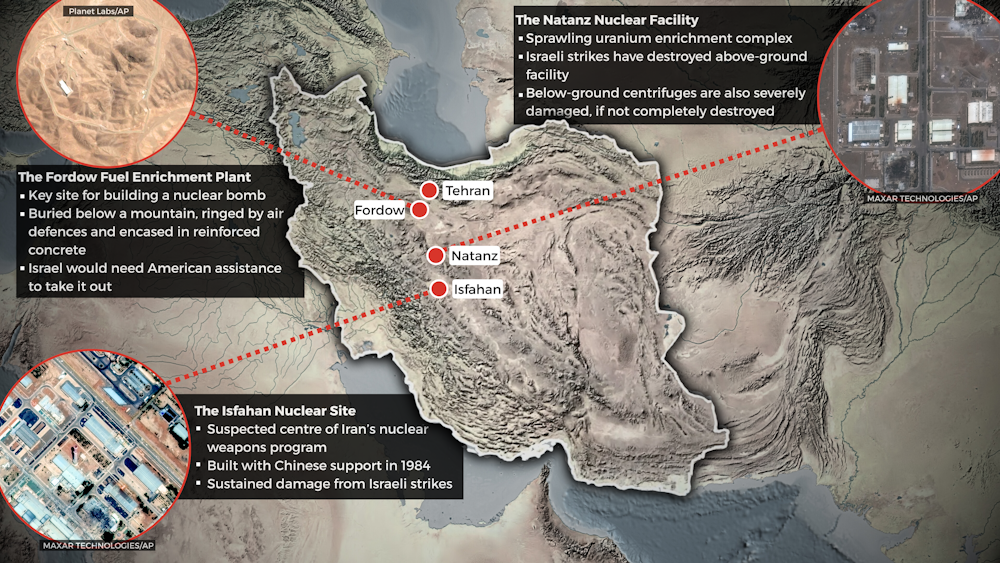
    Maxar satellite imagery overview of the Fordow enrichment facility located southwest of Tehran. Maxar/Contributor/Getty Images

    Conflict between Israel and Iran is intensifying, after Israeli airstrikes on key nuclear sites and targeted assassinations last week were followed by counter-strikes by Iran on Israel.

    These attacks have come at a moment of growing concern over Iran’s nuclear program, and have prompted larger questions over what this means for the global non-proliferation regime.

    The short answer: it’s not good.

    Where was uranium being enriched in Iran?

    There are two main enrichment sites: one at Natanz and one at Fordow. There’s also a facility at Isfahan, which, among other things, is focused on producing important materials for the enrichment process.

    Natanz has a hall of centrifuges, which are cylindrical devices that spin incredibly quickly to enrich uranium for creating either the fuel for a nuclear power program or the key ingredient for a nuclear weapon.

    Much the same is happening at Fordow, as far as we know. It is a smaller facility than Natanz but much of it is buried deep under a mountain.

    To make it weapons grade, uranium ought to be close to 90% purity. It is possible to create a bomb with uranium enriched to a lower level, but it is a much less efficient method. So around 90% is the target.

    The key nuclear sites being targeted by Israel.
    Maxxar Technologies/AP, Planet Labs/AP, The Conversation, CC BY-NC

    The Obama-era Joint Comprehensive Plan of Action Iran signed in 2015 (in exchange for the US lifting sanctions) limited Iran’s enrichment capacities and its stockpile of enriched uranium. But Trump ripped up that deal in 2018.

    Iran remained in compliance for a while, even while the US resumed its economic sanctions, but in recent years, has started to enrich to higher levels – up to about 60%. We know Iran still hasn’t got weapons-grade enriched uranium, but it’s a lot closer than it was to being able to build a bomb.

    And worse, much of their stockpile of enriched uranium will now be effectively unaccounted for because of the strikes by Israel. There are no inspections by the International Atomic Energy Agency (IAEA) happening there now and probably won’t be for some time.

    Iran could also say some of its stockpile was destroyed in the strikes – and we’ve got no way of knowing if that’s true or not.

    Both Natanz and Fordow have extensive, hardened, underground facilties. The above-ground facility at Natanz, at least, appears to have been badly damaged, based on satellite photos.

    Rafael Grossi, the head of the IAEA, said the centrifuges at Natanz were likely to have been “severely damaged if not destroyed altogether”. This was likely caused by power cuts, despite the fact the underground facility was not directly hit.

    Grossi said there was no visible damage to the underground facilities at Fordow, which is hidden some 80–90 metres beneath a mountain.

    Unlike the United States, Israel doesn’t have the very deep penetrating ordinance that can totally destroy such deeply buried structures.

    So a key question is: has Israel done enough damage to the centrifuges inside? Or have Iran’s efforts at fortifying these facilities been successful? We may not know for some time.

    Was Iran trying to hide its activities?

    In the past, Iran had a clandestine nuclear weapons program laying out the foundation of how it would build a bomb.

    We know that because, as part of the diplomatic process associated with the previous nuclear deal that Trump killed off, the IAEA had issued an assessment confirming that Iran previously had this plan in breach of the Treaty on the Non-Proliferation of Nuclear Weapons (NPT).

    Iran hadn’t actually built weapons or done a test, but it had a plan. And that plan, Project AMAD, was shelved in 2003. We also know that thanks to Israel. In 2018, Israeli special forces undertook a raid in downtown Tehran and stole secret documents revealing this.

    When the Obama administration managed to negotiate the Joint Comprehensive Plan of Action in 2015, part of the deal was Iran had to accept greater oversight of its nuclear facilities. It had to accept restrictions, limit the number of centrifuges and couldn’t maintain large stockpiles of enriched uranium. This was in exchange for the US lifting sanctions.

    These restrictions didn’t make it impossible for Iran to build a weapon. But it made it extremely difficult, particularly without being detected.

    What did the IAEA announce last week and why was it concerning?

    Last week, the IAEA Board of Governors passed a resolution saying that Iran was in breach of its obligations under the NPT.

    This related to Iran being unable to answer questions from inspectors about nuclear activities being undertaken at undeclared sites.

    That’s the first time in 20 years the IAEA has come to this finding. This is not why Israel attacked Iran. But it helps explain the exact timing. It gives Israel a degree of cover, perhaps even legitimacy. That legitimacy is surely limited however, given that Israel itself is not a signatory of the NPT and has maintained its own nuclear arsenal for more than half a century.

    In response to the IAEA announcement last week, Iran announced it would plan to build a third enrichment site in addition to Fordow and Natanz.

    Can a militarised approach to counter-proliferation backfire?

    Yes.

    When Israel hit the Osirak nuclear reactor in Iraq in 1981, it put Iraq’s nuclear program back by a few years. But the Iraqis redoubled their efforts. By the end of that decade, Iraq was very close to a fully-fledged nuclear weapons program.

    Presumably, Israel’s thinking is it will have to redo these strikes – “mowing the grass”, as they say – in an effort to hinder Iran’s attempts to reconstitute the program.

    Overnight, Iranian lawmakers also drafted a bill urging Iran to withdraw from the NPT. That is entirely legal under the treaty. Article X of the treaty allows that if “extraordinary events” jeopardise a state party’s “supreme interests” then there’s a legal process for withdrawal.

    Only one state has done that since the NPT was opened for signature in 1968: North Korea. Now, North Korea is a nuclear-armed state.

    Iran seems likely to withdraw from the treaty under this article. It has experienced a full-scale attack from another country, including strikes on key infrastructure and targeted assassinations of its top leaders and nuclear scientists. If that doesn’t count as a risk to your supreme interests, then I don’t know what does.

    Iran’s withdrawal would pose a significant challenge to the wider non-proliferation regime. It may even trigger more withdrawals from other countries.

    If Iran withdraws from the NPT, the next big questions are how much damage has Israel done to the centrifuge facilities? How quickly can Iran enrich its uranium stockpile up to weapons grade?

    And, ultimately, how much damage has been done to the ever-fragile nuclear non-proliferation regime based around the NPT?

    Benjamin Zala has received funding from the Stanton Foundation, a US philanthropic group that funds nuclear research. He is an honorary fellow at the University of Leicester on a project that is funded by the European Research Council.

    ref. Why is there so much concern over Iran’s nuclear program? And where could it go from here? – https://theconversation.com/why-is-there-so-much-concern-over-irans-nuclear-program-and-where-could-it-go-from-here-259052

    MIL OSI – Global Reports

  • MIL-OSI Global: Regime change wouldn’t likely bring democracy to Iran. A more threatening force could fill the vacuum

    Source: The Conversation – Global Perspectives – By Andrew Thomas, Lecturer in Middle East Studies, Deakin University

    The timing and targets of Israel’s attacks on Iran tell us that Prime Minister Benjamin Netanyahu’s short-term goal is to damage Iran’s nuclear facilities in order to severely diminish its weapons program.

    But Netanyahu has made clear another goal: he said the war with Iran “could certainly” lead to regime change in the Islamic republic.

    These comments came after an Israeli plan to assassinate the supreme leader of Iran, Ayatollah Ali Khamenei, was reportedly rebuffed by United States President Donald Trump.

    It’s no secret Israel has wanted to see the current government of Iran fall for some time, as have many government officials in the US.

    But what would things look like if the government did topple?

    How is power wielded in today’s Iran?

    Founded in 1979 after the Iranian Revolution, the Islamic Republic of Iran has democratic, theocratic and authoritarian elements to its governing structure.

    The founding figure of the Islamic republic, Ayatollah Ruhollah Khomeini, envisioned a state run by Islamic clerics and jurists who ensured all policies adhered to Islamic law.

    As Iran was a constitutional monarchy before the revolution, theocratic elements were effectively grafted on top of the existing republican ones, such as the parliament, executive and judiciary.

    Iran has a unicameral legislature (one house of parliament), called the Majles, and a president (currently Masoud Pezeshkian). There are regular elections for both.

    But while there are democratic elements within this system, in practice it is a “closed loop” that keeps the clerical elite in power and prevents challenges to the supreme leader. There is a clear hierarchy, with the supreme leader at the top.

    Khamenei has been in power for more than 35 years, taking office following Khomeini’s death in 1989. The former president of Iran, he was chosen to become supreme leader by the Assembly of Experts, an 88-member body of Islamic jurists.

    While members of the assembly are elected by the public, candidates must be vetted by the powerful 12-member Guardian Council (also known as the Constitutional Council). Half of this body is selected by the supreme leader, while the other half is approved by the Majles.

    The council also has the power to vet all candidates for president and the parliament.

    In last year’s elections, the Guardian Council disqualified many candidates from running for president, as well as the Majles and Assembly of Experts, including the moderate former president Hassan Rouhani.

    As such, the supreme leader is increasingly facing a crisis of legitimacy with the public. Elections routinely have low turnout. Even with a reformist presidential candidate in last year’s field – the eventual winner, Masoud Pezeshkian – turnout was below 40% in the first round.

    Freedom House gives Iran a global freedom score of just 11 out of 100.

    The supreme leader also directly appoints the leaders in key governance structures, such as the judiciary, the armed forces and Islamic Revolutionary Guard Corps (IRGC).

    The all-powerful IRGC

    So, Iran is far from a democracy. But the idea that regime change would lead to a full democracy that is aligned with Israel and the US is very unlikely.

    Iranian politics is extremely factional. Ideological factions, such as the reformists, moderates and conservatives, often disagree vehemently on key policy areas. They also jockey for influence with the supreme leader and the rest of the clerical elite. None of these factions is particularly friendly with the US, and especially not Israel.

    There are also institutional factions. The most powerful group in the country is the clerical elite, led by the supreme leader. The next most powerful faction would be the IRGC.

    Originally formed as a kind of personal guard for the supreme leader, the IRGC’s fighting strength now rivals that of the regular army.

    The IRGC is extremely hardline politically. At times, the IRGC’s influence domestically has outstripped that of presidents, exerting significant pressure on their policies. The guard only vocally supports presidents in lockstep with Islamic revolutionary doctrine.

    In addition to its control over military hardware and its political influence, the guard is also entwined with the Iranian economy.

    The IRGC is heavily enriched by the status quo, with some describing it as a “kleptocratic” institution. IRGC officials are often awarded state contracts, and are allegedly involved in managing the “black economy” used to evade sanctions.

    Given all of this, the IRGC would be the most likely political institution to take control of Iran if the clerical elite were removed from power.

    In peacetime, the general consensus is the IRGC would not have the resources to orchestrate a coup if the supreme leader died. But in a time of war against a clear enemy, things could be different.

    Possible scenarios post-Khamenei

    So, what might happen if Israel were to assassinate the supreme leader?

    One scenario would be a martial law state led by the IRGC, formed at least in the short term for the purposes of protecting the revolution.

    In the unlikely event the entire clerical leadership is decimated, the IRGC could attempt to reform the Assembly of Experts and choose a new supreme leader itself, perhaps even supporting Khamenei’s son’s candidacy.

    Needless to say, this outcome would not lead to a state more friendly to Israel or the US. In fact, it could potentially empower a faction that has long argued for a more militant response to both.

    Another scenario is a popular uprising. Netanyahu certainly seems to think this is possible, saying in an interview in recent days:

    The decision to act, to rise up this time, is the decision of the Iranian people.

    Indeed, many Iranians have long been disillusioned with their government – even with more moderate and reformist elements within it. Mass protests have broken out several times in recent decades – most recently in 2022despite heavy retaliation from law enforcement.

    We’ve seen enough revolutions to know this is possible – after all, modern Iran was formed out of one. But once again, new political leadership being more friendly to Israel and the West is not a foregone conclusion.

    It is possible for Iranians to hold contempt in their hearts for both their leaders and the foreign powers that would upend their lives.

    Andrew Thomas does not work for, consult, own shares in or receive funding from any company or organisation that would benefit from this article, and has disclosed no relevant affiliations beyond their academic appointment.

    ref. Regime change wouldn’t likely bring democracy to Iran. A more threatening force could fill the vacuum – https://theconversation.com/regime-change-wouldnt-likely-bring-democracy-to-iran-a-more-threatening-force-could-fill-the-vacuum-259042

    MIL OSI – Global Reports

  • MIL-OSI China: Chinese vice premier to attend 28th St. Petersburg International Economic Forum

    Source: People’s Republic of China – State Council News

    Chinese vice premier to attend 28th St. Petersburg International Economic Forum

    BEIJING, June 17 — Chinese Vice Premier Ding Xuexiang will attend the 28th St. Petersburg International Economic Forum in Russia from June 19 to 21, a Chinese foreign ministry spokesperson announced on Tuesday.

    Ding, also a member of the Standing Committee of the Political Bureau of the Communist Party of China Central Committee, was invited by the government of the Russian Federation, spokesperson Guo Jiakun said at a daily news briefing.

    The St. Petersburg International Economic Forum is an important platform for discussing global economic governance and fostering international consensus on cooperation, Guo said.

    This year’s forum, themed “Shared Values: The Foundation of Growth in a Multipolar World,” will explore effective approaches to addressing global challenges, Guo noted, adding that Ding will attend forum activities and meet with relevant Russian leaders.

    China looks forward to strengthening communication and exchanges with all parties, consolidating consensus on cooperation, promoting the common values of humanity, and advancing an equal and orderly world multipolarization and a universally beneficial and inclusive economic globalization, so as to inject strong impetus into improving global governance and promoting world development and prosperity, Guo said.

    China is also willing to work with Russia to effectively implement the important consensus reached by the two heads of state, deepen comprehensive practical cooperation, and continuously advance the China-Russia comprehensive strategic partnership of coordination for the new era, Guo added.

    MIL OSI China News

  • MIL-OSI China: China and EU agree to deepen environmental cooperation at ministerial dialogue

    Source: People’s Republic of China – State Council News

    BEIJING, June 17 — China and the European Union (EU) renewed their commitment to environmental cooperation during the 10th environment policy ministerial dialogue held last Friday in Brussels, the Chinese Ministry of Ecology and Environment said Tuesday.

    The dialogue, co-chaired by Chinese Minister of Ecology and Environment Huang Runqiu and Jessika Roswall, Commissioner for Environment, Water Resilience and a Competitive Circular Economy of the European Commission, focused on key areas such as biodiversity conservation, implementation of the Kunming-Montreal Global Biodiversity Framework, negotiations for an international plastic pollution agreement, environmental pollution control, and multilateral environmental governance.

    Both sides applauded the tangible results that have been achieved under the guidance of the High-level Environment and Climate Dialogue between China and the EU.

    This year marks the 50th anniversary of the establishment of diplomatic relations between China and the EU. Huang called for greater unity and joint action against the backdrop of mounting global environmental and climate challenges.

    Huang urged both sides to better leverage the mechanism to fulfill the objectives set by the high-level dialogue, expand pragmatic cooperation in key areas, promote multilateral environmental governance, and build exchange platforms in a bid to bolster the foundation for China-EU environmental collaboration.

    Roswall recognized China’s leading role in securing the historic Kunming-Montreal Global Biodiversity Framework and stressed the need for increased financial support to ensure the framework’s implementation.

    Roswall also emphasized further cooperation with China in the areas such as negotiations for an international plastic pollution agreement, air and chemical pollution control, water resource protection, and deforestation-free supply chains to advance global efforts in environmental and climate governance.

    MIL OSI China News

  • Indian, French Armies to conduct joint military drill in Southern France

    Source: Government of India

    Source: Government of India (2)

    contingent of the Indian Army departed on Monday to participate in the eighth edition of the Indo-French joint military exercise, Shakti, set to be held from June 18 to July 1, at Camp Larzac, La Cavalerie, in southern France.

    The Indian team comprises 90 personnel, with the Jammu and Kashmir Rifles leading the representation, supported by troops from various arms and services. The French Army contingent, also numbering 90 personnel, will include soldiers from the 13th Foreign Legion Half-Brigade (13th DBLE), a renowned unit of the French Foreign Legion.

    Exercise Shakti, a biennial engagement between the Indian and French armies, is designed to deepen interoperability and operational cooperation, with this edition focusing on joint operations in a sub-conventional environment in accordance with Chapter VII of the United Nations Charter. Training will take place in semi-urban terrain, reflecting the complexities of modern conflict scenarios.

    The joint exercise is expected to enhance coordination between the two armies through shared tactical drills and exchanges on Tactics, Techniques and Procedures (TTPs). Troops will also train on contemporary military technologies and equipment while undertaking physically demanding activities aimed at building endurance and cohesion.

    Beyond operational objectives, the exercise is expected to strengthen military-to-military ties, promote mutual understanding, and foster camaraderie between the personnel of the two nations.

    Exercise Shakti-VIII is emblematic of the growing strategic partnership between India and France. Defence cooperation remains a key pillar of bilateral relations, with both countries regularly engaging in military exchanges, joint exercises, and high-level visits.

  • Iran leader Khamenei sees his inner circle hollowed out by Israel

    Source: Government of India

    Source: Government of India (4)

    Iran’s 86-year-old Supreme Leader Ayatollah Ali Khamenei cuts an increasingly lonely figure.

    Khamenei has seen his main military and security advisers killed by Israeli air strikes, leaving major holes in his inner circle and raising the risk of strategic errors, according to five people familiar with his decision-making process.

    One of those sources, who regularly attends meetings with Khamenei, described the risk of miscalculation to Iran on issues of defence and internal stability as “extremely dangerous”.

    Several senior military commanders have been killed since Friday including Khamenei’s main advisers from the Revolutionary Guards, Iran’s elite military force: the Guards’ overall commander Hossein Salami, its aerospace chief Amir Ali Hajizadeh who headed Iran’s ballistic missile program and spymaster Mohammad Kazemi.

    These men were part of the supreme leader’s inner circle of roughly 15-20 advisers comprising Guards commanders, clerics, and politicians, according to the sources who include three people who attend or have attended meetings with the leader on major issues and two close to officials who regularly attend.

    The loose group meets on an ad-hoc basis, when Khamenei’s office reaches out to relevant advisers to gather at his compound in Tehran to discuss an important decision, all the people said. Members are characterised by unwavering loyalty to him and the ideology of the Islamic Republic, they added.

    Khamenei, who was imprisoned before the 1979 revolution and maimed by a bomb attack before becoming leader in 1989, is profoundly committed to maintaining Iran’s Islamic system of government and deeply mistrustful of the West.

    Under Iran’s system of government he has supreme command of the armed forces, the power to declare war, and can appoint or dismiss senior figures including military commanders and judges.

    Khamenei makes the final decision on important matters, though he values advice, listens attentively to diverse viewpoints, and often seeks additional information from his counsellors, according to one source who attends meetings.

    “Two things you can say about Khamenei: he is extremely stubborn but also extremely cautious. He is very cautious. That is why he has been in power for as long as he has,” said Alex Vatanka, director of the Iran Program at the Middle East Institute think-tank in Washington.

    “Khamenei is pretty well placed to do the basic cost-benefit analysis which really fundamentally gets to one issue more important than anything else: regime survival.”


    KHAMENEI’S SON AT THE FORE

    The focus on survival has repeatedly been put to the test. Khamenei has deployed the Revolutionary Guards and its affiliated Basij militia to quell national protests in 1999, 2009 and 2022.

    While the security forces have always been able to outlast demonstrators and restore state rule, years of Western sanctions have caused widespread economic misery that analysts say could ultimately threaten internal unrest.

    The stakes could barely be higher for Khamenei who faces an escalating war with Israel, which has targeted nuclear and military sites and personnel with air attacks, drawing retaliatory Iranian missile fire.

    The five people familiar with Khamenei’s decision-making process stressed that other insiders who have not been targeted by Israel’s strikes remain important and influential, including top advisers on political, economic and diplomatic issues.

    Khamenei designates such advisers to handle issues as they arise, extending his reach directly into a wide array of institutions spanning military, security, cultural, political and economic domains, two of the sources said.

    Operating this way, including in bodies nominally under the elected president, means Khamenei’s office is often involved not only in the biggest questions of state but in executing even minor initiatives, according to the people with knowledge.

    His son Mojtaba has grown ever more central to this process over the past 20 years, the sources said, building a role that cuts between the personalities, factions and organisations involved to coordinate on specific issues, the sources said.

    A mid-ranking cleric seen by some insiders as a potential successor to his ageing father, Mojtaba has built close ties with the Guards, giving him added leverage across Iran’s political and security apparatus, the people added.

    Ali Asghar Hejazi, the deputy of political security affairs at Khamenei’s office, has been involved in sensitive security decisions and is often described as the most powerful intelligence official in Iran, according to the sources said.

    Meanwhile, the head of Khamenei’s office, Mohammad Golpayegani, as well as former foreign ministers Ali Akbar Velayati and Kamal Kharazi, and ex-parliament speaker Ali Larijani, remain trusted confidants on diplomatic and domestic policies issues such as the nuclear dispute, the people said.

    The loss of the Revolutionary Guards commanders nonetheless decimates the top ranks of a military organisation that Khamenei has put at the centre of power since becoming supreme leader in 1989, relying on it for both internal security and regional strategy.

    While the regular army chain of command runs through the defence ministry under the elected president, the Guards answer personally to Khamenei, securing the best military equipment for their land, air and sea branches and giving their commanders a major state role.

    As he faces one of the most dangerous moments in the Islamic Republic’s history, Khamenei finds himself further isolated by the recent losses other key advisers in the region as Iran’s “Axis of Resistance” coalition has been hammered by Israel.

    Hezbollah chief Hassan Nasrallah, who was personally close to the Iranian leader, was killed by an Israeli airstrike in September last year and Syrian President Bashar al-Assad was overthrown by rebels in December.

    (Reuters) 

  • Researchers creates new robotic “skin” that feels heat, pain, pressure

    Source: Government of India

    Source: Government of India (4)

    Researchers have developed a revolutionary robotic skin that brings machines closer to achieving a human-like sense of touch.

    Made from a flexible, low-cost gel material, the skin transforms the entire surface of a robotic hand into a sensitive and intelligent sensor.

    Unlike traditional robotic skins that rely on a patchwork of different sensors, this material can detect pressure, temperature, pain, and even distinguish multiple contact points simultaneously.

    Developed by researchers from the University of Cambridge and University College London (UCL), the flexible, conductive skin is easy to fabricate and can be melted down and moulded into a wide range of complex shapes.

    The technology allows robots to sense and process a variety of physical inputs, enabling more meaningful interactions with the physical world.

    Unlike other robotic touch solutions—which typically use embedded sensors limited to small areas and require different sensors for different stimuli—the entirety of this new electronic skin functions as a sensor. This makes it more similar to the human skin, where sensory information is distributed across the surface.

    While the robotic skin is not yet as sensitive as human skin, it can detect signals from over 860,000 tiny pathways within the material. This allows it to recognise different types of touch and pressure—such as a finger tap, hot or cold surfaces, damage from cutting or stabbing, or multiple simultaneous contact points—all within a single material.

    The researchers used a combination of physical tests and machine learning techniques to help the skin ‘learn’ which of these pathways are most important, enabling it to sense different types of contact more efficiently.

    In addition to potential applications in humanoid robots and prosthetics—where a sense of touch is vital—the researchers suggest the robotic skin could be useful in industries such as automotive manufacturing and disaster relief.

    The results have been published in the journal Science Robotics.

    Electronic skins work by converting physical information—like pressure or temperature—into electronic signals. Traditionally, different types of sensors are needed for different kinds of touch. These sensors are embedded into soft, flexible materials, but they can interfere with one another and are prone to damage.

    “Having different sensors for different types of touch leads to materials that are complex to make,” said lead author Dr David Hardman from Cambridge’s Department of Engineering.

    “We wanted to develop a solution that can detect multiple types of touch at once, but within a single material,” he added.

    “At the same time, we need something that’s cheap and durable, so it’s suitable for widespread use,” said co-author Dr Thomas George Thuruthel from UCL.

    In future, the researchers aim to enhance the durability of the electronic skin and conduct further tests in real-world robotic applications.

    (ANI)

  • Labour welfare schemes empower over 50 lakh unorganised workers: Govt

    Source: Government of India

    Source: Government of India (4)

    Over 50 lakh workers and their families have benefitted from welfare schemes implemented by the Union Ministry of Labour & Employment, which continues to deliver critical support to India’s unorganised workforce through the Directorate General of Labour Welfare (DGLW), particularly in the Beedi, Cine, and Mining sectors.

    The flagship Education Assistance Scheme for instance offers annual scholarships ranging from ₹1,000 to ₹25,000 to the children of eligible workers. Managed through the National Scholarship Portal (NSP), the scheme receives over one lakh applications annually, with benefits disbursed via Direct Benefit Transfer (DBT) for transparency and efficiency.

    The Ministry also provides vital healthcare support, including outpatient services and financial aid for critical illnesses such as cancer, heart disease, and kidney transplants. Assistance under the scheme ranges from ₹30,000 for minor surgeries to up to ₹7.5 lakh for cancer treatment, offering a safety net for low-income families.

    Though the Revised Integrated Housing Scheme (RIHS) was merged with the Pradhan Mantri Awas Yojana (PMAY) in 2016, the Ministry continued disbursing pending installments to eligible beneficiaries until March 31, 2024, fulfilling its commitment to dignified housing.

    The welfare schemes are implemented nationwide by the Labour Welfare Organisation (LWO), operating under DGLW, through a robust network of 18 Welfare Commissioners. These initiatives focus on social protection, healthcare, education assistance, and housing support, especially in remote and underserved areas, and reflect the government’s commitment to inclusive welfare under the vision of Sabka Saath, Sabka Vikas.

  • MIL-OSI Russia: Action plan of SCO member states in the field of digital transformation adopted at a meeting in China’s Xinjiang

    Translation. Region: Russian Federal

    Source: People’s Republic of China in Russian – People’s Republic of China in Russian –

    Source: People’s Republic of China – State Council News

    URUMQI, June 17 (Xinhua) — The action plan of the Shanghai Cooperation Organization (SCO) member states in the field of digital transformation was reviewed and adopted at the 4th meeting of heads of ministries and departments of the SCO member states responsible for the development of information and communication technologies (ICT), which was held in Karamay city of northwest China’s Xinjiang Uygur Autonomous Region on Tuesday.

    The plan aims to deepen exchanges and cooperation among SCO member states in the fields of developing digital transformation policies, building digital infrastructure, digital government, cloud computing, digitalization of small and medium enterprises, developing and applying digital technologies, exchanging digital technology experts, etc., with the aim of bridging the digital divide between member countries and enhancing regional digital competitiveness.

    Deputy Minister of Industry and Information Technology of the People’s Republic of China Xiong Jijun called promoting sustainable development and accelerating modernization common goals of the SCO member countries.

    According to him, China is ready to work with all parties to improve the quality and level of cooperation among the member states of the organization by improving institutional mechanisms, strengthening political dialogue, deepening practical cooperation in the field of digital technologies and ICT, promoting the transformation and modernization of industries, building a more just, accessible and inclusive digital world, thereby contributing to the formation of a community of shared destiny of the SCO.

    In their speeches, the participants of the meeting unanimously noted that digital transformation is an important engine for global economic development and comprehensive social progress, and declared their readiness, adhering to the “Shanghai Spirit”, to promote continuous achievement of new achievements in cooperation in the field of digital technologies and ICT.

    The parties agreed that the next meeting will be held in Kyrgyzstan in 2026. -0-

    MIL OSI Russia News

  • MIL-OSI Russia: China welcomes joint statement by 21 Arab and Islamic countries on Israel-Iran conflict

    Translation. Region: Russian Federal

    Source: People’s Republic of China in Russian – People’s Republic of China in Russian –

    Source: People’s Republic of China – State Council News

    BEIJING, June 17 (Xinhua) — China welcomes the joint statement by 21 Arab and Islamic countries on the Israel-Iran conflict and is willing to work with relevant parties to help ease the situation, Foreign Ministry spokesperson Guo Jiakun said on Tuesday.

    A joint statement issued by the foreign ministers of 21 countries called for respect for the national sovereignty and territorial integrity of other countries, upholding the principle of good-neighbourliness and friendship, and resolving disputes peacefully.

    In response to a reporter’s question at a regular departmental press conference, Guo Jiakun said that Israel’s attack on Iran provoked a sudden escalation of the situation in the region, which attracted increased attention from the international community.

    According to him, the main priority is to end the fire and the war, take effective measures to prevent the conflict from escalating, prevent the region from plunging into even greater unrest, and return to the path of political resolution of problems through dialogue and negotiations.

    China welcomes the joint statement and highly appreciates the efforts made by relevant countries to ease tensions, Guo Jiakun said, adding that China is willing to maintain communication with all parties concerned and play a constructive role in helping to ease the situation. -0-

    MIL OSI Russia News

  • MIL-OSI Russia: Russians’ interest in the Chinese city of Shanghai is steadily growing

    Translation. Region: Russian Federal

    Source: People’s Republic of China in Russian – People’s Republic of China in Russian –

    Source: People’s Republic of China – State Council News

    BEIJING, June 17 (Xinhua) — Russians’ interest in the Chinese city of Shanghai is steadily growing, according to data from the city’s immigration service.

    In the period from the beginning of January to June 12, 2025, Russia took 6th place in the tourist flow to Shanghai in terms of the number of tourists, writes the newspaper Xinmin Wanbao.

    According to this indicator, the top 10 countries include the Republic of Korea, Japan, the USA, Thailand, Malaysia, Russia, Singapore, Germany, Vietnam and Australia.

    According to official data, Shanghai received a total of over 2.3 million foreign tourists during the period, an increase of 45.6 percent year-on-year.

    Shanghai’s tourism boom is believed to be due to the ongoing optimization of its visa-free policy. China has introduced a visa-free regime for citizens of 47 countries and extended the permitted stay under visa-free transit to 240 hours for citizens of 55 countries.

    Statistics show that during the reporting period, about 1.27 million foreigners made visa-free tourist trips to Shanghai. Their share exceeded 50 percent.

    To make it more convenient for foreigners to travel to the city, the local immigration service hotline 12367 has introduced service functions in Russian and other languages. In addition, police officers who speak foreign languages, including Russian, English, Japanese, Korean and Arabic, are on duty at passport control points. -0-

    MIL OSI Russia News

  • MIL-OSI Russia: Rosneft Improves Anti-Corrosion Technologies

    Translation. Region: Russian Federal

    Source: Rosneft – Rosneft – An important disclaimer is at the bottom of this article.

    Specialists from the Rosneft Scientific Institute in Izhevsk have developed and tested an innovative method for assessing the corrosion rate of oil well equipment. The economic effect of using the innovation will average 1.4 million rubles per well over 5 years.

    The essence of the new approach is to measure the corrosion rate using steel plates directly in the thermobaric conditions of wells. The process is carried out using special immersion probes, also developed by the institute’s specialists. Previously existing practices involve measuring the corrosion rate inside the cavity of ground infrastructure pipelines.

    The developed method allows for precise determination of the minimum effective dosages of corrosion inhibitors, ensuring the target level of well protection*, increasing the period of trouble-free operation, and avoiding costly operations of lifting and dismantling well equipment.

    The positive result of this work will reduce the overall costs of protecting the underground equipment of Udmurtneft named after V.I. Kudinov (the Company’s production asset). Work is currently underway to replicate the technology at other Rosneft facilities.

    * according to the Interstate Standard “Corrosion of Metals and Alloys” ISO 9224-2022, the rate of general corrosion of equipment should not exceed 0.1 mm/year.

    Department of Information and Advertising of PJSC NK Rosneft June 17, 2025

    Please note: This information is raw content directly from the source of the information. It is exactly what the source states and does not reflect the position of MIL-OSI or its clients.

    MIL OSI Russia News

  • MIL-OSI United Kingdom: ‘Hotdesk St Malo’ available for Channel Islands organisations to build links with Brittany stakeholders17 June 2025 Channel Islands businesses and industry groups looking to build links in Brittany are being reminded that they have free access to two meeting rooms in St Malo. The Bureau des Iles Anglo-Normandes, which… Read more

    Source: Channel Islands – Jersey

    17 June 2025

    Channel Islands businesses and industry groups looking to build links in Brittany are being reminded that they have free access to two meeting rooms in St Malo. 

    The Bureau des Iles Anglo-Normandes, which represents the governments of Guernsey and Jersey in France, has secured two meeting spaces for any organisation in Jersey, Guernsey, Alderney and Sark, looking to develop economic, cultural or educational links with French stakeholders. 

    Stéphane Perrin-Sarzier, Vice-President of the Brittany region, in charge of international development, said: “We are delighted to offer government officials and businesses from Jersey and Guernsey the opportunity to use the Brittany Region’s premises at the port of Saint-Malo to develop ties with Brittany. This provision fully embodies our commitment to strengthening economic, cultural, and institutional cooperation between our territories.”

    The ‘Hotdesk St Malo’​ offers a choice of two meeting rooms in the centre of St Malo, which can accommodate up to 12 or 30 people.

    MIL OSI United Kingdom