Category: DJF

  • MIL-OSI Europe: The EBA publishes key regulatory products on operational risk capital requirements and related supervisory reporting

    Source: European Banking Authority

    The European Banking Authority (EBA) today published three final draft technical standards that are crucial for the implementation of the EU Banking Package and will allow supervisors to monitor institutions’ compliance, thus fostering consistent and enhanced supervision.

    In particular, the EBA is publishing the following Regulatory Technical Standards (RTS) and Implementing Technical Standards (ITS):

    • RTS concerning the calculation and adjustments of the Business Indicator (BI), which is central to the standardised and harmonised application of the operational risk capital requirements.
    • ITS on the mapping to FINREP, which will ensure consistency and reduce implementation, administrative and operational costs.
    • Amending ITS on operational risk reporting, which will keep the supervisory reporting framework relevant, meaningful and aligned with the amended regulation.

    The EBA has refined the BI components, incorporating updates to accounting standards, detailed breakdowns of operational risk impacts and exclusions, as well as further clarifications on the approaches for calculating the financial component. These changes ensure comprehensive and accurate representation of operational risk in banks’ financial statements.

    When an institution undergoes a merger or acquisition, the final RTS mandate the use of actual three-year historical data or provide alternative methodologies if this is not feasible. For disposals, the final RTS outline conditions for excluding BI items related to disposed entities, while a materiality threshold for disposals is introduced, allowing adjustments without supervisory permission for minor disposals. This ensures clarity for institutions with frequent, low-impact disposals.

    The standard items for each component of the BI were matched to their respective reporting cells in FINREP, with the outcome being presented in the final ITS on BI mapping.

    The final report on supervisory reporting introduces amendments to the operational risk reporting framework, aimed at assessing compliance with operational risk own funds requirements. It enhances existing reporting requirements by requesting additional details on the calculation of business indicator components. This ensures that supervisory authorities have access to essential data to fulfill their mandates, while also considering the effort required by institutions to meet these data requirements.

    Legal basis and background

    These mandates are part of the Phase 2 of the EBA roadmap on the implementation of the EU Banking Package.

    Article 314(9)(a) and (b) of Regulation (EU) No 575/2013 (Capital Requirements Regulation, CRR), mandates the EBA to develop draft RTS to further specify the components of the BI by developing a list of items and the elements to be excluded from the BI, respectively. Article 314(10) of the CRR, mandates the EBA to develop draft ITS to provide the mapping of the items of the BI to the corresponding reporting cells in Commission Implementing Regulation (EU) 2021/451 (FINREP). Article 315(3) of the CRR3 mandates the EBA to draft RTS to specify “how institutions shall determine the adjustments to the business indicator” (point (a) of Article 315(3) referencing mergers, acquisitions and disposals), “the conditions according to which competent authorities may grant the permission” and “the timing of the adjustments” (points (b) and (c) of Article 315(3) referencing disposals only).

    Regulation (EU) No 575/2013 (‘the CRR’) as amended by Regulation (EU) 2024/1623 (‘CRR 3’) mandates the EBA, in article 430(7), to develop draft implementing technical standards to specify uniform reporting formats, and IT solutions, including instructions, for supervisory reporting requirements of institutions.

    Next steps

    After the submission of the final draft ITS to the Commission for adoption, the EBA will publish on the website the IT tools, including binding instructions. The EBA will publish during Q4 2025 a technical package, including the DPM, validation rules and taxonomy, that shall be used by institutions to submit this supervisory reporting information to supervisors. The first applicable reference date for reporting under the draft ITS is 31 March 2026.

    An updated version of the mapping tool between supervisory reporting and disclosure requirements for Operational risk will be published soon.

    MIL OSI Europe News

  • MIL-OSI Global: Living on Mars: are there lessons from prisons?

    Source: The Conversation – UK – By Lucy Berthoud, Professor of Space Systems Engineering, University of Bristol

    I have been researching the possibility of living on Mars for several years. But it took an invitation to give a talk about space at HMP Erlestoke in England – a category C men’s prison – to make me realise that there are a surprising number of similarities between the challenges that would be faced by would-be Martians and daily life in jail.

    The talk was part of a literary festival called “Penned Up”. As I discussed the parallels between Mars and prison with those incarcerated at HMP Erlestoke, the men agreed with me that, despite seeming so different, they both would share long-term isolation, confinement and psychological challenges (not to mention bad food).

    So, as plans for exploration of Mars advance and we consider how to survive on this distant and hostile world, could there be important lessons from an environment closer to home – the modern prison? Understanding this overlap could be critical for ensuring the wellbeing of those we send to Mars. We know the terrible conditions of prisons can have a severe impact on people, and perhaps we can learn from that to help keep others safe and well.

    It’s important to recognise the fundamental distinction between prisons and space exploration. Prisons are a punitive measure, depriving individuals of their freedom, while space exploration is a highly selective, paid endeavour undertaken by choice. As I saw, living in prison is a profoundly challenging environment. Despite legal minimum standards, overcrowding and shortages mean many prisons fail to uphold them.


    Get your news from actual experts, straight to your inbox. Sign up to our daily newsletter to receive all The Conversation UK’s latest coverage of news and research, from politics and business to the arts and sciences.


    The profoundly negative impact of poor prison conditions highlights the urgent need for effective solutions. But the knowledge gained from this could also then help support people in other challenging and remote environments, such as space exploration.

    We have many years’ experience of studying psychological and team challenges from isolated, confined and extreme environments such as submarines, polar research stations, space simulators on Earth and space stations. But few people have looked to the public prisons on our doorstep for what we can learn.

    Extreme routine

    Daily life in both a prison and in space is governed by structured routines. In prisons, days are often planned down to the minute, dictating everything from waking to sleeping. This rigid scheduling is mirrored by mission-controlled timetables for astronauts.

    Mandatory work is another common thread. Prison routines often include assigned tasks, such as kitchen or laundry duty, which serve the needs of the facility. Similarly, Martian astronauts would need to perform scientific experiments, equipment maintenance and resource production duties. Mandatory work can sometimes lead to resentment if there’s little autonomy.

    Basic food and limited sleep is another common factor. When I asked the inmates what the food was like, they laughed. A staff member explained that the budget is £3.08 per person (the government benchmark figure is even less at £2.70 per person per day). Prison food can be of low nutritional value and meal times are fixed, impacting both health and morale.

    The author, Lucy Berthoud, giving a talk at HMP Erlestoke.
    Photo by Andy Aitchison., CC BY-SA

    On Mars, astronauts would consume carefully planned dehydrated meals, which would no doubt have a higher budget and be nutritionally richer, but it is not as good as freshly cooked food back on Earth.

    Sleep, a fundamental need, can also be elusive in both environments. In prisons, it can be disrupted by noise and poor conditions. Astronauts aboard the International Space Station are continuously exposed to an average noise level of 72 decibels, which is equivalent to the sound of motorway traffic from a distance of 15 metres.

    Limited space

    Prison cells are famously small, often measuring little more than a few square metres, and frequently housing several people. They offer minimal personal space and little privacy. The European standard – if it’s upheld – is a minimum of four square metres per person in a single cell.

    Similarly, Martian habitats, designed to function with the minimum resources and with a focus on life support, will also be challenging space-wise.

    For example, the Apollo Command and Service module which went to lunar orbit had a volume of just 6.2 cubic metres for three astronauts. This lack of personal space and privacy in both settings can lead to heightened stress levels and challenges to emotion regulation.

    Both places also provide a potentially high-risk environment. The threats may be different – often interpersonal in prisons – from violence, sexual assault, and extortion to potential staff abuse-, mainly environmental – radiation, cold and lack of air on Mars. But they can lead to a persistent state of vigilance which can significantly impact mental well-being in both cases.

    Dealing with isolation

    Perhaps the biggest parallels lie in the psychological challenges arising from prolonged isolation. Imprisonment involves a significant separation from family, friends, and the outside world, leading to feelings of isolation and loneliness.

    While astronauts on a mission to Mars are highly trained professionals and have chosen to go, they too will operate under a significant degree of control. With a likely round trip time of two years, astronauts embarking on a mission to Mars may also experience isolation. This could lead to feelings of disconnection and homesickness, as has been studied in volunteers on Earth.

    Prisoners experience a near-complete lack of control over even the most basic aspects of their daily existence. You can see the importance of feelings of control in the fact that even astronauts and cosmonauts sometimes rail against or even disobey mission control’s strict guidelines, as the Nasa astronaut Clayton Anderson has written about in his candid book The Ordinary Spaceman.

    Social dynamics

    Both groups require living in close quarters with a limited, unchanging set of companions. In prison, people are confined to a relatively small social environment, which can lead to complex subcultures and the potential for interpersonal conflict and violence, though supportive relationships can also be a crucial resource.

    Equally, for Martian crews, strong group cohesion and mutual support will be absolutely essential. However, the inherent stress of the mission, confined living conditions and significant communication delays with Earth could still lead to tensions.

    So we see that lessons learned from studying the experiences of people in jails can provide valuable insights for mitigating the negative impacts of life on Mars.

    Strategies such as designing habitats to maximise personal space and privacy, improving food and maximising autonomy will be needed for Martian travel. It will be important to provide access to meaningful activities to combat monotony, ensuring access to comprehensive mental health support and fostering strong social connections and support networks. These have all been studied in prisons.

    By trying to improve prison conditions and continuing to learn from prisons, we can better prepare our pioneers for the unprecedented challenges of making a home on Mars, improving their chances of survival and their ability to thrive.

    Lucy Berthoud receives funding from UK Space Agency and UKRI.

    ref. Living on Mars: are there lessons from prisons? – https://theconversation.com/living-on-mars-are-there-lessons-from-prisons-258502

    MIL OSI – Global Reports

  • MIL-OSI Global: Batman Begins turns 20: Nolan’s trilogy challenged power, but still sided with the system

    Source: The Conversation – UK – By Irene Zarza-Rubio, PhD Candidate, Film Theory and Media Industries, University of York

    Christopher Nolan’s Dark Knight trilogy is often praised for bringing gritty realism and deeper political themes to superhero films. When Batman Begins premiered in 2005, it reimagined Gotham as a city undone by corruption, inequality and institutional collapse.

    The trilogy may feature masked villains and high-tech gadgets, but at its core, it grapples with what happens when the systems meant to protect people start to fail. Throughout the trilogy, each of the central villains exposes a different aspect of Gotham’s dysfunction.

    In Batman Begins, Ra’s al Ghul (Liam Neeson) sees Gotham as beyond saving, believing its destruction is the only path to renewal. In The Dark Knight, the Joker (Heath Ledger) reveals how fragile the city’s moral and social order truly is, pushing its citizens to the brink with chaos and manipulation. Then in The Dark Knight Rises, Bane (Tom Hardy) harnesses class resentment to stage a violent revolution, blaming Gotham’s wealthy elite for systemic injustice.

    While these antagonists raise serious questions about the city’s foundations, the films ultimately pull back from endorsing their challenges. Instead, they reaffirm that Gotham’s institutions, however flawed, must endure. Radical change, the trilogy suggests, is more dangerous than the corruption already in place.


    Looking for something good? Cut through the noise with a carefully curated selection of the latest releases, live events and exhibitions, straight to your inbox every fortnight, on Fridays. Sign up here.


    Batman (Christian Bale) is central to this message. He doesn’t work to change Gotham’s broken structures. Instead, he tries to keep them from falling apart completely. In The Dark Knight, he faces the Joker’s chaos using extreme measures, including mass surveillance. Though he’s troubled by it, the film still frames it as necessary.

    In The Dark Knight Rises, Bane’s rebellion taps into real fears about inequality and corruption. But instead of taking those concerns seriously, the story presents them as a threat that Batman must shut down. Rather than offering hope for a better system, the film reassures audiences that the existing one, while imperfect, is still the best option.

    The original trailer for Batman Begins (2005).

    While the trilogy appears to challenge authority and institutional power, it effectively offers a reassuring message rather than a radical one. Philosopher Slavoj Žižek argued that The Dark Knight transforms a lie into a stabilising force.

    This is embodied in Batman’s decision to let the public believe he was responsible for Harvey Dent’s (Aaron Eckhart) crimes, preserving Dent’s reputation to maintain hope in Gotham’s legal system. As Batman tells Commissioner Gordon (Gary Oldman): “Sometimes the truth isn’t good enough. Sometimes people deserve more. Sometimes people deserve to have their faith rewarded.”

    The implication is clear: some truths are too dangerous, and maintaining public faith is more important than exposing systemic failure. The films do question the status quo, but only within safe boundaries. They propose that society’s problems can be managed by exceptional individuals rather than through structural reform.

    In doing so, they frame flawed institutions not as entities to be dismantled, but as pillars that must be upheld, even if only symbolically.

    Individual heroes over collective change

    You can see the trilogy’s impact in later films like Joker (2019) and The Batman (2022). Both explore the collapse of society and what happens to people caught in the middle.

    But like Nolan’s films, they centre on lone characters, not collective solutions. They continue the pattern of showing that things are broken, while still trusting that a single hero can fix them.

    Batman takes the fall for Harvey Dent’s crimes in The Dark Knight.

    Two decades after Batman Begins, the trilogy’s legacy feels more relevant than ever. As debates over truth, institutional trust and political extremism continue to dominate global headlines, Nolan’s films resonate with their portrayal of a society teetering on the edge. In an era marked by public disillusionment and the growing sense that “the system” is broken, The Dark Knight trilogy explores the discomforting idea that institutions may be flawed but necessary – and that stability sometimes requires myth, not truth.

    By positioning Batman as a lone moral figure who preserves order at great personal cost, the trilogy reflects a widespread longing for strong leadership amid institutional failure. Yet it also reveals a troubling tendency in popular culture to offer catharsis without change, examination without consequence. As viewers, we are encouraged to acknowledge the depth of societal problems – but not to demand solutions.

    In that sense, The Dark Knight remains not just a compelling superhero story, but a mirror for our continuing struggles with power, truth, and the difficult question of whether our institutions are worth saving, or simply the only ones we’ve got.

    Irene Zarza-Rubio does not work for, consult, own shares in or receive funding from any company or organisation that would benefit from this article, and has disclosed no relevant affiliations beyond their academic appointment.

    ref. Batman Begins turns 20: Nolan’s trilogy challenged power, but still sided with the system – https://theconversation.com/batman-begins-turns-20-nolans-trilogy-challenged-power-but-still-sided-with-the-system-255271

    MIL OSI – Global Reports

  • MIL-OSI Video: Deputy President Paul Mashatile delivers the Keynote address during the June 16 Commemoration

    Source: Republic of South Africa (video statements)

    Deputy President Paul Mashatile delivers the Keynote address during the June 16 Commemoration

    https://www.youtube.com/watch?v=DU2V9BRnTXs

    MIL OSI Video

  • MIL-OSI Africa: Shri Sandeep Sood appointed as the next Ambassador of India to the Republic of Guinea


    Download logo

    Shri Sandeep Sood (YOA:2009), presently Director in the Ministry, has been appointed as the next Ambassador of India to the Republic of Guinea.

    2. He is expected to take up the assignment shortly.

    Distributed by APO Group on behalf of Ministry of External Affairs – Government of India.

    MIL OSI Africa

  • MIL-OSI Africa: Two New World Bank Reports Offer Roadmap for Sierra Leone’s Sustainable Growth Amid Climate Threats


    Download logo

    The World Bank today launched the Sierra Leone Country Economic Memorandum (CEM) and the Country Climate and Development Report (CCDR), two core analytical reports that provide essential insights into the country’s economic and climate challenges, offering strategic pathways for sustainable growth and resiliencee.

    “These reports provide a comprehensive roadmap for addressing the economic and climate challenges facing Sierra Leone,” said Abdu Muwonge, World Bank Country Manager for Sierra Leone. “While the Country Economic Memorandum highlights the interconnectedness of economic challenges and the need for ambitious reforms, the CCDR underscores the urgency of climate action. The World Bank is committed to supporting Sierra Leone in implementing these strategies to achieve inclusive growth and build resilience.”

    The CEM analyzes Sierra Leone’s economic landscape, noting persistent poverty and lower GDP per capita growth compared to similar low-income countries despite the country’s rich resources. Key challenges to growth include macroeconomic instability, driven by lax fiscal and monetary policies, weak institutions, and poor governance, with fiscal deficits often exceeding targets due to spending overruns and weak oversight. High public debt limits private investment, while a small and uncompetitive private sector restricts diversification beyond the mining. Domestic firms face growth challenges due to limited access to credit, electricity, and land, compounded by a skills mismatch in the labor force.

    To address these challenges, the report proposes a growth strategy focusing on mining, agriculture, agro-processing, and labor-intensive sectors, including:

    • Restoring macroeconomic stability through fiscal consolidation and improved debt management.
    • Recalibrating the role of the state by reevaluating state-owned enterprises and investing in climate-resilient infrastructure.
    • Enabling the private sector by improving access to infrastructure, credit, and reducing barriers to foreign investment.
    • Building human capital by enhancing education quality and aligning skills development with market demands.

    “The CEM is a vital tool in understanding the economic challenges facing Sierra Leone. The country has the resources and potential for significant economic growth, and this report provides a roadmap for achieving sustainable development while creating jobs for its expanding work force,” said Smriti Seth, World Bank Senior Economist and a lead author of both reports.

    The CCDR examines Sierra Leone’s socio-economic development prospects within the context of climate change, emphasizing impacts on agriculture, infrastructure, and the economy. Sierra Leone ranks among the 15 worst climate-affected economies, with projected temperature increases and erratic rainfall patterns threatening agriculture and infrastructure, potentially causing GDP losses of 9-10% by 2050. Economic impacts include declines in labor and crop productivity, as well as damage to capital stock from increased maintenance costs and flooding. Poverty and inequality are expected to worsen, with nearly 600,000 additional people pushed into poverty by 2050.

    To build climate resilience and mitigate the threats, the report suggests three pathways:

    • Developing green energy and sustainable cities through resilient infrastructure and renewable energy investments.
    • Promoting climate-smart agriculture by enhancing policy frameworks and investing in climate-smart technologies.
    • Strengthening social resilience by improving health infrastructure and expanding social protection systems.

    Implementing these climate actions requires significant financial resources, with funding needed from domestic taxes, green private sector investments, and international support.

    “The CCDR complements the CEM by showing that climate change is not only a threat to Sierra Leone’s development goals but also a powerful lens for identifying opportunities to build a more resilient and sustainable future by aligning growth strategies with climate priorities to safeguard long-term progress,” added Sabrina Haque, World Bank Environmental Specialist and a lead author of the CCDR.

    Distributed by APO Group on behalf of The World Bank Group.

    MIL OSI Africa

  • MIL-OSI Africa: Food and Agriculture Organization (FAO) and World Food Programme (WFP) early warning report reveals worsening hunger in 13 hotspots: five with immediate risk of starvation


    Download logo

    A new joint UN report warns that people in five hunger hotspots around the world face extreme hunger and risk of starvation and death in the coming months unless there is urgent humanitarian action and a coordinated international effort to de-escalate conflict, stem displacement, and mount an urgent full-scale aid response.

    The latest Hunger Hotspots report shows that Sudan, Palestine, South Sudan, Haiti and Mali are hotspots of highest concern, with communities already facing famine, at risk of famine or confronted with catastrophic levels of acute food insecurity due to intensifying or persisting conflict, economic shocks, and natural hazards. The devastating crises are being exacerbated by growing access constraints and critical funding shortfalls.

    The semi-annual Hunger Hotspots report is an early-warning and predictive analysis of deteriorating food crises for the next five months. Developed and published with financial support from the European Union through the Global Network Against Food Crises (GNAFC), the latest edition projects a serious deterioration of acute food insecurity in 13 countries and territories – the world’s most critical hunger hotspots in the coming months.

    In addition to hotspots of highest concern, Yemen, the Democratic Republic of the Congo, Myanmar and Nigeria are now hotspots of very high concern and require urgent attention to save lives and livelihoods. Other hotspots include Burkina Faso, Chad, Somalia, and Syria.

    “This report makes it very clear: hunger today is not a distant threat – it is a daily emergency for millions,” FAO Director-General QU Dongyu said. “We must act now, and act together, to save lives and safeguard livelihoods. Protecting people’s farms and animals to ensure they can keep producing food where they are, even in the toughest and harshest conditions, is not just urgent – it is essential.”

    This report is a red alert. We know where hunger is rising and we know who is at risk,” said Cindy McCain, World Food Programme Executive Director. “We have the tools and experience to respond, but without funding and access, we cannot save lives. Urgent, sustained investment in food assistance and recovery support is crucial as the window to avert yet more devastating hunger is closing fast.”

    Hotspots of highest concern

    In Sudan, Famine was confirmed in 2024. Conditions are expected to persist due to the continuing conflict and ongoing displacement, particularly in the Greater Kordofan and Greater Darfur regions. Displacement is likely to increase further during the outlook period while humanitarian access remains restricted. The circumstances are driving the country towards the risk of partial economic collapse, with high inflation severely limiting food access.  Around 24.6 million people were projected to face Crisis or worse (IPC Phase 3 or above) levels of acute food insecurity, including 637,000 people facing Catastrophe (IPC Phase 5) through May 2025.

    In Palestine, the likelihood of famine in the Gaza Strip is growing as large-scale military operations hinder the ability to deliver vital food and non-food humanitarian assistance. In addition to the humanitarian crisis unfolding in the Gaza Strip, high food prices coupled with exhausted livelihoods and a commercial blockade will accelerate an 
    economic collapse. The entire population in Gaza – 2.1 million people – is projected to face Crisis or worse (IPC Phase 3 or above) levels of acute food insecurity, with 470,000 projected to face Catastrophe (IPC Phase 5) through September 2025.

    South Sudan faces compounding threats from political tensions, the risk of flooding, and economic challenges. Approximately 7.7 million people – or 57 percent of the population – are projected to face high levels of acute food insecurity (IPC Phase 3 or above) between April and July 2025, with 63,000 people projected to face Catastrophe (IPC Phase 5) levels of acute food insecurity. An IPC update released after the report’s finalization indicated Risk of Famine in two areas of the country and confirmed the bleak outlook.

    In Haiti, record levels of gang violence and insecurity are displacing communities and crippling aid access. Over 8,400 internally displaced persons (IDPs) already facing Catastrophe (IPC Phase 5) levels of acute food insecurity in the Port-au-Prince metropolitan area by June 2025.

    Meanwhile, in Mali, high grain prices and ongoing conflict are eroding the coping capacities of the most vulnerable households, particularly in conflict-affected areas. Around 2 600 people are at risk of Catastrophe (CH Phase 5) from June to August 2025 if assistance is not provided on time.

    Additional hotspots and areas of improvement

    In Myanmar, the impact of the recent major earthquake is likely to worsen the already dire food insecurity situation in the country, driven by escalating conflict, widespread displacement, severe access restrictions and high food prices.

    The Democratic Republic of the Congo has been reintroduced to the hotspot list due to intensifying conflict.

    In contrast, Ethiopia, Kenya, Lebanon, Lesotho, Malawi, Mozambique, Namibia, Niger, Zambia, and Zimbabwe have been removed from the Hunger Hotspots list. In East and Southern Africa, as well as in Niger, better climatic conditions for harvests and fewer weather extremes have eased food security pressures. Lebanon has also been delisted following reduced intensity of military operations. However, FAO and WFP warn that these gains remain fragile and could reverse quickly if shocks re-emerge.

    A call for global solidarity

    In multiple hotspots, aid delivery is significantly hampered by restricted humanitarian access due to insecurity, bureaucratic impediments, or physical isolation. At the same time, critical funding shortfalls are forcing reductions in food rations, limiting the reach of life-saving nutrition and agricultural interventions.

    The Hunger Hotspots report highlights the importance of continued investments in early humanitarian action. Pre-emptive interventions save lives, reduce food gaps, and protect assets and livelihoods at a significantly lower cost than delayed humanitarian action.

    Distributed by APO Group on behalf of World Food Programme (WFP).

    MIL OSI Africa

  • MIL-OSI Africa: The Minister of Planning, Economic Development, and International Cooperation signs an agreement with the Federation of Egyptian Industries, the Federation of Chambers of Commerce, and 10 business councils and associations to expand the services provided through the Hub for Advisory, Finance & Investment for Enterprises platform across governorates


    Download logo

    During the activities of the “Development Finance to Foster Private Sector-Led Growth & Jobs” conference, organized by the Ministry of Planning, Economic Development, and International Cooperation, under the patronage and in the presence of H.E. Prime Minister Dr. Mostafa Madbouly, H.E. Dr. Rania Al-Mashat, Minister of Planning, Economic Development, and International Cooperation, signed an agreement with the Federation of Egyptian Industries, the Federation of Egyptian Chambers of Commerce, the Confederation of Egyptian European Business Associations (CEEBA), the Egyptian-British Chamber of Commerce, the Egyptian-African Businessmen’s Association, the Canadian Chamber of Commerce in Egypt, the Egyptian-Japanese Business Council, the Swiss-Egyptian Business Association, the British Egyptian Business Association, the Egyptian Businessmen’s Association, the Egyptian Junior Business Association, and the Italian Chamber of Commerce in Egypt.

    The agreement aims to enhance the benefit of private sector companies across Egyptian governorates whether large, small, medium, micro-enterprises, or startups from the financial and non-financial services and the direct and indirect mechanisms available through the “Hafiz” platform for financial and technical support to the private sector, through the Federation of Industries, business associations, the Federation of Chambers of Commerce, and their branches in the various governorates.

    Commenting on the agreement, H.E. Dr. Rania Al-Mashat emphasized that the agreement comes within the framework of the Ministry of Planning, Economic Development and International Cooperation’s keenness as the entity responsible for setting and following up on the implementation of Egypt’s sustainable economic development strategies and ensuring alignment with “Egypt Vision 2030” to promote inclusive development by encouraging partnerships between the public and private sectors and activating the role of the “Private Sector Participation Unit” in integrating the efforts of the private sector within the state’s development priorities, especially in improving the business environment, supporting SMEs, and enhancing sectoral integration.

    H.E. Dr. Al-Mashat explained that through these agreements, the Ministry is working to maximize the private sector’s benefit from the Hub for Advisory, Finance & Investment for Enterprises, by facilitating the access of companies that are members of the chambers to the platform and taking full advantage of the available services and financing opportunities, furthermore holding a series of meetings organized by the Ministry of Planning, Economic Development and International Cooperation, through the private sector participation unit with international development partners, to promote ongoing dialogue and communication with the business community and relevant stakeholders.

    The Ministry of Planning, Economic Development, and International Cooperation launched the Hub as one of the innovative mechanisms to advance the agenda of private sector empowerment by easing access to development financing and technical services. The platform was designed as an integrated digital portal that connects development partners, implementing agencies, government entities, and the business community of all categories including large corporations, SMEs, micro enterprises, and startups. The platform was developed as a strategic tool within the Ministry’s efforts to enhance economic diplomacy and mobilize finance for sustainable development.

    Through the Hub for Advisory, Finance & Investment for Enterprises, more than 90 financial and technical support services are made available by 44 bilateral and multilateral development partners. The platform has made notable progress, with the number of services increasing from 62 at its launch in December 2023 to over 90 today, and has attracted nearly 18,000 users from the private sector and entrepreneurial community. The platform’s database includes over 700 companies that have benefited from support services, and more than 1,000 tenders and development initiatives funded by development partners in Egypt and more than 80 other countries providing tangible opportunities for expansion and access to regional and international markets.

    Distributed by APO Group on behalf of Ministry of Planning, Economic Development, and International Cooperation – Egypt.

    MIL OSI Africa

  • MIL-OSI Africa: Global: Urgent action needed as climate crisis leads to devastating new harms to human rights


    Download logo

    States must urgently deliver ambitious climate action by mapping out a just transition away from fossil fuels in all sectors to prevent even worse human rights harms around the world, Amnesty International said in a new briefing to mark the start of the Bonn Climate Conference which takes place between 16-26 June.

    Despite the challenges posed by the US withdrawal from the Paris Climate Agreement, increases in authoritarian practices globally and the growing environmental devastation of the escalating armed conflicts in the Occupied Palestinian Territory, Sudan and Ukraine, among others, it is not too late for states to find common ground and ramp up climate ambition for the planet and the rights of current and future generations.

    In 2024, for the first time, the world breached the threshold of 1.5°C of global heating above pre-industrial levels. During the hottest year on record, wildfires ripped through Latin America, the Caribbean was hit by the earliest Category 5 Atlantic hurricane on record, and parts of Central Europe were deluged with three months’ worth of rain in five days as the climate emergency worsened, driven by human activity and the continued burning of fossil fuels.

    “The devastating new human rights harms resulting from climate change will escalate dramatically unless global heating is kept in check. More people will be driven deeper into poverty, lose their homes or suffer the effects of drought and food insecurity. Despite the deepening climate crisis, governments’ action to limit fossil fuel production and use has been wholly inadequate,” said Ann Harrison, Amnesty International’s Climate Justice Advisor.  

    “Governments are in thrall to fossil fuel companies which have sought to downplay climate harms and discredit climate science. States continue to provide subsidies to these companies, effectively incentivizing the continuation of the fossil fuel industry. Everyone has the right to live in a clean, healthy and sustainable environment – but as the climate crisis intensifies, this right, and others, are under growing threat.”

    Across the globe, unnatural disasters exacerbated by climate change, such as worsening droughts and severe floods, are damaging harvests and leading to food scarcity and water shortages, contributing to displacement, migration and conflict.

    Protecting and listening to grassroots voices

    Marginalized frontline and fence line communities that use fossil fuels the least continue to suffer some of the worst impacts of climate change. They include subsistence farmers, Indigenous Peoples and those living in low lying island states, threatened by rising sea levels and more powerful storms, or those living beside fossil fuel production and transport facilities.

    For example, Pakistan contributes less than 1% of greenhouse gas emissions annually but is one of the countries most vulnerable to climate disasters. In a report published last month, Amnesty International documented how increasingly frequent floods and heatwaves are leading to preventable deaths, particularly among young children and older adults.

    Despite the urgency of the climate crisis, those demanding action from the authorities are being harassed, stigmatized, attacked and criminalized. Around the world, environmental human rights defenders (EHRDs) are risking their lives and liberty for defending their lands and communities’ right to a healthy environment, such as the Warriors for the Amazon in Ecuador.

    The conference is an opportunity to spotlight the situation in COP29 host Azerbaijan, where environmental human rights defender Anar Mammadli and journalist Nargiz Absalamova who reported on environmental issues remain behind bars. Other journalists who reported on the human rights situation including during COP29 were arrested afterwards in apparent reprisals. Brazil, the host of COP30, is one of the most dangerous countries for EHRDs, who face killings, violence, threats and stigmatization for their work.

    “The voices, views, knowledge and wisdom of Indigenous Peoples, frontline and fence line communities and human rights defenders must be incorporated into climate policies, plans and action,” said Ann Harrison.

    “Once again, we have heard reports of limited badges and visa problems for those from the majority world wishing to attend the conference in Bonn. Nor are the COP Host Country Agreements – a key tool that must be strengthened to ensure freedom of expression and peaceful assembly for participants – available publicly as a matter of routine.”

    Climate finance must be addressed

    Amnesty International is also calling for states to tackle climate finance. Currently, lower-income countries are paying more in debt repayments than they are receiving as climate finance from high-income countries.

    High income historically high emitting countries are most responsible for climate change, yet continue to shirk their obligations to provide climate finance to lower income countries to cut emissions and to help communities to adapt to climate change, as well as providing reparations for loss and damage, which could ease the burden in countries suffering climate harms.

    “Taxing fossil fuel companies, corporate windfall profits and high net worth individuals, as well as ending subsidies and investments in fossil fuels and ending global tax abuses, could raise over USD 3 trillion per year which could go a huge way towards the cost of tackling climate change,” said Ann Harrison.

    Huge changes need to be made

    The Bonn Climate Conference is a key preparatory moment for the annual UN Climate Conference, which takes place as COP30 later this year in Brazil – a country that wants to publicly lead a message of global environmental protection. Yet, internally some of its institutions are taking actions contrary to this agenda, including requiring less stringent licensing for environmentally destructive projects and expanding fossil fuel production.

    “If climate change is to be taken seriously and to keep global warming below 1.5°C above pre-industrial levels, we need to see concrete progress with clear timelines towards massively scaled-up needs-based climate finance, particularly for adaptation and loss and damage, in the form of grants, not loans, with those most responsible for emissions contributing the most,” said Ann Harrison.

    Amnesty International is calling for states commit to a full, fast, fair and funded fossil fuel phase out through just transitions across all sectors, without relying on risky and unproven technologies or offsets that do not lead to genuine emissions reductions. It is also calling for inclusive discussions around climate change, involving the people most affected by it, and ensuring they can meaningfully access these high-level negotiations without discrimination.

    Distributed by APO Group on behalf of Amnesty International.

    MIL OSI Africa

  • MIL-OSI Banking: Joint Press Release of the 32nd ASEAN-EU Joint Cooperation Committee (JCC) Meeting

    Source: ASEAN

    The Association of Southeast Asian Nations (ASEAN) and the European Union (EU) held their 32nd Joint Cooperation Committee (JCC) Meeting on Monday, 16 June 2025 in Jakarta, Republic of Indonesia.
     
    The two sides reviewed recent developments in their respective regions since the last JCC Meeting held on 8 May 2024, including the challenging global geopolitical context. The two sides reaffirmed their shared commitment to strengthening the rules-based multilateral system through the promotion of effective multilateralism, as well as to respecting and promoting international law and international norms and standards. They reiterated their shared commitment to support ASEAN Centrality and ASEAN-led mechanisms. They confirmed their shared determination to promote peace, security, and stability and prosperity, including through the four priority areas of the ASEAN Outlook on the Indo-Pacific (AOIP) and the seven priority areas of the EU Strategy for Cooperation in the Indo-Pacific, and the protection of human rights and fundamental freedoms.
     
    ASEAN and the EU took stock of their extensive cooperation and explored ways to reinforce their strategic partnership, with a view to improving the security and the quality of life of their citizens, increase connectivity between the two regions, and respond to global challenges. The two sides reviewed the implementation of the Plan of Action to Implement the ASEAN-EU Strategic Partnership (2023-2027), welcoming the progress achieved since their previous meeting, with 61% percent of action lines addressed.
     
    The two sides welcomed the ongoing roll-out of the EU’s Global Gateway, including the implementation of Sustainable Connectivity and the Green Team Europe Initiatives. They expressed their pleasure that all projects under the EU-ASEAN Sustainable Connectivity Package (SCOPE) were now operational, spanning trade, people-to-people connectivity, transport, energy, and digital connectivity. The EU expressed its intention to scale up support for the ASEAN Power Grid, drawing on its experience with energy market integration within the EU. ASEAN also encouraged the EU to actively support the ASEAN Connectivity Strategic Plan (ACSP).
     
    ASEAN and the EU discussed their cooperation in the field of peace and security, including through the ASEAN Regional Forum (ARF). They underscored the importance of strengthening their cooperation in cybersecurity and on maritime security, including through the ASEAN-EU High-Level Dialogue on Maritime Security Cooperation.
     
    The two sides discussed their cooperation on trade and economic issues, focusing in the short and medium term on areas of mutual interest including the digital economy, green technologies and green services, and supply chain resilience, while also reaffirming their intention to pursue more concrete sectoral cooperation in areas of mutual interest as building blocks toward an eventual ASEAN-EU Free Trade Agreement (FTA). They welcomed the ongoing work of the ASEAN-EU Joint Working Group for Trade and Investment, and looked forward to the 21st ASEAN Economic Ministers-EU Trade Commissioner Consultation in September 2025, as well as the launch of the SCOPE Trade project in the coming months. They also recognised the importance of a predictable, transparent, free, fair, inclusive, sustainable and rules-based multilateral trading system, with the World Trade Organisation (WTO) at its core.
     
    They looked forward to the convening of the Fourth Joint Working Group on Palm Oil between the European Union and Relevant ASEAN Member States to continue promoting mutual understanding on the sustainable production of vegetable oils and addressing the challenges in this sector in a holistic, transparent, and non-discriminatory manner.
     
    ASEAN and the EU discussed their cooperation on socio-cultural issues, reiterating their commitment to promoting sustainable development and addressing the global challenges of climate change, biodiversity loss and environmental protection. They also underlined their shared interest in further engagement in the field of Disaster Management and Emergency Response, notably between the ASEAN Coordinating Centre for Humanitarian Assistance on Disaster Management (AHA Centre) and the EU’s Emergency Response Coordination Centre (ERCC).
     
    ASEAN welcomed the EU’s contributions towards ASEAN Community-building and regional integration efforts, and called on the EU to continue its support for the implementation of the ASEAN 2045: Our Shared Future, as well as ASEAN’s efforts to narrow the development gap through the Initiative for ASEAN Integration (IAI).
     
    The meeting was co-chaired by Ambassador Latifah Zaini, Permanent Representative of Brunei Darussalam to ASEAN, and by Ms. Leila Fernández Stembridge, Head of the South-East Asia Division of the European External Action Service, together with Mr. Mario Ronconi, Head of Unit for South and South-East Asia, European Commission Directorate-General for International Partnerships. It was attended by members of the Committee of Permanent Representatives to ASEAN and officials from the EU institutions, as well as officials from the ASEAN Secretariat. EU Member States, Timor-Leste, and the European Investment Bank also attended the meeting as observers.

     
    ###

    MIL OSI Global Banks

  • MIL-OSI United Kingdom: Aberdeen becomes first Scottish university with plans to open campus in India The University has taken a significant step forward in its global expansion ambitions after India’s University Grants Commission granted permission to progress with proposals to open a branch campus in Mumbai with a target launch of September 2026.

    Source: University of Aberdeen

    British High Commissioner H.E. Lindy Cameron, Secretary Higher Education & Acting Chairman University Grants Commission (UGC) Shri Vineet Joshi, Union Education Minister Shri Dharmendra Pradhan, Professor Siladitya Bhattacharya, Vice-Principal Global Engagement at the University of Aberdeen; and Chief Minister of Maharashtra, Shri Devendra Fadnavis.

    The University has taken a significant step forward in its global expansion ambitions after India’s University Grants Commission granted permission to progress with proposals to open a branch campus in Mumbai with a target launch of September 2026.
    The University of Aberdeen is the first of the UK’s ancient universities and the first Scottish university to be granted permission for a branch campus in India. The proposal will now go to the University’s governing body Court for approval next month.
    The successful application to the Indian Government followed discussions – which are ongoing – with the UGC and the University’s Transnational Education partners in India.
    The University was granted a Letter of Intent at a special ceremony on Saturday (June 14) in Mumbai hosted by the Indian Government.
    The proposals underpin the University’s commitment to India and its vision of fostering world-class education, cutting-edge research and transformative innovation in collaboration with Indian institutions.
    Building on decades of University partnerships with more than 200 Indian universities and research centres including IITs – the Indian Institutes of Technology; AIIMS – All India Institute of Medical Sciences; Manipal Academy, ICAR – Indian Council of Agricultural Research and Delhi University, the proposed branch campus would be a hub for academic excellence and global problem-solving.
    Aligned with India’s National Education Policy 2020, the proposed campus would initially offer programmes in Computing and Data Science, Business Management, Economics, Artificial Intelligence and an MBA with future expansion into Mathematics and International Business Management and Information Systems, Public Health, Film Studies and Psychology – strategic areas where Aberdeen and India share common priorities.

    As the first Scottish university to be granted permission to set up a campus in India, this is more than just an institutional milestone; it underscores how education can serve as a bridge between nations, fostering cultural exchange, mutual respect, and creating global opportunities for students and academics alike.” Alison Barrett MBE, Country Director India at the British Council

    A follow up second phase would see the University aim to establish a research and innovation office on the proposed new campus to expand research collaborations and industry partnerships in critical areas such as AI, Energy and Life Sciences.
    Professor Siladitya Bhattacharya, Vice-Principal Global Engagement at the University of Aberdeen, said: “We are excited to progress our global ambitions after the Indian Government gave us approval to proceed with our intention for a campus. As a country of over 1.4 billion where 50% of the population are below the age of 25, India has long been a priority area for our global engagement strategy focusing on student recruitment, articulation partnerships, research collaborations and alumni networks.
    “The proposed campus aims to empower students, accelerate joint research with Indian partners and contribute to India’s dynamic knowledge economy. By combining the University of Aberdeen’s research expertise with India’s innovation ecosystem, this initiative aims to tackle global challenges while enabling student exchange, faculty collaboration and industry-led innovation.
    “It also reinforces the University of Aberdeen’s role as a leader in international education, committed to shaping the future of global higher education and strengthening the deep and historic ties between India and the UK.
    “We are looking forward to collaborating with our Indian partners to bring this vision to life and further bolster ties between Scotland and India through education and research.”
    Alison Barrett MBE, Country Director India at the British Council, said: “The University of Aberdeen’s decision to progress with a campus in Mumbai marks an important moment in deepening the education partnership between India and the UK. It reflects our shared commitment to advancing the internationalisation of higher education, research, and innovation, as envisioned in India’s National Education Policy 2020.
    “As the first Scottish university to be granted permission to set up a campus in India, this is more than just an institutional milestone; it underscores how education can serve as a bridge between nations, fostering cultural exchange, mutual respect, and creating global opportunities for students and academics alike. We are proud to support initiatives that bring world-class education closer to students in India.”

    MIL OSI United Kingdom

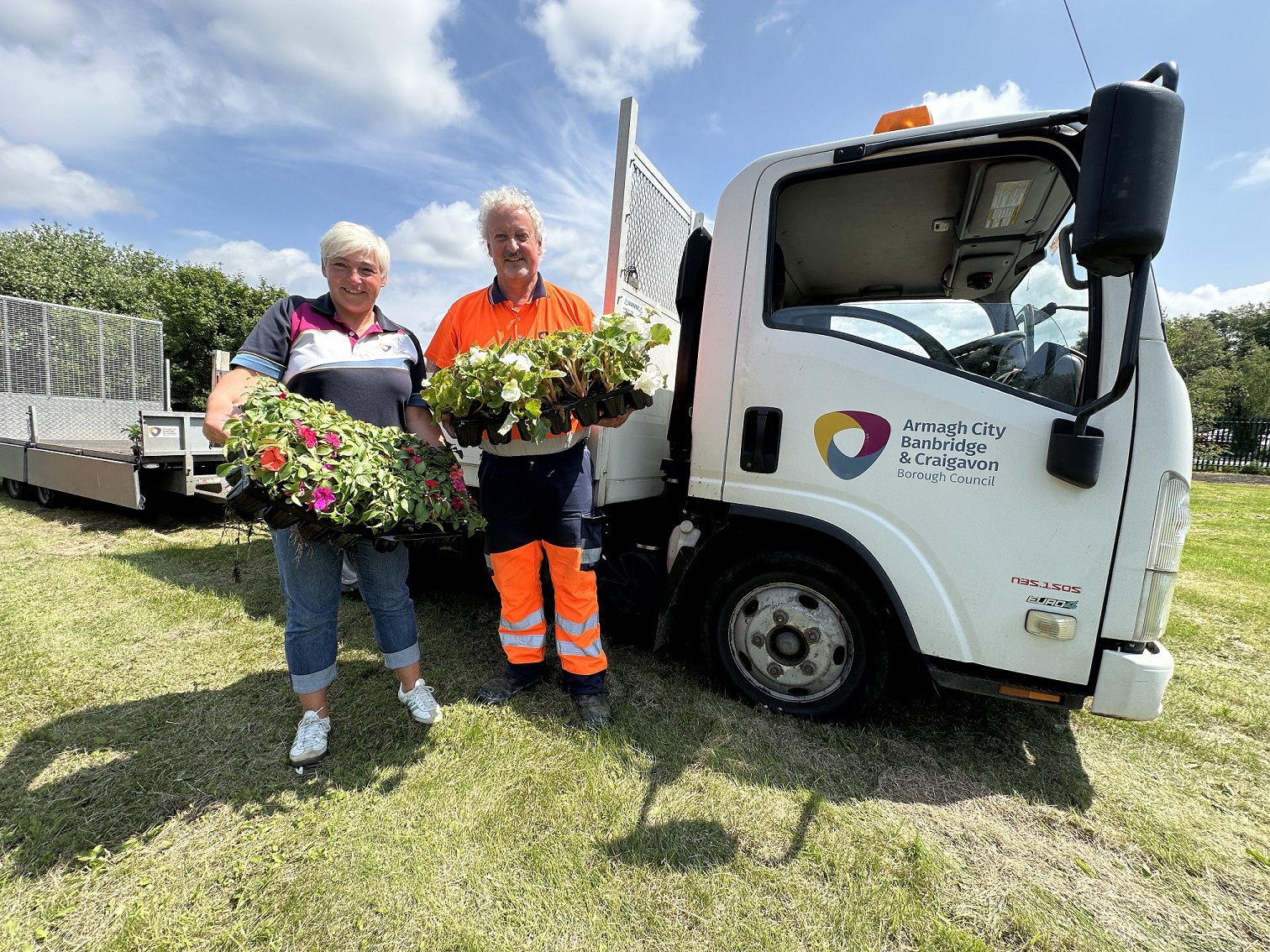
  • MIL-OSI United Kingdom: Council scheme brings flower power to towns and villages

    Source: Northern Ireland City of Armagh

    Harry and Normal from Magheralin Gardening Team pick up the flowers for their village from Leanne McShane (ABC Council).

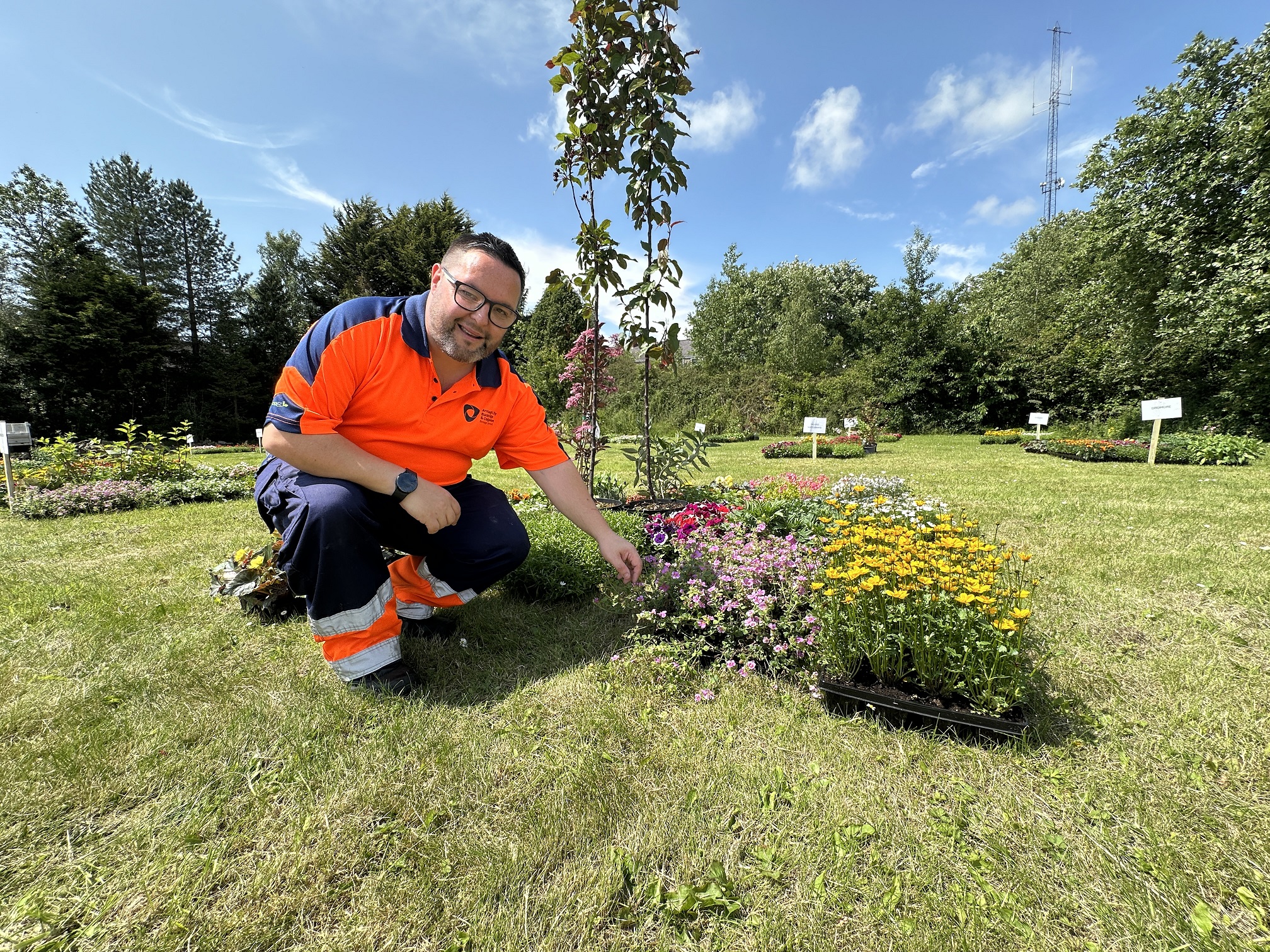
    Towns and villages across the Armagh City, Banbridge and Craigavon Borough are enjoying an extra splash of colour thanks to ABC Council’s Small Floral Grants Scheme.

    Last week more than 30 local community groups and organisations received their allocation of flowers and shrubs through the successful scheme delivered by Armagh City, Banbridge and Craigavon Borough Council.

    Each year, groups across the borough are invited to apply for a grant up to a maximum of £250. Council will purchase the bedding plants and shrubs on behalf of the community groups. The plants are then distributed to the community groups who will plant and tend to them.

    Sean Gordon from Lislea Community Centre said the grants scheme had a positive impact on their village. He said: “We have been successful for the last five years in getting flowers from the council, they are a great asset to our community and our community centre. A lot of people come and have a walk around to admire the flowers, and it’s a brilliant idea.”

    Applications for next year’s Small Floral Grants Scheme are expected to open later this year.

    If you would like more information on the Small Floral Grants Scheme you can send an email to

    *protected email*

    MIL OSI United Kingdom

  • MIL-OSI United Kingdom: Call to help support city’s museums through new donation scheme

    Source: City of Leeds

    Council-run museums and galleries in Leeds are launching a new donation scheme enabling visitors to support some of the city’s most popular cultural gems.

    From June 17, four of the council’s eight sites will introduce “Give What You Can” donation points, where visitors can choose to make a contribution to boost the ongoing care and conservation of the city’s remarkable venues and collections.

    The contactless donation points will be available at Leeds Art Gallery, Leeds City Museum, and Kirkstall Abbey. Visitors can also donate online to all venues, including the Leeds Discovery Centre, an open storehouse that offers regular behind-the-scenes museum tours.

    The decision to introduce the new model was approved by the Leeds City Council earlier this year, with the aim of offsetting unprecedented financial pressures faced by the authority, while continuing to support one of the county’s largest museums and galleries services of its kind.

    Any donations received on site will be managed by the Leeds Museums and Galleries Development Trust, a newly-established charity specifically formed to manage fundraising for museums and galleries in Leeds.

    Councillor Salma Arif, Leeds City Council’s executive member for adult social care, active lifestyles and culture, said: “It’s no secret that these are challenging times for both the museums sector and for local authorities, and the financial pressures facing the council mean we are having to explore new ways of funding some of the services we know are so important to the people of Leeds.

    “We know the immense value our museums and galleries have to everything from leisure and education to combatting social isolation and celebrating the city’s unique diversity, so our priority is to ensure these remarkable cultural assets remain accessible and sustainable, both now and in the future.

    “These new donation points will allow visitors to help us do that, giving those that can afford it the opportunity to donate a set amount of their choice whilst also ensuring those who aren’t able to donate can still enjoy the city’s incredible attractions.”

    The new donation model will replace Kirkstall Abbey’s previous annual pass system – which was free for Leeds residents but £6.20 for non-Leeds residents.

    Donations at every site will also help site teams plan and run inspiring events programmes and learning opportunities for all ages.

    Leeds Museums and Galleries has one of the most significant multidisciplinary collections in the UK, with more than 1.3 million objects.

    ENDS

    MIL OSI United Kingdom

  • MIL-OSI Russia: Yuri Trutnev congratulated the soldiers defending the country on the front lines in Kursk and Donetsk on Russia Day

    Translation. Region: Russian Federal

    Source: Government of the Russian Federation – An important disclaimer is at the bottom of this article.

    On Russia Day, June 12, Deputy Prime Minister of the Russian Federation – Plenipotentiary Representative of the President of the Russian Federation in the Far Eastern Federal District Yuri Trutnev met with soldiers of the 155th Guards Marine Brigade in Kursk Oblast and handed them equipment and gear.

    “Russia Day is a holiday for all patriots of the country. We remember the formation of our Motherland, its history, the exploits and heroic victories over the enemy of our ancestors, how our state was strengthened. Now Russia is conducting a special military operation – we are once again defending our independence, our view of the world, the future of our children. Everyone contributes to the common victory – those who defend freedom on the front lines, and those who help in the rear, working as volunteers and collecting humanitarian aid, and those who go as doctors to save the lives of soldiers and civilians. Our guys need common support more than ever. We are together. We are close. The enterprises of the TOR “Patrioticheskaya” produce equipment and gear for the front. We will continue to help until our country wins,” said Yuri Trutnev.

    On the instructions of Yuri Trutnev, another batch of weapons, uniforms, and vehicles were delivered to the commanders and servicemen of the Russian army, including those from the Far East, at the front line in the special military operation zone.

    The fighters were given products from the enterprises of the Patriotic TOR. They received FPV drones from Yakut and Transbaikal manufacturers, electric enduro motorcycles Timir AT from Yakutia, and all-terrain snow and swamp vehicles from the Yakut enterprise OOO Yakt-Sokol. It should be noted that for their active civic position and assistance in conducting a special military operation, the companies Timir AT and Yakt-Sokol were awarded the public and business prize Star of the Far East in the category Everything for Victory.

    The fighters received ground robotic systems (GRS) “Courier”. The systems were created by a resident of the “Patrioticheskaya” priority development area in Buryatia. The fighters also received DJI Mavic 3 Thermal quadcopters – industrial drones equipped with thermal imaging and digital cameras. Ammunition for high-precision sniper systems, smoothbore guns for combating enemy drones and ammunition for them, and electronic warfare systems “Kapyushon” were sent to the front lines.

    On June 13, Yuri Trutnev held a meeting with the command staff of the Eastern Military District, met with officers and soldiers of the 14th separate guards special purpose brigade, and soldiers of the volunteer detachment – civil servants of the Far Eastern regions. The servicemen and volunteers were given products from the residents of the Patriotic Priority Development Area: Yakt-Sokol all-terrain vehicles and Timir AT electric enduro motorcycles, quadcopters, electronic warfare and electronic reconnaissance equipment, optical observation devices, thermal imaging sights, anti-fragmentation suits, smoothbore guns for combating enemy drones, and ammunition. Kuryer NRTKs were sent to the front lines for servicemen of the Eastern Military District and Far Eastern volunteers.

    In total, 4,590 FPV drones were transferred during the trip to Kursk and the DPR, including 2,090 units from the manufacturers of the Patriotic TOR. In addition, 106 Timir AT electric enduro motorcycles, 19 all-terrain snow and swamp vehicles of Yakt-Sokol LLC, 10 Kurier ground robotic systems, 15 Kharon thermal imaging sights, Dozor-1 surveillance devices, Venox Patriot thermal imaging sights, Nightforce optical sights, anti-fragmentation suits and other equipment and ammunition were transferred from the residents of the Patriotic TOR.

    Please note: This information is raw content directly from the source of the information. It is exactly what the source states and does not reflect the position of MIL-OSI or its clients.

    MIL OSI Russia News

  • MIL-OSI United Nations: 4th Consultation on the improved modalities for reporting and assessment of forest disturbance/damage in the UNECE region: Frequency of reporting and Thresholds for forest damage/disturbance

    Source: United Nations Economic Commission for Europe

    In response to the request by of the UNECE Committee on Forests and the Forest Industry (COFFI) and the FAO European Forestry Commission (EFC) to develop the improved modalities for reporting and assessment of forest disturbance/damage in the UNECE region, the UNECE/FAO Team of Specialists (ToS) on Monitoring Sustainable Forest Management has initiated work on this topic.

    A Task Force within the ToS has led the preparatory process, which includes the series of consultations to address key issues such as the purpose of reporting, the types of damage to prioritize, relevant metrics, the distinction between damage and disturbance, cause attribution, event timing, monitoring frequency, thresholds, and the integration of new technologies.

    The 4th consultation builds on the results of the 1st, 2nd and 3rd consultations, which were held on 25 February 2025, 27 March 2025, and 5 May 2025 respectively. It focuses on the following issues:

    • Frequency of forest damage/disturbance reporting, and
    • Thresholds for forest damage/disturbance.

    The 4th meeting will conclude this series of technical consultations on this topic. The results will form the basis of a proposal for improved forest damage and disturbance reporting in the UNECE region. This proposal will be discussed at the next Team of Specialists meeting, which will take place in Siegburg, Germany, from 9 to 11 September 2025 (in person only).

    Contact: Secretariat

    This meeting is exclusively for Team of Specialists and Task Force members. As such, it is closed to the public.

    MIL OSI United Nations News

  • MIL-OSI Australia: Coordinated raid of alleged illegal waste activity

    Source: Tasmania Police

    Issued: 16 Jun 2025

    Open larger image

    Queensland officer executing warrant in Forrest Lake

    A compliance operation has seen the successful execution of 10 search warrants simultaneously for alleged illegal waste activity in Forest Lake.

    Public reports to the Pollution Hotline alerted the Department of the Environment, Tourism, Science and Innovation (DETSI) to the suspicious activity.

    Information indicated that several operators were acting illegally by receiving and handling waste without an Environmental Authority (EA), including vehicle wrecking and receiving scrap metal and construction waste including asbestos and end-of-life tyres.

    An EA provides businesses with conditions they must comply with to manage environmental risks associated with their operations.

    Unlicensed waste operators present significant environmental risks, not to mention unfairly undercutting lawful operators who are meeting their environmental obligations to protect our environment.

    After comprehensive planning, on 10 June 2025, DETSI led an operation with the support of the Queensland Police Service, to collect evidence about alleged illegal activity.

    Strong enforcement action will be taken against unlicensed activities, with fines of $16,690 for a company. DETSI also typically orders unlicensed operators to cease or reduce their operation to meet the permissible thresholds.

    Executive Director at the Department of the Environment, Tourism, Science and Innovation Brad Wirth echoed the success of the operation.

    “This is not the first successful compliance operation of its kind, and it certainly won’t be the last.

    “It took a lot of preparation to orchestrate this operation; it is a complex project and the safety of our staff and those operating at the premises is our top priority.

    “Improper waste handling can impact the environment through the release of contaminated water, increased fire risk and dust and noise nuisance impacts, which is why these activities must be licensed.

    “Let this serve as a warning to waste operators who think they are above the law: it is not worth the risk.

    “Enabling illegal activities to occur not only has detriment environmental impacts, but it is also unfair to operators who are complying with their environmental responsibilities – something we do not take lightly.

    “We will continue to take strong compliance action against operators and individuals allegedly engaging in illegal activity.”

    MIL OSI News

  • MIL-OSI Economics: Global Cross-Border Payments: A Quadrillion Evolving Market?

    Source: International Monetary Fund

    Summary

    Cross-border payments are essential to the global financial system, facilitating trade and investment. The global cross-border traditional and crypto payment market approached a value of about one quadrillion dollars in 2024, with crypto payments representing only a small fraction despite their recent surge. Focusing on data from Swift—the largest traditional cross-border financial messaging network—we study the characteristics and evolving patterns of these payments over 2021-24. Notably, payments are predominantly concentrated in advanced economies, and are driven by financial institutions and large transactions. While currency usage remains stable—with the U.S. dollar maintaining the largest share—the Chinese renminbi demonstrates signs of increasing global integration, albeit from a low base. Gravity model estimates confirm that traditional economic linkages, via trade, portfolio investment, and FDI, shape cross-border payments. However, aggregate dynamics mask substantial heterogeneity across message types (customer vs. financial related payments), currencies, and transaction sizes, with information asymmetries playing a diminished role in larger payments.

    Subject: Balance of payments, Currencies, Foreign direct investment, Money

    Keywords: Cross-Border Payments, Currencies, FDI, Foreign direct investment, Global, Networks, Portfolio Investment, Trade

    MIL OSI Economics

  • MIL-OSI Economics: Forging Strength: Exploring the Dynamic Interplay between Institutions and State Capacity

    Source: International Monetary Fund

    Summary

    This paper examines the distinct and interactive effects of state capacity (SC) and institutional quality (IN) on real GDP per capita growth across up to 130 countries over the period 1970–2022. Using a novel identification strategy that isolates large, exogenous governance shocks via both residual-based and percentile-based approaches, we estimate dynamic responses using local projections. We find that SC and IN shocks yield positive and persistent growth effects, particularly in emerging and developing economies, where governance gaps are most binding. Institutional reforms generate the strongest gains. In contrast, SC shocks show weaker effects on average, though they become highly effective when implemented alongside institutional improvements, highlighting a strong complementarity. Results are robust to alternative shock definitions and endogeneity concerns. A two-stage least squares (2SLS) approach using income-group-based democratization waves and natural disasters as instruments confirms the validity of our shocks, with IV estimates closely tracking the baseline, except for government effectiveness (GEE) shocks, where the IV point estimate is significantly larger. These findings suggest that endogeneity is not a major concern, and underscore that targeted institutional reforms, particularly when supported by capable state structures, can deliver substantial economic dividends.

    MIL OSI Economics

  • MIL-OSI Economics: Post-Pandemic Investment in Spain: Assessing the Sluggish Recovery

    Source: International Monetary Fund

    Summary

    This paper examines Spain’s investment performance five years after the COVID-19 pandemic. As of 2024, investment had only returned to pre-pandemic levels and remained below historical fundamentals and euro area peers, particularly in transport equipment and other construction. Macroeconomic analysis identifies elevated economic policy uncertainty as a factor holding back investment. Moreover, firm-level data show that investment among small and younger to middle-aged Spanish firms is less responsive to profitability than in comparable firms in larger euro area economies, further suggesting that uncertainty is weighing on investment decisions. For younger and middle-aged firms, high leverage during the pandemic also points to binding financial constraints.

    Subject: Capital formation, COVID-19, Depreciation, Financial institutions, Foreign exchange, Gross fixed investment, Health, Housing, Intangible capital, National accounts, Purchasing power parity, Sovereign bonds

    Keywords: Bond yields, Capital formation, Consumer price indexes, COVID-19, Depreciation, Economic policy uncertainty, Firm heterogeneity, Gross fixed investment, Housing, Intangible capital, Investment, Leverage, Profitability, Purchasing power parity, Sovereign bonds

    MIL OSI Economics

  • MIL-OSI Economics: Honduras: Third Reviews Under the Extended Fund Facility and the Extended Credit Facility Arrangements, and Request for Modification of Performance Criteria-Press Release; Staff Report; and Statement by the Executive Director for Honduras

    Source: International Monetary Fund

    International Monetary Fund. Western Hemisphere Dept. “Honduras: Third Reviews Under the Extended Fund Facility and the Extended Credit Facility Arrangements, and Request for Modification of Performance Criteria-Press Release; Staff Report; and Statement by the Executive Director for Honduras”, IMF Staff Country Reports 2025, 131 (2025), accessed June 16, 2025, https://doi.org/10.5089/9798229014069.002

    MIL OSI Economics

  • India’s WPI inflation eases to 14-month low of 0.39 per cent in May

    Source: Government of India

    Source: Government of India (4)

    India’s annual rate of inflation based on the Wholesale Price Index (WPI) eased further to a 14-month low of 0.39% in May, down from 0.85% in April and 2.05% in March, according to data released by the Ministry of Commerce and Industry on Monday.

    The month-over-month change in WPI inflation during May was in the negative zone at (-0.06%) compared to April, reflecting a continuing downward trend in inflation. A decline in the prices of food items as well as fuels such as petrol and diesel contributed to the negative month-on-month inflation rate.

    The country’s inflation rate based on the Consumer Price Index (CPI) also declined to 2.82% in May 2025, compared to the same month in the previous year. This marks the lowest level of retail inflation since February 2019, according to figures released last week.

    Food inflation declined to 0.99% in May — the lowest since October 2021. This is the seventh consecutive month of decline in food inflation, largely due to improved agricultural output.

    The Reserve Bank of India (RBI) has revised its inflation outlook for 2025–26 downward — from the earlier forecast of 4% to 3.7%, RBI Governor Sanjay Malhotra said on Friday. The sharp decline in inflation has enabled the RBI to implement a 50 basis point cut in the repo rate, reducing it from 6% to 5.5%, as part of its latest monetary policy review to spur economic growth.

    Additionally, the RBI announced a 100 basis point reduction in the Cash Reserve Ratio (CRR), from 4% to 3%, to be implemented in four tranches of 25 basis points each. This measure is expected to inject Rs 2.5 lakh crore into the banking system, enhancing liquidity and supporting credit flow.

    Malhotra highlighted that inflation has significantly softened over the past six months — falling from above the upper tolerance band in October 2024 to well below the target. He noted signs of broad-based moderation.

    “The near-term and medium-term outlook now gives us the confidence not only of a durable alignment of headline inflation with the target of 4%, as expressed in the last meeting, but also the belief that during the year, it is likely to undershoot the target slightly,” he said.

    IANS

  • Centre issues Census notification: J&K, Ladakh, Himachal, U’Khand in 2026, rest in 2027

    Source: Government of India

    Source: Government of India (4)

    The central government on Monday formally notified the conduct of the next decennial census to be held in 2027, exercising its authority under Section 3 of the Census Act, 1948. The new notification issued by the Ministry of Home Affairs supersedes an earlier order from March 2019, which had set the schedule for the Census originally planned for 2021 but later postponed indefinitely due to the COVID-19 pandemic.

    According to the notification, the census will be carried out across the country with the reference date set on March 1, 2027. This reference date will be applicable throughout India, with the exception of certain snow-bound and hard-to-reach regions.

    For the Union Territory of Ladakh and the snow-bound, non-synchronous areas of the Union Territory of Jammu and Kashmir, and the states of Himachal Pradesh and Uttarakhand, the census reference date has been set on October 1, 2026. These regions have traditionally followed an earlier reference date owing to logistical constraints posed by extreme weather and terrain.

  • Centre issues Census notification: J&K, Ladakh, Himachal, U’Khand in 2026, rest in 2027

    Source: Government of India

    Source: Government of India (4)

    The central government on Monday formally notified the conduct of the next decennial census to be held in 2027, exercising its authority under Section 3 of the Census Act, 1948. The new notification issued by the Ministry of Home Affairs supersedes an earlier order from March 2019, which had set the schedule for the Census originally planned for 2021 but later postponed indefinitely due to the COVID-19 pandemic.

    According to the notification, the census will be carried out across the country with the reference date set on March 1, 2027. This reference date will be applicable throughout India, with the exception of certain snow-bound and hard-to-reach regions.

    For the Union Territory of Ladakh and the snow-bound, non-synchronous areas of the Union Territory of Jammu and Kashmir, and the states of Himachal Pradesh and Uttarakhand, the census reference date has been set on October 1, 2026. These regions have traditionally followed an earlier reference date owing to logistical constraints posed by extreme weather and terrain.

  • MIL-OSI United Kingdom: 2/2025: Confirmation of decapitalisation rates

    Source: United Kingdom – Executive Government & Departments

    Correspondence

    2/2025: Confirmation of decapitalisation rates

    Business rates information letters are issued by the Ministry of Housing, Communities and Local Government at regular intervals throughout the year.

    Applies to England

    Documents

    Details

    This letter confirms the decapitalisation rates for the 2026 revaluation.

    Updates to this page

    Published 16 June 2025

    Sign up for emails or print this page

    MIL OSI United Kingdom

  • MIL-OSI United Kingdom: Chance to put your best foot forward to support city charities

    Source: City of Wolverhampton

    The annual Best Foot Forward challenge, organised by the Rotary Club of Wolverhampton, takes place on Saturday 28 June, 2025, at WV Active Aldersley from 8am to 8pm, with all proceeds going to The Wolverhampton MS Therapy Centre, Central Youth Theatre and The Rotary Charitable Trust.

    The event is supported by around 40 community minded corporate Patrons who have created a fund which will be released by those taking part. During the course of the event, every completed lap of the stadium will unlock £1 from the fund which will go to the chosen charities, The Wolverhampton MS Therapy Centre, Central Youth Theatre of Wolverhampton and The Rotary Charitable Trust.

    Participants can spend as long or as little as they choose at the event and return as often as they want during the course of the day, with a personal chip keeping tally of how many laps have been covered. When finishing for the day a certificate is available, recording the number of laps covered.

    The event was first held in 2013, and in 10 editions since has raised over £200,000 for good causes.

    Councillor Obaida Ahmed, the City of Wolverhampton Council’s Cabinet Member for Health, Wellbeing and Community, said: “We are delighted to be making WV Active Aldersley available once again for this important annual fundraiser.

    “This unique event provides the opportunity to take exercise at your own pace and will provide lots of benefits. Exercise is great for physical and mental health, helping to build stamina, burn calories and make the heart healthier, while at the same time knowing that you are completing a challenge that will help others is also immensely rewarding.

    “The essential difference between Best Foot Forward and a typical sponsored walk or run is that, for the latter, entrants are required to sign up personal sponsors and then collect and pay over the sponsorship monies.

    “For this event, there is no obligation to seek personal sponsorship – all you need to do is take part, because the charity funding comes from elsewhere.”

    For more information, and to register for the event, please visit Wolverhampton Best Foot Forward.
     

    MIL OSI United Kingdom

  • MIL-OSI United Kingdom: No One Left Behind: Birmingham Highlights Vital Support for Migrant Survivors This Refugee Week

    Source: City of Birmingham

    As part of Refugee Week 2025 (16-22 June), Birmingham City Council is raising awareness of the life-saving support available for refugee and migrant survivors of domestic abuse.

    Working in partnership with the Refugee and Migrant Centre, Central England Law Centre, and the NRPF Network, the campaign draws attention to the significant barriers many survivors face — including No Recourse to Public Funds (NRPF), language barriers, and lack of access to safe housing. 

    Thanks to funding through the Council’s Domestic Abuse Community Grants, the Refugee and Migrant Centre, working in partnership with specialist domestic abuse services, is supporting survivors. This includes offering expert immigration advice and advocacy in over 40 languages, helping survivors claim asylum, regularise their immigration status, or access financial support. 

    Survivors with NRPF, including those whose asylum claims have been refused, can also receive legal advice and representation through the Central England Law Centre. Their work with local domestic abuse providers ensures access to support such as the Destitute Domestic Violence Concession (DDVC) — a vital legal route to safety. 

    Councillor Jamie Tennant, Cabinet Member for Social Justice, Community Safety and Equalities, said:

    “Refugee Week is a time for reflection and action. No one should be trapped in an abusive situation because of their immigration status. Here in Birmingham, we’re proud to stand alongside our partners to ensure that survivors get the help they need — with dignity, compassion, and justice. We are committed to making sure no one is left behind.” 

    The Council aims to raise awareness by sharing real survivor stories, busts harmful myths about migrant access to services, and provides practical information on where to get help. Each day focuses on a different theme, from legal support and housing rights to survivor voices and community solidarity. 

    Where to Get Help 

    If you or someone you know is affected by domestic abuse, support is available: 

    • Birmingham Domestic Abuse Hub:  

    Call 0808 800 0028 Monday to Friday, 9am – 5pm. 

    Visit www.bswaid.org (Webchat open Monday to Friday from 10am – 4pm) 

    The hub also has a women only drop-in service at Bank House, 36 Bristol Street, Birmingham B5 7AA. Opening times are: Monday and Tuesday 10:00am to 4:00pm, Wednesday 1:00pm to 4:00pm, Thursday and Friday 10:00am to 4:00pm 

    • Refugee and Migrant Centre: 

    Visit www.rmcentre.org.uk 

    Call 0800 0663 444 

    Or drop-in on Monday, Tuesday, Thursday and Friday mornings between 9am-1pm at: 

    The Refugee and Migrant Centre, 
    Second Floor, Chamberlain Building, 
    36 Frederick Street, 
    Birmingham, 
    B1 3HN 

    • Central England Law Centre: 

    Telephone advice available Monday to Thursday 9am – 1pm and 2pm – 5pm, and Friday 9am – 1pm and 2pm – 4.30pm on 0121 227 6540 

    Or visit www.centralenglandlc.org.uk 

    MIL OSI United Kingdom

  • MIL-OSI United Kingdom: Public meeting on Curtis Wood’s future management

    Source: City of Canterbury

    Local people can find out more about how Curtis Wood will be cared for in the coming years at a public meeting next month.

    Curtis Wood is a 13-acre site, designated as a Local Nature Reserve, in Herne. It is known for its woodland flowers, meadow areas and variety of wildlife, and is owned and looked after by the city council.

    The meeting at the Herne Centre on Tuesday 1 July between 6.45pm and 7.45pm will see the council setting out its new management plan for the woodland area and hearing the views of residents.

    The plan details measures to allow more light to reach the woodland floor, creating better conditions for woodland flowers to establish and spread, and steps to prevent bluebells close to footpaths from being trampled.

    In addition, the council is keen to involve local people in recording wildlife sightings, which will provide information to guide future management of the wood.

    This focus on local involvement is particularly important as it follows an incident last year where work to cut back some of the woodland caused concern within the community, from which lessons have been learned.

    The council’s recently-appointed Tree and Woodland Officer, Martin Thomas, will give a presentation, followed by an open discussion to hear residents’ views.

    The event will be opened by Cabinet member for the environment and climate change, Cllr Mel Dawkins.

    Cllr Dawkins said: “We know there is plenty of passion locally about our woodlands and open spaces, so we are expecting a good turnout for this meeting.

    “Curtis Wood is one of our most precious areas of woodland in the district. We can reassure residents that there are no wholesale changes or over management – this is much more about the relatively small things we can do to enhance the site for biodiversity and wildlife.

    “We really hope people will want to get involved in what we are seeking to do and help with how we want to look after this important site in the years ahead.”

    No pre-booking is required for the meeting – just pop along.

    Published: 16 June 2025

    MIL OSI United Kingdom

  • MIL-OSI United Kingdom: Employers recognised for their defence support with 2025 ERS Silver Awards

    Source: United Kingdom – Executive Government & Departments 3

    Press release

    Employers recognised for their defence support with 2025 ERS Silver Awards

    The Ministry of Defence is pleased to announce that 307 organisations have been awarded the Defence Employer Recognition Scheme (ERS) Silver Award for 2025.

    Framed Silver ERS Awards. Copyright: RFCA.

    The ERS Silver Award recognises employers who have shown exceptional support to the armed forces community, including reservists, veterans and military families. These employers have gone beyond their Armed Forces Covenant commitments to embed supportive HR policies, promote defence values, and advocate for service personnel in the civilian workforce.

    Awardees typically demonstrate:

    • paid leave for reservist training and mobilisation
    • active veteran recruitment and retention policies
    • flexible support for military families
    • visible leadership endorsement of the Armed Forces Covenant

    Major General Jamie Gordon, Chief Executive of the Council of Reserve Forces’ and Cadets’ Associations, said:

    These Silver Award winners are trusted allies of defence. They don’t just talk about support—they show it, every day, through flexible policies, visible advocacy, and long-term commitment to those who serve. This is about more than good intentions, it’s about practical, sustained support that strengthens our national resilience. It is very pleasing that they have been recognised for all they do for our reservists, veterans and cadets.

    The announcement forms part of defence’s broader strategy to build closer relationships with industry and civil society in support of a modern, adaptable armed forces.

    Find out how your organisation can support the armed forces community through the Armed Forces Covenant and Defence Employer Recognition Scheme:

    Join the conversation

    Awardees and partners are encouraged to engage with the announcement and share their support via social media.

    Please tag and follow DRM on:

    For more information and media enquiries:

    Email: co-adcomms@rfca.mod.uk

    Updates to this page

    Published 16 June 2025

    MIL OSI United Kingdom

  • MIL-OSI Asia-Pac: FS to visit Shanghai tomorrow

    Source: Hong Kong Government special administrative region

    FS to visit Shanghai tomorrow 
    The Secretary for Financial Services and the Treasury, Mr Christopher Hui, will participate in the visit.
     
    Mr Chan will return to Hong Kong in the afternoon of June 18. During his absence, the Deputy Financial Secretary, Mr Michael Wong, will act as Financial Secretary. During Mr Hui’s absence, the Under Secretary for Financial Services and the Treasury, Mr Joseph Chan, will be the Acting Secretary for Financial Services and the Treasury.
    Issued at HKT 17:00

    NNNN

    MIL OSI Asia Pacific News

  • MIL-OSI Economics: Making the EU’s Multiannual Financial Framework Fit for Purpose

    Source: International Monetary Fund

    Summary

    The European Union’s budget—known as the Multiannual Financial Framework (MFF)—has over time been a key tool for enhancing economic efficiency, achieving redistribution, and helping the Union tackle pressing challenges. As the Union navigates an increasingly complex global environment and faces looming structural and demographic changes, it is increasingly evident that decisive EU-level actions will be needed to boost productivity and resilience. The MFF is a critical policy lever that can enable the needed EU-level actions. This paper argues for three key changes to the next MFF (2028-34) to help the budget play this role. First, bottom-up estimates of investment needs suggest that spending on European Public Goods to boost productivity and resilience needs to be increased to at least twice the current level. While this would require an at least 50 percent increase in the budget’s size or about 0.6 percent of EU GNI annually (if spending on programs such as the Cohesion Policy and Common Agricultural Policy is kept unchanged), focusing on activities that maximize positive externalities and reduce costly duplication can generate net positive values for member states. Second, reforms are needed to make the budget more streamlined, responsive to evolving needs, and more effective by incentivizing good performance. Lastly, the financing framework should be strengthened by integrating borrowing as a regular tool, alongside greater own resources to bolster debt service capacity. Increasing own resources by about 0.2 percent of GNI annually to cover peak debt servicing costs along with additional reserves for unexpected challenges would likely provide financial security to support the proposed increase in the budget. A clearer focus on strategic investments and measurable outcomes will reinforce the budget’s positive sum value, helping build support for a more ambitious EU budget.

    MIL OSI Economics