Source: People’s Republic of China – State Council News
Law enforcement authorities of the Democratic People’s Republic of Korea (DPRK) have detained a senior official who was largely responsible for a recent failed warship launch, the official Korean Central News Agency (KCNA) said Monday.
Based on the results reported so far from the accident investigation group, the law-enforcement body summoned and detained Ri Hyong Son, vice director of the Munitions Industry Department of the Central Committee of the Workers’ Party of Korea, “who was greatly responsible for the occurrence of the serious accident,” according to the KCNA report.
The investigation group informed the Central Military Commission of the Workers’ Party of Korea of its progress on Sunday, said the report.
“At the scene of the destroyer launch accident, the work for completely restoring the balance of the warship is being actively conducted under the technical guidance of an expert group according to its schedule,” it said.
Authorities have launched a full investigation after the newly built 5,000-ton-class destroyer suffered a “serious accident” during its launch at the Chongjin Shipyard on Wednesday. Three people had been previously detained by law enforcement authorities over the failed launch, according to KCNA reports.
Find out what it takes to be an elected member for Northland Regional Council or Whangarei District Council. Hear from experts in local government and have your questions answered.
WHEN Wednesday, 04 June 5pm to 7:30pm
WHERE Te Iwitahi (Civic Centre), 9 Rust Avenue, Whangārei, or join the livestream via Facebook.
FLOOD MANAGEMENT RECOGNITION
Northland Regional Council’s Rivers team has been awarded runner up in Floodplain Management Australia’s IAG Excellence Award for Flood Risk Management Project of the Year 2025.
This recognition highlights a collaborative, community-led flood protection initiative, guided by local hapū and the partnership of three Māori land blocks. The project is safeguarding more than 1800 residents, two schools, Kohanga Reo, playcentres, a petrol station and essential community facilities – all while respecting Te Mana o te Wai and integrating Mātauranga Māori with modern engineering solutions.
The project was shortlisted against three other large Australian projects.
This is a full-time position based in either Manila, Bangkok, Jakarta, or Kuala Lumpur working on legal and political issues related to the environment. Candidates who have the legal right to work and live in the Philippines, Thailand, Indonesia and Malaysia are encouraged to apply.
Greenpeace and volunteers raise a ‘wind turbine’ on the beach at dawn in Durban, South Africa. To send a message of hope for international negotiations to agree on a fair, ambitious, and legally binding treaty to avert climate chaos.
About the Role
The Senior Regional Campaign Strategist (Legal and Political) leads the development of Greenpeace Southeast Asia’s (GPSEA) political and legal strategy and provides legal and political risk assessments in all stages of campaign/project development and implementation. The scope of work is regional, multi-issue, multi-project, and multi-discipline with global dimensions. It requires high ability to adapt and work in different and challenging internal and external work environments and political contexts.
Duties and Responsibilities:
Lead the development and implementation of regional political and legal strategy of GPSEA bringing campaigns and projects across countries together for synergy, regional and global impact as aligned with GPSEA Theory of Change (TOC), objectives and priorities
Provide political and legal risk assessments and mitigation measures on key campaign strategies, and project activities; advise leadership team on political and legal responses in case of harassment, violence, and attacks on the staff (including activists, supporters and volunteers) institution, property and reputation of GPSEA
Anchor the development of South-South legal/political community and global south position on multilateral platforms in the Greenpeace global network.
Lead global legal/political project or process relevant to GPSEA and global political and legal campaign objectives
Strategically position and make GPSEA’s presence in multilateral platforms highly impactful
Develop legal and political briefings, negotiating texts, reports, updates, position papers and talking points for regional and global submission in cooperation with relevant programme staff
Analyse external political situations and identify relevant regional trends and opportunities to advance GPSEA’s political and legal work regionally and globally
Develop and maintain a GPSEA community of practice around legal and political work
Ensure GPSEA’s political and legal position and stance on issues are coherent and consistent across countries and in external communications
Proactively identify politically or legally contentious issues that will impact GPSEA and provide advice on actions to take
When required/requested, perform a review and give political, legal sign off of reports and other external communications of GPSEA.
Actively contribute to programme design, review of campaigns and projects and provide inputs for decision making processes.
Proactively contribute to the development and implementation of innovative strategies for non-violent direct actions to maximize political and legal impact, in cooperation with country teams and other international units, and in accordance with Greenpeace’s principles
Participate in non-violent direct action to support and advance campaign goals.
Organize and oversee the work of short-term contractors where appropriate.
Help manage and oversee the budget and ensure financial integrity of projects and unit
Coordinate and ensure coherence on GPSEA position internally, provide legal and political oversight on sign-ons
Represent GPSEA’s political, legal and related inputs at internal meetings and activities of Greenpeace’s global legal and political communities or global project teams. Inform GPSEA of agreements and developments in the global legal and political communities.
Periodically conduct capacity needs assessments of GPSEA staff to improve legal and political work
Coordinate capacity building skills shares and training to support the legal and political work of the program team. When requested, mentor or coach program staff to enhance his/her skills in political and legal engagements.
Working with the Fundraising Team to explore and develop working relationships and cooperation with donors and foundations
Lead and coordinate the development of funding proposals for GPSEA legal and political work with relevant GPSEA team leaders.
Represent, lead and strategically position GPSEA at key international, regional fora
Ensure that the objectives, analysis, recommendations and submissions of GPSEA in relevant fora are timely, effective and strategic in advancing GPSEA program and organizational objectives, branding and identity
Act as expert spokesperson on regional legal and political issues for GPSEA and a go to person for the global organisation when needed.
Proactively develop relationships with national and regional media to increase campaign outreach
Build networks and alliances to advance GPSEA objectives, brand and identity
Contribute to strengthening social and emergent regional and global movements by supporting development of campaign strategies
Develop common strategies and actions with external parties regionally and globally in support of broader political objectives and to realize global and GPSEA campaign objectives and TOCs
Assist the Campaign Director in designing GPSEA campaign program and implement strategies to mobilize various stakeholders and key audiences in the region
Manage project cycle and optimize responsiveness to current situation/context, evolve and devise new ways of working for efficient delivery of multi-layered projects
Respond to and engage in internal as well as pressing external regional challenges as determined by the campaign team through the Campaign Director beyond his/her normal area of work as circumstances do require.
Keep abreast of regional developments in political and legal fields and maintain a general knowledge of developments in political, legal developments in SEA in order to ensure that GPSEA is able to respond, adjust, campaign appropriately/effectively.
Coordinate policy and legal research or other outputs such as policy briefs, statements, submissions, pleadings, motions, legal comments and legal opinions to ensure consistency in form and substance.
Skills and Experience Requirements:
Master’s degree minimum, Doctorate in philosophy or laws preferred in field of Political Science, Public Management, Public Policy, International Relations with minimum 10 years of equivalent experience
Organizational Competencies:
Integrity, professionalism
Strategic thinking, goal-oriented
High standards of quality outputs
Teamwork in a multicultural environment
Courage and innovativeness in challenging enemies of the environment, status quo
Values people, interpersonal relationships, conflict resolution and management
Information management and transfer, sharing of knowledge
Planning, budgeting, monitoring, evaluation
Functional Skills:
Understanding of the political, legal and economic landscape, processes, dynamics in SEA
Extensive knowledge of environmental and human rights laws, jurisprudence, regulation, public policies, stakeholders in SEA
Political, legal communications skills in all forms
Political lobbying, negotiation, advocacy skills/experience in UN, multilateral, bilateral and other policy spaces/processes
Legal counseling, representation, litigation practice
Political, legal research
Campaigning experience, project management
Adherence to nonviolence as a means of enacting change
Understanding of environmental issues in general and campaign issues and agenda in particular
Wide network across the region for potential networking and partnership
A preference for good communication skills in one of more regional SEA languages other than English. Preference for extensive experience in political economy and progressive political framing of environmental issues
Preferred skills include experience in key program areas: policy lobby, public speaking, activist training, strategic planning and organizing people around an issue.
Experience in negotiating in multilateral environmental agreements and similar regional platforms
Greenpeace’s Commitment to Diversity and Inclusion
Greenpeace values diversity as essential to its mission and success. The organisation fosters an inclusive environment that respects varied cultural experiences and perspectives, promoting solutions rooted in social and environmental justice.
Headline: Construction Begins on New Tokyo Head Office in Shinagawa to Open in FY2030
Toyota Motor Corporation (Toyota) will begin construction on the Shinagawa Station West Exit Area District A New Construction Plan (tentative name; hereinafter, the “Plan”), which it is carrying out together with Keikyu Corporation (Keikyu), on May 31, 2025. Toyota will open a new Tokyo Head Office in FY2030 in a planned building located in front of Shinagawa Station, one of the most important transportation hubs in Japan.
Source: United Kingdom – Executive Government & Departments
Press release
Faster cancer treatment thanks to new radiotherapy machines
Thousands of cancer patients will see faster treatment thanks to new radiotherapy machines
Cutting-edge machines will cut waiting times and help 4,500 more patients get treatment faster
Upgraded tech being rolled out at 28 hospitals can cut the rounds of radiotherapy needed and reach cancers in harder to treat areas like chest, abdomen and pelvis
Rollout is backed by £70 million provided by government as part of its mission to improve cancer care through its Plan for Change
Thousands of patients will benefit from faster and safer cancer treatment thanks to new cutting-edge radiotherapy machines being rolled out to every region in the country.
The government has paid for new linear accelerator (LINAC) machines at 28 hospitals, which use modern technology to reduce delays to treatment and, in some cases, could reduce the number of hospital visits a patient needs to make by half, helping to cut waiting lists faster.
Replacing these older machines will save as many as 13,000 appointments from being lost to equipment breakdown.
The machines will be rolled out at hospitals across the country from August, funded by a £70 million government investment as part of its plans to improve cancer care through the Plan for Change.
By March 2027, up to 27,500 additional treatments per year will be delivered, including up to 4,500 receiving their first treatment for cancer within 62-days of referral, helping to treat more cancer patients in faster time.
Equipped with cutting-edge technology, the machines are safer for patients and can more precisely target tumours, causing less damage to surrounding healthy tissues. They are particularly effective at targeting cancers in harder to treat areas, such as the chest, abdomen and pelvis.
Health and Social Care Secretary, Wes Streeting said:
There is a revolution taking place in medical technology which can transform treatment for cancer patients. But NHS hospitals are forced to use outdated, malfunctioning equipment thanks to 14 years of underinvestment under the previous government.
Thanks to the investment this government is making in our NHS, we will provide more cancer patients with world-class, cutting-edge care.
By reducing the number of hospital visits required and preventing cancelled appointments, these state of the art radiotherapy machines free up capacity so that thousands more patients are treated on time.
As a cancer survivor, I know just how important timely treatment is. These machines are part of the investment and modernisation that will cut waiting times for patients, through our Plan for Change.
The tech is being prioritised in hospitals which are currently using outdated treatment machines older than 10 years, meaning patients can be treated faster and reducing cancelled appointments due to faults.
It will also increase the availability of Stereotactic Ablative Radiotherapy (SABR) cancer treatments, which can more precisely target tumours.
NHS national clinical director for cancer Professor Peter Johnson said:
Radiotherapy is essential for many cancer patients, so it’s great news that the investment in new machines means that some will need fewer rounds of treatment, as we bring in more sophisticated techniques.
These machines will deliver more precise treatment for patients, which helps them to recover sooner, as well as enabling the NHS to treat people more efficiently as we continue in our efforts to catch and treat more cancers faster.
The new LINAC radiotherapy machines were allocated across England by Specialised Commissioning teams at NHS England, which will help to improve health inequalities by ensuring every radiotherapy service has the modern equipment needed to offer innovative radiotherapy treatments.
Alongside turbocharging treatment for patients, significant work is being carried out to get cancers diagnosed more quickly than ever before.
Improved performance against the Faster Diagnosis Standard has led to the equivalent of 4,000 extra patients given the all-clear or a definitive cancer diagnosis within 4 weeks in March 2025 compared to the same time the year before, to reach over 217,000 in total in March 2025.
Patients are also getting easier access to vital tests, checks and scans, with Community Diagnostic Centres delivering almost 2.5 million on high streets and at other convenient locations in March.
Senior policy manager at Cancer Research UK, Matt Sample, said:
All cancer patients, no matter where they live, should have access to the best treatment, so it’s great to see investment in cutting-edge equipment for hospitals across the country.
Modern LINAC machines can offer more efficient, targeted treatment with less side-effects for patients, which is why it’s vital that there is sustained funding to replace them routinely.
The government has a huge opportunity in its upcoming National Cancer Plan for England to tackle unequal access to optimal treatment, and we look forward to working with them to help give every patient the care they deserve.
Kate Seymour, Head of External Affairs at Macmillan Cancer Support says:
Today marks an exciting step forward for cancer treatment in England. Many people across the country are facing long delays for care but today proves that better is possible.
Investment in cutting edge technology is essential to bring down waiting times and help more people with cancer get the best care the UK has to offer, whoever and wherever they are.
The investment in this new technology follows on from the government rolling out 13 new DEXA scanners across the country which will allow 29,000 extra bone scans per year will be delivered for patients as part of the Plan for Change.
The government’s Plan for Change will continue to put patients first as it works to end the misery felt by millions up and down the country who have been denied the care they need for too long.
Over 3 million appointments have already been delivered since the end of June 2024, smashing the government’s target of delivering 2 million extra operations, scans and appointments. This is alongside over 8.3 million more appointments each year becoming available as 1,000 doctors surgeries receive a bricks and mortar upgrade to modernise practices and expand capacity.
NOTES TO EDITORS
The 28 trusts receiving an upgraded scanner are:
– Mid and South Essex NHS Foundation Trust
– Sheffield Teaching Hospitals NHS Foundation Trust
– Northampton General Hospital NHS Trust
– United Lincolnshire Hospitals NHS Trust
– University Hospitals Plymouth NHS Trust
– Royal Free London NHS Foundation Trust
– Cambridge University Hospitals NHS Foundation Trust
– Hampshire Hospitals NHS Foundation Trust
– The Royal Marsden NHS Foundation Trust
– Worcestershire Acute Hospitals NHS Trust
– Lancashire Teaching Hospitals NHS Foundation Trust
– The Newcastle Upon Tyne Hospitals NHS Foundation Trust
– East Suffolk and North Essex NHS Foundation Trust
– Royal Berkshire NHS Foundation Trust
– Imperial College Healthcare NHS Trust
– Maidstone and Tunbridge Wells NHS Trust
– University Hospitals Bristol and Weston NHS Foundation Trust
– South Tees Hospitals NHS Foundation Trust
– The Christie NHS Foundation Trust
– Gloucestershire Hospitals NHS Foundation Trust
– Nottingham University Hospitals NHS Trust
– Royal Cornwall Hospitals NHS Trust
– The Clatterbridge Cancer Centre NHS Foundation Trust
– University Hospitals of Derby and Burton NHS Foundation Trust
– Guy’s and St Thomas’ NHS Foundation Trust
– University College London Hospitals NHS Foundation Trust
Source: People’s Republic of China in Russian – People’s Republic of China in Russian –
Source: People’s Republic of China – State Council News
Chongqing, May 26 (Xinhua) — “I didn’t expect to find so many potential partners in Chongqing!” Donior Matnazarov, a businessman in the ceramic granite industry from Uzbekistan’s Khorezm region, exclaimed at a recent conference on China (Chongqing) – Uzbekistan (Khorezm region) trade and economic exchange.
Donior Matnazarov visited Chongqing City /Southwest China/ for the first time. He not only held in-depth talks with a number of local construction material companies, but also discussed cooperation opportunities with electric vehicle charging station manufacturers and cross-border legal service providers.
The event was attended by representatives of 20 Uzbek enterprises, led by Deputy Governor of Khorezm Region Anvar Davletov. They exchanged views with representatives of nearly 80 Chongqing enterprises on investment and trade needs, areas of potential cooperation and other issues in areas such as agriculture, textiles, food, new energy vehicles and electromechanical equipment.
According to Anvar Davletov, the Khorezm region is rich in tourism and agricultural resources. Tourism is one of the main sectors of the regional economy. Many projects in such areas as the production of aluminum cans, baby food, compound feed and electric motors are open to Chinese investment.
“Chongqing closely cooperates with Uzbekistan and has consistently established friendly relations with the Tashkent, Samarkand, Navoi, Syrdarya regions and other regions of this country,” said He Yi, secretary of the party group of the Chongqing City Committee for the Promotion of International Trade and chairman of the International Chamber of Commerce of the same city.
According to its data, in 2024, the total volume of imports and exports between the two sides amounted to 1.06 billion yuan (about 147.62 million US dollars). At the end of the first quarter of 2025, this figure exceeded 300 million yuan, an increase of 123.5 percent year-on-year.
As it became known, the mutual visa-free regime between China and Uzbekistan will come into force on June 1, 2025. “We count on further trade and economic cooperation and humanitarian exchanges with Chinese enterprises, including Chongqing ones,” Anvar Davletov noted. -0-
Source: People’s Republic of China in Russian – People’s Republic of China in Russian –
Source: People’s Republic of China – State Council News
KUALA LUMPUR, May 26 (Xinhua) — The 46th Association of Southeast Asian Nations (ASEAN) summit and related meetings kicked off in the Malaysian capital on Monday, with enhanced regional integration and resilience to trade and economic shocks on the agenda.
Speaking at the opening ceremony of the plenary session, Malaysian Prime Minister Anwar Ibrahim called on ASEAN members to work together to address the challenges posed by the changing global order and to avoid deviating from the sustainable and equitable development agenda.
“ASEAN’s peace, stability and prosperity often depend on an open, inclusive and rules-based international order that is underpinned by the free movement of trade, capital and people. These foundations are now being eroded by arbitrary action,” he said.
“Indeed, the geopolitical order is currently changing, and the global trading system is under further strain with the recent imposition of unilateral tariffs by the US. Protectionism is resurgent, while we are witnessing multilateral cooperation coming apart at the seams,” he added.
A. Ibrahim also stressed the importance of strengthening cooperation with friendly partners, noting the significance of the first-ever ASEAN-GCC-China summit, which brings together the organization with China, the region’s largest economic partner, and the Gulf Cooperation Council (GCC).
Malaysia holds the ASEAN Chair in 2025 and hosts the ASEAN Summit and related meetings.
Established in 1967, the organization includes Brunei, Cambodia, Indonesia, Laos, Malaysia, Myanmar, the Philippines, Singapore, Thailand and Vietnam. –0–
Source: People’s Republic of China in Russian – People’s Republic of China in Russian –
Source: People’s Republic of China – State Council News
SEOUL, May 26 (Xinhua) — Democratic Party of Korea presidential candidate Lee Jae-myung said Monday he is ready to restore communication channels with the Democratic People’s Republic of Korea (DPRK).
He announced his foreign security policy, saying he would seek to restore inter-Korean communication channels, including military hotlines, mutually suppress actions that cause tensions, and manage situations in a stable manner.
Lee Jae-myung pledged to promote dialogue, exchange and cooperation with the DPRK and strive to achieve two Koreas coexisting on the Korean Peninsula with de-escalated tensions and a denuclearized world.
A presidential by-election, triggered by the ouster of former President Yoon Seok-yeol over his failed attempt to impose martial law, is scheduled for June 3. –0–
Source: People’s Republic of China in Russian – People’s Republic of China in Russian –
Source: People’s Republic of China – State Council News
NEW YORK/Brussels, May 26 (Xinhua) — U.S. President Donald Trump said Sunday he has agreed to delay the planned imposition of 50 percent tariffs on imports from the European Union until July 9.
“It was an honor to do this,” Trump wrote on the Truth Social social network after a call from European Commission President Ursula von der Leyen asking for an extension.
“/W. von der Leyen/ said that she wants to start serious negotiations,” said D. Trump.
In a post on social media X, the head of the European Commission described the call as “good,” saying “Europe is ready to move the negotiations forward quickly and decisively.”
On Friday, D. Trump said that negotiations with the 27 member countries of the bloc “are going nowhere,” threatening to impose 50 percent tariffs on all imports from the EU from June 1.
EU officials and member state representatives reacted with anger, warning that such coercive tactics would jeopardise transatlantic trade talks. –0–
Source: People’s Republic of China in Russian – People’s Republic of China in Russian –
Source: People’s Republic of China – State Council News
KUALA LUMPUR, May 26 (Xinhua) — Chinese Premier Li Qiang arrived in Kuala Lumpur on Monday to attend the ASEAN (Association of Southeast Asian Nations)-GCC (Gulf Cooperation Council)-China summit.
Li Qiang was greeted at Kuala Lumpur International Airport by, among others, Malaysian Transport Minister Anthony Loke Siew Fook and Chinese Ambassador to Malaysia Ouyang Yujing.
Before arriving in Malaysia, which holds the ASEAN chair this year, Li Qiang paid an official visit to Indonesia. –0–
Source: People’s Republic of China in Russian – People’s Republic of China in Russian –
Source: People’s Republic of China – State Council News
BEIJING, May 26 (Xinhua) — China has unveiled an action plan to accelerate the development of digital and intelligent supply chains as part of a broader effort to upgrade them.
The action plan, jointly released by China’s Ministry of Commerce and seven other departments, proposes adopting new technologies such as artificial intelligence, the Internet of Things and blockchain to drive the digitalization, intelligence and visualization of supply chains.
According to the ministry, the plan aims to improve the level of supply chain organization in the agricultural sector, promote the intelligent development of supply chains in the manufacturing industry, strengthen the supply chain integration capacity in the wholesale sector, optimize the supply chain offer in the retail sector, and reduce logistics costs.
The move comes as the country steps up efforts to improve the system’s health by strengthening the resilience and safety of industrial and supply chains, promoting the deep integration of the real economy and the digital economy, and supporting enterprises in transforming and upgrading traditional industries with digital intelligence technologies.
The plan aims to establish replicable models for building digital and intelligent supply chains and basically build deeply embedded, intelligent, efficient, self-sufficient and controllable supply chain systems in important manufacturing industries and key areas of the country by 2030.
The document also envisages cultivating about 100 leading national enterprises in the digital and intelligent supply chain sector by 2030. -0-
Source: Novosibirsk State University – Novosibirsk State University –
“Tsifra” is the largest platform for uniting young Russian directors working in the genres of feature, documentary and animation films, as well as rethinking genres in the direction of “author’s format”. The event is organized by the Cultural and Educational Center of the Student Union of Moscow State University named after M.V. Lomonosov and the Higher School (Faculty) of Television of Moscow State University. The festival is held in seven genre nominations: short documentary, animation, popular science and feature film, social video, video essay, music video. The theme of the 2025 festival is “Time”.
This year, two works by students of the “Journalism” program Humanitarian Institute of NSU were noted by the jury. The film “Right to Yourself” became the winner in the category “Documentary Film”, and “Moving” received the prize for best director.
— We decided to participate in the Tsifra festival because we had high-quality films made as part of the training courses. They had already participated in other competitions, and “The Right to Yourself” was even shown in Yekaterinburg on the screen of the Kolyada Theater and at the international festival Artdocfest in Riga. Tsifra is a prestigious venue, so we wanted to try our hand there, — shares Alina Iskhakova, one of the authors of the projects.
The work on “Right to Yourself” was carried out by four students of the “Journalism” program – Alina Iskhakova, Valeria Ivaschenko, Sofia Sibrikova and Maria Ryabova. The film “Moving” was worked on by two people – Alina and Valeria.
— “Right to Yourself” is the story of a person with mental disabilities who grew up in a boarding school. His past still determines his present and future. And “Moving” is a film about an elderly man who finds it difficult to give up his usual way of life for a more comfortable life, — says Valeria Ivaschenko.
The “Tsifra” festival was held in two stages: first, the long list, then the short list. This year, participants sent hundreds of works from 9 countries, which made the victory even more honorable.
— We were very happy when we learned that “Right to Yourself” won. And then it turned out that “Moving” also received the prize for best direction — and for a documentary filmmaker, this is a real second victory. The jury captured the main idea of both films, and this is especially pleasing. So, it was not in vain that we were taught dramaturgy, — adds Alina Iskhakova.
We congratulate our students on their well-deserved victory and look forward to new works!
Please note: This information is raw content directly from the source of the information. It is exactly what the source states and does not reflect the position of MIL-OSI or its clients.
Source: Secondary teachers question rationale for changes to relationship education guidelines
A record 277 hihi / stitchbirds fledged on Tiritiri Matangi Island this breeding season, allowing many birds to spread their wings and leave the flock.
Earlier this month, 40 hihi were relocated to the Auckland Council managed Shakespear Open Sanctuary. They join Shakespear’s small but thriving population translocated in 2024.
Environmental champion Councillor Mike Lee says the reintroduction of hihi to the Whangaparāoa Peninsula enables more people to see and hear them in their natural habitat.
The birds are carefully unloaded in boxes after travelling from Tiritiri Matangi Island, ahead of their release.
“Thirty years ago, I was present when the ancestors of these hihi birds were introduced to Tiritiri Matangi. To be able to help release their descendants on the mainland really is a conservation dream come true,” says Cr Lee.
[embedded content]
DOC Tiritiri Matangi Ranger Nick Fisentzidis agrees the translocation from island to mainland shows great outcomes for nature are possible when iwi, DOC, council, and community band together.
“They are one of Aotearoa’s rarest and quirkiest birds. There is a total population of only around 2000 nationwide and they require a lot of special attention, so it takes a village!” says Nick.
“We work side by side with Ngāti Manuhiri, Auckland Council, Hihi Conservation Charitable Trust, Supporters of Tiritiri Matangi, Shakespear Open Sanctuary Society and conservation research institutions to care for these taonga.”
Auckland Council Northern’s Principal Ranger Jason Maguiness acknowledges all those who have helped bring hihi to the Shakespear Open Sanctuary, before 40 new birds are released.
John Ewen, Hihi Conservation Charitable Trust Trustee and Professor of Conservation Science at Zoological Society of London says hihi are nationally threatened, with Te Hauturu-o-toi Little Barrier Island holding the only naturally-surviving population since the 1880s.
“Habitat loss, the introduction of predators such as cats and rats and specimen collection probably contributed to the decline of hihi on the mainland,” says John.
Thanks to significant recovery efforts, there are now small managed populations of hihi on Tiritiri Matangi and Kapiti islands, Zealandia in Wellington, Bushy Park Tarapuruhi near Wanganui, Sanctuary Mountain Maungatautari, Rotokare Scenic Reserve and Shakepear Open Sanctuary.
“This season has been superb on both Tiritiri Matangi and Shakespear, likely due to lots of natural food. Flax and cabbage trees, in particular, were abundant,” says John.
DOC Tiritiri Matangi Ranger Nick Fisentzidis agrees that the translocation project from island to mainland is an example of the great outcomes for nature that can be achieved when iwi government, council, and community band together.
An initial translocation to Shakespear of 40 birds in May 2024 has been a resounding success, with at least 60 chicks fledging throughout the summer.
Open Sanctuary Senior Ranger Matt Maitland says invaluable volunteer support from the Shakespear Open Sanctuary Society Incorporated (SOSSI) has enabled the birds to flourish.
“It’s not an easy journey, being moved to a completely new site, but we are working together to give the birds a better chance. A second release to Shakespear brings genetic diversity to the hihi already present, and greater security and resilience for the species against any challenges they may face in the future.”
SOSSI chair Owen Johnston says Shakespear is the ideal setting to release more hihi, with around 350 hectares of native forest providing enough food and nesting opportunities.
“We are set up to keep a close eye on the new arrivals through ongoing monitoring and supplementary feeding, which will help them to get established.”
All hihi whakapapa to Te Hauturu-o-toi. Hihi are taonga to Ngāti Manuhiri, the iwi with an ancestral land connection to Hauturu, Tiritiri Matangi and Shakespear.
Ngāti Manuhiri Settlement Trust spokesperson Delma O’Kane says, “as kaitiaki, we acknowledge the dedication of all involved in this kaupapa, from rangers and conservationists to the local community.
“It is through their unwavering commitment to pest control, monitoring, and habitat restoration that both Tiritiri Matangi and Shakespear Regional Park continue to thrive as a sanctuary for our native flora and fauna.”
A 5-month-old diagnosed with malnutrition being treated at Nasser Hospital in Khan Yunis in Gaza, May 2025.Anadolu/Getty
Last week, the United Nations warned more than 14,000 babies would die of malnutrition in 48 hours if Israel continued to block aid from entering Gaza.
After the figure was widelyreported, that timeline has been walked back, with a UN spokesperson clarifying the projection is for the next 11 months.
Between April 2025 and March 2026, there will be 71,000 cases of acute malnutrition among children under five, including 14,100 severe cases.
An estimated 17,000 breastfeeding and pregnant women will also require treatment for acute malnutrition during this time.
Starvation and malnutrition are harmful for anyone. But for infants the impact can be profound and lasting.
What is malnutrition?
In infants and young children, malnutrition means they have a height, weight and head circumference that don’t match standard charts, due to a lack of proper nutrition.
Nutritional deficiencies are especially common among young children and pregnant women.
The human body needs 17 essential minerals. Deficiencies in zinc, iron and iodine are the most dangerous, linked to a higher risk of infants dying or developing brain damage.
When malnutrition is acute to severe, infants and young children will lose weight because they’re not getting enough food, and because they’re more susceptible to illness and diarrhoea.
A child experiencing wasting has lost significant weight or fails to gain weight, resulting in a dangerously low weight-for-height ratio.
A persistent lack of adequate food leads to chronic malnutrition, or stunting, where growth and development is impaired.
Risk of infections and mortality
Malnourished infants have weakened immune systems. This makes them more vulnerable to developing infections, due to smaller organs and deficits in lean mass. Lean mass is the body’s weight excluding fat and is crucial for supporting healthy growth, strength and overall development.
When children are starving, they are much more likely to die from common illnesses such as diarrhoea and pneumonia.
The human brain develops extraordinarily rapidly during the first 1,000 days of life (from conception to age two). During this time, adequate nutrition is essential.
Children’s developing brains are more likely to be affected by nutritional deficiencies than adults.
When prolonged, malnutrition may lead to structural brain changes, including a smaller brain and less myelin – the protective membrane that wraps around nerve cells and helps the brain send messages.
Chronic malnutrition can affect brain functions and processes such as thinking, language, attention, memory and decision-making.
However, some effects are reversible. Early, intensive interventions – such as access to nutrient-rich food and medicines to treat hypoglycaemia (low blood sugar) and fight infections – can help children catch-up on growth and brain development.
For example, one review of studies involving undernourished preschool children found their cognitive abilities, such as concentration, reasoning and emotional regulation improved somewhat when they were given iron supplements and multivitamins.
However malnutrition during the crucial window under two years old increases the risk of lifelong disabilities.
It’s also important to note recovery is more likely in an environment where nutritious food is available and children’s emotional needs are taken care of.
In Gaza, Israel’s military operations have destroyed 94% of hospital infrastructure and humanitarian aid remains severely restricted. The conditions necessary for children’s recovery are out of reach.
Pregnant and breastfeeding mothers
Severe maternal malnutrition can increase the mother and child’s risk of dying or experiencing complications during pregnancy.
When a breastfeeding mother is malnourished, she will produce less breastmilk and it will be lower quality. Deficiencies in iron, iodine, and vitamins A, D and zinc will compromise the mother’s health reduce the nutritional value of breast milk. This can contribute to poor infant growth and development.
Starved mothers may experience fatigue, poor health and psychological distress, making it challenging to maintain breastfeeding.
Other organ impacts
Data from those born during the Dutch famine of 1944-45 have helped us understand the lifelong health impacts on children conceived and born while their mothers were starving.
Among this group, malnutrition affected the development and function of many of the children’s organs, including the heart, lung and kidneys.
This group also had higher rates of schizophrenia, depression and anxiety, and lower performance in cognitive testing.
They also had a higher risk of developing chronic degenerative diseases (such as cardiovascular disease and kidney failure) and dying prematurely.
Is the damage irreversible?
Recovery is possible. But it depends on how severely malnourished the child is, and when and what kind of support they receive.
Evidence shows children remain vulnerable and have a higher risk of dying even after being treated for complications from severe acute malnutrition.
nutritional rehabilitation (giving the child nutrient-rich foods, specialised feeding, and addressing underlying deficiencies)
breastfeeding support for mothers
providing rehabilitation and health care in the community (so families and children can return to everyday routines).
This seems difficult if not impossible in Gaza, where Israel’s blockade on aid and ongoing military operations mean safety and infrastructure are severely compromised.
Repeated or prolonged episodes of malnutrition increase the risk of lasting developmental harm.
The authors do not work for, consult, own shares in or receive funding from any company or organisation that would benefit from this article, and have disclosed no relevant affiliations beyond their academic appointment.
Source: Africa Press Organisation – English (2) – Report:
LAGOS, Nigeria, May 24, 2025/APO Group/ —
Africa.com (www.Africa.com) opens free registration for the Africa in Motion livestream event, a vibrant celebration of African-led progress toward the Sustainable Development Goals (SDGs). On June 4, 2025, at 6:30 PM WAT, watch the event from anywhere in the world to experience real-time stories of innovation in health, gender equality, and economic opportunity, showcasing Africa’s bold leadership.
Themed “The Future of Progress: Africa in Motion,” this dynamic event, will take place in Lagos, and feature a curated program of panel discussions, storytelling, and musical performances curated by Nigerian hip-hop pioneer MI Abaga. With Ebuka Obi-Uchendu, the charismatic host of Big Brother Naija and Rubbin’ Minds, leading the evening. Africa.com will connect a digital audience via livestream, amplifying impact from Nigeria, Kenya, South Africa, and beyond.
Event Highlights:
Inspiring Voices: Engage with Africa’s change-makers, including:
Ifeoluwa Dare-Johnson, CEO of Healthtracka, revolutionizing women’s health with tools like the State of Women’s Health Report – Nigeria and Lola AI chatbot.
Lehlé Baldé, Forbes Africa 30 Under 30 media leader, whose global storytelling for the Gates Foundation and BBC champions African excellence.
Folly Bah Thibault, Al Jazeera English presenter and founder of ‘Elle ira à l’école’ Fondation Kesso Bah, advocating for girls’ education in Guinea.
Eniola Mafe-Abaga, Global Advocacy Director at Bridges to Prosperity, connecting 3.2 million people to services through rural infrastructure.
MI Abaga, whose music curation and TASCK agency are reshaping Africa’s creative landscape, bringing a vibrant pulse to the event.
African Solutions: Discover local innovations, from health tech breakthroughs to policy solutions, driving sustainable progress despite global challenges.
Free Livestream Access: Register for free to watch the 75-minute program and join with a Pan-African community.
Why It Matters: Africa’s dynamic youth and innovation ecosystems are leading global progress, yet funding gaps persist. Africa in Motion spotlights how community-rooted solutions deliver lasting impact, proving Africa is shaping the future. This free livestream invites everyone to witness and join the movement.
How to Register: Sign up for free at africa.com (http://apo-opa.co/4kabI8j) to watch the livestream in real time from anywhere. Follow #AfricaInMotion on social media for updates. Don’t miss this chance to connect with Africa’s vibrant spirit!
“Africa in Motion showcases the continent’s unstoppable momentum, and we’re pleased to offer free livestream registration so anyone, anywhere, can join us in real time,” said Teresa Clarke, Chair & CEO of Africa.com. “This is your opportunity to witness the ideas and leaders shaping Africa’s future.”
Source: The Conversation – Africa – By Adwoa Owusuaa Bobie, Research Fellow, Center for Cultural and African Studies, Kwame Nkrumah University of Science and Technology (KNUST)
African fashion has flourished in terms of creativity and innovation in recent years, and is attracting global attention.
Designers and labels are churning out garments that reflect African cities and how they interact with global trends. Think Nigeria’s Ejiro Amos Tafiri and Mai Atafo, Ghana’s Christie Brown and Larry Jay, Kenya’s Ikojn or South Africa’s Boyde.
Cities like Lagos, Accra, Marrakesh, Nairobi and Johannesburg have become global fashion capitals. They’re fashion production hubs that are creating styles that mirror their cosmopolitanism; their vibrant mix of nationalities.
In a recent study I focus on how fashion in Lagos mirrors the bustling Nigerian city’s cosmopolitanism. It reflects a meeting point between global and local influences.
Drawing on interviews with designers, I discuss how cosmopolitanism is produced through clothing – and the gender dynamics that underpin it. African fashion production is drawing from local roots but also responding to global social and cultural developments.
Cosmopolitan Africa
Cosmopolitanism is a global community that transcends national borders. Many cultures inform a big city’s fashions, like they do its cuisines.
But while the conversation on cosmopolitanism has centred mostly on western countries, Africa also has a long history of connection to other parts of the world through trade, migration and the exchange of ideas.
African American philosopher Kwame Anthony Appiah argues that the western idea of cosmopolitanism often assumes a complete embrace of foreign cultures and ideals. But among Africans, cosmopolitanism integrates the local with the global. He calls this rooted cosmopolitanism. It’s seen in various forms in African societies, such as urbanisation or fashion in this case.
Lagos
Lagos is Africa’s most populous city and is home to many migrants. It’s a mix of foreigners and indigenous people with different cultural backgrounds who find meaning in living as Lagosians.
Lagos is an African megacity.Ben Iwara/Pexels, CC BY
I chose Lagos for my study because of its vibrant creative industries. Even a decade ago, Lagos was judged by one magazine as the world’s fourth-largest fashion city. I interviewed 18 fashion designers living and working there.
Local fabric, western designs for women
I found that fashion in Lagos can be separated into two major trends: fabric and design – the materials clothes are made with and the styles in vogue.
Local fabrics and appropriated fabrics (foreign-produced cloths that have been assimilated into Nigerian cultures) are in vogue today for female fashion.
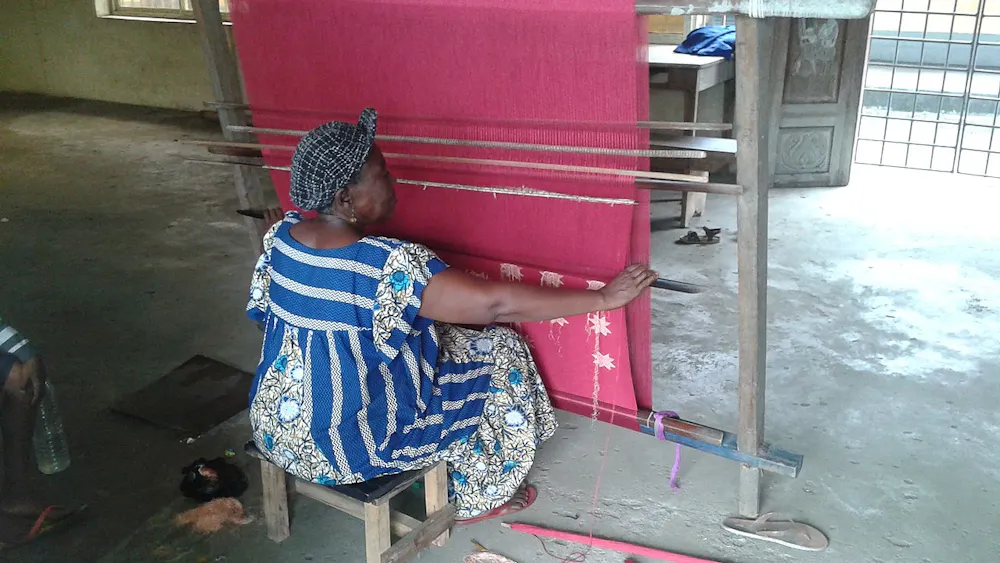
Local fabrics are hand-woven or dyed cloths and stem from various ethnic groups, like Aso oke or Akwete.
A woman handweaving Akwete cloth.Ekekeh Ubadire Obioma/Wikimedia Commons, CC BY-SA
Popular appropriated fabrics are Ankara (wax prints, originally from Indonesia), lace (a delicate, openwork fabric popular on traditional Nigerian attire) and George (a type of Madras cloth popular among Nigeria’s Igbos).
Before the 2000s, the use of these fabrics was at two ends of a spectrum. Indigenous cloth, lace and George were for social and cultural events. Ankara was for everyday functional clothes, iro (a wrap skirt) and buba (a three-piece traditional design for women, mostly the married or elderly), especially among low-income people.
The popularity of local fabrics in today’s fashion didn’t emerge from a vacuum. It was a choice by designers, a social process of acceptance, and government initiative.
Today’s designers are consciously using local fabrics as a way of endorsing their roots and normalising their use. Many faced rejection at first. Zena, a participant in my study, sold only two pieces of her clothing during her first year of business. She spent time convincing people “this is good”:
And, funny enough, they are easy to wear and not expensive. But it took a while for them to appreciate it.
Since the early 1990s the Nigerian government has been committed to promoting local fabrics and locally produced clothes. In 2017, it approved a Monday and Wednesday “Made-in-Nigeria Dress Days” policy.
While local fabrics are today the fabric trend in women’s clothing, the design trend is western. Designers use local fabrics in styles that have global appeal.
Still, they are conscious of maintaining authenticity through either the fabric, a silhouette or a design concept that resonates with their culture.
According to Eji, her western designs still have the African woman in mind:
The African woman is not only situated in Africa, but they are also all over the world. I believe the world is more cosmopolitan now, we have interracial marriages, we can borrow culture from everywhere, we can inter-weave stuff.
Women’s fashion mirrors Lagos society’s complexity and its openness to global trends, as it seeks to globalise its local elements.
It’s the opposite for men
Cosmopolitan men’s fashion in Lagos is the opposite of women’s. The fabric trend is western; the design trend is local.
In Lagos, most men wear the two or three-piece “native”. The buba and sokoto, for example, is for regular wear. (A traditional two-piece top and trouser, normally from the same fabric.) The agbada is for special events. (Trousers, a top and a loose-fitting, wide-sleeved robe over.)
Participants in my study explained that the ethnic background of the president, at any point in time, influences men’s fashion trends. Former president Muhammadu Buhari, for example, hails from the northern part of the country and popularised the wearing of the baba riga (a top, trousers and a big, embroidered over-cover) of the Hausa people.
Current president Bola Ahmed Tinubu extends the dominance of agbada fashion as he is Yoruba. Men’s fashion portrays a unified cultural front, emanating from the ruling president’s ethnic culture and adopted by most men irrespective of their ethnicity. This can allow for the inclusion of groups excluded from dominant national cultures.
This study shows Nigerian fashion’s openness to modernity, consciously implementing styles from different parts of the world. But this isn’t detached from the local. As forms of culture disappear (through cultural exchange) new forms are created, and they are created locally. This is ultimately a celebration of the cosmopolitan in Lagos fashion and society.
– Lagos fashion: how designers make global trends uniquely Nigerian – https://theconversation.com/lagos-fashion-how-designers-make-global-trends-uniquely-nigerian-254227
One of the most vicious groups operating in the region is Jama’at Nusrat al-Islam wal-Muslimin (Support Group for Islam and Muslims). The militant group emerged in 2017 in Algeria and Mali, and has targeted civilian populations.
The UN listed the group as an al-Qaeda affiliate in 2018. Al-Qaeda is an Islamist organisation founded by Osama bin Laden in the 1980s.
The 2024 global terrorism index listed Jama’at Nusrat al-Islam wal-Muslimin as one of the world’s most dangerous terrorist organisations. Its influence has expanded in most parts of the Sahel. The group emerged to strengthen the jihadist insurgency under al-Qaeda. It combines violence with diplomacy to expand its influence and challenge state authorities.
Despite growing pressure from counter militancy campaigns spearheaded by local, regional and international militaries, Jama’at Nusrat al-Islam wal-Muslimin continues to survive and adapt by regrouping and reorganising. This was demonstrated in its latest operation in Burkina Faso in 2024. The group exerted significant control by closing schools, setting up taxation checkpoints and abducting locals.
Its engagement in illicit economies has been key to the group’s successful expansion. This revenue is used to carry out devastating attacks.
We research jihadi-based insurgencies, and have found that this is a common tactic among terrorist groups in the west Africa-Sahel axis, including Boko Haram militants.
From our research, we find that Jama’at Nusrat al-Islam wal-Muslimin funds its activities by relying on
artisanal mining
kidnapping
livestock theft
money laundering.
Dismantling the group’s illicit economies and blocking its financial flows are key to countering its activities.
Financial resources
The group needs money for fighting, and to sustain political and social influence in its areas of operation.
Artisanal gold mining has proven to be a major factor in its expansion and resilience. In areas where the group exerts influence, illicit gold mining generates over US$30 billion annually. According to a report by Swissaid, a development group based in Switzerland, the main destinations for this gold are the United Arab Emirates, Turkey and Switzerland.
The jihadists gain access to gold by controlling mining sites and transport routes to and from mines. They sometimes allow trusted allies, who include local armed groups, bandits and other criminal networks, to mine in exchange for a payout. The extent of gold mining funds is not exactly known, but the artisanal sites in areas controlled by the group have the capacity to produce 725 kilograms of gold per year, valued at US$34 million.
Another source of income – and political influence – is kidnapping for ransom. Kidnap victims include cattle owners, businessmen, state officials and foreigners. The group received a ₤30 million ransom in 2020 to release one French and two Italian hostages. Between 2017 and 2023, the group and its affiliated units were responsible for 845 out of approximately 1,100 recorded kidnappings in Mali, Burkina Faso and Niger. Burkina Faso and Mali remain the epicentre of the group’s violent activities. In the first quarter of 2023, over 180 cases of kidnapping were recorded in these countries’ war-torn areas.
Livestock theft has also been a critical source of funds. The practice of livestock theft as economic warfare and a means to generate funds has led to livestock being forcibly taken from herders who fail to pay zakat (a religious fee among Muslims) or subscribe to the group’s ideology. The stolen livestock are sold in Mali, Mauritania or Senegal. The ability to monetise stolen livestock makes their theft a cornerstone of the Sahelian war economy and a source of cash for weapons and vehicles.
Money laundering is another illicit economy central to the militant group’s financing. It lends money to merchants, invests with banks and funds small shops with the aim of getting profits. This helps ensure a constant flow of money and provisions to support the group’s terrorist acts. It has attached much importance to this illicit economy, to the extent of assassinating those who interfere with its investments.
Way out
To cut down Jama’at Nusrat al-Islam wal-Muslimin’s financial base – and thereby weaken its capacity for militancy – counterinsurgency efforts need to take the following actions.
Government security actors should collaborate with local self-defence militias to regulate artisanal mining and thwart kidnappings.
Financial intelligence units need to identify merchants who receive money from the militant group to block the flow of illicit funds.
Specialised courts that deal with money laundering and terrorism financing cases should be established and made operational in Burkina Faso and Mali, the epicentres of the group’s activities.
Burkina Faso and Mali should increase security around civilians to minimise civilian casualties from terror operations.
Since finance is the basis of the militant group’s strength, regional security co-operation should be strengthened. This would help with systematically tracking illicit flows and stopping them.
– Funding terror: how west Africa’s deadly jihadists get the money they need to survive – https://theconversation.com/funding-terror-how-west-africas-deadly-jihadists-get-the-money-they-need-to-survive-242306
You’ve probably heard the terms “abs” and “core” used in social media videos, Pilates classes, or even by physiotherapists.
Given they seem to refer to the same general area of your body, you might have wondered what the difference is.
When people talk about “abs”, they’re often referring to the abdominal muscles you can see. Conversely, the term “core” is used to describe a broader group of muscles in the context of function, rather than aesthetics.
While abs and core are often spoken about separately, there’s a lot of overlap between them.
What are abs?
The term “abs” is short for abdominal muscles. These are the muscles that run along the front and side of your stomach.
When someone talks about getting a six-pack, they’re usually referring to toning the rectus abdominis, the long muscle that goes from the bottom of your ribs to the top of your pelvis.
Your abdominals also include your obliques, which sit on the side of your body, and your transverse abdominis, which sits underneath your other abdominal muscles and wraps around your waist like a belt.
The term “abs” has been around for a long time, and is perhaps most often used when discussing aesthetics.
For example, it’s common to see health and wellness publications offering advice on how to achieve “flat” or “six-pack” abs.
The long muscle that goes from the bottom of your ribs to the top of your pelvis is called the rectus abdominis. phoenix creation/Shutterstock
What about the core?
When people talk about the “core”, they are often referring to your abdominals, but also the muscles in your back (your spinal erectors), hips, glutes, pelvic floor, and your diaphragm.
These are the muscles that can stabilise your spine against movement, and aid in the transfer of force between the upper and lower limbs.
The term “core” wasn’t commonly used until the early 2000s, when it became synonymous with core training.
While the exact reason for its surge in popularity isn’t clear, it most likely followed a study published in 1998 that suggested people with lower back pain might have impaired function of their deep abdominal muscles.
From there, the concept of “core training” entered the mainstream, where it was proposed to reduce lower back pain and improve athletic performance.
Other research suggests there aren’t any differences in how people with and without lower back pain recruit and use their core muscles.
In a separate study, improvements in core strength and stability after a nine-week core stability training program were not significantly associated with improvements in pain and function, further questioning this relationship.
The link between core strength and athletic performance is also unclear.
A 2016 review found some very small associations between measures of core muscle strength and measures of whole body strength, power and balance. However, because of the design of the studies reviewed, we don’t know whether people who have better strength, power and balance simply have stronger core muscles, or whether stronger core muscles increase strength, power and balance.
An earlier review summarised the effect of core stability training on measures of athletic performance, including jumping, sprinting and throwing. It concluded this type of training is unlikely to provide substantial benefits to measures of general athletic performance such as jumping and sprinting.
However, this review also suggested that, given the important role of the abs in torso rotation, strengthening these muscles might have merit in improving performance in sports that involve swinging a bat or throwing a ball.
This is likely to apply to other sports that involve rapid torso movement as well, such as mixed martial arts and kayaking.
Stronger abdominal muscles could offer an advantage in sports that involve rotation. Lino Khim Medrina/Pexels
How can you exercise your abs and core?
There’s good evidence that simply getting stronger by lifting weights can help prevent injuries. Training your core to get stronger should have a similar impact, as long as it’s part of a broader training program.
We also know having weaker muscles makes you more likely to experience functional limitations and disability in older age. So alongside any other potential benefits, improving core strength with the rest of your body could help keep you fit and healthy as you get older.
There are plenty of exercises you can do to train your core and abs.
If you’re new to core training, you might want to start off with some lower-level isolation exercises that don’t involve any movement of the core. These include things like planks, bird dogs, and pallof presses. These are unlikely to cause too much muscle soreness, but will train your core muscles.
Once you feel like these are going well, you can start moving into some more dynamic exercises such as sit ups, Russian twists and leg raises, where you train your abdominals using a full range of motion.
Hunter Bennett does not work for, consult, own shares in or receive funding from any company or organisation that would benefit from this article, and has disclosed no relevant affiliations beyond their academic appointment.
When India unleashed Operation Sindoor in May 2025, the world watched its advanced missiles, drones, and stealth assets. But one of the most decisive factors in the success of this coordinated military operation was invisible — orbiting silently above the subcontinent. That asset was NavIC, India’s indigenous satellite navigation system.
What is NavIC?
NavIC (Navigation with Indian Constellation), officially known as IRNSS (Indian Regional Navigation Satellite System), is India’s own satellite-based navigation system developed by ISRO. It provides accurate real-time positioning, navigation, and timing (PNT) information over India and up to 1,500 kilometers beyond its borders.
Unlike GPS (U.S.), GLONASS (Russia), Galileo (EU), or BeiDou (China), NavIC is controlled by India, providing full autonomy to armed forces even during global or regional conflicts. This is especially critical when access to foreign systems like GPS can be denied or degraded — as happened during the 1999 Kargil War.
NavIC Satellite Constellation
The NavIC system currently consists of 7 satellites in geostationary and geosynchronous orbits. They include:
• – IRNSS-1A to IRNSS-1G – Launched between 2013–2016
• – NVS-01 – Launched in May 2023, carrying an indigenous Rubidium atomic clock
• – NVS-02 to NVS-05 – Scheduled between 2025–2027 to upgrade and expand coverage
These satellites are equipped with dual-band signals (L5 and S-band). The L5 signal is encrypted for military use and is resistant to jamming and spoofing — critical in active combat zones.
How NavIC Powered Operation Sindoor
During the multi-day Operation Sindoor, India used NavIC across several layers of combat operations:
• – Missile Guidance: BrahMos, Pralay, and loitering munitions like Nagastra-1 used NavIC coordinates for precise targeting.
• – Drone Navigation: Swarm drones and long-range UAVs used NavIC for autonomous operations in jammed airspace.
• – Troop Movement: Army units and special forces tracked each other using encrypted NavIC handhelds for night raids and laser-guided artillery strikes.
• – Battle Damage Assessment: Integrated with RISAT radar satellites and Cartosat imaging, NavIC helped geolocate impact zones in real time.
By relying entirely on its own satellite infrastructure, India ensured that no foreign power could restrict or distort battlefield intelligence or targeting systems.
Strategic Advantages of NavIC
India’s use of NavIC during Operation Sindoor demonstrated several critical advantages:
• – Independence from U.S. GPS: India could strike deep without relying on any foreign-owned navigation signals.
• – Encrypted Military Channel: Prevented Pakistani jamming or spoofing during missile and drone missions.
• – Faster Signal Lock: NavIC provides higher accuracy over the Indian subcontinent than even GPS in some regions.
• – Tactical Depth: With NavIC’s expansion to include NVS-class satellites, India aims to cover the Indian Ocean Region more comprehensively.
Other Countries with Independent Navigation Systems
Only a few nations operate fully autonomous satellite navigation systems:
• – United States – GPS
• – Russia – GLONASS
• – European Union – Galileo
• – China – BeiDou
• – India – NavIC
India is the only country in the developing world to deploy such a system, putting it in an elite club of space-faring nations with independent military-grade navigation capabilities.
Looking Ahead
India plans to expand NavIC’s reach globally in the next phase, with 11 satellites forming a broader IRNSS constellation. This will allow Indian defense systems, aircraft, naval ships, and space platforms to remain connected under an unbreakable, encrypted web of real-time data.
From missile launchers to battlefield soldiers, NavIC ensured synchronization, survivability, and supremacy in Operation Sindoor — setting the tone for India’s future wars to be fought with precision on its own digital terrain.
Futuristic Vision: NavIC as India’s Digital Warfare Backbone
NavIC is more than a navigation system — it is a strategic pillar for India’s future military doctrine. As the Indian Armed Forces transition toward a digitally networked battlefield, NavIC will evolve into a real-time combat enabler across land, sea, air, and space.
India’s vision for NavIC includes:
• – Global Expansion: Upgrading NavIC into a global navigation constellation by 2030, with coverage from Africa to the Pacific.
• – Space Command Network: Serving as the digital backbone for India’s Defense Space Agency, ISR satellites, and kinetic space response units.
• – Manned-Unmanned Coordination: Enabling coordinated strikes using swarms of drones, robotic tanks, and autonomous aerial combat vehicles via a NavIC-based command network.
• – Civil-Military Synergy: Equipping civilian vehicles, aircraft, shipping, and emergency services with NavIC for disaster response, transport safety, and 5G integration.
In essence, NavIC will not just guide missiles — it will guide India’s journey to digital dominance in 21st-century warfare.
Thank you to Foreign Minister Herath for the warm welcome to Sri Lanka. The New Zealand delegation is delighted to be here to further strengthen the warm relationship between New Zealand and Sri Lanka.
Relations between our countries are long-standing. Our trade dates from the 1860s and sporting connections to the 1920s. New Zealand was one of the first countries to recognise Sri Lanka’s independence in 1948.
Our modern relationship is growing, thanks to investments by both countries. We are pleased the establishment of New Zealand’s High Commission in Colombo in 2021 was followed by the opening of a Sri Lankan High Commission in Wellington this year. These commitments will enable our trade, cultural and political engagements to grow for mutual benefit.
For nearly 75 years, education has been a pillar of the relationship, starting with the training of Sri Lankan dental nurses in New Zealand under the Colombo Plan. Now we can count over 200 Sri Lankan alumni of New Zealand scholarship programmes.
We are delighted to note further strengthening of these links through cooperation on tourism research between New Zealand’s University of Otago and the University of Colombo.
For many years, the New Zealand-Sri Lanka relationship has also encompassed development cooperation aimed at strengthening resilience in vulnerable communities, increasing food security, and contributing to disaster response.
We are proud today to announce another such link, the Sustainable Water and Livelihoods project which will support farming households to improve their health and income generation.
On security, we shared views on the increasingly challenging global environment and the interconnected challenges for development, trade and security in the Indo-Pacific region. We remain committed to our cooperation across immigration, customs, police and defence.
We discussed the growing number of New Zealand companies working with and investing in Sri Lanka or looking to work with Sri Lankan partners.
Many of these collaborations will deliver benefits for Sri Lanka in the tourism, agriculture, and healthcare sectors.
We also discussed the key role government-to-government cooperation between our food safety and border agencies plays to improve food safety standards, reduce red tape at the border, and increase Sri Lanka’s market access capabilities.
We reiterated that Sri Lanka’s application to accede to the Regional Comprehensive Economic Partnership (RCEP) Agreement is very welcome.
We are pleased to confirm that places on short term training courses in trade policy will be offered to Sri Lanka officials under the Manaaki New Zealand Scholarship Programme.
Naturally we discussed our two nations’ shared passion for sport and noted the success of the recent tour by the New Zealand men’s under 85kg rugby team, playing against Sri Lanka’s Tuskers. We look forward to further future battles between New Zealand and Sri Lankan teams on the rugby pitch and the cricket field, both the men’s and women’s teams.
Thank you once again to Foreign Minister Herath, the government, and the people of Sri Lanka for your warm hosting of our lucky delegation.
A one-off extra allowance, equal to one half of the monthly payment or allowance, will be provided to eligible recipients of social security payments, including recipients of the standard rate of Comprehensive Social Security Assistance, Old Age Allowance, Old Age Living Allowance and Disability Allowance, the Government announced today.
Similar arrangements will apply to households receiving the Working Family Allowance (WFA).
Starting today, the payment will be credited to the designated Hong Kong bank accounts of the eligible recipients/households. No separate application is required.
Recipients who were eligible for social security payments on April 30, 2025, as well as the households for which WFA applications were made within the period from October 1, 2024, to April 30, 2025, and approved, would be eligible for the extra allowance.
It is estimated that about 1.71 million social security recipients and about 56,000 WFA households would benefit, involving a total of about $3,084 million in extra expenditure.
For enquiries, recipients of social security payments may call 2343 2255 or contact the respective Social Security Field Unit.
For enquiries from households in receipt of the WFA, call 2558 3000.
This is a full-time fixed-term position based in either Manila, Bangkok, Jakarta or Kuala Lumpur. Candidates who have the legal right to work and live in the Philippines, Thailand, Indonesia and Malaysia are encouraged to apply.
Greenpeace Southeast Asia (GPSEA) takes bold, non-violent action to challenge power and create a more just, peaceful, and green future. Operating in complex and often high-risk environments, Greenpeace must ensure that our people, projects, and operations are safe, resilient, and empowered to push boundaries.
The Regional Security Manager, will lead the development and implementation of a strong security culture and systems across all GPSEA offices and projects. He/she will provide expert advice, tools, and support to enable safe and smart risk-taking in our campaigning and engagement work ensuring that security is not a barrier to impact, but an enabler of it. This role oversees the organization’s security strategy, policies, and protocols, while also managing critical incident systems and supporting frontline staff, volunteers, and activists. This will work closely with departments across the organization to integrate security into operations, HR, actions, and campaigns, and build regional capacity for resilience and preparedness. The Regional Security Manager will ensure that Greenpeace can operate effectively and ethically in Southeast Asia’s fast-changing political and environmental landscape.
Duties and Responsibilities:
Create an enabling Security Culture that continues to push boundaries, through regular staff updates, familiarization, training and integration.
Design and oversee a fit-for-purpose GPSEA Security System with approval processes.
Provide strategic advice on enhancing acceptance and resilience as a civil society actor, including the liaison with other NGOs
Policy and protocol development as related to safety, security, risk management and Duty of Care (employer responsibilities), including Standard Operating Procedures.
Arranging delivery of periodic and as-required security training.
Support and advice on the resolution of critical incident situations locally and regionally (on call).
Facilitate and strengthen our legal support system to ease smart risk taking, in line with GP Best Practices.
Other duties as directed by the line manager.
Close consultation with campaigns, actions and logistics, communications, fundraising and management staff on Smart Risk taking in projects.
Closely collaborate with all stakeholders to ensure Security integration into organizational processes and the GPSEA project model, from HR to Programmes.
Oversee and facilitate the regional security practitioners and build capacity to meet the need of the organization.
Closely collaborate with HR and Public Engagement and Actions to ensure GP Duty of Care Best Practices are in place for staff, contractors, volunteers and activists.
Manage the regional Security team adequately and ensure appropriate team capacity deployment projects.
Assist in the sign off and approval on campaign & communications materials, tactics and strategies that may influence security risk levels.
Liaise with Human Resources and Legal to ensure Greenpeace compliance with national legislation’s in Security, Health and Safety matters.
Liaison with GPI and other NROs on security management to ensure consistent best-practice across our global organization.
Manage security external contractors, including office security, specific project security and trainers.
Production, review and updating of all offices and projects standard operating procedures (SOPs).
Oversee and ensure the implementation of Security systems through monitoring, project integration and trainings.
Oversee, maintain and improve our Critical Incident Management Systems including a 24/7 hotline.
Coordinate Security and Safety induction process for new joiners across GPSEA with HR.
Responsibly manage the security budget and maintain secure filing system.
Advice and support project risk assessments, security and duty of care plans.
Oversight of incident reporting processes across the organization.
Maintain and further improve the travel security & monitoring system.
Advise on and ensure Site Security at our Greenpeace locations, in coordination with Administration
Provide up-to-date political, societal context analysis for our operating countries.
Overall budgetary responsibility and management of the finances for the Regional Security Unit.
Skills and Experience Requirements:
Bachelor’s Degree in field of Management or with security management background preferred.
Proven professional training in security management or a related field or comparable work experience/certification.
At least 3 years working in a non-profit, campaigning organization.
At least 3 years of supervisory/management experience.
At least 5 years of experience delivering security and emergency plans and risk analysis including: physical security management; crisis; occupational health and safety; field security; and travel.
Functional Skills:
Knowledge and/or experience in understanding of security and cultural issues in GPSEA operating countries.
Knowledge and/or experience in training, mentoring and developing staff on security issues.
Knowledge and/or experience in crisis management.
Knowledge and/or experience in developing and managing security and safety risk assessment.
Demonstrable understanding of security and risk management appropriate to the values and practices of Greenpeace.
Knowledge and/or experience in conducting security threat/risk/impact assessments and reporting.
Knowledge and/or experience in conducting security incident investigation and reporting.
Knowledge and/or experience in training personnel in general security protocols.
Strong skills in written and spoken English (required).
Knowledge and/or experience in planning, facilitating and conducting meetings or workshops.
Knowledge and/or experience in project management and administration.
Knowledge and/or experience in strategic alignment and setting the direction of unit’s project organizational objectives.
Knowledge and/or experience in budgeting and forecasting.
Organizational Competencies:
Professionalism: Knowledge and/or experience in managing conduct and emotions in a way that represents the values and realizes the objectives of the organization.
Strategic Thinking & Global Mindset: Knowledge and/or experience in addressing organizational objectives by developing calculated approaches that integrate an openness to and awareness of diversity across cultures.
Teamwork & Communication: Knowledge and/or experience in working with others and presenting information, ideas, and positions in a clear manner that can easily be understood across diverse and multi-cultural audiences.
Innovation & Change: Knowledge and/or experience in reflecting creative and imaginative thinking, an openness to new ideas, and an ability to take calculated risks in order to meet organizational objectives.
Leadership: Knowledge and/or experience in guiding and directing the efforts of others in pursuit of clear objectives, including delegating responsibilities and providing consistent support.
Specific Work Environment:
Good command in English is required.
Sensitive to the socio-economic cultural environment of Southeast Asia. This position requires the employee to have a flexible approach and the ability to adapt and work in different and challenging work and cultural environments, which may include flexible arrangements in working in challenging fields and work environments.
Greenpeace’s Commitment to Diversity and Inclusion
Greenpeace values diversity as essential to its mission and success. The organisation fosters an inclusive environment that respects varied cultural experiences and perspectives, promoting solutions rooted in social and environmental justice.
Source: People’s Republic of China – State Council News
The China Soong Ching Ling Foundation and Cathay Pacific jointly launched the Aviation Dream Youth Development Fund on May 23, 2025, aiming to support youth aviation education and facilitate cultural exchange between the Chinese mainland and Hong Kong.
Shen Beili, vice chair of the China Soong Ching Ling Foundation, delivers a speech at Soong Ching Ling’s former residence in Beijing, May 23, 2025. [Photo provided to China.org.cn]
Shen Beili, vice chairwoman of the China Soong Ching Ling Foundation (CSCLF), said the CSCLF continues to promote Soong Ching Ling’s legacy by launching numerous public welfare initiatives. The newly established Aviation Dream Youth Development Fund in Beijing aims to provide a new platform for young people in the mainland and Hong Kong, supporting their healthy development and fostering greater exchange and growth.
She added that the fund is designed to bring together young people from the mainland and Hong Kong, giving them opportunities to participate in hands-on projects, learn about China’s development, and build friendships. The goal is to promote cultural exchange, encourage national pride, and strengthen their sense of shared identity.
Zheng Jiaju, Chinese mainland director of Cathay Group, delivers a speech at Soong Ching Ling’s former residence in Beijing, May 23, 2025. [Photo provided to China.org.cn]
Zheng Jiaju, Chinese mainland director of Cathay Group, said Cathay Pacific is committed to corporate social responsibility by investing in youth development and cultural exchange, and by supporting society through civil aviation.
He added that Cathay Pacific will combine its strengths in aviation with the CSCLF’s expertise in youth development to create cross-regional, interdisciplinary platforms for young people from the mainland and Hong Kong, helping them pursue careers in aviation, deepen their cultural roots and reinforce their national identity.
A signing ceremony for the China Soong Ching Ling Foundation Cathay Pacific Aviation Dream Youth Development Fund is held at Soong Ching Ling’s former residence in Beijing, May 23, 2025. [Photo provided to China.org.cn]
Li Anjin, deputy secretary-general of the CSCLF, and Sun Yueyi, Chinese mainland general manager of Cathay Group, signed a donation agreement on behalf of both parties. Children from Beijing’s Haidian District Youth Activity Center and Shichahai Primary School performed songs and dances.
The ceremony was held at the former residence of Soong Ching Ling, a pioneering stateswoman who was named honorary president of the People’s Republic of China for her lifelong contributions to the nation.
The China Soong Ching Ling Foundation Cathay Pacific Aviation Dream Youth Development Fund is the first public welfare fund established by Cathay Pacific in partnership with the CSCLF on the mainland.
Source: People’s Republic of China – State Council News
The 2025 Postgraduate Exhibition of the Academy of Arts & Design, Tsinghua University (AADTHU) opens at Tsinghua University Art Museum in Beijing, May 23, 2025. [Photo courtesy of AADTHU]
The 2025 Postgraduate Exhibition of the Academy of Arts & Design, Tsinghua University (AADTHU) opened on May 23 at the university’s art museum, featuring the latest works by more than 170 graduating students.
The exhibition features a wide range of projects that combine art and technology and address contemporary social issues in innovative ways.
Running through June 1, the exhibition spans nine galleries across four floors and is open to the public. It is the first time the academy has displayed its entire body of graduate work in a nationally recognized, first-class museum — a milestone the school sees as an important step toward making arts education more accessible and engaging to a wider audience.
By bringing academic exploration into a public cultural space, the academy said they hope to bridge the gap between artistic creation and everyday life.
At the opening ceremony, Ma Sai, dean of AADTHU, praised the graduates for their thoughtful combination of traditional wisdom and contemporary artistic expression.
He said their creations reflect deep engagement with real-world issues and affirmed the academy’s efforts in blending Eastern and Western art philosophies, bridging past and present, and uniting art with technology. He encouraged students to remain rooted in humanistic values and to draw upon the aesthetics of Chinese culture to meet the challenges of their time.
Qin Chuan, secretary of the Communist Party of China (CPC) AADTHU Committee, emphasized that as artificial intelligence continues to reshape artistic boundaries, AADTHU remains committed to merging art and technology and using creativity to serve society.
He urged the graduates to ground their work in real-world issues and to embody Tsinghua University’s spirit of patriotism, dedication and pursuit of excellence.
Lu Xiaobo, director of the Tsinghua University Art Museum, highlighted the significance of hosting the entire graduate collection in a nationally ranked museum for the first time. He said combining education with a public cultural space provides an innovative platform for students to showcase their work to more people.
By engaging in public discourse, the graduates not only show what they have learned but also highlight the role of art education in shaping cultural development, Lu said.
Speaking on behalf of the faculty, Chen Lei, director of AADTHU’s Department of Visual Communication, encouraged students to maintain their curiosity and integrity as they face an uncertain artistic future. “Stay true to your artistic vision, focus on authentic expression, and let your work touch hearts,” he said.
Student representative Wang Bing, a graduate of the Department of Arts and Crafts, emphasized the role of art in addressing real-world issues. “With creativity rooted in everyday life, we seek to craft artistic answers to contemporary challenges,” she said.
Vice Dean Yang Dongjiang, who hosted the opening ceremony, emphasized that the exhibition not only showcases academic achievements but also looks to the future of arts education.
“By rooting their creativity in tradition while embracing cutting-edge technologies, our students are shaping a new artistic landscape and redefining the role of art in today’s world,” he said.
Visitors view exhibits at the 2025 Postgraduate Exhibition of the Academy of Arts & Design, Tsinghua University (AADTHU) at Tsinghua University Art Museum, Beijing, May 23, 2025. [Photo courtesy of AADTHU]
The works on display cover a wide range of fields, including product design, spatial design, digital art and visual storytelling. They show the students’ awareness of social issues and their connection to everyday life. Various projects address topics like aging and adolescent mental health, reflecting a sense of care and a wish to share artistic insight with the public, according to the academy.
The exhibition blends material innovation, conceptual exploration and design aesthetics. Traditional Chinese cultural elements are given a fresh look through digital techniques, with Dunhuang motifs and heritage crafts woven into contemporary styles. Some works imagine futuristic space environments, using advanced hardware and software to explore new possibilities where art and technology meet.
The academy said one of the defining features of this exhibition is its commitment to cultural continuity, reinterpreting traditional artistic heritage from a contemporary perspective. By revitalizing classic works with digital technology and offering new interpretations of folk imagery, students present a distinctly Chinese artistic voice, according to the academy.
Through imagery, space and storytelling, the exhibition conveys a strong sense of cultural confidence, demonstrating not only keen observational and expressive skills but also a deep understanding of each discipline and an ability to respond to contemporary issues, the academy said.
The exhibition also features a dedicated interactive zone, allowing visitors to directly experience the innovative fusion of contemporary art and technology.
Visitors engage with exhibits at the 2025 Postgraduate Exhibition of the Academy of Arts & Design, Tsinghua University (AADTHU) at Tsinghua University Art Museum, Beijing, May 23, 2025. [Photo courtesy of AADTHU]
Source: People’s Republic of China – State Council News
Cote d’Ivoire’s Minister of State and Minister of Agriculture and Rural Development Kobenan Kouassi Adjoumani and Zhang Xingwang, vice minister of agriculture and rural affairs of China, sign an agreement during the China Day event of the 7th Abidjan International Agriculture and Animal Resources Exhibition in Abidjan, Cote d’Ivoire, on May 24, 2025. [Photo/Xinhua]
A special China Day event was held Saturday at the 7th Abidjan International Agriculture and Animal Resources Exhibition, showcasing the fruitful cooperation between the two countries.
Addressing the event, Ivorian Minister of State and Minister of Agriculture and Rural Development Kobenan Kouassi Adjoumani said that in less than half a century, China has achieved spectacular transformation, particularly in the fields of agricultural and agro-industrial development.
“Cote d’Ivoire is honored and proud to welcome the People’s Republic of China to this event, which underscores the solid friendship and deep cooperation between our two nations,” he said.
Hoping to boost the modernization of Cote d’Ivoire’s agriculture with Chinese technologies and experience, the minister also vowed to further deepen the agricultural partnership with China, emphasizing joint efforts in technical training, resource sharing and supply chain integration.
Chinese Ambassador to Cote d’Ivoire Wu Jie stated that as the guest of honor, China’s participation in the fair reflects strong bilateral relations and promising prospects for high-quality agricultural cooperation between China and Cote d’Ivoire.
The two sides signed a number of Memoranda of Understanding and agricultural cooperation framework agreements during the event.
Source: People’s Republic of China – State Council News
U.S. President Donald Trump on Sunday said he wants the “names and countries” of every international student enrolled at Harvard University.
The demand came just days after a federal judge blocked the Trump administration from revoking Harvard’s ability to enroll foreign students.
“We want to know who those foreign students are, a reasonable request since we give Harvard BILLIONS OF DOLLARS, but Harvard isn’t exactly forthcoming,” Trump wrote in a Truth Social post. “We want those names and countries.”
“Why isn’t Harvard saying that almost 31 percent of their students are from FOREIGN LANDS, and yet those countries, some not at all friendly to the United States, pay NOTHING toward their student’s education, nor do they ever intend to,” Trump wrote on Sunday. “Nobody told us that!”
Trump also called on the Ivy League institution to stop applying for further federal funding.
On Thursday, the Department of Homeland Security announced that it would revoke Harvard’s Student and Exchange Visitor Program certification, effectively prohibiting the university from admitting international students. All current international students would need to transfer to another university or lose their legal status.
Harvard then promptly filed a lawsuit against the administration, and a federal judge in Massachusetts on Friday issued a temporary restraining order preventing the government from enforcing the ban pending a full hearing.
Harvard’s data indicate that, as of the fall 2023 semester, international students comprised more than 27 percent of its total enrollment. The university currently enrolls nearly 6,800 international students and scholars from more than 140 countries and regions, the majority of whom are pursuing graduate-level study.
International students represent a significant source of revenue for U.S. higher education institutions.
Source: People’s Republic of China – State Council News
World No. 1 Aryna Sabalenka and Olympic champion Zheng Qinwen of China both cruised into the second round of the French Open on Sunday.
Sabalenka, a three-time Grand Slam champion, dominanted the match with a 6-1, 6-0 win over Russia’s Kamilla Rakhimova. Her best result at Roland Garros was a semifinal appearance two years ago.
Eighth seed Zheng defeated former French Open finalist Anastasia Pavlyuchenkova 6-4, 6-3 in the opening round.
“I’m happy to win this match, especially as I think she is a great opponent, playing really aggressively,” Zheng said afterwards.
“The first match of the tournament is never easy, so I’m happy today and I’m really happy to be back at Roland Garros. Thanks to the crowd who supported me today,” she added.
Zheng has now reached the second round at Roland Garros for the fourth straight year and extended her winning streak at the venue to seven matches, dating back to her gold medal run at Paris 2024. Zheng will next face Colombia’s Emiliana Arango.
Elsewhere, China’s Yuan Yue fell to fourth-seeded Jasmine Paolini of Italy 6-1, 4-6, 6-3.
Jasmine Paolini returns a shot during the women’s singles first round match between Jasmine Paolini of Italy and Yuan Yue of China at the French Open tennis tournament at Roland Garros, Paris, France, May 25, 2025. (Xinhua/Li Jing)
Last year’s runner-up Paolini had to work harder for the win. Yuan led 3-2 in the deciding set before Paolini, fresh off her Italian Open victory, broke back and reeled off four straight games to close out the match.
In the men’s draw, Italy’s Lorenzo Musetti, seeded eighth, advanced to the second round with a 7-5, 6-2, 6-0 victory over German qualifier Yannick Hanfmann.
“I feel ready to try to go for the trophy,” said Musetti. “I think clay probably is the surface which I feel the most comfortable.”
Source: People’s Republic of China – State Council News
SCIO briefs media on Yangtze River Economic Belt development in Hubei
China SCIO | May 26, 2025
The State Council Information Office (SCIO) recently organized a media trip for over 40 journalists to visit central China’s Hubei province and observe the progress of high-quality development along the Yangtze River Economic Belt. The group included foreign correspondents from the United States , France, Germany, Australia, Singapore, Indonesia, Iraq, Qatar, and Japan.
A press briefing was held Thursday during the trip, where Cheng Yongwen, vice governor of Hubei province, briefed the media and answered questions.
On May 22, 2025, the State Council Information Office holds a press briefing in Wuhan, Hubei province, about the high-quality development of the Yangtze River Economic Belt. [Photo by Liu Jian/China SCIO]
Prime Minister Narendra Modi on Monday extended heartfelt thanks to the people of Vadodara for the warm welcome he received during a vibrant morning roadshow in the city.
In a post on X, the Prime Minister said, “Thank you, Vadodara! Extremely delighted to be in this great city. It was a splendid roadshow and that too in the morning! Gratitude to all those who showered their blessings.”
The roadshow was held as part of PM Modi’s two-day visit to Gujarat, during which he is scheduled to inaugurate and lay the foundation stone for a series of infrastructure and development projects across the state.
During the roadshow, PM Modi was seen waving to enthusiastic citizens who lined the streets holding Indian flags and chanting patriotic slogans.
Among those present at the event were family members of Indian Army Officer Colonel Sofiya Qureshi, who had participated in media briefings during Operation Sindoor. They greeted the Prime Minister with flower petals as a gesture of appreciation.
In a display of international solidarity, a student from Zimbabwe, who is currently studying in Gujarat, also joined the celebrations. “We stand with India in the fight against terrorism. When terrorists attacked tourists, India targeted terrorist bases and not civilians. We support India,” the student said.
Later in the day, the Prime Minister is scheduled to travel to Dahod, where he will dedicate to the nation a locomotive manufacturing plant set up by Indian Railways. The plant will produce 9,000 HP electric locomotives for both domestic use and export. He will also flag off the first such locomotive built at the facility.
Additionally, PM Modi will inaugurate the Vande Bharat Express between Veraval and Ahmedabad, as well as an express train between Valsad and Dahod. He will also lay the foundation and dedicate various development projects worth approximately ₹24,000 crore in Dahod and address a public gathering.
The Prime Minister’s visit will continue with a stop in Bhuj, where he will launch and inaugurate development works exceeding ₹53,400 crore.
On May 27, PM Modi will travel to Gandhinagar to attend celebrations marking 20 years of Gujarat’s Urban Growth Story and to launch the Urban Development Year 2025. He is also scheduled to address a public gathering in the state capital.
Prime Minister Narendra Modi on Monday inaugurated a state-of-the-art Locomotive Manufacturing Plant of Indian Railways in Dahod, Gujarat, marking a key step in boosting the country’s railway infrastructure and freight capabilities. He also flagged off the first electric locomotive produced at the facility.
The Prime Minister was accompanied by Union Railway Minister Ashwini Vaishnaw and Gujarat Chief Minister Bhupendra Patel.
According to an official release from the Prime Minister’s Office (PMO), the Dahod plant has been established in line with PM Modi’s vision of enhancing connectivity and building world-class travel infrastructure. The facility is equipped to manufacture 9,000 HP electric locomotives for both domestic use and export.
These locomotives are expected to significantly increase Indian Railways’ freight loading capacity. They are also fitted with regenerative braking systems, which reduce energy consumption and contribute to environmental sustainability.
Following the inauguration, the Prime Minister is scheduled to lay the foundation stone and inaugurate various development projects worth over ₹24,000 crore in Dahod. These include key railway infrastructure works and multiple initiatives undertaken by the Government of Gujarat. He will also flag off two new train services—the Veraval–Ahmedabad Vande Bharat Express and the Valsad–Dahod Express.
PM Modi, who is on a two-day visit to Gujarat from May 26 to 27, earlier held a roadshow in Vadodara. He expressed gratitude to the people of the city for the warm welcome, describing the experience as “extremely delightful.”
“Thank you, Vadodara! Extremely delighted to be in this great city. It was a splendid roadshow and that too in the morning! Gratitude to all those who showered their blessings,” the Prime Minister posted on X.
During the roadshow, PM Modi greeted enthusiastic crowds lining the streets, waving back at people who welcomed him with Indian flags and patriotic chants. The atmosphere was festive, with flower petals being showered on the Prime Minister and patriotic songs playing in the background.
Family members of Indian Army Officer Colonel Sofiya Qureshi, who was part of media briefings during Operation Sindoor, were also present at the event and greeted the Prime Minister with flower petals.