NewzIntel.com

    • Checkout Page
    • Contact Us
    • Default Redirect Page
    • Frontpage
    • Home-2
    • Home-3
    • Lost Password
    • Member Login
    • Member LogOut
    • Member TOS Page
    • My Account
    • NewzIntel Alert Control-Panel
    • NewzIntel Latest Reports
    • Post Views Counter
    • Privacy Policy
    • Public Individual Page
    • Register
    • Subscription Plan
    • Thank You Page

Category: DJF

  • MIL-OSI Europe: Highlights – DEVE Delegation at the 4th Financing for Development Conference (FfD4) in Sevilla – Committee on Development

    Source: European Parliament

    4th international conference on Financing for Development in Sevilla © UN

    A 4-Member DEVE delegation will travel to the 4th Financing for Development Conference (FfD4) in Sevilla, from Monday 30th June to Wednesday 2nd July. The purpose of the delegation is to exchange views with all stakeholders, to provide political stimulus for far-reaching reforms of the international financial architecture, to help put financing for development on a more solid foundation, and to send a message in support of the parliamentary dimension of democracy and of multilateralism.

    MIL OSI Europe News –

    June 25, 2025
  • MIL-OSI Europe: Missions – DEVE Delegation at the 4th Financing for Development Conference (FfD4) in Sevilla – 30-06-2025 – Committee on Development

    Source: European Parliament

    A 4-Member DEVE delegation will travel to the 4th Financing for Development Conference (FfD4) in Seville, from Monday 30th June to Wednesday 2nd July. The purpose of the delegation is to exchange views with all stakeholders, to provide political stimulus for far-reaching reforms of the international financial architecture, to help put financing for development on a more solid foundation, and to send a message in support of the parliamentary dimension of democracy and of multilateralism.

    FfD4 follows on from the Third International Conference on Financing for Development in Addis Ababa in 2015. It provides a unique opportunity to reform financing for development at all levels, be it reform of the international financial architecture, debt relief, taxation, domestic resource mobilisation, private sector financing, and others. The conference is timely, as there is a strong sense of urgency to take action: the SDGs are grossly underfinanced (the financing gap stands now at over 4 trillion USD annually), and at the same time cuts in ODA are being envisaged or already implemented in many donor countries. Conferences such as FfD4 are the only spaces where leaders from all governments, along with international and regional organisations, financial and trade institutions, businesses, civil society and the UN System unite at the highest levels, to foster stronger international cooperation.

    MIL OSI Europe News –

    June 25, 2025
  • MIL-OSI Europe: Burundi: Inauguration of Jiji hydroelectric power plant – a huge step towards energy self-sufficiency

    Source: European Investment Bank

    EIB

    The President of the Republic of Burundi today officially inaugurated the Jiji hydroelectric power plant, in the presence of a large delegation of national authorities and representatives of the development partners that co-financed the project. Located in Bururi province, this large-scale infrastructure marks a key step forward in the country’s pursuit of energy self-sufficiency. It is also a strong signal for an investment-friendly climate to ensure more inclusive and sustainable economic development for Burundi.

    With the Mulembwe plant to be completed in the coming months, the two plants will have an installed capacity of 49.5 megawatts and estimated annual production of 235 gigawatt hours of clean energy. They will provide electricity to 15 000 households, 7 000 businesses and 1 700 industrial facilities. This new capacity will not only improve access to electricity for thousands of people, but will also boost productivity in key sectors such as health, education, agribusiness and ICT.

    The construction of these two plants at a total cost of $320 million was made possible thanks to strong cooperation between the Burundi government and the development partners – the African Development Bank (AfDB), the European Investment Bank (EIB), the World Bank (WB) and the European Union (EU).

    Speaking at the inauguration, AfDB Country Manager in Burundi Pascal Yembiline said: “As a longstanding partner of Burundi, the African Development Bank is proud to have contributed to the implementation of this infrastructure project, which is fully in line with its strategic priorities, the Hi-5s. We are convinced that this flagship infrastructure will increase access to reliable and affordable energy and help create a sustainably prosperous Burundi.”

    Head of the EIB Regional Hub for East Africa Edward Claessen said: “The fact that the Jiji and Mulembwe dam project is a renewable energy project, reducing dependence on imported fossil fuels, is particularly significant. Our financing for this project formed part of the European Union’s strategy to develop clean, sustainable infrastructure in Africa and is also aligned with decarbonisation efforts needed by companies to grow.”

    World Bank Representative in Burundi Hawa Cisse Wagué added that: “The Jiji hydroelectric power plant and the lines and substations built as part of the project are not infrastructure like any other. This infrastructure helps ensure Burundi’s economic and social development. It is a key driver to improve people’s access to energy as well as supporting industrialisation, job creation and economic growth.”

    EU Ambassador and Head of Delegation to Burundi Elisabetta Pietrobon stressed that: “Energy remains a central priority in development and thus in EU cooperation. This is why the European Union, its Member States and its institutions have supported this project from the very beginning, including funding for the various design and implementation phases, right up to the deployment of infrastructure and equipment. ”

    All of Burundi’s development partners unanimously confirmed their commitment to supporting the country in its transformation efforts on the road to achieving its strategic vision: to become an emerging country by 2040 and a developed country by 2060.

    Since the start of the construction phase, the project has created several hundred jobs, boosting the local economy while strengthening the technical capacities of the surrounding communities. Its entry into operation marks the beginning of a new cycle of opportunities, both in the energy sector and in other strategic areas. With more reliable, accessible and affordable energy, small and medium businesses will now have better conditions to develop, generate jobs and make a lasting contribution to the country’s economic growth. At the same time, the commissioning of the dam will help to create a trusting environment for investors, the people of Burundi and foreigners alike.

    Background information

    About EIB Global

    The European Investment Bank (ElB) is the long-term lending institution of the European Union, owned by its Member States. It finances investments that contribute to EU policy objectives.

    EIB Global is the EIB Group’s specialised arm devoted to increasing the impact of international partnerships and development finance, and a key partner of Global Gateway. We aim to support €100 billion of investment by the end of 2027 — around one-third of the overall target of this EU initiative. Within Team Europe, EIB Global fosters strong, focused partnerships alongside fellow development finance institutions and civil society. EIB Global brings the EIB Group closer to people, companies and institutions through our offices across the world. High-quality, up-to-date photos of our headquarters for media use are available here.

    http://twitter.com/EIB

    https://www.linkedin.com/company/eib-global/

    Inauguration of Jiji hydroelectric power plant: a huge step towards Burundi’s energy self-sufficiency

    ©EIB
    Download original

    Inauguration of Jiji hydroelectric power plant: a huge step towards Burundi’s energy self-sufficiency

    ©EIB
    Download original

    Inauguration of Jiji hydroelectric power plant: a huge step towards Burundi’s energy self-sufficiency

    ©EIB
    Download original

    Inauguration of Jiji hydroelectric power plant: a huge step towards Burundi’s energy self-sufficiency

    ©EIB
    Download original

    Burundi: Inauguration of Jiji hydroelectric power plant: a huge step towards energy self-sufficiency

    ©EIB
    Download original

    Burundi: Inauguration of Jiji hydroelectric power plant: a huge step towards energy self-sufficiency

    ©EIB
    Download original

    MIL OSI Europe News –

    June 25, 2025
  • MIL-OSI Europe: Other events – Europol presents latest EU Terrorism Situation & Trend Report (EU TE-SAT 2025) – 24-06-2025 – Committee on Civil Liberties, Justice and Home Affairs

    Source: European Parliament

    At the LIBE Committee meeting on 24 June 2025, Ms Anna Sjöberg, Head of Europol’s European Counter Terrorism Centre (ECTC), delivered a presentation of the latest EU Terrorism Situation & Trend Report (EU TE-SAT) covering the year 2024. She opened by underscoring the report’s comprehensive scope, combining data on terrorist attacks, arrests, and convictions across EU Member States, contextualised within evolving ideological trends.

    Ms Sjöberg highlighted that in 2024, 14 EU Member States reported 58 terrorist attacks — including 34 completed, 5 failed and 19 foiled). The report distinguishes between and elaborates in-depth on different forms of terrorism, based on varying ideologies: jihadist terrorism, right-wing terrorism, left-wing and anarchist terrorism, ethno-nationalist and separatist terrorism and other types of terrorism. In assessing the terrorist threat in the EU, Europol emphasised the recent geopolitical developments such as the conflict in Gaza, anti-Semitism across the entire ideological spectrum, the Russian war against Ukraine, and the ability of Syria’s new government to fight terrorism.

    During the ensuing debate, Members were keen to highlight the need for enhanced information exchange between the Member States with Europol, the threat of returning foreign fighters, and the recruitment of minors through social media platforms. Discussion also touched upon the issue of state-sponsored terrorism.

    Concluding, Ms Sjöberg stressed the TE SAT’s crucial role in guiding EU-wide counter terrorism efforts and fostering coordinated responses via Europol’s ECTC.

    MIL OSI Europe News –

    June 25, 2025
  • MIL-OSI Europe: Written question – Diversity, equity and inclusion (DEI) programmes – E-002206/2025

    Source: European Parliament

    Question for written answer  E-002206/2025/rev.1
    to the Commission
    Rule 144
    Sophie Wilmès (Renew), Hilde Vautmans (Renew), Oihane Agirregoitia Martínez (Renew), Dan Barna (Renew), Billy Kelleher (Renew)

    In March 2025, US embassies in several EU Member States sent a letter to a number of private European companies that have contracts with the US Government, asking them to clarify whether they run DEI programmes that violate US President Trump’s executive order against race- and sex-based preferences and ending equal opportunities programmes (Executive Order No 14173). The letter sought to clarify that the executive order applies to any firm doing business with the US Government, including non-US companies. The document also stated that the existence of such programmes could prevent these companies from working with the US Government in the future.

    The media reported that companies in Belgium, France and Italy received this letter, with the French Government denouncing it as ‘unacceptable interference’. A number of companies have said they will comply with the request, such as GSK in Belgium.

    In this context:

    • 1.Is the Commission aware of the Member States in which companies have received this letter and which companies have accepted or refused the request?
    • 2.What is the Commission doing to address this situation?
    • 3.What is the Commission doing to prevent European companies from being subject to interference from non-EU countries that advocate values contrary to our own?

    Submitted: 2.6.2025

    Last updated: 25 June 2025

    MIL OSI Europe News –

    June 25, 2025
  • MIL-OSI Europe: Other events – Europol presents latest EU Terrorism Situation & Trend Report (EU TE-SAT 2025) – 24-06-2025 – Committee on Civil Liberties, Justice and Home Affairs

    Source: European Parliament

    At the LIBE Committee meeting on 24 June 2025, Ms Anna Sjöberg, Head of Europol’s European Counter Terrorism Centre (ECTC), delivered a presentation of the latest EU Terrorism Situation & Trend Report (EU TE-SAT) covering the year 2024. She opened by underscoring the report’s comprehensive scope, combining data on terrorist attacks, arrests, and convictions across EU Member States, contextualised within evolving ideological trends.

    Ms Sjöberg highlighted that in 2024, 14 EU Member States reported 58 terrorist attacks — including 34 completed, 5 failed and 19 foiled). The report distinguishes between and elaborates in-depth on different forms of terrorism, based on varying ideologies: jihadist terrorism, right-wing terrorism, left-wing and anarchist terrorism, ethno-nationalist and separatist terrorism and other types of terrorism. In assessing the terrorist threat in the EU, Europol emphasised the recent geopolitical developments such as the conflict in Gaza, anti-Semitism across the entire ideological spectrum, the Russian war against Ukraine, and the ability of Syria’s new government to fight terrorism.

    During the ensuing debate, Members were keen to highlight the need for enhanced information exchange between the Member States with Europol, the threat of returning foreign fighters, and the recruitment of minors through social media platforms. Discussion also touched upon the issue of state-sponsored terrorism.

    Concluding, Ms Sjöberg stressed the TE SAT’s crucial role in guiding EU-wide counter terrorism efforts and fostering coordinated responses via Europol’s ECTC.

    MIL OSI Europe News –

    June 25, 2025
  • MIL-OSI Europe: EU Fact Sheets – Renewable energy – 24-06-2025

    Source: European Parliament

    Renewable energy sources such as wind, solar and hydroelectric power, ocean and geothermal energy, biomass and biofuels offer cleaner alternatives to fossil fuels. They reduce pollution, broaden our energy options and decrease our dependence on volatile fossil fuel prices. In 2022, renewable energy accounted for 23% of the European Union’s energy consumption. In 2023, lawmakers increased the Union’s target for the share of renewable sources of energy in gross energy consumption from 32% to 42.5% by 2030, aiming for 45%.

    MIL OSI Europe News –

    June 25, 2025
  • MIL-OSI Europe: EU Fact Sheets – The protection of Article 2 TEU values in the EU – 24-06-2025

    Source: European Parliament

    The European Union is founded on the values of respect for human dignity, freedom, democracy, equality, the rule of law and respect for human rights, including the rights of persons belonging to minorities, as laid down in Article 2 of the Treaty on European Union (TEU). In order to ensure that these values are respected, Article 7 TEU provides for an EU mechanism to determine the existence of, and possibly sanction, serious and persistent breaches of EU values by a Member State. It has only been activated in relation to Poland and Hungary so far. The EU is also bound by its Charter of Fundamental Rights and is committed to acceding to the European Convention for the Protection of Human Rights and Fundamental Freedoms. Following the emergence of threats to EU values in some Member States, the EU institutions are strengthening their toolbox to counter democratic backsliding and protect democracy, the rule of law, fundamental rights, equality and minorities across the Union.

    MIL OSI Europe News –

    June 25, 2025
  • MIL-OSI Europe: EU Fact Sheets – Central Asia – 24-06-2025

    Source: European Parliament

    Central Asia links the huge Asian continent with Europe. The EU recognises its strategic importance in trade and energy routes, as well as in resources such as gas, oil and minerals (particularly gold, uranium and all types of rare earths). In 2019, the EU updated its Central Asia strategy to focus on resilience (covering areas such as human rights, border security and the environment), prosperity (with a strong emphasis on connectivity) and regional cooperation. The first-ever EU-Central Asia Summit, which took place in April 2025, represented a milestone and was an opportunity to upgrade relations to a strategic partnership, deepen trade and focus on energy economic cooperation, investment, high-quality connectivity, digitalisation, sustainable development and security cooperation (including hybrid threats). A EUR 12 billion investment package is planned through the Global Gateway, aimed at improving trade routes. It is a key opportunity for the EU to demonstrate its geopolitical interest in intensifying bilateral engagement and enhancing regional cooperation with Central Asia, to reduce its dependence on China and Russia in the context of global geopolitical changes. The summit also focused on climate action, human rights and strategic resources (including critical raw materials). In the light of the situation in Afghanistan, Central Asia has become crucial for security and stability. The January 2022 riots in Kazakhstan, which ended after the Collective Security Treaty Organization sent Russian-led troops, and the border clashes between Central Asian countries show the risk of instability in a region under Moscow’s influence. This influence in Central Asia is, however, weakening as a result of the Russian invasion of Ukraine and the concentration of troops at the front. This shift has created opportunities for Central Asian countries to emerge as more independent regional actors and has opened new avenues for partnership and cooperation with the EU in areas such as energy, raw materials and connectivity. However, Russia remains a key security provider in the region, with military facilities in three of the five Central Asian countries, and it controls two thirds of arms’ imports and supports the region’s governments. For trade and investment, the Chinese influence is growing with its Belt and Road Initiative. In response to the initiative, the EU has increased its engagement and investment in the region with the EU Global Gateway. Taking into account individual Member States’ assistance, the EU has become the largest donor in Central Asia, allocating over EUR 550 million to the Central Asia regional multiannual indicative programme for 2021-2027. The EU and Central Asia have taken important steps through the EU Global Gateway to develop the Trans-Caspian Transport Corridor, aimed at creating a multimodal, modern and competitive route linking Europe and Central Asia. Parliament continues to highlight the importance of resp[…]

    MIL OSI Europe News –

    June 25, 2025
  • MIL-OSI Europe: EU Fact Sheets – Chemicals and pesticides – 24-06-2025

    Source: European Parliament

    EU chemicals and pesticides legislation aims to protect human health and the environment, as well as to prevent barriers to trade. It consists of rules governing the marketing and use of particular categories of chemical products, a set of harmonised restrictions on the placing on the market and use of hazardous substances, and protocols for handling major accidents and exports of dangerous substances. The two most important achievements at EU level are the CLP Regulation and the REACH Regulation. Under the European Green Deal and particularly the ‘chemicals for sustainability’, ‘farm to fork’ and ‘biodiversity’ strategies, EU legislation on chemicals and pesticides is undergoing a revision process.

    MIL OSI Europe News –

    June 25, 2025
  • MIL-OSI Europe: EU Fact Sheets – Budgetary control – 24-06-2025

    Source: European Parliament

    Each EU institution and the Member States scrutinise the EU budget. The European Court of Auditors and the European Parliament perform detailed checks at various levels. Each year, Parliament scrutinises the implementation of the budget with a view to granting discharge to the Commission, the other EU institutions and the decentralised EU agencies.

    MIL OSI Europe News –

    June 25, 2025
  • MIL-OSI Europe: EU Fact Sheets – The Treaty of Lisbon – 24-06-2025

    Source: European Parliament

    This fact sheet presents the background and essential provisions of the Treaty of Lisbon. The objective is to provide historical context for the emergence of this latest fundamental EU text from those that came before it. The specific provisions (with article references) and their effects on EU policies are explained in more detail in the fact sheets dealing with particular policies and issues.

    MIL OSI Europe News –

    June 25, 2025
  • MIL-OSI Europe: EU Fact Sheets – Personal data protection – 24-06-2025

    Source: European Parliament

    Protection of personal data and respect for private life are fundamental European rights. The European Parliament has always insisted on the need to strike a balance between enhancing security and safeguarding human rights, including data protection and privacy. New EU data protection rules strengthening citizens’ rights and simplifying rules for companies in the digital age took effect in May 2018. Research prepared for the European Parliament indicates that EU legislation related to regulating data flows contributes EUR 51.6 billion annually to GDP in the European Union. Research prepared for the European Parliament’s Committee of Inquiry to investigate the use of Pegasus and equivalent surveillance spyware (PEGA Committee) confirms the importance of data protection in defending democracy and individual freedoms in the EU.

    MIL OSI Europe News –

    June 25, 2025
  • MIL-OSI Europe: EU Fact Sheets – Asylum Policy – 24-06-2025

    Source: European Parliament

    The aim of the EU’s asylum policy is to offer appropriate status to any non-EU national requiring international protection in one of the Member States and ensure compliance with the principle of non-refoulement[1]. To this end, the EU is striving to develop a Common European Asylum System.

    MIL OSI Europe News –

    June 25, 2025
  • MIL-OSI Europe: EU Fact Sheets – The European Neighbourhood Policy – 24-06-2025

    Source: European Parliament

    The European neighbourhood policy (ENP) applies to Algeria, Armenia, Azerbaijan, Belarus, Egypt, Georgia, Israel, Jordan, Lebanon, Libya, Moldova, Morocco, Palestine, Syria, Tunisia and Ukraine. It aims to strengthen the prosperity, stability and security of all. It is based on democracy, the rule of law and respect for human rights and is a bilateral policy between the EU and each partner country, with regional cooperation initiatives: the Eastern Partnership (EaP) and the Union for the Mediterranean[1].

    MIL OSI Europe News –

    June 25, 2025
  • MIL-OSI Africa: Forum committed to ending corruption at immigration, border management systems

    Source: South Africa News Agency

    Forum committed to ending corruption at immigration, border management systems

    The Border Management and Immigration Anti-Corruption Forum (BMIACF) has reaffirmed its commitment to combating corruption within the country’s immigration and border management systems.

    Launched officially on 25 March 2025, the forum serves as a critical platform for collaboration among key law enforcement, civil society, government and business to address systemic corruption and illicit activities in the sector.

    Chaired by Advocate Andy Mothibi, the Head of the Special Investigating Unit (SIU), the forum held its quarterly meeting recently, which brought together high-level stakeholders, including Michael Masiapato, the Commissioner of the Border Management Authority (BMA), as well as representatives from the National Prosecuting Authority (NPA) and the Directorate for Priority Crime Investigation (DPCI). 

    RAED I Home Affairs, SIU to launch anti-corruption forum in border management

    The forum reviewed progress in the ongoing investigations and corruption prevention strategies in the sector to eradicate corruption.

    The forum received a progress report on the fraudulent and corruption investigations related to the issuance of the following permits and visas:
    – Permanent residence permits
    – Corporate visas
    – Business visas
    – Critical/exceptional skills work visas
    – Study visas
    – Retired persons’ visas
    – Work visas
    – Citizenship by naturalisation

    The forum noted the recommendations made to revoke all irregularly awarded visas and deportation of persons involved, as they have violated the South African laws. Criminal referrals were made to the NPA to prosecute all those who were identified in the investigations to have violated the law. 

    The forum also noted with concerns the abuse of the Traffic Register Numbers (TRNs) that are issued in terms of the National Road Traffic Act, 1996. 

    The preliminary investigations’ findings in the SIU Proclamation 191 of 2024 revealed the abuse and irregularities in the issuing of TRNs, which involves undocumented immigrants in South Africa. 

    The forum resolved to intensify investigations in this space to root out fraud and corruption in the issuing of TRNs.

    The forum also identified the spread of foot and mouth disease as an emerging risk that required increased scrutiny at ports of entry. Strengthening border controls to prevent illegal movement of livestock and contaminated products will be a priority in upcoming discussions.

    The forum noted the corruption prevention initiatives undertaken in some of the border posts. The latest corruption prevention campaign was conducted on 16 April 2025 at the Lebombo Border Post in Komatipoort, Mpumalanga.

    The objective was to promote whistleblowing and raise awareness about corruption in borders. The theme of the campaign was: “If You See Something, Say Something.” 

    The forum noted other corruption prevention initiatives that are planned in the coming quarters, in particular the corruption risk assessments that will be conducted at the border posts.

    Advocate Mothibi emphasised that the forum’s work was part of an intensified, multi-agency effort to combat corruption, ensuring transparency and accountability in immigration processes. 

    “This collaboration is vital to safeguarding South Africa’s borders and maintaining the integrity of our immigration system,” he said.

    The BMIACF will continue to meet quarterly and progress reports  will be shared with relevant oversight bodies and the public when appropriate. – SAnews.gov.za 
     

    Edwin
    Wed, 06/25/2025 – 09:51

    MIL OSI Africa –

    June 25, 2025
  • MIL-OSI Africa: Labour dept rolls out mobile offices amid Klerksdorp office closure

    Source: South Africa News Agency

    Labour dept rolls out mobile offices amid Klerksdorp office closure

    The Department of Employment and Labour has implemented several measures to minimise the disruption of services caused by the continued closure of its Klerksdorp Labour Centre in the North West province. 

    In a statement on Tuesday, the department said this interruption is due to ongoing issues with the PC Pelser Building, which has been prohibited from use since January 2024, due to non-compliance with Occupational Health and Safety (OHS) legislation and compromised structural integrity.

    The department explained that the Klerksdorp office has been operating from the City of Matlosana Local Municipality premises since the prohibition of the PC Pelser Building. However, this temporary accommodation has not met the required standards, prompting the department to prioritise the health and well-being of its officials and clients.

    “The department acknowledges that the current situation has negatively impacted service delivery. The department is unable to provide its full range of services due to the inaccessibility of the building.

    “To mitigate the impact, the department has implemented several measures. The department will utilise mobile offices (buses) and conduct outreach campaigns to continue service delivery. A satellite office has been secured in Wolmaransstad, which will operate five days a week, starting from 17 June 2025 (07:30am–4pm),” the department said. 

    The department said its Potchefstroom office will receive additional personnel to handle the increased demand resulting from the temporary suspension of services at the Klerksdorp office.

    These outreach campaigns will be rolled out throughout the district, with schedules shared in advance to notify clients of upcoming visits.

    “The department appeals to clients for patience as it actively investigates long-term sustainable solutions to ensure uninterrupted service delivery. Clients who can visit other nearby labour centres, such as those in Potchefstroom and Lichtenburg, are encouraged to do so.

    “The department, in collaboration with other stakeholders, is committed to resolving the issues with the PC Pelser Building to restore normal operations as soon as possible,” the department said. – SAnews.gov.za 

    DikelediM
    Wed, 06/25/2025 – 10:20

    MIL OSI Africa –

    June 25, 2025
  • MIL-OSI Africa: SCOPA probes RAF for maladministration 

    Source: South Africa News Agency

    SCOPA probes RAF for maladministration 

    The Standing Committee on Public Accounts (SCOPA) has resolved to launch a full committee inquiry into allegations of maladministration, financial mismanagement, wasteful and reckless expenditure, and related financial misconduct at the Road Accident Fund (RAF).

    SCOPA made this decision after months of repeated attempts by the committee to obtain truthful, complete information from the RAF Board and executive management to little avail.

    “The committee cannot perform its work effectively if state entities do not provide it with complete and truthful information, with adequate context and supporting information,” SCOPA said on Tuesday.

    Some of the issues of concern for the committee include but are not limited to:
    •    Failure to perform adequate background checks on senior management and executive appointments who nonetheless have access to and manage significant sums of public funds despite having a deeply concerning employment and disciplinary history involving allegations of reckless financial management decisions.
    •    Subsequent refusal by the RAF to disclose to the committee where such funds are kept and for what purpose.
    •    Failure to appoint critical officials such as a Chief Claims Officer, Head of Claims Operations, Head of Legal, Chief Corporate Support Officer, Head of People Management etc, for an unacceptably long time while decisions with a significant financial impact on the RAF are being taken, alternatively not being taken when they should.
    •    Apparent failures of governance with a direct impact on the rule of law, the authority and powers of Parliament as well as Chapter 9 institutions tasked with performing oversight on behalf of the South African people.
    •    Numerous whistleblower accounts relating to supply chain irregularities involving more than R1 billion while internal management controls appear to not be applied.

    “These allegations point to failure by the Board to properly oversee management’s decisions and actions in line with their statutory mandate.

    “The volume of complaints and related documentary disclosures to the committee about the RAF make it necessary to examine them thoroughly and make such recommendations as may be necessary to ensure that the institution does its work within legal and constitutional prescripts, and serves the public interest as intended. 

    “An inquiry will also give everyone involved or implicated the opportunity to state their case under oath and receive a fair hearing before the committee draws its conclusions,” SCOPA Chairperson Songezo Zibi said.

    The committee will approve terms of reference on 1 July 2025, and the inquiry will take place after the August recess. –SAnews.gov.za

    nosihle
    Wed, 06/25/2025 – 10:49

    MIL OSI Africa –

    June 25, 2025
  • MIL-OSI Africa: CAPRISA condemns fake COVID-19 vaccine video

    Source: South Africa News Agency

    CAPRISA condemns fake COVID-19 vaccine video

    The Centre for the AIDS Programme of Research in South Africa (CAPRISA) has condemned the dissemination of inaccurate information regarding COVID-19 vaccines and their associated side effects.

    This comes after a recent incident of misinformation making the rounds on the internet. 

    In the deepfake video, SABC news anchor Oliver Dickson “interviews” Professor Salim Abdool Karim, the Director of the CAPRISA. During the interview, Abdool Karim makes claims that the COVID-19 vaccine is causing harm and resulting in fatalities. 

    “Abdool Karim refutes in its entirety the contents of this latest fake video that is currently being circulated on social media sites and other communication applications,” the statement read. 

    According to the AIDS research centre, Karim has since reiterated that COVID-19 vaccines are indeed safe.

    “Furthermore, neither Abdool Karim nor CAPRISA have endorsed any medicines for any company.

    “Standing by our commitment to protecting the safety and well-being of the public based on accurate and trusted scientific research, CAPRISA urges members of the public to verify all health claims, to refrain from sharing misinformation and to report it as fake immediately.” 

    The centre has encouraged citizens to consult credible sources for accurate health information. 

    These sources include CAPRISA, the South African Health Products Regulatory Authority (SAHPRA), the Department of Health, or a trusted registered healthcare professional. 

    In addition, the centre emphasised the importance of verifying the authenticity of health claims, products, and any suggested actions. 

    Meanwhile, CAPRISA has urged citizens to report any instances of fake news encountered online directly to the social media platforms hosting the content, such as X, Facebook, and TikTok, and to avoid sharing fake news images, videos, and messages on mobile chat groups. 

    “Should you receive a message of this nature either individually or in a chat group, you are advised to delete it immediately. We urge you to make informed health decisions based on trusted and credible scientific evidence.” – SAnews.gov.za

    Gabisile
    Wed, 06/25/2025 – 11:20

    MIL OSI Africa –

    June 25, 2025
  • MIL-OSI Africa: Gauteng government removes HODs who ‘failed lifestyle audits’

    Source: South Africa News Agency

    Gauteng government removes HODs who ‘failed lifestyle audits’

    In a crackdown against wrongdoing, the Gauteng Provincial Government has removed three provincial heads of department following their failure of lifestyle audits.

    This was announced by Gauteng Premier Panyaza Lesufi who briefed the media on Wednesday.

    Earlier this year, a report by the Special Investigating Unit revealed that at least 37% of senior officials in the provincial government had failed lifestyle audits.

    “In line with due processes, officials whose lifestyles were found to be inconsistent with the audits were given an opportunity to provide an explanation. In response to these findings, the provincial government, in collaboration with the SIU [Special Investigating Unit] which conducted the audits, have notified the affected employees and directed them to address and rectify the identified areas that the SIU was not happy with.

    “Over the weekend, I received the last reports from the SIU [and] I have now directed the HOD to engage with the relevant HODs so that they can conclude this process. Of the four outstanding reports of these HODs, three of them came back again as failed audit outcomes. 

    “On the basis of this, I’ve taken a decision to immediately remove these HODs from their positions. The DG will facilitate this process and make the public announcement on the changes of administrative head of department,” he said.

    The Premier explained that the move reaffirmed the “commitment to ensure that departments are led by people with impeccable credentials”. 

    Furthermore, the SIU is conducting lifestyle audits for all supply chain and finance officials in departments.

    “Given the scale of this exercise, the SIU will submit reports to departments starting with the Office of the Premier. Currently, investigators are collating outstanding documents, analysing them and compiling submitted information, conducting third party verification and finalising individual audit reports,” Lesufi said.

    Forensic investigations

    At the media briefing, the Premier also released some 47 forensic investigation reports conducted by institutions, including the SIU, the National Prosecuting Authority and the Public Protector.

    “These reports, from multiple departments, cover a range of investigations including alleged cases of abuse of state resources, irregular and unauthorised expenditure, theft, unfair labour practices, ghost employees, procurement irregularities, suspected fraud, Human Resource irregularities, assault and death threats and corruption, amongst others.

    “We are proud to release these reports to indicate our commitment that we will not tolerate any form of corruption. We have taken the recommendations to the MECs so that [they] implement the recommendations,” he said.

    Additionally, a committee in the Office of the Premier has been established to track the implementation of the recommendations from those reports. 

    “The Office of the Premier is tracking the implementation of these forensic investigation reports and recommendations…including financial recoveries, through quarterly reports submitted to the Premier and the Provincial Anti-Corruption Coordinating Committee. 

    “Additionally, the Office of the Premier is supporting the Gauteng provincial government departments to prioritise fund recovery with progress monitored by the Gauteng Audit Committee.

    “To strengthen recovery efforts, the office has already enhanced collaboration with the Asset Forfeiture Unit and the AFU has reaffirmed its readiness to support the Gauteng Provincial Government in asset recovery,” he said.

    For even greater accountability, the provincial government is teaming up with the SIU to facilitate fund recovery.

    “This includes utilising the Special Tribunal at the SIU established by the President…to expedite the recovery of state funds lost due to corruption or irregular expenditure,” he said. – SAnews.gov.za

    NeoB
    Wed, 06/25/2025 – 11:31

    MIL OSI Africa –

    June 25, 2025
  • MIL-OSI Economics: Secretary-General of ASEAN meets with the Minister of Youth, Culture, and Communication of Morocco

    Source: ASEAN

    Secretary-General of ASEAN, Dr. Kao Kim Hourn, met with the Minister of Youth, Culture, and Communication of Morocco, Mohammed Mehdi Bensaid, in Rabat, on 25 June 2025. They discussed ways to further enhance cooperation in areas such as the creative industries and cultural heritage, media and information, and youth development, among others.

    The post Secretary-General of ASEAN meets with the Minister of Youth, Culture, and Communication of Morocco appeared first on ASEAN Main Portal.

    MIL OSI Economics –

    June 25, 2025
  • MIL-OSI Analysis: How’s the UK attempt to reach net zero going? There’s good news and bad news

    Source: The Conversation – UK – By John Barrett, Professor of Energy and Climate Policy, Deputy Director of the Priestly Centre for Climate Futures, Theme Lead for the UKRI Energy Demand Research Centre, University of Leeds

    BOY ANTHONY/Shutterstock

    Each year, the Climate Change Committee – the UK’s independent advisory body tasked with monitoring the country’s movement toward its legally binding climate goals – gives a report on the government’s progress over the last year.

    The Climate Change Committee’s new 2025 progress report is a mix of good and bad news about whether the UK is on track to meet its greenhouse gas emissions targets. These include a 68% reduction by 2030 and an 81% reduction by 2035, relative to 1990 levels.

    Meeting these targets requires long lead times. It takes years to develop and deploy low-carbon technologies, change social practices and align industrial and economic policy with net zero ambitions. The Climate Change Committee’s analysis goes beyond simply measuring emissions — it also evaluates whether the right policies are in place across sectors such as transport, buildings, energy and industry.

    So how is the UK doing? Between 1990 and 2024, the UK halved its greenhouse gas emissions, primarily by decarbonising the power sector, improving energy efficiency and shifts in the UK’s industrial base. This equates to an average annual reduction of 0.7%.

    Since the committee was established in 2008, the rate of reduction has more than doubled. In the last decade, since the Paris agreement was signed in 2015, the UK has decarbonised at around 3.4% per year. To meet the 2030 and 2035 targets, the pace of reduction has to continue at this level, but from a wider set of sectors.

    However, the analysis in the CCC report suggests that even this may not be fast enough. A major scientific review recently warned the world has just three years left in its global carbon budget if we are to stay within the 1.5°C temperature limit agreed in the Paris agreement.

    A mixed picture

    We are both involved with the committee and its work. Piers Forster, a climate scientist, has served on the committee since 2018 and is currently its chair. John Barrett provides key data on imported emissions and regularly provides analysis into the committee’s work.

    On the positive side, the UK continues to expand renewable energy capacity, which not only cuts emissions but lowers energy bills and improves energy security. Emissions from the energy supply sector decreased 17% last year.

    A fifth of new vehicles sold are now electric. For the first time, evidence shows that electric cars are causing transport emissions to decline, even as people are travelling more. Tree planting rates also increased by 56% last year, mainly in Scotland.

    However, this report highlights serious gaps. With only five years left until 2030, the Climate Change Committee estimates that 39% of the required emissions reductions are not adequately backed by government policy.

    Growing demand in high-carbon sectors like aviation is offsetting gains made in electricity generation. Aviation emissions are now scarily largely than those from electricity generation and rising fast.

    Time is running out and climate action is urgently required.
    banu sevim/Shutterstock

    Although nearly 100,000 heat pumps were installed last year, emissions from buildings are still rising. In road transport, while electric vehicle adoption is growing, there’s been little shift towards shared public transport options such as buses and trains. In industry, policies around resource efficiency and consumption remain underdeveloped.

    Critically, the Climate Change Committee notes that electricity currently accounts for just 18% of the UK’s total energy demand, and suggests that 80% of required emissions reductions must come from sectors beyond energy supply. The rates of decarbonisation need to more than double in these other sectors.

    Yet, policy to reduce overall energy demand remains weak. This is a broader agenda than reducing household energy bills but a more fundamental appreciation of how the UK’s energy demand can be shaped in the future.

    The UK cannot rely on technology alone. The climate transition can benefit from changes in how we live, move, consume and produce. Making such changes would make us less dependent on fossil fuel imports, put more money in our pockets from efficiency savings and make us healthier by improving air quality, increase exercise levels through more active travel such as walking and cycling and make our homes more comfortable in both hot and cold conditions.

    A truly credible response to the climate crisis demands a whole-system approach. That means aligning climate goals with economic and social policy, and recognising the broader benefits — from improved health to reduced inequality — that come with reducing energy demand.

    The window to act is closing. The UK has made progress, but without more ambitious and integrated action, it risks falling short when it matters most.

    According to the Climate Change Committee report, the UK can deliver both its legislated targets and its internationally-committed emission reduction targets if it takes decisive policy action. And with the right political will that’s possible in a cost-effective way that improves the lives of its citizens.


    Don’t have time to read about climate change as much as you’d like?

    Get a weekly roundup in your inbox instead. Every Wednesday, The Conversation’s environment editor writes Imagine, a short email that goes a little deeper into just one climate issue. Join the 45,000+ readers who’ve subscribed so far.


    John Barrett receives funding from UK Research and Innovation (UKRI) and the Department of Energy Security and Net Zero (DESNZ).

    Piers Forster receives funding from UK and European research councils. He is interim chair of the Climate Change Committee

    – ref. How’s the UK attempt to reach net zero going? There’s good news and bad news – https://theconversation.com/hows-the-uk-attempt-to-reach-net-zero-going-theres-good-news-and-bad-news-259580

    MIL OSI Analysis –

    June 25, 2025
  • MIL-OSI United Kingdom: UK to provide hundreds of air defence missiles for Ukraine with money from seized Russian assets

    Source: United Kingdom – Executive Government & Departments

    Press release

    UK to provide hundreds of air defence missiles for Ukraine with money from seized Russian assets

    The UK will boost Ukraine’s air defence with 350 missiles using funds from seized Russian assets, helping to protect Ukrainians from Putin’s attacks.

    • UK to provide 350 ASRAAM air defence missiles using £70m of funding raised from the interest on seized Russian assets 
    • The new package of missiles can be used with UK-provided air defence launchers, helping to protect Ukrainian citizens from Russian missile and drone attacks 
    • Comes as the Prime Minister and Defence Secretary visit The Hague for an annual summit of NATO leaders, with de-escalation in the Middle East and support for Ukraine topping the agenda 

    The UK will boost Ukraine’s air defence with 350 missiles using funds from seized Russian assets, helping to protect Ukrainians from Putin’s attacks.

    The ASRAAM missiles can be fired using the RAVEN Ground Based Air Defence System supplied by the UK to Ukraine, with five more RAVEN systems due for imminent delivery, bringing the total to 13.  

    Initially used as air-to-air missiles fired from fighter jets, RAF engineers adapted ASRAAM in just three months to be launched from the back of a UK designed and built truck, working with a British defence industry team from MBDA UK, based in Bolton. 

    The UK, together with allies, is stepping up its support for Ukraine – providing £4.5 billion of military support this year – more than ever before.  This support is vital to European security but is also supporting economic growth across the UK, supporting the Prime Minister’s Plan for Change and delivering a defence dividend across the UK.

    The missiles will be funded using £70m worth of interest generated from seized Russian assets under the Extraordinary Revenue Acceleration (ERA) scheme.

    Prime Minister Keir Starmer said:

    “Russia, not Ukraine, should pay the price for Putin’s barbaric and illegal war, so it is only right we use the proceeds from seized Russian assets to ensure Ukraine has the air defence it needs.

    “The security of Ukraine is vital to the security of the UK and the Euro-Atlantic area, and our support will never waiver.

    “My message to President Putin is clear: Russia needs to stop its indiscriminate attacks on innocent Ukrainian people and return to the negotiating table.”

    It comes as the Prime Minister, Defence Secretary and Foreign Secretary join NATO leaders for the Alliance’s annual summit in the Hague, where they will meet counterparts to discuss de-escalation efforts in the Middle East, as well as further military support for Ukraine.  

    Defence Secretary John Healey MP said:  

     “Ukrainians are continuing to fight with huge courage – civilians and military alike. I am committed to ensuring Ukraine has the support they need to put them in the strongest possible position to secure peace.  

    “Russia’s indiscriminate missile and drone attacks on Ukrainian cities show that Putin is not serious about peace, and it’s right that we use funds from seized Russian assets to help Ukraine defend itself from this onslaught. 

    “These air defence missiles will save Ukrainian lives, using equipment developed jointly by British military engineers and our defence industry – showing how we are delivering on our Strategic Defence Review’s commitment to learn lessons from Ukraine.”  

    In March, the Prime Minister announced a historic £1.6 billion deal to provide more than five thousand air defence missiles for Ukraine – creating 200 new jobs and supporting a further 700. Defence supports more than 434,000 skilled jobs in the UK.   

    The UK will also invest a record £350m this year to increase the supply of drones to Ukraine from a target of 10,000 in 2024 to 100,000 in 2025.  

    The UK has sent around 400 different capabilities to Ukraine, with a £150 million package including drones, tanks and air defence systems announced on 12 February 2025, a £225 million package including drones, boats and munitions announced on 19 December 2024, and 650 lightweight multirole missiles announced on 6 September 2024.  

    The UK is absolutely committed to securing a just and lasting peace in Ukraine and are engaging with key allies in support of this effort.

    Share this page

    The following links open in a new tab

    • Share on Facebook (opens in new tab)
    • Share on Twitter (opens in new tab)

    Updates to this page

    Published 25 June 2025

    MIL OSI United Kingdom –

    June 25, 2025
  • MIL-OSI Asia-Pac: Cybersecurity Service Providers Connect Programme briefing webinar for service providers held today

    Source: Hong Kong Government special administrative region

    Cybersecurity Service Providers Connect Programme briefing webinar for service providers held today 
         The programme aims to strengthen the connection between cybersecurity service providers and local businesses and organisations, in particular small and medium-sized enterprises (SMEs), to assist in sourcing suitable cybersecurity solutions. After categorisation and vetting, the HKCERT will put the information of service providers meeting predefined requirements on a dedicated website to facilitate SMEs in sourcing and procuring suitable cybersecurity services. The related solutions mainly cover four service areas: Internet Security Solution, Cybersecurity Assessment Service, Managed Security and Incident Response Service, and Cybersecurity Training Service. Meanwhile, the programme also includes the provision of a cybersecurity resource hub, offering guidance on cybersecurity solutions and references for best practices in cybersecurity for SMEs.
     
         In addition to the programme, the DPO has also partnered with the Hong Kong Internet Registration Corporation Limited to launch the free and integrated security service “Cybersec One” in March 2025, helping participating organisations identify website vulnerabilities, conduct risk assessments, and provide solutions to empower local secondary schools and primary schools, non-governmental organisations and SMEs to strengthen their cybersecurity resilience in all dimensions. The DPO will continue to safeguard cybersecurity in Hong Kong through fostering industry collaboration and uniting diverse stakeholders, thus promoting the sustainable development of Hong Kong’s digital economy.
    Issued at HKT 17:55

    NNNN

    CategoriesMIL-OSI

    MIL OSI Asia Pacific News –

    June 25, 2025
  • MIL-OSI Asia-Pac: Immigration Dept to revise fees

    Source: Hong Kong Information Services

    The Government today announced that from September 8 the Immigration Department will revise fees for some services, including the issuance of visas/entry permits and travel documents, as well as despatch services for delivery of travel documents to places outside Hong Kong.

    The Government sets and reviews various fees and charges according to “cost recovery” and “user pays” principles, and fees charged should in general be set at levels adequate to recover the full cost of providing the goods or services.

    In view of this, fees for the services concerned will be increased by 3% to 51% with the aim of achieving full cost recovery gradually. The fees will have little impact on most people’s daily expenses and have limited impact on general business activities.

    The department’s measures are being enacted to control the cost of providing the services.

    Proposed legislative amendments relating to the fee revisions will be tabled at the Legislative Council for negative vetting on July 2. The revisions will take effect after completion of the necessary legislative procedures.

    Click here for details of the fee revisions.

    MIL OSI Asia Pacific News –

    June 25, 2025
  • MIL-OSI Australia: Truck crash on Sturt Highway at Kingsford

    Source: New South Wales – News

    Emergency services are at the scene of a truck crash on the Sturt Highway, Kingsford.

    Two trucks collided about 6.45pm on Wednesday 25 June on the Sturt Highway, near Argent Road, Kingsford, just north-east of Gawler in the Barossa Valley.

    Fortunately, there are no reports of serious injuries at this time.

    The crash is affecting northbound traffic on the Sturt Highway.

    Motorists are advised to take an alternate route if possible.

    MIL OSI News –

    June 25, 2025
  • MIL-OSI Economics: AI and collaboration tools: how cyberattackers are targeting SMBs in 2025

    Source: Securelist – Kaspersky

    Headline: AI and collaboration tools: how cyberattackers are targeting SMBs in 2025

    Cyberattackers often view small and medium-sized businesses (SMBs) as easier targets, assuming their security measures are less robust than those of larger enterprises. In fact, attacks through contractors, also known as trusted relationship attacks, remain one of the top three methods used to breach corporate networks. With SMBs generally being less protected than large enterprises, this makes them especially attractive to both opportunistic cybercriminals and sophisticated threat actors.

    At the same time, AI-driven attacks are becoming increasingly common, making phishing and malware campaigns easier to prepare and quickly adapt, thus increasing their scale. Meanwhile, cybersecurity regulations are tightening, adding more compliance pressure on SMBs.

    Improving your security posture has never been more critical. Kaspersky highlights key attack vectors every SMB should be aware of to stay protected.

    How malware and potentially unwanted applications (PUAs) are disguised as popular services

    Kaspersky analysts have used data from the Kaspersky Security Network (KSN) to explore how frequently malicious and unwanted files and programs are disguised as legitimate applications commonly used by SMBs. The KSN is a system for processing anonymized cyberthreat-related data shared voluntarily by opted-in Kaspersky users. For this research, only data received from the users of Kaspersky solutions for SMBs were analyzed. The research focused on the following applications:

    • ChatGPT
    • Cisco AnyConnect
    • Google Drive
    • Google Meet
    • DeepSeek
    • Microsoft Excel
    • Microsoft Outlook
    • Microsoft PowerPoint
    • Microsoft Teams
    • Microsoft Word
    • Salesforce
    • Zoom

    Between January and April 2025 alone, nearly 8,500 SMB users encountered cyberattacks in which malware or PUAs were disguised as these popular tools.

    Among the detected threats, the highest number (1652) of unique malicious and potentially unwanted files mimicked Zoom, the widely used video conferencing platform. This accounted for nearly 41% of all unique files detected, a 14-percentage point increase compared to 2024. Microsoft Office applications remained frequent targets for impersonation: Outlook and PowerPoint each accounted for 16%, Excel for nearly 12%, while Word and Teams made up 9% and 5%, respectively.

    Share of unique files with names mimicking the nine most popular legitimate applications in 2024 and 2025 (download)

    A comparison of the threat landscape in 2024 and 2025 reveals a clear shift: with the growing popularity of AI services, cyberattackers are increasingly disguising malware as various AI tools. According to our analysis, the number of unique malicious files mimicking ChatGPT grew by 115%, reaching 177 in the first four months of 2025. This contributed to a three-percentage-point increase in the tool’s share among the most mimicked applications. DeepSeek, a large language model launched only in 2025, has immediately appeared on the list of impersonated tools.

    Another cybercriminal tactic to watch for in 2025 is the growing use of collaboration platform brands to trick users into downloading or launching malware and PUAs. As mentioned above, the share of threats disguised as Zoom increased by 14 percentage points, reaching 1652 unique files, while Microsoft Teams and Google Drive saw increases of over three and one percentage points, respectively, with 206 and 132 cases. This pattern likely reflects the normalization of remote work and geographically distributed teams, which has made these platforms integral to business operations across industries.

    Attackers are clearly leveraging the popularity and credibility of these services to increase the success rate of their campaigns.

    Malicious file names mimicking popular services 2024 2025 2025 vs 2024
    Zoom 26.24% 40.86% 14.62 p.p.
    Microsoft Teams 1.84% 5.10% 3.25 p.p.
    ChatGPT 1.47% 4.38% 2.9 p.p.
    DeepSeek 0 2.05% –
    Google Drive 2.11% 3.26% 1.15 p.p.

    The total number of unique malicious and unwanted files imitating legitimate applications slightly declined year-over-year, from 5,587 in 2024 to 4,043 in 2025.

    Main types of threats affecting the SMB Sector, 2025 (download)

    The top threats targeting SMBs in 2025 included downloaders, Trojans, and adware.

    Leading the list are downloaders, potentially unwanted applications designed to install additional content from the internet, often without clearly informing the user of what’s being downloaded. While not inherently malicious, these tools are frequently exploited by attackers to deliver harmful payloads to victims’ devices.

    Trojans ranked next. These are malicious programs that carry out unauthorized actions such as deleting, blocking, modifying, or copying data, or disrupting the normal operation of computers and networks. Trojans are among the most prevalent forms of malware, and cyberattackers continue to use them in a wide range of malicious campaigns.

    Adware also made the top three list. These programs are designed to display advertisements on infected computers or substitute a promotional website for the default search engine in a browser. Adware often comes bundled with freeware or shareware, effectively serving as the price for using the free software. In some cases, Trojans silently download and install adware onto the victim’s machine.

    Among other common types of threats were DangerousObject, Trojan-Dropper, Backdoor, Trojan-Downloader, HackTool, Trojan-PSW, and PSW-Tool. For instance, we recently identified a campaign involving a Trojan-Downloader called “TookPS“, which was distributed through fake websites imitating legitimate remote access and 3D modeling software.

    How scammers and phishers trick victims into giving up accounts and money

    We continue to observe a wide range of phishing campaigns and scams targeting SMBs. Attackers aim to steal login credentials for various services, from delivery platforms to banking systems, or manipulate victims into sending them money.

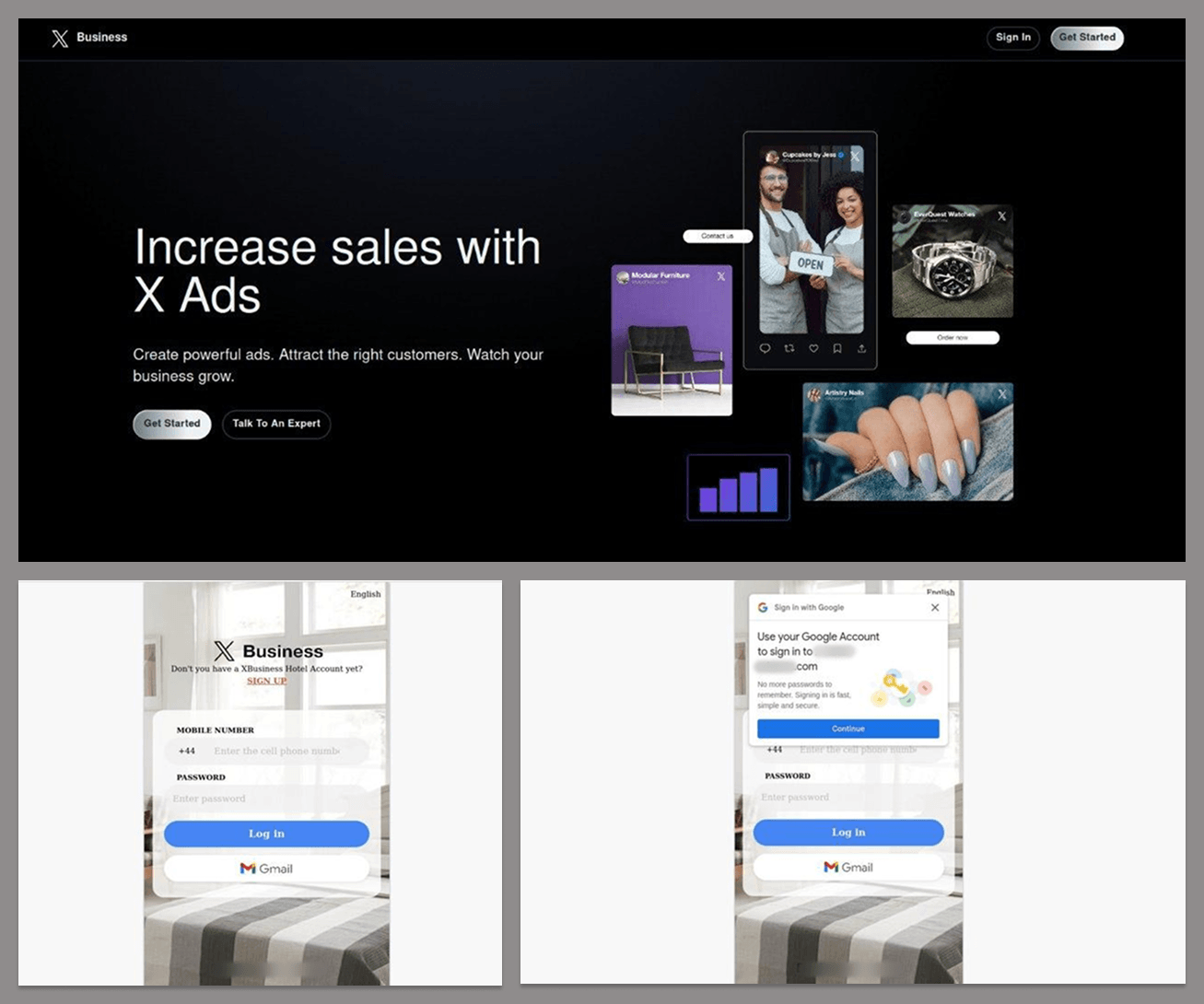
    To do this, cyberattackers use a variety of lures, often imitating landing pages from brands commonly used by SMBs. One example is a phishing attempt targeting Google business accounts. The bait lures victims with the promise of promoting their company on X. It requires them to first log in to a dedicated platform using their Google account with credentials that will end up in cyberattackers’ hands.

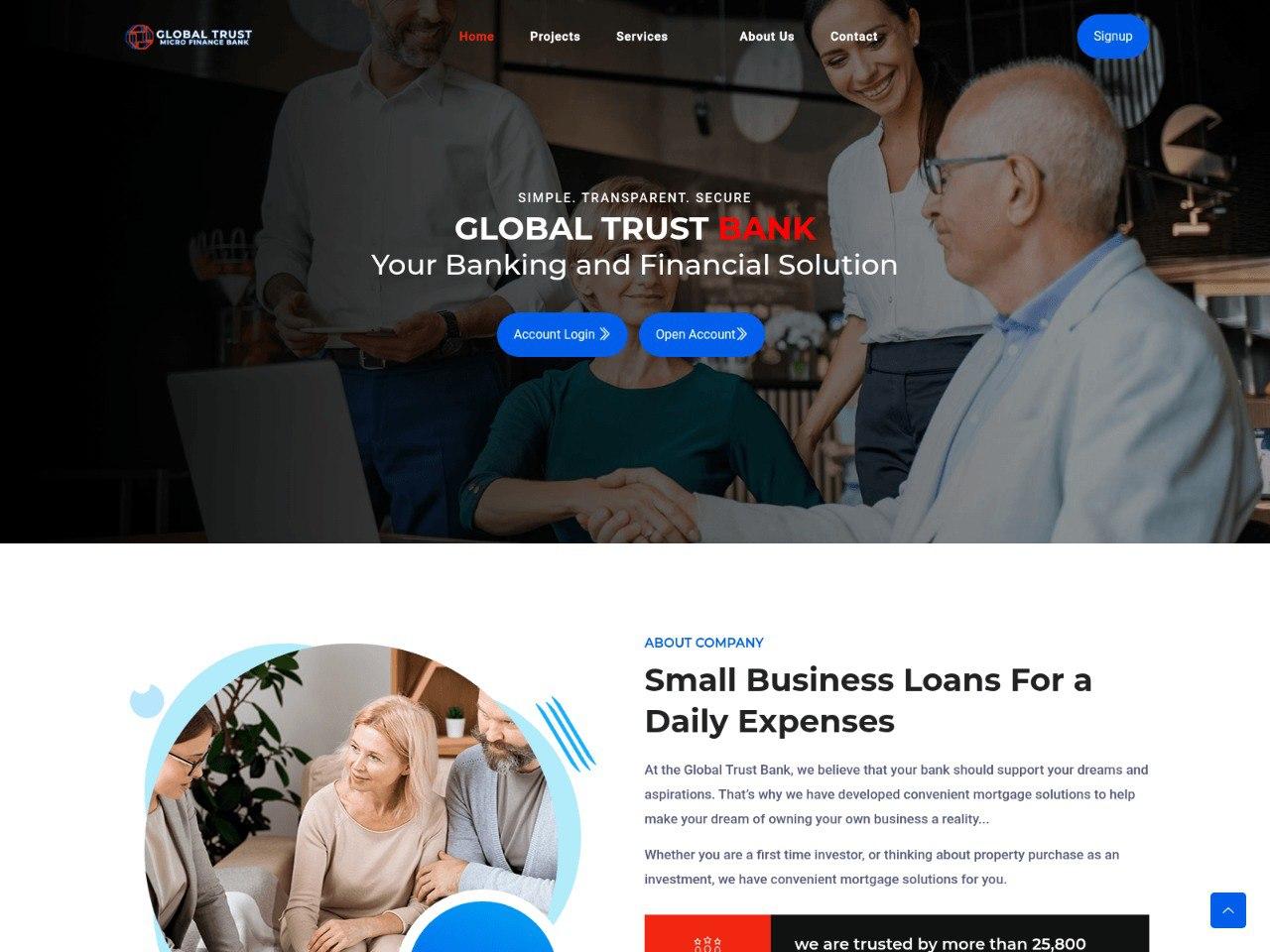
    Another fake landing page impersonated a bank that offered business loans: a “Global Trust Bank”. Since legitimate organizations with that name exist in multiple countries, this phishing attempt may have seemed believable. The attackers tried to lure users with favorable business loan terms – but only after victims submitted their online banking credentials, giving the criminals access to their accounts.

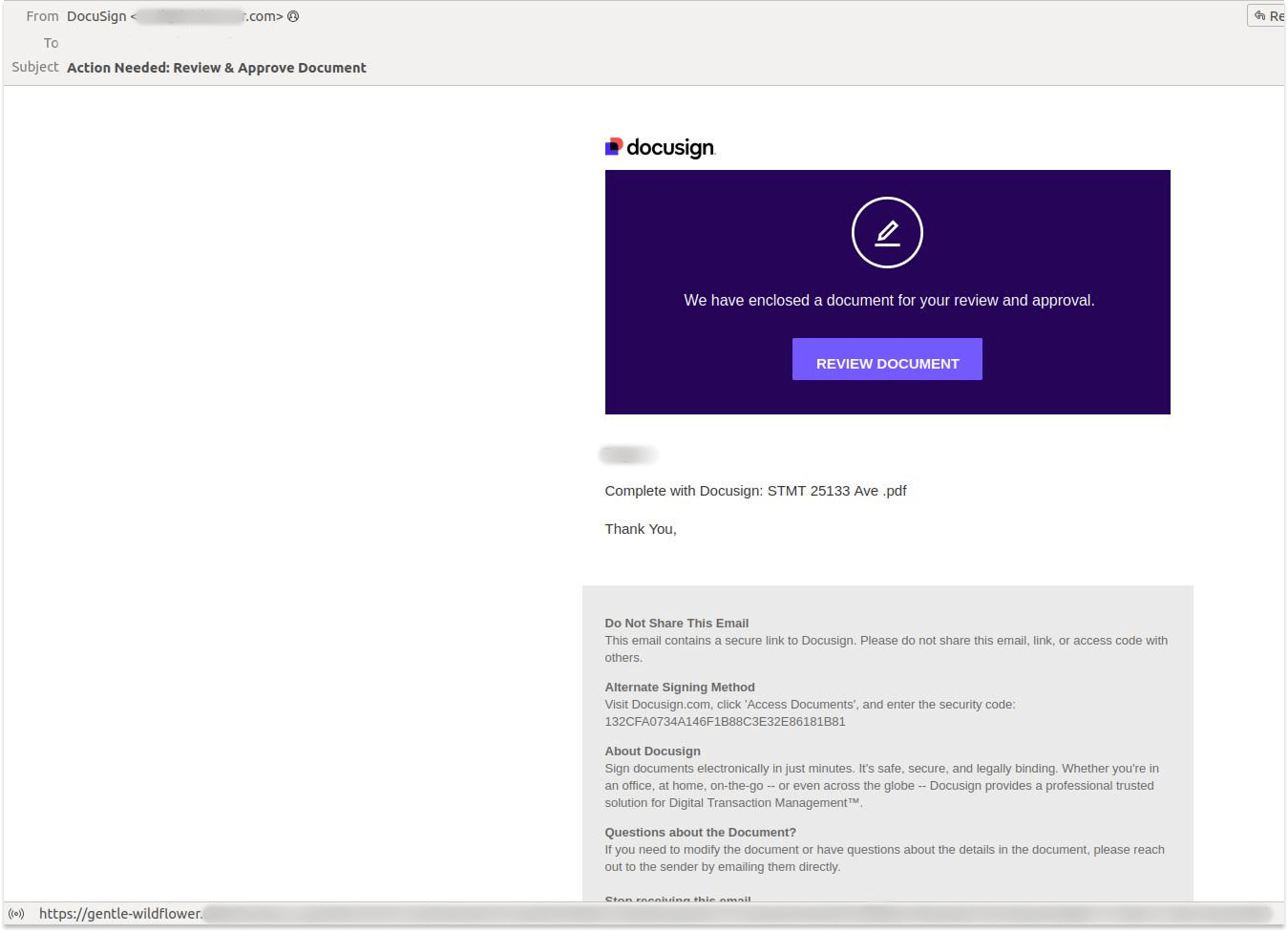
    We also saw a range of phishing emails targeting SMBs. In one recent case detected by our systems, the attacker sent a fake notification allegedly from DocuSign, an electronic document-signing service.

    SMBs can even find themselves targeted by classic Nigerian scams. In one recent example, the sender claimed to represent a wealthy client from Turkey who wanted to move $33 million abroad to allegedly avoid sanctions, and invited the recipient to handle the funds. In Nigerian scams, fraudsters typically cajole money. They may later request a relatively small payment to a manager or lawyer compared to the amount originally promised.

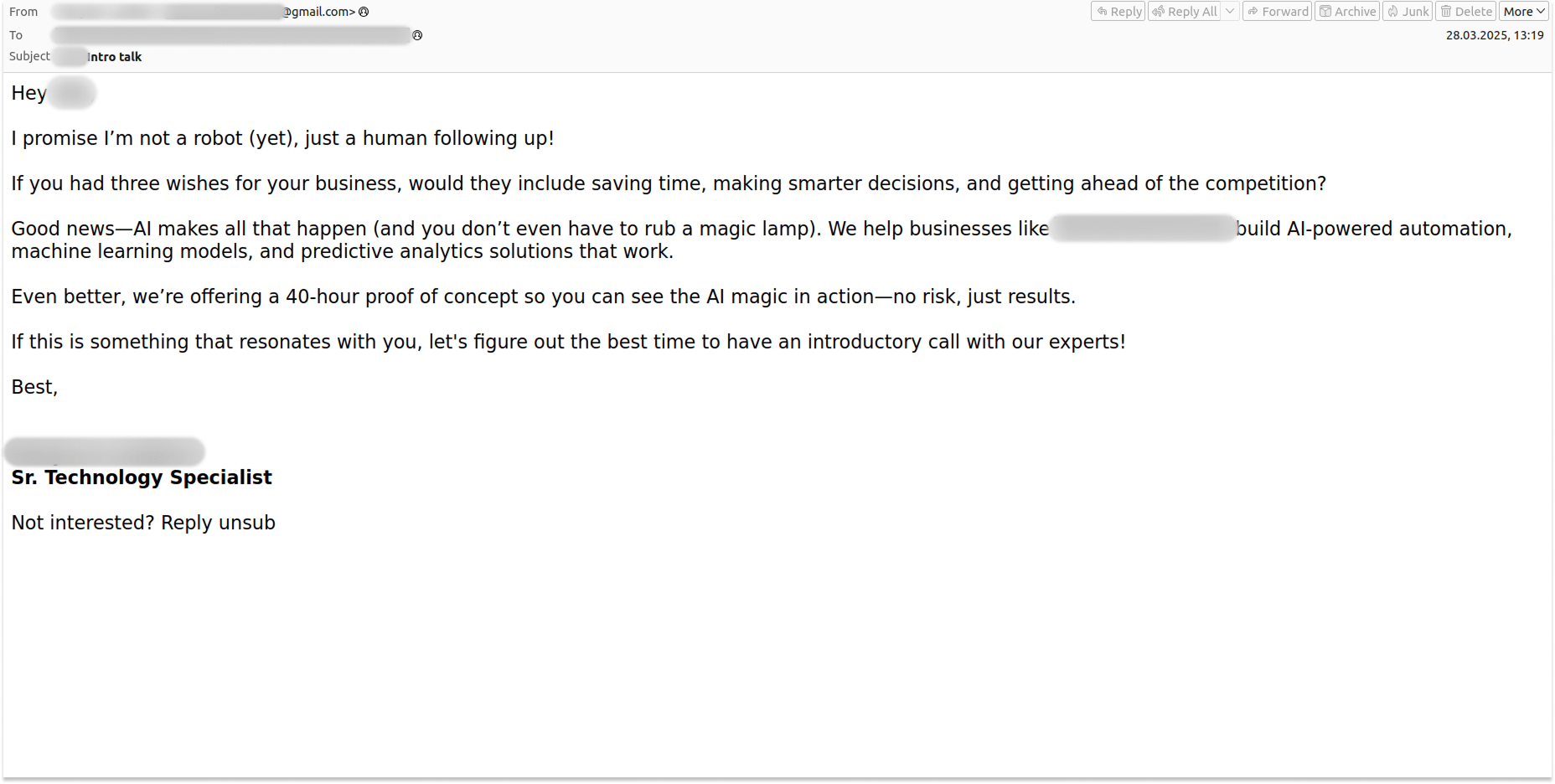
    Beyond these threats, SMBs are bombarded daily with hundreds of spam emails. Some promise attractive deals on email marketing or loans; others offer services like reputation management, content creation, or lead generation. In general, these offers are crafted to reflect the typical needs of small businesses. Not surprisingly, AI has also made its way into the spam folder – with offers to automate various business processes.

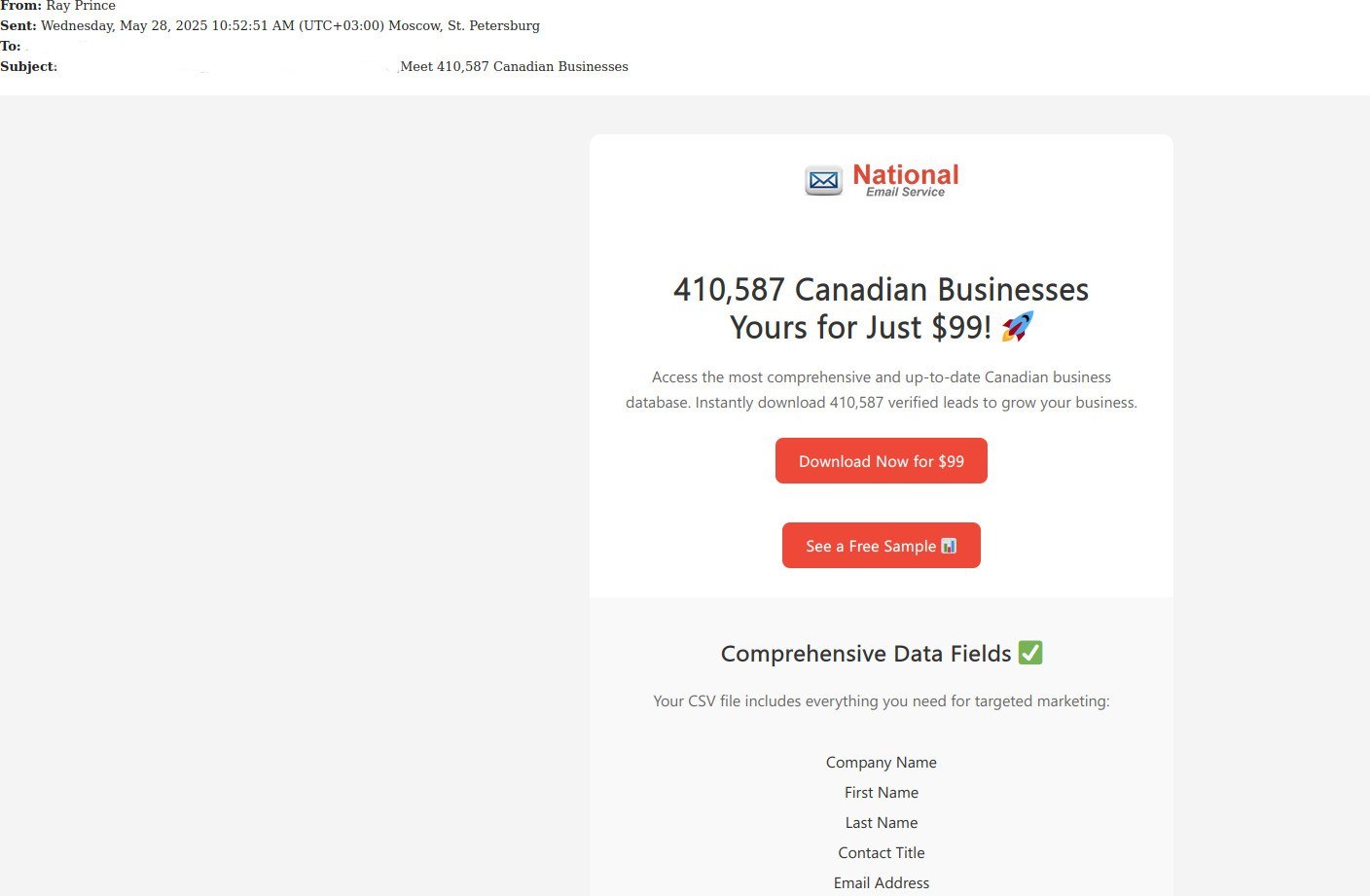
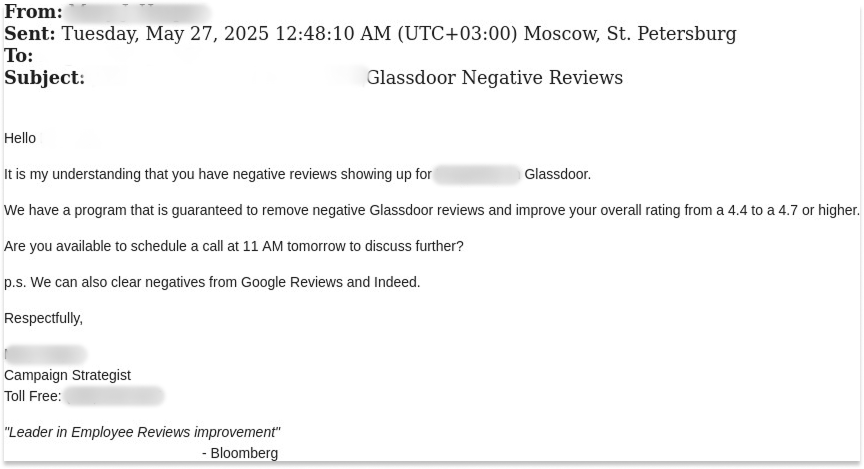
    We have also seen spammers offering dubious deals like purchasing a database of over 400,000 businesses for $100, supposedly to be used for selling the company’s B2B products, or manipulating reviews on a review platform.

    Security tips

    SMBs can reduce risks and ensure business continuity by investing in comprehensive cybersecurity solutions and increasing employee awareness. It is essential to implement robust measures such as spam filters, email authentication protocols, and strict verification procedures for financial transactions and the handling of sensitive information.

    Another key step toward cyber resilience is promoting awareness about the importance of comprehensive security procedures and ensuring they are regularly updated. Regular security training sessions, strong password practices, and multi-factor authentication can significantly reduce the risk of phishing and fraud.

    It is also worth noting that searching for software through search engines is an insecure practice, and should be prohibited in the organization. If you need to implement new tools or replace existing ones, make sure they are downloaded from official sources and installed on a centralized basis by your IT team.

    Cybersecurity Action Plan for SMBs

    1. Define access rules for corporate resources such as email accounts, shared folders, and online documents. Monitor and limit the number of individuals with access to critical company data. Keep access lists up to date and revoke access promptly when employees leave the company. Use cloud access security brokers to monitor and control employee activities within cloud services and enforce security policies.
    2. Regularly back up important data to ensure the preservation of corporate information in case of emergencies or cyberincidents.
    3. Establish clear guidelines for using external services and resources. Create well-defined procedures for coordinating specific tasks, such as implementing new software, with the IT department and other responsible managers. Develop short, easy-to-understand cybersecurity guidelines for employees, with a special focus on account and password management, email protection, and safe web browsing. A well-rounded training program will equip employees with the knowledge they need and the ability to apply it in practice.
    4. Implement specialized cybersecurity solutions that provide visibility and control over cloud services, such as Kaspersky Next.

    MIL OSI Economics –

    June 25, 2025
  • MIL-OSI Europe: OSCE Mission Hands Over Specialized Vehicles to Kosovo Police to Improve Public Safety and Security

    Source: Organization for Security and Co-operation in Europe – OSCE

    Headline: OSCE Mission Hands Over Specialized Vehicles to Kosovo Police to Improve Public Safety and Security

    The OSCE Mission in Kosovo handed over five specialized vehicles to the Kosovo Police K9 unit on 24 June 2025 to enhance the operational capabilities of police canine teams.
    The vehicles, specially modified to support the safe and efficient transport of police dogs and their handlers during critical missions, will improve the mobility and responsiveness of K9 teams deployed in various security operations.
    In addition, the Mission has overseen essential repairs to the existing kennels used by the K9 unit. These upgrades include improved ventilation systems, structural reinforcements, and enhanced sanitation facilities to ensure the wellbeing and readiness of the police dogs. The kennel repairs are a vital part of maintaining high standards of care and ensuring that the canine officers are in optimal condition to perform their specialized duties.
    “The safety and security of all communities living in Kosovo remains our key priority,” said Ambassador Gerard McGurk, Head of the OSCE Mission in Kosovo, speaking at the handover event. “The delivery of specialized vehicles and the renovation of the K9 kennels represent tangible steps towards strengthening public safety and building trust across all communities in Kosovo,” he added.
    Kosovo Police General Director, Colonel Gazmend Hoxha, said that the longstanding co-operation with the OSCE has been instrumental in advancing the capabilities of the Kosovo Police. He underlined that the partnership is vital for improving the police’s ability to detect and confiscate illicit arms and explosives, ultimately contributing to a safer and more secure Kosovo.
    The initiative is part of an extra-budgetary project funded by the Government of Germany and the European Union, focused on strengthening the canine capacity of Kosovo’s police services to detect and confiscate small arms and light weapons (SALW), ammunition, and explosives — key priorities for maintaining public safety and security. As part of the same project, the Mission built a training polygon for the K9 unit in 2023.
    Through this support, the OSCE Mission in Kosovo is contributing to the long-term development and modernization of the police K9 unit. These improvements not only enhance operational efficiency but also demonstrate a shared dedication to security, professionalism, and the welfare of police dogs. The strengthened K9 capacity will play a crucial role in countering illegal arms trafficking and explosives, thereby fostering a safer environment for all people of Kosovo.

    MIL OSI Europe News –

    June 25, 2025
  • MIL-OSI Europe: OSCE Mission Hands Over Specialized Vehicles to Kosovo Police to Improve Public Safety and Security

    Source: Organization for Security and Co-operation in Europe – OSCE

    Headline: OSCE Mission Hands Over Specialized Vehicles to Kosovo Police to Improve Public Safety and Security

    The OSCE Mission in Kosovo handed over five specialized vehicles to the Kosovo Police K9 unit on 24 June 2025 to enhance the operational capabilities of police canine teams.
    The vehicles, specially modified to support the safe and efficient transport of police dogs and their handlers during critical missions, will improve the mobility and responsiveness of K9 teams deployed in various security operations.
    In addition, the Mission has overseen essential repairs to the existing kennels used by the K9 unit. These upgrades include improved ventilation systems, structural reinforcements, and enhanced sanitation facilities to ensure the wellbeing and readiness of the police dogs. The kennel repairs are a vital part of maintaining high standards of care and ensuring that the canine officers are in optimal condition to perform their specialized duties.
    “The safety and security of all communities living in Kosovo remains our key priority,” said Ambassador Gerard McGurk, Head of the OSCE Mission in Kosovo, speaking at the handover event. “The delivery of specialized vehicles and the renovation of the K9 kennels represent tangible steps towards strengthening public safety and building trust across all communities in Kosovo,” he added.
    Kosovo Police General Director, Colonel Gazmend Hoxha, said that the longstanding co-operation with the OSCE has been instrumental in advancing the capabilities of the Kosovo Police. He underlined that the partnership is vital for improving the police’s ability to detect and confiscate illicit arms and explosives, ultimately contributing to a safer and more secure Kosovo.
    The initiative is part of an extra-budgetary project funded by the Government of Germany and the European Union, focused on strengthening the canine capacity of Kosovo’s police services to detect and confiscate small arms and light weapons (SALW), ammunition, and explosives — key priorities for maintaining public safety and security. As part of the same project, the Mission built a training polygon for the K9 unit in 2023.
    Through this support, the OSCE Mission in Kosovo is contributing to the long-term development and modernization of the police K9 unit. These improvements not only enhance operational efficiency but also demonstrate a shared dedication to security, professionalism, and the welfare of police dogs. The strengthened K9 capacity will play a crucial role in countering illegal arms trafficking and explosives, thereby fostering a safer environment for all people of Kosovo.

    MIL OSI Europe News –

    June 25, 2025
  • MIL-OSI Europe: Uzbekistan’s Ombudsman institution, civil society organizations gain skills in alternative reporting to UN treaty bodies

    Source: Organization for Security and Co-operation in Europe – OSCE

    Headline: Uzbekistan’s Ombudsman institution, civil society organizations gain skills in alternative reporting to UN treaty bodies

    Uzbekistan’s Ombudsman institution, civil society organizations gain skills in alternative reporting to UN treaty bodies | OSCE

    Skip navigation

    Navigation

    Navigation

    Home Newsroom News and press releases Uzbekistan’s Ombudsman institution, civil society organizations gain skills in alternative reporting to UN treaty bodies

    MIL OSI Europe News –

    June 25, 2025
←Previous Page
1 … 932 933 934 935 936 … 5,175
Next Page→
NewzIntel.com

NewzIntel.com

MIL Open Source Intelligence

  • Blog
  • About
  • FAQs
  • Authors
  • Events
  • Shop
  • Patterns
  • Themes

Twenty Twenty-Five

Designed with WordPress