Category: Economy

  • MIL-OSI New Zealand: Local News – Wellington Water review reinforces the need for change – Porirua City

    Source: Porirua City Council

    Porirua City Council says today’s reports into Wellington Water Limited’s operations reinforce the urgent need for change in water service delivery in the region.
    A series of reports were released today, with a particular focus on costs, and the value for money of the services delivered by the council-controlled organisation.
    Porirua City Mayor Anita Baker said the shareholding Councils had sought assurance that Wellington Water had an absolute focus on delivery, value for money and sustainable operational improvements.
    The need for this assurance became even more obvious when the company revealed a $51 million budget error in 2024.
    “In response to this requirement for assurance, and with the appointment of a new Chief Executive in September 2024, Wellington Water commenced a series of immediate changes to company structure, organisational culture and processes to lift capability and improve outcomes,” Mayor Baker said.
    “I would like to acknowledge the work of the board and new CE in finding and fixing these huge issues.
    “Today’s reports confirm our concern that Wellington Water is not operating efficiently. In particular, the report finds that when benchmarked against councils across the country, costs have been ‘consistently more expensive’, particularly for drinking water and wastewater assets”.
    The reports also found a lack of oversight, assurance and weak financial processes and controls in the management of consultant and contractor panels.
    Mayor Baker said the results showed that we need to fix water services “once and for all”.
    “The results are terrible, and I’m not surprised. This is the reason we need change, and why I have consistently been a supporter of water services reform.”
    She said the fact that Wellington Water had been relying on other organisations’ IT systems was symptomatic of the many structural issues with the current model.
    “The Wellington Water model is past its use by date. It has not worked as intended and we need to move to a more mature and accountable model that will serve us into the future ,” she said.
    “We’ve been on a five-year water reform path, and if we proceed with the preferred new model Wellington Water won’t exist after 1 July 2026”.
    Porirua City is working with Hutt City, Upper Hutt City, Wellington City and Greater Wellington Regional Councils, alongside iwi partners, on a new model for water services delivery.
    The councils have agreed, subject to community feedback, that establishing a new multi-council-owned water organisation is the best way to deliver water services in the future. Each council will be consulting on this proposal starting on 20 March 2025.
    Mayor Baker says in the meantime, Council has asked Wellington Water to do two things:
    1. to concentrate on making their current operation as cost effective as possible
    2. to prepare the organisation to be disbanded in anticipation of establishing a new water company with clearer accountability and a stronger investment path.
    “What we do next is critical – we need to move as quickly as possible to a new delivery model.”

    MIL OSI New Zealand News

  • MIL-OSI Australia: Sydney to host global superannuation summit

    Source: New South Wales Ministerial News

    Published: 3 March 2025

    Released by: Treasurer


    Treasurer Daniel Mookhey will host global superannuation leaders in Sydney in the second half of this year, following the success of an inaugural gathering of the Australian sector in the US last week.

    The Sydney Superannuation Summit will build on the NSW capital’s steadily growing position as the financial hub of the Asia Pacific.

    Last week’s landmark Australian Superannuation International Summit, hosted by US Ambassador Kevin Rudd in Washington and New York, brought together Australia’s biggest funds to showcase their potential on the world stage.

    Together the Australian funds invest $631.6 billion into the US economy.

    Financial leaders addressing the summit included US Treasury Secretary Scott Bessent and Australian Treasurer Jim Chalmers.

    NSW Treasury Corp chief executive David Deverall told the gathering how Sydney’s status as the financial services hub of the Asia Pacific had evolved.

    Mr Deverall said Sydney’s economic strength was underpinned by a strong investment pipeline, a large skilled workforce and advanced digital infrastructure.

    He said that Sydney is home to the country’s biggest banks, and that it dominates Australia’s venture capital and private equity activity in Australia.

    Nearly 60 per cent of Australian venture capital is in NSW. Mr Deverall told the summit Sydney’s advanced digital infrastructure and willingness to embrace innovation had made it an attractive place for businesses to start and grow.

    Sydney produces half of Australia’s business “unicorns”, or those valued above USD$1 billion, and almost three quarters of those on the way to reaching that threshold. 

    It is a world leader in research output per capita, a strength which plays into its financial and tech workforce and is reflected in a steady supply of qualified graduates from its universities.

    It is ranked fourth in the world as the most popular investment destination for foreign investors, after Dubai, London and Singapore, according to Investment Monitor.

    Australian superannuation funds manage a total $4 trillion in assets.

    Treasurer Daniel Mookhey said:

    “The Sydney Superannuation Summit will leverage our strength as the financial hub of the Asia Pacific.

    “Half of Australia’s businesses unicorns were born right here in NSW.  They’ve been able to grow because of the high value we place on innovation and technological development.

    “Sydney ranks in the top five of the most popular investment destinations around the world.  Our Summit is an opportunity to harness that momentum.”

    MIL OSI News

  • MIL-OSI Submissions: Higher meat export prices boost terms of trade – Stats NZ media and information release: International trade: December 2024 quarter

    Source: Statistics New Zealand

    Higher meat export prices boost terms of trade3 March 2025 – Export prices increased more than import prices in the December 2024 quarter, which led to a 3.1 percent rise in the terms of trade, according to figures released by Stats NZ today.

    The terms of trade represent the ratio of export prices to import prices. They can be interpreted as a measure of New Zealand’s purchasing power on the international stage and as an indicator of the relative strength of the New Zealand economy.

    The total export price index rose 3.2 percent and the import price index rose 0.1 percent in the December 2024 quarter, compared with the September 2024 quarter.

    Export prices for meat products, which are New Zealand’s second largest export commodity by value, rose 6.8 percent in the December quarter. Lamb prices rose 7.0 percent, while beef and veal prices rose 6.1 percent.

    Files:

    MIL OSI

  • MIL-OSI New Zealand: Going for growth in exports and aquaculture

    Source: New Zealand Government

    The Coalition Government is going for growth by unlocking additional exports and creating jobs in the aquaculture industry Oceans and Fisheries Minister Shane Jones and Minister for Agriculture, and Trade and Investment Todd McClay announced today.

    The two ministers have confirmed support for salmon farming which is estimated to create an additional sector wide $500m of salmon exports by 2035. 

    “The Coalition Government will be co-investing $11.72 million over five years from the Sustainable Food and Fibre Futures fund as part of a $29.3 million programme, led by New Zealand King Salmon to increase production and drive up exports, Minister McClay says. 

    The joint project will look at ways to expand salmon farming around New Zealand including in deep water while continuing to meet environmental obligations.”

    “The ‘Future Salmon Farming Programme’ will prove the viability of open ocean farming for the King Salmon species to make New Zealand a leading global supplier for this high value product.

    “It will also drive innovation, allowing fish farmers to maximise productivity and profitability and get a better return for their product.”  

    “We expect this investment to boost exports and produce more higher paying jobs in our regions,” Todd McClay said.  

    Minister Shane Jones says this is another example of the Coalition Government’s commitment to growing the aquaculture industry and supporting innovation in the sector, to the benefit of all New Zealanders.

    “We have a strong track record of supporting New Zealand aquaculture, including investing in projects to boost mussel spat availability, extending the resource consents for marine farms, and listing seven aquaculture projects in the Fast-Track Bill, which includes two new open ocean salmon farms.

    “It’s clear that open ocean aquaculture is going to be key for the industry’s growth. These farms will increase our capacity for farmed salmon by 40,000 tonnes annually in addition to the expected 10,000 tonnes from New Zealand King Salmon’s pilot open ocean farm.”

    “The Coalition Government has got big plans for the aquaculture sector, which I’ll be releasing in full soon. Open ocean salmon farming is a big part of these plans, as it directly supports our focus on delivering profitable, resilient, and sustainable marine farms around New Zealand, that work for the regions, Māori, our marine farmers, and the economy as a whole,” Mr Jones says.

    MIL OSI New Zealand News

  • MIL-OSI USA News: SUNDAY SHOWS: Trump Administration Fighting for America First

    Source: The White House

    This morning, the Trump Administration was out in force across the TV networks as they updated the American people on President Trump’s agenda.

    Here’s what you missed:

    Secretary of State Marco Rubio on ABC This Week

    • On negotiations to end the war in Ukraine: “The sooner everyone grows up around here and figures out that this is a bad war that’s heading in a bad direction… the more progress we’re going to be able to make. But the president is crystal clear… he is going to be a president that tries to achieve peace.”
    • On President Trump’s desire for peace: “Shouldn’t we all be happy that we have a president who’s trying to stop wars and prevent them instead of start them? And I just don’t get it. I really don’t, other than the fact that it’s Donald J. Trump. If this was a Democrat that was doing this, everyone would be saying, well, he’s on his way to the Nobel Peace Prize. This is absurd. We are trying to end a war. You cannot end a war unless both sides come to the table, starting with the Russians. And – and that – that is the point the president has made.”

    National Security Advisor Mike Waltz on State of the Union

    Secretary of Commerce Howard Lutnick on Sunday Morning Futures

    Director of National Intelligence Tulsi Gabbard on Fox News Sunday

    • On the danger of continuing the war in Ukraine: “The longer this goes on, not only are more Ukrainians losing their lives, but it increases the potential of this escalation towards World War III … That’s not a cost that President Trump is willing to accept.”

    Secretary of the Treasury Scott Bessent on Face the Nation

    • On rebuilding the economy: “President Trump’s been in office five weeks… interest rates — the 10-year bond… have been down every week since President Trump was President. Mortgage rates have been down every week. So, that’s a pretty good start.”

    Press Secretary Karoline Leavitt on Media Buzz

    • On cameras being able to witness President Trump’s Oval Office meeting with Ukraine: “President Trump is the most transparent president in history. And as he said, it was great for the cameras to be in there because the American people — and the world — were able to see what the president and his team have seen behind the scenes in negotiating with President Zelenskyy’s team. They have continually denied the pragmatic reality of where their country stands today.”

    MIL OSI USA News

  • MIL-Evening Report: What can you do if you’ve started uni and you don’t like it?

    Source: The Conversation (Au and NZ) – By Catherine Stephen, Lecturer, School of Nursing, University of Wollongong

    Neon Wang/Unsplash

    More than 260,000 students across Australia are going to university for the first time.

    Some come to university to pursue a passion, others to discover one, and some aren’t quite sure why they’re here. Whatever their reason, it can take time to adjust and feel comfortable at uni, and some students decide studying is not for them. In their first year, around 14% of Australian students will choose to leave.

    What do you do if you get to uni and it isn’t quite what you expect?

    Expectations versus reality

    The transition from high school to university can be a big adjustment, especially for Year 12 students who are used to structured learning and clear guidance. Suddenly, you’re managing a new timetable, deadlines, and navigating new places and possibly new subjects on your own.

    While university social clubs and campus activities can help you settle in, your first year at university can be a lonely time. You are away from familiar school friends and in classes full of people you don’t know.

    Mature-aged students (anyone over 21) face their own challenges when life experience does not always translate to confidence in academic skills.

    Juggling study, work and personal commitments isn’t easy. Fitting university in around other life pressures can feel overwhelming.

    University is often more independent than high school, which can be a big change for students.
    Neon Wang/Unsplash

    Seek out support

    Each university will have slightly different offerings around student support.

    If you are finding the academic work difficult, ask if there are academic writing supports or library research supports available.

    If you are worried about your funds, ask about financial counselling.

    Also seek out on-campus mental health or counselling supports if you you are feeling particularly stressed about your situation.


    Read more:
    Uni is not just about lectures. When choosing a degree, ask what supports are available to you


    Can you change your degree or subjects?

    If you’re not enjoying yourself, try to work out exactly what it is you don’t like: is it university itself? Is it your course? Or just a particular subject?

    If your current degree isn’t working, you could consider switching degrees or the mix of subjects you are studying. Switching to another degree or discipline may come with credit for prior study. Remember, no learning is ever wasted, and many skills are transferable. You can talk to your university admissions team to see what’s possible.

    Or perhaps part-time study would be a better option for you. This is very common among uni students. Only 40% complete their degree within four years.

    Universities often allow up to ten years for a bachelors’ degree, so you have time to rethink and adjust. Chat with an academic advisor or student services to understand your options.

    If university isn’t working at all, remember there are many other options post-school. This includes vocational education and training courses (some of which are free) that provide practical skills, geared towards a job. It is OK to change your mind.

    Key dates to know

    Timing is important. You need to be aware of the “census date” for your particular uni. This is the deadline when your fees are locked in.

    Before then, you can drop courses without financial or academic penalties.

    Think of the time before the census date as a “try-before-you-buy” period. While dates vary between universities, the first few weeks give you a chance to experience course content and decide if it’s the right fit for you.

    Remember you are going through a big change – so go easy on yourself. And speak to academic, career, and wellbeing supports at your university if you think you need to make a change.

    The authors do not work for, consult, own shares in or receive funding from any company or organisation that would benefit from this article, and have disclosed no relevant affiliations beyond their academic appointment.

    ref. What can you do if you’ve started uni and you don’t like it? – https://theconversation.com/what-can-you-do-if-youve-started-uni-and-you-dont-like-it-251052

    MIL OSI AnalysisEveningReport.nz

  • MIL-Evening Report: Leakage is a risk with carbon storage projects – NZ’s new framework must be clear on how to deal with this liability

    Source: The Conversation (Au and NZ) – By David Dempsey, Associate Professor in Natural Resources Engineering, University of Canterbury

    Shutterstock/Oksana Bali

    The government recently announced a framework to regulate carbon capture, utilisation and storage (CCUS) by New Zealand companies.

    Energy and Climate Change Minister Simon Watts outlined new rules that would allow emitters to capture their carbon dioxide (CO₂) emissions and inject them underground for permanent disposal. They would then avoid having to pay for those emissions under the Emissions Trading Scheme.

    Globally, CCUS is currently used mostly by coal or gas-fired power stations, liquefied natural gas plants and petroleum refineries. There are 41 commercial operations around the world, and they capture about 40 million tonnes of CO₂ annually.

    Our peers (Australia, the United States and the European Union) already have CCUS frameworks and storage projects. The Intergovernmental Panel on Climate Change acknowledges CCUS’s role in curbing emissions, but highlights challenges in scaling and technology readiness.

    New Zealand faces the challenge of reducing emissions from strategic industries such as steel, concrete, fossil fuels and their derivatives (methanol, ammonia). CCUS has been tabled as an interim solution, strongly supported by the fossil fuel industry. However, critics warn it could reduce incentives to phase out fossil fuels.

    The government argues its CCUS framework aligns New Zealand with international standards. This claim has merit insofar as successful climate action is likely to require international collaboration and technology transfer.

    CCUS in New Zealand could enable reinjection of CO₂ produced from the Kapuni gas field in Taranaki, with “utilisation” involving diverting some of the gas for use in the food and beverage or horticulture industries.

    However, leakage of CO₂ from long-term disposal sites is a major technical risk and New Zealand’s framework must be clear on how it would deal with this liability.

    A bubbling sping near Lake Boehmer emits noxious fumes.
    Elizabeth Conley/Houston Chronicle via Getty Images

    Lake Boehmer and how things might go wrong

    Rules for CCUS projects generally require operators to monitor, report and remedy any leakage of CO₂. But because the industry is young, it is useful to take a broader look at geological leakage in the past to reveal how future challenges play out.

    Lake Boehmer, in the the Permian Basin of West Texas, wasn’t always there. But 20 years ago an old irrigation well started leaking saltwater and hasn’t stopped since.

    The well was drilled in 1951 by an oil and gas company. No oil was discovered so the well was handed over to the landowner for irrigation. The well produced water, but also poisonous hydrogen sulphide, enough to kill a farmhand in 1953.

    In the 1990s, the well started leaking. Water from a deep aquifer had pushed its way up alongside the well through geological layers of salt. The water dissolved the salt, worsening the leak, and emerged from underground three times saltier than seawater.

    The Railroad Commission, which regulates the oil and gas industry in Texas, says they are not liable to plug the well because they only have jurisdiction over oil wells. The original operator, which is claimed to have promised to plug the well “any time it becomes polluted with mineral water”, is no longer in business. No one can find the landowner.

    After 20 years, Lake Boehmer has grown to 60 acres. Its shore is rimmed in salt crystals and the odd dead bird from hydrogen sulphide exposure. No one can agree who should fix it.

    Could something similar happen with CCUS? Exacerbating factors in the Boehmer case include deterioration of an aged well – it’s almost 50 years since leakage started – and the absence of a backstop party as the final holder of liability. Both could happen with CCUS under the wrong circumstances.

    Better ways of dealing with leakage

    The Decatur CCUS project in the US state of Illinois has been injecting CO₂ produced from corn ethanol two kilometres deep into sandstone. Over about a decade, 4.5 million tonnes of CO₂ has been injected – emissions diverted from the atmosphere.

    The US government imposes strict monitoring rules on CCUS projects. Special monitoring wells are drilled into the disposal aquifer to measure pressure changes and how far the CO₂ has travelled.

    Unfortunately, one of these wells started to leak, possibly due to corrosion. It allowed about 8,000 tonnes of CO₂ to escape into overlying geological layers.

    This is rightly concerning, but to put it into perspective, the size of the leak is 0.2% of the injected CO₂ volume and none of it has escaped to the atmosphere or shallow groundwater. The leak was detected, the US Environmental Protection Agency (EPA) intervened, issuing a notice that the leak be remediated, and the company plugged the well.

    This illustrates a functioning CCUS framework. Monitoring requirements ensured the leak was discovered and the regulator was empowered to dictate remedial action.

    However, critics have questioned the timeliness of the operator’s disclosure. The site remains on hold but may resume operations if the EPA is satisfied with the fix.

    Lessons for New Zealand

    A proposal circulated last year suggests the government will model its legislation on Australia and the EU, with CCUS operators being responsible for leaks during disposal operations and for a time after site closure.

    This is like the Decatur situation. It makes sense for operators to fix leaks because they have the technical expertise and are the direct financial beneficiaries of emissions disposal.

    It gets trickier on generational time frames. Companies can go out of business or might leave the country. In these cases, the government is liable for long-term leakage and may seek financial security from the operator to cover future costs.

    A leak arising decades after closure could be more difficult to detect and costly to fix, especially if held up by a protracted fight around liability. This is the Lake Boehmer example.

    Some CCUS seems inevitable if the world is to meet climate targets. It is therefore important to prepare for the possibility of a leak by having robust practices and clear responsibility.

    Although it may seem unfair to burden future generations with looking after CO₂ disposal sites, we argue it is preferable to a legacy that has those same climate-warming gases in the atmosphere.

    David Dempsey receives funding from MBIE for research into carbon dioxide removal.

    Andrew La Croix receives funding from MBIE for research into carbon dioxide removal.

    ref. Leakage is a risk with carbon storage projects – NZ’s new framework must be clear on how to deal with this liability – https://theconversation.com/leakage-is-a-risk-with-carbon-storage-projects-nzs-new-framework-must-be-clear-on-how-to-deal-with-this-liability-251006

    MIL OSI AnalysisEveningReport.nz

  • MIL-Evening Report: Alcohol and gambling firms donate to political parties multiple times. And new rules won’t stop them

    Source: The Conversation (Au and NZ) – By Jennifer Lacy-Nichols, Senior Research Fellow in Commercial Determinants of Health, The University of Melbourne

    Good quality information about when and how alcohol and gambling industries try to influence government decision making should be easily accessible. But in Australia, it’s not.

    When we mapped the network of alcohol and gambling interests in Australia in our recent study, we revealed a complex web of memberships and partnerships.

    We then used the latest data on political donations from the Australian Electoral Commission to show how these companies can “double donate”, or potentially donate more than twice. That’s once directly and via their often-multiple associations.

    However, recent political donation reforms will not stop these kinds of multiple donations.

    We’re concerned about the lack of transparency in these associations and political donations, and the potential for influencing public health policy on everything from gambling reform to alcohol labelling.


    Read more:
    Parliament has passed landmark election donation laws. They may be a ‘stitch up’ but they also improve Australia’s democracy


    Hidden webs of influence

    Understanding which companies are connected with alcohol and gambling associations can be challenging. This was immediately apparent when we mapped alcohol and gambling industry associations (such as Clubs Australia, which represents both community clubs and large pokies venues, or Alcohol Beverages Australia, which represents drinks manufacturers, distributors and retailers).

    Just 75 (59.5%) of the 126 industry associations we identified disclosed their members or corporate partners.

    When we documented the members and corporate sponsors of those 75 associations, we found a large and well-connected network.

    Unsurprisingly, major alcohol and gambling companies were among the members and corporate sponsors. But these were in the minority. More than three-quarters (78.3%) were from other industries such as health, finance, construction, law, entertainment and telecommunications. Some of these were among the most well-connected organisations in the network.

    The figure below shows the links between the most connected associations and corporate partners, using data from 2022.

    The larger circles indicate more connections in the network (for example, associations with more partners). Circles of alcohol interests are blue, gambling is pink, industry associations are orange, and other industries are shown in grey. The lines show a direct link (for instance, between a company and industry association).

    We revealed a large and well-connected network of alcohol and gambling associations.
    Author provided

    We also investigated how transparent these relationships were. We mapped disclosures about two prominent groups: the hotels associations (which represent pubs and hotels) and the clubs associations.

    Of the 658 relationships assessed, only 91 (13.8%) were transparently disclosed. Alcohol companies were the least transparent (disclosing none fully). Gambling companies fully disclosed only 19 relationships.

    The figure below compares the number of disclosures from alcohol, gambling and other companies about their relationships with hotels and clubs associations.

    On the left, we have industry sectors. On the right we have the clubs and hotels associations they partner with. In the middle we show how many of those relationships were fully, partially or not disclosed at all.

    Here’s what hotels and clubs assocations disclosed.
    Author provided

    Poor transparency is just the start

    Poor transparency in membership of hotels and clubs associations makes it even harder to keep track of which companies are making political donations to which parties, and how much they’re donating in total.

    Donations are often said to buy access to politicians, which can facilitate political influence. Companies who may not want to visibly support political parties can donate via intermediaries – in this case, associations that represent their interests. Depending on how many associations a company belongs to, companies can cultivate multiple access points to government.

    This gives them more opportunities to influence politics – and perhaps oppose public policies that threaten their commercial interests.

    These multiple access points are often opaque. The potential links between the thousands of donors in political donation data from the Australian Electoral Commission are not explicit. This makes it challenging for someone with limited time and resources to easily understand which company is giving money to which party, how much, and why. So much of the money in Australian politics is effectively hidden.

    It was only through extensive data collection, cleaning and linking that we could map links between alcohol and gambling sectors. We then linked our dataset to the new data published by the Australian Electoral Commission on February 1.

    If we look at just alcohol and gambling companies, we can see that several essentially “double donate”. They donate once directly and a second time (or more) indirectly via their associations.

    We put together a simple visual below to show the flow of funds for the largest alcohol and gambling donors and associations in our dataset.

    On the left we have the alcohol and gambling companies donating to political parties on the right. In the middle, we have have alcohol and gambling industry associations also donating to the political parties. The lines represent the financial connection between entities. The wider the lines, the more money we know is donated.

    Alcohol and gambling industry donations to political parties, 2023-24.
    Author provided

    Why aren’t recent reforms enough?

    The most recent donation reforms mean political donations over A$5,000 must be disclosed, and these must be disclosed monthly. However, these reforms are far weaker than originally proposed (real-time reporting, $1,000 disclosure cap). This potentially allows alcohol and gambling industries to influence government and hide it.

    Our current political integrity safeguards are failing us. That’s because the reforms do not compel industry groups to disclose their members or funders. This potentially allows companies to donate to political parties under the radar.

    This would be the case for the 51 organisations we found that did not have a list of members publicly available.

    Better transparency – about donations, lobbyists, conflicts of interest and more – can help ensure government decision-making is not unduly influenced by vested interests.

    With a federal election looming, it is important the public can trust policies from all sides of politics are free from undue influence.


    Cara Platts from the University of Melbourne coauthored the academic paper on which this article is based, and contributed to this article.

    Jennifer Lacy-Nichols receives funding from the Victorian Health Promotion Association and the National Health and Medical Research Council. She is a member of Transparency International Australia, the Public Health Association of Australia and Healthy Food Systems Australia.

    ref. Alcohol and gambling firms donate to political parties multiple times. And new rules won’t stop them – https://theconversation.com/alcohol-and-gambling-firms-donate-to-political-parties-multiple-times-and-new-rules-wont-stop-them-250374

    MIL OSI AnalysisEveningReport.nz

  • MIL-Evening Report: The WA election campaign has been about big promises, but culture wars are inescapable in contemporary politics

    Source: The Conversation (Au and NZ) – By Jacob Broom, Lecturer in Politics and Policy, Murdoch University

    The Western Australian election is less than a week away, and two themes have dominated: big public spending and culture wars.

    The main parties are racking up a long and expensive list of policy promises. The ABC’s election promise tracker shows big spending in suburban road upgrades, improving school access and infrastructure, responding to domestic and family violence, and addressing undercapacity in WA’s health system. The combined promised spend of Labor, Liberals, Nationals and the Greens is estimated to exceed A$16 billion.

    Appeals to fiscal restraint have been quiet. Labor is trumpeting its responsible economic management, while the Liberals are promising to “set the right priorities”. There is little talk of slashing and saving.

    The combination of the cost-of-living crisis and WA’s strong economy has dampened the public’s appetite for austerity. It has also provided the parties with the cover to spend without seeming fiscally reckless.

    While the policy priorities between the parties are broadly similar, there remain significant differences.

    Policy debates on housing and climate

    In housing, for example, all parties promise to slash stamp duty for first home buyers, but their proposals otherwise differ:

    For climate policy, the differences are starker. Labor promises a coal-free grid by 2030 and a green energy future built in WA, driven by windfarms and WA-made home batteries. It stops short at reducing natural gas use, unlike the Greens.

    However, Labor has also pushed back against environmental regulation. Premier Roger Cook lobbied the federal government to abandon environmental protection legislation.

    The recent release of a long-withheld independent report that prompted sweeping changes to the WA Environmental Protection Agency was criticised by conservation organisations for its lack of consultation outside of the mining industry.

    The Liberals agree on the need for batteries and wind power. However, they also promise to extend the lifespan of WA’s coal power stations and lift the ban on uranium mining in WA.

    In her campaign launch speech, Liberal leader Libby Mettam pledged to cut “green tape” and defund the Environmental Defenders Office. This is on the grounds that “taxpayer money should not be spent propping up activists”.

    The culture wars cometh

    Mettam’s choice to target “activists” signals the Liberals’ flirtation with the culture wars. This term refers to conflict over social issues concerning identity and inclusion such as gender, race and sexuality. These issues are invoked by politicians to win votes from a polarised electorate.

    Centre-right parties around the world have embraced culture wars, including in Australia.

    Aligning herself with federal Liberal leader Peter Dutton, Mettam has stated she will refuse to stand in front of the First Nations flags.

    She’s also promised to “ban the use of puberty blockers, cross-sex hormone treatments and surgical intervention for children under the age of 16 for the purpose of gender transition” and launch a comprehensive review of these treatments.

    There are incentives for the Liberals to engage in culture war tactics.

    Labor’s electoral position is stable. It also holds a dominant share of political donations. Public desire for big spending is limiting the effectiveness of traditional conservative attacks on Labor’s economic management.

    The Liberals may perceive culture-war signalling as their most viable strategy for winning government. And, if the results of recent elections around the world are anything to go by, then “anti-woke” politics is surging.

    Scandals involving various Liberal candidates further deepen the perception the Liberals are engaged in culture wars.

    Albany candidate Thomas Brough was ordered to take workplace training with the Australian Human Rights Commission after making comments falsely linking the LGBTQIA+ community with paedophilia. Brough (who is a doctor) was referred to the State Administrative Tribunal by the Medical Board for the comments.

    Brough also came under fire for suggesting a “posse” of regional doctors would help gun owners navigate new stricter gun laws introduced by Labor. Brough has not been asked by the party to resign.

    Similarly, a rising star for the Liberals and candidate for Churchlands, Basil Zempilas, made widely condemned comments about transgender people on his radio show in 2020, shortly after becoming Lord Mayor of Perth. Apologising after, he said he had “forgotten he was lord mayor”.

    The party also preselected candidates whose digital footprints revealed unpalatable views.

    During an awkward press conference, Darling Range candidate Paul Mansfield was confronted with what the ABC described as “a series of derogatory social media posts, including homophobic slurs and two lewd posts about women”.

    Kimberley candidate Darren Spackman was asked to leave the party after derogatory social media posts he made in 2022 about Indigenous people were republished.

    The preselection of these candidates could be written off as the reflection of a hollowed-out party struggling to attract strong candidates.

    But under Mettam, the WA Liberal Party is caught between signalling it is part of the anti-woke surge and being seen to resist discrimination.

    It is unclear whether the culture wars will secure votes for the Liberals. Recent research shows strong support for issues such as transgender rights among Australian voters.

    How WA voters respond to culture-war messaging will undoubtedly inform the Liberals’ position in the federal election.

    The authors do not work for, consult, own shares in or receive funding from any company or organisation that would benefit from this article, and have disclosed no relevant affiliations beyond their academic appointment.

    ref. The WA election campaign has been about big promises, but culture wars are inescapable in contemporary politics – https://theconversation.com/the-wa-election-campaign-has-been-about-big-promises-but-culture-wars-are-inescapable-in-contemporary-politics-249691

    MIL OSI AnalysisEveningReport.nz

  • MIL-Evening Report: Submarine cables keep the world connected. They can also help us study climate change

    Source: The Conversation (Au and NZ) – By Cynthia Mehboob, PhD Scholar in Department of International Relations, Australian National University

    Gail Johnson/Shutterstock

    Last month tech giant Meta announced plans to build the world’s longest submarine communication cable.

    Known as Project Waterworth, the 50,000-kilometre cable would link five continents. Meta says it would improve connectivity and technological development in countries including the United States, India and Brazil.

    Improving global connectivity has been the main purpose of submarine cables since the first one was laid across the Atlantic Ocean in 1858.

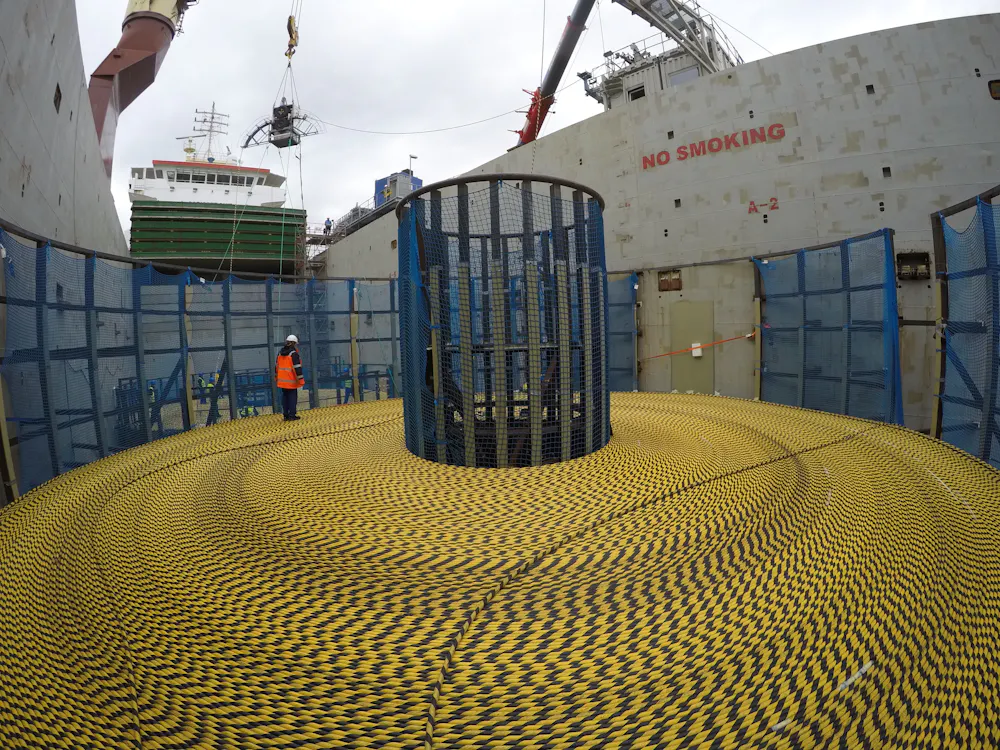
    Globally, there are currently around 1.4 million kilometres of these garden hose-sized, plastic-wrapped cables. The optical fibres inside can transmit data at speeds of up to 300 terabits per second.

    But submarine cables can do far more than just enhance telecommunications. In fact, a recent conference I attended in London highlighted how a relatively new generation of cables can also be used to keep us safe from threats such as climate change and natural disasters.

    Multipurpose cables

    SMART – short for Scientific Monitoring and Reliable Telecommunications – cables are designed for environmental monitoring. They are a joint initiative by the International Telecommunications Union, the World Meteorological Organization and UNESCO’s Intergovernmental Oceanographic Commission.

    The Transatlantic submarine cable, connecting British North America to Ireland, was laid in 1858.
    Rod Allday, CC BY-SA

    These cables are equipped with sensors that measure vital environmental data in the ocean. This data includes seismic activity, temperature fluctuations and pressure changes. It can be used to improve early-warning systems for tsunamis and earthquakes as well as tracking changes in the climate.

    OFS – short for optical fibre sensing – cables are aimed at protecting critical infrastructure. They use the fibre within to detect vibrations surrounding the cable. This allows cable operators to identify potential disruptions from fishing activity, ship anchors and other physical disturbances.

    A handful of countries, including France and Portugal, are actively investing in these cables. The European Commission is also supporting SMART cable projects within broader infrastructure strategies.

    A slow uptake

    The topic of sensing cables comes up at conferences, thanks to industry professionals who work on it pro bono. But the technology isn’t widely adopted by the broader industry and governments. For example, SMART cables have been around since 2010, but there are only two projects in development.

    The reasons for this slow uptake boil down to three major concerns, as discussed at the conference.

    1. Outdated regulation

    The legal framework governing undersea cables is outdated.

    While the United Nations Convention on the Law of the Sea regulates international waters, it doesn’t address cables equipped with environmental sensors.

    This legal ambiguity introduces additional complexities to already lengthy and complex processes for obtaining permits when sensing technologies are integrated into cables.

    2. No clear business model

    Industry executives question the financial feasibility of sensing cables. For example, during the conference in London, several industry executives suggested adding sensors raises costs by approximately 15%, with no clear revenue return.

    Unlike data traffic, environmental data doesn’t directly generate income. Unless governments intervene with funding, tax incentives or expedited permits, cable operators have little incentive to absorb these added costs and complexities.

    3. Security risks

    At the subsea cable conference in London, several industry insiders also warned embedding sensors in cables could create new security risks.

    Some governments might view sensing-equipped cables as surveillance tools rather than neutral scientific infrastructure.

    There is also concern such cables could become attractive targets for malicious actors.

    Large ships are used to deploy and repair submarine cables in the ocean.
    Korn Srirawan/Shutterstock

    A need for more ocean data

    But there are good reasons for more countries and industry to invest in SMART cables.

    For example, information on ocean depth, seabed composition and temperature fluctuations is valuable. A wide array of industries, from shipping and offshore energy to fisheries and insurance, could leverage this data to enhance their operations and mitigate risks.

    Scientists have also pointed out that in order to better understand climate change, we need more and better data about what’s happening in the ocean.

    Current subsea cable regulatory hurdles make investing in sensing technology challenging. But if regulation is updated, projects such as Meta’s Waterworth Project could more easily integrate sensors.

    With experts suggesting the Waterworth Project be viewed as multiple cables instead of one, sensors could just be deployed on less geopolitically sensitive cable branches.

    They could facilitate the creation of an open-access, publicly funded database for ocean observation data. Such a platform could consolidate real-time data from sensing cables, satellites and marine sensors. This would provide a transparent, shared resource for scientists, policymakers and industries alike.

    Of course, deploying sensing technology may not be feasible in volatile regions such as the Baltic or South China seas.

    But there is potential in areas especially vulnerable to climate change, such as the Pacific. Here, scientific data could be harnessed to model oceanic changes and explore solutions to rising sea levels and extreme weather patterns.

    Data collected from submarine cables can help us better understand the effects of climate change on the ocean.
    somavarapu madhavi/Shutterstock

    A path forward

    Portugal demonstrates a path forward for SMART cables. Despite the regulatory challenges, it is actively investing in SMART cables in order to improve climate data.

    Other governments can learn from this if they wish to fulfil their moral duty to invest in infrastructure that serves as a public good.

    The idea of embedding sensors in cables may not be the perfect climate change fix. But it’s a step toward understanding the ocean’s invisible rhythms – a small but necessary gesture to stop pretending our planet’s breakdown will fix itself.

    Cynthia Mehboob does not work for, consult, own shares in or receive funding from any company or organisation that would benefit from this article, and has disclosed no relevant affiliations beyond their academic appointment.

    ref. Submarine cables keep the world connected. They can also help us study climate change – https://theconversation.com/submarine-cables-keep-the-world-connected-they-can-also-help-us-study-climate-change-251046

    MIL OSI AnalysisEveningReport.nz

  • MIL-OSI United Kingdom: Chair’s Statement: Leaders Meeting on Ukraine, London, 2 March 2025

    Source: United Kingdom – Executive Government & Departments

    News story

    Chair’s Statement: Leaders Meeting on Ukraine, London, 2 March 2025

    Chair’s Statement from the Leaders Meeting on Ukraine in London on 2 March 2025.

    Today, I hosted counterparts from across Europe including Türkiye, as well as the NATO Secretary General and the Presidents of the EU Commission, EU Council and Canada, in London to discuss our support for Ukraine.

    Together, we reaffirmed our determination to work for a permanent peace in Ukraine, in partnership with the United States. Europe’s security is our responsibility above all.  We will step up to this historic task and increase our investment in our own defence.

    We must not repeat the mistakes of the past when weak deals allowed President Putin to invade again.  We will work with President Trump to ensure a strong, just, and lasting peace that ensures Ukraine’s future sovereignty and security. Ukraine must be able to deter and defend itself against future Russian attack. There must be no talks on Ukraine without Ukraine. We have agreed that the UK, France and others will work with Ukraine on a plan to stop the fighting which we will discuss further with the US and take forward together.

    Equally importantly, we discussed further rapid steps to enhance our support for Ukraine in pursuit of ‘peace through strength’. We will step up our military support, ensuring Ukraine has the support it needs to train its armed forces and accelerating our support in areas of greatest need. To help bring President Putin to the table, we will put further pressure on Russia by increasing sanctions, including on Russia’s energy revenues, while tightening enforcement of existing measures.

    We also agreed that Ukraine must have robust security arrangements in place at the time of any future peace deal so that Russia does not invade again.  We will accelerate plans to build up Ukraine’s own armed forces and border defences after any deal, and ensure that Ukraine can draw on munitions, finance and equipment to defend itself.

    In addition, many of us expressed readiness to contribute to Ukraine’s security, including through a force consisting of European and other partners, and will intensify our planning.

    We will continue to work closely together to drive forward next steps, and will take decisions in the coming weeks.

    Updates to this page

    Published 2 March 2025

    MIL OSI United Kingdom

  • MIL-OSI United Kingdom: Historic £1.6bn deal provides thousands of air defence missiles for Ukraine and boosts UK jobs and growth

    Source: United Kingdom – Executive Government & Departments

    Press release

    Historic £1.6bn deal provides thousands of air defence missiles for Ukraine and boosts UK jobs and growth

    Deal will create 200 jobs in Northern Ireland and provide 5000 air defence missiles missiles to Ukraine.

    200 new jobs will be created and hundreds more supported at one of the UK’s leading defence manufacturers, after a £1.6bn deal was announced by the Prime Minister today to supply thousands of advanced air defence missiles to Ukraine.

    The latest measures in the UK’s support for Ukraine to achieve peace through strength, the deal will also provide a major boost to the UK economy and support 700 existing jobs at Thales in Belfast, which will manufacture more than 5,000 lightweight-multirole missiles (LMM) for Ukraine’s defence. The deal will see production of LMMs at Thales’s factory treble and will also benefit companies in the Thales Supply Chain across the UK – putting more money in working people’s pockets.

    It is the largest contract ever received by Thales in Belfast and the second largest MOD has placed with Thales, building on a previous contract with Thales, signed in September 2024 for 650 missiles. The first batch of missiles were delivered before Christmas, and this new contract will continue deliveries.

    The deal comes after the Prime Minister announced the Government’s commitment to increase spending on defence to 2.5% of GDP by April 2027 and confirmed an ambition to spend 3% of GDP on defence in the next parliament, in order to keep Britain safe and secure for generations to come. This investment will be an opportunity to translate defence spending into British growth, British jobs, British skills, and British innovation.

    The deal helps deliver on the Government’s pledge in its Plan for Change to improve the lives of people in every corner of the UK by growing the economy. By spending more on defence we will deliver the national security that underpins economic growth, and unlock new jobs, skills and opportunities across the country. 

    Prime Minister Keir Starmer said:

    My support for Ukraine is unwavering. I am determined to find a way forward that brings an end to Russia’s illegal war and guarantees Ukraine a lasting peace based on sovereignty and security.

    I am also clear that national security is economic security. As well as levelling up Ukraine’s air defence, this loan will make working people here in the UK better off, boosting our economy and supporting jobs in Northern Ireland and beyond.

    By doubling down on our support, working closely with key partners, and ensuring Ukraine has a strong voice at the table, I believe we can achieve a strong, lasting deal that delivers a permanent peace in Ukraine.

    Defence Secretary John Healey MP said:

    Three years since Putin launched his full-scale invasion, we are now at a critical moment for the future of Ukraine and the security of us all in Europe. 

    We all want a secure and lasting peace. As today’s meeting has showed, the UK will continue to lead international efforts to support Ukraine in securing a ceasefire and durable peace. And we will not jeopardise the peace by forgetting about the war. This new support will help protect Ukraine against drone and missile attacks but it will also help deter further Russian aggression following any end to the fighting.

    This new deal delivers on the UK’s ironclad commitment to step up military support for Ukraine, whilst boosting jobs and growth at home.

    ​Today’s deal marks a historic step for industrial relations between the UK and Ukraine, building on the 100 Year Partnership signed recently by the Prime Minister and President Zelenskyy in Kyiv. The contract will enable Ukraine to draw on £3.5bn of export finance to acquire military equipment from UK companies, boosting both the UK’s and Ukraine’s defence industrial bases and support investment in further military capabilities.

    Ukraine has already put the highly capable LMM missile to use as part of its air defences where it has proven to be incredibly effective in protecting civilians and critical infrastructure from Russia’s bombardment. A £162m contract announced in September last year saw 650 LMM missiles supplied to Ukraine as an initial order to ramp up production – deliveries started in December 2024.

    Thales Northern Ireland will deliver the contract – worth an initial £1.16bn with the potential for around a further £500m of work to be added – in collaboration with a Ukrainian industry partner, which will manufacture launchers and command and control vehicles for the missiles in Ukraine.

    The contract has been placed by the MOD’s procurement arm Defence Equipment & Support on behalf of the Ukrainian Government, to be funded by a loan underwritten by United Kingdom Export Finance (UKEF) after a deal signed last year to allow Ukraine to draw on £3.5bn worth of support from UKEF to spend with UK industry.

    As set out in the Plan for Change, national security is the first duty of the Government – and a strong economy is built on the bedrock of strong security. Increased defence spending will support highly skilled jobs and apprenticeships across the whole of the UK. Last year, defence spending supported over 430,000 jobs across the UK, the equivalent to one in every 60, and 68% of defence spending goes outside of London and the Southeast, benefitting every nation and region of the country.

    Andy Start, DE&S CEO and UK National Armaments Director said:

    The UK’s Defence Industry has supported Ukraine from the start of the war and this important contract underlines industry’s ability to scale up production at pace to deliver the world-class defence equipment Ukraine requires.

     This contract is a critical next step in the work of Task Force HIRST in developing lasting partnerships between the UK and Ukraine’s defence industries. The substantial increase in LMM production capacity will benefit both Ukraine’s fight tonight, as well as the longer-term security of the UK.

    The deal marks the next milestone in the work of the MOD’s Taskforce HIRST and the first of a series of “mega projects” to be delivered for Ukraine, with the HIRST team working to build long-term relationships with Ukrainian industry to restore and modernise their defence industrial base, support its future defence and economic growth.

    Earlier this month, the Defence Secretary announced a new £150m military support package to support Ukrainian troops fighting Russia on the frontline, part of the UK’s unprecedented £3 billion annual pledge to Ukraine.

    The UK has committed to spending £3bn next financial year to support Ukraine, with an additional £1.5bn from interest on seized assets through the Extraordinary Revenue Accelerator – taking the total to £4.5Bn. This will ensure Ukraine can achieve peace through strength and underscoring the new 100 Year Partnership between the UK and Ukraine.

    Updates to this page

    Published 2 March 2025

    MIL OSI United Kingdom

  • MIL-OSI Canada: Standing united in support of Ukraine

    Source: Government of Canada – Prime Minister

    For over three years, Ukraine has fought with extraordinary courage and resilience against Russia’s illegal, full-scale invasion. This ongoing aggression is not only a violation of Ukraine’s sovereignty, but also a direct attack on the rules-based international order, freedom, and democracy everywhere. Canada remains steadfast in its support for Ukraine and its people as they continue to defend their independence.

    The Prime Minister, Justin Trudeau, today participated in the Securing our Future Summit in London, United Kingdom. Hosted by the Prime Minister of the United Kingdom, Sir Keir Starmer, the Summit brought together Euro-Atlantic and NATO leaders to promote unity, reinforce collective security, and reaffirm our unwavering commitment to Ukraine in the face of Russia’s continued aggression.

    During the Securing our Future Summit, the Prime Minister announced new sanctions against 10 individuals and 21 entities, including paramilitary organizations and their leaders, to help counter Russia’s reliance on third-party organizations and countries to advance its political and military objectives in Ukraine. To date, Canada has imposed sanctions on over 3,000 individuals and entities complicit in Russia’s aggression – and we remain committed to working with our partners to increase economic pressure on Russia.

    Throughout the Summit, the Prime Minister engaged with his counterparts on the future of international support for Ukraine, emphasizing the urgent need for continued and co-ordinated action in the face of growing global instability and uncertainty. Together, the leaders agreed that there can be no sustainable peace in Europe without security for Ukraine, that any peaceful end to the conflict must include Ukraine at the negotiating table, and that any peace deal should include robust security guarantees.

    At a plenary session, Prime Minister Trudeau underlined that strengthening security and stability in Ukraine and the Euro-Atlantic region will remain a top priority for Canada, including as part of our G7 Presidency this year. He underscored our leadership in supporting Ukraine since the beginning of Russia’s full-scale invasion in 2022, which includes almost $20 billion in multifaceted assistance ranging from military aid – such as armoured vehicles and drone technology – to humanitarian and financial assistance to help Ukraine rebuild and recover.

    The Prime Minister highlighted the ongoing work of members of the Canadian Armed Forces in the United Kingdom and Poland under Operation UNIFIER. Since 2015, they have provided military training to over 44,000 Ukrainian troops. Canada continues to engage closely with Ukraine, Allies, and partners on how best to enhance support through Operation UNIFIER to help Ukraine defend itself.

    Prime Minister Trudeau also emphasized the importance of standing together to hold Russia accountable for its violations of international law, including war crimes, crimes against humanity, and the illegal deportation of Ukrainian children.

    Canada’s commitment to Ukraine is unwavering. We will continue to stand with Ukraine and work closely with our Allies to provide the necessary military, economic, and humanitarian support to push back against Russian aggression. We are stronger when we work together. And together, we can ensure Ukraine is able to defend itself, rebuild, and secure a just and lasting peace.

    Quote

    “Ukraine’s fight for sovereignty is a fight for freedom and democracy everywhere. The important discussions we had today reinforced our shared resolve: as Allies, we will remain steadfast in our support for Ukraine. Canada will be there for Ukraine until there is a just and lasting peace. Slava Ukraini!”

    Quick Facts

    • In London, the Prime Minister held a bilateral meeting with the Prime Minister of the United Kingdom, Sir Keir Starmer. Before returning to Canada tomorrow, he will also have an audience with His Majesty King Charles III.
    • The new sanctions announced today include nine leaders of post-Wagner paramilitary organizations, one member of the affiliated senior Russian military leadership, nine paramilitary organizations operating in Ukraine and in the Kremlin’s Africa-network, and 12 affiliated organizations that are responsible for resource extraction within this network.
    • Since the beginning of 2022, Canada has committed almost $20 billion in multifaceted support to Ukraine. This includes:
      • Over $12.4 billion in direct financial assistance, the highest in the G7 on a per capita basis.
      • $4.5 billion in military assistance, such as M777 howitzers, Leopard 2 main battle tanks, armoured combat support vehicles, hundreds of thousands of rounds of ammunition, high-resolution drone cameras, thermal clothing, body armour, fuel, and more.
      • $585 million in development assistance, including support to Ukraine’s energy system.
      • $372.2 million in humanitarian assistance, including support for emergency health interventions, protection services, and essentials such as shelter, water, sanitation, and food. Programming also addresses child protection, mental health support, and prevention and response to sexual and gender-based violence.
      • Nearly $225 million in security and stabilization assistance.
    • As announced by the Prime Minister in Kyiv last month, Canada has started delivering on its commitment of a $5 billion contribution toward the G7 Extraordinary Revenue Acceleration (ERA) Loans mechanism. Launched at last year’s G7 Summit in Apulia, Italy, the ERA Loans aim to bring forward future revenues from frozen Russian sovereign assets to provide Ukraine with approximately US$50 billion in additional funding as it continues to defend its freedom, sovereignty, and territorial integrity.
    • In February 2024, Prime Minister Trudeau and President Zelenskyy signed the historic Agreement on Security Cooperation between Canada and Ukraine, establishing a new strategic security partnership between our two countries. This included $3.02 billion in critical financial and military support to Ukraine for 2024.
    • Launched by Canada and Ukraine in 2024, the International Coalition for the Return of Ukrainian Children co-ordinates joint efforts and co-operation between Ukraine and partner states to address the issue of the unlawful deportation and forced transfer of Ukrainian children by Russia. To date, 41 states and the Council of Europe have joined the Coalition, helping successfully facilitate the safe return of over 1,000 children.
    • As part of the 2024 Fall Economic Statement, the federal government announced last year its intention to double down on our efforts to support Ukraine, including through proposed legislative changes that will ensure profits from frozen Russian assets are used to rebuild Ukraine.
    • Since the start of Russia’s full-scale invasion of Ukraine, Canada has welcomed more than 220,000 Ukrainians. We are helping Ukrainian families find a safe, temporary home and have put support services in place for their arrival. This includes temporary financial assistance and access to federally funded settlement services, such as language training and employment-related services.
    • Canada and Ukraine have long been steadfast partners and close friends. In 1991, Canada became the first Western country to recognize Ukraine’s independence. Today, 1.3 million people of Ukrainian descent call Canada home – the largest Ukrainian diaspora in the Western world. In 2022, total bilateral trade between our two countries was valued at over $421 million.
    • This was Prime Minister Justin Trudeau’s 11th official visit to the United Kingdom.
    • Canada and the United Kingdom share a strong relationship rooted in deep historical ties and common values. We work closely together to advance shared priorities, including sustainable growth, rules-based international trade, gender equality, the fight against climate change, democracy and media freedom, and support for Ukraine.
    • In 2023, the United Kingdom was Canada’s third-largest destination for goods and services exports, with trade valued at $47 billion.

    Associated Links

    MIL OSI Canada News

  • MIL-OSI: How to easily earn USD at home: Cloud mining to easily earn cryptocurrencies

    Source: GlobeNewswire (MIL-OSI)

    Monmouthshire, UK, March 02, 2025 (GLOBE NEWSWIRE) — Alr Miner, a leading AI cloud mining platform, is making waves in the cryptocurrency industry by offering a limited-time $12 login mining bonus to new users. The program is designed to lower the barrier to entry for cryptocurrency enthusiasts and provide a seamless, cost-effective way to start earning Bitcoin through cloud mining.

    What is Cloud Mining?

    Cloud mining is an effective method that makes cloud mining a remote mining of cryptocurrencies, including Bitcoin mining. With this method, you can make cloud mining profitable in the following ways: borrow the mining power of cloud mining companies to avoid personal investment in hardware and maintenance; use powerful computers to access large mining farms, tirelessly solve cryptographic puzzles and receive cryptocurrency rewards.

    Alr Miner: Where laziness meets profit

    Alr Miner takes cloud mining simplicity to the highest level, making it perfect for newbies. The platform’s user-friendly interface ensures that even cryptocurrency newbies can navigate it with ease.For Alr Miner, laziness is not a shortcoming; it is the path to success. As a pioneer in providing cloud mining services, Alr Miner has more than 100 mining farms around the world, with more than 100,000 mining equipment, all using new energy and renewable cycle power generation. With its stable income and security, it has won the recognition of more than 6.9 million users.

    Incredible earning opportunities

    What makes Alr Miner different is its extraordinary daily passive income. Offering the opportunity to earn $10,800 or more per day, Alr Miner enables users to realize their dream of getting rich online. Imagine earning a substantial income without constant effort or complicated setup – that’s what Alr Miner offers.

    Safety sustainability

    In the world of mining, trust and security are of paramount importance. Alr Miner understands this and puts user safety first. Alr Miner is committed to transparency and legality, ensuring that your investment is protected, allowing you to focus on gaining profits. All mines use clean energy electricity, making cloud mining carbon neutral. Renewable energy prevents environmental pollution and has super high returns, allowing every investor to enjoy opportunities and benefits.

    Alr Miner Platform Advantages:

    1: Cutting-edge equipment: We use mining equipment provided by top mining machine manufacturers such as Bitmain, Antminer, and JuNeng Combination Miner to ensure the stable operation and efficient production capacity of Bitcoin mining machines.

    2: Legality and global audience: The platform was legally established in the UK in 2018, protected and issued by the UK government, and has attracted more than 6.9 million real users worldwide with cutting-edge technology.

    3: Intuitive Interface: The platform’s user-friendly interface ensures that even crypto newbies can navigate with ease.

    4: Support a variety of popular cryptocurrencies: such as DOGE, BTC, ETH, USDC, USDT, BCH, LTC, XRP, SOL, etc. for settlement.

    5: Stable income: The contracts launched by the platform generate income every 24 hours, and the principal will be automatically returned after the contract expires.

    6: Professional team: The platform has an experienced IT team and 24/7 real-time customer service team support to ensure that users can solve problems in a timely manner.

    7: Affiliate Program: Allows you to refer friends and get a referral bonus of up to $60,000.

    How to join Alr Miner:1: Sign up now to get a $12 bonus ($0.60 for daily check-ins).2: Choose a contract: After successfully registering, the next step is to choose a mining contract that suits your goals and budget. Alr Miner offers a variety of contracts to suit different needs, whether you are a beginner or an experienced miner. Take a close look at the available options, considering factors such as contract length, potential returns, and associated costs.3: Start Profiting: Once you have selected and activated your mining contract, you can sit back and let the system do the work for you. Alr Miner’s advanced technology ensures that your mining operation runs efficiently, maximizing your potential earnings.Choose the contract that suits your investment strategy:

    Affiliate Program

    Now, Alr Miner also launched an affiliate program, a platform where you can earn money by recommending the site to other people. You can start earning money even without investing. After inviting a certain number of active referrals, you will receive a one-time fixed bonus of up to $60,000. With unlimited referrals, your earning potential is unlimited too!

    In short

    If you are looking for ways to increase your passive income, cloud mining is a great way to do it. If used correctly, these opportunities can help you grow your cryptocurrency wealth in “autopilot” mode with minimal time investment.At the very least, they should take less time than any type of active trading. Passive income is the goal of every investor and trader, and with  Alr Miner, you can maximize your passive income potential easier than ever before.

    If you want to know more about Alr Miner, please visit its official website

    Disclaimer: The information provided in this press release is not a solicitation for investment, nor is it intended as investment advice, financial advice, or trading advice. Cryptocurrency mining and staking involve risk. There is potential for loss of funds. It is strongly recommended you practice due diligence, including consultation with a professional financial advisor, before investing in or trading cryptocurrency and securities.

    Olivia Miller 
    Marketing Manager
    Alr Miner
    +44 7514 226545
    info(at)alrminer.com

    https://t.me/Alrminer

    The MIL Network

  • MIL-OSI United Kingdom: PM meeting with Prime Minister Meloni of Italy: 2 March 2025

    Source: United Kingdom – Executive Government & Departments

    News story

    PM meeting with Prime Minister Meloni of Italy: 2 March 2025

    The Prime Minister met Italian Prime Minister Giorgia Meloni in Downing Street this morning.

    The Prime Minister met Italian Prime Minister Giorgia Meloni in Downing Street this morning, their third meeting since July. The meeting came ahead of the Prime Minister convening international leaders in London today to discuss how partners can work with the USA to move forward to a lasting peace for a sovereign Ukraine. They agreed on the importance of the transatlantic alliance in confronting shared challenges.

    They had a warm and constructive discussion, agreeing the strength of the UK-Italy relationship is as vital now as it has ever been. They reaffirmed their support for Ukraine, agreeing that the UK and Italy will stand with them for as long as it takes. 

    The two leaders acknowledged positive progress made since their last meeting in joint working to tackle irregular migration. They agreed secure borders are a bedrock of a secure economy. They noted the significance of recent successful joint operations to disrupt smuggling gangs and agreed there is greater opportunity to disrupt gangs upstream at source when countries work together. They will strengthen cooperation to share intelligence and data, such as through Europol. The Prime Ministers committed to continue to work closely together in these areas. 

    The two Prime Ministers committed to staying in close contact to take today’s discussion forward at pace.

    Updates to this page

    Published 2 March 2025

    MIL OSI United Kingdom

  • MIL-OSI Global: The Canada Carbon Rebate is still widely misunderstood — here’s why

    Source: The Conversation – Canada – By Ruolz Ariste, Adjunct Professor, School of Public Policy and Administration, Carleton University

    As Canada’s federal parties gear up for the upcoming federal election, one of the key issues on the campaign trail will be how Canada will meet its climate policy targets.

    Several strategies exist to meet these targets, including: a border charge on imports, a border rebate for exports, a domestic output-based subsidy or a consumer-based carbon rebate like the Canada Carbon Rebate (CCR).

    The CCR, introduced by Prime Minister Justin Trudeau’s administration to curb carbon emissions, is designed to offset the costs of carbon pricing by providing rebates to households.


    Read more:
    The upcoming election is a critical juncture for Canada’s carbon tax and climate policies


    However, both leading candidates for Liberal Party leadership, Mark Carney and Chrystia Freeland, have said they will drop the CCR if elected. Carney has proposed replacing it with a green incentive program, while Conservative leader Pierre Poilievre has been a vocal opponent of the CCR altogether.

    The debate surrounding the CCR is crucial, as carbon pricing is the most effective measure to reduce greenhouse gas emissions when paired with accompanying measures. Yet, despite its effectiveness, Canada’s major political parties are willing to scrap it because it’s not politically rewarding.

    CCR is widely misunderstood

    The CCR is widely misunderstood in Canada, leading to misleading narratives about its economic and environmental impacts.

    A recent report from the Parliamentary Budget Office (PBO) argues that industries facing pollution charges could become less competitive because of the CCR, potentially increasing Canada’s federal budget deficit by $4 billion by 2030, and making Canadians worse off.

    Similarly, a Fraser Institute report argues Canada’s global emission footprint is too small for the CCR to make a difference, even if environmental benefits are accounted for.

    However, these reports fail to fully assess the impacts of carbon pricing and risk distorting the debate and influencing policy in ways that could weaken Canada’s climate strategy.

    Yet an overlooked crucial fact in the debate on the CCR is that 80 per cent of Canadian families received more in rebates than they paid in pollution pricing in 2024 because major polluters bear the highest costs under the system.

    The missing perspective in assessments

    While the PBO’s report may be valid from a business standpoint, the report didn’t run a full cost-benefit analysis, which would have weighed both the economic costs and the social benefits of reducing greenhouse gas emissions.

    In climate policy, the social perspective is much more important than the business one. Without this context, reports like the PBO’s risk being misinterpreted, particularly by politicians opposed to climate action. This could have significant negative consequences for environmental policy in Canada.


    Read more:
    The carbon tax needs fixing, not axing — Canada needs a progressive carbon tax


    A major issue in economic assessments is that the benefits of greenhouse gas reduction are typically excluded because they extend beyond national borders. As a result, emissions reduction can appear to be a poor investment, when in reality, its global and long-term benefits far outweigh the initial expenses.

    The Treasury Board of Canada Secretariat’s cost-benefit guide acknowledges this issue. Under normal circumstances, global benefits should be excluded in cost-benefit analysis. However, given the nature of climate change, the guide states that the costs and benefits of greenhouse gas reductions — calculated using the social cost of greenhouse gas — are appropriate to include in cost-benefit analysis.

    A recent UN report supports this approach, estimating that while global carbon policy measures could cost more than US$1 trillion annually, the economic benefits will be far greater. Shifting to a green economy could yield US$26 trillion by 2030, compared to maintaining business as usual.

    Carbon leakage challenge

    A major challenge for Canada’s carbon pricing strategy is that many of its key trading partners don’t impose similar emissions pricing on consumers.

    For example, the United States and China don’t, even though they are the world’s two biggest polluters. While some jurisdictions, like California’s Cap-and-Trade Program and China’s national emissions trading system, have introduced emissions regulations, these programs are not as widespread as Canada’s.

    This imbalance puts Canadian producers at a competitive disadvantage. In response, some businesses may choose to move their production operations to countries with weaker environmental regulations to avoid higher carbon pricing in Canada — a phenomenon known as “carbon leakage.”

    Instead of reducing emissions, this carbon leakage simply shifts emissions elsewhere, undermining global efforts to address climate change. To counter this, there has been a growing interest in policies designed to prevent this from happening, such as border carbon adjustments.

    This issue is critical to Canada’s ability to meet its climate policy targets. Without effective measures to prevent carbon leakage, the country could face higher costs and less impact on global emissions reduction efforts.

    Can Canada still compete?

    Given the U.S. President Donald Trump administration’s withdrawal from the Paris Accord, one might wonder whether Canada should continue pursuing the CCR program.

    Ideally, Canada would not have to choose between strong climate policy and economic competitiveness. However, without a co-ordinated global approach to carbon policy, Canada faces difficult trade-offs.

    International organizations like the World Trade Organization (WTO) could step up by actively promoting carbon tariffs similar to the EU’s Carbon Border Adjustment Mechanism (CBAM).

    At the heart of this debate is the “polluter-pays principle,” which holds that those who pollute must bear the costs of their actions. This principle is central to climate justice.


    Read more:
    Carbon pricing works: the largest-ever study puts it beyond doubt


    Carbon pricing is the only abatement instrument that can implement the polluter-pays principle, but additional policies — such as border charges on imports, border rebates for exports or domestic output-based subsidies — are required to make it more efficient and politically viable.

    Currently, 75 carbon taxes and emissions trading systems are in operation worldwide, covering approximately 24 per cent of global emissions.

    Canada is considering its own CBAM, but challenges remain. Implementing such a policy could lead to heightened trade tensions with the U.S. or even provoke retaliatory actions.

    Need for international co-operation

    To make carbon pricing and border adjustments work, international organizations must help close the knowledge and information gaps. One way to do this is by providing more accurate data on embedded carbon prices to improve the calculation of carbon prices down the road.

    Further research is also needed to understand how domestic climate policies impact other nations and how to ensure CBAM’s interoperability with other climate measures. Such work will contribute to the optimization of climate policies for the benefit of all.

    In the meantime, Canada’s climate policy must strive to integrate CBAM in a way that aligns with global trade systems like the WTO. Some trade law experts have expressed concerns that CBAM may not be compatible with the WTO General Agreement on Tariffs and Trade, and this must be addressed.

    If Canada were to keep the CCR, this integration would be especially important as Canada navigates future trade relations with the U.S. under Trump’s unpredictable administration. Canada doesn’t want to fall behind in its climate action efforts.

    Canadians would like the country to lead on climate action while staying competitive. A public consultation on this matter would be a good move from any elected political leader.

    Ruolz Ariste is currently affiliated with Carleton University and Université du Québec en Outaouais.

    ref. The Canada Carbon Rebate is still widely misunderstood — here’s why – https://theconversation.com/the-canada-carbon-rebate-is-still-widely-misunderstood-heres-why-249097

    MIL OSI – Global Reports

  • MIL-OSI China: Selected works of Xi Jinping on economy published

    Source: China State Council Information Office 2

    The first volume of selected works of Xi Jinping, general secretary of the Communist Party of China (CPC) Central Committee, on economy has been published and is available nationwide.
    Follow China.org.cn on Twitter and Facebook to join the conversation.ChinaNews App Download

    MIL OSI China News

  • MIL-OSI: Nokia and industry partners accelerate AI-RAN development #MWC25

    Source: GlobeNewswire (MIL-OSI)

    Press Release
    Nokia and industry partners accelerate AI-RAN development #MWC25 

    • Nokia’s ecosystem of industry partnerships is driving advancements in AI-RAN architecture and the deployment and optimization of AI-powered Radio Access Networks.
    • Collaboration helps lay the foundations for platform-as-a-service business models for operators offering scalable computing infrastructure and capabilities for AI and other services in addition to connectivity.
    • Nokia opens AI-RAN Center in Dallas, U.S to accelerate development of AI-RAN with partners.
    • AI-RAN will have a transformative impact on the future of telecommunications infrastructure and services.

    2 March 2025
    Espoo, Finland – At Mobile World Congress 2025, Nokia and its ecosystem of industry partners, KDDI, SoftBank Corp., T-Mobile US, and NVIDIA today outlined the advances made in the deployment and optimization of revolutionary AI-powered Radio Access Networks (RAN) as well as the future architecture for AI-RAN. These joint efforts will lay the foundations for developing platform-as-a-service (PaaS) business models for CSPs, which helps them unlock new monetization opportunities by offering scalable computing infrastructure and capabilities for processing AI and other services. Under its anyRAN approach, Nokia is evolving Cloud RAN solutions to include AI computing in the shared infrastructure to maximize resource efficiency for operators.

    Nokia has taken a leadership role in exploring how AI will transform the future of telecommunications infrastructure and services. To accelerate the innovation and development of AI-RAN, Nokia is establishing an AI-RAN Center at its offices in Dallas, U.S. The center will enable Nokia’s partners to develop and test AI-RAN solutions in real-world network conditions with a focus on creating innovative use cases, prototypes, and to validate AI-RAN reference architecture. Nokia is also working with its industry partners across a range of initiatives including:

    Nokia and NVIDIA
    Over the past year, Nokia has worked closely with NVIDIA to assess and evaluate multi-purpose NVIDIA accelerated computing infrastructure to enable the transformative power of AI-RAN.

    Nokia and KDDI
    Nokia has also formed a strategic partnership with KDDI to research the practical applications of AI-RAN, including use cases and architectures, to make it commercially viable in the future. The companies will explore how AI applications can enhance the user experience, enhance network quality, reduce 5G network-related costs and power consumption through automation, and create monetization opportunities that leverage GPUs and Generative AI. The companies will conduct a commercial trial using AI-enabled RAN hardware and research AI utilization to optimize network performance.

    Nokia and SoftBank
    Nokia and SoftBank’s innovative partnership has successfully showcased the powerful integration of multi-purpose, optimized AI workloads within the AI and RAN platform based on Red Hat OpenShift, the industry’s leading hybrid cloud application platform powered by Kubernetes. This is managed through Nokia’s MantaRay NM solution for network management and SoftBank’s AITRAS Orchestrator. This collaboration illustrates how both RAN and non-RAN AI workloads can efficiently share the computing resources, significantly enhancing resource utilization. This not only leads to improved operational efficiencies but also accelerates the return on investment for network operators.

    Nokia and T-Mobile U.S.
    Nokia and T-Mobile are redefining the future of network connectivity by exploring innovative architectures for a multi-purpose cloud infrastructure. Since the announcement of the AI-RAN collaboration last year, both companies are working together to evaluate AI-RAN network architecture, the feasibility of using accelerated computing for L1, and to understand the co-existence of AI and RAN on the shared infrastructure using Nokia Cloud RAN and NVIDIA platforms. The companies are also exploring monetization opportunities and techno-economics of the AI-RAN multi-purpose cloud infrastructure.

    “To fully harness the transformative power of AI-RAN, Nokia is working hand-in-hand with an ecosystem of leading industry partners. We enable the evolution of 5G networks toward a multi-purpose cloud platform that unlocks new revenue models and infrastructure synergies for AI and RAN while already today enhancing RAN performance and efficiency with AI-powered products and services,” commented Tommi Uitto, President of Mobile Networks at Nokia.

    “Alongside AI-RAN Alliance co-founders Softbank and T-Mobile US, it is encouraging to see new operators such as KDDI collaborating with Nokia to explore AI-RAN technologies, use cases and business models. This growing industry participation shows the strong appetite for AI integration with radio access networks,” said Rémy Pascal, Senior Research Manager for Mobile Infrastructure at Omdia.

    “We are thrilled to have signed a Memorandum of Understanding with Nokia to collaborate on the research and development of AI-RAN. This collaboration will accelerate the path to commercial viability by exploring practical applications of AI-powered networks. We anticipate that AI-RAN will unlock significant network optimization, enhance user experiences, reduce costs, and generating new services and revenue, leading to a more efficient and intelligent 5G ecosystem,” noted Kazuhiro Furuhata, Executive Officer & General Manager, Network Node Technical Development Division Core Technology Sector at KDDI.

    “Through the monitoring of hardware resources by the AITRAS Orchestrator, we have successfully enabled the coexistence of vRAN and AI applications. This advancement facilitates the more efficient utilization of base station equipment,” said Hideyuki Tsukuda, Executive Vice President & CTO, SoftBank Corp

    “T-Mobile’s collaboration with Nokia on AI-RAN is driving the future of network innovation. By exploring AI-driven architectures and leveraging multi-purpose cloud infrastructure, we’re evaluating how accelerated compute for Layer 1 (L1) and the seamless integration of AI and RAN on shared platforms with our industry partners will enhance network performance and efficiency. Beyond technical advancements, we’re also exploring new monetization opportunities and the broader techno-economics of AI-RAN, paving the way for smarter, intent-based networks,” added John Saw, Executive Vice President, Chief Technology Officer, T-Mobile.

    AI-RAN at Mobile World Congress 2025
    Nokia will demonstrate its innovative AI-powered solutions at its stand in Hall 3 Stand #3B20 at this year’s Mobile World Congress 2025. Visitors will experience a range of demonstrations including how networks can manage RAN and AI workloads on the same infrastructure as well as how AI is built into Nokia’s AirScale base stations to optimize RAN performance by intelligently adapting to varying radio conditions. Nokia will also demonstrate MantaRay AutoPilot, an AI-powered solution for autonomous RAN operations and optimization including the results of a live customer deployment. Nokia will also showcase the breadth of its AI-based services portfolio, including the new extended reality visualization for the AI-powered Digital Network Twin, and other extensive AI capabilities.

    Multimedia, technical information and related news
    Web Page: Nokia at MWC25
    Web Page: Nokia AI-RAN
    Web Page: Nokia Cloud RAN
    Product Page: Nokia anyRAN
    Product Page: Nokia AirScale Baseband
    Product Page: MantaRay NM
    Whitepaper: AI for Radio Access Networks
    Solution Brief: MantaRay AutoPilot: Powering AI-driven Autonomous RAN Operations

    About Nokia 
    At Nokia, we create technology that helps the world act together. 

    As a B2B technology innovation leader, we are pioneering networks that sense, think and act by leveraging our work across mobile, fixed and cloud networks. In addition, we create value with intellectual property and long-term research, led by the award-winning Nokia Bell Labs, which is celebrating 100 years of innovation. 

    With truly open architectures that seamlessly integrate into any ecosystem, our high-performance networks create new opportunities for monetization and scale. Service providers, enterprises and partners worldwide trust Nokia to deliver secure, reliable and sustainable networks today – and work with us to create the digital services and applications of the future. 

    Media inquiries 
    Nokia Press Office 
    Email: Press.Services@nokia.com  

    Follow us on social media 
    LinkedIn X Instagram Facebook YouTube 

    The MIL Network

  • MIL-OSI Economics: Central Bank of Bahrain grants license to Mena Industrial Bank

    Source: Central Bank of Bahrain

    Published on 2 March 2025

    Manama, Kingdom of Bahrain – 2 March 2025 – The Central Bank of Bahrain (“CBB”) has granted “Mena Industrial Bank B.S.C. (c)” a Conventional Wholesale Bank license to operate in the Kingdom of Bahrain.

    Commenting on this announcement, Mr. Abdulla Haji, Director of Licensing Directorate at CBB, said “We are pleased to announce the issuance of a license to a new wholesale bank in Bahrain. This reflects the Kingdom’s continued appeal as a regional and international financial hub in attracting direct investments in the financial services sector. It also reflects CBB’s commitment to maintain a robust and progressive financial regulatory framework that supports economic growth, financial stability, and innovation”.

    The Bank will provide wholesale banking and trade finance solutions to corporations, government entities, and high-net-worth individuals, locally and regionally.

    Share this

    MIL OSI Economics

  • MIL-OSI: Ellomay Capital Announces Execution of Project Finance Agreements for its 198 MW Solar Portfolio in Italy

    Source: GlobeNewswire (MIL-OSI)

    Tel-Aviv, Israel, March 02, 2025 (GLOBE NEWSWIRE) — Ellomay Capital Ltd. (NYSE American; TASE: ELLO) (“Ellomay” or the “Company”), a renewable energy and power generator and developer of renewable energy and power projects in Europe, Israel and the USA, today reported that its wholly-owned subsidiary, Ellomay Holdings Luxembourg Sarl (“Ellomay Luxembourg”), which owns a portfolio of 198 MW solar facilities in Italy, among other assets, that includes operating and “ready to build” projects (the “Italian Solar Portfolio”), entered into a set of agreements governing the procurement of financing (the “Project Finance”) with a reputable European institutional investor (the “Lender”), intended to finance the construction and related expenses of the Italian Solar Portfolio. The Italian Solar Portfolio includes three solar facilities, in the aggregate capacity of approximately 38 MW, which are already constructed and connected to the grid, and additional projects with an aggregate capacity of approximately 160 MW that have reached ready-to-build status.

    The Project Finance in an amount of up to €110 million will be provided by way of senior secured notes to be issued in multiple tranches during the construction phase by a wholly-owned subsidiary of Ellomay Luxembourg. All notes are due on December 31, 2047 and to be repaid in semi-annual installments. The notes bear interest from and including the issue date to and excluding the maturity date at the rate of 4.50% per annum, to be paid semi-annually in arrears.

    The financial closing of the Project Finance is expected to occur in the coming weeks.

    About Ellomay Capital Ltd.

    Ellomay is an Israeli based company whose shares are registered with the NYSE American and with the Tel Aviv Stock Exchange under the trading symbol “ELLO”. Since 2009, Ellomay Capital focuses its business in the renewable energy and power sectors in Europe, USA and Israel.

    To date, Ellomay has evaluated numerous opportunities and invested significant funds in the renewable, clean energy and natural resources industries in Israel, Italy, Spain, the Netherlands and Texas, USA, including:

    • Approximately 335.9 MW of operating solar power plants in Spain (including a 300 MW solar plant in owned by Talasol, which is 51% owned by the Company) and approximately 38 MW of operating solar power plants in Italy;
    • 9.375% indirect interest in Dorad Energy Ltd., which owns and operates one of Israel’s largest private power plants with production capacity of approximately 850MW, representing about 6%-8% of Israel’s total current electricity consumption;
    • Groen Gas Goor B.V., Groen Gas Oude-Tonge B.V. and Groen Gas Gelderland B.V., project companies operating anaerobic digestion plants in the Netherlands, with a green gas production capacity of approximately 3 million, 3.8 million and 9.5 million Nm3 per year, respectively;
    • 83.333% of Ellomay Pumped Storage (2014) Ltd., which is involved in a project to construct a 156 MW pumped storage hydro power plant in the Manara Cliff, Israel;
    • Solar projects in Italy with an aggregate capacity of 285 MW that have reached “ready to build” status; and
    • Solar projects in the Dallas Metropolitan area, Texas, USA with an aggregate capacity of 49 MW that are under construction.

    For more information about Ellomay, visit http://www.ellomay.com.

    Information Relating to Forward-Looking Statements

    This press release contains forward-looking statements that involve substantial risks and uncertainties, including statements that are based on the current expectations and assumptions of the Company’s management. All statements, other than statements of historical facts, included in this press release regarding the Company’s plans and objectives, expectations and assumptions of management are forward-looking statements. The use of certain words, including the words “estimate,” “project,” “intend,” “expect,” “believe” and similar expressions are intended to identify forward-looking statements within the meaning of the Private Securities Litigation Reform Act of 1995. The Company may not actually achieve the plans, intentions or expectations disclosed in the forward-looking statements and you should not place undue reliance on the Company’s forward-looking statements. Various important factors could cause actual results or events to differ materially from those that may be expressed or implied by the Company’s forward-looking statements, including the non-fulfillment of any of the conditions to closing set forth in the Project Finance documentation, changes in electricity prices and demand, regulatory changes, increases in interest rates and inflation, changes in the supply and prices of resources required for the operation of the Company’s facilities (such as waste and natural gas) and in the price of oil, the impact of the war and hostilities in Israel and Gaza, the impact of continued military conflict between Russia and Ukraine, technical and other disruptions in the operations or construction of the power plants owned by the Company and general market, political and economic conditions in the countries in which the Company operates, including Israel, Spain, Italy and the United States. These and other risks and uncertainties associated with the Company’s business are described in greater detail in the filings the Company makes from time to time with Securities and Exchange Commission, including its Annual Report on Form 20-F. The forward-looking statements are made as of this date and the Company does not undertake any obligation to update any forward-looking statements, whether as a result of new information, future events or otherwise.

    Contact:
    Kalia Rubenbach (Weintraub)
    CFO
    Tel: +972 (3) 797-1111
    Email: hilai@ellomay.com

    The MIL Network

  • MIL-OSI: InfinixChain Introduces EVM-Compatible Layer 2 Blockchain Focused on Scalability and Low Fees

    Source: GlobeNewswire (MIL-OSI)

    DUBAI, United Arab Emirates, March 01, 2025 (GLOBE NEWSWIRE) — InfinixChain, a newly launched Layer 2 blockchain, is introducing an EVM-compatible network designed to enhance scalability, reduce transaction costs, and improve transaction speeds. The project aims to provide a robust infrastructure for decentralized applications (dApps) across sectors including DeFi, NFTs, and GameFi.

    Key Features of InfinixChain

    InfinixChain offers compatibility with Ethereum-based applications, allowing seamless integration for developers and users. Key technical features include:

    • EVM Compatibility: Supports Ethereum-based smart contracts, facilitating easy migration.
    • Ultra-Fast Transactions: High throughput and low latency, ensuring smooth operations.
    • Low Transaction Fees: Cost-effective transactions compared to traditional Layer 1 blockchains.
    • Scalability: Built to handle high transaction volumes without congestion.
    • Robust Security: Advanced security protocols to protect user assets.
    • Decentralized Finance (DeFi) Integration: Supports staking, lending, and other decentralized financial applications.
    • NFT and GameFi Support: Empowering digital asset creation, gaming ecosystems, and metaverse applications.
    • Sustainable Ecosystem: Designed for long-term adoption with continuous upgrades and community-driven development.

    Token Sale and Availability

    InfinixChain has initiated a token presale phase, offering early access to its native token. According to the project’s website, the presale price is set at $0.01 per token, with a planned launch price of $0.05.

    Interested participants can acquire tokens through the project’s official website by connecting their crypto wallets. Further details on the tokenomics, governance model, and roadmap are available on the platform.

    Future Outlook

    With its focus on scalability and cost efficiency, InfinixChain seeks to provide a viable solution for developers and users in the blockchain space. The project aims to foster adoption by offering compatibility with existing Ethereum-based applications and supporting various decentralized use cases.

    About InfinixChain

    InfinixChain is a Layer 2 blockchain designed to enhance scalability, reduce transaction costs, and improve transaction speeds while maintaining full compatibility with Ethereum-based applications. The platform supports a diverse ecosystem, including DeFi, NFTs, GameFi, and other decentralized applications. With a focus on security, efficiency, and long-term sustainability, InfinixChain aims to provide a robust infrastructure for developers and users in the blockchain space.

    For more information, users can visit InfinixChain.com.

    Telegram: https://t.me/InfinixChainOfficial

    Twitter (X): https://x.com/infinixchain

    Contact

    Adam Ali
    InfinixChain
    info@infinixchain.com

    A photo accompanying this announcement is available at https://www.globenewswire.com/NewsRoom/AttachmentNg/127f472e-3ba0-4f2f-a94a-44cedd009d9b

    The MIL Network

  • MIL-OSI: PattiePump.Fun Eliminates Fees for Launching Projects on Solana

    Source: GlobeNewswire (MIL-OSI)

    Birmingham, UK, March 01, 2025 (GLOBE NEWSWIRE) — PattiePump.Fun, the next-generation launchpad on Solana, is revolutionizing the crypto space by offering zero fees to launch projects. This groundbreaking initiative aims to empower developers, creators, and innovators by removing financial barriers and making blockchain-based fundraising more accessible than ever.

    With the rising popularity of Solana as a fast and low-cost blockchain, many developers seek an efficient and affordable way to bring their projects to life. PattiePump.Fun eliminates traditional launchpad fees, allowing projects to focus entirely on innovation and community building rather than hefty upfront costs.

    Why PattiePump.Fun?

     • Zero Fees – Unlike traditional launchpads that charge significant fees, PattiePump.Fun lets projects launch without any upfront costs.

     • Solana-Powered – Leveraging Solana’s lightning-fast and cost-efficient blockchain ensures smooth and scalable launches.

     • Community-Driven – The platform fosters organic community engagement, ensuring projects gain genuine support.

     • Seamless Integration – Easy-to-use tools simplify the fundraising and token launch process.

    “We believe that blockchain should be accessible to everyone, By removing fees, we’re leveling the playing field for small and independent projects, helping them thrive in the Solana ecosystem.”

    PattiePump.Fun is actively onboarding new projects, inviting developers and entrepreneurs to launch their ideas effortlessly. With this zero-fee initiative, the platform aims to democratize access to blockchain funding and fuel the next wave of decentralized innovation.

    For more information, visit https://pattiepump.fun or follow us on https://t.me/pattiememe

    Disclaimer: The information provided in this press release is not a solicitation for investment, nor is it intended as investment advice, financial advice, or trading advice. It is strongly recommended you practice due diligence, including consultation with a professional financial advisor, before investing in or trading cryptocurrency and securities.

    The MIL Network

  • MIL-OSI Canada: Alberta Francophonie Month: Ministers Fir and Glubish | Déclaration des ministres Fir et Glubish à l’occasion du Mois de la francophonie albertaine

    “This month, we recognize the vital contributions of French-speaking Albertans to our communities, culture and economy. Raising the Franco-Albertan flag is a proud tribute to our shared heritage and bright future.

    “French is the second-most spoken language in Alberta, with over 260,000 speakers who either speak it as their mother tongue or use it at home. Their role in enriching our culture, fostering economic development and strengthening diversity, is invaluable.

    “Alberta’s government remains committed to enhancing French-language services to better serve French-speaking Albertans. Over the past year, we have made meaningful progress in justice, health, child care, and we will continue working to expand access and opportunities.

    “We also recognize the invaluable efforts of our partners—community leaders, educators, non-profits and businesses—who drive the continued growth and vitality of Alberta’s Francophonie.

    “Their dedication strengthens our province.

    “To everyone who nurtures and preserves our francophone heritage, thank you.

    “This month, I invite all Albertans to take part in the celebrations, explore the richness of our shared history and support the continued vibrancy of the Francophonie in Alberta.”

    Tanya Fir, Minister of Arts, Culture and Status of Women

    “One of the greatest gifts my parents ever gave me was sending me to a French immersion program when I was younger. Being immersed in French from an early age was transformative. It expanded my worldview, gave me access to diverse cultural experiences, and instilled in me a lifelong love for languages.

    “Now, as a parent, I am thrilled to pass on this legacy to my son. Enrolling him in a French immersion kindergarten program was a decision rooted in the desire to give him the same opportunities I had. Watching him learn and speak French, I am filled with pride and optimism for his future. We practice French at home, making language learning a family affair.

    “Francophonie Month is an excellent opportunity to celebrate the contributions of the francophone community in Alberta. It is a time to reflect on the importance of linguistic diversity and to honour the resilience and passion of those who keep the French language alive.

    “Alberta’s francophones have made, and continue to make, invaluable contributions to our province. Let us celebrate their legacy and work towards a future that embraces and celebrates bilingualism.”

    Nate Glubish, Minister of Technology and Innovation and Francophone Community Liaison


    Madame Tanya Fir, ministre des Arts, de la Culture et de la Condition féminine, et monsieur Nate Glubish, ministre de la Technologie et de l’Innovation, ont fait la déclaration suivante à l’occasion du Mois de la francophonie albertaine :

    « Ce mois-ci, nous reconnaissons les contributions fondamentales des Albertaines et des Albertains francophones à nos communautés, à notre culture et à notre économie. En levant le drapeau franco-albertain, nous rendons un fier hommage à notre patrimoine commun et à un avenir prometteur pour toutes et tous.

    « Plus de 260 000 personnes ont le français comme langue maternelle ou l’utilisent à la maison, ce qui classe cette langue au deuxième rang des langues parlées en Alberta. Ces gens jouent un rôle inestimable dans l’enrichissement de notre culture, le développement de notre économie et le renforcement de notre diversité.

    « Le gouvernement de l’Alberta reste déterminé à améliorer les services en français dans le but de mieux servir la francophonie albertaine. Au cours de la dernière année, nous avons réalisé des progrès importants dans les domaines de la justice, de la santé et de la garde d’enfants, et nous continuerons à travailler pour améliorer l’accès à ces services et multiplier les possibilités.

    « Nous reconnaissons également les précieux efforts de nos partenaires ? dirigeants communautaires, éducateurs, organismes sans but lucratif et entreprises ? qui sont à l’origine de la croissance et de la vitalité continues de la francophonie albertaine.

    « Leur dévouement renforce notre province.

    « À toutes celles et tous ceux qui enrichissent et préservent notre patrimoine francophone, je dis merci.

    « Ce mois-ci, j’invite toute la population albertaine à prendre part aux célébrations, à découvrir la richesse de notre histoire commune et à soutenir le dynamisme continu de la francophonie en Alberta. »

    Tanya Fir, ministre des Arts, de la Culture et de la Condition féminine

    « L’un des plus beaux cadeaux que mes parents m’ont offerts a été de m’inscrire dans un programme d’immersion française dès mon plus jeune âge. Cette éducation a profondément marqué mon parcours : elle a élargi ma vision du monde, m’a ouvert les portes à de nouvelles expériences culturelles et m’a transmis un amour des langues qui m’accompagnera toute ma vie.

    « Aujourd’hui, en tant que parent, je suis heureux de transmettre cet héritage à mon fils. En l’inscrivant à un programme d’immersion française dès la maternelle, j’ai voulu lui donner des chances égales à celles que j’avais eues. Quand je le regarde apprendre le français et s’exprimer dans cette langue, je suis rempli de fierté et d’optimisme pour son avenir. À la maison, nous pratiquons le français au quotidien, ce qui nous permet de vivre notre apprentissage des langues en famille.

    « Le Mois de la francophonie est une excellente occasion de célébrer les contributions de la communauté francophone de l’Alberta. Cette célébration nous invite à réfléchir à l’importance de la diversité linguistique et à honorer la résilience et la passion de celles et ceux qui se font un devoir de préserver la langue française.

    « Les francophones de l’Alberta ont joué, et continuent de jouer, un rôle essentiel dans l’enrichissement de notre province. Célébrons leur héritage et œuvrons ensemble pour bâtir un avenir qui honore et valorise pleinement le bilinguisme. »

    Nate Glubish, ministre de la Technologie et de l’Innovation et agent de liaison avec la communauté francophone

    MIL OSI Canada News

  • MIL-OSI Asia-Pac: Sports Park set to host top events

    Source: Hong Kong Information Services

    Declaring Kai Tak Sports Park (KTSP) officially open today, Chief Executive John Lee reminded the public that the venue will soon welcome top local, Mainland and international sports, music and cultural events as “Hong Kong Super March” gets underway.

    Mr Lee officiated at a Grand Opening Ceremony at Kai Tak Stadium, along with other guests including Liaison Office of the Central People’s Government in the Hong Kong Special Administrative Region Director Zheng Yanxiong, Chief Secretary Chan Kwok-ki, Secretary for Culture, Sports & Tourism Rosanna Law and Chairman of the Board of Directors of the Kai Tak Sports Park Limited Henry Cheng.

    Speaking at the ceremony, Mr Lee said that having once been the location of an airport in the heart of a busy city, Kai Tak has evolved to become a new global stage for sports, culture and the arts, reflecting Hong Kong’s spirit of “daring to be the pioneer” and creating unlimited horizons in a limited space.

    The largest sports infrastructure project ever commissioned in Hong Kong, KTSP comprises the 50,000-seater Kai Tak Stadium, the 10,000-seater Kai Tak Arena and the 5,000-seater Kai Tak Youth Sports Ground. It encompasses 700,000 feet of retail, catering, leisure and entertainment facilities.

    The Government said KTSP will boost sports development and inject impetus into related industries such as recreation, entertainment and tourism, as well as the city’s mega-event economy, thereby consolidating Hong Kong’s reputation as an events capital in Asia.

    MIL OSI Asia Pacific News

  • MIL-OSI Economics: Finance in Common Summit urges global development finance institutions to harness collective power to address global poverty

    Source: African Development Bank Group
    The fifth edition of the Finance in Common Summit (FiCS) concluded on Friday in Cape Town, South Africa, with strong calls for global development finance institutions to work together to address poverty and development challenges. South African Finance Minister Enoch Godongwana led the call.

    MIL OSI Economics

  • MIL-OSI China: China’s national public data platform put into service

    Source: China State Council Information Office

    China’s national platform for public data resource registration was put into service on Saturday, according to the National Data Administration (NDA).

    The platform, accessible at https://sjdj.nda.gov.cn, has officially opened for registration, marking a significant step forward in the market-oriented reform of data resource allocation.

    On the first day of registration, the national platform introduced a range of national public data categories, including medical insurance, meteorology, and natural resources.

    Several provincial-level platforms for public data resource registration were also launched on the same day and successfully integrated with the national platform.

    Chen Ronghui, deputy head of the NDA, said at a press conference on Feb. 18 that the platform will allow data providers to publish information about data resources and products, while enabling users to search for data.

    A key focus for this year’s data-related initiatives is to enhance the role of data in reducing corporate costs, fostering new quality productive forces and driving high-quality development.

    China introduced a set of guidelines last year to accelerate the development and utilization of public data resources.

    By 2025, it expects to achieve substantial progress in developing and utilizing public data resources across key industries and regions. By 2030, public data is anticipated to play an important role in empowering the real economy, expanding consumer demand, and improving governance capacity, according to the guidelines.

    The transaction volume of China’s data market is estimated to have topped 160 billion yuan (about 22.3 billion U.S. dollars) in 2024, marking a year-on-year increase of more than 30 percent, official data showed.

    MIL OSI China News

  • MIL-Evening Report: Palestine asks ICJ for advisory opinion on illegal occupier Israel’s obligations

    More than 180 remained in detention without a clear indication of when or if they would be released, the physicians’ report said.

    “Detainees endure physical, psychological and sexual abuse as well as starvation and medical neglect amounting to torture,” the report said, denouncing a “deeply ingrained policy”.

    Healthcare workers were beaten, threatened, and forced to sign documents in Hebrew during their detention, according to the report based on 20 testimonies collected in prison.

    “Medical personnel were primarily questioned about the Israeli hostages, tunnels, hospital structures and Hamas’s activity,” it said.

    “They were rarely asked questions linking them to any criminal activity, nor were they presented with substantive charges.”

    New Zealand protesters calling for the continuation of the Gaza ceasefire and for peace and justice in Palestine in a march along the Auckland waterfront today. Image: Asia Pacific Report

    Where does Trump stand on the Gaza ceasefire?
    With phase one of the ceasefire due to end today and negotiations barely started on phase two, serious fears are being raised over  the viability of the ceasefire.

    President Donald Trump took credit for the truce that his Middle East envoy Steve Witkoff helped push across the finish line after a year of negotiations led by the Biden administration, Egypt and Qatar, reports Al Jazeera.

    Advocate Maher Nazzal at today’s New Zealand rally for Gaza in Auckland . . . he was elected co-leader of the Palestine Solidarity Network Aotearoa last weekend. Image: Asia Pacific Report

    However, Trump has since sent mixed signals about the deal.

    Earlier last month, he set a firm deadline for Hamas to release all the captives, warning “all hell is going to break out” if it didn’t.

    But he said it was ultimately up to Israel, and the deadline came and went.

    Trump sowed further confusion by proposing that Gaza’s population of about 2.3 million be relocated to other countries and for the US to take over the territory and develop it.

    Israeli Prime Minister Benjamin Netanyahu welcomed the idea, but it was universally rejected by Palestinians and Arab countries, including close US allies. Human rights groups said it could violate international law.

    Trump stood by the plan in a Fox News interview over the weekend but said he was “not forcing it”.


    ‘Finally’ an effort to hold the US accountable, says Al-Haq director
    Palestinian human rights activist Shawan Jabarin has welcomed a plea by the US-based rights group DAWN for the International Criminal Court (ICC) to investigate Joe Biden and senior US officials for aiding Israeli war crimes in Gaza.

    In a video posted by DAWN, Jabarin, director of the Palestinian rights group Al-Haq, said the effort was long overdue.

    “For decades we have called on the international community to hold Israel accountable for its violations of international law, but time and again, the US has used its power and influence to block that accountability, to shield Israel from consequences and to ensure that it can continue its crimes with impunity,” Jabarin said.

    “Now, finally, we see an effort to hold not just Israeli officials accountable but also those who have made these crimes possible: US officials who have armed, financed, and politically defended Israeli atrocities.”

    A father piggybacks his sleepy child during the New Zealand solidarity protest for Palestine in Auckland’s Viaduct today. Image: Asia Pacific Report

    Article by AsiaPacificReport.nz

    MIL OSI AnalysisEveningReport.nz

  • MIL-OSI NGOs: Over 500,000 people demand oil & gas companies pay for climate damages

    Source: Greenpeace Statement –

    Cape Town, February 28, 2024 — Greenpeace Africa delivered on Friday 28th February a global petition on behalf of more than half a million people, calling on governments to force fossil fuel companies to “stop their climate wrecking activities” and “repair and pay for the damage they have caused.” The petition was handed over to a coalition of 17 countries and groups currently reviewing “polluter pays” levies [1] at the sidelines of the meeting of the Finance in Commons Summit in Cape Town.[2] In parallel, Cape Town’s iconic Table Mountain National Park is being consumed by wildfires, in the midst of the worst drought in more than 100 years across Southern Africa.[3]

    Sherelee Odayar, Greenpeace Africa’s Oil and Gas Campaigner, said: “It is unfair to expect that ordinary people will face the climate crisis with cents and rands, while the polluters in chief will pocket billions. It is also impractical: Most world governments simply cannot afford to provide climate solutions at the needed scale. Drought, extreme heat, storms, floods and fires are disproportionately affecting Africa and other Global Majority countries. Science and technology can help bring relief, now governments must make polluters pay to deliver justice and raise the necessary funds.”  

    Signatures by people from Africa, the Middle East, Europe, North America, and Southeast Asia were collected between 2023-24, the two hottest years since records began, replete with extreme weather events fuelled by greenhouse gas emissions from the oil and gas industry. At the same, five oil and gas corporations alone reported over US$100 billion cumulatively in profit for last year. 

    The collective demand was presented to the secretariat of the Global Solidarity Levies Taskforce, a coalition of 17 countries and groups, co-led by Barbados, France, and Kenya. It contributes to a public process of consultation which started last month concerning a series of proposals being considered by the governments who are members of the Taskforce, including options to apply levies on fossil fuel industry profits and extraction to fund climate action.

    A letter accompanying the petition reminds that oil and gas companies “knowingly lied about climate change and lobbied to slow action” and are failing to pay their fair share. “Super rich individuals and other polluting industries… should also be held to account. Making polluters pay for the damages they have caused is vital to help communities across the world to recover, rebuild and invest in climate solutions.” 

    The petition’s demands are in line with public polling across a range of geographies, including research recently commissioned by Greenpeace International, which has consistently demonstrated the strong popularity of increasing taxes on oil and gas profits. 

    Greenpeace Africa calls for designing tax and penalty mechanisms in a way that is fair and proportionate – including: ensuring a well-managed and just transition out of coal, oil and gas, while imposing more polluter taxes and fines on the industry to help fund the transition; taking steps to prevent knock-on increases in prices and the cost of living, especially for people living in poverty; and ensuring that people most impacted by climate change benefit the most from revenues raised. 

    Notes:

    [1] The Global Solidarity Levies Task Force: For People and the Planet explores feasible, scaleable and sensible options for levies to raise additional resources for climate and development: https://globalsolidaritylevies.org/world-leaders-pledge-action-on-climate-finance-as-coalition-for-solidarity-levies-launched-at-cop29/ 

    [2] The 5th Finance in Common Summit (FiCS), co-hosted by the Development Bank of Southern Africa (DBSA) and the Asian Infrastructure Investment Bank (AIIB): https://www.financeincommonsummit2025.com/ 

    [3] A night of flames: Table Mountain fire lights up the Cape Town skyline https://www.capetownetc.com/news/a-night-of-flames-table-mountain-fire-lights-up-the-ct-skyline/ ; Climate change behind the 2021 Table Mountain fire – study https://mg.co.za/the-green-guardian/2023-03-02-climate-change-behind-the-2021-table-mountain-fire-study/ 

    Photos: Handover of petition by Greenpeace Africa campaigner

    For more information, contact: 

    Greenpeace Africa Press Desk: [email protected] 

    Greenpeace International Press Desk: [email protected], +31 (0) 20 718 2470 (available 24 hours). Follow @greenpeacepress for our latest international press releases.

    MIL OSI NGO

  • MIL-OSI United Nations: Bahrain’s pearling legacy: Reviving a millennia-old culture

    Source: United Nations 2

    Culture and Education

    Bahrain, with its shallow waters and rich oyster beds, has long been synonymous with pearls, which formed the backbone of the island nation’s economy for thousands of years. Diving for pearls, otherwise known as pearling, remains part of the country’s cultural DNA.

    “I always say that all Bahrainis have pearl diving in their blood,” Mohamed Alslaise, a pearl diver and field researcher for the Bahrain Institute for Pearls and Gemstones (DANAT) tells UN News. “Almost all the families that moved from the Arabian Gulf or Iranian coast to Bahrain were divers.”

    Mr. Alslaise is passionate about preserving and reviving this age-old tradition, notes that many families in the Gulf nation have a member who was either a pearl diver or contributed in some way to the pearl diving industry.

    Pearling in the Persian Gulf shaped Bahrain’s economy for thousands of years but, following a peak around the turn of the 20th century, the perfection of cultured pearls by Japan in the 1930s caused a sharp and devastating decline in the industry.

    Khaled Salman, a diver since the 1970s, explains that while diving continues, it’s no longer done in the old way.

    UN Video/Hisae Kawamori

    Bahraini diver, Mohamed Alslaise extracting pearls from oysters.

    “Nowadays, larger quantities are extracted due to advancements in technology, allowing divers to stay underwater for longer periods. In the past, a diver would stay underwater for four minutes, but now scuba divers can remain underwater for an hour or more.”

    Due to lower pearl prices, Salman notes, “Many people don’t sell the pearls they extract; they store them until prices rise and then sell them to traders in Bahrain.”

    Some pearls are used in local industries, while others are marketed outside Bahrain. He also highlights three types of pearls: synthetic, cultured, and natural, adding that “distinguishing between these types requires experience and modern equipment.”

    The decline in pearling also affected Bahrain’s shipbuilding industry. Abdulla, a designer of wooden ships and boats for over 35 years, shares his perspective: “Bahrain is famous for its shipbuilding industry, which was integral to pearling. There are several types of ships, varying by design, but now smaller ships are used for pearling due to decreased demand.”

    The wood for shipbuilding is imported from Africa and Singapore, and, says Abdulla, the lifespan of a ship can extends beyond 100 years.

    UN Video/Hisae Kawamori

    Abdulla, a designer of wooden ships and boats for over 35 years.

    Folklore, songs and tradition

    “Most Bahraini traditions are connected to the pearl diving industry. For instance, the pearl diving songs,” says Mr. Alslaise. “The folklore of pearl diving has been passed down for generations. We still sing the same songs, which were originally sung to boost morale on the boats.”

    Bahrain’s historic pearling site, known as the Pearling Pathhas been inscribed as a World Heritage Site by the United Nations Educational, Scientific, and Cultural Organization (UNESCO). The site testifies to the pearling tradition and the wealth it generated in the Gulf region for millennia.

    According to UNESCO, the area consists of 17 buildings in Murharraq city, three offshore oyster beds, part of the seashore and the Qal’at Bu Mahir fortress on the southern tip of Muharraq Island, from where boats used to set off for the oyster beds.

    There are shops, storehouses, a mosque, and the homes of wealthy merchants in the area. According to UNESCO, the location is the only complete example of the pearling cultural tradition and the wealth it produced during the period when the Gulf economy was dominated by trade from the second century until Japan developed cultured pearls.

    It also constitutes an outstanding example of traditional utilization of the sea’s resources and human interaction with the environment, which shaped both the economy and cultural identity of the island’s society.

    UN News/ Abdelmonem Makki

    A band performing a pearl diving song in Bahrain. The folklore of pearl diving has been passed down for generations.

    Pearling is back 

    “I am one of the people who fell in love with pearl diving without any guidance from my parents or family,” Mr. Alslaise. “The generation before us was not allowed to dive when they were young because, after oil was discovered, all the jobs shifted to the oil industry.”

    According to Mr. Alslaise, since 2017, when Bahraini authorities introduced pearl diving licenses, many people who signed up had no prior knowledge of pearl diving.

    “Now, seven years down the line, many Bahrainis have reconnected with this heritage. Over 1,000 divers are now registered and dive regularly to create an income for themselves.”

    MIL OSI United Nations News

  • MIL-OSI China: Low-altitude economy boosts smart agriculture

    Source: China State Council Information Office

    As dawn breaks over the vast wheat fields, a fleet of drones hums to life, rising like a swarm of mechanical bees. Guided by skilled pilots, the drones glide over the expanse, spraying the crops with precisely measured doses of pesticide.

    In just three days, more than 80,000 mu (approximately 5,333.33 hectares) of wheat fields will be treated. This level of efficiency is unimaginable in traditional farming.

    In a display of agricultural modernization, this annual operation in Zhaoqiao Township, in Bozhou City, east China’s Anhui Province, highlights the increasing role of unmanned aerial vehicles (UAVs) in China’s agricultural sector.

    To ensure optimal pest control, nearly 40 skilled drone pilots operate UAVs weighing between 50 and 70 kilograms, swiftly maneuvering over vast wheat fields to apply pesticides efficiently and precisely.

    “Traditional manual pesticide spraying could only cover 10 to 15 mu per day. Now, a single agricultural drone can handle about 1,000 mu daily, ensuring even coverage without gaps or overlaps,” said Jiao Rui, a 33-year-old drone team leader.

    Bozhou alone has nearly 3,000 agricultural drones in operation, contributing to a nationwide total of 251,000 UAVs dedicated to agricultural services in 2024.

    These drones collectively covered 2.67 billion mu of farmland, marking a nearly 25 percent year-on-year increase. Beyond pest control, they are also used for fertilization, seeding, pollination, and field monitoring, significantly enhancing agricultural productivity.

    The recently released “No. 1 Central Document” for 2025 outlines priorities to deepen rural reforms further and solid steps to advance all-around rural revitalization. It emphasizes the importance of developing new quality productive forces in agriculture in light of local conditions.

    Han Wenxiu, executive deputy director of the Office of the Central Committee for Financial and Economic Affairs, emphasized at a recent press conference that smart technologies, including UAVs, mechanized farming, AI-driven agriculture, and low-altitude economy applications, hold vast potential for rural development.

    According to the Civil Aviation Administration of China, the country’s low-altitude economy is expected to reach a market size of 1.5 trillion yuan (about 209.09 billion U.S. dollars) by 2025 and could grow to 3.5 trillion yuan by 2035.

    This sector is rapidly integrating into various rural applications, from agricultural protection to forest fire prevention, water resource inspection, rural logistics, and tourism.

    In the mountainous Hongqi Village of Yuexi County, Anhui, a small white drone takes off daily from its automated docking station, ready to carry out its tasks.

    Equipped with high-definition and infrared cameras, as well as a loudspeaker, the drone patrols a 15-square-kilometer forest area for 40 minutes before returning to recharge.

    Later, it flies to check on elderly residents living alone, enabling local staff to communicate with them remotely. During flood season, the drone’s tasks expand to include river inspections.

    Since the launch of the pilot program in August 2024, drones in Hongqi Village have covered a total of 1,422.95 kilometers and detected over 30 safety hazards, all of which were promptly addressed.

    “Previously, forest patrols required two workers on motorcycles for an entire day, and visiting elderly residents in the mountains took about 90 minutes round-trip. With UAVs, we significantly enhance efficiency and service delivery,” said Shi Yongshi, the first secretary of Hongqi Village.

    Anhui’s local practices epitomize a broader national trend. By 2027, east China’s Zhejiang Province plans to have over 10,000 agricultural drones in operation, covering more than 65 million mu of farmland. Drone-based rural inspections are also set to reach over 30 percent of villages.

    Low-altitude logistics are expanding across cities and rural areas in Guangdong Province, focusing on high-value seafood transport, maritime supply deliveries, rapid medical shipments, and agricultural product transport from mountainous regions.

    “Beyond agriculture, the low-altitude economy is becoming a new engine for rural revitalization and industrial upgrading,” said Zhang Jian, a professor at the Civil Aviation Flight University of China. 

    MIL OSI China News