This week the corporate regulator is taking on executives and directors of Star Entertainment in the Federal Court, in a landmark case for Australian corporate governance.
ASIC will allege that despite multiple red flags that should have prompted internal investigation, directors at Star sat on their hands while accepting the considerable perks of the office.
Historically, ASIC has not been willing to go after apparently lax directors and executives and there are questions about its effectiveness as a regulator. Will this time be different?
What is Star accused of?
The case against Star Entertainment, like so many others, boils down to “acting with reasonable care and diligence” in respect of risk management. Did Star’s board and executives sufficiently focus on the well-known risks of money-laundering and criminal association in the operation of its casinos in Sydney and Queensland?
ASIC will seek to show that they did not. It is suing several former directors and executives, including the former chief executive, in a case expected to last six weeks. The defendants deny they breached their duties.
Warnings were ‘ignored’
In the first days of hearings, ASIC told the court the board had been given evidence of money-laundering risks from high-rollers with ties to criminal organisations, but that those warnings were ignored.
The court was told the board and executives were “incurious and complacent” about alleged criminal activity and money-laundering, with wads of cash delivered in a blue Esky and in paper bags to a private gambling room.
If the allegations are proven, it won’t be just the shareholders who have suffered. Anti-money-laundering laws exist because criminals need to clean their ill-gotten gains, or make them appear legitimate. While not alleged in this instance, in general, money-laundering enables crimes such as scams, fraud, child exploitation and drug/sex trafficking. There are many victims throughout society.
The issues at Star were uncovered by journalists in 2021. This was the catalyst for the NSW Independent Casino Commission to set up a review by Adam Bell SC. On August 31 2022, Bell handed down his findings into The Star casino’s suitability to hold a casino licence in NSW in a 946-page report.
Two months later, the NSW commission announced it had suspended Star’s licence indefinitely, fined the casino $100 million, and appointed an independent manager.
Share price tanked
Since 2021, the share price for Star Entertainment Group has collapsed from $3.76 to 13 cents today, wiping billions in market value.
It is true that Star Entertainment has been hurt by factors other than the financial allegations identified by Bell. But the collapse in revenue suggests the casino operator’s business model was inherently reliant on money-laundering. Strip that out, and what remains is a business that will likely not survive without a white knight.
To what extent can the directors be blamed for these failures? Based on the defences used during the Bell inquiry, they may claim they were not involved in the complex, day-to-day management of operations. Executives failed to inform them of risk-management issues. But are these adequate excuses?
For this sort of money, shareholders might reasonably expect some tough questions would be asked, especially given the red flags that came to light. The internal audit team or external independent advisers could have been charged with further investigating issues of concern.
Putting directors on notice
Unfortunately, the scandal at Star Entertainment is not an isolated case of risk-governance failure. A royal commission found the directors of Crown Casino also failed properly to manage the risks of money-laundering.
The financial crime regulator, Austrac, has identified similar failures at the Commonwealth Bank of Australia, Westpac and Adelaide’s Sky City casino. Turning to cyber risk, it is clear that firms such as Medibank and Latitude Financial have failed to protect sensitive customer data.
While most of the above listed companies have been fined by regulators, the consequences for individual directors have been limited or non-existent. And herein lies the problem – lack of accountability breeds inattention, indolence and recklessness.
Where is the incentive for directors to ask those tough questions of the executive, to rock the boat on a nice cosy board? The reputation of ASIC as an ineffective corporate regulator has not served either shareholders or the Australian public well.
That is why the outcome of this case is so important. A win would put directors on notice that risk governance is a serious matter and they need to do more to earn their substantial fees.
Elizabeth Sheedy is on the advisory board of the Financial Integrity Hub and was previously on the board of the Australian Compliance Institute. In the past she has received research funding from financial institutions that have been accused of money-laundering, and from the Australian Compliance Institute.
In view of increased irregular arrivals via the Western Balkan route, the Commission presented an EU Action Plan[1] in December 2022.
This Plan allowed to increase engagement with the region on the main challenges: border management, readmission and returns, fighting migrant smuggling, visa policy alignment, asylum and reception capacities.
The implementation of the Plan brought significant results and contributed to a 79% decrease in irregular border crossings from the Western Balkan so far in 2024.
Between 2021-2024, the Instrument for Pre-accession Assistance (IPA) III[2] has financed bilateral and regional actions for over EUR 350 million to strengthen Western Balkan partners’ migration and border management capacities.
These actions include regional programmes focusing on border security, combatting migrant smuggling and human trafficking, supporting migration management systems and training partners to carry out returns to countries of origin.
Negotiations of a Status Agreement with Bosnia and Herzegovina have been finalised in September 2024. Once it enters into force, it will enable deployments of the standing corps by the European Border and Coast Guard Agency (Frontex) on the territory of Bosnia and Herzegovina .
The services offered by Galileo[1], Copernicus[2], and in the future by the Infrastructure for Resilience, Interconnectivity and Security by Satellite (IRIS2)[3] are crucial to the competitiveness of the EU and its Member States and to delivering on EU priorities including security and defence.
Guaranteed funding is essential to maintain, upgrade, and reinforce the EU’s space assets. The Commission has started to develop, within the 2021-2027 multiannual financial framework , new funding mechanisms for space: through the CASSINI initiative[4] promoting the leverage of private capital for the growth and scale up of start-ups and small and medium enterprises; or, in the case of IRIS2, through a public-private partnership in the form of a concession agreement with industry[5]. In the next multiannual financial framework, new funding approaches may be considered.
The European Space Agency (ESA) is a trusted partner for EU space initiatives and already assigned by the Commission with important tasks notably, for the implementation of Galileo, the European Geostationary Navigation Overlay Service[6], Copernicus and IRIS2.
The Commission will assess the future role of ESA and other actors, considering the increased needs of the space sector in the evolving geopolitical landscape. The Commission — ESA integrated team for the IRIS2 implementation is a useful blueprint.
The upcoming EU Space Law aims to establish a single market for space, ensuring resilience, safety, and sustainability in space activities.
This new set of rules for the EU and global players accessing the single market will provide clarity for the industry and it will boost the European space industry’s competitiveness and position the EU as a global standards-setter in innovative markets.
To address illicit trafficking of raw materials the EU is stepping up efforts to promote the sustainable and responsible sourcing, production, and processing.
The Memoranda of Understanding (MoUs) are a tool in this regard, in line with the objectives of the EU’s renewed Great Lakes Strategy[1].
The MoU signed with Rwanda[2] is a further step and echoes the one the EU signed with the Democratic Republic of Congo[3] in October 2023.
The MoU with Rwanda places particular emphasis on increased traceability and transparency, to fight against illegal trafficking of minerals. Rwanda’s adhesion to the Extractive Industry Transparency Initiative (EITI)[4] shall be an essential element for the implementation of other MoU components. In the framework of the MoU, the Commission is ready to support Rwanda’s accession to the EITI.
The EU also complements the bilateral engagement with Rwanda on critical raw materials with its ongoing support to the Regional Certification Mechanism of the International Conference of the Great Lakes Region.
The EU is taking measures to ensure full application of the Due Diligence Directive[5] and to support compliance with the obligations under the Conflict Minerals Regulation[6].
As an example, the EU is financing since 2018 the European Partnership for Responsible Minerals[7], a multi-stakeholder partnership and accompanying measure to the Conflict Minerals Regulation.
Responsible sourcing and alignment on environmental, social and governance standards constitute one of the five pillars along which all MoUs are structured.
[5] Directive (EU) 2024/1760 of the European Parliament and of the Council of 13 June 2024 on corporate sustainability due diligence and amending Directive (EU) 2019/1937 and Regulation (EU) 2023/2859, https://eur-lex.europa.eu/eli/dir/2024/1760/oj/eng
[6] Regulation (EU) 2017/821 of the European Parliament and of the Council of 17 May 2017 laying down supply chain due diligence obligations for Union importers of tin, tantalum and tungsten, their ores, and gold originating from conflict-affected and high-risk areas, https://eur-lex.europa.eu/eli/reg/2017/821/oj/eng
The reform of the Stability and Growth Pact that entered into force in spring 2024 put in place a balanced framework that accommodates spending on common priorities of the EU while maintaining sound and sustainable public finances in Member States.
Member States are free to decide the composition of their budget and how to implement the required fiscal adjustment. In addition, Regulation 2024/1263[1] explicitly indicates that social and economic resilience is a common priority in the EU.
As a result, an increase in healthcare investment may be put forward in Member States’ medium-term fiscal-structural plans within a package of investments and reforms that underpin a more gradual fiscal adjustment, up to seven years instead of four years.
The general escape clause is a provision to deal with extraordinary circumstances. Article 25 of Regulation 2024/1263 specifies that it can be activated by the Council in the event of a severe economic downturn in the euro area or the EU as a whole.
It allows Member States to deviate (initially for a period of one year with the possibility to extend annually) from their net expenditure path as set by the Council, provided that it does not endanger fiscal sustainability over the medium term.
Respect for human rights and fundamental freedoms is inscribed in the Algerian Constitution and constitutes a key element of EU-Algeria relations, as enshrined in the Association Agreement[1] and reinforced in the Partnership Priorities[2].
Human rights and fundamental freedoms, including freedom of religion or belief, are addressed during the regular EU-Algeria political, security and human rights dialogue.
The EU financial assistance to Algeria does not entail direct transfer of funds to Algerian public authorities. The EU finances projects implemented in the country by international organisations, European public bodies and development agencies, private companies and civil society organisations.
The EU financial assistance is framed by programming documents[3] and all projects are subject to monitoring missions during their implementation and to audits ensuring that funds are used to the agreed purpose and according to the agreed procedures.
EU funding is subject to specific rules and regulations, in respect of sound financial management, which ensure oversight and accountability.
Particular attention is given to the respect of fundamental values, human rights, democracy and rule of law. Assistance can be suspended in the event of the degradation of fundamental values.
The Commission conducts regular monitoring and evaluation of funded programs to assess their impact, effectiveness and compliance with EU values and principles.
The Commission involves civil society organisations (CSOs) in the design, implementation and monitoring of EU-funded programmes and projects since CSOs play a crucial role in promoting democratic values and transparency.
The EU has also established solid mechanisms, such as continuous follow-ups, audits and verifications, to ensure transparency and accountability in the use of EU funds.
As a key multilateral actor, the EU is committed to achieving the United Nations Sustainable Development Goals[1], which include reducing poverty and inequality worldwide, including in non-EU regions.
Furthermore, the EU has established partnerships with countries in its Southern Neighbourhood to advance joint priorities, such as peace, stability, economic prosperity, upholding democratic values and human rights, notably working together with Member States through the Team Europe initiative and with special focus on gender issues (Gender Action Plan III[2]).
By acting together, recognising the growing interdependence, the EU also aims at turning common challenges into opportunities. By investing in these regions, the EU promotes its own economic interests for instance by increasing trade and creating opportunities for European businesses, while ensuring mutual benefits for partner countries.
The Commission acknowledges quantum computing’s enormous potential to transform and grow many industrial sectors, including Europe’s clean tech industry. The Quantum Technologies Flagship’s Strategic Research and Industry Agenda for 2030[1] highlights many use cases relevant to clean tech.
To further harness quantum’s great potential and building on the Quantum Declaration[2] signed by 26 Member States, the Commission is preparing a comprehensive quantum strategy aiming to consolidate EU and national initiatives and boost European competitiveness in this strategic field, including measures to increase public and private funding, facilitate the transformation of excellent EU research into marketable devices and applications, build pan-European quantum infrastructures such as advanced pilot lines (supported by, e.g., the Chips[3] and EuroHPC[4] Joint Undertakings), and promote quantum centres of excellence.
It will prioritise skills development, working with universities and research institutes to foster European quantum talent and building on the initiatives in quantum funded by the Digital Europe Programme[5].
The new strategy will help Europe maintain a highly competitive position in both quantum technologies and clean tech, as well as many other fields.
Moreover, European universities alliances can play a key role in developing skills and knowledge for a quantum economy through joint programmes, partnerships and coordinated investments in infrastructure, equipment and human resources.
The availability of appropriately equipped and easily accessible rape crisis or sexual violence referral centres is a key element of the specialist support that victims of sexual violence will be entitled to under the recently adopted Directive (EU) 2024/1385[1].
In line with the standards of the Istanbul Convention[2], the directive requires that these centres exist in sufficient number and be adequately spread over the territory of each Member State.
The Commission will closely monitor compliance with these requirements in the context of the transposition of the Istanbul Convention and of the directive, for which implementation workshops will start in 2025.
Spain has allocated Next Generation EU funds for the construction of these centres. In particular, the Recovery and Resilience Plan (RRP) for Spain[3], under Component 22, Investment 4, includes a target with number 327 related to the creation of 52 24-hour comprehensive care services for victims of sexual violence. The satisfactory fulfilment of this target of the plan will be assessed in the context of the 7th payment claim of the RRP.
The Commission remains committed to monitoring the effective use of EU funds allocated under the RRP and to ensuring full compliance with the newly adopted EU legislation on combating violence against women and domestic violence.
The Commission assesses the compliance of Italy’s Recovery and Resilience plan (RRP) measures against the ‘Do No Significant Harm’ (DNSH) principle based on analysis of documentation provided by the Italian authorities.
The assessment is done at the measure level. As a rule and without prejudice to its role as guardian of the Treaties, the Commission does not assess the environmental impact of specific projects within overall investment measures.
This is a primary responsibility of the Member States, which are requested to ensure compliance of specific projects with EU and national law, including the environmental acquis.
Given that the specific project mentioned above has been implemented exclusively through the National Complementary Fund (and not with Recovery and Resilience Facility (RRF) budget), no DNSH assessment has been undertaken by the Commission.
According to Article 168(7) of the Treaty on the Functioning of the EU[1], Member States are responsible for the management of health services.
Principle 16 of the European Pillar of Social Rights Action Plan[2] underscores the right to affordable, good-quality healthcare. The Commission supports Member States in upholding this principle through funding projects .
The works for this hospital, in the amount of EUR 23.5 million, are financed with national funds under the Piano Nazionale Complementare.
Based on the information at the disposal of the Commission, for the investment at stake, the RRF (EU) funds are being used for an amount of EUR 4 million exclusively for the purchase of equipment and digitalisation of hospitals for the Eboli-Battipaglia-Roccadaspida hospitals (as part of the investments M6C2 1.1.1. and M6C2 1.1.2 of the RRP of Italy).
For that reason, the Commission is not launching RRP-related checks on the construction project for a new hospital in Battipaglia.
The EU is committed to providing resettlement and humanitarian admission to the most vulnerable refugees displaced in non-EU countries, in accordance with EU and national law.
As part of the current ad hoc EU-funded scheme (2024-2025), Member States voluntarily provided resettlement and humanitarian admission pledges, including for refugees displaced in Lebanon.
The EU provides financial support to Member States undertaking resettlement and humanitarian admission efforts via the Asylum, Migration and Integration Fund[1]. However, a decision to grant a visa, including a humanitarian visa, lies with the competent national authorities of the Member States.
The Commission has acted swiftly in response to the increasing immediate needs amidst the conflict escalation in Lebanon since September 2024 and allocated an additional EUR 45 million in humanitarian and non-humanitarian assistance.
In addition, the Commission has adjusted ongoing programs with implementing partners in areas such as social protection, education, and primary healthcare.
In 2024, the Commission provided EUR 92 million in humanitarian aid to help vulnerable populations in Lebanon, including Syrian and Palestinian refugees as well as vulnerable host communities and displaced Lebanese[2].
The (over) EUR 92 million include EUR 10 million from the EUR 30 million emergency support announced by the President of the Commission on 3 October 2024. Furthermore, in October 2024, the EU provided EUR 5.5 million in humanitarian aid to respond to the influx of displaced people from Lebanon to Syria[3].
The agreed ceasefire, effective as of 27 November 2024 for an initial period of two months, will facilitate the delivery of humanitarian aid in the region.
Source: Africa Press Organisation – English (2) – Report:
ABUJA, Nigeria, February 12, 2025/APO Group/ —
The Federal Government of Nigeria and Afreximbank (www.Afreximbank.com) have signed the Host Country Agreement for the 32nd Afreximbank Annual Meetings (AAM) in Abuja, Nigeria, from 23-28 June 2025.
Afreximbank Annual Meetings is one of the most anticipated gatherings on the African continent, featuring high-level policy discussions, presentations, and side events on issues pertinent to the socio-economic development of Africa as well as business networking sessions that drive integration through trade and investments.
The 32nd Afreximbank Annual Meetings in June 2025 is expected to be the largest gathering of Global Africa in the Bank’s Annual Meetings history, bringing together over 6,000 delegates including Heads of State, government officials, captains of industry, businesspeople, decision-makers, academics, respected experts and advisors from Africa, the CARICOM region and globally.
Commenting on the significance of the agreement, H.E. Wale Edun, the HonourableMinister of Finance and Coordinating Minister of the Economy for Nigeria, emphasised Nigeria’s strong partnership with Afreximbank and its commitment to fostering trade and economic growth for Africa and beyond.
He said: “Nigeria is honoured to host the 2025 Afreximbank Annual Meetings, which will serve as a critical platform to drive discussions on trade financing, economic growth, and investment opportunities across Africa.” He added: “This event is a testament to our commitment to strengthening Africa’s financial sector and positioning Nigeria as a hub for economic transformation.”
Professor Benedict Oramah, President and Chairman of the Board of Directors, Afreximbank, said: “We greatly appreciate the Federal Government of Nigeria’s acceptance to host the 2025 Afreximbank Annual Meetings, which demonstrates our united determination to accelerating Africa’s economic growth and development.
“The Government of Nigeria has been a steadfast partner and a strong backbone of the Bank. It has consistently responded positively to capital calls, injecting significant equity into the Bank even when the economic environment seemed challenging; removing regulatory hurdles that would otherwise inhibit the Bank’s business in Nigeria, and being at the forefront of rallying continental support for the Bank.”
“This year’s theme, ‘Building the Future on Decades of Resilience,’ reflects the progress that we have made over the past three decades and the bold steps that are imperative to navigate the increasingly complex global landscape. The African Continental Free Trade Area (AfCTA) has given our continent an unrivalled opportunity to deliver sustainable economic transformation that will propel Africa’s economic growth and raise living standards and prosperity for all Africans.
“Afreximbank Annual Meetings will provide a platform to reflect on our journey, celebrate contributions, and chart a path forward that reinforces our continent’s economic independence and global influence. We look forward to welcoming and meeting stakeholders from across Africa and other parts of the world to Abuja for this prestigious event.”
Prof. Oramah noted that Nigeria’s unwavering support to Afreximbank has been the primary driver of the Bank’s strong continental impact. “The impact on the Nigerian economy is equally palpable. Being the largest recipient of the Bank’s trade and development finance, Nigeria has attracted cumulative disbursements of about US$52 billion in addition to being the first beneficiary of several flagship transformative projects being executed by the Bank such as the African Medical Centre of Excellence (AMCE), African Quality Assurance Centre (AQAC), Afreximbank African Trade Centre (AATC), among others.
This year’s event comes on the backdrop of the highly successful 2024 AAM, held in Nassau, The Bahamas and attended by over 4,000 delegates, including over 20 Heads of State, government ministers, high-level dignitaries, global experts, and world-renowned celebrities and artists.
Afreximbank was established when the shareholders held their first General Meeting in Abuja, Nigeria in October 1993. Today, Nigeria is Afreximbank’s second-largest shareholder.
The UN Special Envoy for Syria on Wednesday called on the country’s caretaker authorities to make the transition to democratic rule inclusive, warning that transparency, rule of law and fair elections – particularly for women taking part – remain key concerns.
Briefing ambassadors in the Security Council, Geir Pedersen acknowledged commitments made by interim president Ahmad Al-Sharaa but stressed that Syrians across the country expect tangible actions.
“All Syrians I met…stressed to me how much they want institutional appointments, the transitional government, the provisional legislative body, the national dialogue process and any preparatory committees, and these need to be credible and inclusive,” he said.
He added that Syrian women, in particular, seek more than protection.
“They want meaningful participation in decision-making or appointments in key positions, based on their qualifications, [and] to participate in transitional institutions, so that their perspectives are considered, including on issues related to the status and rights of Syrian women.”
Security and economic risks
The fragile security situation continues to threaten political progress, Mr. Pedersen warned, citing ongoing hostilities in the northeast, including daily clashes, artillery exchanges, and airstrikes that are impacting civilians and infrastructure.
A recent wave of car bombings in residential areas has caused significant casualties.
While welcoming initial dialogue between caretaker authorities and the Kurdish-led Syrian Democratic Forces (SDF) in the northeast, he urged the United States, Türkiye, and regional and national actors to work together on “genuine compromises” that enable peace and stability.
“It is crucial that all doors remain open to ensuring the inclusion of all parts of Syria and all key constituencies within the political transition,” he added.
Concerns are also growing over economic stability against a backdrop of sanctions, widespread poverty and sudden donor cuts to humanitarian aid.
Mr. Pedersen urged sanctioning states to consider easing restrictions in critical sectors such as energy and finance, noting that many Syrians will measure progress not only by political reforms but by the price of food, access to electricity and employment opportunities.
Worsening humanitarian crisis
As political talks continue, the humanitarian situation in Syria remains dire, with more than 70 per cent of the population in need assistance.
Joyce Msuya, Assistant Secretary-General for UN aid coordination, emphasised that humanitarians are scaling up efforts to deliver aid despite challenges.
Fresh fighting, particularly in the north, has displaced over 25,000 people from Manbij near the restive Turkish border area and attacks continue to hinder efforts to repair Tishreen Dam, a vital source of water and electricity for hundreds of thousands. In addition, explosive ordinance continues to pose a threat to civilians and hamper humanitarian efforts.
“All parties must take constant care to spare civilians and civilian infrastructure in the course of military actions,” Ms. Msuya stressed.
Assistant Secretary-General Msuya briefing the Security Council.
Aid delivery
The UN has been scaling up aid deliveries despite immense logistical challenges, having reached over 3.3 million people with food assistance since late November, following rapid gains made by opposition forces in against Assad regime-controlled areas.
Cross-border operationsfrom Türkiye remain a lifeline, with 94 trucks carrying food, medical supplies, and other essential aid arriving in Syria last month – more than triple the amount delivered during the same period last year.
However, funding shortfalls remain a major constraint.
Ms. Msuya noted that dozens of health facilities are at risk of closure, while water and sanitation services have already been suspended in displacement camps, affecting more than 635,000 people.
Furthermore, the recent suspension of US funding for aid programmes – which accounted for over a quarter of thehumanitarian response budget in 2024– have added to the uncertainty.
“Delays or suspension of funding will affect whether vulnerable people can access essential services,” Ms. Msuya warned.
Refugees weigh return
Increasing numbers of Syrian refugees are considering returning home, the deputy relief chief said.
Since December, approximately 270,000 Syrians have returned from neighbouring countries. A recent UN survey found that more than a quarter of refugees intend to return within the next year – a notable increase from previous years.
Ms. Msuya stressed that sustainable, safe, and dignified returns require major investments in livelihoods, health services, education and infrastructure.
“Now is the time to invest in Syria’s future,” she said, underscoring the need to ensure protection of civilians, facilitate flow of aid and a peaceful transition.
“Alongside the most critical lifesaving support, we must sustain and restore critical health, water, and other services that can enable people to rebuild their lives and livelihoods.”
Supporting Businesses and Working Parents to Solve the Childcare Shortage: Lt. Gov. Austin Davis and Second Lady Blayre Holmes Davis Call for New Investments in Childcare Workforce
Lt. Gov. Austin Davis and Second Lady Blayre Holmes Davis joined local business leaders, parents and providers for a roundtable conversation at Sheetz’s corporate support center in Claysburg to highlight the Shapiro-Davis Administration’s 2025-26 proposed budget, which continues vital investments in childcare and early learning and includes a new proposal to address shortages in the childcare workforce.
“The childcare workforce shortage hurts working families, and it hurts our economy, likely in the range of billions of dollars in lost earnings, productivity and revenue,” said Lt. Gov. Davis, who is co-chair of the Early Learning Investment Commission (ELIC), a public-private partnership that brings together leaders to make recommendations and policy for early learning. “That’s why our new proposed budget would fund $1,000 bonuses to recruit and retain childcare workers across the Commonwealth. These workers are caring for our most valuable resource – our children. Many of them are mothers, who are also trying to make ends meet for their own families. They work hard, and they deserve it.”
“The Lieutenant Governor and I know about this issue firsthand – our daughter, Harper, attends a wonderful childcare facility that we were incredibly fortunate to find,” said Second Lady Holmes Davis. “We want working parents all across this Commonwealth to have the same access to affordable, high-quality care that we have, and we want every Pennsylvania child to have the same opportunities our daughter has – opportunities to learn, play and grow in a safe and loving environment.”
Roundtable Participants Include: Lieutenant Governor Austin A. Davis Second Lady Blayre Holmes Davis Sheetz EVP of People and Culture Stephanie Doliveira Bright Horizons Divisional VP Julie Beam Litte Sproutz Teacher Chelsey Morse Sheetz Employee Relations Lauren Harris Blair County Commissioner Laura O. Burke, Esq. Altoona Blair County Development Corporation – VP of Business Retention & Expansion Matt Fox Blair Companies President & CEO Phil Devorris
Columbia University announced as first institution to join the program
LAS VEGAS, Feb. 12, 2025 (GLOBE NEWSWIRE) — Richtech Robotics Inc. (Nasdaq: RR) (“Richtech Robotics”), a Nevada-based provider of AI-driven service robots, proudly announces the launch of the Richtech Accelerator Program. This initiative aims to bolster AI and robotics research at U.S. universities by integrating localized AI models with robotics hardware, marking a significant step forward in the advancement of localized AI systems for robots.
The goal of this program is to provide AI and robotics research institutions with more technologically advanced development frameworks, granting them access to Richtech Robotics’ commercially-validated robotic systems. These include autonomous mobile robots (AMRs) and robotic arm platforms, which are equipped with machine vision and voice interaction modules and powered by NVIDIA Jetson Orin Nano. The program features notable robots, such as ADAM and Scorpion, which have gained significant media attention at CES multiple times.
Through the Richtech Accelerator Program, research labs will be established in collaboration with participating universities to enhance machine vision, AI interaction, and robotic arm path planning – all deployed on a localized AI model. The ultimate goal is to help industries including manufacturing, healthcare, and the service sector, benefit from AI-powered robotic solutions by improving efficiency and addressing labor shortages.
Columbia University is the first institution to join the program under the leadership of Associate Professor Zhou Yu from the Fu Foundation School of Engineering and Applied Science. Their research will focus on Natural Language Processing (NLP), aiming to localize NLP models within Richtech Robotics’ robotic systems. These integrations will enable seamless human-robot interaction with minimal setup, aligning with Richtech Robotics’ broader vision: enabling robots to understand and execute tasks through natural language rather than requiring specialized engineers to code each function.
“We are thrilled to launch the Richtech Accelerator Program and proud to announce Columbia University as our first partner,” said Matt Casella, President of Richtech Robotics. “Our mission is to leverage AI robotics technology to reduce strenuous labor for humans, ultimately creating more freedom through technology. This program allows leading research institutions to directly develop localized AI models on Richtech Robotics’ commercially-validated robotic platforms, eliminating the need to build robotic structures from scratch and thus improving research efficiency and, potentially, success rates.”
Participants in the Richtech Accelerator Program will also gain exclusive access to Richtech’s Application Programming Interfaces (APIs), enabling researchers to customize and enhance AI integration in unique ways and further advance groundbreaking research.
With over 300 robots successfully deployed worldwide, Richtech Robotics seeks to collaborate with talented and innovative developers through this program, building an AI-driven robotics ecosystem and assisting institutions in successfully commercializing their research results.
The Richtech Accelerator Program offers two types of funding: fully funded and partially funded. The fully funded option is limited to ten recipients, while the number of partially funded spots is unlimited.
About Richtech Robotics Richtech Robotics is a provider of collaborative robotic solutions specializing in the service industry, including the hospitality and healthcare sectors. Our mission is to transform the service industry through collaborative robotic solutions that enhance the customer experience and empower businesses to achieve more. By seamlessly integrating cutting-edge automation, we aspire to create a landscape of enhanced interactions, efficiency, and innovation, propelling organizations toward unparalleled levels of excellence and satisfaction. Learn more at www.RichtechRobotics.com and connect with us on X (Twitter), LinkedIn, and YouTube.
Forward Looking Statements
Certain statements in this press release are forward-looking within the meaning of the Private Securities Litigation Reform Act of 1995. These statements may be identified by the use of forward-looking words such as “anticipate,” “believe,” “forecast,” “estimate,” “expect,” and “intend,” among others. Forward-looking statements are predictions, projections and other statements about future events that are based on current expectations and assumptions and, as a result, are subject to risks and uncertainties. Such forward-looking statements include, but are not limited to, statements regarding the performance of Richtech Robotics’ products and the success of the Richtech Accelerator Program, including the likelihood of improving research efficiency and success rates.
These forward-looking statements are based on Richtech Robotics’ current expectations and actual results could differ materially. There are a number of factors that could cause actual events to differ materially from those indicated by such forward-looking statements include, among others, risks and uncertainties related to the results of the Richtech Accelerator Program and the ability of AI-powered robotic solutions to improve efficiency. Investors should read the risk factors set forth in Richtech Robotics’ Annual Report on Form 10-K/A, filed with the SEC on February 7, 2025, the IPO registration statement and periodic reports filed with the SEC on or after the date thereof. All of Richtech Robotics’ forward-looking statements are expressly qualified by all such risk factors and other cautionary statements. The information set forth herein speaks only as of the date thereof. New risks and uncertainties arise over time, and it is not possible for Richtech Robotics to predict those events or how they may affect Richtech Robotics. If a change to the events and circumstances reflected in Richtech Robotics’ forward-looking statements occurs, Richtech Robotics’ business, financial condition and operating results may vary materially from those expressed in Richtech Robotics’ forward-looking statements.
Readers are cautioned not to put undue reliance on forward-looking statements, and Richtech Robotics assumes no obligation and does not intend to update or revise these forward-looking statements, whether as a result of new information, future events or otherwise.
Prime Minister Christopher Luxon wants New Zealand to “go for growth”.
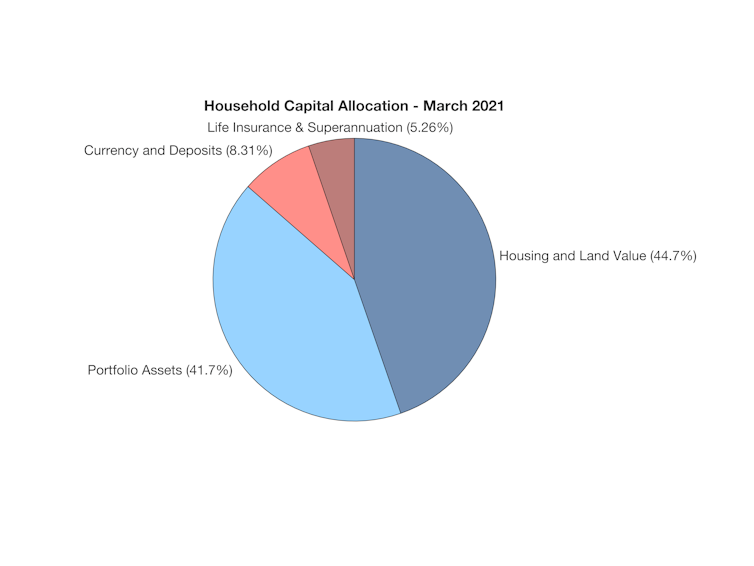
But his plan, focused on reforming foreign investment, planning and competition laws, as well as boosting the tourism and mining sectors, is hampered by a fundamental reality of New Zealand’s economy: much of the country’s capital is tied up in unproductive (and expensive) housing.
While this issue is not new, with New Zealand’s economy once described as “a housing market with bits tacked on”, the solution may lie in making housing more readily available through deregulation and policy reform. This would free up capital for drivers of growth such as infrastructure and business investment.
Household capital allocation March, 2021. Data source: RBNZ Household Balance Sheet. Author provided
The temptation of housing
Rapidly growing house prices over the past two decades have provided strong incentives to direct investment to the housing market.
On average, the price of a typical house has grown by around 8% per year, far outpacing household income growth. For example, in 2005 the median house price was roughly five times the average household income. By the middle of the pandemic house values had ballooned to nine times the average income.
Soaring prices have made residential investment extremely profitable for a long time. This means savings and investments have tended to flow into residential property rather than other productive sectors of the economy.
Constraints on housing supply
The problem is that in recent decades additional residential investment has not led to a substantial increase in new homes.
Local and central government rules and regulations have long hampered the construction of new houses. Instead, more investment in real estate has generally led to even higher prices.
As concerning as this is, it does not mean investments in housing have been misplaced. Rather, high prices and profits are what the market required in order to encourage those willing to build (few that there are) despite the costs, delays and uncertainties associated with bureaucratic battles with councils, planners and local NIMBY groups.
Banning property speculation might have kept prices down and reallocated investment to other productive uses. But in the absence of those speculators, the supply constraints would not have been any looser. Lower prices mean lower returns over building costs, leading to even fewer houses built.
Shifting capital out of the housing market in this way would not have benefited the country – we might have produced more and goods and services but fewer homes in which to live.
Christopher Luxon is pushing forward his plan for growth focused on reforming foreign investment, planning and competition laws, as well as boosting the tourism and mining sectors. Hagen Hopkins/Getty Images
Reforming housing supply
Fortunately, New Zealand has made meaningful progress on housing supply recently. For example, Auckland and Lower Hutt changed zoning laws in the 2010s making it easier to build, and Wellington City has recently followed suit.
These changes have led to local construction booms and, crucially, lower house prices and rents.
These reforms make it easier to build, reduce house prices and mean less investment capital is required for each new house built. So these policies have the dual benefit of improving housing affordability and freeing up capital for other productive sectors of the economy.
As prices come down, New Zealanders will no longer need to pour nine times their income into a home.
That will free up funds for investments in new bridges and tunnels, small businesses, and exciting new startups that will help drive innovation and generate the long-run growth we seek.
New Zealand need not give up its housing dreams in order to get business moving. Rather, it can do both.
All that requires is for local and central government to continue to let people build the housing they want so that we can free up the capital our infrastructure and businesses need.
James Graham has received research funding from the Australian Housing and Urban Research Institute and is a member of Sydney YIMBY.
ALTAVISTA, Va., Feb. 12, 2025 (GLOBE NEWSWIRE) — Pinnacle Bankshares Corporation (“Pinnacle” or the “Company”) (OTCQX: PPBN), the one-bank holding company for First National Bank (the “Bank”), announced today that its Board of Directors declared a cash dividend of $0.25 per share on February 11, 2025, payable March 7, 2025, to shareholders of record as of February 21, 2025.
The $0.25 per share cash dividend is equal to the $0.25 dividend paid last quarter and marks the fiftieth consecutive quarter that a dividend has been declared.
“Pinnacle is pleased to provide a cash dividend of $0.25 per share to our shareholders this quarter,” stated Aubrey H. Hall, III, President and Chief Executive Officer for both the Company and the Bank. Mr. Hall further commented, “This return on investment is consistent with the cash dividend paid in the fourth quarter of 2024 and is based on our continued solid performance.”
Pinnacle Bankshares Corporation is a locally managed community banking organization serving Central and Southern Virginia. The one-bank holding company of First National Bank serves market areas consisting primarily of all or portions of the Counties of Amherst, Bedford, Campbell, Halifax, and Pittsylvania, and the Cities of Charlottesville, Danville, and Lynchburg. The Company has a total of nineteen branches with one branch in Amherst County within the Town of Amherst, two branches in Bedford County; five branches in Campbell County, including two within the Town of Altavista, where the Bank was founded; one branch in the City of Charlottesville, three branches in the City of Danville; three branches in the City of Lynchburg; and three branches in Pittsylvania County, including one within the Town of Chatham. A Loan Production Office and a full-service branch have recently been opened in the South Boston area of Halifax County. First National Bank is in its 117th year of operation.
This press release may contain “forward-looking statements” within the meaning of federal securities laws that involve significant risks and uncertainties. Any statements contained herein that are not historical facts are forward-looking and are based on current assumptions and analysis by the Company. These forward-looking statements, including statements made in Mr. Hall’s quotes may include, but are not limited to, statements regarding the credit quality of our asset portfolio in future periods, the expected losses of nonperforming loans in future periods, returns and capital accretion during future periods, our cost of funds, the maintenance of our net interest margin, future operating results and business performance and our growth initiatives. Although we believe our plans and expectations reflected in these forward-looking statements are reasonable, our ability to predict results or the actual effect of future plans or strategies is inherently uncertain, and we can give no assurance that these plans or expectations will be achieved. Factors that could cause actual results to differ materially from management’s expectations include, but are not limited to: changes in consumer spending and saving habits that may occur, including increased inflation; changes in general business, economic and market conditions; attracting, hiring, training, motivating and retaining qualified employees; changes in fiscal and monetary policies, and laws and regulations; changes in interest rates, inflation rates, deposit flows, loan demand and real estate values; changes in the quality or composition of the Company’s loan portfolio and the value of the collateral securing loans; changes in macroeconomic trends and uncertainty, including liquidity concerns at other financial institutions, and the potential for local and/or global economic recession; changes in demand for financial services in Pinnacle’s market areas; increased competition from both banks and non-banks in Pinnacle’s market areas; a deterioration in credit quality and/or a reduced demand for, or supply of, credit; increased information security risk, including cyber security risk, which may lead to potential business disruptions or financial losses; volatility in the securities markets generally, including in the value of securities in the Company’s securities portfolio or in the market price of Pinnacle common stock specifically; and other factors, which could cause actual results to differ materially from future results expressed or implied by such forward-looking statements. These risks and uncertainties should be considered in evaluating the forward-looking statements contained herein, and you should not place undue reliance on such statements, which reflect our views as of the date of this release.
CONTACT: Pinnacle Bankshares Corporation, Bryan M. Lemley, 434-477-5882 or bryanlemley@1stnatbk.com
To address this, retrofit programs that improve home energy efficiency have become one of Canada’s main strategies to cut emissions in the housing sector. These programs focus on upgrades like air sealing, enhanced insulation, upgrading heating and cooling systems and installing energy-efficient windows and doors.
But do these programs deliver on their promises of lower bills and reduced carbon emissions? Our recent study, forthcoming in Energy Economics, examined the outcomes of the federal ecoENERGY home retrofit program, a predecessor to the Greener Homes Initiative.
Our findings shed light on where the program succeeded, where it fell short and what this all means for Canadian families and policymakers moving forward.
Real-world energy savings
Our study analyzed a decade of monthly electricity and natural gas consumption data from Medicine Hat, Alta., where residents participated in the federal ecoENERGY retrofit program that was in place between 2008 to 2012.
We found that households undertaking comprehensive envelope retrofits — which includes insulation and air sealing — reduced their total energy use by an average of 25 per cent per household. Natural gas usage dropped by 35 per cent on average for these same households, and these savings lasted for at least 10 years after the retrofit.
However, our study found that homes achieved only about 60 per cent of the predicted savings projected in pre-retrofit estimates. While measures like air sealing and attic and wall insulation were relatively effective, other upgrades, such as basement insulation and energy-efficient windows, showed zero effect on energy use.
This gap between projected and actual savings suggests that the estimates shown to households during pre-retrofit audits might be overestimating the benefits. This could leave families with lower-than-expected savings on their energy bills after making significant financial investments. These findings align with similar studies in the United States and Europe, where realized energy savings hover at around 60 per cent of pre-retrofit projections.
Despite this gap, there are promising opportunities for low-cost, high-return investments. Our research suggests that relatively cheap measures like air sealing generate high returns. Adopting electric heat pumps and fuel switching also show promise for delivering both energy savings and reductions in greenhouse gas emissions.
The need for broader participation
Our study also revealed significant gaps in program access and the distribution of benefits. Although the ecoENERGY program was available to all Canadian households, participation was highest among families of mid-valued houses.
Participation among families in lower-valued houses was disappointingly low: about four per cent of the families in lowest-valued houses took part, even though they stood to benefit the most from reduced energy bills. Homes in our study saw bill savings ranging from eight to 17 per cent, based on a comparison of their actual consumption before and after the retrofit. The highest savings were observed in homes with assessed values of $100,000.
Middle-valued homes with the highest retrofit program participant rate tended to save the least amount of money; this group had average gas bill reductions of approximately 10.5 per cent.
The maximum amount that could be claimed under the ecoENERGY program was $5,000, yet the average rebate received was $1,100. This disparity not only limited the program’s potential to reduce emissions on a large scale, but also means Canada’s current approach to energy retrofits may be missing an opportunity to improve energy affordability for those who need it most.
Room for improvement
Energy-saving retrofits have significant potential, but current prediction models often overestimate the savings homeowners can achieve. Improving these models could allow homeowners to make better-informed choices, leading to greater efficiency and improved household welfare.
Upfront costs also remain a significant barrier, particularly for lower-income families. Many cannot afford the upfront expenses associated with retrofitting their homes. Expanded financial support, such as rebates or no-interest loans, may provide much-needed support necessary to allow more households to participate, and more research is needed to evaluate how best to incentivize household participation.
Another major challenge is a lack of awareness. Many Canadians are unaware of the benefits of deep retrofits. Public awareness campaigns, possibly delivered in collaboration with community organizations, may also help educate homeowners on the long-term value of retrofits and make the process more accessible and appealing.
Our project is the first in Canada to use detailed household-level data to assess energy savings from retrofits in houses of various values. We were able to achieve this through partnerships between academia, utilities and the federal government. Such collaborations are crucial for advancing research that informs effective policies and programs.
As Canada advances toward net-zero emissions by 2050, energy-efficient housing should remain central to its climate strategy. Achieving sustainable progress in this area will require retrofit programs that deliver on their promises by enhancing household welfare, addressing energy affordability and ensuring continued public support.
Maya Papineau receives funding from Social Sciences and Humanities Research Council and the National Science and Engineering Research Council and the National Research Council of Canada.
Nicholas Rivers receives funding from the Social Sciences and Humanities Research Council and the National Science and Engineering Research Council. He is affiliated with the Canadian Climate Institute.
Kareman Yassin does not work for, consult, own shares in or receive funding from any company or organisation that would benefit from this article, and has disclosed no relevant affiliations beyond their academic appointment.
Source: Africa Press Organisation – English (2) – Report:
BRAZZAVILLE, Congo (Republic of the), February 12, 2025/APO Group/ —
As part of the Republic of Congo’s strategy to double its oil production, the government is encouraging independent operators to revitalize mature fields and boost output. Companies like AMMAT – participating as a Platinum Sponsor at the inaugural Congo Energy & Investment Forum (CEIF) 2025 – are playing a key role in this effort. In an in-depth conversation with Energy Capital & Power (https://EnergyCapitalPower.com), AMMAT CEO Massimiliano Mignacca outlines the company’s approach to technological innovations, a focus on sustainability and optimizing oil and gas operations in mature fields in Congo.
Can you provide an overview of AMMAT’s activities in Congo?
When we began exploring opportunities in 2021, we focused on West Africa and found promising prospects in the Republic of Congo. The Congolese authorities recognized our potential and supported our asset management approach. By the end of 2022, we had officially established our presence in the country. In March 2023, we secured exploration and production permits for the Zatchi and Loango fields – mature assets previously operated by a joint venture between Eni and Total until 2021 – followed by a transition period under SNPC [Congo’s national oil company Société nationale des pétroles du Congo]. We commenced operations in July 2023, applying our proven asset management strategies from Italy to optimize production in Congo.
How does your partnership with SNPC contribute to Congo’s plan to double oil production?
We operate under a joint venture framework, where SNPC plays a key role alongside two Congolese companies that collectively hold a 25% stake. Managing mature fields presents significant challenges, requiring close coordination with SNPC at all levels. We conduct regular meetings to align on work plans, performance, and projects that enhance safety, boost production and improve asset management. Our close collaboration with SNPC’s leadership ensures that our initiatives contribute directly to Congo’s production growth targets.
AMMAT employs a data-driven approach to reservoir management. What technologies and methodologies are you using?
One major initiative is the modernization of the sea pipeline linking our Loango treatment platform to peripheral platforms. We are also implementing an environmental risk mitigation program in partnership with other operators. Additionally, we have launched a campaign to replace outdated pumps and reactivate wells, utilizing advanced workover techniques such as ESP pump upgrades to enhance production. In 2024, we successfully revamped three platforms in Loango and are currently rehabilitating two more in the Zatchi field. We remain committed to integrating cutting-edge technology into our operations to maximize efficiency and sustainability.
What sustainable practices does AMMAT implement in its operations?
Sustainability is at the core of our asset management approach. The [oil and gas] sector has been central to Congo’s economy since the 1970s, producing a strong engineering workforce. Recognizing this, we have initiated partnerships with local universities and currently host three graduates in our maintenance, IT and HSE [health, safety and environment] divisions. This initiative strengthens local talent and ensures the long-term sustainability of our operations.
AMMAT will be a Platinum Sponsor at the Congo Energy & Investment Forum (CEIF) in March 2025. What do you aim to achieve at this event?
Our primary objective [at CEIF 2025] is to showcase AMMAT as a reliable and committed partner in Congo. The country entrusted us with two crucial production fields, and we want to demonstrate how our asset management expertise adds value. Additionally, we are looking to expand our upstream presence in Congo and other markets. Being a Platinum Sponsor allows us to make a strong impact, emphasizing our commitment to compliance with local regulations, collaboration and sustainable operations. This event provides an excellent platform to engage with stakeholders and reinforce our role in driving growth in Congo’s oil and gas industry.
CORAL GABLES, Fla., Feb. 12, 2025 (GLOBE NEWSWIRE) — MarketGrader, a leader in smart beta investment solutions, today announced the vast majority of the firm’s MarketGrader Indexes beat their passive equity benchmarks and actively managed peers1 in 2024. The outperformance of MarketGrader’s Indexes relative to both their stock market benchmarks and active peers was even more pronounced over the recent three- and five-year windows.
“2024 was another great year for MarketGrader Indexes when compared to both widely-followed passive benchmarks and peer groups of active managers. Our strategies were again rewarded for identifying consistent creators of economic value and unemotionally selling those companies whose fundamentals no longer held up. The level of outperformance persistence that MarketGrader Indexes demonstrate over multi-year windows is rare in the world of asset management and speaks to the efficacy of our proprietary growth at a reasonable price (GARP) + Quality methodology,” said Carlos Diez, Founder and CEO of MarketGrader.
Some statistical highlights of MarketGrader’s fundamentals-based stock selection indexes relative to market capitalization weighted indexes include:
68% of MarketGrader Indexes outperformed their benchmarks across global markets in 2024.
18 out of 19 (95%) MarketGrader Core U.S. Indexes outpaced their benchmark in 2024, and over the recent three-, five- and ten-year windows.
Nine out of every 10 MarketGrader Indexes lead their bogey on an annualized basis over the last decade. In contrast, over the recent 10-year period, 96% of Large-Cap Core active funds underperformed the S&P 500, while 90% of All Domestic active funds, 81% of active International funds and 86% of active Emerging Markets funds underperformed their benchmarks, according to SPIVA.
When comparing MarketGrader Indexes to active managers, some notable highlights include:
80% of MarketGrader Indexes ranked in the top half of their peer group in 2024 (77% of U.S. indexes and 83% of international indexes).
92% of MarketGrader Indexes ranked in the top half of their peer group over five years (89% of domestic and 95% international indexes).
Top decile: Over five years, 73% of MarketGrader Indexes ranked in the top 10% of their active manager peer group (55% of U.S. indexes and 81% of international indexes).
The market cap weighted version of the Barron’s 400 Index (B400X), live since 2007, ranked in the top 6% among 1,911 active managers in Morningstar’s All Cap U.S. Equity Category in 2024, and top 5% over five years.
“It’s been over twenty years since we launched our first index using our fundamentals-based GARP + Quality framework to picking index constituents. These results show that our unique rules-based approach to indexing transcends geographies, market cycles, interest rate regimes, and stock market sector, size and style segments. Index investors can be stock selectors, harnessing the underlying market return (beta) while adding excess returns (alpha) by systematically choosing only the best companies. The persistence of alpha in our indexes makes them an attractive alternative to actively managed funds, for whom consistent outperformance is famously elusive,” continued Diez.
MarketGrader currently publishes 89 indexes, 47 across domestic U.S. equities and 42 on foreign / ex-U.S. stocks. The indexes cover regions, countries, sectors, styles and income. All MarketGrader’s indexes are fully replicable, transparent and rules-based with screens for constituent liquidity to ensure tradability. Further index product development plans are in the works, including an expansion of the company’s U.S. sectors lineup, new Middle East-focused indexes and single country indexes for Asia Pacific and Europe.
Asset managers, wealth managers, institutions and investment platforms can license MarketGrader’s indexes for the basis of ETFs, mutual funds, annuities, model portfolios or more custom delivery like direct indexing. For more information on the index library and for index licensing opportunities, please write the MarketGrader team.
ABOUT MARKETGRADER MarketGrader.com Corp. (“MarketGrader”) founded in 1999, is a Miami-based provider of global equity research and index-based solutions. The company’s mission is to become the leading provider of next generation Smart Beta investment solutions, helping investors achieve superior risk-adjusted returns by identifying and owning the highest quality companies in the world. MarketGrader’s proprietary “GARP + Quality” methodology is used to screen over 41,000 publicly traded companies across 92 countries, representing over $127 trillion in market capitalization. Over 100 Smart Beta indexes have been created using MarketGrader’s methodology. MarketGrader delivers smart beta solutions in three ways; 1) licensing its indexes to investment management firms; 2) offering smart beta portfolio solutions to wealth managers; and 3) providing access to their proprietary GARP + Quality ratings to retail and institutional clients. Institutional clients include Dow Jones, SS&C ALPS, VanEck and BMO. In 2007, MarketGrader created the Barron’s 400 Index in partnership with Barron’s, America’s premier financial magazine. Follow MarketGrader on X @MarketGrader and connect on LinkedIn. For more information, please visit www.marketgrader.com.
_______________ 1 Performance for all actively managed funds was gross of fees, providing a fair comparison against MarketGrader Indexes, which do not have management fees or trading costs. Source: Morningstar Direct.
Media Contact Paul Damon for MarketGrader +1 802.999.5526 paul@keramas.net
Check against delivery.
1 Introduction
Ladies and gentlemen, It’s a pleasure and an honour for me to speak here before such a distinguished audience.
Remember to look up at the stars and not down at your feet. This was advice from Stephen Hawking, the famous English physicist and author of numerous books on the cosmos. And who would want to contradict the genius?
So today I invite you to join me on a stargazing tour. If you don’t have a telescope with you, no worries. However, I should add a disclaimer here: When a couple look up at the stars, things could get romantic. When astronomers observe the stars, impressive images can come into view. When economists talk about stars, it usually gets complicated. Now you know what you’re getting into!
I’m sure you’ve already guessed what topic I have in mind: the natural rate of interest – also known as r-star. It is a concept that economists have been grappling with for more than 125 years.[1] And it has perhaps never received more attention than in the current era of monetary policy.
From a central banker’s perspective, I would like to discuss what role r-star can and should play in the monetary policy universe. I will structure my lecture around four key questions: What is r-star and why is it of interest for monetary policy? How have estimates for r-star evolved over the past decades? What drives uncertainty about current estimates and the future evolution of r-star? What conclusions should monetary policy draw from this?
2 Definition of r-star and use for monetary policy
Let’s start with the definition. The natural rate is the real interest rate that would prevail if the economy were operating at its potential and prices were stable. R-star is commonly thought to be driven by real forces that structurally affect the balance between saving and investment. Think of technological progress and demographics, for example. This also means that r-star should, by definition, be independent of monetary policy. The latter follows from the widely held belief that monetary policy can affect real variables only temporarily, but is neutral in the long term.
At first glance, the natural rate could be a guiding star for the conduct of monetary policy. If a central bank sets its policy rates so that the real interest rate is above r-star, monetary policy is restrictive or “tight”. Consequently, economic activity slows and the inflation rate should decrease. If the real rate is below r-star, monetary policy is expansionary or “loose”. It provides incentives for consumers to purchase more and for enterprises to step up investment and output. Hence, this should result in more economic activity and a higher inflation rate.
However, the idea of the natural rate serving as a guiding star for monetary policy comes with profound challenges. Perhaps the name r-star evokes associations with astronomy and navigation. But these would be misleading. If r-star were like a star in the sky, it would be relatively easy to locate. Stars emit light and are therefore observable.
The natural rate is a theoretical concept. It is based on a hypothetical state of the world. That means the natural rate is, by nature, unobservable. It can only be estimated. For example, models use assumptions about the relationship between measurable variables and r-star. In this respect, the natural rate is not so much like a star shining brightly in the sky. It is more a case of dark matter. As it is invisible, astronomers infer dark matter indirectly by observing its gravitational effects.
If something is hard to find, it only spurs researchers to look even harder – whether they are astronomers or economists. Therefore, we can draw on a variety of estimation methods for the evolution of the natural rate.
3 Estimates for r-star over time
Since around the 1980s various estimates of different types have been pointing to a downward trend for r-star over several decades and across many advanced economies.[2] In the wake of the global financial crisis, the estimates slumped to exceptionally low levels.[3] This development was roughly in line with the observed trajectory of actual real interest rates of short- and long-term government bonds during this period. And no wonder: In the long run, both should be driven by the same fundamental forces affecting the balance between saving and investment.
So the question is this: what has lifted saving and depressed investment? A simple answer would be: in the long term, the most important driver is potential growth. But this finding is not very enlightening. Potential growth is also not observable. It is determined by underlying forces such as demographics and technological progress. This is where we need to look for the causes.
Indeed, according to a number of recent studies, waning productivity growth and population ageing were the key factors in pushing saving up and investment down.[4] Lower productivity reduces the return on investment, so people are less willing to invest. As they expect to live longer, they are more willing to save.
In addition, inequality, risk aversion and fiscal policy could be other factors. For example, growing inequality raises saving, as richer households save a larger share of their income. Similarly, higher risk aversion leads to higher saving, especially in safe assets, while lowering investment.[5]
Many of the estimates for r-star reached their lowest point in the pandemic years 2020 and 2021. After that, there were signs of a partial reversal. A recent analysis by Eurosystem economists across a suite of models and data up to the end of 2024 suggests that estimates of r-star range from − ½ % to ½ % in real terms. In nominal terms, they find that it ranges between 1¾ % and 2¼ %.[6]
It is clear that these ranges depend on the estimating approaches considered. Taking into account an even wider array of measures, Bundesbank staff calculations using data up to the end of 2024 reveal a range of 1.8 % to 2.5 %.[7] And the ECB found for the third quarter of 2024: When three estimates derived from versions of the Holston-Laubach-Williams model are factored in, the range of real r-star is − ½ % to 1 % and the nominal range is 1¾ % to 3 %.
All in all, the results suggest that the range of r-star estimates most likely increased by about one percentage point from their lows. The latest estimates by economists from the Bank for International Settlements come to similar findings.[8]
The reasons for the increase after the pandemic are not yet fully clear. For example, high fiscal spending with rising public debt levels could play a role. Or higher needs for capital, as companies make their value chains more resilient by duplicating structures and increasing stock levels.
4 Uncertainties around r-star estimates
Stargazing tours in economics are a journey into the uncertain. This is also and especially true for r-star. Estimates of the natural rate of interest are subject to major uncertainties, shaped by three M’s: megatrends, methodology and monetary policy.
First, we are facing a number of megatrends. Think of climate change, ageing societies, digitalisation, and the risks of de-globalisation and increasing geopolitical divisions. The effects of these megatrends on natural rates are difficult to gauge and may change over time.
On the one hand, they could contribute to a higher natural rate. Here are some examples: The widespread uptake of artificial intelligence could boost productivity growth. The green transition could lead to higher investment. Fiscal deficits could persist at an elevated level due to higher defence spending given geopolitical tensions. The entry of the baby boomer generation into retirement could reduce savings.
On the other hand, life expectancy is predicted to keep rising; the high hopes for the productivity-enhancing effect of AI could turn out to be too optimistic; and given high public debt levels, fiscal space for additional spending is limited in many countries. Overall, it is virtually impossible to predict which developments will prevail in affecting r-star.
The second factor of uncertainty is methodology. The methods used to define and estimate r-star differ in important ways, especially in terms of time and risk.
Ricardo Reis demonstrates this impressively in a recent paper.[9] He presents four different “r-stars”. They are based on four different conceptual approaches. And they developed quite differently between 1995 and 2019.
One major difference is the risk dimension. Knut Wicksell’s original definition of the natural rate was the rate of return on physical capital in equilibrium.[10] The rate of return on physical capital is the return on investment in the real economy. And this rate is very much associated with risks.
However, this perspective has been lost in virtually all of the model approaches. Generally, they use rather secure government bond yields as a starting point. Again, with regard to the real economy, a risky return on capital would be a more appropriate yardstick. When we look at measures for the return on private capital, we see a strong contrast with risk-free rates. Returns on private capital have remained broadly stable over the last decades in the US,[11] Germany[12] and the euro area as a whole.[13]
From these observations, Ricardo Reis draws the following conclusion: focusing exclusively on the return on government bonds as the measure of r-star, while neglecting the return on private capital, leads to the wrong policy advice.[14]
Another case in point is the time horizon that is considered. Commonly cited estimates seek to assess the real rate that prevails in the longer run, when all shocks have dissipated. Most of these estimates are highly imprecise. Many methods simply project the current or the historical level of real rates into the future. This may confound permanent trends with cyclical factors, which may not be representative for the future. As a result, such methods could miss important turning points in real rate trends.
Other approaches characterise a short-run real rate in a hypothetical world without frictions. While interesting, this concept is of limited value for actual policymaking in the real world. Methods based on a short-term equilibrium tend to produce more volatile estimates of r-star.
There is a third reason for caution: monetary policy itself may play a role in shaping the natural rate or its estimates. A number of studies challenge the view that money is neutral in the long run.[15]
There are different channels through which monetary policy could have lasting effects on real interest rates. Prolonged tight monetary policy, for example, may lower investment, innovation and productivity growth.[16] By contrast, persistent monetary easing could fuel financial imbalances and contribute to zombification.[17]
Moreover, recent research suggests that central bank announcements provide guidance about the trend in real rates. For instance, a narrow window around Fed meetings captures most of the trend decline in US real long-term yields since 1980.[18] This could mean: when central banks look for r-star in financial market prices, they might actually be looking in a mirror.[19] Feedback loops between monetary policy and markets could unduly reinforce their perceptions about r-star. And shifts in perceived r-star could affect actual r-star as it influences saving and investment decisions.
5 Conclusions for monetary policy
Against the backdrop of these major uncertainties, the final key question of my speech is this: what role can and should r-star play for monetary policy in practice?
Let’s approach the answer with a thought experiment: Put yourself in the shoes of a monetary policymaker who only looks at r-star. The relevant interest rate with which you steer the monetary policy stance is currently 2.75 %. After a previous series of interest rate cuts, you consider whether a further cut would be appropriate.
Your staff inform you that various point estimates of r-star range from around 1.8 % to 2.5 % in nominal terms. If r-star were at the upper end of the estimates, the policy rate would become neutral with the next rate cut. Things would be different if r-star were at the lower end of the estimates: Monetary policy would continue to be restrictive, even after several further rate cuts.
So how would you proceed, given a certain stance you want to achieve? Beware: If you rely on a wrong estimate, your decision may have a different effect on inflation than you intended. Simply choosing the middle of the range might not be a happy medium. Around the point estimates, there are often uncertainty bands of different sizes and with asymmetries.
As you have probably guessed: It is no coincidence that I have described this particular decision-making situation. It looks similar in the euro area ahead of the next monetary policy meeting of the ECB Governing Council at the beginning of March. After several rate cuts, the neutral rate could already be near – or there may still be some way to go.
The President of the New York Fed, John Williams, put the problem in a nutshell when he said: as we have gotten closer to the range of estimates of neutral, what appeared to be a bright point of light is really a fuzzy blur.[20]
The bottom line here is this: The closer we get to the neutral rate, the more appropriate it becomes to take a gradual approach. For this purpose, r-star is a helpful concept: it indicates when we need to be more cautious with policy rate moves so that we don’t take a wrong step.
At the same time, the limits of the concept are also clear: it would be risky to base decisions mainly on r-star estimates. Much more is needed to assess the current monetary policy stance and the optimal policy path for the near future.
That is why the Eurosystem uses a variety of financial, real economic and other indicators along the monetary policy transmission mechanism. We want the fullest picture possible. And, of course, r-star also has a place in this picture. For instance, r-star is included in model-based optimal policy projections that we use in the decision-making process.
In my opinion, proceeding in a data-driven and gradual manner has served the ECB Governing Council well. There is no reason to act hastily in the present uncertain environment. The data will tell us where we need to go.
Away from day-to-day monetary policymaking, the concept of the natural rate of interest provides a useful framework. This is also exemplified in the policy scenarios that Ricardo Reis presented last week in Brussels.[21]
He works with the assumption that government bond rates remain around current levels. I would add the assumption that inflation stays on target – actually, that is what I am in office for and committed to. Assuming output is at capacity, policy rates would be persistently higher than in the past. But the recommendations on actual monetary policy depend on the driving forces: is the new setting caused by less demand for safe and liquid assets or by an increase in productivity? And he has two more scenarios in his paper!
That provides a good example of why we should take a close look at the factors behind r-star estimates. Here it is important to even better understand the forces that are shifting real interest rate trends. We need to find out how these forces and trends affect our work to ensure price stability.
Reviewing our monetary policy strategy from time to time is therefore vital. That is precisely what we are doing right now in the Eurosystem. And, of course, in this process, we look at all the questions I mentioned about r-star.
Our stargazing tour is drawing to a close. It turns out we were dealing more with dark matter than with a shining star. Just as dark matter is an exciting field for astronomers, r-star is a rewarding topic for economists.
Using r-star alone to navigate the monetary policy universe could be like flying almost blind. But having it as one of many instruments in your cockpit is highly useful.
I would like to end by quoting Stephen Hawking again: Mankind’s greatest achievements have come about by talking, and its greatest failures by not talking.
Footnotes:
Wicksell, K. (1898), Geldzins und Güterpreise: eine Studie über die den Tauschwert des Geldes bestimmenden Ursachen, Jena, G. Fischer (English version as ibid. (1936), Interest and prices: a study of the causes regulating the value of money, London, Macmillan).
Obstfeld, M., Natural and Neutral Real Interest Rates: Past and Future, NBER Working Paper, No 31949, December 2023.
Brand, C., M. Bielecki and A. Penalver (2018), The natural rate of interest: estimates, drivers, and challenges to monetary policy, ECB Occasional Paper, No 217.
Cesa-Bianchi, A., R. Harrison and R. Sajedi (2023), Global R*, CEPR Discussion Paper No 18518; Davis, J., C. Fuenzalida, L. Huetsch, B. Mills and A. M. Taylor (2024), Global natural rates in the long run: Postwar macro trends and the market-implied r* in 10 advanced economies, Journal of International Economics, Vol. 149; International Monetary Fund (2023), The natural rate of interest: drivers and implications for policy, World Economic Outlook, April, Chapter 2.
On the development of risk appetite in financial markets, see Deutsche Bundesbank, Risk appetite in financial markets and monetary policy, Monthly Report, January 2025.
Brand, C., N. Lisack and F. Mazelis (2025), Natural rate estimates for the euro area: insights, uncertainties and shortcomings, ECB Economic Bulletin, 1/2025.
Additional models would also provide values outside this range, but are currently not deemed sufficiently robust.
Benigno, G., B. Hofmann, G. Nuño and D. Sandri (2024), Quo vadis, r*? The natural rate of interest after the pandemic, BIS Quarterly Review, March.
Reis, R. (2025), The Four R-stars: From Interest Rates to Inflation and Back, draft working paper.
Wicksell, K. (1898), op. cit.
Caballero, R., E. Farhi and P.-O. Gourinchas (2017), Rents, Technical Change, and Risk Premia Accounting for Secular Trends in Interest Rates, Returns on Capital, Earning Yields, and Factor Shares, American Economic Review: Papers & Proceedings 107(5), pp. 614‑620.
Deutsche Bundesbank, The natural rate of interest, Monthly Report, October 2017.
Brand, C., M. Bielecki and A. Penalver (2018), The natural rate of interest: estimates, drivers, and challenges to monetary policy, ECB Occasional Paper, No 217.
Reis, R., Which r-star, public bonds or private investment? Measurement and policy implications, Unpublished manuscript, September 2022.
Jordà, Ò., S. Singh and A. Taylor, The long-run effects of monetary policy, NBER Working Papers, No 26666, January 2020, revised September 2024; Benigno, G., B. Hofmann, G. Nuño and D. Sandri (2024), Quo vadis, r*? The natural rate of interest after the pandemic, BIS Quarterly Review, March.
Baqaee, D., E. Farhi and K. Sangani, The supply-side effects of monetary policy, NBER Working Paper, No 28345, January 2021, revised March 2023; Ma, Y. and K. Zimmermann, Monetary Policy and Innovation, NBER Working Paper, No 31698, September 2023.
Borio, C., P. Disyatat, M. Juselius and P. Rungcharoenkitkul (2022), Why so low for so long? A long-term view of real interest rates, International Journal of Central Banking, Vol. 18, No 3.
Hillenbrand, S. (2025), The Fed and the Secular Decline in Interest Rates, The Review of Financial Studies, forthcoming.
Williams, J. C. (2017), Comment on “Safety, Liquidity, and the Natural Rate of Interest”, by M. Del Negro, M. P. Giannoni, D. Giannone, and A. Tambalotti, Brookings Papers on Economic Activity, Vol. 1, pp. 235‑316; Rungcharoenkitkul, P. and F. Winkler, The natural rate of interest through a hall of mirrors, BIS Working Paper No 974, November 2021.
Williams, J. C., Remarks at the 42nd Annual Central Banking Seminar, Federal Reserve Bank of New York, New York City, 1 October 2018.
Reis, R. (2025), op. cit.
The General Assembly is INTERPOL’s supreme governing body and comprises delegates appointed by the governments of member countries.
It meets once a year and takes all the major decisions affecting general policy, the resources needed for international cooperation, working methods, finances and programmes of activities. These decisions are in the form of resolutions.
We are in the early days of a seismic shift in the global AI industry. DeepSeek, a previously little-known Chinese artificial intelligence company, has produced a “game changing”“ large language model that promises to reshape the AI landscape almost overnight.
But DeepSeek’s breakthrough also has wider implications for the technological arms race between the US and China, having apparently caught even the best-known US tech firms off guard. Its launch has been predicted to start a “slow unwinding of the AI bet” in the west, amid a new era of “AI efficiency wars”.
In fact, industry experts have been speculating for years about China’s rapid advancements in AI. While the supposedly free-market US has often prioritised proprietary models, China has built a thriving AI ecosystem by leveraging open-source technology, fostering collaboration between government-backed research institutions and major tech firms.
This strategy has enabled China to scale its AI innovation rapidly while the US – despite all the tub-thumping from Silicon Valley – remains limited by restrictive corporate structures. Companies such as Google and Meta, despite promoting open-sourceinitiatives, still rely heavily on closed-source strategies that limit broader access and collaboration.
What makes DeepSeek particularly disruptive is its ability to achieve cutting-edge performance while reducing computing costs – an area where US firms have struggled due to their dependence on training models that demand very expensive processing hardware.
Where once Silicon Valley was the epicentre of global digital innovation, its corporate behemoths now appear vulnerable to more innovative, “scrappy” startup competitors – albeit ones enabled by major state investment in AI infrastructure. By leveraging China’s industrial approach to AI, DeepSeek has crystallised a reality that many in Silicon Valley have long ignored: AI’s centre of power is shifting away from the US and the west.
It highlights the failure of US attempts to preserve its technological hegemony through tight export controls on cutting-edge AI chips to China. According to research fellow Dean Ball: “You can keep [computing resources] away from China, but you can’t export-control the ideas that everyone in the world is hunting for.”
DeepSeek’s success has forced Silicon Valley and large western tech companies to “take stock”, realising that their once-unquestioned dominance is suddenly at risk. Even the US president, Donald Trump, has proclaimed that this should be a “wake-up call for our industries that we need to be laser-focused on competing”.
But this story is not just about technological prowess – it could mark an important shift in global power. Former US secretary of state Mike Pompeo has framed DeepSeek’s emergence as a “shot across America’s bow”, urging US policymakers and tech executives to take immediate action.
DeepSeek’s rapid rise underscores a growing realisation: globally, we are entering a potentially new AI paradigm, one where China’s model of open-source innovation and state-backed development is proving more effective than Silicon Valley’s corporate-driven approach.
The Insights section is committed to high-quality longform journalism. Our editors work with academics from many different backgrounds who are tackling a wide range of societal and scientific challenges.
I’ve spent much of my career analysing the transformative role of AI on the global digital landscape – examining how AI shapes governance, market structures and public discourse, and exploring its geopolitical and ethical dimensions, now and far in the future.
I also have personal connections with China, having lived there while teaching at Jiangsu University, then written my PhD thesis on the country’s state-led marketisation programme. Over the years, I have studied China’s evolving tech landscape, observing firsthand how its unique blend of state-driven industrial policy and private-sector innovation has fuelled rapid AI development.
I believe this moment may come to be seen as a turning point not just for AI, but for the geopolitical order. If China’s AI dominance continues, what could this mean for the future of digital governance, democracy, and the global balance of power?
China’s open-source AI takeover
Even in the early days of China’s digital transformation, analysts predicted the country’s open-source focus could lead to a major AI breakthrough. In 2018, China was integrating open-source collaboration into its broader digitisation strategy, recognising that fostering shared development efforts could accelerate its AI capabilities.
Unlike the US, where proprietary AI models dominated, China embraced open-source ecosystems to bypass western gatekeeping, scale innovation faster, and embed itself in global AI collaboration. China’s open-source activity surged dramatically in 2020, laying the foundation for the kind of innovation seen today. By actively fostering an open-source culture, China ensured that a broad range of developers had access to AI tools, rather than restricting them to a handful of dominant companies.
The trend has continued in recent years, with China even launching its own state-backed open-source operating systems and platforms in 2023, to further reduce its dependence on western technology. This move was widely seen as an effort to cement its AI leadership and create an independent, self-sustaining digital ecosystem.
Video: BBC.
While China has been steadily positioning itself as a leader in open-source AI, Silicon Valley firms remained focused on closed, proprietary models – allowing China to catch up fast. While companies like Google and Meta promoted open-source initiatives in name, they still locked key AI capabilities behind paywalls and restrictive licenses.
In contrast, China’s government-backed initiatives have treated open-source AI as a national resource, rather than a corporate asset. This has resulted in China becoming one of the world’s largest contributors to open-source AI development, surpassing many western firms in collaborative projects. Chinese tech giants such as Huawei, Alibaba and Tencent are driving open-source AI forward with frameworks like PaddlePaddle, X-Deep Learning (X-DL) and MindSpore — all now core to China’s machine learning ecosystem.
But they’re also making major contributions to global AI projects, from Alibaba’s Dragonfly, which streamlines large-scale data distribution, to Baidu’s Apollo, an open-source platform accelerating autonomous vehicle development. These efforts don’t just strengthen China’s AI industry, they embed it deeper into the global AI landscape.
This shift had been years in the making, as Chinese firms (with state backing) pushed open-source AI forward and made their models publicly available, creating a feedback loop that western companies have also – quietly – tapped into. A year ago, for example, US firm Abicus.AI released Smaug-72B, an AI model designed for enterprises that built directly upon Alibaba’s Qwen-72B and outperformed proprietary models like OpenAI’s GPT-3.5 and Mistral’s Medium. But the potential for US companies to further build on Chinese open-source technology may be limited by political as well as corporate barriers.
In 2023, US lawmakers highlighted growing concerns that China’s aggressive investment in open-source AI and semiconductor technologies would eventually erode western leadership in AI. Some policymakers called for bans on certain open-source chip technologies, due to fears they could further accelerate China’s AI advancements.
But by then, China’s AI horse had already bolted.
AI with Chinese characteristics
DeepSeek’s rise should have been obvious to anyone familiar with management theory and the history of technological breakthroughs linked to “disruptive innovation”. Latecomers to an industry rarely compete by playing the same game as incumbents – they have to be disruptive.
China, facing restrictions on cutting-edge western AI chips and lagging behind in proprietary AI infrastructure, had no choice but to innovate differently. Open-source AI provided the perfect vehicle: a way to scale innovation rapidly, lower costs and tap into global research while bypassing Silicon Valley’s resource-heavy, closed-source model.
From a western and traditional human rights perspective, China’s embrace of open-source AI may appear paradoxical, given the country’s strict information controls. Its AI development strategy prioritises both technological advancement and strict alignment with the Chinese Communist party’s ideological framework, ensuring AI models adhere to “core socialist values” and state-approved narratives. AI research in China has thrived not only despite these constraints but, in many ways, because of them.
Video: CNBC.
China’s success goes beyond traditional authoritarianism; it embodies what Harvard economist David Yang calls “Autocracy 2.0”. Rather than relying solely on fear-based control, it uses economic incentives, bureaucratic efficiency, and technology to manage information and maintain regime stability.
The Chinese government has strategically encouraged open-source development while maintaining tight control over AI’s domestic applications, particularly in surveillance and censorship. Indeed, authoritarian regimes may have a significant advantage in developing facial-recognition technology due to their extensive surveillance systems. The vast amounts of data collected through these networks enable private AI companies to create advanced algorithms, which can then be adapted for commercial uses, potentially accelerating economic growth.
China’s AI strategy is built on a dual foundation of state-led initiatives and private-sector innovation. The country’s AI roadmap, first outlined in the 2017 new generation artificial intelligence development plan, follows a three-phase timeline: achieving global competitiveness by 2020, making major AI breakthroughs by 2025, and securing world leadership in AI by 2030. In parallel, the government has emphasised data governance, regulatory frameworks and ethical oversight to guide AI development “responsibly”.
A defining feature of China’s AI expansion has been the massive infusion of state-backed investment. Over the past decade, government venture capital funds have injected approximately US$912 billion (£737bn) into early-stage firms, with 23% of that funding directed toward AI-related companies. A significant portion has targeted China’s less-developed regions, following local investment mandates.
Compared with private venture capital, government-backed firms often lag in software development but demonstrate rapid growth post-investment. Moreover, state funding often serves as a signal for subsequent private-sector investment, reinforcing the country’s AI ecosystem.
China’s AI strategy represents a departure from its traditional industrial policies, which historically emphasised self-sufficiency, support for a handful of national champions, and military-driven research. Instead, the government has embraced a more flexible and collaborative approach that encourages open-source software adoption, a diverse network of AI firms, and public-private partnerships to accelerate innovation. This model prioritises research funding, state-backed AI laboratories, and AI integration across key industries including security, healthcare, and infrastructure.
Despite strong state involvement, China’s AI boom is equally driven by private-sector innovation. The country is home to an estimated 4,500 AI companies, accounting for 15% of the world’s total.
As economist Liu Gang told the Chinese Communist Party’s Global Times newspaper: “The development of AI is fast in China – for example, for AI-empowered large language models. Aided with government spending, private capital is flowing to the new sector. Increased capital inflow is anticipated to further enhance the sector in 2025.”
China’s tech giants including Baidu, Alibaba, Tencent and SenseTime have all benefited from substantial government support while remaining competitive on the global stage. But unlike in the US, China’s AI ecosystem thrives on a complex interplay between state support, corporate investment and academic collaboration.
Recognising the potential of open-source AI early on, Tsinghua University in Beijing has emerged as a key innovation hub, producing leading AI startups such as Zhipu AI, Baichuan AI, Moonshot AI and MiniMax — all founded by its faculty and alumni. The Chinese Academy of Sciences has similarly played a crucial role in advancing research in deep learning and natural language processing.
Unlike the west, where companies like Google and Meta promote open-source models for strategic business gains, China sees them as a means of national technological self-sufficiency. To this end, the National AI Team, composed of 23 leading private enterprises, has developed the National AI Open Innovation Platform, which provides open access to AI datasets, toolkits, libraries and other computing resources.
DeepSeek is a prime example of China’s AI strategy in action. The company’s rise embodies the government’s push for open-source collaboration while remaining deeply embedded within a state-guided AI ecosystem. Chinese developers have long been major contributors to open-source platforms, ranking as the second-largest group on GitHub by 2021.
Founded by Chinese entrepreneur Liang Wenfeng in 2023, DeepSeek has positioned itself as an AI leader while benefiting from China’s state-driven AI ecosystem. Liang, who also established the hedge fund High-Flyer, has maintained full ownership of DeepSeek and avoided external venture capital funding.
Though there is no direct evidence of government financial backing, DeepSeek has reaped the rewards of China’s AI talent pipeline, state-sponsored education programs, and research funding. Liang has engaged with top government officials including China’s premier, Li Qiang, reflecting the company’s strategic importance to the country’s broader AI ambitions.
In this way, DeepSeek perfectly encapsulates “AI with Chinese characteristics” – a fusion of state guidance, private-sector ingenuity, and open-source collaboration, all carefully managed to serve the country’s long-term technological and geopolitical objectives.
Recognising the strategic value of open-source innovation, the government has actively promoted domestic open-source code platforms like Gitee to foster self-reliance and insulate China’s AI ecosystem from external disruptions. However, this also exposes the limits of China’s open-source ambitions. The government pushes collaboration, but only within a tightly controlled system where state-backed firms and tech giants call the shots.
Reports of censorship on Gitee reveal how Beijing carefully manages innovation, ensuring AI advances stay in line with national priorities. Independent developers can contribute, but the real power remains concentrated in companies that operate within the government’s strategic framework.
The conflicted reactions of US big tech
DeepSeek’s emergence has sparked intense debate across the AI industry, drawing a range of reactions from leading Silicon Valley executives, policymakers and researchers. While some view it as an expected evolution of open-source AI, others see it as a direct challenge to western AI leadership.
Microsoft’s CEO, Satya Nadella, emphasised its technical efficiency. “It’s super-impressive in terms of both how they have really effectively done an open-source model that does this inference-time compute, and is super-compute efficient,” Nadella told CNBC. “We should take the developments out of China very, very seriously”.
Silicon Valley venture capitalist Marc Andreessen, a prominent advisor to Trump, was similarly effusive. “DeepSeek R1 is one of the most amazing and impressive breakthroughs I’ve ever seen – and as open source, a profound gift to the world,” he wrote on X.
For Yann LeCun, Meta’s chief AI scientist, DeepSeek is less about China’s AI capabilities and more about the broader power of open-source innovation. He argued that the situation should be read not as China’s AI surpassing the US, but rather as open-source models surpassing proprietary ones. “DeepSeek has profited from open research and open source (e.g. PyTorch and Llama from Meta),” he wrote on Threads. “They came up with new ideas and built them on top of other people’s work. Because their work is published and open source, everyone can profit from it. That is the power of open research and open source.”
Not all responses were so measured. Alexander Wang, CEO of Scale AI – a US firm specialising in AI data labelling and model training – framed DeepSeek as a competitive threat that demands an aggressive response. He wrote on X: “DeepSeek is a wake-up call for America, but it doesn’t change the strategy: USA must out-innovate & race faster, as we have done in the entire history of AI. Tighten export controls on chips so that we can maintain future leads. Every major breakthrough in AI has been American.”
Elon Musk added fuel to speculation about DeepSeek’s hardware access when he responded with a simple “obviously” to Wang’s earlier claims on CNBC that DeepSeek had secretly acquired 50,000 Nvidia H100 GPUs, despite US export restrictions.
Beyond the tech world, US policymakers have taken a more adversarial stance. House speaker Mike Johnson accused China of leveraging DeepSeek to erode American AI leadership. “They abuse the system, they steal our intellectual property. They’re now trying to get a leg up on us in AI.”
For his part, Trump took a more pragmatic view, seeing DeepSeek’s efficiency as a validation of cost-cutting approaches. “I view that as a positive, as an asset … You won’t be spending as much, and you’ll get the same result, hopefully.”
The rise of DeepSeek may have helped jolt the Trump administration into action, leading to sweeping policy shifts aimed at securing US dominance in AI. In his first week back in the White House, the US president announced a series of aggressive measures, including massive federal investments in AI research, closer partnerships between the government and private tech firms, and the rollback of regulations seen as slowing US innovation.
The administration’s framing of AI as a critical national interest reflects a broader urgency sparked by China’s rapid advancements, particularly DeepSeek’s ability to produce cutting-edge models at a fraction of the cost traditionally associated with AI development. But this response is not just about national competitiveness – it is also deeply entangled with private industry.
Musk’s growing closeness to Trump, for example, can be viewed as a calculated move to protect his own dominance at home and abroad. By aligning with the administration, Musk ensures that US policy tilts in favour of his AI ventures, securing access to government backing, computing power, and regulatory control over AI exports.
At the same time, Musk’s public criticism of Trump’s US$500 billion AI infrastructure plan – claiming the companies involved lack the necessary funding – was as much a warning as a dismissal, signalling his intent to shape policy in a way that benefits his empire while keeping potential challengers at bay.
Not unrelated, Musk and a group of investors have just launched a US$97.4 billion (£78.7bn) bid for OpenAI’s nonprofit arm, a move that escalates his feud with OpenAI CEO Sam Altman and seeks to strengthen his grip on the AI industry. Altman has dismissed the bid as a “desperate power grab”, insisting that OpenAI will not be swayed by Musk’s attempts to reclaim control. The spat reflects how DeepSeek’s emergence has thrown US tech giants into what could be all-out war, fuelling bitter corporate rivalries and reshaping the fight for AI dominance.
And while the US and China escalate their AI competition, other global leaders are pushing for a coordinated response. The Paris AI Action Summit, held on February 10 and 11, has become a focal point for efforts to prevent AI from descending into an uncontrolled power struggle. France’s president, Emmanuel Macron, warned delegates that without international oversight, AI risks becoming “the wild west”, where unchecked technological development creates instability rather than progress.
But at the end of the two-day summit, the UK and US refused to sign an international commitment to “ensuring AI is open, inclusive, transparent, ethical, safe, secure and trustworthy … making AI sustainable for people and the planet”. China was among the 61 countries to sign this declaration.
Concerns have also been raised at the summit about how AI-powered surveillance and control are enabling authoritarian regimes to strengthen repression and reshape the citizen-state relationship. This highlights the fast-growing global industry of digital repression, driven by an emerging “authoritarian-financial complex” that may exacerbate China’s strategic advancement in AI.
Equally, DeepSeek’s cost-effective AI solutions have created an opening for European firms to challenge the traditional AI hierarchy. As AI development shifts from being solely about compute power to strategic efficiency and accessibility, European firms now have an opportunity to compete more aggressively against their US and Chinese counterparts.
Whether this marks a true rebalancing of the AI landscape remains to be seen. But DeepSeek’s emergence has certainly upended traditional assumptions about who will lead the next wave of AI innovation – and how global powers will respond to it.
End of the ‘Silicon Valley effect’?
DeepSeek’s emergence has forced US tech leaders to confront an uncomfortable reality: they underestimated China’s AI capabilities. Confident in their perceived lead, companies like Google, Meta, and OpenAI prioritised incremental improvements over anticipating disruptive competition, leaving them vulnerable to a rapidly evolving global AI landscape.
In response, the US tech giants are now scrambling to defend their dominance, pledging over US$400 billion in AI investment. DeepSeek’s rise, fuelled by open-source collaboration, has reignited fierce debates over innovation versus security, while its energy-efficient model has intensified scrutiny on AI’s sustainability.
Yet Silicon Valley continues to cling to what many view as outdated economic theories such as the Jevons paradox to downplay China’s AI surge, insisting that greater efficiency will only fuel demand for computing power and reinforce their dominance. Companies like Meta, OpenAI and Microsoft remain fixated on scaling computational power, betting that expensive hardware will secure their lead. But this assumption blinds them to a shifting reality.
DeepSeek’s rise as the potential “Walmart of AI” is shaking Silicon Valley’s foundation, proving that high-quality AI models can be built at a fraction of the cost. By prioritising efficiency over brute-force computing power, DeepSeek is challenging the US tech industry’s reliance on expensive hardware like Nvidia’s high-end chips.
This shift has already rattled markets, driving down the stock prices of major US firms and forcing a reassessment of AI dominance. Nvidia, whose business depends on supplying high-performance processors, appears particularly vulnerable as DeepSeek’s cost-effective approach threatens to reduce demand for premium chips.
Video: CBS News.
The growing divide between the US and China in AI, however, is more than just competition – it’s a clash of governance models. While US firms remain fixated on protecting market dominance, China is accelerating AI innovation with a model that is proving more adaptable to global competition.
If Silicon Valley resists structural change, it risks falling further behind. We may witness the unravelling of the “Silicon Valley effect”, through which tech giants have long manipulated AI regulations to entrench their dominance. For years, Google, Meta,and OpenAI shaped policies that favoured proprietary models and costly infrastructure, ensuring AI development remained under their control.
More than a policy-driven rise, China’s AI surge reflects a fundamentally different innovation model – fast, collaborative and market-driven – while Silicon Valley holds on to expensive infrastructure and rigid proprietary control. If US firms refuse to adapt, they risk losing the future of AI to a more agile and cost-efficient competitor.
A new era of geotechnopolitics
But China is not just disrupting Silicon Valley. It is expanding “geotechnopolitics”, where AI is a battleground for global power. With AI projected to add US$15.7 trillion to the global economy by 2030, China and the US are racing to control the technology that will define economic, military and political dominance.
DeepSeek’s advancement has raised national security concerns in the US. Trump’s government is considering stricter export controls on AI-related technologies to prevent them from bolstering China’s military and intelligence capabilities.
As AI-driven defence systems, intelligence operations and cyber warfare redefine national security, governments must confront a new reality: AI leadership is not just about technological superiority, but about who controls the intelligence that will shape the next era of global power.
China’s AI ambitions extend beyond technology, driving a broader strategy for economic and geopolitical dominance. But with over 50 state-backed companies developing large-scale AI models, its rapid expansion faces growing challenges, including soaring energy demands and US semiconductor restrictions.
China’s president, Xi Jinping, remains resolute, stating: “Whoever can grasp the opportunities of new economic development such as big data and artificial intelligence will have the pulse of our times.” He sees AI driving “new quality productivity” and modernising China’s manufacturing base, calling its “head goose effect” a catalyst for broader innovation.
To counter western containment, China has embraced a “guerrilla” economic strategy, bypassing restrictions through alternative trade networks, deepening ties with the global south, and exploiting weaknesses in global supply chains. Instead of direct confrontation, this decentralised approach uses economic coercion to weaken adversaries while securing China’s own industrial base.
Video: AP.
China is also leveraging open-source AI as an ideological tool, presenting its model as more collaborative and accessible than western alternatives. This narrative strengthens its global influence, aligning with nations seeking alternatives to western digital control. While strict state oversight remains, China’s embrace of open-source AI reinforces its claim to a future where innovation is driven not by corporate interests but through shared collaboration and global cooperation.
But while DeepSeek claims to be open access, its secrecy tells a different story. Key details on training data and fine-tuning remain hidden, and its compliance with China’s AI laws has sparked global scrutiny. Italy has banned the platform over data-transfer risks, while Belgium and Ireland launched privacy probes.
Under Chinese regulations, DeepSeek’s outputs must align with state-approved narratives, clashing with the EU’s AI Act, which demands transparency and protects political speech. Such “controlled openness” raises many red flags, casting doubt on China’s place in markets that value data security and free expression.
Many western commentators are seizing on reports of Chinese AI censorship to frame other models as freer and more politically open. The revelation that a leading Chinese chatbot actively modifies or censors responses in real time has fuelled a broader narrative that western AI operates without such restrictions, reinforcing the idea that democratic systems produce more transparent and unbiased technology. This framing serves to bolster the argument that free societies will ultimately lead the global AI race.
But at its heart, the “AI arms race” is driven by technological dominance. The US, China, and the EU are charting different paths, weighing security risks against the need for global collaboration. How this competition is framed will shape policy: lock AI behind restrictions, or push for open innovation.
DeepSeek, for all its transformational qualities, continues to exemplify a model of AI where innovation prioritises scale, speed and efficiency over societal impact. This drive to optimise computation and expand capabilities overshadows the need to design AI as a truly public good. In doing so, it eclipses this technology’s genuine potential to transform governance, public services and social institutions in ways that prioritise collective wellbeing, equity and sustainability over corporate and state control.
A truly global AI framework requires more than political or technological openness. It demands structured cooperation that prioritises shared governance, equitable access, and responsible development. Following a workshop in Shanghai hosted by the Chinese government last September, the UN’s general secretary, António Guterres, outlined his vision for AI beyond corporate or state control: “We must seize this historic opportunity to lay the foundations for inclusive governance of AI – for the benefit of all humanity. As we build AI capacity, we must also develop shared knowledge and digital public goods.”
Both the west and China frame their AI ambitions through competing notions of “openness” – each aligning with their strategic interests and reinforcing existing power structures.
Western tech giants claim AI drives democratisation, yet they often dominate digital infrastructure in parts of Africa, Asia and Latin America, exporting models based on “corporate imperialism” that extract value while disregarding local needs. China, by contrast, positions itself as a technological partner for the rest of the global south; however, its AI remains tightly controlled, reinforcing state ideology.
China’s proclaimed view on international AI collaboration emphasises that AI should not be “a game of rich countries”“, as President Xi stated during the 2024 G20 summit. By advocating for inclusive global AI development, China positions itself as a leader in shaping international AI governance, especially via initiatives like the UN AI resolution and its AI capacity-building action plan. These efforts help promote a more balanced technological landscape while allowing China to strengthen its influence in global AI standards and frameworks.
However, beneath all these narratives, both China and the US share a strategy of AI expansion that relies on exploited human labour, from data annotation to moderation, exposing a system driven less by innovation than by economic and political control.
Seeing AI as a connected race for influence highlights the need for ethical deployment, cross-border cooperation, and a balance between security and progress. And this is where China may face its greatest challenge – balancing the power of open-source innovation with the constraints of a tightly controlled, authoritarian system that thrives on restriction, rather than openness.
To hear about new Insights articles, join the hundreds of thousands of people who value The Conversation’s evidence-based news. Subscribe to our newsletter.
Peter Bloom does not work for, consult, own shares in or receive funding from any company or organisation that would benefit from this article, and has disclosed no relevant affiliations beyond their academic appointment.
Source: United States Senator for Colorado John Hickenlooper
WASHINGTON – U.S. Senator John Hickenlooper joined 21 of his Senate colleagues in a letter urging Department of the Interior Secretary Doug Burgum to immediately take action to resolve looming staffing shortages at the National Park Service.
The letter follows President Trump’s hiring freeze, his cancellation of thousands of job offers for seasonal National Park Service employees, and his buyout offers made without clear legal authority. These actions pave the way for a damaging loss of staff at national parks in Colorado and across the nation in the coming summer months and beyond.
“Americans showing up to national parks this summer and for years to come don’t deserve to have their vacations ruined by a completely preventable – and completely irresponsible – staffing shortage. And local economies don’t deserve to have their livelihoods destroyed for political gain,” wrote the senators.
Full text of the letter can be found HERE and below:
Dear Secretary Burgum:
We urge you to immediately reissue seasonal employment offers for the National Park Service, officially rescind damaging and short-sighted deferred resignation and early retirement offers, and to instead work to safeguard, grow, and shape the National Park Service workforce to meet the needs of our national parks and their visitors.
We are alarmed that the National Park Service revoked employment offers for seasonal staff for the upcoming summer season. Incoming seasonal staff – whose work is critical to managing the influx of visitors during the summer “peak season” – had offers in their hands that were yanked away just days after the inauguration.
National Park Service rangers carry out a wide array of functions critical to protecting natural resources, keeping visitors safe, providing for recreation, and creating an inspiring and educational experience for visitors. National Park units experience a summer surge in visitation that peaks in July, and the Service hires more than 6,000 seasonal employees to manage that extra work. Without seasonal staff during this peak season, visitor centers may close, bathrooms will be filthy, campgrounds may close, guided tours will be cut back or altogether cancelled, emergency response times will drop, and visitor services like safety advice, trail recommendations, and interpretation will be unavailable.
We are also alarmed that the administration’s offer of deferred resignation and voluntary early retirement, made without clear legal authority, as well as open threats about future terminations will lead to a damaging loss of full-time staff at the National Park Service, which is already operating well below prior staffing levels despite significant increases in visitation. As a result of onerous budget caps during the 2010s, the National Park Service lost 15% of its staff while park visitation also increased by 15%. If a significant number of National Park Service employees take one of the offers – or further terminations are made – park staffing will be in chaos. Not only does this threaten the full suite of visitor services, but could close entire parks altogether.
Gutting staffing at national park units will devastate local “gateway” communities where parks generate significant economic activity – from hotels to restaurants to stores to outfitters. In 2023, an estimated 325 million park visitors spent an estimated $26.4 billion in local gateway regions, supporting an estimated 415,000 jobs and $55.6 billion in total economic output in the national economy.
Americans showing up to national parks this summer and for years to come don’t deserve to have their vacations ruined by a completely preventable – and completely irresponsible – staffing shortage. And local economies don’t deserve to have their livelihoods destroyed for political gain. We urge your cooperation in protecting national parks for the enjoyment of everyone by ensuring National Park Service staffing meets the needs of the 433 national park units in all 50 states.
This year, the EU Green Week is all about the circular economy.
With its potential to drive sustainable competitiveness, reduce waste, and promote innovation, circular economy offers a compelling solution to some of the EU’s most pressing challenges.
Save the date: 3-5 June 2025, in Brussels
The EU Green Week 2025 conference will take place in Brussels on 3-5 June to get everyone talking about how circularity can become a new economic reality. The event will feature among others:
Policy discussions (3-4 June): hear from expert speakers on how a circular use of resources can make the EU more competitive, resilient, and sustainable.
Stakeholder event (5 June): meet with industry leaders, communities and other stakeholders to share ideas and inspire action, in partnership with the European Circular Economy Stakeholder Platform and the European Circular Cities and Regions Initiative.
Registrations to the EU Green Week conference will open in April.
Throughout June, partner events will complement the annual conference by taking the conversation on circularity to local and regional levels, and engaging businesses and communities across Europe and beyond.
The application period for EU Green Week partner events will open between 3-21 March 2025.
SHREVEPORT, La. – Acting United States Attorney Alexander C. Van Hook announced that Shaquaila Lewis a/k/a Shaquaila Lewis-Chatman, 36, of Gibsland, Louisiana, has been sentenced on one count of wire fraud. United States District Judge S. Maurice Hicks, Jr. sentenced Lewis to 27 months in prison, followed by 3 years of supervised release. Restitution will be determined at a later date.
In March 2020 Congress enacted the Coronavirus Aid, Relief and Economic Security (CARES) Act which was designed to provide emergency financial assistance to the millions of Americans who were suffering the economic effects caused by the COVID-19 pandemic. As part of the CARES Act, the Small Business Administration (SBA) provided Economic Injury Disaster Loans (EIDL), which were low-interest financing to small businesses, renters and homeowners in regions affected by declared disasters. The CARES Act also provided authorization of up to $349 billion in forgivable loans to small businesses for job retention and certain other expenses, through a program referred to as the Paycheck Protection Program (“PPP”).
Lewis devised a scheme to defraud the SBA and various financial institutions by falsifying PPP and EIDL Program loan applications, forms, and other documents, and submitting fraudulent loan applications. At the sentencing hearing, the court found that Lewis was responsible for over $1.1 million in loss as a result of multiple fraudulent loans involving herself and others.
As an example, in February 2021, Lewis electronically submitted a false and fraudulent PPP application to Square Capital in the name of Perfect Memories Travel seeking approximately $20,833 in PPP funds. Lewis signed the application and falsely certified that the application and all information provided was true and accurate. Lewis falsely certified that the funds would be used “to retain workers and maintain payroll.” She also falsely certified that she had used the full loan amount from a prior PPP application submitted on behalf of Perfect Memories Travel only for eligible expenses. A few days later, Square Capital disbursed approximately $20,583 in loan benefits to a bank account held by Lewis, and she used those funds for personal expenses.
The case was investigated by the Internal Revenue Service-Criminal Investigation and prosecuted by Assistant U.S. Attorney Seth D. Reeg and Assistant Chief Justin M. Woodard of the Department of Justice Criminal Division – Fraud Section.
Governor Kathy Hochul today announced a transformational $150 million investment to connect the Long Island Rail Road’s (LIRR) Ronkonkoma Station with the proposed North Terminal at MacArthur Airport, significantly improving accessibility and enhancing the region’s transportation infrastructure. This initiative builds on the Governor’s commitment to the development of a new terminal at MacArthur Airport, further positioning Long Island as a hub for economic growth and innovation.
“Long Islanders deserve modern, efficient transit systems that make their daily lives easier and fuel local economic growth,” Governor Hochul said. “By improving transit access, redesigning road networks, and enhancing critical infrastructure, we are unlocking new opportunities for businesses, tourism, and economic development. This $150 million investment will also create good-paying union jobs while transforming how Long Islanders connect to one another, to New York and to the rest of the world.”
[embedded content]
[embedded content]
The new funding further leverages Governor Hochul’s 2022 commitment of $40 million for a new North Terminal at MacArthur Airport. The project will include a pedestrian walkway linking the airport and LIRR station, redesigned road networks and upgrades to various infrastructure. These enhancements will improve passenger experience, reduce travel times and position MacArthur Airport as a key transportation hub for Long Island.
MacArthur Airport has long played a vital role in Suffolk County’s transportation system, evolving from a military airfield in 1942 to being recognized as one of the best small airports in America. This latest investment reaffirms the State’s commitment to improving infrastructure and expanding economic opportunities in the region.
By improving connectivity and unlocking the potential of 48 acres of land surrounding the station, the project will drive further development and tourism growth. The investment aligns with the Governor’s broader vision for Long Island, which includes strengthening transit networks, expanding housing access and fostering job creation.
By improving transit access, redesigning road networks, and enhancing critical infrastructure, we are unlocking new opportunities for businesses, tourism, and economic development.
Governor Hochul
Empire State Development President, CEO and Commissioner Hope Knight said, “This transformative investment demonstrates New York State’s commitment to building world-class infrastructure that drives economic growth. The direct connection between MacArthur Airport and the LIRR network will create new opportunities for business development, tourism, and job creation that will benefit Long Island for generations to come. The additional funding advances Long Island’s momentum as a hub for economic growth, expanding opportunities for residents, businesses, and visitors alike.”
Empire State Development Board Chairman Kevin Law said, “As a Long Islander, I know firsthand how critical robust transportation infrastructure is to our region’s future. This $150 million investment to connect MacArthur Airport with the LIRR’s Ronkonkoma Station will catalyze economic development, enhance quality of life, and create new possibilities for sustainable growth. The improved accessibility and modernized transit network will help cement Long Island’s continued success as a premier destination to live, work, and do business.”
Long Island Rail Road President Rob Free said, “The LIRR is the fastest, safest and most economical way to travel across Long Island and this project is a unique opportunity to help take more cars off the roads,” said LIRR President Rob Free. “Moving MacArthur’s terminal closer to Ronkonkoma station will encourage people to take the train to the airport. The LIRR is already the best travel experience to JFK and we are ready to help MacArthur Airport grow by bringing that same great travel experience there too.”
Embedded Flickr Album
Suffolk County Executive Ed Romaine said, “I thank Governor Hochul for recognizing the critically important need for infrastructure investment to help grow Suffolk County’s economy and protect its environment. Without these investments Suffolk County cannot grow to accommodate new businesses or create new opportunities for residents or improve transportation. This is a great win for the people of Suffolk County.”
Suffolk County Legislature Presiding Officer Kevin J. McCaffrey said, “We thank the Governor for her investment in the Infrastructure surrounding the Ronkonkoma train station. We believe this investment goes hand in hand with the County’s continued investment to provide for the economic development of this important area of the county.”
Suffolk County Legislature Minority Leader Jason Richberg said, “MacArthur Airport has always had the potential to serve as a much-needed transit hub for Long Islanders, and today’s announcement takes us one step closer to making that a reality, ” said Suffolk County Legislature Minority Leader Jason Richberg. “The new, expanded North Terminal will make traveling and commuting easier for our millions of residents, create jobs, and bring more tourism and business to Suffolk County. I want to thank Governor Hochul for this critical investment that will go a long way in strengthening our region.”
Islip Town Supervisor Angie Carpenter said, “We would like to acknowledge and thank Governor Hochul for her leadership and commitment to investing in our region. Commercial Development at Ronkonkoma South represents an incredible opportunity for the region and certainly maximizes the potential of our regional airport. With this investment, we are laying the foundation for long-term economic growth, bringing in high-quality jobs, and creating new opportunities for our young professionals to live and work right here in our community. We are also leveraging the investments made in our transportation infrastructure, including the enhancements to the LIRR and the future potential of Amtrak service. With mixed-use residential development north of the Ronkonkoma railroad, we have a unique opportunity to create a thriving, connected transportation hub that supports our workforce and strengthens our economy.”
Source: The Conversation – Canada – By Jennifer Clapp, Professor and Canada Research Chair in Global Food Security and Sustainability, and Member of the International Panel of Experts on Sustainable Food Systems, University of Waterloo
History has shown us again and again that, so long as inequality goes unchecked, no amount of technology can ensure people are well fed.
Today, the world produces more food per person than ever before. Yet hunger and malnutrition persist in every corner of the globe — even, and increasingly, in some of its wealthiest countries.
The major drivers of food insecurity are well known: conflict, poverty, inequality, economic shocks and escalating climate change. In other words, the causes of hunger are fundamentally political and economic.
The urgency of the hunger crisis has prompted 150 Nobel and World Food Prize laureates to call for “moonshot” technological and agricultural innovations to boost food production, meaning monumental and lofty efforts. However, they largely ignored hunger’s root causes — and the need to confront powerful entities and make courageous political choices.
Food is misallocated
To focus almost exclusively on promoting agricultural technologies to ramp up food production would be to repeat the mistakes of the past.
The Green Revolution of the 1960s-70s brought impressive advances in crop yields, though at considerable environmental cost. It failed to eliminate hunger, because it didn’t address inequality. Take Iowa, for example — home to some of the most industrialized food production on the planet. Amid its high-tech corn and soy farms, 11 per cent of the state’s population, and one in six of its children, struggle to access food.
Even though the world already produces more than enough food to feed everyone, it’s woefully misallocated. Selling food to poor people at affordable prices simply isn’t as profitable for giant food corporations.
They make far more by exporting it for animal feed, blending it into biofuels for cars or turning it into industrial products and ultra-processed foods. To make matters worse, a third of all food is simply wasted.
Meanwhile, as the laureates remind us, more than 700 million people — nine per cent of the world’s population — remain chronically undernourished. A staggering 2.3 billion people — more than one in four — cannot access an adequate diet.
Women queue up to receive food distributed by local volunteers at a camp in Somalia in May 2019. Conflicts hinder the effective delivery of humanitarian aid during food security crisis. (AP Photo/Farah Abdi Warsameh)
Confronting inequity
Measures to address world hunger must start with its known causes and proven policies. Brazil’s Without Hunger program, for example, has seen dramatic 85 per cent reduction in severe hunger in just 18 months through financial assistance, school food programs and minimum wage policies.
Our politicians must confront and reverse gross inequities in wealth, power and access to land. Hunger disproportionately affects the poorest and most marginalized people, not because food is scarce, but because people can’t afford it or lack the resources to produce it for themselves. Redistribution policies aren’t optional, they’re essential.
Governments must put a stop to the use of hunger as a weapon of war. The worst hunger hotspots are conflict zones, as seen in Gaza and Sudan, where violence drives famine. Too many governments have looked the other way on starvation tactics — promoting emergency aid to pick up the pieces instead of taking action to end the conflicts driving hunger.
Governments must also break the stranglehold of inequitable trade rules and export patterns that trap the poorest regions in dependency on food imports, leaving them vulnerable to shocks.
Instead, supporting local and territorial markets is critical in helping build resilience to economic and supply chain disruptions. These markets provide livelihoods and help ensure diverse, nutritious foods reach those who need them.
Mitigating and adapting to climate change requires massive investments in transformative approaches that promote resilience and sustainability in food systems.
Agroecology — a farming system that applies ecological principles to ensure sustainability and promotes social equity in food systems — is a key solution, proven to sequester carbon, build resilience to climate shocks and reduce dependence on expensive and environmentally damaging synthetic fertilizers and pesticides.
More research should explore agroecology’s full potential. And we must adopt plant-rich, local and seasonal diets, ramp up measures to tackle food waste and reconsider using food crops for biofuels.
This means pushing back against Big Meat and biofuel lobbies, while investing in climate-resilient food systems.
Bold political action needed
This is not to say that technology has no role — all hands need to be on deck. But the innovations most worth pursuing are those that genuinely support more equitable and sustainable food systems, and not corporate profits. Unless scientific efforts are matched by policies that confront power and prioritize equity over profit, then hunger is likely to here to stay.
The solutions to hunger are neither new nor beyond reach. What’s missing is the political will to address its root causes.
This message is shared by my colleagues with the International Panel of Experts on Sustainable Food Systems, IPES-Food, whose work covers a range of expertise and experience. Hunger persists because we allow injustice to endure. If we are serious about ending it, we need bold political action, not just scientific breakthroughs.
Jennifer Clapp receives funding from the Canada Research Chairs program and the Social Sciences and Humanities Research Council of Canada. She is a member of the International Panel of Experts on Sustainable Food Systems (IPES-Food).
Source: United States Senator for Commonwealth of Virginia Mark R Warner
WASHINGTON — U.S. Sen. MarkR. Warner (D-VA) joined Sen. Jack Reed (D-RI) and a number of their Senate colleagues in a letter demanding that the Consumer Financial Protection Bureau (CFPB) perform its essential work supervising and investigating violations of consumer financial protection laws and taking forceful enforcement actions against scammers and payday lenders. This letter comes on the heels of an ill-advised move by the Trump administration to shutter the CFPB, which collects, investigates, and monitors consumer complaints about financial products and services, and provides relief to consumers who have been wronged by unscrupulous financial providers.
As a consumer watchdog, the CFPB looks out for Americans’ financial wellbeing, preventing scams and holding offenders accountable. This is especially true for servicemembers, veterans, and their families, Since the agency’s inception, the CFPB has returned over $21 billion back to consumers who have fallen victim to abusive and illegal activity.
“This morning, in your capacity as Acting Director of the Consumer Financial Protection Bureau (CFPB), you issued a directive to employees to cease all work without your express written approval. This includes investigations, supervision, enforcement, and litigation activities, as well as all stakeholder engagement and public communications. This decision leaves all Americans susceptible to predatory lending and other abusive practices, but in particular, it eliminates protections that prevent servicemembers from being exploited,” wrote the senators.
In this letter, the Senators also express The Trump Administration’s decision to stop supervision, enforcement, and litigation eliminates key protections enacted by Congress through the Military Lending Act (MLA) and Servicemembers Civil Relief Act (SCRA) to protect servicemembers, who are disproportionally targeted by predatory lenders and schemes, and often face greater financial risks than civilian borrowers due to the nature of their military service. The financial and legal protections in these bipartisan laws – most notably a temporary reduction in interest rates on mortgages, credit cards, and auto loans – are critical to national defense and military readiness.
“Nullifying the MLA and imperiling servicemembers’ rights under the SCRA will degrade military readiness, cost taxpayers money, and tarnish servicemembers’ records. The Department of Defense (DOD) has stated that ‘high-cost debt can detract from mission focus, reduce productivity, and require the attention of supervisors and commanders.’ Morale suffers when servicemembers and their families are trapped in cycles of debt. And taxpayers are on the hook when our servicemembers leave the military due to avoidable personal issues like financial insecurity. According to DOD, each separated servicemember costs the Pentagon more than $58,000,” they continued.
“Accordingly, we request that the CFPB continue to supervise and investigate violations of the consumer financial protection laws and take forceful enforcement actions against lenders that violate the law, especially when it comes to predatory lending that harms our military readiness. We also request that the CFPB continue to make public communications to consumers, especially to servicemembers regarding the rights that they are owed under the SCRA,” the letter concluded.
In addition to Sens. Warner and Reed, the letter was signed by U.S. Sens. Jeanne Shaheen (D-NH), Ben Ray Lujan (D-NM), Gary Peters (D-MI), Jeff Merkley (D-OR), Jon Ossoff (D-GA), Cory Booker (D-NJ), John Hickenlooper (D-CO), and Edward Markey (D-MA).
A copy of the letter is available here and below:
Dear Director Vought:
This morning, in your capacity as Acting Director of the Consumer Financial Protection Bureau (CFPB), you issued a directive to employees to cease all work without your express written approval. This includes investigations, supervision, enforcement, and litigation activities, as well as all stakeholder engagement and public communications. This decision leaves all Americans susceptible to predatory lending and other abusive practices, but in particular, it eliminates protections that prevent servicemembers from being exploited.
This funding, supervision, enforcement, and communications freeze will hit military families especially hard. Without a functional CFPB, military families will be stripped of their financial protections under the bipartisan Military Lending Act (MLA) that they have earned and deserve by serving our Nation. The CFPB is the primary agency responsible for supervising and enforcing the MLA against nonbank financial companies, including payday lenders, pawnshops, and debt collectors who have charged servicemembers interest rates as high as 600% and who have threatened to derail their careers if they do not pay up.
The agency’s supervision and enforcement program has delivered concrete results for the military. The CFPB has resolved 39 cases involving harm to servicemembers and veterans, returning $363 million to victims, including six enforcement actions for violations of the MLA. Two additional MLA cases are currently pending in court, alleging that a pawn shop and an installment lender charged sky high interest rates to military families and engaged in deceptive practices to illegally harvest fees. With these cases frozen, no supervision, staff locked out, and additional enforcement off the table, unscrupulous lenders will exploit these circumstances to engage in additional predatory lending. The actions that you have taken since being installed as Acting Director betray our servicemembers and empower scammers who want to rip them off.
Further, recent CFPB research identified a long-running pattern of lenders failing to decrease servicemembers’ interest rates while on active duty as required by the Servicemembers Civil Relief Act (SCRA). These failures cost servicemembers thousands of dollars per year. The CFPB’s public communications have held lenders accountable and helped servicemembers exercise their rights under Federal law.
Nullifying the MLA and imperiling servicemembers’ rights under the SCRA will degrade military readiness, cost taxpayers money, and tarnish servicemembers’ records. The Department of Defense (DOD) has stated that “high-cost debt can detract from mission focus, reduce productivity, and require the attention of supervisors and commanders.” Morale suffers when servicemembers and their families are trapped in cycles of debt. And taxpayers are on the hook when our servicemembers leave the military due to avoidable personal issues like financial insecurity. According to DOD, each separated servicemember costs the Pentagon more than $58,000.
Accordingly, we request that the CFPB continue to supervise and investigate violations of the consumer financial protection laws and take forceful enforcement actions against lenders that violate the law, especially when it comes to predatory lending that harms our military readiness. We also request that the CFPB continue to make public communications to consumers, especially to servicemembers regarding the rights that they are owed under the SCRA.
We request your commitment no later than February 12, 2025. Thank you for your attention to this important matter.
A public consultation for a potential visitor levy scheme in Aberdeen which would raise revenue to be used for improvements for the visitor economy in the city has been agreed.
Aberdeen City Council’s Finance and Resources Committee today approved the move which would see the scheme charge a percentage fee on overnight stays in accommodation.
Convener of Finance and Resources Councillor Alex McLellan said: “Aberdeen City Council has developed the visitor levy scheme with key stakeholders which will now go out to consultation.
“There is the potential for the scheme to raise significant funds to help support our ambition to be a leading visitor destination.
“Our decision around whether or not to introduce a visitor levy will be informed by the consultation as it is important to consider the views of the trade, and a key part of that discussion will be around how the council could use the funds to boost the city’s economy, increase visitor numbers, and, in turn, fill hotel rooms.”
Chair of the Aberdeen City and Shire Hotels Association Frank Whitaker said “It is fair to say that the hotel sector lobbied hard against legislation for a visitor levy. However, the law now enables local authorities across Scotland to implement a visitor levy, so it is incumbent on industry to work with local authorities to develop effective schemes that support local economic growth.
“The introduction of a visitor levy scheme in Aberdeen City has the potential to be a positive economic growth lever if correctly invested, benefitting not just all types of visitors to Aberdeen but also local residents.”
The report to committee said The Visitor Levy (Scotland) Bill allows local authorities in Scotland to charge a fee or tax on overnight stays in some types of accommodation. The levy would be calculated as a percentage of the chargeable transaction for accommodation, after deducting any commission costs.
The main purpose of the bill is to invest more in the local economy in ways that will benefit business and leisure visitors as well as residents.
The local authority has the discretion to set what the rate is and the legislation allows for local authorities to set different rates for different purposes or areas meaning that different rates can be set for particular events, such as arts festivals or special conferences and that local authorities can vary the area in which the levy applies within their boundary.
Local authorities cannot vary the type of accommodation that the levy would apply to and that includes hotels, bed and breakfasts, hostels, guest houses, self-catering accommodation, camping sites, caravan parks, accommodation in a vehicle, or on board a vessel which is permanently or predominantly situated in one place.
Cruise ships and motor homes are not subject to the levy. The levy is not payable where the visitor or any other person utilising the right to reside in the overnight accommodation is in receipt of benefits, payments, or allowances for a disability.
The report said if it goes ahead, the absolute earliest a visitor levy scheme can come into effect in Aberdeen is 1 April 2027. For public consultation, a rate of 7% is proposed which would produce a levy of £5 per night on an average hotel room of £70 a night.