Category: Economy

  • MIL-OSI United Nations: UNECE helps Moldova move towards more energy efficient building sector

    Source: United Nations Economic Commission for Europe

    The building sector is the largest consumer of energy in the Republic of Moldova, representing 53 per cent of final energy consumption in 2022, with public sector buildings accounting for less than one-fifth and residential buildings for the rest. The crucial aspect that influences energy efficiency is the aging building stock as 72 per cent of buildings were constructed between 1951 and 1990, and nowadays lack modern energy efficiency measures. 

    These statistics underscore the significant role that buildings play in energy demand, overshadowing other sectors such as transport (30 per cent) and industry (8 per cent), and highlight the urgency of addressing energy consumption in the building sector amid the energy crisis. 

    The International Forum on “Innovative Solutions for Scaling Up Energy Efficiency in Buildings” held in Chisinau on 3-4 October 2024, aimed at addressing this challenge by connecting the best technologies and practices for building new and retrofitting older assets, through innovative business models and identifying the needed investments for a more sustainable energy future in Moldova. 

    At the Forum, UNECE shared its extensive experience on the strategic vision and the necessary policy interventions to improve energy efficiency, which would involve:  

    • Comprehensive regulatory frameworks in place, encompassing energy efficiency standards, building codes, and market structures that facilitate the electrification of key sectors like heating and transportation. These frameworks create a solid foundation for transitioning to cleaner energy systems while promoting the widespread adoption of energy-efficient technologies. Buildings, as essential components of future energy systems, play a critical role by not only consuming energy but also helping to balance energy demand and supply through on-site generation and active participation in the electricity market. 

    • Guaranteeing access to modern energy-efficient technologies, with implementation strategies adapted to local conditions, such as the cost of capital, resource availability, and skill levels of the local workforce. This approach ensures that solutions are both economically feasible and effective in a longer term. 

    • Tackling the behavioural barriers to fully unlock the energy efficiency potential and ensure broader adoption of available solutions. This includes addressing habits, perceptions, and resistance to change that often hinder the adoption of new technologies and practices. 

    • Development of a national talent strategy, focusing on the training of future workers, enhancing the skills of the current workforce, and developing retention programmes. Such a strategy is vital as it ensures that a capable and knowledgeable labour force is available to support the transition to a more energy-efficient economy. 

    • Bridging the digital divide, as many modern energy-efficient technologies rely on digital tools and infrastructure not only for their proper functioning, but importantly for seizing the system-wide optimization potential. Without equitable access, certain population groups could fall behind. 

    UNECE continues to assist its member States in scaling up energy efficiency, which is crucial to meeting global sustainability goals, supporting environmental protection, social inclusion, and economic development. 

    MIL OSI United Nations News

  • MIL-OSI USA: Physician Staffing Firm Expands to Wake County with 155 New Jobs and $7 Million Investment in Raleigh

    Source: US State of North Carolina

    Headline: Physician Staffing Firm Expands to Wake County with 155 New Jobs and $7 Million Investment in Raleigh

    Physician Staffing Firm Expands to Wake County with 155 New Jobs and $7 Million Investment in Raleigh
    mseets

    Today, Governor Roy Cooper announced Weatherby Healthcare, Inc. a medical staffing company, will add 155 jobs to Wake County. The company will invest more than $7.6 million to expand its operations in the City of Raleigh.

    “Weatherby has made a great decision to reinvest in North Carolina,” said Governor Cooper. “Wake County sits in the heart of our state and is the home of an international airport and a highly educated workforce, making it an ideal location for corporate businesses.”

    A subsidiary of CHG Healthcare, Weatherby has provided staffing solutions for physicians in rural communities for 45 years. The full-service staffing agency works with medical practices, hospitals, and healthcare facilities to coordinate and execute short-term contracts for healthcare professionals to cover for temporary absences for training, vacation, or medical leave. From housing and travel to licensing and credential requirements, Weatherby covers all aspects of physician placement to ensure complete, uninterrupted care for patients. Weatherby has become one of the largest physician staffing firms in the nation.

    “We’re thrilled to partner with the governor’s office on this project, which will not only give our current employees a vibrant, new, state-of-the-art workspace, but also allow us to continue to grow and bring more high-paying jobs to the great state of North Carolina,” said Michael Depaolis, Senior Vice President of Sales for Weatherby. “We pride ourselves on being a great place to work, and we’re excited to share our award-winning, people-centric culture with the state’s top talent.”

    “We are delighted to see another company expand its presence in our state,” said N.C. Commerce Secretary Machelle Baker Sanders. “From manufacturers to corporate headquarters, North Carolina continues to be a top choice for companies that want a low-cost to do business, great quality of life, and access to top tier talent as they continue to grow and expand.”

    Although salaries will vary by position and could create a potential payroll impact of more than $31.7 million each year for the region.

    Weatherby’s project in North Carolina will be facilitated, in part, by a Job Development Investment Grant (JDIG), which was approved by the state’s Economic Investment Committee earlier today. Over the course of the 12-year term of this grant, the project is estimated to grow the state’s economy by $433.5 million. Using a formula that takes into account the new tax revenues generated by the new jobs, the JDIG agreement authorizes the potential reimbursement to the company of up to $1,812,000, spread over 12 years. State payments only occur following performance verification by the departments of Commerce and Revenue that the company has met its incremental job creation and investment targets.

    The project’s projected return on investment of public dollars is 134 percent, meaning for every dollar of potential cost to the state, the state receives $2.34 in state revenue. JDIG projects result in positive net tax revenue to the state treasury, even after taking into consideration the grant’s reimbursement payments to a given company.

    Because Weatherby chose a site in Wake County, classified by the state’s economic tier system as Tier 3, the company’s JDIG agreement also calls for moving $604,000 into the state’s Industrial Development Fund – Utility Account. The Utility Account helps rural communities finance necessary infrastructure upgrades to attract future business. Even when new jobs are created in a Tier 3 county such as Wake, the new tax revenue generated through JDIG grants helps more economically challenged communities elsewhere in the state.

    “This project is an outstanding win for Wake County,” said N.C. Senator Lisa Grafstein. “We have an incredible and diverse talent base that is ready to help the company meet the needs of the demanding healthcare industry, and we look forward to welcoming Weatherby to our community.”

    “It gives us a great vote of confidence to know that the City of Raleigh was selected for Weatherby’s new home,” said N.C. Representative Tim Longest. “We appreciate the diligent work of our state and local partners that helped the company choose our strong economy for their next phase of growth.”  

    Partnering with the North Carolina Department of Commerce and the Economic Development Partnership of North Carolina on this project were the North Carolina General Assembly, N.C. Commerce’s Division of Workforce Solutions, Wake County, the City of Raleigh, Capital Area Workforce Development, Raleigh Economic Development and Wake County Economic Development, programs of the Raleigh Chamber.

    ###

    Oct 8, 2024

    MIL OSI USA News

  • MIL-OSI USA: Congressman Keith Self Introduces the Federal Program Integrity and Fraud Prevention Act of 2024 to Safeguard Taxpayer Dollars

    Source: United States House of Representatives – Congressman Keith Self (Texas 3rd)

    Today, Congressman Keith Self introduced the Federal Program Integrity and Fraud Prevention Act of 2024, aimed at preventing individuals convicted of defrauding the government from engaging in business with federal agencies. This bill would protect taxpayer dollars by barring those convicted of felonies, specifically related to fraud against the government, from participating in federal contracts, grants, and financial assistance programs.

    “It is outrageous that bureaucrats in Washington D.C. continue to do business with individuals who defrauded our own government,” said Congressman Keith Self. “This commonsense legislation is a critical step in eradicating corruption from federal programs. We owe it to the American people to ensure that their hard-earned tax dollars are managed responsibly.”

    Full text of the legislation is available HERE.

    ###

    MIL OSI USA News

  • MIL-OSI Global: Tackling the UK’s housing crisis means addressing one key problem: affordability

    Source: The Conversation – UK – By Paul Anand, Professor of Economics, The Open University

    Jevanto Productions/Shutterstock

    The UK government has serious ambition when it comes to solving England’s housing crisis. Shortly after the 2024 general election, it pledged to build 1.5 million new homes over the next five years.

    It’s a big plan which could help improve the quality of life of millions of people. But is such an ambitious target plausible? Or has the government created a rod for its own back, and embarked on an economic mission that is doomed to failure?

    For, at the heart of this mission is a political desire to shape the direction of the economy. And to succeed, this desire needs to be matched with a clear understanding of the economic reality at the heart of the UK’s housing crisis – a reality that is all about affordability.

    To be successful, housing policies aimed at helping those on lower incomes need to address this head on. But the government’s emphasis so far has been on “zoning” (allowing houses to be built on land which was previously protected), or speeding up the planning process and tackling nimbyism. All of these factors are distractions from the main and simple point – that too many people simply cannot afford to buy, or even rent, a decent home.

    And while there has been some suggestion that a bigger proportion of new housing projects need to be affordable, details have been scant.

    Instead, most of the talk has been about “greybelt zones”, where planning permission will be granted more easily and quickly to create new opportunities for house building. But it is far from clear this will help to bring down – or even stabilise – the costs of housing.

    Obtaining planning permission is a small fraction of that total cost. And when these permissions are granted, the value of land rises. The landowner makes money, but the hopeful future house buyer or tenant gains nothing, other than the fact there are extra houses on the market.

    Imposing a requirement for higher proportions of affordable housing from building companies might be the single most effective thing the government can do. However, those companies may then increase their margins on the larger houses they plan to sell. And higher prices for bigger homes raises demand – and then prices – for smaller ones.

    If the government wants to tackle the affordability issue by increasing supply, it should note that just over half the costs of new housing are down to expensive construction. The use of modern pre-fabricated methods to help reduce those costs is still relatively low in the UK.

    Sweden uses this approach for over 80% of its new house building, and a faster switch (with government persuasion) to more affordable building methods in the UK could be beneficial.

    An expensive business.
    Clare Louise Jackson/Shutterstock

    More new towns have also been promised. They’re not a bad idea, but building them takes a very long time, so any contribution they make to the housing crisis will take years (decades even) to be seen.

    Local knowledge

    The government has already announced a series of house-building targets for local areas as part of its five-year plan. But this adds a further complication, in a classic example of regional planning being done from Westminster instead of locally. How do they know that these houses will be built where people actually want to live?

    For a good sense of where people do want to live, the government could immediately turn to housing associations – private, non-profit making organisations that already provide low-cost housing to millions. There might be some mileage in seeking to boost their stock by encouraging – and even underwriting – further borrowing by them.

    Typically, housing associations charge significantly lower rents as they are not focused on making a return for shareholders, and their long-term stability attracts lower borrowing costs. If the government’s promised increase in the UK’s housing stock leads to an expansion in the housing association sector, this could make a meaningful contribution to limiting the rents paid by those on lower incomes – and enhancing the potential for them to eventually buy a genuinely affordable home.

    But for many others, the biggest hurdle over the coming years will be mortgage rates. Even if interest rates come down gradually over the next five years, this is unlikely to make much difference to those who cannot afford a mortgage. And it won’t happen quickly enough to conjure up 1.5 million new homeowners in five years.

    It seems doubtful then, that the government will reach its target, however laudible. But if it is to stand a chance, it needs to be thoughtful in its economics. Merely setting targets and expressing frustration when they are not met – as they are unlikely to be – is not enough.

    Paul Anand owns shares in Taylor Wimpey, Persimmon, Barratt Development and Rathbones Global Opportunity Fund.
    He is a professor at the Open University and research associate at Oxford University.

    ref. Tackling the UK’s housing crisis means addressing one key problem: affordability – https://theconversation.com/tackling-the-uks-housing-crisis-means-addressing-one-key-problem-affordability-239051

    MIL OSI – Global Reports

  • MIL-OSI: KraneShares Man Buyout Beta Index ETF (BUYO) Lists on NYSE: Applying Private Equity Selection Criteria To Public Equities

    Source: GlobeNewswire (MIL-OSI)

    NEW YORK, Oct. 08, 2024 (GLOBE NEWSWIRE) — Krane Funds Advisors, LLC (“KraneShares”), a global asset management firm known for its innovative exchange-traded funds (ETFs), today announced the launch of the KraneShares Man Buyout Beta Index ETF (Ticker: BUYO) on the New York Stock Exchange.

    BUYO seeks to track the performance of the Man Buyout Beta Index, which is designed to apply the key return drivers of PE/buyout funds to public equities. The fund employs a systematic approach to select a portfolio of small to mid-cap stocks from the Russell 2500 Index, targeting industries favored by PE firms and companies that are similar in size and display similar company-specific characteristics as those in traditional PE funds. The BUYO ETF targets companies with the following characteristics:

    1. Belong to sectors favored by PE funds, including Information Technology, Consumer Discretionary, Industrials, and Health Care
    2. Filters for companies with characteristics favored by PE funds, including strong free cash flow yield, higher operating margins, cash discipline (lower CapEx, ability to repay debt), and top-line growth among dozens of other signals

    As a starting point, the Russell 2500 Index without filtering holdings for PE-like return drivers is already highly correlated to the Preqin Private Equity ex-Venture Capital Index, with a 75.3% historical total return correlation since 2008.1 BUYO is designed to potentially have an even greater correlation and deliver a return profile similar to that of traditional buyout funds longer term.

    “BUYO offers investors a unique way to access companies with characteristics that private equity firms find attractive, but with the liquidity and transparency of an ETF,” said Kevin Orr, Managing Director and Head of Strategic Partnerships at KraneShares. “By leveraging Man Group’s research and expertise on buyout target attributes, BUYO aims to capture the potential value creation associated with private equity strategies while remaining fully invested in public equities.”

    “Our research indicates that many of the same methodologies that buyout funds use to target private takeover candidates can be applied to the public equity market to achieve similar results,” said John Lidington, who is a Co-Portfolio Manager covering liquid private equity at Man Numeric, which is acting as sub-advisor to BUYO. “We developed the approach underlying the Man Buyout Beta Index to provide an opportunity to harness the key return drivers powering PE funds, which are typically expensive and have historically been difficult to access for many investors. The approach helps identify potentially undervalued companies that in many cases may become public to private takeout targets in the future.”

    Major endowments typically allocate 20-40% of their portfolios to private equity, with some top institutions like Ivy League Universities reaching as high as 36.7% of their total investment.2 However, historically, there have been high barriers to entry to traditional PE funds, such as long placement and lockup periods and high investment minimums and fees.

    “We believe BUYO offers a compelling solution for various investor profiles,” said Jonathan Shelon, Chief Operating Officer of KraneShares. “BUYO may be appropriate for institutional investors seeking potential liquid beta to the PE buyout asset class while awaiting placement in traditional PE funds. It may also be attractive to investors seeking highly correlated liquid alternative exposure to the PE market or investors looking to diversify their portfolios by implementing a more endowment-like asset allocation that includes a healthy weighting to PE-like strategies.”

    “We are excited to combine Man Numeric’s investment expertise – by acting as a sub-advisor to BUYO – with KraneShares’ ETF product development, marketing, and distribution capabilities,” said Gregory Bond, CEO of Man Numeric.

    KraneShares will host a webinar with John Lidington introducing the KraneShares Man Buyout Beta ETF (Ticker: BUYO) on Tuesday, November 12, 2024. Investors interested in attending the webinar can register here.

    About Man Group

    Man Group is a global alternative investment management firm focused on pursuing outperformance for sophisticated clients via our Systematic, Discretionary and Solutions offerings. Powered by talent and advanced technology, our single and multi-manager investment strategies are underpinned by deep research and span public and private markets, across all major asset classes, with a significant focus on alternatives. Man Group takes a partnership approach to working with clients, establishing deep connections and creating tailored solutions to meet their investment goals and those of the millions of retirees and savers they represent. Headquartered in London, we manage $178.2 billion* and operate across multiple offices globally. Man Group plc is listed on the London Stock Exchange under the ticker EMG.LN and is a constituent of the FTSE 250 Index. Further information can be found at http://www.man.com.

    *As of 30 June 2024

    About KraneShares

    KraneShares is a specialist investment manager focused on China, Climate, and Alternatives. KraneShares seeks to provide innovative, high-conviction, and first-to-market strategies based on the firm and its partners’ deep investing knowledge. KraneShares identifies and delivers groundbreaking capital market opportunities and believes investors should have cost-effective and transparent tools for attaining exposure to various asset classes. The firm was founded in 2013 and serves institutions and financial professionals globally. The firm is a signatory of the United Nations-supported Principles for Responsible Investment (UN PRI).

    Citations:

    1. Source: Preqin Ltd and analysis by Man Group as of 8/31/2024, correlation calculated from 1/1/2008 to 3/31/2024.
    2. Data from the National Association of Independent Colleges and Universities, “What a Tough Private Equity Environment Could Mean for University Endowments,” as of 7/17/2024.

    Definitions:

    Beta: Beta measures an investment’s volatility relative to the market and is used to quantify its risk. It’s calculated as the slope of a security’s returns regressed against a benchmark market index.

    Index Definitions:

    Preqin Private Equity ex-Venture Capital Index: The Preqin Private Equity ex-Venture Capital Index represents the returns on committed capital in private equity partnerships. It includes the amount of money invested in these partnerships and the returns that outstanding commitments would generate if invested risk-free.

    Carefully consider the Funds’ investment objectives, risk factors, charges and expenses before investing. This and additional information can be found in the Funds’ full and summary prospectus, which may be obtained by visiting: https://kraneshares.com/buyo/. Read the prospectus carefully before investing.

    Risk Disclosures: 

    Investing involves risk, including possible loss of principal. There can be no assurance that a Fund will achieve its stated objectives. Indices are unmanaged and do not include the effect of fees. One cannot invest directly in an index.

    This information should not be relied upon as research, investment advice, or a recommendation regarding any products, strategies, or any security in particular. This material is strictly for illustrative, educational, or informational purposes and is subject to change. Certain content represents an assessment of the market environment at a specific time and is not intended to be a forecast of future events or a guarantee of future results; material is as of the dates noted and is subject to change without notice.

    The Underlying Index uses Numeric models in its methodology, which depend on various data sources that may be inaccurate or incomplete, rendering the models potentially unreliable. Historical market data may not predict future price movements, and unusual market events can lead to unexpected outcomes. Models may also have hidden biases and could incur losses if actual events diverge from their assumptions. Additionally, performance may be affected by software issues or programming errors. While the Underlying Index aims to reflect private equity performance and risk like private equity buyout funds, there is no guarantee that public equities will achieve this exposure or that the models will effectively provide it.

    The Fund may invest in derivatives, which are often more volatile than other investments and may magnify the Fund’s gains or losses. A derivative (i.e., futures/forward contracts, swaps, and options) is a contract that derives its value from the performance of an underlying asset. The primary risk of derivatives is that changes in the asset’s market value and the derivative may not be proportionate, and some derivatives can have the potential for unlimited losses. Derivatives are also subject to liquidity and counterparty risk. The Fund is subject to liquidity risk, meaning that certain investments may become difficult to purchase or sell at a reasonable time and price. If a transaction for these securities is large, it may not be possible to initiate, which may cause the Fund to suffer losses. Counterparty risk is the risk of loss in the event that the counterparty to an agreement fails to make required payments or otherwise comply with the terms of the derivative.

    The Fund is new and does not yet have a significant number of shares outstanding. If the Fund does not grow in size, it will be at greater risk than larger funds of wider bid-ask spreads for its shares, trading at a greater premium or discount to NAV, liquidation and/or a trading halt. Narrowly focused investments typically exhibit higher volatility. The Fund’s assets are expected to be concentrated in a sector, industry, market, or group of concentrations to the extent that the Underlying Index has such concentrations. The securities or futures in that concentration could react similarly to market developments. Thus, the Fund is subject to loss due to adverse occurrences that affect that concentration. In addition to the normal risks associated with investing, investments in smaller companies typically exhibit higher volatility. BUYO is non-diversified.

    ETF shares are bought and sold on an exchange at market price (not NAV) and are not individually redeemed from the Fund. However, shares may be redeemed at NAV directly by certain authorized broker-dealers (Authorized Participants) in very large creation/redemption units. The returns shown do not represent the returns you would receive if you traded shares at other times. Shares may trade at a premium or discount to their NAV in the secondary market. Brokerage commissions will reduce returns. Beginning 12/23/2020, market price returns are based on the official closing price of an ETF share or, if the official closing price isn’t available, the midpoint between the national best bid and national best offer (“NBBO”) as of the time the ETF calculates the current NAV per share. Prior to that date, market price returns were based on the midpoint between the Bid and Ask price. NAVs are calculated using prices as of 4:00 PM Eastern Time.

    The KraneShares ETFs and KFA Funds ETFs are distributed by SEI Investments Distribution Company (SIDCO), 1 Freedom Valley Drive, Oaks, PA 19456, which is not affiliated with Krane Funds Advisors, LLC, the Investment Adviser for the Funds, or any sub-advisers for the Funds.

    For media inquiries, please contact: info@kraneshares.com 

    The MIL Network

  • MIL-OSI Banking: 4 foundational ways that AI is transforming government

    Source: Microsoft

    Headline: 4 foundational ways that AI is transforming government

    Of the many ways you might measure the potential value of AI on governments, one statistic jumps out. According to Gartner®, 2027 spend on AI software by use case, digital government services, is projected to reach USD41.8 billion in 2027. That tops all other industry sectors, with banking coming in second at USD28.2 billion.1 This represents a significant shift in priorities, as governments recognize the potential of AI to enhance public sector efficiency, transparency, and citizen engagement.

    As Microsoft’s global government lead, I am inspired that so many agencies and organizations are not hedging their bets with AI, as was sometimes the case with prior waves (cloud computing and the rise of mobility come to mind). Instead, many governments are taking thoughtful early steps to explore AI and invest in early innovation.

    Microsoft for Government

    Achieve your mission with Microsoft.

    How AI is transforming government IT

    At Microsoft for Government, our job is to help governments make the most of their AI investments with best-in-class solutions that are tailored to their unique needs and brought to life through our global network of technology partners. Since the advent of generative AI in late 2022, we have worked closely with a wide array of agencies and organizations to develop targeted use cases designed to improve everything from citizen services to cybersecurity.

    This level of innovation is even more impressive considering the unique pressures facing governments. Leaders must deliver results within constrained budgets and limited resources, respond to shifts in societies and workforces, and protect some of the most heavily cyber-attacked data and systems in the world.

    Here’s a brief look at four essential areas where AI is helping to empower customers and reshape the impact of government around the world.

    1. Delivering personalized experiences

    Unproductive interactions with automated call centers and outdated websites are the bane of many constituents’ relationships with their government agencies. Well-intended at the core, too many of these services fail to connect with constituents, recognize their needs, and deliver useful information in a timely way.

    Generative AI is revolutionizing these resources with self-service portals and contact centers that provide modern, user-friendly digital experiences. The combination of natural language processing (which enables machines to understand and generate human language), and semantic search (which goes beyond simple keyword matching to comprehend the meaning of a query) makes it possible to readily create chatbots and agents that interact smoothly with people and reason over vast amounts of data to instantly provide solutions.

    An amazing example is a chatbot in India called Jugalbandi, built on Microsoft Azure OpenAI Service. Jugalbandi has bridged the nation’s vast linguistic divide by understanding spoken and typed questions, then responding in the user’s local language, all on widely used mobile devices. By covering 10 of India’s 22 official languages and 171 government programs (so far), it makes important information more accessible and reduces cost and friction for constituents and employees alike.

    2. Empowering the government workforce

    Ensuring that employees can focus on meaningful work is key to government success. In public service, many people are motivated by the opportunity to help others and solve important societal challenges. When subpar technology solutions create inefficiencies and cause unintended problems, productivity and morale suffer.

    Government workers, like employees everywhere, welcome services and solutions that reduce friction, keep them connected, and make them more productive. Solutions that use generative AI’s unique predictive analytics and forecasting capabilities can help employees improve their decision-making and overall efficiency.

    In the United Arab Emirates, the Dubai Electricity and Water Authority (DEWA) DWEA) built a new Business Requirement Document Generator using Microsoft Azure AI Services that enables employees to enter minimal information and easily generate important documents. Trained on 500 billion parameters, it proactively suggests required information and fills in gaps and other important information. What used to take one week can now be done in one day, including reviews. Complementing the solution, the Authority also boosted productivity by adopting Microsoft 365 Copilot, which is proving invaluable in helping employees to work faster and effectively, notably on research tasks.

    3. Modernizing government operations

    In many organizations and agencies, the journey to cloud computing has been hindered by important considerations unique to government, including cost, security, and a reliance on legacy systems which are often regarded as so critical that they can’t be modernized, despite being slow, complex, and vulnerable. As cloud and AI solutions become more mature and available, however, the barriers to modernization are dropping, while the price of inaction only rises.

    Generative AI’s code generation capabilities (which empower non-developers to readily create AI applications) make it possible to manage critical workloads in the cloud, while gaining new benefits in flexibility, scalability, and resilience across agencies. This can unlock critical data stuck in silos and drive better decision-making for officials who, for example, can make more informed decisions on proposed legislation. Likewise, for citizens, it can turn the process of obtaining a building permit into a productive interaction with a helpful virtual agent, rather than a gauntlet of arcane rules and regulatory snags.

    When Gamle Oslo realized that a district manager needed to log into 25 different systems to find relevant data for the city’s kindergarten services, they decided to build a unified data platform using Microsoft Fabric. The solution collects and analyzes all of the district’s data on housing, employment, health care, and public services, which had formerly been disconnected. Unified data with Fabric has improved many processes and opened the door to new benefits and insights, including setting the stage for new AI innovation.

    4. Securing data and protecting resources

    More than any other industry sector, governments are prime targets for cyberattacks. According to Microsoft’s Digital Defense Report for 2023, 53% of attacks worldwide focused on government organizations and critical infrastructure2. Over the last 18 months, public sector organizations have seen a 150% increase in cyberattacks3 due to the combination of escalating geo-political conflicts and increasing financial motivations.

    This dangerous threat landscape urgently requires governments to improve their ability to safeguard critical systems, enhance data protection, and maintain compliance with a host of regulations. Making the challenge even more difficult for governments is the growing demand for skilled cybersecurity staff. Worldwide, there is a shortage of 4 million cybersecurity professionals4, and the problem can be worse for governments, who often struggle to attract and retain talent.

    Cloud and AI technology can help level the cybersecurity playing field in a number of important ways. First, the Microsoft Cloud platform provides built-in security and resilience, reflecting our commitment to making security and compliance our top priority. Also, our comprehensive security offerings help an organization craft its own strategy using end-to-end products and tools. And finally, Microsoft Copilot for Security uses generative AI to empower security analysts to rapidly assess an organization’s security posture and create actionable insights and solutions at much greater speed than current approaches.

    When the Dominican Republic’s National Cybersecurity Center (CNCS) recognized increases in both frequency and sophistication of cyberattacks, they responded by modernizing the government’s information system and in national critical infrastructure. Their comprehensive approach included adopting a variety of Microsoft solutions to monitor, analyze, manage, and respond to cyber threat cases across the country. The benefits of modern cybersecurity were soon evident, as the event correlation system running on Microsoft Sentinel established relationships between indicators of compromise four times faster than earlier approaches.

    See AI in government for yourself

    Beyond these transformational benefits, the explosion of AI innovation in government is also advancing the move to modern cloud and data platforms, which is not only essential for enabling AI but also delivers broader benefits in efficiency, productivity, and security.

    The insights and examples shared here only just scratch the surface of what our customers are creating and learning. We’re discovering new and amazing things on a daily basis, and we invite you to become engaged.

    To see for yourself and learn more:

    • Attend the Microsoft AI Tour—a free, one-day event with experts, industry leaders, and peers to explore how AI can drive growth and create lasting value. Events are happening worldwide through March 2025.
    • Visit us at Smart City Expo World Congress in Barcelona, Spain, November 5–7, 2024. I will present on the topic of “Next-Gen Tech Leading the New Urban Era​,” and other Microsoft for Government sessions will be presented by Kathleen Mitford, Kirk Arthur, Jeremy Goldberg, Doug Priest, and Hannah Prior.
    • To discover how the city of Madrid is innovating to become a smarter, more sustainable city, download the new SmartCitiesWorld City Profile. And for a discussion of the new profile, including a new AI-driven virtual assistant, register for a SmartCitiesWorld webinar on October 22, 2024.

    Sources:

    1Gartner, Compare AI Software Spending in the Government Industry, 2023-2027, By Daniel Snyder, James Ingham, Inna Agamirzian, 27 March 2024. GARTNER is a registered trademark and service mark of Gartner, Inc. and/or its affiliates in the U.S. and internationally and is used herein with permission. All rights reserved.

    2Microsoft Digital Defense Report 2023

    3Statista, December 2023

    4ISC2 Cybersecurity Workforce Study, November, 2023

    MIL OSI Global Banks

  • MIL-OSI Global: Flooded industrial sites and toxic chemical releases are a silent, growing threat in hurricanes like Milton and Helene

    Source: The Conversation – USA – By James R. Elliott, Professor of Sociology, Rice University

    An industrial storage tank overturned by Hurricane Helene in Asheville, N.C., shows the power of fast-moving floodwater. Sean Rayford/Getty Images

    Hundreds of industrial facilities with toxic pollutants are in Hurricane Milton’s path as it heads toward Florida, less than two weeks after Hurricane Helene flooded communities across the Southeast.

    Milton, expected to make landfall as a major hurricane late on Oct. 9, is bearing down on boat and spa factories along Florida’s west-central coast, along with the rubber, plastics and fiberglass manufacturers that supply them. Many of these facilities use tens of thousands of registered contaminants each year, including toluene, styrene and other chemicals known to have adverse effects on the central nervous system with prolonged exposure.

    Farther inland, hundreds more manufacturers that use and house hazardous chemicals onsite lie along the Interstate 4 and Interstate 75 corridors and their feeder roads. And many are in the path of the storm’s intense winds and heavy rainfall.

    Black dots indicate facilities in EPA’s 2022 Toxic Release Inventory within Hurricane Milton’s projected impact zone.
    Rice University Center for Coastal Futures and Adaptive Resilience, CC BY-ND

    Helene’s heavy rainfall in late September 2024 flooded industrial sites across the Southeast. A retired nuclear power plant just south of Cedar Key, Florida, was flooded by Helene’s storm surge.

    In disasters like these, the industrial damage can unfold over days, and residents may not hear about releases of toxic chemicals into water or the air until days or weeks later, if they find out at all.

    Yet pollution releases are common.

    After Hurricane Ian broadsided Florida’s western coast in 2022, runoff that included hazardous materials from damaged storage tanks and local fertilizer mining facilities, in addition to millions of gallons of wastewater, was visible from space, spilling across the coastal wetlands into the Gulf of Mexico. A year earlier, Hurricane Ida triggered more than 2,000 reported chemical spills.

    During Hurricane Harvey in 2017, floodwater surrounded chemical facilities near Houston. Some caught fire as cooling systems failed, releasing huge volumes or pollutants into the air. Emergency responders and residents, who didn’t know what risks they might face, blamed the chemicals for causing respiratory illnesses.

    Many types of toxic material can spread, settle and change the long-term health and environmental safety of surrounding communities – often with little notice to residents. Our team of environmental sociologists and anthropologists has mapped hazardous industrial sites across the country and paired them with hurricanes’ projected impact maps to help communities hold nearby facilities accountable.

    Major polluters on Gulf Coast at high risk”

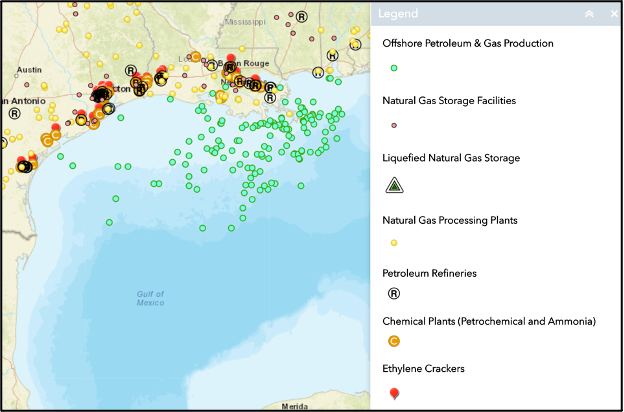
    The risks from industrial facilities are most obvious along the U.S. Gulf Coast, where many major petrochemical complexes are clustered in harm’s way. These refineries, factories and storage facilities are often built along rivers or bays for easy shipping access.

    But those rivers can also bring storm surge flooding that can raise the ocean by several feet during hurricanes. The storm surge from Helene was over 10 feet above ground level in Florida’s Big Bend and over 6 feet in Tampa Bay. With Milton, forecasters warning of a 10- to 15-foot storm surge at Tampa Bay.

    A boom surrounds flooded railcars to try to contain leaks at a chemical plant in Braithwaite, La., after Hurricane Isaac in 2012.
    AP Photo/David J. Phillip

    A recent study found evidence of two to three times more pollution releases during hurricanes in the Gulf of Mexico than during normal weather from 2005 to 2020.

    The effects of these pollution releases fall disproportionately on low-income communities and people of color, further exacerbating environmental health risks.

    Why residents may not hear about toxic releases

    The statistics are disconcerting, yet they get little attention. That is because hazardous releases remain largely invisible due to limited disclosure requirements and scant public information. Even emergency responders often don’t know exactly which hazardous chemicals they are facing in emergency situations.

    The U.S. Environmental Protection Agency requires major polluters to file only very general information about chemicals and on-site risks in their risk management plans. Some large-scale fuel storage facilities, such as those holding liquefied natural gas, are not even required to do that.

    These risk management plans outline “worst-case” scenarios and are supposed to be publicly accessible. But, in reality, we and others have found them difficult to access, heavily redacted and housed in federal reading rooms with limited access. The reason local officials and national scientific review panels often give for the secrecy is to protect the facilities from terrorist attack.

    Oil storage tanks and industrial facilities line the Houston Ship Channel, which is vulnerable to storm surge from Gulf of Mexico hurricanes.
    AP Photo/David J. Phillip

    Adding to this opacity is the fact that many states – including those along the Gulf – suspend restrictions on pollution releases during emergency declarations. Meanwhile, real-time incident notifications from the National Response Center – the federal government’s repository for all chemical discharges into the environment – typically lag by a week or more,

    We believe this limited public information on rising chemical threats from our changing climate should be front-page news every hurricane season. Communities should be aware of the risks of hosting vulnerable industrial infrastructure, particularly as rising global temperatures increase the risk of extreme downpours and powerful hurricanes.

    Mapping the risks nationwide to raise awareness

    To help communities understand their risks, our team at Rice University’s new Center for Coastal Futures and Adaptive Resilience investigates how industrial communities in flood-prone areas nationwide can better adapt to such threats, socially as well as technologically.

    Our interactive map shows where elevated future flood risks threaten to inundate major polluters that we identify using the EPA’s Toxic Release Inventory.

    The U.S. has several hot spots with clusters of flood-prone polluters. Houston’s Ship Channel, Chicago’s waterfront steel industries and the harbors at Los Angeles and New York/New Jersey are among the biggest.

    Three of the biggest hot spots, where large numbers of industrial facilities with toxic materials face elevated future flood risks, are in the Northeast, the northwestern Gulf Coast and the southern end of the Great Lakes.
    Rice University Center for Coastal Futures and Adaptive Resilience, CC BY-ND

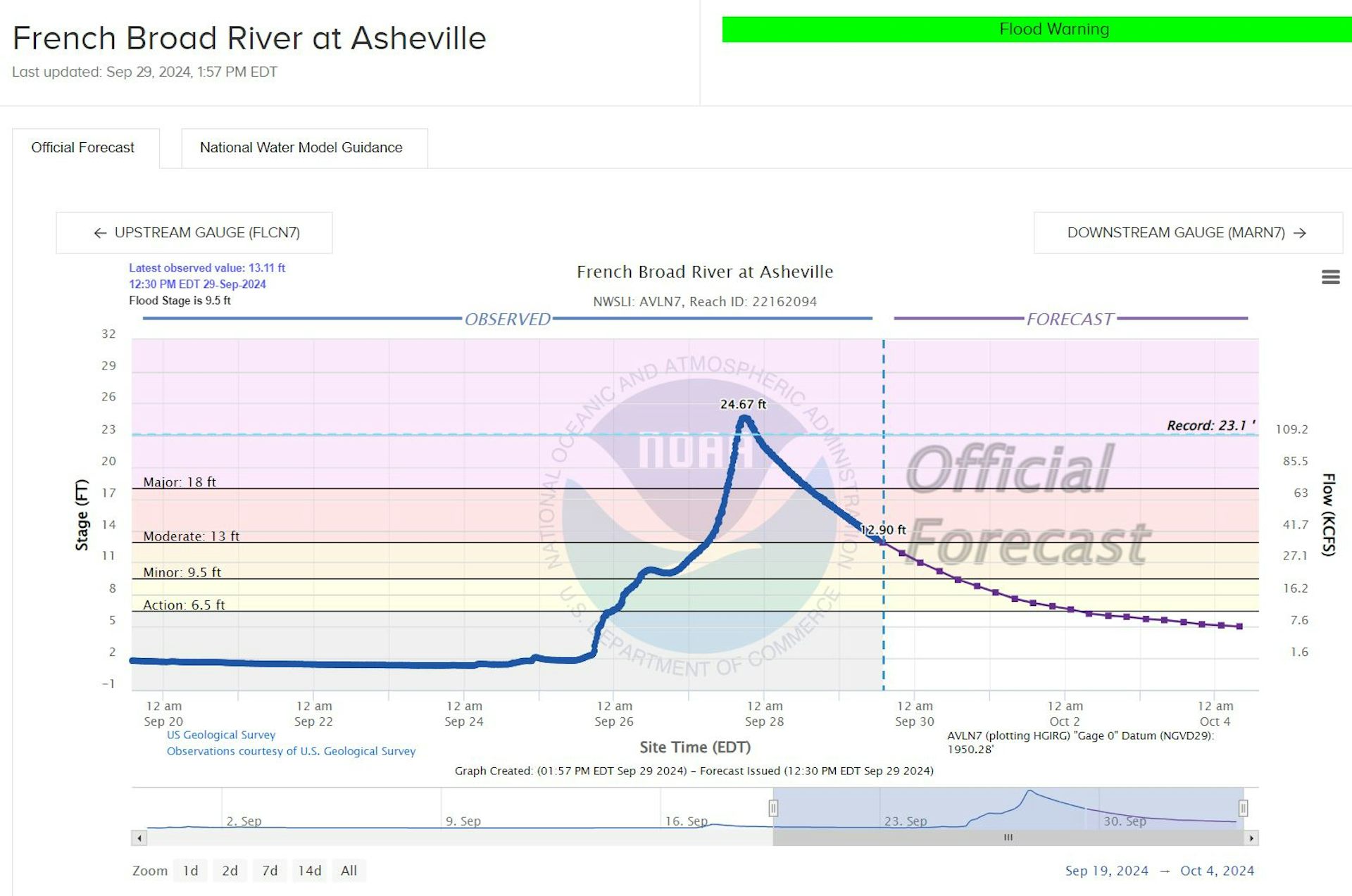
    But, as Helene revealed, there can also be great concern in less obvious spots. Inland, particularly in the mountains, runoff can quickly turn normally tame rivers into fast-rising torrents. The French Broad River at Asheville, North Carolina, rose about 12 feet in 12 hours during Helene and set a new flood stage record.

    When hurricanes and tropical storms are headed for the U.S., our interactive maps show where major polluters are located in the storm’s projected cone of impact. The maps identify hazardous flood-prone facilities down to the address, anywhere in the country.

    Knowledge is the first step

    Knowing where these sites are located is only the first step. Often, it’s up to communities themselves, many of them already overexposed and historically underserved, to raise concerns and demand strategies for mitigating the health, economic and environmental risks that industrial sites at risk of flooding and other damage can pose.

    These discussions can’t wait until a disaster is on the way. By knowing where these risks may be, communities can take steps now to build a safer future.

    This article, originally published Sept. 30, has been updated with Hurricane Milton.

    James R. Elliott receives funding from the National Science Foundation and the National Renewable Energy Lab.

    Dominic Boyer receives funding from the National Science Foundation, NOAA and Texas Sea Grant.

    Phylicia Lee Brown has nothing to disclose.

    ref. Flooded industrial sites and toxic chemical releases are a silent, growing threat in hurricanes like Milton and Helene – https://theconversation.com/flooded-industrial-sites-and-toxic-chemical-releases-are-a-silent-growing-threat-in-hurricanes-like-milton-and-helene-239977

    MIL OSI – Global Reports

  • MIL-OSI: Derivio Launches “Play-to-Earn” Telegram DApp, Integrating Social Engagement and Gameplay

    Source: GlobeNewswire (MIL-OSI)

    Community-driven Deeno game released on October 8th

    KINGSTOWN, Saint Vincent and the Grenadines, Oct. 08, 2024 (GLOBE NEWSWIRE) — Derivio, a trading-centric consumer blockchain backed by Binance Labs, officially launched its Telegram game on October 8, 2024. The game introduces Deeno, a character designed to drive user interaction through social media and community tasks.

    Players start by claiming an egg that will eventually hatch into Deeno. To progress, players complete tasks such as sharing social media content and engaging with the Derivio community. These activities earn players the “Power of Faith,” which strengthens the egg and accelerates the hatching process. Once hatched, Deeno can be leveled up through additional quests, with users unlocking more rewards through mini-games, including a gold miner challenge.

    Derivio’s Telegram game incorporates both gameplay and community interaction with the satisfaction of achieving rewards. By participating, players unlock resources and level up their character, with further opportunities for bonuses and exclusive rewards provided by Derivio and its partners.

    Game Launch Details

    Derivio’s Telegram game launched on Oct. 8. The game aims to foster interaction within the community through a blend of simple tasks and mini-games, encouraging continued engagement.

    About Derivio

    Derivio is a trading-centric blockchain focused on consumer-facing products, offering tools designed to enhance accessibility for everyday users. The platform’s products, including its Perpetual Exchange and Prediction Markets, aim to provide a secure, high-performance, and user-friendly experience. Derivio also uses cryptographic techniques like Fully Homomorphic Encryption to enhance security in its decentralized trading ecosystem.

    Game Access: @DerivioBot

    Website: https://derivio.xyz/
    X (formerly Twitter): https://x.com/derivio_xyz
    Discord: https://discord.gg/xDVqEAXPwj

    Contact:
    Michel ho
    m@derivio.xyz

    Disclaimer: This content is provided by Derivio. The statements, views and opinions expressed in this column are solely those of the content provider. The information provided in this press release is not a solicitation for investment, nor is it intended as investment advice, financial advice, or trading advice. It is strongly recommended you practice due diligence, including consultation with a professional financial advisor, before investing in or trading cryptocurrency and securities. Please conduct your own research and invest at your own risk.

    A photo accompanying this announcement is available at https://www.globenewswire.com/NewsRoom/AttachmentNg/61c28de8-2e4d-4b19-9578-f58bc676832b

    The MIL Network

  • MIL-OSI Security: Family members sent to prison for sex trafficking women in cantina backroom

    Source: United States Department of Justice (Human Trafficking)

    HOUSTON – A Mexican national illegally residing in Houston and a relative have been sentenced following their convictions of several sex trafficking crimes, announced U.S. Attorney Alamdar S. Hamdani.

    Maria Botello-Morales, 57, and her son Edgar Adrian Botello, 31, Houston, pleaded guilty in 2023.

    U.S. District Judge Andrew S. Hanen has now imposed a 280-month-term of imprisonment for Botello-Morales, while Botello received a total of 180 months. Restitution will be determined at a later date. Not a U.S. citizen, Botello-Morales is expected to face removal proceedings following her imprisonment, while Botello will serve 15 years on supervised release following completion of his prison term. During that time, he will have to comply with numerous requirements designed to restrict his access to children and the internet. Both will also be ordered to register as sex offenders.

    “Cantina cases shine a light on a unique form of trafficking where mostly undocumented women are sexually exploited for the financial benefit of the traffickers,” said Hamdani. “These individuals stole the American dream from the victims. This form of trafficking takes advantage of the fear these victims live in and we are grateful for the hard work of the Texas Alcohol and Beverage Commission (TABC) and Homeland Security Investigations (HSI) in bringing them justice.”

    “TABC is proud to work with the Office of the U.S. Attorney and our other partners in the effort to end human trafficking in Texas,” said TABC Chairman Kevin J. Lilly. “We join our fellow Texans in denouncing this heinous crime and reaffirming our pledge to help free the victims of human trafficking.”

    At the time of the pleas, Botello-Morales admitted to sex trafficking with force, fraud or coercion and conspiracy to do so as well as sex trafficking of a minor. Botello pleaded guilty to conspiracy to commit sex trafficking with force, fraud or coercion, two counts of sex trafficking of adults as well as possession of child pornography.

    In 2007, Botello-Morales recruited a minor female from Mexico. She caused the minor to engage in commercial sex and took payment directly from the commercial sex buyers.

    Botello-Morales ran Puerto Algre with Botello and others from 2015 to 2020. Puerto Algre was a cantina where numerous females were forced to engage in commercial sex in backrooms built specifically for that purpose. Botello-Morales, Botello and others threatened and intimidated these victims with violence to manipulate them into engaging in commercial sex for their own financial benefits.

    The victims reported they started at the bar as waitresses. However, Botello-Morales soon told them they had to engage in commercial sex. If they refused, she threatened them with violence.  

    Some witnessed violence and weapons at the bar and in the back area where the sex acts occurred. Each described how they had to take customers to the backrooms through a door and hidden from view of the bar. They were given a condom wrapped in a paper towel, were to spend no more than 15 minutes in the room and charge approximately $70. On the way out, they had to turn the money over to whoever was guarding the room.

    During the investigation, one victim also explained when she refused to come to work, Botello-Morales sent someone to physically assault her.

    The victims explained that Botello, who regularly carried a weapon, was the enforcer. He would also pass out the condoms and collect the money. During the execution of a search warrant at the home Botello-Morales and Botello shared, law enforcement found several loaded firearms in his room along with a computer containing child pornography.

    Another co-conspirator, Esteban Toribio, 65, Houston, pleaded guilty June 17 and held the liquor license for the bar. Toribio reported the conduct to authorities in an attempt to help him gain control of the cantina. Also convicted in relation to the conspiracy was Arian Botello, 26, the nephew of Botello-Morales.

    Both will remain in custody pending transfer to a U.S. Bureau of Prisons facility to be determined in the near future.

    TABC and HSI conducted the investigation with the assistance of the Houston Police Department (HPD) as part of the Human Trafficking Rescue Alliance (HTRA). Assistant U.S. Attorney Sherri L. Zack prosecuted the case.

    HTRA law enforcement includes members of the HPD; FBI; HSI; Texas Attorney General’s Office; IRS-Criminal Investigation; Department of Labor (DOL); DOL – Wage and Hour Division; Department of State; Federal Air Marshals; TABC; Texas Department of Public Safety; Texas Rangers; Texas Parks and Wildlife; Social Security Administration – OIG; Texas Department of Licensing and Regulation; Texas Department of Family and Protective Services as well as police departments in Houston Independent School District (ISD), Conroe ISD and Missouri City; Harris County constables offices – Precincts one and four; sheriff’s offices in Harris, Montgomery, Fort Bend, Brazoria and Waller counties in coordination with District Attorney’s offices in Harris, Montgomery, Fort Bend and Galveston counties. They work in coordination with victim service providers such as YMCA, United Against Human Trafficking and Texas Forensic Nurse Examiners.

    Established in 2004, the United States Attorney’s office in Houston formed HTRA to combine resources with federal, state and local enforcement agencies and prosecutors, as well as non-governmental service organizations to target human traffickers while providing necessary services to those that the traffickers victimized. Since its inception, HTRA has been recognized as both a national and international model in identifying and assisting victims of human trafficking and prosecuting those engaged in trafficking offenses.

    MIL Security OSI

  • MIL-OSI Security: Security News: Bob Dean Jr. and Affiliated Corporate Entities Agree to $8.2M Consent Judgment to Resolve Allegations of Financial Misconduct Stemming from Evacuation of Nursing Homes During Hurricane Ida

    Source: United States Department of Justice 2

    Bob Dean Jr. and several companies that he owned and operated have agreed to an $8.2 million consent judgment to resolve allegations that they violated the National Housing Act of 1934 (NHA), by misappropriating and misusing the assets and income of four nursing homes in Louisiana before and after Hurricane Ida’s landfall in August 2021. The four nursing homes, all of which were owned and operated by Dean and his companies, and had loans insured by the Federal Housing Administration (FHA), are Maison De’Ville Nursing Home in Houma; Maison De’Ville Nursing Home in Harvey; Maison Orleans Healthcare in New Orleans; and West Jefferson Health Care Center in Harvey.

    The FHA, part of the Department of Housing and Urban Development (HUD), provides mortgage insurance on loans that cover residential care facilities, such as nursing homes, pursuant to the NHA. To encourage lenders to make loans to such facilities, FHA mortgage insurance provides lenders with protection against losses that result from borrowers defaulting on their mortgage loans. To obtain such FHA-insured loans, loan recipients must enter into regulatory agreements with the FHA that provide, among other requirements, that the assets and income of an FHA-insured nursing home may only be spent on goods and services that are reasonable and necessary to the operation of the nursing home. The NHA permits the United States to recover twice the amount of any assets and income of FHA-insured nursing homes that were improperly distributed or misspent.

    In 2023, the government filed a complaint against Dean and his corporate entities alleging that they misspent the nursing homes’ assets and income. The United States alleged that in the five years leading up to Hurricane Ida, Dean funneled money that should have been used to prepare an evacuation site for nursing home residents to his personal bank accounts, leaving his nursing homes — and, more importantly, the nursing homes’ residents — unprepared for a hurricane. As a result, when Hurricane Ida made landfall in August 2021, the residents of Dean’s nursing homes had to ride out the storm in an overcrowded and ill-prepared industrial warehouse Dean owned through a corporate entity. The United States alleged that at Dean’s evacuation center, his nursing homes’ residents languished in squalor and did not receive adequate care, leading to the Louisiana Department of Health evacuating the nursing home residents from Dean’s warehouse and revoking Dean’s nursing homes’ licenses. The United States further alleged that, following the hurricane, Dean did not use the homes’ income and assets solely to operate or maintain the nursing homes, but instead to purchase personal goods and services, including antiques, firearms and cars.

    “This settlement demonstrates the department’s continuing commitment to holding accountable those who put their own financial gain over the needs of our nation’s seniors,” said Principal Deputy Assistant Attorney General Brian M. Boynton, head of the Justice Department’s Civil Division. “We will continue to take action to protect the integrity of federal programs designed to ensure that nursing home residents, who are among our most vulnerable citizens, receive appropriate care.”

    “As the residents of Louisiana well know, hurricanes and natural disasters can devastate people’s lives,” said U.S. Attorney Ronald C. Gathe Jr for the Middle District of Louisiana. “Nursing home operators like Mr. Dean have an obligation to protect their residents during such events, particularly if they are going to rely on federal programs to support or sustain their businesses. This settlement will ensure that those individuals charged with caring for our community’s most vulnerable residents take seriously their duty to have proper safeguards and plans in place to avoid tragedies like the one we saw in Independence, Louisiana, after Hurricane Ida.

    “Nursing home providers have obligations to protect the health, safety, and welfare of residents entrusted to their care,” said HUD General Counsel Damon Smith. “Owners of FHA-insured nursing homes should be on notice that we will hold them accountable when we learn of allegations that they have failed to meet those obligations.”

    “By the time Hurricane Ida bore down on the vulnerable nursing home residents at properties operated by Mr. Dean, he illegally skimmed funding from those facilities and failed to maintain sanitation and adequately equip the warehouse he designated as the evacuation site,” said HUD Inspector General Rae Oliver Davis. “He unfairly enriched himself while residents under his charge endured horrid conditions including insufficient food and medical care. HUD OIG will continue to work with our law enforcement and prosecutorial partners to hold accountable those who misappropriate funds at the expense of vulnerable populations.”

    The Civil Division’s Commercial Litigation Branch, Fraud Section, and the U.S. Attorney’s Office for the Middle District of Louisiana handled the case, with substantial assistance from HUD and HUD’s Office of Inspector General. Trial Attorneys Christopher Reimer and Samuel Robins of the Civil Division’s Fraud Section and Assistant U.S. Attorneys Davis Rhorer Jr. and Chase Zachary for the Middle District of Louisiana handled the matter.

    The United States’ complaint stemmed from an investigation that the Justice Department initiated as part of its Elder Justice Initiative, which supports the efforts of state and local prosecutors, law enforcement and other elder justice professionals to combat elder abuse, neglect and financial exploitation, with the development of training, resources and information. Learn more about the Justice Department’s Elder Justice Initiative at http://www.justice.gov/elderjustice.

    The claims settled by this agreement are allegations only. There has been no determination of liability.

    MIL Security OSI

  • MIL-OSI USA: With Millions Set To Lose Health Insurance Or Pay Thousands More For Coverage, Gillibrand Announces Legislation To Extend Affordable Care Act Subsidies

    US Senate News:

    Source: United States Senator for New York Kirsten Gillibrand
    With critical subsidies that help over 20 million Americans afford health insurance set to expire, U.S. Senator Gillibrand held a press conference in NYC to announce the Health Care Affordability Act, legislation to extend these subsidies and ensure New Yorkers don’t lose access to affordable health care. Without an extension, these 20 million Americans will see a sudden increase in their health insurance costs and an estimated 3 million Americans could lose their insurance. Gillibrand’s legislation would permanently extend the enhanced Premium Tax Credits offered in individual marketplaces under the Affordable Care Act and keep health care costs lowered for all Americans. 
    “Access to affordable, high-quality health care should be a basic human right,” said Senator Gillibrand. “No one should have to forgo treatment because they can’t afford the cost of health insurance. Allowing these tax credits to expire would needlessly jeopardize our public health and shoulder hard-working New York families with a financial burden many can’t afford. I am determined to get this bill passed and keep health care costs lowered for all Americans.”
    Premium tax credits (PTC) were established as part of the Affordable Care Act, which became law in 2010. PCTs are refundable credits that help eligible individuals and families – those with incomes between 100 percent and 400 percent of the Federal Poverty Line – cover the premiums for their health insurance purchased through the Health Insurance Marketplace.
    In 2021, the American Rescue Plan Act (ARPA) temporarily expanded eligibility for the PTC to additional individuals and households. It also lowered premiums for those who were already eligible. This enhanced PTC reduced net premium costs by an average of 44%. 
    In 2022, the Inflation Reduction Act extended these enhanced Premium Tax Credits for three years. In that time, ACA enrollment has nearly doubled, helping more low-income households receive coverage and care. 
    If Congress does not act to again extend the enhanced Premium Tax Credit, they will expire at the end of 2025 and millions of Americans in New York and across the country are in danger of no longer being able to afford their premiums.  
    Gillibrand was joined by Sonia Sekhar, Deputy Director at New York State of Health; Mark Hannay, Executive Director of Metro New York Health Care for All; Veronica Smith, Senior Director of Health Policy and Government Affairs at Public Health Solutions; and Elisabeth Benjamin, Vice President of Health Initiative at Community Service Society.

    MIL OSI USA News

  • MIL-Evening Report: Republicans once championed immigration in the US. Now, under Trump, an ugly nativism has been normalised

    Source: The Conversation (Au and NZ) – By Prudence Flowers, Senior Lecturer in US History, College of Humanities, Arts, and Social Sciences, Flinders University

    It might seem surprising today in the era of Donald Trump, but Republicans in the United States once championed immigration and supported pathways to citizenship for undocumented Americans.

    In January 1989, Ronald Reagan’s final speech as president was an impassioned ode to the immigrants who made America “a nation forever young, forever bursting with energy and new ideas”.

    Contrast this with Trump, who has normalised dehumanising rhetoric and policies against immigrants. In this year’s presidential campaign, for instance, he has referred to undocumented immigrants as “animals” who are “poisoning the blood of our country”.

    Both Trump and his vice presidential running mate, JD Vance, also repeated a false story about Haitian “illegal aliens” eating pets in Springfield, Ohio.

    Perhaps most troubling, Trump has pledged to launch “the largest deportation operation in the history of our country”, if he’s elected.

    Immigration policies throughout history

    Nativism, or anti-immigrant sentiment, has a long history in American politics.

    In 1924, a highly restrictive immigration quota system based on racial and national origins was introduced. This law envisaged America as a white, Anglo-Saxon, Protestant nation.

    However, there was no restriction on immigrants from the Western Hemisphere. The agricultural and railroad sectors relied heavily on workers from Mexico.

    In 1965, the quota system was replaced by visa preference categories for family and employment-based migrants, along with refugee and asylum slots.

    Then, as violence and economic instability spread across Central America in the 1970s, there was a surge in undocumented immigration to the US.

    Scholar Leo Chavez argues that in the late 1980s and early 1990s, an alarmist “Latino threat narrative” became the dominant motif in media discussions of immigration.

    This narrative was frequently driven by Republican politicians in states on the US-Mexico border, who derived electoral advantage from amplifying voter anxieties.

    The growing popularity of this negative discourse coincided with a significant increase in income inequality – a byproduct of neo-liberal policies championed by Reagan and other Republicans.


    Read more:
    Before Trump, there was a long history of race-baiting, fear-mongering and building walls on the US-Mexico border


    A dramatic shift in Republican rhetoric

    In the early-to-mid 20th century, Democrats were often the party that supported restrictive immigration and border policies.

    However, most Republicans at the national level – strongly supported by business – tended to endorse policies that encouraged the easy flow of workers across the border and increased levels of legal immigration.

    Prominent conservative Republicans also rejected vilifying rhetoric towards undocumented Americans. They presented all immigrants as pursuing opportunities for their families, a framing that emphasised a shared vision of the American dream. In this telling, their labour contributed to the economy and America’s growth and prosperity.

    George H. W. Bush And Ronald Reagan debate immigration in a Republican primary debate in 1980.

    Reagan, the most influential conservative of the late 20th century, opposed erecting a border wall and supported amnesty over deportation.

    Reagan also strongly supported bipartisan immigration reform. In 1986, Congress passed an immigration act that increased border security funding, but also ensured 2.7 million undocumented immigrants, primarily of Latino background, were able to gain legal status.

    Twenty years later, President George W. Bush and Republican Senator John McCain lobbied for a bipartisan bill that would have tightened border enforcement while simultaneously “legalising” an estimated 12 million undocumented immigrants. It was narrowly defeated.

    This vocal support for immigrants by leading Republicans was striking because for much of the period between the late 1980s and the early 2000s, a majority of Americans actually wanted immigration levels reduced.

    Then, around 2009, a dramatic shift in political rhetoric took place. The Tea Party movement brought border security and “racial resentment” towards immigrants centre stage, challenging conservative Republicans from the populist right.

    As a result, more and more Republicans began to voice restrictionist and xenophobic rhetoric and support legislation aimed at cracking down on illegal immigration.

    What’s surprising, though, is the number of undocumented immigrants in the US was actually declining at this time, from 12.2 million in 2007 to 10.7 million in 2016.

    Donald Trump and the new nativism

    In this worsening anti-immigrant climate, Trump descended a golden escalator in mid-2015 to launch his presidential campaign.

    In his speech that day, immigration was front and centre. Trump vowed to “build a great wall” and accused Mexico of sending “rapists” and “criminals” to America.

    His speeches during the presidential campaign were marked by frequent anti-Mexican assertions and calls for Islamophobic visa policies. This hostile stance on immigration was central to his victory in both the Republican primaries and the general election against Hillary Clinton.

    Once in office, Trump then adopted a “zero tolerance” stance towards undocumented immigration. His administration pursued a heartrending family separation policy that split children and their undocumented parents at the border. This approach was celebrated on conservative media outlets such as Fox News.

    During his presidency, he also reduced legal immigration by almost half, drastically cut America’s refugee intake, and introduced bans on people from Muslim-majority countries.

    Policy expert David Bier concluded the goal of Republican lawmakers had shifted:

    It really looks like the entire debate about illegality is not the main issue anymore for Republicans in both chambers of Congress. The main goal seems to be to reduce the number of foreigners in the United States to the greatest extent possible.

    Indeed, Trump’s vision of the nation had overtly racial overtones.

    In one 2018 meeting, he asked why America should accept immigrants from “shithole countries” like Haiti, El Salvador or the African continent. His preference was for Norwegian migrants.

    Immigration as a major election theme

    From 2021–2023, undocumented US-Mexico border crossings surged due to natural disasters, economic downturns and violence in many Latin American and Caribbean nations. Many of the recent arrivals are asylum seekers.

    Though the numbers have fallen sharply in 2024, immigration and the border are still one of the top issues for voters across the political spectrum. The issue is particularly important in the key swing state of Arizona.

    In 2024, Trump’s central immigration promise was encapsulated by the beaming delegates waving signs calling for “Mass Deportations Now” at the Republican National Convention.

    The Trump-Vance ticket has blamed undocumented immigrants for almost every economic and social problem imaginable. The two candidates present them as a dangerous and subversive “other” that cannot be assimilated into mainstream American culture.

    Yet Trump, as both president and candidate, has worked to prevent the passage of border security legislation. Turmoil on the border benefits him.

    And his nativism now encompasses all forms of immigration – he has pledged to curb legal channels for people to enter the country, as well.

    All of this rhetoric has had a dramatic impact on public opinion. Between 2016 and 2024, the number of people supporting the deportation of undocumented immigrants jumped from 32% to 47%.

    In July 2024, 55% of Americans also said they wanted to see immigration levels decrease, a 14-point increase in one year.

    Many Americans do not perceive immigration as a source of vitality and renewal as they had in the past. Instead, reflecting Trump’s language, they are viewing immigrants as an existential threat to the country’s future.

    Prudence Flowers does not work for, consult, own shares in or receive funding from any company or organisation that would benefit from this article, and has disclosed no relevant affiliations beyond their academic appointment.

    ref. Republicans once championed immigration in the US. Now, under Trump, an ugly nativism has been normalised – https://theconversation.com/republicans-once-championed-immigration-in-the-us-now-under-trump-an-ugly-nativism-has-been-normalised-239836

    MIL OSI AnalysisEveningReport.nz

  • MIL-OSI: Announcement: 2024 Interim Financial Statements

    Source: GlobeNewswire (MIL-OSI)

    21Shares AG, the issuer of ETPs listed on various trading venues, has published its interim financial statements for the six months ending 30 June 2024. The financial statements are available at: https://21shares.com/ir/financials

    Contact:

    Email: press@21.co

    Phone: +41 44 260 86 60

    About 21Shares AG:

    21Shares AG, Pelikanstrasse 37, 8001 Zurich, is a Swiss corporation registered in the commercial register of Zurich under the number CHE-347.562.100. It was incorporated on 27 July 2018 and its purpose is the issuance of Exchange Traded Products (ETPs) in Switzerland and worldwide.

    The MIL Network

  • MIL-OSI USA: Bob Dean Jr. and Affiliated Corporate Entities Agree to $8.2M Consent Judgment to Resolve Allegations of Financial Misconduct Stemming from Evacuation of Nursing Homes During Hurricane Ida

    Source: US State of California

    Bob Dean Jr. and several companies that he owned and operated have agreed to an $8.2 million consent judgment to resolve allegations that they violated the National Housing Act of 1934 (NHA), by misappropriating and misusing the assets and income of four nursing homes in Louisiana before and after Hurricane Ida’s landfall in August 2021. The four nursing homes, all of which were owned and operated by Dean and his companies, and had loans insured by the Federal Housing Administration (FHA), are Maison De’Ville Nursing Home in Houma; Maison De’Ville Nursing Home in Harvey; Maison Orleans Healthcare in New Orleans; and West Jefferson Health Care Center in Harvey.

    The FHA, part of the Department of Housing and Urban Development (HUD), provides mortgage insurance on loans that cover residential care facilities, such as nursing homes, pursuant to the NHA. To encourage lenders to make loans to such facilities, FHA mortgage insurance provides lenders with protection against losses that result from borrowers defaulting on their mortgage loans. To obtain such FHA-insured loans, loan recipients must enter into regulatory agreements with the FHA that provide, among other requirements, that the assets and income of an FHA-insured nursing home may only be spent on goods and services that are reasonable and necessary to the operation of the nursing home. The NHA permits the United States to recover twice the amount of any assets and income of FHA-insured nursing homes that were improperly distributed or misspent.

    In 2023, the government filed a complaint against Dean and his corporate entities alleging that they misspent the nursing homes’ assets and income. The United States alleged that in the five years leading up to Hurricane Ida, Dean funneled money that should have been used to prepare an evacuation site for nursing home residents to his personal bank accounts, leaving his nursing homes — and, more importantly, the nursing homes’ residents — unprepared for a hurricane. As a result, when Hurricane Ida made landfall in August 2021, the residents of Dean’s nursing homes had to ride out the storm in an overcrowded and ill-prepared industrial warehouse Dean owned through a corporate entity. The United States alleged that at Dean’s evacuation center, his nursing homes’ residents languished in squalor and did not receive adequate care, leading to the Louisiana Department of Health evacuating the nursing home residents from Dean’s warehouse and revoking Dean’s nursing homes’ licenses. The United States further alleged that, following the hurricane, Dean did not use the homes’ income and assets solely to operate or maintain the nursing homes, but instead to purchase personal goods and services, including antiques, firearms and cars.

    “This settlement demonstrates the department’s continuing commitment to holding accountable those who put their own financial gain over the needs of our nation’s seniors,” said Principal Deputy Assistant Attorney General Brian M. Boynton, head of the Justice Department’s Civil Division. “We will continue to take action to protect the integrity of federal programs designed to ensure that nursing home residents, who are among our most vulnerable citizens, receive appropriate care.”

    “As the residents of Louisiana well know, hurricanes and natural disasters can devastate people’s lives,” said U.S. Attorney Ronald C. Gathe Jr for the Middle District of Louisiana. “Nursing home operators like Mr. Dean have an obligation to protect their residents during such events, particularly if they are going to rely on federal programs to support or sustain their businesses. This settlement will ensure that those individuals charged with caring for our community’s most vulnerable residents take seriously their duty to have proper safeguards and plans in place to avoid tragedies like the one we saw in Independence, Louisiana, after Hurricane Ida.

    “Nursing home providers have obligations to protect the health, safety, and welfare of residents entrusted to their care,” said HUD General Counsel Damon Smith. “Owners of FHA-insured nursing homes should be on notice that we will hold them accountable when we learn of allegations that they have failed to meet those obligations.”

    “By the time Hurricane Ida bore down on the vulnerable nursing home residents at properties operated by Mr. Dean, he illegally skimmed funding from those facilities and failed to maintain sanitation and adequately equip the warehouse he designated as the evacuation site,” said HUD Inspector General Rae Oliver Davis. “He unfairly enriched himself while residents under his charge endured horrid conditions including insufficient food and medical care. HUD OIG will continue to work with our law enforcement and prosecutorial partners to hold accountable those who misappropriate funds at the expense of vulnerable populations.”

    The Civil Division’s Commercial Litigation Branch, Fraud Section, and the U.S. Attorney’s Office for the Middle District of Louisiana handled the case, with substantial assistance from HUD and HUD’s Office of Inspector General. Trial Attorneys Christopher Reimer and Samuel Robins of the Civil Division’s Fraud Section and Assistant U.S. Attorneys Davis Rhorer Jr. and Chase Zachary for the Middle District of Louisiana handled the matter.

    The United States’ complaint stemmed from an investigation that the Justice Department initiated as part of its Elder Justice Initiative, which supports the efforts of state and local prosecutors, law enforcement and other elder justice professionals to combat elder abuse, neglect and financial exploitation, with the development of training, resources and information. Learn more about the Justice Department’s Elder Justice Initiative at http://www.justice.gov/elderjustice.

    The claims settled by this agreement are allegations only. There has been no determination of liability.

    MIL OSI USA News

  • MIL-OSI: Spartan Capital Releases Q3 2024 Performance Overview and Technical Outlook

    Source: GlobeNewswire (MIL-OSI)

    New York, NY, Oct. 08, 2024 (GLOBE NEWSWIRE) — Spartan Capital Securities, LLC is pleased to announce the release of its Q3 2024 Performance Overview and Technical Outlook. Prepared by market strategist Gianpaolo Raffo, this comprehensive report provides an in-depth analysis of market trends, sector performances, and projections for the next quarter.

    Published on October 2nd, 2024, the review explores the behavior of major indices and market sectors, incorporating key statistics and visualizations to encapsulate the third quarter’s activities. Through this report, Spartan Capital aims to provide valuable insights into market dynamics and sentiment, assisting clients in navigating the complexities of the investment landscape.

    During Q3, Spartan Capital reported growth across multiple sectors, with a particular emphasis on the S&P 500, Nasdaq, and significant market movements. “Our Q3 analysis provides essential context for understanding the current market environment and making future investment decisions,” remarked Gianpaolo Raffo. “We remain committed to delivering precise and actionable insights to our clients.”

    Spartan Capital’s dedication to excellence in financial analysis and client service is evident in the careful preparation of this report. As markets evolve, Spartan Capital continues to lead with guidance grounded in rigorous research and market expertise.

    To read the full Q3 2024 Performance Overview, including comprehensive analyses and insights, please visit our website at https://spartancapital.com/quarterly-overview-q3-2024/.

    About Spartan Capital Securities, LLC:

    Spartan Capital Securities, LLC is a premier full-service financial firm, offering expert investment advice to high-net-worth individuals and institutional clients. Known for its extensive market knowledge, strategic risk management, and personalized service, Spartan Capital and CEO John Lowry exemplify integrity and professionalism in the financial services industry.

    Contact:
    Kim Monchik
    45 Broadway, 19th Floor
    New York, NY 10006
    Info@spartancapital.com

    The MIL Network

  • MIL-OSI USA: Media Advisory: FDIC Systemic Resolution Advisory Committee to Meet Next Week

    Source: US Federal Deposit Insurance Corporation FDIC

    On Tuesday, October 15, 2024, at 9:00 am ET, Federal Deposit Insurance Corporation (FDIC) Chairman Martin J. Gruenberg will host a meeting of the FDIC Systemic Resolution Advisory Committee (SRAC).

    The SRAC provides advice and recommendations to the FDIC on a broad range of policy issues regarding the resolution of systemically important financial institutions.  The meeting will facilitate discussion on the FDIC’s resolution authority, granted under the Dodd-Frank Act of 2010, to manage the orderly resolution of large, complex financial institutions whose failure could threaten U.S. financial stability.

    WHO:
    FDIC Chairman Martin J. Gruenberg
    Senior FDIC Leadership
    Advisory Committee Members

    WHAT:
    Meeting of the FDIC Systemic Resolution Advisory Committee

    WHEN:
    Tuesday, October 15, 2024, from 9:00 a.m. to 3:00 p.m. ET

    WHERE:
    FDIC – 550 17th St, NW, Washington, DC

    HOW:
    The meeting will be open to the public, limited only by the space available on a first-come, first served basis.

    It will also be available via live webcast.

    ###

    MEDIA CONTACT
    Julianne Breitbeil 
    JBreitbeil@FDIC.gov 
    202-340-2043


    MIL OSI USA News

  • MIL-OSI USA: Murphy Highlights Stamford’s Kibu As “Innovator Of The Month”

    US Senate News:

    Source: United States Senator for Connecticut – Chris Murphy

    October 08, 2024

    HARTFORD–U.S. Senator Chris Murphy (D-Conn.) announced on Tuesday that Kibu, a disability provider platform based in Stamford, was named “Innovator of the Month.” Kibu provides high-impact online content to support and empower people with disabilities, including classes in fitness, life skills, community engagement and professional development. The company also connects disability providers with tools for data management, note taking, and attendance.

    “Our communities are strongest when every person has the resources to achieve their full potential. Kibu’s online platform is transforming lives by breaking down barriers for people with disabilities, helping people become more independent, and giving service providers the tools they need to make a real impact. I’m proud to recognize Kibu’s important contributions to fostering a more inclusive future for our state, and I look forward to seeing all that they accomplish,” said Murphy.

    “Kibu is built on the belief that innovation starts with understanding the unique challenges that people with intellectual and developmental disabilities face every day. By providing tools that empower both individuals and organizations, we’re helping to create a future where technology closes gaps, rather than creating them. It’s exciting to be innovating right here in Connecticut, where the community and ecosystem truly support the growth of businesses that make an impact,” said Daniel Caridi, CEO of Kibu.

    Daniel Caridi began volunteering for this community shortly after graduating college in 2019, formally launching the Kibu platform in 2022. Today, Kibu works with disability providers across 26 states.

    Murphy believes entrepreneurship and innovation are the building blocks for a strong economy. In the U.S. Senate, he has introduced legislation to incentivize angel investors to put more money into startup companies—the Angel Tax Credit Act and the Helping Angels Lead Our Startups (HALOS) Act. Startup companies create an average of 2 million jobs each year.

    MIL OSI USA News

  • MIL-Evening Report: Unprecedented peril: disaster lies ahead as we track towards 2.7°C of warming this century

    Source: The Conversation (Au and NZ) – By Thomas Newsome, Associate Professor in Global Ecology, University of Sydney

    You don’t have to look far to see what climate change is doing to the planet. The word “unprecedented” is everywhere this year.

    We are seeing unprecedented rapidly intensifying tropical storms such as Hurricane Helene in the eastern United States and Super Typhoon Yagi in Vietnam. Unprecedented fires in Canada have destroyed towns. Unprecedented drought in Brazil has dried out enormous rivers and left swathes of empty river beds. At least 1,300 pilgrims died during this year’s Hajj in Mecca as temperatures passed 50°C.

    Unfortunately, we are headed for far worse. The new 2024 State of the Climate report, produced by our team of international scientists, is yet another stark warning about the intensifying climate crisis. Even if governments meet their emissions goals, the world may hit 2.7°C of warming – nearly double the Paris Agreement goal of holding climate change to 1.5°C. Each year, we track 35 of the Earth’s vital signs, from sea ice extent to forests. This year, 25 are now at record levels, all trending in the wrong directions.

    Humans are not used to these conditions. Human civilisation emerged over the last 10,000 years under benign conditions – not too hot, not too cold. But this liveable climate is now at risk. In your grandchild’s lifetime, climatic conditions will be more threatening than anything our prehistoric relatives would have faced.

    Our report shows a continued rise in fossil fuel emissions, which remain at an all-time high. Despite years of warnings from scientists, fossil fuel consumption has actually increased, pushing the planet toward dangerous levels of warming. While wind and solar have grown rapidly, fossil fuel use is 14 times greater.

    This year is also tracking for the hottest year on record, with global daily mean temperatures at record levels for nearly half of 2023 and much of 2024.

    Next month, world leaders and diplomats will gather in Azerbaijan for the annual United Nations climate talks, COP 29. Leaders will have to redouble their efforts. Without much stronger policies, climate change will keep worsening, bringing with it more frequent and more extreme weather.


    Bad news after bad news

    We have still not solved the central problem: the routine burning of fossil fuels. Atmospheric concentrations of greenhouse gases – particularly methane and carbon dioxide – are still rising. Last September, carbon dioxide levels in the atmosphere hit 418 parts per million (ppm). This September, they crossed 422 ppm. Methane, a highly potent greenhouse gas, has been increasing at an alarming rate despite global pledges to tackle it.

    Compounding the problem is the recent decline in atmospheric aerosols from efforts to cut pollution. These small particles suspended in the air come from both natural and human processes, and have helped cool the planet. Without this cooling effect, the pace of global warming may accelerate. We don’t know for sure because aerosol properties are not yet measured well enough.

    Other environmental issues are now feeding into climate change. Deforestation in critical areas such as the Amazon is reducing the planet’s capacity to absorb carbon naturally, driving additional warming. This creates a feedback loop, where warming causes trees to die which in turn amplifies global temperatures.

    Loss of sea ice is another. As sea ice melts or fails to form, dark seawater is exposed. Ice reflects sunlight but seawater absorbs it. Scaled up, this changes the Earth’s albedo (how reflective the surface is) and accelerates warming further.

    In coming decades, sea level rise will pose a growing threat to coastal communities, putting millions of people at risk of displacement.

    Accelerate the solutions

    Our report stresses the need for an immediate and comprehensive end to the routine use of fossil fuels.

    It calls for a global carbon price, set high enough to drive down emissions, particularly from high-emitting wealthy countries.

    Introducing effective policies to slash methane emissions is crucial, given methane’s high potency but short atmospheric lifetime. Rapidly cutting methane could slow the rate of warming in the short term.

    Natural climate solutions such as reforestation and soil restoration should be rolled out to increase how much carbon is stored in wood and soil. These efforts must be accompanied by protective measures in wildfire and drought prone areas. There’s no point planting forests if they will burn.

    Governments should introduce stricter land-use policies to slow down rates of land clearing and increase investment in forest management to cut the risk of large, devastating fires and encourage sustainable land use.

    We cannot overlook climate justice. Less wealthy nations contribute least to global emissions but are often the worst affected by climate disasters.

    Wealthier nations must provide financial and technical support to help these countries adapt to climate change while cutting emissions. This could include investing in renewable energy, improving infrastructure and funding disaster preparedness programs.

    Internationally, our report urges stronger commitments from world leaders. Current global policies are insufficient to limit warming to 1.5°C above pre-industrial levels.

    Without drastic changes, the world is on track for approximately 2.7°C of warming this century. To avoid catastrophic tipping points, nations must strengthen their climate pledges, reduce dependence on fossil fuels, and accelerate the transition to renewable energy.

    Immediate, transformative policy changes are now necessary if we are to avoid the worst effects of climate change.

    Climate change is already here. But it could get much, much worse. By slashing emissions, boosting natural climate solutions and working towards climate justice, the global community can still fend off the worst version of our future.

    Thomas Newsome receives funding from the Australian Research Council. He is immediate past-president of the Australasian Wildlife Management Society and President of the Royal Zoological Society of New South Wales.

    William Ripple receives funding from the CO2 Foundation and University of Oregon donor Roger Worthington.

    ref. Unprecedented peril: disaster lies ahead as we track towards 2.7°C of warming this century – https://theconversation.com/unprecedented-peril-disaster-lies-ahead-as-we-track-towards-2-7-c-of-warming-this-century-240549

    MIL OSI AnalysisEveningReport.nz

  • MIL-OSI Security: Bob Dean Jr. and Affiliated Corporate Entities Agree to $8.2M Consent Judgment to Resolve Allegations of Financial Misconduct Stemming from Evacuation of Nursing Homes During Hurricane Ida

    Source: United States Attorneys General 1

    Bob Dean Jr. and several companies that he owned and operated have agreed to an $8.2 million consent judgment to resolve allegations that they violated the National Housing Act of 1934 (NHA), by misappropriating and misusing the assets and income of four nursing homes in Louisiana before and after Hurricane Ida’s landfall in August 2021. The four nursing homes, all of which were owned and operated by Dean and his companies, and had loans insured by the Federal Housing Administration (FHA), are Maison De’Ville Nursing Home in Houma; Maison De’Ville Nursing Home in Harvey; Maison Orleans Healthcare in New Orleans; and West Jefferson Health Care Center in Harvey.

    The FHA, part of the Department of Housing and Urban Development (HUD), provides mortgage insurance on loans that cover residential care facilities, such as nursing homes, pursuant to the NHA. To encourage lenders to make loans to such facilities, FHA mortgage insurance provides lenders with protection against losses that result from borrowers defaulting on their mortgage loans. To obtain such FHA-insured loans, loan recipients must enter into regulatory agreements with the FHA that provide, among other requirements, that the assets and income of an FHA-insured nursing home may only be spent on goods and services that are reasonable and necessary to the operation of the nursing home. The NHA permits the United States to recover twice the amount of any assets and income of FHA-insured nursing homes that were improperly distributed or misspent.

    In 2023, the government filed a complaint against Dean and his corporate entities alleging that they misspent the nursing homes’ assets and income. The United States alleged that in the five years leading up to Hurricane Ida, Dean funneled money that should have been used to prepare an evacuation site for nursing home residents to his personal bank accounts, leaving his nursing homes — and, more importantly, the nursing homes’ residents — unprepared for a hurricane. As a result, when Hurricane Ida made landfall in August 2021, the residents of Dean’s nursing homes had to ride out the storm in an overcrowded and ill-prepared industrial warehouse Dean owned through a corporate entity. The United States alleged that at Dean’s evacuation center, his nursing homes’ residents languished in squalor and did not receive adequate care, leading to the Louisiana Department of Health evacuating the nursing home residents from Dean’s warehouse and revoking Dean’s nursing homes’ licenses. The United States further alleged that, following the hurricane, Dean did not use the homes’ income and assets solely to operate or maintain the nursing homes, but instead to purchase personal goods and services, including antiques, firearms and cars.

    “This settlement demonstrates the department’s continuing commitment to holding accountable those who put their own financial gain over the needs of our nation’s seniors,” said Principal Deputy Assistant Attorney General Brian M. Boynton, head of the Justice Department’s Civil Division. “We will continue to take action to protect the integrity of federal programs designed to ensure that nursing home residents, who are among our most vulnerable citizens, receive appropriate care.”

    “As the residents of Louisiana well know, hurricanes and natural disasters can devastate people’s lives,” said U.S. Attorney Ronald C. Gathe Jr for the Middle District of Louisiana. “Nursing home operators like Mr. Dean have an obligation to protect their residents during such events, particularly if they are going to rely on federal programs to support or sustain their businesses. This settlement will ensure that those individuals charged with caring for our community’s most vulnerable residents take seriously their duty to have proper safeguards and plans in place to avoid tragedies like the one we saw in Independence, Louisiana, after Hurricane Ida.

    “Nursing home providers have obligations to protect the health, safety, and welfare of residents entrusted to their care,” said HUD General Counsel Damon Smith. “Owners of FHA-insured nursing homes should be on notice that we will hold them accountable when we learn of allegations that they have failed to meet those obligations.”

    “By the time Hurricane Ida bore down on the vulnerable nursing home residents at properties operated by Mr. Dean, he illegally skimmed funding from those facilities and failed to maintain sanitation and adequately equip the warehouse he designated as the evacuation site,” said HUD Inspector General Rae Oliver Davis. “He unfairly enriched himself while residents under his charge endured horrid conditions including insufficient food and medical care. HUD OIG will continue to work with our law enforcement and prosecutorial partners to hold accountable those who misappropriate funds at the expense of vulnerable populations.”

    The Civil Division’s Commercial Litigation Branch, Fraud Section, and the U.S. Attorney’s Office for the Middle District of Louisiana handled the case, with substantial assistance from HUD and HUD’s Office of Inspector General. Trial Attorneys Christopher Reimer and Samuel Robins of the Civil Division’s Fraud Section and Assistant U.S. Attorneys Davis Rhorer Jr. and Chase Zachary for the Middle District of Louisiana handled the matter.

    The United States’ complaint stemmed from an investigation that the Justice Department initiated as part of its Elder Justice Initiative, which supports the efforts of state and local prosecutors, law enforcement and other elder justice professionals to combat elder abuse, neglect and financial exploitation, with the development of training, resources and information. Learn more about the Justice Department’s Elder Justice Initiative at http://www.justice.gov/elderjustice.

    The claims settled by this agreement are allegations only. There has been no determination of liability.

    MIL Security OSI

  • MIL-OSI USA: NSF Growing Convergence Research awards advance innovation across disciplines

    Source: US Government research organizations

    The U.S. National Science Foundation Growing Convergence Research (NSF GCR) awards are fostering deep integration across disciplines and pushing the boundaries of current research paradigms. The awards bring together experts from multiple science, technology, engineering and mathematics fields to tackle complex challenges across various topics, including national security, energy and STEM education.  

    “These awards require that researchers work across traditional disciplinary boundaries and leverage the expertise of different fields to drive innovation and discovery,” said Alicia J. Knoedler, head of the NSF Office of Integrative Activities. “Learning and practicing collaboration between and among disciplines are critical skills that investigators and teams need to develop. NSF’s investments through these awards reinforce the importance of capacity building to perform convergence in research and training.”  

    The NSF GCR program supports high-risk, cutting-edge research and helps to cultivate a new generation of interdisciplinary scientists. Projects are inspired by a societal grand challenge or a fundamental research question at the forefront of STEM. By growing novel collaborations and cross-disciplinary training, these awards will empower researchers to think outside the box and develop innovative approaches to scientific inquiry. This advances the frontiers of knowledge and paves the way for breakthroughs that can benefit society. 

    The awardees and short descriptions are listed below:  

    • Rooted in Nature: Bioinspired Design of Sustainable Seeding Methods to Improve Forest Regeneration University of California, Berkeley, Cornell University, Syracuse University and The Pennsylvania State University 

      Forest regeneration is essential for combating climate change. Challenges like limited seed availability and time-consuming seedling cultivation hinder forest restoration efforts. This project will integrate expertise in material science, engineering, ecology and other areas to create biodegradable, self-burying seed carriers for efficient, lower-cost aerial seeding. The researchers will investigate seed carrier designs applicable to different ecosystems. The team will also develop new ways of evaluating and improving the effectiveness of the seeding techniques. This research will boost forest restoration, providing economic advantages and enhancing ecological resilience. 
       

    • Non-Equilibrium Electrochemical Plasma Catalysis for Distributed Electrified Ammonia Synthesis Princeton University, Duke University and Rutgers University–Newark 

      Ammonia is a fuel for green power generation and a medium for energy storage and transport. It is also vital to food production as a key agricultural fertilizer. Traditional ammonia synthesis is energy-intensive and produces carbon dioxide. It also relies on fossil fuels and high-pressure catalysis. This project aims to advance the development of new electrified reactors that produce green ammonia with renewable electricity from atmospheric nitrogen and water. These reactors can help decarbonize chemical plants and address challenges in renewable energy storage. The project team will use novel integration across disciplines to create a nonequilibrium electrochemical plasma catalysis system for ammonia synthesis from water, nitrogen and electricity. Its success will be an innovation in nonequilibrium green chemical manufacturing. 
       

    • Engineering, SocioEconomic and Environmental Convergence of Ocean Wave Energy Research for Remote Coastal Communities University of Michigan – Ann Arbor, Virginia Tech, East Carolina University and University of North Carolina at Chapel Hill 

      In some rural coastal and island areas, electricity must be transported over long distances, and the supply is less robust, creating a challenge that hinders socioeconomic growth. Ocean waves along U.S. coastlines offer abundant energy resources, and over 200 concepts have been proposed for generating electricity from wave energy. Researchers from this project will examine which of the proposed concepts are most practical for island and coastal communities from engineering and socioeconomic perspectives. They will validate the most promising concepts through community engagement and ocean tests. The project integrates engineering, environmental and social sciences experts and an external advisory board with community end users and commercial developers to implement a convergent, community-engaged approach to this research challenge. 
       

    • Mineral Detection of Dark Matter Virginia Tech, University of Michigan – Ann Arbor and University of North Florida 

      Dark matter plays an important role in the formation of galaxies and the universe’s evolution, but it has proven very difficult to detect directly. This project will integrate engineering, physics, geoscience and materials science to establish whether evidence of interactions between dark matter and ordinary matter can be found through “mineral detection.” Researchers will explore whether crystals in rocks can be used to look for evidence of interactions with dark matter over geological timescales. The team aims to develop a new path for advancing understanding of what dark matter is. 
       

    • Towards a Physics-Inspired Approach to Computation on Encrypted Data Boston University, University of Central Florida and Cornell University 

      Harnessing the wealth of electronically stored data for applications with societal value raises security and privacy concerns that are likely to hinder progress and return on investment in an artificial intelligence-powered economy. This project will combine ideas and tools from physics, mathematics and computer science to explore a new paradigm for circuit obfuscation in cryptography and establish the security and efficiency of encrypted operator computing. The research team aims to accelerate the development of trusted, low-overhead tools that enable computation directly on encrypted data so that, for example, confidential data can be shared with an untrusted party who can extract insights from the data without having access to the unencrypted data. 
       

    • The Other Plastic Problem: Quantifying and Predicting Impacts of Plastic Additives Across Levels of Biological and Social Organization Duke University and The Pennsylvania State University 

      Plastic pollution is widespread and harms various species. One major gap in knowledge is the combined biological impact of the many chemicals added to plastics to tailor their properties. Plastic additives are chemicals that are included within plastic polymers to enhance function. These additives include over ~10,000 chemicals and include known endocrine disruptors, pro-inflammatory agents and mutagens. Addressing this research challenge requires integrating expertise across molecular and cell biology, environmental chemistry and toxicology, materials science, policy and other fields. This project will allow an integrated research team to develop and employ novel approaches for analyzing the effects of plastic additives on cells, organisms and ecological communities; ground-truth product use and additive exposures; and evaluate mitigation strategies. The project also aims to engage stakeholders to reduce plastic pollution and empower underrepresented students in STEM to take action. 
       

    • GCR: Towards a Convergent Understanding of the Dynamics of Uncertainty in Individuals and Groups with a Focus on STEM Education Tufts University 

      Developing a systematic understanding of how people manage ambiguity, uncertainty and confusion (AU&C) is a complex challenge. This project integrates social sciences, data sciences and engineering to build new capabilities for studying AU&C management in the context of STEM learning. This will allow researchers to understand how to enable students to productively engage with AU&C in STEM. The research team will develop novel methods for collecting and analyzing student data using a multimodal approach, including behavioral, linguistic and physiological sensing. Using these methods, researchers will investigate the individual and group dynamics of AC&U within STEM learning environments, with the long-term goal of producing new educational practices that embrace complexity and uncertainty. In this, the project aims to bridge the disconnect between how science is taught and the practice of STEM professionals. 

    MIL OSI USA News

  • MIL-OSI United Kingdom: Skye projects success with Islands Programme funding

    Source: Scotland – Highland Council

    The Scottish Government has recently informed two Skye projects of their success in securing financial support from the Islands Programme (IP) that will enable major essential infrastructure improvements in Staffin and to Community and Public Access Improvements on routes at key locations across Skye.

    The Highland Council led on a bid for passing place improvements at Claggan Road, Neist Point and Glen Brittle (Fairy Pools) and £350k was awarded from the Scottish Government’s Islands Programme which supports delivery of the National Islands Plan.

    Economy and Infrastructure Committee Chair, Cllr Ken Gowans said: “The Highland Council are delighted that the Scottish Government has awarded much needed funds via the Islands Programme (IP) to essential projects that will improve routes that have seen an increase in road use capacity over the years, causing significant disruption.  The funds give the Council the opportunity to extend passing places and create new ones in parts of the road network that are now used more frequently by motorhomes, tour buses and visitors to the Island.

    “The focus of the Islands Programme funding on passing places allows the Council to fully utilise its Roads Maintenance Programme, which along with support from local Members disaggregated budgets, demonstrates the partnership commitment to continuing to improve the road network for all users.”

    The £350k awarded to the Community and Public Access Improvements project will be used for the following projects-

    • Claggan Road – Extending the length of existing passing places and provision of new passing places – total project cost £150k. This cost is in addition to the works planned within the 2024/25 Roads Maintenance Programme for statutory works for which £130k has been allocated.
    • Neist Point – Extending the length of existing passing places and provision of new passing places.
    • Glen Brittle – Extending the length of existing passing places and provision of new passing places – total project cost £150k. This cost in addition to the allocation from the 24/25 Roads Programme of £240k to manage & maintain the road as is.

    Staffin Community Trust were also successful in their application to the Islands Programme, to support the new Staffin Harbour major regeneration.  They were awarded £409,258 to deliver new onshore facilities at Staffin Harbour.

    Skye and Raasay Area Committee Chair, Cllr John Finlayson said:  “I am pleased to see support given to key projects on Skye, including the newly purchased and community owned Staffin Harbour, in the northeast of Skye, which is currently undergoing a major transformation with an investment of more than £2million since 2022 – which has included the construction of a 3,000sq onshore hardstanding area, an upgraded access road and the provision of electricity for the first time.

    “The Islands Programme funding awarded to the Staffin Community Trust will enable the construction of much needed onshore facilities, such as businesses units available for rent, harbour facilities with income generating toilets and showers and the purchase of a new telehandler to enable sustainable community management at the new harbour, safeguarding and creating employment alongside wider socio-economic benefits to the local community via spend locally.”

    This project is broken down in three elements:

    • Civils works related to construction of seven new business units. Seven business tenants will be renting the harbour units / workshops from Staffin Community Trust, creating new employment and business opportunities in Staffin.
    • Civils works and construction of Harbour Facilities Building with WCs, showers, office / retail and solar PV. Staffin Harbour Facilities Building will provide a main base and real economic benefit through revenue generating opportunities for the community including the use of fee-paying showers and WCs, and a retail / office space within the new property.
    • Purchase of a telehandler to support sustainable community-run boat lifting service and harbour operations. The telehandler will be playing a crucial role in the community management of Staffin Harbour and generating a revenue by supporting a storage service, the delivery of supplies and launching and recovering smaller boats/yachts.

    MIL OSI United Kingdom

  • MIL-OSI USA: Rep. Gabe Vasquez Votes to Pass Bipartisan Spending Bill to Fund Government, Avert Shutdown

    Source: United States House of Representatives – Representative Gabe Vasquez’s (NM-02)

    WASHINGTON, D.C. – On September 25, 2024, U.S. Representative Gabe Vasquez (N.M.-02) voted to pass a bipartisan spending bill to keep the government funded through a continuing resolution.

    “The bipartisan spending bill ensures the federal government can continue providing essential services to every corner of New Mexico. From wildfire response to veteran support to nutritional assistance for families, we are protecting the programs that our communities depend on,” said Vasquez.“This bill is just the start—we must continue to work towards a long-term funding solution that provides stability for our government, our economy and the people we serve. Americans deserve a government that doesn’t jump from crisis to crisis.  I remain committed to coming to the table to work with my colleagues across the aisle to keep the government open.”

    The continuing resolution would protect the U.S. Forest Service’s ability to fight wildfires and prioritize fire suppression efforts, while extending the deadline for Hermit’s Peak/Calf Canyon Fire Assistance. It also extends the U.S. Department of Agriculture’s authority to provide benefits to those who have had their SNAP benefits stolen to ensure all New Mexicans still have access to the full SNAP benefits they need.

    The resolution also grants emergency funding for the Department of Defense to use funds for military construction projects and provides critical funding to the Secret Service to protect presidential candidates. 

    Vasquez will continue fighting for additional disaster aid to ensure New Mexicans affected by natural disasters receive the funding and support they deserve. 

    ###

    MIL OSI USA News

  • MIL-OSI Australia: NEW ANALYSIS HIGHLIGHTS ECONOMIC BENEFITS OF INVESTING IN PUBLIC SCHOOLS

    Source: Australian Education Union

    New analysis from Jim Stanford, Economist and Director, Centre for Future Work at the Australia Institute, has highlighted the large economic, social, and fiscal benefits from funding public schools to 100% of the Schooling Resource Standard.

    The analysis, Leaving Money on the Table: Foregone Economic Gains from Continued SRS Underfunding, reveals the economic costs of the Albanese government’s current offer to states and territories of a 2.5% increase in its SRS contribution, to 22.5 %, instead of a full 25%.

    Australian Federal President Correna Haythorpe says: “While we know that increasing investment in public schools is critically important for teachers, students and families, this analysis highlights the economic benefits to the Albanese Government and the nation, and it profiles the real costs of a failure to provide a full 25%.”

    Jim Stanford finds that by increasing its SRS contribution from 20% to 25%, the Commonwealth would offset about half of the current funding gap for public schools (with the rest resulting from state funding shortfalls). Increasing Commonwealth support to 25% of the SRS would generate significant benefits, including:

    ● Total GDP gains of $7.1 to $9.9 billion annually after 20 years

    ● Over 17,000 new jobs

    ● $2.7 billion in GDP gains from expanded public school activity

    ● Improvements in school completion rates of between 1.5 and 2.5 percentage points.

    ● Cumulating improvements in wage income of $1.0 to $1.7 billion annually after 20 years, and cumulating improvements in GDP from higher labour productivity of $2.3 to $3.7 billion over the same time

    ● Ultimate social and fiscal savings of $2.0 to $3.5 billion annually

    ● A net fiscal gain for the overall government revenue of $1.2 to $3.0 billion

    However, the Albanese government has currently offered only to fund 22.5% of the SRS. Should the government continue to refuse to increase its share to a full 25%, the costs will not only be borne by public schools, teachers and students, but by the nation, which would be deprived of many of the significant economic benefits outlined above.

    A continuing 2.5% gap in the SRS share would squander:

    ● Total GDP gains of $3.5 to $4.9 billion annually, a long term economic payoff 2.7 to 4 times bigger than the annual investment

    ● Approximately 8,400 new jobs

    ● $1.3 billion in lost annual GDP gains from expanded public school activity

    ● Improvements in school completion rates of 0.8-1.2 percentage points

    ● Foregone improvements to wage income of $500 to $800 million after annually 20 years, and foregone GDP improvements from higher labour productivity worth $1.1 to $1.8 billion

    ● $1.0 to $1.7 billion in foregone social savings annually through lower welfare andhealth costs

    ● Lost net fiscal benefits for the overall government sector of $0.6 to $1.5 billion

    The paper concludes:

    “In short, government effectively ‘profits’ from fully funding public schools” and that:

    “The failure to fully fund public schools is clearly a case of false economy. The relatively small amounts of money ‘saved’ in the near term, are more than offset by long-run underperformance according to numerous indicators: school attainment and completion, productivity, GDP, and fiscal balances. The Commonwealth government is leaving money on the table, with its failure to fully meet SRS funding requirements.

    “This is money the federal government is quite literally leaving on the table, through its continued underfunding: governments’ own revenue position will ultimately be weakened, not strengthened, by refusal to fully fund public schools.”

    This is a wake up call to the Albanese Government. Investing in public schools not only delivers high quality teaching and learning experiences for students and staff but it is good for the nation. There is much to be lost if governments fail in these negotiations. The cost for Australia’s students and for the economy are untenable.

    ENDS

    MEDIA CONTACT:

    Bayley Mitchell, 0448 751 556 Consultant, SOCIETY

    Melissa van der Haak – 0484 674 958 Senior Client Lead, SOCIETY

    MIL OSI News

  • MIL-Evening Report: AI is a multi-billion dollar industry. It’s underpinned by an invisible and exploited workforce

    Source: The Conversation (Au and NZ) – By Ganna Pogrebna, Executive Director, AI and Cyber Futures Institute, Charles Sturt University

    Olena Yakobchuk/Shutterstock

    In dusty factories, cramped internet cafes and makeshift home offices around the world, millions of people sit at computers tediously labelling data.

    These workers are the lifeblood of the burgeoning artificial intelligence (AI) industry. Without them, products such as ChatGPT simply would not exist. That’s because the data they label helps AI systems “learn”.

    But despite the vital contribution this workforce makes to an industry which is expected to be worth US$407 billion by 2027, the people who comprise it are largely invisible and frequently exploited. Earlier this year nearly 100 data labellers and AI workers from Kenya who do work for companies like Facebook, Scale AI and OpenAI published an open letter to United States President Joe Biden in which they said:

    Our working conditions amount to modern day slavery.

    To ensure AI supply chains are ethical, industry and governments must urgently address this problem. But the key question is: how?

    What is data labelling?

    Data labelling is the process of annotating raw data — such as images, video or text — so that AI systems can recognise patterns and make predictions.

    Self-driving cars, for example, rely on labelled video footage to distinguish pedestrians from road signs. Large language models such as ChatGPT rely on labelled text to understand human language.

    These labelled datasets are the lifeblood of AI models. Without them, AI systems would be unable to function effectively.

    Tech giants like Meta, Google, OpenAI and Microsoft outsource much of this work to data labelling factories in countries such as the Philippines, Kenya, India, Pakistan, Venezuela and Colombia.

    China is also becoming another global hub for data labelling.

    Outsourcing companies that facilitate this work include Scale AI, iMerit, and Samasource. These are very large companies in their own right. For example, Scale AI, which is headquartered in California, is now worth US$14 billion.

    Cutting corners

    Major tech firms like Alphabet (the parent company of Google), Amazon, Microsoft, Nvidia and Meta have poured billions into AI infrastructure, from computational power and data storage to emerging computational technologies.

    Large-scale AI models can cost tens of millions of dollars to train. Once deployed, maintaining these models requires continuous investment in data labelling, refinement and real-world testing.

    But while AI investment is significant, revenues have not always met expectations. Many industries continue to view AI projects as experimental with unclear profitability paths.

    In response, many companies are cutting costs which affect those at the very bottom of the AI supply chain who are often highly vulnerable: data labellers.

    Low wages, dangerous working conditions

    One way companies involved in the AI supply chain try to reduce costs is by employing large numbers of data labellers in countries in the Global South such as the Philippines, Venezuela, Kenya and India. Workers in these countries face stagnating or shrinking wages.

    For example, an hourly rate for AI data labellers in Venezuela ranges from between 90 cents and US$2. In comparison, in the United States, this rate is between US$10 to US$25 per hour.

    In the Philippines, workers labelling data for multi-billion dollar companies such as Scale AI often earn far below the minimum wage.

    Some labelling providers even resort to child labour for labelling purposes.

    But there are many other labour issues within the AI supply chain.

    Many data labellers work in overcrowded and dusty environments which pose a serious risk to their health. They also often work as independent contractors, lacking access to protections such as health care or compensation.

    The mental toll of data labelling work is also significant, with repetitive tasks, strict deadlines and rigid quality controls. Data labellers are also sometimes asked to read and label hate speech or other abusive language or material, which has been proven to have negative psychological effects.

    Errors can lead to pay cuts or job losses. But labellers often experience lack of transparency on how their work is evaluated. They are often denied access to performance data, hindering their ability to improve or contest decisions.

    Making AI supply chains ethical

    As AI development becomes more complex and companies strive to maximise profits, the need for ethical AI supply chains is urgent.

    One way companies can help ensure this is by applying a human right-centreed design, deliberation and oversight approach to the entire AI supply chain. They must adopt fair wage policies, ensuring data labellers receive living wages that reflect the value of their contributions.

    By embedding human rights into the supply chain, AI companies can foster a more ethical, sustainable industry, ensuring that both workers’ rights and corporate responsibility align with long-term success.

    Governments should also create new regulation which mandates these practices, encouraging fairness and transparency. This includes transparency in performance evaluation and personal data processing, allowing workers to understand how they are assessed and to contest any inaccuracies.

    Clear payment systems and recourse mechanisms will ensure workers are treated fairly. Instead of busting unions, as Scale AI did in Kenya in 2024, companies should also support the formation of digital labour unions or cooperatives. This will give workers a voice to advocate for better working conditions.

    As users of AI products, we all can advocate for ethical practices by supporting companies that are transparent about their AI supply chains and commit to fair treatment of workers. Just as we reward green and fair trade producers of physical goods, we can push for change by choosing digital services or apps on our smartphones that adhere to human rights standards, promoting ethical brands through social media, and voting with our dollars for accountability from tech giants on a daily basis.

    By making informed choices, we all can contribute to more ethical practices across the AI industry.

    Ganna Pogrebna does not work for, consult, own shares in or receive funding from any company or organisation that would benefit from this article, and has disclosed no relevant affiliations beyond their academic appointment.

    ref. AI is a multi-billion dollar industry. It’s underpinned by an invisible and exploited workforce – https://theconversation.com/ai-is-a-multi-billion-dollar-industry-its-underpinned-by-an-invisible-and-exploited-workforce-240568

    MIL OSI AnalysisEveningReport.nz

  • MIL-Evening Report: More workers are being forced back to the office – yet a new study shows flexibility is the best way to keep employees

    Source: The Conversation (Au and NZ) – By John L. Hopkins, Associate Professor of Management, Swinburne University of Technology

    Gorodenkoff/Shutterstock

    Less than a month after Amazon announced employees would need to give up their flexible work arrangements and return to the office full-time, new research has reinforced the value of a flexible work culture.

    The 2024 Employee Benefits Review, by consultancy firm Mercer, found 89% of Australian organisations still offer the option of working from home, with the average number of mandated office days stable at about three a week, the same as last year.

    In this era of limited pay growth, businesses are also increasingly leveraging flexible work arrangements to attract and retain top talent, enhance employee engagement and foster a positive workplace culture.

    The research shows some Australian workers are even prepared to take a pay cut for the sake of a more flexible work life. This and other findings conflict with a renewed push by some big businesses to get employees back to the office.

    Businesses at odds with the research

    Three weeks ago, Amazon CEO Andy Jassy issued a memo calling all employees back to the office five days a week.

    Up to this point, the return to office (RTO) conversation had largely fallen silent for most of this year. Hybrid work arrangements were generally being accepted as the norm for office workers.

    Amazon’s move has reignited the topic. Shortly after the Amazon announcement, Tabcorp CEO Gillon McLachlan ordered workers back to the office to improve performance and create “a winning culture”.

    However, not everybody supports the idea, here or overseas. Senior executives at Google and Microsoft were quick to distance themselves. They reassured workers hybrid arrangements would stay as long as productivity levels didn’t fall.

    What a new national survey found

    Mercer’s report, released on October 2, is based on data from 502 Australian organisations across all major industry groups and sectors. It found flexible work – when managed well – can contribute to a positive workplace culture. It can also improve diversity and inclusion, while broadening the potential talent pool.

    As well as letting people work from home, the report found 77% of participating firms allow staff to adjust their start and finish times. And 5% let their employees work four days instead of five at the same pay. This is commonly referred to as the 100:80:100 model of a four day work week.

    Many businesses gave employees the flexibility to change their start and finish times.
    Monkey Business Images/Shutterstock

    Four per cent of businesses offered a “compressed working year” – the ability to work the equivalent of 48 weeks in just 40 weeks. Another business was experimenting with letting staff work four years at 80% of salary, and take the fifth year as leave.

    Mercer’s client engagement manager Don Barrera said

    employers need to find the balance between the needs of their employees and the overall business objectives in order to create a benefits strategy that delivers value to all.

    Changing culture

    With flexible work now firmly embedded in many Australian companies, work culture is changing too.

    Just under 60% now define their culture around “work-life balance.” This places greater emphasis on people, but not at the expense of performance.

    This fits with 2021 research identifying positive links between flexibility, employee engagement, productivity and overall performance.

    Workplace Gender Equality Agency research released earlier this year describes flexible work as “the key to workplace gender equality”.

    Other studies have found flexible work increased potential employment opportunities for people with disabilities.

    Flexibility also now extends beyond simply work arrangements. According to the Mercer research, it can include career development, training opportunities, parental leave, part-time work, annual leave, and support for financial wellbeing.

    In recognition of cost-of-living pressures, 65% of organisations now offer health and wellbeing classes and 29% offer financial wellness programs. By broadening the scope of flexibility, businesses can better respond to their workforce’s evolving needs.

    Everyone benefits

    Both employers and employees can benefit from flexibility. For employees, it’s about improving work-life balance, with one-third now willing to forgo a 10% pay rise in favour of flexible, reduced hours, or a compressed work schedule.

    For employers, the benefits are attracting and retaining top talent, fostering a positive workplace culture, and being able to adapt to changing market conditions with a skilled and engaged workforce.

    By understanding the interconnection between these needs, firms can create a work culture that recognises employees have commitments and interests outside work. This can help employees achieve better work-life balance.

    John L. Hopkins does not work for, consult, own shares in or receive funding from any company or organisation that would benefit from this article, and has disclosed no relevant affiliations beyond their academic appointment.

    ref. More workers are being forced back to the office – yet a new study shows flexibility is the best way to keep employees – https://theconversation.com/more-workers-are-being-forced-back-to-the-office-yet-a-new-study-shows-flexibility-is-the-best-way-to-keep-employees-240649

    MIL OSI AnalysisEveningReport.nz

  • MIL-OSI Economics: African Development Bank appoints Nnenna Nwabufo as Vice President for Regional Development, Integration and Business Delivery

    Source: African Development Bank Group

    The African Development Bank Group has appointed Nnenna Lily Nwabufo as Vice President for Regional Development, Integration and Business Delivery, effective 04 October.

    Nwabufo, a Nigerian national and seasoned executive, brings over 33 years of expertise in financial management, budget planning, human resource management, corporate services, and regional operations.

    Since joining the Bank in 1991, she has held various managerial roles, including Acting Vice President for Corporate Services in May 2015.  In January 2021, she was appointed Director General for East Africa, where she led the Bank Group’s strategic objective of achieving developmental impact in the region’s 13 countries, ensuring the growth of sovereign and non-sovereign operations.

    Nwabufo holds a Bachelor of Science degree in Economics from the University of Lagos, Nigeria, and an MBA from Henley Management College in the United Kingdom.

    Commenting on her new role, Nwabufo stated, “I look forward to working closely with the president, the Boards of Directors, fellow senior managers, and our talented staff to continue advancing the Bank’s development mission. Together, we will strengthen partnerships, ensure operational efficiency, and drive sustainable, inclusive growth across Africa.”

    The President of the African Development Bank Group, Dr. Akinwumi A. Adesina said: “I am delighted to appoint Mrs. Nnenna Lily Nwabufo as Vice President for the Regional Development, Integration and Business Delivery. Nnenna brings deep knowledge of the Bank, vast senior management experience in different parts of the Bank, from finance to human resources, corporate services, budget management, and operations, which will be highly valuable in her new role in charge of country and regional operations and offices. I am confident that Nnenna’s managerial and leadership skills and deep operational experience will support all the Bank’s sector Vice Presidents to deliver and manage their operations and portfolios more effectively on the ground and deepen policy dialogues across countries and regions.”

    MIL OSI Economics

  • MIL-OSI Economics: Thales announces the distribution of an interim dividend and the reduction of its share capital by cancellation of treasury shares

    Source: Thales Group

    Headline: Thales announces the distribution of an interim dividend and the reduction of its share capital by cancellation of treasury shares

    The Board of directors of Thales (Euronext Paris: HO), meeting on 8 October 2024 under the chairmanship of Patrice Caine, decided:

    • to distribute an interim ordinary cash dividend of €0.85 per share for the current 2024 financial year; and
    • to reduce the share capital of Thales S.A. by cancelling 4,268,227 treasury shares held in registered form, representing 2.03% of its share capital, with immediate effect, upon the authorisation granted by the extraordinary general meeting of May 10, 2023.

    Distribution of an interim ordinary cash dividend of €0.85 per share for the current 2024 financial year.
    ​The ex-dividend date will be 3 December 2024 and the interim dividend will be paid on 5 December 2024.

    Reduction of share capital by cancellation of treasury shares

    The 4,268,227 treasury shares held in registered form and about to be cancelled were bought back between February 15, 2023 and March 26, 2024 included. They represent the balance of shares acquired under share buyback program announced on March 3, 2022 and not yet cancelled.

    As a consequence, the Board of directors acknowledged that the share capital of Thales now amounts to €617,825,739 divided into 205,941,913 shares with a nominal value of €3. This operation has no impact on Thales’ consolidated accounts nor on the net earnings per share.

    The information on the total number of voting rights and shares as well as the shareholding structure will be updated accordingly on the website:

    – ​ Section “Monthly statement on share capital and voting rights”: https://www.thalesgroup.com/en/investor/regulated-information

    – ​ Section “Share and shareholding”: ​ https://www.thalesgroup.com/en/investor/retail-investors/share-and-shareholding

    MIL OSI Economics

  • MIL-OSI: Vicor Corporation to Hold Third Quarter Earnings Conference Call and Webcast on October 22, 2024

    Source: GlobeNewswire (MIL-OSI)

    ANDOVER, Mass., Oct. 08, 2024 (GLOBE NEWSWIRE) — Vicor Corporation (NASDAQ: VICR) announced today it will hold its third quarter 2024 earnings conference call and webcast on Tuesday, October 22, 2024 at 5:00 p.m. (Eastern). Prepared remarks regarding the company’s financial and operational results for the three and nine months ended September 30, 2024 will be followed by a question and answer period with Patrizio Vinciarelli, Chief Executive Officer, Jim Schmidt, Chief Financial Officer, and Phil Davies, Corporate Vice President, Global Sales and Marketing.

    Results for the third quarter will be released over GlobeNewswire at the close of the NASDAQ Market Session on October 22, 2024, and the press release and a summary of the company’s financial statements will be available shortly thereafter on the Investor Relations page of Vicor’s website.

    Vicor encourages investors and analysts who intend to ask questions via the conference call to register with Notified, the service provider hosting the conference call. Those registering on Notified’s website will receive dial-in info and a unique PIN to join the call as well as an email confirmation with the details. Registration may be completed at any time prior to 5:00 p.m. on October 22, 2024.

    For those parties interested in listen-only mode, the conference call will be webcast via a link that will be posted on the Investor Relations page of Vicor’s website prior to the conference call. Please access the website at least 15 minutes prior to the conference call to register and, if necessary, download and install any required software.

    For those who cannot participate in the live conference call, a webcast replay of the conference call will also be available on the Investor Relations page of Vicor’s website.

    About Vicor

    Vicor Corporation designs, develops, manufactures, and markets modular power components and complete power systems based upon a portfolio of patented technologies. Headquartered in Andover, Massachusetts, Vicor sells its products to the power systems market, including enterprise and high performance computing, industrial equipment and automation, telecommunications and network infrastructure, vehicles and transportation, and aerospace and defense electronics.

    http://www.vicorpower.com

    For further information contact:
    Vicor Corporation
    James F. Schmidt
    Chief Financial Officer
    Office: (978) 470-2900
    Email: invrel@vicorpower.com

    The MIL Network

  • MIL-OSI: AvidXchange Announces Timing of Its Third Quarter 2024 Financial Results Conference Call and Webcast

    Source: GlobeNewswire (MIL-OSI)

    CHARLOTTE, N.C., Oct. 08, 2024 (GLOBE NEWSWIRE) — AvidXchange Holdings, Inc. (Nasdaq: AVDX), a leading provider of accounts payable (AP) automation software and payment solutions for middle market businesses and their suppliers, today announced that its third quarter 2024 ended September 30, 2024, financial results will be released on Wednesday, November 6, 2024. AvidXchange will host a conference call at 10:00 AM ET on November 6, 2024, to discuss the company’s financial results.

    The call will be broadcast live via webcast at https://ir.avidxchange.com/. Following the completion of the call, a recorded replay of the call will be available on the AvidXchange Investor Relations website.

    About AvidXchange

    AvidXchange is a leading provider of accounts payable (“AP”) automation software and payment solutions for middle market businesses and their suppliers. AvidXchange’s software-as-a-service-based, end-to-end software and payment platform digitizes and automates the AP workflows for more than 8,000 businesses and it has made payments to more than 1,200,000 supplier customers of its buyers over the past five years. To learn more about how AvidXchange is transforming the way companies pay their bills, visit http://www.AvidXchange.com.

    Contact:
    Subhaash Kumar
    skumar1@avidxchange.com
    813.760.2309

    The MIL Network

  • MIL-OSI: TC Energy announces pricing of cash tender offers

    Source: GlobeNewswire (MIL-OSI)

    CALGARY, Alberta, Oct. 08, 2024 (GLOBE NEWSWIRE) — News Release – TC Energy Corporation (TSX, NYSE: TRP) (“TC Energy”) today announced that TransCanada PipeLines Limited (the “Company”), a wholly-owned subsidiary of TC Energy, has released the pricing terms of its previously announced separate offers (the “Offers”) to purchase for cash up to US$1,750,000,000 aggregate principal amount of its outstanding notes of the series listed in the table below (collectively, the “Notes”).

    The Offers are made upon the terms and subject to the conditions set forth in the Offer to Purchase dated Oct. 1, 2024 relating to the Notes (the “Offer to Purchase”) and the notice of guaranteed delivery attached as Appendix A thereto (the “Notice of Guaranteed Delivery” and, together with the Offer to Purchase, the “Tender Offer Documents”). Capitalized terms used but not defined in this announcement have the meanings given to them in the Offer to Purchase.

    Set forth in the table below is the applicable Total Consideration for each series of Notes, as calculated as of 2 p.m. (Eastern time) today, Oct. 8, 2024, in accordance with the Offer to Purchase.

    Acceptance
    Priority
    Level(1)
    Title of Notes(2) Principal
    Amount
    Outstanding (in
    millions)
    CUSIP / ISIN
    Nos. (2)
    Reference
    Security(4)
    Reference Yield Bloomberg
    Reference
    Page(4)
    Fixed Spread (Basis Points)(4) Total Consideration(3)(4)
    1 2.500% Senior Notes due 2031 US$1,000 89352HBC2 / US89352HBC25 3.875% U.S. Treasury due Aug.15, 2034 4.031% FIT1 +35 $887.76
    2 5.000% Senior Notes due 2043 US$625 89352HAL3 / US89352HAL33 4.125% U.S. Treasury due Aug. 15, 2044 4.387% FIT1 +90 $965.85
    3 4.875% Senior Notes due 2048 US$1,000 89352HAY5 / US89352HAY53 4.625% U.S. Treasury due May 15, 2054 4.316% FIT1 +100 $941.07
    4 5.100% Senior Notes due 2049 US$1,000 89352HAZ2 / US89352HAZ29 4.625% U.S. Treasury due May 15, 2054 4.316% FIT1 +95 $977.29
    5 4.750% Senior Notes due 2038 US$500 89352HAX7 / US89352HAX70 3.875% U.S. Treasury due Aug. 15, 2034 4.031% FIT1 +110 $963.02
    6 4.250% Senior Notes due 2028 US$1,400 89352HAW9 / US89352HAW97 3.50% U.S. Treasury due Sept. 30, 2029 3.857% FIT1 +55 $994.82
    7 4.875% Senior Notes due 2026 US$850 89352HAT6 / US89352HAT68 3.875% U.S. Treasury due Jan. 15, 2026 4.140% FIT4 +45 $1,003.36

    _____________

    (1) Subject to the satisfaction or waiver of the conditions of the Offers described in the Offer to Purchase, if the Maximum Purchase Condition is not satisfied with respect to every series of Notes, the Company will accept Notes for purchase in the order of their respective Acceptance Priority Level specified in the table above (with 1 being the highest Acceptance Priority Level and 7 being the lowest Acceptance Priority Level). It is possible that a series of Notes with a particular Acceptance Priority Level will not be accepted for purchase even if one or more series with a higher or lower Acceptance Priority Level are accepted for purchase.

    (2) No representation is made as to the correctness or accuracy of the CUSIP numbers or ISINs listed in this News Release or printed on the Notes. They are provided solely for convenience.

    (3) For each series of Notes in respect of which a par call date is indicated, the calculation of the applicable Total Consideration (as defined below) has been performed to either the maturity date or such par call date, in accordance with standard market convention.

    (4) The total consideration for each series of Notes (such consideration, the “Total Consideration”) payable per each US$1,000 principal amount of such series of Notes validly tendered for purchase has been based on the applicable Fixed Spread specified in the table above for such series of Notes, plus the applicable yield based on the bid-side price of the applicable U.S. Treasury reference security as specified in the table above, as quoted on the applicable Bloomberg Reference Page as of 2 p.m. (Eastern time) today, Oct. 8, 2024. See “Description of the Offers—Determination of the Total Consideration” in the Offer to Purchase. The Total Consideration does not include the applicable Accrued Coupon Payment (as defined below), which will be payable in cash in addition to the applicable Total Consideration.

    The Offers will expire at 5 p.m. (Eastern time) on Oct. 8, 2024, unless extended or earlier terminated (such date and time with respect to an Offer, as the same may be extended with respect to such Offer, the “Expiration Date”). Notes may be validly withdrawn at any time at or prior to 5 p.m. (Eastern time) on Oct. 8, 2024, unless extended with respect to any Offer.

    For Holders who deliver a Notice of Guaranteed Delivery and all other required documentation at or prior to the Expiration Date, upon the terms and subject to the conditions set forth in the Tender Offer Documents, the deadline to validly tender Notes using the Guaranteed Delivery Procedures (as defined in the Offer to Purchase) will be the second business day after the Expiration Date and is expected to be 5 p.m. (Eastern time) on Oct. 10, 2024, unless extended with respect to any Offer (the “Guaranteed Delivery Date”).

    Settlement for all Notes tendered prior to the Expiration Date or pursuant to a Notice of Guaranteed Delivery will be four business days after the Expiration Date and two business days after the Guaranteed Delivery Date, respectively, which is expected to be Oct. 15, 2024, unless extended with respect to any Offer (collectively, the “Settlement Date”).

    Upon the terms and subject to the conditions set forth in the Offer to Purchase, Holders whose Notes are accepted for purchase in the Offers will receive the applicable Total Consideration for each US$1,000 principal amount of such Notes in cash on the Settlement Date.

    In addition to the applicable Total Consideration, Holders whose Notes are accepted for purchase will receive a cash payment equal to the accrued and unpaid interest on such Notes from and including the immediately preceding interest payment date for such Notes to, but excluding, the Settlement Date (the “Accrued Coupon Payment”). Interest will cease to accrue on the Settlement Date for all Notes accepted in the Offers. Under no circumstances will any interest be payable because of any delay in the transmission of funds to Holders by The Depository Trust Company (“DTC”) or its participants.

    The Offers are subject to the satisfaction of certain conditions as described in the Offer to Purchase. The Company reserves the right, subject to applicable law, to waive any and all conditions to any Offer. If any of the conditions is not satisfied, the Company is not obligated to accept for payment, purchase or pay for, and may delay the acceptance for payment of, any tendered notes, in each event subject to applicable laws, and may terminate or alter any or all of the Offers. The Offers are not conditioned on the tender of any aggregate minimum principal amount of Notes of any series (subject to minimum denomination requirements as set forth in the Offer to Purchase).

    The Company has retained Deutsche Bank Securities Inc., J.P. Morgan Securities LLC, Morgan Stanley & Co. LLC, and RBC Capital Markets, LLC to act as the dealer managers (the “Dealer Managers”) for the Offers. Questions regarding the terms and conditions for the Offers should be directed to Deutsche Bank Securities Inc. at (866) 627-0391 (toll-free) or (212) 250-2955 (collect), J.P. Morgan Securities LLC at (866) 834-4666 (toll-free) or (212) 834-4818 (collect), Morgan Stanley & Co. LLC at (800) 624-1808 (toll-free) or (212) 761-1057 (collect), or RBC Capital Markets, LLC at (877) 381-2099 (toll-free) or (212) 618-7843 (collect).

    D.F. King & Co., Inc. will act as the Information and Tender Agent for the Offers. Questions or requests for assistance related to the Offers or for additional copies of the Offer to Purchase may be directed to D.F. King & Co., Inc. in New York by telephone at +1 (212) 269-5550 (for banks and brokers only) or +1 (866) 620-9554 (for all others toll-free), or by email at TCEnergy@dfking.com. You may also contact your broker, dealer, commercial bank, trust company or other nominee for assistance concerning the Offers. The Tender Offer Documents can be accessed at the following link: http://www.dfking.com/transcanada.

    If the Company terminates any Offer with respect to one or more series of Notes, it will give prompt notice to the Information and Tender Agent, and all Notes tendered pursuant to such terminated Offer will be returned promptly to the tendering Holders thereof. With effect from such termination, any Notes blocked in DTC will be released.

    Holders are advised to check with any bank, securities broker or other intermediary through which they hold Notes as to when such intermediary would need to receive instructions from a beneficial owner in order for that Holder to be able to participate in, or withdraw their instruction to participate in the Offers before the deadlines specified herein and in the Offer to Purchase. The deadlines set by any such intermediary and DTC for the submission and withdrawal of tender instructions will also be earlier than the relevant deadlines specified herein and in the Offer to Purchase.

    This announcement is for informational purposes only. This announcement is not an offer to purchase or a solicitation of an offer to sell any Notes or any other securities of TC Energy, the Company, or any of their subsidiaries. The Offers are being made solely pursuant to the Offer to Purchase. The Offers are not being made to Holders of Notes in any jurisdiction in which the making or acceptance thereof would not be in compliance with the securities, “blue sky” or other laws of such jurisdiction. In any jurisdiction in which the securities laws or “blue sky” laws require the Offers to be made by a licensed broker or dealer, the Offers will be deemed to have been made on behalf of the Company by the Dealer Managers or one or more registered brokers or dealers that are licensed under the laws of such jurisdiction.

    No action has been or will be taken in any jurisdiction that would permit the possession, circulation or distribution of either this announcement, the Offer to Purchase or any material relating to us or the Notes in any jurisdiction where action for that purpose is required. Accordingly, neither this announcement, the Offer to Purchase nor any other offering material or advertisements in connection with the Offers may be distributed or published, in or from any such country or jurisdiction, except in compliance with any applicable rules or regulations of any such country or jurisdiction.

    Forward-looking Statements

    This news release contains certain forward-looking information and forward-looking statements as defined in applicable securities laws (collectively referred to as “forward-looking statements”). Forward-looking statements include: statements regarding the terms and timing for completion of the Offers, including the acceptance for purchase of any Notes validly tendered and the expected Expiration Date and settlement dates thereof; and the satisfaction or waiver of certain conditions of the Offers.

    Forward-looking statements involve known and unknown risks, uncertainties and other factors, which may cause the actual results, performance or achievements of TC Energy to be materially different from any future results, performance or achievements expressed or implied by the forward-looking statements. Factors that may cause actual results to vary include, but are not limited to, conditions in financial markets, investor response to the Offers, and other risk factors as detailed from time to time in TC Energy’s reports filed with Canadian securities administrators and the U.S. Securities and Exchange Commission.

    Readers are cautioned against unduly relying on forward-looking statements. Forward-looking statements are made as of the date of the relevant document and, except as required by law, TC Energy undertakes no obligation to update publicly or otherwise revise any forward-looking statements, whether as a result of new information or future events or otherwise.

    About TC Energy

    We’re a team of 7,000+ energy problem solvers working to safely move, generate and store the energy North America relies on. Today, we’re delivering solutions to the world’s toughest energy challenges – from innovating to deliver the natural gas that feeds LNG to global markets, to working to reduce emissions from our assets, to partnering with our neighbours, customers and governments to build the energy system of the future. It’s all part of how we continue to deliver sustainable returns for our investors and create value for communities.

    TC Energy’s common shares trade on the Toronto (TSX) and New York (NYSE) stock exchanges under the symbol TRP. To learn more, visit us at TCEnergy.com.

    -30-

    Media Inquiries:
    Media Relations
    media@tcenergy.com
    403-920-7859 or 800-608-7859

    Investor & Analyst Inquiries:
    Gavin Wylie / Hunter Mau
    investor_relations@tcenergy.com
    403-920-7911 or 800-361-6522

    PDF available: http://ml.globenewswire.com/Resource/Download/382e93bc-3de4-4251-b8e5-d81e89cb81a1

    The MIL Network