Category: Economy

  • MIL-OSI USA: Congresswoman Ramirez, Housing Advocates Say “Hands Off” Affordable Housing

    Source: United States House of Representatives – Representative Delia Ramirez – Illinois (3rd District)

    CHICAGO, IL — Yesterday, Congresswoman Delia C. Ramirez (IL-03), local advocates, and public housing residents demanded the Trump Administration abandon actions that deepen the housing affordability crisis, reverse its layoffs of 50% of U.S. Department of Housing and Urban Development (HUD) staff, and reinstate more than $52.5 million in frozen HUD funds for Illinois.  During a press conference, the Congresswoman also announced the reintroduction of critical housing legislation that would expand affordable housing funding and protect tenants’ rights to organize. The legislative package includes her Tenants’ Right to Organize Act and a bill to expand permanent housing for veterans through the Veterans Affairs Grant Per Diem Program. 

    “In the midst of an affordable housing crisis, the Administration is putting in motion a cruel plan to rob working families of the resources we need to thrive and prosper in order to pad the pockets of their billionaire friends. But that won’t deter us. We are standing strong in the plan we unveiled for the future of housing, a progressive vision of affordable, sustainable housing for all, by tenants and for tenants,” said Congresswoman Ramirez, referencing her legislative package for affordable housing unveiled in April 2024“We believe that HOUSING IS A HUMAN RIGHT. That is why I am using every tool at my disposal to fight back in DC and support our communities organizing for affordable housing for all.”

    “We are pleased to welcome Congresswoman Ramirez to 65th Infantry Borinqueneers Apartments, which Hispanic Housing constructed in 2016 to provide supportive housing to veterans with incomes as low as 30% of the area median income,” said Tony Hernandez, President & CEO of Hispanic Housing Development Corporation. “These 48 units are a testament to how a public-private partnership like the Low-Income Housing Tax Credit can combine with dedicated rental subsidies through HUD and the VA to help build homes for those who have served our country. This development could not have been built and could not operate without the HUD and VA programs that Congresswoman Ramirez is fighting to preserve and without the LIHTC, which she is working to expand.“

    “Housing is a basic human right—-and that right is under threat as federal housing programs and funding are threatened with cuts and staff are let go,” said Joy Arugete, CEO of Bickerdike Redevelopment Corporation. “But this isn’t just about housing, it’s also about the economy. According to the National Association of Home Builders, building 1000 apartments generates 1250 jobs and $55.9 million in tax and other revenue for local, state, and federal governments. We must come together to ensure everyone has a place to call home, so our communities can truly thrive.”

    “Without federal funding sources and the people who make them possible, families will not be able to save or leverage their homes for education, receive lifesaving healthcare, or pass down a home to build generational wealth,” said Amanda Zahorak, Senior Advocacy & Communications Manager for DuPage and Chicago South Suburbs DuPage Habitat for Humanity. “HUD cuts are an injustice to the very magic of being able to show the world what can happen when the government, private, and nonprofit sectors come together to provide the resources our communities need to thrive.”

    “As this new administration quietly pulls back support from HUD, low-income families are already suffering. Rent keeps rising, but housing assistance is shrinking while over 10 million renters nationally pay more than half their income just to stay housed,” said Catherine Serpa, CHA resident and Local Advisory Council President for North Central and North West Scattered Sites. And now, programs like Section 8 are being scaled back, leaving families in crisis. Housing is a human right—not a budget cut. If we let this continue, we’re not just losing homes. We’re losing lives.”

    “The Administration is turning its back on low-income tenants. It is thus especially important that renters are able to turn towards each other. The Tenants’ Right to Organize Act expands protections to ensure that more renters can come together to advocate for better living conditions –windows that keep out the cold, consistently running water –  without fear of reprisal,” said tenants’ rights attorney Eric Sirota.

    To watch the full press conference, CLICK HERE

    For photos, CLICK HERE.

    Background:

    Since coming to Congress, Congresswoman Ramirez has built a coalition with progressives in Congress, local housing leaders, and national organizations to advance a bold vision for the future of housing. Congresswoman Ramirez is centering tenants’ vision and power as a cornerstone of our housing future. Her legislation empowers tenants, especially low-income, women, Black, Brown, and immigrant tenants, to transform the housing landscape in our country.

    Ramirez’s multisectoral focus on housing responds to the current national housing crisis, worsened by Trump’s policies. According to the National Housing Coalition, there is a staggering 7.1 million shortage of affordable homes, with over 293,000 just in Illinois. The National Alliance to End Homelessness estimates 771,480 people are experiencing street and shelter homelessness on any given day, setting new records. In addition, tens of thousands of Illinois families live doubled-up with family and friends. It is estimated that the expansion of tariffs on steel, aluminum, lumber, and other construction materials will increase the cost to build affordable, quality housing. 

    MIL OSI USA News

  • MIL-OSI USA: Governor Newsom proclaims Day of Remembrance of the Armenian Genocide

    Source: US State of California 2

    Apr 24, 2025

    Sacramento, California – Governor Gavin Newsom today issued a proclamation declaring April 24, 2025 as “Day of Remembrance of the Armenian Genocide.”

    The text of the proclamation and a copy can be found below:

    PROCLAMATION

    On April 24, 1915, the Ottoman Empire began its systematic genocide of Armenian people, a minority group that had long been treated as second-class citizens. The Armenian Genocide began with the forced deportation and murder of hundreds of Armenian intellectuals and community leaders and ended with the deaths of 1.5 million men, women, and children. It was the first genocide of the 20th century. Armenians around the world continue to face targeted persecution, evidenced by the recent violence towards over 120,000 indigenous Christian Armenians from Artsakh in 2023.

    As we remember the victims and survivors on this somber anniversary, we honor the strength and resilience of the Armenian people, who have built new lives and thriving communities in all corners of the globe. Thousands made their homes in California, and we are immeasurably greater for their contributions. 

    Shamefully, this community continues to be the target of hateful acts that too often go unreported. These, and other ongoing threats to the Armenian people, are painful reminders of the need to not only learn the lessons of history but also to redouble efforts to address discrimination and violence. California is taking action to confront racial, ethnic, and religious hate through enhanced security at houses of worship and other at-risk cultural centers, anti-hate programs that promote tolerance and support victims, an anonymous reporting hotline for victims and witnesses of hate acts, and other resources.

    California is committed to continuing this work to protect the safety and well-being of all our communities. Let us recommit ourselves to remembering the painful lessons of the past and always speaking out against hatred and atrocities anywhere they occur.

    NOW THEREFORE I, GAVIN NEWSOM, Governor of the State of California, do hereby proclaim April 24, 2025 as “Day of Remembrance of the Armenian Genocide.”

    IN WITNESS WHEREOF I have hereunto set my hand and caused the Great Seal of the State of California to be affixed this 18th day of April 2025.
     

    GAVIN NEWSOM
    Governor of California

    ATTEST:
    SHIRLEY N. WEBER, Ph.D.
    Secretary of State

    Recent news

    News SACRAMENTO – Governor Gavin Newsom today announced the following appointments:Annabelle Hopkins, of Sacramento, has been appointed Deputy Director of Government Affairs at the California Public Advocates Office. Hopkins has been Government Relations Manager at…

    News What you need to know: California’s economy continues to dominate and grow at a faster rate than the world’s top economies, with new data showing it has overtaken Japan as the 4th largest economy in the world. SACRAMENTO — Governor Gavin Newsom today announced…

    News What you need to know: California is investing $500 million to help add 1,000 clean school buses across the state, and demand for incentives supporting zero-emission buses and trucks has more than doubled year-over-year. SACRAMENTO – California’s transition to…

    MIL OSI USA News

  • MIL-OSI USA: Ahead of peak fire season, California adds second C-130 airtanker to world’s largest aerial firefighting fleet

    Source: US State of California 2

    Apr 24, 2025

    What you need to know: California’s second C-130 Hercules airtanker is ready for firefighting operations, adding to the state’s arsenal that stands ready to protect communities from catastrophic wildfire.

    SACRAMENTO – With peak fire season on the horizon, Governor Gavin Newsom today announced the state’s second C-130 Hercules (C-130H) airtanker is now ready for firefighting operations. This strengthens California’s ability to protect communities from catastrophic wildfire, adding to the largest aerial firefighting fleet in the world. 

    Last year, California became the first state in the nation to own, operate, and deploy a C-130H airtanker for wildfire suppression. The first C-130H was a critical part of the state’s firefight in Los Angeles earlier this year. Since it went into operation, the tanker has flown 90 missions responding to 36 fires and dropping 253,702 gallons of retardant.  

    Tanker 121, a former United States Coast Guard aircraft, has been officially placed into CAL FIRE service today after undergoing precise and critical modifications. This is the second of seven planned C-130H airtankers, and is a mission-critical asset in an era of increased year-round wildfire frequency and intensity. 

    These large-capacity, highly specialized aircraft deliver significant volumes of fire retardant in a single mission, enhancing CAL FIRE’s ability to protect communities and natural resources. 

    Governor Newsom — in partnership with U.S. Senator Alex Padilla, the late U.S. Senator Dianne Feinstein, and Representative Ken Calvert — spearheaded this initiative for California to take on ownership of these aircraft, speed up the time to have them flying firefighting operations in California, and expand CAL FIRE’s firefighting capabilities.

    At a hangar in Sacramento, the Governor joined CAL FIRE Chief Joe Tyler, firefighting personnel, and those who helped make the C-130H possible to celebrate the milestone.  

    The largest aerial firefighting force in the world is getting even bigger. Thanks to our champions in Congress – Senator Padilla, Representative Calvert, and the late, great Senator Feinstein – California’s second C-130 airtanker is ready to take flight, just in time ahead of peak fire season.

    Governor Gavin Newsom

    Today, the Governor also received a demonstration of CAL FIRE’s new C-130H simulator – the only one of its kind in the nation owned by a fire department. The simulator helps train pilots and engineers specifically for C-130 firefighting missions.  

    The journey to integrate the C-130H aircraft into CAL FIRE’s fleet began in 2018 when California secured approval to acquire seven of these aircraft from the Coast Guard. President Joe Biden signed legislation in late 2023, officially transferring ownership of the seven C-130H aircraft to the state, where CAL FIRE would complete the work of retrofitting the aircraft for wildfire suppression operations.

    “The completed transfer of federal C-130 airtankers to CAL FIRE is equipping California’s firefighters with significantly expanded capabilities to protect vulnerable communities from wildfires and save lives,” said Senator Padilla. “Pushing the Air Force to complete this transfer has been a top priority of mine since I joined the Senate, which is why I worked to pass legislation to get it done as quickly as possible. As we saw with the first retrofitted aircraft fighting the Los Angeles fires, these powerful planes will enable California to respond to wildfires more quickly and effectively as we face more extreme conditions and increasingly devastating disasters.”

    “The C-130 Hercules aircraft that have been transferred from the federal government to CAL FIRE are game changing additions to our wildfire response aviation arsenal,” said Representative Calvert. “Our bipartisan efforts to secure the C-130s are an important step in better protecting Californians from dangerous wildfires. I look forward to all seven of the C-130s being operational and deployed across California in the near future.”

    CAL FIRE’s C-130 program involved substantial contributions from multiple partners. The United States Air Force and the United States Coast Guard provided support in maintaining these aircraft, including the replacement of inner and outer wing boxes and essential spare parts. Following their arrival at CAL FIRE Aviation Headquarters, the aircraft underwent extensive modifications, including the installation of a 4,000-gallon tank and a sophisticated retardant delivery system (RDS). 

    “Placing the second C-130H airtanker into service is another milestone in ensuring Californians are protected from the growing threat of wildfire,” said CAL FIRE Director and Fire Chief Joe Tyler. “This addition strengthens our aerial firefighting capabilities and demonstrates our continued commitment to safeguarding lives, property, and natural resources across the state.”

    Building on unprecedented progress 

    Even before this, California had built up the largest aerial firefighting fleet in the world, including the recently added – and night-time capable – firefighting Fire Hawk helicopters. These new C-130Hs will be strategically located throughout the state at CAL FIRE bases to mobilize when needed, adding to the helicopters, other aircraft, and firefighters ready to protect Californians. This follows California’s leadership in utilizing innovation and technology to fight fires smarter, leveraging artificial intelligence (AI), satellites, and more for wildfire detection, projection, and suppression.

    In addition to nearly doubling the state’s budget for CAL FIRE in recent years, the state has also dramatically increased work to prevent wildfire. While 57% of California’s forests are federally managed, the state government manages only 3% of the forestland. On state land, more than 2,200 projects are complete or underway, and in recent years, California has treated nearly 2 million acres – made possible by scaling up investments to 10 times the amount from when the Governor took office in 2019.

    Featured, Press Releases

    Recent news

    News Sacramento, California – Governor Gavin Newsom today issued a proclamation declaring April 24, 2025 as “Day of Remembrance of the Armenian Genocide.”The text of the proclamation and a copy can be found below: PROCLAMATIONOn April 24, 1915, the Ottoman Empire…

    News SACRAMENTO – Governor Gavin Newsom today announced the following appointments:Annabelle Hopkins, of Sacramento, has been appointed Deputy Director of Government Affairs at the California Public Advocates Office. Hopkins has been Government Relations Manager at…

    News What you need to know: California’s economy continues to dominate and grow at a faster rate than the world’s top economies, with new data showing it has overtaken Japan as the 4th largest economy in the world. SACRAMENTO — Governor Gavin Newsom today announced…

    MIL OSI USA News

  • MIL-OSI: Best Crypto Casinos 2025: JACKBIT, Rated as Best Bitcoin Casino Without Verification & Fast Payout

    Source: GlobeNewswire (MIL-OSI)

    LARNACA, Cyprus, April 25, 2025 (GLOBE NEWSWIRE) — Crypto casinos will thrive in 2025, but not every platform will deliver the same experience. After evaluating dozens of online casino sites, JACKBIT rises above the rest with its generous bonuses, cutting-edge games, lightning-fast registration, and no-KYC requirement.

    In this guide, we’ll break down its key strengths and weaknesses, welcome bonuses, and why it’s one of the top crypto casinos of the year.

    CLAIM FREE SPINS & RAKEBACK BONUS at JACKBIT CASINO!

    A Closer Look at the Best Online Crypto Casino: JACKBIT Casino

    What sets JACKBIT apart from the competition? It’s not just the sleek design or the massive collection of 7,000+ casino games and free spins—it’s the complete crypto gambling experience. JACKBIT offers instant deposits and withdrawals, a strict no-KYC policy, and a rewarding VIP program with up to 30% rakeback.

    As one of the top-rated Bitcoin casinos in 2025, JACKBIT prioritizes player security and delivers a seamless, responsible gaming environment. Add in $10,000 in weekly giveaways, 10,000 free spins every week, BTC 10 cashback every week, and a cutting-edge crypto sportsbook, and it’s clear: JACKBIT isn’t just another online casino—it’s a full-scale crypto entertainment destination.

    CLICK HERE TO GET 30% RAKEBACK BONUS + 100 FREE SPINS + NO KYC

    Why We Chose JACKBIT as the Best Crypto Casino

    Integrating an intuitive game interface with an extensive gaming library, comprising more than 7000 games, along with an irreplaceable crypto-friendly environment, offering players a privacy-oriented, low-cost, and high-speed gambling experience, JACKBIT casino has quickly gained popularity since its launch in 2022. Licensed under the Curacao Gaming Control Board, this casino boasts a variety of games, including classic brick-and-mortar games to high-performance games from well-known developers like Pragmatic Play, NetEnt, and Microgaming.

    Supporting different cryptocurrencies, JACKBIT casino streamlines its withdrawal and deposit process, making it easy for players to claim their winnings without hassles. Offering a secure platform for gambling while ensuring a unique and tangible reward system through bonuses and promotions, this crypto casino gives players a top-notch gameplay experience; once you log in, rare are the chances to get away.

    Licensing & Regulation at JACKBIT Crypto Casino

    • Operates with a legitimate license under the Curacao Gaming Control Board

    JACKBIT casino is licensed under the renowned licensing body for crypto casinos, the Curacao eGaming License. Unlike crypto casinos that prefer less stringent regulators, adhering to one of the strong and well-known regulatory bodies highlights JACKBIT’s commitment towards players, ensuring protection and compliance with law.

    Integrating SSL encryption technology with its security system, the platform offers provably fair games, ensuring all games are fair and not manipulated by the casino. Eliminating the need for KYC verification, where players are required to provide their personal and financial information to enable gambling, JACKBIT promotes private and anonymous gambling.

    JACKBIT Casino Game Library
    A wide collection of games from popular and established game developers, such as roulette, poker, baccarat, blackjack, live dealer games, and progressive slots. JACKBIT casino is known for its extensive game library, offering more than 7,000 games, including games from over 80 renowned developers such as Pragmatic Play. This casino gives players a wide selection to choose from.

    The fast and sleek interface delivers a unique gaming experience, irrespective of whether you play on desktop or mobile devices. From traditional slots to live dealer games and exclusive crypto games, JACKBIT has at least one game for every crypto enthusiast.

    Game Category Popular Games
    Slots 7,000 slots, including retro-3 reel fruit slots to modern 5 reel video slots. Book of the Dead and Gates of Olympus are two popular slots available.
    Blackjack Multiple blackjack variants from popular providers covering classic blackjack, multi-hand, and VIP blackjack tables.
    Roulette European and American roulette, along with French and Auto roulette variants.
    Poker Caribbean Stud, Three-card poker, and Jacks or Better.
    Live Casino Games Live games from Pragmatic Live and Evolution Ezugi
    Crash and Instant Games Plinko, Aviator, Mines, Dice, and more
    Jackpot games Progressive jackpots

    JACKBIT Bonus and Promotions

    Whether you are a seasonal player or a high roller, JACKBIT Casino’s exciting bonuses and promotions meet your demands. With a unique rakeback system, delivering up to 30% for player losses, it boosts players’ confidence to play the game even after a loss. While some renowned slots offer free spins, sports betting players can make use of free bets; there’s a variety of bonuses tailored to every player’s needs.

    CLAIM WELCOME BONUS OF 100 FREE SPINS, ALONG WITH 30% RAKEBACK

    In addition to welcome bonuses and free spins, loyal players are rewarded with up to $10,000 in cash prizes and 10,000 free spins every week. The VIP players also get access to VIP tier levels, exclusive events, and perks, providing an enhanced reward opportunity.

    The withdrawal speed and limits are high for VIP players compared to other random players. The transparent and generous rakeback system puts the player’s money back into their pocket, daily, weekly, or monthly, based on their activities.

    Payment Options at JACKBIT Casino

    JACKBIT consists of multiple payment options, including cryptocurrency transactions and fiat payments. JACKBIT casino is not just a crypto casino; players can choose modern transactions like crypto or utilize traditional banking methods.

    Traditional payment methods include MasterCard, while crypto transactions include BTC, ETH, XRP, LTC, USDT, BNB, DASH, BCH, DOGE, XMR, TRX, MATIC, DAI, SHIBA, LINK, CARDANO, USDC, SOL, and BUSD.

    Maximum Payout and Payout Speed

    Instant deposits and faster withdrawals, with low fees and no KYC requirement.

    Lining up with the player sentiments to not lose their portion of winnings on transaction fees, JACKBIT sets the payout fees at a minimum, giving players their maximum winnings from the game.

    Cryptocurrencies being the main medium of transactions, JACKBIT casino promotes instant deposits and withdrawals, enhancing the overall gameplay without interruptions and delayed waiting time. Under the terms and conditions, the average withdrawal time is 1 to 10 minutes.

    User Experience at JACKBIT Casino

    • Mobile-friendly user interface with sleek design and faster loading times.

    The design and appearance of JACKBIT casino are incredible, from vibrant graphics to attractive tables and captivating color themes, everything adds to the engaging gambling adventure. The JACKBIT casino has a mobile-friendly interface, giving players seamless navigation and faster loading times. The casino operates on all iOS and Android devices, letting players play their favorite casino games from every corner of the world.

    Also, the instant transaction process and minimal transaction fees relieve the players and let them focus completely on games without interruptions or the stress of high costs. The immersive gaming environment takes players to a new world, making them forget their daily life problems and issues.

    JACKBIT Casino Customer Service

    • 24/7 efficient customer service through emails, chat, and telephonic communications.

    The customer support team at JACKBIT casino deserves appreciation; they deliver users crisp and clear information within a few seconds or minutes, depending on the rarity of the queries. The customer service agents are well-informed about their duties, and whether the question is about the game, deposit features, VIP programs, or anti-money laundering policies of the casino, the team has the answers. Offering a smooth and enjoyable customer service, through mail, chat, and live telephonic conversions, JACKBIT clears all your queries precisely and accurately in no time.

    Responsible Gambling Tools at JACKBIT Casino

    Exclusive responsible gambling tools, including self-exclusion programs like cooling-off periods, to prevent players from gambling addiction. Casino games can be addictive at times, preventing players from staying away from the game even if they want to.

    Being one of the reputable and trusted casinos, JACKBIT offers players unique responsible gambling tools, putting a boundary on their gambling thirst, helping them to quit from their game when they can’t afford to lose.

    Responsible gambling tools Uses
    Deposit limits Prevents players from gambling outside their budgets
    Loss limits Controls how much a player is willing to lose over a specific period of time
    Session time limits Puts a limit on the time a player remains active
    Wagering limits Determines how much a player can bet over a specific timeframe
    Cooling-off periods Let players take a break from gambling by temporarily inactivating their accounts.
    Reality checks Reminds players how long they have been playing through pop-up messages

    Countries Restricted

    JACKBIT is available in most countries; however, restricted in some countries with strict gambling rules. With different gambling laws in different countries aligned with their cultural, economic, and social factors, JACKBIT casino is available in some countries while restricted in others.

    The casino delivers its services to most countries; however is restricted in Belarus, Burma, Cuba, Curacao, Ivory Coast, Democratic Republic of Congo, Iraq, Iran, Israel, Liberia, Netherlands, Russia, Sudan, Syria, and Zimbabwe.

    • However, by using VPN services, players from these restricted countries can access the platform.

    Pros and Cons of JACKBIT Casinos
    Like every coin has two sides, JACKBIT casino has both pros and cons, players have to effectively balance these two attributes to make a maximum profit out of their winnings.

    ✅Pros ❌Cons
    Mobile-friendly design No traditional fiat payment available
    Support multiple cryptocurrencies Restricted to some countries
    Impressive rakebacks on every deposit  
    Wide collection of games  
    Attractive bonuses, including 100 free spins on first deposit  
    No KYC requirement  
    Fast withdrawal and low transaction fees  
    A wide range of betting options is available  

    How to Sign Up for the JACKBIT Crypto Casino? Step By Step

    Signing up for JACKBIT Casino is easy, safe, and hassle-free. Since players don’t have to verify KYC documents, the process gets completed in a few steps with less time involved. Below is the step-by-step guide to get signed up for the JACKBIT Crypto casino.

    • Visit the official website

    To start playing at the JACKBIT casino, players have to navigate to the official website and complete the signup process. Signup includes entering the name, email address, and area of residence. Secure your account with a strong password and choose your preferred currency for gambling.

    • Make the first deposit

    Once the signup is completed, go to the wallet section. Select your preferred deposit methods from the collection of deposit methods available, including Bitcoin, Tether, USDT, or any other crypto. Follow the instructions and complete the deposit process. Also, don’t forget to claim the 30% rakeback and 100 free spins first deposit bonuses.

    • Play your favorite games

    After the deposit is confirmed, players can choose the games from the gaming library. Whether slots, table games, or live dealer games, select the game of your preference and enjoy a safe and secure gaming experience at JACKBIT.

    PLAY AT JACKBIT NOW – FAST SIGN-UP, BIG BONUSES, NO KYC!

    Tips for an Enjoyable and Safe Gambling Experience at JACKBIT Casino

    Online casinos are indeed an advantage, from travelling miles to play their favorite casino games, now players can enjoy games at their fingertips, all with a network connection and a compatible device. The rise of crypto casinos has even eased the gambling process, allowing players to stay anonymous while taking part in instant and low-cost gambling transactions.

    However, there are certain things players have to keep in mind while gambling at crypto casinos.

    • Protect your personal and financial data

    Though crypto casinos don’t ask for personal information, being a platform prone to scams and risks, the chances are high that your data can be manipulated. Players have to protect their information with strong passwords and encryption technologies like two-factor authentication, preventing hackers from accessing their accounts. Never share private keys or recovery phrases of your custodial wallets with anyone.

    • Diversify Assets

    Cryptocurrencies are highly volatile assets; their price fluctuates within minutes, sometimes resulting in significant losses. To mitigate the impact of losses, players are instructed to diversify their deposits, ie, instead of sticking only on one cryptocurrency, utilize different cryptocurrencies for their gambling needs, so that players can avoid the huge losses from price volatility.

    • Secure your account from Phishing and other scams

    Crypto casinos are widely exploited by hackers. Stop responding to unauthorized and uninvited emails that ask for personal or financial information. It is important to note that reliable and trustworthy casinos never ask for personal information through illegitimate sources. If you have suspicions about scams, contact your casino customer service and take adequate steps to prevent losing money.

    • Responsible gambling is the key to success

    The chances are high that players get into the allure of casino games and fail to go back even if they wanted to. Gambling causes addiction, and players have to practice responsible gambling for long-term wins and profits. Chasing losses is the act of desperados, and it is advised not to gamble money that you can’t afford a lose.

    Also, make use of the responsible gambling tools at JACKBIT casino, like deposit limits, loss limits, reality checks, and cooling-off periods, to get rid of the addictive nature of gambling.

    Conclusion: Why JACKBIT Casino is the Best Crypto Casino in 2025?

    Offering players a wide collection of games, robust security, mobile-friendly design, exclusive bonuses, and promotions, along with instant and low-cost payments through cryptocurrency transactions, JACKBIT casino stands at the top of the best crypto casinos. Perfectly blending privacy, security, game varieties, and bonus features in a way many other casinos fail to line up, JACKBIT casino delivers players a unique and thrilling gambling experience.

    Whether to hit the casino table, spin the wheel, or take part in live dealer games, JACKBIT casino is your go-to game hub, irrespective of your game experience. Sign up for the JACKBIT casino and explore the games and bonuses for your best gambling adventure in 2025.

    Frequently Asked Questions

    1. Is JACKBIT a legit gambling platform?
    Yes. JACKBIT is a legal crypto casino licensed under the Curacao eGaming License. Players can gamble safely, securely, and anonymously at JACKBIT casino, making it one of the best crypto casinos to play in 2025.

    2. What are the games available at JACKBIT crypto casino?
    From classic table games like baccarat, roulette, blackjack, and poker to live dealer games and progressive slots, there is at least one game for everyone.

    3. Can I play at JACKBIT crypto casino without KYC documents?
    Yes, you can play at JACKBIT casino without KYC, helping you stay anonymous while gambling.

    4. What are the different bonuses available at JACKBIT casino?
    100 free spins are received as welcome bonuses, and every player gets a 30% rakeback along with weekly $10,000 bonuses and 10,000 free spins.

    5. Is JACKBIT available in all countries?
    JACKBIT casino service is available in most countries; however is restricted to Belarus, Burma, Cuba, Curacao, Ivory Coast, Democratic Republic of Congo, Iraq, Iran, Israel, Liberia, Netherlands, Russia, Sudan, Syria, and Zimbabwe players. You can use any VPN to address some sort of connection problems in some countries.

    Emailsupport@jackbit.com

    Disclaimers and Affiliate Disclosure

    1. General Disclaimer
      This content is for informational purposes only and not legal or financial advice. Information is based on research available at the time of writing. Verify details independently before acting.
    2. Gambling Disclaimer
      Online gambling involves risk and may not be suitable for everyone. Ensure you meet the legal age and follow your local laws. We do not promote gambling, and participation is at your own risk. JACKBIT is a third-party site; we are not responsible for any issues.
    3. Affiliate Disclosure
      We may earn a commission through affiliate links at no extra cost to you. Our reviews remain unbiased, and we only recommend services we trust. Please do your own research before making any decisions.

    A photo accompanying this announcement is available at https://www.globenewswire.com/NewsRoom/AttachmentNg/56744353-5ea8-4e4a-92b6-514796bc963a

    The MIL Network

  • MIL-OSI United Kingdom: Thousands of UK jobseekers helped into workplace training.

    Source: United Kingdom – Government Statements

    Press release

    Thousands of UK jobseekers helped into workplace training.

    Tens of thousands of people have been helped into workplace training thanks to government support, new figures show today (25 April).

    • Tens of thousands helped into workplace training thanks to government support of more than 80,000 tailored workplace training places – in a key step to boosting the nation’s skills.
    • Scheme to be expanded to provide 100,000 places this financial year as the government continues its drive to Get Britain Working.
    • Placements offer people the opportunity to kickstart a new career by giving them the skills they need, helping to deliver on the government’s Plan for Change.

    People claiming certain out-of-work benefits have the chance to benefit from Sector-Based Work Academy Programmes (SWAPs) – these offer training, workplace placements and a guaranteed interview with an employer in industries with the most vacancies, such as hospitality and construction.

    In the last financial year, 86,640 places were provided, surpassing the Government’s target of 80,000 over the period, helping tens of thousands of people into work and putting more money in people’s pockets.

    With 100,000 places due to be available over this financial year, helping even more people into work, these measures are a step towards achieving the 80% employment rate and supporting the government’s growth mission. This comes as part of wider efforts to put more money into people’s pockets and improve living standards, delivering on the Plan for Change.

    Work and Pensions Secretary, Liz Kendall MP said: 

    SWAPs help people to stay in work for longer and boost their pay, while getting businesses loyal staff with the right skills. 

    That’s why we are boosting the scheme even further next year, giving even more people access to these life-changing opportunities.

    This kind of support is crucial to get people back to work, as we continue to unlock growth, improve living standards and break down barriers to opportunity for people across the country with our Plan for Change.

    All unemployed benefit claimants aged 16 or over who are on Universal Credit, Jobseeker’s Allowance or Employment and Support Allowance who do not need extra support are eligible for help into work through the SWAPs programme.

    The programme aims to address a lack of basic employability skills and is part of the government’s plan to Get Britain Working, as it overhauls jobcentres, tackles inactivity and improves outcomes for jobseekers. 

    DWP research published earlier this year shows that in the two years after finishing a SWAP, participants stay in their jobs on average up to three months longer, earn up to £1,400 more, and save the taxpayer over £350 per person compared with those who don’t take part in the programme.  

    With over 86,000 SWAPs over the last financial year, it means the total number of SWAPs places now stands at 370,560 since the scheme launched in April 2021.

    As part of the wider expansion of SWAPs to 100,000 places this financial year, a new Hospitality SWAPs pilot will be available in 26 new areas with the greatest need for new jobs and opportunities, including 13 coastal towns such as Scarborough and Blackpool.

    Through the SWAP programme, Sophie found a job as a domestic assistant for infrastructure support service provider, Amey. 

    Speaking about her experience on the programme, Sophie said: 

    I really enjoyed the experience. I’ve worked in cleaning positions in the past, but this programme was unique and allowed me to see what working for Amey would feel like. I’m really proud of my work.  

    Because of the great team here, I want to do a good job. When my sister told me she was looking for a job, I got her in touch with my Operations Manager and now she also works as a domestic assistant at another contract.

    As part of the Plan for Change the government is also boosting the National Living Wage and creating more secure jobs through the Employment Rights Bill to make work pay and keep Britain working. 

    Additional Information: 

    • The programme runs in England and Scotland. SWAPs are developed by Jobcentres in partnership with employers and training providers. These opportunities are offered in job sectors with high volumes of current local vacancies.
    • Employers interested in taking the opportunity to start a SWAP for a role in their business can contact the Employers Service Line here – Jobcentre Plus help for recruiters: Recruitment advice and support – GOV.UK.
    • The SWAP impact assessment, conducted by DWP, focused on UC customers who started a SWAP between April 2021 and March 2022 and compared their employment outcomes to individuals who were eligible to start a SWAP but did not start a placement.

    Updates to this page

    Published 25 April 2025

    MIL OSI United Kingdom

  • MIL-OSI USA: Congressman Bennie G. Thompson Announces Greenwood Leflore Hospital Selected for Rural Community Hospital Demonstration Program

    Source: United States House of Representatives – Representative Bennie G Thompson (D-MS)

    Washington, D.C. – Congressman Bennie G. Thompson (MS 02) announced today that Greenwood Leflore Hospital has been selected to participate in the Rural Community Hospital Demonstration Program, a federal initiative aimed at supporting health care access and sustainability in rural communities.

    The program, administered by the Centers for Medicare and Medicaid Services (CMS), is designed to test the feasibility of cost-based reimbursement for small rural hospitals that are too large to be designated as Critical Access Hospitals. Through this program, CMS will assess both the financial impact on hospitals and the effect on health care delivery in the populations they serve.

    “This is a meaningful victory for Greenwood Leflore Hospital and the rural communities that depend on it,” said Congressman Thompson. “For far too long, rural hospitals have operated at a disadvantage, being underfunded, understaffed, and overburdened. This program is a step toward leveling the playing field, giving hospitals the resources they need to provide quality care and remain open.”

    Participation in the Rural Community Hospital Demonstration Program will provide Greenwood Leflore Hospital with more stable and equitable reimbursement under Medicare, helping to ensure it can continue serving patients in Leflore County and across the Mississippi Delta.

    “Every Mississippian, no matter where they live, deserves access to reliable, high quality health care,” Thompson added. “I will keep fighting to make sure our rural hospitals get the support they need to meet that promise.”

    MIL OSI USA News

  • MIL-OSI Asia-Pac: 3-Day ‘India Steel 2025’ Kicks Off with Visionary Dialogue and Industry-Driven Innovation on Day 1

    Source: Government of India

    Posted On: 24 APR 2025 8:30PM by PIB Mumbai

    Mumbai, 24 April 2025


    India Steel 2025 was inaugurated today at the Bombay Exhibition Centre with a dynamic Day 1 that set the tone for three days of ground breaking dialogues, collaborations, and innovations. The biennial event, jointly organized by the Ministry of Steel, Government of India, and FICCI (Federation of Indian Chambers of Commerce and Industry), has once again cemented its status as the country’s premier platform for the steel industry.

    The inaugural session was addressed by Hon’ble Prime Minister Shri Narendra Modi through a video message and he emphasized India’s strategic vision to enhance domestic steel production, reduce carbon emissions, and promote Make in India. The other key dignitaries part of the inaugural session included Shri Bhupathi Raju Srinivasa Varma, Minister of State, Ministry of Steel, Govt of India; Shri Lakhan Lal Dewangan, Hon’ble Minister of Commerce and Industry, Labour, Govt of Chhattisgarh, Shri Sandeep Pondrik, Secretary, Ministry of Steel, Govt of India; Shri Amarendu Prakash, Chairman, Steel Authority of India Ltd. (SAIL) and Chair- FICCI Steel Committee, Shri Anant Goenka, Senior Vice President, FICCI & Vice Chairman, RPG Group, and Dr. Edwin Basson, Director General, World Steel Association.

    During the day, important sessions were organized to discuss the potential, challenges and opportunities in the Indian steel sector and the road map to capitalize the international market.

    The session on ‘Viksit Bharat: Role of Steel Sector in Indian Economy’, a high-level panel comprising senior policymakers, economists, and industry leaders delved into the critical role of steel in realizing India’s $5 trillion economy vision which was moderated by Shri Anthony Crasto, Senior Partner, Deloitte. The session emphasized the sector’s potential to drive infrastructure, employment, and self-reliance under the Atmanirbhar Bharat initiative. Context to the session was set by Shri Amarendu Prakash, Chairman, SAIL whereas panelists H.E. Shri Mikhail Yurin, Deputy Minister, Ministry of Industry & Trade, Government of Russian Federation, Shri Ashwini Kumar, Economic Advisor, Ministry of Steel, Government of India, Shri Jayant Acharya, Joint Managing Director & CEO JSW Group, Shri Anthony Crasto, Senior Partner, Deloitte & Shri Hitoshi Kawano, CEO, Primetals Technologies India Ltd. shared their thoughts.

    The ‘CEOs Round Table’ was chaired by Shri Bhupathi Raju Srinivasa Varma, Hon’ble Minister of State for Ministry of Steel and Heavy Industries. Other key participants included Shri Sandeep Poundrik, Secretary, Ministry of Steel, Government of India, Shri Hemant Sharma, Additional Chief Secretary, Industries and MSME, Government of Odisha, Shri Ashish Chatterjee, Additional Secretary and Financial Advisor, Ministry of Steel, Government of India along with other govt officials, industry leaders who discussed on the current challenges and growth for the Indian steel sector.

    The ‘India–Russia Round Table’ served as a strategic platform for bilateral engagement between key stakeholders from both nations. The Indian delegation included senior officials such as the Secretary (Steel), Additional Secretary and Financial Advisor (AS&FA), Director General of BIS, Joint Secretaries (AN and VKT), the Director of SAIL, Chairmen and Managing Directors of NMDC and MECON, as well as top leadership from major private sector players including Tata Steel, AMNS, JSW, JSPL, JSL, and other prominent industry members. On the Russian side, the delegation was led by H.E. Shri Mikhail Yurin, Deputy Minister, Ministry of Industry and Trade, along with Shri Bobylev Petr, Director, Coal Industry Development, Ministry of Energy. The round table also included key trade representatives: Shri Evgeny Griva, Shri Mamed Akmedov, Shri Andrey Podchufarov, Shri Artem Ukolov, and Shri Vladislav Dmitriev, Head of the Chamber of Commerce and Industry of the Russian Federation. The discussion centered on enhancing bilateral cooperation in the steel and mining sectors, fostering joint ventures, and exploring new avenues for technology transfer and trade facilitation.

    With participation from over 250 exhibitors across 15 countries, the exhibition hall buzzed with activity, showcasing cutting-edge equipment, automation solutions, and sustainable product lines. Delegates explored advances in AI, robotics, and materials science that are shaping the future of steel.

    The Day-2 of India Steel 2025 will witness the presence of Shri Piyush Goyal, Minister of Commerce & Industry, Govt of India; Shri Dharmendra Pradhan, Minister of Education, Govt of India; Shri Ashwini Vaishnaw, Minister of Railways, I&B and Electronics & Information Technology, Govt of India; Shri Pralhad Joshi, Minister of New & Renewable Energy, Govt of India; along with Shri Mohan Charan Majhi, Chief Minister of Odisha; to address the industry leaders, delegates along with exhibitors  on various sessions on infrastructure, export strategies, and skill development. Networking events and B2B meetings are also scheduled to drive cross-border collaboration and business growth.

    India Steel 2025 continues through April 26, offering a comprehensive platform for stakeholders to engage, ideate, and lead the way forward.


    * * *

    PIB Mumbai | T.Jadhav/D.Rane

    Follow us on social media: @PIBMumbai    /PIBMumbai     /pibmumbai   pibmumbai[at]gmail[dot]com  /PIBMumbai     /pibmumbai

    (Release ID: 2124172) Visitor Counter : 77

    MIL OSI Asia Pacific News

  • MIL-OSI Asia-Pac: Prime Minister Shri Narendra Modi termed the steel sector as the “foundation of India’s growth” and the one writing the “story of change”

    Source: Government of India

    Posted On: 24 APR 2025 8:27PM by PIB Mumbai

    Mumbai, 24 April 2025


    Addressing a gathering electronically at the India Steel 2025, PM Modi said that he hoped the event would prove to be a new launch pad for sharing new ideas, forge partnerships and boost innovation. “This event will become the foundation of a new chapter in the steel industry.

    “The role of steel in all developed economies has been like a skeleton. Be it sky-scarpers, highways, high speed trains, smart cities, industrial corridors…every success story is backed by the strength of steel,” PM Modi said. He said that the country was taking steps to become a USD 5 trillion economy. “The steel industry will play a crucial role in achieving this target. We are proud that India is now the second biggest steel producer in the world,” he said, underscoring how his government formulated the steel policy envisaging production of 3 million tonnes of steel by 2030. The per capita consumption of steel at present is 98 Kg, which is expected to rise up to 160 Kgs by 2030.

    “The increase in steel consumption signals the direction of the country’s growth, its efficiency and effectiveness,” he said, adding that the steel industry was full of new hopes and ideas. “Today country has the base of PM Gati Shakti and national masterplan,” he said, highlighting how the various utility services and logistic nodes were integrated under PM Gati Shakti. Likewise, he said, the various mine areas and steel units were being mapped for multi-model connectivity.

    “This is the reason why government initiatives have the largest proportion in steel consumption,” he said. The PM said that the steel policy of the government was enabling other industries to become globally competitive. “Our manufacturing, construction and automobile sectors are gaining strength from the steel industry,” he said, adding that the government has tried to give impetus to Make In India by announcing the National Manufacturing Mission. “This mission will boost the small, medium and large industries besides opening new avenues for the steel industry,” he said.

    “We are moving with the goal of building modern and large ships in the country. Our target is that other countries of the world should also buy the steel made in India. Similarly, the demand for pipelines, grade steel and corrosion registered alloys is also increasing in the country. Today, the railway infrastructure in the country is also being developed rapidly,” he said.

    The PM said that there should be a goal for all such needs. “We are aiming to export 25 million tons of steel. We are also working to reach our capacity of 500 million tons by 2047. But for this it is necessary that our steel sector is ready for new processes, new growth and new scale. We have to keep the future in mind and update ourselves,” he said.

    “There are infinite possibilities of employment generation in the growth potential of the steel industry. I appeal to both the private and public sectors to develop new ideas, nurture them and share them. We need to move ahead together in the modern technology upgrade in manufacturing. We have to create as many new employment opportunities as possible for the youth of the country,” he said, adding that there were some challenges in the development journey of the steel industry and it is necessary to solve them to move ahead.

    The PM said that if the global partners and Indian companies work together in this direction, then various challenges will be resolved faster.

    In the last 10 years, the country has taken strides in mining. “Now it is very important to use these allotted mines and the resources of the country properly and on time. The more delay there is in this, the country will suffer losses and the industry will also suffer losses,” he said, stressing on acceleration of green field mining.

    Shri Bhupathi Raju Srinivasa Varma, Minister of State, Ministry of Steel said, “Steel industry is a pivotal pillar of India’s economic expansion, contributing nearly 2% of GDP. As we strive towards becoming a US $ 5 Trillion economy, the sector’s role in infrastructure, manufacturing and exports will only become indispensable. Every investment in steel fuels a ripple effect across allied industries, strengthening our economic foundation and manufacturing excellence.”

    Shri Lakhan Lal Dewangan, Hon’ble Minister of Commerce and Industry, Labour, Chhattisgarh highlighted the important role of his state in Indian Steel Industry stating, Chhattisgarh has long been the backbone of India’s steel industry, contributing significantly to the nation’s production capacity and industrial growth. India Steel 2025 is a timely platform to showcase the immense potential of our state—not only as a leading steel-producing region but also as an emerging hub for green manufacturing and value-added steel products. With the strong support of central government initiatives such as the PM Gati Shakti programme, the National Steel Policy, and Production Linked Incentive (PLI) schemes, Chhattisgarh is rapidly enhancing its infrastructure, attracting new investments, and creating skilled employment opportunities.”

    Shri Sandeep Pondrik, Secretary, Ministry of Steel highlighted the importance of the Indian steel industry. He said, “For the last four years, India has been growing in double digit, perhaps the only major economy which is growing at such a rate. We are not only growing, we will continue to grow for a foreseeable future.  He further added that this growth is happening because of growing steel consumption. In the last 10 years we have doubled the consumption and that is why the steel industry is seeing a positive side. Another factor is our per capita consumption is growing- we have crossed 100 KGs per capita consumption and we are hoping to cross 160 KGs per capita consumption in next 4/5 years.

    Shri Amarendu Prakash, Chairman, Steel Authority of India Ltd. (SAIL) highlighted the importance of India Steel 2025.  He said “India Steel 2025 is not just an exhibition—it is a strategic platform that underscores India’s rising stature in the global steel landscape. As we continue to strengthen our capabilities and expand our global footprint, forums like India Steel provide the perfect opportunity to engage with international partners, showcase our technological advancements, and reaffirm our commitment to nation-building through steel.”

    Shri Anant Goenka, Senior Vice President, FICCI & Vice Chairman, RPG Group said, “The steel industry today serves as a critical catalyst for advancing multiple national priorities. Its growth generates a multiplier effect on manufacturing, industrial and economic growth. To support the growth of the steel industry, it is essential to address certain challenges like financing of capacity augmentation, dumping, cost competitiveness and regulatory pressure around decarbonization as we transition to green steel.

    Dr. Edwin Basson, Director General, World Steel Association said, “India is the second largest steel producer and user, which means what happens here in India is important on a global basis and is also important for the global steel industry. It is indicative of India’s status as a developing economy. Steel industry is an enabling industry, for every 1 US dollar of income generated in the steel industry, there is another 5$ USD generated elsewhere in the economic system.

    He also highlighted the challenges faced by the industry such as maintaining the level playing field, decarbonization and last but not the least is human challenge. India can play a major role in combating all these challenges.

    With India now the second-largest producer of steel globally, India Steel 2025 serves as a vital convergence point for domestic and international stakeholders to explore investment opportunities, forge partnerships, and accelerate the industry’s contribution to India’s economic growth.


    * * *

    PIB Mumbai | T.Jadhav/ D.Rane

    Follow us on social media: @PIBMumbai    /PIBMumbai     /pibmumbai   pibmumbai[at]gmail[dot]com  /PIBMumbai     /pibmumbai

    (Release ID: 2124170) Visitor Counter : 94

    MIL OSI Asia Pacific News

  • MIL-OSI Asia-Pac: HE INDEPENDENT STATE OF SAMOA EXHIBITS ITS PAVILION WITH THE THEME OF “EMPOWERING LIVES” AT EXPO 2025 OSAKA, KANSAI, JAPAN

    Source:

    Share this:

    [PRESS RELEASE 11 April 2025] – The Independent State of Samoa is proud to announce its participation in the Osaka, Kansai Expo 2025, where it will present its Exhibit under the shared Pavillion theme “Empowering Lives” in the Commons A Pavilion. Visitors will have the chance to engage with Samoa’s rich heritage and experience its world renowned hospitality.

    ■Background of the Theme

    Samoa’s Exhibition theme, “Fostering Inclusive Prosperity through enhanced access to opportunity for the people of Samoa,” aligns with its national vision of advancing opportunities for all, particularly women and youth, while strengthening spiritual, cultural, and leadership development. People empowerment is at the heart of Samoa’s national development, promoting social harmony, inclusion, gender equality, and support for the most vulnerable.

    The Samoa Exhibit will offer an immersive experience highlighting three main components:

    1. Samoan Culture, People and Way of Life

    2. Investment and Business Opportunities

    3. Sustainable Tourism Promotion

    The overarching EXPO theme ‘Designing Future Society for our Lives’ underscores the importance of resilience, innovation, and sustainable development. Samoa’s participation will also emphasize the significance of land and marine conservation in ensuring food security and economic growth for small island nations.

    Samoa’s Exhibits aspires to showcase its key national priorities while fostering cross cultural exchanges. Bysharing its rich traditions and development journey, Samoa seeks to learn from other participants and inspire global collaborations.

    ■Exhibit Highlights

    Visitors to the Samoa Exhibit will experience:

    – A curated collection of cultural artefacts and locally made products such as beverages, handcrafted items, textiles, organic personal care products, and local business merchandise.

    – Visual displays including images, banners, and videos showcasing Samoa’s vibrant culture, craftsmanship, and economic potential.

    – Interactive engagements with exhibit staff to learn more about Samoa’s initiatives and opportunities for investment, trade, and tourism.

    ■Samoa’s National Day Celebrations

    Samoa’s National Day at the Expo will be celebrated on 8th June 2025, from 11:00 AM to 12:00 PM at the National Day Hall (‘Ray Garden’), featuring traditional siva (dance) performances by the Samoa Tourism Authority’s Dance Group. Additional cultural and promotional activities will be held at the following times and locations:

    – 8th June 2025: 5:00 PM 8:00 PM at National Day Hall (Ray Garden)

    – 9th 10th June 2025: 12:00 PM 3:00 PM at Inner East Pop up Stages

    ■Discover Samoa

    Samoa, a tropical island in the South Pacific, is celebrated for its breathtaking rainforests, pristine beaches, and warm hospitality. With a population of approximately 220,000, Samoa consists of nine islands spanning 2,842 square kilometers, with Apia as its capital city. Known as the “Cradle of Polynesia,” Samoa maintains a strong cultural heritage rooted in the Fa’a Samoa way of life.

    The economy is driven by agriculture, fisheries, remittances, and tourism, with key exports including coconuts, taro, and fresh seafood. As a parliamentary democracy, Samoa prioritizes sustainable development, environmental preservation, and community empowerment. Notably, Samoa was the first Pacific nation to gain independence in 1962 and made history as the first Pacific Island nation with a female Prime Minister, Hon. Fiame Naomi Mata’afa, who took office in 2021.

    Samoa invites all visitors to explore its Exhibition Booths at the Osaka, Kansai Expo 2025 and experience the essence of its culture, resilience, and vision for the future.

    Expo Site

    https://www.expo2025.or.jp/expo

    END.

    Share this:

    MIL OSI Asia Pacific News

  • MIL-OSI Asia-Pac: RECEPTION HOSTED BY THE AMBASSADOR OF SWITZERLAND, HE VIKTOR VAVRICKA

    Source:

    REMARKS by the Prime Minister of the Independent State of Samoa, Honourable Fiame Naomi Mata’afa [Wednesday 9 April, 2025]

    Pastor Samoa Unoi,

    Your Excellency, Viktor Vavricka and your good lady,

    Members of the Diplomatic Corps,

    Ladies and Gentlemen,

    Talofa and a pleasant good evening to you all.

    It is a pleasure to join you this evening to celebrate the growing relations between Samoa and Switzerland. In that regard let me extend a very warm welcome to Your Excellency, Ambassador Viktor Vavricka and your good lady. I also congratulate you on your accreditation yesterday as the Ambassador of the Swiss Confederation to Samoa.

    We look forward to working closely with you to further strengthen the connections between our two nations.

    Samoa and Switzerland have enjoyed cordial relationship over four decades underpinned by mutual respect and our shared aspirations for sustainable development.

    Switzerland’s invaluable support has played a crucial role in advancing Samoa’s interests on the global stage. We acknowledge Switzerland’s financial assistance to support the establishment in 2022 of Samoa’s Embassy and Permanent Mission in Geneva, which serves as a vital platform for multilateral diplomacy to engage especially with UN agencies such as WTO, Human Rights, FAO and UNESCO.

    Your country’s generosity in this regard reflects its steadfast commitment to supporting small island developing states in amplifying their voices in the international arena.

    Switzerland’s contribution and investment in the Green Climate Fund GCF) and the Asian Development Bank (ADB) has benefitted Samoa through climate resilient projects for Small island developing states. These projects have continued to significantly assist Samoa in building resilience against climate change, promoting sustainable economic growth, and enhancing our disaster preparedness.

    Excellency, it would be remiss of me not to acknowledge the contribution made by Mrs. Sylvie Salanoa as the Swiss Honorary Consul to Samoa especially through Switzerland’s small grant aid which has benefitted our local community. Her dedication has added to fostering stronger ties between our two nations.

    Excellency, I am assured that your tenure as the Ambassador of Switzerland to Samoa will present new opportunities for collaboration and sustained progress in our relations.

    Ladies and gentlemen, please join me in proposing a toast: “To the close and enduring relations between Samoa and Switzerland”.

    Soifua and God bless.

    Photo by the Government of Samoa (Peseta Tusiga Taofiga)

    MIL OSI Asia Pacific News

  • MIL-OSI: GRAVITY ANNOUNCES FILING OF ANNUAL REPORT ON FORM 20-F FOR FISCAL YEAR 2024

    Source: GlobeNewswire (MIL-OSI)

    Seoul, South Korea, April 25, 2025 (GLOBE NEWSWIRE) — GRAVITY Co., Ltd. (NasdaqGM: GRVY) (“Gravity” or the “Company”) today announced that the Company filed its annual report on Form 20-F for the fiscal year ended December 31, 2024 with the Securities and Exchange Commission on April 25, 2025. The annual report can be accessed on the Company’s investor relations Web site at https://www.gravity.co.kr/en/ir/notice.

    The shareholders and ADS holders of Gravity may receive a hard copy of the annual report, which contains its audited consolidated financial statements, free of charge upon request. Requests should be directed to IR Unit, Gravity Co., Ltd., 15F, 396 World Cup buk-ro, Mapo-gu, Seoul 03925, South Korea.

    In the annual report on Form 20-F, the consolidated revenue is KRW 500,845 million, the operating profit is KRW 85,384 million, and the net profit attributable to parent company is KRW 84,919 million for the fiscal year ended December 31, 2024.

    (In millions of KRW)

      2024 2023 YoY
    Revenue 500,845 725,516 -31.0%
    Operating profit 85,384 160,367 -46.8%
    Net profit attributable to parent company 84,919 132,019 -35.7%

    About GRAVITY Co., Ltd. —————————————————
    Based in Korea, Gravity is a developer and publisher of online and mobile games. Gravity’s principal product, Ragnarok Online, is a popular online game in many markets, including Japan and Taiwan, and is currently commercially offered in 91 regions. For more information about Gravity, please visit http://www.gravity.co.kr.

    Contact:
    Mr. Heung Gon Kim
    Chief Financial Officer
    Gravity Co., Ltd.
    Email: kheung@gravity.co.kr

    Ms. Jin Lee
    Ms. Yujin Oh

    IR Unit
    Gravity Co., Ltd.
    Email: ir@gravity.co.kr
    Telephone: +82-2-2132-7800

    The MIL Network

  • MIL-OSI: Beneficient Enters into New GP Primary Capital Transaction

    Source: GlobeNewswire (MIL-OSI)

    DALLAS, April 25, 2025 (GLOBE NEWSWIRE) — Beneficient (NASDAQ: BENF) (“Ben” or the “Company”), a technology-enabled platform providing exit opportunities and primary capital solutions and related trust and custody services to holders of alternative assets through its proprietary online platform AltAccess, today announced it has closed on the financing of a $233,333 primary capital commitment for Cork & Vines Fund I, LP (“Fund”), a fund managed by Cork & Vines GP, LP, an asset manager investing in opportunities within the premium experiential, luxury dining segment with a differentiated culinary and strategic wine program focus.

    The transaction represents Ben’s second GP Primary transaction of the fiscal year and third since formally launching the program in late 2024. In exchange for an interest in the Fund, the Fund received approximately $233,333 in stated value of shares of the Company’s Resettable Convertible Preferred Stock (the “Preferred Stock”), which is convertible at the election of the holder into shares of the Company’s Class A common stock, subject to the terms and conditions of the transaction documents. As a result of the transaction, the collateral for Company’s ExAlt loan portfolio is expected to increase by approximately $233,333 of interests in alternative assets. Concurrently, the Company also entered into a Preferred Liquidity Provider Program Agreement with the Fund, whereby the Company may facilitate ongoing liquidity solutions for the Fund and its limited partners.

    “We are excited to continue the momentum at the outset of this fiscal year by completing another GP primary capital transaction as we work to execute on our core liquidity and primary capital strategy,” said Beneficient management. “We believe this financing reflects our ability to close transactions that drive shareholder value and enhance the value of the collateral backing our ExAlt loan portfolio. We will continue to pursue additional opportunities that align with our strategic vision and growth objectives.”

    Upon closing of the previously announced Public Stockholder Enhancement Transactions (the “Transactions”), the Company believes this transaction will result in the addition of approximately $77,777 (and an aggregate of approximately $10.54 million) of tangible book value attributable to the Company’s stockholders.

    Beneficient’s GP Primary Commitment Program is focused on providing primary capital solutions and financing anchor commitments to general partners during their fundraising efforts while immediately deploying capital into our equity. Through the program, Beneficient seeks to help satisfy the up to $330 billion of potential demand for primary commitments to meet fundraising needs.

    Reconciliation of Non-GAAP Financial Measures      
    The following tables reconciles these non-GAAP financial measures to the most comparable GAAP financial measures as of December 31, 2024, on an actual basis and pro forma assuming the Transactions occurred on December 31, 2024.    
    (dollars in thousands)   Actual   Pro forma –
    Transactions
    (1)
      Pro forma –
    Transactions
    and GP
    Primary
    (3)
    Tangible Book Value            
    Total equity (deficit)     14,260     14,260     24,093  
    Less: Goodwill and intangible assets     (13,014 )   (13,014 )   (13,014 )
    Plus: Total temporary equity     90,526     90,526     90,526  
    Tangible book value     91, 772     91,772     101,605  
                 
        Actual   Pro forma –
    Transactions
    (1)
      Pro forma –
    Transactions
    and GP
    Primary
    (3)
    Tangible book value attributable to Ben public company stockholders            
    Tangible book value                       91,772                   91,772     101,605  
    Less: Tangible book value attributable to Beneficient Holdings noncontrolling interest holders                     (91,772 )   (82,595 )   (91,070 )
    Tangible book value attributable to Ben’s public company stockholders         9,177 (2)   10,535 (4)
                 
    Market Capitalization of Ben’s Class A and Class B common stock as of April 24, 2025 (5)   $ 2,211          
                     

    (1)  Assumes the Transactions closed on December 31, 2024 including that the Beneficient Holdings limited partnership agreement was amended to provide that Ben, as the indirect holder of the Class A Units and certain Designated Class S Ordinary Units of Beneficient Holdings, would receive in the event of a liquidation of Beneficient Holdings 10% of the first $100 million of distributions of Beneficient Holdings following the satisfaction of the debts and liabilities of Beneficient Holdings on a consolidated basis.
    (2)  Pro forma for the Transactions, represents 10% of the first $100 million of distributions of Beneficient Holdings in the event of the liquidation of Beneficient Holdings following the satisfaction of the debts and liabilities Beneficient Holdings on a consolidated basis.
    (3)  Assumes the Transactions closed on December 31, 2024 including that the Beneficient Holdings limited partnership agreement was amended to provide that Ben, as the indirect holder of the Class A Units and certain Designated Class S Ordinary Units of Beneficient Holdings, would receive in the event of a liquidation of Beneficient Holdings (i) 10% of the first $100 million of distributions of Beneficient Holdings following the satisfaction of the debts and liabilities of Beneficient Holdings on a consolidated basis and (ii) 33.3333% of the net asset value of the added alternative assets of up to $5 billion in connection with ExAlt Plan liquidity and primary capital transactions entered after December 22, 2024. Pro forma for GP Primary includes the primary capital transaction described herein plus the previously disclosed $9.6 million primary capital commitment for Pulse Pioneer Fund, LP.
    (4)  Pro forma for the Transactions, represents (i) 10% of the first $100 million of distributions of Beneficient Holdings in the event of the liquidation of Beneficient Holdings following the satisfaction of the debts and liabilities Beneficient Holdings on a consolidated basis and (ii) 33.3333% of the net asset value of the added alternative assets of up to $5 billion in connection with ExAlt Plan liquidity and primary capital transactions entered after December 22, 2024.
    (5)  Based upon the closing price of the Class A common stock as reported by Nasdaq as of market close on April 24, 2025.

    About Beneficient 
    Beneficient (Nasdaq: BENF) – Ben, for short – is on a mission to democratize the global alternative asset investment market by providing traditionally underserved investors − mid-to-high net worth individuals, small-to-midsized institutions and General Partners seeking exit options, anchor commitments and valued-added services for their funds− with solutions that could help them unlock the value in their alternative assets. Ben’s AltQuote® tool provides customers with a range of potential exit options within minutes, while customers can log on to the AltAccess® portal to explore opportunities and receive proposals in a secure online environment.         

    Its subsidiary, Beneficient Fiduciary Financial, L.L.C., received its charter under the State of Kansas’ Technology-Enabled Fiduciary Financial Institution (TEFFI) Act and is subject to regulatory oversight by the Office of the State Bank Commissioner. 

    For more information, visit www.trustben.com or follow us on LinkedIn

    Contacts
    Matt Kreps: 214-597-8200, mkreps@darrowir.com
    Michael Wetherington: 214-284-1199, mwetherington@darrowir.com
    Investor Relations: investors@beneficient.com

    Important Information and Where You Can Find It
    This press release may be deemed to be solicitation material in respect of a vote of stockholders to approve the Transactions. In connection with the requisite stockholder approval, Ben will file with the Securities and Exchange Commission (the “SEC”) a preliminary proxy statement and a definitive proxy statement, which will be sent to the stockholders of Ben, seeking such approvals related to the Transactions.

    INVESTORS AND SECURITY HOLDERS OF BEN AND THEIR RESPECTIVE AFFILIATES ARE URGED TO READ, WHEN AVAILABLE, THE PROXY STATEMENT AND ANY OTHER RELEVANT DOCUMENTS FILED OR TO BE FILED WITH THE SEC IN CONNECTION WITH THE TRANSACTIONS, AS WELL AS ANY AMENDMENTS OR SUPPLEMENTS TO THOSE DOCUMENTS, BECAUSE THEY WILL CONTAIN IMPORTANT INFORMATION ABOUT BEN AND THE TRANSACTIONS. Investors and security holders will be able to obtain a free copy of the proxy statement, as well as other relevant documents filed with the SEC containing information about Ben, without charge, at the SEC’s website (http://www.sec.gov). Copies of documents filed with the SEC by Ben can also be obtained, without charge, by directing a request to Investor Relations, Beneficient, 325 North St. Paul Street, Suite 4850, Dallas, Texas 75201, or email investors@beneficient.com.

    Participants in the Solicitation of Proxies in Connection with Transactions
    Ben and certain of its directors, executive officers and employees may be deemed to be participants in the solicitation of proxies in respect of the requisite stockholder approvals under the rules of the SEC. Information regarding Ben’s directors and executive officers is available in its annual report on Form 10-K for the fiscal year ended March 31, 2024, which was filed with the SEC on July 9, 2024 and certain current reports on Form 8-K filed by Ben. Other information regarding the participants in the solicitation of proxies with respect to the Transactions and a description of their direct and indirect interests, by security holdings or otherwise, will be contained in the proxy statement and other relevant materials to be filed with the SEC. Free copies of these documents, when available, may be obtained as described in the preceding paragraph.

    Not an Offer of Securities
    The information in this communication is for informational purposes only and shall not constitute, or form a part of, an offer to sell or the solicitation of an offer to sell or the solicitation of an offer to buy any securities. The securities that are the subject of the Transactions have not been registered under the Securities Act of 1933, as amended, and may not be offered or sold in the United States absent registration or an applicable exemption from registration requirements.

    Forward Looking Statements
    Except for the historical information contained herein, the matters set forth in this press release are forward-looking statements within the meaning of the “safe harbor” provisions of the Private Securities Litigation Reform Act of 1995. Forward-looking statements include, but are not limited to, statements regarding the Transactions, including receipt of required approvals and satisfaction of other customary closing conditions and excepted timing of closing of the Transactions, and expectations of future plans, strategies, and benefits of the Transactions. The words ”anticipate,” “believe,” ”continue,” “could,” “estimate,” “expect,” “intends,” “may,” “might,” ”plan,” “possible,” “potential,” “predict,” “project,” “should,” “would” and similar expressions may identify forward-looking statements, but the absence of these words does not mean that a statement is not forward-looking. Forward-looking statements are based on our management’s beliefs, as well as assumptions made by, and information currently available to, them. Because such statements are based on expectations as to future financial and operating results and are not statements of fact, actual results may differ materially from those projected.

    Important factors that could cause actual results to differ materially from those expressed in the forward-looking statements include, among others: the ultimate outcome of the Transactions, including obtaining the requisite vote of securityholders; the Company’s ability to meet expectations regarding the timing and completion of the Transactions; and the risks, uncertainties, and factors set forth under “Risk Factors” in the Company’s most recent Annual Report on Form 10-K and its subsequently filed Quarterly Reports on Form 10-Q. Forward-looking statements speak only as of the date they are made. The Company assumes no obligation to update forward-looking statements to reflect actual results, subsequent events, or circumstances or other changes affecting such statements except to the extent required by applicable law.

    Forward-looking statements speak only as of the date they are made. Readers are cautioned not to put undue reliance on forward-looking statements, and, except as required by law, the Company assumes no obligation and does not intend to update or revise these forward-looking statements, whether as a result of new information, future events, or otherwise.  

    The MIL Network

  • MIL-OSI: JD.com to Report First Quarter 2025 Financial Results on May 13, 2025

    Source: GlobeNewswire (MIL-OSI)

    BEIJING, April 25, 2025 (GLOBE NEWSWIRE) — JD.com, Inc. (NASDAQ: JD and HKEX: 9618 (HKD counter) and 89618 (RMB counter)), a leading supply chain-based technology and service provider, today announced that it plans to release its unaudited first quarter 2025 financial results on Tuesday, May 13, 2025, before the U.S. market opens.

    JD.com’s management will hold a conference call at 8:00 am, Eastern Time on May 13, 2025, (8:00 pm, Beijing/Hong Kong Time on May 13, 2025) to discuss the first quarter 2025 financial results.

    Please register in advance of the conference using the link provided below and dial in 15 minutes prior to the call, using participant dial-in numbers, the Passcode and unique access PIN which would be provided upon registering. You will be automatically linked to the live call after completion of this process, unless required to provide the conference ID below due to regional restrictions.

    PRE-REGISTER LINK: https://s1.c-conf.com/diamondpass/10046856-37hfgr.html 

    CONFERENCE ID: 10046856

    A telephone replay will be available for one week until May 20, 2025. The dial-in details are as follows:

    US: +1-855-883-1031
    International: +61-7-3107-6325
    Hong Kong: 800-930-639
    Chinese Mainland: 400-120-9216
    Passcode: 10046856
       

    Additionally, a live and archived webcast of the conference call will also be available on JD.com’s investor relations website at http://ir.jd.com.

    About JD.com, Inc.

    JD.com is a leading supply chain-based technology and service provider. The Company’s cutting-edge retail infrastructure seeks to enable consumers to buy whatever they want, whenever and wherever they want it. The Company has opened its technology and infrastructure to partners, brands and other sectors, as part of its Retail as a Service offering to help drive productivity and innovation across a range of industries.

    For investor and media inquiries, please contact:

    Investor Relations
    Sean Zhang
    +86 (10) 8912-6804
    IR@JD.com

    Media Relations
    +86 (10) 8911-6155
    Press@JD.com

    The MIL Network

  • MIL-OSI Economics: Triada strikes back

    Source: Securelist – Kaspersky

    Headline: Triada strikes back

    Introduction

    Older versions of Android contained various vulnerabilities that allowed gaining root access to the device. Many malicious programs exploited these to elevate their system privileges and gain persistence. The notorious Triada Trojan also used this attack vector. With time, the vulnerabilities were patched, and restrictions were added to the firmware. Specifically, system partitions in recent Android versions cannot be edited, even with superuser privileges. Ironically, this has inadvertently benefited malicious actors. While external malware now faces greater permission restrictions, pre-installed malware within system partitions has become impossible to remove. Attackers are leveraging this by embedding malicious software into Android device firmware. This is how one of our earlier findings, the Dwphon loader, functioned. It was built into system apps for over-the-air (OTA) updates. In March 2025, our research highlighted the Triada Trojan’s evolved tactics to overcome Android’s enhanced privilege restrictions. Attackers are now embedding a sophisticated multi-stage loader directly into device firmware. This allows the Trojan to infect the Zygote process, thereby compromising every application running on the system.

    Key takeaways:

    • We discovered new versions of the Triada Trojan on devices whose firmware was infected even before they were available for sale. These were imitations of popular smartphone brands, and they remained available from various online marketplaces at the time of our research.
    • A copy of the Trojan infiltrates every application launched on an infected device. The modular architecture of the malware gives attackers virtually unlimited control over the system, enabling them to tailor functionality to specific applications.
    • In the current version of Triada, the payloads we have analyzed exhibit several malicious behaviors depending on the host application. Specifically, they can modify cryptocurrency wallet addresses during transfer attempts, replace links in browsers, send arbitrary text messages and intercept replies, and steal login credentials for messaging and social media apps.

    The complete infection chain looks like this:

    Triada Trojan infection chain

    Kaspersky products detect the new version of Triada as Backdoor.AndroidOS.Triada.z..

    System framework with a malicious dependency

    Our initial investigation focused on native libraries included in the firmware of several devices, located in:

    • /system/framework/arm/binder.so
    • /system/framework/arm64/binder.so

    The file is not present in a reference Android version. We discovered that the suspicious library was loaded into Zygote, the parent process for every Android application, by an infected AOT-compiled Android system framework ( bootframework.oat) located in the same directory.

    Malicious dependency in boot-framework.oat

    The binder.so library registers a native method, println_native, for the android.util.Log class, used by applications installed on the device to write messages to Logcat. The implementation of this method calls a suspicious function, _config_log_println.

    Call to the suspicious function

    The _config_log_println function then calls two other functions that deploy three modules, contained in the rodata section of the malicious library, into every process launched on the device. One of the functions runs every time, while the other one only runs if the Android OS on the device is Version 9 or earlier.

    Execution of the two malicious functions

    Let us take a closer look at the modules that these launch.

    1. Auxiliary module

    This module from the rodata section of the malicious library is written to the application’s internal data directory under the name systemlibarm64_%N%.jar, where N is a random number.

    Loading the auxiliary module

    The auxiliary module registers a receiver that can load arbitrary code files, although we did not see this happen in the cases described below. We would later call this module auxiliary because other payloads relied on it to perform their malicious functions. For example, for the com.android.core.info.config.JvmCore class from this module, binder.so registers native methods that can intercept calls to arbitrary methods within the process where the malware is running.

    2. The mms-core.jar backdoor

    This module undergoes a double XOR decryption process with different keys pulled from the rodata section of the malicious library. After decryption, it is saved to disk as /data/data/%PACKAGE%/mms-core.jar and then loaded using DexClassLoader. Once the loading is complete, the payload file is deleted.

    Loading the backdoor

    This mmscore.jar is a new iteration of a backdoor we mentioned in our earlier reports. In contrast to past versions, which exploited and modified system files to load itself into Zygote, the malware now achieves reliable Zygote access by leveraging a compromised system framework. Similar to previous versions, the backdoor downloads and executes other payloads.

    3. Crypto stealer or dropper?

    Immediately upon starting, the binder.so library reads the file /proc/%PID%/cmdline, with %PID% representing the system process ID. This is how the Trojan determines the package name of a running app.

    Package name check

    Based on the package name, binder.so loads either a crypto stealer loader (if the application is cryptocurrency-related) or a dropper from the rodata section. Neither payload is encrypted.

    Triada crypto stealer

    In previous Triada versions we analyzed, cryptocurrency applications were immediately infected with a crypto stealer. However, in these latest samples, the malicious module is a loader specifically targeting apps with the following package names:

    The entry point for this malicious loader is the onCreate method within the com.hwsen.abc.SDK class. In latest versions this module requests a configuration from a GitHub repository. Using a pseudo-random number generator, the sample selects a number (0, 1, or 2), each corresponding to a specific repository address.

    Loading the configuration

    All field values within the configuration are encrypted using AES-128 in ECB mode and then encoded with Base64. An example of a decrypted configuration is shown below:

    If online equals true, the loader downloads a payload from the URL specified in the durl field. If errors occur, it uses durl2 and durl3 as backup links. The downloaded payload is decrypted using XOR with a hardcoded key and saved to the application’s internal data directory under the name specified in the vname parameter. The pkg and method fields represent the class name and method, respectively, that will be called after the crypto stealer is loaded via DexClassLoader.

    The downloaded payload attempts to steal the victim’s cryptocurrency using various methods. For example, it monitors running activities at preset intervals. This allows the Trojan to intercept attempts at withdrawing cryptocurrency and replace the victim’s crypto wallet addresses in the relevant text fields with addresses belonging to the attackers. To achieve this, the malware runs a depth-first search for all graphical sub-elements within the current frame, identifying the blockchain to which the funds are being sent. The Trojan then swaps the crypto wallet address with a hardcoded one and replaces the click handlers of all buttons in the application with a proxy handler that swaps the crypto wallet address again, ensuring the attackers can steal the funds. Interestingly, the crypto stealer also replaces image elements with generated QR codes containing attacker-controlled wallet addresses.

    Text and image replacement

    The Trojan also monitors the clipboard contents and, if it finds a crypto wallet address, it gets replaced with an address belonging to the attackers.

    Clipboard hijacking

    Dropper

    If the binder.so library happens to run in an app unrelated to cryptocurrency, it downloads a different payload. This is a dropper that calls the onCreate method within the com.system.framework.api.vp2130.services class. Depending on the version, it can extract up to three Base64-encoded additional modules from its own contents.

    • The dropper loads a com.android.packageinstaller.apiv21.ApiV21 class from the first module inside the system APK installer app. This class registers a receiver that allows other modules to install arbitrary APKs on the device and also uninstall any apps.

    Malicious receiver

    Beginning with Android 13, apps from untrusted sources are restricted from accessing sensitive permissions, such as those for accessibility services. To bypass these restrictions for sideloaded apps, the receiver installs them through an installation session in newer Android versions.

    • The com.system.framework.audio.Audio class is loaded from the second module to block network connections. Depending on the system architecture, it decodes and loads a native helper library. This library uses the xhook library to intercept calls to the getaddrinfo and android_getaddrinfofornet functions. These functions handle communication with the dnsproxyd service in Android, which performs DNS requests using a client-server model. If the attackers have sent a command to block a specific domain, its name is replaced by a hook redirecting to 127.0.0.1, making access to the original domain impossible.

    Intercepting the dnsproxyd communications functions

    Thus, the malware can block requests to anti-fraud services unless they use a custom DNS implementation.

    • The com.system.framework.api.init.services class is also loaded from the third module to download arbitrary payloads. For this purpose, the malware periodically transmits a wealth of device information (MAC address, model, CPU, manufacturer, IMEI, IMSI, etc.), along with the host application name and version, to its command-and-control server. Before being sent, the data is encrypted using AES-128 in CBC mode and then encoded with Base64. The C2 responds with a JSON file containing information about the payload, also encrypted with AES-128 in CBC mode. The infected device receives the key and initialization vector (IV) RSA-encrypted from the C2 within the same JSON.

    Decoding, loading, and running the payload

    For convenience, we will refer to this module as the Triada backdoor going forward. It is this module that holds the greatest interest for our research, as it provides the malware with a wide range of capabilities. A closer look at the Triada threat actor’s objectives yielded a somewhat surprising result. Whereas previous malicious samples mainly displayed ads and signed users up for paid subscriptions, the attackers’ priorities have now drastically changed.

    What Triada downloads

    To understand exactly how the attackers’ priorities have shifted, we decided to try downloading the payloads for various popular apps. We observed that the binder.so malicious library passes a flag to the dropper upon starting if the application’s name is on a list within its code. This list included both system apps and popular apps from official stores.

    Some apps from binder.so

    This list served as the starting point for our investigation. For all the listed applications, we sent requests to the malware C2, and some of them returned links to download payloads. As an example, this is the response we received from the Trojan after requesting a payload for Telegram:

    The payload information from the C2 server was received as an array of objects, with each containing two download URLs (primary and backup), the MD5 hash of the file to download, the module’s entry point details, and its ID. After downloading, the modules were decrypted twice using XOR with different keys.

    Triada decrypting the payload

    In addition to this, the response from the C2 contained other package names. By using these, we were able to obtain various further payloads.

    It should be noted that according to the Android security model, unprivileged users do not normally have access to certain application data. However, as mentioned earlier, the malware is loaded by the Zygote process, which allows it to bypass OS restrictions because each payload runs within the process of the app it targets. This means the modules can obtain any application data, and the attackers actively exploit this in subsequent stages of infection. Furthermore, each additional malware payload can use all the permissions available to the app.

    During module analysis, we also noted the significant skill of the Triada creators: each payload is tailored to the target app’s characteristics. Let us see which modules the Trojan loaded into some popular Android apps.

    Telegram modules

    For the Telegram messaging app, the Triada backdoor downloaded two modules at the time of this research. The first module (b8a745bdc0e083ffc88a524c7f465140) launches a malicious task within the messaging app’s context once every 24 hours. We believe that the attackers thoroughly examined Telegram’s internal workings before coding this task.

    Malicious task code

    Initially, the malicious task tries to obtain the victim’s account details. To do this, the module reads a string associated with the user key from the key-value pairs saved using SharedPreferences in the app settings XML file named userconfig. The string contains Base64-encoded serialized data about the Telegram user, which the messaging client code deserializes to communicate with the API. The malware takes advantage of this: Triada tries several reflection-based methods to read the user data.

    Deserializing victim account details

    The malware sends the following user information to the C2 server if it has not done so previously:

    • A serialized string containing the victim’s account details.
    • The victim’s phone number.
    • The contents of the tgnet.dat file from the application’s data directory.
      This file stores Telegram authentication data including the user’s token, which allows the attackers to gain complete control over the victim’s account.
    • The string with id=1 from the params table in the cache4.db database.

    This payload also contains unused code for displaying ads.

    The second module (fce117a9d7c8c73e5f56bda7437bdb28) uses Base64 to decode and then execute another payload (8f0e5f86046faed1d06bca7d3e48c0b8). This payload registers its own observer for new Telegram messages, which checks their content. If the message text matches regular expressions received by the Trojan from the C2 server, the message is deleted from the client. This module also attempts to delete Telegram notifications about new sessions.

    Filtering messages based on content

    Additionally, the malware tries to initiate a conversation with a bot that was no longer there at the time of our research.

    Initiating communication with an unknown bot

    Instagram module

    This module (3f887477091e67c6aaca15bce622f485) starts by requesting the device’s advertising ID from Google Play services, which it then uses as the victim ID. After that, a malicious task runs once every 24 hours, sequentially scanning all XML files used by SharedPreferences until it finds the first file whose name begins with UserCookiePrefsFile_. This file contains the cookies for active Instagram sessions, and intercepting these sessions allows the attackers to take over the victim’s account. The task also collects all files ending in batch from the analytics directory inside data.

    The malware reading the internal files

    These files, along with information about the infected device, are encoded in Base64 and sent to the C2 server.

    Browser module

    This module (98ece45e75f93c5089411972f9655b97) is loaded into the browsers with the following package names:

    • com.android.chrome
    • org.mozilla.firefox
    • com.microsoft.emmx
    • com.microsoft.emmx.canary
    • com.heytap.browser
    • com.opera.browser
    • com.sec.android.app.sbrowser
    • com.chrome.beta

    First, it establishes a connection with the C2 server over TCP sockets. Then, using the RSA algorithm, it encrypts an IV and key concatenation for AES-128 in CBC mode. The Trojan uses AES to encrypt the information about the infected device and then combines it with the key and IV into a single large buffer, which it sends to the TCP socket.

    Code snippet for C2 communication

    The C2 server responds with a buffer encrypted with the same parameters as the request it received from the infected device. The response contains a task to periodically substitute links opened in the browser. An example of this task is shown below.

    The link replacement works as follows. The module first checks the version and name of the browser that it is running in to register hooks for the methods that the browser uses for opening links.

    Launching browser-specific functionality

    We noted earlier that in the initial stages, the Trojan downloaded an auxiliary module that implements its functionality to intercept arbitrary methods. The browser module utilizes this to interfere with the process of opening pages in various browsers.

    Using the auxiliary module

    In addition, the malware uses reflection to replace the Instrumentation class instance for the app. The execStartActivity method, which launches app activities, is replaced in the proxy class.

    Malicious call in the Instrumentation proxy class

    In Android, application activities are launched by broadcasting an intent with a specific action. If the application has an activity with an intent filter that declares the ability to handle the action, Android will launch it. When an application opens a link in a browser, it creates and sends an Intent instance with the action android.intent.action.VIEW, including the URI to be opened. Triada substitutes the URI in the received Intent instance.

    Replacing the link in the Intent instance

    In the samples we analyzed, the C2 server sent links to advertising resources. However, we believe that the malware creators could also use this functionality for, say, phishing.

    WhatsApp modules

    For WhatsApp, the Trojan’s C2 server would provide two modules. One of these (d5bc1298e436424086cb52508fb104b1) runs a malicious task within the WhatsApp client’s context every five minutes. This task reads various keys essential for the client’s operation, as well as data about the active session.

    The Trojan reading WhatsApp login credentials

    This data, along with information about the victim’s device, is forwarded to the C2 server, giving the attackers complete access to the victim’s WhatsApp account.

    The other module (dc731e55a552caed84d04627e96906d5) starts by intercepting WhatsApp client functions that send and receive messages. The threat actor employed an interesting technique to work around class name obfuscation in WhatsApp code. The module’s code contains the names of the class and method being intercepted, specific to different WhatsApp versions. This likely required the attackers to manually analyze how each version worked. It is worth noting too that if the module’s code lacks the class names for the specific client version, the malware can request an interception configuration from the attackers’ C2 server.

    If the interception is successful, the module continues its operation by sending data about the infected device to the C2 server and receiving a TCP socket IP address in response. Commands are then transmitted through this socket, allowing the malware to perform the following actions:

    • Send arbitrary WhatsApp messages.
    • Delete sent messages on the device to cover its tracks.
    • Close the connection.

    Snippet of the command handler

    LINE module

    This module (1d582e2517905b853ec9ebfe77759d15) runs inside the LINE messaging app. First, the malware gathers information about the infected device and sends it to the C2 server. Subsequently, every 30 seconds, it collects internal app data, specifically the PROFILE_AUTH_KEY and PROFILE_MID values from the settings table in the naver_line database. The malicious module also obtains the UserAgent string and additional information to mimic HTTP requests as if they were coming from the messaging client itself. Additionally, the malware decrypts the user’s phone number and region from the naver_line database and uses reflection to obtain the application’s access token, which allows it to take over the victim’s account.

    Obtaining an access token

    The module sends the data it collects to the C2 server.

    Collecting and sending data

    Skype module

    This module (b87706f7fcb21f3a4dfdd2865b2fa733) runs a malicious task every two minutes that attempts to send information about the infected device to the C2. Once the C2 accepts the request, the task stops, and the Trojan begins reading internal Skype files every hour. Initially, the module tries to extract a token that allows access to the Skype account from the React Native framework keychain.

    Triada extracting a token from the keychain

    Failing to obtain the token through this method, the malware then tries to locate it within WebView cookies.

    Extracting a token from the cookies

    This token is then sent to the Trojan’s C2 server, thus compromising the victim’s account.

    The versions of Triada we have seen contain no payloads for Microsoft Teams or Skype for Business. However, we believe that after Microsoft sunsets Skype, the attackers might add new malicious modules for these apps.

    TikTok module

    This module (993eb2f8bf8b5c01b30e3044c3bc10a3) sends information about the infected device to the attackers’ server once a day. Additionally, the malware collects a variety of data about the victim’s account. For example, it reads cached TikTok cookies from an internal directory, which might have been used by WebView within the app. The attackers are interested in the msToken in these cookies, as it is necessary for interacting with the TikTok API. The module also extracts other information from the TikTok client, such as the user ID ( secUID), the UserAgent for API requests, and more. We believe that the attackers need this data to bypass TikTok API restrictions and simulate a real device when making API requests. Every five minutes, the malicious module attempts to send all data it collects to the attackers’ server.

    Stealing TikTok account data

    Facebook modules

    One of such modules (b187551675a234c3584db4aab2cc83a9) runs a malicious task every minute that compares the parent app package name against the following list:

    • com.facebook.lite
    • com.facebook.mlite
    • com.facebook.orca

    If the name matches one of the above, the malware steals the Facebook authentication cookies.

    Stealing Facebook credentials

    Another module (554f0de0bddf30589482315fe336ea72) sends data about the infected device to the C2. The server responds with a link to be opened in WebView, as well as JavaScript code to execute on the page. The malware can upload certain elements from this page to the C2 server, which potentially could be used by attackers to steal the victim’s account data.

    SMS modules

    These malicious components are injected into SMS apps. One of them (195e0f334beb34c471352179d422c42f) starts by registering its own proxy receiver for incoming SMS and MMS messages, as well as its own message observer. Following this, the malware retrieves rules from the C2 server, storing these in a separate database. The content of each received message is filtered on the basis of these rules.

    Checking message content

    The flexibility of these rules enables the malware to respond to specific SMS messages by extracting codes using regular expressions. We believe the Trojan creators primarily use this capability to sign victims up for paid subscriptions. Additionally, the module can send arbitrary SMS messages when instructed by the C2 server.

    Interestingly, the module contains unused code snippets that are valuable for analysis — they also function as message filtering rules. Each rule includes a string value that defines its type: an MD5 hash of certain data. The module code contains methods named matchWhatsapp and matchRegister that use the same rule type. Analysis of matchWhatsapp revealed that this malicious component previously could cover other modules’ tracks and delete SMS messages containing verification codes for logging in to the victim’s WhatsApp account. The use of the same rule type suggests that matchRegister is also employed by the malicious module to conceal its activity, possibly to secretly register accounts. This method is likely obsolete because the malware now supports receiving rules from the C2 server.

    Rule for intercepting WhatsApp verification SMS messages

    The second module (2ac5414f627f8df2e902fc34a73faf44) is likely an auxiliary component for the first one. The thing is, Android performs a check on the addressee when an SMS is being sent. If the message is being sent to a short code (premium SMS), the user will be prompted to confirm their intention to send. This measure aims to prevent financial losses for device owners encountering SMS Trojans. The SMSDispatcher class in the Android framework checks if the app has permission to send premium SMS messages. To do this, it calls the getPremiumSmsPermission method within the SmsUsageMonitor class, which stores premium SMS sending policies for each application using the SharedPreferences mechanism with the key premiumsmspolicy. The policies are integers that can take the following values:

    • 1: User confirmation is required before sending a premium SMS.
    • 2: The app is prohibited from sending premium SMS messages.
    • 3: Sending premium SMS messages is allowed, and user confirmation is not required.

    The malicious module sets the policy value for SMS messaging apps to 3, thereby clearing obstacles for the previous module. Notably, this is an undocumented Android feature, which further highlights the malware authors’ advanced skill level.

    Method for overriding premium SMS sending policies

    Reverse proxy

    As far as we know, this module (3dc21967e6fab9518275960933c90d04), integrates into the Google Play Services app. Immediately upon starting, it transmits information about the infected device to the C2 server. The server responds with an IP address and port, which the malware uses to listen for commands via a modified version of the EasySocket library. The commands are integers that can take three values:

    • 1: Establish a connection with an arbitrary TCP endpoint, assigning to it the ID transmitted in the command.
    • 2: Terminate the TCP connection with the specified ID.
    • 4: Send data over the TCP connection with the specified ID.

    Processing received data

    Thus, the main purpose of this module is to turn the infected device into a reverse proxy, essentially giving the attackers network access through the victim’s device.

    Call interception

    This module (a4f16015204db28f5654bb64775d75ad) is injected into the device’s phone app. It registers a malicious receiver that, upon receiving intents, can execute arbitrary JavaScript code using WebView.

    Executing arbitrary code via the malicious receiver

    The malware provides the JavaScript code with an interface to call certain Java functions. One of these functions takes the victim’s phone number and sends an intent that includes it.

    An intent with a phone number

    The command number is transmitted in the type field of the intent. However, the module lacks a handler for this number. We assume that it is implemented in a different payload that we were unable to obtain during our investigation.

    We also believe that this module is still under development. For example, similar to the browser module, it replaces the Instrumentation class to substitute the number opened using the android.intent.action.VIEW intent. However, the module lacks number substitution code.

    Instrumentation proxy class

    We strongly believe the number substitution functionality exists in another version of this module or will be added in the near future.

    Clipper

    Our data indicates that this module (04e485833e53aceb259198d1fcba7eaf) integrates into the Google Play app. Upon starting, it requests a comma-separated list of attackers’ cryptocurrency wallet addresses from the C2 server. If it cannot get the addresses, the Trojan uses hardcoded ones. After that, the module checks the clipboard every two seconds. If it finds a cryptocurrency wallet address, it replaces it with one controlled by the attackers. Additionally, the malware registers an event handler for clipboard changes, where it also checks and swaps the content.

    Clipboard hijacking

    Additional module

    In our previous report, we described the malicious modules downloaded by the initial Triada backdoor. We decided to check if the list of payloads had changed. Unfortunately, at the time of our research, the backdoor C2 server was not sending links to download additional modules. However, we noticed that the module entry points used a consistent special naming format – we will discuss this in more detail later. This allowed us to find another Triada malware sample in our telemetry. The module is named BrsCookie_1004 (952cc6accc50b75a08bb429fb838bff7), and is designed for stealing Instagram cookies from web browsers.

    Stealing cookies

    Campaign features

    Our analysis of this Trojan revealed several interesting details. For example, it shows similarities to earlier versions of Triada (308e35fb48d98d9e466e4dfd1ba6ee73): these implement the same logic for loading additional modules as the mmscore.jar backdoor deployed by the infected framework.

    Loading modules in older Triada versions

    Loading modules in mms-core.jar

    Furthermore, lines starting with PPP appear regularly in the module code.

    Creating log entries in an older Triada version

    Loading a module in binder.so in a newer Triada version

    Functions from the binder.so malicious library set system properties similar to those in previous Triada versions. These and other similarities lead us to believe that the sample we analyzed is a new version of Triada.

    While analyzing the modules, we encountered comments in Chinese, suggesting that the developers are Chinese native speakers. Additionally, one of the C2 servers used by the Triada modules, g.sxim[.]me, caught our attention. This domain was also used as a C2 server for a module of the Vo1d backdoor, suggesting a potential link to Triada.

    Distribution vector

    In all known infection cases, the device firmware had a build fingerprint whose last letter differed from officially published firmware fingerprints. Searching for similar fingerprints led us to discussion boards where users complained about counterfeit devices purchased from online stores. It is likely that a stage in the supply chain was compromised, with the vendors in online stores possibly being unaware that they were distributing fake devices infected with Triada.

    User complaining about a counterfeit device

    Translation:

    “The journey of a counterfeit device bought in [redacted]. Please keep this discussion in case it helps some poor fellow like me to restore the phone on their own. Previous version: 8Gb / 256Gb / 14.0.6.0 (TGPMIXN). Current version: 4Gb / 128Gb / 14.0.6.0 (TGPMIXM)”

    Victims

    According to KSN telemetry, our security solutions have detected over 4500 infected devices worldwide. The highest numbers of affected users were detected in Russia, the United Kingdom, the Netherlands, Germany, and Brazil. However, the actual number of infected devices could be much higher, given the unusual distribution method described in this article. The diagram below shows the TOP 10 countries with the highest numbers of users attacked between March 13 and April 15, 2025.

    TOP 10 countries with the highest numbers of users attacked by Triada, March 13 – April 15, 2025 (download)

    Separately, we decided to calculate the amount of cryptocurrency the Triada creators have stolen. To do this, we queried the Trojan’s C2 servers, receiving replacement wallet addresses in response. Findings from open-source research indicated that since June 13, 2024, the attackers had amassed more than $264,000 in various cryptocurrencies in wallets under their control. Below is a diagram showing the balance of several attacker-controlled wallets.

    A profitability chart for the threat actor’s TRON wallets (download)

    Conclusion

    The new version of the Triada Trojan is a multi-stage backdoor giving attackers unlimited control over a victim’s device. The modular architecture provides its authors with a range of malicious capabilities, including targeted delivery of new modules and mass infection of specific applications. If your phone has been infected with Triada, we recommend following these rules to minimize the consequences of malicious activity:

    • Install a clean firmware on your device.
    • Avoid using messaging apps, crypto wallets, or social media clients currently on your device before installing new firmware.
    • Use a reliable security solution to be promptly notified of similar threats on your device.

    Indicators of compromise

    Infected system frameworks

    f468a29f836d2bba7a2b1a638c5bebf0
    72cbbc58776ddc44abaa557325440bfb
    fb937b1b15fd56c9d8e5bb6b90e0e24a
    2ac4d8e1077dce6f4d2ba9875b987ca7
    7b8905af721158731d24d0d06e6cb27e
    9dd92503bd21d12ff0f2b9740fb6e529

    Infected native libraries

    89c3475be8dba92f4ee7de0d981603c1
    01dff60fbf8cdf98980150eb15617e41
    18fef4b6e229fc01c8b9921bb0353bb0
    21be50a028a505b1d23955abfd2bdb3e
    43adb868af3812b8f0c47e38fb93746a
    511443977de2d07c3ee0cee3edae8dc8
    716f0896b22c2fdcb0e3ee56b7c5212f
    83dbc4b95f9ae8a83811163b301fe8c7
    8892c6decebba3e26c57b20af7ad4cca
    a7127978fac175c9a14cd8d894192f78
    a9a106b9df360ec9d28f5dfaf4b1f0b5
    c30c309e175905ffcbd17adb55009240
    c4efe3733710d251cb041a916a46bc44
    e9029811df1dd8acacfe69450b033804
    e961cb0c7d317ace2ff6159efe30276a

    Modules

    Module C2 servers

    lnwxfq[.]qz94[.]com
    8.218.194[.]192
    g.sxim[.]me
    68u91[.]66foh90o[.]com
    jmll4[.]66foh90o[.]com
    w0g25[.]66foh90o[.]com
    tqq6g[.]66foh90o[.]com
    zqsvl[.]uhabq9[.]com
    hm1es[.]uhabq9[.]com
    0r23b[.]uhabq9[.]com
    vg1ne[.]uhabq9[.]com
    is5jg[.]3zweuj[.]com
    qrchq[.]vrhoeas[.]com
    xjl5a[.]unkdj[.]xyz
    lvqtcqd[.]pngkcal[.]com
    xc06a[.]0pk05[.]com
    120.79.89[.]98
    xcbm4[.]0pk05[.]com
    lptkw[.]s4xx6[.]com
    ad1x7[.]mea5ms[.]com
    v58pq[.]mpvflv[.]com
    bincdi[.]birxpk[.]com
    773i8h[.]k6zix6[.]com
    ya27fw[.]k6zix6[.]com

    CDN servers for delivery of malicious modules

    mp2y3[.]sm20j[.]xyz
    ompe2[.]7u6h8[.]xyz
    app-file.b-cdn[.]net

    GitHub configurations

    hxxps://raw.githubusercontent[.]com/adrdotocet/ott/main/api.json
    hxxps://raw.githubusercontent[.]com/adrdotocet2/ott/main/api.json
    hxxps://raw.githubusercontent[.]com/adrdotocet3/ott/main/api.json

    Triada system properties

    os.config.ppgl.ext.hws.cd
    os.config.ppgl.btcore.devicekey
    os.config.ppgl.version
    os.config.opp.build.model
    os.config.opp.build.status
    os.config.ppgl.status
    os.config.ppgl.status.rom
    os.config.ppgl.build.vresion
    os.config.hk.status
    os.config.ppgl.cd
    os.config.ppgl.dir
    os.config.ppgl.dexok
    os.config.ppgl.btcore.sericode
    os.config.verify.status
    os.config.alice.build.channel
    os.config.alice.build.time
    os.config.alice.service.status
    os.android.version.alice.sure
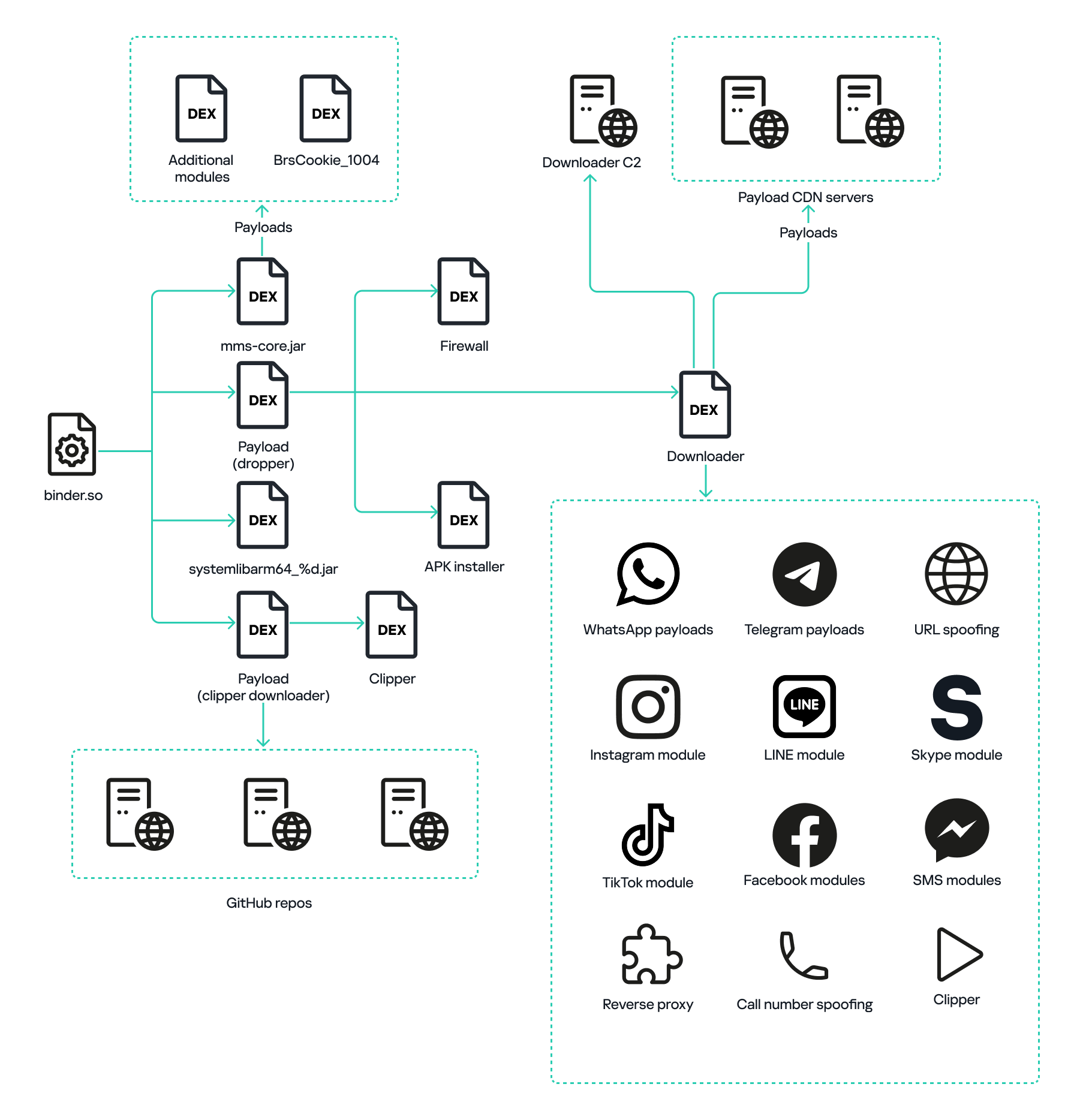
    MIL OSI Economics

  • MIL-OSI Economics: RBI cancels the licence of Imperial Urban Co-operative Bank Ltd., Jalandhar

    Source: Reserve Bank of India

    The Reserve Bank of India (RBI), vide order dated April 24, 2025, has cancelled the licence of “Imperial Urban Co-operative Bank Ltd., Jalandhar”. Consequently, the bank ceases to carry on banking business, with effect from the close of business on April 25, 2025. The Registrar of Cooperative Societies, Government of Punjab has also been requested to issue an order for winding up the bank and appoint a liquidator for the bank.

    The Reserve Bank cancelled the licence of the bank as:

    1. The bank does not have adequate capital and earning prospects. As such, it does not comply with the provisions of Section 11(1) and Section 22 (3) (d) read with Section 56 of the Banking Regulation Act, 1949.

    2. The bank has failed to comply with the requirements of Sections 22(3) (a), 22 (3) (b), 22(3)(c), 22(3) (d) and 22(3)(e) read with Section 56 of the Banking Regulation Act, 1949.

    3. The continuance of the bank is prejudicial to the interests of its depositors.

    4. The bank with its present financial position would be unable to pay its present depositors in full; and

    5. Public interest would be adversely affected if the bank is allowed to carry on its banking business any further.

    2. Consequent to the cancellation of its licence, “Imperial Urban Co-operative Bank Ltd., Jalandhar” is prohibited from conducting the business of ‘banking’ which includes, among other things, acceptance of deposits and repayment of deposits as defined in Section 5(b) read with Section 56 of the Banking Regulation Act, 1949 with immediate effect.

    3. On liquidation, every depositor would be entitled to receive deposit insurance claim amount of his/her deposits up to a monetary ceiling of ₹5,00,000/- (Rupees five lakh only) from Deposit Insurance and Credit Guarantee Corporation (DICGC) subject to the provisions of DICGC Act, 1961. As per the data submitted by the bank, 97.79% of the depositors are entitled to receive full amount of their deposits from DICGC. As on January 31, 2025 DICGC has already paid ₹5.41 crore of the total insured deposits under the provisions of Section 18A of the DICGC Act, 1961 based on the willingness received from the concerned depositors of the bank.

    (Puneet Pancholy)  
    Chief General Manager

    Press Release: 2025-2026/183

    MIL OSI Economics

  • MIL-OSI United Kingdom: Menopause Employment Ambassador partners with industry leaders to support women to stay in work.

    Source: United Kingdom – Executive Government & Departments

    Press release

    Menopause Employment Ambassador partners with industry leaders to support women to stay in work.

    Thousands of women are set to benefit from plans to boost workplace support as leaders from across industry, healthcare and the legal profession came together today to form the first-ever independent Menopause Advisory Group.

    • Menopause Employment Ambassador, Mariella Frostrup to work with industry leaders on how employers can support women with menopause in the workplace.
    • Independent “Menopause advisory group” launched to support employers on steps they can take to help women to stay in work.
    • Comes as part of wider government drive to break down barriers to work to unlock growth as part of the Plan for Change.

    Thousands of women are set to benefit from plans to boost workplace support as leaders from across industry, healthcare and the legal profession came together today to form the first-ever independent Menopause Advisory Group.

    Stark figures from the Chartered Institute for Personnel and Development show that over half of women experiencing menopause (53 per cent) have not been able to attend work due to their symptoms, with 10 per cent leaving work for good – costing businesses around £1.5 billion every year.

    Convened by the government’s Menopause Employment Ambassador, Mariella Frostrup, the group discussed the impact menopause can have on workers, current efforts to support women in work and businesses can work in partnership with government to ensure women don’t fall out of the work force due to menopause.
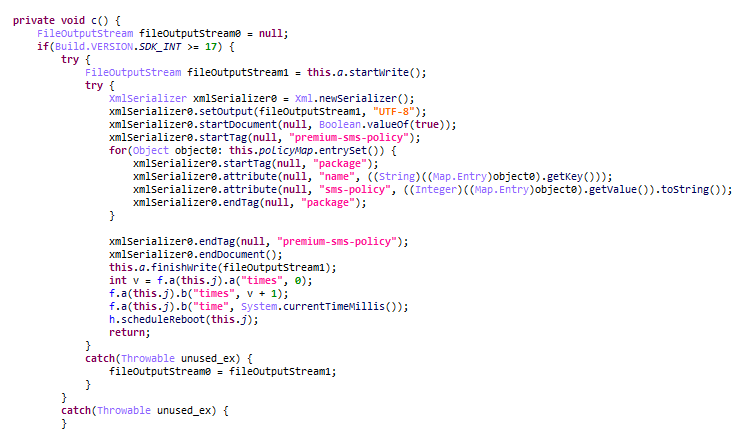
    It comes alongside the government’s wider efforts to break down barriers to work, keep people in work and create a thriving and inclusive labour market which is central to unlocking economic growth as part of the plan for change.

    Work and Pensions Secretary Liz Kendall said:

    “For too long working women have suffered in silence or stopped working when they experience the menopause – a completely natural and normal part of life.

    “A taboo and lack of understanding is holding back our nation’s growth and it’s time to tackle it head on.

    “The first ever independent Menopause Advisory Group will bring together huge knowledge and experience on this vital issue so we can give women the support they need to remain and thrive in work, putting money in people’s pockets and delivering growth for our economy as part of the Plan for Change.”

    Menopause Employment Ambassador, Mariella Frostrup said:

    I’m delighted to have this incredible group of professionals helping me ensure that women in midlife, a time when we often have to balance so much responsibility, are properly supported at work.
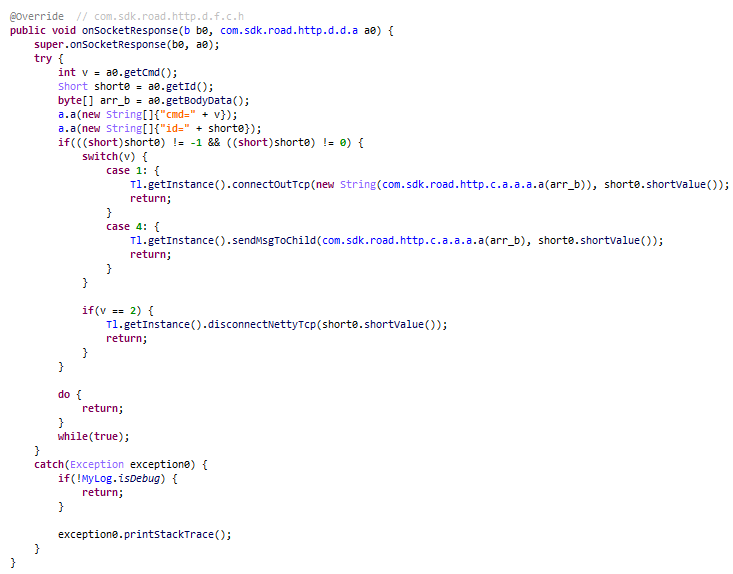
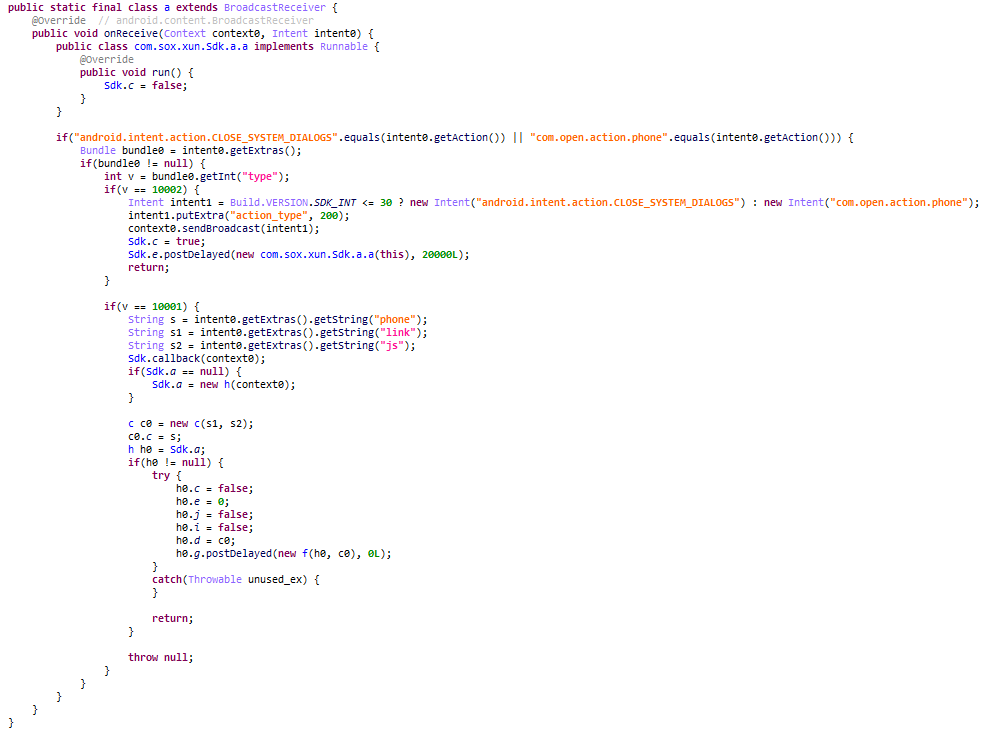
    Far too many experienced and capable women are forced out of employment through no fault of their own, hurting their earnings and our nation’s economy. Together we can create a more supportive and happier workplace where everyone can succeed.
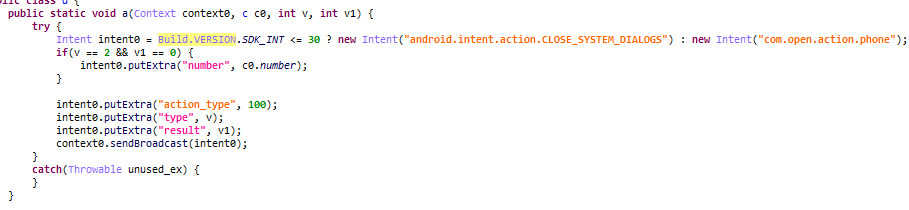
    Fiona Vines, Director of Inclusion and Wellbeing at BT said: 

    We are proud to host the launch of the Government’s Menopause Employment Ambassador’s Advisory Group. At BT Group we understand the importance of supporting women’s health in the workplace. This event is an important opportunity to bring business leaders together with key government ministers to promote awareness and implement strategies to improve workplace support for women affected by menopause.

    Jon Paull, COO at Octopus Energy, said: 

    Menopause affects half the population, yet for too long women were expected to manage it in silence. We support our team members through this transition so they can continue to do their jobs with confidence while being the best versions of themselves at work. This isn’t just good for their wellbeing and the happiness of our teams but also incredibly good for business. A true win-win.

    The launch of the group comes as the government steers its flagship Employment Rights Bill through Parliament. As well as boosting workers’ rights and protections, the Bill also includes landmark legislation that requires large employers with more than 250 employees to produce and publish Menopause Action Plans detailing how they will support employees through the menopause.

    The government has also started work on its £240 million Get Britain Working plans, launching the first two trailblazers to tackle inactivity in South Yorkshire and Wales in recent weeks with the reforms set to transform Jobcentres to focus on people’s skills and careers, guarantee young people the chance to earn or learn and provide mental health support to help people to start and stay in work.

    Notes to Editors:

    Mariella Frostrup was named Menopause Employment Ambassador on 18th October 2024 – details can be found here Women’s health campaigner Mariella Frostrup appointed as Government Menopause Employment Ambassador – GOV.UK

    The group will provide Mariella Frostrup with expert knowledge from a wide range of sectors on how businesses can better support women and tackle this critical issue.  The members are:

    • Tina Backhouse, General Manager of Theramex
    • Prof. Janice Rymer, Consultant Gynaecologist and Chair of the British Menopause Society
    • Kelly Gardner, Detective Superintendent for Bedfordshire Police
    • Laura Biggs, Founding Director of Menopause Mandate
    • Jon Paull, Chief Operating Officer of Octopus Energy
    • Juliet Balfour, NHS GP and Menopause Specialist
    • Nadira Awal, NHS GP and founder of Pause and Co
    • Nina Kuypers, Founder of Black Women in Menopause
    • Rachel Suff, Senior Policy & Practice Adviser for CIPD
    • Kristen Furber, People Director for Channel 4
    • Kudsia Batool, Director of Equalities for Trade Union Congress
    • Deborah Turner, National Lead for Women in Enterprise for Federation of Small Businesses
    • Sue Wardlow, CEO of Greensand Multi Academy Trust
    • Emma Hammond, Partner at Gunnercooke Law

    Updates to this page

    Published 25 April 2025

    MIL OSI United Kingdom

  • MIL-OSI Asia-Pac: HKMA Annual Report 2024 and Sustainability Report 2024

    Source: Hong Kong Government special administrative region

    The following is issued on behalf of the Hong Kong Monetary Authority:

    The Hong Kong Monetary Authority (HKMA) today (April 25) published its Annual Report 2024, including the financial statements of the Exchange Fund, and its Sustainability Report 2024.

    The Annual Report reviews trends and major events in monetary and banking affairs, and reports on the HKMA’s work during 2024. It also sets out the HKMA’s work priorities and plans for 2025.

    The Sustainability Report sets out the HKMA’s strategy and priorities in embedding sustainability at the core of Hong Kong’s financial system, including strengthening climate-resilience and enhancing the ecosystem, while operating as a responsible investor and sustainable organisation. 

    The HKMA Annual Report 2024 and Sustainability Report 2024 can be viewed on and downloaded from the HKMA website free of charge.

    MIL OSI Asia Pacific News

  • MIL-OSI Asia-Pac: Business expectations for the second quarter of 2025

    Source: Hong Kong Government special administrative region

         The Census and Statistics Department (C&SD) released today (April 25) the results of the Quarterly Business Tendency Survey for the second quarter (Q2) of 2025.
     
    Business Situation
     
         For all surveyed sectors taken together, the proportion of respondents expecting their business situation to be better (9%) in Q2 2025 over the preceding quarter is lower than that expecting it to be worse (18%). 
      
         When compared with the results of the Q1 2025 survey round, the proportion of respondents expecting a better business situation in Q2 2025 is 9%, broadly the same as the corresponding proportion in Q1 2025. On the other hand, the proportion of respondents expecting a worse business situation had slightly decreased from 19% in Q1 2025 to 18% in Q2 2025.
     
         Analysed by sector, respondents in most of the surveyed sectors expect their business situation to decrease on balance in Q2 2025 as compared with Q1 2025. In particular, significantly more respondents in the accommodation and food services and transportation, storage and courier services sectors expect their business situation to be worse in Q2 2025 as compared with Q1 2025.
     
         The results of the survey should be interpreted with care. In this type of survey on expectations, the views collected in the survey are affected by the events in the community occurring around the time of enumeration, and it is difficult to establish precisely the extent to which respondents’ perception of the future accords with the underlying trends. The enumeration period for this survey round was from March 4, 2025 to April 10, 2025. 
     
    Volume of Business / Output
     
         Respondents in all of the surveyed sectors expect their volume of business/ output to decrease on balance or remain broadly unchanged in Q2 2025 as compared with Q1 2025. In particular, significantly more respondents in the accommodation and food services sector expect their volume of business to decrease in Q2 2025 over Q1 2025.
     
    Employment
     
         Respondents in most of the surveyed sectors expect their employment to decrease on balance or remain broadly unchanged in Q2 2025 as compared with Q1 2025. In particular, more respondents in the accommodation and food services and construction sectors expect their employment to decrease in Q2 2025 over Q1 2025. In the real estate sector, however, more respondents expect their employment to increase, as compared to those expecting it to decrease.
     
    Selling Price/ Service Charge
     
         Respondents in most of the surveyed sectors expect their selling prices/ service charges to remain broadly unchanged in Q2 2025 as compared with Q1 2025. However, significantly more respondents in the construction and accommodation and food services sectors expect their tender prices/ charges for services rendered/ prices of food provided to go down in Q2 2025 over Q1 2025.
     
    Commentary
     
         A Government spokesman said that according to the survey conducted earlier, the near-term business outlook and hiring appetite among large enterprises for the second quarter of 2025 were largely stable compared with expectations for the previous quarter.  
     
         The spokesman pointed out that the survey captured largely the views of enterprises before the abrupt escalation of trade tensions due to the significant increases in import tariffs by the US in early April. Looking forward, as the downside risk and uncertainties of the global economy have increased notably, business sentiment should be subject to pressure. The Government has been providing support to enterprises through various measures, and will monitor the situation closely. 
     
    Further Information
     
         The survey gathers views on short-term business performance from the senior management of about 570 prominent establishments in various sectors in Hong Kong with a view to providing a quick reference, with minimum time lag, for predicting the short-term future economic performance of the local economy.
     
         The survey covers 10 major sectors in Hong Kong, namely manufacturing; construction; import / export trade and wholesale; retail; accommodation and food services (mainly covering services rendered by hotels and restaurants); transportation, storage and courier services; information and communications; financing and insurance; real estate; and professional and business services sectors.
     
         Views collected in the survey refer only to those of respondents on their own establishments rather than those on the respective sectors they are engaged in, and are limited to the expected direction of quarter-to-quarter change (e.g. “up”, “same” or “down”) but not the magnitude of change. In collecting views on the quarter-to-quarter changes, if the variable in question is subject to seasonal variations, respondents are asked to provide the expected changes after excluding the normal seasonal variations.
     
         Survey results are generally presented as “net balance”, i.e. the difference between the percentage of respondents choosing “up” and that choosing “down”. The percentage distribution of respondents among various response categories (e.g. “up”, “same” and “down”) reflects how varied their business expectations are. The “net balance”, with its appropriate sign, indicates the direction of expected change in the variable concerned. A positive sign indicates a likely upward trend while a negative sign indicates a likely downward trend. However, the magnitude of the “net balance” reflects only the prevalence of optimism or pessimism, but not the magnitude of expected change, since information relating to such magnitude is not collected in the survey.
     
         Furthermore, owing to sample size constraint, care should be taken in interpreting survey results involving a small percentage (e.g. less than 10%) of respondents in individual sectors.
     
         Chart 1 shows the views on expected changes in business situation for the period Q2 2024 to Q2 2025.
     
         Table 1 shows the net balances of views on expectations in respect of different variables for Q2 2025.
     
         The survey results are published in greater detail in the “Report on Quarterly Business Tendency Survey, Q2 2025”. Users can browse and download the publication at the website of the C&SD (www.censtatd.gov.hk/en/EIndexbySubject.html?pcode=B1110008&scode=300).
      
         Users who have enquiries about the survey results may contact the Business Expectation Statistics Section of the C&SD (Tel: 3903 7263; E-mail: business-prospects@censtatd.gov.hk).

    MIL OSI Asia Pacific News

  • MIL-OSI Europe: Written question – Future role and funding of the EU Rapid Deployment Capacity – E-001535/2025

    Source: European Parliament

    Question for written answer  E-001535/2025
    to the Commission
    Rule 144
    Petra Steger (PfE)

    In March 2022, as part of the Strategic Compass it was decided to set up an EU Rapid Deployment Capacity (RDC) with a force of up to 5000 troops. The force was to be fully operational by 2025, including – as was expressly stated – outside EU territory. That fact inevitably conveys the impression that the foundations for an EU army are being surreptitiously laid – a scheme that not only is blatantly at odds with Austria’s permanent neutrality, but also weakens all Member States’ foreign and security policy sovereignty.

    In the context of the EUR 800 billion ReArm Europe package, the question now is whether – overtly or covertly – an increase in the EU RDC budget is also being planned. To make matters worse, hardly any information has been publicly available about the actual development of the EU RDC since the initial announcement. That once again reveals a blatant lack of transparency on the part of the EU as regards one of its most sensitive security projects.

    • 1.What is the state of play as regards planning arrangements for the EU RDC and its operationalisation?
    • 2.Is there provision for a financial contribution for the EU RDC as part of the ReArm Europe package?
    • 3.What legal and practical precautions is the Commission taking to ensure that neutral Member States do not become embroiled in international conflicts as a result of the EU RDC?

    Submitted: 15.4.2025

    Last updated: 25 April 2025

    MIL OSI Europe News

  • MIL-OSI United Kingdom: Campaign shines a light on capital’s unclaimed millions

    Source: Scotland – City of Edinburgh

    Edinburgh residents are being urged to check their cost-of-living support to claim everything they are entitled to.

    With 80,000 people living in poverty in Edinburgh – including close to a quarter of all children – tackling inequality and preventing poverty remains one of the biggest challenges facing the capital.

    As it’s revealed that households could be owed up to £80 million in unclaimed benefits in Edinburgh, the council has rolled out two new self-help tools to make it easier for people to check what they’re owed.

    A DIY benefits calculator, Entitled To, and a one-stop-shop for other forms of financial support, Lightning Reach, have been made available online.

    A campaign has been launched to highlight these tools, urging residents not to leave their household budgets to chance. 

    Council Leader Jane Meagher said:

    It’s a worrying time for lots of people who are struggling with rising costs and we want to make sure that every household is claiming all the benefits they are entitled to. If you go online, you’ll find our DIY benefits calculator which makes it straightforward to check what you might be owed, so that you can then apply for support.

    Our efforts to tackle poverty in Edinburgh have put almost £24 million into the pockets of those who need it most, but around £80 million in benefits remains unclaimed. It’s my hope that this campaign will help to challenge the barriers – stigma, complexity and lack of awareness – that prevent people from accessing the support they should be getting. I urge everyone to check their cost-of-living support and to get in touch for more advice or support as needed.

    Linda’s story

    Linda, 59, has been a full-time-carer for her brother since their mother passed away almost 10 years ago.

    She said:

    I worked from the age of 17 and in my late 20’s I bought my own home and a car. But in 2015, my mother suddenly became unwell. She spent six months in intensive care on a ventilator and then passed away. I very suddenly became a full time carer for my brother, who has additional support needs. I had to stop working and sell my house to go live with him and my life changed completely.

    I went from ‘having it all’ – a job, a house, holidays and savings – to having next to nothing. The stigma associated with having to ask for help and being judged for having to rely on benefits has probably been the hardest part.

    I wish I had sought help earlier than I did. I wish I had set my pride and feelings of shame aside and realised that asking for help is not a bad thing. When life events happen that turn your world upside down, there is help available. The hardest part is knowing where to look to find that help – it can be very challenging – and accepting that there is no stigma in asking.

    Progress to End Poverty in Edinburgh

    This July will mark the mid-point between the publication of the Edinburgh Poverty Commission’s final report and the city’s target to end poverty by 2030.

    Linda (as above) is a member of End Poverty Edinburgh. Speaking about this experience, she said:

    By being part of End Poverty Edinburgh, I have had the opportunity to attend and speak at various meetings and events to raise awareness of the issues which those living in poverty have to face. We work closely with the council and others to improve customer experiences when seeking advice and help. We try to promote the help that is available which a lot of people aren’t aware of. Being part of this group has given me back a feeling of self worth.

    So far, positive collaboration on a range of initiatives between the council and partners has led to:

    •          Increasing access to grants and welfare advice by 20% over the last year

    •          Helping residents to receive almost £24 million in previously unclaimed benefits

    •          Supporting 5,000 people into work or learning (a 19% increase on the previous year)

    •          Driving down bills for 900 homes thanks to new energy efficiency measures

    •          Securing savings worth £206k for tenants through Energy Advice Support (an average of £428 per household)

    •          Helping to prevent homelessness for 461 households

    •          Over 9,000 free school meal payments and nearly 8,400 clothing grant awards

    •          Supporting 95% of all pupils to reach positive destinations after school

    •          Encouraging payment of the living wage (up 80 in a year to 720 accredited employers)

    •          Agreeing Council contracts committed to paying the real Living Wage (96% of suppliers, up 14%)

    •          Introducing a new Regenerative Futures Fund, a third sector led programme bringing £15m of new investment.

    MIL OSI United Kingdom

  • MIL-OSI United Kingdom: PM meeting with President of the European Commission Ursula von der Leyen: 24 April 2025

    Source: United Kingdom – Executive Government & Departments

    Press release

    PM meeting with President of the European Commission Ursula von der Leyen: 24 April 2025

    The Prime Minister met the President of the European Commission Ursula von der Leyen in Downing Street.

    The Prime Minister met the President of the European Commission Ursula von der Leyen in Downing Street today.

    They had a long and productive discussion focused on a range of issues including Ukraine, energy security, the global economy, and defence.   

    Both condemned the deadly Russian strike on Kyiv overnight and reiterated that they will continue to stand with Ukraine for as long as it takes.

    Discussing the ongoing negotiations to strengthen the UK-EU partnership, they both agreed that good progress had been made. They asked their teams to continue their important work in the coming weeks, with the aim of delivering as ambitious a package as possible at the first UK-EU summit next month.  

    The Prime Minister was clear that he will seize any opportunity to improve the lives of working people in the United Kingdom, drive growth and keep people safe – and he believes a strengthened partnership between the UK and the EU will achieve this.

    They agreed to keep in close contact in the coming weeks.

    Updates to this page

    Published 25 April 2025

    MIL OSI United Kingdom

  • MIL-OSI United Kingdom: Government announces preferred candidate for Independent Football Regulator Chair

    Source: United Kingdom – Government Statements

    News story

    Government announces preferred candidate for Independent Football Regulator Chair

    David Kogan OBE is the Government’s preferred candidate for Independent Football Regulator Chair, the Culture Secretary Lisa Nandy announced today.

    David Kogan OBE has held senior positions in the television and sports industries during a 45 year career as a media executive, business leader and corporate advisor. He negotiated a succession of multi-billion pound TV rights deals on behalf of major sporting bodies, including the Premier League and the English Football League. He has also advised UEFA, The Scottish Premier League, Six Nations, Premier Rugby and the NFL. Most recently he sold the broadcast rights on behalf of the Woman’s Super League.

    He is a former managing director of Reuters Television (the global television news agency), and an ex-CEO of the Magnum photo agency. He has co-founded both Reel Enterprises and the Women’s Sports Group. He is currently an advisor to the New York Times Group and CNN on their commercial, digital and AI strategies. Among his public boards David was a non-executive director at Channel 4, a member of the Foreign & Commonwealth Office’s Services board from 2007-14 and Chair of Westminster Kingsway Corporation. He is the author of three books.

    David will now appear before MPs on the Culture, Media and Sport Select Committee for pre-appointment scrutiny.

    Secretary of State for Culture, Media and Sport Lisa Nandy said:

    David brings with him a wealth of expertise from the sport and media industries having worked across a number of high-profile governing bodies, competition organisers and major media corporations in a very impressive career. It makes him an outstanding candidate to be the chair of the independent football regulator. 

    This will be a vital, public role to ensure sensible, light-touch regulation helps to strengthen financial sustainability and put fans back at the heart of the game.

    David Kogan OBE said:

    Across the country millions of us share a passion for football, a game that is not only part of our national heritage but one of our most valuable cultural exports. That’s why as both a supporter and someone with many years spent working in football, I am honoured to have been asked to be the preferred candidate for chair of the newly created Independent Football Regulator.  

    Our professional clubs, whatever their size, are a source of local and national pride. They generate economic growth and investment, unite communities, and create shared experiences and memories that transcend generations. 

    The job of the regulator is to work with those clubs, their owners, and their supporters to create a dynamic framework that will ensure the game is on a sound financial footing so that it can continue to flourish and to grow. I cannot wait to get started.

    The Football Governance Bill, which is currently going through Parliament, will establish the Independent Football Regulator and a new set of rules to protect clubs, empower fans and keep clubs at the heart of their communities.

    The Regulator will tackle rogue owners and directors, implement a club licensing regime to help ensure a more consistent approach in how clubs are run, monitor club finances and improve fan engagement throughout the football pyramid – from the Premier League to the National League. It will also have a backstop measure to mediate a fair financial distribution between Leagues, should they be unable to come to an agreement 

    The Regulator will help to ensure English football remains one of the country’s greatest exports, and places fans back at the heart of the game, so that local clubs in towns and cities continue to thrive for generations.

    Notes to editors

    • The appointment of a Chair of the Independent Football Regulator has been made as the result of a fair and open competition, run in accordance with the Governance Code on Public Appointments.  The Chair of the IFR is appointed by the DCMS Secretary of State.
    • Substantive appointment to the Chair role is ultimately subject to the Football Governance Bill being granted Royal Assent that will be subject to Parliamentary process. Any appointments made ahead of this will be done on a designated basis.
    • Ministers were assisted in their decision-making by an Advisory Assessment Panel, which included a departmental official and a Senior Independent Panel Member approved by the Commissioner for Public Appointments. 
    • The Chair of the Independent Football Regulator is remunerated at £130,000 per annum for an initial time commitment of 3 days per week.

    • This appointment process was run in accordance with the Cabinet Office’s Governance Code on Public Appointments.
    • The appointments process is regulated by the Commissioner for Public Appointments.

    Updates to this page

    Published 25 April 2025

    MIL OSI United Kingdom

  • MIL-OSI Europe: Minister Dillon welcomes EU’s new Ecodesign working plan as an opportunity for Irish businesses

    Source: Government of Ireland – Department of Jobs Enterprise and Innovation

    New measures that ensure products made by Irish manufacturers and designers are more durable and reusable have been welcomed by Minister of State for Small Business, Retail, and the Circular Economy, Alan Dillon.

    Minister of State Dillon has warmly welcomed the European Commission’s adoption of the Ecodesign for Sustainable Products Regulation (ESPR) 2025–2030 working plan. The Regulation, which came into force in July 2024, marks a significant step forward in the EU’s transition to a circular economy and replaces the existing Ecodesign Directive.

    The new plan broadens the scope of ecodesign beyond energy-using products to include steel, aluminium, textiles, furniture, mattresses, and tyres. It sets ambitious standards for improving the durability, repairability, reusability, and recyclability of these products—supporting the EU’s wider environmental and climate goals.

    Minister Dillon described the ESPR as “a cornerstone” of the EU’s green industrial strategy:

    “The EU’s Clean Industrial Deal outlines a clear objective: to double the circular material use rate to 24% by 2030. The ESPR working plan is a critical part of achieving that goal. It will ensure that products entering the EU market are designed, from the outset, to minimise waste and maximise sustainability. Ecodesign has already delivered significant improvements in the efficiency of energy-using products, and this broader approach will be just as transformative.”

    He also emphasised the positive implications for Irish businesses:

    “The ESPR opens up new opportunities for Irish manufacturers and designers by making sustainability a core element of product development. Companies that embrace circularity—considering the full life cycle of their products—will gain a competitive edge in both EU and global markets.”

    Enterprise Ireland is actively supporting sectors affected by the ESPR through guidance, stakeholder engagement, and funding opportunities such as the Green Transition Fund. The initiative helps Irish businesses innovate and align with evolving EU sustainability standards.

    ENDS

    MIL OSI Europe News

  • MIL-OSI Europe: The EBA publishes key indicators on climate risk in the EU/EEA banking sector

    Source: European Banking Authority

    The European Banking Authority (EBA) today released an ESG dashboard that establishes a broader ESG risks monitoring framework and allows centralised access to comparable climate risk indicators. This dashboard provides benchmarks and enhances the assessment and monitoring of transition and physical climate-related risk across the EU/EEA banking sector. It is based on the information disclosed by banks as part of their Pillar 3 ESG disclosures.

    This dashboard covers climate risk, both from a transition and a physical perspective. The indicators show the spectrum of green financing, based on the alignment with the EU Taxonomy, as well as beyond the Taxonomy criteria, considering internal definitions of green finance used by institutions.

    The data show a substantial exposure (above 70% in most countries) of the EU/EEA banks to corporates from sectors highly contributing to climate change. This may imply a significant exposure to climate-related transition risk, especially if companies are affected by policy measures related to sustainability objectives, if a need to invest in technological change arises, or are affected by changing consumer preferences. Companies active in these sectors may of course be affected by these risks to a different extent and the aggregate data cannot recognise individual differences or transition measures already taken.

    Indicators related to physical risk show an average share of exposures in areas subject to elevated physical risk below 30% in most countries. However, the granularity at which data is disclosed in different geographical locations, as well as the assessment methodologies vary across institutions. The indicators are built on data disclosed by institutions presenting their own assessment of the exposures and geographical areas exposed to this type of risk.

    The dashboard also includes specific indicators for exposures secured by immovable property collateral, showing that approximately half of the EU real estate lending is classified in the first two buckets of energy efficiency, lower than 200 kWh/m2 of collateral. This may indicate relatively limited transition risk related to immovable property collateral. However, banks report that they largely rely on proxies and estimates with regard to energy efficiency data, hence the need to interpret this data with caution.

    Finally, the tool provides indicators related to EU/EEA banks’ alignment with the EU Taxonomy and beyond. While the Green Asset Ratio (GAR) remains low, slightly below 3% on average, there is noticeable dispersion across EU/EEA banks and countries. The currently low level of the indicator owes to the structure of the indicator itself. The computed loan GAR, which aligns the numerator and the denominator of the indicator, displays higher levels. The low level of the indicator is also due to the fact that the economy is still under transition, with at this stage few activities being able to demonstrate alignment with the Taxonomy criteria. To facilitate the interpretation, the GAR figures are accompanied by further indicators, offering a more detailed focus on lending to specific types of counterparties, presenting the scope of exposures that are eligible to be assessed against the Taxonomy criteria, and the extent of green lending based on other criteria than the EU Taxonomy.

    Legal basis, background and next steps

    The development of the ESG risk monitoring framework supports the Commission’s objective to systemically monitor climate-related financial stability risks. The ESG risk indicators have been developed in accordance with Article 29(f) of the EBA founding regulation (Regulation EU 1093/201), requiring the EBA to put in place a monitoring system to assess environmental, social and governance-related risks taking into account the Paris Agreement to the United Nations Framework Convention on Climate Change.

    The indicators are built based on Pillar 3 ESG data disclosed by banks with reference dates of 31 December 2023 and 30 June 2024.

    The EBA intends to regularly update and evolve the indicators over time. Given that the Pillar 3 disclosure templates are presently under revision, the charts and indicators may be adjusted in future updated versions. This relates in particular to the Taxonomy alignment indicators (any changes to the GAR in the relevant regulations would be reflected in future updates of the ESG risks monitoring tool).

    MIL OSI Europe News

  • MIL-OSI United Kingdom: NDA group deliver defueling milestone with EDF

    Source: United Kingdom – Executive Government & Departments

    News story

    NDA group deliver defueling milestone with EDF

    The Nuclear Decommissioning Authority (NDA) group played a pivotal role in defueling Hunterston B on time and on budget.

    Inside Hunterston B nuclear power station

    Yesterday (24 April) EDF announced Hunterston B nuclear power station has been successfully defueled on time and on budget, in less than three years, following rigorous checks by the Office for Nuclear Regulation (ONR). 

    The Nuclear Decommissioning Authority (NDA) group played a pivotal role in achieving this milestone, collaborating with EDF to enable spent nuclear fuel to be safely and securely removed from the site.

    Over the past three years more than 4,800 elements of spent fuel have been removed then processed and packaged into large, specially engineered, transportable fuel flasks. These were then moved by Nuclear Transport Solutions (NTS) to Sellafield for long term safe and secure storage.  

    This milestone has been achieved whilst also continuing to support the defueling of two other AGR stations which have ceased operations and receiving and storing spent fuel from four operational stations, in support of the continued generation of low carbon electricity for the UK.

    David Peattie, NDA group CEO, said:

    This is a significant achievement for all those involved from the NDA group and the EDF staff including those at Hunterston B who worked tirelessly in partnership to make this happen. 

    We are primarily associated with the decommissioning of the UK’s legacy nuclear sites but this milestone gives us an opportunity to recognise the critical work we also do supporting defueling and keeping the lights on across the UK.

    It’s a significant task and one that wouldn’t be possible without our dedicated and expert workforce which will grow further when we welcome Hunterston B into our group next year.

    In the last financial year, the group delivered the highest number of fuel flask movements in 30 years totalling over 270 tonnes. NTS transport spent fuel via the UK rail network to Sellafield, where it is received at the Fuel Handling Plant (FHP) to be dismantled and transferred to ponds for safe and secure storage pending disposal.

    Sellafield is also responsible for maintaining and repairing the fleet of 36 transport flasks used to safely transport the spent fuel. 

    Ciara Middlehurst, NTS co-CEO, said:

    We’re proud to have played a crucial role in safely transporting spent nuclear fuel from Hunterston B to Sellafield, in which we safely ran over 200 trains to support its defueling.  

    This achievement underscores our commitment to providing safe, secure, and reliable nuclear transport solutions that support the UK’s energy infrastructure and environmental restoration programme.

    In addition, the NDA group have worked with EDF and the supply chain to design and install an innovative new space saving storage rack at Sellafield, enabling 50% more fuel to be stored in its ponds.

    It allows Sellafield to safely store all the remaining fuel from the UK’s 7 AGR nuclear power stations. Without these new storage racks, a new storage pond would have to be built, potentially costing the UK many millions of pounds.

    The NDA is responsible for decommissioning the UK’s 17 earliest nuclear sites, removing the risks and hazards, so that eventually the sites can be released for other uses.

    Over the next two decades, the NDA’s mission will expand to include the decommissioning of the 7 AGR power stations that are currently operated by EDF.  Once all the spent nuclear fuel has been safely removed they will transfer into NDA ownership, via Nuclear Restoration Services (NRS) to continue decommissioning.

    Dr Andrew Munro, NRS Managing Director for AGR and paired sites, said:

    NRS is proud to be trusted with the upcoming decommissioning of Hunterston B, alongside six other AGR stations, and we’re working closely with EDF and the site team to ensure a safe and successful transfer of this first site next year.

    With the welcome news that defueling is now completed and licence and permit applications recently submitted to regulators, we remain on track and are excited to take forward the important work of decommissioning the site for all our futures.

    Hunterston B will be the first AGR station to transfer to the NDA group in 2026 followed by Hinkley Point B later the same year. The other sites will be Dungeness B, Hartlepool, Heysham 1, Heysham 2 and Torness.

    Updates to this page

    Published 25 April 2025

    MIL OSI United Kingdom

  • MIL-OSI Europe: Statement from Minister Peter Burke

    Source: Government of Ireland – Department of Jobs Enterprise and Innovation

    The Minister for Enterprise, Tourism and Employment, Peter Burke said:

    “I continue to engage with Intel, supported by colleagues in IDA Ireland, in what is a difficult time for staff in the midst of continued uncertainty. 

    I note the publication of Intel’s Q1 financial results last night and comments from CEO Lip Bu Tan that they were  ‘a step in the right direction’, while also confirming there will be a reduction in Intel’s workforce globally.  

     While no specifics around the number or location of job cuts were flagged, the company have said they plan to reduce operating costs by $500m this year and $1 billion next year, and stated this will include a reduction in the workforce, particularly in management and non-core engineering roles. It is likely to be several weeks before detail is available on the impact of these cost reduction measures. 

     While we await further specifics on potential downsizing, which is an incredibly anxious time for Intel’s staff, it is positive that the company have stated that they will continue to focus investment on their core business, the manufacturing of semiconductor products. This is the primary activity in Ireland.  

     It is also worth noting that Intel has completed the construction of the most advanced semiconductor manufacturing facility in Europe in Fab 34, which is now in production in Leixlip and can be central to Intel’s growth recovery strategy.  This €17 billion investment is just the latest in Intel’s 35-year history operating here, with the Irish government, through IDA Ireland, partnering with Intel on this journey.  

     My thoughts remain with staff and their families, many of whom are extremely concerned.  I continue to keep in touch with local management and I am meeting them again next week. 

    Government continues to value our long-term partnership with Intel and will continue to work with the company as it works through its plans over the coming weeks and months, as demand for semiconductors remains strong.” 

    ENDS

    MIL OSI Europe News

  • MIL-OSI Russia: The Future of Nuclear Energy: Lecture by Russia’s Leading Designer Vitaly Petrunin

    Translation. Region: Russian Federal

    Source: Peter the Great St Petersburg Polytechnic University – Peter the Great St Petersburg Polytechnic University –

    The Institute of Energy hosted a lecture by the First Deputy General Director — General Designer of JSC Afrikantov OKBM, Honored Designer of the country Vitaly Petrunin. The topic of the speech was “Scientific and technical problems and prospects for the development of low-power nuclear power plants and atomic-hydrogen energy.”

    Vitaly Petrunin analyzed the role of nuclear energy in the Russian energy balance, examining its historical development and current state. In his speech, he emphasized that revolutionary leaps are impossible in the nuclear sphere, and development occurs in stages, in an evolutionary way.

    The expert presented a detailed analysis of the RITM-200 reactor plant used in nuclear icebreakers, as well as its land-based modification RITM-200N for SNPP. He highlighted the main differences between the ship and land-based versions, and spoke about scientific research into the reliability and safety of these solutions.

    The scientist examined key aspects of modern hydrogen production and its prospects. In the context of the predicted growth of the hydrogen market to 400 million tons by 2050, including a 20-fold increase in consumption in the transport sector, the expert particularly emphasized the need to switch to low-carbon production technologies. Nuclear-hydrogen solutions were presented as a promising direction for decarbonization of this sector of the Russian economy.

    “It is a great honor for me to learn directly from the creators of low-power reactors about a project that is today called one of the most promising in the field of peaceful atomic energy. The lecture was extremely informative, but the main thing is that I received answers to questions that I had been looking for for a long time and which are almost not covered in the literature,” said Yaroslav Vladimirov, Deputy Director for Research at the Institute of Energy.

    Please note: This information is raw content directly from the source of the information. It is exactly what the source states and does not reflect the position of MIL-OSI or its clients.

    MIL OSI Russia News

  • MIL-OSI Global: The UK’s social security system falls way below international human rights standards: new report

    Source: The Conversation – UK – By Koldo Casla, Senior Lecturer, Essex Law School, University of Essex

    9to9studio/Shutterstock

    The right to social security is enshrined in several international agreements on human rights. But the UK’s system – even before the disability benefits cuts announced earlier this year – falls way below these standards.

    For a new report published today, Amnesty International asked my colleague Lyle Barker and me to review the evidence about the state of the UK’s social security in relation to international human rights law.

    The UK has signed and ratified a number of international agreements on human rights. One of these is the 1966 International Covenant on Economic, Social and Cultural Rights (ICESCR), which lays out the right to social security. An accompanying document defines the three key principles of this right as:

    • Availability A social security system established in law, administered publicly, and materially reachable by those who need it.

    • Adequacy Benefits must be suitable, both in amount and in duration, to realise essential socioeconomic rights.

    • Accessibility Everyone should be covered by the social security system, paying particular attention to disadvantaged and marginalised individuals and groups.

    The conclusion of our study for Amnesty International is crystal clear: even disregarding the cuts announced in March, the UK’s social security system does not meet these standards.

    Availability

    Our review of the literature shows a widespread underclaiming of benefits. It has been estimated that in 2024, £22.7 billion in income-related benefits went unclaimed, a £4 billion increase from the previous year.

    Gaps in official data hinder a clear understanding of why many people are missing out on the support they are entitled to. But qualitative evidence suggests this is largely due to fear, stigma, bureaucratic and digital hurdles, and eligibility cliff edges for means-tested benefits.

    In recent years, the UK government has adopted a contentious and punitive stance toward benefit recipients. Media and political rhetoric have portrayed those who claim benefits as idle or undeserving scroungers.

    This stigma harms the mental health and self-esteem of people experiencing poverty. It can result in shame and secrecy, and create barriers to people accessing support they are entitled to.

    Our research for Amnesty International concludes that UK claimants do not get enough information and support about their rights to benefits. Combined with the stigma of claiming, the UK is falling far short of making benefits “available” in line with international standards.

    Adequacy

    Since the austerity policies of the 2010s, the UK’s social security system has become significantly less adequate in supporting vulnerable people and families. The basic rate of universal credit (the main benefit for working-age people on a low income) is at 40-year low in real terms amid a cost of living crisis.

    Restrictive policies, such as the benefit cap (introduced in 2013 to set a maximum limit to the total benefits received by a household) and the two-child limit have curtailed access to essential benefits. Although inflation adjustments in the last two years provided some relief, many benefits still fail to keep up with rising living costs.

    The two-child limit is the cruellest expression of the inadequacy of the UK’s social security system. Introduced by the Conservative government in 2017, the two-child limit restricts financial support through universal credit to two children. It is likely to be the most significant single cause of child poverty in the UK, including in families where adults work but do not earn enough to make ends meet.

    When Labour returned to power, there was much speculation about whether they would reverse the two-child limit. But despite pleas from experts and people with direct experience, the government has persisted in retaining it.


    Read more:
    Our research shows the harm the two-child limit on benefits is doing. Only scrapping it can end this


    Accessibility

    Our study lays out the many barriers to accessibility in the UK’s system. For example, the bureaucratic hurdles in the assessment process, and the disproportionate impact of punitive sanctions on lone mothers and on minority ethnic claimants.

    The UK operates a benefits sanction regime, which imposes penalties on claimants who fail to meet certain conditions. These include attending jobcentre appointments or accepting job offers. In general, sanctions and the fear of sanctions erode the trust between benefit claimants and the social security system.

    Benefits sanctions are just one of the barriers to accessing social security.
    1000words/Shutterstock

    As it did in its previous review in 2016, in February the UN Committee on Economic, Social and Cultural Rights recommended that the UK review the use of benefit sanctions to ensure they are used proportionately and are subject to prompt and independent dispute resolution mechanisms.

    Another accessibility concern is the shift to a digital-by-default system in the 2010s. While intended to make accessing benefits more efficient, it has become an administrative barrier.

    Many people, particularly the elderly and others who are less digitally literate, struggle to navigate the benefits system. It excludes people without reliable internet access, underscoring a digital divide that prevents meaningful access to social security.

    Meeting standards

    Given the evidence, it is no surprise that earlier this year, the UN Committee on Economic, Social and Cultural Rights urged the UK government to assess the cumulative effects of the austerity measures introduced in the 2010s.

    In particular, the committee recommended reversing the two-child limit, the benefit cap and the five-week delay for the first universal credit payment, and increasing the budget allocated to social security. These recommendations were made before the changes announced in the spring statement.

    To live up to the internationally recognised right to social security, the UK should recognise in law, policy and practice that social security is a human right. And, that it is essential to the fulfilment of other human rights.

    Amnesty International recommends the government set up a commission with statutory powers, to produce a strategy for “wholesale reform” of the social security system. The UK must establish a minimum support level and an essentials guarantee, to ensure beneficiaries can consistently meet their basic needs. A good way to start would be abolishing the two-child limit once and for all.

    Koldo Casla and Lyle Barker wrote the study underpinning Amnesty International’s report on the state of the right to social security in the UK.

    ref. The UK’s social security system falls way below international human rights standards: new report – https://theconversation.com/the-uks-social-security-system-falls-way-below-international-human-rights-standards-new-report-254528

    MIL OSI – Global Reports

  • MIL-OSI United Kingdom: Minister for European Union Relations’ Lecture at the Conference on Baltic Studies in Europe

    Source: United Kingdom – Executive Government & Departments

    Speech

    Minister for European Union Relations’ Lecture at the Conference on Baltic Studies in Europe

    A lecture delivered by the Minister for European Union Relations, The Rt Hon Nick Thomas-Symonds, at the Conference on Baltic Studies in Europe, University of Cambridge

    Introduction

    It’s a pleasure to be here with you all. Before I begin, I would like to thank the Association for the Advancement of Baltic Studies for hosting this important conference.

    I would also like to thank my friend Charles Clarke, not only for the invitation to speak here today.

    [political content removed]

    As part of that career, his time as Home Secretary, he had to deal daily with the implications of a complex and dangerous world, encapsulated by the heinous 7/7 attacks.

    While the nature of the threats our country faces have evolved since then – we know that the threats to our security, our economy and way of life are as pronounced now as they have been at any time in post war history.

    And these challenges do not just face the UK – or any one of our allies – alone; we face them, together. Therefore, it is crucial to ask how we can leverage our longstanding international relationships – and build upon them – to face these challenges together.

    The United Kingdom and the Baltic States enjoy an alliance built on shared values, on open trade, on a strategic, robust approach to defence.

    We respect one another, and it is through this respect that we work alongside each other – whether directly or through international organisations – to the benefit of our societies.

    Our citizens not only celebrate freedoms, but also realise that they are hard won and must be defended.

    I believe that – through the UK’s mission to go beyond the status quo with the European Union and grow our strategic alliance with our biggest trading partner – we could build on our relationship even further, to make us more prosperous, safer and better defended.

    I should clarify that – in the spirit of this broad alliance – while I will mainly be talking about Estonia, Latvia and Lithuania, I will also be touching on the Baltic Sea States, the other countries that share the same icy waters, including Sweden, Poland and Finland, which I understand follows the remit of this centre.

    Relationship with the Baltics

    Just over a month ago, the Times journalist Oliver Moody gave a talk at this university – at the Centre for Geopolitics – about his book ‘Baltic: The Future of Europe’.

    He spoke about the remarkable journey that the Baltic Sea States have taken over the last century: not just armed conflict, but the push and pull between independence, occupation and independence again.

    Reflecting on where we are now, he said: “This is the most coherent that north-eastern Europe has ever been. You have the Nordic and Baltic States working on a more equal footing than ever before, you have Poland starting to look north, and Germany is getting more involved”. He capped his remarks off by saying that this teamwork would have delighted the former Prime Minister of Estonia – Jaan Tonisson – who campaigned for a Scandinavian Superstate in 1917. Moody said that this cooperation is nothing short of “Jaan Tonisson’s dream, on steroids”.

    That claim is probably for the experts in this room to take a view on, but what is clear is the sheer depth of the shared objectives, opportunities and challenges.

    When you consider the history of these countries, this state of play is all the more remarkable. After all, to study the 20th Century developments of the Baltic States is to study world history. I am proud to say that, in many ways, the United Kingdom has been a positive part of that history, especially with Latvia, Lithuania and Estonia.

    When the British public were rejoicing throughout the UK on Armistice Day in 1918, the Royal Navy had no time to rest, as they started their campaign in the Baltic. They were playing their part to establish an independent Estonia and Latvia, providing weapons, ammunition and much-needed support, where over 100 naval servicemen bravely lost their lives for Baltic independence. In May 2022, the UK and Lithuania agreed a Joint Declaration to mark 100 years of bilateral relations, but it also looked towards the future. It outlined an agreement to boost defence and security collaboration, build closer trade ties, and promote people-to-people links.

    We already start from a strong place, as the UK is a home to many Baltic people – well over 350,000 of them.

    We host Latvia’s largest diaspora, as well as Lithuania’s and Estonian’s largest European diaspora. Our trading relationship is positive, which accounts for over £6bn in goods and services – up from last year. Who would have thought, from just over thirty years of Estonian independence, that there would be an Estonian bank running offices in London, Manchester and Leeds, or an Estonian defence company setting up a production facility for air defence missiles in Wales.

    I greatly admire the spirit, the fortitude and the determination of the Baltic States; they have known what it is to lose their freedom, their independence and – as a result – are embracing its benefits. The Baltic tech sector – for example – has one of the strongest and most innovative ecosystems within Europe, a fact elegantly demonstrated at this year’s Oscars, when a wholly digitally designed film from Latvia won the Best Animated Feature, against long-established studios like the US’s Pixar and the UK’s Aardman Animations.  

    Many Baltic firms are key investors in the UK, and have excelled in areas where others have stumbled, because they have had a clear focus on innovation and progress.

    Indeed, I have deeply appreciated my time with the Baltic Sea States. Last year, in Opposition, I visited Estonia – to meet with various leaders who are working tirelessly to defend their homeland. I was struck not only by the scale of the Russian threat their face – especially in areas like cyber-warfare – but also by their determination to rise to that challenge.

    Also, during a visit to Stockholm, I went to the SAAB Headquarters – who recently announced that they will be supplying the Latvian Government with a short-range ground-based air defence system. We spoke openly about the importance of cross-Europe defence, and they were very grateful for the UK’s renewed focus on European defence, and the Prime Minister’s leadership.

    Ukraine

    This historic collaboration – these well-defined relationships – only adds to our collective strength when we consider countering the complex situation, facing the world reshaped by the Russian invasion of Ukraine.

    Of course, to many of the Baltic Sea States, Russian aggression is nothing new. Indeed, Estonia, Latvia and Lithuania are ardent supporters of the Ukrainian fighters seeking to overcome this illegal Russian invasion. And they have shown this support in many ways – including as key hosts for Ukrainian refugees. According to the U.S. think tank The Wilson Centre, Estonia has hosted approximately 40,000 Ukrainian refugees, Latvia has around 50,000, and Lithuania has issued more than 50,000 visas.  A record of support that the UK also shares, and I am proud of the role my own constituency is playing in hosting Ukrainian families.

    In stepping up to defend the freedoms the UK and Baltic nations enjoy we recognise the hard-won sovereignty and dignity which the Baltic States have worked so hard to secure.

    I know from my own personal experience from meeting those defence officials – many with frontline experience on their border with Russia and Ukraine – that the threat they feel is not theoretical, it is existential. The defence of the Baltic Sea is – unquestionably – as important now as ever. That is why NATO takes this issue so seriously, launching the ‘Baltic Sentry’ mission to increase surveillance of ships crossing those cold waters.

    The UK also takes the security of the Nordic and Baltic states incredibly seriously. It’s why we were so supportive of NATO expansion for Latvia, Lithuania and Estonia – and others – in 2004. As the then UK Prime Minister – and Charles’s former boss – Tony Blair, said these invitations meant “a significant contribution to European security, and secures the place of the new Allies in the Euro-Atlantic community”.

    It’s also why we formed – with our Baltic counterparts and Nordic countries – the Joint Expeditionary Force, set up in 2018. To ensure our commitment to European security and international stability remains strong.

    It was only in November last year that we demonstrated the effectiveness of this Force with ‘Exercise Joint Protector’. More than 300 personnel were deployed to Liepāja in Latvia, and worked with staff in the UK. This – and the many other exercises the Force has undertaken – shows just how ready we and our partners are to respond to crises in the Baltic and Nordic regions.

    Keir visited British troops serving with NATO in December 2023 in Estonia.  There is an incredibly powerful image of him on that trip – standing with our brave troops.  Showing how committed he is to supporting the vital work they do, working with NATO allies to keep this continent safe.

    [Political content removed]

    The UK and Euro-Atlantic Security

    Here in the UK, we have been unequivocal about the need to bolster security across the European continent. We must look at how we safeguard each other – through our alliances; NATO, the Joint Expeditionary Force and through direct country-to-country connections too.

    We need to work better together on key issues facing our continent’s security. I mean everything – from how we improve our defence capabilities to ensuring we have the technological edge in conflict, how we finance these improvements, to how we bolster our industrial capacity across the continent. The Prime Minister will make this point on the world stage at the Joint Expeditionary Force Summit in Oslo next month, and NATO’s Hague Summit in June.

    Much of this work is underway. You may have seen His Royal Highness the Prince of Wales visit British troops in Estonia last month, who – under Operation Cabrit – are providing a deterrent to Russian aggression, bolstering NATO’s presence in Europe.

    At the centre of this is our absolute commitment to securing a just and lasting peace in Ukraine. The Prime Minister has been clear that for this plan to succeed, it must have strong US backing – and he is working closely with President Trump on this. I know other leaders – including those in the Baltics – have joined the chorus demanding that Ukraine’s voice must be at the heart of any talks.

    The importance of this cannot be overstated. Indeed, it was a point the Prime Minister made absolutely clear at the ‘Leading the Future’ Summit hosted here in the UK. There, he convened the ‘Coalition of the Willing’, building on our efforts to put pressure on Putin, keep military aid flowing to Ukraine and strengthen sanctions on the Russian war machine. This was followed by the announcement from the Defence Secretary of an additional £450m to Ukraine, which will fund hundreds of thousands of new drones, anti-tanks mines and supplies to make necessary repairs to military vehicles.

    This work is of vital importance. When Europe is under threat, then the Europeans have to – and are – stepping up on defence and security.

    We are living through a generational moment in the history of our continent. This is a point I made at a recent Baltic Breakfast event where I welcomed the further expansion of NATO to include Finland and Sweden. With both these countries, we are building on our defence and security relationship – whether it’s the strategic partnership we share with Sweden or the Memorandum of Understanding between the UK and Finland on civil nuclear, strengthening our energy security.

    The UK knows we have a responsibility to help secure the continent and that, even though we have left the EU, we would never turn our back on our allies in Europe. That’s why we have committed to reaching 2.5% of GDP on defence spending by 2027, with an ambition to achieve 3% in the next parliament. In practice, that means spending over £13 billion more on defence every year from 2027. This is the biggest sustained increase in defence spending since the Cold War, and it will safeguard our collective security and fund the capabilities, technology and industrial capacity needed to keep the UK and our allies safe for generations to come.

    It has been good to see other European nations doing the same, especially across the Baltic States. Lithuania continues to set the standard within NATO. Your desire to increase defence spending to 5% or even 6% GDP is admirable. Latvia now spends 3.45% of its GDP on defence, and is investing heavily in areas, such as air and coastal defence. And Estonia is aspiring to increase defence spending to 5% of its GDP.

    Given the political context, it is of vital importance for European countries to take on responsibility for their own security. As one of Europe’s leading NATO powers, it is essential that the UK and the EU work together to strengthen European security. We have substantial shared interests and objectives and, crucially, we both have the means and influence to effect change on a global stage.

    But we cannot shy away from the reality of the situation we find ourselves in. Europe faces war on the continent, as well as an urgent need to ramp up our collective defence capabilities, and we have already seen a step-change in European cooperation.

    At the same time the UK and EU are facing global economic challenges. These are shared problems which require a collective response, with mutual interests.

    And I believe a firm alliance between the UK and the EU is undeniably a part of that – and mutually beneficial. We need to put an end to ideology and build a new strengthened partnership with Europe.

    Now, Charles, I promise not to make a point of mentioning you throughout my lecture, but I wanted to touch on something from the recent past.

    After he left Government, Charles became the Visiting Professor at the University of East Anglia for their School of Political, Social and International Studies, where – during a series of lectures – he posited the idea of the ‘Too Difficult Box’, the place where important political decisions get put when things got too complicated to solve.

    As he explained in a lecture eleven years ago at the University of South Wales – just south of my constituency of Torfaen – plenty of short-term challenges face politicians when they are trying to solve the long-term problems this country faces, which means decisions get delayed, politicians don’t feel empowered or convinced enough to act, the ‘Too Difficult Box’ fills up.

    I think everyone in this room can recognise at least one important national decision that has been left to grow dust in the ‘Too Difficult Box’.

    Which is why this Government has chosen to behave differently towards our national interests. Indeed, it is precisely the difficulty of our challenges which urges us to act. The ‘Plan for Change’ recognises the complex world we live in and redefines the way that Central Government responds to the problems of the day, to work across-Departments to tackle some of the most challenging problems we face – whether it’s breaking down the barriers to opportunity, making the UK a clean energy superpower, or building an NHS that is fit for the future.

    At the heart of all of this work are what we call our ‘Strong Foundations’, which are economic stability, secure borders and national security. To me, these priorities are inseparable; you cannot have one without the other two.

    I also believe that our relationship with the European Union has an important role in these foundations, we must find pragmatic solutions that work in the national interest.

    The kind of pragmatic approach that Charles promoted with the ‘Too Difficult Box’ is exactly the kind of approach we must take when redefining our relationship with the EU, as we move towards a strengthened partnership with our biggest trading partner.

    So far, by my count, we have seen over seventy different direct engagements between UK Ministers and their EU counterparts.

    This work was exemplified by the meeting the Prime Minister had with the President of the European Commission last October, a meeting where both agreed to put our relationship on a more solid, stable footing. They agreed to work together on some of the most pressing global challenges including economic headwinds, geopolitical competition, irregular migration, climate change and energy prices. In December, the Chancellor attended a meeting of the EU finance ministers – the first time a British Chancellor has been invited to the Eurogroup since Brexit. And I have been having regular meetings with my counterpart Maroš Šefčovič to maintain forward momentum on our shared agendas.

    However, I want to be clear: we fully respect the choice made by the British public to leave the European Union, that was clear in our manifesto.  As were the clear red lines we set out, around the Customs Union, the Single Market and Freedom of Movement.   

    We are also demonstrating our role as good faith actors through the implementation of the Trade and Co-operation Agreement and the Windsor Framework.

    But I also believe that this global moment requires us to go further. It is an opportunity to build our partnership – where our continental security is paramount, where our collective safety is guaranteed, where our respective economies flourish together. It is in our mutual self interest. 

    The Three Pillars

    I mentioned that the defining structure of our future relationship with the European Union has three important pillars – prosperity, safety and security.

    On prosperity, we must boost growth and living standards, by creating export and investment opportunities for UK business and reducing barriers to trade with our biggest trading partners.

    Already we have started work on this. We have said that we will seek to negotiate a Sanitary and Phytosanitary agreement – which is one of the clear barriers to trade across the continent, and it was particularly pleasing to see a number of UK businesses writing in last weekend’s Financial Times supporting this plan.

    Let me turn to safety. Now, of all audiences, I don’t need to explain the importance of a strong and secure border, but we must do all we can to strengthen our continental collective ability to tackle organised crime and criminality, working together on irregular migration. We see – every day – the threats across our continent from criminals with no respect for international borders.  From terrorism, to vile people smuggling gangs and drug smugglers – the threat to our communities is real. If we want to protect our respective borders and keep our citizens safe, then we need to work together.

    Already, we have made important progress on this work. Within the first few weeks of coming into power, the Prime Minister stated that border security would be at the very heart of our plans to reset our relationship with the European Union. We have committed to deepening our partnerships with Europol and its European Migrant Smuggling Centre. But I believe that we can go further in this work. We need to find ways to better coordinate law enforcement. We must do all we can to strengthen the tools available to aid our collective ability to tackle organised crime, which will only lead to more secure borders.

    We recognise that the Baltic states have faced a unique challenge when it comes to irregular migration, Russian led instrumentalisation of migration is an appalling use of human beings for political gain.

    I saw the nature of this myself on a recent visit to the Polish / Belarussian border. We absolutely condemn states instrumentalising human beings and putting them in danger, and support efforts to combat this issue at the EU’s external border. Whilst the UK may face different migration challenges, there are clear commonalities – underlining the imperative of working together on the shared priority of securing our borders.

    Which brings me on to the final point, security. I have made clear throughout this lecture that we must respond to the collective security challenge that we all face. An ambitious UK-EU security and defence relationship must be a part of this.

    All of us in the UK Government appreciate the steps that the EU is taking on this, and we welcome their recent Defence White Paper, which recognises the UK as an “essential European ally”. But we should also recognise the importance of the Baltic Sea States within that Paper.

    As Oliver Moody pointed out in his talk, the significance and the symbolism of that paper cannot be overlooked. He said: “It was presented by an Estonian high representative, a Lithuanian defence commissioner, with a great deal of input from a Latvian economics commissioner, a Polish budget commissioner, a Finnish vice-president of the commission for technological sovereignty and security, all in tandem under the leadership of a German president of the European Commission […] this would have been completely unimaginable in the 1990s.”

    He’s right to point out the importance of this unity, both in the Baltic region and across our continent. 

    We have made it clear to our EU partners that we are ready to negotiate a Security & Defence Partnership with the EU. We believe it should build on the EU’s existing partnership agreements with other third countries, while recognising the unique nature of our security relationship. It will complement NATO and our NATO First approach, while boosting our bilateral cooperation with European partners.

    But we want to go further, trying to create new ways to ramp up our defence industrial capacity, financing and capability development.

    UK-EU Summit

    All of these points I have mentioned will no doubt be crucial discussion points when the UK welcomes European Union leaders to the first UK-EU Leaders’ Summit on 19th May.

    The Prime Minister will host the President of the European Council, António Costa, and the President of the European Commission, Ursula von der Leyen.

    The Summit will provide an opportunity to make further progress on our shared priorities and we shall set out further details in due course. What I can tell you now is that this will be the first of regular UK-EU summits, which we committed to when the Prime Minister met the President of the European Commission in October last year. We expect these to take place annually, in addition to regular engagements at Ministerial level, recognising that new agreements will take time to agree.

    Conclusion

    Ladies and gentlemen, it is clear to me that the future of Europe – whether that’s innovative businesses or the most resilient of responses to Russian aggression – has a home in the Baltic.

    The UK wants to be an important part of that future, and we are working hard – right across the Government – to change our relationship with the EU for the mutual benefit of all European states.

    We are living through a time of generational challenge to our very way of life.  I know that in the face of this, an alliance – across our continent, in pursuit of freedom – will be vital.

    So, I thank all of you here for your interest in this vital area, I thank Charles for the invitation to address this group – and I look forward to working with many of you to deliver a secure and prosperous future for our people.

    Updates to this page

    Published 25 April 2025

    MIL OSI United Kingdom

  • MIL-OSI China: Xi chairs CPC leadership meeting on economic situation and work

    Source: People’s Republic of China – State Council News

    BEIJING, April 25 — The Political Bureau of the Communist Party of China (CPC) Central Committee held a meeting on Friday to analyze and study the current economic situation and economic work.

    Xi Jinping, general secretary of the CPC Central Committee, presided over the meeting.

    It was noted at the meeting that the country has seen its economy improve this year, with public confidence continuously boosted and solid progress made in high-quality development.

    However, the foundation for the country’s sustained economic recovery needs to be further consolidated, and the country faces increasing impact from external shocks, the meeting said.

    The meeting urged preparing for worst-case scenarios with sufficient planning, and taking concrete steps to do a good job in economic work.

    MIL OSI China News