Source: The Conversation – UK – By Rebecca Willis, Doctoral Researcher in Clinical Neurosciences, University of Oxford
Disney Pixar’s latest film, Elio, follows a familiar-sounding character, a lovable and imaginative young hero who dreams of finding a place where he truly belongs. But amid the colour and chaos of the film’s outer space setting, one subtle detail stands out: Elio wears an eye patch.
In the real world, eye patches are commonly used to treat amblyopia, or “lazy eye”, a neurodevelopmental visual condition projected to affect 175.2 million people globally by 2030. In amblyopia, the brain favours one eye over the other, leading to reduced vision in the weaker eye.
Treatment often involves covering the stronger eye with a patch, encouraging the brain to rely on the weaker eye and improve its function. This therapy is most effective during early childhood and can take months of daily commitment.
Yet, despite how common visual conditions are, positive representation of patch-wearing is rare in popular media.
Animated films have long shaped childhood imaginations, but historically, characters with eye patches or other visual markers often fall into negative stereotypes.
Think Mr Potato Head’s alter ego One-Eyed Bart in Toy Story, or Madagascar’s Dr. Blowhole: characters where an eye patch signals villainy. Glasses, meanwhile, are more often seen on older characters like Carl Fredrickson from Up or Roz from Monsters Inc.
Characters with strabismus (misaligned eyes), like Ed from The Lion King, are often portrayed as unintelligent or clumsy. One recent study found that strabismus in children’s animated films is consistently associated with negative character traits – something that can reinforce harmful stigma.
These portrayals matter. Film plays a powerful role in shaping beliefs, especially for young children who are developing a sense of identity, belonging and how to relate to others. When visual conditions are stereotyped, it can reinforce feelings of embarrassment and difference.
For children wearing a patch, these feelings can lead to skipping treatment days and poorer outcomes. In contrast, authentic, positive representation can build self-esteem, promote acceptance, and provide relatable role models.
A subtle but powerful shift
Happily, things are starting to change. In recent Disney/Pixar films, we’ve seen characters with glasses portrayed as dynamic, central figures: Encanto’s Mirabel, Turning Red’s Priya and Mei, and Big Hero 6’s scientist-superhero Honey Lemon, for example. These characters challenge old stereotypes and broaden the narrative around vision.
Elio continues that progress. The young protagonist’s eye patch is not a plot point, nor is it used to symbolise frailty, villainy or wisdom. It simply exists – a quiet part of his identity, not something to overcome.
That subtlety is powerful. For children who wear patches, seeing someone like Elio leading a space mission, not sidelined by his visual condition, can be deeply affirming.
Beyond the screen, Elio has sparked conversation and awareness. Prevent Blindness launched a campaign around the film to raise public understanding of amblyopia and the importance of early detection. Eye care organisations have also used the film as an educational tool, while individuals have shared their stories of patching and treatment across social media.
When amblyopia is recognised and treated early, patching can be remarkably effective. But awareness is key, and so is reducing stigma that might discourage children from wearing their patch.
Childhood amblyopia research
Although patching often restores vision, it doesn’t work for every child – and we still don’t fully understand why. There is limited research into how patching affects the developing brain, and this lack of insight hinders improvements in treatment.
Our research with Holly Bridge, Vision Group leader at Oxford University, aims to change that. We’re studying how patching changes brain chemistry in young children.
Adult studies suggest that chemical shifts in visual parts of the brain may be linked to patching outcomes. To explore this in children, we’re running a study of five to eight-year-olds with amblyopia or healthy vision.
In our study, children with amblyopia receive a safe, non-invasive brain scan before and after patching treatment. We also measure their vision using child-friendly tests. We then compare these results to children with healthy vision who don’t wear a patch, helping us to understand both visual changes and brain development.
We hope Elio marks the beginning of more inclusive storytelling, where difference isn’t erased or exaggerated, but simply woven into the fabric of character and adventure. Like Elio’s journey through space, the path to better understanding and representation of childhood visual conditions has faced challenges.
But perhaps this is the launch we needed: towards better awareness, better research, and a future where every child feels seen – on screen and beyond.
Rebecca Willis receives funding from a Royal Society Studentship.
Betina Ip is funded by The Royal Society (Dorothy Hodgkin Research Fellowship, DHFR1201141) and the UKRI-MRC (MR/V034723/1).
Megan Groombridge receives funding from the MRC (MR/V034723/1).
Source: The Conversation – UK – By Liv Auckland, Lecturer in Fashion Communication and Creative Direction and Curation for Fashion, Nottingham Trent University
You probably have a drawer full of T-shirts. They’re comfy, easy to style, cheap and ubiquitous. But the T-shirt is anything but basic. For 70 years, they’ve been worn as a tool for self-expression, rebellion and protest. And in 2025, the slogan T-shirt is as powerful as it has ever been.
Previously worn as an undergarment, the T-shirt became outerwear after the second world war. Snugly dressed on the bodies of physically fit young men, it came to signify heroism, youth and virility.
The T-shirt was adopted by sub-cultural groups such as bikers and custom car fanatics. And it was popularised by Hollywood stars, including Marlon Brando and James Dean. By the mid-1950s, it had become a symbol of rebellion and cool.
Looking for something good? Cut through the noise with a carefully curated selection of the latest releases, live events and exhibitions, straight to your inbox every fortnight, on Fridays. Sign up here.
From the 1960s onwards, slogan T-shirts gained momentum in America and Britain, and women began wearing them as the fashions became more casual. In the postmodern era, language became less about function and more about individualistic expression and exploration. This playful approach to words, combined with an emphasis on design and social commentary, made the T-shirt an ideal canvas for the championing of individual thought.
Anti-war messaging dominated slogans in the US during the Vietnam war and amid the increasing threat of nuclear war. Perhaps the most recognised slogan featured the artwork from John Lennon and Yoko Ono’s famous 1969 “War is Over” campaign, a T-shirt which is still being replicated today. Messages of peace on clothing, whether featuring words or symbols, have stayed in our collective wardrobe ever since, from high fashion to high street.
In the 1970s, the New York Times called T-shirts the “the medium of the message”, and the message itself was becoming ever more subversive. Slogan tees sought to provoke, whether through humour or controversy.
Punks were especially good at it. They constructed what subculture theorist Dick Hebdige called a “guttersnipe rhetoric” in his 1979 study Subculture: The Meaning of Style. Designers Vivienne Westwood and Malcolm McLaren paved the way for a DIY approach where slogans were often scrawled, expressive and upended social codes.
The slogan shirt in the fight for LGBTQ+ rights
Manufacturing and printing advancements in the postmodern era also meant that more designs could be printed en masse – a development used by the LGBTQ+ community and its allies.
Some of the most memorable slogan T-shirts in history were created in response to the Aids epidemic in the 1980s. The most poignant simply read “Silence = Death”. Originally a poster, the design was printed on T-shirts by the Aids Coalition to Unleash Power (known as “Act Up”) for protesters to wear.
Those affected by Aids were demonised and largely ignored, so the queer community was reliant on activism to incite action from government and their fellow citizens.
In After Silence: A History of Aids through Its Images (2018), author Avram Finkelstein describes the grassroots activism of the time as an “act of call and response, a request for participation” for the lives at stake. In a pre-internet world, T-shirts provided a platform to make the fight visible.
The 80s also saw slogan T-shirts enter pop cultural spaces as well as political ones, most notably with designs from Katharine Hamnett. Known for their oversized fit, their politically charged messages adorned the torsos of celebrities including George Michael and Debbie Harry. In 1984, Hamnett made fashion history when she met then-prime minister Margaret Thatcher while wearing a T-shirt emblazoned with “58% Don’t Want Pershing”, referencing her anti-nuclear sentiment.
That same year, Hamnett’s “Choose Life” design gained icon status when it was worn in a music video by Wham!. Originally a reference to the central teachings of Buddhism, “Choose Life” took on complex meaning when read in the context of the Aids epidemic, Thatcherism and economic instability.
The Choose Life shirt featured in Wham!‘s video for Wake Me Up Before You Go-Go.
The slogan was later used in the opening monologue of the cult film Trainspotting (1996), which is set in an impoverished and drug-fuelled Edinburgh. The design has been reworked countless times, including by Hamnett herself for the refugee charity Choose Love.
In author Stephanie Talbot’s 2013 book Slogan T-shirts: Cult and Culture, she explains that slogan tees can move through time to achieve iconic status. While the Choose Life tee has transcended time and generations, it also shows how the intended message of a slogan can change depending on the wearer and the observer, and the environment within which it’s worn.
Today, to Hamnett’s consternation, Choose Life has been co-opted by pro-life campaigners, not only taking on a different meaning but flipping across the political spectrum.
Who gets to wear a slogan shirt?
When we wear a slogan T-shirt, we are transferring our internal self to an external, public self, creating an extension of ourselves that invites others to perceive us. This creates opportunities for conflict as well as connection and community, putting our bodies (particularly those that are marginalised) at risk.
In 2023 for example, numerous peaceful protesters were arrested for wearing Just Stop Oil T-shirts, highlighting how unsafe – and potentially unlawful – it can be to wear a slogan T-shirt.
Actor Pedro Pascal wears the ‘Protect the Dolls’ shirt by Connor Ives. Fred Duval/Shutterstock
However, the LGBTQ+ community is continuing to seize the power of the slogan T-shirt – not in spite of law changes, but because of them.
Designer Connor Ives closed his 2025 London Fashion Week show wearing a T-shirt that read “Protect the Dolls”, during a time of increasing politicisation of trans lives and gender healthcare. The term “dolls” is one of endearment in queer spaces that refers to those who identify as feminine, including trans women.
In a world that increasingly feels like it’s in turmoil, for many, the humble T-shirt still feels like a space where we can express how we truly feel.
This article features references to books that have been included for editorial reasons, and may contain links to bookshop.org. If you click on one of the links and go on to buy something from bookshop.org The Conversation UK may earn a commission.
Liv Auckland does not work for, consult, own shares in or receive funding from any company or organisation that would benefit from this article, and has disclosed no relevant affiliations beyond their academic appointment.
Source: The Conversation – UK – By Alan McKay, Senior Research Assistant for the Centre for Football Research in Wales, University of South Wales
With Women’s Euro 2025 underway, attention is turning not just to the players hoping for glory, but to the head coaches tasked with leading them.
These include England’s Sarina Wiegman, who guided the Netherlands to Euro victory in 2017 and repeated the feat with England in 2022; Spain’s Montse Tomé, the reigning world champions’ first female head coach; and Rhian Wilkinson, who is preparing Wales for their first ever appearance at a major tournament.
The pressure is immense, but what actually makes a good football coach? My colleagues and I recently conducted a study on behalf of the Uefa Academy to better understand this topic.
There are plenty of myths. That the best coaches eat, sleep and breathe football 24/7. That they’re “natural leaders” who inspire through sheer charisma. That success demands constant self-sacrifice. But when coaches try to live up to these ideas, it can leave them feeling burnt out – physically and emotionally exhausted, disconnected from their personal lives and questioning their ability.
In reality, effective coaching is about much more than tactics or motivation. It’s about performance, not just on the pitch, but in the way coaches manage themselves, their staff and their players. A good coach must balance their responsibilities with time for rest and recovery. They must communicate clearly, stay calm under pressure and create an environment where everyone knows their role.
Sarina Wiegman discusses the importance of creating positive environments.
Sarina Wiegman has described her approach in just these terms: “We try to turn every stone to get as best prepared as we can be before we go into the tournament… to perform under the highest pressure.”
But coaches don’t arrive at this mindset by accident. It’s developed through experience and, importantly, through structured education.
One important finding was that the most effective coaches have a strong sense of who they are – including their values, their communication style, and their strengths and limitations. These are things which affect the players and staff with whom they work.
Even top coaches need support
This type of self-awareness is often shaped through formal coach education programmes, where participants work closely with a mentor. These mentors can offer honest feedback, challenge assumptions and help coaches develop a philosophy they can share with their team.
That process is essential at every level, whether it’s grassroots football or the international stage. Coaches who understand themselves and who can use their education are better able to adapt their approach to the context they’re working in. They can build trust, foster unity and know when to step back.
Gareth Southgate, former England men’s head coach, is a fantastic example of this. He has spoken about the importance of supporting the person first and the player second. He has discussed the value of empathy and empowering players to make decisions on and off the pitch.
Through this process, Southgate helped players focus on the “joy of playing for their country” rather than simply achieving results. This may have helped to relieve some of the inevitable pressure and expectations placed on the England squad by the media, fans and English Football Association to win tournaments.
After qualifying, a good coach will continue to seek out their mentor for advice on both professional and personal issues they may be experiencing in their role. Emma Hayes, head coach of the US women’s team, has credited her own mentor with helping her fine tune her leadership style and build team cohesion. Her ability to create a safe, supportive environment was central to Team USA’s gold medal win at the 2024 Paris Olympics.
Hayes’ methods demonstrate that coaching is not a destination but a lifelong process. It requires constant learning, reflection and adaptation. The best coaches don’t just chase trophies. They aim to build something lasting – a culture of trust, a resilient team and a space where people can thrive.
As Euro 2025 continues, it’s worth keeping an eye, not just on the scorelines, but on the sidelines. The real mark of a good coach isn’t always found on the scoreboard. It’s found in how a team plays, how they talk about each other and whether they’re still smiling at the end.
Alan McKay received funding from the Union of European Football Associations (UEFA) to conduct the research mentioned in this article. Alan wishes to acknowledge Professor Brendan Cropley, who was instrumental in conducting this research.
If you walk through a forest and look down, you might think you’re stepping on dead leaves, twigs and soil. In reality, you’re walking over a vast underground patchwork of fungal filaments, supporting life above ground.
These are mycorrhizal fungi, which form partnerships with the roots of nearly all plants. Found everywhere from tropical rainforests to boreal forests and farmland, these underground fungi sustain life above ground, often without us realising they’re even there.
A recent academic review argues that up to 83% of ectomycorrhizal (ECM) fungi species, which form partnerships with trees, may be unknown to science.
Mycorrhizal fungi grow around root tips and form webs between root cells or penetrate root cells, then make structures inside them. They scavenge nutrients such as phosphorus and nitrogen from the soil and, in return, receive carbon from their host plants.
Traces of these unidentified fungi are often found in soil DNA. The researchers surveyed global DNA databases to see how many DNA traces that seemed to belong to ECM fungi matched to a species. Only 17% could. Scientists call these “dark taxa” – organisms that have been detected, but not formally described, named or studied.
One example is the fly agaric (Amanita muscaria) which produces the iconic red and white spotted toadstools often linked to folklore and can have a range of host trees. It typically associates with birch, pine and spruce, especially in colder climates, helping trees survive in nutrient-poor soils.
Porcini fungi, (for example Boletus edulis), produce delicious mushrooms prized for their rich, nutty flavor, are ECMs too. These fungi grow with pines, firs and oaks. And the chanterelle is highly sought-after by mushroom collectors and often found near oaks, beech and conifers.
Chanterelles thrive in undisturbed, healthy forests. Their presence often signals a well-functioning forest ecosystem. They have a fruity, apricot-like scent that may attract insects to help spread spores.
The new report shows how little we know about the world beneath our feet. This ignorance has important implications. Entire landscapes are being reshaped by deforestation and agriculture.
But reforestation efforts are happening without fully understanding how these changes affect the fungal life that underpins these ecosystems. For example, in the Amazon, deforestation for farming continues at an alarming pace with 3,800 square miles (equivalent to 1.8 million football fields) of tropical rainforest destroyed for beef production in 2018-19 alone.
Meanwhile, well-meaning carbon offset schemes often involve planting trees of a single species, potentially severing ancient relationships between native trees and their fungal partners. This is because the mycorrhizal fungi in these area will have developed in partnership with the native plants for many years – and may not be compatible with the tree species being planted for these schemes.
Although not all trees have specific fungal partners, many ECM fungi will only form symbioses with certain trees. For example, species within the Suillus genus (which includes the sticky bun mushroom) are specific to certain species of pine.
Introducing non-native plantation species may inadvertently drive endemic fungi, including species not yet known to science, toward extinction. We may be growing forests that look green and vibrant, but are damaging the invisible systems that keep them alive.
The problem isn’t limited to ECM fungi. Entire guilds (species groups that exploit resources in a similar way) of mycorrhizal fungi, remain virtually unexplored.
These dark guilds are ecologically crucial, yet most of their members have never been named, cultured or studied.
Ericoid Mycorrhizal Fungi (ERM)
These fungi form symbioses with many ericaceous shrubs, including heather, cranberry and rhododendrons. They dominate in some of the world’s harshest landscapes, including the Arctic tundra, the boreal forest (also known as snow forest), bogs and mountains.
Research suggests ERM fungi not only help plants thrive in harsh environments but also drive some of the carbon accumulation in these environments, making them potentially part of an important carbon sink.
Despite their abundant coverage across some of the most carbon-rich soils on Earth, the ecology of ERM fungi remains somewhat mysterious. Only a small number have been formally identified. However, even the few known species suggest remarkable potential.
Their genomes contain vast repertoires of genes for breaking down organic matter. This is important because it suggests ERM fungi are not just symbionts living in close interaction with other species but also active decomposers, influencing both plant nutrition and soil carbon cycling. Their dual lifestyle may play a critical role in nutrient-poor ecosystems.
Mucoromycotina fine root endophytes (MFRE)
MFRE are another group of enigmatic fungi that form beneficial relationships with plants. Long mistaken for the arbuscular mycorrhizal (AM) fungi until distinguished in 2017, MFRE are also found across a range of ecosystems including farmland and nutrient-poor soils and often live alongside AM fungi.
MFRE appear to be important in helping plants access nitrogen from within the soil, while AM fungi are more associated with phosphorus uptake. Like ERM fungi, MFRE appear to also alternate between free-living and symbiotic lifestyles.
As researchers begin to uncover their roles, MFRE are emerging as important players in plant resilience and sustainable agriculture.
Some DSEs appear to enhance host stress tolerance or nutrient uptake. Others may act as latent pathogens, potentially harming the host plant. Most DSEs remain unnamed and poorly understood.
Time is running out
Many of the ecosystems connected to these dark guilds of fungi are among the most vulnerable on the planet. The Arctic and alpine regions which are strongholds for ERMs, DSEs and potentially MFREs, are warming at two to four times the global average.
Peatlands have been drained and converted for agriculture or development while heathlands are increasingly targeted for tree-planting initiatives meant to sequester carbon.
Planting fast-growing, non-native species in monocultures may improve short-term carbon metrics above ground, but it could come at the cost of soil health and belowground biodiversity. Many fungi are host-specific, co-evolving with native plants over millions of years.
Replacing those plants with non-native trees or allowing invasive plants to spread could lead to local extinctions of fungi we’ve never had the chance to study. Soil fungi also mediate processes from nutrient cycling to pathogen suppression to carbon sequestration.
We are changing landscapes faster than we can understand them and in doing so we may be unravelling critical ecological systems that took millennia to form.
Katie Field receives funding from the European Research Council, the Biotechnology and Biological Research Council and the Natural Environment Research Council.
Tom Parker receives funding from The Scottish Government’s Rural and Environment Science and Analytical Services Division and Natural Environment Research Council
Ebenezer Scrooge tried to wave away the ghost of Jacob Marley by blaming the apparition on “an undigested bit of beef … a crumb of cheese”. Charles Dickens might have been writing fiction, but the idea that late-night dairy can warp dreams has now gained scientific support.
Researchers in Canada surveyed 1,082 university students about their eating habits, sleep patterns and dreams. Remarkably, 40% reported that certain foods affected their sleep. Of that group, 20% blamed dairy – suggesting that Scrooge’s midnight cheese might have had more of an impact than he realised.
Just 5.5% believed food changed their dreams, but among those respondents dairy again loomed large, second only to sugary desserts as a perceived trigger for bizarre or disturbing dreams.
The researchers asked about everything from nightmare frequency to food allergies and intolerances. A clear pattern emerged: participants who reported lactose intolerance were significantly more likely to have frequent nightmares. And the link was strongest in people who also experienced bloating or cramps.
Get your news from actual experts, straight to your inbox.Sign up to our daily newsletter to receive all The Conversation UK’s latest coverage of news and research, from politics and business to the arts and sciences.
Statistical modelling suggested the stomach distress partly explains the bad dreams. In other words, food that keeps the gut churning can also set the imagination spinning.
That gut–brain route makes physiological sense. Abdominal discomfort can jolt sleepers into lighter stages of sleep where vivid or negative dreams are most common. Inflammation and spikes in cortisol (a stress hormone) triggered by digestive upset may further shape the emotional tone of dreams, especially by amplifying anxiety or negativity.
Earlier work backs the idea. A 2015 survey of Canadian undergraduates found that nearly 18% linked what they ate to their dreams, with dairy the top suspect, while a 2022 online study of 436 dream enthusiasts reported that people who ate more sugary snacks remembered more nightmares.
The new study from Canada echoes a wider literature on diet and sleep. Diets rich in fibre, fruit and vegetables are associated with deeper, more refreshing sleep, whereas meals high in saturated fat and sugar predict lighter, more fragmented rest.
If future work confirms the cheese–nightmare connection, the implications could be practical. Nightmares affect about 4% of adults worldwide and are particularly common in post-traumatic stress disorder.
Drug treatments exist but carry side-effects. Adjusting the timing or composition of evening meals, or choosing low-lactose dairy options, would be a far cheaper, lower-risk intervention.
Gut-friendly diets such as the Mediterranean diet are already being explored for mood disorders; nightmares may be another frontier for nutritional psychiatry.
What the research can’t prove
That said, the new findings come with caveats. The sample was young, mostly healthy psychology students filling out online questionnaires. Food intake, lactose intolerance and nightmare frequency were all self-reported, so “recall biases” (inaccurate memory) or the power of suggestion could inflate the associations.
Only 59 participants believed food influenced their dreams, so small-number effects (unreliable results from too few data) are possible. And a survey can only reveal associations – it can’t prove that cheese causes bad dream.
Cheese keeps cropping up in nightmare stories, and people who struggle to digest dairy report the worst of it. Scientists still have to match meal diaries, gut clues and lab-monitored dreams to prove the link. In the meantime, try eating earlier or choosing low-lactose options. Your stomach – and your dreams – may calm down.
Timothy Hearn does not work for, consult, own shares in or receive funding from any company or organisation that would benefit from this article, and has disclosed no relevant affiliations beyond their academic appointment.
Source: The Conversation – UK – By Judith Smith, Professor of Health Policy and Management, University of Birmingham
The UK government has published its eagerly awaited ten-year health plan for England, setting out how billions of pounds in NHS funding will be used to transform healthcare delivery across the country.
As anticipated, the plan is framed around the government’s three missions for the NHS: shifting care from hospital into the community, moving from analogue to digital communication, and focusing on preventing ill health rather than treating illness.
The 168-page document responds to a stark warning that the NHS is “in serious trouble”. It is remarkable for the sheer number of ideas and proposals. As well as describing major new developments to improve people’s access to local in-person and virtual NHS care and disease prevention, it sets out a blizzard of other proposals.
These include abolishing Healthwatch (a national watchdog that listens to people’s views on health and social care services to improve them), and bringing back some of the reforms of the Tony Blair era such as “new foundation trusts” and using private funding for new buildings.
From hospital to community
The big idea in the ten-year plan is a neighbourhood health service: large local health centres where people can access GP, nursing, dental, pharmacy, diagnostic and other services six days a week, 12 hours a day. These are intended to relieve pressure on hospitals and emergency departments, eventually replacing many outpatient clinics.
Some progress has been made in this direction. For example, much of the care for people living with asthma and diabetes is now provided in local general practices. Many general practices already have large teams of doctors, nurses, pharmacists, physiotherapists and other staff who offer aspects of the wider “neighbourhood care” described in the new plan.
But what has not been achieved is having larger-scale primary care teams consistently available across the NHS. The new plan proposes new contracts and shifts of funding to enable wider change, and while welcome, these will be challenging to put into practice against a backdrop of major service pressures.
From analogue to digital
The plan emphasises strongly the need to extend the role of the NHS app, with it becoming the “doctor in your pocket” and the main route into NHS services. It proposes that the app holds your full patient record, enables you to book GP and hospital appointments and becomes a key source of healthcare advice.
This sounds very attractive. However, the devil will be in the detail. There are so many NHS IT systems to harmonise, and major data security and privacy issues to overcome.
Most critically, much attention must be given to sorting out basic NHS admin systems that are too often confusing and paper-based. This will entail lots of work with NHS clinical and administrative staff, changing long-standing ways of working, introducing new technology and adapting “the way we do things round here”.
Using AI to record doctor visits, understand test results and give health advice could really change how healthcare works. But this will take lots of time and money to train staff, try out new systems and put them in place. Also, people will need clear information about what to expect from their local health services in the future.
To achieve the plan’s goal of empowering people to make healthier choices, robust cross-government action is essential across sectors, including housing, education and welfare. While some important measures such as the tobacco and vapes bill, plans to measure supermarkets’ sales of healthy foods, and the expansion of free school meals are included in the plan, others such as minimum alcohol pricing have been notably excluded.
Integrated care boards (ICBs), the regional bodies who plan and fund NHS services in England, and local councils will be vital in enabling these public health measures to be implemented. However, this will be difficult in the short to medium term as ICBs are being forced to merge, cut headcount and reorganise their work.
Making it work
For the ten-year plan to succeed, three key elements are essential.
First, there is an urgent need to set priorities. The public expects much swifter access to on-the-day GP appointments, an end to excessive waits in accident and emergency departments, and reductions in waiting lists for operations.
The Department of Health and Social Care must guide the NHS in which aspects of the plan are to be addressed first. If everything is a priority, nothing is a priority.
Second, implementation really matters. There is only so much management capacity, staff time, funding and goodwill to introduce new technologies and services. This government has already embarked on another “redisorganisation” of the oversight agency NHS England, and now plans to axe or merge a number of other national and local NHS bodies. NHS managers are vital to implementing the plan, but need to feel valued and supported, not denigrated as superfluous.
Finally, the plan is almost silent on the two most pressing needs for government health reform. Without a properly funded system of adult social care to support older people and those living with enduring mental health needs, it is hard to see how hospital care can be transformed.
And without an urgent and significant shift of resources to general practice and community services, neighbourhood health services will remain more of a dream than reality.
Judith Smith receives funding from the National Institute for Health and Care Research for research and evaluation. Judith is Senior Visiting Fellow at the Health Foundation.
Source: The Conversation – UK – By Judith Smith, Professor of Health Policy and Management, University of Birmingham
The UK government has published its eagerly awaited ten-year health plan for England, setting out how billions of pounds in NHS funding will be used to transform healthcare delivery across the country.
As anticipated, the plan is framed around the government’s three missions for the NHS: shifting care from hospital into the community, moving from analogue to digital communication, and focusing on preventing ill health rather than treating illness.
The 168-page document responds to a stark warning that the NHS is “in serious trouble”. It is remarkable for the sheer number of ideas and proposals. As well as describing major new developments to improve people’s access to local in-person and virtual NHS care and disease prevention, it sets out a blizzard of other proposals.
These include abolishing Healthwatch (a national watchdog that listens to people’s views on health and social care services to improve them), and bringing back some of the reforms of the Tony Blair era such as “new foundation trusts” and using private funding for new buildings.
From hospital to community
The big idea in the ten-year plan is a neighbourhood health service: large local health centres where people can access GP, nursing, dental, pharmacy, diagnostic and other services six days a week, 12 hours a day. These are intended to relieve pressure on hospitals and emergency departments, eventually replacing many outpatient clinics.
Some progress has been made in this direction. For example, much of the care for people living with asthma and diabetes is now provided in local general practices. Many general practices already have large teams of doctors, nurses, pharmacists, physiotherapists and other staff who offer aspects of the wider “neighbourhood care” described in the new plan.
But what has not been achieved is having larger-scale primary care teams consistently available across the NHS. The new plan proposes new contracts and shifts of funding to enable wider change, and while welcome, these will be challenging to put into practice against a backdrop of major service pressures.
From analogue to digital
The plan emphasises strongly the need to extend the role of the NHS app, with it becoming the “doctor in your pocket” and the main route into NHS services. It proposes that the app holds your full patient record, enables you to book GP and hospital appointments and becomes a key source of healthcare advice.
This sounds very attractive. However, the devil will be in the detail. There are so many NHS IT systems to harmonise, and major data security and privacy issues to overcome.
Most critically, much attention must be given to sorting out basic NHS admin systems that are too often confusing and paper-based. This will entail lots of work with NHS clinical and administrative staff, changing long-standing ways of working, introducing new technology and adapting “the way we do things round here”.
Using AI to record doctor visits, understand test results and give health advice could really change how healthcare works. But this will take lots of time and money to train staff, try out new systems and put them in place. Also, people will need clear information about what to expect from their local health services in the future.
To achieve the plan’s goal of empowering people to make healthier choices, robust cross-government action is essential across sectors, including housing, education and welfare. While some important measures such as the tobacco and vapes bill, plans to measure supermarkets’ sales of healthy foods, and the expansion of free school meals are included in the plan, others such as minimum alcohol pricing have been notably excluded.
Integrated care boards (ICBs), the regional bodies who plan and fund NHS services in England, and local councils will be vital in enabling these public health measures to be implemented. However, this will be difficult in the short to medium term as ICBs are being forced to merge, cut headcount and reorganise their work.
Making it work
For the ten-year plan to succeed, three key elements are essential.
First, there is an urgent need to set priorities. The public expects much swifter access to on-the-day GP appointments, an end to excessive waits in accident and emergency departments, and reductions in waiting lists for operations.
The Department of Health and Social Care must guide the NHS in which aspects of the plan are to be addressed first. If everything is a priority, nothing is a priority.
Second, implementation really matters. There is only so much management capacity, staff time, funding and goodwill to introduce new technologies and services. This government has already embarked on another “redisorganisation” of the oversight agency NHS England, and now plans to axe or merge a number of other national and local NHS bodies. NHS managers are vital to implementing the plan, but need to feel valued and supported, not denigrated as superfluous.
Finally, the plan is almost silent on the two most pressing needs for government health reform. Without a properly funded system of adult social care to support older people and those living with enduring mental health needs, it is hard to see how hospital care can be transformed.
And without an urgent and significant shift of resources to general practice and community services, neighbourhood health services will remain more of a dream than reality.
Judith Smith receives funding from the National Institute for Health and Care Research for research and evaluation. Judith is Senior Visiting Fellow at the Health Foundation.
Source: The Conversation – UK – By Judith Smith, Professor of Health Policy and Management, University of Birmingham
The UK government has published its eagerly awaited ten-year health plan for England, setting out how billions of pounds in NHS funding will be used to transform healthcare delivery across the country.
As anticipated, the plan is framed around the government’s three missions for the NHS: shifting care from hospital into the community, moving from analogue to digital communication, and focusing on preventing ill health rather than treating illness.
The 168-page document responds to a stark warning that the NHS is “in serious trouble”. It is remarkable for the sheer number of ideas and proposals. As well as describing major new developments to improve people’s access to local in-person and virtual NHS care and disease prevention, it sets out a blizzard of other proposals.
These include abolishing Healthwatch (a national watchdog that listens to people’s views on health and social care services to improve them), and bringing back some of the reforms of the Tony Blair era such as “new foundation trusts” and using private funding for new buildings.
From hospital to community
The big idea in the ten-year plan is a neighbourhood health service: large local health centres where people can access GP, nursing, dental, pharmacy, diagnostic and other services six days a week, 12 hours a day. These are intended to relieve pressure on hospitals and emergency departments, eventually replacing many outpatient clinics.
Some progress has been made in this direction. For example, much of the care for people living with asthma and diabetes is now provided in local general practices. Many general practices already have large teams of doctors, nurses, pharmacists, physiotherapists and other staff who offer aspects of the wider “neighbourhood care” described in the new plan.
But what has not been achieved is having larger-scale primary care teams consistently available across the NHS. The new plan proposes new contracts and shifts of funding to enable wider change, and while welcome, these will be challenging to put into practice against a backdrop of major service pressures.
From analogue to digital
The plan emphasises strongly the need to extend the role of the NHS app, with it becoming the “doctor in your pocket” and the main route into NHS services. It proposes that the app holds your full patient record, enables you to book GP and hospital appointments and becomes a key source of healthcare advice.
This sounds very attractive. However, the devil will be in the detail. There are so many NHS IT systems to harmonise, and major data security and privacy issues to overcome.
Most critically, much attention must be given to sorting out basic NHS admin systems that are too often confusing and paper-based. This will entail lots of work with NHS clinical and administrative staff, changing long-standing ways of working, introducing new technology and adapting “the way we do things round here”.
Using AI to record doctor visits, understand test results and give health advice could really change how healthcare works. But this will take lots of time and money to train staff, try out new systems and put them in place. Also, people will need clear information about what to expect from their local health services in the future.
To achieve the plan’s goal of empowering people to make healthier choices, robust cross-government action is essential across sectors, including housing, education and welfare. While some important measures such as the tobacco and vapes bill, plans to measure supermarkets’ sales of healthy foods, and the expansion of free school meals are included in the plan, others such as minimum alcohol pricing have been notably excluded.
Integrated care boards (ICBs), the regional bodies who plan and fund NHS services in England, and local councils will be vital in enabling these public health measures to be implemented. However, this will be difficult in the short to medium term as ICBs are being forced to merge, cut headcount and reorganise their work.
Making it work
For the ten-year plan to succeed, three key elements are essential.
First, there is an urgent need to set priorities. The public expects much swifter access to on-the-day GP appointments, an end to excessive waits in accident and emergency departments, and reductions in waiting lists for operations.
The Department of Health and Social Care must guide the NHS in which aspects of the plan are to be addressed first. If everything is a priority, nothing is a priority.
Second, implementation really matters. There is only so much management capacity, staff time, funding and goodwill to introduce new technologies and services. This government has already embarked on another “redisorganisation” of the oversight agency NHS England, and now plans to axe or merge a number of other national and local NHS bodies. NHS managers are vital to implementing the plan, but need to feel valued and supported, not denigrated as superfluous.
Finally, the plan is almost silent on the two most pressing needs for government health reform. Without a properly funded system of adult social care to support older people and those living with enduring mental health needs, it is hard to see how hospital care can be transformed.
And without an urgent and significant shift of resources to general practice and community services, neighbourhood health services will remain more of a dream than reality.
Judith Smith receives funding from the National Institute for Health and Care Research for research and evaluation. Judith is Senior Visiting Fellow at the Health Foundation.
It’s one year since Keir Starmer led the Labour party to a landslide victory. Starmer’s manifesto, “Change” had proposed “securonomics” as a solution to the UK’s many crises. This was sold as a way of ensuring “sustained economic growth as the only route to improving the prosperity of our country and the living standards of working people”.
The document mentioned “working people” a total of 21 times. It was clear this demographic had been identified as the key target beneficiary of “securonomics”, otherwise referred to as “the plan for change”.
But there is a paradox at the heart of the proposal to deliver “change” to “working people” – one that helps explain the chaos of Labour’s first year in government. By obsessively pitting this demographic against “non-working people”, Labour is in fact not promising any real change at all.
Get your news from actual experts, straight to your inbox.Sign up to our daily newsletter to receive all The Conversation UK’s latest coverage of news and research, from politics and business to the arts and sciences.
One of the key premises of Labour’s securonomics is that growth must precede any significant investment. “Working people’s” priorities are therefore presented as being in line with that of a fiscally responsible state.
In the autumn budget, there was a pledge to “fix the foundations of the economy and deliver change by protecting working people”. To do this, the chancellor needed to fix a “black hole” of £22 billion in government finances.
Want more politics coverage from academic experts? Every week, we bring you informed analysis of developments in government and fact check the claims being made.
As highlighted by the Office of Budgetary Responsibility (OBR), such cuts fail to deliver the promised behavioural change to force people into work. People instead become more focused on day-to-day survival.
Such reforms carried out in the name of “working people” perpetuate a pernicious myth of us v them. Not only are people in work also affected by these cuts but people’s lives – including their jobs, income, family situations, and health – shift regularly, making the “strivers v skivers” divide both simplistic and inaccurate.
Even “secure borders” and “smashing the criminal gangs” were positioned as “grown up politics back in the service of working people”. This association of working people with anti-immigrant attitudes links to a broader homogenisation of “working people” as both “patriotic” and in search of “security”. “Fixing the foundations” has been depicted in several social media posts as a patriotic act via use of the Union Jack.
Meanwhile, stage-managed photoshoots of Starmer in factories with people wearing hard hats and hi-visibility jackets give a clear impression of the types of manufacturing jobs the government believes “working people” carry out. This gives an impressions that belies the reality of modern Britain – and an economy that is dominated by the service sector,, not manufacturing or building.
Old wine in new bottles
While Starmer framed his “plan for change” as a break with previous administrations, his “working people” narrative betrays this claim as anything but.
The idea that the deserving “working people” are different and separate from people who don’t (or can’t) work has been deployed by government after government to justify austerity and cuts to services. It has always been useful to separate the “scroungers from the strivers” and there is no sign of Labour changing course.
Hello! Are you working people? Number 10/Flickr, CC BY-NC-ND
While initially coined by New Labour, this term has roots in Margaret Thatcher’s idea of the family, rather than the state, as the locus of welfare. It was not for the state to take care of you but your own kin.
Like “working people” now, “hard-working families” were those who played by the rules and knuckled down to earn a living. Previous Conservative administrations have depicted “hard-working families” as burdened by the unemployed, the poor, the sick and disabled and immigrants.
Add to this, the signalling continues to imply that the “authentic” working class of Britain are solely white – sometimes also male – and typically older, manual labourers, who are assumed to hold socially conservative views. This is another divide-and-rule trope which neglects the reality of the multiracial and multiethnic composition of the working classes.
In light of all this, any real “change” promised in Labour’s manifesto has been betrayed by a continuity with tired and damaging tropes of deserving and undeserving people. This is contributing to the sense, a year in, that this Labour government is merely repeating past government failures rather than striking out in a new direction.
George Newth works for University of Bath and is a member of the Green Party
It’s one year since Keir Starmer led the Labour party to a landslide victory. Starmer’s manifesto, “Change” had proposed “securonomics” as a solution to the UK’s many crises. This was sold as a way of ensuring “sustained economic growth as the only route to improving the prosperity of our country and the living standards of working people”.
The document mentioned “working people” a total of 21 times. It was clear this demographic had been identified as the key target beneficiary of “securonomics”, otherwise referred to as “the plan for change”.
But there is a paradox at the heart of the proposal to deliver “change” to “working people” – one that helps explain the chaos of Labour’s first year in government. By obsessively pitting this demographic against “non-working people”, Labour is in fact not promising any real change at all.
Get your news from actual experts, straight to your inbox.Sign up to our daily newsletter to receive all The Conversation UK’s latest coverage of news and research, from politics and business to the arts and sciences.
One of the key premises of Labour’s securonomics is that growth must precede any significant investment. “Working people’s” priorities are therefore presented as being in line with that of a fiscally responsible state.
In the autumn budget, there was a pledge to “fix the foundations of the economy and deliver change by protecting working people”. To do this, the chancellor needed to fix a “black hole” of £22 billion in government finances.
Want more politics coverage from academic experts? Every week, we bring you informed analysis of developments in government and fact check the claims being made.
As highlighted by the Office of Budgetary Responsibility (OBR), such cuts fail to deliver the promised behavioural change to force people into work. People instead become more focused on day-to-day survival.
Such reforms carried out in the name of “working people” perpetuate a pernicious myth of us v them. Not only are people in work also affected by these cuts but people’s lives – including their jobs, income, family situations, and health – shift regularly, making the “strivers v skivers” divide both simplistic and inaccurate.
Even “secure borders” and “smashing the criminal gangs” were positioned as “grown up politics back in the service of working people”. This association of working people with anti-immigrant attitudes links to a broader homogenisation of “working people” as both “patriotic” and in search of “security”. “Fixing the foundations” has been depicted in several social media posts as a patriotic act via use of the Union Jack.
Meanwhile, stage-managed photoshoots of Starmer in factories with people wearing hard hats and hi-visibility jackets give a clear impression of the types of manufacturing jobs the government believes “working people” carry out. This gives an impressions that belies the reality of modern Britain – and an economy that is dominated by the service sector,, not manufacturing or building.
Old wine in new bottles
While Starmer framed his “plan for change” as a break with previous administrations, his “working people” narrative betrays this claim as anything but.
The idea that the deserving “working people” are different and separate from people who don’t (or can’t) work has been deployed by government after government to justify austerity and cuts to services. It has always been useful to separate the “scroungers from the strivers” and there is no sign of Labour changing course.
Hello! Are you working people? Number 10/Flickr, CC BY-NC-ND
While initially coined by New Labour, this term has roots in Margaret Thatcher’s idea of the family, rather than the state, as the locus of welfare. It was not for the state to take care of you but your own kin.
Like “working people” now, “hard-working families” were those who played by the rules and knuckled down to earn a living. Previous Conservative administrations have depicted “hard-working families” as burdened by the unemployed, the poor, the sick and disabled and immigrants.
Add to this, the signalling continues to imply that the “authentic” working class of Britain are solely white – sometimes also male – and typically older, manual labourers, who are assumed to hold socially conservative views. This is another divide-and-rule trope which neglects the reality of the multiracial and multiethnic composition of the working classes.
In light of all this, any real “change” promised in Labour’s manifesto has been betrayed by a continuity with tired and damaging tropes of deserving and undeserving people. This is contributing to the sense, a year in, that this Labour government is merely repeating past government failures rather than striking out in a new direction.
George Newth works for University of Bath and is a member of the Green Party
The trend for naming summers has become something of a cultural phenomenon. Think for example of 2019, which was branded a “hot girl summer”, inspired by rapper Megan Thee Stallion’s song.
In 2021 there was the much-ridiculed “white boy summer” (named after a song of the same name by Tom Hanks’s son, Chet). Then 2022 was “feral girl summer” and 2024, of course, was a “brat summer”, after Charli XCX’s cultural phenomenon album Brat.
And this summer? Well, with the likes of Oasis, Pulp, Supergrass, Suede, Shed Seven and Cast all playing UK dates between June and August, it’s “Britpop summer”, of course. The question is, though, whether these names are actually (and accurately) representing the zeitgeist, or if they are just the result of savvy marketing strategies.
Such things may now be occurring more frequently, but they’re nothing new. The year 1967 was famously coined “the summer of love”, a moniker supposedly invented by the Californian local government to put a positive spin on the druggy, hairy, hippy gatherings taking place across the state.
Looking for something good? Cut through the noise with a carefully curated selection of the latest releases, live events and exhibitions, straight to your inbox every fortnight, on Fridays. Sign up here.
Such un-psychedelic appetites also spilled over into mainstream music. Although it’s now the UK’s bestselling album ever, in 1967, The Beatles’ Sgt. Pepper’s Lonely Hearts Club Band was only the sixth-biggest album of the year in terms of sales. It was bested by the very suitably non-flower-power Herb Alpert, The Monkees and The Sound of Music soundtrack.
The same year, 1967, also saw the “best double-A side ever released”, The Beatles’ Penny Lane and Strawberry Fields Forever. It was kept off the number one spot by Engelbert Humperdinck’s Please Release Me.
Inside the so-called ‘second summer of love’.
It seems, then, that for most of the British public, it was less a “summer of love” and more a “summer of Humperdinck”. Fast-forward five decades, and we see the same kinds of things happening. The year 2019 was a “hot girl summer”, Megan Thee Stallion’s song only peaked at 40 in the UK singles charts and her gigs sold poorly.
Like our “summer of Humperdinck”, were such things based on popularity, we may have expected a “Sheeran summer”, with Ed Sheeran’s duet with Justin Bieber, I Don’t Care, dominating the charts and airwaves.
Pulp performed a secret set at Glastonbury 2025 to huge crowds.
We may all have become more cynical in the intervening years, but in the midst of another heatwave, with Pulp at Glastonbury, and the Gallaghers reunited, it does feel like there’s something in the air again.
Indeed, standing among tens of thousands of fellow music fans in the sweltering heat watching Jarvis Cocker strutting his gangly stuff, if I ignored the grey in his beard, the iPhones in the crowd, and the aching in my legs, it could have been the nineties all over again.
Britpop summer? I’m all for it. And maybe this will be one time that the name really does represent the nation’s mood.
Glenn Fosbraey does not work for, consult, own shares in or receive funding from any company or organisation that would benefit from this article, and has disclosed no relevant affiliations beyond their academic appointment.
Source: The Conversation – UK – By King-Ho Leung, Lecturer in Theology, Philosophy and the Arts, King’s College London
Speaking to Myspace as an upcoming artist in 2013, Lana Dey Rey said that the “vision of making [her] life a work of art” was what inspired her to create her music video for her breakthrough single, Video Games (2011).
The self-made video, featuring old movies clips and webcam footage of Del Rey singing, went viral. It eventually led her to sign with a major record label. For many, the video conveyed a sense of authenticity. However, upon discovering that “Lana Del Rey” was a pseudonym (her real name is Elizabeth Grant), some fans began to have doubts. Perhaps this self-made video was just another calculated marketing scheme?
The question of Del Rey’s authenticity has puzzled many throughout her career. Consider, for instance, the controversial Judah Smith Interlude from her latest album, Did You Know That There’s a Tunnel Under Ocean Blvd? (2023). Both fans and critics – including her sizeable LGBTQ+ fanbase – were surprised and troubled by her decision to feature the megachurch pastor Judith Smith, who’s been accused of homophobia.
However, the meaning of Del Rey’s inclusion of Smith’s sermon soundclips, layered under a recording of Del Rey giggling, is unclear. Is this meant to mock Smith, or even Christianity itself? Or is it an authentic expression of Del Rey’s own spirituality? After all, she repeatedly makes references to her “pastor” in the same album’s opening track The Grants, about her family in real life.
Looking for something good? Cut through the noise with a carefully curated selection of the latest releases, live events and exhibitions, straight to your inbox every fortnight, on Fridays. Sign up here.
Before she became a singer-songwriter, Del Rey gained her philosophy degree at Fordham University. It was the mid-2000s, when the eminent existentialism scholar Merold Westphal would have been on staff, so she probably studied theories of authenticity by existentialists such as Jean-Paul Sartre (1905–80) and Martin Heidegger (1889–1976). Heidegger spoke of human existence as a “being-towards-death”. Or as Del Rey sings in the title track of her first major-label album, “you and I, we were born to die”.
In Heidegger’s view, to pretend that we are not all bound to die is to deny the kind of finite beings which we are: it is to disown ourselves and exist inauthentically. Conversely, to exist authentically is to accept our own mortality and embrace the way we exist as finite beings.
The music video for Video Games.
In this understanding, to exist authentically does not mean the expression of some underlying “true self” or “human nature”. Rather, it is to accept the conditions of life in which we find ourselves.
‘An obsession for freedom’
For existentialist philosophers, such conditions include not only mortality but also freedom – a theme particularly emphasised by Sartre.
As Sartre says in his 1946 lecture Existentialism Is a Humanism, existentialism holds that “there is no human nature, because there is no God to have a conception of it … Man is nothing else but that which he makes of himself”.
With no creator God or pre-established human nature to determine human destiny or purpose, Sartre teaches that human beings are “condemned to freedom”. We are free beings who are always acting freely – whether we acknowledge that we are free or not. To pretend that we are not free is to be inauthentic.
Sartre suggests embracing our freedom means living life in a manner “comparable to the construction of a work of art”. In his view, in both art and life, we cannot decide in advance what actions ought to be taken: “No one can tell what the painting of tomorrow will be like; one cannot judge a painting until it is done.”
Likewise, we cannot judge whether or not a life is well-lived until it is finished. We must not predetermine how someone should live according to some pre-established criterion of “human nature”.
Instead, we can only assess someone’s life by considering whether they accept that they are free, with the freedom and responsibility to create meaning for their existence by living life as a work of art.
Both freedom and making life a work of art are recurring themes in Del Rey’s discography. They are brought together perhaps most memorably in her much-loved monologue in the music video for Ride (2012):
On the open road, we had nothing to lose, nothing to gain, nothing we desired anymore, to make our lives into a work of art: Live fast, die young, be wild, and have fun. I believe in the country America used to be. I believe in the person I want to become. I believe in the freedom of the open road.
Del Rey is someone Elizabeth Grant became. As though echoing Sartre’s comparison between making art and living life, in her 2012 song Gods & Monsters, she sings of herself “posing like a real singer – cause life imitates art”.
For Del Rey, being a public-facing “real singer” involves some kind of image-cultivation or even self-cultivation. Not unlike how her music video for Video Games is “self-made”, the very identity of Lana Del Rey is also “self-made”. The image of Lana is a work of art made by the artist, Del Rey herself.
Ride by Lana Del Rey.
To be an “authentic” or “real” singer is to accept that the persona of a public figure is always inevitably curated. To combine Sartre’s slogan and Del Rey’s lyrics, the real singer is always “condemned to posing”. To pretend otherwise is to disown what it is to be a “real singer” and to act inauthentically.
If it is true that, as Del Rey sings, “life imitates art”, to render life as a work of art is the most authentic thing that a person can do. Because to live life as a work of art is nothing other than authentically accepting life as it is, something that itself “imitates art”. As she sings in Get Free (2017), this is Del Rey’s commitment, her modern manifesto.
King-Ho Leung does not work for, consult, own shares in or receive funding from any company or organisation that would benefit from this article, and has disclosed no relevant affiliations beyond their academic appointment.
Good afternoon NEA! And an extra-special hello to my folks right up front here. Aaron, Jeff, Rachael, and all of the PSEA delegation. I’m so happy to be here with you. You will tire of my voice long before I tire of your support!
President Pringle and the entire NEA leadership team, thank you for this invitation. It is an incredible honor to be here, among these people, in this moment.
I know what’s at stake today. We all do. And I know how this speech is supposed to end. But before we get going, I think we ought to take a pause. It is July, another school year has come to a close, and we deserve to acknowledge that achievement.
The work we do—in classrooms and libraries and nurses’ offices and school buses—is extraordinary. It’s complicated and demanding and ever-changing, but it is also joyful, unexpected, deeply human—and incredibly collaborative.
We are the cultivators of learning and belonging. We are the ones who unlock potential, who nurture talent, who stay after the bell and show up before the sun. At every level and in every facet of American education, we challenge, we question, we adapt, we create—and we do so together.
I am a first generation college graduate, my education is my most valuable possession. But I didn’t earn it alone. I owe my success to my teachers who demanded my very best, to my counselors who guided my path, to my grandmother who was a school secretary, my grandfather who was a custodian, my great grandmother who was a cafeteria worker. I stand here as living proof of our collective influence and our fundamental belief:public education is a public good.
This union works tirelessly on so. many. issues. The list of areas in need is never-ending. But let us celebrate where we all began, where we will always belong. We are educators. We are mentors. We are stewards. We guide. We lead. We serve.
That’s what binds us here today—not just strategy or slogans, but an unwavering love for our kids and our communities. Education is a noble calling and an incredible life of service. Please, let us take a moment to give this affirmation the round of applause you all deserve.
Okay…let’s begin.
What’s good for educators is what’s good for students.
That’s the gospel according to Adam Weber, one of our UniServ reps in Pennsylvania. Two years ago, he repeated it again and again to our Bargaining School at PSEA’s summer leadership conference until every one of us could recite it like a nursery rhyme.
Since then, it has become a mantra I will not whisper.What is good for educators is what is good for students.
But I wasn’t always so certain. For my first decade or so in teaching, like so many of us, I believed the best way to serve my students was to neglect myself. I wore exhaustion like a badge of honor. I poured every ounce of energy into my classroom, convincing myself that if their cup was full, then surely mine was too.
But there’s a difference between being altruistic and being self-sacrificing. And through the work of my union—through the solidarity and support of educators like you—I came to understand something transformative:the best way to advocate for our students truly is to advocate for ourselves.
All of us have a union “origin story.” It’s the moment in our careers when our place shifts from passive dues-payer to active participant. For my mentor, hers was instantaneous—it was the day she signed her teaching contract, because as a child, she watched her parents stand on the picket line. But for me, it took longer. I joined the union because she told me I had to, not because I understood the power it held.
The pandemic washed away my naivety. As I sat at home in nearly-empty Zoom rooms, suddenly, the job I had given so much of myself to was unrecognizable; the public had become increasingly critical, and the future had never been so uncertain. I started to confront a brutal question:Who am I if I’m not teaching?What happens if I walk away?
But then, something shifted.
Because while the world was spinning, my local was centering. They fought for COVID sick banks, 1:1 laptops, robust contact tracing, and the grace we deserved as we navigated the unknown.
For our members, they became the leaders we needed. But forme—they became my solid ground.
And that solid ground became a launching pad. Once I started paying attention—once I realized how deeply political our profession had always been—I knew I could no longer simply stay on the sidelines.
So I stepped up. I got involved. I found my people. And my people helped me to find my voice.
A lot has changed since that ah-ha moment I had two years ago.
My first state-wide union event was our political institute in January 2024 followed a few months later by our PA House of Delegates. I remember in those spaces, in those moments, there was such a collective enthusiasm and optimism. In PA, Senator Bob Casey was still our ally on the hill, and President Pringle was telling us we deserved to win all the things.
But this past March, at our National Leadership Summit in Detroit, I encountered a different NEA. I could still feel the energy, but looming overtop of it was a sense of urgency, a tenacity, a burden of what the future may hold.
It is difficult to feel any sense of assurance when the best path forward has become an ever-moving target. But amidst the unknown, I am confident we can find comfortand resiliencein what we do know.
And what we know is this:Respect doesn’t begin with a soundbite or a promise—it begins with us.
In how we show up.
In how we raise our voices.
In how we refuse to accept anything less than what our students and our colleagues deserve.
We stand here, resolved, not just for ourselves, but for our communities, our schools, and our students.
I stand here for CJ and Tucker, because the internet company refused to provide service to their rural address.
I stand here for Jayden, Gavin, and Luz who needed a support system more than they needed the student handbook.
I stand here for my sister, Sydney. Born in Vietnam and raised in central PA. In her 16 years of education, she never had a teacher who looked like her.
I stand here for the 70 teachers furloughed from my district during the great recession, and for my friend, Marissa, who resigned from her dream job to save herself.
We are the guardians—not just of our curricula and our classrooms—but of the conditions that allow our schools to thrive. I say this with full conviction, every day, but especially today:
Protecting education is how we protect our democracy.
America’s schools are one of the greatest democratic institutions we all share.
They are where kids learn to think critically, collaborate respectfully, and dream boundlessly.
They are where voices are heard, where differences are explored, and where possibility begins.
I teach in a rural, well-established community. My best friend’s house is older than our country. You can drive 40 minutes in either direction from our football field and you will still be in our school district. Out of pure curiosity, I did some Googling: there are three times as many cows in Mifflin County as there are kids. Chickens outnumber humans almost 3 to 1.
It can be easy for kids to feel confined to the expectations of their hometowns, especially where I come from. But school is where every kid learns—their upbringing is not a limitation, it’s a foundation. And that transformational shift comes from the opportunities we so carefully design. It comes from the efforts of educators.
Two weeks ago, one of our athletes ran a national championship-winning, 4-minute mile. For the past two years, our Technology Student Association has taken top honors at their national competition. Last month, 20 of our kids joined a growing group of alumni who have stamped their first passports on their school trip to Europe. And last week, those students and their families overflowed our board room in defense of their music program.
In my small town, I have celebrated with graduates as they earned their acceptance to military academies, Ivy-league schools, and community colleges. As they’ve received full ride scholarships and their family’s first-ever high school diplomas.
These stories, these moments of courage, accomplishment, and pride—they are why education is so important. In our classrooms, a child’s possibility transforms into potential and blossoms into prosperity.
We know what’s at stake. If our schools falter—if education is disrupted by disinvestment or division—then we don’t just lose a school system. We lose our future.
But we don’t have to ask, “What do we do now?” We know this lesson plan. We’ve passed this test before. We. Have. All. The. Answers.
We recite, we repeat, we embody the undeniable, inalienable truth: What’s good for educators is what’s good for students.
NEA is what’s good for educators; union solidarity is what’s good for educators; dignity in our contracts and respect in our expertise and regard for our humanity is what’s good for educators. Equity in our classrooms is what’s good for educators. Investments in teacher retention and recruitment is what’s good for educators. Safe schools are what’s good for educators.
And when educators have what is good and necessary to do their jobs, America’s children become the real benefactors. That support is what enables us to recognize, to validate, to empower, to celebrate our students.
In this moment of challenge and consequence, I keep coming back to a poster that has hung in my classroom since my first day of teaching, Margaret Mead’s words of truth: “Never doubt that a small group of thoughtful, committed citizens can change the world. Indeed, it is the only thing that ever has.”
We are that group. In every classroom, on every playground, at every board meeting.
We are thoughtful. We are committed. And we are powerful.
A union of educators is a union of advocacy, of camaraderie, of empathy. And it is one more opportunity for us to lead by example for the students we serve.
Now, more than ever, we are tasked with building a better future. With the strength of our union, a resilience that dares to endure, and a heart that has no bounds, I know we can find common ground. I know we can build forward progress. I know we can meet this moment. For our kids, for our colleagues, for our country.
Source: The Conversation – USA – By Valerie L. Myers, Organizational Psychologist and Lecturer in Management and Organizations, University of Michigan
Ask someone what a calling is, and they’ll probably say something like “doing work you love.” But as a management professor who has spent two decades researching the history and impact of calling, I’ve found it’s much more than personal fulfillment.
The concept of calling has deep roots. In the 1500s, theologian Martin Luther asserted that any legitimate work – not just work in ministry – could have sacred significance and social value, and could therefore be considered a calling. In this early form, calling wasn’t merely a vocation or passion; it was a way of living and working that built character, competence and social trust.
That’s because calling is an ethical system – a set of thoughts and actions aimed at producing “good work” that is both morally grounded and quality-focused. As such, it’s not just a feel-good idea.
Today, we know that calling can strengthen social trust by reinforcing its key elements: confidence in product quality, stable institutions, adherence to rules and laws, and relationships.
Social trust is crucial for capitalism and vibrant democracies. And when those systems weaken, as they are now, it’s calling – not cunning or charisma – that can help repair them.
Although calling’s original meaning has faded, I contend that it’s worth reviving. That robust spirit of work still has practical value today, especially since social trust has been declining for decades.
History’s warning lights are flashing
We’ve been here before – in the late 19th century, when the U.S. entered its first Gilded Age. Innovation surged, but so did corruption and inequality as lax regulations enabled tycoons to accumulate extraordinary wealth. Rapid social change sparked conflict. Meanwhile, rising authoritarianism, shifting national alliances and economic jolts unsettled the world. Sound familiar?
Today, in the U.S., trust in institutions has reached an all-time low, while measures of corruption and inequality are up. Meanwhile, American workers are increasingly disengaged at work, a problem that costs US$438 billion annually. America’s fractured and flawed democracy ranks 28th globally, having fallen 11 slots in less than 15 years.
These aren’t just economic or political failures – they’re signs of a moral breakdown.
Over a century ago, sociologist Max Weber warned that if capitalism lost its moral footing, it would cannibalize itself. He predicted the rise of “specialists without spirit,” people who are technically brilliant but ethically empty. The result: resurgence of a cruel, callous form of capitalism called moral menace.
Moral menaces and moral muses
Some leaders act as moral menaces, which law professor James Q. Whitman describes as an efficient but exploitative form of capitalism. Moral menaces extract value and treat people callously, which erodes trust that sustains markets and society. In contrast, others are what I call “moral muses” – leaders who are examples of a calling in action. They’re not saints or celebrities, but people who combine skill, care and moral courage to build trust and transform systems from within. President Franklin Roosevelt and Yvonne Chouinard are two examples.
When President Franklin D. Roosevelt was inaugurated in 1933, amid the Great Depression, an aide told Roosevelt if he was successful, he’d become America’s greatest president. Roosevelt replied, “If I fail, I shall be the last one.” He succeeded by restoring trust. Through New Deal policies, Roosevelt enhanced institutional trust, which stabilized democracy and helped rescue capitalism from its excesses. Today, the U.S. remains highly innovative, competitive and wealthy, in part because of moral muses like Roosevelt.
Or take Yvon Chouinard, the founder of clothing label Patagonia, who built a billion-dollar company while building trust around a moral mission. He urged customers not to buy more gear, but instead to repair their old products to curb consumer waste. Chouinard filed over 70 lawsuits to protect public land, and he gave away his company to climate-change nonprofits in 2022, declaring, “Earth is now our only shareholder.” Relatedly, Patagonia’s employee turnover is far lower than the industry standard, reporting shows. Why? Because people trust leaders who live their values.
History shows that such leaders aren’t born; they are trained.
MBAs and the calling to leadership
For 15 years, I’ve taught an MBA module named “The Calling to Leadership.” Students study moral muses like Roosevelt and Chouinard – not for their fame, but for how they live their callings to cultivate talent and trust, and transform systems.
Students learn to identify moral injuries that lead to disengagement, identify trust gaps, reflect on their own moral core, and practice ethical decision-making. They also engage in reflective practices that sharpen their ethical judgment, which is essential to creating moral markets.
As Lynn Forester de Rothschild, the founder of the Council for Inclusive Capitalism, put it: “At its best, the basis of capitalism is a dual moral and market imperative.”
Democracy and capitalism won’t be strengthened by charisma, cunning or exploitative ambition, but by people who answer a deeper calling to do “good work”: work that builds trust and strengthens the social fabric. History shows that real progress has often been guided by the slumbering ideals of calling. In this age of disengagement and distrust, those ideals aren’t just worth reviving – they’re essential.
In my view, calling isn’t a luxury; it’s a leadership imperative. To fulfill yours, don’t ask, “Is this my dream job?” Ask, “Will my actions build trust?” If not, change course. If yes, keep going. That’s how to heal institutions and improve systems, and how ordinary people can become the quiet force behind meaningful, lasting transformation.
Valerie L. Myers does not work for, consult, own shares in or receive funding from any company or organization that would benefit from this article, and has disclosed no relevant affiliations beyond their academic appointment.
Lawmakers and school boards across the country have established policies that limit what schools can teach about gender, sexuality and reproductive health.Alexmia/iStock via Getty Images
Behind the loud debate lies a quiet contradiction. Many parents who say sex education should be taught only at home don’t actually provide it there, either.
Comprehensive sex education delays sexual activity, increases contraceptive use and reduces teen pregnancy and sexually transmitted infection rates. It has a complex history, but has long received bipartisan support.
In June 2025, the Trump administration ordered California to remove gender-identity materials from sex education lessons or risk losing over US$12 million in federal funding.
In 2023, Florida expanded its Parental Rights in Education, also known as the “Don’t Say Gay” law, to extend limits on discussing sexual orientation and gender identity to all K–12 grades. The law states that sex can be defined only as strictly binary, limits discussions of gender and sexuality, imposes rules on pronoun use and increases school board authority over curricula.
Local school boards in states such as Florida, Idaho, Tennessee and Utah have removed textbooks, cut health courses and banned books with LGBTQ+ themes. Conservative, local school boards are reshaping sex education nationwide even though the vast majority of Americans oppose efforts to restrict books in public schools and are confident in public schools’ selection of books.
Who’s having the talk?
A national survey on parental attitudes and beliefs about school-based sex education revealed that some families do not practice what they preach. diane39/iStock via Getty Images
As laws limit teaching about sex, gender and identity, I wanted to explore whether parents are stepping in to fill the gaps.
About 10% of the surveyed parents said sex education should happen only at home. Those parents were also most likely to say they “almost never” or “never” discussed sex, sexuality and romance with their children.
By contrast, parents who supported comprehensive, school-based sex ed were significantly more likely to discuss subjects including consent, contraception, identity and healthy relationships at home.
The survey also found that parents who opposed comprehensive sex education were more likely to believe commonly circulated misinformation, such as the idea that talking about sex encourages early sexual activity and that condoms are not effective.
These preliminary findings align with a robust body of peer-reviewed literature suggesting that parents who are more resistant to school-based sex ed are also less likely and less equipped to have open, informed conversations at home.
These findings point to a gap between expert recommendations and what parents do.
Teenagers learn about sex online, and pornography is among the top sources of information. redhumv?E+ via Getty Images
A 2022 report from Common Sense Media found that nearly half of teens report learning about sex online, with pornography among the top sources.
Research indicates that even when schools and families avoid topics related to sexuality, young people still encounter sexual content. Yet, advocacy groups such as Moms for Liberty support the removal of what it considers “age-inappropriate” or “sexually explicit” materials from classrooms and school libraries.
The absence of structured, accurate education likely has implications for public health. According to the CDC, individuals ages 15 to 24 account for nearly half of all new sexually transmitted infections in the U.S.
LGBTQ+ youth are especially vulnerable to sexually transmitted infections and related health challenges. This vulnerability is compounded in regions with limited access to inclusive education.
A 2023 CDC report found that students who receive inclusive sex education feel more connected to school and experience lower rates of depression and bullying. These benefits are especially critical for LGBTQ+ youth.
As debates over sex education continue, I believe it’s important for policymakers, school boards and communities to weigh parental input and public health data.
I am the author of the book, “A Modern Approach to the Birds and the Bees” which I mentioned in the article and do benefit from its sale.
Now imagine living that kind of isolation all the time.
For millions of Americans with serious mental health conditions, being unable to engage in meaningful activities is not just a temporary crisis – it’s daily life.
Community inclusion refers to everyone’s right to participate in meaningful social roles. This includes working, going to school, practicing one’s faith or simply connecting with others in shared activities.
Yet, for the estimated 15.4 million U.S. adults living with significant mental health conditions – about 6% of the adult population – community inclusion is far from guaranteed. Compared with the general population, they are far less likely to be involved in social activities that bring purpose and connection, as well as health benefits.
I am a psychologist who has worked in inpatient and outpatient psychiatric settings, and I directed a federally funded research and training center at Temple University in Philadelphia for more than 20 years that focuses on independent living and participation of people with serious mental illnesses.
My colleagues and I have conducted research which demonstrates that people with such conditions want to participate in their community just like everyone else. We also found that they can do so – with proper supports like medications, therapy, rehabilitation services and communities making reasonable accommodations for them. And furthermore, they should: Community inclusion is good for their health.
Benefits of community life
Community involvement gets people with mental illness out of bed and out of the house. It encourages movement and activity, which enhances physical health.
Some people may assume that people with severe mental illnesses are restricted from active participation in their communities solely due to the mental health symptoms themselves.
For example, they might think that cognitive issues related to schizophrenia make it too difficult for people to work or go to school; or that mania, anxiety and depression prevent them from having good relationships with others.
But environment also plays a major role.
The social model of disability suggests that people are not disabled by their diagnosis. Instead, they experience a disability through limitations in their communities because of physical, structural and social barriers.
For example, someone with anxiety or depression may be penalized in a college class that deducts points for students who do not speak up.
A person with a disability that causes fluctuating moods or low energy might not succeed in a rigid nine-to-five job without accommodations.
And a churchgoer who talks to themselves or has to walk around during services because their medications make them jittery – a condition called akathisia – or who is known to have been diagnosed with schizophrenia might be asked to leave because their presence makes others uncomfortable.
The result is that people are unable to participate not simply because of an impairment, but because of an environment that does not accommodate or appreciate their unique attributes.
Helping people with mental illness rejoin community life
Some programs here in Pennsylvania are working to change that.
Education Plus helps Philadelphia residents with mental health conditions complete college and financial aid application forms, obtain school accommodations for their disability, and develop good study habits or learn to ask for help from their instructors.
Pathways to Housing PA offers transitional job opportunities to people who have been homeless, and organizes picnics, trips to Phillies baseball games and other fun activities that create a sense of community belonging.
A voter access initiative at an inpatient psychiatric facility in Pennsylvania helps patients check their voter registration status, register to vote and apply for mail-in ballots.
The nonprofit Compeer in suburban Philadelphia connects community volunteers to people with mental illnesses to engage in mutual leisure or educational interests. This oftentimes leads to long-term friendships.
And a current study I am conducting is examining ways to support faith communities in Montgomery County to be more welcoming and embracing of individuals with mental illnesses.
Family members, friends and mental health professionals can simply ask people with mental illnesses about their interests – whether it’s employment, going to school, dating or making new friends – and then encourage and support them in pursuing those interests.
Creating inclusive communities means not just offering services to people with serious mental illness, but also changing negative beliefs and behaviors toward them. This includes embracing people who might express emotions differently, require flexibility or simply behave in ways we’re not used to.
For example, say you’re in a coffee shop and encounter a person who is muttering to themselves and may not have bathed in a few days. Maybe you make eye contact, smile and say hello. Certainly reconsider complaining.
It takes empathy, open-mindedness and patience to create a community that welcomes people with mental illness and increases the likelihood that they can participate in society like everyone else.
Mark Salzer receives funding from the National Institute on Disabilities, Independent Living, and Rehabilitation Research. He previously served on the Board of Directors for Pathways to Housing PA and works closely with Horizon House, including in the development of the Education Plus program mentioned in the article.
Speedballing – the practice of combining a stimulant like cocaine or methamphetamine with an opioid such as heroin or fentanyl – has evolved from a niche subculture to a widespread public health crisis. The practice stems from the early 1900s when World War I soldiers were often treated with a combination of cocaine and morphine.
As these dangerous combinations of drugs increasingly flood the market, I see an urgent need and opportunity for a new approach to prevention and treatment.
Why speedballing?
Dating back to the 1970s, the term speedballing originally referred to the combination of heroin and cocaine. Combining stimulants and opioids – the former’s “rush” with the latter’s calming effect – creates a dangerous physiological conflict.
According to the National Institute on Drug Abuse, stimulant-involved overdose fatalities increased markedly from more than 12,000 annually in 2015 to greater than 57,000 in 2022, a 375% increase. Notably, approximately 70% of stimulant-related overdose deaths in 2022 also involved fentanyl or other synthetic opioids, reflecting the rising prevalence of polysubstance involvement in overdose mortality.
The rise in speedballing is part of a broader trend of polysubstance use in the U.S. Since 2010, overdoses involving both stimulants and fentanyl have increased 50-fold, now accounting for approximately 35,000 deaths annually.
The conflicting effects of stimulants and opioids can also exacerbate mental health issues. Users may experience heightened anxiety, depression and paranoia. The combination can also impair cognitive functions, leading to confusion and poor decision-making.
Speedballing can also lead to severe cardiovascular problems, including hypertension, heart attack and stroke. The strain on the heart and blood vessels from the stimulant, combined with the depressant effects of the opioid, increases the risk of these life-threatening conditions.
Addressing the crisis
Increasing awareness about the dangers of speedballing is crucial. I believe that educational campaigns can inform the public about the risks of combining stimulants and opioids and the potential for unintentional fentanyl exposure.
Implementing harm reduction strategies by public health officials, community organizations and health care providers, such as providing fentanyl test strips and naloxone – a medication that reverses opioid overdoses – can save lives.
These measures allow individuals to test their drugs for the presence of fentanyl and have immediate access to overdose-reversing medication. Implementing these strategies widely is crucial to reducing overdose deaths and improving community health outcomes.
Andrew Yockey does not work for, consult, own shares in or receive funding from any company or organization that would benefit from this article, and has disclosed no relevant affiliations beyond their academic appointment.
The Congressional Budget Office estimates that 7.8 million Americans across the U.S. would lose their coverage through Medicaid – the public program that provides health insurance to low-income families and individuals – under the One Big Beautiful Bill Act making its way through Congress.
They wouldn’t be able to get coverage in the Affordable Care Act Marketplaces after losing Medicaid. Premiums and out-of-pocket costs are likely to be too high for those making less than 100% to 138% of the federal poverty level who do not qualify for health insurance marketplace subsidies. Funding for this program is also under threat.
And despite being employed, they also wouldn’t be able to get health insurance through their employers because it is either too expensive or not offered to them. Researchers estimate that coverage losses would lead to thousands of medically preventable deaths across the country because people would be unable to access health care without insurance.
A few years ago, Michigan was slated to institute Medicaid work requirements, but the courts blocked the implementation of that policy in 2020. It would have cost upward of US$70 million due to software upgrades, staff training, and outreach to Michigan residents enrolled in the Medicaid program, according to the Michigan Department of Health and Human Services.
Had it gone into effect, 100,000 state residents were expected to lose coverage within the first year.
Over 80% of managers and professionals have employer-sponsored health coverage, but only 50% to 70% of blue-collar workers in service jobs, farming, construction, manufacturing and transportation can say the same.
There are some legal requirements mandating employers to provide health insurance to their employees, but the reality of low-wage work means many do not fall under these legal protections.
For example, employers are allowed to incorporate a waiting period of up to 90 days before health coverage begins. The legal requirement also applies only to full-time workers. Health coverage can thus remain out of reach for seasonal and temporary workers, part-time employees and gig workers.
To make matters worse, layoffs are more common for low-wage workers, leaving them with limited options for health insurance during job transitions. And many employers have increasingly shed low-wage staff, such as drivers and cleaning staff, from their employment rolls and contracted that work out. Known as the fissuring of the workplace, it allows employers of predominately high-income employees to continue offering generous benefits while leaving no such commitment to low-wage workers employed as contractors.
Medicaid fills in gaps
Low-income workers without access to employer-sponsored insurance had virtually no options for health insurance in the years before key parts of the Affordable Care Act went into effect in 2014.
Premiums and cost sharing in Medicaid are minimal compared with employer-sponsored insurance, making it a more realistic and accessible option for low-income workers. And because Medicaid is not tied directly to employment, it can promote job mobility, allowing workers to maintain coverage within or between jobs without having to go through the bureaucratic complexity of certifying work.
Of course, Medicaid has its own shortcomings. Payment rates to providers are low relative to other insurers, access to doctors can be limited, and the program varies significantly by state. But these weaknesses stem largely from underfunding and political hostility – not from any intrinsic flaw in the model. If anything, Medicaid’s success in covering low-income workers and containing per-enrollee costs points to its potential as a broader foundation for health coverage.
Sumit Agarwal does not work for, consult, own shares in or receive funding from any company or organization that would benefit from this article, and has disclosed no relevant affiliations beyond their academic appointment.
Conservatives have won two important battles in their decades-long campaign against Planned Parenthood, a network of affiliated clinics that are the largest provider of reproductive health services in the U.S.
One of these victories was a U.S. Supreme Court ruling handed down on June 26, 2025. The other is a provision in the multitrilion-dollar tax-and-spending package President Donald Trump has made his top legislative priority. Both follow the same strategy: depriving Planned Parenthood – and all other providers of abortion care – from getting reimbursed by Medicaid, the government health insurance program that mainly covers low-income adults and children, as well as people with disabilities.
I see in both the legislation and the court’s ruling a culmination of a strategy to defund Planned Parenthood that was in full swing by 2007, toward the end of the George W. Bush administration. This campaign hinges on a strategy of insisting that federal and state dollars are supporting abortion care when they do not.
One of the bill’s provisions will make it impossible for patients with Medicaid coverage to get any health care services at clinics like Planned Parenthood.
The provision will last only for a year.
The House approved the same version of the package that the Senate had passed a week after the U.S. Supreme Court ruled that states cannot be sued by patients if they make it impossible for Planned Parenthood clinics to be reimbursed by Medicaid.
The case, Medina v. Planned Parenthood South Atlantic, arose when a South Carolina woman wanted to get gynecological care at her local Planned Parenthood clinic. The rationale South Carolina Gov. Henry McMaster gave for the state’s policy was that Planned Parenthood is an abortion provider.
South Carolina Gov. Henry McMaster stands outside the Supreme Court building in Washington in April 2025 and speaks about his state’s legal dispute regarding Medicaid funding for health care at Planned Parenthood clinics. Kayla Bartkowski/Getty Images
Medicaid and abortion
To be clear, neither the legal dispute nor the provision in the legislative package had anything to do with the use of federal or state dollars to fund abortion.
Although Planned Parenthood offers abortion where and when it is legal, this provision and the court’s decision concern Medicaid reimbursement for all other services. Abortion care is not covered by Medicaid under federal law except in cases of rape, incest or a threat to the pregnant patient’s life.
Medicaid patients instead have relied on their plan at Planned Parenthood clinics when they get annual exams, prenatal care, mental health support, birth control, treatment for sexually transmitted infections, cervical cancer screenings and fertility referrals.
None of those services will be covered by Medicaid for a year. Patients will have to find another health care provider – as long as one is available.
While that provision is in effect, Medicaid won’t be allowed to reimburse Planned Parenthood for any services, mirroring what states just won the right to do in the Supreme Court ruling – but at the national level.
Although the bill blocks Medicaid funding for Planned Parenthood for only 12 months, the ruling lets states exclude any provider from its Medicaid program because they also provide abortions.
In other words, people who rely on Medicaid funding will lose access to all of those essential services not just at Planned Parenthood but potentially at any other providers that also offer abortion care.
Abortion-rights demonstrators holds a sign in front of the Supreme Court building in Washington as the Medina v. Planned Parenthood South Atlantic case is heard on April 2, 2025. Tom Williams/CQ-Roll Call via Getty Images
U.S. Rep. Mike Pence introduced the first federal legislation aimed at “defunding” Planned Parenthood in 2007. It failed to muster enough support in Congress to become law. States such as Texas then started down that path.
The first national legislative success came in 2015. Both houses of Congress passed a budget reconciliation measure with a provision to defund Planned Parenthood that year, but President Barack Obama vetoed it. Republicans had threatened to shut down the government over those demands. A year later, the GOP included a call to defund Planned Parenthood in its presidential campaign platform.
Before Obama left office, his administration passed a rule in December 2016 protecting federal funds for family planning for health care facilities that also provided abortion. The Trump administration rolled back that rule in 2017.
The Trump administration relied on an argument that any support for a health care provider that offers patients abortion services, no matter how segregated the sources of funding, is tantamount to subsidizing abortion.
What to expect next
Nationally, 16 million women of reproductive age rely on Medicaid, and 1 in 5 women will visit a Planned Parenthood clinic for health care at least once in their lives. Those clinics depend on Medicaid reimbursement to offer an array of reproductive health care services, such as prenatal care, that are not tied to abortion.
If Planned Parenthood clinics can’t bill Medicaid for those services, many will close. Planned Parenthood estimates that it could see almost 200 closures – 90% of them in states where abortion is legal. That means over 1 million low-income people risk losing access to their health care provider.
And once clinics close, they may never reopen, U.S. Sen. Patty Murray, a Washington Democrat, recently predicted.
Should the number of Planned Parenthood clinics plummet, it will threaten access to contraceptives, which are all the more important in preventing unwanted pregnancies for people living in states that have banned abortion. Researchers have repeatedly found that unwanted pregnancies, when people are denied access to abortion services, are correlated with increased debt, missed educational and employment opportunities, mental health problems, and diminished care for a family’s older children.
In addition, pregnant patients and new parents may have more limited options for prenatal and postnatal care. That could cause the country’s already-high rates of maternal and infant mortality to increase.
Rachel Rebouché does not work for, consult, own shares in or receive funding from any company or organization that would benefit from this article, and has disclosed no relevant affiliations beyond their academic appointment.
The U.S. Capitol is seen shortly after the Senate passed its version of the One Big Beautiful Bill Act on July 1, 2025. Chip Somodevilla/Getty Images
As the U.S. House of Representatives voted to approve President Donald Trump’s sweeping domestic tax and spending package, many critics are wondering how the president retained the loyalty of so many congressional Republicans, with so few defections.
Just three Republican senators – the maximum allowed for the One Big Beautiful Bill Act to still pass – voted against the Senate version of the bill on July 1, 2025. In the House, only two Republicans voted against the bill, which passed the chamber on July 3.
Trump is not the first president to bend Congress to his will to get legislation approved.
Presidential supremacy over the legislative process has been on the rise for decades. But contrary to popular belief, lawmakers are not always simply voting based on blind partisanship.
Increasingly, politicians in the same political party as a president are voting in line with the president because their political futures are as tied up with the president’s reputation as they have ever been.
Even when national polling indicates a policy is unpopular – as is the case with Trump’s budget reconciliation bill, which an estimated 55% of American voters said in June they oppose, according to Quinnipiac University polling – lawmakers in the president’s party have serious motivation to follow the president’s lead.
Or else they risk losing reelection.
Speaker of the House Mike Johnson speaks to reporters at the Capitol building on July 3, 2025. Alex Wong/Getty Images
Lawmakers increasingly partisan on presidential policy
Over the past 50 years, lawmakers in the president’s party have increasingly supported the president’s position on legislation that passes Congress. Opposition lawmakers, meanwhile, are increasingly united against the president’s position.
These patterns are unheard of in the modern Congress. In 2022, for example – a year of significant legislative achievement for the Biden administration – the Democratic majority in Congress voted the same way as the Democratic president 99% of the time. Republicans, meanwhile, voted with Biden just 19% of the time.
Elections can tell us why
Over the past half-century, the two major parties have changed dramatically, both in the absolutist nature of their beliefs and in relation to one another.
Both parties used to be more mixed in their ideological outlooks, for example, with conservative Democrats and liberal Republicans playing key roles in policymaking. This made it easier to form cross-party coalitions, either with or against the president.
A few decades ago, Democrats and Republicans were also less geographically polarized from each other. Democrats were regularly elected to congressional seats in the South, for example, even if those districts supported Republican presidents such as Nixon or Ronald Reagan.
These changes have ushered in a larger phenomenon called political nationalization, in which local political considerations, issues and candidate qualifications have taken a back seat to national politics.
Ticket splitting
From the 1960s through most of the 1980s, between one-quarter and one-half of all congressional districts routinely split tickets – meaning they sent a politician of one party to Congress while supporting a different party for president.
These are the same few districts in Nebraska and New York, for example, that supported former Vice President Kamala Harris for president in 2024 but which also elected a Republican candidate to the House that same year.
Since the Reagan years, however, these types of districts that could simultaneously support a Democratic presidential nominee and Republicans for Congress have gone nearly extinct. Today, only a handful of districts split their tickets, and all other districts select the same party for both offices.
The past two presidential elections, in 2020 and 2024, set the same record low for ticket splitting. Just 16 out of 435 House districts voted for different parties for the House of Representatives and president.
Members of Congress follow their voters
The political success of members of Congress has become increasingly tied up with the success or failure of the president. Because nearly all Republicans hail from districts and states that are very supportive of Trump and his agenda, following the will of their voters increasingly means being supportive of the president’s agenda.
Not doing so risks blowback from their Trump-supporting constituents. A June 2025 Quinnipiac University poll found that 67% of Republicans support the bill, while 87% of Democrats oppose it.
These electoral considerations also help explain the unanimous opposition to Trump’s legislation by the Democrats, nearly all of whom represent districts and states that did not support Trump in 2024.
Thanks to party polarization in ideologies, geography and in the electorate, few Democrats could survive politically while strongly supporting Trump. And few Republicans could do so while opposing him.
But as the importance to voters of mere presidential support increases, the importance of members’ skill in fighting for issues unique to their districts has decreased. This can leave important local concerns about, for example, unique local environmental issues or declining economic sectors unspoken for. At the very least, members have less incentive to speak for them.
Charlie Hunt does not work for, consult, own shares in or receive funding from any company or organization that would benefit from this article, and has disclosed no relevant affiliations beyond their academic appointment.
Many modern devices – from cellphones and computers to electric vehicles and wind turbines – rely on strong magnets made from a type of minerals called rare earths. As the systems and infrastructure used in daily life have turned digital and the United States has moved toward renewable energy, accessing these minerals has become critical – and the markets for these elements have grown rapidly.
Modern society now uses rare earth magnets in everything from national defense, where magnet-based systems are integral to missile guidance and aircraft, to the clean energy transition, which depends on wind turbines and electric vehicles.
The rapid growth of the rare earth metal trade and its effects on society isn’t the only case study of its kind. Throughout history, materials have quietly shaped the trajectory of human civilization. They form the tools people use, the buildings they inhabit, the devices that mediate their relationships and the systems that structure economies. Newly discovered materials can set off ripple effects that shape industries, shift geopolitical balances and transform people’s daily habits.
Materials science is the study of the atomic structure, properties, processing and performance of materials. In many ways, materials science is a discipline of immense social consequence.
As a materials scientist, I’m interested in what can happen when new materials become available. Glass, steel and rare earth magnets are all examples of how innovation in materials science has driven technological change and, as a result, shaped global economies, politics and the environment.
How innovation shapes society: Pressures from societal and political interests (orange arrows) drive the creation of new materials and the technologies that such materials enable (center). The ripple effects resulting from people using these technologies change the entire fabric of society (blue arrows). Peter Mullner
Glass lenses and the scientific revolution
In the early 13th century, after the sacking of Constantinople, some excellent Byzantine glassmakers left their homes to settle in Venice – at the time a powerful economic and political center. The local nobility welcomed the glassmakers’ beautiful wares. However, to prevent the glass furnaces from causing fires, the nobles exiled the glassmakers – under penalty of death – to the island of Murano.
Murano became a center for glass craftsmanship. In the 15th century, the glassmaker Angelo Barovier experimented with adding the ash from burned plants, which contained a chemical substance called potash, to the glass.
The potash reduced the melting temperature and made liquid glass more fluid. It also eliminated bubbles in the glass and improved optical clarity. This transparent glass was later used in magnifying lenses and spectacles.
Johannes Gutenberg’s printing press, completed in 1455, made reading more accessible to people across Europe. With it came a need for reading glasses, which grew popular among scholars, merchants and clergy – enough that spectacle-making became an established profession.
In the late 18th and 19th centuries, the Industrial Revolution created demand for stronger, more reliable materials for machines, railroads, ships and infrastructure. The material that emerged was steel, which is strong, durable and cheap. Steel is a mixture of mostly iron, with small amounts of carbon and other elements added.
Countries with large-scale steel manufacturing once had outsized economic and political power and influence over geopolitical decisions. For example, the British Parliament intended to prevent the colonies from exporting finished steel with the iron act of 1750. They wanted the colonies’ raw iron as supply for their steel industry in England.
Benjamin Huntsman invented a smelting process using 3-foot tall ceramic vessels, called crucibles, in 18th-century Sheffield. Huntsman’s crucible process produced higher-quality steel for tools and weapons.
One hundred years later, Henry Bessemer developed the oxygen-blowing steelmaking process, which drastically increased production speed and lowered costs. In the United States, figures such as Andrew Carnegie created a vast industry based on Bessemer’s process.
The widespread availability of steel transformed how societies built, traveled and defended themselves. Skyscrapers and transit systems made of steel allowed cities to grow, steel-built battleships and tanks empowered militaries, and cars containing steel became staples in consumer life.
Control over steel resources and infrastructure made steel a foundation of national power. China’s 21st-century rise to steel dominance is a continuation of this pattern. From 1995 to 2015, China’s contribution to the world steel production increased from about 10% to more than 50%. The White House responded in 2018 with massive tariffs on Chinese steel.
Rare earth metals and global trade
Early in the 21st century, the advance of digital technologies and the transition to an economy based on renewable energies created a demand for rare earth elements.
Rare earth elements are 17 chemically very similar elements, including neodymium, dysprosium, samarium and others. They occur in nature in bundles and are the ingredients that make magnets super strong and useful. They are necessary for highly efficient electric motors, wind turbines and electronic devices.
The rare earth metals case illustrates how a single category of materials can shape trade policy, industrial planning and even diplomatic alliances.
Mining rare earth elements has allowed for the widespread adoption of many modern technologies. Peggy Greb, USDA
Technological transformation begins with societal pressure. New materials create opportunities for scientific and engineering breakthroughs. Once a material proves useful, it quickly becomes woven into the fabric of daily life and broader systems. With each innovation, the material world subtly reorganizes the social world — redefining what is possible, desirable and normal.
Understanding how societies respond to new innovations in materials science can help today’s engineers and scientists solve crises in sustainability and security. Every technical decision is, in some ways, a cultural one, and every material has a story that extends far beyond its molecular structure.
The National Science Foundation, the Department of Energy, NASA, and other national and regional agencies have funded former research of Peter Mullner.
Source: The Conversation – USA – By Elizabeth Carlen, Living Earth Collaborative Postdoctoral Fellow, Washington University in St. Louis
A Buddhist monk in Hong Kong releases fish and chants prayers during a ceremony to free the spirits of tsunami victims.Samantha Sin/AFP via Getty Images
People often consider evolution to be a process that occurs in nature in the background of human society. But evolution is not separate from human beings. In fact, human cultural practices can influence evolution in wildlife. This influence is highly pronounced in cities, where people drastically alter landscapes to meet their own needs.
Human actions can affect wildlife evolution in a number of ways. If people fragment habitat, separated wildlife populations can evolve to be more and more different from each other. If people change certain local conditions, it can pressure organisms in new ways that mean different genes are favored by natural selection and passed on to offspring – another form of evolution that can be driven by what people do.
In a recent review, evolutionary biologists Marta Szulkin, Colin Garrowayand I, in collaboration with scientists spread across five continents, explored how cultural processes – including religion, politics and war – shape urban evolution. We reviewed dozens of empirical studies about urban wildlife around the globe. Our work highlights which human cultural practices have and continue to shape the evolutionary trajectory of wild animals and plants.
Religious practices
If you’ve traveled internationally, you may have noticed the menu at any one McDonald’s restaurant is shaped by the local culture of its location. In the United Arab Emirates, McDonald’s serves an entirely halal menu. Vegetarian items are common and no beef is served in Indian McDonald’s. And in the United States, McDonald’s Filet-O-Fish is especially popular during Lent when observant Catholics don’t consume meat on Fridays.
Similarly, ecosystems of cities are shaped by local cultural practices. Because all wildlife are connected to the environment, cultural practices that alter the landscape shape the evolution of urban organisms.
Populations of fire salamanders have different genes depending on which side of city walls in Oviedo, Spain, they live on. Patrice Skrzynski via Getty Images
For example, in Oviedo, Spain, people constructed walls around religious buildings between the 12th and 16th centuries. This division of the city led to different populations of fire salamanders inside and outside the walls. Because salamanders can’t scale these walls, those on opposite sides became isolated from each other and unable to pass genes back and forth. In a process that scientists call genetic drift, over time salamanders on the two sides became genetically distinct − evidence of the two populations evolving independently.
Imagine dumping out a handful of M&Ms. Just by chance, some colors might be overrepresented and others might be missing. In the same way, genes that are overrepresented on one side of the wall can be in low numbers or missing on the other side. That’s genetic drift.
Introducing non-native wildlife is another way people can alter urban ecosystems and evolutionary processes. For example, prayer animal release is a practice that started in the fifth or sixth century in some sects of Buddhism. Practitioners who strive to cause no harm to any living creature release captive animals, which benefits the animal and is meant to improve the karma of the person who released it.
However, these animals are often captured from the wild or come from the pet trade, thereby introducing non-native wildlife into the urban ecosystem. Non-natives may compete with local species and contribute to the local extinction of native wildlife. Capturing animals nearby has downsides, too. It can diminish local populations, since many die traveling to the release ceremony. The genetic diversity of these local populations in turn decreases, reducing the population’s ability to survive.
Politically motivated campaigns have shaped wildlife in various ways.
Starting in 1958, for instance, the Chinese Communist Party led a movement to eliminate four species that were considered pests: rats, flies, mosquitoes and sparrows. While the first three are commonly considered pests around the world, sparrows made the list because they were “public animals of capitalism” due to their fondness for grain. The extermination campaign ended up decimating the sparrow population and damaging the entire ecosystem. With sparrows no longer hunting and eating insects, crop pests such as locusts thrived, leading to crop destruction and famine.
In the United States, racial politics may be shaping evolutionary processes in wildlife.
For instance, American highways traverse cities according to political agendas and have often dismantled poor neighborhoods of color to make way for multilane thoroughfares. These highways can change how animals are able to disperse and commingle. For example, they prevent bobcats and coyotes from traveling throughout Los Angeles, leading to similar patterns of population differentiation as seen in fire salamanders in Spain.
Wildlife during and after war
Human religious and political agendas often lead to armed conflict. Wars are known to dramatically alter the environment, as seen in current conflicts in Gaza and Ukraine.
While documenting evolutionary changes to urban wildlife is secondary to keeping people safe during wartime, a handful of studies on wildlife have come out of active war zones. For example, the current Russia-Ukraine war affected the migration of greater spotted eagles. They made large diversions around the active war zone, arriving later than usual at their breeding grounds. The longer route increased the energy the eagles used during migration and likely influenced their fitness during breeding.
Wars limit access to resources for people living in active war zones. The lack of energy to heat homes in Ukraine during the winter has led urban residents to harvest wood from nearby forests. This harvesting will have long-term consequences on forest dynamics, likely altering future evolutionary potential.
A similar example is famine that occurred during the Democratic Republic of Congo’s civil wars (1996-1997, 1998-2003) and led to an increase in bushmeat consumption. This wildlife hunting is known to reduce primate population sizes, making them more susceptible to local extinction.
Even after war, landscapes experience consequences.
For example, the demilitarized zone between North Korea and South Korea is a 160-mile (250-kilometer) barrier, established in 1953, separating the two countries. Heavily fortified with razor wire and landmines, the demilitarized zone has become a de facto nature sanctuary supporting thousands of species, including dozens of endangered species.
The collapse of the Soviet Union and the end of the Cold War led to the establishment of the European Green Belt, which runs along the same path as the Iron Curtain. This protected ecological network is over 7,800 miles (12,500 kilometers) long, allowing wildlife to move freely across 24 countries in Europe. Like the Korean DMZ, the European Green Belt allows for wildlife to move, breed and exchange genes, despite political boundaries. Politics has removed human influence from these spaces, allowing them to be a safe haven for wildlife.
While researchers have documented a number of examples of wildlife evolving in response to human history and cultural practices, there’s plenty more to uncover. Cultures differ around the world, meaning each city has its own set of variables that shape the evolutionary processes of wildlife. Understanding how these human cultural practices shape evolutionary patterns will allow people to better design cities that support both humans and the wildlife that call these places home.
Ideas for this article were developed as part of a NSF funded Research Coordination Network (DEB 1840663). Elizabeth Carlen was funded by the Living Earth Collaborative.
The Haleakala Observatory, left, houses one telescope for the ATLAS system. That system first spotted the object 3I/ATLAS, which isn’t visible in this image. AP Photo/Lindsey Wasson
Astronomers manning an asteroid warning system caught a glimpse of a large, bright object zipping through the solar system late on July 1, 2025. The object’s potentially interstellar origins excited scientists across the globe, and the next morning, the European Space Agency confirmed that this object, first named A11pl3Z and then designated 3I/ATLAS, is the third ever found from outside our solar system.
Current measurements estimate that 3I/ATLAS is about 12 miles (20 kilometers) wide, and while its path won’t take it close to Earth, it could hold clues about the nature of a previous interstellar object and about planet formation in solar systems beyond ours.
On July 2 at 3 p.m. EDT, Mary Magnuson, an associate science editor at The Conversation U.S., spoke to Darryl Z. Seligman, an astrophysicist at Michigan State University who has been studying 3I/ATLAS since its discovery.
What makes 3I/ATLAS different from its predecessors?
We have discovered two interstellar objects so far, ’Oumuamua and Comet 2I/Borisov. ’Oumuamua had no dust tail and a significant nongravitational acceleration, which led to a wide variety of hypotheses regarding its origin. 2I/Borisov was very clearly a comet, though it has a somewhat unique composition compared to comets in our solar system.
All of our preparation for the next interstellar object was preparing for something that looked like a ’Oumuamua, or something that looked like Borisov. And this thing doesn’t look like either of them, which is crazy and exciting.
This object is shockingly bright, and it’s very far away from the Earth. It is significantly bigger than both of the interstellar objects we’ve seen – it is orders of magnitude larger than ’Oumuamua.
For some context, ’Oumuamua was discovered when it was very close to the Earth, but this new object is so large and bright that our telescopes can see it, even though it is still much farther away. This means observatories and telescopes will be able to observe it for much longer than we could for the two previous objects.
It’s huge and it’s much farther away, but it is also much faster.
When I went to bed last night, I saw an alert about this object, but nobody knew what was going on yet. I have a few collaborators who figure out the orbits of things in the solar system, and I expected to wake up to them saying something like “yeah, this isn’t actually interstellar.” Because a lot of times you think you may have found something interesting, but as more data comes in, it becomes less interesting.
Then, when I woke up at 1 a.m., my colleagues who are experts on orbits were saying things like “no, this is definitely interstellar. This is for real.”
How can astronomers tell if something is an interstellar object?
The eccentricity of the object’s orbit is how you know that it’s interstellar. The eccentricity refers to how noncircular an orbit is. So an eccentricity of zero is a pure circle, and as the eccentricity increases, it becomes what’s known as an ellipse – a stretched out circle.
A hyperbolic orbit isn’t a closed loop, as this rendering of ‘Oumuamua’s trajectory shows. All the planets have oval-shaped elliptical orbits, which close in a loop. The interstellar object instead passes through but doesn’t come back around. Tomruen/Wikimedia Commons, CC BY-SA
And then once you get past an eccentricity of one, you go from an ellipse to a hyperbolic orbit, and that is unbound. So while an elliptical orbit is stretched out, it still orbits and comes back around. An object with a hyperbolic orbit comes through and it leaves, but it never comes back. That type of orbit tells you that it didn’t come from this solar system.
When researchers are collecting data, they’re getting points of light on the sky, and they don’t know how far away they are. It’s not like they see them and can just tell, “oh, that’s eccentric.” What they’re seeing is how far away the object is compared with other stars in the background, what its position is and how fast it’s moving. And then from that data, they try to fit the orbit.
This object is moving fast for how far away it is, and that’s what’s telling us that it could be hyperbolic. If something is moving fast enough, it’ll escape from the solar system. So a hyperbolic, unbound object inherently has to be moving faster.
This is a real-time process. My collaborators have preexisting software, which will, every night, get new observations of all the small bodies and objects in the solar system. It will figure out and update what the orbits are in real time. We’re getting data points, and with more data we can refine which orbit fits the points best.
What can scientists learn from an interstellar object?
Objects like this are pristine, primordial remnants from the planet formation process in other planetary systems. The small bodies in our solar system have taught us quite a lot about how the planets in the solar system formed and evolved. This could be a new window into understanding planet formation throughout the galaxy.
As we’re looking through the incoming data, we’re trying to figure out whether it’s a comet. In the next couple of weeks, there will likely be way more information available to say if it has a cometary tail like Borisov, or if it has an acceleration that’s not due to a gravitational pull, like ’Oumuamua.
If it is a comet, researchers really want to figure out whether it’s icy. If it contains ices, that tells you a ton about it. The chemistry of these small bodies is the most important aspect when it comes to understanding planet formation, because the chemical composition tells you about the conditions the object’s solar system was in when the object formed.
For example, if the object has a lot of ices in it, you would know that wherever it came from, it didn’t spend much time near a star, because those ices would have melted. If it has a lot of ice in it, that could tell you that it formed really far away from a star and then got ejected by something massive, such as a planet the size of Jupiter or Neptune.
Fundamentally, this object could tell astronomers more about a population of objects that we don’t fully understand, or about the conditions in another solar system.
We’ve had a couple of hours to get some preliminary observations. I suspect that practically every telescope is going to be looking at this object for the next couple of nights, so we’ll get much more information about it very soon.
Darryl Z. Seligman is supported by an NSF Astronomy and Astrophysics Postdoctoral Fellowship under award AST-2303553. This research award is partially funded by a generous gift of Charles Simonyi to the NSF Division of Astronomical Sciences. The award is made in recognition of significant contributions to Rubin Observatory’s Legacy Survey of Space and Time.
Source: United Kingdom – Executive Government & Departments
Speech
Minister Smith Keynote Speech at SKOPE Skills Summit, Oxford
Speech delivered by Skills Minister Jacqui Smith at the University of Oxford on higher education reform, access and participation and working with the FE sector
Introduction
Good morning.
Thank you for inviting me today.
I am delighted to see the exciting work on skills education being led by SKOPE’s research on joined-up tertiary education systems. It is being discussed across the sector.
And I include government in that, as part of our commitment to evidence-based policymaking.
It’s a pleasure to be back in Oxford, where I studied all those years ago.
I was at Hertford, 5 minutes down the road, a college with a proud tradition of inclusion. I was a beneficiary of the Hertford Scheme to encourage state school pupils to apply.
I hardly dared hope on a snowy December day in 1980 that I could be the first person from my Worcestershire comprehensive to study here.
It was Hertford, with its pioneering approach to outreach, that gave me the confidence to apply.
Starting in 1965, it dramatically raised the college’s academic standards and performance.
In fact, at one point, the university threatened to disassociate Hertford for unfairly ‘poaching’ the best students!
But many colleges set up similar schemes to emulate its success, before admissions were finally standardised in 1984.
Why am I telling you this?
Because it shows that breaking down barriers to opportunity is the key to success.
For Oxford to succeed, it must welcome-in the best talent, from across the whole population.
Challenging Oxford
Oxford recently released their state school admissions data for 2024.
And the results were poor.
66.2% – the lowest entry rate since 2019.
I want to be clear, speaking at an Oxford college today, that this is unacceptable.
The university must do better.
The independent sector educates around 6% of school children in the UK.
But they make-up 33.8% of Oxford entrants.
Do you really think you’re finding the cream of the crop, if a third of your students come from 6% of the population?
It’s absurd.
Arcane, even.
And it can’t continue.
It’s because I care about Oxford and I understand the difference that it can make to people’s lives that I’m challenging you to do better. But it certainly isn’t only Oxford that has much further to go in ensuring access.
For example, it is shocking how few care leavers attend university, let alone this one!
Just 14% enter higher education, and they are more than twice as likely to drop-out.
University entry is supposed to be a meritocracy.
But there’s still an awful lot of untapped talent out there.
People with the potential to soar in higher education.
Universities have got to go further.
Play a stronger role in expanding access, and improve outcomes for disadvantaged students.
And this must include more support for care leavers, some of the most vulnerable people in our society.
I welcome Oxford’s recent commitment, along with other Russell Group universities, to do more for students who grew-up in care.
And to increase your admissions transparency, and use of contextual admissions.
I look forward to seeing some tangible outcomes from this pledge.
I’m not looking for tinkering at the edges. A leg-up here, a bursary there.
As a Labour government, we want Big Picture change.
This is about individual opportunity, but it matters across government,
from education, to health, to the economy. Just yesterday, Wes and Bridget have set out how we’re asking universities to do more to support our mission to break down the barriers to opportunity. We’re looking at better transparency over university admissions, starting with publishing data on medical schools’ admission of those from lower socio-economic backgrounds.
We must strive to ensure, from early years all the way through to higher education, that background never equals destiny.
And that’s where our Post-16 Education and Skills Strategy comes in.
The Post-16 Education and Skills Strategy
We will publish the strategy soon.
It will include our vision for a world-leading skills system.
One that takes a whole-system, mission-driven approach to breaking down barriers to opportunity to unleash growth.
This means:
A more focused skills system, underpinned by Skills England’s national view of skills needs.
Clear, high-quality qualifications that ensure every learner has a clear route to further study or work.
Firm foundations, putting the system on a financially stable footing that supports strategic specialisation.
And finally,
A new culture of ‘skills first’ where it is everyone’s responsibility – individuals, employers, and the state – to ensure workers reskill and upskill throughout their lives.
This will boost personal and national prosperity, and reduce reliance on migration to fill skills gaps.
What do we need to do to achieve this?
First, there needs to be a renewed partnership between government and business.
This means both local and central government working with business to identify skills gaps and develop solutions.
We’ve heard the calls for more flexibility in the skills offer by introducing foundation and short apprenticeships.
Now we’re going further with new short courses from April 2026, funded through the Growth and Skills Levy, in areas such as digital, artificial intelligence and engineering.
These support priority sectors named in our Industrial Strategy, like the Creative Industries and Advanced Manufacturing.
Because we recognise the importance of key sectors to delivering our Industrial Strategy and our Plan for Change.
That’s why we’ve adopted a sector-based approach to address key skills needs.
We started with our construction skills package, worth £625 million.
To train up to 60,000 extra construction workers – crucial for delivering on our pledge to build 1.5 million new homes.
We announced a further three further packages in the Industrial Strategy:
An Engineering package worth over £100 million, to support the pipeline of engineers into priority sectors like Advanced Manufacturing,
Clean Energy Industries, and Digital Technology.
A Defence package that is foundational for national security and economic growth,
including establishing Defence Technical Excellence Colleges.
And a Digital package, including £187 million investment for digital and AI skills,
and a commitment to train 7.5 million UK workers in essential AI skills
by 2030, through a new industry partnership with major tech players.
Raising the prestige of Further Education
We understand that the economy needs both technical skills and academic disciplines in order to grow.
It’s not a zero sum game – because both have so much to offer our people and our economy.
And, dare I say it, much to learn from each other!
Further education needs to emerge from the shadow of Higher Education as an equal partner.
That means positive prominence in careers advice.
And public recognition that’s long overdue.
Technical education needs to be a respected alternative to academic pathways.
And Technical Excellence Colleges will be at the heart of this.
Only when there is parity, will we secure high-quality post-16 routes for all learners, rather than the lucky few.
For learners from 16-19, we will be guided by the independent Curriculum and Assessment Review, set to publish this autumn.
High esteem follows high-quality teaching and student outcomes.
We will provide funding to recruit and retain high-quality Further Education teachers, especially for courses delivering scarce skills to priority sectors.
And this is backed by funding secured at the recent Spending Review.
We are investing £1.2 billion a year more in skills by 2028-29, alongside over £2 billion of capital investment in skills to support the condition and capacity of the estate.
Strengthening Higher Education’s role within the skills system I said earlier that Further Education needs to be an equal partner of Higher Education. Since we came into Government in July, we’ve ended the culture of talking down universities, and dismissing the opportunities higher education provides.
We’re doing quite the opposite, working with you to:
drive up standards;
maintain our position as a world-class beacon of excellence;
build on a proud history of innovation and brilliance in higher education.
But as the world changes, so must our higher education system.
We cannot allow the town and gown divide to widen, and for universities and their communities to drift.
We need collaboration, partnership, and mutual respect.
Higher Education needs to reach out and play a bigger role in the skills system.
Because ‘high-quality post-16 routes for all learners’ doesn’t necessarily mean they must choose between HE and FE.
Our analysis shows the majority of the future skills we’ll need will be at higher levels.
This means technical students will need access to cutting-edge facilities and courses, as they build their qualifications.
So the artificial barriers between Further and Higher Education must come down – in a coordinated, effective way.
And this will be facilitated by the Lifelong Learning Entitlement.
The Lifelong Learning Entitlement
The ability to learn across our working lives is no longer just admirable, or valuable. It’s essential.
People aren’t just working for longer.
They are changing roles and careers more frequently.
And the skills needed for those roles are also evolving rapidly.
Yet despite all this change, the student finance system still largely operates on the assumption that learning only happens early in life.
To break down the barriers to opportunity, we must support learning at every stage of life.
This is exactly what the Lifelong Learning Entitlement – or LLE – will do, offering choice, flexibility and opportunity to adults across their working lives.
From January 2027, the LLE will replace the student finance system.
It will continue to fund students entering higher education to take traditional degrees.
But it will also fund new, flexible modular pathways, widening student finance to a broader range of courses and learners.
That includes those returning to education later in life, who may be working whilst studying. Providing flexibility around personal commitments like caring responsibilities.
What does means in practice?
I want you to imagine Sarah, a full-time receptionist and mother who decides she wants a career change. However, Sarah is concerned about committing to studying full-time, as her family is still growing, and she is struggling to take out time to pursue retraining in computer science.
Through the LLE and the funding of individual modules, Sarah will be able to study one module at a time, to build up her credits over time, alongside her work and family commitments.
The LLE will not just change the type of provision on offer.
It also has the potential to transform how employers work with providers to train and recruit staff, allowing modular top-up to build or update their skills.
We’re already seeing this play out through our modular acceleration programme.
We want education providers to innovate in how they respond to the new model, so that lifelong upskilling becomes accessible and unremarkable.
At the same time, employers must be active partners in LLE provision, co-designing flexible courses that create accessible pathways into the workforce.
We will shortly set-out the final policy design of the LLE, so FE and HE providers can plan for this transformational change.
Improving local join-up
The final thing we must do to widen opportunity and build growth is better local join-up. This means strategic collaboration between local education providers, employers, research hubs and health services.
We set the scene at the end of last year with our ‘Get Britain Working’ and ‘English Devolution’ White Papers.
These described how mayors and Local Growth Plans will play a key role in shaping their regional skills systems. Local Get Britain Working plans will drive joined-up action to reduce economic inactivity, and take forward our Youth Guarantee.
This is key for ensuring young people in difficult circumstances are supported to achieve good qualifications and good employment.
The skills system is at its most effective when detailed local understanding is matched with insight from local employers and training providers.
Many young adults face complex barriers to engaging with skills courses; an estimated 1 in 8 young people are NEET – not in education, employment or training.
Improving the accessibility of training will be crucial to reducing the number of NEETs,.
But to bring them into the fold, you have to understand local barriers as well as national, systemic issues.
Further Education colleges often do this well by working with many local partners. They are big participants in Local Skills Improvement Plans (or LSIPs).
These collaborations identify and respond to gaps in skills provision, giving employers a more strategic role in the system.
I believe in LSIPs because they facilitate partnership
Early evidence shows Plans are already having an impact, raising the number of learners training in priority sectors – with more employers telling us that local skills provision meets their needs.
But we must go further to join-up local systems to drive opportunity and growth.
Which bring me back to universities.
Discussions on LSIPs should involve all local providers, and all levels of education – including up to Doctorate level!
If your university offers a course that relates to your local skills offer, or local employers, you have something to contribute to these discussions.
And to the outcomes of local students studying beyond your campus, in neighbouring colleges.
And let’s not forget the role of research and innovation.
Universities are renowned for delivering solutions to global challenges.
But this also happens at a local level, as seen with the Oxford Local Policy Lab.
HE also brings new ideas to market, through start-ups and partnerships with industry.
Whichever way you look at it, Higher Education has a huge role in driving local growth and opportunity.
You need to be part of this conversation.
Universities involved in local growth
And this is not just some government aspiration!
There are plenty of examples of institutions stepping-up to play their part.
The London South Bank University group acts as an anchor institution within the local education community. It brings together FE colleges, sixth form colleges and employers – particularly the NHS – to ensure a truly collaborative approach to education, training and skills provision.
You’ll hear later from Professor Kathryn Mitchell, Vice Chancellor of Derby University.
They work closely with FE colleges and local employers, particularly Rolls Royce to ensure clear links between education and the labour market.
And in the North East, organisations like Sunderland Software City are leading the tech industry to match local education and training provision with regional requirements.
It’s great to see – and shows just what university participation in inclusive growth can do for the local economy and community.
Conclusion
I know I’m not alone here in admiring this, and wanting change.
Many people in this room who are working to make Further and Higher Education better – to better serve our people and our nation.
I’d like to thank you for your innovation and dedication to this – which can sometimes be uphill work!
I’m grateful to SKOPE, who’ve worked with my officials to share their expertise in developing our Post-16 Education and Skills Strategy.
And to the Nuffield Foundation for helping to fund SKOPE’s research.
The strategy is just the beginning, by the way!
The different parts of the system will need to work together to meet its vision.
To bring about a fairer society, where everyone has the chance to gain good qualifications, get a good job, support their family, and contribute to their community and our economy.
View of the United Nations logo at a 2022 conference of the Parties to the Treaty on the Non-Proliferation of Nuclear Weapons.Angela Weiss/AFP via Getty Images)
While the U.S. military’s strikes on Iran on June 21, 2025, are believed to have damaged the country’s critical nuclear infrastructure, no evidence has yet emerged showing the program to have been completely destroyed. In fact, an early U.S. Defense Intelligence Agency assessment surmised that the attack merely delayed Iran’s possible path to a nuclear weapon by less than six months. Further, Rafael Mariano Grossi, director of the United Nations’ International Atomic Energy Agency, stated that Iran may have moved its supply of enriched uranium ahead of the strikes, and assessed that Tehran could resume uranium enrichment “in a matter of months.”
As a scholar of nuclear nonproliferation, my research indicates that military strikes, such as the U.S. one against Iran, tend not to work. Diplomacy — involving broad and resolute international efforts — offers a more strategically effective way to preempt a country from obtaining a nuclear arsenal.
Yet neither military operation reliably or completely terminated the targeted program. Many experts of nuclear strategy believe that while the Israeli strike destroyed the Osirak complex, it likely accelerated Iraq’s fledgling nuclear program, increasing Saddam Hussein’s commitment to pursue a nuclear weapon.
In a similar vein, while Israeli airstrikes destroyed Syria’s nascent nuclear facility, evidence soon emerged that the country, under its former leader, Bashar Assad, may have continued its nuclear activities elsewhere.
Based on my appraisal of similar cases, the record shows that diplomacy has been a more consistently reliable strategy than military force for getting a targeted country to denuclearize.
The tactics involved in nuclear diplomacy include bilateral and multilateral engagement efforts and economic tools ranging from comprehensive sanctions to transformative aid and trade incentives. Travel and cultural sanctions – including bans on participating in international sporting and other events – can also contribute to the effectiveness of denuclearization diplomacy.
The high point of denuclearization diplomacy came in 1970, when the majority of the world signed the Treaty on the Non-Proliferation of Nuclear Weapons. The treaty obliged nonnuclear weapons states to refrain from pursuing them, and existing nuclear powers to share civilian nuclear power technology and work toward eventual nuclear weapons disarmament.
I’ve found that in a majority of cases since then – notably in Argentina, Brazil, Libya, South Africa, South Korea and Taiwan – diplomacy played a pivotal role in convincing nuclear-seeking nations to entirely and permanently relinquish their pursuit of nuclear weapons.
Case studies of nuclear diplomacy
In the cases of U.S. allies Argentina, Brazil, South Korea and Taiwan, the military option was off the table for Washington, which instead successfully used diplomatic pressure to compel these countries to discontinue their nuclear programs. This involved the imposition of significant economic and technological sanctions on Argentina and Brazil in the late-1970s, which substantially contributed to the denuclearization of South America. In the South Korea and Taiwan cases, the threat of economic sanctions was effectively coupled with the risk of losing U.S. military aid and security guarantees.
In the case of Iraq, the Hussein regime eventually did denuclearize in the 1990s, but not through a deal negotiated directly with the U.S. or the international community. Rather, Hussein’s decision was motivated by the damaging economic and technological costs of the U.N. sanctions and his desire to see them lifted after the first Gulf War.
In the 11 countries in which diplomacy was used to reverse nuclear proliferation, only in the cases of India and Pakistan did it fail to induce any nuclear reversal.
Consistent with the historical track record for diplomacy concerning other nuclear powers, Iran offers compelling evidence of what diplomacy can achieve in lieu of military force.
Diplomatic negotiations between the U.S, Iran and five leading powers yielded the landmark Joint Comprehensive Plan of Action in 2015. The so-called Iran deal involved multilateral diplomacy and a set of economic sanctions and incentives, and persuaded Iran to place stringent limits on its nuclear program for at least 10 years and ship tons of enriched uranium out of the country. A report from the International Atomic Energy Agency in 2016 confirmed that Iran had abided by the terms of the agreement. Consequently, the U.S., European Union and U.N. responded by lifting sanctions.
Representatives of the nations involved in signing the 2015 Iran nuclear deal pose for a group photo following talks in July 2015. AP Photo/Ronald Zak
Trump signaled quickly after the recent attack on Iran a willingness to engage in direct talks with Tehran. However, Iran may rebuff any agreement that effectively contains its nuclear program, opting instead for the intensified underground approach Iraq took after the 1981 Osirak attack.
Indeed, my research shows that combining military threats with diplomacy reduces the prospects of successfully reaching a disarmament agreement. Nations will be more reluctant to disarm when their negotiating counterpart adopts a threatening and combative posture, as it heightens their fear that disarmament will make it more vulnerable to future aggression from the opposing country.
A return to an Iran nuclear deal?
Successful denuclearization diplomacy with Iran will not be a panacea for Middle East stability; the U.S. will continue to harbor concerns about Iran’s military-related actions and relationships in the region.
It is, after all, unlikely that any U.S. administration could strike a deal with Tehran on nuclear policy that would simultaneously settle all outstanding issues and resolve decades of mutual acrimony.
But by signing and abiding to the terms of the JCPOA, Iran has demonstrated a willingness to cooperate on the nuclear issue in the past. Under the agreement, Iran accepted a highly limited and low-proliferation-risk nuclear program subject to intrusive inspections by the international community.
That arrangement was beneficial for regional stability and for buttressing the global norm against nuclear proliferation. A return to a JCPOA-type agreement would reinforce a diplomatic approach to relations with Iran and create an opening for progress with the country on other areas of concern.
Stephen Collins does not work for, consult, own shares in or receive funding from any company or organization that would benefit from this article, and has disclosed no relevant affiliations beyond their academic appointment.
After the Egyptian pharaoh Hatshepsut died around 1458 BCE, many statues of her were destroyed. Archaeologists believed that they were targeted in an act of revenge by Thutmose III, her successor. Yet the condition of the statues recovered in the vicinity of her mortuary temple varies and many survive with their faces virtually intact.
Now a new study by archaeologist Jun Yi Wong re-examines the original excavations and offers an alternative explanation. Much of the damage may in fact be from the “ritual deactivation” of the statues and their reuse as raw material. We asked him to explain.
Who was Queen Hatshepsut and why was she important?
Hatshepsut ruled as the pharaoh of Egypt around 3,500 years ago. Her reign was an exceptionally successful one – she was a prolific builder of monuments, and her reign saw great innovations in art and architecture. As a result, some regard her as one of the greatest rulers – male or female – in ancient Egypt. She has also been described as the “first great woman in history”.
Hatshepsut was the wife and half sister of pharaoh Thutmose II. Following the premature death of her husband, she acted as regent for her stepson, the young Thutmose III. However, about seven years later, Hatshepsut ascended the throne and declared herself ruler of Egypt.
Why was it believed her statues were destroyed in revenge?
After her death, Hatshepsut’s names and representations such as statues were systematically erased from her monuments. This event, often called the “proscription” of Hatshepsut, is currently part of my wider research.
There’s little doubt that this destruction began during the time of Thutmose III, since some of Hatshepsut’s erased representations were found concealed by his new constructions.
The statues that formed the subject of my recently published study were discovered in the 1920s. By this time, Thutmose III’s proscription of Hatshepsut was already well known, so it was immediately (and rightly) assumed it was caused during his reign. Some of the broken statues were even found underneath a causeway built by Thutmose III, so there is little doubt that their destruction took place during his reign.
Because the statues were found in fragments, early archaeologists assumed that they must have been broken up violently, perhaps due to Thutmose III’s animosity towards Hatshepsut. For instance, Herbert Winlock, the archaeologist who led the excavations of 1922 to 1928, remarked that Thutmose III must have “decreed the destruction of every portrait of (Hatshepsut) in existence” and that
Every conceivable indignity had been heaped on the likeness of the fallen Queen.
The problem with such an interpretation is that some of Hatshepsut’s statues have survived in relatively good condition, with their faces virtually intact. Why was there such a great variation in the treatment of the statues? That was essentially the main question of my research.
How did you go about finding the answer?
It was clear that the damage to Hatshepsut’s statues was not caused solely by Thutmose III. Many of them were left exposed and not buried, and many were reused as building material. Indeed, not far from where the statues were discovered, the archaeologists found a stone house that was partially built using fragments of her statues.
Of course, the question is to what extent these reuse activities added to the damage of the statues. Fortunately, the archaeologists who excavated the statues left behind field notes that are quite detailed.
Based on this archival material, it is possible to reconstruct the locations in which many of these statues were found.
The results were quite intriguing: statues that are scattered over large areas, or have significant missing parts, tend to have sustained significant damage to their faces. In contrast, statues found in a relatively complete condition typically have their faces fully intact.
In other words, statues that were subjected to heavy reuse activities are far more likely to have sustained facial damage.
Therefore, it is likely that Thutmose III was not responsible for the facial damage sustained by the statues. Instead, the destruction that he was responsible for was far more specific, namely the breaking of these statues across their neck, waist and knees.
This form of treatment is not unique to Hatshepsut’s statues.
Fascinating. So what does this mean?
The practice of breaking royal statues across their neck, waist and knees is common in ancient Egypt. It’s often referred to as the “deactivation” of statues.
For the ancient Egyptians, statues were more than just images. For example, newly made statues underwent a rite known as the opening of the mouth, where they were ritually brought to life. Since statues were regarded as living and powerful objects, their inherent power had to be neutralised before they could be discarded.
Indeed, one of the most extraordinary discoveries in Egyptian archaeology is the Karnak Cachette, where hundreds of royal statues were found buried in a single deposit. The vast majority of the statues have been “deactivated”, even though most of them depict pharaohs who were never subjected to any hostilities after their death.
This suggests that the destruction of Hatshepsut’s statues was motivated mainly by ritualistic and pragmatic reasons, rather than revenge or animosity. This, of course, changes the way that her relationship with Thutmose III is understood.
Jun Yi Wong receives funding from the Andrew W. Mellon Foundation.
Satellite photo of rural Saga prefecture, Japan, showing farmland disuse, consolidation and intensification and urban development.Google Earth Pro, CC BY-NC-ND
Since 1970, 73% of global wildlife has been lost, while the world’s population has doubled to 8 billion. Research shows this isn’t a coincidence but that population growth is causing a catastrophic decline in biodiversity.
Yet a turning point in human history is underway. According to UN projections, the number of people in 85 countries will be shrinking by 2050, mostly in Europe and Asia. By 2100, the human population is on course for global decline. Some say this will be good for the environment.
In 2010, Japan became the first Asian country to begin depopulating. South Korea, China and Taiwan are following close behind. In 2014, Italy was the first in southern Europe, followed by Spain, Portugal and others. We call Japan and Italy “depopulation vanguard countries” on account of their role as forerunners for understanding possible consequences in their regions.
Given assumptions that depopulation could help deliver environmental restoration, we have been working with colleagues Yang Li and Taku Fujita to investigate whether Japan is experiencing what we have termed a biodiversity “depopulation dividend” or something else.
Get your news from actual experts, straight to your inbox.Sign up to our daily newsletter to receive all The Conversation UK’s latest coverage of news and research, from politics and business to the arts and sciences.
Since 2003, hundreds of citizen scientists have been collecting biodiversity data for the Japanese government’s Monitoring Sites 1,000 project. We used 1.5 million recorded species observations from 158 sites.
These were in wooded, agricultural and peri-urban (transitional spaces on outskirts of cities) areas. We compared these observations against changes in local population, land use and surface temperature for periods of five to 20 years.
Our study, published in the journal Nature Sustainability, includes birds, butterflies, fireflies, frogs and 2,922 native and non-native plants. These landscapes have experienced the greatest depopulation since the 1990s.
Due to the size of our database, choice of sites and the positioning of Japan as a depopulation vanguard for north-east Asia, this is one of the largest studies of its kind.
Japan is not Chernobyl
Biodiversity continued to decrease in most of the areas we studied, irrespective of population increase or decrease. Only where the population remains steady is biodiversity more stable. However, the population of these areas is ageing and will decline soon, bringing them in line with the areas already seeing biodiversity loss.
Unlike in Chernobyl, where a sudden crisis caused an almost total evacuation which stimulated startling accounts of wildlife revival, Japan’s population loss has developed gradually. Here, a mosaic pattern of changing land use emerges amid still-functioning communities.
While most farmland remains under cultivation, some falls into disuse or abandonment, some is sold for urban development or transformed into intensively farmed landscapes. This prevents widespread natural succession of plant growth or afforestation (planting of new trees) that would enrich biodiversity.
In these areas, humans are agents of ecosystem sustainability. Traditional farming and seasonal livelihood practices, such as flooding, planting and harvesting of rice fields, orchard and coppice management, and property upkeep, are important for maintaining biodiversity. So depopulation can be destructive to nature. Some species thrive, but these are often non-native ones that present other challenges, such as the drying and choking of formerly wet rice paddy fields by invasive grasses.
Vacant and derelict buildings, underused infrastructure and socio-legal issues (such as complicated inheritance laws and land taxes, lack of local authority administrative capacity, and high demolition and disposal costs) all compound the problem.
An abandoned house, or akiya, in Niigata prefecture, Japan. Peter Matanle, CC BY-NC-ND
Even as the number of akiya (empty, disused or abandoned houses) increases to nearly 15% of the nation’s housing stock, the construction of new dwellings continues remorselessly. In 2024, more than 790,000 were built, due partly to Japan’s changing population distribution and household composition. Alongside these come roads, shopping malls, sports facilities, car parks and Japan’s ubiquitous convenience stores. All in all, wildlife has less space and fewer niches to inhabit, despite there being fewer people.
What can be done?
Data shows deepening depopulation in Japan and north-east Asia. Fertility rates remain low in most developed countries. Immigration provides only a short-term softer landing, as countries currently supplying migrants, such as Vietnam, are also on course for depopulation.
Our research demonstrates that biodiversity recovery needs to be actively managed, especially in depopulating areas. Despite this there are only a few rewilding projects in Japan. To help these develop, local authorities could be given powers to convert disused land into locally managed community conservancies.
Nature depletion is a systemic risk to global economic stability. Ecological risks, such as fish stock declines or deforestation, need better accountability from governments and corporations. Rather than spend on more infrastructure for an ever-dwindling population, for example, Japanese companies could invest in growing local natural forests for carbon credits.
Depopulation is emerging as a 21st-century global megatrend. Handled well, depopulation could help reduce the world’s most pressing environmental problems, including resource and energy use, emissions and waste, and nature conservation. But it needs to be actively managed for those opportunities to be realised.
Don’t have time to read about climate change as much as you’d like?
Kei Uchida received funding from JSPS Kakenhi 20K20002.
Masayoshi K. Hiraiwa does not work for, consult, own shares in or receive funding from any company or organisation that would benefit from this article, and has disclosed no relevant affiliations beyond their academic appointment.
Ancient wooden tools found at a site in Gantangqing in southwestern China are approximately 300,000 years old, new dating has shown. Discovered during excavations carried out in 2014–15 and 2018–19, the tools have now been dated by a team of archaeologists, geologists, chronologists (including me) and paleontologists.
The rare wooden tools were found alongside an assortment of animal and plant fossils and stone artifacts.
Taken together, the finds suggest the early humans at Gantangqing were surprisingly sophisticated woodworkers who lived in a rich tropical or subtropical environment where they subsisted by harvesting plants from a nearby lake.
The location of the Gantangqing site and excavation trenches. Liu et al. / Science
Why ancient wooden tools are so rare
Wood usually decomposes relatively rapidly due to microbial activity, oxidation, and weathering. Unlike stone or bone, it rarely survives more than a few centuries.
Wood can only survive for thousands of years or longer if it ends up buried in unusual conditions. Wood can last a long time in oxygen-free environments or extremely dry areas. Charred or fire-hardened wood is also more durable.
At Gantangqing, the wooden objects were excavated from low-oxygen clay-heavy layers of sediment formed on the ancient shoreline of Fuxian Lake.
Wooden implements are extremely rare from the Early Palaeolithic period (the first part of the “stone age” from around 3.3 million years ago until 300,000 years ago or so, in which our hominin ancestors first began to use tools). Indeed, wooden tools more than even 50,000 years old are virtually absent outside Africa and western Eurasia.
As a result, we may have a skewed understanding of Palaeolithic cultures. We may overemphasise the role of stone tools, for example, because they are what has survived.
What wooden tools were found at Gantangqing?
The new excavations at Gantangqing found 35 wooden specimens identified as artificially modified tools. These tools were primarily manufactured from pine wood, with a minority crafted from hardwoods.
Some of the tools had rounded ends, while others had chisel-like thin blades or ridged blades. Of the 35 tools, 32 show marks of intentional modification at their tips, working edges, or bases.
Two large digging implements were identified as heavy-duty digging sticks designed for two-handed use. These are unique forms of digging implements not documented elsewhere, suggesting localised functional adaptations. There were also four distinct hook-shaped tools — likely used for cutting roots — and a series of smaller tools for one-handed use.
Nineteen of the tools showed microscopic traces of scraping from shaping or use, while 17 exhibit deliberately polished surfaces. We also identified further evidence of intensive use, including soil residues stuck to tool tips, parallel grooves or streaks along working edges, and characteristic fracture wear patterns.
The tools from Gantangqing are more complete and show a wider range of functions than those found at contemporary sites such as Clacton in the UK and Florisbad in South Africa.
The team used several techniques to figure out the age of the wooden tools. There is no way to determine their age directly, but we can date the sediment in which they were found.
Using a technique called infrared stimulated luminescence, we analysed more than 10,000 individual grains of minerals from different layers. This showed the sediment was deposited roughly between 350,000 and 200,000 years ago.
Dating the different layers of sediment excavated at the site produced a detailed timeline. Liu et al. / Science
We also used different techniques to date a mammal tooth found in one of the layers to roughly 288,000 years old. This was consistent with the mineral results.
Next we used mathematical modelling to bring all the dating results together. Our model indicated that the layers containing stone tools and wooden implements date from 360–300,000 years ago to 290–250,000 years ago.
What was the environment like?
Our research indicates the ancient humans at Gantangqing inhabited a warm, humid, tropical or subtropical environment. Pollen extracted from the sediments reveals 40 plant families that confirm this climate.
Plant fossils further verify the presence of subtropical-to-tropical flora dominated by trees, lianas, shrubs and herbs. Wet-environment plants show the local surroundings were a lakeside or wetlands.
Animal fossils also fit this picture, including rhinoceros and other mammals, turtles and various birds. The ecosystem was likely a mosaic of grassland, thickets and forests. Evidence of diving ducks confirms the lake must have been at least 2–3 metres deep during human occupation.
The site contained evidence of plants such as storable pine nuts and hazelnuts, fruit trees such as kiwi, raspberry-like berries, grapes, edible herbs and fern fronds.
There were also aquatic plants that would have provided edible leaves, seeds, tubers and rhizomes. These were likely dug up from shallow mud near the shore, using wooden tools.
These findings suggest the Gantangqing hominins may have made expeditions to the lake shore, carrying purpose-made wooden digging sticks to harvest underground food sources. To do this, they would have had to anticipate seasonal plant distributions, know exactly what parts of different plants were edible, and produce specialised tools for different tasks.
Why the Gantangqing site is important
The wooden implements from Gantangqing represent the earliest known evidence for the use of digging sticks and for the exploitation of underground plant storage organs such as tubers within the Oriental biogeographic realm. Our discovery shows the use of sophisticated wood technology in a very different environmental context from what has been seen at sites of similar age in Europe and Africa.
The find significantly expands our understanding of early hominin woodworking capabilities.
The hominins who lived at Gantangqing appear to have lived a heavily plant-based subsistence lifestyle. This is in contrast to colder, more northern settings where tools of similar age have been found (such as Schöningen in Germany), where hunting large mammals was the key to survival.
The site also shows how important wood – and perhaps other organic materials – were to “stone age” hominins. These wooden artifacts show far more sophisticated manufacturing skill than the relative rudimentary stone tools found at sites of similar age across East and Southeast Asia.
The excavation, curation, and research of the Gantangqing site were supported by
National Cultural Heritage Administration (China), Yunnan Provincial Institute of
Cultural Relics and Archaeology, Yuxi Municipal Bureau of Culture and Tourism,
Chengjiang Municipal Bureau of Culture and Tourism, Australian Research Council
(ARC) Discovery Projects, Strategic Priority Research Program of the Chinese
Academy of Sciences, Hong Kong Research Grants Council (RGC), National Natural
Science Foundation of China (NSFC).
In 1962, poet and Auschwitz survivor Yehiel Dinur took the stand in Jerusalem in the trial of Nazi war criminal Adolf Eichmann. Dinur was a much-anticipated witness, bearing the audience’s hope this man, a poet, would be able to explain – to capture and to transmit – the experience of Auschwitz, and of the Holocaust; that he could speak the unspeakable. Prosecutor Gideon Hausner hoped such a witness might “do justice to the six million personal tragedies”.
Dinur used the name Katzetnik 135633 in his writings, also translated as “Prisoner 135663”. On the stand, he said: “I believe wholeheartedly that I have to continue to bear this name until the world awakens.”
Awakening, understanding, empathy and change are the sentiments many survivors hope for, or ask for, during and after periods of trauma. The 20th century saw many of those pleas. The 21st century has done no better at honouring the promise, captured in the title of the 1984 Argentinian commission report on forced disappearances, Nunca Mas: never again. No matter how many such pleas appear before the courts, before the aggressors, before those in solidarity, the horrors of war, torture, starvation and genocide seem to happen again – and again.
Three recent books from the region where war was been raging since the Hamas attacks on Israel on October 7 2023, and the ensuing war on Gaza, are part of these pleas.
Review: Eyes on Gaza – Plestia Alaqad (Macmillan), Letters from Gaza – edited by Mohammed Al-Zaqzooq & Mahmoud Alshaer (Penguin), Gates of Gaza – Amir Tibon (Scribe)
Eyes on Gaza is an on-the-ground account of the death and destruction of the first 45 days of the war by now 23-year-old Palestinian journalist Plestia Alaqad, who moved to Melbourne with her family in November 2023. Letters from Gaza is a collection of 50 stories, poems and fragments from Palestinian writers enduring the past 20 months. And Gates of Gaza is the story of Israeli journalist Amir Tibon, a resident of Nahal Oz, one of the border kibbutz attacked by Hamas on October 7.
Plestia Alaqad. Plestia
These are all first-person testimonies of experiences of being under attack, though those attacks differ. We might say they fit into the genre adopted in truth commissions, such as the Truth and Reconciliation Commission in South Africa: a response to the nation’s years of living under the apartheid laws, discarded when Nelson Mandela took power in 1994.
The commission was one effort to heal from this past. But, like the Eichmann trial, it needed stories to explain the histories of violence, and it needed the pain to be voiced to explain its impacts on communities, families and relationships.
The use of people’s narratives to “bear witness” to the complex layers of legally sanctioned and militarily executed pain, loss and the traumas they can produce, is sometimes effective in helping audiences understand them. The Bringing Them Home Report in 1997 used this form to explain the incidence and impacts of the forced removal of Indigenous children by the Australian state. It was effective as one form of creating a shared reality for all in Australia, who then understood the term “stolen generations” and the pain, loss and genocidal intent to which this phrase refers.
More recently, the Yoorrook Justice Commission in Victoria, Australia’s first formal truth-telling inquiry into historic and ongoing systemic injustices perpetrated against First Nations Peoples by colonisation, has also brought histories of loss, dispossession and abuse to light, using stories. Stories can make sense of the impact incurred through the intertwined web of policies, statistics, discrimination and quotidian violence at the hands of the state.
The work of testimony
The narratives in these books written since October 7 2023 are part of this genre of testimony or storytelling. But at least two of these books are not attempting to explain the past. They might be described better as pleas to stop what the International Court of Justice has called “a plausible genocide” happening in the present.
They are, in one reading, wishes for the world to understand the experience of pain, rage, loss, fear, distress and defeat that accompanies destruction and unbearable loss. A wish for the world to hear, or perhaps feel, the words on the page – and make the pain stop.
They wish the world would “awaken” to what is happening right now.
The dynamic of awakening is the stock in trade of truth commissions. One party testifies or speaks to an experience, and the audience wakes up to what has been happening. As a result, they either change or facilitate change. The truth, captured as testimony, is supposed to set people free. Not just the speaker, but the community of speakers weighed down by history – or by the struggles of the past or the present.
In legal forms the reason to speak is clear. The reason to speak in literature, biographies and works of nonfiction is less clear. What does the author want from us, the readers? But perhaps more importantly, what can we offer?
She wants the genocide to stop. She wants a free Palestine. She wants her home and her life back. The stories in this book show readers outside Gaza some of the life and death of those first six and a half weeks.
Her last entry before she leaves Gaza for Egypt – and then Australia – is dated Day 45. During those 45 days, she puts on a press helmet and jacket, which both give her protection and weigh her down. And then she speaks: to cameras, to followers, to anyone who will listen. Her social media feeds documenting the war gained worldwide attention, her Instagram following rising from around 3,700 to 4.1 million today.
There are too many deaths to be witnessed – by her and the reader. She describes genocide as an understatement for what is occurring in Gaza: “we lose more people than our hearts can handle”. She has seen so much death, heard so many screams. By day 30,
all you can hear is a voice crying for help from under the rubble. You turn your back and walk away, because there’s nothing you can do to help.
But Plestia’s project is more than documenting death. She is careful to show many aspects of life in Gaza. She shows how Palestinians retain relationships, family and pets. How a young boy just needs his “pot plant” from his destroyed house, under skies filled with drones and bombs. This is a plea for the genocide to stop, but it is also a celebration of being Palestinian. It is an homage to life in Gaza.
It is also a plea to see Palestinians as more than numbers – and more than how they are depicted by Israel.
“The world,” she says, “sometimes treats us like terrorists, trying to justify its complacency in allowing us to be massacred. And we know the perception, we read the propaganda just like everyone else. But the reality is that we’re the opposite.”
She describes gentle moments of love and care between her fellow journalists and the people they interview. The children they bring sweets for, the “bird lady” who renames her tortoise “Plestia” after her. Both Plestia the tortoise and the “bird lady” are now living in a tent. She speaks of the doctors who work tirelessly.
In the midst of brutal amputations and unimaginable burns, she recounts the care of a doctor giving cream for a skin rash that has tormented her, diagnosed as a product of her anxiety. Anxiety seems a gentle diagnosis for symptoms produced by witnessing and documenting such brutality.
Anxiety over her helplessness, perhaps, over the lack of sleep, of nourishing food: dwindling even in those first 45 days. Anxiety seems like a Western preoccupation, from this writing distance. What Plestia experiences seems more like layers of embodied distress. Her empathy allows her to feel, perhaps too much. Empathy can be an enemy.
Around page 100, she begins to deteriorate. “It’s funny how genocide changes a person,” she writes, describing herself as “Genocide Plestia”. She’s devastated, exhausted. She has lost hope. The journal entries are shorter, more repetitive.
They recite her helplessness with what Jacqueline Rose, co-director of the Birkbeck Institute for the Humanities, has called the “repetitive thud of referentiality”.
You feel Plestia’s effort to try to speak with some life in the pages, to use writing as a therapeutic tool. You wish it for her, but she has trouble summoning the energy, the life, any hope. As she poignantly quips: “Fake it till you make it doesn’t work during a Genocide”. What is there to say in such relentless days of loss?
You want Plestia to get up, you want a happy ending, for a conclusion to the painful story, but the problem is time. The reader’s time, the reality of time since she wrote her book.
Day 45, her last day in Gaza, is Monday November 20 2023. I read this book in June 2025, 646 days later – and it hasn’t stopped. When Plestia leaves Gaza and finally arrives here in Melbourne, the conditions she describes have been ongoing for more than 20 months. A recently released survey by the Palestinian Center for Policy and Survey Research estimates almost 84,000 people died in Gaza between October 2023 and early January 2025, as a result of the war. And that was six months ago.
50 letters from Gaza
The numbers are a way of reducing the experience of grief, devastation, loss (and the viewer’s guilt) to simple digits. Digits have no face and no sound. This is helpful to viewers, but it does not do justice to the 84,000, as Gideon Hausner knew well. No one awakens by hearing the numbers. But they matter.
In Letters from Gaza, psychologist Ahmed Mortaja fears becoming a news story, “a dull number … I don’t want my name and my family name to be reduced to mere numbers, whether odd or even”.
This book, a fragmented collection of 50 poems, stories and accounts, is devoted to giving life to those numbers. To animating the loss, so readers can apply their own imaginations, so we can understand the incomprehensible. It is a collection of fragments of lives since October 7 2023, squeezed into expressive pages. There is no “letter” more than six pages long. They are backed up against each other, permeating one another.
Each letter tells a different story and the same story. Each finds a detail that has no language: flowers in a girl’s hair, dreams of careers that will perhaps never be, the sounds of explosions. They are stories of the impossible search for bread, the longing for a bed and a pillow. And, as in Plestia’s account, they evoke the relentless buzz of the drones in the sky in Gaza: everywhere, all day, every day since October 7 2023. Like tinnitus, like torture.
The book begins with an effort to give names to numbers. On the first page, in the publisher’s note, we read that two of the authors, Sara al-Assar and Basma al-Hor, cannot be contacted. Because of communication lines and constant displacements, the details “may not reflect their current location or circumstances”. Authors may have died or been further displaced. Communication towers are destroyed. Tents are moved as people are moved on. Tents are destroyed.
In Plestia’s accounts, there are displacements to safe zones that then become unsafe, so they move again and again – until the only choice is tents, often without food or blankets. She describes seeing 33,000 people in a displacement shelter, this number increasing daily. Just as numbers are not people, tents are not homes. In Letters from Gaza, the displaced tents are character, metaphor and reality.
The stories are different, as are the deaths and losses within them, but these painful accounts help explain each other. The personal stories help animate words like displacement, refugee camp, genocide, so they do not fall into the pile of legal terms disconnected from names.
But after the United Nations declarations in the opening pages, we hear no more of law – and little of justice. As Palestinian human rights lawyer and founder of the Palestinian Centre for Human Rights, Raji Sourani said: Gaza is in danger of becoming “the graveyard of international law”. What is left are stories. The short stories, poems and brief accounts are packaged so they do not ask too much of the reader – just enough to provoke tears, and perhaps donations. Many readers will feel some of the helplessness in these pages.
There are stories of hunger; the loss of grandmothers and children. I cried many times reading this book, but the next story would quickly arrive and sometimes bring relief. There is something sad, but ordinary, about details like a cat who finds a tent too hot. Unlike Plestia’s clear analysis and summation of the genocide in Gaza, the politics of this book are comparably quiet. Not absent, but quiet. The word genocide is mentioned four times, “Holocaust” only once. (I counted.)
In Letters from Gaza, no one says Israel, only “the occupiers”. Husam Maarouf writes, “we no longer want anything from you […] Only to die in safety.” His entry is dated March 1 2024; he may well be dead. Batool Abu Akleen makes simple requests of the reader (or perhaps of God): “I want a grave, I don’t want my corpse to rot in the open road.” But the book seems to intentionally not accuse. We are told:
this is not a book about war. It is a book about human souls that strive to avoid being hunted down by war. It is about how innocents are forced to learn how to survive when everything around them is about killing, destruction and death.
But the accusation is there. How could it not be? Against Israel as occupier and aggressor – and the reader as bystander.
Accusation sometimes comes embedded in questions. “Is one person’s pain greater than another’s?” asks Gaza poet and teacher Doha Kahlout. This question resonates with one inscribed on the Holocaust Memorial Tree in Hungary: “Whose agony is greater than mine?”
When comparing agony, only one can live
Jewish author, philosopher and psychoanalyst Jessica Benjamin, writing on Palestine and Israeli peace struggles, cautions against pitting stories from Israel and Palestine against each other, such that “only one can live”. Only one story, one narrative, one version of pain and loss.
Holding multiple stories of suffering in mind is very difficult: for the survivor, for the listener and even for the psychoanalyst. Many survivors suffer symptoms of trauma that reduce the world to interpretation through their experience of its painful histories.
In Eyes of Gaza, writing from Melbourne, Plestia shows a moment of this:
On the train home, I see a lady with a suitcase, and the first thing that I think of is displacement, imagining how everyone in Gaza carries their whole life in their bag […] Then the announcement: Next Stop […] And I’m snapped back into reality.
In this moment, the suitcase is only read through the lens of the past. It’s what is described colloquially as living in the past – a type of banal flashback, often a symptom of trauma. But when pain colonises bodies and narratives, recognising the pain of others is difficult to see. It may be impossible to see the experiences of the other’s world through any other lens than one’s own pain. Whose agony is greater than mine? is a competitive statement, not a question.
In the war of greater pain, an Israeli child in fear may be read against a Palestinian child enduring the loss of their limbs and their whole family. Only one (story) can live.
To hold two competing stories of pain, loss and agony in mind requires a feat of mental health endurance few are capable of: the Nelson Mandelas of this world. Working in the field of transitional justice, I have met a few.
Most have experienced great loss and know there is no comparison at the level of agony. They resist “the repetitive thud of referentiality” because it drowns out conversation, annihilating curiosity and empathy alike. They know all stories must have their time.
In October 2023, “liberal” London Jewish journalist and filmmaker Michael Segalov, once a “staunch defender of Israel”, tried to hold competing stories. He wrote about seeing Israel–Palestine through the lens of “fear and trauma – of the Shoah, of the Nakba, of generations now born into perpetual fear”.
Early Jewish settlers were not “imperial soldiers”, but “a persecuted population failed by global governments pre and post Holocaust”, he points out. But by 1948, the year after the UN resolution that called for Palestine to be divided into Arab and Jewish states, “more than 750,000 Palestinians were made refugees, 15,000 killed”.
“While these lands might well feel a Jewish ancestral home,” he wrote, “within living memory, it was shared with another people: the majority.” In 1922, in the first census carried out under the British Mandate, the population of Palestine was 763,550: 89% were Arabs and 11% Jewish.
As Palestinian psychiatrist Eyad El Sarraj stressed while talking with Jessica Benjamin during peace negotiations, we must “stand simultaneously for the recognition of all injuries, while at the same time being clear that one side was coming from the position of Occupied and less powerful, the other Occupying and dominating”. Stories matter, politics matters.
And some stories take more time than others – some stories are given more time than others. This is a matter of politics and practicality.
Surviving the October 7 attacks
Israeli journalist Amir Tibon and his family survived the October 7 attack on Kibbutz Nahal Oz, on the Gaza border; they are now internal refugees in northern Israel. He and his partner settled in Nahal Oz and raised a family. On the morning of October 7, they heard the sounds of the attack and raced to their safe room, spending the next five hours in there trying to keep their children – Galia, 3 years old and Carmel, aged 19 months – quiet.
Amir Tibon and his family survived the Oct 7 attack on Kibbutz Nahal Oz, on the Gaza border. Scribe
In discussing Tibon’s book, Gates of Gaza: a story of betrayal, survival and hope in Israel’s borderlands, I risk comparison and competition. Sometimes stories speak to each other, even when they speak to the silences. I resisted this one’s proximity to the above stories. But that is also to resist reality. It is to resist the importance of difference. All experience is valuable, but sometimes comparison reveals inequality.
Plestia knows this well. The survivor guilt of which she writes is part of the hierarchy experienced by all survivors of mass violence. That she and her family survived, that she migrated, is to feel guilt for escaping the fate of those who have been starved, tortured, obliterated.
Yehiel Dinur spoke from this position of guilt on the stand in 1962, saying he was speaking for those who died in Auschwitz. In the face of others’ death, all survivors struggle with justification. Competition is one form of this: Whose agony is greater than mine?
Tibon was a resident of Nahal Oz, having moved there with his partner because of its beauty, nine years before October 7. He describes it as having “a strong, left-wing, liberal political leaning”, and says residents of the border areas are “some of the strongest advocates of Israeli–Palestinian peace”. He writes that the kibbutz movement has, “for decades”, been in favour of “a compromise that would allow Jews and Arabs to share this land, with agreed-upon borders – borders that, of course, would have to be protected”.
In the 300-plus pages, Tibon describes the morning of October 7 in detail. The fear of his children and his partner as they stayed quiet in a safe room for some five hours. The sounds of shootings and desperation as he read pleas and accounts from other residents on the community’s WhatsApp group as the attacks unfolded.
The narrative of that morning is interspersed with accounts from people who survived in his community: his parents, some of those who attended the Nova music festival, and Israeli Defense Force (IDF) soldiers. The narrative moves between that morning and a history of the kibbutz, framed in a history of Israel’s political lurching between right and left – and back again – over the 87 years since its recognition as a nation state by the UN.
In one reading, this is a history book of 87 years – not just an account of five hours. It is a particular history.
The narrative of those five hours is intense, peppered with stories of his parents racing from Tel Aviv to the kibbutz. Tibon’s father is a crucial figure in this narrative. A retired IDF general with “more than three decades” in the military, including combat experience, he seemingly has the capacity to assess situations and navigate a war zone with skill. It is his father who finally knocks on the “safe room” door in the afternoon (about halfway through the book). Tibon reports hearing “a strong bang and a familiar voice” from inside.
The father, we could say, is the embodiment of Tibon’s feelings for – and belief in – a strong, kind Israel. An army general, protective husband and grandfather (in Hebrew, Saba), he is longed for by Tibon’s young children, who “loved their grandparents”, particularly his father, “who pampered and spoiled them at every opportunity”. This grandfather’s presence at the safe-room door allows the family to re-enter the safety of Israel.
If the father is Israel, the sleeping children are its citizens. Carmel and Galia slept through much of the conflict, barely awakened by gunshots. They were rushed to the safe room the moment the shots were heard.
Once you know the stories from Letters of Gaza, it is hard not to compare this to the waking of Mohammed Al Zaqzooq’s three boys – Baraa, Jawad and Basil – to the sound of “Huge missiles in large numbers making terrifying sounds” and the need to flee. Not least, because Amir’s children were barely awakened by shots outside. Their safe room kept the noise muffled and the danger at bay. This is not to say their fear won’t impact on their actions later. Transgenerational trauma has a way of influencing the future.
Mohammed’s children moved quickly, within half an hour, to a refugee camp. At the time of writing, they remain there. His story is five pages long. Amir’s is 300-plus. Amir, an author and award-winning diplomatic correspondent for Haaretz, Israel’s liberal paper of record, has access to a computer, electricity and the security required to think, research and write.
But why does he write this book? In the acknowledgements, he describes himself as needing to be encouraged, unsure of the worth of telling the story of his five hours in the safe room. But he describes much more than five hours.
His book is a story of Israel – and particularly, of its informal settlements. In the early 1950s, he writes, 20 young soldiers – ten men and ten women – were taken by bus to this site to settle it. Nahal Oz is so close to Gaza, it has “agricultural lands which literally touch the border fence”. The kibbutzim functioned as a kind of human border, with increased populations: the 20 broke into couples, then families. Within a few years, they had a small farming community, with a person devoted to security.
Empty land?
This is not a story of military invasion and colonisation, however. It is a story of settlement on land represented as empty. We know this story well in Australia. In this context, it can be a plea for a recognition of innocence.
As Amir tells it, there were no Palestinians in the place before: no one was removed or relocated. Only in passing does he mention the Bedouin who passed through the area before.
In Australia, Irene Watson and Aileen Moreton-Robinson have, in different ways, explained lands do not need to be sites of permanent agriculture to be crucial to the survival of some groups or nations. Borders and settlements can disturb land, law and life regardless of whether houses are demolished or not.
The beauty of Nahal Oz, Amir writes, was due to its access to water and its site on fertile land, where trees provided shelter and probably food. Its loss was likely no small thing to people who required sustenance and shelter as they moved through. After the settlement, they no longer could.
After Israel set up its border there, only Israelis could pass through without being subject to the checkpoints that are well documented sites of humiliation and arbitrary punishment for Palestinians.
By 1997, the walls went up near Nahal Oz. But the walls to shield Nahal Oz from Gaza – and particularly from its people – were not enough. Amir describes the elaborate and extensive tunnels used by Palestinian soldiers to enter Israel (he calls them “terrorists” and “suicide bombers”).
The tunnels became the problem of Palestinian attacks on Israeli settlers. To deal with this problem, the concrete walls were built, reaching 160 metres underground, preventing any permeation. Then, on October 7, the walls could not provide security. Then, there was only the safe room.
The safe room is an obvious metaphor in this book. It is Israel under attack. One of these rooms has been built into every house in the kibbutz, so families can be safe from the mortar attacks from Gaza – a regular occurrence since the 1987 Intifada.
Plestia tells us that the materials for a safe room are not allowed to be brought into Gaza. There are no safe rooms there. Tibon doesn’t mention this; maybe he doesn’t even know this fact, which is its own symptom of the political and social environment in Israel.
He does describe “the unimaginable destruction that Israel has unleashed on Gaza in the aftermath” of the October 7 attacks. He is critical of this “destruction”, though he does not use the term genocide. (There are those who wait for the International Court of Justice to decide if it was more than “plausible” – and there are those who cannot wait.)
Tibon is critical of Israel’s right wing, which cultivates war. He wants peace. But peace here is its own violence.
Like the rhetoric of reconciliation in South Africa, calls for peace can do violence to historical experiences of injustice. There, reconciliation discourse has been criticised, along with its apolitical leanings. Reconciliation in South Africa has largely meant people subject to historical injustices must reconcile themselves to their losses and their reality.
A story attributed to Father Mxolisi Mapanbani, of Tom and Bernard and the bicycle, has been used many times to critique “reconciliation” rhetoric in South Africa. It is helpful here.
Tom and Bernard are friends and live opposite each other. One day, Tom stole Bernard’s bicycle. Every day, Bernard saw Tom cycling to school on it. After some time, Tom went up to Bernard and said, “Let us reconcile and put the past behind us.” Bernard said, “Okay, let’s reconcile – what about the bicycle?” “Oh no,” said Tom, “I’m not talking about the bicycle, I’m talking about reconciliation.”
In the Australian context, after Kevin Rudd’s apology to the stolen generations in 2008, human rights and social justice campaigner Tom Calma described this form of reconciliation as the “unfinished business of justice”.
The apology might have offered some form of acknowledgement, and gone some way toward creating a shared reality on the injustices of the past, but while justice remains unfinished, many are not at peace.
Amir wants peace. He doesn’t want to live in a safe house – but he wants his house and his family to live securely in Nahal Oz. He wants Palestinians to be at peace with this reality.
The word “peace”, like “reconciliation”, does a lot of work to present Tibon on the side of “the good”. Just like, in Letters From Gaza, the relative lack of the word “genocide” keeps the accusation at bay and politics in the background – and it keeps its calls for recognition of suffering at the fore. In this book about “human souls”, the editors call for a recognition of shared humanity.
Tibon is careful not to group “terrorists” under that name – though he uses a Hebrew word that means exactly that. (Mehablim, he calls the people who attacked Nahal Oz.) Why? Though he writes in English and undoubtably spoke Hebrew throughout the siege, why does he speak of the Palestinian attackers as Mehablim?
The answer might be found in the fact no Palestinian name, beyond former Palestinian leader Yasser Arafat, appears in these pages. He has interviewed many people, but none of them are Palestinian. Their narrative remains outside his text.
We must find the humanity of the Palestinians in other stories.
If the safe room is a metaphor for Israel, the tent – as described in so many of the stories in Letters from Gaza, and in Plestia’s account of those 45 days – is a metaphor for the lives of Palestinians in Israel, and perhaps the world’s eyes.
A tent is permeable, fragile, disposable. Bodies within it are subject to displacement, starvation, genocide. Every house in Tibon’s kibbutz has a safe room. There have been at least seven bombings of tent camps in Gaza. How can you not do the maths?
Stories, awakening and halting the bombs
Stories demand people are not reduced to mathematics. They place the reader in the scene and plead for identification and understanding. Writing on the Eichmann trial, Holocaust historian and legal scholar Lawrence Douglas describes “the words of the survivors that built a bridge from the accused to the world of ashes”.
Afrikaaner journalist and poet Antje Krog writes, on the Truth and Reconciliation Commission in South Africa, “In all the stories a landscape is created.”
But this landscape, if it is to have any effect, must be mapped across previous perceptions. For that, it must do damage to the secure world – the pre-existing imaginative landscape – of the reader or of the listener.
Moral philosopher Rai Gaita describes remorse as “a dying to the world”: a little death is required of the listener or reader who is implicated as a bystander, encountering the suffering of others. A death of complacency. A small disintegration that may mean our own peaceful worlds are no longer tenable.
This is why stories, particularly, are mobilised in truth commissions. They animate the impossible numbers – the dry policies and repetitive loss – with scenes of humanity. Testimony – personal stories – link the words (genocide, massacre, terror) to an imagination of a scene, a person, a child or a parent. To people we can identify or empathise with.
Like the two worlds connected in Ahmed Mortaja’s poem, Hubb and Harb, In Letters from Gaza:
tonight I will fall asleep telling myself that the noise outside is fireworks, a celebration and nothing more.
That the frightened screams of children are the gleeful terror of suspense before something long-awaited, like Eid.
Tonight, I will fall asleep scrolling through the photos on my phone, telling myself that my evening with friends wasn’t that great – really, I was bored – so now I’m skimming through memories to pass the time.
If empathy were all it took to halt the counting of the 646 days in Gaza, then Letters from Gaza and Eyes on Gaza would achieve their aim. But empathy rarely produces political change.
Stories – the 50 voices in Letters from Gaza, accounts like Plestia’s – make us cry, perhaps make us donate, but they do not halt the bombs. This, and more, might be what Yehiel Dinur meant when he asked for the world to “awaken”, that it change, that it stop what Tibon calls “the unimaginable destruction”.
Until then, Dinur pledged to remain Katzetnik 135633. Until then, we will likely only know “Genocide Plestia”: “it’s funny how genocide changes a person”.
Juliet Rogers does not work for, consult, own shares in or receive funding from any company or organisation that would benefit from this article, and has disclosed no relevant affiliations beyond their academic appointment.
In the build-up to the 2024 election, Keir Starmer worked hard to show that his party could run Britain better than the Tories. He promised his government would offer stability after years of chaos – but also change. He stood for honesty but also a technocratic approach that resisted the easy answers of the populist right. The grown ups would be back in charge.
A year on, as he marks his first year in office, we might ask: how much difference did Labour’s 2024 election win make in the longer trajectory of British life? Are historians in future likely to say (as they often do about the 1945 and 1979 elections) that it led to political and social transformation?
Of course, it’s too early to say for certain, but not too early to look for signs.
In electoral terms, Labour gained a stonking 174-seat majority in 2024. But this victory came off the back of a remarkably slim vote share of 33.7% in an election with a near-historically low turnout. That suggests an emotional connection had not been made with the electorate (although it also reflected the way that the traditional two-party system is falling apart).
This result has defined Labour since then. It is a government that is undoubtedly in power but with a leader who few really understand. At a conference on the Starmer government held at Anglia Ruskin University in June 2025, I asked the audience how many could produce a one-sentence summary of what the government’s ideology was. Only a few felt they could do so.
In July 2024, Labour promised change. But what did “change” mean? Starmer’s Labour has failed to really spell out its sense of purpose. Starmer admits that he finds ideas difficult. In this sense (and this sense alone) he resembles President George H.W. Bush, who admitted he had trouble with the “vision thing”.
Starmer looks for solutions to particular problems rather than offering a view of the kind of Britain he wants to create. Without some kind of clear ideological purpose, however, the government ends up merely reacting to events whereas it should be shaping the narrative.
The good, the bad, and the not-very-Labour
When Labour returned to power in 1945, 1964 and 1997, there had been extensive discussions about the direction of Labour policy and how it could change society. In 1945, Clement Attlee’s focus was on welfare. Harold Wilson in 1964 drew on Tony Crosland’s revisionist approach to socialism, while in 1997 Tony Blair promised a “third way” in politics, reflecting the ideas of intellectuals such as Anthony Giddens.
This openness to new ideas barely happened between 2020 and 2024 beyond a sense that Labour needed to re-connect with the “red wall” voters it had lost.
On top of this, the government has become known for doing some remarkably un-Labour things. In September 2024, it changed the rules on winter fuel benefits to limit them to only some pensioners (although it has since partially backtracked under immense pressure from Labour MPs).
It continues to resist calls to abolish the two child-benefit cap that restricts some forms of support to families with a maximum of two children, despite clear evidence that doing so is an easy way to reduce child poverty. Most catastrophically, it has been humiliated by a backbench rebellion which forced it to gut its welfare bill.
The government claims it is having to correct the dismal economic inheritance left by the Tories, preventing it from splashing the cash in the way Labour supporters want. Chancellor of the exchequer Rachel Reeves talks about “hard choices” in order to show how disciplined Labour is, thus hopefully reassuring investors and the bond market.
The result was the winter fuel payment crisis, which (despite a u-turn) threatens to become Labour’s poll tax – an iconic policy the electorate refuses to forgive.
Starmer and Reeves demonstrated very limited understanding of the politics of this decision: they seemed prepared to hurt poorer people while apparently leaving the wealthy largely untouched.
Starmer would argue that his government’s ideology has been expressed through its five missions, the most important of which is to stimulate economic growth. The June 2025 spending review was aimed at directing investment particularly towards the north of England and building infrastructure, including investment in transport. The government has also retained its focus on getting to net zero (which suggests a degree of radicalism).
Want more politics coverage from academic experts? Every week, we bring you informed analysis of developments in government and fact check the claims being made.
Another mission that is also more obviously Labour in character is rebuilding the NHS, particularly by reducing waiting lists. Breaking down barriers to opportunity (another mission) has led to investment in education and the creation of breakfast clubs so that all children start the day properly fed.
Labour still talks the language of class, recognising how poorer people face obstacles. Similarly, the focus on stopping crime and making Britain’s streets safe has echoes of both Jim Callaghan and Tony Blair. The government’s preparedness (so far) to negotiate increased pay awards in the public sector also suggests a distinctive Labour approach – evidence that it is not simply offering austerity-lite. Starmer has even started the process of renationalising the railways.
Despite claims that it is maintaining austerity, the government has increased public expenditure by the highest level in decades. In that sense, the 2024 election has led to a new direction for the country.
Labour can make the claim that it is building a state that can respond to the demands of an ageing population, in a challenging global environment, who will be affected by the results of climate change. This (in one sentence) should be its message.
A familiar refrain
If we look at the new government in historical perspective, we should note that it is not unusual for people to complain that Labour lacks ideology or a moral purpose: such things were said about every prime minister the party has produced, from Ramsay MacDonald onwards. Starmer may well seem better in retrospect.
The overall impression of the prime minister, however, is that he is consumed by caution. Much of the time his government seems to chase the talking points put out by Reform UK, the best example being the “island of strangers” speech.
It may be that future historians will argue that the real significance of the 2024 election was not Labour’s capture of seats but the way it exposed the latent support for Nigel Farage’s new party that had been building across the country. However, there are still several years to recover this legacy, should Starmer commit to learning from the mistakes made in the first year of his tenure.
Rohan McWilliam is affiliated with The Labour Party (ordinary member).



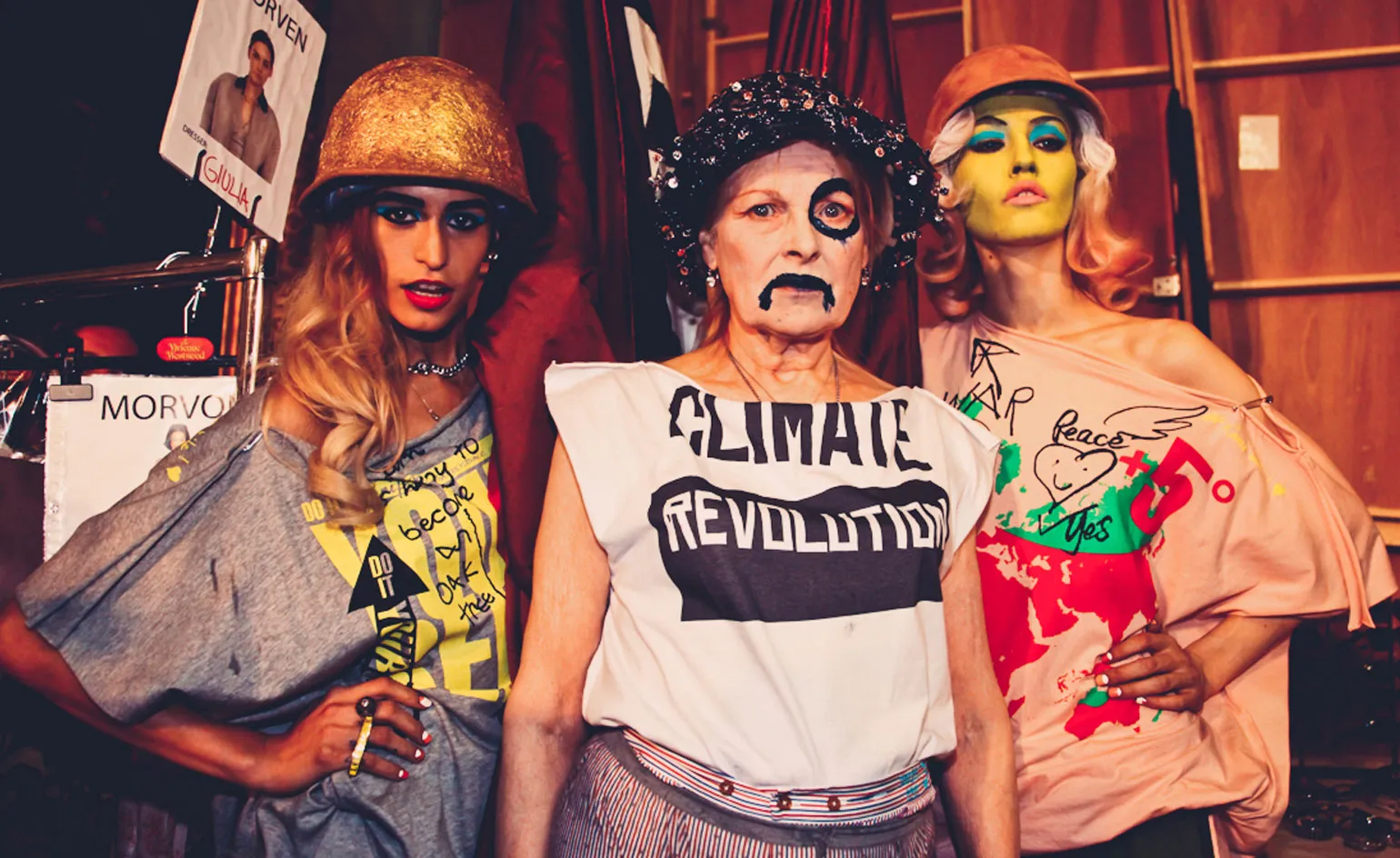



_(53765476960)_(cropped).jpg)







.jpg)


