NewzIntel.com

    • Checkout Page
    • Contact Us
    • Default Redirect Page
    • Frontpage
    • Home-2
    • Home-3
    • Lost Password
    • Member Login
    • Member LogOut
    • Member TOS Page
    • My Account
    • NewzIntel Alert Control-Panel
    • NewzIntel Latest Reports
    • Post Views Counter
    • Privacy Policy
    • Public Individual Page
    • Register
    • Subscription Plan
    • Thank You Page

Category: Education

  • MIL-OSI United Kingdom: £5.5 million for ‘Extra Time’ partnership with Scottish Football Association

    Source: Scottish Government

    Funding boost for activities clubs for children from low income families.

    Funding of £5.5 million for the Extra Time programme, which provides free activities clubs before school, after school and during the school holidays for primary age pupils, will support families on low incomes outwith school.

    On a visit to the St Mirren Charitable Foundation’s Extra Time service at Kirklandneuk Primary School in Renfrew, Social Justice Secretary Shirley-Anne Somerville saw how the programme is helping parents to get into and stay in work or training, or increase their working hours.

    The 2025 Extra Time Evaluation Report, published today by the Scottish FA, highlights the potential for the scheme to support the Scottish Government’s priorities of growing the economy and eradicating child poverty.

    Ms Somerville said:

    “The Extra Time programme is helping us to better understand how providing activities clubs before school, after school and during the holidays can improve outcomes for families on low incomes by supporting parents into work, training, studying or providing respite.

    “We are increasing our funding by £1.5 million to invest £5.5 million this year to expand the Extra Time Programme – increasing the number of football clubs and trusts we are working with from 31 to 53. This national programme will provide around 5,000 children and their families on low incomes with access to vital services.

    “The evaluation demonstrates that, as well as helping realise our priorities in growing the economy and eradicating child poverty, the Extra Time programme is supporting kids with their school attendance and attainment, helping tackle food insecurity and improving children’s health and wellbeing.”

    Ian Maxwell, Chief Executive of the Scottish Football Association, said: “Today’s announcement of increased funding for the Extra Time programme is a significant boost, and testament to the success of the initiative and the impact it continues to have on families across the country.

    “While this may be a football-based programme, with obvious health and education benefits to children who participate, the positive effects of Extra Time are felt throughout the entire family and it is another example of how the power of football makes a tangible difference across Scotland.

    “We are grateful to the Scottish Government for this additional investment which will allow clubs to continue to bring Extra Time to life. It’s a hugely worthwhile programme and something we’re delighted to be involved in.”

    Background:

    Scottish FA Extra Time impact report

    Football clubs and trusts are taking a variety of approaches to test and deliver provision that suits the needs of families in their communities.

    This includes working with local schools and other community partners to deliver breakfast clubs, after school clubs, weekend provision and holiday clubs. Some clubs are also considering the impact of in-service days and school closures on families to provide full day activity sessions.

    Many of the clubs have been considering how to best support parents and carers as part of their projects – for example, working in partnership with local services to deliver employability courses, and offering Scottish FA coaching qualifications.

    MIL OSI United Kingdom –

    June 9, 2025
  • MIL-OSI United Kingdom: PM launches national skills drive to unlock opportunities for young people in tech

    Source: United Kingdom – Executive Government & Departments

    Press release

    PM launches national skills drive to unlock opportunities for young people in tech

    Pupils across the country will be given the skills and tools needed to get the AI-powered jobs of the future thanks to a new skills programme launched by the Prime Minister.

    • 1 million students in secondary school to be given an unprecedented chance to learn and develop their skills in tech and AI
    • £187 million investment in national skills programme to bring digital skills and AI learning into classrooms and communities
    • 7.5 million UK workers to gain essential AI skills by 2030 through industry partnership as major tech players including NVIDIA, Google and Microsoft back the Government’s skills drive
    • Skills drive to break down barriers to opportunity, drive growth and put more money in people’s pockets through skilled jobs as part of the Plan for Change and the forthcoming modern Industrial Strategy

    Pupils across the country will be given the skills and tools needed to get the AI-powered jobs of the future thanks to a new skills programme launched by the Prime Minister today (Monday 9 June).

    At the heart of the skills drive, and as part of the upcoming modern Industrial Strategy, is a new £187 million government “TechFirst” programme to bring digital skills and AI learning into classrooms and communities and train up people of all ages and backgrounds for the tech careers of the future.

    Today’s announcements show this government is laser focused on investing in the futures of young people across Britain, knocking down barriers to opportunities, regardless of where they grow up.  

    It comes as research commissioned by the Department for Science, Innovation and Technology (DSIT) shows that by 2035, around 10 million workers will be in roles where AI will be part of their role or responsibilities in some form, with a further 3.9 million in roles directly in AI.

    The flagship strand of this programme “TechYouth” – backed by £24 million of government funding – will give 1 million students over three years across every secondary school in the UK the chance to learn about technology and gain access to new skills training and career opportunities.

    There will also be an online platform to inspire and educate students about the potential of computing and tech careers – building on CyberFirst’s Explorers which has access to most secondary schools in the UK with 100,000 students registered already. This will bring together learning tools and training opportunities in a streamlined accessible space.

    In each of the UK’s regions and nations, a local delivery partner will be selected by DSIT to run the programme and deliver activities to schools and colleges in local areas.

    The AI sector alone is valued at £72.3 billion and is projected to exceed £800 billion by 2035. It is growing 30 times faster than the rest of the economy, employing over 64,000 people across more than 3,700 companies.

    But despite these strengths, access to AI skills in the UK remains one of the biggest barriers to growth—especially for startups, scaleups, and regions outside London. According to a TechNation report released today, one in three UK tech founders say the availability of top talent is their biggest barrier to growth.

    That’s why the government is backing young people and investing in skills as an engine of economic growth—putting more money in people’s pockets and breaking down barriers to opportunity as part of the Plan for Change.

    This package underpins the upcoming industrial strategy and also delivers on the government’s manifesto commitment to create higher-quality training and employment paths by empowering local communities to develop the skills people need and putting employers at the heart of our skills system.

    Prime Minister Keir Starmer said: 

    “We are putting the power of AI into the hands of the next generation – so they can shape the future, not be shaped by it.

    “This training programme will unlock opportunity in every classroom – and lays the foundations for a new era of growth.

    “Too many children from working families like the one I grew up in are written off. I am determined to end that.

    “This programme is the Plan for Change in action – breaking down barriers, driving innovation, and giving every young person the chance of a good, well paid job and a bright future.”

    TechFirst will also support over 4,000 graduates, researchers, and innovators through three additional strands:

    • TechGrad (£96.8m) – will support 1,000 exceptional domestic students a year with undergraduate scholarships in areas like AI, cyber security, and computer science. This will also go towards 100 Research MSc places in key tech sectors, and 100 elite AI scholarships. Applicants will be able to apply to the scheme online and those successful will have their bursaries paid from a central fund.
    • TechExpert (£48.4m) – will give up to £10,000 in additional funding to 500 domestic PhD students conducting research in tech with the aim of accelerating cutting-edge innovation, strengthen the UK’s research pipeline in strategic technology sectors, and ensure that emerging talent is supported to contribute to national tech leadership.
    • TechLocal (£18m) – will offer seed funding to help regional innovators and small businesses develop new tech products and adopt AI. A panel made up of local tech businesses will be established in each region to decide which applications have merit, with the necessary checks then done centrally by Innovate UK.

    Major industry players including IBM, BAE Systems, QinetiQ, BT, Microsoft and the Careers & Enterprise Company – the national body for careers education – have backed the initiative.

    TechFirst builds on the success of the CyberFirst programme, which has already helped hundreds of thousands of young people gain cyber security skills.

    Science, Innovation and Technology Secretary Peter Kyle said: 

    “We are getting Brits ready for jobs of the future by helping millions across the country gain vital digital skills in AI and beyond.

    “Embedding these skills into our education system and local communities will help people of all backgrounds and ensure tech talent flourishes in every corner of our nation.

    “These partnerships with industry will translate skills into real jobs and economic growth, putting more money in people’s pockets and breaking down barriers to opportunity. This is our Plan for Change in action – investing in the skills that will power our economy and deliver prosperity for working people across the country.”

    David Hogan, Vice President Enterprise EMEA – NVIDIA said:

    “AI developers are the engine of the next industrial revolution. AI talent, skills and research are crucial ingredients in the UK’s mission to become an AI maker, not an AI taker.

    “So, we’re delighted to partner with the government to train the next generation of AI developers, capable of finding new cures for diseases, discovering new materials and building world-beating, British AI companies.”

    Google EMEA President, Debbie Weinstein, said: 

    “Our AI Works report revealed that £400bn worth of economic growth awaits the UK, but half of this depends on workers embracing and using AI. That’s precisely why we’re thrilled to join this crucial initiative, essential for supercharging AI upskilling, unlocking AI-powered growth and cementing the UK’s position as an AI leader.”

    Carolyn Dawson OBE, CEO of Founders Forum Group and Tech Nation, said: 

    “AI will transform every industry – but we can only unlock its full potential if we ensure the UK’s workforce has the skills to keep pace. This national upskilling programme is an ambitious and necessary step – not just to boost productivity, but to make sure we’re equipping the UK to participate in and benefit from the AI-driven economy. At Tech Nation, we’ve long championed the power of both homegrown talent and global expertise – whether that’s through supporting founders to scale or endorsing the UK’s Global Talent Visa. We’re proud to support initiatives that help the UK remain globally competitive”.

    Leon Butler Chief Executive of IBM UK and Ireland said:

    “Boosting technology skills across the economy is key to the UK maintaining its leadership position in AI. Having helped millions globally to develop new AI skills with our IBM SkillsBuild programme, we are delighted to partner with the UK government to help equip workers with vital tech skills. This complements our long-standing commitment to programmes such as CyberFirst, which we are excited to see expand. We look forward to continuing our support as the programme grows.”

    Darren Hardman CEO of Microsoft UK said:

    “Artificial Intelligence represents a generational opportunity, already transforming the way we live, work, and innovate. For the UK to remain globally competitive, we have to equip people with the skills they need to be successful in an AI-powered economy. Microsoft is proud to be playing its part, by training one million people with AI skills this year, and by supporting millions more through this new initiative.”

    Intuit EMEA General Manager Leigh Thomas said:

    “AI is a growth enabler for small and medium-sized businesses, levelling the playing field, by giving them the opportunity to access the sort of technology solutions that larger businesses have access to. The announcement today is a great step forward in improving their bottom line, and we look forward to collaborating with Government and other private sector partners to accelerate knowledge, understanding and adoption of AI tools by the businesses that need it most.”

    Jensen Huang, Founder and CEO, NVIDIA said:

    “AI developers power the next industrial revolution. AI talent, skills and research are crucial ingredients in the UK’s mission to become an AI maker, not an AI taker. We’re delighted to partner with the government to train the next generation of AI developers, capable of finding new cures for diseases, discovering new materials and building word-class AI companies.”

    Alongside TechFirst, the Prime Minister also announced a new government-industry partnership to train 7.5 million UK workers in essential skills to use AI by 2030—equivalent to around 20% of the UK workforce.

    Leading technology companies including Google, Microsoft, IBM, SAS, Accenture, Sage, Barclays, BT, Amazon, Intuit, and Salesforce have signed up to the partnership. They have committed to making high-quality training materials widely available to workers in businesses – large and small – up and down the country free of charge, over the next five years. 

    Training will focus on enabling workers to use and interact with AI systems such as chatbots and large language models to boost productivity across a wide range of roles. Sector-specific training will also be developed to meet the needs of industries from healthcare to finance to manufacturing.

    These companies will meet the Technology Secretary Peter Kyle this week to discuss how to meet the 2030 target, agree a terms of reference and will convene regularly to track progress.

    Following his speech, the Prime Minister will join NVIDIA CEO Jensen Huang for an “in conversation” event to discuss the challenges of closing the AI skills gap and the potential of AI to transform public services and drive economic growth.

    This comes as the government and NVIDIA today signed two Memorandums of Understanding, supporting the development of a nationwide AI talent pipeline and accelerating critical university-led research into the role of AI in advanced connectivity technologies. In addition, NVIDIA will expand its AI lab in Bristol to other areas of the UK to accelerate UK research in AI.  

    Today’s package follows the Department for Education’s announcement of the board members for Skills England, a new body which will work with employers and local leaders to shape training policy and delivery. Skills England will identify and tackle skills shortage in key Industrial Strategy sectors such as digital, creating more opportunities for young people.

    Yesterday, the Prime Minister hosted a private reception at Chequers with leading tech CEOs and investors—including Eric Schmidt (Former CEO & Chairman of Google), Angie Ma (Faculty AI) Demis Hassabis (Google DeepMind), and Alex Wang (Scale) —to reaffirm the UK’s position as a global tech leader.

    Tomorrow, he will welcome business leaders and entrepreneurs to Downing Street, including 16-year-old AI entrepreneur Toby Brown, who recently secured $1 million in Silicon Valley funding for his startup, Beem.

    Share this page

    The following links open in a new tab

    • Share on Facebook (opens in new tab)
    • Share on Twitter (opens in new tab)

    Updates to this page

    Published 8 June 2025

    MIL OSI United Kingdom –

    June 9, 2025
  • MIL-Evening Report: How Trump’s trade war is supercharging the fast fashion industry

    Source: The Conversation (Au and NZ) – By Mona Mashhadi Rajabi, Postdoctoral Research Fellow, University of Technology Sydney

    Jade Gao/Getty Images

    When US President Donald Trump introduced sweeping new tariffs on Chinese imports the goal was to bring manufacturing back to American soil and protect local jobs.

    However, this process of re-shoring is complex and requires years of investment and planning – far too slow for the world of ultra-fast fashion, where brands are used to reacting in weeks, not years.

    Many clothing companies started to move production out of China during Trump’s first term. They relocated to countries such as Vietnam and Cambodia when the initial China-specific tariffs hit.

    This trend accelerated with the newer “reciprocal” tariffs. Instead of re-shoring production, many fashion brands are simply sourcing from whichever country offers the lowest total cost after tariffs. The result? The ultra-fast fashion machine adapted quickly and became even more exploitative.

    From Guangzhou to your wardrobe in days

    Platforms such as Shein and Temu built their success by offering trend-driven clothing at shockingly low prices. A $5 dress or $3 top might seem like a bargain, but those prices hide a lot.

    Much of Shein’s production takes place in the so-called “Shein village” in Guangzhou, China, where workers often sew for 12–14 hours a day under poor conditions to keep pace with the demand for new items.

    When the US cracked down on Chinese imports, the intention was to make American-made goods more competitive. This included raising the tariff on Chinese goods as high as 145% (since paused), and closing the “de minimis” loophole, which had allowed imports under US$800 to enter tariff-free.

    But these tariffs did not halt ultra-fast fashion. They just rerouted production to countries with lower tariffs and even lower labour costs. The Philippines, with a comparatively low tariff rate of 17%, emerged as a surprising alternative. However, the country can’t provide the industrial scale and infrastructure to match what China can offer.

    So why does Australia matter?

    Much of the cheap fashion previously bound for the US is now flooding other markets, including Australia.

    Australia still allows most low-value imports to enter tax-free, and platforms such as Shein and Temu have taken full advantage. Australian consumers are among the most frequent Shein and Temu buyers per capita globally.

    Just 3% of clothing is made in Australia and most labels rely on offshore manufacturing. This makes Australia an ideal target market for ultra-fast fashion imports. We have high purchasing power, lenient import rules and strong demand for low-cost style, especially due to the cost-of-living crisis.

    The hidden costs of cheap clothes

    The environmental impact of fast fashion is well known. However, amid the chaos of Trump’s tariff announcements, far less attention has been paid to how these policies – together with the retreat from climate commitments – worsen environmental harms, including those linked to fast fashion.

    The irony is that the tariffs meant to protect American workers have, in some cases, worsened conditions for workers elsewhere. Meanwhile, consumers in Australia now benefit from faster delivery of even cheaper goods as Temu, Shein and others have improved their shipping capabilities to Australia.

    Australian consumers send more than 200,000 tonnes of clothing to landfill each year. But the deeper problem is structural. The entire business model is built on exploitation and environmental damage.

    Factory workers bear the brunt of cost-cutting. In the race to stay competitive, many manufacturers reduce wages and overlook hazardous working conditions.

    Will ethical fashion ever compete?

    Fixing these problems will require a global rethink of how fashion operates.
    Governments have a role in regulating disclosures about supply chains and enforcing labour standards.

    Brands need to take responsibility for the conditions in their factories, whether directly owned or outsourced. Transparency is essential.

    Alternatives to fast fashion are gaining traction. Clothing rentals are emerging as a promising business model that help build a more circular fashion economy. Charity-run op shops have long been a sustainable source of second-hand clothing.

    Australia’s new Seamless scheme seeks to make fashion brands responsible for the full life of the clothes they sell. The aim is to help people buy, wear and recycle clothes in a more sustainable way.

    Consumers also matter. If we continue to expect clothes to cost less than a cup of coffee, change will be slow. Recognising that a $5 t-shirt has hidden costs, borne by people on the factory floor and the environment, is a first step.

    Some ethical brands are already showing a better way and offer clothes made under fairer conditions and with sustainable materials. These clothes are not as cheap or fast, but they represent a more conscious alternative especially for consumers concerned about synthetic fibres, toxic chemicals and environmental harm.

    Trump reshuffled the deck, but did not change the game

    Trump’s trade rules aim to re-balance global trade in favour of American industry, yet have cost companies more than US$34 billion in lost sales and higher costs. This cost will eventually fall on US consumers. In ultra-fast fashion, it mostly exposed how fragile and exploitative the system already was.

    Today, brands such as Shein and Temu are thriving in Australia. But unless we address the systemic inequalities in fashion production and rethink the incentives that drive this market, the true cost of cheap clothing will continue to be paid by those least able to afford it.

    Mona Mashhadi Rajabi receives funding from the Department of Foreign Affairs and Trade (DFAT), the Accounting and Finance Association of Australia and New Zealand (AFAANZ), and a Business Research Grant from the University of Technology Sydney.

    Lisa Lake previously received funding from NSW Department of Education Innovation and Collaboration grant to establish the Centre of Excellence in Sustainable Fashion + Textiles.

    Martina Linnenluecke receives funding from The Department of Foreign Affairs and Trade (DFAT) and the Australian Research Council. Her work is also supported by a Strategic Research Accelerator Grant from the University of Technology Sydney (UTS).

    Yun Shen does not work for, consult, own shares in or receive funding from any company or organisation that would benefit from this article, and has disclosed no relevant affiliations beyond their academic appointment.

    – ref. How Trump’s trade war is supercharging the fast fashion industry – https://theconversation.com/how-trumps-trade-war-is-supercharging-the-fast-fashion-industry-257727

    MIL OSI Analysis – EveningReport.nz –

    June 9, 2025
  • MIL-Evening Report: Curious Kids: Why do dolphins jump out of the water?

    Source: The Conversation (Au and NZ) – By Katharina J. Peters, Lecturer in Biological Sciences, University of Wollongong

    Will Falcon/Shutterstock

    Why do dolphins jump out of the water?

    Charlize, age 8, Melbourne

    Have you ever seen images of dolphins jumping out of the waves and performing impressive acrobatics in the air? Or maybe you’ve seen it in real life?

    When a dolphin jumps, it can launch its whole body out of the water. While it looks like fun, it must also be hard work!

    So, why do dolphins jump out of the water? There are several possible reasons. Let’s jump in and explore them.

    A dolphin can launch its whole body out of the water.
    Paulphin Photography/Shutterstock

    To stay in touch

    Dolphins are social animals and live in groups. But it’s hard to see long distances underwater. So, they use the power of sound to stay in contact with each other.

    Sound travels much farther underwater than through the air. When dolphins jump, the slap of the landing makes a loud noise, and would be heard some distance away.

    Some species, such as spinner dolphins, use jumping to communicate their location to other group members, especially at night. This helps them keep track of each other.

    As an aside, spinner dolphins are very skilled jumpers. As the name suggests, they spin up to seven times in the air before landing back in the water!

    Spinner dolphins are the acrobats of the sea.

    The need for speed

    Have you ever tried to walk underwater? You will have felt how hard it is. That’s because water is more dense than air, which creates a “drag”, or resistance.

    Dolphins have streamlined bodies to reduce drag, but they still feel it. So, if they want to travel quickly – for example, if they are trying to escape a predator or hunt fish – they sometimes jump.

    While in the air, they travel faster than they would through water, and also save energy.

    To gather food

    Some dolphins weigh less than 50 kilograms, such as the Hector’s dolphin. Others weigh several tonnes, such as an orca.

    Either way, when a dolphin crashes back into the water, you can be sure it makes quite a noisy splash.

    Some dolphin species, such as dusky dolphins, use this noise to herd fish at the surface to make them easier to capture.

    Shaking off hitchhikers

    Fish called remoras can attach themselves to dolphins using a sucker on their head. This is good for the fish, because it can keep them safe and they have plenty to eat, such as small parasites and old bits of dolphin skin.

    While the remoras don’t hurt the dolphin, they probably slow it down. So dolphins may try to get rid of the little hitchhikers by jumping to dislodge them.

    A dolphin calf jumping to remove remoras.

    Fighting and frolicking

    Dolphins are highly intelligent animals. They have big brains and can learn tricks and solve puzzles. With intelligence also come other traits: playfulness and social behaviour.

    Sometimes, that social behaviour can end in a “fight”. Dolphin experts say two dolphins jumping around together might be actually trying to hit each other!

    Dolphins also love to frolic – not just with each other but with other marine mammals such as whales and sea lions, with turtles – or even just a piece of seaweed! So they might jump as some sort of “game”.

    As you can see, dolphins may jump for a range of reasons – sometimes just because it’s really fun!

    Katharina J. Peters does not work for, consult, own shares in or receive funding from any company or organisation that would benefit from this article, and has disclosed no relevant affiliations beyond their academic appointment.

    – ref. Curious Kids: Why do dolphins jump out of the water? – https://theconversation.com/curious-kids-why-do-dolphins-jump-out-of-the-water-256462

    MIL OSI Analysis – EveningReport.nz –

    June 9, 2025
  • MIL-Evening Report: 2-million-year-old pitted teeth from our ancient relatives reveal secrets about human evolution

    Source: The Conversation (Au and NZ) – By Ian Towle, Research Fellow in Biological Anthropology, Monash University

    Ian Towle / The Conversation

    The enamel that forms the outer layer of our teeth might seem like an unlikely place to find clues about evolution. But it tells us more than you’d think about the relationships between our fossil ancestors and relatives.

    In our new study, published in the Journal of Human Evolution, we highlight a different aspect of enamel. In fact, we highlight its absence.

    Specifically, we show that tiny, shallow pits in fossil teeth may not be signs of malnutrition or disease. Instead, they may carry surprising evolutionary significance.

    You might be wondering why this matters. Well, for people like me who try to figure out how humans evolved and how all our ancestors and relatives were related to each other, teeth are very important. And having a new marker to look out for on fossil teeth could give us a new tool to help fit together our family tree.

    Uniform, circular and shallow

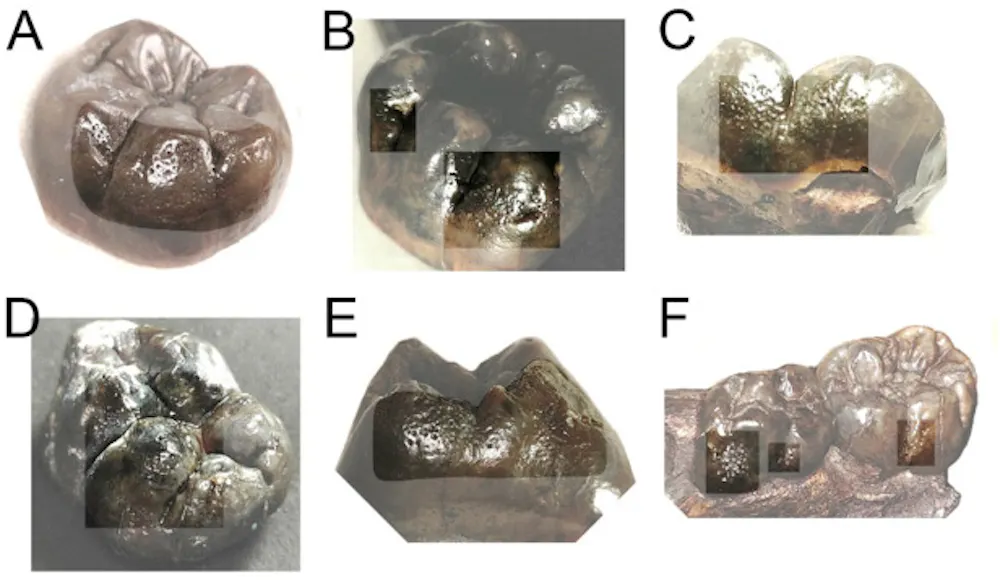
    These pits were first identified in the South African species Paranthropus robustus, a close relative of our own genus Homo. They are highly consistent in shape and size: uniform, circular and shallow.

    Initially, we thought the pits might be unique to P. robustus. But our latest research shows this kind of pitting also occurs in other Paranthropus species in eastern Africa. We even found it in some Australopithecus individuals, a genus that may have given rise to both Homo and Paranthropus.

    Uniform, circular and shallow pitting on teeth may be a previously undetected clue about evolutionary relationships.
    Towle et al. / Journal of Human Evolution

    The enamel pits have commonly been assumed to be defects resulting from stresses such as illness or malnutrition during childhood. However, their remarkable consistency across species, time and geography suggests these enamel pits may be something more interesting.

    The pitting is subtle, regularly spaced, and often clustered in specific regions of the tooth crown. It appears without any other signs of damage or abnormality.

    Two million years of evolution

    We looked at fossil teeth from hominins (humans and our closest extinct relatives) from the Omo Valley in Ethiopia, where we can see traces of more than two million years of human evolution, as well as comparisons with sites in southern Africa (Drimolen, Swartkrans and Kromdraai).

    The Omo collection includes teeth attributed to Paranthropus, Australopithecus and Homo, the three most recent and well-known hominin genera. This allowed us to track the telltale pitting across different branches of our evolutionary tree.

    What we found was unexpected. The uniform pitting appears regularly in both eastern and southern Africa Paranthropus, and also in the earliest eastern African Australopithecus teeth dating back around 3 million years. But among southern Africa Australopithecus and our own genus, Homo, the uniform pitting was notably absent.

    A defect … or just a trait?

    If the uniform pitting were caused by stress or disease, we might expect it to correlate with tooth size and enamel thickness, and to affect both front and back teeth. But it doesn’t.

    What’s more, stress-related defects typically form horizontal bands. They usually affect all teeth developing at the time of the stress, but this is not what we see with this pitting.

    The uniform, even nature of the pitting suggests a genetic origin rather than environmental factors such as malnutrition or disease.
    Towle et al. / Journal of Human Evolution

    We think this pitting probably has a developmental and genetic origin. It may have emerged as a byproduct of changes in how enamel was formed in these species. It might even have some unknown functional purpose.

    In any case, we suggest these uniform, circular pits should be viewed as a trait rather than a defect.

    A modern comparison

    Further support for the idea of a genetic origin comes from comparisons with a rare condition in humans today called amelogenesis imperfecta, which affects enamel formation.

    About one in 1,000 people today have amelogenesis imperfecta. By contrast, the uniform pitting we have seen appears in up to half of Paranthropus individuals.

    Although it likely has a genetic basis, we argue the even pitting is too common to be considered a harmful disorder. What’s more, it persisted at similar frequencies for millions of years.

    A new evolutionary marker

    If this uniform pitting really does have a genetic origin, we may be able to use it to trace evolutionary relationships.

    We already use subtle tooth features such as enamel thickness, cusp shape, and wear patterns to help identify species. The uniform pitting may be an additional diagnostic tool.

    For example, our findings support the idea that Paranthropus is a “monophyletic group”, meaning all its species descend from a (relatively) recent common ancestor, rather than evolving seperatly from different Australopithecus taxa.

    And we did not find this pitting in the southern Africa species Australopithecus africanus, despite a large sample of more than 500 teeth. However, it does appear in the earliest Omo Australopithecus specimens.

    So perhaps the pitting could also help pinpoint from where Paranthropus branched off on its own evolutionary path.

    An intriguing case

    One especially intriguing case is Homo floresiensis, the so-called “hobbit” species from Indonesia. Based on published images, their teeth appear to show similar pitting.

    If confirmed, this could suggest an evolutionary history more closely tied to earlier Australopithecus species than to Homo. However, H. floresiensis also shows potential skeletal and dental pathologies, so more research is needed before drawing such conclusions.

    More research is also needed to fully understand the processes behind the uniform pitting before it can be used routinely in taxonomic work. But our research shows it is likely a heritable characteristic, one not found in any living primates studied to date, nor in our own genus Homo (rare cases of amelogenesis imperfecta aside).

    As such, it offers an exciting new tool for exploring evolutionary relationships among fossil hominins.

    Ian Towle does not work for, consult, own shares in or receive funding from any company or organisation that would benefit from this article, and has disclosed no relevant affiliations beyond their academic appointment.

    – ref. 2-million-year-old pitted teeth from our ancient relatives reveal secrets about human evolution – https://theconversation.com/2-million-year-old-pitted-teeth-from-our-ancient-relatives-reveal-secrets-about-human-evolution-258390

    MIL OSI Analysis – EveningReport.nz –

    June 9, 2025
  • MIL-Evening Report: What can you do if you don’t like your child’s friends?

    Source: The Conversation (Au and NZ) – By Rachael Murrihy, Director, The Kidman Centre, Faculty of Science, University of Technology Sydney

    Getty Images/ Wander Woman Collective

    Many parents will be familiar with this situation: your child has a good or even best friend, but you don’t like them.

    Perhaps the friend is bossy, has poor manners or jumps on your furniture. Maybe you don’t like the way your child behaves when they are with this friend.

    For older children, your dislike might relate to the friend’s language, attitude towards school, or risk-taking behaviours. Maybe the friend is hot and cold and elicits more drama than Mean Girls.

    What can parents do?


    Read more:
    How can you help your child make friends?


    You will have a protective instinct

    If you see your child being treated poorly, this can ignite a protective instinct in parents that manifests in a bodily “fight or flight” response.

    This provides a rush of adrenaline, which can spur parents to take actions such as criticising the friend or even attempting to ban the friendship.

    However, this approach can do more harm than good, particularly for adolescents who are hardwired to push back on their parents.

    What can you do for younger kids?

    With younger children, clear boundaries can be set at the outset of a playdate. For example, “my bedroom is off limits for playing” or “we don’t jump on the couch”.

    If kids are using mean or rude language around each other, you can say “we don’t use that word in this house, be kind to each other”.

    Playdates can be moved outside, which can be particularly helpful if a child shows loud, destructive or rude behaviour. And if you can help it, organise fewer plays with that child.

    But parents may also want to reflect on why this child rubs them the wrong way. Is the reaction warranted, or does it comes from your own biases and opinions? Your child’s friends do not have to be the friends you would choose.

    Change your approach for older kids

    To become successful adults, teens need to move through developmental milestones of becoming autonomous and self-reliant. Intervening in their friendships interferes with this vital process of developing independence and identity, which ultimately disempowers them.

    In the 1960s, US psychologist Diana Baumrind published famous research on parenting. She found an authoritarian style – where the parent exerts complete control and does not listen to the child’s needs – results in a child with less confidence and independence than one brought up in a household that has rules but is also responsive to their needs.

    Adopting an authoritarian approach to friends or potential partners also risks the “Romeo and Juliet” effect, whereby disapproval makes the child more attracted to that person.

    So, for teenagers and their friends, the approach should be more nuanced. The primary goal is to encourage the child to see the parent as a person to come to when they have problems. If parents are tempted to be critical, they could ask themself: is it in the best interests of your child to be controlled?

    It is important to let children make mistakes so they can learn from them. Learning about what they do and don’t want in relationships is a crucial life skill.


    Read more:
    ‘How was school today?’ How to help kids open up and say more than ‘fine’


    How can you talk about friendship?

    Fostering an open dialogue about friends and relationships can allow parents to have influence in a subtle and developmentally appropriate way.

    For younger children, you could use a quiet moment to ask questions like “what can you say to Charlotte if you don’t want to play her game anymore?” or “what’s a good way to deal with it if she is being too bossy?”

    For older children, ideally wait until your teen wants to connect, rather than launching into questions. Ask gentle, non-judgmental questions about their friendship, like “what do you like to do together?” or “tell me about what you have in common”.

    If they seem upset or uncomfortable in some way, resist the urge to dismiss or solve the problem. Simply listening is the key to helping the child work it out, so they feel supported but not judged.

    And remember, not all friendships last. As children move through school and grow, most will naturally make new friends and move on from old ones.

    Clearly, one exception to adopting a teen-led approach is when safety is at risk. If they are being bullied or abused in any form – even if the child is opposed – parents should step in and speak to the school or other relevant authorities.


    Read more:
    What can you do if your child is being bullied?


    Rachael Murrihy does not work for, consult, own shares in or receive funding from any company or organisation that would benefit from this article, and has disclosed no relevant affiliations beyond their academic appointment.

    – ref. What can you do if you don’t like your child’s friends? – https://theconversation.com/what-can-you-do-if-you-dont-like-your-childs-friends-257353

    MIL OSI Analysis – EveningReport.nz –

    June 9, 2025
  • MIL-Evening Report: Measles cases are surging globally. Should children be vaccinated earlier?

    Source: The Conversation (Au and NZ) – By Meru Sheel, Associate Professor, Infectious Diseases, Immunisation and Emergencies (IDIE) Group, Sydney School of Public Health, University of Sydney

    EyeEm Mobile GmbH/Getty Images

    Measles has been rising globally in recent years. There were an estimated 10.3 million cases worldwide in 2023, a 20% increase from 2022.

    Outbreaks are being reported all over the world including in the United States, Europe and the Western Pacific region (which includes Australia). For example, Vietnam has reportedly seen thousands of cases in 2024 and 2025.

    In Australia, 77 cases of measles have been recorded in the first five months of 2025, compared with 57 cases in all of 2024.

    Measles cases in Australia are almost all related to international travel. They occur in travellers returning from overseas, or are contracted locally after mixing with an infected traveller or their contacts.

    Measles most commonly affects children and is preventable with vaccination, given in Australia in two doses at 12 and 18 months old. But in light of current outbreaks globally, is there a case for reviewing the timing of measles vaccinations?

    Some measles basics

    Measles is caused by a virus belonging to the genus Morbillivirus. Symptoms include a fever, cough, runny nose and a rash. While it presents as a mild illness in most cases, measles can lead to severe disease requiring hospitalisation, and even death. Large outbreaks can overwhelm health systems.

    Measles can have serious health consequences, such as in the brain and the immune system, years after the infection.

    Measles spreads from person to person via small respiratory droplets that can remain suspended in the air for two hours. It’s highly contagious – one person with measles can spread the infection to 12–18 people who aren’t immune.

    Because measles is so infectious, the World Health Organization (WHO) recommends two-dose vaccination coverage above 95% to stop the spread and achieve “herd immunity”.

    Low and declining vaccine coverage, especially since the COVID pandemic, is driving global outbreaks.


    Read more:
    What are the symptoms of measles? How long does the vaccine last? Experts answer 6 key questions


    When are children vaccinated against measles?

    Newborn babies are generally protected against measles thanks to maternal antibodies. Maternal antibodies get passed from the mother to the baby via the placenta and in breast milk, and provide protection against infections including measles.

    The WHO advises everyone should receive two doses of measles vaccination. In places where there’s a lot of measles circulating, children are generally recommended to have the first dose at around nine months old. This is because it’s expected maternal antibodies would have declined significantly in most infants by that age, leaving them vulnerable to infection.

    If maternal measles antibodies are still present, the vaccine is less likely to produce an immune response.

    Research has also shown a measles vaccine given at less than 8.5 months of age can result in an antibody response which declines more quickly. This might be due to interference with maternal antibodies, but researchers are still trying to understand the reasons for this.

    A second dose of the vaccine is usually given 6–9 months later. A second dose is important because about 10–15% of children don’t develop antibodies after the first vaccine.

    In settings where measles transmission is under better control, a first dose is recommended at 12 months of age. Vaccination at 12 months compared with nine months is considered to generate a stronger, longer-lasting immune response.

    In Australia, children are routinely given the measles-mumps- rubella (MMR) vaccine at 12 months and the measles-mumps-rubella-varicella (MMRV, with “varicella” being chickenpox) vaccine at 18 months.

    Babies at higher risk of catching the disease can also be given an additional early dose. In Australia, this is recommended for infants as young as six months when there’s an outbreak or if they’re travelling overseas to a high-risk setting.

    A new study looking at measles antibodies in babies

    A recent review looked at measles antibody data from babies under nine months old living in low- and middle-income countries. The review combined the results from 20 studies, including more than 8,000 babies. The researchers found that while 81% of newborns had maternal antibodies to measles, only 30% of babies aged four months had maternal antibodies.

    This study suggests maternal antibodies to measles decline much earlier than previously thought. It raises the question of whether the first dose of measles vaccine is given too late to maximise infants’ protection, especially when there’s a lot of measles around.

    Should we bring the measles vaccine forward in Australia?

    All of the data in this study comes from low- and middle-income countries, and might not reflect the situation in Australia where we have much higher vaccine coverage for measles, and very few cases.

    Australia’s coverage for two doses of the MMR vaccine at age two is above 92%.

    Although this is lower than the optimal 95%, the overall risk of measles surging in Australia is relatively low.

    Nonetheless, there may be a case for broadening the age at which an early extra dose of the measles vaccine can be given to children at higher risk. In New Zealand, infants as young as four months can receive a measles vaccine before travelling to an endemic country.

    But the current routine immunisation schedule in Australia is unlikely to change.

    Adding an extra dose to the schedule would be costly and logistically difficult. Lowering the age for the first dose may have some advantages in certain settings, and doesn’t pose any safety concerns, but further evidence would be required to support this change. In particular, research is needed to ensure it wouldn’t negatively affect the longer-term protection that vaccination offers from measles.

    Making sure you’re protected

    In the meantime, ensuring high levels of measles vaccine coverage with two doses is a global priority.

    People born after 1966 are recommended to have two doses of measles vaccine. This is because those born before the mid-1960s likely caught measles as children (when the vaccine was not yet available) and would therefore have natural immunity.

    If you’re unsure about your vaccination status, you can check this through the Australian Immunisation Register. If you don’t have a documented record, ask your doctor for advice.

    Catch-up vaccination is available under the National Immunisation Program.

    Meru Sheel receives funding from the National Health and Medical Research Council and the Department of Foreign Affairs and Trade.

    Anita Heywood does not work for, consult, own shares in or receive funding from any company or organisation that would benefit from this article, and has disclosed no relevant affiliations beyond their academic appointment.

    – ref. Measles cases are surging globally. Should children be vaccinated earlier? – https://theconversation.com/measles-cases-are-surging-globally-should-children-be-vaccinated-earlier-257942

    MIL OSI Analysis – EveningReport.nz –

    June 9, 2025
  • MIL-Evening Report: Can Israel still claim self-defence to justify its Gaza war? Here’s what the law says

    Source: The Conversation (Au and NZ) – By Donald Rothwell, Professor of International Law, Australian National University

    On October 7 2023, more than 1,000 Hamas militants stormed into southern Israel and went on a killing spree, murdering 1,200 men, women and children and abducting another 250 people to take back to Gaza. It was the deadliest massacre of Jews since the Holocaust.

    That day, Israeli Prime Minister Benjamin Netanyahu told the country, “Israel is at war”. The Israel Defence Forces (IDF) immediately began a military campaign to secure the release of the hostages and defeat Hamas. Since that day, more than 54,000 Palestinians have been killed, mostly women and children.

    Israel has maintained its response is justified under international law, as every nation has “an inherent right to defend itself”, as Netanyahu stated in early 2024.

    This is based on the right to self-defence in international law, which is outlined in Article 51 of the 1945 United Nations Charter as follows:

    Nothing in the present Charter shall impair the inherent right of individual or collective self-defence if an armed attack occurs against a Member of the United Nations[…]

    At the start of the war, many nations agreed Israel had a right to defend itself, but how it did so mattered. This would ensure its actions were consistent with international humanitarian law.

    However, 20 months after the October 7 attacks, fundamental legal issues have arisen around whether this self-defence justification still holds.

    Can Israel exercise self-defence ad infinitum? Or is it now waging a war of aggression against Palestine?

    Self-defence in the law

    Self-defence has a long history in international law.

    The modern principles of self-defence were outlined in diplomatic exchanges over an 1837 incident involving an American ship, The Caroline, after it was destroyed by British forces in Canada. Both sides agreed that an exercise of self-defence would have required the British to demonstrate their conduct was not “unreasonable or excessive”.

    The concept of self-defence was also extensively relied on by the Allies in the second world war in response to German and Japanese aggression.

    Self-defence was originally framed in the law as a right to respond to a state-based attack. However, this scope has broadened in recent decades to encompass attacks from non-state actors, such as al-Qaeda following the September 11 2001 terror attacks.

    Israel is a legitimate, recognised state in the global community and a member of the United Nations. Its right to self-defence will always remain intact when it faces attacks from its neighbours or non-state actors, such as Hamas, Hezbollah or the Houthi rebels in Yemen.

    However, the right of self-defence is not unlimited. It is constrained by the principles of necessity and proportionality.

    The necessity test was met in the current war due to the extreme violence of the Hamas attack on October 7 and the taking of hostages. These were actions that could not be ignored and demanded a response, due to the threat Israel continued to face.

    The proportionality test was also met, initially. Israel’s military operation after the attack was strategic in nature, focused on the return of the hostages and the destruction of Hamas to eliminate the immediate threat the group posed.

    The legal question now is whether Israel is still legitimately exercising self-defence in response to the October 7 attacks.

    This is a live issue, especially given comments by Israeli Defence Minister Israel Katz on May 30 that Hamas would be “annihilated” unless a proposed ceasefire deal was accepted.

    These comments and Israel’s ongoing conduct throughout the war raise the question of whether proportionality is still being met.

    A test of proportionality

    The importance of proportionality in self-defence has been endorsed in recent years by the International Court of Justice.

    Under international law, proportionality remains relevant throughout a conflict, not just in the initial response to an attack.

    While the law allows a war to continue until an aggressor surrenders, it does not legitimise the complete destruction of the territory where an aggressor is fighting.

    The principle of proportionality also provides protections for civilians. Military actions are to be directed at the foreign forces who launched the attack, not civilians.

    While Israel has targeted Hamas fighters in its attacks, including those who orchestrated the October 7 attacks, these actions have caused significant collateral deaths of Palestinian civilians.

    Therefore, taken overall, the ongoing, 20-month military assault against Hamas, with its high numbers of civilian casualties, credible reports of famine and devastation of Gazan towns and cities, suggests Israel’s exercise of self-defence has become disproportionate.

    The principle of proportionality is also part of international humanitarian law. However, Israel’s actions on this front are a separate legal issue that has been the subject of investigation by the International Criminal Court.

    My aim here is to solely assess the legal question of proportionality in self-defence and international law.

    Is rescuing hostages in self-defence?

    Israel could separately argue it is exercising legitimate self-defence to rescue the remaining hostages held by Hamas.

    However, rescuing nationals as an exercise of self-defence is legally controversial. Israel set a precedent in 1976 when the military rescued 103 Jewish hostages from Entebbe, Uganda, after their aircraft had been hijacked.

    In current international law, there are very few other examples in which this interpretation of self-defence has been adopted – and no international consensus on its use.

    In Gaza, the size, scale and duration of Israel’s war goes far beyond a hostage rescue operation. Its aim is also to eliminate Hamas.

    Given this, rescuing hostages as an act of self-defence is arguably not a suitable justification for Israel’s ongoing military operations.

    An act of aggression?

    If Israel can no longer rely on self-defence to justify its Gaza military campaign, how would its actions be characterised under international law?

    Israel could claim it is undertaking a security operation as an occupying power.

    While the International Court of Justice said in an advisory opinion last year that Israel was engaged in an illegal occupation of Gaza, the court expressly made clear it was not addressing the circumstances that had evolved since October 7.

    Israel is indeed continuing to act as an occupying power, even though it has not physically reoccupied all of Gaza. This is irrelevant given the effective control it exercises over the territory.

    However, the scale of the IDF’s operations constitute an armed conflict and well exceed the limited military operations to restore security as an occupying power.

    Absent any other legitimate basis for Israel’s current conduct in Gaza, there is a strong argument that what is occurring is an act of aggression. The UN Charter and the Rome Statute of the International Criminal Court prohibit acts of aggression not otherwise justified under international law.

    These include invasions or attacks by the armed forces of a state, military occupations, bombardments and blockades. All of this has occurred – and continues to occur – in Gaza.

    The international community has rightly condemned Russia’s invasion as an act of aggression in Ukraine. Will it now do the same with Israel’s conduct in Gaza?

    Donald Rothwell receives funding from the Australian Research Council.

    – ref. Can Israel still claim self-defence to justify its Gaza war? Here’s what the law says – https://theconversation.com/can-israel-still-claim-self-defence-to-justify-its-gaza-war-heres-what-the-law-says-257822

    MIL OSI Analysis – EveningReport.nz –

    June 9, 2025
  • MIL-Evening Report: Why bystanders defend bad behaviour at work — even when they know it’s wrong

    Source: The Conversation (Au and NZ) – By Zhanna Lyubykh, Assistant Professor, Beedie School of Business, Simon Fraser University

    Rather than intervening, supporting targets or reporting the misconduct, bystanders may downplay it, withdraw support or even blame the target, which ultimately reinforces the mistreatment. (Shutterstock)

    “You always mess things up. Why are you even on this project? Just quit already.” Demeaning, hostile or undermining behaviour like this is more common in the workplace and damaging than many people realize. One in three employees experience such behaviours, and almost half witness them.

    Rather than intervening, supporting targets or reporting the misconduct, research shows bystanders may downplay it, withdraw support or even blame the target, which ultimately reinforces the mistreatment.

    As our recent study shows, this is largely because when mistreatment seems inevitable or commonplace, bystanders are psychologically motivated to justify it rather than challenge it.

    Why do bystanders rationalize mistreatment?

    Humans are hardwired to see mistreatment as wrong. Most of us value fairness and want to punish wrongdoing. But if this is the case, why do bystanders so often fail to act when they witness mistreatment?

    Our recent research explores this question drawing on system justification theory — the idea that people are motivated to see the systems they live and work in as fair, legitimate and stable.

    When mistreatment seems inevitable — when people think “that’s just how things work around here” — bystanders face a psychological dilemma. They can either challenge the behaviour and risk conflict, exclusion or backlash, or they can rationalize it as normal or deserved.

    Most people, often without realizing it, choose the latter. This mental shortcut allows them to preserve the comforting belief that the system is fair and people get what they deserve.

    One in three employees experience demeaning, hostile or undermining behaviour in the workplace, and almost half witness them.
    (Shutterstock)

    Witnessing workplace mistreatment

    We interviewed 554 employees who had witnessed workplace mistreatment within the past two weeks at the time the survey was conducted. They shared their thoughts on how inevitable they believed the mistreatment incident was, and how tolerant they felt their organization was toward such behaviour.

    In a follow-up survey, we asked these employees whether they felt the incident they witnessed was justifiable and the target as deserving. A week later, in a third survey, we asked these bystanders to report how they behaved toward the target, and whether they tried to address or minimize the incident.

    We found that when bystanders perceived mistreatment as inevitable, they were more likely to see the incident as justified and targets as deserving of that treatment. These bystanders were more likely to socially distance themselves from the target, engage in negative gossip about them and were less willing to offer help.

    Bystander inaction wasn’t due to cowardice or callousness, but was often a defence mechanism. Rationalizing mistreatment allowed bystanders to preserve the belief that their workplace was just. But this coping strategy can deepen harm for those who experience mistreatment, who may be further marginalized, isolated or discredited.

    How mistreatment is normalized

    Workplace climates play a key role in the normalization of mistreatment. Our findings indicate when employees believed their workplace tolerated mistreatment, they were more likely to rationalize it and less likely to support the person being mistreated.

    In these contexts, mistreatment isn’t just ignored, but is quietly accepted. Tacit acceptance sends a powerful message: this is normal, this is deserved, this is not worth challenging.

    What does a toxic, permissive workplace look like? Warning signs include staff who feel anxious about coming to work and leaders who publicly criticize employees or tell them to “toughen up” or “not take it personally.”

    If negative gossip is tolerated, or reports of mistreatment are ignored or delayed, these are also strong indicators that mistreatment has been normalized.

    Organizations may fail to acknowledge these patterns for a variety of reasons, including resistance, denial or a lack of readiness. But surfacing these issues is a strength, not a weakness. It allows organizations to address root causes, retain valuable employees, and foster a more respectful environment.

    When mistreatment is ignored in the workplace, it sends a message to employees that it is normal, deserved and not worth challenging.
    (Unsplash/Borja Verbena)

    4 ways to create positive change

    Even in workplaces where mistreatment has become normalized, positive change is possible. Research shows that effectively managing everyday incidents can create bottom-up effects that support broader positive change within the workplace, ultimately improving workplace climate.

    Managers have a particularly pivotal role to play. When they respond quickly, support targets openly and hold perpetrators accountable, they challenge the perception that mistreatment is inevitable. They also send a broader message about what behaviours are and aren’t acceptable in the workplace.

    Here are four evidence-based strategies that can help disrupt the bystander dynamic and improve workplace culture:

    1. Challenge the narrative of inevitability

    Organizations should clearly signal that mistreatment will not be tolerated in their workplace. This includes explicitly communicating behavioural expectations, investigating reports quickly and transparently, and ensuring senior leaders model respectful behaviour. These small but visible actions disrupt the sense that mistreatment is “just how things work.”

    2. Reduce ambiguity

    When organizations don’t define behavioural norms clearly, bystanders are more likely to rationalize mistreatment. Organizations should define what mistreatment includes, such as exclusion and sarcastic comments, and distinguish it from tough feedback or constructive conflict. Training can help employees recognize subtle forms of harm and reflect on how their reactions would appear to someone they respect.

    3. Enforce consequences consistently

    When policies exist but aren’t enforced, bystanders learn that mistreatment carries no cost. Organizations need to follow through on mistreatment policies, protect those who report it and make it clear that retaliation is unacceptable. Visibility matters: people need to see that action is taken.

    4. Support targets openly and meaningfully

    System justification often works by undermining the credibility of those being mistreated. Managers can counteract this by affirming the value of a person targeted, encouraging reintegration and monitoring their teams for subtle social exclusion. When targets are supported by respected leaders, bystanders are more likely to follow suit because people tend to look to leader behaviour towards employees as a sign of their value to the group.

    When targets are supported by respected leaders, bystanders are more likely to follow suit.
    (Shutterstock)

    Why this matters

    Much of the existing research on workplace mistreatment has focused on the importance of bystander and leader intervention. Our research adds a deeper layer by illustrating that bystanders may not intervene because they are subconsciously defending their belief in a fair and legitimate system.

    This defence mechanism is especially dangerous when mistreatment is common, creating a cycle in which the most vulnerable employees are harmed twice: first by the perpetrator, and then by those who fail to stand by them.

    Breaking this cycle requires more than training videos or one-off statements. It requires reshaping the climate that makes mistreatment seem normal, inevitable or trivial.

    The encouraging news is that even small, consistent actions can begin to shift these dynamics. Research has shown that incivility training that teaches people how to engage in civil ways, for example, has lasting effects on employee well-being and relationships. When these harmful dynamics are shifted, it improves the workplace for everyone.

    Zhanna Lyubykh receives funding from the Social Sciences and Humanities Research Council of Canada.

    Laurie J. Barclay receives funding from the Social Sciences and Humanities Research Council of Canada and the University of Guelph’s Research Leader Award.

    Nick Turner receives research funding from Cenovus Energy Inc., Haskayne School of Business’s Future Fund, Mitacs, and the Social Sciences and Humanities Research Council of Canada (SSHRC).

    Sandy Hershcovis receives funding from the Social Sciences and Humanities Research Council of Canada.

    – ref. Why bystanders defend bad behaviour at work — even when they know it’s wrong – https://theconversation.com/why-bystanders-defend-bad-behaviour-at-work-even-when-they-know-its-wrong-257941

    MIL OSI Analysis – EveningReport.nz –

    June 9, 2025
  • MIL-Evening Report: Immortality at a price: how the promise of delaying death has become a consumer marketing bonanza

    Source: The Conversation (Au and NZ) – By Amy Errmann, Senior Lecturer, Marketing & International Business, Auckland University of Technology

    Living forever has become the wellness and marketing trend of the 2020s. But cheating death – or at least delaying it – will come at a price.

    What was once the domain of scientists and the uber rich is increasingly becoming a consumer product. Those pushing the idea, spearheaded by tech billionaire Bryan Johnson’s “Don’t Die” movement, believe death isn’t inevitable, but is a solvable problem.

    The global longevity market – spanning gene therapies, anti-ageing drugs, diagnostics and wellness plans – is projected to hit US$610 billion this year. At its core, the marketing of these products feeds off the age-old fear of mortality and the desire to stay young.

    But while the marketing is reaching the masses, this is still very much a luxury product. Immortality is being sold as exclusive, aspirational and symbolic. It’s not just about living longer – it’s about signalling status, controlling biology and being your “best future self”.

    Tapping into long-held fears

    What’s known as “terror management theory” puts forward the idea that humans and other animals have an instinctive drive for self-preservation. But humans are not only self-aware, they are also able to anticipate future outcomes – including the inevitability of death.

    The messaging behind the push to extend life taps into this internal tension between knowledge of our own mortality and the self-preservation instinct. And to be fair, it is not a new phenomenon.

    Cryonics – the preservation of bodies and brains at extremely low temperatures with the hope medical advancements will allow for their revival at some point in the future – was first popularised in Robert Ettinger’s 1962 book The Prospect of Immortality.

    Since then, the super-rich have invested in various companies promising to preserve their bodies for some unknown future date. It now costs US$200,000 to freeze your body, or $80,000 for just your brain.

    What’s truly new is how death is being marketed – not as fate, but as a flaw. Longevity isn’t just about living longer; it’s about turning mortality into a design problem, something to delay, manage and eventually solve.

    “Biohacking” sells the idea that with the right data, tools and discipline, you can upgrade your biology – and become your best, most future-proof self.

    This pitch targets high-income consumers aged 30 to 60, people already fluent in the language of optimisation – a mindset focused on maximising performance, productivity and longevity through data.

    The brands behind the living forever movement sell control, optimisation and elite identity. Ageing becomes a personal failure. Anti-ageing is self-discipline. Consumers are cast as CEOs of their own health – tracking sleep, fixing their gut and taking supplements.

    From biohacks to consumer branding

    There are now more than 700 companies working in the longevity market. Startups such as Elysium Health and Human Longevity Inc. offer DNA testing, supplements and personalised health plans.

    These aren’t medical treatments – they’re sold as tools to age “smarter” or “slower” and are pitched with the language of control over what once might have seemed uncontrollable.

    Don’t Die’s Bryan Johnson spends over US$2 million annually on his personal anti-ageing experiment.

    But the real pitch is to consumers: buy back time, one premium subscription at a time. Johnson’s company Blueprint offers diagnostics, supplements and exercise routines bundled into monthly plans starting at $333 and climbing to over $1,600.

    Longevity products promise more than health. They promise time, control and even immortality. But the quest to live forever, or at least a lot longer, raises moral and ethical questions about who benefits, and what kind of world is being created.

    Without thoughtful oversight, these technologies risk becoming tools of exclusion, not progress. Because if time becomes a product, not everyone will get to check out at the same counter.

    Amy Errmann does not work for, consult, own shares in or receive funding from any company or organisation that would benefit from this article, and has disclosed no relevant affiliations beyond their academic appointment.

    – ref. Immortality at a price: how the promise of delaying death has become a consumer marketing bonanza – https://theconversation.com/immortality-at-a-price-how-the-promise-of-delaying-death-has-become-a-consumer-marketing-bonanza-257009

    MIL OSI Analysis – EveningReport.nz –

    June 9, 2025
  • MIL-OSI USA: Investing in New York’s Puerto Rican Communities

    Source: US State of New York

    overnor Kathy Hochul today announced new investments into nonprofit organizations whose missions are to advance and promote Puerto Rican culture, arts and education statewide. Puerto Rican culture is firmly grounded in New York State and across the country and Governor Hochul’s administration is committed to supporting the Puerto Rican community that calls New York home. The Governor made the announcement at the 68th National Puerto Rican Day Parade.

    “New Yorkers of Puerto Rican heritage have been an integral part of our state’s cultural fabric for generations,” Governor Hochul said. “We are honored to make bold investments that will empower organizations to expand and thrive, ensuring that the vibrant presence of Puerto Rican culture in New York State remains a cherished aspect of our state’s identity.”

    In this year’s FY26 Enacted Budget, Governor Hochul secured two major capital funding investments:

    • $7 million to complete construction of The Hispanic Heritage Council’s Cultural Institute
    • $2 million infrastructure and equity investment toward the Hispanic Society Museum and Library (HSML)

    $7 Million To Complete Construction of the Hispanic Heritage Council’s Cultural Institute
    As New Yorkers gather today to celebrate the vibrant spirit of Puerto Rican culture at the National Puerto Rican Day Parade, Governor Kathy Hochul today highlighted her administration’s crucial, “gap-filling” investments for Phase 2 of the Hispanic Heritage Cultural Institute (HHCI) in Buffalo. These strategic funds are propelling the landmark project towards its full completion, solidifying its future as a premier destination for Hispanic arts, history and community in Western New York.

    Governor Hochul has been a steadfast champion of the HHCI since breaking ground on the $30 million, 37,000-square-foot facility in September 2023, coinciding with the start of Hispanic Heritage Month. Her administration’s ongoing commitment includes a pivotal $5 million grant through Empire State Development, alongside other critical funding, directly addressing the remaining financial needs to ensure the seamless progression to Phase 2 and the eventual grand opening. This targeted investment underscores New York State’s unwavering dedication to fostering cultural understanding and driving economic growth in diverse communities.

    The HHCI, developed by the Hispanic Heritage Council of Western New York, is rapidly approaching its full vision, which includes a museum, a 150-seat performing arts theater, state-of-the-art event spaces, a vibrant café, a cutting-edge media center and expansive learning labs. Upon completion, it will serve as a central gathering place, showcasing the diverse arts and cultures of the region’s expansive Hispanic population, which includes communities from nearly two dozen Latin American countries. This targeted investment is a testament to Governor Hochul’s ongoing efforts to strengthen cultural institutions and empower communities across New York by seeing projects through to their successful completion.

    $2 Million for the Hispanic Society Museum and Library
    Additionally, the Governor included a $2 million infrastructure and equity investment in this year’s Budget that will go toward the Hispanic Society Museum and Library (HSML) located in New York City. Its vast collection of over 750,000 objects and inclusive programming reflect a bold commitment to cultural equity and local engagement. The museum highlights significant Latino art work both globally and locally, however, the deteriorating condition of the Landmark Audubon Terrace, including the closure of the Lower Terrace due to safety concerns, limits access to this important resource. This funding will stabilize structural elements, improve infrastructure and install an ADA-compliant bridge — improvements that are essential to reopening public space and ensuring safe, inclusive access to exhibitions and educational programming. These upgrades will allow HSML to fully serve the surrounding Latino and immigrant communities, while enhancing New York’s cultural landscape for all. As the only institution in New York solely dedicated to the arts and cultures of the Spanish- and Portuguese-speaking world, the Hispanic Society is a globally significant yet deeply rooted community anchor.

    Representative Adriano Espaillat said, “I commend Governor Hochul on this latest investment to support arts, cultural, and educational programs that work to uplift Latino families throughout New York communities. This weekend, as we continue to celebrate the significant contributions of Puerto Ricans to our state and the nation, we reaffirm our commitment to strengthening cultural institutions and programs that create opportunities to help Latino families thrive.”

    State Senator Robert Jackson said, “I want to thank Governor Hochul for her commitment to uplifting Hispanic heritage through meaningful investments in programs and institutions that celebrate our culture and contributions. By supporting the rich history and vibrant voices of the Puerto Rican, Dominican, and broader Hispanic diaspora, we’re not just honoring the past — we’re affirming their and our place in New York’s future.”

    State Senator Sean Ryan said, “Buffalo’s Puerto Rican and Hispanic community is vibrant, diverse, and a significant part of what makes Buffalo the city we know and love. The Hispanic Heritage Council’s Cultural Institute, led by the vision of Cas Rodriguez and the Hispanic Heritage Council of WNY, will be a celebration of Hispanic culture that is unprecedented in New York, and I am thrilled that Buffalo is leading the way. I was proud to work with my colleagues and Governor Hochul to secure significant state funding for this transformational project.”

    State Senator April N.M. Baskin said, “I grew up in the heart of Buffalo’s West Side. For years, the Hispanic Heritage Cultural Center has been a vision of both our local Latino leaders and our cultural and arts industries. It warms my heart that Governor Hochul has prioritized more funding to help close the gap for this much needed asset. I’m thankful to the governor and her team; congratulations to Casimiro Rodriguez, Jr. and all of Buffalo’s Latino community leaders on this monumental achievement. I look forward to the unveiling of this unique cultural center, the new home to Latino arts, cuisine, culture, and history for decades to come.”

    Assemblymember Jonathan Rivera said, “In 2021, I was joined at the corner of Niagara and Hudson streets by NYS Assembly Speaker Carl Heastie and community leaders throughout our city to announce $3.8 million in state funding for the Hispanic Heritage Cultural Institute of WNY project. Since then, all along the way the Governor, her team, the Hispanic Heritage Council and I have worked tirelessly to bring more resources to this transformational project. Throughout the process everyone involved embodied the cornerstone qualities of Hispanic culture – resiliency, faith and determination. Governor Kathy Hochul sees the potential of what this project can bring and that’s why she’s made this additional and especially powerful investment into the Latino community we love and call home. When this project is complete, the region will for the first time have a dedicated space to collect and to share those stories, and to preserve Hispanic culture for future generations of Western New Yorkers.”

    Assemblymember Manny De Los Santos said, “The Puerto Rican Day Parade reminds us of the deep roots and enduring contributions of the Puerto Rican community in New York. I applaud Governor Hochul’s $9 million investment in preserving this powerful legacy. I stand in celebration and solidarity because in unity, there is strength.”

    The 2025 parade theme, “Plantando Bandera” (Planting Roots), honors the deep roots and positive contributions of Puerto Rican communities across the diaspora. This parade, now in its 68th year, is the largest demonstration of cultural pride in the nation. Held annually from 44th Street to 79th Street along 5th Avenue in Manhattan, the parade celebrates the 3.5 million inhabitants of Puerto Rico and the over 5 million people residing in the United States.

    Reestablished in 2014, the organization’s programs and events focus on promoting Culture, Arts and Education. They pay special tributes to prominent historical figures and launch campaigns to raise awareness of important community issues. Additionally, they are committed to advancing higher education by awarding scholarships to students of Puerto Rican descent.

    Since taking office, Governor Hochul has significantly strengthened the ties between New York and Puerto Rico, and has been a steadfast supporter of the Puerto Ricans that reside in New York. Last year, Governor Hochul made a groundbreaking announcement by establishing the New York State-Puerto Rico Economic Opportunity Advisory Council. This council comprises a group of dedicated Administration officials who are committed to advancing our shared economic objectives. Furthermore, Governor Hochul collaborated closely with Congressional and Puerto Rican leaders to establish a New York Office of the Puerto Rican Federal Affairs Administration. This office will serve as a valuable resource for Puerto Ricans residing in New York and neighboring states, facilitating the easy acquisition of essential documents such as birth certificates, marriage licenses and other vital records. These records are crucial for accessing basic government benefits and services.

    Hispanic Heritage Council of Western New York Inc. President & Founder Casimiro D. Rodriguez Sr. said, “We are deeply grateful to Governor Hochul for her unwavering support of the Hispanic Heritage Cultural Institute. This historic investment is not just a milestone for the Buffalo Hispanic community—it’s a gift to all of Western New York. As the first of its kind, this institute will serve as a vibrant hub for arts, culture, education, and heritage, drawing visitors from near and far, including our Canadian neighbors. It will enrich our region’s cultural landscape and strengthen our identity as a welcoming and diverse community. The future is bright, and we are filled with hope and gratitude as we take this giant step forward together.”

    Hispanic Society Museum and Library Trustee James Blanco said, “Today’s grant from Governor Hochul furthers our mission to promote Hispanic arts and literature, both here in New York City and across the country. We are grateful for this investment to create a space in our community where we can recognize the vital role Hispanic culture plays in our shared story.”

    MIL OSI USA News –

    June 9, 2025
  • MIL-OSI USA: Wilson, Nadler Reintroduce Bill Providing a Tax Credit to Living Organ Donors

    Source: United States House of Representatives – Representative Joe Wilson (2nd District of South Carolina)

    Washington, D.C. – Representatives Joe Wilson (R-SC) and Jerry Nadler (D-NY) reintroduced the Living Organ Donor Tax Credit Act. The bill will provide a $5,000, one-time, refundable tax credit to living organ donors who were not reimbursed for the costs of organ donation by the National Living Organ Donor Assistance Center (NLDAC), or any other entity.

         Our nation’s transplant shortage is dire. Seventeen people die every day waiting for a viable organ, according to the Health Resources and Services Administration. Currently, there are around 93,000 Americans on the kidney transplant waitlist, with some having to wait as long as six years to receive a transplant, according to UNOS. Patients waiting for a transplant on average cost the U.S. government at least $77,000 a year for dialysis, which adds up to more than $20 billion a year, according to the Centers for Medicare and Medicaid Services (CMS). Removing the barriers to organ donation will not only increase the number of living donors, therefore saving lives, but also will save the taxpayers money. This tax credit would apply to living kidney, liver, lung, pancreas, intestine, and bone marrow donors, as well as any other viable living organ donation.

         “The gift of living donation is truly priceless. The donors who choose the selfless act of giving a lifesaving organ are making a major life decision, whether gifting to a stranger or a loved one. That lifechanging decision should not be burdened by the costs of donation, and this bill will remove that disincentive to ensure that everyone is able to donate an organ if they choose to, regardless of their financial situation,” said Rep. Wilson. “My predecessor, House Armed Services Committee Chairman Floyd Spence, miraculously received a double lung transplant as the thirtieth in the world to receive the experimental procedure, living an additional 13 years serving America. We are grateful for Dr. Sesshadri Raju at the University of Mississippi Medical Center in Jackson, Mississippi for performing the procedure in 1988. I previously worked in the South Carolina State Senate to add a red heart for organ donors to South Carolina Driver’s Licenses at the time of registration. Today, I am grateful to expand this piece of Floyd Spence’s legacy.”

         “When an organ donor decides to donate one of their organs to someone else, they aren’t just saving someone’s life—they’re making one of the most selfless, difficult decisions anyone could ever make. However, donors can face tremendous and often prohibitive costs associated with surgery, including the cost of travel, lodging, follow up care, and lost wages in connection to transplantation. That’s why I’m proud to introduce this bill with Rep. Wilson and continue my work to remove roadblocks to organ donation.” said Rep. Nadler.

         The bill has been endorsed by the American Association of Kidney Patients, American Kidney Fund (AKF), American Nephrology Nurses Association (ANNA), American Society of Pediatric Nephrology (ASPN), American Society of Transplant Surgeons (ASTS), American Society of Transplantation (AST), Coalition to Modify NOTA, National Kidney Donation Organization (NKDO), National Kidney Foundation (NKF), Polycystic Kidney Disease (PKD) Foundation, Renal Support Network (RSN), and Waitlist Zero.  

         “We need better public policy to increase living organ donation. The Living Organ Donor Tax Credit Act of 2025 represents a positive step forward in helping people who selflessly decide to give the gift of life by donating a kidney by providing a refundable tax credit for associated costs of live organ donation such as lost wages, travel or childcare. People with limited resources should have every opportunity to help save a life.” LaVarne Burton, president and CEO of the American Kidney Fund.

         “The American Society of Pediatric Nephrology (ASPN) applauds the reintroduction of the Living Organ Donor Tax Credit Act by Representatives Joe Wilson (R-SC) and Jerry Nadler (D-NY).  Rates of living kidney donation are declining in the US in both the pediatric and adult populations. This decline persists despite the fact that living donor kidney transplant is well established as the optimal treatment for children and adults with end stage kidney disease due to superior graft and patient survival. This important legislation will encourage living donors and we urge its swift passage,” said President Meredith Atkinson of the American Society of Pediatric Nephrology (ASPN). 

         “On behalf of the American Society of Transplantation (AST), representing a majority of the nation’s transplant professionals, our Society strongly applauds and endorses the re-introduction of the Living Organ Donor Tax Credit Act. AST is grateful for the steadfast leadership of Congressmen Wilson (R-SC) and Nadler (D-NY) to protect and support living donation. The Living Donor Tax Credit Act is a patient-focused bill seeking to address financial and policy barriers that might otherwise prevent an individual from providing a lifesaving donor organ.  AST greatly appreciates this bipartisan and patient centric legislation. We look forward to working with you to advance this key legislation in this 119th Congress,” said Dr. Jon Kobashigawa, President of the American Society of Transplantation (AST). 

         “The National Kidney Foundation strongly supports the Living Organ Donor Tax Credit Act as an important step toward removing financial barriers to living donation. This legislation provides tax relief solely for documented, unreimbursed expenses actually incurred by the donor—costs like child/elder care, travel, and lost income. Living donors often face unexpected costs that can reach thousands of dollars, and these expenses should never prevent someone from saving a life. By allowing tax credits for legitimate expenses while maintaining strict documentation requirements, this bill supports donors without compromising the altruistic foundation of organ donation that the National Kidney Foundation has always championed. We applaud Reps. Wilson and Nadler for their leadership and urge Congress to pass this measure that will help save lives while preserving the integrity of our transplant system,” said Kevin Longino, CEO, National Kidney Foundation and a transplant recipient.

         “There’s currently no cure for PKD, and while we await scientific breakthroughs, organ donation remains the most effective long-term treatment,” said Susan Bushnell, President and CEO of the Polycystic Kidney Disease (PKD) Foundation. “This common-sense, compassionate, and cost-effective policy to reimburse living donors for some of the costs of donation will help to remove needless financial barriers, save more lives, and reduce the burden on our federal health system by decreasing reliance on costly, time-consuming, and often unpleasant dialysis treatments. The PKD Foundation is deeply grateful for the longtime leadership of Representatives Wilson and Nadler in championing living donation,” said Susan Bushnell, PKDF’s President & CEO. 

         “Living donors are true heroes who should not incur financial losses for the life-saving gift they provide. A tax credit is a straightforward method to acknowledge their generosity while simplifying the reimbursement process,” said Lori Hartwell, President & Founder of RSN and kidney transplant recipient.

         “Why should donors go into debt to give the gift of life? Representative Wilson and Representative Nadler’s Living Organ Donor Tax Credit Act will ease the financial strain and empower more people to say yes to donation. For the past 25 years, the number of living kidney donors has remained stagnant. Waitlist Zero proudly supports this crucial bill,” said Elaine Perlman, Executive Director of Waitlist Zero and President of the Coalition to Modify NOTA.

         A copy of the legislation can be found here. 

    # # # 

    MIL OSI USA News –

    June 9, 2025
  • MIL-OSI Global: Tracking apps monitor remote employees’ performance — and invade their privacy

    Source: The Conversation – Canada – By Danielle E. Thompson, PhD Candidate, Sociology and Legal Studies, University of Waterloo

    Business owners and managers claim that monitoring apps improve worker productivity. (Shutterstock)

    Digital monitoring is now a regular part of our working reality. From CCTV cameras to call recording, surveillance in the workplace is not new.

    But workers now face a more detailed and intrusive type of monitoring that is less understood, and at times even entirely unknown, by employees: employee monitoring applications (EMAs).

    It’s no longer just about being captured in the frame of a CCTV camera or having phone calls recorded. Workers now must be concerned about the collection of any and all activities that occur on their devices, and the use of this information to make decisions about their productivity, performance and risk to company security.

    Behaviour-monitoring software

    EMAs are a type of monitoring software that can be installed on worker devices to monitor their behaviours and activities. Common features include tracking time, keyboard strokes, email communications, websites visited, applications used and webcam video footage. Many of these apps also operate in an “invisible mode” that runs in the background, unknown to the employee.

    Amid the move to remote work during the COVID-19 pandemic in Canada, employers faced the challenge of managing their employees while they worked from home. EMAs provided employers with a quick and easy solution.


    Read more:
    Remote work requires us to reconsider how to evaluate and pay employees


    My research focuses on surveillance and privacy. Working alongside surveillance scholar Adam Molnar of the University of Waterloo, we conducted a survey between January and February 2022 of 402 managers, supervisors and employers working in companies in Ontario (60 per cent), British Columbia (30 per cent) and Québec (10 per cent) to better understand the use of these apps during the pandemic.

    Both remote working and EMA use were found to have increased after the start of the pandemic. Many, but not all, companies turned to EMAs to monitor their remote workers.

    A comparison of remote work and use of EMA rates before and during the COVID-19 pandemic.
    (D.E. Thompson), CC BY

    Privacy concerns

    We asked participants about the specific EMA software their company uses. A variety of EMAs exist on the market and are advertised for uses from security to workforce analytics. The most frequently used apps in our sample were Kickidler (49.8 per cent), Spyera (49.5 per cent), Flexispy (49.3 per cent), and Teramind (48.4 per cent).

    We then took a deeper dive into their advertised features and found that all four apps collected data using at least two highly invasive features, such as video surveillance or keystroke logging.

    Table comparing features and uses for the top four employee monitoring applications.
    (D.E. Thompson), CC BY

    Collecting data in these ways can raise serious concerns for employee privacy, especially when they work at home — a space that is typically viewed as private and often contains personal information that employers should not be privy to.

    If we’re concerned about employee privacy, then we need to understand exactly what companies are using the data for.

    We know that employee monitoring apps were adopted by many Canadian companies to manage remote workers, but what does that mean exactly? What is the data actually telling employers and how are they using it?

    We asked employers, managers and supervisors how their company currently uses EMAs, and found the most common uses to be productivity (28.9 per cent), efficiency (20.1 per cent), remote workforce management (19.9 per cent) and company analytics (18.2 per cent).

    Privacy versus productivity

    Owners and managers appear to be aware of the harmful consequences of these applications: 87.1 per cent were at least somewhat concerned about the negative impacts of these apps on employee trust. More than two-thirds — 70.7 per cent — also reported that they would be more likely adopt an app if it did not use invasive features like keystroke logging and video surveillance.

    Are the gains in productivity and efficiency worth the losses to employee privacy and trust? For some companies, the answer appears to be yes. While most owners and managers reported concerns about the invasiveness of EMAs, 51.7 per cent were still using the applications.

    For other companies, the gains in productivity are not worth the risks to employee privacy. For example, 29.3 per cent of owners and managers stated that significant changes to app features would be necessary before they would consider using it in their company.

    Protecting employees

    As hybrid working arrangements remain a normal part of our working lives, employee monitoring apps appear to be here to stay.

    A public opinion poll by the Center for Democracy and Technology in the United States found that American workers wanted to know why and how they were being monitored by their employers.

    Workers also felt they should be able to review any and all data collected about them, and that employers should be prohibited from sharing worker data without their permission, monitoring workers while off the clock, tracking their locations and monitoring productivity in ways that are harmful to the mental or physical health of workers.

    In Canada, the protection of employee privacy falls under a patchwork of federal and provincial laws that is insufficient for the management of EMAs.

    Worker protections vary by province and territory. Ontario’s Bill 88, passed in April 2022, established the first notification law for electronic monitoring in Canada. While a step in the right direction, notification alone is insufficient for the protection of worker privacy and well-being.

    Restrictions must be placed on the types of data collected, how it is collected and what it can be used for.

    Companies that continue to use EMAs must respect the privacy of workers by limiting the use of invasive features and providing workers with transparency and agency in their monitoring.

    Business owners considering the use of EMAs should ask themselves if the software is necessary to reach their goals. Do they need to track the location and activity of workers or access their webcams to determine productivity? Or are there other less harmful ways to measure performance, such as the quality of outputs and whether tasks are completed on time?

    Danielle E. Thompson does not work for, consult, own shares in or receive funding from any company or organisation that would benefit from this article, and has disclosed no relevant affiliations beyond their academic appointment.

    – ref. Tracking apps monitor remote employees’ performance — and invade their privacy – https://theconversation.com/tracking-apps-monitor-remote-employees-performance-and-invade-their-privacy-256261

    MIL OSI – Global Reports –

    June 9, 2025
  • MIL-OSI Global: Why bystanders defend bad behaviour at work — even when they know it’s wrong

    Source: The Conversation – Canada – By Zhanna Lyubykh, Assistant Professor, Beedie School of Business, Simon Fraser University

    Rather than intervening, supporting targets or reporting the misconduct, bystanders may downplay it, withdraw support or even blame the target, which ultimately reinforces the mistreatment. (Shutterstock)

    “You always mess things up. Why are you even on this project? Just quit already.” Demeaning, hostile or undermining behaviour like this is more common in the workplace and damaging than many people realize. One in three employees experience such behaviours, and almost half witness them.

    Rather than intervening, supporting targets or reporting the misconduct, research shows bystanders may downplay it, withdraw support or even blame the target, which ultimately reinforces the mistreatment.

    As our recent study shows, this is largely because when mistreatment seems inevitable or commonplace, bystanders are psychologically motivated to justify it rather than challenge it.

    Why do bystanders rationalize mistreatment?

    Humans are hardwired to see mistreatment as wrong. Most of us value fairness and want to punish wrongdoing. But if this is the case, why do bystanders so often fail to act when they witness mistreatment?

    Our recent research explores this question drawing on system justification theory — the idea that people are motivated to see the systems they live and work in as fair, legitimate and stable.

    When mistreatment seems inevitable — when people think “that’s just how things work around here” — bystanders face a psychological dilemma. They can either challenge the behaviour and risk conflict, exclusion or backlash, or they can rationalize it as normal or deserved.

    Most people, often without realizing it, choose the latter. This mental shortcut allows them to preserve the comforting belief that the system is fair and people get what they deserve.

    One in three employees experience demeaning, hostile or undermining behaviour in the workplace, and almost half witness them.
    (Shutterstock)

    Witnessing workplace mistreatment

    We interviewed 554 employees who had witnessed workplace mistreatment within the past two weeks at the time the survey was conducted. They shared their thoughts on how inevitable they believed the mistreatment incident was, and how tolerant they felt their organization was toward such behaviour.

    In a follow-up survey, we asked these employees whether they felt the incident they witnessed was justifiable and the target as deserving. A week later, in a third survey, we asked these bystanders to report how they behaved toward the target, and whether they tried to address or minimize the incident.

    We found that when bystanders perceived mistreatment as inevitable, they were more likely to see the incident as justified and targets as deserving of that treatment. These bystanders were more likely to socially distance themselves from the target, engage in negative gossip about them and were less willing to offer help.

    Bystander inaction wasn’t due to cowardice or callousness, but was often a defence mechanism. Rationalizing mistreatment allowed bystanders to preserve the belief that their workplace was just. But this coping strategy can deepen harm for those who experience mistreatment, who may be further marginalized, isolated or discredited.

    How mistreatment is normalized

    Workplace climates play a key role in the normalization of mistreatment. Our findings indicate when employees believed their workplace tolerated mistreatment, they were more likely to rationalize it and less likely to support the person being mistreated.

    In these contexts, mistreatment isn’t just ignored, but is quietly accepted. Tacit acceptance sends a powerful message: this is normal, this is deserved, this is not worth challenging.

    What does a toxic, permissive workplace look like? Warning signs include staff who feel anxious about coming to work and leaders who publicly criticize employees or tell them to “toughen up” or “not take it personally.”

    If negative gossip is tolerated, or reports of mistreatment are ignored or delayed, these are also strong indicators that mistreatment has been normalized.

    Organizations may fail to acknowledge these patterns for a variety of reasons, including resistance, denial or a lack of readiness. But surfacing these issues is a strength, not a weakness. It allows organizations to address root causes, retain valuable employees, and foster a more respectful environment.

    When mistreatment is ignored in the workplace, it sends a message to employees that it is normal, deserved and not worth challenging.
    (Unsplash/Borja Verbena)

    4 ways to create positive change

    Even in workplaces where mistreatment has become normalized, positive change is possible. Research shows that effectively managing everyday incidents can create bottom-up effects that support broader positive change within the workplace, ultimately improving workplace climate.

    Managers have a particularly pivotal role to play. When they respond quickly, support targets openly and hold perpetrators accountable, they challenge the perception that mistreatment is inevitable. They also send a broader message about what behaviours are and aren’t acceptable in the workplace.

    Here are four evidence-based strategies that can help disrupt the bystander dynamic and improve workplace culture:

    1. Challenge the narrative of inevitability

    Organizations should clearly signal that mistreatment will not be tolerated in their workplace. This includes explicitly communicating behavioural expectations, investigating reports quickly and transparently, and ensuring senior leaders model respectful behaviour. These small but visible actions disrupt the sense that mistreatment is “just how things work.”

    2. Reduce ambiguity

    When organizations don’t define behavioural norms clearly, bystanders are more likely to rationalize mistreatment. Organizations should define what mistreatment includes, such as exclusion and sarcastic comments, and distinguish it from tough feedback or constructive conflict. Training can help employees recognize subtle forms of harm and reflect on how their reactions would appear to someone they respect.

    3. Enforce consequences consistently

    When policies exist but aren’t enforced, bystanders learn that mistreatment carries no cost. Organizations need to follow through on mistreatment policies, protect those who report it and make it clear that retaliation is unacceptable. Visibility matters: people need to see that action is taken.

    4. Support targets openly and meaningfully

    System justification often works by undermining the credibility of those being mistreated. Managers can counteract this by affirming the value of a person targeted, encouraging reintegration and monitoring their teams for subtle social exclusion. When targets are supported by respected leaders, bystanders are more likely to follow suit because people tend to look to leader behaviour towards employees as a sign of their value to the group.

    When targets are supported by respected leaders, bystanders are more likely to follow suit.
    (Shutterstock)

    Why this matters

    Much of the existing research on workplace mistreatment has focused on the importance of bystander and leader intervention. Our research adds a deeper layer by illustrating that bystanders may not intervene because they are subconsciously defending their belief in a fair and legitimate system.

    This defence mechanism is especially dangerous when mistreatment is common, creating a cycle in which the most vulnerable employees are harmed twice: first by the perpetrator, and then by those who fail to stand by them.

    Breaking this cycle requires more than training videos or one-off statements. It requires reshaping the climate that makes mistreatment seem normal, inevitable or trivial.

    The encouraging news is that even small, consistent actions can begin to shift these dynamics. Research has shown that incivility training that teaches people how to engage in civil ways, for example, has lasting effects on employee well-being and relationships. When these harmful dynamics are shifted, it improves the workplace for everyone.

    Zhanna Lyubykh receives funding from the Social Sciences and Humanities Research Council of Canada.

    Laurie J. Barclay receives funding from the Social Sciences and Humanities Research Council of Canada and the University of Guelph’s Research Leader Award.

    Nick Turner receives research funding from Cenovus Energy Inc., Haskayne School of Business’s Future Fund, Mitacs, and the Social Sciences and Humanities Research Council of Canada (SSHRC).

    Sandy Hershcovis receives funding from the Social Sciences and Humanities Research Council of Canada.

    – ref. Why bystanders defend bad behaviour at work — even when they know it’s wrong – https://theconversation.com/why-bystanders-defend-bad-behaviour-at-work-even-when-they-know-its-wrong-257941

    MIL OSI – Global Reports –

    June 9, 2025
  • MIL-OSI Global: We design cities and buildings for earthquakes and floods — we need to do the same for wildfires

    Source: The Conversation – Canada – By Ramla Karim Qureshi, Assistant Professor, Structural Engineering, McMaster University

    We live in an age of increasing wildfire disasters because more of us are living in places where wildfires and human development collide. Right now, fast-moving wildfires are forcing mass evacuations and destroying homes across Manitoba, Saskatchewan and British Columbia, where entire communities are under threat.

    Despite the growing impacts of extreme weather events, including prolonged droughts and increasing temperatures, we continue building and even rebuilding homes in likely paths of destructive wildfires.

    As cities grow, the demand for new home developments in previously forested areas means that we’re rapidly losing buffers between developed and natural land. Consequently, we’re also losing much of our protection from wildfire.

    I’m a structural engineer, and I was living in British Columbia during the 2023 Kelowna fires. I remember the smoke and anxiety about what was coming next. Seeing news coverage of January’s fires in Los Angeles brought back those memories. Hearing people ask how this could have happened led me to ask in response: How could it not have happened?

    My research speciality is in protecting structures from fires, earthquakes and explosions. From my work, I know that improved materials and engineering can protect homes much better than we do today.

    As we enter another wildfire season in Canada, I worry there will soon be new reminders of what we still haven’t done and urgently need to do.

    CP24 News covers wildfires burning from British Columbia to Ontario.

    Wildfire risk

    Wildfires can ignite structures in three key ways: direct fire flux from the forest, heat radiation from nearby burning buildings and wind-driven ember showers. These embers can travel several kilometres and spark new fires far from the main blaze.

    Recent research shows that about 14.3 per cent of all Canadian buildings sit directly in the wildland-urban-interface — the area where development neighbours or intersects with wildland vegetation. However, if we expand this interface buffer by a kilometre to account for windborne travelling embers, over 79 per cent of all Canadian structures fall under some level of wildfire ignition risk.

    While researchers are working on developing more sophisticated technologies for early fire detection and monitoring, we also need to make homes safer in at-risk areas. Programs like FireSmart Canada educate communities about managing fire risk, but broader public engagement and co-ordinated action are still lacking.

    Primary hazards

    Historically, structural design has not treated fire as a primary hazard in the same way it does earthquakes or wind. We’ve designed and constructed buildings and bridges that can withstand earthquakes and high winds, but fire design is still largely governed by prescriptive, often overly simplified, insulation and building standards.

    This mismatch in design priorities introduces vulnerability. Just as we wouldn’t build in seismically active regions like Vancouver, Victoria or San Francisco without accounting for earthquake risk, or in flood-prone areas like Winnipeg or New Orleans without proper mitigation, we must begin to treat fire risk as an equally fundamental design consideration.

    It’s certainly daunting to consider the expense of building or retrofitting homes and adapting properties to resist wildfires, but the consequences of not planning or preparing better — both in terms of lives lost and homes ruined and in terms of the financial costs of rebuilding — will only worsen if societies don’t do much more.

    Alternative materials

    It’s obvious that buildings at elevated risk from fire should not be made from combustible materials, like exposed timber. Now, there are impressive alternatives such as new forms of concrete and metal roofing that can prevent fire from taking hold in a home, garage or other building.

    Improved land-use planning and community-scale design can also meaningfully decrease the exposure and vulnerability of buildings to wildfire. What we need is a cohesive, risk-averse and data-driven framework that allows for architectural and structural design choices based on quantified fire risk.

    Research — only if we make it a funding priority — can give us such a framework.

    Enhancing safety

    In Jasper, Alta., which is in a national park, new federal guidelines for rebuilding after last year’s devastating fire call for enhanced safety. These include new separations between buildings and flammable landscaping, including nonflammable buffers to separate homes from wooden fences and decks.

    If we continue to build (and rebuild) within forest boundaries, we have to expand standards, mandates and engineering efforts to protect people and their homes.

    How can we make them safer?

    We can start by much-needed building code updates. And we can educate residents and home-buyers about reducing their risk.

    FireSmart Canada, for example, offers practical advice on what kinds of trees, shrubs and lawns are safest to use in landscaping, and how far they should be from one’s house, depending on the degree of local fire risk. However, a more community-driven safety mindset is required for successful implementation of these guidelines; individual efforts alone are not enough to reduce the wildfire risk in interconnected neighbourhoods.

    For developers, designers and builders, improving safety may mean tighter new zoning rules and stricter building codes to govern where and how we build to protect against fire. Suppliers will need access to safer materials, some of which have yet to be developed.

    Research priorities

    To develop a framework, recommendations and guidelines to enhance fire safety and reduce loss, we need evidence, and that requires research.

    In Canada, we have excellent researchers working on forest fires. But as a fire crosses from a natural setting to an urban one, everything changes — the fuel, wind patterns and movement of the fire — so we need to study and model it differently too.

    These forms of knowledge are all within reach, but until we prioritize them, we are deciding to put lives and neighbourhoods at risk. The price of doing nothing will be much greater than the cost of taking action.

    Ramla Karim Qureshi receives funding from Natural Sciences and Engineering Research Council of Canada (NSERC).

    – ref. We design cities and buildings for earthquakes and floods — we need to do the same for wildfires – https://theconversation.com/we-design-cities-and-buildings-for-earthquakes-and-floods-we-need-to-do-the-same-for-wildfires-257297

    MIL OSI – Global Reports –

    June 9, 2025
  • MIL-OSI Global: Canada must take action to prevent climate-related migration

    Source: The Conversation – Canada – By Christopher Campbell-Duruflé, Assistant Professor, Lincoln Alexander School of Law, Toronto Metropolitan University

    As wildfire season begins, the destructive impacts of climate change are being felt across Canada. Several communities in northern Saskatchewan have been issued evacuation orders due to wildfires. In Manitoba, Pimicikamak Cree Nation worked to evacuate hundreds of people as wildfires closed in, while smoke from those fires caused air-quality issues across the country.

    It isn’t just wildfires threatening people’s homes and livelihoods. In May, 1,600 residents from the Kashechewan Cree First Nation in Northern Ontario evacuated again due to flooding of the Albany River, which happens almost every year.

    The 2018 United Nations Climate Conference called on all states to adopt “laws, policies and strategies” meant “to avert, minimize and address displacement related to the adverse impacts of climate change.”

    The figures are disquieting. By 2050, more than 140 million people could become internal climate migrants in sub-Saharan Africa, South Asia and Latin America alone, especially if action towards reaching net-zero carbon emissions continues to be insufficient.

    Canada is not spared: 192,000 people were evacuated in 2023 due to disasters made more severe by climate change, including floods and wildfires. As climate change leads to more extreme weather, temporary climate displacement could become permanent migration.

    Climate migration

    The World Bank defines internal climate migration as having to relocate for at least a decade to a location 14 kilometres or more away from your community because of climate impacts.

    Research I presented at the 2025 Canadian Association for Refugee and Forced Migration Studies Conference at Toronto Metropolitan University analyzed how Canada addresses the climate migration challenge in its submissions under the Paris Agreement, which requires parties to adapt to climate change.

    The Canadian government understated the reality of internal climate migration in its submissions under the 2015 Paris Agreement, which obscure the gravity of this phenomenon.

    One of those submissions is the Nationally Determined Contribution (NDC), the cornerstone report each state party must present every five years. Canada’s NDC from 2021 recognizes that climate change harms certain populations more than others, but does not address temporary displacement, let alone internal climate migration.

    The Fort McMurray wildfires displaced more than 80,000 people in 2016, with its population declining 11 per cent between 2015 and 2018. Similarly, the 2019 Québec spring floods displaced more than 10,000 people and, in Sainte-Marie, hundreds of low-income families abandoned the city because they could not afford the reconstructed homes.

    A clear definition of internal climate migrants in Canada, robust data and better co-ordination among Indigenous, municipal, provincial and federal governments is needed.

    This is something a National Adaptation Act could deliver, as a part of a comprehensive framework to bolster adaptation action across the country.

    Transparency lacking

    Canada submitted an adaptation communication in 2024. The communication discusses climate impacts but mentions internal displacement only once. It contains no data or discussion of when displacement becomes permanent, nor does it focus on the disproportionate impact on equity-deserving groups.

    The government submitted an updated NDC earlier this year. It noted “the devastating impact of wildfires, floods, drought and melting permafrost on communities across the country” but only briefly discusses adaptation, referring instead to the 2023 National Adaptation Strategy. The only mentions of displacement come in appended submissions by Indigenous Peoples, including Trʼondëk Hwëchʼin First Nation and Makivvik.

    Indigenous Peoples suffer from flawed adaptation policies and institutional barriers that prevent them from effectively responding to emergencies. As a result, First Nations evacuate 328 times more frequently than settler communities during climate disasters.

    In 2011, for example, officials in Manitoba diverted flood waters to Lake St. Martin to protect urban, cottage and agricultural properties. In the process, they flooded 17 First Nations and displaced 4,525 people. Return of the 1,400 residents of the Lake St. Martin First Nation to a new location only started in 2017, and as recently as 2020 displaced families were protesting on highways for their right to housing.

    A national adaptation act

    Canada should adopt a clear definition of internal climate migrants that captures displacement from climate disasters and slow-onset phenomena like sea-level rise, permafrost thaw and biodiversity loss.

    UN experts released a Technical Guide on Human Mobility in 2024, calling for “a sound evidence base on the patterns and trends, as well as on the drivers and outcomes” of climate-induced mobility. It also highlighted the need for adaptation efforts “that are informed by stakeholder consultations” and “existing (Indigenous) adaptation practices.”

    Defining internal climate migrants would allow Canada to gather robust data at last, and to act decisively on it.

    One first step is the federal government’s pledge of a National Recovery Strategy by 2028, which would set out “shorter time frames for displaced individuals to be able to return to their homes or resettle after climate change disaster events.” But a comprehensive approach is needed to go beyond the fragmented landscape of federal and provincial strategies.

    The Canadian government should work with all stakeholders toward the adoption of a National Adaptation Act, like Brazil, Germany and Japan.

    Such a law could remove barriers to Indigenous adaptation action, co-ordinate efforts across orders of governments to prevent displacements, define internal climate migration, ensure data collection and protect the rights of people temporarily displaced or internally migrating because of climate change.

    It should also aim for greater transparency and accountability than what Canada has so far achieved with its Paris Agreement submissions.

    Christopher Campbell-Duruflé receives funding from the Social Sciences and Humanities Research Council of Canada for his research. He serves on the Legal Committee of the Centre québécois du droit de l’environnement.

    – ref. Canada must take action to prevent climate-related migration – https://theconversation.com/canada-must-take-action-to-prevent-climate-related-migration-257607

    MIL OSI – Global Reports –

    June 9, 2025
  • MIL-OSI New Zealand: Education – QPEC condemns Minister Seymour’s campaign to fine parents whose children do not attend school to a particular standard

    Source: QPEC

    “David Seymour warns of prosecutions this year in school truancy crackdown”
    Understanding School Absence – QPEC condemns Minister Seymour’s campaign to fine parents whose children do not attend school to a particular standard.  

    The Minister is launched on an expensive and fruitless game to blame and shame parents.   This feeds his law-&-order base.   It also feeds his own diet of rigid neo-liberal control of society.   His frame of reference is coercive and wrong-headed, offering no long-term solutions.  

    In its place, we propose a supportive school engagement model, with two basic principles to guide the issue of absenteeism in school:  

    1. a serious, well-intentioned, continuing investigation to address the complex reasons why some young people are not regularly at school
    These include mixtures of poverty; dislocation; instability in life; low socio-economic status; Covid fallout; unemployment; bullying; mental, cognitive and physical health obstacles; problems with transport; bad, uncertain and unavailable housing;  disillusionment with state structures like education.  
    2. a community-based programme focusing on school engagement to work alongside families, to help them address school attendance  
    NZ used to have local community stewards for school attendance, who knew their neighbourhoods intimately and supported them throughout the year.   But a previous government centralised the programme, thereby undermining the process.  

    Awkward questions  

    An obvious question levelled at this issue demands to know what to do with parents and families who choose deliberately to keep students out of school.  

    QPEC holds that the country should extend the community-based programme above to work as closely and positively as possible with families for long-term effects.  

    In particular, the programme needs:

    (1) to emphasise the lifetime benefits of well-supported, critical education for individuals, families and communities, and

    (2) to listen carefully to families’ commentaries on school education.  

    The emphasis should be on including people rather than scapegoating them as Seymour proposes.  

    Such a programme could be supported by using the $140 million that Seymour has acquired for  his law and order programme.  

    There is a disconcerting reality to face.   Some households may have very legitimate reasons for children to avoid school, based on previous bad experiences.   Nationwide, we need to recognise this possibility and develop mature responses as a result.    

    We should be ready to address discriminatory processes, for instance, and if necessary to provide alternative education models that are consistent with human rights and sound education practice.  

    Above all, our priority needs to be the best interests of young people and families.  

    David Cooke, National Chair, QPEC

    MIL OSI New Zealand News –

    June 9, 2025
  • MIL-Evening Report: New Zealand’s foreign policy stance on Palestine lacks transparency

    COMMENTARY: By John Hobbs

    It is difficult to understand what sits behind the New Zealand government’s unwillingness to sanction, or threaten to sanction, the Israeli government for its genocide against the Palestinian people.

    The United Nations, human rights groups, legal experts and now genocide experts have all agreed it really is “genocide” which is being committed by the state of Israel against the civilian population of Gaza.

    It is hard to argue with the conclusion genocide is happening, given the tragic images being portrayed across social and increasingly mainstream media.

    Prime Minister Netanyahu has presented Israel’s assault on Gaza war as pitting “the sons of light” against “the sons of darkness”. And promised the victory of Judeo-Christian civilisation against barbarism.

    A real encouragement to his military there should be no-holds barred in exercising indiscriminate destruction over the people of Gaza.

    Given this background, one wonders what the nature of the advice being provided by New Zealand’s Ministry of Foreign Affairs and Trade to the minister entails?

    Does the ministry fail to see the destruction and brutal killing of a huge proportion of the civilian people of Gaza? And if they see it, are they saying as much to the minister?

    Cloak of ‘diplomatic language’
    Or is the advice so nuanced in the cloak of “diplomatic language” it effectively says nothing and is crafted in a way which gives the minister ultimate freedom to make his own political choices.

    The advice of the officials becomes a reflection of what the minister is looking for — namely, a foreign policy approach that gives him enough freedom to support the Israeli government and at the same time be in step with its closest ally, the United States.

    The problem is there is no transparency around the decision-making process, so it is impossible to tell how decisions are being made.

    I placed an Official Information Act request with the Minister of Foreign Affairs in January 2024 seeking advice received by the minister on New Zealand’s obligations under the Genocide Convention.

    The request was refused because while the advice did exist, it fell outside the timeline indicated by my request.

    It was emphasised if I were to put in a further request for the advice, it was unlikely to be released.

    They then advised releasing the information would be likely to prejudice the security or defence of New Zealand and the international relations of the government of New Zealand, and withholding it was necessary to maintain legal professional privilege.

    Public interest vital
    It is hard to imagine how the release of such information might prejudice the security or defence of New Zealand or that the legal issues could override the public interest.

    It could not be more important for New Zealanders to understand the basis for New Zealand’s foreign policy choices.

    New Zealand is a contracting party to the Convention on the Prevention and Punishment of the Crime of Genocide. Under the convention, “genocide, whether committed in time of peace or in time of war, is a crime under international law which they [the contracting parties] undertake to prevent and punish”.

    Furthermore: The Contracting Parties undertake to enact, in accordance with their respective Constitutions, the necessary legislation to give effect to the provisions of the present Convention, and, in particular, to provide effective penalties for persons guilty of genocide. (Article 5).

    Accordingly, New Zealand must play an active part in its prevention and put in place effective penalties. Chlöe Swarbrick’s private member’s Bill to impose sanctions is one mechanism to do this.

    In response to its two-month blockade of food, water and medical supplies to Gaza, and international pressure, Israel has agreed to allow a trickle of food to enter Gaza.

    However, this is only a tiny fraction of what is needed to avert famine. Understandably, Israel’s response has been criticised by most of the international community, including New Zealand.

    Carefully worded statement
    In a carefully worded statement, signed by a collective of European countries, together with New Zealand and Australia, it is requested that Israel allow a full resumption of aid into Gaza, an immediate return to ceasefire and a return of the hostages.

    Radio New Zealand interviewed the Foreign Minister Winston Peters to better understand the New Zealand position.

    Peters reiterated his previous statements, expressing Israel’s actions of withholding food as “intolerable” but when asked about putting in place concrete sanctions he stated any such action was a “long, long way off”, without explaining why.

    New Zealand must be clear about its foreign policy position, not hide behind diplomatic and insincere rhetoric and exercise courage by sanctioning Israel as it has done with Russia over its invasion of Ukraine.

    As a minimum, it must honour its responsibilities under the Convention on Genocide and, not least, to offer hope and support for the utterly powerless and vulnerable Palestinian people before it is too late.

    John Hobbs is a doctoral candidate at the National Centre for Peace and Conflict Studies (NCPACS) at the University of Otago. This article was first published by the Otago Daily Times and is republished with the author’s permission.

    MIL OSI Analysis – EveningReport.nz –

    June 9, 2025
  • MIL-OSI Africa: African prisoners made sound recordings in German camps in WW1: this is what they had to say

    Source: The Conversation – Africa – By Anette Hoffmann, Senior Researcher at the Institute for African Studies and Egyptology, University of Cologne

    During the first world war (1914-1918) thousands of African men enlisted to fight for France and Britain were captured and held as prisoners in Germany. Their stories and songs were recorded and archived by German linguists, who often didn’t understand a thing they were saying.

    Now a recent book called Knowing by Ear listens to these recordings alongside written sources, photographs and artworks to reveal the lives and political views of these colonised Africans from present-day Senegal, Somalia, Togo and Congo.

    Anette Hoffmann is a historian whose research and curatorial work engages with historical sound archives. We asked her about her book.


    How did these men come to be recorded?

    Duke University Press

    About 450 recordings with African speakers were made with linguists of the so-called Royal Prussian Phonographic Commission. Their project was opportunistic. They made use of the presence of prisoners of war to further their research.

    In many cases these researchers didn’t understand what was being said. The recordings were archived as language samples, yet most were never used, translated, or even listened to for decades.

    The many wonderful translators I have worked with over the years are often the first listeners who actually understood what was being said by these men a century before.

    What did they talk about?

    The European prisoners the linguists recorded were often asked to tell the same Bible story (the parable of the prodigal son). But because of language barriers, African prisoners were often simply asked to speak, tell a story or sing a song.

    We can hear some men repeating monotonous word lists or counting, but mostly they spoke of the war, of imprisonment and of the families they hadn’t seen for years.

    Abdoulaye Niang from Senegal sings in Wolof. Courtesy Lautarchiv, Berlin275 KB (download)

    In the process we hear speakers offer commentary. Senegalese prisoner Abdoulaye Niang, for example, calls Europe’s battlefields an abattoir for the soldiers from Africa. Others sang of the war of the whites, or speak of other forms of colonial exploitation.

    When I began working on colonial-era sound archives about 20 years ago, I was stunned by what I heard from African speakers, especially the critique and the alternative versions of colonial history. Often aired during times of duress, such accounts seldom surface in written sources.

    Joseph Ntwanumbi from South Africa speaks in isiXhosa. Courtesy Lautarchiv, Berlin673 KB (download)

    Clearly, many speakers felt safe to say things because they knew that researchers couldn’t understand them. The words and songs have travelled decades through time yet still sound fresh and provocative.

    Can you highlight some of their stories?

    The book is arranged around the speakers. Many of them fought in the French army in Europe after being conscripted or recruited in former French colonies, like Abdoulaye Niang. Other African men got caught up in the war and were interned as civilian prisoners, like Mohamed Nur from Somalia, who had lived in Germany from 1911. Joseph Ntwanumbi from South Africa was a stoker on a ship that had docked in Hamburg soon after the war started.

    Wilhelm Doegen/Anette Hoffmann Abdoulaye Niang.

    In chapter one Niang sings a song about the French army’s recruitment campaign in Dakar and also informs the linguists that the inmates of the camp in Wünsdorf, near Berlin, do not wish to be deported to another camp.

    An archive search reveals he was later deported and also that Austrian anthropologists measured his body for racial studies.

    His recorded voice speaking in Wolof travelled back home in 2024, as a sound installation I created for the Théodore Monod African Art Museum in Dakar.

    Chapter two listens to Mohamed Nur from Somalia. In 1910 he went to Germany to work as a teacher to the children of performers in a so-called Völkerschau (an ethnic show; sometimes called a human zoo, where “primitive” cultures were displayed).

    Rudolf Zeller. Mohamed Nur.

    After refusing to perform on stage, he found himself stranded in Germany without a passport or money. He worked as a model for a German artist and later as a teacher of Somali at the University of Hamburg. Nur left a rich audio-visual trace in Germany, which speaks of the exploitation of men of colour in German academia as well as by artists. One of his songs comments on the poor treatment of travellers and gives a plea for more hospitality to strangers.

    Stephan Bischoff, who grew up in a German mission station in Togo and was working in a shoe shop in Berlin when the war began, appears in the third chapter. His recordings criticise the practices of the Christian colonial evangelising mission. He recalls the destruction of an indigenous shrine in Ghana by German military in 1913.

    Photographer unknown/ Albert Kudjabo drumming in a German camp.

    Also in chapter three is Albert Kudjabo, who fought in the Belgian army before he was imprisoned in Germany. He mainly recorded drum language, a drummed code based on a tonal language from the Democratic Republic of Congo that German linguists were keen to study. He speaks of the massive socio-cultural changes that mining brought to his home region, which may have caused him to migrate.

    Together these songs, stories and accounts speak of a practice of extracting knowledge in prisoner of war camps. But they offer insights and commentary far beyond the “example sentences” that the recordings were meant to be.

    Why do these sound archives matter?

    As sources of colonial history, the majority of the collections in European sound archives are still untapped, despite the growing scholarly and artistic interest in them in the last decade. This interest is led by decolonial approaches to archives and knowledge production.

    The author’s sound installation in Dakar of Niang’s recordings. Anette Hoffmann

    Sound collections diversify what’s available as historical texts, they increase the variety of languages and genres that speak of the histories of colonisation. They present alternative accounts and interpretations of history to offer a more balanced view of the past.

    – African prisoners made sound recordings in German camps in WW1: this is what they had to say
    – https://theconversation.com/african-prisoners-made-sound-recordings-in-german-camps-in-ww1-this-is-what-they-had-to-say-254127

    MIL OSI Africa –

    June 8, 2025
  • MIL-OSI Africa: Eating wild meat carries serious health risks – why it still happens along the Kenya-Tanzania border

    Source: The Conversation – Africa – By Ekta Patel, Scientist, International Livestock Research Institute

    Pastoralist communities, their livestock and diverse wildlife species coexist within a biodiversity-rich landscape stretching along the Kenya–Tanzania border.

    However, at this wildlife-livestock interface, local communities face mounting challenges. Shifts in land use, prolonged droughts, erratic rainfall patterns and increasing land degradation are placing growing pressure on the landscape. In addition, conflict between people and wildlife is on the rise, and many households rely on wild animals for food.

    Communities in the region eat a wide range of wild animals, from rodents, elephant shrews and birds to small antelopes and larger ungulates like bushbuck. This meat (“bush meat” as it is also popularly known in Africa) provides a valuable source of animal protein and minerals, especially where alternative domestic protein sources are scarce.

    Although hunting and consuming wild animals is illegal in Kenya, this is not the case in Tanzania, where certain forms of hunting for wild animals are permitted. Yet in both countries, many people eat wild meat regularly, often without awareness of the risks. These risks include zoonotic disease transmission and potential impacts on wildlife populations.

    Wild meat is a known source of zoonotic infections and disease spillover to humans. In fact, as many as three-quarters of emerging infectious diseases originate from wildlife. Illnesses such as anthrax, mpox, Ebola, and HIV have all been linked to close interactions between humans and wild animals.

    Despite these risks, wild meat consumption remains widespread, with some households eating it daily or weekly. Preventing future disease outbreaks requires a clear understanding of these health risks, as well as the underlying social, cultural and economic reasons that drive people to rely on wild meat.

    We set out to understand why people were eating wild meat along the Kenya-Tanzania border and whether they understood the risks of zoonotic diseases. Cases of anthrax have already been reported in this area.

    Our study involved interviews in border communities during the COVID pandemic – the most famous case of zoonotic disease transmission in recent times. We wanted to know whether communities understood the pandemic’s link to wild meat and if this affected their consumption of it.

    What stood out was that people at the border settlements kept eating wild meat or even ate more of it. This shows that economic necessity, cultural preferences and limited alternatives remain key drivers even when the world is in crisis.

    Though this research was done during COVID-19, it gives us insights into how people react when things get tough, especially when it comes to food and health.

    What’s driving wild meat consumption

    We found that several factors drove wild meat consumption, despite growing awareness of the health risks.

    Poverty

    Economic factors, particularly household income and limited financial means, strongly influenced wild meat consumption, particularly in communities with limited alternative protein sources. For instance, the COVID-19 pandemic had a severe impact on local economies. Tourism, a key source of income for border communities, experienced sharp declines. As household revenues fell, reliance on wild meat as an affordable protein source increased.

    Economic stability plays a crucial role in shaping consumption behaviours: 81% of those surveyed at the border settlements indicated they would stop eating wild meat if cheaper alternatives were available.

    The type of animal

    Perceptions of disease risks varied depending on the species consumed.

    Approximately 79% of respondents believed that certain animals posed a higher risks of zoonotic disease transmission. Hyenas were perceived as the most dangerous, followed by primates and snakes. These findings suggest that while economic necessity influences wild meat consumption, risk perception also shapes dietary choices.

    Gender plays a role

    Men expressed more concern over conservation and health risks than women. Men were also more likely to advocate against selling wild meat. Women exhibited lower concern regarding zoonotic disease risks, including COVID-19. These insights highlight the need for gender-sensitive interventions to address wild meat consumption.

    Education levels

    Education levels also influenced risk perception. Respondents with formal education displayed a stronger awareness of zoonotic transmission pathways. They were also more receptive to conservation and public health messaging. This highlights the importance of education in promoting safer and more sustainable practices within communities.

    National policies

    Despite sharing ecosystems and wildlife populations, Kenya and Tanzania have adopted fundamentally different governance approaches to wild meat. This in turn shapes outcomes for conservation, biodiversity and public health.

    Kenya follows a centralised and protectionist model. Hunting and consumption of wild animals are prohibited under the Wildlife Conservation and Management Act. This zero-tolerance policy is rooted in strong conservation principles aimed at protecting biodiversity.

    However, in practice, it has driven the activity underground, creating a thriving black market. This undermines conservation and enforcement efforts. It also increases the risk of zoonotic disease transmission due to unregulated handling and consumption of wild animals.

    Tanzania, by contrast, uses a decentralised, regulated slaughterhouse model. Licensed wild meat hunting and consumption is legal under regulation, particularly through game-controlled areas and permits introduced in 2020. This approach is meant to enable communities to benefit economically from wildlife and reduce incentives for illegal hunting.

    The existence of two divergent systems across a porous border creates challenges. These include illegal cross-border trade, conflicting conservation objectives, and uneven protection of biodiversity. There are also difficulties in implementing coordinated surveillance or public health interventions.

    The contrasting regulations in Kenya and Tanzania significantly influence wild meat consumption choices.

    In Kenya, where wild meat is strictly prohibited, consumption appears to be through informal and unregulated channels. This increases health risks and limits consumer awareness. In contrast, Tanzania’s regulated licensing system provides a legal pathway for access. This makes wild meat consumption more visible and, in some cases, perceived as safer. These differing policies shape how communities access, justify and engage with wild meat, often driving cross-border trade and complicating enforcement and risk communication efforts.

    What’s next?

    Addressing the risks associated with wild meat trade requires a multifaceted strategy that balances health, equity and sustainability.

    We suggest an intervention that prioritises economic stability and ensuring affordable alternative protein sources are accessible, especially in food-insecure settings.

    Public health education is also essential. An increasing awareness of zoonotic disease risks can help shift consumption behaviour.

    Because men and women perceived the dangers of wild meat consumption differently, gender-sensitive approaches should be integrated. It should also be noted that, although women are rarely the primary hunters, they are often prosecuted for possession or sale of wild meat. Gender disparities on how laws are applied must be addressed.

    Legal frameworks and enforcement mechanisms must be strengthened to address cross-border wildlife trade, particularly in regions with differing policies like Kenya and Tanzania. They should also reduce the risks faced by individuals who may unknowingly engage in illegal practices due to a lack of clarity.

    We continue to work with national and regional stakeholders. This includes government bodies and technical partners who are actively engaging with us to co-develop One Health solutions. These solutions integrate public health, environmental sustainability and community well-being.

    Finally, community engagement and participation should be at the core of any intervention. This will ensure that policies are locally relevant, culturally sensitive and supported by those directly affected to reduce the risks of zoonotic disease spillover.

    – Eating wild meat carries serious health risks – why it still happens along the Kenya-Tanzania border
    – https://theconversation.com/eating-wild-meat-carries-serious-health-risks-why-it-still-happens-along-the-kenya-tanzania-border-252947

    MIL OSI Africa –

    June 8, 2025
  • Health Minister Nadda launches FSSAI’s ‘Stop Obesity’ campaign on World Food Safety Day 2025

    Source: Government of India

    Source: Government of India (4)

    Union Health Minister Jagat Prakash Nadda on Saturday addressed the World Food Safety Day 2025 event, themed “Stop Obesity by Eating Safe and Healthy,” held at the National Institute of Mental Health and Neuro-Sciences (NIMHANS) in Bengaluru. Organized by the Food Safety and Standards Authority of India (FSSAI) under the Ministry of Health and Family Welfare, the event emphasized the critical role of food safety and nutrition in combating obesity and non-communicable diseases.

    The event saw the launch of FSSAI’s “Awareness Initiative to Stop Obesity” under the Eat Right India programme, aimed at raising nationwide awareness about the health risks of obesity. Nadda highlighted the alarming rise in obesity, citing the ICMR–India Diabetes (INDIAB) study, which reported a 39.6% increase in urban India and a 23.1% increase in rural areas between 2008 and 2020. He warned that by 2050, one-third of India’s population could be obese if current trends persist.

    “For a Viksit Bharat, a healthy India is necessary, and that can be ensured through the right types of food, healthy food habits, and lifestyle,” Nadda said. He urged stakeholders to support the Prime Minister’s call to reduce oil consumption by 10% and emphasized the need to revive traditional foods like millets. He also stressed the vulnerability of children to unhealthy food marketing and called for early awareness to foster better dietary habits.

    The campaign promotes inclusivity with communication materials in regional languages and sign language, alongside media outreach through FM radio, railway announcements, and digital platforms. A video featuring chef Ranveer Brar supporting the campaign was also released. Additionally, Nadda launched the Eat Right Activity Book – Your Guide to Eat Right at School, a resource under the Eat Right School initiative, designed to engage schoolchildren in learning about food safety, hygiene, and nutrition through age-appropriate activities.

    Nadda praised FSSAI’s innovative “Sugar and Oil Boards,” visual tools placed in schools, workplaces, and public spaces to highlight hidden sugars and fats in everyday foods. He suggested incorporating calorie intake information to enhance their impact and advocated for including food safety awareness in school curricula.

    June 8, 2025
  • MIL-OSI Global: African prisoners made sound recordings in German camps in WW1: this is what they had to say

    Source: The Conversation – Africa – By Anette Hoffmann, Senior Researcher at the Institute for African Studies and Egyptology, University of Cologne

    During the first world war (1914-1918) thousands of African men enlisted to fight for France and Britain were captured and held as prisoners in Germany. Their stories and songs were recorded and archived by German linguists, who often didn’t understand a thing they were saying.

    Now a recent book called Knowing by Ear listens to these recordings alongside written sources, photographs and artworks to reveal the lives and political views of these colonised Africans from present-day Senegal, Somalia, Togo and Congo.

    Anette Hoffmann is a historian whose research and curatorial work engages with historical sound archives. We asked her about her book.


    How did these men come to be recorded?

    About 450 recordings with African speakers were made with linguists of the so-called Royal Prussian Phonographic Commission. Their project was opportunistic. They made use of the presence of prisoners of war to further their research.

    In many cases these researchers didn’t understand what was being said. The recordings were archived as language samples, yet most were never used, translated, or even listened to for decades.

    The many wonderful translators I have worked with over the years are often the first listeners who actually understood what was being said by these men a century before.

    What did they talk about?

    The European prisoners the linguists recorded were often asked to tell the same Bible story (the parable of the prodigal son). But because of language barriers, African prisoners were often simply asked to speak, tell a story or sing a song.

    We can hear some men repeating monotonous word lists or counting, but mostly they spoke of the war, of imprisonment and of the families they hadn’t seen for years.

    Abdoulaye Niang from Senegal sings in Wolof.
    Courtesy Lautarchiv, Berlin275 KB (download)

    In the process we hear speakers offer commentary. Senegalese prisoner Abdoulaye Niang, for example, calls Europe’s battlefields an abattoir for the soldiers from Africa. Others sang of the war of the whites, or speak of other forms of colonial exploitation.

    When I began working on colonial-era sound archives about 20 years ago, I was stunned by what I heard from African speakers, especially the critique and the alternative versions of colonial history. Often aired during times of duress, such accounts seldom surface in written sources.

    Joseph Ntwanumbi from South Africa speaks in isiXhosa.
    Courtesy Lautarchiv, Berlin673 KB (download)

    Clearly, many speakers felt safe to say things because they knew that researchers couldn’t understand them. The words and songs have travelled decades through time yet still sound fresh and provocative.

    Can you highlight some of their stories?

    The book is arranged around the speakers. Many of them fought in the French army in Europe after being conscripted or recruited in former French colonies, like Abdoulaye Niang. Other African men got caught up in the war and were interned as civilian prisoners, like Mohamed Nur from Somalia, who had lived in Germany from 1911. Joseph Ntwanumbi from South Africa was a stoker on a ship that had docked in Hamburg soon after the war started.

    In chapter one Niang sings a song about the French army’s recruitment campaign in Dakar and also informs the linguists that the inmates of the camp in Wünsdorf, near Berlin, do not wish to be deported to another camp.

    An archive search reveals he was later deported and also that Austrian anthropologists measured his body for racial studies.

    His recorded voice speaking in Wolof travelled back home in 2024, as a sound installation I created for the Théodore Monod African Art Museum in Dakar.

    Chapter two listens to Mohamed Nur from Somalia. In 1910 he went to Germany to work as a teacher to the children of performers in a so-called Völkerschau (an ethnic show; sometimes called a human zoo, where “primitive” cultures were displayed).

    After refusing to perform on stage, he found himself stranded in Germany without a passport or money. He worked as a model for a German artist and later as a teacher of Somali at the University of Hamburg. Nur left a rich audio-visual trace in Germany, which speaks of the exploitation of men of colour in German academia as well as by artists. One of his songs comments on the poor treatment of travellers and gives a plea for more hospitality to strangers.

    Stephan Bischoff, who grew up in a German mission station in Togo and was working in a shoe shop in Berlin when the war began, appears in the third chapter. His recordings criticise the practices of the Christian colonial evangelising mission. He recalls the destruction of an indigenous shrine in Ghana by German military in 1913.

    Also in chapter three is Albert Kudjabo, who fought in the Belgian army before he was imprisoned in Germany. He mainly recorded drum language, a drummed code based on a tonal language from the Democratic Republic of Congo that German linguists were keen to study. He speaks of the massive socio-cultural changes that mining brought to his home region, which may have caused him to migrate.

    Together these songs, stories and accounts speak of a practice of extracting knowledge in prisoner of war camps. But they offer insights and commentary far beyond the “example sentences” that the recordings were meant to be.

    Why do these sound archives matter?

    As sources of colonial history, the majority of the collections in European sound archives are still untapped, despite the growing scholarly and artistic interest in them in the last decade. This interest is led by decolonial approaches to archives and knowledge production.

    Sound collections diversify what’s available as historical texts, they increase the variety of languages and genres that speak of the histories of colonisation. They present alternative accounts and interpretations of history to offer a more balanced view of the past.

    Anette Hoffmann does not work for, consult, own shares in or receive funding from any company or organisation that would benefit from this article, and has disclosed no relevant affiliations beyond their academic appointment.

    – ref. African prisoners made sound recordings in German camps in WW1: this is what they had to say – https://theconversation.com/african-prisoners-made-sound-recordings-in-german-camps-in-ww1-this-is-what-they-had-to-say-254127

    MIL OSI – Global Reports –

    June 8, 2025
  • MIL-OSI Global: Eating wild meat carries serious health risks – why it still happens along the Kenya-Tanzania border

    Source: The Conversation – Africa – By Ekta Patel, Scientist, International Livestock Research Institute

    Pastoralist communities, their livestock and diverse wildlife species coexist within a biodiversity-rich landscape stretching along the Kenya–Tanzania border.

    However, at this wildlife-livestock interface, local communities face mounting challenges. Shifts in land use, prolonged droughts, erratic rainfall patterns and increasing land degradation are placing growing pressure on the landscape. In addition, conflict between people and wildlife is on the rise, and many households rely on wild animals for food.

    Communities in the region eat a wide range of wild animals, from rodents, elephant shrews and birds to small antelopes and larger ungulates like bushbuck. This meat (“bush meat” as it is also popularly known in Africa) provides a valuable source of animal protein and minerals, especially where alternative domestic protein sources are scarce.

    Although hunting and consuming wild animals is illegal in Kenya, this is not the case in Tanzania, where certain forms of hunting for wild animals are permitted. Yet in both countries, many people eat wild meat regularly, often without awareness of the risks. These risks include zoonotic disease transmission and potential impacts on wildlife populations.

    Wild meat is a known source of zoonotic infections and disease spillover to humans. In fact, as many as three-quarters of emerging infectious diseases originate from wildlife. Illnesses such as anthrax, mpox, Ebola, and HIV have all been linked to close interactions between humans and wild animals.

    Despite these risks, wild meat consumption remains widespread, with some households eating it daily or weekly. Preventing future disease outbreaks requires a clear understanding of these health risks, as well as the underlying social, cultural and economic reasons that drive people to rely on wild meat.

    We set out to understand why people were eating wild meat along the Kenya-Tanzania border and whether they understood the risks of zoonotic diseases. Cases of anthrax have already been reported in this area.

    Our study involved interviews in border communities during the COVID pandemic – the most famous case of zoonotic disease transmission in recent times. We wanted to know whether communities understood the pandemic’s link to wild meat and if this affected their consumption of it.

    What stood out was that people at the border settlements kept eating wild meat or even ate more of it. This shows that economic necessity, cultural preferences and limited alternatives remain key drivers even when the world is in crisis.

    Though this research was done during COVID-19, it gives us insights into how people react when things get tough, especially when it comes to food and health.

    What’s driving wild meat consumption

    We found that several factors drove wild meat consumption, despite growing awareness of the health risks.

    Poverty

    Economic factors, particularly household income and limited financial means, strongly influenced wild meat consumption, particularly in communities with limited alternative protein sources. For instance, the COVID-19 pandemic had a severe impact on local economies. Tourism, a key source of income for border communities, experienced sharp declines. As household revenues fell, reliance on wild meat as an affordable protein source increased.

    Economic stability plays a crucial role in shaping consumption behaviours: 81% of those surveyed at the border settlements indicated they would stop eating wild meat if cheaper alternatives were available.

    The type of animal

    Perceptions of disease risks varied depending on the species consumed.

    Approximately 79% of respondents believed that certain animals posed a higher risks of zoonotic disease transmission. Hyenas were perceived as the most dangerous, followed by primates and snakes. These findings suggest that while economic necessity influences wild meat consumption, risk perception also shapes dietary choices.

    Gender plays a role

    Men expressed more concern over conservation and health risks than women. Men were also more likely to advocate against selling wild meat. Women exhibited lower concern regarding zoonotic disease risks, including COVID-19. These insights highlight the need for gender-sensitive interventions to address wild meat consumption.

    Education levels

    Education levels also influenced risk perception. Respondents with formal education displayed a stronger awareness of zoonotic transmission pathways. They were also more receptive to conservation and public health messaging. This highlights the importance of education in promoting safer and more sustainable practices within communities.

    National policies

    Despite sharing ecosystems and wildlife populations, Kenya and Tanzania have adopted fundamentally different governance approaches to wild meat. This in turn shapes outcomes for conservation, biodiversity and public health.

    Kenya follows a centralised and protectionist model. Hunting and consumption of wild animals are prohibited under the Wildlife Conservation and Management Act. This zero-tolerance policy is rooted in strong conservation principles aimed at protecting biodiversity.

    However, in practice, it has driven the activity underground, creating a thriving black market. This undermines conservation and enforcement efforts. It also increases the risk of zoonotic disease transmission due to unregulated handling and consumption of wild animals.

    Tanzania, by contrast, uses a decentralised, regulated slaughterhouse model. Licensed wild meat hunting and consumption is legal under regulation, particularly through game-controlled areas and permits introduced in 2020. This approach is meant to enable communities to benefit economically from wildlife and reduce incentives for illegal hunting.

    The existence of two divergent systems across a porous border creates challenges. These include illegal cross-border trade, conflicting conservation objectives, and uneven protection of biodiversity. There are also difficulties in implementing coordinated surveillance or public health interventions.

    The contrasting regulations in Kenya and Tanzania significantly influence wild meat consumption choices.

    In Kenya, where wild meat is strictly prohibited, consumption appears to be through informal and unregulated channels. This increases health risks and limits consumer awareness. In contrast, Tanzania’s regulated licensing system provides a legal pathway for access. This makes wild meat consumption more visible and, in some cases, perceived as safer. These differing policies shape how communities access, justify and engage with wild meat, often driving cross-border trade and complicating enforcement and risk communication efforts.

    What’s next?

    Addressing the risks associated with wild meat trade requires a multifaceted strategy that balances health, equity and sustainability.

    We suggest an intervention that prioritises economic stability and ensuring affordable alternative protein sources are accessible, especially in food-insecure settings.

    Public health education is also essential. An increasing awareness of zoonotic disease risks can help shift consumption behaviour.

    Because men and women perceived the dangers of wild meat consumption differently, gender-sensitive approaches should be integrated. It should also be noted that, although women are rarely the primary hunters, they are often prosecuted for possession or sale of wild meat. Gender disparities on how laws are applied must be addressed.

    Legal frameworks and enforcement mechanisms must be strengthened to address cross-border wildlife trade, particularly in regions with differing policies like Kenya and Tanzania. They should also reduce the risks faced by individuals who may unknowingly engage in illegal practices due to a lack of clarity.

    We continue to work with national and regional stakeholders. This includes government bodies and technical partners who are actively engaging with us to co-develop One Health solutions. These solutions integrate public health, environmental sustainability and community well-being.

    Finally, community engagement and participation should be at the core of any intervention. This will ensure that policies are locally relevant, culturally sensitive and supported by those directly affected to reduce the risks of zoonotic disease spillover.

    The authors do not work for, consult, own shares in or receive funding from any company or organisation that would benefit from this article, and have disclosed no relevant affiliations beyond their academic appointment.

    – ref. Eating wild meat carries serious health risks – why it still happens along the Kenya-Tanzania border – https://theconversation.com/eating-wild-meat-carries-serious-health-risks-why-it-still-happens-along-the-kenya-tanzania-border-252947

    MIL OSI – Global Reports –

    June 8, 2025
  • MIL-OSI China: Report: China committed to building South China Sea into sea of peace, friendship, cooperation

    Source: People’s Republic of China – State Council News

    This photo shows the report, titled “Making the South China Sea a Sea of Peace, Friendship and Cooperation: China’s Actions” and published in both Chinese and English, released by Xinhua Institute, a think tank affiliated with Xinhua News Agency, on World Oceans Day, June 8, 2025. (Xinhua/Li He)

    Xinhua Institute, a think tank affiliated with Xinhua News Agency, on Sunday released a report highlighting China’s commitment to building the South China Sea into a sea of peace, friendship, and cooperation.

    The report, titled “Making the South China Sea a Sea of Peace, Friendship and Cooperation: China’s Actions” and published in both Chinese and English, noted that China has always been a steadfast advocate, promoter, and guardian of peace and stability in the South China Sea.

    According to the report, China has long maintained that peace and stability in these waters depend on collaborative efforts between China and member states of the Association of Southeast Asian Nations (ASEAN). Through deepened trust and cooperation across political, economic, and cultural spheres, this partnership has created lasting mutual benefits. Consequently, China has emerged as a reliable force for maintaining regional peace and stability while promoting cooperation and development in the South China Sea.

    The report stated that China has always adhered to the principles of building the South China Sea into a sea of peace, friendship, and cooperation: equal-footed consultation, rule-based co-management, mutually beneficial cooperation, and a constructive role.

    The report called on China and ASEAN countries to ensure that the solutions of the South China Sea issues remain in their own hands, to adhere to sound principles and direction in addressing the issues, and to continue upholding the notion of a maritime community with a shared future.

    The report also called for joint efforts by China and ASEAN countries to build the South China Sea into a sea of peace, friendship, and cooperation that benefits the people of all regional countries.

    The think tank report has received positive evaluations from experts. They believe the report comprehensively explained China’s practical achievements, insights, and pathways in advocating for the South China Sea to become a sea of peace, friendship, and cooperation, marking a significant academic contribution to the study of South China Sea issues.

    Zhang Jie, a research fellow at the Chinese Academy of Social Sciences, noted that the report not only offered historical depth but also summarized the latest developments in the South China Sea situation. It further clarified China’s principled stance and comprehensively demonstrated China’s positive contributions to the peace and stability of the South China Sea based on facts.

    Yang Xiao, a research fellow at the China Institutes of Contemporary International Relations, stated that the report, with a vision for a better future in the South China Sea, creatively explained and summarized China’s consistent adherence to the principles on South China Sea issues. Those principles serve as the foundation for China-ASEAN dialogue, cooperation, and constructive development, carrying significant theoretical and practical importance for the future, consensus-building, and bridging differences.

    Ma Chao, associate research fellow at the Maritime Silk Road Research Institute of Hainan Normal University, believed that China, upholding the concept of a maritime community with a shared future, has deepened cooperation with parties in the South China Sea. The report once again demonstrated China’s sincere commitment to maintaining peace and stability in the region, helping the international community better understand, appreciate, and respect China’s stance on the South China Sea.

    MIL OSI China News –

    June 8, 2025
  • Nari Shakti: A decade of women’s empowerment under Modi government

    Source: Government of India

    Source: Government of India (4)

    Over the past 11 years, under the leadership of Prime Minister Narendra Modi, India has witnessed a transformative shift in women’s empowerment, redefining their role from passive beneficiaries to active nation-builders. With women and children comprising 67.7% of India’s population, the Modi government has made Nari Shakti(women’s power) a cornerstone of national progress, driving policies that empower women across health, education, housing, sanitation, financial inclusion, and leadership. As India strides into Amrit Kaal, women are leading the charge toward a stronger, more inclusive nation.

    A Lifecycle Approach to Empowerment

    “Women are not just homemakers; they are nation-builders,” Prime Minister Modi has repeatedly emphasized. Since 2014, the government has adopted a comprehensive, lifecycle-based approach to empower women at every stage of life. From landmark legislation like the Nari Shakti Vandan Adhiniyam, which reserves 33% of seats in the Lok Sabha and State Assemblies for women, to schemes like Beti Bachao Beti Padhao and Mission Shakti, the focus has shifted from women’s development to women-led development. These initiatives have boosted women’s participation in education (especially STEM), entrepreneurship, public service, and even defense, fostering inclusive and sustainable growth.

    Health and Nutrition: Building a Strong Foundation

    The government’s fight against malnutrition has gained momentum through Mission POSHAN 2.0, a ₹1.81 lakh crore initiative (2021–26) targeting children, adolescent girls, pregnant women, and lactating mothers. By integrating nutrition, health, and community efforts, POSHAN Abhiyaan (launched in 2018) uses digital tools like the Poshan Tracker—winner of the Prime Minister’s Award for Excellence in Public Administration 2024—to drive real-time monitoring and behavioral change. As of March 2025, 99.02% of beneficiaries are Aadhaar-verified, and a face authentication module ensures transparency in distributing Take-Home Rations.

    Under Mission Saksham Anganwadi, 24,533 Anganwadi Centres (AWCs) have been upgraded into Saksham Anganwadis, with a target of transforming 2 lakh AWCs by 2026. The Poshan Bhi Padhai Bhi initiative has trained 36,463 State-Level Master Trainers and 4,65,719 Anganwadi workers to provide quality pre-school education alongside nutrition. The Suposhit Gram Panchayat Abhiyaan, launched in December 2024, rewards 1,000 Gram Panchayats for exemplary work in improving nutrition outcomes.

    Maternal and neonatal care has also seen significant advancements. The Janani Shishu Suraksha Karyakram (JSSK) has supported over 16.60 crore beneficiaries since 2014, reducing out-of-pocket expenses for antenatal and postnatal care. The Janani Suraksha Yojana (JSY) has aided 11.07 crore women by promoting institutional deliveries, while Surakshit Matritva Aashwasan (SUMAN) ensures zero-cost healthcare for pregnant women and newborns in 90,015 certified facilities. The Pradhan Mantri Matru Vandana Yojana (PMMVY) provides ₹5,000 cash benefits to support maternal health, and the Pradhan Mantri Surakshit Matritva Abhiyan (PMSMA) ensures early detection of high-risk pregnancies.

    Dignity Through Infrastructure

    The Modi government has prioritized dignity in daily life through transformative schemes. Pradhan Mantri Awas Yojana – Gramin (PMAY-G) has provided homes to 2.75 crore beneficiaries, with 73% being women, granting them security and decision-making power. The Pradhan Mantri Ujjwala Yojana (PMUY) has distributed 10.33 crore LPG connections, freeing women from hazardous cooking fumes. The Swachh Bharat Mission has built over 12 crore toilets, ensuring safety and hygiene for women, with 93% reporting reduced fear of harm or infection. The Jal Jeevan Mission has delivered 15.6 crore tap water connections, empowering women by saving time and involving them in water management.

    Education and Financial Security

    The Beti Bachao Beti Padhao campaign has improved the sex ratio at birth from 918 (2014–15) to 930 (2023–24) and increased girls’ school enrollment to 78% by 2023–24. The Sukanya Samriddhi Yojana (SSY), celebrating a decade in 2025, has opened over 4.2 crore accounts, securing the financial future of girls.

    Women in Leadership

    Women are breaking barriers across sectors. The first batch of female cadets graduated from the National Defence Academy in May 2025, and women have played pivotal roles in missions like Chandrayaan-3. India leads globally in female STEM graduates and pilots. Legal reforms such as the abolition of Triple Talaq, the proposal to raise the minimum marriage age for women from 18 to 21 years, and the extension of maternity leave to 26 weeks have significantly advanced women’s empowerment in India. These measures have supported greater access to education and employment for women, while also promoting their health and well-being. Additionally, the abrogation of Article 35A has granted women in Jammu & Kashmir equal property rights, further strengthening gender equality in the region.

    Economic Empowerment

    The Pradhan Mantri MUDRA Yojana (PMMY) has sanctioned ₹34.11 lakh crore across 52.5 crore loan accounts, with 68% benefiting women entrepreneurs. The Stand-Up India Scheme has provided over ₹47,704 crore to 2.04 lakh women borrowers. The Deendayal Antyodaya Yojana – National Rural Livelihoods Mission (DAY-NRLM) has mobilized 10.05 crore women into 90.90 lakh Self-Help Groups, with the Lakhpati Didi Initiative enabling 1.48 crore women to earn ₹1 lakh annually.

    Safety and Security: Mission Shakti

    Mission Shakti, with its Sambal and Samarthya pillars, ensures women’s safety and self-reliance. Sambal includes 819 operational One Stop Centres (OSCs), assisting 10.98 lakh women, and the Women Helpline, handling 214.78 lakh calls. The SHe-Box Portal addresses workplace harassment, and Nari Adalat promotes women-led justice at the grassroots. Samarthya supports 2.92 lakh women through Shakti Sadan and 5.07 lakh through Sakhi Niwas. The AbKoiBahanaNahi campaign, launched in November 2024, combats gender-based violence.

    A New Era for Nari Shakti

    Over the past decade, the Modi government has transformed women’s welfare into a movement of leadership and agency. From space missions to grassroots governance, Indian women are shaping the nation’s destiny.

    June 8, 2025
  • MIL-OSI Russia: US to Resume Issuing Visas to Harvard International Students – Media

    Translation. Region: Russian Federal

    Source: People’s Republic of China in Russian – People’s Republic of China in Russian –

    Source: People’s Republic of China – State Council News

    NEW YORK, June 8 (Xinhua) — The U.S. State Department on Friday evening instructed consulates around the world to resume processing visa applications for international students applying to Harvard University, reversing guidance issued a day earlier to reject such requests, The Washington Post reported.

    The article, citing a cable sent by the State Department, said the new directive reversed a previous one issued on Thursday, less than an hour before a judge blocked Donald Trump’s administration from restricting foreign students from entering the country to study at Harvard.

    “Consular sections should resume processing visas for foreign students coming to the United States to study at Harvard University, including on exchange programs,” the Washington Post reports.

    The telegram comes after the Trump administration’s second attempt to block visas for foreign students planning to study at Harvard. –0–

    MIL OSI Russia News –

    June 8, 2025
  • MIL-OSI Australia: A glimpse into free school camps at Birrigai

    Source: Northern Territory Police and Fire Services

    Campers get to make, cook and taste their own damper.

    In brief:

    • ACT public primary school students have begun attending free school camps at Birrigai Outdoor School.
    • The ACT Government launched the free camps program in February 2025.
    • This article looks at what students experience on a Birrigai camp.

    Since the ACT Government launched its free camps program in February this year, over 640 students have experienced one at Birrigai Outdoor School, near Tidbinbilla Nature Reserve.

    Another 370 students are booked to attend their free camp by the end of Term 2, which means Birrigai will have hosted more than 1000 students from 13 schools for free camps by mid-year.

    Camp is a fun and important part of schooling. But have you ever wondered what students actually get up to?

    This article looks at what ACT public primary school students can expect on their free overnight camp.

    The free camps program

    The free camps program gives one year group from each ACT public primary school a free overnight camp at Birrigai each year.

    This ensures all ACT public primary school students attend a free camp during their primary school years.

    Free camps mean all students can attend, with no one missing out due to cost.

    All ACT public primary schools will have their first free camp in 2025 or 2026.

    The campers’ itinerary

    Birrigai offers different programs aligned with the curriculum. Themes include:

    • First Nations culture
    • Outdoor adventure and science
    • Technology, Engineering and Mathematics (STEM) activities.

    Outdoor activities are central to the experience. On camp, students may take part in:

    • adventure bush walks
    • team-building exercises like team treks and rope courses
    • campfires, damper cooking and seed grinding (and enjoying Birrigai biscuits)
    • challenges such as the crate climb, Vertical Playpen and Giant’s Ladder
    • a connection to Country experience with Birrigai Aboriginal rangers
    • learning about plants and living creatures, including kangaroos, emus, yabbies, Bogong moths and Muliyan (eagles)
    • arts and craft – from sketching their environment to building a shelter
    • play-based learning, storytelling and singing
    • self-directed exploration
    • collecting data as part of Birrigai’s ongoing EcoSurvey.

    Programs vary due to the age and size of the group, the season and weather conditions.

    The Birrigai experience

    Local parents and carers may recall their own school camps at Birrigai, which was established in 1980.

    The outdoor school is surrounded by mountains, woodland and streams. It is of historical and ongoing significance to the Ngunnawal people.

    Students can see archaeological sites over 25,000 years old. There’s also plenty of wildlife to spot.

    Birrigai camps help students view the world differently and connect or re-connect to Country.

    Food and accommodation

    Students experience the novelty of sleeping in bunk-style cabins.

    These are heated and air-conditioned and have shared internal bathrooms.

    There are also facilities to cater for people with additional needs.

    At mealtimes, everyone eats together in Birrigai’s large dining hall.

    Meals are freshly prepared by an in-house catering team. Food aligns with the National Healthy School Canteen Guidelines.

    The team can accommodate specific dietary needs. Birrigai is a nut-free site.

    Ensuring equity in education

    The free camps program complements other initiatives aimed at helping Canberra families with school costs. These include:

    Find out more at education.act.gov.au

    Read more like this:


    Get ACT news and events delivered straight to your inbox, sign up to our email newsletter:


    MIL OSI News –

    June 8, 2025
  • MIL-OSI Video: #HateNoToHate: The Impact on Children | United Nations

    Source: United Nations (Video News)

    Pascal Vallet, Principal of the Junior School at the United Nations International School, speaks about the impact of hate speech on children.

    The #NoToHate campaign is a global initiative that aims to counter hate speech and promote tolerance and inclusion. It’s part of a larger UN effort to combat antisemitism and Islamophobia, racism, discrimination, and intolerance, focusing on preventing human rights violations and promoting peace and equality.

    The campaign is in line with the United Nations Strategy and Plan of Action on Hate Speech.

    The International Day for Countering Hate Speech is 18 June.

    https://www.un.org/en/hate-speech

    https://www.youtube.com/watch?v=dv36v5elrc0

    MIL OSI Video –

    June 8, 2025
  • MIL-OSI New Zealand: Bringing families together with Parent Boost

    Source: New Zealand Government

    The Government is delivering on its commitment to support parents living offshore to visit and stay with their families in New Zealand for longer, Prime Minister Christopher Luxon and Education Minister Erica Stanford say. 

    Beginning in September, a new ‘Parent Boost’ visa would grant the parents of New Zealand citizens and residents multi-entry access for up to five years, provided they meet specific health, income, and insurance requirements.

    “In order to drive economic growth, we need to incentivise skilled migrants to choose New Zealand,” Prime Minister Christopher Luxon says. 

    “Ensuring we continue to attract the right people with the skills this country needs will deliver significant economic and social benefits for all New Zealanders.” 

    “We know that a longer-term visitor visa for parents is an important consideration for migrants who are deciding where they want to build their lives,” Immigration Minister Erica Stanford says.

    “Whether it be welcoming a new child, additional support during health challenges or providing childcare so parents can work, there is nothing quite like having family support close by.” 

    “We are proud to deliver this coalition agreement between National and ACT, which will make the New Zealand proposition more appealing and more competitive.”

    To be eligible for a Parent Boost visa, applicants must:

    • have an eligible sponsor who is a New Zealand citizen or resident
    • meet Acceptable Standard of Health requirements
    • demonstrate they have at least one year of health insurance coverage which provides emergency medical cover (of at least up to $250,000), repatriation, return of remains and cancer treatment (of at least $100,000) and maintain this insurance for the entire duration they are in New Zealand
    • meet character requirements and be a bona fide / genuine visitor
    • while offshore during the 3rd year of the multiple entry visitor visa, complete a new medical assessment and demonstrate they have maintained their insurance
    • The sponsor must earn the median wage to sponsor one parent, joint sponsors must earn 1.5x the median wage; or
    • The parent/s have an ongoing income aligning with the single rate of New Zealand Superannuation for a single parent and the couple rate for a couple; or
    • The parent/s have available funds of $160,000 for a single parent and $250,000 for a couple to support themselves for the duration of their visa

    One of the following income requirements must also be met:  

    “The Parent Boost Visa strikes the balance of making New Zealand more attractive for people who want to make our beautiful country their home, without putting additional strain on public services,” Ms Stanford says.

    “We are committed to delivering an efficient and predictable immigration system that drives economic growth to take New Zealand forward.” 

    Parent Boost applications open on 29 September 2025. 

    MIL OSI New Zealand News –

    June 8, 2025
  • MIL-OSI USA: Sols 4561-4562: Prepping to Drill at Altadena

    Source: NASA

    Written by Conor Hayes, Graduate Student at York University
    Earth planning date: Wednesday, June 4, 2025
    We are continuing to look for a suitable location to collect a drilled sample in this area. As you may recall from Monday’s plan, we performed a short “bump” of just under 4 meters (about 13 feet) hoping to find a drill target today after Monday’s analysis determined that there were no good targets in our previous workspace. Happily, today’s workspace was much more cooperative, and we were able to select the target “Altadena” as our next potential drill location. Altadena is a name that we’ve been saving for a special target, as its namesake here on Earth is a neighborhood next to JPL that was devastated by the Eaton Fire earlier this year. We’re about to enter our next mapping quadrangle, which will come with a new set of target names, so the team decided that using Altadena as the name for this drill site was an obvious choice.
    The big activity in this plan is the next step in the drilling process. This activity is the “preload test,” which determines if the forces on the drill will be good while drilling, and the drill target won’t unexpectedly move or fracture. If we pass the preload test and find that the rock has the chemistry we’re looking for, we’ll be able to proceed with Altadena as our next drill site. If we don’t, we’ll have to decide whether to bump again or resume driving deeper into this potentially boxwork-bearing region.
    Of course, the preload test isn’t the only thing we’re doing today. Coming in, it was looking like our time for other activities would be pretty tight due to power constraints imposed by preparations for drilling and keeping the rover warm during the cold Martian winter. However, we’ve recently implemented some new power-optimizing capabilities, which led to us having much more power today than we expected. This meant that we were able to add a whole additional hour of science time in addition to the hour that we already had scheduled. 
    Unsurprisingly, Altadena gets a lot of love in this plan to characterize it before we drill. This includes a ChemCam LIBS activity and a Mastcam observation, as well as some overnight observations by APXS and some MAHLI images. In addition, Mastcam will be observing some exposed stratigraphy at “Dana Point,” a light-toned vein at “Mission Trails” that will also be a ChemCam LIBS target, a few more nearby troughs, and a couple of sandy patches at “Camp Williams” to observe wind-driven sediment transport. Along with the two LIBS, ChemCam will be using its RMI camera to add to the pile of images we have of the Mishe Mokwa butte and the yardang unit off in the distance.
    As the lead for the Atmosphere and Environment (ENV) group today, it looked like I was going to have a pretty light workload due to the power constraints preventing any ENV activities other than our usual REMS, RAD, and DAN observations. With the extra hour of science time, I was able to add a handful of new activities, including three Navcam cloud movies, a Navcam line-of-sight observation of dust within Gale Crater, and a Navcam survey to look for any dust devils that may be swirling around the rover. A pretty decent ENV science haul for a plan that started with nothing!
    When we come into planning on Friday, we’ll hopefully have passed the preload test and will be able to turn Altadena into our 43rd drill hole in the coming sols, before we continue driving up the slopes of Mount Sharp.

    MIL OSI USA News –

    June 8, 2025
←Previous Page
1 … 262 263 264 265 266 … 1,010
Next Page→
NewzIntel.com

NewzIntel.com

MIL Open Source Intelligence

  • Blog
  • About
  • FAQs
  • Authors
  • Events
  • Shop
  • Patterns
  • Themes

Twenty Twenty-Five

Designed with WordPress