Category: Education

  • MIL-OSI Russia: From ‘Trash’ to ‘Treasure’: How Chinese Youth Are Turning Environmental Concern into a Trend

    Translation. Region: Russian Federal

    Source: People’s Republic of China in Russian – People’s Republic of China in Russian –

    Source: People’s Republic of China – State Council News

    BEIJING, May 6 (Xinhua) — When Shanghai resident Tomato Sisi donated her ex-boyfriend’s hoodie to a Shanghai second-hand clothing store with a “Wardrobe Resuscitation for Used Clothes” service, she wasn’t just getting rid of unwanted clothes.

    “It felt like a new beginning – for the item and for me,” shared the girl, who swapped her hoodie for a trendy crop top.

    This approach – giving things a second life, reducing waste and helping others – has become a characteristic feature of the youth eco-movement in China. For today’s youth, caring for the environment is not an obligation, but a stylish way of life.

    From redistributing surplus food in “mystery bags” to vermicomposting in city apartments, young innovators are turning eco-friendly living into a fun daily routine.

    The flagship of this movement is the “Sishi Magic Pack” project, which fights food waste by selling kits with unsold but high-quality food from bakeries, cafes and stores.

    Since 2021, the initiative has expanded to more than 100 cities, saving a total of over 10,000 tons of food from being thrown away. Through a special app, users can track the reduction of their carbon footprint, combining ecology with game elements.

    “It’s like being a magician: you take a bag, save the food, and now you’ve performed a small miracle,” says the project’s 32-year-old co-founder, Cai Lona.

    More than 80 percent of users are women aged 18 to 40, attracted by the element of surprise and the opportunity to reduce their ecological footprint. The unknown contents of each package turns conscious consumption into an exciting adventure.

    The project’s impact goes beyond ecology. The motto “Magic Gives New Life” was inspired by the story of a user who found emotional support and financial help in the project during a difficult period of career changes. Some participants even met their significant others while picking up packages.

    “When sustainability is convenient and fun, people are more likely to embrace it,” says Cai Lona.

    It’s an approach that resonates with bloggers like 27-year-old Su Yige, a sustainable and vegan lifestyle content creator with over 110,000 followers on Chinese platforms Bilibili and Xiaohongshu.

    Having started her green journey in college, Su Yige promotes eco-living as “hedonism, not deprivation,” sharing tips on buying used cosmetics, vegan recipes, and DIY decor for rental homes.

    “Green living is a style, not a mission,” stresses Su Yige, who rejects the pressure of radical eco-activism. “It’s important not to demand perfection, but to start small – even small choices matter.”

    Businesses are also catching on to the trend. In Beijing, restaurateur Li Emi, co-founder of Susu

    “We don’t let popular dishes run out, but the prepared ingredients shouldn’t go to waste. They now become a culinary experience for guests,” she explains.

    Some are taking more radical steps. Zhang Ying, who gave up her career as an English teacher, has dedicated herself full-time to environmental education under the name Sandalwood.

    She teaches urban children about composting through a home-based worm farm. The “black gold” fertilizer obtained from food waste nourishes not only plants, but also the minds of the younger generation.

    “We are not only producers and consumers, but also important participants in the natural cycle,” she says. “Even a small worm can change the way we experience the world.”

    Statistics confirm this cultural shift: a survey conducted by the Chinese newspaper Zhongguo qingnian bao /China Youth Daily/ in 2023 showed that over 90 percent of university students are concerned about environmental issues, actively practicing resource conservation and plant-based eating.

    The trend is driving platforms like the 600 million-user second-hand marketplace Xianyu. Restaurants are seeing a rise in demand for “mini” portions, while apps are encouraging eco-friendly habits with subway discounts or the opportunity to plant a tree.

    “The older generation was frugal out of necessity, but today’s youth are looking for deeper meaning in their relationship with nature,” analyzes Cai Lona.

    She and her team plan to engage restaurants, hotel buffets and suppliers to combat food waste at every stage.

    Whether it’s bidding farewell to an ex’s hoodie or saving a croissant, Chinese youth are writing new rules for sustainable living through their everyday fashion choices.

    “Perfection is not the most important thing,” concludes Su Yige. “What is important is to do what you can in your own way.”

    “Taking care of yourself,” she adds, “can go hand in hand with taking care of the planet.” -0-

    MIL OSI Russia News

  • MIL-OSI Russia: Eternal Memory: China Does Not Forget Soviet Volunteer Pilots Who Died in the Anti-Japanese War

    Translation. Region: Russian Federal

    Source: People’s Republic of China in Russian – People’s Republic of China in Russian –

    Source: People’s Republic of China – State Council News

    NANJING, May 6 (Xinhua) — “The Chinese people will always cherish the memory of the Russians who helped China in the War of Resistance Against Japanese Aggression,” said Xue Lian, director of the Nanjing Anti-Japanese War Airmen’s Martyrs’ Memorial Museum.

    As she reported, soon this museum will once again publish additional information about the Soviet hero pilots who died on Chinese territory.

    HISTORICAL MEMORY

    Established in 2009, the Nanjing Anti-Japanese War Airmen’s Martyrs’ Memorial Museum is China’s first memorial museum for international airmen who died in the War of Resistance Against Japanese Aggression. Its collection contains rich historical materials about the air forces of China, the Soviet Union, the United States and other countries that fought together against Japanese aggression in China during World War II.

    Since 1995, the names of 4,299 Chinese and foreign fallen heroes, including 236 Soviets, have been engraved on marble memorial steles at this museum in Nanjing, East China’s Jiangsu Province.

    After the start of China’s nationwide war against Japanese aggression, the Soviet Union was the first to provide China with air support. During these difficult years, more than 200 Soviet volunteer air forces perished in China.

    Sergei Dmitrievich Smirnov was one of them. He died in an air battle over Nanchang in 1938 and was buried in the same Chinese city. It is noteworthy that he became the first of all Soviet hero pilots who died in China whose relatives the above-mentioned museum managed to contact.

    On July 7, 2024, on the anniversary of the beginning of China’s nationwide war against Japanese aggression, S. Smirnov’s great-grandson Alexander Vikman, who was in Nanjing on business and had spent a long time searching for information about the burial of his great-grandfather and had visited China many times, visited the above-mentioned museum and finally found his name on one of the memorial steles.

    Let us recall that shortly before this, the museum published a list of Chinese pilots who died in the War of Resistance against Japanese Aggression, which inspired A. Wickman to appeal for help. In September and November 2024, lists of American and Soviet hero pilots were also published, respectively. In particular, the list of Soviet hero pilots was published in full by the museum for the first time.

    “The idea to clarify and publish the lists of Chinese and foreign heroic pilots who died in the War of Resistance Against Japanese Aggression arose because I was deeply moved by the search for information about the fallen Chinese pilot by his relatives, which lasted for more than 80 years,” Xue Lian said.

    She also realized that there could be many more such relatives of fallen heroes. Because of the geographical uncertainty of Air Force operations, their relatives do not even know where their loved ones died, let alone obtain other detailed information.

    “It is still difficult for the relatives of fallen Chinese heroes to find information about them, let alone the relatives of fallen foreign pilots,” Xue Lian said.

    “We have a responsibility to disclose accurate information about these fallen aviators to the public so that more people know about their heroism. It is necessary to urgently search for their families and forever preserve the precious memory of this story.”

    RESPECT FOR HEROES

    Due to the limited historical sources and the lack of language specialists, the museum’s work on collecting information about Soviet heroes progressed slowly at the time.

    Miao Lei, who studied in Russia for many years and speaks Russian, started this job in 2020.

    “Most of the heroes have information about their identities, years of birth and dates of death, but there are no photographs of them, no information about their combat actions in China and no information about their places of death and burial. In addition, some of the Soviet volunteer pilots took part in the war under pseudonyms, which made it difficult to find genuine information about their identities,” he noted.

    To overcome the many difficulties, the museum sought support from universities and commissioned their experts and researchers, including a team of teachers and students from Nanjing University, to carry out part of the work of collecting relevant information. At the same time, through interdepartmental coordination, experts in the field of Russian language and cultural and historical research were found to carry out the joint work.

    In September 2024, the museum’s working team visited Russia and Belarus to collect information about Soviet hero pilots. During the trip, museum representatives in Moscow met with a local resident, Dmitry Pugachev, and received photographs of S. Smirnov from him for the first time.

    “Sergey Dmitrievich is my great-uncle. When they told me that they had found his name in the museum in Nanjing, I burst into tears,” D. Pugachev recalled.

    “When I saw the photograph with my grandfather’s name on the wall of the memorial in Nanjing, I felt some inexplicable connection with Sergei Dmitrievich, whom, unfortunately, I had never met. I was extremely touched by such care and respect on the part of the Chinese people and the Chinese state for the memory of the Soviet volunteer pilots,” he added.

    “We gave D. Pugachev a book of contacts with relatives of fallen heroes, which records the heroes’ deeds and our museum’s contacts, to help them contact us,” Miao Lei explained, noting that the museum also created archives for Soviet hero pilots, including Grigory Akimovich Kulishenko.

    The museum has also established cooperation with the Central Museum of the Armed Forces of the Russian Federation /CMAF RF/. Thanks to this, more and more information about the Soviet hero pilots who died in the anti-Japanese war is becoming available.

    According to Miao Lei, additional information that will be released soon includes specific positions of aviation technicians, such as a tinsmith, and the dates of death of some heroes, confirmed through research.

    “In the future, we will continue to publish more information about adjustments and amendments to the list of Soviet heroes, as well as other additional information as we collect and research materials,” he said.

    “These characters are the ‘most familiar strangers’ to us. We have never met them, but we mention their names every day when telling the story to museum visitors,” Miao Lei said.

    “We are doing our utmost to restore the true image of each of the fallen heroes, and this is the respect we should show them,” Miao Lei said.

    JUSTICE AND PEACE

    The current year is marked by the 80th anniversary of the victory in the Chinese People’s War of Resistance against Japanese Aggression, the Great Patriotic War and the World Anti-Fascist War. China and Russia made enormous national sacrifices for the sake of victory, and also made an indelible historical contribution to the cause of peace and human progress.

    The efforts of the Nanjing Anti-Japanese War Airmen’s Memorial Museum have received support from the Russian side.

    In September 2024, Advisor to the Governor of the Moscow Region, member of the Public Council of Rossotrudnichestvo Artem Semenov visited the museum and presented it with precious copies of documentaries from the 1930s, telling about the heroic struggle of the Chinese people against the Japanese invaders.

    “It is a great honor for me to serve the common cause in this way – preserving the historical memory of the joint struggle of the peoples of our countries with the Japanese and Nazi invaders for the freedom of not only our Motherland, but also of humanity as a whole,” shared A. Semenov, expressing gratitude to the museum for so carefully preserving the memory of the Soviet heroes who gave their lives for the freedom of China and brought the main victory closer at a great cost.

    On the museum grounds, in addition to the memorial steles of famous heroes whose names have already been carved, space was also left to perpetuate the memory of those heroes whose names are still unknown.

    “We hope that the names of all Soviet heroes will deservedly appear here,” commented A. Semenov.

    Now, the Nanjing Anti-Japanese War Martyrs’ Memorial Museum is holding an exhibition on the theme “Heroes forged immortality together” dedicated to the Soviet pilots who died in China on a permanent basis. This exhibition, jointly organized by the museum and the Central Military and Military Council of the Russian Federation, tells more people the story of the joint struggle of Chinese and Soviet pilots against the Japanese invaders.

    “More than 80 years have passed, there are fewer and fewer people who survived World War II, and those who know about the heroic deeds of the war heroes continue to grow old. There are also fewer and fewer people who can provide clear and reliable historical memory. Since most of the archives at that time were paper, they were not easy to preserve during wars and turmoil, and finding relevant materials can be very difficult,” said Xue Lian.

    “The Russian people provided valuable support to the Chinese people in the War of Resistance Against Japanese Aggression,” she said. “In the future, we look forward to cooperating with relevant departments, institutions and non-governmental organizations on the Russian side to find more historical materials about Soviet hero pilots, so that the feats of these young people who gave their lives for justice and peace will forever remain in the annals of history.” -0- /Authors of the article: Xinhua Correspondent Zheng Dongrui, Zhang Chenguang, Darya Karakash, Lu Huadong, Xia Peng/

    MIL OSI Russia News

  • MIL-OSI Russia: Chinese agricultural investment and technology are continuously flowing into ASEAN countries

    Translation. Region: Russian Federal

    Source: People’s Republic of China in Russian –

    Source: People’s Republic of China – State Council News

    In recent years, with the steady development of economic and trade relations between China and ASEAN, agricultural trade between China and ASEAN countries has seen favorable dynamics. ASEAN has been China’s largest trading partner in agricultural products for eight consecutive years.

    While a wide range of high-quality agricultural products from ASEAN countries are becoming increasingly popular with Chinese consumers, Chinese investment and technology in agriculture have also been continuously flowing into ASEAN countries. In recent years, China and ASEAN countries have jointly carried out hundreds of agricultural cooperation and technical exchange projects, including pest prevention and control, rice yield enhancement methods and rice management. Agricultural technology demonstration bases and experimental stations for breeding promising crop varieties have been established.

    For example, in Cambodia, under Chinese-Cambodian cooperation, demonstration bases for growing rubber, coconuts, peppers and other crops are being consistently created, which helps to increase the yield and efficiency of local crop production. The Chinese side holds training seminars on standardized banana production technologies, transferring experience in the industrialization of fruit cultivation. Together with Cambodia, the construction of a center for the selection of valuable tree species has been completed, which contributes to the sustainable development of forestry.

    Hu Bingchuan, a research fellow at the Institute of Rural Development of the Chinese Academy of Social Sciences and director of the Agricultural Trade and Policy Research Department, noted that in recent years, in addition to trade, China and ASEAN countries have actively cooperated in agricultural technology and experience sharing, achieving significant results.

    This cooperation helps ASEAN countries improve the yield and quality of agricultural products, expand the range and increase the volume of exports, which in turn promotes further growth of agricultural trade between China and ASEAN countries, improves the living standards of people and promotes agricultural modernization in the region.

    Liu Amin, deputy director and research fellow of the Institute of International Studies, Shanghai Academy of Social Sciences, stressed that China and ASEAN countries have strong complementarities in agricultural technology, scientific research cooperation and environmentally sustainable development.

    China has been disseminating advanced hybrid rice cultivation technology to ASEAN countries such as Thailand, which has effectively improved rice yield and quality. The exchange of experiences between China and ASEAN countries in agricultural mechanization and pest control has given new impetus to the development of agriculture in these countries.

    The negative list management model under RCEP further simplifies investment in agriculture and lowers the threshold for foreign investment. The successful hosting of international exhibitions such as the China International Consumer Goods Expo has created an effective platform for China-ASEAN agricultural trade networking.

    MIL OSI Russia News

  • MIL-OSI Russia: Students and scientists discussed modern technologies and energy economics

    Translation. Region: Russian Federal

    Source: Peter the Great St Petersburg Polytechnic University – Peter the Great St Petersburg Polytechnic University –

    Students, postgraduates, young scientists and researchers from leading technical universities took part in the VIII annual international scientific and practical conference “Modern Technologies and Energy Economics” (STEE). The event was held remotely. The organizers were Peter the Great St. Petersburg Polytechnic University, the Belarusian National Technical University and the Kazan State Power Engineering University.

    In order to develop import substitution and localization of technologies in the energy sector, it is extremely important to maintain professional contacts and exchange experience at various scientific sites in Russia and friendly countries, noted Viktor Barskov, Director of the Institute of Energy, in his welcoming speech.

    The event was attended by over 130 representatives from Russia, Belarus, Kazakhstan, Uzbekistan, Iran and other countries. Along with traditional participants – SPbPU, BNTU and KSPEU – this year specialists from industrial enterprises and organizations of Russia and the Republic of Belarus spoke.

    The conference was devoted to five thematic areas: “Economics and Management in Energy”, “Modern Aspects of Thermal and Nuclear Energy”, “Energy-Efficient Technologies”, “IT Technologies in Energy” and “Hydrogen Energy”. The moderator was Olga Novikova, Associate Professor of the Higher School of Nuclear and Thermal Energy of SPbPU.

    The scientists discussed key issues of increasing energy efficiency in mechanical engineering, implementing innovative solutions in renewable energy sources and power engineering. In addition, they considered the assessment of the environmental and economic efficiency of technologies, energy balance analysis, demand management and digitalization of energy data.

    Summing up the event, Olga Novikova suggested that the participants strengthen joint research in promising areas of energy, paying special attention to bioenergy.

    The joint work of KSPEU and SPbPU on modernization of engineering and economic education has proven its effectiveness, and we intend to intensify this cooperation, emphasized Irina Akhmetova, Vice-Rector for Development and Innovations at KSPEU.

    The Belarusian education system has preserved a unique experience in training engineers and economists, which we are ready to share. Of particular interest to us is cooperation in the field of resource-saving technologies and waste recycling, – shared the head of the BNTU department Tatyana Mantserova.

    Following the conference, about one hundred scientific articles were accepted for publication.

    Please note: This information is raw content directly from the source of the information. It is exactly what the source states and does not reflect the position of MIL-OSI or its clients.

    MIL OSI Russia News

  • MIL-Evening Report: Gender quotas are the only way for the Liberals to go: Simon Birmingham

    Source: The Conversation (Au and NZ) – By Michelle Grattan, Professorial Fellow, University of Canberra

    The Liberals’ former Senate Leader Simon Birmingham has urged the party to adopt quotas for its women in parliament, in an excoriating post-election critique.

    Birmingham, a leading moderate who retired from parliament in January, says given the Liberals’ parliamentary representation will be at an all-time low, “such quotas could and should be hard, fast and ambitious”.

    “There must be a reshaping of the party to connect it with the modern Australian community. Based on who’s not voting Liberal, it must start with women. Based on where they’re not voting, it must focus on metropolitan Australia.”

    In a LinkedIn post, Birmingham admits the concept of quotas might be “somewhat illiberal”.

    “But I struggle to think of any alternatives if there is to be a new direction that truly demonstrates change and truly guarantees that the party will better reflect the composition of modern society.”

    “Standing in the way of such changes are an increasingly narrow membership base, both in numbers and outlook,” he says

    The Liberals have committed to targets for women but without success in reaching them. There has been strong opposition within the party to quotas.

    Former Liberal speaker Andrew Wallace told Sky on Tuesday, “I am uncomfortable with quotas because fundamentally I believe that the best person for the job should get the job”.

    Birmingham suggests the next Liberal leader should consider the use of citizen assemblies “to re-engage back into candidate selection and policy formulation the very forgotten people who Menzies spoke of. Small business owners. Leaders of sporting, multicultural, service and other community organisations. Skilled professionals, especially professional women.

    “The party can no longer expect such people to come to it as members but must find new ways to go to them.”

    Birmingham says lessons from previous failures haven’t been learned.

    He writes that “nothing can be sacrosanct if the party is to find a pathway to relevance with new generations of voters”.

    “The broad church model of a party that successfully melds liberal and conservative thinking is clearly broken. The Liberal party is not seen as remotely liberal and the brand of conservatism projected is clearly perceived as too harsh and  out of touch.

    “A Liberal Party fit for the future will need to reconnect with and represent liberal ideology, belief and thinking in a new and modern context.”

    Birmingham says Australians still  seek the freedoms liberalism stands for. “Yet in 2025 the Liberal Party is seen as grudging if not intolerant of the way some exercise those freedoms. It must be a party that respects all individual choices, actions and opinions, in the way John Stuart Mill articulated 200 years ago, limited only when they would cause harm to others.

    “Respect, inclusion and freedom can stand together, with support for all families, and enterprises. But not alongside judgemental attitudes that exclude or isolate some.”

    Birmingham says the party has to reconcile itself on policy questions “from the size and role of government, through challenges of our time like budget sustainability, climate change and national security”.

    Michelle Grattan does not work for, consult, own shares in or receive funding from any company or organisation that would benefit from this article, and has disclosed no relevant affiliations beyond their academic appointment.

    ref. Gender quotas are the only way for the Liberals to go: Simon Birmingham – https://theconversation.com/gender-quotas-are-the-only-way-for-the-liberals-to-go-simon-birmingham-255958

    MIL OSI AnalysisEveningReport.nz

  • MIL-OSI Russia: Mutually beneficial partnership: GUU and the Moscow City Economy Complex Management Center discussed joint projects

    Translation. Region: Russian Federal

    Source: State University of Management – Official website of the State –

    On May 5, a delegation from the Moscow City Economy Complex Management Center (MCCMC) visited the State University of Management.

    Representatives of the Central University of the KGH, headed by the head of the organization, Evgeny Balashov, discussed the main areas of further cooperation with the rector of the State University of Management, Vladimir Stroyev, vice-rectors Maria Karelina and Dmitry Bryukhanov, as well as university staff.

    “We have a lot in common, this is not the first time we have communicated and we have already discussed options for cooperation before. This is not only the educational sphere, but also science. GUU is involved in the implementation of several projects, including in the scientific and technical sphere, which could be interesting,” Vladimir Stroyev opened the meeting.

    “Today, the Control Center turns three years old. It is incredibly pleasant to visit the State University of Management on this day, as it was with them that one of the first framework agreements was concluded. We value it. We were tasked with recruiting the best personnel for the best control center, and the State University of Management is a leader both historically and in terms of status. We are grateful that the State University of Management believed in our readiness to work with students at the time,” noted Evgeny Balashov.

    Vice-Rector of the State University of Management Maria Karelina, Head of the Department of Scientific Research Coordination Maxim Pletnev and Director of the Engineering Project Management Center Vladimir Filatov told the guests about the scientific activities of the university, the scientific projects and R&D being implemented: the development of a rating assessment for the heads of Management Companies of the Moscow Region, projects for Mercator Kaluga and TMH-Engineering.

    Vice-Rector Dmitry Bryukhanov suggested that the Center for Project-Based Education join as a partner and mentor in the implementation of project-based learning at the State University of Management, which will allow students to be selected starting from the first year, and also spoke about the modern system of additional professional education at the State University of Management, which is one of the best among universities.

    “We could show what a platform for any resource management center should look like, so that it is not just a call center, but a single system. We have established a certain standard of digital management 2.0, which has moved from analog management to digital,” shared the head of the Central Control Center of the KGH.

    At the end of the meeting, the parties exchanged contacts and agreed to continue work on individual issues in working groups.

    Let us recall that last week a working meeting was held between the Vice-Rector of the State University of Management Maria Karelina and the team of the Central Management Department of the KGH.

    Subscribe to the TG channel “Our GUU” Date of publication: 05/06/2025

    Please note: This information is raw content directly from the source of the information. It is exactly what the source states and does not reflect the position of MIL-OSI or its clients.

    MIL OSI Russia News

  • MIL-OSI Russia: Participants of the federal stage of the All-Russian competition “My Good Business” have been determined

    Translation. Region: Russian Federal

    Source: State University of Management – Official website of the State –

    The results of the interregional stage of the All-Russian competition of socially responsible initiatives of entrepreneurs and NPOs “My Good Business”, organized by the Ministry of Economic Development of Russia, have been summed up. The federal operator of the competition is the State University of Management.

    This year, 2,292 applications were submitted to the competition, of which 1,079 made it to the interregional stage. 101 projects from 51 regions of the country were admitted to the federal stage.

    The leaders in terms of the number of participants in the federal stage are the Leningrad Region (six projects), the Saratov Region (five projects), as well as Moscow, the Republic of Buryatia, the Volgograd, Kaliningrad, Nizhny Novgorod and Tyumen Regions (four projects each).

    “The presence of social entrepreneurship in the country is an indicator of the maturity of society. And the fact that this year 20 times more applications were submitted than reached the federal stage is an indicator of the presence of active members in our society who are ready to solve problems on their own initiative. The competition, in addition to its direct task – encouraging caring citizens, also serves as a platform for consolidating like-minded people, a place where they can meet, create common projects, exchange experience, including interregional experience,” said Vladimir Stroyev, Rector of the State University of Management.

    The final stage of the competition will last until June 1. The award ceremony for the winners will also take place in June.

    “Social entrepreneurship in Russia is showing significant quantitative and qualitative growth. According to the results of 2024, the register of social business of the Ministry of Economic Development of Russia increased by 11%, exceeding the mark of 12 thousand participants. And one of the markers of qualitative changes in the sector is the My Good Business competition. This year, 101 initiatives passed to the federal stage, which is almost twice as many as last year. This indicates a more in-depth study of projects that offer comprehensive solutions to urgent social problems,” said Deputy Minister of Economic Development of Russia, graduate of the State University of Management Tatyana Ilyushnikova.

    This year, My Good Business is being held for the 10th time. Small business entities, self-employed individuals and NPOs are participating in seven main nominations of the Help with Meaning track, covering youth entrepreneurship, employment of socially vulnerable groups, development of folk crafts and social startups, initiatives of mothers-entrepreneurs and other areas.

    There are also special nominations: “Good Guy” – for the best social practices in small towns and villages, and “Cultural Code” – for projects and programs in the cultural and educational sphere, as well as in the sphere of healthy lifestyle, physical education, sports and social tourism.

    The competition has been held since 2015 and is designed to identify and support the best practices of social entrepreneurship. Over the entire period, more than 10 thousand entrepreneurs and non-profit organizations have taken part in it. The winners receive special prizes and information support. The project consists of several stages: collection of applications, regional selection, transition to the interregional level and the final.

    The organizer of the All-Russian competition of socially responsible initiatives of entrepreneurs and NGOs “My Good Business” is the Ministry of Economic Development of Russia, the federal operator of the competition is the State University of Management, the partner is the “Our Future” foundation.

    Subscribe to the TG channel “Our GUU” Date of publication: 05/06/2025

    Please note: This information is raw content directly from the source of the information. It is exactly what the source states and does not reflect the position of MIL-OSI or its clients.

    MIL OSI Russia News

  • MIL-Evening Report: As Warren Buffett prepares to retire, does his investing philosophy have a future?

    Source: The Conversation (Au and NZ) – By Angel Zhong, Professor of Finance, RMIT University

    Warren Buffett, the 94-year-old investing legend and chief executive of Berkshire Hathaway, has announced plans to step down at the end of this year.

    His departure will mark the end of an era for value investing, an investment approach built on buying quality companies at reasonable prices and holding them for the long term.

    Buffett’s approach transformed Berkshire Hathaway from a small textile business in the 1960s into a giant conglomerate now worth more than US$1.1 trillion (A$1.7 trillion).

    He built his fortune backing US industry in energy and insurance and American brands, including big stakes in household names such as Coca-Cola, American Express and Apple.

    At Berkshire’s annual meeting at the weekend, held in an arena with thousands of devoted investors, Buffett named Greg Abel as his successor.

    Abel, 62, is currently chairman and chief executive of Berkshire Hathaway Energy, as well as vice chairman of Berkshire Hathaway’s vast non-insurance operations.

    He’s known for his disciplined, no-nonsense management style. The company’s board has now voted unanimously to approve the move.

    This changing of the guard comes at a pivotal moment. Donald Trump’s return to the US presidency has already delivered significant economic policy shifts.

    Meanwhile, questions about US economic dominance grow louder against China’s continued rise.

    The ‘Oracle of Omaha’

    Few names command as much respect in the world of finance as Warren Buffett. Born in Omaha, Nebraska, in 1930, Buffett displayed an early genius for numbers and investing. He bought his first stock at age 11.

    His investment philosophy – buying undervalued companies with strong fundamentals – would later earn him the nickname the “Oracle of Omaha” for his uncanny ability to predict market trends and identify winning investments years before others did.

    Value investing

    Buffett drew his investment approach from the value investment principles of British-born US economist Benjamin Graham.

    He preferred businesses with lasting advantages and a clear value proposition. Some of his key investments included insurance company GEICO, railroad company BNSF, and more recently Chinese electric vehicle maker BYD.

    He avoided speculative bubbles (such as the dotcom bubble of the late 1990s and, more recently, cryptocurrencies) and preached long-term patience to investors. As he famously wrote in a 1988 letter to shareholders:

    In fact, when we own portions of outstanding businesses with outstanding managements, our favorite holding period is forever.

    Buffett’s guidance helped Berkshire navigate many economic booms and recessions. Over his six decades at the helm, the company delivered impressive compounded annual returns of almost 20% – virtually double those of the S&P 500 index.

    Beyond financial success, Buffett championed ethical business practices and pledged to donate more than 99% of his wealth through the Giving Pledge, which he cofounded with Bill Gates and Melinda French Gates.


    Read more:
    How Warren Buffett’s enormous charitable gifts reflect the ‘inner scorecard’ that has guided him up to the billionaire’s planned retirement


    Challenges to Buffett’s strategy in today’s world

    In an op-ed for the New York Times in 2008, Buffett famously shared the maxim that guides his investment decisions:

    Be fearful when others are greedy, and be greedy when others are fearful.

    But his strategy thrived in an era of increasing globalisation, free trade, and US economic supremacy. The world has shifted since Buffett’s heyday.

    There are concerns about the recent underperformance of value investing. Technology companies now dominate older industries.

    This raises questions about whether those who succeed Buffett can spot the next major industry disruptors.

    America first?

    Trump’s return as US president heralds major changes in economic policy. Trade restrictions might hurt some of Berkshire’s international investments. However, these same policies might benefit Buffett’s US-focused investments.

    The idea of US economic superiority also faces new questions. China may overtake the US economy in the 2030s. The US share of global economic output has fallen from about 22% in 1980 to about 15% today.

    Buffett’s “never bet against America” mantra faces new scrutiny.

    Warren Buffett discusses trade deficits and protectionism on May 3.

    The challenges for Buffett’s successor

    Abel inherits a company with about US$348 billion (A$539 billion) in cash. That’s a serious amount of capital to deploy wisely amid global economic uncertainty and Trump’s trade war.

    Abel will likely maintain Berkshire’s core values while updating its approach. His challenges include:

    1. Maintaining the “Buffett premium”: Abel lacks Buffett’s cult-like following among investors, which may gradually erode the additional value the market assigns to Berkshire due to Buffett’s leadership.

      Without Buffett’s reputation, Abel may face increased pressure to effectively deploy Berkshire’s massive cash pile in a still-expensive stock market, where valuations are high and finding bargains is harder than ever.

    2. Technological adaptation: while Berkshire has increased its technology investments over the years (including positions in Apple and Amazon), balancing its legacy holdings (such as Coca-Cola and railroads) with growth sectors (AI, renewables) remains challenging.

    3. Environmental concerns: Berkshire Hathaway’s heavy reliance on coal and gas-fired utilities has drawn growing criticism as investors and regulators demand cleaner energy solutions.

    4. Replicating the “golden touch”: Buffett’s genius wasn’t just in picking stocks. It was also in capital allocation, deal-making, and crisis management (for example, buying into Goldman Sachs during the global financial crisis). Can Abel replicate that?

    After Buffett

    Buffett’s principles – patience, intrinsic value and betting on America – are timeless. But the world has moved on. His successor must navigate geopolitical risks, technological disruption, and the rise of passive investing while preserving Berkshire’s unique culture.

    The post-Buffett era represents more than just a leadership change. It’s a test of whether Buffett’s principles can survive in an increasingly short-term, technology-dominated, and geopolitically complex world.

    Abel’s leadership will reveal the enduring power – or limitations – of Buffett’s philosophy.

    Angel Zhong does not work for, consult, own shares in or receive funding from any company or organisation that would benefit from this article, and has disclosed no relevant affiliations beyond their academic appointment.

    ref. As Warren Buffett prepares to retire, does his investing philosophy have a future? – https://theconversation.com/as-warren-buffett-prepares-to-retire-does-his-investing-philosophy-have-a-future-255867

    MIL OSI AnalysisEveningReport.nz

  • MIL-Evening Report: Why do some people get a curved back as they age and what can I do to avoid it?

    Source: The Conversation (Au and NZ) – By Jakub Mesinovic, Research Fellow at the Institute for Physical Activity and Nutrition, Deakin University

    fran_kie/Shutterstock

    As we age, it’s common to notice posture changes: shoulders rounding, head leaning forward, back starting to curve. You might associate this with older adults and wonder: will this happen to me? Can I prevent it?

    It’s sometimes called “hunchback” or “roundback”, but the medical term for a curved back is kyphosis.

    When the curve is beyond what’s considered normal (greater than 40 degrees), we refer to this as hyperkyphosis. In more severe cases, it may lead to pain, reduced mobility and physical function, or lower quality of life.

    Here’s how it happens, and how to reduce your risk.

    What causes a curved back?

    A healthy spine has an elongated s-shape, so a curve in the upper spine is completely normal.

    But when that curve becomes exaggerated and fixed (meaning you can’t stand up straight even if you try), it can signal a problem.

    One common cause of a curved back is poor posture. This type, called postural kyphosis, usually develops over time due to muscle imbalances, particularly in younger people who spend hours:

    • hunched over a desk
    • slouched in a chair, or
    • looking down at a phone.

    Fortunately, this kind of curved back is often reversible with the right exercises, stretches and posture awareness.

    When the curve in your back becomes exaggerated and fixed, it can signal a problem.
    Undrey/Shutterstock

    Older adults often develop a curved back, known as age-related kyphosis or hyperkyphosis.

    This is usually due to wear and tear in the spine, including vertebral compression fractures, which are tiny cracks in the bones of the spine (vertebrae).

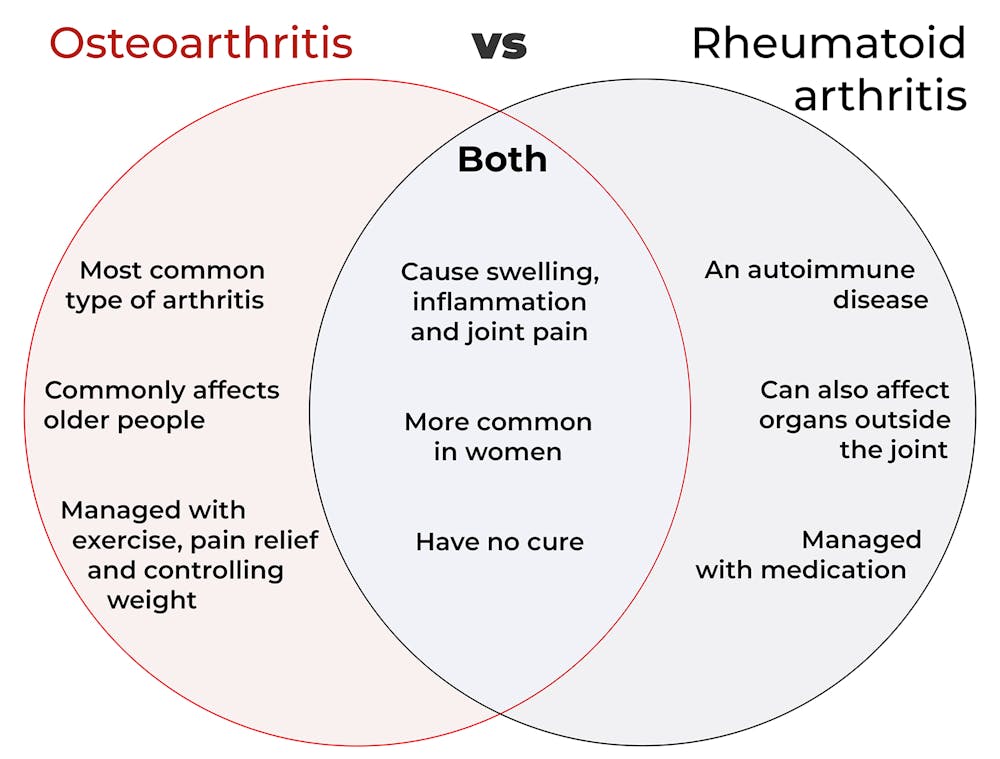
    These cracks are most often caused by osteoporosis, a condition that makes bones more fragile with age.

    In these cases, it’s not just bad posture – it’s a structural change in the spine.

    Older adults often develop a curved back, known as age-related kyphosis or hyperkyphosis.
    nhk_nhk/Shutterstock

    How can you tell the difference?

    Signs of age-related hyperkyphosis include:

    • your back curves even when you try to stand up straight
    • back pain or stiffness
    • a loss of height (anything greater than 3-4 centimetres compared to your peak adult height may be considered outside of “normal” ageing).

    Other causes of a curved back include:

    • Scheuermann’s kyphosis (which often develops during adolescence when the bones in the spine grow unevenly, leading to a forward curve in the upper back)
    • congenital kyphosis (a rare condition present from birth, caused by improper formation of the spinal bones. It can result in a more severe, fixed curve that worsens as a child grows)
    • scoliosis (where the spine curves sideways into a c- or s-shape when viewed from behind), and
    • lordosis (an excessive inward curve in the lower back, when viewed from the side).

    In addition to these structural conditions, arthritis, and in rare cases, spinal injuries or infections, can also play a role.

    Should I see a doctor about my curved back?

    Yes, especially if you’ve noticed a curve developing, have ongoing back pain, or have lost height over time.

    These can be signs of vertebral fractures, which can occur in the absence of an obvious injury, and are often painless.

    While one in five older adults have a vertebral fracture, as many as two-thirds of these fractures are not diagnosed and treated.

    In Australia, the Royal Australian College of General Practitioners and Healthy Bones Australia recommend a spine x-ray for:

    • people with kyphosis
    • height loss equal to or more than 3 centimetres, or
    • unexplained back pain.

    What can I do to reduce my risk?

    If you’re young or middle-aged, the habits you build today matter.

    The best way to prevent a curved back is to keep your bones strong, muscles active, and posture in check. That means:

    • doing regular resistance training, especially targeting upper back muscles
    • staying physically active, aiming for at least 150 minutes per week
    • getting enough protein, calcium, and vitamin D to support bone and muscle health
    • avoiding smoking and limiting alcohol to reduce risk factors that worsen bone density and overall wellbeing

    Pay attention to your posture while sitting and standing. Position your head over your shoulders and shoulders over your hips. This reduces strain on your spine.

    If you’re young or middle-aged, the habits you build today matter.
    Doucefleur/Shutterstock

    What exercises help prevent and manage a curved back?

    Focus on exercises that strengthen the muscles that support an upright posture, particularly the upper back and core, while improving mobility in the chest and shoulders.

    In general, you want to prioritise extension-based movements. These involve straightening or lifting the spine and pulling the shoulders back.

    Repeated forward-bending (or flexion) movements may make things worse, especially in people with osteoporosis or spinal fractures.

    Good exercises include:

    • back extensions (gently lift your chest off the floor while lying face down)
    • resistance exercises targeting the muscles between your shoulder blades
    • weight-bearing activities (such as brisk walking, jogging, stair climbing, or dancing) to keep bones strong and support overall fitness
    • stretching your chest and hip flexors to open your posture and relieve tightness.

    Flexibility and balance training (such as yoga and pilates) can be beneficial, particularly for posture awareness, balance, and mobility. But research increasingly supports muscle strengthening as the cornerstone of prevention and management.

    Muscle strengthening exercises, such as weight lifting or resistance training, reduces spinal curvature while enhancing muscle and bone mass.

    If you suspect you have kyphosis or already have osteoporosis or a vertebral fracture, consult a health professional before starting an exercise program. There may be some activities to avoid.

    Resistance training is crucial.
    Yakobchuk Yiacheslav/Shutterstock

    Can a curved back be reversed?

    If it’s caused by poor posture and muscle weakness, then yes, it’s possible.

    But if it’s caused by bone changes, especially vertebral fractures, then full reversal is unlikely. However, treatment can reduce pain, improve function, and slow further progression.

    Protecting your posture isn’t just about appearance. It’s about staying strong, mobile and independent as you age.

    Jakub Mesinovic has received competitive research funding from the Medical Research Future Fund (MRFF).

    David Scott has received consulting fees from Pfizer Consumer Healthcare, Abbott Nutrition and Alexion AstraZenica. He has received research funding from the National Health and Medical Research Council (NHMRC), Australian Research Council (ARC), Medical Research Future Fund (MRFF), American Society for Bone and Mineral Research (ASBMR), Alexion AstraZenica, Healthy Bones Australia and Amgen Australia. He is a member of the International Osteoporosis Foundation’s Committee of Scientific Advisors.

    ref. Why do some people get a curved back as they age and what can I do to avoid it? – https://theconversation.com/why-do-some-people-get-a-curved-back-as-they-age-and-what-can-i-do-to-avoid-it-252811

    MIL OSI AnalysisEveningReport.nz

  • MIL-OSI USA: Congressman Johnson Introduces TRUST Act To Hold Judges Accountable for Misconduct

    Source: United States House of Representatives – Representative Hank Johnson (GA-04)

    “Transparency and Responsibility in Upholding Standards in the Judiciary Act (TRUST Act)” Ensures Misconduct By Federal Judges Investigated Even If They Resign, Retire

    WASHINGTON, D.C. — Today, Congressman Hank Johnson (GA-04), Ranking Member of the Judiciary Subcommittee on Courts, Intellectual Property, Artificial Intelligence and the Internet, introduced the Transparency and Responsibility in Upholding Standards in the Judiciary Act (TRUST Act). The legislation ensures that pending misconduct complaints will still be fully investigated even if a federal judge resigns, retires, or passes away while under investigation.

    All federal judges – other than Supreme Court justices – can face misconduct investigations if a formal complaint is filed. However, a loophole allows judges to resign or retire to halt an ongoing investigation. As a result, alleged misconduct often goes unexamined, and judges accused of wronging still retire with full pensions if they meet age and service requirements.

    “They say sunlight is the best disinfectant,” said Ranking Member Johnson. “To root out misconduct, we need sunlight on both the perpetrators and the systems that allowed the misconduct to continue. Judges and courts should not be allowed to sweep bad behavior under the rug. This is a necessary first step in ensuring that our courts are places of integrity and safe for judiciary employees.”

    In 2016, Chief Judge José Antonio Fusté of the U.S. District Court for the District of Puerto Rico resigned after a law clerk reported his alleged sexual harassment, stopping any investigation. Similarly,  Ninth Circuit Judge Alex Kozinski resigned in 2017 amid allegations that he subjected female law clerks to inappropriate sexual behavior, similarly halting an inquiry.

    WHAT THEY ARE SAYING

    “The Legal Accountability Project (LAP) has long advocated for Congress to close the troubling loophole that allows judges to step down to evade accountability,” said President and Founder Aliza Shatzman. “Particularly in light of former Minnesota bankruptcy judge Kesha Tanabe’s recent resignation, likely to evade discipline, we applaud Rep. Johnson’s efforts to introduce the TRUST Act, a common-sense fix that will foster greater trust among judiciary employees, lawyers, and the public in the courts. Given how rarely judicial law clerks are empowered to file misconduct complaints against judges, the judiciary should do everything in its power to fully investigate each complaint, even if the judge leaves the bench. LAP is grateful for Rep. Johnson’s leadership, and we urge all members of Congress to support the TRUST Act.”

    “After the Judge Kozinski scandal, it was clear the judiciary needed to examine the circumstances that allowed such rank misconduct to continue for so long,” said Fix the Court Executive Director Gabe Roth. “Though a new comment was added to the rules governing complaints saying the judiciary ‘may […] take action on potential institutional issues’ after a resignation, that hasn’t been good enough. Rep. Johnson’s bill would ensure that post-resignation court officials have the statutory imperative to review both the complaint itself and the conditions that may have fostered impropriety, with an eye toward taking proactive steps to improve courthouse protocols and protect judiciary employees. It’s a needed improvement, and I applaud Rep. Johnson’s work.”

    “The proper functioning of our courts depends on an accountable judiciary,” said Debra Perlin, Vice President for Policy at Citizens for Responsibility and Ethics in Washington (CREW). “But currently, if a judge who commits misconduct leaves office, the judiciary’s investigation of that misconduct stops. Rep. Johnson’s bill closes this loophole, ensuring that the judiciary’s thorough investigation and review continues after a judge’s departure. A judge’s resignation does not absolve past misconduct, nor does it prevent such misconduct from recurring. The judiciary must investigate potential breaches of the public trust, and we urge Congress to pass this important legislation to require it to do just that.”

    “When a federal judge is accused of serious misconduct, including sexual harassment, they should be held accountable. But right now, there’s a loophole that lets them off the hook. If they resign or retire, the investigation ends, no matter how serious the allegations,” said Alison Gill, Director of Nominations & Democracy at the National Women’s Law Center Action Fund. “The TRUST Act would finally close that loophole by making sure complaints are fully investigated, even if a judge steps down or passes away. We’re grateful to Representative Johnson for championing this crucial bill to help promote accountability and integrity in our courts.”

    “Legal Momentum, The Women’s Legal Defense and Education Fund is proud to endorse the TRUST Act to strengthen protections for judicial workers and to hold the system and individuals accountable for misconduct,” said Legal Director Azaleea Carlea. “As civil servants, federal judicial workers deserve the opportunity to fully seek justice and closure for workplace violations.  Judges must also be held accountable for the very behavior they are tasked with reprimanding even after they step down from the bench. This bill is a historic step in the right direction to support women and their ability to perform their duties in a safe and supportive environment, which in turn advances a more equitable workplace for all.”

    Text of bill HERE.

    Cosponsors: Eleanor Holmes Norton [DC00], Jasmine Crockett [TX30], Yvette D. Clarke [NY09], Valerie P. Foushee [NC04, Lloyd Doggett [TX37], Deborah K. Ross [NC02], Rashida Tlaib [MI12], Alexandria Ocasio-Cortez [NY14], Madeleine Dean [PA04].

    The TRUST Act is endorsed by Legal Momentum, People’s Parity Project, National Women’s Law Center Action Fund, Citizens For Responsibility and Ethics in Washington (CREW), and The Legal Accountability Project.

    ###
     

    MIL OSI USA News

  • MIL-OSI Global: Why Zelensky – not Trump – may have ‘won’ the US-Ukraine minerals deal

    Source: The Conversation – Global Perspectives – By Eve Warburton, Research Fellow, Department of Political and Social Change, and Director, Indonesia Institute, Australian National University

    Last week, the Trump administration signed a deal with Ukraine that gives it privileged access to Ukraine’s natural resources.

    Some news outlets described the deal as Ukrainian President Volodymyr Zelensky “caving” to US President Donald Trump’s demands.

    But we see the agreement as the result of clever bargaining on the part of Ukraine’s war-time president.

    So, what does the deal mean for Ukraine? And will this be help strengthen America’s mineral supply chains?

    Ukraine’s natural resource wealth

    Ukraine is home to 5% of the world’s critical mineral wealth, including 22 of the 34 minerals identified by the European Union as vital for defence, construction and high-tech manufacturing.

    However, there’s a big difference between resources (what’s in the ground) and reserves (what can be commercially exploited). Ukraine’s proven mineral reserves are limited.

    Further, Ukraine has an estimated mineral wealth of around US$14.8 trillion (A$23 trillion), but more than half of this is in territories currently occupied by Russia.

    What does the new deal mean for Ukraine?

    American support for overseas conflict is usually about securing US economic interests — often in the form of resource exploitation. From the Middle East to Asia, US interventions abroad have enabled access for American firms to other countries’ oil, gas and minerals.

    But the first iteration of the Ukraine mineral deal, which Zelensky rejected in February, had been an especially brazen resource grab by Trump’s government. It required Ukraine to cede sovereignty over its land and resources to one country (the US), in order to defend itself from attacks by another (Russia).

    These terms were highly exploitative of a country fighting against a years-long military occupation. In addition, they violated Ukraine’s constitution, which puts the ownership of Ukraine’s natural resources in the hands of the Ukrainian people. Were Zelensky to accept this, he would have faced a tremendous backlash from the public.

    In comparison, the new deal sounds like a strategic and (potentially) commercial win for Ukraine.

    First, this agreement is more just, and it’s aligned with Ukraine’s short- and medium-term interests. Zelenksy describes it as an “equal partnership” that will modernise Ukraine.

    Under the terms, Ukraine will set up a United States–Ukraine Reconstruction Investment Fund for foreign investments into the country’s economy, which will be jointly governed by both countries.

    Ukraine will contribute 50% of the income from royalties and licenses to develop critical minerals, oil and gas reserves, while the US can make its contributions in-kind, such as through military assistance or technology transfers.

    Ukraine maintains ownership over its natural resources and state enterprises. And the licensing agreements will not require substantial changes to the country’s laws, or disrupt its future integration with Europe.

    Importantly, there is no mention of retroactive debts for the US military assistance already received by Ukraine. This would have created a dangerous precedent, allowing other nations to seek to claim similar debts from Ukraine.

    Finally, the deal also signals the Trump administration’s commitment to “a free, sovereign and prosperous Ukraine” – albeit, still without any security guarantees.

    Profits may be a long time coming

    Unsurprisingly, the Trump administration and conservative media in the US are framing the deal as a win.

    For too long, Trump argues, Ukraine has enjoyed US taxpayer-funded military assistance, and such assistance now has a price tag. The administration has described the deal to Americans as a profit-making endeavour that can recoup monies spent defending Ukrainian interests.

    But in reality, profits are a long way off.

    The terms of the agreement clearly state the fund’s investment will be directed at new resource projects. Existing operations and state-owned projects will fall outside the terms of the agreement.

    Mining projects typically work within long time frames. The move from exploration to production is a slow, high-risk and enormously expensive process. It can often take over a decade.

    Add to this complexity the fact that some experts are sceptical Ukraine even has enormously valuable reserves. And to bring any promising deposits to market will require major investments.

    What’s perhaps more important

    It’s possible, however, that profits are a secondary calculation for the US. Boxing out China is likely to be as – if not more – important.

    Like other Western nations, the US is desperate to diversify its critical mineral supply chains.

    China controls not just a large proportion of the world’s known rare earths deposits, it also has a monopoly on the processing of most critical minerals used in green energy and defence technologies.

    The US fears China will weaponise its market dominance against strategic rivals. This is why Western governments increasingly make mineral supply chain resilience central to their foreign policy and defence strategies.

    Given Beijing’s closeness to Moscow and their deepening cooperation on natural resources, the US-Ukraine deal may prevent Russia — and, by extension, China — from accessing Ukrainian minerals. The terms of the agreement are explicit: “states and persons who have acted adversely towards Ukraine must not benefit from its reconstruction”.

    Finally, the performance of “the deal” matters just as much to Trump. Getting Zelensky to sign on the dotted line is progress in itself, plays well to Trump’s base at home, and puts pressure on Russian President Vladimir Putin to come to the table.

    So, the deal is a win for Zelensky because it gives the US a stake in an independent Ukraine. But even if Ukraine’s critical mineral reserves turn out to be less valuable than expected, it may not matter to Trump.

    Eve Warburton receives funding from the Australian Research Council and the Westpac Scholars Trust.

    Olga Boichak is a director of the Foundation of Ukrainian Studies in Australia. She receives funding from the Australian Research Council and the Westpac Scholars Trust.

    ref. Why Zelensky – not Trump – may have ‘won’ the US-Ukraine minerals deal – https://theconversation.com/why-zelensky-not-trump-may-have-won-the-us-ukraine-minerals-deal-255875

    MIL OSI – Global Reports

  • MIL-OSI New Zealand: Release: Labour welcomes inquiry into school lunches

    Source:

    Labour welcomes the Auditor-General’s inquiry into the Government’s school lunches programme.

    “After months of chaos and kids going hungry, I’m glad that David Seymour’s school lunches mess is now being investigated,” Labour’s education spokesperson Willow-Jean Prime said.

    “I’ve heard from schools who’ve shared their heartbreak at seeing kids going hungry following the government changes to the programme. It’s even more disheartening when the Minister’s response has been to blame and shame schools that speak out.

    “It’s been a huge waste of time and resources for schools and has distracted many teachers from their classrooms as they dealt with David Seymour’s mess.

    “We’ve seen reports showing the lunches are not up to nutritional standard and a procurement process that has raised many unanswered questions.

    “Where Education Minister Erica Stanford has failed to act, I’m glad the Auditor-General is. David Seymour guaranteed that all will be fixed come Term 2, but the problems continue,” Willow-Jean Prime said.


    Stay in the loop by signing up to our mailing list and following us on FacebookInstagram, and X

    MIL OSI New Zealand News

  • MIL-OSI: 26/2025・Trifork Group: Interim report for the quarter ending 31 March 2025

    Source: GlobeNewswire (MIL-OSI)

    Trifork Group AG
    Company announcement no. 26/2025
    Schindellegi, Switzerland – 6 May 2025
    Interim Financial Report for the first quarter ending 31 March 2025

    Trifork Group reports revenue growth of 14.1% and EBITDA growth of 29.4% in Q1 2025

    CEO Jørn Larsen comments on the first quarter:
    “Q1 showed good progress toward our strategic ambition of becoming a more product- and solutions-led business. To support this direction, we revamped Trifork.com in Q1 to highlight our full range of products and platforms, and I invite you to explore our current offering. AI continues to break new ground, and we now discuss AI with most of our customers in one form or another. Our platforms Corax and AI Assist are seeing strong interest as they bring significant value to our customers very fast, in a very flexible, scalable, and secure way without customers needing to employ large data science teams.

    In Q1, we began to see the impact of several larger deals initiated in 2024. In Denmark, the good trend from Q4 continued in Q1, with the activities in the public sector increasing the most. The US business doubled its revenue and became the second-largest in the Group in Q1, proving that our IP-anchored strategy, executed in close collaboration with our Labs companies and global tech partners, can unlock new avenues of growth in revenue and profits.

    We have now completed most of the organizational changes announced last year and have identified cost-saving measures expected to deliver annual savings of EUR 10 million based on 2024 activity levels. For the remainder of 2025, we will continue to focus on further optimization and cost-efficiency across the Group, and I am encouraged by the strong and constructive cost savings efforts of our entire organization.”

    First quarter 2025

    • Trifork Group
      • In Q1 2025, Trifork Group revenue amounted to EURm 57.5, a net increase of 14.1% from Q1 2024, the combined result of an organic growth of 10.8% and an inorganic growth of 3.5%. In the quarter, Trifork had EURm 4.2 more revenue from hardware and third-party licenses compared to Q1 2024. Excluding these revenues, Group revenue growth was 5.9% in Q1 2025.
      • Trifork Group adjusted EBITDA amounted to EURm 6.9, corresponding to growth of 29.4% compared to Q1 2024. The margin was 11.9% (Q1 2024: 10.5%). No special items were recorded.
      • Trifork Group EBIT amounted to EURm 2.8, corresponding to growth of 95.5% compared to Q1 2024. The margin was 4.9% (Q1 2024: 2.8%).
    • Trifork Segment
      • In Q1 2025, adjusted EBITDA in the Trifork Segment amounted to EURm 7.4 (Q1 2024: EURm 5.8), corresponding to growth of 26.3%. The margin was 12.8% (Q1 2024: 11.6%).
      • Sub-segments
        • Inspire revenue increased by 25.0% to EURm 0.7 and realized an adjusted EBITDA of EURm -0.8 (Q1 2024: EURm -1.0).
        • Build revenue declined by -1.2% to EURm 38.3 and realized an adjusted EBITDA margin of 15.2% (Q1 2024: 15.7%).
        • Run revenue increased by 68.5% to EURm 18.5. Adjusted for hardware and third-party licenses, revenue growth was 33.9%. The adjusted EBITDA margin was 15.0% (Q1 2024: 13.1%).
    • Trifork Labs
      • In Q1 2025, fair value adjustment of Trifork Labs investments was EURm -0.1 (Q1 2024: EURm 2.0).
      • At 31 March 2025, the book value of active Labs investments amounted to EURm 82.7 (31 March 2024: EURm 73.4).

    The financial outlook for full-year 2025 provided on 28 February is maintained:

    • Revenue is expected to be in the range of EURm 215-225, equal to 4.4-9.3% total growth
    • Organic revenue growth is expected in the range of 2.9-7.8%
    • Adjusted EBITDA in Trifork Segment is expected in the range of EURm 32.0-37.0
    • EBIT in Trifork Group is expected to be in the range of EURm 14.5-19.5.

    The guidance does not include potential effects from new acquisitions or divestments.

    Main events in the first quarter of 2025

    • Inspire
      Q1 is seasonally a quarter with low conference activity. With more than 2 million views in Q1, the online GOTO universe have reached 83 million video views in total. At the end of the quarter, we had 1.1 million video subscribers. We are continuously sharpening our planning of events and have optimized our cost structure. Our business development efforts are anchored in technology partnerships, where workshop and conference presentations are central to the efforts. We hosted multiple events, including our Observability day in Copenhagen, and attended NVIDIA GTC together with Lenovo, who also co-attended an industrial conference in Germany with us. We held multiple events focusing on SAP.
    • Build
      Build revenue accounted for 66.6% of Group revenue in Q1 and declined by 1.2% compared to the same quarter last year. We spent the quarter focusing our Build activities closer to our own product offerings so that focus is more on implementation, integration, and customization of these and building individual extensions on top. Generally, corporates continued to take a cautious approach to IT spending in light of the global economic and geopolitical uncertainty, but our business development efforts made up for some of the private market weakness. Our public sector customer base primarily consists of Danish engagements. Danish public revenue grew 23.4% in Q1 compared to the same quarter last year and accounted for 47% of revenue in Denmark. In Q1, we announced new engagements with SBSYS (41 municipalities and two regions) and Aalborg University, and a new partnership with Cognizant focused on testing-as-a-service for implementation with KOMBIT (all Danish municipalities).
    • Run
      Run revenue accounted for 32.2% of Group revenue in Q1 and increased by 68.5% in Q1 compared to the same quarter last year (33.9% growth excluding revenues from third-party licenses and hardware, which can be volatile on a quarterly basis). In Q1, we revamped our website Trifork.com to increase focus on our products and platforms, which are central to our growth strategy and which provide more stability to our revenues as the licenses are sold on a recurring basis. Our Cloud Operations business has built a good pipeline supported by our Contain product offering, and it seems that the interest in cloud hosting in our Danish data centers increased in Q1. This was driven by both public and private customers. Our managed services security business continues to be in discussion with potential strategic partners to accelerate growth and market share, and we look forward to updating the market on the progress. Any potential deconsolidation is not included in the current financial guidance for the year. Overall, revenue within Hosting and Security operations increased by 23.2% in Q1.
    • Trifork Labs
      No new investments or exits were completed in Trifork Labs in Q1. Activities in the quarter primarily included reviewing investment proposals from new or existing investors in individual Labs companies in relation to upcoming financing rounds, including the announced EURm 11.5 financing round in Dawn Health led by existing investors Chr. Augustinus Fabrikker and the Export and Investment Fund of Denmark (EIFO). We see this as a testament to continued strong belief in the company’s potential after showing significant progress with large pharma partners such as Merck and Novartis. The investment is aimed at supporting Dawn Health’s strategy to deliver its platform and product suite through a SaaS model, while continuing to invest in further offerings within the Dawn Product Suite.

    Results presentation
    Trifork will host a results presentation and Q&A session with CEO Jørn Larsen and CFO Kristian Wulf-Andersen today, 6 May 2025 at 11:00 CEST in a live webcast that can be accessed via the following link, or via the investor website:

    https://trifork.zoom.us/j/96719631909?pwd=sI6nAeNybYebaVXxyFn3Wp8tpU5BOL.1#success

    A recording will be made available on our investor website. More information can be found at https://investor.trifork.com/events/.

    Investor & Media contact
    Frederik Svanholm, Group Investment Director
    frsv@trifork.com, +41 79 357 7317


    About Trifork Group

    Trifork is a pioneering and global technology partner, empowering enterprise and public sector customers with innovative digital solutions. With 1,215 professionals across 71 business units in 16 countries, Trifork specializes in designing, building, and operating advanced software across sectors such as public administration, healthcare, manufacturing, logistics, energy, financial services, retail, and real estate. The Group’s R&D arm, Trifork Labs, drives innovation by investing in and developing synergistic, high-potential technology companies. Trifork also owns GOTO, which inspires the global tech community through conferences and an online video channel with over 1.1 million subscribers and 83 million views. Trifork Group AG is publicly listed on Nasdaq Copenhagen. Learn more at trifork.com.

    Attachments

    The MIL Network

  • MIL-Evening Report: Labor settled the ‘funding wars’ just before the election. Here are 4 big issues schools still face

    Source: The Conversation (Au and NZ) – By Stewart Riddle, Professor, School of Education, University of Southern Queensland

    Days before Prime Minister Anthony Albanese called the federal election, the Labor government settled a long-running argument with the states over school funding.

    This locked in a new 25%–75% split on federal and state funding for schools. It also committed to “fully funding” public schools by 2034, according to the requirements recommended by the Gonski report in 2011.

    But apart from Peter Dutton’s criticism of the curriculum – suggesting students were being “indocrinated” – schools barely figured in the campaign.

    In his victory speech, Albanese declared his new government would deliver on the values of “fairness, aspiration and opportunity for all”.

    Education is the engine room for all three of these. Now Labor has been returned for a second term, what should the priorities be for schooling?

    1. The teacher shortage

    Teachers are burning out and leaving the profession at an alarming rate. We are due to have a shortage of 4,100 high school teachers in 2025.

    There is a large body of research showing unsustainable workload is a key issue. Teachers have also lost professional autonomy and status, while facing increased scrutiny based on standardised test results and accountability metrics.

    A study of 65,000 Australian media articles from 1996 to 2020 found overwhelmingly negative portrayals of teachers, who have been blamed for education failures.

    There needs to be a national response to the teaching workforce crisis that goes beyond the piecemeal approach of previous plans, such as 2022’s National Teacher Workforce Action Plan.

    We need a more coordinated and extensive campaign to attract and retain teachers. This will take substantial time and financial investment.

    2. Student disengagement

    Likewise, we need strategies to support and enable students to participate fully in schooling. Issues around school refusal and attendance are increasing across Australia. A comprehensive response is needed, which addresses the broad range of social, economic, health and wellbeing factors at play.

    Simple policy “fixes” such as prepackaged lessons, mandated explicit teaching practices, or phonics screening will do little to re-engage marginalised young people.

    Schools need to be able to provide inclusive and supportive learning environments, which cater to the diverse needs and interests of their students and communities.

    This requires school-specific approaches to the curriculum, teaching methods and school climate (or the quality of school life), rather than further standardisation.

    3. Educational inequality

    Australia has one of the most unequal schooling systems in the OECD.
    As the MySchool website notes, “there is a substantial body of research evidence that shows the educational performance of students […] is related to certain characteristics of their family […] and school”.

    Put another way, there is a persistent link between postcodes and educational access and outcomes for Australian students.

    Fully funding public schools in communities facing complex disadvantage is a start, but much more is needed to reverse the policy settings that have entrenched inequality in Australian schooling.

    The combined effects of more than two decades of standardisation (including a focus on high-stakes tests) and marketisation (where schools compete for students) have hollowed out public education in Australia.

    There needs to be a bold plan to reshape Australian schools as engines of equality.

    4. Global uncertainty

    Schools need to be places where young people can not only learn about the world, but also how to get along in the world. This need has arguably become even more pressing.

    With the re-election of US President Donald Trump, the world has become more uncertain and more complex. We also know Australian students’ civics knowledge is at its lowest since testing began.

    Making schools more welcoming and inclusive for students from diverse backgrounds is one way to help build a more democratic future in which difference is celebrated and lasting social bonds are formed.

    Giving young people the opportunity to collaborate on problems that matter to their communities (for example, climate change) can also help make them more engaged and critical thinkers.

    In collaborating on problems, schools use traditional curriculum resources as well as local knowledge and cultural wisdom, which helps to connect young people to their schools and communities.

    The Australian Curriculum already provides the opportunity for schools to do this work, but is often pushed aside in the drive for increased literacy and numeracy test results.

    Time for a bold vision

    To deliver on Albanese’s promise of “fairness, aspiration and opportunity for all”, the Australian government must do much more than provide extra funding for schools.

    Now is the time for a big, bold vision of education for all young Australians. This needs to involve the teaching workforce, students from all backgrounds, and a consideration of the skills and knowledge needed to meet the challenges of a complex and volatile world.

    Stewart Riddle receives funding from the Australian Research Council.

    ref. Labor settled the ‘funding wars’ just before the election. Here are 4 big issues schools still face – https://theconversation.com/labor-settled-the-funding-wars-just-before-the-election-here-are-4-big-issues-schools-still-face-255870

    MIL OSI AnalysisEveningReport.nz

  • MIL-OSI Russia: NSU hosted the first hackathon “Church’s Thesis” dedicated to the application of mathematical logic in IT

    Translation. Region: Russian Federal

    Source: Novosibirsk State University – Novosibirsk State University –

    The hackathon “Church’s Thesis” was held for the first time at Novosibirsk State University. It is aimed at everyone interested in mathematical logic and its application in information technology. Both students of all courses of the Faculty of Information Technology (FIT) and the Faculty of Mechanics and Mathematics (MMF) of NSU, as well as schoolchildren, took part in the pilot competition. In total, more than 20 teams registered.

    Welcoming remarks were given by Gulnara Erkinovna Yakhyaeva, Associate Professor of the Department of General Computer Science at the NSU Institute of Information Technologies, Lecturer of the course “Logical Foundations of Programming”, and Alexander Aleksandrovich Vlasov, Head of the Laboratory of Software Development and Systems on a Chip, Associate Professor of the Department of Computer Systems at the NSU Institute of Information Technologies. They shared modern challenges faced by specialists in the field of logic and programming.

    The hackathon consisted of two stages: a theoretical one, which gave participants the opportunity to explore how logic is applied in everyday life; and a practical one, during which the guys solved applied problems: from program verification to optimizing compiler algorithms. The competition was high, and all teams demonstrated a high level of preparation.

    Anton Chumak, the hackathon organizer, “Mathematical Logic Lover,” a 3rd-year student at the NSU Faculty of Information Technology, told us how the idea of holding the hackathon came about:

    — When I was a first-year student, I heard my classmates complaining, “Why do we need mathematical logic?” or “Matlog is a subject that is disconnected from the rest of mathematics and any real-world problems.” In my second year, I taught additional classes on this subject and noticed that the general mood of first-year students was about the same. “An incomprehensible and useless subject,” some of them thought. And although the course in mathematical logic and the theory of algorithms is more abstract than linal or matan, it also has many practical applications, especially in IT. These areas include parsers, program verification, knowledge bases, artificial intelligence, expert systems, optimizing compilers, and much more. The problem is that first-year students do not see these applications when they need to study the proof of a model existence theorem (METH), and not many are motivated to complete the course well. Therefore, it seemed to me the right decision to introduce the students to problems that appear in leading companies and require knowledge of mathematical logic to solve. I hope this will change their attitude towards the course and the discipline in general.

    As the organizers note, the main difficulty in preparing the hackathon was in compiling the tasks. Since the competition format is limited to one day, a team, even one consisting of three people, has little time to solve a complex problem. At the same time, it was important to show the versatility of applications, so it was necessary to offer the teams as many different tasks as possible. The final list included theoretical and practical tasks. Theoretical tasks were devoted to the application of mathematical logic in the daily life of a programmer. In the practical round, teams were asked to write their own Turing machine, an optimization algorithm for a compiler, specifications for verifying algorithms in distributed systems, and even their own knowledge base.

    — I am pleased to note that almost all tasks were solved by at least one team! — added Anton Chumak.

    The finale was a ceremonial awarding of the best teams. The winners received memorable prizes thanks to the support of partners: the organizers expressed special gratitude to the Dean’s Office of the NSU FIT, the NSU Department of Youth Policy and Educational Work, as well as the partner companies of the Faculty of Information Technology – Postgres Professional, YADRO, Ledas and the School of Data Analysis – for their contribution to the organization and holding of the hackathon.

    The competition had 2 categories: for schoolchildren and first-year students, as well as a general category. There were 3 winning teams in each category.

    Bulat Nazarov, captain of the winning team “Barebushki”, a fourth-year student of the Faculty of Information Technology of NSU, shared his impressions:

    — Yes, we are so great — we won the hackathon! To be honest, we didn’t expect to perform so well, but we are very happy that we ended up taking 1st place. We were a little nervous at the start — we solved just enough in the theoretical part to not lose face. But then the practical part began, and everything went more fun: the first were tasks in C, then we switched to TLA (coding experience in this language: it was as if aliens were being taught human language, but in the end it worked). But the knowledge base is our pride! We beat everyone there in points. Our data search worked so clearly that even we ourselves are proud of it. It was especially nice to see how our solutions received a high rating. Many thanks to Anton for the recommendation, we are sincerely glad to have the opportunity to share our experience.

    Denis Yeldov, a first-year student at the Faculty of Information Technology and a member of the winning team “Hotdog Master” in the first-year competition, spoke about how the hackathon went:

    — At the first, theoretical stage, it was actually possible to solve almost all the tasks if we divided them between the team members, which is what we did. So it wasn’t that difficult. In the second round, there were practical tasks, some of which were created by FIT students, and some by leading IT companies. We again divided the tasks among the team, but when something didn’t work out, we asked each other for help. It was fun, the atmosphere was not tense. However, we were constantly encouraged to do the tasks faster, since the rating was displayed on the screen, which was updated online. The tasks were of medium difficulty, as well as complex, some of them had to be written in a completely new programming language, which was one of the main problems.

    Both the organizers and the participants noted that the competitions had a friendly atmosphere. In addition to the tournament itself, there were breaks during which the teams communicated in an informal setting.

    — I am extremely glad that students from the FIT and MMF, as well as schoolchildren, took part. The atmosphere at the competition was very kind and homely. I think that is how it should be when people who are close in spirit gather. I hope that next year even more participants and partners will join us, — Anton Chumak summed up.

    Please note: This information is raw content directly from the source of the information. It is exactly what the source states and does not reflect the position of MIL-OSI or its clients.

    MIL OSI Russia News

  • MIL-OSI New Zealand: RSE Draft Erases Rainbow and Takatāpui Youth

    Source:

    Te Pāti Māori is demanding urgent changes to the draft Relationships and Sexuality Education (RSE) framework, calling it a dangerous step backwards for Takatāpui, trans, and rainbow rangatahi.

    “This draft erases Takatāpui voices, ignores whānau diversity, and delays consent education. It’s not just inadequate, it’s unbelievably unsafe” said Te Pāti Māori Co-leader Debbie Ngarewa-Packer.

    The draft excludes Takatāpui or trans identities, frames gender in binaries and postpones meaningful consent teaching to later years. It also makes no effort to affirm our same-sex or gender-diverse whānau.

    Te Pāti Māori is calling for:

    • Takatāpui-led co-design of the curriculum

    • Consent education from primary school

    • Explicit inclusion of rainbow whānau

    • Tikanga-based, inclusive sexuality education

    • Funding for kaupapa-led teacher training

    “We need education that reflects all our tamariki. Silence is not safety” said Ngarewa-Packer.

    Submissions close Friday 9 May. Te Pāti Māori urges whānau and communities to speak out.

    Click here to have your say. 

    MIL OSI New Zealand News

  • MIL-Evening Report: Office design isn’t keeping up with post-COVID work styles – here’s what workers really want

    Source: The Conversation (Au and NZ) – By Ozgur Gocer, Senior Lecturer, University of Sydney

    Flexible work has become the new norm, despite the best efforts of companies calling workers back to the office.

    Some employers assume that a return to the old ways of working is both possible and desirable. But for many workers, their perception of the office environment has changed.

    According to our new study, only 27% of surveyed office workers now spend more than 30 hours a week at their workplace — down from 69% before the pandemic. That was typical of a predominantly full-time office-based culture.

    And one in four office workers spends fewer than ten hours a week at the office.

    The study draws on the Building Occupants Survey System Australia (BOSSA), a large database that assesses worker satisfaction with the indoor environmental quality of their office building. It also considers the role of demographic and personal factors in shaping workplace experiences.

    To understand changes in work patterns before and after COVID, we analysed 5,644 surveys pre- and post-COVID. They covered 157 Australian office buildings, mostly in Sydney (81), Melbourne (39) and Brisbane(21).

    Who has cut their office hours the most?

    The trend towards more flexible work reflects broader cultural changes in how Australians work. Flexibility has become essential – not just a pandemic-era necessity.

    In our study, women and employees aged 30–50 reported the most substantial drop in weekly office hours, especially among those who had been working more than 30 hours a week in the office pre-COVID. This reduction likely reflects increased family responsibilities for those respondents – such as school drop-offs or being available during school holidays – alongside a broader pursuit of work-life balance.

    Managers and women are among those most likely to work flexibly.
    Ground Picture/Shutterstock

    Many in this age group hold mid-career or leadership roles, where autonomy and adaptability in work schedules become crucial. The hybrid work model offers this flexibility. It enables employees to better navigate professional demands and care-giving duties.

    This is especially important for women, who continue to do the majority of housework and caring responsibilities. Employees over 50 may return to the office due to lower technological confidence or a preference for face-to-face interaction.

    Office design isn’t keeping up

    Yet the return to the office hasn’t meant a return to the old ways of working. This research shows significant declines in satisfaction with key office factors, including:

    • space functionality and aesthetic experience
    • daylight and external view access
    • personal control over office environment.

    Privacy and disruption – relating to noise, interruptions and lack of visual privacy – emerged as the strongest predictor of productivity and workplace health. Employees said quiet, private spaces were vital for focused work and mental well-being.

    Despite its challenges, working from home is often perceived as more conducive to work-life balance and more cost-effective for both workers and companies.

    What needs to change in office design?

    The contrast between the autonomy and comfort of home offices and the constraints of traditional office spaces may partially explain the decline in workplace satisfaction.

    Better design: Office workers are asking for quiet areas and home-like comforts in the office.
    Shutterstock

    Notably, the shift towards working from home has reshaped employees’ expectations. This has led to a decline in satisfaction with traditional office environments.

    Despite the prevalence of remote work, a substantial portion of employees still operate from the same pre-pandemic workplaces.

    As flexible work schedules become the norm, a shift in the notion of the workplace is underway. Spaces need to be designed not just for individual tasks, but to foster collaboration, innovation and social connections.

    Job flexibility has become an essential feature that drives employee satisfaction and engagement. Employees surveyed say they want updated spaces that support both privacy and social interactions:

    I do my best thinking in inspiring spaces. Natural light, spacious meeting rooms, modern furniture, quiet areas, sit/stand desks.

    Another survey respondent explained:

    It would be good to have more private spaces for online meetings, and also to escape from noise.

    This change in employee expectations calls for new office builds with environments that enhance employees’ wellbeing. Workers are asking for features such as comfortable home-like spaces and health-conscious amenities.

    The survey results show workers’ key post-pandemic design priorities include reduced density, physical distancing, reconfigured layouts and better ventilation.

    To improve indoor environmental quality, facilities teams should adopt a holistic approach that combines improved air movement with advanced filtration systems for better air quality, workplace acoustics and greater employee control over environmental settings.

    The workplace is under pressure to evolve into a dynamic, human-centered environment that supports both productivity and personal fulfilment. Many workers surveyed said they would be willing to move to a new office for a better office environment.

    Richard de Dear receives funding from the Australian Research Council.

    Ozgur Gocer and Thomas Parkinson do not work for, consult, own shares in or receive funding from any company or organisation that would benefit from this article, and have disclosed no relevant affiliations beyond their academic appointment.

    ref. Office design isn’t keeping up with post-COVID work styles – here’s what workers really want – https://theconversation.com/office-design-isnt-keeping-up-with-post-covid-work-styles-heres-what-workers-really-want-254997

    MIL OSI AnalysisEveningReport.nz

  • MIL-Evening Report: What’s the difference between osteoarthritis and rheumatoid arthritis?

    Source: The Conversation (Au and NZ) – By Giovanni E. Ferreira, NHMRC Emerging Leader Research Fellow, Institute of Musculoskeletal Health, University of Sydney

    Douglas Olivares/Shutterstock.

    Arthritis – an umbrella term for around 100 conditions that damage the joints – affects 4.1 million Australians. This is expected to rise by 31% to 5.4 million by 2040 and cost the Australian health-care system an estimated $12 billion each year.

    The two most common types, osteoarthritis and rheumatoid arthritis, can both cause joint pain, swelling and stiffness. Both are more common in women. Neither can be cured.

    But their causes, risk factors and treatments are different – here’s what you need to know.

    What is osteoarthritis?

    Osteoarthritis is the most common form of arthritis. It affects 2.1 million Australians, mostly older people. About a third of Australians aged 75 and older have the condition.

    It can affect any joint but is most common in the knees, hips, fingers, thumbs and big toes.

    The main symptom is pain, especially during movement. Other symptoms may include swelling, stiffness and changes to the shape of joints.

    The main risk factors are ageing and obesity, as well as previous injuries or surgery. For osteoarthritis in the hands, genetics also play a big role.

    Signs of osteoarthritis can appear on knee scans from around age 45 and become more common with age.

    However, this type of arthritis not simply the “wear and tear” of ageing. Osteoarthritis is a complex disease that affects the whole joint. This includes the cartilage (“shock-absorbing” connective tissue protecting your bones), bones, ligaments (connective tissue holding bones and body parts in place) and joint lining.

    Osteoarthritis can change the shape of joints such as knuckles.
    joel bubble ben/Shutterstock

    How is it diagnosed?

    Diagnosis is based on symptoms (such as pain and restricted movement) and a physical exam.

    The disease generally worsens over time and cannot be reversed. But the severity of damage does not always correlate with pain levels.

    For this reason, x-rays and MRI scans are usually unhelpful. Some people with early osteoarthritis experience severe pain, but the damage won’t show up on a scan. Others with advanced and visible osteoarthritis may have few symptoms or none at all.

    What about rheumatoid arthritis?

    Unlike osteoarthritis, rheumatoid arthritis is an autoimmune disease. This means the immune system attacks the joint lining, causing inflammation and damage.

    Common symptoms include pain, joint swelling and stiffness, especially in the morning.

    Rheumatoid arthritis is less common than osteoarthritis, affecting around 514,000 Australians. It mostly impacts the wrists and small joints in the hands and feet, though larger joints such as the elbows, shoulders, knees and ankles can also be involved.

    It can also affect other organs, including the skin, lungs, eyes, heart and blood vessels. Fortunately, disease outside the joint has become less common in recent years, likely due to better and earlier treatment.

    Rheumatoid arthritis often develops earlier than osteoarthritis but can occur at any age. Onset is most frequent in those aged 35–64. Smoking increases your risk.

    How is it diagnosed?

    As with osteoarthritis, your doctor will diagnose rheumatoid arthritis based on your symptoms and a physical exam.

    Some other tests can be useful. Blood tests may pick up specific antibodies that indicate rheumatoid arthritis, although you can still have the condition with negative results.

    X-rays may also reveal joint damage if the disease is advanced. If there is uncertainty, an ultrasound or MRI can help detect inflammation.


    The Conversation, CC BY-SA

    How is osteoarthritis treated?

    No treatment can stop osteoarthritis progressing. However many people manage their symptoms well with advice from their doctor and self-care. Exercise, weight management and pain medicines can help.

    Exercise has been shown to be safe for osteoarthritis of the knee, hip and hand. Many types of exercise are effective at reducing pain, so you can choose what suits you best.

    For knee osteoarthritis, managing weight through diet and/or exercise is strongly recommended. This may be because it reduces pressure on the joint or because losing weight can reduce inflammation. Anti-obesity medicines may also reduce pain.

    Exercise can help manage weight and is safe and effective at managing joint pain.
    gelog67/Shutterstock

    Topical and oral anti-inflammatories are usually recommended to manage pain. However, opioids (such as tramadol or oxycodone) are not, due to their risks and limited evidence they help.

    In some cases antidepressants such as duloxetine may also be considered as a treatment for pain though, again, evidence they help is limited.

    What about rheumatoid arthritis?

    Treatments for rheumatoid arthritis focus on preventing joint damage and reducing inflammation.

    It’s essential to get an early referral to a rheumatologist, so that treatment with medication – called “disease-modifying anti-rheumatic drugs” – can begin quickly.

    These medicines suppress the immune system to stop inflammation and prevent damage to the joint.

    With no cure, the overall goal is to achieve remission (where the disease is inactive) or get symptoms under control.

    Advances in treatment

    There is an increasing interest in prevention for both types of arthritis.

    A large international clinical trial is currently investigating whether a diet and exercise program can prevent knee osteoarthritis in those with higher risk – in this case, women who are overweight and obese.

    For those already affected, new medicines in early-stage clinical trials show promise in reducing pain and improving function.

    There is also hope for rheumatoid arthritis with Australian researchers developing a new immunotherapy. This treatment aims to reprogram the immune system, similar to a vaccine, to help people achieve long-term remission without lifelong treatment.

    Giovanni E. Ferreira receives funding from The National Health and Medical Research Council, HCF Research Foundation, and Ramsay Hospital Research Foundation.

    Rachelle Buchbinder receives research funding from The National Health and Medical Research Council, Medical Research Future Fund, the Australian government, HCF Foundation and Arthritis Australia.

    ref. What’s the difference between osteoarthritis and rheumatoid arthritis? – https://theconversation.com/whats-the-difference-between-osteoarthritis-and-rheumatoid-arthritis-249154

    MIL OSI AnalysisEveningReport.nz

  • MIL-Evening Report: The ‘feminisation’ of Labor is a key reason Australians embraced it – and Anthony Albanese

    Source: The Conversation (Au and NZ) – By Paul Strangio, Emeritus Professor of Politics, Monash University

    Watching elections over the decades, one thing that has struck me is that results are invariably hyperbolised in the first blush of the people’s verdict. The achievement of the winners is over-egged in the commentary, as is the scale of the calamity suffered by the losers.

    That caveat notwithstanding, I think we can credibly say that Saturday’s election result was the most momentous since John Howard’s totemic victory of 2001 — a win that set in train much of what has happened in Australian politics over the course of this century.

    As I suggested in my pre-election essay on Anthony Albanese’s prime ministership, the impending victory for Labor would in part be an endorsement, even if grudging, of his leadership of the nation. It would be a reward for the fact that, despite limitations, he had run an industrious, orderly, united and scandal-free government. His was a mature administration that the country had been bereft of for nearly two decades.

    But the magnitude of Labor’s triumph on Saturday was undoubtedly most of all a repudiation of Duttonism. It was an emphatic assertion of what Australia is not. Why that makes this election the most significant since 2001 is that Dutton was an ideological heir to Howard — as before him was Tony Abbott, notwithstanding the latter’s idiosyncratic influence by the philosophy of the post-war right-wing Catholic crusader, B.A. Santamaria.

    Dutton entered the House of Representatives at the 2001 election, and the early advance of his parliamentary career was nurtured by Howard. As he articulated during this campaign, Dutton regarded Howard as his political touchstone.

    Like Abbott’s, Dutton’s leadership of the Liberal Party represented a doubled down version of the conservative populism that Howard so effectively unleashed at the 2001 election.

    This was a point that Lech Blaine perceptively recognised in his chilling 2024 Quarterly Essay portrait of Dutton. In common with Abbott, Dutton’s rendition of Howardism was an aggressively crude variant. Moreover, both of these unequal proteges were wanting in their mentor’s masterful political dexterity. Antithetical to the heritage of the Liberal Party, they were also short of interest in, let alone aptitude for, economic policy.

    Howard’s conservative populism was directed at cleaving working-class voters off Labor, especially in outer suburban electorates of Australia. For some time, there has been an emerging expectation that Dutton was poised to fruitfully capitalise on an incipient revolt against the Albanese government in outer suburbia. That is, a belief that these seats were susceptible to swallowing whole Dutton’s Frankenstein version of Howardism.

    Dutton’s strategy for hunting after votes in the outer suburbs and the commentary that has attended to it did a disservice to those communities. Undoubtedly, their populations, fast growing and undergoing a tsunami of demographic change, are enduring severe economic duress and struggling with over-stretched infrastructure and services.

    But there has been too much of a readiness to extrapolate from this that they were ripe for embracing an angry, grievance-fuelled politics, that they were vulnerable to xenophobic dog whistling, that they were, in short, home to an uglier Australia.

    The rejection of Duttonism in outer suburbia Australia suggests that, to the contrary, because of their kaleidoscopic diversity of ethnicities and cultures, these communities shrink from a politics of divisiveness and nativism.

    In other words, the routing of the Liberals on Saturday ought to be the moment that finally closes the door on the direction that Howard orientated the party at the beginning of this century. It should be his last hurrah.

    The dilemma, of course, is that stripped of moderates (the idea of the vaunted “broad church” thriving under Howard was itself greatly exaggerated), there is a serious question of whether the Liberals can reverse their 25-year rightwards pivot.

    The new leader could begin the journey back towards the centre by never darkening the doors of Sky News after Dark. A folly of Abbott and Dutton was their tribal attitude to the media. They skewed their communications to reactionary sympathisers who, rather than providing a reality check, encouraged ideological amplification.


    Read more:
    In its soul-searching, the Coalition should examine its relationship with the media


    What of Albanese and his leadership? In my pre-election essay on him, I flagged a concern that victory would feed his self-narrative of always being under-estimated. That it would encourage him to stick fast to his first term modus operandi of cautious, dogged incrementalism at a point when the nation is overdue for a burst of expansive reformism. The scale of Saturday’s win arguably heightens that risk.

    Yet we do have to acknowledge that Albanese, fortunate though he has been with the incurably inauthentic Scott Morrison and then Dutton as opponents, has been under-estimated. He has insisted since 2022 that his was a two-term strategy in which the first would be about measured consolidation that would, in turn, open the path to a long-term Labor government whose legacy would be durable change. This result means the prime minister and his team now have the opportunity to achieve that.

    Watching the ABC’s election night broadcast, a chief takeaway was the conspicuous camaraderie among senior members of Albanese’s Labor cabinet. Treasurer Jim Chalmer’s sincerely generous words about the prime minister’s leadership exemplified that.

    During Labor’s first term, I wondered whether Chalmers, for all his virtues, was actually too much a patient team player and not enough of an agitator within the government. In other words, that he did not sufficiently ginger up Albanese for greater policy adventurism, as Paul Keating did Bob Hawke during the last great era of Labor reformism.

    But Saturday night spotlighted a different, but perhaps at least as equally valuable, dynamic at the top of the government. That is genuine respect, even affection, between its key personnel. Keating could never have been as laudable of Hawke as Chalmers was of Albanese as the votes were tallied.

    This says much about the character of Chalmers, as it does about other leading cabinet members who have exuded that spirit of camaraderie throughout the life of the government. Most notably, the prime minister’s brains trust: Richard Marles, Penny Wong, Tony Burke, Mark Butler and Katy Gallagher.

    But it must also reflect Albanese’s respect for his colleagues. It speaks to his ability to harmoniously manage a team, his gift for generating unity of purpose, and his willingness to afford ministers a self-empowering autonomy in contributing to Labor’s collective enterprise. These are no small things. Respect and decency in a government begins with the prime minister and filters down.

    Let us not get misty-eyed. Albanese is vulcanised by a lifetime in politics. He is tough and a ruthless foe. His political blooding was as a left faction functionary in the right-controlled New South Wales Labor Party. Intra-party knife fighting was an essential part of the skill set he developed.

    But, consistent with all prime ministers, to understand Albanese’s approach to leadership we need to return to his formative roots. He was fatherless, defined by being the only child of a single mum, disability pensioner. These circumstances, as former journalist Katharine Murphy identified, imbued him with a pronounced streak of self-sufficiency, a “lone wolf” aspect. Yet also discernible is a resulting “feminine” side to his character and his prime-ministerial style.

    Albanese readily exhibits empathy and emotion. A familiar sight of him is lips quivering as he struggles to suppress tears. He dares speak of kindness and compassion as positive leadership attributes — in this he evokes former New Zealand prime minister, Jacinda Ardern. And he practices a collaborative, cooperative minded governing operating mode, which are behaviours conventionally associated with women leaders.

    Not coincidentally, a striking feature of Albanese’s prime ministership is that the “feminisation” of Labor has proceeded apace. For instance, policies such as the movement towards universal childcare support and government-backed wage increases in the care industries whose workforce is dominated by women employees. The record proportion of women appointed to cabinet. The continuing storming of the ramparts of caucus by women — they now comprise a majority of the party room — reinforced at the federal election most spectacularly in Brisbane, where six additional female Labor candidates prevailed, including Ali France, slayer of Dutton. And the consolidation of the pattern of women voters favouring Labor.

    It’s unfashionable these days to quote the post-war lion of the Labor left, Jim Cairns. However, when he retired in 1977, Cairns was asked who he would like to inherit his seat. He replied, “a woman, they feel the value of life”. Perhaps a sentiment by which Albanese abides.

    In the past, Paul Strangio received funding from the Australian Research Council.

    ref. The ‘feminisation’ of Labor is a key reason Australians embraced it – and Anthony Albanese – https://theconversation.com/the-feminisation-of-labor-is-a-key-reason-australians-embraced-it-and-anthony-albanese-255883

    MIL OSI AnalysisEveningReport.nz

  • MIL-OSI New Zealand: For every problem there is a solution that is simple, neat—and wrong.

    Source:

    Responding to proposed legislation to ban under-16s from social media, ACT Leader David Seymour says:

    “ACT shares the concern of many parents, teachers and experts: social media is doing enormous harm to young people. We also know what H.L. Menken meant in saying: For every problem there is a solution that is simple, neat—and wrong.

    “ACT opposes National’s bill banning under-16s from social media because it is not workable. Instead, we ask the Education and Workforce Committee to hold an open, transparent inquiry. The inquiry should hear all voices to find a workable solution that respects parental responsibility.

    “ACT is concerned about the practicalities of a ban. For example, requiring all social media users to provide government identification to social media companies would raise privacy issues.

    “The Bill’s definition of ‘social media’ more or less includes the entire internet, for example the Bill says social media could be anything that ‘allow[s] end-users to link to, or interact with, some or all of the other end users.’ Such a poorly drafted definition is unworkable.

    “Similar legislation has been passed in Australia, but hasn’t come into effect yet, and no-one yet knows how the ban will be implemented. We would be better to learn from the Aussies’ mistakes than make the same mistakes at the same time as them.”

    MIL OSI New Zealand News

  • MIL-OSI New Zealand: Daily progress for Thursday, 10 April 2025

    Source:

    Order Paper for Thursday, 10 April 2025

    2.00pm

    Business statement

    Hon Chris Bishop, Leader of the House, made a statement about the business of the House for the sitting week commencing on Tuesday, 6 May 2025.

    Government motion

    A motion acknowledging Claire Trevett’s service in the Press Gallery was agreed to. 

    Introduction of bills

    The following bills were introduced:

    Oral questions

    Twelve questions to Ministers were answered. 

    Government Business

    The second reading of the Principles of the Treaty of Waitangi Bill was not agreed to.

    The Medicines Amendment Bill was read a first time and referred to the Health Committee to be reported by 4 months and 1 day after the bill received its first reading.

    The United Arab Emirates Comprehensive Economic Partnership Agreement Legislation Amendment Bill was read a first time and referred to the Foreign Affairs, Defence and Trade Committee.

    The report of the Foreign Affairs, Defence and Trade Committee, International treaty examination of the NZ – UAE Comprehensive Economic Partnership Agreement, and Agreement between the Government of New Zealand and the Government of the United Arab Emirates on the Promotion and Protection of Investments, was noted.

    The debate on the first reading of the Education and Training Amendment Bill (No 2) was interrupted with 10 speeches remaining.

    Adjournment 

    At 6.00pm the House adjourned.

    MIL OSI

    MIL OSI New Zealand News

  • MIL-Evening Report: ER Report: A Roundup of Significant Articles on EveningReport.nz for May 6, 2025

    ER Report: Here is a summary of significant articles published on EveningReport.nz on May 6, 2025.

    Fiji media welcomes credible news services, but not ‘pop-up propagandists’, says Simpson
    By Anish Chand Entities and individuals that thrived under the previous government with public relations contracts now want to be part of the media or run media organisations, says Fiji Media Association (FMA) secretary Stanley Simpson. He made the comments yesterday while speaking at a World Press Freedom Day event hosted by the journalism programme

    Locked up then locked out: how NZ’s bank rules make life for ex-prisoners even harder
    Source: The Conversation (Au and NZ) – By Victoria Stace, Senior Lecturer, Te Herenga Waka — Victoria University of Wellington FotoDax/Shutterstock People coming out of prison in New Zealand face multiple hurdles reintegrating into society – starting with one of the most fundamental elements of modern life: getting a bank account. Not having a bank

    Can a wooden spoon really stop a pot from boiling over? Here’s the science
    Source: The Conversation (Au and NZ) – By Jay Deagon, Senior Lecturer of Home Economics, CQUniversity Australia Alexanderstock23/Shutterstock One moment, your spaghetti is happily bubbling away in the pot. A minute later, after busying yourself with something else, you turn around to find a hot mess all over your stove. Boiling liquid can rocket up

    How did sport become so popular? The ancient history of a modern obsession
    Source: The Conversation (Au and NZ) – By Konstantine Panegyres, Lecturer in Classics and Ancient History, The University of Western Australia Roman mosaics discovered in Sicily show women playing different sports. David Pineda Svenske/Shutterstock It’s almost impossible to go a day without seeing or hearing about sport. Walk around any city or town and you

    AI systems are built on English – but not the kind most of the world speaks
    Source: The Conversation (Au and NZ) – By Celeste Rodriguez Louro, Associate professor, Chair of Linguistics and Director of Language Lab, The University of Western Australia Reihaneh Golpayegani / Better Images of AI, CC BY An estimated 90% of the training data for current generative AI systems stems from English. However, English is an international

    Crikey, ChatGPT’s gone bush! How AI is learning the art of Aussie slang
    Source: The Conversation (Au and NZ) – By Ross Yates, Lecturer, Project Management, Edith Cowan University Shutterstock Ever tried to explain why a sausage would be referred to as a “snag” while overseas, or why the toilet is the “dunny”? If you found this challenging, spare a thought for large language models (LLMs) such as

    What are the key risk factors for developing knee osteoarthritis? We reviewed the evidence
    Source: The Conversation (Au and NZ) – By Christina Abdel Shaheed, Associate Professor, School of Public Health, University of Sydney Osteoarthritis is the most common joint disease, affecting more than 3 million Australians and over 500 million people worldwide. The knee is the most commonly affected joint, but osteoarthritis can also affect other joints including

    We’ve heard the promises. Now it’s up to Labor to deliver its housing, wages and other economic policies
    Source: The Conversation (Au and NZ) – By Michelle Cull, Associate Professor of Accounting and Financial Planning, Western Sydney University With a convincing win for a second term of government, the pressure is now on the new Labor government to deliver the economic policies central to its win. Prime Minister Anthony Albanese is wary of

    Labor has the chance to do something big in its second term. What policy reforms should it take on?
    Source: The Conversation (Au and NZ) – By Yee-Fui Ng, Associate Professor, Faculty of Law, Monash University Dan Breckwoldt/Shutterstock Labor’s historic election victory means the Albanese government has a rare opportunity to pursue a big, bold reform agenda. The scale of the victory all but guarantees a third term in office after the next election

    ‘I got sent something of people shooting themselves’ – research shows young people can’t avoid harmful content online
    Source: The Conversation (Au and NZ) – By Dougal Sutherland, Clinical Psychologist, Te Herenga Waka — Victoria University of Wellington Leon Neal/Getty Images A new report from New Zealand’s Classification Office has revealed how young people are being exposed to harmful content online and what it is doing to their mental health. The Classification Office

    Caitlin Johnstone: It was never about hostages. It was never about Hamas
    Report by Dr David Robie – Café Pacific. – COMMENTARY: By Caitlin Johnstone Benjamin Netanyahu said last Thursday that freeing the Israeli hostages in Gaza was not his top priority, suggesting instead that defeating Hamas should take precedence over a hostage deal. “We have many objectives, many goals in this war,” Netanyahu said. “We want

    Viral video shows Fiji prison chief throwing punches at Suva bar
    RNZ Pacific The head of Fiji’s prison service has been caught on camera involved in a fist fight that appears to have taken place at the popular O’Reilley’s Bar in the capital of Suva. Sevuloni Naucukidi, the acting Commissioner of the Fiji Corrections Service (FCS), can be seen in the viral video throwing punches at

    PINA on World Press Freedom Day – facing new and complex AI challenges
    By Kalafi Moala in Nuku’alofa On this World Press Freedom Day, we in the Pacific stand together to defend and promote the right to freedom of expression — now facing new and complex challenges in the age of Artificial Intelligence (AI). This year’s global theme is “Reporting a Brave New World: The impact of Artificial

    Late counting continues in several seats, with Goldstein and Melbourne among those too close to call
    Source: The Conversation (Au and NZ) – By Adrian Beaumont, Election Analyst (Psephologist) at The Conversation; and Honorary Associate, School of Mathematics and Statistics, The University of Melbourne With 78% of enrolled voters counted, the ABC is calling 85 of the 150 House of Representatives seats for Labor, 39 for the Coalition, zero for the

    Pacific ‘story sovereignty’ top of mind on World Press Freedom Day
    By Michelle Curran of Pasifika TV World Press Freedom Day is a poignant reminder that journalists and media workers are essential for a healthy, functioning society — including the Pacific. Held annually on May 3, World Press Freedom Day prompts governments about the need to respect press freedom, while serving as a day of reflection

    View from The Hill: a budding Trump-Albanese bromance?
    Source: The Conversation (Au and NZ) – By Michelle Grattan, Professorial Fellow, University of Canberra It took an election win, but Anthony Albanese on Monday finally received that much-awaited phone call from US President Donald Trump. The conversation was “warm and positive,” the prime minister told a news conference, thanking the president for “reaching out”.

    In its soul-searching, Australia’s rightist coalition should examine its relationship with the media
    ANALYSIS: By Matthew Ricketson, Deakin University and Andrew Dodd, The University of Melbourne Among the many lessons to be learnt by Australia’s defeated Liberal-National coalition parties from the election is that they should stop getting into bed with News Corporation. Why would a political party outsource its policy platform and strategy to people with plenty

    Is it dangerous to kiss someone who’s eaten gluten if you have coeliac disease?
    Source: The Conversation (Au and NZ) – By Vincent Ho, Associate Professor and Clinical Academic Gastroenterologist, Western Sydney University Lordn/Shutterstock Coeliac disease is not a food allergy or intolerance. It’s an autoimmune disease that makes the body attack the small intestine if gluten (a protein found in wheat, rye and barley) reaches the gut. Even

    After its landslide win, Labor should have courage and confidence on security – and our alliance with the US
    Source: The Conversation (Au and NZ) – By Joanne Wallis, Professor of International Security, University of Adelaide The re-election of the Albanese Labor government by such a wide margin should not mean “business as usual” for Australia’s security policy. The global uncertainty instigated by US President Donald Trump means Australia’s security landscape is very different

    5 huge climate opportunities await the next parliament – and it has the numbers to deliver
    Source: The Conversation (Au and NZ) – By Anna Skarbek, Climateworks CEO, Monash University Australians have returned an expanded Labor Party to government alongside a suite of climate-progressive independents. Meanwhile, the Coalition – which promoted nuclear energy and a slower renewables transition – suffered a historic defeat. Labor also looks set to have increased numbers

    MIL OSI AnalysisEveningReport.nz

  • MIL-Evening Report: Why Zelensky – not Trump – may have ‘won’ the US-Ukraine minerals deal

    Source: The Conversation (Au and NZ) – By Eve Warburton, Research Fellow, Department of Political and Social Change, and Director, Indonesia Institute, Australian National University

    Last week, the Trump administration signed a deal with Ukraine that gives it privileged access to Ukraine’s natural resources.

    Some news outlets described the deal as Ukrainian President Volodymyr Zelensky “caving” to US President Donald Trump’s demands.

    But we see the agreement as the result of clever bargaining on the part of Ukraine’s war-time president.

    So, what does the deal mean for Ukraine? And will this be help strengthen America’s mineral supply chains?

    Ukraine’s natural resource wealth

    Ukraine is home to 5% of the world’s critical mineral wealth, including 22 of the 34 minerals identified by the European Union as vital for defence, construction and high-tech manufacturing.

    However, there’s a big difference between resources (what’s in the ground) and reserves (what can be commercially exploited). Ukraine’s proven mineral reserves are limited.

    Further, Ukraine has an estimated mineral wealth of around US$14.8 trillion (A$23 trillion), but more than half of this is in territories currently occupied by Russia.

    What does the new deal mean for Ukraine?

    American support for overseas conflict is usually about securing US economic interests — often in the form of resource exploitation. From the Middle East to Asia, US interventions abroad have enabled access for American firms to other countries’ oil, gas and minerals.

    But the first iteration of the Ukraine mineral deal, which Zelensky rejected in February, had been an especially brazen resource grab by Trump’s government. It required Ukraine to cede sovereignty over its land and resources to one country (the US), in order to defend itself from attacks by another (Russia).

    These terms were highly exploitative of a country fighting against a years-long military occupation. In addition, they violated Ukraine’s constitution, which puts the ownership of Ukraine’s natural resources in the hands of the Ukrainian people. Were Zelensky to accept this, he would have faced a tremendous backlash from the public.

    In comparison, the new deal sounds like a strategic and (potentially) commercial win for Ukraine.

    First, this agreement is more just, and it’s aligned with Ukraine’s short- and medium-term interests. Zelenksy describes it as an “equal partnership” that will modernise Ukraine.

    Under the terms, Ukraine will set up a United States–Ukraine Reconstruction Investment Fund for foreign investments into the country’s economy, which will be jointly governed by both countries.

    Ukraine will contribute 50% of the income from royalties and licenses to develop critical minerals, oil and gas reserves, while the US can make its contributions in-kind, such as through military assistance or technology transfers.

    Ukraine maintains ownership over its natural resources and state enterprises. And the licensing agreements will not require substantial changes to the country’s laws, or disrupt its future integration with Europe.

    Importantly, there is no mention of retroactive debts for the US military assistance already received by Ukraine. This would have created a dangerous precedent, allowing other nations to seek to claim similar debts from Ukraine.

    Finally, the deal also signals the Trump administration’s commitment to “a free, sovereign and prosperous Ukraine” – albeit, still without any security guarantees.

    Profits may be a long time coming

    Unsurprisingly, the Trump administration and conservative media in the US are framing the deal as a win.

    For too long, Trump argues, Ukraine has enjoyed US taxpayer-funded military assistance, and such assistance now has a price tag. The administration has described the deal to Americans as a profit-making endeavour that can recoup monies spent defending Ukrainian interests.

    But in reality, profits are a long way off.

    The terms of the agreement clearly state the fund’s investment will be directed at new resource projects. Existing operations and state-owned projects will fall outside the terms of the agreement.

    Mining projects typically work within long time frames. The move from exploration to production is a slow, high-risk and enormously expensive process. It can often take over a decade.

    Add to this complexity the fact that some experts are sceptical Ukraine even has enormously valuable reserves. And to bring any promising deposits to market will require major investments.

    What’s perhaps more important

    It’s possible, however, that profits are a secondary calculation for the US. Boxing out China is likely to be as – if not more – important.

    Like other Western nations, the US is desperate to diversify its critical mineral supply chains.

    China controls not just a large proportion of the world’s known rare earths deposits, it also has a monopoly on the processing of most critical minerals used in green energy and defence technologies.

    The US fears China will weaponise its market dominance against strategic rivals. This is why Western governments increasingly make mineral supply chain resilience central to their foreign policy and defence strategies.

    Given Beijing’s closeness to Moscow and their deepening cooperation on natural resources, the US-Ukraine deal may prevent Russia — and, by extension, China — from accessing Ukrainian minerals. The terms of the agreement are explicit: “states and persons who have acted adversely towards Ukraine must not benefit from its reconstruction”.

    Finally, the performance of “the deal” matters just as much to Trump. Getting Zelensky to sign on the dotted line is progress in itself, plays well to Trump’s base at home, and puts pressure on Russian President Vladimir Putin to come to the table.

    So, the deal is a win for Zelensky because it gives the US a stake in an independent Ukraine. But even if Ukraine’s critical mineral reserves turn out to be less valuable than expected, it may not matter to Trump.

    Eve Warburton receives funding from the Australian Research Council and the Westpac Scholars Trust.

    Olga Boichak is a director of the Foundation of Ukrainian Studies in Australia. She receives funding from the Australian Research Council and the Westpac Scholars Trust.

    ref. Why Zelensky – not Trump – may have ‘won’ the US-Ukraine minerals deal – https://theconversation.com/why-zelensky-not-trump-may-have-won-the-us-ukraine-minerals-deal-255875

    MIL OSI AnalysisEveningReport.nz

  • MIL-OSI Russia: NSU teachers win Kolba award for women in science and technology

    Translation. Region: Russian Federal

    Source: Novosibirsk State University – Novosibirsk State University –

    On April 18, the Plekhanov Russian University of Economics hosted the third Kolba award ceremony for women in science and technology, as part of the annual forum of the same name. This year, 77 women scientists were recognized in 30 nominations in the following areas: natural, technological and exact, social and humanitarian, fundamental and applied sciences. Among them are two representatives of NSU: Olga Yarovaya, associate professor of the Department of Medical Chemistry of the Institute of Medicine and Medical Technologies of NSU, and Anna Lysova, senior lecturer of the Department of Physical Chemistry. Faculty of Natural Sciences of NSU.

    The Kolba Prize was established by the Foundation for the Development of Professional Initiatives “Women of the Nuclear Industry” with the aim of popularizing science through the formation of role models among women and girls – future scientists, creating a modern image and enhancing media significance, uniting women into the largest scientific community for the exchange of experience and knowledge, as well as strengthening the human and intellectual capital in the country.

    Olga Yarovaya is a chemist specializing in organic chemistry, medicinal chemistry, and the development of antiviral compounds. Olga spoke in more detail about her area of scientific interest:

    — I study terpenes and their derivatives (mono-, sesqui- and diterpenoids) to create antiviral drugs. My work covers the synthesis of compounds, analysis of their activity against influenza, Marburg and other pathogens, as well as the study of their mechanisms of action. In 2003, I defended my PhD thesis on the synthesis and antiviral activity of terpene compounds. And in 2023–2024, I published a number of articles in the journal Uspekhi Khimii, including studies of small molecules against hemorrhagic fever viruses and diterpenes.

    Anna Lysova is engaged in the synthesis of organometallic compounds, which, due to their porosity, are used as adsorbents for capturing and separating gases and various organic substances. Anna shared her opinion on why science is her life’s work and why such awards are important for scientists:

    — Science is what I do every day: my job, my hobby. I am lucky that I love my job and it gives me pleasure, that I do not get tired of it and it does not bore me. Science is what surrounds us: technology, smartphones, cars; what we use every day in our everyday life and what makes human life better, easier, more interesting. This award is important to me as recognition of the importance of scientific work of me and my team, as an opportunity to declare the results of my research to the whole country. I felt proud that our research was appreciated.

    The winners received the distinctive “Kolba” badge.

    This year, applications for the Kolba Prize are open from April 20 to December 31, 2025. by link

    Telegram 

    Vkontakte 

    Please note: This information is raw content directly from the source of the information. It is exactly what the source states and does not reflect the position of MIL-OSI or its clients.

    MIL OSI Russia News

  • MIL-OSI Russia: Photo story: One-armed teacher has been teaching in a mountain village for 30 years

    Translation. Region: Russian Federal

    Source: People’s Republic of China in Russian – People’s Republic of China in Russian –

    Source: People’s Republic of China – State Council News

    Every chart, every hieroglyph and every lesson the teacher does flawlessly. For 30 years now, despite having only one healthy arm, he tirelessly continues to make the bright dreams and bright hopes of village children come true.

    Tang Guangfang is a rural primary school teacher in Beishan Village, Baibao Township, Quanzhou County, Guangxi Zhuang Autonomous Region. In 1995, he was injured by an electric shock and lost his right arm. Over the next six months, Tang learned to write with his left hand with great difficulty and continued teaching at the rural school. “Destiny deprived me of my right arm, but despite everything, I must pass on complete knowledge to children – not a single punctuation mark should be missed,” he says.

    It has been 30 years since Tang Guangfang lost his right arm. Yet, he still stands at the school lectern in the mountain village, doing his job faithfully. Tang Guangfang never thought about retiring, but in October 2025, his retirement time comes. Looking back on his 39 years of teaching in the village, he feels both sad and satisfied. “Because of my physical limitation, I may have tried harder than others. However, I am glad that I never got lazy, gave up, or changed my original intention to teach and educate,” he says.

    Photos by Xinhua News Agency correspondent Lu Boan

    1 2   3   4   5   6   7   8   9   10   >  

    MIL OSI Russia News

  • MIL-Evening Report: Fiji media welcomes credible news services, but not ‘pop-up propagandists’, says Simpson

    By Anish Chand

    Entities and individuals that thrived under the previous government with public relations contracts now want to be part of the media or run media organisations, says Fiji Media Association (FMA) secretary Stanley Simpson.

    He made the comments yesterday while speaking at a World Press Freedom Day event hosted by the journalism programme at the University of the South Pacific.

    “We were attacked by fake accounts and a government-funded propaganda machine,” he said.

    “It is ironic that those who once spinned and attacked the media as irrelevant  — because they said no one reads or watches them anymore — now want to be part of the media or run media organisations.”

    “There are entities and individuals that thrived under the previous government with PR contracts while the media struggled and now want to come and join the hard-fought new media landscape.”

    Simpson said the Fijian media fraternity would welcome credible news services.

    “We have to be wary and careful of entities that pop up overnight and their real agendas.”

    “Particularly those previously involved with political propaganda.

    “And we are noticing a number of these sites seemingly working with political parties and players in pushing agendas and attacking the media and political opponents.”

    Republished from The Fiji Times with permission.

    MIL OSI AnalysisEveningReport.nz

  • MIL-OSI USA: Tillis Applauds New NC State Directors for the Farm Service Agency and Rural Development

    US Senate News:

    Source: United States Senator for North Carolina Thom Tillis

    WASHINGTON, D.C. – Today, Senator Thom Tillis applauded the announcement from Secretary of Agriculture Brooke Rollins that Ron Garrett has been appointed as State Executive Director of the North Carolina Farm Service Agency and Robert Hosford has been appointed as State Director of North Carolina Rural Development.

    “Ron and Robert are fantastic choices to lead the NC Farm Service Agency and Rural Development,”said Senator Tillis. “I was proud to advocate on behalf of both of them and I look forward to working with them to support North Carolina’s farmers and rural communities.”

    Background: 

    Ron Garrett will serve as the State Executive Director for the Farm Service Agency in North Carolina. Most recently Ron served as a County Executive Director for FSA for over 33 years. Ron earned his Bachelor of Science degree in Agricultural Business Management from North Carolina State University.

    Robert Hosford will serve as State Director for Rural Development in North Carolina, a position he held during President Trump’s first term. In 2003 he was appointed the Chief of Staff for the USDA Farm Service Agency through 2009. After earning a B.S. from Mississippi State University, Hosford relocated to Washington D.C., as a part of the Government Affairs team for the National Cattlemen’s Beef Association.  

    MIL OSI USA News

  • MIL-OSI New Zealand: Release: Women will keep being paid less under National

    Source:

    This Government is taking the women’s movement backwards, ensuring women will continue to be paid less into the future.

    “Instead of continuing the good work of successive governments to close the well-documented gender pay gap in our country, the Government is making it harder for women to get ahead,” Labour workplace relations and safety spokesperson Jan Tinetti said.

    “Women have historically been paid less, currently it’s at around 92 cents to every dollar a man earns.

    “Government absolutely has a role to play to reduce the gender pay gap over time, and yet this one is about to push through legislation under urgency to stop women from making pay equity claims when they are paid less than their male colleagues doing a similar job.

    “Not content with trashing workers’ rights, Brooke Van Velden is now going after women on Christopher Luxon and Nicola Willis’ behalf.

    “She thinks teachers don’t have the right to feel angry with the government, but 94,000 teachers who have equal pay claims would disagree.
    “This is a Government that is choosing to ignite a debate around women’s bathrooms, while destroying a women’s right to be paid the same as men. I don’t think I’ve ever seen something so gross and backwards in my life.

    “Funny how they can find money for tax cuts for landlords and the tobacco lobby but not for women.

    “If this is how Nicola Willis is planning to pay for her Budget then I suspect many people are going to let her know pretty quickly that she’s made the wrong decision,” Jan Tinetti said.


    Stay in the loop by signing up to our mailing list and following us on FacebookInstagram, and X

    MIL OSI New Zealand News

  • MIL-OSI New Zealand: Govt takes workplace equity efforts backwards

    Source: It’s time to fix the secondary teacher shortage

    The Green Party has called out the Government’s latest attack on workers with the announcement that it is halting all pay equity claims.

    “Women deserve fair pay. This move to undo years of pay equity progress is a monumental step backwards from the Government,” says the Green Party’s spokesperson for Women, Kahurangi Carter. 

    “Workers should be valued and treated as equals regardless of their gender, ethnicity or age. We can and must ensure that women are paid fairly, are treated with respect and are safe – things this Government is actively undermining.

    “The gender pay gap is one of the glaring shortfalls of our workforce. Employees and unions have been working towards pay equity for a long time. The Government is undoing this progress – women, and particularly Māori and Pacific women, will be the worst affected.

    “Make no mistake: this is a cost-cutting measure to fund tax cuts for the rich, a bill our communities will have to pick up. Rather than paying women what they deserve, this Government is shifting these costs onto our communities.

    “We know that reducing the gender pay gap and the gap other minorities face requires a concerted effort. Pay equity settlements had begun to deliver positive outcomes for some groups, but there is much work to do. 

    “We can afford to pay people what they deserve. We can do this by making the super rich pay their fair share and choosing our communities over corporate greed,” says Kahurangi Carter. 

    MIL OSI New Zealand News

  • MIL-Evening Report: How did sport become so popular? The ancient history of a modern obsession

    Source: The Conversation (Au and NZ) – By Konstantine Panegyres, Lecturer in Classics and Ancient History, The University of Western Australia

    Roman mosaics discovered in Sicily show women playing different sports. David Pineda Svenske/Shutterstock

    It’s almost impossible to go a day without seeing or hearing about sport.

    Walk around any city or town and you will almost always catch a glimpse of people playing sports in teams or participating solo.

    Turn on the TV or radio and you’ll be able to find some kind of sport being played at international or national level.

    Why do people love sport so much?

    To answer this question, it’s worth a dive back into ancient history.

    An ancient person’s perspective

    One of the most famous figures from the ancient world, Saint Augustine of Hippo (354-430 AD), once wrote that when he was a boy he was obsessed with playing sports:

    I liked to play ball as a boy and my playing slowed my progress in learning to read and write.

    The earliest portrait of Saint Augustine in a 6th century fresco, Lateran, Rome.
    Wikimedia Commons, CC BY

    In fact, Saint Augustine was so preoccupied with playing ball that his teacher was said to sometimes beat him for it. His teacher said it was bad to waste one’s youth on such things – it’s better to study hard.

    Why was Saint Augustine obsessed with ball games? He loved to win:

    I loved to play games […] in these games I was overmastered by my vain desire to excel, so I used to strive to win, even by cheating.

    Plenty of people today probably share Saint Augustine’s view that winning is one of the things that make sport enjoyable.

    Of course, there are many other reasons why people might like to play sport.

    What sports did they play?

    If you walked down a city street in ancient Greek and Roman times, it’s likely you’d come across children or even adults playing a ball game.

    Handball games played in ancient Greece.
    Gardiner, E. Norman/Wikimedia Commons, CC BY

    The Roman playwright Plautus (3rd/2nd century BC) even has one of his characters complain about people “who play ball in the street”.

    Ball games were probably the most popular sporting activity in the ancient world and could be played in many different ways.

    In one ball game, called episkyros, two teams competed against each other. If one team got the ball over the line behind the other team, they scored. Feet and hands could be used and tackles were permitted.

    Sounds familiar, doesn’t it?

    Of course, many other sports were also popular: athletics, swimming, wrestling, lifting weights and boxing were all favourites.

    Ancient ideas about the origins of sports

    For the ancient Greeks, the earliest mention of a ball game appears in the Odyssey, an epic poem composed by the poet Homer in probably the eighth or seventh century BC.

    In the Odyssey, Nausicaa, daughter of the King of the Phaeacians, plays a ball game with some other girls on the beach. While they throw the ball, they sing songs:

    Then when they had had their joy of food, she and her handmaids, they threw off their headgear and fell to playing at ball, and white-armed Nausicaa was leader in the song.

    During the game, Nausicaa throws the ball too far. Her maid can’t catch it and the ball flies into the sea. All the girls shout out when it goes flying.

    Already in the 3rd century BC, Nausicaa was sometimes regarded as the inventor of ball games. However, other people attributed the invention of ball games to different regions of Greece, saying the games were invented by the Sicyonians or Spartans.

    But it is unlikely any Greeks were the original inventors of ball games.

    In Egypt, thousands of years before Homer’s epics, there are already artistic depictions of ball games.

    For example, in the tomb of the Nomarch of the 11th Dynasty (c. 2150-2000 BC), Baqet III, there is artwork showing women playing ball games and men wrestling each other.

    Ancient ball games.
    J. Murray/Picryl, CC BY

    Baqet III, whose tomb contained these artistic depictions of various sports, was likely a true sports lover.

    Why did people like sports?

    People liked ball games for many different reasons.

    One was for the sheer fun and excitement. Another was because they were considered a healthy type of exercise.

    Ancient Greek and Roman doctors even told their patients to play ball games to become healthier.

    For example, the famous ancient Greek physician Galen (129-216 AD) wrote an essay titled On Exercise with a Small Ball.

    He argued “exercises with a small ball are superior to other kinds of exercises”.

    He claimed ball games were especially healthy because they moved all of the muscles and because teamwork was good for the soul.

    People in the ancient world also thought just watching sport could be something worth doing.

    The writer Lucian of Samosata (born 120 AD), for instance, said watching athletes competing for glory could help to encourage men to achieve similar feats: “many of the spectators go away in love with manfulness and hard work”, wrote Lucian.

    So it seems there’s nothing new about our modern love of playing and watching sports, and this obsession will probably continue for thousands of years into the future.

    Konstantine Panegyres does not work for, consult, own shares in or receive funding from any company or organisation that would benefit from this article, and has disclosed no relevant affiliations beyond their academic appointment.

    ref. How did sport become so popular? The ancient history of a modern obsession – https://theconversation.com/how-did-sport-become-so-popular-the-ancient-history-of-a-modern-obsession-254057

    MIL OSI AnalysisEveningReport.nz