Category: Education

  • MIL-Evening Report: Logging devastated Victoria’s native forests – and new research shows 20% has failed to grow back

    Source: The Conversation (Au and NZ) – By Maldwyn John Evans, Senior Research Fellow, Fenner School of Environment and Society, Australian National University

    Old growth mountain ash forest in the Maroondah water supply catchment, Victoria. Chris Taylor

    Following the end of native logging in Victoria on January 1 2024, the state’s majestic forests might be expected to regenerate and recover naturally. But our new research shows that’s not always the case.

    We quantified the extent of regeneration following logging in the eucalypt forests of southeastern Australia between 1980 and 2019. This included nearly 42,000 hectares of logged mountain ash forest in Victoria’s Central Highlands.

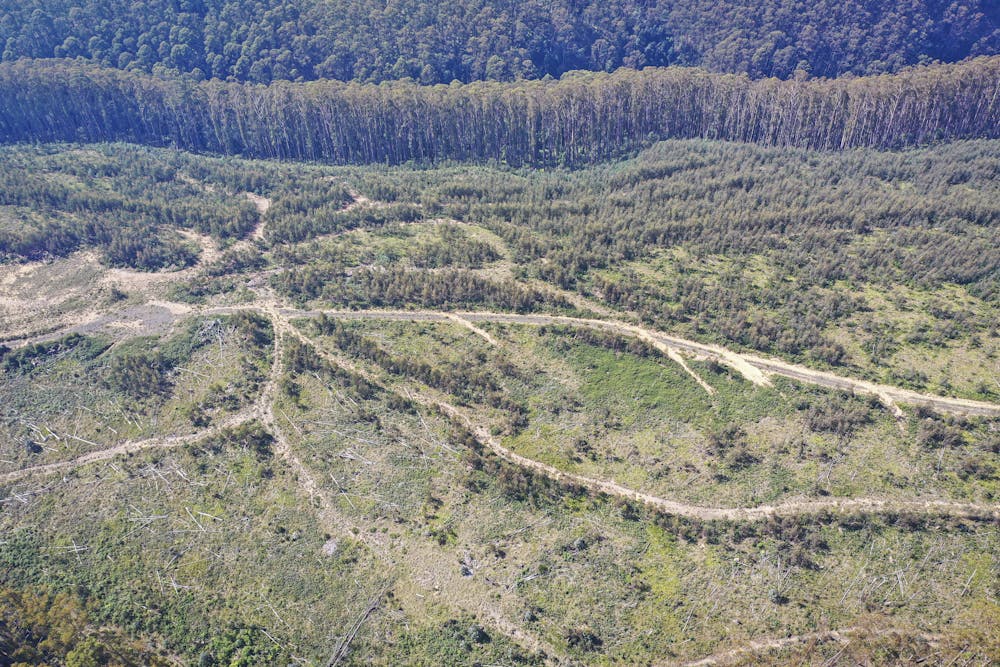
    We analysed satellite data, logging records, on-ground surveys and drone photography, and discovered that nearly 20% of logged areas failed to regenerate. This represents more than 8,000 hectares of forest lost. All that remains in these areas are grassy clearings, dense shrublands or bare soils.

    We also found the rate of regeneration failure has increased over the past decade. While failure was rare in the 1980s, it became much more common over time – affecting more than 80% of logged sites by 2019.

    These regeneration failures weren’t random. They were found mostly in close proximity to each other, on areas with steep slopes, relatively low elevation, and where the area of clear-felled forest was long and narrow.

    Our research shows more needs to be done to restore Victoria’s forest after logging.

    Failed regeneration in the Upper Thomson water supply catchment.
    Chris Taylor/Lachie McBurnie

    Restoring majestic forests and their vital services

    Victoria is home to some of the most spectacular forests on the planet. They include extensive stands of mountain ash, the tallest flowering plant on Earth, which can grow to almost 100 metres in height. Alpine ash, another giant, can grow up to 60m tall.

    These forests have great cultural significance to Indigenous people and support many recreational and tourism activities.

    Healthy forest ecosystems also deliver clean water and carbon storage services. In fact, mountain ash forests contain more carbon per hectare than most other forests around the world.

    But Victoria’s forests have long been logged for timber and pulp. The main method of logging – clearfelling – scars the landscape, leaving large areas devoid of trees if natural tree regeneration fails.

    Mountain ash is especially vulnerable

    Our research revealed 19.2% of areas logged between 1980 and 2019 in our study area (8,030ha out of 41,819ha cut) failed to regenerate naturally.

    We also found strong evidence of a significant increase in the extent of failed regeneration over 40 years, increasing from less than two hectares per cutblock in 1980 (about 7.5%) to more than nine hectares per cutblock in 2019 (about 85%), on average.

    We found regeneration failure was more likely in mountain ash forests compared with other forest types.

    This adds to the case for listing the mountain ash forests of the Central Highlands of Victoria as a threatened ecological community.

    The presence of non-eucalypt categories of vegetation indicates large areas of regeneration failure in forest near Mt Matlock, in the Central Highlands of Victoria.
    Chris Taylor

    A responsibility to restore

    Under Victoria’s Code of Forest Practice for Timber Production, logged native forests must be properly regenerated within two to three years of harvest.

    That’s because it is nearly impossible for the native forest to regenerate after three years without human intervention. The young trees face too much competition from grass and shrubs.

    These degraded areas no longer hold the value they once did and they cannot provide the same level of ecosystem services such as carbon storage, water purification, or habitat for wildlife.

    With no current government restoration plan, these landscapes will remain degraded indefinitely. The Victorian government retains legal responsibility to restore these degraded forests, but currently lacks any large-scale restoration strategy, making action urgently required.

    Photographs of vegetation categories on logged sites: Eucalyptus regeneration near Toolangi (A), grass-dominated area near Mt Matlock (B), shrubby vegetation at Ballantynes Saddle (C), Daviesia vegetation near Mt Matlock (D), Acacia near Mt Baw Baw (E), and bare earth near Mt Matlock (F).
    Chris Taylor

    A way forward: using green bonds to fund regeneration

    Our research shows the regeneration of forests after logging is not guaranteed. Nature often needs a helping hand. But we need to find ways to fund these projects.

    Globally, governments have used “green bonds” to lower the cost of borrowing tied explicitly to measurable environmental results.

    Victoria already has green bonds “to finance new and existing projects that offer climate change and environmental benefits”. But funds are typically used to finance investments in transport, renewable energy, water and low carbon buildings.

    As part of a coalition of researchers, environmental organisations, and finance sector partners we proposed a A$224 million green bond for forest regeneration. This proposal was put to the Victorian government via the Treasury Corporation of Victoria.

    Green bond funding would help leverage co-investment from the Commonwealth government and philanthropic partners to improve monitoring and biodiversity outcomes in native forests.

    As part of the proposed green bond, areas of logged forest where natural regeneration has failed would be restored.

    Other investments under the green bond could include creating tourism ventures (and associated jobs), controlling feral animals such as deer, and biodiversity recovery – creating habitat for endangered species such as the southern greater glider and Leadbeater’s possum, for example.

    The $224 million required for the ten years of the green bond — or around $22.4 million per year — is less than the substantial losses Victoria incurred on its investment in VicForests over the past decade.

    Our research suggests leaving nature to its own devices would mean losing a fifth of the forests logged over the past 40 years. Bringing the trees back has multiple benefits and would be well worth the investment.

    Maldwyn John Evans receives funding from the Australian Government.

    David Lindenmayer receives funding from The Australian Government, the Australian Research Council and the Victorian Government. He is a Councillor with the Biodiversity Council and a Member of Birdlife Australia.

    Chris Taylor does not work for, consult, own shares in or receive funding from any company or organisation that would benefit from this article, and has disclosed no relevant affiliations beyond their academic appointment.

    ref. Logging devastated Victoria’s native forests – and new research shows 20% has failed to grow back – https://theconversation.com/logging-devastated-victorias-native-forests-and-new-research-shows-20-has-failed-to-grow-back-254465

    MIL OSI AnalysisEveningReport.nz

  • MIL-Evening Report: What are the symptoms of measles? How long does the vaccine last? Experts answer 6 key questions

    Source: The Conversation (Au and NZ) – By Phoebe Williams, Paediatrician & Infectious Diseases Physician; Senior Lecturer & NHMRC Fellow, Faculty of Medicine, University of Sydney

    fotohay/Shutterstock

    So far in 2025 (as of May 1), 70 cases of measles have been notified in Australia, with all states and territories except Tasmania and the Australian Capital Territory having recorded at least one case. Most infections have occurred in New South Wales, Victoria and Western Australia.

    We’ve already surpassed the total number of cases recorded in all of 2023 (26 cases) and 2024 (57 cases).

    Measles outbreaks are currently occurring in every region of the world. Most Australian cases are diagnosed in travellers returning from overseas, including popular holiday destinations in Southeast Asia.

    But although Australia eliminated local transmission of measles in 2014, recently we’ve seen measles infections once again in Australians who haven’t been overseas. In other words, the virus has been transmitted in the community.

    So with measles health alerts and news reports popping up often, what do you need to know about measles? We’ve collated a list of commonly Googled questions about the virus and the vaccine.

    1. What is measles?

    Measles is one of the most contagious diseases known to affect humans. In fact, every person with measles can infect 12 to 18 others who are not immune. The measles virus can survive in the air for two hours, so people can inhale the virus even after an infected person has left the room.

    Measles predominantly affects children and those with weaker immune systems. Up to four in ten people with measles will need to go to hospital, and up to three in 1,000 people who get measles will die.

    In 2023, there were more than 100,000 deaths from measles around the world.


    Read more:
    Travelling overseas? You could be at risk of measles. Here’s how to ensure you’re protected


    2. What are the symptoms of measles?

    The signs and symptoms of measles usually start 7–14 days after exposure to the virus, and include rash, fever, a runny nose, cough and conjunctivitis. The rash usually starts on the face or neck, and spreads over three days to eventually reach the hands and feet. On darker skin, the rash may be harder to see.

    Complications from measles are common, and include ear infections, encephalitis (swelling of the brain), blindness and breathing problems or pneumonia. These complications are more likely in children.

    Pregnant women are also at greater risk of serious complications, and measles can also cause preterm labour and stillbirth.

    Even in people who recover from measles, a rare (and often fatal) brain condition can occur many years later, called subacute sclerosing panencephalitis.

    Children are most vulnerable to measles.
    Jacob Lund/Shutterstock

    3. What’s the difference between measles and chickenpox?

    Measles and chickenpox are caused by different viruses, although both commonly affect children, and vaccines can prevent both diseases. Chickenpox is caused by the varicella zoster virus, which is also transmitted through the air, and can cause fever, rash and rare (yet serious) complications.

    The chickenpox rash is different to the rash seen in measles. It often starts on the chest or back, appearing first as separate red bumps that evolve into fluid-filled blisters, called vesicles. Chickenpox can also appear later in life as shingles.

    4. Can you get measles twice?

    The simple answer is no. If you contract measles, you should have lifelong immunity afterwards.

    In Australia, people born before 1966 would have most likely been infected with measles, because the vaccine wasn’t available to them as children. They are therefore protected from future infection.

    Measles infection however can reduce the immune system’s ability to recognise infections it has previously encountered, leaving people vulnerable to many of the infections to which they previously had immunity. Vaccination can protect against this.

    5. What is the measles vaccine, and at what age do you get it?

    The measles vaccine contains a live but weakened version of the measles virus. In Australia, measles vaccinations are given as part of a combination vaccine that contains the measles virus alongside the mumps and rubella viruses (the MMR vaccine), and the chickenpox virus (MMRV).

    Under the national immunisation program, children in Australia receive measles vaccines at 12 months (MMR) and 18 months of age (MMRV). In other countries, the age of vaccination may vary – but at least two doses are always needed for optimal immunity.

    In Australia, children are vaccinated against measles at 12 and 18 months.
    Zhuravlev Andrey/Shutterstock

    Measles vaccines can be given earlier than 12 months, from as early as six months, to protect infants who may be at higher risk of exposure to the virus (such as those travelling overseas). Infants who receive an early dose of the measles vaccine still receive the usual two recommended doses at 12 and 18 months old.

    Australians born between 1966 and 1994 (those aged roughly 20–60) are considered to be at greater risk of measles, as the second dose was only recommended from November 1992. Australia is seeing breakthrough measles infections in this age group.

    An additional measles vaccine can be given to these adults at any time. It’s safe to get an extra dose even if you have been vaccinated before. If you are unsure if you need one, talk to your GP who may check your measles immunity (or immunisation record, if applicable) before vaccinating.

    However, as the measles vaccine is a live vaccine, it’s not safe to give to people with weakened immune systems (due to certain medical conditions) or pregnant women. It’s therefore important that healthy, eligible people receive the measles vaccine to protect themselves and our vulnerable population.

    6. How long does a measles vaccine last?

    The measles vaccine is one of the most effective vaccines we have. After two doses, about 99% of people will be protected against measles for life.

    And the measles vaccine not only protects you from disease. It also stops you from transmitting the virus to others.

    Phoebe Williams receives research funding focused on reducing antimicrobial resistance and neonatal sepsis from the National Health and Medical Research Council and the Gates Foundation.

    Archana Koirala is the chair of the Vaccination Special Interest Group and a committee member of the Australian and New Zealand paediatric infectious diseases network with Australasian Society of Infectious Diseases. Her vaccine and seroprevalence research has been funded by the Australian Government Department of Health and Aged Care and NSW Health.

    ref. What are the symptoms of measles? How long does the vaccine last? Experts answer 6 key questions – https://theconversation.com/what-are-the-symptoms-of-measles-how-long-does-the-vaccine-last-experts-answer-6-key-questions-255496

    MIL OSI AnalysisEveningReport.nz

  • MIL-Evening Report: How the US ‘war on woke’ and women risks weakening its own military capability

    Source: The Conversation (Au and NZ) – By Bethan Greener, Associate Professor of Politics, Te Kunenga ki Pūrehuroa – Massey University

    US Defense Secretary Pete Hegseth during a visit with Michigan Air National Guard troops, April 29. Getty Images

    With US Secretary of Defense Pete Hegseth’s “proud” cancellation this week of the military’s Women, Peace and Security (WPS) program, the “war on woke” has found its latest frontier – war itself.

    Stemming from a United Nations Security Council resolution in 2000, the WPS initiative aimed to increase the participation of women in public institutions, including in the security sector and in peace-making roles.

    The WPS agenda aims to better understand how women, men, boys and girls experience war, peace and security differently. It increases operational effectiveness and supports the underlying goal of gender equality, described by the UN as the “number one predictor of peace”.

    In the military context, it emphasises the need to increase the participation of women and to better protect non-combatant women in war, particularly from the prevalence of conflict-related sexual violence.

    The decision to end the program as part of a wider war on diversity, equity and inclusion seems to assume national security and military power are incompatible with the promotion of racial and gender equality.

    In other words, it assumes certain types of people aren’t really cut out to be “warfighters”. And it asserts that anything other than basic skill (such as weapons handling) undermines readiness and ability in warfare.

    History and the available evidence suggest both ideas are wrong.

    The archetypal warrior envisaged by Hegseth and others is one who relies on very traditional concepts of what constitutes a warrior and who that might be: not female, definitely not transgender, ideally also not gay.

    Recent bans on transgender personnel in the US military, the removal of mandatory mental resilience training, and the
    disappearance” from US museums and memorials of the records of the military contribution of women and minorities, reinforce these ideas.

    The ideal soldier, according to the new doctrine, is straight, white, physically fit, stoic and male. Yet people of all stripes have served their countries ably and with honour.

    Hard-won progress in retreat

    Military service is allocated a privileged kind of status in society, despite (or perhaps because of) the ultimate sacrifice it can entail. That status has long been the preserve of men, often of a particular class or ethnicity.

    But women and minorities around the world have fought for the right to enter the military, often as part of broader campaigns for greater equality within society in general.

    But there remains resistance to these “interlopers”. No matter their individual capabilities, women are painted as too physically weak, as a threat to combat unit cohesion, or a liability because of their particular health needs.

    Women, in particular, are often perceived as being too emotional or lacking authority for military command. Minorities are seen as requiring distracting rules about cultural sensitivity, presenting language challenges, or are stereotyped as not cut out for leadership.

    But problem solving – a key military requirement – is best tackled with a range of views and approaches. Research from the business world shows diverse teams are more successful, including delivering higher financial returns.

    At a more granular level, we also know that minority groups have often outperformed other military units, as exemplified by the extraordinary feats of the New Zealand Māori Pioneer Battalion in World War I and the 28th Māori Battalion in World War II.

    Women, too, have proved themselves many times over, most recently in the wars in Iraq and Afghanistan. As well as matching the skills of their male counterparts, they also had different, useful approaches to roles such as intelligence gathering in conflict zones.

    US Marines on a military exercise – but history shows us there’s more than one type of successful soldier.
    Getty Images

    The ‘woke warrior’

    The competence of military personnel is not determined by sex, gender, sexuality or ethnicity. Rather, competence is determined by a combination of learned skills, training, education, physical ability, mental agility, resilience, experience, interpersonal skills and leadership qualities.

    Any suggestion that military units are best served by being made up of only heterosexual men with “alpha” tendencies is undermined by the evidence. In fact, a monocultural, hypermasculine military may increase the potential for harrassment, bullying or worse.

    Modern military roles also involve a much wider range of skills than the traditional and stereotypically male infantry tasks of digging, walking with a pack, firing guns and killing an enemy.

    In modern warfare, personnel may also need to engage in “hearts and minds” counterinsurgency, or in “grey zone” tactics, where specialisations in intelligence, cyber or drone piloting are more highly prized. Militaries are also much more likely to be deployed to non-warfighting roles, such as humanitarian aid and disaster relief.

    This isn’t to say “controlled aggression” and other traditionally alpha-male attributes don’t have their place. But national military strategies increasingly stress the need to train ethical and compassionate soldiers to successfully carry out government objectives.

    The evolution of war requires the evolution of the military forces that fight them. The cancellation of the Women, Peace and Security program in the US threatens to put a stop to this process, at least in that country.

    Despite Pete Hegseth’s claim to be increasing “warfighting” capability, then, there is a real chance the move will decrease operational effectiveness, situational awareness and problem solving in conflict situations.

    Far from being peripheral, the Women, Peace and Security program is central to the future of all military activity, and to developing conceptions of war, peace and security. Hegseth’s “proud moment” looks less like winning a “war on woke” and more like a retreat from an understanding of the value a diverse military has created.

    Bethan Greener does not work for, consult, own shares in or receive funding from any company or organisation that would benefit from this article, and has disclosed no relevant affiliations beyond their academic appointment.

    ref. How the US ‘war on woke’ and women risks weakening its own military capability – https://theconversation.com/how-the-us-war-on-woke-and-women-risks-weakening-its-own-military-capability-255710

    MIL OSI AnalysisEveningReport.nz

  • MIL-OSI USA: SCHUMER REVEALS: ‘DOGE’ & TRUMP JUST SLASHED $26+ MILLION FOR AMERICORPS PUBLIC SERVICE COMMUNITY PROJECTS ACROSS NEW YORK, AXING 3,600 AMERICORPS NATIONAL SERVICE MEMBERS, WITH MORE DEVASTATING CUTS…

    US Senate News:

    Source: United States Senator for New York Charles E Schumer
    Thousands Of AmeriCorps Members Were Just Fired By ‘DOGE’ And NY Community Grants Ripped Away, Cancelling Funds To Help Build Houses, Provide Rural Health Care, Respond To Disasters, Tutor Students, And More
    Every Year Over 22,000 AmeriCorps National Service Participants Work On 1,700+ Projects In Every Corner Of NY, But Now Grants Are Being Cancelled Across The State With Even More Cuts Expected – Senator Breaks Down Impact Region By Region Thus Far And Demands Funding Be Restored
    Schumer: Calling Service-Led Community Projects ‘Government Waste’ Makes No Sense, AmeriCorps Is One Of The Best Bang For Your Buck Programs That Helps NY Communities In Need
    After Trump and ‘DOGE’ placed a majority of AmeriCorps employees on leave and terminated nearly $400 million in AmeriCorps grants nationally earlier this month, U.S. Senator Chuck Schumer today revealed this has impacted over 3,600 NY community service members slashing over $26 million in federal funding for local community projects in every corner of New York State, and with more potential cuts on the horizon the senator broke down the impacts region by region to show just how deep these cuts go. 
    Schumer said this is the first step towards dismantling AmeriCorps entirely would devastate New York, which has over 1,700 AmeriCorps projects, and is demanding that NY House Republicans stand up to protect this vital public service and join him in his push to immediately reverse these cuts. All of these AmeriCorps programs have long-standing bipartisan support having been previously authorized by Congress and funded by the annual appropriations bill passed by Congress and signed into law, making ‘DOGE’s’ cuts unlawful.
    “AmeriCorps is one of the world’s greatest service programs, and one of the best bang for your buck federal investments in addressing community needs and in the future of our country. But across New York hundreds of AmeriCorps community service participants were just egregiously fired and had their funding ripped away halting their critical work helping the communities they serve. This is funding that provides rural healthcare in the Southern Tier, helps children learn to read in Buffalo, expands job training opportunities in Albany, and so much more to fill in the gaps by linking national service participants with opportunities to gain experience serving their country. This critical work will now cease as these members are dismissed and funding is ripped away from our communities by Trump and ‘DOGE,’” said Senator Schumer. “I am all for cutting out inefficiency, but you use a scalpel, not a chainsaw. You don’t dismiss thousands of members who have dedicated their time to public service and giving back to underserved communities – it makes no sense. These are community projects that wouldn’t happen without AmeriCorps and we need these cuts reversed NOW and for NY Republicans to stand up in opposition to eliminating funding for AmeriCorps.”
    In recent days, Trump and ‘DOGE’ cut roughly 75% of full-time AmeriCorps employees and dismissed thousands of national service participants working on projects in every corner of the country, including over 3,600 community service participants across New York and cancelling over $26 million in grant funding, meaning in many instances these projects will not continue. You can find a full list of cut projects across Upstate NY according to AmeriCorps linked HERE. Some projects cut or facing threats by the Trump administration include:
    In Buffalo, AmeriCorps members were tutoring more than 2,500 students across 4 schools in the school district through City Year, helping students improve attendance and academic performance. In addition, more AmeriCorps members were building homes through Habitat for Humanity.
    In the Southern Tier, AmeriCorps members based in Binghamton were providing health care services to rural communities across the Southern Tier through the Rural Health Network of South Central New York.
    In Rochester, AmeriCorps members were improving academic engagement and college and career readiness throughout the Rochester City School District through Monroe Community College and providing public health apprenticeships through Flower City Public Health Corps.
    In the Capital Region, AmeriCorps members were providing free support for high schoolers applying for federal student aid through SUNY and training to be dispute resolution practitioners.
    In Central NY and the North Country, AmeriCorps members were working with local children providing mentoring, nutrition, and fitness education through Oswego AmeriCorps and working supporting outdoor-based education initiatives in the Adirondacks community through the Wild Center.
    In the Hudson Valley, AmeriCorps members were working with local children through We Prosper Family Organization.
    A breakdown of dismissed volunteers and cut federal funding by region for Upstate NY can be found below:

    Region

    Federal Funding

    Capital Region

    $6,439,224

    Rochester-Finger Lakes

    $2,556,668

    Western NY

    $2,285,041

    Southern Tier

    $647,910

    Central NY & North Country

    $636,020

    Hudson Valley

    $132,300

    TOTAL FOR UPSTATE NY-BASED PROJECTS

    $12,697,163

    Across New York State, there are over 22,000 national service members working on over 1,700 projects. AmeriCorps and its partners generated more than $20 million in outside resources from businesses, foundations, public agencies, and other sources in New York last year. Schumer said AmeriCorps members and communities that are impacted by these latest cuts are just the tip of the iceberg, with more cuts being announced every day that could soon hit other projects such as the Rockland Head Start program which provides child care, Interfaith Works in Syracuse which supports Central New York seniors, and Lifespan which provides services to seniors across Upstate NY such as training for part time jobs as senior companions in Central New York and health and wellness programs for seniors in the Rochester Finger-Lakes region.
    ‘There is no rhyme or reason to the project and grant terminations, other than DOGE was forcing AmeriCorps to get to a bottom-line dollar amount. The reason for eliminating over half the staff is very clear: This administration does not value the contributions of public servants who have been quietly administering an extremely efficient agency that engages Americans all across the country in service, which in addition to providing critical services, strengthens civic engagement and ties between people of all backgrounds,” said Kelly Daly, President, AFSCME Local 2027.
    “AmeriCorps gets things done by filling unmet local needs, while bolstering a sense of community,  advancing personal responsibility, and boosting the upward mobility of its participants.  We have used AmeriCorps members to build the capacity of anti-hunger organizations throughout the state. In many ways, AmeriCorps is a conservative program. You don’t get a penny unless you work, most program funding decisions are made by states rather than the federal government, and the vast majority of participants serve with nonprofit groups (not government agencies). AmeriCorps is one the most cost-effective ways to solve social problems because it harnesses the immense energy of citizen service. Thus, if conservatives were ideologically consistent, they would increase rather than gut AmeriCorps funding. We thank Leader Schumer for keeping the government running and keep many AmeriCorps projects alive as long as possible, and for taking on the fight to protect AmeriCorps,” said Joel Berg, CEO of Hunger Free America, a national nonpartisan nonprofit organization headquartered in New York.
    Executive Director of PEACE, Inc., Carolyn D. Brown said, “PEACE, Inc.’s AmeriCorps Seniors Foster Grandparent Program allows our community’s seniors to share their time and their expertise through mentoring. Statistics show how the program improves the lives of our Foster Grandparent volunteers and both the academic performance and the social emotional skills of youth in elementary schools, Head Starts, and children’s centers. If our program was eliminated, 68 Foster Grandparent volunteers would lose their positions, and 225 vulnerable youth would lose critical interventions. These numbers would prove devastating for a city like Syracuse where nearly 1 out of 2 children live in poverty.”
    “InterFaith Works’ Senior Companion Program connects older volunteers with older adults and caregivers, for in home companionship and friendly visits. For as little as $3000 per year, vulnerable older adults stay socially connected, get help with daily activities, and age well at home – and out of costly nursing homes. Working caregivers get free in home respite for up to 40 hours per week, so they can maintain their jobs and attend to their personal needs. Senior Companion volunteers are all low-income older adults who receive a small stipend, stay active, and keep themselves healthy, too. Funding cuts would eliminate these critical and cost-effective supports for over 300 vulnerable older adults and their caregivers throughout the Central New York community,” said Lori Klivak, Director of the Center for Healthy Aging at InterFaith Works of CNY.
    “In the past five years, City Year AmeriCorps members have served in Buffalo schools to help thousands of students engage more deeply with their learning, stay on track to graduate, and reach their full potential, and these corps members receive professional development and gain skills that prepare them to enter the workforce as our region’s most in-demand employees,” said City Year Buffalo Executive Director Jacqueline Ashby. “We’re grateful to Senator Schumer for his steadfast support in championing the national service program AmeriCorps that makes this important work possible, and that benefits our community, local economy, education system and workforce development here in Western New York.”
    Across the country, AmeriCorps deploys more than 200,000 Americans annually to carry out results-driven projects at over 35,000 locations. National service participants serve in hundreds of nonprofit organizations, public agencies, and community and faith-based organizations, in rural and urban communities throughout the country. They mentor youth, build affordable housing, help communities respond to disasters, and build the capacity of nonprofit groups to extend and improve their impact by leveraging community service participants. In exchange for their services, AmeriCorps members earn an education award to pay for college or to pay off qualified student loans. A non-partisan study showed that there are an estimated $17 in benefits returned for every taxpayer dollar spent. In addition, Schumer said AmeriCorps is a long-standing, bipartisan program and failing to use AmeriCorps funding for its intended purpose as appropriated by Congress would be a violation of the law.
    Schumer led dozens of his colleagues’ in a recent letter to the President on these devastating cuts, which can be found HERE.

    MIL OSI USA News

  • MIL-OSI USA: Congressman Keith Self’s Office Announces the Winners of Texas District 3 Congressional Art Competition

    Source:

    The Office of Congressman Keith Self hosted the annual Congressional Art Competition at the Blue House Too Art Gallery, operated by the Allen Arts Alliance in Allen, Texas.

    “I am incredibly proud to see the creativity and artistic achievements of the students here in Texas District 3. The Congressional Art Competition is a tradition that my wife Tracy, my team, and I look forward to each year. Experiencing these students’ artistry is truly inspiring,” said Congressman Keith Self. “Congratulations to all of this year’s participants, and thank you to the students, teachers, parents, and judges who made this event possible. I can’t wait to see the winning artwork displayed in my district offices and in the halls of the U.S. Capitol.”

    Winners from First to Fourth Place:
    Katie Zhou – “Nurtured by Time” from Allen High School
    Miranda Chen – “Inertia” from the Hockaday School
    Ameya Kohil – “Virtual Reality” from Wylie High School 
    Ethan Otillio – “In Arms Reach” from Plano Senior High School

    This year’s Congressional Art Competition judges
    Brandon Adams – Greenville, TX
    Leticia Herrera – McKinney, TX
    Wendy McIntyre – Allen, TX

    Established in 1982, the Congressional Art Competition celebrates and encourages artistic achievement on a national scale. Since its founding, the competition has recognized more than 10,000 student artworks, which have been displayed in the Cannon Tunnel of the U.S. Capitol—one of the most traveled corridors in the nation.

    Students submit entries to their representative’s office, and panels of district artists select the winning entries. Winners are recognized both in their district and at an annual awards ceremony in Washington, D.C. The winning works are displayed for one year at the U.S. Capitol.

    ###

    MIL OSI USA News

  • MIL-OSI USA: King, Daines Introduce Bipartisan Bill to Preserve America’s Parks and Public Lands

    US Senate News:

    Source: United States Senator for Maine Angus King

    WASHINGTON, D.C. — U.S. Senators Angus King (I-ME) and Steve Daines (R-MT), leaders of the Senate National Parks Subcommittee, are introducing bipartisan legislation to strengthen and better manage public lands across the country. The America the Beautiful Act would reauthorize the National Parks and Public Land Legacy Restoration Fund (LRF) and increase its funding to address serious maintenance backlog and ensure that America’s public lands can be enjoyed for generations to come. 

    Senator King first introduced the bipartisan Restore Our Parks Act in July 2018 which established the “National Park Service Legacy Restoration Fund” to reduce the maintenance backlog by allocating existing revenues the government collects from on and offshore energy development. It was passed in the 2020 Great American Outdoors Act, but now requires reauthorization.

    “People travel from across the globe to experience the natural beauty of America’s public lands from Maine to Montana and across the nation,” said Senator King, Ranking Member of the Senate National Parks Subcommittee. “However, deferred repairs on aging infrastructure like roads and trails can become unsafe and diminish the visitor experience for those enjoying our public lands and National Parks. By addressing maintenance backlog and reauthorizing the Legacy Restoration Fund, the bipartisan America the Beautiful Act will help better protect our lands and the visitor experience. This is an important step forward in creating lasting protections for our public lands and continues to demonstrate that stewardship is not partisan.”

    “When President Trump signed my Great American Outdoors Act into law in 2020, it was the greatest conservation win for Montana and the entire country in 50 years. I’m proud to work with my colleagues to strengthen that win and protect our outdoor way of life for generations to come,” said Senator Daines, Chairman of the Senate National Parks Subcommittee. “The America the Beautiful Act will fund crucial projects and address maintenance backlogs, so that people can get outside and enjoy the natural beauty we’re lucky to have here in the U.S.” 

    “America’s parks are our legacy to uphold — and bold action is essential to fulfill that promise. The National Park Foundation applauds Senators Daines and King for their leadership in introducing bipartisan legislation to reauthorize the Legacy Restoration Fund,” said Jeff Reinbold, President and CEO of the National Park Foundation. “Since its establishment through the Great American Outdoors Act, this vital program has already delivered billions toward transformative infrastructure projects across our national parks. As we approach America’s 250th anniversary, reauthorizing this investment affirms a bold democratic ideal — that every generation deserves to experience our parks as we do today. We look forward to working with Congress to ensure these magnificent landscapes and historic sites can continue welcoming visitors for generations to come.”

    “We applaud the leadership of U.S. Senators Steve Daines (R-MT) and Angus King (I-ME) in reintroducing legislation to reauthorize the Legacy Restoration Fund. This proven, bipartisan investment keeps national parks running. The reauthorization of this bill will allow Acadia National Park to continue to make progress against a long list of needed projects that are essential for protecting resources and elevating the visitor experience. With nearly 4 million visits to Acadia in 2024 alone, and over 330 million to national parks nationwide, continued investment to maintain park infrastructure is critical,”  said Eric Stiles, President & CEO, Friends of Acadia.

    The America the Beautiful Act reauthorizes the LRF for through 2033 and increases funding to $2 billion per year to help address the maintenance backlog in national parks and public lands. Currently, the maintenance backlog for each agency is as follows:

    1. U.S. Park Service: $23.26 billion
    2. U.S. Forest Service: $8.695 billion
    3. U.S. Fish and Wildlife Service: $2.65 billion
    4. U.S. Bureau of Land Management: $5.72 billion
    5. U.S. Bureau of Indian Education: $804.5 million

    Senators Kevin Cramer (R-ND), Mark Warner (D-VA), Tim Sheehy (R-MT), and Jeanne Shaheen (D-NH) are original cosponsors of the America the Beautiful Act. The legislation is supported by over 40 public lands, conservation and recreation groups. 

    Read the bill text HERE and a one pager on the bill HERE.

    As a lifelong advocate for conservation and Chairman of the Energy and Natural Resources Subcommittee on National Parks, Senator King is among the Senate’s most prominent voices advocating for conservation. Senator King helped lead the passage the Great American Outdoors Act (GAOA) into law; the legislation that included the Legacy Restoration Fund (LRF). Because of his work, in 2020, Senator King was awarded the inaugural National Park Foundation (NPF) “Hero” Award. Since the creation of the LRF, Senator King has pushed park leaders to discuss funding maintenance efforts, maintaining a sufficient NPS workforce, and managing growing park visitation.

    Senator King’s work on this legislation is the culmination of more than four decades of work on land conservation efforts in Maine, including helping to establish the Land for Maine’s Future program in 1987 and supporting extensive conservation projects during his time as Governor. Under King’s leadership in his eight years as Maine governor, he put more Maine land under conservation than in the state’s 175 year history.

    MIL OSI USA News

  • MIL-OSI USA News: Establishment of the Religious Liberty Commission

    Source: The White House

    class=”has-text-align-left”>
    By the authority vested in me as President by the Constitution and the laws of the United States of America, it is hereby ordered:
    Section 1Purpose and Policy.  It shall be the policy of the executive branch to vigorously enforce the historic and robust protections for religious liberty enshrined in Federal law.  The Founders envisioned a Nation in which religious voices and views are integral to a vibrant public square and human flourishing and in which religious people and institutions are free to practice their faith without fear of discrimination or hostility from the Government.  Indeed, the roots of religious liberty stretch back to the early settlers who fled religious persecution in Europe, seeking a new world where they could choose, follow, and practice their faith without interference from the Government.  The principle of religious liberty was enshrined in American law with the First Amendment to the Constitution in 1791.  Since that time, the Constitution has protected the fundamental right to religious liberty as Americans’ first freedom.
    During my first term, I issued Executive Order 13798 of May 4, 2017 (Promoting Free Speech and Religious Liberty).  Pursuant to that order, the Attorney General issued a memorandum for all executive departments and agencies (agencies) titled “Federal Law Protections for Religious Liberty” on October 6, 2017.  The Supreme Court has also continued to vindicate the Founders’ commitment to religious liberty, including by giving effect to the principle that religious voices should be welcomed on an equal basis in the public square.
    In recent years, some Federal, State, and local policies have threatened America’s unique and beautiful tradition of religious liberty.  These policies attempt to infringe upon longstanding conscience protections, prevent parents from sending their children to religious schools, threaten loss of funding or denial of non-profit tax status for faith-based entities, and single out religious groups and institutions for exclusion from governmental programs.  Some opponents of religious liberty would remove religion entirely from public life.  Others characterize religious liberty as inconsistent with civil rights, despite religions’ vital roles in the abolition of slavery; the passage of Federal civil rights laws; and the provision of indispensable social, educational, and health services.
    President Ronald Reagan reminded us that “freedom is never more than one generation away from extinction.”  Americans need to be reacquainted with our Nation’s superb experiment in religious freedom in order to preserve it against emerging threats.  Therefore, the Federal Government will promote citizens’ pride in our foundational history, identify emerging threats to religious liberty, uphold Federal laws that protect all citizens’ full participation in a pluralistic democracy, and protect the free exercise of religion.

    Sec. 2Establishment of the Religious Liberty Commission.  (a)  There is hereby established the Religious Liberty Commission (Commission).
    (b)  The Commission shall function as follows:
    (i)     The Commission shall be composed of up to 14 members appointed by the President.  Members of the Commission shall include individuals chosen to serve as educated representatives of various sectors of society, including the private sector, employers, educational institutions, religious communities, and States, to offer diverse perspectives on how the Federal Government can defend religious liberty for all Americans.  The President shall designate a Chairman and Vice Chairman from among the members.  The Commission shall also include the following ex officio members or such senior officials as those members may designate:
                     (A)  the Attorney General;
                     (B)  the Secretary of Housing and Urban Development; and
                     (C)  the Assistant to the President for Domestic Policy.
    (ii)    Members appointed to the Commission shall serve one term ending on July 4, 2026, which marks the 250th anniversary of American Independence.  If the term of the Commission is extended by the President beyond July 4, 2026, members shall be eligible for reappointment for a 2-year term.  Members may continue to serve after the expiration of their terms until the appointment of a successor.
    (iii) The Commission shall produce a comprehensive report on the foundations of religious liberty in America, the impact of religious liberty on American society, current threats to domestic religious liberty, strategies to preserve and enhance religious liberty protections for future generations, and programs to increase awareness of and celebrate America’s peaceful religious pluralism. Specific topics to be considered by the Commission under these categories shall include the following areas: the First Amendment rights of pastors, religious leaders, houses of worship, faith-based institutions, and religious speakers; attacks across America on houses of worship of many religions; debanking of religious entities; the First Amendment rights of teachers, students, military chaplains, service members, employers, and employees; conscience protections in the health care field and concerning vaccine mandates; parents’ authority to direct the care, upbringing, and education of their children, including the right to choose a religious education; permitting time for voluntary prayer and religious instruction at public schools; Government displays with religious imagery; and the right of all Americans to freely exercise their faith without fear or Government censorship or retaliation.
     (iv)    The Commission shall advise the White House Faith Office and the Domestic Policy Council on religious liberty policies of the United States.  Specific activities of the Commission shall include, to the extent permitted by law, recommending steps to secure domestic religious liberty by executive or legislative actions as well as identifying opportunities for the White House Faith Office to partner with the Ambassador at Large for International Religious Freedom to further the cause of religious liberty around the world.
    (v)     Members of the Commission shall serve without any compensation for their work on the Commission.  Members of the Commission, while engaged in the work of the Commission, may be allowed travel expenses, including per diem in lieu of subsistence, to the extent permitted by law for persons serving intermittently in Government service (5 U.S.C. 5701-5707), consistent with the availability of funds.
    (vi)    To advise members of the Commission:
                 (A)  An Advisory Board of Religious Leaders shall be designated by the President and shall consist of not more than 15 members.  The Advisory Board of Religious Leaders shall be a subcomponent of the Commission and report to the Chairman of the Commission; 
                  (B)  An Advisory Board of Lay Leaders from religious congregations shall be designated by the President and shall consist of not more than 15 members.  The Advisory Board of Lay Leaders shall be a subcomponent of the Commission and report to the Chairman of the Commission; and
                  (C)  An Advisory Board of Legal Experts shall be designated by the President and shall consist of the Attorney General, or the Attorney General’s designee, and not more than 10 attorneys.  The Advisory Board of Legal Experts shall be a subcomponent of the Commission and report to the Chairman of the Commission.
    (vii)   The Commission shall terminate on July 4, 2026, which marks the 250th anniversary of American Independence, unless extended by the President.
    (viii)  The Department of Justice shall provide such funding and administrative and technical support as the Commission may require, to the extent permitted by law and as authorized by existing appropriations.
    (ix)    Insofar as the Federal Advisory Committee Act (chapter 10 of title 5, United States Code) may apply to the Commission or any of its Advisory Boards, any functions of the President under that Act, except for those in sections 1005 and 1013 of that Act, shall be performed by the Attorney General, in accordance with the guidelines and procedures established by the Administrator of General Services.

    Sec. 3.  Severability.  If any provision of this order, or the application of any provision to any agency, person, or circumstance, is held to be invalid, the remainder of this order and the application of its provisions to any other agencies, persons, or circumstances shall not be affected thereby.

    Sec. 4.  General Provisions.  (a)  Nothing in this order shall be construed to impair or otherwise affect:
    (i)   the authority granted by law to an executive department or agency, or the head thereof; or
    (ii)  the functions of the Director of the Office of Management and Budget relating to budgetary, administrative, or legislative proposals.
    (b)  This order shall be implemented consistent with applicable law and subject to the availability of appropriations.
    (c)  This order is not intended to, and does not, create any right or benefit, substantive or procedural, enforceable at law or in equity by any party against the United States, its departments, agencies, or entities, its officers, employees, or agents, or any other person.

                                  DONALD J. TRUMP

    THE WHITE HOUSE,
        May 1, 2025.

    MIL OSI USA News

  • MIL-OSI United Nations: Experts of the Committee on the Elimination of Racial Discrimination Commend Gabon on Special Contingent Composed of Indigenous Persons, Ask Questions on Treatment of Hausa Gabonese Population and Human Trafficking

    Source: United Nations – Geneva

    The Committee on the Elimination of Racial Discrimination today concluded its consideration of the tenth periodic report of Gabon, with Committee Experts commending the State on the establishment of a special contingent in the National Guard made up of indigenous persons, while asking questions on the treatment of the Hausa Gabonese population and steps taken to combat human trafficking.

    Régine Esseneme, Committee Expert and Country Rapporteur, said the Committee was informed that the President of the Transition, the current Head of State, had set up a special contingent in the National Guard composed of members of the indigenous peoples’ communities, with a view to protecting the environment, which was a commendable action.

    Ms. Esseneme asked about the situation of the Hausa Gabonese since their naturalisation as Gabonese citizens in 2015, in terms of facilitating their national integration? What measures were being taken to ensure effective access to birth registration for members of ethnic minorities and indigenous peoples and to ensure the issuance of official identity documents and passports, especially in remote areas?

    Bakri Sidiki Diaby, Committee Expert and Country Co-Rapporteur, asked what was the proportion of Gabonese nationals who were victims of trafficking? What were the main forms of trafficking found in Gabon? What was the profile of the perpetrators of human trafficking, their gender and their nationality? What were the measures for reparation and rehabilitation of victims of trafficking? What was being done by the State to prevent and combat trafficking in persons, including for the purpose of labour exploitation, sexual exploitation and domestic servitude, including of non-citizens, especially children?

    The delegation said the Hausa Gabonese benefitted the same as any other citizen who held Gabonese nationality. A naturalisation decree had been implemented which granted Gabonese nationality to all Hausa people living in the country at the time; this was around 1,000 people. Some people had tried to fall through the cracks and benefit from this decree without actually meeting the requirements, which had a negative impact on the administrative situation. The Ministry of Justice was currently verifying the validity of these documents.

    The delegation said in 2023, Gabon completed the procedure required for the State to be in a position to proactively identify cases of human trafficking by identifying irregular movements. The country was also collecting data in this regard, to identify trends and receive up to date information on this phenomenon in Gabon. Underground networks operated the trafficking of women and children, and irregular migration was the driving force behind this phenomenon. Gabon was working with Benin to find a solution to this issue. The State was fully committed to rolling out the project to have practical solutions to these issues, including police investigations into these cases.

    Introducing the report, Paul-Marie Gondjout, Minister of Justice, Keeper of the Seals of Gabon and head of the delegation, apologised for the late submission of the report, which should have been submitted more than 20 years ago. Since the “ coup of liberation” of 30 August 2023, the country had been engaged in a democratic transition process under the aegis of the President of the Transition. Structured around profound institutional reforms, this inclusive process had laid the foundations for more transparent and democratic governance. A new Constitution was adopted in December 2024, which brought substantial innovations in governance; and the Electoral Code adopted in January 2025 introduced greater involvement of electoral observers, two seats of deputies for the Gabonese diaspora, and the guarantee of the right to vote for incarcerated citizens.

    In concluding remarks, Ms. Esseneme congratulated Gabon for the multi-sectoral approach taken to the dialogue, which had been productive and fruitful. Gabon was urged to do its utmost to implement the recommendations contained in the concluding observations, to ensure ongoing collaboration with the Committee.

    Mr. Gondjout, in his concluding remarks, thanked the Committee for the constructive and respectful exchange which had taken place. Gabon would continue engaging with the Committee and looked forward to the concluding observations and follow-up. It would respond within the timeframes indicated.

    The delegation of Gabon consisted of representatives of the Transitional National Assembly; Ministry of the Interior; Ministry of Health; Ministry of Energy and Water Resources; Ministry of Women and Child Protection; Ministry of National Education; Directorate of Human Rights Protection; Directorate of Criminal Affairs; Directorate of Equal Opportunities; Labour Inspectorate; Central Directorate of Financial Affairs; Directorate of Documentation and Immigration; Immigration Task Force; and the Permanent Mission of Gabon to the United Nations Office at Geneva.

    The Committee will issue its concluding observations on the report of Gabon after the conclusion of its one hundred and fifteenth session on 9 May. The programme of work and other documents related to the session can be found here . Summaries of the public meetings of the Committee can be found here , while webcasts of the public meetings can be found here .

    The Committee will next meet in public on Thursday, 1 May at 3 p.m. to consider the combined eleventh and twelfth periodic reports of Kyrgyzstan (CERD/C/KGZ/11-12).

    Report

    The Committee has before it the tenth periodic report of Gabon (CERD/C/GAB/10).

    Presentation of Report

    PAUL-MARIE GONDJOUT, Minister of Justice, Keeper of the Seals of Gabon and head of the delegation , apologised for the late submission of the report, which should have been submitted more than 20 years ago. It covered the period from 1999 to 2021 and was drafted in an inclusive, participatory process. Since gaining sovereignty, Gabon had promoted equal dignity among all citizens by prohibiting any distinction of race, origin or religion. The country had made the fight against all forms of discrimination one of the priorities in its resolute commitment to building a State governed by the rule of law that respected and protected human rights and guaranteed access to rights for all.

    Since the “ coup of liberation” of 30 August 2023, the country had been engaged in a democratic transition process under the aegis of the President of the Transition. Structured around profound institutional reforms, this inclusive process had laid the foundations for more transparent and democratic governance. A new Constitution was adopted in December 2024, which brought substantial innovations in governance; and the Electoral Code adopted in January 2025 introduced greater involvement of electoral observers, two seats of deputies for the Gabonese diaspora, and the guarantee of the right to vote for incarcerated citizens. The presidential election was held on 12 April, which would be followed on 3 May by the inauguration of the President of the Republic, thus putting an end to the transition. Transitional authorities had taken determined action to periodically update the legislative arsenal to bring it into line with ratified international treaties.

    Statistical data was a major challenge for Gabon. To address this, the Directorate General of Statistics had set up a technical body to carry out the seventh national census, which would provide data on age, gender, ethnicity, nationality and language spoken for the total population, indigenous peoples, ethnic minorities and migrants, as well as information on employment, income level and social protection. The project for the harmonisation and improvement of statistics in West and Central Africa was providing financing of statistical activities between 2025 and 2029, ensuring the production of reliable and regularly updated statistics.

    The Convention was directly applicable in Gabon and took precedence over national laws. To raise awareness of the Convention, several initiatives were implemented during the reporting period, from capacity-building workshops to the dissemination of multilingual communications. In various training schools, the Convention was presented in the module on human rights.

    No Gabonese text defined racial discrimination in the same terms as those in article one of the Convention. However, the Constitutions of 1991 and 2024 had adopted and enshrined the main principles of article one, targeting discrimination based on race, colour, national or ethnic origin and covering several sectors of the population. The Constitution also enshrined the equality of citizens before the law and the courts and the presumption of innocence for accused persons. The Government envisaged developing a national plan of action to combat racial discrimination and related intolerance in the coming year. Training sessions on the issue had been organised and a committee had been set up to develop a draft.

    A law on the reorganisation of the National Human Rights Commission was promulgated in November 2024. The process of re-establishing the institution would be completed in the coming weeks after the selection of the commissioners by the Bureau of the National Assembly. Premises for the Commission were made available in 2014, and it had recruited staff since 2012. Its budget has increased from 12,000,000 CFA francs in 2016 to 592,000,000 in 2025.

    During the period under review, measures were taken to ensure that the Criminal Code and other legislation complied with the Convention. State laws prohibited and penalised acts of racial, religious and ethnic discrimination and regionalist propaganda; secular or religious associations that provoked hatred between ethnic groups; and the dissemination, including online, of racist hate speech, which constituted an aggravating circumstance.

    The High Authority for Communication had imposed sanctions on media outlets on several occasions, but no decision condemning hate speech had been handed down by courts to date. A digital campaign entitled “Gabon against hate” was launched in December 2023 to educate citizens on the dangers of hate speech and disinformation, and in December 2024, the Government organised a workshop on the Central African strategy and action plan for the prevention and response to hate speech and incitement to violence, which led to the drafting of a national action plan.

    The new Constitution recognised civil society organizations as a part of pluralist and participatory democracy. A bill was also submitted in September 2024 on the protection of human rights defenders. Civil society organizations, including the network of human rights defenders, were strongly involved in the transition process, both in the Government and in Parliament.

    To align legislation on migrants with international standards, Gabon prepared a draft law establishing rules governing the admission and residence of foreigners in the Republic. The Government planned to integrate the issue of migrants into the curricula of training schools, particularly at the National School of the Judiciary and the National Police Academy, which also had a module on trafficking in persons.

    Gabon had made commitments at international, regional and national levels to combat trafficking in persons through local initiatives and partnerships with international actors. In 2023, the State party created a commission that was mandated to strengthen the capacities of actors addressing trafficking and establish coordinated mechanisms for the identification, care and protection of victims in each province. In addition, a proposed strategy and action plan on trafficking for the period 2025-2029 would implement actions to prevent the phenomenon, protect victims and prosecute perpetrators.

    Questions by Committee Experts

    RÉGINE ESSENEME, Committee Expert and Country Rapporteur , extended warm congratulations to the elected President of the Republic, Brice Oligui Nguema. She said the Committee had considered Gabon’s last report in 1998 in the absence of a delegation. The State submitted its next report 26 years late in 2024. The report did not provide sufficient information on the implementation of the Committee’s previous concluding observations. However, Ms. Esseneme congratulated the State party on significant developments that had been made in the legal and institutional framework, particularly the prohibition of hate speech.

    Gabon’s new Constitution of 2024 did not contain all the grounds of discrimination provided for in article one of the Convention, including skin colour, national origin and ancestry. Was this Constitution currently in effect? By what mechanism could the Convention be invoked before national courts? Could the delegation give examples of court cases in which Convention provisions had been applied? Were there plans to adopt comprehensive anti-discrimination legislation in line with the Convention? Gabon’s Common Core Document dated from 1998 and did not contain precise information on equality and non-discrimination. Were there plans to update it?

    Was there any legislation in the State party explicitly prohibiting racial profiling by police? Gabonese police reportedly carried out racial profiling checks and extorted foreigners staying in Gabon, demanding sums of money from them that varied depending on whether they held a residence permit. What measures were envisaged to prevent, prohibit and expressly punish racial profiling?

    Was the Government drafting a new Criminal Code that incorporated all the provisions of article four of the Convention? Since the events of 30 August 2023, there had reportedly been a rise in racist hate speech against Gabonese of foreign origin, including the Hausa Gabonese group, and foreigners. What measures had the State party taken to counter this hate speech? Had the Prosecutor’s Office received cases of discriminatory acts against Hausa Gabonese?

    The situation seemed to have deteriorated since the presidential election. Some 500 vehicles belonging to non-nationals employed in a private scheme for disadvantaged people had been seized and impounded. Could the State party provide an update on this case, which appeared to amount to racially motivated violence?

    Did Gabon’s law hold persons from a dominant group to account when they destroyed the property of or committed violence against a member of a minority group? What measures were in place to improve the reporting and monitoring of racist hate crimes and hate speech? What progress had been made through the “Gabon against hate” campaign?

    BAKRI SIDIKI DIABY, Committee Expert and Country Co-Rapporteur, called for data on the demographic composition of the population based on self-identification, disaggregated by ethnic origin; data on migrants, refugees, asylum seekers and stateless people; and disaggregated economic and social indicators on the different groups living in the territory, in particular minority groups? The Committee was concerned about the State’s general lack of disaggregated data, including on ethnicity, needed to monitor progress on human rights and inform policymaking. How was the State addressing this? Did it plan to establish a comprehensive data collection and reporting system that would provide insight into racial discrimination, socio-economic inequalities and implementation of the Convention?

    Responses by the Delegation

    The delegation apologised for Gabon’s lateness in submitting the report. The State party was fully committed to working with the Committee. The transitional authorities sought to fulfil the country’s international obligations.

    The Constitution reflected the principles of the Convention, even though it did not reproduce its provisions word for word. There had been no complaints submitted to courts on racial discrimination. The President would take office in three days’ time, when the new Constitution would enter into force.

    The Convention had supremacy over all domestic laws, and when there were Convention provisions that were contrary to the Constitution, the Constitutional Court could recommend amendments to the Constitution. The Criminal Code was last revised in 2020 and Gabon was engaging in work to further revise the Code to formalise within it all elements of article one of the Convention.

    Police officers apprehended persons based on the acts that they conducted. They did not consider persons’ racial or ethnic identity; State law prohibited racial profiling. The Government worked to promote unity between different ethnic groups and ensure that hate speech did not gain ground.

    Data on ethnic origin was not collected in the previous census of 2013, though data on nationality was. The next census would collect data on age, gender, ethnic origin and languages spoken. The Government had undertaken a project to reform the national statistics system, which aimed to provide more resources to the national statistics institute and to establish officers on statistics in each ministerial department, who would collect data on the implementation of the Convention.

    Last year, a leader of a political party made a statement against an ethnic group; investigations into this incident were ongoing. The State party embraced the Hausa Gabonese and other populations of foreign origin, promoting their integration into society. It sought to resolve institutional friction to ensure such integration. It was not aware of reports of seizing of non-nationals’ vehicles.

    Follow-Up Questions by Committee Experts

    RÉGINE ESSENEME, Committee Expert and Country Rapporteur, asked whether the President would need to approve legislation to bring the new Constitution into force. What happened when constitutional or domestic legal provisions ran counter to international norms? Did victims need to lodge complaints related to hate speech for criminal investigations to start? Did the law on the protection of personal data include measures to prevent racial profiling?

    A Committee Expert said the Committee was very pleased to see the delegation of Gabon after nearly a quarter-century and looked forward to continued dialogue with the State. In 2011, a law was implemented that addressed ritualistic crimes against children. What measures had the State party taken to protect children from these crimes? How many children were affected by such crimes?

    Responses by the Delegation

    The delegation said the new Constitution was in force, but its content on ceasing the transitional process was not applicable immediately. The Constitutional Court assessed new laws to ensure that they were aligned with the Convention and the Constitution. It informed the Government when laws contained provisions that did not align with the Convention and called for their revision.

    The Higher Authority on Communication could suggest administrative sanctions against media agencies that disseminated hate speech.

    There were no legal provisions that specifically referred to “ritualistic crimes”, but there were provisions punishing related acts, such as murder and removal of vital organs, as aggravated crimes.

    Questions by Committee Experts

    RÉGINE ESSENEME, Committee Expert and Country Rapporteur, said Gabon had not adopted a plan of action to combat racial discrimination. What measures had the State party taken to develop such a plan and implement the Durban Programme of Action, and what results had it obtained?

    The National Human Rights Commission was reorganised in November 2024. Had the State party applied for accreditation from the Global Alliance of National Human Rights Institutions? The Commission received and examined complaints from individuals and victims. What was the procedure for this, and how many complaints had it examined, including related to racial discrimination? How was the Commission raising awareness about human rights protections? The Commission’s financial resources had been significantly increased; the Committee hoped that this would strengthen the Commission’s ability to combat racial discrimination.

    The registration procedure for non-governmental organizations was reportedly very expensive and inconsistent, which discouraged organizations from carrying out their activities. The Committee had not received any alternative report from civil society. How was the State party encouraging this? What progress had been made in establishing a consultation framework between the State and civil society, and in developing a law on human rights defenders? Human and environmental rights defenders in the country were highly vulnerable to abuses and reprisals, including women, farmers and indigenous peoples fighting against deforestation. What measures were being taken to ensure the protection of human rights defenders who fought against racial discrimination and defended indigenous peoples and migrants?

    The Committee welcomed that the State automatically appointed a lawyer to accused persons who could not afford one, and that such persons benefitted from the presumption of innocence. How many persons had benefitted from legal aid in the last two years, including persons from ethnic minorities?

    What continuous training or awareness raising activities were being carried out for the judiciary, law enforcement officials and the public on human rights, international human rights treaties, non-discrimination and minority rights? Did training on human rights for security and defence forces address the Convention? What measures had been implemented to support the filing of complaints and claims for redress in cases of racial discrimination, particularly for ethnic minorities, indigenous peoples and non-citizens? Victims often struggled to prove that they had been discriminated against when perpetrators held positions of authority. Did the State party intend to introduce a reversal of the burden of proof in favour of victims of discrimination? How would the State bring the administration of justice closer to rural areas inhabited by indigenous peoples, and remove obstacles related to linguistic diversity?

    What progress had been made on introducing human rights education into school curricula and higher education? Did curricula address the Convention, combatting racial discrimination, and the history, culture and traditions of the different ethnic groups and indigenous peoples? What difficulties did the State party encounter in promoting education on national languages? Were there any community radio stations in the State party where information was disseminated in local languages and indigenous languages such as Baka? What programmes were in place to promote ethnic cultures and traditions and social cohesion?

    BAKRI SIDIKI DIABY, Committee Expert and Country Co-Rapporteur, said the new Constitution stipulated that citizens’ gatherings, demonstrations or parades in public spaces needed to be authorised under the conditions provided for by law. This seemed to restrict freedom of assembly and contradict 2017 legislation calling only for a declaration of planned gatherings. Why had this regressive change been made? How would the State party bring its rules on freedom of assembly in line with international standards? Were remedies available for persons whose demonstrations had been banned?

    In February 2021, tear gas and grenades were used in Libreville and Port Gentil to disperse a crowd demonstrating in opposition to the restrictions imposed during the COVID-19 pandemic. What justified this use of public force? Had investigations been carried out to establish responsibility? Could legislation on assembly be used to restrict private meetings? What measures had the State party adopted to ensure that indigenous peoples, ethnic minorities and non-citizens could exercise their right to freedom of assembly without discrimination, including at demonstrations in opposition to infrastructure projects or calling for protection of the environment and natural resources?

    FAITH DIKELEDI PANSY TLAKULA, Committee Expert and Follow-Up Rapporteur , said she was encouraged by the State’s desire to strengthen its institutions. How were the members of the National Human Rights Commission appointed and to whom were they accountable? The State party had not ratified the African Charter on Democracy, Elections and Governance. Did it plan to do so?

    Responses by the Delegation

    The delegation said that the National Human Rights Commission would apply for accreditation with the Global Alliance of National Human Rights Institutions. Funding for the Commission had increased exponentially. Legislation on the re-establishment of the Commission was in line with the Paris Principles; it had been developed with the Office of the High Commissioner for Human Rights. There had not been any complaints of racial discrimination submitted to the Commission yet. The State party would work to raise awareness of the Commission’s complaints mechanism.

    The Commission and civil society were involved in drafting the State party’s reports to treaty bodies. Civil society had submitted alternative reports to the Human Rights Committee, and training had been provided to civil society on preparing such reports. Reports that the procedure for creating non-governmental organizations was onerous were false. There were no costs associated with creating such organizations in Gabon.

    Gabon sought to rebuild its institutions based on justice. It had set up a legal aid office, which provided legal aid to vulnerable persons, and sought to strengthen this system and make it accessible throughout the country. There was no discrimination in the provision of legal aid. All plaintiffs appearing before a criminal court needed to be represented by a lawyer. The State party would consider revising the Criminal Code to reverse the burden of proof for cases involving racial discrimination.

    The new Constitution enshrined the principles of freedom of expression and assembly for all citizens. Legislation set up a system of declaration for public demonstrations; there was no authorisation system. Individuals who had been banned from holding demonstrations could file administrative appeals and appeals with the courts. There were no barriers to the freedom of expression in Gabon.

    Human rights education was part of the Gabonese civic education programme from primary level onwards. There had been an initiative to bolster this programme and to provide human rights education in vocational training institutions. Teaching on national languages was provided in religious establishments, and there were plans to include national language education in the general primary and secondary curricula.

    The new members of the National Human Rights Commission would be appointed by an ad-hoc committee within the National Assembly through a transparent process that ensured appropriate geographic balance. These members would be standing, independent members. Members’ reports would be sent to relevant institutions for follow-up.

    Initial training for members of the magistracy included a module on human rights, and ongoing training was provided on certain issues, for example concerning migrants and trafficking.

    Questions by a Committee Expert

    RÉGINE ESSENEME, Committee Expert and Country Rapporteur, asked which groups in Gabon self-determined as national minorities, even though the State declared it did not grant them legal status? What was the situation of the Hausa Gabonese since their naturalisation as Gabonese citizens in 2015, in terms of facilitating their national integration? According to information received by the Committee, the State was struggling to issue birth certificates and national identity cards to ethnic and indigenous minorities. What measures were being taken to ensure effective access to birth registration for members of ethnic minorities and indigenous peoples and to ensure the issuance of official identity documents and passports, especially in remote areas?

    It was reported that in 2022, people returning from holidays, whose surnames sounded foreign, had had their passports taken away by border police officers, and they had to go and collect them and justify their Gabonese nationality. What was at the origin of this search for the original “Gabonness” that seemed to be coming back in force since the events of August 2023? What was the State party doing to ensure social cohesion in these circumstances?

    How many members of the indigenous peoples’ communities held positions of responsibility in the central and local State administration? What measures were being taken to strengthen the political and administrative capacities of the members of these communities for better representation? What was the proportion of women, and particularly women from indigenous peoples and the Hausa Gabonese minority, in elective and decision-making positions in the civil service? Did it mean the State would prefer to appoint a less qualified man to a senior job in the State rather than a highly qualified woman, if the 30 per cent quota for women was reached? What measures had the State party taken to prevent and combat racial discrimination in the workplace, as well as abusive practices and labour exploitation, in particular against indigenous peoples and other minorities?

    From the report, it appeared the State party was made up of the Baka, Babongo, Bakoya, Baghame, Barimba, Akoula and Akwoa ethnic groups that were settled in different regions of Gabonese territory. What were the legal and institutional frameworks, as well as policies and programmes established for the promotion and protection of the specific rights of these indigenous peoples? What measures had been taken to enable indigenous peoples to enjoy genuine equality of opportunity and treatment with other members of the population? How many indigenous peoples were there in Gabon?

    What mechanism had been implemented to conduct prior consultations to obtain the free and informed consent of the indigenous peoples concerned by projects, including the deployment of fibre optics, and to involve them in their implementation? Was there a permanent framework for cooperation with community leaders or associations that represented these populations? Who were the ethnic groups of the indigenous inhabitants of the 26 villages concerned by the development project, being conducted with the United Nations Children’s Fund?

    The Committee was informed that the President of the Transition, the current Head of State, had set up a special contingent in the National Guard composed of members of the indigenous peoples’ communities, with a view to protecting the environment, which was a commendable action. It was hoped this would not be an isolated act.

    According to available information, entire villages populated by indigenous communities had been displaced without prior consent for mining projects in Bakoumba, and had been relocated to undesirable and polluted areas, with no action taken by the authorities to follow up on the complaints of those affected by the pollution. Could information on this situation be provided? What measures were being taken to ensure the right of indigenous peoples to own, develop, control and use the lands, resources and community territories that they traditionally occupied or used? What tools did the Government use to promote equal opportunities in education and training? How were the specific needs of indigenous peoples taken into account? Did pre-primary and primary education include the teaching of mother tongue languages?

    The Gabonese Government had adopted a commendable housing policy with the home savings plan put in place since March 2019. However, a World Bank report from 2020 revealed that more than one in two households did not have access to decent housing. What was the real situation in terms of housing? Could information be provided on the poverty rate among indigenous peoples and other minorities and their access to basic services?

    The education system had specialised facilities for children with hearing impairments, including those belonging to indigenous peoples and other minorities. What was the situation of the education of other children with special needs, such as autistic children, considered in some societies to be evil or sorcerous children? Given that some 50 national languages were spoken in Gabon, what languages were used within the media and what methodology was used to choose these languages? Were there programmes in the Baka and Koya languages that were spoken by indigenous peoples? What measures had been taken to promote the dissemination of and respect for the traditions and culture of the different ethnic groups in Gabon, and to protect indigenous languages, such as Baka and Koya?

    Responses by the Delegation

    Regarding the Hausa whose passports were removed if their names sounded foreign, the delegation said there were people who had not been careful to keep up with the administrative situation in the country in which they lived. They may not see the importance of having birth and identity documents. This meant today, when the State was focused on restoring its institutions, these matters came to the surface. There had been some confusing situations which arose because many people had held fake documents for a long time before. The Government was looking into this issue as a matter of national security.

    Members of the Hausa population benefitted the same as any other citizen who held Gabonese nationality. A naturalisation decree had been implemented which granted Gabonese nationality to all Hausa people living in the country at the time; this was around 1,000 people. Some people had tried to fall through the cracks and benefit from this decree without actually meeting the requirements, which had a negative impact on the administrative situation. The Ministry of Justice was currently verifying the validity of these documents.

    It was true that there were more women than men in Gabon. However, when it came to elections, not many women wanted to participate in political life, and the State wanted to change this. This was why legislation had been developed which established quotas; this aimed to be positive discrimination for women. The quotas intended to encourage more women to become involved in political life at the local and national level. The 30 per cent minimum quota was in place for all political parties, with the requirement that 30 per cent of all candidates should be women. The State also aimed to encourage more young people and persons with disabilities to become involved in political life.

    Indigenous peoples were included in Gabon’s social protection coverage. They were covered by the social protection system and received unemployment and health benefits. The 26 villages covered by the support programme were villages with people from Baka, Bango and other groups. Work was done with pregnant women to ensure neonatal services were provided, especially in remote parts of the country where many indigenous groups lived. The State had set up a centre for autistic children and aimed to roll this out to other parts of the country.

    In 2016, a programme was launched to combat all forms of discrimination in employment, healthcare and education, and other areas of public life. The State sought to support all levels of society in Gabon through this programme, which covered indigenous peoples, women and other vulnerable groups. All programmes were intended to promote equality of opportunity for all. Indigenous peoples, regardless of where they were located in the country, could benefit from State programmes.

    In Gabon, there was an observatory which focused on the issue of equality and undertook various studies, including a recent one on the equality of opportunity for indigenous peoples in Gabon. On the basis of this study, an action plan had been developed, with policies to be rolled out to address the situation of indigenous peoples in the country. The most recent census had enabled the State to identify 15,000 persons with disabilities who needed additional support, and actions relating to education and health were carried out in this regard. Gabon was on the right track in terms of indigenous peoples, as the State was pursuing inclusive policies, taking into account all persons on the territory of the country.

    Questions by Committee Experts

    RÉGINE ESSENEME, Committee Expert and Country Rapporteur, said several questions had not been answered, namely on the languages used in the media; the use of land by indigenous peoples; and the medicinal practices of indigenous peoples. There had been a case where indigenous peoples were forcibly removed from their village and transported to polluted areas; could this be addressed? Was it correct that the 30 per cent quota was a minimum? If there was a list of candidates which did not reach the minimum threshold, was it then rejected? Was the State considering an individualised approach to the Hausa Gabonese?

    A Committee Expert asked if the State looked at issues which might be particularly harmful to indigenous peoples, and then adopted policies and programmes to address these issues?

    Another Committee Expert asked what members of the delegation meant when they said they did not recognise minorities as a legal concept? Did this mean these minorities did not qualify for legal protection?

    An Expert asked if the State had investigated what held women back from applying for election posts?

    A Committee Expert said Gabon had last reviewed the Constitution in 2011. How had Gabon addressed the issues of discrimination in education?

    Responses by the Delegation

    The delegation clarified that Gabon had a brand-new Constitution. The law on data protection stated that it was prohibited to collect or process any data which revealed the racial or ethnic background of an individual, their political or religious views, and data related to their sex life or health, among other points. The profiling of children was strictly prohibited, except when strictly necessary. Personal data could be accessed on the grounds of State security defence. When the police were carrying out controls or checks, they treated all passengers in stopped vehicles the same; everyone was asked to show their identity documents.

    When the 30 per cent quotas were not achieved, steps were taken to encourage favourable treatment for women, by ensuring a male and female alternance for candidates in electoral lists, to achieve the 30 per cent representation. This was a “carrot rather than stick” approach. Women were being encouraged to overcome cultural blocks and stand for leadership roles. A workshop had been held last week which sought to address the grassroot social issues, including that women were typically viewed as homemakers and housewives. The quota law aimed to break these traditional mindsets.

    Gabon had enacted specific measures, including the law on persons with disabilities, which mandated that education was compulsory for all children with disabilities. Education was compulsory by law for all children between ages three and 16 in Gabon. A forum was organised in 2019 on the implementation of inclusive education. New schools being built were required to meet accessibility standards, to ensure free and easy access for children with motor disabilities.

    The relocation of individuals in certain areas had been required, but the fact that they were relocated to polluted areas was refuted. Some people had to accustom themselves to living in a new location, but it was the sovereign right of the State to ensure they could tap their resources for the overall benefit of the country. More information about the claims would be appreciated. There were community radio stations which broadcast programmes in local indigenous languages.

    Questions by Committee Experts

    RÉGINE ESSENEME, Committee Expert and Country Rapporteur, said there had been no shadow report received from Gabonese civil society. The information regarding the relocation of indigenous peoples had been received by the Committee members which was why they asked the question. State sovereignty should not be used against the population, but rather for their wellbeing.

    What measures had been adopted, including special measures or affirmative action measures, with a view to combatting inequalities and multiple forms of discrimination, including racial discrimination, with regard to ethnic minorities and indigenous peoples, such as the Baka, Babongo, Bakoya, Baghame, Barimba, Akoula and Akwoa? To what extent did the 2018 national strategy to combat gender-based violence and the law on the elimination of violence against women take into account the specific needs of indigenous girls and women? What other measures had been adopted to address the multiple and intersecting forms of discrimination faced by women belonging to ethnic minorities, indigenous peoples, and other vulnerable groups?

    BAKRI SIDIKI DIABY, Committee Expert and Country Co-Rapporteur, said law no. 5/86, establishing the regime for the admission and residence of foreigners in the Gabonese Republic, provided for severe fines and imprisonment for foreigners in an irregular situation, which considerably reduced the scope of protection for persons who arrived in Gabon irregularly or those already in Gabon in need of international protection. What measures had been taken by the State party to harmonise its national legislation, including this law, with international obligations, in particular to decriminalise irregular migration? What measures had been adopted to prevent and combat racial discrimination and xenophobia against migrants, asylum seekers, refugees and stateless persons, and to facilitate the integration of non-citizens?

    What measures had been adopted by the State party to ensure that the practical application of the policy of “Gabonisation” of employment did not lead to cases of discrimination in hiring and dismissal on the basis of race, colour, descent or national or ethnic origin? According to a provision within the refugee act, the majority of refugees in Gabon lived with families. What was the profile of these families? How was the legal integration of refugees carried out? What were the socio-demographic, spatial and legal-administrative characteristics of the descendants of refugees in Libreville? Clear procedures were needed to ensure the prompt identification of persons seeking international protection at land borders and arrivals by sea; what measures were being taken in this regard? What had been done to strengthen the National Commission for Refugees?

    The Committee had been told that asylum seekers remained excluded from the national medical insurance scheme and did not have access to medical services pending a decision on their refugee status. What steps had been taken to extend primary health care to asylum seekers who were awaiting a final decision on their refugee status? What efforts had the Gabonese Government made to develop and implement a statelessness determination procedure? The Committee had been informed that many foreigners were forced by the administrative services to add so-called “Gabonese” surnames to their surnames, which discouraged some parents of children born in Gabon from finalising the procedures for obtaining Gabonese nationality or identity documents; what measures had been taken to address these situations?

    What was the proportion of Gabonese nationals who were victims of trafficking? What were the main forms of trafficking found in Gabon? Did forced labour include domestic servitude, commercial exploitation and sexual exploitation? What was the profile of the perpetrators of human trafficking, their gender, and their nationality? How many cases had been prosecuted and convicted? What were the measures for reparation and rehabilitation of victims of trafficking? What was being done by the State to prevent and combat trafficking in persons, including for the purpose of labour exploitation, sexual exploitation and domestic servitude, including of non-citizens, especially children? Had appropriate resources been allocated to the National Commission for the Prevention and Combatting of Trafficking in Persons to enable it to carry out its mandate?

    Responses by the Delegation

    The delegation said a guide had been produced to inform people on how to tackle different forms of violence, including sexual violence, and how to support victims. A specific programme had been developed for indigenous children with nomadic lifestyles. Gabon provided support to refugees and asylum seekers as required. The right to health was recognised as a universal human right. Those in an irregular situation received healthcare regardless of their status.

    There was a small number of cases of irregular migration in Gabon today. In recent years, it was ensured that migrants in an irregular situation had been provided with documents and put into a regular situation.

    In 2023, Gabon completed the procedure required for the State to be in a position to proactively identify cases of human trafficking by identifying irregular movements. The country was also collecting data in this regard, to identify trends and receive up to date information on this phenomenon in Gabon. Transnational networks existed, operating by both land and sea. Underground networks operated trafficking of women and children, and irregular migration was the driving force behind this phenomenon. Gabon was working with Benin to find a solution to this issue. The State was fully committed to rolling out the project to have practical solutions to these issues, including police investigations into these cases. Trafficking was a transnational problem, and it was important to go back to the country of origin.

    Everyone in Gabon enjoyed the right to freedom of assembly. Indigenous peoples were dealt with on an equal footing, the same way as other citizens in Gabon. They were appropriately supported if they wished to establish associations. If the laws on equal treatment were not respected, appropriate penalties would be handed down.

    Legislation established the National Commission for the Prevention of Human Trafficking in Gabon. The Commission spearheaded a national strategy to counter trafficking. Gabon was a party to the 1951 Geneva Convention on Refugees. An appeals mechanism existed for those who were not satisfied with their asylum decision. There were no refugee camps in Gabon; refugees and asylum seekers shared the same schools and hospitals as Gabonese citizens. A refugee held the same rights as a Gabonese citizen. A refugee card was issued and gave access to many of the same rights as an identity card.

    BAKRI SIDIKI DIABY, Committee Expert and Country Co-Rapporteur, congratulated Gabon on the mechanism adopted to tackle human trafficking. Could statistics on the number of stateless people be provided? 

    A Committee Expert asked what steps had been taken by the Gabonese Government to push back against hate speech and xenophobia? Would Gabon ratify the Convention on the Rights of Migrants and Members of their Families?

    Another Expert asked if history education was compulsory in the State party at all levels of the education system? Given the colonial legacy of the State party, to what extent did the educational curricula cover this issue? Was Gabon supportive of the concept of reparations for colonial wrongs?

    A Committee Expert asked if any measures had been taken to eradicate malaria, particularly among migrants and asylum seekers?

    Another Expert asked how refugees were cared for in Gabon, including accommodation needs, in light of the fact that there were no camps?

    An Expert said Gabon had made good progress in regard to the education of children with disabilities. Had Gabon ratified the Convention on the Protection of Persons with Disabilities, and instruments on displaced persons.

    One Expert paid tribute to the father of the Gabonese nation.

    Responses by the Delegation

    The delegation said in history classes in public schools, there was no political link with colonialism. The curriculum was based on the programme drafted by a national pedological institution.

    Closing Remarks

    FAITH DIKELEDI PANSY TLAKULA, Committee Expert and Follow-up Rapporteur , said it would be the first time that Gabon would receive recommendations with a follow-up. Several recommendations would be highlighted for follow-up within one year.

    RÉGINE ESSENEME, Committee Expert and Country Rapporteur, congratulated Gabon for the multi-sectoral approach taken to the dialogue, which had been productive and fruitful. Ms. Esseneme thanked all those who had made the dialogue possible, especially in the hybrid format. Gabon was urged to do its utmost to implement the recommendations contained in the concluding observations, to ensure ongoing collaboration with the Committee.

    PAUL-MARIE GONDJOUT, Minister of Justice, Keeper of the Seals of Gabon and head of the delegation , thanked the Committee for the constructive and respectful exchange which had taken place. The Committee’s questions had provided an opportunity to share more information about the situation in Gabon. Gabon would continue engaging with the Committee and looked forward to the concluding observations and follow-up. Gabon would respond within the timeframes indicated. Gabon would take steps to ensure the optimal implementation of the provisions enshrined within the Convention, working with all stakeholders involved in human rights.

    _______________

    CERD25.007E

    Produced by the United Nations Information Service in Geneva for use of the media; 
    not an official record. English and French versions of our releases are different as they are the product of two separate coverage teams that work independently.

    MIL OSI United Nations News

  • MIL-OSI USA: NASA’s Chandra Diagnoses Cause of Fracture in Galactic “Bone”

    Source: NASA

    Astronomers have discovered a likely explanation for a fracture in a huge cosmic “bone” in the Milky Way galaxy, using NASA’s Chandra X-ray Observatory and radio telescopes.
    The bone appears to have been struck by a fast-moving, rapidly spinning neutron star, or pulsar. Neutron stars are the densest known stars and form from the collapse and explosion of massive stars. They often receive a powerful kick from these explosions, sending them away from the explosion’s location at high speeds.
    Enormous structures resembling bones or snakes are found near the center of the galaxy. These elongated formations are seen in radio waves and are threaded by magnetic fields running parallel to them. The radio waves are caused by energized particles spiraling along the magnetic fields.

    This new image shows one of these cosmic “bones” called G359.13142-0.20005 (G359.13 for short), with X-ray data from Chandra (colored blue) and radio data from the MeerKAT radio array in South Africa (colored gray). Researchers also refer to G359.13 as the Snake.
    Examining this image closely reveals the presence of a break, or fracture, in the otherwise continuous length of G359.13 seen in the image. The combined X-ray and radio data provides clues to the cause of this fracture.
    Astronomers have now discovered an X-ray and radio source at the location of the fracture, using the data from Chandra and MeerKAT and the National Science Foundation’s Very Large Array. A likely pulsar responsible for these radio and X-ray signals is labeled. A possible extra source of X-rays located near the pulsar may come from electrons and positrons (the anti-matter counterparts to electrons) that have been accelerated to high energies.
    The researchers think the pulsar likely caused the fracture by smashing into G359.13 at a speed between one million and two million miles per hour. This collision distorted the magnetic field in the bone, causing the radio signal to also become warped.
    At about 230 light-years long, G359.13 is one of the longest and brightest of these structures in the Milky Way. To put this into context, there are more than 800 stars within that distance from Earth. G359.13 is located about 26,000 light-years from Earth, near the center of the Milky Way.
    A paper describing these results appeared in the May 2024 issue of the Monthly Notices of the Royal Astronomical Society and is available here. The authors of the study are Farhad Yusuf-Zadeh (Northwestern University), Jun-Hui Zhao (Center for Astrophysics | Harvard & Smithsonian), Rick Arendt (University of Maryland, Baltimore County), Mark Wardle (Macquarie University, Australia), Craig Heinke (University of Alberta), Marc Royster (College of the Sequoias, California), Cornelia Lang (University of Iowa), and Joseph Michail (Northwestern).
    NASA’s Marshall Space Flight Center in Huntsville, Alabama, manages the Chandra program. The Smithsonian Astrophysical Observatory’s Chandra X-ray Center controls science operations from Cambridge, Massachusetts, and flight operations from Burlington, Massachusetts.

    Read more from NASA’s Chandra X-ray Observatory.
    Learn more about the Chandra X-ray Observatory and its mission here:

    chandra

    https://chandra.si.edu

    This release features two composite images of a long, thin, cosmic structure. With the structure’s vertical orientation, seemingly fragile dimensions, and pale grey color against the blackness of space, the images resemble medical X-rays of a long, thin, bone. The main image shows the structure in its entirety. The inset image is an annotated close-up highlighting an apparent fracture in the bone-like structure.
    The structure, called G359.13, or “The Snake”, is a Galactic Center Filament. These filament formations are threaded by parallel magnetic fields, and spiraling, energized particles. The particles cause radio waves, which can be detected by radio arrays, in this case by the MeerKAT array in South Africa.
    In the first composite image, the largely straight filament stretches from the top to the bottom of the vertical frame. At each end of the grey filament is a hazy grey cloud. The only color in the image is neon blue, found in a few specks which dot the blackness surrounding the structure. The blue represents X-rays seen by NASA’s Chandra X-ray Observatory.
    In the annotated close-up, one such speck appears to be interacting with the structure itself. This is a fast-moving, rapidly spinning neutron star, otherwise known as a pulsar. Astronomers believe that this pulsar has struck the filament halfway down its length, distorting the magnetic field and radio signal.
    In both images, this distortion resembles a small break, or spur, in the bone-like filament.

    Megan WatzkeChandra X-ray CenterCambridge, Mass.617-496-7998mwatzke@cfa.harvard.edu
    Lane FigueroaMarshall Space Flight Center, Huntsville, Alabama256-544-0034lane.e.figueroa@nasa.gov

    MIL OSI USA News

  • MIL-OSI USA: ARMD Research Solicitations (Updated May 1)

    Source: NASA

    THIS PAGE WAS UPDATED ON MAY 1, 2025(Added Advanced Air Vehicles Program Fellowship Opportunities.)
    This Aeronautics Research Mission Directorate (ARMD) solicitations page compiles the opportunities to collaborate with NASA’s aeronautical innovators and/or contribute to their research to enable new and improved air transportation systems.
    Most opportunities to participate in research are officially announced through the Web-based NASA Solicitation and Proposal Integrated Review and Evaluation System, better known as NSPIRES. You are encouraged to visit the NSPIRES web site, create an account, and sign up for automated email announcements.
    Other types of collaborative opportunities, such as those involving Requests for Information or academic research contests, also are included on this page.
    This page has four major sections:

    Advanced Air Vehicles Program Fellowship OpportunitiesProposals are due by June 11, 2025.
    University Leadership InitiativeStep-A proposals due by June 26, 2025.
    University Student Research ChallengeProposals for Cycle 3 are due by June 26, 2025.

    ROA-2025 NRA Amendment 1 – OPEN
    Advanced Air Vehicles Program Fellowship Opportunities
    (View the full ROA-2025 NRA Amendment 1 text here.)
    This announcement solicits proposals from accredited U.S. institutions for research training grants to begin the academic year. This Notice of Funding Opportunity is designed to support independently conceived research projects by highly qualified graduate students in disciplines needed to help advance NASA’s mission, thus affording these students the opportunity to directly contribute to advancements in STEM-related areas of study. These opportunities are focused on innovation and the generation of measurable research results that contribute to NASA’s current and future science and technology goals.
    Research proposals are sought to address the key challenges summarized in the Elements section at the end of the Amendment 1 document, and which reference NASA’s Hypersonic Technology and Transformational Tools & Technologies projects.
    Notices of Intent are not required.
    A budget breakdown for each proposal is required, detailing the allocation of the award funds by year. The budget document may adhere to any format or template provided by the applicant’s institution. Two pre-proposal teleconferences for potential proposers will be held and meeting links will be posted on NSPIRES.
    Proposals are due by 5 p.m. EDT on June 11, 2025.

    ROA-2024 NRA Amendment 2 – OPEN
    University Leadership Initiative
    (View the full ROA-2024 NRA Amendment 2 text here.)
    NASA’s University Leadership Initiative (ULI) provides the opportunity for university teams to exercise technical and organizational leadership in proposing unique technical challenges in aeronautics, defining multi-disciplinary solutions, establishing peer review mechanisms, and applying innovative teaming strategies to strengthen the research impact.
    Research proposals are sought in six ULI topic areas in Appendix D.4.
    Topic 1: Safe, Efficient Growth in Global Operations
    Topic 2: Innovation in Commercial High-Speed Aircraft
    Topic 3: Ultra-Efficient Subsonic Transports
    Topic 4: Safe, Quiet, and Affordable Vertical Lift Air Vehicles
    Topic 5: In-Time System-Wide Safety Assurance
    Topic 6: Assured Autonomy for Aviation Transformation
    This NASA Research Announcement will utilize a two-step proposal submission and evaluation process. The initial step is a short mandatory Step-A proposal, which is due June 26, 2025. Those offerors submitting the most highly rated Step-A proposals will be invited to submit a Step-B proposal. All proposals must be submitted electronically through NSPIRES at https://nspires.nasaprs.com. An Applicant’s Workshop will be held on Thursday April 30, 2025; 1:00-3:00 p.m. ET (https://uli.arc.nasa.gov/applicants-workshops/workshop9) (Page will be live closer to the event.)
    An interested partners list for this ULI is at https://uli.arc.nasa.gov/partners. To be listed as an interested lead or partner, please send an email to hq-univpartnerships@mail.nasa.gov with “ULI Partnerships” in the subject line and include the information required for the table on that web page.

    ROA-2024 NRA Amendment 4 – OPEN
    University Student Research Challenge
    (View the full ROA-2024 NRA Amendment 4 text here)
    NASA’s University Student Research Challenge (USRC) seeks to challenge students to propose new ideas/concepts that are relevant to NASA Aeronautics.  The challenge will provide students from accredited U.S. colleges or universities with grants for their projects, as well as the challenge of raising cost share funds through a crowdfunding campaign. The process of creating and implementing a crowdfunding campaign acts as a teaching accelerator — requiring students to act like entrepreneurs and raise awareness about their research among the public.
    The solicitation goal can be accomplished through project ideas such as advancing the design, developing technology or capabilities in support of aviation, by demonstrating a novel concept, or enabling advancement of aeronautics-related technologies.
    Notices of Intent are not required for this solicitation.
    Proposals for Cycle 3 are due June 26, 2025.
    Proposals can also be submitted later and evaluated in the second and third cycles.
    The USRC Q&A/Info Session and Proposal Workshop will be held on the days/times below. Please join us on TEAMS using the Meeting Link, or call in via +1 256-715-9946,,317928116#.

    USRC Cycle
    Information Session/Q&A Date
    Proposal Due Date

    Cycle 1
    Sept. 20, 2024 at 2 pm ET
    Nov. 7, 2024

    Cycle 2
    Jan. 27, 2025 at 2 pm ET
    March 13, 2025

    Cycle 3
    May 12, 2025 at 2 pm ET
    June 26, 2025

    Aeronautics Innovation Challenges – OPEN
    NASA’s nationwide team of aeronautical innovators are committed to giving students of all ages opportunities to solve some of the biggest technical challenges facing the aviation community today. Through NASA-sponsored challenges and competitions, students representing multiple disciplines will put their skills to work by designing and building solutions to real-world problems.

    Advanced Capabilities for Emergency Response Operations RFI – CLOSED
    View the full ACERO RFI announcement here.
    NASA’s Advanced Capabilities for Emergency Response Operations (ACERO) project used this request for information to identify technologies that addressed current challenges facing the wildland firefighting community. NASA was seeking information on data collection, airborne connectivity and communications solutions, unmanned aircraft systems traffic management, aircraft operations and autonomy, and more. This would support development of a partnership strategy for future collaborative demonstrations.
    Interested parties were requested to respond to this notice with an information package submitted via https://nari.arc.nasa.gov/acero-rfi no later than 4 pm ET, October 15, 2023. Submissions were accepted only from U.S. companies.

    Advanced Air Mobility Mission RFI – CLOSED
    View the full AAM RFI announcement here.
    This request for information is being used to gather market research for NASA to make informed decisions regarding potential partnership strategies and future research to enable Advanced Air Mobility (AAM). NASA is seeking information from public, private, and academic organizations to determine technical needs and community interests that may lead to future solicitations regarding AAM research and development.
    This particular RFI is just one avenue of multiple planned opportunities for formal feedback on or participation in NASA’s AAM Mission-related efforts to develop these requirements and help enable AAM. 
    The respond by date for this RFI closed on Feb. 1, 2025, at 6 p.m. EST.

    ROA-2024 NRA Amendment 1 – CLOSED
    (View the full ROA-2024 NRA Amendment 1 text here.)
    The announcement solicited proposals from accredited U.S. institutions for research training grants to begin the academic year. This Notice of Funding Opportunity was designed to support independently conceived research projects by highly qualified graduate students, in disciplines needed to help advance NASA’s mission, thus affording these students the opportunity to directly contribute to advancements in STEM-related areas of study. Advanced Air Vehicle Program fellowship opportunities are focused on innovation and the generation of measurable research results that contribute to NASA’s current and future science and technology goals.
    Research proposals were sought to address key challenges provided in Elements of Appendix A.8.
    A budget breakdown for each proposal was required, detailing the allocation of the award funds by year. The budget document could adhere to any format or template provided by the applicant’s institution.
    Proposals were due by April 30, 2024, at 5 PM ET.

    ROA-2024 NRA Amendment 3 – CLOSED
    (View the full ROA-2024 NRA Amendment 3 text here)
    NASA’s Commercial Supersonic Technology project sought proposals for a fuel injector design concept and fabrication for testing at NASA’s Glenn Research Center in Cleveland.
    The proposal for the fuel injector design aimed to establish current state-of-the-art in low NOx supersonic cruise while meeting reasonable landing take-off NOx emissions. The technology application timeline is targeted for a supersonic aircraft with entry into service in the 2035+ timeframe.
    Proposals were due by May 31, 2024 at 5 pm EDT.

    Competition for NRA awards is open to both academia and industry.
    The current open solicitations for ARMD Research Opportunities are ROA-2024 and ROA-2025.
    Here is some general information to know about the NRA process.

    NRA solicitations are released by NASA Headquarters through the Web-based NASA Solicitation and Proposal Integrated Review and Evaluation System (NSPIRES).
    All NRA technical work is defined and managed by project teams within these four programs: Advanced Air Vehicles Program, Airspace Operations and Safety Program, Integrated Aviation Systems Program, and Transformative Aeronautics Concepts Program.
    NRA awards originate from NASA’s Langley Research Center in Virginia, Ames Research Center in California, Glenn Research Center in Cleveland, and Armstrong Flight Research Center in California.
    Competition for NRA awards is full and open.
    Participation is open to all categories of organizations, including educational institutions, industry, and nonprofits.
    Any updates or amendments to an NRA is posted on the appropriate NSPIRES web pages as noted in the Amendments detailed below.
    ARMD sends notifications of NRA updates through the NSPIRES email system. In order to receive these email notifications, you must be a Registered User of NSPIRES. However, note that NASA is not responsible for inadvertently failing to provide notification of a future NRA. Parties are responsible for regularly checking the NSPIRES website for updated NRAs.

    MIL OSI USA News

  • MIL-OSI USA: NASA Invests in Future STEM Workforce Through Space Grant Awards 

    Source: NASA

    NASA is awarding up to $870,000 annually to 52 institutions across the United States, the District of Columbia, and Puerto Rico over the next four years. The investments aim to create opportunities for the next generation of innovators by supporting workforce development, science, technology, engineering and math education, and aerospace collaboration nationwide. 
    The Space Grant College and Fellowship Program (Space Grant), established by Congress in 1989, is a workforce development initiative administered through NASA’s Office of STEM Engagement (OSTEM). The program’s mission is to produce a highly skilled workforce prepared to advance NASA’s mission and bolster the nation’s aerospace sector. 
    “The Space Grant program exemplifies NASA’s commitment to cultivating a new generation of STEM leaders,” said Torry Johnson, deputy associate administrator of the STEM Engagement Program at NASA Headquarters in Washington. “By partnering with institutions across the country, we ensure that students have the resources, mentorship, and experiences needed to thrive in the aerospace workforce.” 
    The following is a complete list of awardees: 

    University of Alaska, Fairbanks 

    University of Alabama, Huntsville 

    University of Arkansas, Little Rock 

    University of Arizona 

    University of California, San Diego 

    University of Colorado, Boulder 

    University of Hartford, Connecticut 

    American University, Washington, DC 

    University of Delaware 

    University of Central Florida 

    Georgia Institute of Technology 

    University of Hawaii, Honolulu 

    Iowa State University, Ames 

    University of Idaho, Moscow 

    University of Illinois, Urbana-Champaign 

    Purdue University, Indiana 

    Wichita State University, Kansas 

    University of Kentucky, Lexington 

    Louisiana State University and A&M College 

    Massachusetts Institute of Technology 

    Johns Hopkins University, Maryland 

    Maine Space Grant Consortium 

    University of Michigan, Ann Arbor 

    University of Minnesota 

    Missouri University of Science and Technology 

    University of Mississippi 

    Montana State University, Bozeman 

    North Carolina State University 

    University of North Dakota, Grand Forks 

    University of Nebraska, Omaha 

    University of New Hampshire, Durham 

    Rutgers University, New Brunswick, New Jersey 

    New Mexico State University 

    Nevada System of Higher Education 

    Cornell University, New York 

    Ohio Aerospace Institute 

    University of Oklahoma 

    Oregon State University 

    Pennsylvania State University 

    University of Puerto Rico 

    Brown University, Rhode Island 

    College of Charleston, South Carolina 

    South Dakota School of Mines & Technology 

    Vanderbilt University, Tennessee 

    University of Texas, Austin 

    University of Utah, Salt Lake City 

    Old Dominion University Research Foundation, Virginia 

    University of Vermont, Burlington 

    University of Washington, Seattle 

    Carthage College, Wisconsin 

    West Virginia University 

    University of Wyoming 

    Space Grant operates through state-based consortia, which include universities, university systems, associations, government agencies, industries, and informal education organizations engaged in aerospace activities. Each consortium’s lead institution coordinates efforts within its state, expanding opportunities for students and researchers while promoting collaboration with NASA and aerospace-related industries nationwide. 
    To learn more about NASA’s missions, visit: https://www.nasa.gov/ 

    MIL OSI USA News

  • MIL-OSI USA: Highlighting Investments in Mental Health

    Source: US State of New York

    overnor Kathy Hochul today recognized May as Mental Health Awareness Month throughout New York, issuing a proclamation and highlighting the unprecedented investments made into strengthening the state’s system of care since she launched her landmark $1 billion mental health initiative in 2023. This funding has resulted in the largest expansion of capacity at state-operated psychiatric centers in years, the availability of more beds at community-based hospitals, and a dramatic expansion of outpatient and prevention services.

    “Our historic investments into mental health have dramatically improved our system of care, allowing more New Yorkers to access treatment and positioning our state as a national leader.” Governor Hochul said. “As we recognize the start of Mental Health Awareness Month today, we stand proudly committed to providing services and supports responsive to the needs of all individuals and families throughout our state.”

    Governor Hochul’s investments into mental health have resulted in more than $105 million in operating funding and $831 million in capital awards. These investments extend to all facets of the mental health system and include the largest expansion of inpatient capacity in decades, stronger regulations to connect New Yorkers with treatment when they leave inpatient and emergency settings, more outpatient supports to help individuals live safely in their community, thousands of new units of specialized housing dedicated to individuals living with mental illness and sweeping insurance reforms to improve access to care.

    Office of Mental Health Commissioner Dr. Ann Sullivan said, “Governor Hochul’s unprecedented investments into mental health over the past three years has created a more effective and accessible system of care statewide, helping more people get the treatment when and where they need it most. Mental Health Awareness Month is an opportunity for us to engage in conversations about mental illness, champion stories of recovery, and help every New Yorker understand that help is available.”

    As part of Mental Health Awareness Month, OMH is posting a video to social media each week in May to highlight individual stories of recovery from mental illness. The agency also posted a short message to New Yorkers from Commissioner Sullivan, compiled a list of public events taking place statewide to raise mental health awareness and is encouraging all New Yorkers to be mindful of their own mental wellbeing, offering tips for self-care at Be Well, a state-funded website dedicated to improving mental wellness.

    Since Governor Hochul took office, New York State has added 875 psychiatric beds, including 550 that were brought back online at community-based hospitals, and 325 — 125 since December — at state-operated psychiatric centers, marking the largest expansion at these facilities in years. In addition, the state has funded 109 new beds now under development at community based hospitals and is preparing to build a new 75-bed Transition to Home unit at the Creedmoor Psychiatric Center in Queens.

    Under Governor Hochul’s direction, the State Office of Mental Health and Department of Health recently adopted new regulations now in effect to ensure individuals needing inpatient and emergency psychiatric care are provided with connections to outpatient care once they are discharged from inpatient and emergency psychiatric care. These regulations standardize admission and discharge criteria, require facilities to schedule follow-up appointments, screen for suicide risk, and coordinate discharge details with care managers.

    State Health Commissioner Dr. James McDonald said, “Mental health awareness month is an important time to remember that good mental health is a vital component to good physical health. These investments under the leadership of Governor Hochul will give more New Yorkers access to treatment and expanded services at all levels across New York’s health system while reducing stigma surrounding mental health conditions.”

    As part of this effort, the state has established 13 new Certified Community Behavioral Health Clinics statewide, with another 13 expected to be licensed this summer, bringing the total to 39. These clinics provide mental health and substance use disorder services to anyone who walks in the door, regardless of whether they have insurance, and now serve more than 38,000 Medicaid-enrolled New Yorkers.

    OMH is also establishing 50 Critical Time Intervention teams in all areas of the state to provide care management services and support to help individuals during transitions in care, such as leaving inpatient settings. With the first 31 now funded, these teams will have the capacity to serve 3,480 New Yorkers.

    Governor Hochul’s mental health initiative has also established four new Intensive and Sustained Engagement or INSET teams, which are peer-led and provide support services for individuals with complex mental health needs and who have difficulty connecting with traditional forms of care. Teams are now operating in New York City, the Rochester area, Westchester, and on Long Island, collectively serving more than 300 individuals.

    This investment also funded 43 new Assertive Community Treatment (ACT) teams, with the capacity to provide services to 1,836 individuals living with mental illness within their community rather than a more restrictive hospital setting.

    The mental health initiative greatly expanded the Safe Options Support program, which has now helped permanently house more than 1,000 individuals, including 147 in OMH-licensed housing. With the first teams launched in Spring 2022, the SOS program now has 28 teams, including ones canvassing all five boroughs of New York City, both counties on Long Island, and 19 additional counties across the state.

    This funding has also helped open 1,296 units of specialized housing, with an additional 2,204 housing units that are under development. The units under development include community residence-single room occupancy units, supportive housing-single room occupancy units and short term transitional residential units.

    Under Governor Hochul’s direction, the state has also adopted new regulations to establish network adequacy standards for behavioral health services for insurers. Set to go in effect on July 1, these regulations give commercial and Medicaid managed care plans 10 days to connect New Yorkers with in-network mental health or substance use disorder services, or else allow the individual to access an out-of-network provider at no additional cost.

    The mental health initiative has also greatly expanded services for children and youth, establishing more than 1,200 school-based mental health clinic satellites to provide mental health services at school districts statewide. Additionally, the state now funds 30 Youth Assertive Community Treatment teams in 38 counties, providing support for young New Yorkers with serious emotional disturbances who are either at risk of entering or are returning home from an inpatient or residential setting.

    As part of Mental Health Awareness Month, Governor Hochul directed that 15 state buildings and landmarks be illuminated in green – the color that has come to symbolize mental health awareness — at dusk tonight, Thursday, May 1. This includes:

    • 1WTC
    • Governor Mario M. Cuomo Bridge
    • Kosciuszko Bridge
    • The H. Carl McCall SUNY Building
    • State Education Building
    • Alfred E. Smith State Office Building
    • Empire State Plaza
    • State Fairgrounds – Main Gate & Expo Center
    • Niagara Falls
    • The “Franklin D. Roosevelt” Mid-Hudson Bridge
    • Albany International Airport Gateway
    • Lake Placid Olympic Center
    • MTA LIRR – East End Gateway at Penn Station
    • Fairport Lift Bridge over the Erie Canal
    • Moynihan Train Hall

    MIL OSI USA News

  • MIL-OSI USA: Rep. Scholten Honors Medal of Merit Students for Outstanding Community Leadership

    Source: United States House of Representatives – Congresswoman Hillary Scholten – Michigan

    GRAND RAPIDS, MI – U.S. Congresswoman Hillary Scholten (MI03) honored a group of exceptional students from across West Michigan as recipients of the Medal of Merit Award at her third annual ceremony. The students were recognized not only for academic and extracurricular excellence, but for their outstanding commitment to service, civic engagement, and community leadership.

    “When I meet students like this, I’m reminded that our future is in very good hands,” said Rep. Scholten. “Whether volunteering, mentoring peers, or stepping up as leaders in and out of the classroom, these students represent the best of West Michigan’s future. They are already showing us what it means to lead with integrity, compassion, and purpose. I’m proud to represent them and excited to see what they’ll accomplish next.”

    Each student was nominated by their school for demonstrating compassion, initiative, and a deep dedication to bettering their communities. Parents, educators, and counselors were also acknowledged for their critical role in supporting the students’ growth and leadership. The students were described by their schools as tenacious, kind, and driven—natural leaders who uplift those around them.

    The Medal of Merit ceremony served as a powerful reminder of the importance of service and the strength of the next generation of changemakers. Rep. Scholten encouraged the honorees to continue leading, wherever their paths may take them, and to never underestimate the impact of showing up for others.

    The 2025 winners are as follows:

    • Audrey McKeiver, West Catholic High School
    • Abigail Strand, City High Middle School
    • Jacob Barnes, Forest Hills Central High School
    • Brenna Tran, Godwin Heights High School
    • Wyatt Sall, South Christian High School
    • Nathan Oki, West Michigan Aviation Academy
    • Dillany Perez, Union High School
    • Barrett Vernon, Innovation Central High School
    • Brielle Voorhes, Tri-Unity Christian High School
    • Katence Brown-Holzgen, Catholic Central High School
    • Austin Alcumbrack, Cedar Springs High School
    • Luke Dykstra, Covenant Christian High School
    • Dana Fradelle, Environmental Middle High School
    • Isolde Deal, Ravenna High School
    • Abimael Diaz, Grand Rapids Christian High School
    • Luke Pouillon, East Grand Rapids High School
    • Emilio Hernandez-Martin, Forest Hills Northern High School
    • Noah Bartle, Forest Hills Eastern High School
    • Kendyl Sweany, Rockford High School
    • Sophia Galbavi, Grand Haven High School

    ###

    MIL OSI USA News

  • MIL-OSI United Kingdom: Highland Council’s Playpark Strategy highlighted in Scottish Government publication

    Source: Scotland – Highland Council

    Highland youth have been credited for their contribution to Highland Council’s nationally recognised Playpark Strategy after it was referenced in the evidence base and supporting research of the Scottish Government’s Play Vision Statement and Action Plan 2025-2030.

    The Play Vision Statement and Action Plan is designed to reflect the vision of play for Scotland for the next five years and the steps the Scottish Government will take within that time to achieve its vision and aim.

    Cllr Graham MacKenzie, Chair of the Council’s Communities and Place Committee said: “We are delighted that our Playpark Strategy has been acknowledged in the evidence base and supporting research of a nationally recognised publication. By prioritising the voices of young people and recognising the value of listening to what they wanted in their local playparks, we have created a child-led strategy and action plan that has played a part in influencing best practice. We are extremely proud to be the only local authority referenced alongside prominent organisations including Harvard University, Public Health Scotland and the University of Cambridge.”

    Agreed in November 2023, Highland Council’s Playpark Strategy and Action Plan for 2023-2033 was underpinned by consultations and surveys with children alongside the development of a literature review which evidenced the health and social benefits of playing in playparks and how skills learnt from play can positively shape children in the future.

    Key themes identified by young people in relation to playparks included:

    • Access to a variety of play options for children of all ages and abilities
    • Local playparks within easy reach of home
    • Functional and well-maintained play equipment
    • Open spaces for running and active play
    • Opportunities for collaborative play through equipment designed for group interaction

    Cllr MacKenzie continued: “Combined with our own literature review highlighting the health benefits of outdoor play, the insights and preferences of children in the Highlands were central to shaping the Playpark Strategy and we would like to thank all the children and young people who supported the development of the strategy.

    “We recognise the importance of play and playparks for children, in terms of the benefits they provide to their physical, social and mental health, and our strategy has guided us in providing children and communities with opportunities to design their own sustainable and inclusive park parks for increased health and wellbeing and a brighter future for our younger generations.”

    To find out more about the support available to local communities for child-led playpark upgrades, please contact Highland Council’s Playpark Coordinator lynn.macgillivray@highland.gov.uk

    1 May 2025

    MIL OSI United Kingdom

  • MIL-OSI Asia-Pac: Day One of NAM Conclave Witnesses Dynamic Participation from State & UT Ayush/Health Ministers, Paving Way for Strengthened Ayush Collaboration

    Source: Government of India

    Day One of NAM Conclave Witnesses Dynamic Participation from State & UT Ayush/Health Ministers, Paving Way for Strengthened Ayush Collaboration

    Our Goal is Illness to Wellness leading to Happiness: Hon’ble Union Minister of State (IC), Ministry of Ayush Prataprao Jadhav

    11.56 crore benefit from Ayushman Arogya Mandir (Ayush) in 2024: Union Minister of State (IC), Ministry of Ayush Prataprao Jadhav

    Posted On: 01 MAY 2025 8:16PM by PIB Mumbai

    Reaffirming its commitment and highlighting the strides taken by various States and Union Territories in the Ayush sector, the National Ayush Mission (NAM) Conclave 2025 commenced today at Kaivalyadhama, Lonavala (Maharashtra). The event sets the stage for a future roadmap to consolidate and expand the outreach of Ayush services across the nation.

    Shri Prataprao Jadhav, Union Minister of State (Independent Charge) for Ayush and Union Minister of State, Ministry of Health & Family Welfare inaugurated the two-day conclave, along with Ayush/Health Ministers and senior officials from various State and UT governments including Dr. Prem Chand Bairwa, Deputy Chief Minister and Minister-in-charge of Ayush, Government of Rajasthan; Shri Y. Satya Kumar Yadav, Minister of Health, Family Welfare, and Medical Education, Government of Andhra Pradesh; Dr. Dayashankar Mishra ‘Dayalu’, Minister of State (Independent Charge) for Ayush, Food Safety, and Drug Administration, Government of Uttar Pradesh; Shri Shyam Bihari Jaiswal, Minister of Health and Family Welfare and Medical Education, Government of Chhattisgarh; Shri Yadvinder Goma, Minister of Ayush, Youth Services & Sports, and Law, Government of Himachal Pradesh;  Shri G.T. Dhungel, Minister of Health & Family Welfare and Culture, Government of Sikkim; and Smt. Pi Lalrinpuii, Minister of Health & Family Welfare, Government of Mizoram.

    Organised by the Ministry of Ayush, Government of India, the conclave has brought together Ayush experts, policymakers, health professionals, researchers, and innovators. It aims to strengthen the integration of traditional Indian systems of medicine into mainstream healthcare—making wellness more accessible, affordable, and evidence-based for the common citizen.

    Setting the tone of the conclave, the Union Ayush Minister said, “It is noteworthy that the Ministry had organised a NAM Conclave in 2023, where Hon’ble Ministers and senior officials from various States and UTs shared valuable insights for the effective implementation of the NAM scheme. That dialogue resulted in the formulation of an action plan to improve the execution and outcomes of the National Ayush Mission. The initiative of establishment of 12,500 Ayushman Arogya Mandir (Ayush) has significantly enhanced healthcare availability, with the number of beneficiaries rising from 1.5 crore in 2021 to more than 11.5 crore in 2025. As a result, there has been a remarkable improvement in the accessibility of Ayush healthcare services, driven by improved infrastructure, availability of medicines, trained manpower, and strengthened educational institutions.”

    Encouraged by the previous success, the Union Minister added, “I am confident that this second edition of the National Ayush Mission Conclave will serve as a robust platform for both States/UTs and the Central Government to jointly review the Mission’s progress, strengthen governance systems, promote innovation, streamline financial processes, and ensure rapid and effective implementation of programmes at the grassroots level. On this occasion, I extend my heartfelt best wishes for the success of the Conclave to the teams working tirelessly at both the State/UT and Central levels. I also express my sincere gratitude to the dedicated and committed team of Kaivalyadhama for their tireless efforts.”

    Delivering the welcome address, Vaidya Rajesh Kotecha, Secretary, Union Ministry of Ayush, emphasized the growing significance of the Ayush sector through NAM, and stated, “Since its inception in 2014 with an initial budget of ₹78 crore, the National Ayush Mission has witnessed a remarkable increase in allocation, reaching ₹1275 crore in 2025–26—reflecting the immense success of the scheme and the unwavering commitment of the Government of India towards strengthening Ayush healthcare across the country. Ayush systems are gaining prominence due to their holistic approach, personalized care, and increasing global interest, backed by strong government support. According to NSSO (2022–23), nearly 95% of rural and 96% of urban Indians are aware of Ayush, with millions regularly practicing Yoga—signifying growing trust and nationwide acceptance”, the Secretary further added.

    Dr. Dayashankar Mishra, Minister of Ayush, Uttar Pradesh, lauded the efforts of the Union Government to boost the integrative healthcare infrastructure of the state through progressive schemes such as the National Ayush Mission. The Minister also mentioned, “Uttar Pradesh, the most populous state in the world, has made remarkable progress in the Ayush sector. Currently, the state has 3,959 operational Ayush hospitals, offering facilities with capacities of 4 beds, 15 beds, 25 beds, and 30 beds.”

    Shri Shyam Bihari Jaiswal, Minister of Health & Family Welfare, Chhattisgarh mentioned, “Integrated Medicine offers a meaningful solution by combining Ayush and modern medical systems, providing dual benefits to patients.”

    Shri Prem Chand Bairwa, Deputy Chief Minister, Rajasthan, mentioned, “Through the joint efforts of Hon’ble Union Ayush Minister Shri Prataprao Jadhav, Ayush Secretary, Vaidya Rajesh Kotecha, and the State Government, Ayurveda is being brought to the grassroots level. The two-day Conclave is expected to be a milestone in the development of Ayurveda. The State Government is preparing a comprehensive Ayush policy aimed at the integrated growth of all Ayush systems.

    Shri Yadvinder Goma, Minister of Ayush, Himachal Pradesh highlighted how with the support through National Ayush Mission the healthcare infrastructure continues to grow. He also stated, “Himachal Pradesh has developed an integrated model in the Ayush sector, combining traditional knowledge with modern technology, ensuring outreach to rural areas, focusing on women’s health, and enhancing transparency through digital solutions. This progress is a meaningful step towards realising Prime Minister Shri Narendra Modi’s vision of ‘Ayushman Bharat’.

    Smt. Pi Lalrinpuii, Minister of Health & Family Welfare, Government of Mizoram, stated  “I am pleased to note that since the establishment of our Ayush Wellness Centers, various Ayush systems have gained considerable popularity in just a few years. This progress is largely due to the unwavering support we receive from the Ministry and the relentless efforts of our dedicated teams at state and central level.”

    Shri G.T. Dhungel, Minister of Health & Family Welfare, Sikkim, appreciated the assistance of the Union Government through the National Ayush Mission and said, “The Government of Sikkim has been constantly working to ensure delivery of healthcare in all areas of the state and the NAM scheme has helped developing the integrative healthcare infrastructure in the state to greatly complement these efforts.”

    Speaking on the themes of the Conclave, Ms. Kavita Garg, Joint Secretary, Ministry of Ayush, shared key milestones: “Additionally, 5.6 crore beneficiaries have availed services at Ayush tertiary care institutions. NABH entry-level certification for 1,372 Ayush Health and Wellness Centres, and the establishment of 189 Integrated Ayush Hospitals reflect our commitment to quality and accessibility. ”

    A key highlight of the inaugural session was the release of the Standard Treatment Guidelines (STGs) on Metabolic Disorders in Ayush Systems of Medicine by the Hon’ble Union Minister and other dignitaries. Developed by the Ayush Vertical in collaboration with various Research Councils, these guidelines cover five major metabolic disorders—Diabetes Mellitus, Obesity, Gout, Non-Alcoholic Fatty Liver Disease (NAFLD), and Dyslipidemia. Vetted by Allopathic experts, the STGs integrate Yoga, disease-specific dietary protocols, and standardized clinical procedures to serve as a comprehensive reference for practitioners, educators, and primary healthcare providers across the country.

    The inaugural session was followed by a roundtable discussion among the participating Ayush/Health ministers from various states/UTs focused on the way forward for strengthening Ayush services in the country through NAM activities in their respective states. The session was chaired by Shri Prataprao Jadhav, Hon’ble Union Minister of State (Independent Charge), Ministry of Ayush wherein the ministers and concerned officials from states and UTs exchanged their experiential wisdom while pointing out respective future strategies to address the challenges and negotiate the opportunities.

    During the program a special Y-Break session was also organised with enthusiastic participation from all led by Honourable Ministers and senior officials.


    About the National Ayush Mission (NAM):

    The flagship program National Ayush Mission launched in 2014 and it has played a crucial role in preserving and promoting India’s traditional systems of medicine and their integration into the mainstream healthcare system. It aims to enhance the availability, accessibility, and quality of Ayush healthcare services across the country through Ayushman Arogya Mandir (Ayush) as part of Government of India’s Ayushman Bharat scheme.

    In the last edition of NAM Conclave held in 2023, several key resolutions were adopted, including expansion of Ayush Health and Wellness Centres (now AAM-Ayush), integration of Ayush services with National Health Programs, and capacity building of Ayush practitioners. The 2025 edition aims to build upon these achievements, with renewed focus on innovation, standardisation, and international outreach.


    ****

    MV/AKS/CY

    (Release ID: 2125920) Visitor Counter : 61

    MIL OSI Asia Pacific News

  • MIL-OSI Asia-Pac: Day One of National Ayush Mission Conclave Witnesses Dynamic Participation from State & UT Ayush/Health Ministers, Paving Way for Strengthened Ayush Collaboration

    Source: Government of India

    Day One of National Ayush Mission Conclave Witnesses Dynamic Participation from State & UT Ayush/Health Ministers, Paving Way for Strengthened Ayush Collaboration

    Our Goal is ‘Illness to Wellness’ leading to Happiness: Union Minister of State (IC), Ministry of Ayush Prataprao Jadhav

    11.56 crore benefit from Ayushman Arogya Mandir (Ayush) in 2024: Union Ayush Minister

    Posted On: 01 MAY 2025 8:24PM by PIB Delhi

    Reaffirming its commitment and highlighting the strides taken by various States and Union Territories in the Ayush sector, the National Ayush Mission (NAM) Conclave 2025 commenced today at Kaivalyadhama, Lonavala (Maharashtra). The event sets the stage for a future roadmap to consolidate and expand the outreach of Ayush services across the nation.

    Shri Prataprao Jadhav, Union Minister of State (Independent Charge) for Ayush and Union Minister of State, Ministry of Health & Family Welfare inaugurated the two-day conclave, along with Ayush/Health Ministers and senior officials from various State and UT governments including Dr. Prem Chand Bairwa, Deputy Chief Minister and Minister-in-charge of Ayush, Government of Rajasthan; Shri Y. Satya Kumar Yadav, Minister of Health, Family Welfare, and Medical Education, Government of Andhra Pradesh; Dr. Dayashankar Mishra ‘Dayalu’, Minister of State (Independent Charge) for Ayush, Food Safety, and Drug Administration, Government of Uttar Pradesh; Shri Shyam Bihari Jaiswal, Minister of Health and Family Welfare and Medical Education, Government of Chhattisgarh; Shri Yadvinder Goma, Minister of Ayush, Youth Services & Sports, and Law, Government of Himachal Pradesh;  Shri G.T. Dhungel, Minister of Health & Family Welfare and Culture, Government of Sikkim; and Smt. Pi Lalrinpuii, Minister of Health & Family Welfare, Government of Mizoram.

    Organised by the Ministry of Ayush, Government of India, the conclave has brought together Ayush experts, policymakers, health professionals, researchers, and innovators. It aims to strengthen the integration of traditional Indian systems of medicine into mainstream healthcare—making wellness more accessible, affordable, and evidence-based for the common citizen.

    Setting the tone of the conclave, the Union Ayush Minister said, “It is noteworthy that the Ministry had organised a NAM Conclave in 2023, where the Ministers and senior officials from various States and UTs shared valuable insights for the effective implementation of the NAM scheme. That dialogue resulted in the formulation of an action plan to improve the execution and outcomes of the National Ayush Mission. The initiative of establishment of 12,500 Ayushman Arogya Mandir (Ayush) has significantly enhanced healthcare availability, with the number of beneficiaries rising from 1.5 crore in 2021 to more than 11.5 crore in 2025. As a result, there has been a remarkable improvement in the accessibility of Ayush healthcare services, driven by improved infrastructure, availability of medicines, trained manpower, and strengthened educational institutions.”

    Encouraged by the previous success, the Union Minister added, “I am confident that this second edition of the National Ayush Mission Conclave will serve as a robust platform for both States/UTs and the Central Government to jointly review the Mission’s progress, strengthen governance systems, promote innovation, streamline financial processes, and ensure rapid and effective implementation of programmes at the grassroots level. On this occasion, I extend my heartfelt best wishes for the success of the Conclave to the teams working tirelessly at both the State/UT and Central levels. I also express my sincere gratitude to the dedicated and committed team of Kaivalyadhama for their tireless efforts.”

    Delivering the welcome address, Vaidya Rajesh Kotecha, Secretary, Union Ministry of Ayush, emphasized the growing significance of the Ayush sector through NAM, and stated, “Since its inception in 2014 with an initial budget of ₹78 crore, the National Ayush Mission has witnessed a remarkable increase in allocation, reaching ₹1275 crore in 2025–26—reflecting the immense success of the scheme and the unwavering commitment of the Government of India towards strengthening Ayush healthcare across the country. Ayush systems are gaining prominence due to their holistic approach, personalized care, and increasing global interest, backed by strong government support. According to NSSO (2022–23), nearly 95% of rural and 96% of urban Indians are aware of Ayush, with millions regularly practicing Yoga—signifying growing trust and nationwide acceptance”, the Secretary further added.

    Dr. Dayashankar Mishra, Minister of Ayush, Uttar Pradesh, lauded the efforts of the Union Government to boost the integrative healthcare infrastructure of the state through progressive schemes such as the National Ayush Mission. The Minister also mentioned, “Uttar Pradesh, the most populous state in the world, has made remarkable progress in the Ayush sector. Currently, the state has 3,959 operational Ayush hospitals, offering facilities with capacities of 4 beds, 15 beds, 25 beds, and 30 beds.”

    Shri Shyam Bihari Jaiswal, Minister of Health & Family Welfare, Chhattisgarh mentioned, “Integrated Medicine offers a meaningful solution by combining Ayush and modern medical systems, providing dual benefits to patients.”

    Shri Prem Chand Bairwa, Deputy Chief Minister, Rajasthan, mentioned, “Through the joint efforts of Hon’ble Union Ayush Minister Shri Prataprao Jadhav, Ayush Secretary, Vaidya Rajesh Kotecha, and the State Government, Ayurveda is being brought to the grassroots level. The two-day Conclave is expected to be a milestone in the development of Ayurveda. The State Government is preparing a comprehensive Ayush policy aimed at the integrated growth of all Ayush systems.

    Shri Yadvinder Goma, Minister of Ayush, Himachal Pradesh highlighted how with the support through National Ayush Mission the healthcare infrastructure continues to grow. He also stated, “Himachal Pradesh has developed an integrated model in the Ayush sector, combining traditional knowledge with modern technology, ensuring outreach to rural areas, focusing on women’s health, and enhancing transparency through digital solutions. This progress is a meaningful step towards realising Prime Minister Shri Narendra Modi’s vision of ‘Ayushman Bharat’.

    Smt. Pi Lalrinpuii, Minister of Health & Family Welfare, Government of Mizoram, stated  “I am pleased to note that since the establishment of our Ayush Wellness Centers, various Ayush systems have gained considerable popularity in just a few years. This progress is largely due to the unwavering support we receive from the Ministry and the relentless efforts of our dedicated teams at state and central level.”

    Shri G.T. Dhungel, Minister of Health & Family Welfare, Sikkim, appreciated the assistance of the Union Government through the National Ayush Mission and said, “The Government of Sikkim has been constantly working to ensure delivery of healthcare in all areas of the state and the NAM scheme has helped developing the integrative healthcare infrastructure in the state to greatly complement these efforts.”

    Speaking on the themes of the Conclave, Ms. Kavita Garg, Joint Secretary, Ministry of Ayush, shared key milestones: “Additionally, 5.6 crore beneficiaries have availed services at Ayush tertiary care institutions. NABH entry-level certification for 1,372 Ayush Health and Wellness Centres, and the establishment of 189 Integrated Ayush Hospitals reflect our commitment to quality and accessibility. ”

    A key highlight of the inaugural session was the release of the Standard Treatment Guidelines (STGs) on Metabolic Disorders in Ayush Systems of Medicine by the Hon’ble Union Minister and other dignitaries. Developed by the Ayush Vertical in collaboration with various Research Councils, these guidelines cover five major metabolic disorders—Diabetes Mellitus, Obesity, Gout, Non-Alcoholic Fatty Liver Disease (NAFLD), and Dyslipidemia. Vetted by Allopathic experts, the STGs integrate Yoga, disease-specific dietary protocols, and standardized clinical procedures to serve as a comprehensive reference for practitioners, educators, and primary healthcare providers across the country.

    The inaugural session was followed by a roundtable discussion among the participating Ayush/Health ministers from various states/UTs focused on the way forward for strengthening Ayush services in the country through NAM activities in their respective states. The session was chaired by Shri Prataprao Jadhav, Hon’ble Union Minister of State (Independent Charge), Ministry of Ayush wherein the ministers and concerned officials from states and UTs exchanged their experiential wisdom while pointing out respective future strategies to address the challenges and negotiate the opportunities.

    During the program a special Y-Break session was also organised with enthusiastic participation from all led by Honourable Ministers and senior officials.


    About the National Ayush Mission (NAM):

    The flagship program National Ayush Mission launched in 2014 and it has played a crucial role in preserving and promoting India’s traditional systems of medicine and their integration into the mainstream healthcare system. It aims to enhance the availability, accessibility, and quality of Ayush healthcare services across the country through Ayushman Arogya Mandir (Ayush) as part of Government of India’s Ayushman Bharat scheme.

    In the last edition of NAM Conclave held in 2023, several key resolutions were adopted, including expansion of Ayush Health and Wellness Centres (now AAM-Ayush), integration of Ayush services with National Health Programs, and capacity building of Ayush practitioners. The 2025 edition aims to build upon these achievements, with renewed focus on innovation, standardisation, and international outreach.

    ****

    MV/AKS

    (Release ID: 2125921) Visitor Counter : 49

    MIL OSI Asia Pacific News

  • MIL-OSI Asia-Pac: Day-long Seminar on National Road Safety Policy 2025 organised in New Delhi

    Source: Government of India

    Posted On: 01 MAY 2025 8:12PM by PIB Delhi

    To enhance road safety, enable proactive measures and bring behavioural change among road users, a day-long ‘National Brainstorming Seminar on Road Safety Policy 2025’ was organised by the Ministry of Road Transport and Highways (MoRTH) and National Highways Authority of India (NHAI) in New Delhi.

    The day-long deliberations and insightful panel discussions were held with various stakeholders to suggest, highlight and reconcile measures pertaining to various aspects of road safety that can be implemented in the National Road Safety Policy to save precious lives.

    The seminar focused on eight thematic areas, which will provide action plan for road safety. Panel discussions with stakeholders and industry experts were held on various topics which included Accident Spot Rectification and Proactive Hazard Mitigation, Improving Effectiveness of District Road Safety Committees, School Zone Road Safety, Behavioural Change and Effective Communication, Evidence Driven Enforcement, Implementation of Driver Training, Licensing and Policies, Strengthening Vehicular Safety Standards, Post Crash Response, Highway Rescue and Cashless Treatment.  

    Shri Nitin Gadkari, Hon’ble Minister for Road Transport and Highways; Minister of State for Road Transport and Highways, Shri Ajay Tamta; Senior officials from Ministry, NHAI, Secretary PWD, Secretary Transport, ADG (Traffic) of States, Education Ministry from Government of India, World Bank, WHO, UNICEF, SaveLIFE Foundation, Road Safety Experts, DPR Consultants, Consultants, Contractors, Research institutions and NGOs were present on the occasion. 

    Participating in the discussions Union Minister Shri Nitin Gadkari shared his valuable insights to enable thought provoking and impactful deliberations on different topics. He emphasised the need to intervene at the DPR stage of road building itself, whether it is broad engineering issues or school zones. Imploring the audience to find solutions grounded in data and evidence, he highlighted how small and low-cost interventions can play a significant role in saving lives.

    Shri Ajay Tamta, Hon’ble Minister of State for Road Transport and Highways encouraged all stakeholders to actively participate and make roads safer for every commuter and road user.

    Setting the context of the seminar, Shri V Umashankar, Secretary, MoRTH said, “Road safety is a cause that touches every citizen. This brainstorming session is an important step toward shaping the National Road Safety Policy 2025. Our goal is to have concrete, evidence-based, and implementable recommendations across all aspects of road safety. We have a clear objective to drastically reduce fatalities by 2030. With the collective participation from all stakeholders, we can make India a global model for road safety. This daylong seminar is a platform for collaborative action, and I am sure this will lead to building a safer, smarter road ecosystem across the country.”

    Addressing the audience, Shri Vishal Chauhan, Member (Administration), NHAI emphasised that Road safety needs to be addressed on a larger scale in a very holistic manner. Today’s seminar brings together all key stakeholders on a single platform for a focused, action-driven dialogue.  

    In pursuance of the Government of India’s mission of reducing road accident casualties by 50% by the end of 2030, the day-long brainstorming seminar not only addressed the vital issues in ensuring road safety for all, but also helped in outlining key aspects that will help in shaping the policy for safety of road users across the country.

    ***

    GDH/HR

    (Release ID: 2125908) Visitor Counter : 56

    MIL OSI Asia Pacific News

  • MIL-OSI Asia-Pac: Rakesh Verma takes charge as Director General, IIIDEM; Ashish Goyal takes charge as Director General, Media

    Source: Government of India

    Posted On: 01 MAY 2025 7:47PM by PIB Delhi

    Shri. Rakesh Verma, assumes charge as Director General, India International Institute of Democracy and Election Management (IIIDEM), New Delhi here today.  Shri Verma is a 1993 batch IAS Officer from Punjab Cadre. He holds a degree in Computer Science and Engineering from IIT Delhi. 

    2. Prior to this, he was serving as Additional Secretary, Department of Water Resources, River Development and Ganga Rejuvenation, Ministry of Jal Shakti. Earlier he also served as Additional Secretary and Joint Secretary in the Ministry of Tourism.

    3. Shri. Ashish Goyal, assumed charge as Director General, Media in the Election Commission of India (ECI) today. Shri Goyal is a 1996 batch IIS officer. He holds a Masters in Business Administration from Panjab University and a Bachelor’s degree in Engineering from Punjab Engineering College, Chandigarh.

    4. Prior to this, he was serving as the Director General of National Museum, Ministry of Culture with additional charge of Director, Salar Jung Museum.

    ******

    PK/GDH/RP

    (Release ID: 2125891) Visitor Counter : 44

    MIL OSI Asia Pacific News

  • MIL-OSI Asia-Pac: WAVES 2025 witnesses exchange of ideas on the future of Indian Media & Entertainment Industry

    Source: Government of India

    WAVES 2025 witnesses exchange of ideas on the future of Indian Media & Entertainment Industry

    Indian M&E @100: Reimagining the Future of Media and Entertainment at WAVES 2025

    Posted On: 01 MAY 2025 7:15PM by PIB Mumbai

    Mumbai, 1 May 2025


    The inaugural day of WAVES 2025 at the Jio World Convention Centre, Mumbai, featured a compelling panel discussion titled “Indian M&E @100: Reimagining the Future of Media and Entertainment.” The session brought together leading voices from the industry to reflect on its growth and the road ahead as India moves towards 2047. The discussion was moderated by Vanita Kohli Khandekar, Contributing Editor, Business Standard.

    Opening the session, Vanita Kohli Khandekar recalled how the media and entertainment sector, valued at just ₹500 crore around the year 2000, has now grown into a ₹70,000 crore industry. She pointed to two policy decisions that played a critical role in fuelling this growth—the granting of industry status to filmmaking and the initial tax exemptions granted to multiplexes. She also posed an important question on the ability of AI not just to improve content quality, but also to aid in its monetisation. Emphasizing the country’s cultural and linguistic diversity, she underlined that scaling must be inclusive and sensitive to India’s varied audience.

    Vinit Karnik, Managing Director, GroupM, noted that 60% of the advertising revenue in the M&E sector today comes from digital platforms. He observed that the sector has undergone significant disruptions over the last few years, which have fundamentally reshaped how content is consumed and marketed. While acknowledging AI as a strong enabler, he emphasised that content must remain humanised—especially at a time when culture itself is being shaped by mobile technology. He highlighted the need to use technology constructively to enhance storytelling and informed the audience about Mumbai University’s new course on prompt engineering aimed at equipping future professionals.

    Rajan Navani, Founder and CEO of JetSynthesys, focused on the future of content delivery, which he believes will evolve into cross-platform interactive experiences. He stated that India holds just 2–3% of the global M&E market, and to further increase this share by 2047, it is imperative to invest in talent and enhance the country’s investment capacity. He noted that entertainment is becoming increasingly dynamic and will require different technologies for different formats. Addressing Vanita’s concerns on monetization, he pointed out the relatively low disposable income in India compared to developed markets, but expressed optimism that sustained economic growth will boost consumer spending. He cited the example of the Global e-Cricket Premier League, where audiences are already engaging in individualized consumption and payments.

    Vikram Tanna, CEO of Eros Now, called for India to aspire to become a global hub for AI innovation in media. He argued that AI would transform both the creation and delivery of content, enabling new ways for users to become creators. According to him, the digital age will present numerous inflection points, and strategic interventions are required to ensure that India remains competitive. He emphasized that simplifying new technologies—making them as accessible as the internet—will naturally expand the business. He concluded the session by noting that, in this evolving environment, it is crucial for the industry to understand how to engage with machines and harness the vast content landscape for advertising and audience engagement.

    The session offered a forward-looking view of India’s M&E sector, underscoring the interplay of policy, technology, talent, and cultural relevance in shaping its future. WAVES 2025 continues at Jio World Centre till May 4, with sessions highlighting global trends in audio-visual and entertainment industries.


    * * *

    PIB TEAM WAVES 2025 | Rajith/ Santosh V/Lekshmipriya/ Darshana | 129

    Follow us on social media: @PIBMumbai    /PIBMumbai     /pibmumbai   pibmumbai[at]gmail[dot]com  /PIBMumbai     /pibmumbai

    (Release ID: 2125886) Visitor Counter : 48

    MIL OSI Asia Pacific News

  • MIL-OSI Australia: The uni student’s guide to Canberra

    Source: Northern Territory Police and Fire Services

    • This story contains information for students about living in Canberra.

    Canberra is a brilliant city for university students.

    With so much to do and see, it can be difficult to know where to start.

    Here’s a quick guide to Canberra for students:

    Get your life admin sorted

    First things first, make sure that your details are up to date and in order.

    You know, those things like:

    • getting an ACT driver licence
    • updating your details with Medicare
    • updating your details on the electoral roll.

    You’ll also need to get familiar with Access Canberra. It’s where you can access ACT Government services and transactions.

    We’ve put together a list that tells you how to go about tackling all these tasks and more.

    Find a place to live

    If you’re not living on campus, there are a few ways to find somewhere to rent or share.

    You can also search for rental listings on:

    Housing ACT offers interest-free loans to pay rental bonds for eligible Canberrans.

    Once you’ve moved into a rental property, you can get a free home energy assessment. The Renters’ Home Energy Program can help you save on energy bills.

    Getting your home set up

    There are lots of places to get good-quality second-hand goods.

    • homewares and furniture
    • entertainment
    • electronics
    • outdoor goods
    • sports gear

    You could also try Facebook Marketplace, or join the “Buy Nothing” Facebook group for your suburb.

    Find your way with MyWay+

    Canberra’s public transport system includes bus and light rail services.

    MyWay+ is the ticketing system that provides personalised and convenient travel management. It offers a range of payment options for bus and light rail services, including smartphones, smartwatches, Mastercard or Visa cards, a physical MyWay+ travel card, digital QR code within the MyWay+ app or printed tickets.

    The MyWay+ app allows you to plan and manage your travel. You can download the MyWay+ app for free from:

    Tertiary students attending a public or private Australian university or CIT full time can access tertiary concession fares. Simply register your concession in your MyWay+ account to access discounted travel.

    And don’t forget, if you plan your journey on a Friday, you can travel for free with Fare free Fridays.

    Find out more.

    Know where to go for your health care

    The ACT Government has developed an online tool to help Canberrans find out more about local health services.

    It includes information about GP services, community-based health care services, and non-government health related services.

    Staying safe

    In the event of an emergency, call triple zero (000). This will connect you to ambulance, police and fire aid.

    Get the most out of your student card

    Many of our cultural institutions are free to enter. Some also offer student discounts for ticketed exhibitions.

    Some of Canberra’s cultural institutions include:

    Here are some stories that might help you to save money while enjoying your new city:

    If you’re a foodie, you might enjoy these stories:

    These stories will help you find some fun ways to see more of the city:

    More great resources

    The canberra.com.au website offers a handy student guide created by local experts.

    Find out more about the city and how to enjoy your time studying and living in Canberra, with articles including:

    Get ACT news and events delivered straight to your inbox, sign up to our email newsletter:

    MIL OSI News

  • MIL-OSI Asia-Pac: Directorate General of Training, MSDE announces admissions for Craft Instructor Training Scheme (CITS) Courses for the academic year 2025-26 at NSTIs and IToTs

    Source: Government of India

    Posted On: 01 MAY 2025 5:56PM by PIB Delhi

    The Directorate General of Training (DGT), under the Ministry of Skill Development and Entrepreneurship (MSDE), Government of India, has announced the admission schedule for the Craft Instructor Training Scheme (CITS) enrolment for the academic session 2025-26.

    Aspirants, who possess an NTC (National Trade Certificate), NAC (National Apprenticeship Certificate), Diploma, or Degree qualification, or are appearing for the final year qualifying examinations (NTC/NAC/Diploma/Degree) can apply online at the official website— www.nimionlineadmission.in — between 8th May 2025 and 28th May 2025. Admissions will be based on the All-India Common Entrance Test (AICET), which will be conducted in a Computer-Based Test (CBT) mode across multiple centers nationwide. The examination is scheduled for 15th June 2025.

    The selected candidates will be offered training across 41 trades — comprising 28 engineering trades and 13 non-engineering trades — at National Skill Training Institutes (NSTIs) and Institutes for Training of Trainers (IToTs) across India. Under CITS, 45,025 trainers have been trained in the last five years, between 2019 and 2024.

    The Craft Instructor Training Scheme (CITS) is designed to train instructor trainees comprehensively, covering both technical skills and training methodologies. The program ensures that instructors are well-versed in techniques for effectively transferring hands-on skills, with the aim of producing skilled manpower for the industry. The National Council for Vocational Education & Training (NCVET), as an imperative, deems it suitable that all trainers in Industrial Training Institutes (ITIs) are CITS-certified.

    ***

    Beena Yadav/ Shahbaz Hasibi

    (Release ID: 2125829) Visitor Counter : 50

    MIL OSI Asia Pacific News

  • MIL-OSI USA: Governor Stein to Address Graduates in Western North Carolina, Honor Graduates’ Achievements and Resiliency

    Source: US State of North Carolina

    Headline: Governor Stein to Address Graduates in Western North Carolina, Honor Graduates’ Achievements and Resiliency

    Governor Stein to Address Graduates in Western North Carolina, Honor Graduates’ Achievements and Resiliency
    lsaito

    Raleigh, NC

    To honor western North Carolina graduates’ achievements and resiliency in the wake of Hurricane Helene, Governor Josh Stein will deliver remarks at the commencement ceremonies of Appalachian State University, Western Carolina University, and Asheville-Buncombe Technical Community College on May 9 and 10. Governor Stein will applaud the graduates who have overcome tremendous adversity and encourage them to continue pursuing their dreams.

    “These graduates, many of whom already had their education disrupted by the COVID-19 pandemic, have demonstrated tremendous resilience in the face of adversity following Hurricane Helene,” said Governor Stein. “I am proud to recognize their determination and grit.”

    Friday, May 9

    Appalachian State University College of Arts and Sciences Commencement Ceremony

    5:00 PM

    Questions should be emailed to news@appstate.edu.  

    Saturday, May 10

    Western Carolina University Undergraduate Commencement Ceremony  

    10:00 AM

    Questions should be emailed to jduvall@wcu.edu.

    Asheville-Buncombe Technical Community College Spring Commencement  

    2:00 PM

    Questions should be emailed to kerriaglover@abtech.edu. 

    May 1, 2025

    MIL OSI USA News

  • MIL-OSI: SkyCrest Capital Launches SkyAlpha X 2.0 AI System and Innovative SkyFund Protocol (SKF)

    Source: GlobeNewswire (MIL-OSI)

    Denver, CO, May 01, 2025 (GLOBE NEWSWIRE) — SkyCrest Capital, a global fintech innovator headquartered in Manhattan, today announced the official launch of its next-generation artificial intelligence system, SkyAlpha X 2.0, along with the unveiling of its decentralized finance infrastructure, the SkyFund Protocol (SKF). Together, these breakthroughs mark a new chapter in the evolution of asset management—uniting artificial intelligence, blockchain, and decentralized governance into one intelligent financial ecosystem.

    Founded in 2019 by Nathaniel Ross, a financial and tech visionary with experience at Goldman Sachs and Bridgewater Associates, SkyCrest Capital has quickly risen to prominence. SkyCrest Capital, established in 2019, is a global fintech leader, blending artificial intelligence with asset management, based in New York. The firm provides high-net-worth clients with strategies in equities, cryptocurrencies, and DeFi, managing $1.2 billion in assets while adhering to SEC and MSB compliance standards. This robust regulatory backing ensures global market credibility, offering clients a secure and reliable investment environment. Serving over 600 high-net-worth clients worldwide, SkyCrest operates offices in New York, Singapore, and Dubai, delivering smart equity trading, crypto quant contracts, family office planning, and multi-market arbitrage strategies.

    The driving force behind SkyCrest’s success is its SkyAlpha X AI system, fully upgraded to version 2.0 in 2025, which revolutionizes traditional finance by eliminating reliance on human intuition. SkyAlpha X 2.0 integrates on-chain data, social media sentiment, and macroeconomic signals, dramatically enhancing market prediction accuracy and precision.

    SkyCrest’s latest breakthrough, SkyFund Protocol (SKF), launched in 2025 on the Solana blockchain, positions itself as a bridge between TradFi and DeFi. With a total supply of 1 billion tokens, SKF enables global investors to stake USDT, ETH, or BTC, participate in SkyAlpha X 2.0-driven trading strategies, and share profits and governance rights. Users can bind strategy nodes to unlock premium signals and exclusive asset pools, reaping periodic dividends. SKF’s smart oracles and AI-driven rhythm validation optimize strategy triggers, minimizing market noise and ensuring execution efficiency, fully showcasing the high-precision capabilities of version 2.0.

    SkyCrest’s success hinges on its world-class team. Founder Nathaniel Ross, guided by his “cognition over profit” ethos, drives the SkyAlpha Financial Education Program, empowering young traders and clients. Chief AI Scientist Dr. Elena Chen leads SkyAlpha X algorithm development, Chief Investment Officer James Whitaker excels in multi-asset management, and Head of Client Relations and Assistant Audrey Sinclair ensures personalized service for 600 clients. All strategy data and profit distributions are openly shared, reflecting SkyCrest’s commitment to transparency.

    Looking ahead, SkyCrest aims to position SkyFund Protocol as the world’s leading decentralized asset management platform. By 2026, the firm plans to launch AI strategy NFTs, enabling strategy authorization trading, and integrate with ETFs and real-world assets (RWA) for on-chain mapping. SkyAlpha X’s next-generation upgrade (Alpha 3.0) will introduce even sharper sentiment modeling, collaborating with DePIN and AI Agents to power cross-platform strategy execution. SkyCrest’s vision extends beyond wealth creation—it seeks to build a smart, transparent, and inclusive financial ecosystem, ensuring every investor benefits from AI and blockchain’s transformative potential.

    SkyCrest Capital’s success is anchored by its world-class team. Founder Nathaniel Ross, guided by his “cognition over profit” philosophy, champions the SkyAlpha Financial Education Program, empowering young traders and clients. Chief AI Scientist Dr. Elena Chen spearheads SkyAlpha X algorithm development, Chief Investment Officer James Whitaker excels in multi-asset management, and Head of Client Relations and Assistant Audrey Sinclair ensures personalized service for 600 clients. All strategy data and profit distributions are shared openly, reflecting SkyCrest’s unwavering commitment to transparency.

    Looking ahead, SkyCrest Capital aims to position SkyFund Protocol as the world’s premier decentralized asset management platform. By 2026, the firm plans to launch AI strategy NFTs, enabling authorized strategy trading, and integrate with ETFs and real-world assets (RWA) for on-chain mapping. SkyAlpha X’s next-generation upgrade (Alpha 3.0) will introduce sharper sentiment modeling, collaborating with DePIN and AI Agents to empower cross-platform strategy execution. SkyCrest’s vision extends beyond wealth creation—it seeks to build a smart, transparent, and inclusive financial ecosystem, ensuring every investor reaps the benefits of AI and blockchain innovation.

    SkyCrest Capital invites global investors to join this financial revolution. For more information, contact our teams in Manhattan, Singapore, or Dubai, or visit our website to explore our innovative journey.

    About SkyCrest Capital SkyCrest Capital is a global fintech leader, blending artificial intelligence with asset management, headquartered in New York. The firm serves high-net-worth clients with equity, crypto, and DeFi strategies, managing $1.2 billion in assets with a global presence.

    Company Name: SkyCrest Capital
    Website: https://www.skyskinla.com/
    Contact: Audrey Sinclair
    Email: service(at)skyskinla.com

    Disclaimer: The information provided in this press release is not a solicitation for investment, nor is it intended as investment advice, financial advice, or trading advice. It is strongly recommended you practice due diligence, including consultation with a professional financial advisor, before investing in or trading cryptocurrency and securities.

    The MIL Network

  • MIL-OSI Economics: IADC Commences Creation of New KREW Continuous Online Learning System

    Source: International Association of Drilling Contractors – IADC

    Headline: IADC Commences Creation of New KREW Continuous Online Learning System

    HOUSTON (1 May 2025) – The International Association of Drilling Contractors (IADC) has officially begun to create an entirely new version of its continuous learning system, Knowledge Retention & Education for our Workforce (KREW). IADC is partnering with 3t Drilling Systems on the development of this ground-up rebuild.

    The intention behind this project is to develop completely IADC-owned content that raises the bar on retention of well control training knowledge while creating a greater level of standardized content across the industry.

    Key system enhancements of this all-new platform will include:

    • an IADC-branded custom app and web portal with 268 eLearning modules and 11 3D models across Driller and Supervisor levels of the WellSharp® accreditation program curriculum;
    • direct user engagement and unique learning pathway intentions;
    • the ability to link simulation exercises; and
    • WellSharp sample assessments automatically delivered to users every four months throughout the two-year recertification cycle.

    Originally launched to the industry in April 2021, KREW is being completely reimagined as a new-generation online learning tool designed to provide continuous learning opportunities for well control concepts to improve knowledge retention and, ultimately, to enhance critical on-the-job skills. The development of this new KREW system represents a total replacement of the previous platform with advanced functionality, expanded capabilities, and novel content that will be centrally owned by IADC for the first time. The new system is projected to be completed in the first quarter of 2026.

    Brooke Polk, IADC Vice President – Accreditation Operations, stated, “IADC remains focused on industry-driven continual improvement that raises the bar on learning and retention in well control. KREW’s new innovative design and approach reshape workforce education with the aim to enhance competence. This initiative sparks change on a global scale and will shape the future of well control.”

    ABOUT IADC

    The International Association Drilling Contractors (IADC) is a non-profit trade association that is the global leader in advancing and promoting innovative technology and safe practices that bring oil and gas to the world’s consumers. More information.

    ###

    MIL OSI Economics

  • MIL-OSI USA: Statement from Congressman Jonathan L. Jackson on the Trump Administration’s Elimination of $1 Billion in School Mental Health Grants

    Source: United States House of Representatives – Representative Jonathan Jackson – Illinois (1st District)

    Statement from Congressman Jonathan L. Jackson on the Trump Administration’s Elimination of $1 Billion in School Mental Health Grants

    The Trump administration’s decision to terminate $1 billion in school mental health funding is a profound disservice to our nation’s children, particularly those from historically marginalized communities. This action not only undermines the bipartisan efforts established under the Bipartisan Safer Communities Act but also signals a troubling shift away from addressing the pressing mental health needs of our students.

    Data from the National Center for Education Statistics reveals that only 48% of public schools report being able to effectively provide mental health services to all students in need—a decline from previous years. The primary barriers cited include insufficient staffing and inadequate funding. Moreover, 58% of schools have reported an increase in students seeking mental health services, highlighting the growing demand for support.

    The administration’s rationale—that these grants were misused to promote diversity, equity, and inclusion (DEI) initiatives—is a misrepresentation of the essential role DEI plays in creating supportive educational environments. Efforts to recruit a diverse mental health workforce are not about imposing quotas; they are about ensuring that students see themselves reflected in the professionals who support them, which is critical for effective mental health care.

    This move is part of a broader pattern of actions aimed at dismantling DEI initiatives and civil rights protections. In the first 100 days of this term, the administration has targeted diversity policies and civil rights protections, including revoking a 1965 executive order supporting equal employment opportunities and dismantling programs aiding marginalized communities. 

    By eliminating these grants, the administration is not only ignoring the mental health crisis in our schools but also actively working against the progress made in creating equitable educational environments. This decision will disproportionately affect students of color, who often face systemic barriers to accessing mental health services.

    I stand in strong opposition to this decision and urge my colleagues in Congress to take immediate action to restore this critical funding. Our students deserve access to comprehensive mental health services, and we must continue to fight for policies that promote equity, inclusion, and the well-being of all children.

    Congressman Jonathan L. Jackson

    MIL OSI USA News

  • MIL-OSI USA: Tuberville Delivers Statement from Coach Bruce Pearl to Commemorate Israel’s Independence Day

    US Senate News:

    Source: United States Senator for Alabama Tommy Tuberville

    WASHINGTON – Yesterday, U.S. Senator Tommy Tuberville (R-AL) delivered a statement from Auburn Basketball Coach Bruce Pearl during a Special Committee on Aging hearing on Israel’s Independence Day. The hearing was focused on combatting antisemitism.

    The hearing featured several witnesses, including former Congressman Ted Deutch and Rabbi Mark Rosenberg.

    See excerpts from Sen. Tuberville’s remarks below or watch on YouTube or Rumble.

    TUBERVILLE: “Thank you, Mr. Chairman, and thanks to all of you for being here and your heartfelt statements. Very, very much needed. Before I start my questions, I wanna read a statement here from a good friend of mine. His name is Coach Bruce Pearl, who is currently in Jerusalem, and he’ll be there for a couple of weeks. He would have loved to have been here.

    ‘Shalom from Jerusalem. I’m an American Jewish college basketball coach visiting my ancestral homeland. Yesterday was Israel’s Remembrance Day. Today is Israel’s Independence Day. This is a very emotional time for everyone here because this country has been at war since birth.

    Hours ago, I left Knesset where I was in attendance, along with Prime Minister Netanyahu, President Herzog, and about a thousand citizens honoring the fallen. I’m angry. I’m very angry. What I would ask of this committee is the courage to speak to our educators. We must teach our children. I’m very proud that in the state of Alabama, we have mandatory Holocaust education for middle school students. If we choose not to teach them, somebody else will. None of us can explain […] it or understand why the Jewish people have been targeted.

    We have to do two things. We have to protect ourselves from those who want to kill us, and we have to try to live exemplary lives so that maybe the uncertain won’t hate us. Our educational institutions want to stay neutral, leaving our young people to find out the truth on their own. I am proud to be an American. This country saved my family’s life, rescuing my grandfather from Ternopil in 1929. I will be forever grateful.’

    God bless Coach Bruce Pearl, Auburn University. The issue we’re seeing today on college campuses, and this is from me, is being reinforced by the culture and values being taught on all the campuses. Good people in this country are being taught that Palestinians are the freedom fighters and the people who are being oppressed. They are being taught that the facts on the ground of the Middle East are not true. Why is this happening on university campuses?

    It’s the same reason why our players would kneel for our flag and the national anthem. Because they’re not being taught to love this country. They’ve been taught that they’re oppressed. They have not been taught to love and appreciate the opportunities this country gives them. They have not been taught what’s really going on in the Middle East.

    Young people wanna have a cause, and they have now chosen to stand against freedom because of lies and propaganda. So, congressman, we have unfortunately seen antisemitic attacks spike since the October 7th Hamas terrorist attack. Many of the victims of these attacks have been elderly Jewish Americans. How can the United States government better protect its citizens, particularly the elderly from such attacks?”

    DEUTCH: “Senator Tuberville, thank you. First of all, I appreciate your reading that statement from Coach Pearl who stopped at the AJC Global Forum in New York on his way to Israel. We are, as I’m sure you are, quite proud of his leadership on these issues. There is an enormous amount that Congress can do. I want—it’s important though to emphasize that facts really matter here, and what you said is so important. Some of the protests that we saw, the ones that happened on October 8th and 9th, were not protests about anything that Israel was doing, the IDF, Israeli Defense Forces, hadn’t even gone into Gaza to defend the people of Israel and the Jewish people. The people who took to the streets immediately [took] to the streets with signs that had a terrorist and a hang glider as their call to action were there to do one thing, which is to support the Hamas terrorists who slaughtered 1,200 Jews and whose goal is the destruction of Israel and the massacre of Jews.

    Congress can play a vital role both in helping to keep seniors, Jewish seniors, and all Jews safe by focusing on security and nonprofit security grants. Congress can play an important role in helping everyone understand and identify what antisemitism actually is for those who don’t spend time thinking about this the way that we believe the country should in passing the Antisemitism Awareness Act. And we think that Congress can play a really vital role in making sure that on those campuses when the civil rights of Jewish students are violated, when anyone’s Title VI rights are violated that the Office of Civil Rights, the Department of Education, has the funding necessary to actually conduct the investigations and hold those who committed these acts accountable. Accountability matters on campuses across America. Jewish students have the right to speak out and feel safe like every other group on campus.”

    TUBERVILLE: “Thank you. Rabbi, I am proud that we now have the most pro-Israel and pro-Jewish President of my life back in the White House. President Trump has made it clear: if universities continue allowing antisemitic propaganda on their campuses, they will lose their federal funding. Outside of this, what steps do universities and school administrators need to take to put an end to all this?”

    ROSENBERG: “Well, firstly, they need to follow the law, and I hope that if the law is on their side, why don’t we see college campuses go rob 14 stores every day? Why don’t we see iPhones, Android phones go missing every day? Why? Why don’t the 7/11s around the colleges don’t have a problem with people coming into the store? Because there is law and order. And I strongly believe that if what my friend over here said that if we do that, we’re not gonna have an issue. If people are taught to love like young children, they need to know what’s right and what’s wrong. And right now, it’s right, it’s a movement, it’s a cause, and I’ve been to college campuses myself. And, you know, for 40 plus years, I grew up in upstate New York. I never experienced anything whatsoever, we all got along.
    Now at this time of my life, I have to walk on a college campus and feel weird that I’m wearing a yamaka. I don’t feel that I’m gonna be robbed. I feel that I’m gonna be identified because I’m a Jew.”

    TUBERVILLE: “Thank you. My time is up, but I appreciate y’all coming and speaking the truth. And as my buddy and fellow coach Bruce Pearl would say, I think one of the biggest answers to this question is education. We need to educate people the right way. Thank you and God bless you.”

    Senator Tommy Tuberville represents Alabama in the United States Senate and is a member of the Senate Armed Services, Agriculture, Veterans’ Affairs, HELP and Aging Committees.

    MIL OSI USA News

  • MIL-OSI USA: Welch Leads Introduction of the Nulhegan River and Paul Stream Wild and Scenic River Study Act to Protect Vermont Waterways

    US Senate News:

    Source: United States Senator Peter Welch (D-Vermont)

    WASHINGTON, D.C. — The Vermont Congressional Delegation, U.S. Senators Bernie Sanders (I-Vt.), Peter Welch (D-Vt.) and U.S. Representative Becca Balint (VT-At Large) this week reintroduced the bicameral Nulhegan River and Paul Stream Wild and Scenic River Study Act. This bill would protect the ecological, recreational, and economic value of Northern Vermont waterways by commissioning a study to determine whether the Nulhegan River and Paul Stream could be included in the National Wild and Scenic Rivers System.  “Keeping Vermont’s rivers healthy is crucial to the success of our outdoor recreation and tourism industries. We’re proud to once again introduce this legislation as a Delegation help protect our State’s natural beauty and boost our economy,” said the Vermont Congressional Delegation. “This bill is an important step forward in preserving and protecting the Nulhegan River and Paul Stream for future generations of Vermonters to enjoy.”  The National Wild and Scenic Rivers System protects free-flowing rivers with outstanding natural, cultural, or recreational value. Since its creation in 1968, the system has grown to encompass more than 13,400 miles of rivers across the country, including segments of the Missisquoi and Trout Rivers in Vermont. Depending on their characteristics, rivers may be classified as wild, scenic, or recreational. Wild and Scenic rivers are managed to maintain their free-flowing condition, high water quality, and outstanding recreational opportunities, from rafting to fishing. 
    The Nulhegan River and Paul Stream Wild and Scenic River Study Act is supported by a broad coalition of local municipalities, cultural and regional organizations, and environmental conservation groups, including American Rivers, the Connecticut River Joint Commission, Connecticut River Conservancy, Essex County Conservation District, Nature Conservancy, Northeastern Vermont Development Association, Northern Forest Canoe Trail, Nulhegan Band of the Coosuk – Abenaki Nation, Trout Unlimited (including the David and Francis Smith Northeast Kingdom Chapter), Vermont Chapter of the Native Fish Coalition, and the Vermont River Conservancy.  Last Congress, Senator Welch led the Vermont Congressional Delegation in introducing the Nulhegan River and Paul Stream Wild and Scenic River Study Act of 2023, which was passed out of the Senate Committee on Energy and Natural Resources with bipartisan support. In December 2024, the Senate unanimously passed the Delegation’s bill.  Learn more about the Nulhegan River and Paul Stream Wild and Scenic River Study Act of 2025. 
    Read the full text of the bill.  

    MIL OSI USA News

  • MIL-OSI USA: In extreme conditions, heat does not flow between materials. It bounces off.

    Source: US Government research organizations

    Results reveal how heat transfer works in dense super-hot plasmas, providing new insights for laser-driven fusion ignition research

    A new study supported by the U.S. National Science Foundation shows, for the first time, how heat moves — or rather, doesn’t — between materials in a high-energy-density plasma state. The work is expected to provide a better understanding of inertial confinement fusion experiments, which aim to reliably achieve fusion ignition on Earth using lasers. How heat flows between a hot plasma and a material’s surface is also important in other technologies, including semiconductor etching and vehicles that fly at hypersonic speeds.

    High-energy-density plasmas are produced only at extreme pressures and temperatures. The study shows that interfacial thermal resistance, a phenomenon known to impede heat transfer in less extreme conditions, also prevents heat flow between different materials in a dense, super-hot plasma state. The research is published in Nature Communications and was led by Thomas White, a physicist at the University of Nevada, Reno, and his former doctoral student, Cameron Allen. White is a recipient of an NSF Faculty Early Career Development grant.

    “Understanding how energy flows across a boundary is a fundamental question, and this work provides us with new insights into how this happens in the exceptionally energy-dense environments that one finds inside of stars and planetary cores,” says Jeremiah Williams, a program director for the NSF Plasma Physics program.

    Visualization of interfacial thermal resistance

    Credit: Thomas White

    A computer-generated visualization of electron scattering at the interface between a hot, high-energy-density material on the left and a colder, high-energy-density material on the right. This visualization highlights the role of electron scattering in moderating heat transport across interfaces, even in materials at extreme temperatures and pressures.

    White and Allen’s experiment focused on how heat moves between metal and plastic heated to extreme temperatures and pressures. To do this, they used the high-powered Omega-60 laser at the University of Rochester in New York to heat copper foils and emit X-rays, which uniformly heat a metal tungsten wire next to a plastic coating. In their experiment, the tungsten wire was heated to about 180,000 degrees Fahrenheit while its plastic coating remained relatively cool at “only” 20,000 degrees Fahrenheit. Using a series of laser shots with progressively delayed timing, the researchers were able to see if the heat was moving between the tungsten and plastic.

    “When we looked at the data, we were totally shocked because the heat was not flowing between these materials,” White said. “It was getting stuck at the interface between the materials, and we spent a long time trying to work out why.”

    The reason was interfacial thermal resistance. The electrons in the hotter material arrive at the interface between the materials carrying thermal energy but then scatter off and move back into the hotter material, explains White.

    “High energy laser labs provide an essential tool for developing a precise understanding of these extreme environments — and this has implications for a wide variety of important technologies, from medical diagnostics to national security applications,” adds Williams.

    MIL OSI USA News

  • MIL-OSI Canada: New legislation will deliver key infrastructure faster, strengthen economy

    Source: Government of Canada regional news

    Candy Ashdown, board chair, Langley School District –

    “Langley has experienced rapid growth in recent years, and we are working hard to build the schools that families need. Legislation that offers new tools to accelerate the construction of classrooms and schools is a positive step for our community. We look forward to working closely with government on continuing to ensure students have the high-quality learning environments they need to thrive.”

    Everett Baker, mayor, City of Grand Forks –

    “After the City of Grand Forks experienced catastrophic flooding in 2018, our main focus was on taking care of our community. In the years following, we completed over 40 different permitting processes to build back stronger. I hope this legislation could be used to help more communities rebuild what they’ve lost in a faster, more streamlined way, so municipalities can stay focused on supporting people and not lengthy or overlapping approval processes.”

    Vivian Eliopoulos, president and chief executive officer, Vancouver Coastal Health –

    “This new legislation is an important step forward in helping hospitals and health-care sites get built more efficiently and effectively. It will provide the tools to improve services, modernize infrastructure and better support the health and wellness of the communities we serve.”

    Neil Fassina, president, Okanagan College –

    “Post-secondary institutions across B.C. and throughout Canada are facing increased cost pressures as we work to meet the needs of our students, employees and communities. This legislation will support colleges, like Okanagan College, to move more quickly to build required facilities for students to get the training and education they require to be job ready.”

    Colleen Giroux-Schmidt, vice-president, Innergex –

    “This new legislation shows us that advancing critical infrastructure and upholding strong environmental standards are not mutually exclusive. It provides a clear path to get vital projects built and deliver the clean energy, modern grid systems and resilient communities the B.C. needs to anchor our prosperity without compromising our commitment to environmental stewardship.”

    Patrick Johnstone, mayor, City of New Westminster –

    “The infrastructure projects act is a good step toward accelerating the infrastructure our communities need to support growth. It will allow for greater collaboration between the Province and municipalities so we can work together delivering the schools, hospitals and other critical infrastructure our residents demand. This legislation provides a framework for prioritizing the needs of people in our growing communities and streamlining to deliver projects more efficiently.”

    Geoffrey W. Payne, president and vice-chancellor, University of Northern British Columbia –

    “Colleges and universities in B.C need the facilities to equip students for the future and the changing needs of the workforce, but we’re facing growing financial pressures as we try to do that. This legislation will allow us to work closer with government on projects that our students need so we can deliver faster and help strengthen our communities.”   

    MIL OSI Canada News

  • MIL-OSI USA: Sens. Markey, Cramer Honor National Assistive Technology Awareness Day

    US Senate News:

    Source: United States Senator for Massachusetts Ed Markey

    Washington (May 1, 2025) – Senators Edward J. Markey (D-Mass.) and Kevin Cramer (R-N.D.) released the following statement after the Senate passed their resolution designating April 30, 2025 as “National Assistive Technology Awareness Day.”

    “Assistive technology, which includes communication devices, modified vehicles, glasses, and mobility devices, is not a luxury – it is essential for individuals with disabilities and older Americans to live in their homes, access education, receive health care, and obtain employment,” said the lawmakers. “We are proud to recognize April 30th as ‘National Assistive Technology Awareness Day’ and highlight the importance of assistive technology and the state assistive technology programs that improve people’s lives every day.”

    The Centers for Disease Control and Prevention reported one in four individuals in the United States has a disability, including over 40 percent of adults 65 or older. Additionally, the Department of Education reported that there were more than 9 million children with disabilities.

     “In their lifetime, everyone on the planet will either need Assistive Technology (AT) or know someone who does. That’s why awareness is crucial—before it’s needed! On behalf of ATAP and the State and Territory Assistive Technology Act Programs, we are grateful to Senators Markey and Cramer for leading the effort for National Assistive Technology Awareness Day 2025!” said Jeannie Krull, Executive Director, ATAP.

    The resolution is endorsed by Association of Assistive Technology Act Programs (ATAP), American Network of Community Options and Resources (ANCOR), Access Ready Inc., American Council of the Blind, CommunicationFIRST, Autistic Self Advocacy Network, Telecommunications for the Deaf and Hard of Hearing, Inc. (TDI), and Perkins School for the Blind.

    MIL OSI USA News