Source: People’s Republic of China – State Council News
URUMQI, July 17 — A total of 500,000 trips to or from China have been recorded in 2025 at the Urumqi Tianshan International Airport in northwest China’s Xinjiang Uygur Autonomous Region — the highest figure for the January-July period in a decade.
By Monday, foreign nationals had made more than 146,000 trips to China via the airport this year, which was a year-on-year increase of 30 percent, according to statistics from the airport’s immigration authorities. Of those trips, 39,000 were visa-free entries.
Approximately 40 percent of these foreign visitors were traveling for tourism, the immigration authorities said, noting that business and visits to relatives or friends were the second and third most common reasons for border entry among foreigners.
The airport’s passenger and cargo capacities received a major boost when a new terminal began operations three months ago. The new terminal is a key part of the airport’s expansion project, which began in 2019.
With the expansion, the airport now has three runways — a significant increase from its previous one — and can accommodate up to 48 million passengers and 550,000 tonnes of cargo annually. It is now capable of supporting nearly 367,000 aircraft takeoffs and landings each year.
“As an air transport hub for China’s westward opening-up, the Urumqi Tianshan International Airport is making progress in various aspects, boosting the high-standard opening-up of the country’s northwest region,” said He Mingxing, a scholar at Xinjiang University.
The new terminal is a representative of the rapid development of civil aviation infrastructure in Xinjiang.
And with the Barkol Dahe Airport officially beginning operations on Tuesday, Xinjiang’s total number of civil airports has risen to 28 — the highest among all provincial-level regions in China.
As the core area of the Silk Road Economic Belt, Xinjiang has been working hard to accelerate its airport construction. The number of airports in the region — both operational and under construction — is expected to reach 33 by the end of 2025.
Many international travelers come to China to buy goods like daily necessities and electronic devices, and airports in Xinjiang have been enhancing their consumption experience and tax-refund-upon-departure services for these visitors.
At the Urumqi Tianshan International Airport, a 24-hour outlet and self-service counter are in place to facilitate these services.
“We processed a total of 168 tax-refund-upon-departure transactions by July 12, which was an increase of more than 500 percent from the same period last year,” said Liu Jiawei, head of the outlet, which is operated by a local bank.
Xinjiang is not only an important window for China’s westward opening-up; it also has the potential to become a consumption hub connecting Central Asian countries with the Chinese market, and to play a more strategic role in enhancing an outward-looking economy, He said.
The Eastern Cape Provincial Government has called on families who are still searching for missing loved ones in the areas affected by last month’s catastrophic floods, to come forward with information to assist ongoing recovery efforts.
“Your information is vital to help rescue teams determine if any individuals are still unaccounted for and to continue their search efforts,” Cooperative Governance and Traditional Affairs MEC, Zolile Williams, said during a media briefing on Wednesday.
Giving an update on the provincial disaster management response and recovery, Williams reported that the total number of people who lost their lives remains at 103, with 100 of them being positively identified and laid to rest with dignity.
“One child is still missing, and the rescue teams are still searching. Three bodies remain unclaimed, two of which have not been positively identified through the national population register.
“The deceased include five government employees, one educator and two nurses, as well as two firefighters from the Department of Transport,” Williams said.
Williams said the province has established a dedicated task team to assist bereaved families with the coordination of burial services support for all the deceased.
“Government burial support was provided ranging from death registrations with Home Affairs, South African Social Security Agency (SASSA) and the Department of Education’s funeral support funding to families of deceased learners, distribution of groceries to needy families, [and] provision of burial services by AVBOB, as per need of the affected families,” Williams said.
Relief was also extended to survivors and families of the deceased through coordinated Social Relief of Distress (SRD) measures.
Over 1 300 displaced accommodated across centres
The MEC announced that more than 1 353 displaced individuals have been accommodated across Mass Care Centres, while 122 are in Temporary Emergency Accommodation (TEA), prioritising the most vulnerable groups, with full access to healthcare, food, sanitation, dignity packs, mattresses, blankets, and school uniforms.
He said more than 6 869 households across the province were affected by the disaster, with 4 724 homes completely destroyed and 2 145 partially damaged.
In response, the Departments of Social Development, Health, Education, and the African Social Security Agency (SASSA), along with non-governmental organisations, such as Al Imdaad and Gift of the Givers, provided emergency relief to the affected families and individuals.
“Beneficiaries were issued SASSA food vouchers to alleviate immediate food insecurity. To date, more than 1 353 displaced individuals have been accommodated across Mass Care Centres and 122 in Temporary Emergency Accommodation, prioritising the most vulnerable groups, with full access to healthcare, food, sanitation, dignity packs, mattresses, blankets, and school uniforms.
“Numbers at Mass Care Centres are decreasing as people either seek shelter with their relatives or go back to their houses as they become habitable. Additionally, over 2 900 beneficiaries have received psychosocial support and dignity services through mobile teams and social workers deployed across the hardest-hit areas,” the MEC said.
The Department of Home Affairs has mobilised to assist disaster survivors in rebuilding their lives.
A total of 1 197 ID card applications have been received and are being processed, while 103 birth certificate applications have been finalised, with 22 certificates already collected by applicants. One hundred deaths certificates have also been registered and issued.
Recovery and resilience plan underway
Despite the challenges, the MEC confirmed that recovery plans are well underway. A key focus is on a multi-pronged approach to rebuilding and improving the province’s resilience.
“Infrastructure reconstruction will be prioritised and aligned with risk reduction principles, ensuring greater resilience against future disasters. For the next two-three months, it is critical for government to have made strides in the implementation of infrastructure repair projects.
“The provincial government is also intensifying climate resilience planning and strengthening institutional capacity, including the debriefing and support of frontline responders, to ensure readiness and sustainability in future disaster responses,” Williams said.
The province is also in engagement with potential partners to build the much-needed capacity.
“While we support the victims of this disaster to rebuild their lives, it is equally important that we continue debriefing of teams that are involved in our response and recovery project. We remain indebted to these teams for the work they are doing,” Williams said. – SAnews.gov.za
An agreement to enhance collaboration in research, capacity building, and knowledge sharing in science, technology, and innovation (STI) to promote sustainable development.
The Memorandum of Understanding (MoU) was signed by the International Science, Technology and Innovation Centre for South-South Cooperation (ISTIC), in partnership with the United Nations Educational, Scientific and Cultural Organisation (UNESCO) and the National Research Foundation (NRF). The NRF is an entity of the Department of Science, Technology and Innovation.
The organisations said that this move marks a significant milestone in South-South cooperation.
UNESCO is a specialised agency of the United Nations (UN) that aims to promote peace and security through international cooperation in education, science, culture, and communication.
ISTIC is a leading international platform offering sustainable programmes and services in producing holistic talents towards institutional excellence and augmenting sustainable development for South-South Cooperation.
The MoU was signed by Dr Nare Prudence Makhura, the Executive Director of International Grants and Partnerships at the NRF, during a high-level ceremony in Kuala Lumpur on Wednesday.
Also present were senior officials, researchers, and partners from both countries.
“This strategic partnership aims to facilitate collaborative research, enhance capacity-building for early- and mid-career researchers in the Global South, and promote the exchange of knowledge, scientific expertise, and innovation.”
Areas of focus include water, health, climate change, artificial intelligence, and other mutually beneficial fields aligned with national and global priorities.
“This partnership reaffirms our shared commitment to advancing inclusive and sustainable development through science, technology and innovation,” said Director of ISTIC, Tengku Sharizad Tengku Dahlan. “Together, ISTIC and NRF will create opportunities for co-creation, knowledge exchange, and impactful joint initiatives across the Global South.”
NRF’s Director of International Grants and Partnerships, Michael Nxumalo, stated that through this MoU, the organisation aims to encourage not only research collaboration but also stronger connections between institutions and scientific communities.
“We look forward to nurturing a robust ecosystem of innovation and excellence,” Nxumalo added. The agreement includes provisions for joint calls for research proposals, workshops, symposia, and the joint development of knowledge products.
“It also sets the stage for future project-specific agreements and the joint mobilisation of resources to support priority initiatives.”
Meanwhile, the leaders said the ISTIC–NRF MoU reinforces the importance of international cooperation in addressing complex global challenges and demonstrates how institutions from the Global South can lead in shaping a more equitable and knowledge-driven future. – SAnews.gov.za
An important disclaimer is at the bottom of this article.
The State University of Management, as part of a comprehensive effort to develop the professional competencies of employees of educational organizations, has successfully completed three advanced training programs.
In total, 729 people from more than 20 higher education institutions throughout the Russian Federation completed the training.
List of implemented programs:
1. “Organizational, managerial and organizational and methodological foundations of inclusive higher education”
This is the largest of the three programs, bringing together 644 listeners from a wide range of regions.
Particular attention was paid to training representatives of the supervised regions, which included Moscow and the Moscow region, the Oryol region and the Smolensk region. In addition, students from other subjects of the Russian Federation took an active part, including the Lugansk and Donetsk People’s Republics, the Pskov region, the Kherson region, the Rostov region, the Krasnodar region, the Primorsky region and a number of other regions.
The program was aimed at developing a systematic approach to creating an inclusive environment in universities, introducing modern management and methodological practices, and discussing the key challenges facing higher education in the context of social transformation.
2. “Personal management”
As part of the training, 26 participants were introduced to key aspects of effective self-organized management, development of time management skills and professional communication.
The program is designed for teachers, administrators, and professionals interested in improving their own effectiveness and developing sustainable time and task management strategies in an intense educational environment.
3. “Interaction between the curator of practical training (educational and/or industrial practice) from among the representatives of employers with the disabled student”
The course focused on issues of building effective interaction between university representatives and employers, ensuring the successful integration of students with disabilities into the professional environment. 59 people completed the training.
Participants mastered support models, methods for adapting practice to the individual characteristics of students, and also received practical tools for effective mentoring.
The programs have become an important part of efforts to create an accessible and inclusive educational environment that meets modern requirements and challenges.
The courses not only helped improve the qualifications of the participants, but also contributed to the formation of a sustainable professional community capable of solving the problems of the future.
Please note: This information is raw content obtained directly from the source of the information. It is an accurate report of what the source claims and does not necessarily reflect the position of MIL-OSI or its clients.
We hope you will join us in August for the next offering of our Orientation to Legal Research webinars, focusing on tracing federal regulations, followed by the next entry into the Lunch and Learn webinar series that is hosted intermittently by Law Library staff. The August webinars will finish with another entry into the Introduction to Congress.gov series.
Our Lunch and Learn Webinar Series takes a deep dive into the Law Library’s collections and other legal research subjects, exploring topics such as rare materials in our collection and the United States Serial Set, among many others. This month’s Lunch and Learn webinar will focus on federal appropriations research, specifically examining the legislative history and appropriations in the annual federal budget. It will review the general appropriations procedure in Congress. It will also focus on resources for conducting legislative history research into appropriations, including annual CRS appropriation status tables, omnibus legislation, and members’ earmarks.
We hope you will join us for these informative and interesting webinars!
Orientation to Legal Research: Tracing Federal Regulations
Content: This webinar is designed to give a basic introduction to legal sources and research techniques. This entry in the series provides an overview of U.S. federal regulations, including information about the notice and comment rulemaking process, the publication and citation of regulations, and the tracing of regulations from the Code of Federal Regulations to the proposed rule in the Federal Register to the regulation’s docket.
Instructor: Barbara Bavis. Barbara is the bibliographic and research instruction librarian at the Law Library. She holds a B.A. in history from Duke University, a J.D. from the University of North Carolina School of Law, and a Master of Science in library and information science specializing in law librarianship from Catholic University.
Register here.
Flyer announcing the Lunch and Learn webinar titled, Federal Appropriations Research. Created by Taylor Gulatsi.
A Lunch and Learn Webinar: Federal Appropriations Research
Content: This webinar will focus on researching the legislative history and appropriations in the annual federal budget appropriations. It will review the general appropriations procedure in Congress. It will also focus on resources for conducting legislative history research into appropriations, including annual CRS appropriation status tables, omnibus legislation, and members’ earmarks.
Instructor: Jason Zarin. Jason is a legal reference specialist at the Law Library. Jason has a B.A. in economics from Tufts University, an M.A. in economics from UCLA, a J.D. from the University of Southern California, an LL.M. in taxation from Georgetown University, and a Master of Science in information systems from the University of Texas at Austin.
Content: This orientation is designed to give a basic overview of Congress.gov. While the focus of the session will be searching legislation and the congressional member information attached to the legislation, the new features of Congress.gov will be highlighted.
Instructors: Barbara Bavis and Robert Brammer. Barbara is the bibliographic and research instruction librarian at the Law Library. She holds a B.A. in history from Duke University, a J.D. from the University of North Carolina School of Law, and a Master of Science in library and information science specializing in law librarianship from Catholic University. Robert is the chief of the Law Library’s Office of External Relations. He holds a B.A. in political science from the University of Kentucky, a J.D. from Wayne State University, and a Master of Library Science from Florida State University.
Register here.
To learn about other upcoming classes on domestic and foreign law topics, visit the Legal Research Institute. Please request ADA accommodations at least five business days in advance by contacting (202) 707-6362 or [email protected].
Subscribe to In Custodia Legis – it’s free! – to receive interesting posts drawn from the Law Library of Congress’s vast collections and our staff’s expertise in U.S., foreign, and international law.
NASHVILLE – Andrew J. Garasich, 29, of Westmoreland, Pennsylvania, has been sentenced to 12 years in federal prison for aggravated child neglect, announced Robert E. McGuire, Acting United States Attorney for the Middle District of Tennessee.
“The victim in this case was a two-month-old child who was horribly neglected by the Defendant and barely survived,” said Acting United States Attorney Robert E. McGuire. “The child is now in a loving home but will face lifelong struggles because of the Defendant’s choices. This case shows that we will not hesitate to prosecute those who hurt children and, if they are convicted, we will seek long sentences in federal prison for them.”
“This sentencing is a result of the unwavering commitment of the FBI and our justice system to protect the most vulnerable members of our community—our children,” said Special Agent in Charge Joe Carrico of the FBI Nashville Field Office. “There is no place in our community for those who harm children, and we will do everything we can to find and punish those who engage in this repugnant activity and seek justice for victims.”
“This case highlights the strong partnership between Army CID, the FBI, and the Department of Justice,” said Special Agent in Charge John McCabe of the Department of the Army Criminal Investigation Division’s Midcentral Field Office. “This sentencing reflects our dedication to justice for this young victim and sends a clear message that child abuse will not be tolerated within our ranks or in our communities.”
Garasich, a former sergeant (E-5) in the United States Army stationed on Fort Campbell, Kentucky, was a father of a two-month-old baby when, on December 30, 2022, Garasich severely burned his baby by bathing him in water so hot that the baby’s skin peeled off his body. The two-month-old baby did not receive medical treatment for five days after the bath. When the baby was finally taken to Houston County Community Hospital for medical treatment, Garasich did not accompany the baby to the hospital. Medical personnel immediately arranged for the baby to be life flighted to Vanderbilt University Medical Center due to the severity of his injuries, and they contacted the Erin, Tennessee, Police Department, which dispatched officers to the hospital to speak with witnesses about how the baby was injured. When the baby was assessed at Vanderbilt, in addition to partial to full thickness burns on the baby’s buttocks, perineum, lower extremities, and left elbow, medical personnel also noted a left parietal skull fracture.
Although Garasich does not have any prior criminal convictions, he has a prior case with the Department of Children’s Services involving another child in 2019.
Following his term of imprisonment, Garasich will be on supervised release for 4 years.
Garasich’s co-defendant, the child’s mother, will be sentenced on August 5, 2025.
This case was investigated by the U.S. Army – Criminal Investigation Division and the FBI Nashville Field Office, Clarksville Resident Agency. Assistant U.S. Attorney Monica Morrison and Acting United States Attorney Robert E. McGuire prosecuted the case.
These are not just devastating losses. When death is sudden, violent, or when a body is never recovered, grief gets tangled up with trauma.
In these situations, people don’t only grieve the death. They struggle with the terror of how it happened, the unanswered questions and the shock etched into their bodies.
I was widowed when I was 36. In July 2020, my husband, Brent, went missing after testing a small, flat-bottomed fishing boat called a Jon boat. His body was recovered two days later, but I never saw his remains.
Both my personal loss and professional work have shown me how trauma changes the grieving process and what kind of support actually helps.
To understand how trauma can complicate grief, it’s important to first understand how people typically respond to loss.
Grief isn’t a set of stages
Many people still think of grief through the lens of psychiatrist Dr. Elisabeth Kübler-Ross’ five stages of grief, popularized in the early 1970s: denial, anger, bargaining, depression and acceptance.
But in fact, this model was originally designed for people facing their own deaths, not for mourners. In the absence of accessible grief research in the 1960s, it became a leading framework for understanding the grieving process – even though it wasn’t meant for that.
Despite this misapplication, the stages model has shaped cultural expectations: namely, that grief ends once people reach the “acceptance” stage. But research doesn’t support this idea. Trying to force grief into this model can cause real harm, leaving mourners feeling they’re grieving “wrong.”
In reality, mourning is often lifelong. Most people go through an acute period of overwhelming pain right after the loss. This is usually followed by integrated grief, where the pain softens but the loss is still part of everyday life, returning in waves.
Julia Mora embraces her granddaughter, Isla Meyer, during a vigil for Texas flood victims on July 11, 2025. AP Photo/Gerald Herbert
When grief and trauma collide
However, some losses carry an extra layer of pain, confusion and trauma.
Sudden, unexpected, accidental, violent or deeply tragic deaths – like those experienced during the recent floods – can lead to what researchers call traumatic bereavement: grief that is disrupted by the traumatic nature of the death.
People experiencing traumatic bereavement often endure a longer and more intense acute grief period. They may be haunted by disturbing images, nightmares or relentless thoughts about how their loved one died or suffered. Many wrestle with dread, spiritual disorientation and a shattered sense of safety in the world.
Some of these deaths are also considered “ambiguous” – unclear or unconfirmed loss – such as when a body is never recovered or is too damaged to view. Without physical confirmation, mourners often feel stuck in disbelief and helplessness.
This was true in my case. Not seeing my husband’s body left a part of me suspended between knowing and not knowing. I knew he had died but couldn’t fully believe it, no matter how much I lived with the reality of his absence. For a long time, I caught myself repeating these words every morning: “Brent is dead. Brent is dead.”
In many cases, these reactions aren’t short term. Many people affected by traumatic loss remain overwhelmed and sometimes physically and emotionally impaired for years. Symptoms may taper over time, but they rarely disappear entirely.
Supporting mourners
Traumatic bereavement can feel unbearable. Many mourners struggle with intense, long-lasting reactions that can leave them feeling helpless, altered or even unrecognizable to themselves. They may appear withdrawn, forgetful or emotionally drained because their systems are overwhelmed. Coping can look messy or self-destructive, but these are often survival strategies, not conscious choices. I’ve also seen how those same struggles become more survivable when mourners don’t have to carry them alone. If you’re supporting someone through traumatic loss, here are three ways to help.
Make space for the horror. Listen without flinching. Acknowledge the full weight of what happened and how terrifying and unjust the loss was. This means saying things like, “This should never have happened,” or “What you went through is beyond words.” It means staying present when the mourner speaks about what haunts them. Let them know they don’t have to carry this alone. You may feel the urge to say something hopeful such as, “At least the body was recovered,” but there is no silver lining in these cases. Instead, say: “There’s nothing I can say to fix this, but I’m not going anywhere.”
Help them find others who can understand. Trauma can be isolating. Mourners often feel uniquely overwhelmed or confused. Support groups, peer companions and therapists trained in treating grief and trauma can offer the kind of recognition and validation that even the most devoted friend may not be able to provide.
Take care of yourself, too. Being present for someone in deep grief takes energy, especially if you were personally affected by the loss. Stay connected to replenishing people, practices and routines. If you don’t, you may begin to experience trauma, too. Taking care of yourself will help you remain grounded so that you can show up.
I believe supporting someone through traumatic bereavement is one of the most meaningful things you can do. You don’t need perfect words or a plan. What sustains them won’t be advice or solutions, but your simple, powerful act of staying.
Liza Barros-Lane does not work for, consult, own shares in or receive funding from any company or organization that would benefit from this article, and has disclosed no relevant affiliations beyond their academic appointment.
Source: The Conversation – USA (3) – By Lisa McKenzie, Associate Professor of Health, Department of Environmental & Occupational Health, University of Colorado Anschutz Medical Campus
The U.S. has nearly 1 million oil and natural gas wells. Some, like the one here in Commerce City, Colo., are within a few thousand feet of schools and neighborhoods. RJ Sangosti/Getty Images
Long-term survival rates exceed 90%, but many survivors face lifelong health challenges. Those include heart conditions, mental health struggles and a greater chance of developing a second cancer.
Overall cancer rates in the U.S. have declined since 2002, but childhood acute lymphocytic leukemia rates continue to rise. This trend underscores the need for prevention rather than focusing only on treatment for this disease.
Both of our studies used a case-control design. This design compares children with cancer, known as cases, with children without cancer, known as controls. We used data from statewide birth and cancer registries.
We also used specialized mapping techniques to estimate exposure to oil and natural gas development during sensitive time windows, such as pregnancy or early childhood.
The Colorado study looked at children born between 1992 and 2019. The study included 451 children diagnosed with leukemia and 2,706 children with no cancer diagnosis. It considered how many oil and natural gas wells were near a child’s home and how intense the activity was at each well. Intensity of activity included the volume of oil and gas production and phase of well production.
The Colorado study found that children ages 2-9 living in areas with the highest density and intensity wells within eight miles (13 kilometers) of their home were at least two times more likely to be diagnosed with acute lymphocytic leukemia. Children with wells within three miles (five kilometers), of their home bore the greatest risk.
The Pennsylvania study looked at 405 children diagnosed with leukemia between 2009 and 2017 and 2,080 children without any cancer diagnosis. This study found that children living within 1.2 miles (two kilometers) of oil and natural gas wells at birth were two to three times more likely to be diagnosed with acute lymphocytic leukemia between ages 2 to 7 than those who lived farther than 1.2 miles away.
The risk of developing leukemia was more pronounced in children who were exposed during their mother’s pregnancy.
The results of our two studies are also supported by a previous study in Colorado published in 2017. That study found children diagnosed with acute lymphocytic leukemia were four times more likely to live in areas with a high density of oil and natural gas wells than children diagnosed with other cancers.
Policy implications
To extract oil and natural gas from underground reserves, heavy drilling equipment injects water and chemicals into the earth under high pressure. Petroleum and contaminated wastewater are returned to the surface. It is well established that these activities can emit cancer-causing chemicals. Those include benzene, as well as other pollutants, to the air and water.
In the U.S., oil and natural gas development is generally regulated at the state level. Policies aimed at protecting public health include establishing minimum distances between a new well and existing homes, known as a setback distance. These policies also include requirements for emission control technologies on new and existing wells and restrictions on the construction of new wells.
Setbacks offer a powerful solution to reduce noise, odors and other hazards experienced by communities near oil and gas wells. However, it is challenging to establish a universal setback that optimally addresses all hazards. That’s because noise, air pollutants and water contaminants dissipate at different rates depending on location and other factors.
In addition, setbacks focus exclusively on where to place oil and natural gas wells but do not impose any restrictions on releases of air pollutants or greenhouse gases. Therefore, they do not address regional air quality issues or mitigate climate change.
In many U.S. cities there are set distances that oil and gas wells are allowed to be from places such as schools and neighborhoods. In this Frederick, Colo., neighborhood the oil rig is very near houses. UGC/GettyImages
Furthermore, current U.S. setback distances range from just 200 feet to 3,200 feet. Our results indicate that even the largest setback of 3,200 feet (one kilometer) is not sufficient to protect children from an increased leukemia risk.
More research is needed in other states, such as Texas and California, that have oil and natural gas development in residential areas, as well as on other pediatric cancers.
Even though questions remain, we believe the existing evidence coupled with the seriousness of childhood acute lymphocytic leukemia supports enacting further protective measures. We also believe policymakers should consider the cumulative effects from wells, other pollution sources and socioeconomic stressors on children and communities.
The U.S. has the highest rate of maternal mortality among developed nations. Since 1987, the Centers for Disease Control and Prevention has administered the Pregnancy Risk Assessment Monitoring System to better understand when, where and why maternal deaths occur.
I study the role that data plays in political decision-making, including when and how government officials decide to collect it. Through years of research, I’ve found that good data is essential – not just for politicians, but for journalists, advocates and voters. Without it, it’s much harder to figure out when a policy is failing, and even more difficult to help people who aren’t politically well connected.
I believe that disrupting data collection will make it harder to figure out who qualifies for these programs, or what happens when people lose their benefits. I also think that all this missing data will make it harder for supporters of safety net programs to rebuild them in the future.
Why the government collects this data
There’s no way to find out whether policies and programs are working without credible data collected over a long period of time.
For example, without a system to accurately measure how many people need help putting food on their tables, it’s hard to figure out how much the country should spend on the Supplemental Nutrition Assistant Program, formerly known as food stamps, the federal supplemental nutrition program for women, infants and children, known as WIC, and related programs. Data on Medicaid eligibility and enrollment before and after the passage of the Affordable Care Act in 2010 offers another example. National data showed that millions of Americans gained health insurance coverage after the ACA was rolled out.
No doubt these nongovernmental data collection efforts will continue, and maybe even increase. However, it’s highly unlikely that these independent efforts can replace any of the government’s data collection programs – let alone all of them.
The government, because it takes the lead in implementing official policies, is in a unique position to collect and store sensitive data collected over long periods of time. That’s why the disappearance of thousands of official websites can have very long-term consequences.
What makes Trump’s approach stand out
The Trump administration’s pausing, defunding and suppressing of government data marks a big departure from his predecessors.
As early as the 1930s, U.S. social scientists and local policymakers realized the potential for data to show which policies were working and which were a waste of money. Since then, policymakers across the political spectrum have grown increasingly interested in using data to make government work better.
President George W. Bush speaks about education in 2005 at a high school in Falls Church, Va., outlining his plans for the No Child Left Behind Act. Alex Wong/Getty Images)
How this contrasts with the Obama and Biden administrations
Presidents Barack Obama and Joe Biden emphasized the importance of data for evaluating the impact of their policies on low-income people, who have historically had little political clout.
For example, he insisted on the collection of demographic data and its analysis when assessing the impacts of new safety net policies. This approach shaped how his administration handled changes in home loan practices, the expansion of broadband access and the establishment of outreach programs for enrolling people in Medicaid and Medicare.
Why rebuilding will be hard
It’s harder to make a case for safety net programs when you don’t have relevant data. For example, programs that help low-income people see a doctor, get fresh food and find housing can be more cost-effective than simply having them continue to live in poverty.
Blocking data collection may also make restoring government funding after a program gets cut or shut down even more challenging. That’s because it will be more challenging for people who in the past benefited from these programs to persuade their fellow taxpayers that there is a need for investing in a expanding program or creating a new one.
Without enough data, even well-intended policies in the future may worsen the very problems they’re meant to fix, long after the Trump administration has concluded.
Sarah James does not work for, consult, own shares in or receive funding from any company or organization that would benefit from this article, and has disclosed no relevant affiliations beyond their academic appointment.
Students learn about the arts and humanities, social sciences, and science and mathematics in general education.Olga Pankova/Moment via Getty Images
What do Americans think of when they hear the words “general education”?
By definition, general education covers introductory college courses in arts and humanities, social sciences, and science and mathematics. It has different names, including core curriculum or distribution requirements, depending on the college or university.
It is also sometimes called liberal education, including by the American Association of Colleges and Universities, which describes it as providing “a sense of social responsibility, as well as strong and transferable intellectual and practical skills.”
The liberal label can be fodder for conservative groups who argue that today’s general education is part of an indoctrination into higher education’s purported left-leaning belief systems. Some other conservatives support general education as a concept but want more emphasis on so-called traditional values and less on cross-cultural understanding. These initiatives position general education and college as a space for ideological battles.
Eighty years ago, a group of Harvard University faculty created what many colleges and universities still follow as a template for general education. This plan was outlined in the book “General Education in a Free Society.”
Harvard’s plan was meant for all students, including veterans studying under the GI Bill, and others we today refer to as first generation, where neither parent had a college degree.
General education made college more accessible to students who were not becoming doctors or lawyers but who also wanted careers outside the vocational trades. It helped make college a place for educating all citizens, not just students of socioeconomic privilege.
Expanding access to higher education was central to the 1947 special report Higher Education for American Democracy, commissioned by President Harry Truman. The goal was to provide a foundational education for all, especially in math and science. But the report, commonly known as the Truman Commission Report, also included disciplines that help students understand the world – such as writing and communication, literature, psychology and history.
The purposes of general education are central to two competing views of college today, views that I also hear expressed by students and parents I’ve met in my 28 years as a professor.
One view of college is of an on-campus experience steeped in the liberal arts that holistically prepares students to live in a functioning democracy. These benefits are seen as worth the time and costs.
The other view is of college as a sum of career-focused credentials that can begin and end anywhere, not specific to one college campus. These benefits are completely financial, to be gained via the cheapest, quickest means.
Both of these views are informed by national perspectives that further divide citizens on higher education as a whole, such as Vice President JD Vance’s 2021 statement that “there was a wisdom in what Richard Nixon said approximately 40, 50 years ago. He said, and I quote, ‘The professors are the enemy.’”
Both these groups of Americans, however, hope that obtaining a college degree will pay off for graduates who find employment and reach a standard of living better than their parents’ generation.
For the first group, general education is critical to developing the whole student for jobs and life. For the latter, it is an expensive obstacle to it.
Not surprisingly, these views on education and college often correspond to political party identification and whether a person attended college themselves.
A July 2023 Lumina Foundation and Gallup Poll showed that only 36% of Americans have a “great deal” of confidence in higher education, with significant partisan differences between the 20% of Republicans who have this confidence, the 56% of Democrats and the 35% of independents who have it. There are also measurable differences between those who have earned a postgraduate degree and those who have not.
To cut costs, more students are searching for ways to complete general education requirements before they begin college. PeopleImages/E+ via Getty Images
Questioning value
As college costs continue to rise in 2025, families are struggling – even taking on payment plans for everyday purchases, also known as phantom debt – to make ends meet.
General education represents about a third of the requirements of a bachelor’s degree and most of an associate degree.
For those who see college as a waste of money, general education courses are a calculable loss on future income. In the past two decades, this – and the increasingly competitive admissions process for college – has contributed to a tenfold increase in low-income students who take Advanced Placement courses and a 50% increase since 2021 in the number of students in dual-credit coursework. Both programs allow students to complete general education-equivalent courses for free while still in high school.
Complete College America, a nonprofit advocacy group that works with states to increase college completion rates, supports these moves by students and parents, classifying general education under “gateway courses” to be completed “as soon as possible.”
Other groups promote stackable units of credit toward college degrees. This push to complete general education requirements before entering college is gaining momentum, despite studies that show Advanced Placement classes, and exams, favor and benefit mostly white, middle- to upper-class students because these students tend to have more time and resources to devote to AP coursework and also take multiple exams in order to earn college credit.
While arguments for streamlining college and its costs are evergreen, foundational lessons taught across fields of study are as relevant in 2025 as they were in 1945. The U.S. faces threats to its democracy, is navigating rapid advances in technology, and is adapting to population shifts that will change how its residents live and work.
General education gives students broad foundational knowledge that can be used in a variety of careers. By design, it teaches an understanding of the world outside one’s own and how to live in it – a core requirement for a functioning democracy.
Kelly Ritter does not work for, consult, own shares in or receive funding from any company or organization that would benefit from this article, and has disclosed no relevant affiliations beyond their academic appointment.
Source: The Conversation – USA – By Joshua Boston, Associate Professor of Political Science, Bowling Green State University
Reporters used to treat the Supreme Court as a nonpolitical institution, but not anymore.Tetra Images/Getty
The U.S. Supreme Court has always ruled on politically controversial issues. From elections to civil rights, from abortion to free speech, the justices frequently weigh in on the country’s most debated problems.
The public typically finds out about the court – including its significant decisions and the politics surrounding appointments – from the news media. While elected officeholders and candidates make direct appeals to their voters, the justices and Supreme Court nominees are different – they largely rely on the news to disseminate information about the court, giving the public at least a cursory understanding.
Recently, something has changed in newspaper coverage of the Supreme Court. As scholars of judicial politics, political institutions and political behavior, we set out to understand precisely how media coverage of the court has changed over the past 40 years. Specifically, we analyzed the content of every article referencing the Supreme Court in five major newspapers from 1980 to 2023.
Of course, people get their news from a variety of sources, but we have no reason to believe the trends we uncovered in our research of traditional newspapers do not apply broadly. Research indicates that alternative media sources largely follow the lead of traditional beat reporters.
What we found: Politics has a much stronger presence in articles today than in years past, with a notable increase beginning in 2016.
When public goodwill prevailed
Not many cases have been more important in the past quarter-century or, from a partisan perspective, more contentious than Bush v. Gore – the December 2000 ruling that stopped a ballot recount, resulting in then-Texas Governor George W. Bush defeating Democratic candidate Al Gore and winning the presidential election.
The New York Times story about the Supreme Court’s decision in Bush v. Gore indicated the justices’ names and votes but neither the party of the president who appointed them nor their ideological leanings. Screenshot, The New York Times
One reason public support remained steady following Bush v. Gore might be newspaper coverage. Although the court’s decision reflected the justices’ ideologies, with the more conservative members effectively voting to end the recount and its more liberal members voting in favor of the recount, newspapers largely ignored the role of politics in the decision.
For example, the New York Times case coverage indicated the justices’ names and their votes but mentioned neither the party of the president who appointed them nor their ideological leanings. The words “Democrat,” “Republican,” “liberal” and “conservative” – what we call political frames – do not appear in the Dec. 13, 2000, story about the decision.
This epitomizes court-related newspaper articles from the 1980s to the early 2000s, when reporters treated the court as a nonpolitical institution. According to our research, court-related news articles in The New York Times, The Washington Post, Chicago Tribune, Los Angeles Times and The Wall Street Journal hardly used political frames during that time.
Recent newspaper coverage reveals a starkly different pattern.
A contemporary political court
It would be nearly impossible to read contemporary articles about the Supreme Court without getting the impression that it is just as political as Congress and the presidency.
Analyzing our data from 1980 to 2023, the average number of political frames per article tripled. To be sure, politics has always played a role in the court’s decisions. Now, newspapers are making that clear. The question is when this change occurred.
Across the five major newspapers, reporting about the court has gradually become more political over time. That isn’t surprising: America has been gradually polarizing since the 1980s as well, and the changes in news media coverage reflect that polarization.
Take February of 2016, when Justice Antonin Scalia unexpectedly died. Of course, justices have died while serving on the court before. But Scalia was a conservative icon, and his death could have swung the court to the center or the left.
How the politics of naming his successor played out after Scalia’s death was unprecedented.
President Barack Obama’s nomination effort to put Merrick Garland on the court were stonewalled. The Senate majority leader, Republican Mitch McConnell of Kentucky, said the Senate would not consider any nomination until after the presidential election, nine months from Scalia’s death.
President Barack Obama and first lady Michelle Obama pay respects to Justice Antonin Scalia, whose 2016 death brought lasting change in newspaper coverage of the court. Tom Williams/CQ Roll Call via Getty Images
Scalia vacancy changed everything
February 2016 brought about an abrupt and lasting change in newspaper coverage. The day before Scalia’s death, a typical article referencing the court used 3.22 political frames.
The day after, 10.48.
We see an uptick in political frames if we consider annual changes as well. In 2015, newspapers averaged 3.50 political frames per article about the Supreme Court. Then, in 2016, 5.30.
Using a variety of statistical methods to identify enduring framing shifts, we consistently find February 2016 as the moment newspapers shifted to higher levels of political framing of the court. We find the number of political frames in newspapers remained elevated through 2023.
If an article frames a court decision as “originalist” – an analytical approach that says constitutional texts should be interpreted as they were understood at the time they became law – then readers might think of the court as legalistic.
But if the newspaper were to frame the decision as “conservative,” then readers might think of the court as ideological.
We do not necessarily hold journalists responsible for the court’s dramatic decline in public support. The bigger issue may be the court rather than reporters. If the court acts politically, and the justices behave ideologically, then reporters are doing their job: writing accurate stories.
That poses yet another problem. Before Trump’s three court appointments, the bench was known for its relative balance. Sometimes decisions were liberal; other times, conservative.
Given, first, the media’s willingness to emphasize the court’s politics, and second, the justices’ ideologically consistent decisions across critical issues, it is unlikely that the news media retreats from political framing anytime soon.
If that’s the case, the court may need to adjust to its low public approval.
The authors do not work for, consult, own shares in or receive funding from any company or organization that would benefit from this article, and have disclosed no relevant affiliations beyond their academic appointment.
As Philadelphia Mayor Cherelle Parker’s US$2 billion housing planmoves forward, heated debates continue about another set of municipal housing proposals that could transform Philadelphia tenants’ rights.
In June 2025, Philadelphia’s City Council considered three housing bills, collectively known as the Safe Healthy Homes Act. The package was introduced by Nicolas O’Rourke, an at-large council member who belongs to the Working Families Party.
One of the bills authorized the city to create a fund for tenants to relocate if their buildings are condemned by city inspectors. It was signed into law, though it remains unclear how the fund will be financed.
The other two bills stalled. One was an ordinance that would broadly strengthen tenants’ rights, and the other – known as the Right to Repairs – would shift how Philadelphia ensures housing is safe for tenants, empowering the city to proactively inspect rentals for housing code violations.
These bills deal with housing policy, but they’re also matters of public health.
I know this because I am a researcher in Philadelphia who studies how housing affects our health outcomes. And in particular, recent research by myself and others suggests the fate of the Rights to Repairs legislation could have major implications for Philadelphians’ well-being.
Housing protections today
To understand this new evidence, it’s important to first understand the system of housing regulations Philadelphia has now, in the absence of the proposed Right to Repairs legislation.
When a landlord rents an apartment, Pennsylvania law mandates that apartment must be habitable and free of hazards such as mold, cockroaches and dangerous dilapidation.
All 50 states except Arkansas have some kind of policy like this, though they vary in how much they hold landlords responsible for tenants’ safety.
Under Pennsylvania’s warranty and related municipal law, if conditions deteriorate in a rental property, Philadelphia tenants are first supposed to alert their landlord, who has 30 days to fix the given violation – such as rodents or lead exposure.
If landlords refuse, however, tenants are in a bind. They could file a complaint with the Department of Licenses and Inspections, which might come and issue a citation. Tenants could also file a lawsuit against their landlord, and they are entitled to withhold rent. But all of these options risk provoking your landlord – at potentially high cost.
Invoking your warranty rights as a tenant can therefore be tricky. You have to know your rights, document repair requests in writing, and be willing to take your landlord to task legally.
That’s challenging in a city like Philadelphia, where most renters – outside of a pilot program in some ZIP codes – aren’t guaranteed lawyers in housing court.
In 2018 alone, according to a local news investigation, Philadelphia landlords filed over 2,000 eviction cases soon after tenants raised habitability issues, despite such retaliatory evictions being illegal. More up-to-date estimates are hard to come by, as these illegal evictions are not systematically tracked.
Tenants have little choice. Philadelphia does not require that an apartment pass an inspection before the city issues rental licenses or certificates of rental suitability. If housing violations arise, it’s on tenants to assert and defend their rights.
Philadelphia City Council member Nicolas O’Rourke introduced a housing legislation package guided by three rights – the right to safety, the right to repairs and the right to relocation. Only the right to relocation bill was passed. Lisa Lake for MoveOn via Getty Images
Do habitability laws work?
Housing quality protections for tenants, in other words, largely boil down to implied warranties of habitability, plus associated fines the city can issue. But this works only if tenants are able to properly document violations, submit complaints and defend themselves from the blowback.
Despite warranties forming the backbone of Philadelphia’s housing quality governance system – and concerns that these laws saddle tenants with unreasonable enforcement responsibilities – little is known about whether warranties are even effective. Do they keep tenants from getting sick due to poor housing conditions?
To find out, fellow researchers and I examined what happened when nine states enacted implied warranty of habitability laws like the one in place in Pennsylvania today. We wanted to know whether renters’ health improved after warranty policies were enacted, compared with other states where such laws didn’t go into effect over the same period.
We also used homeowners as a control group, comparing whether renters’ health uniquely improved when these laws were enacted. Homeowners are useful here because we wouldn’t expect homeowners’ health to be affected by these laws.
Our findings were stark: We found no improvements for renters at all, across a slew of housing-related health outcomes, even 10 years after enactment.
There were no effects on renters’ asthma, respiratory allergies, bronchitis, mental health, hospitalizations, or even less clinical outcomes such as self-rated health.
To be clear, implied warranties of habitability are important laws and are surely helpful for individual tenants. Broadly speaking, however, our findings suggest that these policies simply don’t work.
That is likely especially true in Pennsylvania, a state whose implied warranty of habitability was given an F- by researchers who evaluated the comprehensiveness of states’ policies for protecting tenants’ well-being.
A 2014 study in neighboring New Jersey helps shed light on why these policies fall short.
Researchers there examined 40,000 eviction cases, looking for whether tenants successfully raised implied warranty of habitability violations as a defense. Given how often landlords retaliate after violation complaints are made, one might expect thousands of tenants party to these lawsuits to have invoked their warranty rights.
The result? Only 80 tenants did so – 80 out of 40,000.
In practice, then, existing data paints a bleak picture: The vast majority of tenants lack the financial resources, legal knowledge, alternative housing options or freedom from fear necessary to protect themselves from unsafe conditions at home.
Proactive rental inspections show more success
What policies might work instead? Cities such as Rochester, New York, may provide an answer.
This meant that Rochester’s municipal inspectors began proactively inspecting rental units on a regular basis and issuing fines for any violations they found. Tenants did not have to file a complaint and therefore weren’t forced into adversarial disputes with their landlords.
The results were dramatic. By 2012, childhood lead poisoning in Rochester had dropped by 85%. This decline was nearly 2.5 times faster than the rest of New York state.
Whether the Right to Repair is good policy for Philadelphia is a question for city legislators. But research is increasingly clear: The city’s current housing policies do not protect tenants from unsafe housing, while proactive rental inspections show real promise for fighting persistent housing-related health problems.
Gabriel L. Schwartz’s research described in this article was funded through a pilot grant from the UCSF Benioff Homelessness and Housing Initiative. UCSF had no role in the design, completion, or reporting of that study. The views expressed in this article solely represent the scientific opinion of the author, and do not necessarily represent the opinion of either UCSF or his employer.
Source: The Conversation – USA – By Amanda Kay Montoya, Associate Professor of Psychology, University of California, Los Angeles
Some research teams work on replicating prior studies to assess the value of a body of work. AzmanL/E+ via Getty Images
Back in high school chemistry, I remember waiting with my bench partner for crystals to form on our stick in the cup of blue solution. Other groups around us jumped with joy when their crystals formed, but my group just waited. When the bell rang, everyone left but me. My teacher came over, picked up an unopened bag on the counter and told me, “Crystals can’t grow if the salt is not in the solution.”
To me, this was how science worked: What you expect to happen is clear and concrete. And if it doesn’t happen, you’ve done something wrong.
If only it were that simple.
It took me many years to realize that science is not just some series of activities where you know what will happen at the end. Instead, science is about discovering and generating new knowledge.
Now, I’m a psychologist studying how scientists do science. How do new methods and tools get adopted? How do changes happen in scientific fields, and what hinders changes in the way we do science?
One practice that has fascinated me for many years is replication research, where a research group tries to redo a previous study. Like with the crystals, getting the same result from different teams doesn’t always happen, and when you’re on the team whose crystals don’t grow, you don’t know if the study didn’t work because the theory is wrong, or whether you forgot to put the salt in the solution.
The replication crisis
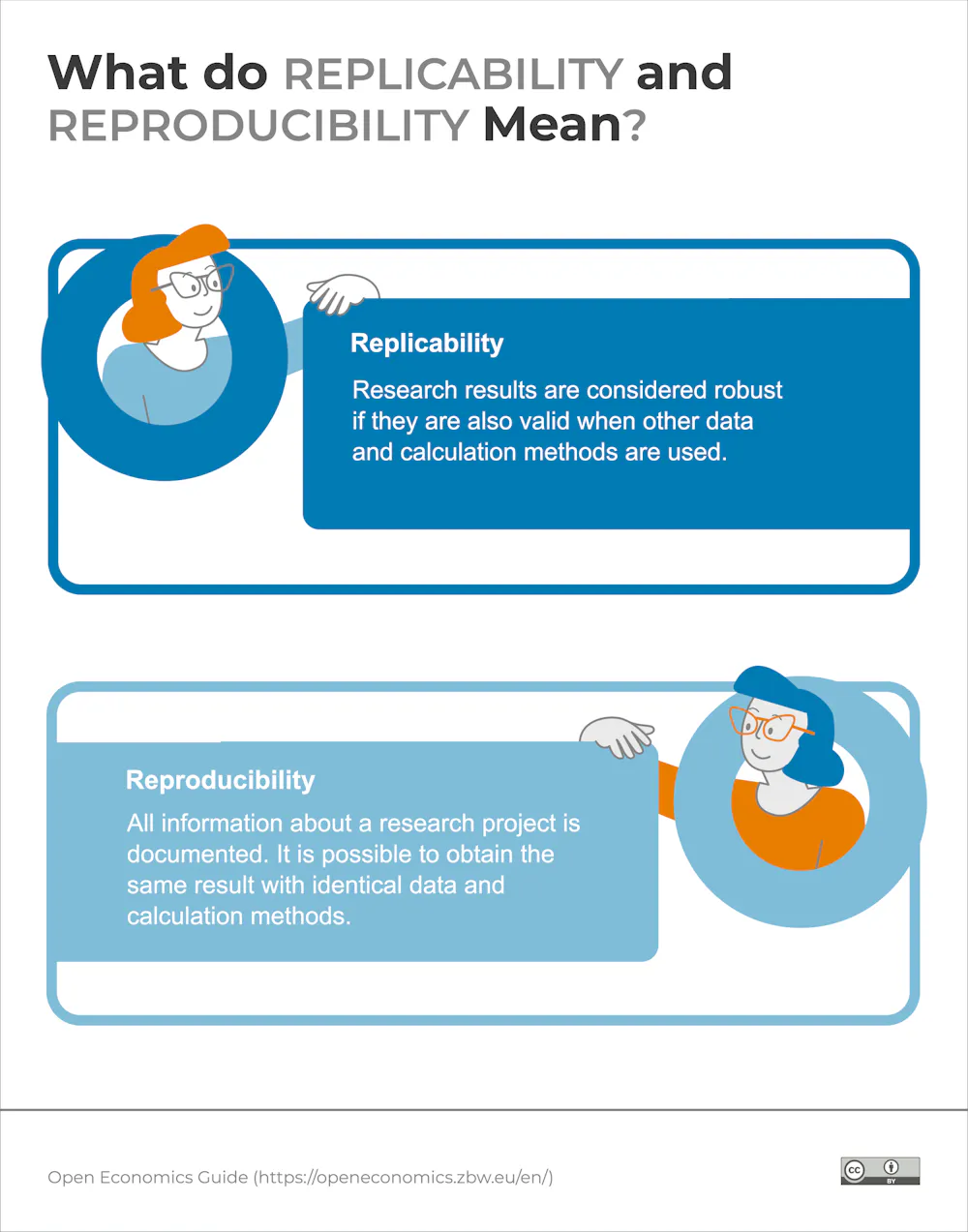
A May 2025 executive order by President Donald Trump emphasized the “reproducibility crisis” in science. While replicability and reproducibility may sound similar, they’re distinct.
Reproducibility is the ability to use the same data and methods from a study and reproduce the result. In my editorial role at the journal Psychological Science, I conduct computational reproducibility checks where we take the reported data and check that all the results in the paper can be reproduced independently.
But we’re not running the study over again, or collecting new data. While reproducibility is important, research that is incorrect, fallible and sometimes harmful can still be reproducible.
By contrast, replication is when an independent team repeats the same process, including collecting new data, to see if they get the same results. When research replicates, the team can be more confident that the results are not a fluke or an error.
Reproducibility and replicability are both important, but have key differences. Open Economics Guide, CC BY
The “replication crisis,” a term coined in psychology in the early 2010s, has spread to many fields, including biology, economics, medicine and computer science. Failures to replicate high-profile studies concern many scientists in these fields.
Why replicate?
Replicability is a core scientific value: Researchers want to be able to find the same result again and again. Many important findings are not published until they are independently replicated.
In research, chance findings can occur. Imagine if one person flipped a coin 10 times and got two heads, then told the world that “coins have a 20% chance of coming up heads.” Even though this is an unlikely outcome – about 4% – it’s possible.
Replications can correct these chance outcomes, as well as scientific errors, to ensure science is self-correcting.
The ATLAS experiment at the Large Hadron Collider at CERN is one of two that led to the discovery of the Higgs boson. CERN, CC BY
The initial measurements from the two centers actually estimated the mass of the particle as slightly different. So while the two centers didn’t find identical results, the teams evaluated them and determined they were close enough. This variability is a natural part of the scientific process. Just because results are not identical does not mean they are not reliable.
Research centers like CERN have replication built into their process, but this is not feasible for all research. For projects that are relatively low cost, the original team will often replicate their work prior to publication – but doing so does not guarantee that an independent team could get the same results.
Because the results on vaccine efficacy were so clear, replication wasn’t necessary and would have slowed the process of getting the vaccine to people. XKCD, CC BY-NC
When projects are costly, urgent or time-specific, independently replicating them prior to disseminating results is often not feasible. Remember when people across the country were waiting for a COVID-19 vaccine?
The initial Pfizer-BioNTech COVID-19 vaccine took 13 months from the start of the trial to authorization from the Food and Drug Administration. The results of the initial study were so clear and convincing that a replication would have unnecessarily delayed getting the vaccine out to the public and slowing the spread of disease.
Since not every study can be replicated prior to publication, it’s important to conduct replications after studies are published. Replications help scientists understand how well research processes are working, identify errors and self-correct. So what’s the process of conducting a replication?
The replication process
Researchers could independently replicate the work of other teams, like at CERN. And that does happen. But when there are only two studies – the original and the replication – it’s hard to know what to do when they disagree. For that reason, large multigroup teams often conduct replications where they are all replicating the same study.
Alternatively, if the purpose is to estimate the replicability of a body of research – for example, cancer biology – each team might replicate a different study, and the focus is on the percentage of studies that replicate across many studies.
Replicators start by learning as much as possible about how the original study was conducted. They can collect details about the study from reading the published paper, discussing the work with its original authors and consulting online materials.
The replicators want to know how the participants were recruited, how the data was collected and using what tools, and how the data was analyzed.
But sometimes, studies may leave out important details, like the questions participants were asked or the brand of equipment used. Replicators have to make these difficult decisions themselves, which can affect the outcome.
Replicators also often explicitly change details of the study. For example, many replication studies are conducted with larger samples – more participants – than the original study, to ensure the results are reliable.
Registration and publication
Sadly, replication research is hard to publish: Only 3% of papers in psychology, less than 1% in education and 1.2% in marketing are replications.
If the original study replicates, journals may reject the paper because there is no “new insight.” If it doesn’t replicate, journals may reject the paper because they assume the replicators made a mistake – remember the salt crystals.
Because of these issues, replicators often use registration to strengthen their claims. A preregistration is a public document describing the plan for the study. It is time-stamped to before the study is conducted.
This type of document improves transparency by making changes in the plan detectable to reviewers. Registered reports take this a step further, where the research plan is subject to peer review before conducting the study.
If the journal approves the registration, they commit to publishing the results of the study regardless of the results. Registered reports are ideal for replication research because the reviewers don’t know the results when the journal commits to publishing the paper, and whether the study replicates or not won’t affect whether it gets published.
About 58% of registered reports in psychology are replication studies.
Replication research often uses the highest standards of research practice: large samples and registration. While not all replication research is required to use these practices, those that do contribute greatly to our confidence in scientific results.
Replication research is a useful thermometer to understand if scientific processes are working as intended. Active discussion of the replicability crisis, in both scientific and political spaces, suggests to many researchers that there is room for growth. While no field would expect a replication rate of 100%, new processes among scientists aim to improve the rates from those in the past.
Amanda Kay Montoya is an Associate Professor at the University of California, Los Angeles. She serves on the Board of Directors for the Center for Open Science. She receives funding from the US-National Science Foundation.
NSF-supported researchers developed a new AI model that sees inside a factory, understands what’s happening and suggests ways to solve problems, making manufacturing smarter, safer and more competitive.
Artificial intelligence has transformed fields like medicine and finance, but it hasn’t gained much traction in manufacturing. Factories present a different challenge for AI: They are structured, fast-paced environments that rely on precision and critical timing. Success requires more than powerful algorithms; it demands deep, real-time understanding of complex systems, equipment and workflow. A new AI model designed specifically for manufacturing, seeks to address this challenge and revolutionize how factories operate.
With support from the U.S. National Science Foundation, a team led by California State University Northridge’s Autonomy Research Center for STEAHM has developed MaVila — short for Manufacturing, Vision and Language — an intelligent assistant that combines image analysis and natural language processing to help manufacturers detect problems, suggest improvements and communicate with machines in real time. Their goal is to create smarter, more adaptive manufacturing systems that can better support one of the most important sectors of the U.S. economy.
MaVila takes a different approach. Instead of relying on outside data, like information on the internet, it is trained with manufacturing-specific knowledge from the start. It learns directly from visual and language-based data in factory settings. The tool can “see” and “talk” — analyzing images of parts, describing defects in plain language, suggesting fixes and even communicating with machines to carry out automatic adjustments.
MaVila was trained using a specialized approach that required far less data than typical AI systems — an advantage in manufacturing, where data is often limited or expensive to collect. Therefore, the tool could be more accessible to small and medium-sized businesses that can’t afford expensive AI tools, or the expertise required to run them.
Researchers trained MaVila using vast datasets of images paired with descriptive language. Then, they fine-tuned it in a lab setting by showing it pictures of 3D-printed parts with visible flaws, such as blobs, cracks or stringy filaments. In most cases, MaVila correctly identified the defects and suggested better printing settings.
The team also connected MaVila to mobile devices and robotic simulations. This allowed the model to operate in real-time scenarios, such as identifying a machine from a photo and generating step-by-step commands to adjust performance or fix a flaw — something that traditionally requires expert programming.
The development of MaVila was powered by the National Research Platform (NRP) Nautilus — a federally funded partnership of over 50 institutions led by experts at UC San Diego that has received continuous support from NSF. To meet the enormous processing demands of training MaVila, the researchers turned to NSF-funded high-performance computing (HPC) systems. These HPC resources allowed them to simulate realistic manufacturing conditions, test edge cases and validate the AI’s response and decision-making faster than traditional computing could allow.
This project marks a leap forward in intelligent, adaptive manufacturing. It empowers human workers, increases productivity and strengthens the U.S. position in a fiercely competitive global market. And it reflects years of public investment in computing, collaboration and AI innovation.
Technologies like MaVila are expected to boost domestic manufacturing, fuel economic resilience, and help prepare the workforce for future-ready industries. NSF’s support ensures that cutting-edge research translates into practical tools that benefit everyday people and keep America at the forefront of innovation.
The achievement of the researchers reflects the results of years of public investment in computing infrastructure, cross-institutional partnerships and targeted AI research. Through initiatives like the NRP and widespread access to advanced computing resources, the NSF provides researchers with essential tools that accelerate innovation and translate lab research into real-world solutions.
The project represents a significant step forward in autonomous, adaptive manufacturing. By enabling factories to detect issues and optimize operations, MaVila supports human workers by helping them make decisions more efficiently, driving global competitiveness in a constantly evolving world.
[embedded content]
Listen to NSF Discovery Files wherever you get your podcasts.
ATLANTA – Governor Brian P. Kemp today announced that family-owned, Hawaii-inspired food company King’s Hawaiian® will invest approximately $54 million in expanding its Oakwood facility, creating more than 135 new jobs.
“For nearly 15 years, King’s Hawaiian has proven to be an incredible partner in creating quality jobs in northeast Georgia, and we look forward to even more years of great success for them in Hall County,” said Governor Brian Kemp. “Expansions like these are an important part of our economic development work, helping create further opportunities in growing communities.”
King’s Hawaiian was founded in 1950 by the Taira family in Hilo, Hawaii. Since establishing a presence in Georgia in 2010, the company’s footprint has grown to support more than 800 jobs in the state.
“This expansion represents a major milestone in our journey, and we’re thrilled to continue growing our ohana in Hall County,” said Mark Taira, CEO of King’s Hawaiian. “For 15 years, Georgia has been an essential part of our success. The support from Lanier Technical College, Georgia Quick Start, and the Greater Hall Chamber of Commerce has been instrumental in helping us train and develop talent to grow our business.”
The expansion will add a new production line at the 150,000-square-foot King’s Hawaiian facility located in the Oakwood South Industrial Park. Start-up of the new line is expected in the second quarter of 2026, producing additional flavors of King’s Hawaiian Pretzel Bites. The company will be hiring for positions in management, maintenance, food safety, and quality control. Interested individuals can learn more and apply at kingshawaiian.com/careers.
“King’s Hawaiian has become a cornerstone of our regional economy and a shining example of a company that invests in both business and community,” said Tim Evans, President and CEO of the Greater Hall Chamber of Commerce. “This sixth major expansion since 2010 is a testament to the company’s deep roots in Hall County. We are especially proud of their ongoing support for youth and community programs, including the University of North Georgia’s First Generation Scholars, Junior Achievement, and Youth Leadership Hall. We look forward to continuing this remarkable partnership.”
Regional Project Manager Brandon Lounsbury represented the Georgia Department of Economic Development’s (GDEcD) Global Commerce team on this competitive project in partnership with the Greater Hall Chamber of Commerce and Georgia EMC.
“King’s Hawaiian has been a cornerstone employer in northeast Georgia and a valued partner of Georgia Quick Start for more than a decade,” said GDEcD Commissioner Pat Wilson. “By continuing to invest in people and innovation – and by working closely with the Technical College System of Georgia – King’s Hawaiian is helping build the skilled workforce that drives its success. Congratulations to Hall County on another exciting chapter in this thriving partnership.”
About KING’S HAWAIIAN Founded more than 70 years ago in Hilo, Hawaii, by Robert R. Taira, KING’S HAWAIIAN is a family-owned business that has been dedicated to providing Hawaii-inspired foods made with original recipes and Aloha Spirit for three generations. For more information, visit the company’s website atwww.KingsHawaiian.com, or find KING’S HAWAIIAN on Facebook, Instagram, and X (formerly Twitter).
Source: Peter the Great St. Petersburg Polytechnic University –
An important disclaimer is at the bottom of this article.
Five polytechnicians became laureates of the first national award “People Change the Country”. The award ceremony took place in the Zaryadye Concert Hall in Moscow.
The purpose of the award is to recognize and reward scientists, engineers, and entrepreneurs whose advanced developments improve people’s lives and strengthen the economy and technological sovereignty of the country.
The award is organised by the Agency for Strategic Initiatives (ASI) together with the Roscongress Foundation with the support of VEB.RF, the Russian Ministry of Defence, the Defenders of the Fatherland Foundation and the autonomous non-profit organisation Russia – Land of Opportunities.
This year, the award was received by more than a thousand laureates in seven nominations: “National Social Initiative”, “National Technological Initiative”, “National Entrepreneurial Initiative”, “National Personnel Initiative”, “National Ecological and Climate Initiative”, “Defenders of the Fatherland” and “Russia – the Land of Opportunities”.
In the nomination “National Technological Initiative” the winners were five representatives of the Polytechnic University: the head of the world-class Scientific Center “Advanced Digital Technologies”, chief designer in the scientific and technological direction, acting director of the Advanced Engineering School of SPbPU “Digital Engineering” (AES CI) Alexey Borovkov; deputy director of the Engineering Center “Computer Engineering Center” of AES CI Nikolay Efimov-Soini; director of the Center for Continuing Professional Education of AES CI, senior lecturer of the Higher School of Advanced Digital Technologies Sergey Salkutsan; chief engineer of the project of the Scientific Laboratory “Strategic Development of Engineering Markets” Pavel Kozlovsky; leading specialist of the project support department Maria Rodionova.
Alexey Borovkov received a high award for actively promoting approaches to creating globally competitive science-intensive products using advanced end-to-end digital technologies. One of the key areas of his activity is the development and implementation of the technology of “digital twins” – an innovative tool that allows you to create virtual copies of products, machines, structures, equipment, as well as model physical, mechanical and technological processes with the highest accuracy. Under the leadership of Alexey Ivanovich, the digital platform CML-Bench® was developed, tested and successfully implemented in production, which became a key tool for creating digital twins. It opened up new opportunities for optimizing design, increasing production efficiency and reducing costs in various industries.
Other significant projects implemented under the leadership of Alexey Borovkov include: development of body frame elements and structural armor elements for domestic Limousine, Sedan, SUV, and Minibus vehicles based on a single modular platform commissioned by FSUE NAMI; creation of a smart digital twin and experimental prototype of a small-sized urban electric vehicle with a level 3-4 ADAS system (KAMA-1); optimization of the weight of the TV7-117ST-01 engine based on the digital twin technology for UEC-Klimov/JSC UEC; development of a digital twin of a marine gas turbine engine and gearbox as part of the unit commissioned by UEC-Saturn (Rostec State Corporation); creation of the architecture of a highly adequate multiphysical digital model and a digital twin of a vitrification furnace for high-level radioactive waste for PO Mayak (Rosatom State Corporation), etc.
Nikolay Efimov-Soini, Deputy Director of the Engineering Center “Computer Engineering Center” of the Advanced Engineering School of SPbPU “Digital Engineering”, became a laureate thanks to the project “Development of high-tech products in the field of nuclear engineering based on digital twin technology”. Under the leadership of Nikolay Konstantinovich, a large-scale complex of scientific and technical developments in the field of nuclear engineering of strategic importance for the industry was implemented over three years. Among the key achievements is the creation of digital models of fuel assemblies (FA) for VVER and TVS-K reactors, as well as the proposal of innovative design solutions aimed at increasing the efficiency of fuel assemblies. The developed solutions allow for high-precision modeling of FA behavior throughout the entire fuel cycle, which helps optimize the performance characteristics and improve the safety of nuclear power plants.
Director of the Center for Continuing Professional Education of the Advanced Engineering School “Digital Engineering” Sergey Salkutsan and Chief Engineer of the Scientific Laboratory “Strategic Development of Engineering Markets” project Pavel Kozlovsky were awarded for educational projects implemented within the framework of the NTI Center “New Production Technologies”, as well as for the development of a family of simulators. By the beginning of 2024, a group of experts from the Advanced Engineering School CI developed five computer simulators available on the Digital Platform CML-Bench®.EDU, which is gradually developing as a separate direction of the Digital Platform for the Development and Application of Digital Twins CML-Bench®. The digital simulator “Lean Manufacturing” is a flagship product that marked the beginning of the creation and scaling of a line of simulators for training students, implementing corporate programs of continuing professional education for employees of the university’s industrial partners, as well as holding professional competitions. It is an online platform for learning the skills, tools and basics of lean manufacturing using practical solutions on a simulator. The digital simulator “Lean Manufacturing” has repeatedly been awarded prizes and diplomas at prestigious competitions in Russia and abroad, and is highly appreciated at the state level.
In February 2024, the New Industrial Challenge simulators for team competitions and Lean Manufacturing were successfully tested at the Archipelago-2024 project-educational intensive course in Sakhalin. In August of this year, the Polytechnicians will present their developments at Archipelago-2025 in Moscow.
Leading specialist of the project support department of the Directorate of the Center of the National Technological Initiative “New Production Technologies” Maria Rodionova received an award for her work on the project “Smart Factory: New Standards for Industry 4.0”. The project developed standards in the field of smart production, laying the foundation for the digital transformation of industry. The standards define the key principles of building a smart factory, ensuring technological unification, reducing operating costs and creating an ecosystem for the Industrial Internet of Things (IIoT).
Please note: This information is raw content obtained directly from the source of the information. It is an accurate report of what the source claims and does not necessarily reflect the position of MIL-OSI or its clients.
Strengthens Board of Directors with appointment of two new independent members, increasing independent representation to greater than 90%
Underscores Royalty Pharma’s commitment to enhanced corporate governance following acquisition of its external manager
NEW YORK, July 17, 2025 (GLOBE NEWSWIRE) — Royalty Pharma plc (Nasdaq: RPRX) today announced the appointment of Carole Ho and Elizabeth (Bess) Weatherman to its Board of Directors, effective immediately. Carole Ho is Chief Medical Officer and Head of Development at Denali Therapeutics, a biopharmaceutical company focused on neurodegenerative diseases. Bess Weatherman is a Special Limited Partner of Warburg Pincus LLC, a leading global private equity firm focused on growth investing.
“We are delighted to welcome Carole and Bess to our board,” said Pablo Legorreta, founder and Chief Executive Officer of Royalty Pharma. “Their exceptional leadership and passion for innovation will be invaluable as we execute on our long-term strategy. With decades of experience spanning the biopharmaceutical and finance industry, they bring unique insights that will strengthen our board and support our continued growth.”
Carole Ho has 20 years of experience in biopharma. She currently serves as Chief Medical Officer and Head of Development at Denali Therapeutics, where she heads therapeutic development from early-stage planning to late-stage development in rare disease and neurology. Since 2018, she has also served on non-profit, private and public boards. Prior to Denali, she was Vice President of Clinical Development at Genentech, where she led development of therapeutics in neurology, immunology, ophthalmology and infectious disease. Carole received a SB in biochemistry, magna cum laude, from Harvard University and earned her MD, with honors in research, from Weill Cornell Medicine.
Bess Weatherman is a seasoned investor of 35 years across the healthcare industry. She currently serves as a Special Limited Partner at Warburg Pincus, which she joined in 1988. During her tenure, she held the role of Partner, was a member of the Executive Management Group and led the firm’s Healthcare Group. She has served on the boards of numerous public and private companies and brings a deep understanding of capital markets, corporate governance, and medical innovation. Bess received a BA in English, summa cum laude and Phi Beta Kappa, from Mount Holyoke College and earned her MBA from the Stanford Graduate School of Business.
About Royalty Pharma
Founded in 1996, Royalty Pharma is the largest buyer of biopharmaceutical royalties and a leading funder of innovation across the biopharmaceutical industry, collaborating with innovators from academic institutions, research hospitals and non-profits through small and mid-cap biotechnology companies to leading global pharmaceutical companies. Royalty Pharma has assembled a portfolio of royalties which entitles it to payments based directly on the top-line sales of many of the industry’s leading therapies. Royalty Pharma funds innovation in the biopharmaceutical industry both directly and indirectly – directly when it partners with companies to co-fund late-stage clinical trials and new product launches in exchange for future royalties, and indirectly when it acquires existing royalties from the original innovators. Royalty Pharma’s current portfolio includes royalties on more than 35 commercial products, including Vertex’s Trikafta, GSK’s Trelegy, Roche’s Evrysdi, Johnson & Johnson’s Tremfya, Biogen’s Tysabri and Spinraza, AbbVie and Johnson & Johnson’s Imbruvica, Astellas and Pfizer’s Xtandi, Novartis’ Promacta, Pfizer’s Nurtec ODT and Gilead’s Trodelvy, and 16 development-stage product candidates. For more information, visit www.royaltypharma.com.
Royalty Pharma Investor Relations and Communications
Greenpeace pioneer and activist Susi Newborn is among the “nuclear free heroes” featured in a video tribute premiered this week in an exhibition dedicated to a nuclear-free Pacific.
A segment dedicated to the Nuclear-Free and Independent Pacific (NFIP) movement features Newborn making a passionate speech about the legend of the “Warriors of the Rainbow” on the steps of the Auckland Museum in July 2023 just weeks before she died.
Newborn was an Aotearoa New Zealand author, documentary film-maker, environmental activist and a founding director of Greenpeace UK and co-founder of Greenpeace International.
She was an executive director of the New Zealand non-for-profit group Women in Film and Television.
Newborn was also one of the original crew members on the first Rainbow Warrior which was bombed in Auckland Harbour on 10 July 2025.
The ship’s successor, Rainbow Warrior III, a state-of-the-art environmental campaign ship, has been docked at Halsey Wharf this month for a memorial ceremony to honour the 40th anniversary of the loss of photographer Fernando Pereira and the ship, sabotaged by French secret agents.
Effective activists In a tribute after her death, Greenpeace stalwart Rex Weyler wrote: “Susi Newborn [was] one of the most skilled and effective activists in Greenpeace’s 52-year history.”
“In 1977, when Susi arrived in Canada for her first Greenpeace action to protect infant harp seal pups in Newfoundland, she was already something of a legend,” Weyler wrote.
“Journalistic tradition would have me refer to her as ‘Newborn’, a name that rang with significance, but I can only think of her as Susi, the tough, smart activist from London.”
Legends of a Nuclear-Free and Independent Pacific. Video: Talanoa TV
Among other activists featured in the video are NFIP academic Dr Marco de Jong; Presbyterian minister Reverend Mua Strickson-Pua; Professor Vijay Naidu, founding president of the Fiji Anti-Nuclear Group (FANG); Polynesian Panthers founder Will ‘Ilolahia; NFIP advocate Hilda Halkyard-Harawira (Ngāti Hauā, Te Rarawe); community educator and activist Del Abcede; retired media professor, journalist and advocate Dr David Robie; Anglican priest who founded the Peace Squadron, Reverend George Armstrong; and United Liberation Movement for West Papua vice-president Octo Mote, interviewed at the home of peace author and advocate Maire Leadbeater.
The video sound track is from Herbs’ famous French Letter about nuclear testing in the Pacific.
“It is so important to record our stories and history — especially for our children and future generations,” said video creator Nik Naidu.
Nuclear Free and Independent Pacific . . . an early poster.
“They need to hear the truth from our “legends” and “leaders”. Those who stood for justice and peace.
“The freedoms and benefits we all enjoy today are a direct result of the sacrifice and activism of these legends.”
The video has been one of the highlights of the “Legends” exhibition, created by Heather Devere, Del Abcede and David Robie of the Asia Pacific Media Network; Nik Naidu of the APMN as well as co-founder of the Whānau Community Hub; Antony Phillips and Tharron Bloomfield of the Heritage New Zealand Pouhere Taonga; and Rachel Mario of the Auckland Rotuman Fellowship Group and Whānau Hub.
Support has also come from the Ellen Melville Centre (venue and promotion), Padet (for the video series), Pax Christi, Women’s International League for Peace Freedom (WILPF) Aotearoa, and the Quaker Peace Fund.
Professor Vijay Naidu of the University of the South Pacific . . . founding president of the Fiji Anti-Nuclear Group (FANG), one of the core groups in the Nuclear Free and Independent Pacific (NFIP) movement. Image: APR
Greenpeace pioneer and activist Susi Newborn is among the “nuclear free heroes” featured in a video tribute premiered this week in an exhibition dedicated to a nuclear-free Pacific.
A segment dedicated to the Nuclear-Free and Independent Pacific (NFIP) movement features Newborn making a passionate speech about the legend of the “Warriors of the Rainbow” on the steps of the Auckland Museum in July 2023 just weeks before she died.
Newborn was an Aotearoa New Zealand author, documentary film-maker, environmental activist and a founding director of Greenpeace UK and co-founder of Greenpeace International.
She was an executive director of the New Zealand non-for-profit group Women in Film and Television.
Newborn was also one of the original crew members on the first Rainbow Warrior which was bombed in Auckland Harbour on 10 July 2025.
The ship’s successor, Rainbow Warrior III, a state-of-the-art environmental campaign ship, has been docked at Halsey Wharf this month for a memorial ceremony to honour the 40th anniversary of the loss of photographer Fernando Pereira and the ship, sabotaged by French secret agents.
Effective activists In a tribute after her death, Greenpeace stalwart Rex Weyler wrote: “Susi Newborn [was] one of the most skilled and effective activists in Greenpeace’s 52-year history.”
“In 1977, when Susi arrived in Canada for her first Greenpeace action to protect infant harp seal pups in Newfoundland, she was already something of a legend,” Weyler wrote.
“Journalistic tradition would have me refer to her as ‘Newborn’, a name that rang with significance, but I can only think of her as Susi, the tough, smart activist from London.”
Legends of a Nuclear-Free and Independent Pacific. Video: Talanoa TV
Among other activists featured in the video are NFIP academic Dr Marco de Jong; Presbyterian minister Reverend Mua Strickson-Pua; Professor Vijay Naidu, founding president of the Fiji Anti-Nuclear Group (FANG); Polynesian Panthers founder Will ‘Ilolahia; NFIP advocate Hilda Halkyard-Harawira (Ngāti Hauā, Te Rarawe); community educator and activist Del Abcede; retired media professor, journalist and advocate Dr David Robie; Anglican priest who founded the Peace Squadron, Reverend George Armstrong; and United Liberation Movement for West Papua vice-president Octo Mote, interviewed at the home of peace author and advocate Maire Leadbeater.
The video sound track is from Herbs’ famous French Letter about nuclear testing in the Pacific.
“It is so important to record our stories and history — especially for our children and future generations,” said video creator Nik Naidu.
Nuclear Free and Independent Pacific . . . an early poster.
“They need to hear the truth from our “legends” and “leaders”. Those who stood for justice and peace.
“The freedoms and benefits we all enjoy today are a direct result of the sacrifice and activism of these legends.”
The video has been one of the highlights of the “Legends” exhibition, created by Heather Devere, Del Abcede and David Robie of the Asia Pacific Media Network; Nik Naidu of the APMN as well as co-founder of the Whānau Community Hub; Antony Phillips and Tharron Bloomfield of the Heritage New Zealand Pouhere Taonga; and Rachel Mario of the Auckland Rotuman Fellowship Group and Whānau Hub.
Support has also come from the Ellen Melville Centre (venue and promotion), Padet (for the video series), Pax Christi, Women’s International League for Peace Freedom (WILPF) Aotearoa, and the Quaker Peace Fund.
Professor Vijay Naidu of the University of the South Pacific . . . founding president of the Fiji Anti-Nuclear Group (FANG), one of the core groups in the Nuclear Free and Independent Pacific (NFIP) movement. Image: APR
Greenpeace pioneer and activist Susi Newborn is among the “nuclear free heroes” featured in a video tribute premiered this week in an exhibition dedicated to a nuclear-free Pacific.
A segment dedicated to the Nuclear-Free and Independent Pacific (NFIP) movement features Newborn making a passionate speech about the legend of the “Warriors of the Rainbow” on the steps of the Auckland Museum in July 2023 just weeks before she died.
Newborn was an Aotearoa New Zealand author, documentary film-maker, environmental activist and a founding director of Greenpeace UK and co-founder of Greenpeace International.
She was an executive director of the New Zealand non-for-profit group Women in Film and Television.
Newborn was also one of the original crew members on the first Rainbow Warrior which was bombed in Auckland Harbour on 10 July 2025.
The ship’s successor, Rainbow Warrior III, a state-of-the-art environmental campaign ship, has been docked at Halsey Wharf this month for a memorial ceremony to honour the 40th anniversary of the loss of photographer Fernando Pereira and the ship, sabotaged by French secret agents.
Effective activists In a tribute after her death, Greenpeace stalwart Rex Weyler wrote: “Susi Newborn [was] one of the most skilled and effective activists in Greenpeace’s 52-year history.”
“In 1977, when Susi arrived in Canada for her first Greenpeace action to protect infant harp seal pups in Newfoundland, she was already something of a legend,” Weyler wrote.
“Journalistic tradition would have me refer to her as ‘Newborn’, a name that rang with significance, but I can only think of her as Susi, the tough, smart activist from London.”
Legends of a Nuclear-Free and Independent Pacific. Video: Talanoa TV
Among other activists featured in the video are NFIP academic Dr Marco de Jong; Presbyterian minister Reverend Mua Strickson-Pua; Professor Vijay Naidu, founding president of the Fiji Anti-Nuclear Group (FANG); Polynesian Panthers founder Will ‘Ilolahia; NFIP advocate Hilda Halkyard-Harawira (Ngāti Hauā, Te Rarawe); community educator and activist Del Abcede; retired media professor, journalist and advocate Dr David Robie; Anglican priest who founded the Peace Squadron, Reverend George Armstrong; and United Liberation Movement for West Papua vice-president Octo Mote, interviewed at the home of peace author and advocate Maire Leadbeater.
The video sound track is from Herbs’ famous French Letter about nuclear testing in the Pacific.
“It is so important to record our stories and history — especially for our children and future generations,” said video creator Nik Naidu.
Nuclear Free and Independent Pacific . . . an early poster.
“They need to hear the truth from our “legends” and “leaders”. Those who stood for justice and peace.
“The freedoms and benefits we all enjoy today are a direct result of the sacrifice and activism of these legends.”
The video has been one of the highlights of the “Legends” exhibition, created by Heather Devere, Del Abcede and David Robie of the Asia Pacific Media Network; Nik Naidu of the APMN as well as co-founder of the Whānau Community Hub; Antony Phillips and Tharron Bloomfield of the Heritage New Zealand Pouhere Taonga; and Rachel Mario of the Auckland Rotuman Fellowship Group and Whānau Hub.
Support has also come from the Ellen Melville Centre (venue and promotion), Padet (for the video series), Pax Christi, Women’s International League for Peace Freedom (WILPF) Aotearoa, and the Quaker Peace Fund.
Professor Vijay Naidu of the University of the South Pacific . . . founding president of the Fiji Anti-Nuclear Group (FANG), one of the core groups in the Nuclear Free and Independent Pacific (NFIP) movement. Image: APR
Greenpeace pioneer and activist Susi Newborn is among the “nuclear free heroes” featured in a video tribute premiered this week in an exhibition dedicated to a nuclear-free Pacific.
A segment dedicated to the Nuclear-Free and Independent Pacific (NFIP) movement features Newborn making a passionate speech about the legend of the “Warriors of the Rainbow” on the steps of the Auckland Museum in July 2023 just weeks before she died.
Newborn was an Aotearoa New Zealand author, documentary film-maker, environmental activist and a founding director of Greenpeace UK and co-founder of Greenpeace International.
She was an executive director of the New Zealand non-for-profit group Women in Film and Television.
Newborn was also one of the original crew members on the first Rainbow Warrior which was bombed in Auckland Harbour on 10 July 2025.
The ship’s successor, Rainbow Warrior III, a state-of-the-art environmental campaign ship, has been docked at Halsey Wharf this month for a memorial ceremony to honour the 40th anniversary of the loss of photographer Fernando Pereira and the ship, sabotaged by French secret agents.
Effective activists In a tribute after her death, Greenpeace stalwart Rex Weyler wrote: “Susi Newborn [was] one of the most skilled and effective activists in Greenpeace’s 52-year history.”
“In 1977, when Susi arrived in Canada for her first Greenpeace action to protect infant harp seal pups in Newfoundland, she was already something of a legend,” Weyler wrote.
“Journalistic tradition would have me refer to her as ‘Newborn’, a name that rang with significance, but I can only think of her as Susi, the tough, smart activist from London.”
Legends of a Nuclear-Free and Independent Pacific. Video: Talanoa TV
Among other activists featured in the video are NFIP academic Dr Marco de Jong; Presbyterian minister Reverend Mua Strickson-Pua; Professor Vijay Naidu, founding president of the Fiji Anti-Nuclear Group (FANG); Polynesian Panthers founder Will ‘Ilolahia; NFIP advocate Hilda Halkyard-Harawira (Ngāti Hauā, Te Rarawe); community educator and activist Del Abcede; retired media professor, journalist and advocate Dr David Robie; Anglican priest who founded the Peace Squadron, Reverend George Armstrong; and United Liberation Movement for West Papua vice-president Octo Mote, interviewed at the home of peace author and advocate Maire Leadbeater.
The video sound track is from Herbs’ famous French Letter about nuclear testing in the Pacific.
“It is so important to record our stories and history — especially for our children and future generations,” said video creator Nik Naidu.
Nuclear Free and Independent Pacific . . . an early poster.
“They need to hear the truth from our “legends” and “leaders”. Those who stood for justice and peace.
“The freedoms and benefits we all enjoy today are a direct result of the sacrifice and activism of these legends.”
The video has been one of the highlights of the “Legends” exhibition, created by Heather Devere, Del Abcede and David Robie of the Asia Pacific Media Network; Nik Naidu of the APMN as well as co-founder of the Whānau Community Hub; Antony Phillips and Tharron Bloomfield of the Heritage New Zealand Pouhere Taonga; and Rachel Mario of the Auckland Rotuman Fellowship Group and Whānau Hub.
Support has also come from the Ellen Melville Centre (venue and promotion), Padet (for the video series), Pax Christi, Women’s International League for Peace Freedom (WILPF) Aotearoa, and the Quaker Peace Fund.
Professor Vijay Naidu of the University of the South Pacific . . . founding president of the Fiji Anti-Nuclear Group (FANG), one of the core groups in the Nuclear Free and Independent Pacific (NFIP) movement. Image: APR
Source: United Kingdom – Executive Government & Departments
World news story
Friendship and Bilateral Cooperation Treaty: The 17 Projects the UK and Germany will deliver together
A collection of projects agreed between the UK and Germany as part of the Treaty signed by the two countries on 17 July 2025 in London.
In July 2025 the UK and Germany signed the Treaty on Friendship and Bilateral Cooperation. As part of the Implementation Plan under Article 22 of the Treaty, they agreed to deliver 17 priority projects. These projects span the breadth of the Treaty, enhancing cooperation in the face of global challenges, and delivering tangible benefits for UK and German citizens. The projects will be reviewed by a Joint Cabinet every two years.
1. Ukraine Recovery & Reconstruction
The UK-Germany Alliance will power Ukraine’s recovery: driving reform, reconstruction and resilience together.
Strengthening coordination and strategic alignment between the UK and Germany on Ukraine reform, recovery and reconstruction support.
Championing annual Ukraine Recovery Conferences, improving joint action between humanitarian, development and peace actors and strengthening donor engagement with Ukrainian civil society.
2. Trinity House Defence Agreement
The UK and Germany commit to building a much deeper Defence partnership which will endure in the long-term and enable both countries to address threats, and strengthen NATO, through the framework agreed in the 2024 Trinity House Agreement on Defence co-operation.
Deep Precision Strike and Defence: Advancing work to develop a new Deep Precision Strike capability to provide a conventional deterrent in Europe; we are jointly leading the 2.000 km+ cluster within the European Long Range Strike Approach (ELSA). It will be among the most advanced systems ever designed. We will aim to deliver a capability within a decade.
Uncrewed Aerial Systems and Future Connectivity: Continuing ongoing UK-Germany coordination of the development, procurement, and doctrine of uncrewed aerial systems. Both Air Forces have developed a detailed „Flight Plan“ to increase their future connectivity.
Strengthening Eastern Flank through new Land Strategic Partnership: Delivering a strategic partnership in land systems and continuing their close BOXER cooperation, including RCH 155 artillery and extending cooperation to common offboard systems for Future Ground Combat Systems. Both armies are building on their bilateral vision statement to drive this forward. A new Statement of Intent on bridging capabilities has been agreed.
Undersea Co-operation in the Northern Seas: Working together to counter undersea threats. This includes training of German crews on UK P-8A Maritime Patrol Aircraft which will also be delivered to Germany shortly. Both sides have signed an agreement on joint procurement of new Sting Ray torpedoes under development for their aircraft.
3. Strengthening Defence Industrial and Export Co-operation
We will work jointly across Government to promote defence exports and champion greater co-operation between our defence industries.
Widening our efforts to facilitate and promote dialogue with, and co-operation between, UK and German Defence Industries by further developing the UK-Germany Defence Industry Forum, as per the first meeting in June, reflecting our commitment to a new partnership with industry. This will drive innovation and business-business links to enhance growth.
Seeking opportunities to support one another’s defence capability requirements, including through developing future joint procurement initiatives where our requirements align.
Deepening efforts to promote our growth and security by pursuing joint export campaigns for jointly produced equipment, building on the UK’s imminent accession to the Germany-France-Spain Treaty on arms export controls.
4. Joint Action Plan on Irregular Migration
We will implement the comprehensive Joint Action Plan on Migration to step-up action against people smuggling and illegal migration.
Increasing cooperation against migrant smuggling, strengthening law enforcement and judicial cooperation, stepping-up efforts on returns, providing regional leadership and deterring irregular migration to Germany and the UK.
Germany is introducing a clarification in German legislation concerning the facilitation of irregular migration to the UK (to be brought to Cabinet with a view to be adopted by Parliament as soon as possible, within 2025).
This will establish an even stronger framework for law enforcement, policy and prosecutorial cooperation against organised crime groups smuggling and trafficking people. Aligning as regional leaders on irregular migration in forums such as the Calais Group and Berlin Process, developing joint approaches to key upstream routes.
Continuing to support one another to be innovative in managing our migration systems and delivering secure borders.
5. Strategic Science and Technology Partnership
We will together develop cutting-edge critical technologies – such as quantum, AI and digital, semiconductors, space capabilities, advanced connectivity, fusion and sustainable energy solutions including battery technologies – to drive long-term economic growth, by:
Conducting high-impact research, accelerating adoption of transformative technologies, enhancing supply chain resilience and contributing to an open and innovative business environment.
Exploring AI cooperation initiatives, enhancing UK-German innovation leadership, fostering further collaboration to accelerate breakthrough innovation, establishing a strategic space partnership, strengthening collaboration on semiconductors and facilitating closer cooperation between our two nations’ battery eco-systems.
6. North Sea Energy Infrastructure Project
We will work together to develop North Seas energy infrastructure – supporting economic growth and reducing bills through trade and infrastructure development.
Driving the development of offshore hybrid interconnection between the UK and Germany by the mid-2030s, including through exploring a Joint Declaration of Intent on Offshore Hybrid Assets for agreement at the North Sea Summit in January 2026.
Working together to accelerate the development of H2- and CO2-infrastructures.
7. Joint taskforce on a new rail link between UK and Germany
We will pave the way for a new direct rail connection between the UK and Germany.
Establishing formal cooperation between the two governments to address the barriers to establishing direct rail services between London and Germany within the next ten years.
Creating a task force, including Transport and Interior Ministries, to explore establishing juxtaposed controls.
8. E-gates
We will streamline leisure, educational, and business travel to Germany.
Rolling out the first phase of e-gates access for frequent travellers by the end of August, followed by roll out for all UK nationals as soon as technically possible.
9. School trips and mobility of citizens
We will make it easier for school groups to travel between the UK and Germany and consider ways to further enhance mobility between our people.
Delivering visa-free school group travel between the UK and Germany, increasing opportunities for linguistic, cultural and academic experiences. Rolling out the new scheme by the end of 2025.
Appointing a Joint Expert Group from across both governments to identify mutually agreeable solutions to UK and German mobility issues, including challenges faced by educational and scientific institutions, cultural bodies and political organisations.
10. Business-Government Forum
We will bring together German and UK businesses to exchange on business opportunities and to explore joint projects in order to drive growth, enabling our governments to draw upon the expertise and insights of our vibrant business communities.
Bringing together key stakeholders from Germany and the UK in this Forum to promote cooperation between German and UK companies and to identify areas of high growth potential in which UK-German cooperation will benefit the two economies.
This will be complemented by opportunities for direct exchange between senior business leaders and Ministers from both countries.
11. Strategic conflict prevention and stabilisation partnership
We will develop our global partnership to prevent conflict and build lasting peace.
Collaborating across international conflict prevention and resolution initiatives, including countering violent extremism; supporting security sector reform and working together to widen our engagement.
Sharing situational awareness, early warning, crisis data; collaborating on use of AI; and strengthening our commitment to the Women, Peace and Security agenda.
12. Western Balkans stability and security
The UK will host the German-born Berlin Process, bringing leaders of the six Western Balkans countries and other European states together to support stability, security and economic co-operation in the region.
Strengthening coordination between the UK and Germany to support long-term regional and broader European security
Driving joint initiatives under the Berlin Process and seeking tangible progress for the Western Balkans Six on their Euro-Atlantic paths.
13. Indo-Pacific cooperation
The UK and Germany commit to increased and sustained cooperation on the Indo-Pacific.
Strengthening coordination on regional and maritime security, share best practice on geo-economic affairs and secure growth, and strategically align efforts on climate change mitigation and adaptation in the Indo-Pacific.
This will include coordination between UK and Germany on initiatives across the Indo-Pacific cooperation workstream.
14. Biosecurity Cooperation
We will strengthen our capability to protect our nations and our interests from biological threats.
Exchanging information on the development of national biosecurity strategies, bolstering critical infrastructure (e.g. in health care), improving preparedness to state terrorism with biological agents, and preparing for new and re-emerging, highly pathogenic pathogens.
Establishing joint exercises and an emergency support system between the UK and Germany.
15. Strategic sustainable development partnership
We will deliver impact together on all aspects of sustainable development including growth and jobs, health and climate.
Building alliances to advance the 2030 Agenda, and reform international systems. Coordinating on global financial institutions, private sector mobilisation, climate and debt solutions, sustainable infrastructure, and climate resilient and inclusive growth.
Holding an annual Development Dialogue setting the strategic direction for our collaboration on development, focusing on shared expertise, new ideas and innovative tools to tackle key challenges and support Global South partners.
16. Education, Culture, Sport
We will boost opportunity and growth by putting young people and social mobility at the heart of a new era of educational, cultural and sporting cooperation.
Driving more school exchanges, focusing on lower socio-economic groups, creating new initiatives, delivered through existing mobility pathways, such as the first UK-German Creative Industries Prize and inaugural Youth Summit.
Delivering a revitalised UK-German Cultural & Education Commission, led by UK and German ministers, to identify and deliver new people-to-people initiatives, with a focus on driving opportunity for all.
17. KfW/UK Public Financial Institutions collaboration
Cooperation between our Public Financial Institutions will accelerate the investment needed to boost growth in our economies. * Deepening links between the British Business Bank, National Wealth Fund, and British International Investment) and Germany’s KfW to help mobilise private capital, develop well-functioning and sustainable markets * Sharing insights & best practice, enhancing operational/financial performance, seizing investment opportunities in areas of mutual interest, and exploring further opportunities to deepen cooperation.
HOUSTON, July 17, 2025 (GLOBE NEWSWIRE) — Skyward Specialty Insurance Group, Inc.™ (NASDAQ: SKWD) (“Skyward Specialty” or “the Company”) expects to issue its second quarter 2025 earnings results after the market closes on Thursday, July 31 which will be available on the Company website at investors.skywardinsurance.com/ under Quarterly Results.
Skyward Specialty will host its earnings call to review the second quarter 2025 financial results on Friday, August 1 at 9:30 a.m. EST.
Investors may access the live audio webcast via the link on the Company’s investor site at investors.skywardinsurance.com/ under Events & Presentations. Additionally, investors can access the earnings call via conference call by registering via the conference link. Users will receive dial-in information and a unique PIN to join the call upon registering.
A webcast replay will be available two hours following the call in the same location on the Company’s investor website.
About Skyward Specialty
Skyward Specialty (Nasdaq: SKWD) is a rapidly growing and innovative specialty insurance company, delivering commercial property and casualty products and solutions on a non-admitted and admitted basis. The Company operates through nine underwriting divisions – Accident & Health, Agriculture and Credit (Re)insurance, Captives, Construction & Energy Solutions, Global Property, Professional Lines, Specialty Programs, Surety, and Transactional E&S.
Skyward Specialty’s subsidiary insurance companies consist of Great Midwest Insurance Company, Houston Specialty Insurance Company, Imperium Insurance Company, and Oklahoma Specialty Insurance Company. These insurance companies are rated A (Excellent) with a stable outlook by A.M. Best Company. For more information about Skyward Specialty, its people, and its products, please visit skywardinsurance.com.
HOUSTON, July 17, 2025 (GLOBE NEWSWIRE) — Skyward Specialty Insurance Group, Inc.™ (NASDAQ: SKWD) (“Skyward Specialty” or “the Company”) expects to issue its second quarter 2025 earnings results after the market closes on Thursday, July 31 which will be available on the Company website at investors.skywardinsurance.com/ under Quarterly Results.
Skyward Specialty will host its earnings call to review the second quarter 2025 financial results on Friday, August 1 at 9:30 a.m. EST.
Investors may access the live audio webcast via the link on the Company’s investor site at investors.skywardinsurance.com/ under Events & Presentations. Additionally, investors can access the earnings call via conference call by registering via the conference link. Users will receive dial-in information and a unique PIN to join the call upon registering.
A webcast replay will be available two hours following the call in the same location on the Company’s investor website.
About Skyward Specialty
Skyward Specialty (Nasdaq: SKWD) is a rapidly growing and innovative specialty insurance company, delivering commercial property and casualty products and solutions on a non-admitted and admitted basis. The Company operates through nine underwriting divisions – Accident & Health, Agriculture and Credit (Re)insurance, Captives, Construction & Energy Solutions, Global Property, Professional Lines, Specialty Programs, Surety, and Transactional E&S.
Skyward Specialty’s subsidiary insurance companies consist of Great Midwest Insurance Company, Houston Specialty Insurance Company, Imperium Insurance Company, and Oklahoma Specialty Insurance Company. These insurance companies are rated A (Excellent) with a stable outlook by A.M. Best Company. For more information about Skyward Specialty, its people, and its products, please visit skywardinsurance.com.
HOUSTON, July 17, 2025 (GLOBE NEWSWIRE) — Skyward Specialty Insurance Group, Inc.™ (NASDAQ: SKWD) (“Skyward Specialty” or “the Company”) expects to issue its second quarter 2025 earnings results after the market closes on Thursday, July 31 which will be available on the Company website at investors.skywardinsurance.com/ under Quarterly Results.
Skyward Specialty will host its earnings call to review the second quarter 2025 financial results on Friday, August 1 at 9:30 a.m. EST.
Investors may access the live audio webcast via the link on the Company’s investor site at investors.skywardinsurance.com/ under Events & Presentations. Additionally, investors can access the earnings call via conference call by registering via the conference link. Users will receive dial-in information and a unique PIN to join the call upon registering.
A webcast replay will be available two hours following the call in the same location on the Company’s investor website.
About Skyward Specialty
Skyward Specialty (Nasdaq: SKWD) is a rapidly growing and innovative specialty insurance company, delivering commercial property and casualty products and solutions on a non-admitted and admitted basis. The Company operates through nine underwriting divisions – Accident & Health, Agriculture and Credit (Re)insurance, Captives, Construction & Energy Solutions, Global Property, Professional Lines, Specialty Programs, Surety, and Transactional E&S.
Skyward Specialty’s subsidiary insurance companies consist of Great Midwest Insurance Company, Houston Specialty Insurance Company, Imperium Insurance Company, and Oklahoma Specialty Insurance Company. These insurance companies are rated A (Excellent) with a stable outlook by A.M. Best Company. For more information about Skyward Specialty, its people, and its products, please visit skywardinsurance.com.
Source: The Conversation – UK – By Cathy Herbrand, Professor of Medical and Family Sociology, De Montfort University
Ten years after the UK became the first country to legalise mitochondrial donation, the first results from the use of these high-profile reproductive technologies – designed to prevent passing on genetic disorders – have finally been published.
So far, eight children have been born, all reportedly healthy, thanks to the long-term efforts of scientists and doctors in Newcastle, England. Should this be a cause for excitement, disappointment or concern? Perhaps, I would suggest, it could be a bit of all three.
The New England Journal of Medicine has published twopapers on a groundbreaking fertility treatment that could prevent devastating inherited diseases. The technique, called mitochondrial donation, was used to help 22 women who carry faulty genes that would otherwise pass serious genetic disorders – such as Leigh syndrome – to their children. These disorders affect the body’s ability to produce energy at the cellular level and can cause severe disability or death in babies.
The technique, developed by the Newcastle team, involves creating an embryo using DNA from three people: nuclear DNA from the intended mother and father, and healthy mitochondrial DNA from a donor egg. During the parliamentary debates leading up to The Human Fertilisation and Embryology (Mitochondrial Donation) Regulations in 2015, there were concerns about the effectiveness of the procedure and its potential side effects.
The announcement that this technology has led to the birth of eight apparently healthy children therefore marks a major scientific achievement for the UK, which has been widely praised by numerous scientists and patient support groups. However, these results should not detract from some important questions they also raise.
First, why has it taken so long for any updates on the application of this technology, including its outcomes and its limitations, to be made public? Especially given the significant public financial investment made into its development.
In a country positioning itself as a leader in the governance and practice of reproductive and genomic medicine, transparency should be a central principle. Transparency not only supports the progress of other research teams but also keeps the public and patients well informed.
Second, what is the significance of these results? While eight babies were born using this technology, this figure contrasts starkly with the predicted number of 150 babies per year likely to be born using the technique.
The Human Fertilisation and Embryology Authority, the UK regulator in this area, has approved 32 applications since 2017 when the Newcastle team obtained its licence, but the technique was used with only 22 of them, resulting in eight babies. Does this constitute sufficiently robust data to prove the effectiveness of the technology and was it worth the considerable efforts and investments over almost two decades of campaigning, debate and research?
As I wrote when this law was passed, officials should have been more realistic about how many people this treatment could actually help. By overestimating the number of patients who might benefit, they risked giving false hope to families who wouldn’t be eligible for the procedure.
The safety question
Third, is it safe enough? In two of the eight cases, the babies showed higher levels of maternal mitochondrial DNA, meaning the risk of developing a mitochondrial disorder cannot be ruled out. This potential for a “reversal” – where the faulty mitochondria reassert themselves – was also highlighted in a recent study conducted in Greece involving patients who used the technique to treat infertility problems.
As a result, the technology is no longer framed by the Newcastle team as a way to prevent the transmission of mitochondrial disorders, but rather to reduce the risk. But is the risk reduction enough to justify offering the technique to more patients? And what will the risk of reassertion mean for the children born through it and their parents, who may live with the continuing uncertainty that the condition could emerge later in life?
As some experts have suggested, it may be worth testing this technology on women who have fertility problems but don’t carry mitochondrial diseases. This would help doctors better understand the risks of the faulty mitochondria coming back, before using the technique only on women who could pass these serious genetic conditions to their children.
This leads to a fourth question. What has been the patient experience with this technology? It would be valuable to know how many people applied for mitochondrial donation, why some were not approved, and, among those 32 approved cases, why only 22 proceeded with treatment.
It also raises important questions about how patients who were either unable to access the technology, or for whom it was ultimately unsuccessful feel, particularly after investing significant time, effort and hope in the process. How do they come to terms with not having the healthy biological child they had been offered?
This is not to say we shouldn’t celebrate these births and what they represent for the UK in terms of scientific achievement. The birth of eight healthy children represents a genuine scientific breakthrough that families affected by mitochondrial diseases have waited decades to see. However, some important questions remain unanswered, and more evidence is needed and it should be communicated in a timely manner to make conclusions about the long-term use of the technology.
Breakthroughs come with responsibilities. If the UK wants to maintain its position as a leader in reproductive medicine, it must be more transparent about both the successes and limitations of this technology. The families still waiting to have the procedure – and those who may never receive it – deserve nothing less than complete honesty about what this treatment can and cannot deliver.
Cathy Herbrand receives funding from the Economic and Social Research Council.
Source: Peter the Great St. Petersburg Polytechnic University –
An important disclaimer is at the bottom of this article.
The student conductor team “Provorny” has once again set off to explore the remote regions of our country during the work season. The polytechnicians work as conductors for the Federal Passenger Company and make trips to Moscow, Smolensk, Velikiye Luki, Anapa, Kislovodsk, Yeysk, Taganrog. They also work on the international route to Sukhum.
The season of guides is very specific. Participants and candidates are divided into small groups, on average six people, and work under the guidance of two experienced team leaders. This year, the student team “Provorny” formed five teams.
The team “Complivit Egor Vnukov” visited Smolensk. During the trip, young candidates were able to use in practice all the knowledge they had received during their training and demonstrated their skills in real conditions.
“During the long downtime, we explored the city center, visited the House of the Opposite, and looked at local attractions. We also found out who would climb the mountain faster, tried berry punch and mocha from an old machine. We held two commissariats: “Your Game” with exciting tasks and “Trend by Colors,” where each participant received their own color and created photos with it. As a souvenir of Smolensk, we took away a toy that we called Not Hehe. Now it will accompany us on every trip,” the guys shared.
Among the SPbPU brigades, one team stands out, which participates in the All-Russian Labor Project. Its goal is to improve the level of professional activity of conductors and diversify their leisure time in their free time. The VTP brigade includes ten of the most active polytechnics. The leadership was taken over by Ulyana Shtol, Egor Samokhvalov and Dima Afanasyev, who will be responsible for organizing events and coordinating the work.
“Provorny” competes with 15 teams from different regions of Russia. During the season, the guys face the following tasks: to achieve high performance indicators, including the volume of products sold and the number of hours worked, to conduct active commissar activities, to hold events for passengers. In addition, throughout the summer, many different events are held: Spartakiad, competitions for the best team corner and in the media, “Miss and Mister VTP”, a creative festival and others. And in each of them, the polytechnicians will try to show maximum results.
Please note: This information is raw content obtained directly from the source of the information. It is an accurate report of what the source claims and does not necessarily reflect the position of MIL-OSI or its clients.
A targeted recycling education campaign spearheaded by Preston City Council and plastics recycling and resource efficiency charity RECOUP, with funding and support from environmental consultancy Beyondly, has reached over 265,000 residents, helping to cut recycling contamination reports by 13% and reduce material rejections at the sorting facility by 19%.
The campaign, delivered under the RECOUP Pledge2Recycle Plastics programme, ran from September to December 2024 combining billboards, street hubs, school and community engagement, leaflet deliveries to all households in the Preston area, a radio campaign, and a fresh suite of social media assets.
It aimed to clarify what can and cannot be recycled, with a particular focus on plastics, a key area of confusion for many households.
Councillor Freddie Bailey, Cabinet Member for Environment and Community Safety commented:
“The outcomes of this campaign are brilliant. Preston residents want to do the right thing when it comes to recycling, and this campaign helped make that easier. By combining local pride with practical information, we empowered people to recycle more and better.”
Preston City Council saw an 11 tonne increase in plastic, glass and cans collected in 2024/25 in comparison to 2023/24.
The city also recorded fewer crew-reported contaminants such as general rubbish and plastic bags in recycling bins, an encouraging sign that consistent messaging is paying off.
Key achievements
Total reach of over 265,000, covering all households in Preston.
13% decrease in contamination in plastic, glass, and can bins.
19% reduction in material rejections at sorting facilities.
Leaflet and campaign materials designed with accessibility in mind, including input from local disability groups and multilingual residents.
Engagement in priority wards, including Plungington, Deepdale and the City Centre, where housing types and language barriers present ongoing challenges.
The campaign delivery included engaging directly with communities through school visits, supermarket events, and a dedicated recycling van at the city’s Flag Market. Surveys conducted during engagement revealed that while many residents want to recycle more, they often struggle with understanding what’s accepted and how to prepare materials properly.
Katherine Fleet, Head of Sustainability and Circularity at RECOUP commented:
“Education remains a vital part of the recycling puzzle. By using visuals, clear messages, and trusted community channels, this campaign helped to reduce confusion and increase confidence in recycling.”
Beyondly, who supported delivery of the campaign as well as providing grant funding, also praised its impact and inclusive approach:
“At Beyondly, we’re proud to support initiatives that empower communities to make lasting environmental change,” said Charlotte Davies, Senior Consultant Resource Efficiency and Circularity at Beyondly.
“This campaign in Preston is a fantastic example of how collaboration and clear communication can reduce contamination, increase recycling, and build a more sustainable future.”
Looking ahead, Preston City Council plan to build on these learning’s, including strengthening relationships with schools, improving access to recycling for households without kerbside bins, and considering the needs of neurodiverse residents.
The Preston City Council Recycling Report 2025 provides a comprehensive review of the campaign’s outcomes, highlighting not just statistics, but also the lived realities of Preston’s diverse communities.
Personal stories and the fragility of relationships are at the heart of a new art exhibition at Anglia Ruskin University’s Cambridge campus, running from 25 July to 6 August.
The free public exhibition, called TeN, will showcase the creative talents of 10 students graduating this autumn from the MA in Fine Art course at Anglia Ruskin University (ARU), and will be held in ARU’s Ruskin Gallery.
Amongst the diverse artwork on show will be a series of ceramics inspired by handwritten letters received by the artist’s family, and thought-provoking sculptures, crafted from recycled material, highlighting themes of change and regeneration.
Sue Lowndes, a former social worker who has been studying on the MA on a part-time basis, said: “My work is a response to a collection of letters saved over many years. This is very personal work – autobiographical in many ways.
“I chose ceramics for its versatility and its ability to convey both strength and fragility, mirroring the change in relationships over time. I hope this work resonates with visitors to the exhibition, who will be able to connect with it in their own ways.”
Francesca Gagni’s sculptures also tell a personal story, based on her farming roots. Francesca, who progressed to the MA having completed the BA in Fine Art at ARU, said: “For this exhibition I have been working with upcycled and recycled materials to produce tactile sculptural pieces.
“My work is informed by my farming background, and working with these materials speaks of regeneration. My aim is for the audience to engage with my work as a sensorial experience.”
The Degree Show exhibition marks a significant milestone in the creative and professional journey of these 10 artists, whose diverse life experiences and backgrounds informs their work.
“The MA Fine Art course is challenging; it asks students to reconsider their work as artists, which can throw everything up in the air in relation to what they thought they knew about their approach to art.
“By imagining alternative ways of viewing society, the students also ‘remake’ themselves and become more confident, knowledgeable artists. Seeing this transformation is one of the greatest joys in my role as Course Director.”
Public access to the Ruskin Gallery during the MA Fine Art Show is via the MacKenzie Road entrance, off Mill Road, and directions for disabled access will be from the Mackenzie Road entrance.
The Board of Directors of the African Development Bank (www.AfDB.org) has approved a $17 million grant to support recovery and resilient-building efforts in conflict-affected northern Mozambique’s Cabo Delgado province.
The funding will support the Resilient Investment for Socio-Economic Empowerment, Peace, and Security (RISE-PS) Project, a bold new initiative to tackle the root causes of fragility through targeted economic empowerment. It will directly create 24,000 jobs, with 60% of opportunities earmarked for young people aged 18 to 35, and 50% reserved for women. Cumulatively, over 100,000 people are expected to benefit from the initiative.
Since 2017, violent extremist attacks in Cabo Delgado have killed at least 4,500 people and displaced more than one million. Approximately 4,965 small businesses have been destroyed, leaving communities without livelihoods. Youth unemployment currently stands at 25% in the province, with 35% of young women neither employed nor enrolled in education or training.
“This is about more than economic recovery – it’s about giving young people a reason to believe in their future,” said Babatunde Omilola, Manager for Human Capital, Youth and Skill Development at the African Development Bank’s Regional Office for Southern Africa. “The project emphasizes youth as peacebuilding agents, unlocking their potential through skills development, entrepreneurship, and decent work opportunities to drive economic stabilization efforts.”
A cornerstone of the RISE-PS project is the creation of a Peace and Security Investment Hub, coordinated by Mozambique’s Northern Integrated Development Agency (ADIN).
“This hub will coordinate development work across the region and create investment opportunities for both public and private partners,” said Macmillan Anyanwu, the Bank’s Acting Country Manager for Mozambique. “By including local communities in planning and implementing projects — such as letting them choose which infrastructure gets rebuilt — we ensure development truly serves those who need it most.”
Comprehensive Support for Vulnerable Populations
Rehabilitation of 150 community facilities, including 30 schools, 45 youth centers, 14 health posts, 10 rural markets, and 33 water systems — providing immediate employment for 4,500 vulnerable youth and women
Training for over 9,200 individuals in market-oriented vocational skills, with 2,000 women and youth-led enterprises receiving grants to restart destroyed businesses, and 5,400 local micro-enterprises equipped to expand or consolidate operations.
Construction of a climate-smart SME village in the Afungi Industrial Hub, designed to accommodate 100 small and medium enterprises with modern facilities, including warehouses, workshops, and business incubation centers
Private sector partnerships, including TotalEnergies and ExxonMobil, to provide 1,055 youth with 6-month internships, targeting 70% permanent job placement
The total value of the project stands at $28 million, including the African Development Bank’s $17 million grant through its Transition Support Facility, $4.2 million from the United Nations Development Programme (UNDP), $2.4 million from Germany, $3.1 million in parallel financing from private sector partners, and $1.3 million counterpart contribution from the Government of Mozambique.
MozParks, the national developer of sustainable economic zones, will lead the SME village construction, drawing on 23 years of experience that has attracted $4 billion in investments and created over 12,000 jobs nationwide.
The project’s conflict-sensitive design specifically targets the drivers of violent extremism. Research shows that 40% of young men join rebel movements due to a lack of economic opportunities. At the same time, women face additional vulnerabilities, including limited education and high rates of gender-based violence.
Implementation begins on 1 September 2025, under the leadership of the Government, with UNDP as the implementing partner. The project will run until August 2029.
ADIN will serve as the executing agency, with enhanced institutional support to strengthen its coordination role across northern Mozambique, which is home to 11.6 million people.
Recent security improvements, and a reduction in the number of internally displaced persons from over one million to 635,000 present an opportunity for sustained development investments and renewed investor confidence.
The RISE-PS project aligns with Mozambique’s National Development Strategy (2025-2044) and the African Union’s Agenda 2063, contributing to Sustainable Development Goals (SDG 1 – No Poverty; SDG 4 – Quality Education; SDG 5 – Gender Equality; SDG 8 – Decent Work and Economic Growth).
It also aligns with the African Development Bank’s Strategy for Addressing Fragility and Building Resilience (2022-2026), the Bank’s Country Strategy Paper 2023-2028 for Mozambique, its Ten-Year Strategy 2024-2033, and many other strategies or action plans on jobs, gender, skills, private sector development and nutrition. In particular, the Bank’s Jobs for Youth in Africa strategy 2016-2025 aims to create 25 million jobs and positively impact 50 million African youth by 2025.
– on behalf of African Development Bank Group (AfDB).
Media contact: Emeka Anuforo Communication and External Relations Department media@afdb.org
About the African Development Bank Group: The African Development Bank Group is Africa’s premier development finance institution. It comprises three distinct entities: the African Development Bank (AfDB), the African Development Fund (ADF) and the Nigeria Trust Fund (NTF). On the ground in 41 African countries with an external office in Japan, the Bank contributes to the economic development and the social progress of its 54 regional member states. For more information: www.AfDB.org