Category: Education

  • MIL-OSI Global: The peculiar Turkish corruption issue behind Istanbul mayor’s arrest – and how it became a tool of political oppression

    Source: The Conversation – UK – By Tulin Dzhengiz, Lecturer in Sustainability, Manchester Metropolitan University

    Turkey is in turmoil after Istanbul’s mayor, Ekrem İmamoğlu, a leading opposition figure and potential challenger to Turkey’s president, Recep Tayyip Erdoğan, was arrested on March 19 on charges of corruption.

    More than 1,000 people who protested against the arrest have also been detained as hundreds of thousands of demonstrators took to the streets in anger at what they say is a major blow against democracy. İmamoğlu, who denies all charges against him, has since been endorsed as the candidate for the 2028 presidential elections for the Republican People’s Party (CHP).

    Central to the allegations of corruption is what is known in Turkey as naylon faturacılık. This literally means “nylon invoicing” and refers to the issuing of fake invoices. It doesn’t refer to simple clerical errors or accounting mishaps, but deliberate attempts to fabricate transactions, inflate expenses, or obscure real beneficiaries.

    Technically illegal, the practice is nonetheless widespread in Turkey. It forms part of what many see as the country’s informal economy.

    The informal economy in Turkey spans everything from street vending and informal recycling to complex tax evasion schemes involving registered firms. Naylon faturacılık illustrates how corruption doesn’t always sit outside the system, but often thrives from within it.

    It exposes a blurry boundary between formal and informal economic activity, revealing how some formal businesses manipulate legal frameworks to appear compliant while engaging in illicit practices. In September 2024, Turkey’s Ministry of Finance uncovered 3 billion Turkish Lira (£61 million) worth of fake invoices in an investigation targeting around 4,500 large taxpayers.

    Over the past four years, I’ve interviewed more than 60 business owners, workers, and entrepreneurs across Turkey – from informal micro-enterprises to firms embedded in formal supply chains. One theme surfaced again and again: naylon faturacılık, or fake invoicing.

    People described it not as an exception but as “just part of doing business” in an informal economy. In an economy shaped by patchy enforcement and institutional fragility, this practice has become normalised over the past decade. It’s not legally accepted, but has unfortunately become socially expected.

    Under Turkish law, issuing or using fake invoices is a serious offence, punishable by three to eight years in prison. Yet many of my interviewees, especially those operating in or alongside the informal economy, saw fake invoicing as a necessary way of doing business. They described it as a viable response to rising costs, bureaucratic hurdles and a system that often punishes formality.


    Read more:
    Turkey: a favourable international climate is spurring Erdoğan’s crackdown on democracy


    Opposition leaders, including CHP leader Özgür Özel, argue that İmamoğlu’s arrest is politically motivated – an attempt to discredit their candidate ahead of the presidential election. Özel condemned the operation as a “coup attempt” against Turkey’s democratic future.

    In a press conference, he revealed that most of the people detained alongside İmamoğlu are linked to companies that won public contracts from the Istanbul Metropolitan Municipality (İBB) under the control of İmamoğlu. Moreover, some of those arrested, he claimed, are students or relatives with no actual involvement in procurement decisions or public bids.

    The key accusation is that these companies issued fake invoices – billing for work never done, or for services exaggerated or duplicated. Yet Özel contends that no concrete evidence has been presented thus far and much of the government’s case comprises testimony and vague associations from gizli tanık (secret witnesses).

    One such witness reportedly named a communications or media firm that had worked with both İBB and the central government – including on campaigns commissioned by the presidency’s Directorate of Communications that work directly with Erdoğan. When the same activity, individuals or businesses, can be framed as legitimate under one administration and criminal under another, the line between legality and politics becomes dangerously thin.

    While opposition mayors in Turkey face swift legal action against corruption, serious corruption allegations against former Ankara mayor Melih Gökçek, which he denies, involving nearly 46 billion Turkish lira in public losses remain uninvestigated. Gökçek was a member of Erdoğan’s government Justice and Development Party (AK).

    A total of 97 complaints were filed over alleged misconduct during Gökçek’s tenure as mayor of Ankara until 2017, but nothing was done. Critics say this reflects politically selective justice.

    One law for some

    This isn’t just a story about fake invoices. It is about contexts where rules are unevenly enforced, where legal grey zones are abundant and where informality becomes a flexible instrument of control. A practice such as naylon faturacılık tolerated in one political moment can become a liability in another. A company can operate legally while it enjoys good relations with the government – and suddenly find itself under suspicion when that changes.

    In Turkey today, the question is often not whether an act is legal or illegal. It’s more about who is involved and whose power is being threatened. The lines between formal, informal or illegal is not merely economic – it is profoundly political. That’s why the nylon invoicing issue is so revealing. Far from being a fringe practice, it exposes the everyday intersections of power, legitimacy and corruption.

    In a climate of deepening polarisation and eroding institutional trust, many believe that who gets punished for corruption depends less on the act itself and more on which side of the political divide they fall.

    Protests in Turkey callling for ‘rights! law! justice!’

    Turkey’s democracy and justice system are being tested – not only by corruption, but by how selectively corruption is investigated and enforced. In this uncertain moment, the challenge is not only to hold people accountable, but to rebuild trust in institutions and ensure that justice is applied fairly. The protestors’ slogan “hak, hukuk, adalet” (rights, law, justice) carries a deeper warning: power is temporary, but justice must endure.

    As many demonstrators in Turkey are now reminding the Erdoğan government: when the balance shifts, those in power today may find themselves in need of the very fair and independent legal system they are now so determined to undermine.

    Tulin Dzhengiz research on the informal economy received funding from Manchester Metropolitan University.

    ref. The peculiar Turkish corruption issue behind Istanbul mayor’s arrest – and how it became a tool of political oppression – https://theconversation.com/the-peculiar-turkish-corruption-issue-behind-istanbul-mayors-arrest-and-how-it-became-a-tool-of-political-oppression-252933

    MIL OSI – Global Reports

  • MIL-OSI Global: Five ways cannabis can contribute to a green future

    Source: The Conversation – UK – By Julyan Levy, PhD Candidate, Social Sciences, Coventry University

    24K-Production/Shutterstock

    Cannabis legalisation could raise £1.5 billion for the UK economy, according to a recent report from the charity Transform. But aside from this plant’s economic benefits, cannabis also has many ecological advantages.

    My research into the potential role of cannabis in shaping a fairer and healthier world never fails to excite me. Cannabis flowers became legally allowed as a medicine in the UK in 2018, but its origins as a medicinal herb in Britain dates back to at least Anglo-Saxon times. Its popularity is evident in the many place names scattered across the country, from Hemel Hempstead in Hertfordshire to Littlehempston in Devon.

    Hemp is a colloquial term for the cannabis plant, Cannabis sativa. Hemp often refers to strains of cannabis that have had its main psychoactive chemical, tetrahydrocannabinol (THC), bred out of the female flowers.

    Due to the negative associations cannabis has picked up over the past 50 years of prohibition, hemp farmers have distanced themselves from using the term cannabis. In the UK, this association has resulted in strict conditions for growing hemp creating a barrier for farmers.

    In recent years, cannabidiol (CBD), the main non psychoactive chemical found in female cannabis flowers, has become popular as a wellness product. CBD is abundant in low-THC hemp flowers, so it’s easy for the lines between hemp and cannabis to become blurred.

    It’s all cannabis. This plant has some incredible environmental benefits, from improving soil health to storing carbon. Here are five ways that cannabis plants can contribute to a greener planet:

    1. Productive harvests

    Hemp stems have a woody core, known as shivs, that can be mixed with lime to make hempcrete, a carbon-neutral alternative to concrete. Concrete production is one of the major sources of global greenhouse gas emissions. Hempcrete could be used to build eco-friendly social housing across the UK.

    Hemp seeds are a nutritious food source, high in protein and omega-3. With the UK’s food system in crisis, hemp seeds and the oil they produce could be a more widespread sustainable homegrown food source if hemp could be grown on an industrial scale.

    But industrial monocultures of crops are harmful to biodiversity. One alternative is agroecologyworking with nature to prioritise biodiversity through small-scale farming.

    Hemp is ideally suited to agroecology, but it’s not an easy crop to grow in the UK
    because licensing laws make it very difficult for hemp farmers to tap into a global market worth billions.

    Farmers at one community farm, Hempen in Oxfordshire, sowed their first hemp crop over an area of 30 acres. In 2019, Hempen were forced to destroy their CBD harvest as their licence wasn’t renewed.

    In California, THC strains are allowed. One farming community started producing its own CBD-based medicines on just one acre of land. Others use the plant in other interesting ways, from rehabilitating formally incarcerated people to off-grid market gardens.

    Hemp offers potential as a fast-growing crop that enriches soil health.
    MAR007/Shutterstock

    2. Healthy soils

    Soil is essential for growing 98.8% of our food. Yet, it is often contaminated with toxic chemicals from industrial processes or the legacies of war.

    A process known as phytoremediation cleans the soil of these toxic contaminants. Hemp’s deep roots have a high tolerance for absorbing dangerous heavy metals. It is also a great break crop – this is a way for farmers to rotate the types of crops they grow to keep the soil healthy.


    Read more:
    Hemp is more sustainable than timber – here’s how it could transform low-carbon construction


    3. Plastic alternatives

    Plastic is poisoning our bodies and our planet. Recent reports suggest that the human brain may contain enough microplastics to make a spoon.

    Bioplastics made from hemp are biodegradable, composting down into organic matter leaving no microplastics. Hemp bioplastics are already being used by a number of commercial companies from building cars to packaging.

    Bioplastics do not offer a complete solution, but with the right infrastructure they could help reduce the need to derive more plastics from fossil fuels.

    4. Carbon storage

    Trees and other plants remove carbon dioxide from the air through the process of photosynthesis. Hemp is great at this, storing twice as much carbon dioxide than trees.

    Hemp is easy to grow without synthetic chemical inputs. It requires virtually no pesticides and reaches maturity much more quickly than trees. Once it absorbs the carbon, it’s easily stored in hempcrete blocks that can be used in construction.

    5. Energy storage

    It’s very difficult to store excess energy from renewable sources for use at a later date when the sun might not be shining or the wind isn’t blowing. Big batteries are one solution but these require mining precious metals.

    Another solution are supercapacitors – mega-efficient energy storage solutions that can be as small as a coin. Graphene, a flat material stronger than steel, is an essential element in the production of supercapacitors but it’s expensive and energy-intensive to make.

    The whole stem biomass (unused plant waste) from cannabis could provide a low-cost way to make graphene. Research shows that supercapacitors using hemp-based graphene perform much more efficiently than current commercial models.

    Hemp has many other known uses, from textiles to paper. The UK could lead the way in hemp innovation. The previous UK government did announce some minor changes to hemp licensing. Now, further changes to legislation could help farmers to harness the potential of this wondercrop in the fight against climate change.


    Don’t have time to read about climate change as much as you’d like?

    Get a weekly roundup in your inbox instead. Every Wednesday, The Conversation’s environment editor writes Imagine, a short email that goes a little deeper into just one climate issue. Join the 40,000+ readers who’ve subscribed so far.


    Julyan Levy is affiliated with The Green Party of England and Wales.

    ref. Five ways cannabis can contribute to a green future – https://theconversation.com/five-ways-cannabis-can-contribute-to-a-green-future-251523

    MIL OSI – Global Reports

  • MIL-OSI Global: How our perception of waste shapes our reality

    Source: The Conversation – UK – By John Scanlan, Research Fellow in Place and Culture, University of Central Lancashire

    lassedesignen/Shutterstock

    Recently, a leaflet was delivered to my home from Nuclear Waste Services, the company that is overseeing the final disposal of some of the most dangerous waste that exists. It reminded me that the small village where I live in Cumbria is one of three proposed locations for the burial of nuclear waste. If realised, it would be a site that has to be secure and safe for at least 100,000 years.

    Such a timescale makes the markers around which we otherwise plan our lives (the birthdays, holidays, anniversaries and so on) seem almost infinitely small. This presents a challenge to any attempts to make us take ownership of such waste.

    When you think about waste, you probably imagine the mundane leftovers of your everyday experience. Because of their proximity to our daily lives, cultural historians like me can learn a lot from the history of such leftovers.

    Contemporary artists like Michael Landy and curators at the EU House of History’s year-long exhibition, Throwaway, have also explored this everyday aspect of waste.

    But between such extremes of everyday life and the abstract future, we can find waste everywhere. After spending more than two decades thinking about what waste actually is and what we might learn from it, I have learned that waste, as a thing, an idea, a problem, is always wholly determined from a human standpoint.

    There is no waste in nature. And what is waste in human life only remains so if it cannot be reused or reconfigured for human ends or absorbed by nature.

    Contemporary waste

    If we can say that nuclear waste was a development of the 20th century, then it is clear that we can think of waste through the particular historical forms it has taken. An example of 21st-century waste is the immaterial digital leftovers that we now unconsciously generate. This data waste, generated from the technologies and media platforms that now facilitate much of our work and leisure time, is harvested and recycled by a multitude of corporate, business, government and other interests. Such leftovers will outlive us, but they are more or less invisible to us.

    What we can learn from this, as I explore in my new book, The Idea of Waste, is not only that there are forms of waste originating in certain times or places, but that waste is very much a contemporary phenomenon. It is always an idea that is taking new forms, while at the same time continuing to exist in all prior forms.

    A new waste consciousness emerged in the late 1960s in response to consumer society and the new packaging wastes it created. It was summed up by the concept of recycling (a word almost unknown before that time).

    There was a dual meaning in environmental activist campaign messages such as “Don’t waste waste – recycle!”. The point was that waste was not just a material thing, it was a way of perceiving or thinking about such material things. Promoting notions like zero waste hinges on how we perceive what is valuable or what is worthless, which varies according to our knowledge at any given time.

    This is why designers and architects, tech startups and various upcyclers can position themselves as visionaries who are able to shape how we think about wastes: they understand that waste is not always waste.

    But even their efforts to minimise or reduce waste to zero still have to face the fact that in any act of making or creating, energy and resources will have been expended. The life cycle of designed or upcycled materials that embody circular ideals will also come to an end, returning us once again to remainders and leftovers. In that sense, zero waste is an ideal that is intended to design a new human consciousness.

    The lesson we may draw from all of this is that there can be no history of waste that charts a path of victory. It is impossible to say that we conquered one form of waste and then moved on the next one. Waste is always with us. But it is also always taking new forms and without constant vigilance, it will, in one form or another, overwhelm us.


    Don’t have time to read about climate change as much as you’d like?

    Get a weekly roundup in your inbox instead. Every Wednesday, The Conversation’s environment editor writes Imagine, a short email that goes a little deeper into just one climate issue. Join the 40,000+ readers who’ve subscribed so far.


    John Scanlan does not work for, consult, own shares in or receive funding from any company or organisation that would benefit from this article, and has disclosed no relevant affiliations beyond their academic appointment.

    ref. How our perception of waste shapes our reality – https://theconversation.com/how-our-perception-of-waste-shapes-our-reality-251981

    MIL OSI – Global Reports

  • MIL-OSI USA: Air Transport Territory Continues to Strengthen Community Outreach Through Aviation High School Partnership

    Source: US GOIAM Union

    IAM Air Transport Territory General Vice President Richie Johnsen and Air Transport Territory Chief of Staff Edison Fraser recently addressed a group of high school seniors looking toward futures in the aviation industry.

    The three-day annual program at the IAM’s Winpisinger Center brought together 27 high school seniors from Aviation High School in Queens, N.Y. The IAM has a long-standing partnership with the school to provide students with insights into future aviation careers through training, visits to transportation agencies, and scholarships. 

    “As the largest and most powerful airline union, the IAM plays a vital role in the past, present and future of the aviation industry,” said IAM Air Transport Territory General Vice President Richie Johnson. “Our partnership with Aviation High School gives students an inside look at how our union can benefit them as they begin their careers.”

    Classroom studies also play an important role hearing from many speakers. 

    “We give the students a lot of information about our union, as it is imperative to educate students on the importance of having a union contract,” said IAM Air Transport Territory Chief of Staff Edison Fraser. “The IAM has enjoyed a long partnership with Aviation High School, with an ongoing relationship since 2002.”

    “The students were very busy with classroom studies,” said IAM District 142 Flight Safety Director Bud Brown. “We showed the students how the IAM handles and investigates an aircraft crash and how we assist work with the NTSB.”

    On Tuesday, students traveled to the Steven F. Udvar-Hazy Air and Space Museum in Virginia to see firsthand some of the world’s most historic aircraft. On Wednesday, the group visited the IAM’s International Headquarters to hear from departments and staff. The students will be graduating in June and then will take a final course to become fully licensed aircraft maintenance technicians.

    Share and Follow:

    MIL OSI USA News

  • MIL-OSI: Johns Hopkins University School of Medicine Student Receives SBB Research Group Foundation STEM Scholarship

    Source: GlobeNewswire (MIL-OSI)

    CHICAGO, March 24, 2025 (GLOBE NEWSWIRE) — The SBB Research Group Foundation named Lisa Young a recipient of its STEM scholarship. The $2,500 award empowers students to create value for society by pursuing higher learning through interdisciplinary combinations of Science, Technology, Engineering, and Mathematics (STEM).

    Lisa Young, a fourth-year medical student, studies at the Johns Hopkins University School of Medicine. She is a Medical Student Anesthesia Research Fellow. She has conducted research in a neural engineering lab to investigate the effects of transcutaneous spinal cord stimulation on fine motor function in rats with cervical spinal cord injuries.

    “Lisa is working in extremely competitive areas of the medical field, and we are excited to see what she does with her experience,” said Matt Aven, co-founder and board member of the SBB Research Group Foundation.

    For eligibility criteria and more information on the Foundation’s STEM scholarship, please visit http://www.sbbscholarship.org.

    About the SBB Research Group Foundation

    The SBB Research Group Foundation is a 501(c)(3) nonprofit that furthers the philanthropic mission of SBB Research Group LLC (SBBRG), a Chicago-based investment management firm led by Sam Barnett, Ph.D., and Matt Aven. The Foundation sponsors the SBB Research Group Foundation STEM Scholarship, supporting students pursuing Science, Technology, Engineering, and Mathematics (STEM) degrees. In addition to its scholarship program, the Foundation provides grants to support ambitious organizations solving unmet needs with thoughtful, long-term strategies.

    Contact: Erin Noonan
    Organization: SBB Research Group Foundation
    Email: scholarship@sbbrg.org
    Address: 450 Skokie Blvd, Building 600, Northbrook, IL 60062 United States
    Phone: 1-847-656-1111
    Website: https://www.sbbscholarship.com/

    A photo accompanying this announcement is available at
    https://www.globenewswire.com/NewsRoom/AttachmentNg/a3eb157a-17c0-4f39-9d3d-dcdb07edc9ef

    The MIL Network

  • MIL-OSI Global: Giorgia Meloni’s government is still supporting Ukraine and backing NATO. Italy’s aerospace and defence sectors help explain why

    Source: The Conversation – France – By Jean-Pierre Darnis, Full professor at the University of Côte d’Azur, director of the master’s programme in “France-Italy Relations”. Associate fellow at the Foundation for Strategic Research (FRS, Paris) and adjunct professor at LUISS University (Rome), Université Côte d’Azur

    US President Donald Trump’s pivot toward Russia amid its war in Ukraine has collided with the stance of Italian Prime Minister Giorgia Meloni’s government, which has always shown unwavering support for Kyiv as well as loyalty to Washington. When Trump came to power, Meloni wanted to appear connected to his administration, hoping to play the role of a bridge with Europe while France and Germany were in unfavourable political cycles. Trump’s pivot led to a revival of France’s role in Europe, while Germany emerged from its electoral period with its likely next chancellor, Friedrich Merz, calling for European defence’s “independence from the USA”.

    Meloni’s position is not only weakening within the European context, where France, Germany and the UK play leading roles, but also in Italian politics, as US policy has created rifts within the three-part governing coalition. Meloni’s party, Fratelli d’Italia, supports Ukraine and Europe, as does Forza Italia. But the leader of Lega, Matteo Salvini, has come to embody Trumpism in Italy, taking an openly pro-Russian position and opposing European rearmament. If a break with Lega were to occur, it could call into question the viability of the government, as it would no longer hold an absolute majority in parliament.

    Anti-French rhetoric

    For her part, Meloni always tends to push back against any “European-only” defence solution proposed by France. This position is a way for Italy to avoid facing the fact that NATO has weakened. It also reactivates an anti-French rhetoric that is a classic refrain among Italian nationalists. Salvini has recently accused French President Emmanuel Macron of being “crazy” and calling for Europe to prepare for nuclear war.

    However, Macron has not made any significant missteps toward Italy. Since the first informal emergency meeting in Paris after Trump’s policy shift toward Ukraine (a gathering that included the UK, Germany, Italy, Denmark, the Netherlands, Spain and Poland), the Italian government has always been involved. Moreover, Macron’s policy convergence with UK Prime Minister Keir Starmer has dulled criticisms, because Rome is traditionally close to London.

    Both Meloni’s government and the opposition have put forward complicated if not unrealistic proposals for the war in Ukraine, such as a UN peacekeeping mission after a ceasefire, and repeatedly reaffirmed their commitment to NATO. In terms of public opinion, a poll published in mid-February – two weeks before Trump scolded Ukrainian President Volodymyr Zelensky during a White House visit – found that 69 percent of Italians “are favourable toward a common European army”.

    There is also a growing debate in Italy on nuclear deterrence. This issue had been taboo until now, with Italy benefitting from an arrangement in which US nuclear bombs are stored in bases on Italian soil. While Germany and Poland have expressed interest in an expansion of the French nuclear umbrella, Italian media and policymakers are also beginning to discuss it. The discussion may reflect doubts about US reliability within NATO, including Washington’s commitment to the alliance treaty’s Article 5, which holds that “an armed attack” on one member “shall be considered an attack against them all”.


    À lire aussi :
    French nuclear deterrence for Europe: how effective could it be against Russia?


    Defence ties to Europe

    There are also significant signals coming from Italian industry. While, in recent months, the Italian government appeared to want to use the telecommunications services of Starlink, the satellite network created by Elon Musk, for its defence needs, a contract no longer seems to be on the agenda. Musk’s fluctuating stance about the Starlink service provided to Kyiv, as well as the US decision that temporarily cut aid to Ukraine, introduced questions about reliability. This explains how, in just a few weeks, the French company Eutelsat, which owns the OneWeb constellation, has seen a resurgence of interest, as many countries assess its services as alternatives to Starlink. Following this turmoil, the Italian company Leonardo recently announced that it is planning to launch a constellation of 18 telecommunications satellites for defence purposes.

    These developments also tie into Italy’s industrial position in aerospace and defence, because Leonardo and Fincantieri, another large, publicly owned company, do not limit their markets to the Italian armed forces. As part of a European strategy, Leonardo concluded an agreement with the German company Rheinmetall in 2024 to jointly produce battle tanks, and recently announced an agreement with the Turkish company Baykar to produce drones. Leonardo is part-owner, along with French defence company Thales, of Telespazio and of Thales Alenia Space, and is also in discussions with Airbus to form a European satellite production group. In the missile sector, Leonardo’s participation in European joint venture MBDA allowed Italy and France to produce the SAMP/T anti-missile system, which could lead to further developments for the European missile-defence network. In shipbuilding, Fincantieri has expressed interest in merging its activities with the German group Thyssen Krupp Marine Systems. And in aircraft, Italy is participating in the Global Air Combat Programme, which includes the UK and Japan in the production of fighter jets. These examples show that Italian aerospace and defence development is intrinsically linked to European collaborations and export markets.

    Both in terms of industrial interests and politics, Italy is firmly anchored in the European camp. The positive stance that the Meloni government took toward Washington does not mean Rome is considering an alternative to EU affiliation. Italy is also facing continuous cyberattacks from Russian groups, which feeds a clear threat perception. The prime minister has stressed her differences with France and the UK during the recent European security summits, but while Italy may be reluctant to deploy peacekeeping troops in Ukraine, it cannot distance itself too much from the future defence architecture of Europe.

    Jean-Pierre Darnis ne travaille pas, ne conseille pas, ne possède pas de parts, ne reçoit pas de fonds d’une organisation qui pourrait tirer profit de cet article, et n’a déclaré aucune autre affiliation que son organisme de recherche.

    ref. Giorgia Meloni’s government is still supporting Ukraine and backing NATO. Italy’s aerospace and defence sectors help explain why – https://theconversation.com/giorgia-melonis-government-is-still-supporting-ukraine-and-backing-nato-italys-aerospace-and-defence-sectors-help-explain-why-252683

    MIL OSI – Global Reports

  • MIL-OSI Video: Sec of Education Linda McMahon explains why she would want to lead an agency that’s being eliminated

    Source: United States of America – The White House (video statements)

    “Education should be tailored to communities, and parents should be involved… with full transparency…” — Sec McMahon

    https://www.youtube.com/watch?v=0dBvYuDHmxU

    MIL OSI Video

  • MIL-OSI Russia: Polytechnic at the XV St. Petersburg International Educational Forum

    Translartion. Region: Russians Fedetion –

    Source: Peter the Great St Petersburg Polytechnic University – Peter the Great St Petersburg Polytechnic University –

    From March 24 to 28, the 15th St. Petersburg International Educational Forum (SPIEF) is taking place in St. Petersburg — one of the leading professional events in the Russian education sector. The program includes more than 350 events of various formats at 200 venues in St. Petersburg on four tracks: “Personnel for the Economy and Technological Sovereignty”, “Teacher”, “Education of a Citizen”, “Children with Special Educational Needs”. The 2025 forum is held under the motto “Global Challenges — Local Solutions”, emphasizing the role of the teacher in a rapidly changing world.

    In 2025, Peter the Great St. Petersburg Polytechnic University will participate in 32 events of the forum and will also be the organizer of four events. The main objective of the Polytechnic University’s participation is to introduce school teachers, career guidance specialists, and college employees to the opportunities that the university provides for students. The University will also present programs and events that allow applicants to learn more about the Polytechnic University to make it easier for them to decide on their choice of higher education institution and their future career.

    The first event of the St. Petersburg International Educational Forum with the participation of the Polytechnic University was the practical conference “New Paradigm of Engineering and Technological Education of Schoolchildren”, organized by Gymnasium No. 642 “Earth and Universe”. Varvara Sotova, Director of the Center for the Formation of the Contingent of Students, took part in the panel discussion. The conference is dedicated to solving the issues of training engineering personnel and the role of general education organizations in achieving technological sovereignty through a system of career guidance, organization of targeted training and employment of graduates at industrial enterprises of the region.

    At the conference “Pre-professional training and creation of a comprehensive environment for professional self-determination of schoolchildren”, held in Lyceum No. 144, Artem Egupov, director of the Center for work with applicants, spoke, sharing his experience of conducting career guidance work and the specifics of organizing engineering education at the Polytechnic University.

    At the seminar “A New Generation of Engineers: Who and How Prepares Personnel?” Acting Director of the Center for Work with Educational Organizations Georgy Shkolnik presented advanced approaches and methods of working with educational institutions that have been successfully applied at the university. Particular attention was paid to additional education programs that allow students to delve deeper into their chosen field of activity even before entering the university.

    Senior teacher of additional education of the Higher Engineering School Maria Sinitsyna spoke at the seminar “Support for pre-professional self-determination of primary school students in the field of engineering professions and professions in the natural sciences.” She shared the successful experience of the Academy, aimed at developing the interest of schoolchildren in information technology and engineering. The programs allow children to gradually deepen their knowledge in the field of programming, robotics and other engineering disciplines, which helps them prepare for admission to in-demand IT and technical areas at the university.

    Nikolai Snegiryov, Head of the Directorate of Pre-University Education and Talent Attraction, took part in one of the sections of the discussion platform, “Personnel for a High-Tech Economy: Challenges and Solutions.” Nikolai emphasized the importance of a continuous process of education and training, which begins at school and continues at all subsequent stages of professional training. Particular attention was paid to the issues of early self-determination of schoolchildren and students. Strategies aimed at helping young people choose their professional trajectory were discussed, including holding career guidance events and implementing specialized classes jointly with enterprises in the country.

    Polytechnic also took part in the scientific and practical seminar “Formation of the inventive culture of students: from idea to implementation”, where the speaker was Andrey Shimchenko, senior lecturer of the Higher School of Advanced Digital Technologies of the Advanced Engineering School “Digital Engineering”.

    The final event of the first day of the forum was the interregional competition of project and research works of schoolchildren of grades 8–11 “Intelligence of the Future. I am a Researcher”, where students and teachers of the Polytechnic University served on the jury.

    Please note: This information is raw content directly from the source of the information. It is exactly what the source states and does not reflect the position of MIL-OSI or its clients.

    MIL OSI Russia News

  • MIL-OSI Security: Federal Jury Convicts Arapahoe Man of Abusive Sexual Contact

    Source: Federal Bureau of Investigation (FBI) State Crime Alerts (b)

    Kendall Joseph Moss III, 35, of Arapahoe Wyoming, was convicted by a federal jury on March 20, of abusive sexual contact with a minor. The trial lasted four days and was held before Chief U.S. District Court Judge Scott W. Skavdahl in Casper. 

    According to court documents and evidence presented at trial, an investigation began in connection with a minor witness’s disclosure to a student advocate and school resource officer at her elementary school of sexual abuse by the defendant in 2021. Dr. Gail S. Goodman, PH.D., a Professor of Psychology at the University of California, Davis testified at trial on the dynamics of child sexual abuse, including that victims often delay disclosing the sexual abuse or make piecemeal disclosures of the abuse over time. The victim was interviewed twice over two years and provided more details of the sexual abuse in her second interview. The defendant made statements to law enforcement indicating the victim was not lying in her allegations against him. The jury’s verdict found the defendant guilty of touching the minor victim in her genital area over her clothing with the intent of sexual gratification.

    Sentencing has been set for June 10, 2025. Moss faces a term of any number of years up to life in prison with no less than five years and no more than life of supervised release, up to a $250,000 fine, and a $100 special assessment.

    The Bureau of Indian Affairs Wind River Police Department and the Federal Bureau of Investigation investigated the crime. Assistant U.S. Attorney Kerry J. Jacobson prosecuted the case.

    This case was brought as part of Project Safe Childhood, a nationwide initiative launched in May 2006 by the Department of Justice to combat the growing epidemic of child sexual exploitation and abuse. Led by United States Attorneys’ Offices and the Criminal Division’s Child Exploitation and Obscenity Section (CEOS), Project Safe Childhood marshals federal, state, and local resources to locate, apprehend, and prosecute individuals who sexually exploit children, and to identify and rescue victims. For more information about Project Safe Childhood, please visit www.justice.gov/psc.

    Case No. 24-CR-00165

    MIL Security OSI

  • MIL-OSI Africa: 1.5 million-year-old bone tools discovered in Tanzania rewrite the history of human evolution

    Source: The Conversation – Africa – By Jackson K Njau, Associate professor, Indiana University

    The ancestors of humans started making tools about 3.3 million years ago. First they made them out of stone, then they switched to bone as a raw material. Until recently, the earliest clear evidence of bone tool making was from sites in Europe, dated to 400,000 years ago. But archaeologists have now found and dated bone tools in Tanzania that are a million years older.

    The tools are made from the bones of large animals like hippos and elephants, and have been deliberately shaped to make them useful for butchering large carcasses.

    The discovery of bone implements that are the oldest ever found, by far, casts light on human evolution. It shows that our hominin ancestors were able to think about and make this technology a lot earlier than anyone realised.

    I am a scientist who co-directs a multidisciplinary research project team at the Olduvai Gorge in Tanzania, focusing on hominin evolution. Our project’s main goal has been to investigate the changes in hominin technology and behaviour that happened between 1.66 million and 1.4 million years ago.

    We’re interested in this time period because it marks a pivotal change in human technology, from the rudimentary stone knives and cores of the Oldowan culture to the more advanced crafted stone handaxes of the Acheulean culture.

    We found the Olduvai bone tools in 2018 and recently described them in the journal Nature. They show that by 1.5 million years ago, our ancestors (Homo erectus) had already developed the cognitive abilities required to transfer skills from making stone tools to making bone tools.

    This leap in human history was a game-changer because it allowed early hominins to overcome survival challenges in landscapes where suitable stone materials were scarce.

    Tools at Olduvai

    Olduvai Gorge is a Unesco World Heritage site. It became well known in 1959 through the pioneering work of palaeontologists Louis and Mary Leakey, whose discoveries of early human remains reshaped our understanding of human evolution. The site offers an unparalleled window into human history, spanning nearly 2 million years.


    Read more: Finds in Tanzania’s Olduvai Gorge reveal how ancient humans adapted to change


    Aside from fossilised bones, it has yielded the most detailed record of stone tool cultures in the world. It has documented the evolution from the simple chopping tools and stone knives of the Oldowan industry (about 2 million years ago) to the more advanced Acheulean tools (1.7 million years ago), such as handaxes, cleavers, picks and spheroids and then on – through arrowheads, points and blades (about 200,000 years ago) to the micro-blades of the Later Stone Age (about 17,000 years ago).

    All these tools provide a glimpse into the ingenuity and cultural advancements of our early ancestors.

    And now the picture has new detail.

    Our team uncovered 27 ancient bone tools during excavations at the T69 Complex, FLK West site at Olduvai. We know how old they are because we found them securely embedded underground where they had been left 1.5 million years ago, along with thousands of stone artefacts and fossilised bones. We dated them using geochronological techniques.

    Reopening of Trench 69 at Olduvai Gorge in 2020. After each field season, archaeological trenches are backfilled. Photo: J.K. Njau, Author provided (no reuse)

    Unlike stone, bone shafts crack and break in a way that allows the systematic production of elongated, well-shaped artifacts. Flaking them by hitting them with another object – a process called knapping – results in pointed tools that would be ideal for butchering, chopping and other tasks.

    The knapped tools we found were made from large shaft fragments that came from the limb bones of elephants and hippos, and were found at hippo butchery sites. Hominins likely brought elephant bones to the site on a regular basis, and obtained limb bones from butchered hippos at the site itself.

    What Homo erectus knew

    The find shows that 1.5 million years ago, Homo erectus could apply knapping skills to bone. Homo erectus, regarded as the evolutionary successor to the smaller-brained Homo habilis, left a lasting imprint on history. Its fossils, found at Olduvai, offer a glimpse into a span of about a million years, stretching from 1.5 million to roughly 500,000 years ago.

    Now we know that these hominins not only understood the physical properties of bones but also knew about skeletal anatomy. They could identify and select bones suitable for flaking. And they knew which animals had skeletons large enough to craft reliable tools after the animals’ death.


    Read more: Large mammals shaped the evolution of humans: here’s why it happened in Africa


    We don’t know exactly why they chose bones as a raw material. It may have been that suitable stone material was scarce, or they recognised that bones provided a better grip and were more durable.

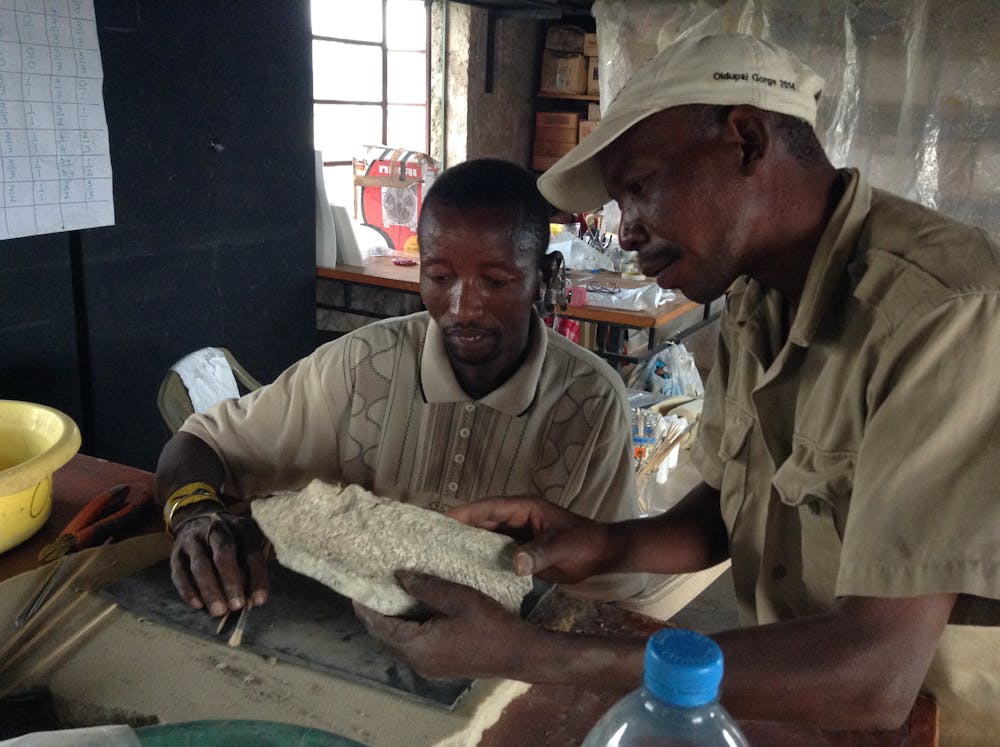
    Fossil extraction and preparation is conducted at Olduvai Gorge field labs. Here, Naibo Mesi and Agustino Songita work on one of the bone tools from Trench 69 Complex. Photo: R. Peters., Author provided (no reuse)

    Why haven’t such old bone tools been found before? The answer is likely that they are destroyed by weathering, abrasion from water transport, trampling and scavenger activity. Organic materials don’t always get time to fossilise. Also, analysts were not used to looking for bone tools among fossils.

    This discovery will likely encourage researchers to pay closer attention to the subtle signs of bone knapping in fossil assemblages. This way we will learn more about the evolution of human technology and behaviour.

    – 1.5 million-year-old bone tools discovered in Tanzania rewrite the history of human evolution
    – https://theconversation.com/1-5-million-year-old-bone-tools-discovered-in-tanzania-rewrite-the-history-of-human-evolution-251826

    MIL OSI Africa

  • MIL-OSI Russia: As part of Career Day, university representatives and employers discussed how to improve the training of specialists

    Translartion. Region: Russians Fedetion –

    Source: Saint Petersburg State University of Architecture and Civil Engineering – Saint Petersburg State University of Architecture and Civil Engineering – Round table at SPbGASU

    As part of the SPbGASU Career Day, a round table “Employers and Universities. Trends and Prospects” was held on March 20. Its participants discussed what is needed to train specialists who best meet modern industry requirements.

    Opening the meeting, Vice-Rector for Youth Policy Marina Malyutina said that holding a round table has become a tradition: it is important for the university to receive feedback from partners.

    A Proven Partnership

    Marina Viktorovna presented a letter of thanks to Nanosoft LLC and personally to the director of programs for the development of interaction with educational organizations “Nanosoft Development” Oleg Egorychev. “We express our deep gratitude for your active participation in organizing the “Career Day of SPbGASU” and training personnel for the construction industry. We greatly appreciate your contribution to the development of professional competencies of students,” the letter says.

    In his response, Oleg Egorychev emphasized that SPbGASU is a long-standing, kind and informative partner of Nanosoft. Together with the university, the company recently held two free educational courses on “Digital Modeling in Construction”. The company plans to hold the next course, as well as organize retraining of teachers from other universities on the basis of SPbGASU.

    Oleg Olegovich said that Nanosoft contributes to solving the tasks set by the head of state – to achieve technological sovereignty, to transition all sectors of the economy to domestic software, including engineering. The company provides its software free of charge to universities, colleges and comprehensive schools; systematically and massively conducts training of the faculty of universities, teachers and mentors of colleges, teachers of comprehensive schools in the use of software. “Because the entry point to any educational process is not licenses at all. These are the teachers, teachers, mentors who lead this educational process,” he noted.

    Mutual benefit

    Marina Malyutina spoke in detail about the cooperation of SPbGASU with partners. The university practices traditional, well-proven forms of interaction: open lectures, seminars, master classes of specialists, excursions to enterprises, career days and job fairs. This also includes the work of company specialists as external part-time workers and members of the State Examination Commission, industrial practice, providing topics for course projects and final qualification works, access to knowledge bases.

    At the same time, innovative methods are being introduced: case championships, competitions with expert consultations. The most famous of them is the student TIM championship.

    Later, the university began to extend this format to secondary vocational education institutions, colleges, and schools, motivating students to enroll in SPbGASU by selecting a target applicant.

    Another new form introduced last year is mini-courses from partners. The university sees a certain gap between the competencies of graduates and those competencies that are in demand on the labor market. In order to reduce this gap, the university offers partners to conduct small special courses from specialists of companies that “grow” students. The courses are voluntary, the topic is a product approach, project activities.

    Marina Malyutina expressed confidence that technological sovereignty is achieved in various ways, including by cultivating innovative entrepreneurial thinking in young people. Since last year, the university has joined the Startup as a Diploma program and has become a participant in the TechnoPiter accelerator. Third place in this program was taken by a student of SPbGASU, who received 200 thousand rubles as a reward.

    SPbGASU expects mentors and experts from companies in the context of developing technological entrepreneurship. In addition, the university invites companies to place their symbols, information stands, and videos on how a future specialist can realize themselves in the university buildings.

    Targeted training

    The Vice-Rector for Youth Policy also focused on targeted training. The audience learned that targeted training comes in two forms: by quota – only for companies with state participation, and not by quota – for any companies, including individual entrepreneurs.

    Under the quota, the contract is concluded at the admission stage. There is a separate competition for such applicants. The training is conducted at the expense of the state budget. After admission, the company pays the students a stipend. But there are risks and difficulties here: the company cannot choose a specific student. In the event of the student being expelled or the employer refusing to employ him, the party that has not fulfilled its obligations pays a fine in the amount of the cost of training.

    A contract for non-quota training can be concluded at any stage of training. There are various options for paying for training – at the expense of the student, the company, at the expense of the state budget, if the contract is concluded with a student studying on a budget place. The positive effect for the company is that it is possible to choose a specific student: look at his academic performance, the topic of term papers and understand how suitable he is. The university is ready to help in this choice. There are fewer risks in this case: the student is already profiled, motivated, he is a target by definition, the probability of his expulsion is small. The company can provide him with support measures. Fines are paid in the same cases as with targeted training under a quota.

    At SPbGASU, quota-based targeted training is coordinated by the admissions committee, while non-quota-based training is coordinated by the student entrepreneurship and career center.

    Project-based learning

    First Vice-Rector Svetlana Golovina emphasized: SPbGASU is for practical orientation, but this entails some difficulties. Students start working from the third year and miss classes. The university makes every effort to ensure that they receive knowledge, including through the Moodle e-learning and testing system, where lectures and assignment texts are available at any time.

    Svetlana Gennadyevna reported on the development of curricula for project-based learning. Project-based learning is an approach in which students learn through independent planning and development of solutions to a problem or task. An expert council of employers has been created for this purpose under the educational and methodological council of SPbGASU. The transition to project-based learning is planned for 2027.

    The First Vice-Rector reported that the university is interested in systemic cooperation and invited employers to join in the development of project activities and student technological entrepreneurship. Partner support can be advisory: in the form of feedback on the quality of graduate training, participation in the development of programs. Expert: participation in the assessment of student projects, support for teams in competitions, olympiads, training. Informational: you can talk about projects on your resources. Organizational: you can take on some of the tasks of preparing and holding certain events. Material: you can provide software, equipment, premises. Financial: student bonuses, investments in the implementation of projects, startups.

    For partners, the value of cooperation lies in finding ideas for solving current problems, developing their scientific and technical base, and innovations. In addition, this supports the image of a socially responsible company and increases brand awareness, and forms a personnel reserve. The company gets the opportunity to form a demand for competencies and influence the content and results of education, which develops the potential of current employees through mentoring and tutoring, and reduces the time and resources for the adaptation of young specialists.

    The roundtable participants completed a survey on new formats of interaction, discussed the importance of mentoring and acquiring fundamental knowledge, and expressed their willingness to join forces to ensure that graduates meet the requirements of the labor market.

    The event was organized by the Center for Student Entrepreneurship and Career of SPbGASU.

    SPbGASU and Nanosoft company thank the representatives of Severnaya Kompaniya, Region LLC, TITAN-2 holding, Glavstroy-Saint Petersburg Specialized Developer LLC, Samolet Group PJSC, StroyKraft LLC, Setl Group, Design Institute No. 2 LLC, ZVSK Invest LLC, Gipronickel Institute LLC, Alfa-Bank, Atomenergoproekt JSC, VDC, ENITA LLC, and LSR Group for their participation in the round table.

    Please note: This information is raw content directly from the source of the information. It is exactly what the source states and does not reflect the position of MIL-OSI or its clients.

    MIL OSI Russia News

  • MIL-OSI Russia: GUU reveals secrets of theatrical life to Moscow schoolchildren

    Translartion. Region: Russians Fedetion –

    Source: State University of Management – Official website of the State –

    As part of the project “Theatrical Backstage” implemented by the State University of Management together with the Department of Education and Science of the City of Moscow and the Moscow Center for Educational Practices, a tour of the Moscow Academic Theatre named after Vl. Mayakovsky was held for Moscow schoolchildren.

    The excursion participants included children from the school theaters “Antre” from school No. 641 named after S. Yesenin, “Novaya Skazka” from the Zelenograd Palace of Children’s and Youth Creativity, “Litsedei” from school No. 656 named after A.S. Makarenko, and MART from school No. 2094.

    The tour guide was Roman Fomin, a theater employee with 16 years of experience. He shared interesting facts about the theater, its architecture and its importance in the cultural life of the city. The tour participants learned how the theater became a place where talents and creativity intersect.

    The schoolchildren were able to see what the theatre looks like from the inside and feel the atmosphere standing in the actors’ place. Roman Fomin told them about the work of lighting and sound, and also demonstrated various mechanisms used to change the scenery.

    Then, the tour moved to the backstage areas. The children visited the dressing rooms where the actors prepare for their performances.

    The behind-the-scenes tour not only expanded the children’s knowledge of theatrical art, but also inspired them to further develop in this area.

    Subscribe to the TG channel “Our GUU” Date of publication: 03/24/2025

    Please note: This information is raw content directly from the source of the information. It is exactly what the source states and does not reflect the position of MIL-OSI or its clients.

    MIL OSI Russia News

  • MIL-OSI Global: Will mummy make it better? The curious case of mummified remedies in early modern medicine

    Source: The Conversation – UK – By Michelle Spear, Professor of Anatomy, University of Bristol

    Andrea Izzotti/Shutterstock

    The history of medicine is filled with remedies that, viewed through a modern lens, seem perplexing, misguided or downright macabre. Among these is “mumia” — a medicinal substance derived from mummified human remains.

    From the 12th to the 17th century, physicians across Europe prescribed powdered mummy as a cure-all for ailments ranging from internal bleeding and broken bones to epilepsy and melancholia.

    Once regarded as a potent elixir infused with the life force of the ancients, mumia was a staple in apothecaries, sought after by the wealthy and recommended by the learned. Yet, as medical knowledge evolved, so too did attitudes toward this unusual remedy, and by the 18th century, it had largely faded into obscurity.

    The belief in mumia’s healing power was deeply rooted in prevailing medical theories of the time. One such theory was the doctrine of signatures, which held that natural substances resembled the ailments they were meant to cure.

    Mummified flesh, preserved for centuries, seemed an obvious candidate for treating decay, wounds and internal deterioration. Another influential idea was vitalism, the notion that life force could be transferred from one body to another, particularly from a preserved human to a living patient.

    Adding to this was the European fascination with the medical traditions of the Islamic world. Arabic physicians such as Avicenna had described the therapeutic use of bitumen – a naturally occurring tar-like substance also called mūmiyā – that had medicinal applications in wound healing.

    When these texts were translated into Latin, European scholars mistakenly conflated mūmiyā with Egyptian mummies, assuming that the embalmed dead were imbued with similar restorative properties. The result was a booming trade in ground-up human remains, with mummies sourced from Egyptian tombs, grave robbers and even local execution sites.

    Grave robbers got in on the racket.
    David Leshem/Shutterstock

    Mumia was prescribed for an astonishing array of conditions. Physicians believed it could speed up healing, prevent infection and even cure epilepsy. Ingested in powdered form or mixed into tinctures, it was recommended for internal bleeding, strokes and tuberculosis. Some suggested it could ward off melancholy or restore youthful vitality, making it a popular remedy among the European elite.

    Apothecaries stocked mummy powder alongside other human-derived medicines such as powdered skull (cranium humanum) and distilled human fat (axungia hominis).

    The more ancient the remains, the more potent they were thought to be. However, as the demand for mumia outstripped the supply of genuine Egyptian mummies, opportunistic traders turned to more recent corpses – some even resorting to robbing the gallows to meet the market’s needs.

    Eventual decline

    Despite its widespread use, mumia was not without its detractors. By the 16th century, some physicians began to question both its efficacy and its ethical implications. The Swiss physician Paracelsus (1493–1541) argued that only fresh human remains – not ancient, embalmed flesh – had medicinal value, while others dismissed the practice as nothing more than superstition.

    The growing emphasis on empirical science in the 17th and 18th centuries further eroded faith in mumia. As anatomy and pathology advanced, the idea that centuries-old preserved tissue could heal the living seemed increasingly implausible. At the same time, public attitudes toward human remains began to shift.

    The rise of Egyptology and archaeological interest in mummies reframed them as historical artefacts rather than medical commodities, making their consumption distasteful even to those who had once sworn by their healing properties.

    By the early 18th century, mumia had largely disappeared from medical practice, relegated to the annals of history as an example of medicine’s sometimes gruesome past.

    Mumia’s decline serves as a reminder of how medical knowledge evolves, shedding once-revered treatments in favour of evidence-based approaches. Yet, while medicinal cannibalism may seem shocking today, the pursuit of miraculous cures continues. From stem cell therapies to longevity supplements, the desire to harness the essence of life itself persists – albeit with more scientific rigour.

    Looking back at the use of mummified medicine, we are reminded that the boundary between science and superstition is not always as clear as we might like to believe.

    Michelle Spear does not work for, consult, own shares in or receive funding from any company or organisation that would benefit from this article, and has disclosed no relevant affiliations beyond their academic appointment.

    ref. Will mummy make it better? The curious case of mummified remedies in early modern medicine – https://theconversation.com/will-mummy-make-it-better-the-curious-case-of-mummified-remedies-in-early-modern-medicine-247727

    MIL OSI – Global Reports

  • MIL-OSI Global: Time to stop blaming bats and newts for blocking development? A new fund could support nature and ease building delays

    Source: The Conversation – UK – By Graham Haughton, Professor, Urban and Environmental Planning, University of Manchester

    Great news for the greater horseshoe bat? ATTILA Barsan/Shutterstock

    For years, nature has been blamed as a blocker of economic growth. After some ministerial bluster about not letting newts and bats get in the way of growth ambitions, the UK government released more details of its plans to get Britain building again.

    The centrepiece of its aspirations to balance both nature and economic growth is a nature restoration fund, to be set up in England through changes to habitat regulations. This should allow developers to stay within their legal obligations towards nature through a payment scheme without delaying their projects.

    The broad concept is that, as an alternative to relocating important species or improving habitats on the site of a proposed development, a developer could pay into the nature restoration fund. This would pay for larger, more strategically located schemes to protect the species in question.

    The fund simplifies and streamlines the regulations while collecting funds to promote more, bigger, better and increasingly joined-up sites for nature.

    Protecting nature is not just about bats and newts. According to trade association the Home Builders Federation (HBF), there are 160,000 homes being delayed by what are known as “nutrient neutrality” measures. These rules were a response to growing public concerns about land and water pollution caused by nutrient loads – pollutants such as nitrogen and phosphorus – associated with livestock farming and spillages from sewage works.

    Government agency Natural England advised 74 local authorities that they should not allow any more house building in their areas unless this pollution could be mitigated. But this has led to lengthy and expensive project-by-project reviews to identify potential damage.

    How will a fund help?

    The fund will build on some schemes that are already known to work. One such scheme works for the protection of great-crested newts. Another successful scheme is Thames Basin Heaths project, working to protect and enhance heathland sites where rare birds such as nightingales breed. Crucially, this scheme allows new development to go ahead in adjacent areas.

    The fund will be run by Natural England, which aims to draw on these experiences to unblock development at a large scale rather than at single-site level, pooling contributions from developers to pay for mitigation measures when there is a risk to nature.

    If a particular “blocking” issue is identified, experts from Natural England will produce a plan, which must be approved by the environment secretary. A levy on developers will then pay for mitigation measures “in perpetuity” (often 30 years), allowing the development to get under way.


    Read more:
    The government has revealed its plans to get Britain building again. Some of them might just work


    Environmental experts have cautiously welcomed the general principles and approach of the nature restoration fund. But there has also been concern about whether the plan is well enough thought through. There are also questions on how well it will integrate with other schemes.

    A widespread worry is for the future of biodiversity net gain – which includes measures for creating and improving habitat banks using biodiversity units, effectively a form of “nature market”. This approach sets a target of 10% for biodiversity improvement based upon the combined distinctness, condition and significance of affected habitats over the lifetime of the development. But these measures are only just getting started.

    The concern is that providers of sites for these habitat banks – which might be councils, landowners, charities or private businesses, for example – might get cold feet and pull out if they can’t be certain that their plans will be compatible with the nature restoration fund.

    The Thames Basin Heaths scheme has been protecting the breeding grounds of nightingales.
    Erni/Shutterstock

    There is concern, too, about how payments from the nature restoration fund would be calculated. These will need to be locally appropriate and not pit nature restoration and biodiversity net gain against each other if, for example, landowners are forced to choose a particular scheme for their land that they are then committed to for decades. With two parallel systems in play, the relationship between them must be crystal clear, otherwise shared goals could be missed.

    Another question is whether Natural England can be both regulator and financial beneficiary of the new scheme. There have been calls from some of those already involved in nature markets for some form of independent oversight.

    And it will also be vital that the new scheme respects what’s known as the “mitigation hierarchy”. This hierarchy aims to avoid, reduce and then mitigate any impacts on nature on-site in that order. Then developers should consider off-site measures in areas where there could be greater gains for biodiversity.

    But a danger here is that this could disconnect people from nature even further by mitigating ecological loss miles away from the site of the damage. This disconnection is considered to be a critical underlying cause of biodiversity loss.

    There is much to like about the nature restoration fund, but there is a risk that little will be achieved without the government showing genuine ambition and allocating enough money and staff to properly monitor and enforce it over the long term. Only time will tell whether it achieves the government’s goal of speeding up development.

    At the moment, it is not clear how the fund will complement similar schemes and there is a danger of creating a complex patchwork in nature restoration funding. But if it works well, it could provide a richer funding ecosystem for nature recovery – a much-needed boost for England’s nature-depleted landscape.

    The authors do not work for, consult, own shares in or receive funding from any company or organisation that would benefit from this article, and have disclosed no relevant affiliations beyond their academic appointment.

    ref. Time to stop blaming bats and newts for blocking development? A new fund could support nature and ease building delays – https://theconversation.com/time-to-stop-blaming-bats-and-newts-for-blocking-development-a-new-fund-could-support-nature-and-ease-building-delays-252765

    MIL OSI – Global Reports

  • MIL-OSI Global: How we revealed the life story of PG Tips chimp – written in her bones

    Source: The Conversation – UK – By Stuart Black, Associate Professor, Department of Archaeology, University of Reading

    Chimpanzees helped to make PG Tips tea famous with their iconic TV ads in the 1970s. But what happened to these animals afterwards? Our new study, using techniques previously used only on human remains, reveals the fascinating life story of Choppers, a celebrity chimpanzee, also known as Ada Lott from the PG Tips ads.

    Zoos have transformed over the last century. They once focused on entertainment, but in the UK zoos now have a greater emphasis on education, conservation, research and welfare. And our new study, led by experts at National Museums Scotland, shows how these changes are written on Choppers’ body.

    Choppers died aged 46 in 2016, which is close to the average age for a wild or captive chimpanzee. Following her death, Choppers was donated to the National Museums of Scotland, which enabled an analytical investigation into her life through her remains. Researchers from across the UK created the most comprehensive osteobiography of a zoo animal by bringing together archival, chemical and metric analyses.

    Osteobiography involves the analysis of bones and other tissue. It is more commonly used in archaeology to reconstruct the life stories of ancient human subjects, such as Richard III, identifying where and how they lived in remarkable detail.

    As a celebrity, Choppers’ life has been extensively documented. This combination of
    archival material and osteobiographical analysis provides one of the most complete
    assessments of the life of an animal in zoo care.

    The findings of our study paint a rich picture of Choppers’ key life events, including evidence of injuries sustained when she was poached from the wild at just six weeks old. Choppers had a broken right arm, which seemed to have healed badly. Her lower arm bones were bowed and much shorter than her left side. She seems to have not been able to bear much weight on this arm, which likely contributed to joint disease here and elsewhere in her skeleton.

    It is also likely that many, if not all, of her social group were killed in her capture. The physical trauma would impact her throughout her life, impairing her movement and exacerbating degenerative issues associated with old age.

    Analysis of Choppers’ tooth enamel indicates a geographical and dietary shift between the ages of three and four, coinciding with her relocation to the UK from Sierra Leone. In the following three years she played the grandmother character in the PG Tips adverts, which ran in the UK throughout the 70s and 80s and featured a family of tea drinking chimps.

    A collection of PG Tips adverts using chimpanzees.

    The long-running ads helped PG Tips become the market leader of tea in Britain for 35 years. Her performance career was short, ending before the onset of puberty, and Choppers probably retired at around the age of six or seven. In part this is due to behavioural change as adult chimpanzees become less predictable, but also as a result of human perceptions of the cuteness of adult chimpanzees compared to infants.

    Choppers transitioned from a relatively active life with high levels of direct interaction with humans, to a sedentary life with two companion chimpanzees, Noddy and Brooke, who were also retired from the entertainment industry. She was cared for by Twycross Zoo in Leicestershire for the rest of her life.

    Choppers’ upper jaw was significantly elongated compared with wild chimpanzees, reflecting an early diet of sugary soft fruit, but also of her performance diet that mimicked that of humans. The PG Tips advertisements followed on from a longstanding trope in the mid-20th century of chimpanzees participating in tea parties, eating cake, drinking “tea” and apeing human behaviour. The chimpanzees drank fruit juice or milk rather than tea during tea parties and advertisements.

    In recent years there has been a shift towards tougher, less sugary vegetables in the diets of zoo primates, which is leading to improvements in their health and behaviour.

    Later in life, Choppers was housed for a time with another chimpanzee, Bobby. Together they had one daughter, Holly.

    Across the world today, there is considerable variation in zoo regulation, management and welfare. Despite accreditation of zoos and improved regulation, the illegal trafficking of chimpanzees and other primates into private collections and disreputable zoos continues. Choppers’ story is testament to the many thousands of chimpanzees that were (and still are) forcibly extracted from the wild for zoos, circuses, laboratories and private collections.

    Choppers was not an unusual chimpanzee, but her story is an individual one, which resonates with human attitudes towards wildlife, zoos, entertainment, welfare and quality of life.

    Stuart Black receives funding from The Wellcome Trust, UKRI and other research councils.

    David Cooper has received funding from The Wellcome Trust.

    Juliette Waterman received funding from the Wellcome Trust while this research was carried out.

    ref. How we revealed the life story of PG Tips chimp – written in her bones – https://theconversation.com/how-we-revealed-the-life-story-of-pg-tips-chimp-written-in-her-bones-252224

    MIL OSI – Global Reports

  • MIL-OSI Global: Three graphic novels that address the history of slavery – and commemorate resistance

    Source: The Conversation – UK – By Dominic Davies, Senior Lecturer in English, City St George’s, University of London

    Millions of people were abducted from west Africa and forcibly trafficked to the Americas over the 400 years of the transatlantic slave trade, from the 15th to the 19th century.

    Slavery treated these people as forms of property. It forced them, with brutal violence, to work on plantations producing commodities such as cotton and coffee, sugar and tobacco. Their labour powered the world economy for several centuries.

    While common understanding of this history has improved, less frequently remembered are those who spearheaded resistance against slavery. Revolutionary uprisings led by enslaved people themselves, as well as actions by radical groups such as Quakers and mutinous pirates, challenged slavery long before William Wilberforce and Britain’s abolition movement.

    Now, an increasingly popular genre of the graphic novel is building public awareness and memory of these movements. Composing its stories of the past from framed documents, fragmented images and scraps of text, the form of the graphic novel resembles an archive. It is therefore well-placed to bring forgotten histories to life and to reflect on how those histories were recovered.


    Looking for something good? Cut through the noise with a carefully curated selection of the latest releases, live events and exhibitions, straight to your inbox every fortnight, on Fridays. Sign up here.


    Here are three recent graphic novels that can help us to remember resistance against slavery. They follow in the footsteps of historian Rebecca Hall’s collaboration with artist Hugo Martínez, Wake: The Hidden History of Women-Led Slave Revolts (2021), which I would also strongly recommend.

    1. Toussaint Louverture: The Story of the Only Successful Slave Revolt in History

    By C.L.R. James, Nic Watts, and Sakina Karimjee (2023)

    In the early 1930s, the anti-colonial historian, C.L.R. James, wrote a play about the 1791 Haitian Revolution and its leader, Toussaint Louverture.

    It dramatised the story of the only successful slave revolt in history, when 100,000 slaves rose up against their white masters and eventually secured independence after almost 15 years of struggle.

    James’s play was performed only twice in 1936, with the great African American actor Paul Robeson in the title role. The script was then lost for several decades, until 2005, when the historian Christian Høgsberg discovered a copy in the archives at the University of Hull and published a new edition of the play.

    In 2012, graphic artist, Nic Watts and theatre practitioner, Sakina Karimjee, decided to bring James’s play back to life – not on the stage, but in the pages of a graphic novel.

    James, who died in 1989, might not have guessed that he would one day be a co-creator of a graphic novel. But he would surely have been impressed with Toussaint Louverture, which takes readers through the Haitian Revolution in almost 300 thrilling pages.

    The graphic novel uses its uniquely spatial medium to map the connections between the French Revolution, which proclaimed universal rights for all men, and the slave uprising in Haiti, which sought to realise those rights in France’s colonies. It is packed with powerful symbols and imagery that build a rich picture of the strategies and tactics that led to the uprising’s eventual victory.

    2. Prophet Against Slavery: Benjamin Lay, A Graphic Novel

    By David Lester, edited by Paul Buhle and Marcus Rediker (2023)

    Historian Marcus Rediker has devoted his career to uncovering early histories of resistance against slavery and sharing them in compelling and accessible formats.

    In 2021 he teamed up with the illustrator, David Lester, and longtime graphic historian, Paul Buhle, to translate this work into graphic novels.

    The first, Prophet Against Slavery, takes readers back to a Quaker meeting house in the early 1700s. In its dramatic opening scene, Benjamin Lay disrupts the meeting with a piece of performance theatre. He appears to stab his own arm in protest against slavery, though we later learn that the spouting blood was in fact “red pokeberry juice”.

    Lay was an innovator of performance protest, and he developed the strategy of boycotting commodities produced by slave labour. As Prophet Against Slavery details, he was one of the earliest and most outspoken abolitionists, campaigning for the end of the transatlantic slave trade almost a century before Wilberforce.

    He was also a pioneer of veganism and an advocate for animal rights. Lay saw the parallels between early capitalism’s enclosure of common land in England and slavery’s enclosure of people’s bodies in the US. The claustrophobic borders of Lester’s graphic novel dramatise these acts of property making, even as they document Lay’s stubborn attempts to liberate the oppressed from bondage.

    The enslaved themselves do not have a voice in Prophet Against Slavery. But Lester uses powerful charcoal sketches and image-only panels to make sure their presence is never forgotten.

    These haunting images remind readers of the human cost of slavery without presuming to speak for those whose voices have been excluded from the written archive.

    3. Under the Banner of King Death: Pirates of the Atlantic, A Graphic Novel

    By David Lester and Marcus Rediker (2023)

    Rediker and Lester teamed up again for Under the Banner of King Death. The title refers to the skull and cross bones flag that flies on the masts of pirate ships.

    But this is not your conventional story of evil pirates drinking rum and hunting for gold (although there is some of that). It is rather a portrait of the pirate ship as a space of self-determination and political freedom at a time when, as Rediker puts it, “poor people had no democratic rights anywhere in the world”.

    The graphic novel tells the story of John Gwin, an African-American man who escaped from slavery in South Carolina. After being kidnapped by the Royal African Company to labour on a slaving ship, he decides to resist. He rallies his shipmates, liberates the Africans below deck, and leads a mutiny to overthrow Skinner, the tyrannical captain.

    With Skinner deposed, the pirates establish a commune at sea: “A world turned upside down,” as Gwin calls it. “All captains and officers elected. All tars [sailors] treated as brothers. No tyranny of the lash.” There is no hierarchy on this ship. Instead, they return to west Africa and begin breaking people out of slave castles along the coast.

    Lester’s pen-and-ink sketches and frantic page layouts capture the scattergun nature of pirate life in the 17th century. It was a dangerous existence. Such was the threat posed by pirates to the ruling order that the British Navy worked quickly to capture them and make an example. Under the Banner of King Death starts and ends with hanging scenes, where pirates were put to death in public.

    But while the British state could hang the pirates, it couldn’t kill their idea of freedom from slavery. Lester and Rediker recover this history and remind us of the revolutionary spirit that the skull and cross bones flag once represented.

    These graphic novels commemorate new histories of resistance to the slave trade, while also reminding us of the historiographic work that must be put into recovering and retelling them, now and in the future.

    Dominic Davies does not work for, consult, own shares in or receive funding from any company or organisation that would benefit from this article, and has disclosed no relevant affiliations beyond their academic appointment.

    ref. Three graphic novels that address the history of slavery – and commemorate resistance – https://theconversation.com/three-graphic-novels-that-address-the-history-of-slavery-and-commemorate-resistance-251740

    MIL OSI – Global Reports

  • MIL-OSI Global: Facing annexation threats, should Canadians lament for a nation — like George Grant did in 1963?

    Source: The Conversation – Canada – By David Edward Tabachnick, Professor of Political Science, Nipissing University

    A decades-old lament for Canada is back on some Canadians’ minds as United States President Donald Trump makes repeated annexation threats.

    Canadian political philosopher George Grant’s Lament for a Nation was published in 1965 — the same year Canada’s iconic Maple Leaf flag was first unfurled on the Peace Tower on Parliament Hill — and unexpectedly inspired many Canadians to feel a sudden sense of pride and confidence that their country could and must stand up to its giant imperialistic neighbour to the south.

    Sixty years later, there are calls to “Bring Back Grumpy George” and renew his decades-old warning. There are also attempts to understand Grant’s continued relevance in the 21st century, as well as new volumes on his work.

    Canadian nationalist movement of 70s

    On the face of it, Grant’s slim volume may seem the perfect tonic for what ails Canada today. Consider that William Christian, Grant’s biographer, called its publication “one of the most significant factors in creating the Canadian nationalist movement of the 1970s” while esteemed journalist Charles P.B. Taylor dubbed it “a Bible for younger nationalists.”

    It “is the sun under which a generation of Canadian nationalists warm themselves,” Andrew Potter writes in his introduction to the 40th anniversary edition of Grant’s most famous work, “but it also casts the long dark shadows in which they must operate.”

    One need only wade a little into the volume to see those “the long dark shadows.” The subtitle to Grant’s book says it all: The Defeat of Canadian Nationalism. So, far from being a call to arms, Lament for a Nation was, as Grant put it, a “cry out at the death or at the dying of something loved…[to mourn] the end of Canada as a sovereign state.”

    In other words, Lament was never intended to whip Canadians into a nationalist fervour, but to spell out Canada’s unfortunate and inevitable disappearance as a nation.

    ‘Blending into the (U.S.) empire’

    By this logic, the next six decades of failed strategies to diversify the Canadian economy and stillborn plans to grow its military are symptoms of a disease that had already killed the patient; Canada is the zombie nation, an apparently democratic electoral system without real substance. Grant wrote:

    Canada has ceased to be a nation, but its formal political existence will not end quickly. Our social and economic blending into the empire will continue apace, but political union will probably be delayed. Some international catastrophe or great shift of power might speed up this process.”

    For Grant, Canada’s original death knell was acquiescence to American demands that it accept their nuclear weapons on its soil. While Canada had both the technical ability and practical capacity to build its own bombs after the Second World War, leaders decided against it.

    Jack Mackenzie, first president of Atomic Energy Control Board, explained in a 1953 address: “Canada is the only country in the world with sizeable atomic energy establishments where no bombs are being made, and where all the thinking and planning is focused on peacetime aspects.”

    But in the context of the Cold War, this principled choice was viewed as a sign of weakness by Americans, who worried about Soviet bombers travelling unrestricted over the Arctic.

    Defence crisis

    This worry led to the so-called defence crisis that dominated the federal 1963 election campaign, fought between Conservative Prime Minister Diefenbaker and Liberal Lester B. Pearson.

    A beleaguered Diefenbaker had cancelled the vaunted Avro Arrow program a few years earlier, hesitated to commit the Navy to participate in the blockade of Cuba and then balked at accepting American warheads for the BOMARC interceptor missiles designed to stop those bombers.

    The pugnacious Pearson was once a champion of non-proliferation and had shocked his supporters during his infamous Scarborough speech when he announced his surprising agreement that U.S. nukes had to be deployed on Canadian soil in the name of our “commitments for Canada in continental and collective defence,” including NORAD and NATO.

    For Grant, Diefenbaker’s defeat to Pearson was a stake through the heart of the Canada from which it would never recover. In 1963, the Royal Canadian Air Force delivered a shipment of nuclear warheads to the BOMARC missile site near RCAF Station North Bay, Ont., just up the road from where I write today.

    End of Canadian nationalism?

    A few years before his passing in 1988, Grant made it clear in a 1985 interview with Lawrence (Larry) Schmidt, a theologian and a scholar of Grant’s work, that “people have read a little book I wrote called Lament for a Nation wrongly. I was talking about the end of Canadian nationalism. I was saying that this is over and people read it as if I was making an appeal for Canadian nationalism. I think that is just nonsense. I think they just read it wrongly.”

    Today, Canadian economic well-being and security are no more in Canada’s control then they were in 1965. Trump is merely saying the quiet part out loud in his craven desire to make Canada the 51st state.

    Was Grant wrong?

    But, as it turns out, Grant was wrong. Canada is not the zombie nation. It may have been in a bit of daze for the last while, but Canadians have their elbows up again.


    Read more:
    Why Gordie Howe’s elbows are Canada’s answer to Donald Trump


    Now out of a stupor, Canadians are reviewing the wisdom of purchasing F-35s, buying new radar systems to assert our sovereignty over the Arctic and attempting to drop interprovincial trade barriers.

    Mind you, this is nothing new. In the face of American disapproval, Canada trades with Cuba, claims the Northwest Passage as its internal waters and negotiated a successful Acid Rain Treaty. Canada led the charge to ban the use of land mines and refused to participate in the American missile shield plan.

    Canada didn’t send its young men to die in the jungles of Vietnam and refused to participate in the ill-conceived Iraq War. And it still protects its fresh water and health care.

    New policy for common cause

    Still, rather than merely reacting to American insults and pressures, Canada is long overdue to develop contemporary and responsive policy, the very thing Grant thought would allow Canada to become and stay a sovereign country, at least for a while.

    As writer and historical researcher Mark Wegierski notes, this could unite conservatives and progressives in common cause.

    While Canadians may be divided at times, they need to use this moment of unity to make sure Canada stays alive and kicking.

    David Edward Tabachnick does not work for, consult, own shares in or receive funding from any company or organisation that would benefit from this article, and has disclosed no relevant affiliations beyond their academic appointment.

    ref. Facing annexation threats, should Canadians lament for a nation — like George Grant did in 1963? – https://theconversation.com/facing-annexation-threats-should-canadians-lament-for-a-nation-like-george-grant-did-in-1963-252337

    MIL OSI – Global Reports

  • MIL-OSI Russia: The GUU hockey team received a call-up to the XI All-Russian Championship of Russia

    Translartion. Region: Russians Fedetion –

    Source: State University of Management – Official website of the State –

    For the third time in a row, the GUU hockey club received an invitation to participate in the Russian Student Hockey League championship, which will be held in St. Petersburg from April 21 to 27.

    This season, 16 of the strongest student hockey teams from 11 regions of the Russian Federation will compete for the title. Matches will be held every day, which guarantees spectators a lot of exciting moments and tense clashes on the ice.

    Last year, our team demonstrated impressive results and reached the top 4 best teams in the country, losing bronze medals to the Far Eastern State Academy of Physical Culture. Hockey fans and enthusiasts will be able to watch our team’s games and support it on its way to new victories both in person and online.

    We invite all hockey fans to cheer for our hockey team in St. Petersburg and support them on their way to new achievements!

    Subscribe to the TG channel “Our GUU” Date of publication: 03/24/2025

    Please note: This information is raw content directly from the source of the information. It is exactly what the source states and does not reflect the position of MIL-OSI or its clients.

    MIL OSI Russia News

  • MIL-OSI United Kingdom: Swing into summer with the City of Derry Jazz Festival

    Source: Northern Ireland – City of Derry

    Swing into summer with the City of Derry Jazz Festival

    24 March 2025

    Bennigans Bar was the perfect location to get the jazz vibe going with the launch the City of Derry Jazz Festival 2025, taking place May 01 – 05.

    The Mayor of Derry and Strabane, Councillor Lilian Seenoi Barr, was joined by Martin Venning from event sponsors Diageo, for the launch at one of the festival’s most popular jazz hubs, renowned for its top-class artists.

    This year’s event marks 24 years of Ireland’s biggest Jazz extravaganza, and final preparations are now well underway to deliver an unsurpassable programme featuring over 320 performances, and brimming with musical talent from around the world. Music legend Billy Ocean tops this year’s bill, performing in the Millennium Forum on Saturday and Sunday May 3rd and 4th.

    Looking ahead to the event, which is organised by Derry City and Strabane District Council, Mayor Barr said she couldn’t wait to get her dancing shoes on. “I don’t know anyone who doesn’t love the City of Derry Jazz Festival,” she declared. “It’s a wonderful time to visit Derry as the city comes alive with music in every bar and on every street corner. The energy is infectious and the atmosphere is just incredible.

    “The festival is the perfect warm up for the summer, and it’s an event that people of all ages can enjoy. You don’t have to be a jazz fanatic – we have performers here from all over the world and a real medley of musical genres to enjoy. And don’t forget the majority of the entertainment is free!”

    This year’s programme includes old jazz favourites, local legends and plenty of new talent, ready to deliver five days packed with entertainment, from jazz workshops to live concerts and drama performances.

    There will be beats on the streets with a variety of al fresco acts, bringing the vibrant sound of jazz to the entire city. Festival goers can also look forward to an exciting mix of jump, jive, blues, and swing, ensuring there’s something for every music enthusiast.

    A highlight of the festival is the Live Music Now Schools Programme, which aims to inspire and educate the next generation of musicians through interactive performances and workshops in local post-primary schools. Young performers will have the chance to show off their talents performing live on the Gay McIntyre Stage, showcasing some of the finest jazz talent in the historic Guildhall Square.

    Jazz Festival coordinator with Derry City and Strabane District Council, Aisling McCallion, said: “May is fast approaching and we have had so much interest this year from acts from all over who have heard about the City of Derry Jazz Festival and the brilliant welcome the performers enjoy. We have some really exciting new performers this year, and of course we can’t wait to welcome our headline act Billy Ocean.”

    Martin Venning from Diageo said it would be an unforgettable weekend. “Diageo is delighted to continue supporting this fantastic festival, which celebrates the vibrant cultural scene here in the North West.

    “It’s the perfect platform for both established local performers and new up and coming talent, who join world class artists from across the world for a show-stopping weekend that brings so much value to the local economy. It’s the only place to celebrate the May Bank Holiday.”

    So join us for an unforgettable celebration of jazz, community, and culture at the 2025 City of Derry Jazz Festival!

    For more information go to cityofderryjazzfestival.com and for regular updates follow the City of Derry Jazz festival on Facebook Instagram and X @derryjazzfest.

    MIL OSI United Kingdom

  • MIL-OSI Russia: The second stage of the Moscow Student Cheer League has ended at the State University of Management

    Translartion. Region: Russians Fedetion –

    Source: State University of Management – Official website of the State –

    On March 22, 2025, the second stage of the Moscow Student Cheer League, organized by the Phoenix Sports Club in cooperation with our university, was held at the Sports Complex of the State University of Management.

    This large-scale and fascinating cheerleading and cheer-sport competition brought together 11 teams from different Moscow universities: GUU, Plekhanov Russian University of Economics, RANEPA, RGAU-MTAA, MSU and others.

    At this stage of the competition, participants competed in 10 disciplines, each of which required teams to be focused, coordinated, and professional. Our team showed excellent results and won second place in one of the disciplines.

    We thank the organizers, our fans and everyone who supported the team throughout this intense sports day.

    The Moscow Student Cheer League is an important platform for young talents, providing an opportunity for students not only to prove themselves, but also to strengthen ties between universities. We are looking forward to the next stage of the tournament and hope for new victories!

    Subscribe to the TG channel “Our GUU” Date of publication: 03/24/2025

    Please note: This information is raw content directly from the source of the information. It is exactly what the source states and does not reflect the position of MIL-OSI or its clients.

    MIL OSI Russia News

  • MIL-OSI Russia: HSE has launched a competitive selection process for the Russian Postdoc Program

    Translartion. Region: Russians Fedetion –

    Source: State University Higher School of Economics – State University Higher School of Economics –

    The Higher School of Economics invites researchers to take part in Program for attracting Russian postdocsThis year, 106 vacancies are available for candidates at the university’s Moscow campuses, Saint Petersburg, Perm And Nizhny NovgorodApplications will be accepted until May 16.

    The Russian Postdocs Program is aimed at attracting colleagues who have received a candidate of science or PhD degree to HSE. The competition is open to researchers under 39 years of age who have not previously worked or studied in HSE postgraduate studies.

    The program is aimed at retaining personnel in science and strengthening the practice of inter-university exchange. Winners of the competitive selection are employed as HSE research fellows for one year with the possibility of extending for a second year. They work on a research project and are involved in expanding the research agenda of departments. Colleagues can also, if they wish, teach and participate in expert-analytical projects. The postdoc will be provided with a workplace, access to information resources, databases and electronic subscriptions of HSE, as well as participation in scientific and educational events and programs for scientific advancement and career development.

    Each applicant can choose to participate in one or two projects, indicating the priority option. The full list of vacancies is published on the website of the Russian Postdocs Attraction Program. To submit an application, you must fill out form.

    Today, there are more than 50 postdocs from different regions and cities of Russia working at HSE. The program implements the practice of consultations with current participants. Online meetings are held every Wednesday at 12:00 and 17:00 Moscow time. You can ask all your questions by filling out application.

    “The program to attract Russian postdocs has allowed our still young and small laboratory to expand its research capabilities,” says Robert Sandlersky, head of International Laboratory of Landscape Ecology Faculty of Geography and Geoinformation Technologies HSE University. — The postdoc attracted under the program acquired many new skills in his first year of work that are useful for our research. The knowledge acquired at HSE allowed him to formulate his own research direction in the second year of the program, which is especially valuable for our small team. With the help of our postdoc, we organized and conducted a student expedition to his native region, Buryatia, and implemented the research project “Geoinformation support for recreational activities in Tunkinsky National Park”. Thus, the Russian Postdoc Attraction Program allowed us to expand the geography of our research and involve students in it. I am pleased to plan the next research project, for which we can attract a new active postdoc.”

    “The program for attracting Russian postdocs is a great opportunity to be involved in the activities of the best university in Russia! I am glad that I took a risk and applied for the competitive selection,” shared Anastasia Ustyuzhantseva, postdoc, research fellow Department of Operations Management and Logistics. — A wide range of professional and personal growth trajectories, English courses for any level of training, advanced training in relevant areas, work in world-class research teams — this is only a small part of what participation in the program provides. I began to look at many things in a new way, made useful contacts, and was able to concentrate on truly important professional tasks.”

    Please note: This information is raw content directly from the source of the information. It is exactly what the source states and does not reflect the position of MIL-OSI or its clients.

    MIL OSI Russia News

  • MIL-OSI USA: Distinguished Scientist Award Goes to UConn’s Dr. David C. Steffens

    Source: US State of Connecticut

    Dr. David C. Steffens is the 2025 recipient of the Distinguished Scientist Award from the American Association for Geriatric Psychiatry.

    Steffens, professor and chair of the Department of Psychiatry at UConn School of Medicine, was named the winner of this lifetime achievement award during the annual meeting of the American Association for Geriatric Psychiatry on March 14 in Phoenix, Arizona.

    Steffens was honored with the Distinguished Scientist Award for his career of scientific accomplishments in the field of geriatric psychiatry, as well as his mentoring of the next generation of researchers.

    The AAGP is a national association representing and serving its members and the field of geriatric psychiatry. AAGP promotes the mental health and well-being of older people through professional education, public advocacy, and support of career development for clinicians, educators, and researchers in geriatric psychiatry and mental health.

    “I am humbled that my colleagues nominated me and that I was selected for this honor,” shared Steffens whose work focuses on mood and cognitive disorders in older adults. For over two decades he has been continuously funded by The National Institute of Mental Health (NIMH) and other NIH institutes.

    Steffens has served as chair of the Department of Psychiatry at UConn since 2012. He joined UConn after more than 20 years at Duke University School of Medicine, where he had served as a professor of psychiatry, vice chair for education and division chief of Geriatric Psychiatry in the Department of Psychiatry and Behavioral Sciences. He is the past president of the American Association for Geriatric Psychiatry, has authored more than 350 peer-reviewed papers and is the primary editor of the leading textbook in geriatric psychiatry. Steffens also has considerable experience in medical education and mentoring undergraduate and graduate students, medical students, resident physicians, post-doctoral fellows and junior faculty.

    Steffens is graduate of Rice University and the University of Texas, Houston Health Science Center School of Medicine, and he completed his internship and residency in psychiatry at Duke.

    MIL OSI USA News

  • MIL-OSI Global: 1.5 million-year-old bone tools discovered in Tanzania rewrite the history of human evolution

    Source: The Conversation – Africa – By Jackson K Njau, Associate professor, Indiana University

    The ancestors of humans started making tools about 3.3 million years ago. First they made them out of stone, then they switched to bone as a raw material. Until recently, the earliest clear evidence of bone tool making was from sites in Europe, dated to 400,000 years ago. But archaeologists have now found and dated bone tools in Tanzania that are a million years older.

    The tools are made from the bones of large animals like hippos and elephants, and have been deliberately shaped to make them useful for butchering large carcasses.

    The discovery of bone implements that are the oldest ever found, by far, casts light on human evolution. It shows that our hominin ancestors were able to think about and make this technology a lot earlier than anyone realised.

    I am a scientist who co-directs a multidisciplinary research project team at the Olduvai Gorge in Tanzania, focusing on hominin evolution. Our project’s main goal has been to investigate the changes in hominin technology and behaviour that happened between 1.66 million and 1.4 million years ago.

    We’re interested in this time period because it marks a pivotal change in human technology, from the rudimentary stone knives and cores of the Oldowan culture to the more advanced crafted stone handaxes of the Acheulean culture.

    We found the Olduvai bone tools in 2018 and recently described them in the journal Nature. They show that by 1.5 million years ago, our ancestors (Homo erectus) had already developed the cognitive abilities required to transfer skills from making stone tools to making bone tools.

    This leap in human history was a game-changer because it allowed early hominins to overcome survival challenges in landscapes where suitable stone materials were scarce.

    Tools at Olduvai

    Olduvai Gorge is a Unesco World Heritage site. It became well known in 1959 through the pioneering work of palaeontologists Louis and Mary Leakey, whose discoveries of early human remains reshaped our understanding of human evolution. The site offers an unparalleled window into human history, spanning nearly 2 million years.


    Read more:
    Finds in Tanzania’s Olduvai Gorge reveal how ancient humans adapted to change


    Aside from fossilised bones, it has yielded the most detailed record of stone tool cultures in the world. It has documented the evolution from the simple chopping tools and stone knives of the Oldowan industry (about 2 million years ago) to the more advanced Acheulean tools (1.7 million years ago), such as handaxes, cleavers, picks and spheroids and then on – through arrowheads, points and blades (about 200,000 years ago) to the micro-blades of the Later Stone Age (about 17,000 years ago).

    All these tools provide a glimpse into the ingenuity and cultural advancements of our early ancestors.

    And now the picture has new detail.

    Our team uncovered 27 ancient bone tools during excavations at the T69 Complex, FLK West site at Olduvai. We know how old they are because we found them securely embedded underground where they had been left 1.5 million years ago, along with thousands of stone artefacts and fossilised bones. We dated them using geochronological techniques.

    Unlike stone, bone shafts crack and break in a way that allows the systematic production of elongated, well-shaped artifacts. Flaking them by hitting them with another object – a process called knapping – results in pointed tools that would be ideal for butchering, chopping and other tasks.

    The knapped tools we found were made from large shaft fragments that came from the limb bones of elephants and hippos, and were found at hippo butchery sites. Hominins likely brought elephant bones to the site on a regular basis, and obtained limb bones from butchered hippos at the site itself.

    What Homo erectus knew

    The find shows that 1.5 million years ago, Homo erectus could apply knapping skills to bone. Homo erectus, regarded as the evolutionary successor to the smaller-brained Homo habilis, left a lasting imprint on history. Its fossils, found at Olduvai, offer a glimpse into a span of about a million years, stretching from 1.5 million to roughly 500,000 years ago.

    Now we know that these hominins not only understood the physical properties of bones but also knew about skeletal anatomy. They could identify and select bones suitable for flaking. And they knew which animals had skeletons large enough to craft reliable tools after the animals’ death.


    Read more:
    Large mammals shaped the evolution of humans: here’s why it happened in Africa


    We don’t know exactly why they chose bones as a raw material. It may have been that suitable stone material was scarce, or they recognised that bones provided a better grip and were more durable.

    Why haven’t such old bone tools been found before? The answer is likely that they are destroyed by weathering, abrasion from water transport, trampling and scavenger activity. Organic materials don’t always get time to fossilise. Also, analysts were not used to looking for bone tools among fossils.

    This discovery will likely encourage researchers to pay closer attention to the subtle signs of bone knapping in fossil assemblages. This way we will learn more about the evolution of human technology and behaviour.

    Jackson K Njau does not work for, consult, own shares in or receive funding from any company or organisation that would benefit from this article, and has disclosed no relevant affiliations beyond their academic appointment.

    ref. 1.5 million-year-old bone tools discovered in Tanzania rewrite the history of human evolution – https://theconversation.com/1-5-million-year-old-bone-tools-discovered-in-tanzania-rewrite-the-history-of-human-evolution-251826

    MIL OSI – Global Reports

  • MIL-OSI Global: Nigerian journalists are harassed by the public, the state and paid ‘data boys’ – what must change

    Source: The Conversation – Africa – By Temple Uwalaka, Lecturer in Communication and Media Studies, University of Canberra

    Death threats, kidnapping, unlawful detention, torture and assassination are some of the crimes being committed against journalists in Nigeria, according to a recent report. Another recent report details how the police and politicians are responsible for 70% of these harassment cases.

    They point to the increased level of threats that Nigerian journalists endure in their fourth estate role, serving as the voice of the people and holding government to account.

    This isn’t new. The harassment of journalists is baked into Nigerian history. But today journalists are also attracting online threats and harassment from members of the public.

    I teach and research media and politics, with a focus on online journalism in Nigeria. What’s clear is that the digital age has brought with it a complex relationship not just between journalists and the state, but also with citizens.

    All these parties need to turn down the heat, in the interests of free and fair information, particularly in a young democracy like Nigeria.

    A long history of violence

    The history of Nigerian journalism is characterised by violence from British colonial powers, from 1859 when the first newspaper was established, and also from indigenous politicians. There’s always been a suspicion that a free press could empower ordinary citizens and cause a shift in the power base.

    This isn’t unfounded. Journalism contributed to ending colonialism. But, after independence in 1960, the political class feared that an unfettered press would be difficult to control. Particularly when the country came under oppressive military rule from 1966 to 1999.

    There was always a fair amount of goodwill towards the press from citizens. But the ownership and control of major media houses by prominent Nigerian politicians, alongside the rise of social media, has changed the picture.

    The public used to act as the buffer for journalists, defending them from the attacks of government officials. Now some Nigerians have joined in attacking and harassing journalists in Nigeria.

    Online harassment

    We know that journalists in Nigeria under-report the harassment they receive. Many don’t view acute forms of harassment – verbal abuse, online disrespect and maltreatment – as an issue. One of our studies found they regard this as mere online banter, verbal sparring and attention seeking. But dismissing harassment doesn’t make it go away or stop. It just makes it worse in frequency and form.


    Read more:
    Threats to press freedom are taking on different forms across Africa


    Our studies indicate that online harassment of journalists is prevalent and escalating. This type of harassment is usually sustained and it often moves from one social media platform to another.

    In some cases, it spills from online to offline. The burning of the Television Continental station in Lagos in 2020 is just one example. The harassment is usually personal. Threats to the lives and safety of journalists are becoming common.

    Data Boys and corruption

    Nigerian journalists have reported that the harassers particularly target investigative and political reports, as well as perceived unethical conduct by journalists.

    The result is that political reporting is becoming difficult. A critical report about a politician makes the journalist an enemy of the politician. The politician will then unleash their supporters and paid influencers (known as “Data Boys”) to harass and hassle the journalist.

    The Data Boys phenomenon as we know it today began during Nigeria’s 2015 general elections. Data Boys are groups of young people on a politician’s payroll. They help to promote the politician’s image online and generally do their bidding. The politician sends them money to buy internet data and shares promotional “news” about themself. The Data Boys are also paid to attack any perceived enemy of the politician.

    It’s an increasingly successful political tactic in Nigeria. As a result, journalists have started censoring themselves.

    Data Boys aside, we asked ordinary Nigerians who reported engaging in online harassment why they picked on journalists. They indicated that perceived journalistic malpractice was their main reason. They accused journalists of being part of the problem because they believed many were corrupt and in the pay of politicians. Adding fuel to the fire is that Nigerian politicians are also often media owners.

    Some solutions

    One of the reasons that a culture of harassment continues is the failure of law enforcement. Those who harass journalists are not made to account for their actions. Strengthening harassment laws in Nigeria would give law enforcement the tools needed to curb it.

    There are no explicit laws around online harassment in Nigeria, just sexual and physical assault laws. This has to change if journalists are to be protected. All respondents in our studies, both journalists and the public, highlighted the law as a cardinal factor to fight harassment.

    Another solution is that journalists need to be accountable, transparent and ethical. Journalists themselves have raised these concerns about their profession.

    Yet in our studies journalists did not highlight transparency or an improved code of conduct as ways to improve the harassment situation in Nigeria.


    Read more:
    Western media outlets are trying to fix their racist, stereotypical coverage of Africa. Is it time African media did the same?


    Their detachment can come off as arrogant and has the potential to worsen hostility towards them. All the suggested solutions to online harassment made by journalists in our studies were external to them, like media sensitisation campaigns, improved workplace security and proper punishment for offenders. Their attitudes, we found, could be misconstrued as lacking self-reflection or empathy.

    Journalists, their harassers and politicians will all need to make changes or be brought to book if the problem is to be solved. Until then, online harassment is harming journalism as a profession in Nigeria. And this has the potential to have a negative impact on democracy.

    Temple Uwalaka does not work for, consult, own shares in or receive funding from any company or organisation that would benefit from this article, and has disclosed no relevant affiliations beyond their academic appointment.

    ref. Nigerian journalists are harassed by the public, the state and paid ‘data boys’ – what must change – https://theconversation.com/nigerian-journalists-are-harassed-by-the-public-the-state-and-paid-data-boys-what-must-change-252100

    MIL OSI – Global Reports

  • MIL-OSI Global: Diabetic foot pain: expert tips on how to cope

    Source: The Conversation – Africa – By Peter Kamerman, Professor, University of the Witwatersrand

    An estimated 1 in 10 people worldwide have diabetes. Africa is the region with the fastest growth and it’s estimated that the number of people on the continent with diabetes will more than double in the next 20 years, increasing to about 55 million people by 2045.

    Having diabetes has serious consequences for health and is associated with increased risk of developing diseases related to damage to the heart (heart attacks), blood vessels (strokes, foot ulcers), kidneys (chronic kidney failure), and the nervous system (blindness, loss of sensation).

    When it comes to nerve damage, it typically affects long nerve fibres that supply the feet and can sometimes affect fibres that supply the hands too (a so-called glove and stocking distribution).

    It is the nerve fibres that detect sensations such as touch and temperature that are often worst affected, resulting in numbness. The numbness that develops can be a nightmare for people and is often described as their “feet feeling dead”.

    A peculiarity of this numbness is that it may be accompanied by intractable pain. This type of pain, resulting from damage to sensory nerve fibres, is called neuropathic pain.

    As scientists in the field of pain and pain management we work on neuropathic pain in people living with diabetes and its management. In this article we aim to draw attention to the problem and discuss how it can be managed.

    Nerve damage

    It has been estimated that up to 50% of people with diabetes will develop damage to peripheral nerves during their lifetime, and up to 50% will experience pain because of that nerve damage.

    The predictors of developing nerve damage are well established. Older age, increased duration of diabetes, and poor control of blood glucose concentration are the main culprits. What determines whether the nerve damage is associated with pain is largely unknown.

    Neuropathic pain is often described as a “burning” pain, and is frequently
    accompanied by other sensations such as “pins and needles”, and pain that feels like stabbing, shooting, electric-like shocks, and deep aching.

    In some people there is very little or no numbness. In these people pain can often be triggered by gentle touch and movement across the skin (for example, bed sheets brushing across a foot, putting on socks), and cool and warm temperatures that are not normally felt as painful.

    Sometimes my feet will hurt really badly and I can’t get up and can hardly walk. – Anonymous patient

    Having such intractable pain has devastating consequences for quality of life.

    Pain sufferers have less social interaction with family and friends, and find it much more difficult to enjoy their favourite activities. Sleep is significantly disrupted.

    Having neuropathic pain is associated with high rates of anxiety and depression. To make matters worse, the sleep disruption, anxiety and depression may feed back into a vicious cycle to worsen and maintain the pain.

    There are days when I’d really like to go somewhere or do something and just
    don’t go. I know it will hurt. There’s no point in doing it. – Anonymous patient

    Medications to manage the pain

    Neuropathic pain is not responsive to the medications used to treat conditions such as headaches and joint pains (for example, paracetamol and ibuprofen).

    Instead, neuropathic pain is responsive to medications that in some cases are also used to treat conditions such as depression and epilepsy.

    Examples include:

    • low doses of tricyclic antidepressants (for example, amitriptyline)

    • a class of antidepressants called serotonin and noradrenaline re-uptake inhibitors (for example, duloxetine)

    • anti-seizure drugs like gabapentinoids (for example, gabapentin and pregabalin).

    However, there is very little information to guide doctors to predict which drug will work best for a patient.

    So, often finding the correct treatment is a trial-and-error approach, which can be frustrating for both patients and doctors.

    Coping mechanisms

    Chronic pain management is also about teaching people to cope with their pain so that they get back to enjoying their lives and are no longer consumed by the pain.

    Such interventions include the practice of mindfulness, cognitive behavioural therapy, and other self-management activities specifically designed for people with chronic pain.

    With the rapidly growing number of individuals with diabetes, it is more important than ever that we detect and treat the pain caused by nerve fibre damage.

    Public education and increased awareness of this painful consequence of diabetes will hopefully encourage affected people to seek early medical attention, thus allowing management of the condition, maintaining well-being and restoring function.

    Peter Kamerman receives funding from the National Research Foundation of South Africa. He is the sole proprietor of Blueprint Analytics, and consults for Partners in Research.

    Andreas C Themistocleous receives funding from UK Medical Research Council.

    ref. Diabetic foot pain: expert tips on how to cope – https://theconversation.com/diabetic-foot-pain-expert-tips-on-how-to-cope-251937

    MIL OSI – Global Reports

  • MIL-OSI Global: How political leaders communicate climate policy should be a defining factor this election

    Source: The Conversation – Canada – By Andrew Heffernan, Climate Associate at the Information Integrity Lab and Adjunct Professor in Political Studies, L’Université d’Ottawa/University of Ottawa

    Prime Minister Mark Carney has called an April 28 federal election, setting the stage for a campaign where climate policy could be a central issue.

    The current iteration of Canada’s consumer carbon rebate is dead — which many view as a casualty of effective communication — yet climate policy remains a pressing topic for voters and a major battleground for political leaders.


    Read more:
    The Canada Carbon Rebate is still widely misunderstood — here’s why


    As Canada grapples with intensifying climate-related challenges, the next government will not only need to implement evidence-based policies to meet international climate commitments, but also effectively communicate its vision to voters.

    The public remains concerned about environmental issues, yet many are worried that bold climate policies have damaged the economy. This tension between environmental responsibility and economic growth will shape how each party formulates and communicates their climate policies in the upcoming campaign.

    The Liberals: Navigating the middle ground

    For Carney and the Liberal Party, the challenge is twofold. First, the Liberals must present a new climate plan after the collapse of the consumer carbon rebate, which has faced widespread public opposition in recent years.

    While the new Liberal leader has already terminated the the carbon rebate, it still remains unclear what exactly his comprehensive climate plan will look like. Carney’s website states that his strategy will: “Provide incentives for consumers. Put more of the burden on big polluters. And help us build the strongest economy in the G7.”


    Read more:
    Big government, big trouble? Defending the future of Canada’s climate policy


    This suggests his climate policy will hinge more on positive incentives for consumers to invest in sustainable approaches rather than putting a cost on polluting.

    While the carbon rebate initially enjoyed broad support as a key tool for reducing emissions, it has become a lightning rod for political controversy.

    Climate change is no longer just an environmental issue; it’s increasingly seen as a matter of economic survival, with green energy jobs and clean technologies representing an opportunity for Canada to position itself as a global leader in the sector.

    Carney will have to make a convincing case that his policy will create jobs, stimulate innovation and provide a clear path toward a greener, more sustainable economy.

    Failing to do so could lead to the loss of centrist and moderate voters, some of whom are wary of the perceived economic risks of aggressive climate action.

    The Conservatives: Axing the rebate isn’t enough

    On the opposite end of the political spectrum, federal Conservative Leader Pierre Poilievre has made axing the carbon rebate a central part of his platform.

    Framing the carbon rebate as an economic penalty, Poilievre has played into populist sentiments by promising to “axe the tax” and relieve financial pressures on Canadian families and businesses.

    However, even if the Conservatives are successful in eliminating the carbon rebate, they still face the challenge of needing a comprehensive climate policy that lowers emissions and meets Canada’s Paris Agreement targets. Poilievre has said he would not withdraw Canada from the accord, but he hasn’t addressed how he would meet Canada’s commitments.

    Poilievre’s populist rhetoric may resonate with voters who feel economically squeezed, but it’s unlikely to be enough to win over voters concerned about the climate crisis — especially as he has voted against environmental and climate action in Parliament over 400 times in his career, a point his opponents will be sure to raise repeatedly.

    For the Conservatives, the real challenge will be how to present a climate policy that appeals to both economic conservatives, who prioritize fiscal responsibility, and environmental conservatives, who are concerned about the future of the planet.

    Poilievre will need to clearly articulate how his policies will preserve Canada’s environmental future without stifling economic growth or inflating costs for the average Canadian.

    NDP and Green Party

    A key piece of the future of climate policy in Canada will be the NDP and Green Party, who are generally considered left-of-centre parties alongside the governing Liberals.

    The NDP, which can siphon progressive votes away from the Liberals — which sometimes benefits Conservatives — have been clear as mud when it comes to their climate policy for the next election.

    NDP leader Jagmeet Singh rescinded his party’s long-standing support for the Liberal carbon rebate in April 2024, but has not yet said what his party would put in its place.

    Meanwhile, the Green Party, which has historically played a less significant role in electoral outcomes in terms of vote splitting, has generally maintained its support for the carbon rebate. Its website suggests the party supports the polluter-pays principle. However, the Greens have yet to take a clear stance on the shifting climate grounds on which this election could partially be fought.

    Political communication the key to success

    In the coming years, the future of climate policy in Canada will be less about crafting the perfect policy and more about crafting a message that addresses how people are feeling.

    The Liberal Party has been open about the demise of the carbon rebate being a combination of a lack of their own effective communication strategy, mixed with harmful disinformation campaigns that led to the demise of their signature climate policy.

    For the Liberals, Conservatives, NDP and Greens alike, the road to effective climate policy will lie in this communication. Political leaders will need to balance ambition and pragmatism, ensuring their policies align with Canadians’ economic interests.

    With 71 per cent of Canadians suggesting they want the next government to do more to address climate change, leaders who can articulate a vision for a sustainable, prosperous future while addressing the immediate concerns of Canadians will be the ones who have the best chance of winning the public’s trust — and the next election.

    Andrew Heffernan is affiliated with the Liberal Party of Canada.

    ref. How political leaders communicate climate policy should be a defining factor this election – https://theconversation.com/how-political-leaders-communicate-climate-policy-should-be-a-defining-factor-this-election-251990

    MIL OSI – Global Reports

  • MIL-OSI Global: How to have conversations with people who fall for misinformation this election campaign

    Source: The Conversation – Canada – By Jaigris Hodson, Associate Professor of Interdisciplinary Studies, Royal Roads University

    Canadians head to the polls on April 28. Like other recent general elections, both in Canada and around the world, this federal election campaign is sure to be characterized by polarized misinformation.

    We all have someone in our families or social circles who has political opinions grounded in false or misleading information. Whether the source of that information is Russian bots on social media, high-profile podcasters or Fox News, it’s easy to dread election-time conversations as misinformation strains our most important relationships.

    But perhaps we can approach these conversations as an opportunity to push back against growing polarization in our communities.

    My research shows that polarization and misinformation often go hand in hand, and when they do, the information being spread is strongly resistant to being corrected by way of evidence.

    But when we truly begin to listen to the people who believe misinformation, we can often help counter false claims. So in this upcoming election, how can we push back against election misinformation when we hear it? Let’s examine some strategies.


    Read more:
    5 expert tips to protect yourself from online misinformation


    The role of anxiety

    Most people think that others who believe misinformation will change their minds if provided with the right evidence, but that’s simply not true.

    People have good reasons for not wanting to change their minds, even when confronted with contradictory facts. One of the key personality traits linked to the belief in misinformation turns out to be anxiety. This can manifest in ways that resist correction.

    For example, most of us feel anxious when we have to hold two conflicting beliefs at the same time. So if we already believe misinformation and are confronted with evidence to the contrary, we may reject the evidence to avoid the dissonance of managing both beliefs.

    Additionally, people might believe something because others in their social group believe it, meaning there is social anxiety associated with rejecting the group’s belief, even if it’s wrong.

    Finally, anxiety about the future can drive people to accept misinformation that helps to relieve those fears.

    Taken together, this means that correcting political misinformation, which involves all three of the above triggers — self, social and future anxiety — cannot be accomplished solely by providing evidence. We need to mitigate these anxieties while engaging in gentle correction since outright correcting can make the anxieties worse.

    The ‘AIMS’ method

    Motivational interviewing is a proven method of pushing back against another type of polarizing misinformation: health misinformation.

    One particular approach to motivational interviewing, known as the AIMS method, has been successfully tested in Canada for countering vaccine misinformation.

    AIMS stands for Announce, Inquire, Mirror and Secure. It provides a way to address misinformation while building the sort of connection and trust that people need to reduce the anxiety that is the trigger for believing misinformation in the first place.

    The first step, Announce, is where the topic is approached. In the medical world, this usually occurs when a doctor announces that it’s time for a vaccine, but in the world of political misinformation, the announcement doesn’t have to come from a professional.

    Instead, Announce can occur when the person you are talking to announces a piece of political misinformation, like the claim that the government is vaccinating people for the purposes of controlling the population. Announce is basically where the process of addressing misinformation begins.

    Inquire is the step where motivational interviewing really begins to differ from a conventional approach of simply providing evidence to back up a false claim. In this second step, it’s important to ask questions, and approach the misinformation with a sense of curiosity.

    Basically, as you probe more and more deeply, you’re trying to understand the anxieties that are driving the misinformation belief.

    As you ask questions, you begin to also engage in the third step, Mirror. Mirroring means checking in, and repeating what you’re hearing so that the person you are talking to recognizes they’re being heard. At this stage, you can begin to introduce pieces of evidence that disprove the claims being made, but only after you truly understand the person’s concerns and can reflect them back.

    It’s also important to manage how you introduce contradictory evidence. It must be done with compassion and a gentle but reassuring manner.

    Finally, when all the concerns have been addressed, you can begin the final step, which is to Secure trust. Here you can follow up on the announcement that sparked the discussion — the original piece of misinformation — and see if the person you’re talking to now feels differently than they did before.

    Importantly, you may not be successful at securing this step in just one conversation, but if you have conducted the other steps properly, you will have built important trust that, over time, is more likely to help you counter future misinformation with the person you’re talking to.

    Preserving relationships

    Combating any misinformation, and especially political misinformation, is not a quick or easy process. It may have to take place in repeated discussions over a long period of time.

    Political misinformation is particularly difficult to counter because political views are often tied deeply to people’s self-identity, and also because political misinformation is often shared within social groups.

    But if you engage in motivated interviewing this election season, you may make a small difference. At the very least, you will help to preserve relationships with friends and loved ones that are often frayed when political misinformation enters the picture.

    Jaigris Hodson is funded through the Social Sciences and Humanities Research Council of Canada’s Canada Research Chairs Program.

    ref. How to have conversations with people who fall for misinformation this election campaign – https://theconversation.com/how-to-have-conversations-with-people-who-fall-for-misinformation-this-election-campaign-252667

    MIL OSI – Global Reports

  • MIL-OSI Global: Egg prices soar as outdated supply chains crack under pressure

    Source: The Conversation – USA – By Jack Buffington, Associate Professor of Practice in Supply Chain Management, University of Denver

    Experts predict that egg prices will keep climbing in 2025. Lindsey Nicholson/UCG/Universal Images Group via Getty Images

    There may be no kitchen table issue in America more critical than the price of food.

    So when the price of eggs rose over 40% from 2024 to 2025, it became a headline news story in Colorado and across the nation.

    Public officials and the media blamed high egg prices on bird flu outbreaks and said containing the outbreak in supply chains would lower prices. In early March 2025, egg prices fell in the U.S., but these trends are likely to reverse due to higher seasonal demand during Easter and Passover.

    Rising prices and market volatility have led to food costs climbing to 11.4% of American’s disposable income, the largest percentage since 1991.

    Arresting these rising costs, as I argue in my 2023 book, means reinventing supply chains to address the growing supply, demand and price volatility that has created uncertainty for consumers since the COVID-19 pandemic of 2020.

    I have described global supply chains, and supply chains in the U.S. in particular, as “efficiently broken.” By this I mean that they aspire to offer low prices from economies of scale but lack sufficient resiliency to create stability.

    Without addressing the systemic weaknesses in supply chains, I believe major health and economic disruptions will continue to happen in Colorado, nationally and around the world.

    Cage-free eggs

    Colorado faces a double whammy where egg prices are concerned.

    It’s one of nine states with a cage-free egg mandate, which requires all eggs sold in the state to come from cage-free facilities. The regulation has been shown to increase the price of eggs by as much as 50%.

    Over the past two decades, cage-free egg laws have been passed in states as consumers have grown more concerned with the welfare of farm animals. What that means varies from state to state because the term cage-free isn’t regulated by a federal agency. In Colorado, egg-laying hens must be housed in a cage-free system and must have a minimum of 1 square foot of usable floor space per hen.

    Colorado is the 28th largest egg producer in the U.S., far behind Midwestern states such as Iowa, Indiana and Ohio, but it has a few large producers such as Morning Fresh Farms, as well as smaller ones such as the Colorado Egg Producers Association, a collection of seven family-owned farms.

    Colorado’s cage-free egg law went into effect in January 2025 – around the same time that consumers noticed bare egg shelves at their supermarkets. Many consumers and some elected Republicans in Colorado blamed the cage-free law.

    Nevada is pulling back on its cage-free egg mandate to deal with the challenge of unaffordable egg prices.

    But cage-free laws are not the main driver of increasing egg prices, as I’ve noted in my research. Like many others, the egg supply chain needs to be reinvented to balance price, scale, resiliency and stability.

    Supply chain issues

    What is driving up the prices of eggs and other consumer goods is the concentration of producers. The COVID-19 pandemic revealed just how vulnerable prices and supply chains are.

    Five years ago this month, when the pandemic started, many products became unavailable and more expensive.

    In 2022, a major product recall of Similac led to a baby formula shortage in the U.S. The baby formula market is highly concentrated, with four companies responsible for approximately 90% of the domestic market. A large-scale facility that produced the baby formula was found to have unsanitary conditions and contaminated products. Pulling this one facility offline at the same time the nation was coping with pandemic-related supply chain issues led to the shortage.

    Supply chain issues led to a U.S. shortage of baby formula in 2022.
    Lindsey Nicholson/UCG/Universal Images Group via Getty Images

    Then at the beginning of 2024, supplies of insulin ran short due to production issues at Eli Lilly, one of the three companies responsible for over 90% of the U.S. insulin market.

    And in the second half of 2024, hospitals couldn’t get enough IV fluid due to damage caused by Hurricane Helene to a Baxter factory in North Carolina that manufactures approximately 60% of IV fluids in the U.S. This factory had been relocated to North Carolina from Puerto Rico due to the supply impact from Hurricane Maria that damaged the island in 2017.

    In all of these cases, the supply chain was easily interrupted due to a reliance on a few large producers. In 2025, bird flu and eggs are just another example of America’s “efficiently broken” supply chain.

    Bird flu and cost of eggs

    In the U.S., the top five egg producers are responsible for 40% of hens, with Mississippi-based Cal-Maine Foods alone responsible for 13% of total U.S. production.

    An average-sized production facility in the U.S. can house 75,000 to 500,000 hens. Large facilities can house over 4 million. The mass production of eggs from these facilities means eggs are, in stable times, cost effective for the American consumer. Prior to the COVID-19 pandemic, eggs in the U.S. never surpassed $3 a dozen, and it was an affordable food solution compared with processed foods.

    But this scale and efficiency comes at the price of resiliency during something like a bird flu outbreak. Larger farms create a higher risk of viral outbreak, which leads to the need for culling millions of birds and a heightened risk of viral replication and mutation.

    The solution may increase prices

    Policymakers want to reduce the spread of disease at American egg factories to mitigate the spread of bird flu. But these measures are expensive.

    Factory farms increase the potential for viruses to spread rapidly and even mutate. Therefore, bird flu is a more serious precursor of supply chain disruption than a hurricane or product recall because it has the potential to create a public health crisis.

    One solution to limit the spread of bird flu is to regulate the number of hens allowed in a single facility. This would lead to smaller and more farms across the U.S., but also higher consumer prices.

    This solution would mirror other countries such as Canada, where the average facility size is much smaller than in the U.S. and eggs and poultry cost significantly more. That’s why – under the terms of the United States-Mexico-Canada Agreement – Canada has quota and tariff protection from American companies flooding its market with eggs and poultry that would cost consumers two to three times less.

    Yet in March 2025, the price of eggs in Canada is 50% cheaper than eggs in the U.S. because the country has not suffered the same damages from bird flu.

    Following Canada’s lead wouldn’t result in egg prices as low as giant factory farms, but it would protect American consumers from the periodic price shocks caused by disease or localized weather events that disrupt supplies.

    Despite the threat of a public health crisis, American consumers don’t want to pay more for eggs – and their leaders have promised they won’t have to.

    Read more of our stories about Colorado.

    Jack Buffington does not work for, consult, own shares in or receive funding from any company or organization that would benefit from this article, and has disclosed no relevant affiliations beyond their academic appointment.

    ref. Egg prices soar as outdated supply chains crack under pressure – https://theconversation.com/egg-prices-soar-as-outdated-supply-chains-crack-under-pressure-251425

    MIL OSI – Global Reports

  • MIL-OSI Global: Who gets to brand Puerto Rico: Its tourism agency or its biggest star?

    Source: The Conversation – USA – By Carlos A. Suárez Carrasquillo, Associate Instructional Professor in Political Science, Center for Latin American Studies, University of Florida

    The Puerto Rican rapper Bad Bunny is one of the biggest stars of the music world. After becoming Spotify’s most-streamed artist for three years in a row – the first and only artist ever to do so – he sold out all 49 dates of his 2024 U.S. tour, netting US$211 million.

    Earlier this year, after Bad Bunny co-hosted “The Tonight Show with Jimmy Fallon” and announced a 21-show residency in Puerto Rico, the recently reelected mayor of San Juan, Miguel Romero, quipped that the artist had done a better job of promoting Puerto Rico than the island’s official destination marketing organization.

    That agency, Discover Puerto Rico, was founded in 2017 to market the island to both tourists and investors. Established during the administration of Gov. Ricardo Rosselló, it was part of a broader effort to professionalize Puerto Rico’s place branding and underscored the importance of tourism to the island’s economy.

    As a scholar of Puerto Rican politics and place branding – and a native Puerto Rican – I think this case study raises interesting public policy questions: Who gets to brand Puerto Rico? Why does it matter if a place has a brand anyway? And if political leaders are dissatisfied with an agency whose sole purpose is to market the island, what comes next?

    It’s not just a place – it’s a brand

    Historically, place-branding campaigns have been led by governments seeking to attract tourism and investment. One of the most iconic examples was the “I Love New York” campaign, launched in 1977 as a collaboration between New York City and private partners. Similar public-private models became more common in the decades that followed.

    Puerto Rico has seen various branding efforts over the years. Early boosterism efforts emerged during the first half of the 20th century, and in 1970, the Puerto Rico Tourism Company was created to promote the island as a
    tourist destination. By the 1990s, many Puerto Rican municipalities had begun adopting different place branding strategies.

    During Puerto Rico’s deepening fiscal crisis in the 2010s, branding efforts remained a bipartisan priority. But the two dominant political parties – the pro-territory Partido Popular Democrático, and the pro-statehood Partido Nuevo Progresista – each rebranded the island every time a new administration took office, raising concerns about consistency. The last major government-led initiative before Discover Puerto Rico was the “Isla Estrella” campaign, which included a sponsorship deal with Spain’s Sevilla FC soccer team.

    The ‘Discover Puerto Rico’ era

    In 2017, Discover Puerto Rico took control over the island’s place-branding efforts. However, its performance has been polarizing, with critics pointing to significant blunders. For example, an early ad in its “Live Boricua” campaign sparked backlash for featuring a family that didn’t look like most Puerto Ricans.

    Beyond its marketing blunders, Discover Puerto Rico has struggled to navigate Puerto Rico’s politically charged place-branding landscape. In fact, it has been contested from the start, and remains so, as recently elected Gov. Jennifer González evaluates its future. It remains unclear to what extent efficiency and economic development will serve as the main criteria for evaluating its success, and to what extent party politics will influence the decision-making process.

    Just a day before Mayor Romero made his remark about Bad Bunny, Discover Puerto Rico’s CEO, Brad Dean, resigned, taking a similar role in St. Louis. Dean has argued that during his tenure, Discover Puerto Rico has driven significant increases in tourism and tourism spending. While these self-reported figures suggest success, they don’t address a critical issue – the long-standing political controversy surrounding Puerto Rico’s branding.

    Pop culture carries the weight

    At the same time the future of Discover Puerto Rico remains uncertain, the island has gained unparalleled international attention thanks to popular music.

    Reggaetón, an urban genre that originated in Puerto Rico in the 1990s, has amassed a massive global fan base, extending beyond Puerto Rico and Latin America to the rest of the world. In 2017, Daddy Yankee and Luis Fonsi’s video for the worldwide hit “Despacito” turned La Perla, a working-class barrio in Old San Juan, into a magnet for tourists from all over the world.

    “Despacito” prompted a surge of visits to La Perla, as the French news agency AFP noted.

    More recently, in January 2025, Bad Bunny released his latest album, “Debí Tirar Más Fotos,” which taps into traditional Puerto Rican music genres such as bomba, plena and música jíbara that aren’t usually associated with reggaetón. It charted at No. 1. Bad Bunny also announced a Puerto Rico-exclusive concert series, with some dates reserved for locals and others open to fans worldwide.

    The success of Puerto Rican reggaetón artists raises an important question: Why have these organic cultural movements been so effective – perhaps even more so than the official expert-driven place-marketing agency – in promoting Puerto Rico as a brand?

    I think the answer probably lies in authenticity. Unlike government-led initiatives, reggaetón’s global appeal stems from its cultural resonance and emotional connection with audiences worldwide, regardless of politics.

    At this critical juncture for the island’s tourism agency, perhaps Discover Puerto Rico should rebrand itself as “Discover the Birthplace of Reggaetón.”

    Carlos A. Suárez Carrasquillo does not work for, consult, own shares in or receive funding from any company or organization that would benefit from this article, and has disclosed no relevant affiliations beyond their academic appointment.

    ref. Who gets to brand Puerto Rico: Its tourism agency or its biggest star? – https://theconversation.com/who-gets-to-brand-puerto-rico-its-tourism-agency-or-its-biggest-star-248825

    MIL OSI – Global Reports

  • MIL-OSI Global: National monuments have grown and shrunk under US presidents for over a century thanks to one law: The Antiquities Act

    Source: The Conversation – USA – By Monica Hubbard, Associate Professor of Public Policy and Administration, Boise State University

    Over 730,000 people visit Colorado National Monument each year. It was established in 1911 under the Antiquities Act. Gordon Leggett, CC BY-SA

    America’s public lands, from its majestic national parks to its vast national forests, are at the heart of the country’s identity.

    They cover more than a quarter of the nation and large parts of the West. Some are crisscrossed by hiking trails and used by hunters and fishermen. Ranchers graze cattle on others. In many areas, the government earns money through oil, gas, timber and mining leases.

    These federally managed public lands have long enjoyed broad bipartisan support, as have moves to turn them into protected national parks and monuments. Research consistently shows that a majority of Americans want their congressional representatives to protect public access to these lands for recreation. One avenue for protection is the creation of national monuments.

    But the status of national monuments can change.

    Presidents have expanded and contracted national monuments, as the U.S. saw with Bears Ears National Monument in Utah over the course of the past three presidencies. The rules for the use and maintenance of various public lands can also change, and that can affect surrounding communities and their economies.

    The U.S. is likely to see changes to public lands again under the second Trump administration. One of the new administration’s early orders was for the Department of Interior to review all national monuments for potential oil and gas drilling and mining. At least two national monuments that President Joe Biden created in California are among the new administration’s targets.

    The avenue for many of these changes is rooted in one century-old law.

    The power and vagary of the Antiquities Act

    The Antiquities Act of 1906, signed into law by President Theodore Roosevelt, gave Congress or the president the authority to establish national monuments on federal land as a means of protecting areas for ecological, cultural, historical or scientific purposes.

    From Theodore Roosevelt on, 18 of the 21 presidents have used the Antiquities Act to create, expand or contract national monuments through a presidential proclamation.

    By using the Antiquities Act to create, expand or reduce national monuments, presidents can avoid an environmental impact statement, normally required under the National Environmental Policy Act, which also allows for public input. Supporters argue that forgoing the environmental impact statement helps expedite monument creation and expansion. Critics say bypassing the review means potential impacts of the monument designations can be overlooked.

    The Antiquities Act also offers no clarity on whether a president can reduce the amount of area protected by prior presidents. The act simply states that a president designates “the smallest area compatible with the proper care and management of the objects to be protected.” This has led to the shifting of national monument boundaries based on the priorities of each administration.

    The Citadel Ruins are the remains of Anasazi cliff dwellings at Bears Ears National Monument in Utah.
    Bob Wick/Bureau of Land Management via Wikimedia Commons

    An example is Bears Ears, an area of Utah that is considered significant to several tribes but also has uranium, gas and oil resources. In 2016, President Barack Obama designated Bears Ears a national monument. In 2017, President Donald Trump signed a proclamation reducing Bears Ears by 80% of its total designated size. The monument’s size and scope shifted a third time when President Joe Biden reestablished Bears Ears to the boundaries designated by Obama.

    In the span of just over five years, the monument was created, reduced, then restored to the original monument designation.

    The uncertainty about the long-term reliability of a designation makes it challenging for federal agencies to manage the land or assure Indigenous communities that the government will protect cultural, historical and ecological heritage.

    Public lands can be economic engines

    National parks and monuments can help fuel local economies.

    A 2017 study by Headwaters Economics, a nonprofit research group, found that Western rural counties with more public land have had greater economic growth, including in jobs and personal income, than those with little public land. National monuments can also benefit neighboring counties by increasing population, income and employment opportunities.

    Even small national monuments provide economic benefits for their surrounding communities. Visitors to Fort Stanwix National Monument in Rome, N.Y., spent $5.3 million in nearby communities in 2023, according to a National Park Service report.
    National Park Service via Wikimedia Commons

    While many counties adjacent to public lands may be dependent on natural resource extraction, the establishment of a national monument can open up new opportunities by expanding tourism and recreation. For example, four national parks and monuments in southeastern Utah, including Natural Bridges, drew about 2.4 million visitors who spent nearly US$400 million in surrounding communities.

    However, when there is uncertainty over whether public lands will remain protected, communities may be hesitant to invest in that future, not knowing whether it will soon change.

    What Congress and the courts could do

    There are a few ways to increase the certainty around the future of national monuments.

    First, lawsuits could push the courts to determine whether the president has the authority to reduce national monuments. Since the Antiquities Act doesn’t directly address presidential authority to reduce monument size, that’s an open question.

    Advocacy groups sued the government over Trump’s authority to shrink Bears Ears National Monument, but their cases were put on hold after Biden expanded the monument again. The U.S. Supreme Court declined to hear other cases in 2024 that argued that a president’s authority to declare and expand national monuments should be far more limited under the law.

    Second, Congress could permanently protect designated national monuments through legislation. That would require presidential approval, and the process would likely be slow and cumbersome. Creating White Clouds Wilderness in Idaho, for example, took decades and a public campaign to have it designated a national monument before Congress approved its wilderness designation.

    Third, Congress could take new steps to protect public lands. For example, a bipartisan bill titled Public Lands in Public Hands Act could block privatization of public lands and increase and maintain access for recreation. One of the bill’s lead sponsors is U.S. Rep. Ryan Zinke, a Republican from Montana who served as Interior secretary during the first Trump administration. Whether the bill will pass and gain the president’s approval remains to be seen.

    Public lands have widespread support

    The Antiquities Act has led to the creation of 163 terrestrial and marine monuments and subsequently the protection of land and waters that hold cultural, scientific or historic significance.

    These monuments tend to have broad support. During the first Trump administration, there were over 650,000 public comments on Trump’s review of national monument creation. An analysis found that 98% of the comments expressed broad support for both the creation and expansion of national monuments.

    Gold Butte National Monument covers nearly 300,000 acres of remote and rugged desert landscape in southeastern Nevada and is popular with hikers.
    Bureau of Land Management

    Public lands are more than just physical places. They are spaces where our ideals and values around public land unify us as Americans. They are quintessentially American – and in many ways define and shape the American identity.

    The authors do not work for, consult, own shares in or receive funding from any company or organization that would benefit from this article, and have disclosed no relevant affiliations beyond their academic appointment.

    ref. National monuments have grown and shrunk under US presidents for over a century thanks to one law: The Antiquities Act – https://theconversation.com/national-monuments-have-grown-and-shrunk-under-us-presidents-for-over-a-century-thanks-to-one-law-the-antiquities-act-252707

    MIL OSI – Global Reports