NewzIntel.com

    • Checkout Page
    • Contact Us
    • Default Redirect Page
    • Frontpage
    • Home-2
    • Home-3
    • Lost Password
    • Member Login
    • Member LogOut
    • Member TOS Page
    • My Account
    • NewzIntel Alert Control-Panel
    • NewzIntel Latest Reports
    • Post Views Counter
    • Privacy Policy
    • Public Individual Page
    • Register
    • Subscription Plan
    • Thank You Page

Category: Education

  • MIL-OSI: Temenos to open Innovation Hub for banking technology in Central Florida

    Source: GlobeNewswire (MIL-OSI)

    ORLANDO, Fla., March 19, 2025 (GLOBE NEWSWIRE) — Temenos (SIX: TEMN), a market leader in banking technology, today announced the opening of a new Innovation Hub in Central Florida—bringing its technology development closer to US clients and accelerating the future of banking.

    Expanding its US footprint, Temenos will recruit approximately 200 technology and product developers at the new hub, fueling cutting-edge research and development for US-specific banking solutions powered by transformative technologies like Generative AI (GenAI).

    This modern, collaborative space is designed for hands-on co-innovation, enabling Temenos, its clients, and partners to work side by side in developing real-world banking solutions. Financial institutions visiting the hub will gain direct access to the latest technology and work alongside Temenos experts to shape the next generation of banking.

    Jean-Pierre Brulard, CEO, Temenos, said: “We’re delighted to launch our Innovation Hub in Central Florida, a growing tech center that provides access to top talent. This investment is in line with our strategy and commitment to the US market, further investing in our product, expanding our go-to-market capabilities and scaling through strategic partnerships. By bringing our technology development closer to our American clients, we’re accelerating customer-centric innovation tailored for the US market.”

    Barb Morgan, Chief Product & Technology Officer, Temenos, commented: “The Temenos Innovation Hub is a game-changer for Temenos and our US clients. With our relentless focus on innovation—investing around 20% of revenues in R&D—this center will be a powerhouse for building the future of banking. It’s not just about showcasing our market-leading solutions; it’s about collaborating with our clients and partners to solve real challenges and drive the next wave of banking technology with our US clients and partners.”

    Temenos has engaged with the Orlando Economic Partnership (OEP) to facilitate the opening of the new Innovation Hub. This partnership will help Temenos to build stronger relationships with the tech community in Central Florida, access top talent and make the most of incentives such as training grants.

    Temenos joins a number of leading high-tech firms and banks in Central Florida with easy access to the thriving tech ecosystem and the wider Florida High Tech Corridor. As the ninth-fastest growing place in the United States1, Orlando is emerging as a major technology center with tech job growth projected at 27% by 20302.

    The area benefits from the presence of The University of Central Florida (UCF), one of the US’s largest universities, and a number of STEM-focused institutions. This will give Temenos access to a large pool of top tech talent, as well as the potential for partnerships to drive future innovation.

    Tim Giuliani, President and CEO of the Orlando Economic Partnership, said: “With strong infrastructure, a skilled workforce, and an expanding tech ecosystem, Central Florida is a prime location for tech companies looking to grow and innovate. We are pleased to see Temenos expanding in our region, and our team at the Orlando Economic Partnership is proud to continue supporting their expansion by connecting them to the right locations and resources. The investment in its Innovation Hub will create hundreds of high-skilled jobs and further strengthens our reputation as the destination for innovation in financial services.”

    About Temenos
    Temenos (SIX: TEMN) is the world’s leading platform for banking, serving clients in 150 countries by helping them build new banking services and state-of-the-art customer experiences. Top performing banks using Temenos software achieve cost-income ratios almost half the industry average and returns on equity 2x the industry average. Their IT spend on growth and innovation is also 2x the industry average.

    For more information, please visit www.temenos.com.

    ____________________________

    1 https://realestate.usnews.com/places/rankings/fastest-growing-places
    2 https://www.cio.com/article/304356/10-fastest-growing-us-tech-hubs-for-it-talent.html

    The MIL Network –

    March 20, 2025
  • MIL-OSI: Liquidia Corporation Reports Full Year 2024 Financial Results and Provides Corporate Update

    Source: GlobeNewswire (MIL-OSI)

    • Targeting final FDA approval of YUTREPIA™ after expiration of regulatory exclusivity on May 23, 2025
    • Advancing pipeline of inhaled treprostinil products in clinical studies
    • Strengthened financial position by up to $100 million via amendment to existing financing agreement with HealthCare Royalty Partners (HCRx)
    • Company to host webcast today at 8:30 a.m. ET

    MORRISVILLE, N.C., March 19, 2025 (GLOBE NEWSWIRE) — Liquidia Corporation (NASDAQ: LQDA), a biopharmaceutical company developing innovative therapies for patients with rare cardiopulmonary disease, today reported financial results for the full year ended December 31, 2024. The company will also host a webcast at 8:30 a.m. ET on March 19, 2025 to discuss its financial results and provide a corporate update.

    Dr. Roger Jeffs, Liquidia’s Chief Executive Officer, said: “Building on our progress this past year, Liquidia has strengthened its financial position, with up to an additional $100 million available pursuant to an amendment to its existing financing agreement with HCRx, while remaining poised for the potential approval and commercialization of YUTREPIA after the expiration on May 23, 2025 of the regulatory exclusivity that is currently preventing final approval. We continue to have our sights set on fulfilling our promise to provide physicians and patients with what we believe can be a much-needed therapeutic alternative, and potentially the prostacyclin of first choice, for patients with PAH and PH-ILD.”

    Corporate Updates

    Potential for final FDA approval of YUTREPIA (treprostinil) inhalation powder after expiration of regulatory exclusivity on May 23, 2025
    On August 16, 2024, the United States Food and Drug Administration (FDA) granted tentative approval for YUTREPIA for the treatment of pulmonary arterial hypertension (PAH) and pulmonary hypertension associated with interstitial lung disease (PH-ILD) and simultaneously determined that Tyvaso DPI® qualifies for a three-year New Clinical Investigation (NCI) exclusivity for the chronic use of dry powder formulations of treprostinil for the approved indications. The NCI exclusivity will expire on May 23, 2025, after which the FDA may grant final approval of YUTREPIA.

    Continuing to advance the pipeline of inhaled treprostinil in the clinic
    The open-label ASCENT study evaluating the tolerability and titratability of YUTREPIA in patients with PH-ILD is nearing enrollment completion. Observations to date have demonstrated tolerability and titratability of YUTREPIA in PH-ILD patients that is consistent with observations from the prior INSPIRE study in PAH patients.  

    Liquidia continues to progress clinical studies of L606 (liposomal treprostinil) inhalation suspension, an investigational sustained-release formulation of treprostinil administered twice-daily with a next-generation nebulizer. The U.S. open-label safety study of 28 patients with PAH and PH-ILD remains ongoing. To date, participants have safely titrated to the study’s maximum dose twice daily, which is comparable to 26-28 breaths of Tyvaso® administered four times per day. The FDA has confirmed that a single, placebo-controlled, global pivotal study in PH-ILD patients would support seeking approval to treat both PAH and PH-ILD patients.

    Strengthened financial position by amending HCRx agreement to incrementally add up to $100 million
    In March 2025, Liquidia entered into an amendment to its agreement with HCRx (HCR Agreement) to provide for up to an additional $100 million of financing in three tranches. Under the terms of the agreement, Liquidia received $25.0 million at closing with the potential to receive two additional tranches of funding: $50.0 million upon the first commercial sale of YUTREPIA following receipt of final FDA approval for the treatment of PAH and PH-ILD, so long as no injunction has been issued prohibiting Liquidia from commercializing YUTREPIA for either or both of PAH and PH-ILD, and $25.0 million upon the mutual agreement of the parties after achieving aggregate net sales of YUTREPIA in excess of $100 million any time on or prior to June 30, 2026.

    Full Year 2024 Financial Results

    Cash and cash equivalents totaled $176.5 million as of December 31, 2024, compared to $83.7 million as of December 31, 2023.

    Revenue was $14.0 million for the year ended December 31, 2024, compared to $17.5 million for the year ended December 31, 2023. Revenue related primarily to the promotion agreement with Sandoz, Inc. pursuant to which we share profits from the sale of Treprostinil Injection in the United States (Promotion Agreement). The decrease of $3.5 million was primarily due to lower sales quantities, driven by limitations on the availability of pumps used to administer Treprostinil Injection subcutaneously. Sales quantities will continue to be impacted until alternative pumps are available.

    Cost of revenue was $5.9 million for the year ended December 31, 2024, compared to $2.9 million for the year ended December 31, 2023. Cost of revenue related to the Promotion Agreement as noted above. The increase from the prior year was primarily due to our sales force expansion during the fourth quarter of 2023.

    Research and development expenses were $47.8 million for the year ended December 31, 2024, compared to $43.2 million for the year ended December 31, 2023. The increase of $4.6 million or 11% was primarily due to (i) a $6.1 million increase in expenses related to our L606 program, (ii) a $5.3 million increase in expenses related to YUTREPIA research and development activities, including the ASCENT trial, (iii) a $5.1 million increase in personnel expenses (including stock-based compensation) related to increased headcount, and (iv) a $3.5 million upfront license fee due to Pharmosa for the exclusive license in Europe to develop and commercialize L606 recorded during the year ended December 31, 2024, offset by (i) $5.1 million lower commercial manufacturing expenses reflecting the impact of expensing YUTREPIA inventory costs in the prior year and (ii) a $10.0 million upfront license fee due to Pharmosa for the exclusive license in North America to develop and commercialize L606 recorded during the year ended December 31, 2023.

    General and administrative expenses were $81.6 million for the year ended December 31, 2024, compared to $44.7 million for the year ended December 31, 2023. The increase of $36.9 million or 82% was primarily due to (i) a $19.7 million increase in personnel expenses (including stock-based compensation) driven by higher headcount and expansion of our sales force in the fourth quarter of 2023, (ii) a $7.9 million increase in legal fees related to our ongoing YUTREPIA-related litigation, and (iii) a $6.8 million increase in commercial expenses in preparation for the potential commercialization of YUTREPIA.

    Total other expense, net was $9.1 million for the year ended December 31, 2024, compared to $5.1 million for the year ended December 31, 2023. The increase of $4.0 million was primarily driven by a $2.0 million increase in the net loss on extinguishment of debt resulting from the Fourth and Fifth Amendments to the HCR Agreement, which were executed in January 2024 and September 2024, respectively. Additionally, there was a $6.2 million increase in interest expense attributable to the higher borrowings under the HCR Agreement compared to the prior year and a $4.2 million increase in interest income attributable to higher money market balances.

    Net loss for the year ended December 31, 2024, was $130.4 million or $1.66 per basic and diluted share, compared to a net loss of $78.5 million, or $1.21 per basic and diluted share, for the year ended December 31, 2023.

    About YUTREPIA™ (treprostinil) Inhalation Powder
    YUTREPIA is an investigational, inhaled dry-powder formulation of treprostinil delivered through a convenient, low-effort, palm-sized device. In August 2024, the FDA issued tentative approval of YUTREPIA for the PAH and PH-ILD indications. YUTREPIA was designed using Liquidia’s PRINT® technology, which enables the development of drug particles that are precise and uniform in size, shape and composition, and that are engineered for enhanced deposition in the lung following oral inhalation. Liquidia has completed INSPIRE, or Investigation of the Safety and Pharmacology of Dry Powder Inhalation of Treprostinil, an open-label, multi-center phase 3 clinical study of YUTREPIA in patients diagnosed with PAH who are naïve to inhaled treprostinil or who are transitioning from Tyvaso® (nebulized treprostinil). YUTREPIA is currently being studied in the ASCENT trial, an Open-Label Prospective Multicenter Study to Evaluate Safety and Tolerability of Dry Powder Inhaled Treprostinil in Pulmonary Hypertension, to evaluate the safety and tolerability of YUTREPIA in PH-ILD patients. YUTREPIA was previously referred to as LIQ861 in investigational studies.

    About L606 (liposomal treprostinil) Inhalation Suspension
    L606 is an investigational, sustained-release formulation of treprostinil administered twice-daily with a next-generation nebulizer. The L606 suspension uses Pharmosa Biopharm’s proprietary liposomal formulation to encapsulate treprostinil which can be released slowly at a controlled rate into the lung, enhancing drug exposure over an extended period of time. L606 is currently being evaluated in an open-label study in the United States for treatment of pulmonary arterial hypertension (PAH) and pulmonary hypertension associated with interstitial lung disease (PH-ILD) with a planned global pivotal placebo-controlled efficacy study for the treatment of PH-ILD.

    About Treprostinil Injection
    Treprostinil Injection is the first-to-file, fully substitutable generic treprostinil for parenteral administration. Treprostinil Injection contains the same active ingredient, same strengths, same dosage form and same inactive ingredients as Remodulin® (treprostinil) and is offered to patients and physicians with the same level of service and support, but at a lower price than the branded drug. Liquidia PAH promotes the appropriate use of Treprostinil Injection for the treatment of PAH in the United States in partnership with its commercial partner, Sandoz, who holds the Abbreviated New Drug Application (ANDA) with the FDA.

    About Pulmonary Arterial Hypertension (PAH)
    Pulmonary arterial hypertension (PAH) is a rare, chronic, progressive disease caused by hardening and narrowing of the pulmonary arteries that can lead to right heart failure and eventually death. Currently, an estimated 45,000 patients are diagnosed and treated in the United States. There is currently no cure for PAH, so the goals of existing treatments are to alleviate symptoms, maintain or improve functional class, delay disease progression and improve quality of life.

    About Pulmonary Hypertension Associated with Interstitial Lung Disease (PH-ILD)
    Pulmonary hypertension (PH) associated with interstitial lung disease (ILD) includes a diverse collection of up to 150 different pulmonary diseases, including interstitial pulmonary fibrosis, chronic hypersensitivity pneumonitis, connective tissue disease related ILD, and chronic pulmonary fibrosis with emphysema (CPFE) among others. Any level of PH in ILD patients is associated with poor 3-year survival. A current estimate of PH-ILD prevalence in the United States is greater than 60,000 patients, though actual prevalence in many of these underlying ILD diseases is not yet known due to factors including underdiagnosis and lack of approved treatments until March 2021 when inhaled treprostinil was first approved for this indication.

    About Liquidia Corporation
    Liquidia Corporation is a biopharmaceutical company developing innovative therapies for patients with rare cardiopulmonary disease. The company’s current focus spans the development and commercialization of products in pulmonary hypertension and other applications of its proprietary PRINT® Technology. PRINT enabled the creation of Liquidia’s lead candidate, YUTREPIA™ (treprostinil) inhalation powder, an investigational drug for the treatment of pulmonary arterial hypertension (PAH) and pulmonary hypertension associated with interstitial lung disease (PH-ILD).  The company is also developing L606, an investigational sustained-release formulation of treprostinil administered twice-daily with a next-generation nebulizer, and currently markets generic Treprostinil Injection for the treatment of PAH. To learn more about Liquidia, please visit www.liquidia.com.

    Remodulin® and Tyvaso® are registered trademarks of United Therapeutics Corporation.

    Cautionary Statements Regarding Forward-Looking Statements
    This press release may include forward-looking statements within the meaning of the Private Securities Litigation Reform Act of 1995. All statements contained in this press release other than statements of historical facts, including statements regarding our future results of operations and financial position, our strategic and financial initiatives, our business strategy and plans and our objectives for future operations, are forward-looking statements. Such forward-looking statements, including statements regarding clinical trials, clinical studies and other clinical work (including the funding therefor, anticipated patient enrollment, safety data, study data, trial outcomes, timing or associated costs), regulatory applications and related submission contents and timelines, including the potential for final FDA approval of the NDA for YUTREPIA, which may occur after the expiration of the exclusivity period of TYVASO DPI, if at all, the timelines or outcomes related to patent litigation with United Therapeutics in the U.S. District Court for the District of Delaware, litigation with United Therapeutics and FDA in the U.S. District Court for the District of Columbia or other litigation instituted by United Therapeutics or others, including rehearings or appeals of decisions in any such proceedings, the issuance of patents by the USPTO and our ability to execute on our strategic or financial initiatives, the potential for additional funding under the HCR Agreement, our anticipated use of net proceeds funded under the HCR Agreement, our estimates regarding future expenses, capital requirements and needs for additional financing, and potential revenue and profitability of YUTREPIA, if approved, involve significant risks and uncertainties and actual results could differ materially from those expressed or implied herein. The favorable decisions of courts or other tribunals are not determinative of the outcome of the appeals or rehearings of the decisions. The words “anticipate,” “believe,” “continue,” “could,” “estimate,” “expect,” “intend,” “may,” “plan,” “potential,” “predict,” “project,” “should,” “target,” “would,” and similar expressions are intended to identify forward-looking statements. We have based these forward-looking statements largely on our current expectations and projections about future events and financial trends that we believe may affect our financial condition, results of operations, business strategy, short-term and long-term business operations and objectives and financial needs. These forward-looking statements are subject to a number of risks discussed in our filings with the SEC, as well as a number of uncertainties and assumptions. Moreover, we operate in a very competitive and rapidly changing environment and our industry has inherent risks. New risks emerge from time to time. It is not possible for our management to predict all risks, nor can we assess the impact of all factors on our business or the extent to which any factor, or combination of factors, may cause actual results to differ materially from those contained in any forward-looking statements we may make. In light of these risks, uncertainties and assumptions, the future events discussed in this press release may not occur and actual results could differ materially and adversely from those anticipated or implied in the forward-looking statements. Nothing in this press release should be regarded as a representation by any person that these goals will be achieved, and we undertake no duty to update our goals or to update or alter any forward-looking statements, whether as a result of new information, future events or otherwise.

    Contact Information

    Investors:
    Jason Adair
    Chief Business Officer
    919.328.4350
    Jason.adair@liquidia.com

    Media:
    Patrick Wallace
    Director, Corporate Communications
    919.328.4383
    patrick.wallace@liquidia.com

    Liquidia Corporation 
    Select Condensed Consolidated Balance Sheet Data (unaudited) 
    (in thousands)

            December 31,        December 31,     
            2024          2023     
    Cash and cash equivalents       $   176,479           $   83,679      
    Total assets       $   230,313           $   118,332      
    Total liabilities       $   153,038           $   71,039      
    Accumulated deficit       $   (559,492 )        $   (429,098)    
    Total stockholders’ equity       $   77,275           $   47,293      


    Liquidia Corporation 
    Condensed Consolidated Statements of Operations and Comprehensive Loss (unaudited) 
    (in thousands, except share and per share amounts)


          Full Year Ended

    December 31,

     
          2024         2023     
    Revenue     $  13,996         $  17,488     
    Costs and expenses:                         
    Cost of revenue     $  5,879         $  2,888      
    Research and development     $ 47,842         $  43,242     
    General and administrative     $ 81,569         $  44,742      
    Total costs and expenses     $  135,290         $  90,872      
    Loss from operations     $  (121,294  )      $  (73,384  )  
    Other income (expense):                         
    Interest income     $  7,654         $  3,466      
    Interest expense     $  (12,486 )      $  (6,273 )  
    Gain (loss) on extinguishment of debt   $ (4,268 )     $ (2,311 )  
    Total other expense, net     $  (9,100  )      $ (5,118  )  
    Net loss and comprehensive loss     $  (130,394  )      $  (78,502  )  
    Net loss per common share, basic and diluted     $  (1.66  )      $  (1.21  )  
    Weighted average common shares outstanding, basic and diluted     $ 78,707,503         $ 64,993,476     
                         

    The MIL Network –

    March 20, 2025
  • MIL-OSI Russia: Moscow volunteers brought more than five tons of humanitarian aid to Kursk

    Translartion. Region: Russians Fedetion –

    Source: Moscow Government – Government of Moscow –

    Moscow volunteers delivered more than five tons of humanitarian aid to Kursk. Several hundred boxes with essential items and gifts were handed over by residents of the capital for participants in the special military operation (SVO), families, including children. Some of the items sent were collected in the winter in the “Houses of Good” of the project “Moscow helps”.

    Volunteers brought aid to a temporary accommodation point for residents who were forced to leave the border areas of the Kursk region and to military personnel, and met with a family of displaced persons and the mother of a SVO participant.

    “Delivering humanitarian aid and gifts, handing them over personally with words of support is a responsible and important mission for volunteers. The guys have already traveled to the Belgorod Region and readily responded to the opportunity to go to Kursk. Since August 2024, 29 deliveries of humanitarian aid have already been organized from Moscow to this destination. Over the entire period, more than 172 tons of aid have been delivered to the region,” she said.

    Ekaterina Dragunova, Chairman of the Committee for Public Relations and Youth Policy of the City of Moscow.

    Since 2022, a total of 119 humanitarian aid shipments have been made to new and border territories.

    “Moscow helps”

    Volunteers prepared boxes with humanitarian aid for shipment at the flagship headquarters of “Moscow Helps”. All items were carefully distributed into boxes before loading, so as not to damage the integrity of the packaging during transportation. The cargo was labeled depending on the category of goods. Volunteers placed “Moscow Helps” stickers on the boxes.

    Upon arrival in Kursk, the capital’s volunteers went to the temporary accommodation point. They delivered boxes with clothes, food, personal hygiene products, gifts for children, confectionery, stationery, toys and books.

    Participants in the special military operation were given some of the gifts collected in the “Houses of Good” of the “Moscow Helps” project, and postcards with words of support. The fighters were given wet wipes, personal hygiene products, and confectionery. An important part of the cargo for the fighters were socks, insoles, thermal underwear, and other items.

    The family of migrants and the mother of the SVO participant were given boxes with a set of necessary products and personal hygiene products. The list of collected items includes buckwheat, pasta, rice, sugar, candy, tea, shampoos, soap, toothbrushes, toothpaste and liquid soap.

    Among the volunteers from the capital was a student of the Russian New University Georgy Didenko. At the university, he headed the volunteer corps, participated in social events, organized donor campaigns and participated in collecting aid for a military hospital. The student often travels with humanitarian aid to the Kursk region and frontline zones. He delivers goods to temporary accommodation points and passes on patronage aid to SVO participants.

    “I readily responded to the opportunity to go to Kursk again and deliver humanitarian aid to border residents,” Georgy shared.

    How humanitarian aid is collected and distributed

    Shipments to Kursk Oblast are made up to four times a week. The cargo arrives in the region upon requests from charitable foundations, social and public organizations. The goods are then distributed to residents, displaced persons, and temporary accommodation centers.

    Muscovites and capital organizations collected aid in large batches. Before distribution, it was transferred to the regional branch of the Russian Red Cross, the headquarters

    At the Moscow Help headquarters, parcels for needy residents of the Kursk region are collected every day. Today, 15 collection points are open in the capital. City residents can choose the headquarters closest to their home or work, bring food for children and adults, personal hygiene products, new clothes and shoes, children’s goods and much more. A special volunteer corps has been created to collect and pack humanitarian aid. More than 16.5 thousand people have joined it.

    From December 1 to February 28, gifts for participants in the special military operation, children and animals were collected at the sites of the Winter in Moscow project. Residents and guests of the capital donated more than 35 thousand gifts to the Domiki Dobra.

    Organizing volunteer activities and engaging in city events are in line with the objectives of the national project “Youth and Children”and the federal project “We are together”.

    You can find out more about the volunteer movement in the capital on the resource center website “Mosvolonter”, on his social network page “VKontakte” And in the telegram channel.

    Please note: This information is raw content directly from the source of the information. It is exactly what the source states and does not reflect the position of MIL-OSI or its clients.

    Please Note; This Information is Raw Content Directly from the Information Source. It is access to What the Source Is Stating and Does Not Reflect

    https: //vv.mos.ru/nevs/ite/151438073/

    MIL OSI Russia News –

    March 20, 2025
  • MIL-OSI Africa: High soybean prices in Zambia and Malawi may make chicken costly too: lack of competition is to blame

    Source: The Conversation – Africa – By Arthur Khomotso Mahuma, Economist and Researcher at the Centre for Competition, Regulation and Economic Development, University of Johannesburg

    Poultry is one of the cheapest protein sources for the growing population of the east and southern Africa region. That makes soybeans critical to food security in the region, as they are an important input in chicken feed.

    Soybean pricing and production dynamics have been challenging for Zambia and Malawi, threatening poultry production in the region.

    Poultry feed makes up 60%-70% of the total cost of poultry production. Soybean prices directly affect the affordability of poultry and the ability of producers to be competitive. Small-scale independent poultry producers in particular have a hard time because they buy feed from the open market and are too small to determine prices. Large producers source feed from their own operations and determine soybean prices.

    Figure 1: From soybeans to poultry

    Source: Authors compilation

    Zambia and Malawi are the key soybean producers in east and southern Africa. Both countries were hit hard in 2024 by climate change related weather and by the behaviour of players in the soybean market, including processors and traders.

    Zambia’s soybean production fell by 74% because of poor rains and also because of farmers being squeezed. Large buyers had negotiated very low prices in previous years, so farmers planted less.

    Malawi’s production also fell (20%), but much less than Zambia’s. Yet the surge in soybean prices in Malawi by 48% between May 2024 and November 2024 was out of proportion with the drop in production, and even surpassed Zambian prices (Figure 2). Malawian prices were the highest in the region, even though it produced enough to export.

    We are economists at the African Market Observatory, which monitors prices of staple foods and conducts research on market dynamics. We analyse market concentration and barriers to entry, within and across countries in east and southern Africa, and we do in-depth field work.

    Our work shows that competition issues, such as the ability of large buyers to influence prices and high margins, are at the heart of the surge in prices and low production in Malawi and Zambia. The climate-related weather effects are an additional factor.

    Figure 2: Soybean prices in Zambia, Malawi and South Africa (benchmark) (3-month moving averages)

    Source: Authors calculation based on data provided by the African Market Observatory (AMO)’s partners

    Market outcomes

    In Zambia, dominant buyers of soybean offered farmers very low prices during the 2023 season – well below US$400/t and the South African benchmark (Figure 2). This meant that farmers planted less than half the 2023 crop in the 2024 season.

    Crops were also affected by poor rainfall. Malawi’s 2024 production fell by 20% because of the worst drought in 100 years. The drop in production was lower than expected, demonstrating that farmers can adapt to weather changes. Prices still rose, however, driven by the highly concentrated soybean trading and processing market.

    Cheapest source of proteins

    Poultry is one of the cheapest sources of protein and has one of the lowest environmental impacts. It is essential that the value chain works well from feed to chicken rearing and becomes more resilient to extreme weather events.

    The experience of 2024 shows what can go wrong.

    Poultry demand in sub-Saharan Africa is expected to grow more than fourfold by 2050. Producers will need affordable feed.

    Among them are many small-scale independent producers who rely on competitive markets for their inputs. Yet we found that with the escalating soybean and feed prices in Malawi from late 2021, and higher prices for day-old chicks, small independent producers had negative margins, meaning they made a loss in the second half of 2021. High feed prices undermine the competitiveness of Malawi’s poultry industry.

    Aside from South Africa (which relies on genetically modified soybean), Zambia and Malawi have been the largest producers in the region. These countries have been exporting around half of their production (including soycake) to neighbouring countries with larger populations such as Tanzania and Kenya.

    Zambia’s production plummet

    Between 2020 and 2023, Zambia’s soybean production grew from 297,000 tonnes to 650,000 tonnes (Figure 3). In 2024, its production collapsed by 74% to 170,000 tonnes. This sharp decline was primarily due to farmers opting to plant less soybean because of the low prices offered from processors in 2023 (Figure 2). Farmers bought 50% less soybean seed for the 2024 season than the 2023 season.

    Figure 3: Soybean production in Zambia and Malawi

    Source: Authors calculation based on data provided by the African Market Observatory (AMO)’s partners.

    With limited storage facilities available for farmers in most countries in the region, including Zambia, farmers typically have to sell to traders and processors shortly after harvest.

    In Zambia, soybeans are produced by many small farmers, so they compete to sell their crop to a few main processors in a concentrated market. As a result, these processors have greater power to influence the terms of trade, such as price. This was especially evident in 2023 when processors offered farmers lower prices (Figure 2).

    Poor rainfall linked to the 2023/24 El Niño phase of the El Niño Southern Oscillation, which is the warming of the central to eastern tropical Pacific Ocean, causing drought in southern Africa while inducing heavy rainfalls and floods in eastern Africa, did have an impact across southern Africa, including Malawi and Zambia. While Kenya, Uganda and Tanzania recorded above average rainfall, their soybean output is low.

    Resilience to climate change impacts requires deepening and diversifying agriculture production across countries and regional trade to meet demand.

    Soybean prices in Malawi remain high but Zambia’s prices stabilise

    Malawi’s prices increased rapidly to over US$700/tonne in June 2024, surpassing Zambia’s, and continued to rise to almost $900/tonne at the end of the year, far above other countries in the region. The reason couldn’t be reduced production from poor rainfall, because production still exceeded local demand. This happened even as the Malawi government put export restrictions on soybeans (but not soymeal). The price surge raises competition concerns in Malawi, where trading and processing is highly concentrated. In theory, highly concentrated markets are characterised by high prices, due to a lack of price competition.

    By comparison, Zambia’s prices moderated because of imports. In addition, the low soybean prices offered to farmers in 2023 also meant that processors had crushed surplus soybeans, thereby building up soymeal stock. This reduced the demand for soybeans, as did power cuts in Zambia, which limited crushers’ operations.

    Urgent next steps

    Soybean developments over 2024 show the need to consider how competition issues within and across borders can undermine the resilience of regional food markets and hinder the ability of small producers to compete. Zambia is currently conducting a commercial poultry market inquiry. But a regional approach in monitoring markets and tackling anti-competitive conduct is necessary to support poultry production.

    – High soybean prices in Zambia and Malawi may make chicken costly too: lack of competition is to blame
    – https://theconversation.com/high-soybean-prices-in-zambia-and-malawi-may-make-chicken-costly-too-lack-of-competition-is-to-blame-250322

    MIL OSI Africa –

    March 19, 2025
  • MIL-OSI Africa: Surf therapy for children with disabilities: how it’s changing lives in South Africa

    Source: The Conversation – Africa – By Roxy Davis, Doctor of philosophy, University of Cape Town

    Children with disabilities face significant challenges in South Africa. Firstly there are delayed diagnoses which can lead to complications. The high cost of healthcare and little financial support for their families can limit their access to healthcare services altogether.

    There is also little access to rehabilitation services. Inadequate facilities and a shortage of trained personnel are just some of the obstacles.

    I started thinking about ways to get over these obstacles when I noticed that people with disabilities weren’t well represented in my sport.

    As a competitive surfer and instructor, I had always celebrated the ocean’s ability to inspire confidence and resilience.

    Every day, the beach was alive with activity – surfers, families and ocean lovers. Yet among them, I rarely saw people with disabilities in the water.

    I began to notice that the beachfront itself, the infrastructure, the culture, and even my own surf school, weren’t actively creating space for inclusivity.

    This would eventually become the cornerstone of the Roxy Davis Foundation, established in 2019, and later my doctoral research focusing on ocean-based therapy for children with disabilities.

    I found surf therapy enhanced the mental, emotional, and physical well-being of these children.

    New therapy

    Surf therapy teaches people with disabilities to surf to promote psychological, physical and psychosocial well-being.

    The first peer reviewed publication on surf therapy appeared in 2010 and focused on Aboriginal children in Australia. It was about mitigating the inter-generational trauma suffered as a result of the government-sanctioned removal of Aboriginal children from their families, a policy that only ended in the 1970s.

    In 2020 a review of a 10-year period included 29 studies into war veterans and young adult cancer survivors, among others.

    One such study focused on children with autism spectrum disorder. The study took place in the north-west of Ireland. Children said they felt happier and free, while their parents said they were more relaxed and confident.

    A South African study with children with autism spectrum disorder explored the feasibility and unique benefits of an existing surf therapy programme and reported largely positive results.

    My own research involved an adapted surf therapy programme for children with a range of disabilities.

    Five children aged between 12 and 16 were enrolled. Altogether there were 35 participants including parents, counsellors, volunteers, physiotherapists and surf instructors.

    Four of the five children were from under-resourced communities in South Africa’s Western Cape province and all had either a physical, sensory, intellectual or cognitive impairment.

    None of the children had taken part in ocean sports before.

    Getting into the water

    For six weeks the children took part in a three-hour surf therapy session on a Friday afternoon.

    The first goal was to get the kids in the water. We used mobility mats, surfboards with handles and amphibious beach wheelchairs to help.

    Each child was taught now to surf according to their pace of learning and ability.

    There was also a “surfers’ circle” with a discussion topic for each session.

    After six weeks we conducted follow-up interviews to see what changes the children had experienced, and if these had any influence on their lives outside surfing.

    We also asked parents and counsellors to identify the most significant changes in the children.

    ‘I felt free and confident’

    Final interviews were completed one year later.

    Charlie, aged 12, with cerebral palsy: “If my brothers want to go surfing I don’t have to stay behind and just watch them, I can go surf with them. It is so cool to surf with my dad and my brothers.”

    Charlie’s teacher: “His self-awareness level and how he sees himself in the world has really improved.”

    Tala, aged 15, with cerebal palsy: “Once I started surfing, I felt free and confident. Even in other spaces, when I’m not surfing, like, ‘Yeah I can surf, I can do something like surfing that I didn’t know that I could do before.’ ”

    Tala’s school psychologist: “She went into this feeling very insecure, nervous and anxious. She said she will always remember who she was and how she felt before she went to the programme and how she came out of it … to be able to use that feeling and apply it to a different situation, that’s huge for her.”

    Princess, aged 15, with spina bifida: was determined to “wean” herself off using nappies after gaining confidence through surf therapy.

    Princess’s guardian described her experience as similar to “winning a gold medal … She was more confident in herself than ever. She is off that nappy completely now.”

    Thabo, aged 14, a leg amputee: “Before session one, I was feeling nervous and excited, but as soon as I got in the sea, the nerves disappeared. You look and realise you can actually do that. I feel like I belong in the ocean.”

    After the final session he said: “I can relax, I can be in control of my urges and my temper. I’m now not always thinking about what people think about me. I can be myself in many ways.”

    Rowan, aged 15, a quadruple amputee: “Before I started surfing, I was thinking I can’t do it until I tried it and just being there was like beyond being able to speak in my wildest dreams. I couldn’t believe I could surf in the ocean riding some waves.

    “On my first session, I was like ‘If I can do it, I can do it for the rest of my life’.”

    In his second interview he said: “My goal is to become a national champion and to become a Paralympic champion.”

    One year after the surf therapy programme he entered a provincial parasurfing competition, which he won. He was then selected to participate in the South African Para Surfing Championships in 2022, where he came second. Later that year he was selected to represent South Africa at the World Para Surfing Championships in California. Nineteen months after starting surfing, in December, on his 16th birthday, he competed in the World Championships and was placed 17th.

    Surf therapy demonstrates what’s possible when we focus on ability rather than limitation.

    – Surf therapy for children with disabilities: how it’s changing lives in South Africa
    – https://theconversation.com/surf-therapy-for-children-with-disabilities-how-its-changing-lives-in-south-africa-245290

    MIL OSI Africa –

    March 19, 2025
  • MIL-OSI Africa: Ethiopia’s war may have ended, but the Tigray crisis hasn’t

    Source: The Conversation – Africa – By Assefa Leake Gebru, Assistant Professor of Political Science and Strategic Studies , Mekelle University

    For over 20 years, Ethiopia was led by the Ethiopian People’s Revolutionary Democratic Front, a coalition of four ethnic-based political parties representing Tigray, Amhara, Oromo, and Southern nations, nationalities and peoples. The Tigray People’s Liberation Front was the most influential party within the coalition. However, in 2018, when the Prosperity Party came into power, the front lost its important role in government.

    On 4 November 2020, the federal government launched an attack on Tigray, terming it a military offensive against political aggression from the Tigrayan front. This sparked a war that lasted two years, and caused severe damage to people and resources. The African Union’s lead mediator in the crisis, Olusegun Obasanjo, estimated about 600,000 civilians were killed. This makes it one of the most destructive conflicts of the 21st century.

    On 2 November 2022, the Ethiopian government and the Tigray People’s Liberation Front signed a peace deal in South Africa, the Pretoria agreement. More than two years later, however, Tigray still faces immense political and humanitarian challenges. Assefa Leake Gebru, who has studied post-war Tigray, explains what’s happening.

    What’s the current situation in Tigray?

    The 2022-2022 war and its lingering effects have thrown the Tigray region into chaos. People are grappling to get basics like food, water and medicine. The regional economy was devastated by the war. There have been no rehabilitation and reconstruction efforts so far. Humanitarian aid is limited. Imagine if your local grocery store ran out of everything and couldn’t restock – that’s the situation I have witnessed and studied in Tigray, which is affecting millions of residents.

    Additionally, the leaders of the Tigray People’s Liberation Front are now fighting among themselves for power. The division is mainly between two factions: one led by former regional president Debretsion Gebremichael and the other by Getachew Reda, who heads the interim administration.

    In January 2025, leaders of Tigray’s military forces supported calls from the Debretsion faction for new regional leadership. The interim administration opposed this, calling it a soft coup. The federal government considers the political faction led by Debretsion illegitimate. The military leaders’ decision also sparked public protests, with Tigrayans calling for a separation between the military and politics.

    This internal division has weakened the interim administration, which was installed as part of the Pretoria agreement in March 2023.

    Given this situation, the interim administration remains fragile amid serious humanitarian concerns and security threats facing the region. The interim government and dysfunctional law enforcement institutions aren’t strong enough to fix things.


    Read more: What is federalism? Why Ethiopia uses this system of government and why it’s not perfect


    Economically, jobs remain scarce. A 2024 survey found a youth unemployment rate of 81%. This situation has been created by economic collapse, asset plunder during the war and the absence of a functioning government.

    Socially, people are stressed and hurting, like a community still reeling from a major fallout. It’s a pile-up of problems that are making life incredibly tough.

    What, exactly, is the Pretoria agreement?

    The Pretoria agreement is an important peace deal between Tigray’s political leaders and the federal government. It was signed in Pretoria, South Africa, on 2 November 2022. The African Union facilitated the peace talks hosted by South Africa.

    The goal of the agreement? End the violence that began in 2020, keep people safe by calling for an immediate cessation of hostilities, allow aid like food trucks to roll in, disarm Tigray fighters and set up an interim government to restore order.

    It also aimed to re-establish the Ethiopian government’s control over federal installations in Tigray.

    What has been implemented and what hasn’t?

    There has been some positive progress. The Pretoria agreement established the interim government. Some everyday services are back, like banks reopening and planes flying again. A few Tigray fighters have put down their weapons.

    But here’s where it gets messy. Soldiers from Eritrea – which supported the Ethiopian army in the Tigray war – and militias from another Ethiopian region, Amhara, are still hanging around Tigray, raising security threats. They’re preventing internally displaced persons from going back home.

    The plan to fully disarm Tigrayan fighters hasn’t been completed either. This threatens regional stability, undermines peace efforts and increases the risk of renewed violence.

    What are the implications of not fully executing the Pretoria agreement?

    First, the region’s humanitarian crisis could worsen. An estimated one million displaced people are grappling with high levels of food insecurity, and thousands of schools remain closed. A weak interim government and the continued occupation of parts of Tigray by armed groups has hindered the restoration of services and stifled economic progress.

    Second, the division within the Tigray People’s Liberation Front makes it hard to lead the region under an interim administration. A lack of consensus on power-sharing has hindered effective governance, undermining the intended transitional authority.

    Third, a weak interim government can’t keep civilians safe, which was a pillar of the Pretoria agreement. Economically, the lack of jobs and skyrocketing prices are hitting Tigrayans hard. Socially, everyone’s on edge.

    Finally, there’s a risk of igniting further conflict in the region along the political fault lines between Debretsion and Getachew. There is a high chance of this situation being manipulated by Eritrean forces, who weren’t involved in the negotiations that led to the Pretoria agreement. The fractures in the interim government provide an opportunity for neighbouring Eritrea to support one faction against the other, which could escalate into war between Ethiopia and Eritrea. The Tigray People’s Liberation Front has been one of Eritrea’s bitterest enemies. The antagonism between the two led to the 1998-2000 war between Ethiopia and Eritrea.

    If these tensions keep up, Tigray will remain stuck in an awful cycle. The African Union and international community must address these issues to prevent a spiral into further chaos.

    – Ethiopia’s war may have ended, but the Tigray crisis hasn’t
    – https://theconversation.com/ethiopias-war-may-have-ended-but-the-tigray-crisis-hasnt-251846

    MIL OSI Africa –

    March 19, 2025
  • MIL-OSI United Kingdom: Appointment of Suffragan Bishop of Wakefield: 19 March 2025

    Source: United Kingdom – Executive Government & Departments

    Press release

    Appointment of Suffragan Bishop of Wakefield: 19 March 2025

    The King has approved the nomination of The Venerable Malcolm Leslie Chamberlain, Archdeacon of Sheffield and Rotherham, in the Diocese of Sheffield, to the Suffragan See of Wakefield in the Diocese of Leeds.

    The King has approved the nomination of The Venerable Malcolm Leslie Chamberlain, Archdeacon of Sheffield and Rotherham, in the Diocese of Sheffield, to the Suffragan See of Wakefield in the Diocese of Leeds.

    Background

    Malcolm was educated at the University of York and trained for ministry at Wycliffe Hall, Oxford. He served his title at St John’s Pleck and Bescot, Walsall, in the Diocese of Lichfield, and was ordained Priest in 1997. Malcolm was appointed Associate Minister at St Matthew and St James, Mossley Hill, in the Diocese of Liverpool in 1999, and additionally worked as Associate Anglican Chaplain at the University of Liverpool.

    In 2002 Malcolm was appointed as Anglican Chaplain to the University of Liverpool and an Emerging Church Consultant for the Diocese of Liverpool, a pioneering role that involved planting and leading a new worshipping community for young adults in Liverpool city centre. From 2008, he served as Priest-in-Charge at St Mary’s, Wavertree, and was appointed Rector in 2011. He was also appointed as Area Dean of Toxteth and Wavertree in 2012.

    In 2014 Malcolm was appointed to his current role as Archdeacon of Sheffield and Rotherham, in the diocese of Sheffield. He is a member of the College of Archbishops’ Evangelists, and has served on the Church of England’s General Synod since 2015 and Mission and Public Affairs Council since 2016.

    Malcolm is married to Jo, and they have two children in their early twenties. He collects vinyl records and enjoys going to gigs, and is a life-long supporter of Leicester City.

    Share this page

    The following links open in a new tab

    • Share on Facebook (opens in new tab)
    • Share on Twitter (opens in new tab)

    Updates to this page

    Published 19 March 2025

    MIL OSI United Kingdom –

    March 19, 2025
  • MIL-OSI United Kingdom: Tasmanian ancestral remains to return home A ceremony to repatriate Tasmanian ancestral remains held in University of Aberdeen collections since the 1850s will take place on 21 March.

    Source: University of Aberdeen

    Neil Curtis preparing the ancestral remains for transporA ceremony to repatriate Tasmanian ancestral remains held in University of Aberdeen collections since the 1850s will take place on 21 March.
    The University contacted the Tasmanian Aboriginal Centre in 2019, which led to a proposal to return the remains of a young man. This was approved unconditionally by the University’s governing body, Court, in 2020 and the Centre is now in a position to take the remains back to Tasmania where they will be laid to rest in a traditional ceremony conducted by Aboriginal people.
    Details of how the remains were acquired by the University are limited, with records listing only that it was part of the collection of William MacGillivray, Regius Professor of Natural History in Marischal College. After his death in 1852, the collection was purchased by the University and in the sale catalogue it was described as ‘Native of Van Diemen’s Land, who was shot on the Shannon River’.
    There is no record surviving to indicate how the skull was acquired by MacGillivray.
    The Tasmanian Aboriginal Centre, a non-profit community-based organisation established in 1973 to provide legal, health, educational, cultural and welfare services to Aboriginal people, considers that ‘there can be no doubt that this skull was removed from the man shot at the Shannon River in order to service (the) trade in Aboriginal body parts. The decapitation was most likely performed by one of the killers, stock-keepers, property owners or lessees involved in or associated with the man’s murder’. This may have taken place in the 1820s or 1830s.
    It is unlikely that the identity of the man will ever be known beyond that of his tribal group. The ‘Big River’ tribe to which he belonged is one of the many original tribes entirely wiped out and for which there are no surviving direct descendants.
    The Tasmanian Aboriginal Centre is recognised by both Australian and international governments as the only appropriate organisation to which all repatriated Tasmanian Aboriginal skeletal remains and cultural property are returned.
    After acquisition by the University, the skull was kept as part of the Comparative Anatomy collection, before being transferred to the Human Culture collection in the early 2000s. It was used in medical education in the 19th and early 20th centuries but the collection is no longer used for teaching and there is no current or intended research associated with it.
    Andry Sculthorpe of the Tasmanian Aboriginal Centre said: “Aboriginal people feel the enormous responsibility of restoring to our own country both the physical remains, and through them, the spirits of our ancestral dead.
    “This is a record of racist attitudes to the study of humanity, including human remains acquired by grave robbing and other immoral activity; in this case, murder.
    “We applaud the institutions that have the courage to let go of their perceptions of intellectual supremacy, embrace their own humanity and do what is right by the people who are most impacted by the atrocities they have inflicted in the past. This young man’s murder will not be forgotten and we will bring him home to rest at last.”
    Neil Curtis, Head of University Collections at the University of Aberdeen, said: “Given the violence and racism that led to their acquisition, it would be unacceptable for these ancestral remains to be used for research, teaching or exhibitions purposes.
    “We are pleased that the remains of this young man can now be handed over to the Tasmanian Aboriginal Centre for appropriate burial in his homeland.”
    The University has a well-established procedure for considering repatriation from the collections in its care, and welcomes proposals for returning ancestral remains, sacred and other items, especially where they can be returned to the community from which they were taken. The University is also reviewing its collections to identify items that were looted or unethically returned so that it can initiate discussions as well as responding to proposals. This has included the return of a Benin Bronze in 2021, the first such return in the world by a museum.

    MIL OSI United Kingdom –

    March 19, 2025
  • MIL-OSI United Kingdom: Hop into Easter fun with free activities for children and young people 19 March 2025 Hop into Easter fun with free activities for Isle of Wight children and young people

    Source: Aisle of Wight

    Get ready for an egg-stravaganza of fun this Easter!

    Children and young people on the Isle of Wight are in for a treat with a diverse range of free activities, courtesy of the Holiday Activities and Food (HAF) programme.

    Organisations across the Island are teaming up to offer a cracking selection of activities for children aged five to 16. The initiative, which also includes a nutritious meal, aims to provide enriching experiences and support for families during the school break.

    Free places are available for children and young people who receive benefits-related free school meals, with additional paid options also available.

    Some spaces are also reserved for other vulnerable families. With limited spaces, families are encouraged to book early to avoid disappointment and ensure their youngsters don’t miss out on the fun.

    The Easter programme offers a fantastic selection of activities, including horse riding, football coaching, multi-sport games, animal care, theatre skills, and arts and crafts.

    These activities are designed to cater to a wide range of interests and help children develop new skills. It’s sure to be a hopping good time!

    For full details and booking information, please visit the Isle of Wight Family Information Hub webpage.

    Further information about eligibility can be found on the council’s updated holiday activities webpages.

    Councillor Jonathan Bacon, Cabinet member for children’s services, said: “Our goal is to provide children and young people with opportunities to explore new activities and make new friends.

    “This programme is a valuable support for many families during the school holidays. We understand that families are facing increasing pressures, and the dedication of organisations to supporting families in this way is incredibly meaningful.

    “By offering a diverse range of activities, we hope to inspire children and give them memorable experiences that they can cherish. Let’s make this Easter egg-stra special for everyone!”

    The Easter HAF scheme is funded by the Department for Education.

    Photo: Getty Images

    MIL OSI United Kingdom –

    March 19, 2025
  • MIL-OSI Global: Sand-sized fossils hold secrets to the history of climate change

    Source: The Conversation – Global Perspectives – By Yuhao Dai, Research Fellow in Earth Sciences, Australian National University

    N-2-s/Shutterstock

    Between 18,000 and 11,000 years ago, the amount of carbon dioxide in the atmosphere suddenly shot up. This caused rapid global warming, the mass melting of glaciers, and the end of the last ice age.

    Much of this sudden influx of atmospheric CO₂ came from the Southern Ocean around Antarctica, highlighting the key role this body of water plays in regulating the global climate.

    However, we have a poor understanding of how and why CO₂ release from this region changed during periods such as the end of the last ice age. But our new study, published in Nature Communications, reveals how much CO₂ was released to the atmosphere from the polar Southern Ocean during this period – and what factors were responsible.

    We reached these conclusions by examining the chemistry of sand-sized fossils, called foraminifera, from the seafloor south of Tasmania.

    Tiny shells preserved in mud

    Foraminifera are tiny single-celled organisms, either floating in the ocean surface or living on the seabed. Most of them build shells made of calcium carbonate to protect themselves. After death, these foraminifera shells are preserved in the mud on the seabed.

    Newer generations of foraminifera shells stack over older ones, like adding new pages to a book. Over time, these foraminifera shells form a book on the seabed that can be dated back to millions of years ago.

    Even more fascinating, trace amounts of elements in the seawater are incorporated into the calcium carbonate shells of foraminifera. In some foraminifera species, the amount of these elements is sensitive to the environment they live in.

    For example, the amount of boron in a species called Cibicidoides wuellerstorfi is sensitive to carbonate ion concentrations, and the amount of cadmium in another species (Hoeglundina elegans) is sensitive to phosphate concentrations.

    By looking at trace elements in these foraminifera shells found in the sequence of mud on the seabed, we can decipher mysteries about the past seawater condition in the book left by foraminifera on the seabed.

    In some species of foraminifera, such as Cibicidoides wuellerstorfi (pictured here), the trace amount of elements found in their shells is sensitive to their environment.
    Le Coze, François/WoRMS, CC BY-SA

    A giant metal straw

    How do scientists do this? First we go out to the ocean to collect mud.

    In this process, a giant metal straw is dropped to the seabed and then raised to our research ships, fully filled with mud. We take these mud samples back to our lab. There, we slice them into pieces and examine them separately.

    This allows us to extract information from each page of the book in chronological order. Foraminifera shells are washed out of the mud, and specific shells are picked out under a microscope, cleaned, and finally analysed for their chemical composition.

    Foraminifera have lived almost everywhere in the ocean for millions of years. Based on their chemical composition, scientists have reconstructed a continuous record of seawater temperature during the past 66 million years in great detail.

    Among a few places in the ocean where you cannot find foraminifera is the polar Southern Ocean. Although some foraminifera live there, seawater in this region is often too corrosive for their shells to preserve on the seabed. The lack of foraminifera in the polar Southern Ocean brings a huge challenge for scientists eager to understand past changes in CO₂ exchanges between the ocean and the atmosphere.

    Among a few places in the ocean where you cannot find foraminifera is the polar Southern Ocean.
    Mathias Berlin/Shutterstock

    From Antarctica to Tasmania

    We decided to tackle the problem using mud on the seabed 3,300 metres below the surface just south of Tasmania.

    Seawater at that depth near Tasmania is ideal for studying the chemistry of the polar Southern Ocean. That’s because seawater from the polar Southern Ocean sinks to the bottom of the ocean, moves northwards, and eventually occupies the seabed south of Tasmania.

    Seawater chemistry – including concentrations of carbon, phosphate and oxygen – does change along its way at the bottom of the ocean.

    These changes are, however, generally proportional to each other. So if all these concentrations are known for seawater at depth near Tasmania, we can work out their concentrations in the polar Southern Ocean.

    Fortunately, there were plenty of foraminifera shells in the mud for all these reconstructions at the site we examined near Tasmania.

    Reconstructing ancient chemical concentrations

    Using the chemistry of foraminifera, we reconstructed changes in concentrations of carbonate ion (which is largely related to carbon), phosphate and oxygen at the bottom of the ocean near Tasmania during the end of the last ice age roughly 20,000–10,000 years ago. This period is known as the last deglaciation.

    Based on these reconstructions, we calculated the amount of CO₂ released from the polar Southern Ocean during the last deglaciation. Some of this CO₂ came from biological processes – changes in the amount of carbon used by microscopic organisms living near the ocean surface. The rest was from physical processes – CO₂ molecules escaping from seawater directly to the air.

    We found that biological processes were more important for CO₂ releases during the earlier stages of the deglaciation, while the physical processes contributed more during the later stages.

    From the polar Southern Ocean, seawater sinks to the bottom of the ocean and moves northwards to reach the seabed south of Tasmania.
    Steve Todd/Shutterstock

    So why is this important?

    Scientists use climate models to predict future climate and to reproduce past atmospheric CO₂ changes.

    Our results provide testing targets for climate models to reproduce.

    Better reproduction of past changes will improve climate model design for predicting future changes.

    This will help us understand how future changes in the polar Southern Ocean can affect atmospheric CO₂, contributing to making effective plans to mitigate CO₂ emissions.

    Yuhao Dai receives funding from the Australian Research Council Special Research Initiative, Australian Centre for Excellence in Antarctic Science.

    – ref. Sand-sized fossils hold secrets to the history of climate change – https://theconversation.com/sand-sized-fossils-hold-secrets-to-the-history-of-climate-change-250928

    MIL OSI – Global Reports –

    March 19, 2025
  • MIL-OSI Global: Putin made Trump wait, then strung him along – it’s clear his war aims in Ukraine have not changed

    Source: The Conversation – Global Perspectives – By Jon Richardson, Visiting Fellow, Centre for European Studies, Australian National University

    US President Donald Trump’s phone call with his Russian counterpart, Vladimir Putin, didn’t take a tangible step towards ending the hostilities in Ukraine, let alone finding an enduring peace. Rather, it provided further evidence of Putin’s ability to string along and outsmart Trump.

    For starters, Putin sent a signal by making Trump wait for more than an hour to talk. Putin was speaking at a televised conference with Russian businesspeople and even made a joke about the delay when told the time for his call was approaching.

    This was clearly designed to show his alpha status, both to Trump and the Russian public. Steve Witkoff, Trump’s special envoy, was reportedly made to wait eight hours by Putin when he arrived in Moscow last week for talks.

    And after Tuesday’s call, Putin only agreed to pause attacks on Ukraine’s energy infrastructure for 30 days, rather than the total ceasefire proposed by Trump and agreed to by Ukrainian President Volodymyr Zelensky.

    And even this agreement lacked clarity. The lengthy Kremlin statement on the call said the pause would only apply to attacks on energy infrastructure, while the vaguer White House read-out said it included a much broader “energy and infrastructure” agreement. The Kremlin will doubtless stick to the narrow concept.

    The Kremlin’s statement also said Trump proposed this idea and Putin reacted positively. This seems implausible given that pausing attacks on energy infrastructure would be the least costly partial ceasefire for Russia to agree to.

    It seems more likely this proposal came from Putin as a “compromise”, even though Trump was earlier threatening fire and brimstone if Russia did not agree to a proper ceasefire.

    Russia will still be able to continue its ground offensive in Ukraine, where it has the upper hand thanks to Ukrainian manpower shortages (despite its own horrendous losses). It will also be able to maintain its bombardment of Ukrainian civilian targets that has already cost possibly as many as 100,000 civilian lives and half a trillion US dollars in mooted reconstruction costs.

    Ukraine, meanwhile, has only rarely hit residential areas in Russia. However, it has achieved considerable success with long-distance drone attacks on Russian oil refineries and energy infrastructure, threatening one of the main funding sources of Moscow’s war effort.

    Putin’s war aims remain unchanged

    The Kremlin’s read-out of the call also noted that various sticking points remain to achieve a full ceasefire in Ukraine.

    These included the Kyiv regime’s “inability to negotiate in good faith”, which has “repeatedly sabotaged and violated the agreements reached.” The Kremlin also accused Ukrainian militants of “barbaric terrorist crimes” in the Kursk region of Russia that Ukraine briefly occupied.

    This is not new language, but shows breathtaking chutzpah. It’s Russia, in fact, that has broken several agreements vowing to respect Ukraine’s borders, as well as numerous provisions of the Geneva Conventions on treatment of civilian populations and prisoners of war. It has even violated the Genocide Convention in the eyes of some scholars.

    That a US president could let this kind of statement go unchallenged underscores the extent of the White House’s volte-face on Ukraine.

    The Kremlin also asserted that a “key principle” for further negotiations must be the cessation of foreign military aid and intelligence to Ukraine.

    Given Trump has already frozen arms and intelligence support to Ukraine to make Zelensky more compliant, Putin no doubt thinks he might do so again. This, in turn, would strengthen Russia’s leverage in negotiations.

    Trump has already given away huge bargaining chips that could have been used to pressure Russia towards a just and enduring outcome. These include:

    • holding talks with Russia without Ukraine present
    • ruling out security guarantees for Ukraine and NATO membership in the longer term, and
    • foreshadowing that Ukraine should cede its sovereign territory in defiance of international law.

    Putin may be content to string out the ceasefire talks as long as he can in the hopes Russian troops can consolidate their hold on Ukrainian territory and completely expel Ukrainian forces from the Kursk region inside Russia.

    He shows no sign of resiling from his key aims since the beginning of the war – to reimpose Russian dominance over Ukraine and its foreign and domestic policies, and to retain the territories it has illegally annexed.

    The fact Moscow has signed treaties to formally incorporate and assimilate these Ukrainian regions fully into Russia – rather than merely occupying them – underlines how this has always been a war of imperial reconquest rather than a response to perceived military threat.

    At the same time, if he can get much of what he wants, Putin may just be tempted to end the war to further a more business-as-usual relationship with the US. Trump has dangled various carrots to encourage Putin to do this, from renewed US investment in Russia to easing sanctions to ice hockey games.

    Ukraine’s lines in the sand

    Ukraine’s immediate reaction to the Trump-Putin call appears to be cautiously accepting of a limited ceasefire on energy infrastructure. This is no doubt to avoid incurring Trump’s wrath.

    At the same time, Ukraine’s bottom line remains firm:

    • Ukraine’s territorial integrity and sovereignty are non-negotiable
    • it must be able to choose its own foreign alliances and partnerships, and
    • it must be able to defend itself, without limits on the size of its army or its weaponry.

    The only way to square the circle would be to freeze the conflict at the current front lines in Ukraine and leave the status of the annexed Ukrainian regions to be resolved in future negotiations.

    But even this would have little credibility unless Russia revoked its annexations and allowed international organisations and observers to enter the region to encourage a modicum of compliance with international law.

    Jon Richardson does not work for, consult, own shares in or receive funding from any company or organisation that would benefit from this article, and has disclosed no relevant affiliations beyond their academic appointment.

    – ref. Putin made Trump wait, then strung him along – it’s clear his war aims in Ukraine have not changed – https://theconversation.com/putin-made-trump-wait-then-strung-him-along-its-clear-his-war-aims-in-ukraine-have-not-changed-252497

    MIL OSI – Global Reports –

    March 19, 2025
  • MIL-OSI China: Getting world drawn to China

    Source: China State Council Information Office 3

    China is very, very different. Jessica Rawson repeatedly underlines this point.

    This idea might seem obvious, but she believes that people often underplay the divergence that China inherits.

    “The big trouble is Westerners don’t think they need to study China. They think, if China had a past, it would be like the Greeks, the Romans, or something they’re familiar with here,” she says. “The West doesn’t really notice China, doesn’t understand the difference, doesn’t understand why your culture is not like ours.”

    Rather than digging into the similarities we share, recognizing how ancient China charted its unique course may lead to adjustment, and then better mutual understanding, she argues.

    For the 82-year-old archaeologist, who is a former keeper of the Department of Oriental Antiquities at the British Museum — one of her many titles, her career over the past 50 years has been consistent: China’s distinctive path of development, explored through the eyes of objects, like ceramics, jades and bronze vessels.

    By looking into China’s material culture, Rawson has provided a new perspective on one of the world’s oldest civilizations, uncovering the values, beliefs, and customs embedded in the shapes, colors and motifs of its remains.

    China’s distinctiveness was revealed to Rawson long before she set foot in the country.

    During a trip to the British Museum at the age of 10 or 12, the Rosetta Stone, inscribed with Egyptian hieroglyphs — a writing system that used pictures as signs — taught her that there is a language in the world not based on alphabetic letters.

    “Why not look at Chinese if you’re interested in this,” her parents said and then gave her a small book called Teach Yourself Chinese.

    “When you’re 12, you can’t teach yourself Chinese,” she jokes. “But I started to copy the Chinese characters into a notebook.”

    “Pioneering” is a word often associated with her and her approach to looking beyond and looking around was described as “Rawsonian” by Robert Harrist Jr, professor of Chinese art history at Columbia University in the United States.

    And she has been determined to study Chinese archaeology and get inside the cosmology of others.

    “I’ve dedicated my entire life to this field,” she has written in a letter. “There had been a few resistance along the journey, but I have never thought of giving up.”

    “Since the Neolithic era, China’s developmental path has been uniquely its own. Throughout my academic career, I have increasingly recognized the importance of introducing more people to China’s history and the latest results in archaeology. Only by doing so can they cultivate a genuine interest in China.”

    Language of objects

    In 1968, when Rawson joined the British Museum, she was tasked with cataloging thousands of ceramics and jades from the Shang (c.16th-11th century BC), Zhou (c.11th century-256 BC) and Han (206 BC-AD 220) dynasties — relics she found “very surprising” at first sight.

    Seeing some objects as “China’s greatest works of art”, Rawson found that those exquisite things are often not vehicles for self-expression but functional forms for ancestor worship, crafted according to strict standards dictating their shapes, patterns, and decorations, exemplified by bronze vessels.

    She wondered why the Chinese were so obsessed with this particular type of object, but not gold or gems. Breaking it down step by step, what stands out to Rawson is that the ancients’ fascination with bronze vessels reveals the distinctiveness of China, from its climate and terrain to the cosmology of the inhabitants.

    The Loess Plateau in north-central China once buried the ores or metals under layers of heavy windblown dust. The mining alone required an immense workforce, not to mention the demanding craftsmanship needed to smelt and cast even a single piece, which explains why bronze vessels were mostly evacuated from the tombs of royalty and nobility, Rawson says.

    Life and the afterlife in China unveil fundamental differences in the nation’s ancient society, in how the ancestors were treated as being at the top of a generational hierarchy, and how families, united by shared ancestry and kinship ties, became central, she says.

    In her latest book Life and Afterlife in Ancient China Rawson explores 12 grand tombs and a major sacrificial deposit from across China.

    The “master interpreter”, as the former director of the National Gallery in London and British Museum Neil MacGregor describes Rawson, never treats an object in isolation but traces down to the usage, customs, and beliefs — shaped by climate and geology — all pointing to why the Chinese are not like Westerners or anyone else in the world.

    While China is fascinated with bronze, the West prizes gold and gems. While the Chinese eat rice from ceramic bowls, the West uses plates for salad. What Rawson believes is that every culture develops its material system.

    There are no shortcuts for a foreigner to study Chinese archaeology, Rawson once said.

    In 1975, she set foot in China for the first time. It was a time when the country only owned trains in green that chugged her through the vast landscape, from the plains with fields of rice to the endlessly stretching plateau.

    “It’s a shock to realize how big China is, how many regions are different from each other, and how they’re all different from the West and, above all, from Western Asia,” she says.

    To truly get an impression of the place, the only way is by traveling it, she believes. For the next 44 years, Rawson returned to China nearly every year, traveled alone sometimes, and even once slept at a train station to catch the earliest service.

    “China is not a quick thing to learn,” Rawson says. But she did not give up trying to get closer to that dream path. “I always wanted to work in China. In a way, people would say I am always addicted to China. I am happier thinking about China or reading about China than doing anything else.”

    What might be more difficult is introducing what sets China apart from the West, Rawson admits, yet she remains committed to doing so.

    As the British Museum stands as one of the most-visited attractions in the UK, the former keeper prioritized her work, especially the refurbishment of the China Gallery, both in 1992 and 2016, as a top priority.

    Her career as a curator did not mark a break, even after leaving the museum. She continued to curate blockbuster China-related exhibitions in the UK, such as China: The Three Emperors, 1662-1795, which was opened by Queen Elizabeth II in 2005 at the Royal Academy of Arts in London.

    During her years at the University of Oxford, a major grant by the Leverhulme Trust, which she bid on and received, not only supported the founding of a contemporary China studies program in 2002 but also led to the creation of a China center in 2008.

    Her efforts to promote exchanges somehow mirror another of her research achievements — the interactions in ornament culture between China, Inner Asia, and the West. While China’s path has been independent, it has never been completely isolated, and “we need to see how much we get from each other,” she says.

    MIL OSI China News –

    March 19, 2025
  • MIL-OSI Asia-Pac: President Lai meets Arizona Governor Katie Hobbs  

    Source: Republic of China Taiwan

    Details
    2025-03-18
    President Lai meets delegation led by Minister of Foreign Affairs Denzil Douglas of Saint Christopher and Nevis
    On the afternoon of March 18, President Lai Ching-te met with a delegation led by Minister of Foreign Affairs Denzil Douglas of the Federation of Saint Christopher and Nevis. In remarks, President Lai thanked St. Kitts and Nevis for speaking up for Taiwan at major international venues and supporting Taiwan’s international participation. The president expressed hope that our two countries continue to achieve remarkable results through cooperation in such fields as education and training, agricultural development, women’s empowerment, and environmental sustainability, and create even greater well-being for our peoples. A translation of President Lai’s remarks follows: I welcome Minister Douglas and our esteemed guests to Taiwan. Last June, Minister Douglas accompanied Prime Minister Terrance Drew and his wife on their trip to Taiwan. I am delighted to be able to meet and exchange views with Minister Douglas again less than one year later. Your presence fully demonstrates the profound bond between Taiwan and St. Kitts and Nevis. I look forward to the further deepening of our partnership through our exchanges during this visit. Although our two nations are separated by a great distance, we share such universal values as democracy, freedom, and respect for human rights. We also continue to achieve remarkable results through cooperation in such fields as education and training, agricultural development, women’s empowerment, and environmental sustainability. Given that Prime Minister Drew, Minister Douglas, and I all share medical backgrounds, we deeply understand the importance of people’s health. I thus look forward to St. Kitts and Nevis’s climate-smart JNF General Hospital commencing operations as soon as possible thanks to our cooperation. The provision of even higher-quality public health and medical services will yield benefits for many more people. I also believe that by having Taiwan share its experiences in renewable energy and energy-saving technologies, our two countries will jointly drive green industrial transformation and stimulate sustainable development together. I would like to take this opportunity to thank St. Kitts and Nevis for actively speaking up for Taiwan and supporting Taiwan’s participation at such major international venues and organizations as the United Nations General Assembly, the World Health Organization, and the International Civil Aviation Organization. In the future, Taiwan will continue to make critical contributions to the international community. With the support of Minister Douglas and our guests, I look forward to our two countries backing each other on the global stage and continuing to build an even stronger foundation for bilateral cooperation. Let us work together to address the various challenges we face and create even greater well-being for our peoples. Minister Douglas then delivered remarks, first conveying greetings from Prime Minister Drew to President Lai, the government, and the people of Taiwan. He then stated that over the last 41 years since the dawn of their nationhood, the Republic of China Taiwan has steadfastly walked beside St. Kitts and Nevis as a strong and immovable partner. As we reflect on four decades of our journey together, he said, we recognize the unswerving and unwavering spirit that has guided both our nations through trials and challenges. The minister then acknowledged the generous support of Taiwan’s government that has helped St. Kitts and Nevis in its own economic and social development. He went on to say that Taiwan’s partnership with St. Kitts and Nevis has been instrumental in helping them achieve the goals of their sustainable island state agenda. Whether in enhancing food security through the diversification of their agricultural sector, fostering clean energy solutions through the solar PV farm, or advancing healthcare through assistance in building their smart hospital, he said, Taiwan has been a steadfast partner in shaping a much more resilient and sustainable future for the people of their federation. In the spirit of reciprocity and solidarity, Minister Douglas said, St. Kitts and Nevis continues to leverage opportunities on the global stage to request incessantly that Taiwan be given its rightful place in international organizations, where it can make a meaningful contribution to resolving the world’s most critical issues. Minister Douglas indicated that the global challenges we face today demand collective action, and that Taiwan has the innovation, the technology, the knowledge, and the expertise to make a tremendous positive impact on some of the world’s most urgent issues. He said that St. Kitts and Nevis will never grow weary in their own support, but shall continue to sound the clarion call of “let Taiwan in,” as well as advocate for peace to be maintained in the Taiwan Strait. To close, Minister Douglas expressed gratitude for the warm hospitality bestowed upon him and his delegation by Taiwan’s government, remarking that the engagements they had thus far were pregnant with promise, and that they are confident in witnessing a fruitful outcome as we work together to build a prosperous and sustainable future for our peoples. The delegation also included Permanent Secretary in the Ministry of Foreign Affairs Kaye Bass, Permanent Secretary of Economic Development and Investment Adina Richards, and Director in the Ministry of International Trade Sean Lawrence. The delegation was accompanied to the Presidential Office by St. Kitts and Nevis Ambassador Donya L. Francis.

    Details
    2025-03-18
    President Lai meets 2025 Yushan Forum participants
    On the afternoon of March 18, President Lai Ching-te met with participants in the 2025 Yushan Forum. In remarks, President Lai thanked the guests for gathering here in Taiwan and discussing ways to enhance regional cooperation, demonstrating that our democratic allies and friends are standing together as we take on the challenges of a new world and a new era. The president reiterated that Taiwan will continue to engage with the world, and we welcome the world to come closer to Taiwan. He stated that Taiwan will continue to work with international partners to deepen cooperation, exchanges, and partnership in various domains and resist the expansion of authoritarianism. Together, the president emphasized, we can pursue regional peace and security and realize a new vision for a free and open, stable and prosperous Indo-Pacific. A translation of President Lai’s remarks follows: I would like to begin by thanking Anders Fogh Rasmussen, former prime minister of Denmark and chairman of the Alliance of Democracies Foundation, for inviting then-President Tsai Ing-wen to address the Copenhagen Democracy Summit via video over five consecutive years since 2020, and for inviting myself to give remarks via video last year. Those opportunities allowed Taiwan to share with the world our motivation for, and our work toward, safeguarding freedom and democracy. I would also like to thank Mr. Janez Janša, former prime minister of the Republic of Slovenia, who has visited Taiwan many times already, for actively elevating the cordial ties between Taiwan and Slovenia during his term as prime minister, helping expand friendship for Taiwan throughout Europe. Today’s guests have traveled a long way to show their strong backing for Taiwan. For this, I express my deepest gratitude. Yesterday was my first time attending the Yushan Forum as president. I saw political leaders and representatives gather here in Taiwan and discuss ways to enhance regional cooperation. The event demonstrated that our democratic allies and friends are standing together as we take on the challenges of a new world and a new era. It was truly moving. As I stated at the opening ceremony, Taiwan will continue to engage with the world, and we welcome the world to come closer to Taiwan. Our government will help guide Taiwanese small- and medium-sized enterprises as they expand into the international market and extend Taiwan’s economic power. I hope that during this visit, our guests will be able to explore more opportunities for cooperation in such fields as AI, smart healthcare, and advanced technologies, and join hands in contributing to the prosperity and development of our democratic allies and friends. Taiwan will continue to work with international partners, building upon the shared values of freedom and democracy, to deepen cooperation, exchanges, and partnership in various domains and resist the expansion of authoritarianism. Together, we can pursue regional peace and security and realize a new vision for a free and open, stable and prosperous Indo-Pacific. And I hope, with the assistance of our guests here today, that we can further strengthen the ties between Taiwan and Europe so that we can all take up the work of maintaining global peace and stability. Once again, I welcome our guests to Taiwan. I look forward to hearing your thoughts in a few moments. I also hope you will visit Taiwan often in the future and continue to experience our vibrant democratic society and culture. Chairman Rasmussen then delivered remarks, saying that it is a great pleasure to be back here in Taipei after meeting with President Lai in 2023. He then thanked President Lai for the Taiwanese hospitality on behalf of the Yushan Forum international visitors and participants, who represent four continents and very different political parties but who are united by one thing – the commitment to democracy. Chairman Rasmussen mentioned that over the past few days, they have met with members of the government, legislature, and civil society in Taiwan. He said that he is more convinced than ever that in a very uncertain world, Taiwan continues to stand as a beacon of democracy, from which people in Europe and in the rest of the world have a lot to learn. Over the past eight years, he has been proud to step up his engagement with Taiwan, he said, as he has always subscribed to the view that freedom must advance everywhere, or else it is in decline everywhere. Chairman Rasmussen noted that they have many interests in making sure Taiwan remains free and that we must always stand up for freedom when it is under assault by a dictator. This is why Ukraine’s fight is also everyone’s fight, he explained. He then praised Taiwan for all of the support it has given to Ukraine since Russia’s invasion and honored the two Taiwanese volunteer soldiers who gave their lives for freedom in Ukraine. Chairman Rasmussen remarked that Taiwan is a strong feature of the Copenhagen Democracy Summit that he convenes each year. His foundation, the Alliance of Democracies, has even been sanctioned by the Chinese government due to its support of Taiwan, he said, which is something he takes as a badge of honor. He added that this year’s Copenhagen Democracy Summit in May will be no different, as they plan to focus on the new world order, urgent measures to strengthen Europe’s military, and the situation in Ukraine. But as the United States pulls back from the transatlantic alliance and Europe focuses more on its own defense, he said, Europe should not retreat from the world. He added that to ensure European security, we need more Europe in the Indo-Pacific, and that is why he has been making the argument for more political and economic cooperation with Taiwan. Chairman Rasmussen praised President Lai’s recent decision to increase Taiwan’s national defense budget to more than 3 percent of GDP, adding that it is important that each nation does what it can for its own defense. The chairman once again thanked President Lai for meeting with them today and for the opportunity to visit Taiwan, a beacon of democracy and liberty in Asia. Also in attendance at the meeting were Chairman of the Czech Senate Committee on Foreign Affairs, Defence and Security Pavel Fischer; Member of the National Security Advisory Board to India’s National Security Council Anshuman Tripathi; former Minister of Foreign Affairs of Poland Anna Fotyga; former Minister of Health of Canada Tony Clement; and former Vice-Minister of Foreign Affairs of the Republic of Lithuania and current Secretary General of the Polish-based Community of Democracies Mantas Adomėnas.

    Details
    2025-03-17
    President Lai meets Japan-ROC Diet Members’ Consultative Council Chairman Furuya Keiji
    On the afternoon of March 17, President Lai Ching-te met with a delegation led by Japanese House of Representatives Member and Japan-ROC Diet Members’ Consultative Council Chairman Furuya Keiji. In remarks, President Lai thanked the Consultative Council for doing its utmost to strengthen the relationship between Taiwan and Japan. He also stated that Taiwan and Japan are both part of the first island chain’s key line of defense, and in addition to continuing to bolster its economic strength and enhance its self-defense capabilities, Taiwan will work together with Japan and other like-minded countries to promote regional and global democracy, peace, and prosperity. A translation of President Lai’s remarks follows: I would like to extend a warm welcome to Chairman Furuya, who is visiting us once again. I am also delighted to meet House of Councillors Member Yamamoto Junzo and House of Representatives Member Hiranuma Shojiro today. Although the Japanese Diet is currently in session, our distinguished guests overcame many hurdles and organized a delegation to attend the 2025 Yushan Forum and deliver speeches, providing valuable insights into issues of mutual concern in the Indo-Pacific region and demonstrating the support for Taiwan in the Diet. Here, I would like to express my deepest gratitude. During the Yushan Forum, it was especially inspiring when Chairman Furuya spoke Taiwanese when he emphasized that “if Taiwan has a problem, then Japan has a problem.” Over the past few years under Chairman Furuya’s leadership, the Consultative Council has done its utmost to strengthen the relationship between Taiwan and Japan. In addition to passing resolutions every year supporting Taiwan’s participation in the World Health Organization and Comprehensive and Progressive Agreement for Trans-Pacific Partnership (CPTPP), the council has established four internal research groups regarding the CPTPP, exchanges for women legislators, encouraging local-level exchanges, and the Taiwan Relations Act, using an issue-oriented approach to deepen Taiwan-Japan relations. Thanks to the Consultative Council’s long-term assistance and promotional efforts, the Japanese Ministry of Justice has announced that beginning this May, members of the Taiwanese overseas community in Japan included in the country’s family registry system may list “Taiwan” in the field designating their nationality or region of origin. This demonstrates the friendly relations between Taiwan and Japan, and the Taiwanese people will always remember the council’s continued concrete actions in support of Taiwan. In his remarks at the Yushan Forum today, Chairman Furuya mentioned that there are many areas in which Taiwan and Japan can engage in industrial cooperation. We can continue to deepen our partnership in semiconductors, energy, AI, unmanned aerial vehicles, and other areas related to economic security and supply chain resilience, all of which have significant room for cooperation, creating win-win situations for both Taiwan and Japan. As authoritarianism consolidates, democratic nations must come closer in solidarity. Taiwan and Japan are both part of the first island chain’s key line of defense. In addition to bolstering our economic strength and enhancing our self-defense capabilities, Taiwan will also work with Japan and other like-minded countries to promote regional and global democracy, peace, and prosperity. All of our distinguished guests are good friends of Taiwan, and are very familiar with Taiwan. I hope to continue working together with you all to carry Taiwan-Japan relations to an even higher level. Chairman Furuya then delivered remarks, first thanking President Lai for taking time out of his busy schedule to see them. He then noted that Japan, Taiwan, and quite a few other nations around the world changed leaders last year, and conditions around the world are becoming increasingly unstable. One cannot see what the world will be like a few years from now, he said, which is why he is counting so heavily on the strong leadership of President Lai. Chairman Furuya said that, in addition to collaboration in foreign affairs and security matters, economic cooperation between Taiwan and Japan is also very important. He mentioned new technologies, and said he had spoken quite a bit on the topic that very morning at the Yushan Forum. The clearest example, he said, is the establishment by Taiwan Semiconductor Manufacturing Company of a wafer plant in Japan’s Kumamoto Prefecture, which has sparked robust economic activity. He added that cooperation addressing such matters as cyberattacks and supply chain resilience is also very important. Chairman Furuya noted that President Lai had mentioned in his remarks that beginning from May, Taiwanese overseas community members in Japan will be able to list “Taiwan” on their family registers. The chairman expressed his view that this is not a foreign affairs issue, but rather a human rights issue for the Taiwanese people, and an excellent way to show respect for Taiwan. He further noted President Lai’s mentioning of the four research groups that the Consultative Council has established, and said that these groups will ramp up their work. He also expressed hope that Taiwan and Japan will work together to address challenges that face both countries, such as issues pertaining to democracy and peace in the Taiwan Strait, so that they can together push for international peace and stability. Chairman Furuya stated that reciprocal visits by Taiwanese and Japanese people reached an all-time high last year. He said that in the future, in addition to further promoting local exchanges between the two countries, he also hopes that Japanese middle school and high school students planning to go on overseas study trips will choose Taiwan as their destination, because he feels that any student who visits Taiwan will become a fan of this place. Also in attendance was Japan-Taiwan Exchange Association Taipei Office Chief Representative Katayama Kazuyuki.

    Details
    2025-03-17
    President Lai addresses opening of 2025 Yushan Forum
    On the morning of March 17, President Lai Ching-te attended the opening of the 2025 Yushan Forum, the theme of which was “New Southbound Policy+: Taiwan, the Indo-Pacific, and a New World.” In remarks, President Lai stated that the New Southbound Policy has led to great success in economic and trade cooperation, professional exchanges, resource sharing, and building regional links. He said that in the past, Taiwanese industries went from moving westward across the Taiwan Strait, to shifting southbound, to working closer with the north, but that now, Taiwan is confidently stepping across the Pacific, reaching eastward, to the Americas and other regions. While staying firmly rooted in Taiwan, he said, Taiwan’s enterprises are expanding their global presence and marketing worldwide. The president stated that Taiwan will strive alongside its partners in democracy to bolster non-red supply chains and digital solidarity, and together respond to the threats and challenges posed by expanding authoritarianism. He indicated that the Yushan Forum is a place to share experiences, and more importantly, lay down firm foundations for exchanges and cooperation among participants’ countries to create greater stability for the region and greater prosperity for the world. A transcript of President Lai’s remarks follows: On behalf of all the people of Taiwan, I want to welcome our good friends joining us from around the world. Your presence shows support for a peaceful and stable Taiwan and a free and open Indo-Pacific region. The Yushan Forum has become more than just an important platform for the New Southbound Policy. Over these eight years, more than 3,600 participants from Taiwan and 28 other countries have helped deepen Taiwan’s connections with nations around the world. The New Southbound Policy has led to great success in economic and trade cooperation, professional exchanges, resource sharing, and building regional links. Looking ahead, the Yushan Forum will be taking on the important mission of carrying its legacy forward and transforming it into action. Not only must we turn consensus into action plans for close cooperation among countries in the region; we must also work with partners around the world to forge ahead with cooperative plans for mutual prosperity. We hope to envision a new world from Taiwan – and see Taiwan in this new world. We are also embracing an era of smart technology. The government sessions of this Yushan Forum are therefore centered around topics including smart healthcare, smart transportation, and resilient supply chains for semiconductors. Taiwan is intent on working side by side with other countries to face the challenges of this new era. Today’s Taiwan celebrates not only the democratic achievements that are recognized by the international community, but also our strengths in the semiconductor and other tech industries, which enable us to play a key role in restructuring global democratic supply chains and the economic order. We are building on Taiwan as a “silicon island” for semiconductors while accelerating innovation and AI applications for industry. These efforts will help Taiwan become an “AI island” as well. We are also developing forward-looking fields such as quantum technology and precision medicine, which will create an industry ecosystem that is highly competitive and innovative. The government will also develop economic models powered by innovation. This will help SMEs (small- and medium-sized enterprises) upgrade and transform through the power of digital transformation and net-zero transition. In the past, Taiwanese industries went from moving westward across the Taiwan Strait, to shifting southbound, to working closer with the north. But now, we are confidently stepping across the Pacific, reaching eastward, to the Americas and other regions. While staying firmly rooted in Taiwan, our enterprises are expanding their global presence and marketing worldwide. Taiwan will continue to engage with the world, and we welcome the world to come closer to Taiwan. As we gather here today, I am confident that we share the same goal: Through international cooperation, we hope to build an even more inclusive, resilient, prosperous Indo-Pacific, while jointly defending the democracy, freedom, and peace we so firmly believe in. I want to thank you all once again for supporting Taiwan. We will strive alongside our partners in democracy to bolster non-red supply chains and digital solidarity, and together respond to the threats and challenges posed by expanding authoritarianism. Yushan is also known as Jade Mountain. It is Taiwan’s highest peak and stands as firm as our unwavering spirit. During this critical time of global change and transformation, the Yushan Forum is a place where we can share our experiences, and more importantly, lay down firm foundations for exchanges and cooperation among our countries. This way, we can create greater stability for the region and greater prosperity for the world. I wish everyone a successful forum. Thank you. Also in attendance at the event were former Prime Minister of Denmark and Alliance of Democracies Foundation Chairman Anders Fogh Rasmussen, former Prime Minister of the Republic of Slovenia Janez Janša, Japan-ROC Diet Members’ Consultative Council Chairman Furuya Keiji, and American Institute in Taiwan Taipei Office Director Raymond Greene.

    Details
    2025-03-13
    President Lai attends Ministry of Foreign Affairs 2025 Spring Banquet  
    On the evening of March 13, President Lai Ching-te attended the Ministry of Foreign Affairs 2025 Spring Banquet for foreign ambassadors and representatives stationed in Taiwan. In remarks, President Lai thanked our diplomatic allies and like-minded countries for continuing to demonstrate their high regard and support for Taiwan at international venues. The president stated that a stronger Taiwan will be able to contribute even more to the world, explaining that is why he established the National Climate Change Committee, the Whole-of-Society Defense Resilience Committee, and the Healthy Taiwan Promotion Committee. He added that he hopes to pool our strengths so as to formulate national development strategies and enhance Taiwan’s international collaboration. The president also expressed hope of developing opportunities for cooperation with other countries across many domains to jointly advance democracy, peace, and prosperity throughout the region and around the world. A translation of President Lai’s remarks follows: Today is my first time attending the Ministry of Foreign Affairs Spring Banquet since becoming president. It is a pleasure to be able to meet and socialize with esteemed guests from other countries and good friends from all sectors of Taiwan. The global landscape has changed rapidly over the past year. Geopolitical volatility, the restructuring of supply chains, technological advancements, and other factors have had a profound impact on nations’ strategic plans. I want to take this opportunity to thank our diplomatic allies and like-minded countries for continuing to demonstrate their high regard and support for Taiwan at international venues. Last month, the leaders of the United States and Japan, the US secretary of state and the foreign ministers of Japan and the Republic of Korea, and the G7 foreign ministers all issued joint statements emphasizing the importance of peace and stability across the Taiwan Strait, underscoring Taiwan’s vital role in global progress and prosperity.  I would especially like to thank members of the diplomatic corps for working with us to build even closer partnerships between our countries. I have always believed that a stronger Taiwan will be able to contribute even more to the world. That is why, after taking office, I established the National Climate Change Committee, the Whole-of-Society Defense Resilience Committee, and the Healthy Taiwan Promotion Committee under the Office of the President. These committees continue to address global concerns and seek to solve important issues that impact our own people. I hope to pool our strengths so as to formulate national development strategies and enhance Taiwan’s international collaboration.  Last year, I visited our Pacific allies – the Republic of the Marshall Islands, Tuvalu, and the Republic of Palau. I deeply appreciated our friends’ warm hospitality and came to feel very deeply that we are like a family. Through local visits and mutual exchanges, we deepened our diplomatic alliances and cooperation, creating win-win outcomes. We also showed Taiwan’s determination to work with allies to tackle the many challenges related to climate change, net-zero transition, and digital transformation. At the start of this month, Taiwan hosted the first-ever workshop on whole-of-society defense resilience under the Global Cooperation and Training Framework. Experts and scholars from 30 countries participated in the discussions. I once again thank the diplomatic corps for their support and assistance. In the future, we look forward to developing opportunities for cooperation with other countries across many domains to jointly advance democracy, peace, and prosperity throughout the region and around the world. In the face of authoritarian expansion, Taiwan will continue to bolster its national defense capabilities. We will stand shoulder to shoulder with fellow democracies to demonstrate the strength of deterrence. We will also join hands to build non-red supply chains, strengthen our economic resilience, and promote an initiative on semiconductor supply chain partnerships for global democracies. All of this will ensure steady technological and economic development.  In my New Year’s Day address, I said that in this new year, we have many more brilliant stories of Taiwan to share with the world. Everyone gathered here tonight is a dear friend of Taiwan. And each of you plays an important role in the stories this land has to tell.  I am deeply grateful to you all for the incredible efforts you make in support of Taiwan. In so many ways, you connect Taiwan to the rest of the world and allow the world to see the many different sides of this amazing nation. I believe that through even deeper and more extensive cooperation, we will create many more wonderful stories of Taiwan and build an even brighter future together. I wish you all a pleasant evening. Also in attendance at the event were Dean of the Diplomatic Corps and Saint Vincent and the Grenadines Ambassador Andrea Clare Bowman and other members of the foreign diplomatic corps in Taiwan.

    Details
    2025-03-13
    President Lai holds press conference following high-level national security meeting
    On the afternoon of March 13, President Lai Ching-te convened a high-level national security meeting, following which he held a press conference. In remarks, President Lai introduced 17 major strategies to respond to five major national security and united front threats Taiwan now faces: China’s threat to national sovereignty, its threats from infiltration and espionage activities targeting Taiwan’s military, its threats aimed at obscuring the national identity of the people of Taiwan, its threats from united front infiltration into Taiwanese society through cross-strait exchanges, and its threats from using “integrated development” to attract Taiwanese businesspeople and youth. President Lai emphasized that in the face of increasingly severe threats, the government will not stop doing its utmost to ensure that our national sovereignty is not infringed upon, and expressed hope that all citizens unite in solidarity to resist being divided. The president also expressed hope that citizens work together to increase media literacy, organize and participate in civic education activities, promptly expose concerted united front efforts, and refuse to participate in any activities that sacrifice national interests. As long as every citizen plays their part toward our nation’s goals for prosperity and security, he said, and as long as we work together, nothing can defeat us. A translation of President Lai’s remarks follows: At many venues recently, a number of citizens have expressed similar concerns to me. They have noticed cases in which members of the military, both active-duty and retired, have been bought out by China, sold intelligence, or even organized armed forces with plans to harm their own nation and its citizens. They have noticed cases in which entertainers willingly followed instructions from Beijing to claim that their country is not a country, all for the sake of personal career interests. They have noticed how messaging used by Chinese state media to stir up internal opposition in Taiwan is always quickly spread by specific channels. There have even been individuals making careers out of helping Chinese state media record united front content, spreading a message that democracy is useless and promoting skepticism toward the United States and the military to sow division and opposition. Many people worry that our country, as well as our hard-won freedom and democracy and the prosperity and progress we achieved together, are being washed away bit by bit due to these united front tactics. In an analysis of China’s united front, renowned strategic scholar Kerry K. Gershaneck expressed that China plans to divide and conquer us through subversion, infiltration, and acquisition of media, and by launching media warfare, psychological warfare, and legal warfare. What they are trying to do is to sow seeds of discord in our society, keep us occupied with internal conflicts, and cause us to ignore the real threat from outside. China’s ambition over the past several decades to annex Taiwan and stamp out the Republic of China has not changed for even a day. It continues to pursue political and military intimidation, and its united front infiltration of Taiwan’s society grows ever more serious. In 2005, China promulgated its so-called “Anti-Secession Law,” which makes using military force to annex Taiwan a national undertaking. Last June, China issued a 22-point set of “guidelines for punishing Taiwan independence separatists,” which regards all those who do not accept that “Taiwan is part of the People’s Republic of China” as targets for punishment, creating excuses to harm the people of Taiwan. China has also recently been distorting United Nations General Assembly Resolution 2758, showing in all aspects China’s increasingly urgent threat against Taiwan’s sovereignty. Lately, China has been taking advantage of democratic Taiwan’s freedom, diversity, and openness to recruit gangs, the media, commentators, political parties, and even active-duty and retired members of the armed forces and police to carry out actions to divide, destroy, and subvert us from within. A report from the National Security Bureau indicates that 64 persons were charged last year with suspicion of spying for China, which was three times the number of persons charged for the same offense in 2021. Among them, the Unionist Party, Rehabilitation Alliance Party, and Republic of China Taiwan Military Government formed treasonous organizations to deploy armed forces for China. In a democratic and free society, such cases are appalling. But this is something that actually exists within Taiwan’s society today. China also actively plots ways to infiltrate and spy on our military. Last year, 28 active-duty and 15 retired members of the armed forces were charged with suspicion of involvement in spying for China, respectively comprising 43 percent and 23 percent of all of such cases – 66 percent in total. We are also alert to the fact that China has recently used widespread issuance of Chinese passports to entice Taiwanese citizens to apply for the Residence Permit for Taiwan Residents, permanent residency, or the Resident Identity Card, in an attempt to muddle Taiwanese people’s sense of national identity. China also views cross-strait exchanges as a channel for its united front against Taiwan, marking enemies in Taiwan internally, creating internal divisions, and weakening our sense of who the enemy really is. It intends to weaken public authority and create the illusion that China is “governing” Taiwan, thereby expanding its influence within Taiwan. We are also aware that China has continued to expand its strategy of integrated development with Taiwan. It employs various methods to demand and coerce Taiwanese businesses to increase their investments in China, entice Taiwanese youth to develop their careers in China, and unscrupulously seeks to poach Taiwan’s talent and steal key technologies. Such methods impact our economic security and greatly increase the risk of our young people heading to China. By its actions, China already satisfies the definition of a “foreign hostile force” as provided in the Anti-Infiltration Act. We have no choice but to take even more proactive measures, which is my purpose in convening this high-level national security meeting today. It is time we adopt proper preventive measures, enhance our democratic resilience and national security, and protect our cherished free and democratic way of life. Next, I will be giving a detailed account of the five major national security and united front threats Taiwan now faces and the 17 major strategies we have prepared in response. I. Responding to China’s threats to our national sovereignty We have a nation insofar as we have sovereignty, and we have the Republic of China insofar as we have Taiwan. Just as I said during my inaugural address last May, and in my National Day address last October: The moment when Taiwan’s first democratically elected president took the oath of office in 1996 sent a message to the international community, that Taiwan is a sovereign, independent, democratic nation. Among people here and in the international community, some call this land the Republic of China, some call it Taiwan, and some, the Republic of China Taiwan. The Republic of China and the People’s Republic of China are not subordinate to each other, and Taiwan resists any annexation or encroachment upon our sovereignty. The future of the Republic of China Taiwan must be decided by its 23 million people. This is the status quo that we must maintain. The broadest consensus in Taiwanese society is that we must defend our sovereignty, uphold our free and democratic way of life, and resolutely oppose annexation of Taiwan by China. (1) I request that the National Security Council (NSC), the Ministry of National Defense (MND), and the administrative team do their utmost to promote the Four Pillars of Peace action plan to demonstrate the people’s broad consensus and firm resolve, consistent across the entirety of our nation, to oppose annexation of Taiwan by China. (2) I request that the NSC and the Ministry of Foreign Affairs draft an action plan that will, through collaboration with our friends and allies, convey to the world our national will and broad social consensus in opposing annexation of Taiwan by China and in countering China’s efforts to erase Taiwan from the international community and downgrade Taiwan’s sovereignty. II. Responding to China’s threats from infiltration and espionage activities targeting our military (1) Comprehensively review and amend our Law of Military Trial to restore the military trial system, allowing military judges to return to the frontline and collaborate with prosecutorial, investigative, and judicial authorities in the handling of criminal cases in which active-duty military personnel are suspected of involvement in such military crimes as sedition, aiding the enemy, leaking confidential information, dereliction of duty, or disobedience. In the future, criminal cases involving active-duty military personnel who are suspected of violating the Criminal Code of the Armed Forces will be tried by a military court. (2) Implement supporting reforms, including the establishment of a personnel management act for military judges and separate organization acts for military courts and military prosecutors’ offices. Once planning and discussion are completed, the MND will fully explain to and communicate with the public to ensure that the restoration of the military trial system gains the trust and full support of society. (3) To deter the various types of controversial rhetoric and behavior exhibited by active-duty as well as retired military personnel that severely damage the morale of our national military, the MND must discuss and propose an addition to the Criminal Code of the Armed Forces on penalties for expressions of loyalty to the enemy as well as revise the regulations for military personnel and their families receiving retirement benefits, so as to uphold military discipline. III. Responding to China’s threats aimed at obscuring the national identity of the people of Taiwan (1) I request that the Ministry of the Interior (MOI), Mainland Affairs Council (MAC), and other relevant agencies, wherever necessary, carry out inspections and management of the documents involving identification that Taiwanese citizens apply for in China, including: passports, ID cards, permanent residence certificates, and residence certificates, especially when the applicants are military personnel, civil servants, or public school educators, who have an obligation of loyalty to Taiwan. This will be done to strictly prevent and deter united front operations, which are performed by China under the guise of “integrated development,” that attempt to distort our people’s national identity. (2) With respect to naturalization and integration of individuals from China, Hong Kong, and Macau into Taiwanese society, more national security considerations must be taken into account while also attending to Taiwan’s social development and individual rights: Chinese nationals applying for permanent residency in Taiwan must, in accordance with the law of Taiwan, relinquish their existing household registration and passport and may not hold dual identity status. As for the systems in place to process individuals from Hong Kong or Macau applying for residency or permanent residency in Taiwan, there will be additional provisions for long-term residency to meet practical needs. IV. Responding to China’s threats from united front infiltration into Taiwanese society through cross-strait exchanges  (1) There are increasing risks involved with travel to China. (From January 1, 2024 to today, the MAC has received reports of 71 Taiwanese nationals who went missing, were detained, interrogated, or imprisoned in China; the number of unreported people who have been subjected to such treatment may be several times that. Of those, three elderly I-Kuan Tao members were detained in China in December of last year and have not yet been released.) In light of this, relevant agencies must raise public awareness of those risks, continue enhancing public communication, and implement various registration systems to reduce the potential for accidents and the risks associated with traveling to China. (2) Implement a disclosure system for exchanges with China involving public officials at all levels of the central and local government. This includes everyone from administrative officials to elected representatives, from legislators to village and neighborhood chiefs, all of whom should make the information related to such exchanges both public and transparent so that they can be accountable to the people. The MOI should also establish a disclosure system for exchanges with China involving public welfare organizations, such as religious groups, in order to prevent China’s interference and united front activities at their outset. (3) Manage the risks associated with individuals from China engaging in exchanges with Taiwan: Review and approval of Chinese individuals coming to Taiwan should be limited to normal cross-strait exchanges and official interactions under the principles of parity and dignity, and relevant factors such as changes in the cross-strait situation should be taken into consideration. Strict restrictions should be placed on Chinese individuals who have histories with the united front coming to Taiwan, and Chinese individuals should be prohibited from coming to Taiwan to conduct activities related in any way to the united front. (4) Political interference from China and the resulting risks to national security should be avoided in cross-strait exchanges. This includes the review and management of religious, cultural, academic, and education exchanges, which should in principle be depoliticized and de-risked so as to simplify people-to-people exchanges and promote healthy and orderly exchanges. (5) To deter the united front tactics of a cultural nature employed by Chinese nationals to undermine Taiwan’s sovereignty, the Executive Yuan must formulate a solution to make our local cultural industries more competitive, including enhanced support and incentives for our film, television, and cultural and creative industries to boost their strengths in democratic cultural creation, raise international competitiveness, and encourage research in Taiwan’s own history and culture. (6) Strengthen guidance and management for entertainers developing their careers in China. The competent authorities should provide entertainers with guidelines on conduct while working in China, and make clear the scope of investigation and response to conduct that endangers national dignity. This will help prevent China from pressuring Taiwanese entertainers to make statements or act in ways that endanger national dignity. (7) The relevant authorities must adopt proactive, effective measures to prevent China from engaging in cognitive warfare against Taiwan or endangering cybersecurity through the internet, applications, AI, and other such tools. (8) To implement these measures, each competent authority must run a comprehensive review of the relevant administrative ordinances, measures, and interpretations, and complete the relevant regulations for legal enforcement. Should there be any shortcomings, the legal framework for national security should be strengthened and amendments to the National Security Act, Anti-Infiltration Act, Act Governing Relations between the People of the Taiwan Area and the Mainland Area, Laws and Regulations Regarding Hong Kong & Macao Affairs, or Cyber Security Management Act should be proposed. Communication with the public should also be increased so that implementation can happen as soon as possible. V. Responding to threats from China using “integrated development” to attract Taiwanese businesspeople and youth (1) I request that the NSC and administrative agencies work together to carry out strategic structural adjustments to the economic and trade relations between Taiwan and China based on the strategies of putting Taiwan first and expanding our global presence while staying rooted in Taiwan. In addition, they should carry out necessary, orderly adjustments to the flow of talent, goods, money, and skills involved in cross-strait economic and trade relations based on the principle of strengthening Taiwan’s foundations to better manage risk. This will help boost economic security and give us more power to respond to China’s economic and trade united front and economic coercion against Taiwan. (2) I request that the Ministry of Education, MAC, Ministry of Economic Affairs, and other relevant agencies work together to comprehensively strengthen young students’ literacy education on China and deepen their understanding of cross-strait exchanges. I also request these agencies to widely publicize mechanisms for employment and entrepreneurship for Taiwan’s youth and provide ample information and assistance so that young students have more confidence in the nation’s future and more actively invest in building up and developing Taiwan. My fellow citizens, this year marks the 80th anniversary of the end of the Second World War. History tells us that any authoritarian act of aggression or annexation will ultimately end in failure. The only way we can safeguard freedom and prevail against authoritarian aggression is through solidarity. As we face increasingly severe threats, the government will not stop doing its utmost to ensure that our national sovereignty is not infringed upon, and to ensure that the freedom, democracy, and way of life of Taiwan’s 23 million people continues on as normal. But relying solely on the power of the government is not enough. What we need even more is for all citizens to stay vigilant and take action. Every citizen stands on the frontline of the defense of democracy and freedom. Here is what we can do together: First, we can increase our media literacy, and refrain from spreading and passing on united front messaging from the Chinese state. Second, we can organize and participate in civic education activities to increase our knowledge about united front operations and build up whole-of-society defense resilience. Third, we can promptly expose concerted united front efforts so that all malicious attempts are difficult to carry out. Fourth, we must refuse to participate in any activities that sacrifice national interests. The vigilance and action of every citizen forms the strongest line of defense against united front infiltration. Only through solidarity can we resist being divided. As long as every citizen plays their part toward our nation’s goals for prosperity and security, and as long as we work together, nothing can defeat us.

    MIL OSI Asia Pacific News –
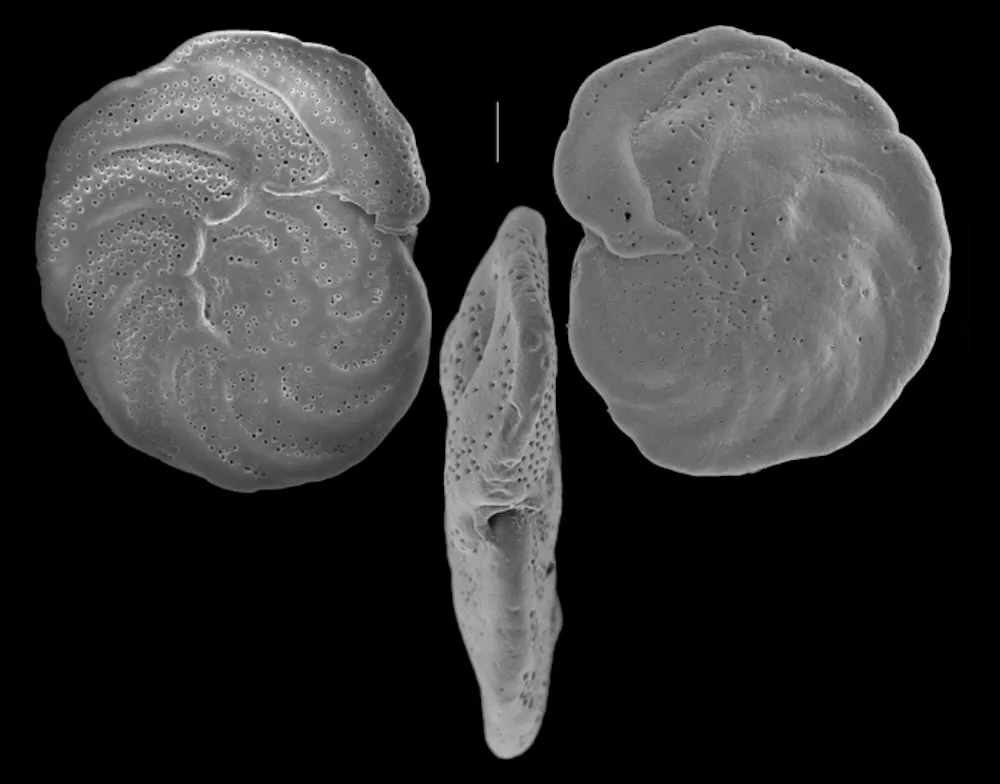
    March 19, 2025
  • MIL-OSI China: Bahamas ambassador highlights growing cultural ties with China

    Source: China State Council Information Office

    Paulette Bethel, ambassador of the Bahamas to China, delivers a speech before a documentary screening in Beijing, March 13, 2025. [Photo by Liao Jiaxin/China.org.cn]

    The Embassy of the Bahamas in Beijing marked International Women’s Day on March 13 with a documentary screening that celebrated women’s achievements while highlighting deepening cultural ties between China and the Bahamas. The event featured a compelling documentary titled “Womanish Ways,” directed by the Bahamian filmmaker Marion Bethel, which chronicles the suffrage movement and women’s historic struggle for the right to vote.

    The event brought together a diverse group of diplomats, international representatives and other guests, sparking vibrant discussions on women’s empowerment and cross-cultural dialogue. 

    In an interview with China.org.cn following the event, Paulette Bethel, ambassador of the Bahamas to China, shared her optimistic vision for the future of bilateral relations: “My wish is that they will grow and expand, and become wider, bigger, warmer and brighter.”

    Ambassador Bethel also emphasized the importance of cultural exchanges in diplomacy. “I personally believe that cultural exchanges are a very important part of diplomacy,” she said. “The Bahamas Embassy is very much engaged in that sort of undertaking. Tonight’s event of showing this documentary film is one such endeavor.”

    Bethel also revealed plans for future cultural initiatives, including an art exhibition in Beijing and possibly other Chinese cities early next year. “We are in the process of speaking with several artists from the Bahamas to bring their works to China,” she said. “We are definitely on a road to many cultural exchanges, and we’re hoping that, as a result of that particular activity, we will someday be able to invite some Chinese artists to go to the Bahamas and stay for a while and create while they’re there.”

    Since establishing diplomatic relations in 1997, China and the Bahamas have witnessed steady growth in their bilateral partnership. Recent years have seen strengthened cooperation in trade, agriculture and tourism.

    Cultural and educational exchanges have also flourished, further cementing ties between the two nations. In 2024, China launched capacity-building programs for 95 Bahamians, fully funding 34 participants to take part in specialized courses in China. Additionally, 12 faculty members and students from the University of the Bahamas were received as guests to visit China for cultural and educational exchanges, while over 40 Chinese government scholarships were offered to Bahamian students. Chinese cultural troupes, including acrobats, puppeteers and children’s art groups, have also performed in the Bahamas, earning widespread praise from local audiences.  

    Looking forward, Bethel expressed her hope for enhanced people-to-people exchanges, particularly among the younger generation. “The young people today have many opportunities because they travel a lot and meet a lot of people from other countries during their educational process,” she observed. “So, I think we’re on the right track. But I do believe that visiting a country and staying there for a while is probably the best way for young people to experience each other’s culture.”

    The event underscored the growing cultural synergy between China and the Bahamas. As the ambassador’s words suggest, these exchanges are laying the groundwork for a future defined by deeper understanding, collaboration and friendship between the two nations.

    MIL OSI China News –

    March 19, 2025
  • MIL-OSI China: China to fast-track training for medical, elderly care professionals

    Source: People’s Republic of China – State Council News

    BEIJING, March 19 — China plans to accelerate the training of professionals in integrated medical and elderly care to address rising demands amid an aging population.

    The Ministry of Education and the National Health Commission made public a circular on Wednesday, urging vocational universities to establish bachelor’s programs in medical and elderly care services.

    Graduates from related vocational fields are encouraged to enroll, with institutions exploring seamless training models from secondary to undergraduate education.

    Schools are advised to tailor programs to regional elderly care needs and foster collaboration between general universities, vocational colleges and healthcare institutions.

    Partnerships with elderly care centers, hospitals and nursing homes will be fostered to provide students with hands-on experience, ensuring at least 50 percent of coursework focuses on practical training.

    The initiative underscores China’s commitment to addressing the challenges posed by its aging population by building a skilled workforce capable of delivering high-quality medical and senior care services.

    China, where people aged 60 and above now exceed 20 percent of its population, expects this figure to reach 30 percent by 2035, with the elderly population to exceed 400 million by then.

    MIL OSI China News –

    March 19, 2025
  • MIL-OSI USA: Padilla, Schiff Demand USDA Reverse $1 Billion in Canceled Local Food Purchases for Schools, Farmers

    US Senate News:

    Source: United States Senator Alex Padilla (D-Calif.)

    Padilla, Schiff Demand USDA Reverse $1 Billion in Canceled Local Food Purchases for Schools, Farmers

    Padilla joins effort to stop “further pain at a time of high food prices and instability within U.S. agricultural markets”

    WASHINGTON, D.C. — U.S. Senator Alex Padilla (D-Calif.) joined Senator Adam Schiff and 29 other Senators in demanding that the U.S. Department of Agriculture reverse its cancellation of food purchase programs across the United States. The Senators warned of the harmful impacts this move will have on both families and American farmers, asserting that the reported $1 billion in canceled purchases by the USDA adds further pain at a time of high food prices and instability within U.S. agricultural markets. 

    “We ask that you reverse the cancellation,” wrote the Senators. “We have grave concerns that the cancellation … poses extreme harm to producers and communities in every state across the country. At a time of uncertainty in farm country, farmers need every opportunity to be able to expand market access for their products.” 

    The purchases from American famers fund food for food banks, schools, and child care centers in all 50 states, territories, tribal governments, and the District of Columbia. 

    In California, cancellation of purchases through the Local Food Purchase Assistance Cooperative Agreement Program (LFPA) and the Local Food for Schools Cooperative Agreement Program (LFS) puts more than $118 million in food purchases at risk in Fiscal Year 2025. 

    The letter was led by Schiff and Senators Ben Ray Luján (D-N.M.), Amy Klobuchar (D-Minn.) and Jeanne Shaheen (D-N.H.). Senator Padilla signed the letter alongside Minority Leader Chuck Schumer (D-N.Y.) and Senators Tammy Baldwin (D-Wis.), Michael Bennet (D-Colo.), Richard Blumenthal (D-Conn.), Cory Booker (D-N.J.), Catherine Cortez Masto (D-N.M.), Richard Durbin (D-Ill.), Kirsten Gillibrand (D-N.Y.),  Martin Heinrich (D-N.M.), John Hickenlooper (D-Colo.), Angus King (I-Maine), Edward Markey (D-Mass.), Jeff Merkley (D-Ore.), Patty Murray (D-Wash.), Gary Peters (D-Mich.), Jack Reed (D-R.I.), Jacky Rosen (D-Nev.), Bernie Sanders (I-Vt.), Elissa Slotkin (D-Mich.), Tina Smith (D-Minn.), Raphael Warnock (D-Ga.), Elizabeth Warren (D-Mass.), Chris Van Hollen (Md.), Peter Welch (Vt.), Sheldon Whitehouse (D-R.I.), and Ron Wyden (D-Ore.). 

    Full text of the letter sent to USDA Secretary Brooke Rollins is available here and below: 

    Dear Secretary Rollins:  

    We write to express serious concerns regarding the cancellation of U.S. Department of Agriculture (USDA) programs supporting local and regional food purchases providing assistance to those in need. These successful programs, the Local Food Purchase Assistance Cooperative Agreement Program (LFPA) and the Local Food for Schools Cooperative Agreement Program (LFS), allow states, territories, and Tribes to purchase local foods from nearby farmers and ranchers to be used for emergency food providers, schools, and child care centers.  

    At a time when food insecurity remains high, providing affordable, fresh food to food banks and families while supporting American farmers is critical. Notably, LFPA and LFS have benefitted producers and consumers by providing funding for purchases through all 50 states, four territories, and 84 tribal governments. Through LFPA and LFS, USDA has prioritized the procurement and distribution of healthy, nutritious, domestic food. It has also taken an important step towards igniting rural prosperity by expanding and strengthening markets among farmers and rural economies. As of December 2024, the programs had supported over 8,000 producers, providing increased marketing opportunities.  

    Most importantly, we ask that you reverse the cancellation of LFPA and LFS. We also ask that you provide a thorough and complete update on USDA’s implementation of LFPA and LFS, including answers to the following questions:  

    1. What is the status of reimbursements for entities that have agreements with USDA through LFPA and LFS? What is the last date for which states, territories, and Tribes received reimbursements for food purchases under LFPA and LFS?

    2. Has the Administration conducted any assessments of how these program cancellations will impact producers and recipient organizations (e.g., food banks, schools, child care centers)? If so, please provide a copy of any such assessments.  

    We have grave concerns that the cancellation of LFPA and LFS poses extreme harm to producers and communities in every state across the country. At a time of uncertainty in farm country, farmers need every opportunity to be able to expand market access for their products.  

    Please provide responses to the information requested in our questions no later than Friday, April 4. Thank you for your attention to this urgent and important matter.  

    MIL OSI USA News –

    March 19, 2025
  • MIL-OSI Asia-Pac: President Lai meets 2025 Yushan Forum participants

    Source: Republic of China Taiwan

    Details
    2025-03-18
    President Lai meets delegation led by Minister of Foreign Affairs Denzil Douglas of Saint Christopher and Nevis
    On the afternoon of March 18, President Lai Ching-te met with a delegation led by Minister of Foreign Affairs Denzil Douglas of the Federation of Saint Christopher and Nevis. In remarks, President Lai thanked St. Kitts and Nevis for speaking up for Taiwan at major international venues and supporting Taiwan’s international participation. The president expressed hope that our two countries continue to achieve remarkable results through cooperation in such fields as education and training, agricultural development, women’s empowerment, and environmental sustainability, and create even greater well-being for our peoples. A translation of President Lai’s remarks follows: I welcome Minister Douglas and our esteemed guests to Taiwan. Last June, Minister Douglas accompanied Prime Minister Terrance Drew and his wife on their trip to Taiwan. I am delighted to be able to meet and exchange views with Minister Douglas again less than one year later. Your presence fully demonstrates the profound bond between Taiwan and St. Kitts and Nevis. I look forward to the further deepening of our partnership through our exchanges during this visit. Although our two nations are separated by a great distance, we share such universal values as democracy, freedom, and respect for human rights. We also continue to achieve remarkable results through cooperation in such fields as education and training, agricultural development, women’s empowerment, and environmental sustainability. Given that Prime Minister Drew, Minister Douglas, and I all share medical backgrounds, we deeply understand the importance of people’s health. I thus look forward to St. Kitts and Nevis’s climate-smart JNF General Hospital commencing operations as soon as possible thanks to our cooperation. The provision of even higher-quality public health and medical services will yield benefits for many more people. I also believe that by having Taiwan share its experiences in renewable energy and energy-saving technologies, our two countries will jointly drive green industrial transformation and stimulate sustainable development together. I would like to take this opportunity to thank St. Kitts and Nevis for actively speaking up for Taiwan and supporting Taiwan’s participation at such major international venues and organizations as the United Nations General Assembly, the World Health Organization, and the International Civil Aviation Organization. In the future, Taiwan will continue to make critical contributions to the international community. With the support of Minister Douglas and our guests, I look forward to our two countries backing each other on the global stage and continuing to build an even stronger foundation for bilateral cooperation. Let us work together to address the various challenges we face and create even greater well-being for our peoples. Minister Douglas then delivered remarks, first conveying greetings from Prime Minister Drew to President Lai, the government, and the people of Taiwan. He then stated that over the last 41 years since the dawn of their nationhood, the Republic of China Taiwan has steadfastly walked beside St. Kitts and Nevis as a strong and immovable partner. As we reflect on four decades of our journey together, he said, we recognize the unswerving and unwavering spirit that has guided both our nations through trials and challenges. The minister then acknowledged the generous support of Taiwan’s government that has helped St. Kitts and Nevis in its own economic and social development. He went on to say that Taiwan’s partnership with St. Kitts and Nevis has been instrumental in helping them achieve the goals of their sustainable island state agenda. Whether in enhancing food security through the diversification of their agricultural sector, fostering clean energy solutions through the solar PV farm, or advancing healthcare through assistance in building their smart hospital, he said, Taiwan has been a steadfast partner in shaping a much more resilient and sustainable future for the people of their federation. In the spirit of reciprocity and solidarity, Minister Douglas said, St. Kitts and Nevis continues to leverage opportunities on the global stage to request incessantly that Taiwan be given its rightful place in international organizations, where it can make a meaningful contribution to resolving the world’s most critical issues. Minister Douglas indicated that the global challenges we face today demand collective action, and that Taiwan has the innovation, the technology, the knowledge, and the expertise to make a tremendous positive impact on some of the world’s most urgent issues. He said that St. Kitts and Nevis will never grow weary in their own support, but shall continue to sound the clarion call of “let Taiwan in,” as well as advocate for peace to be maintained in the Taiwan Strait. To close, Minister Douglas expressed gratitude for the warm hospitality bestowed upon him and his delegation by Taiwan’s government, remarking that the engagements they had thus far were pregnant with promise, and that they are confident in witnessing a fruitful outcome as we work together to build a prosperous and sustainable future for our peoples. The delegation also included Permanent Secretary in the Ministry of Foreign Affairs Kaye Bass, Permanent Secretary of Economic Development and Investment Adina Richards, and Director in the Ministry of International Trade Sean Lawrence. The delegation was accompanied to the Presidential Office by St. Kitts and Nevis Ambassador Donya L. Francis.

    Details
    2025-03-17
    President Lai meets Japan-ROC Diet Members’ Consultative Council Chairman Furuya Keiji
    On the afternoon of March 17, President Lai Ching-te met with a delegation led by Japanese House of Representatives Member and Japan-ROC Diet Members’ Consultative Council Chairman Furuya Keiji. In remarks, President Lai thanked the Consultative Council for doing its utmost to strengthen the relationship between Taiwan and Japan. He also stated that Taiwan and Japan are both part of the first island chain’s key line of defense, and in addition to continuing to bolster its economic strength and enhance its self-defense capabilities, Taiwan will work together with Japan and other like-minded countries to promote regional and global democracy, peace, and prosperity. A translation of President Lai’s remarks follows: I would like to extend a warm welcome to Chairman Furuya, who is visiting us once again. I am also delighted to meet House of Councillors Member Yamamoto Junzo and House of Representatives Member Hiranuma Shojiro today. Although the Japanese Diet is currently in session, our distinguished guests overcame many hurdles and organized a delegation to attend the 2025 Yushan Forum and deliver speeches, providing valuable insights into issues of mutual concern in the Indo-Pacific region and demonstrating the support for Taiwan in the Diet. Here, I would like to express my deepest gratitude. During the Yushan Forum, it was especially inspiring when Chairman Furuya spoke Taiwanese when he emphasized that “if Taiwan has a problem, then Japan has a problem.” Over the past few years under Chairman Furuya’s leadership, the Consultative Council has done its utmost to strengthen the relationship between Taiwan and Japan. In addition to passing resolutions every year supporting Taiwan’s participation in the World Health Organization and Comprehensive and Progressive Agreement for Trans-Pacific Partnership (CPTPP), the council has established four internal research groups regarding the CPTPP, exchanges for women legislators, encouraging local-level exchanges, and the Taiwan Relations Act, using an issue-oriented approach to deepen Taiwan-Japan relations. Thanks to the Consultative Council’s long-term assistance and promotional efforts, the Japanese Ministry of Justice has announced that beginning this May, members of the Taiwanese overseas community in Japan included in the country’s family registry system may list “Taiwan” in the field designating their nationality or region of origin. This demonstrates the friendly relations between Taiwan and Japan, and the Taiwanese people will always remember the council’s continued concrete actions in support of Taiwan. In his remarks at the Yushan Forum today, Chairman Furuya mentioned that there are many areas in which Taiwan and Japan can engage in industrial cooperation. We can continue to deepen our partnership in semiconductors, energy, AI, unmanned aerial vehicles, and other areas related to economic security and supply chain resilience, all of which have significant room for cooperation, creating win-win situations for both Taiwan and Japan. As authoritarianism consolidates, democratic nations must come closer in solidarity. Taiwan and Japan are both part of the first island chain’s key line of defense. In addition to bolstering our economic strength and enhancing our self-defense capabilities, Taiwan will also work with Japan and other like-minded countries to promote regional and global democracy, peace, and prosperity. All of our distinguished guests are good friends of Taiwan, and are very familiar with Taiwan. I hope to continue working together with you all to carry Taiwan-Japan relations to an even higher level. Chairman Furuya then delivered remarks, first thanking President Lai for taking time out of his busy schedule to see them. He then noted that Japan, Taiwan, and quite a few other nations around the world changed leaders last year, and conditions around the world are becoming increasingly unstable. One cannot see what the world will be like a few years from now, he said, which is why he is counting so heavily on the strong leadership of President Lai. Chairman Furuya said that, in addition to collaboration in foreign affairs and security matters, economic cooperation between Taiwan and Japan is also very important. He mentioned new technologies, and said he had spoken quite a bit on the topic that very morning at the Yushan Forum. The clearest example, he said, is the establishment by Taiwan Semiconductor Manufacturing Company of a wafer plant in Japan’s Kumamoto Prefecture, which has sparked robust economic activity. He added that cooperation addressing such matters as cyberattacks and supply chain resilience is also very important. Chairman Furuya noted that President Lai had mentioned in his remarks that beginning from May, Taiwanese overseas community members in Japan will be able to list “Taiwan” on their family registers. The chairman expressed his view that this is not a foreign affairs issue, but rather a human rights issue for the Taiwanese people, and an excellent way to show respect for Taiwan. He further noted President Lai’s mentioning of the four research groups that the Consultative Council has established, and said that these groups will ramp up their work. He also expressed hope that Taiwan and Japan will work together to address challenges that face both countries, such as issues pertaining to democracy and peace in the Taiwan Strait, so that they can together push for international peace and stability. Chairman Furuya stated that reciprocal visits by Taiwanese and Japanese people reached an all-time high last year. He said that in the future, in addition to further promoting local exchanges between the two countries, he also hopes that Japanese middle school and high school students planning to go on overseas study trips will choose Taiwan as their destination, because he feels that any student who visits Taiwan will become a fan of this place. Also in attendance was Japan-Taiwan Exchange Association Taipei Office Chief Representative Katayama Kazuyuki.

    Details
    2025-03-17
    President Lai addresses opening of 2025 Yushan Forum
    On the morning of March 17, President Lai Ching-te attended the opening of the 2025 Yushan Forum, the theme of which was “New Southbound Policy+: Taiwan, the Indo-Pacific, and a New World.” In remarks, President Lai stated that the New Southbound Policy has led to great success in economic and trade cooperation, professional exchanges, resource sharing, and building regional links. He said that in the past, Taiwanese industries went from moving westward across the Taiwan Strait, to shifting southbound, to working closer with the north, but that now, Taiwan is confidently stepping across the Pacific, reaching eastward, to the Americas and other regions. While staying firmly rooted in Taiwan, he said, Taiwan’s enterprises are expanding their global presence and marketing worldwide. The president stated that Taiwan will strive alongside its partners in democracy to bolster non-red supply chains and digital solidarity, and together respond to the threats and challenges posed by expanding authoritarianism. He indicated that the Yushan Forum is a place to share experiences, and more importantly, lay down firm foundations for exchanges and cooperation among participants’ countries to create greater stability for the region and greater prosperity for the world. A transcript of President Lai’s remarks follows: On behalf of all the people of Taiwan, I want to welcome our good friends joining us from around the world. Your presence shows support for a peaceful and stable Taiwan and a free and open Indo-Pacific region. The Yushan Forum has become more than just an important platform for the New Southbound Policy. Over these eight years, more than 3,600 participants from Taiwan and 28 other countries have helped deepen Taiwan’s connections with nations around the world. The New Southbound Policy has led to great success in economic and trade cooperation, professional exchanges, resource sharing, and building regional links. Looking ahead, the Yushan Forum will be taking on the important mission of carrying its legacy forward and transforming it into action. Not only must we turn consensus into action plans for close cooperation among countries in the region; we must also work with partners around the world to forge ahead with cooperative plans for mutual prosperity. We hope to envision a new world from Taiwan – and see Taiwan in this new world. We are also embracing an era of smart technology. The government sessions of this Yushan Forum are therefore centered around topics including smart healthcare, smart transportation, and resilient supply chains for semiconductors. Taiwan is intent on working side by side with other countries to face the challenges of this new era. Today’s Taiwan celebrates not only the democratic achievements that are recognized by the international community, but also our strengths in the semiconductor and other tech industries, which enable us to play a key role in restructuring global democratic supply chains and the economic order. We are building on Taiwan as a “silicon island” for semiconductors while accelerating innovation and AI applications for industry. These efforts will help Taiwan become an “AI island” as well. We are also developing forward-looking fields such as quantum technology and precision medicine, which will create an industry ecosystem that is highly competitive and innovative. The government will also develop economic models powered by innovation. This will help SMEs (small- and medium-sized enterprises) upgrade and transform through the power of digital transformation and net-zero transition. In the past, Taiwanese industries went from moving westward across the Taiwan Strait, to shifting southbound, to working closer with the north. But now, we are confidently stepping across the Pacific, reaching eastward, to the Americas and other regions. While staying firmly rooted in Taiwan, our enterprises are expanding their global presence and marketing worldwide. Taiwan will continue to engage with the world, and we welcome the world to come closer to Taiwan. As we gather here today, I am confident that we share the same goal: Through international cooperation, we hope to build an even more inclusive, resilient, prosperous Indo-Pacific, while jointly defending the democracy, freedom, and peace we so firmly believe in. I want to thank you all once again for supporting Taiwan. We will strive alongside our partners in democracy to bolster non-red supply chains and digital solidarity, and together respond to the threats and challenges posed by expanding authoritarianism. Yushan is also known as Jade Mountain. It is Taiwan’s highest peak and stands as firm as our unwavering spirit. During this critical time of global change and transformation, the Yushan Forum is a place where we can share our experiences, and more importantly, lay down firm foundations for exchanges and cooperation among our countries. This way, we can create greater stability for the region and greater prosperity for the world. I wish everyone a successful forum. Thank you. Also in attendance at the event were former Prime Minister of Denmark and Alliance of Democracies Foundation Chairman Anders Fogh Rasmussen, former Prime Minister of the Republic of Slovenia Janez Janša, Japan-ROC Diet Members’ Consultative Council Chairman Furuya Keiji, and American Institute in Taiwan Taipei Office Director Raymond Greene.

    Details
    2025-03-13
    President Lai attends Ministry of Foreign Affairs 2025 Spring Banquet  
    On the evening of March 13, President Lai Ching-te attended the Ministry of Foreign Affairs 2025 Spring Banquet for foreign ambassadors and representatives stationed in Taiwan. In remarks, President Lai thanked our diplomatic allies and like-minded countries for continuing to demonstrate their high regard and support for Taiwan at international venues. The president stated that a stronger Taiwan will be able to contribute even more to the world, explaining that is why he established the National Climate Change Committee, the Whole-of-Society Defense Resilience Committee, and the Healthy Taiwan Promotion Committee. He added that he hopes to pool our strengths so as to formulate national development strategies and enhance Taiwan’s international collaboration. The president also expressed hope of developing opportunities for cooperation with other countries across many domains to jointly advance democracy, peace, and prosperity throughout the region and around the world. A translation of President Lai’s remarks follows: Today is my first time attending the Ministry of Foreign Affairs Spring Banquet since becoming president. It is a pleasure to be able to meet and socialize with esteemed guests from other countries and good friends from all sectors of Taiwan. The global landscape has changed rapidly over the past year. Geopolitical volatility, the restructuring of supply chains, technological advancements, and other factors have had a profound impact on nations’ strategic plans. I want to take this opportunity to thank our diplomatic allies and like-minded countries for continuing to demonstrate their high regard and support for Taiwan at international venues. Last month, the leaders of the United States and Japan, the US secretary of state and the foreign ministers of Japan and the Republic of Korea, and the G7 foreign ministers all issued joint statements emphasizing the importance of peace and stability across the Taiwan Strait, underscoring Taiwan’s vital role in global progress and prosperity.  I would especially like to thank members of the diplomatic corps for working with us to build even closer partnerships between our countries. I have always believed that a stronger Taiwan will be able to contribute even more to the world. That is why, after taking office, I established the National Climate Change Committee, the Whole-of-Society Defense Resilience Committee, and the Healthy Taiwan Promotion Committee under the Office of the President. These committees continue to address global concerns and seek to solve important issues that impact our own people. I hope to pool our strengths so as to formulate national development strategies and enhance Taiwan’s international collaboration.  Last year, I visited our Pacific allies – the Republic of the Marshall Islands, Tuvalu, and the Republic of Palau. I deeply appreciated our friends’ warm hospitality and came to feel very deeply that we are like a family. Through local visits and mutual exchanges, we deepened our diplomatic alliances and cooperation, creating win-win outcomes. We also showed Taiwan’s determination to work with allies to tackle the many challenges related to climate change, net-zero transition, and digital transformation. At the start of this month, Taiwan hosted the first-ever workshop on whole-of-society defense resilience under the Global Cooperation and Training Framework. Experts and scholars from 30 countries participated in the discussions. I once again thank the diplomatic corps for their support and assistance. In the future, we look forward to developing opportunities for cooperation with other countries across many domains to jointly advance democracy, peace, and prosperity throughout the region and around the world. In the face of authoritarian expansion, Taiwan will continue to bolster its national defense capabilities. We will stand shoulder to shoulder with fellow democracies to demonstrate the strength of deterrence. We will also join hands to build non-red supply chains, strengthen our economic resilience, and promote an initiative on semiconductor supply chain partnerships for global democracies. All of this will ensure steady technological and economic development.  In my New Year’s Day address, I said that in this new year, we have many more brilliant stories of Taiwan to share with the world. Everyone gathered here tonight is a dear friend of Taiwan. And each of you plays an important role in the stories this land has to tell.  I am deeply grateful to you all for the incredible efforts you make in support of Taiwan. In so many ways, you connect Taiwan to the rest of the world and allow the world to see the many different sides of this amazing nation. I believe that through even deeper and more extensive cooperation, we will create many more wonderful stories of Taiwan and build an even brighter future together. I wish you all a pleasant evening. Also in attendance at the event were Dean of the Diplomatic Corps and Saint Vincent and the Grenadines Ambassador Andrea Clare Bowman and other members of the foreign diplomatic corps in Taiwan.

    Details
    2025-03-04
    President Lai meets US Heritage Foundation founder Dr. Edwin Feulner
    On the afternoon of March 4, President Lai Ching-te met with a delegation led by founder of the US-based Heritage Foundation Dr. Edwin Feulner. In remarks President Lai thanked the foundation for publishing the 2025 Index of Economic Freedom, in which Taiwan ranked fourth globally and which recognized Taiwan’s sound legal foundation and ideal investment environment. The president said that Taiwan and the United States are important economic and trade partners and engage closely in industrial exchange. The president also expressed hope to expand investment in and procurement from the US in such areas as high-tech, energy, and agricultural products, and to work with the US and other democratic partners to create more resilient and diverse semiconductor supply chains to address new circumstances. A translation of President Lai’s remarks follows: It is a pleasure to welcome Dr. Feulner back to Taiwan today. I recall meeting with Dr. Feulner and Heritage Foundation President Kevin Roberts here at the Presidential Office at the end of last February. We had a fruitful discussion on Taiwan-US relations and regional affairs. When President Donald Trump was elected for his first term, Dr. Feulner played a crucial role in the administration’s transition team. Today, I look forward to hearing his thoughts on possible ways to further deepen relations between Taiwan and the US. I would like to thank the Heritage Foundation for publishing the 2025 Index of Economic Freedom, in which Taiwan ranked fourth globally. The report also recognized Taiwan’s sound legal foundation and ideal investment environment. Taiwan and the US are important economic and trade partners and engage closely in industrial exchange. The Taiwan Semiconductor Manufacturing Company’s (TSMC) historic US$65 billion investment in Arizona–negotiated and finalized during President Trump’s first term–is a case in point. And today, TSMC Chairman C.C. Wei (魏哲家) and President Trump jointly announced that the company would be expanding its investment in the US with new facilities. Looking ahead, we hope to expand investment in and procurement from the US in such areas as high-tech, energy, and agricultural products. We also look forward to working with the US and other democratic partners to create more resilient and diverse semiconductor supply chains to address new circumstances. At present, we continue to face authoritarian expansionism. As a country that deeply loves and staunchly defends freedom, Taiwan will collaborate with the US and other like-minded countries to maintain regional peace and stability. I would like to thank President Trump for his recent joint statement with Japanese Prime Minister Ishiba Shigeru, which emphasized the importance of maintaining peace and stability across the Taiwan Strait. And last month, the US was also part of a G7 foreign ministers’ statement in which “they strongly opposed any attempts to change unilaterally the status quo using force.” We firmly believe that only peace attained through one’s own strength can truly be called peace. Currently, Taiwan’s defense budget stands at approximately 2.5 percent of GDP. Going forward, the government will prioritize special budget allocations to ensure that Taiwan’s defense budget exceeds 3 percent of GDP. Also, we will continue to reform national defense in the conviction that help comes most to those who help themselves. This will allow us to contribute even more to regional peace and stability. In closing, I once again thank Dr. Feulner for visiting and for demonstrating support of Taiwan. I wish you all a smooth and successful trip. Dr. Feulner then delivered remarks, first stating that on behalf of his successor, President Roberts, and all of his colleagues at the Heritage Foundation, it is his pleasure to present President Lai with the first copy of the 2025 Index of Economic Freedom. Pointing out that in the Index the Republic of China (Taiwan) is number four of 176 countries around the world in terms of its economic freedom, Dr. Feulner extended his congratulations to President Lai.  Dr. Feulner said he looks forward to a discussion about the present situation and how we can improve relations between the US and Taiwan. Dr. Feulner expressed his gratitude on hearing the wonderful announcement from TSMC, which was released right before his visit, that it will be expanding its investment in the US. In past trips, he said, he has had the opportunity to visit the TSMC headquarters in Taiwan, and fairly recently he has had the opportunity to view the site in Arizona where the construction continues and where the initial operations are beginning. He stated that they are proud to have TSMC now as an integral part of our responsible bilateral relationship. Dr. Feulner noted that while TSMC is of course very big, he also wants to express appreciation for all of the hundreds and hundreds of Taiwan-based companies that are strong, close partners throughout the US with American companies and with American people in terms of making a close and unified alliance of two freedom-loving countries.

    Details
    2025-03-13
    President Lai holds press conference following high-level national security meeting
    On the afternoon of March 13, President Lai Ching-te convened a high-level national security meeting, following which he held a press conference. In remarks, President Lai introduced 17 major strategies to respond to five major national security and united front threats Taiwan now faces: China’s threat to national sovereignty, its threats from infiltration and espionage activities targeting Taiwan’s military, its threats aimed at obscuring the national identity of the people of Taiwan, its threats from united front infiltration into Taiwanese society through cross-strait exchanges, and its threats from using “integrated development” to attract Taiwanese businesspeople and youth. President Lai emphasized that in the face of increasingly severe threats, the government will not stop doing its utmost to ensure that our national sovereignty is not infringed upon, and expressed hope that all citizens unite in solidarity to resist being divided. The president also expressed hope that citizens work together to increase media literacy, organize and participate in civic education activities, promptly expose concerted united front efforts, and refuse to participate in any activities that sacrifice national interests. As long as every citizen plays their part toward our nation’s goals for prosperity and security, he said, and as long as we work together, nothing can defeat us. A translation of President Lai’s remarks follows: At many venues recently, a number of citizens have expressed similar concerns to me. They have noticed cases in which members of the military, both active-duty and retired, have been bought out by China, sold intelligence, or even organized armed forces with plans to harm their own nation and its citizens. They have noticed cases in which entertainers willingly followed instructions from Beijing to claim that their country is not a country, all for the sake of personal career interests. They have noticed how messaging used by Chinese state media to stir up internal opposition in Taiwan is always quickly spread by specific channels. There have even been individuals making careers out of helping Chinese state media record united front content, spreading a message that democracy is useless and promoting skepticism toward the United States and the military to sow division and opposition. Many people worry that our country, as well as our hard-won freedom and democracy and the prosperity and progress we achieved together, are being washed away bit by bit due to these united front tactics. In an analysis of China’s united front, renowned strategic scholar Kerry K. Gershaneck expressed that China plans to divide and conquer us through subversion, infiltration, and acquisition of media, and by launching media warfare, psychological warfare, and legal warfare. What they are trying to do is to sow seeds of discord in our society, keep us occupied with internal conflicts, and cause us to ignore the real threat from outside. China’s ambition over the past several decades to annex Taiwan and stamp out the Republic of China has not changed for even a day. It continues to pursue political and military intimidation, and its united front infiltration of Taiwan’s society grows ever more serious. In 2005, China promulgated its so-called “Anti-Secession Law,” which makes using military force to annex Taiwan a national undertaking. Last June, China issued a 22-point set of “guidelines for punishing Taiwan independence separatists,” which regards all those who do not accept that “Taiwan is part of the People’s Republic of China” as targets for punishment, creating excuses to harm the people of Taiwan. China has also recently been distorting United Nations General Assembly Resolution 2758, showing in all aspects China’s increasingly urgent threat against Taiwan’s sovereignty. Lately, China has been taking advantage of democratic Taiwan’s freedom, diversity, and openness to recruit gangs, the media, commentators, political parties, and even active-duty and retired members of the armed forces and police to carry out actions to divide, destroy, and subvert us from within. A report from the National Security Bureau indicates that 64 persons were charged last year with suspicion of spying for China, which was three times the number of persons charged for the same offense in 2021. Among them, the Unionist Party, Rehabilitation Alliance Party, and Republic of China Taiwan Military Government formed treasonous organizations to deploy armed forces for China. In a democratic and free society, such cases are appalling. But this is something that actually exists within Taiwan’s society today. China also actively plots ways to infiltrate and spy on our military. Last year, 28 active-duty and 15 retired members of the armed forces were charged with suspicion of involvement in spying for China, respectively comprising 43 percent and 23 percent of all of such cases – 66 percent in total. We are also alert to the fact that China has recently used widespread issuance of Chinese passports to entice Taiwanese citizens to apply for the Residence Permit for Taiwan Residents, permanent residency, or the Resident Identity Card, in an attempt to muddle Taiwanese people’s sense of national identity. China also views cross-strait exchanges as a channel for its united front against Taiwan, marking enemies in Taiwan internally, creating internal divisions, and weakening our sense of who the enemy really is. It intends to weaken public authority and create the illusion that China is “governing” Taiwan, thereby expanding its influence within Taiwan. We are also aware that China has continued to expand its strategy of integrated development with Taiwan. It employs various methods to demand and coerce Taiwanese businesses to increase their investments in China, entice Taiwanese youth to develop their careers in China, and unscrupulously seeks to poach Taiwan’s talent and steal key technologies. Such methods impact our economic security and greatly increase the risk of our young people heading to China. By its actions, China already satisfies the definition of a “foreign hostile force” as provided in the Anti-Infiltration Act. We have no choice but to take even more proactive measures, which is my purpose in convening this high-level national security meeting today. It is time we adopt proper preventive measures, enhance our democratic resilience and national security, and protect our cherished free and democratic way of life. Next, I will be giving a detailed account of the five major national security and united front threats Taiwan now faces and the 17 major strategies we have prepared in response. I. Responding to China’s threats to our national sovereignty We have a nation insofar as we have sovereignty, and we have the Republic of China insofar as we have Taiwan. Just as I said during my inaugural address last May, and in my National Day address last October: The moment when Taiwan’s first democratically elected president took the oath of office in 1996 sent a message to the international community, that Taiwan is a sovereign, independent, democratic nation. Among people here and in the international community, some call this land the Republic of China, some call it Taiwan, and some, the Republic of China Taiwan. The Republic of China and the People’s Republic of China are not subordinate to each other, and Taiwan resists any annexation or encroachment upon our sovereignty. The future of the Republic of China Taiwan must be decided by its 23 million people. This is the status quo that we must maintain. The broadest consensus in Taiwanese society is that we must defend our sovereignty, uphold our free and democratic way of life, and resolutely oppose annexation of Taiwan by China. (1) I request that the National Security Council (NSC), the Ministry of National Defense (MND), and the administrative team do their utmost to promote the Four Pillars of Peace action plan to demonstrate the people’s broad consensus and firm resolve, consistent across the entirety of our nation, to oppose annexation of Taiwan by China. (2) I request that the NSC and the Ministry of Foreign Affairs draft an action plan that will, through collaboration with our friends and allies, convey to the world our national will and broad social consensus in opposing annexation of Taiwan by China and in countering China’s efforts to erase Taiwan from the international community and downgrade Taiwan’s sovereignty. II. Responding to China’s threats from infiltration and espionage activities targeting our military (1) Comprehensively review and amend our Law of Military Trial to restore the military trial system, allowing military judges to return to the frontline and collaborate with prosecutorial, investigative, and judicial authorities in the handling of criminal cases in which active-duty military personnel are suspected of involvement in such military crimes as sedition, aiding the enemy, leaking confidential information, dereliction of duty, or disobedience. In the future, criminal cases involving active-duty military personnel who are suspected of violating the Criminal Code of the Armed Forces will be tried by a military court. (2) Implement supporting reforms, including the establishment of a personnel management act for military judges and separate organization acts for military courts and military prosecutors’ offices. Once planning and discussion are completed, the MND will fully explain to and communicate with the public to ensure that the restoration of the military trial system gains the trust and full support of society. (3) To deter the various types of controversial rhetoric and behavior exhibited by active-duty as well as retired military personnel that severely damage the morale of our national military, the MND must discuss and propose an addition to the Criminal Code of the Armed Forces on penalties for expressions of loyalty to the enemy as well as revise the regulations for military personnel and their families receiving retirement benefits, so as to uphold military discipline. III. Responding to China’s threats aimed at obscuring the national identity of the people of Taiwan (1) I request that the Ministry of the Interior (MOI), Mainland Affairs Council (MAC), and other relevant agencies, wherever necessary, carry out inspections and management of the documents involving identification that Taiwanese citizens apply for in China, including: passports, ID cards, permanent residence certificates, and residence certificates, especially when the applicants are military personnel, civil servants, or public school educators, who have an obligation of loyalty to Taiwan. This will be done to strictly prevent and deter united front operations, which are performed by China under the guise of “integrated development,” that attempt to distort our people’s national identity. (2) With respect to naturalization and integration of individuals from China, Hong Kong, and Macau into Taiwanese society, more national security considerations must be taken into account while also attending to Taiwan’s social development and individual rights: Chinese nationals applying for permanent residency in Taiwan must, in accordance with the law of Taiwan, relinquish their existing household registration and passport and may not hold dual identity status. As for the systems in place to process individuals from Hong Kong or Macau applying for residency or permanent residency in Taiwan, there will be additional provisions for long-term residency to meet practical needs. IV. Responding to China’s threats from united front infiltration into Taiwanese society through cross-strait exchanges  (1) There are increasing risks involved with travel to China. (From January 1, 2024 to today, the MAC has received reports of 71 Taiwanese nationals who went missing, were detained, interrogated, or imprisoned in China; the number of unreported people who have been subjected to such treatment may be several times that. Of those, three elderly I-Kuan Tao members were detained in China in December of last year and have not yet been released.) In light of this, relevant agencies must raise public awareness of those risks, continue enhancing public communication, and implement various registration systems to reduce the potential for accidents and the risks associated with traveling to China. (2) Implement a disclosure system for exchanges with China involving public officials at all levels of the central and local government. This includes everyone from administrative officials to elected representatives, from legislators to village and neighborhood chiefs, all of whom should make the information related to such exchanges both public and transparent so that they can be accountable to the people. The MOI should also establish a disclosure system for exchanges with China involving public welfare organizations, such as religious groups, in order to prevent China’s interference and united front activities at their outset. (3) Manage the risks associated with individuals from China engaging in exchanges with Taiwan: Review and approval of Chinese individuals coming to Taiwan should be limited to normal cross-strait exchanges and official interactions under the principles of parity and dignity, and relevant factors such as changes in the cross-strait situation should be taken into consideration. Strict restrictions should be placed on Chinese individuals who have histories with the united front coming to Taiwan, and Chinese individuals should be prohibited from coming to Taiwan to conduct activities related in any way to the united front. (4) Political interference from China and the resulting risks to national security should be avoided in cross-strait exchanges. This includes the review and management of religious, cultural, academic, and education exchanges, which should in principle be depoliticized and de-risked so as to simplify people-to-people exchanges and promote healthy and orderly exchanges. (5) To deter the united front tactics of a cultural nature employed by Chinese nationals to undermine Taiwan’s sovereignty, the Executive Yuan must formulate a solution to make our local cultural industries more competitive, including enhanced support and incentives for our film, television, and cultural and creative industries to boost their strengths in democratic cultural creation, raise international competitiveness, and encourage research in Taiwan’s own history and culture. (6) Strengthen guidance and management for entertainers developing their careers in China. The competent authorities should provide entertainers with guidelines on conduct while working in China, and make clear the scope of investigation and response to conduct that endangers national dignity. This will help prevent China from pressuring Taiwanese entertainers to make statements or act in ways that endanger national dignity. (7) The relevant authorities must adopt proactive, effective measures to prevent China from engaging in cognitive warfare against Taiwan or endangering cybersecurity through the internet, applications, AI, and other such tools. (8) To implement these measures, each competent authority must run a comprehensive review of the relevant administrative ordinances, measures, and interpretations, and complete the relevant regulations for legal enforcement. Should there be any shortcomings, the legal framework for national security should be strengthened and amendments to the National Security Act, Anti-Infiltration Act, Act Governing Relations between the People of the Taiwan Area and the Mainland Area, Laws and Regulations Regarding Hong Kong & Macao Affairs, or Cyber Security Management Act should be proposed. Communication with the public should also be increased so that implementation can happen as soon as possible. V. Responding to threats from China using “integrated development” to attract Taiwanese businesspeople and youth (1) I request that the NSC and administrative agencies work together to carry out strategic structural adjustments to the economic and trade relations between Taiwan and China based on the strategies of putting Taiwan first and expanding our global presence while staying rooted in Taiwan. In addition, they should carry out necessary, orderly adjustments to the flow of talent, goods, money, and skills involved in cross-strait economic and trade relations based on the principle of strengthening Taiwan’s foundations to better manage risk. This will help boost economic security and give us more power to respond to China’s economic and trade united front and economic coercion against Taiwan. (2) I request that the Ministry of Education, MAC, Ministry of Economic Affairs, and other relevant agencies work together to comprehensively strengthen young students’ literacy education on China and deepen their understanding of cross-strait exchanges. I also request these agencies to widely publicize mechanisms for employment and entrepreneurship for Taiwan’s youth and provide ample information and assistance so that young students have more confidence in the nation’s future and more actively invest in building up and developing Taiwan. My fellow citizens, this year marks the 80th anniversary of the end of the Second World War. History tells us that any authoritarian act of aggression or annexation will ultimately end in failure. The only way we can safeguard freedom and prevail against authoritarian aggression is through solidarity. As we face increasingly severe threats, the government will not stop doing its utmost to ensure that our national sovereignty is not infringed upon, and to ensure that the freedom, democracy, and way of life of Taiwan’s 23 million people continues on as normal. But relying solely on the power of the government is not enough. What we need even more is for all citizens to stay vigilant and take action. Every citizen stands on the frontline of the defense of democracy and freedom. Here is what we can do together: First, we can increase our media literacy, and refrain from spreading and passing on united front messaging from the Chinese state. Second, we can organize and participate in civic education activities to increase our knowledge about united front operations and build up whole-of-society defense resilience. Third, we can promptly expose concerted united front efforts so that all malicious attempts are difficult to carry out. Fourth, we must refuse to participate in any activities that sacrifice national interests. The vigilance and action of every citizen forms the strongest line of defense against united front infiltration. Only through solidarity can we resist being divided. As long as every citizen plays their part toward our nation’s goals for prosperity and security, and as long as we work together, nothing can defeat us.

    MIL OSI Asia Pacific News –

    March 19, 2025
  • MIL-OSI China: HK chief: Panama ports deal should comply with law

    Source: China State Council Information Office 2

    Hong Kong Special Administrative Region Chief Executive John Lee Ka-chiu said on Tuesday that public concerns about city conglomerate CK Hutchison Holdings’ proposed sale of its Panama Canal ports to a United States consortium deserve attention, and expressed firm opposition to any form of coercion or pressure tactics in international trade deals.
    Political and business heavyweights in Hong Kong cautioned that the decision may pose risks to China’s national interests and the landscape of multilateral trade. It could also undermine the group’s long-term development.
    CK Hutchison Holdings — founded by Hong Kong tycoon Li Ka-shing — said on March 4 that it had struck a $22.8 billion deal to sell its majority stakes in two Panama Canal ports, as well as 41 others in 23 countries, to a consortium led by US investment company BlackRock. The announcement has ignited widespread discussions amid the uncertain global trade market.
    Ahead of an Executive Council meeting, Lee was asked about how businesses operating globally and closely intertwined with Hong Kong’s economy should navigate political risks.
    He said that widespread public discussions about the issue reflect societal concerns, underscoring its significance.
    The chief executive said that the SAR government calls on foreign governments to provide a fair and equitable business environment for all companies, including those from Hong Kong. He firmly condemned the use of coercion or pressure in international economic and trade activities, emphasizing that any transaction must comply with legal and regulatory requirements.
    The SAR government will handle the matter in accordance with the law and regulations, Lee added.
    Leung Chun-ying, vice-chairman of the National Committee of the Chinese People’s Political Consultative Conference and former chief executive of the SAR, said on social media that some businessmen mistakenly believe in the notion that “business knows no borders” and assume that everything is purely business.
    However, businessmen without a motherland will only face bullying, Leung said, emphasizing that businessmen should also prioritize their country.
    Lau Siu-kai, a consultant with the Chinese Association of Hong Kong and Macao Studies, a Beijing-based think tank, said that from a business perspective, this deal indeed brings substantial profits to CK Hutchison Holdings and shields the group from potential US pressure on its global ports and infrastructure.
    However, this transaction inevitably poses threats to China’s national interests and security, as the US could intensify actions against China’s shipbuilding and shipping industries as well as the China-proposed Belt and Road Initiative, Lau said.
    He called for the company to fully and seriously consider the complexity of the international landscape and China’s national interests before making business decisions, stressing that pivotal infrastructure plays a highly crucial role in international competition.
    Erik Yim-kong, a Hong Kong lawmaker and vice-chairman of China Merchants Port Group, said that the sale by CK Hutchison Holdings could potentially squeeze the country’s legitimate space for expanding its international trade and logistics industry and may affect multilateral trade, as well as the company’s long-term development.
    He emphasized that port management concerns significant national interests. He noted that the sale involves multiple ports located in countries and regions involved in the BRI, and that a quarter of China’s import and export goods pass through the Panama Canal.
    He warned that US control over the canal would grant access to precise data on China’s trade, facilitating targeted actions against China’s manufacturing sector.
    CK Hutchison Holdings and CK Asset Holdings will hold board meetings on Thursday to deliberate on last year’s business performance. The companies said on Tuesday that they would not hold a news conference and analyst meeting on the annual results as they usually do.

    MIL OSI China News –

    March 19, 2025
  • MIL-Evening Report: If your tween or teen doesn’t know how to swim, it’s not too late for lessons

    Source: The Conversation (Au and NZ) – By Amy Peden, NHMRC Research Fellow, School of Population Health & co-founder UNSW Beach Safety Research Group, UNSW Sydney

    Marcos Castillo/ Shutterstock

    New figures show shocking numbers of Australian kids are not achieving basic swimming skills.

    Royal Life Saving Australia data estimates 48% of Year 6 students cannot swim 50 metres and tread water for two minutes. For those in high school, the results are even more worrying. Teachers estimate 39% of Year 10 students still cannot meet the same benchmark.

    These skills are based on minimum swimming and water safety standards children should achieve to have fun and stay safe in the water. They are a key strategy to reduce the risk of drowning.

    While this research indicates we may no longer be a nation of swimmers, there’s still plenty parents, schools and governments can do. And if your child’s lessons have fallen behind, it is not too late to catch up.


    Read more:
    Thinking of quitting your child’s swimming lessons over winter? Read this first


    Why are we seeing this?

    This latest research builds on previous worries about Australian children’s swimming skills. During COVID, there were concerns children would not come back to lessons after lockdowns.

    While participation in lessons post-lockdowns has been promising, some pools have had difficulty finding qualified staff.

    In 2023, Royal Life Saving Australia also cautioned about 100,000 children in late primary school were unlikely to return to swimming lessons before they started high school.

    It’s not too late

    If you have stopped lessons with your children – or if you never started – it is not too late to go to the pool.

    Research comparing children between the ages of three and eight indicates the optimum age to begin formal swimming lessons is around five to seven years.

    But children can still learn to become safe and competent swimmers in later primary years and into high school. We know this because adults can, and do learn to swim later in life.

    Research also suggests older children may learn to swim more quickly than younger children, so they may need fewer lessons to attain skills than their younger counterparts.

    Children can learn to swim in later primary school and beyond.
    Andrii Medvednikov/ Shutterstock

    Make sure lessons are regular

    If you have an older child starting swimming lessons it’s important to maintain regular classes.

    For example, a 2018 study on a group of 149 Latino children in the United States aged three to 14 showed those who had learned the most skills had the highest attendance – attending at least ten lessons over an eight-week period.

    If weekly lessons are too difficult, you could consider holiday intensive programs and supplement this with informal practice in the water. Research shows informal swimming – such as playing – can help children build their swimming skills if they are also having lessons.

    There are barriers to regular lessons

    We know some families find it difficult to commit to swimming lessons. On top of the cost, there may not be a local pool available or enough instructors.

    These barriers disproportionately impact people from low-socioeconomic backgrounds and those living in rural and remote areas. Royal Life Saving survey respondents from these groups were more likely to report their school-aged children had never attended swimming lessons.

    Some communities don’t have easy access to a local pool.
    CoolR/Shutterstock

    Schools also find it hard

    Schools can help by offering swimming lessons at key points. For example, two weeks of daily lessons when children are in Year 2 is a common model in New South Wales public schools.

    In Tasmania, children in Years 3, 4 and 5 have a mandatory requirement to attend swimming lessons. There is optional attendance for those in Year 6 if they are identified as being at high risk.

    But schools also report challenges in teaching kids how to swim.

    Swimming lessons are expensive, schools are short-staffed and dealing with a crowded curriculum. This is why 31% of surveyed schools don’t offer swimming education.

    For some children, who are behind in their swimming skills – or who cannot swim at all – a short burst of school lessons may not be enough to catch them up.

    We need to do more

    Schools still have a vital role to play in ensuring children are not missing out on developing these minimum, lifesaving skills. So Australian governments need to prioritise swimming as one of the few sports you can learn that will help to save your life.

    Royal Life Saving Australia says the following four measures would help prevent drownings:

    1. increased funding for existing school and vacation swimming programs

    2. increased grants targeting people with vulnerabilities to drowning, including those from refugee, migrant, and regional communities, as well as for Aboriginal and Torres Strait Islander peoples

    3. increased access to lifesaving programs in high schools

    4. building and refurbishing public swimming pools and swim schools.

    Rates of fatal drowning in Australia are increasing. They were up 16% on the ten-year average in 2024. We have just had a particularly horrific summer where 104 people drowned, a number that is higher than both last summer and the five-year average. Swimming skills are more important than ever.

    Amy Peden receives funding from the National Health and Medical Research Council. She maintains an honorary affiliation as a Senior Research Fellow with Royal Life Saving Society – Australia.

    – ref. If your tween or teen doesn’t know how to swim, it’s not too late for lessons – https://theconversation.com/if-your-tween-or-teen-doesnt-know-how-to-swim-its-not-too-late-for-lessons-252504

    MIL OSI Analysis – EveningReport.nz –

    March 19, 2025
  • MIL-OSI Australia: Multicultural Communities Council of South Australia

    Source: Australian Human Rights Commission

    My name is Giridharan Sivaraman and I’m the Commonwealth Race Discrimination Commissioner at the Australian Human Rights Commission.

    Thank you for the opportunity to speak today.  

    I wish to acknowledge the Kaurna peoples as traditional custodians of the land we are meeting on and recognise any other people or families with connection to the lands of this region.

    I wish to acknowledge and respect their continuing culture and the contribution they make to the life of this city and this region.

    I would also like to acknowledge and welcome other Aboriginal and Torres Strait Islander people who may be attending today’s event.

    Acknowledging that I’m on country is important. For me, as a non-First Nations person, but who has lived experience of racism and is leading anti-racism work, it’s important to understand the difference between the racism someone like me suffers, and that which is suffered and has been suffered for 238 years by First Nations people. Someone like me may suffer racism through a denial of equality, dignity and respect. The racism First Nations people suffered and continue to suffer is also a denial of equality, dignity and respect. But in addition, it is a denial of self-determination and sovereignty which included the taking of their land by settlers before me. And I, as a settler, have benefited from that denial of sovereignty. I have benefited from the taking of their land. Therefore, it is a small but important step for me to acknowledge I’m on country.  

    As many of you know, this week has been traditionally celebrated as Harmony Week in Australia, and the 21st of March as Harmony Day. This is the context in which I’ve been invited here to speak today.  

    The 21st of March has been a date globally recognised as the International Day for the Elimination of Racial Discrimination (IDERD). It was designated as such by the UN in 1966 and began as a day of mourning. It is a day set aside to annually observe and reflect on the mass murder of 69 people, by police, at a peaceful demonstration against apartheid in Sharpeville, South Africa. The United Nations frames the day as one in which we should be “building solidarity with the peoples struggling against racism and racial discrimination.”

    For me, it is somewhat jarring that a day recognising a massacre born of racism, is replaced with a day of celebration under the banner of Harmony Day. And Australia is the only country in the world to do so.  Harmony is a wonderful ideal. But we have to ask ourselves, as a country, why are we so loathe to talk about racism? Because to get to a harmonious society, we first need to address racism.

    Racism is rarely about race. Ta Nehise Coates wrote, ‘race is the child, racism is the parent’. It’s usually about power and privilege. Structural racism ensures that power and privilege is maintained by the dominant race. In Australia that dominancy is white. It is white Anglo race, culture and identity which remains dominant, and structurally so.    

    If you are white, it’s the power and privilege to know that the institutions around you were built by people like you, for people like you and privilege people like you.  

    It is also the power and privilege to decide on the narratives that influence politics and public discourse.  

    It was a deliberate decision to rename IDERD to Harmony Day. The change was made in 1999 under former Prime Minister John Howard, to celebrate diversity and multiculturalism, instead of focusing on racism and discrimination.  

    Celebrating the diversity within our communities has value. However, in Australia, the refusal to name and confront racism has prevented meaningful progress on eliminating it.  In our work at the AHRC we have found that approaches to anti-racism across all levels of government is ad-hoc, disjointed and piece meal. Many areas of government don’t even want to use the word racism. They would rather use terms like social cohesion, or harmony. Racism isn’t Beetlejuice. Naming it doesn’t make a demon appear, the demon is already amongst us. Anyone who’s watched a horror movie knows that closing your eyes and pretending the monster isn’t there doesn’t make it go away. It’ll still get you.

    Australia is often eager to promote itself as a successful multicultural nation. But are we genuinely pluralistic or are you forced to express your culture in the shadows? I think of my own life and journey into the world of law. I was brought up in a Tamil speaking, Hindu, teetotalling, vegetarian household. I was acutely conscious of fitting into the world of law. It rewarded conformity not difference. I let go of Tamil so as to not sound different. It’s a beautiful language, of poetry and literature but it had no place anywhere outside private spaces. I remember my ceremony to be admitted as a lawyer. I was given a choice of an oath on a bible or a secular affirmation. No room for Hindu beliefs there. I remember attending events started with a Christian prayer. Even now the only religious public holidays recognised by law are Christian ones. Alcohol was the key to mingling with clients or other lawyers, otherwise you were left out. So, all I maintained was my vegetarianism. For a while their veganism was in vogue which meant i was cool for a bit but that quickly passed.  I’m part of the multicultural success story. Yet my culture, language and religion were all obstacles to my success.

    When it comes to calling the 21st of March IDERD or Harmony Day, it can be easy to say that it’s just a choice of words. But words are never neutral.  

    Throughout history, language has been used to label people, to erase struggles and to strategically shape political narratives. In Australia’s own history, racist policies enacted towards First Nations communities were called ‘protection policies’. Yet these policies involved abhorrent racial segregation, dispossession, and the tragedies that we now refer to as the Stolen Generations.

    Language is powerful. It can empower people or silence them. It can expose or obscure the truth. It can challenge or reinforce injustice.  

    In this case, replacing acknowledgement of racism with words of harmony risks contributing to the notion that racism is not a significant problem in Australia — one that requires urgent attention and policy change.  

    In 2024, polling by Essential Media found only 37% of respondents believed Australia was a racist country. Meanwhile 64% expressed that they were scared to say what they really think in case they’d be labelled as racist. Spoiler alert: if a person is worried that something they want to say may lead to being called racist… most of the time, that’s because it is racist.

    And despite the Essential Poll showing only about a third of people acknowledge racism is rife across our society, reports of racism are only rising. For example, many organisations and peak bodies, including Reconciliation SA, have noted the increase in notifications of racism since the referendum in 2023.

    Moving forward

    Racial literacy and intro to Framework

    Before we can tackle racism, it is necessary to first meaningfully acknowledge the issue. We must call out racism for what it is and recognise its ongoing harms, instead of allowing it to be obscured under words like harmony or social cohesion.  

    But there is still cause for optimism. That’s because we have a roadmap for the future.

    In November, the Commission released the National Anti-Racism Framework. It contains 63 recommendations for a whole of society approach, with proposed reforms across Australia’s legal, justice, health, education, media and arts sectors as well as workplaces and data collection.  

    In the Framework, a key theme is the need to build racial literacy. When I walk into a room, people will automatically have assumptions about me based on my name and the way I look. Understanding that is racial literacy. The next step is understanding how our institutions and systems disadvantage some people based on race. That is building our racial literacy in a way that allows us to improve our institutions and systems.  

    Stronger racial literacy across society is essential for initiatives like the Framework to properly address racism in all forms across vital areas of our lives like health, education, workplaces, justice and the media.

    Learning and education  

    Skills in racial literacy are built over a lifetime.  

    None of us can be expected to know everything. For us to tackle racism, we must all make a genuine commitment to ongoing learning and educating both ourselves and others.

    I am encouraged by noting that Reconciliation SA has taken proactive steps to deliver anti-racism training at schools and organisations.  

    However, enhancing racial literacy and education alone is not sufficient for addressing racism. It must be accompanied by actively challenging racist systems, structures, and ideas.

    Action 

    The National Anti-Racism Framework aims to tackle racism in Australia through real action and change, instead of symbolic words and gestures.  

    We are all too familiar with seeing corporate diversity campaigns that showcase staff of different backgrounds, while there are no steps to address the discrimination those staff are being actively subjected to.  We are tired of people in authority publicly condemning a horrific act of racism when it occurs, and then seeing no action being taken. We no longer want the pain and suffering of so many communities being swept under the rug and silenced with platitudes.  

    Examples like referring to IDERD as ‘Harmony Day’ hinders our collective anti-racism journey. It weakens our ability to identify and address the harm experienced by negatively racialised communities. We need to take this chance to address racism in Australia. Let’s question how racism affects our society and commit to anti-racist efforts to eliminate it.  

    I encourage everyone here today to read the Framework and reflect on your own areas of work and influence and commit to meaningful change as we embrace this collective journey to eliminate racism. 

    In my explanation of structural racism, I have talked about how it is inherently tied to, and upheld by, power and privilege. Fortunately, it is also power and privilege that can be used to dismantle it.  

    Yes, tackling racism on a systemic level in Australia requires significant action – some of which requires commitment from government. But each of us still have a role to play. 
    Everyone in this room today, whether institutionally or individually, has some sort of power or authority.  We therefore have the privilege of being able use our power to lead the way.  Challenge racism in your workplaces, advocate for anti-racism policies and speak up when you see injustice. When we collectively commit to a better future and reflect this commitment in our everyday actions, change is possible.  

    Many of the rights we take for granted today exist because people came together in solidarity, refused to accept injustice and demanded change. History shows us that when communities unite in this way, systems have to shift. At a time when the road ahead might seem overwhelming, this is the hope we must remember.  

    And if you are someone who does not experience racism, your role is even more important.  As Lilla Watson and other Aboriginal activists once said “If you have come here to help me, you are wasting your time. But if you have come because your liberation is bound up with mine, then let us work together.”  

    I’m not asking for anyone to give anything away. Defeating racism is not a zero-sum game. If we live in a society where everyone feels safe, everyone can be their whole selves, everyone can prosper and everyone can be happy, imagine how much better that would be for all of us. That’s my vision and I ask you to join me help us realise it together.

    MIL OSI News –

    March 19, 2025
  • MIL-OSI Global: Why did the Israel-Hamas ceasefire fall apart? It was never going to solve the root causes of the conflict

    Source: The Conversation – Global Perspectives – By Marika Sosnowski, Postdoctoral research fellow, The University of Melbourne

    When a ceasefire in the war between Hamas and Israel finally came into effect on January 19, the world breathed a collective sigh of relief.

    However, that ceasefire agreement, and its associated negotiations, have now been cast aside by new Israeli attacks on Gaza.

    A statement from Israeli Prime Minister Benjamin Netanyahu’s office said the strikes came after Hamas’ “repeated refusals” to “release our hostages”, and the group’s rejection of all proposals presented by US President Donald Trump’s Middle East envoy, Steve Witkoff.

    Even before Israel cut off all humanitarian aid and electricity to Gaza in the past two weeks, Hamas claimed it had not met the levels of humanitarian aid, shelter and fuel it agreed to provide in the terms of the ceasefire. However, this is a distraction from a larger issue.

    This ceasefire was always more like a strangle contract than a negotiated agreement between equal parties. Israel, as the party with far greater military and political power, has always had the upper hand.

    And while the first phase of the ceasefire, which lasted 42 days, saw the successful release of 33 hostages held by Hamas in exchange for nearly 1,800 Palestinian prisoners, the ceasefire also enabled Israel to use it for its own political and military ends.

    Buying time

    The most common conventional concern about ceasefires is that the parties to a conflict will use them for their own ends.

    Typically, the worry is that non-state armed groups, such as Hamas, will use the halt in violence to buy time to regroup, rearm and rebuild their strength to continue fighting.

    But states such as Israel have this ability, too. Even though they have standing armies that might not need to regroup and rearm in the same way, states can use this time to manoeuvre in the international arena – a space largely denied to non-state actors.

    Trump’s rise to power in the US has seemingly given the Israeli government carte blanche to proceed in ways that were arguably off limits to previous US presidents who were also largely supportive of Israel’s actions.

    This includes the plan of forcing Gaza’s population out of the strip. This plan was raised earlier in the war by Trump advisor Jared Kushner and Israeli officials as a supposed humanitarian initiative.

    Trump has now repeated the call to relocate Palestinians from Gaza to Egypt and Jordan – or possibly other parts of Africa – and for the US to take “ownership” of the coastal strip and turn it into the “Riviera of the Middle East”.

    On the face of it, this plan would be a war crime. But even if it is never fully implemented, the fact it is being promoted by Trump after many years of domestic Israeli and international opprobrium shows how political ideas once thought unacceptable can take on a life of their own.

    Political and military maneouvering

    Israel has also used the ceasefire to pursue larger political and military goals in Gaza, the West Bank, southern Lebanon and Syria.

    Even though the ceasefire did reduce overall levels of violence in Gaza, Israel has continued to carry out attacks on targets in the strip.

    It has also escalated the construction of settlements and carried out increasingly violent operations in the West Bank. In addition, there have been egregious attacks on Palestinian residents in Israel.

    And though nearly 1,800 Palestinian prisoners were released during the ceasefire, Israel was holding more than 9,600 Palestinians in detention on “security grounds” at the end of 2024. Thousands more Palestinians are being held by Israel in administrative detention, which means without trial or charge.

    During the ceasefire, Israel also accelerated efforts to evict the UN agency for Palestinian refugees, UNRWA, from its headquarters in East Jerusalem. And the Israeli government has also proposed increasingly draconian laws aimed at restraining the work of Israeli human rights organisations.

    On the military front, the ceasefire arguably alleviated some pressure on Israel, giving it time to consolidate its territorial and security gains against Hezbollah in southern Lebanon and in Syria.

    In the past two months, two deadlines for the withdrawal of Israeli forces from southern Lebanon passed. Israel has instead proposed establishing a buffer zone on Lebanese territory and has begun destroying villages, uprooting olive trees and building semi-permanent outposts along the border.

    In a speech in February, Netanyahu also demanded the “complete demilitarisation of southern Syria” following the fall of Bashar al-Assad’s regime. And Defence Minister Israel Katz said this month Israel would keep its troops in southern Syria to “protect” residents from any threats from the new Syrian regime.

    Be careful what you wish for

    While Palestinians are known for their sumud – usually translated as steadfastness or tenacity – there is a limit to what humans can endure. The war, and subsequent ceasefires, have created a situation in which Gazans may have to put the survival and wellbeing of themselves and their families above their desire to stay in Palestine.

    There is a general assumption that ceasefires are positive and humanitarian in nature. But ceasefires are not panaceas. In reality, they are a least-worst option for stopping the violence of war for often just a brief period.

    A ceasefire was never going to be the solution to the decades-old conflict between Israel and the Palestinians. Instead, it has turned out to be part of the problem.

    Marika Sosnowski does not work for, consult, own shares in or receive funding from any company or organisation that would benefit from this article, and has disclosed no relevant affiliations beyond their academic appointment.

    – ref. Why did the Israel-Hamas ceasefire fall apart? It was never going to solve the root causes of the conflict – https://theconversation.com/why-did-the-israel-hamas-ceasefire-fall-apart-it-was-never-going-to-solve-the-root-causes-of-the-conflict-249944

    MIL OSI – Global Reports –

    March 19, 2025
  • MIL-OSI Asia-Pac: Security Bureau to hold open days

    Source: Hong Kong Information Services

    All eight of the Security Bureau’s disciplined and auxiliary services will hold open days on weekends and holidays throughout April, dovetailing with the 10th National Security Education Day on April 15.

    The open days will be held in the services’ training schools, museums, headquarters or divisional premises. They are targeted at deepening public understanding of the services and their work and achievements in safeguarding national security.

    Activities will include flag raising ceremonies, Chinese-style foot drills, rescue demonstrations, displays of firearms and equipment, working dog demonstrations and game booths.

    From today, interested parties can register for free tickets via the disciplined services’ websites or mobile applications. Tickets are not required for auxiliary service open days.

    Click here for details.

    MIL OSI Asia Pacific News –

    March 19, 2025
  • MIL-OSI: Acquisition Complete for 9.1% Stake in CAMRAIL S.A

    Source: GlobeNewswire (MIL-OSI)

    PERTH, Australia, March 18, 2025 (GLOBE NEWSWIRE) — Canyon Resources Limited (ASX: CAY) (‘Canyon’ or the ‘Company’) is pleased to announce that its wholly owned in-country subsidiary, Camalco Cameroon SA (‘Camalco’), has acquired the 5.3% equity interest in CAMRAIL SA (‘Camrail’) from Total Energies Marketing Cameroun SA (‘Total Cameroon’). Refer to the Company’s ASX announcement dated 7 March 2025 for further information. The acquisition with Total Cameroon was finalised on 14 March 2025, following the internal approval by the Apex Committee of Total Cameroon.

    Camalco has now successfully secured a strategic 9.1% holding in Camrail, having previously completed the acquisition of a 3.8% interest from Societe d’Exploitation des Bois du Cameroun (‘SEBC’) on 28 February 2025.

    The total consideration for the combined acquisitions amounted to XAF 1,388,550,000 (approximately A$3.4 million), funded from the Company’s existing cash reserves.

    Completion of these strategic transactions with Total Cameroon and SEBC provides Camalco a direct stake in Cameroon’s rail infrastructure operator and importantly, secures the Company a seat on the Camrail Board.

    This strategic investment is a critical step in Canyon’s broader objective of establishing an efficient transport and logistics network to support the development of its world-class Minim Martap Bauxite Project.

    Minim Martap ranks among the world’s richest bauxite deposits, with an Ore Reserve of 109Mt at 51.1% Al2O3 and 2.0% SiO2 and a JORC Mineral Resource Estimate of 1,027Mt at 45.3% Al2O3.

      Ore (MT) Alumina (Al2O3) Silica (SiO2)
    Total Mineral Reserves (Proved)1 109 51.1% 2.0%
    Total Mineral Resources2 1,027 45.3% 2.7%
    Measured 382 47.3% 2.7%
    Indicated 597 44.2% 2.7%
    Inferred 48 43.2% 3.7%

    (1) Mineral Reserves reported as per JORC Code
    (2) Mineral Resources reported as per JORC Code, at a cut-off grade of 35% Al2O3 – Makan & Ngaoundal tenements not included

    Table 1: Minim Martap Ore Reserve Statement (2022 BFS) & Mineral Resources Estimate

    Mr Jean-Sebastien Boutet, Canyon Chief Executive Officer commented: “We are pleased to have successfully completed our 9.1% acquisition in Camrail and to now be working alongside its existing shareholders, the State of Cameroon and Africa Global Logistics. This investment is a major step forward in de-risking the logistics pathway for Minim Martap, and I want to acknowledge the continued dedication of the Canyon and Camalco team as we push towards first production in 2026.

    “Minim Martap is a world-class, tier-one bauxite project, with the potential to become a long-term, low-cost supplier into a growing and supply-constrained market. With our Definitive Feasibility Study on track for completion in Q3 2025, mine planning progressing as scheduled, and Integrated Rail Facility engineering underway, we are making tangible strides toward project execution.

    “Importantly, we are also advancing discussions regarding delivery schedules for rolling stock and progressing negotiations on port facilities. In addition, the initial phase of our two-stage ramp-up has successfully commenced, reflecting our commitment to ensuring a structured and efficient development pathway for the project. We remain focused on securing the remaining rail and port agreements and look forward to providing further updates as we continue to execute on our strategy.”

    Image 1: Camrail transport route (source: http://www.camrail.net/)

    This announcement has been approved for release by the Canyon’s Board of Directors.

    Forward looking statements

    This announcement contains forward-looking statements. These statements can be identified by words such as “anticipate”, “may”, “will”, “expect”, “intend”, “estimate”, “opportunity”, “plan”, “potential”, “project”, “seek”, “believe”, “could”, “future” and other similar words that involve risks and uncertainties. These statements are based on an assessment of present economic and operating conditions, and on a number of assumptions regarding future events and actions that are expected to take place. Such forward-looking statements are not guarantees of future performance and involve known and unknown risks, uncertainties, assumptions and other important factors, many of which are beyond the control of the Company, its directors and management that could cause the Company’s actual results to differ materially from the results expressed or anticipated in these statements.

    The Company cannot and does not give any assurance that the results, performance or achievements expressed or implied by the forward-looking statements contained in this announcement will actually occur and investors are cautioned not to place undue reliance on these forward-looking statements. The Company does not undertake to update or revise forward-looking statements, regardless of whether any new information, future events or any other factors affect the information contained in this announcement, except where required by applicable law and ASX requirements.

    Mineral Resources and Ore Reserves

    The information in this announcement that relates to the Mineral Resources and Ore Reserves at the Minim Martap Bauxite Project has been extracted from the ASX releases by Canyon entitled ‘Minim Martap Mineral Resource Estimate upgrade adds Measured Resource’ dated 11 May 2021, and ‘Positive BFS for Canyon’s Minim Martap Bauxite Project’ dated 21 June 2022, available at www.canyonresources.com.au and www.asx.com (Canyon Releases). Canyon confirms that it is not aware of any new information or data that materially affects the information included in the Canyon Releases and that all material assumptions and technical parameters underpinning the estimates in the Canyon Releases continue to apply and have not materially changed.

    A photo accompanying this announcement is available at https://www.globenewswire.com/NewsRoom/AttachmentNg/fc0ead90-8ff1-4f2d-9e53-2f4d7d1e9fa4

    The MIL Network –

    March 19, 2025
  • MIL-OSI Asia-Pac: President Lai meets delegation led by Minister of Foreign Affairs Denzil Douglas of Saint Christopher and Nevis

    Source: Republic of China Taiwan

    Details
    2025-03-17
    President Lai meets Japan-ROC Diet Members’ Consultative Council Chairman Furuya Keiji
    On the afternoon of March 17, President Lai Ching-te met with a delegation led by Japanese House of Representatives Member and Japan-ROC Diet Members’ Consultative Council Chairman Furuya Keiji. In remarks, President Lai thanked the Consultative Council for doing its utmost to strengthen the relationship between Taiwan and Japan. He also stated that Taiwan and Japan are both part of the first island chain’s key line of defense, and in addition to continuing to bolster its economic strength and enhance its self-defense capabilities, Taiwan will work together with Japan and other like-minded countries to promote regional and global democracy, peace, and prosperity. A translation of President Lai’s remarks follows: I would like to extend a warm welcome to Chairman Furuya, who is visiting us once again. I am also delighted to meet House of Councillors Member Yamamoto Junzo and House of Representatives Member Hiranuma Shojiro today. Although the Japanese Diet is currently in session, our distinguished guests overcame many hurdles and organized a delegation to attend the 2025 Yushan Forum and deliver speeches, providing valuable insights into issues of mutual concern in the Indo-Pacific region and demonstrating the support for Taiwan in the Diet. Here, I would like to express my deepest gratitude. During the Yushan Forum, it was especially inspiring when Chairman Furuya spoke Taiwanese when he emphasized that “if Taiwan has a problem, then Japan has a problem.” Over the past few years under Chairman Furuya’s leadership, the Consultative Council has done its utmost to strengthen the relationship between Taiwan and Japan. In addition to passing resolutions every year supporting Taiwan’s participation in the World Health Organization and Comprehensive and Progressive Agreement for Trans-Pacific Partnership (CPTPP), the council has established four internal research groups regarding the CPTPP, exchanges for women legislators, encouraging local-level exchanges, and the Taiwan Relations Act, using an issue-oriented approach to deepen Taiwan-Japan relations. Thanks to the Consultative Council’s long-term assistance and promotional efforts, the Japanese Ministry of Justice has announced that beginning this May, members of the Taiwanese overseas community in Japan included in the country’s family registry system may list “Taiwan” in the field designating their nationality or region of origin. This demonstrates the friendly relations between Taiwan and Japan, and the Taiwanese people will always remember the council’s continued concrete actions in support of Taiwan. In his remarks at the Yushan Forum today, Chairman Furuya mentioned that there are many areas in which Taiwan and Japan can engage in industrial cooperation. We can continue to deepen our partnership in semiconductors, energy, AI, unmanned aerial vehicles, and other areas related to economic security and supply chain resilience, all of which have significant room for cooperation, creating win-win situations for both Taiwan and Japan. As authoritarianism consolidates, democratic nations must come closer in solidarity. Taiwan and Japan are both part of the first island chain’s key line of defense. In addition to bolstering our economic strength and enhancing our self-defense capabilities, Taiwan will also work with Japan and other like-minded countries to promote regional and global democracy, peace, and prosperity. All of our distinguished guests are good friends of Taiwan, and are very familiar with Taiwan. I hope to continue working together with you all to carry Taiwan-Japan relations to an even higher level. Chairman Furuya then delivered remarks, first thanking President Lai for taking time out of his busy schedule to see them. He then noted that Japan, Taiwan, and quite a few other nations around the world changed leaders last year, and conditions around the world are becoming increasingly unstable. One cannot see what the world will be like a few years from now, he said, which is why he is counting so heavily on the strong leadership of President Lai. Chairman Furuya said that, in addition to collaboration in foreign affairs and security matters, economic cooperation between Taiwan and Japan is also very important. He mentioned new technologies, and said he had spoken quite a bit on the topic that very morning at the Yushan Forum. The clearest example, he said, is the establishment by Taiwan Semiconductor Manufacturing Company of a wafer plant in Japan’s Kumamoto Prefecture, which has sparked robust economic activity. He added that cooperation addressing such matters as cyberattacks and supply chain resilience is also very important. Chairman Furuya noted that President Lai had mentioned in his remarks that beginning from May, Taiwanese overseas community members in Japan will be able to list “Taiwan” on their family registers. The chairman expressed his view that this is not a foreign affairs issue, but rather a human rights issue for the Taiwanese people, and an excellent way to show respect for Taiwan. He further noted President Lai’s mentioning of the four research groups that the Consultative Council has established, and said that these groups will ramp up their work. He also expressed hope that Taiwan and Japan will work together to address challenges that face both countries, such as issues pertaining to democracy and peace in the Taiwan Strait, so that they can together push for international peace and stability. Chairman Furuya stated that reciprocal visits by Taiwanese and Japanese people reached an all-time high last year. He said that in the future, in addition to further promoting local exchanges between the two countries, he also hopes that Japanese middle school and high school students planning to go on overseas study trips will choose Taiwan as their destination, because he feels that any student who visits Taiwan will become a fan of this place. Also in attendance was Japan-Taiwan Exchange Association Taipei Office Chief Representative Katayama Kazuyuki.

    Details
    2025-03-17
    President Lai addresses opening of 2025 Yushan Forum
    On the morning of March 17, President Lai Ching-te attended the opening of the 2025 Yushan Forum, the theme of which was “New Southbound Policy+: Taiwan, the Indo-Pacific, and a New World.” In remarks, President Lai stated that the New Southbound Policy has led to great success in economic and trade cooperation, professional exchanges, resource sharing, and building regional links. He said that in the past, Taiwanese industries went from moving westward across the Taiwan Strait, to shifting southbound, to working closer with the north, but that now, Taiwan is confidently stepping across the Pacific, reaching eastward, to the Americas and other regions. While staying firmly rooted in Taiwan, he said, Taiwan’s enterprises are expanding their global presence and marketing worldwide. The president stated that Taiwan will strive alongside its partners in democracy to bolster non-red supply chains and digital solidarity, and together respond to the threats and challenges posed by expanding authoritarianism. He indicated that the Yushan Forum is a place to share experiences, and more importantly, lay down firm foundations for exchanges and cooperation among participants’ countries to create greater stability for the region and greater prosperity for the world. A transcript of President Lai’s remarks follows: On behalf of all the people of Taiwan, I want to welcome our good friends joining us from around the world. Your presence shows support for a peaceful and stable Taiwan and a free and open Indo-Pacific region. The Yushan Forum has become more than just an important platform for the New Southbound Policy. Over these eight years, more than 3,600 participants from Taiwan and 28 other countries have helped deepen Taiwan’s connections with nations around the world. The New Southbound Policy has led to great success in economic and trade cooperation, professional exchanges, resource sharing, and building regional links. Looking ahead, the Yushan Forum will be taking on the important mission of carrying its legacy forward and transforming it into action. Not only must we turn consensus into action plans for close cooperation among countries in the region; we must also work with partners around the world to forge ahead with cooperative plans for mutual prosperity. We hope to envision a new world from Taiwan – and see Taiwan in this new world. We are also embracing an era of smart technology. The government sessions of this Yushan Forum are therefore centered around topics including smart healthcare, smart transportation, and resilient supply chains for semiconductors. Taiwan is intent on working side by side with other countries to face the challenges of this new era. Today’s Taiwan celebrates not only the democratic achievements that are recognized by the international community, but also our strengths in the semiconductor and other tech industries, which enable us to play a key role in restructuring global democratic supply chains and the economic order. We are building on Taiwan as a “silicon island” for semiconductors while accelerating innovation and AI applications for industry. These efforts will help Taiwan become an “AI island” as well. We are also developing forward-looking fields such as quantum technology and precision medicine, which will create an industry ecosystem that is highly competitive and innovative. The government will also develop economic models powered by innovation. This will help SMEs (small- and medium-sized enterprises) upgrade and transform through the power of digital transformation and net-zero transition. In the past, Taiwanese industries went from moving westward across the Taiwan Strait, to shifting southbound, to working closer with the north. But now, we are confidently stepping across the Pacific, reaching eastward, to the Americas and other regions. While staying firmly rooted in Taiwan, our enterprises are expanding their global presence and marketing worldwide. Taiwan will continue to engage with the world, and we welcome the world to come closer to Taiwan. As we gather here today, I am confident that we share the same goal: Through international cooperation, we hope to build an even more inclusive, resilient, prosperous Indo-Pacific, while jointly defending the democracy, freedom, and peace we so firmly believe in. I want to thank you all once again for supporting Taiwan. We will strive alongside our partners in democracy to bolster non-red supply chains and digital solidarity, and together respond to the threats and challenges posed by expanding authoritarianism. Yushan is also known as Jade Mountain. It is Taiwan’s highest peak and stands as firm as our unwavering spirit. During this critical time of global change and transformation, the Yushan Forum is a place where we can share our experiences, and more importantly, lay down firm foundations for exchanges and cooperation among our countries. This way, we can create greater stability for the region and greater prosperity for the world. I wish everyone a successful forum. Thank you. Also in attendance at the event were former Prime Minister of Denmark and Alliance of Democracies Foundation Chairman Anders Fogh Rasmussen, former Prime Minister of the Republic of Slovenia Janez Janša, Japan-ROC Diet Members’ Consultative Council Chairman Furuya Keiji, and American Institute in Taiwan Taipei Office Director Raymond Greene.

    Details
    2025-03-13
    President Lai attends Ministry of Foreign Affairs 2025 Spring Banquet  
    On the evening of March 13, President Lai Ching-te attended the Ministry of Foreign Affairs 2025 Spring Banquet for foreign ambassadors and representatives stationed in Taiwan. In remarks, President Lai thanked our diplomatic allies and like-minded countries for continuing to demonstrate their high regard and support for Taiwan at international venues. The president stated that a stronger Taiwan will be able to contribute even more to the world, explaining that is why he established the National Climate Change Committee, the Whole-of-Society Defense Resilience Committee, and the Healthy Taiwan Promotion Committee. He added that he hopes to pool our strengths so as to formulate national development strategies and enhance Taiwan’s international collaboration. The president also expressed hope of developing opportunities for cooperation with other countries across many domains to jointly advance democracy, peace, and prosperity throughout the region and around the world. A translation of President Lai’s remarks follows: Today is my first time attending the Ministry of Foreign Affairs Spring Banquet since becoming president. It is a pleasure to be able to meet and socialize with esteemed guests from other countries and good friends from all sectors of Taiwan. The global landscape has changed rapidly over the past year. Geopolitical volatility, the restructuring of supply chains, technological advancements, and other factors have had a profound impact on nations’ strategic plans. I want to take this opportunity to thank our diplomatic allies and like-minded countries for continuing to demonstrate their high regard and support for Taiwan at international venues. Last month, the leaders of the United States and Japan, the US secretary of state and the foreign ministers of Japan and the Republic of Korea, and the G7 foreign ministers all issued joint statements emphasizing the importance of peace and stability across the Taiwan Strait, underscoring Taiwan’s vital role in global progress and prosperity.  I would especially like to thank members of the diplomatic corps for working with us to build even closer partnerships between our countries. I have always believed that a stronger Taiwan will be able to contribute even more to the world. That is why, after taking office, I established the National Climate Change Committee, the Whole-of-Society Defense Resilience Committee, and the Healthy Taiwan Promotion Committee under the Office of the President. These committees continue to address global concerns and seek to solve important issues that impact our own people. I hope to pool our strengths so as to formulate national development strategies and enhance Taiwan’s international collaboration.  Last year, I visited our Pacific allies – the Republic of the Marshall Islands, Tuvalu, and the Republic of Palau. I deeply appreciated our friends’ warm hospitality and came to feel very deeply that we are like a family. Through local visits and mutual exchanges, we deepened our diplomatic alliances and cooperation, creating win-win outcomes. We also showed Taiwan’s determination to work with allies to tackle the many challenges related to climate change, net-zero transition, and digital transformation. At the start of this month, Taiwan hosted the first-ever workshop on whole-of-society defense resilience under the Global Cooperation and Training Framework. Experts and scholars from 30 countries participated in the discussions. I once again thank the diplomatic corps for their support and assistance. In the future, we look forward to developing opportunities for cooperation with other countries across many domains to jointly advance democracy, peace, and prosperity throughout the region and around the world. In the face of authoritarian expansion, Taiwan will continue to bolster its national defense capabilities. We will stand shoulder to shoulder with fellow democracies to demonstrate the strength of deterrence. We will also join hands to build non-red supply chains, strengthen our economic resilience, and promote an initiative on semiconductor supply chain partnerships for global democracies. All of this will ensure steady technological and economic development.  In my New Year’s Day address, I said that in this new year, we have many more brilliant stories of Taiwan to share with the world. Everyone gathered here tonight is a dear friend of Taiwan. And each of you plays an important role in the stories this land has to tell.  I am deeply grateful to you all for the incredible efforts you make in support of Taiwan. In so many ways, you connect Taiwan to the rest of the world and allow the world to see the many different sides of this amazing nation. I believe that through even deeper and more extensive cooperation, we will create many more wonderful stories of Taiwan and build an even brighter future together. I wish you all a pleasant evening. Also in attendance at the event were Dean of the Diplomatic Corps and Saint Vincent and the Grenadines Ambassador Andrea Clare Bowman and other members of the foreign diplomatic corps in Taiwan.

    Details
    2025-03-04
    President Lai meets US Heritage Foundation founder Dr. Edwin Feulner
    On the afternoon of March 4, President Lai Ching-te met with a delegation led by founder of the US-based Heritage Foundation Dr. Edwin Feulner. In remarks President Lai thanked the foundation for publishing the 2025 Index of Economic Freedom, in which Taiwan ranked fourth globally and which recognized Taiwan’s sound legal foundation and ideal investment environment. The president said that Taiwan and the United States are important economic and trade partners and engage closely in industrial exchange. The president also expressed hope to expand investment in and procurement from the US in such areas as high-tech, energy, and agricultural products, and to work with the US and other democratic partners to create more resilient and diverse semiconductor supply chains to address new circumstances. A translation of President Lai’s remarks follows: It is a pleasure to welcome Dr. Feulner back to Taiwan today. I recall meeting with Dr. Feulner and Heritage Foundation President Kevin Roberts here at the Presidential Office at the end of last February. We had a fruitful discussion on Taiwan-US relations and regional affairs. When President Donald Trump was elected for his first term, Dr. Feulner played a crucial role in the administration’s transition team. Today, I look forward to hearing his thoughts on possible ways to further deepen relations between Taiwan and the US. I would like to thank the Heritage Foundation for publishing the 2025 Index of Economic Freedom, in which Taiwan ranked fourth globally. The report also recognized Taiwan’s sound legal foundation and ideal investment environment. Taiwan and the US are important economic and trade partners and engage closely in industrial exchange. The Taiwan Semiconductor Manufacturing Company’s (TSMC) historic US$65 billion investment in Arizona–negotiated and finalized during President Trump’s first term–is a case in point. And today, TSMC Chairman C.C. Wei (魏哲家) and President Trump jointly announced that the company would be expanding its investment in the US with new facilities. Looking ahead, we hope to expand investment in and procurement from the US in such areas as high-tech, energy, and agricultural products. We also look forward to working with the US and other democratic partners to create more resilient and diverse semiconductor supply chains to address new circumstances. At present, we continue to face authoritarian expansionism. As a country that deeply loves and staunchly defends freedom, Taiwan will collaborate with the US and other like-minded countries to maintain regional peace and stability. I would like to thank President Trump for his recent joint statement with Japanese Prime Minister Ishiba Shigeru, which emphasized the importance of maintaining peace and stability across the Taiwan Strait. And last month, the US was also part of a G7 foreign ministers’ statement in which “they strongly opposed any attempts to change unilaterally the status quo using force.” We firmly believe that only peace attained through one’s own strength can truly be called peace. Currently, Taiwan’s defense budget stands at approximately 2.5 percent of GDP. Going forward, the government will prioritize special budget allocations to ensure that Taiwan’s defense budget exceeds 3 percent of GDP. Also, we will continue to reform national defense in the conviction that help comes most to those who help themselves. This will allow us to contribute even more to regional peace and stability. In closing, I once again thank Dr. Feulner for visiting and for demonstrating support of Taiwan. I wish you all a smooth and successful trip. Dr. Feulner then delivered remarks, first stating that on behalf of his successor, President Roberts, and all of his colleagues at the Heritage Foundation, it is his pleasure to present President Lai with the first copy of the 2025 Index of Economic Freedom. Pointing out that in the Index the Republic of China (Taiwan) is number four of 176 countries around the world in terms of its economic freedom, Dr. Feulner extended his congratulations to President Lai.  Dr. Feulner said he looks forward to a discussion about the present situation and how we can improve relations between the US and Taiwan. Dr. Feulner expressed his gratitude on hearing the wonderful announcement from TSMC, which was released right before his visit, that it will be expanding its investment in the US. In past trips, he said, he has had the opportunity to visit the TSMC headquarters in Taiwan, and fairly recently he has had the opportunity to view the site in Arizona where the construction continues and where the initial operations are beginning. He stated that they are proud to have TSMC now as an integral part of our responsible bilateral relationship. Dr. Feulner noted that while TSMC is of course very big, he also wants to express appreciation for all of the hundreds and hundreds of Taiwan-based companies that are strong, close partners throughout the US with American companies and with American people in terms of making a close and unified alliance of two freedom-loving countries.

    Details
    2025-03-04
    President Lai attends opening ceremony of GCTF Workshop on Whole-of-Society Resilience Building, Preparation, and Response
    On the morning of March 4, President Lai Ching-te attended the opening ceremony of the Global Cooperation and Training Framework (GCTF) Workshop on Whole-of-Society Resilience Building, Preparation, and Response. In remarks, President Lai stated that global challenges such as extreme weather, pandemics, and energy crises continue to emerge, and growing authoritarianism presents a grave threat to freedom-loving countries. These challenges have no borders, he said, and absolutely no single country can face them alone. The president said that as a responsible member of the international community, Taiwan is both willing and able to contribute even more to the democracy, peace, and prosperity of the world, and that the GCTF is an important platform where Taiwan can make those contributions by sharing its experiences with the rest of the world. President Lai indicated that Taiwan will join the forces of the central and local governments to enhance social resilience across the board, enhance disaster response capabilities in the community, and leverage its strengths to make contributions to the international community. He said that we are demonstrating to the world our determination to create an even more resilient Taiwan, and expressed hope to advance mutual assistance and exchanges with all the countries involved, so that we can together promote stability and prosperity around the world. A transcript of President Lai’s remarks follows: To begin, I would like to welcome more than 60 distinguished guests from 30 countries, as well as experts from Taiwan. You are all here for this GCTF workshop to discuss whole-of-society resilience building, preparation, and response. As a responsible member of the international community, Taiwan is both willing and able to contribute even more to the democracy, peace, and prosperity of the world. The GCTF is an important platform where Taiwan can make those contributions by sharing its experiences with the rest of the world. I want to thank our full GCTF partners, the United States, Japan, Australia, and Canada. Over the past several years, we have worked with even more countries through this framework and have expanded our exchanges into even more fields. Together, we have met all kinds of new challenges. I am confident that as our cooperation grows stronger, so will our ability to promote global progress. Each of today’s guests is contributing a vital force in that regard. I extend my sincere thanks to you all. Global challenges such as extreme weather, pandemics, and energy crises continue to emerge. And growing authoritarianism presents a grave threat to freedom-loving countries. These challenges have no borders, and absolutely no single country can face them alone. Taiwan holds a key position on the first island chain, and stands at the very frontline of the defense of democracy. With this joint workshop, we are demonstrating to the world our determination to create an even more resilient Taiwan. We are also aiming to advance our mutual assistance and exchanges with all the countries involved, so that we can make our societies more resilient and together promote stability and prosperity around the world. Moving forward, we will continue advancing the following three initiatives: First, we will join the forces of the central and local governments to enhance social resilience across the board. Just last year, I established the Whole-of-Society Defense Resilience Committee at the Presidential Office. Civilian force training, strategic material preparation, and critical infrastructure operation and maintenance are all key discussion areas for our committee. These aim to enhance Taiwan’s resilience in national defense, economic livelihoods, disaster prevention, and democracy. They are also items on the agenda for this GCTF workshop. To cover all the bases, Taiwan must unite and cooperate as a team. Last year, our committee held the very first cross-sector tabletop exercise at the Presidential Office which included central and local government officials as well as civilian observers. We aim to test the government’s emergency response capabilities in high-intensity gray-zone operations and near-conflict situations. We will continue to hold exercises to help the central and local governments work together more efficiently, and strengthen Taiwan’s overall disaster response capabilities. Second is to enhance disaster response capabilities in the community. We fully understand that to build whole-of-society resilience, we must help people increase risk awareness, know how to respond to disasters, and develop abilities to help themselves, help one another, and work together. We are grateful to the American Institute in Taiwan (AIT) for collaborating with the Taiwan Development Association for Disaster Medical Teams to host “Take Action” workshops around the country since 2021. A 2.0 version is already in practice, and continues to train the public in first aid skills. Director of the AIT Taipei Office Raymond Greene and I took part in a Take Action event in New Taipei City last year and personally saw the positive outcomes of the training. In addition to the Take Action workshops, the government is also providing Disaster Relief Volunteer training for ages 11 to 89, and is continuing to expand its target audience. We have also set up Taiwan Community Emergency Response Teams at key facilities nationwide, enhancing the ability of these important facilities to respond independently to disasters. Civilian training will continue to be refined and expanded so that members of the public can serve as important partners in government-led disaster prevention and relief. Third, we will leverage Taiwan’s strengths to make contributions to the international community. The inspiration for our Disaster Relief Volunteer training comes from a similar program run by The Nippon Care-Fit Education Institute in Japan. I am confident that through exchanges like this workshop, Taiwan and other countries can also inspire one another in many areas, and enhance whole-of-society resilience in multiple ways. Taiwan also excels in information and communications and advanced technology. We will set up even more robust cybersecurity systems, expand usage of emerging technologies, and improve the ways we maintain domestic security. We hope that by leveraging our capabilities and sharing our experiences, Taiwan can contribute even more to the international community. I want to welcome all our partners once again, and thank AIT for co-hosting this event. Let’s continue down the path of advancing global security and developing resilience together. Because together, we can travel farther, and we can travel longer. Also in attendance at the event were Japan-Taiwan Exchange Association Deputy Representative Takaba Yo, Australian Office in Taipei Representative Robert Fergusson, and Canadian Trade Office in Taipei Executive Director Jim Nickel.

    Details
    2025-03-13
    President Lai holds press conference following high-level national security meeting
    On the afternoon of March 13, President Lai Ching-te convened a high-level national security meeting, following which he held a press conference. In remarks, President Lai introduced 17 major strategies to respond to five major national security and united front threats Taiwan now faces: China’s threat to national sovereignty, its threats from infiltration and espionage activities targeting Taiwan’s military, its threats aimed at obscuring the national identity of the people of Taiwan, its threats from united front infiltration into Taiwanese society through cross-strait exchanges, and its threats from using “integrated development” to attract Taiwanese businesspeople and youth. President Lai emphasized that in the face of increasingly severe threats, the government will not stop doing its utmost to ensure that our national sovereignty is not infringed upon, and expressed hope that all citizens unite in solidarity to resist being divided. The president also expressed hope that citizens work together to increase media literacy, organize and participate in civic education activities, promptly expose concerted united front efforts, and refuse to participate in any activities that sacrifice national interests. As long as every citizen plays their part toward our nation’s goals for prosperity and security, he said, and as long as we work together, nothing can defeat us. A translation of President Lai’s remarks follows: At many venues recently, a number of citizens have expressed similar concerns to me. They have noticed cases in which members of the military, both active-duty and retired, have been bought out by China, sold intelligence, or even organized armed forces with plans to harm their own nation and its citizens. They have noticed cases in which entertainers willingly followed instructions from Beijing to claim that their country is not a country, all for the sake of personal career interests. They have noticed how messaging used by Chinese state media to stir up internal opposition in Taiwan is always quickly spread by specific channels. There have even been individuals making careers out of helping Chinese state media record united front content, spreading a message that democracy is useless and promoting skepticism toward the United States and the military to sow division and opposition. Many people worry that our country, as well as our hard-won freedom and democracy and the prosperity and progress we achieved together, are being washed away bit by bit due to these united front tactics. In an analysis of China’s united front, renowned strategic scholar Kerry K. Gershaneck expressed that China plans to divide and conquer us through subversion, infiltration, and acquisition of media, and by launching media warfare, psychological warfare, and legal warfare. What they are trying to do is to sow seeds of discord in our society, keep us occupied with internal conflicts, and cause us to ignore the real threat from outside. China’s ambition over the past several decades to annex Taiwan and stamp out the Republic of China has not changed for even a day. It continues to pursue political and military intimidation, and its united front infiltration of Taiwan’s society grows ever more serious. In 2005, China promulgated its so-called “Anti-Secession Law,” which makes using military force to annex Taiwan a national undertaking. Last June, China issued a 22-point set of “guidelines for punishing Taiwan independence separatists,” which regards all those who do not accept that “Taiwan is part of the People’s Republic of China” as targets for punishment, creating excuses to harm the people of Taiwan. China has also recently been distorting United Nations General Assembly Resolution 2758, showing in all aspects China’s increasingly urgent threat against Taiwan’s sovereignty. Lately, China has been taking advantage of democratic Taiwan’s freedom, diversity, and openness to recruit gangs, the media, commentators, political parties, and even active-duty and retired members of the armed forces and police to carry out actions to divide, destroy, and subvert us from within. A report from the National Security Bureau indicates that 64 persons were charged last year with suspicion of spying for China, which was three times the number of persons charged for the same offense in 2021. Among them, the Unionist Party, Rehabilitation Alliance Party, and Republic of China Taiwan Military Government formed treasonous organizations to deploy armed forces for China. In a democratic and free society, such cases are appalling. But this is something that actually exists within Taiwan’s society today. China also actively plots ways to infiltrate and spy on our military. Last year, 28 active-duty and 15 retired members of the armed forces were charged with suspicion of involvement in spying for China, respectively comprising 43 percent and 23 percent of all of such cases – 66 percent in total. We are also alert to the fact that China has recently used widespread issuance of Chinese passports to entice Taiwanese citizens to apply for the Residence Permit for Taiwan Residents, permanent residency, or the Resident Identity Card, in an attempt to muddle Taiwanese people’s sense of national identity. China also views cross-strait exchanges as a channel for its united front against Taiwan, marking enemies in Taiwan internally, creating internal divisions, and weakening our sense of who the enemy really is. It intends to weaken public authority and create the illusion that China is “governing” Taiwan, thereby expanding its influence within Taiwan. We are also aware that China has continued to expand its strategy of integrated development with Taiwan. It employs various methods to demand and coerce Taiwanese businesses to increase their investments in China, entice Taiwanese youth to develop their careers in China, and unscrupulously seeks to poach Taiwan’s talent and steal key technologies. Such methods impact our economic security and greatly increase the risk of our young people heading to China. By its actions, China already satisfies the definition of a “foreign hostile force” as provided in the Anti-Infiltration Act. We have no choice but to take even more proactive measures, which is my purpose in convening this high-level national security meeting today. It is time we adopt proper preventive measures, enhance our democratic resilience and national security, and protect our cherished free and democratic way of life. Next, I will be giving a detailed account of the five major national security and united front threats Taiwan now faces and the 17 major strategies we have prepared in response. I. Responding to China’s threats to our national sovereignty We have a nation insofar as we have sovereignty, and we have the Republic of China insofar as we have Taiwan. Just as I said during my inaugural address last May, and in my National Day address last October: The moment when Taiwan’s first democratically elected president took the oath of office in 1996 sent a message to the international community, that Taiwan is a sovereign, independent, democratic nation. Among people here and in the international community, some call this land the Republic of China, some call it Taiwan, and some, the Republic of China Taiwan. The Republic of China and the People’s Republic of China are not subordinate to each other, and Taiwan resists any annexation or encroachment upon our sovereignty. The future of the Republic of China Taiwan must be decided by its 23 million people. This is the status quo that we must maintain. The broadest consensus in Taiwanese society is that we must defend our sovereignty, uphold our free and democratic way of life, and resolutely oppose annexation of Taiwan by China. (1) I request that the National Security Council (NSC), the Ministry of National Defense (MND), and the administrative team do their utmost to promote the Four Pillars of Peace action plan to demonstrate the people’s broad consensus and firm resolve, consistent across the entirety of our nation, to oppose annexation of Taiwan by China. (2) I request that the NSC and the Ministry of Foreign Affairs draft an action plan that will, through collaboration with our friends and allies, convey to the world our national will and broad social consensus in opposing annexation of Taiwan by China and in countering China’s efforts to erase Taiwan from the international community and downgrade Taiwan’s sovereignty. II. Responding to China’s threats from infiltration and espionage activities targeting our military (1) Comprehensively review and amend our Law of Military Trial to restore the military trial system, allowing military judges to return to the frontline and collaborate with prosecutorial, investigative, and judicial authorities in the handling of criminal cases in which active-duty military personnel are suspected of involvement in such military crimes as sedition, aiding the enemy, leaking confidential information, dereliction of duty, or disobedience. In the future, criminal cases involving active-duty military personnel who are suspected of violating the Criminal Code of the Armed Forces will be tried by a military court. (2) Implement supporting reforms, including the establishment of a personnel management act for military judges and separate organization acts for military courts and military prosecutors’ offices. Once planning and discussion are completed, the MND will fully explain to and communicate with the public to ensure that the restoration of the military trial system gains the trust and full support of society. (3) To deter the various types of controversial rhetoric and behavior exhibited by active-duty as well as retired military personnel that severely damage the morale of our national military, the MND must discuss and propose an addition to the Criminal Code of the Armed Forces on penalties for expressions of loyalty to the enemy as well as revise the regulations for military personnel and their families receiving retirement benefits, so as to uphold military discipline. III. Responding to China’s threats aimed at obscuring the national identity of the people of Taiwan (1) I request that the Ministry of the Interior (MOI), Mainland Affairs Council (MAC), and other relevant agencies, wherever necessary, carry out inspections and management of the documents involving identification that Taiwanese citizens apply for in China, including: passports, ID cards, permanent residence certificates, and residence certificates, especially when the applicants are military personnel, civil servants, or public school educators, who have an obligation of loyalty to Taiwan. This will be done to strictly prevent and deter united front operations, which are performed by China under the guise of “integrated development,” that attempt to distort our people’s national identity. (2) With respect to naturalization and integration of individuals from China, Hong Kong, and Macau into Taiwanese society, more national security considerations must be taken into account while also attending to Taiwan’s social development and individual rights: Chinese nationals applying for permanent residency in Taiwan must, in accordance with the law of Taiwan, relinquish their existing household registration and passport and may not hold dual identity status. As for the systems in place to process individuals from Hong Kong or Macau applying for residency or permanent residency in Taiwan, there will be additional provisions for long-term residency to meet practical needs. IV. Responding to China’s threats from united front infiltration into Taiwanese society through cross-strait exchanges  (1) There are increasing risks involved with travel to China. (From January 1, 2024 to today, the MAC has received reports of 71 Taiwanese nationals who went missing, were detained, interrogated, or imprisoned in China; the number of unreported people who have been subjected to such treatment may be several times that. Of those, three elderly I-Kuan Tao members were detained in China in December of last year and have not yet been released.) In light of this, relevant agencies must raise public awareness of those risks, continue enhancing public communication, and implement various registration systems to reduce the potential for accidents and the risks associated with traveling to China. (2) Implement a disclosure system for exchanges with China involving public officials at all levels of the central and local government. This includes everyone from administrative officials to elected representatives, from legislators to village and neighborhood chiefs, all of whom should make the information related to such exchanges both public and transparent so that they can be accountable to the people. The MOI should also establish a disclosure system for exchanges with China involving public welfare organizations, such as religious groups, in order to prevent China’s interference and united front activities at their outset. (3) Manage the risks associated with individuals from China engaging in exchanges with Taiwan: Review and approval of Chinese individuals coming to Taiwan should be limited to normal cross-strait exchanges and official interactions under the principles of parity and dignity, and relevant factors such as changes in the cross-strait situation should be taken into consideration. Strict restrictions should be placed on Chinese individuals who have histories with the united front coming to Taiwan, and Chinese individuals should be prohibited from coming to Taiwan to conduct activities related in any way to the united front. (4) Political interference from China and the resulting risks to national security should be avoided in cross-strait exchanges. This includes the review and management of religious, cultural, academic, and education exchanges, which should in principle be depoliticized and de-risked so as to simplify people-to-people exchanges and promote healthy and orderly exchanges. (5) To deter the united front tactics of a cultural nature employed by Chinese nationals to undermine Taiwan’s sovereignty, the Executive Yuan must formulate a solution to make our local cultural industries more competitive, including enhanced support and incentives for our film, television, and cultural and creative industries to boost their strengths in democratic cultural creation, raise international competitiveness, and encourage research in Taiwan’s own history and culture. (6) Strengthen guidance and management for entertainers developing their careers in China. The competent authorities should provide entertainers with guidelines on conduct while working in China, and make clear the scope of investigation and response to conduct that endangers national dignity. This will help prevent China from pressuring Taiwanese entertainers to make statements or act in ways that endanger national dignity. (7) The relevant authorities must adopt proactive, effective measures to prevent China from engaging in cognitive warfare against Taiwan or endangering cybersecurity through the internet, applications, AI, and other such tools. (8) To implement these measures, each competent authority must run a comprehensive review of the relevant administrative ordinances, measures, and interpretations, and complete the relevant regulations for legal enforcement. Should there be any shortcomings, the legal framework for national security should be strengthened and amendments to the National Security Act, Anti-Infiltration Act, Act Governing Relations between the People of the Taiwan Area and the Mainland Area, Laws and Regulations Regarding Hong Kong & Macao Affairs, or Cyber Security Management Act should be proposed. Communication with the public should also be increased so that implementation can happen as soon as possible. V. Responding to threats from China using “integrated development” to attract Taiwanese businesspeople and youth (1) I request that the NSC and administrative agencies work together to carry out strategic structural adjustments to the economic and trade relations between Taiwan and China based on the strategies of putting Taiwan first and expanding our global presence while staying rooted in Taiwan. In addition, they should carry out necessary, orderly adjustments to the flow of talent, goods, money, and skills involved in cross-strait economic and trade relations based on the principle of strengthening Taiwan’s foundations to better manage risk. This will help boost economic security and give us more power to respond to China’s economic and trade united front and economic coercion against Taiwan. (2) I request that the Ministry of Education, MAC, Ministry of Economic Affairs, and other relevant agencies work together to comprehensively strengthen young students’ literacy education on China and deepen their understanding of cross-strait exchanges. I also request these agencies to widely publicize mechanisms for employment and entrepreneurship for Taiwan’s youth and provide ample information and assistance so that young students have more confidence in the nation’s future and more actively invest in building up and developing Taiwan. My fellow citizens, this year marks the 80th anniversary of the end of the Second World War. History tells us that any authoritarian act of aggression or annexation will ultimately end in failure. The only way we can safeguard freedom and prevail against authoritarian aggression is through solidarity. As we face increasingly severe threats, the government will not stop doing its utmost to ensure that our national sovereignty is not infringed upon, and to ensure that the freedom, democracy, and way of life of Taiwan’s 23 million people continues on as normal. But relying solely on the power of the government is not enough. What we need even more is for all citizens to stay vigilant and take action. Every citizen stands on the frontline of the defense of democracy and freedom. Here is what we can do together: First, we can increase our media literacy, and refrain from spreading and passing on united front messaging from the Chinese state. Second, we can organize and participate in civic education activities to increase our knowledge about united front operations and build up whole-of-society defense resilience. Third, we can promptly expose concerted united front efforts so that all malicious attempts are difficult to carry out. Fourth, we must refuse to participate in any activities that sacrifice national interests. The vigilance and action of every citizen forms the strongest line of defense against united front infiltration. Only through solidarity can we resist being divided. As long as every citizen plays their part toward our nation’s goals for prosperity and security, and as long as we work together, nothing can defeat us.

    MIL OSI Asia Pacific News –

    March 19, 2025
  • MIL-OSI Australia: Soundcheck for survival: Regional live music venues burnt out by industry struggles

    Source: University of South Australia

    19 March 2025

    Small live music venue operators across regional Australia face personal and financial strain as they work to keep their doors open and sustain thriving music cultures in their communities.

    A study by the University of South Australia has found that regional live music venue operators are experiencing stress and burnout as they face challenges with audience access and fairly paying performing artists. 

    It’s estimated that in the four years since the COVID-19 pandemic arrived, Australia has lost more than 1300 live music venues and stages due to a steep increase in public liability costs and rising rent and energy prices.

    This is coupled with the current cost-of-living crisis that has severely impacted venues’ bottom line and altered the spending habits of audiences, slowing both ticket and bar sales.

    While there has been high-profile media attention recently about the closure of several metropolitan venues, less attention is paid to small live music venues in country towns.

    Researcher Dr Rosie Roberts, along with Dr Sam Whiting of RMIT University, interviewed almost a dozen venue operators from regional South Australia in 2020-21 as part of a larger research project that informed the State Government’s Live Music Support Package.

    Dr Roberts, a member of UniSA’s Creative People, Products and Places Research Centre, says live music venues in regional areas often involve high levels of volunteer labour, investing a lot of time for little financial gain.

    “Many venue operators are undertaking a significant amount of the labour that’s involved for free, because they’re driven by a desire to develop and sustain a music culture in their region,” she says.

    “The people we interviewed often described feelings of burnout and exhaustion and said they were the last to get paid, if paid at all, once they had ensured that the musicians were appropriately compensated.

    “This can produce a churning cycle of music events which is difficult to sustain as operators become tired and need to step away. It’s very difficult to keep operations going in the medium to long term and this can fracture the development of regional music and produce short-term pockets of activity.”

    Regional venues face unique challenges due to the smaller resident populations which then limit the size of bands playing, the frequency of shows and the amount that can be paid to musicians. The costs associated with travel and transport are also an issue.

    While regulatory issues such as licensing and noise are often the main challenges for city-based live music venues, the issues faced by regional areas are different, Dr Roberts says.

    “Regional venues face issues with accessibility and affordability of high-quality acts that attract audiences, as well as encouraging audiences to regularly attend and spend the money required to sustain such gigs, especially in the context of rising cost of living pressures,” she says.

    The research study found that despite having different needs to metropolitan venues, regional venue operators often experience a lack of a voice in decision making around music policy.

    Dr Roberts says solutions could include localised approaches such as continued town or regional art strategies, music feedback forums that connect city-based policy makers with regional stakeholders and the development of a regional live music policy.

    She also suggests the appointment of regional live music officers, and dedicated funding schemes for small and medium sized venues in regional areas.

    “Regional live music venues perform a critical function for their communities because they provide spaces of sociality, belonging, education and skill development, so it’s important we provide a healthy and sustainable live music scene for our regional centres and towns.” Dr Roberts says.

    “Small live music venues are where emerging musicians first engage in music making, yet they also continue their connection with the regions throughout their lives. This makes them vital to an artist’s development both creatively and professionally.”

    …………………………………………………………………………………………………………………………

    Contact for interview: Dr Rosie Roberts, Senior Lecturer, UniSA Creative E: rosie.roberts@unisa.edu.au

    Media contact: Melissa Keogh, Communications Officer, UniSA M: +61 403 659 154 E: melissa.keogh@unisa.edu.au

    MIL OSI News –

    March 19, 2025
  • MIL-OSI USA: Sullivan, Murkowski, Colleagues Reintroduce Volcano Warning and Monitoring Legislation

    US Senate News:

    Source: United States Senator for Alaska Dan Sullivan

    03.14.25

    WASHINGTON – U.S. Senators Senators Dan Sullivan and Lisa Murkowski (both R-Alaska), and Senators Mazie Hirono (D-Hawaii) and Maria Cantwell (D-Wash.) today reintroduced bipartisan legislation to reauthorize a domestic program focused on detecting and warning about volcanic threats. Their bill will enable the U.S. Geological Survey (USGS) to continue to improve its volcano monitoring and early warning capabilities around the country.

    “Our state constitutes the northern flank of the Pacific Ring of Fire, making Alaska the most volcanically active in the country by far,” Senator Sullivan said. “Just this week, experts predicted Mount Spurr in Southcentral could erupt in a matter of weeks, less than 100 miles west of Ted Stevens International—the fourth largest air cargo hub in the world. Volcanic eruptions not only threaten Alaska communities, but can also disrupt global trade and aviation along the heavily trafficked flight paths over our state. I’m glad to introduce legislation with Senator Murkowski and our colleagues to reauthorize NVEWS, invest in critical monitoring technologies and resources, and help ensure we can effectively plan for and respond to any future eruptions.”

    “With 141 active volcanoes in our state, volcanic threats are real for Alaskans,” said Senator Murkowski. “The Alaska Volcano Observatory is actively monitoring increased activity at Mount Spurr, just west of Anchorage, reminding us how vital continuous and reliable detection, warning, and response systems are across the Pacific Ring of Fire. I’m hopeful we can move this noncontroversial legislation quickly through Congress and to the President’s desk.”

    “The State of Washington is home to four of the most dangerous volcanoes in the nation,” Senator Cantwell said. “We must invest in the right science and fund robust monitoring to keep our communities informed, mitigate future threats, and save lives.”

    “In 2022, Hawaii Island residents experienced an eruption from Mauna Loa for the first time in nearly 40 years and they have continued to see new eruptions from the summit of Kilauea volcano,” said Senator Hirono. “This program, first authorized in 2019, will help scientists at the Hawaiian Volcano Observatory to continue improving their volcanomonitoring and warning capabilities through expanded infrastructure and modernized technology. These improvements will further enable our scientists to provide comprehensive, up-to-date volcanic hazard information that keeps our communities safe. Reauthorizing this program is necessary to ensure that officials at volcano observatories throughout the country can continue to provide real-time hazard information for residents, visitors, and emergency responders.”

    “Volcanic eruptions pose an increasing threat to a growing, globally connected population and economy. Unlike some other hazards, volcanic eruptions can be accurately forecast if the necessary equipment has been installed and data have been acquired. The recent unrest of Mount Spurr, a very high threat volcano near Anchorage, Alaska, is an excellent example of how volcano scientists can provide warning prior to a possible eruption when sufficient instrumentation and scientific knowledge are available. However, most volcanoes in the U.S. are not adequately monitored. The reauthorization of NVEWS would provide the necessary means to sufficiently monitor volcanoes across the U.S. and improve public safety. We thank the Senator and her staff for their efforts in supporting this legislation,” said David Fee, Coordinating Scientist at the Alaska Volcano Observatory.

    Background

    Murkowski’s National Volcano Early Warning and Monitoring System Act passed Congress in 2018. The legislation provides USGS with the resources needed to organize, modernize, standardize, and stabilize the monitoring systems of U.S. volcanoobservatories and centralizes the collected data. The original Act’s authorizations expired at the end of Fiscal Year 2023, but Murkowski, now Chairman of the Interior Appropriations Subcommittee, has ensured this important priority continues to receive federal funding.

    The Alaska Volcano Observatory (AVO) is a “consortium of the USGS, the University of Alaska Fairbanks Geophysical Institute, and the State of Alaska Geological and Geophysical Surveys.” Mount Spurr, located 75 miles west of Anchorage, is projected to erupt “within weeks or months,” with ash “likely” to impact Alaska’s most populated areas.

    The reauthorization of the National Volcano Early Warning and Monitoring Systems Act:

    • Authorizes a total of $75 million over a ten-year period;
    • Adds the U.S. Forest Service to the interagency coordination list;
    • Requires five-year management plans on a regular basis, and includes coordination with new or existing cooperative partners;
    • Establishes an Implementation Committee to help provide recommended requirements, implementation steps, and performance standards for the system;
    • Establishes public communication and messaging responsibilities for coordination between partners to avoid confusion or duplication;
    • Expands the list of emerging technologies for advanced monitoring networks to support modernization of data collection and networks; and
    • Updates technical language.

    MIL OSI USA News –

    March 19, 2025
  • MIL-OSI USA: Murphy, Blumenthal, 36 Colleagues To Education Secretary: “We Will Not Stand By As You Attempt To Turn Back The Clock On Education In This Country”

    US Senate News:

    Source: United States Senator for Connecticut – Chris Murphy
    WASHINGTON—U.S. Senators Chris Murphy (D-Conn.), a member of the U.S. Senate Committee on Health, Education, Labor, and Pensions (HELP), and Richard Blumenthal (D-Conn.) on Tuesday joined 36 of their Senate colleagues in sending a letter to Secretary of Education Linda McMahon expressing outrage at the administration’s reckless and illegal firing of half of the workforce at the U.S. Department of Education. The senators condemned the mass layoffs— part of a broader effort by the Trump administration and Elon Musk to attack public education—warning that closing offices and cutting 1,300 jobs will devastate America’s schools and harm students across the country.
    “At a time of massive income and wealth inequality, when 60 percent of people live paycheck to paycheck, millions of Americans cannot afford higher education, and 40 percent of our nation’s 4th graders and 33 percent of 8th graders read below basic proficiency, it is a national disgrace that the Trump Administration is attempting to illegally abolish the Department of Education and thus, undermine a high-quality education for our students,” the senators wrote.
    The senators noted that these layoffs and closures will have devastating effects on the nation’s students, including by limiting the department’s ability to guarantee federal funding reaches communities that rely on it, ensure students can access federal financial aid, and uphold students’ civil rights. Not even 24 hours after the staff reductions were announced, the Free Application for Federal Financial Aid (FAFSA) experienced a glitch that prevented students and families from accessing the application. Education Department workers responsible for fixing it had reportedly been fired.
    The senators continued: “[The layoffs] would also mean decreased enforcement of rights for children with disabilities and fewer resources for students from low-income backgrounds and children with disabilities, like the 26 million students from low-income backgrounds and over 100,000 public schools in every community across this country that rely on Title I funding; the 7.5 million students with disabilities who benefit under the Individuals with Disabilities Education Act, and the 7 million students who receive Pell grants to help access higher education.”
    In Connecticut, 1,000 K-12 schools and over 533,000 K-12 students, including those with disabilities, from low-income backgrounds, and English learners, rely on critical federal funding coming into Connecticut. Financial aid and support also support students across Connecticut attend and complete college including through $286 million in Pell Grants for 63,000 students in Connecticut and $19 billion in current and outstanding federal student loans supporting the education of 517,000 borrowers in Connecticut.
    They concluded: “We will not stand by as you attempt to turn back the clock on education in this country through gutting the Department of Education. Our nation’s public schools, colleges, and universities are preparing the next generation of America’s leaders—we must take steps to strengthen education in this country, not take a wrecking ball to the agency that exists to do so.”
    U.S. Senators Bernie Sanders (I-Vt.), Maize Hirono (D-Hawaii), Ruben Gallego (D-Ariz.), Tina Smith (D-Minn.), Ben Ray Luján (D-N.M.), Adam Schiff (D-Calif.), Ron Wyden (D-Ore.), Elizabeth Warren (D-Mass.), Ed Markey (D-Mass.), Dick Durbin (D-Ill.), Brian Schatz (D-Hawaii), Lisa Blunt Rochester (D-Del.), Chris Van Hollen (D-Md.), Angela Alsobrooks (D-Md.), Peter Welch (D-Vt.), Amy Klobuchar (D-Minn.), Tim Kaine (D-Va.), Kirsten Gillibrand (D-N.Y.), Jack Reed (D-R.I.), Tammy Duckworth (D-Ill.), Chuck Schumer  (D-N.Y.), Patty Murray (D-Wash.), Tammy Baldwin (D-Wis.), Jeanne Shaheen (D-N.H.), Sheldon Whitehouse (D-R.I.), Alex Padilla (D-Calif.), Cory Booker (D-N.J.), Jacky Rosen (D-Nev.), Raphael Warnock (D-Ga.), Jeff Merkley (D-Ore.), Andy Kim (D-N.J.), Maria Cantwell (D-Wash.), Mark Warner  (D-Va.), Chris Coons (D-Del.), Gary Peters (D-Mich.) and Elissa Slotkin (D-Mich.) also signed the letter.
    Full text of the letter is available HERE and below.
    Dear Secretary McMahon:
    We write to express our outrage that you, President Trump, and unelected billionaire Elon Musk are taking steps to abolish the Department of Education (“the Department”) and eliminate educational opportunities for millions of students across the country, something that 61 percent of Americans oppose. This most recently includes a 50 percent cut to the workforce, resulting in the termination of over 1,300 workers at the Department of Education, as well as the abrupt, last-minute closure of all Department of Education buildings beginning at 6:00 PM on the same day that these terminations were announced.
    At a time of massive income and wealth inequality, when 60 percent of people live paycheck to paycheck, millions of Americans cannot afford higher education, and 40 percent of our nation’s 4th graders and 33 percent of 8th graders read below basic proficiency, it is a national disgrace that the Trump Administration is attempting to illegally abolish the Department of Education and thus, undermine a high-quality education for our students.
    As Secretary of Education, you are the foremost public servant responsible for carrying out the Department of Education’s mission to promote student achievement and preparation for global competitiveness by fostering educational excellence and ensuring equal access. Despite that responsibility, your first act as Secretary was announcing it was your “final mission” to dismantle the Department of Education, fire the public servants who keep it running, and terminate opportunities for students in public schools, colleges, and universities across the country.
    The false claims of financial savings by dismantling the Department of Education so that billionaires can receive huge tax breaks is bad public policy and morally reprehensible. The billionaires that are in charge of our federal government right now will not be harmed by these egregious attacks: wealthy families sending their children to elite, private schools will still be able to get a quality education even if every public school disappears in this country. But for working-class families, high-quality public education is an opportunity they rely on for their children to have a path to do well in life.
    Defunding federal support for public education would result in either higher property taxes or decreased funding for public schools, including in rural areas. It would also mean decreased enforcement of rights for children with disabilities and fewer resources for students from low-income backgrounds and children with disabilities, like the 26 million students from low-income backgrounds and over 100,000 public schools in every community across this country that rely on Title I funding; the 7.5 million students with disabilities who benefit under the Individuals with Disabilities Education Act, and the 7 million students who receive Pell grants to help access higher education.
    It is undeniable that terminating 50 percent of the Department of Education’s workers will have harmful effects on public education in this country. The Department of Education already has the smallest staff of the 15 Cabinet agencies despite having the third largest discretionary budget, behind only the Departments of Defense and Health and Human Services. These reductions will have devastating impacts on our nation’s students and we are deeply concerned that without staff, the Department will be unable to fulfill critical functions, such as ensuring students can access federal financial aid, upholding students’ civil rights, and guaranteeing that federal funding reaches communities promptly and is well-spent. Not even 24 hours after the staff reductions were announced, the Free Application for Federal Financial Aid (FAFSA) experienced a glitch that prevented students and families from accessing the application, but the staff normally responsible for fixing those errors had reportedly been cut. The Department has also reportedly shuttered several regional offices responsible for investigating potential violations of students’ civil rights in local schools. We are deeply alarmed that cases will go uninvestigated and that students will be left in unsafe learning environments as a result.
    The Trump Administration also says it wants to ‘return education back to the states.’ Let us be very clear—public education is already run by states and local school boards. While just 11 percent of public education is federally funded, the Department of Education has a necessary and irreplaceable responsibility to implement federal laws that ensure equal opportunity for all children in this country. These laws guarantee fundamental protections, such as ensuring that children with disabilities receive a free appropriate public education in the least restrictive environment, that students from low-income backgrounds and students of color will not be disproportionately taught by less experienced and qualified teachers, and that parents will receive information about their child’s academic achievement.
    Without the Department of Education, there is no guarantee that states would uphold students’ civil and educational rights. Let us not forget that it was federal troops who protected the “Little Rock Nine” from a violent mob of segregationists when they integrated Central High School in the wake of the Brown v. Board U.S. Supreme Court decision. Not only was the state not going to provide this protection, but it was then-Arkansas Governor Orval Faubus who ordered the state’s National Guard to bar Black students from entering the school. Even today, the Department of Education’s Office for Civil Rights regularly investigates and resolves complaints of student discrimination related to students’ race, color, national origin, sex, age, or disability status.
    We will not stand by as you attempt to turn back the clock on education in this country through gutting the Department of Education. Our nation’s public schools, colleges, and universities are preparing the next generation of America’s leaders—we must take steps to strengthen education in this country, not take a wrecking ball to the agency that exists to do so.
    Sincerely,

    MIL OSI USA News –

    March 19, 2025
  • MIL-Evening Report: Do eggs really make you constipated? A gut expert on what the evidence says

    Source: The Conversation (Au and NZ) – By Vincent Ho, Associate Professor and clinical academic gastroenterologist, Western Sydney University

    Popovo Bros/Shutterstock

    You might’ve heard too many eggs make you constipated. Influencers on Instagram claim it too. The United Kingdom has slang for it – being “egg bound”.

    Eggs were once blamed for raising blood cholesterol levels, which turned out to be false. Did we get it wrong about eggs and constipation too?

    Here’s what the mixed bag of evidence tells us.

    Starting with constipation

    Constipation means different things to different people, and there are many different types.

    Let’s focus on “functional constipation”, when people have hard, infrequent and often difficult-to-pass bowel movements. This constipation isn’t due to a physical blockage of the bowel or from disease.

    Functional constipation is very common. Globally, about one in ten adults (10.1%) and one in seven children (14.4%) have it at any one time.

    Is eating eggs to blame?

    Several studies link eating eggs with constipation, but not necessarily how you’d think.

    A 2002 study of 1,699 Japanese residents over 40 found Japanese women who ate eggs at least five times a week were less likely to be constipated. Eating eggs didn’t affect constipation rates in men. The researchers couldn’t explain the difference.

    A later study involved 3,770 female Japanese university students who filled in a questionnaire about what they’d eaten over the past month. A Western diet high in foods such as processed meats and eggs was linked to more constipation than a traditional Japanese diet (which has lots of rice but not much bread or confectionary).

    Another study looked at middle-aged adults in southern China who ate duck or chicken eggs as part of a Western diet. This was linked to a higher risk of constipation compared with the traditional southern Chinese diet, which has lots of refined grains, vegetables, fruits, pickled vegetables, fish and prawns.

    However, such dietary studies mostly rely on participants remembering what they ate. People also don’t always fill in dietary questionnaires truthfully, and tend to under-report eating unhealthy food and over-report eating healthy food. So dietary questionnaires aren’t always accurate.

    They also rarely look at a single food item (such as eggs) in isolation.

    Even if these studies mention eggs, the population studied can vary in age, gender and ethnicity. So the findings may not apply universally.

    How about other evidence?

    Laboratory based experiments looking at how egg proteins are digested in the bowel may offer some clues.

    When researchers fed constipated rats protein from egg yolk, their constipation improved. This could be due to an egg yolk protein called phosvitin. This retains water around itself in the colon (the large intestine) and makes the stool bulkier and easier to pass.

    We’re learning more about how the gut handles eggs.
    Christos Georghiou/Shutterstock

    How about humans? As far as I’m aware, no specific research involved feeding people eggs to see if this cured their constipation or made it worse. But we know a little about what happens in the gut when people eat eggs.

    Although eggs are quite a digestible food for humans, research shows even cooked egg proteins are not completely digested and absorbed in the small intestine.

    A small amount reaches the colon where it is linked to increased numbers of good bacteria, such as Bifidobacterium and Prevotella. There’s often more Prevotella, in particular, in people with looser stools.

    So some research supports the idea eating eggs improves constipation.

    What about eating lots of protein?

    Eggs are rich in protein. Could a diet with lots of protein cause constipation?

    No, protein itself is not to blame, according to research involving adults and children in the United States.

    That study found someone eating a diet low in carbohydrate was more likely to be constipated after eating extra protein (the equivalent of an extra two small eggs a day). That’s compared with someone eating a moderate amount of carbohydrate.

    Why the difference? The researchers said low carbohydrate intake could be linked to less Prevotella in their stools, potentially making the stools firmer.

    This makes sense. Fibre is a type of carbohydrate the body can’t readily digest. Low dietary fibre is linked to constipation.

    If we have adequate fibre in our diet then eat extra protein, this won’t worsen constipation. It may actually improve it.

    However, not eating enough fibre on a high-protein diet is very likely to increase the risk of constipation.

    Adding fibre to your high-protein diet could help.
    Daniil Demin/Shutterstock

    Kids with allergies

    There’s also a type of functional constipation associated with kids’ food allergies.

    A study from Greece tested children with chronic (long-term) constipation to see if they had food allergies.

    The children found to have food allergies ate a diet without these foods (including eggs) for eight weeks. Constipation improved in most of these children.

    How are food allergies in children and constipation related? A type of immune cell found in people with allergies – known as mast cells – can affect the bowels. These cells can contribute to bowel muscles not contracting well. Food is less able to move along, leading to constipation.

    So if all other causes of a child’s constipation have been ruled out, and they have a food allergy, their constipation may be allergy-related.

    However, it’s recommended to try healthy eating, with enough fluid and fibre first. If that doesn’t resolve the constipation, the child could try an elimination diet, under medical supervision.

    What are we to make of all this?

    Overall, there’s no firm evidence that eating more eggs leads to constipation.

    Provided you eat a diverse diet containing fibre along with your eggs there should be no increased risk of constipation.

    If chronic constipation doesn’t get better with extra fluids and fibre, talk to your doctor.

    Vincent Ho does not work for, consult, own shares in or receive funding from any company or organisation that would benefit from this article, and has disclosed no relevant affiliations beyond their academic appointment.

    – ref. Do eggs really make you constipated? A gut expert on what the evidence says – https://theconversation.com/do-eggs-really-make-you-constipated-a-gut-expert-on-what-the-evidence-says-249370

    MIL OSI Analysis – EveningReport.nz –

    March 19, 2025
  • MIL-OSI China: Guideline aims to promote balanced nutrition, healthier lifestyles

    Source: China State Council Information Office 2

    Students learn about healthy eating on the Chinese Student Nutrition Day in Nanjing, capital of east China’s Jiangsu Province, Dec. 5, 2023. [Photo/Xinhua]
    China has unveiled targets to enhance the nutritional quality of its food consumption by 2030 to promote a more balanced and healthy diet nationwide.
    The Food and Nutrition Development Guideline (2025-2030), jointly issued by the Ministry of Agriculture and Rural Affairs, the National Health Commission, and the Ministry of Industry and Information Technology, was released on Monday and set key objectives for improving dietary habits and food supply quality.
    The guideline calls for a shift toward nutrient-rich food consumption, increasing annual per capita intake of foods high in protein and fiber.
    By 2030, it targets per capita annual consumption of 14 kilograms of legumes, 69 kg of meat, 23 kg of eggs, 47 kg of dairy products, 29 kg of seafood, 270 kg of vegetables and 130 kg of fruit.
    Nutritional recommendations outlined in the guideline advocate for daily caloric intake to remain at approximately 2,150 kilocalories for men and 1,700 kilocalories for women. The initiative emphasizes the importance of protein consumption, setting a goal for high-quality protein to account for more than 50 percent of total daily intake.
    Daily fiber intake is expected to rise to 25 to 30 grams, while consumption of edible oils should be reduced to 25 to 30 grams. The guideline also aims to cap daily salt intake at 5 grams and added sugar intake at 25 grams.
    China’s chronic disease prevention and control efforts face numerous challenges, as both malnutrition and overnutrition persist, according to Chu Xu from the National Health Commission.
    The new guideline takes a comprehensive approach by addressing nutritional concerns at the food production level, advocating for a nutrition-oriented strategy across the entire food industry chain, he said.
    The guideline focuses on modernizing food supply systems and promoting healthier cooking methods. Authorities plan to enhance food quality, expand nutritional research and popularize portion control tools to regulate salt, oil and sugar intake.
    Zhang Zhenhua, deputy head of the Department of Science, Technology and Education at the Ministry of Agriculture and Rural Affairs, emphasized the need for a national strategy to balance food supply with changing consumption demands.
    “We should systematically plan food and nutrition initiatives to coordinate socioeconomic development with public health, adapting to the population’s increasing demand for nutritious food,” Zhang said at a news conference on Tuesday.
    Measures also include developing central kitchens, adopting smart storage and cooking technologies and improving household food waste management, the guideline said.
    “We need to coordinate food resource utilization with environmental conservation, as reducing food waste is equivalent to increasing production,” Zhang said, adding that the guideline stresses promoting sustainable agriculture and preserving China’s culinary heritage.
    Wu Kongming, president of the Chinese Academy of Agricultural Sciences, said ensuring access to nutritious and affordable food is a global priority, with countries competing for key technological advancements.
    “The plan calls for an integrated food and nutrition technology innovation system covering the entire supply chain, from breeding and farming to processing, logistics and consumption,” Wu said.
    He suggested greater integration between food nutrition science and industry innovation.
    The academy will establish research platforms and set up joint research centers to advance technological breakthroughs in food processing and consumption patterns, he said.
    “We will create a collaborative platform for food and nutrition policy research, strengthening industry support and advancing nutrition-oriented agriculture,” Wu said.
    Public awareness initiatives such as National Nutrition Week and the Chinese Farmers’ Harvest Festival will further promote healthy eating habits and regional food culture, the guidelines said.
    Wu proposed expanding outreach initiatives such as open house events, social media campaigns and public forums to provide accurate, accessible nutritional information.

    MIL OSI China News –

    March 19, 2025
  • MIL-OSI China: Policy mix key to addressing structural woes

    Source: China State Council Information Office

    People visit the exhibition area of consumer goods during the seventh China International Import Expo (CIIE) in East China’s Shanghai, Nov 5, 2024. [Photo/Xinhua]

    Faced with structural issues at home and mounting external uncertainties, China should put in place a mix of macroeconomic and industrial policies, alongside meaningful reforms, to spur effective demand, stabilize the property market, accelerate the shift from old growth drivers to new ones, and raise the nation’s total factor productivity, economists said.

    “The downward pressure facing the Chinese economy mainly comes from cyclical fluctuations and structural transition,” said Huang Yiping, dean of Peking University’s National School of Development.

    “Stabilizing growth will be crucial; it will remain the main policy priority through 2025. And that requires a combination of macroeconomic, industrial policies as well as reform measures,” Huang said at a recent meeting held by Peking University’s National School of Development in Beijing.

    Huang highlighted weakening traditional growth drivers and insufficient momentum from emerging industries as key structural challenges.

    Meanwhile, lackluster domestic demand is exacerbating pressure on cyclical fluctuations. Thus, it is advisable to adopt a coordinated policy framework that combines both macroeconomic and industrial policies, he added.

    A report released by the National School of Development during the meeting said that in the short term, macroeconomic policies should focus on stabilizing aggregate demand and preventing any systemic risks arising from the real estate sector. Industrial policies, on the other hand, should focus on facilitating the transition from old growth drivers to new ones.

    “Fiscal policy should aim to stabilize the construction and real estate sectors while enhancing fiscal and tax support for emerging industries,” the report said. “Meanwhile, monetary policy should take a more structural approach, providing targeted support for technological innovation and small and medium-sized enterprises.”

    In the medium to long term, the report said, it is necessary to advance reforms of the market-based allocation of production factors, strengthen property rights protection, and expand high-standard opening-up to stimulate private sector vitality and foster new growth drivers that help boost total factor productivity.

    “Macroeconomic adjustments should focus on expanding aggregate demand and improving market expectations, while more efforts should be made to accelerate the formation of new growth drivers as old ones phase out,” Huang said. “On the reforms front, deepening reforms will bolster confidence among businesses, improve market efficiency, and fully unlock economic potential and lead to faster growth.”

    Huang emphasized the critical role of stabilizing the real estate market, saying it will help stabilize the overall economy. Meanwhile, he pointed to the ongoing digital revolution, particularly those related to emerging fields like artificial intelligence and robotics, as a golden opportunity for economic transformation. “The key is whether we can seize this opportunity and translate it into real growth,” he said.

    Stimulating domestic demand is China’s top priority this year, as it seeks to cushion the impact of more US tariffs.

    In its 2025 Government Work Report, delivered during the annual two sessions, China announced that it will vigorously boost consumption and investment, and stimulate domestic demand across the board. It will also double ultra long-term special treasury bonds earmarked for its trade-in program to 300 billion yuan ($41.53 billion) this year.

    Zhang Bin, deputy director of the Chinese Academy of Social Sciences’ Institute of World Economics and Politics, highlighted the necessity of expanding public investment, noting that it will be the most effective way to boost household incomes and spur consumer spending.

    He said during the meeting that consumption and investment are not in a zero-sum relationship but are positively correlated. “When investment grows faster, consumption grows faster. When consumption performs well, investment also grows faster, and economic growth accelerates.”

    Looking into the full year, Wu Ge, chief economist at Changjiang Securities, said China’s preset annual growth target of around 5 percent is achievable this year, while the country may need stronger and unconventional policies if it aims to see the GDP deflator return to positive territory. The deflator is the broadest measure of prices across goods and services.

    MIL OSI China News –

    March 19, 2025
←Previous Page
1 … 624 625 626 627 628 … 1,010
Next Page→
NewzIntel.com

NewzIntel.com

MIL Open Source Intelligence

  • Blog
  • About
  • FAQs
  • Authors
  • Events
  • Shop
  • Patterns
  • Themes

Twenty Twenty-Five

Designed with WordPress