The Government today announced that Jeanne Cheng will assume the post of District Officer (Central & Western) tomorrow, succeeding David Leung.
Since joining the Administrative Service in 2002, Miss Cheng has served in various bureaus and departments, including the Home Affairs Department, the then Economic Development & Labour Bureau, the Constitutional & Mainland Affairs Bureau, the Education Bureau, the then Food & Health Bureau and the Chief Executive’s Office.
She was the Principal Assistant Secretary for Labour & Welfare (Children) at the Labour & Welfare Bureau before taking up the new post.
The United States shares the pathologies of all dying empires with their mixture of buffoonery, rampant corruption, military fiascos, economic collapse and savage state repression.
ANALYSIS: By Chris Hedges
The billionaires, Christian fascists, grifters, psychopaths, imbeciles, narcissists and deviants who have seized control of Congress, the White House and the courts, are cannibalising the machinery of state. These self-inflicted wounds, characteristic of all late empires, will cripple and destroy the tentacles of power. And then, like a house of cards, the empire will collapse.
Blinded by hubris, unable to fathom the empire’s diminishing power, the mandarins in the Trump administration have retreated into a fantasy world where hard and unpleasant facts no longer intrude. They sputter incoherent absurdities while they usurp the Constitution and replace diplomacy, multilateralism and politics with threats and loyalty oaths.
Agencies and departments, created and funded by acts of Congress, are going up in smoke.
The rulers of all late empires, including the Roman emperors Caligula and Nero or Charles I, the last Habsburg ruler, are as incoherent as the Mad Hatter, uttering nonsensical remarks, posing unanswerable riddles and reciting word salads of inanities. They, like Donald Trump, are a reflection of the moral, intellectual and physical rot that plague a diseased society. Cartoon: Mr Fish/The Chris Hedges Report
They are removing government reports and data on climate change and withdrawing from the Paris Climate Agreement,. They are pulling out of the World Health Organisation.
They are sanctioning officials who work at the International Criminal Court — which issued arrest warrants for Israeli Prime Minister Benjamin Netanyahu and former defence minister Yoav Gallant over war crimes in Gaza.
They suggested Canada become the 51st state. They have formed a task force to “eradicate anti-Christian bias.” They call for the annexation of Greenland and the seizure of the Panama Canal.
They propose the construction of luxury resorts on the coast of a depopulated Gaza under US control which, if it takes place, would bring down the Arab regimes propped up by the US.
Uttering nonsensical remarks The rulers of all late empires, including the Roman emperors Caligula and Nero or Charles I, the last Habsburg ruler, are as incoherent as the Mad Hatter, uttering nonsensical remarks, posing unanswerable riddles and reciting word salads of inanities. They, like Donald Trump, are a reflection of the moral, intellectual and physical rot that plague a diseased society.
These Christian fascists, who define the core ideology of the Trump administration, are unapologetic about their hatred for pluralistic, secular democracies. They seek, as they exhaustively detail in numerous “Christian” books and documents such as the Heritage Foundation’s Project 2025, to deform the judiciary and legislative branches of government, along with the media and academia, into appendages to a “Christianised” state led by a divinely anointed leader.
They openly admire Nazi apologists such as Rousas John Rushdoony, a supporter of eugenics who argues that education and social welfare should be handed over to the churches and Biblical law must replace the secular legal code, and Nazi party theorists such as Carl Schmitt.
They are avowed racists, misogynists and homophobes. They embrace bizarre conspiracy theories from the white replacement theory to a shadowy monster they call “the woke.” Suffice it to say, they are not grounded in a reality based universe.
Christian fascists come out of a theocratic sect called Dominionism. This sect teaches that American Christians have been mandated to make America a Christian state and an agent of God. Political and intellectual opponents of this militant Biblicalism are condemned as agents of Satan.
“Under Christian dominion, America will no longer be a sinful and fallen nation but one in which the 10 Commandments form the basis of our legal system, creationism and ‘Christian values’ form the basis of our educational system, and the media and the government proclaim the Good News to one and all,” I noted in my book.
“Labour unions, civil-rights laws and public schools will be abolished. Women will be removed from the workforce to stay at home, and all those deemed insufficiently Christian will be denied citizenship. Aside from its proselytising mandate, the federal government will be reduced to the protection of property rights and ‘homeland’ security.”
Chris Hedges talks to Marc Lamont Hill on Up Front on why “democracy doesn’t exist in the United States” today. Video: Al Jazeera
Comforting to most Americans The Christian fascists and their billionaire funders, I noted, “speak in terms and phrases that are familiar and comforting to most Americans, but they no longer use words to mean what they meant in the past.”
They commit logocide, killing old definitions and replacing them with new ones. Words — including truth, wisdom, death, liberty, life and love — are deconstructed and assigned diametrically opposed meanings.Life and death, for example, mean life in Christ or death to Christ, a signal of belief of unbelief. Wisdom refers to the level of commitment and obedience to the doctrine.
Liberty is not about freedom, but the liberty that comes from following Jesus Christ and being liberated from the dictates of secularism. Love is twisted to mean an unquestioned obedience to those, such as Trump, who claim to speak and act for God.As the death spiral accelerates, phantom enemies, domestic and foreign, will be blamed for the demise, persecuted and slated for obliteration.
Once the wreckage is complete, ensuring the immiseration of the citizenry, a breakdown in public services and engendering an inchoate rage, only the blunt instrument of state violence will remain. A lot of people will suffer, especially as the climate crisis inflicts with greater and greater intensity its lethal retribution.
The near-collapse of our constitutional system of checks and balances took place long before the arrival of Trump. Trump’s return to power represents the death rattle of the Pax Americana. The day is not far off when, like the Roman Senate in 27 BC, Congress will take its last significant vote and surrender power to a dictator. The Democratic Party, whose strategy seems to be to do nothing and hope Trump implodes, have already acquiesced to the inevitable.
The question is not whether we go down, but how many millions of innocents we will take with us. Given the industrial violence our empire wields, it could be a lot, especially if those in charge decide to reach for the nukes.
Foreign aid is not benevolent. It is weaponised to maintain primacy over the United Nations and remove governments the empire deems hostile. Those nations in the UN and other multilateral organisations who vote the way the empire demands, who surrender their sovereignty to global corporations and the US military, receive assistance. Those who don’t do not.
Foreign aid builds infrastructure projects so corporations can operate global sweatshops and extract resources. It funds “democracy promotion” and “judicial reform” that thwart the aspirations of political leaders and governments that seek to remain independent from the grip of the empire.
USAID, for example, paid for a “political party reform project” that was designed “as a counterweight” to the “radical” Movement Toward Socialism (Movimiento al Socialismo) and sought to prevent socialists like Evo Morales from being elected in Bolivia. It then funded organisations and initiatives, including training programmes so Bolivian youth could be taught the American business practices, once Morales assumed the presidency, to weaken his hold on power.
Kennard in his book, The Racket: A Rogue Reporter vs The American Empire, documents how US institutions such as the National Endowment for Democracy, the World Bank, the International Monetary Fund, the Inter-American Development Bank, USAID and the Drug Enforcement Administration, work in tandem with the Pentagon and Central Intelligence Agency to subjugate and oppress the Global South.
Client states that receive aid must break unions, impose austerity measures, keep wages low and maintain puppet governments. The heavily funded aid programmes, designed to bring down Morales, eventually led the Bolivian president to throw USAID out of the country.
The lie peddled to the public is that this aid benefits both the needy overseas and us at home. But the inequality these programmes facilitate abroad replicates the inequality imposed domestically. The wealth extracted from the Global South is not equitably distributed. It ends up in the hands of the billionaire class, often stashed in overseas bank accounts to avoid taxation.
Our US tax dollars, meanwhile, disproportionately funds the military, which is the iron fist that sustains the system of exploitation. The 30 million Americans who were victims of mass layoffs and deindustrialisation lost their jobs to workers in sweatshops overseas. As Kennard notes, both home and abroad, it is a vast “transfer of wealth from the poor to the rich globally and domestically”.
Legitimises theft at home “The same people that devise the myths about what we do abroad have also built up a similar ideological system that legitimises theft at home; theft from the poorest, by the richest,” he writes. “The poor and working people of Harlem have more in common with the poor and working people of Haiti than they do with their elites, but this has to be obscured for the racket to work.”
Foreign aid maintains sweatshops or “special economic zones” in countries such as Haiti, where workers toil for pennies an hour and often in unsafe conditions for global corporations.
“One of the facets of special economic zones, and one of the incentives for corporations in the US, is that special economic zones have even less regulations than the national state on how you can treat labour and taxes and customs,” Kennard told me in an interview.
“You open these sweatshops in the special economic zones. You pay the workers a pittance. You get all the resources out without having to pay customs or tax. The state in Mexico or Haiti or wherever it is, where they’re offshoring this production, doesn’t benefit at all. That’s by design. The coffers of the state are always the ones that never get increased. It’s the corporations that benefit.”
These same US institutions and mechanisms of control, Kennard writes in his book, were employed to sabotage the electoral campaign of Jeremy Corbyn, a fierce critic of the US empire, for prime minister in Britain.
The US disbursed nearly $72 billion in foreign aid in fiscal year 2023. It funded clean water initiatives, HIV/Aids treatments, energy security and anti-corruption work. In 2024, it provided 42 percent of all humanitarian aid tracked by the United Nations.
Humanitarian aid, often described as “soft power,” is designed to mask the theft of resources in the Global South by US corporations, the expansion of the footprint of the US military, the rigid control of foreign governments, the devastation caused by fossil fuel extraction, the systemic abuse of workers in global sweatshops and the poisoning of child labourers in places like the Congo, where they are used to mine lithium.
The demise of American power I doubt Musk and his army of young minions in the Department of Government Efficiency (DOGE) — which isn’t an official department within the federal government — have any idea about how the organisations they are destroying work, why they exist or what it will mean for the demise of American power.
The seizure of government personnel records and classified material, the effort to terminate hundreds of millions of dollars worth of government contracts — mostly those which relate to Diversity, Equity and Inclusion (DEI), the offers of buyouts to “drain the swamp” including a buyout offer to the entire workforce of the Central Intelligence Agency — now temporarily blocked by a judge — the firing of 17 or 18 inspectors generals and federal prosecutors, the halting of government funding and grants, sees them cannibalise the leviathan they worship.
They plan to dismantle the Environmental Protection Agency, the Department of Education and the US Postal Service, part of the internal machinery of the empire. The more dysfunctional the state becomes, the more it creates a business opportunity for predatory corporations and private equity firms. These billionaires will make a fortune “harvesting” the remains of the empire. But they are ultimately slaying the beast that created American wealth and power.
Once the dollar is no longer the world’s reserve currency, something the dismantling of the empire guarantees, the US will be unable to pay for its huge deficits by selling Treasury bonds. The American economy will fall into a devastating depression. This will trigger a breakdown of civil society, soaring prices, especially for imported products, stagnant wages and high unemployment rates.
The funding of at least 750 overseas military bases and our bloated military will become impossible to sustain. The empire will instantly contract. It will become a shadow of itself. Hypernationalism, fueled by an inchoate rage and widespread despair, will morph into a hate-filled American fascism.
Despite the aura of omnipotence empires often project, most are surprisingly fragile, lacking the inherent strength of even a modest nation-state. Indeed, a glance at their history should remind us that the greatest of them are susceptible to collapse from diverse causes, with fiscal pressures usually a prime factor. For the better part of two centuries, the security and prosperity of the homeland has been the main objective for most stable states, making foreign or imperial adventures an expendable option, usually allocated no more than 5 percent of the domestic budget. Without the financing that arises almost organically inside a sovereign nation, empires are famously predatory in their relentless hunt for plunder or profit — witness the Atlantic slave trade, Belgium’s rubber lust in the Congo, British India’s opium commerce, the Third Reich’s rape of Europe, or the Soviet exploitation of Eastern Europe.
When revenues shrink or collapse, McCoy points out, “empires become brittle.”
“So delicate is their ecology of power that, when things start to go truly wrong, empires regularly unravel with unholy speed: just a year for Portugal, two years for the Soviet Union, eight years for France, 11 years for the Ottomans, 17 for Great Britain, and, in all likelihood, just 27 years for the United States, counting from the crucial year 2003 [when the US invaded Iraq],” he writes.
The array of tools used for global dominance — wholesale surveillance, the evisceration of civil liberties, including due process, torture, militarised police, the massive prison system, militarised drones and satellites — will be employed against a restive and enraged population.
The devouring of the carcass of the empire to feed the outsized greed and egos of these scavengers presages a new dark age.
Samsung in collaboration with the Malawi University of Science and Technology (MUST) recently hosted an award ceremony where 31 students graduated from the Samsung Innovation Campus (SIC). SIC is a global Corporate Social Responsibility (CSR) flagship programme that seeks to improve the nation’s youth employment in the technology sector.
The partnership between MUST and Samsung was officiated at the end of 2023, targeting youth on the African continent who are tertiary students or unemployed, with the aim of empowering them to develop their Fourth Industrial Revolution (4IR) skills. The SIC programme is aimed at training underserved youths with 21st Century technology knowledge and skills to enable them to stand a better chance of earning a living through employment or business opportunities.
The graduation – a celebration of excellence in technology was attended by the Principal Secretary of the Ministry of Youth and Sports in Malawi, Mr Isaac Katopola as well as representatives from the Ministry of Education and the Information Communication Technology Association of Malawi (ICTAM).
The guest of honour at the graduation, Mr Katopola outlined how this coding and software development training is contributing directly to job creation, innovation and entrepreneurship in Malawi. He explained how this MUST-SIC programme is in precise alignment with the country’s long-term development vision: “the Human Capital Development and Enablement in Malawi 2063”.
Mr Katopola said: “In today’s world, coding and programming skills are essential because they allow youth to compete in both local and international platforms. The MUST graduates’ ability to code will now open doors to global markets, entrepreneurship and innovation. These skills will enable these Malawian young people to become problem solvers, innovators and creators rather than just consumers of any technology that is available to them.
“This coding training is an enabler and a significant contributor to the attainment and realisation of Malawi’s development vision. He added that this vision is dependent on well educated, high skilled and innovative work force. And by equipping young people with digital skills and programming knowledge, we are all ensuring that they can actively participate in 4IR and drive technological advancement.”
Through the SIC programme, MUST in partnership with Samsung have now had the opportunity to develop 4IR skills by teaching Coding and Programming (C&P) education in Python.
Yolanda Chisi, a SIC beneficiary said: “I’m grateful to both Samsung and MUST for bringing this SIC programme into our country and for providing the unemployed youth of Malawi access to technological advancement. This SIC programme has not only provided us with technical skills in C&P, but also other critical soft skills, such as work readiness, communication and teamwork. These technical and soft skills combined are already helping to promote and turn us into talented young individuals who will shape the future of our society.”
By providing the unemployed youth in Malawi with relevant skills and knowledge, the SIC programme is empowering the next generation of leaders and innovators, poised to drive positive change and economic growth in the country. The inclusion of C&P in education has ensured that the selected individuals are able to learn at their own pace, improve their understanding of key technological concepts as well as develop critical thinking and problem-solving skills.
MUST Vice Chancellor, Professor Address Malata, added: “As MUST, we feel that our partnership with Samsung is critical to the advancement of both our educators and students’ knowledge, skills and experience. We are, therefore, thrilled to be part of a programme that is playing a vital role in harnessing the talent of Malawi’s youth and ultimately, contributing positively to the development of our future leaders.”
Lefa Makgato, Corporate Social Responsibility Manager for Samsung Electronics in Southern Africa concluded: “We are happy to see a group of passionate and talented students graduating from the SIC programme. With this programme focusing on future technological innovation such as Coding and Programming – as Samsung, we are now able to re-affirm our commitment to creating opportunities that will see the youth becoming technology innovators.”
Source: Novosibirsk State University – Novosibirsk State University –
The NSU Scientific Library will be located on the first floor of the flow auditorium building, which is part of the facilities modern campus of NSU, being built as part of the national project “Youth and Children”, and is part of a multifunctional space with an area of about 2.5 thousand square meters. Permission to commission the new facility was received on December 28, 2024. In total, more than 600 thousand books with a total weight of about 180 tons will be transported in the coming months. In total, the capacity of the book depository in the new building will be almost 1 million copies.
— The locations in the flow auditorium building will be equipped with technologies from the NSU Artificial Intelligence Center based on the “smart home” principle. The state-of-the-art scientific library with elements of artificial intelligence in the new NSU campus is part of a multifunctional space: it includes a free-plan area where students can gather and work in groups, as well as quiet areas with media screens, acoustic panels with content generation that will be selected to suit the mood of the students. This is the most comfortable environment that sets students up not only for learning, but also for full self-realization, which corresponds to the objectives of the new national project “Youth and Children”, developed on behalf of the President of the Russian Federation, — noted Vice-Governor Irina Manuilova.
Library staff have already started packing books into bundles; the actual move will begin at the end of May, when the new building is completed with the necessary furniture and equipment. By September, the entire library collection will need to be moved and all books and magazines will need to be placed on shelves.
— The new building will have comfortable rooms for independent work of students with 24-hour access. Students will be able to use self-service stations to check out books that will appear in the open collection. They will be able to take them home and return them at any time. In the reading room, all literature will also be in open access — students will have the opportunity to independently choose the textbook or scientific publication of recent years that they are interested in, — said Tatyana Markova, Deputy Director of the NSU Scientific Library.
The library will have modern technical capabilities for its employees. Publications with open access will be equipped with radio frequency tags, which will allow for an automated inventory of this part of the collection.
The library will be equipped with a machine for automatic dust removal and maintenance of stored books, Depulvera. Books are cleaned of dust and particles of harmful microorganisms from six sides, directly in the machine chamber. Rotating self-cleaning brushes made of natural materials that are safe for processing books and documents are used for this.
The book depositories will also be equipped with mobile shelves with an electric drive and computer control. The compact storage system will allow free placement of library funds, while the capabilities of the existing book depository of NSU have long been exhausted.
Please note: This information is raw content directly from the source of the information. It is exactly what the source states and does not reflect the position of MIL-OSI or its clients.
Source: Peter the Great St Petersburg Polytechnic University – Peter the Great St Petersburg Polytechnic University –
On February 7, in anticipation of two important dates in Russian history – the 300th anniversary of the death of Russian Emperor Peter I and Russian Science Day, the House of Books hosted a presentation of the monograph “Peter the Great: Meanings and Discourses of Time”, written by Marina Arkannikova, Director of the Higher School of Media Communications and Public Relations of the SPbPU Institute of Geography.
The Arts Hall of the Book House brought together students and teachers of the Polytechnic University, residents and guests of the city for an important conversation about the legacy of the first Russian emperor. The discussion combined a historical assessment and analysis of existential threats, geopolitical challenges to Russia’s sovereignty, as well as tools for protecting the Russian world. Introducing her scientific work, Marina Sergeevna spoke about the idea of the publication and emphasized that the key task of the book was to rethink the contours of Russia’s civilizational future through the prism of Peter’s legacy.
“Three centuries later, the genius of Peter the Great not only continues to amaze and excite the imagination, but has also determined the development of Russian social and political thought throughout this time, and has been the starting point for discussions about the historical fate of Russia and discussions about Russian civilization. His geopolitical vision and political rhetoric today, more than ever, are in tune with the country’s national security strategy, which defends sovereign rights to identity and statehood, the preservation of the nation’s cognitive code, and the protection of the mentality of the Russian world,” Marina Arkannikova addressed the meeting participants. “And today, on the eve of the date of Peter I’s death, this is not only a tribute to his memory, but also a relevant dialogue with the past, which helps us understand the present and future of our country.”
The research conducted by Marina Sergeevna is fundamentally important for modern science, since it is a calm constructive attitude to the colossal potential of the Peter the Great theme, which records the museumification of Peter’s legacy, the politics of memory. Therefore, this book is very important today, – noted the author of the preface to the publication, Honored Scientist of the Russian Federation Grigory Tulchinsky.
Speaking about the empirical part of the study, Marina Sergeevna thanked the Director General of the State Hermitage, Honorary Doctor of SPbPU Mikhail Piotrovsky for the opportunity to carry out sociological research of visitors to the Peter the Great Gallery, as well as for the provided photo materials from the exhibition. She expressed sincere gratitude for the support in the work on the publication to the reviewers, designer, editor, and administration of the Publishing and Printing Center of the Polytechnic University.
Marina Arkannikova emphasized the value of the fact that the book presentation took place in the year of the 115th anniversary of the Polytechnic being given the name “St. Petersburg Polytechnic Institute of Emperor Peter the Great”. She told the audience that on January 19, 1910, Emperor Nicholas II signed a decree on assigning this status, which the university held until 1918, and only in 2015, on the initiative of SPbPU Rector Andrei Rudskoy, the Polytechnic was returned to its historical name.
After the presentation, the audience asked questions. They noted the multifaceted and contradictory nature of Peter’s image, the influence of his reforms on Russian society and culture. Concluding the meeting, the presenter reminded that the book can be purchased at the Dom Knigi store.
Please note: This information is raw content directly from the source of the information. It is exactly what the source states and does not reflect the position of MIL-OSI or its clients.
A career changer who moved from the hospitality sector to education has shared her journey into the profession thanks to a Teach Portsmouth event.
Teach Portsmouth, a Portsmouth City Council service is set to host the city’s largest education recruitment fair on Wednesday 26 February from 10am – 2pm at Guildhall.
Arianna Marino attended the Teach Portsmouth Jobs and Opportunities Fair 2024 and met the Community Learning Service. The service supports individuals to learn new skills through training. With Arianna’s child starting school, she had the time to pursue a new career. Arianna said:
“The Community Learning Service has offered guidance on the steps I needed to take to transition into the education sector. I have completed several training courses. Every course I’ve completed has not only enhanced my skills but also improved my confidence.
“The event has given me access to resources, advice, and opportunities I would not have discovered otherwise. It helped me visualise a future in education and set realistic steps to become a teaching assistant.
“For anyone who is wanting to attend a Teach Portsmouth event, my advice would be simple: go for it! It is a fantastic opportunity to explore new career paths, meet supportive professionals, and gain clarity about your goals.”
Arianna has completed a range of courses including maths and English refreshers alongside education specific training.
Cllr Steve Pitt, Leader of Portsmouth City Council, said:
“The Teach Portsmouth Jobs and Opportunities Fair welcomed over 300 people last year to discover careers in the classroom. The event connects the community with employers to explore career paths, gain valuable insights and match up with training providers.
“Recruitment fairs can act as an important first step if you are new to the profession or can reinforce aspirations you already have. The jobs fair is a one-stop shop for all things education, and I would recommend those interested to attend.”
For those who need to build confidence before applying for a job, people can sign up to a taster session at the event.
The scheme allows attendees to visit a participating school or college, meet staff and learn more about their employment opportunities.
Attendees can also visit the opportunities room throughout the day. The room offers a range of presentations from local experts providing advice on writing job applications, interview techniques, how to become a teaching assistant and teacher training routes.
Registration is now open for the Teach Portsmouth Jobs and Opportunities Fair. For more information and to get a ticket, visit www.teachportsmouth.co.uk/jobsfair.
An HRC grant of $1.4m will support research into a promising new oral medicine for childhood wheeze.
A Health Research Council grant of $1.4m will support research into a promising new oral medicine for childhood wheeze, a condition that sees more than 3,000 preschoolers admitted to hospitals in New Zealand each year.
Of children hospitalised with preschool wheeze, one-in-five will return to hospital within the next year for the same condition, typified by a shrill, coarse whistling or rattling sound when the child tries to breathe.
“Childhood wheeze is a disease for which our current treatments are not very effective,” says paediatrician and researcher at Waipapa Taumata Rau, University of Auckland Professor Cameron Grant, also head of the Department of Paediatrics, Child, and Youth Health.
The research project is called ‘Assessing the Reduction of Recurrent admissions using OM-85 for the treatment of preschool Wheeze’, or ‘ARROW’.
Grant is co-leading the New Zealand arm of the Australasian project with nurse researcher Marisa van Arragon, a doctoral candidate in the Department of Paediatrics at Waipapa Taumata Rau, University of Auckland.
The trial of OM-85 will involve more than 1,000 children under five who have repeatedly visited a hospital in New Zealand or Australia with childhood wheeze, a condition where airways are partially blocked, usually triggered by a cold, flu, RSV, or other viruses.
“We treat childhood wheeze in preschool aged children with asthma medicines, even though the pathophysiology is different from asthma,” Grant says.
“Plus, asthma medicines have limitations, including environmental harms and side effects, which are particularly concerning in younger children.”
The medicine being used in this study, OM-85, can be taken as a drink. OM-85 contains several killed respiratory bacteria, which prime the immune system to fight respiratory viruses.
The pressing issue Grant sees in his clinical work is a tendency for these children to make repeated visits to hospital with wheeze, creating enormous stress for families.
“Some of the children who are involved in the project have already had over 20 admissions to hospital,” Grant says.
Two pilot research projects show Māori and Pacific families are over-represented in children being re-admitted to hospital with wheeze.
An audit of visits to Waitakere Hospital in Auckland showed Māori children were twice as likely to be admitted with wheeze, and 30 percent of Māori children came back to hospital with wheeze compared with 16 percent of non-Māori.
An audit in Waikato Hospital of patients aged one to five years admitted to the emergency department with wheeze, showed the rate of re-admission was twice as high for Māori and Pacific compared with ‘European and other’.
Funding from Te Niwha in 2024enabled Grant and van Arragon to take the project into the community and to develop relationships with primary care practices, kōhanga reo, pharmacies, and other healthcare providers in Auckland and Waikato.
Grant says developing relationships within the community and with Māori whānau has been a project highlight.
The study also creates opportunities for nurses and emerging researchers. As an example of this, Claudia Reid, a Māori medical student at Waipapa Taumata Rau, University of Auckland, is doing a project interviewing wāhine Māori, whose children attend kōhanga reo in the Waikato, around access to care when their tamaiti has a respiratory illness.
The ARROW study started in 2022 in Australia and a little later in Aotearoa, New Zealand.
So far, more than half of the more than 160 children enrolled in the study in New Zealand are Māori or Pacific. In Australia and New Zealand, about 600 children have already been enrolled in the trial. The trial uses a randomised, placebo-controlled and double-blinded design.
In addition to preventing hospital admissions and other healthcare visits, the research team hopes that OM-85 will reduce antibiotic prescribing and the use of propellant inhalers, which are highly polluting.
“The molecules in the propellants used in inhalers are 3,000 times more globally warming than carbon dioxide,” Grant says.
“The World Health Organization says we must reduce the use of propellant inhalers, but young children can’t use the alternative dry-powder inhalers, because the technique required to use them is too complicated for young children.
“So, the only way to reduce the use of propellant inhalers in young children is to reduce the number of wheezing episodes they get, through interventions such as OM-85.”
Data from the study will be used to create a cost-benefit analysis which will be submitted to Pharmac as an evidence base for potentially funding the OM-85 treatment.
The ARROW research team includes research nurses from Starship, KidzFirst, Waitakere, Waikato and Tauranga involved in the project.
Grant and van Arragon say the nurses’ professionalism, passionate approach and whānau-centred care are driving this promising research towards making a difference for whānau suffering from the frightening condition of childhood wheeze.
The International System of Units (SI), commonly known as the metric system, is easy to use and learn when taught using metric tools. The ability to interpret measurement scales, magnitude, and approximate a quantity are essential Science, Technology, Engineering, Arts, and Mathematics (STEAM) competencies.
This 1.5-hour session will explore NIST Metric Program education publications and other resources teachers, parents, and students can download and freely reproduce. These resources are helpful to students as they become familiar with metric units, develop measurement quantity reference points, and learn more about SI basics.
National Metric Week, a collaboration between the NIST Metric Program and the U.S. Metric Association (USMA) will be discussed, as well as related USMA online education resources that include scholarships, awards, national Science Fair Program, and the Certified Metrication Specialist Program.
Learning Objectives
At the end of this session, using your notes, you will be able to:
LIST five best practices for teaching the International System of Units (SI), commonly known as the metric system.
DESCRIBE how you will use at least one SI education publication or resource to educate students in a traditional classroom, distance learning environment, or community outreach event.
REQUEST a free NIST Metric Teacher Kit.
PREPARE to celebrate National Metric Week (the 10th month of the year and the week containing the 10th day).
Minimum Requirements
Successful completion includes participation in all activities and discussions. Session participants will receive a Certificate of Attendance (does not include participant name or CEUs) by email after the session. Attendance is recorded in the unofficial transcript, which is available in the OWM Contacts System.
Audience
This session is ideal for K-12 educators and Science, Technology, Engineering, Art, and Mathematics (STEAM) professionals and other outreach ambassadors responsible for instructing middle school students on measurement techniques and STEAM careers. Parents and academic coaches who assist with student homework completion and science fair participation may also attend.
Cost
There is currently no registration fee for this webinar.
Instructor
Elizabeth Benham Phone: (301) 975-3690 Email: elizabeth.benham [at] nist.gov(elizabeth[dot]benham[at]nist[dot]gov)
Technology Requirements
The webinar will be a live stream, so participants must have a constant connection during the webinar (hard-wired is preferred). Review these system requirements to verify that MS Teams may be used on your computer, mobile device, or web browser. The performance of MS Teams may be influenced by other factors, such as network connectivity or other device applications.
Operating System (browsing) configurations:
Windows
Windows 8.1 and later, 64-bit;
Google Chrome;
Mozilla Firefox; and
Microsoft Edge.
macOS
One of the three latest MacOS versions;
Mozilla Firefox;
Apple Safari (no calls via Teams possible); and
Google Chrome.
Linux
Operating system: DEB or RPM;
Desktop environment: GNOME, KDE;
Mozilla Firefox; and
Opera.
Web Browsers:
On computers running Windows, Mac, or Linux, ensure you have the latest release of one of these browsers:
This 2-hour webinar introduces the Laboratory Management Review process, an important tool to foster communication between top management and laboratory personnel to improve laboratory operations to produce quality calibrations and highly satisfied customers.
Learning Objectives:
At the end of (or during) this session, using your notes, ISO/IEC 17025:2017 and NIST HB 143, you will:
IDENTIFY management review criteria (Section 8.9) in ISO/IEC 17025, NIST HB 143, and your laboratory quality manual and related procedures;
LIST the personnel that should participate in a management review;
LIST the 15 elements that are typically discussed during a management review;
SELECT sources of objective evidence that are used during a management review;
DISCUSS the value and benefits of management reviews; and
APPLY the management review and process to laboratory scenarios.
Materials & Supplies:
None.
Prerequisite(s):
There are no prerequisites for this webinar.
Pre-Work:
To complete the pre-work, participants will need the following resources:
ISO/IEC 17025:2017 (Section 8.9 Management Reviews) and NIST HB 143
Laboratory policy and procedure for conducting a Management Review.
Laboratory’s most recent Management Review.
If you are planning on opening (or reopening) a laboratory, please contact the instructor for an alternative pre-work assignment.
Pre-Work Deadline:
Pre-work should be submitted to the instructor COB by Thursday, January 30, 2025.
Post-Work:
None.
Minimum Requirement(s):
Completion includes completing pre-work assignment, full attendance, and active participation in the session activities and discussions.
Audience:
Laboratory personnel who have responsibilities for developing, implementing, and/or improving the quality management system in their laboratory as well as those who are seeking OWM recognition and/or accreditation or improvements to support recognition/accreditation. This webinar is especially useful for administrative or management staff who participate in management reviews and monitor the implementation and effectiveness of the resulting action items. This webinar is especially helpful for laboratory personnel and for the managers/administrators involved in the regular management review sessions. This course is available for non-weights and measures participants.
Registration Fee:
The current registration fee for webinars is $350. The payment deadline is COB Monday, February 3, 2025, and confirmed participants will be sent payment instructions when their training request is confirmed. Registration fees for State weights and measures metrologists are funded by NIST OWM.
Instructor:
Elizabeth Koncki Email: elizabeth.koncki [at] nist.gov(elizabeth[dot]koncki[at]nist[dot]gov)
Technology Requirement(s):
The webinar will be a live stream, so participants must have a constant connection during the webinar (hard-wired is preferred).
1. Operating System (browser) configurations:
Windows
Windows 10, 8.1 (32-bit/64-bit), Windows 7 (32-bit/64-bit)
Microsoft Internet Explorer 11 or later, Windows Edge browser, Mozilla Firefox, and Google Chrome
For HTML Client – Google Chrome (v70.0 & above), Mozilla Firefox (v65.0 & above), and Edge (v42.0 & above)
Mac OS
Mac OS X 10.12, 10.13 and 10.14
Mozilla Firefox, Apple Safari, Google Chrome
For HTML Client – Google Chrome (v70.0 & above), Apple Safari (v12.0 & above), and Mozilla Firefox (v65.0 & above)
Linux
Ubuntu 16.04; Red Hat Enterprise Linux 6
No application support is available for Linux. Users on Linux can attend meetings in a browser.
Google Chrome, Adobe Flash Player 23.0
2. Mobile
The Adobe Connect app for iOS and Android requires Adobe Connect Server version 8.2 or later
Google Android 4.4 or later
Apple iOS: iOS 8.1.2 or later
Some features may not be enabled in all Adobe Connect meetings if one is using an Adobe Connect Server older than version 9.4.2 (required for Custom pods)
NOTE: OWM discourages using the Adobe Connect app for iOS and Android because engaging with highly technical content and interactive polls are challenging on a small screen.
3. Media players
In order to access the event, you must have, at a minimum, Adobe® Flash® Player 13 or higher installed on your computer. Please visit http://get2.adobe.com/flashplayer/ to download the Flash Player.
4. International Phone Calls
Before the webinar – Participants are responsible for verifying and testing that international calling is enabled on any telephone extension that will be used during the webinar. Some organizations permit only domestic calls, which may restrict the participant from making an international call to the OWM toll free number. A request to enable international call services may be necessary. Failing to test the international phone service could prevent participation in the webinar.
5. Optional: If you have never attended an Adobe Connect meeting before:
* Adobe, the Adobe logo, Acrobat and Adobe Connect are either registered trademarks or trademarks of Adobe Systems Incorporated in the United States and/or other countries.
The Albanese government has secured bipartisan support for a major new regime covering political donations and spending, after making significant concessions.
The government agreed to increase the proposed threshold above which donations must be disclosed from $1000 to $5000. The present disclosure threshold is $16,900.
In addition, it has boosted the cap on individual donations to a candidate or party from the earlier proposed $20,000 to $50,000.
The deal was sealed on Wednesday when Special Minister of State Don Farrell had separate meetings on the final package with Prime Minister Anthony Albanese and Opposition leader Peter Dutton.
The legislation had been expected to pass late last year but negotiations between the government and opposition stalled at the final moment.
The government concessions were to accommodate not just the Coalition but also to respond to a degree to criticism from crossbenchers and some stakeholders outside parliament.
The government needed to get opposition backing to ensure the legislation’s passage before parliament rises this week. If the PM called an April election this would be the last parliamentary sitting.
Also, it wanted to pass the measures with the support of the alternative government so the new regime would not be undone in the future.
The reforms are the most comprehensive changes to the electoral system in four decades. The government says they will stop big money coming to dominate politics. But they have been under attack from teal MPs and other critics, including Simon Holmes à Court from Climate 200, which has funded community independents. The critics say they favour the major parties and disadvantage new and small players.
The new regime will not come into operation until the next parliamentary term and so does not affect this election.
The changes include disclosure of donations in real time or near-real time, and a series of caps on spending, The cap on each candidate in an electorate would be $800,000, while a party’s national spending would also be capped. At the moment there are no spending caps.
The legislation increases public funding for elections from under $3.50 per vote to about $5.
Farrell has not proceeded with a separate measure on truth in advertising, saying there was not enough support for it.
The Greens described the deal as “a fix”. “Labor and the Coalition are agreeing on rigging the system to lock out their competitors.”
Independent Zoe Daniel, a teal, said the legislation “entrenches the dominance of the major parties and locks out independents and new competitors”.
She said it imposed “strict campaign spending caps on Independents while
allowing major parties to exploit loopholes to pour millions into key
electorates.
“Under the new rules, all an independent’s campaign materials – posters, ads, or billboards – would count towards the cap, while major party branding on billboards, leaflets and ads would not. This deliberate imbalance ensures that Labor and the Coalition maintain a financial stranglehold over elections,” Daniel said.
Michelle Grattan does not work for, consult, own shares in or receive funding from any company or organisation that would benefit from this article, and has disclosed no relevant affiliations beyond their academic appointment.
Message of the Holy Father Francis to the President of the French Republic on the occasion of the “AI Action Summit” in Paris, 11.02.2025
The following is the Message sent by the Holy Father Francis to the President of the French Republic, His Excellency Mr. Emmanuel Macron, on the occasion of the AI Action Summit taking place in Paris (10-11 February 2025):
Message of the Holy Father
Message of His Holiness Pope Francis
to the President of the French Republic
His Excellency Emmanuel Macron
on the occasion of the
“Artificial Intelligence Action Summit”
Paris, 10 to 11 February 2025
Mr President, Your Excellencies, Distinguished Participants,
Upon learning of your praiseworthy initiative to convene a Summit on Artificial Intelligence in Paris from 10 to 11 February 2025, I was pleased to see, Mr President, that you chose to devote the Summit to action in the area of artificial intelligence.
During our meeting in Puglia in the context of the G7, I had occasion to stress the urgent need to “ensure and safeguard a space for proper human control over the choices made by artificial intelligence programmes”. I am convinced that, lacking such control, artificial intelligence, albeit an “exciting” new tool, could show its most “fearsome” side by posing a threat to human dignity (cf. Address to the G7 Session on Artificial Intelligence, 14 June 2024).
I therefore appreciate the efforts under way to embark with courage and determination upon a political process aimed at defending humanity from a use of artificial intelligence that could “limit our worldview to realities expressible in numbers and enclosed in predetermined categories, thereby excluding the contribution of other forms of truth and imposing uniform anthropological, socio-economic and cultural models” (ibid.). I am likewise pleased that in this Paris Summit you have sought to include the greatest possible number of actors and experts in a reflection meant to produce concrete results.
In my most recent Encyclical Letter Dilexit Nos, I distinguished between the operation of algorithms and the power of the “heart”, a concept dear to the great philosopher and scientist Blaise Pascal, to whom I devoted an Apostolic Letter on the fourth centenary of his birth (cf. Sublimitas et Miseria Hominis, 19 June 2023). I did so in order to emphasize that, while algorithms can be used to manipulate and mislead, the “heart”, understood as the seat of our deepest and most authentic sentiments, can never deceive (cf. Encyclical Letter Dilexit Nos, 24 October 2024, 14-20).
I ask all those attending the Paris Summit not to forget that only the human “heart” can reveal the meaning of our existence (cf. Pascal, Pensées, Lafuma 418; Sellier 680). I ask you to take as a given the principle expressed so elegantly by another great French philosopher, Jacques Maritain: “L’amour vaut plus que l’intelligence” (Réflexions sur l’intelligence, 1938).
Your efforts, dear friends, represent an outstanding example of a healthy politics that situates technological innovations within a greater project that seeks the common good and is thus “open to different opportunities which do not imply stifling human creativity and its ideals of progress, but rather directs that energy along new channels” (Encyclical Letter Laudato Si’, 24 May 2015, 191).
Artificial intelligence, I believe, can become a powerful tool in the hands of those scientists and experts who cooperate in finding innovative and creative solutions that promote the eco-sustainability of the earth, our common home, while not overlooking the high consumption of energy associated with the operation of artificial intelligence infrastructures.
In my Message for the 2024 World Day of Peace, which was devoted to artificial intelligence, I insisted that “in debates about the regulation of artificial intelligence, the voices of all stakeholders should be taken into account, including the poor, the powerless and others who often go unheard in global decision-making processes” (cf. Message for the LVII World Day of Peace, 1 January 2024, 8). In this regard, I trust that the Paris Summit will work for the creation of a platform of public interest on artificial intelligence, so that every nation can find in artificial intelligence an instrument for its development and its fight against poverty, but also for the protection of its local cultures and languages. Only in this way will every people on earth be able to contribute to the creation of the data employed by artificial intelligence, so that the latter will reflect the true diversity and richness that is the hallmark of our human family.
This year, the Holy See’s Dicastery for the Doctrine of the Faith and the Dicastery for Culture and Education jointly produced a “Note on the Relationship between Artificial Intelligence and Human Intelligence”. That document, published on 28 January last, examines several specific issues concerning artificial intelligence that this Summit is considering, as well as others that I believe to be of particular concern. It is my hope that future Summits will consider in greater detail the social effects of artificial intelligence on human relationships, information and education. Yet the fundamental question is, and will continue to be, human, namely: whether amid these technological advances, “man, as man, is becoming truly better, that is to say, more spiritually mature, more aware of the dignity of his humanity, more responsible, more open to others, especially the neediest and weakest” (cf. John Paul II, Encyclical Letter Redemptor Hominis, 15). Our ultimate challenge will always remain mankind. May we never lose sight of this!
I thank you, Mr President, and I express my gratitude to all of you who have contributed to this Summit.
From the Vatican, 7 February 2025
FRANCIS
Ageing is a normal part of the life course. It doesn’t matter how many green smoothies you drink, or how many “anti-ageing” skin care products you use, you can’t stop the ageing process.
But while we’re all getting older, not everyone who ages will necessarily become frail. Ageing and frailty are closely related, but they’re not the same thing.
But what is it about ageing we are so afraid of? When it comes down to it, many people are probably less afraid of ageing, and more afraid of becoming frail.
Frailty is defined as a state of vulnerability characterised by a loss of reserve across multiple parts of the body.
Frailty is generally characterised by several physical symptoms, such as weakness, slow walking speed, exhaustion, unintentional weight loss, and low activity level.
Notably, someone who is frail is less able to “bounce back” (or recover) after a stressor event compared to someone who is not frail. A stressor event could be, for example, having a fall, getting a urinary infection, or even being admitted to hospital.
Frailty is more common in older people. But in some cases, frailty can affect younger people too. For example, people with advanced chronic diseases, such as heart failure, can develop frailty much younger.
Frailty is dynamic. While it can get worse over time, in some cases frailty can also be reversed or even prevented through health and lifestyle changes.
Exercise more, including resistance training (such as squats and lunges, or grab some stretchy resistance bands). Many of these sorts of exercises can be done at home. YouTube has some great resources.
You might also consider joining a gym, or asking your GP about seeing an accredited exercise physiologist or physiotherapist. Medicare subsidies may be available for these specialists.
The physical activity guidelines for older Australians recommend at least 30 minutes of moderate intensity physical activity on most days or preferably every day.
The guidelines also highlight the importance of incorporating different types of activities (such as resistance, balance or flexibility exercises) and reducing the time you spend sitting down.
2. Stay socially active
Social isolation and loneliness can contribute to the progression of frailty. Reach out to friends and family for support or contact local community groups that you may be able to join. This might include your local Zumba class or bridge club.
3. Ask your doctor or pharmacist to regularly check your medications
Always consult your doctor before making any changes to your current medications.
4. Eat a protein-rich diet with plenty of fruit and vegetables
Low nutrient intake can negatively impact physical function and may increase your risk of becoming frail. There’s some evidence to suggest eating more protein may delay the onset of frailty.
A food-first approach is best when looking to increase the protein in your diet. Protein is found in foods such as lean meats, poultry, seafood, eggs, dairy products, legumes and nuts.
Adults over 50 should aim to eat 64 grams of protein per day for men and 46g per day for women. Adults over 70 should aim for 81g per day for men and 57g per day for women.
Ask your GP for a referral to a dietitian who can provide advice on a dietary regime that is best for you.
Supplements may be recommended if you are struggling to meet your protein needs from diet alone.
Dr Julee McDonagh receives funding from the National Health and Medical Research Council and the NSW Office of Health and Medical Research. She is also a member of the executive committee of the Cardiovascular Nursing Council of the Cardiac Society of Australia and New Zealand and the Emerging Leaders Committee of the Australian Cardiovascular Alliance.
Professor Caleb Ferguson receives funding from the National Health and Medical Research Council, Medical Research Future Fund, Heart Foundation (Australia) and Stroke Foundation (Australia). He is a Board Director of the Cardiac Society of Australia and New Zealand and Chair of the Cardiovascular Nursing Council. He is Associate Editor for European Journal of Cardiovascular Nursing and Heart Lung and Circulation. He was a co-author of the Australian Heart Foundation & Cardiac Society of Australia and New Zealand clinical guidelines for the management of atrial fibrillation. He is co-leads the Western Sydney Clinical Frailty Registry, a clinical quality registry of older adults.
With the election only months away, the Labor government finds itself suddenly battling with the Trump administration for an exemption from new US tariffs on steel and aluminium.
The opposition has supported the effort, but it also claims a Coalition government would be better place to deal with Donald Trump.
Joining us on this podcast, Nationals leader David Littleproud says if Labor fails to get an exemption on the tariffs, a Dutton government would try again:
Of course we will and I think that the relationship that Peter Dutton had and still has in Washington will play very much towards that. In fact, I was in Washington with Peter in July last year and so he can walk the halls of Washington with authority and confidence. And I think it’s important that we want this solved and it doesn’t matter who’s in power. This is team Australia, and we’ve got to have a bipartisan approach and I think Pete has shown that leadership.
On net zero, while Littleproud firmly backs the target as in Australai’s national interest, he also says if the world walked away from it, so would we.
What everyone’s trying to do is protect regional Australia. But, just so everyone appreciates, if we’re not signed up to net zero by 2050, the people are hurt the most are the people in regional Australia, our farmers and our miners, because if we don’t sign up to what the rest of the world has, the world gets to impose on us a border adjustment mechanism. That’s a tariff and that means we get less for what we produce in regional Australia.
Now if the world changes and walks away from net zero, then we walk away with it. But we’re not the United States, we’re not the biggest economy in the world. You got to understand your place in the world, and you’ve got to understand the unintended consequences.
The government this week announced it would be willing to take over Rex Airlines if it can’t be sold. Littleproud is sceptical:
Well, I think we’ve spent over $130 million of Australian taxpayer’s money and don’t have a lot to show for it. I think what we’ve got to also look at is that Rex was a viable regional airline before they had a dalliance into competing with Qantas and Virgin in the golden triangle between Brisbane, Sydney and Melbourne. They couldn’t compete and instead of spending money on that, they should have upgraded their fleet.
The government has wasted enough time. They should open up conversation with the broader regional aviation sector, which they haven’t done, to find a solution, whether that be one in totality of a purchaser for Rex or whether that be a carve out of players and with policy levers is being pulled, rather than the Australian taxpayer having to cut the check in entirety. So I think we haven’t exhausted all the options.
On the coming election campaign, Littleproud stresses the closeness between the Nationals and the Liberals, rather than seeking to emphasise a separate Nationals’ pitch.
Peter and I, I think, have the tightest coalition that we’ve ever had. There’s not a piece of paper between us. We’re literally joined at the hip and our campaigns will complement one another and in fact, they’ll intertwine in many places. I think that’s important that the people of Australia understand that the only coalition that they can trust to form government is the Nationals and Liberals, not Labor, Greens and teals – that that is the only coalition that’ll give them stability, not chaos.
Michelle Grattan does not work for, consult, own shares in or receive funding from any company or organisation that would benefit from this article, and has disclosed no relevant affiliations beyond their academic appointment.
Some, often more quietly, will welcome it from an anti-imperialist or “Southern” perspective, believing that the agency was at worst a blunt instrument of US hegemony or at least a bastion of Western saviourism.
I want to come at this topic from a different angle, by providing a brief personal perspective on USAID as an organisation, based on several decades of occasional interaction with it during my time as an Australian aid official.
Essentially, I view USAID as a harried, hamstrung and traumatised organisation, not as a rogue agency or finely-tuned vehicle of US statecraft.
Peer country representative My own experience with USAID began when I participated as a peer country representative in an OECD Development Assistance Committee (DAC) peer review of the US’s foreign assistance programme in the early 1990s, which included visits to US assistance programmes in Bangladesh and the Philippines, as well as to USAID headquarters in Washington DC.
I later dealt with the agency in many other roles, including during postings to the OECD and Indonesia and through my work on global and regional climate change and health programmes, up to and including the pandemic years.
An image is firmly lodged in my mind from that DAC peer review visit to Washington. We had had days of back-to-back meetings in USAID headquarters with a series of exhausted-looking, distracted and sometimes grumpy executives who didn’t have much reason to care what the OECD thought about the US aid effort.
It was a muggy summer day. At one point a particularly grumpy meeting chair, who now rather reminds of me of Gary Oldman’s character in Slow Horses, mopped the sweat from his forehead with his necktie without appearing to be aware of what he was doing. Since then, that man has been my mental model of a USAID official.
But why so exhausted, distracted and grumpy?
Precisely because USAID is about the least freewheeling workplace one could construct. Certainly it is administratively independent, in the sense that it was created by an act of Congress, but it also receives its budget from the President and Congress — and that budget comes with so many strings attached, in the form of country- or issue-related “earmarks” or other directives that it might be logically impossible to allocate the funds as instructed.
Some of these earmarks are broad and unsurprising (for example, specific allocations for HIV/AIDS prevention and treatment under the Bush-era PEPFAR program) while others represent niche interests (Senator John McCain once ridiculed earmarks pertaining to “peanuts, orangutans, gorillas, neotropical raptors, tropical fish and exotic plants”) — but none originates within USAID.
Informal earmarks calculation I recall seeing an informal calculation showing that one could only satisfy all the percentage-based earmarks by giving most of the dollars several quite different jobs to do. A 2002 DAC peer review noted with disapproval some 270 earmarks or other directive provisions in aid legislation; by the time of the most recent peer review in 2022, this number was more like 700.
Related in part to this congressional micro-management of its budget — along with the usual distrust of organisations that “send” money overseas — USAID labours under particularly gruelling accountability and reporting requirements.
Andew Natsios — a former USAID Administrator and lifelong Republican who has recently come to USAID’s defence (albeit with arguments that not everybody would deem helpful) — wrote about this in 2010. In terms reminiscent of current events, he described the reign of terror of Lieutenant-General Herbert Beckington, a former Marine Corps officer who led USAID‘s Office of the Inspector General (OIG) from 1977 to 1994.
He was a powerful iconic figure in Washington, and his influence over the structure of the foreign aid programME remains with USAID today. … Known as “The General” at USAID, Beckington was both feared and despised by career officers. Once referred to by USAID employees as “the agency’s J. Edgar Hoover — suspicious, vindictive, eager to think the worst” …
At one point, he told the Washington Post that USAID’s white-collar crime rate was “higher than that of downtown Detroit.” … In a seminal moment in this clash between OIG and USAID, photographs were published of two senior officers who had been accused of some transgression being taken away in handcuffs by the IG investigators for prosecution, a scene that sent a broad chill through the career staff and, more than any other single event, forced a redirection of aid practice toward compliance.
Labyrinthine accountability systems On top of the burdens of logically impossible programming and labyrinthine accountability systems is the burden of projecting American generosity. As far as humanly possible, and perhaps a little further, ways must be found of ensuring that American aid is sourced from American institutions, farms or factories and, if it is in the form of commodities, that it is transported on American vessels.
Failing that, there must be American flags. I remember a USAID officer stationed in Banda Aceh after the 2004 Indian Ocean tsunami spending a non-trivial amount of his time seeking to attach sizeable flags to the front of trucks transporting US (but also non-US) emergency supplies around the province of Aceh.
President Trump’s adviser Stephen Miller has somehow determined to his own satisfaction that the great majority (in fact 98 percent) of USAID personnel are donors to the Democratic Party. Whether or not that is true, let alone relevant, Democrat administrations have arguably been no kinder to USAID than Republican ones over the years.
Natsios, in the piece cited above, notes that The General was installed under Carter, who ran on anti-Washington ticket, and that there were savage cuts — over 400 positions — to USAID senior career service staffing under Clinton. USAID gets battered no matter which way the wind blows.
Which brings me back to necktie guy. It has always seemed to me that the platonic form of a USAID officer, while perhaps more likely than not to vote Democrat, is a tired and dispirited person, weary of politicians of all stripes, bowed under his or her burdens, bound to a desk and straitjacketed by accountability requirements, regularly buffeted by new priorities and abrupt restructures, and put upon by the ignorant and suspicious.
Radical-left Marxists and vipers probably wouldn’t tolerate such an existence for long. Who would? I guess it’s either thieves and money-launderers or battle-scarred professionals intent on doing a decent job against tall odds.
Robin Davies is an honorary professor at the Australian National University’s (ANU) Crawford School of Public Policy and managing editor of the Devpolicy Blog. He previously held senior positions at Australia’s Department of Foreign Affairs and Trade (DFAT) and AusAID.
Source: The Conversation (Au and NZ) – By Bronwyn Carlson, Professor, Critical Indigenous Studies and Director of The Centre for Global Indigenous Futures, Macquarie University
Aboriginal and Torres Strait Islander readers are advised this article contains names and images of deceased people.
Colonial commemorations such as the statues of James Cook or Lachlan Macquarie have become the focus of much contestation, particularly in the annual lead up to January 26.
Such statues create controversy because they often honour people who have dubious histories. Journalist Paul Daley has described such statues as “assorted bastards” who have profited from the dispossession and exploitation of Aboriginal and Torres Strait Islander peoples.
The problem with many statues is they do not represent a shared history. They either represent colonial figures who have harmed Aboriginal and Torres Strait Islander peoples, or they represent a one-sided perspective that erases the other.
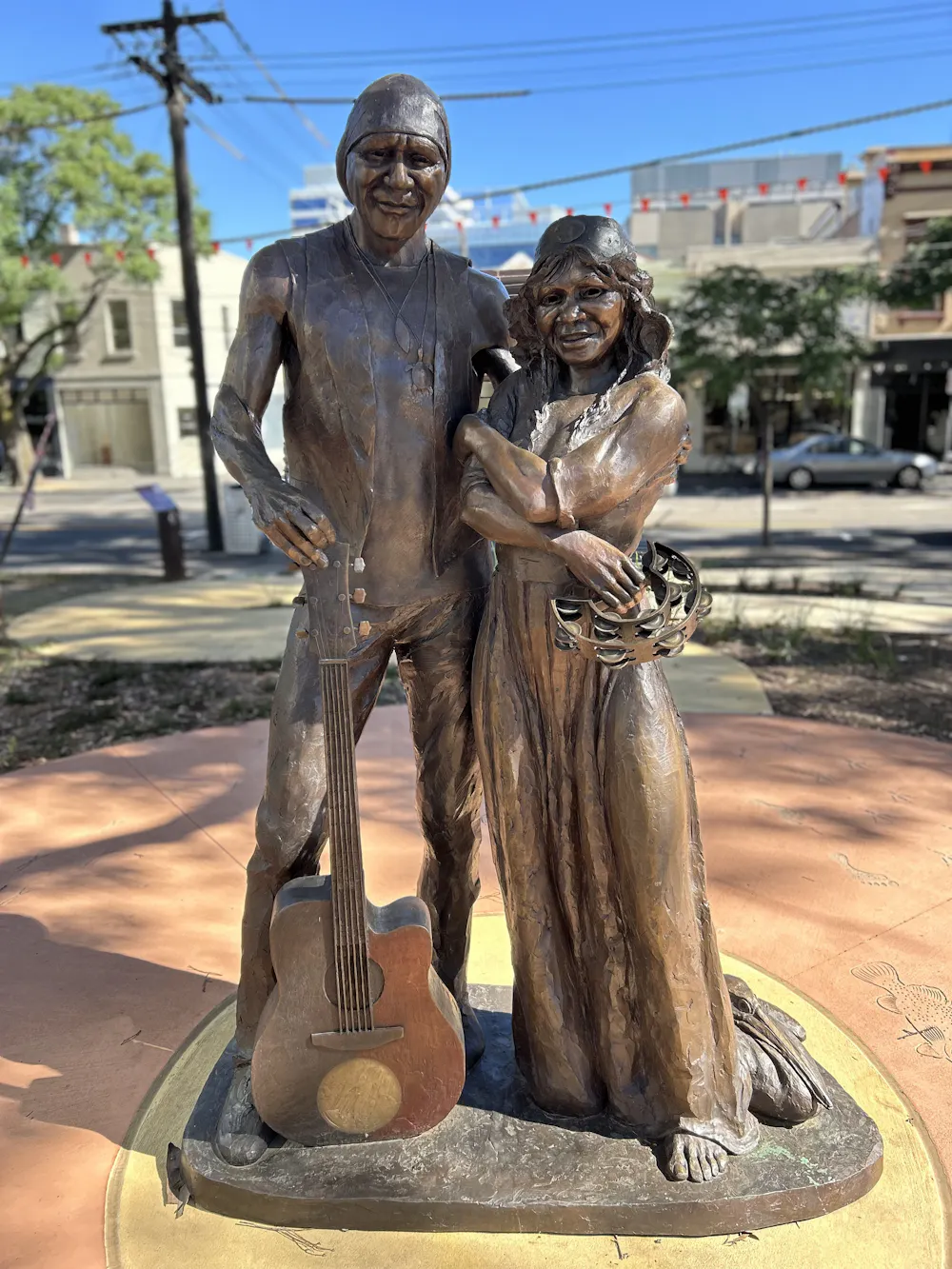
This year we were asked to respond to a different kind of monument: a statue of music legends Archie Roach and Ruby Hunter, newly erected in the Melbourne suburb of Fitzroy in November 2024.
An inspirational, unifying force
Archie Roach, a Gunditjmara (Kirrae Whurrong/Djab Wurrung), Bundjalung senior Elder, songwriter and storyteller sadly died in 2022 aged only 66. Anthony Albanese described him as a “brilliant talent, a powerful and prolific national truth teller”.
His partner Ruby Hunter was a Ngarrindjeri woman and pioneering singer-songwriter. She was the first Indigenous woman to be signed to a major record label, and sadly died in 2010.
Both were members of the Stolen Generations – Aboriginal children who were forcibly removed from their families by Australian government authorities as part of the assimilation policy. They met on the street as homeless teenagers.
Their award-winning music took them around the world together. They performed alongside musical greats such as Tracy Chapman, Paul Kelly and Bob Dylan.
They have been described as an inspiration to many, and a unifying force who altered the way white Australia saw itself.
A statue that sits in conversation with community
The statue of Archie Roach and Ruby Hunter was commissioned by the Yarra City Council in partnership with the Wurundjeri Woi-wurrung Cultural Heritage Aboriginal Corporation and Victorian government.
The statue was made by local artist Darien Pullen. The surrounding park space was designed by Melbourne-based architect Jefa Greenaway (Wailwan/Kamilaroi) and landscape architect Paul Herzich (Kaurna/Ngarrindjeri).
Fitzroy’s Atherton Gardens is a culturally significant site that once served as a traditional meeting place. It later became a hub of political activism and resistance for Victoria’s Aboriginal community.
This monument stands in a place rich with history. It is where Archie and Ruby spent meaningful time with their family, and where Archie was reunited with his biological family.
Their son, Amos Roach, emphasised the deep cultural significance of the location: “it’s a place of cultural significance because it was a meeting place, it’s an old camp”.
He also reflected on his personal connection to the park, saying, “I was a parkie baby when I was born … and I still come here”.
The statue stands at street level, embodying an ongoing presence. They are casual, approachable and engaged, as if in conversation with the community.
Positioned to invite interaction, the statue forms a dynamic relationship with both the people who pass by and the place it inhabits.
It is embraced rather than imposed, welcomed and wanted.
The statue stands at street level, in conversation with the community. The Conversation, CC BY-SA
While these figures are Aboriginal icons, they are also remarkable individuals who made significant contributions to Australia. Their commemoration carries meaning and connection for all.
Compare it to the Cook statue in Hyde Park on Gadigal Country (Sydney). He is perched high above the observer, arm raised to the heavens in a theatrical “ta-daa”.
Positioned in a location where the man himself never set foot, the text at the base of the statue? make the historically incorrect allegation that he “DISCOVERED THIS TERRITORY, 1770” – something Cook never personally claimed.
A shared future
Rather than erecting monuments to colonial figures who oppressed Aboriginal and Torres Strait Islander peoples, reinforcing a history of injustice and loss, we should instead celebrate a shared vision for the future.
This vision should be built on recognition, respect and the commemoration of those who have made meaningful contributions to Australia.
This statue of Archie Roach and Ruby Hunter honours two individuals who, despite being shaped by the very colonial histories commemorated by other monuments, have profoundly enriched contemporary Australia through their resilience, talent and contributions.
Until recently, commemorations of Aboriginal people were largely confined to the realm of prehistory — portraying them as nameless “Natives” in conflict with settlers, as loyal guides and servants, or as tragic figures labelled “the last of their tribe”.
It is a powerful recognition of their enduring impact in shaping this nation – one that calls for acknowledgement, respect and inclusion from us all.
The authors do not work for, consult, own shares in or receive funding from any company or organisation that would benefit from this article, and have disclosed no relevant affiliations beyond their academic appointment.
In some overseas countries, pets can travel with their owners in a plane’s cabin, in a carrier under a seat.
In Australia, pets must travel in the luggage hold of aircraft. But this may soon change. Virgin Australia last year announced it would allow small dogs and cats into the cabin from 2025. Now the plan has progressed further. The Australian newspaper this week reported two rows of Virgin aircraft will be designated as “pet friendly” on selected flights, although more work is needed before a trial begins.
Only small dogs or cats would be allowed in the cabin. They would have to be contained in a carrier and placed under the seat in front of their owner. The combined weight of pet and carrier must be no more than 8 kilograms.
Australians love their pets, and increasingly holiday with them. But the “pets on planes” policy is not without challenges. So how can the experience be made as smooth as possible for pets, pet owners and other passengers?
Many Australians want to take their pets onto the plane cabin with them. Pixel-Shot/Shutterstock
What are the potential negatives for pets?
Research shows pets kept in the luggage or cargo areas of planes face risks. These include being deprived of food and water and being exposed to extreme temperatures. Pet owners may also give their pets sedatives or other drugs to calm them down, which can cause harm.
Allowing pets to travel in a plane’s cabin, close to their owner, is likely to reduce these risks.
But the plane’s cabin is still an unfamiliar environment with strange smells, sounds and people. So, some dogs and cats may still find the experience stressful.
There are ways to minimise this. They include getting pets used to being in containers (a process known as “habituation”) and using positive reinforcement training to encourage pets to remain calm.
If a dog or cat is already anxious and you want to travel with them, it’s best to consult a vet well before you fly.
Some dogs and cats may benefit from a sedative or medication that reduces anxiety. This must be done in consultation with your vet, because these drugs may be dangerous for animals with certain health conditions.
Pets can die on flights
One study on dogs transported by air into the United States (many of which travelled in the cabin as “hand luggage”) found that every year, some pets die.
One risk factor occurs when the pet is a “brachycephalic” breed. These are dogs or cats with flat and shortened noses, such as pugs and the Boston terrier.
These animals have abnormal airways, meaning they are at higher risk of hyperthermia if the temperature is high, and can also have breathing difficulties.
Should the “pets on planes” policy at Virgin Australia come to pass, it’s still not clear how exactly practicalities such as offering food, water or managing toileting will work. The airline is yet to release these details.
It’s possible you would need to “fast” your pet before arriving at the airport – in other words, refrain from feeding them for a period of time, to reduce the chance they will vomit or need to defecate.
Guide and assistance dogs that currently use these facilities will always have priority. These dogs are trained to toilet on cue, making it much easier to travel with them.
If you and your pet would like to be frequent flyers, consider getting this type of training.
Virgin Australia is still consulting doctors and vets on their policy, including about risks to passengers with dog or cat allergies.
Clearly, the allergy risk to humans must be well managed – especially when in the air, isolated from medical services.
Air is filtered more frequently in plane cabins than in homes. However, even very low levels of an allergen can trigger severe reactions such as anaphylaxis or asthma attacks in some people. Also, pet dander (from shed skin cells) can remain on seats long after a pet has gone.
What’s more, some people may be frightened of, or have a phobia relating to dogs or cats. Phobia to dogs may be linked to a direct traumatic event. People with serious phobias may not be able to enter a plane if they need to walk past a dog or cat. So, placement of the pets in cabins will need to be carefully considered.
Pets are part of human lives and will likely be integrated more into transport in future, including planes. Careful planning will allow us to maximise the benefits for all: people travelling with and without pets, and the animals themselves.
Susan Hazel is affiliated with the Dog & Cat Management Board of South Australia and the RSPCA South Australia.
Source: Moscow Government – Government of Moscow –
Free eSports tournaments to start in Moscow. During 2025 on the cybermos.ru platform There will be at least 135 online competitions. The first meetings are scheduled for February 14–16.
Participants will compete in eight types of the program: Valorant, Counter-Strike 2, Mobile Legends Bang-Bang, Dota 2, League of Legends, World of Tanks, Hearthstone Battlegrounds and Teamfight Tactics.
“I invite all cyber sportsmen to participate in tournaments on the cybermos.ru platform. Over the five years of its existence, “Moscow Cyber Sports” has become a full-fledged ecosystem uniting all representatives of the industry. Here, aspiring talents take their first steps and professionals hone their skills. I would like to note that the Cybermos. Bald Dynasty team became the champion of Russia in 2024,” said Maxim Fleur, President of the Moscow City Cyber Sports Federation.
In addition, tournaments of the 15th season of the Moscow Student Cybersport League will be held. The main part of the competition will begin on February 17, and the final is scheduled for March 23. An unlimited number of teams can participate in the competition from each educational institution.
In 2024, teams from 52 universities and 23 secondary specialized educational institutions took part in the tournaments. 2,110 students competed in 77 teams. The winner was the team from MIREA — Russian Technological University.
The grand final took place at the cultural center of the National Research University Higher School of Economics. Spectators could visit interactive PS5 and VR zones, take part in cosplay (costume game), quizzes and master classes, and also watch a show match between players from different teams.
Please note: This information is raw content directly from the source of the information. It is exactly what the source states and does not reflect the position of MIL-OSI or its clients.
Please Note; This Information is Raw Content Directly from the Information Source. It is access to What the Source Is Stating and Does Not Reflect
Source: Moscow Government – Government of Moscow –
On February 20, the Parking Gallery art space in Zaryadye Park will host the exhibition “Graduation. History. Glazunov Academy. Painting, Sculpture, and Architecture. Two Epochs on Myasnitskaya.” It is dedicated to the 95th anniversary of Ilya Glazunov’s birth and continues Zaryadye Park’s flagship project “Graduation” — an unprecedented experience of representing the young generation of artists who work in different genres and directions: from historical painting and academic school to conceptual installations and new media. In addition to the annual exhibition of graduates’ works, Zaryadye is presenting an exposition about the history of one of the country’s leading art schools for the second time. The first was the exhibition dedicated to the Moscow State Academic Art Institute named after V.I. Surikov, which took place in 2024.
The modern and technological art space “Parking Gallery” will become an allusion to the Yushkov House – an old mansion on the corner of Myasnitskaya Street and Bobrov Lane – an architectural monument, the authorship of which is attributed to one of the outstanding masters of the 18th century Vasily Bazhenov. The exhibition will show two significant periods in the history of the building – from the Moscow School of Painting, Sculpture and Architecture to the creation of the Russian Academy of Painting, Sculpture and Architecture of Ilya Glazunov based on the traditions of the past.
The Moscow School of Painting, Sculpture and Architecture (1843–1918) was one of the leading centers of art education in pre-revolutionary Russia. Its progressiveness consisted in a special approach to working with students and innovative methods of the pedagogical system. On the one hand, it adopted the best traditions of classical European art education from the Imperial Academy of Arts, on the other hand, it did not deny the national characteristics of Russian art, and was receptive to the latest trends in painting. Later, the school became the center for the formation of a unique phenomenon in Russian art of the mid-19th – early 20th centuries – the Moscow school of painting.
The first section of the exhibition will feature works by famous teachers and graduates of the school, including works by Evgraf Sorokin, Illarion Pryanishnikov, Ivan Shishkin, Konstantin Korovin, Valentin Serov, and Boris Ioganson, whose student was Ilya Glazunov.
After the revolution, the school ceased to exist, and in its place were created first the Higher Artistic and Technical Workshops, and then the Higher Artistic and Technical Institute, which was closed in 1930. In the following decades, the building repeatedly changed owners. In 1987, the academy created by the artist and public figure Ilya Glazunov was located here. In 1988, the university received its current name – the Russian Academy of Painting, Sculpture and Architecture, and since 2009 it has borne the name of its founder.
Ilya Glazunov carried out a huge amount of work on the restoration of the Yushkov House and the return of this building to art. His son, the rector of the academy, People’s Artist of the Russian Federation, candidate of art history, professor Ivan Glazunov, completed the scientific restoration of the facades, the current appearance of which corresponds to the original design of the house.
Today, the Academy is one of the leading art universities in Russia. The building on Myasnitskaya Street houses the faculties of painting, architecture, sculpture, restoration, and art history. The scientific and pedagogical staff consists of dozens of masters of art and research staff.
In the second part of the exhibition “Graduation. History. Glazunov Academy. Painting, Sculpture and Architecture. Two Epochs on Myasnitskaya” you can see the works of Ilya Glazunov himself: paintings from the cycle “Kulikovo Field” from the collection of the Tula Museum Association, as well as sketches for famous works from the collection of the artist’s family. In addition, here will be placed the works of the successors of the artistic dynasty – Ivan and Olga Glazunov, as well as students of Ilya Glazunov Pavel Ryzhenko, Dmitry Slepushkin and Vladimir Shtein, graduates and teachers of the academy of different years Andrei Korobtsov, Mikhail Filippov, Yuri Savelyev and others.
The exhibition will present for the first time paintings from a large-scale art project dedicated to the future thousandth anniversary of Kursk, which will be celebrated in 2032. The central idea is to understand the traditions and historical heritage of the Kursk land, its significance for Russian culture.
A separate section is devoted to the restoration of icons and oil paintings – how the academy’s students, already in the process of studying, work with exhibits from museums in Moscow, Dmitrov, Kostroma and Pereslavl-Zalessky.
The exhibition is attended by 25 museums from Russia, including the State Historical, Artistic and Literary Museum-Reserve “Abramtsevo”, the State Memorial Historical, Artistic and Natural Museum-Reserve of the artist Vasily Polenov, the State Museum-Reserve “Peterhof”, the State Research Museum of Architecture named after A.V. Shchusev, the Museum of V.A. Tropinin and Moscow Artists of His Time, and the Museum of Moscow.
The exhibition is designed for visitors over six years old and will run until April 6.
Please note: This information is raw content directly from the source of the information. It is exactly what the source states and does not reflect the position of MIL-OSI or its clients.
Please Note; This Information is Raw Content Directly from the Information Source. It is access to What the Source Is Stating and Does Not Reflect
Source: People’s Republic of China – State Council News
The Ministry of Education has issued a guideline to promote science education in elementary and high schools, and support the nation’s ongoing drive to boost its self-reliance and strength in science and technology.
The guideline, released on the ministry’s website on Jan 22, asks local education authorities to ensure the availability of sufficient science teachers in elementary schools.
The release came days after China publicized a sweeping plan to turn itself into a leading country in education by 2035, which elaborated on measures needed for improving students’ science literacy.
Junior and senior high schools should have enough science teachers, as well as teachers for other related subjects such as physics, chemistry, biology, geography and information science and technology, the guideline said.
To ensure that schools stay committed to improving science education, the ministry requires them to have at least one “vice-principal of science”, and encouraged scientists and experts from high-quality universities and research institutions to take on the role.
These vice-principals are tasked with making full use of their resources and professional backgrounds, and lead their schools’ science education by conducting lectures, participating in the design of curricula and overseeing students’ science projects.
Normal universities — universities that train teachers — should improve the curricula and programs of their science education majors, the guidance said, while emphasizing the cultivation of science literacy for elementary and high school teachers.
Resources at universities, research institutions and science museums should be fully mobilized to develop a training system to improve science teachers’ abilities, including the ability to design and carry out experiments and projects, it said.
Students’ performance in experiments should be tested in proficiency exams before they graduate from junior high school, and their performance in daily experiments and science projects should also be assessed at school, the guideline said.
Schools should enhance their science education facilities, set up laboratories and let students participate in more open inquiry experiments, it said.
It also called for schools to explore experiments with teaching using artificial intelligence and virtual reality.
More science courses should be included in school after-class activities to meet the needs and interests of students in different school years, the guideline said.
The guideline also urges schools to tap into natural resources such as rivers, ponds, farmland and woods, and introduce knowledge about nature by setting up signs and posters and displaying specimens.
It also called on universities, research institutions and the National Natural Science Foundation of China to work together to conduct research in educational theories and strengthen international cooperation in the field.
Local authorities should carry out surveys to determine the level of science literacy of students, and make policies to improve science education based on the surveys, it said.
Source: The Conversation (Au and NZ) – By Lee Morgenbesser, Associate Professor, School of Government and International Relations, Griffith University, Griffith University
Many Americans have watched in horror as Elon Musk, the world’s richest person, has been permitted to tear through various offices of the United States government in recent weeks. Backed by President Donald Trump, and supported by a small team of true believers, he has successfully laid siege to America’s vast federal bureaucracy.
On Tuesday, Trump signed an executive order giving Musk even more power. It requires federal agencies to cooperate with his “Department of Government Efficiency” (known as DOGE) in cutting their staffing levels and restricting new hires.
In his first comments to the media since joining the Trump administration as a “special” government employee, Musk also responded to criticism that he’s launching a “hostile takeover” of the US government.
The people voted for major government reform, and that’s what people are going to get.
Are Musk’s actions akin to a “hostile takeover” of government, or a coup? I argue it’s more a form of “state capture”. Here’s what that means.
Why it’s not a coup or self-coup
Under the pretence of maximising government efficiency and productivity, DOGE has amassed quite a bit of power. It has:
penetrated the massive system responsible for virtually all government payments
A popular argument, supported by some historians and commentators, is that Musk’s actions amount to a coup. They argue this is not a coup in the classic sense of a takeover of the physical centres of power. Rather, it’s a seizure of digital infrastructure by an unelected group seeking to undo democratic practices and violate human rights.
This term, however, is not technically correct. The most widely accepted definition of a coup is:
an overt attempt by the military or other elites within the state apparatus to unseat the sitting head of state using unconstitutional means.
Since Musk and Trump are bedfellows in this plot, the tech billionaire is clearly not trying to violently unseat the president.
Another possible explanation: this is a self-coup. This describes a situation in which
the sitting national leader takes decisive illegitimate action against countervailing institutions and elites to perpetuate the incumbent’s power.
In December, South Korean President Yoon Suk Yeol attempted a self-coup when he declared martial law in order to ostensibly protect the country from opposition forces. He quickly reversed his decision amid elite defections and mass public demonstrations.
Though self-coups are becoming more common, Musk is doing the dirty work in the US – not Trump. Also, Musk’s chief target – the bureaucracy – does not nominally offset presidential power (except in conspiracy theories).
What is ‘state capture’?
More accurately, Musk’s siege amounts to a form of “state capture”. This refers to:
the appropriation of state resources by political actors for their own ends: either private or political.
By this logic, Musk’s aim could be to capture different pieces of the US government and turn the state into a tool for wealth extraction.
State capture is a relatively simple but extremely destructive process. This is how it has played out in countries like Indonesia, Hungary, Nigeria, Russia, Sri Lanka and South Africa (Musk’s birthplace):
First, political and corporate elites gain control of formal institutions, information systems and bureaucratic policy-making processes.
Then, they use this power to apply rules selectively, make biased decisions and allocate resources based on private interests (rather than the public good).
In captured states, strongman leaders often use economic policy and regulatory decisions to reward their political friends. For instance, Hungarian Prime Minister Viktor Orbán, Russian President Vladimir Putin and former South African President Jacob Zuma have helped their allies by:
making government anti-trust decisions
issuing permits and licenses
awarding government contracts and concessions
waiving regulations or tariffs
conferring tax exempt status.
State capture is fundamentally a predatory process.
By taking over how the American government does business, Musk could be seeking to enrich a small but powerful network of allies.
The first beneficiary would be Trump, who is no stranger to using his office to expand his family’s business empire. With a more fully captured state, Trump can take an active role in determining how public wealth is dispersed among corporate and political elites. This decision-making power often goes hand-in-hand with “personalist” regimes, in which everything is a transaction with the leader.
The second beneficiary would be Musk himself and other Silicon Valley mega-billionaires who have bent a knee to Trump. By positioning their tech companies as the solution to what allegedly ails the federal government, particularly when it comes to the use of artificial intelligence, they stand to secure lucrative contracts handed out by the “new” state.
The third beneficiary would be the small army of engineers and technicians working with Musk to upend the American government. As loyal foot soldiers, these individuals will be compensated with career advancement, financial gains and networking opportunities, while also enjoying legal impunity. This kind of quid pro quo is how authoritarian regimes work.
What this could mean for the US
As Musk continues his assault on the federal bureaucracy, the American people will suffer the consequences.
The most immediate impact of state capture: worse decisions are made. By purging experienced civil servants, cancelling government contracts and accessing sensitive information systems, Musk’s actions will likely degrade the standard of living at home and endanger American lives abroad.
State capture also means there would be less accountability for the Trump administration’s public policy decisions. With a lack of congressional and independent oversight, key decisions over the distribution of economic benefits could be made informally behind closed doors.
Finally, state capture is inseparable from corruption. Doing business with the US federal government could soon require one to pass a loyalty test rather than a public interest test.
Trump’s enemies will encounter more hurdles, while his allies will have a seat at the table.
Lee Morgenbesser receives funding from the Australian Research Council (DP220103214). He is also a member of the Australian Labor Party.
The oral contraceptive pills Yaz and Yasmin will be listed on the Pharmaceutical Benefits Scheme (PBS) from March 1 2025, meaning Australian women will pay less for them.
This listing follows advice from the Australian Pharmaceutical Benefits Advisory Committee, which recommended adding these pills to the PBS so women who find other contraceptive pills unsuitable have more options. These contraceptives also help manage acne and some other hormone-related conditions.
So how do Yaz and Yasmin work? And how much will they cost once they’re on the PBS?
What makes Yaz and Yasmin different?
From March, a three-month box of Yaz or Yasmin will cost $31.60 (or $7.70 with a concession card). Nial Wheate
Oral contraceptive pills prevent pregnancy primarily by stopping ovulation – the release of an egg from the ovaries.
They also thicken mucus in the cervix, making it harder for sperm to reach an egg. And they thin the lining of the uterus, reducing the likelihood of implantation.
Most combination oral contraceptive pills contain an oestrogen-based hormone (typically ethinylestradiol) and a progestogen hormone.
Both Yaz and Yasmin contain ethinylestradiol and a synthetic progestogen, called drospirenone. They both contain 3 milligrams of drospirenone.
They differ from each other in the amount of ethinylestradiol they contain. Yaz has 20 micrograms and Yasmin has 30 micrograms of the hormone. They also differ in the number of active and placebo pills a pack contains. Yaz has 24 active pills and 4 placebo pills while Yasmin has 21 active pills and 7 placebos.
Both contraceptives are just as effective in preventing pregnancies as other oral contraceptives. The chance of getting pregnant while taking either medication is around 9%.
In deciding which one is most suitable, a doctor will consider how their patient has responded to hormone treatment in the past and any other hormone-related conditions they have.
Both Yaz and Yasmin have benefits beyond birth control. Drospirenone is thought to help reduce hormone-related acne and hirsutism (excessive facial hair growth).
Premenstrual dysphoric disorder (PMDD) is a severe form of premenstrual syndrome that causes intense mood swings, depression, anxiety, and irritability before menstruation. The hormonal stability provided by Yaz, with its short hormone-free interval, can help alleviate PMDD symptoms.
Things to look out for if taking them
All combined oral contraceptive pills have common side effects that women may experience, including nausea, vomiting, break-through bleeding, absent or missed periods, headaches, irritability and breast tenderness.
There are some additional risks for the Yaz and Yasmin products. The drospirenone in the contraceptives has been associated with a slightly higher risk of blood clots when compared with other progestogens. The risk is low but may be higher in women who smoke, are over 35, or have other risk factors for clots.
All contraceptive pills can cause side effects such as nausea, headaches and irritability. Mart Production/Pexels
Drospirenone can also cause a build up of potassium in the blood. This is a particular risk for women with kidney problems, and for those who also take diuretics or blood pressure medications, which can also raise potassium levels.
Elevated potassium can cause symptoms such as muscle weakness, fatigue, dizziness and an irregular heart rhythm.
What’s changing? How much will they cost?
These approvals are the first contraceptive pills to be added to the PBS in 30 years and are part of a larger package of women’s health measures the government announced on the weekend.
The government will also provide incentives for doctors and nurses to bulk bill services for implanting long-term contraceptives such as IUDs (intrauterine devices).
Currently, pharmacies advertise three-months’ supply of Yaz and Yasmin for around A$79 dollars ($316 per year).
Come March, the price women will pay will drop to $31.60 per box, or $126.40 per year. Concession card holders will pay $7.70 per box, or $30.80 per year.
But the price of Yaz and Yasmin will still be higher than other combined oral contraceptives (containing the hormones levonorgestrel and ethinylestradiol) on the PBS, which start at $22 for a four-month supply or $66 per year.
How can you switch?
If you are considering Yaz or Yasmin, speak to your doctor. They will take your medical history and discuss your lifestyle and any other specific health needs.
They will also explain the potential side effects to watch out for and any precautions you may need to take.
If you proceed, your doctor will outline a process for transitioning to the new medication, including timing and where to start in the pill sequence.
Nial Wheate in the past has received funding from the ACT Cancer Council, Tenovus Scotland, Medical Research Scotland, Scottish Crucible, and the Scottish Universities Life Sciences Alliance. He is a fellow of the Royal Australian Chemical Institute, a member of the Australasian Pharmaceutical Science Association and a member of the Australian Institute of Company Directors. Nial is the chief scientific officer of Vaihea Skincare LLC, a director of SetDose Pty Ltd (a medical device company) and was previously a Standards Australia panel member for sunscreen agents. Nial regularly consults to industry on issues to do with medicine risk assessments, manufacturing, design, and testing.
Shoohb Alassadi does not work for, consult, own shares in or receive funding from any company or organisation that would benefit from this article, and has disclosed no relevant affiliations beyond their academic appointment.
Do policies aimed at making people healthier also make them happier? And to what extent do they infringe on personal autonomy are questions central to a new book by Martin Wilkinson from the University of Auckland.
Many of us accept public health policies relating to things deemed harmful, like alcohol, vapes, fatty or sugary food or cigarettes, without question.
However a new book by Martin Wilkinson, a professor of politics and international relations and former chair of the New Zealand Bioethics Council, concludes that many public health interventions probably make people worse off, infringe on their autonomy and don’t have compensating benefits for others.
Free to access, The Ethics of Public Health Paternalism (Oxford University Press, 2025) examines the various ways of making people healthier, according to whether they make it harder to be unhealthy, easier to be healthy, influence beliefs, or ‘nudge’ people towards certain choices.
The book covers measures like taxes, label warnings, age limits and bans on sales and marketing, as well as health promotions like ‘five plus a day’, subsidies to gyms, enticements to stop unhealthy behaviour, product placement in stores and the provision of walking and cycling infrastructure.
It features examples like the prohibition of alcohol in the US (from 1920 to 1933) or the Danish fat tax, a tax on saturated fat in food products, introduced in 2011, repealed in 2012, and the first of its kind in the world.
It also defines the concept of ‘paternalism’ in relation to health policies.
A main reason often given for the state to intervene in citizens’ health is because people would, if left to their own devices, make unhealthy choices that are bad for them, says Wilkinson.
“But trying to stop people harming themselves sounds paternalistic, and paternalism in public health raises two main questions: Why think that getting people to make healthier choices would make them better off? And should people not be free to choose for themselves?”
He specifies that adults, rather than children, are the focus of the book and that smoking is the one area where he believes the sheer weight of evidence supports efforts to discourage it.
Otherwise, he is on a collision course with the majority of public health advocates, he admits.
“I’m doubtful about the merits of many of the interventions they want. I argue that adults ought to be free to run their own lives, and that some, but not all, public health interventions would infringe on their autonomy.”
He says the book engages with ideas that writers and public health advocates have offered, found not only in books and academic articles but also in blogs, pamphlets, interviews, and health promotion campaigns.
He believes public health advocates who want to steer people into healthier behaviour have not been good at giving convincing reasons for doing so.
“They generally assume that to be healthier is to be better off, but this assumption is often wrong, because health is neither the only value nor the supreme value.
“To decide when people would benefit from being healthier, we must consider the value of health in their lives, how their unhealthy behaviour might be mistaken, and the evidence about whether it is or not.”
While the book is obviously critical of public health, Wilkinson says he’s not taking a free market or libertarian position . “I take no view about the size of the government, its role in the economy, or its duties to redistribute or to support a welfare state. Nor do I believe that paternalism towards adults is always wrong, only that it is questionable.”
He believes in fact that perhaps paternalistic influences on people’s choices would make them better off, perhapsthey wouldn’t infringe upon people’s autonomy after all, or perhaps the infringement is justified.
“Finally, however, I remain unconvinced,” he says. “A persistent theme of the book is that we often don’t have very good, or in fact competing, evidence on these issues. Because the absence of evidence is not evidence of absence, I don’t conclude that public health interventions are unjustifiable, only that they have not been justified.”
The Ethics of Public Health Paternalism (Oxford University Press, 2025) by T M Wilkinson is open access and now published online and in print. (ref. https://academic.oup.com/book/59451 )
Panama is exposed to a variety of hazards such as earthquakes, tsunamis, epidemics, wildfires, landslides, and urban riverine and coastal floods. Climate-related hazards are increasing in severity due to climate change and are particularly affecting poor and vulnerable populations. In response to these increasing threats, Panama has steadily shifted its focus from a centralized disaster response approach toward more comprehensive and inclusive disaster risk management by integrating disaster risk reduction in its development and planning policies.[1] In support of these national policies, one of the areas of change in the United Nations Sustainable Development Cooperation Framework 2021-2025 for Panama is related to climate change, integrated environmental management and disaster risk reduction.
The creation of the Cabinet for Integrated Disaster Risk Management/Gabinete de Gestión Integral de Riesgos a Desastres (GIRD) was an important milestone for the integration of climate and disaster risks into national cross-sectoral development strategies/plans in Panama. The President of the Republic of Panama chairs the GIRD, which reflects the importance that integrated disaster risk management is attributed in the country. United Nations organizations in Panama, including UNDRR, UNDP, and the World Bank, provide strategic support to the GIRD, which brings together 14 government ministries, and invited partners. The Technical Secretariat of the GIRD aims to improve the capacity to reduce the loss of life and infrastructure through prevention, risk reduction and preparedness for hazard events, is chaired by the Government Ministry / Ministerio de Gobierno and consists of 3 working groups: Risk Knowledge, Risk Reduction, and Response Management.
The approval of the National Policy for Comprehensive Disaster Risk Management (PNGIRD) 2022-2030 and the National Strategic Plan for Disaster Risk Management (PENGIRD) 2022-2030 in October 2022 showed tangible progress in the development and implementation of national disaster risk reduction strategies and plans. In 2023, the National Operational Emergency and Disaster Response Plan 2022-2030 was approved, as well as the Post-Disaster Recovery Framework 2022-2030. A stress test of infrastructure resilience was undertaken to define strategic actions to strengthen resilience principles in governance of infrastructure systems and their critical functions. Support by the United Nations organizations has been provided for reconstruction and recovery measures that include elements of disaster preparedness and “build back better”. Through the adoption of policies and the implementation of disaster preparedness initiatives in education centres, Panama is taking steps to ensure that resilience is at the forefront of post-disaster recovery efforts.
Since the first meeting of the GIRD in February 2022, the UN has successfully provided policy, institutional and programmatic advice to the GIRD, emphasizing the importance of early warning systems in mitigating the impacts of climate-related disasters. In the area of preparedness and anticipatory action, the establishment of the GIRD and the subsequent adoption of the National Strategic Plan for Disaster Risk Management (PENGIRD), as well as initiatives such as the pilot training programme for educators in Herrera and Panamá Oeste show that there is a commitment to improving prevention at the local level.
Multi-hazard risk analysis has been incorporated into the planning processes for humanitarian aid, development and peacebuilding. The establishment of the GIRD and the development of comprehensive disaster risk management strategies and plans reflect a commitment to mainstreaming risk analysis across governance sectors and ensure that planning efforts take into account the vulnerabilities and challenges posed by climate-related disasters. The GIRD includes the National Secretary of Persons with Disabilities, the National Women’s Institute, as well as the Secretary of Childhood, Youth and Family, and undertakes efforts to boost inclusive disaster risk reduction measures. For example, the GIRD regional multi-hazard exercise in Panama City, included a Gender Observatory, which was supported by UN organizations.
Through joint efforts, and by working closely with government partners, such as the Ministry of Education (MEDUCA) and Ministry of Social Development (MIDES), the United Nations system has promoted progress in Disaster Risk Reduction. Effective communication and the inclusion of different points of view, especially adapting to the needs and priorities of local communities, were crucial for the recent approval of the National Policy and Strategic Plan for Disaster Risk Management. The United Nations Resident Coordinator plays a crucial role in working together towards a safer and more resilient future by fostering relationships and ensuring that everyone’s views are taken into account.
The support provided by United Nations organizations has led to significant changes in the short term, particularly in the implementation of comprehensive disaster risk reduction strategies and measures through the GIRD. These changes immediately improve preparedness and response mechanisms and promote resilience to climate-related disasters. In the long term, these efforts help to mitigate the impact of hazard events, such as increasingly unpredictable and extreme climate-related events. By integrating risk-based approaches into national development frameworks, the foundation is laid for sustainable disaster risk reduction practices, reducing climate-related disasters and their socio-economic impacts.
UN organizations in Panama are committed to continuing to support disaster risk reduction[2] and have made this a priority for 2024, with a focus on 1) promoting greater inter-agency cooperation, streamlining joint efforts to maximize resources, expertise and knowledge sharing; 2) continuing to align initiatives with national priorities and leveraging partnerships with civil society, local authorities, communities and the private sector; 3) investing in innovative technologies such as early warning systems and risk mapping tools that can strengthen preparedness and response capabilities; 4) prioritizing capacity building and knowledge transfer to vulnerable regions to ensure sustainable resilience; 5) emphasizing inter-agency work promoting a more coherent and coordinated approach, which ultimately increases the effectiveness of global efforts to address climate-related challenges.
[2] In line with the 2021-2025 UN Sustainable Development Cooperation Framework’s Result 3: ‘By 2025, Panama is resilient and has implemented public policies for climate change adaptation and mitigation, land degradation neutrality, biodiversity protection, integrated environmental management, and reduction of disaster and health crisis risks, with a territorial, intercultural, human rights, gender, and lifecycle approach.’
Nepal is exposed to a range of natural hazards, such as floods, landslides, droughts, and severe weather events including lightning storms. Nepal’s population is very vulnerable to the impacts of climate change as it largely relies on agriculture, tourism and natural resources, with a shift towards services and away from agriculture in recent years. The accelerated melting of the glaciers in the Himalayas increases the risk from related hazards such as glacial lake outburst floods and avalanches. It also impacts the availability of water and hydropower for 2 billion people downstream of major Asian rivers originating in the Himalayas in the longer term. Nepal is further prone to earthquakes as it is located above the collision of the Indian and Eurasian tectonic plates. Environmental sustainability, climate and disaster resilience are a priority of the United Nations Sustainable Development Cooperation Framework 2023-2027 for Nepal, including a focus area on the reduction of vulnerabilities, disaster risk reduction, preparedness and effective response and recovery. The Results Group on Disaster Risk Reduction is co-chaired by WFP and UNDP, who coordinate closely with the Resident Coordinator’s Office and the Humanitarian Country Team. Leaving no-one behind and the localization of sustainable development efforts cut across the four priorities of the Framework and translates into targeting the most vulnerable through household-level data gathering and supporting social protection systems.
The United Nations organizations are supporting Nepal’s localised approach to resilience building and disaster risk reduction at the federal, provincial, and local levels of government. Close and sustained cooperation at all levels of government since the federalisation in 2017 has led to the creation of disaster risk reduction plans that are implemented with government resources, with the United Nations organizations mainly being requested to provide specialised technical support.
An innovative system of providing single entry points for government officials is the Provincial Focal Point Agencies concept, which nominates one of the UN organizations present at the provincial level as the focal point to liaise with provincial governments, relay information, convene development partners around the request for support, and hold coordination meetings. The Provincial Focal Point Agencies are supported in their function through a direct line of communication with the UN Resident Coordinator. This concept has already demonstrated its efficiency for disaster risk governance and emergency management. For example, during the beginning of the COVID-19 pandemic when travel restrictions were in place and around 100,000 migrant workers were returning to Nepal at once, the conditions in more than 1,000 quarantine sites were assessed by locally-based development partners. At the request of the Government of Nepal, the Provincial Focal Points Agencies reached out to the partners, trained them on the survey provided by the Government, and the assessment of quarantine sites was completed within two weeks.
In 2023, the Promoting Action for Disaster Risk Governance and Working to Achieve Preparedness for Risk Reduction through Technical Assistance in Nepal (PARIWARTAN) project concluded. It was implemented by the International Organization for Migration (IOM) in consortium with the National Society for Earthquake Technology – Nepal, Practical Action Consulting, and Lutheran World Federation. It provided technical assistance to the three tiers of government (federal level, 7 provinces, 753 local levels) in implementing the Disaster Risk Reduction and Management Act in a coordinated and inclusive manner. The Disaster Risk Management Localization Manual: An Operational Training Manual for Disaster Risk Management Capacity Building of Local Governments was developed in close coordination with the Government of Nepal. More than 19,900 government officials were trained on disaster risk reduction and management in all 753 local level municipalities that supported strengthening community resilience. The training has spurred local government actions such as the formulation or amendment of legal documents, standards and guidelines to implement disaster preparedness and response activities, the increase of budgets allocated for disaster risk management, the formation of disaster risk management committees, as well as a shift in focus from response to preparedness prioritizing multiple hazards prevalent in the local context.
Over the last 10 years the United Nations Country Team has built a unique and innovative research partnership with a consortium of universities to provide new forms of evidence to guide disaster risk governance. This consortium, called Sajag-Nepal, includes organisations in Nepal, the UK, Canada, and New Zealand. Working together, the consortium and the Resident Coordinator’s Office have pioneered a new scenario ensemble[1] approach to understanding hazards, enabling risk-informed contingency planning for both the annual monsoon and for infrequent large earthquakes. For earthquakes, the Resident Coordinator’s Office worked with researchers to develop an ensemble of possible impacts in a future earthquake, irrespective of where that earthquake occurs. This ensemble now forms the basis of both cluster contingency plans and provincial preparedness planning. For the monsoon, Sajag-Nepal researchers are using data on past monsoon impacts recorded in the government’s portal to anticipate the possible pattern of impacts in the next monsoon, helping the humanitarian clusters and the National Disaster Risk Reduction and Management Authority (NDRRMA) to develop a more informed preparedness plan. The research has also developed a novel way of anticipating landslide impacts during the monsoon using 14-day rainfall forecasts. The Resident Coordinator’s Office is exploring the use of this approach as a readiness trigger for possible anticipatory action. The project is also using participatory mapping in several landslide-prone areas of Nepal to understand how people move and how their exposure to landslides varies over different time scales – with the ultimate goal of being able to better map the risks that residents face in these communities.
The Strengthening Urban Preparedness, Earthquake Preparedness and Response in Western Regions of Nepal (SUPER) project is being implemented by a UNDP, UNICEF, UN Women consortium along with local implementing partners across three provinces and four municipalities in Western Nepal. The project works in close coordination with the NDRRMA at the federal level, as well as with provincial and local level decision makers. The project uses the earthquake scenario ensembles that were co-created by the Resident Coordinator’s Office and the Sajag-Nepal team. It enhances and institutionalizes municipal and provincial preparedness for urban and earthquake risks in 3 provinces and 4 municipalities in the western regions of Nepal. It does so by enhancing the understanding of risk, preparedness measures, reducing risk, including through reinforcing building codes and retrofitting practices. The project works with multiple stakeholders at all three federal tiers, including the community, private ector, academia, international governmental organizations, UN organizations, the Nepal Red Cross Society, and international and national non-governmental organizations.
As the government has ownership of the project and provides it with a budget in its annual plans the sustainability of the work is ensured. The project results are delivered under the leadership of respective government authorities and include impact modelling of potential earthquake scenarios, vulnerability and capacity assessments, strengthening Emergency Operation Centres and capacity building – for example supporting the development of earthquake contingency plans for clusters (such as Health, Protection, Water, Sanitation and Hygiene), which were developed with the leadership of relevant provincial ministries and were referred to extensively during the 2023 Jajarkot earthquake response.
The SUPER consortium collaborates with the UN Resident Coordinator’s Office, and partners such as WHO, WFP, and IFRC to strengthen humanitarian architecture and cluster mechanisms in provinces, also through the development of cluster contingency plans. This strengthening proved very effective in response to the Jajarkot earthquake in 2023. For example, the implementation of the Health Contingency Plan was endorsed within the same day, and all sectoral information was efficiently relayed by WFP as the Provincial Focal Point Agency. The project has been working towards enabling gender equality, disability and social inclusion mainstreaming in disaster risk reduction through developing a checklist for disaster preparedness, as well as a gender-responsive costing framework for earthquakes and urban flooding, conducting a women’s safety audit together with women-led community-based organizations, and a simulation exercise on resource pooling with gender-responsive considerations.
Nepal has a UN Central Emergency Response Fund (CERF) Anticipatory Action pilot framework to provide collective anticipatory humanitarian action to people at risk of predicted severe monsoon flooding with delivery planned through UNFPA, UNICEF, UN Women, WFP and WHO in partnership with the Nepal Red Cross Society (NRCS) and national NGOs and in close collaboration with the federal, provincial and local authorities.
Also, IOM, jointly with the Ministry of Labour, Employment and Social Security (MoLESS), Tribhuvan University’s Central Department of Population Studies (CDPS) and the National Planning Commission have established a Migration School in 2023, a two-week academic forum to foster collaboration among educational institutions, policymakers and experts on human mobility, including climate and disaster displacement.
[1] scenario ensembles: estimation of the likelihood and scale of future hazard impacts, determining locations where impacts are most likely to occur, along with the average and worst-case impacts for all locations, so that both emergency relief and disaster risk reduction activities can be prioritized; source: Robinson, T.; Rosser, N.; Densmore, A.; Oven, K.; Shrestha, S.; Guragain, R. (2018) Use of scenario ensembles for deriving seismic risk
Moldova is highly vulnerable to landslides, droughts, extreme temperature and severe weather events and floods, exacerbated by climate change, with droughts posing the greatest risk to communities and the economy. Water scarcity and forest fires are increasingly posing a threat to natural ecosystems, agriculture, and human settlements. Economic losses due to climate-induced disasters have caused economic losses of an estimated US$ 4 million per year, with scenarios indicating that the country could progressively trend towards a more arid environment, with the possibility of intensified droughts and fires.[1] Moldova was affected by 16 major earthquakes within the past 200 years. The area of its capital Chisinau is particular vulnerable to seismic risks due to its location and the structural vulnerability of its older buildings.[2]
Chisinau municipality has been part of UNDRR’s Making Cities Resilient 2030initiative aimed at enhancing local resilience through advocacy, knowledge sharing, and city-to-city learning networks since 2021 and is committed to increasing its resilience and readiness for forthcoming challenges, encompassing disaster risk reduction and climate change adaptation. Building on several multi-stakeholder workshops,[3] Chisinau municipality, in February 2023, initiated the development of a Resilience Strategy for the period of 2024-2030, including an action plan for 2024-2027. Over the course of the remainder of the year, local authorities, in collaboration with UNDRR, organized an interactive and participatory process involving diverse stakeholders, including central authorities, civil society, citizens, the private sector, and representatives of international development partners such as the International Organization for Migration, the World Bank, and the European Bank for Reconstruction and Development. These discussions and workshops helped to better understand the needs and of the local community, and to identify priority areas for resilience building: (1) strengthening governance, (2) enhancing critical infrastructure, and (3) fostering societal resilience. Chisinau is offering assistance and policy guidance to other cities and towns, both domestically and internationally. For example, within the framework of Making Cities Resilient 2030, Chisinau has already shared its experiences in resilience-building efforts with cities in Ukraine and Kazakhstan and has engaged in knowledge exchange with Portuguese municipalities.[4] The resilience building activities of Chisinau municipality align not only align with local and national priorities, but also with regional ones as strengthening disaster risk governance is prioritized in the National Implementation Plan of the European Union-Moldova Association Agreement. Since 2023, Moldova has access to the UN-supported INFORM Risk Index, a comprehensive assessment of subnational risk that facilitates the implementation of data-driven strategies for risk reduction, guiding decisions on prevention, preparedness, and response measures effectively.
Given that early warning 24 hours before an event can reduce the ensuing damage by 30 per cent[5], multi-hazard early warning systems are crucial to reducing losses from hazard events. Such early warnings need to be broadcast through a public alert system that effectively transmits and reaches people with these warnings regarding imminent emergencies and disasters. The United Nations Country team is supporting the establishment by 2027 of an Early Warning System tailored to the requirements of the Moldova Inspectorate for Emergency Situations. For example, ITU undertook a feasibility study on the deployment and implementation of a Cell Broadcast Service solution for sending alert messages in Moldova in 2023.
In 2023, Moldova implemented legislative reforms and policies to address climate change, with substantial support from UNCT. The adoption of the National Climate Change Adaptation Programme along with its Action Plan signifies a strategic commitment towards sustainable environmental governance, particularly in agriculture, forestry, health, energy, water and transport. Climate resilience was prioritized in the newly adopted National Strategy for Agricultural and Rural Development and the Migration and Asylum Programme.
UN organizations in Moldova bolstered governance capacity by producing a guidance document on addressing human mobility challenges in the context of climate change, as well as a comprehensive analysis of disaster risk reduction in the agriculture sector, and a study on the role of migration role in climate adaptation in Moldova. Policy makers, statistical data producers, national experts, technical staff from public institutions, and academia representatives in Moldova have enhanced their knowledge and skills for sustainable resource management, energy efficiency, and climate resilience within the agriculture sector through diverse capacity-building activities supported by FAO, IFAD, IOM, UNDP, UNDRR, UNECE, UNESCO, ITU and UNIDO.
UN expertise in disaster risk reduction and resilience building supported public and private institutions in enhancing energy efficiency and sustainable natural resource management, which resulted in photovoltaic panels of 600 kW capacity installed in five district hospitals. Six Farmer Field Schools promoting climate-smart agriculture enabled more than 700 farmers to apply their skills in sustainable agriculture practices across 5,700 ha of land, resulting in improved soil health and increased productivity. Moldovan farmers now have access to a Community of Climate-Smart Agricultural Practices platform, promoting the adoption of climate-smart technologies and supporting local producers in implementing conservation agriculture.
Thirty localities improved their public services and social infrastructure and have become more resilient to climate change. Inclusive disaster risk reduction and climate change adaptation measures were advanced. Almost 27,000 persons (including 51% women, and 22% youth) benefited from land restoration efforts across 118 hectares inMoldova, including shelter[6] belts, grassland, and vegetation cover for agricultural purposes, and 30% women participation in bodies promoting land degradation neutrality was ensured. With support of UN organizations, 32 communities developed shelter belt management plans and five community-based action plans for climate change adaptation, promising increased resilience against extreme weather, improved environmental sustainability, enhanced agricultural productivity, and community engagement. The inclusive development of these plans engaged local public authorities, land users, and landowners.
[2] The last assessment of residential building conditions in was conducted in 2005, revealing that approximately 83% of the 25,000 examined buildings exhibited significant wear and tear. From: UNDRR (2024) Chisinau Municipality leads resilience efforts in Moldova
The UW School of Medicine and Public Health strives to improve the health and well-being of people in Wisconsin and beyond.
The school began offering a 2-year medical curriculum in 1907 and welcomed the first class of medical students for a comprehensive 4-year degree in 1925. In 2006, it became the nation’s first school of medicine and public health, integrating social, environmental, economic and public policy issues into our teaching, research, clinical care and community service missions.
The School’s goal is to train health, public health and research professionals who think broadly as they seek to solve society’s most pressing health challenges.
The USC Dornsife College of Letters, Arts, and Sciences is the academic heart of the University of Southern California. Its breadth and depth are vast, with more than 40 academic departments and programs in the humanities, social sciences, and natural sciences and dozens of research centers and institutes.
USC Dornsife fosters the liberal arts ethos of small classes and close working relationships between students and faculty within the context of a premier research university, where internationally recognized scholars continuously pursue new ventures.
In the early hours of 6 February 2023, a 7.8 magnitude earthquake struck west-northwest of Gaziantep, Türkiye. Less than 10 hours later another shock measuring 7.7 shook the same area.
The disaster took more than 60,000 human lives across southern and central Türkiye and northern and western Syria, causing catastrophic damages and suffering.
In the aftermath, national and local authorities and communities have undertaken remarkable reconstruction efforts, setting new benchmarks for swift recovery and “build back better” principles.
This earthquake was another reminder of the high risk of catastrophic losses from earthquakes.
Hydro-meteorological disasters are increasing, keeping them in public policy focus. Earthquakes, however, get overlooked, even while they pose increasing risks, driven by expanding, unsafe built environment.
The Coalition for Disaster Resilient Infrastructure (CDRI) estimated in its 2023 Biennial Report that nearly 30% of expected average annual losses globally are linked to earthquakes.
There’s a much-repeated adage that goes “it is not earthquakes that kill people, it’s weak buildings and infrastructure that kill people.” And weak buildings and infrastructure – in other words unsafe built environments – are an outcome of social and economic processes characterized by low awareness (with low social demand for seismic safety), inadequate capabilities (not enough trained engineers, contractors and building artisans), low or no standards (inadequate seismic safety codes and building by-laws), and weak governance capacity (capability to enforce the adoption of seismic safety codes where they do exist).
We have the know-how
Our understanding of the physics of earthquakes has improved. We also understand how buildings and infrastructure respond to earthquakes, and we know how to make them safer. From designing a simple structure to a complex physical infrastructure, engineering knowledge is at an all-time high.
Yet the risk of losses from earthquakes is rising in most seismic countries.
But trend is not destiny. It can be arrested. It can be reversed.
Four public policy approaches for seismic safety
1) Take a long view, but start now.
Every long journey starts with a first step. Our stock of unsafe buildings and infrastructure was accumulated over decades, and it is a daunting prospect to consider replacing and retrofitting them quickly. However, if each city and each village in every earthquake-prone region were to resolve to build every new building or infrastructure project to an earthquake-resistant standard, in just a decade we would be having a very different conversation. We need to redouble efforts to develop seismic building codes (where they don’t exist) and enforce them.
For existing buildings and infrastructure, we need to develop shared priorities across communities, governments and the private sector to systematically retrofit and strengthen them. This prioritisation must be underpinned by a clear understanding of the risks, which is the first priority of the Sendai Framework.
Disaster scenarios, such as those created by GeoHazards International can allow communities to visualize potential impacts and prioritize mitigation strategies effectively. Using whatever resources are available, we can strengthen one hospital, one school at a time. This will not only improve seismic safety but will also have other co-benefits in terms of enhanced awareness and better quality of built environment for everyday use.
At the same time, we must find retrofitting solutions that are practical, that help prevent the catastrophic collapse of buildings, and that can be implemented at scale. To do this means creating a functioning market for retrofitting- nudged by regulation and fuelled by public sector investments such as advance market commitments.
In Kathmandu Valley, Nepal’s National Society for Earthquake Technology (NSET) retrofitted 260 schools between 1997 and 2015. Of these, 160 were struck by the 2015 Gorkha earthquake, and all experienced, at worst, minor damages – while in other schools more than 25,000 classrooms were destroyed. We have ample proof that investments in retrofitting pay dividends – in avoided losses and in precious lives.
However, these efforts are not easy – they require strengthening disaster risk governance at the local level in very tangible ways.
Innovation is required not just in terms of new technologies but also in risk governance – such as Japan’s introduction of innovative systems after the 1995 Kobe earthquake, involving private sector enforcement of new, stricter codes that mandated retrofitting of older buildings.
Another example is the innovative approach to owner-driven reconstruction taken by SEEDS India after the 2001 Gujarat earthquake and continuing through multiple seismic events. Their experience demonstrates that empowering homeowners and local masons leads to safe, sustainable, cost-effective, and culturally appropriate housing-achieved at scales and speeds unmatched by contractor-led programmes.
2) Invest in capabilities at all levels.
Shaping an earthquake-safe built environment requires capabilities in many disciplines and at all levels – urban planning, seismology, earthquake engineering, geotechnical engineering, enhancing disaster resistant construction skills of masons, bar benders, contractors and so on – and in many countries theses capacities are woefully inadequate.
There is no short cut but to systematically invest in developing these capabilities, and to drive demand though regulation and certification.
3) Treat every disaster as an opportunity to learn.
than from any textbook. Observing the performance of buildings and the mode of their failure under earthquake forces brought my theoretical lessons to life.
We say that every disaster is too precious to waste: we must systematically collect data and undertake forensic analysis after every earthquake, so we can improve building codes and enforcement systems, launch awareness campaigns, and better understand the epidemiology of earthquakes. This involves setting up learning systems in our national and sub-national institutions.
4) Foster public awareness.
Maintaining awareness of less frequent but potentially devastating hazards is always a challenge.
Again, there are no quick fixes. Building public awareness starts in the school (catch them young!) and over time can generate greater social demand for seismic safety.
While we transform our built environment over the long term, in the short term we need to teach people how to manage risks. Awareness of simple protection measures – such as DROP, COVER and HOLD during an earthquake, and fixing non-structural elements like flowerpots on balconies, large cupboards in houses – goes a long way in protecting lives.
The path to seismic safety is well established, with many proven success stories from countries and communities that have persevered to reduce earthquake risks enormously. The 1960 Chile earthquake, for example, was the largest earthquake ever recorded since the measurements began, and its impacts were catastrophic. Just 50 years later – in 2010, the same year that Haiti earthquake caused more than 200,000 deaths – Chile was struck once more, by 8.8 magnitude earthquake and tsunami. While 523 people tragically lost their lives, this is a fraction of the number that could have died had Chile not applied strict building codes during reconstruction.
We need to follow their lead and make seismic safety a global movement. It is a long journey – but the first step must be taken now.
This webinar serves as a cornerstone event for the 2025 World Resilient Recovery Conference (WRRC), playing a critical role in advancing the global agenda for disaster risk reduction and recovery readiness. By reflecting on the legacy of the 2004 Indian Ocean Tsunami, it aims to inspire collective action and drive progress toward a more resilient future. As a foundational event leading up to the WRRC, which will take place just before the opening of the 8th Session of the Global Platform for Disaster Risk Reduction on 3 June 2025, this discussion will generate key insights and recommendations. These outcomes will directly inform the Global Call to Action for Investing in Readiness for Resilient Recovery, to be adopted at the WRRC and contribute to shaping global recovery strategies.
This webinar is co-organized by the United Nations Office for Disaster Risk Reduction (UNDRR), United Nations Development Programme (UNDP), United Nations Educational, Scientific and Cultural Organization (UNESCO), World Health Organization (WHO) and the Global Network of Civil Society Organisations for Disaster Reduction (GNDR).
Background
The 2004 Indian Ocean Tsunami was one of the most devastating disasters in modern history, claiming over 230,000 lives and causing widespread destruction across 14 countries in Asia and Africa. The disaster revealed significant gaps in global disaster preparedness and response, but also catalyzed transformative changes in disaster risk management, recovery strategies and early warning systems.
Over the past two decades, global efforts have led to critical advancements in DRR, including the establishment of the Indian Ocean Tsunami Warning and Mitigation System (IOTWMS), the adoption of the Hyogo Framework for Action (2005-2015) and its successor, the Sendai Framework for Disaster Risk Reduction (2015-2030). However, challenges remain, particularly in ensuring inclusive, sustained and adequately funded disaster recovery efforts.
Objectives
This webinar will reflect on the 2004 Indian Ocean Tsunami as a turning point for global disaster risk reduction and recovery readiness. By examining the lessons learned, progress made and gaps that remain, this discussion will generate key insights to advance resilient recovery efforts. The session will explore governance, financing, early warning systems and the role of inclusive recovery in shaping disaster resilience.
The outcomes of this session will directly contribute to the Global Call to Action for Investing in Readiness for Resilient Recovery and inform the broader agenda of the 2025 World Resilient Recovery Conference (WRRC). By reflecting on the long-term impacts of the 2004 Indian Ocean Tsunami, this discussion will provide actionable recommendations for accelerating progress on the principles of “Building Back Better” and strengthening disaster resilience. The insights gathered will contribute to shaping inclusive recovery frameworks, emphasizing the need to address vulnerabilities, integrate community voices, and ensure equitable recovery processes in future disaster preparedness and recovery strategies.
The session further aims to:
Understand how the Indian Ocean Tsunami became a turning point on greater investments in disaster risk reduction and related areas, via the Hyogo Framework and the Sendai Framework on Disaster Risk Reduction, reflecting upon how large-scale resource mobilization was realized.
Understand how the establishment of an Indian Ocean Tsunami Early Warning Systems was made possible across the region and reflect on the progress made since then in terms of governance to reach the last mile of early warning systems
Reflect on lessons learnt in Building Back Better following the Tsunami and where progress is still needed to accelerate.
A federal parliamentary inquiry has just recommended civics and citizenship become a compulsory part of the Australian Curriculum, which covers the first year of school to Year 10.
The committee also recommended a mandatory civics and citizenship course for all Year 11 and 12 students to prepare them to vote.
This is not the first time there have been calls to improve the quality of civics education in Australia – such calls have been made as far back as 1994.
As a researcher in political education, I argue we need to make sure civics education is relevant, engaging and given adequate space in the curriculum.
What is civics?
At the moment, civics and citizenship is included in the national Australian Curriculum. But it is not mandatory and many states only make passing reference to it in primary school. Some states provide more opportunities in high school.
The topics covered include how governments and democracy work, how laws work, the rights of individuals, diversity and national identity, and how to critically evaluate different sources of information.
Every three years since 2004, a national sample of Year 6 and Year 10 students are assessed on their civics knowledge, skills and attitudes through a national test.
In the most recent results from 2019, 53% of Year 6 students were at or above the national proficient standard for civics, while only 38% of Year 10 students were at or above the standard. Year 10 students’ results have shown a substantial decline since 2004.
This suggests many young people are leaving school without the knowledge, skills and values to sustain our democracy.
Both Australian and international studies have repeatedly shown civics and citizenship education makes a positive difference to young people’s political participation (including the likelihood they will vote), understanding of democracy and support for democratic values.
What does good civics education look like?
1. Make sure it has its own subject
At the moment, civics education might be included as part of students’ work in history or other humanities subjects. But research shows it should be taught as a separate subject, otherwise it can get lost among other material.
While Year 11 and 12 are times when students get to pick most of their subjects for major exams, it is important they also study how the electoral system works. Many will vote in elections before they even leave school.
3. Make it relevant to young people
As important as they are, some aspects of civics – such as lawmaking or how parliament works – may seem dry to young people.
For example, a lesson on how parliament works could focus on the passage of contentious legislation such as banning social media for young people. Or lessons on misinformation could look at how social media had an impact on a particular issue or election.
4. Have class discussions
Research also shows students need to learn civics knowledge, skills and values in various ways, including role play, problem-solving, simulations and direct instruction.
Students should be encouraged to ask questions in an open classroom environment. Class discussions are important for controversial issues so both sides of issues can be discussed in a supervised environment.
5. Have school elections
My research has found school elections (for school captains or a student council) can engage students in democratic processes. This way, they see first-hand how elections work and how voting can have an impact on their lives.
6. Train teachers in law and government
It is also important for teachers to have specific training in law, government or politics. Research shows teachers with these backgrounds have a greater impact on students’ civic knowledge – students come away knowing more. Similarly, teachers with these backgrounds achieve better results with students’ civic media literacy – or ability to handle misinformation and “outrage” online.
This means existing teachers need to have professional opportunities to upgrade their civic knowledge and skills.
Ultimately, it will take well-trained teachers, teaching a compulsory subject, to see Australian students appropriately educated about our democracy and how to participate in it.
Murray Print receives funding from the Australian Research Council. An ARC grant was conducted in association with the Australian Electoral Commission.