Category: Education

  • MIL-OSI USA: Cassidy Leads Colleagues in Calling for Quick Implementation of the Social Security Fairness Act

    US Senate News:

    Source: United States Senator for Louisiana Bill Cassidy
    WASHINGTON – U.S. Senator Bill Cassidy, M.D. (R-LA) led 27 colleagues in calling for the immediate implementation of the Social Security Fairness Act to provide full Social Security benefits for millions of public servants impacted by Windfall Elimination Provision (WEP) and the Government Pension Offset (GPO). The Social Security Fairness Act, which fully repeals the two unfair Social Security provisions WEP and GPO, was signed into law on January 5, 2024 after Cassidy successfully secured a vote on the Senate floor.  
    “The Social Security Fairness Act restores full Social Security benefits for the millions of teachers, police officers, firefighters, and other public servants who are unfairly penalized by the Windfall Elimination Provision (WEP) and the Government Pension Offset (GPO),” wrote the senators. 
    “The Social Security Administration’s website currently states, ‘SSA expects that it could take more than one year to adjust benefits and pay all retroactive benefits’ owed under the Social Security Fairness Act. We call for the immediate implementation of this legislation to provide prompt relief to the millions of Americans impacted by WEP and GPO,” continued the senators. 
    Cassidy was joined by U.S. Senators Dan Sullivan (R-AK), Lisa Murkowski (R-AK), Jerry Moran (R-KS), Shelley Moore Capito (R-WV), Deb Fischer (R-NE), Susan Collins (R-ME), Pete Ricketts (R-NE), John Fetterman (D-PA), Ben Ray Lujan (D-NM), Sheldon Whitehouse (D-RI), Alex Padilla (D-CA), John Hickenlooper (D-CO), Angus King (I-ME), Jon Ossoff (D-GA), Jack Reed (D-RI), Dick Durbin (D-IL), Jeff Merkley (D-OR), Jacky Rosen (D-NV), Kirsten Gillibrand (D-NY), Tim Kaine (D-VA), Cory Booker (D-NJ), Mark Warner (D-VA), Peter Welch (D-VT), Amy Klobuchar (D-MN), Richard Blumenthal (D-CT), Tammy Baldwin (D-WI), and Martin Heinrich (D-NM). 
    Read the full letter here or below:
    Dear Acting Commissioner King,
    We write to you concerning the implementation of the Social Security Fairness Act (Public Law No: 118-273). This legislation passed Congress on an overwhelmingly bipartisan basis on December 21st, 2024 and was signed into law on January 5th, 2025. The Social Security Fairness Act restores full Social Security benefits for the millions of teachers, police officers, firefighters, and other public servants who are unfairly penalized by the Windfall Elimination Provision (WEP) and the Government Pension Offset (GPO).
    The Social Security Administration’s website currently states, “SSA expects that it could take more than one year to adjust benefits and pay all retroactive benefits” owed under the Social Security Fairness Act. We call for the immediate implementation of this legislation to provide prompt relief to the millions of Americans impacted by WEP and GPO. In the interim, we request monthly updates and briefings regarding the status of the Social Security Administration’s progress towards implementing the Social Security Fairness Act. 
    Thank you for your prompt attention to this important matter.  We look forward to your response.
    Background
    Cassidy played a pivotal role in getting the Social Security Fairness Act signed into law on January 5, 2025. Cassidy successfully demanded a vote on the Social Security Fairness Act. In July and again in December, Cassidy spoke on the U.S. Senate floor urging Congress to repeal WEP and GPO as part of his “Big Idea” to save, strengthen, and secure America’s retirement system. In June, Cassidy entered a statement into the record urging the repeal of WEP and GPO ahead of the U.S. Senate Finance Subcommittee field hearing on Social Security. 
    Cassidy is a long-time cosponsor of the Social Security Fairness Act in the Senate, being an original cosponsor since he became a Member of Congress in 2009. He led the introduction of the legislation in the 117th and 116th Congress.
    Cassidy led a bipartisan working group to preserve and protect Social Security. He released the inaugural Bill on the Hill video where he asked Capitol Hill visitors from across the country their thoughts on the looming benefit cuts to Social Security and presented his “Big Idea.”
    Last March, Cassidy grilled U.S. Treasury Secretary Janet Yellen on President Biden’s plan to address Social Security, to which Secretary Yellen admitted “the president doesn’t have a plan,” to save Social Security.
    Cassidy has discussed the “Big Idea” at a public forum with AARP on the future of Social Security, outlined his Social Security plan in a fireside chat with the Bipartisan Policy Committee, and authored op-eds in the Washington Examiner in July, the Wall Street Journal in March, and State Affairs and Washington Post in May. 
    MIL OSI USA News

  • MIL-OSI Video: VA S.A.V.E Suicide Prevention Training 02.04.2025

    Source: United States of America – Federal Government Departments (video statements)

    This webinar provides VA CFBNP partners with information and resources to aid in eliminating Veterans’ suicide. This presentation is open to Veterans, their families, their beneficiaries, and the general public.

    The panelists for this training are:

    1. Lillie Mells, Program Manager Education & Training, Office of Mental Health Suicide Prevention, Veterans Health Administration, U.S. Department of Veterans Affairs

    https://www.youtube.com/watch?v=LhxTy8W8SaA

    MIL OSI Video

  • MIL-OSI Global: Trump’s push to shut down USAID shows how international development is all about strategic interests

    Source: The Conversation – Canada – By Nelson Duenas, Assistant Professor of Accounting, L’Université d’Ottawa/University of Ottawa

    The U.S. Agency for International Development (USAID) is on the verge of being shut down by United States President Donald Trump’s administration.

    On Feb. 4, U.S. Secretary of State Marco Rubio announced the agency would be taken over by the State Department. He stated that “all USAID direct hire personnel will be placed on administrative leave globally.”

    This move comes after Trump and his officials have heavily criticized the role and ineffectiveness of the agency. Trump said USAID had “been run by a bunch of radical lunatics, and we’re getting them out,” while Tesla CEO and special government employee Elon Musk said it was “time for it to die.”

    The closure of USAID will have significant consequences for many countries in the Global South. USAID is one of the largest development agencies in the world and funds programs that benefit millions of people, from supporting peace agreements in Colombia to fighting the spread of HIV in Uganda.

    Around US$40 billion is allocated annually from the U.S. federal budget for humanitarian and development aid. If USAID is dismantled, it raises questions about how these funds will be redirected and the long-term impacts it will have on global development efforts.

    A geopolitical fallout?

    The potential dismantling of USAID has raised concerns among international development experts about a potential geopolitical fallout that could create unintended consequences for the U.S. itself.

    Global issues, such as human security and climate change, are expected to be heavily affected. The U.S. also risks losing influence in the fight for soft power since dismantling USAID could leave behind a power vacuum. Other countries like Russia or China may occupy the space left by what was the largest international aid program in the world.


    Read more:
    USAid shutdown isn’t just a humanitarian issue – it’s a threat to American interests


    This shift could result in the U.S. losing its influence in regions like Africa, South America and Asia, where the country distributed aid to a number of non-governmental organizations, aid agencies and non-profits.

    While the future of U.S. foreign assistance remains uncertain, other world powers have a role to play. European donors, despite some limitations in resources, remain committed to the 2030 Sustainable Development agenda.

    Beyond humanitarianism

    If the agency is shut down, it may be widely condemned on moral and humanitarian grounds. However, its closure would respond to a logic of strategic and ideological interests that has long shaped the international development system. This a key finding from my longstanding field research with organizations that receive funding, not only from USAID, but also from Canadian and European donors.

    International development largely unfolded in the aftermath of the Second World War when global powers competed to establish a new world order. This led to the creation of international agreements and multilateral institutions, with major industrialized nations emerging as the primary donors of foreign aid.

    While many international initiatives, like the Millennium Development Goals and the 2030 Agenda for Sustainable Development, have guided development as we know it, the governments of main donor countries have their own interests in mind when providing aid.

    In my research, I have interviewed many people involved in the foreign aid chain, including directors and offices of international non-governmental organizations and governmental co-operation agencies. Many said development relationships are shaped by both the interests of donors and those of recipient populations and organizations.

    While these relationships may be based on humanitarian objectives, such as disaster relief or human rights advocacy, they can also be influenced by ideological, geopolitical, economic and social agendas.

    In this context, the American move to eliminate USAID could be seen as one that prioritizes national security and economic goals over traditional global humanitarian concerns. Governments steer the wheel of international development according to their political ideologies and interests, regardless of the shock this may generate among citizens.

    Canada’s role in all this

    The U.S. is not the only country re-evaluating its international development policy. Sweden, another major country in the foreign aid sphere, is also changing its co-operation strategy following changes in its government and criticism of the NGOs that deploy their development assistance.

    Canada’s role in this unfolding situation remains uncertain. With the resignation of Prime Minister Justin Trudeau as head of the Liberal Party and the upcoming federal election, it’s unclear what will happen to Canada’s international development strategy going forward.

    Under Stephen Harper, the country’s international development strategy was closely tied to expanding trade with developing countries based on maximizing the value of extractive economies and a strong defence policy. This approach aimed to bring value not only to the recipient country of aid, but to Canada as well.

    When Trudeau took office, Canada’s development strategy turned to a more progressive agenda centred on peace keeping, feminist approaches and humanitarian programs.

    Will Canada continue to champion human rights, human security and progressive agendas? Or will Canada reduce funds for foreign assistance, which seems to be the wish of many of its citizens?

    The answer to these questions will depend on the direction that our political leaders decide to take, and the sentiments of citizens. Still, Canada’s approach to development aid will probably remain in a trade-off between moral imperatives of humanitarianism and strategic national interests.

    Nelson Duenas receives funding from the Social Sciences and Humanities Research Council (SSHRC)
    Nelson Duenas is a researcher associated to l’Observatoire canadien sur les crises et l’action humanitaires

    ref. Trump’s push to shut down USAID shows how international development is all about strategic interests – https://theconversation.com/trumps-push-to-shut-down-usaid-shows-how-international-development-is-all-about-strategic-interests-249118

    MIL OSI – Global Reports

  • MIL-OSI USA: Ahead of Confirmation Vote, Warren, Kaine Call on RFK Jr. to Forfeit Stake in Anti-Vaccine Lawsuits

    US Senate News:

    Source: United States Senator for Massachusetts – Elizabeth Warren

    February 06, 2025

    After pressure, Kennedy agreed to transfer stake in anti-vaccine lawsuits to his son, but would still have influence over those cases as HHS Secretary

    “Your relationships with these entities [with business before HHS] will raise serious doubts about your impartiality if you participate in decisions about cases and other particular matters that involve them.” 

    Text of Letter (PDF) 

    Washington, D.C. – U.S. Senators Elizabeth Warren (D-Mass.), a member of the Senate Finance Committee, and Tim Kaine (D-Va.), a member of the Senate Committee on Health, Education, Pensions, and Labor, wrote to Robert F. Kennedy, Jr., nominee for Secretary of Health and Human Services (HHS), about his continued conflicts of interest. The senators called out Mr. Kennedy’s plan to enter office with a serious ethics conflict by keeping a financial interest in anti-vaccine lawsuits within his family, asked him to recuse himself from former clients’ matters, commit to not lobbying HHS after his tenure as Secretary, and more. 

    Mr. Kennedy initially had an agreement with the law firm Wisner Baum that would allow him to earn 10% of any payments awarded to plaintiffs in cases he referred to the firm, including cases against the pharmaceutical company Merck’s Gardasil vaccine. As HHS Secretary, Mr. Kennedy would have the power to influence the outcome of those vaccine cases, including influencing Merck’s willingness to settle, or influencing the jury pool. Last week, Mr. Kennedy announced he would transfer his stake in those cases to his adult son, an attorney at Wisner Baum. 

    “This arrangement simply does not pass the smell test. Your son is not an independent third party, and ethics experts have critiqued your plan as exploiting a loophole in the law,” wrote the senators. The lawmakers called on Mr. Kennedy to divest from cases he’s referred to the firm by either forfeiting the fee or agreeing with Wisner Baum to accept an amount not dependent on the outcome of cases during his tenure. 

    Mr. Kennedy has also worked with an anti-vaccine advocacy group, Children’s Health Defense, which regularly sues the agencies he’d oversee as HHS Secretary, and a number of law firms with ongoing health-related matters. Mr. Kennedy has agreed to not work on his former clients’ matters for one year. However, the senators are concerned that the cooling-off period is too short to resolve the concern that he would not be impartial when handling matters involving former clients with whom he still has fresh relationships. To address such concerns, over a dozen Biden appointees voluntarily agreed to recuse themselves from former clients’ matters for four years. 

    Mr. Kennedy also said he would continue to hold investments in a fund invested in multiple companies regulated by HHS, and that he would seek a waiver to work on matters that impact those investments. 

    “You appear to be planning to make decisions that can impact your own investments in numerous health companies. We urge you to either divest these holdings before taking office or to recuse from all particular matters that could impact those holdings,” wrote the lawmakers

    During his hearing, Mr. Kennedy committed to not working for a drug company for at least four years after leaving government service. However, he did not commit to not seeking compensation from entities that sue drug companies or that he would regulate or interact with at HHS. Numerous Biden appointees agreed to a cooling-off period of at least four years before working in the industries they regulated. 

    “You should commit to not lobbying HHS for at least four years after leaving office, either as a formal registered lobbyist or informal shadow lobbyist — given that former high-level officials can leverage their influence not only by directly lobbying but through facilitating others to do so,” concluded the lawmakers

    The senators asked Mr. Kennedy to make these commitments to increase American’s trust in his ability to serve the public interest during his time at HHS. 

    MIL OSI USA News

  • MIL-OSI Global: Gaza: we analysed a year of satellite images to map the scale of agricultural destruction

    Source: The Conversation – UK – By Lina Eklund, Associate Senior Lecturer, Lund University

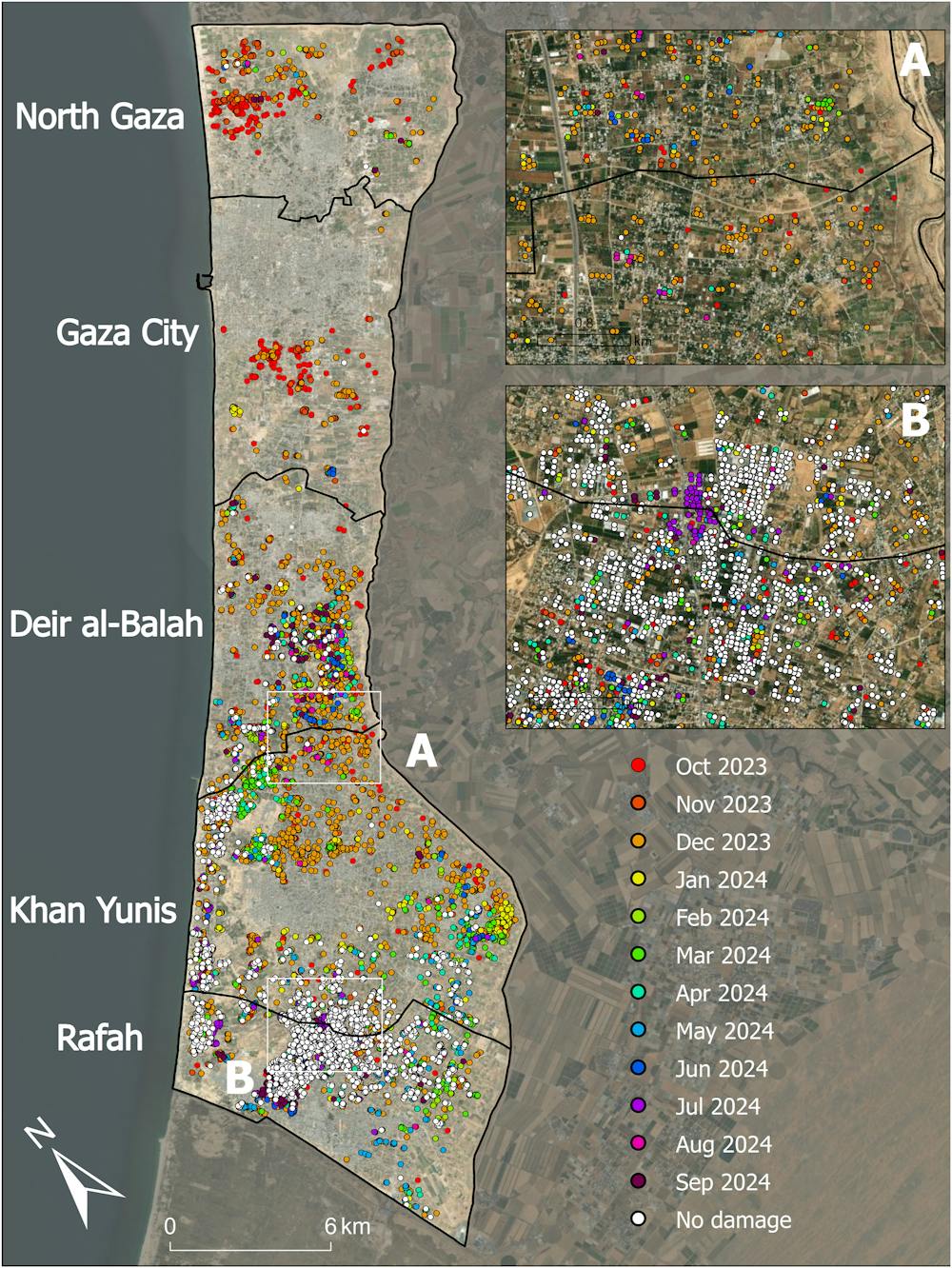
    Part of North Gaza in November 2023, and again in July 2024.

    SkySat imagery © 2025/Planet Labs PBC

    The ceasefire agreed between Israel and Hamas makes provisions for the passage of food and humanitarian aid into Gaza. This support is much needed given that Gaza’s agricultural system has been severely damaged over the course of the war.

    Over the past 17 months we have analysed satellite images across the Gaza Strip to quantify the scale of agricultural destruction across the region. Our newly published research reveals not only the widespread extent of this destruction but also the potentially unprecedented pace at which it occurred. Our work covers the period until September 2024 but further data through to January 2025 is also available.

    Before the war, tomatoes, peppers, cucumbers and strawberries were grown in open fields and greenhouses, and olive and citrus trees lined rows across the Gazan landscape. The trees in particular are an important cultural heritage in the region, and agriculture was a vital part of Gaza’s economy. About half of the food eaten there was produced in the territory itself, and food made up a similar portion of its exports.

    By December 2023, only two months into the war, there were official warnings that the entire population of Gaza, more than 2 million people, was facing high levels of acute food insecurity. While that assessment was based on interviews and survey data, the level of agricultural damage across the whole landscape remained out of view.

    Most olive and citrus trees are gone

    To address this problem, we mapped the damage to tree crops – mostly olive and citrus trees – in Gaza each month over the course of the war up until September 2024. Together with our colleagues Dimah Habash and Mazin Qumsiyeh, we did this using very high-resolution satellite imagery, detailed enough to focus on individual trees.

    We first visually identified tree crops with and without damage to “train” our computer program, or model, so it knew what to look for. We then ran the model on all the satellite data. We also looked over a sample of results ourselves to confirm it was accurate.

    Our results showed that between 64% and 70% of all tree crop fields in Gaza had been damaged. That can either mean a few trees being destroyed, the whole field of trees completely removed, or anything in between. Most damage took place during the first few months of the war in autumn 2023. Exactly who destroyed these trees and why is beyond the scope of our research or expertise.

    In some areas, every greenhouse is gone

    As greenhouses look very different in satellite images, we used a separate method to map damage to them. We found over 4,000 had been damaged by September 2024, which is more than half of the total we had identified before the start of the war.

    Greenhouses and the date of initial damage between October 2023 and September 2024.
    Yin et al (2025)

    In the south of the territory, where most greenhouses were found, the destruction was fairly steady from December 2023 onwards.

    But in north Gaza and Gaza City, the two most northerly of the territory’s five governorates, most of the damage had already taken place by November and December 2023. By the end of our study period, all 578 greenhouses there had been destroyed.

    North Gaza and Gaza City have also seen the most damage to tree crop fields. By September 2024, over 90% of all tree crops in Gaza City had been destroyed, and 73% had been lost in north Gaza. In the three southern governorates, Khan Younis, Deir al-Balah and Rafah, around 50% of all tree crops had been destroyed.

    Agricultural damage is common in armed conflict, and has been documented with satellite analysis in Ukraine since the 2022 Russian invasion, in Syria and Iraq during the ISIS occupation in 2015, and in the Caucasus during the Chechen wars in the 1990s and 2000s.

    The exact impact can differ from conflict to conflict. War may directly damage lands, as we have seen in Gaza, or it may lead to more fallow areas as infrastructure is damaged and farmers are forced to flee. A conflict also increases the need for local agricultural production, especially when food imports are restricted.

    Our assessment shows a very high rate of direct and extensive damage to Gaza’s agricultural system, both compared to previous conflict escalations there in 2014 and 2021, and in other conflict settings. For example, during the July-August war in 2014, around 1,200 greenhouses were damaged in Gaza. This time round at least three times as many have been damaged.

    Agricultural attacks are unlawful

    Attacks on agricultural lands are prohibited under international law. The Rome Statute of the International Criminal Court from 1998 defines the intentional use of starvation of civilians through “depriving them of objects indispensable to their survival” as a war crime. The Geneva conventions further define such indispensable objects as “foodstuffs, agricultural areas for the production offoodstuffs, crops, livestock, drinking water installations and supplies and irrigation works”.

    Our study provides transparent statistics on the extent and timing of damage to Gaza’s agricultural system. As well as documenting the impacts of the war, we hope it can help the massive rebuilding efforts that will be required.

    Restoring Gaza’s agricultural system goes beyond clearing debris and rubble, and rebuilding greenhouses. The soils need to be cleaned from possible contamination. Sewage and irrigation infrastructure need to be rebuilt.

    Such efforts may take a generation or more to complete. After all, olive and citrus trees can take five or more years to become productive, and 15 years to reach full maturity. After previous attacks on Gaza the trees were mostly replanted, and perhaps the same will happen again this time. But it’s for good reason they say that only people with hope for the future plant trees.

    Lina Eklund receives funding from the Swedish National Space Agency and the Strategic Research Area: The Middle East in the Contemporary World (MECW) at the Centre for Advanced Middle Eastern Studies, Lund University, Sweden.

    He Yin receives funding from NASA.

    Jamon Van Den Hoek receives funding from NASA.

    ref. Gaza: we analysed a year of satellite images to map the scale of agricultural destruction – https://theconversation.com/gaza-we-analysed-a-year-of-satellite-images-to-map-the-scale-of-agricultural-destruction-248796

    MIL OSI – Global Reports

  • MIL-OSI Global: Fines for term-time holidays are at record levels – this will further erode trust between parents and schools

    Source: The Conversation – UK – By Charlotte Haines Lyon, Associate Professor: Education, York St John University

    PeopleImages.com – Yuri A/Shutterstock

    Recently released government statistics show a record number of fines were given to parents for their children’s absence from school in 2023-24 in England. Of the 487,344 fines issued, 91% were for unauthorised family holidays.

    If these fines, known as fixed penalty notices, go unpaid or in some cases have been previously issued, parents are taken to court. In 2023-24, 28,296 parents were prosecuted over their children’s school attendance.

    Whether the fines have any effect on ensuring attendance is debatable. The figures show that thousands of parents are willing to book a term-time holiday anyway. But fines are certainly affecting the crucial relationship between schools and families.

    When I carried out my doctoral research between 2014 and 2016 on the relationships between schools and parents, these bonds were already quite fragile. People in my study argued that endless “dictats” from school built a “brick wall” rather than a partnership.

    Now, it’s likely that an increasingly strict application of attendance rules is further breaking down trust.

    Fines were first introduced by a Labour government in 2004 as a last resort to tackle truancy. In 2014, then education secretary Michael Gove widened the application of the fines. Local authorities were encouraged to use penalty notices for parents who took their children on holiday during school term time.

    Since Gove, education secretaries – including current education minister Bridget Phillipson – have insisted that every day matters in school, and that there are very few reasons to miss school. Holidays are seen as unacceptable.

    Since the pandemic, even more focus has been placed on attendance as persistent absence rates have increased.

    Trust between parents and school staff is very important.
    fizkes/Shutterstock

    Government statistics show a correlation between attendance and exam results. However, whether lower attendance causes lower results is difficult to prove, especially when factors such as poverty are taken into account.

    What’s more, when holiday absence has been analysed separately, this has not been found to have the same negative affect on achievement at school as other reasons for absence.

    The record number of fines issued last year came before new guidance was set in August 2024. Now, fixed penalty notices have risen from £60 to £80 for a first offence (if paid within 21 days) and to £160 for a second offence (if paid within 28 days). If parents receive two fixed penalty notices within three years, the next offence will result in prosecution. However, councils may choose prosecution earlier if they wish.

    Whereas previously there was more discretion and variance between authorities and schools, all headteachers must now consider the above approach if a child misses more than five days of school. It can only be assumed that the number of fines and prosecutions will increase.

    As a side-effect, we are seeing schools encouraged to clamp down on child illness for fear that parents are lying and are in fact on holiday. While government guidance says that in most cases a parent’s word should be enough evidence that their child is sick, it also states that evidence of illness should be requested in cases where there is “genuine and reasonable doubt about the authenticity of the illness”.

    This suggests that schools should be questioning their trust in their pupils’ parents. This is a fundamental break down of the school-parent relationship, not to mention a strain on NHS time.

    Why parents book term-time holidays

    Term-time holidays are often seen as a way for parents to book a cheaper break, as holidays are generally more expensive during school holidays. But, even leaving aside that many families may only be able to afford a holiday at all if it is taken in term time due to the cost of living crisis, the situation is more complicated.

    There are many reasons for taking holidays within school term time. Families might be visiting relatives overseas for a wedding, funeral or because of a family member’s terminal illness. Often, a school might grant one day of absence, but no more.

    Parents may be unable to take leave from work during school holidays as a result of the industry they work in. They may have family members who work away for long periods, and want to spend time together with the children when they return. They may have a child with particular needs who is unable to cope with busy holiday times, or children in different schools with different holiday periods.

    Relationship breakdown

    When a headteacher refuses to authorise such a holiday this leads to resentment from parents. Resentment like this may cause some to withdraw children from school and choose to home educate.

    There is some effort now for schools to offer support first before legal intervention for families who might have attendance issues for other reasons, such as emotionally based school avoidance. But there is little to no desire to work with families around their complex needs for holidays.

    Partnership with parents is often touted by schools as central to pupils’ wellbeing, progress and attainment. But the power in this partnership is often skewed towards the professionals.

    Parents and schools should work together for the good of children. This does not simply mean parents obeying schools; that is not a recipe for partnership. Instead, it means understanding the different contexts that families and teachers live and work in. If parent engagement is essential to wellbeing and school progress, it is not worth continuing down the road of alienation and punishment.

    Dr Charlotte Haines Lyon is affiliated with Labour Party and UNISON.

    ref. Fines for term-time holidays are at record levels – this will further erode trust between parents and schools – https://theconversation.com/fines-for-term-time-holidays-are-at-record-levels-this-will-further-erode-trust-between-parents-and-schools-249085

    MIL OSI – Global Reports

  • MIL-OSI Global: Trump’s Gaza and Ukraine plans come under the spotlight

    Source: The Conversation – UK – By Jonathan Este, Senior International Affairs Editor, Associate Editor

    Steve Bannon may no longer be in Donald Trump’s inner circle, but the newly reinstated US president appears to be adhering to a dictum the conservative disrupter-in-chief outlined back in 2018 as he reflected on his role in getting Trump elected the first time. “The Democrats don’t matter. The real opposition is the media. And the way to deal with them is to flood the zone with shit.”

    It’s fair to say that for the first two weeks of Trump’s second presidency the Democrats haven’t really mattered. But Trump and his advisers have got news organisations struggling to work out which way to look.

    In any normal news cycle, the appointment of vaccine-sceptic RFK Jnr. as health secretary would dominate the headlines, as would the successful installation of any of the more bizarre Trump cabinet picks. But at the same time the media has had to deal with a steady stream of other attention-grabbing announcements: the idea that the US could one way or the other acquire Greenland from Denmark, for instance, or the threats to use force to take control of the Panama Canal. We’ve had conflicting statements about how to end the war in Ukraine (more of which later) and the now you see them, now you don’t tariff threats against Mexico and Canada, not to mention the idea that the latter could be incorporated as the 51st state of the USA.

    The zone has been well and truly flooded. Meanwhile, the administration’s plan to take complete control of the civil service (which appears to be straight out of the Project 2025 playbook) has proceeded apace with career public servants being dismissed in their droves to make way for true Maga (Make America Great Again) believers in key roles. This, needless to say, has struggled for attention in light of all the eye-catching news stories.


    Sign up to receive our weekly World Affairs Briefing newsletter from The Conversation UK. Every Thursday we’ll bring you expert analysis of the big stories in international relations.


    This week’s big idea has to do with his vision for a post-conflict Gaza. Trump foreshadowed this plan last week when he announced he was talking with the leaders of Egypt and Jordan about resettling Gazans there – whether permanently or just for a period of reconstruction of Gaza was not clear, his statement was short on detail. But this week, hosting the Israeli prime minister in Washington (significantly the first foreign leader to visit since his inauguration), Trump expanded on his vision while Benjamin Netanyahu looked on approvingly.

    Initially, it appeared that Trump’s plan was for the permanent relocation of all 2.2 million Gazans to other countries while the Trump administration and its allies considered the considerable real estate investment opportunities presented by turning the 360km² Gaza Strip, with its 40km Mediterranean coastline into the “Middle East Riviera”. But as Simon Mabon notes here, administration officials were later quick to insist that the relocation would only last for as long as it takes to rebuild the stricken enclave.

    Mabon, professor of international relations at the University of Lancaster who specialises in Middle East politics, also notes that the proposal did what few other issues seem able to do: united the Arab nations in opposition. He also believes that while both Egypt and Jordan have signed peace deals with Israel, the relationship is often fractious and this latest announcement won’t have helped.

    Most importantly, perhaps, will be the reaction of Saudi Arabia. Israel (with Washington’s encouragement) has been pursuing normalisation of relations with Riyadh for some years. But the Saudi ruler, Crown Prince Mohammed bin Salman, has explicitly rejected “any attempts to displace the Palestinians from their land as well as affirming that relations with Israel would depend on the establishment of a Palestinian state.


    Read more:
    What Trump’s proposal to ‘take over’ Gaza could mean for Arab-Israeli relations


    It’s not the first time, by any means, that the idea of clearing Gaza of Palestinians has been mooted. It’s not even the first time that the real estate investment potential of such a plan has been discussed by a senior Trump official. Back in March last year, Jared Kushner, Trump’s son-in-law and former senior adviser who was the architect of Trump’s 2020 peace plan, talked up the idea of resettling Gazans in the Negev desert while noting that “Gaza’s waterfront property could be very valuable”.

    Israel’s far-right settler movement, meanwhile, has long yearned to empty out the strip. In December 2023 the leader of the Nachala Israeli settlement movement, Daniella Weiss, declared that Gaza City had always been “one of the cities of Israel. We’re just going back. There was a historical mistake and now we are fixing it.”

    The relocation of Palestinians outside Palestine was actually part of the founding mission of UN agency Unrwa – which, incidentally was banned by Israel last week and has been defunded by the US since allegations surfaced last year that a number of Unrwa employees had taken part in the Hamas attacks on October 2023.

    Anne Irfan of University College London, a specialist in refugees and displacement, and Jo Kelcey of the Lebanese American University, whose core research area covers the politics of education in marginalised communities such as Gaza, recount here that Unrwa was set up in 1949 following the Nakba (catastrophe) when more than 700,000 Palestinians were displaced in fighting before and after the foundation of the State of Israel.

    Unrwa was set up with the aim of resettling the displaced people and sponsoring projects that would create jobs and promote economic development in their new host countries: the “works” in the agency’s title.

    As Irfan and Kelcey note, the staunchest opponents of this plan were Palestinians themselves. They could read between the lines of this mission, that their exile was intended to be permanent. It was a non-starter and within five years of Unrwa’s establishment the resettlement policy was shelved in favour of a focus on education, which remains to this day.

    Not that Trump would be keen to associate any plan of his with Unrwa. In 2018 he fully defunded the agency, the first time a US president has done this. He has also more recently extended Joe Biden’s suspension of Unrwa funding after the allegations of Hamas infiltration and has made it clear he supports Netanyahu’s ban on the agency operating in Israel.


    Read more:
    Trump plans to ‘permanently resettle’ Palestinians outside Gaza – the very reason Unrwa was originally created


    Meanwhile, how would the Gaza plan sit in terms of Trump’s “America First” strategy? Mark Shanahan, of the University of Surrey, believes this is all part of what he refers to here as “Trumperialism”. It’s not so much America as the light on the hill, trying to find a way to fix global problems and seek peaceful solutions to dangerous and distressing conflicts. Rather, in this case at least, it sees Gaza as “an opportunity for American business to build wealth – the classic US economic hegemony of the populist America First political theory”.

    Rather than emulating the Marshall plan of what feels now like a more enlightened era, Trump’s plan for Gaza, at least as he laid it out after his meeting with Netanyahu, is more akin to the plan for the rebuilding of Iraq after the 2003 invasion, writes Shanahan. That is: US private funding for beachside condos and luxury developments while the countries to whom the displaced Palestinians are relocated would be expected to pay for the privilege.

    But Trump also hinted this might mean US boots on the ground in the Middle East, cautions Shanahan, adding that “delivering Mar-a-Lago on the Med may mean thousands of American combat troops deployed to Gaza for years at daily risk of death. How do main-street Americans benefit from that?”


    Read more:
    How Trump’s Gaza plan does – and doesn’t – fit in with his pledge to put America first


    And if you wondered whether – like so many of Trump’s big plans and executive orders issued since his second inauguration – the Gaza Riviera scheme might fall foul of the law, it would. As Tamer Morris –
    an expert in international law at the University of Sydney – explains, the US would require the consent of the Palestinian people to take control of Gaza. And this is not going to happen.

    Forced relocation is forbidden under the Geneva Conventions as is helping another state forcibly relocate people. It could also be interpreted as ethnic cleansing, as defined by the Commission of Experts report on the former state of Yugoslavia to the UN Security Council in 1994.


    Read more:
    Trump wants the US to ‘take over’ Gaza and relocate the people. Is this legal?


    Meanwhile in Ukraine

    Meanwhile, the US president has also been making noises about his ideas for bringing peace to Ukraine. The latest, aired this week, involved linking continuing US support with favourable concessions on Ukraine’s supply of rare earths and other strategic resources. Stefan Wolff, of the University of Birmingham, has been watching the diplomatic manoeuvrings around Trump, Putin, Xi and Ukraine since the war began nearly three years ago. In the past fortnight, he’s been looking at the prospect of a peace deal brokered by the US.

    Wolff thinks it unlikely that anything will be resolved in the foreseeable future beyond a ceasefire and freezing of the battle lines. And that’s not even much more than a distant possibility given that neither Kyiv nor the Kremlin seem to want this for reasons of their own.


    Read more:
    Trump’s vision of a peace deal for Ukraine is limited to a ceasefire – and it’s not even clear if Kyiv or Moscow are going to play ball


    The possibility of Europe bearing the burden of maintaining support to Ukraine without the US bearing the lion’s share of the burden also looks remote. Domestic politics in many EU member states is threatening the bloc’s unity – and, in any case, the ability of Europe to make up the shortfall caused by a possible US withdrawal of aid to Ukraine is distinctly doubtful. And unlikely improve any time soon.


    Read more:
    Ukraine: prospects for peace are slim unless Europe grips the reality of Trump’s world


    It appears, meanwhile, that Putin’s ally Kim Jong-un is poised to send another wave of North Koreans to help. Jennifer Mathers, of Aberystwyth University, takes a detailed look at what we know about how these troops have fared thus far. She concludes that, given the terribly heavy losses the North Korean units are reported to be suffering, it’s possible that their leader may be trading the high casualty rate for much-needed combat experience in case his army might want to fight in a conflict nearer to home.


    Read more:
    North Korea: Kim Jong-un is sending a second wave of soldiers to Ukraine – here’s why


    World Affairs Briefing from The Conversation UK is available as a weekly email newsletter. Click here to get our updates directly in your inbox.


    ref. Trump’s Gaza and Ukraine plans come under the spotlight – https://theconversation.com/trumps-gaza-and-ukraine-plans-come-under-the-spotlight-249311

    MIL OSI – Global Reports

  • MIL-OSI Global: Long COVID: women at greater risk compared to men – could immune system differences be the cause?

    Source: The Conversation – UK – By Helen McGettrick, Reader in Inflammation and Vascular Biology, University of Birmingham

    Women had a 1.3 times higher chance of developing long COVID than men. Daisy Daisy/ Shutterstock

    About 5% of people who catch COVID have long-lasting symptoms. In these people, loss of smell, dizziness, fatigue and other hallmark COVID symptoms can persist for months after the initial illness. Yet even five years after the COVID pandemic began, we still don’t know why some people develop long COVID and others don’t.

    But a recent study brings us a step closer to understanding who is at greatest risk of developing long COVID. The study found that women have a much higher risk of developing long COVID compared to men.

    Published in Jama Network Open, the paper investigated symptoms of long COVID in 12,276 adults. Each participant had had COVID at least six months earlier. Using a questionnaire, participants gave information on their current symptoms, allowing researchers to identify those with long COVID.

    While previous research has also uncovered a similarly increase long COVID risk in women, these studies had small sample sizes and didn’t consider certain factors that may have distorted the findings.

    The new study took these various factors into account in their analysis, including a participant’s age, race, vaccination status and whether they had any other health conditions. This allowed them to better calculate the risks of developing long COVID for men and women.

    Their results indicated that women had 31% higher chance of developing long COVID than men.

    When broken down by age, this difference disappeared in people aged 18-39. However, the risk was even greater in women aged 40-54, who had a 48% higher risk of developing the condition compared with men. Women over 55 had a 34% higher risk of developing long COVID.

    Interestingly, this finding is contrary to data on COVID infection severity, which shows men are more prone to developing severe symptoms. They also make up around two out of three COVID deaths.

    While researchers don’t currently know why women are at greater risk of long COVID, differences in the way men’s and women’s immune systems respond to COVID could be a factor.

    Immune differences

    The immune system is a fascinating, complicated system with many different types of cell, each of which has a specific role in fighting infection.

    For instance, B cells make antibodies that target infections, while non-classical monocytes regulate immune function and clear up dead and damaged cells. Our cytotoxic T cells kill virus-infected cells, while helper T cells help activate other immune cells and signal that there’s an issue.

    But the proportion and type of immune cells that circulate in the body can differ by sex and age.

    For example, older women have lower proportions of cytotoxic and helper T cells, higher percentages of activated B cells and a higher total number of non-classical monocytes compared to younger men and women.

    People with long COVID also have a higher number of non-classic monocytes and more activated B cells compared to those who didn’t have long COVID. Given that older women already have a higher proportion of these cell types even before an infection, it’s possible that this may explain why they were at the greatest risk of developing long COVID.

    The study found peri-menopausal women and women who had reached the menopause had the greatest risk of developing long COVID.
    Gladskikh Tatiana/ Shutterstock

    But these aren’t the only immune function differences in women that may account for their greater risk of long COVID.

    Women generally have a more intense immune response to infections than men – including against COVID. This more intense response can mainly be accounted for by differences in hormones and the fact that women have two X chromosomes.

    In particular, the hormone oestrogen plays a vital role in controlling the immune system. Oestrogen helps contribute to the enhanced immune response that occurs when a person develops an infection. The severe drop in oestrogen that occurs during the menopause may also explain why women are more susceptible to an infection and longer lasting diseases.


    Read more:
    How biological differences between men and women alter immune responses – and affect women’s health


    In this recent Jama study, peri-menopausal women and women who had reached the menopause were at greatest risk of developing long COVID. This suggests oestrogen may be a contributing factor.

    After fighting an infection, immune cells should die off – stopping prolonged, uncontrolled damage to the body. While the more intense immune response women have to an infection may be beneficial in reducing the initial severity of the COVID infection, this persistent, heightened immune response and any damage it causes to the body may increase the possibility of long COVID occurring.

    Such prolonged, higher intensity immune responses are known to promote the development of autoimmune diseases – where the body’s immune system attacks itself. Women have a higher prevalence of many autoimmune conditions, including rheumatoid arthritis, Sjogren’s and multiple sclerosis.

    Although COVID isn’t an autoimmune disease, autoantibodies (proteins released by B cells that attack the body’s own cells and tissues) have been found in people with long COVID. These antibodies promote long COVID symptoms. Possibly women are at greater risk of long COVID for the same reasons they’re at greater risk of developing an autoimmune condition.

    The findings from this recent study add to our understanding of long COVID – pointing to which groups are at greatest risk of developing the condition. More work needs to be done to explore differences in how long COVID differs based on sex and age – and the mechanisms that trigger long COVID to begin with.

    Through understanding the who and why of long COVID, it might allow for new treatments to be developed.

    Helen McGettrick receives funding from Medical Research Council, Wellcome Trust, Wellcome Leap, Helmsley Foundation and ROCHE. She is also an elected member of British Society of Immunology Congress Committee.

    Jonathan Lewis receives funding from the Wellcome Trust and the British Society of Immunology (CARINA).

    ref. Long COVID: women at greater risk compared to men – could immune system differences be the cause? – https://theconversation.com/long-covid-women-at-greater-risk-compared-to-men-could-immune-system-differences-be-the-cause-248700

    MIL OSI – Global Reports

  • MIL-OSI Global: Reading Whistler’s Nocturne in Blue and Gold – Old Battersea Bridge as a piece of music

    Source: The Conversation – UK – By Frances Fowle, Personal Chair of Nineteenth-Century Art, History of Art, University of Edinburgh

    Nocturne in Blue and Gold – Old Battersea Bridge by James Abbott McNeill Whistler (1872-5). Tate/Canva, CC BY-SA

    In 1877 the American artist James McNeill Whistler (1834-1903) achieved notoriety when he exhibited his recent views of the river Thames at the Grosvenor Gallery in London. He gave his paintings musical titles: Nocturne in Black and Gold – The Falling Rocket (1875) and Nocturne in Blue and Gold – Old Battersea Bridge (circa 1872-5).

    The view of Battersea Bridge includes Chelsea Church and the then newly constructed Albert Bridge. The lights of Cremorne Pleasure Gardens twinkle in the distance, while fireworks explode in the pale sky above.

    The painting is remarkable for its intense, light blue tonality suggestive of evening, the time of day sometimes known as “the blue hour”. Painting from memory, Whistler thinned his paint with copal (a tree resin), turpentine and linseed oil. This created what he called a “sauce”, which he applied in thin, transparent layers, wiping it away until he was satisfied. He left areas of the dark preparatory layer unpainted to create the illusion of the bridge. Inspired by Japanese woodblock prints, he exaggerated its height.


    This article is part of Rethinking the Classics. The stories in this series offer insightful new ways to think about and interpret classic books, films and artworks. This is the canon – with a twist.


    All this was lost on the critics, however. The author Oscar Wilde reviewed the exhibition and wrote that the Battersea Bridge Nocturne was “worth looking at for about as long as one looks at a real rocket, that is, for somewhat less than a quarter of a minute”.

    A few years earlier Whistler had exhibited another view of the Thames, Nocturne: Blue and Silver – Chelsea (1871), at the Dudley Gallery in London. The critic for The Times summed up Whistler’s intention, observing that the painting was:

    So closely akin to music that the colours of the one may and should be used, like the ordered sounds of the other; that painting should not aim at expressing dramatic emotions, depicting incidents of history or recording facts of nature, but should be content with moulding our moods and stirring our imaginations, by subtle combinations of colour.

    Arrangement in Gray: Portrait of the Painter by Whistler (1872).
    Detroit Institute of Arts

    Whistler’s paintings were first compared to music as early as 1863 when the French critic Paul Manz described his haunting portrait, The White Girl (1872), as a “symphony in white”. Whistler adopted the title retrospectively, creating a series of three aesthetic mood paintings or “symphonies”, featuring young women in flowing white dresses.

    Press and public alike were puzzled by the artist’s insistence that his paintings lacked any specific narrative or moral message.

    When he witnessed the abstraction of Whistler’s latest Nocturnes at the Grosvenor Gallery, the leading English art critic John Ruskin published a venomous review. “I have seen, and heard much of Cockney impudence before now,” he wrote, “but never expected to hear a coxcomb ask 200 guineas for flinging a pot of paint in the public’s face.”

    Whistler’s retort

    Whistler sued Ruskin for libel and used the ensuing two-day trial to defend his views on art. He referred to his paintings throughout proceedings in musical terms, as “arrangements”, “symphonies” or “nocturnes”. When asked what the Battersea Bridge painting was intended to represent, he replied:

    I did not intend it to be a ‘correct’ portrait of the bridge. It is only a moonlight scene … As to what the picture represents, that depends upon who looks at it. To some persons it may represent all that is intended; to others it may represent nothing.

    Whistler won the court case, but was awarded only a farthing in damages, resulting in his bankruptcy. Undaunted, the following year (1878) he published The Red Rag, in which he articulated his aesthetic theory:

    Art should be independent of all clap-trap – should stand alone, and appeal to the artistic sense of eye or ear, without confounding this with emotions entirely foreign to it, as devotion, pity, love, patriotism, and the like. All these have no kind of concern with it, and that is why I insist on calling my works “arrangements” and “harmonies”.


    Looking for something good? Cut through the noise with a carefully curated selection of the latest releases, live events and exhibitions, straight to your inbox every fortnight, on Fridays. Sign up here.


    In 1885 he delivered his, now famous, 10 o’clock Lecture. In it reiterated his aesthetic theory. “Nature,” he wrote, “contains the elements, in colour and form, of all pictures, as the keyboard contains the notes of all music”. He urged artists not to copy nature slavishly, as Ruskin had recommended, but to approach it more like a musician, waiting for that moment when:

    The evening mist clothes the riverside with poetry, as with a veil, and the poor buildings lose themselves in the dim sky, and the tall chimneys become campanili and the warehouses are palaces in the night, and the whole city hangs in the heavens, and fairy-land is before us.

    It is then, he argued, that nature “sings her exquisite song to the artist alone”.

    Beyond the canon

    As part of the Rethinking the Classics series, we’re asking our experts to recommend a book or artwork that tackles similar themes to the canonical work in question, but isn’t (yet) considered a classic itself. Here is Frances Fowles’ suggestion:

    Whistler was not the only artist of this period to view his art as the equivalent of music. His work anticipated symbolism, a literary and artistic movement that rejected naturalistic representation in favour of more abstract concerns, such as the connections between words, colours and musical notes.

    Mikalojus Čiurlionis and his 1908 painting, Stellar Sonata.
    Wiki Commons

    The relationship between colour, rhythm and sound was central to the work of French artist Paul Signac (1863-1935), who worked in a pointillist technique (applying dots of colour), and assigned his paintings opus numbers and tempos. The Lithuanian painter and composer Mikalojus Čiurlionis (1875-1911), too, fused music and colour and gave his artworks musical titles.

    Frances Fowle does not work for, consult, own shares in or receive funding from any company or organisation that would benefit from this article, and has disclosed no relevant affiliations beyond their academic appointment.

    ref. Reading Whistler’s Nocturne in Blue and Gold – Old Battersea Bridge as a piece of music – https://theconversation.com/reading-whistlers-nocturne-in-blue-and-gold-old-battersea-bridge-as-a-piece-of-music-241075

    MIL OSI – Global Reports

  • MIL-OSI USA: Governor Polis Celebrates Success of Digital Math Accelerator in Increasing Colorado Student Math Scores

    Source: US State of Colorado

    DENVER – Today, Governor Polis celebrated a year-one study demonstrating that students in Colorado who consistently used Zearn, an online digital math accelerator tool, saw   a positive  increase in math achievement scores. The study included over 6,000 students in Colorado ranging grades fourth through eighth. Zearn has been made available through a grant through  the Governors Emergency Education Relief (GEER) fund to provide statewide access to Zearn licenses for all elementary and middle schools in the state to increase math proficiency for the 2023-24 and 2024-25 school years.

    “In Colorado, We are taking an all-hands-on-deck approach to boosting student math achievement to make sure Colorado kids have the support and practice they need to excel in math. This past year, students across Colorado have benefited from access to high-quality digital platforms that have boosted math proficiency and helped Colorado students to learn and grow,” said Governor Polis.

    The study looked at a sample of 6,000 Colorado fourth through eighth grade students in key urban and rural districts comparing students who used Zearn consistently with matched peers who did not use Zearn. The study found that consistent use of Zearn across all student groups led to higher CMAS math achievement scores, with the most significant impacts seen among students with the lowest levels of math proficiency.  The study additionally highlighted that students utilizing Zearn three or more times a week saw the greatest impact on their CMAS scores.

    “As a nonprofit built by teachers, we know how committed Colorado educators are to helping kids catch up and move forward in math. We have been privileged to be able to support them in this effort,” said Zearn CEO and Co-Founder Shalinee Sharma.

    In 2023, Governor Polis announced a landmark investment into Zearn to provide math support and learning for students from kindergarten through eighth grade. Provided at no cost to schools and school districts statewide that opt-in to participate, this innovative and data-driven digital math platform includes free high-quality instructional materials, ongoing training for educators, and after-school tutoring resources for K-8 students. 920 schools across Colorado chose to opt-in to use Zearn Math for math acceleration, alongside teacher instruction.

    As Chair of The National Governors Association, Governor Polis launched “Let’s Get Ready: Educating All Americans For Success” focused on real solutions to ensure that students gain the skills needed to succeed in the classroom and beyond.

    ###

    MIL OSI USA News

  • MIL-OSI USA: 176 New Troopers Join the Ranks of the NYSP

    Source: US State of New York

    Governor Kathy Hochul joined Superintendent Steven G. James in honoring 176 new State Troopers as they graduated today from the 216th session of the Basic School of the New York State Police Academy. The ceremony was held at the Empire State Plaza Convention Center in Albany. Today’s graduation increases the State Police ranks to 5,034 sworn members.

    “I commend these 176 new troopers for dedicating themselves to public service, and their commitment to protecting the people of New York State,” Governor Hochul said. “The members of the New York State Police put their lives on the line each day to keep the rest of us safe — in a world where their mission has grown more challenging and complex. On behalf of all New Yorkers, I want to thank the graduates for their hard work and perseverance — and welcome them to the long gray line.”

    New York State Police Superintendent Steven G. James said, “Today’s graduation is the culmination of six months of difficult classwork, physical training, and sacrifice, and we now welcome our newest members to one of the most prestigious and well-respected law enforcement agencies in the nation. I am confident they are equipped to carry out our mission to serve our communities with the same professionalism and pride the State Police have exhibited for the past 107 years.”

    In addition to honoring all graduates from the 216th Session of Basic School,

    Superintendent James presented the following awards:

    Academic Achievement Award

    As a special incentive for all students attending the State Police Academy Basic School, the Superintendent sponsors the awarding of a firearm for the attainment of the highest level of academic performance during Academy training.

    The recipient of the Academic Performance Award is Clayton D. Buff, age 24, who resides in Cohoes, New York. He attended the University at Albany where he studied Criminal Justice. Prior to joining the New York State Police, he served 4 years of active duty with the United States Army. Throughout the Academy training program, he achieved an outstanding overall academic average of 96.58 percent. He will be assigned to Troop G.

    Firearms Proficiency Award

    The New York State Trooper Foundation has sponsored the awarding of a firearm for the attainment of the highest level of performance in all phases of firearms training.

    The recipient of the Superintendent’s Firearms Proficiency Award is Hunter T. Argetsinger, age 24, who resides in Elmira, New York. He is a graduate of Corning Community College where he received an associate’s degree in criminal justice. Prior to joining the New York State Police, he was a police officer with the city of Elmira Police Department. During firearms training, he achieved an average score of 250 out of a possible 250. He will be assigned to Troop E.

    Investigator Joseph T. Aversa Physical Fitness Award

    The New York State Police Investigators Association has sponsored the awarding of a firearm for the attainment of the highest degree of physical fitness during the Physical Training Program at the Academy. This award will be presented in memory of deceased Investigator Joseph Aversa. Investigator Aversa made the ultimate sacrifice in New York City on March 5, 1990, during a narcotics investigation while serving as a member of the Joint Drug Enforcement Task Force. Investigator Aversa was a six-year State Police veteran who believed that physical conditioning was an integral part of being a Trooper.

    The recipient of the Joseph T. Aversa Physical Training Award is Oliver P. Valenti, age 21, who resides in Clarence, New York. Prior to joining the New York State Police, he attended Hilbert College where he studied Forensic Science while employed with Wegmans Marketplace as a front-end coordinator. During the physical agility testing, he achieved the highest score of all 176 Members of the 216th Session, a tribute to his superb physical conditioning. He will be assigned to Troop A.

    I commend these 176 new troopers for dedicating themselves to public service, and their commitment to protecting the people of New York State.”

    Governor Hochul

    Student Representative

    The New York State Troopers Police Benevolent Association has sponsored the awarding of a firearm to the member of the class who is selected by his or her peers to represent them during these exercises. The PBA presents the award in memory of Trooper John J. McKenna IV, who was killed in action in 2006, while serving his country as a Marine in Iraq.

    The recipient of the Class Representative Award is Antonio M. Vecchio, age 21, who resides in Levittown, New York. Prior to joining the New York State Police, he attended Binghamton University where he studied Economics. He will be assigned to Troop C.

    The new Troopers will report for field duty on February 7 or February 10, depending on their platoon. For the following 10 weeks, the new Troopers will be evaluated under a field-training program supervised by senior Field Training Officers.

    Below is a complete list of graduates listed alphabetically (Troop assignments are pending):

    Last Name First Name Hometown
    Aguilar Magali Wallkill, NY
    Akande-Bowen Jared Queens, NY
    Balbuena Kelly Newburgh, NY
    Akhmedov Kairat Brooklyn, NY
    Argetsinger Hunter Elmira, NY
    Arndt Mitchell Mohawk, NY
    Ashby Tristan Syracuse, NY
    Baines Evan Merrick, NY
    Bartholomew Zoe Lake Pleasant, NY
    Bassiouni Omar Staten Island, NY
    Bektic Nedim Utica, NY
    Beltran Antonio Amsterdam, NY
    Boudreau Luc Warwick, NY
    Boul Rang Syracuse, NY
    Brennan Lauren Selkirk, NY
    Briggs Cynthia Hawthorne, NY
    Brownell James Geneva, NY
    Buck Aaron Houghton, NY
    Buff Clayton Cohoes, NY
    Bull Lance Queensbury, NY
    Bullo Silvano Fairport, NY
    Burns Mason Rome, NY
    Cahill Edward Massapequa, NY
    Canale Connor Amsterdam, NY
    Carnero Tello Glenn Bogota, NY
    Carr Jason Cortland, NY
    Carrillo Evan Bronx, NY
    Carron Sean Delhi, NY
    Cervantes Manuel Port Chester, NY
    Clarke Hannah South Glens Falls, NY
    Clarke Jakob Plattsburgh, NY
    Combs Jenna Warrensburg, NY
    Cosbert Stefan Freeport, NY
    Cox Tyler Schenectady, NY
    Cregin Ethan Staten Island, NY
    Curtin James Hicksville, NY
    Daley Keri West Henrietta, NY
    Dalrymple Scott Brewster, NY
    Dalrymple Shane Brewster, NY
    Deebs Andrew Hornell, NY
    Delaney Austin Neversink, NY
    Delfini Louis Staten Island, NY
    Derick Gavin Lindley, NY
    Diana Joseph Holland Patent, NY
    Disalvo Natalie Johns Island, NY
    Diaz Israel East Fishkill, NY
    Dieng Ngagne Bronx, NY
    Difusco Frank Poughquag, NY
    Diorio David Deer Park, NY
    Eldred Rebecca Clifton Park, NY
    Ellsworth Logan Matamoras, NY
    Fallon Hayley Long Beach, NY
    Fallon Thomas Kings Park, NY
    Faso Emma Clarence Center, NY
    Favreau Parker Plattsburgh, NY
    Feirabend Michael West Seneca, NY
    Fernaays Ryan Williamson, NY
    Finn Richard Pleasant Valley, NY
    Fitzsimmons Cody Dryden, NY
    Flocco Sophia Bronx, NY
    Fontus Angelo Brooklyn, NY
    Galanti Jillian Webster, NY
    Garcia Castrejon Luis Pine Plains, NY
    Gates Seth Elbridge, NY
    Gehrke Matthew Centerport, NY
    Gould Erin Astoria, NY
    Grant Ariel Carle Place, NY
    Hahn Richard Kings Park, NY
    Harrington Carson Jacksonville, NY
    Haynes Dylan Baldwin, NY
    Healey Trevor Perry, NY
    Heegan Christina Oneonta, NY
    Heras Nelson Jamaica, NY
    Hidalgo Christopher Queens Village, NY
    Holloway William West Hempstead, NY
    Ibrahim Maryam Williston Park, NY
    Ibrahim Mohamed Levittown, NY
    Ilahi Haider Brooklyn, NY
    Jansen Connor Horseheads, NY
    Jolly Kaitlyn Waterloo, NY
    Kalletta George Manorville, NY
    Komenda Kiersten Springville, NY
    Karam Michael Gansevoort, NY
    Khork Brennan Hornell, NY
    Knoop Dennis Queensbury, NY
    Koprivica Marko Blasdell, NY
    Kraft Joel Waterloo, NY
    Lamouree Grant Queensbury, NY
    Lask Michael Buffalo, NY
    Lawson Lance Valley Stream, NY
    Lazo Franklin Pleasantville, NY
    Letourneau Casey Constable, NY
    Lillis Abigail Angola, NY
    Locurto Madeline New Windsor, NY
    Manley Charles Buffalo, NY
    Marroquinn Kevin Lindenhurst, NY
    Mcdermott Dylan West Babylon, NY
    Meegan Liam West Seneca, NY
    Messina Sebastian Levittown, NY
    Milazzo Matteo Briarcliff, NY
    Miller Eric Medina, NY
    Murphy Rebecca Monroe, NY
    Monnin Daniel Buffalo, NY
    Moore Hunter Castorland, NY
    Morales Nicholas Staten Island, NY
    Moses Avery Fayetteville, NY
    Motler Katherine Glenmont, NY
    Morales Nickolas Binghamton, NY
    Mustafa Kamal Mohamad Ayyas Utica, NY
    Naum Caleb Brewerton, NY
    Nell Abigail Verona, NY
    Newburg V Louis Coeymans, NY
    Obrien Cade Gansevoort, NY
    Oconnor James New Paltz, NY
    Page Joshua Verona, NY
    Parga Erick Island Park, NY
    Parkhurst Kevin Ilion, NY
    Patti Victoria Buffalo, NY
    Pekoff Jeremy Bellmore, NY
    Pelaez Matthew Old Bethpage, NY
    Peters Henry Callicoon, NY
    Petfield Jacob Hawthorne, NY
    Petry Henry Chemung, NY
    Phillips Anaya Medford, NY
    Pindulic Amber Centereach, NY
    Quintero Josue Brooklyn, NY
    Quirk Timothy Centereach, NY
    Ramirez Evelin Carmel, NY
    Roush Hailey Mayville, NY
    Rath Nathaniel Newport, NY
    Robinson Shane Binghamton, NY
    Romero Lainez Bryan West Babylon, NY
    Rowe Jake Pleasant Valley, NY
    Rutkowski Jack Pine Bush, NY
    Ryan Allison Syracuse, NY
    Salvadori David Massapequa Park, NY
    Sarpong Joel Columbus, NY
    Sasso Mario Nanuet, NY
    Savino Nicholas Bellmore, NY
    Scoma Anthony Lancaster, NY
    Scordo Alex Middletown, NY
    Simon Nicole Howard Beach, NY
    Smoulcey Ryan Rome, NY
    Stephany Krista Buffalo, NY
    Streety Maxwell Orchard Park, NY
    Streety Mitchell Thornwood, NY
    Sustache Samuel Syracuse, NY
    Svitak Brendan Marcy, NY
    Sweet Jeffrey Petersburg, NY
    Szlamcynski Adam Star Lake, NY
    Taylor Grace South Kortright, NY
    Tejeda Francheska Buffalo, NY
    Thaureaux Alejandro Webster, NY
    Thompson Adam St Albans, NY
    Tommasone Daniel Schenectady, NY
    Trzaska Noah West Seneca, NY
    Twoguns Kristine Perrysburg, NY
    Valenti Oliver Akron, NY
    Valladares Steven Woodside, NY
    Vargo Quinton West Falls, NY
    Vasile Hudson Mount Morris, NY
    Vata Halit New York City
    Vecchio Antonio Levittown, NY
    Velez Diana Campbell Hall, NY
    Vogel Tanner Ilion, NY
    Volk III Robert Mechanicville, NY
    Wallace Connor Manorville, NY
    Weist Brockton Port Crane, NY
    White Alexander Schenectady, NY
    Willenbrock Derek Amityville, NY
    Winslow Hunter Canastota, NY
    Workman Daniel Groton, NY
    Young Tanner Camden, NY
    Yudchits Julia Herkimer, NY
    Zahin Md Muhaiminul New York City, NY
    Zambardino Nicholas Monroe, NY

    MIL OSI USA News

  • MIL-OSI Security: Lubbock Man Pleads Guilty to Cyber Stalking Ex-Girlfriend

    Source: Federal Bureau of Investigation (FBI) State Crime Alerts (c)

    An 29-year-old man who sent sexually explicit images of his ex-girlfriend to her father, brother, and employer pleaded guilty to cyberstalking, announced acting U.S. Attorney for the Northern District of Texas Chad Meacham.

    Huston Tyler McLearen, of Lubbock, was indicted in November 2024. He pleaded guilty Wednesday to cyber staking before U.S. Magistrate Judge Amanda “Amy” R. Burch.

    “Cyberstalking is a uniquely vicious crime with devastating impacts on its victims. And unfortunately, online intimidation and harassment can quickly escalate to physical violence,” said U.S. Attorney Chad Meacham. “We applaud this victim for pushing past her fear and shame and reporting her experience to law enforcement. The U.S. Attorney’s Office for the Northern District of Texas is proud to stand up for her.”

    “The defendant’s alarming behavior was countered by the bravery of his victim who so courageously reported him to law enforcement despite the threats he made to kill her,” said FBI Dallas Special Agent in Charge R. Joseph Rothrock. “The FBI and our law enforcement partners will continue to do everything in our power to seek justice for victims and their families, hold perpetrators accountable and protect others from harm.”

    According to court documents, in June 2024, Mr. McLearen’s ex-girlfriend – identified in court documents as Jane Doe – submitted a tip to the FBI’s National Threat Operations Center (NTOC) stating that Mr. McLearen had been harassing her, her family, her friends, and her work colleagues.

    During an interview with law enforcement, Ms. Doe said that after she broke up with Mr. McLearen and moved out of their shared apartment, he hounded her with texts and calls urging her to kill herself and threatening to share sexually explicit photographs of her online.

    Cell phone records confirmed that Mr. McLearen called the victim as many as 39 times per day.

    Ms. Doe showed officers social media profiles Mr. McLearen created to share lewd images of her with the public. Officers later uncovered posts in which Mr. McLearen claimed Ms. Doe was “looking for a  man that would pay for sex.”

    In a recorded phone call, Mr. McLearen admitted to an acquaintance that he also sent nude images of the victim to her own brother and father as well as her employer.

    In the same phone call, introduced into evidence at Mr. McLearen’s detention hearing, the defendant described women as devils who deserve to be tortured, killed, and raped, and remarked that if the conditions were right, he would kill Jane Doe.

    “It would be a bullet shot going through her window,” he said.

    Mr. McLearen now faces up to five years in federal prison. His sentencing date has not yet been set.

    The Federal Bureau of Investigation’s Dallas Field Office conducted the investigation with the assistance of the Texas Tech University Police Department. Assistant U.S. Attorney Stephen Rancourt is prosecuting the case.

    The National Domestic Violence Hotline urges victims of cyberstalking to implement a safety plan. For more information, click here or dial 1-800-799-SAFE (7233).

    MIL Security OSI

  • MIL-OSI USA: HSI Los Angeles, Cherry Hill, and Honolulu special agents arrest members of online neo-Nazi group on child exploitation enterprise charges

    Source: US Immigration and Customs Enforcement

    LOS ANGELES — On Jan. 30, Homeland Security Investigations (HSI) special agents, in coordinated operations in New Jersey and Hawaii, arrested two individuals on federal charges of participating in a neo-Nazi child exploitation enterprise that groomed and then coerced minors to produce child sexual abuse material and images of self-harm. The group allegedly victimized at least 16 minors around the world, including two in Southern California.

    Colin John Thomas Walker, 23, of Bridgeton, New Jersey, and Clint Jordan Lopaka Nahooikaika Borge, 41, of Pahoa, Hawaii, were arrested pursuant to a grand jury indictment charging them with one count of engaging in a child exploitation enterprise. They are expected to make initial court appearances later today in New Jersey and Hawaii. Two additional defendants, Rohan Sandeep Rane, 28, of Antibes, France, and Kaleb Christopher Merritt, 24, of Spring, Texas, were also charged in the indictment.

    “Sextortion and other forms of online child sexual abuse have tragically altered the trajectory of too many young lives and this group preyed upon the vulnerable to fulfill their sick and twisted desires,” said HSI Los Angeles Special Agent in Charge Eddy Wang. “HSI and our partners will work tirelessly to protect children from victimization in communities across the United States and around the globe.”

    From at least 2019 to 2022, Rane, Walker, Merritt and Borge were members of CVLT, an online group that espoused neo-Nazism, nihilism and pedophilia as its core principles. Members of the international enterprise engaged in online child sexual exploitation offenses and trafficked child sexual abuse material (CSAM). Rane, Walker, and Merritt acted as leaders and administrators in the CVLT enterprise, hosting and running CVLT online servers and controlling membership for the group.

    CVLT members worked collectively to entice and coerce children in the U.S. and around the world to self-produce CSAM on an online platform run by CVLT members where they groomed children for the eventual production of CSAM through various means of degradation, including exposing the victims to extremist and violent content. CVLT specifically targeted vulnerable victims, including ones suffering from mental health challenges or a history of sexual abuse.

    Victims were encouraged to engage in increasingly dehumanizing acts, including cutting and eating their own hair, drinking their urine, punching themselves, calling themselves racial slurs, and using razor blades to carve CVLT members’ names into their skin. CVLT members’ coercion escalated to pressuring victims to kill themselves on a video livestream.

    When victims hesitated, resisted or threatened to tell parents or authorities, CVLT members would threaten to distribute already-obtained compromising photos and videos of the victims to their family and friends. For victims who stopped participating in the CSAM, CVLT would sometimes carry through on their threats.

    Rane previously was charged with several child exploitation and related offenses in France and has been in French custody since 2022. Merritt is currently in Virginia state custody, serving a 50-year sentence for child sex abuse crimes committed in 2020 and 2021.

    If convicted, the defendants would face a 20-year mandatory minimum sentence and a statutory maximum sentence of life in prison.

    HSI Los Angeles, HSI Honolulu, and HSI Cherry Hill are conducting this investigation collaboratively with the Los Angeles Police Department, San Bernardino County Sheriff’s Office, Henry County Sheriff’s Office (Virginia), Iowa State University Police, Police Nationale (France), the National Crime Agency (United Kingdom), the New Zealand Department of Internal Affairs, and EUROPOL.

    HSI is a global leader in the fight against child exploitation and is committed to protecting children from exploitation by predators involved in the production, distribution, and possession of child sexual abuse material and travel in foreign commerce to engage in illicit sexual conduct with minors.

    Report suspected child exploitation to the HSI Tip Line at 877-4-HSI-TIP or through the CyberTipline on the National Center for Missing & Exploited Children’s website.

    Learn more about HSI’s mission to protect children in your community on X, formerly known as Twitter, at @HSILosAngeles. To learn how you can prevent online child sexual exploitation and abuse, visit https://www.Know2Protect.gov.

    MIL OSI USA News

  • MIL-OSI Global: Canadian supply chains are at the epicentre of Trump’s potential trade war

    Source: The Conversation – Canada – By Hassan Wafai, Associate Professor, Faculty of Management, Royal Roads University

    United States President Donald Trump has temporarily halted his trade war with Canada and Mexico, agreeing to pause his proposed tariffs for at least 30 days.

    Regardless of whether Trump will impose the tariffs once the 30 days are up, Canadian supply chains have become the epicentre of these looming disruptions. The country urgently needs to strengthen its supply chain resilience.

    If the tariffs were to go into effect, they would reshape the geo-political ecosystem of North America and beyond by disrupting global supply chains. These supply chains are a direct reflection of the geo-political ecosystem in which they operate, and they require stability to establish and thrive.

    With approximately $3.6 billion in trade crossing the U.S.-Canada border daily, a sweeping 25 per cent tariff on non-energy goods would have catastrophic effects on the Canadian economy, including shaving 2.6 per cent off Canada’s GDP.


    Read more:
    U.S. tariff threat: How it will impact different products and industries


    While the list of affected goods and services would be long, the auto industries are likely to be among the hardest hit sectors. Businesses on both sides of the border would be seriously hurt, including major U.S. automakers General Motors, Ford and Stellantis.

    The outlook is equally bleak for Mexico, where 83 per cent of exports go to the U.S.

    Canadian supply chain resilience

    Trump’s potential trade war represents an unconventional, top-down approach to redesigning North American supply chains, which took decades to establish. His aggressive trade policies are disrupting the status quo with devastating and irreversible effects.

    Canadian supply chains have historically been prone to major disruptions. Past responses to these disruptions have focused on helping firms build resilience. While this is important, insufficient attention has been given to establishing effective provincial and national governance structures to support and guide supply chain resilience.

    There is growing recognition that supply chain resilience should be addressed at the system level. This resilience emerges from both the actions of individual organizations and from the relationships and interactions between them.

    System-level supply chain resilience is influenced by governmental or regulatory bodies that set policies to manage long-term supply risks. These are known as governance structures or mechanisms.

    Canada’s long-term strategic response must go beyond helping Canadian companies integrate into alternative global supply chains outside the U.S. The country must also explore new governance structures that can strengthen the collective resilience of Canadian firms.

    Improving supply chain resilience

    Trump has been a destabilizing force for international trade and free trade agreements, particularly the Canada-United States-Mexico Agreement, which may have a shorter lifespan than initially agreed upon.

    One of the most effective ways for Canada to strengthen its supply chain resilience is to reduce its heavy trade reliance on the U.S., which can be done through free trade agreements. Despite this, Canada has been slow to diversify beyond the U.S., which remains its largest trading partner, accounting for 76 per cent of exports and 64 per cent of imports.


    Read more:
    Trump’s tariff threat is a sign that Canada should be diversifying beyond the U.S.


    Canada is currently part of 15 free trade agreements that collectively cover 61 per cent of the world’s GDP and provide access to 1.5 billion consumers globally. However, it’s not yet clear how free trade agreements can enhance supply chain resilience.

    Canada must look beyond its existing free trade agreements and pursue new markets such as the ASEAN (Association of Southeast Asian Nations) and the Pacific Alliance. Expanding into these regions would allow Canadian companies and supply chains to join global value chains, creating opportunities for knowledge spillovers and productivity boosts.

    As Canada diversifies its trade, it must do so with a supply chain mindset, carefully considering the implications of specific trade policies and how they will enhance the resilience of Canadian supply chains.

    Future free trade agreements should incorporate clear and specific clauses that anticipate disruptions and help with swift supply chain recovery. A prime example of such an agreement is the Indo-Pacific Economic Framework for Prosperity, which came into effect in October 2024.

    Beyond international trade, Canada should also eliminate interprovincial trade barriers to facilitate easier business operations across Canadian provinces and territories.

    Stronger supply chain governance

    More research is needed to determine exactly which governance structures should be put in place to support Canada’s supply chain resilience.

    The Canadian government may need to establish a multi-level governance structure encompassing sectoral, provincial and national levels, such as supply chain councils.

    Supply chain councils could connect supply chains with small and medium-sized enterprises, leverage existing networks, co-ordinate resilience strategies and address supply chain and trade policy issues of national significance.

    With Trump back in the White House, Canada must be prepared to protect its supply chains against an evolving trade war. Whether his policies are driven by his imperialist ideology, a protectionist agenda, border security concerns or the pursuit of more revenue from slapping tariffs on America’s closest allies, the threat to Canadian supply chains is real.

    To withstand these pressures, Canada must build resilience at the systemic level, where top-down governance ensures the private sector can respond quickly and effectively to disruptions. It is never too late to start, but waiting any longer is no longer an option for Canada.

    Juan Navarro is the president and principal researcher of CMX Partnerships, a business and research consultancy that provides advice and conducts studies for companies, institutions, and governments.

    Kimberly Tholl consults for Nexus Insights Consulting Ltd. and is a member of the non-profit Association for Supply Chain Management (ASCM).

    Hassan Wafai does not work for, consult, own shares in or receive funding from any company or organisation that would benefit from this article, and has disclosed no relevant affiliations beyond their academic appointment.

    ref. Canadian supply chains are at the epicentre of Trump’s potential trade war – https://theconversation.com/canadian-supply-chains-are-at-the-epicentre-of-trumps-potential-trade-war-248987

    MIL OSI – Global Reports

  • MIL-OSI Global: The hidden truth about migrant deaths at the Canada-U.S. border

    Source: The Conversation – Canada – By Julie Young, Canada Research Chair in Critical Border Studies and Associate Professor of Geography and Environment, University of Lethbridge, University of Lethbridge

    The return of Donald Trump as United States president has sparked new security measures along the Canada-U.S. border.

    After Trump threatened to slap tariffs on Canadian imports if irregular migration and illegal drugs were not curtailed, Canadian federal and provincial governments pledged new border enforcement resources. Trump may still go ahead with his tariff threats despite a reprieve.

    Research shows that tighter border policies don’t deter migration. Policing borders pushes migrants into more remote and dangerous crossing points, and difficult crossings lead migrants to rely more heavily on human smuggling operations. One outcome of heightened border security is clearly an increase in human suffering and death.

    Asylum-seekers from Congo cross the border at Roxham Road into Québec in February 2023 in Champlain, N.Y.
    THE CANADIAN PRESS/Ryan Remiorz

    Our work documenting deaths at the Canada-U.S. border shows that irregular crossings have taken the lives of at least 38 people. The actual number of migrant fatalities is likely much higher.

    We’re concerned that additional border security measures will lead to more danger and death for migrants attempting to cross between the two countries. Recent incidents lend weight to these concerns: one migrant died in a car chase with RCMP on Feb. 4, while another nine people were arrested as they tried to cross into Canada in dangerous winter conditions on Feb. 3.

    Crossing the Canada-U.S. border

    People from around the world cross the Canada-U.S. border daily. Most people enter Canada and the United States formally through official ports of entry. Still, some migrants also travel across the border, in both directions, without official permission.

    Because irregular border crossings are hidden by nature, we will never know how many people enter Canada or the U.S. unofficially. Agencies charged with border security track “encounters” and “apprehensions” in the U.S. and the “interception” of asylum-seekers in Canada. But there is no common measurement used to estimate irregular crossing in either country.

    Irregular border crossing cases are affected by policy changes in both countries. In recent years, they appear to have been affected by migrants’ perceptions of American immigration policy and changes to the Canada-U.S. Safe Third Country Agreement.


    Read more:
    Tragedies, not accidents: Tougher Canadian and U.S. border policies will cost more lives


    Death at the border

    Our research identified 15 deaths at the Canada-U.S. border between 2020 and 2023, and another 23 deaths going back to 1989. Given the lack of official records, the actual number is likely higher.

    We filed access-to-information requests on both sides of the border. The RCMP acknowledged just one death in Canada, and the U.S. Customs and Border Protection (CBP) produced no results. Instead, we systematically collected media reports on border deaths and analyzed that data.

    Roughly three-quarters of migrants whose deaths were covered in news reports were travelling towards the U.S. Their remains were mainly recovered on the Canadian side of the border.


    Read more:
    Roxham Road: Asylum seekers won’t just get turned back, they’ll get forced underground — Podcast


    Migrants face a range of dangers when crossing the Canada-U.S. border irregularly, but drowning represents the most significant threat, followed by hypothermia — 23 and six of the 38 recorded deaths, respectively.

    Three people died in encounters with border patrol agents, with two fatally shot on the American side and one dying in a car crash while being chased by Canadian agents.

    An RCMP officer stops people as they enter Canada via Roxham Road near Hemmingford, Que., hours after amendments to the Safe Third Country agreement enabled authorities to turn asylum-seekers away from unofficial border crossings.
    THE CANADIAN PRESS/Graham Hughes

    Invisible deaths

    Our requests for official data on border deaths in both the U.S. and Canada came up empty-handed. After more than a year and the conclusion of an independent complaint investigation into the RCMP’s lack of response to our Canadian request, we were provided with information on one single death. The request filed in the U.S. returned no information.

    Researchers in both countries regularly report frustration with slow processes and a lack of results from such requests.

    This experience led us to believe that border enforcement agencies do not track deaths along the Canada-U.S. border in either country. This is a problem. The public is left in the dark, while potential migrants are not provided with information about the dangers of irregular crossings.

    It is particularly odd that American authorities don’t provide information on deaths at this border, given that deaths along the U.S.-Mexico border are tracked and publicly reported.

    If there’s been a policy decision not to track deaths at the Canada-U.S. border, it reveals a lack of concern and a willingness to obscure the full picture from the public. Both the Canadian and American governments need to change their approach to documenting border deaths, detailing all known cases publicly.

    More death on the horizon

    Trump’s return to the American presidency might lead to an increase in irregular migration between Canada and the U.S. The Canadian government’s move to beef up border security enforcement, in turn, makes it more likely that migrants will perish after choosing dangerous crossing points.

    Even when migrants die amid human smuggling operations, a lot of the responsibility lies with government decisions.

    As Public Safety Canada warned in 2023, more difficult border crossings lead to increased criminality in human smuggling. Government decisions drive people away from safer crossing points and into the influence of criminal organizations.

    The governments of Canada and the United States have a moral obligation to inform the public about deaths — and do everything in their power to prevent further tragedies.

    Julie Young receives funding from the Canada Research Chairs Program.

    Daniel E. Martinez, Dylan Simburger, and Simon Granovsky-Larsen do not work for, consult, own shares in or receive funding from any company or organisation that would benefit from this article, and have disclosed no relevant affiliations beyond their academic appointment.

    ref. The hidden truth about migrant deaths at the Canada-U.S. border – https://theconversation.com/the-hidden-truth-about-migrant-deaths-at-the-canada-u-s-border-247782

    MIL OSI – Global Reports

  • MIL-OSI Global: Anti-LGBTQ+ policies harm the health of not only LGBTQ+ people, but all Americans

    Source: The Conversation – USA – By Nathaniel Tran, Assistant Professor of Health Policy and Administration, University of Illinois Chicago

    Courts across the nation are debating whether LGBTQ+ people should be protected from discrimination. Kevin Dietsch/Getty Images

    In 2024, state legislatures introduced an all-time record of 533 bills targeting LGBTQ+ populations. These policies create a patchwork of legal landscapes that vary widely between and within states, affecting aspects of everyday life ranging from how kids learn and play to where adults live and work.

    All of these policies have implications for the health of not only LGBTQ+ people but also the general public.

    I am a health policy researcher who studies how state and federal legislation affect public health. Research has shown that the social determinants of health – the opportunities and resources that affect how people live, learn, play, work and age – play a significant role in LGBTQ+ well-being. Newly published work from my colleagues and I show how anti-LGBTQ+ public policies can have lasting effects on everyone’s health.

    Existing policies and LGBTQ+ health

    Same-sex marriage provides a clear example of the direct and indirect ways public policies affect LGBTQ+ health.

    Most people in the U.S. have health insurance through their employer, which usually offers coverage for employees and their family, including a spouse and children. A landmark 2015 study found that health coverage significantly increased for adults in same-sex marriages after its legalization in New York state. After same-sex marriage was legalized nationwide, a follow-up study also showed an increase in health insurance coverage among gay and lesbian couples.

    Even among single LGBTQ+ people who did not get married, same-sex marriage may have also improved their health by improving social attitudes toward LGBTQ+ people overall. Researchers found that gay and bisexual men, regardless of whether they were single or married, spent less on medical visits, mental health visits and overall health care spending after Massachusetts legalized same-sex marriage in 2004.

    Massachusetts was the first state to legalize same-sex marriage.
    Victoria Arocho/AP Photo

    Access to gender-affirming care provides another example of how public policies affect the health of LGBTQ+ people.

    A 2020 national study of nearly 30,000 transgender and nonbinary people found that suicide attempts and mental health hospitalizations declined in states that passed policies requiring private insurers to equally cover services they already provide for cisgender people for transgender people. No other studies directly analyze how policies regulating access to care affect the health of trans and nonbinary people.

    However, a large body of clinical research supports the health benefits of gender-affirming care. A randomized clinical trial and prospective study found that starting gender-affirming hormone therapy reduced depression and suicidality in transgender and nonbinary people. Several recent systematic reviews analyzing 124 peer-reviewed studies conducted over the past 50 years also found that gender-affirming surgery and hormone therapy improved quality of life and mental health.

    Policies outside health affect LGBTQ+ well-being

    Policies outside of health care – such as nondiscrimination, education and workplace protections – also affect LGBTQ+ well-being.

    For example, transgender and nonbinary people living in states with policies that specifically include gender identity in hate crime and discrimination protections reported better mental health than those in states without protections. Similarly, LGBTQ+ students in schools with designated safe spaces reported lower rates of suicidal thoughts.

    However, the surge in anti-LGBTQ+ policies in the U.S., initially focusing on youth, has significantly increased polarization between and within states. For example, while 17 states have implemented guidances to make schools safer and more inclusive for transgender youth, 25 states have banned transgender youth from using bathrooms and playing on sports teams that align with their gender. Meanwhile, South Dakota and Missouri have enacted laws to preempt progressive schools and districts from adding LGBTQ+ student protections and supportive resources.

    The Trump administration is also actively targeting resources that support LGBTQ+ students by reducing funding to schools that offer these programs.

    Inclusive spaces can help support the health of LGBTQ+ students.
    Jessica Hill/AP Photo

    In 2020, the Supreme Court ruled 6-3 in Bostock v. Clayton County that federal sex-based nondiscrimination protections in the workplace included discrimination based on gender identity and sexual orientation. Researchers found that LGBTQ+ older adults with co-workers supportive of their gender and sexuality experienced less workplace conflict and cognitive health problems compared with those who did not.

    The Trump administration is working to restrict the scope of federal antidiscrimination protections to exclude LGBTQ+ people.

    Harms of emerging anti-LGBTQ policies

    Emerging anti-LGBTQ+ policies could also have consequences for large swaths of the population beyond LGBTQ+ people.

    In 2025, the Supreme Court will hear Braidwood v. Becerra, a case arguing that requiring employers to cover PrEP – a once-a-day pill that is highly effective at preventing HIV infection – as part of the insurance plan they offer employees violates their religious freedom. Texas District Judge Reed O’Connor agreed that mandating PrEP coverage requires the plaintiffs to “facilitate and encourage homosexual behavior.”

    O’Connor ruled in 2023 to overturn the Affordable Care Act’s requirement that insurers fully cover preventive care. He argues this can be done on the grounds that the U.S. Preventive Services Task Force – a group of physicians and researchers that evaluates the quality and efficacy of preventive services – is unconstitutional. This legal challenge puts free coverage of mammograms, vaccinations and other preventive services into limbo for millions of Americans.

    The Trump administration has taken down CDC pages providing information about HIV.

    The Trump administration has scrubbed federal web pages of resources, programs and documents that reference gender and LGBTQ+ people. This order includes removing datasets that have been continuously updated since the 1980s to track public health issues such as homelessness, bullying in schools, and smoking and drinking, likely because they include LGBTQ+ demographic information.

    The administration has also ordered federal health agencies to retract scientific research that may be inclusive of LGBTQ+ people by searching for specific keywords, such as “gender.” The National Science Foundation is also screening active scientific research projects that use words like “women,” “trauma” and “disability.” Removing this data not only hamstrings public health research and programming for LGBTQ+ populations, but also restricts it for all Americans.

    These decisions are in stark contrast to countries such as England, Wales, New Zealand and Australia, which have collected or are planning to collect LGBTQ+ demographic data as part of their national census. Including LGBTQ+ people in demographic data reflects best practices that were outlined in the Federal Evidence Agenda on LGBTQI+ Equity issued under the Biden administration. These guidelines have since been removed.

    Far-reaching consequences

    The rapid escalation of anti-LGBTQ+ policies in recent years is already taking its toll on youth, with negative news coverage of LGBTQ+ issues causing spikes in suicidal thoughts.

    These policies also have far-reaching consequences for the broader public. Rigorous and long-standing research demonstrates that LGBTQ+-inclusive policies support safer communities and stronger economies for everyone, while exclusionary laws worsen and limit access to essential services.

    Ongoing legal battles and policy shifts will shape the future of LGBTQ+ rights, with rippling effects on public health, workplace protections and health care access for all Americans.

    Nathaniel Tran does not work for, consult, own shares in or receive funding from any company or organization that would benefit from this article, and has disclosed no relevant affiliations beyond their academic appointment.

    ref. Anti-LGBTQ+ policies harm the health of not only LGBTQ+ people, but all Americans – https://theconversation.com/anti-lgbtq-policies-harm-the-health-of-not-only-lgbtq-people-but-all-americans-248992

    MIL OSI – Global Reports

  • MIL-OSI United Kingdom: UK project will improve livelihoods and climate resilience of communities in Alta Verapaz and the dry corridor

    Source: United Kingdom – Executive Government & Departments

    A three-year project will provide tools for families in climate sensitive areas to better plan the management of their landscapes and improve well-being of indigenous and ladino communities.

    Edwin Castellanos, Viceministro de Recursos Naturales y Cambio Climático; Juliana Correa, Embajadora del Reino Unido; Jeremy Haggar, Universidad de Greenwich

    The British Ambassador to Guatemala, Juliana Correa, and the Vice Minister of Environment and Climate Change, Edwin Castellanos, attended on 6 February in Chiquimula the launch of workshop for the project “Nature-based solutions for climate resilience of indigenous and local communities in Guatemala”, a UK Official Development Assistance (ODA) programme funded through the Global Centre on Biodiversity for Climate (GCBC) by the Department for Environment, Food and Rural Affairs (Defra) in the United Kingdom.

    The project has a duration of three years and will invest more than US$1million (£847,784) in communities in the Departments of Alta Verapaz and Chiquimula.  Activities on the ground will be implemented by the University of Greenwich, the Tropical Agricultural Research and Higher Education Centre (CATIE), the University of Valle of Guatemala (UVG), and the Federation of Cooperatives of the Verapaces R.L. (FEDECOVERA).

    The project aims to facilitate the integration of traditional and scientific knowledge about nature to plan a more climate-resilient landscape through the implementation of nature-based solutions. It will assess the effectiveness of different reforestation systems and their contribution to climate resilience; support indigenous and local communities to document their understanding of nature’s contribution to their livelihoods; and develop guidelines and tools for the co-design of nature-based solutions for climate resilience and justice at a multi-stakeholder level.

    In Alta Verapaz activities will focus on a high rainfall montane region populated by Q’eqchi’ communities whose main income sources come from cardamom, coffee and timber production. FEDECOVERA represents some 40,000 Q’eqchi’ families supporting their access to Fairtrade, Organic, and Forest Stewardship Council certified markets.

    Interventions in Chiquimula will cover the “dry corridor” populated with Maya Chorti and ladino communities near the border with Honduras and El Salvador. The project will identify with local communities how to improve environmental resilience to flooding and drought that affects traditional and commercial cropping systems. 

    The evidence collected will contribute to building capacity in local and national environmental planning processes, and environmental regulations and incentives adapted to the needs of local communities in Guatemala. Lessons from the application of these processes will be shared to inform climate change planning processes in the country and Central America.

    Juliana Correa, British Ambassador to Guatemala, said:

    A top priority of our Foreign Secretary is to support indigenous peoples’ rights and their role in protecting forests. The UK is committed to provide funding for nature, forests, and forest communities, particularly their livelihoods and their rights to protect that nature.  I’m looking forward to seeing the wider impact of this project in Guatemala.

    Updates to this page

    Published 6 February 2025

    MIL OSI United Kingdom

  • MIL-OSI United Kingdom: £1.3million investment could see improvements to parks, splash pools and sports facilities across Portsmouth

    Source: City of Portsmouth

    Portsmouth City Council’s administration has included a number of initiatives within its budget proposals, which it believes will enhance the quality of life for residents and visitors alike.

    Parks and open spaces are the green lungs of the city. Funding has been allocated to improve them, including a biological dredging project to remove sediment and improve water quality at Baffins Pond, a project many residents are keen to see. A two-year project to improve irrigation and biodiversity at Southsea Common, ensuring it remains a vibrant space for public events, will also get the go-ahead.

    Playing outdoors allows children to develop self-confidence, independence, fitness and self-esteem. If adopted, the proposals will enable the Council to continue the planned programme of renewal of play equipment across Portsmouth, in both parks and adventure playgrounds. In addition, the splash pools at Canoe Lake and Clarence Esplanade will be fully refurbished, and splash pools at four other sites will undergo relining.

    There is match funding for the Playzones project bid, which could see new multi-use games areas created at five sites across the city if the bid is successful. The £300k investment from the Council would then unlock £1.3m of funding from the Football Foundation towards the scheme. There is also money for enhancements to the city’s green infrastructure, which will help promote environmental sustainability.

    The city’s heritage is also recognised, with funding proposed for essential treatments to preserve key bronze statues, including the Grade II-listed Nelson statue, Queen Victoria, and Charles Dickens. The plans also include the installation of memorial plaques to honour the historic contributions and sacrifices made during World War II, as part of plans to commemorate the 80th anniversaries of VE Day and VJ Day.

    Cllr Steve Pitt, Leader of Portsmouth City Council, said:

    “Because of our prudent approach to the Council’s finances, we can make these commitments despite the funding issues affecting local authorities across the country. These investments reflect our commitment to maintaining and improving Portsmouth’s public spaces for future generations.

    “From playgrounds to historic statues, these projects will provide residents with enhanced recreational opportunities and will ensure the city continues to be a welcoming, vibrant, and inclusive place to live, work, and visit.”

    These proposals are in addition to the £20m invested into sports facilities across the city since 2017. There are future investments planned, including £22m towards creating a new hub in Bransbury Park, which will bring sports, swimming, and healthcare together, including a learner pool that can be utilised by many nearby schools.

    The council is also leading the renovation of Hilsea Lido, which is funded by the UK government and will open this year, 90 years since it first opened in 1935.

    These proposals are part of the Council’s capital budget, which can be used for major one-off projects and statutory improvements. The capital funding can’t be used for funding the ongoing delivery of council services such as pressures arising from temporary accommodation and social care.

    The budget proposals will be considered at the council’s Cabinet meeting on 11 February and if accepted will then go to the Full Council meeting on 25 February for approval.

    • The proposed locations for the Playzones project are Beacon View School, Stamshaw Park, Baffins Pond, Mayfield School and the Charles Dickens Centre.
    • The splash pools that would be relined are in Stamshaw, Buckland, Portsea and Paulsgrove.
    • The playgrounds that would receive new play equipment include Victoria Park, College Park, Southsea Common & Drayton Park.
    • The adventure playgrounds that would receive new play equipment are Landport, Somerstown, Portsea, Paulsgrove, Stamshaw and Buckland.
    • The budget papers are available here, and the appendices with a full breakdown can be found here.

    MIL OSI United Kingdom

  • MIL-OSI: Erin Lassel Joins First American Bank as Associate General Counsel

    Source: GlobeNewswire (MIL-OSI)

    MIAMI, Feb. 06, 2025 (GLOBE NEWSWIRE) — First American Bank is proud to announce that Erin Lassel has joined the bank as Associate General Counsel. With over 10 years of experience in commercial real estate law, Erin will play a pivotal role in advancing the bank’s strategic initiatives, joining the broader Legal team that supports the bank’s diverse markets across Illinois, Florida, Wisconsin, and beyond.

    As the bank grows its presence in South Florida, Erin’s legal expertise will be instrumental in addressing complex challenges and ensuring the bank’s operations align with the evolving needs of its regional, national, and global customer base.

    “Joining First American Bank is an exciting opportunity to contribute to the bank’s commitment to excellence and customer-focused solutions,” said Erin Lassel, Associate General Counsel. “I look forward to leveraging my legal expertise to help shape the future of the bank, support its growth, and champion the delivery of innovative financial services to our customers.”

    Christine Childers, Deputy General Counsel at First American Bank, added, “Erin’s extensive experience in commercial real estate law and her leadership skills make her a strong fit for our team. Her expertise will be invaluable as we expand our South Florida operations and strengthen our market position.”

    Before joining First American Bank, Erin was a partner at Katz Barron in Coral Gables and Fort Lauderdale, where she represented clients across Florida in real estate and business transactions. She earned her Juris Doctor (J.D.) magna cum laude from Florida International University, ranking in the top 10% of her class, and served as Executive Symposium Editor for the Florida International University Law Review. Erin also holds a B.A. in Accounting, summa cum laude, from the University of Miami.

    “We are pleased to welcome Erin to the team,” said Brian Hagan, Florida Market President at First American Bank. “Her distinguished legal background, combined with her leadership and knowledge of the South Florida market, makes her an invaluable addition as we continue to expand our footprint in the region and build on our reputation for excellence.”

    First American Bank is a Member FDIC.

    Contact:
    Teresa Lee 
    305-631-6400 
    tlee@firstambank.com

    The MIL Network

  • MIL-OSI United Kingdom: How Yeomadon Farm used EWCO funding to create woodland

    Source: United Kingdom – Executive Government & Departments

    Case study

    How Yeomadon Farm used EWCO funding to create woodland

    Yeomadon Farm used their England Woodland Creation Offer (EWCO) funding to improve the landscape for business and recreation.

    Yeomadon Farm has been in Rob Moore’s family since the early 1900s and has seen a range of uses, including dairy, beef farming and a successful holiday cottage business.

    More recently, Rob and his wife Catherine have replaced their cattle with trees. They want their land to be more compatible with their holiday cottage enterprise by reducing heavy machinery around the cottages and, in time, to provide a woodland for the guests to enjoy.

    Conifer saplings grow on the the newly planted site at Yeomadon Farm. Copyright Yeomadon Farm.

    Yeomadon Farm facts

    • location: Devon / Cornwall county border
    • size: 18 hectares
    • type: conifer woodland with broadleaf edges
    • species: Sitka spruce, lodgepole pine, Norway spruce, western red cedar, hazel, silver birch, sessile oak, common alder and wild cherry
    • date planted: February 2022
    • grant: England Woodland Creation Offer (EWCO)
    • main objective: to improve the landscape to complement an existing holiday cottage business

    Moving towards forestry

    While Rob and Catherine didn’t have any prior experience of forestry, the family didn’t let this stand in their way. They chose to create woodland to complement their already thriving holiday cottage business, which has a focus on nature-based activities, such as fishing and local walks.

    They will also be looking for the woodland to generate income for them in the future.

    Rob Moore, owner of Yeomadon Farm, said:

    Our initial thought was if we could turn this agricultural land into forestry without it costing us anything, then we’ll be happy.

    Financially supported woodland creation

    After first hearing about the England Woodland Creation Offer (EWCO) in the Mole Valley newsletter, Rob and Catherine were keen to explore using their land to create woodland. They had some initial conversations with land agent Pryor and Rickett Silviculture about what this might look like, including which fields they had earmarked for planting.

    Their agent managed the woodland creation process from initial site visits, arranging involvement from a Forestry Commission woodland officer and the completion of the EWCO grant application, through to sourcing and planting the saplings.

    For Rob and Catherine, this process was really positive. They felt having an agent to guide them through the grant application was invaluable and made the financial side of the process much more straightforward.

    The scheme was eligible for an ‘additional contribution’ for water quality, a one-off payment available through EWCO where a woodland’s location and design deliver public benefits. In this case, for promoting drainage for the site’s waterlogged soils.

    The agents, along with the local woodland officer, helped Rob and Catherine select which trees to plant. This decision was largely based on what would be most suitable for the ground, which tends to get water-logged. They also wanted to ensure a mix of species to offer resilience against our changing climate and the threat of pests and diseases.

    The centre of the woodland is made up of Sitka spruce, Norway spruce, lodgepole pine and western red cedar, with a surrounding ring of mixed native broadleaf species close to the fishing lakes. The agents arranged contractors to hand plant 33,000 trees, which took 3 weeks.

    Rob and Catherine Moore with a conifer sapling planted at Yeomadon Farm. Copyright Yeomadon Farm.

    Catherine Moore, owner of Yeomadon Farm, said:

    We didn’t need to do anything. If we had to do the whole process all by ourselves, we wouldn’t have known where to start!

    Saving costs during the establishment process

    Rob and Catherine were able to make savings by doing much of the maintenance work themselves. Rob sprayed the surrounding ground around the new trees, which ensured growth wasn’t hampered by the grass or weeds. The process took him 8 days and saved on the expense of additional labour costs.

    Similarly, they put in the fencing themselves. They used a total of 1,800 metres of deer fencing and gates, with additional rabbit netting. As the woodland grows, they will seek additional advice on how it can provide further income. For now, they both agree that it stacks up financially.

    Deer fencing with rabbit netting to protect the new saplings. Copyright Yeomadon Farm.

    Benefits for nature, people and the planet

    Rob and Catherine have noticed some additional benefits to the wildlife and biodiversity of the area. They stated that “it may be that we’re just noticing the wildlife more than we used to, or that it’s flourishing now that we’re disturbing the land less, but we don’t remember seeing sparrowhawks before!” In addition, the woodland will, in time, be open for the guests at the holiday cottages to enjoy.

    The Yeomadon Farm scheme was celebrated in the Devon Woodland Awards ‘New Woodland on Farm’ category, where Rob and Catherine won silver. The judges praised the scheme and the ingenuity in designing and using specialist equipment for planting and maintenance.

    Top tips

    1. Consider using an agent. Rob and Catherine were completely new to forestry when they started on this journey and found it invaluable having an agent to navigate them through the process.

    2. Don’t underestimate the labour required in getting the scheme up and running. Factor these costs into your planning as they could make a big difference.

    3. Think about planning ahead. Work out how to manage the grass and what machinery you might need as these could all add up in terms of cost and overall finances.

    4. Consider your financing options in the short-term to cover the up-front costs of planting your new woodland. This is because EWCO payments are received once all capital work has been completed and evidence is reviewed.

    You can also see the brochure version of this story: Yeomadon Farm: woodland creation case study (PDF, 14.9 MB, 4 pages).

    Read more about woodland creation and tree planting grants.

    Updates to this page

    Published 6 February 2025

    MIL OSI United Kingdom

  • MIL-OSI United Kingdom: A926 Emergency Gas Repair Works

    Source: Scotland – City of Perth

    Due to emergency gas repair works, it has been necessary to close a 420-metre section of the A926 to all traffic between Rattray and Alyth at Pictfield, from 9.30am on Thursday 6 February 2025 until such times as the repairs are completed by SGN.

    Vehicles will be diverted during the closure via the A93, A923, A94 and B954. Emergency service access will be maintained throughout.  

    Unfortunately, the closure will have a significant impact on local Stagecoach bus services 57 and 57A.  Dundee and Perth bound services will operate to/from Blairgowrie Wellmeadow and will not operate via Rattray, New Alyth, and Alyth.  The operator has advised it will only be able to offer a limited shuttle bus service for Alyth to link passengers with services which will be diverted via Coupar Angus and Meigle during the closure. As a result, there will be no early morning commuter journeys or late evening service available. Please see the shuttle bus timetable (PDF, 110 KB) for further details. 

    A number of school transport contracts will also be affected, as outlined in the table below: 

    Contract 

    Revised Operation  

    XBG/003 (Stagecoach): Alyth (Fire Station) – New Alyth – Blairgowrie High School 

    Contract will operate New Alyth (0810-15) – Alyth Fire Station (0820) then diversion route via B954 – A94 – Coupar Angus – A923 to/from Blairgowrie High School. 

    XBG/004 (Stagecoach): Alyth Square – Blairgowrie High School 

    Contract will operate from Alyth Square (Usual pickup time, will be monitored if time change is required) then diversion route via B954 – A94 – Coupar Angus – A923 to/from Blairgowrie High school. Feeder contracts ABG/001 & ABG/002 (KM Taxis) will be revised to meet any change to connecting times. 

    XBG/005 (Stagecoach): Alyth – Rattray – Blairgowrie – St Johns Academy 

    Alyth will not be served, and contract will commence from Rattray Cross (0747). Alternative arrangements have been made for pupils from Alyth on Contract XSB/011 departing Alyth Square (0740). 

    XBG/011 (Smith and Sons): Meigle – Alyth – A926 – St Stephens Primary School 

    Contract will operate A926/Thorn Farm road end – Alyth – Meigle – then diversion route via B954 – A94 – Coupar Angus – A923 to/from St Stephens Primary School. Operator/Driver to liaise with parents regarding any revised pick-up times. 

    Service 57 (Stagecoach): Dundee – Alyth – Rattray – Blairgowrie (High School) – Perth  

    Service will not operate between Meigle (0814), Alyth (0823) & Rattray for Blairgowrie High School (0850). Pupils from Alyth are requested to travel on the Contract buses they are allocated to. 

    Last modified on 06 February 2025

    Share this page

    Print

    MIL OSI United Kingdom

  • MIL-OSI Economics: Samsung Pledges $1 Million for LA Wildfire Relief

    Source: Samsung

    Samsung Electronics America today announced a $1 million commitment in product donations to support relief and recovery efforts for communities impacted by the devastating wildfires in Los Angeles.
    Through strategic partnerships with Habitat for Humanity of Greater Los Angeles, Team Rubicon and the Los Angeles Unified School District Education Foundation, Samsung aims to deliver both immediate relief and long-term rebuilding support to affected families and communities. Recognizing that recovery will be a long and challenging process, Samsung is committed to being there today and throughout the journey ahead, providing sustained support to ensure these communities have the resources they need to rebuild and thrive in the years to come.
    Immediate and Long-Term Support Initiatives
    Samsung’s commitment will focus on three key areas of impact to support wildfire recovery:
    Home Appliances to Rebuild and Restore – Samsung will donate essential home appliances through Habitat for Humanity of Greater LA to support families as they move back into their homes and others as they rebuild. This short and long-term emergency response initiative is dedicated to aiding wildfire survivors, with a focus on those who are uninsured, underinsured or have limited incomes. These appliances will be critical in helping households restore their homes and begin their recovery, providing immediate relief and long-term stability in the wake of disaster.
    Empowering Education & Digital Access – In partnership with the Los Angeles Unified School District (LAUSD) Education Foundation, Samsung will provide PCs, tablets and other tools to students and teachers, ensuring education continues without interruption despite the crisis. The Foundation collaborates with LAUSD to serve over 500,000 students, many of whom are in communities most impacted by these disasters. By supplying these devices, we are not only minimizing disruptions but also reinforcing the district’s ability to maintain continuity in learning, offering students the resources they need to stay engaged and succeed. This initiative is a crucial step in building long-term educational resilience for these students, supporting both their immediate needs and their future potential.
    Supporting Volunteers in the Field – Samsung will equip Team Rubicon, a veteran-led organization that serves before, during and after disasters, with advanced communication devices to ensure seamless coordination in the field. These tools will amplify the effectiveness of Team Rubicon’s efforts, enabling close collaboration with government agencies, LA fire, local emergency managers and more than 200,000 local volunteers across California. By empowering their response teams, Samsung is helping drive more efficient, hands-on recovery in the communities that need it most.
    “At Habitat for Humanity of Greater Los Angeles, we believe that a home is the foundation for a better future,” said Erin Rank, President and CEO, Habitat for Humanity of Greater Los Angeles. “Recovering from a disaster of this scale is a long road, and we are grateful for Samsung’s support in providing families with essential resources so they can rebuild with strength, stability and hope for the future.”
    This initiative underscores Samsung’s longstanding commitment to supporting communities during times of crisis, including our own employees who have been impacted in the area. The company continues to ensure that residents, first responders and non-profit organizations have the technology and resources needed for recovery. Samsung is proud to stand alongside its charitable partners and volunteers as they assist those impacted by natural disasters.

    MIL OSI Economics

  • MIL-OSI Global: Loving the world could address the climate crisis and help us make sense of changes to come

    Source: The Conversation – Canada – By Barbara Leckie, Professor, English and the Institute for the Comparative Study of Literature, Art, and Culture; Academic Director, Re.Climate: Centre for Climate Communication and Public Engagement, Carleton University

    This January, the world watched as Los Angeles burned. “I’ve never seen anything like this,” one police chief told reporters, a sentiment echoed by front-line firefighters.

    Last fall, hurricanes Helene and Milton swept through North Carolina and Florida.

    The storms’ intensity and record-breaking fatalities, exacerbated by climate change, blindsided many inhabitants. “Never in a million years,” one nurse said, “did I think [a storm like that] would happen in my own backyard.”

    As a researcher focused on how language and storytelling contribute to social cohesion and social change, I noticed people repeatedly felt they had “no words to describe” what they saw.

    Their experience captured what happens when stories and words to fail describe our world.

    ‘Between past and future’

    After the Second World War, for example, philosopher Hannah Arendt, born into a German and Jewish family, wrote about not just the impact of the war on a personal level, but also its impact on how people make meaning.

    What did it mean, Arendt asked, not to have the conceptual frames through which the world had once made sense? What did it mean to live in the strange interval of time “between past and future” when old forms of understanding the world had eroded and new forms had not yet been found?


    Read more:
    Hannah Arendt wanted political thinking to be urgent and engaged. She is a philosopher for our times


    Her response was bracing and unexpected. She called for everyone — not just philosophers or scholars but the general public as a whole — to step up and contribute to the work of making meaning at a time when meaning-making was grievously fractured. Her phrase for this was amor mundi or “for love of the world.”

    Now, as many people seek to understand and respond to the climate crisis, they are again experiencing a sense of personal loss and a larger sense of not having the conceptual tools to make sense of this moment. How does one love the world in difficult times?

    Learning to love the world

    Love is complicated and messy. Like hurricanes and fires, it often defies the categories available to describe it.

    Hannah Arendt, seen here in 1958, wrote about making meaning for the love of the world.
    (Barbara Niggl Radloff/Wikipedia), CC BY-SA

    And as Stephanie Lemenager, professor in American literature and environmental studies, illustrates, love of fossil fuel culture, and the conveniences it provides, makes it difficult to respond to the climate crisis.

    Love also evades measurement, and metric-oriented value structures can’t count it. As William Shakespeare asks, tragically, in King Lear: “How does one measure love?

    Love won’t run out in 2030 or 2050. It doesn’t have a parts per million, and despite the many hot and cold words to describe it, it doesn’t have a temperature. Still, as climate emotions professor Sara Jacquette Ray notes, love of this world powers climate action.

    I was talking to a friend recently, the Canadian poet Ken Victor, and he suggested “giving priority to the climate crisis as a multi-faceted relationship to be repaired rather than as a problem to be solved.” Indigenous thinkers like Leanne Betasamosake Simpson,
    the renowned Michi Saagiig Nishnaabeg scholar, also emphasizes “deep reciprocity” and “relationship” to resist the injustices imposed by colonialism.

    Global North climate responses have much to gain from Indigenous thinking and Arendt, of course, is not alone in animating the power of collective, participatory storytelling and loving the world.

    Learning to ‘restory’ the climate

    The idea of “restorying” has been taken up by Indigenous writers to speak in diverse and powerful ways to dynamic and relational forms of oral storytelling, leadership and theatre.

    Walter Benjamin wrote that the trauma of war weakened the stories his world relied upon for coherence.
    (Wikipedia)

    My research on time and climate develops German Jewish philosopher Walter Benjamin’s relevance to storytelling, and what I am calling “restorying” here.

    Like Arendt, Benjamin wrote that the trauma of war — in this case, the First World War — weakened the stories upon which his world relied for social coherence. Where Arendt suggests loving the world, Benjamin endorses amplified, dynamic forms of storytelling.

    Here I build on the tradition from Benjamin to Arendt that invests in the collective practice of making sense of the world one inhabits through sharing, revising and building stories. For Benjamin, stories are in dialogue with other stories; they are participatory and inconclusive. They are also “effective,” meaning they produce effects and invite a response. Above all, they are meant to be repeated and passed on.

    Benjamin’s account of stories, however, also includes a cautionary note: people stop telling stories, as he defines them, when the world no longer fills them with wonder or surprise; when they think they know where they stand. They stop asking questions and no longer believe they can benefit from sharing their dilemmas and concerns with others. They stop thinking, in Arendt’s sense.

    When people isolate themselves in silos of like-minded others, they avoid being challenged or provoked. As Arendt notes, facts are fragile. When lies proliferate and the ability to distinguish those lies from factual truth is eroded, reality wobbles and political action becomes near impossible.

    People can’t act, Arendt believes, when they stop sharing a world in common, however divided by different customs it will always be.

    Relationship rebuilding

    Environmental justice asks us to rethink the systems and practices that created today’s climate impacts. Addressing the climate crisis only from the perspective of a problem to be solved means that we continue on the path, and with the infrastructure, that created the problem in the first place.

    Now, poised between another past and future, I’m interested in, as writer and activist Astra Taylor puts it, “coming together as things fall apart.” Coming together, as a relational practice, can animate what’s missing in the problem-solution models that dominate Global North responses to the climate crisis.

    Arendt and Benjamin offer me stories that “work” and stories that “wonder.”
    Stories that “work” mobilize equitable climate action. Stories that “wonder” are stories that keep open questions, conversation and thinking.

    As international assemblies like COP29 fail to realize their goals, as global carbon emissions continue to rise and as extreme weather everywhere makes many people feel that the frameworks available for understanding no longer serve them, a different response is required. We could call it, following Arendt and Benjamin, restorying the climate and loving the world.

    Barbara Leckie receives funding from SSHRC.

    ref. Loving the world could address the climate crisis and help us make sense of changes to come – https://theconversation.com/loving-the-world-could-address-the-climate-crisis-and-help-us-make-sense-of-changes-to-come-240766

    MIL OSI – Global Reports

  • MIL-OSI USA: NEWS: Sanders, Murray, Baldwin, Scott, DeLauro Demand Answers on Trump’s Plans to Dismantle Education Department

    US Senate News:

    Source: United States Senator for Vermont – Bernie Sanders

    WASHINGTON, Feb. 6 — Sen. Bernie Sanders (I-Vt.), Ranking Member of the Senate Health, Education, Labor and Pensions (HELP) Committee, alongside Sens. Patty Murray (D-Wash.), Vice Chair of the Senate Appropriations Committee, and Tammy Baldwin (D-Wis.), Ranking Member of the Senate Appropriations Subcommittee on Labor, Health, and Human Services, and Education, and Reps. Bobby Scott (D-Va.), Ranking Member of the House Committee on Education and Workforce, and Rosa DeLauro (D-Conn.), Ranking Member of the House Appropriations Committee, sent a letter warning against the Trump administration’s reported plans to unilaterally dismantle the Department of Education. The lawmakers asked the acting Secretary of Education for answers on recent actions taken by the Trump administration to put federal workers on administrative leave, coerce employees into leaving their jobs, provide access to students’ sensitive data, and illegally freeze vital funding.

    “Over the course of two weeks, the Trump Administration issued sweeping executive orders and sought to broadly and illegally freeze federal financial assistance,” wrote Sanders and the lawmakers. “Federal employees have been targeted, in some cases for simply following the law. Elon Musk is attempting to shut down the work of entire agencies while gaining access to some of the federal government’s most far reaching and sensitive data systems. Media reports indicate a similar effort may be underway at the Department of Education.” 

    “We will not stand by and allow this to happen to the nation’s students, parents, borrowers, educators, and communities. Congress created the Department to ensure all students in America have equal access to a high-quality education and that their civil rights are protected no matter their zip code,” continued the lawmakers. “We urge you to provide information on the steps the Department is taking to ensure the continuity of programs that Americans depend on, the ability of the Department to effectively administer programs for their intended purposes without waste, fraud and abuse, and the safeguards in place to protect student data privacy.” 

    The lawmakers note that Trump and Elon Musk have not shared any plans regarding intended changes to the Department of Education with the Congressional committees responsible for its oversight and funding. In their letter, they request information about access to the Department’s sensitive data and steps taken to safeguard it, communications and details regarding Department employees who have been placed on leave and confirmation that no awards have been blocked or terminated. 

    To read the full letter, click here. 

    MIL OSI USA News

  • MIL-OSI USA: Trump Tariffs, Trade War Concerns Heard During Welch’s Roundtable with Vermont Businesses and Farmers

    US Senate News:

    Source: United States Senator Peter Welch (D-Vermont)

    WASHINGTON, D.C. — Wednesday afternoon, U.S. Senator Peter Welch (D-Vt.), a member of the Senate Finance Committee, convened Vermont businesses for a virtual roundtable to hear about the chaos caused by President Trump’s misguided tariff policies and his Trade War. Earlier this week, the president agreed to pause new 25% tariffs on imports from Canada and Mexico for 30 days, as well as 10% tariffs on imports of oil from Canada—which he had announced days prior, prompting immediate retaliation by Canada and Mexico. President Trump did not pause new 10% tariffs on imports from China. He has also threatened tariffs on imports from the European Union. 
    “These Trump Tariffs are of enormous concern because of their real practical impacts on enterprises, your companies, on your ability to do your work,” said Senator Welch during the event. “The concerns that I’ve seen and expressed to me by Vermonters are concerns that are being expressed to my Republican colleagues…I think that helps put us in a position to push back and be successful. 
    “Every single day, I’m going to be thinking about how this impacts you, and on Vermont, because each of you represent a significant part of the Vermont economy, and you certainly represent the Vermont spirit….I want to do everything I can to allow you to continue being successful doing what you’re doing.” 
    After President Trump’s decision to pause tariffs Canada and Mexico on Monday for 30 days, Senator Welch released the following statement: 

    “President Trump temporarily backtracking on his Trade War does nothing to give Vermont families, businesses, and farms the economic stability they deserve. Tariffs are taxes, and Trump just made it clear he’s fine with raising taxes on American families,” said Sen. Welch. 

    Senator Welch was joined by Vermont business owners, dairy and vegetable farmers, maple sugar makers, manufacturers, craft brewers, home heating and energy importers, home construction manufacturing, retailers, bankers, technology leaders, health care experts, transportation industry experts, local and state leaders, and others impacted by tariffs and the president’s reckless economic policies.  
    During the virtual roundtable, he heard clear concerns from Vermonters, including:    
    “It feels like death by a thousand cuts.” – Stoni Tomson, a small-scale vegetable farmer in Huntington, VT 
    “Adding a tariff will either lead to drug shortages in the short term, or long-term significant price increases.” –  Jason Williams, University of Vermont Health Network 
    “If the 25% tariff was applied in full, it would be about a $130,000 – $150,000 unbudgeted hit to our food procurement efforts. And as a charitable organization, we don’t have a consumer to pass along that cost to.” –  Jason Maring, Vermont Foodbank 
     “The ripple-effects that this could have on energy markets, and of course manufacturing, is very heavy.” – Catherine de Ronde, Agri-Mark 
    “We’re grateful for the pause, and hopeful you can do what you can do to make sure it never comes back.” – Matt Cota, Meadow Hill Consulting 
    “I’m just concerned in general that it’s going to further stagnate the ability for some of these much-needed construction projects to move forward.” – Matt Cook, PC Construction 
    “We would be strongly affected by the tariffs in terms of equipment costs for U.S. producers… I’m very concerned with the possible effects of this.” – Dave Folino, Vermont maple producer 
    “I can foresee this making homes unaffordable—which they already are.” – Denis Bourbeau, Bourbeau Custom Homes 
    “Our industry has grown in production almost 500% over the last 20 years, and these tariffs would go a long way towards potentially slowing that production.” – Alison Hope, Vermont Maple Sugar Makers Association 
    “That kind of jolt to our budget—there’s just not room.” – Peter Kahn, Sienna Construction 
    “There’s just so much unknown, and I’m concerned about the impact on our customers—I’m worried that we’ll lose customers…All of this hurts everyone. It makes everything more expensive.” – Ashley Adams, P.G. Adams 
    “That would basically squeeze us out of the marketplace.” – Melanie Harrison, a small organic dairy farmer in Addison, VT 
    “Even though the tariffs aren’t in effect, we’re definitely already feeling the effects.” – Elise Magnant, small organic vegetable farmer in Plainfield, VT 
    “We’re all working on a very slim margin.” – Steve Parkes, Drop In Brewing 
    Today, Senator Welch will take these stories and the voices of Vermonters to the confirmation hearing for President Trump’s pick for U.S. Trade Representative, Jamieson Greer, who will lead the President’s tariff strategy.  
    On Tuesday, Senator Welch took to the Senate floor to blast the proposed tariffs, which would be a tax on Vermonters. Attendees and constituents are invited to share how President Trump’s economic policies will impact their family, farm, or community by sharing their story on Senator Welch’s website. 
    This event follows a roundtable Senator Welch held in St. Albans on Monday, January 27th, where he heard from businesses and state and local leaders about the President’s threats to reignite a trade war with Canada, Mexico, and China. 
    In many cases, Vermont manufacturers buy imports from Canada to manufacture into products.  However, the ability of Vermont’s small manufacturing businesses to absorb a 25% increase in costs on parts or raw materials is limited. Tariffs on Canada and Mexico could result in layoffs or higher homebuilding costs, increased costs of grain for farmers, and more expensive equipment for maple producers, among other costs that will get passed on to the consumer. 

    MIL OSI USA News

  • MIL-OSI United Kingdom: Conference on supporting vulnerable children to be held in Newport 6 February 2025 Conference on supporting vulnerable children to be held in Newport next month

    Source: Aisle of Wight

    A conference dedicated to supporting children who have faced adverse experiences and early life trauma is set to take place at the Riverside Centre in Newport next month.

    The event, titled “From Safety to Success through Everyday Connection, Care, and Education,” is open to all social care and education professionals, adoptive parents, special guardians, kinship carers, foster carers, and others supporting vulnerable children on the Island.

    The conference on Tuesday, 11 March is being organised by the Isle of Wight Council’s Virtual School and promises a day rich in inspiration, ideas, and energy, focusing on the critical support needed for children who have endured challenging early life circumstances.

    Starting at 9am, Ashley Whittaker, the council’s director of children’s services, will open the event which will also feature a keynote address by Dr Kim Golding CBE, a renowned clinical psychologist, author, and DDP consultant and trainer.

    Dr Golding will draw on her extensive expertise to discuss strategies for supporting children with relational trauma, effectively bridging the gap between theory and practice.

    The conference will also feature workshops led by Dr Golding, Josh Connolly and Adopt South. These sessions will explore essential concepts for fostering connection, care, and repair from relational trauma.

    Additionally, attendees will have the opportunity to engage with many local organisations.

    People can book their free tickets via Eventbrite.

    The Isle of Wight Virtual School is responsible for supporting access, engagement and outcomes in education for care experienced children on the Island.

    MIL OSI United Kingdom

  • MIL-OSI United Kingdom: Easy access for local people to university libraries

    Source: City of Leicester

    UNIVERSITIES in Leicester and Leicestershire are opening up their libraries to public users.

    A new partnership between three universities and local councils means anyone aged 18+ and living in the city, county or Rutland will easily be able to access university libraries and borrow up to 10 books at a time.

    Local people will now be able to become members of the university libraries for free, benefitting from access to new resources, study spaces, longer opening hours and increased availability of library services.

    Leicester City Council, Leicestershire County Council and Rutland County Council are all involved in the partnership.

    The University of Leicester, De Montfort University (DMU) and Loughborough University are opening up their libraries to anyone who lives, works or studies in Leicester, Leicestershire or Rutland. Membership will be easy to apply for by filling in an online form, and separate membership options may be available for college and sixth-form students.

    All of the university libraries hold large print collections which local people will be able to access and borrow – and there are specialist collections covering a wide range of academic subjects and aligning to the universities’ teaching and research areas.

    Loughborough University holds broad collections, with particular depth in sport, business and creative arts, while the University of Leicester has collections of books and journals on regional and local history, a very large collection of Sue Townsend’s published works, and an extensive English literature collection. They also have a Represent collection, being developed in partnership with students, to include more works by under-represented voices.

    At De Montfort University, the library holds collections relating to DMU and local history, the history of photography, sports history – especially winter sports – and chess, arts and illustration, plus fashion and costume history.

    Local people will be able to access library services seven days a week. They will be able to borrow up to 10 items from any of the university libraries, and will be able to use the open study spaces.

    Cllr Vi Dempster, Leicester’s assistant city mayor for leisure and culture, said: “This is a fantastic addition to our library services. Our three local universities are an asset to our communities, bringing in knowledge, skills, and prosperity to our region as well as making a considerable contribution to our local economy and culture.

    “Thanks to this new initiative, they will make a further positive contribution by sharing their resources with local people. It’s a great opportunity for library users, who will now be able to access a range of free library services seven days a week.”

    Councillor Christine Radford, Leicestershire County Council’s lead member for adults and communities, said: “The new partnership is a fantastic opportunity for Leicester and Leicestershire residents and will open an even wider range of resources and assets to our communities. I hope local people are able to make the best of what our fantastic universities have to offer and take advantage of this new partnership.”

    In June 2022, a new Universities Partnership was launched locally. It is a commitment between De Montfort University, Loughborough University, the University of Leicester and the city and counties of Leicester, Leicestershire and Rutland to work together for the benefit of local people and for local prosperity.

    Paul Angrave from the Universities Partnership said: “The three universities are working hard with local councils to bring benefits to local communities and this is another example of that commitment.

    “Universities are fantastic assets to their regions and by opening their library doors to local people, we are not only welcoming them onto our campuses – we are providing a wonderful additional service.

    “The educational resources we are making available will benefit our locality and reflect our collective ambition to inspire and provide additional learning opportunities for local people.”

    The libraries are now open to public users. For anyone who isn’t online, local public libraries can provide support with the application process. Valid photo ID and proof of address are required to join.

    Information on how to find each of the three universities’ libraries, how to apply for membership and where to find details of opening hours can be found at:

    Universities in Leicester and Leicestershire are opening up their libraries to public users.

    A new partnership between three universities and local councils means anyone aged 18+ and living in the city, county or Rutland will easily be able to access university libraries and borrow up to 10 books at a time.k

    Local people will now be able to become members of the university libraries for free, benefitting from access to new resources, study spaces, longer opening hours and increased availability of library services.

    Leicester City Council, Leicestershire County Council and Rutland County Council are all involved in the partnership.

    The University of Leicester, De Montfort University (DMU) and Loughborough University are opening up their libraries to anyone who lives, works or studies in Leicester, Leicestershire or Rutland. Membership will be easy to apply for by filling in an online form, and separate membership options may be available for college and sixth-form students.

    All of the university libraries hold large print collections which local people will be able to access and borrow – and there are specialist collections covering a wide range of academic subjects and aligning to the universities’ teaching and research areas.

    Loughborough University holds broad collections, with particular depth in sport, business and creative arts, while the University of Leicester has collections of books and journals on regional and local history, a very large collection of Sue Townsend’s published works, and an extensive English literature collection. They also have a Represent collection, being developed in partnership with students, to include more works by under-represented voices.

    At De Montfort University, the library holds collections relating to DMU and local history, the history of photography, sports history – especially winter sports – and chess, arts and illustration, plus fashion and costume history.

    Local people will be able to access library services seven days a week. They will be able to borrow up to 10 items from any of the university libraries, and will be able to use the open study spaces.

    Cllr Vi Dempster, Leicester’s assistant city mayor for leisure and culture, said: “This is a fantastic addition to our library services. Our three local universities are an asset to our communities, bringing in knowledge, skills, and prosperity to our region as well as making a considerable contribution to our local economy and culture.

    “Thanks to this new initiative, they will make a further positive contribution by sharing their resources with local people. It’s a great opportunity for library users, who will now be able to access a range of free library services seven days a week.”

    Councillor Christine Radford, Leicestershire County Council’s lead member for adults and communities, said: “The new partnership is a fantastic opportunity for Leicester and Leicestershire residents and will open an even wider range of resources and assets to our communities. I hope local people are able to make the best of what our fantastic universities have to offer and take advantage of this new partnership.”

    In June 2022, a new Universities Partnership was launched locally. It is a commitment between De Montfort University, Loughborough University, the University of Leicester and the city and counties of Leicester, Leicestershire and Rutland to work together for the benefit of local people and for local prosperity.

    Paul Angrave from the Universities Partnership said: “The three universities are working hard with local councils to bring benefits to local communities and this is another example of that commitment.

    “Universities are fantastic assets to their regions and by opening their library doors to local people, we are not only welcoming them onto our campuses – we are providing a wonderful additional service.

    “The educational resources we are making available will benefit our locality and reflect our collective ambition to inspire and provide additional learning opportunities for local people.”

    The libraries are now open to public users. For anyone who isn’t online, local public libraries can provide support with the application process. Valid photo ID and proof of address are required to join.

    Information on how to find each of the three universities’ libraries, how to apply for membership and where to find details of opening hours can be found at: universitiespartnership.org/open-libraries

    Picture caption: (Seated L-R): Cllr Vi Dempster, Leicester’s assistant city mayor for leisure and culture, Paul Angrave from the Universities Partnership, and Councillor Christine Radford, Leicestershire County Council’s lead member for adults and communities, with partners who have worked on the project. 

    MIL OSI United Kingdom

  • MIL-OSI USA: Join Us on 2/27 for a Foreign and Comparative Law Webinar: Judicial Reform in Pakistan: Challenges and Implications

    Source: US Global Legal Monitor

    The following is a guest post by Tariq Ahmad, a foreign law specialist in the Global Legal Research Directorate of the Law Library of Congress. Tariq has previously contributed posts on Islamic Law in Pakistan – Global Legal Collection Highlights, the Law Library’s 2013 Panel Discussion on Islamic LawSedition Law in IndiaNew Report from the Law Library of Congress On The Regulation of Hemp Around the World, and FALQ posts on Proposals to Reform Pakistan’s Blasphemy LawsArticle 370 and the Removal of Jammu and Kashmir’s Special Status, and The Controversy Over Marriage and Anti-Conversion Laws in India, among others.

    Join us on Thursday, February 27, 2025, at 2 p.m. EST for our next foreign, comparative, and international law webinar, “Judicial Reform in Pakistan: Challenges & Implications.”

    This webinar aims to provide background, an overview of the changes, and the legal and political implications of the judicial reforms implemented through the 26th constitutional amendment to Pakistan’s Constitution. It will look at changes made to the composition of the Judicial Commission of Pakistan, the appointment process of the Chief Justice of Pakistan (CJP), the formation and powers of constitutional benches of the Supreme Court of Pakistan, and other related changes. The speakers will also discuss the implications of these reforms for judicial independence.

    Please register here.

    This webinar will be presented by Senior Foreign Law Specialist Tariq Ahmad and guest presenter Dr. Waris Husain. Tariq’s work at the Law Library of Congress covers mostly South Asian common law jurisdictions, particularly India and Pakistan. He takes a particular research interest in religion and law issues in the South Asia region. Tariq holds an LL.M. degree in international law from American University Washington College of Law and an LL.B. from University College London.

    Dr Husain is an adjunct professor of international law at the Howard University School of Law. Dr. Husain holds an S.J.D. degree from American University Washington College of Law, specializing in constitutional and comparative law. His dissertation focused on the development of judicial review in the Supreme Courts of Pakistan, India, and the United States which was published in 2017.  He received his LL.M. in international human rights from WCL and his J.D. from the Howard University School of Law.


    Subscribe to In Custodia Legis – it’s free! – to receive interesting posts drawn from the Law Library of Congress’s vast collections and our staff’s expertise in U.S., foreign, and international law.

    MIL OSI USA News

  • MIL-OSI USA: Eagles Autism Foundation Awards Research Funding to UConn School of Medicine

    Source: US State of Connecticut

    Just in time for the Super Bowl, researchers at UConn School of Medicine are part of a big win for autism research.

    UConn School of Medicine’s innovative autism research has been prestigiously awarded by the Eagles Autism Foundation to be one of its 22 cutting-edge autism research projects selected to receive a slice of $8.1 million in grant funding raised by fans.

    The grant funding was all powered by the proceeds raised by participants for the 2024 Eagles Autism Challenge and the Eagles Autism Foundation’s other annual fundraising initiatives. Impressively, since 2018, 169 autism research projects and community grants have been funded by the Foundation nationally and internationally, which is dedicated to raising funds for innovative autism research and care programs to assist those currently affected by autism, as well as future generations to make a lasting impact in the field of autism.

    Dr. Eric S. Levine.

    For the last three years, as a proud Eagles fan (and also a life-long Patriots fan) and professor of Neuroscience at UConn School of Medicine, Dr. Eric S. Levine has served on the Eagles Autism Foundation’s Advisory Board as a research expert reviewing submitted research grant proposals.

    But last year Levine decided to apply for a grant himself for his own cutting-edge UConn neuroscience research lab’s work exploring autism’s genomic genesis, and he won!

    Levine’s new award grants his lab over the next two years $400,000 in research funding to expand its laboratory investigations to identify genetic pathways that may cause autism spectrum disorders and better ways to study them.

    To start, his team has been studying two rare, genetic disease syndromes that also result in profound autism, Angelman Syndrome and Dup15q Syndrome. They impact about 1 in 5,000 children. While it still is not clear yet scientifically about autism spectrum disorders’ genetic origins, it is known that both of these autism-linked syndromes are connected to a child’s genetic differences that lead to a missing piece of a chromosome (Angelman Syndrome) or chromosomal duplication (Dup15q Syndrome) in the same 15q11-q13 region.

    Levine’s cutting-edge autism research at UConn is reprogramming the donated skin or blood cells of Angelman or Dup15q syndrome patients to develop them in the lab into brain cells that exactly mirror each patient’s genomics for further study. These green flashing neuronal cells are being analyzed by Levine’s Lab for their physical structure, intracellular calcium dynamics, and functional electrical activity (Image of Levine Lab).

    In this region, Levine has been studying the impact of the genetic deletions or duplications on the behavior and activity of neuronal brain cells. In contrast to single-gene mouse models, amazingly these studies use skin cells or blood cells obtained from patients living with either Angelman or Dup15q syndrome that are then reprogrammed and grown in the lab at UConn School of Medicine to develop into brain cells that mirror exactly each patient’s genomics.

    “This is really unique, personalized medicine, and a better way for us to study the genomics and physiology of a real child’s brain cells and the possible role multiple genes may be playing leading to autism. All kids are different. We can analyze the physical structure of their neurons, measure intracellular calcium dynamics, and record functional electrical activity,” says Levine, who has received donations of cells from families for study. “It’s very exciting to pivot our autism research to translational research studying actual patient-derived human neurons.”

    (Levine Lab image)

    In his translational research efforts, Levine hopes to compare neurons of patients and identify what role various genes play in the brain cells of the patients with syndromes also causing autism, and how their brain cells behave differently, and even test what possible current drugs or new drugs might be beneficial to patients to improve both their symptoms and quality of life.

    “There is so much to learn about the brain,” says Levine, whose work as a neuroscientist every day is driven by his fierce curiosity to learn more and more about how the brain works, and also inspired by the autism patients and families he has had the privilege to meet through the Eagles Autism Foundation over the last few years.

    “The families I have met are so grateful for our autism research efforts, and more hope is on the way. It is a very exciting time for autism research and real, tangible progress and results with research advances and drug clinical trials,” says Levine.

    “Our focus at UConn is finding the next generation of therapies,” says Levine, whose ultimate goal for his autism research is exploring the future power of gene testing and gene therapy for autism spectrum disorders and related-syndromes, including very early-on in life whether in-utero or during a young child’s life.

    “It’s challenging, but the goal is gene therapy to reduce the expression of any uncovered genetic mutations or find a way to silence these problematic genes in neurons. Finding a way to do so, would have a significant effect on autism spectrum disorder patients,” Levine says.

    (Levine Lab image).

    His research team has already shown there is a driver gene of UBE3A, which breaks down other cellular proteins in neurons, which can be either under- or overexpressed in the Angelman and Dup15q syndromes. But Levine and his team are turning their attention and focus to other genes in that same 15q11-q13 region such as GABA-A receptors and HERC2 that could also be contributing to autism spectrum disorders.

    “If we can better understand the common pathway in the brain for these two genetic syndromes that lead to autism, we may someday understand other forms of autism, especially what causes behavioral issues such as loss of verbal communication, cognitive deficits, and impaired motor-function skills,” says Levine.

    “I love being a part of this awesome Eagles Autism Foundation effort,” says Levine of UConn medical school’s Department of Neuroscience. “They are raising more and more funding for advancing autism research every year, including basic research funding. The better the Eagles team does, the more money that is raised. I am rooting for the Eagles and more winning touchdowns helping to advance our scientific insights into autism.”

    In addition to transformational research project funding like Levine’s, the proceeds are also heartwarmingly supporting community grants to organizations enhancing the lives of those affected by autism.

    “This year’s scientific review process was one of the most competitive evaluations we ever had,” says Jeffrey Lurie, chairman and CEO, Philadelphia Eagles. “The number of submissions we received in such a short period of time speaks to how much the field of autism research and care has evolved. For far too long, autism was misunderstood, underfunded, and under-researched. While there is still more work to be done, we are now seeing autism being prioritized at the highest level by some of the most recognized institutions around the world. We thank this year’s recipients for their support of the autism community and hope their groundbreaking work inspires others to follow in their footsteps.”

    The 8th annual Eagles Autism Challenge presented by Lincoln Financial will take place on Saturday, May 17, 2025. To register for the event, visit EaglesAutismChallenge.org. The Eagles Autism Foundation is offering a 50% discount on registration using promo code: LETSHUNT.

    For more information on the 2024 scientific review process and all the funded institutions, visit: EaglesAutismChallenge.org/our-impact-2024/.

    MIL OSI USA News

  • MIL-OSI USA: A Dose of History: Love is the Best Medicine

    Source: US State of Connecticut

     Cecily and Joe DiPiro: a Forever Type of Love  

    Picture this: UConn basketball season, 1975. You purchase your tickets for 50 cents apiece and head to the old fieldhouse, not yet knowing the glory of Gampel Pavilion. You and your date hit it off, and the rest is history!  

    For Cecily and Joe DiPiro, this is where their love story started. Their time at UConn began as freshmen in the School of Pharmacy, eager to dive into their passion. The following year, in January of 1975, they met while working at Yale New Haven Hospital. Amid conversation at the hospital, they realized they were in a few of the same classes together (nothing sparks love like organic chemistry). A month later, they were in that old fieldhouse on their first date. Cecily even has the ticket stub to prove it.  

    Over the next few years, Cecily and Joe’s passion grew as they fell in love with UConn. Their fondest memories include being proud members of AZO, a Professional Pharmaceutical Fraternity, and the Student Society of Hospital Pharmacists (CSHP). In addition to their pharmacy coursework, Cecily and Joe cheered on the Huskies during hockey games, skied down Horsebarn Hill when a small ski slope was still in operation, enjoyed the campus creamery, and embraced the UConn social scene, finding time to party amidst their busy schedules. During their time at UConn, Cecily and Joe were put in charge of a Beerfest, where they convinced faculty members to pour beer while raising money for the 1978 yearbook. They also went on a trip to Eli Lilly, riding a bus for 15 hours with their classmates to Indianapolis, where they received a two-day tour of the company. 

    Cecily and Joe DiPiro

    After their late-night study sessions and Beer Fests at UConn were over and Cecily and Joe graduated, they went into separate residency programs. Joe went to the University of Kentucky for his residency and Pharm.D. while Cecily went to Thomas Jefferson University Hospital in Philadelphia. After a year in each of their residency programs, they tied the knot while continuing their passion for pharmacy. Cecily worked as a hospital pharmacist at UK Medical Center until Joe graduated, and then they moved to the Augusta, GA area. Joe worked for the University of Georgia College of Pharmacy, while Cecily was a hospital pharmacist at the Medical College of Georgia Hospital. She spent most of her career as a hospital pharmacist, and in later years, worked as a diabetes coach and as a grants manager for the SC Pharmacy Association. Joe held leadership roles as Dean of South Carolina College of Pharmacy from 2005 to 2014 and Dean of Virginia Commonwealth University’s School of Pharmacy from 2014 to 2022. The pair also worked on several writing projects together. While busy with their professional careers, Joe and Cecily found time to raise their three children, one of whom is a pharmacist, and now are blessed with eight healthy and active grandchildren! 

    Cecily and Joe DiPiro

    After retiring from their successful careers, Cecily and Joe have found time to appreciate the connections they made early on in their lives at UConn’s School of Pharmacy. Looking back, they hold a special place in their hearts for the camaraderie they felt with their classmates and faculty during their journey at the School. Back in the ‘70s, when many UConn students would venture home on the weekends, the couple and their classmates would stay on campus and have the library to themselves, forming study groups and offering each other support and encouragement. “Our classmates were our day-to-day family,” says Cecily, reminiscing about heading to the old library with the Gold Dome roof to study with classmates. Joe added, “If you didn’t show up to class, they’d have the notes.” There might have been more than just studying at the old library, as Joe and Cecily recall four or five other couples in their class who eventually got married.  

    Although they haven’t been back to campus in several years, Cecily and Joe will always feel connected to their UConn family. Through exchanging Christmas cards or reconnecting in person at UConn reunions, they find ways to stay connected to their Husky roots, remembering the love they fostered for pharmacy and each other here at Storrs. 

    Bill and Erica Baker: From Lab Partners to Life Partners 

    Fast forward about twenty years from Cecily and Joe’s time at the UConn School of Pharmacy, and this is where Bill and Erica’s love story begins. Both attending E.O Smith High School near UConn, they began their story as lab partners in their senior year during advanced biology. They quickly realized they shared a common goal of attending UConn to pursue pharmacy. From running around the UConn campus during high school gym class to attending sporting events in the ‘80s long before they enrolled, Bill and Erica were excited to deepen the kinship they had felt with the university while growing up. 

    Bill and Erica Baker Celebrating Bill’s Graduation

    The following year, now at UConn as commuter students, the couple made it official.  Bill says their relationship grew naturally, bonding over the same Pre-Pharmacy classes and spending time at each other’s houses after class. During their sophomore year, Bill and Erica joined UConn’s professional pharmacy fraternity AZO and remained active members in the following years, and Bill now serves as the faculty advisor for the organization. Throughout their time at UConn, Bill and Erica developed their own friend groups, creating a strong network of friends and study partners. They continued their passion for pharmacy and gained experience, with Bill working at Walgreens and Erica in a hospital pharmacy. Despite being busy with their professional and academic careers, Bill and Erica found time to enjoy campus-wide events like Spring Weekend and concerts at Jorgensen. They also took part in classic UConn traditions, such as attending basketball games at Gampel.

    Bill and Erica Celebrating Erica’s Graduation

     Bill and Erica’s biggest relationship challenge came toward the end of their time at the School when Bill graduated in 2002 while Erica had one more year to complete. When Bill graduated, he accepted a post-pharmacy traineeship in Hartford. During this time, he lived with Erica, who was finishing up her last year at UConn. A month after Erica graduated in 2003, they married and moved to Delaware. Coordinating a wedding and a big move while Bill was employed and Erica was still finishing her degree was a challenge, but it was something the couple overcame. They eventually settled in Delaware, where Erica got a post-grad job. Despite the challenge, the couple felt relieved when they chose similar career paths, both wanting to work in a hospital setting so their schedules would align. 

    Bill and Erica Baker Present Day

    Now a faculty member, Bill strives to appreciate the opportunities he has as a UConn professor. He’s especially grateful for what he can give back to UConn: ‘The honor of being here, and giving back to the school and community that has meant so much to me.’ With three young children, Bill and Erica remain busy with their professional and personal lives but always make time to support their Husky family through watching and attending basketball and football games. Bill urges current UConn students in the School of Pharmacy to take every opportunity they are given, make connections, and never get too overwhelmed: ‘Obviously, you want to enjoy yourself.’ 

     We went to school here,” says Bill “We lived elsewhere for a period of time. And then now we’re back here.” Once a Husky, always a Husky! 

    MIL OSI USA News