NewzIntel.com

    • Checkout Page
    • Contact Us
    • Default Redirect Page
    • Frontpage
    • Home-2
    • Home-3
    • Lost Password
    • Member Login
    • Member LogOut
    • Member TOS Page
    • My Account
    • NewzIntel Alert Control-Panel
    • NewzIntel Latest Reports
    • Post Views Counter
    • Privacy Policy
    • Public Individual Page
    • Register
    • Subscription Plan
    • Thank You Page

Category: Education

  • MIL-OSI Australia: UPDATE: Operation Home Safe

    Source: Northern Territory Police and Fire Services

    The Northern Territory Police Force, in partnership with the Department of Housing, Larrakia Nation and the City of Darwin are continuing with Operation Home Safe following the 2025 Royal Darwin Show.

    Over the first three days, the multi-agency operation has engaged with 222 individuals and achieved the following outcomes:

    • 63 x high-visibility foot patrols conducted
    • 174 x referrals to Return to Country Program
    • 2 x referral to Territory Families
    • 7 x council related issues identified
    • 8 x referrals to the Department of Education
    • 3 x cautions issued
    • 15 x Litres of Liquor Tipped Out
    • 4 x arrests

    The operation is supporting community members in safely returning home and reconnecting with vital services and promoting wellbeing following the event.

    Our combined message was to enjoy the show but make plans to return home. Sleeping rough, or in over-crowded conditions, is not safe for anyone. 

    NT Police Force thanks our partner agencies for their ongoing support and commitment to community safety.

    MIL OSI News –

    July 31, 2025
  • MIL-OSI Europe: Reinforcement of late-night help line

    Source: Government of Sweden

    The Government has approved SEK 3 million in additional funding for 2024 to the National Centre for Knowledge on Men’s Violence Against Women at Uppsala University. The aim is to increase staffing of the help line for people subjected to violence, particularly in the evening and at night, to enable more callers to get through and receive support.

    MIL OSI Europe News –

    July 31, 2025
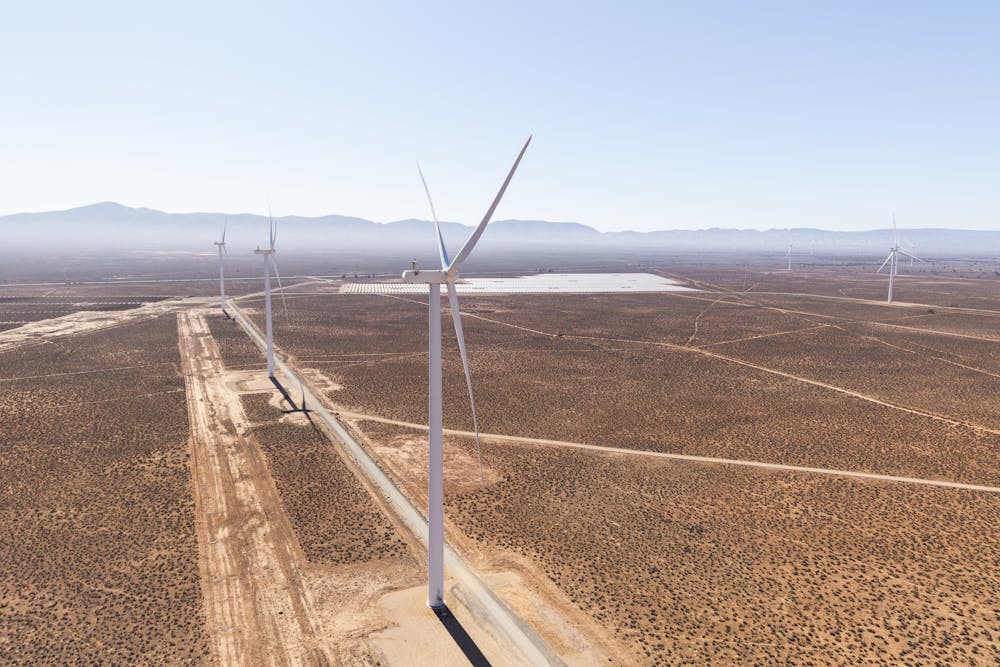
  • MIL-Evening Report: 5 reasons why wind farms are costing more in Australia – and what to do about it

    Source: The Conversation (Au and NZ) – By Magnus Söderberg, Professor and Director, Centre for Applied Energy Economics and Policy Research, Griffith University

    Saeed Khan/Getty

    Building a solar farm in Australia is getting about 8% cheaper each year as panel prices fall and technology improves, according to an official new report. Battery storage costs are falling even more sharply, dropping 20% over the past year alone.

    But the same can’t be said for wind farms, the second-largest source of renewable energy in Australia. Onshore wind costs actually rose about 8% in 2023–24 and another 6% in 2024–25.

    The findings are contained in the GenCost 2024–25 report by CSIRO and the Australian Energy Market Operator, released this week.

    Rising costs are putting real pressure on the wind industry, undermining investor confidence. Developers of offshore wind projects are walking away, and even cheaper on-shore wind projects are under strain. Even as wind energy becomes a mainstay in China, the United States and Germany, the industry faces real headwinds in Australia.

    This is surprising. Wind, like solar, was projected to get steadily cheaper. The fuel is free and turbines are getting better and better. Instead, wind in Australia has remained stubbornly expensive. Solving the problem will be challenging. But solutions have to be found fast if Australia is to reach the goal of 82% renewable power in the grid by 2030 – now less than five years away.

    Australia has no offshore wind projects up and running – and cost spikes may put planned projects at risk.
    Obatala-photography/Shutterstock

    Five reasons why this is happening

    Here’s what’s going on:

    1. Global supply chains have been disrupted

    The cost of steel, copper, fibreglass and other materials vital for wind turbines shot up during the pandemic. As a result, turbine prices rose almost 40% between 2020 and 2022. While input costs have fallen, turbine prices remain high. Solar panels can be churned out in factories, but modern wind turbines are massive, complex structures that require specialised manufacturing and logistics. That makes them more sensitive to global price fluctuations.

    2. Good wind is often in remote places

    Australia’s best wind resources are typically far from cities and existing grid infrastructure. Connecting far-flung wind farms such as Tasmania’s Robbins Island to the grid can require new and very expensive transmission lines. Remote sites mean extra costs such as temporary worker accommodation. The GenCost report notes this has added about 4% to wind project budgets in 2024–25 compared with the year before.

    Many other countries rely heavily on offshore wind, because wind blows more strongly and reliably over oceans. Unfortunately, spiking costs are likely to further delay the arrival of offshore wind in Australia. GenCost projects the first offshore wind projects in Australia will face even steeper costs.

    Good wind resources are often located in remote areas of Australia.
    Brook Mitchell/Stringer via Getty

    3. Local construction and labour costs have soared

    Australia faces a shortage of workers with the skills to build and maintain wind farms, resulting in higher wages and recruitment costs. Wind developers say construction costs have become a real issue. Wind farms are more labour-intensive than solar.

    4. Interest rates have raised financing costs

    Wind farms require large upfront investments and lengthy construction periods. Even a small increase in interest rates can make them unviable – and interest rates have been high for some time.

    5. Reliability concerns, regulatory delay and community opposition

    According to US researchers, technical issues have emerged for some new wind turbines, creating unexpected costs for developers. The long, complex process of getting permits, carrying out environmental assessments and building community support is pushing out project timelines, increasing costs and uncertainty for developers.

    Will solar take over?

    Solar faces far fewer challenges. Solar panels are mass-produced, meaning costs are steadily driven down through economies of scale. Panels can be deployed quickly and solar farms tend to face less community opposition.

    Wind turbines have to spin to function, while solar panels have no moving parts (though systems that track the Sun do). As a result, solar farms require less maintenance and are more reliable.

    It’s no surprise large-scale solar has been on a record-breaking run, growing 20-fold between 2018 and 2023.

    Solar panels make electricity during daylight hours, especially in summer. By contrast, wind tends to produce more power at night and during winter months. This is why wind is so useful to a green grid.

    Generating power from both wind and sunshine can slash how much storage is needed to ensure grid reliability, lowering overall system costs. A balanced mix of wind, solar and storage will meet Australia’s electricity needs more efficiently and reliably than just solar and storage, according to the International Renewable Energy Agency and independent researchers.

    Could wind come back?

    Making wind more viable will take work. Potential solutions do exist, such as expanding the skilled workforce and investing in specialised ships and equipment to install turbines offshore.

    Shipping large turbines from Denmark or China is expensive. To avoid these costs, it could make sense to encourage local manufacturing of large and heavy parts such as the main tower.

    Other options include finding lower-cost turbine suppliers and streamlining regulatory processes.

    Rising material and labour costs have driven up the cost of wind turbines. Pictured: turbine blades in China’s Jiangsu province in 2022 about to be shipped to Australia.
    Xu Congjun/Future Publishing via Getty Images

    The newly announced expansion of the government’s Capacity Investment Scheme could help reduce risks and give certainty, alongside public investment in new transmission lines.

    If nothing is done or if new measures don’t help, wind is likely to stall while solar and storage race ahead.

    That’s not the worst outcome. Australia could get a long way by relying on batteries and pumped hydro to store power from solar during the day and release it in the evenings, as California is doing. But this strategy involves trade offs, such as higher storage-capacity needs and the risk of insufficient power during long cloudy periods.

    For Australia to optimise its mix of renewables and storage, policymakers will have to tackle wind’s cost challenges. Effective action could lower costs, accelerate project timelines and bolster flagging investor confidence.

    Magnus Söderberg does not work for, consult, own shares in or receive funding from any company or organisation that would benefit from this article, and has disclosed no relevant affiliations beyond their academic appointment.

    – ref. 5 reasons why wind farms are costing more in Australia – and what to do about it – https://theconversation.com/5-reasons-why-wind-farms-are-costing-more-in-australia-and-what-to-do-about-it-262126

    MIL OSI Analysis – EveningReport.nz –

    July 31, 2025
  • MIL-Evening Report: ER Report: A Roundup of Significant Articles on EveningReport.nz for July 31, 2025

    ER Report: Here is a summary of significant articles published on EveningReport.nz on July 31, 2025.

    5 reasons why wind farms are costing more in Australia – and what to do about it
    Source: The Conversation (Au and NZ) – By Magnus Söderberg, Professor and Director, Centre for Applied Energy Economics and Policy Research, Griffith University Saeed Khan/Getty Building a solar farm in Australia is getting about 8% cheaper each year as panel prices fall and technology improves, according to an official new report. Battery storage costs are

    Sporty spice: how romance fiction is adding a new dynamic to sports fandom
    Source: The Conversation (Au and NZ) – By Kasey Symons, Lecturer of Communication, Sports Media, Deakin University Sports fans might love their teams, cheer or curse each game’s result and admire their favourite athletes, but we rarely associate sports with romance. However, that may be slowly changing thanks to the recent spike in the popularity

    Just as NZ began collecting meaningful data on rainbow communities, census changes threaten their visibility
    Source: The Conversation (Au and NZ) – By Lori Leigh, Research Fellow in Public Health, University of Otago Getty Images New Zealand’s 2023 census was the first to collect data on gender identity and sexual orientation, showing one in 20 adults identify as LGBTQIA+. But just as reports from this more inclusive census are being

    Big tech says AI could boost Australia’s economy by $115 billion a year. Does the evidence stack up?
    Source: The Conversation (Au and NZ) – By Uri Gal, Professor in Business Information Systems, University of Sydney Imaginima / Getty Images AI is on the agenda in Canberra. In August, the Productivity Commission will release an interim report on harnessing data and digital technology such as AI “to boost productivity growth, accelerate innovation and

    Progress on Closing the Gap is stagnant or going backwards. Here are 3 things to help fix it
    Source: The Conversation (Au and NZ) – By Madeleine Pugin, Research Fellow, School of Government and International Relations, Griffith University The Productivity Commission’s latest data on Closing the Gap progress represents an unsurprisingly grim overview of the socioeconomic inequalities experienced by Aboriginal and Torres Strait Islander peoples. Closing the Gap is the plan federal and

    More than 2 in 5 young Australians are lonely, our new report shows. This is what could help
    Source: The Conversation (Au and NZ) – By Michelle H. Lim, Associate Professor, Sydney School of Public Health, University of Sydney Oliver Rossi/Getty Images Loneliness is not a word often associated with young people. We tend to think of our youth as a time spent with family, friends and being engaged with school and work

    How migrant business owners turn their identity into an asset, despite some bumps along the way
    Source: The Conversation (Au and NZ) – By Shea X. Fan, Associate Professor, Human Resource Management, Deakin University Odua Images/Shutterstock Too often, it’s anti-immigration sentiment dominating headlines in Australia. But a quieter story is going untold. Migrants are not just fitting into Australian society, they’re actively reshaping it through entrepreneurship. Starting a business is difficult

    The Man from Hong Kong at 50: how the first ever Australian–Hong Kong co-production became a cult classic
    Source: The Conversation (Au and NZ) – By Gregory Ferris, Senior Lecturer, Media Arts & Production, University of Technology Sydney LMPC via Getty Images A cinematic firecracker of a film exploded onto international screens 50 years ago this week, blending martial arts mayhem, Bond-esque set pieces, casual racism – and a distinctly Australian swagger. From

    Rules for calculating climate risk in financial reporting by NZ businesses need revisiting – new research
    Source: The Conversation (Au and NZ) – By Martien Lubberink, Associate Professor of Accounting and Capital, Te Herenga Waka — Victoria University of Wellington Andrew MacDonald/Getty Images The recent International Court of Justice (ICJ) decision on climate action marked a significant step forward in formalising an idea many already accept: climate inaction is not merely

    Climate justice victory at the ICJ – the student journey from USP lectures to The Hague
    By Vahefonua Tupola in Suva The University of the South Pacific (USP) is at the heart of a global legal victory with the International Court of Justice (ICJ) delivering a historic opinion last week affirming that states have binding legal obligations to protect the environment from human-induced greenhouse gas emissions. The case, hailed as a

    Climate justice victory at the ICJ – the student journey from USP lectures to The Hague
    By Vahefonua Tupola in Suva The University of the South Pacific (USP) is at the heart of a global legal victory with the International Court of Justice (ICJ) delivering a historic opinion last week affirming that states have binding legal obligations to protect the environment from human-induced greenhouse gas emissions. The case, hailed as a

    Kamchatka earthquake is among top 10 strongest ever recorded. Here’s what they have in common
    Source: The Conversation (Au and NZ) – By Dee Ninis, Earthquake Scientist, Monash University Today at about 11:30am local time, a magnitude 8.8 earthquake struck off the coast of Russia’s Kamchatka Peninsula in the country’s far east. Originating at a depth of roughly 20 kilometres, today’s powerful earthquake – among the ten strongest in recorded

    Kamchatka earthquake is among top 10 strongest ever recorded. Here’s what they have in common
    Source: The Conversation (Au and NZ) – By Dee Ninis, Earthquake Scientist, Monash University Today at about 11:30am local time, a magnitude 8.8 earthquake struck off the coast of Russia’s Kamchatka Peninsula in the country’s far east. Originating at a depth of roughly 20 kilometres, today’s powerful earthquake – among the ten strongest in recorded

    Tsunami warnings are triggering mass evacuations across the Pacific – even though the waves look small. Here’s why
    Source: The Conversation (Au and NZ) – By Milad Haghani, Associate Professor and Principal Fellow in Urban Risk and Resilience, The University of Melbourne Last night, one of the ten largest earthquakes ever recorded struck Kamchatka, the sparsely populated Russian peninsula facing the Pacific. The magnitude 8.8 quake had its epicentre in the sea just

    NAPLAN is just one test. Here’s what to do if your child’s results were in the bottom bands
    Source: The Conversation (Au and NZ) – By Sally Larsen, Senior Lecturer in Education, University of New England Rawpixel/ Getty Images The latest round of NAPLAN results are out, along with a string of news reports about “students falling behind” and “failing”, and experts sounding the “alarm” about school progress. In March, all Australian students

    Inflation slows again — but is it enough for the Reserve Bank to cut interest rates?
    Source: The Conversation (Au and NZ) – By Stella Huangfu, Associate Professor, School of Economics, University of Sydney Doublelee/Shutterstock Inflation is moving in the right direction, but new figures released today may not be soft enough to trigger a cut in official interest rates in August. The Australian Bureau of Statistics released the June quarter

    With the UK and France moving toward recognising Palestine, will Australia now follow suit?
    Source: The Conversation (Au and NZ) – By Donald Rothwell, Professor of International Law, Australian National University One of the smallest and most exclusive clubs in the world belongs to states. The US Department of State puts the number of independent recognised states at 197, while others count 200. The United Nations, meanwhile, has 193

    With the UK and France moving toward recognising Palestine, will Australia follow suit?
    Source: The Conversation (Au and NZ) – By Donald Rothwell, Professor of International Law, Australian National University One of the smallest and most exclusive clubs in the world belongs to states. The US Department of State puts the number of independent recognised states at 197, while others count 200. The United Nations, meanwhile, has 193

    An underwater observatory keeping the pulse of the Southern Ocean for nearly 30 years yields fresh results
    Source: The Conversation (Au and NZ) – By Christopher Traill, PhD Candidate Southern Ocean biogeochemistry, University of Tasmania Elizabeth Shadwick In a world affected by climate change, the Southern Ocean plays an outsized role. It absorbs up to 40% of the human-caused emissions taken up by the oceans while also being home to some of

    MIL OSI Analysis – EveningReport.nz –

    July 31, 2025
  • MIL-OSI New Zealand: Education – Simone Kaho awarded 2025 Fulbright-Creative New Zealand Pacific Writer’s Residency in Hawaii

    Source: Creative New Zealand

    Fulbright New Zealand and Creative New Zealand are delighted to announce Simone Kaho is the recipient of the 2025 Pacific Writer’s Residency.

    This annual award is for an established New Zealand writer of Pacific heritage to carry out work on a creative writing project exploring Pacific identity, culture or history at the University of Hawai’i for three months.

    Simone Kaho says many writers she admires and follows have won the award in previous years.

    “It’s a fabulous thing to receive institutional support for work that is so challenging. What if our most profound connections aren’t just with family, but in deep attunement with nature, recognising patterns in the unseen, and finding new ways to move forward? In this project, I’ll be drawing theoretical lines between Pacific people who are neurodiverse, and the traits of Pacific wayfinders—and I hope to find evidence of these in Hawaii’s research archives,” says Simone.

    Fulbright NZ Executive Director Penelope Borland says it is heartening to see the residency taken up by a poet of Simone’s distinction.

    “We are thrilled to be granting the 2025 Pacific Writer’s Residency to Simone Kaho, enabling her to continue her work that has already received widespread acclaim, most recently seeing her take up the 2022 Emerging Pasifika writer in Residence at the prestigious International Institute of Modern Letters. With this award, Simone will travel to Hawai’i, where I am sure a deeply meaningful experience awaits her,” says Penelope.  

    Makerita Urale, Creative New Zealand’s Senior Manager Pacific Arts, herself an alumna of the residency, says the award is timely for Simone’s literary career.

    “Simone’s work is fearless and deeply grounded in lived experience and cultural insight. This residency is a fitting next step for an artist of her calibre, and we look forward to seeing how her time in Hawai’i will further shape and strengthen her work,” says Makerita.

    Previous recipients of the prestigious Pacific Writer’s Residency have been some of New Zealand’s most celebrated writers, including Tusiata Avia, Karlo Mila, Oscar Kightley, David Eggleton, Mīria George, and playwright Victor Rodger.

    MIL OSI New Zealand News –

    July 31, 2025
  • MIL-OSI Europe: Increased funding to University of Gothenburg to combat antisemitism

    Source: Government of Sweden

    In light of international developments, the Government will increase its support to the University of Gothenburg which, via the Segerstedt Institute, spreads knowledge of working methods to combat antisemitism. This year, the Government will provide another SEK 1 million, and it intends to provide another SEK 3 million to support these efforts in 2024.

    MIL OSI Europe News –

    July 31, 2025
  • MIL-Evening Report: Politics with Michelle Grattan: independent MP Allegra Spender on making tax fairer for younger Australians

    Source: The Conversation (Au and NZ) – By Michelle Grattan, Professorial Fellow, University of Canberra

    With parliament now finished its first fortnight’s session, attention will soon be on the government’s August 19-21 economic reform roundtable, bringing together business, unions, experts and community representatives to pursue consensus on ways to lift Australia’s flagging productivity.

    Independent member for Wentworth Allegra Spender is one of the 25 participants invited to the roundtable. She’s particularly focused on tax reform and last week held a tax roundtable of her own.

    Spender joined the podcast to talk about making tax fairer, the need for greater economic reform, climate policy, the social media ban for under 16s, a ceasefire in Gaza, and more.

    On her ambitions on tax policy, Spender says income tax indexation is something that would benefit younger, working Australians:

    Myself and actually another number of crossbenchers […] wrote to both the government and the opposition last term, really pushing for tax indexation. And really the heart of this is startling statistics from last term. The [Reserve Bank of Australia] put out some information that showed that bracket creep was a bigger impost on average households’ budgets than the RBA increases in the interest rate.

    […] Just to give you two statistics about young working people: households over the age of 65, in the last 10 odd years, have grown their wealth by around 50%. Households under the age of 35 have not grown their worth at all, pretty much. So they are going backwards relative to the rest of the country. A household, two households, both on a $100,000, sitting next to each other. If [one] household is retired, they have to pay on average half the tax of a working age household.

    Spender says the system is stacked against young people, who “are really struggling economically compared to previous generations”.

    It’s in your early and midlife that you need money for housing, to raise kids and everything else. So we don’t have a tax system that works for younger people. We have a tax system that burdens younger people strongly and then actually gives people more tax breaks when they’re older, and normally wealthier.

    On climate targets, Spender says while she’ll be guided by the yet-to-be-provided Climate Change Authority’s advice, she wants to see Australia “try and lead other countries” – pointing to the United Kingdom, which has set a target to cut emissions by at least 81% by 2035.

    The Climate Change Authority put out their interim guidance to say that a target within 65 to 75% [emissions reduction on 2005 levels] was both achievable from an economic point of view and also appropriate towards a scientific point of view.

    My view is that we should be at the very top end of that. Now, if the Climate Change Authority significantly reviews, you know, revises down their targets, I will reconsider. But I think really what we should be doing is to say how can we be as ambitious as possible. And the reason I think that is important is actually, you know, from a business point of view, ambition and certainty is what they need to make the big investments that will actually achieve it.

    Ambition is needed from a scientific point of view, because if we took, say, less than 75% [emissions reduction], and the rest of the world did too, we would be looking at outcomes that are catastrophic for Australia. Regular days in Sydney and Melbourne that are above 50 degrees. A huge loss of coral reef. Continued adverse weather events.

    On the news that the government will include YouTube in its social media ban for under 16s, Spender says it’s now up to social media companies to make their websites safer to lift the bans.

    My eldest daughter [who’s 12] has a strong view on this. And she’s actually a big fan of the ban. She was like, ‘I just don’t understand how it makes sense to leave YouTube in and TikTok out’. […] She’s not on social media, but other people are, and she finds it sometimes frustrating.

    But I think the challenge on this is always going to be the implementation. I think it’s fiendishly complicated to implement. I think genuinely the most valuable part of this ban is actually the signal to families and parents about what is expected and what isn’t.

    […] I think the ball’s in the social media companies’ courts. If they want to move to a life beyond the ban, they need to show how they can make their platforms safe for younger Australians, because I don’t think they have delivered that to date. So I’d be open if they can provide the evidence of how they can change things. I’m always open minded to reversing or changing those bans. But at the moment, [social media] isn’t safe.

    Michelle Grattan does not work for, consult, own shares in or receive funding from any company or organisation that would benefit from this article, and has disclosed no relevant affiliations beyond their academic appointment.

    – ref. Politics with Michelle Grattan: independent MP Allegra Spender on making tax fairer for younger Australians – https://theconversation.com/politics-with-michelle-grattan-independent-mp-allegra-spender-on-making-tax-fairer-for-younger-australians-262225

    MIL OSI Analysis – EveningReport.nz –

    July 31, 2025
  • MIL-OSI USA: Cassidy Joins President Trump at White House, Applauds Effort to Modernize Health System to Put Patients First

    US Senate News:

    Source: United States Senator for Louisiana Bill Cassidy

    (Click here to see President Trump shout out Senator Cassidy at the event)
    WASHINGTON – U.S. Senator Bill Cassidy, M.D. (R-LA), chair of the U.S. Senate Health, Education, Labor, and Pensions (HELP) Committee, joined President Trump at the White House promoting the administration’s new effort to modernize our health care system, improving care for American patients. Cassidy was also joined at the event by U.S. Health and Human Services Secretary Robert F. Kennedy Jr. and U.S. Centers for Medicare and Medicaid Services Director Mehmet Oz.
    “President Trump and I are aligned: it’s time to modernize our health care system to put patients first,” said Dr. Cassidy. “The administration’s new effort will deliver faster, smarter care to patients and reduce administrative burdens on providers. That’s Making America Healthy Again.”

    MIL OSI USA News –

    July 31, 2025
  • MIL-OSI Europe: Mats Persson and Lotta Edholm visit London

    Source: Government of Sweden

    On 26–27 September, Minister for Education Mats Persson and Minister for Schools Lotta Edholm will visit London, where they will meet with their British counterparts. The visit is an opportunity for Sweden and the United Kingdom to exchange knowledge about education issues and strengthen relations between the two countries.

    MIL OSI Europe News –

    July 31, 2025
  • MIL-OSI Europe: Sweden and the United States strengthen energy research cooperation

    Source: Government of Sweden

    Research and innovation promote progress in the energy sector. Minister for Education Mats Persson today signed an implementation agreement for energy research cooperation with the United States. The agreement was signed in the Reactor Hall at KTH Royal Institute of Technology, where research reactor R1 – Sweden’s first nuclear reactor – contributed to research between 1954 and 1970.

    MIL OSI Europe News –

    July 31, 2025
  • MIL-Evening Report: Grief is the Thing with Feathers comes to the stage with a glorious intensity of purpose

    Source: The Conversation (Au and NZ) – By Huw Griffiths, Associate Professor of English Literature, University of Sydney

    Brett Boardman/Belvoir

    The idea of the titular Crow in Ted Hughes’ poems is wild, untameable and irreducible to words. In an early poem in the sequence, words come at Crow from all angles but he just ignores them. Finally, “Words retreated, suddenly afraid / Into the skull of a dead jester / Taking the whole world with them”.

    Crow just yawns: “long ago / He had picked that skull empty”. A figure that is ancient and beyond the reach of gods or human belief systems, Hughes’ Crow resists ever being pinned down or fully understood.

    In Max Porter’s 2015 novella, Grief is the Thing with Feathers, a version of Hughes’ Crow enters the life of a bereaved Dad, newly left to look after his two sons after the death of his wife.

    Dad is a literary scholar, writing a book about Ted Hughes, and Crow is a metaphor come to life, some version of the endless grief through which he is living.

    But Porter’s Crow is not quite the same thing as Hughes’ irredeemable half-myth/half-beast. This crow cares: “I do eat baby rabbits, plunder nests, swallow filth, cheat death […] But I care, deeply. I find humans dull except in grief”. And he is self-aware, too – aware that Hughes’ mythical beast image can also just be a performance, a piece of schtick: “I do this, perform some unbound crow stuff, for him”.

    Now, a new adaptation of the novella brings the story to the Belvoir stage.

    Devastation and renewal

    Toby Schmitz as both Dad and Crow is just brilliant. He exactly captures the messy contradictions of this situation, shifting between the quiet melancholy and stifled rage of the widower and the restless, contradictory energies of Crow.

    The latter he performs in recognisable Schmitz fashion: a leery and mischievous outsider, challenging the audience and holding their attention just as much as he teases, taunts and cajoles both Dad and his two sons.

    His performance brings out the humour of Porter’s book, the sense of its own absurdity that shadows his story of devastation and tentative renewal.

    Toby Schmitz as both Dad and Crow is just brilliant.
    Brett Boardman/Belvoir

    Also on stage are Philip Lynch and Fraser Morrison as the two boys, doing a great job (as the characters do in Porter’s book) of providing an emotional antidote to the wheeling terror that sometimes spins off Dad’s encounter with Crow.

    Schmitz adapted the book with director, Simon Phillips, and designer, Nick Schlieper. They have only very subtly altered the text in ways that enable a dynamic live performance, conversations between Dad, Crow and Boys.

    Tying the piece together are compelling video direction and live music. The former is genuinely exciting, as it etches the presence of Crow’s mythology across the stage, aided by Craig Wilkinson’s work as illustrator, clearly taking inspiration from Hughes’ original illustrator, Leonard Baskin. Composer and cellist, Freya Schack-Arnott provides a stunning and emotional soundtrack throughout, at times improvising to the action.

    An intensity of purpose

    Porter’s novel is ten years old this year. It has been ridiculously successful for a slender (114 pages) and apparently unconventional book.

    Seeming to imitate some of the conventions of 20th century modernism (non-linear narratives; stream-of-consciousness; an interplay of myth and reality; shifting perspectives from miniscule detail to grand narrative), it should not have been destined to occupy the best-seller list.

    And, yet, multiple awards later, it remains in regular rotation on the central displays of high street bookstores around the world. It has been adapted for the stage before, in a successful production in London starring Cillian Murphy in 2019, and in a less well-received 2025 film starrring Benedict Cumberbatch.

    Philip Lynch and Fraser Morrison as the two boys provide an emotional antidote.
    Brett Boardman/Belvoir

    It would be easy to dismiss this success as something to do with the aesthetic world within which it situates itself. Careful to use Faber and Faber’s classic font, Albertus (something it shares with the Belvoir production when passages are projected above the stage), the book is an elegant product that advertises its own self-conscious literariness.

    But this assessment would miss the brilliance, the sophistication and the tender power of Porter’s writing, as well as the way that the book has already got there before you.

    Porter plays with his own contemporary taming of older and wilder literary traditions. If Hughes’ Crow has been domesticated in Porter’s use of him (I can’t imagine Hughes’ Crow leaving us with the line, “Just be kind and look out for your brother”), he knows that this sentimentality is now hard-earned and not to be ignored.

    What this production adds to Porter’s beautiful book is an intensity of purpose. This is a gloriously collaborative effort, from theatre makers at the height of their powers, to communicate the beauty that persists through the pain and degradation that life throws at us.

    Grief is the Thing with Feathers is at Belvoir St Theatre, Sydney, until August 24.

    Huw Griffiths does not work for, consult, own shares in or receive funding from any company or organisation that would benefit from this article, and has disclosed no relevant affiliations beyond their academic appointment.

    – ref. Grief is the Thing with Feathers comes to the stage with a glorious intensity of purpose – https://theconversation.com/grief-is-the-thing-with-feathers-comes-to-the-stage-with-a-glorious-intensity-of-purpose-260414

    MIL OSI Analysis – EveningReport.nz –

    July 31, 2025
  • MIL-OSI China: Hainan policy to boost investor appeal

    Source: People’s Republic of China – State Council News

    Customs operations at the Hainan Free Trade Port, which will be completely independent island-wide from mid-December, are expected to strengthen the port’s connectivity with Asia-Pacific economies and boost its appeal to global investors, said market watchers and business leaders.

    They said that the move, which follows a policy announcement by the government earlier this month, would elevate Hainan’s strategic position in international trade and economic relations, enabling the island to serve as a unique platform for global business cooperation, particularly in sectors seeking closer integration with international markets.

    The policy envisages the establishment of a designated area, under the special supervision of Customs authorities, that covers the whole island of Hainan.

    Yu Tao, a researcher at the National Institute for South China Sea Studies in Haikou, Hainan province, said the island-wide independent Customs operation will preserve the Hainan FTP’s close economic ties with the Chinese mainland and support the development of a unified national market.

    Building a unified national market is essential to unleashing domestic demand, facilitating the efficient flow of goods and factors, improving resource allocation and fully harnessing the market’s industrial and demand advantages, according to information released by the Research Office of the State Council.

    In addition, the newly released negative list clearly defines, for the first time, the full scope of goods and items subject to import and export restrictions in the Hainan FTP, said Yu.

    “Based on favorable policies, the list offers clearer regulatory guidance for businesses and enhances trade liberalization and facilitation through more relaxed administrative measures,” he added.

    Zhou Mi, a researcher at the Beijing-based Chinese Academy of International Trade and Economic Cooperation, expressed a similar view.

    “The policy’s appeal goes beyond consumer-facing imports and is expected to drive a broader restructuring of manufacturing across the Asia-Pacific region, fostering a trade environment distinct from existing frameworks,” he said.

    Zhou said Hainan will become a more attractive destination for investment and industrial development, significantly lowering operating costs for businesses in the Asia-Pacific region.

    For instance, the scope of zero-tariff goods will expand from the current 1,900 tariff lines to about 6,600, covering about 74 percent of all tariff lines — an increase of nearly 53 percentage points compared with the level before the policy’s implementation at the end of this year, said the Ministry of Finance.

    Zhou noted that the intensified market competition may prompt adjustments or relocations in traditional industries such as manufacturing, biomedicine, duty-free retail and hospitality, potentially changing the existing income structure of local residents.

    The actual utilization of foreign capital in Hainan reached 102.5 billion yuan ($14.3 billion) over the past five years, with an average annual growth rate of 14.6 percent. Meanwhile, its offshore duty-free sales have grown rapidly, accounting for over 8 percent of the global duty-free market, data from the Hainan provincial government showed.

    With China creating more favorable conditions to drive the opening-up in the Hainan FTP, DFS Group, a part of French multinational LVMH Group, and Shanghai-based Shenya Group will jointly build a mega luxury retail complex in Sanya, Hainan.

    Scheduled for completion in 2026, this project is expected to generate more than 1,000 jobs and spur the development of related businesses, including infrastructure, logistics, and hotel and catering services in the Hainan FTP, said Nancy Liu, president of DFS China.

    She said the project is expected to attract between 16 million and 18 million visitors yearly by 2030 and create lucrative commercial opportunities for Sanya.

    MIL OSI China News –

    July 31, 2025
  • MIL-OSI Asia-Pac: Appointments to Cantonese Opera Development Fund Advisory Committee

    Source: Hong Kong Government special administrative region

    Appointments to Cantonese Opera Development Fund Advisory Committee
    Mr Maurice Lee Wai-man (Chairman)
    Dr Lee Siu-yan (Vice-Chairman)
    Mr Au Yick-ho *
    Mr Chan Kin-bun *
    Dr Benjamin Chan Tak-yuen
    Ms Emily Chan Wing-yee *
    Mr Andrew Fung Hau-chung
    Mr Kenny Ho Chi-wa
    Mr Lai Yiu-wai
    Ms Lam Yan-yin (Lam Kwan-ling)
    Ms Angel Leung Sum-yee *
    Mr Li Qiuyuan *
    Ms Ng Man-ting
    Mr Wilfred Ng Sau-kei
    Mr Jonathan Ng Yee
    Professor Lui Yu-hon (Chairman of the Cantonese Opera Advisory Committee)
    Representative of the Secretary for Culture, Sports and Tourism
    Representative of the Secretary for Education
    Representative of the Director of Leisure and Cultural ServicesIssued at HKT 12:00

    NNNN

    CategoriesMIL-OSI

    MIL OSI Asia Pacific News –

    July 31, 2025
  • MIL-OSI China: Renewables capacity doubles in first half

    Source: People’s Republic of China – State Council News

    A farmer works amid photovoltaic panels at a solar power station in the Yi-Hui-Miao Autonomous County of Weining, southwest China’s Guizhou Province, July 3, 2025. [Photo/Xinhua]

    China’s newly installed wind and solar power capacity nearly doubled year-on-year during the first half of this year, as the country ramps up its transition to cleaner energy sources, data from the China Electricity Council showed.

    Newly added power generation capacity during the first six months reached 290 million kilowatts, with new solar installations rising 107.1 percent year-on-year to 210 million kilowatts, and new wind power installations up 98.9 percent to 50 million kilowatts, it said.

    China’s renewable energy sector is expected to maintain rapid growth, with average annual new installed capacity reaching 200-300 million kilowatts during the 15th Five-Year Plan period (2026-30), said Zhang Lin, head of the council’s planning and development department, during a news conference in Beijing on Wednesday.

    The near doubling of China’s wind and solar capacity in the first half is a clear signal of the country’s accelerating commitment to its energy transition goals, said Lin Boqiang, head of the China Institute for Studies in Energy Policy at Xiamen University.

    “These installation figures demonstrate China’s ability to rapidly deploy renewable energy technologies at scale, positioning it as a global leader in clean energy investment and deployment.”

    According to the council, China’s power generation capacity is projected to hit a record high in 2025, fueled by a rapid expansion of renewable energy sources.

    New power generation capacity is expected to exceed 500 gigawatts in 2025, with new renewable energy capacity reaching approximately 400 GW, a result of China’s accelerated green energy transition and increasing investment in grid construction, the CEC said.

    Total installed power generation capacity is forecast to reach around 3.9 terawatts by the end of 2025, a year-on-year increase of approximately 16.5 percent. Nonfossil fuel sources are expected to account for 2.4 TW, or about 61 percent of total capacity, said Jiang Debin, deputy director of the council’s statistics and data center.

    The CEC also anticipates steady growth in China’s electricity demand in 2025, with total consumption expected to increase by 5-6 percent. Electricity demand is projected to grow faster in the second half of the year compared to the first, it said.

    China’s maximum power load once again set a new historical record on July 16, surpassing 1.5 billion kilowatts for the first time and reaching a peak of 1.506 billion kilowatts, according to the National Energy Administration.

    This represents an increase of 55 million kilowatts compared to last year’s peak load, the third time a historical record has been broken in July, it said.

    According to Chen Yaning, head of the council’s power supply and demand analysis department, the record reflects steady expansion in China’s electricity consumption, a key barometer of economic activity.

    Fueled by robust and sustained economic activity, power demand surged across the nation in the first half of this year, with industrial output, commercial operations and residential consumption all contributing to the heightened electricity needs, she said.

    “Equipment manufacturing and consumer goods manufacturing related to new quality productive forces have maintained strong resilience,” said Chen.

    The internet and related services sector saw a 27.4 percent year-on-year increase in electricity consumption, driven by the rapid development of mobile internet, big data and cloud computing.

    The charging and battery swapping services sector for electric vehicles saw a 42.4 percent increase in electricity consumption in the first half of the year, fueled by the rapid growth of the EV market.

    MIL OSI China News –

    July 31, 2025
  • MIL-Evening Report: Kids need to floss too, even their baby teeth. But how do you actually get them to do it?

    Source: The Conversation (Au and NZ) – By Dileep Sharma, Professor and Head of Discipline – Oral Health, University of Newcastle

    Jonathan Borba/Pexels

    A survey from the Australian Dental Association out this week shows about three in four children never floss their teeth, or have adults do it for them. Many of the survey respondents thought it wasn’t worthwhile for baby teeth.

    As anyone who cares for kids knows, it can be hard enough to get them to brush twice daily, let alone floss.

    So how do you actually get kids to floss? Why do they need to anyway?

    Do kids really need to floss?

    Flossing can reach between the teeth where toothbrushes can’t. It removes the soft food debris and biofilm, a slimy layer on teeth that harbours microbes, and so reduces the risk of dental decay and gum disease.

    So flossing is essential as soon as children’s teeth erupt and are in contact with the next one. This is typically at the age of six to eight months when the lower front teeth start to emerge through their gums.

    But they’re just baby teeth, right?

    You may be thinking flossing is not worth the time or trouble, especially for younger children who’ll lose their baby teeth in a few years anyway.

    However, baby teeth play a vital role in how children’s jaw bones develop and their face appears. And losing baby teeth early – due to the dental decay that can arise from not flossing – can have several effects.

    As a child, it can change their speech and appearance. These can affect a child’s self-esteem and impact their wellbeing, depending on their age.

    Losing baby teeth early can also affect them as a teenager or adult. Baby teeth act as a guide to where permanent teeth should erupt so losing them early can lead to crowding of teeth, needing orthodontic treatment (braces). In fact, premature loss of baby teeth can increase the risk of “malocclusion” or problems in the position of permanent teeth by more than 2.5 times.

    Cleaning between the teeth is also vital for teens to reduce the risk of gingivitis (inflammation of the gums). This is very common in this age group due to changes in hormone levels.

    Yes, it can be challenging

    Setting up a regular flossing routine may be challenging for many families. It’s one more thing to squeeze into the early morning rush to get to school or work. It can be hard to motivate tired children to floss at the end of the day too.

    The technique itself also needs a level of manual dexterity for the kids themselves or for the parents who floss younger kids’ teeth.

    You or your kids may have some form of dental anxiety due to previous negative experiences with dental visits. This may affect dental hygiene, or your likelihood to floss.

    All of these factors can lead to lack of motivation or reluctance to floss, and so increases the risk of dental decay and gum disease in children.

    But there are ways to help you and your kids develop and stick to a flossing regime.

    OK, you’ve convinced me. What next?

    First, gather your equipment.

    Interdental brushes look like mini bottle brushes. These are more effective for larger spaces between adjacent teeth, or if your child has braces.

    Floss or floss picks are only effective for areas with smaller or no spaces between adjacent teeth. Kid-friendly designs, such as animal-shaped and colourful floss and floss picks, can be an excellent option to make this routine more enjoyable. Flavoured floss, or floss that smells like fruit or chocolate can be appealing. Involving kids in the choice of floss or floss picks can boost their motivation to floss.

    Alternatively, a waterjet flosser can make cleaning between the teeth more engaging. It’s as effective as regular dental floss.

    For toddlers and preschoolers, using rewards and positive reinforcements, such as sticker charts or gold stars, can keep kids motivated to floss. So stock up.

    Then choose your timing. Flossing is best done once a day, either in the morning or before bedtime. That’s because flossing can effectively remove biofilm between the teeth for 24 hours. You can floss before or after brushing.

    Parents will need to brush and floss the teeth of infants and children up to five years old, until the children develop their own manual dexterity.

    For infants, it’s easier if one adult holds them upright or sits them on their lap while the other does the flossing. For toddlers and preschoolers it may be easier to floss if they are sitting on the toilet, or standing at the basin with their head tilted back.

    Last of all, lead by example. Kids with parents who regularly floss tend to pick up the routine quickly.

    Any more tips?

    Flossing is only one part of preventing tooth decay and dental diseases, such as gum disease. It’s also important for children to:

    • avoid snacking on food with a high sugar content

    • choose plain water over fruit juices or fizzy drinks

    • avoid falling asleep with a feeding bottle containing milk, fruit juice or sugary liquids

    • avoid using a dummy dipped in sugary liquids or honey

    • clean their tongue while brushing their teeth

    • see a dentist or oral health professional well before their first tooth erupts so they can get used to the idea of a dental appointment.

    Dileep Sharma receives funding from the Dental Council of NSW, International Association for Dental, Oral, and Craniofacial Research, Australian government Department of Foreign Affairs and Trade, International College of Dentists and Tropical Australian Academic Health Centre for his dental research projects. He is affiliated with The International Association for Dental, Oral, and Craniofacial Research and Australian Dental Association.

    – ref. Kids need to floss too, even their baby teeth. But how do you actually get them to do it? – https://theconversation.com/kids-need-to-floss-too-even-their-baby-teeth-but-how-do-you-actually-get-them-to-do-it-262209

    MIL OSI Analysis – EveningReport.nz –

    July 31, 2025
  • MIL-OSI Europe: Mats Persson and Lotta Edholm to deliver opening addresses at EU education meetings in Sweden

    Source: Government of Sweden

    During the week of 20–24 March, several meetings focusing on education will be held as part of the Swedish Presidency of the Council of the EU. Skills supply, the green transition and education for Ukrainian pupils are among the agenda items. Minister for Education Mats Persson and Minister for Schools Lotta Edholm will both deliver opening addresses.

    MIL OSI Europe News –

    July 31, 2025
  • MIL-Evening Report: The Muslim world has been strong on rhetoric, short on action over Gaza and Afghanistan

    Source: The Conversation (Au and NZ) – By Amin Saikal, Emeritus Professor of Middle Eastern and Central Asian Studies, Australian National University; and Vice Chancellor’s Strategic Fellow, Australian National University

    When it comes to dealing with two of the biggest current crises in the Muslim world – the devastation of Gaza and the Taliban’s draconian rule in Afghanistan – Arab and Muslim states have been staggeringly ineffective.

    Their chief body, the Organisation of Islamic Cooperation (OIC), in particular, has been strong on rhetoric but very short on serious, tangible action.

    The OIC, headquartered in Saudi Arabia, is composed of 57 predominantly Muslim states. It is supposed to act as a representative and consultative body and make decisions and recommendations on the major issues that affect Muslims globally. It calls itself the “collective voice of the Muslim world”.

    Yet the body has proved to be toothless in the face of Israel’s relentless assault on Gaza, triggered in response to the Hamas attacks of October 7 2023.

    The OIC has equally failed to act against the Taliban’s reign of terror in the name of Islam in ethnically diverse Afghanistan.

    Many strong statements

    Despite its projection of a united umma (the global Islamic community, as defined in my coauthored book Islam Beyond Borders), the OIC has ignominiously been divided on Gaza and Afghanistan.

    True, it has condemned Israel’s Gaza operations. It’s also called for an immediate, unconditional ceasefire and the delivery of humanitarian aid to the starving population of the strip.

    It has also rejected any Israeli move to depopulate and annex the enclave, as well as the West Bank. These moves would render the two-state solution to the long-running Israeli–Palestinian conflict essentially defunct.

    Further, the OIC has welcomed the recent joint statement by the foreign ministers of 28 countries (including the United Kingdom, many European Union members and Japan) calling for an immediate ceasefire in Gaza, as well as France’s decision to recognise the state of Palestine.

    The OIC is good at putting out statements. However, this approach hasn’t varied much from that of the wider global community. It is largely verbal, and void of any practical measures.

    What the group could do for Gaza

    Surely, Muslim states can and should be doing more.

    For example, the OIC has failed to persuade Israel’s neighbouring states – Egypt and Jordan, in particular – to open their border crossings to allow humanitarian aid to flow into Gaza, the West Bank or Israel, in defiance of Israeli leaders.

    Nor has it been able to compel Egypt, Jordan, the United Arab Emirates, Bahrain, Sudan and Morocco to suspend their relations with the Jewish state until it agrees to a two-state solution.

    Further, the OIC has not adopted a call by Malaysian Prime Minister Anwar Ibrahim and the United Nations special rapporteur on Palestinian territories, Francesca Albanese, for Israel to be suspended from the UN.

    Nor has it urged its oil-rich Arab members, in particular Saudi Arabia and the UAE, to harness their resources to prompt US President Donald Trump to halt the supply of arms to Israel and pressure Israeli Prime Minister Benjamin Netanyahu to end the war.

    Stronger action on Afghanistan, too

    In a similar vein, the OIC has failed to exert maximum pressure on the ultra-extremist and erstwhile terrorist Taliban government in Afghanistan.

    Since sweeping back into power in 2021, the Taliban has ruled in a highly repressive, misogynist and draconian fashion in the name of Islam. This is not practised anywhere else in the Muslim world.

    In December 2022, OIC Secretary General Hissein Brahim Taha called for a global campaign to unite Islamic scholars and religious authorities against the Taliban’s decision to ban girls from education.

    But this was superseded a month later, when the OIC expressed concern over the Taliban’s “restrictions on women”, but asked the international community not to “interfere in Afghanistan’s internal affairs”. This was warmly welcomed by the Taliban.

    In effect, the OIC – and therefore most Muslim countries – have adopted no practical measures to penalise the Taliban for its behaviour.

    It has not censured the Taliban nor imposed crippling sanctions on the group. And while no Muslim country has officially recognised the Taliban government (only Russia has), most OIC members have nonetheless engaged with the Taliban at political, economic, financial and trade levels.

    Why is it so divided?

    There are many reasons for the OIC’s ineffectiveness.

    For one, the group is composed of a politically, socially, culturally and economically diverse assortment of members.

    But more importantly, it has not functioned as a “bridge builder” by developing a common strategy of purpose and action that can overcome the geopolitical and sectarian differences of its members.

    In the current polarised international environment, the rivalry among its member states – and with major global powers such as the United States and China – has rendered the organisation a mere talking shop.

    This has allowed extremist governments in both Israel and Afghanistan to act with impunity.

    It is time to look at the OIC’s functionality and determine how it can more effectively unite the umma.

    This may also be an opportunity for its member states to develop an effective common strategy that could help the cause of peace and stability in the Muslim domain and its relations with the outside world.

    Amin Saikal does not work for, consult, own shares in or receive funding from any company or organisation that would benefit from this article, and has disclosed no relevant affiliations beyond their academic appointment.

    – ref. The Muslim world has been strong on rhetoric, short on action over Gaza and Afghanistan – https://theconversation.com/the-muslim-world-has-been-strong-on-rhetoric-short-on-action-over-gaza-and-afghanistan-262121

    MIL OSI Analysis – EveningReport.nz –

    July 31, 2025
  • MIL-OSI USA: Attorney General James Fights to Protect Immigrant Communities and Public Safety in Rochester

    Source: US State of New York

    EW YORK – New York Attorney General Letitia James today took action to stand up for vulnerable immigrant communities in Rochester. In an amicus brief filed in the U.S. District Court for the Western District of New York, Attorney General James emphasized that localities with laws that limit local authorities’ involvement in federal immigration enforcement keep communities safe and allow local law enforcement to use resources to address local public safety priorities, such as fighting crime and reducing gun violence. Attorney General James further argues that Rochester’s longstanding law, often referred to as a “sanctuary city” law, is constitutional because the Constitution grants states and their localities power over the day-to-day public safety of residents within their jurisdiction. In the brief filed today, Attorney General James asks the court to grant judgment in Rochester’s favor in the U.S. Department of Justice’s (DOJ) lawsuit against the city.

    “For years, these laws in Rochester and cities throughout New York have kept New Yorkers safe,” said Attorney General James. “The Trump administration’s attacks on immigrant communities are cruel and shameful. Rochester’s law is constitutional, and my office will continue to use every tool at our disposal to protect New Yorkers.”

    Rochester’s law, like many other sanctuary city laws, limits local or state agencies’ involvement in federal civil immigration enforcement and is intended to build trust between immigrant communities and law enforcement and ensure local resources are spent on local priorities. Rochester first enacted its law in 1986 and later updated it in 2017. It does not limit cooperation between local and federal authorities on criminal matters. In April, DOJ filed a lawsuit against Rochester, arguing that the city’s law is unconstitutional because it is preempted by federal law. In her brief, Attorney General James argues that Rochester’s law does not violate the Constitution, and that the 10th amendment reserves police power to states and their localities.

    Attorney General James writes that the law helps keep New Yorkers safe because it encourages individuals in immigrant communities to report crimes, serve as witnesses, and seek critical medical care or social services without fearing deportation. Studies have repeatedly indicated that greater involvement of local law enforcement in immigration enforcement makes immigrant communities less likely to interact with police, and more likely to become victims of crime or other exploitation. Other research has concluded that immigrant community members often refrain from seeking vital local services, including health care services, when they fear that local officials could report them to immigration authorities. Delaying medical care for fear of deportation can cause serious health complications for people who need it.

    Attorney General James explains that imposing federal immigration priorities on already strained local officials can detract from local needs. A former Rochester police chief, who held the position at the time of the enactment of the city’s 2017 law, explained that it was intended to avoid diverting scarce resources and time away from the community’s public safety priorities, like reducing gun violence.

    Attorney General James is asking the court to grant judgment in Rochester’s favor in the DOJ’s lawsuit and uphold Rochester’s sanctuary city law. 

    Attorney General James has been a national leader in fighting to protect and defend immigrant communities. In July, Attorney General James joined a coalition of 19 other states in defending essential legal services for unaccompanied immigrant children. Also in July, Attorney General James urged the U.S. Court of Appeals for the First Circuit to uphold an order blocking the federal government from mass terminating the Cuba, Haiti, Nicaragua, and Venezuela parole program. Attorney General James also joined a coalition of 17 other attorneys general in supporting the American Civil Liberties Union’s lawsuit challenging the federal government’s use of unlawful immigration enforcement tactics in Los Angeles, California. In June, Attorney General James co-led a coalition of 17 attorneys general in defending hundreds of thousands of Venezuelan immigrants who had their legal status threatened after the Trump administration attempted to eliminate Temporary Protected Status (TPS).

    MIL OSI USA News –

    July 31, 2025
  • MIL-OSI United Kingdom: Students get exclusive preview of Salisbury River Park play area

    Source: United Kingdom – Executive Government & Departments

    News story

    Students get exclusive preview of Salisbury River Park play area

    The Salisbury River Park project reduces the flood risk to over 350 homes and businesses along the River Avon.

    Children from Sarum St. Paul’s C of E Primary School at the park

    Students from Sarum St. Paul’s C of E Primary School were given an exclusive preview of Salisbury River Park before its official opening, allowing them to see their creative designs incorporated into the new public space and experience the innovative play area first hand. 

    The visit on 23 July 2025 provided the young designers with the exciting opportunity to witness how their contributions have helped shape this transformational project, which will serve as a legacy for future generations whilst protecting over 350 homes and businesses from flooding. 

    As part of the design process, all pupils of Sarum St. Paul’s C of E Primary School were invited to take part in a design competition, with workshops conducted for Year 5 and 6 students to gather input on what they would like to see in the play park design. Several students’ artwork was chosen and incorporated into the final design through engraved images on the play equipment and sculpted animals. 

    Eight pupils and teachers visited the site to discover their designs integrated throughout the play park and test the new play equipment. 

    Lizzie Weaver, Headteacher of Sarum St. Paul’s C of E Primary School, said:  

    We had such a lovely time visiting the new play park. The children were incredibly excited to find their designs that had been carved into the equipment.

    The area is a beautiful space for families to enjoy, and the placement of equipment, benches and artwork has been carefully considered. I look forward to returning soon with my own children!

    Our school has loved being involved with the River Park Project, it has enhanced so many curriculum areas and provided many wider opportunities for our pupils.

    Andy Wallis, Salisbury River Park project lead at the Environment Agency, said:  

    It’s wonderful to see the young people from Sarum St. Paul’s experiencing their designs come to life in this special preview. Their creativity and input have genuinely contributed to making this play area a space that reflects what local children want to see.

    The fact that their artwork is now permanently part of this transformational project shows how community engagement can create lasting benefits for future generations.

    Andy Wallis at Salisbury River Park Ashley Rd Play Park pre-opening event with Cllr Victoria Charleston

    Cllr Victoria Charleston, councillor for the St Paul’s Ward, said:  

    It was very exciting to visit the new playpark and to see the schoolchildren experiencing it for the first time. The children who joined us had won the art competition, and their artwork is now hidden throughout the park.

    They thoroughly enjoyed exploring the new equipment, which will be a huge asset for the city council and the community. 

    We’ve watched this project come together, both as a city and as a family, and we’re excited to see it officially open. Thank you to the Environment Agency for all its dedication and hard work.

    Cllr Chris Taylor, councillor for the St Paul’s Ward, said:  

    The new play area on Ashley Road is an impressive facility with colourful design using natural materials, incorporating accessibility features like flat surfacing, wheelchair access, and equipment designed for all children to enjoy safely.

    I was particularly pleased to see the Environment Agency’s engagement with Sarum St Paul’s School, ensuring pupils who contributed to the park’s graphics were the first to play there.  

    Despite weather delays, I’m assured it will open before the end of school holidays, which will be marvellous for local families.

    The Salisbury River Park project is a collaboration between the Environment Agency, Wiltshire Council and Salisbury City Council, and is constructed by Kier. Construction began in summer 2022 and is due to complete this autumn, despite challenges including the exceptionally wet 2023/24 winter – the wettest in the Avon catchment since records began in 1871.  

    Once the grass has fully established, the play park will be opened, and we are committed that this will happen during the school summer holidays. 

    The scheme has created enhanced riverside habitat for wildlife, removed obstructions to allow fish migration upstream, and established high-quality public open space. Over 650 metres of new and improved cycle routes and 1,600 metres of footpaths have been created to improve access and encourage active travel. More than 1,000 new trees have been planted, enhancing habitat for water voles, otters, bats and birds. 

    The park design, created by Green Play Projects, is based on the local ecology, with the central climbing feature mimicking the burrow of a water vole and filled with information and activities reflecting the flora and fauna of the River Avon. The development has been designed in consultation with DIGS Salisbury (Disability Interest Group of Salisbury), ensuring accessibility for all abilities so children can play side by side. 

    The park’s colour palette was created by artist Zac Newham in collaboration with students from South Wilts Grammar School, chosen to reflect natural colours observed within the river whilst maintaining visual accessibility. 

    Background

    • Phase 1 of Salisbury River Park is due to complete autumn 2025. 
    • The project reduced flood risk to over 350 homes and businesses. 
    • The scheme has created new wetland areas, boardwalks, and enhanced biodiversity along the River Avon 
    • Plans for additional phases are in place and will progress as funding becomes available 

    Share this page

    The following links open in a new tab

    • Share on Facebook (opens in new tab)
    • Share on Twitter (opens in new tab)

    Updates to this page

    Published 30 July 2025

    MIL OSI United Kingdom –

    July 31, 2025
  • MIL-OSI USA: Congressman Valadao Builds Local Partnerships to Help Feed Our Communities

    Source: United States House of Representatives – Congressman David G Valadao (CA-21)

    WASHINGTON – Congressman David Valadao (CA-22) joined Reps. Rob Bresnahan (PA-08), Chellie Pingree (ME-01), and Josh Riley (NY-19) in introducing the Local Farmers Feeding our Communities Act. This bipartisan bill would allow states, through the U.S. Department of Agriculture (USDA), to establish cooperative agreements connecting regional farmers and producers with local food distribution organizations. Through these agreements, funds would be used to purchase local, fresh, and minimally processed foods like meat, seafood, milk, cheese, eggs, fruit, and poultry.

    “The Central Valley grows the food that feeds our nation, and this bill gives us a chance to connect our farmers directly with local families and food banks to deliver healthy, homegrown food where it’s needed most,” said Congressman Valadao. “The Local Farmers Feeding our Communities Act is a bipartisan effort that invests in our farmers and communities, and I’m proud to stand with my colleagues in support.”

    “Far too often the discussion around alleviating hunger leaves out those who grow, raise, and produce food – our local farmers. Reducing the barriers between our communities and the farmers who produce our food is a commonsense approach to ensure everyone in Northeast Pennsylvania has access to the food they need.” said Rep. Bresnahan. “This bill recognizes the hard work that is needed to supply fresh and nutritious food like fruit, veggies, milk, and cheese, while also creating a clear path to putting this food on the plates of people who need it. This investment in our local farmers is an investment in stronger local food security and healthier communities.”

    “When Trump’s USDA abruptly ended the Local Food Purchase Assistance and Local Food for Schools programs, it pulled the rug out from under farmers, food banks, and schools across the country—including in Maine. These were proven tools for strengthening local food supply chains, supporting small producers, and getting healthy, locally grown food to hungry families,” said Congresswoman Pingree. “Our bipartisan Local Farmers Feeding Our Communities Act restores and improves on that successful model. It’s a practical, community-driven solution that invests in our nation’s farmers, builds regional resilience, and fights hunger.”

    “It doesn’t get more common sense than fighting hunger by supporting local farmers,” said Congressman Riley. “This is about putting food on the tables of people who need it most, and investing directly in the family farmers who power our rural communities.”

    Additional co-sponsors include: Reps. Tony Wied (WI-08), Dan Newhouse (WA-04), Zach Nunn (IA-03), Nikki Budzinski (IL-13), Jim Costa (CA-21), Eugene Vindman (VA-07), Jimmy Panetta (CA-19), and Alma Adams (NC-12).

    “This legislation supports a program with a proven record of increasing access to the fresh fruits and vegetables our farmers work hard to produce,” said Congressman Newhouse. “It cuts down on food waste, supplies food banks with produce, and ensures that those who need food can get it. I thank Rep. Bresnahan for his leadership on this legislation as we work to strengthen our food system and expand access to healthy food across the country.”

    “Iowa farmers work hard to grow high-quality, nutritious food. This bill helps ensure local families and food banks can afford the fresh produce grown right here in our communities,” said Congressman Nunn. “I’m proud to back a plan that strengthens our food system, supports small producers and veterans, and expands access to healthy, Iowa-grown meals.”

    “I’m proud to join this bipartisan bill to support our Illinois family farmers and help my constituents access nutritious, locally-grown food,” said Congresswoman Budzinski. “In Central and Southern Illinois, the Local Food Purchase Assistance and Local Food for Schools have been a win-win-win for growers and producers, food banks, and schools. It was a major setback when these initiatives were abruptly cancelled. The Local Farmers Feeding Our Communities Act would restore these successful programs that are a proven way to fight hunger, strengthen the food supply chain, and bolster the local agricultural economy.”

    “As the only Virginian on the House Agriculture Committee, I know the Local Food Purchase Assistance and Local Food for Schools programs are essential for our farmers and the families they feed across the Seventh. When the Trump Administration suddenly ended both, it caused a ripple effect — hurting local farmers, schools, and food banks across the Commonwealth and the United States. This cannot stand,” said Congressman Vindman. “Earlier this year, I met with Eugene Triplett at his fifth-generation, Black-owned family farm in Culpeper. He told me directly that these programs helped him get healthy, locally grown food to hungry kids and families. I will always work to deliver for Virginia families and farmers like Eugene.”

    The Local Farmers Feeding our Communities Act:

    • Allows USDA to create cooperative agreements with state agencies to purchase and distribute local food.
    • Sets aside a portion of funding specifically for smaller farmers and ranchers, as well as veteran-owned operations.
    • Provides technical assistance to help farmers meet food safety standards and grow their operations.
    • Strengthens local and regional food systems to improve food security, reduce supply chain disruptions, and minimize waste.

    Read the full bill here.

    ###

    MIL OSI USA News –

    July 31, 2025
  • MIL-OSI: WENDEL: 2025 Half-Year Results

    Source: GlobeNewswire (MIL-OSI)

    2025 Half-Year Results:

    Continued strategic deployment with the

    Asset Management Platform ramp up:

    Wendel Group now manages €45 billion+,
    of which €39 billion of Private Assets under Management
    for third parties

    NAV per share at €167.7 as of June 30, 2025

    Implementation of a semi-annual interim dividend starting in November 2025, with an interim dividend of €1.50

    Taking into account the dividend payment of €4.7, the fully diluted net asset value1per share as of June 30, 2025 is down 2.4% compared to the end of March 2025, and stable at constant exchange rates.

    The strengthening of euro vs US dollar, generated a -€4.7 per share FX effect in Q2. At constant exchange rate, NAV main components evolved as follows:

    • Principal Investments:
      • Listed assets (38% of Gross Asset Value excluding cash): +5.0% vs Q1 2025 thanks to Bureau Veritas, IHS and Tarkett share prices increase
      • Unlisted assets (38% of GAV excl. cash): total value down 4.8% vs Q1 2025, reflecting mainly multiples and aggregates evolution
    • Asset Management activities (22% of GAV excl. cash): total valuation up +9.0% vs Q1 2025, induced by multiples and aggregates evolution

    Principal investments: H1 2025 performance supported by listed companies

    • Positive contribution from the Group’s listed companies, driven by higher share prices over the period
    • Total sales of Group companies up 3.9% organically
    • New CEOs at Crisis Prevention Institute and Scalian

    Asset management: strong momentum in fundraising and revenue growth

    • Wendel Asset Management platform AuM reach close to €39 billion, focused on midmarket. Altogether IK Partners and Monroe Capital have raised c.€4.3 billion of new funds on various strategies over H1 2025, without any sponsor money from Wendel in H1. IK Partners reached its hard caps on its Midcap and Small Cap funds in the first half of 2025, and Monroe Capital raised $4 billion.
    • Management fees totalled €152 million and Fee Related Earnings totalled €59 million, growing more than threefold vs last year, thanks to organic growth and strong scope effects

    Dynamic implementation of new strategic directions

    • Principal Investments: successful Forward Sale of 6.7% of Bureau Veritas’ share capital, at a price of €27.25 per share on March 12, 2025
      • Wendel entered into a call spread transaction to benefit from up to c.15% of the stock price appreciation over the next three years on the equivalent number of shares underlying the Forward Sale Transaction
      • Total net proceeds for Wendel of €750 million
      • Wendel has retained 26.5% of the share capital and 41.2% of the voting rights of Bureau Veritas
    • Asset Management: With Monroe Capital acquisition, Wendel’s third party asset management platform reached €39 billion in AUM2
      • On March 31, 2025, Wendel has invested $1.133 billion to acquire 72% of Monroe Capital’s shares together with rights to c.20% of the carried interest generated on past and future funds

    A more attractive dividend policy for shareholders: introduction of semi-annual interim dividend payments starting in 2025

    • Ordinary dividend of €4.70 per share for 2024, up 17.5% compared to 2023, paid in May 2025, representing a distribution to shareholders of €200 million
    • €1.50 interim dividend to be paid in November 2025
      • In order to reflect the recurring cash flow generated by its dual business model, Wendel has decided to pay an interim dividend of €1.50 in November 2025 for the 2025 financial year corresponding to about one third of the total dividend paid for the previous financial year
      • The balance of the 2025 dividend, will be paid in May 2026, in line with Wendel dividend policy
      • This new interim dividend policy will be recurring

    Strong financial structure and committed to remaining Investment Grade

    • Average debt maturity of 3.1 years with an average cost of 2.4%
    • LTV ratio at 18.5%4 on a pro forma basis
    • On March 31, 2025, S&P revised Wendel outlook to ‘Stable’ from ‘Negative’ on debt reduction and reaffirmed its ‘BBB’ rating

    Consolidated net sales for H1 2025 €4,177.6 million, up +7.2% overall and up +3.9% organically year-to-date

    • Net income from operations, group share down 17.9% at €86.0 million
    • H1 2025 net income (Group share) at €4.3 million impacted by a negative scope effect due to the disposal of Constantia Flexibles (€419m capital gain, group share) in the first half of 2024, while the capital gain related to the forward sale of 6.7% of Bureau Veritas share capital in March 2025 is not accounted in the P&L
    Laurent Mignon, Wendel Group CEO, commented:

    “ With the successful closing of Monroe Capital’s acquisition, Wendel materializes its strategy to grow third-party asset management alongside our principal investment activity.

    With Monroe Capital and IK Partners representing €39 billion of assets under management and €4.3 billion raised in H1 2025, we are building a strong and significant Asset management player generating recurring and predictable income, enhancing significantly Wendel’s value creation profile. IK Partners has closed its Midcap and Small Cap strategies at their hardcaps, finalizing its 2024/2025 fundraising at €6 billion, in line with the ambition announced when it was acquired by Wendel in October 2023. We are actively building a diversified pipeline of high-quality acquisition opportunities to expand our third-party asset management business.

    We actively support the development of our permanent capital portfolio companies in navigating a persistently complex macroeconomic environment.

    Our teams remain fully mobilized to generate value through the current portfolio and further develop our asset management platform while maintaining a solid financial profile. Our strategic transformation has also gone hand in hand with a reinforced cash return to shareholders, reflected in the €4.7 dividend per share paid in May, growing 17.5% vs 2024. Given the stronger recurring and predictable cash flow generation of Wendel, we have decided to implement a semi-annual interim dividend payment policy starting in 2025. ”

    Wendel’s net asset value as of June 30, 2025: €167.7 per share on a fully diluted basis

    Wendel’s Net Asset Value (NAV) as of June 30, 2025, was prepared by Wendel to the best of its knowledge and on the basis of market data available at this date and in compliance with its methodology.

    Fully diluted Net Asset Value was €167.7 per share as of June 30, 2025 (see details in the table below), as compared to €176.7 on March 31, 2025, representing a decrease of -5.1% over the quarter and stable restated from the dividend paid in May 2025 and at constant exchange rate. Compared to the last 20-day average share price as of June 30, the discount to the fully diluted NAV per share was -48.4% as of June 30, 2025,.

    FX had a negative impact of -4.7€ per share over the second quarter due to the dollar evolution vs. euro.

    Bureau Veritas is slightly up over the quarter (+1.2% on a 20-day average). IHS Towers (+29.5%) and Tarkett (+3%) 20-day average share prices also contributed positively to the NAV. Total value creation per share of listed assets was therefore positive (+€3.5) at constant exchange rate on a fully diluted basis over the second quarter 2025.

    Unlisted asset contribution to NAV was negative over the second quarter with a total change per share of – €5.0 at a constant exchange rate reflecting selected assets operational performance and multiples evolution.

    Asset management activities contribution to NAV was positive, +€3.8 at a constant exchange rate, due to IK Partners and Monroe Capital blended multiples’ evolution and good FRE generation. A total of €49M of sponsor money is included in the NAV as of end of June, both for IK Partners and Monroe Capital.

    Cash operating costs, Net Financing Results and Other items impacted NAV by -€1.9 at constant exchange rate, as Wendel benefits from a positive carry and maintains a good cost control.

    Over the first half of the year, total Net Asset Value evolution per share amounted to -€13.2, restated from the €4.7 of dividend returned to shareholders in May 2025, i.e. -€6.2 at a constant exchange rate.

    Fully diluted NAV per share of €167.7 as of June 30, 2025

    (in millions of euros)     06/30/2025 03/31/2025
    Listed investments Number of shares Share price (1) 3,088 2,965
    Bureau Veritas 89.9m(2)/120.3m €29.2/€28.5 2,630 2,565
    IHS 63.0m/63.0m $5.7/$4.4 307 254
    Tarkett   €16.9/€16.4 151 146
    Investment in unlisted assets (3) 3,071 3,346
    Asset Management Activities (4) 1,824 1,778
    Asset Managers (IK Partners & Monroe Capital) 1,775 1,749
    Sponsor Money 49 29
    Other assets and liabilities of Wendel & holding companies (5) 150 161
    Net cash position & financial assets (6) 1,770 2,058
    Gross asset value     9,903 10,308
    Wendel bond debt & accrued interests     -2,373 -2,378
    IK Partners transaction deferred payment and Monroe Capital earnout -235 -244
    Net Asset Value     7,295 7,686
    Of which net debt     -838 -564
    Number of shares     44,461,997 44,461,997
    Net Asset Value per share €164.1 €172.9
    Wendel’s 20 days share price average   €86.6 €92.0
    Premium (discount) on NAV -47.2% -46.8%
    Number of shares – fully diluted 42,457,994 42,456,176
    Fully diluted Net Asset Value, per share €167.7 €176.7
    Premium (discount) on fully diluted NAV -48.4% -47.9%

    (1)  Last 20 trading days average as of June 30, 2025, and March 31, 2025.
    (2)  Number of shares adjusted from the Forward Sale Transaction of 30,357,140 shares of Bureau Veritas. The value of the call spread transaction to benefit from up to c.15% of the stock price appreciation on the equivalent number of shares is taken into account in Other assets & liabilities of Wendel & holding companies.
    (3)  Investments in unlisted companies (Stahl, Crisis Prevention Institute, ACAMS, Scalian, Globeducate, Wendel Growth). Aggregates retained for the calculation exclude the impact of IFRS16.
    (4)  Investments in IK Partners and Monroe Capital (excl. Cash to be distributed to shareholders). Valued as a platform based on Net Income / Distributable earnings multiples.
    (5)  Of which 2,004,003 treasury shares as of June 30, 2025, and 2,005,821 as of March 31, 2025.
    (6)  Cash position and short-term financial assets of Wendel & holdings.
    Assets and liabilities denominated in currencies other than the euro have been converted at exchange rates prevailing on the date of the NAV calculation.
    If co-investment and managements LTIP conditions are realized, subsequent dilutive effects on Wendel’s economic ownership are accounted for in NAV calculations. See page 285 of the 2024 Registration Document.

    Wendel’s Principal Investments’ portfolio rotation

    On March 12, 2025, Wendel realized a successful placement of Bureau Veritas shares as part of a prepaid 3-year forward sale representing approximately 6.7% of Bureau Veritas share capital and increased its financial flexibility by reducing the pro forma loan-to-value ratio to approximately 17%. The transaction immediately generated net cash proceeds of approximately €750M to Wendel.

    Wendel invested €41.5M in Scalian in H1 2025 to support its external growth and to strengthen its balance sheet.

    Wendel’s Asset Management platform evolution

    Acquisition of a controlling stake in Monroe Capital LLC closed, a transformational transaction in line with the strategic roadmap

    Wendel completed on March 31, 2025 the definitive partnership agreement including the acquisition, together with AXA IM Prime, of 75% of Monroe Capital LLC (“Monroe Capital” or “the Company”), and a sponsoring program of $800 million to accelerate Monroe Capital’s growth, together with an investment of up to $200 million in GP commitment.

    With IK Partners and Monroe Capital, Wendel’s third party asset management platform reached €39 billion in AUM5, and should generate, on a full-year basis, c.€ 455 million revenues6, c.€160 million pre-tax FRE (c.€100 million in pre-tax FRE (Wendel share) in 2025. Wendel’s ambition is to reach €150 million (Wendel share) in pre-tax FRE in 2027.

    Third-Party Asset Management Platform: 22% of Gross Asset Value excluding cash

    Over the first half of 2025, the Wendel Asset Management platform (IK Partners and Monroe Capital), focused on the midmarket private markets, registered particularly strong levels of activity, generating a total of €152.0 million in Management fees and others, up 355 % vs. H1 2024, thanks to good organic growth and strong scope effects: Only IK Partners was consolidated over 2 months in H1 2024, to be compared in H1 2025 with a 6 months consolidation for IK and 3 months consolidation for Monroe Capital in H1 2025.

    As a consequence, the consolidated Fee Related Earnings of the platform amounted to €59.9 million in H1 2025, up 318% vs last year, and Profit Before Tax was €60.2 million, up 303% vs. last year.

    The Wendel Asset Management Platform has known a Strong Momentum in terms of fund raising with €4.3 billion raised over the semester, without any sponsor money committed by Wendel.

    IK Partners has closed its Midcap and its Small Cap strategy at the hard cap. This completes IK fund raising cycle (2024/2025) at €6 billion, in line with the announced target at acquisition in October 2023. Monroe Capital has also maintained its strong dynamic with $4 billion of asset raised in 6 months with a good diversification in terms of strategies and geographies.

    As of June 30, 2025 Wendel’s third-party asset management platform7 represented total assets under management of €39.1 billion (of which €10.1 billion of Dry Powder8), and FPAuM9 of €29.0 billion, FX adjusted, up +187% year-to-date. Over the period, €5.0 billion of new Fee Paying AuM were generated and about €3 billion of exits and payoffs have been realized.

    Sponsor money invested by Wendel

    Wendel committed in 2024 €434 million in IK Partners funds (of which €300 million in IK X). As of June 30, 2025, a value of €49 million of sponsor money have been called in IK Partners and Monroe Capital funds.

    Principal Investment companies’ sales

    Figures post IFRS 16 unless otherwise specified.

    Listed Assets: 38% of Gross Asset Value excluding cash

    Bureau Veritas: Robust organic revenue growth and strong margin increase in H1 2025 as the LEAP | 28 strategy execution accelerates; Confirmed 2025 outlook

    (full consolidation)

    Revenue in the first half of 2025 amounted to €3,192.5 million, a 5.7% increase compared to H1 2024. The organic increase was 6.7% compared to H1 2024 (including 6.2% in the second quarter of 2025) and a broad organic growth across most businesses and geographies.

    First half adjusted operating profit increased by 8.8% to €491.5 million. This represents an adjusted operating margin of 15.4%, up 44bps year-on-year and up 55bps at constant currency.

    As of June 30, 2025, adjusted net financial debt was €1,254.7 million and the adjusted net financial debt/EBITDA ratio was maintained at a low level of 1.11x (vs. 1.06x as of December 31, 2024).

    2025 share buyback program

    Bureau Veritas executed the €200 million share buyback program announced on April 24, 2025, thus

    acquiring c.1.5% of the outstanding share capital (6.7 million shares) through the market during the

    months of May and June 2025. The purchase was completed at an average price of €29.77 per share.

    2025 outlook confirmed

    Based on a robust first half performance, a solid backlog, and strong underlying market fundamentals, and in line with the LEAP | 28 financial ambitions, Bureau Veritas still expects to deliver for the full year 2025:

    • Mid-to-high single-digit organic revenue growth,
    • Improvement in adjusted operating margin at constant exchange rates,
    • Strong cash flow, with a cash conversion10 above 90%.

    For further details: group.bureauveritas.com

    IHS Towers – IHS Towers will report its H1 2025 results in August 2025

    Tarkett reported its H1 on July 29, 2025

    For more information: https://www.tarkett-group.com/en/investors/

    Unlisted Assets: 38% of Gross Asset Value excluding cash

    (in millions) Sales EBITDA Net debt
      H1 2024 H1 2025 H1 2024 including IFRS 16 H1 2025 including IFRS 16 Δ end of June including IFRS 16
    Stahl €464.7 €462.9 €106.7 €90.8 -14.9% €357.8
    CPI $66.9 $69.5 $28.4 $29.9 +5.3% $370.8
    ACAMS $48.7 $53.4 $8.9 $13.7 +53.9% $161.2
    Scalian €271.8 €257.6 €30.3 €28.9 -4.6% €354.8
    Globeducate(1) €202.6 €224.7 na €77.7 na €739.6

    (1)   Globeducate acquisition was completed on October 16th, 2024. Globeducate fiscal year ends in August, and figures shown are last six months at the end of May 2025. Indian operations are deconsolidated and accounted for by the equity method.

    Stahl – Total sales slightly down -0.4% in H1 2025 in a context of challenging market conditions in the automotive and luxury goods end-markets. Strong EBITDA margin of 19.6%.

    (Full consolidation) 

    Stahl, the world leader in specialty coatings for flexible materials, posted total sales of €462.9 million in the first half of 2025, representing a total decrease of -0.4% versus H1 2024.

    Organically, sales were down -5.9%, in a context of lower demand across end-markets due to very high levels of uncertainty around changing tariffs and destocking in the supply chains served by Stahl, while FX contributed -2.0%. Acquisitions contributed positively (+7.6%) to total sales variation, thanks to the acquisition of Weilburger Graphics GmbH completed in September 2024.

    Half Year 2025 EBITDA11 amounted to €90.8 million (-14.9% vs. H1 2024), translating into a strong EBITDA margin of 19.6%, thanks to a disciplined margin and fixed costs management, as well as a good diversification across geographies and segments.

    Net debt as of June 30th, 2025, was €357.8 million12, versus €383.8 million at the end of 2024 and leverage stood at 1.9x13.

    Crisis Prevention Institute reports +4.0% in revenue and +5.3% EBITDA growth. Andee Harris will become the new CEO of CPI on August 20, 2025.

    (full consolidation)

    Crisis Prevention Institute recorded first half 2025 revenue of $69.5 million, up +4% compared to H1 2024. Of this increase, +3.2% was organic growth, -0.2% came from FX movements and +1.1% from scope effect related to the Verge acquisition in Norway in January 2025. Despite ongoing federal oversight and funding uncertainty for some of CPI’s US customers that may have led to deferred spending on expanded training, CPI’s installed base of certified instructors continued to renew and maintain their certification and train their colleagues. Growth in the first half therefore increased revenues from renewals and learning materials in North America, as well as double digit growth in markets outside North America.

    H1 2025 EBITDA was $29.9 million14, reflecting a margin of 43.0%. EBITDA was up +5.3% vs. H1 2024 while margins are slightly up due to tight cost policy and in spite of lower-than-expected top line growth.

    As of June 30, 2025, net debt totaled $370.8 million15, or 4.7x EBITDA as defined in CPI’s credit agreement. In early July, CPI raised $60 million through an incremental term loan to fund c. $33 million dividend payment to Wendel by year end and a partial repurchase of management’s shares. Both the dividend and the share repurchases are expected to occur in September.

    On August 20, 2025, Andee Harris will become CEO of CPI and a member of the company’s board of directors.

    Andee Harris will take over from Tony Jace, CPI’s current CEO, who is retiring after leading CPI’s significant expansion over the past 16 years. Tony will remain on CPI’s Board of Directors through the end of 2025.

    Andee Harris was the CEO of Challenger, a global leader in training, technology and consulting. Harris will bring more than two decades of experience in growing and scaling service and technology businesses. She has previously led multiple companies, both as CEO and Senior Vice President, through periods of rapid revenue growth, digital transformation, critical fundraising and successful acquisition.

    ACAMS – Total sales up +9.6% in H1, reflecting double-digit growth in the core Americas and APAC segments, generating very strong EBITDA growth.
    (full consolidation)  

    ACAMS, the global leader in training and certifications for anti-money laundering and financial-crime prevention professionals, generated total revenue of $53.4 million, up +9.6% compared to the first half of 2024. First-half results were driven by double-digit growth in Americas and APAC segments, with both bank and non-bank customers, as well as improved conference sponsorship & exhibition sales. 

    H1 growth reflects momentum from recent strategic and organizational changes including the senior leadership additions in 2024, a shift in focus to selling solutions for large enterprise customers, market expansion with the introduction of the Certified Anti-Fraud Specialist certification (CAFS), and investments in the technology platform.

    EBITDA16 for the first half was c.$13.7 million, up 53.9% vs. H1 2024 and reflecting a 25.7% margin, up 740 bps year-over-year. The strong increase in first half profitability largely reflects the aforementioned revenue growth as well as strong cost control by the Company’s management.

    As of June 30, 2025, net debt totaled $161.2 million17, down from $165.0 million at the end of 2024, which represents 4.8x EBITDA as defined in ACAMS’ credit agreement, with ample room relative to the 9.5x covenant level.

    ACAMS anticipates continued mid-to-high single digit growth in revenues for 2025. To support its long-term development, which is expected to produce accelerated levels of growth and profitability over the next several years, additional investments and hirings will be made in H2 2025, leading to more normalized c.25% margin for the full year.

    Scalian – Total sales down 5.2% in first-half 2025, reflecting persistently tough market conditions for engineering services and digital services companies. Equity contributions by Wendel since the beginning of the year totalling €41.5 million to support Scalian’s acquisition-led growth and strengthen its balance sheet.

    Changes in governance with the appointment of a new Chief Executive Officer.

    Scalian, a leader in digital transformation and operational performance consulting, reported total sales of €257.6 million as of June 30, 2025, down 5.2% year on year. The downturn in sales continues to take hold in several sectors and geographies, particularly in France and in automotive in Germany. Sales were down 11.1% on a like-for-like basis (including a negative currency impact), and benefited from a positive scope effect of 5.9% driven by acquisitions that were accretive in terms of growth and margins.

    Other European countries and North America reported further robust growth, buoyed by the acquisition of Mannarino, which made a significant contribution to half-year earnings thanks to strong business momentum.

    Scalian generated €28.9 million in EBITDA18 over first-half 2025. The EBITDA margin stood at 11.2% of sales, in line with the level recorded for full-year 2024, reflecting a tight rein on costs. As of June 30, 2025, net debt19 stood at €354.8 million (leverage of 6.7x20 EBITDA).

    Over the past 24 months, Scalian has undertaken bold transformation initiatives, which are being accelerated in 2025 in response to the worsening market environment:

    • Creation of a team focusing on key strategic clients and sectors with high growth potential
    • Expansion of the bestshoring platform
    • Launch of the “One Motion” plan, a transformation designed to improve the efficiency of the Scalian business model in three areas (sales and staffing, automation for productivity, and finance and operations)
    • Dynamic management of utilization rates
    • Accelerated integration of acquisitions and generation of related synergies
    • Targeted indirect cost reduction actions
    • More disciplined management of working capital

    These initiatives, aimed at strengthening Scalian’s business model and attractiveness, have already had a positive impact, and have led to significant commercial successes in recent months, including major agreements in the aerospace and defense sectors.

    Since the beginning of the year, Wendel has injected an additional €41.5 million in equity to support Scalian’s acquisition-led growth and strengthen its balance sheet.

    Wendel is also announcing today a major change in Scalian’s governance, with the appointment of a new Chief Executive Officer effective October 1 at the latest, the date on which Yvan Chabanne will step down following a decade of intensive development. The aim is to launch Scalian into the next cycle of growth and transformation with a new Chief Executive Officer, who has already been identified, also a highly experienced executive from the engineering industry, whose name will be announced shortly.

    David Darmon, Chairman of Scalian’s Supervisory Board:

    “On behalf of the Wendel Group, I would like to extend my warmest thanks to Yvan Chabanne for his remarkable achievements and unfailing commitment at the helm of Scalian, the brand he founded. Under his leadership, the Group has undergone an exceptional transformation: it has expanded strongly on an international level, become a leader in engineering, digital transformation and operational performance consulting, strengthened its positions with major customers and multiplied its sales almost ten-fold – half of which through a dozen acquisitions. Today, consolidated sales stand at around €530 million.

    We are delighted to welcome on board a new Chief Executive Officer whose international background, in-depth knowledge of our businesses and unifying leadership skills will be key assets in supporting the Group’s development going forward. We look forward to working alongside the future Chief Executive Officer on an ambitious value creation plan, which will unleash the full potential of this magnificent company, driven by the expertise, dedication and talent of its teams.” 

    Globeducate – Total sales up +10.9%21over 6-month period ending May 31, 2025. Annualized EBITDA margin c.25%22in line with expectations.

    (Accounted for by the equity method. Globeducate acquisition was completed on October 16th, 2024. Indian operations are deconsolidated and accounted for by the equity method due to the absence of audited figures. 6-month revenue and EBITDA from December 1, 2024 to May 31, 2025).

    Globeducate, one of the world’s leading bilingual K-12 education groups, posted total sales of €224.7 million1 for the 6-month period ending May 31, 2025, representing a total increase of +10.9% over last year. Of this increase, +3.3% came from accretive M&A transactions.

    EBITDA2 for the same period stood at €77.7 million. EBITDA is always particularly high at this time of year driven by the seasonality of the business (revenues are recognized over the academic year while costs are spread out across the entire fiscal year) and will smooth out over the next quarter. EBITDA was in line with expectations and ensures an annualized EBITDA margin at c.25%. This solid financial performance was fueled by a combination of organic and external growth as well as strict cost control.

    Since the beginning of Globeducate’s fiscal year (September 1, 2024 – August 31, 2025), the Group has completed 3 acquisitions: Olympion School and the International School of Paphos in Cyprus, and l’Ecole des Petits in the UK.

    Net debt as of May 31, 2025, was €739.6 million23 and leverage stood at 6.3x4.

    Consolidated Accounts

    The Supervisory Board met on July 30, 2025, under the chairmanship of Nicolas ver Hulst, to review Wendel’s condensed consolidated financial statements, as approved by the Executive Board on July 25, 2025. The interim financial statements were subject to a limited review by the Statutory Auditors prior to publication.

    Wendel Group’s consolidated net sales totaled €4,177.6 million, up +7.2% overall and up +3.9% organically. FX contribution is -2.1% and scope effect is +5.4%.

    The net income from operations of Group companies, Group share amounted to €86.0 million, down -17.9%.

    Financial expenses, operating expenses and taxes recorded by Wendel represented €46.0 million, up €13.2 million from the €32.9 million reported in H1 2024, mainly due to lower returns from cash. Operating expenses were down 15.6% due to good cost control.

    H1 2025 net income Group share €4.3 million vs. €388.2 million in the first half of 2024, reflecting a €418.6 million capital gain group share from the disposal of Constantia Flexibles in H1 2024. In H1 2025, The impact (group share) of impairment on investments was limited over the period, as the reversal of the impairment on Tarkett Participation was offset by the impairment recognized on Scalian, as a result of the slowdown in its markets. The gain on the forward sale of Bureau Veritas in 2025 and the positive change in the fair value of IHS are not recognized in the income statement but in shareholder equity.

    Estimated impact of new tariffs on Wendel’s businesses 

    Wendel Group’s companies are mainly business services, and are therefore only slightly directly impacted by conflicts over tariffs. For industrial companies (Stahl and Tarkett), these two companies have production units generally located in the countries in which they generate their revenues. According to the information available, the direct impact for these two companies is limited. The lack of visibility on the evolution of tariffs, as well as their real impact on global economic growth and USD exchange rates, constitute the main risk on the value creation potential of our assets. In the second quarter of 2025, the main indirect impact of trade tariffs was on the euro-dollar exchange rate, which impacted the valuation of some of our assets, mainly US companies or listed in the US. The impacts of trade tariffs specific to each company are described in the relevant sections of this press release.

    Agenda

    Thursday, October 23, 2025

    Q3 2025 Trading update – Publication of NAV as of September 30, 2025 (post-market release)

    Friday, December 12, 2025,

    2025 Investor Day.

    Wednesday, February 25, 2026

    Full-Year 2025 Results – Publication of NAV as of December 31, 2025, and Full-Year consolidated financial statements (post-market release)

    Wednesday, April 22, 2026

    Q1 2026 Trading update – Publication of NAV as of March 31, 2026 (post-market release)

    Thursday, May 21, 2026

    Annual General Meeting

    Wednesday, July 29, 2026

    H1 2026 results – Publication of NAV as of June 30, 2026, and condensed Half-Year consolidated financial statements (post-market release)

    About Wendel

    Wendel is one of Europe’s leading listed investment firms. Regarding its principal investment strategy, the Group invests in companies which are leaders in their field, such as ACAMS, Bureau Veritas, Crisis Prevention Institute, Globeducate, IHS Towers, Scalian, Stahl and Tarkett. In 2023, Wendel initiated a strategic shift into third-party asset management of private assets, alongside its historical principal investment activities. In May 2024, Wendel completed the acquisition of a 51% stake in IK Partners, a major step in the deployment of its strategic expansion in third-party private asset management and also completed in March 2025 the acquisition of 72% of Monroe Capital. As of June 30, 2025, Wendel manages 39 billion euros on behalf of third-party investors, and c.6.2 billion euros invested in its principal investments activity.

    Wendel is listed on Eurolist by Euronext Paris.

    Standard & Poor’s ratings: Long-term: BBB, stable outlook – Short-term: A-2 

    Wendel is the Founding Sponsor of Centre Pompidou-Metz. In recognition of its long-term patronage of the arts, Wendel received the distinction of “Grand Mécène de la Culture” in 2012.For more information: wendelgroup.com

    Follow us on LinkedIn @Wendel 

    Appendix 1: H1 2025 Consolidated sales and results

    H1 2025 consolidated net sales

    (in millions of euros) H1 2024 H1 2025 Δ Organic Δ
    Bureau Veritas 3,021.7 3,192.5 +5.7% +6.7%
    Stahl 464.7 462.9 -0.4% -5.9%
    Scalian (1) 271.8 257.6 -5.2% -11.1%
    CPI 61.9 63.7 +3.0% +3.2%
    ACAMS 44.5 48.8 +9.6% +9.8%
    IK Partners (2) 33.4 91.2 n.a. n.a.
    Monroe Capital (3) n.a. 60.8 n.a. n.a.
    Consolidated sales 3,897.9 4,177.6 +7.2% +3.9%

    (1) Scalian, which had a different reporting date to Wendel (refer to 2023 consolidated financial statements – Note 2 – 1.” Changes in scope of consolidation in 2023″), realigns its closing date with Wendel group. Consequently, sale’s contribution corresponds to 6 months’ sales between January 1st 2025 and June 30 2025. The contribution published last year (€278.2M) corresponded to 6 months’ sales between October 1st 2024 and March 31st 2025.

    (2) Acquisition d’IK Partners in May 2024. Contribution of sales for 2 months in 2024 versus 6 months in 2025.

    (3) Contribution of 3 months’ sales from April 1st, 2025 to June 30, 2025. Including PRE.

    H1 2025 net sales of equity-accounted companies

    (in millions of euros) H1 2024 H1 2025 Δ Organic Δ
    Tarkett (4) 1,558.7 1,573.5 +0.9% -0.2%
    Globeducate (5) n.a. 224.7 n.a. n.a.

    (4) Selling price adjustments in the CIS countries are historically intended to offset currency movements and are therefore excluded from the “organic growth” indicator.

    (5) Contribution of 6 months of sales from December 1st, 2024 to May 31st, 2025 excluding India.

    H1 2025 consolidated results

    (in millions of euros) H1 2024 H1 2025
    Contribution from asset management 11.6 49.0
    Consolidated subsidiaries 364.6 353.8
    Financing, operating expenses and taxes -32.9 -46.0
    Net income from operations(1) 343.4 356.8
    Net income from operations, Group share 104.8 86.0
    Non-recurring income/loss 643.4 15.7
    Impact of goodwill allocation -50.4 -65.1
    Impairment -90.6 -39.4
    Total net income (2) 845.8 268.0
    Net income, Group share 388.2 4.3

    (1)        Net income before goodwill allocation entries and non-recurring items.

    (2)        IHS is accounted for as financial assets through OCI

    H1 2025 net income from operations

    (in millions of euros) H1 2024 H1 2025 Change
    IK Partners 11.6 30.3 +161.8%
    Monroe Capital n.a. 18.7 n.a.
    Total contribution from asset management 11.6 49.0 n.a.
    Total contribution from AM Group share 5.9 29.3 +153.2%
    Bureau Veritas 302.5 307.9 +1.8%
    Stahl 52.6 36.0 -31.6%
    Scalian 0.3 -6.5 n.a.
    CPI 4.8 6.0 +23.7%
    ACAMS -3.0 -1.3 n.a.
    Tarkett (equity accounted) 7.4 3.7 -50.4%
    Globeducate (equity accounted) n.a. 8.0 n.a;
    Total contribution from Group companies 364.6 353.8 -3.0%
    of which Group share 131.6 102.5 -22.1%
    Operating expenses net of management fees -38.2 -32.2 -15.6%
    Taxes -1.7 -2.1 +21.3%
    Financial expenses 19.0 -1.0 -105.3%
    Non-cash operating expenses -11.9 -10.5 -11.2%
    Net income from operations 343.4 356.8 +3.9%
    of which Group share 104.8 86.0 -17.9%

    Appendix 2: Conversion from accounting presentation to economic presentation

    Please refer to table 5.1 of the consolidated statements.

    Appendix 3: Glossary

    • AUM (Assets under Management): Corresponding – for a given fund – to total investors’ commitment (during the fund’s investment period) or total invested amount (post investment period)
    • FRE (Fee-Related Earnings): Earnings generated by recurring fee revenues (mainly management fees). It excludes earnings generated by more volatile performance-related revenues.
    • GP (General Partner): Entity in charge of the overall management, administration and investment of the funds. The GP is paid by management fees charged on assets under management (AuM)

    1 Fully diluted of share buybacks and treasury shares. Net Asset Value non fully diluted stands at €164.1.
    2 As of end of June 2025, AuM of IK Partners and Monroe Capital

    3 This amount includes usual closing adjustments

    4 Including sponsor money commitment in IK (-€434m partly called as of 06.30.2025) & expected commitments in Monroe Capital (-$200m partly called as of 06.30.2025), IK Partners transaction deferred payment (-€131m), Monroe Capital 100% acquisition (including estimated earnout and puts on residual capital, i.e -$527M), and pro forma of Bureau Veritas dividend payment in July (€80.9 million).

    5 As of end of June 2025

    6 Based on USD/EUR exchange rate of 1.08

    7 IK Partners and Monroe Capital

    8 Commitments not yet invested

    9 Fee Paying AuM

    10 (Net cash generated from operating activities – lease payments + corporate tax)/adjusted operating profit

    11 EBITDA including IFRS 16 impacts, EBITDA excluding IFRS 16 stands at €87.6m.

    12 Including IFRS 16 impacts. Net debt excluding the impact of IFRS 16 was €341.8m.

    13 Leverage as per credit documentation definition.

    14 Recurring EBITDA post IFRS 16. Recurring EBITDA pre IFRS 16 was $29.3m

    15 Post IFRS 16 impact. Net debt pre IFRS 16 impact was $367.9m.

    16 EBITDA including IFRS 16. EBITDA excluding IFRS16 stands at $13.1m

    17 Including IFRS 16 impacts. Net debt excluding the impact of IFRS 16 was $159.5 million.

    18 EBITDA including IFRS 16 impact. Excluding IFRS 16, EBITDA stands at €24.2 million.

    19 Net debt including IFRS 16 impact. Excluding IFRS 16, net debt stands at €324.0 million.

    20 As per credit documentation (pre IFRS 16).

    21 6-month revenue from December 1, 2024, to May 31, 2025. Indian operations are deconsolidated and accounted for by the equity method due to the absence of audited figures. These figures are compared with the same period last year and are estimated and non-audited.

    22 EBITDA including IFRS 16 impacts and excluding Indian activities.

    23 Including IFRS 16 impacts; excluding IFRS 16, net debt stood at €572.1 million.

    4 Leverage as per credit documentation definition.

    Attachment

    • Wendel_EN_H1 2025

    The MIL Network –

    July 31, 2025
  • MIL-OSI Africa: Modi’s visit to Ghana signals India’s broader Africa strategy. A researcher explains

    Source: The Conversation – Africa – By Veda Vaidyanathan, Associate, Harvard University Asia Center, Harvard Kennedy School

    Ghana has historically been an anchor of Indian enterprise and diplomacy on the African continent.

    New Delhi and Accra formalised ties in 1957. At the time, their partnership was grounded in shared anti-colonial ideals and a common vision for post-independence development. India offered counsel on building Ghana’s institutions, including its external intelligence agency. Meanwhile, Indian teachers, technicians, and traders regularly travelled to the west African country in search of opportunity.

    The July 2025 visit of the Indian prime minister, Narendra Modi, to Ghana – the first by an Indian leader in over three decades – came at a critical moment for the continent. As the global order shifts towards multi-polarity, countries like Ghana are navigating a complex landscape, which includes western donors scaling back commitments. This has opened space to deepen cooperation through pragmatic, interest-driven collaborations with longstanding partners like India. Speaking at the Munich Security Conference, Ghana’s President John Mahama captured the spirit of this global realignment, noting that

    as bridges are burning, new bridges are being formed.

    Against this backdrop, Prime Minister Modi’s visit offered an opportunity to both revive and recalibrate bilateral ties. The visit carried a strong economic and strategic orientation. Ghana positioned itself as a partner in areas where India holds comparative advantage, such as pharmaceuticals. Over 26% of Africa’s generic medicines are sourced from India. The Food and Drugs Authority’s (Ghana’s regulator of pharmaceutical standards) listing of foreign pharmaceutical manufacturing facilities is dominated by Indian firms.

    Defence cooperation was also on the agenda. Ghana is looking to India for training, equipment and broader security engagement in response to rising threats from the Sahel and coastal piracy.

    This emphasis on shared security interests is underscored by Ghana’s alignment with India on counter-terrorism. President Mahama for instance has condemned the Pahalgam terrorist attacks that occurred in April, 2025.

    Reviving economic ties

    Economic ties are at the heart of this renewed engagement between the two countries. Bilateral trade currently stands at around US$3 billion. Both leaders aim to double it to US$6 billion over the next five years. Currently, Ghana enjoys a trade surplus with India. This is mainly due to gold exports, which account for over 70% of its shipments. Cocoa, cashew nuts, and timber are also key exports, while imports from India include pharmaceuticals, machinery, vehicles, and various industrial goods.

    India has invested more than US$2 billion in Ghana. These investments span private capital, concessional finance and grants across 900 projects. India now ranks among Ghana’s top investors. Indian firms and state-backed institutions play a key role in critical infrastructure development. Landmark projects include the 97km standard gauge Tema-Mpakadan Railway Line and the Ghana-India Kofi Annan ICT Centre, a hub for innovation and research.

    In an earlier study, I documented the perspectives of Indian entrepreneurs in Ghana. The findings underscored the country’s appeal as a land of economic opportunity. In interviews, Indian businesses highlighted Ghana’s stable political environment. An expanding consumer base, and relatively transparent regulatory framework were also mentioned. Together, these factors continue to attract investor interest.

    This economic momentum likely paved the way to pursue a closer bilateral relationship, marked by the elevation to a ‘Comprehensive Partnership’.

    While delegates in the July visit addressed issues such as financial inclusion, healthcare and agriculture, the tangible outcomes were limited. Four memoranda of understanding were signed. They cover cooperation on traditional medicine, regulatory standards and cultural exchange. The creation of a joint commission to structure and advance bilateral collaboration across priority sectors was also signed.

    Moving forward, Ghana offers India an entry point into west Africa’s resource landscape. With reserves of gold, bauxite, manganese and lithium, Ghana is well positioned to contribute to India’s needs for critical minerals. President Mahama’s invitation for investment in mineral extraction and processing aligns with India’s National Critical Mineral Mission, New Delhi is looking for supply chains for its energy transition. It creates an opportunity for Indian mining companies to expand into African markets.


    Read more: The world is rushing to Africa to mine critical minerals like lithium – how the continent should deal with the demand


    Pragmatic diplomacy

    With nearly US$100 billion in trade, cumulative investments of nearly US$75 billion, and a 3.5 million strong diaspora, the broader contours of India’s Africa policy is increasingly pragmatic and issue based.

    New Delhi’s evolving relations with Accra reflects this. It comes as Ghana is making sweeping economic reforms domestically, particularly in fiscal management and debt restructuring.

    This ambitious “economic reboot” hinges on attracting private sector investment. In this context, the Indian diaspora, already deeply embedded in Ghana’s commercial networks, is well positioned to foster stronger economic ties.

    In his address to Ghana’s Parliament, The Indian Prime Minister spoke of development cooperation that is demand driven and focused on building local capacity and creating local opportunities. This approach “to not just invest, but empower”, signals India’s growing intent to anchor relationships in mutual agency, rather than dependency.

    – Modi’s visit to Ghana signals India’s broader Africa strategy. A researcher explains
    – https://theconversation.com/modis-visit-to-ghana-signals-indias-broader-africa-strategy-a-researcher-explains-261187

    MIL OSI Africa –

    July 31, 2025
  • MIL-OSI Africa: 8 policies that would help fight poverty in South Africa’s economic hub Gauteng

    Source: The Conversation – Africa – By Adrino Mazenda, Senior Researcher, Associate Professor Economic Management Sciences, University of Pretoria

    Poverty goes beyond income. It often arises when health, education and opportunities fall short of meeting people’s needs.

    Individuals are classified as impoverished when they face deprivation in one-third or more of the indicators in a multidimensional poverty index. The index reflects the various influences on socioeconomic class. These include housing, sanitation, electricity, cooking fuel, nutrition and school attendance.

    The index is one of the most comprehensive measures of poverty. The fact that the multidimentional index captures multiple dimensions enables it to reflect overlapping disadvantages. And provides a fuller picture of well-being. Other monetary measures such as income aren’t as comprehensive.

    About 18% of the world’s population are poor by the definition of the multidimentional poverty index. Sub-Saharan Africa is especially affected, with a multidimensional poverty rate nearing 59%.

    In South Africa, it is at around 40%. This means it experiences four in 10 of the dimensions of poverty.

    The province of Gauteng is South Africa’s economic hub. Nevertheless it contains pockets of severe deprivation. About 4.6% of households are poor. In some wards up to 68% are severely deprived.

    We are social scientists with research histories in food systems and livelihoods, public policy and economics of human capital. We recently conducted a study focused on Gauteng. We wanted to determine what could enable poor and vulnerable households to move out of those categories.

    We used a modelling exercise that allowed us to isolate the most relevant factors for this transition.

    The study found six factors: education, age, income, working time, medical aid and being a recipient of a low income municipal support grant. We concluded from this that attending to these six variables was the foundation for upward mobility.

    Conversely, vulnerability to economic shocks, such as job loss or food insecurity, can trigger rapid downward mobility.

    Based on our findings we make eight policy recommendations. These include boosting education and skills training, better healthcare and affordable, reliable transport.

    Range of factors

    Multidimensional poverty intersects with socioeconomic class structures. It reinforces inequality by placing individuals into hierarchical groups. These range from the affluent and middle class to the transient, vulnerable, and chronically poor.

    These disparities shape access to resources, opportunities and upward mobility.

    Lower-class households differ from middle-class and affluent (non-poor) households across multiple dimensions. These differences include income stability, consumption patterns, access to services, asset ownership, social capital and vulnerability to shocks.

    In the light of this we adopted a multidimensional poverty approach to classify households. We used various dimensions and indicators of poverty to assess the extent of deprivation and associated poverty levels.

    We calculated the deprivation score and classified households into three levels: not poor, moderate poverty (vulnerable), and severe poverty (chronically poor).

    Working time had the strongest effect. Part- or full-time work greatly lowered odds of severe poverty (chronic poverty) and moderate poverty (transient poverty). Working time refers to the duration that a person is engaged in paid employment or work-related activities. This is usually between 35 and 45 hours per week for full-time employment. And fewer than 35 hours per week for part-time employment.

    Some factors only influenced certain groups. For severe poverty, transport access, household health, food parcel reliance, household size, and skipping meals were significant. For moderate poverty, gender, food parcel reliance and skipping meals mattered. And for the vulnerable non-poor (middle class), distance from public transport was the only additional factor.

    Social grants and being part of the black population group showed little influence. Transitions and the ability to transcend poverty classes were driven mainly by direct socio-economic factors.

    These dynamics underscore the precariousness of low-income households. They also highlight the importance of targeted interventions to break cycles of poverty.

    Higher education, stable income and access to full-time work, drastically reduce the odds of remaining in severe or moderate poverty or being vulnerable. Medical aid access and municipal assistance programmes that provide free or subsidised basic services, also serve as protective factors. These help households meet essential health and welfare needs.

    However, several structural and socio-economic constraints hinder transitions out of poverty. For example, living a greater distance from public transport increases the likelihood of severe poverty and vulnerability.

    Food insecurity, measured by skipping meals or dependence on food parcels, remains a persistent marker of entrenched deprivation.

    Gender disparities suggest underlying labour market or social vulnerabilities that require targeted policy interventions. For example, male-headed households are more likely than female-headed households to be moderately poor.

    What can be done

    Escaping multidimensional poverty in Gauteng requires targeted, practical and complementary interventions. Examples include subsidised transport, decentralised clinics, or housing closer to jobs.

    This will enable grants to be translated to improved well-being.

    We suggest eight areas for improvement:

    • access to education, vocational training and digital skills. This will help to increase employment prospects

    • public works and youth entrepreneurship support. This will boost income generation

    • social protection like indigent benefits, food vouchers and subsidised medical aid

    • food security. This can be done through community gardens and nutrition programmes

    • support for female-headed households and young people

    • affordable, reliable public transport. Services also need to be decentralised

    • data-driven municipal planning to guide infrastructure and service investments

    • consistently tracking progress against defined objectives.

    The province implements multiple poverty-reduction initiatives. These include expanded public works, township economy support, food gardens, free basic services, subsidised housing, and public transport projects.

    These efforts address income, food security and mobility. But they have limited impact due to persistent barriers. This is because many, particularly young people, don’t have market-relevant skills. In addition, spatial inequality results in long, costly commutes. And housing shortages and rising food prices deepen vulnerability.

    Fragmented funding, weak coordination and inadequate data tracking also undermine progress.

    – 8 policies that would help fight poverty in South Africa’s economic hub Gauteng
    – https://theconversation.com/8-policies-that-would-help-fight-poverty-in-south-africas-economic-hub-gauteng-261388

    MIL OSI Africa –

    July 31, 2025
  • MIL-OSI Analysis: Starmer’s move on Palestinian statehood is clever politics

    Source: The Conversation – UK – By Brian Brivati, Visiting Professor of Contemporary History and Human Rights, Kingston University

    Keir Starmer has announced that the UK will recognise Palestinian statehood by September 2025 unless Israel meets certain conditions, marking a significant shift in UK policy.

    For decades, successive UK governments withheld recognition, insisting it could only come as part of a negotiated settlement between Israel and Palestine. This position, rooted in the Oslo accords of the 1990s and aligned with US policy, effectively gave Israel a veto over Palestinian statehood. As long as Israel refused to engage seriously in peace talks, the UK refrained from acting.

    Starmer has now broken with this precedent, potentially aligning the UK with 147 other countries. But the Israeli government must take what the UK calls “substantive steps” toward peace. These include agreeing to a ceasefire in Gaza, allowing full humanitarian access, explicitly rejecting any plans to annex West Bank territory, and returning to a credible peace process aimed at establishing a two-state solution.


    Read more:
    UK to recognise Palestinian statehood unless Israel agrees to ceasefire – here’s what that would mean


    If Israel meets these conditions, the UK would presumably withhold recognition until the “peace process” has been completed. Starmer made clear that Britain will assess Israeli compliance in September and reserves the right to proceed with recognition regardless of Israel’s response. The message was unambiguous: no one side will have a veto.

    This is more than just clever internal politics and party management. Anything that puts any pressure on Israel to move towards peace should be welcomed. But will it amount to much more than that?

    Starmer has faced criticism over the last few years for resisting recognising Palestine as a state. While Labour’s frontbench held the line for much of the past year, rank-and-file discontent has grown – and with it, the political risks.

    At the heart of Labour’s internal tensions lie two irreconcilable blocs. On one side are MPs and activists – both inside the party and expelled from it – who are vocally pro-Palestinian and have been outraged by the government’s failure to act. On the other side are members of the Labour right who continue to back Israel, oppose unilateral recognition of statehood and focus on the terrible crimes of Hamas but not the IDF campaign in Gaza.

    Between them sits a soft-centre majority, for whom foreign policy is not a defining issue. They are not ideologically committed to either side but have become increasingly uneasy with the escalating violence and the UK’s diplomatic inertia.

    As the humanitarian catastrophe in Gaza deepens, public outrage in the UK has grown. Mass protests have put mounting pressure on the government to act. Within parliament, over 200 MPs, including many from Labour, signed a letter demanding immediate recognition of Palestine. Senior cabinet ministers reportedly pushed hard for the shift on electoral grounds, as well as principle.

    International dynamics have also played a crucial role. France’s announcement that it would recognise Palestine by September, becoming the first major western power to do so, created additional pressure. Spain, Ireland, Norway and several other European states have already taken the step. Britain chose to align itself with this emerging consensus.

    These pressures combined created a sense of urgency and political opportunity. Starmer’s government appears to be using the threat of recognition as leverage –pressuring Israel to return to negotiations and halt annexation plans.

    The calculation seems to be that Israel will either meet the UK’s conditions or face diplomatic consequences, including recognition of Palestine without its consent. There is also the possibility that Israel will simply ignore the UK and press on with its campaign for “Greater Israel”.

    Challenges ahead

    That is why, while this is a meaningful departure from the past, it is not without problems. Chief among them is the principle of conditionality itself. By making recognition contingent on Israeli behaviour, the UK risks reinforcing the very logic it claims to be rejecting – that Palestinian rights can be granted or withheld based on the actions of the occupying power.

    Recognition of statehood should not be used as a diplomatic carrot or stick. It is a matter of justice, not reward. Palestinians are entitled to self-determination under international law.

    There is also concern that the September deadline could become another missed opportunity. If Israel makes vague or symbolic gestures – such as issuing carefully worded statements or temporarily suspending one settlement expansion – will the UK delay recognition further, claiming that “progress” is being made?

    Palestinians have seen such tactics before. Recognition has been delayed for decades in the name of preserving leverage. But leverage for what?

    The Israeli government, dominated by ultra-nationalists and pro-annexation hardliners, is unlikely to satisfy the UK’s conditions in good faith. The risk is that the deadline becomes a mirage – always imminent, never reached.

    Recognition also comes as part of a proposed new peace plan. This will be supported by the UK, France and Germany, and it allows the government to say it is being consist with its policy that recognition is part of a peace plan.

    If, by some miracle, pressure works and Israel meets all the conditions, then the UK can claim that recognition has played a role in bringing Israel back to the negotiating table.

    But if recognition is then withheld, there will not be two equal actors at that table. The State of Palestine will not have been recognised by key international players, and a new round of western-run peace processes will begin. These do not have a good track record.

    If Israel fails to agree to a ceasefire and let aid into Gaza, then Starmer will be forced to go through with recognition.

    For now, he has defused the internal division in his party. It is clever politics, good party management – it remains to be seen if it is also statesmanship.


    Get your news from actual experts, straight to your inbox. Sign up to our daily newsletter to receive all The Conversation UK’s latest coverage of news and research, from politics and business to the arts and sciences.

    Brian Brivati is affiliated with Britain Palestine Project, a Scottish Charity that campaigns for equal rights, justice and security for Israelis and Palestiniains

    – ref. Starmer’s move on Palestinian statehood is clever politics – https://theconversation.com/starmers-move-on-palestinian-statehood-is-clever-politics-262239

    MIL OSI Analysis –

    July 31, 2025
  • MIL-OSI Analysis: Why the Pacific tsunami was smaller than expected – a geologist explains

    Source: The Conversation – UK – By Alan Dykes, Associate Professor in Engineering Geology, Kingston University

    The earthquake near the east coast of the Kamchatka peninsula in Russia on July 30 2025 generated tsunami waves that have reached Hawaii and coastal areas of the US mainland. The earthquake’s magnitude of 8.8 is significant, potentially making it one of the largest quakes ever recorded.

    Countries around much of the Pacific, including in east Asia, North and South America, issued alerts and in some cases evacuation orders in anticipation of potentially devastating waves. Waves of up to four metres hit coastal towns in Kamchatka near where the earthquake struck, apparently causing severe damage in some areas.

    But in other places waves have been smaller than expected, including in Japan, which is much closer to Kamchatka than most of the Pacific rim. Many warnings have now been downgraded or lifted with relatively little damage. It seems that for the size of the earthquake, the tsunami has been rather smaller than might have been the case. To understand why, we can look to geology.

    The earthquake was associated with the Pacific tectonic plate, one of several major pieces of the Earth’s crust. This pushes north-west against the part of the North American plate that extends west into Russia, and is forced downwards beneath the Kamchatka peninsula in a process called subduction.

    The United States Geological Survey (USGS) says the average rate of convergence – a measure of plate movement – is around 80mm per year. This is one of the highest rates of relative movement at a plate boundary.

    But this movement tends to take place as an occasional sudden movement of several metres. In any earthquake of this type and size, the displacement may occur over a contact area between the two tectonic plates of slightly less than 400km by 150km, according to the USGS.

    The Earth’s crust is made of rock that is very hard and brittle at the small scale and near the surface. But over very large areas and depths, it can deform with slightly elastic behaviour. As the subducting slab – the Pacific plate – pushes forward and descends, the depth of the ocean floor may suddenly change.

    Nearer to the coastline, the crust of the overlying plate may be pushed upward as the other pushed underneath, or – as was the case off Sumatra in 2004 – the outer edge of the overlying plate may be dragged down somewhat before springing back a few metres.

    It is these near-instantaneous movements of the seabed that generate tsunami waves by displacing huge volumes of ocean water. For example, if the seabed rose just one metre across an area of 200 by 100km where the water is 1km deep, then the volume of water displaced would fill Wembley stadium to the roof 17.5 million times.

    A one-metre rise like this will then propagate away from the area of the uplift in all directions, interacting with normal wind-generated ocean waves, tides and the shape of the sea floor to produce a series of tsunami waves. In the open ocean, the tsunami wave would not be noticed by boats and ships, which is why a cruise ship in Hawaii was quickly moved out to sea.

    Waves sculpted by the seabed

    The tsunami waves travel across the deep ocean at up to 440 miles per hour, so they may be expected to reach any Pacific Ocean coastline within 24 hours. However, some of their energy will dissipate as they cross the ocean, so they will usually be less hazardous at the furthest coastlines away from the earthquake.

    The hazard arises from how the waves are modified as the seabed rises towards a shoreline. They will slow and, as a result, grow in height, creating a surge of water towards and then beyond the normal coastline.

    The Kamchatka earthquake was slightly deeper in the Earth’s crust (20.7km) than the Sumatran earthquake of 2004 and the Japanese earthquake of 2011. This will have resulted in somewhat less vertical displacement of the seabed, with the movement of that seabed being slightly less instantaneous. This is why we’ve seen tsunami warnings lifted some time before any tsunami waves would have arrived there.


    Get your news from actual experts, straight to your inbox. Sign up to our daily newsletter to receive all The Conversation UK’s latest coverage of news and research, from politics and business to the arts and sciences.

    Alan Dykes does not work for, consult, own shares in or receive funding from any company or organisation that would benefit from this article, and has disclosed no relevant affiliations beyond their academic appointment.

    – ref. Why the Pacific tsunami was smaller than expected – a geologist explains – https://theconversation.com/why-the-pacific-tsunami-was-smaller-than-expected-a-geologist-explains-262273

    MIL OSI Analysis –

    July 31, 2025
  • MIL-OSI Analysis: As climate change hits, what might the British garden of the future look like?

    Source: The Conversation – UK – By Adele Julier, Senior Lecturer in Ecology, University of Portsmouth

    Maria Evseyeva/Shutterstock

    Hosepipe bans in summer 2025 will mean many gardeners having to choose which of their plants to keep going with the watering can, and which to abandon. Are these temporary restrictions actually a sign we need to rethink British gardens altogether?

    Climate change will bring the United Kingdom warmer, wetter winters and hotter, drier summers. Britain has seen warm periods before, such as in the last interglacial period 130,000 years ago, but the current speed of change is unprecedented. This will have many effects, but it will also change one of the core parts of British life: our gardens.

    Rather than fighting the inevitable and trying to keep growing the same plants we have always grown, how might we adapt what we grow and how we grow it?

    The first to go, tragically for some, may be the classic British lawn. Already this year across the country, large areas of grass are looking parched and brown in the face of a long drought. The traditional lawn has just a few species of grass and is unlikely to be very drought-resistant. You can maintain a grass lawn that is more tolerant of dry weather by using drought-resistant fescue species of grass, and keeping the lawn well aerated (that means putting small holes in it to allow air, water and nutrients to reach the grass roots). But it may still suffer periods in which it looks unhealthy.

    Swapping a lawn for a meadow can increase drought tolerance and decrease maintenance such as regular mowing and watering, because meadows only need to be cut once a year and don’t need as much water. Perhaps instead of lawns we can embrace No Mow May all year round, creating a greater diversity of plant and animal life in gardens.

    Wildflowers such as yarrow and common knapweed can be great for pollinators and the birds that feed on them. These plants are drought-tolerant too.

    As well as challenges in the face of a changing climate, there will be opportunities. Grape vines were grown in Britain in Roman times, and British wine production is once again a growing industry. Regular British gardeners could also grow a wider variety of grape vines, and even make their own wine. Warmer, drier summers could make plants such as citrus and olive trees easier to grow, with fruits more likely to ripen and less likely to be lost to frost in winter. Sunflowers, while they already grow here, could also thrive in the new conditions.

    There will be a shift in the best types of decorative plants for gardens, with those needing lots of water, such as hydrangeas, delphiniums and gentians, becoming difficult to grow. We could look to the Mediterranean for inspiration, and choose shrubs such as thyme and lavender, or climbers like passion flowers, that need less water. It is also possible to grow a drought-tolerant garden with plants that are native to Britain, such as species of Geranium and Sedum. Coastal plants such as sea kale and sea holly that grow in harsh, rocky conditions can also make great garden plants in a drier climate.

    Sea holly doesn’t mind our changing climate as much as other garden plants.
    olko1975/Shutterstock

    Finally, the way we garden will need to change. Setting up water storage systems, from simple water butts to larger, more complex systems that could include grey water harvesting (used but clean water from baths and washing up) or underground water storage, will help gardeners to make the most of storms by storing the rainwater for use during droughts. You can set up a dispersion system to recycle lightly used household water, such as from a dishwasher or shower.

    Soil health is important too, as soils with more organic matter are better at holding water. Composting food waste to add to soil would be a great way of helping to increase the organic content and make watering more efficient. This has the added value of avoiding peat composts. Peat comes from wetlands and it will eventually run out. Peat harvesting also releases carbon dioxide into the atmosphere, contributing to climate change.

    The next few decades will be challenging for gardeners. Britain will probably experience an increase in prolonged droughts and other extreme weather, as well as overall warming caused by climate change. Our gardens may cover a small proportion of land in the UK. But we can use them to experiment and develop sustainable ways of existing, growing not just new plants but also hope in the face of adversity.


    Get your news from actual experts, straight to your inbox. Sign up to our daily newsletter to receive all The Conversation UK’s latest coverage of news and research, from politics and business to the arts and sciences.

    Adele Julier does not work for, consult, own shares in or receive funding from any company or organisation that would benefit from this article, and has disclosed no relevant affiliations beyond their academic appointment.

    – ref. As climate change hits, what might the British garden of the future look like? – https://theconversation.com/as-climate-change-hits-what-might-the-british-garden-of-the-future-look-like-261608

    MIL OSI Analysis –

    July 31, 2025
  • MIL-OSI Analysis: Windrush scandal: those left to apply for compensation without legal help missed out on tens of thousands of pounds

    Source: The Conversation – UK – By Jo Wilding, Lecturer in law, University of Sussex

    The Windrush scandal has been one of the biggest miscarriages of justice in Britain, affecting tens of thousands of people. The government set up a scheme in 2019 to award compensation to those who had been wronged by racist immigration legislation over decades, left unable to prove their immigration status.

    But in a new report, I have found that how much victims receive through the scheme has little to do with how they were wronged, and more to do with whether they can access a lawyer. Those who applied without legal support were offered tens of thousands of pounds less than when they appealed with legal representation.

    The research, produced with law reform charity Justice and Dechert LLP’s pro bono team, provides empirical evidence of precisely what lawyers do that makes a difference.

    Our research participants, who were claiming compensation over the Windrush scandal were offered, on average, £11,000 when applying to the scheme without a lawyer. But when applying for review with legal representation, the award was more than £83,000. One of our participants was refused any compensation when he applied alone, but eventually received £295,000 with the help of a lawyer.

    Why lawyers are needed

    We conducted an in-depth review of ten files where a claimant first applied for compensation without a lawyer, received a refusal or a low offer of compensation, and then applied with a lawyer for review of that decision.

    We reviewed another seven files from people who could never have claimed alone, because of street homelessness, dementia or serious health conditions.

    The team interviewed each lawyer and (where possible) the claimant, to identify exactly what a lawyer does that makes a difference.

    The Home Office insists lawyers are unnecessary because the scheme’s own caseworkers will help find evidence. But our findings suggest serious failings in those efforts. One of the main contributions of lawyers was expertise in finding decades-old evidence and demonstrating how it meets the standard of proof for the Windrush compensation scheme.

    One of our claimants applied for compensation for having been refused housing assistance (leaving her homeless) based on a misunderstanding of her immigration status. The Home Office caseworkers emailed her local council and asked whether there was a record of her being refused housing assistance 20 years earlier. The council replied that there was not. The caseworker treated that as evidence that she had never made an application.

    When a lawyer got involved, he asked the council to confirm how long they kept housing application records. The answer was 12 years, so there was never any prospect of evidence existing from 20 years ago. The lawyer then managed to track down her housing file with the housing solicitors who represented her.

    Lawyers knew how to request files from public bodies, understood the references to statutes in those files and, most importantly, were able to spot when key documents were missing.

    The lawyers in the cases we reviewed took detailed witness statements from claimants. Those made by claimants alone averaged 1.5 pages, whereas those made by lawyers were at least 15 pages, containing far more relevant detail showing how the claimant met the scheme criteria.

    Lawyers acted as a “buffer” between claimant and Home Office. Claimants told our research team that they felt the Home Office spoke to them with more respect once they had a lawyer. Often, claimants were ready to give up and accept the refusal because they were exhausted and frustrated with fighting the Home Office.

    The Windrush scandal has affected tens of thousands of people.
    James Ivor Wadlow/Shutterstock

    The findings are consistent with other peer-reviewed research exploring what lawyers or representatives add to cases in the family courts and the tribunals: a 15%-18% “representation premium” in chances of success. In some cases, this can be achieved through pre-hearing advice.

    All of our participants had a lawyer either through Law Centres funded by a charity, a university law clinic, or private law firms doing the work pro bono. Some firms also do the work on a no-win-no-fee basis, typically taking 25%-30% of the claimant’s damages but on occasion up to 67%. Given that it takes 32-103 hours to prepare the case, the lawyer’s fee may still underrepresent the work they did.

    Compensation schemes and legal support

    Recent reports have revealed serious problems with the compensation schemes for both the Post Office and the infected blood scandals. The chairs of the respective public inquiries, Sir Wyn Williams and Sir Brian Langstaff, criticised gaps in the provision of access to legal advice and recommended funded legal advice for all claimants.

    The Post Office Horizon IT scandal has four compensation schemes for different categories of victim. In each, claimants can choose between a fixed payment (£75,000) or an individual assessment of loss. In three of those schemes, funded legal advice is available to help claimants choose between those options. In the Horizon Shortfall Scheme, though, it is not available unless and until they reject the fixed payment and opt for individual assessment.

    The infected blood compensation scheme includes funded legal representation for “core” route claimants – those directly affected. But the inquiry report says it should also be available for claims by affected family members.

    Only the Windrush scheme has no provision at all for funded legal representation at any stage. All representation is either a matter of charity, or paid for from the damages, which may leave very little for the claimant.

    Yet the Windrush scheme is arguably the most complicated, with a 44-page claim form compared with just eight for the Horizon Shortfall Scheme. The infected blood claim form is largely completed by medical personnel. The Windrush scheme has complex eligibility requirements compared with the other schemes, and often demands an immigration lawyer’s expertise.

    As our research found, lawyers were able to advise Windrush claimants on whether the offer of compensation was fair or whether they should apply for review. Our empirical evidence, along with the reports, suggest all compensation schemes involving state harm to citizens should include free legal representation for claimants.

    In response to the report, a Home Office spokesperson told the Guardian: “Earlier this year, we launched a £1.5m advocacy support fund to provide dedicated help from trusted community organisations when victims are applying for compensation. However, we recognise there is more to be done, which is why ministers are continuing to engage with community groups on improvements to the compensation scheme, and will ask the new Windrush commissioner to recommend any further changes they believe are required.”


    Get your news from actual experts, straight to your inbox. Sign up to our daily newsletter to receive all The Conversation UK’s latest coverage of news and research, from politics and business to the arts and sciences.

    Jo Wilding does not work for, consult, own shares in or receive funding from any company or organisation that would benefit from this article, and has disclosed no relevant affiliations beyond their academic appointment.

    – ref. Windrush scandal: those left to apply for compensation without legal help missed out on tens of thousands of pounds – https://theconversation.com/windrush-scandal-those-left-to-apply-for-compensation-without-legal-help-missed-out-on-tens-of-thousands-of-pounds-261046

    MIL OSI Analysis –

    July 31, 2025
  • MIL-OSI Analysis: The dirty truth about what’s in your socks: bacteria, fungi and whatever lives between your toes

    Source: The Conversation – UK – By Primrose Freestone, Senior Lecturer in Clinical Microbiology, University of Leicester

    Marko Aliaksandr/Shutterstock

    Your feet are microbial hotspots. The area between your toes is packed with sweat glands, and when we wrap our feet in socks and shoes, we trap that moisture in a warm, humid cocoon that’s ideal for microbial growth. In fact, your feet may be home to a miniature rainforest of bacteria and fungi, with anywhere from 100 to 10 million microbial cells per square centimetre of skin surface.

    Not only do feet host a huge variety of microorganisms – up to 1,000 different species per person – but they also have a wider range of fungal species than any other part of the body. That means your feet aren’t just sweaty or smelly – they’re genuinely biodiverse.

    Because your feet are microbe-rich, your socks become prime real estate for these same bacteria and fungi. Studies show that socks harbour both harmless skin residents, like coagulase-negative staphylococci, and potentially dangerous pathogens, including Aspergillus, Staphylococcus, Candida, Histoplasma and Cryptococcus. These microbes thrive in the warm, moist spaces between your toes, feeding on sweat and dead skin cells.

    Their byproducts, such as volatile fatty acids and sulphur compounds, are what give sweaty feet, socks and shoes that notorious odour. It’s not the sweat itself that smells, but the microbial metabolism of that sweat. Perhaps unsurprisingly, smelly feet are so common the NHS has dedicated pages of advice on the issue.

    The sock microbiome isn’t just influenced by your feet – it also reflects your environment. Socks pick up microbes from every surface you walk on, including household floors, gym mats, locker rooms and even your garden. They act as microbial sponges, collecting bacteria and fungi from soil, water, pet hair and dander, and the general dust of everyday life. In one study, socks worn for just 12 hours had the highest bacterial and fungal counts of any clothing item tested.

    And those microbes don’t stay put. Anything living in your socks can transfer to your shoes, your floors, your bedding – and even your skin. In a hospital study, slipper socks worn by patients were found to carry floor microbes, including antibiotic-resistant pathogens, into hospital beds. It’s a reminder that foot hygiene isn’t just a personal issue – it can have broader implications for infection control and public health.

    Super-spreaders

    Socks can also play a key role in spreading fungal infections like Tinea pedis (better known as athlete’s foot), a highly contagious condition that primarily affects the toes but can spread to the heels, hands, or even the groin. The infection is caused by dermatophyte fungi, which love warm, damp environments – exactly the kind you find in sweaty socks and tight shoes.

    To prevent this, experts recommend avoiding walking barefoot in shared spaces like gyms and pools, not sharing socks, towels, or shoes, and practising good foot hygiene, which includes washing and drying thoroughly between the toes. Topical antifungal treatments are usually effective, but prevention is key.

    It’s also important to note that socks can retain fungal spores even after washing. So if you’ve had athlete’s foot, wearing the same pair again – even if it looks clean – could trigger reinfection.

    The safest approach is to wear fresh socks daily and allow your shoes to dry out completely between wears. Choose breathable fabrics and avoid footwear that traps heat or causes excessive sweating.

    How to wash your socks properly

    Most laundry advice focuses on preserving fabric, colour and shape – but when it comes to socks, hygiene matters more. Studies show that washing at typical domestic temperatures (30–40°C) may not be sufficient to kill bacteria and fungi. In fact, under-cleaned socks can act as infection vectors, especially in households with vulnerable people.

    To properly sanitise your socks:

    • turn them inside out before washing to expose the inner surface where most microbes accumulate

    • use an enzyme-based detergent, which helps break down sweat and skin debris

    • wash at 60°C when possible, as the higher temperature helps detach and kill microbes

    • steam iron your socks if you need to wash at lower temperatures – heat from ironing can destroy residual spores.

    Cotton socks tend to tolerate higher temperatures better than synthetic blends, making them a better option for those prone to fungal infections. Drying socks in direct sunlight can also help: UV light has known antimicrobial effects.

    The forensic power of sock microbiomes

    Your socks might say more about you than you realise. In a US murder investigation, forensic scientists used soil bacteria found on a suspect’s socks to link them to the burial site of a victim.

    The microbial profile of the socks closely matched that of the crime scene – suggesting the socks had picked up and preserved location-specific soil microbes. This emerging field of forensic microbiology shows how microbial signatures can offer valuable clues in legal contexts.

    It’s a reminder that the ecosystems we carry on our bodies – and in our clothing – are not only complex and revealing but also surprisingly durable. Whether it’s helping to solve crimes or fuelling a fungal outbreak, your socks are far more biologically active than they appear.

    So next time you peel off a sweaty pair at the end of the day, spare a thought for the microscopic universe you’ve been walking around in. And maybe, just maybe, opt for that 60-degree wash.

    Primrose Freestone does not work for, consult, own shares in or receive funding from any company or organisation that would benefit from this article, and has disclosed no relevant affiliations beyond their academic appointment.

    – ref. The dirty truth about what’s in your socks: bacteria, fungi and whatever lives between your toes – https://theconversation.com/the-dirty-truth-about-whats-in-your-socks-bacteria-fungi-and-whatever-lives-between-your-toes-261580

    MIL OSI Analysis –

    July 31, 2025
  • MIL-OSI Analysis: People smugglers adapt to attempts to shut them down – financial sanctions won’t stop the boats

    Source: The Conversation – UK – By David Suber, Departmental Lecturer in Criminology, University of Oxford

    In the latest attempt to crack down on irregular migration, the UK government has announced a raft of international sanctions against people smugglers. The sanctions will use asset freezes, travel bans and other financial restrictions to go after businesses and individuals thought to be facilitating smuggling operations.

    The government has committed to treating irregular migration as a national security threat, to be tackled with tools drawn from the counter-terrorism playbook. But, given the supply and demand forces that drive the smuggling industry, sanctions may not be effective.

    Smuggling is, essentially, a service industry. Opportunistic entrepreneurs charge migrants a fee to enable them to cross borders they wouldn’t otherwise be able to.

    These operations rely on wide networks: suppliers of dinghies and vehicles, informal money transfer brokers, local guides skilled at avoiding detection. While the routes and logistics vary across regions, empirical research consistently shows that smuggling is usually low-skill and fragmented. It’s rarely the domain of organised, mafia-style cartels.

    This regime of sanctions and asset freezes adds a new tactic to a familiar policy toolbox. Previous Conservative governments and EU countries have treated smuggling as a form of organised crime that can only be defeated through security responses. They’ve invested in surveillance, border walls and policing at home and internationally. Evidence suggests this approach is not only ineffective – it can backfire.

    Why sanctions may miss the target

    Smugglers and migrants alike operate in highly hostile environments. Evading detection and minimising risk is essential. This has made migrant smuggling particularly adaptable to criminal justice responses.

    Take money transfers between migrants and smugglers. Smuggling fees are often handled through the informal “hawala” money transfer system. A migrant deposits funds with a broker in the departure country, who holds the money and issues a code. Only once the migrant has safely arrived at their destination is the code released to a second broker, who then pays the smuggler. Debts between hawala brokers are settled when future operations move money in the opposite direction.

    Hawala money transfers are legal in most countries. But as no funds cross borders directly, this type of informal banking lends itself well to transactions that are anonymous and untraceable. The UK’s new sanctions target hawala brokers involved in handling payments between smugglers and their clients. But, in the same way that the structures of smuggling groups have evolved and adapted in response to police or border enforcement, so will their systems to move money safely.

    Follow the money: the new sanctions take aim at the business of smuggling.
    Andrzej Rostek/Shutterstock

    On heavily policed borders such as those in the Balkans, small-scale smugglers, often migrants themselves, have formed more coordinated groups bonded by ethnicity or language. Many of the groups listed in the UK sanctions, such as the Kazawi and Tatwani groups, have been on Interpol’s radar for years.

    Even when key figures are arrested, these groups have demonstrated the ability to disband and regroup on a different border. Sometimes they go quiet while developing new strategies, only to resurface in the same areas, driven by unchanged demand in smuggling services. Hawala brokers hit by the new sanction regime are likely to close and restart operations under different names.

    How effective can UK sanctions be if the targets and their assets are not in the UK, and if their operations can quickly shift across borders and names? Unless other countries follow suit and enforce similar measures, these sanctions may amount to little more than politically symbolic.

    Supply and demand

    So long as migration policy focuses almost exclusively on “smashing the gangs” and targeting the supply side of irregular migration, smugglers and other entrepreneurs involved in facilitating it are likely to reinvent themselves and find new, more precarious ways to circumvent border restrictions.

    Unless implemented internationally, UK sanctions will do little to change this. But international counter-smuggling responses are highly dependant on the specific circumstances faced by the states involved.

    In Italy, right and left-leaning governments have pursued an anti-mafia approach to smuggling for years, with limited results. Earlier this year, Italian authorities arrested suspected trafficker Osama Elmasry Njeem, following a warrant by the International Criminal Court on charges of murder, rape and torture.

    They then released him and repatriated him to Libya, sparking a row with the ICC. Although Italy has made deals with with the Libyan government in Tripoli to stop irregular migrant boats, it appears there were concerns that his arrest could strain relations with Libyan counterparts and trigger a surge in boat arrivals from North Africa. This situation highlights the challenges that can arise with such tactics.

    The idea that cracking down on smugglers, through sanctions or criminal justice responses, will deter people from seeking their services is not supported by evidence. If anything, it increases the risks migrants must take, making journeys more dangerous but no less likely. Migration flows to Europe rise and fall in patterns driven far more by global instability and lack of legal alternatives than by changes in law enforcement.

    Including smugglers in a sanctions regime may create headlines, but it misses the bigger point: people smuggling exists because people need to move. It is a demand-led phenomenon, and it is the demand side – why people turn to smugglers in the first place – that remains largely unaddressed.

    To reduce the power and appeal of smugglers, governments need to open safe, legal pathways for migration. This would reduce reliance on illicit networks, protect vulnerable people and restore order to a system that is politically defined by routine crises.


    Get your news from actual experts, straight to your inbox. Sign up to our daily newsletter to receive all The Conversation UK’s latest coverage of news and research, from politics and business to the arts and sciences.

    David Suber received funding from the UK’s Economic and Social Research Council for his PhD in 2020-2024.

    – ref. People smugglers adapt to attempts to shut them down – financial sanctions won’t stop the boats – https://theconversation.com/people-smugglers-adapt-to-attempts-to-shut-them-down-financial-sanctions-wont-stop-the-boats-261864

    MIL OSI Analysis –

    July 31, 2025
  • MIL-OSI Analysis: Gradual v sudden collapse: what magnets teach us about climate tipping points

    Source: The Conversation – UK – By John Dearing, Emeritus Professor of Physical Geography, University of Southampton

    Andrey VP / shutterstock

    Some of Earth’s largest climate systems may collapse not with a bang, but with a whimper. Surprisingly, experiments with magnets are helping us understand how.

    We now widely accept that greenhouse gases and the way we use natural resources are putting enormous stress on the world’s climate and ecosystems. It’s also well known that even small increases in stress can push Earth systems, like rainforests, ice sheets or ocean currents, past tipping points, leading to major and often irreversible changes.

    But there’s a lot we still don’t know about tipping points. When might they happen? What will they look like? And what should we do about them?

    Some local tipping points have already been reached. For example, many lakes have abruptly shifted in the past few decades from clear water to slimy, algae-choked pools, usually in response to fertilisers running off nearby farmland.

    Smaller systems, like this pond, can very suddenly shift from one state to another.
    Janet J / shutterstock

    For larger systems, like the entire Amazon forest or the West Antarctic ice sheet, the longer timescales involved mean direct observation – and certainly experiments – are impossible.

    But we can look for clues elsewhere. In fact, we can now learn about tipping points from something much smaller and far more controllable: magnets.

    Magnets have tipping points too

    In our recent research, we used magnetic materials to mimic the behaviour of an ecosystem stressed by global warming. Just like Earth’s climate systems, magnets can tip from one stable state to another – flipping from positive to negative – when pushed hard enough.

    We found that magnets don’t all flip the same way. Some shift abruptly – a characteristic of many hard materials. Others shift smoothly and more easily – as commonly found with soft magnets.

    Whether a magnet collapses abruptly or smoothly is determined by its structure. As a general rule, hard materials are simple structures that absorb stress up to a point and then suddenly flip – much like a small, well-mixed lake that stays clear until one day, when enough fertiliser has leaked in, it turns green and slimy almost overnight.

    Soft magnets, on the other hand, are more complex inside. Different parts respond to stress at different rates. This is similar to a large forest, where some species can handle rising temperatures but others are less resilient.

    The result is a reorganisation. Some species die out, others take over, and the whole system gradually transitions into a different type of forest – or even into a new ecosystem like a grassland.

    Some Earth systems are more prone to abrupt collapse.
    Steve Allen / shutterstock

    The same principles may apply beyond biology. Ocean currents and ice sheets with their many varied and moving parts might also behave like soft magnets, reorganising gradually rather than collapsing in one sudden movement.

    Softer systems are easier to flip back

    Our experiments with magnets uncovered something else with implications for Earth’s climate systems and their tipping points.

    The softer a system is, the easier it is to reverse the change – but only if you act before the stress builds up. If the pressure has built up too much, even soft systems start behaving like hard ones, flipping suddenly and dramatically.

    We also found that what may look like a soft and complex system – a whole rainforest or ice sheet, for instance – can be made up of lots of smaller hard elements. Each of these elements has its own sensitivity to a specific level of stress. Zoom in far enough, and you’ll see many more abrupt tipping points at the level of a single lake or patch of trees.

    This matters because the speed of change is just as important as the amount. In magnets, the faster we applied stress, the more likely they were to tip suddenly. Climate systems seem to behave the same way: the faster we heat the world, the greater the risk of sudden collapse.

    If we see these big complex systems slowly shifting and think there’s still time to act – we may be wrong. Like the proverbial frogs in boiling water, we may not notice we have passed the point of no return until it is too late.

    This is why we must watch closely, especially at the local level, for any warning signs. A patch of wetland drying out or a small tract of forest dying back. These might seem like small changes, but they may signal a much larger decline is already underway.


    Don’t have time to read about climate change as much as you’d like?

    Get a weekly roundup in your inbox instead. Every Wednesday, The Conversation’s environment editor writes Imagine, a short email that goes a little deeper into just one climate issue. Join the 45,000+ readers who’ve subscribed so far.


    John Dearing is a member of the Green Party of England and Wales.

    Roy Thompson and Simon Willcock do not work for, consult, own shares in or receive funding from any company or organisation that would benefit from this article, and have disclosed no relevant affiliations beyond their academic appointment.

    – ref. Gradual v sudden collapse: what magnets teach us about climate tipping points – https://theconversation.com/gradual-v-sudden-collapse-what-magnets-teach-us-about-climate-tipping-points-258606

    MIL OSI Analysis –

    July 31, 2025
←Previous Page
1 … 7 8 9 10 11 … 1,010
Next Page→
NewzIntel.com

NewzIntel.com

MIL Open Source Intelligence

  • Blog
  • About
  • FAQs
  • Authors
  • Events
  • Shop
  • Patterns
  • Themes

Twenty Twenty-Five

Designed with WordPress