Source: People’s Republic of China in Russian – People’s Republic of China in Russian –
Source: People’s Republic of China – State Council News
SHANGHAI, July 5 (Xinhua) — LEGOLAND Shanghai Resort officially opened its doors to the first wave of excited visitors at 10 a.m. Saturday. It is the first LEGOLAND theme park in China and the largest in the world at the time of its opening.
The grand opening ceremony, which took place at LEGO Plaza, featured the iconic giant LEGO Dada figure as a backdrop, drawing cheers from local and international guests.
Located in Shanghai’s Jinshan District, the 318,000-square-meter resort is a LEGO theme park and hotel for children aged 2 to 12 and their families. It is divided into eight themed zones and features more than 75 interactive rides, shows and entertainment facilities.
LEGOLAND Shanghai Resort is a joint investment project of Shanghai Guoyi Investment Management Co., Ltd., KIRKBI, Merlin Entertainments and CMC Inc.
Industry insiders and experts believe that the growing presence of world-famous theme parks in the Chinese market reflects the country’s pursuit of high-quality development and its unwavering commitment to opening up to the outside world. The move has boosted confidence in the global theme park industry, highlighting China’s enormous potential for sustainable growth.
To celebrate the opening of the park, a grand opening week has been announced, which will last until July 13. The resort will be specially decorated with themed decorations, will offer visitors an immersive experience and exclusive offers. -0-
Source: People’s Republic of China – State Council News
Smoke rises as a result of a fire that erupted near the Syrian al-Shaab presidential palace in Damascus, Syria, July 4, 2025. Unknown fire erupted Friday afternoon in bushes close to the Syrian al-Shaab presidential palace situated on top of a mountain overlooking the capital Damascus, sending thick plums of black smoke over wide areas, local media and witnesses said. [Photo by Ammar Safarjalani/Xinhua]
Unknown fire erupted Friday afternoon in bushes close to the Syrian al-Shaab presidential palace situated on top of a mountain overlooking the capital Damascus, sending thick plums of black smoke over wide areas, local media and witnesses said.
State-run Al-Ikhbaria TV said the fire erupted in a kitchen in one of the palace’s gardens, not inside the building.
It said civil defenses are trying to control the blaze.
Xinhua reporter nearby saw huge clouds of smoke filling the western Mazzeh neighbourhood.
Oceans, he warned, are absorbing 90 per cent of the excess heat from greenhouse gas emissions and buckling under the strain: overfishing, rising temperatures, plastic pollution, acidification. Coral reefs are dying. Fish stocks are collapsing. Rising seas, he said, could soon “submerge deltas, destroy crops, and swallow coastlines — threatening many islands’ survival.”
Call for stewardship
More than 50 Heads of State and Government took part in the opening ceremony, including Brazilian President Luiz Inácio Lula da Silva and European Commission President Ursula von der Leyen — a show of political force underscoring the summit’s weight.
In total, over 120 countries are participating in the five-day gathering, known by the shorthand UNOC3, signaling a growing recognition that ocean health is inseparable from climate stability, food security, and global equity.
French President Emmanuel Macron, whose country is co-hosting the summit alongside Costa Rica, followed with a forceful appeal for science, law, and multilateral resolve.
“The abyss is not for sale, any more than Greenland is for sale, any more than Antarctica or the high seas are for sale,” he declared. “If the Earth is warming, the ocean is boiling.”
He insisted the fate of the seas could not be left to markets or opinion. “The first response is therefore multilateralism,” Mr. Macron said. “The climate, like biodiversity, is not a matter of opinion; it is a matter of scientifically established facts.”
Costa Rican President Rodrigo Chaves Robles took the podium next, thanking Mr. Guterres for elevating the ocean on the global agenda, then shifting to a stark warning.
“The ocean is speaking to us — with bleached coral reefs, with storms, with wounded mangroves,” he said. “There’s no time left for rhetoric. Now is the time to act.”
Condemning decades of treating the ocean as an “infinite pantry and global waste dump,” Mr. Chaves urged a shift from exploitation to stewardship.
UN News/Heyi Zou
Brazilian President Luiz Inácio Lula da Silva, at the opening ceremony of UNOC3
“Costa Rica is a small country, but this change has started,” he said. “We are now declaring peace with the ocean.”
Most notably, the Costa Rican leader called for a moratorium on deep-sea mining in international waters until science can adequately assess the risks — a position already backed by 33 countries, he noted.
A treaty within reach
One of the summit’s core objectives is to help bring into force the landmark High Seas Treaty — known as the BBNJ accord — adopted in 2023 to safeguard life in international waters. Sixty ratifications are required for the treaty to become binding international law. Emmanuel Macron announced that this milestone is now within reach.
“In addition to the 50 or so ratifications already submitted here in the last few hours, 15 countries have formally committed to joining them,” he said. “This means that the political agreement has been reached, which allows us to say that this [Treaty] will be properly implemented.”
Whether the legal threshold is crossed this week or shortly after, the French President added, “it’s a win.”
UN News/Heyi Zou
The plenary hall of the third UN Ocean Conference (UNOC3) in Nice.
High-stakes negotiations in the ‘Blue Zone’
The tone set by the opening speeches made clear that Nice will be the stage for high-stakes negotiations — on finalizing a global treaty on plastic pollution, scaling up ocean finance, and navigating conflicting opinions surrounding seabed mining.
Hundreds of new pledges are expected to be announced, building on more than 2,000 voluntary commitments made since the first UN Ocean Conference in 2017. The week-long talks will culminate in the adoption of a political declaration and the unveiling of the Nice Ocean Action Plan, a blueprint aligned with the landmark Kunming-Montreal Global Biodiversity Framework, a 2022 agreement to protect 30 per cent of marine and terrestrial ecosystems by 2030.
“The deep sea cannot become the Wild West,” António Guterres warned.
The summit is being held in a purpose-built venue overlooking Port Lympia, Nice’s historic marina, now transformed into the secured diplomatic ‘Blue Zone.’ On Sunday, a symbolic ceremony led by Li Junhua, head of the UN Department of Economic and Social Affairs and Secretary-General of the conference, saw the French and UN flags raised above the harbor.
“This ceremony marks not only the formal transfer of this historic port into the hands of the United Nations, but also the beginning of a week of shared commitment, responsibility, and hope,” said Mr. Li.
UN News/Fabrice Robinet
Ludovic Burns Tuki marked the start of the summit by blowing a pu, a traditional conch shell
Culture, science, and collective memory
Before the negotiations began in earnest, Monday’s opening turned to ritual and reflection. Polynesian climate activist Ludovic Burns Tuki marked the start of the summit by blowing a pu, a traditional conch shell.
“It’s a way to call everyone,” he told UN News after the ceremony. “I blow with the support of our ancestors.” In Polynesian navigation, the conch is sounded upon arrival at a new island to signal peaceful intent. Mr. Tuki, born in Tahiti to parents from the Tuamotu and Easter Islands, sees the ocean as both boundary and bond.
“We are not only countries,” he said. “We need to think like a collective system, because this is one ocean, one people, a future for all.”
The cultural segment also included a blessing by Tahitian historian Hinano Murphy, a martial arts performance by French taekwondo master Olivier Sicard, a scientific reflection by deep-sea explorer Antje Boetius, and a poetic testimony by Mauritanian filmmaker Abderrahmane Sissako, accompanied by kora musician Wassa Kouyaté.
What was lost can return
The goals of the Conference are ambitious but clear: to advance the ‘30 by 30’ pledge, promote sustainable fisheries, decarbonize maritime transport, and unlock new streams of “blue finance,” including ocean bonds and debt-for-nature swaps to support vulnerable coastal states.
In addition to plenary sessions, Monday will feature two high-level action panels: one on conserving and restoring marine ecosystems — including deep-sea habitats — and another on strengthening scientific cooperation, technology exchange, and education to bridge the gap between science and policy.
In his opening statement, António Guterres stressed that Sustainable Development Goal 14 , on ‘Life Below Water’, remains the least funded of the 17 UN global goals.
“This must change,” he said. “We need bold models to unlock private capital.”
“What was lost in a generation,” he concluded, “can return in a generation. The ocean of our ancestors — teeming with life and diversity — can be more than legend. It can be our legacy.”
Around the world, civil society groups and UN teams are hosting webinars, forums, summits and other diverse celebrations. It’s a collective effort that’s drawing together different wings of the UN from Educational, Scientific and Cultural Organization (UNESCO) to UN Peacekeeping.
Worldwide events
On Tuesday, Qatar launched a national biodiversity database, concluding a three-year UNEP-led project.
Mexico launched its 2025–2030 National Beach and Coastal Clean-Up and Conservation Campaign in Puerto Progreso, Yucatán, with volunteer brigades and a formal ceremony.
In Geneva, UNEP and the Orchestre des Nations are presenting a one-hour concert, Our Home, blending music, images and spoken word to highlight ecological emergencies.
Brussels is screening the documentary Ocean with legendary environmental campaigner and broadcaster Sir David Attenborough, in honour of World Environment Day, World Oceans Day and the UN Ocean Conference.
In a statement released Thursday, UNESCO reported that over 80,000 schools across 87 countries are following the recommendations in the Green school quality standard released in May 2024.
The initiative promotes green learning environments through governance, facilities and operations, teaching, and community engagement. This includes setting up “green governance committees” and training teachers in sustainable management practices.
Peacekeeping and the environment
In a video released Wednesday, UN Under-Secretary-General for Operational Support Atul Khare and Environment Section Chief Joanna Harvey outlined how UN Peacekeeping is reducing its environmental footprint.
Efforts over the past decade include bringing renewable energy to missions, requiring newer, more efficient generators, supporting local energy providers, and investing in sustainable infrastructure.
“We want to leave behind a legacy… [of] projects that are created by us which are finally beneficial to the local communities,” said Mr. Khare.
While the health sector worldwide plays a key role in stopping the abusive practice of FGM and supporting survivors, in several regions, evidence suggests otherwise.
As of 2020, an estimated 52 million girls and women were subjected to FGM at the hands of health workers – that’s around one in four cases.
“Health workers must be agents for change rather than perpetrators of this harmful practice,” said Dr Pascale Allotey, WHO’s Director for Sexual and Reproductive Health and Research.
She insisted that cutting is a “severe violation of girls’ rights” which critically endangers their health.
Evidence has shown that FGM causes harm, regardless of who performs it – but it can be more dangerous when performed by health workers, as a “medicalised” procedure can result in more severe wounds, WHO warned in a statement on Monday.
As part of ongoing efforts to halt the practice altogether, the UN agency issued new guidelines urging greater action from doctors, governments, and local communities.
FGM in retreat
Cutting – which encompasses any procedure that removes or injures parts of the female genitalia for non-medical reasons – also requires high-quality medical care for those suffering its effects, WHO says.
Since 1990, the likelihood of a girl undergoing genital mutilation has dropped threefold, but 30 countries still practise it, putting four million girls each year at risk.
FGM can lead to short and long-term health issues, from mental health conditions to obstetric risks and sometimes the need for surgical repairs.
The newly published guidelines from WHO also suggest ways to improve care for survivors at different stages in their lives.
‘Opinion leaders’
Putting an end to the practice is within the realm of the possible – and some countries are heading in that direction, the UN health agency said.
“Research shows that health workers can be influential opinion leaders in changing attitudes on FGM, and play a crucial role in its prevention,” said Christina Pallitto, a senior author of the study at Scientist at WHO and the Human Reproduction Programme (HRP).
“Engaging doctors, nurses and midwives should be a key element in FGM prevention and response, as countries seek to end the practice and protect the health of women and girls,” she said.
Unrelenting efforts to stop FGM have led countries including Burkina Faso to reduce rates among 15 to 19-year-olds by 50 per cent in the past three decades.
Likewise, prevalence fell by 35 per cent in Sierra Leone and 30 per cent in Ethiopia – thanks to action and political will to enforce bans and accelerate prevention.
WHO in 2022 published a prevention training packagefor primary care health workers, to highlight the risks of the practice and equip them to engage sensitively with communities, while factoring in local culture and perspectives.
“Because of this training, I am now able to raise women’s awareness [of FGM] and persuade them about the… disadvantages,” saidone health worker during the launch.
Visitors can explore the UN’s 80-year history of advancing peace, human rights, sustainable development and climate action and see how the work of the UN system impacts the lives of all people across the world.
What are the different sections of the pavilion and what they’re trying to achieve?
We have four exhibit zones. The first zone portrays 80 years of UN history, highlighting key milestones from 1945 until today. It also shows the changing relationship between Japan and the UN.
In the 1940s following the devastation of the Second World War Japan was a recipient of UN assistance. But after Japan joined the UN (in 1956) it gradually started to take leadership in different areas, for example in climate change issues, disaster risk reduction and in the provision of Universal Health Coverage.
Zone two shows the work of diverse UN entities. Visitors will notice that there are many everyday objects on the wall; a toilet, helmet, car seat, post box but they may not realize that these items are actually closely related to the work of the UN.
UN Pavilion
Visitors to the UN Pavilion explore the ‘orb’ room.
By tapping on the monitor, the items light up and an explanation is given about its relationship to the work of the UN.
One of the aims of this zone is to demonstrate that the UN is not just about conflict resolution. In Japan, when the UN is mentioned, many people think about the Security Council and ask why Japan isn’t a permanent member.
We wanted to show in an interesting interactive way that the UN’s work is so much more than that.
In zone three, which represents the future, we show through an immersive movie, a vision of the sustainable future that we can achieve if we work together. In the movie, the UN Secretary-General says that this future is not automatic, but it is one that we can achieve together.
The final part of the pavilion is the special exhibition zone that features the work of different UN entities each week.
Why is it important that the UN is here at Expo?
I would say that 90 per cent of Japanese people know about the Sustainable Development Goals (SDGs), but many do not know what they can do in their lives to contribute to the SDGs, or understand the positive role played by the UN in making the SDGs a reality in a global context. So, we felt that it was important to explain that work.
There are some 160 different countries participating in Expo and they are here to showcase their own cultures.
But it’s the UN which can encourage countries to work together to achieve peace and a sustainable world. So, collaboration and multilateralism are key themes of the pavilion.
Why is that message important?
The world is divided right now and you can sense the anxiety about that, even in Japan. That anxiety is not just focused on political issues but also on the environmental and other global challenges which go beyond the country level. At the UN Pavilion they can learn about these challenges but also the solutions.
I am so proud to be part of a team which explains how the UN is contributing to solving these global problems. It is rewarding to interact with visitors and to support their understanding of the UN.
Many are surprised by the range of work in which the organization is engaged, and everyone leaves inspired by our messages.
What is the most surprising reaction you’ve had from a visitor?
There has been great interest and engagement in the immersive video which envisions a hopeful future that all humanity can enjoy if we work together. It has a very simple message about collaboration which can be easily understood by people of all ages and backgrounds.
Many people have been deeply affected by its message and I have seen some moved to tears.
UN News/Daniel Dickinson
A boy participates in an event at the UN pavilion to promote the SDGs.
I believe visitors feel closer to the UN after experiencing the video and the rest of the pavilion. I am from Japan and I think many people are surprised to meet a Japanese national working for the UN. That also helps to bring them closer to the work of the UN.
How important and relevant is an Expo in today’s world?
There really isn’t any other place like this, where you can meet people from Uzbekistan, and then next door people from Malta. I think this is such a rare opportunity, especially in this era of the Internet, to be able to discover the culture and values of so many different nations.
Initially, the Japanese people were somewhat sceptical and critical of the cost of putting on Expo, because they said they could find all the information on the Internet.
However, when they visit, they realize that they can actually see, feel and learn about different cultures in person. It’s very different from reading something on the Internet or watching YouTube.
This venue is so special and people come here with an open and enquiring mind.
I think the timing of this Expo is important as there is so much uncertainty and conflict in the world. At the UN, we are here to promote a better world for all people built on equality, dignity and peace, living in harmony with nature and sustaining our Planet. We hope to share this positive vision with as many visitors as possible until the closing of the Expo in mid-October.
Source: People’s Republic of China – State Council News
A former mansion with a storied past in Hangzhou, Zhejiang province, has reopened as a movie-themed hotel, with the aim of becoming a new landmark in the city.
Left to right, Cheng Xinhua, founding partner of Movietel and chairman of Dossen International Group, and He Yan, founder of Movietel, pose for a photo at the transformed Bailu Mansion hotel, Hangzhou, Zhejiang province. [Photo courtesy of Movietel]
Following a year-long restoration, the historic Bailu Mansion now serves as a unique cultural landmark where revolutionary history meets cinematic art, according to He Yan, founder of Movietel, which operates under Dossen International Group.
“Bailu Mansion hosted such historic figures as Zhou Enlai, Chiang Kai-shek, Zhang Chong, Pan Hannian and Mei Lanfang, making it far more valuable than ordinary buildings,” He explained. “Through its transformation into a hotel, we aim to systematically showcase this historical legacy, allowing the public to physically engage with national memories rather than merely read about them.”
The mansion’s most historic moment came in 1937 shortly after the Xi’an Incident, when Zhou Enlai — later first premier of the People’s Republic of China (PRC) — stayed at Bailu to conduct secret talks with Chiang Kai-shek and Soong Mei-ling. These negotiations established the Second United Front between the Kuomintang (KMT) and Communist Party of China (CPC), forming China’s united resistance against the Japanese invasion.
An exterior view of Movietel, the transformed historic Bailu Mansion, Hangzhou, Zhejiang province. [Photo courtesy of Movietel]
Marking the 80th anniversary of victory in the Chinese People’s War of Resistance Against Japanese Aggression and the World Anti-Fascist War, the restored site now features a Second United Front exhibition hall and preserves historic locations including the Panlong Gate where Zhou Enlai and KMT representative Zhang Chong took their historic photo. Other restored areas include Zhou’s residence, the garden and former KMT provincial chairman’s quarters.
“Bailu Mansion is a pivotal landmark where the KMT and CPC transitioned from confrontation to cooperation, symbolizing national unity during crisis,” He explained. The exhibition helps younger generations better understand these historic decisions, while a film on the West Lake Talks is screened in both the exhibition hall and on the hotel’s outdoor display to deepen public understanding of the historic event.
After the founding of the PRC in 1949, Bailu Mansion served as a guesthouse under the Hangzhou Railway Bureau before being designated a municipal-level cultural heritage site in 2009. When Hangzhou’s West Lake District government and Zhejiang Railway Development Group launched urban renewal plans, they selected the building for transformation into a heritage hotel. Movietel’s restoration followed “repair as old” principles — fixing walls, replacing tiles and restoring carvings, paintings and gardens.
A photograph of Zhou Enlai and Zhang Chong posing outside Bailu Mansion on display in the exhibition hall of Movietel, Hangzhou, Zhejiang province. [Photo courtesy of Movietel]
Blending cinematic creativity with historical heritage, Movietel reimagines Bailu as a living film studio. Inspired partly by Zhang Chong — a KMT official and pioneer in China’s early film industry as director of the KMT Central Film Studio — the hotel offers guests the opportunity to star in their own stories. They can meet script agents for assigned roles, receive full costume and makeup services, experience themed sets, enjoy private cinematic dining and stay in film-inspired suites — leaving with a personalized movie of their stay.
Movietel’s founder He Yan noted that the property also serves as a shooting location for film and TV productions and hosts cultural industry events, including a recent salon co-organized by the China Film Foundation and Motion Picture Association during the 27th Shanghai International Film Festival last month.
A movie-themed suite at Movietel, transformed from the historic Bailu Mansion, Hangzhou, Zhejiang province. [Photo courtesy of Movietel]
“Using Hangzhou as a model, we plan to expand this ‘historic architecture plus cinematic immersion’ format to neighboring cities and Beijing, keeping history alive through film while establishing new local film culture landmarks,” He Yan said.
Source: People’s Republic of China – State Council News
A former mansion with a storied past in Hangzhou, Zhejiang province, has reopened as a movie-themed hotel, with the aim of becoming a new landmark in the city.
Left to right, Cheng Xinhua, founding partner of Movietel and chairman of Dossen International Group, and He Yan, founder of Movietel, pose for a photo at the transformed Bailu Mansion hotel, Hangzhou, Zhejiang province. [Photo courtesy of Movietel]
Following a year-long restoration, the historic Bailu Mansion now serves as a unique cultural landmark where revolutionary history meets cinematic art, according to He Yan, founder of Movietel, which operates under Dossen International Group.
“Bailu Mansion hosted such historic figures as Zhou Enlai, Chiang Kai-shek, Zhang Chong, Pan Hannian and Mei Lanfang, making it far more valuable than ordinary buildings,” He explained. “Through its transformation into a hotel, we aim to systematically showcase this historical legacy, allowing the public to physically engage with national memories rather than merely read about them.”
The mansion’s most historic moment came in 1937 shortly after the Xi’an Incident, when Zhou Enlai — later first premier of the People’s Republic of China (PRC) — stayed at Bailu to conduct secret talks with Chiang Kai-shek and Soong Mei-ling. These negotiations established the Second United Front between the Kuomintang (KMT) and Communist Party of China (CPC), forming China’s united resistance against the Japanese invasion.
An exterior view of Movietel, the transformed historic Bailu Mansion, Hangzhou, Zhejiang province. [Photo courtesy of Movietel]
Marking the 80th anniversary of victory in the Chinese People’s War of Resistance Against Japanese Aggression and the World Anti-Fascist War, the restored site now features a Second United Front exhibition hall and preserves historic locations including the Panlong Gate where Zhou Enlai and KMT representative Zhang Chong took their historic photo. Other restored areas include Zhou’s residence, the garden and former KMT provincial chairman’s quarters.
“Bailu Mansion is a pivotal landmark where the KMT and CPC transitioned from confrontation to cooperation, symbolizing national unity during crisis,” He explained. The exhibition helps younger generations better understand these historic decisions, while a film on the West Lake Talks is screened in both the exhibition hall and on the hotel’s outdoor display to deepen public understanding of the historic event.
After the founding of the PRC in 1949, Bailu Mansion served as a guesthouse under the Hangzhou Railway Bureau before being designated a municipal-level cultural heritage site in 2009. When Hangzhou’s West Lake District government and Zhejiang Railway Development Group launched urban renewal plans, they selected the building for transformation into a heritage hotel. Movietel’s restoration followed “repair as old” principles — fixing walls, replacing tiles and restoring carvings, paintings and gardens.
A photograph of Zhou Enlai and Zhang Chong posing outside Bailu Mansion on display in the exhibition hall of Movietel, Hangzhou, Zhejiang province. [Photo courtesy of Movietel]
Blending cinematic creativity with historical heritage, Movietel reimagines Bailu as a living film studio. Inspired partly by Zhang Chong — a KMT official and pioneer in China’s early film industry as director of the KMT Central Film Studio — the hotel offers guests the opportunity to star in their own stories. They can meet script agents for assigned roles, receive full costume and makeup services, experience themed sets, enjoy private cinematic dining and stay in film-inspired suites — leaving with a personalized movie of their stay.
Movietel’s founder He Yan noted that the property also serves as a shooting location for film and TV productions and hosts cultural industry events, including a recent salon co-organized by the China Film Foundation and Motion Picture Association during the 27th Shanghai International Film Festival last month.
A movie-themed suite at Movietel, transformed from the historic Bailu Mansion, Hangzhou, Zhejiang province. [Photo courtesy of Movietel]
“Using Hangzhou as a model, we plan to expand this ‘historic architecture plus cinematic immersion’ format to neighboring cities and Beijing, keeping history alive through film while establishing new local film culture landmarks,” He Yan said.
Source: The Conversation – Canada – By Shannon D. M. Moore, Assistant professor of social studies education, Department of Curriculum Teaching and Learning, Faculty of Education, University of Manitoba
The sexual assault trial of five former World Juniors hockey players has spotlighted issues around sexual assault and consent.
We argue for harnessing popular media to advance sexuality education. Children and youth learn about a great deal about gender, relationships, sexuality and consent from popular media.
Although there is strong theoretical rationale for using popular media to confront sexual assault, many teachers identify and experience barriers to putting this into practice in their classrooms.
Talking about sex in society and in schools is often taboo. Discussions of healthy relationships and consent are often highly controlled, minimized or relegated to a sexual education curriculum that is not universally taught. This is due to parental opt-outs/ins in many provinces.
Not surprisingly, neglecting comprehensive sexuality education has many adverse consequences. Students learn that eliminating sexual violence is not a societal priority. Those who have experienced assault and other forms of violence learn that they are not important, as their stories are often silenced, ignored or distrusted.
As a result, rape culture and gender-based violence remains unchallenged in schools, while it is normalized, legitimized and endorsed in popular media.
What youth watch, play, listen to or create on social media has a significant role in teaching dominant understandings that normalize sexual violence, misogyny and the patriarchy.
As teacher educators and educational researchers, the teachers we have worked with across grades and subject areas recognize how popular media is always and already present in classrooms, and many embrace the opportunities it affords for necessary conversations that are relevant to students.
Challenges with using popular media
The teacher participants in our study revealed that classroom culture wars have had a chilling impact on their practice, making them feel more wary about tackling particular topics.
We found that despite research-informed rationale for using popular media to ground sexuality education, teachers encounter several barriers and complications in doing so.
Teachers’ discomfort was exacerbated when school leaders did not support their efforts to advance these lessons, even though they were anchored to the provincial curriculum. Teacher participants also spoke of a lack of professional development or preparation to talk about healthy relationships and consent in teacher education contexts.
1. Start with media constructions of gender: As popular media contributes to societal expectations of gender, students should begin by interrogating how masculinities and femininities are constructed and mobilized in popular media.
This can include examining how male, female and non-binary characters are constructed and presented to audiences, their position within the broader storyline and their level of dialogue and how varied intersections of identity impact these depictions.
2. Begin with unfamiliar content: Students can initially become defensive when they are asked to critically engage with media content that deeply connect with their identity and give them a sense of joy.
While the goal is to move to the interrogation of students’ own media diets, it can positively generate student participation when educators begin analytical and critical discussions about media with unfamiliar, or at least not cherished, material (like popular songs, video or social media).
3. Offer a feminist lens: As teacher educators, we recognize that there is no single method or approach that tends to every aspect of sexual assault and other forms of gender-based violence. Yet, we also know that educators seek resources to engage more meaningfully with students.
Cards to foster conversation
We constructed a deck of educational playing cards that educators can use to foster conversations about media portrayals of gender, healthy relationships and consent (or lack thereof).
These cards employ a feminist lens, based on Sarah Ahmed’s Living a Feminist Life. We advocate for teachers to have time in professional learning spaces to try out the cards with other educators before they facilitate complex conversations related to gender-based violence with students.
If as a society we want to see fewer instances of gender-based violence, teachers need provincial curriculum documents that align with the research on comprehensive sex education. They also need school leaders who will support their work and model consent in the broader school culture, and more professional development and preparation in teacher education.
Shannon D. M. Moore receives funding from the Social Sciences and Humanities Research Council
Jennifer Watt receives funding from the Social Sciences and Humanities Research Council .
But many asylum-seekers face significant challenges. Refugees formally in the asylum system are often denied residency permits, which means they face persistent insecurity, poverty and isolation
These conditions are compounded by restrictive and limited services for asylum-seekers. This deepens the precarity and exclusion refugees face within a political and economic system that treats them more like economic burdens than as human beings with rights who need help.
In response to these institutional failures, citizens, volunteers and refugees themselves have begun to build grassroots networks of care and solidarity in the ROC and beyond to support refugee communities.
In 2022 and 2023, we conducted interviews with women volunteers and refugees affiliated with The Learning Refuge, a civil society organization in the city of Paphos in southwest Cyprus that cultivates dialogue and collaboration among these two diverse groups.
Women-led initiatives
Many displaced people first arrive on the island of Cyprus through the Turkish Republic of Northern Cyprus (TRNC). However, the absence of a functioning asylum system or international legal protections leaves them in limbo.
With no viable path to status in the TRNC, most cross the Green Line that bifurcates Cyprus into the ROC, where European Union asylum frameworks exist but remain limited in practice.
In Cyprus, as in manyother countries, a variety of community-building efforts are important responses to limited or restricted state support and humanitarian aid for refugees.
Women-led efforts offer opportunities to deliver educational activities and establish networks, and to help improve the welfare and social protection of refugee women, however imperfectly.
Founded in 2015, The Learning Refuge began as community meetings in a city park. The organization then used space from a nearby music venue to conduct support activities, and later, established itself in a dedicated building.
Organizations like The Learning Refuge emerged to address the limited state support and humanitarian assistance services available to refugees.
The Learning Refuge cultivates dialogue and collaboration among a diverse group of community volunteers. (Suzan Ilcan)
The Learning Refuge cultivates dialogue and collaboration among a diverse group of community volunteers, including schoolteachers, artists, musicians, local residents, refugees and other migrants.
With the aid of 20 volunteers, the loosely organized groups provide women refugees with material support and resources to enhance collective activities, including art and music projects, while also engaging in educational and friendship activities.
While modest in scale, the organization has formed partnerships with local and international organizations, including Caritas Cyprus, UNHCR-Cyprus and the Cyprus Refugee Council to extend its outreach to various refugee groups.
The organization has also launched creative initiatives aimed at cultivating additional inclusive civic spaces. One such effort, “Moms and Babies Day,” was developed in response to the rising number of single mothers from Africa arriving on the island. These women often face poverty and isolation, and struggle with language barriers.
These efforts highlight how grassroots responses — especially those led by women — can offer partial but vital educational and emotional support to refugees struggling to find their footing in a new country.
Negotiated belonging
Through participation in The Learning Refuge, refugee women in Paphos engage in a dynamic process of negotiated belonging, navigating challenges like language barriers, gendered isolation, domestic violence and poverty while contributing to broader community-building efforts.
For example, Maryam, a Syrian woman and mother of three, told us how The Learning Refuge helped her children establish friendships and learn Greek. She also highlighted that it helped her form close ties with volunteers and other Syrian women living in Cyprus, and find paid work in the city.
The volunteers and women refugees participating in The Learning Refuge’s activities emphasized not only their capacity to develop new forms of belonging and solidarity; they also help reshape communal knowledge and generate supportive spaces for women from various backgrounds.
Our research shows that women-led community-building is an effective, though short-term, response to insufficient state support and humanitarian aid systems that leave many refugees in precarious situations.
In varying degrees, these efforts offer women and their families spaces to learn and cultivate new relationships, and foster collective projects and better visions of resettlement and refuge.
Suzan Ilcan receives funding from the Social Sciences and Humanities Council of Canada.
Seçil Daǧtaș receives funding from Social Sciences and Humanities Research Council of Canada.
Source: The Conversation – Indonesia – By Alfi Rahman, Lecturer at Faculty of Social and Political Sciences, Universitas Syiah Kuala, Director of Research Center for Social and Cultural Studies (PRISB) Universitas Syiah Kuala, and Researcher at Tsunami and Disaster Mitigation Research Center (TDMRC), Universitas Syiah Kuala
Simelulue men gather to perform ‘nandong,’ a traditional local song.(Jihad fii Sabilillah/Youtube), CC BY
20 years have passed since the Aceh tsunami, leaving deep scars on Indonesia, especially for those directly affected. Aceh was also recovering from a three-decade armed conflict between the Free Aceh Movement and the national government
Throughout December 2024, The Conversation Indonesia, in collaboration with academics, is publishing a special edition honouring the 20 years of efforts to rebuild Aceh. We hope this series of articles preserves our collective memory while inspiring reflection on the journey of recovery and peace in the land of ‘Serambi Makkah.’
This remarkable survival was credited to a local wisdom called smong — their term for tsunamis in the Simeulue language — that taught them to read nature’s warning signs and escape to safety.
Two decades after the 2004 disaster, our research shows that this life-saving knowledge is transforming, reflecting broader social shifts and information and communication technology development. It is no longer told only through nafi-nafi (oral storytelling) but adapting to new channels, from traditional songs to pop music and even into children’s names.
From tradition to transformation
Our study – spanning from 2016 to 2023 and involving interviews with 18 participants – captures how smong evolves over time. Smong, for instance, finds its way to nandong, Simeulue’s traditional songs that now incorporate lyrics about the life-saving local wisdom. A local artist said:
After the 2004 tsunami, we adapted the smong story into nandong. This became a new way to convey the ‘smong’ message, ensuring it remains relevant and easy to remember.
One popular nandong lyric goes:
Linon uwak-uwakmo (The earthquake rocks you like a cradle)
Elaik kedang-kedangmo (Thunder beats like a drum)
Kilek suluh-suluhmo (Lightning flashes like your lamp)
Smong dumek-dumekmo (The tsunami is your bathing water).
Video containing song or ‘nandong’ about ‘smong’
But even as Simeulue’s younger generation embraced modern influences, smong kept up. Local artists began creating pop songs in Devayan, one of the island’s local languages. The catchy tunes brought smong into classrooms, as a 23-year-old local testified:
I first heard a ‘smong’ song at school. The lyrics were simple but clear. They told me exactly what to do if a tsunami came.
A children’s tale telling a stort about ‘smong’
Smong as a symbol of resilience
Today, smong is more than a safety warning; it symbolises the island’s strength and identity. In some families, smong even lives on in names.
One grandmother named her grandson “Putra Smong” (smong’s son) as a tribute, saying
His name reminds us of the wisdom that saved our lives.
The challenge of preservation
Despite its transformation, preserving the smong narrative faces challenges that risk eroding this customary knowledge.
The biggest challenge is the shift in lifestyle and culture among Simeulue’s youth. Today’s younger generation is more familiar with digital technology than oral traditions. A mother said:
In the past, our elders would tell ‘smong’ stories every evening after Maghrib (dusk) prayers. Now, children are too busy with their gadgets.
Another major challenge is the declining use of local languages such as Devayan, Sigulai, and Lekon in daily conversations. Since smong originates from these languages, preserving it relies on their continued use.
Our observation concludes that the transmission of smong narratives remains sporadic. Its spread often depends on individual or small group initiatives and sometimes awaits external interventions.
Without concrete efforts, the smong narrative risks fading and being forgotten by future generations. A local activist stated:
I once proposed building a ‘smong’ monument to remind the younger generation, but the idea has yet to be realised.
Hope for continuity: Bridging tradition and modernity
The elders of Simeulue firmly believe that smong is a heritage that must be safeguarded. An 80-year-old community elder expressed his hope for future generations to keep smong alive.
As long as the ‘smong’ story exists, we will remain safe. But if this story is lost, we will lose our most precious wisdom and treasure.
To keep smong alive, educators and community leaders are looking to the future. Some propose integrating smong into school curriculum, ensuring every child knows its lessons. A teacher said.
‘Smong’ isn’t just a story. It’s a life-saving guide that must be passed on to every generation.
Technology can also be an important means of preserving the native understa. Digital videos, disaster simulations, and interactive storytelling could bring smong to a tech-savvy audience, making it relevant today.
As we hope these approaches will bridge the old tradition with modern needs, smong transformation highlights that it is not just a relic from the past. Its narrative must evolve to adapt to the times, ensuring its treasured knowledge remains alive amid social changes.
In the face of ongoing disaster threats, particularly in Indonesia’s Ring of Fire, smong offers a valuable lesson on how preserving local wisdom can form the foundation for disaster preparedness.
Alfi Rahman receives funding from the Ministry of Education, Culture, Research and Technology of Indonesia for this research (grant number 0168/E5/PG.02.00.PL/2023 and 094/E5/PG.02.00.PL/2024).
Muzayin Nazaruddin tidak bekerja, menjadi konsultan, memiliki saham, atau menerima dana dari perusahaan atau organisasi mana pun yang akan mengambil untung dari artikel ini, dan telah mengungkapkan bahwa ia tidak memiliki afiliasi selain yang telah disebut di atas.
Seattle, Washington, July 04, 2025 (GLOBE NEWSWIRE) — Founded in 2018 and headquartered in London, FIND MINING provides cloud-based solutions for individuals interested in Bitcoin mining without having to invest in traditional expensive mining equipment. This approach allows users (especially novices) to participate in cryptocurrency mining more directly and at a lower cost.
Traditional cryptocurrency mining has a high threshold and requires advanced hardware and strong power supply, which also leads to higher operating costs and maintenance requirements.FIND MINING offers an alternative, providing cloud-based mining services where users do not need to purchase or maintain any mining hardware. This model aims to reduce the technical challenges and financial burdens that typically accompany Bitcoin mining.
As of now, FIND MINING has more than 9.4 million members worldwide and supports a large number of Bitcoin mining activities. The company accounts for about 3.5% of the world’s Bitcoin mining computing power and has a pivotal position in the mining industry.
How to join FIND MINING
Everyone can register for free on the FIND MINING website, which is designed to promote user participation and improve ease of use.After signing up, users can explore various options on the dashboard, including monitoring their activity and managing their mining investments.
FIND MINING offers a variety of contract options, allowing users to participate in different levels of contracts according to their interests and abilities:
Contracts last as little as two days and require very little investment.
Long-term collaborations may result in greater returns based on extended mining periods.
These contracts are designed to cater to a range of preferences, allowing users to start mining without having to make a large initial investment.
For users who wish to test the waters with minimal commitment, short-term contracts are available.
Longer contracts, which vary in duration and investment amount, are designed to meet the needs of those who wish to become more deeply involved in mining activities.
Users can enjoy registration rewards, easily start their mining journey, and improve their initial mining capabilities. The platform also allows members to earn additional benefits by referring others and participating in various promotional activities.
Alternatives to traditional mining
FIND MINING is dedicated to simplifying the cryptocurrency mining process. This approach is designed to make it easier for individuals without mining experience or specialized equipment to participate in the cryptocurrency market. The company manages the complexity of mining operations, allowing users to focus on managing their investments and earnings.
The cloud-based mining approach taken by FIND MINING eliminates many of the traditional barriers associated with setting up and running a cryptocurrency mining operation, such as equipment costs and maintenance.
FIND MINING is a cryptocurrency mining company that provides cloud mining solutions for individual users around the world. The company was founded in 2018 with the goal of providing an alternative to traditional mining by eliminating the need for personal mining equipment. FIND MINING has more than 9.4 million members and supports mining activities for a large number of mainstream tokens such as BTC, LTC, XRP, SOL, DOGE, ADA, etc., contributing about 3.5% of the global computing power.
Glendale, California, July 04, 2025 (GLOBE NEWSWIRE) — RadCred, a leading innovator in financial technology, introduces a platform offering online payday loans guaranteed approval for U.S. borrowers. By utilizing real-time income data and bank-deposit stability instead of traditional credit checks, RadCred delivers Online payday loans for those who have been turned away by traditional financial institutions.
Borrowers can request loans between $300 and $5,000, choosing installment plans or same day payday loans to fit their needs. RadCred guarantees full transparency in APR, fees, and terms, ensuring compliance with Truth-in-Lending and GlobeNewswire disclosure guidelines.
What Are Online Payday Loans?
Payday loans online are quick, short-term credit solutions designed for emergency expenses. These loans can be approved and funded within hours, ideal for covering urgent financial needs like medical bills, car repairs, or rent payments. RadCred’s no credit check loans guaranteed approval model ensures that even individuals with bad credit can qualify by focusing on income verification rather than relying on a FICO score.
These loans are unsecured and typically have a shorter repayment term, making them a practical solution for those needing immediate access to funds. RadCred’s platform allows borrowers to access up to $5,000 with same day payday loans and other personal loans no credit check options, ensuring quick financial relief without affecting their credit score.
What Makes Online Payday Loans Different from Other Loans?
Online payday loans differ from traditional loans in several key aspects:
Quick Processing: The application-to-funding process is much faster, with funds typically available within hours.
Flexible Approval Criteria: Approval is based on income and repayment ability, not credit history, making them accessible even for borrowers with bad credit.
Short-Term Loans: These loans are designed to be paid off in a short period, typically by the borrower’s next payday, unlike long-term loans that span several months.
RadCred’s platform specializes in providing instant payday loans for urgent financial needs, typically ranging from $255 to $500, offering borrowers a quick, short-term solution with no long-term commitments. TThis makes payday loans online same day an excellent solution for urgent financial needs that can’t wait for traditional bank approval processes.
Common Uses for Online Payday Loans
Borrowers often use instant payday loans online guaranteed approval for quick, urgent financial needs, including:
Medical Expenses: Covering unexpected medical bills when funds aren’t immediately available.
Car Repairs: Fixing essential vehicle issues that could prevent daily activities.
Rent Payments: Ensuring rent is paid on time to avoid late fees or eviction.
Utility Bills: Paying essential bills such as electricity, gas, and water to prevent service disconnections.
These loans provide an immediate, practical solution to financial problems without long approval processes.
Why U.S. Borrowers Are Turning to Same-Day Payday Loans for Quick Relief
Recent surveys indicate that nearly 38% of U.S. adults cannot cover an unexpected $400 expense. With inflation pushing emergency expenses above $1,000, online payday loans have become a necessary financial tool for many Americans. In addition, bank branch closures and stricter underwriting make it difficult for borrowers with poor credit to qualify for traditional loans.
RadCred’s urgent loans for bad credit provide fast relief, ensuring that those who are rejected by banks can still access same day payday loans. These loans are particularly appealing due to their guaranteed approval payday loans structure, allowing for faster access to funds with minimal barriers to entry.
How Online Lending Platforms Are Fueling the Growth of Online Payday Loans
With the rise of online lending platforms, online payday loans have become more accessible and faster to obtain. Online platforms like RadCred enable quick approval and disbursement, ensuring funds reach the borrower within hours. The automation of income verification processes and secure platforms for uploading documents have made it easier for borrowers to access no credit check loans guaranteed approval in a way that traditional lenders cannot.
These platforms allow for greater inclusion, especially for those with poor credit histories, by focusing on income and repayment ability rather than hard credit checks.
How Same-Day Payday Loans Help Borrowers with Bad Credit: RadCred’s Guaranteed Approval Solution
RadCred’s guaranteed approval payday loans ensure that even individuals with bad credit can access the financial help they need quickly. Unlike traditional lenders who rely heavily on FICO scores, RadCred evaluates borrowers based on their income and bank deposits, making it easier for people with credit issues to qualify for bad credit personal loans guaranteed approval.
The process is streamlined:
Soft Credit Pull: No hard credit inquiries are made, ensuring no impact on your credit score.
Quick Funding: Funds are often deposited the same day, making them ideal for urgent needs.
Flexible Terms: Choose between payday loans online same day or installment loans that fit your financial situation.
Why Online Payday Loans Are More Popular Than Ever: Key Trends and Insights
Several trends contribute to the increasing popularity of online payday loans:
Increased Demand for Instant Money: As the cost of living rises, more individuals need immediate access to funds, which online payday loans provide.
Accessibility for All Credit Types:No credit check loans guaranteed approval open up opportunities for borrowers who may not qualify for traditional loans due to bad credit.
Technology and Speed: Online platforms, such as RadCred, make it possible to receive same-day payday loans by using real-time income verification and ACH transfers for fast funding.
Transparency and Fairness: More borrowers prefer clear, upfront loan terms and low fees, which RadCred’s platform ensures for all customers.
These trends have shaped the online payday loan market, making these loans a popular option for those in need of fast financial relief.
Key Features of RadCred’s Online Payday Loans
RadCred’s same day payday loans come with several features that make them an ideal choice for urgent financial needs:
Soft Inquiry: Only a soft pull is made to verify eligibility, ensuring no impact on your credit score.
Same-Day Funding: Borrowers can receive funds on the same day in many cases, ensuring immediate relief.
Flexible Loan Amounts: Borrowers can choose from $300 to $5,000, with loans designed to meet both small and larger needs.
Clear Terms: Fixed APR and repayment terms ensure that borrowers know exactly what they will pay and when.
Zero Pre-Payment Penalties: Borrowers can pay off their loan early without incurring additional fees, saving on interest.
Bank-Grade Security: AES-256 encryption ensures that your personal and financial information is secure.
How to Get Same-Day Payday Loans Guaranteed Approval from RadCred
Getting online payday loans from RadCred is simple:
Apply Online: Fill out a short application form on RadCred’s website.
Provide Income Proof: Upload a pay stub or bank deposit screenshot to verify your income.
Choose Your Offer: Review the loan offers and choose the one that best fits your needs.
E-Sign the Loan Agreement: Accept the offer electronically, and RadCred will initiate the loan.
Receive Funds: Funds are transferred directly to your bank account, typically within hours.
Eligibility for Same-Day Payday Loans
To qualify for online payday loans from RadCred, applicants must meet the following criteria:
U.S. Residency: Must be a U.S. resident with a valid address.
Age: Applicants must be 18 years or older.
Income: Must have verifiable income of at least $1,000 per month.
Bank Account: An active checking account is required for loan disbursement.
Credit Score: No minimum credit score is required for guaranteed approval payday loans.
Conclusion
RadCred’s online payday loans guaranteed approval offer a fast and reliable solution for individuals who need quick financial relief. Whether it’s for medical bills, rent, or car repairs, RadCred’s online payday loans are designed to provide immediate funding with minimal hassle. With flexible terms, transparent pricing, and a focus on income over credit history, RadCred ensures that everyone, including those with bad credit, can access the funds they need when emergencies arise.
Disclaimer
Loan offers originate from independent, state-licensed lenders in RadCred’s network. Approval depends on meeting age, residency, income, banking, and regulatory criteria; “guaranteed” indicates a high approval likelihood, not certainty. Applications trigger only soft credit inquiries, but late or missed payments may still be reported to bureaus. Loan amounts, APRs, fees, and funding times vary by state and lender. Funds usually deposit the same day; bank processing may affect availability. Borrow responsibly only what you can comfortably repay.
FAQ
How fast are funds deposited? Funds are typically deposited the same day if applications are submitted before 11 a.m. ET. Later submissions will usually fund the next business day.
What’s the maximum loan amount? RadCred’s network offers up to $5,000 for bad credit personal loans guaranteed approval.
Will applying hurt my credit? No. RadCred uses a soft pull for pre-approval. However, on-time payments can help improve credit, while missed payments can hurt it.
Are there hidden fees? No. Each loan offer includes clear APR, fees, and repayment costs before you accept, ensuring full transparency.
About RadCred
Founded in 2018, RadCred is a U.S.-based fintech marketplace that connects consumers to licensed lenders offering fast, flexible credit solutions. By focusing on real-time income data instead of legacy credit scores, RadCred expands access to responsible financing for underserved borrowers nationwide.
Source: The Conversation – UK – By Liv Auckland, Lecturer in Fashion Communication and Creative Direction and Curation for Fashion, Nottingham Trent University
You probably have a drawer full of T-shirts. They’re comfy, easy to style, cheap and ubiquitous. But the T-shirt is anything but basic. For 70 years, they’ve been worn as a tool for self-expression, rebellion and protest. And in 2025, the slogan T-shirt is as powerful as it has ever been.
Previously worn as an undergarment, the T-shirt became outerwear after the second world war. Snugly dressed on the bodies of physically fit young men, it came to signify heroism, youth and virility.
The T-shirt was adopted by sub-cultural groups such as bikers and custom car fanatics. And it was popularised by Hollywood stars, including Marlon Brando and James Dean. By the mid-1950s, it had become a symbol of rebellion and cool.
Looking for something good? Cut through the noise with a carefully curated selection of the latest releases, live events and exhibitions, straight to your inbox every fortnight, on Fridays. Sign up here.
From the 1960s onwards, slogan T-shirts gained momentum in America and Britain, and women began wearing them as the fashions became more casual. In the postmodern era, language became less about function and more about individualistic expression and exploration. This playful approach to words, combined with an emphasis on design and social commentary, made the T-shirt an ideal canvas for the championing of individual thought.
Anti-war messaging dominated slogans in the US during the Vietnam war and amid the increasing threat of nuclear war. Perhaps the most recognised slogan featured the artwork from John Lennon and Yoko Ono’s famous 1969 “War is Over” campaign, a T-shirt which is still being replicated today. Messages of peace on clothing, whether featuring words or symbols, have stayed in our collective wardrobe ever since, from high fashion to high street.
In the 1970s, the New York Times called T-shirts the “the medium of the message”, and the message itself was becoming ever more subversive. Slogan tees sought to provoke, whether through humour or controversy.
Punks were especially good at it. They constructed what subculture theorist Dick Hebdige called a “guttersnipe rhetoric” in his 1979 study Subculture: The Meaning of Style. Designers Vivienne Westwood and Malcolm McLaren paved the way for a DIY approach where slogans were often scrawled, expressive and upended social codes.
The slogan shirt in the fight for LGBTQ+ rights
Manufacturing and printing advancements in the postmodern era also meant that more designs could be printed en masse – a development used by the LGBTQ+ community and its allies.
Some of the most memorable slogan T-shirts in history were created in response to the Aids epidemic in the 1980s. The most poignant simply read “Silence = Death”. Originally a poster, the design was printed on T-shirts by the Aids Coalition to Unleash Power (known as “Act Up”) for protesters to wear.
Those affected by Aids were demonised and largely ignored, so the queer community was reliant on activism to incite action from government and their fellow citizens.
In After Silence: A History of Aids through Its Images (2018), author Avram Finkelstein describes the grassroots activism of the time as an “act of call and response, a request for participation” for the lives at stake. In a pre-internet world, T-shirts provided a platform to make the fight visible.
The 80s also saw slogan T-shirts enter pop cultural spaces as well as political ones, most notably with designs from Katharine Hamnett. Known for their oversized fit, their politically charged messages adorned the torsos of celebrities including George Michael and Debbie Harry. In 1984, Hamnett made fashion history when she met then-prime minister Margaret Thatcher while wearing a T-shirt emblazoned with “58% Don’t Want Pershing”, referencing her anti-nuclear sentiment.
That same year, Hamnett’s “Choose Life” design gained icon status when it was worn in a music video by Wham!. Originally a reference to the central teachings of Buddhism, “Choose Life” took on complex meaning when read in the context of the Aids epidemic, Thatcherism and economic instability.
The Choose Life shirt featured in Wham!‘s video for Wake Me Up Before You Go-Go.
The slogan was later used in the opening monologue of the cult film Trainspotting (1996), which is set in an impoverished and drug-fuelled Edinburgh. The design has been reworked countless times, including by Hamnett herself for the refugee charity Choose Love.
In author Stephanie Talbot’s 2013 book Slogan T-shirts: Cult and Culture, she explains that slogan tees can move through time to achieve iconic status. While the Choose Life tee has transcended time and generations, it also shows how the intended message of a slogan can change depending on the wearer and the observer, and the environment within which it’s worn.
Today, to Hamnett’s consternation, Choose Life has been co-opted by pro-life campaigners, not only taking on a different meaning but flipping across the political spectrum.
Who gets to wear a slogan shirt?
When we wear a slogan T-shirt, we are transferring our internal self to an external, public self, creating an extension of ourselves that invites others to perceive us. This creates opportunities for conflict as well as connection and community, putting our bodies (particularly those that are marginalised) at risk.
In 2023 for example, numerous peaceful protesters were arrested for wearing Just Stop Oil T-shirts, highlighting how unsafe – and potentially unlawful – it can be to wear a slogan T-shirt.
Actor Pedro Pascal wears the ‘Protect the Dolls’ shirt by Connor Ives. Fred Duval/Shutterstock
However, the LGBTQ+ community is continuing to seize the power of the slogan T-shirt – not in spite of law changes, but because of them.
Designer Connor Ives closed his 2025 London Fashion Week show wearing a T-shirt that read “Protect the Dolls”, during a time of increasing politicisation of trans lives and gender healthcare. The term “dolls” is one of endearment in queer spaces that refers to those who identify as feminine, including trans women.
In a world that increasingly feels like it’s in turmoil, for many, the humble T-shirt still feels like a space where we can express how we truly feel.
This article features references to books that have been included for editorial reasons, and may contain links to bookshop.org. If you click on one of the links and go on to buy something from bookshop.org The Conversation UK may earn a commission.
Liv Auckland does not work for, consult, own shares in or receive funding from any company or organisation that would benefit from this article, and has disclosed no relevant affiliations beyond their academic appointment.
The language from European leaders was fawning and obsequious. At one point, the head of Nato, Mark Rutte, even called Donald Trump “daddy”. But when the US president left the Nato summit in late June, there was a sigh of relief that he had not made any more angry criticism of the alliance.
After months of American pressure, Nato members – with the exception of Spain – agreed to increase their spending on defence to 5% of GDP by 2035. Trump called it “very big news”, and even reconfirmed his commitment to Nato’s article 5, which means an attack on one Nato country is an attack on them all.
How did Europe become so unable to defend itself that it was forced to resort to outright flattery of an American president?
The European Commission, the executive branch of EU government, only appointed its first commissioner for defence in December 2024. There is no EU army, and no consensus as to whether democratic nations could ever allow one to be built.
But in the period after the second world war, ambitions for a united European defence policy were much grander, as Ana Juncos Garcia, professor of European politics at the University of Bristol in the UK, explains:
There was this idea to establish a European Defence Community which would pool competencies at the national level in defence to the European level, creating a supranational organisation with its own minister of defence, its own military committee.
That failed in 1954 when the French national assembly rejected ratification of the treaty and progress on a pan-European defence strategy stalled. Nato, founded in 1949, became the core military alliance organising Europe’s defence, with the US as its main guarantor.
Ever since, the EU has tried to balance the need for maintaining that transatlantic relationship, and figuring out a way to organise, and procure, its own defence capabilities in a joined up way.
Listen to The Conversation Weekly podcast, which includes interviews with Francesco Grillo, academic fellow in political science at Bocconi University in Italy, and François Lafond, former assistant professor at Sciences Po University in Paris and former advisor to the Western Balkans on European integration.
This episode of The Conversation Weekly was written and produced by Gemma Ware with assistance from Katie Flood and Mend Mariwany. Mixing and sound design by Eloise Stevens and theme music by Neeta Sarl.
Listen to The Conversation Weekly via any of the apps listed above, download it directly via our RSS feed or find out how else to listen here. A transcript of this episode is available on Apple Podcasts or Spotify.
Ana Juncos Garcia has received UKRI funding for a MSCA Doctoral Network and funding from Horizon Europe, ESRC IAA and WUN. She is also a visiting professor at the College of Europe.
Francesco Grillo is associated to VISION think tank.
Source: The Conversation – UK – By Liv Auckland, Lecturer in Fashion Communication and Creative Direction and Curation for Fashion, Nottingham Trent University
You probably have a drawer full of T-shirts. They’re comfy, easy to style, cheap and ubiquitous. But the T-shirt is anything but basic. For 70 years, they’ve been worn as a tool for self-expression, rebellion and protest. And in 2025, the slogan T-shirt is as powerful as it has ever been.
Previously worn as an undergarment, the T-shirt became outerwear after the second world war. Snugly dressed on the bodies of physically fit young men, it came to signify heroism, youth and virility.
The T-shirt was adopted by sub-cultural groups such as bikers and custom car fanatics. And it was popularised by Hollywood stars, including Marlon Brando and James Dean. By the mid-1950s, it had become a symbol of rebellion and cool.
Looking for something good? Cut through the noise with a carefully curated selection of the latest releases, live events and exhibitions, straight to your inbox every fortnight, on Fridays. Sign up here.
From the 1960s onwards, slogan T-shirts gained momentum in America and Britain, and women began wearing them as the fashions became more casual. In the postmodern era, language became less about function and more about individualistic expression and exploration. This playful approach to words, combined with an emphasis on design and social commentary, made the T-shirt an ideal canvas for the championing of individual thought.
Anti-war messaging dominated slogans in the US during the Vietnam war and amid the increasing threat of nuclear war. Perhaps the most recognised slogan featured the artwork from John Lennon and Yoko Ono’s famous 1969 “War is Over” campaign, a T-shirt which is still being replicated today. Messages of peace on clothing, whether featuring words or symbols, have stayed in our collective wardrobe ever since, from high fashion to high street.
In the 1970s, the New York Times called T-shirts the “the medium of the message”, and the message itself was becoming ever more subversive. Slogan tees sought to provoke, whether through humour or controversy.
Punks were especially good at it. They constructed what subculture theorist Dick Hebdige called a “guttersnipe rhetoric” in his 1979 study Subculture: The Meaning of Style. Designers Vivienne Westwood and Malcolm McLaren paved the way for a DIY approach where slogans were often scrawled, expressive and upended social codes.
The slogan shirt in the fight for LGBTQ+ rights
Manufacturing and printing advancements in the postmodern era also meant that more designs could be printed en masse – a development used by the LGBTQ+ community and its allies.
Some of the most memorable slogan T-shirts in history were created in response to the Aids epidemic in the 1980s. The most poignant simply read “Silence = Death”. Originally a poster, the design was printed on T-shirts by the Aids Coalition to Unleash Power (known as “Act Up”) for protesters to wear.
Those affected by Aids were demonised and largely ignored, so the queer community was reliant on activism to incite action from government and their fellow citizens.
In After Silence: A History of Aids through Its Images (2018), author Avram Finkelstein describes the grassroots activism of the time as an “act of call and response, a request for participation” for the lives at stake. In a pre-internet world, T-shirts provided a platform to make the fight visible.
The 80s also saw slogan T-shirts enter pop cultural spaces as well as political ones, most notably with designs from Katharine Hamnett. Known for their oversized fit, their politically charged messages adorned the torsos of celebrities including George Michael and Debbie Harry. In 1984, Hamnett made fashion history when she met then-prime minister Margaret Thatcher while wearing a T-shirt emblazoned with “58% Don’t Want Pershing”, referencing her anti-nuclear sentiment.
That same year, Hamnett’s “Choose Life” design gained icon status when it was worn in a music video by Wham!. Originally a reference to the central teachings of Buddhism, “Choose Life” took on complex meaning when read in the context of the Aids epidemic, Thatcherism and economic instability.
The Choose Life shirt featured in Wham!‘s video for Wake Me Up Before You Go-Go.
The slogan was later used in the opening monologue of the cult film Trainspotting (1996), which is set in an impoverished and drug-fuelled Edinburgh. The design has been reworked countless times, including by Hamnett herself for the refugee charity Choose Love.
In author Stephanie Talbot’s 2013 book Slogan T-shirts: Cult and Culture, she explains that slogan tees can move through time to achieve iconic status. While the Choose Life tee has transcended time and generations, it also shows how the intended message of a slogan can change depending on the wearer and the observer, and the environment within which it’s worn.
Today, to Hamnett’s consternation, Choose Life has been co-opted by pro-life campaigners, not only taking on a different meaning but flipping across the political spectrum.
Who gets to wear a slogan shirt?
When we wear a slogan T-shirt, we are transferring our internal self to an external, public self, creating an extension of ourselves that invites others to perceive us. This creates opportunities for conflict as well as connection and community, putting our bodies (particularly those that are marginalised) at risk.
In 2023 for example, numerous peaceful protesters were arrested for wearing Just Stop Oil T-shirts, highlighting how unsafe – and potentially unlawful – it can be to wear a slogan T-shirt.
Actor Pedro Pascal wears the ‘Protect the Dolls’ shirt by Connor Ives. Fred Duval/Shutterstock
However, the LGBTQ+ community is continuing to seize the power of the slogan T-shirt – not in spite of law changes, but because of them.
Designer Connor Ives closed his 2025 London Fashion Week show wearing a T-shirt that read “Protect the Dolls”, during a time of increasing politicisation of trans lives and gender healthcare. The term “dolls” is one of endearment in queer spaces that refers to those who identify as feminine, including trans women.
In a world that increasingly feels like it’s in turmoil, for many, the humble T-shirt still feels like a space where we can express how we truly feel.
This article features references to books that have been included for editorial reasons, and may contain links to bookshop.org. If you click on one of the links and go on to buy something from bookshop.org The Conversation UK may earn a commission.
Liv Auckland does not work for, consult, own shares in or receive funding from any company or organisation that would benefit from this article, and has disclosed no relevant affiliations beyond their academic appointment.
The trend for naming summers has become something of a cultural phenomenon. Think for example of 2019, which was branded a “hot girl summer”, inspired by rapper Megan Thee Stallion’s song.
In 2021 there was the much-ridiculed “white boy summer” (named after a song of the same name by Tom Hanks’s son, Chet). Then 2022 was “feral girl summer” and 2024, of course, was a “brat summer”, after Charli XCX’s cultural phenomenon album Brat.
And this summer? Well, with the likes of Oasis, Pulp, Supergrass, Suede, Shed Seven and Cast all playing UK dates between June and August, it’s “Britpop summer”, of course. The question is, though, whether these names are actually (and accurately) representing the zeitgeist, or if they are just the result of savvy marketing strategies.
Such things may now be occurring more frequently, but they’re nothing new. The year 1967 was famously coined “the summer of love”, a moniker supposedly invented by the Californian local government to put a positive spin on the druggy, hairy, hippy gatherings taking place across the state.
Looking for something good? Cut through the noise with a carefully curated selection of the latest releases, live events and exhibitions, straight to your inbox every fortnight, on Fridays. Sign up here.
Such un-psychedelic appetites also spilled over into mainstream music. Although it’s now the UK’s bestselling album ever, in 1967, The Beatles’ Sgt. Pepper’s Lonely Hearts Club Band was only the sixth-biggest album of the year in terms of sales. It was bested by the very suitably non-flower-power Herb Alpert, The Monkees and The Sound of Music soundtrack.
The same year, 1967, also saw the “best double-A side ever released”, The Beatles’ Penny Lane and Strawberry Fields Forever. It was kept off the number one spot by Engelbert Humperdinck’s Please Release Me.
Inside the so-called ‘second summer of love’.
It seems, then, that for most of the British public, it was less a “summer of love” and more a “summer of Humperdinck”. Fast-forward five decades, and we see the same kinds of things happening. The year 2019 was a “hot girl summer”, Megan Thee Stallion’s song only peaked at 40 in the UK singles charts and her gigs sold poorly.
Like our “summer of Humperdinck”, were such things based on popularity, we may have expected a “Sheeran summer”, with Ed Sheeran’s duet with Justin Bieber, I Don’t Care, dominating the charts and airwaves.
Pulp performed a secret set at Glastonbury 2025 to huge crowds.
We may all have become more cynical in the intervening years, but in the midst of another heatwave, with Pulp at Glastonbury, and the Gallaghers reunited, it does feel like there’s something in the air again.
Indeed, standing among tens of thousands of fellow music fans in the sweltering heat watching Jarvis Cocker strutting his gangly stuff, if I ignored the grey in his beard, the iPhones in the crowd, and the aching in my legs, it could have been the nineties all over again.
Britpop summer? I’m all for it. And maybe this will be one time that the name really does represent the nation’s mood.
Glenn Fosbraey does not work for, consult, own shares in or receive funding from any company or organisation that would benefit from this article, and has disclosed no relevant affiliations beyond their academic appointment.
Source: The Conversation – UK – By King-Ho Leung, Lecturer in Theology, Philosophy and the Arts, King’s College London
Speaking to Myspace as an upcoming artist in 2013, Lana Dey Rey said that the “vision of making [her] life a work of art” was what inspired her to create her music video for her breakthrough single, Video Games (2011).
The self-made video, featuring old movies clips and webcam footage of Del Rey singing, went viral. It eventually led her to sign with a major record label. For many, the video conveyed a sense of authenticity. However, upon discovering that “Lana Del Rey” was a pseudonym (her real name is Elizabeth Grant), some fans began to have doubts. Perhaps this self-made video was just another calculated marketing scheme?
The question of Del Rey’s authenticity has puzzled many throughout her career. Consider, for instance, the controversial Judah Smith Interlude from her latest album, Did You Know That There’s a Tunnel Under Ocean Blvd? (2023). Both fans and critics – including her sizeable LGBTQ+ fanbase – were surprised and troubled by her decision to feature the megachurch pastor Judith Smith, who’s been accused of homophobia.
However, the meaning of Del Rey’s inclusion of Smith’s sermon soundclips, layered under a recording of Del Rey giggling, is unclear. Is this meant to mock Smith, or even Christianity itself? Or is it an authentic expression of Del Rey’s own spirituality? After all, she repeatedly makes references to her “pastor” in the same album’s opening track The Grants, about her family in real life.
Looking for something good? Cut through the noise with a carefully curated selection of the latest releases, live events and exhibitions, straight to your inbox every fortnight, on Fridays. Sign up here.
Before she became a singer-songwriter, Del Rey gained her philosophy degree at Fordham University. It was the mid-2000s, when the eminent existentialism scholar Merold Westphal would have been on staff, so she probably studied theories of authenticity by existentialists such as Jean-Paul Sartre (1905–80) and Martin Heidegger (1889–1976). Heidegger spoke of human existence as a “being-towards-death”. Or as Del Rey sings in the title track of her first major-label album, “you and I, we were born to die”.
In Heidegger’s view, to pretend that we are not all bound to die is to deny the kind of finite beings which we are: it is to disown ourselves and exist inauthentically. Conversely, to exist authentically is to accept our own mortality and embrace the way we exist as finite beings.
The music video for Video Games.
In this understanding, to exist authentically does not mean the expression of some underlying “true self” or “human nature”. Rather, it is to accept the conditions of life in which we find ourselves.
‘An obsession for freedom’
For existentialist philosophers, such conditions include not only mortality but also freedom – a theme particularly emphasised by Sartre.
As Sartre says in his 1946 lecture Existentialism Is a Humanism, existentialism holds that “there is no human nature, because there is no God to have a conception of it … Man is nothing else but that which he makes of himself”.
With no creator God or pre-established human nature to determine human destiny or purpose, Sartre teaches that human beings are “condemned to freedom”. We are free beings who are always acting freely – whether we acknowledge that we are free or not. To pretend that we are not free is to be inauthentic.
Sartre suggests embracing our freedom means living life in a manner “comparable to the construction of a work of art”. In his view, in both art and life, we cannot decide in advance what actions ought to be taken: “No one can tell what the painting of tomorrow will be like; one cannot judge a painting until it is done.”
Likewise, we cannot judge whether or not a life is well-lived until it is finished. We must not predetermine how someone should live according to some pre-established criterion of “human nature”.
Instead, we can only assess someone’s life by considering whether they accept that they are free, with the freedom and responsibility to create meaning for their existence by living life as a work of art.
Both freedom and making life a work of art are recurring themes in Del Rey’s discography. They are brought together perhaps most memorably in her much-loved monologue in the music video for Ride (2012):
On the open road, we had nothing to lose, nothing to gain, nothing we desired anymore, to make our lives into a work of art: Live fast, die young, be wild, and have fun. I believe in the country America used to be. I believe in the person I want to become. I believe in the freedom of the open road.
Del Rey is someone Elizabeth Grant became. As though echoing Sartre’s comparison between making art and living life, in her 2012 song Gods & Monsters, she sings of herself “posing like a real singer – cause life imitates art”.
For Del Rey, being a public-facing “real singer” involves some kind of image-cultivation or even self-cultivation. Not unlike how her music video for Video Games is “self-made”, the very identity of Lana Del Rey is also “self-made”. The image of Lana is a work of art made by the artist, Del Rey herself.
Ride by Lana Del Rey.
To be an “authentic” or “real” singer is to accept that the persona of a public figure is always inevitably curated. To combine Sartre’s slogan and Del Rey’s lyrics, the real singer is always “condemned to posing”. To pretend otherwise is to disown what it is to be a “real singer” and to act inauthentically.
If it is true that, as Del Rey sings, “life imitates art”, to render life as a work of art is the most authentic thing that a person can do. Because to live life as a work of art is nothing other than authentically accepting life as it is, something that itself “imitates art”. As she sings in Get Free (2017), this is Del Rey’s commitment, her modern manifesto.
King-Ho Leung does not work for, consult, own shares in or receive funding from any company or organisation that would benefit from this article, and has disclosed no relevant affiliations beyond their academic appointment.
Good afternoon NEA! And an extra-special hello to my folks right up front here. Aaron, Jeff, Rachael, and all of the PSEA delegation. I’m so happy to be here with you. You will tire of my voice long before I tire of your support!
President Pringle and the entire NEA leadership team, thank you for this invitation. It is an incredible honor to be here, among these people, in this moment.
I know what’s at stake today. We all do. And I know how this speech is supposed to end. But before we get going, I think we ought to take a pause. It is July, another school year has come to a close, and we deserve to acknowledge that achievement.
The work we do—in classrooms and libraries and nurses’ offices and school buses—is extraordinary. It’s complicated and demanding and ever-changing, but it is also joyful, unexpected, deeply human—and incredibly collaborative.
We are the cultivators of learning and belonging. We are the ones who unlock potential, who nurture talent, who stay after the bell and show up before the sun. At every level and in every facet of American education, we challenge, we question, we adapt, we create—and we do so together.
I am a first generation college graduate, my education is my most valuable possession. But I didn’t earn it alone. I owe my success to my teachers who demanded my very best, to my counselors who guided my path, to my grandmother who was a school secretary, my grandfather who was a custodian, my great grandmother who was a cafeteria worker. I stand here as living proof of our collective influence and our fundamental belief:public education is a public good.
This union works tirelessly on so. many. issues. The list of areas in need is never-ending. But let us celebrate where we all began, where we will always belong. We are educators. We are mentors. We are stewards. We guide. We lead. We serve.
That’s what binds us here today—not just strategy or slogans, but an unwavering love for our kids and our communities. Education is a noble calling and an incredible life of service. Please, let us take a moment to give this affirmation the round of applause you all deserve.
Okay…let’s begin.
What’s good for educators is what’s good for students.
That’s the gospel according to Adam Weber, one of our UniServ reps in Pennsylvania. Two years ago, he repeated it again and again to our Bargaining School at PSEA’s summer leadership conference until every one of us could recite it like a nursery rhyme.
Since then, it has become a mantra I will not whisper.What is good for educators is what is good for students.
But I wasn’t always so certain. For my first decade or so in teaching, like so many of us, I believed the best way to serve my students was to neglect myself. I wore exhaustion like a badge of honor. I poured every ounce of energy into my classroom, convincing myself that if their cup was full, then surely mine was too.
But there’s a difference between being altruistic and being self-sacrificing. And through the work of my union—through the solidarity and support of educators like you—I came to understand something transformative:the best way to advocate for our students truly is to advocate for ourselves.
All of us have a union “origin story.” It’s the moment in our careers when our place shifts from passive dues-payer to active participant. For my mentor, hers was instantaneous—it was the day she signed her teaching contract, because as a child, she watched her parents stand on the picket line. But for me, it took longer. I joined the union because she told me I had to, not because I understood the power it held.
The pandemic washed away my naivety. As I sat at home in nearly-empty Zoom rooms, suddenly, the job I had given so much of myself to was unrecognizable; the public had become increasingly critical, and the future had never been so uncertain. I started to confront a brutal question:Who am I if I’m not teaching?What happens if I walk away?
But then, something shifted.
Because while the world was spinning, my local was centering. They fought for COVID sick banks, 1:1 laptops, robust contact tracing, and the grace we deserved as we navigated the unknown.
For our members, they became the leaders we needed. But forme—they became my solid ground.
And that solid ground became a launching pad. Once I started paying attention—once I realized how deeply political our profession had always been—I knew I could no longer simply stay on the sidelines.
So I stepped up. I got involved. I found my people. And my people helped me to find my voice.
A lot has changed since that ah-ha moment I had two years ago.
My first state-wide union event was our political institute in January 2024 followed a few months later by our PA House of Delegates. I remember in those spaces, in those moments, there was such a collective enthusiasm and optimism. In PA, Senator Bob Casey was still our ally on the hill, and President Pringle was telling us we deserved to win all the things.
But this past March, at our National Leadership Summit in Detroit, I encountered a different NEA. I could still feel the energy, but looming overtop of it was a sense of urgency, a tenacity, a burden of what the future may hold.
It is difficult to feel any sense of assurance when the best path forward has become an ever-moving target. But amidst the unknown, I am confident we can find comfortand resiliencein what we do know.
And what we know is this:Respect doesn’t begin with a soundbite or a promise—it begins with us.
In how we show up.
In how we raise our voices.
In how we refuse to accept anything less than what our students and our colleagues deserve.
We stand here, resolved, not just for ourselves, but for our communities, our schools, and our students.
I stand here for CJ and Tucker, because the internet company refused to provide service to their rural address.
I stand here for Jayden, Gavin, and Luz who needed a support system more than they needed the student handbook.
I stand here for my sister, Sydney. Born in Vietnam and raised in central PA. In her 16 years of education, she never had a teacher who looked like her.
I stand here for the 70 teachers furloughed from my district during the great recession, and for my friend, Marissa, who resigned from her dream job to save herself.
We are the guardians—not just of our curricula and our classrooms—but of the conditions that allow our schools to thrive. I say this with full conviction, every day, but especially today:
Protecting education is how we protect our democracy.
America’s schools are one of the greatest democratic institutions we all share.
They are where kids learn to think critically, collaborate respectfully, and dream boundlessly.
They are where voices are heard, where differences are explored, and where possibility begins.
I teach in a rural, well-established community. My best friend’s house is older than our country. You can drive 40 minutes in either direction from our football field and you will still be in our school district. Out of pure curiosity, I did some Googling: there are three times as many cows in Mifflin County as there are kids. Chickens outnumber humans almost 3 to 1.
It can be easy for kids to feel confined to the expectations of their hometowns, especially where I come from. But school is where every kid learns—their upbringing is not a limitation, it’s a foundation. And that transformational shift comes from the opportunities we so carefully design. It comes from the efforts of educators.
Two weeks ago, one of our athletes ran a national championship-winning, 4-minute mile. For the past two years, our Technology Student Association has taken top honors at their national competition. Last month, 20 of our kids joined a growing group of alumni who have stamped their first passports on their school trip to Europe. And last week, those students and their families overflowed our board room in defense of their music program.
In my small town, I have celebrated with graduates as they earned their acceptance to military academies, Ivy-league schools, and community colleges. As they’ve received full ride scholarships and their family’s first-ever high school diplomas.
These stories, these moments of courage, accomplishment, and pride—they are why education is so important. In our classrooms, a child’s possibility transforms into potential and blossoms into prosperity.
We know what’s at stake. If our schools falter—if education is disrupted by disinvestment or division—then we don’t just lose a school system. We lose our future.
But we don’t have to ask, “What do we do now?” We know this lesson plan. We’ve passed this test before. We. Have. All. The. Answers.
We recite, we repeat, we embody the undeniable, inalienable truth: What’s good for educators is what’s good for students.
NEA is what’s good for educators; union solidarity is what’s good for educators; dignity in our contracts and respect in our expertise and regard for our humanity is what’s good for educators. Equity in our classrooms is what’s good for educators. Investments in teacher retention and recruitment is what’s good for educators. Safe schools are what’s good for educators.
And when educators have what is good and necessary to do their jobs, America’s children become the real benefactors. That support is what enables us to recognize, to validate, to empower, to celebrate our students.
In this moment of challenge and consequence, I keep coming back to a poster that has hung in my classroom since my first day of teaching, Margaret Mead’s words of truth: “Never doubt that a small group of thoughtful, committed citizens can change the world. Indeed, it is the only thing that ever has.”
We are that group. In every classroom, on every playground, at every board meeting.
We are thoughtful. We are committed. And we are powerful.
A union of educators is a union of advocacy, of camaraderie, of empathy. And it is one more opportunity for us to lead by example for the students we serve.
Now, more than ever, we are tasked with building a better future. With the strength of our union, a resilience that dares to endure, and a heart that has no bounds, I know we can find common ground. I know we can build forward progress. I know we can meet this moment. For our kids, for our colleagues, for our country.
In 1962, poet and Auschwitz survivor Yehiel Dinur took the stand in Jerusalem in the trial of Nazi war criminal Adolf Eichmann. Dinur was a much-anticipated witness, bearing the audience’s hope this man, a poet, would be able to explain – to capture and to transmit – the experience of Auschwitz, and of the Holocaust; that he could speak the unspeakable. Prosecutor Gideon Hausner hoped such a witness might “do justice to the six million personal tragedies”.
Dinur used the name Katzetnik 135633 in his writings, also translated as “Prisoner 135663”. On the stand, he said: “I believe wholeheartedly that I have to continue to bear this name until the world awakens.”
Awakening, understanding, empathy and change are the sentiments many survivors hope for, or ask for, during and after periods of trauma. The 20th century saw many of those pleas. The 21st century has done no better at honouring the promise, captured in the title of the 1984 Argentinian commission report on forced disappearances, Nunca Mas: never again. No matter how many such pleas appear before the courts, before the aggressors, before those in solidarity, the horrors of war, torture, starvation and genocide seem to happen again – and again.
Three recent books from the region where war was been raging since the Hamas attacks on Israel on October 7 2023, and the ensuing war on Gaza, are part of these pleas.
Review: Eyes on Gaza – Plestia Alaqad (Macmillan), Letters from Gaza – edited by Mohammed Al-Zaqzooq & Mahmoud Alshaer (Penguin), Gates of Gaza – Amir Tibon (Scribe)
Eyes on Gaza is an on-the-ground account of the death and destruction of the first 45 days of the war by now 23-year-old Palestinian journalist Plestia Alaqad, who moved to Melbourne with her family in November 2023. Letters from Gaza is a collection of 50 stories, poems and fragments from Palestinian writers enduring the past 20 months. And Gates of Gaza is the story of Israeli journalist Amir Tibon, a resident of Nahal Oz, one of the border kibbutz attacked by Hamas on October 7.
Plestia Alaqad. Plestia
These are all first-person testimonies of experiences of being under attack, though those attacks differ. We might say they fit into the genre adopted in truth commissions, such as the Truth and Reconciliation Commission in South Africa: a response to the nation’s years of living under the apartheid laws, discarded when Nelson Mandela took power in 1994.
The commission was one effort to heal from this past. But, like the Eichmann trial, it needed stories to explain the histories of violence, and it needed the pain to be voiced to explain its impacts on communities, families and relationships.
The use of people’s narratives to “bear witness” to the complex layers of legally sanctioned and militarily executed pain, loss and the traumas they can produce, is sometimes effective in helping audiences understand them. The Bringing Them Home Report in 1997 used this form to explain the incidence and impacts of the forced removal of Indigenous children by the Australian state. It was effective as one form of creating a shared reality for all in Australia, who then understood the term “stolen generations” and the pain, loss and genocidal intent to which this phrase refers.
More recently, the Yoorrook Justice Commission in Victoria, Australia’s first formal truth-telling inquiry into historic and ongoing systemic injustices perpetrated against First Nations Peoples by colonisation, has also brought histories of loss, dispossession and abuse to light, using stories. Stories can make sense of the impact incurred through the intertwined web of policies, statistics, discrimination and quotidian violence at the hands of the state.
The work of testimony
The narratives in these books written since October 7 2023 are part of this genre of testimony or storytelling. But at least two of these books are not attempting to explain the past. They might be described better as pleas to stop what the International Court of Justice has called “a plausible genocide” happening in the present.
They are, in one reading, wishes for the world to understand the experience of pain, rage, loss, fear, distress and defeat that accompanies destruction and unbearable loss. A wish for the world to hear, or perhaps feel, the words on the page – and make the pain stop.
They wish the world would “awaken” to what is happening right now.
The dynamic of awakening is the stock in trade of truth commissions. One party testifies or speaks to an experience, and the audience wakes up to what has been happening. As a result, they either change or facilitate change. The truth, captured as testimony, is supposed to set people free. Not just the speaker, but the community of speakers weighed down by history – or by the struggles of the past or the present.
In legal forms the reason to speak is clear. The reason to speak in literature, biographies and works of nonfiction is less clear. What does the author want from us, the readers? But perhaps more importantly, what can we offer?
She wants the genocide to stop. She wants a free Palestine. She wants her home and her life back. The stories in this book show readers outside Gaza some of the life and death of those first six and a half weeks.
Her last entry before she leaves Gaza for Egypt – and then Australia – is dated Day 45. During those 45 days, she puts on a press helmet and jacket, which both give her protection and weigh her down. And then she speaks: to cameras, to followers, to anyone who will listen. Her social media feeds documenting the war gained worldwide attention, her Instagram following rising from around 3,700 to 4.1 million today.
There are too many deaths to be witnessed – by her and the reader. She describes genocide as an understatement for what is occurring in Gaza: “we lose more people than our hearts can handle”. She has seen so much death, heard so many screams. By day 30,
all you can hear is a voice crying for help from under the rubble. You turn your back and walk away, because there’s nothing you can do to help.
But Plestia’s project is more than documenting death. She is careful to show many aspects of life in Gaza. She shows how Palestinians retain relationships, family and pets. How a young boy just needs his “pot plant” from his destroyed house, under skies filled with drones and bombs. This is a plea for the genocide to stop, but it is also a celebration of being Palestinian. It is an homage to life in Gaza.
It is also a plea to see Palestinians as more than numbers – and more than how they are depicted by Israel.
“The world,” she says, “sometimes treats us like terrorists, trying to justify its complacency in allowing us to be massacred. And we know the perception, we read the propaganda just like everyone else. But the reality is that we’re the opposite.”
She describes gentle moments of love and care between her fellow journalists and the people they interview. The children they bring sweets for, the “bird lady” who renames her tortoise “Plestia” after her. Both Plestia the tortoise and the “bird lady” are now living in a tent. She speaks of the doctors who work tirelessly.
In the midst of brutal amputations and unimaginable burns, she recounts the care of a doctor giving cream for a skin rash that has tormented her, diagnosed as a product of her anxiety. Anxiety seems a gentle diagnosis for symptoms produced by witnessing and documenting such brutality.
Anxiety over her helplessness, perhaps, over the lack of sleep, of nourishing food: dwindling even in those first 45 days. Anxiety seems like a Western preoccupation, from this writing distance. What Plestia experiences seems more like layers of embodied distress. Her empathy allows her to feel, perhaps too much. Empathy can be an enemy.
Around page 100, she begins to deteriorate. “It’s funny how genocide changes a person,” she writes, describing herself as “Genocide Plestia”. She’s devastated, exhausted. She has lost hope. The journal entries are shorter, more repetitive.
They recite her helplessness with what Jacqueline Rose, co-director of the Birkbeck Institute for the Humanities, has called the “repetitive thud of referentiality”.
You feel Plestia’s effort to try to speak with some life in the pages, to use writing as a therapeutic tool. You wish it for her, but she has trouble summoning the energy, the life, any hope. As she poignantly quips: “Fake it till you make it doesn’t work during a Genocide”. What is there to say in such relentless days of loss?
You want Plestia to get up, you want a happy ending, for a conclusion to the painful story, but the problem is time. The reader’s time, the reality of time since she wrote her book.
Day 45, her last day in Gaza, is Monday November 20 2023. I read this book in June 2025, 646 days later – and it hasn’t stopped. When Plestia leaves Gaza and finally arrives here in Melbourne, the conditions she describes have been ongoing for more than 20 months. A recently released survey by the Palestinian Center for Policy and Survey Research estimates almost 84,000 people died in Gaza between October 2023 and early January 2025, as a result of the war. And that was six months ago.
50 letters from Gaza
The numbers are a way of reducing the experience of grief, devastation, loss (and the viewer’s guilt) to simple digits. Digits have no face and no sound. This is helpful to viewers, but it does not do justice to the 84,000, as Gideon Hausner knew well. No one awakens by hearing the numbers. But they matter.
In Letters from Gaza, psychologist Ahmed Mortaja fears becoming a news story, “a dull number … I don’t want my name and my family name to be reduced to mere numbers, whether odd or even”.
This book, a fragmented collection of 50 poems, stories and accounts, is devoted to giving life to those numbers. To animating the loss, so readers can apply their own imaginations, so we can understand the incomprehensible. It is a collection of fragments of lives since October 7 2023, squeezed into expressive pages. There is no “letter” more than six pages long. They are backed up against each other, permeating one another.
Each letter tells a different story and the same story. Each finds a detail that has no language: flowers in a girl’s hair, dreams of careers that will perhaps never be, the sounds of explosions. They are stories of the impossible search for bread, the longing for a bed and a pillow. And, as in Plestia’s account, they evoke the relentless buzz of the drones in the sky in Gaza: everywhere, all day, every day since October 7 2023. Like tinnitus, like torture.
The book begins with an effort to give names to numbers. On the first page, in the publisher’s note, we read that two of the authors, Sara al-Assar and Basma al-Hor, cannot be contacted. Because of communication lines and constant displacements, the details “may not reflect their current location or circumstances”. Authors may have died or been further displaced. Communication towers are destroyed. Tents are moved as people are moved on. Tents are destroyed.
In Plestia’s accounts, there are displacements to safe zones that then become unsafe, so they move again and again – until the only choice is tents, often without food or blankets. She describes seeing 33,000 people in a displacement shelter, this number increasing daily. Just as numbers are not people, tents are not homes. In Letters from Gaza, the displaced tents are character, metaphor and reality.
The stories are different, as are the deaths and losses within them, but these painful accounts help explain each other. The personal stories help animate words like displacement, refugee camp, genocide, so they do not fall into the pile of legal terms disconnected from names.
But after the United Nations declarations in the opening pages, we hear no more of law – and little of justice. As Palestinian human rights lawyer and founder of the Palestinian Centre for Human Rights, Raji Sourani said: Gaza is in danger of becoming “the graveyard of international law”. What is left are stories. The short stories, poems and brief accounts are packaged so they do not ask too much of the reader – just enough to provoke tears, and perhaps donations. Many readers will feel some of the helplessness in these pages.
There are stories of hunger; the loss of grandmothers and children. I cried many times reading this book, but the next story would quickly arrive and sometimes bring relief. There is something sad, but ordinary, about details like a cat who finds a tent too hot. Unlike Plestia’s clear analysis and summation of the genocide in Gaza, the politics of this book are comparably quiet. Not absent, but quiet. The word genocide is mentioned four times, “Holocaust” only once. (I counted.)
In Letters from Gaza, no one says Israel, only “the occupiers”. Husam Maarouf writes, “we no longer want anything from you […] Only to die in safety.” His entry is dated March 1 2024; he may well be dead. Batool Abu Akleen makes simple requests of the reader (or perhaps of God): “I want a grave, I don’t want my corpse to rot in the open road.” But the book seems to intentionally not accuse. We are told:
this is not a book about war. It is a book about human souls that strive to avoid being hunted down by war. It is about how innocents are forced to learn how to survive when everything around them is about killing, destruction and death.
But the accusation is there. How could it not be? Against Israel as occupier and aggressor – and the reader as bystander.
Accusation sometimes comes embedded in questions. “Is one person’s pain greater than another’s?” asks Gaza poet and teacher Doha Kahlout. This question resonates with one inscribed on the Holocaust Memorial Tree in Hungary: “Whose agony is greater than mine?”
When comparing agony, only one can live
Jewish author, philosopher and psychoanalyst Jessica Benjamin, writing on Palestine and Israeli peace struggles, cautions against pitting stories from Israel and Palestine against each other, such that “only one can live”. Only one story, one narrative, one version of pain and loss.
Holding multiple stories of suffering in mind is very difficult: for the survivor, for the listener and even for the psychoanalyst. Many survivors suffer symptoms of trauma that reduce the world to interpretation through their experience of its painful histories.
In Eyes of Gaza, writing from Melbourne, Plestia shows a moment of this:
On the train home, I see a lady with a suitcase, and the first thing that I think of is displacement, imagining how everyone in Gaza carries their whole life in their bag […] Then the announcement: Next Stop […] And I’m snapped back into reality.
In this moment, the suitcase is only read through the lens of the past. It’s what is described colloquially as living in the past – a type of banal flashback, often a symptom of trauma. But when pain colonises bodies and narratives, recognising the pain of others is difficult to see. It may be impossible to see the experiences of the other’s world through any other lens than one’s own pain. Whose agony is greater than mine? is a competitive statement, not a question.
In the war of greater pain, an Israeli child in fear may be read against a Palestinian child enduring the loss of their limbs and their whole family. Only one (story) can live.
To hold two competing stories of pain, loss and agony in mind requires a feat of mental health endurance few are capable of: the Nelson Mandelas of this world. Working in the field of transitional justice, I have met a few.
Most have experienced great loss and know there is no comparison at the level of agony. They resist “the repetitive thud of referentiality” because it drowns out conversation, annihilating curiosity and empathy alike. They know all stories must have their time.
In October 2023, “liberal” London Jewish journalist and filmmaker Michael Segalov, once a “staunch defender of Israel”, tried to hold competing stories. He wrote about seeing Israel–Palestine through the lens of “fear and trauma – of the Shoah, of the Nakba, of generations now born into perpetual fear”.
Early Jewish settlers were not “imperial soldiers”, but “a persecuted population failed by global governments pre and post Holocaust”, he points out. But by 1948, the year after the UN resolution that called for Palestine to be divided into Arab and Jewish states, “more than 750,000 Palestinians were made refugees, 15,000 killed”.
“While these lands might well feel a Jewish ancestral home,” he wrote, “within living memory, it was shared with another people: the majority.” In 1922, in the first census carried out under the British Mandate, the population of Palestine was 763,550: 89% were Arabs and 11% Jewish.
As Palestinian psychiatrist Eyad El Sarraj stressed while talking with Jessica Benjamin during peace negotiations, we must “stand simultaneously for the recognition of all injuries, while at the same time being clear that one side was coming from the position of Occupied and less powerful, the other Occupying and dominating”. Stories matter, politics matters.
And some stories take more time than others – some stories are given more time than others. This is a matter of politics and practicality.
Surviving the October 7 attacks
Israeli journalist Amir Tibon and his family survived the October 7 attack on Kibbutz Nahal Oz, on the Gaza border; they are now internal refugees in northern Israel. He and his partner settled in Nahal Oz and raised a family. On the morning of October 7, they heard the sounds of the attack and raced to their safe room, spending the next five hours in there trying to keep their children – Galia, 3 years old and Carmel, aged 19 months – quiet.
Amir Tibon and his family survived the Oct 7 attack on Kibbutz Nahal Oz, on the Gaza border. Scribe
In discussing Tibon’s book, Gates of Gaza: a story of betrayal, survival and hope in Israel’s borderlands, I risk comparison and competition. Sometimes stories speak to each other, even when they speak to the silences. I resisted this one’s proximity to the above stories. But that is also to resist reality. It is to resist the importance of difference. All experience is valuable, but sometimes comparison reveals inequality.
Plestia knows this well. The survivor guilt of which she writes is part of the hierarchy experienced by all survivors of mass violence. That she and her family survived, that she migrated, is to feel guilt for escaping the fate of those who have been starved, tortured, obliterated.
Yehiel Dinur spoke from this position of guilt on the stand in 1962, saying he was speaking for those who died in Auschwitz. In the face of others’ death, all survivors struggle with justification. Competition is one form of this: Whose agony is greater than mine?
Tibon was a resident of Nahal Oz, having moved there with his partner because of its beauty, nine years before October 7. He describes it as having “a strong, left-wing, liberal political leaning”, and says residents of the border areas are “some of the strongest advocates of Israeli–Palestinian peace”. He writes that the kibbutz movement has, “for decades”, been in favour of “a compromise that would allow Jews and Arabs to share this land, with agreed-upon borders – borders that, of course, would have to be protected”.
In the 300-plus pages, Tibon describes the morning of October 7 in detail. The fear of his children and his partner as they stayed quiet in a safe room for some five hours. The sounds of shootings and desperation as he read pleas and accounts from other residents on the community’s WhatsApp group as the attacks unfolded.
The narrative of that morning is interspersed with accounts from people who survived in his community: his parents, some of those who attended the Nova music festival, and Israeli Defense Force (IDF) soldiers. The narrative moves between that morning and a history of the kibbutz, framed in a history of Israel’s political lurching between right and left – and back again – over the 87 years since its recognition as a nation state by the UN.
In one reading, this is a history book of 87 years – not just an account of five hours. It is a particular history.
The narrative of those five hours is intense, peppered with stories of his parents racing from Tel Aviv to the kibbutz. Tibon’s father is a crucial figure in this narrative. A retired IDF general with “more than three decades” in the military, including combat experience, he seemingly has the capacity to assess situations and navigate a war zone with skill. It is his father who finally knocks on the “safe room” door in the afternoon (about halfway through the book). Tibon reports hearing “a strong bang and a familiar voice” from inside.
The father, we could say, is the embodiment of Tibon’s feelings for – and belief in – a strong, kind Israel. An army general, protective husband and grandfather (in Hebrew, Saba), he is longed for by Tibon’s young children, who “loved their grandparents”, particularly his father, “who pampered and spoiled them at every opportunity”. This grandfather’s presence at the safe-room door allows the family to re-enter the safety of Israel.
If the father is Israel, the sleeping children are its citizens. Carmel and Galia slept through much of the conflict, barely awakened by gunshots. They were rushed to the safe room the moment the shots were heard.
Once you know the stories from Letters of Gaza, it is hard not to compare this to the waking of Mohammed Al Zaqzooq’s three boys – Baraa, Jawad and Basil – to the sound of “Huge missiles in large numbers making terrifying sounds” and the need to flee. Not least, because Amir’s children were barely awakened by shots outside. Their safe room kept the noise muffled and the danger at bay. This is not to say their fear won’t impact on their actions later. Transgenerational trauma has a way of influencing the future.
Mohammed’s children moved quickly, within half an hour, to a refugee camp. At the time of writing, they remain there. His story is five pages long. Amir’s is 300-plus. Amir, an author and award-winning diplomatic correspondent for Haaretz, Israel’s liberal paper of record, has access to a computer, electricity and the security required to think, research and write.
But why does he write this book? In the acknowledgements, he describes himself as needing to be encouraged, unsure of the worth of telling the story of his five hours in the safe room. But he describes much more than five hours.
His book is a story of Israel – and particularly, of its informal settlements. In the early 1950s, he writes, 20 young soldiers – ten men and ten women – were taken by bus to this site to settle it. Nahal Oz is so close to Gaza, it has “agricultural lands which literally touch the border fence”. The kibbutzim functioned as a kind of human border, with increased populations: the 20 broke into couples, then families. Within a few years, they had a small farming community, with a person devoted to security.
Empty land?
This is not a story of military invasion and colonisation, however. It is a story of settlement on land represented as empty. We know this story well in Australia. In this context, it can be a plea for a recognition of innocence.
As Amir tells it, there were no Palestinians in the place before: no one was removed or relocated. Only in passing does he mention the Bedouin who passed through the area before.
In Australia, Irene Watson and Aileen Moreton-Robinson have, in different ways, explained lands do not need to be sites of permanent agriculture to be crucial to the survival of some groups or nations. Borders and settlements can disturb land, law and life regardless of whether houses are demolished or not.
The beauty of Nahal Oz, Amir writes, was due to its access to water and its site on fertile land, where trees provided shelter and probably food. Its loss was likely no small thing to people who required sustenance and shelter as they moved through. After the settlement, they no longer could.
After Israel set up its border there, only Israelis could pass through without being subject to the checkpoints that are well documented sites of humiliation and arbitrary punishment for Palestinians.
By 1997, the walls went up near Nahal Oz. But the walls to shield Nahal Oz from Gaza – and particularly from its people – were not enough. Amir describes the elaborate and extensive tunnels used by Palestinian soldiers to enter Israel (he calls them “terrorists” and “suicide bombers”).
The tunnels became the problem of Palestinian attacks on Israeli settlers. To deal with this problem, the concrete walls were built, reaching 160 metres underground, preventing any permeation. Then, on October 7, the walls could not provide security. Then, there was only the safe room.
The safe room is an obvious metaphor in this book. It is Israel under attack. One of these rooms has been built into every house in the kibbutz, so families can be safe from the mortar attacks from Gaza – a regular occurrence since the 1987 Intifada.
Plestia tells us that the materials for a safe room are not allowed to be brought into Gaza. There are no safe rooms there. Tibon doesn’t mention this; maybe he doesn’t even know this fact, which is its own symptom of the political and social environment in Israel.
He does describe “the unimaginable destruction that Israel has unleashed on Gaza in the aftermath” of the October 7 attacks. He is critical of this “destruction”, though he does not use the term genocide. (There are those who wait for the International Court of Justice to decide if it was more than “plausible” – and there are those who cannot wait.)
Tibon is critical of Israel’s right wing, which cultivates war. He wants peace. But peace here is its own violence.
Like the rhetoric of reconciliation in South Africa, calls for peace can do violence to historical experiences of injustice. There, reconciliation discourse has been criticised, along with its apolitical leanings. Reconciliation in South Africa has largely meant people subject to historical injustices must reconcile themselves to their losses and their reality.
A story attributed to Father Mxolisi Mapanbani, of Tom and Bernard and the bicycle, has been used many times to critique “reconciliation” rhetoric in South Africa. It is helpful here.
Tom and Bernard are friends and live opposite each other. One day, Tom stole Bernard’s bicycle. Every day, Bernard saw Tom cycling to school on it. After some time, Tom went up to Bernard and said, “Let us reconcile and put the past behind us.” Bernard said, “Okay, let’s reconcile – what about the bicycle?” “Oh no,” said Tom, “I’m not talking about the bicycle, I’m talking about reconciliation.”
In the Australian context, after Kevin Rudd’s apology to the stolen generations in 2008, human rights and social justice campaigner Tom Calma described this form of reconciliation as the “unfinished business of justice”.
The apology might have offered some form of acknowledgement, and gone some way toward creating a shared reality on the injustices of the past, but while justice remains unfinished, many are not at peace.
Amir wants peace. He doesn’t want to live in a safe house – but he wants his house and his family to live securely in Nahal Oz. He wants Palestinians to be at peace with this reality.
The word “peace”, like “reconciliation”, does a lot of work to present Tibon on the side of “the good”. Just like, in Letters From Gaza, the relative lack of the word “genocide” keeps the accusation at bay and politics in the background – and it keeps its calls for recognition of suffering at the fore. In this book about “human souls”, the editors call for a recognition of shared humanity.
Tibon is careful not to group “terrorists” under that name – though he uses a Hebrew word that means exactly that. (Mehablim, he calls the people who attacked Nahal Oz.) Why? Though he writes in English and undoubtably spoke Hebrew throughout the siege, why does he speak of the Palestinian attackers as Mehablim?
The answer might be found in the fact no Palestinian name, beyond former Palestinian leader Yasser Arafat, appears in these pages. He has interviewed many people, but none of them are Palestinian. Their narrative remains outside his text.
We must find the humanity of the Palestinians in other stories.
If the safe room is a metaphor for Israel, the tent – as described in so many of the stories in Letters from Gaza, and in Plestia’s account of those 45 days – is a metaphor for the lives of Palestinians in Israel, and perhaps the world’s eyes.
A tent is permeable, fragile, disposable. Bodies within it are subject to displacement, starvation, genocide. Every house in Tibon’s kibbutz has a safe room. There have been at least seven bombings of tent camps in Gaza. How can you not do the maths?
Stories, awakening and halting the bombs
Stories demand people are not reduced to mathematics. They place the reader in the scene and plead for identification and understanding. Writing on the Eichmann trial, Holocaust historian and legal scholar Lawrence Douglas describes “the words of the survivors that built a bridge from the accused to the world of ashes”.
Afrikaaner journalist and poet Antje Krog writes, on the Truth and Reconciliation Commission in South Africa, “In all the stories a landscape is created.”
But this landscape, if it is to have any effect, must be mapped across previous perceptions. For that, it must do damage to the secure world – the pre-existing imaginative landscape – of the reader or of the listener.
Moral philosopher Rai Gaita describes remorse as “a dying to the world”: a little death is required of the listener or reader who is implicated as a bystander, encountering the suffering of others. A death of complacency. A small disintegration that may mean our own peaceful worlds are no longer tenable.
This is why stories, particularly, are mobilised in truth commissions. They animate the impossible numbers – the dry policies and repetitive loss – with scenes of humanity. Testimony – personal stories – link the words (genocide, massacre, terror) to an imagination of a scene, a person, a child or a parent. To people we can identify or empathise with.
Like the two worlds connected in Ahmed Mortaja’s poem, Hubb and Harb, In Letters from Gaza:
tonight I will fall asleep telling myself that the noise outside is fireworks, a celebration and nothing more.
That the frightened screams of children are the gleeful terror of suspense before something long-awaited, like Eid.
Tonight, I will fall asleep scrolling through the photos on my phone, telling myself that my evening with friends wasn’t that great – really, I was bored – so now I’m skimming through memories to pass the time.
If empathy were all it took to halt the counting of the 646 days in Gaza, then Letters from Gaza and Eyes on Gaza would achieve their aim. But empathy rarely produces political change.
Stories – the 50 voices in Letters from Gaza, accounts like Plestia’s – make us cry, perhaps make us donate, but they do not halt the bombs. This, and more, might be what Yehiel Dinur meant when he asked for the world to “awaken”, that it change, that it stop what Tibon calls “the unimaginable destruction”.
Until then, Dinur pledged to remain Katzetnik 135633. Until then, we will likely only know “Genocide Plestia”: “it’s funny how genocide changes a person”.
Juliet Rogers does not work for, consult, own shares in or receive funding from any company or organisation that would benefit from this article, and has disclosed no relevant affiliations beyond their academic appointment.
Source: The Conversation – UK – By Gill Plain, Professor of English Literature and Popular Culture, University of St Andrews
This piece contains spoilers for Towards Zero.
Agatha Christie, a middle-class English crime writer who preferred to be known as a housewife, is the world’s bestselling novelist. Since her death in 1976, her work has been translated into over 100 languages and adapted for cinema, TV and even video games.
Her writing is characterised by its cheerful readability and ruthless dissection of hypocrisy, greed and respectability. Christie is fascinated by power and its abuse, and explores this through the skilful deployment of recognisable character types. The suspects in her books are not just there for the puzzle – they also exemplify the attitudes, ideals and assumptions that shaped 20th-century British society.
If we want to know about the mid-century “manosphere”, then, there is no better place to look than in the fiction of Agatha Christie. What did masculinity mean to this writer, and would we recognise it in the gender types and ideals of today? Some answers might be found through the recent BBC adaptation of Towards Zero, which confronts viewers with a range of dysfunctional male types.
Looking for something good? Cut through the noise with a carefully curated selection of the latest releases, live events and exhibitions, straight to your inbox every fortnight, on Fridays. Sign up here.
Chief among these is Thomas Royde, a neurotic twitching figure driven to breakdown by the shame of having his word doubted. Gaslit by his pathologically perfect cousin Nevile, Thomas has been dispatched to the colonies, where he has compounded his injuries through financial failure. Broke and broken, the adaptation imagines him returning to the family home with trauma quite literally written on his body.
This is not the Thomas Royde of Christie’s original 1944 novel. That figure was stoic, silent and perfectly capable of managing his failure to live up to the spectacular masculinity of cousin Nevile. Christie’s Thomas may have regretted his romantic losses and physical limitations, but the idea of exposing his pain in public would have horrified him.
This is not a case of repression; rather it speaks to a world in which pain is respected, but simply not discussed. Thomas’s friends, we are told, “had learned to gauge his reactions correctly from the quality of his silences”. The stoical man of few words is a recurrent type within Christie’s fiction. It’s a mode of masculinity of which she approves – even while poking fun at it – and one recognised by her mid-20th century audience.
These are men who embody ideal British middle-class values: steady, reliable, resilient, modest, good humoured and infinitely sensible. They find their fictional reward in happy unions, sometimes with sensible women, sometimes with bright young things who benefit from their calm assurance.
Christie also depicted more dangerous male types – attractive adventurers who might be courageous, or reckless and deadly. These charismatic figures present a troubling mode of masculinity in her fiction, from the effortlessly charming Ralph in The Murder of Roger Ackroyd (1926), to Michael Rogers, the all too persuasive narrator of Endless Night (1967).
Superficially, these two types of men might be mapped onto Christie’s own experiences. Her autobiography suggests that she was irresistibly drawn to something strange and inscrutable in her first husband, Archie. By contrast, her second husband, the archaeologist Max Mallowan, brought friendship and shared interests.
Yet while it’s possible to see biographical resonances in these types, it is equally important to recognise them as part of a middle-class world view that set limits on acceptable masculinities. In my book, Agatha Christie: A Very Short Introduction, I explore these limits, examining a cultural climate riven with contradictions.
A different time
Mid-20th century culture insisted that men be articulate when discussing public matters – science, politics, sport – but those who extended this to the emotions were not to be trusted. They were seen to be glib, foolish or possibly dangerous.
British masculinity acts rather than talks and does a decent job of work. As a result, work itself is a vital dimension of man-making in Christie’s novels, and in the fiction of contemporaries like Nigel Balchin, Hammond Innes and Nevil Shute.
These writers witnessed the conflicting pressures on men, expected to be both soldiers and citizens, capable of combat and domestic breadwinning. They saw the damage caused by war, unemployment and the loss of father figures. But the answer wasn’t talking. Rather, the best medicine for wounded masculinity was the self-respect that comes with doing a good day’s work.
This ideology still resonates within understandings of “healthy” masculinity, but there are limits to the problems that can be solved through a companionable post-work pint. Which brings us back to the BBC’s Towards Zero. Contemporary adaptations often speak to the preoccupations of their moment, and the plot is driven by one man’s all-consuming hatred of his ex-wife.
With apologies for plot spoilers, perfect Nevile turns out to be a perfect misogynist, scheming against the woman who has – to his mind – humiliated him. But the world of his hatred is a long way from the online “manosphere” of our contemporary age.
Quite aside from the technological gulf separating the eras, Christie does not imagine misogyny as an abusive mass phenomenon, a set of echo chambers which figure men as the victims of feminism. Rather, Nevile, like all Christie’s murderers, kills for reasons that can clearly be defined, detected and articulated: he is an isolated madman, not a cultural phenomenon.
Towards Zero’s topicality – its preoccupation with celebrity, resentment of women and a manipulative gaslighting villain – does much to explain its adaptation, but it does not account for the radical revision of Thomas Royde. Is it an indication that stoicism is out of fashion? Or simply a desire to convert Christie’s cool-tempered fictions into melodramas appropriate for a social-media age?
Whatever the thinking, there is a familiar consolation for Thomas’s pain. He might not get the girl of his dreams, but he does get something better: a steady, reliable woman whose modest virtues illustrate that, in Christie’s world, “ideal masculinity” is unexpectedly non-binary. Women can be just as stoic, reserved and resilient as men.
Christie’s “manosphere”, then, has its share of haters, but they are isolated figures forced to disguise their resentments. They also, frequently, meet untimely ends – another reason why Christie remains a bestseller to this day.
This article features references to books that have been included for editorial reasons, and may contain links to bookshop.org. If you buy something, The Conversation UK may earn a commission.
Gill Plain does not work for, consult, own shares in or receive funding from any company or organisation that would benefit from this article, and has disclosed no relevant affiliations beyond their academic appointment.
The trend for naming summers has become something of a cultural phenomenon. Think for example of 2019, which was branded a “hot girl summer”, inspired by rapper Megan Thee Stallion’s song.
In 2021 there was the much-ridiculed “white boy summer” (named after a song of the same name by Tom Hanks’s son, Chet). Then 2022 was “feral girl summer” and 2024, of course, was a “brat summer”, after Charli XCX’s cultural phenomenon album Brat.
And this summer? Well, with the likes of Oasis, Pulp, Supergrass, Suede, Shed Seven and Cast all playing UK dates between June and August, it’s “Britpop summer”, of course. The question is, though, whether these names are actually (and accurately) representing the zeitgeist, or if they are just the result of savvy marketing strategies.
Such things may now be occurring more frequently, but they’re nothing new. The year 1967 was famously coined “the summer of love”, a moniker supposedly invented by the Californian local government to put a positive spin on the druggy, hairy, hippy gatherings taking place across the state.
Looking for something good? Cut through the noise with a carefully curated selection of the latest releases, live events and exhibitions, straight to your inbox every fortnight, on Fridays. Sign up here.
Such un-psychedelic appetites also spilled over into mainstream music. Although it’s now the UK’s bestselling album ever, in 1967, The Beatles’ Sgt. Pepper’s Lonely Hearts Club Band was only the sixth-biggest album of the year in terms of sales. It was bested by the very suitably non-flower-power Herb Alpert, The Monkees and The Sound of Music soundtrack.
The same year, 1967, also saw the “best double-A side ever released”, The Beatles’ Penny Lane and Strawberry Fields Forever. It was kept off the number one spot by Engelbert Humperdinck’s Please Release Me.
Inside the so-called ‘second summer of love’.
It seems, then, that for most of the British public, it was less a “summer of love” and more a “summer of Humperdinck”. Fast-forward five decades, and we see the same kinds of things happening. The year 2019 was a “hot girl summer”, Megan Thee Stallion’s song only peaked at 40 in the UK singles charts and her gigs sold poorly.
Like our “summer of Humperdinck”, were such things based on popularity, we may have expected a “Sheeran summer”, with Ed Sheeran’s duet with Justin Bieber, I Don’t Care, dominating the charts and airwaves.
Pulp performed a secret set at Glastonbury 2025 to huge crowds.
We may all have become more cynical in the intervening years, but in the midst of another heatwave, with Pulp at Glastonbury, and the Gallaghers reunited, it does feel like there’s something in the air again.
Indeed, standing among tens of thousands of fellow music fans in the sweltering heat watching Jarvis Cocker strutting his gangly stuff, if I ignored the grey in his beard, the iPhones in the crowd, and the aching in my legs, it could have been the nineties all over again.
Britpop summer? I’m all for it. And maybe this will be one time that the name really does represent the nation’s mood.
Glenn Fosbraey does not work for, consult, own shares in or receive funding from any company or organisation that would benefit from this article, and has disclosed no relevant affiliations beyond their academic appointment.
In 1962, poet and Auschwitz survivor Yehiel Dinur took the stand in Jerusalem in the trial of Nazi war criminal Adolf Eichmann. Dinur was a much-anticipated witness, bearing the audience’s hope this man, a poet, would be able to explain – to capture and to transmit – the experience of Auschwitz, and of the Holocaust; that he could speak the unspeakable. Prosecutor Gideon Hausner hoped such a witness might “do justice to the six million personal tragedies”.
Dinur used the name Katzetnik 135633 in his writings, also translated as “Prisoner 135663”. On the stand, he said: “I believe wholeheartedly that I have to continue to bear this name until the world awakens.”
Awakening, understanding, empathy and change are the sentiments many survivors hope for, or ask for, during and after periods of trauma. The 20th century saw many of those pleas. The 21st century has done no better at honouring the promise, captured in the title of the 1984 Argentinian commission report on forced disappearances, Nunca Mas: never again. No matter how many such pleas appear before the courts, before the aggressors, before those in solidarity, the horrors of war, torture, starvation and genocide seem to happen again – and again.
Three recent books from the region where war was been raging since the Hamas attacks on Israel on October 7 2023, and the ensuing war on Gaza, are part of these pleas.
Review: Eyes on Gaza – Plestia Alaqad (Macmillan), Letters from Gaza – edited by Mohammed Al-Zaqzooq & Mahmoud Alshaer (Penguin), Gates of Gaza – Amir Tibon (Scribe)
Eyes on Gaza is an on-the-ground account of the death and destruction of the first 45 days of the war by now 23-year-old Palestinian journalist Plestia Alaqad, who moved to Melbourne with her family in November 2023. Letters from Gaza is a collection of 50 stories, poems and fragments from Palestinian writers enduring the past 20 months. And Gates of Gaza is the story of Israeli journalist Amir Tibon, a resident of Nahal Oz, one of the border kibbutz attacked by Hamas on October 7.
Plestia Alaqad. Plestia
These are all first-person testimonies of experiences of being under attack, though those attacks differ. We might say they fit into the genre adopted in truth commissions, such as the Truth and Reconciliation Commission in South Africa: a response to the nation’s years of living under the apartheid laws, discarded when Nelson Mandela took power in 1994.
The commission was one effort to heal from this past. But, like the Eichmann trial, it needed stories to explain the histories of violence, and it needed the pain to be voiced to explain its impacts on communities, families and relationships.
The use of people’s narratives to “bear witness” to the complex layers of legally sanctioned and militarily executed pain, loss and the traumas they can produce, is sometimes effective in helping audiences understand them. The Bringing Them Home Report in 1997 used this form to explain the incidence and impacts of the forced removal of Indigenous children by the Australian state. It was effective as one form of creating a shared reality for all in Australia, who then understood the term “stolen generations” and the pain, loss and genocidal intent to which this phrase refers.
More recently, the Yoorrook Justice Commission in Victoria, Australia’s first formal truth-telling inquiry into historic and ongoing systemic injustices perpetrated against First Nations Peoples by colonisation, has also brought histories of loss, dispossession and abuse to light, using stories. Stories can make sense of the impact incurred through the intertwined web of policies, statistics, discrimination and quotidian violence at the hands of the state.
The work of testimony
The narratives in these books written since October 7 2023 are part of this genre of testimony or storytelling. But at least two of these books are not attempting to explain the past. They might be described better as pleas to stop what the International Court of Justice has called “a plausible genocide” happening in the present.
They are, in one reading, wishes for the world to understand the experience of pain, rage, loss, fear, distress and defeat that accompanies destruction and unbearable loss. A wish for the world to hear, or perhaps feel, the words on the page – and make the pain stop.
They wish the world would “awaken” to what is happening right now.
The dynamic of awakening is the stock in trade of truth commissions. One party testifies or speaks to an experience, and the audience wakes up to what has been happening. As a result, they either change or facilitate change. The truth, captured as testimony, is supposed to set people free. Not just the speaker, but the community of speakers weighed down by history – or by the struggles of the past or the present.
In legal forms the reason to speak is clear. The reason to speak in literature, biographies and works of nonfiction is less clear. What does the author want from us, the readers? But perhaps more importantly, what can we offer?
She wants the genocide to stop. She wants a free Palestine. She wants her home and her life back. The stories in this book show readers outside Gaza some of the life and death of those first six and a half weeks.
Her last entry before she leaves Gaza for Egypt – and then Australia – is dated Day 45. During those 45 days, she puts on a press helmet and jacket, which both give her protection and weigh her down. And then she speaks: to cameras, to followers, to anyone who will listen. Her social media feeds documenting the war gained worldwide attention, her Instagram following rising from around 3,700 to 4.1 million today.
There are too many deaths to be witnessed – by her and the reader. She describes genocide as an understatement for what is occurring in Gaza: “we lose more people than our hearts can handle”. She has seen so much death, heard so many screams. By day 30,
all you can hear is a voice crying for help from under the rubble. You turn your back and walk away, because there’s nothing you can do to help.
But Plestia’s project is more than documenting death. She is careful to show many aspects of life in Gaza. She shows how Palestinians retain relationships, family and pets. How a young boy just needs his “pot plant” from his destroyed house, under skies filled with drones and bombs. This is a plea for the genocide to stop, but it is also a celebration of being Palestinian. It is an homage to life in Gaza.
It is also a plea to see Palestinians as more than numbers – and more than how they are depicted by Israel.
“The world,” she says, “sometimes treats us like terrorists, trying to justify its complacency in allowing us to be massacred. And we know the perception, we read the propaganda just like everyone else. But the reality is that we’re the opposite.”
She describes gentle moments of love and care between her fellow journalists and the people they interview. The children they bring sweets for, the “bird lady” who renames her tortoise “Plestia” after her. Both Plestia the tortoise and the “bird lady” are now living in a tent. She speaks of the doctors who work tirelessly.
In the midst of brutal amputations and unimaginable burns, she recounts the care of a doctor giving cream for a skin rash that has tormented her, diagnosed as a product of her anxiety. Anxiety seems a gentle diagnosis for symptoms produced by witnessing and documenting such brutality.
Anxiety over her helplessness, perhaps, over the lack of sleep, of nourishing food: dwindling even in those first 45 days. Anxiety seems like a Western preoccupation, from this writing distance. What Plestia experiences seems more like layers of embodied distress. Her empathy allows her to feel, perhaps too much. Empathy can be an enemy.
Around page 100, she begins to deteriorate. “It’s funny how genocide changes a person,” she writes, describing herself as “Genocide Plestia”. She’s devastated, exhausted. She has lost hope. The journal entries are shorter, more repetitive.
They recite her helplessness with what Jacqueline Rose, co-director of the Birkbeck Institute for the Humanities, has called the “repetitive thud of referentiality”.
You feel Plestia’s effort to try to speak with some life in the pages, to use writing as a therapeutic tool. You wish it for her, but she has trouble summoning the energy, the life, any hope. As she poignantly quips: “Fake it till you make it doesn’t work during a Genocide”. What is there to say in such relentless days of loss?
You want Plestia to get up, you want a happy ending, for a conclusion to the painful story, but the problem is time. The reader’s time, the reality of time since she wrote her book.
Day 45, her last day in Gaza, is Monday November 20 2023. I read this book in June 2025, 646 days later – and it hasn’t stopped. When Plestia leaves Gaza and finally arrives here in Melbourne, the conditions she describes have been ongoing for more than 20 months. A recently released survey by the Palestinian Center for Policy and Survey Research estimates almost 84,000 people died in Gaza between October 2023 and early January 2025, as a result of the war. And that was six months ago.
50 letters from Gaza
The numbers are a way of reducing the experience of grief, devastation, loss (and the viewer’s guilt) to simple digits. Digits have no face and no sound. This is helpful to viewers, but it does not do justice to the 84,000, as Gideon Hausner knew well. No one awakens by hearing the numbers. But they matter.
In Letters from Gaza, psychologist Ahmed Mortaja fears becoming a news story, “a dull number … I don’t want my name and my family name to be reduced to mere numbers, whether odd or even”.
This book, a fragmented collection of 50 poems, stories and accounts, is devoted to giving life to those numbers. To animating the loss, so readers can apply their own imaginations, so we can understand the incomprehensible. It is a collection of fragments of lives since October 7 2023, squeezed into expressive pages. There is no “letter” more than six pages long. They are backed up against each other, permeating one another.
Each letter tells a different story and the same story. Each finds a detail that has no language: flowers in a girl’s hair, dreams of careers that will perhaps never be, the sounds of explosions. They are stories of the impossible search for bread, the longing for a bed and a pillow. And, as in Plestia’s account, they evoke the relentless buzz of the drones in the sky in Gaza: everywhere, all day, every day since October 7 2023. Like tinnitus, like torture.
The book begins with an effort to give names to numbers. On the first page, in the publisher’s note, we read that two of the authors, Sara al-Assar and Basma al-Hor, cannot be contacted. Because of communication lines and constant displacements, the details “may not reflect their current location or circumstances”. Authors may have died or been further displaced. Communication towers are destroyed. Tents are moved as people are moved on. Tents are destroyed.
In Plestia’s accounts, there are displacements to safe zones that then become unsafe, so they move again and again – until the only choice is tents, often without food or blankets. She describes seeing 33,000 people in a displacement shelter, this number increasing daily. Just as numbers are not people, tents are not homes. In Letters from Gaza, the displaced tents are character, metaphor and reality.
The stories are different, as are the deaths and losses within them, but these painful accounts help explain each other. The personal stories help animate words like displacement, refugee camp, genocide, so they do not fall into the pile of legal terms disconnected from names.
But after the United Nations declarations in the opening pages, we hear no more of law – and little of justice. As Palestinian human rights lawyer and founder of the Palestinian Centre for Human Rights, Raji Sourani said: Gaza is in danger of becoming “the graveyard of international law”. What is left are stories. The short stories, poems and brief accounts are packaged so they do not ask too much of the reader – just enough to provoke tears, and perhaps donations. Many readers will feel some of the helplessness in these pages.
There are stories of hunger; the loss of grandmothers and children. I cried many times reading this book, but the next story would quickly arrive and sometimes bring relief. There is something sad, but ordinary, about details like a cat who finds a tent too hot. Unlike Plestia’s clear analysis and summation of the genocide in Gaza, the politics of this book are comparably quiet. Not absent, but quiet. The word genocide is mentioned four times, “Holocaust” only once. (I counted.)
In Letters from Gaza, no one says Israel, only “the occupiers”. Husam Maarouf writes, “we no longer want anything from you […] Only to die in safety.” His entry is dated March 1 2024; he may well be dead. Batool Abu Akleen makes simple requests of the reader (or perhaps of God): “I want a grave, I don’t want my corpse to rot in the open road.” But the book seems to intentionally not accuse. We are told:
this is not a book about war. It is a book about human souls that strive to avoid being hunted down by war. It is about how innocents are forced to learn how to survive when everything around them is about killing, destruction and death.
But the accusation is there. How could it not be? Against Israel as occupier and aggressor – and the reader as bystander.
Accusation sometimes comes embedded in questions. “Is one person’s pain greater than another’s?” asks Gaza poet and teacher Doha Kahlout. This question resonates with one inscribed on the Holocaust Memorial Tree in Hungary: “Whose agony is greater than mine?”
When comparing agony, only one can live
Jewish author, philosopher and psychoanalyst Jessica Benjamin, writing on Palestine and Israeli peace struggles, cautions against pitting stories from Israel and Palestine against each other, such that “only one can live”. Only one story, one narrative, one version of pain and loss.
Holding multiple stories of suffering in mind is very difficult: for the survivor, for the listener and even for the psychoanalyst. Many survivors suffer symptoms of trauma that reduce the world to interpretation through their experience of its painful histories.
In Eyes of Gaza, writing from Melbourne, Plestia shows a moment of this:
On the train home, I see a lady with a suitcase, and the first thing that I think of is displacement, imagining how everyone in Gaza carries their whole life in their bag […] Then the announcement: Next Stop […] And I’m snapped back into reality.
In this moment, the suitcase is only read through the lens of the past. It’s what is described colloquially as living in the past – a type of banal flashback, often a symptom of trauma. But when pain colonises bodies and narratives, recognising the pain of others is difficult to see. It may be impossible to see the experiences of the other’s world through any other lens than one’s own pain. Whose agony is greater than mine? is a competitive statement, not a question.
In the war of greater pain, an Israeli child in fear may be read against a Palestinian child enduring the loss of their limbs and their whole family. Only one (story) can live.
To hold two competing stories of pain, loss and agony in mind requires a feat of mental health endurance few are capable of: the Nelson Mandelas of this world. Working in the field of transitional justice, I have met a few.
Most have experienced great loss and know there is no comparison at the level of agony. They resist “the repetitive thud of referentiality” because it drowns out conversation, annihilating curiosity and empathy alike. They know all stories must have their time.
In October 2023, “liberal” London Jewish journalist and filmmaker Michael Segalov, once a “staunch defender of Israel”, tried to hold competing stories. He wrote about seeing Israel–Palestine through the lens of “fear and trauma – of the Shoah, of the Nakba, of generations now born into perpetual fear”.
Early Jewish settlers were not “imperial soldiers”, but “a persecuted population failed by global governments pre and post Holocaust”, he points out. But by 1948, the year after the UN resolution that called for Palestine to be divided into Arab and Jewish states, “more than 750,000 Palestinians were made refugees, 15,000 killed”.
“While these lands might well feel a Jewish ancestral home,” he wrote, “within living memory, it was shared with another people: the majority.” In 1922, in the first census carried out under the British Mandate, the population of Palestine was 763,550: 89% were Arabs and 11% Jewish.
As Palestinian psychiatrist Eyad El Sarraj stressed while talking with Jessica Benjamin during peace negotiations, we must “stand simultaneously for the recognition of all injuries, while at the same time being clear that one side was coming from the position of Occupied and less powerful, the other Occupying and dominating”. Stories matter, politics matters.
And some stories take more time than others – some stories are given more time than others. This is a matter of politics and practicality.
Surviving the October 7 attacks
Israeli journalist Amir Tibon and his family survived the October 7 attack on Kibbutz Nahal Oz, on the Gaza border; they are now internal refugees in northern Israel. He and his partner settled in Nahal Oz and raised a family. On the morning of October 7, they heard the sounds of the attack and raced to their safe room, spending the next five hours in there trying to keep their children – Galia, 3 years old and Carmel, aged 19 months – quiet.
Amir Tibon and his family survived the Oct 7 attack on Kibbutz Nahal Oz, on the Gaza border. Scribe
In discussing Tibon’s book, Gates of Gaza: a story of betrayal, survival and hope in Israel’s borderlands, I risk comparison and competition. Sometimes stories speak to each other, even when they speak to the silences. I resisted this one’s proximity to the above stories. But that is also to resist reality. It is to resist the importance of difference. All experience is valuable, but sometimes comparison reveals inequality.
Plestia knows this well. The survivor guilt of which she writes is part of the hierarchy experienced by all survivors of mass violence. That she and her family survived, that she migrated, is to feel guilt for escaping the fate of those who have been starved, tortured, obliterated.
Yehiel Dinur spoke from this position of guilt on the stand in 1962, saying he was speaking for those who died in Auschwitz. In the face of others’ death, all survivors struggle with justification. Competition is one form of this: Whose agony is greater than mine?
Tibon was a resident of Nahal Oz, having moved there with his partner because of its beauty, nine years before October 7. He describes it as having “a strong, left-wing, liberal political leaning”, and says residents of the border areas are “some of the strongest advocates of Israeli–Palestinian peace”. He writes that the kibbutz movement has, “for decades”, been in favour of “a compromise that would allow Jews and Arabs to share this land, with agreed-upon borders – borders that, of course, would have to be protected”.
In the 300-plus pages, Tibon describes the morning of October 7 in detail. The fear of his children and his partner as they stayed quiet in a safe room for some five hours. The sounds of shootings and desperation as he read pleas and accounts from other residents on the community’s WhatsApp group as the attacks unfolded.
The narrative of that morning is interspersed with accounts from people who survived in his community: his parents, some of those who attended the Nova music festival, and Israeli Defense Force (IDF) soldiers. The narrative moves between that morning and a history of the kibbutz, framed in a history of Israel’s political lurching between right and left – and back again – over the 87 years since its recognition as a nation state by the UN.
In one reading, this is a history book of 87 years – not just an account of five hours. It is a particular history.
The narrative of those five hours is intense, peppered with stories of his parents racing from Tel Aviv to the kibbutz. Tibon’s father is a crucial figure in this narrative. A retired IDF general with “more than three decades” in the military, including combat experience, he seemingly has the capacity to assess situations and navigate a war zone with skill. It is his father who finally knocks on the “safe room” door in the afternoon (about halfway through the book). Tibon reports hearing “a strong bang and a familiar voice” from inside.
The father, we could say, is the embodiment of Tibon’s feelings for – and belief in – a strong, kind Israel. An army general, protective husband and grandfather (in Hebrew, Saba), he is longed for by Tibon’s young children, who “loved their grandparents”, particularly his father, “who pampered and spoiled them at every opportunity”. This grandfather’s presence at the safe-room door allows the family to re-enter the safety of Israel.
If the father is Israel, the sleeping children are its citizens. Carmel and Galia slept through much of the conflict, barely awakened by gunshots. They were rushed to the safe room the moment the shots were heard.
Once you know the stories from Letters of Gaza, it is hard not to compare this to the waking of Mohammed Al Zaqzooq’s three boys – Baraa, Jawad and Basil – to the sound of “Huge missiles in large numbers making terrifying sounds” and the need to flee. Not least, because Amir’s children were barely awakened by shots outside. Their safe room kept the noise muffled and the danger at bay. This is not to say their fear won’t impact on their actions later. Transgenerational trauma has a way of influencing the future.
Mohammed’s children moved quickly, within half an hour, to a refugee camp. At the time of writing, they remain there. His story is five pages long. Amir’s is 300-plus. Amir, an author and award-winning diplomatic correspondent for Haaretz, Israel’s liberal paper of record, has access to a computer, electricity and the security required to think, research and write.
But why does he write this book? In the acknowledgements, he describes himself as needing to be encouraged, unsure of the worth of telling the story of his five hours in the safe room. But he describes much more than five hours.
His book is a story of Israel – and particularly, of its informal settlements. In the early 1950s, he writes, 20 young soldiers – ten men and ten women – were taken by bus to this site to settle it. Nahal Oz is so close to Gaza, it has “agricultural lands which literally touch the border fence”. The kibbutzim functioned as a kind of human border, with increased populations: the 20 broke into couples, then families. Within a few years, they had a small farming community, with a person devoted to security.
Empty land?
This is not a story of military invasion and colonisation, however. It is a story of settlement on land represented as empty. We know this story well in Australia. In this context, it can be a plea for a recognition of innocence.
As Amir tells it, there were no Palestinians in the place before: no one was removed or relocated. Only in passing does he mention the Bedouin who passed through the area before.
In Australia, Irene Watson and Aileen Moreton-Robinson have, in different ways, explained lands do not need to be sites of permanent agriculture to be crucial to the survival of some groups or nations. Borders and settlements can disturb land, law and life regardless of whether houses are demolished or not.
The beauty of Nahal Oz, Amir writes, was due to its access to water and its site on fertile land, where trees provided shelter and probably food. Its loss was likely no small thing to people who required sustenance and shelter as they moved through. After the settlement, they no longer could.
After Israel set up its border there, only Israelis could pass through without being subject to the checkpoints that are well documented sites of humiliation and arbitrary punishment for Palestinians.
By 1997, the walls went up near Nahal Oz. But the walls to shield Nahal Oz from Gaza – and particularly from its people – were not enough. Amir describes the elaborate and extensive tunnels used by Palestinian soldiers to enter Israel (he calls them “terrorists” and “suicide bombers”).
The tunnels became the problem of Palestinian attacks on Israeli settlers. To deal with this problem, the concrete walls were built, reaching 160 metres underground, preventing any permeation. Then, on October 7, the walls could not provide security. Then, there was only the safe room.
The safe room is an obvious metaphor in this book. It is Israel under attack. One of these rooms has been built into every house in the kibbutz, so families can be safe from the mortar attacks from Gaza – a regular occurrence since the 1987 Intifada.
Plestia tells us that the materials for a safe room are not allowed to be brought into Gaza. There are no safe rooms there. Tibon doesn’t mention this; maybe he doesn’t even know this fact, which is its own symptom of the political and social environment in Israel.
He does describe “the unimaginable destruction that Israel has unleashed on Gaza in the aftermath” of the October 7 attacks. He is critical of this “destruction”, though he does not use the term genocide. (There are those who wait for the International Court of Justice to decide if it was more than “plausible” – and there are those who cannot wait.)
Tibon is critical of Israel’s right wing, which cultivates war. He wants peace. But peace here is its own violence.
Like the rhetoric of reconciliation in South Africa, calls for peace can do violence to historical experiences of injustice. There, reconciliation discourse has been criticised, along with its apolitical leanings. Reconciliation in South Africa has largely meant people subject to historical injustices must reconcile themselves to their losses and their reality.
A story attributed to Father Mxolisi Mapanbani, of Tom and Bernard and the bicycle, has been used many times to critique “reconciliation” rhetoric in South Africa. It is helpful here.
Tom and Bernard are friends and live opposite each other. One day, Tom stole Bernard’s bicycle. Every day, Bernard saw Tom cycling to school on it. After some time, Tom went up to Bernard and said, “Let us reconcile and put the past behind us.” Bernard said, “Okay, let’s reconcile – what about the bicycle?” “Oh no,” said Tom, “I’m not talking about the bicycle, I’m talking about reconciliation.”
In the Australian context, after Kevin Rudd’s apology to the stolen generations in 2008, human rights and social justice campaigner Tom Calma described this form of reconciliation as the “unfinished business of justice”.
The apology might have offered some form of acknowledgement, and gone some way toward creating a shared reality on the injustices of the past, but while justice remains unfinished, many are not at peace.
Amir wants peace. He doesn’t want to live in a safe house – but he wants his house and his family to live securely in Nahal Oz. He wants Palestinians to be at peace with this reality.
The word “peace”, like “reconciliation”, does a lot of work to present Tibon on the side of “the good”. Just like, in Letters From Gaza, the relative lack of the word “genocide” keeps the accusation at bay and politics in the background – and it keeps its calls for recognition of suffering at the fore. In this book about “human souls”, the editors call for a recognition of shared humanity.
Tibon is careful not to group “terrorists” under that name – though he uses a Hebrew word that means exactly that. (Mehablim, he calls the people who attacked Nahal Oz.) Why? Though he writes in English and undoubtably spoke Hebrew throughout the siege, why does he speak of the Palestinian attackers as Mehablim?
The answer might be found in the fact no Palestinian name, beyond former Palestinian leader Yasser Arafat, appears in these pages. He has interviewed many people, but none of them are Palestinian. Their narrative remains outside his text.
We must find the humanity of the Palestinians in other stories.
If the safe room is a metaphor for Israel, the tent – as described in so many of the stories in Letters from Gaza, and in Plestia’s account of those 45 days – is a metaphor for the lives of Palestinians in Israel, and perhaps the world’s eyes.
A tent is permeable, fragile, disposable. Bodies within it are subject to displacement, starvation, genocide. Every house in Tibon’s kibbutz has a safe room. There have been at least seven bombings of tent camps in Gaza. How can you not do the maths?
Stories, awakening and halting the bombs
Stories demand people are not reduced to mathematics. They place the reader in the scene and plead for identification and understanding. Writing on the Eichmann trial, Holocaust historian and legal scholar Lawrence Douglas describes “the words of the survivors that built a bridge from the accused to the world of ashes”.
Afrikaaner journalist and poet Antje Krog writes, on the Truth and Reconciliation Commission in South Africa, “In all the stories a landscape is created.”
But this landscape, if it is to have any effect, must be mapped across previous perceptions. For that, it must do damage to the secure world – the pre-existing imaginative landscape – of the reader or of the listener.
Moral philosopher Rai Gaita describes remorse as “a dying to the world”: a little death is required of the listener or reader who is implicated as a bystander, encountering the suffering of others. A death of complacency. A small disintegration that may mean our own peaceful worlds are no longer tenable.
This is why stories, particularly, are mobilised in truth commissions. They animate the impossible numbers – the dry policies and repetitive loss – with scenes of humanity. Testimony – personal stories – link the words (genocide, massacre, terror) to an imagination of a scene, a person, a child or a parent. To people we can identify or empathise with.
Like the two worlds connected in Ahmed Mortaja’s poem, Hubb and Harb, In Letters from Gaza:
tonight I will fall asleep telling myself that the noise outside is fireworks, a celebration and nothing more.
That the frightened screams of children are the gleeful terror of suspense before something long-awaited, like Eid.
Tonight, I will fall asleep scrolling through the photos on my phone, telling myself that my evening with friends wasn’t that great – really, I was bored – so now I’m skimming through memories to pass the time.
If empathy were all it took to halt the counting of the 646 days in Gaza, then Letters from Gaza and Eyes on Gaza would achieve their aim. But empathy rarely produces political change.
Stories – the 50 voices in Letters from Gaza, accounts like Plestia’s – make us cry, perhaps make us donate, but they do not halt the bombs. This, and more, might be what Yehiel Dinur meant when he asked for the world to “awaken”, that it change, that it stop what Tibon calls “the unimaginable destruction”.
Until then, Dinur pledged to remain Katzetnik 135633. Until then, we will likely only know “Genocide Plestia”: “it’s funny how genocide changes a person”.
Juliet Rogers does not work for, consult, own shares in or receive funding from any company or organisation that would benefit from this article, and has disclosed no relevant affiliations beyond their academic appointment.
Source: The Conversation – UK – By King-Ho Leung, Lecturer in Theology, Philosophy and the Arts, King’s College London
Speaking to Myspace as an upcoming artist in 2013, Lana Dey Rey said that the “vision of making [her] life a work of art” was what inspired her to create her music video for her breakthrough single, Video Games (2011).
The self-made video, featuring old movies clips and webcam footage of Del Rey singing, went viral. It eventually led her to sign with a major record label. For many, the video conveyed a sense of authenticity. However, upon discovering that “Lana Del Rey” was a pseudonym (her real name is Elizabeth Grant), some fans began to have doubts. Perhaps this self-made video was just another calculated marketing scheme?
The question of Del Rey’s authenticity has puzzled many throughout her career. Consider, for instance, the controversial Judah Smith Interlude from her latest album, Did You Know That There’s a Tunnel Under Ocean Blvd? (2023). Both fans and critics – including her sizeable LGBTQ+ fanbase – were surprised and troubled by her decision to feature the megachurch pastor Judith Smith, who’s been accused of homophobia.
However, the meaning of Del Rey’s inclusion of Smith’s sermon soundclips, layered under a recording of Del Rey giggling, is unclear. Is this meant to mock Smith, or even Christianity itself? Or is it an authentic expression of Del Rey’s own spirituality? After all, she repeatedly makes references to her “pastor” in the same album’s opening track The Grants, about her family in real life.
Looking for something good? Cut through the noise with a carefully curated selection of the latest releases, live events and exhibitions, straight to your inbox every fortnight, on Fridays. Sign up here.
Before she became a singer-songwriter, Del Rey gained her philosophy degree at Fordham University. It was the mid-2000s, when the eminent existentialism scholar Merold Westphal would have been on staff, so she probably studied theories of authenticity by existentialists such as Jean-Paul Sartre (1905–80) and Martin Heidegger (1889–1976). Heidegger spoke of human existence as a “being-towards-death”. Or as Del Rey sings in the title track of her first major-label album, “you and I, we were born to die”.
In Heidegger’s view, to pretend that we are not all bound to die is to deny the kind of finite beings which we are: it is to disown ourselves and exist inauthentically. Conversely, to exist authentically is to accept our own mortality and embrace the way we exist as finite beings.
The music video for Video Games.
In this understanding, to exist authentically does not mean the expression of some underlying “true self” or “human nature”. Rather, it is to accept the conditions of life in which we find ourselves.
‘An obsession for freedom’
For existentialist philosophers, such conditions include not only mortality but also freedom – a theme particularly emphasised by Sartre.
As Sartre says in his 1946 lecture Existentialism Is a Humanism, existentialism holds that “there is no human nature, because there is no God to have a conception of it … Man is nothing else but that which he makes of himself”.
With no creator God or pre-established human nature to determine human destiny or purpose, Sartre teaches that human beings are “condemned to freedom”. We are free beings who are always acting freely – whether we acknowledge that we are free or not. To pretend that we are not free is to be inauthentic.
Sartre suggests embracing our freedom means living life in a manner “comparable to the construction of a work of art”. In his view, in both art and life, we cannot decide in advance what actions ought to be taken: “No one can tell what the painting of tomorrow will be like; one cannot judge a painting until it is done.”
Likewise, we cannot judge whether or not a life is well-lived until it is finished. We must not predetermine how someone should live according to some pre-established criterion of “human nature”.
Instead, we can only assess someone’s life by considering whether they accept that they are free, with the freedom and responsibility to create meaning for their existence by living life as a work of art.
Both freedom and making life a work of art are recurring themes in Del Rey’s discography. They are brought together perhaps most memorably in her much-loved monologue in the music video for Ride (2012):
On the open road, we had nothing to lose, nothing to gain, nothing we desired anymore, to make our lives into a work of art: Live fast, die young, be wild, and have fun. I believe in the country America used to be. I believe in the person I want to become. I believe in the freedom of the open road.
Del Rey is someone Elizabeth Grant became. As though echoing Sartre’s comparison between making art and living life, in her 2012 song Gods & Monsters, she sings of herself “posing like a real singer – cause life imitates art”.
For Del Rey, being a public-facing “real singer” involves some kind of image-cultivation or even self-cultivation. Not unlike how her music video for Video Games is “self-made”, the very identity of Lana Del Rey is also “self-made”. The image of Lana is a work of art made by the artist, Del Rey herself.
Ride by Lana Del Rey.
To be an “authentic” or “real” singer is to accept that the persona of a public figure is always inevitably curated. To combine Sartre’s slogan and Del Rey’s lyrics, the real singer is always “condemned to posing”. To pretend otherwise is to disown what it is to be a “real singer” and to act inauthentically.
If it is true that, as Del Rey sings, “life imitates art”, to render life as a work of art is the most authentic thing that a person can do. Because to live life as a work of art is nothing other than authentically accepting life as it is, something that itself “imitates art”. As she sings in Get Free (2017), this is Del Rey’s commitment, her modern manifesto.
King-Ho Leung does not work for, consult, own shares in or receive funding from any company or organisation that would benefit from this article, and has disclosed no relevant affiliations beyond their academic appointment.
Source: The Conversation – UK – By Gill Plain, Professor of English Literature and Popular Culture, University of St Andrews
This piece contains spoilers for Towards Zero.
Agatha Christie, a middle-class English crime writer who preferred to be known as a housewife, is the world’s bestselling novelist. Since her death in 1976, her work has been translated into over 100 languages and adapted for cinema, TV and even video games.
Her writing is characterised by its cheerful readability and ruthless dissection of hypocrisy, greed and respectability. Christie is fascinated by power and its abuse, and explores this through the skilful deployment of recognisable character types. The suspects in her books are not just there for the puzzle – they also exemplify the attitudes, ideals and assumptions that shaped 20th-century British society.
If we want to know about the mid-century “manosphere”, then, there is no better place to look than in the fiction of Agatha Christie. What did masculinity mean to this writer, and would we recognise it in the gender types and ideals of today? Some answers might be found through the recent BBC adaptation of Towards Zero, which confronts viewers with a range of dysfunctional male types.
Looking for something good? Cut through the noise with a carefully curated selection of the latest releases, live events and exhibitions, straight to your inbox every fortnight, on Fridays. Sign up here.
Chief among these is Thomas Royde, a neurotic twitching figure driven to breakdown by the shame of having his word doubted. Gaslit by his pathologically perfect cousin Nevile, Thomas has been dispatched to the colonies, where he has compounded his injuries through financial failure. Broke and broken, the adaptation imagines him returning to the family home with trauma quite literally written on his body.
This is not the Thomas Royde of Christie’s original 1944 novel. That figure was stoic, silent and perfectly capable of managing his failure to live up to the spectacular masculinity of cousin Nevile. Christie’s Thomas may have regretted his romantic losses and physical limitations, but the idea of exposing his pain in public would have horrified him.
This is not a case of repression; rather it speaks to a world in which pain is respected, but simply not discussed. Thomas’s friends, we are told, “had learned to gauge his reactions correctly from the quality of his silences”. The stoical man of few words is a recurrent type within Christie’s fiction. It’s a mode of masculinity of which she approves – even while poking fun at it – and one recognised by her mid-20th century audience.
These are men who embody ideal British middle-class values: steady, reliable, resilient, modest, good humoured and infinitely sensible. They find their fictional reward in happy unions, sometimes with sensible women, sometimes with bright young things who benefit from their calm assurance.
Christie also depicted more dangerous male types – attractive adventurers who might be courageous, or reckless and deadly. These charismatic figures present a troubling mode of masculinity in her fiction, from the effortlessly charming Ralph in The Murder of Roger Ackroyd (1926), to Michael Rogers, the all too persuasive narrator of Endless Night (1967).
Superficially, these two types of men might be mapped onto Christie’s own experiences. Her autobiography suggests that she was irresistibly drawn to something strange and inscrutable in her first husband, Archie. By contrast, her second husband, the archaeologist Max Mallowan, brought friendship and shared interests.
Yet while it’s possible to see biographical resonances in these types, it is equally important to recognise them as part of a middle-class world view that set limits on acceptable masculinities. In my book, Agatha Christie: A Very Short Introduction, I explore these limits, examining a cultural climate riven with contradictions.
A different time
Mid-20th century culture insisted that men be articulate when discussing public matters – science, politics, sport – but those who extended this to the emotions were not to be trusted. They were seen to be glib, foolish or possibly dangerous.
British masculinity acts rather than talks and does a decent job of work. As a result, work itself is a vital dimension of man-making in Christie’s novels, and in the fiction of contemporaries like Nigel Balchin, Hammond Innes and Nevil Shute.
These writers witnessed the conflicting pressures on men, expected to be both soldiers and citizens, capable of combat and domestic breadwinning. They saw the damage caused by war, unemployment and the loss of father figures. But the answer wasn’t talking. Rather, the best medicine for wounded masculinity was the self-respect that comes with doing a good day’s work.
This ideology still resonates within understandings of “healthy” masculinity, but there are limits to the problems that can be solved through a companionable post-work pint. Which brings us back to the BBC’s Towards Zero. Contemporary adaptations often speak to the preoccupations of their moment, and the plot is driven by one man’s all-consuming hatred of his ex-wife.
With apologies for plot spoilers, perfect Nevile turns out to be a perfect misogynist, scheming against the woman who has – to his mind – humiliated him. But the world of his hatred is a long way from the online “manosphere” of our contemporary age.
Quite aside from the technological gulf separating the eras, Christie does not imagine misogyny as an abusive mass phenomenon, a set of echo chambers which figure men as the victims of feminism. Rather, Nevile, like all Christie’s murderers, kills for reasons that can clearly be defined, detected and articulated: he is an isolated madman, not a cultural phenomenon.
Towards Zero’s topicality – its preoccupation with celebrity, resentment of women and a manipulative gaslighting villain – does much to explain its adaptation, but it does not account for the radical revision of Thomas Royde. Is it an indication that stoicism is out of fashion? Or simply a desire to convert Christie’s cool-tempered fictions into melodramas appropriate for a social-media age?
Whatever the thinking, there is a familiar consolation for Thomas’s pain. He might not get the girl of his dreams, but he does get something better: a steady, reliable woman whose modest virtues illustrate that, in Christie’s world, “ideal masculinity” is unexpectedly non-binary. Women can be just as stoic, reserved and resilient as men.
Christie’s “manosphere”, then, has its share of haters, but they are isolated figures forced to disguise their resentments. They also, frequently, meet untimely ends – another reason why Christie remains a bestseller to this day.
This article features references to books that have been included for editorial reasons, and may contain links to bookshop.org. If you buy something, The Conversation UK may earn a commission.
Gill Plain does not work for, consult, own shares in or receive funding from any company or organisation that would benefit from this article, and has disclosed no relevant affiliations beyond their academic appointment.
Source: International Organization for Migration (IOM)
Geneva/Seoul, 4 July 2025 – The United Nations’ International Organization for Migration (IOM) is proud to announce a new collaboration with YG Entertainment, one of the world’s leading K-pop entertainment companies, to promote renewable energy in crisis-affected communities as part of broader peacebuilding efforts. BLACKPINK, one of the most prominent female music groups globally, will use their world tour to help expand access to clean energy, demonstrating how creativity and innovation can advance sustainability and peace.
The Human Rights Committee today concluded its consideration of the second periodic report of Haiti on how it implements the provisions of the International Covenant on Civil and Political Rights . Committee Experts appreciated the referendum to establish a new national Constitution, while raising questions as to how the State was tackling the high level of violence against women and girls perpetuated by gang members and lynchings carried out by citizens, against a backdrop of distrust in the police.
One Committee Expert said they saw the referendum to establish a new Constitution in a positive light, as an attempt to reestablish the institutionality of the country.
Another Expert said that the scale of violence against women and girls was reportedly considerable, with sexual violence, including rape of children as young as five years old, gang rape, and forced prostitution, used as a weapon of control by gangs. According to reports, the judiciary were not sensitive to cases of gender-based violence and victims were hesitant to report cases. What measures were taken to encourage women to file complaints? Was there a fund to help survivors of violence? How were they supported by State services?
Lynchings continued to be regular and numerous, another Expert said, citing reports of more than 500 cases in 2023. These were often the work of self-defence groups in or around Port-au-Prince, who did not trust the police, mainly due to corruption. Was this violence investigated, including when the police were accused of supporting or encouraging it? Had the perpetrators of lynchings, stonings and mutilations been prosecuted and punished proportionately? How could trust be restored between the police and the civilian population?
Pedrica Saint Jean, Minister for the Status of Women and Women’s Rights and head of the delegation, introducing the report, said from 2020 to 2025, Haiti was confronted with repeated political crises, marked by lockdown operations and successive protests. The COVID-19 pandemic, frequent floods and the earthquake of 14 August 2021, which devastated part of the Great South region, were additional challenges faced by the country. This complex situation was further aggravated by the assassination of the Haitian President on 6 July 2021.
Ms. Saint Jean said an agreement for a peaceful transition was reached on 3 April 2024, establishing a transition period with a nine-member Transitional Presidential Council and a Prime Minister, with the aim of restoring security, continuing constitutional reform, and organising democratic elections.
The delegation said several strategies had been undertaken to combat gender-based violence, including a national strategy that spanned from 2017 to 2024. An assessment of the strategy was almost completed. A gender-based violence cell had been established to train police officers to take the needs of female victims of violence into account. The Office to Combat Gender-Based Violence streamlined services for victims, enabling them to receive legal, psychosocial and medical assistance in one place. In areas with armed gangs, women were typically the primary victims. Violence was used as a weapon of repression.
The delegation also said the Government had always condemned lynchings, which were not part of the country’s culture. Incidents needed to be reported at a police station so perpetrators could be incarcerated and tried for their crimes. The community police were carrying out an awareness raising campaign to progressively build trust with the general population. Training sessions were being organised for police officers, with a view to protecting the population. When complaints were made against the police force, the national inspector for the police carried out investigations and measures were taken as necessary.
In concluding remarks, Ms. Saint Jean thanked the Committee for the kindness it had shown to the Haitian delegation, and the Experts for their insights. Haiti had taken due note of all recommendations and was determined to take further steps to develop effective, concrete responses to the Committee’s concerns relating to the implementation of the Covenant. Everybody was working to see the day when Haiti could leave the crisis behind.
Changrok Soh, Committee Chairperson, in concluding remarks, said the Committee acknowledged the profound political, economic and humanitarian challenges facing Haiti, which had hampered efforts to protect human rights. Haiti was encouraged to take this opportunity to advance necessary reforms to ensure that the rights enshrined in the Covenant were fully recognised for all Haitians.
The delegation of Haiti was made up of representatives of the Ministry for the Status of Women and Women’s Rights; the Ministry of Justice and Public Security; the Ministry of Foreign Affairs; the Ministry of Social Affairs and Work; the Cabinet; the Government of Port-au-Prince; the Prime Minister’s Office; the Haitian National Police; the Anti-Violence Unit; and the Permanent Mission of Haiti to the United Nations Office at Geneva. Some members of the delegation were unable to attend the meeting in person due to travel restrictions.
The Human Rights Committee’s one hundred and forty-fourth session is being held from 23 June to 17 July 2025. All the documents relating to the Committee’s work, including reports submitted by States parties, can be found on the session’s webpage . Meeting summary releases can be found here . The webcast of the Committee’s public meetings can be accessed via the UN Web TV webpage .
The Committee will next meet in public at 3 p.m., Monday 7 July to begin its consideration of the fourth periodic report of Viet Nam (CCPR/C/VNM/4).
Report
The Committee has before it the second periodic report of Haiti (CCPR/C/HTI/2).
Presentation of Report
PEDRICA SAINT JEAN, Minister for the Status of Women and Women’s Rights and head of the delegation , said between 2020 to 2025, Haiti had experienced both positive and negative developments. From a positive perspective, the Government had multiplied efforts in many areas to improve the rule of law and respect for human rights. However, the country had been plagued by unprecedent insecurity that required the intervention of a foreign force, through the deployment of the Multinational Security Support Mission on October 2, 2024. This force intervened in the context of an agreement signed between Haiti and Kenya on police and security cooperation in March 2024, following the adoption of the United Nations Security Council Resolution 2699.
From 2020 to 2025, Haiti was confronted with repeated political crises, marked by lockdown operations and successive protests which accompanied them. The COVID-19 pandemic, frequent floods and the earthquake of 14 August 2021, which devastated part of the Great South region, were additional challenges faced by the country. This complex situation was further aggravated by the assassination of the Haitian President on 6 July 2021.
An agreement for a peaceful transition was reached on 3 April 2024, establishing a transition period with a nine-member Transitional Presidential Council and a Prime Minister, with the aim of restoring security, continuing constitutional reform, and organising democratic presidential elections. The Council was also tasked with economic and judicial reforms and combating corruption. The agreement provided for the establishment of three key bodies, including the Body for the Control of Government Action, in charge of controlling the acts of the Executive, since Parliament was currently non-existent; the National Security Council, to respond to the various aspects of the country’s security crisis; and the National Conference, accompanied by a steering committee. The Government had already established the National Security Council and the National Conference and its steering committee. The referendum decree, resulting from the work of the National Conference and the steering committee, would allow Haiti to have a new Constitution. Currently, efforts were underway to strengthen the capacities of the Haitian National Police and the Armed Forces of Haiti, which had a budget increase of 11 per cent in 2024-2025. An agreement was concluded with Colombia to monitor the Haitian coast, to curb the illicit trafficking of firearms.
The Government had attached great importance to the judicial reform already initiated by its predecessors. Six new Courts of First Instance and the corresponding Public Prosecutor’s Offices were created between September 2024 and April 2025. The law of 10 September 2018 created the National Council for Legal Assistance and established legal aid offices in 18 jurisdictions in Haiti, aiming to provide free legal assistance to those who were financially struggling. The Penal Code and the Code of Criminal Procedure had previously been criticised by civil society in 2020. Following the revision of the two texts by a special commission, they were adopted on 24 June 2025. This marked an important step in the fight against insecurity, corruption and impunity.
Two other important decrees had been adopted in the context of judicial reform. The first, adopted on 16 April 2025, which created two specialised judicial poles: one for the repression of complex financial crimes and offences and the other for the repression of mass crimes and sexual violence. The second decree of 4 May 2023 sanctioned money laundering, terrorist financing and the financing of the proliferation of weapons of mass destruction in Haiti.
Despite Government efforts, due to the deteriorating security situation, the majority of prisons in Port-au-Prince had been vandalised, leading to the uncontrolled release of a number of detainees. The Government had been forced to relocate several jurisdictions to allow the resumption of judicial activities in minimum security conditions and the normal application of appropriate sentences and sanctions.
The Haitian State aimed to follow up on complaints against police officers for excessive use of force, and it organised human rights training sessions for police personnel. However, it was regrettable that, despite the Government’s efforts, some citizens, driven by anger at the atrocities committed by criminal groups, resorted to extreme methods, including the lynching of captured gang members, instead of handing them over to the authorities. The Government recognised the severity of these acts and strongly condemned all forms of mob justice.
The crisis in the country led to an increase in gender-based violence, particularly for displaced persons in camps. The Haitian State was working to protect and facilitate access to justice for survivors of violence, including through the creation of the Office for Combatting Gender-Based Violence as well as the organization of training adapted to the needs of survivors for police officers and judges. Medical, legal and psychosocial assistance were also offered to women and girls at internal displacement camps.
Article 262 of the Penal Code, adopted by decree on 23 June 2025, punished the perpetrators of acts of torture and barbarism, with sentences ranging from 15 to 20 years in prison. Prison overcrowding remained a major problem, especially with the destruction of the main prisons in March 2024. Instructions had been issued to the Public Prosecutor’s Offices and Courts of First Instance to carry out regular criminal hearings, with the aim of relieving overcrowding in the prisons in provincial cities.
The Transitional Presidential Council was making every effort to organise general elections in 2025 and to install a President elected on 7 February 2026. Despite its efforts, the Haitian State was aware that the implementation of the provisions of the Covenant had not yet reached a satisfactory level. However, Haiti pledged to do everything in its power to implement the provisions on the Covenant.
Questions by Committee Experts
A Committee Expert acknowledged how difficult it was for the State party to participate in person in the dialogue and expressed gratitude to the delegation in Geneva. The Committee was aware of the grave humanitarian crisis suffered by Haiti for decades, compounded with the assassination of the President in 2021. In that context, the Committee noted an increase in widespread human rights violations and growing control of armed gangs in significant parts of Port-au-Prince, leaving the population more vulnerable to violence and human rights abuses, and leading to the displacement of more than one million people.
Were courts in Haiti directly applying the Covenant? Could examples be provided? Were courses on international human rights law and the Covenant provided in training to judges? The Committee had been informed of situations where civil servants had opposed the execution of orders handed down by judges to free individuals. Could this be explained? What role did these civil servants play in the judicial system? Had steps been taken to ratify the Optional Protocol of the Covenant on individual communications? In May 2025, a bill of law was presented on the development of a new constitution, with a decree adopted to hold a referendum on the issue. Was this bill in line with the rights enshrined in the Covenant? Was it realistic to carry out a referendum in the context of violence? When was the state of emergency ordered? Was it still in force? Which articles of the Covenant were suspended?
Did the current budget of the Office for Citizen Protection allow it to carry out its functions and extend its activities to the most remote parts of the country? Were there plans to expand the powers of the Office to allow it to consider human rights violations that had their origin in the acts of private entities?
What steps had been taken to end discrimination against lesbian, gay, bisexual and transgender persons? Were there laws in place to punish acts of discrimination against these groups? Had the State taken actions been to allow these people to carry out public demonstrations and to protect them? Had it adopted measures to change discriminatory cultural attitudes in Haitian society, to end stigmatisation of lesbian, gay, bisexual and transgender persons?
Another Expert said despite the crisis in the country, Haiti remained bound by its international obligations. The dialogue would address problems such as insecurity, the deep humanitarian crisis that the population was experiencing, the endemic violence of gangs, the forced displacement of the population, the dysfunction of the justice system, chronic impunity and serious challenges to the rule of law. All these problems were linked to corruption. The report published in 2023 by the United Nations Expert on Human Rights in Haiti stated that corruption in Haiti was “public enemy number one” and found that more than 90 per cent of Haitian civil servants did not comply with the national anti-corruption law. The Anti-Corruption Unit and the Central Financial Intelligence Unit, which were suspected of lacking independence, had brought nearly 100 major cases of corruption to justice, but these had not led to any convictions.
Did the State plan to set up a financial prosecutor’s office or judges specialised in the fight against corruption? Could more information be provided on the decree adopted on the creation of financial judicial units? What measures were being taken to support the work of the Anti-Corruption Unit and the Central Financial Intelligence Unit and to ensure that the cases referred were followed up independently?
Haiti had expressed its commitment to ensuring accountability for the serious violations committed during Jean-Claude Duvalier’s presidency. However, a case assessing these violations had been in the courts of cassation since 2014, and there had not been any progress. What explained the delay? Could the delegation enlighten the Committee on the situation of Jean Gabriel Robert, who was convicted in absentia in the case of the “Raboteau massacre”?
Information showed that the scale of violence against women and girls was considerable, with sexual violence, including rape, which was sometimes perpetrated against children as young as five years old; gang rape; and forced prostitution, used as a weapon of control by gangs. According to reports, the judiciary were not sensitive to cases of gender-based violence and victims were hesitant to report cases. What measures were taken to encourage women to file complaints? Was there a fund to help survivors of violence? How were they supported by State services?
According to information received by the Committee, lynchings continued to be regular and numerous, with more than 500 in 2023. These were often the work of self-defence groups in or around Port-au-Prince, who did not trust the police, mainly due to corruption. In addition, the 2024 report of the United Nations Expert on Human Rights in Haiti noted that police were passive, and it appeared that some murders were encouraged, supported or facilitated by the police forces. Was this violence investigated, including when the police were accused of supporting or encouraging it? Had the perpetrators of lynchings, stonings and mutilations been prosecuted and punished proportionately? How could trust be restored between the police and the civilian population?
Another Expert said specific steps had not been taken to combat impunity. What hope existed, looking forward to the immediate and long-term future, regarding a reversal of the situation? There were several cases in which there had been impunity for human rights violations. Attacks against the population in the La Saline suburb in 2018 had not been condemned by the Government and no steps had been taken to provide support to victims. What measures had been taken against the involvement of political agents in these cases? Why was the La Saline case withdrawn from the original judge?
Data showed that 28 percent of civil servants in Haiti were women. In 2019 a strategy was presented to ensure equality for women by 2030. What progress had been made? How would the State party solve the problem of the low rate of political representation of women in Haiti?
What actions were being taken to guaranteed women’s access to health care, in situations where criminal groups took control of health centres? How was access to medicines ensured?
Another Expert asked what Haiti’s prospects were looking forward? What urgent measures were envisaged to protect women and girls in areas under gang control? What mechanisms had been established to guarantee security and safety for survivors of sexual violence, and to encourage the reporting of cases? Could Haiti provide updated information on the draft law preventing violence against women and girls? Was there a timeline for its adoption? What had been done to bolster the amount of medical, legal and psychosocial services for survivors, particularly in areas under gang control? What measures were envisaged to protect the right to life of those in extreme poverty? Was there an intersectional strategy to prevent avoidable deaths linked to poverty?
What measures were taken to protect civilians living in areas under the control of armed gangs? What had been the result of the assistance from Kenya? Was it meeting the challenges? What guarantees existed when it came to the investigation of its own officers by the Haitian police? How was it ensured that the police did not carry out disproportionate use of force during protests? How was action being bolstered in areas under gang control?
Was there a road map regarding ratification of the Covenant’s Second Optional Protocol concerning the death penalty? How did the State party intend to ensure that those who had served their sentence were properly released? Had the system for monitoring judicial cases been reactivated? What efforts were underway to improve detention conditions? Were construction projects for new prisons still planned? How many women had access to shelters in the last three years? What measures were envisaged to guarantee all police stations should have trained personnel, particularly in areas most affected by police insecurity?
Responses by the Delegation
PEDRICA SAINT JEAN, Minister for the Status of Women and Women’s Rights and head of the delegation , said the Government had priorities outlined in the April 2024 agreement on the peaceful transition, including combatting insecurity, conducting the referendum and bringing the country to elections to appoint a robust Government. To combat insecurity, the budget allocated to the police and armed forces had been increased, allowing them to better contain the problems they were confronting. The police, the Haitian armed forces, and the security mission needed to work together to combat insecurity to allow for the milestone referendum to be held. Nine electoral commissioners were currently out in the field assessing the requirements. Haiti was not waiting for the security issues to subside before moving to the referendum.
Haiti was doing its utmost to implement its commitments under the Covenant through a raft of measures. Six new courtrooms had been established in the country, allowing proximity between those needing to access the justice system and the infrastructure in place. Bureaus had been established to work on specific criminal areas, including mass crimes which had remained unpunished. For some time, courts had not been operational because they were in the hands of gangs. Two bureaus would be responsible for crimes of sexual violence, and another was responsible for financial crimes. Some 34 new judges and prosecutors had been appointed to support the justice system.
The method of choosing judges for the Anti-Corruption Unit had not hindered its independence. Cases were currently going ahead at the Court of First Instance. Three prisons had been built to international standards, with one dedicated to female inmates. Institutional measures had been put in place to freeze the funds of certain agencies which were found to be corrupt but had impunity from the Anti-Corruption Unit, and those responsible were being brought before the court.
The Government of Haiti had always condemned lynchings, which were not part of the country’s culture. Incidents needed to be reported at a police station so perpetrators could be incarcerated and tried for their crimes.
The delegation said several assessment missions had been established to gain an understanding of the situation of detention centres and propose tangible solutions. One of the main challenges was the provision of food, due to lack of access to main roads. To address this situation, the Justice Ministry sought to ensure that providers of food should be placed directly in situ. In the last few months, prisons had greater autonomy and managed their needs themselves, providing a better and tailored approach to local realities.
Haiti had done a lot to combat gender-based violence. This phenomenon was topical in Haiti, particularly when it came to displaced women. Several strategies had been undertaken to combat gender-based violence, including a national strategy that spanned from 2017 to 2024. An assessment of the strategy was almost completed. A gender-based violence cell had been established within the police, to train police officers to take the needs of female victims of violence into account. The Office to Combat Gender-Based Violence streamlined services for victims, enabling them to receive legal, psychosocial and medical assistance in one place. Psychosocial support services had been set up for women victims in internal displacement camps. Several initiatives had been adopted to bolster protections for minors, including host families and prevention and readaptation programmes for children recruited by armed games. Training and awareness raising sessions were organised for judges.
In areas with armed gangs, women were typically the primary victims. The number of victims was increasing, particularly against younger women, but violence by armed gangs was also affecting children and the elderly. Violence was used as a weapon of repression. There were still people in Haiti who did not want to report. During times of political turbulence, the phenomenon of violence against women was heightened. There was a need for awareness raising to eradicate the phenomenon. Women should not be used as an instrument to place pressure on the Government.
Incest had never been part of Haitian culture, but it did not mean this phenomenon did not exist. When incest occurred, people usually preferred to solve the issue in the family. Attention needed to be paid to the phenomenon of incest involving displaced people. The State sanctioned based on the relevant 2006 decree and used case law when dealing with these offences. It was important to continue legislating to bring tangible solutions to this phenomenon.
For 15 years, judges had been receiving training on the Covenant from the Government and the Haitian police.
Lesbian, gay, bisexual, transgender and intersex persons had been looked down on in Haiti; they were formerly not given the right to complain. While progress was not significant, these people were now considered to be fully fledged citizens who needed to be protected by the State and to enjoy their full human rights.
Quotas had been implemented calling for at least 30 per cent of decision-making posts to be held by women. This issue had been poorly addressed. In the new Constitution, the State was advocating for parity. Until there was a critical mass of women in decision-making posts, the problems they faced would persist. A series of consultations had been launched with officials to create incentive measures to promote equality regarding candidate lists.
The law on the organization of the Ministry on the Status of Women had not properly been reformed, which was why the Ministry had difficulties in playing its primary role. The Ministry submitted a law on its reorganization to ensure it could achieve its goals. By the start of next year, the State would launch its first national action plan covering the participation of women in restoring peace and security in Haiti. Work was being done with survivors in internal displacement camps to transform them into fully-fledged actors. Women, including young girls and survivors of violence in these camps, had been appointed as peace ambassadors, to sensitise the message of peace throughout Haiti.
Haiti was relying on the work of the Multinational Security Support Mission and the international community to help the police and armed forces overcome the corruption and security issues in the country.
Follow-up Questions by Committee Experts
A Committee Expert asked follow-up questions, including on the functions to be undertaken by the bureaus on mass crimes, sexual crimes and financial crimes. This was a fantastic idea, but the bureaus needed to have the resources to operate properly. Other questions were asked on measures planned to restore the trust between the police and the justice system; lynchings committed by the police force; steps to tackle the circulation of weapons; and the mandate of the Office for Citizens’ Protection.
An Expert said they saw the referendum to establish a new Constitution in a positive light, as an attempt to reestablish the institutionality of the country. Who drafted this bill? Did it go through various sectors, with participation from civil society? What did the “green and red zones” mean? Were green zones under Government control? Did red zones mean there was no State control? What happened if there was a referendum in the red zones?
More questions were asked on how the long tradition of impunity could be alleviated; alternative measures to detention; detention beyond the lengths of sentences; efforts to prevent discrimination against women; and access to voluntary interruption of pregnancy. What was the Government’s perception of the processes involving the participation of the international community that aimed to improve the situation for the population of Haiti?
According to information received by the Committee, around 40 per cent of births enjoyed the proper medical support. How did midwives treat risky pregnancies? Did the State intend to include the ratification of the Second Optional Protocol in the planned reform of the draft Constitution?
Responses by the Delegation
The delegation said the death penalty was abolished in Haiti through a decree adopted in 1987.
Regarding the red and green zones, there were currently zones under gang control, where the State was doing everything possible to convert them to green zones. Green zones were placed where the State could provide appropriate services to the population. The police were trying to gain access to the red zones to bring about peace and security. Progress had been made in penetrating many of the red zones; it was expected that there would be further progress in this area.
The referendum was a compulsory, milestone measure to lay the groundwork for national elections and allow the population to get their new Constitution. All different sectors of society had been consulted in the drafting of the new Constitution.
Haiti had implemented measures that aimed to provide a structure to prevent the free circulation of weapons, including weapons of mass destruction.
The delegation said there was a legal bureau on mass crimes and sexual violence in Port-au-Prince and another on financial crimes. The bureaus were comprised of 10 judges who worked with the police and financial oversight and regulatory bodies. Their operations were ensured by donors from the international community and the State.
The community police were carrying out an awareness raising campaign to progressively build trust with the general population. Training sessions were being organised for police officers, with a view to protecting the population. When complaints were made against the police force, the national inspector for the police carried out investigations and measures were taken as necessary.
Haiti had a plan to set up scanners at customs to prevent the flow of illegal weapons into the country. Controls at the border with the Dominican Republic and checks of containers coming from the United Staes had been strengthened, and strict checks were being conducted on private vehicles, including motorbikes. Authorities had also suspended land imports from the Dominican Republic, ensuring seizures of illegal imports. Despite this, Haiti was facing increased criminal activity and corruption, with the need for increased international support to reduce the weapons flow into Haiti.
Green zones were safe zones while red zones were ones where there was a heightened risk.
A draft of the new Constitution had been shared across different sectors to receive their inputs, which had been sent to the Committee responsible for the drafting of the new Constitution.
Haitian midwives played a key role in early detection of illnesses and in responding to complications during birth. They carried out post monitoring operatives in rural areas, while caesarean procedures were performed by obstetric doctors.
Questions by Committee Experts
A Committee Expert asked if there were obstacles preventing Haiti from ratifying the Covenant’s Second Optional Protocol? Murderous attacks by gangs against ambulances had been reported, and health staff had fled the country. Did the Government have any plans to confront these problems? Haiti had an astonishing overcrowding rate in its prisons, at allegedly over 300 per cent. There was a lack of access to the appellate procedure for all inmates and for persons with disabilities. How did Haiti plan to resolve this problem?
Another Expert appreciated Haiti’s delegation comprised of high-level women. It was reported that police agents or persons acting with their complicity tortured inmates on a daily basis in prisons and police custody facilities. Why had the perpetrators of cases of torture not been prosecuted and brought to justice? Had there been capacity building of law enforcement in the area of torture? Why had the State not ratified the Convention against Torture?
Reports received by the Committee stated that forced evictions had become widespread since the earthquake in 2010, but this was denied by the State. It was alleged that these evictions affected a wide number of families and were not addressed by the State. What information was available about three resident families who had not taken up possession of reconstructed homes? Which Government civil servants were responsible for these families’ forced evictions? How had the Government taken steps to prosecute those involved?
Hurricane Matthew had affected more than 2.6 million people, including 600,000 children; what measures had been taken to protect them? Could information be provided on the distribution of financial aid and the resources used to reconstruct infrastructure following this natural disaster? During the imposed state of emergency, was it only economic rights which were affected? What solutions were available for those still awaiting assistance from the damage 10 years ago? What resources had been allocated to address housing issues?
A Committee Expert asked about the implementation of the National Plan to Combat Child Labour, adopted in 2019; what was the duration of the plan? Was it still in force or had a new plan been adopted? Could data on the number of children exploited and those in situations of begging be provided? What work had been done specifically on the exploitation of children by the Committee to Combat Human Trafficking?
Various reports had documented violence against children, who were recruited and used by the gangs and injured or killed as a result. An even more severe impact was felt by children with disabilities. The Secretary-General’s report had outlined 383 grave violations against children in 2024. In December 2024, the gangs had committed a high number of abductions, including of 17 girls and 10 boys. What measures had been taken by the State to combat these grave violations? To help minors, child soldiers and victims of armed groups, a Commission had been created to support the creation of a national network of shelters and rehabilitation centres. How did the State ensure that the Commission had the human and financial resources necessary to support its functions? What did its work consist of? Was the National Committee for Combatting Human Trafficking able to carry out its functions? What measures had been adopted along the Dominican-Haitian border to prevent trafficking of children who were then sold in the Dominican Republic?
It was understood that a commission to implement criminal reform was created in July 2024. What were the main reforms being carried out? What measures had been adopted to deal with the firebomb attacks on judges? How was the safety and security of judges being ensured? What was the current situation of the National Council for Legal Assistance? Regarding the appointment of judges in the Cassation Council, how was it ensured that the involvement of the Senate did not affect the Council’s independence? What role did the Council play in combatting corruption in the judicial sphere?
Another Committee Expert said people who were displaced often lost their identification documents. What was the State party doing to resolve this issue? Two journalists reporting on insecurity in Haiti had been executed in 2022. The Committee had also received information that five journalists were murdered in 2024, with no investigations carried out. Gang violence had also led to the closure and restriction of media, including the suspension of popular programmes on suspicion of serving as platforms for gangs. Journalists had also been threatened by gangs. How could elections take place if the State could not facilitate the free circulation of ideas? How did Haiti intend to combat impunity surrounding executions or ill-treatment of journalists? What was done to protect human rights defenders? How was it ensured that social media platforms were regulated?
In March 2025, anti-Government protests were held to decry the security context and inaction by the State. What measures had been taken to establish the responsibility of police directly involved in the use of force in suppressing peaceful demonstrations? What had been done to guarantee the work of non-governmental organizations in full security and free from harassment?
Responses by the Delegation
The delegation said overcrowding in prisons remained a major issue for the Government which it was working to address. Instructions had been issued to the prosecution offices and tribunals of the Courts of First Instance to encourage the holding of more criminal sessions, including sessions in which a jury was not present, with a view to relieving overcrowding in provincial prisons. In 2023 and2024, this occurred in 14 jurisdictions, leading to 159 convictions. In 2024, the total number of people detained in the country was around 12,000. The State had managed to capture around 12 prisoners who had escaped. The drop in the number of detainees in 2025 was explained primarily due to the escapes that followed the armed attacks carried out against certain penitentiary infrastructure. Courts had been actively engaged to implement non-custodial measures when appropriate, as a means of alleviating prison overcrowding. The Government recognised the need to prevent arbitrary arrests. Men, women and children were placed in different prisons. Despite the State’s efforts, there was only one police officer per every 14 detainees.
The Government remained committed to improving prison conditions, despite security constraints. The mortality rate had dropped between 2024 and 2025 thanks to coordinated action to provide medical care and humanitarian aid. Healthcare services had been established in several penitentiaries. In 2017, a Presidential Commission was established to shed light on deaths in the Port-au-Prince prison. It highlighted aggravating factors including severe overcrowding, insufficient hygiene and a lack of medical support, among others. Measures were implemented to improve nutrition, detention conditions and investigate causes of deaths.
The internal regulations of the penitentiary administration outlawed all forms of torture and inhumane treatment. Finances had been provided to the National Anti-Trafficking Committee to support the implementation of its national action plan. A protocol had been signed to guarantee legal aid to victims of trafficking. Some 100 students from the University of Haiti had received training on the issue of human trafficking. Several human traffickers had been prosecuted, however following the mass escapes in March 2024, a number of these traffickers were unfortunately able to escape.
The Constitution guaranteed that judges could not be dismissed. In the judicial hierarchy in Haiti, the Constitution had the highest ranking, followed by international conventions. In Haiti, the Constitution outlawed the death penalty in all areas, meaning there was no need to fear its reinstation. The ratification of the Second Optional Protocol could be discussed when the legislature was functional.
Families who were forcibly evicted due to the development of road infrastructure or for airport security purposes had a right to fixed compensation, as well as the right to appeal decisions blocking their access to redress.
A State project had been launched to combat domestic labour by children, in line with the Convention on the Rights of the Child. The project had been launched in 16 regions in the country and included a concrete list of jobs banned for children. Twenty-three surveys of young people had been conducted, allowing them to express themselves on themes including domestic labour, birth registration, violence against children, and education. A social protection project ensured monetary transfers for children under the age of five, pregnant women and persons with disabilities. The project was financed by the World Bank and allowed vulnerable families to provide care to their children. Around 25,000 homes received regular monetary transfers to the value of 40 United States dollars per month.
A professional training programme had been launched in conjunction with the International Labour Organization, allowing for the training of more than 800 vulnerable teenagers in various technical and farming activities. Some 9,200 children had received support for school re-enrolment. Four thousand vulnerable homes at risk of family separation received monetary transfers to support income-generating activities, as well as financial education. A pilot programme had been launched in targeted communes with the United Nations Children’s Fund, which had developed a foster programme for children taken out of situations of domesticity to support their reintegration.
Legal assistance officers had been established in 12 jurisdictions and the rollout was ongoing. A decision would be made on the draft Constitution based on a participatory process. A Commission had been established to follow up on gender-based violence cases in the country.
Steps had been taken to prevent the phenomenon of forced evictions, but results were still limited. The Government had not been encouraging forced evictions and had taken new steps to support victims. Demolished homes had been rebuilt and several previous owners had already taken ownership of their new homes. Authorities ensured that no one living in camps or informal housing was evicted without a humane alternative provided.
The Haitian State reiterated its commitment to freedom of the press and its respect for the work of human rights defenders. Efforts were made to ensure journalists could freely conduct their work, including by strengthening protection mechanisms. Haitian authorities reaffirmed their desire to shed light on the murders of several journalists, which were currently at being investigated by the Public Prosecutor.
The courts did not all apply the Covenant in the same way, but it was often evoked in individual cases. Alternative measures to prison were allowed for in the new Criminal Code, which had been adopted in June 2025. Judges were equipped with armed vehicles and would have security details at their disposal for their personal safety. The police force was taking steps to bolster security in zones with a heightened level of insecurity and ensure that the referendum could take place. The Government was engaged in an intense campaign to fight the armed violence being perpetrated by gangs.
Follow-up Questions by Committee Experts
Committee Experts asked follow-up questions regarding identification papers, which more than 70 per cent of the population did not have, as well as the role of the Government Commissioners within the courts of justice.
A Committee Expert expressed hope that the programme being laid out by the State for elections would bring about the enjoyment of rights by the population. It seemed impossible to bring this about given the current insecurity in Haiti. Was the State in a position to achieve peace given the current context? The context in Haiti required international, shared responsibility, with involvement from all States parties.
Closing Statements
PEDRICA SAINT JEAN, Minister for the Status of Women and Women’s Rights and head of the delegation , thanked the Committee for the kindness it had shown to the Haitian delegation, and the Experts for their insights. Haiti had taken due note of all recommendations and was determined to take further steps to develop effective, concrete responses to the Committee’s concerns relating to the implementation of the Covenant. One day, in the not-too-distant future, the country would exit the crisis. Everybody was working to see the day when Haiti could leave the crisis behind. Despite the efforts it had made, the Haitian State was aware that the implementation of the Covenant and progress in bolstering of the rule of law had not yet reached a satisfactory level. Haiti had a massive raft of problems to resolve, including travel restrictions, which had prevented some members of the delegation from traveling to Geneva. The State of Haiti was committed to doing its utmost to implement the provisions of the Covenant.
CHANGROK SOH, Committee Chairperson, expressed sincere gratitude to all who had contributed to the dialogue. The Committee acknowledged the profound political, economic and humanitarian challenges facing Haiti, which had hampered efforts to protect human rights. The Committee underscored the importance of continued diligence and commitment to the rights enshrined in the Covenant, especially in times of crisis. During the dialogue, the Committee had raised serious issues regarding the right to life, gang violence, lynchings, protection of vulnerable populations, corruption, protection of journalists and the need to combat impunity, among other concerns. Despite these challenges, the Committee appreciated the State party’s willingness to engage in dialogue. Haiti was encouraged to take this opportunity to advance necessary reforms to ensure that the rights enshrined in the Covenant were fully recognised for all Haitians.
___________
Produced by the United Nations Information Service in Geneva for use of the media; not an official record. English and French versions of our releases are different as they are the product of two separate coverage teams that work independently.
Source: Government of the Russian Federation – An important disclaimer is at the bottom of this article.
Meeting of the organizing committee of the V International Financial Security Olympiad chaired by Dmitry Chernyshenko
July 4, 2025
Dmitry Chernyshenko at the meeting of the organizing committee of the V International Financial Security Olympiad
July 4, 2025
Director of the Federal Financial Monitoring Service Yuri Chikhanchin (left) at a meeting of the organizing committee of the V International Financial Security Olympiad chaired by Dmitry Chernyshenko
July 4, 2025
Dmitry Chernyshenko held a meeting of the organizing committee of the V International Financial Security Olympiad. On the left is the director of the Federal Financial Monitoring Service Yuri Chikhanchin, on the right is the governor of Krasnoyarsk Krai Mikhail Kotyukov
July 4, 2025
Previous news Next news
Meeting of the organizing committee of the V International Financial Security Olympiad chaired by Dmitry Chernyshenko
In Krasnoyarsk, a meeting of the organizing committee of the V International Financial Security Olympiad was held under the chairmanship of Deputy Prime Minister of the Russian Federation Dmitry Chernyshenko. The final will be held in Krasnoyarsk from September 28 to October 4, 2025.
The meeting was attended by the Director of the Federal Service for Financial Monitoring Yuri Chikhanchin, the Governor of Krasnoyarsk Krai Mikhail Kotyukov, the Deputy Minister of Science and Higher Education of the Russian Federation Dmitry Afanasyev, and the Deputy Chairman of the Federation Council Nikolai Zhuravlev.
Dmitry Chernyshenko emphasized the importance of holding the Olympiad and noted the significant interest in it among young people.
“The main stages of the Olympiad have already been completed, with over 65,000 people taking part. Since then, a lot of work has been done: schoolchildren and students from new regions have been involved in inter-Olympiad events, a thematic lesson on “Financial Security” has been held, a “road map” for organizing and holding the finals in Krasnoyarsk has been approved, and a plan for information support for the Olympiad itself and the international movement on financial security has been formed,” the Deputy Prime Minister said.
Yuri Chikhanchin spoke about the preparations for the Olympiad and the events that will take place during the final week.
“About 600 schoolchildren and students will take part in the finals – representatives of about 40 countries. More than 80 events are planned for the children in four main areas: educational, professional, cultural and moral, and sports. The program will traditionally include panel discussions, master classes, interactive workshops, and educational activities,” said the head of Rosfinmonitoring.
Among the new events is the festival “Olympics in Colors”, where children will demonstrate national costumes, as well as a photo exhibition and various sports activities. In addition, the Olympiad will include an international forum “Risks of New Technologies: Dialogue of Generations in the Sphere of Financial Security” and a number of expert meetings.
The head of Rosfinmonitoring announced the results of a lesson on financial security, which was held this year in the regions of Russia and foreign countries. The lesson was organized jointly with the Ministry of Education of the Russian Federation, the Ministry of Foreign Affairs of the Russian Federation, and Rossotrudnichestvo.
“I would like to note the wide scope of the lesson on financial security – about 3.5 million Russian schoolchildren attended the lessons this year. The lessons were also held in several dozen foreign countries. The materials have been translated into six languages. In addition, as part of the activities of the International Movement for Financial Security, together with representatives of the Ministry of Labor of Russia, training was organized for the first time in more than 250 Russian social protection institutions,” the head of Rosfinmonitoring stated.
Governor of Krasnoyarsk Krai Mikhail Kotyukov reported that the region’s preparations for the final stage are going according to plan: “We are certainly very responsible and honored that the city of Krasnoyarsk has been chosen as the venue – a city in the very center of the Russian Federation, the easternmost city with a population of over a million in our country. A city that is preparing for its four-hundredth anniversary. I confirm once again that we are definitely ready to host the final stage of the Olympiad. For us, this is an opportunity to check how well we are changing the city infrastructure and ensuring a high level, including hospitality. We recently checked our watches – all the plans are being fulfilled. I have no doubt that by the start of the final stage of the Olympiad, we will be ready at the highest level.”
The meeting participants discussed a number of other issues related to the preparation and holding of the Olympiad.
Please note: This information is raw content directly from the source of the information. It is exactly what the source states and does not reflect the position of MIL-OSI or its clients.
Sacramento, California – Governor Gavin Newsom today issued a proclamation declaring July 4, 2025, as “Independence Day” in the State of California.
The text of the proclamation and a copy can be found below:
PROCLAMATION
Each year on the Fourth of July, we celebrate the day our founders stood up to tyranny and formed a new nation founded on the principles of equality, freedom, and opportunity. Since then, Americans have fought and died to safeguard the promise of our democracy and all its ideals.
From its very beginning, though, America did not guarantee equality, freedom, and opportunity to all. The struggles and triumphs of generations of Americans have continued our progress toward this goal, and the work is far from over. Relentless attacks across the country, from the highest levels, try to weaken and erase our fundamental rights and freedoms, threatening to undo decades of hard-won progress we’ve made as a nation.
Today and every day, California reaffirms our commitment to fully realizing our nation’s founding ideals, that all are created equal, with the rights to life, liberty, and the pursuit of happiness. We will never back down from the fight to protect freedom, we will protect the rights of all who call this country home, and we will never again allow this country and its people to be subject to a king or autocrat.
As we celebrate July Fourth, let us pay tribute to those in uniform, our civil rights leaders, advocates, and others who have made great strides to safeguard liberty and equality, and recognize the urgent work ahead of us to create a more perfect union. At this critical juncture, let us recommit to keeping the dream of this country alive for all Americans.
NOW THEREFORE I, GAVIN NEWSOM, Governor of the State of California, do hereby proclaim July 4, 2025 as “Independence Day.”
IN WITNESS WHEREOF I have hereunto set my hand and caused the Great Seal of the State of California to be affixed this 1st day of July 2025.
GAVIN NEWSOM Governor of California
ATTEST: SHIRLEY N. WEBER, Ph.D. Secretary of State
Recent news
Jul 3, 2025
News SACRAMENTO – A day after announcing California has more than doubled its Film and Television Tax Credit Program, Governor Gavin Newsom today signed legislation to further strengthen the state’s commitment to film and television production:AB 1138 by…
Jul 3, 2025
News What you need to know: As we approach the Fourth of July holiday and weekend, California is taking steps to keep communities safe during festivities by increasing outreach and highlighting resources. Sacramento, California — As Californians gear up to celebrate…
Jul 3, 2025
News SACRAMENTO – Governor Gavin Newsom issued the following statement after House Republicans passed President Trump’s Big, Beautiful Betrayal: “This bill is a tragedy for the American people, and a complete moral failure. The President and his MAGA enablers are…
Sacramento, California – Governor Gavin Newsom today issued a proclamation declaring July 4, 2025, as “Independence Day” in the State of California.
The text of the proclamation and a copy can be found below:
PROCLAMATION
Each year on the Fourth of July, we celebrate the day our founders stood up to tyranny and formed a new nation founded on the principles of equality, freedom, and opportunity. Since then, Americans have fought and died to safeguard the promise of our democracy and all its ideals.
From its very beginning, though, America did not guarantee equality, freedom, and opportunity to all. The struggles and triumphs of generations of Americans have continued our progress toward this goal, and the work is far from over. Relentless attacks across the country, from the highest levels, try to weaken and erase our fundamental rights and freedoms, threatening to undo decades of hard-won progress we’ve made as a nation.
Today and every day, California reaffirms our commitment to fully realizing our nation’s founding ideals, that all are created equal, with the rights to life, liberty, and the pursuit of happiness. We will never back down from the fight to protect freedom, we will protect the rights of all who call this country home, and we will never again allow this country and its people to be subject to a king or autocrat.
As we celebrate July Fourth, let us pay tribute to those in uniform, our civil rights leaders, advocates, and others who have made great strides to safeguard liberty and equality, and recognize the urgent work ahead of us to create a more perfect union. At this critical juncture, let us recommit to keeping the dream of this country alive for all Americans.
NOW THEREFORE I, GAVIN NEWSOM, Governor of the State of California, do hereby proclaim July 4, 2025 as “Independence Day.”
IN WITNESS WHEREOF I have hereunto set my hand and caused the Great Seal of the State of California to be affixed this 1st day of July 2025.
GAVIN NEWSOM Governor of California
ATTEST: SHIRLEY N. WEBER, Ph.D. Secretary of State
Recent news
Jul 3, 2025
News SACRAMENTO – A day after announcing California has more than doubled its Film and Television Tax Credit Program, Governor Gavin Newsom today signed legislation to further strengthen the state’s commitment to film and television production:AB 1138 by…
Jul 3, 2025
News What you need to know: As we approach the Fourth of July holiday and weekend, California is taking steps to keep communities safe during festivities by increasing outreach and highlighting resources. Sacramento, California — As Californians gear up to celebrate…
Jul 3, 2025
News SACRAMENTO – Governor Gavin Newsom issued the following statement after House Republicans passed President Trump’s Big, Beautiful Betrayal: “This bill is a tragedy for the American people, and a complete moral failure. The President and his MAGA enablers are…

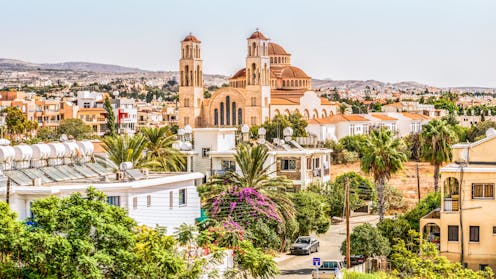


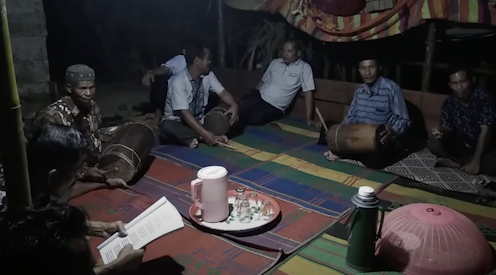


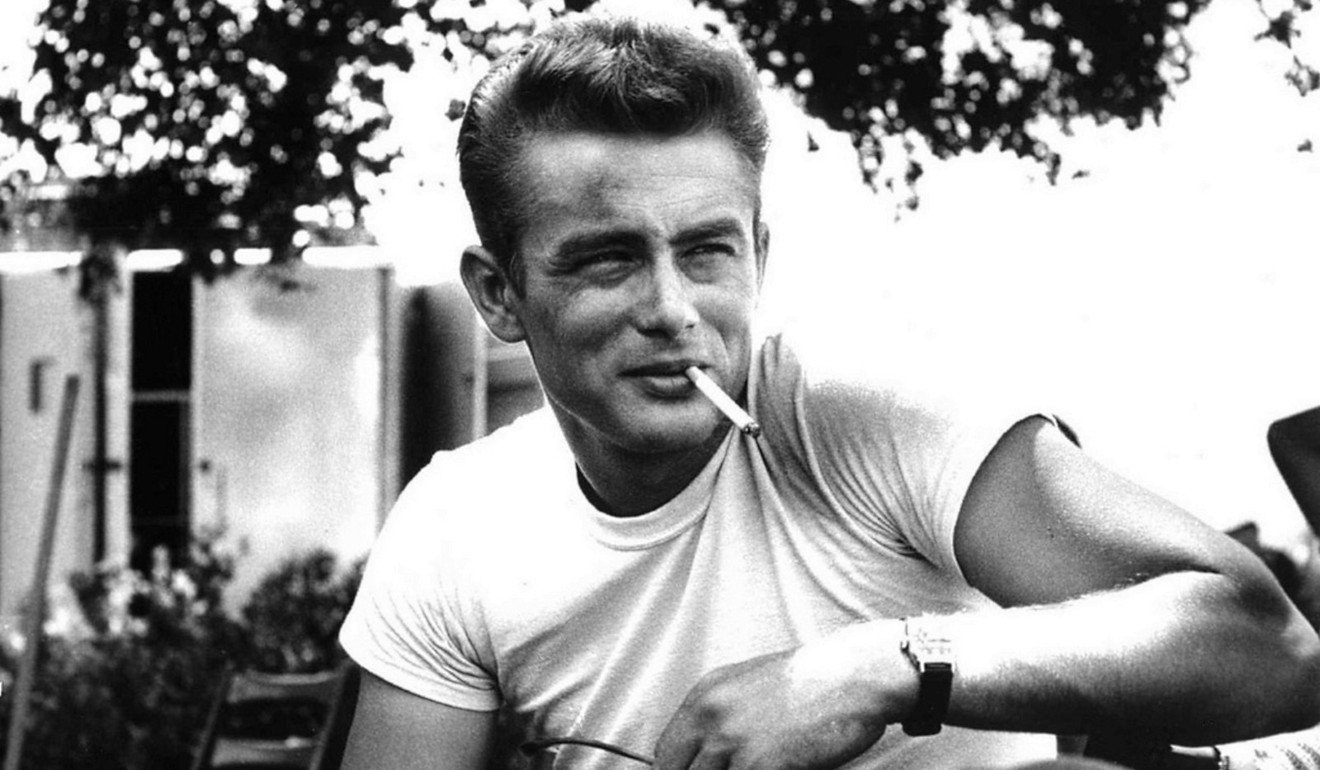

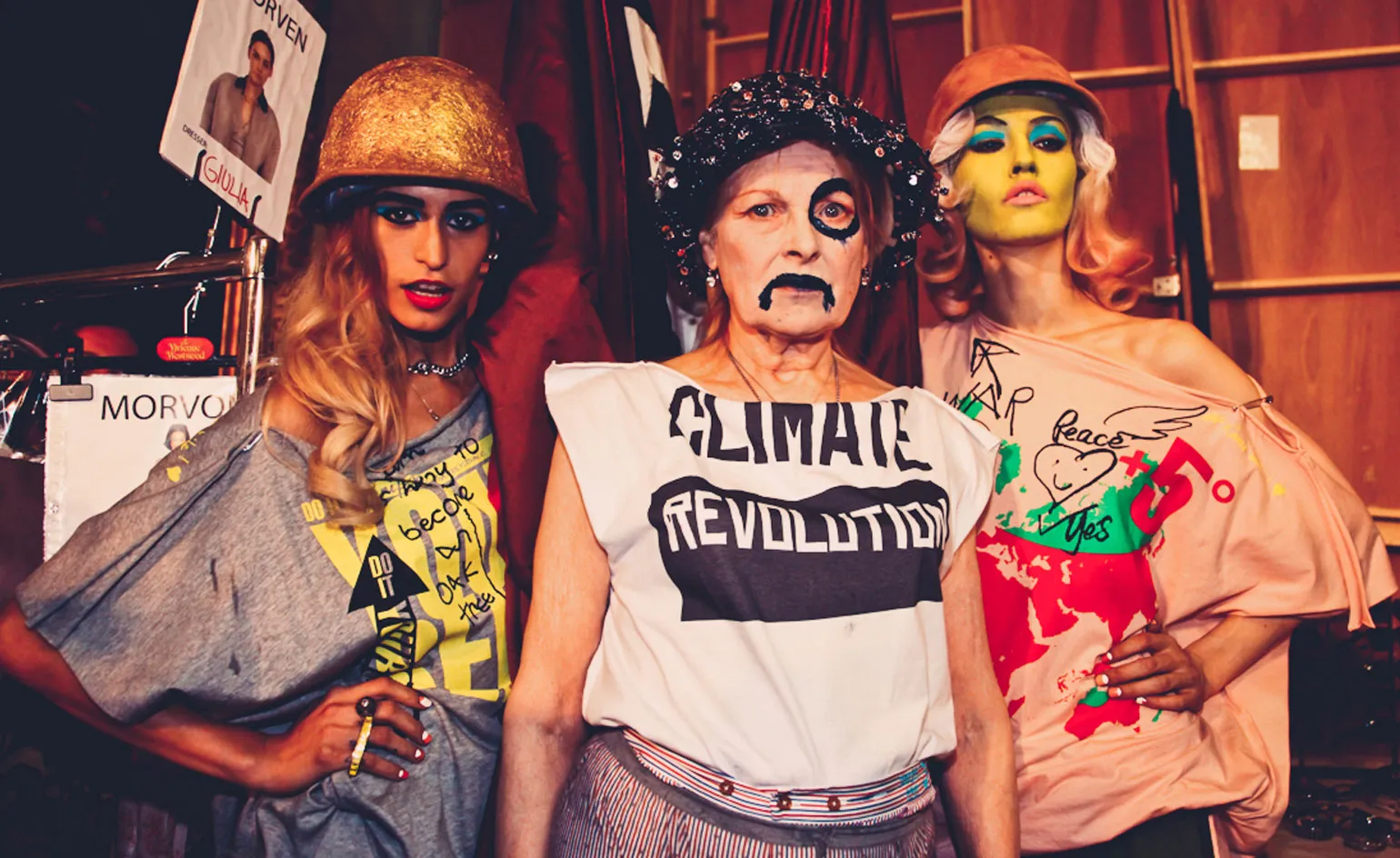
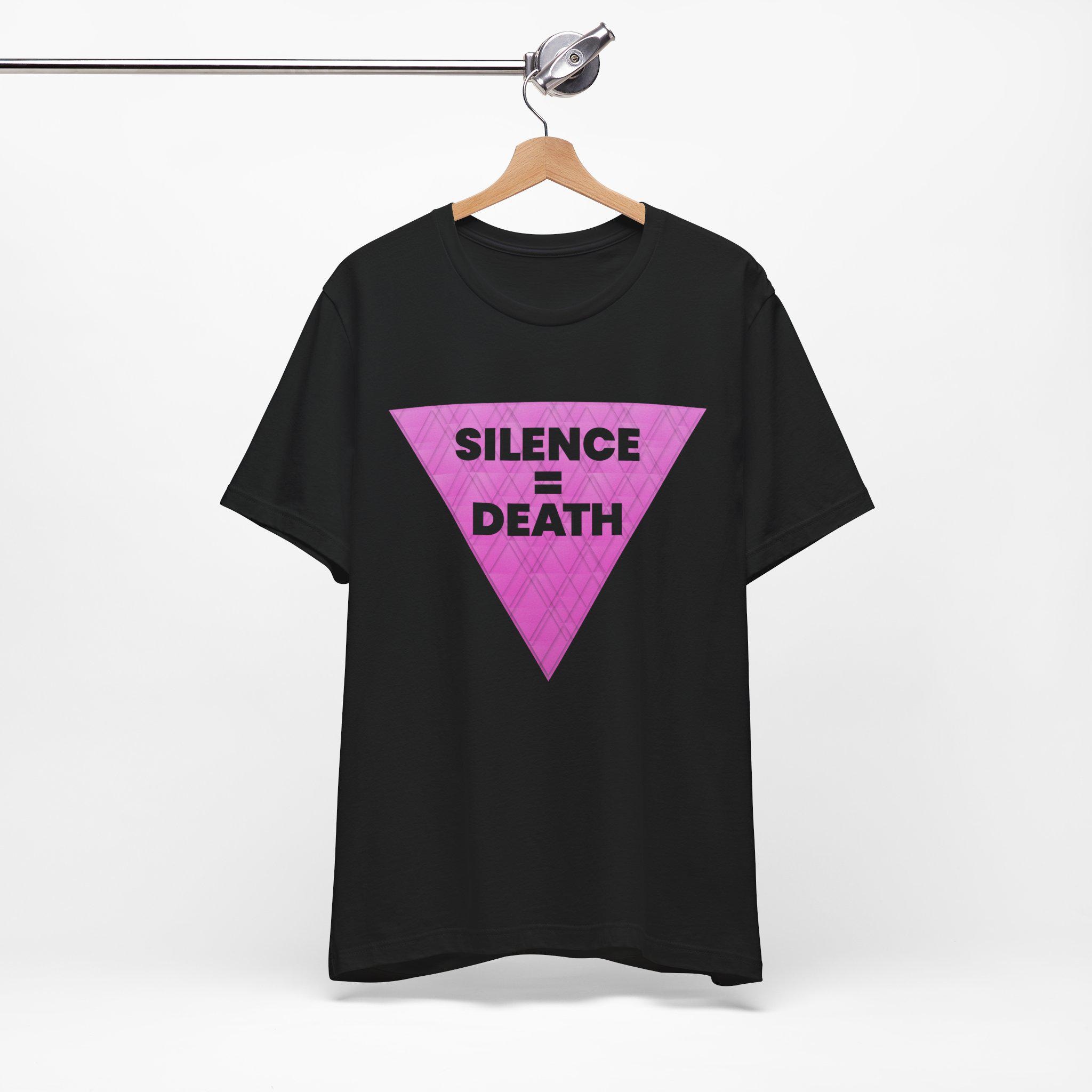


_(53765476960)_(cropped).jpg)


