Category: Environment

  • MIL-Evening Report: ‘De-extinction’ of dire wolves promotes false hope: technology can’t undo extinction

    Source: The Conversation (Au and NZ) – By Martín Boer-Cueva, Ecologist and Environmental Consultant, Universidad Autónoma de Madrid

    Colossal Biosciences

    Over the past week, the media have been inundated with news of the “de-extinction” of the dire wolf (Aenocyon dirus) – a species that went extinct about 13,000 years ago.

    The breakthrough has been achieved by Colossal Biosciences, a multibillion-dollar United States company that claims their goal is to restore biodiversity through the de-extinction of species.

    The project is being celebrated and marketed as a conservation win. But does this technology really have the best interests of conservation in mind?

    We argue as ecologists that genetic advancements like these, while they are major scientific and technological feats, still risk minimising the severity of the current extinction crisis.

    Importantly, they take away focus from proven conservation efforts that are needed to protect the biodiversity that remains.

    High-tech copies of wolves

    First, it is important to recognise that Romulus, Remus and Khaleesi, the three “dire wolf” pups created, are not actually dire wolves.

    Colossal carried out 20 edits in 14 genes of the grey wolf genome to create their “dire wolves” using a genetic technique called CRISPR-Cas9.

    The grey wolf’s genome is 2,447,000,000 individual bases long. Would we consider a chimpanzee, with which we share 98.8% of our genome, to be human after 20 edits?

    The reality is that these are three slightly modified grey wolves.

    TIME magazine cover featuring a Colossal Biosciences’ ‘dire wolf’.
    TIME

    This de-extinction project has had millions of dollars poured into it – amounts of money most conservation programs could only dream of. There are proven solutions to help reverse biodiversity loss: habitat protection and restoration, the control of invasive species and the phasing out of fossil fuels.

    However, these solutions are not slickly marketed as shiny, techno-fix packages like de-extinction. Instead, they are heavily underfunded.

    Extinction is irreversible

    Promoting extinction as reversible risks downplaying its gravity and legacy.

    Headlines like the one that appeared on the front cover of TIME magazine – with the word “extinct” crossed out – seed a false hope that no matter what environmental damage is done, species loss can be easily undone.

    The risk is that de-extinction will be used as an ultimate offset for any environmental impact.

    Humans fear death. It is possibly our most primal instinct. We mourn and feel great sadness for the death of an individual, not only because they are gone, but because it is irreversible and final. Permanent.

    That finality is the same for humans or any living animal. It is what makes fighting biodiversity loss such an urgent concern, so much so that people risk their lives to prevent it, with 150 wildlife rangers dying each year around the world in their fight to protect endangered species.

    Protest movements like the Extinction Rebellion draw attention to irreparable damage to biodiversity.
    Ethan Wilkinson/Unsplash

    In the conservation movement, raising awareness of “martyr” species – like the northern white rhino and the passenger pigeon – helps underline the argument in favour of protecting current species. Framing extinction as temporary creates false hope and undermines motivation for real conservation action.

    We might already be seeing this happen in response to the “de-extinction” of the dire wolf. Interior Secretary of the Trump administration, Doug Burgum, praised the new biotechnology advancement and used it as an argument for the removal of the US Endangered Species Act.

    What good is bringing back species if there are no protective laws to address the drivers of their declines?

    Would we protect the dire wolf even if it did come back?

    It is deeply ironic that while millions are being spent recreating a dire wolf proxy, its cousin, the grey wolf, is heavily persecuted globally. Just last month, the Spanish government voted to overturn the legal protection that prevented wolves from being hunted north of the Duero River.

    Other predators are affected, too. In Australia, the dingo, which has been shown to suppress invasive cats and red foxes, helping native biodiversity, is also heavily persecuted – just like the thylacine or Tasmanian tiger was, which Colossal aims to de-extinct as well.

    If we can’t safeguard or protect habitat for apex predators today, in ecosystems that are already under immense pressure, what kind of world would we be bringing extinct species back into? Up to 150 species are considered to go extinct every day. No amount of genetic tech will solve this unless we address the root causes: habitat destruction, over-exploitation and climate change.

    The de-extinction of the dire wolf may sound like a conservation breakthrough, but it risks distracting us from the protection of our current living species. This approach turns biodiversity conservation into a billionaire’s Jurassic Park fantasy instead of addressing the crisis we already know how to fix.

    Dieter Hochuli receives funding from the Australian Research Council, NSW Department of Planning and Environment, the City of Sydney and the Inner West Council. He is President-Elect of the Ecological Society of Australia.

    Marco Salvatori receives funding from European Union BIODIVERSA+ program.

    Peter Banks receives funding from the Australian Research Council, The NSW Environmental Trust and the Australian Forests and Wood Initiative.

    Martín Boer-Cueva does not work for, consult, own shares in or receive funding from any company or organisation that would benefit from this article, and has disclosed no relevant affiliations beyond their academic appointment.

    ref. ‘De-extinction’ of dire wolves promotes false hope: technology can’t undo extinction – https://theconversation.com/de-extinction-of-dire-wolves-promotes-false-hope-technology-cant-undo-extinction-254479
    MIL OSI AnalysisEveningReport.nz

  • MIL-OSI Submissions: Universities – Little birds’ personalities shine through their song – and may help find a mate – Flinders

    Source: Flinders University

    In birds, singing behaviours play a critical role in mating and territory defence.

    Although birdsong can signal individual quality and personality, very few studies have explored the relationship between individual personality and song complexity, and none has investigated this in females, say Flinders University animal behaviour experts.

    They have examined the relationships between song complexity and two personality traits (exploration and aggressiveness) in wild superb fairy-wrens (Malurus cyaneus), a species in which both sexes learn to produce complex songs.

    “Regardless of their sex or life stage, individuals that were more exploratory had more element types per song, which may be explained by the possibility that more exploratory birds approach and learn from a wider variety of tutors compared to less exploratory birds,” says senior lecturer Dr Diane Colombelli-Négrel, from the College of Science and Engineering BirdLab at Flinders University.

    “Additionally, more aggressive individuals produced songs with fewer syllables, and more aggressive fledglings, but not adults, had more element types per song. In birds, singing behaviours play a critical role in mating and territory defence.”

    The study illustrates that learned aspects of sexual signalling are personality dependent, and that this can have some potential fitness implications.

    In a new study, published in Royal Society Open Science, the personality in males and females (including juveniles) was assessed by quantifying their exploration behaviour (novel environment test) and aggressiveness (mirror stimulation test) during short-term captivity.

    First the birds were captured to measure their personality in short-term captivity. Researchers measured their exploration by placing them (in a novel environment test), and their aggressiveness (by using a mirror test).

    After the birds were released, their songs were recorded over several months to assess individual variation in song complexity (i.e., element types per song, syllables per song) in relation to personality.

    “Our study supports the idea that both male and female birds can advertise their personality when singing, which may be important for mate choice,” Dr Colombelli-Négrel says.

    The research – Personality predicts song complexity in superb fairy-wrens (2025) by D Colombelli-Négrel, AC Katsis, LK Common and S Kleindorfer – will be published by the Royal Society Open Science (The Royal Society) DOI: 10.1098/rsos.241497.

    https://doi.org/10.1098/rsos.241497

    Acknowledgements: This work was funded by a Discovery Research Grant from the Australian Research Council (DP190102894) awarded to SK and DC-N and by a grant from the Australia & Pacific Science Foundation awarded to DC-N and SK.

    This research was approved by the Flinders University Animal Welfare Committee (E480, AEC BIOL5563). Fieldwork was conducted under permit from the South Australian Department for Environment and Water (Z24699) and the Australian Bird and Bat Banding Scheme (banding authority numbers 2601, 2719).

    Researchers also thank Cleland Wildlife Park for access to the field site and for accommodating this research.

    MIL OSI – Submitted News

  • MIL-OSI Australia: Infringements issued for illegal rubbish dumping in Geeveston state reserve forest area

    Source: New South Wales Community and Justice

    Infringements issued for illegal rubbish dumping in Geeveston state reserve forest area

    Wednesday, 16 April 2025 – 8:52 am.

    Two men will receive an infringement notice for $2,200 each after they allegedly illegally dumped a significant amount of rubbish in a stream side reserve at Geeveston recently. 
    The 39-year-old and 66-year-old men from Geeveston allegedly dumped more than two cubic metres of rubbish in the state reserve forest area. 
    “Police are continuing to investigate further reports of illegal rubbish dumping within the Geeveston area,” said Sergeant Simon Ward from Huonville Police. 
    “Illegal rubbish dumping will not be tolerated, and I ask anyone with information into the matters to contact Huonville Police on 131 444 or provide information anonymously through Crime Stoppers Tasmania at crimestopperstas.com.au or on 1800 333 000”
    Stephen Rymer, Assistant General Manager Operations, Sustainable Timber Tasmania said, “This is a strong demonstration that illegal rubbish dumping on Permanent Timber Production Zone land is a serious offence and offenders will be prosecuted.”   
    “Illegal dumping of rubbish is a major concern for Sustainable Timber Tasmania, costing tens of thousands of dollars each year in time, resources, and clean up and has significant environmental, economic, and safety impacts.”  
    Littering can be reported to the Environmental Protection Authority via epa.gov.au or by calling 1300 135 513.

    MIL OSI News

  • MIL-OSI New Zealand: Greenpeace renews call on Ministry of Health to act on nitrate contamination in drinking water

    Source: Greenpeace

    Greenpeace Aotearoa has written to Manatū Hauora – Ministry of Health again following testing that revealed high levels of nitrate contamination in Ashburton District drinking water.
    Greenpeace spokesperson Will Appelbe says, “Safe, healthy drinking water is a fundamental human right, but many people in Canterbury cannot drink the water coming out of their kitchen tap without risking getting sick. This is a public health crisis, and the Ministry of Health must take action.”
    Greenpeace is calling on the Ministry of Health to step in and require Environment Canterbury to protect drinking water from nitrate contamination caused by the intensive dairy industry.
    Greenpeace’s most recent round of water testing found that close to one in five private bores tested in the Ashburton District were above the Government’s maximum allowable value of nitrate in drinking water (11.3 mg/L NO3-N) – a level associated with potentially-fatal Blue Baby Syndrome. It also found that nearly half of the private bores tested were above 5 mg/L. This level of nitrate in drinking water has been linked to elevated risks of preterm birth if consumed by pregnant people.
    One public supply – the Hinds town supply – tested at 6.55 mg/L for nitrate. Greenpeace says this is not the first town supply in Canterbury to reach potentially unsafe levels of nitrate contamination – last year, the organisation also found public water supplies in Darfield and Oxford were testing at levels above 5 mg/L of nitrate.
    “It is unacceptable that no action has been taken yet to stop contamination of drinking water at the source,” says Appelbe.
    “The source of nitrate pollution is clear: it is the intensive dairy industry. Too many cows, and too much synthetic nitrogen fertiliser, lead to nitrate leaching into groundwater, which is where most communities in Canterbury draw their water from. And so the solution is also clear. We need to reduce the dairy herd size, and phase out the use of synthetic nitrogen fertiliser in Aotearoa.
    “Ultimately, we need to transition towards more plant-based, ecological farming practices that work with, instead of against, nature.
    “It’s time for our Government to take accountability for the public health crisis that is looming as a result of unchecked dairying and water pollution. We’re calling on the Ministry of Health to ensure that drinking water in Canterbury is protected at the source – so that everyone, no matter where they live, can safely drink the water coming out of their kitchen tap.”

    MIL OSI New Zealand News

  • MIL-OSI New Zealand: EPA calls for information on tattoo inks

    Source: Environmental Protection Authority

    The Environmental Protection Authority (EPA) is seeking information about how tattoo inks are supplied, made and used in New Zealand to help assess whether the current rules are fit for purpose.
    “Tattoos have been increasing in popularity and with about one quarter of New Zealand’s adult population estimated to have a tattoo, it’s important to make sure the current rules are appropriate,” says EPA Hazardous Substances Reassessments Manager Dr Shaun Presow.
    “Recent research has shown that some of the ingredients in some tattoo inks, including certain types of pigments and chemicals, could cause adverse effects, such as allergic reactions or infections.
    “Researchers overseas have found some inks can contain potentially harmful ingredients including carcinogens and high levels of impurities like heavy metals, and we want to make sure Kiwis aren’t facing these risks.”
    In 2020, the European Union restricted and banned several substances found in tattoo inks because of the risk of adverse effects.
    “While these effects are extremely rare, we want to look at whether our rules should be more aligned with international practice.
    “As one of New Zealand’s regulators of hazardous substances, it’s important we regularly review the rules that protect people’s health.”
    “This is an important part of our ongoing work to keep New Zealanders safe,” says Dr Presow.
    We’d like information on all ink that is permanently applied to the body, including commercial inks, homemade inks, as well as ink used in permanent makeup (tattoos that look like make-up such as eye liner).
    We want to learn more about:
    • the types, brands, and colours of tattoo ink being used
    • where tattoo ink is being purchased
    • if and how tattoo ink is manufactured in New Zealand
    • what measures are being used to manage any risks from tattoo inks.
    “We’ll use the information we gather to decide if we should amend the existing rules, and to guide any possible changes if we do,” says Dr Presow.
    “If any changes are proposed, there will be public consultation and industry input will be vital.”
    Submissions close on Wednesday, 11 June 2025. 
    Background
    • Tattoo inks are currently regulated by a group standard (a set of rules that applies to a group of similar products). These rules cover the import, manufacture, supply and use of tattoo inks in New Zealand: Tattoo and permanent makeup substances guidance for business | EPA
    • Before we can amend rules like these, we are required to go through an information gathering and consultation process.
    • Tattoo safety
    • Before getting a tattoo, you can check if the tattoo artist is aware of the current guidance on our website.
    • While adverse effects from tattoo inks are extremely rare, there are other risks from tattoos. The main risk is from unclean equipment and infections spread by needles. WorkSafe New Zealand and the Ministry of Health have guidance on managing risks from tattooing. Some councils also have by-laws that apply to tattoo parlours.
    • If you have noticed any symptoms you believe may be related to a tattoo, you should seek advice from a medical professional in the first instance. You should also contact your tattoo artist to inform them of the issue.
    • If you purchase or import tattoo ink, ask your supplier to provide you with the information outlined in the “your responsibilities as a tattooist” advice on our website: Tattoo and permanent makeup substances guidance for business

    MIL OSI New Zealand News

  • MIL-OSI USA News: Fact Sheet: President Trump Brings Permitting Technology Into the 21st Century for Government Efficiency

    Source: The White House

    MODERNIZING PERMITTING TECHNOLOGY: Today, President Donald J. Trump issued a memorandum to ensure the Federal government is leveraging modern technology to effectively and efficiently conduct environmental reviews and evaluate permits.

    • The Presidential Memorandum directs Federal agencies to make maximum use of technology in the environmental review and permitting processes for infrastructure projects of all kinds.
    • The Council on Environmental Quality (CEQ), in consultation with the National Energy Dominance Council (NEDC) and relevant permitting agencies, will issue a Permitting Technology Action Plan to guide agencies as they use technology to digitize permit applications, expedite reviews, enhance interagency coordination on projects, and give sponsors more transparency and predictability on project permitting schedules.
    • CEQ will also establish and lead a Permitting Innovation Center to assist Federal agencies as they adopt new software and automate application and review processes, including to coordinate agencies in this effort.
    • This will also help agencies share information with state and tribal officials to make those permitting processes easier for project sponsors.

    ELIMINATING UNCERTAINTY: President Trump recognizes the environmental review and permitting process has been burdened by a lack of transparency and outdated technology.

    • The current environmental review and permitting process in the United States is inefficient, unpredictable, and counterproductive to the growth of the American economy and other infrastructure projects that benefit the American people.
    • Projects often involve multiple Federal agencies with overlapping statutory requirements, and expanding the use of modern technology in the environmental review and permitting process will improve coordination and reduce duplicative efforts by both Federal agencies and project applicants.
    • The actual time to complete many infrastructure projects, when measured from project inception to in-service date, can be a decade or more.

    RESTORING AMERICAN PROSPERITY:  Environmental review and permitting reform is a top priority for the Trump Administration and this action will accelerate the process, improve the transparency and predictability of project timelines, and eliminate unnecessary delays holding back the growth of the American economy. 

    • As part of his America First agenda, President Trump promised to Make America Affordable and Energy Dominant Again by streamlining environmental reviews and permitting decisions.
    • This memorandum builds on President Trump’s Day One Executive Order Unleashing American Energy, which includes provisions to expedite and simplify the environmental review and permitting process, and return our Nation to energy dominance.
      • In response to the President’s Executive Order, the CEQ published an interim final rule to rescind its National Environmental Policy Act (NEPA) regulations. Rescinding this regulation removes a burdensome layer of bureaucracy, creating a clear path for agencies to expeditiously reform their own NEPA procedures and allow America to build again.
      • This action to return CEQ to a consulting body, combined with the implementation of modern permitting technology, will enable better interagency coordination, resulting in the greatest and fastest permitting reform ever to take place in the decades-long history of NEPA.

    MIL OSI USA News

  • MIL-OSI New Zealand: Respect king shags this breeding season

    Source: Department of Conservation

    Date:  16 April 2025 Source:  Department of Conservation and Marlborough District Council

    “Boaties are not allowed to go within 100 m of king shag colonies under the district’s environment plan rules, to protect this endangered species which only breeds in the Marlborough Sounds,” DOC Ranger Dan Palmer says.

    “King shags are famously skittish and tend to fly the nest when disturbed by a noisy boat, leaving their eggs and chicks vulnerable to predation by gulls.”

    There are colonies on Sentinel Rock – a popular fishing spot – and at Trio Islands, Duffers Reef and White Rocks.

    They’re often mistaken for common shags, but Dan says there are a few important differences.

    “Unlike common shags, king shags won’t go near anyone with a fishing line and aren’t interested in scavenging, so they don’t tend to trouble boaties. King shags are also larger than their common shag cousins.”

    Marlborough District Council Principal Coastal Scientist Oliver Wade says the taonga bird species was identified as needing specific protection through the development of the new Marlborough Environment Plan.

    “The rules in the new environment plan identify the limited number of important breeding and roosting sites for the King Shag and put in place a 100 m exclusion zone that applies to any boating activity.

    “Marlborough District Council and the Department of Conservation are committed to working together to care for this incredible species, which can dive up to 60m and is the deepest diving bird species in our region.”

    Dan Palmer says king shags are under considerable pressure following challenging La Nina conditions in 2022-23.

    “At last count, the overall number of birds was 614, having dropped by 25 per cent since 2021, although last year’s successful breeding season was a bright spot. Still, we’re going to continue to see La Nina knock-on effects in the breeding population over the coming years.

    “The good news is we can help king shags by simply respectfully sharing space. They’re unique and special – and if they go from here, they’re gone from everywhere.

    “Giving king shags the space they need creates a much safer environment for adults to protect their eggs and chicks, and gives king shags a fighting chance to grow a healthy, resilient population.”

    Background information

    The king shag is only found in the outer Marlborough Sounds. Because they have a small range and there are not many of them, even a single adverse event could impact most of the population.

    A deep diving bird, they feed on bottom-dwelling fish species including lemon sole, opalfish and witch. Given their preferred prey, king shags depend on a healthy seafloor ecosystem.

    Other threats include disturbance from human activity and bad weather events.

    King shags breed in winter, making nests of sticks and seaweed cemented with guano on low rock platforms, steep rock faces, or rock ridges. Typically, they lay one to three pale blue eggs per nest.

    Contact

    For media enquiries contact:

    Email: media@doc.govt.nz

    MIL OSI New Zealand News

  • MIL-OSI New Zealand: Rare Raukawa gecko rediscovered in Auckland remains elusive

    Source: Auckland Council

    The discovery of a rare mainland population of the Raukawa gecko (Woodworthia maculata) in the southern part of the Auckland region has sent ripples of excitement through the conservation community.

    These omnivores play a vital role in pollination and seed dispersal as they consume nectar and fruit, and a significant find of the gecko could suggest a potentially thriving population in an area where they were thought to be extinct.

    Chair of the Planning and Policy Committee Councillor Richard Hills says ecological work is invaluable.

    “The data gained in these surveys helps us keep track of our reptile populations and allows us to work to manage threats and restore environments so they can survive. The report of a Raukawa gecko is an exciting development.

    “Knowing which species are living in our neighbourhoods supports local conservation efforts through native plantings and predator control.

    “Finding a New Zealand forest gecko in my own backyard on the North Shore this year highlights the amazing work done by volunteers and council in our communities, and is a reminder that we need to do more to protect all our native species”

    The project, a collaboration between Auckland Council’s Regional Parks and Environmental Services teams, aims to determine the gecko’s population size, distribution, and overall status in the area. This will start with an ecological survey to confirm the finding.

    Auckland Council’s Senior Ecologist Melinda Rixon says it is an incredible discovery.

    “While Raukawa geckos are widespread on pest-free islands, mainland populations are exceedingly rare due to predation and habitat destruction.

    “Finding them here gives us a rare opportunity to learn more about their resilience and consider what conservation efforts might be necessary to protect them.”

    The recent survey carried out follows an initial sighting in 2023 by ecologist Miranda Bennett, who first spotted the gecko while undertaking weed control work in the area. This prompted further investigation into whether this was a lone survivor or part of a larger, hidden population.

    “This is why we do what we do,” says Miranda Bennett, who is now Programme Manager for work funded by the Natural Environment Targeted Rate.

    “The chance to rediscover a species in a place where we didn’t think it existed anymore is exciting. It also highlights the value of protecting and restoring these unique ecosystems,” adds Miranda.

    The site being surveyed is also home to several other threatened reptile species, including the at-risk shore skink (Oligosoma smithi), as well as ornate skinks and copper skinks. The survey is equally focused on gathering information on these species to inform future conservation and management strategies.

    As the survey draws to a close, just two geckos have been sighted and tagged.

    “It’s a little disappointing; we were hoping to find more. A couple of lonely geckos doesn’t bode well for a mainland population,” says Miranda.

    Conservation challenges and survey methods

    While the Raukawa gecko has a national status of ‘Not Threatened,’ it is classified as ‘At Risk – Regionally Recovering’ within Auckland due to its absence from most mainland sites.

    If there is a population in the area, its existence will challenge our understanding of the species’ mainland distribution and raises questions about its long-term survival prospects; the main threats to geckos include predation from invasive mammals and habitat degradation.

    To investigate the population, the research team set up multiple survey divides using Artificial Cover Objects (ACOs) to attract and monitor geckos.

    Additionally, tracking tunnels, typically used for pest monitoring, were employed to detect gecko footprints, which are easily distinguished from skink footprints.

    The team conducted five separate checks over the two-week period of the survey to collect data on the population.

    The unique world of the Raukawa gecko

    Raukawa geckos are nocturnal but sometimes cryptically bask in sunlight during the day in plain sight, near their retreats.

    Unlike their tropical counterparts, which may only live a couple of years, geckos in New Zealand can survive for up to 60 years.

    This long lifespan, however, comes with slow reproduction rates – geckos take years to mature and give birth to live young rather than laying eggs. In colder conditions, they can even delay giving birth until temperatures are more favourable.

    Another fascinating adaptation of these geckos is their remarkable sticky feet, which allow them to scale vertical surfaces and even walk upside down.

    Their ability to drop their tails, known as caudal autonomy, is another survival tactic. If a predator attacks, the gecko can detach its tail, which wriggles distractingly while the gecko makes a swift escape. Although the tail regrows, it never quite matches the original—it is shorter, often differently coloured, and structurally distinct.

    Protecting a precious population

    The presence of the Raukawa gecko and the shore skink highlights the biodiversity value of this undisclosed southern Auckland Council regional park, which is already recognised as a Biodiversity Focus Area (BFA) due to its rare coastal ecosystem.

    The park provides critical habitat for at-risk species, including the shore skink and the threatened plant Senecio scaberulus (fireweed). Conservation efforts at the site focus on habitat restoration and predator management to ensure these species thrive in the coming decades.

    “Finding a mainland population of Raukawa geckos would be a game-changer for our conservation efforts,” says Melinda.

    “The discovery would underscore the importance of continued monitoring and protection of our natural spaces. Who knows what else we might find?”

    For now, the survey team is keeping the exact location under wraps to protect the geckos from poaching or disturbance.

    The public is encouraged to support conservation efforts by respecting protected areas and reporting any native lizard sightings to local conservation groups.

    Native Raukawa gecko

    The unique world of the Raukawa gecko

    Raukawa geckos are nocturnal but sometimes cryptically bask in sunlight during the day in plain sight, near their retreats.

    Unlike their tropical counterparts, which may only live a couple of years, geckos in New Zealand can survive for up to 60 years.

    This long lifespan, however, comes with slow reproduction rates – geckos take years to mature and give birth to live young rather than laying eggs. In colder conditions, they can even delay giving birth until temperatures are more favourable.

    Another fascinating adaptation of these geckos is their remarkable sticky feet, which allow them to scale vertical surfaces and even walk upside down.

    Their ability to drop their tails, known as caudal autonomy, is another survival tactic. If a predator attacks, the gecko can detach its tail, which wriggles distractingly while the gecko makes a swift escape. Although the tail regrows, it never quite matches the original—it is shorter, often differently coloured, and structurally distinct.

    Protecting a precious population

    The presence of the Raukawa gecko and the shore skink highlights the biodiversity value of this undisclosed southern Auckland Council regional park, which is already recognised as a Biodiversity Focus Area (BFA) due to its rare coastal ecosystem.

    The park provides critical habitat for at-risk species, including the shore skink and the threatened plant Senecio scaberulus (fireweed). Conservation efforts at the site focus on habitat restoration and predator management to ensure these species thrive in the coming decades.

    “Finding a mainland population of Raukawa geckos would be a game-changer for our conservation efforts,” says Melinda.

    “The discovery would underscore the importance of continued monitoring and protection of our natural spaces. Who knows what else we might find?”

    For now, the survey team is keeping the exact location under wraps to protect the geckos from poaching or disturbance.

    The public is encouraged to support conservation efforts by respecting protected areas and reporting any native lizard sightings to local conservation grou

    MIL OSI New Zealand News

  • MIL-OSI USA: MATSUI, HUFFMAN, COLLEAGUES EXPRESS CONCERNS FOR INCREASED LOGGING ON PUBLIC LANDS

    Source: United States House of Representatives – Congresswoman Doris Matsui (D-CA)

    WASHINGTON, D.C.Congresswoman Doris Matsui (CA-07) and Congressman Jared Huffman (CA-02) led a letter signed by 37 Members of Congress to Secretary of Agriculture Brooke Rollins and Secretary of the Interior Doug Burgum, expressing concerns regarding the implementation of President Trump’s Executive Order (E.O.) 14225 calling for a fast-tracked expansion of U.S. timber production.

    “We urge you to consider the devastating and long-lasting impacts that increased logging will have on our federal forests and future generations of Americans,” wrote the lawmakers. 

    Federal forests provide a multitude of services for all Americans, and unchecked expansion of logging on these lands threatens our access to clean air, clean water, and the iconic recreational spaces that millions of Americans visit every year. By issuing E.O. 14225, President Trump is prioritizing timber production over all other uses of public lands—regardless of ecological impacts or wildfire mitigation. 

    “We are particularly concerned that the President’s push to expand timber production will target older trees,” the lawmakers continued. “[…] Mature and old growth forests are a vital resource, providing important habitat for endangered species, mitigating climate change through the absorption and long-term storage of carbon, and protecting vital watersheds that many Americans depend on. Older trees are often more resilient to wildfires because of their thick protective bark and higher canopies. Clearing the way for the destruction of precisely the type of tree that is the best at resisting wildfires is counterproductive and ironic.” 

    As Co-Chair of the House Sustainable Energy and Environment Coalition (SEEC) and Co-Chair of the SEEC Lands, Waters, and Nature Task Force, Congresswoman Matsui has long been a champion of protecting public lands and critical habitat, preserving the environment, and advancing nature-based approaches to addressing climate change. This letter follows a series of letters the Congresswoman led in April 2023April 2024 and September 2024, urging the U.S. Forest Service (USFS) and Bureau of Land Management (BLM) to take additional measures to protect old-growth forests.

    A copy of the letter can be found below and HERE.

    Dear Secretary Rollins and Secretary Burgum,

    We write to express our concerns regarding the implementation of President Trump’s Executive Order (E.O.) 14225 calling for a fast-tracked expansion of U.S. timber production. Our federal forests provide a multitude of services for all Americans, and unchecked expansion of logging on these lands threatens our access to clean air, clean water, and the iconic recreational spaces that millions of Americans visit every year. While ecologically appropriate thinning can be important for preventing and reducing the severity of wildfire in some circumstances, E.O. 14225 explicitly prioritizes timber production, regardless of ecological impacts or wildfire mitigation. We urge you to consider the devastating and long-lasting impacts that increased logging will have on our federal forests and future generations of Americans.

    All of this comes as the Trump administration is working to dramatically reduce the workforce of federal land management agencies. Efforts to hollow out agencies raise significant concerns about the ability of the remaining personnel to facilitate the requirements of the E.O. while simultaneously preparing for the upcoming wildfire and tourism season. This is especially perplexing, and we encourage you to ensure that the desired focus on timber production does not come at the expense of other critical priorities. 

    We are particularly concerned that the President’s push to expand timber production will target older trees. There are alarmingly few old-growth forests left in the United States, and those that remain are found largely on federal lands. Mature and old growth forests are a vital resource, providing important habitat for endangered species, mitigating climate change through the absorption and long-term storage of carbon, and protecting vital watersheds that many Americans depend on. Older trees are often more resilient to wildfires because of their thick protective bark and higher canopies. Clearing the way for the destruction of precisely the type of tree that is the best at resisting wildfires is counterproductive and ironic.

    Furthermore, E.O. 14225 entirely ignores the legal mandate from Congress to manage these public forests for multiple uses, not just timber production, in the National Forest Management Act. We are deeply concerned it directs agencies, including your own, to undermine both the National Environmental Policy Act (NEPA) and Endangered Species Act (ESA) in order to fast-track timber harvesting. NEPA guarantees that communities have a seat at the table to work in an informed and cooperative manner with the U.S. Forest Service and Bureau of Land Management to generate the best alternatives for achieving desired conditions in our forests. Any policy changes directed by E.O. 14225 must not come at the expense of public involvement in decision making. 

    We are equally concerned about the direction to exploit ESA emergency provisions and the Endangered Species Committee; this seemingly attempts to allow logging projects to bypass essential protections for endangered species and worsen the ongoing biodiversity crisis.

    Given the potentially devastating effects on the environment and human health of this rash and short-sighted E.O, we urge you to consider the long-term consequences. Our forests are essential to protect our climate, safeguard biodiversity, maintain our clean water supply, and provide the kind of recreation opportunities that have long been central to the American way of life. 

    We look forward to ongoing coordination and communication as your respective Departments interpret and implement the directives E.O. 14255.

    # # #

    MIL OSI USA News

  • MIL-OSI: Montauk Renewables, Inc. Announces Share Repurchase Program

    Source: GlobeNewswire (MIL-OSI)

    PITTSBURGH, April 15, 2025 (GLOBE NEWSWIRE) — Montauk Renewables, Inc. (NASDAQ: MNTK) (“Montauk” or the “Company”), announced today that the Company’s Board of Directors has authorized a share repurchase program to repurchase up to $5,000,000 of the Company’s issued and outstanding common stock, effective immediately with no date for termination.

    Repurchases under the program may be made through open market transactions, privately negotiated transactions or otherwise in accordance with applicable federal securities laws. The timing, number and purchase price of shares repurchased under the program, if any, will be determined by a Repurchase Committee, comprised of Board members and management.

    The repurchase program may be suspended, terminated or modified at any time for any reason, including market conditions, the cost of repurchasing shares, the availability of alternative investment opportunities, liquidity, and other factors deemed appropriate. These factors may also affect the timing and amount of share repurchases. The repurchase program does not obligate the Company to purchase any number of shares and there is no assurance that purchases will take place under the program.

    About Montauk Renewables, Inc.

    Montauk Renewables, Inc. (NASDAQ: MNTK) is a renewable energy company specializing in the management, recovery and conversion of biogas into RNG. The Company captures methane, preventing it from being released into the atmosphere, and converts it into either RNG or electrical power for the electrical grid (“Renewable Electricity”). The Company, headquartered in Pittsburgh, Pennsylvania, has more than 30 years of experience in the development, operation and management of landfill methane-fueled renewable energy projects. The Company has operations at 13 projects and ongoing development projects located in California, Idaho, Ohio, Oklahoma, Pennsylvania, North Carolina, South Carolina, and Texas. The Company sells RNG and Renewable Electricity, taking advantage of Environmental Attribute premiums available under federal and state policies that incentivize their use. For more information, visit https://ir.montaukrenewables.com.

    Company Contact:

    John Ciroli
    Chief Legal Officer (CLO) & Secretary
    investors@montaukrenewables.com
    (412) 747-8700

    Investor Relations Contact:

    Georg Venturatos
    Gateway Group
    MNTK@Gateway-grp.com
    (949) 574-3860

    Forward Looking Statement

    This press release contains forward-looking statements including, among other things, statements regarding share repurchases. Any forward-looking statements contained in this press release represent our estimates, expectations or intentions only as of the date hereof, and should not be relied upon as representing our views as of any subsequent date. These statements involve a number of risks, assumptions and uncertainties. If the risks materialize, assumptions prove incorrect, or we experience unexpected changes in circumstances, actual results could differ materially from the results implied by these forward-looking statements. These risks and uncertainties include, but are not limited to, expectations of the economic environment, material adverse changes in economic conditions, alternative uses of capital, and the other risks contained in our other public disclosures discussing our business and financial condition and results. As a result, we caution against placing undue reliance on any forward-looking statement. For information on potential risks and uncertainties that could cause actual results to differ, please see the “Risks Factors” section of our annual report on Form 10-K for the year ended December 31, 2024 and subsequent quarterly reports and other filings filed with the Securities and Exchange Commission from time to time. While we may elect to update forward-looking statements at some point in the future, we specifically disclaim any obligation to do so.

    The MIL Network

  • MIL-OSI NGOs: Greenpeace slams Impossible Metals’ deep-sea mining lease bid as desperate move amid industry collapse

    Source: Greenpeace Statement –

    Greenpeace International activists from the Rainbow Warrior attach a flag reading ‘Stop Deep Sea Mining” to the cable holding the prototype robot, Patania II. Part of the ongoing ‘Protect the Oceans’ campaign. © Marten van Dijl / Greenpeace

    WASHINGTON, D.C. (APRIL 15, 2025)—Today, Greenpeace USA condemned Impossible Metals’ application for a deep-sea mining lease off the coast of American Samoa, in U.S. federal waters, calling it a reckless and desperate attempt to prop up a speculative and struggling industry by exploiting one of Earth’s most fragile and least understood ecosystems.

    Arlo Hemphill, Greenpeace USA Oceans are Life Campaign Lead said: “Opening up the U.S. seabed to deep sea mining runs counter to the long history of leadership in ocean stewardship set by the United States. It’s a destructive act of violence against ocean ecosystems and the Pacific communities whose culture is so closely linked to the deep ocean.”

    A Desperate Power Grab by an UnprovenIndustry

    Impossible Metals’ application for a deep-sea mining lease in U.S. federal waters is not a sign of industry momentum—it’s a glaring red flag of desperation. The move comes on the heels of a cascade of failures across the deep-sea mining sector that reveal the fundamental instability of the industry.

    In February 2025, Impossible Metals itself was forced to postpone its highly publicized 2026 mining test in the Clarion-Clipperton Zone, citing that its technology “isn’t ready.” Just weeks later, in March, Loke Marine Minerals, a Norwegian firm once poised to become the world’s largest deep-sea mining operator, filed for bankruptcy—an event that sent shockwaves through investor circles and exposed the financial fragility of the entire sector.

    That same month, The Metals Company (TMC) stunned international observers by announcing it would sidestep the United Nations’ regulatory process—governed by the International Seabed Authority (ISA)—and seek a U.S. mining license under the little-known and long-dormant Deep Seabed Hard Mineral Resources Act (DSHMRA). The announcement raised serious concerns about regulatory breakdowns and attempts to fast-track exploitation while global safeguards remain unresolved.

    Adding to the pressure, in July 2024, American Samoa became the first U.S. territory to enact a moratorium on deep-sea mining, citing threats to marine life, cultural heritage, and the territory’s tuna fishery—the cornerstone of its economy. Greenpeace USA applauded this historic decision, calling it a bold act of ocean stewardship and a model for U.S. policy. That Impossible Metals would now seek a lease in federal waters adjacent to a territory that has explicitly rejected deep-sea mining is not only tone-deaf, but a profound sign of disrespect to Pacific communities and their right to self-determination.

    In this context, Impossible Metals’ federal lease bid is less a step forward and more a scramble for relevance—an attempt to salvage investor confidence and secure regulatory footholds while public scrutiny and scientific warnings grow louder.

    Solomon Kaho’Ohalahala, Hawaiian elder with the Maui Nui Makai Network  said: “In July of last year, American Samoa decided that deep sea mining is not in their territorial interests—including the potential to impact tuna fisheries, currently their territory’s primary economic driver. 

    The Pacific has spoken clearly: our ocean is not a sacrifice zone. American Samoa’s moratorium reflects a deep cultural, ecological, and economic understanding of what’s at stake. For Impossible Metals to pursue a mining license just beyond those protected waters is not only reckless—it’s a betrayal of the values and sovereignty of Pacific Peoples. We as people of the Pacific do not recognize lines in the ocean drawn by Western governments.  The fish can’t see those lines, we don’t see those lines.  All of the Pacific is sacred. The U.S. government must respect the sovereignty and autonomy of Pacific Peoples and let them make decisions for their own waters, and reject any application that threatens our ocean and our way of life.” 

    No Science, No Safeguards, No Justification

    The scientific community remains united: we lack the knowledge to mine the deep sea safely. Over 90% of species in areas like the Clarion-Clipperton Zone remain undescribed. Ecological processes, such as nutrient cycling and newly discovered phenomena like “dark oxygen” production, are only beginning to be understood. There is no adequate environmental baseline, no long-term impact data, and no way to manage what we don’t yet comprehend.

    Furthermore, most current “research” is industry-led and profit-driven, not the result of independent, precautionary science. This push for premature mining risks sacrificing biodiversity for short-term speculative gains.

    Call for a Moratorium

    Greenpeace stands with the Deep Sea Conservation Coalition, Indigenous communities, scientists, and governments around the world calling for an immediate moratorium on deep-sea mining. Given the irreversible risks and profound scientific uncertainty, deep-sea mining must not move forward. The deep ocean should remain off-limits to mining—now and for the foreseeable future—until and unless independent science, robust global governance, and clear social consent can truly demonstrate that it can be done without harm.


    Contact: Gujari Singh, Greenpeace USA Campaign Communication Manager, [email protected], 631-404-9977

    Greenpeace USA is part of a global network of independent campaigning organizations that use peaceful protest and creative communication to expose global environmental problems and promote solutions that are essential to a green and peaceful future. Greenpeace USA is committed to transforming the country’s unjust social, environmental, and economic systems from the ground up to address the climate crisis, advance racial justice, and build an economy that puts people first. Learn more at www.greenpeace.org/usa.

    MIL OSI NGO

  • MIL-OSI NGOs: Week 4 of “Dirty Dems” campaign highlights dismal record of Assemblymember James Ramos on environmental justice

    Source: Greenpeace Statement –

    SAN BERNARDINO, CA (April 15, 2025)—As part of the ongoing “Dirty Dems” campaign, Greenpeace USA, in collaboration with the California Working Families Party and Courage California, continues to hold California State legislators accountable for their damaging connections to the oil and gas industry and their failure to support critical climate, economic justice, and progressive priorities.

    This week, the spotlight is on Assemblymember Jamos Ramos of the 45th District – spanning portions of Southern California’s Inland Empire and San Bernardino. Elected in 2018, he has already directly accepted more than $89,600 in oil and gas industry money, including $19,000 in the last session. Chevron alone has directly given Ramos over $31,000.

    Amy Moas, Ph.D., Greenpeace USA Senior Climate Campaigner, said: “Assemblymember Ramos is failing his constituents left and right. Despite being the first Native American elected to the California State Legislator, and the fact that he represents a diverse, working class district with a significant Democratic voter advantage, Ramos has failed to establish himself as a principled voice for all his constituents, especially those most disadvantaged. He has one of the worst records on environmental justice, workers rights, economic justice, and other progressive priorities among the Democratic Caucus in the California State Legislature, and he consistently sides with corporations over his communities.”

    Assembly Member Ramos has received a failing grade every single year in office from California Environmental Voters, and from the California Environmental Justice Alliance (CEJA). In 2023, his score from CEJA was an atrocious 28%. Assembly Member Ramos has never received higher than a C grade from both the California Labor Federation and from the Sierra Club. Courage California has him on their Dishonorable Mention list, as he’s received an F every year he has been in office. Initiate Justice has also given him a failing F grade since their scorecard began in 2023.

    Other lowlights of his time in office include voting no on a bill to lower pollution near homes in his very district to reduce health and safety impacts (AB 2840). He also skipped a vote aimed at reducing pollution in other parts of the state too – a bill aimed at fenceline monitoring of noxious pollutants that have been linked to asthma and cancer (AB 674). Assembly Member Ramos repeatedly voted with big corporations  on a bill aimed at moderately reducing single use plastic packaging (SB 54), and skipped a vote to reduce toxins in packaging (AB 2761). He even voted against common sense reforms aimed at making children safer by requiring firearms be properly and safely stored (SB 53), and skipped voting on a top labor priority to establish a council to determine minimum wages, working hours, and health and safety standards for fast food workers (AB 257).


    Contact: Katie Nelson, Greenpeace USA Senior Communications Specialist, [email protected], +1 (678) 644-1681

    Greenpeace USA is part of a global network of independent campaigning organizations that use peaceful protest and creative communication to expose global environmental problems and promote solutions that are essential to a green and peaceful future. Greenpeace USA is committed to transforming the country’s unjust social, environmental, and economic systems from the ground up to address the climate crisis, advance racial justice, and build an economy that puts people first. Learn more at www.greenpeace.org/usa.

    MIL OSI NGO

  • MIL-OSI USA: Grassley, Colleagues Seek to Protect MAHA Commission from Anti-Science Activists

    US Senate News:

    Source: United States Senator for Iowa Chuck Grassley

    WASHINGTON – Sen. Chuck Grassley (R-Iowa), a member of the Senate Agriculture Committee and a lifelong family farmer, joined Sens. Pete Ricketts (R-Neb.) and Deb Fischer (R-Neb.), along with Reps. Randy Feenstra (R-Iowa) and Mark Alford (R-Mo.), in a letter urging the Make America Healthy Again (MAHA) Commission to use sound science and risk-based analysis in its policy decisions, particularly on crop protection tools and food-grade ingredients.

    The letter was sent to Health and Human Services (HHS) Secretary Robert F. Kennedy Jr, Department of Agriculture (USDA) Secretary Brooke Rollins and Environmental Protection Agency (EPA) Administrator Lee Zeldin.

    “We write to express our strong appreciation for your leadership and interest in working with each of you to ensure America has the healthiest people in the world. In recent decades, chronic illness rates have risen. This warrants our careful scrutiny to support better health outcomes. It is essential that policies supported by sound science and risk-based analyses are used to accomplish this goal,” the lawmakers wrote.

    “We have concerns that environmentalists are advancing harmful health, economic, or food security policies under the guise of human health. Despite insinuations to the contrary, regular testing by FDA and USDA finds that more than 99% of all pesticide residues meet extremely conservative limits established by EPA according to the best available science,” they continued.

    In the Senate, additional signers include Sens. Steve Daines (R-Mont.), Mike Crapo (R-Idaho), Joni Ernst (R-Iowa), Jim Justice (R-W.Va.), Jim Risch (R-Idaho), Todd Young (R-Ind.), Roger Wicker (R-Miss.) and Mike Rounds (R-S.D.).

    In the House, additional signers include Reps. Mike Flood (R-Neb.), Don Bacon (R-Neb.), Adrian Smith (R-Neb.), Michael Baumgartner (R-Wash.), Jack Bergman (R-Mich.), Mike Bost (R-Ill.), James Comer (R-Ky.), Troy Downing (R-Mont.), Jake Ellzey (R-Texas), Gabe Evans (R-Colo.), Mike Ezell (R-Miss.), Vince Fong (R-Calif.), Michael Guest (R-Miss.), Dusty Johnson (R-S.D.), David Kustoff (R-Tenn.), Darin LaHood (R-Ill.), Doug LaMalfa (R-Calif.), Frank Lucas (R-Okla.), Tracy Mann (R-Kan.), Mark Messmer (R-Ind.), Mariannette Miller-Meeks (R-Iowa), Dan Newhouse (R-Wash.), Mike Rogers (R-Ala.), Derek Schmidt (R-Kan.), Austin Scott (R-Ga.), Jefferson Shreve (R-Ind.), Claudia Tenney (R-N.Y.), David Valadao (R-Calif.) and Ann Wagner (R-Mo.).

    Text of the letter follows:

    Dear Secretary Kennedy, Secretary Rollins, and Administrator Zeldin:

    We write to express our strong appreciation for your leadership and interest in working with each of you to ensure America has the healthiest people in the world. In recent decades, chronic illness rates have risen. This warrants our careful scrutiny and to support better health outcomes. It is essential that policies supported by sound science and risk-based analyses are used to accomplish this goal.

    We also urge you to safeguard the work of the Make America Healthy Again Commission (Commission) from activist groups promoting misguided and sometimes even malicious policies masquerading as health solutions. The influence of these groups in the Commission would result in shoddy science; a less abundant, less affordable food supply; greater reliance on foreign adversaries for our food; diminished U.S. agricultural production and manufacturing; and, ultimately, poorer health outcomes.

    President Trump recently stated environmental activists were holding the economic prosperity of our country hostage. We now have concerns that they are seeking to influence the work of the Commission to advance their agenda. For decades activist groups have tried to ban safe, well-regulated agricultural inputs by any means necessary. Without these products, yields and quality are negatively impacted by otherwise avoidable insects, fungus, weeds, and other pest pressures. This drives up food prices for American consumers and forces reliance of food imports.

    The same groups have seized upon the Commission’s work as an opportunity to misrepresent the science on common food and feed categories or ingredients, such as plant-based oils. These inputs are subject to a robust, risk-based regulatory system which focuses on protecting human health. Unfounded accusations harm the U.S. farmers who grow our food, upend food and feed supply chains, and significantly increase grocery food prices – all without public health benefit.

    We have concerns that environmentalists are advancing harmful health, economic, or food security policies under the guise of human health. Despite insinuations to the contrary, regular testing by FDA and USDA finds that more than 99% of all pesticide residues meet extremely conservative limits established by EPA according to the best available science.

    We applaud the Commission’s desire to improve the health and well-being of Americans. We implore you to ensure policy decisions are grounded in sound science and risk-based analyses. With unity, we can protect American agricultural producers from environmental activists’ attacks on proven-safe inputs critical to their profitability and long-term viability while promoting positive health outcomes.

    -30-

    MIL OSI USA News

  • MIL-OSI USA: ICYMI: Gazette Letter to the Editor Hails Grassley Leadership on Biodiesel

    US Senate News:

    Source: United States Senator for Iowa Chuck Grassley

    Grassley, with Ernst’s support, leads on biodiesel

    Tom Brooks

    April 14, 2025

    As General Manager of Western Dubuque Biodiesel, I want to thank Sen. Grassley for leading a bipartisan Senate effort urging the Environmental Protection Agency to increase volumes of biomass-based diesel, like biodiesel, under the federal Renewable Fuel Standard (RFS). His leadership is critical, but now the EPA must act.

    Our plant currently sits idle. We made the difficult decision in December, in large part due to weak RFS volumes that do not reflect our industry’s production capacity. We are committed to our employees and to keeping jobs in rural Iowa, but without action the future of biodiesel production — and the economic stability of our community — is at serious risk.

    Biodiesel is a proven, homegrown fuel that enhances American energy security and strengthens markets for our farmers. The EPA should set volume levels that support domestic energy production, not hinder it. For 2026, our industry is asking EPA to set the biomass-based diesel volumes at 5.25 billion gallons. We need certainty and strong commitments to prevent further plant shutdowns and job losses.

    Sen. Joni Ernst also signed onto the bipartisan letter to EPA urging action on the RFS, and we thank her, too. The message from the Senate is clear: Increase volumes to match production and demand, and provide the long-term stability needed for investment in rural America. I urge the EPA to listen and act before it’s too late.

    Tom Brooks

    Farley

    -30-

    MIL OSI USA News

  • MIL-Evening Report: Allowing forests to regrow and regenerate is a great way to restore habitat

    Source: The Conversation (Au and NZ) – By Hannah Thomas, PhD candidate in Environmental Policy, The University of Queensland

    Cynthia A Jackson, Shutterstock

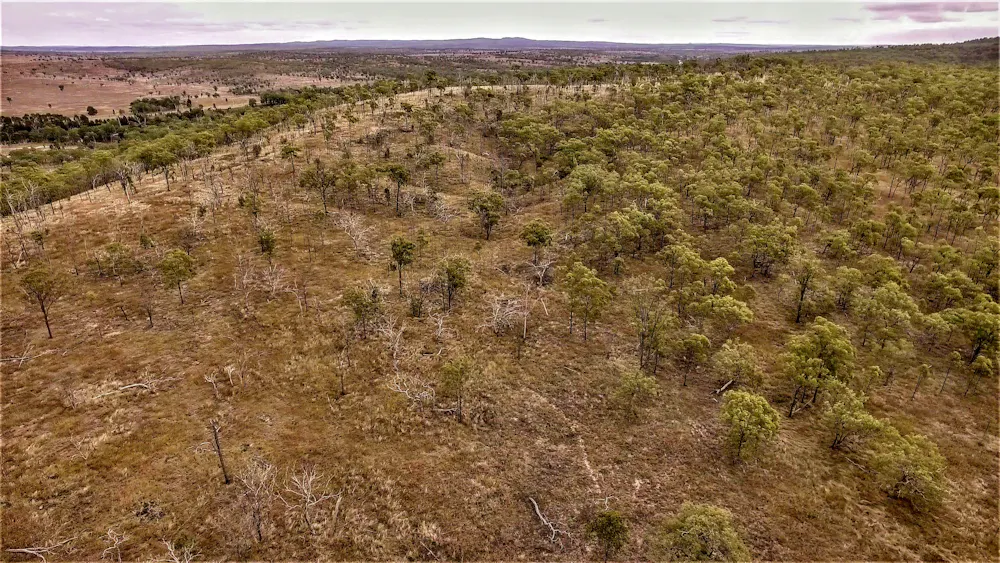
    Queensland is widely known as the land clearing capital of Australia. But what’s not so well known is many of the cleared trees can grow back naturally.

    The latest state government figures show regrowth across more than 7.6 million hectares in Queensland in 2020-21. These trees, though young, still provide valuable habitat for many threatened species – as long as they’re not bulldozed again.

    Our new research explored the benefits of regrowth for 30 threatened animal species in Queensland. We found regrown forests and woodlands provided valuable habitat and food for species after an average of 15 years. Some species were likely to benefit from trees as young as three years.

    This presents an opportunity for governments to support landowners and encourage them to retain more regrowing forest and woodland, especially where it can provide much-needed habitat for wildlife. But it’s a challenge because there is strong pressure to clear regrowth, largely to maintain pasture.

    Clearing of regrowth woodlands in Queensland.
    Martin Taylor

    When do young forests and woodlands become valuable habitat?

    We focused on threatened animal species that depend on forests and woodlands, and occur in regions with substantial regrowth.

    We wanted to find out which species use regrowth, and how old the trees need to be. But there’s not much survey data available on threatened species living in naturally regenerated forest and woodlands.

    To elicit this information we asked almost 50 experts to complete a detailed questionnaire and attend a workshop.

    We found 15 years was the average minimum age at which regrowth became useful to threatened species. But the full range was 3-68 years, depending on factors such as what a species eats, how it moves through the landscape and whether it needs tree hollows for shelter or breeding.

    For example, one threatened bird (the squatter pigeon) could use woodlands as young as three years old. Koalas benefited from regrowth as young as nine years old.

    Some species, such as the greater glider, need much older forests. This is because they require large tree hollows to shelter in during the day, and large trees to feed on and move between at night.

    So young forests shouldn’t be seen as an alternative to protecting old forests. We need both.

    The squatter pigeon could benefit from just three years of regrowth.
    Imogen Warren, Shutterstock

    Understanding the extent of habitat loss

    We also estimated the proportion of each species’ current habitat that comprises regrowth, using satellite data and publicly available data.

    For some species, we found regrowth made up almost a third of their potential habitat in Queensland. On average, it was 18%.

    However, nearly three-quarters of the habitat lost in Queensland since 2018 was regrowth forests and woodlands. So while the loss of older, “remnant” vegetation is more damaging per unit area, the regrowth habitat is being lost on a bigger scale.

    Our research suggests retaining more regrowth could be an easy and cost-effective way to help save threatened species.

    In contrast, tree planting is time-consuming and expensive. What’s more, only 10% of our native plants are readily available as seeds for sale. This, combined with more extreme weather such as prolonged droughts, often causes restoration projects to fail.

    Encouraging landholders to retain regrowth

    The fact that habitat can regrow naturally in parts of Queensland is a huge bonus. But farmers also need to maintain productivity, which can decrease if there’s too much regrowth.

    So, how do we help these landowners retain more regrowth?

    One way is to provide incentives. For example, government-funded biodiversity stewardship schemes provide payments to cover the costs of managing the vegetation – such as fencing off habitat and managing weeds – as well as compensation for loss of agricultural production. Targeting areas of regrowth with high habitat values could be a way for such schemes to benefit wildlife.

    Alternatively, market-based schemes allow landowners to generate biodiversity or carbon “credits” by keeping more trees on their property. Then, businesses (or governments) buy these credits. For example, some big emitters in Australia have to purchase carbon credits to “offset” their own emissions.

    However, Australia’s carbon market has been accused of issuing “low integrity” carbon credits. This means the carbon credits were paid for projects that may not have captured and stored the amount of carbon they were supposed to. To make sure these markets work, robust methods are needed – and until now, there hasn’t been one that worked to retain regrowth.

    Trees are good for the land, air and sea

    In February, the Queensland government released a method by which landholders could generate carbon credits by agreeing not to clear their regrowing woodlands and forests.

    The new carbon method provides a promising opportunity to allow landowners to diversify their farm income.

    In addition, tree cover brings direct, on-farm benefits such as more shade and shelter for livestock, natural pest control and better soil health.

    At a landscape level, greater tree cover can improve local climate regulation, reduce sediment run-off to the Great Barrier Reef and reduce Australia’s carbon emissions.

    Ideally, Australia’s carbon and biodiversity markets would work alongside sufficient government funding for nature recovery, which needs to increase to at least 1% (currently it’s around 0.1%).

    Meanwhile, our research has shown embracing natural regeneration potential in Queensland will have benefits for a range of threatened species too.

    We acknowledge our research coauthors, Jeremy Simmonds (2rog Consulting), Michelle Ward (Griffith University) and Teresa Eyre (Queensland Department of Environment, Tourism, Science and Innovation).

    Hannah Thomas received an Australian Government Research Training Program Scholarship with a $10,000 top-up from WWF-Australia. She is an early-career leader with the Biodiversity Council.

    Martine Maron has received funding from various sources including the Australian Research Council, the Queensland Department of Environment and Science, and the federal government’s National Environmental Science Program, and has advised both state and federal government on conservation policy. She is a member of the Wentworth Group of Concerned Scientists, a director of the Australian Wildlife Conservancy, a councillor with the Biodiversity Council, and leads the IUCN’s thematic group on Impact Mitigation and Ecological Compensation under the Commission on Ecosystem Management. She currently sits on the Protect and Enhance advisory panel to the NSW Natural Resources Commission.

    ref. Allowing forests to regrow and regenerate is a great way to restore habitat – https://theconversation.com/allowing-forests-to-regrow-and-regenerate-is-a-great-way-to-restore-habitat-254325

    MIL OSI AnalysisEveningReport.nz

  • MIL-OSI USA: Celebrating Progress to Address Mount Vernon’s Water Woes

    Source: US State of New York

    overnor Kathy Hochul today celebrated significant milestones and ongoing progress in the multi-year implementation of New York State’s historic $150 million investment and partnership with the City of Mount Vernon and Westchester County to address the community’s longstanding water infrastructure concerns. The State’s expedited funding and planning processes helped complete construction on the critically important Third Street Sewer Project and Healthy Homes Pilot Program. Additional work is underway to repair water infrastructure and replace lead pipes across the city.

    “The ongoing progress in Mount Vernon is a major victory for environmental justice and an example of what can be accomplished when federal, state, and local governments work together to overcome decades of neglect and disinvestment,” Governor Hochul said. “I am incredibly proud of the historic partnership and agency collaboration that are making these long-overdue infrastructure improvements possible as we work toward a safer and healthier Mount Vernon community.”

    Westchester County Executive Ken Jenkins said, “Today, we celebrate the significant progress being made towards water infrastructure challenges, and longstanding environmental justice concerns in Mount Vernon. The Third Street Sewer Project is a collaborative effort across many levels of government, that will ultimately lead to a more resilient and healthier community for our Westchester County residents living in Mount Vernon. We thank Governor Hochul for her leadership in revitalizing the aging and failing water infrastructure and look forward to working together towards the project’s completion.”

    City of Mount Vernon Mayor Shawyn Patterson-Howard said, “We are deeply grateful to Governor Kathy Hochul and her administration for their unwavering commitment to the City of Mount Vernon. The historic $150 million investment—along with the $10 million WQIP, $3 million Healthy Homes Pilot Program, $2 million Lead Service Line Replacement Program, and $3 million Green Infrastructure Grant Program—represents a transformative partnership between our city, Westchester County, and New York State. These investments are changing lives and restoring dignity to our residents. The completion of the Third Street Sewer Project and the launch of the Healthy Homes Pilot Program are powerful examples of what we can achieve when state and local governments work hand in hand to deliver real results. As we continue the vital work of repairing aging infrastructure and planning for comprehensive lead pipe replacement, we remain steadfast in our commitment to building a healthier, safer, and more resilient Mount Vernon—for this generation and the next.”

    Representative George Latimer said, “This is great news for Mt. Vernon and Westchester County, and I thank Governor Hochul for this infrastructure investment to our community. These projects were able to get off the ground quickly thanks to an innovative partnership between the County, City and State governments and we are already seeing the benefits. Residents deserve access to safe, clean drinking water and these projects will go a long way towards reaching that goal. I will continue to advocate for infrastructure investments and environmental improvements in our communities, and work with the Governor and state officials in my new role to deliver for New York’s 16th District.”

    First announced in April 2022, New York State’s $150 million investment and three-way partnership with Mount Vernon and Westchester County addresses water and public health challenges that plagued the city for decades by updating aging and failed water infrastructure.

    This innovative State-County-City partnership was memorialized in a Memorandum of Understanding (MOU) to expedite priority projects and outline roles, responsibilities, and available funding for this city-wide effort. The MOU formalizes the three-way partnership, including the use of funds for engineering, design, and construction work associated with the Third Street Sewer improvements.

    Department of Environmental Conservation Acting Commissioner Amanda Lefton said, “Through Governor Hochul’s leadership and alongside our partners, Mount Vernon, Westchester County and EFC, DEC is advancing sustainable solutions to address longstanding inequalities and prioritizing environmental justice. The completion of the Third Street Sewer Project and other significant progress in this community are a symbol of the State’s commitment to ensuring the health and safety of all New Yorkers through investments in disadvantaged communities too often overlooked.”

    Environmental Facilities Corporation President and CEO Maureen A. Coleman said, “The transformative projects we’re celebrating today are not just a patchwork of fixes. They are part of Governor Hochul’s strategic initiative to address longstanding citywide environmental challenges with real, lasting solutions. This is exactly what EFC was created to do—bridge the gap between need and action by providing crucial financial resources, especially in communities that have historically been underserved. The State’s $150 million investment isn’t just funding construction—it’s restoring dignity, improving quality of life, and building the capacity Mount Vernon needs to thrive for generations to come.”

    Homes and Community Renewal Commissioner RuthAnne Visnauskas said, “Thanks to the partnership between New York State, Westchester County, and the city of Mount Vernon, the Third Street Sewer Project and the Mount Vernon Healthy Homes pilot program are protecting homes, helping improve the quality-of-life for thousands of residents, and strengthening the infrastructure for this entire city corridor. Through projects like these, we are demonstrating how Governor Hochul’s historic $150 million investment is addressing the environmental inequities that have plagued the city for far too long.”

    Department of Health Commissioner Dr. James McDonald said, “This is a momentous public health achievement for this community thanks to the leadership of Governor Hochul, as well as the collaboration between the City of Mount Vernon, Westchester County and our federal partners. The Department of Health is committed to further eliminating health disparities in this community by identifying lead service lines, a critical component to their replacement and to the overall health of Mount Vernon residents.”

    Senate Majority Leader Andrea Stewart-Cousins said, “Mayor Shawn Patterson-Howard made the Third Street Sewer Project and the Healthy Homes initiative a priority, enabling the completion of these milestones for Mount Vernon. This project demonstrates what’s possible when government at all levels works together. The Governor and the State Legislature secured historic investments in our state’s water infrastructure, recognizing that clean water is not a privilege but a right for all New Yorkers. Through this $150 million partnership, which includes the use of $9 million in Clean Water Infrastructure Act funds, we promised reliable infrastructure that would address decades of neglect. Today, we are delivering on that promise.”

    Third Street Sewer Project

    The Third Street project consists of a new underground pumping station, approximately 400 linear feet of sewer piping on West Third Street, and an emergency generator. The project provides reliable wastewater service and enhanced quality of life for thousands of Mount Vernon residents impacted by broken and long-neglected sewer infrastructure lines. Following an accelerated planning and design process, the completed work will mitigate flooding and sewage backups that have long plagued the area. The project ensures reliable wastewater service for nearby residents who prior to these improvements were served by temporary pumps and a makeshift system staged in the middle of Third Street. Additional infrastructure improvements across the city are planned to advance in phases over five to seven years, prioritizing the city’s most critical infrastructure needs.

    Mount Vernon Healthy Homes Initiative

    Construction is completed on 24 low-to-moderate income households participating in the Mount Vernon Healthy Homes pilot program. The $3 million program, administered by New York State Homes and Community Renewal’s Office of Resilient Homes and Communities (RHC), is in addition to the state’s $150 million investment, installing residential sewer-related improvements in neighborhoods at high-risk for wastewater backflow. The recently completed pilot targeted the most frequently impacted and highest risk properties in the area. It helps New York fulfill its goal to build resilient homes that adapt to a changing climate while prioritizing communities that were neglected in the past.

    Approved homes received the following improvements:

    • New sanitary sewer backflow prevention devices;
    • Wastewater drainage improvements;
    • New whole house water filtration systems;
    • Replacement of up to two low-flow toilets;
    • Cleanup and remediation after damage or mold from wastewater flooding; and
    • Other environmental remediation of hazards such as lead paint or asbestos.

    Ongoing System-Wide Repairs

    Projects began immediately in 2023, using $5 million from CWIA grants to fund 33 priority projects to repair nearly 200 miles of storm and sanitary sewers. In addition, $10 million from DEC’s Water Quality Improvement Project (WQIP) program was invested to implement the comprehensive assessment, remedial design, and full repair of the sewer collection lines that discharge raw sewage to the Hutchinson River. To date, 40 miles of sewer cleaning and 10 miles of sewer repairs have reduced sewer backups in the city by 90 percent.

    EFC dedicated an additional $2 million for administrative services including engineering consultant services to accelerate the work. Mount Vernon and DEC are also undertaking a $1 million asset management program to take inventory, assess, and track the city’s water infrastructure and help create a plan to fund and maintain Mount Vernon’s water quality infrastructure over the long-term. Additionally, a project to reconstruct a pump station on Edison Avenue is moving forward.

    Green Infrastructure Project to Manage Stormwater and Revitalize the Fourth Street Park

    In addition to the state’s $150 million investment, EFC awarded the city a $3 million grant through the Green Innovation Grant Program. Creative green infrastructure practices including bioretention, rain gardens, and porous pavement will alleviate flooding at the Fourth Street Park and improve the water quality of the Hutchinson River, while revitalizing and beautifying the community’s recreational space.

    Lead Service Line Replacement

    DOH is actively working with the Mount Vernon Board of Water Supply (MVBWS) on their lead service line inventory project. The initial $1 million grant financing agreement with EFC was approved by Mount Vernon on Sept. 14, 2022, with an additional $1 million grant approved on August 15, 2024. MVBWS began their inventory efforts by reviewing their archive of more than 12,500 water accounts. Of the approximately 12,000 service line records reviewed to date, approximately 7,800 indicate the presence of lead. In addition to the full archive review, MVBWS launched community engagement efforts in April 2024 with public information mailings and the creation of a lead service line program website, as coordination with the public on this initiative is crucial to its long-term success.

    New York’s Commitment to Water Quality

    New York State continues to increase its nation-leading investments in water infrastructure, including more than $2.2 billion in financial assistance from EFC for local water infrastructure projects in State Fiscal Year 2024 alone. With an additional $500 million proposed for clean water infrastructure in the FY26 Executive Budget announced by Governor Hochul, New York will have invested a record $6 billion in water infrastructure since 2017.

    MIL OSI USA News

  • MIL-OSI United Nations: Local Environment: The International Journal of Justice and Sustainability

    Source: UNISDR Disaster Risk Reduction

    Mission

    Local Environment: The International Journal of Justice and Sustainability is a peer-reviewed journal that serves researchers, activists, non-governmental organizations, students, educators, policymakers, and practitioners. The journal focuses on sustainability planning, policy, and politics, emphasizing theoretical, conceptual, and empirical studies that intersect with equity, justice, and the local environment. It offers an inclusive platform for a wide range of voices and viewpoints to critically examine, evaluate, and discuss environmental, social, and economic policies, processes, and strategies essential for advancing social justice and sustainability—referred to as “Just Sustainabilities”—at the local level.

    MIL OSI United Nations News

  • MIL-OSI USA: Extreme Weather & Extreme Cuts: Senator Markey Releases Report on Trump’s Attacks on Disaster Preparedness and Resilience Efforts

    US Senate News:

    Source: United States Senator for Massachusetts Ed Markey

    Report Text (PDF)

    Boston (April 15, 2025) – Senator Edward J. Markey (D-Mass.), a member of the Environment and Public Works Committee and co-Chair of the Senate Climate Change Task Force, today released a report titled “Extreme Weather & Extreme Cuts: The Trump Administration’s Attack on Our Ability to Predict, Prepare for, and Recover from Extreme Weather Events.” The report highlights the increasing frequency and severity of extreme weather around the country, and lays out Trump administration actions that defund, undermine, and eliminate our ability to keep our families and communities safe during and after extreme weather events.

    In the report, Senator Markey writes, “Whether it’s coastal flooding in the East, wildfires in the West, or droughts in the heartland, extreme weather events are on the rise and are devastating communities across the nation. Yet, instead of taking steps to ensure the health, safety, and welfare of Americans living in the path of destruction fueled by climate change, the Trump administration is cutting and gutting our ability to predict, prepare for, and recover from these disasters.”

    Senator Markey continues, “With climate change fueling more frequent and more intense extreme weather events, we should be investing in preparedness, response, and resilience measures. Instead, the climate-denying Trump administration is dismantling them. We must resist this attack, which threatens a livable future for all.”

    Since January, Senator Markey has spoken out fiercely against President Trump and Elon Musk’s illegal funding freezes and staff cuts at NOAA and FEMA. On February 11th, Senator Markey joined a press conference outside of NOAA Headquarters in Silver Spring, Maryland, to condemn DOGE’s infiltration of the building and forced access to NOAA IT systems.

    Last week, Senator Markey introduced the Forecasting Optimization for Robust Earth Climate Analysis and Subseasonal-to-Seasonal Tracking (FORECAST) Act of 2025, which would authorize federal funding to support research, demonstration, and application of cutting-edge data management and weather modeling technologies to improve the reliability of long-term forecasts. On March 7th, Senator Markey joined colleagues in demanding answers from FEMA on personnel firings and grant freezes that limit the agency’s ability to respond to disasters.

    MIL OSI USA News

  • MIL-OSI Economics: Microsoft shares a decade of learning from building a dynamic neurodiverse workforce

    Source: Microsoft

    Headline: Microsoft shares a decade of learning from building a dynamic neurodiverse workforce

    Over the past decade, we’ve learned to effectively welcome exceptional candidates through the Neurodiversity Program, empower managers, and drive business impact.  We have hired a wide variety of positions, spanning early-career engineers in AI, Azure, Windows, and Xbox, as well as corporate positions in finance, customer support, and marketing. Besides recruiting top talent, the Neurodiversity Program also provides manager training in effective coaching skills, thereby enhancing people management practices across the organization. The program has been so successful that in 2024 we expanded to our Data Centers, offering employment opportunities in communities across the U.S. for roles such as Data Center Technicians and Critical Environment Technicians. 

    This isn’t just relevant for tech companies; nearly every business today is embracing AI, and to keep up, you need divergent thinkers. The Neurodiversity @ Work Employer Roundtable, that Microsoft co-founded with EY, SAP, and JP Morgan Chase, includes over 50 employers across 10 industries, who share best practices and extend their learnings to the broader employer community. Neurodivergent employees bring unique strengths, and this program has benefited our hiring practices across the board, making our workforce stronger and more resilient. 

    Video: Neurodiversity in the AI-powered workplace.

    Looking ahead, we will continue to leverage insights from our Neurodiversity Program to drive meaningful organizational change. In today’s era of AI, divergent thinkers are crucial for driving innovation and maintaining a competitive edge. By fostering an environment where neurodiverse talent can thrive, we optimize our workforce and build a more dynamic organization. 

    MIL OSI Economics

  • MIL-OSI USA: Annual Energy Outlook 2025

    Source: US Energy Information Administration

    Introduction

    The Annual Energy Outlook 2025 (AEO2025) explores potential long-term energy trends in the United States. AEO2025 is published in accordance with Section 205c of the Department of Energy Organization Act of 1977 (Public Law 95-91), which requires the Administrator of the U.S. Energy Information Administration (EIA) to prepare an annual report that contains trends and projections of energy consumption and supply. These projections are used by federal, state, and local governments; industry; trade associations; and other planners and decisionmakers in the public and private sectors.

    We prepared the AEO by using the National Energy Modeling System (NEMS) to project a set of scenarios that, taken together, represent a range of outcomes for the U.S. energy system. AEO2025 represents the culmination of a year-long effort that enabled major upgrades to NEMS.

    Our policy assumptions are central to understanding our AEO2025 projections. In most of the cases we model, we only consider laws and regulations implemented as of December 2024. As is the case every time we prepare an AEO, a cutoff date is necessary to enable us to conclude our modeling and integrate the final results for publication. Therefore, legislation, regulations, executive actions, and court rulings after that date are not included. We are releasing the model results without a lengthy market analysis this year.

    The U.S. energy system underwent major changes in the first quarter of the 21st century as oil and natural gas production surged, renewables were deployed more widely, and energy consumption patterns changed. AEO2025 can help stakeholders examine the ways in which the system could further change through 2050.

    Energy markets are complex. Energy models are simplified representations of energy production and consumption, laws and regulations, and producer and consumer behavior. Projections are highly dependent on the data, methodologies, model structures, and assumptions used in their development. These results are not predictions of what will happen. Instead, AEO2025 results represent modeled projections of what could happen given certain assumptions and methodologies.

    Consistent with our historical practices and statutory mission, we do not independently propose or advocate future legislative and regulatory changes, although at times we do analyze scenarios based on existing policy proposals. Our assumptions documents provide additional details on the assumptions we included in AEO2025, and an overview of the laws and regulations included in AEO2025 is available on the AEO website.

    AEO2025’s projections reflect business-as-usual trends, given known technological and demographic trends and current laws and regulations, and so provides a policy-neutral Reference case and an accompanying set of core side cases that can be used to analyze policy initiatives. For some readers, this approach may be unsatisfying because policy rarely remains static for long periods. But the purpose of basing projections on laws and regulations as of December 2024 is to provide a comparison point for further analysis; without such a reference point, critical information about incremental changes to energy system outcomes based on new assumptions is lost.

    Because policies can have meaningful impacts on the energy sector, we have also included two alternative policy cases this year to help stakeholders to examine the effects of regulations implemented since our last AEO. When compared with the Reference case, one case allows stakeholders to examine the effects of recent regulations on power plants and the other recent regulations targeting vehicle fuel economy and emissions.

    Modeled Cases

    Outcomes concerning future technology, demographics, and resources cannot be known with any degree of certainty. We address many key uncertainties in our projections through alternative cases. In AEO2025, we ran 11 cases to model a range of assumptions. In addition to the two alternative policy cases we examined this year, we also include eight core side cases, which we have presented in prior releases of the AEO. A detailed explanation of each case is available on the website, and a brief description is in the following sections.

    AEO2025 Reference case

    Our Reference case assesses how the U.S. energy markets could operate under laws and regulations current as of December 2024 and under historically observed technological growth assumptions.

    Alternative Electricity case

    Our Alternative Electricity case assumes the Clean Air Act (CAA) Section 111 rule implemented by the Environmental Protection Agency (EPA) in April 2024 to regulate carbon dioxide emissions from new gas-fired combustion turbines and existing coal, oil, and gas-fired steam generating units is not in place, and the affected generators are able to operate under rules existing prior to April 2024. In this case, existing coal-fired plants continue operating without requiring modifications to reduce emissions, and generation from new natural gas-fired combined cycle units isn’t constrained based on whether the plant has installed carbon capture equipment.

    Alternative Transportation case

    Our Alternative Transportation case assumes the National Highway Traffic Safety Administration’s Corporate Average Fuel Economy standards and EPA’s vehicle tailpipe emission standards for model years 2027–2032 are not in place. The case also assumes the California Air Resources Board’s zero-emission vehicle sale mandates for trucks issued since our last published AEO are not in place. Rules affecting fuel economy and tailpipe emissions that were issued for model years 2026 and earlier remain in place. In this case, introduction of new electric vehicle (EV) models and building of EV charging infrastructure are based on growth in EV sales and registrations rather than on announced public and private sector plans. In addition, manufacturer reshoring of EV and battery supply chains, including growth in eligibility for credits under the Inflation Reduction Act, is slower than in the Reference case.

    High and Low Oil Price cases

    In the High Oil Price case, the price of Brent crude oil increases to $155 per barrel (b) in 2050, compared with $91/b in the Reference case and $47/b in the Low Oil Price case.

    High and Low Oil and Gas Supply cases

    The High Oil and Gas Supply case assumes ultimate recovery for new tight oil, tight gas, or shale gas wells are 50% higher than in the Reference case. The case also assumes 50% higher undiscovered resources in Alaska and offshore fields. Technological improvement is assumed to be 50% faster. The Low Oil and Gas Supply case assumes the converse.

    High and Low Zero-Carbon Technology Cost cases

    The Low Zero-Carbon Technology Cost case assumes faster cost declines for electricity-generating technologies that produce zero emissions as construction and manufacturing experience grows, resulting in 40% lower costs than in the Reference case in 2050. The High Zero-Carbon Technology Cost case, conversely, assumes no additional cost reductions from learning with additional deployment of these electricity generating technologies.

    High and Low Economic Growth cases

    The High Economic Growth case assumes the compound annual growth rate for U.S. GDP is 2.1% through 2050, and the Low Economic Growth case assumes a 1.2% rate. By contrast, the Reference case assumes the U.S. GDP annual growth rate is 1.8% over the projection period.

    Major changes for AEO2025

    In 2024 we made significant updates to NEMS, and an overview of the changes can be found in our assumptions documents and in the module-specific fact sheets. Briefly, the model that underpins our outlook now includes three new modules:

    • The Hydrogen Market Module, which represents hydrogen production and pricing, including the impacts of policy, storage, and logistics
    • The Carbon Capture, Allocation, Transportation, and Sequestration Module, which allocates projected supply of captured CO2 across the energy system either for enhanced oil recovery or storage
    • The Hydrocarbon Supply Module, which improves the representation of upstream oil and natural gas resources, replacing the legacy NEMS Oil and Gas Supply Module

    In addition to the new modules, we have extensively enhanced many existing modules to better reflect market dynamics and emerging technologies. We will provide additional details in the AEO2025 model documentation in the coming months.

    We have rewritten and modernized significant portions of the NEMS code base. The source code associated with NEMS is now available via GitHub under an open-source license.

    In addition to changes to NEMS, we also updated the way we calculate primary energy consumption of electricity generation from noncombustible renewable energy sources such as solar, wind, hydroelectric, and geothermal. We now calculate consumption of noncombustible renewable energy for electricity generation using the captured energy approach, which applies a constant conversion factor of 3,412 British thermal units per kilowatthour (Btu/kWh), using the heat content of electricity. This approach is a change from our previous methodology, called the fossil fuel equivalency approach, and is consistent with the methodology now used for all EIA products and reports.

    The captured energy approach is more consistent with international energy statistics standards than the fossil fuel equivalency approach.

    MIL OSI USA News

  • MIL-OSI Security: Ventura Man Arrested on Federal Grand Jury Indictment Alleging Fraudulent Representations Regarding Helicopter Parts

    Source: Office of United States Attorneys

    LOS ANGELES – A Ventura County man was arrested today on a 10-count federal grand jury indictment alleging his company and he defrauded customers by misleading them as to the nature of helicopter parts, making the customers believe that the parts had fewer service hours than they in fact had.

    Jared Michael Swensen, 48, of Ventura, is expected to make his initial appearance and be arraigned on the indictment this afternoon in United States District Court in downtown Los Angeles. 

    Also charged in the indictment is Swensen’s Oxnard-based company, J&J Enterprises LLLP, which did business as “Light Helicopter Depot.” Both Swensen and his company are charged with two counts of wire fraud and eight counts of fraud involving aircraft parts.

    According to the indictment that a federal grand jury returned on April 10, Swensen and Light Helicopter solicited and accepted work to overhaul and maintain helicopters. In performing the overhaul work, the defendants were expected to remove helicopter parts that had reached or were approaching their life limit and to replace them with new parts, parts that had just been overhauled or parts that had substantially fewer hours in service.

    After removing helicopter parts – including main rotor blades and main rotor spindles – that were substantially used or near their life limit, the defendants allegedly installed older, not overhauled parts that in some cases were closer to their life limit than they represented. If these parts failed, a helicopter likely would crash.

    Swensen and his company allegedly made materially false entries in the helicopter’s maintenance logbook and fraudulently altered sales orders and packing slips to correspond with the false entries – misrepresenting the age of the helicopter parts as being years newer than their actual age.

    The defendants also fraudulently altered Federal Aviation Administration (FAA) release certificates – used to certify that an aircraft part was airworthy – to falsely claim that the certificate was issued more than two years after its actual issuance date.

    Swensen and Light Helicopter then sent invoices and received payments in connection with this work. The indictment alleges two such fraudulently induced payments from customers in February and May of 2023.

    The indictment further alleges the defendants made a series of fraudulent representations related to helicopter parts that involved false writings, entries, and records from April 2020 to August 2023.

    An indictment is merely an allegation. All defendants are presumed innocent until proven guilty beyond a reasonable doubt in a court of law.

    If convicted, Swensen would face a statutory maximum sentence of 20 years in federal prison for each count of wire fraud and up to 15 years in federal prison for each count of fraud involving aircraft parts. Light Helicopter Depot, if convicted, would be fined up to $10 million for each aircraft parts fraud count and up to $1 million for each wire fraud count.

    The United States Department of Transportation Office of Inspector General is investigating this matter. The FAA provided assistance.

    Assistant United States Attorneys Dennis Mitchell and Danbee Kim of the Environmental Crimes and Consumer Protection Section are prosecuting this case.

    MIL Security OSI

  • MIL-OSI Economics: EIA projections show U.S. energy consumption decreasing in the near term, increasing after early 2040s

    Source: US Energy Information Administration – EIA

    Headline: EIA projections show U.S. energy consumption decreasing in the near term, increasing after early 2040s

    U.S. ENERGY INFORMATION ADMINISTRATION
    WASHINGTON DC 20585

    FOR IMMEDIATE RELEASE
    April 15, 2025

    U.S. energy consumption decreases in the next several years and doesn’t increase again until the early 2040s through 2050, according to the U.S. Energy Information Administration’s Annual Energy Outlook 2025 (AEO2025). U.S. energy consumption in 2050 is lower than in 2024 in most of the scenarios modeled in AEO2025, but the range of outcomes varies significantly based on the underlying assumptions in the scenarios EIA analyzed.

    AEO2025 explores long-term energy trends in the United States. It relies on a Reference case that assumes laws and regulations in effect as of December 2024 remain in effect through 2050. AEO2025 also includes scenario-based analyses of separate side cases that make various other assumptions about the energy sector:

    • The Alternative Electricity case assumes electric generators can operate under regulations that existed prior to April 2024, when the U.S. Environmental Protection Agency (EPA) implemented a new rule targeting carbon dioxide emissions from new and existing generating units.
    • The Alternative Transportation case assumes recent rules targeting vehicle fuel economy and emissions from the EPA, National Highway Traffic Safety Administration, and the California Air Resource Board are not in place.
    • The High Oil Price case assumes the price of Brent crude oil increases to $155 per barrel (b) in 2050, compared with $91/b in the Reference case and $47/b in the Low Oil Price case.
    • The High Oil and Gas Supply case assumes ultimate recovery for new tight oil, tight gas, or shale gas wells are 50% higher than in the Reference case. The case also assumes 50% higher undiscovered resources in Alaska and offshore fields. Technological improvement is assumed to be 50% faster. The Low Oil and Gas Supply case assumes the converse.
    • The Low Zero-Carbon Technology Cost case assumes faster cost declines for zero-emissions electricity-generating technologies resulting in 40% lower costs in 2050 than in the Reference case. The High Zero-Carbon Technology Cost case assumes no additional cost reductions with additional deployment.
    • The High Economic Growth case assumes the compound annual growth rate for U.S. GDP is 2.1% through 2050, compared with 1.2% in the Low Economic Growth case and 1.8% in the Reference case.

    For AEO2025, EIA significantly updated the model that underpins the results, adding a hydrogen market module; a carbon capture, allocation, transportation, and sequestration module; and an enhanced upstream oil and natural gas resources module. EIA also enhanced many existing modules to better reflect market dynamics and emerging technologies.

    The full Annual Energy Outlook 2025 is available on the EIA website, including full projection tables, a brief narrative, and a detailed description of the assumptions used in each case.

    The product described in this press release was prepared by the U.S. Energy Information Administration (EIA), the statistical and analytical agency within the U.S. Department of Energy. By law, EIA’s data, analysis, and forecasts are independent of approval by any other officer or employee of the U.S. government. The views in the product and this press release therefore should not be construed as representing those of the U.S. Department of Energy or other federal agencies.

    EIA Press Contact: Chris Higginbotham, EIAMedia@eia.gov

    MIL OSI Economics

  • MIL-OSI USA: EIA projections show U.S. energy consumption decreasing in the near term, increasing after early 2040s

    Source: US Energy Information Administration

    U.S. ENERGY INFORMATION ADMINISTRATION
    WASHINGTON DC 20585

    FOR IMMEDIATE RELEASE
    April 15, 2025

    U.S. energy consumption decreases in the next several years and doesn’t increase again until the early 2040s through 2050, according to the U.S. Energy Information Administration’s Annual Energy Outlook 2025 (AEO2025). U.S. energy consumption in 2050 is lower than in 2024 in most of the scenarios modeled in AEO2025, but the range of outcomes varies significantly based on the underlying assumptions in the scenarios EIA analyzed.

    AEO2025 explores long-term energy trends in the United States. It relies on a Reference case that assumes laws and regulations in effect as of December 2024 remain in effect through 2050. AEO2025 also includes scenario-based analyses of separate side cases that make various other assumptions about the energy sector:

    • The Alternative Electricity case assumes electric generators can operate under regulations that existed prior to April 2024, when the U.S. Environmental Protection Agency (EPA) implemented a new rule targeting carbon dioxide emissions from new and existing generating units.
    • The Alternative Transportation case assumes recent rules targeting vehicle fuel economy and emissions from the EPA, National Highway Traffic Safety Administration, and the California Air Resource Board are not in place.
    • The High Oil Price case assumes the price of Brent crude oil increases to $155 per barrel (b) in 2050, compared with $91/b in the Reference case and $47/b in the Low Oil Price case.
    • The High Oil and Gas Supply case assumes ultimate recovery for new tight oil, tight gas, or shale gas wells are 50% higher than in the Reference case. The case also assumes 50% higher undiscovered resources in Alaska and offshore fields. Technological improvement is assumed to be 50% faster. The Low Oil and Gas Supply case assumes the converse.
    • The Low Zero-Carbon Technology Cost case assumes faster cost declines for zero-emissions electricity-generating technologies resulting in 40% lower costs in 2050 than in the Reference case. The High Zero-Carbon Technology Cost case assumes no additional cost reductions with additional deployment.
    • The High Economic Growth case assumes the compound annual growth rate for U.S. GDP is 2.1% through 2050, compared with 1.2% in the Low Economic Growth case and 1.8% in the Reference case.

    For AEO2025, EIA significantly updated the model that underpins the results, adding a hydrogen market module; a carbon capture, allocation, transportation, and sequestration module; and an enhanced upstream oil and natural gas resources module. EIA also enhanced many existing modules to better reflect market dynamics and emerging technologies.

    The full Annual Energy Outlook 2025 is available on the EIA website, including full projection tables, a brief narrative, and a detailed description of the assumptions used in each case.

    The product described in this press release was prepared by the U.S. Energy Information Administration (EIA), the statistical and analytical agency within the U.S. Department of Energy. By law, EIA’s data, analysis, and forecasts are independent of approval by any other officer or employee of the U.S. government. The views in the product and this press release therefore should not be construed as representing those of the U.S. Department of Energy or other federal agencies.

    EIA Press Contact: Chris Higginbotham, EIAMedia@eia.gov

    MIL OSI USA News

  • MIL-OSI Global: How architecture shapes video game play

    Source: The Conversation – UK – By Gabriele Aroni, Senior Lecturer in Games Art at the School of Digital Arts, Manchester Metropolitan University

    When players enter the virtual worlds of video games, they are greeted by complex architectural environments. These virtual spaces do more than serve as mere backdrops for gameplay. The design of buildings, streets and entire cities guides player emotions, behaviours and even advances the narrative.

    As an architect specialising in digital media, I am interested in how video games use architecture to convey meaning. Virtual worlds in video games are often rooted in real-world architectural principles.

    Game rules are technically completely disjointed from our physical world: we could easily traverse a concrete wall as if made of air. However, how players understand how to play is the opposite. For instance, if I see a door in a game, I can assume that it can opened, or that it leads somewhere. Players need a frame of reference to understand games, and this is why most game environments resemble, at least in some way, real-world architecture.

    Video game architecture varies wildly. There are realistic historical cities like the ones in Assassin’s Creed or the contemporary Japan of Like a Dragon. Fantastic interpretations of architecture range from the ancient Chinese scenery of Black Myth: Wukong to the science fiction metropolis of Cyberpunk 2077.

    Visionary architectural sceneries are less common, as they are harder to relate to. Their design displays architectural forms that are so transformed in their size, shape or materials that they look distant from normal architectural conventions and the laws of physics. Examples of this can be seen in experimental independent games such as Manifold Gardenor NaissanceE.


    Looking for something good? Cut through the noise with a carefully curated selection of the latest releases, live events and exhibitions, straight to your inbox every fortnight, on Fridays. Sign up here.


    Much like real-world architecture, game architecture must work. There is a budget, even though it is based on how many polygons and textures buildings can be made of, rather than their construction costs. There is no building code to comply with, but distances and paths must follow the coded rules of the game.

    Take Assassin’s Creed II, where the protagonist runs and climbs buildings in 15th-century Florence. The reconstruction is relatively accurate, so much so that people who played the game can reasonably orientate themselves in the real Florence. But there are several adjustments which were necessary on technical and gameplay terms.

    The whole city and all of the buildings are noticeably scaled down to offer shorter distances to traverse and jump across. While not a large city, taking half an hour to traverse it on foot is an eternity in video game time.

    Environmental storytelling

    In addition to guiding gameplay, architecture in video games plays a critical role in telling stories. This is known as environmental storytelling. Unlike traditional forms of narrative, where story is told through dialogue or cutscenes, environmental storytelling allows the world itself to communicate plot and themes.

    In games, the design of spaces can hint at a game’s backstory, themes or the emotions players should feel at a given moment. For instance, in the cyberpunk game Deus Ex: Mankind Divided, shady corporations dominate the world. To establish this narrative, their buildings are designed to manifest their power through impenetrable monolithic structures which loom over the skyline of future Prague.

    Some games exclusively use their environments to tell their stories. This is the case in Manifold Garden, a puzzle game created by artist William Chyr. Players are catapulted in a world where space repeats in every direction and objects that fall down reappear from the top, including the player. Chyr was inspired by the visionary art of M.C Escher – you might know his artwork Relativity where staircases go off in all directions and appear upside down. Chrys was also inspired by real architects, such as Frank Lloyd Wright and Tadao Ando. As such, he used architectural elements to guide players in this strange world, such as placing windows strategically in order not to lose their orientation.

    All these elements are implemented most successfully when they are seamlessly blended into the game space and setting, while not being too conspicuous. In Mirror’s Edge, a game set in a sterile modern metropolis dominated by white skyscrapers, primary colours on common structural elements are used to indicate directions and interactable items, such as red pipes or doors. This way, players are easily and rapidly directed by objects that are not out of place, but distinct enough to be noticeable.

    When clues indicating what to do are too evident, they are usually not looked upon too well by players. For instance, in the recent games Resident Evil 4 Remake and Final Fantasy 7 Rebirth, splotches of yellow paint have been placed on the objects necessary to progress. This was met with ridicule from many players.

    So game architecture must always walk a fine line between presenting engaging environments and helping gameplay without being too obtrusive. As games continue to evolve, the role of architecture will remain central to the ways in which digital environments are designed to engage, challenge and inspire players.

    Gabriele Aroni does not work for, consult, own shares in or receive funding from any company or organisation that would benefit from this article, and has disclosed no relevant affiliations beyond their academic appointment.

    ref. How architecture shapes video game play – https://theconversation.com/how-architecture-shapes-video-game-play-254632

    MIL OSI – Global Reports

  • MIL-OSI Canada: New, adaptive mountain-biking trail opens in Alice Lake Park

    Source: Government of Canada regional news

    A new, beginner-friendly adaptive mountain-biking trail at Alice Lake Park is now open, giving more people better access to local trails and a more inclusive experience.

    “Everyone should have the opportunity to enjoy active, outdoor recreation, and as more people choose to spend their weekends and holidays in B.C., we are continuing to ensure our parks are welcoming and inclusive,” said Tamara Davidson, Minister of Environment and Parks. “The South Coaster Adaptive Trail is a fantastic addition to Alice Lake Park, making it easier for people with diverse abilities to explore our beautiful forests.”

    The new one-kilometre South Coaster Adaptive Trail is a $180,000 investment from the Government of B.C., in partnership with the Squamish Off-Road Cycling Association (SORCA). It includes wide and smooth terrain to support adaptive mountain-bike users and links to Miki’s Magic and Cardrona trails, opening access to a nine-kilometre adaptive mountain biking loop. Adaptive mountain bikes are specialized bikes designed for riders with diverse mobility needs; they include things such as extra wheels, hand cranks and custom seating.

    “SORCA has been working closely with BC Parks staff for approximately six years to bring this trail to fruition,” said Ian Lowe, executive director, SORCA. “Initially, the focus of the trail was to provide a significantly improved experience for less-experienced riders. However, BC Parks amplified SORCA’s original vision by making this an adaptive mountain-bike friendly trail, which will be enjoyed by a wide spectrum of riders and user groups.”

    The new trail addresses a growing need for mountain-biking trail access in the Sea to Sky region, which continues to be a popular area for people to visit. It builds on recent improvements to Stawamus Chief Park and Garibaldi Park. Parking lots have been expanded at Stawamus Chief and the Diamond Head chain-up lot in Garibaldi to provide more opportunities for people to access these popular parks. Trail upgrades are ongoing at Stawamus Chief Park. 

    With its trailhead located near the parking lots and campground, the South Coaster links to the Bob McIntosh Memorial Trail, expanding year-round trail options for all mountain bikers in the region.

    “Everyone should have access to outdoor recreation, and these trails provide a means to experience the joy and beauty of our region,” said Armand Hurford, mayor of Squamish. “The District of Squamish is committed to building an inclusive community in which all people can thrive. Thank you to BC Parks and the Squamish Off-Road Cycling Association for creating this opportunity and considering the needs of all trail users, with adaptive mountain bike users in mind.”

    The upgrades are part of a five-year, $21.5-million provincial investment to increase and improve opportunities for outdoor recreation in B.C. They also support the Province’s renewed and expanded commitment to make BC Parks more inclusive and accessible spaces.

    Accessibility upgrades continue to be made in parks throughout the province. Universal design standards are incorporated in new campgrounds and recreation expansion projects.

    Quick Facts:

    • There are four different types of adaptive mountain bikes that can be ridden on the South Coaster: cross-country, all-mountain, all-mountain (kneeling) and all-electric.
    • B.C.’s first purpose-built adaptive mountain-biking trail, Spine Trail in the Kootenays, opened in 2017.
    • In addition to trails, Alice Lake Park offers 108 campsites, 96 of which are vehicle-accessible.

    Learn More:

    To learn more about adaptive trail standards, visit: https://kootenayadaptive.wordpress.com/adaptive-mountain-biking-trail-standards/

    To learn more about Alice Lake Park, visit: https://bcparks.ca/alice-lake-park/

    To learn more about the Squamish Off-Road Cycling Association, visit: https://www.sorca.ca/

    To learn more about BC Parks’ Commitment to Inclusion, visit: https://bcparks.ca/about/commitment-to-inclusion/

    MIL OSI Canada News

  • MIL-OSI USA: Ernst Pushes to Restore RFS Integrity, Promote Stable Growth for Homegrown Iowa Biofuels

    US Senate News:

    Source: United States Senator Joni Ernst (R-IA)
    WASHINGTON – U.S. Senator Joni Ernst (R-Iowa), a member of the Senate Agriculture Committee, is urging the Environmental Protection Agency (EPA) to restore integrity, stability, and growth to the Renewable Fuel Standard (RFS) and the U.S. biofuel sector by raising Renewable Volume Obligation (RVO) levels for biomass-based diesel and advanced biofuels. In a letter to EPA Administrator Lee Zeldin, Ernst and her colleagues pressed the EPA to implement multi-year RVO standards to provide certainty and growth for the biofuels industry, and in the event that the EPA does grant any small refinery exemptions, the group also asks that the gallons obligated to those refiners be reallocated to the overall RVO.
    “The biofuels market continues to expand to new frontiers including marine shipping, aviation and rail. These markets are driven in part by demand for low carbon fuels that biofuels can uniquely provide … biofuels provide a buffer to market fluctuations in the liquid fuel market, consistently costing consumers less than traditional liquid fuels,” the senators wrote. 
    The senators cautioned about the risks to rural America if RVO standards are set too low. 
    “Over the last three years, multiple biodiesel plants have shuttered or idled due to RVOs being set significantly below what industry requested and production capacity. Biofuels are a large economic driver for rural America as farmers’ crops are used for feedstocks and many production facilities are located in small communities,” the senators continued. “By taking the above actions, the EPA can quickly restore integrity, stability and growth to the RFS and the U.S. biofuel sector while ensuring that the program continues to reduce greenhouse gas emissions, diversify our fuels, drive down gas prices, strengthen our national security and drive rural economic opportunity.”
    Read the full letter here.
    Background:
    Despite recommendations from Ernst, the Biden-era EPA finalized RVO levels that failed to accurately reflect market conditions and future production capacity. As a result, multiple biomass-based diesel plants have now permanently closed or temporary stalled, including one in Ralston, Iowa. Following the plant’s closure, Ernst pushed the administration to increase RVO levels for homegrown Iowa biofuels. Recently, Ernst also backed legislation to include ocean-going vessels, such as cargo ships and tankers, under the RFS, opening up a new market for Iowa’s biofuel producers.
    More broadly, Ernst has been a leading advocate for homegrown, Iowa biofuels, securing access to E15 for the summer driving months, while continuing the call for permanent, nationwide availability that would give those in the biofuel industry the certainty they deserve. She was instrumental in creating and maintaining the Higher Blends Infrastructure Incentive Program as part of her commitment to invest in renewable fuel infrastructure, rural job opportunities, and hardworking farmers.Ernst also looks forward to working with the Trump administration to correct the incomplete and delayed Biden-era guidance on 45Z that has left biofuel producers and rural America in ongoing uncertainty.

    MIL OSI USA News

  • MIL-OSI Security: Helena real estate agent convicted of felony and fined $150,000 for failing to provide lead-based paint disclosures for veterans residing in Fort Harrison rental housing

    Source: Office of United States Attorneys

    HELENA – A Helena real estate agent and property manager who admitted to failing to provide lead-based paint disclosures as required to veterans residing in housing at Fort Harrison, in Helena, which resulted in the exposure of veterans and their families to significant levels of lead, was sentenced yesterday to three years of felony probation and fined $150,000, U.S. Attorney Kurt Alme said.

    Melanie Ann Carlin, 54, of Clancy, pleaded guilty in November 2024 to one felony count of knowing endangerment.

    Mold Wranglers, Inc., a Kalispell-based company that provides hazardous material mitigation services was also sentenced yesterday to two years of probation, a $50,000 fine, and $348,000 in restitution to be paid to the U.S. Department of Veterans Affairs for filing false reports for payment to a federal agency, claiming an abatement of lead paint was done at Freedom’s Path Fort Harrison when it was not.  The company pleaded guilty to one count of False Claims Act Conspiracy in November 2024.

    Chief U.S. District Judge Brian Morris presided.

    “We take seriously the obligation to ensure the safety of our veterans and their families and will continue to work with our agency partners to hold accountable individuals like Melanie Carlin and businesses like Mold Wranglers who cut corners and jeopardize their safety in order to turn a profit. I want to thank AUSA Ryan Weldon for his work on this case, as well as the investigators from HUD, the VA, and the EPA,” U.S. Attorney Alme said.

    “Melanie Carlin engaged in dangerous behavior by failing to provide lead-based paint disclosures for housing units which resulted in low-income veteran families and their children unknowingly being exposed to significant levels of lead,” said Special Agent in Charge Machelle Jindra with the U.S. Department of Housing and Urban Development (HUD) Office of Inspector General (OIG).  “HUD OIG remains steadfast in its commitment to working with our prosecutorial, law enforcement, and oversight partners to aggressively pursue individuals who engage in activities that threaten the integrity of HUD programs and our most vulnerable community members.” 

    “The VA OIG is dedicated to ensuring that veterans and their families receive VA services in a safe environment,” said Special Agent in Charge Dimitriana Nikolov with the Department of Veterans Affairs Office of Inspector General’s Northwest Field Office. “This sentencing reinforces that those who do not uphold safety and integrity standards will be held accountable.”

    “The defendant placed our military veterans and their children in danger by callously disregarding reporting and disclosure requirements for lead-based paint in rental properties. Lead poisoning can have catastrophic effects on young children and pregnant women,” said Acting Special Agent in Charge Catherine Holston for EPA’s Criminal Investigative Division. “Today’s sentence sends a message that the agency will hold accountable anyone who places our military veterans and their children in harm’s way by violating our environmental laws.”

    The government alleged in court documents that from September 2019 until September 2021, Carlin failed to provide lead-based paint disclosures as required, placing an individual in imminent danger of death and serious bodily injury and exposing low-income veteran families and their children at Freedom’s Path Fort Harrison to significant levels of lead.

    Carlin is the owner of 406 Properties, Inc, a property management service in Helena, and has more than 26 years of professional real estate experience. In 2018, Carlin agreed to provide property management services for rental units known as Freedom’s Path Fort Harrison. The rentals included multiple homes for military veterans to use as affordable housing. In May 2019, Carlin received and forwarded an email from the Montana Department of Commerce requesting information detailing any lead-based paint remediation completed on the homes because the buildings were constructed before 1978. The buildings were constructed in approximately 1895 and 1905.

    Despite the email, in June 2019, Carlin signed two Request for Tenancy Approval Forms for the Fort Harrison rentals. Carlin selected “lead-based paint disclosures do not apply because this property was built on or after January 1, 1978” on the form. Carlin knew the selections were false and did not provide lead-based paint disclosures to veterans seeking residence at Freedom’s Path Fort Harrison.

    In September 2019, Carlin attended a meeting to discuss lead-based paint that was peeling at Freedom’s Path Fort Harrison. The meeting agenda identified “lead-based paint peeling in the units – doors won’t shut, paint peels when attempt to shut door” and veterans have identified “chipped paint” in the units. At this point, Carlin knew the buildings were built prior to 1978, and she knew deteriorating lead-based paint was located inside the buildings.

    Despite Carlin’s knowledge and extensive real estate experience, she continued to sign forms indicating that the units were free of lead-based paint, or they were built after 1978, none of which was true. In addition, Carlin continued to fail to provide lead-based paint disclosures to the veterans and their families residing in the units.

    The government further alleged that in December 2020, Carlin failed to provide a lead-based paint disclosure to a veteran of Freedom’s Path Fort Harrison. In September 2021, an 18-month-old child in the veteran’s home was found eating paint chips inside the unit. Subsequent medical testing confirmed the child had elevated blood lead levels exceeding levels considered to be “very high” and required treatment for lead poisoning. Lead poisoning can have catastrophic effects on children and their development, and Congress requires a warning about the effects of lead poisoning be given when individuals lease homes built prior to 1978.

    When interviewed by federal agents, Carlin agreed she was familiar with the requirement to provide lead disclosures and confirmed that no lead disclosures were provided to veterans living in units at Freedom’s Path Fort Harrison. A review of the rental units confirmed lead was present in almost every unit, including the building where the 18-month-old child was present. A subsequent property management company corrected the omission by making lead disclosures to the veterans.

    The U.S. Attorney’s Office is prosecuting the case. The Environmental Protection Agency’s Criminal Investigation Division, the U.S. Veterans Affairs Office of Inspector General, and U.S. Department of Housing and Urban Development Office of Inspector General conducted the investigation.

    XXX

    MIL Security OSI

  • MIL-OSI Africa: Eskom, Exxaro sign agreement to reduce carbon emissions

    Source: South Africa News Agency

    Exxaro Resources and Eskom have signed a Memorandum of Understanding (MoU) to collaborate on strategic initiatives, research, and projects aimed at reducing carbon emissions, improving air quality and facilitating the Just Transition.

    According to a joint statement, this move is consistent with South Africa’s commitment to achieving the goals of the Paris Agreement, international environmental standards, and national regulatory frameworks.

    “The agreement focuses on jointly measuring, managing, and reducing Scope 1, 2, and 3 emissions and potentially investing in innovative technologies to drive decarbonisation. 

    “It also emphasises inclusive and focused transition initiatives such as skills development, job creation in green sectors, and stakeholder engagement to ensure climate resilience,” the statement read. 

    In addition, the MoU, which was signed on Monday, includes provisions for data sharing and transparent reporting to track progress and ensure accountability.

    Exxaro Resources CEO, Ben Magara, believes that this collaboration marks a significant step forward in the company’s commitment to enabling a Just Transition and building a climate-resilient and low-carbon future. 

    “By leveraging our deep experience in the diversified mining and energy solutions sectors, we aim to drive innovation that not only decarbonises and reduces air pollution in our operations but also delivers meaningful socio-economic benefits for the communities we serve.

    “The collaboration with Eskom is important as we work to accelerate practical and scalable solutions that support South Africa’s energy security and environmental ambitions as part of our purpose of Powering Better lives in Africa and beyond,” Magara said. 

    Exxaro is a South Africa-based diversified resources company with a coal business and acquisitive growth prospects in minerals and energy. 

    The company stated that the initial focus of the collaboration will be to identify the necessary investments and stakeholders required to develop technology-based solutions for the challenges associated with the transition to a low-carbon economy. 
    This effort will align with the country’s Integrated Resource Plan (IRP).

    Eskom Group Chief Executive Dan Marokane said both organisations are committed to driving the transition to a more sustainable energy future while ensuring the country’s electricity supply remains secure. 

    “This initiative forms part of Eskom’s focus both in this country and internationally to identify the latest developments and strategies to reduce carbon emissions and other air pollutants,” Marokane added. 

    Meanwhile, Exxaro stated that it remains steadfast in advancing its Sustainable Growth and Impact strategy by embedding key Environmental, Social, and Governance (ESG) priorities into its operations. 

    The company is of the view that through partnerships such as this one, it is well-positioned to become carbon-neutral by 2050.
    Meanwhile, Eskom’s Research, Testing & Development (RT&D) business unit will lead this partnership. 

    The RT&D is dedicated to finding technology solutions that can be applied primarily within the company to embrace innovation, enhance efficiency and improve operations, improvements related to emissions management, and greenhouse gas (GHG) abatement.

    “Eskom remains focused on a balanced and diversified energy mix based on existing coal and nuclear and introducing gas for baseload power, as well as renewables, energy storage systems including battery energy storage systems and pumped hydro, to achieve overall security of supply and to meet South Africa’s growing electricity demand sustainably,” said the power utility. – SAnews.gov.za
     

    MIL OSI Africa

  • MIL-OSI Africa: Call for stricter bail measures for crimes against wildlife

    Source: South Africa News Agency

    The Minister of Forestry, Fisheries and the Environment, Dr Dion George, has called for stricter bail measures for repeat offenders and foreign nationals with no fixed address who are accused of crimes against wildlife.

    The Department of Forestry, Fisheries and the Environment is actively engaging with the National Prosecuting Authority (NPA) and South African Police Service (SAPS) through platforms like the National Biodiversity Investigators Forum (NBIF) to enhance opposition to bail, particularly for repeat offenders and foreign nationals with no fixed address. 

    “These discussions focus on improving the quality of affidavits drafted by investigating officers to present stronger cases in court. The department is also sharing best-practice affidavits with investigators to ensure more effective bail opposition and is exploring options to secure funding for dedicated support to SAPS in these applications. 

    “Additionally, at the upcoming Environmental Management Inspectors (EMI) executive training in April 2025, the NPA will address bail-related issues, allowing for direct engagement with the Minister and other stakeholders,” the department said on Tuesday.

    In February, Thomas Chauke, a 54-year-old Zimbabwean national, was convicted and sentenced in the Makhanda High Court to 110 years’ imprisonment for rhino poaching and wildlife-related crimes.

    The Minister commended the SAPS, particularly the Stock Theft and Endangered Species (STES) Unit, for their meticulous investigation and dedication in securing this victory against rhino poaching and wildlife-related crimes.

    “Chauke’s conviction on six counts of rhino poaching and wildlife-related offences, alongside three counts of escaping lawful custody, underscores the government’s unwavering commitment to combatting environmental crime. 

    “This landmark sentencing, coupled with these strategic interventions, sends a powerful message to those involved in illegal wildlife trafficking and environmental destruction,” the Minister said.

    He applauded the collaborative efforts between the SAPS and the NPA, which ensured effective coordination and prosecution across multiple provinces, including the Eastern Cape, Gauteng, KwaZulu-Natal, and North West.

    George reiterated his support for ongoing efforts to protect South Africa’s precious biodiversity and natural heritage, ensuring that perpetrators face the full might of the law. –SAnews.gov.za

    MIL OSI Africa

  • MIL-OSI Africa: Government marks Indigenous Tree Day 

    Source: South Africa News Agency

    Tuesday, April 15, 2025

    Government and its partners planted indigenous trees at various sites across the country on Tuesday to commemorate Indigenous Tree Day.

    Tree planting activities took place at all 11 National Botanical Gardens, two National Zoological Gardens, three Municipality Botanical Gardens and one Zoological Garden. 

    The Department of Forestry, Fisheries and the Environment (DFFE) in partnership with the South African National Biodiversity Institute (SANBI), Johannesburg City Parks and Zoo (JCPZ), International Union for Conservation of Nature (IUCN), the Association of Parks and Recreation Africa (APRA) and private sector stakeholders took part in these activities.

    “The Indigenous Tree Day aim to educate society about the value of indigenous trees, build national capacity to grow indigenous trees by increasing efforts into finding seeds of a large number of species naturally and sharing propagation protocols and best practices. 

    “The day also aims to engage, inspire, and educate society – especially the youth – to conserve biodiversity by developing community-led efforts to restore ecosystems. This date encourages individuals to consider their efforts in tree planting and the impact it will make towards the environment,” Deputy Minister of Forestry, Fisheries and the Environment Bernice Swarts said.

    The Indigenous Tree Day (ITD) also serves as a build-up to the One Million Tree Planting Campaign that will take place on 24 September 2025.

    This nationwide initiative seeks to mobilise the public to collectively plant one million trees in a single day. 

    “The One Million Trees Campaign is a key milestone within the Revamped National Greening Programme which aims to plant at least Ten Million Trees over a period of five years. This will be achieved through the planting of two million trees annually. Through the Revamped Programme there is a realisation that government efforts alone will not achieve this ideal and there is a call for all South Africans from all walks of life to participate in the initiative,” the department said. – SAnews.gov.za

    MIL OSI Africa