Category: Environment

  • MIL-Evening Report: ER Report: A Roundup of Significant Articles on EveningReport.nz for July 6, 2025

    ER Report: Here is a summary of significant articles published on EveningReport.nz on July 6, 2025.

    Greenpeace chief recalls New Zealand’s nuclear free exploits, seeks ‘peace’ voice for Gaza
    Asia Pacific Report Greenpeace Aotearoa executive director Russel Norman today recalled New Zealand’s heyday as a Pacific nuclear free champion in the 1980s, and challenged the country to again become a leading voice for “peace and justice”, this time for the Palestinian people. He told the weekly Palestinian solidarity rally in Auckland’s central Te Komititanga

    MIL OSI AnalysisEveningReport.nz

  • MIL-OSI China: Chinese courts report progress in supporting environmental governance

    Source: People’s Republic of China – State Council News

    Since 2021, Chinese courts have reported a steady decline in first-instance environmental and resource-related cases, an encouraging sign of progress in judicial efforts to support ecological and environmental governance.

    China has established more than 2,400 specialized judicial institutions and organizations for environmental and resource-related cases, making it the country with the most extensive and comprehensive system of environmental judiciary bodies in the world, according to Yang Linping, vice president of the Supreme People’s Court.

    Yang made these remarks on Saturday at an international judicial forum held in Guiyang, capital of southwest China’s Guizhou Province.

    From June 2014 to December 2024, courts across China concluded a total of 2.282 million first-instance environmental and resource-related cases, the forum revealed.

    In the realm of international exchange and cooperation concerning environmental justice, the United Nations Environment Programme database has included four batches of 45 Chinese environmental judicial cases and eight environmental justice reports, offering the world a window into China’s legal framework and successful practices in environmental governance, the forum confirmed. 

    MIL OSI China News

  • MIL-OSI United Nations: UNDRR and INTOSAI WGEA deepen collaboration on environmental auditing for disaster risk reduction

    Source: UNISDR Disaster Risk Reduction

    The United Nations Office for Disaster Risk Reduction (UNDRR) joined global auditors at the Assembly of the International Organization of Supreme Audit Institutions (INTOSAI) Working Group on Environmental Auditing (WGEA), that took place in Malta from 1 to 3 July 2025. Represented by Mr. Animesh Kumar, Head of the UNDRR Office in Bonn, UNDRR’s engagement underscores its growing collaboration with WGEA to strengthen national oversight of disaster risk reduction (DRR) through environmental auditing.

    Driving risk-informed governance through auditing

    Supreme Audit Institutions (SAIs) are key national actors in ensuring governments are prevent and are prepared for disasters and climate-related shocks. Through WGEA, INTOSAI supports SAIs in conducting performance audits that evaluate how well countries manage environmental risks-including resilience to floods, extreme heat, and other natural hazards.

    UNDRR’s participation at the WGEA Assembly reflects a strategic alignment: both institutions promote stronger national accountability for climate change adaptation and disaster risk reduction, grounded in international frameworks like the Sendai Framework for Disaster Risk Reduction 2015-2030, the Paris Agreement and the Sustainable Development Goals.

    “The official data and metrics, and other disaster risk reduction tools coordinated by UNDRR, and the work of Supreme Auditing Institutions are closely aligned. The two entities can co-benefit by collaborating in their collective efforts to strengthen accountability and transparency in risk governance,” said Animesh Kumar.

    Audits can reveal gaps in planning, coordination, and implementation-and offer pathways to improved governance. The WGEA’s audit database already includes 59 audits related to DRR, such as:

    • India: Reviewing groundwater and stormwater systems to reduce urban flood risk.
    • Turkey: Auditing early warning systems and local flood preparedness.
    • UK: Assess preparedness for future extreme weather events

    Mr Charles Deguara, Auditor General of Malta said: “In the present circumstances, urgent and united action is required to ensure climate risk issues are duly addressed. It is our role, as national audit institutions, to assist our administrations through our audit work.” From data to action

    UNDRR brings extensive expertise in disaster risk governance, robust data systems, and a strong global convening role-uniquely positioning it to support SAIs in evaluating climate change adaptation and disaster risk reduction (DRR) strategies.

    Building on this momentum, UNDRR and WGEA are exploring collaboration on knowledge building, capacity development and data sharing on disaster risk reduction audits. This initiative aims to build a skilled network of auditors ready to integrate DRR and adaptation into their national audit agendas, bolstered by growing coherence between DRR and climate action.

    “Building resilience to climate and disaster risks requires coherent policies, consistent implementation, and strong oversight. Through the WGEA, we support audit institutions in promoting accountability and helping ensure that climate and disaster risk policies are aligned, effective, and transparent”, highlighted Mr Sami Yläoutinen, the Auditor General of the National Audit Office of Finland, and the current chair of INTOSAI WGEA.

    As WGEA expands its focus on climate and disaster-related audits, sustained collaboration with UNDRR can enhance policy coherence and strengthen accountability. By integrating disaster risk into environmental audits, this partnership will help translate global frameworks into national results, advancing resilience, transparency, and sustainable development.

    MIL OSI United Nations News

  • MIL-OSI: PBK Miner Reports Strong Global Growth and Expands XRP Mining Contracts as Cloud Mining Demand Surges

    Source: GlobeNewswire (MIL-OSI)

    London, UK, July 05, 2025 (GLOBE NEWSWIRE) — PBK Miner, a global cloud mining service provider headquartered in the United Kingdom, has announced continued growth and strong platform engagement across its user base of over 8.5 million global users. Building on its success in Bitcoin and multi-asset cloud mining, PBK Miner is expanding its XRP cloud mining contracts, offering flexible, low-risk entry points to digital asset mining with transparent returns and zero hardware requirements.

    The platform now supports mining for BTC, DOGE, ETH, XRP, LTC, SOL, USDT, and USDC, with users able to earn passive income directly from mobile devices or desktops, without the need for physical mining rigs or technical expertise.

    XRP Mining Contracts Drive Growth

    In response to rising user demand and consistent performance in its infrastructure, PBK Miner has significantly expanded its XRP cloud mining plans, which now account for a substantial portion of the platform’s mining activity. According to internal performance data, XRP contract purchases grew 378% week-over-week, highlighting increased investor confidence in flexible, asset-specific mining options.

    Available XRP contracts include:

    • $100 Plan – 2 days – Earn $3.50/day
    • $1,000 Plan – 9 days – Earn $13.50/day
    • $5,000 Plan – 30 days – Earn $77.50/day
    • $10,000 Plan – 45 days – Earn $165.00/day

    Each contract offers a guaranteed principal return at maturity, supported by PBK Miner’s AI-optimized profit engine and global green-powered data centers.

    Zero-Risk Mining With Free Daily Contracts

    PBK Miner continues to democratize digital asset mining by offering all new users a free $10 daily cloud mining contract, which earns $0.60 every 24 hours—with no credit card, deposit, or hardware required.

    This zero-risk model allows users to experience real-world mining performance firsthand, making it an attractive gateway for beginners, students, and financially cautious investors.

    Key Metrics and Features

    • Daily Free Contract: $10 trial contract earns $0.60/day
    • Contract Terms: Range from 1 to 50 days, with investment levels from $10 to $100,000
    • Global Reach: Available in 183+ countries, supporting multiple languages
    • Secure Environment: Powered by Cloudflare and McAfee security standards
    • Sustainable Mining: Uses renewable energy infrastructure across data centers
    • No Maintenance Fees: 100% earnings transparency for all users

    Seamless and Mobile-Friendly Experience

    The PBK Miner interface is built for simplicity and speed, allowing anyone to begin mining in minutes:

    1. Visit https://pbkminer.com or download the mobile app
    2. Register an account
    3. View and activate daily contracts
    4. Monitor earnings in real-time and scale up as desired

    Strategic Vision for 2025 and Beyond

    PBK Miner’s roadmap includes continued diversification of supported digital assets, expansion into additional emerging markets, and deeper integration of machine learning models to optimize mining profitability and reduce operational emissions.

    The company’s goal remains clear: to build a safe, transparent, and environmentally sustainable global mining ecosystem that is accessible to all, regardless of financial background or geography.

    “Our platform is built for inclusivity,” said Alison Evans, PBK Miner spokesperson. “We’re removing technical and financial barriers and letting users experience real cloud mining in a secure, transparent environment—with complete control and zero risk.”

    About PBK Miner

    Founded in 2019, PBK Miner is a leading cloud mining and crypto asset management platform. With a growing global user base, PBK Miner is committed to providing a next-generation mining experience that is user-friendly, eco-conscious, and financially inclusive.

    Website: https://pbkminer.com

    Disclaimer: The information provided in this press release does not constitute an investment solicitation, nor does it constitute investment advice, financial advice, or a trading recommendation. Cryptocurrency mining and staking involve risks and may result in the loss of funds. It is strongly recommended that you perform due diligence before investing or trading in cryptocurrencies and securities, including consulting a professional financial advisor.

    The MIL Network

  • MIL-OSI: PBK Miner Reports Strong Global Growth and Expands XRP Mining Contracts as Cloud Mining Demand Surges

    Source: GlobeNewswire (MIL-OSI)

    London, UK, July 05, 2025 (GLOBE NEWSWIRE) — PBK Miner, a global cloud mining service provider headquartered in the United Kingdom, has announced continued growth and strong platform engagement across its user base of over 8.5 million global users. Building on its success in Bitcoin and multi-asset cloud mining, PBK Miner is expanding its XRP cloud mining contracts, offering flexible, low-risk entry points to digital asset mining with transparent returns and zero hardware requirements.

    The platform now supports mining for BTC, DOGE, ETH, XRP, LTC, SOL, USDT, and USDC, with users able to earn passive income directly from mobile devices or desktops, without the need for physical mining rigs or technical expertise.

    XRP Mining Contracts Drive Growth

    In response to rising user demand and consistent performance in its infrastructure, PBK Miner has significantly expanded its XRP cloud mining plans, which now account for a substantial portion of the platform’s mining activity. According to internal performance data, XRP contract purchases grew 378% week-over-week, highlighting increased investor confidence in flexible, asset-specific mining options.

    Available XRP contracts include:

    • $100 Plan – 2 days – Earn $3.50/day
    • $1,000 Plan – 9 days – Earn $13.50/day
    • $5,000 Plan – 30 days – Earn $77.50/day
    • $10,000 Plan – 45 days – Earn $165.00/day

    Each contract offers a guaranteed principal return at maturity, supported by PBK Miner’s AI-optimized profit engine and global green-powered data centers.

    Zero-Risk Mining With Free Daily Contracts

    PBK Miner continues to democratize digital asset mining by offering all new users a free $10 daily cloud mining contract, which earns $0.60 every 24 hours—with no credit card, deposit, or hardware required.

    This zero-risk model allows users to experience real-world mining performance firsthand, making it an attractive gateway for beginners, students, and financially cautious investors.

    Key Metrics and Features

    • Daily Free Contract: $10 trial contract earns $0.60/day
    • Contract Terms: Range from 1 to 50 days, with investment levels from $10 to $100,000
    • Global Reach: Available in 183+ countries, supporting multiple languages
    • Secure Environment: Powered by Cloudflare and McAfee security standards
    • Sustainable Mining: Uses renewable energy infrastructure across data centers
    • No Maintenance Fees: 100% earnings transparency for all users

    Seamless and Mobile-Friendly Experience

    The PBK Miner interface is built for simplicity and speed, allowing anyone to begin mining in minutes:

    1. Visit https://pbkminer.com or download the mobile app
    2. Register an account
    3. View and activate daily contracts
    4. Monitor earnings in real-time and scale up as desired

    Strategic Vision for 2025 and Beyond

    PBK Miner’s roadmap includes continued diversification of supported digital assets, expansion into additional emerging markets, and deeper integration of machine learning models to optimize mining profitability and reduce operational emissions.

    The company’s goal remains clear: to build a safe, transparent, and environmentally sustainable global mining ecosystem that is accessible to all, regardless of financial background or geography.

    “Our platform is built for inclusivity,” said Alison Evans, PBK Miner spokesperson. “We’re removing technical and financial barriers and letting users experience real cloud mining in a secure, transparent environment—with complete control and zero risk.”

    About PBK Miner

    Founded in 2019, PBK Miner is a leading cloud mining and crypto asset management platform. With a growing global user base, PBK Miner is committed to providing a next-generation mining experience that is user-friendly, eco-conscious, and financially inclusive.

    Website: https://pbkminer.com

    Disclaimer: The information provided in this press release does not constitute an investment solicitation, nor does it constitute investment advice, financial advice, or a trading recommendation. Cryptocurrency mining and staking involve risks and may result in the loss of funds. It is strongly recommended that you perform due diligence before investing or trading in cryptocurrencies and securities, including consulting a professional financial advisor.

    The MIL Network

  • MIL-OSI: PBK Miner Reports Strong Global Growth and Expands XRP Mining Contracts as Cloud Mining Demand Surges

    Source: GlobeNewswire (MIL-OSI)

    London, UK, July 05, 2025 (GLOBE NEWSWIRE) — PBK Miner, a global cloud mining service provider headquartered in the United Kingdom, has announced continued growth and strong platform engagement across its user base of over 8.5 million global users. Building on its success in Bitcoin and multi-asset cloud mining, PBK Miner is expanding its XRP cloud mining contracts, offering flexible, low-risk entry points to digital asset mining with transparent returns and zero hardware requirements.

    The platform now supports mining for BTC, DOGE, ETH, XRP, LTC, SOL, USDT, and USDC, with users able to earn passive income directly from mobile devices or desktops, without the need for physical mining rigs or technical expertise.

    XRP Mining Contracts Drive Growth

    In response to rising user demand and consistent performance in its infrastructure, PBK Miner has significantly expanded its XRP cloud mining plans, which now account for a substantial portion of the platform’s mining activity. According to internal performance data, XRP contract purchases grew 378% week-over-week, highlighting increased investor confidence in flexible, asset-specific mining options.

    Available XRP contracts include:

    • $100 Plan – 2 days – Earn $3.50/day
    • $1,000 Plan – 9 days – Earn $13.50/day
    • $5,000 Plan – 30 days – Earn $77.50/day
    • $10,000 Plan – 45 days – Earn $165.00/day

    Each contract offers a guaranteed principal return at maturity, supported by PBK Miner’s AI-optimized profit engine and global green-powered data centers.

    Zero-Risk Mining With Free Daily Contracts

    PBK Miner continues to democratize digital asset mining by offering all new users a free $10 daily cloud mining contract, which earns $0.60 every 24 hours—with no credit card, deposit, or hardware required.

    This zero-risk model allows users to experience real-world mining performance firsthand, making it an attractive gateway for beginners, students, and financially cautious investors.

    Key Metrics and Features

    • Daily Free Contract: $10 trial contract earns $0.60/day
    • Contract Terms: Range from 1 to 50 days, with investment levels from $10 to $100,000
    • Global Reach: Available in 183+ countries, supporting multiple languages
    • Secure Environment: Powered by Cloudflare and McAfee security standards
    • Sustainable Mining: Uses renewable energy infrastructure across data centers
    • No Maintenance Fees: 100% earnings transparency for all users

    Seamless and Mobile-Friendly Experience

    The PBK Miner interface is built for simplicity and speed, allowing anyone to begin mining in minutes:

    1. Visit https://pbkminer.com or download the mobile app
    2. Register an account
    3. View and activate daily contracts
    4. Monitor earnings in real-time and scale up as desired

    Strategic Vision for 2025 and Beyond

    PBK Miner’s roadmap includes continued diversification of supported digital assets, expansion into additional emerging markets, and deeper integration of machine learning models to optimize mining profitability and reduce operational emissions.

    The company’s goal remains clear: to build a safe, transparent, and environmentally sustainable global mining ecosystem that is accessible to all, regardless of financial background or geography.

    “Our platform is built for inclusivity,” said Alison Evans, PBK Miner spokesperson. “We’re removing technical and financial barriers and letting users experience real cloud mining in a secure, transparent environment—with complete control and zero risk.”

    About PBK Miner

    Founded in 2019, PBK Miner is a leading cloud mining and crypto asset management platform. With a growing global user base, PBK Miner is committed to providing a next-generation mining experience that is user-friendly, eco-conscious, and financially inclusive.

    Website: https://pbkminer.com

    Disclaimer: The information provided in this press release does not constitute an investment solicitation, nor does it constitute investment advice, financial advice, or a trading recommendation. Cryptocurrency mining and staking involve risks and may result in the loss of funds. It is strongly recommended that you perform due diligence before investing or trading in cryptocurrencies and securities, including consulting a professional financial advisor.

    The MIL Network

  • MIL-OSI Analysis: Why Texas Hill Country, where a devastating flood killed dozens, is one of the deadliest places in the US for flash flooding

    Source: The Conversation – USA (2) – By Hatim Sharif, Professor of Civil and Environmental Engineering, The University of Texas at San Antonio

    A Kerrville, Texas, resident watches the flooded Guadalupe River on July 4, 2025. Eric Vryn/Getty Images

    Texas Hill Country is known for its landscapes, with shallow rivers winding among hills and through rugged valleys. But that geography also makes it one of the deadliest places in the U.S. for flash flooding.

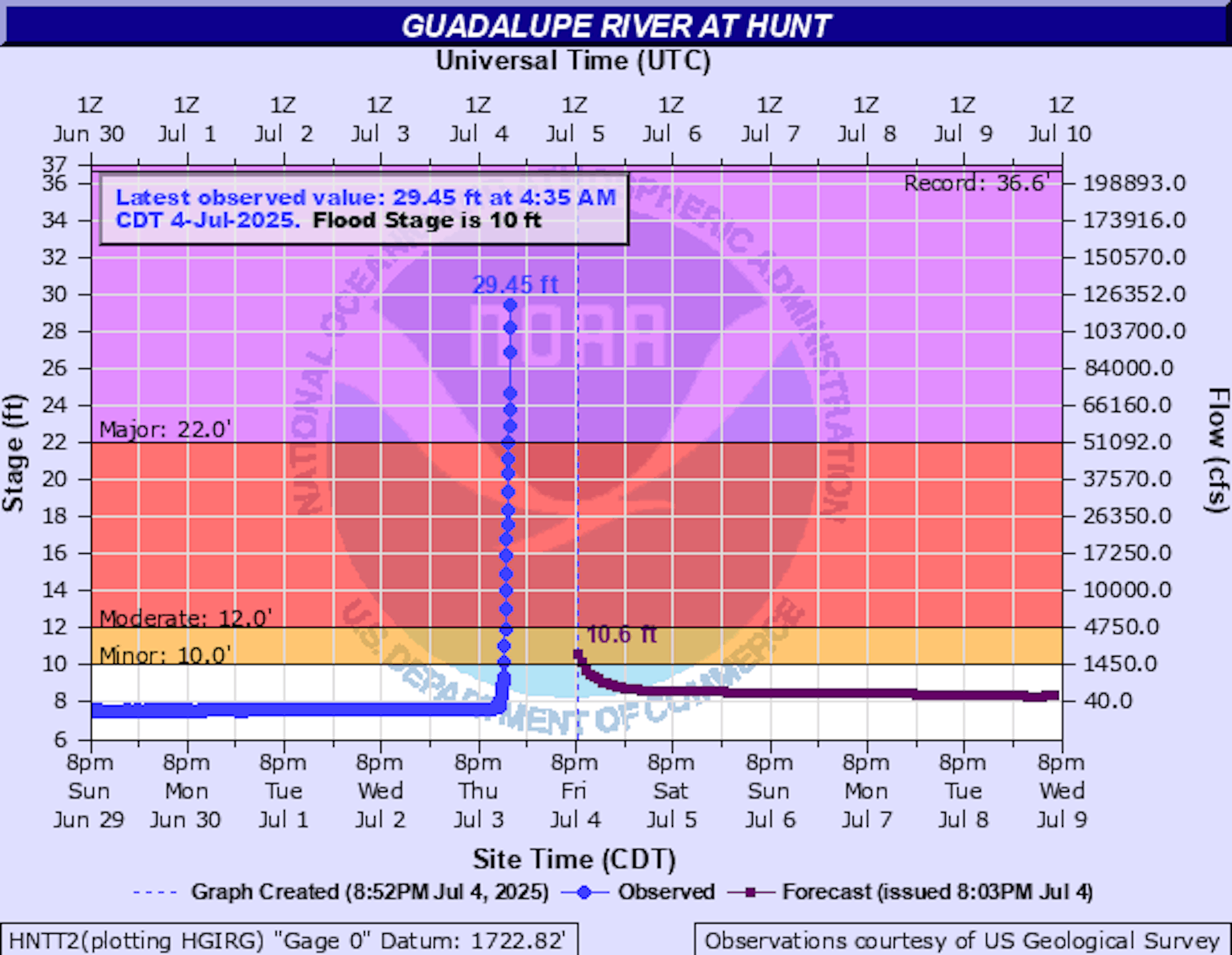
    In the early hours of July 4, 2025, a rush of flood water swept through an area dotted with summer camps and small towns about 70 miles west of San Antonio. At least 27 people died, and about two dozen girls from one camp and other people in the area were still unaccounted for the following morning, officials said. More than 200 people had to be rescued.

    The flooding began as many flash floods in this region do, with a heavy downpour that sent water sheeting off the hillsides into creeks. The creeks poured into the Guadalupe River. Around 3 a.m. on July 4, National Weather Service data shows the river was rising about 1 foot every 5 minutes near the camp. By 4:30 a.m., the water had risen more than 20 feet.

    Flood expert Hatim Sharif, a hydrologist and civil engineer at the University of Texas at San Antonio, explains what makes this part of the country, known as Flash Flood Alley, so dangerous.

    What makes Hill Country so prone to flooding?

    Texas as a whole leads the nation in flood deaths, and by a wide margin. A colleague and I analyzed data from 1959 to 2019 and found 1,069 people had died in flooding in Texas over those six decades. The next highest total was in Louisiana, with 693.

    Many of those flood deaths have been in Hill County, an area known as Flash Flood Alley. It’s a crescent of land that curves from near Dallas down to San Antonio and then westward.

    The hills are steep, and the water moves quickly when it floods. This is a semi-arid area with soils that don’t soak up much water, so the water sheets off quickly and the shallow creeks can rise fast.

    When those creeks converge on a river, they can create a wall of water that wipes out homes and washes away cars and, unfortunately, anyone in its path.

    Hill Country has seen some devastating flash floods. In 1987, heavy rain in western Kerr County quickly flooded the Guadalupe River, triggering a flash flood similar to the one in 2025. Ten teenagers being evacuated from a camp died in the rushing water.

    San Antonio, considered the gateway to Hill Country, was hit with another flash flood on June 12, 2025, that killed 13 people whose cars were swept away when they drove into high water from a flooding creek near an interstate ramp in the early morning.

    Why does the region get such strong downpours?

    One reason Hill Country gets powerful downpours is the Balcones Escarpment.

    The escarpment is a line of cliffs and steep hills created by a geologic fault. When warm air from the Gulf rushes up the escarpment, it condenses and can dump a lot of moisture. That water flows down the hills quickly, from many different directions, filling streams and rivers below.

    As temperature rise, the warmer atmosphere can hold more moisture, increasing the downpour and flood risk.

    A tour of the Guadalupe River and its flood risk.

    The same effect can contribute to flash flooding in San Antonio, where the large amount of paved land and lack of updated drainage to control runoff adds to the risk.

    What can be done to improve flash flood safety?

    First, it’s important for people to understand why flash flooding happens and just how fast the water can rise and flow. In many arid areas, dry or shallow creeks can quickly fill up with fast-moving water and become deadly. So people should be aware of the risks and pay attention to the weather.

    Improving flood forecasting, with more detailed models of the physics and water velocity at different locations, can also help.

    Probabilistic forecasting, for example, can provide a range of rainfall scenarios, enabling authorities to prepare for worst-case scenarios. A scientific framework linking rainfall forecasts to the local impacts, such as streamflow, flood depth and water velocity, could also help decision-makers implement timely evacuations or road closures.

    Education is particularly essential for drivers. One to two feet of moving water can wash away a car. People may think their trucks and SUVs can go through anything, but fast-moving water can flip a truck and carry it away.

    Officials can also do more to barricade roads when the flood risk is high to prevent people from driving into harm’s way. We found that 58% of the flood deaths in Texas over the past six decades involved vehicles.

    The storm on June 12 in San Antonio was an example. It was early morning, and drivers has poor visibility. Cars drove into floodwater without seeing the risk until it was too late.

    Hatim Sharif does not work for, consult, own shares in or receive funding from any company or organization that would benefit from this article, and has disclosed no relevant affiliations beyond their academic appointment.

    ref. Why Texas Hill Country, where a devastating flood killed dozens, is one of the deadliest places in the US for flash flooding – https://theconversation.com/why-texas-hill-country-where-a-devastating-flood-killed-dozens-is-one-of-the-deadliest-places-in-the-us-for-flash-flooding-260555

    MIL OSI Analysis

  • MIL-OSI United Kingdom: expert reaction to Texas floods

    Source: United Kingdom – Executive Government & Departments

    Scientists comment on the flooding in Texas.

    Dr Martina Egedusevic, Impact Fellow in Green Futures, University of Exeter, said:

    “The devastating floods in Texas are a stark reminder of how intensifying extreme weather events driven by climate change are interacting with land-use change, urbanisation, and aging infrastructure to produce severe impacts.  While individual flood events are influenced by multiple factors, we know that warmer air holds more moisture, increasing the likelihood of intense rainfall.  In many urban areas like those affected in Texas, impervious surfaces prevent water absorption, overwhelming drainage systems and exacerbating flash flooding.

    “This underlines the importance of not only improving forecasting and emergency response but also investing in long-term, systemic approaches to flood resilience.  Nature-based solutions such as wetland restoration, reforestation, and sustainable urban drainage systems can complement engineering infrastructure by slowing runoff and increasing infiltration.  As our research in the UK and internationally shows, working with nature can help mitigate the worst effects of flooding while delivering co-benefits for biodiversity, air quality, and climate adaptation.

    “However, each region has its own hydrological and social context, so local knowledge and inclusive planning are essential.  Understanding where and why such flood events happen also means tackling the underlying vulnerabilities like poorly planned development, socio-economic inequalities, and environmental degradation.”

    Prof Bill McGuire, Professor Emeritus of Geophysical & Climate Hazards, UCL, said:

    “The tragic events in Texas are exactly what we would expect in our hotter, climate-changed, world.  There has been an explosion in extreme weather in recent years, including more devastating flash floods caused by slow-moving, wetter, storms, that dump exceptional amounts of rain over small areas across a short time.  This frequently overwhelms river catchments leading to severe damage to adjacent infrastructure and loss of life.  Such events will only become more commonplace as the global temperature continues to climb, driven by carbon dioxide emissions that still top 40 billion tonnes every year.”

    Dr Jess Neumann, University of Reading, said:

    “The devastating floods of Kerr County in Texas is a tragic reminder of the dangers of sudden extreme rainfall and flash flooding.

    “Flash floods are not uncommon in the Hill Country area of Texas, where the weather is easily influenced by a ready supply of moist air from the Gulf of Mexico.  When very heavy rain falls on steep hillsides, this can create the conditions for raging torrents to be created in previously dry river beds, in just a matter of hours.

    “Totals of 200mm (around 8 inches) of rainfall were originally forecast, which is a significant amount in any location.  In places, this is expected to have reached more than 12 inches of rain.  For context, in the UK, 50mm of rain a day is considered heavy rainfall with serious potential for flooding.

    “This terrible event, in which children are missing and many have died, raises critical questions about effective early warning systems, flood planning and preparedness in the region.

    “It cannot be right that a flood of this magnitude, in an area known to be at high risk of flash floods, caused such devastation and has taken so many people by surprise.”

    Prof Hannah Cloke, professor of hydrology at the University of Reading, said: 

    “For so many children to be swept away in a flood is an almost unimaginable horror.  Sadly, it can be the inability to see such a tragedy emerging that can be part of the failure of an early warning system for floods.  An alert system is a chain of human communication, and if one person in any part of the chain doesn’t respond as they should to take action, the system runs the risk of failure.  Human communication about events that have not yet occurred requires the use of imagination, and a lack of imagination can be lethal.

    “This downpour seems to have been well forecasted by multiple forecasters around the world, several hours in advance.  Warnings were issued, but the systems do not seem to have been in place to get information to those in harm’s way fast enough.  The timing of the flood, which happened in the middle of the night, would have meant that any last-minute actions to get out of the way of the water would have been hampered by darkness.

    “It is not good enough for authorities to say they were not aware that floods were coming.  Warnings were available but the message just didn’t get through.  This must be a reminder of the need to invest more effort in checking every aspect of early warning systems, from the science, to the communications, to the education required to spread more understanding of the risks and how to respond to them.”

    “Once again, we are left horrified and humbled by the dreadful power of the weather and the ability of our rivers to take lives.”

    Declared interests

    Prof Bill McGuire: “No conflicts of interest.”

    Dr Jess Neumann: “I am a trustee of the Charity River Mole River Watch.  We work with water companies including SES Water and the Environment Agency.  We receive funding for research from local Government, NGO’s and private business / industry.  No other conflicts of interest to declare.”

    Prof Hannah Cloke: “Works with and advises the Met Office, ECMWF and Environment Agency.”

    For all other experts, no reply to our request for DOIs was received.

    MIL OSI United Kingdom

  • MIL-OSI Russia: UN Tourism to Promote Sustainable Tourism Development in Uzbekistan

    Translation. Region: Russian Federal

    Source: People’s Republic of China in Russian – People’s Republic of China in Russian –

    Source: People’s Republic of China – State Council News

    Tashkent, July 5 /Xinhua/ — UN Tourism Secretary-General Zurab Pololikashvili visited the Central Asian University for Environment and Climate Change Studies /Green University/ under the Ministry of Ecology, Environmental Protection and Climate Change as part of his visit to Uzbekistan. As reported by Dunyo news agency on Friday, UN Tourism and Green University signed a memorandum of understanding aimed at developing cooperation in the areas of sustainable tourism, ecology and education.

    It is noted that the document envisages strengthening the potential of Uzbekistan in the field of sustainable tourism through the training of qualified personnel and the exchange of best practices, increasing public understanding of the importance of sustainable tourism as a factor in positive changes for society and nature, promoting tourism as a tool for achieving the Sustainable Development Goals, facilitating the implementation of innovative solutions for environmental protection, natural resource management and combating climate change, supporting scientific research and academic exchanges, and developing joint educational and awareness-raising programs.

    The memorandum also includes regular interaction between UN Tourism and Green University, coordination of joint projects, organization of training programs and exchange of best practices, the agency reported. –0–

    MIL OSI Russia News

  • MIL-OSI Asia-Pac: Waste recycling efforts lauded

    Source: Hong Kong Information Services

    Secretary for Environment & Ecology Tse Chin-wan today officiated at an award ceremony to commend schools, students and families for their outstanding performance in waste reduction and recycling during the 2024-25 school year.

    Speaking at the SGREEN x We-recycle@School Competitions Award Ceremony, co-organised by the Environmental Protection Department (EPD) and Ocean Park Hong Kong, Mr Tse highlighted that the current-term Government has successfully reversed the long-term trend of rising waste disposal quantities over the years through promoting waste reduction at source and expanding the recycling network.

    He remarked that the disposal quantity of municipal solid waste decreased by a total of 7.5% from 2021 to 2024, while the waste recovery rate increased from 28% in 2020 to 33% in 2023.

    Mr Tse congratulated all the awardees and thanked them for their support of Hong Kong’s waste reduction and recycling efforts.

    He also emphasised that it is crucial to educate the next generation to achieve waste reduction at source.

    “In 2024, the EPD launched the We-recycle@School Activity, providing a variety of teaching materials and promotional support to primary and secondary schools in Hong Kong to assist schools and teachers in integrating waste reduction and recycling knowledge into daily teaching, encourage students to make good use of recycling facilities in schools and the community, and inspire their family members to practise resource separation and recycling together.”

    The EPD said the We-recycle@School Activity has received an overwhelming response since its launch. Currently, around 550 primary and secondary schools have participated in the scheme, encompassing about 350,000 students.

    MIL OSI Asia Pacific News

  • MIL-Evening Report: Greenpeace chief recalls New Zealand’s nuclear free exploits, seeks ‘peace’ voice for Gaza

    Asia Pacific Report

    Greenpeace Aotearoa executive director Russel Norman today recalled New Zealand’s heyday as a Pacific nuclear free champion in the 1980s, and challenged the country to again become a leading voice for “peace and justice”, this time for the Palestinian people.

    He told the weekly Palestinian solidarity rally in Auckland’s central Te Komititanga Square that it was time for New Zealand to take action and recognise the state of Palestine and impose sanctions on Israel over its Gaza atrocities.

    “From 1946 to 1996, over 300 nuclear weapons were exploded across the Pacific and consistently the New Zealand government spoke out against it,” he said.

    “It took cases to the International Court of Justice, supported by Australia and Fiji, against the nuclear testing across the Pacific.

    “Aotearoa New Zealand was a voice for peace, it was a voice for justice, and when the French government bombed the Greenpeace ship Rainbow Warrior here and killed Fernando Pereira, it spoke out and took action against France.”

    He said New Zealand could return to that global leadership as a small and peaceful country.

    New Zealand will this week be commemorating the 40th anniversary of the bombing of the Rainbow Warrior by French secret agents on 10 July 1985 and the killing of Greenpeace photographer Fernando Pereira.

    Dawn vigil on Greenpeace III
    Greenpeace plans a dawn vigil on board their current flagship Rainbow Warrior III at Halsey Wharf.

    He spoke about the Gaza war crimes, saying it was time for New Zealand to take serious action to help end this 20 months of settler colonial genocide.

    “There are millions of people [around the world] who are trying to end this colonial occupation of Palestinian land,” Norman said.

    “And millions of people who are trying to stop people simply standing to get food who are hungry who are being shelled and killed by the Israeli military simply for the ‘crime’ of being born in the land that Israel wants to occupy.”

    Rocket Lab . . . a target for protests this week against the Gaza genocide. Image: David Robie/APR

    Norman’s message echoed an open letter that he wrote to Prime Minister Christopher Luxon and Foreign Minister Winston Peters earlier this week criticising the government for its “ongoing failure … to impose meaningful sanctions on Israel”.

    He cited the recent UN Human Rights Office report that said the killing of hundreds of Palestinians by the Israeli military while trying to fetch food from the controversial new “Gaza Humanitarian Foundation” aid hubs was a ‘likely war crime”.

    “Israel’s ongoing blockade of aid to Gaza has placed over 2 million people on the precipice of famine. Malnutrition and starvation are rife,” he said.

    Israel ‘weaponising aid’
    “Israel is weaponising aid, using starvation as a tool of genocide and is now shooting at civilians trying to access the scraps of aid that are available.”

    He said this was “catastrophic”, quoting Luxon’s own words, and the human suffering was “unacceptable”.

    Labour MP for Te Atatu and disarmament spokesperson Phil Twyford also spoke at the rally and march today, saying the Labour Party was calling for sanctions and accountability.

    He condemned the failure to hold “the people who have been enabling the genocide in Gaza”.

    “It’s been going on for too long. Not just the last [20 months], but actually the last 77 years.

    “And it is time the Western world snapped out of the spell that the Zionists have had on the Western imagination — at least on the political classes, government MPs, the policy makers in Western countries, who for so long have enabled, have stayed quiet in the face of the US who have armed and funded the genocide”

    For the Palestinian solidarity movement in New Zealand it has been a big week with four politicians — including Prime Minister Luxon — and two business leaders, the chief executives of Rocket Lab and Rakon, who have been referred by the Palestine Solidarity Network Aotearoa to the International Criminal Court (ICC) for investigation over allegations of complicity with the Israeli war crimes.

    This unprecedented legal development has been largely ignored by the mainstream media.

    On Friday, protesters picketed a Rocket Lab manufacturing site in Warkworth, the head office in Mount Wellington and the Māhia peninsula where satellites are launched.

    Amnesty International, Human Rights Watch, leading international scholars and the UN Special Committee to investigate Israel’s practices have all condemned Israel’s actions as genocide.

    Palestinian solidarity protesters in Auckland’s Queen Street march today. Image: David Robie/APR

    MIL OSI AnalysisEveningReport.nz

  • MIL-Evening Report: Greenpeace chief recalls New Zealand’s nuclear free exploits, seeks ‘peace’ voice for Gaza

    Asia Pacific Report

    Greenpeace Aotearoa executive director Russel Norman today recalled New Zealand’s heyday as a Pacific nuclear free champion in the 1980s, and challenged the country to again become a leading voice for “peace and justice”, this time for the Palestinian people.

    He told the weekly Palestinian solidarity rally in Auckland’s central Te Komititanga Square that it was time for New Zealand to take action and recognise the state of Palestine and impose sanctions on Israel over its Gaza atrocities.

    “From 1946 to 1996, over 300 nuclear weapons were exploded across the Pacific and consistently the New Zealand government spoke out against it,” he said.

    “It took cases to the International Court of Justice, supported by Australia and Fiji, against the nuclear testing across the Pacific.

    “Aotearoa New Zealand was a voice for peace, it was a voice for justice, and when the French government bombed the Greenpeace ship Rainbow Warrior here and killed Fernando Pereira, it spoke out and took action against France.”

    He said New Zealand could return to that global leadership as a small and peaceful country.

    New Zealand will this week be commemorating the 40th anniversary of the bombing of the Rainbow Warrior by French secret agents on 10 July 1985 and the killing of Greenpeace photographer Fernando Pereira.

    Dawn vigil on Greenpeace III
    Greenpeace plans a dawn vigil on board their current flagship Rainbow Warrior III at Halsey Wharf.

    He spoke about the Gaza war crimes, saying it was time for New Zealand to take serious action to help end this 20 months of settler colonial genocide.

    “There are millions of people [around the world] who are trying to end this colonial occupation of Palestinian land,” Norman said.

    “And millions of people who are trying to stop people simply standing to get food who are hungry who are being shelled and killed by the Israeli military simply for the ‘crime’ of being born in the land that Israel wants to occupy.”

    Rocket Lab . . . a target for protests this week against the Gaza genocide. Image: David Robie/APR

    Norman’s message echoed an open letter that he wrote to Prime Minister Christopher Luxon and Foreign Minister Winston Peters earlier this week criticising the government for its “ongoing failure … to impose meaningful sanctions on Israel”.

    He cited the recent UN Human Rights Office report that said the killing of hundreds of Palestinians by the Israeli military while trying to fetch food from the controversial new “Gaza Humanitarian Foundation” aid hubs was a ‘likely war crime”.

    “Israel’s ongoing blockade of aid to Gaza has placed over 2 million people on the precipice of famine. Malnutrition and starvation are rife,” he said.

    Israel ‘weaponising aid’
    “Israel is weaponising aid, using starvation as a tool of genocide and is now shooting at civilians trying to access the scraps of aid that are available.”

    He said this was “catastrophic”, quoting Luxon’s own words, and the human suffering was “unacceptable”.

    Labour MP for Te Atatu and disarmament spokesperson Phil Twyford also spoke at the rally and march today, saying the Labour Party was calling for sanctions and accountability.

    He condemned the failure to hold “the people who have been enabling the genocide in Gaza”.

    “It’s been going on for too long. Not just the last [20 months], but actually the last 77 years.

    “And it is time the Western world snapped out of the spell that the Zionists have had on the Western imagination — at least on the political classes, government MPs, the policy makers in Western countries, who for so long have enabled, have stayed quiet in the face of the US who have armed and funded the genocide”

    For the Palestinian solidarity movement in New Zealand it has been a big week with four politicians — including Prime Minister Luxon — and two business leaders, the chief executives of Rocket Lab and Rakon, who have been referred by the Palestine Solidarity Network Aotearoa to the International Criminal Court (ICC) for investigation over allegations of complicity with the Israeli war crimes.

    This unprecedented legal development has been largely ignored by the mainstream media.

    On Friday, protesters picketed a Rocket Lab manufacturing site in Warkworth, the head office in Mount Wellington and the Māhia peninsula where satellites are launched.

    Amnesty International, Human Rights Watch, leading international scholars and the UN Special Committee to investigate Israel’s practices have all condemned Israel’s actions as genocide.

    Palestinian solidarity protesters in Auckland’s Queen Street march today. Image: David Robie/APR

    MIL OSI AnalysisEveningReport.nz

  • MIL-OSI Africa: Rio de Janeiro gears up for BRICS Summit

    Source: Government of South Africa

    By Gabi Khumalo

    Rio de Janeiro, Brazil – All eyes are on Rio de Janeiro, Brazil as the city prepares to welcome Heads of State and delegations from across the world for the 17th BRICS Summit.

    The Brazil, Russia, India, China, and South Africa (BRICS) nations will converge in the metro for high-level engagements at the Summit taking place on 6 and 7 July 2025.

    Originally comprising Brazil, Russia, India, China, and South Africa, BRICS has since expanded to include Egypt, Ethiopia, Iran, and the United Arab Emirates. The new members were invited to join during the Johannesburg BRICS Summit, held in South Africa, in August 2023.

    BRICS brings together major emerging economies, collectively representing around 49.5% of the global population, around 40% of the global Gross Domestic Product (GDP), and around 26% of global trade.

    In preparing for the upcoming event, Rio has heightened security measures. On Friday afternoon, military personnel were deployed at strategic venues and sites, including hotels and museums.

    Trucks delivering furniture and vehicles transporting international delegates were also seen entering and exiting the summit venue.

    South African President Cyril Ramaphosa is scheduled to arrive in Rio de Janeiro on Saturday, while Russian President Vladimir Putin is expected to participate virtually.

    Representing the United Arab Emirates (UAE), His Highness Sheikh Khaled bin Mohamed bin Zayed Al Nahyan, Crown Prince of Abu Dhabi, will lead the UAE delegation on behalf of His Highness Sheikh Mohamed bin Zayed Al Nahyan, President of the UAE.

    Brazil assumed the BRICS Chairship on 1 January 2025 with the theme: “Strengthening Global South Cooperation for more Inclusive and Sustainable Governance”.

    Brazil’s Presidency will focus on two priorities, including Global South Cooperation and the BRICS Partnerships for Social, and Economic and Environmental Development.

    The flagship priorities of the Brazilian Chairship include global health cooperation; trade, investment, and finance; climate change; Artificial Intelligence (AI) governance; promoting global reform of the multilateral peace system and security architecture; and institutional development.

    The key objectives of BRICS include strengthening economic, political, and social cooperation among its members, as well as increasing the influence of Global South countries in international governance.

    Among its ambitions are reforms to global institutions such as the United Nations, the International Monetary Fund (IMF), the World Bank, and the World Trade Organisation (WTO), with a focus on improving legitimacy, equity, and operational efficiency.

    The group also seeks to improve the legitimacy, equity in participation, and efficiency of global institutions, including the United Nations, International Monetary Fund (IMF), World Bank, and the World Trade Organisation (WTO). – SAnews.gov.za

    MIL OSI Africa

  • MIL-OSI United Nations: The battle to quiet the sea: Can the shipping industry turn down the volume?

    Source: United Nations 4

    As global trade surges, so does the underwater noise generated by commercial shipping. From the Arctic to the Great Barrier Reef, scientists have documented how this constant mechanical hum can disorient whales, disrupt migration routes, and drown out the acoustic cues that many marine species rely on to survive.

    As the issue intensifies, the United Nations agency responsible for regulating international shipping is now focused on reducing underwater noise.

    Arsenio Dominguez, Secretary-General of the International Maritime Organization (IMO).

    Arsenio Dominguez, Secretary-General of the UN International Maritime Organization (IMO), has recognized underwater-radiated noise as a critical but emerging concern. “We know the negative impact that shipping has at the bottom of the ocean, even though we’re also the main users,” he told UN News in Nice during the third UN Ocean Conference (UNOC3), in the French Riviera city. “That’s why we’re taking this very seriously.”

    New guidelines

    More than 80 per cent of global goods are transported by sea. Propellers, hull vibrations, and engines generate low-frequency sounds that travel vast distances underwater. Unlike oil spills or visible trash, noise pollution leaves no trace – but its impact is no less acute.

    To address the issue, the IMO has issued new guidelines for the reduction of ship noise and launched a comprehensive Underwater Radiated Noise (URN) Action Plan.

    A three-year “experience building phase,” during which countries are invited to share lessons and help develop best practices about the new guidelines, is currently underway.

    “We now have an action plan to develop mandatory mechanisms learning from this,” Mr. Dominguez.

    These voluntary guidelines – first adopted in 2014 and updated in 2023 – offer a range of technical recommendations for shipbuilders and operators, including hull design, propeller optimization, and operational measures like speed reduction.

    According to the IMO, these changes can significantly reduce noise, especially in “Particularly Sensitive Sea Areas” such as the Galápagos Islands, in Ecuador, and the Tubbataha Reefs, in the Philippines, where marine ecosystems and Indigenous communities are particularly vulnerable.

    New technologies and pilot initiatives

    Scientists have documented how the constant mechanical hum of ships can disorient whales, disrupt migration routes, and drown out the acoustic cues that many marine species rely on to survive.

    The issue of shipborne noise pollution is also gaining traction at UNOC3, as part of its broader discussions on ocean health, marine biodiversity, and the regulation of industrial impacts on the sea. The UN maritime agency is using the gathering to raise the profile of its recently updated guidelines.

    Mr. Dominguez pointed to the importance of new technologies in reducing underwater noise: “By enhancing the biofouling and the cleaning of the hulls of the vessels and introducing new technologies, including propellers, we can actually start reducing the negative effects of underwater radiated noise on board the ships.”

    He added: “Another measure that is effective is speed optimization. By reducing the speeds of the ship, we also reduce underwater radiated noise.”

    Together with the UN Development Programme (UNDP) and the Global Environment Facility (GEF), the IMO has launched an initiative called the GloNoise Partnership, which aims at reducing the acoustic footprint of shipping across pilot countries including Argentina, Chile, Costa Rica, India, South Africa, and Trinidad and Tobago.

    The IMO is on board

    “We need to do everything within our power to protect [the ocean],” Mr. Dominguez said. “It’s not just the food that we sometimes have on our plates, but it’s the goods that are transported by sea. And without them, I don’t think the civilizations would actually be able to continue.”

    The stakes, he warned, go beyond biodiversity.

    “This will have a positive impact in relation to the marine conservations in the ocean… Once we gather all this information, we will be able to enhance the quality of shipping when it comes to its efficiency and reduction of underwater radiating noise.”

    As scientists continue to sound the alarm, Mr. Dominguez said the IMO must move faster: “The big message that I will have from everyone participating in [UNOC3] is let’s focus on tangible results. We’ve made the statements in the past. We have made commitments. It’s time to start acting on those commitments and see what has been done and what else needs to be done.”

    “We are not against this,” he concluded. “We are on board.”

    MIL OSI United Nations News

  • MIL-OSI United Nations: Global push to end plastic pollution gains ground in Nice

    Source: United Nations 4

    Away from the cameras and fanfare of the Third UN Ocean Conference under way in the coastal French city, they voiced a shared determination to finalize this year a global treaty that could, for the first time, regulate plastics across their entire life cycle.

    “There is renewed commitment to conclude the treaty in August,” Jyoti Mathur-Filipp, who attended the meeting and is leading the treaty negotiations, told UN News. “This is too urgent an issue to be left for the future.”

    Hosted by Inger Andersen, the head of the UN Environment Programme (UNEP), the informal gathering marked a quiet but significant diplomatic moment – a sign that after two years of deliberations, political momentum may finally be catching up with scientific alarm.

    With one round of talks remaining – scheduled from August 5 to 14 in Geneva – negotiators are now under pressure to deliver the first legally binding treaty aimed at tackling plastic pollution across production, consumption, and waste.

    A crisis accelerating in plain sight

    Plastic waste has infiltrated nearly every ecosystem on Earth including the human body, increasingly in the form of microplastics. Without urgent action, the amount of plastic entering the ocean each year could reach 37 million metric tons by 2040, according to UN estimates.

    “We are choking with plastic,” Ms. Mathur-Filipp said. “If we do not do something to tackle plastic pollution, we will not have a single ecosystem left, whether it’s terrestrial or marine.”

    The economic toll is no less staggering. Between 2016 and 2040, the projected cost of plastic-related damage could reach $281 trillion. “It is costing the economy a lot,” said the Indian native. “In tourism, in beach clean-up, in lack of fish for fishing folk, coastal damage, wetlands damage.”

    UN News/Fabrice Robinet

    Jyoti Mathur-Filipp, Executive Secretary of the Intergovernmental Negotiating Committee (INC) on Plastic Pollution.

    The final stretch in Geneva

    The treaty process was launched in 2022, at the request of the UN Environment Assembly, the world’s highest decision-making body on environmental issues, held every two years in Nairobi Kenya. Since then, the Intergovernmental Negotiating Committee (INC) has convened five times in less than two years – an unusually rapid timeline by UN standards.

    “We have had five sessions very rapidly from December of 2022 to December of 2024,” said Ms. Mathur-Filipp, who serves as the INC’s Executive Secretary. She hopes the upcoming session this August in Geneva will mark the treaty’s conclusion.

    A key breakthrough came six months ago at the last round of talks in Busan, South Korea, where delegates produced a 22-page “Chair’s text,” outlining the draft treaty’s basic structure.

    “It has 32 or 33 articles in it, with names of articles, so countries can now start seeing what this treaty will look like,” she explained. “They have started speaking with article numbers for negotiation… and this is why my hope is that there would be a conclusion.”

    A treaty with teeth – and flexibility

    While the draft treaty is still under negotiation, it includes measures that would target the entire life cycle of plastic – from upstream production to downstream waste. It reflects both mandatory and voluntary provisions, in line with the original UN mandate.

    The current draft also includes the institutional architecture of a typical multilateral treaty: the ratification process, governance rules, and proposed implementation bodies.

    “It has an objective. It has a preamble,” said Ms. Mathur-Filipp. “It looks like a treaty.”

    If all goes according to plan, the final text will be submitted to a diplomatic conference – later this year or in early 2026 – where governments can formally adopt it and begin the ratification process.

    Unequal burdens, global stakes

    Although plastic pollution is a global issue, some countries – especially small island developing states – bear a disproportionate burden.

    “It is a fact that small island developing states are not the ones that are using plastic as much as what’s flowing onto their shores and therefore, they become responsible for beach clean-up, which is not their doing,” Mathur-Filipp said. “They are unfairly impacted.”

    An estimated 18 to 20 per cent of global plastic waste ends up in the ocean.

    One diplomat’s mission

    Before leading the INC, Ms. Mathur-Filipp worked at the UN Convention on Biological Diversity, where she helped shape the landmark Kunming-Montreal Global Biodiversity Framework, the 2022 agreement to protect 30 per cent of the planet’s land and ocean by 2030. The challenge of managing a fast-moving, high-stakes negotiation is familiar terrain.

    “I wasn’t tired enough there, so now I’m doing this,” she said.

    As the Mediterranean UNOC3 host city plays its part in building momentum, all eyes will, in the weeks ahead, turn to Geneva. The outcome in August could determine whether the world takes a decisive step toward curbing the plastic crisis – or allows it to deepen, unchecked.

    MIL OSI United Nations News

  • MIL-OSI United Nations: Green gold beneath the waves: How seaweed – and one man’s obsession – could save the world

    Source: United Nations MIL OSI b

    Lesconil, a salt-bitten fishing port tucked into the coast of Brittany, in northern France, stirs slowly under the pale Atlantic dawn. Tide pools shimmer, breathing with the sea — undisturbed but for the cries of seabirds and a lone figure in yellow waders, knee-deep in a forest of seaweed. The man, Vincent Doumeizel, gently lifts a strand of Saccharina latissima from the brine, waving it above the waterline like a revolutionary banner.

    “It’s not slimy,” he says of the olive-brown frond glistening in his fingers. “It’s magnificent.”

    For Doumeizel, seaweed is more than a marine curiosity. This diverse family of green, red, and brown algae is a cornerstone of his life’s work – a vehicle for feeding the planet, restoring oceans, fighting climate change, and even replacing plastic.

    It is, as he likes to say, “not just a superfood, but a super solution.”

    A senior adviser to the UN Global Compact, a platform advocating for sustainable corporate practices, the 49-year-old Frenchman has become one of the faces of the so-called “seaweed revolution.”

    In 2020, he co-authored The Seaweed Manifesto, a collaborative document involving the Food and Agriculture Organization (FAO), the World Bank and other partners. Its premise is bold: harness the humblest of marine organisms to tackle some of the planet’s most complex problems.

    Algae, the manifesto argues, can help solve a quartet of crises – climate, environmental, food, and social. Doumeizel’s personal conviction borders on the messianic. “Undoubtedly,” he wrote in a 2023 book outlining his vision, seaweed is “the world’s greatest untapped resource.”

    © Courtesy of Vincent Doumeizel

    Vincent Doumeizel sometimes speaks of “sea forests” rather than “seaweed” – a linguistic sleight of hand designed to counter the Western bias that sees seaweed as stinky pollution waste.

    Algae against apocalypse

    Long before trees shaded Pangaea and dinosaurs thundered across its land, seaweed was already swaying in the sunlit shallows of ancient oceans – a silent architect of Earth’s transformation. Born more than a billion years ago, marine algae were among the first complex organisms to harness sunlight through photosynthesis, oxygenating the atmosphere and shaping the conditions for multicellular life.

    But Doumeizel is neither a marine biologist nor an agronomist. His background is in food policy.

    “I came across world hunger during an early deployment to Africa,” he told UN News. “It left a strong mark.”

    Seaweed first sparked Doumeizel’s interest on a subsequent trip to the Japanese island of Okinawa, whose residents have exceptionally long lifespans. He noticed that people there ate a lot of seaweed.

    “It was delicious,” he recalled. “And visibly healthy.”

    From the northeast Atlantic “sea spaghetti” (Himanthalia elongata), to the Indo-Pacific “green caviar” (Caulerpa lentillifera), and the ubiquitous “sea lettuce” (Ulva lactuca), algae are rich in vitamins, omega-3 fatty acids, fibers, and even proteins.

    Humble and often overlooked, these marine vegetables may be one of our most underappreciated sources of nutrition. Despite covering more than 70 per cent of the planet, the ocean contributes only a sliver to the global food supply in terms of calories – a gap that seaweed could help close.

    And while agriculture contributes to roughly a quarter of global greenhouse gas emissions, in part due to deforestation for pastures and crops, seaweed cultivation does not require any land, fertilizers or freshwater.

    Recent research even suggests that feeding red seaweed to cows could reduce their methane emissions by up to 90 per cent – a potential game-changer in the fight against climate change.

    The implications go far beyond the barnyard. The ocean has generated more than half the oxygen we breathe, and it absorbs about a third of all man-made emissions. Seaweed plays a part in this process, capturing more carbon per acre than land vegetation. Some species, like “giant kelp” (Macrocystis pyrifera), can grow at an astonishing rate of two feet per day, making them powerful carbon sinks.

    Seaweed can also be extracted and transformed into bioplastics, biofuels, textiles, and even pharmaceuticals.

    “We can change the paradigm by encouraging seaweed cultivation,” Doumeizel said.

    © Courtesy of Vincent Doumeizel

    Algolesko, off the coast of Lesconil, in Brittany, is one of the largest seaweed farms in continental Europe, with 150 hectares of organic Laminaria culture.

    A growing, yet under-regulated industry

    When we met Doumeizel in Nice ahead UNOC3, the shorthand by which the third UN Ocean Conference is known, he was coming from the launch, two days earlier, of his comic book. The Seaweed Revolution is a 128-page dive into the life of an algae enthusiast also named Vincent “involved with the UN Ocean Forum.”

    In real life, Doumeizel is as passionate and buoyant as on his TED Talk videos or keynote addresses.

    “I could eat those,” he says, holding up a pair of sunglasses — sleek, black, and entirely made from plankton. Perched on a sunlit ledge above the Mediterranean, Doumeizel becomes part showman, part prophet, as he unpacks a series of seaweed-born wonders: a biodegradable garbage bag that looks indistinguishable from plastic, a soft green T-shirt spun from algae fibers, and, with a grin, an edible copy of his own book, The Seaweed Revolution. “All of this,” he says, gesturing to the strange little tableau at his feet, “could be made of seaweed.”

    While the world’s salty waters are home to 12,000 different known species of seaweed, so far humans are only able to actively cultivate less than a couple dozen of them – a practice known as kelp farming.

    Algolesko, in Brittany, is one of the largest seaweed farms in continental Europe. The morning when Doumeizel could be seen lifting a brown algae from the Atlantic Ocean, he was doing so from the farm’s 150 hectares of organic culture.

    As co-head of the Global Seaweed Coalition, which is roughly 2,000-members strong and hosted by the UN Global Compact, Doumeizel travels around the world for speaking engagements, from Patagonia to Tunisia, Madagascar, and Australia. Each stop is also an opportunity to explore local seaweed production.

    According to a concept paper written by the UN ahead of Nice’s Ocean Conference, the seaweed industry is on the rise. Production of marine algae more than tripled since 2000, up to 39 million tonnes a year, the overwhelming majority of which comes from aquaculture. It has become a $17 billion market, and current investments in bio stimulants, bioplastics, animal and pet foods, fabrics, and methane reducing additives could add another $12 billion annually by 2030.

    Yet the path forward is not simple. “There is generally a lack of legislation and guidance,” notes the UN document. “There are currently no Codex Alimentarius standards establishing any food safety criteria for seaweed or other algae.”

    Doumeizel agrees. The global seaweed industry, he said, is still fragmented and largely dominated by Asia, where the production of nori, the kind of seaweed used in sushi, was already a hugely profitable business. But, he added, so much more could be done with the resource.

    © Courtesy of Vincent Doumeizel

    On the island of Zanzibar, the seaweed boom began with a surge in demand for food texturizers made of algae. Widows and single women quickly stepped up.

    Reducing gender inequality

    Beyond its environmental promise and nutritional punch, seaweed is quietly driving a feminist transformation. According to the concept paper, about 40 per cent of seaweed start-ups worldwide are led by women.

    “In Tanzania, a largely patriarchal society, the seaweed trade has changed lives,” said Doumeizel. The boom began with a surge in demand for food texturizers made of algae. Widows and single women quickly stepped up. On the island of Zanzibar, seaweed is now the third-largest resource, and women retain nearly 80 per cent of the profits.

    “They built schools. They sent their daughters to those schools. They fought for a place in the markets to sell their harvests,” Doumeizel said. “They even bought motorcycles.”

    The ripple effects have reached the highest levels of power: the current President of Tanzania is a woman from Zanzibar.

    But climate change is pushing the industry into deeper waters – quite literally. As sea temperatures rise, the algae can no longer be cultivated close to shore. “Now, women have to venture farther out,” Doumeizel explained. “But most don’t know how to swim or steer a boat.”

    To help preserve both livelihoods, the Global Seaweed Coalition is funding a new initiative to teach women maritime skills – swimming, boating, navigation. “We have to make sure this revolution leaves no one behind,” the Frenchman said.

    The threat of climate change

    If seaweed offers a promising solution to climate change, it is also one of its quietest victims. As atmospheric carbon dioxide climbs, the ocean grows warmer and more acidic – conditions that are already eroding marine ecosystems and triggering the widespread loss of seaweed habitats.

    In places like California, Norway, and Tasmania, more than 80 per cent of kelp expanses have vanished in recent years, driven not only by climate change, but also pollution, and overfishing.

    In interviews, Doumeizel sometimes speaks of “sea forests” rather than “seaweed” – a linguistic sleight of hand designed to counter the Western bias that sees seaweed as stinky pollution waste rather than threatened organisms.

    “Preserving them is just as necessary to life on Earth as saving the forests of the Amazon,” he wrote in his book.

    At UNOC3, which opens on Monday, Doumeizel will unveil a new initiative: the creation of a UN Seaweed Task Force. Designed to consolidate global efforts around regulation, research, and development, the task force would bring together six UN agencies – the Food and Agriculture Organization (FAO), the Global Compact, the UN Environment Programme (UNEP), the UN trade and development body (UNCTAD), the United Nations Educational, Scientific and Cultural Organization (UNESCO), and the UN Industrial Development Organization (UNIDO).

    Its aim is ambitious: to give seaweed the institutional muscle it has long lacked. By centralizing expertise and setting global standards, the task force could help scale up the industry responsibly – and sustainably.

    The proposal already has the backing of several countries, including Madagascar, Indonesia, South Korea, and France. Together, they plan to introduce a draft resolution at the UN General Assembly this fall, with a vote expected in 2026.

    © Courtesy of Vincent Doumeizel

    On the island of Zanzibar, seaweed is now the third-largest resource.

    From bloom to boom

    Sometimes, the revolution doesn’t arrive in neat rows of aquafarms. It comes in 6,000-mile-wide blobs.

    In the spring of 2025, a vast bloom of sargassum – a free-floating brown algae known for its sprawling mats – blanketed the Atlantic, clogging beaches from the Gulf of Mexico to the shores of West Africa. Florida’s shore became inundated with the plant, whose pungent smell was deterring tourists. Coastal communities scrambled to manage the deluge.

    Yet, Vincent Doumeizel saw not just crisis but opportunity. “These massive blooms are caused by pollution and climate change,” he noted. “But if we manage and understand them properly, they could become a sustainable resource, turned into fertilizers, bricks, even textiles.”

    The vision is part redemption, part alchemy. Turning oceanic overgrowth into solutions may seem far-fetched. But then again, so does the idea that seaweed could replace beef – or plastic.

    Roughly 12,000 years ago in the Middle East, Homo sapiens ceased to be hunter-gatherers. “We became farmers cultivating plants to feed our animals and our families,” Doumeizel wrote in his book. “Meanwhile, at sea, we are still Stone Age hunter-gatherers.”

    But what if we could farm the ocean – not to exploit it, but to heal it? It’s not just a rhetorical question. It’s an invitation. And perhaps, a final warning.

    MIL OSI United Nations News

  • MIL-OSI United Nations: From summits to street art to schools: Here’s how we’re marking World Environment Day

    Source: United Nations MIL OSI b

    Around the world, civil society groups and UN teams are hosting webinars, forums, summits and other diverse celebrations. It’s a collective effort that’s drawing together different wings of the UN from Educational, Scientific and Cultural Organization (UNESCO) to UN Peacekeeping.

    Worldwide events

    On Tuesday, Qatar launched a national biodiversity database, concluding a three-year UNEP-led project.

    In the Indian capital New Delhi, UNEP hosted the Tide Turners Plastic Challenge National Youth Summit on Tuesday to empower young people to take action to end plastic pollution.

    As host, Jeju held a commemoration ceremony and the Future Generation Forum on Thursday.

    Mexico launched its 2025–2030 National Beach and Coastal Clean-Up and Conservation Campaign in Puerto Progreso, Yucatán, with volunteer brigades and a formal ceremony.

    In Geneva, UNEP and the Orchestre des Nations are presenting a one-hour concert, Our Home, blending music, images and spoken word to highlight ecological emergencies.

    Brussels is screening the documentary Ocean with legendary environmental campaigner and broadcaster Sir David Attenborough, in honour of World Environment Day, World Oceans Day and the UN Ocean Conference.

    In the United States, Street Art for Mankind unveiled a 245-foot mural for World Environment Day as part of the UN Decade on Ecosystem Restoration, calling for better protection for vulnerable communities.

    UNESCO initiative

    In a statement released Thursday, UNESCO reported that over 80,000 schools across 87 countries are following the recommendations in the Green school quality standard released in May 2024.

    The initiative promotes green learning environments through governance, facilities and operations, teaching, and community engagement. This includes setting up “green governance committees” and training teachers in sustainable management practices.

    Peacekeeping and the environment

    In a video released Wednesday, UN Under-Secretary-General for Operational Support Atul Khare and Environment Section Chief Joanna Harvey outlined how UN Peacekeeping is reducing its environmental footprint.

    Efforts over the past decade include bringing renewable energy to missions, requiring newer, more efficient generators, supporting local energy providers, and investing in sustainable infrastructure.

    “We want to leave behind a legacy… [of] projects that are created by us which are finally beneficial to the local communities,” said Mr. Khare. 

    MIL OSI United Nations News

  • MIL-OSI United Nations: Humans can’t survive without a healthy Ocean: UN envoy

    Source: United Nations MIL OSI b

    The urgent need to restore the Ocean will be the focus of a major international conference taking place in Nice, France, this June. This will be the first UN Ocean Conference since the adoption of a legal agreement for the conservation and sustainable use of marine biodiversity and the protection of life in the Ocean will be a key topic.

    Peter Thompson, the Secretary General’s Envoy for the Ocean, Alfredo Giron, Head of the Ocean Action Agenda at the World Economic Forum (WEF), and Minna Epps, who runs the Ocean Program at the International Union for the Conservation of Nature (IUCN), spoke to UN News ahead of the Conference, to talk about UN-led initiatives designed to protect marine biodiversity.

    UN News: How serious is the marine biodiversity crisis?

    Minna Epps: We’re in really dire straits. If we don’t protect and restore the Ocean this is going to have devastating consequences for all those services that we are dependent on. The entire climate is dependent on the Ocean as a climate regulator. However, we don’t want the Ocean to absorb more carbon dioxide, because that’s what makes it acidic, so we need to start by cutting emissions.

    If you are in an airplane and you fly over a forest, you can see deforestation, that a habitat has been lost. The same thing is happening in the Ocean, but we can’t really see it. Another effect of climate change is marine heat waves, when water temperature increases over an extended period. A marine heat wave in Panama wiped out around 75 per cent of coral diversity.

    Or take coral reefs. These make up less than one per cent of the Ocean, but almost 25 per cent of marine species depend on them. Reefs also protect against storm surges and extreme weather events.

    Peter Thomson: Fossil fuels are causing man-made global warming, which is heating the Ocean at an alarming rate, which is causing changes in ecosystems, rising sea levels and the death of coral.

    Colombian Environment Ministry

    Divers pose with transplanted corals and a ‘One Million Corals for Colombia’ sign, the name of the biggest ocean restoration project in Latin-America.

    How can Homo sapiens survive on a healthy planet if you don’t have a healthy Ocean? And how can you have a healthy Ocean if you don’t have a coral in it? So, my message is, leave fossil fuels in the ground. Get as fast as we can to an electrified world, an equitably electrified world powered by renewable energy.

    Alfredo Giron: So many things in our daily lives depend on the Ocean. How we eat, how we move and transport goods. Your Amazon delivery package probably went on a ship at some point in the supply chain. How we power our activities: offshore wind is the fastest expanding renewable energy source today. Or how we communicate: the deep-sea cables that we depend on for so many transactions are having an impact on marine biodiversity.

    UN News: What is the 30×30 biodiversity initiative and how could it help to restore the Ocean?

    Alfredo Giron: 30×30 is about protecting and restoring thirty percent of the Ocean and of land by 2030. Many countries that have stepped up and achieved their targets of protecting thirty per cent of their national waters. And we finally have the Biodiversity Beyond National Jurisdiction Agreement, the High Seas Treaty, which is giving us, for the first time, the legal instruments to actually protect waters that are outside of national jurisdictions.

    We have protected close to ten percent of the Ocean at this point. So, as we go into the last five years of the decade, the important question that we should be asking ourselves is, how are we going to protect that other 20 per cent? Do we have the right instruments? Do we have the right incentives? Do we have the right amount of money and ambition to achieve it?

    Peter Thomson: The best of our scientists told us that if we don’t protect 30 per cent of the planet by 2030, we are going to begin seeing a great cascading away of species on this planet and extinctions, including the extinction of Homo sapiens.

    That’s why this 30 per cent protection assumes such great importance, and the Ocean community stood up and committed to protecting 30 per cent of the Ocean. Whether we get there or not is a big question, but at least we’re going to have a plan to get there.

    UN News: This is the first UN Ocean Conference since the adoption of the High Seas Treaty. Why is this important?

    UN Global Compact/Elma Okic

    Peter Thomson: The Treaty brings in a multilateral regime for the exploitation of genetic resources and sharing technology. We are very hopeful that, by the time of the UN Ocean Conference, we will have got the sixty ratifications required for the Treaty to come into force.

    Equally important to me are the World Trade Organisation Harmful Fisheries Subsidies. We are very close to an agreement. This is about up to $30 billion of public money funding industrial fleets each year, to go out and chase diminishing stocks of fish.

    It is human madness. That money should be going towards the development of coastal communities or adaptation to sea level rise, rather than subsidizing industrial fishing fleets.

    © UN Indonesia/M. Gaspar

    Women on the remote island of Bianci, Southwest Papua, have doubled their income by moving from selling raw fish to selling fish-based products.

    UN News: What role should the private sector play in the protection of the Ocean?

    Alfredo Giron: It is not enough to think about sustainable use. Now we need to think about regeneration. For example, if you install an offshore wind farm, can you make sure that you use the right materials so that you can build a coral reef around it? Or, if you build a new port, can you use mangroves to protect and stabilise the coastline, while making sure that the waves are not as strong and that the ships can interact more easily with the port itself?

    If we stop thinking about the private sector as the flip side of conservation but rather as one more stakeholder that will really benefit from a healthy Ocean, then we start unlocking a lot of opportunities. The WEF is partnering with the UN to bring in the private sector and help them to navigate and understand what is going on in this space.

    Minna Epps: We also must stop thinking about the private sector as a homogenous group, and distinguish between the big corporations that we can we need to work with, and the small to medium enterprises that we need to invest in.

    We want this conference to be a game changer. We are focusing on initiatives such as the International Panel of Ocean Sustainability, which is gathering both scientific and Indigenous knowledge. Then there is finance: how do we move the needle in a decisive manner? Because without that happening, the conference will not have a strong legacy. 

    MIL OSI United Nations News

  • MIL-Evening Report: ER Report: A Roundup of Significant Articles on EveningReport.nz for July 5, 2025

    ER Report: Here is a summary of significant articles published on EveningReport.nz on July 5, 2025.

    Palestine protesters target NZ businesses ‘complicit’ with Israel’s Gaza genocide
    Asia Pacific Report Protesters against the Israeli genocide in Gaza and occupied West Bank targeted three business sites accused of being “complicit” in Aotearoa New Zealand today. The Palestine Solidarity Network Aotearoa’s “End Rocket Lab Genocide Complicity” themed protest picketed Rocket Lab’s New Zealand head office in Mt Wellington. Simultaneously, protesters also picketed a site

    Lyssavirus is rare, but deadly. What should you do if a bat bites you?
    Source: The Conversation (Au and NZ) – By Vinod Balasubramaniam, Associate Professor (Molecular Virology), Monash University Ken Griffiths/Getty Images A man in his 50s has died from lyssavirus in New South Wales after being bitten by a bat several months ago. This is Australia’s fourth human case of bat lyssavirus and the first confirmed case

    Guam nuclear radiation survivors ‘heartbroken’ over exclusion from compensation bill
    By Caleb Fotheringham, RNZ Pacific journalist People on Guam are “disappointed” and “heartbroken” that radiation exposure compensation is not being extended to them, says the president of the Pacific Association for Radiation Survivors (PARS), Robert Celestial. He said they were disappointed for many reasons. “Congress seems to not understand that we are no different than

    Hong Kong’s light fades as another pro-democracy party folds
    Source: The Conversation (Au and NZ) – By Brendan Clift, Lecturer in Law & Justice, UNSW Sydney Thomas Yau/Shutterstock The demise of one of Hong Kong’s last major pro-democracy parties, the League of Social Democrats, is the latest blow to the city’s crumbling democratic credentials. The league is the third major opposition party to disband

    Eyewitness account of Rainbow Warrior voyage – new Eyes of Fire edition
    By Giff Johnson, editor of the Marshall Islands Journal Author David Robie and Little Island Press are about to publish next week a 40th anniversary edition of Eyes of Fire: The Last Voyage and Legacy of the Rainbow Warrior, a first-hand account of the relocation of the Rongelap people by Greenpeace’s flagship Rainbow Warrior in

    ER Report: A Roundup of Significant Articles on EveningReport.nz for July 4, 2025
    ER Report: Here is a summary of significant articles published on EveningReport.nz on July 4, 2025.

    MIL OSI AnalysisEveningReport.nz

  • MIL-OSI Analysis: ‘Canada is not for sale’ — but new Ontario law prioritizes profits over environmental and Indigenous rights

    Source: The Conversation – Canada – By Martina Jakubchik-Paloheimo, Postdoctoral Research Fellow, Environmental and Urban Change, York University, Canada

    Despite provincewide protests, Ontario’s Bill 5 officially became law on June 5. Critics warn of the loss of both environmental protections and Indigenous rights.

    The law empowers the province to create special economic zones where companies or projects don’t have to comply with provincial regulations or municipal bylaws.

    Bill 5, also known as the Protect Ontario by Unleashing our Economy Act, reduces the requirements for environmental assessment. By doing so, it weakens ecological protection laws that safeguard the rights of Indigenous Peoples and at-risk species.

    Indigenous rights and Indigenous knowledge are critical for planetary health. But the bill passed into law with no consultation with First Nations. Therefore, it undermines the duty to consult while seemingly favouring government-aligned industries.

    Indigenous Peoples have long stewarded the environment through sustainable practices that promote ecological and human health. Bill 5’s provisions to allow the bypassing of environmental regulations and shift from a consent-based model to one of consultation violate Aboriginal and Treaty rights. Métis lawyer Bruce McIvor has described the shift as a “policy of legalized lawlessness.”

    Compounding environmental threats

    Wildfires that are currently burning from British Columbia to northern Ontario are five times more likely to occur due to the effects of climate change caused by the burning of fossil fuels.

    On the federal level, Bill C-5, called the Building Canada Act, was introduced in the House of Commons on June 6 by Prime Minister Mark Carney. This bill further compounds the threat to environmental protections, species at risk and Indigenous rights across the country in favour of resource extraction projects.

    It removes the need for the assessment of the environmental impacts of projects considered to be of “national interest.”

    Ring of Fire — special economic zone?

    Ford and Carney want to fast-track the so-called Ring of Fire mineral deposit within Treaty 9 territory in northern Ontario by labelling it a “special economic zone” and of “national interest.” The proposed development is often described as a potential $90 billion opportunity.

    But scientists say there are no reliable estimates of the costs related to construction, extraction, benefit sharing and environmental impacts in the Ring of Fire.

    The mining development could devastate traditional First Nations livelihoods and rights. It could also worsen the effects of climate change in Ontario’s muskeg, the southernmost sea ice ecosystem in the world.

    Northern Ontario has the largest area of intact boreal forest in the world. Almost 90 per cent of the region’s 24,000 residents are Indigenous. The Mushkegowuk Anniwuk, the original people of the Hudson Bay lowlands, refer to this area as “the Breathing Lands” — Canada’s lungs. Cree nations have lived and stewarded these lands for thousands of years.

    Journalist Jessica Gamble of Canadian National Geographic says the James Bay Lowlands, part of the Hudson Bay Lowlands, are “traditional hunting grounds” and “the largest contiguous temperate wetland complex in the world.”

    This ecosystem is home to 200 different migratory bird species and plays a critical role in environmental health through carbon sequestration and water retention. The Wildlands League has described the area as “home to hundreds of plant, mammal and fish species, most in decline elsewhere.”

    Northern Ontario, meantime, is warming at four times the global average.

    Jeronimo Kataquapit is a filmmaker from Attawapiskat who is spearheading the “Here We Stand” campaign in opposition to Bill 5 with Attawapiskat residents and neighbouring Mushkegowuk Nations and Neskantaga First Nation. As the spokesperson for Here We Stand, he said: “Ontario’s Bill 5 and Canada’s proposed national interest legislation are going to destroy the land, pollute the water, stomp all over our treaty rights, our inherent rights, our laws and our ways of life.”

    Endangered species — polar bears

    An estimated 900 to 1,000 polar bears live in Ontario, mostly along the Hudson Bay and James Bay coasts.

    But there has been a 73 per cent decline in wildlife populations globally since the 1970s, according to the World Wildlife Fund. In Canada, species of global concern have declined by 42 per cent over the same time. Canada’s Arctic and boreal ecosystems, once symbols of the snow-capped “Great White North,” are now at risk.

    Polar bears, listed as threatened under the Ontario Endangered Species Act and of “special concern” nationally, are particularly sensitive to human activities and climate change. Polar bears and ringed seals are culturally significant and serve as ecological indicators for ecosystems.

    Melting sea ice has already altered their behaviour, forcing them to spend more time on land.

    Cree First Nations in Northern Ontario’s biodiverse Treaty 9 territory are collaborating with federal and provincial governments and conservationists to protect polar bears. Right now, there is recognition of the importance of Cree knowledge in planning and the management of polar bears.

    The new Ontario law removes safeguards protecting the province’s endangered species, such as the Endangered Species Act. It strips key protections for at-risk wildlife, such as habitat protections, environmental impact assessments and ecosystems conservation.

    Climate change and weaker environmental protections will lead to irreversible damage to our environment and biodiversity. The ecosystem services that each animal, insect and plant provides — like cleaning the air we breathe and water we drink — are essential for a healthy province.

    The impact of Bill 5 and C-5 on these species is likely to be severe.

    Short-term gains at the expense of long-term damage

    Ontario could benefit from improved infrastructure and economic growth, but development requires careful planning and collaboration. It should rely on innovative science-based solutions, especially Indigenous sciences. And it should never infringe on Indigenous rights, bypass environmental assessments or threaten endangered species.

    While Bill 5 commits to the duty to consult with First Nations, it falls short of the free, prior and informed consent required by the United Nations Declaration on the Rights of Indigenous Peoples (UNDRIP). Since becoming Canadian law in June 2021, the federal government has been obligated to align its laws with UNDRIP.

    With Bill 5 in place, some of Ontario’s major projects may be fast-tracked with minimal safeguards. Both Bill 5 and the proposed C-5 prioritize short-term economic gains that will cause irreversible environmental damage and violate legal obligations under UNDRIP.

    Lawrence Martin, Director of Lands and Resources at the Mushkegowuk Council, contributed to this article.

    The Conversation

    Martina Jakubchik-Paloheimo works in the Faculty of Environmental and Urban Change (EUC) at York University as a Postdoctoral Fellow, facilitating a collaborative project on human-polar bear coexistence in Hudson Bay and James Bay.

    ref. ‘Canada is not for sale’ — but new Ontario law prioritizes profits over environmental and Indigenous rights – https://theconversation.com/canada-is-not-for-sale-but-new-ontario-law-prioritizes-profits-over-environmental-and-indigenous-rights-258553

    MIL OSI Analysis

  • MIL-OSI Analysis: We discovered Raja Ampat’s reef manta rays prefer staying close to home – which could help us save more of them

    Source: The Conversation – Indonesia – By Edy Setyawan, Marine Ecologist, University of Auckland, Waipapa Taumata Rau

    The reef manta ray (Mobula alfredi) is a tough swimmer. They can travel hundreds of kilometres to feed themselves. The longest recorded movement for an individual reef manta ray was 1,150km, observed in eastern Australia.

    But even though they are able to swim long distances, our study on reef manta rays in Raja Ampat, Southwest Papua, discovered they are more likely to swim short distances. They appear to prefer staying close to their local habitats, strengthening their social bonds and forming distinct populations.

    Our research – involving researchers from Indonesia, New Zealand and Australia and published in the Royal Society Open Science journal in April – increases our understanding of this globally vulnerable species.

    Policymakers can use our findings to enhance conservation efforts for the species in Raja Ampat waters, which currently are facing challenges due to fishing and tourism.

    Why don’t reef manta rays roam far?

    Our study found reef manta rays occupy three distinct habitats within Raja Ampat. As of February 2024, we recorded 1,250 individual manta rays around Waigeo Island’s extensive coral reef ecosystem in the northwest of Raja Ampat; 640 manta rays around the coral reef ecosystem in the southeast of Misool, southern Raja Ampat; and no more than 50 manta rays in the Ayau atoll ecosystem up north.

    Within their own habitat, the manta rays tend to move around from one area to another, sticking to relatively short distances within 12 kilometres. They only occasionally make longer trips to similar areas in other habitats across Raja Ampat.

    We believe there are a few reasons why reef manta rays in Raja Ampat do not often venture far. The first reason is the presence of natural barriers, such as deep waters – over 1,000 metres below sea level – between Ayau Atoll and Waigeo Island, as well as the sea between Misool and Kofiau, which is 800-900 metres deep.

    Travelling through deep waters poses increased risks to reef manta rays due to potential encounters with natural predators, such as killer whales (Orcinus orca) and large sharks, which frequently inhabit deep open water.

    The second reason is that each habitat is well-equipped with sufficient resources, such as food and cleaning stations, reducing the need for the reef manta rays to travel extensively.

    Our previous research has identified dozens of feeding areas and cleaning stations in each habitat occupied by local populations of reef manta rays in Raja Ampat.

    Raja Ampat’s ‘small town’ of reef manta rays

    The habits of reef manta rays in Raja Ampat are gradually forming a unique population.

    We have found that they do not form a single large population, but instead split into three local populations, creating a metapopulation. A metapopulation consists of several local populations of the same species, each occupying its own habitat but all situated within the same geographic region.

    Think of a metapopulation as a small town, consisting of three hamlets. When each hamlet has enough food and water, the people prefer to stay in their own settlement. But they still live in the same town and occasionally visit each other.

    We found this movement pattern based on our tracking process from 2016 to 2021 using acoustic telemetry, which functions similarly to office check-in systems.

    In the tracking process, we combined this acoustic tracking with network analysis to map out the movement network of the manta rays, consisting of nodes and links. Nodes represent important areas for the manta rays, like cleaning stations and feeding areas, and links represent the movement between these key areas.

    The metapopulation occurs because individual manta rays migrate between local populations. Based on our observation, the migrating manta rays usually head back to their original area — it is often seasonal – while those that spread out generally do not return.

    This movement pattern means there is less mixing of individuals between local populations compared to within a single local population.

    How to better protect reef manta rays

    Some conservation policies and efforts have successfully increased the populations of reef manta rays in Raja Ampat.

    But increased human activities such as fishing and tourism in eastern Indonesia still pose challenges. While manta rays are not directly caught or hunted, they often get entangled in fishing lines and nets, which may cause harm and sometimes death.

    Additionally, with the increasing popularity of Raja Ampat as a top tourism destination, overcrowding and aggressive behavior by divers and snorkelers in Raja Ampat disrupt manta ray cleaning and feeding, which may affect their health and fitness.

    Conservation strategies for reef manta rays require a more precise and targeted approach to effectively address these growing challenges.

    The recognition of these rays as a metapopulation comprising three distinct local populations can inform a strategy shift in conservation management.

    Recently, we have presented our research findings and recommendations to the authorities responsible for managing the Raja Ampat Marine Protected Area (MPA) network.

    We recommend the MPA management authority in Raja Ampat create and implement three separate management units, each tailored to the specific needs of one of the local manta ray populations.

    Separate units are necessary because each habitat has different demographics and is far apart, making it difficult to manage them as a single unit. This strategy is feasible because local rangers in each habitat already conduct regular patrols and monitoring.

    We also see the urgent need to protect a critical area for various activities of reef manta rays in Raja Ampat called Eagle Rock, which is currently outside existing protected zones. Located in west of Waigeo, Eagle Rock could be effectively safeguarded by expanding the Raja Ampat MPA network to encompass this area.

    Protecting Eagle Rock is crucial, not only because it serves as a vital migration corridor connecting significant areas and habitats within the South East Misool MPA, Dampier Strait MPA, Raja Ampat MPA, and West Waigeo MPA, but also due to the increased threat from nickel mining activities on Kawe Island.

    MPAs prohibit industrial fishing, restrict tourism and all unsustainable activities — including mining — to minimise environmental impact.

    Besides mapping out the movement patterns and networks of key areas and habitats of reef manta rays in Raja Ampat, our research lays the groundwork for future studies, including genetic analysis and satellite tracking.

    These advanced techniques can offer deeper insights into the population structure, home range, and distribution of reef manta rays in the region, helping to enhance management and conservation strategies.

    The Conversation

    Edy Setyawan has received funding from the Manaaki New Zealand Scholarship – Ministry of Foreign Affairs and Trade (MFAT) New Zealand, and the WWF Russell E. Train Education for Nature Program (EFN), United States.

    ref. We discovered Raja Ampat’s reef manta rays prefer staying close to home – which could help us save more of them – https://theconversation.com/we-discovered-raja-ampats-reef-manta-rays-prefer-staying-close-to-home-which-could-help-us-save-more-of-them-230692

    MIL OSI Analysis

  • MIL-OSI Analysis: Most plant-friendly fungi are a mystery to scientists

    Source: The Conversation – UK – By Katie Field, Professor in Plant-Soil Processes, University of Sheffield

    Fly agaric mushrooms partner with trees. Magnus Binnerstam/Shutterstock

    If you walk through a forest and look down, you might think you’re stepping on dead leaves, twigs and soil. In reality, you’re walking over a vast underground patchwork of fungal filaments, supporting life above ground.

    These are mycorrhizal fungi, which form partnerships with the roots of nearly all plants. Found everywhere from tropical rainforests to boreal forests and farmland, these underground fungi sustain life above ground, often without us realising they’re even there.

    A recent academic review argues that up to 83% of ectomycorrhizal (ECM) fungi species, which form partnerships with trees, may be unknown to science.

    Mycorrhizal fungi grow around root tips and form webs between root cells or penetrate root cells, then make structures inside them. They scavenge nutrients such as phosphorus and nitrogen from the soil and, in return, receive carbon from their host plants.

    Traces of these unidentified fungi are often found in soil DNA. The researchers surveyed global DNA databases to see how many DNA traces that seemed to belong to ECM fungi matched to a species. Only 17% could. Scientists call these “dark taxa” – organisms that have been detected, but not formally described, named or studied.

    Many of these fungi produce large fruiting bodies such as mushrooms and are foundational to forest ecosystems.

    One example is the fly agaric (Amanita muscaria) which produces the iconic red and white spotted toadstools often linked to folklore and can have a range of host trees. It typically associates with birch, pine and spruce, especially in colder climates, helping trees survive in nutrient-poor soils.

    Porcini fungi, (for example Boletus edulis), produce delicious mushrooms prized for their rich, nutty flavor, are ECMs too. These fungi grow with pines, firs and oaks. And the chanterelle is highly sought-after by mushroom collectors and often found near oaks, beech and conifers.

    Chanterelles thrive in undisturbed, healthy forests. Their presence often signals a well-functioning forest ecosystem. They have a fruity, apricot-like scent that may attract insects to help spread spores.

    Chanterelle mushrooms are highly sought after.
    Nitr/Shutterstock

    The new report shows how little we know about the world beneath our feet. This ignorance has important implications. Entire landscapes are being reshaped by deforestation and agriculture.

    But reforestation efforts are happening without fully understanding how these changes affect the fungal life that underpins these ecosystems. For example, in the Amazon, deforestation for farming continues at an alarming pace with 3,800 square miles (equivalent to 1.8 million football fields) of tropical rainforest destroyed for beef production in 2018-19 alone.

    Meanwhile, well-meaning carbon offset schemes often involve planting trees of a single species, potentially severing ancient relationships between native trees and their fungal partners. This is because the mycorrhizal fungi in these area will have developed in partnership with the native plants for many years – and may not be compatible with the tree species being planted for these schemes.

    Although not all trees have specific fungal partners, many ECM fungi will only form symbioses with certain trees. For example, species within the Suillus genus (which includes the sticky bun mushroom) are specific to certain species of pine.

    Introducing non-native plantation species may inadvertently drive endemic fungi, including species not yet known to science, toward extinction. We may be growing forests that look green and vibrant, but are damaging the invisible systems that keep them alive.

    The problem isn’t limited to ECM fungi. Entire guilds (species groups that exploit resources in a similar way) of mycorrhizal fungi, remain virtually unexplored.

    These dark guilds are ecologically crucial, yet most of their members have never been named, cultured or studied.

    Ericoid Mycorrhizal Fungi (ERM)

    These fungi form symbioses with many ericaceous shrubs, including heather, cranberry and rhododendrons. They dominate in some of the world’s harshest landscapes, including the Arctic tundra, the boreal forest (also known as snow forest), bogs and mountains.

    Research suggests ERM fungi not only help plants thrive in harsh environments but also drive some of the carbon accumulation in these environments, making them potentially part of an important carbon sink.

    Despite their abundant coverage across some of the most carbon-rich soils on Earth, the ecology of ERM fungi remains somewhat mysterious. Only a small number have been formally identified. However, even the few known species suggest remarkable potential.

    Their genomes contain vast repertoires of genes for breaking down organic matter. This is important because it suggests ERM fungi are not just symbionts living in close interaction with other species but also active decomposers, influencing both plant nutrition and soil carbon cycling. Their dual lifestyle may play a critical role in nutrient-poor ecosystems.

    Mucoromycotina fine root endophytes (MFRE)

    MFRE are another group of enigmatic fungi that form beneficial relationships with plants. Long mistaken for the arbuscular mycorrhizal (AM) fungi until distinguished in 2017, MFRE are also found across a range of ecosystems including farmland and nutrient-poor soils and often live alongside AM fungi.

    MFRE appear to be important in helping plants access nitrogen from within the soil, while AM fungi are more associated with phosphorus uptake. Like ERM fungi, MFRE appear to also alternate between free-living and symbiotic lifestyles.

    As researchers begin to uncover their roles, MFRE are emerging as important players in plant resilience and sustainable agriculture.

    These fungi frequently appear in plant roots. They are characterised by darkly pigmented, segmented fungal filaments, or hyphae, but their role is highly context-dependent.

    Some DSEs appear to enhance host stress tolerance or nutrient uptake. Others may act as latent pathogens, potentially harming the host plant. Most DSEs remain unnamed and poorly understood.

    Time is running out

    Many of the ecosystems connected to these dark guilds of fungi are among the most vulnerable on the planet. The Arctic and alpine regions which are strongholds for ERMs, DSEs and potentially MFREs, are warming at two to four times the global average.

    Peatlands have been drained and converted for agriculture or development while heathlands are increasingly targeted for tree-planting initiatives meant to sequester carbon.

    Planting fast-growing, non-native species in monocultures may improve short-term carbon metrics above ground, but it could come at the cost of soil health and belowground biodiversity. Many fungi are host-specific, co-evolving with native plants over millions of years.

    Replacing those plants with non-native trees or allowing invasive plants to spread could lead to local extinctions of fungi we’ve never had the chance to study. Soil fungi also mediate processes from nutrient cycling to pathogen suppression to carbon sequestration.

    We are changing landscapes faster than we can understand them and in doing so we may be unravelling critical ecological systems that took millennia to form.

    Katie Field receives funding from the European Research Council, the Biotechnology and Biological Research Council and the Natural Environment Research Council.

    Tom Parker receives funding from The Scottish Government’s Rural and Environment Science and Analytical Services Division and Natural Environment Research Council

    ref. Most plant-friendly fungi are a mystery to scientists – https://theconversation.com/most-plant-friendly-fungi-are-a-mystery-to-scientists-259705

    MIL OSI Analysis

  • MIL-OSI Analysis: Most plant-friendly fungi are a mystery to scientists

    Source: The Conversation – UK – By Katie Field, Professor in Plant-Soil Processes, University of Sheffield

    Fly agaric mushrooms partner with trees. Magnus Binnerstam/Shutterstock

    If you walk through a forest and look down, you might think you’re stepping on dead leaves, twigs and soil. In reality, you’re walking over a vast underground patchwork of fungal filaments, supporting life above ground.

    These are mycorrhizal fungi, which form partnerships with the roots of nearly all plants. Found everywhere from tropical rainforests to boreal forests and farmland, these underground fungi sustain life above ground, often without us realising they’re even there.

    A recent academic review argues that up to 83% of ectomycorrhizal (ECM) fungi species, which form partnerships with trees, may be unknown to science.

    Mycorrhizal fungi grow around root tips and form webs between root cells or penetrate root cells, then make structures inside them. They scavenge nutrients such as phosphorus and nitrogen from the soil and, in return, receive carbon from their host plants.

    Traces of these unidentified fungi are often found in soil DNA. The researchers surveyed global DNA databases to see how many DNA traces that seemed to belong to ECM fungi matched to a species. Only 17% could. Scientists call these “dark taxa” – organisms that have been detected, but not formally described, named or studied.

    Many of these fungi produce large fruiting bodies such as mushrooms and are foundational to forest ecosystems.

    One example is the fly agaric (Amanita muscaria) which produces the iconic red and white spotted toadstools often linked to folklore and can have a range of host trees. It typically associates with birch, pine and spruce, especially in colder climates, helping trees survive in nutrient-poor soils.

    Porcini fungi, (for example Boletus edulis), produce delicious mushrooms prized for their rich, nutty flavor, are ECMs too. These fungi grow with pines, firs and oaks. And the chanterelle is highly sought-after by mushroom collectors and often found near oaks, beech and conifers.

    Chanterelles thrive in undisturbed, healthy forests. Their presence often signals a well-functioning forest ecosystem. They have a fruity, apricot-like scent that may attract insects to help spread spores.

    Chanterelle mushrooms are highly sought after.
    Nitr/Shutterstock

    The new report shows how little we know about the world beneath our feet. This ignorance has important implications. Entire landscapes are being reshaped by deforestation and agriculture.

    But reforestation efforts are happening without fully understanding how these changes affect the fungal life that underpins these ecosystems. For example, in the Amazon, deforestation for farming continues at an alarming pace with 3,800 square miles (equivalent to 1.8 million football fields) of tropical rainforest destroyed for beef production in 2018-19 alone.

    Meanwhile, well-meaning carbon offset schemes often involve planting trees of a single species, potentially severing ancient relationships between native trees and their fungal partners. This is because the mycorrhizal fungi in these area will have developed in partnership with the native plants for many years – and may not be compatible with the tree species being planted for these schemes.

    Although not all trees have specific fungal partners, many ECM fungi will only form symbioses with certain trees. For example, species within the Suillus genus (which includes the sticky bun mushroom) are specific to certain species of pine.

    Introducing non-native plantation species may inadvertently drive endemic fungi, including species not yet known to science, toward extinction. We may be growing forests that look green and vibrant, but are damaging the invisible systems that keep them alive.

    The problem isn’t limited to ECM fungi. Entire guilds (species groups that exploit resources in a similar way) of mycorrhizal fungi, remain virtually unexplored.

    These dark guilds are ecologically crucial, yet most of their members have never been named, cultured or studied.

    Ericoid Mycorrhizal Fungi (ERM)

    These fungi form symbioses with many ericaceous shrubs, including heather, cranberry and rhododendrons. They dominate in some of the world’s harshest landscapes, including the Arctic tundra, the boreal forest (also known as snow forest), bogs and mountains.

    Research suggests ERM fungi not only help plants thrive in harsh environments but also drive some of the carbon accumulation in these environments, making them potentially part of an important carbon sink.

    Despite their abundant coverage across some of the most carbon-rich soils on Earth, the ecology of ERM fungi remains somewhat mysterious. Only a small number have been formally identified. However, even the few known species suggest remarkable potential.

    Their genomes contain vast repertoires of genes for breaking down organic matter. This is important because it suggests ERM fungi are not just symbionts living in close interaction with other species but also active decomposers, influencing both plant nutrition and soil carbon cycling. Their dual lifestyle may play a critical role in nutrient-poor ecosystems.

    Mucoromycotina fine root endophytes (MFRE)

    MFRE are another group of enigmatic fungi that form beneficial relationships with plants. Long mistaken for the arbuscular mycorrhizal (AM) fungi until distinguished in 2017, MFRE are also found across a range of ecosystems including farmland and nutrient-poor soils and often live alongside AM fungi.

    MFRE appear to be important in helping plants access nitrogen from within the soil, while AM fungi are more associated with phosphorus uptake. Like ERM fungi, MFRE appear to also alternate between free-living and symbiotic lifestyles.

    As researchers begin to uncover their roles, MFRE are emerging as important players in plant resilience and sustainable agriculture.

    These fungi frequently appear in plant roots. They are characterised by darkly pigmented, segmented fungal filaments, or hyphae, but their role is highly context-dependent.

    Some DSEs appear to enhance host stress tolerance or nutrient uptake. Others may act as latent pathogens, potentially harming the host plant. Most DSEs remain unnamed and poorly understood.

    Time is running out

    Many of the ecosystems connected to these dark guilds of fungi are among the most vulnerable on the planet. The Arctic and alpine regions which are strongholds for ERMs, DSEs and potentially MFREs, are warming at two to four times the global average.

    Peatlands have been drained and converted for agriculture or development while heathlands are increasingly targeted for tree-planting initiatives meant to sequester carbon.

    Planting fast-growing, non-native species in monocultures may improve short-term carbon metrics above ground, but it could come at the cost of soil health and belowground biodiversity. Many fungi are host-specific, co-evolving with native plants over millions of years.

    Replacing those plants with non-native trees or allowing invasive plants to spread could lead to local extinctions of fungi we’ve never had the chance to study. Soil fungi also mediate processes from nutrient cycling to pathogen suppression to carbon sequestration.

    We are changing landscapes faster than we can understand them and in doing so we may be unravelling critical ecological systems that took millennia to form.

    Katie Field receives funding from the European Research Council, the Biotechnology and Biological Research Council and the Natural Environment Research Council.

    Tom Parker receives funding from The Scottish Government’s Rural and Environment Science and Analytical Services Division and Natural Environment Research Council

    ref. Most plant-friendly fungi are a mystery to scientists – https://theconversation.com/most-plant-friendly-fungi-are-a-mystery-to-scientists-259705

    MIL OSI Analysis

  • MIL-OSI Analysis: Most plant-friendly fungi are a mystery to scientists

    Source: The Conversation – UK – By Katie Field, Professor in Plant-Soil Processes, University of Sheffield

    Fly agaric mushrooms partner with trees. Magnus Binnerstam/Shutterstock

    If you walk through a forest and look down, you might think you’re stepping on dead leaves, twigs and soil. In reality, you’re walking over a vast underground patchwork of fungal filaments, supporting life above ground.

    These are mycorrhizal fungi, which form partnerships with the roots of nearly all plants. Found everywhere from tropical rainforests to boreal forests and farmland, these underground fungi sustain life above ground, often without us realising they’re even there.

    A recent academic review argues that up to 83% of ectomycorrhizal (ECM) fungi species, which form partnerships with trees, may be unknown to science.

    Mycorrhizal fungi grow around root tips and form webs between root cells or penetrate root cells, then make structures inside them. They scavenge nutrients such as phosphorus and nitrogen from the soil and, in return, receive carbon from their host plants.

    Traces of these unidentified fungi are often found in soil DNA. The researchers surveyed global DNA databases to see how many DNA traces that seemed to belong to ECM fungi matched to a species. Only 17% could. Scientists call these “dark taxa” – organisms that have been detected, but not formally described, named or studied.

    Many of these fungi produce large fruiting bodies such as mushrooms and are foundational to forest ecosystems.

    One example is the fly agaric (Amanita muscaria) which produces the iconic red and white spotted toadstools often linked to folklore and can have a range of host trees. It typically associates with birch, pine and spruce, especially in colder climates, helping trees survive in nutrient-poor soils.

    Porcini fungi, (for example Boletus edulis), produce delicious mushrooms prized for their rich, nutty flavor, are ECMs too. These fungi grow with pines, firs and oaks. And the chanterelle is highly sought-after by mushroom collectors and often found near oaks, beech and conifers.

    Chanterelles thrive in undisturbed, healthy forests. Their presence often signals a well-functioning forest ecosystem. They have a fruity, apricot-like scent that may attract insects to help spread spores.

    Chanterelle mushrooms are highly sought after.
    Nitr/Shutterstock

    The new report shows how little we know about the world beneath our feet. This ignorance has important implications. Entire landscapes are being reshaped by deforestation and agriculture.

    But reforestation efforts are happening without fully understanding how these changes affect the fungal life that underpins these ecosystems. For example, in the Amazon, deforestation for farming continues at an alarming pace with 3,800 square miles (equivalent to 1.8 million football fields) of tropical rainforest destroyed for beef production in 2018-19 alone.

    Meanwhile, well-meaning carbon offset schemes often involve planting trees of a single species, potentially severing ancient relationships between native trees and their fungal partners. This is because the mycorrhizal fungi in these area will have developed in partnership with the native plants for many years – and may not be compatible with the tree species being planted for these schemes.

    Although not all trees have specific fungal partners, many ECM fungi will only form symbioses with certain trees. For example, species within the Suillus genus (which includes the sticky bun mushroom) are specific to certain species of pine.

    Introducing non-native plantation species may inadvertently drive endemic fungi, including species not yet known to science, toward extinction. We may be growing forests that look green and vibrant, but are damaging the invisible systems that keep them alive.

    The problem isn’t limited to ECM fungi. Entire guilds (species groups that exploit resources in a similar way) of mycorrhizal fungi, remain virtually unexplored.

    These dark guilds are ecologically crucial, yet most of their members have never been named, cultured or studied.

    Ericoid Mycorrhizal Fungi (ERM)

    These fungi form symbioses with many ericaceous shrubs, including heather, cranberry and rhododendrons. They dominate in some of the world’s harshest landscapes, including the Arctic tundra, the boreal forest (also known as snow forest), bogs and mountains.

    Research suggests ERM fungi not only help plants thrive in harsh environments but also drive some of the carbon accumulation in these environments, making them potentially part of an important carbon sink.

    Despite their abundant coverage across some of the most carbon-rich soils on Earth, the ecology of ERM fungi remains somewhat mysterious. Only a small number have been formally identified. However, even the few known species suggest remarkable potential.

    Their genomes contain vast repertoires of genes for breaking down organic matter. This is important because it suggests ERM fungi are not just symbionts living in close interaction with other species but also active decomposers, influencing both plant nutrition and soil carbon cycling. Their dual lifestyle may play a critical role in nutrient-poor ecosystems.

    Mucoromycotina fine root endophytes (MFRE)

    MFRE are another group of enigmatic fungi that form beneficial relationships with plants. Long mistaken for the arbuscular mycorrhizal (AM) fungi until distinguished in 2017, MFRE are also found across a range of ecosystems including farmland and nutrient-poor soils and often live alongside AM fungi.

    MFRE appear to be important in helping plants access nitrogen from within the soil, while AM fungi are more associated with phosphorus uptake. Like ERM fungi, MFRE appear to also alternate between free-living and symbiotic lifestyles.

    As researchers begin to uncover their roles, MFRE are emerging as important players in plant resilience and sustainable agriculture.

    These fungi frequently appear in plant roots. They are characterised by darkly pigmented, segmented fungal filaments, or hyphae, but their role is highly context-dependent.

    Some DSEs appear to enhance host stress tolerance or nutrient uptake. Others may act as latent pathogens, potentially harming the host plant. Most DSEs remain unnamed and poorly understood.

    Time is running out

    Many of the ecosystems connected to these dark guilds of fungi are among the most vulnerable on the planet. The Arctic and alpine regions which are strongholds for ERMs, DSEs and potentially MFREs, are warming at two to four times the global average.

    Peatlands have been drained and converted for agriculture or development while heathlands are increasingly targeted for tree-planting initiatives meant to sequester carbon.

    Planting fast-growing, non-native species in monocultures may improve short-term carbon metrics above ground, but it could come at the cost of soil health and belowground biodiversity. Many fungi are host-specific, co-evolving with native plants over millions of years.

    Replacing those plants with non-native trees or allowing invasive plants to spread could lead to local extinctions of fungi we’ve never had the chance to study. Soil fungi also mediate processes from nutrient cycling to pathogen suppression to carbon sequestration.

    We are changing landscapes faster than we can understand them and in doing so we may be unravelling critical ecological systems that took millennia to form.

    Katie Field receives funding from the European Research Council, the Biotechnology and Biological Research Council and the Natural Environment Research Council.

    Tom Parker receives funding from The Scottish Government’s Rural and Environment Science and Analytical Services Division and Natural Environment Research Council

    ref. Most plant-friendly fungi are a mystery to scientists – https://theconversation.com/most-plant-friendly-fungi-are-a-mystery-to-scientists-259705

    MIL OSI Analysis

  • MIL-OSI Analysis: Most plant-friendly fungi are a mystery to scientists

    Source: The Conversation – UK – By Katie Field, Professor in Plant-Soil Processes, University of Sheffield

    Fly agaric mushrooms partner with trees. Magnus Binnerstam/Shutterstock

    If you walk through a forest and look down, you might think you’re stepping on dead leaves, twigs and soil. In reality, you’re walking over a vast underground patchwork of fungal filaments, supporting life above ground.

    These are mycorrhizal fungi, which form partnerships with the roots of nearly all plants. Found everywhere from tropical rainforests to boreal forests and farmland, these underground fungi sustain life above ground, often without us realising they’re even there.

    A recent academic review argues that up to 83% of ectomycorrhizal (ECM) fungi species, which form partnerships with trees, may be unknown to science.

    Mycorrhizal fungi grow around root tips and form webs between root cells or penetrate root cells, then make structures inside them. They scavenge nutrients such as phosphorus and nitrogen from the soil and, in return, receive carbon from their host plants.

    Traces of these unidentified fungi are often found in soil DNA. The researchers surveyed global DNA databases to see how many DNA traces that seemed to belong to ECM fungi matched to a species. Only 17% could. Scientists call these “dark taxa” – organisms that have been detected, but not formally described, named or studied.

    Many of these fungi produce large fruiting bodies such as mushrooms and are foundational to forest ecosystems.

    One example is the fly agaric (Amanita muscaria) which produces the iconic red and white spotted toadstools often linked to folklore and can have a range of host trees. It typically associates with birch, pine and spruce, especially in colder climates, helping trees survive in nutrient-poor soils.

    Porcini fungi, (for example Boletus edulis), produce delicious mushrooms prized for their rich, nutty flavor, are ECMs too. These fungi grow with pines, firs and oaks. And the chanterelle is highly sought-after by mushroom collectors and often found near oaks, beech and conifers.

    Chanterelles thrive in undisturbed, healthy forests. Their presence often signals a well-functioning forest ecosystem. They have a fruity, apricot-like scent that may attract insects to help spread spores.

    Chanterelle mushrooms are highly sought after.
    Nitr/Shutterstock

    The new report shows how little we know about the world beneath our feet. This ignorance has important implications. Entire landscapes are being reshaped by deforestation and agriculture.

    But reforestation efforts are happening without fully understanding how these changes affect the fungal life that underpins these ecosystems. For example, in the Amazon, deforestation for farming continues at an alarming pace with 3,800 square miles (equivalent to 1.8 million football fields) of tropical rainforest destroyed for beef production in 2018-19 alone.

    Meanwhile, well-meaning carbon offset schemes often involve planting trees of a single species, potentially severing ancient relationships between native trees and their fungal partners. This is because the mycorrhizal fungi in these area will have developed in partnership with the native plants for many years – and may not be compatible with the tree species being planted for these schemes.

    Although not all trees have specific fungal partners, many ECM fungi will only form symbioses with certain trees. For example, species within the Suillus genus (which includes the sticky bun mushroom) are specific to certain species of pine.

    Introducing non-native plantation species may inadvertently drive endemic fungi, including species not yet known to science, toward extinction. We may be growing forests that look green and vibrant, but are damaging the invisible systems that keep them alive.

    The problem isn’t limited to ECM fungi. Entire guilds (species groups that exploit resources in a similar way) of mycorrhizal fungi, remain virtually unexplored.

    These dark guilds are ecologically crucial, yet most of their members have never been named, cultured or studied.

    Ericoid Mycorrhizal Fungi (ERM)

    These fungi form symbioses with many ericaceous shrubs, including heather, cranberry and rhododendrons. They dominate in some of the world’s harshest landscapes, including the Arctic tundra, the boreal forest (also known as snow forest), bogs and mountains.

    Research suggests ERM fungi not only help plants thrive in harsh environments but also drive some of the carbon accumulation in these environments, making them potentially part of an important carbon sink.

    Despite their abundant coverage across some of the most carbon-rich soils on Earth, the ecology of ERM fungi remains somewhat mysterious. Only a small number have been formally identified. However, even the few known species suggest remarkable potential.

    Their genomes contain vast repertoires of genes for breaking down organic matter. This is important because it suggests ERM fungi are not just symbionts living in close interaction with other species but also active decomposers, influencing both plant nutrition and soil carbon cycling. Their dual lifestyle may play a critical role in nutrient-poor ecosystems.

    Mucoromycotina fine root endophytes (MFRE)

    MFRE are another group of enigmatic fungi that form beneficial relationships with plants. Long mistaken for the arbuscular mycorrhizal (AM) fungi until distinguished in 2017, MFRE are also found across a range of ecosystems including farmland and nutrient-poor soils and often live alongside AM fungi.

    MFRE appear to be important in helping plants access nitrogen from within the soil, while AM fungi are more associated with phosphorus uptake. Like ERM fungi, MFRE appear to also alternate between free-living and symbiotic lifestyles.

    As researchers begin to uncover their roles, MFRE are emerging as important players in plant resilience and sustainable agriculture.

    These fungi frequently appear in plant roots. They are characterised by darkly pigmented, segmented fungal filaments, or hyphae, but their role is highly context-dependent.

    Some DSEs appear to enhance host stress tolerance or nutrient uptake. Others may act as latent pathogens, potentially harming the host plant. Most DSEs remain unnamed and poorly understood.

    Time is running out

    Many of the ecosystems connected to these dark guilds of fungi are among the most vulnerable on the planet. The Arctic and alpine regions which are strongholds for ERMs, DSEs and potentially MFREs, are warming at two to four times the global average.

    Peatlands have been drained and converted for agriculture or development while heathlands are increasingly targeted for tree-planting initiatives meant to sequester carbon.

    Planting fast-growing, non-native species in monocultures may improve short-term carbon metrics above ground, but it could come at the cost of soil health and belowground biodiversity. Many fungi are host-specific, co-evolving with native plants over millions of years.

    Replacing those plants with non-native trees or allowing invasive plants to spread could lead to local extinctions of fungi we’ve never had the chance to study. Soil fungi also mediate processes from nutrient cycling to pathogen suppression to carbon sequestration.

    We are changing landscapes faster than we can understand them and in doing so we may be unravelling critical ecological systems that took millennia to form.

    Katie Field receives funding from the European Research Council, the Biotechnology and Biological Research Council and the Natural Environment Research Council.

    Tom Parker receives funding from The Scottish Government’s Rural and Environment Science and Analytical Services Division and Natural Environment Research Council

    ref. Most plant-friendly fungi are a mystery to scientists – https://theconversation.com/most-plant-friendly-fungi-are-a-mystery-to-scientists-259705

    MIL OSI Analysis

  • MIL-OSI Analysis: More and more tourists are flocking to Antarctica. Let’s stop it from being loved to death

    Source: The Conversation – Global Perspectives – By Darla Hatton MacDonald, Professor of Environmental Economics, University of Tasmania

    VCG via Getty Images

    The number of tourists heading to Antarctica has been skyrocketing. From fewer than 8,000 a year about three decades ago, nearly 125,000 tourists flocked to the icy continent in 2023–24. The trend is likely to continue in the long term.

    Unchecked tourism growth in Antarctica risks undermining the very environment that draws visitors. This would be bad for operators and tourists. It would also be bad for Antarctica – and the planet.

    Over the past two weeks, the nations that decide what human activities are permitted in Antarctica have convened in Italy. The meeting incorporates discussions by a special working group that aims to address tourism issues.

    It’s not easy to manage tourist visitors to a continent beyond any one country’s control. So, how do we stop Antarctica being loved to death? The answer may lie in economics.

    Future visitor trends

    We recently modelled future visitor trends in Antarctica. A conservative scenario shows by 2033–34, visitor numbers could reach around 285,000. Under the least conservative scenario, numbers could reach 450,000 – however, this figure incorporates pent-up demand from COVID shutdowns that will likely diminish.

    The vast majority of the Antarctic tourism industry comprises cruise-ship tourism in the Antarctic Peninsula. A small percentage of visitors travel to the Ross Sea region and parts of the continent’s interior.

    Antarctic tourism is managed by an international set of agreements together known as the Antarctic Treaty System, as well as the International Association of Antarctica Tour Operators (IAATO).

    The Treaty System is notoriously slow-moving and riven by geopolitics, and IAATO does not have the power to cap visitor numbers.

    Pressure on a fragile continent

    About two-thirds of Antarctic tourists land on the continent. The visitors can threaten fragile ecosystems by:

    • compacting soils
    • trampling fragile vegetation
    • introducing non-native microbes and plant species
    • disturbing breeding colonies of birds and seals.

    Even when cruise ships don’t dock, they can cause problems such as air, water and noise pollution – as well as anchoring that can damage the seabed.

    Then there’s carbon emissions. Each cruise ship traveller to Antarctica typically produces between 3.2 and 4.1 tonnes of carbon, not including travel to the port of departure. This is similar to the carbon emissions an average person produces in a year.

    Global warming caused by carbon emissions is damaging Antarctica. At the Peninsula region, glaciers and ice shelves are retreating and sea ice is shrinking, affecting wildlife and vegetation.

    Of course, Antarctic tourism represents only a tiny fraction of overall emissions. However, the industry has a moral obligation to protect the place that maintains it. And tourism in Antarctica can compound damage from climate change, tipping delicate ecosystems into decline.

    Some operators use hybrid ships and less polluting fuels, and offset emissions to offer carbon-neutral travel.

    IAATO has pledged to halve emissions by 2050 – a positive step, but far short of the net-zero targets set by the International Maritime Organization.

    Can economics protect Antarctica?

    Market-based tools – such as taxes, cap-and-trade schemes and certification – have been used in environmental management around the world. Research shows these tools could also prevent Antarctic tourist numbers from getting out of control.

    One option is requiring visitors to pay a tourism tax. This would help raise revenue to support environmental monitoring and enforcement in Antarctica, as well as fund research.

    Such a tax already exists in the small South Asian nation of Bhutan, where each tourist pays a tax of US$100 (A$152) a night. But while a tax might deter the budget-conscious, it probably wouldn’t deter high income, experience-driven tourists.

    Alternatively, a cap-and-trade system would create a limited number of Antarctica visitor permits for a fixed period. The initial distribution of permits could be among tourism operators or countries, via negotiation, auction or lottery. Unused permits could then be sold, making them quite valuable.

    Caps have been successful at managing tourism impacts elsewhere, such as Lord Howe Island, although there are no trades allowed in that system.

    Any cap on tourist numbers in Antarctica, and rules for trading, must be based on evidence about what the environment can handle. But there is a lack of precise data on Antarctica’s carrying capacity. And permit allocations amongst the operators and nations would need to be fair and inclusive.

    Alternatively, existing industry standards could be augmented with independent schemes certifying particular practices – for example, reducing carbon footprints. This could be backed by robust monitoring and enforcement to avoid greenwashing.

    Looking ahead

    Given the complexities of Antarctic governance, our research finds that the most workable solution is a combination of these market-based options, alongside other regulatory measures.

    So far, parties to the Antarctic treaty have made very few binding rules for the tourism industry. And some market-based levers will be more acceptable to the parties than others. But doing nothing is not a solution.


    The authors would like to acknowledge Valeria Senigaglia, Natalie Stoeckl and Jing Tian and the rest of the team for their contributions to the research upon which this article was based.

    Darla Hatton MacDonald receives funding from the Australian Research Council, the Australian Forest and Wood Innovations Centre, the Department of Climate Change, Energy, the Environment and Water, and the Soils CRC. She has received in-kind support from Antarctic tour operator HX.

    Elizabeth Leane receives funding from the Australian Research Council, the Dutch Research Council, and DFAT. She also receives in-kind support and occasional funding from Antarctic tourism operator HX and in-kind support from other tour operators.

    ref. More and more tourists are flocking to Antarctica. Let’s stop it from being loved to death – https://theconversation.com/more-and-more-tourists-are-flocking-to-antarctica-lets-stop-it-from-being-loved-to-death-258294

    MIL OSI Analysis

  • MIL-OSI Analysis: A surprisingly effective way to save the capercaillie: keep its predators well-fed – new research

    Source: The Conversation – UK – By Chris Sutherland, Reader in Statistical Ecology, University of St Andrews

    A male capercaillie showing off its colours. Rolands Linejs/Shutterstock

    Conserving species can be a complicated affair. Take this dilemma.

    After being hunted to near extinction, numbers of a native predator are recovering and eating more of an endangered prey species, whose own numbers are declining as a result. Should conservationists accept that some successes mean losing other species, or reinstate lethal control of this predator in perpetuity?

    Or perhaps there is a third option that involves new means of managing species in the face of new conditions. This issue is playing out globally, as land managers grapple with predators such as wolves and lynx reclaiming their historic ranges.


    Get your news from actual experts, straight to your inbox. Sign up to our daily newsletter to receive all The Conversation UK’s latest coverage of news and research, from politics and business to the arts and sciences.


    In the ancient Caledonian pine forests of Scotland there are fewer than 500 capercaillie remaining. This grouse is beset by multiple threats, not least shifts in spring weather caused by climate change that are driving its Europe-wide decline, relating to changes in when chicks are reared and available nutrition.

    Additionally, and in common with other ground-nesting birds, capercaillie lose eggs and chicks to carnivores. As such, the recovery of the pine marten (a relative of weasels and otters) from its own near extinction in Scotland is contributing to the decline of capercaillie.

    A capercaillie cock displaying for a hen.
    Jack Bamber

    Internationally, little has been achieved to slow the heating of Earth’s climate, and decades of dedicated conservation efforts have not arrested the decline of capercaillie. Extinction will follow unless new solutions are found.

    Killing pine martens, the capercaillie’s predators, might offer short-term relief, but it is socially and politically contested and scientific evidence on its effectiveness is meagre. Most importantly, it risks undermining the recovery of species conservationists have worked hard to restore. Instead, the challenge is to reduce the effects of predators, not their numbers, and encourage coexistence between species.

    We have tried one such method in Scotland – with incredibly positive results.

    A non-lethal alternative for controlling predators

    Our idea is simple: predators have to be efficient, so when given access to a free meal, they are less likely to hunt for harder-to-find prey like capercaillie nests.

    Taking the bait: a pine marten eating carrion.
    Jack Bamber

    Satiated predators are less likely to kill and eat prey that is of concern to conservationists. This is called diversionary feeding: giving predators something easy to eat at critical times, such as during the time when capercaillie build their ground nests and rear chicks between April and July.

    To test this idea we systematically dumped deer carrion across 600 square kilometres of the Cairngorms national park in north-eastern Scotland, during eight weeks in which capercaillie are laying and incubating eggs. This area is home to the last Scottish stronghold of capercaillie. We also made artificial nests across the same area that contained chicken eggs, to represent capercaillie eggs.

    Through this landscape-scale experiment, we showed that the predation rate of pine marten on artificial nests fell from 53% to 22% with diversionary feeding. This decrease from a 50% chance of a nest being eaten by a pine marten, to 20%, is a massive increase in nest survival.

    A capercaillie brood, with chicks and hen highlighted.
    Jack Bamber

    This was a strong indication that the method worked. But we were unsure whether the effect seen in artificial nests translated to real capercaillies, and the number of chicks surviving to independence.

    Counting chicks in forests with dense vegetation is difficult, and land managers are increasingly reluctant to use trained dogs. Our innovation was to count capercaillie chicks using camera traps (motion-activated cameras which can take videos and photos) at dust baths, which are clear patches of ground where chicks and hens gather to preen.

    We deployed camera traps across the landscape in areas with and without diversionary feeding and measured whether a female capercaillie had chicks or not, and how many she had. Chicks are fragile and many die early in life. The number of chicks in a brood declined at the same rate in the fed and unfed areas.

    However, in areas where predators received diversionary feeding, 85% of the hens we detected had chicks compared to just 37% where predators were unfed. That sizeable difference mirrored the improvement seen in artificial nest survival.

    Fewer nests being predated led to more hens with broods, such that by the end of the summer, we observed a staggering 130% increase in the number of chicks per hen in fed areas – 1.9 chicks per hen were seen compared to half that in unfed areas.

    So, does diversionary feeding provide a non-lethal alternative to managing conservation conflict and promoting coexistence? Our work suggests it does.

    A mature capercaillie brood.
    Jack Bamber

    Diversionary feeding is now a key element of the capercaillie emergency plan, which is the Scottish government’s main programme for recovering the species. Diversionary feeding will probably be adopted across all estates with capercaillie breeding records in the Cairngorms national park by 2026.

    This rapid implementation of scientific evidence is a direct result of working closely, from conception, with wildlife managers and policy makers. For capercaillie, diversionary feeding has real potential to make a difference, a glimmer of hope in their plight (some nicer weather in spring might help too).

    More broadly, for conservationists, land managers, gamekeepers, farmers, researchers and anyone else involved in managing wildlife, this work is testament to the fact that, with the right evidence and a willingness to adapt, we can move beyond the binaries of killing or not killing. Instead, finding smarter ways to promote the coexistence of native predators and native prey.


    Don’t have time to read about climate change as much as you’d like?

    Get a weekly roundup in your inbox instead. Every Wednesday, The Conversation’s environment editor writes Imagine, a short email that goes a little deeper into just one climate issue. Join the 45,000+ readers who’ve subscribed so far.


    Jack Anthony Bamber received funding from the SUPER DTP.

    Xavier Lambin would like to credit the academic contribution of Kenny Kortland, environment policy advisor for Scottish Forestry.

    Chris Sutherland does not work for, consult, own shares in or receive funding from any company or organisation that would benefit from this article, and has disclosed no relevant affiliations beyond their academic appointment.

    ref. A surprisingly effective way to save the capercaillie: keep its predators well-fed – new research – https://theconversation.com/a-surprisingly-effective-way-to-save-the-capercaillie-keep-its-predators-well-fed-new-research-259925

    MIL OSI Analysis

  • MIL-OSI Submissions: Most plant-friendly fungi are a mystery to scientists

    Source: The Conversation – UK – By Katie Field, Professor in Plant-Soil Processes, University of Sheffield

    Fly agaric mushrooms partner with trees. Magnus Binnerstam/Shutterstock

    If you walk through a forest and look down, you might think you’re stepping on dead leaves, twigs and soil. In reality, you’re walking over a vast underground patchwork of fungal filaments, supporting life above ground.

    These are mycorrhizal fungi, which form partnerships with the roots of nearly all plants. Found everywhere from tropical rainforests to boreal forests and farmland, these underground fungi sustain life above ground, often without us realising they’re even there.

    A recent academic review argues that up to 83% of ectomycorrhizal (ECM) fungi species, which form partnerships with trees, may be unknown to science.

    Mycorrhizal fungi grow around root tips and form webs between root cells or penetrate root cells, then make structures inside them. They scavenge nutrients such as phosphorus and nitrogen from the soil and, in return, receive carbon from their host plants.

    Traces of these unidentified fungi are often found in soil DNA. The researchers surveyed global DNA databases to see how many DNA traces that seemed to belong to ECM fungi matched to a species. Only 17% could. Scientists call these “dark taxa” – organisms that have been detected, but not formally described, named or studied.

    Many of these fungi produce large fruiting bodies such as mushrooms and are foundational to forest ecosystems.

    One example is the fly agaric (Amanita muscaria) which produces the iconic red and white spotted toadstools often linked to folklore and can have a range of host trees. It typically associates with birch, pine and spruce, especially in colder climates, helping trees survive in nutrient-poor soils.

    Porcini fungi, (for example Boletus edulis), produce delicious mushrooms prized for their rich, nutty flavor, are ECMs too. These fungi grow with pines, firs and oaks. And the chanterelle is highly sought-after by mushroom collectors and often found near oaks, beech and conifers.

    Chanterelles thrive in undisturbed, healthy forests. Their presence often signals a well-functioning forest ecosystem. They have a fruity, apricot-like scent that may attract insects to help spread spores.

    Chanterelle mushrooms are highly sought after.
    Nitr/Shutterstock

    The new report shows how little we know about the world beneath our feet. This ignorance has important implications. Entire landscapes are being reshaped by deforestation and agriculture.

    But reforestation efforts are happening without fully understanding how these changes affect the fungal life that underpins these ecosystems. For example, in the Amazon, deforestation for farming continues at an alarming pace with 3,800 square miles (equivalent to 1.8 million football fields) of tropical rainforest destroyed for beef production in 2018-19 alone.

    Meanwhile, well-meaning carbon offset schemes often involve planting trees of a single species, potentially severing ancient relationships between native trees and their fungal partners. This is because the mycorrhizal fungi in these area will have developed in partnership with the native plants for many years – and may not be compatible with the tree species being planted for these schemes.

    Although not all trees have specific fungal partners, many ECM fungi will only form symbioses with certain trees. For example, species within the Suillus genus (which includes the sticky bun mushroom) are specific to certain species of pine.

    Introducing non-native plantation species may inadvertently drive endemic fungi, including species not yet known to science, toward extinction. We may be growing forests that look green and vibrant, but are damaging the invisible systems that keep them alive.

    The problem isn’t limited to ECM fungi. Entire guilds (species groups that exploit resources in a similar way) of mycorrhizal fungi, remain virtually unexplored.

    These dark guilds are ecologically crucial, yet most of their members have never been named, cultured or studied.

    Ericoid Mycorrhizal Fungi (ERM)

    These fungi form symbioses with many ericaceous shrubs, including heather, cranberry and rhododendrons. They dominate in some of the world’s harshest landscapes, including the Arctic tundra, the boreal forest (also known as snow forest), bogs and mountains.

    Research suggests ERM fungi not only help plants thrive in harsh environments but also drive some of the carbon accumulation in these environments, making them potentially part of an important carbon sink.

    Despite their abundant coverage across some of the most carbon-rich soils on Earth, the ecology of ERM fungi remains somewhat mysterious. Only a small number have been formally identified. However, even the few known species suggest remarkable potential.

    Their genomes contain vast repertoires of genes for breaking down organic matter. This is important because it suggests ERM fungi are not just symbionts living in close interaction with other species but also active decomposers, influencing both plant nutrition and soil carbon cycling. Their dual lifestyle may play a critical role in nutrient-poor ecosystems.

    Mucoromycotina fine root endophytes (MFRE)

    MFRE are another group of enigmatic fungi that form beneficial relationships with plants. Long mistaken for the arbuscular mycorrhizal (AM) fungi until distinguished in 2017, MFRE are also found across a range of ecosystems including farmland and nutrient-poor soils and often live alongside AM fungi.

    MFRE appear to be important in helping plants access nitrogen from within the soil, while AM fungi are more associated with phosphorus uptake. Like ERM fungi, MFRE appear to also alternate between free-living and symbiotic lifestyles.

    As researchers begin to uncover their roles, MFRE are emerging as important players in plant resilience and sustainable agriculture.

    These fungi frequently appear in plant roots. They are characterised by darkly pigmented, segmented fungal filaments, or hyphae, but their role is highly context-dependent.

    Some DSEs appear to enhance host stress tolerance or nutrient uptake. Others may act as latent pathogens, potentially harming the host plant. Most DSEs remain unnamed and poorly understood.

    Time is running out

    Many of the ecosystems connected to these dark guilds of fungi are among the most vulnerable on the planet. The Arctic and alpine regions which are strongholds for ERMs, DSEs and potentially MFREs, are warming at two to four times the global average.

    Peatlands have been drained and converted for agriculture or development while heathlands are increasingly targeted for tree-planting initiatives meant to sequester carbon.

    Planting fast-growing, non-native species in monocultures may improve short-term carbon metrics above ground, but it could come at the cost of soil health and belowground biodiversity. Many fungi are host-specific, co-evolving with native plants over millions of years.

    Replacing those plants with non-native trees or allowing invasive plants to spread could lead to local extinctions of fungi we’ve never had the chance to study. Soil fungi also mediate processes from nutrient cycling to pathogen suppression to carbon sequestration.

    We are changing landscapes faster than we can understand them and in doing so we may be unravelling critical ecological systems that took millennia to form.

    Katie Field receives funding from the European Research Council, the Biotechnology and Biological Research Council and the Natural Environment Research Council.

    Tom Parker receives funding from The Scottish Government’s Rural and Environment Science and Analytical Services Division and Natural Environment Research Council

    ref. Most plant-friendly fungi are a mystery to scientists – https://theconversation.com/most-plant-friendly-fungi-are-a-mystery-to-scientists-259705

    MIL OSI

  • MIL-OSI: Passive income every day BAY Miner launches the latest secure cloud mining to help users earn BTC

    Source: GlobeNewswire (MIL-OSI)

    Washington, July 04, 2025 (GLOBE NEWSWIRE) — As the price of Bitcoin (BTC) breaks through $110,000, CoinDesk analysis points out that cloud mining is becoming a key trend for users to accumulate BTC passive income without equipment. BAY Miner provides cloud mining services with zero equipment and zero complex technology, allowing users to earn BTC, ETH, and XRP daily using their mobile phones.

    Why is cloud mining replacing traditional mining?
    Traditional crypto mining usually requires the purchase of expensive mining equipment, high electricity bills and operation and maintenance technology, as well as noise, heat dissipation and equipment depreciation, making it difficult for individuals and small investors to participate.

    Cloud mining is replacing traditional mining for the following reasons:

    • Zero equipment threshold

    Users do not need to purchase or maintain any mining machines, they only need to register and select a contract to start mining.

    • Save electricity and operation and maintenance costs

    The electricity and maintenance costs are borne by the cloud mining service provider, and users only need to pay the contract fee without worrying about rising electricity bills and equipment loss.

    • Zero technical difficulty

    The cloud mining platform provides automated mining and profit distribution, without the need for users to understand technology or manage computing power, and is suitable for crypto investment novices and non-technical users.

    • Flexible and low risk

    Users can start with small investments and short-term contracts, flexibly control risks and adjust strategies according to market conditions.

    • Green, environmentally friendly and sustainable

    Excellent cloud mining platforms (such as BAY Miner) use renewable clean energy for mining, avoiding the pollution and carbon emissions of traditional mining farms.

    • Flexible mining of multiple currencies

    Traditional mining can usually only mine a single currency, while cloud mining can automatically switch to mining BTC, ETH, XRP, DOGE and other cryptocurrencies according to market returns to maximize returns.

    Chainalysis analysts said: “With the BTC bull market, more and more investors are turning to low-risk, green and sustainable cloud mining solutions, such as BAY Miner, which can bring users stable daily crypto passive income.”

    How BAY Miner Works
    1.Register: Visit bayminer.com, register with your email address and you will receive a $15 reward and a $0.60 login reward every day.

    2.Choose a contract: $100 minimum investment, 2-60 days period, real-time exchange rate settlement.

    3.Daily income: The system automatically distributes BTC, ETH, XRP and other income, no manual operation is required, and you can withdraw or reinvest when you reach $100.

    Real User Earnings Examples
    – BTC Free Plan: $100 / 2 days, earns $4/day, total $108
    – LTC Core Plan: $600 / 6 days, earns $7.20/day, total $643.20
    – BTC Core Plan: $3,000 / 20 days, earns $39/day, total $3,780
    – DOGE Core Plan: $5,000 / 32 days, earns $72.50/day, total $7,320
    – BTC Power Plan: $10,000 / 47 days, earns $165/day, total $17,755

    Click here for full contract details

    Advantages of BAY Miner

    • No equipment, no technical threshold
    • Daily automatic income, can be withdrawn or reinvested
    • Multi-currency support (BTC, ETH, XRP, DOGE, etc.)
    • Environmentally friendly green mining
    • Global 24/7 customer service support
    •  Smart mining automatically switches to the optimal income

    Who Should Use BAY Miner?

    • Users who want to earn crypto income every day
    • Family extra income
    • Retirees with low risk income
    • Students saving for tuition
    •  Professionals diversifying their investments

    Conclusion
    With the BTC bull market and the growth of cloud mining adoption, BAY Miner helps users obtain stable crypto income every day and accumulate crypto asset wealth.

    Visit bayminer.com now to start your daily crypto income journey.

    Contact Information
    Website: www.bayminer.com
    Click here to download the APP immediately
    Email: info@bayminer.com

    Disclaimer: The information provided in this press release does not constitute an investment solicitation, nor does it constitute investment advice, financial advice, or trading recommendations. Cryptocurrency mining and staking involve risks. There is a possibility of financial loss. You are advised to perform due diligence before investing or trading in cryptocurrencies and securities, including consulting a professional financial advisor.

    Attachment

    The MIL Network

  • MIL-OSI: Passive income every day BAY Miner launches the latest secure cloud mining to help users earn BTC

    Source: GlobeNewswire (MIL-OSI)

    Washington, July 04, 2025 (GLOBE NEWSWIRE) — As the price of Bitcoin (BTC) breaks through $110,000, CoinDesk analysis points out that cloud mining is becoming a key trend for users to accumulate BTC passive income without equipment. BAY Miner provides cloud mining services with zero equipment and zero complex technology, allowing users to earn BTC, ETH, and XRP daily using their mobile phones.

    Why is cloud mining replacing traditional mining?
    Traditional crypto mining usually requires the purchase of expensive mining equipment, high electricity bills and operation and maintenance technology, as well as noise, heat dissipation and equipment depreciation, making it difficult for individuals and small investors to participate.

    Cloud mining is replacing traditional mining for the following reasons:

    • Zero equipment threshold

    Users do not need to purchase or maintain any mining machines, they only need to register and select a contract to start mining.

    • Save electricity and operation and maintenance costs

    The electricity and maintenance costs are borne by the cloud mining service provider, and users only need to pay the contract fee without worrying about rising electricity bills and equipment loss.

    • Zero technical difficulty

    The cloud mining platform provides automated mining and profit distribution, without the need for users to understand technology or manage computing power, and is suitable for crypto investment novices and non-technical users.

    • Flexible and low risk

    Users can start with small investments and short-term contracts, flexibly control risks and adjust strategies according to market conditions.

    • Green, environmentally friendly and sustainable

    Excellent cloud mining platforms (such as BAY Miner) use renewable clean energy for mining, avoiding the pollution and carbon emissions of traditional mining farms.

    • Flexible mining of multiple currencies

    Traditional mining can usually only mine a single currency, while cloud mining can automatically switch to mining BTC, ETH, XRP, DOGE and other cryptocurrencies according to market returns to maximize returns.

    Chainalysis analysts said: “With the BTC bull market, more and more investors are turning to low-risk, green and sustainable cloud mining solutions, such as BAY Miner, which can bring users stable daily crypto passive income.”

    How BAY Miner Works
    1.Register: Visit bayminer.com, register with your email address and you will receive a $15 reward and a $0.60 login reward every day.

    2.Choose a contract: $100 minimum investment, 2-60 days period, real-time exchange rate settlement.

    3.Daily income: The system automatically distributes BTC, ETH, XRP and other income, no manual operation is required, and you can withdraw or reinvest when you reach $100.

    Real User Earnings Examples
    – BTC Free Plan: $100 / 2 days, earns $4/day, total $108
    – LTC Core Plan: $600 / 6 days, earns $7.20/day, total $643.20
    – BTC Core Plan: $3,000 / 20 days, earns $39/day, total $3,780
    – DOGE Core Plan: $5,000 / 32 days, earns $72.50/day, total $7,320
    – BTC Power Plan: $10,000 / 47 days, earns $165/day, total $17,755

    Click here for full contract details

    Advantages of BAY Miner

    • No equipment, no technical threshold
    • Daily automatic income, can be withdrawn or reinvested
    • Multi-currency support (BTC, ETH, XRP, DOGE, etc.)
    • Environmentally friendly green mining
    • Global 24/7 customer service support
    •  Smart mining automatically switches to the optimal income

    Who Should Use BAY Miner?

    • Users who want to earn crypto income every day
    • Family extra income
    • Retirees with low risk income
    • Students saving for tuition
    •  Professionals diversifying their investments

    Conclusion
    With the BTC bull market and the growth of cloud mining adoption, BAY Miner helps users obtain stable crypto income every day and accumulate crypto asset wealth.

    Visit bayminer.com now to start your daily crypto income journey.

    Contact Information
    Website: www.bayminer.com
    Click here to download the APP immediately
    Email: info@bayminer.com

    Disclaimer: The information provided in this press release does not constitute an investment solicitation, nor does it constitute investment advice, financial advice, or trading recommendations. Cryptocurrency mining and staking involve risks. There is a possibility of financial loss. You are advised to perform due diligence before investing or trading in cryptocurrencies and securities, including consulting a professional financial advisor.

    Attachment

    The MIL Network