Valour Expands Nordic Footprint with Four New Listings: Valour, a subsidiary of DeFi Technologies, has launched SEK-denominated ETPs for Mantra (OM), Tron (TRX), Stellar (XLM), and Tether Gold (XAUt) on Sweden’s Spotlight Stock Market, broadening investor access to diversified digital asset exposure.
Exposure to Emerging Protocols and Tokenized Gold: These new ETPs provide regulated access to a range of assets—from tokenized gold to real-world asset protocols—serving growing investor demand for both traditional and next-generation blockchain applications.
On Track Toward 100 ETPs by Year-End: With these additions, Valour now offers over 70 digital asset ETPs across leading European exchanges, reinforcing its leadership in the market and accelerating progress toward its goal of 100 ETPs by the end of 2025.
TORONTO, June 18, 2025 (GLOBE NEWSWIRE) — DeFi Technologies Inc. (the “Company” or “DeFi Technologies”) (Nasdaq: DEFT) (CBOE CA: DEFI) (GR: R9B), a financial technology company bridging the gap between traditional capital markets and decentralized finance (“DeFi”), is pleased to announce that its subsidiary, Valour Inc., and Valour Digital Securities Limited (together, “Valour“), a leading issuer of exchange traded products (“ETPs“) has launched four new SEK-denominated ETPs on the Spotlight Stock Market in Sweden:
These new listings further broaden Valour’s presence in the Nordics and strengthen its mission to deliver secure, transparent, and regulated access to a diverse range of digital assets through traditional brokerage platforms.
About the Newly Listed ETPs
Valour Mantra (OM) ETP Mantra is a leading protocol focused on real-world asset tokenization and compliant DeFi infrastructure. As institutional interest in tokenized financial products grows, OM plays a critical role in bridging traditional finance with on-chain applications.
Valour Tron (TRX) ETP Tron is a high-performance, layer-1 blockchain known for its high throughput, low fees, and strong presence in DeFi and entertainment-focused applications. With billions of daily transactions and one of the largest stablecoin networks, Tron remains a top digital asset by market capitalization.
Valour Stellar (XLM) ETP Stellar is a blockchain optimized for global payments and remittances. Its consensus protocol and low-cost transactions make it ideal for cross-border financial infrastructure, particularly in emerging markets and institutional settlement use cases.
Valour Tether Gold (XAUt) ETP Tether Gold (XAUt) is a token backed by physical gold, offering the security of a hard asset with the accessibility of a digital token. The ETP provides investors with exposure to tokenized gold via a regulated, exchange-listed product, appealing to those seeking a hedge against inflation and fiat currency risk.
Each product can be purchased and sold through standard brokerage platforms, offering streamlined access for both retail and institutional investors. The management fee is 1.9% for OM, TRX, and XLM, while Tether Gold (XAUt) features a fee of 0.45%.
Executive Commentary
Johanna Belitz, Head of Nordics at Valour, commented: “The launch of these four new products reflects our continued commitment to Nordic investors. We’re seeing increased demand for diversified exposure—not only to large-cap crypto assets but also to gold-backed tokens and emerging protocols like Mantra. With the world’s first ETP on Tether Gold, we’re bridging traditional gold investment with the transparency and efficiency of blockchain. Our goal is to deliver that access in a simple, familiar, and fully regulated format.”
Elaine Buehler, Head of Products at Valour, added: “These new ETPs represent a major leap forward, not only offering access to leading digital assets like Tron and Stellar but also bridging real-world financial systems with next-gen blockchain protocols. What makes them extraordinary is their ability to unlock new markets—Mantra’s tokenized real-world asset focus is revolutionizing compliance in DeFi, while Tether Gold offers a digital-native solution for investors seeking the stability of gold as a hedge against inflation.”
With these new listings, Valour has now surpassed 70 digital asset ETPs—offering the most comprehensive lineup in Europe—and remains on pace to reach its goal of 100 ETPs by the end of 2025. These products are currently listed on major European exchanges including Spotlight (Sweden), Börse Frankfurt (Germany), and Euronext (Paris and Amsterdam), with continued expansion planned in additional global markets.
About DeFi Technologies DeFi Technologies Inc. (Nasdaq: DEFT) (CBOE CA: DEFI) (GR: R9B) is a financial technology company bridging the gap between traditional capital markets and decentralized finance (“DeFi”). As the first Nasdaq-listed digital asset manager of its kind, DeFi Technologies offers equity investors diversified exposure to the broader decentralized economy through its integrated and scalable business model. This includes Valour, which offers access to over sixty-five of the world’s most innovative digital assets via regulated ETPs; Stillman Digital, a digital asset prime brokerage focused on institutional-grade execution and custody; Reflexivity Research, which provides leading research into the digital asset space; Neuronomics, which develops quantitative trading strategies and infrastructure; and DeFi Alpha, the company’s internal arbitrage and trading business line. With deep expertise across capital markets and emerging technologies, DeFi Technologies is building the institutional gateway to the future of finance. Follow DeFi Technologies on LinkedIn and X/Twitter, and for more details, visit https://defi.tech/
DeFi Technologies Subsidiaries
About Valour Valour Inc. and Valour Digital Securities Limited (together, “Valour”) issues exchange traded products (“ETPs”) that enable retail and institutional investors to access digital assets in a simple and secure way via their traditional bank account. Valour is part of the asset management business line of DeFi Technologies. For more information about Valour, to subscribe, or to receive updates, visit valour.com.
About Reflexivity Research Reflexivity Research LLC is a leading research firm specializing in the creation of high-quality, in-depth research reports for the bitcoin and digital asset industry, empowering investors with valuable insights. For more information please visit https://www.reflexivityresearch.com/
About Stillman Digital Stillman Digital is a leading digital asset liquidity provider that offers limitless liquidity solutions for businesses, focusing on industry-leading trade execution, settlement, and technology. For more information, please visit https://www.stillmandigital.com
About Neuronomics AG Neuronomics AG is a Swiss asset management firm specializing in AI-powered quantitative trading strategies. By integrating artificial intelligence, computational neuroscience and quantitative finance, Neuronomics delivers cutting-edge solutions that drive superior risk-adjusted performance in financial markets. For more information please visit https://www.neuronomics.com/
Cautionary note regarding forward-looking information: This press release contains “forward-looking information” within the meaning of applicable Canadian securities legislation. Forward-looking information includes, but is not limited to the the listing of Valour Mantra (OM) ETP, Valour Tron (TRX) ETP, Valour Stellar (XLM) ETP and Valour Tether Gold (XAUt) ETP; the development of the Mantra protocol, Tron blockchain, Stellar blockchain and Tether Gold token; development of additional ETPs and the number of ETPs anticipated by end of 2025; investor confidence in Valour’s ETPs; investor interest and confidence in digital assets; the regulatory environment with respect to the growth and adoption of decentralized finance; the pursuit by the Company and its subsidiaries of business opportunities; and the merits or potential returns of any such opportunities. Forward-looking information is subject to known and unknown risks, uncertainties and other factors that may cause the actual results, level of activity, performance or achievements of the Company, as the case may be, to be materially different from those expressed or implied by such forward-looking information. Such risks, uncertainties and other factors include, but is not limited the acceptance of Valour ETPs by exchanges; growth and development of decentralised finance and cryptocurrency sector; rules and regulations with respect to decentralised finance and cryptocurrency; general business, economic, competitive, political and social uncertainties. Although the Company has attempted to identify important factors that could cause actual results to differ materially from those contained in forward-looking information, there may be other factors that cause results not to be as anticipated, estimated or intended. There can be no assurance that such information will prove to be accurate, as actual results and future events could differ materially from those anticipated in such statements. Accordingly, readers should not place undue reliance on forward-looking information. The Company does not undertake to update any forward-looking information, except in accordance with applicable securities laws.
THE CBOE CANADA EXCHANGE DOES NOT ACCEPT RESPONSIBILITY FOR THE ADEQUACY OR ACCURACY OF THIS RELEASE
For further information, please contact:
Olivier Roussy Newton Chief Executive Officer ir@defi.tech (323) 537-7681
Esker Expands European Field Presence with New Office in Ghent, Belgium
LYON, France, and MIDDLETON, Wis. — June 18, 2025 — Esker, a global cloud platform and leader in AI-driven process automation solutions for finance and customer service functions, is proud to announce the opening of its new office in Ghent, Belgium, further strengthening its presence in the Benelux region (Belgium, the Netherlands and Luxembourg).
The new Ghent office will enable Esker to better serve its growing customer base in a region known for its economic vitality and innovation, particularly in the industrial and biotechnology sectors.
Esker already supports several major customers in the Benelux region, including Abbott, Atlas Copco, Greenyard, Heineken and Ineos, and maintains a strong partnership with KPMG in the Netherlands. The new Ghent office enables Esker to be even closer to these customers and provide more localized support.
Adelin Odent, who has led Esker’s operations in the Benelux region for over a decade, has been appointed Managing Director for Esker Benelux.
“I’m thrilled to lead Esker’s expansion in this strategically important region,” said Odent. “Opening our office in Ghent brings us closer to our customers and partners, and allows us to better support their digital transformation journeys. We’re also looking to scale up the workforce in the region and attract top local talent to drive our continued success.”
About Esker
Esker is the global authority in AI-powered business solutions for the Office of the CFO. Leveraging the latest in automation technologies, Esker’s Source-to-Pay and Order-to-Cash solutions optimize working capital and cashflow, enhance decision-making, and drive better collaboration and human-to-human relationships with customers, suppliers and employees. Esker operates in North America, Latin America, Europe and Asia Pacific with global headquarters in Lyon, France, and U.S. headquarters in Madison, Wisconsin. For more information on Esker and its solutions, visit www.esker.com. Follow Esker on LinkedIn and join the conversation.
Esker Expands European Field Presence with New Office in Ghent, Belgium
LYON, France, and MIDDLETON, Wis. — June 18, 2025 — Esker, a global cloud platform and leader in AI-driven process automation solutions for finance and customer service functions, is proud to announce the opening of its new office in Ghent, Belgium, further strengthening its presence in the Benelux region (Belgium, the Netherlands and Luxembourg).
The new Ghent office will enable Esker to better serve its growing customer base in a region known for its economic vitality and innovation, particularly in the industrial and biotechnology sectors.
Esker already supports several major customers in the Benelux region, including Abbott, Atlas Copco, Greenyard, Heineken and Ineos, and maintains a strong partnership with KPMG in the Netherlands. The new Ghent office enables Esker to be even closer to these customers and provide more localized support.
Adelin Odent, who has led Esker’s operations in the Benelux region for over a decade, has been appointed Managing Director for Esker Benelux.
“I’m thrilled to lead Esker’s expansion in this strategically important region,” said Odent. “Opening our office in Ghent brings us closer to our customers and partners, and allows us to better support their digital transformation journeys. We’re also looking to scale up the workforce in the region and attract top local talent to drive our continued success.”
About Esker
Esker is the global authority in AI-powered business solutions for the Office of the CFO. Leveraging the latest in automation technologies, Esker’s Source-to-Pay and Order-to-Cash solutions optimize working capital and cashflow, enhance decision-making, and drive better collaboration and human-to-human relationships with customers, suppliers and employees. Esker operates in North America, Latin America, Europe and Asia Pacific with global headquarters in Lyon, France, and U.S. headquarters in Madison, Wisconsin. For more information on Esker and its solutions, visit www.esker.com. Follow Esker on LinkedIn and join the conversation.
DÜSSELDORF, Germany and ATLANTA, June 18, 2025 (GLOBE NEWSWIRE) — Heramba Electric plc (OTC: PITEF) announced today the results of an extraordinary shareholder and board meeting held on June 3, 2025. More than 90.0%+ of shareholders voted on the following resolutions:
To appoint Srinath Narayanan, Tim Dummer, Prakash Ramachandran, Andrea La Mendola, David Roberts, Cindy Huang, Michael Burton, and David Port as directors
After careful consideration of the performance of Michele Molinari as CEO, RESOLVED to terminate Michele Molinari’s employment contract with immediate effect and place him on administrative suspension across all the subsidiaries and associated boards, in accordance with all applicable law for cause in respect of the following:
i. Breach of fiduciary duty to credit and shareholders of the Company;
ii. Failure to follow proper corporate governance in enacting actions without following proper communications to shareholders;
iii. Failure to mitigate conflict of interest despite repeated requests from board members; and
iv. Significant destruction of value to shareholders and credit holders from actions pursued without taking recourse to an independent counsel or independent restructuring officer.
Appointment of Srinath Narayanan as acting CEO, David Port as Chief Restructuring Officer, Prakash Ramachandran as CFO, and Dave Roberts as Chief Legal Officer of the Company
Appointment of ByrneWallace LLP, Toiefenbacher, and PotterAnderson as the counsel in Ireland, Germany, and Delaware, respectively.
Srinath Narayanan, David Port, and Dave Roberts are the only representatives authorized to communicate and negotiate with insolvency administrators in Germany, that maximizes value for shareholders and creditors of the Company.
Certain statements included in this communication that are not historical facts are forward-looking statements for purposes of the safe harbor provisions under the United States Private Securities Litigation Reform Act of 1995. Forward-looking statements generally are accompanied by words such as “believe,” “may,” “will,” “estimate,” “continue,” “anticipate,” “intend,” “expect,” “should,” “would,” “plan,” “predict,” “potential,” “seem,” “seek,” “future,” “outlook,” and similar expressions that predict or indicate future events or trends or events that are not statements of historical matters. These forward-looking statements include, but are not limited to, statements regarding the plans and objectives of management for future operations, business strategy, anticipated growth and market opportunity. These statements are based on various assumptions, whether or not identified in this communication, and on the current expectations of Heramba Electric management and are not predictions of actual performance. These forward-looking statements are provided for illustrative purposes only and are not intended to serve as, and must not be relied on by any investor as, a guarantee, an assurance, a prediction or a definitive statement of fact or probability. Actual events and circumstances are difficult or impossible to predict and will differ from assumptions. Many actual events and circumstances are beyond the control of Heramba Electric. These forward-looking statements are subject to a number of risks and uncertainties, including (i) changes in domestic and foreign business, market, financial, political and legal conditions; (ii) the ability to continue to meet stock exchange listing standards following the consummation of the Business Combination; (iii) failure to realize the anticipated benefits of the Business Combination, which may be affected by, among other things, competition, the ability of the combined Company to grow and manage growth profitably, maintain relationships with customers and suppliers and retain its management and key employees; (iv) changes in applicable law or regulations; (v) the outcome of any legal proceedings that may be instituted against Heramba Electric, PERAC or Heramba; (vi) the effects of competition on Heramba Electric’s future business; (vii) the ability of Heramba Electric to finance future operations; (viii) the enforceability of Heramba Electric’s intellectual property rights, including its copyrights, patents, trademarks and trade secrets, and the potential infringement on the intellectual property rights of others; and (ix) those factors discussed under the heading “Risk Factors” in the definitive proxy statement/prospectus filed on March 19, 2024 by Heramba Electric and other documents filed, or to be filed, by Heramba Electric with the U.S. Securities and Exchange Commission. If any of these risks materialize or the assumptions prove incorrect, actual results could differ materially from the results implied by these forward-looking statements. There may be additional risks that Heramba Electric does not presently know or that Heramba Electric currently believes are immaterial that could also cause actual results to differ from those contained in the forward-looking statements.
In addition, forward-looking statements reflect Heramba Electric’s plans or forecasts of future events and views as of the date of this communication. Heramba Electric anticipates that subsequent events and developments may cause Heramba Electric’s assessments to change. However, while Heramba Electric may elect to update these forward-looking statements at some point in the future, Heramba Electric specifically disclaims any obligation to do so. Nothing in this communication should be regarded as a representation by any person that the forward-looking statements set forth herein will be achieved or that any of the contemplated results of such forward-looking statements will be achieved. Accordingly, undue reliance should not be placed upon the forward-looking statements.
For further information and inquiries, please contact:
Atlanta Capital Partners, LLC David L. Kugelman (866) 692-6847 Toll Free – U.S. & Canada (404) 281-8556 Mobile and WhatsApp dk@atlcp.com
PROPOSEDAMENDMENTTOTHEPRINCIPALAMOUNTOFTHEAFFECTEDSECURITIES MEETING OF THE ETP SECURITYHOLDERS
THIS DOCUMENT IS IMPORTANT AND REQUIRES YOUR IMMEDIATE ATTENTION. If you are in
any doubt about what action you should take, you are recommended to consult your independent financial adviser.
NOTICE is hereby given that, pursuant to the provisions of the trust deed dated 30 November 2012 (as amended) constituting (inter alia) the WisdomTree Brent Crude Oil 3X Daily Short Securities (the “Affected Securities”) and made between (1) WisdomTree Multi Asset Issuer Public Limited Company (the “Issuer”), (2) The Law Debenture Trust Corporation p.l.c. (the “Trustee”) and (3) WisdomTree Multi Asset Management Limited (the “Manager”), a meeting of the holders of the Affected Securities (the “AffectedSecuritiesHolders”), convened by the Issuer, will be held at the offices of Apex IFS Limited in 2nd Floor, Block 5, Irish Life Centre, Abbey Street Lower, Dublin 1, D01P767, Ireland on Friday 11 July 2025 at 11 a.m. local time (the “Meeting”).
The Meeting is being held to consider certain amendments, made under the powers set out in clause 2 of schedule 7 of the master trust deed of the Affected Securities, to documentation required to effect a reduction in the principal amount of the Affected Securities from USD 0.114 to USD 0.0114. This follows the price of the Affected Securities falling below 500 per cent of its current principal amount on Friday 13 June 2025 (the “Threshold Event Date”).
In a scenario where the vote does not pass, if the price then falls below 200% of the principal amount on or after 60 days from the Threshold Event Date, then a compulsory redemption event will be triggered and the Issuer will be required to compulsorily redeem all Affected Securities Holders.
In order to maintain the normal trading and operations of the Affected Securities and to avoid a compulsory redemption event being triggered, the Issuer considers that the principal amount of the Affected Securities should be reduced.
The reduction in the principal amount will not affect the price of the Affected Securities as the price is calculated by reference to the underlying index and not to the principal amount of the Affected Securities.
Itisimportanttonotethat:
ThereductionoftheprincipalamountoftheAffectedSecuritiesdoesNOTdilutean Affected Securities Holder’s holding or reduce the value of an Affected Securities Holder’s holding.
ThereductionoftheprincipalamountdoesNOTnegativelyimpacttheabilityofthe investor to trade the Affected Securities.
The reduction of the principal amount does NOT affect the amount an Affected Securities Holder would, in practice, receive on redemption of the AffectedSecurities.
Holders of the Affected Securities are advised to check with any bank, securities broker or other intermediary through which they hold their Affected Securities when such intermediary would need to receive instructions from a holder of Affected Securities in order for such holder of Affected Securities to participate in the Meeting by the deadlines specified in this circular. The deadlines set by any such intermediary and each ICSD for the submission instructions will be earlier than the relevant deadlines specified in this circular.
In relation to the delivery instructions or obtaining voting certificates or otherwise making arrangements for the giving of voting instructions, in each case through the ICSDs, holders of the Affected Securities should note the particular practice and policy of the relevant ICSDs, including any earlier deadlines set by such ICSD. The deadlines set by any intermediary or by the ICSDs will be earlier than the deadlines set out in this circular.
Affected Securities Holders will be notified of the outcome of the Meeting shortly thereafter.
PROPOSEDAMENDMENTTOTHEPRINCIPALAMOUNTOFTHEAFFECTEDSECURITIES MEETING OF THE ETP SECURITYHOLDERS
THIS DOCUMENT IS IMPORTANT AND REQUIRES YOUR IMMEDIATE ATTENTION. If you are in
any doubt about what action you should take, you are recommended to consult your independent financial adviser.
NOTICE is hereby given that, pursuant to the provisions of the trust deed dated 30 November 2012 (as amended) constituting (inter alia) the WisdomTree Brent Crude Oil 3X Daily Short Securities (the “Affected Securities”) and made between (1) WisdomTree Multi Asset Issuer Public Limited Company (the “Issuer”), (2) The Law Debenture Trust Corporation p.l.c. (the “Trustee”) and (3) WisdomTree Multi Asset Management Limited (the “Manager”), a meeting of the holders of the Affected Securities (the “AffectedSecuritiesHolders”), convened by the Issuer, will be held at the offices of Apex IFS Limited in 2nd Floor, Block 5, Irish Life Centre, Abbey Street Lower, Dublin 1, D01P767, Ireland on Friday 11 July 2025 at 11 a.m. local time (the “Meeting”).
The Meeting is being held to consider certain amendments, made under the powers set out in clause 2 of schedule 7 of the master trust deed of the Affected Securities, to documentation required to effect a reduction in the principal amount of the Affected Securities from USD 0.114 to USD 0.0114. This follows the price of the Affected Securities falling below 500 per cent of its current principal amount on Friday 13 June 2025 (the “Threshold Event Date”).
In a scenario where the vote does not pass, if the price then falls below 200% of the principal amount on or after 60 days from the Threshold Event Date, then a compulsory redemption event will be triggered and the Issuer will be required to compulsorily redeem all Affected Securities Holders.
In order to maintain the normal trading and operations of the Affected Securities and to avoid a compulsory redemption event being triggered, the Issuer considers that the principal amount of the Affected Securities should be reduced.
The reduction in the principal amount will not affect the price of the Affected Securities as the price is calculated by reference to the underlying index and not to the principal amount of the Affected Securities.
Itisimportanttonotethat:
ThereductionoftheprincipalamountoftheAffectedSecuritiesdoesNOTdilutean Affected Securities Holder’s holding or reduce the value of an Affected Securities Holder’s holding.
ThereductionoftheprincipalamountdoesNOTnegativelyimpacttheabilityofthe investor to trade the Affected Securities.
The reduction of the principal amount does NOT affect the amount an Affected Securities Holder would, in practice, receive on redemption of the AffectedSecurities.
Holders of the Affected Securities are advised to check with any bank, securities broker or other intermediary through which they hold their Affected Securities when such intermediary would need to receive instructions from a holder of Affected Securities in order for such holder of Affected Securities to participate in the Meeting by the deadlines specified in this circular. The deadlines set by any such intermediary and each ICSD for the submission instructions will be earlier than the relevant deadlines specified in this circular.
In relation to the delivery instructions or obtaining voting certificates or otherwise making arrangements for the giving of voting instructions, in each case through the ICSDs, holders of the Affected Securities should note the particular practice and policy of the relevant ICSDs, including any earlier deadlines set by such ICSD. The deadlines set by any intermediary or by the ICSDs will be earlier than the deadlines set out in this circular.
Affected Securities Holders will be notified of the outcome of the Meeting shortly thereafter.
TALLINN, Estonia, June 18, 2025 (GLOBE NEWSWIRE) — Bitcoin Solaris (BTC-S) is rapidly becoming one of the most talked-about names in crypto as its presale crosses a major milestone — over 11,500 investors and $5 million raised. With just under 7 weeks left before the token hits major exchanges, investor confidence is surging in this next-gen blockchain project designed for scalability, accessibility, and real-world use.
Introducing Bitcoin Solaris: Speed, Scalability, and Smart Design
Bitcoin Solaris operates on a hybrid dual-layer model, combining Proof-of-Work (PoW) and Delegated Proof-of-Stake (DPoS) to deliver exceptional speed and network integrity. Its features include
Up to 100,000 TPS with just a 2-second finality
SHA-256 compatibility for existing Bitcoin hardware
Dynamic validator rotation with slashing to keep the network clean
Cross-layer integrity anchored by PoW-based synchronization
Zero-Knowledge Proofs and Byzantine Fault Tolerance for maximum security
And it’s not just whitepaper promises. The system is fully audited by Cyberscope and Freshcoins, reinforcing what early users are already saying: this blockchain was built to last.
It’s no surprise that a detailed review by Crypto Legends highlighted Bitcoin Solaris as “the most exciting crypto play of the year,” noting its universal access and high-performance design.
Real Rewards, Real Wealth Creation
Bitcoin Solaris pays out through direct contribution-based rewards. Here’s how the network distributes earnings:
40% to Base Layer miners
25% to Solaris Layer validators
20% to long-term BTC-S holders
10% to development
5% to community initiatives
Reward values are optimized by:
Device contribution score
Network demand at the time of processing
Time-weighted participation
Complexity of validated tasks
This isn’t just another inflationary token economy. It’s a calibrated wealth machine, delivering value where it’s earned.
A Presale Surge No One Can Ignore
With 11,500+ participants and counting, the Bitcoin Solaris presale has shattered expectations.
Current Price: $8
Next Price: $9
Launch Price: $20
Bonus: 8%
Total Raised: $5M+
And there’s less than 7 weeks left to get in before it hits exchanges. If you missed Ethereum at $10 or Bitcoin before $1, Bitcoin Solaris might just be your redemption arc.
Final Verdict
Bitcoin Solaris is charging ahead with the kind of momentum altcoins dream of. Massive throughput. Mobile-first mining. Fair rewards. And a community growing by the thousands.
11,500+ investors have already made their move. What are you waiting for ?
This is more than a presale — it’s a movement. With infrastructure built for speed, rewards based on contribution, and a global user base already forming, Bitcoin Solaris is positioned for a powerful launch.
Disclaimer:This is a paid post and is provided byBitcoin Solaris. The statements, views, and opinions expressed in this content are solely those of the content provider and do not necessarily reflect the views of this media platform or its publisher. We do not endorse, verify, or guarantee the accuracy, completeness, or reliability of any information presented.We do not guarantee any claims, statements, or promises made in this article.This content is for informational purposes only and should not be considered financial, investment, or trading advice. Investing in crypto and mining-related opportunities involves significant risks, including the potential loss of capital.It is possible to lose all your capital. These products may not be suitable for everyone, and you should ensure that you understand the risks involved. Seek independent advice if necessary. Speculate only with funds that you can afford to lose.Readers are strongly encouraged to conduct their own research and consult with a qualified financial advisor before making any investment decisions. However, due to the inherently speculative nature of the blockchain sector—including cryptocurrency, NFTs, and mining—complete accuracy cannot always be guaranteed. Neither the media platform nor the publisher shall be held responsible for any fraudulent activities, misrepresentations, or financial losses arising from the content of this press release.In the event of any legal claims or charges against this article, we accept no liability or responsibility. Globenewswire does not endorse any content on this page.
Legal Disclaimer:This media platform provides the content of this article on an “as-is” basis, without any warranties or representations of any kind, express or implied.We assume no responsibility for any inaccuracies, errors, or omissions.We do not assume any responsibility or liability for the accuracy, content, images, videos, licenses, completeness, legality, or reliability of the information presented herein. Any concerns, complaints, or copyright issues related to this article should be directed to the content provider mentioned above.
TALLINN, Estonia, June 18, 2025 (GLOBE NEWSWIRE) — Bitcoin Solaris (BTC-S) is rapidly becoming one of the most talked-about names in crypto as its presale crosses a major milestone — over 11,500 investors and $5 million raised. With just under 7 weeks left before the token hits major exchanges, investor confidence is surging in this next-gen blockchain project designed for scalability, accessibility, and real-world use.
Introducing Bitcoin Solaris: Speed, Scalability, and Smart Design
Bitcoin Solaris operates on a hybrid dual-layer model, combining Proof-of-Work (PoW) and Delegated Proof-of-Stake (DPoS) to deliver exceptional speed and network integrity. Its features include
Up to 100,000 TPS with just a 2-second finality
SHA-256 compatibility for existing Bitcoin hardware
Dynamic validator rotation with slashing to keep the network clean
Cross-layer integrity anchored by PoW-based synchronization
Zero-Knowledge Proofs and Byzantine Fault Tolerance for maximum security
And it’s not just whitepaper promises. The system is fully audited by Cyberscope and Freshcoins, reinforcing what early users are already saying: this blockchain was built to last.
It’s no surprise that a detailed review by Crypto Legends highlighted Bitcoin Solaris as “the most exciting crypto play of the year,” noting its universal access and high-performance design.
Real Rewards, Real Wealth Creation
Bitcoin Solaris pays out through direct contribution-based rewards. Here’s how the network distributes earnings:
40% to Base Layer miners
25% to Solaris Layer validators
20% to long-term BTC-S holders
10% to development
5% to community initiatives
Reward values are optimized by:
Device contribution score
Network demand at the time of processing
Time-weighted participation
Complexity of validated tasks
This isn’t just another inflationary token economy. It’s a calibrated wealth machine, delivering value where it’s earned.
A Presale Surge No One Can Ignore
With 11,500+ participants and counting, the Bitcoin Solaris presale has shattered expectations.
Current Price: $8
Next Price: $9
Launch Price: $20
Bonus: 8%
Total Raised: $5M+
And there’s less than 7 weeks left to get in before it hits exchanges. If you missed Ethereum at $10 or Bitcoin before $1, Bitcoin Solaris might just be your redemption arc.
Final Verdict
Bitcoin Solaris is charging ahead with the kind of momentum altcoins dream of. Massive throughput. Mobile-first mining. Fair rewards. And a community growing by the thousands.
11,500+ investors have already made their move. What are you waiting for ?
This is more than a presale — it’s a movement. With infrastructure built for speed, rewards based on contribution, and a global user base already forming, Bitcoin Solaris is positioned for a powerful launch.
Disclaimer:This is a paid post and is provided byBitcoin Solaris. The statements, views, and opinions expressed in this content are solely those of the content provider and do not necessarily reflect the views of this media platform or its publisher. We do not endorse, verify, or guarantee the accuracy, completeness, or reliability of any information presented.We do not guarantee any claims, statements, or promises made in this article.This content is for informational purposes only and should not be considered financial, investment, or trading advice. Investing in crypto and mining-related opportunities involves significant risks, including the potential loss of capital.It is possible to lose all your capital. These products may not be suitable for everyone, and you should ensure that you understand the risks involved. Seek independent advice if necessary. Speculate only with funds that you can afford to lose.Readers are strongly encouraged to conduct their own research and consult with a qualified financial advisor before making any investment decisions. However, due to the inherently speculative nature of the blockchain sector—including cryptocurrency, NFTs, and mining—complete accuracy cannot always be guaranteed. Neither the media platform nor the publisher shall be held responsible for any fraudulent activities, misrepresentations, or financial losses arising from the content of this press release.In the event of any legal claims or charges against this article, we accept no liability or responsibility. Globenewswire does not endorse any content on this page.
Legal Disclaimer:This media platform provides the content of this article on an “as-is” basis, without any warranties or representations of any kind, express or implied.We assume no responsibility for any inaccuracies, errors, or omissions.We do not assume any responsibility or liability for the accuracy, content, images, videos, licenses, completeness, legality, or reliability of the information presented herein. Any concerns, complaints, or copyright issues related to this article should be directed to the content provider mentioned above.
Source: People’s Republic of China – State Council News
The Group of Seven (G7) summit wrapped up in Canada on Tuesday with no joint communique but some stark frictions.
Several statements, or the leaders’ commitments, were issued after the summit, which included driving secure, responsible and trustworthy AI adoption across public and private sectors, powering AI now and into the future, and closing digital divides; boosting cooperation to unlock the full potential of quantum technology to grow economies, solve global challenges and keep communities secure.
The attendees also committed to mounting a multilateral effort to better prevent, fight and recover from wildfires, which are on the rise around the world; protecting the rights of everyone in society, and the fundamental principle of state sovereignty, by continuing to combat foreign interference, with a focus on transnational repression; and countering migrant smuggling by dismantling transnational organized crime groups.
In his final remarks at the closing news conference, Canadian Prime Minister Mark Carney said that the discussions over the past two days were marked by a range of differing opinions, frank conversations and strategic exchanges.
“There is a great amount of direct dialogue and discussion, very frank exchanges, very strategic exchanges, differences of opinion on a number of issues, but an effort to find common solutions to some of these problems,” said Carney, also chair of this year’s summit.
He said this is particularly valuable “at a time when multilateralism is under great strain.”
There was no joint statement on Ukraine, although Carney announced new Canadian support for Ukraine’s defense and another set of sanctions on Russia. Carney invited Ukrainian President Volodymyr Zelensky to attend the event in person and made support for the country one of the summit’s key discussion topics on Tuesday.
Leaders met for the final day of the summit in Kananaskis in Canada’s province of Alberta without U.S. President Donald Trump, who suddenly left Canada on Monday night, saying that escalations in the Middle East forced his early exit from the G7 event.
As he left, the summit published a statement that the resolution of the Iranian crisis can lead to a broader de-escalation of hostilities in the Middle East, even a ceasefire in Gaza.
The remaining G7 leaders had a working lunch with visiting non-G7 leaders on energy security. In the statement, the leaders said that they remain vigilant to the implications of the Iran-Israel aerial conflict for international energy markets and that they will stand ready to coordinate to safeguard market stability.
Hundreds of protesters took to the streets in downtown Calgary and Banff during the summit, calling on the summit to address a variety of issues, including Trump’s threat to annex Canada.
Originally scheduled to begin on the weekend, the summit was shortened to two days and officially started on Monday.
French President Emmanuel Macron announced Tuesday that next year’s summit will take place in Evian, a French spa town known for its mineral water.
The G7 is an informal bloc comprising seven of the world’s advanced economies — Canada, France, Germany, Italy, Japan, Britain and the United States — along with the European Union.
Germany’s foreign minister appealed to Iran’s leaders to make credible assurances that it is not seeking a nuclear weapon and to show it is willing to find a negotiated solution as fears mount of further military escalation between Iran and Israel.
“We are still ready to negotiate a solution. However, Iran must act urgently … it is never too late to come to the negotiating table if one comes with sincere intentions,” Johann Wadephul said at a news conference with his Jordanian counterpart on Wednesday.
Wadephul said Israel’s fear that Iran would develop nuclear weapons was justified and it had a right to self-defence.
“The Israeli decision to do something against this threat is comprehensible,” he said, adding civilian deaths on both sides were regrettable after air attacks between Iran and Israel.
His ministry was arranging special flights later on Wednesday and on Thursday to each repatriate about 180 German citizens via Amman, he said.
Wadephul also said Germany had agreed to create an economic council with Syria to improve cooperation and boost prosperity and stability there.
Police are appealing for witnesses and information following the murder of a woman in Camden.
Officers were called by the London Ambulance Service at 18:00hrs on Friday, 13 June to a report of an unresponsive woman at her home in Mornington Place, Camden.
Officers attended and found a woman with stab injuries. She was sadly pronounced dead at the scene.
She has been identified as 69-year-old Jennifer Abbott. Known professionally as Sarah Steinberg, Jennifer was a popular member of the community. She was often seen walking her Corgi dog in the Camden area, including on Tuesday, 10 June when she was last seen by neighbours.
A post-mortem examination took place on Sunday, 15 June and gave cause of death as sharp force trauma.
Officers also carried out a number of enquiries alongside the PM. Details of which meant that it is now appropriate to issue information about the incident and the appeal.
While detectives are keeping an open mind about the possible motive for the murder, they are appealing in particular for information about a Rolex watch which they believe is missing from Jennifer’s address.
It has a distinctive diamond encrusted face.
Chief Superintendent Jason Stewart, who leads policing in Camden, said: “We are working closely with our colleagues in the homicide team to establish exactly what happened and it’s incredibly important that we hear from anyone who may have knowledge about how this awful death occurred.
“Were you out in Camden on Friday? Perhaps you had been coming home from work, or at an event nearby? Did you see or hear anything around Mornington Place that struck you as being unusual?
“Someone must have seen or heard something and no piece of information is too small. It could be the crucial clue that leads us to identify Jennifer’s murderer.
“Extra patrols continue in the area while my officers remain at the crime scene. I would urge anyone who has any information, or who may be worried, to speak to them.”
There have been no arrests at this stage.
Anyone with information is urged to call 101 or message @MetCC on X, giving the reference 6470/13JUN. Information, including photos or videos, can also be easily uploaded to our dedicated appeal page.
Alternatively you can speak anonymously to the independent charity Crimestoppers on 0800 555 111, or at https://crimestoppers-uk.org/.
Police are appealing for witnesses and information following the murder of a woman in Camden.
Officers were called by the London Ambulance Service at 18:00hrs on Friday, 13 June to a report of an unresponsive woman at her home in Mornington Place, Camden.
Officers attended and found a woman with stab injuries. She was sadly pronounced dead at the scene.
She has been identified as 69-year-old Jennifer Abbott. Known professionally as Sarah Steinberg, Jennifer was a popular member of the community. She was often seen walking her Corgi dog in the Camden area, including on Tuesday, 10 June when she was last seen by neighbours.
A post-mortem examination took place on Sunday, 15 June and gave cause of death as sharp force trauma.
Officers also carried out a number of enquiries alongside the PM. Details of which meant that it is now appropriate to issue information about the incident and the appeal.
While detectives are keeping an open mind about the possible motive for the murder, they are appealing in particular for information about a Rolex watch which they believe is missing from Jennifer’s address.
It has a distinctive diamond encrusted face.
Chief Superintendent Jason Stewart, who leads policing in Camden, said: “We are working closely with our colleagues in the homicide team to establish exactly what happened and it’s incredibly important that we hear from anyone who may have knowledge about how this awful death occurred.
“Were you out in Camden on Friday? Perhaps you had been coming home from work, or at an event nearby? Did you see or hear anything around Mornington Place that struck you as being unusual?
“Someone must have seen or heard something and no piece of information is too small. It could be the crucial clue that leads us to identify Jennifer’s murderer.
“Extra patrols continue in the area while my officers remain at the crime scene. I would urge anyone who has any information, or who may be worried, to speak to them.”
There have been no arrests at this stage.
Anyone with information is urged to call 101 or message @MetCC on X, giving the reference 6470/13JUN. Information, including photos or videos, can also be easily uploaded to our dedicated appeal page.
Alternatively you can speak anonymously to the independent charity Crimestoppers on 0800 555 111, or at https://crimestoppers-uk.org/.
PLEASANTON, Calif. and ZURICH, June 18, 2025 (GLOBE NEWSWIRE) — Adant Technologies Inc., a global leader in smart antenna solutions for wireless connectivity, today announced a strategic partnership with QuantalRF, the pioneering developer of RF semiconductor and antenna solutions. Under the commercial agreement, Adant is integrating QuantalRF’s patented DockOn® compound planar loop (CPL) antenna technology into its Wi-Fi AP antenna solutions for enterprise, carrier-home and retail-home markets. The partnership is already in progress through design collaborations with leading Tier 1 carriers, with plans to expand into additional opportunities.
Adant’s smart antenna platform applies advanced spatial optimization and beamforming algorithms to maximize signal strength, range and link reliability in Wi-Fi AP deployments. The integration of QuantalRF’s CPL antenna technology — engineered for superior efficiency greater than 80%, isolation greater than 30dB, gain, and omnidirectionality pattern — further enhances RF performance by minimizing multipath interference and improving coverage uniformity. Together, the combined solution offers OEMs a highly integrated, production-ready antenna subsystem that accelerates time to market while exceeding the performance demands of next-generation Wi-Fi systems.
“Adant is deeply embedded across the Wi-Fi AP ecosystem—from Carriers to leading OEMs and ODMs,” said Dr. Ali Fard, CEO and CTO of QuantalRF. “As their antenna technology partner, we are collaborating to deliver compact, high-efficiency antenna solutions optimized for 2×2 and 4×4 MIMO configurations across Wi-Fi 6, 6E and 7. Together, we are bringing a highly differentiated solution into a market estimated to use more than 1 billion antennas annually.”
“This partnership reflects our shared vision for the future of connectivity,” said Daniele Piazza, CEO of Adant Technologies. “By integrating QuantalRF’s antenna technology, we are strengthening our antenna solutions with the performance, integration and flexibility our customers require. This positions us to scale efficiently across enterprise, carrier and retail markets, where our two companies are already strategically aligned and engaged in initial design activity.”
Key Collaboration Benefits:
Enhanced system performance – Boosts signal reliability, range and throughput in Wi-Fi 7 deployments
Streamlined development – Integration-ready antenna solution reduces design complexity and shortens time to market
Greater design flexibility – Supports compact, high-efficiency implementations across enterprise, carrier and consumer-grade Wi-Fi APs
About Adant Technologies Inc. Adant Technologies Inc. is a global player in providing advanced solutions that revolutionize the connectivity and functionalities of communication devices. Adant designs and sells adaptive wireless systems using its unique Beamshaping™ smart antenna technology to provide the best possible connectivity and accurate positioning to WiFi, 5G, and BLE devices. Adant has embedded its technology worldwide in hundreds of thousands of wireless devices and has established key partnerships with the world’s leading original equipment manufacturers and chipset makers.
About QuantalRF AG QuantalRF is transforming the RF signal chain for wireless communications to deliver an unmatched user experience. Its ultra-compact, highly configurable front-end ICs and extremely efficient antennas substantially improve area, cost, power, and overall performance. Headquartered in Zürich, Switzerland, with R&D centers in the USA and Sweden, QuantalRF has an extensive portfolio of over 200 patents. For more information, visit www.quantalRF.com.
Human rights violators should not be platformed in sport.
More in Human Rights
UEFA must go further than allowing Belarus to play behind closed doors, and ban them from competing while the country continues to violate human rights and enable Russian war crimes, say Scottish Greens.
Scotland fans will not be able to attend the World Cup qualifier game in Hungary this September, because UEFA decided that Belarus matches must be played on ‘neutral’ grounds and behind closed doors due to their ongoing support of the Russian invasion of Ukraine.
Scottish Greens co-leader Patrick Harvie MSP wrote to UEFA President Aleksander Čeferin earlier this month, urging the football body to ban Belarus from all competitions.
“UEFA rightly banned Russia for their criminal domestic and international record, and they must follow suit with those countries who enable war and have a shocking history of human rights violations, like Belarus does.
“The continued participation of Belarusian sports teams in UEFA competitions flies in the face of the organisation’s own supposed values, particularly its RESPECT campaign, which promotes fairness, dignity and human rights in football.
“Football is a globally uniting sport. UEFA’s platform holds a massive reach, and that can be used as a force for good to show that human rights and peace is the way forward. By allowing Belarus to continue competing, even behind closed doors, it sends the wrong message to the world. They must become a sporting pariah like Russia has become.
“Scotland fans may be disappointed in skipping the game, but morally it is the right thing to do.”
Türkiye’s global steel producer Tosyalı (www.TosyaliHolding.com.tr) continues its global growth with nearly 50 facilities across 3 continents, a liquid steel production capacity of 15 million tons, and approximately 15,000 employees.
Drawing attention with its investments in high value-added qualified steel production by determining sustainability as the main agenda, Tosyalı is rapidly climbing the steps in world steel production with its production complexes in different geographies of the world, green steel products produced with advanced technology, R&D and innovation, strong equity and highly competent employees.
Amid the challenging global conditions in 2024, a difficult year for steel producers worldwide, Tosyalı achieved a rapid rise in the global rankings, adding yet another success to its record. According to data released by the World Steel Association, Tosyalı produced 9.12 million tons of liquid steel in 2024 and climbed 21 places compared to the previous year, reaching 46th position in the world rankings. With a 54.3% increase in production, Tosyalı has become one of the world’s top 3 fastest-growing steel producers. Today, Tosyalı has reached the position of Türkiye’s largest steel producer while also strengthening its strong position in the global arena as Europe’s third-largest steel producer. Additionally, the company entered the world’s top 50 steel producers, crossing a significant milestone for the industry.
TosyalıHolding Chairman of the Board Fuat Tosyalı:“Our goal is to become one of the world’s top 20 steel producers”
Stating that Tosyalı‘s global success is based on well-planned strategic investments and qualified steel production, Fuat Tosyalı, Chairman of the Board of Tosyalı Holding, said: “As Tosyalı, we have identified sustainability, efficiency and economies of scale as three important priorities. With this strategy, we continue to grow in a healthy and stable manner with eco-efficiency-oriented investments in Türkiye and in different geographies around the world. We completed Tosyalı Demir Çelik İskenderun Plant, the largest industrial investment of our country in recent years, despite the major earthquake disaster and started the first production in 2023. This plant eliminated Türkiye’s 4 million tons of flat steel imports and started to make a significant contribution to value-added steel exports. We are taking firm steps towards becoming one of the most important and strategic integrated iron and steel production centers not only in the Mediterranean basin and Africa, but also in the world with our fourth phase investments in our five-phase TosyalıAlgérie production complex, which is one of the driving forces of our success as a global steel company to date. We have also initiated investments in Libya as a strategic step in Africa. With our investments in Türkiye, Algeria, Spain and Libya, we are strengthening our position as a global steel producer day by day.
As Tosyalı, our total investment amount in the last 5 years is over 6 billion USD and the majority of these are sustainability-oriented investments. Our investments in R&D, advanced technology, circular production, and clean energy sources such as solar and hydrogen continuewithout interruption. At the same time, we are focusing on efficiency, which is also one of the main issues of sustainability, and we tend to produce more by consuming fewer resources. We continue to achieve sustainable growth thanks to our completely independent, yet dynamic and efficient structure that analyzes everything from the mine to the final product within the Tosyalıecosystem. Thus, we continue our rapid yet steady rise in the world rankings. Between 2020 and 2024, we increased our global crude steel production by 110%. Due to this progress, we have entered the world’s top 50 companies, becoming Türkiye’s largest and Europe’s third-largest steel producer. Among the top 50 companies, we are the only one to continuously rise in the global rankings every year. Our steady and sustainable growth continues, and with our production figures, we have taken a very strong step toward moving up to the next league on a global scale. In the next 4–5 years, as our ongoing investments begin production, we will move forward with confidence toward our goal of becoming one of the world’s top 20 steel companies.”
Distributed by APO Group on behalf of Tosyali Holding.
South Africa views the Group of Seven (G7) as a strategic partner in its efforts to drive climate resilience, promote a just energy transition, and secure value-added investment in its rich mineral resources.
This is according to President Cyril Ramaphosa who was speaking following the conclusion of his working visit to Canada where he participated in the G7 Summit Outreach Session. The session took place on the margins of the G7 Leaders’ Summit, held in Kananaskis, Alberta.
“South Africa views the G7 as a strategic partner. We seek greater cooperation in areas such as investment, financing for development, international crime, climate change and just transitions, as well as inclusive global growth and development,” the President said on Tuesday.
The G7 consists of the largest advanced economies namely: Canada, France, Germany, Italy, Japan, the United Kingdom and the United States.
The European Union also participates in G7 Summits, although it is not a member.
The Outreach Session aimed “to explore leadership and collaboration in driving a comprehensive approach to energy security with a focus on technology and innovation; diversification and strengthening critical mineral supply chains; and infrastructure and investment”.
The outreach theme resonated with South Africa’s national interests and priorities of South Africa’s G20 Presidency.
The Outreach Sessions of the G7 have been a feature of the Group over the years with the aim being to strengthen unity among G7 members and like-minded countries to deliberate on and address some of the world’s most pressing issues.
President Ramaphosa described the summit as “most meaningful” particularly in the context of South Africa’s role as the G20 President.
“We’ve just concluded our visit to Canada to attend the G7 Summit. It has been most meaningful for us, particularly as we are the President of the G20. We’ve had the opportunity to interact with a number of heads of state and government of various countries,” he said.
Climate change
President Ramaphosa placed climate change and its devastating effects at the centre of South Africa’s message to the G7 leaders, highlighting the destruction brought by floods in KwaZulu-Natal and the Eastern Cape, as well as the ongoing droughts in parts of the Western Cape.
“We put that firmly on the global agenda, that there should be sufficient funding for incidents such as those, as they happen on a repeated basis, particularly in our sub region – in [the] SADC [Southern African Development Community], but more importantly, in two of our provinces, KwaZulu Natal and the Eastern Cape [which] over the past few years have suffered repeated incidents of destruction from floods and also droughts in parts of the Western Cape,” the President explained.
Beneficiation
On the economic front, President Ramaphosa also pushed for a shift in the global approach to Africa’s critical minerals, emphasising the need for beneficiation and inclusive value chains.
“We discussed the importance of how our critical minerals should be treated, particularly in view of the fact that they play such an important role in energy security and that the extraction of minerals from African countries and our own country, particularly, should be made more to be not only extractive, but also to have value add, where beneficiation becomes the order of the day,” he said.
He said investors must be made aware upfront that South Africa seeks to move beyond raw exports to value-added production, in line with its long-held vision of selling finished goods rather than raw materials.
“Those who want to invest in our minerals, should know up front that we are not only looking forward to them extracting minerals, but also to value chain additions or advancements in the form of beneficiation, so that in the end, we live up to what we’ve been saying, that we want to sell value added products to the rest of the world,” the President stressed.
Bilateral meetings
The first citizen also held bilateral meetings with several leaders on the sidelines of the summit, which he described as “most beneficial” for South Africa’s diplomatic and economic engagements.
He held bilateral meetings with Heads of State and Government from Canada, France, Germany and the Republic of Korea. The meetings centered on fostering greater cooperation on issues of mutual interest.
President Ramaphosa welcomed the strengthening of cooperation between South Africa and Canada as it relates to the G20 and the G7.
“Canada’s Africa strategy is comprehensive and there is potential for cooperation in areas where there is alignment with the African Agenda.”
Several engagements have taken place between South Africa and Canada at various levels, including at Sherpa and Ministerial levels. – SAnews.gov.za
Source: United Kingdom – Executive Government & Departments
Press release
Joint UK-Cayman Islands Statement
Joint statement from Minister of State for the Overseas Territories Stephen Doughty and Cayman Islands Premier André Ebanks, following a meeting in London on 17 June 2025
Minister of State for the Overseas Territories Stephen Doughty and Cayman Islands Premier André Ebanks met in London yesterday to discuss key areas of partnership and UK support for the Cayman Islands Government’s priorities following their recent elections.
The wide-ranging discussion covered areas of mutual collaboration, including the environment, security, financial services and sanctions. Minister Doughty welcomed the Cayman Islands’ commitment to preserving its pristine marine environment and thanked Premier Ebanks for Cayman’s support to other Overseas Territories in times of need, most recently in Anguilla. Recognising the importance of UK funded programmes, including the Darwin Initiative, the UK and Cayman Islands governments will continue their partnership on environmental protection, including their work together in the Blue Belt Programme.
Premier Ebanks and Minister Doughty also re-affirmed their shared desire to tackling illicit finance and sanctions evasion. Minister Doughty recognised that the Cayman Islands are a world leader in high quality, modern and resilient financial services. Minister Doughty praised the Cayman Islands’ leading regional role in implementing UK sanctions, including freezing over $9 billion of Russia-linked assets.
Minister Doughty welcomed the important steps taken by the Cayman Islands to promote greater corporate transparency, including launching a register of beneficial ownership information in February 2025 accessible to those with legitimate interest such as accredited journalists, academic researchers, and members of certain civil society organisations. Minister Doughty also welcomed Premier Ebanks’ commitment to make further enhancements to their beneficial ownership register – on a legitimate interest basis – with more streamlined processes for multiple search requests, including on fees. They agreed to continue work to enhance greater cooperation through reciprocal information sharing by competent authorities (including law enforcement). We will review these changes together in the coming weeks, in line with the parameters for registers of beneficial ownership agreed between Overseas Territory leaders and the UK Government at the Joint Ministerial Council in November 2024.
Premier Ebanks and Minister Doughty confirmed their desire to further deepen the modern UK-Cayman Islands partnership and looked forward to Minister Doughty’s upcoming visit to the Cayman Islands in September 2025. Minister Doughty reiterated the firm commitment of his government to the sovereignty, security and defence of the Overseas Territories.
Source: United Kingdom – Executive Government & Departments
Speech
Lord Chancellor speech at the Council of Europe
The Rt Hon Shabana Mahmood MP spoke about evolving the European Convention on Human Rights to restore public confidence in the rule of law.
It is a privilege to be here in Strasbourg – the living symbol of Europe’s post-war promise: that freedom, dignity and the rule of law would never again be aspirations, but guarantees.
It was here we took our first steps together, to create from the ashes of war a Europe bound not only by treaties and peace, but by shared principles.
The United Kingdom is proud of the role it has played in keeping that promise.
We helped found this council. We helped draft the Convention. And I can confirm that we remain firmly committed to both.
But commitment is not the same as complacency.
And across the continent, trust is being tested. Rules are increasingly being broken and undermined.
And the values of democracy, human rights and the rule of law – once widely assumed – now face distortion, doubt, even hostility.
In this context, the recent letter from nine European leaders demonstrates a desire for open conversation about the future of the Convention.
And I welcome that dialogue.
But as the Secretary General has said, that discussion needs to happen amongst us as member States.
He went on to say that we must ensure that the Convention holds liberty and security, and justice and responsibility, in balance.
I agree and I want to reflect today on what that means.
Because our Convention was never meant to be frozen in time.
It has been amended, extended and interpreted over decades – responding to new threats, new rights, and new realities.
And we must consider doing so again. That is why the UK is not only open to this conversation, we are already actively pursuing it in how we implement the convention domestically – not to weaken rights, but to update and strengthen them.
This is not a retreat from principle. It is the very essence of the rule of law.
In these increasingly turbulent times, that phrase is often repeated, sometimes diluted.
But the rule of law is not a vague ideal.
It means simply that laws are clear and apply to all; that power is exercised within limits; and that everyone – government included – is bound by the rules.
That principle runs through the United Kingdom’s legal tradition.
It’s why my parents chose to make their lives there – because they believed in a country where institutions were independent, where power was accountable, and where justice didn’t depend on who you were, but on what was right.
And it is not only our tradition.
Every nation in this Council shares the practice of using written rules to underpin our democratic societies – we pay our taxes, respect others’ property and uphold due process.
These rules bind not just people within a state, but the behaviour of states towards one another – as was made clear at the Luxembourg Ministerial.
I commend strongly the speed with which the Council expelled Russia following its full-scale invasion of Ukraine, and the extensive work to set up the Register of Damage and towards creating a Special Tribunal for the Crime of Aggression.
These are not symbolic acts. They are proud declarations that the rule of law still matters.
To support this, I can today announce our contribution of €100,000 to the Council of Europe Ukraine Action Plan.
This will support Council of Europe activities that are strengthening democratic governance and the rule of law in Ukraine.
When I came in this morning, the Ukrainian and Council of Europe flags were at half-mast, and it is a sobering reminder of the daily horrors that the Ukrainian people are suffering.
But the successes of our Convention cannot be taken for granted. Because when rules are broken with impunity, trust collapses – not just in states, but in the idea of democracy itself.
And across Europe, public confidence in the rule of law is fraying.
There is a growing perception – sometimes mistaken, sometimes grounded in reality – that human rights are no longer a shield for the vulnerable, but a tool for criminals to avoid responsibility.
That the law too often protects those who break the rules, rather than those who follow them.
This tension is not new. The Convention was written to protect individuals from the arbitrary power of the state.
But in today’s world, the threats to justice and liberty are more complex.
They can come from technology, transnational crime, uncontrolled migration, or legal systems that drift away from public consent.
Again, I commend the good work that is going on.
We must work together with the Secretary General to ensure that the Democratic Pact helps meet these challenges and builds on existing work such as the Reykjavik Principles on Democracy, the Venice Commission, and GRECO.
But when the application of rights begins to feel out of step with common sense – when it conflicts with fairness or disrupts legitimate government action – trust begins to erode.
We have seen this in the UK in two particularly sensitive areas: immigration and criminal justice.
If a foreign national commits a serious crime, they should expect to be removed from the country.
But we see cases where individuals invoke the right to family life – even after neglecting or harming those very family ties.
Or take prison discipline. Being in custody is a punishment. It means some privileges are lost.
But dangerous prisoners have been invoking Article 8 to try to block prison staff from putting them in separation centres to manage the risk they pose.
It is not right that dangerous prisoners’ rights are given priority over others’ safety and security.
That is not what the Convention was ever intended to protect.
To be clear, this is not a critique of the Court of Human Rights.
It was my pleasure yesterday to meet the new President of the Court, and he and his colleagues have my full support in their role of interpreting and applying the Convention.
But when legal outcomes feel disconnected from public reasonableness, it is our job to respond.
Because when people come to believe that rights only exist to protect the rule-breaker – not the rule-follower – those who would undermine the entire idea of universal human rights – the populists – will seize the space we leave behind.
So, what should we do?
We cannot leave these questions to the courts alone.
If judges are being asked to solve political problems that parliaments avoid, we weaken both institutions.
That is why reform must be a shared political endeavour amongst us as member States – to preserve our Convention by renewing its moral and democratic foundation.
None of us can walk away from that discussion.
In the UK, we are restoring the balance we pledged at the birth of our Convention: liberty with responsibility, individual rights with the public interest.
There must be consequences for breaking the rules.
Which is why we are clarifying how Convention rights – particularly Article 8 – operate in relation to our immigration rules. The right to family life is fundamental. But it has too often been used in ways that frustrate deportation, even where there are serious concerns about credibility, fairness, and risk to the public.
We’re bringing clarity back to the distinction between what the law protects and what policy permits.
Prisoners claiming a right to socialise – under Article 8 – is not just a legal stretch. It damages the public perception of human rights altogether.
These are the reforms we are pursuing at home. The question for all of us now is whether the Convention system, as it stands, has the tools to resolve these tensions in a way that keeps the public with us.
As I have said, our Convention has evolved before, through new protocols, new rights, and new interpretations. Always to reflect changing times, while staying true to its purpose.
The rule of law and human rights are part of one system of thought.
But when rights feel remote from fairness, or we appear to protect the rule-breaker over the rule-follower, trust disintegrates – and with it, the foundations of democracy.
That is why this dialogue matters. Because the Convention matters so much.
We can preserve rights by restoring public confidence in them rather than give ground to populism.
The European Convention on Human Rights is one of the great achievements of post-war politics.
It has endured because it has evolved.
Now, it must do so again – as the Secretary General said, so it is strong and relevant
And as it is our convention, it is our responsibility. It will not always be easy. But this is a conversation we need to have.
I look forward to that conversation, today and in the months to come.
A new scheme on the Isle of Wight is helping to protect local wildlife while supporting carefully planned development.
The Isle of Wight Council has partnered with 11 other planning authorities across the south to take part in the NatureSpace District Licensing Scheme, a nationally recognised conservation programme.
The initiative aims to safeguard species such as the great crested newt — a legally protected amphibian that has seen significant population declines in recent decades, with habitat loss being the biggest threat.
Although these newts rely on ponds to breed, they spend most of their lives on land, often in woodland, hedgerows, and rough grassland. They are typically found within 500 metres of a pond but can travel much further.
The scheme, which is authorised by Natural England, takes a long-term view, creating, managing and monitoring high-quality habitats in areas where they will have the most benefit — away from development pressures.
These habitats are funded by developers who opt into the scheme and are managed by the Newt Conservation Partnership, which includes experts from the Freshwater Habitats Trust and Amphibian and Reptile Conservation.
Each site is monitored and maintained for at least 20 years, ensuring a sustainable future for newts and other wildlife.
Katie Ewers, district licensing officer, Hampshire and the Isle of Wight, Naturespace Partnership, said: “It’s great to have the Isle of Wight Council as part of the District Licensing scheme, joining over 65 other planning authorities nationwide who are both supporting nature recovery and enabling important development.
“Thanks to the commitment of councils across the country taking part in NatureSpace’s District Licensing Scheme, high-quality compensatory habitats are being delivered and vital new havens for great crested newts and other wildlife are being established.”
Ollie Boulter, the council’s strategic manager for planning and infrastructure delivery, said: “This scheme is a great example of how we can support nature recovery as part of developments.
“It allows us to take a more strategic approach to conservation, ensuring that wildlife habitats are protected and enhanced in the right places and for the long term.”
Birmingham has been recognised as one of 112 cities across the globe that is taking bold leadership on environmental action and transparency.
The city has kept it’s ‘A List’ status, awarded by globally-recognised non-profit environment impact group CDP (Carbon Disclosure Project). It annually publishes its ‘A List’ of cities that build climate momentum, taking four times as many climate mitigation and adaptation measures as non-A Listers.
CDP has announced its scores for 2024, with only 15 per cent of cities that were scored receiving an A score.
To score an A, among other actions, a city must disclose publicly through CDP-ICLEI Track, have a city-wide emissions inventory and have published a climate action plan. It must also complete a climate risk and vulnerability assessment and the council’s production of one for the city will have been a key factor in reaching A status. Many A-List cities are also taking a variety of other leadership actions, including political commitment to tackle climate change.
Cllr Majid Mahmood, Cabinet Member for Environment and Transport, said: “It is great to see this recognition once again from such a respected global organisation.
“There is really important work going on across the council and city, we are committed to reducing the city’s carbon emissions and limit the climate crisis, and we take that responsibility very seriously.
“For example, we have retrofit projects, helping people stay warm and comfortable in their homes with reduced energy bills.
“We’re offering support for businesses through grant funding for energy efficiency measures for small and medium sized enterprises.
“And Solar Together is a fantastic project that brings residents together through a group-buying scheme—making it easier and more affordable to install solar panels, battery storage, and even EV charge points
“While we can only directly control our own emissions, we will continue to use our wide-ranging powers to influence others and to help citizens play their part so we can build a greener, healthier and fairer future for all.”
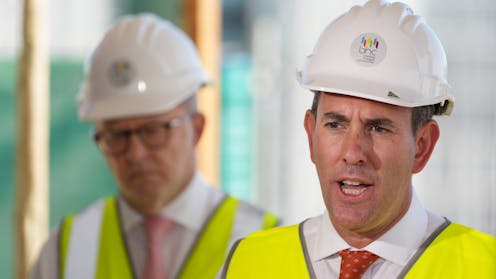
While the world’s media is largely focused on conflict in the Middle East, the focus for many Australians remains at home, with the government preparing the long task ahead of trying to lift Australia’s productivity.
Last week, Prime Minister Anthony Albanese announced a productivity roundtable, which will be held in mid-August. Now Treasurer Jim Chalmers has flagged the roundtable will be part of a much more ambitious debate, indicating he’s open to a broad discussion of major tax reform.
In this podcast, Chalmers is frank about his own belief in the importance of seizing the moment – even if “there’s an element of political risk” whenever governments talk about tax reform.
The way I see this is that I become very wary of people who say, because of the magnitude of our majority, that we will get another term. There are, as you know, few such assurances in politics, particularly in modern politics.
I can kind of hear that [office] clock ticking behind us, and I want to get on with it. You know, we’ve got a big job to do to deliver the big, substantial, ambitious agenda that we’ve already determined and taken to an election. But I am, by nature, impatient. I think the country has an opportunity to be ambitious here. And so if you’re detecting that in my language, that’s probably not accidental.
[…] There’s no absence of courage. There is an absence of consensus, and it’s consensus that we need to move forward. And that’s what I’m seeking, not just in the roundtable, but in the second term of our government.
Chalmers says one of his takeouts from reading Abundance, a new book currently fashionable with progressives, was the need to “get out of our own away” to build more homes and renewable energy, while maintaining high standards.
A lot of regulation is necessary. So we talk about better regulation. But where we can reduce compliance costs and where we can wind back some of this red tape in ways that doesn’t compromise standards, of course we should seek to do that.
One of the things I’m really pleased I got the cabinet to agree to earlier this week is we’re going to approach all of the regulators and we’re going to say, ‘please tell us where you think we can cut back on regulation and compliance costs in a way that doesn’t jeopardise your work’ […] We’re not talking about eliminating regulation. We’re talking about making sure that it’s better.
[…] I think renewable energy projects is part of the story here. I speak to a lot of international investors, there’s a big global contest and scramble for capital in the world […] One of the things that international investors say to us about Australia is ‘we don’t want to spend too long burning cash while we wait for approvals from multiple levels of government and other sorts of approvals’.
So if we can speed some of that up, if we can make sure it makes sense, if our regulation is better, then I think we give ourselves more of a chance of achieving our economic goals, but also our social and environmental goals.
On the productivity roundtable, Chalmers wants bold ideas.
We have an open door and an open mind. This is a genuine attempt to see where we can find some common ground. In some areas that won’t be possible, in other areas, I think it will. And I think we owe it to ourselves to try.
This is a very different discussion to the [2022] Jobs and Skills Summit. Much smaller, much more targeted, a bigger onus on people in the room to build consensus outside of the room.
We’re specifically asking people to consider the trade-offs, including the fiscal trade-off when it comes to what they’re proposing. We’re asking them to take a nationwide, economy-wide view, not a sectoral view about their own interests.
On whether any new major changes – including greater tax reform – would require a fresh mandate, Chalmers wants to wait and see.
I think it depends on the nature of the change. I’m sort of reluctant to think about sequencing and timing and mandates before we’ve got everybody’s ideas on the table and worked out where the consensus and common ground exists […] I think that remains to be seen.
E&OE Transcript
MICHELLE GRATTAN, HOST: Treasurer Jim Chalmers has declared improving Australia’s dismal progress on productivity is at the top of his priorities for Labor’s second term, but addressing the National Press Club on Wednesday, it was clear that his ambitions for economic reform are wide, much wider than we’ve heard from him or from the Prime Minister in the previous term or in the election campaign.
From August 19 to 21, the Government will hold a roundtable to seek ideas for reform from business, unions, civil society and experts. This will be a small gathering held in Parliament House’s Cabinet room.
Notably, Chalmers has invited participants to put forward ideas on tax reform.
The Treasurer is our guest today. Jim Chalmers, before we get to the roundtable, let’s start with the escalating Middle East war. What are the economic implications of this so far, and on one specific issue, what are the implications going to be for oil prices?
JIM CHALMERS, TREASURER: Thanks, Michelle. This is obviously a very perilous part of the world right now, it’s a perilous moment, perilous for the global economy as well.
We’re primarily focused on the human consequences of what’s going on, including around 2,000 people who’ve registered with DFAT to try and get out of the particularly dangerous areas right now, so that’s our focus, but there will be big economic consequences as well, and we’ve already seen in the volatility in the oil price – the barrel price for oil went up between 10 and 11 per cent last Friday when a lot of this flared up, and I think that is an indication of the volatility that this escalating situation in the Middle East is creating in the economy.
I get briefed every day on movements in relevant commodity prices and the like, and there’s a lot of concern, again primarily about the human cost, but there’s a lot of concern around the world about what this means for petrol price inflation and what it means for global growth as well.
GRATTAN: Also on the international scene, are we making any progress on getting concessions on the US tariffs, or will that have to wait for a rescheduled meeting between Donald Trump and Anthony Albanese? There’s now talk, incidentally, of a meeting possibly at NATO next week, although we don’t know whether that will happen or not.
CHALMERS: The Prime Minister’s made it clear that he is considering going to the NATO meeting. By the time people listen to this podcast, it may be that that’s been determined, but whether or not he goes to Europe, we’ve got a lot of different ways and a lot of different opportunities to engage with the Americans on these key questions, and the Prime Minister met with some of the most senior people in the economic institutions of the US overseas – and he met with leaders from Japan and the UK and Germany and Canada and others, so a very worthwhile trip.
We’ll continue to engage wherever we can and whenever we can, because our national economic interest is at stake here. We’ll continue to speak up and stand up for our workers and our businesses to try and make progress on this really key question.
GRATTAN: But no progress yet.
CHALMERS: We’re continuing to engage. We have had discussions at every level, including at my level, and the Prime Minister’s had discussions. Like the whole world right now, people are trying to get a better deal in the aftermath of the announcement of these tariffs; we’re no exception.
We’re better placed and better prepared than most countries to deal with the fallout of what’s happening with these escalating trade tensions, but we are seeking a better deal for our workers and businesses and industries. The Prime Minister’s engagement reflects that, and so does the rest of ours.
GRATTAN: Now, to turn to your productivity roundtable, give us some more details about it, including whether the sessions will be public and will the Premiers be there?
CHALMERS: There are some of those details that we’re still working out. I can’t imagine it will be public in the sense that we’ll have permanent cameras in the Cabinet room, but we don’t intend to be heavy‑handed about it, we’re not seeking people to sign non‑disclosure agreements ‑ I can’t anticipate that we’ll make it kind of Chatham House rules or confidential discussions, but we’re working through all of those issues. When it comes to the states, obviously we want the states involved in one way or another, and we’re working out the best way to do that.
I already engage with the state and territory treasurers at the moment on some of these key questions. I’ll continue to do that, I’ll step that up, and we’ll work out the best way to make sure that the states’ views are represented in the room.
You know how big the Cabinet room is, Michelle, it’s about 25 seats around an oblong table, so we can’t have everybody there, but we will do everything we can to make sure that the relevant views are represented, including the views of the States and Territories.
GRATTAN: When you say you wouldn’t see you having cameras in the Cabinet room, wouldn’t you want some of it to be public, because if it wasn’t, then whoever was telling the story would be putting their slant on it?
CHALMERS: Well, we’ll try and strike the best balance. I think what will happen is, inevitably, people who are participating in the roundtable, indeed people who are providing views but not necessarily in the room, there will be a big flourishing of national policy discussion and debate; that’s a good thing. We’ll try not to restrict that excessively. I just think practically having a kind of live feed out of the Cabinet room is probably not the best way to go about things.
But I’m broadly confident ‑ comfortable, broadly comfortable with people expressing a view outside the room and characterising the discussions inside the room. There may be a convincing reason not to go about it that way, but I’m pretty relaxed about people talking about the discussions.
GRATTAN: In your Press Club speech, you spoke about seeking submissions. Now, would those be submissions before the roundtable?
CHALMERS: Absolutely, but also, we’re trying to work out, in addition to structuring this roundtable – which will be a really important way for us to seek consensus – in addition to that, we’re trying to work out how do we become really good at collecting and taking seriously the views that are put to us by people who are experts in their fields.
Not everybody can be around the Cabinet table. People have well-informed views, and we want to tap them. So we’re working out the best way to open a dedicated Treasury channel, primarily and initially, about feeding views in for the consideration of the roundtable. But if there are ways that we can do that better on an ongoing basis, we’re going to look at that too.
GRATTAN: What do you say to those in business who came out of the 2022 Jobs and Skills Summit rather cynical thinking, really, they’d been had, frankly, that this was basically a meeting to legitimise the Government giving what it wanted to to the unions?
CHALMERS: I’ve heard that view, but I don’t share it. I’ve taken the opportunity in recent days to look again at the sorts of things we progressed out of the Jobs and Skills Summit, it was much, much broader than a narrow focus on industrial relations. So I take that view seriously, but I don’t share it.
And my commitment, I gave this at the Press Club, and I will give this commitment every day between now and the roundtable if that’s necessary, we have an open door and an open mind, this is a genuine attempt to see where we can find some common ground. In some areas, that won’t be possible, in other areas I think it will, and I think we owe it to ourselves to try.
This is a very different discussion to the Jobs and Skills Summit, much smaller, much more targeted, a bigger onus on people in the room to build consensus outside of the room. We’re specifically asking people to consider the trade-offs, including the fiscal trade-offs. When it comes to what they’re proposing, we’re asking them to take a nationwide, economy-wide view, not a sectoral view about their own interests.
Let’s see how we go. We are approaching it in that fashion, a different discussion to Jobs and Skills, and we want to give ourselves every chance to progress out of that discussion with something meaningful.
GRATTAN: You say you accept the need for tax reform. This is really a big statement from you, and it is a change of emphasis from last term. Up to now, you’ve resisted any suggestion of undertaking comprehensive reform of the taxation system. So, where do you actually stand now? Are you looking for ideas for incremental change, or are you looking for something that’s really bold?
CHALMERS: First of all, I do accept that the economic reform, and particularly the tax reform we’ve engaged in so far, it has been sequenced, it has been methodical – but it’s also been, I think, more substantial than a lot of the commentary allows, about half a dozen ways we’re reforming the tax system, and I’m proud of the progress that we’ve made.
When it comes to the roundtable, the point I’ve made about tax, the thing I welcome about the roundtable is it’s not possible to think about and talk about productivity, budget sustainability and resilience amidst global volatility without allowing or encouraging, welcoming a conversation about tax. So that’s the approach I’m taking to it.
What I’m trying to do, and we’ll see how successful we can be at doing this over the course of the next couple of months, but what I’m trying to do is to not pre‑empt that discussion, I’m trying not to artificially limit that discussion about tax, and that’s because I know that people have well‑intentioned, well‑informed views about tax reform; let’s hear them.
GRATTAN: But you do seem open, from what you said, to a possible switch in the tax mix between direct and indirect.
CHALMERS: I think that will be one of the considerations that people raise at the roundtable, and I think it would be unusual to discourage that two months out. Let’s see what people want to propose. You know, I think that’s an indication of my willingness, the Prime Minister’s willingness, the Government’s, to hear people out.
And we broadly, whether it’s in tax and budget, whether it’s in productivity, resilience – I don’t want to spend too much at this roundtable with problem ID, I want to go from problem ID to ideas. That’s because we’ve had really for a long time now – probably as long as you and I have known each other, Michelle – we’ve had a lot of reports about tax, and important ones. I think the time now is to work out where are their common interests, where does the common ground exist, if it exists, on tax, and to see what we can progress together, and that requires on my part an open mind, and that’s what I’ve tried to bring to it.
GRATTAN: Of course, your former Treasury Secretary, who’s now the Prime Minister’s right-hand man as head of the Prime Minister’s department, I think has made speeches pointing out that you really do need such a switch.
CHALMERS: Yeah, and Steven Kennedy’s a very influential person in the Government. I’m delighted – we’ve been joking behind closed doors about Steven being demoted to PM&C from Treasury, but the reality is it’s amazing, it’s the best of all worlds from our point of view to have Kennedy at PM&C and Wilkinson at Treasury. That’s an amazing outcome for anyone who cares about economic reform and responsible economic management, a wonderful outcome.
Steven has made a number of comments in the past about the tax system, probably Jenny has as well. They are very informed, very considered, big thinkers when it comes to economic reform, and we’re going to tap their experience, their interest and their intellect.
GRATTAN: Well, he can now get into the Prime Minister’s ear on this matter. The other thing on tax, you did seem to wobble a bit on changing the GST; you’ve been pretty against that. I guess you left the impression at the Press Club that basically you were still probably against, but you did seem a bit more open-minded than usual.
CHALMERS: What I’m trying to do there, Michelle, and I’m pleased you asked me, because I think that was a bit of a test, a bit of an example of what I talk about in the speech, which is that obviously there are some things that governments, sensible, middle of the road, centrist governments like ours don’t consider – we don’t consider inheritance taxes, we don’t consider changing the arrangements for the family home, those sorts of things.
But what I’ve tried to do and what I tried to say in the speech is if we spend all of our time ruling things in or ruling things out, I think that has a corrosive impact on the nature of our national policy debate, and I don’t want to artificially limit the things that people bring to the roundtable discussion.
I was asked about the GST – you know that I’ve, for a decade or more, had a view about the GST. I repeated that view at the Press Club because I thought that was the honest thing to do, but what I’m going to genuinely try and do, whether it’s in this policy area or in other policy areas, is to not limit what people might bring to the table.
And so that’s what you described as a wobble, I think that really just reflects what I’m trying to do here is to not deny what I have said about these things in the past, but to try and give people the ability to raise whatever they would like at the roundtable. I suspect there will be other occasions like that, other opportunities like that between now and the roundtable where I’ll do the same thing. I’ll repeat what I’ve said, I won’t walk away from it, I haven’t changed my view on the GST. I suspect people will bring views to the roundtable about the GST. Let’s hear them.
GRATTAN: Well, of course, the GST can be a bit like a wild dog when it’s let off the leash. You’ll remember when Malcolm Turnbull let Scott Morrison as Treasurer float the idea of changing the GST, and that didn’t end well.
CHALMERS: No, I think I can recall a fascinating part of Malcolm’s book about that, if memory serves, or perhaps something else that he said or wrote subsequently. I’m obviously aware of that history, you know, and there’s ‑ let’s be upfront with each other, Michelle, when you do what I did at the Press Club today and say bring us your ideas and let’s see where there’s some common ground, there’s an element of political risk to that.
There’s a lot of history tied up in a lot of these questions, as you rightly point out in this instance, and I guess I’m demonstrating, or I’m trying to demonstrate, a willingness to hear people out, and there will be people who write about that in a way that tries to diminish this conversation that we’re setting up. That will happen. I’m open to that, relaxed about that, but let’s see what people think about our economy, about productivity, sustainability, tax, resilience, and let’s see if we can’t get around some good ideas that come out of that discussion.
GRATTAN: Which tempts me to ask, will Ken Henry be on your guest list of the famous Henry review?
CHALMERS: I think some people were surprised to see Ken there today at the National Press Club. Ken was there at the Press Club, and I think I said in the question and answer, if memory serves, and I hope it’s okay with Ken that I said this, but we’ve been engaging on drafts of the speech – we talk about some of the big issues in the Press Club speech I gave today.
I’m not sure about the final invite list. Once you start putting together a list of about 25 people, you’ve got some ministerial colleagues, you’ve got peak organisations, including the ACTU, Sally McManus will be there, maybe a community organisation, someone representing the community, some experts. Before long, it’s very easy to hit 25 people.
You’ve planned a few dinner parties in your time, Michelle, and an invite list of 25 people fills up pretty quick. We haven’t finalised that yet, but whether we invite Ken or Ken’s outside the room, he’s one of a number of people that I speak to about these big policy challenges, and regardless, I hope that he’s okay with us continuing to tap his brain.
GRATTAN: Maybe you need to adopt a sort of restaurant approach of rotational sittings.
CHALMERS: Yeah, well! –
GRATTAN: Now, I know you said today that you don’t like gotcha questions and gave us a bit of a lecture ‑‑
CHALMERS: This doesn’t sound like a good introduction, Michelle.
GRATTAN: ‑‑ about that, but your controversial tax on capital gains on superannuation balances that are very big, critics worry that this could in fact be the thin end of the wedge extending to other areas of the tax system. Would you care to rule that out?
CHALMERS: I think I said today, and I’m happy to repeat with you, Michelle, that we haven’t changed our approach here. We’ve got a policy that we announced almost two and a half years ago now, and we intend to proceed with it.
What we’re looking for here is not an opportunity at the roundtable to cancel policies that we’ve got a mandate for; we’re looking for the next round of ideas.
Now again, a bit like some of the other things we’ve been talking about, I suspect people will come either to the roundtable itself or to the big discussion that surrounds it with very strong views, and not unanimous views about superannuation. We read in a couple of our newspapers on an almost daily basis that people have got strong views about the superannuation changes, and not the identical same views, and so I suspect that will continue.
But our priority is to pass the changes that we announced, really some time ago, that we’ve taken to an election now, and that’s how we intend to proceed.
GRATTAN: So, you’re open to considering other views?
CHALMERS: On that particular issue, I think we have a pretty good sense of people’s views. I mean there’s ‑ I don’t pretend for a second that there’s unanimous support for it.
GRATTAN: I mean, extending it to other areas.
CHALMERS: No, I mean that’s not something we’ve been contemplating even for a second, and we haven’t done any work on that, we haven’t had a discussion about that, that’s not our intention.
But more broadly, when it comes to the system, I suspect people will have views about that at the roundtable – but thanks for the opportunity to clarify, we’re not planning for or strategising for extending that in additional ways.
GRATTAN: Now, artificial intelligence is obviously being seen as the next big productivity enhancer when you’re talking about the big things, but it’s also going to cost jobs, and that will exercise the unions.
Your Industry Minister Tim Ayres, has emphasised the unions have a role in this transition, must be consulted, brought into it, but you’ve said that while regulation will matter, and I quote, “We are overwhelmingly focused on capabilities and opportunities, not just guardrails. The emphasis here is different”. Do you see this as being a bit like the tariff reforms in the Hawke/Keating time, when there were big gains to be made but there were also very significant losers, and how do you deal with that situation?
CHALMERS: First of all, I think unions do have a place and a role to play in this. I can’t imagine meaningful progress on AI or technology more broadly where we wouldn’t include unions and workers in that conversation. That wouldn’t be consistent with our approach, and it wouldn’t make a lot of sense, so I share Tim’s view on that. I work closely with Tim Ayres and also Andrew Charlton, who will have a key role in some of these policy questions.
The point that I was making was it’s not a choice between regulation or capability, it’s not an either/or. Obviously we need guardrails, obviously we need regulation, but from my point of view, I see this as a game‑changer in our economy, I see it as one of the big ways that will make our economy more productive and lift living standards.
It’s not all downside for workers either – we’re talking about augmenting jobs, we’re talking about some of the routine tasks that are not the most satisfying parts of people’s work, so of course we want to include the union movement, of course we want to make sure that we’ve got appropriate guardrails.
The point that I was making in that interview with the Financial Review which you’re quoting from is that we need to get our capabilities right, we need the right skills base, I think we’ve got a huge opportunity with data centres and the infrastructure that supports artificial intelligence, and so that is a big part of the focus of our work. When it comes to productivity, when it comes to growth more broadly, industry policy, our work with the Productivity Commission, data and digital, AI, data centres, all of that I think are going to be key parts of the future economy in Australia.
GRATTAN: The last time we spoke on this podcast, you said you’d been reading the book Abundance by Ezra Klein and Derek Thompson, and you described it as a ripper. Now I think you’re making all your Cabinet colleagues read it too, and I’m not sure whether they thank you for that, but there it goes.
What are some of the ideas in the book that attracted you, and in particular, do you agree with the thesis that red tape is holding us back, particularly when it comes to housing and renewable energy and the transition to renewables?
CHALMERS: First of all ‑ we should be on a commission for this book, I think, from Andrew Leigh through a whole bunch of colleagues ‑ a lot of us have either read it or are in the process of reading it.
The reason that we are attracted to it is because it really is about working out as progressive people who care deeply about building more homes, rolling out more renewable energy, to make sure that the way we regulate that and approach that doesn’t get in our own way, that we don’t make it harder for us to achieve our big economic goals in the energy transformation; in housing and technology and all of these sorts of things.
What the Abundance book reminds us to do, and I think in a really timely and really punchy way, is it says, “As progressive people, let’s get out of our own way”. A lot of regulation is necessary, so we talk about better regulation, but where we can reduce compliance costs and where we can wind back some of this red tape in ways that doesn’t compromise standards, of course, we should seek to do that.
One of the things I’m really pleased I got the Cabinet to agree to earlier this week is we’re going to approach all of the regulators, and we’re going to say, “Please tell us where you think we can cut back on regulation and compliance costs in a way that doesn’t jeopardise your work”. I suspect from that, maybe not from every regulator, but from some of the regulators, I think if we are genuine about it, I think we can make some progress there to get compliance costs down, to speed up approvals so that we can deliver the things that we truly value as an economy but also as a society, and that’s what the Abundance book’s about.
GRATTAN: Of course, one of the problems is, while this sounds very good, a lot of stakeholders say we need more regulation of this or that, we need to protect flora, fauna, climate, whatever.
CHALMERS: Yeah, of course we do.
GRATTAN: And that all gets in the way of clearing away red tape, doesn’t it?
CHALMERS: We’re not talking about eliminating regulation, we are talking about making sure that it’s better, that we can use regulation in the service of our social and environmental and economic goals, but to make sure that we’re not overdoing it, that it’s not unnecessary, that it doesn’t prevent us achieving our aspirations and our objectives, including in the environment.
I think renewable energy projects are part of the story here, and I speak to a lot of international investors, there’s a big global contest and scramble for capital in the world. People are rethinking their investments, and there’s a lot of interest in Australia, and one of the things that international investors say to us about Australia is we don’t want to spend too long burning cash while we wait for approvals from multiple levels of government and other sorts of approvals.
If we can speed some of that up, if we can make sure it makes sense, if our regulation is better, then I think we give ourselves more of a chance of achieving our economic goals, but also our social and environmental goals as well.
GRATTAN: Another of your priorities is budget sustainability, and you say the Government’s made progress, but there’s a way to go. So, where are you going now? Do you need to make big savings in what areas, or are you really having to look at the revenue side more?
CHALMERS: I think there’s this kind of strange binary analysis of the budget situation. Some people say it doesn’t matter, some people say it’s beyond repair, and obviously, like a lot of things in politics and policy, the truth lies somewhere in between.
We’ve made a heap of progress on the budget; two surpluses, biggest ever nominal turnaround in the budget, we got the debt down, got the interest costs down. But what I acknowledge and what I will continue to acknowledge is there’s always more work to do to make it more sustainable.
For us, we made a heap of progress on aged care, the NDIS and interest costs, but we need to make sure that even when we think about the policy ideas that people bring to us at the roundtable, budget sustainability really matters. Where we do find something that we want to invest more in, we’ve got to consider the trade-offs, we’ve got to work out how to pay for things.
There’s probably not a day, certainly not a week that goes by where Katy Gallagher and I aren’t in one way or another engaging with colleagues on some of these structural pressures on the budget, because they do matter.
GRATTAN: Well, one, of course, is defence spending, and I was interested that you did in your remarks to the Press Club seem, while cautious, while saying, “We’re spending a lot on defence”, you seemed open to the idea that over the next decade governments will have to increase defence spending.
CHALMERS: I think the point I was trying to make there, Michelle, was it would be strange over a period of 10 years if there were no changes to any policy or levels of spending. But the thing that’s not, I think, sufficiently acknowledged is we’ve already quite dramatically increased defence spending, and you know, it’s not easy to find the extra $11 billion we found over the forward estimates, or the almost $58 billion I think we found over the decade.
We are dramatically increasing our defence spending. I acknowledge and accept and respect that some people, including some of our partners, want us to spend more on defence, but we are already spending a heap more on defence, and we’ve had to find room for that in the budget, and that’s what we’ve done.
GRATTAN: So we should be up for that conversation, as Richard Marles would say?
CHALMERS: I think what Richard’s saying, to be fair to him, is that we are more or less continuously engaging with our partners about things like defence spending, and when it comes to the Americans, they’ve made it clear around the world that they want people to spend more on defence. That’s not an unreasonable position for the Americans to put to us. We decide our level of defence spending, and we have decided collectively as a government to dramatically increase it.
GRATTAN: As Treasurer, you’re the gatekeeper for foreign investment decisions, big decisions, and there’s a takeover bid at the moment from Abu Dhabi’s national oil company for Santos. Can you give us some idea of the process, the timetable, when you would make a decision if the matter comes to you?
CHALMERS: This is a really big transaction potentially, and it raises – there are a lot of considerations around the national interest, it’s in a sensitive part of our economy for all of the obvious reasons.
What usually happens with a transaction of this magnitude, tens of billions of dollars, is it goes through a number of stages. One of those stages is a Foreign Investment Review Board process where I’ve got a heap of terrific colleagues in the Treasury who advise me on these things. What I try to do is to make sure that I refrain from commenting on these sorts of deals before I’ve got that Foreign Investment Review Board advice. I take that advice very seriously, and that means not pre‑empting it.
I know that there will be a heap of views, a heap of interest, I do acknowledge it’s a very big transaction which involves a really key sensitive part of our economy, and I’ll do what I always do with these big FIRB approval processes, which is to engage in it in a really methodical and considered way.
That will roll out over the course of the next few months. The last time I asked, which I think was yesterday, we hadn’t ‑ the FIRB hadn’t had a chance to go through or hadn’t received yet the Foreign Investment Review Board proposal. That may have changed since then, but regardless, these things take a little bit of time.
GRATTAN: Before we finish, let’s come back to productivity. You’ve said the work will take more than a term. So just give us a snapshot of where you would want to be at the end of say three years, six years.
CHALMERS: Yeah. The point I’m making there, when it comes to productivity is, unlike some of the other really important measures in our economy, there’s no instant gratification. It’s very hard to flick a switch and get an immediate, substantial, meaningful shift in the data.
The point that I’ve made is that we’re enthusiastic and very committed, very dedicated to doing meaningful things on productivity, but even those things can sometimes take a while to play out in the data, so I’m just really trying to say to people, this is important, it will pay off, some of it will pay off in the medium term and the longer term, but that shouldn’t deter us, the fact that some of these challenges take a little bit longer to fix.
Now, if there was a switch that you could flick to make our economy instantly more productive, somebody would have flicked it already. Unfortunately, there’s not, and so we’re left in a world where we have to do a lot of things at once, and some of those things will take a little while to pay off.
GRATTAN: Can you set any sort of target in terms of growth, annual growth? –
CHALMERS: I’m reluctant to do that.
GRATTAN: – productivity growth.
CHALMERS: I’m reluctant to do that. The budget assumes a level of productivity growth, which is higher than what we are currently seeing, so it wouldn’t be a bad start to try and get closer to the forecast. But I’m reluctant to put a target on it.
GRATTAN: And that forecast is?
CHALMERS: The Treasury changed it to 1.2 per cent, and we’re currently tracking a bit lower than that on the current 20-year average, and so we need to do better. I tried to be quite blunt about that at the Press Club. Our economy is growing, but it’s not productive enough, our budget is stronger, but it’s not sustainable enough, our economy is resilient, but not resilient enough. And this is my way of saying to people, we’ve made a lot of progress together, but we’ve got a further ‑ we’ve got more to do, and productivity is our primary focus in that regard, but not our only focus.
GRATTAN: For really big changes, say for tax changes, do you think you need another mandate or not?
CHALMERS: I think it depends on the nature of the change. I’m reluctant to think about sequencing and timing and mandates before we’ve got everybody’s ideas on the table and worked out where the consensus and common ground exists, and so I don’t like to be evasive with a good question like that, Michelle, but I think that remains to be seen. It will be to be determined once we get a firmer sense of the way forward.
GRATTAN: Just finally, you sounded in your speech rather like a man who’s been liberated since the election. Has your attitude changed? Do you think it’s just time to go for it?
CHALMERS: The way I see this, Michelle, is that I become very wary of people who say, because of the magnitude of our majority, that we will get another term. There are, as you know, few such assurances in politics, particularly in modern politics, and so I can kind of hear that clock ticking behind us, and I want to get on with it.
We’ve got a big job to do to deliver the big, substantial, ambitious agenda that we’ve already determined and taken to an election. But I am by nature impatient, I think the country has an opportunity to be ambitious here, and so if you’re detecting that in my language, that’s probably not accidental. I think we know what the challenges are, we know what people’s views are broadly, there’s no absence of courage, there is an absence of consensus, and it’s consensus that we need to move forward, and that’s what I’m seeking not just in the roundtable, but in this second term of our Government.
GRATTAN: Jim Chalmers, it’s going to be an interesting few months, and thank you for talking with us today. That’s all for today’s podcast. Thank you to my producer, Ben Roper. We’ll be back with another interview soon, but good‑bye for now.
Michelle Grattan does not work for, consult, own shares in or receive funding from any company or organisation that would benefit from this article, and has disclosed no relevant affiliations beyond their academic appointment.
Source: United Kingdom UK House of Lords (video statements)
Members discuss employment levels and concerns about job losses in this highlight from the chamber. Catch up.
Read a transcript of this question: https://hansard.parliament.uk/lords/2025-06-11/debates/FC5406F5-2F01-4993-98B0-E281088579AE/UnitedKingdomJobsMarket
Catch-up on House of Lords business:
Watch live events: https://parliamentlive.tv/Lords
Read the latest news: https://www.parliament.uk/lords/
Stay up to date with the House of Lords on social media:
Source: United Kingdom – Executive Government & Departments
News story
Call for evidence: An inspection of asylum casework (2025)
The ICIBI invites anyone with knowledge and experience of asylum decision quality to submit evidence for the inspection.
The Independent Chief Inspector of Borders and Immigration has begun an inspection of asylum casework with a particular focus on the quality of asylum decisions.
As Independent Chief Inspector, I am inviting anyone with knowledge or first-hand experience of Home Office asylum decision making to submit evidence to inform this inspection. I would be pleased to hear about both what is working well and what could be improved in the following areas:
the accessibility and clarity of Home Office guidance on the processing of asylum claims, including how decisions are made
correspondence and communication with claimants and their representatives throughout the asylum process, including decision letters
the conduct of substantive asylum interviews
what other factors influence or affect the quality of asylum decisions
views on the quality, consistency and accuracy of asylum decisions and whether these have changed since the beginning of 2024
how the Home Office engages with stakeholders and responds to feedback on the quality of asylum decisions
These areas of interest are not exhaustive, and I welcome submissions that touch on other points. Information received in response to this call for evidence will play an important part in defining the precise scope and focus of the inspection.
This call for evidence will remain open until 2 July 2025.
The information you submit may be quoted in the final inspection report, but it is the ICIBI’s practice not to name sources and to anonymise as much as possible any examples or case studies.
Please click here to email your submission to the Independent Chief Inspector.
Please note: The ICIBI’s statutory remit does not extend to investigating or making decisions about individual cases or applications for asylum. This remains a Home Office responsibility. However, the Independent Chief Inspector can take an interest in individual cases to the extent that they illustrate or point to systemic problems.
Data Protection
Information on how we process personal data submitted in response to a call for evidence can be found in the ICIBI privacy information notice available on the ICIBI website
David Bolt
Independent Chief Inspector of Borders and Immigration
Source: United Kingdom – Executive Government & Departments
News story
Rabies case confirmed following contact with animal abroad
UKHSA is reminding travellers to be careful around animals when travelling to rabies affected countries.
An individual from the UK has sadly died after becoming infected with rabies, following contact with a stray dog during a visit to Morocco. The individual was diagnosed in Yorkshire and the Humber.
There is no risk to the wider public in relation to this case as there is no documented evidence of rabies passing between people. However, as a precautionary measure, health workers and close contacts are being assessed and offered vaccination when necessary.
Rabies is passed on through injuries such as bites and scratches from an infected animal. It is nearly always fatal, but post-exposure treatment is very effective at preventing disease if given promptly after exposure to the virus.
The UK Health Security Agency (UKHSA) is reminding travellers to be careful around animals when travelling to rabies affected countries due to the risk of catching the disease.
Dr Katherine Russell, Head of Emerging Infections and Zoonoses, at UKHSA, said:
I would like to extend my condolences to this individual’s family at this time.
If you are bitten, scratched or licked by an animal in a country where rabies is found then you should wash the wound or site of exposure with plenty of soap and water and seek medical advice without delay in order to get post-exposure treatment to prevent rabies.
There is no risk to the wider public in relation to this case. Human cases of rabies are extremely rare in the UK, and worldwide there are no documented instances of direct human-to-human transmission.
Rabies does not circulate in either wild or domestic animals in the UK, although some species of bats can carry a rabies-like virus. No human cases of rabies acquired in the UK from animals other than bats have been reported since 1902.
Between 2000 and 2024 there were 6 cases of human rabies associated with animal exposures abroad reported in the UK.
Rabies is common in other parts of the world, especially in Asia and Africa. All travellers to rabies affected countries should avoid contact with dogs, cats and other animals wherever possible, and seek advice about the need for rabies vaccine prior to travel.
You should take immediate action to wash the wound or site of exposure with plenty of soap and water, if:
you’ve been bitten or scratched by an animal while you’re abroad in a country with rabies
an animal has licked your eyes, nose or mouth, or licked a wound you have, while you’re abroad in a country with rabies
you’ve been bitten or scratched by a bat in the UK
Local medical advice should be sought without delay, even in those who have been previously vaccinated.
When given promptly after an exposure, a course of rabies post-exposure treatment is extremely effective at preventing the disease. If such an exposure occurs abroad, the traveller should also consult their doctor on return, so that the course of rabies treatment can be completed. If travellers have not sought medical advice abroad, they should contact their doctor promptly upon return for assessment.
For more information on the risk of rabies in different countries, see the country information pages on the National Travel Health Network and Centre’s (NaTHNaC’s) website, TravelHealthPro.
Proposals to support pensioners in Scotland this winter.
All pensioners in Scotland with an income of less than £35,000 will receive Pension Age Winter Heating Payments this winter of either £203.40 or £305.10 per household, Social Justice Secretary Shirley-Anne Somerville has confirmed. This means pensioners in Scotland will be better off compared to those in the rest of the UK.
Pensioner households with no-one aged 80 or over will receive £203.40, rising to £305.10 for households with someone aged 80 or over.
Following the UK Government’s recent change to winter fuel payments, the Scottish Government will withdraw the current amendment regulations before the Scottish Parliament, which were previously lodged in order to protect pensioners in Scotland against the UK Government’s planned cuts to winter fuel payments.
The move will now see over 720,000 Scottish pensioners benefit.
Ms Somerville said:
“The UK Government’s decision to cut the Winter Fuel Payment last winter was a betrayal of millions of pensioners, and their recent U-turn is welcome if belated.
“Following careful consideration of the options available, the Scottish Government will mirror the approach taken by the UK Government. We will bring forward regulations to ensure that, from this winter onwards, all pensioners will receive either £203.40 or £305.10 per household, depending on age.
“We are in discussion with the UK Government to extend the proposed arrangements in England and Wales to recover payments from those pensioners with an individual income of more than £35,000 through the tax system. The intention is that the payment will be recovered automatically, and pensioners will not need to register with HMRC for this or take any further action.
“This approach ensures a higher level of support which those most in need will receive. Over 720,000 Scottish pensioners are estimated to benefit from the higher payment.”
A team of Plymouth educators leading the Your Future programme for On Course South West have been recognised with a Silver Award for SEND and Inclusive Practice in this year’s Pearson National Teaching Awards.
Chosen from thousands of nominees, they will now be in with the chance of winning the highly desired Gold Award, which will be announced at a prestigious awards ceremony in London and on BBC One’s The One Show later this year.
Cllr Sally Cresswell with Your Future tutors Abi Gee, Vicki Pinder and Lauren Parker-Smith alongside young people from the Your Future programme
Your Future aims to help local young people with special educational needs and/or disabilities (SEND) aged 16 to 25 years into education or employment opportunities by developing a positive mindset and learning independent skills. The programme offers a structured package of employability and skills training with coaching, mentoring and residential trips to help young people build their confidence.
Since it launched in 2023, the programme has supported 90 young people with SEND in Plymouth. 92 per cent of participants have gone on to progress into employment, education or training, with 80 per cent reporting that the programme helped to improve their emotional wellbeing.
On Course South West is Plymouth City Council’s in-house adult education provider and delivers a range of courses, qualifications, apprenticeships and supported internships.
Councillor Sally Cresswell, Cabinet Member for Education, Skills and Apprenticeships, said: “We are absolutely thrilled that the Your Future team has been recognised with this national award, highlighting the lifechanging impact they have had on young people in Plymouth.
“Helping young people with SEND to thrive, grow in confidence, and achieve their goals is at the heart of the Your Future programme and this recognition shines a light on just how powerful inclusive education can be.”
The Your Future teaching team – Vicki Pinder, Abi Gee and Lauren Parker-Smith – are one of 94 deserving teachers, lecturers, leaders, support staff and institutions recognised as a silver winner in this year’s awards for the lasting impact they have on shaping the lives of young people.
The announcement follows tributes from celebrities, students and schools across the UK as they say thank you to all those who work in education to mark National Thank a Teacher Day.
Celebrating the whole education community, National Thank a Teacher Day and the Pearson National Teaching Awards are run by the Teaching Awards Trust, an independent charity established over 25 years ago to celebrate the transformative impact of education, shining a spotlight on the pivotal roles teachers, support staff, colleges, schools and early years educators play in inspiring young people, every single day.
Sir Michael Morpurgo, author, former Children’s Laureate, and President of the Teaching Awards Trust, said: “The dedication and impact of those involved in educating young people is truly remarkable. Their influence extends well beyond the classroom – offering encouragement, inspiration, and unwavering support that can shape lives for years to come. That’s why National Thank a Teacher Day is an important opportunity to pause and celebrate all that they do.
“I’m also delighted to be able to congratulate this year’s Silver Award winners. Your passion and commitment to shaping the next generation is extraordinary. Thank you for the difference you make every single day.”
Sharon Hague, CEO of Pearson UK, said: “Every day, educators across the UK go above and beyond to inspire, support, and shape the future generation. Today, we proudly recognise those making an extraordinary impact. Our Silver Award winners represent the very best of the profession, and we’re thrilled to celebrate their dedication and achievements. Congratulations to all of this year’s Silver winners!”
Behind the scenes during filming of Merlin’s Big Adventure at Broomfield Hospital in Chelmsford
Filmmakers from Anglia Ruskin University (ARU) have created a heartwarming video to make visits to Broomfield Hospital in Chelmsford less daunting for young people.
Starring a talented golden retriever named Merlin, plus a few of his canine friends, the short film aims to ease the anxiety of children ahead of their trip to hospital.
Produced by Senior Lecturer Hans Petch and recent BA (Hons) Film and Television Production graduate James Hartley, the film features Merlin explaining each stage of their visit, from the hospital waiting room through to undergoing anaesthesia.
The idea for the film came after Broomfield doctors saw first-hand the impact that Essex Therapy Dogs, including Merlin, were having when they visited patients at the hospital.
“After witnessing the calming, positive effect of Essex Therapy Dogs in our anaesthetic department, we began to wonder if we could do even more to help ease the theatre journey for our younger patients.
“With the brilliant support of Hans Petch and James Hartley from Anglia Ruskin University, we worked together to write a script and produce this video that shares essential information about what to expect in hospital, in a warm, engaging, and child-friendly way.
“We’re now expanding the project to include additional resources, such as a social story and an easy-read storybook, offering different ways for children to connect with the material in whichever way suits them best.
“Our hope is that this initiative will make a meaningful difference to the experience of young patients preparing for surgery at Mid and South Essex NHS Foundation Trust.”
Dr Simon Trundle, Consultant in Anaesthesia at Broomfield Hospital
“We set out to make something truly enjoyable and entertaining for young viewers, while incorporating important, educational information. The link to our film is being sent to parents and carers ahead of hospital visits, and knowing that it’s helping to reduce the fears and anxiety of young children is incredibly rewarding.
“I’ve worked with many actors in my career, and I can honestly say that directing Merlin was an absolute delight. Other than the need for regular breaks, he’s also one of the least demanding actors I’ve worked with!”
Hans Petch, Senior Lecturer in Film and Television Production at ARU
“Watching Merlin work his magic is truly inspiring. His wagging tail, unwavering patience, and kind heart create an environment where children and adults feel safe and supported before and after their procedures – both in real life and now on screen.”
Merlin’s owner Mandy Johnson, from Essex Therapy Dogs
Mid and South Essex NHS Foundation Trust, which runs Broomfield Hospital, plan to formally study the video’s impact by surveying children and parents, and ARU and the Trust are exploring the possibility of making additional films, this time using virtual reality technology.
A CURATOR and art director who was instrumental in bringing German expressionism to Leicester is being celebrated with a new book launch in the city.
Hans Hess was born in Erfurt in Germany in 1907, and his family counted artists like Paul Klee and Wassily Kandinsky amongst their friends. When he was forced out of Germany in the 1930s for being Jewish, he moved to England and, in 1944, he was appointed assistant keeper of art at Leicester Museum and Art Gallery.
The book launch takes place on Saturday 28 June from 5.30pm, and is free to attend, although a ticket is required. The event will be an evening of art, history and insight, with guests able to enjoy exclusive access to the museum’s renowned German Expressionist gallery.
“We are delighted to be hosting this event with Manifesto Press, which will celebrate the works of this renowned curator who had strong links to Leicester,” said head of arts & museums Joanna Jones.
“Hans Hess was a remarkable person. In February 1944, amid the war’s darkest days, he worked with Leicester Museum’s art director Trevor Thomas to curate Mid European Art, a groundbreaking exhibition which introduced Britain to masterpieces by Franz Marc, Wassily Kandinsky, Paul Klee, and others – works the Nazis condemned as ‘degenerate.’ In exhibiting these works in 1944, Leicester stood as a beacon of cultural defiance.
“Thanks to our links with the Hess family, the courage of artists and collectors who fled Nazism and the visionary leadership of Trevor Thomas, we are able to celebrate Leicester’s unique status to this day as a global hub for German Expressionism.”
Assistant city mayor for culture, Cllr Vi Dempster, said: “Hans Hess’s story is a fantastic and moving one and is also a symbol of what Leicester stands for – we have a long history of welcoming refugees and standing up to discrimination.
“It is wonderful that we are able to celebrate his influence on our city by hosting the launch of his books at the museum he helped to shape.”
Hans Hess’ daughter, Anita Halpin, spent her early years in Leicester. “My father arrived in Leicester after 10 years of uncertainty and trauma,” she said. “Working with Trevor Thomas was the start of a new life for him and his family. He would be extremely pleased and gratified that the Leicester Museum and Art Gallery now has by far the largest collection of German expressionist works in this country.”
The books will be available to purchase at the launch, and a paid bar will be available throughout the evening. To book a ticket, visit Event Details – Leicester Museums
ENDS
Picture shows Rote Frau by Franz Marc, one of the first four works to come to Leicester’s gallery from the Hess family with the 1944 exhibition.
The Lord Mayor of Leeds yesterday presented the proceeds of ticket sales generated by the highly successful VE/VJ80 civic event to the Royal British Legion (RBL) Poppy Appeal.
The civic event, which marked the 80th anniversary of the Victory in Europe and Victory over Japan days, took place at Leeds Minster on May 10. Attracting over 400 guests, including dignitaries, veterans, and members of the public, ticket sales generated £1000 for the RBL. The event also saw the presentation of the Leeds Award to 102-year-old D-Day veteran, Jack Mortimer. The Leeds Award is a formal recognition by Leeds City Council which acknowledges individuals, organisations, or groups who have made outstanding contributions that benefit the city and its residents. It was presented to Jack for his lifelong commitment to veterans’ affairs and, fittingly, his fundraising work for the Royal British Legion.
Above: Second World War Wren veteran, Eileen Marshall, singing with members of the Hummingbirds UK at the Civic Hall presentation.
The cheque presentation, which took place in the Civic Hall’s Ark Royal room, was made to the RBL’s Jonathan Calvert and Emma Osbourne by the new Lord Mayor of Leeds, Councillor Dan Cohen. In attendance were many of those who spoke and performed at the civic event, along with councillors, Second World War veteran Eileen Marshall, and representatives from the businesses and organisations that donated goods and services to the event.
Above: The Lord Mayor of Leeds, Councillor Dan Cohen, speaking to guests.
The Lord Mayor of Leeds, Councillor Dan Cohen, said: “The VE/VJ 80 civic event was not only a time to commemorate, remember, and reflect on those momentous days at the end of the Second World War 80 years ago. It was also an opportunity to have some fun and raise money for an incredible charity at the same time.
“The Royal British Legion works tirelessly for all veterans of the armed forces and their families, so it was my great pleasure to present a cheque for the money raised through ticket sales to help them continue their important work.”
“I would also like to take the opportunity to give my thanks to all those people, organisations and companies who made the civic event so successful, especially my colleague, Councillor Jane Dowson, who spent many hours on the organisation. Without the donations from some fantastic local businesses, and the magnificent speakers and performers who made no charge for their time, goods, and services, the event would not have achieved such success.”
Lancaster City Council has once again been recognised as a leader in climate action, achieving a score of 64% in the 2025 Climate Emergency UK Scorecards – the best of any council in the north west.
2025 climate action scorecard
This marks an increase on the council’s 2023 score (61%), and is also only four percent behind Winchester City Council, which was the highest performing district in the country with 68%.
The council scored higher in the Buildings and Heating category, reflecting continued investment in improving energy efficiency across its estate. This work has included the replacement of gas boilers with heat pumps, installation of secondary glazing and solar panels, along with improved insulation.
The lowest scoring area was Transport, a result that is not a surprise given that Lancaster City Council is not a transport authority and does not have direct control over major transport infrastructure or policy. However, the council continues to work positively with its partners including Lancashire County Council to support improvements in sustainable travel and active transport options.
Councillor Sam Riches, cabinet member for climate action, welcomed the results: “We are proud to have improved our score and this reflects the hard work of our officers and the shared commitment from councillors in taking real action on projects that help to mitigate the effects of climate change.
“At the same time, we know there is still much more to do and our Local Area Energy Plan (LAEP) provides a detailed roadmap for decarbonisation. Our plans for the future include further retrofitting of council-owned buildings, expanding solar installations, and looking at opportunities for new green infrastructure projects that benefit both the climate and our communities and can also lead to lower costs.”
The Climate Action Scorecards assess local authorities across seven areas including buildings, transport, planning, governance, biodiversity, waste, and community engagement.
Lancaster’s continued strong performance is attributed to its strategic focus on place-based action, collaboration, and sustainability.