Category: European Union

  • MIL-OSI Submissions: A potted history of fermented foods – from pickles to kimchi

    Source: The Conversation – UK – By Serin Quinn, PhD Candidate, Department of History, University of Warwick

    Are you a pro at pickling? How about baking sourdough bread or brewing your own kombucha? If the answer is yes, you’ve probably picked up on one of the recent trends promoting fermented foods, which promise to boost your gut health and save both you and the planet from the scourge of food waste.

    For the uninitiated, fermented foods include anything that uses bacteria to break down organic matter into a new product. Look around an ordinary kitchen and you’ll almost certainly find something fermented: yoghurt (milk), beer and wine (grain/fruit) or vinegar (alcohol). Not all of these will give you the promised health boost, however, which comes from “live” ferments containing probiotic microbes, usually lactic acid bacteria. In alcohol and vinegar the fermenting bacteria die during the process.

    The health benefits of fermented foods are widely promoted. Some advocates, like epidemiologist Tim Spector, suggest the gut microbiome is the key to our health, while others are more cautious: in essence, although kefir is certainly good for your gut, it isn’t a cure-all. Still, the research is ongoing and diversifying: one study has even suggested that probiotics could fight the less pleasant recent phenomenon of microplastics in our stomachs.

    The future of fermented foods is definitely something to keep an eye on, but equally interesting is their long past and the different fermented food fashions we see over time.


    Looking for something good? Cut through the noise with a carefully curated selection of the latest releases, live events and exhibitions, straight to your inbox every fortnight, on Fridays. Sign up here.


    People have been fermenting food since before the written word. Thanks to archaeological discoveries, we know that 13,000 years ago ancient Natufian culture in the Levant was fermenting grain into beer and that around the globe in Jiahu, Northern China, 9,000 years ago, a mixture of rice, honey and fruit was fermented to make early “wines”.

    In fact, most cultures have at some point in their history fermented plants into alcohol, from agave pulque in Mesoamerica to gum-tree way-a-linah in Australia.

    Mosaic depicting a garum jug with a titulus reading ‘from the workshop of the garum importer Aulus Umbricius Scaurus’.
    Claus Ableiter, CC BY-SA

    As to preserving food, archaeologists have found that nearly 10,000 years ago fish was fermented by the Mesolithic inhabitants of Sweden. Today nam pla (fish sauce made from fermented anchovies) is very popular, but fermented fish sauces were a major commodity in the ancient world, including the garum of the Romans. This was made from the blood and guts of mackerel, salt-fermented for two months. Although it might not sound very appealing, garum was an expensive condiment for the Roman nobility and was shipped all the way from Spain to Britain.

    Garum eventually lost its popularity in Europe during the Middle Ages, but fermented fish made a comeback in the 18th century. In Asia fish sauces had continued strong, and colonialism brought the south Asian fish sauce kê-chiap to Europe, alongside soy sauce (fermented soybeans). Salt-fermenting oysters and anchovies in this style became popular in England and North America, and people eventually branched out to preserving tomatoes – giving us modern ketchup.

    Cabbage cultures

    No discussion of fermentation would be complete without pickled vegetables. Today, the most talked-about fermented vegetable is the cabbage, in the form of kimchi and sauerkraut, thanks to its strong probiotic and vitamin C content.

    The historical origins of these dishes are unclear. Online articles might tell you that pickled cabbage was first eaten by the builders of the Great Wall of China 2,000 years ago and brought to Europe in Genghis Khan’s saddlebags. These kinds of apocryphal stories should be taken with more than a grain of salt.

    An illustration of the cultivation of grapes and winemaking in Ming dynasty China (1368–1644).
    Wellcome Collection

    So should the apparent connection to Roman author Pliny the Elder, who made no mention of “salt cabbage” anywhere in his works. While the Greeks and Romans loved cabbage and considered it a cure for many illnesses, they almost always boiled it, which would kill the lactobacillus.

    Still, as Jan Davison, author of Pickles: A Global History, writes, literary evidence suggests that salt pickling in general does have a long precedence. Pickled gourds were eaten in Zhou dynasty China around 3,000 years ago.

    It’s hard to say when sauerkraut became a common dish, but the term was in use by the 16th century and was associated with Germany by the 17th. As to Korean kimchi, research suggests this style of preservation was practised by the 13th century, only using turnips rather than cabbage.

    The popularity of radish and cabbage kimchi only came about in the 16th century, alongside the use of chilli peppers. Now an iconic aspect of this bright-red dish, peppers were not part of “Old World” diets before the Columbian exchange.

    History reveals our long relationship with fermented food. Our pickling ancestors were more interested in food preservation than in their bacterial microbiome – a very modern concept. Looking to past practices might even help us innovate fermentation technologies, as recent research from the Vrije Universiteit Brussels shows. I’m not sure about bringing back fermented fish guts, but more pickled turnips doesn’t sound half bad.


    This article features references to books that have been included for editorial reasons, and may contain links to bookshop.org. If you click on one of the links and go on to buy something from bookshop.org The Conversation UK may earn a commission.

    Serin Quinn does not work for, consult, own shares in or receive funding from any company or organisation that would benefit from this article, and has disclosed no relevant affiliations beyond their academic appointment.

    ref. A potted history of fermented foods – from pickles to kimchi – https://theconversation.com/a-potted-history-of-fermented-foods-from-pickles-to-kimchi-260132

    MIL OSI

  • MIL-OSI Submissions: Filipino sailors dock in Mexico … and help invent tequila?

    Source: The Conversation – USA (2) – By Stephen Acabado, Professor of Anthropology, University of California, Los Angeles

    Bottles of tequila now command premium prices in trendy bars. On Instagram, celebrity-backed brands of the agave-based Mexican spirit jostle for attention. And debates over cultural appropriation and agave sustainability swirl alongside booming tourism in Jalisco, the western Mexican state that serves as the world’s tequila distillation hub.

    But behind the spirit’s flash of marketing and growing popularity lies a rarely asked question: Where did the knowledge to distill agave come from in the first place?

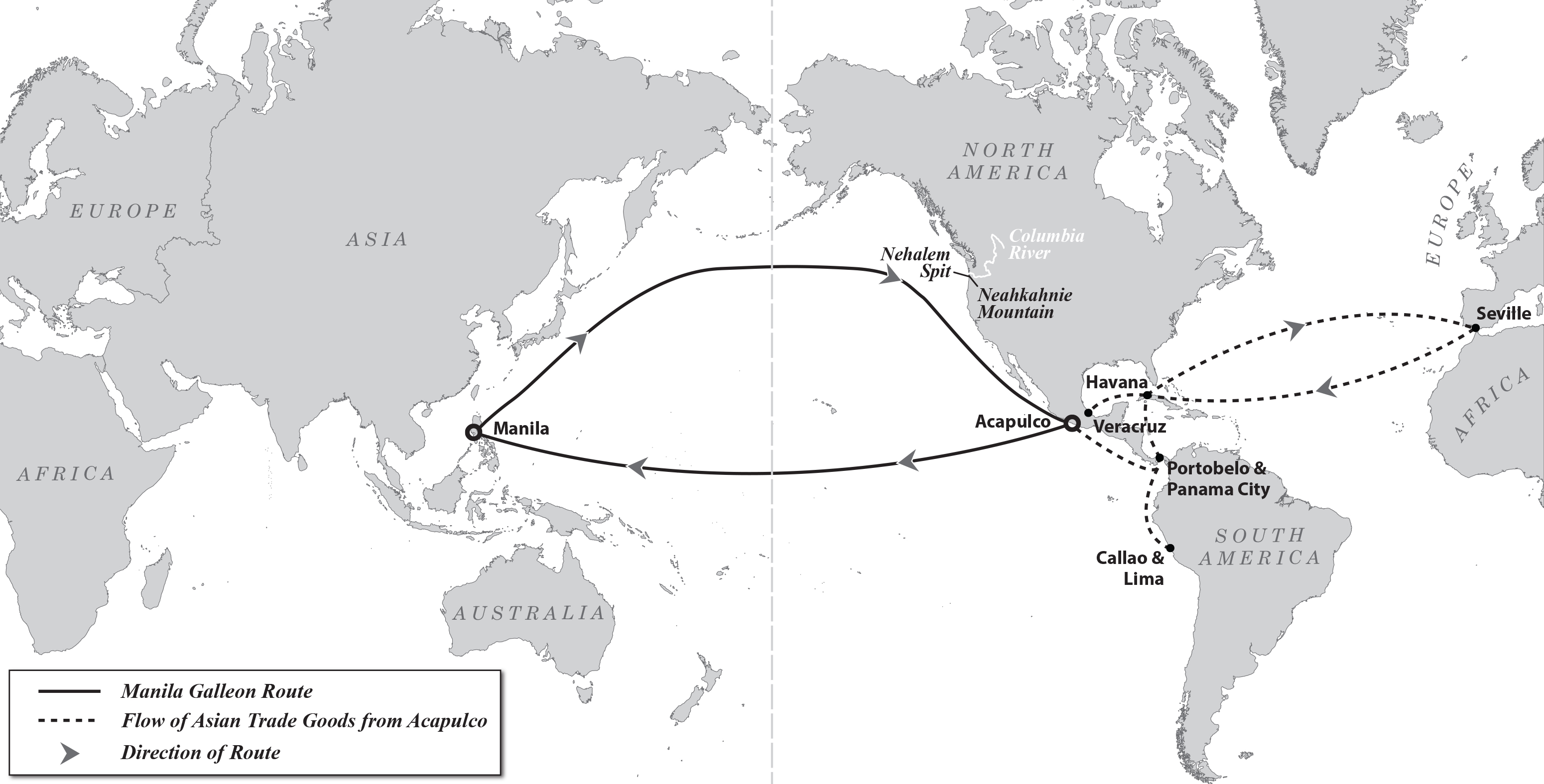
    In recent years, scholars studying how Indigenous communities responded to colonialism and global trade networks have begun to look more closely at the Pacific world. One key focus is the Manila-Acapulco galleon trade route, which linked Asia and the Americas for 250 years, from 1565 to 1815.

    The Manila-Acapulco galleon trade route.
    Jesse Nett/Oregon Encylopedia

    After Spain colonized the Philippines in 1565, Spanish galleons – towering, multidecked sailing ships – carried Chinese silk and Mexican silver across the ocean. But far more than goods traveled aboard those ships. They moved people, ideas and technologies.

    Among them was the craft of distillation.

    This overlooked connection may help explain how distilled agave spirits such as tequila came into being. While tequila is unmistakably a Mexican creation, the techniques used to produce it may owe something to Filipino sailors, who brought with them deep knowledge of transforming coconut sap into a potent spirit known as lambanog.

    3 competing theories

    For centuries, the rise of tequila has been credited to the Spanish. After the conquest of Mexico in the 16th century, colonizers introduced alembic stills, which are based on Moorish and Arabic technology. Unlike simple boiling, distillation requires managing heat and capturing purified vapor. These stills represented a major technological leap, allowing people to transform fermented drinks into distilled spirits.

    Agave, long used to make the fermented drink pulque, soon became the base for something new: tequila and mezcal.

    Colonial records, including the “Relaciones Geográficas,” a massive data-gathering project initiated by the Spanish Crown in the late 16th century, describe local Mesoamerican communities learning distillation from Spanish settlers. This version is well documented. But it assumes that technology moved in only one direction, from Europe to the Americas.

    A second idea suggests that Mesoamerican communities already had some understanding of vapor condensation. Archaeologists have found ceramic vessels in western Mexico that may have been used to capture steam. While distillation requires additional steps, this prior knowledge may have primed Indigenous groups to more readily adopt new techniques.

    As Mexican ethnobotanists Patricia Colunga-GarcíaMarín and Daniel Zizumbo-Villarreal have argued, “The adoption of distillation was likely not simply imposed, but creatively adapted to local knowledge systems.”

    A third perspective, which other researchers and I are exploring, traces a potential Filipino influence. The galleon trade brought thousands of Filipino sailors and laborers to Mexico, particularly along the Pacific coast. In places such as Guerrero, Colima and Jalisco, Filipino migrants introduced methods for fermenting and distilling coconut sap into lambanog, the coconut-based spirit.

    The stills they used, sometimes called Mongolian stills, were built with clay and bamboo and included a condensation bowl. Historian Pablo Guzman-Rivas has noted that these stills more closely resemble the earliest Mexican agave distillation setups than European alembics. He has also documented oral traditions in some coastal Mexican communities to link local distillation practices to their Filipino ancestors.

    The still on the left in Jalisco, Mexico, has similarities to the lambanog on the right from Infanta, Quezon, Philippines.
    Photo on left courtesy of Patricia Colunga-GarcíaMarín and Daniel Zizumbo-Villarreal; photo on right courtesy of Sherry Ann Angeles and Rading Coronacion, CC BY-SA

    Beyond the bottle

    Filipino influence extends beyond the distilling pot.

    In Colima and other Pacific port towns, traces of the Manila galleon trade ripple through daily life – in kitchens, cantinas and even in architecture. The word “palapa,” used in Mexico and Central America today to describe rustic thatched roofs, is exactly the same as the term for coconut fronds that’s primarily used in the Bicol Region of the Philippines.

    Filipino migrants in Mexico also shared knowledge of boatbuilding, fermentation and food preservation. Coconut vinegar, fish sauce and palm sugar-based condiments became part of Mexican cuisine. One of the most enduring legacies is tuba, the fermented coconut sap still popular in coastal areas of the Mexican state of Guerrero, where Filipino sailors once settled. Known locally by the same name, tuba is sold in markets and along roadsides, often enjoyed as a refreshing drink or as a cooking ingredient.

    A replica of a galleon, the Spanish trading ship that traversed the world’s oceans from the 16th century to the 18th century.
    Dennis Jarvis/flickr, CC BY-SA

    Exchange moved both ways. Filipino vessels carried corn, peanuts, sweet potatoes and cacao back across the Pacific, reshaping food in the Philippines. These exchanges took place under the shadow of colonialism and forced labor, but their legacies endure in language, in taste and even in the roofs over people’s heads.

    Technical knowledge rarely travels through official channels alone. It moves with cooks in ship galleys, with carpenters below deck, with laborers who desert ships to settle in unfamiliar ports. Sometimes it was a way to build a roof or preserve a flavor. Other times, it was a method for turning a fermented plant into a spirit that could keep for long voyages. And by the early 1600s, new types of distilled agave spirits were being made in Mexico.

    Tequila is unmistakably a product of Mexico. But it is also a product of movement. Whether Filipino migrants directly introduced distillation methods or whether they emerged from a mix of Indigenous experimentation and European tools, every time you sip tequila, you’re tasting an echo of those long ocean crossings from many centuries ago.

    Stephen Acabado receives funding from the Henry Luce Foundation and the National Science Foundation.

    ref. Filipino sailors dock in Mexico … and help invent tequila? – https://theconversation.com/filipino-sailors-dock-in-mexico-and-help-invent-tequila-258166

    MIL OSI

  • MIL-OSI United Kingdom: Sir Jon Cunliffe: Speech on the Independent Water Commission final report

    Source: United Kingdom – Government Statements

    Speech

    Sir Jon Cunliffe: Speech on the Independent Water Commission final report

    Chair of the Independent Water Commission spoke at the London Museum of Water & Steam

    Thank you for coming today to this wonderful museum.

    We are at one of the birthplaces of the British water industry, one which predates the Victorian age. The Grand Junction Waterworks Company was actually formed in 1811, while the Napoleonic war was still raging, to supply clean drinking water from the junction of the grand union canal in Paddington to households for Londoners. In need of cleaner sources of water, the company moved its operation to Kew, then outside London in 1838, and built this magnificent pumping station with its huge steam engines to pump the water to London. As London grew and needed more water, the company grew and became more profitable until, in 1905, it was taken over by the Metropolitan Water Board along with several other private water suppliers to provide a unified public water supply system for London.  

    The reliable supply of water that is clean and safe to drink – or to give it the description the Victorians put into law and that we still use today, the supply of water that is “wholesome”, is a prerequisite of modern life and it is something that we have become used to and take for granted. 

    And the same is true of that other prerequisite of modern life, effective sanitation. 20 years after this pumping house opened, London experienced the ‘Great Stink’ of 1858. After years of suffering a cesspit and sewer system that could not cope with London’s growth, with the Thames a “pestiferous and reeking abomination” to quote a newspaper of the time, a decision to close the cesspits followed by a hot dry summer brought matters to a head as the Thames became, to quote Disraeli, “a Stygian pool reeking with ineffable and intolerable horrors”. Parliament, literally disabled by the stench, woke up and finally acted. It gave clear direction to the newly formed London Board of Works which in turn adopted the plan of its chief engineer, Joseph Bazalgette. Over the next 15 years, he oversaw the construction of over 1,100 miles of sewers and massive pumping stations that transformed the health of London.   

    I have more than once thought of the ‘Great Stink’ when leading the Independent Commission on Water over the last 9 months. While today we enjoy safe water and clean sanitation to a level that would have been unimaginable 165 years ago, there are many parallels:  a system under huge pressure from economic and population growth, years of discussion and competing plans as the problem grew, government that did not give clear direction, a level of pollution in our waterways that the public will not tolerate and a point at which it became apparent to all that a fundamental reset was needed. And actually, there is a parallel there – that a bonus for Bazalgette was blocked because it was deemed to too high. 

    Today the Commission publishes its report which I hope will contribute to that ‘reset’ that the Government has committed to and that we sorely need. The report is long and detailed – some 460 pages with 88 recommendations covering everything from strategic direction and planning to regulator reform to the water industry supply chain. In an earlier speech I paraphrased Tolstoy to observe that ‘while all are unhappy with the current situation, everyone is unhappy in his own way’. Now, looking at the length and scope of the final report I wonder if we have written a Russian novel in response!   

    But I would defend that length and scope on two grounds. First, and most obviously, the Terms of Reference set asked the Commission to answer these questions, which we have tried to do. But second, and more importantly, if we are to achieve the water sector we need, we need to look at all the factors that have contributed to our ‘Great Stink’ moment and recognise that those factors, if not addressed, will hamper us going forward. 

    The water industry, of course, is at the heart of this. And the industry, as a whole, has not met public expectations or maintained public trust in recent years. Some companies have manifestly acted in their private interest but against the public interest. That must be prevented in future. But the industry does not exist in a vacuum. It sits within a framework of law and regulation that operates under the strategic direction of government. And it is not the only demand on our water systems, or the only contributor to the current state of our waterways. 

    The Commission’s report is long and detailed with multiple recommendations because – as I have said – there is no one, single reform, no matter how radical, that will deliver what is needed: we need to act on all of the failures that have brought us to the present pass. 

    Now, you will be very relieved to hear that I do not intend here to go through all 460 pages and 88 recommendations. But I will highlight, if you permit me, the main themes of the report and pull out some of key recommendations.   

    First, we need truly strategic direction from government. Barely a week goes by without someone calling for ‘a strategy’ from you, so it is important to set out I mean by this and the challenges it will entail.   

    We need to guide the use and development of our water systems and the restoration of our water environment as a whole and over the longer term. We need to chart a path for the delivery of the environmental improvements that the public want to see: to restore ecosystems and sustain our precious waterways for decades to come. However, there are many competing demands on our water systems. Demands to abstract water, demands to discharge into water and demands to enjoy water for recreation.   

    Only government can set the overall objectives for water and the timescale for achieving them. Only government can set the broad priorities, balance demands when they compete and coordinate the different elements of the system. And only government can decide who should pay and how much the nation can afford. It is relatively easy to set down a list of objectives. Effective strategic governance and guidance is much, much harder. It requires striking difficult balances, making difficult choices, and taking a long-term view.   

    In the report we recommend government in England and government in Wales produce a National Water Strategy. We set out in detail what it should cover, how it should be produced, and how it should be enshrined in statute to ensure consistent direction can be maintained over the long term. I have no illusions that it will be easy to produce: to govern is to choose but to govern is hard. But, as with the ‘Great Stink’ in 1858, without such direction from the very top, we will not achieve the change we need. 

    To connect that high level strategy to action, we need to learn how to manage and plan for water as a system or rather, as a set of regional water systems. Our river basins, aquifers and coasts and the demands upon them constitute complex systems and they need to be managed as such. The water industry, agriculture, transport, local development and land use, and environmental regulation all affect the regional water system and the water catchments that it comprises. 

    As many respondents to the Commission observed, we are very poor at system planning for water. There are huge, confusing and overlapping planning processes for water industry processes – the industry produces at least nine plans in a process that costs hundreds of millions. These plans drive water industry investment. But there are no such processes driving action in the other sectors that have an impact on the water system. And some water industry plans are not connected to local government development plans or to local voices or those sectors that also have an impact.   

    Opportunities for local government, agriculture, and water companies and other actors to work together are missed. Opportunities, for example, to implement sustainable drainage schemes that avoid storm water overloading our sewers and causing sewage spills into rivers, or opportunities to balance the nutrient loads that cause such unsightly and destructive algae to bloom in water bodies. And heavy engineering – concrete – solutions to environmental problems are pursued despite local preference for more natural solutions.   

    Drawing on experience from other countries, the Commission is recommending that regional water system planning bodies are established in England and a national system planner is established in Wales. These would not be advisory bodies or ‘talking shops’.  Rather, they would take over the role played by the Environment Agency and Natural Resources Wales at present with real authority over water industry investment and real influence over other funding streams that can be directed achieving regional water system objectives, such as agricultural grants.   

    To be clear, this would not be the creation of a new level of bureaucracy. Rather it would bring existing functions together on a regional water system basis, in England, and a national basis in Wales. It would streamline existing planning processes (the current water industry processes will be streamlined into two plans – one for drinking water and one for wastewater) and most importantly, it would link local development to water system investment, avoiding the situations we see at present where housing and economic development projects are blocked because the regional water systems cannot cope with them. 

    Alongside strategic direction and regional water system planning, the legislative framework for water is key a part of determining the overall framework for the management of water in England and Wales. The current framework has driven great improvements in certain areas. Drinking water and sanitation standards are now world-leading. Bathing water quality has considerably improved. But the current framework is also complex, inconsistent and out of date and highly prescriptive. The Commission has therefore recommended that it be reviewed to bring the legislation up to date, particularly with regard to the Water Framework Directive which sets the high-level objectives for the environmental quality of water bodies.   

    The Water Framework Directive sets a target to be achieved by 2027 – at a minimum – and the review will need to consider what targets should be set for after that date. We recommend, however, that the government use the opportunity to consider the scope of the legislation. One area in which we see there is a strong case for broadening the scope of the legislation is to include public health, given the increase in the recreational use of water in recent years.  We recommend in England and Wales the Chief Medical Officers are asked to chair task forces to consider how to effectively bring public health into the water quality legislation.    

    Over the last 9 months I have heard consistent criticism not of the ambition of the environmental legislation, which must be preserved in any review,  but about the inflexibility that requires and drives regulators to focus on narrow, engineering solutions rather than being able to take a broader view of  overall environmental and other benefits such as may be found in nature based solutions. We recommend also that the review should aim to make the legislation less prescriptive and provide for ‘constrained discretion’ to enable regulators and local system planning bodies to take decisions in the round on how best to meet environmental objectives. 

    Strategic guidance, systems planning and legislation – they can set the broad framework. But delivering the outcomes we want for water depends most importantly on having not just the right strategy, legislation and plans. It depends crucially on having the right regulators, regulators that command public confidence and industry respect, regulators that have the capacity and the capability to do their job effectively.  And, most important in the Commission’s view, in the same way as strategic guidance, system planning and legislation,  a structure of regulation that can focus on the water system in the round.    

    Our assessment is that the current environmental and economic regulators have not achieved what is needed and will not achieve what is needed. There are many reasons for this. It is clear that the Environment Agency has not had the resources, the people, skills, technology to hold the water industry and other sectors that impact the water environment to account. And it is beginning to change I am pleased to say. We’re calling for reform of Operator Self Monitoring – moving from water company sampling to digitalised, automated systems – ensuring real-time, accurate data. Crucially, this must sit alongside tightened enforcement of abstraction limits, sludge management, and drinking-water standards.  

    And on the economic side, for much of the last 20 years, Ofwat was encouraged to regulate with a lighter touch and to focus on keeping bills down. And it did not have the powers or the capability to supervise the financial structure of much of the industry, which allowed some companies and their owners to take decisions which reflected their private interests but badly damaged both their companies and in the longer term the public interest. We are seeing some of the consequences of that failure to defend the public interest in the news every day. I will return later to this question of how in an industry of private monopoly companies the private interest can be brought into alignment with the public interest and whether the regulator has sufficient powers to ensure that this happens. 

    When the water industry was privatised Ofwat was established to protect consumers from monopoly power by setting the prices that the water companies charge, to incentivise investment, and to create proxies for competition through financial incentives to drive efficiency. In line with other privatised utilities, Ofwat’s approach to regulation was built around econometric modelling of the notionally efficient company to provide the benchmarks for setting prices and financial incentives and sanctions. And the decades immediately following privatisation, investment and efficiency grew. The quality of treated wastewater and bathing water have improved. There has been a 41% decrease in leakage in England since privatisation, driven particularly in the 1990s. 

    But in more recent decades performance of the industry has plateaued as the public goods demanded of the water industry have grown. In response Ofwat has developed and intensified its use of econometric tools and industry wide benchmarks. The Commission recognises the motivation behind this. But our assessment is that this has taken this approach beyond the limits of its effectiveness and, indeed, to a point where it may have become counterproductive in terms of the performance of the industry as a whole and its ability to attract investment.   

    In the Commission’s view, it is important to have an objective framework for setting prices and incentives based on modelled outputs and based on comparability between companies, this approach alone, no matter how aggressively pursued, cannot drive the improvement of the sector to deliver the public goods that are necessary nor to attract the. There needs to be a fundamental rebalancing of the approach to economic regulation and oversight of water companies towards a closer, judgment-based, supervisory engagement with individual water companies. This will require an equally fundamental shift in capability and also in regulatory culture, which in the Commission’s view has become too adversarial on both sides. 

    The Commission’s report sets out how a new ‘duty to supervise’ should be enshrined in statute, how a judgement based supervisory approach might be implemented and the expert capability it would need in financing and engineering that would be necessary. We also make several important recommendations as to how the price review process – which should be retained alongside and informed by supervisory engagement – might be simplified and reformed. These include changes to the framework of delivery incentives, the allocation of bill revenues to infrastructure renewal, operational maintenance and enhancement expenditure, to the calculation of the return on capital and debt and to the appeals process.    

    While changes to economic regulation are necessary, however, they will not address the fragmented regulatory landscape for the water industry. Water companies’ costs, investments, plans and performance are overseen by four regulators at present in England – Ofwat, the Environment Agency, Natural England and the Drinking Water Inspectorate. Each has a different focus, different objectives and different requirements that overlap and are often in tension. The Environment Agency determines much of the industry’s investment needs but the industry’s revenues are determined by Ofwat. Companies can be sanctioned by both Ofwat and the EA for the same pollution incidents. Funding of maintenance and infrastructure renewal are the responsibility of Ofwat but the environmental consequences of ageing infrastructure are the responsibility of the EA, as we saw from the report that was published last week. 

    The regulatory structure at privatisation was set up with separate regulators. As the overlaps have grown and the environmental and other standards have been raised, the need for coordination and resolution of different objectives has grown. 

    The Commission has not approached the option of major structural change lightly. It is never an easy option. I am all too aware, after many years in the public service, of the costs and risks of breaking up and reforming institutional structures. These costs and risks go beyond the financial: they include the human costs of organisational change, the deflection of management time and focus, the risk of dropping the ball on key objectives, and the breaking up of internal synergies and the need to create new interfaces between organisations.   

    The Commission has looked hard at potential for coordination mechanisms to address the tensions and overlaps we have identified.  Our conclusion, however, is that if the primary objective is securing the reset and long-term change that we need in the water sector, we need an integrated regulator for water. 

    The Commission recommends, therefore, that in England, Ofwat, the water related environmental protection functions of the EA, the Drinking Water Inspectorate, and the water related function of Natural England, be brought together into a new integrated Regulator for Water. For Wales, which has a different institutional structure, we recommend that the economic regulatory functions now carried out for Wales by Ofwat be transferred to a Welsh economic regulation function located in Natural Resources Wales.  

    The new regulator for water will become responsible for Ofwat’s current duties and roles to protect consumers. But, in line with its Terms of Reference, the Commission has also looked at the broader arrangements for vulnerable customers and those for consumer redress and consumer advocacy currently carried out by CCW.  

    We have to recognise that the cost of producing water and wastewater services is likely to increase over the medium and longer term as the industry has to replace ageing assets, respond to higher environmental and public health standards and continue to adapt to the challenges of rising population growth and climate change.  Against that likely background of rising costs and rising bills, there is a need for a stronger safety net for the most vulnerable who are exposed to water poverty. Water companies already operate social tariffs, spreading the cost of supporting vulnerable customers across their customer base. But the effects of higher costs of water in different parts of the country have different impacts and there is already significant variation in bills that vulnerable customers pay, even taking into account local social tariffs.   

    It is for government to decide whether and how far to equalise support for the vulnerable in different parts of the country and it is for government to decide to what extent this should be done through water bills as part of a national social tariff, or through other means of support such as the social security system. It is of course for elected government rather than the Commission to decide between those options. The Government has now taken the powers to introduce a national social tariff, and in line with our assessment that stronger support will be needed for the most vulnerable, the Commission recommends that such a tariff be implemented. However, we make no recommendation on the design, the level of support and the degree to which there should be cross subsidy between customers of different water companies. These are highly distributional decisions, and such decisions are not for technocrats but for government to make.  

    We have also made a number of recommendations on consumer redress and consumer advocacy. On redress, unlike other regulated sectors, there is no mandatory dispute mechanism for customers.  The Commission believes that water company customers should have the protection of a statutory ombudsman as exists, for example, in energy. And given the CCW’s expertise in this area, the Commission recommends it be upgraded to become the Ombudsman for Water, with Citizens Advice, which has proved to be a powerful consumer advocate and advisory service for customers in other regulated sectors, taking over the role of consumer advocacy for water customers.  

    In addition, changes we have recommended to the water company Price Review process will also allow appeals against the price determination to be brought by consumers as well as by water companies – again as is possible in other regulated sectors. 

    Taken as a whole, the changes the Commission proposes should lead to more effective, joined-up regulation and stronger protections for consumers. In the Commission’s judgement, if implemented effectively, they will address the shortcomings in regulation that lie at the heart of the poor performance, underinvestment and the failure to protect the public interest that we have seen over recent years. 

    Regulation must be a key line of defence to protect the public interest. A system of private regulated monopoly utilities – as I have said – will only work if private interests of water companies and their owners are aligned with the public interest in the production of public goods.  That is the job of regulation, economic and environmental, to ensure that alignment so that companies are incentivised to produce public goods and avoid public harms.   

    But, taking the sector as a whole, water companies themselves and their owners must bear a large part of the responsibility for the failures we have seen. Water companies are private companies and their owners are entitled to a return on their investment. But those returns must not come at the expense of the public interest. Water companies operate under licence and the public purpose of their operations is inherent in those licences. Sadly, we have over recent decades seen examples in which companies have pursued their short term private interest at the expense of the public interest and of the long term resilience of the company. 

    A large number of the responses to the Commission’s Call for Evidence expressed disquiet and concern at the inclusion of the profit motives in the provision of water. And I do understand the concerns raised by many about profit in the provision of water and wastewater given some of the experiences we’ve heard. Some proposed nationalisation or municipalisation or the transfer of for-profit water companies to not-for-profit or similar models. The Commission considered these in line with our Terms of Reference which focus on a privately owned regulated sector and rule out nationalisation or the purchase of companies with public funds for transfer to other ownership models.  

    But we also examined the performance of different ownership and operational models, public and private, in other jurisdictions. We published our initial analysis in the Call for Evidence, and we invited respondents to submit further analysis and evidence. We have refined our analysis and have published it in full in the final report. I have to say, on the data and comparable metrics available, the truth is that we did not see evidence of a causal link between ownership models and a range of environmental and other performance indicators. 

    We took from this work two conclusions. First, the regulatory model is key to performance and we need to address regulation. Second, where companies are privately owned it is the business model of the owners, the level of return they seek on their investment, their time horizon for that return, their preference for dividends or capital gain and their willingness to invest further in their company for a fair return. Those are the things that make the difference.   

    At privatisation it was envisaged that water companies would be owned by long-term investors looking for relatively low risk, low return investments as might be expected form a regulated monopoly utility.  Investment vehicles have changed markedly since privatisation. Many investors, including institutional investors, now prefer private, whether listed or unlisted, it remains the case that the industry and the public interest is best served by long term, low risk, low return investors. 

    The changes to regulation, particularly to economic regulation, are intended in part to lower regulatory risk and to reduce the variability of returns that deter such investors. The Commission has also recommended that Government make the stability of the regulatory system an objective in the National Water Strategy and that maintaining the investability of the sector becomes one of the duties of new regulator for water.    

    But, just as we need to attract longer term investors to the sector with more predictable regulation, we will need to ensure that owners and managers do not act against the public interest and damage the financial resilience of companies.  

    So the Commission is recommending giving the new regulator the power where necessary to block changes of ownership, to set gearing levels and, in certain circumstances, to give direction to the ultimate controller of the company.  These powers exist in other regulated sectors and they are necessary guardrails in water.  We are also recommending making the public purpose of companies clear in the licence condition, bringing company governance in line with the governance code for listed companies and bringing in a statutory for the very senior management cadre, drawing on the experience of the senior managers regime in the financial sector.   

    I am, you will be pleased to hear, coming to the end.  I hope it will not seem like a Russian novel of a report.  The final area that all these changes have to address – from strategic guidance to planning to regulation to company performance – is the health of our water industry infrastructure and of the resilience of our water and wastewater systems.   

    We simply do not know the overall health of the system.  Ofwat last oversaw a full assessment over 20 years ago.  The asset health measures used in price reviews have been backward-looking, measuring past failure rates to determine and fund the amount and the rate of renewal and other capital maintenance necessary to keep the system operating.  Much of water industry infrastructure is underground and very difficult to assess and different companies have different ways of assessing asset health.  Not all water company assets are mapped. 

    We do not know whether enough replacement and renewal has been funded and carried out over the past.  But there is strong evidence that we may be considerably behind the game.   

    When the Scottish regulator switched from using backward-looking indicators, similar to those Ofwat have used, to a forward-looking in-depth assessment, the conclusion was that there had been material underfunding of capital maintenance. Other countries replace and renew at much faster rates than we have maintained.  And, as we heard last week from the Environment Agency, infrastructure failure is a major reason for the pollution incidents we are seeing.   

    So, the Commission is recommending that a forward-looking assessment of our infrastructure is carried out and that national resilience standards are developed for water. 

    The massive steam pumping engines that filled this engine house operated for over a hundred years and were retired only when steam gave way to diesel and electricity. A couple of weeks ago I visited a much more modern pumping engine hall, just over 50 years old filled with electric pumps that supply drinking water for one third of Londoners.  It is a single point of failure for the water supply of all of Canary Wharf. And it is on its last legs. A £400m project to replace the entire facility has finally been approved and work is about to begin on the replacement.  Given the limited space and need to keep the facility operating, it is a hugely complex project that will take at least 7 years. 

    I raise this example not merely to contrast the standard of Victorian engineering with its more modern successors, absolutely humbling though that is.  It is also an example of the forethought, timescale, planning and funding necessary to ensure that our water infrastructure continues to serve us into the future, and of the dangers of a patch and mend approach. 

    I started this speech with the Great Stink of 1858 and the reset it triggered.  Change did not happen overnight; it took Bazalgette over 15 years to complete his sewer network and for London’s health to be transformed.  I hope, following our own Great Stink moment, that the recommendations in the Commission’s report will launch the reset that is required. Likewise, change will not happen overnight, and trust will take time to come back.  But I very much hope we are now at the beginning of the road. 

    Finally, it has been a real privilege to lead this work, and as I conclude I would like to thank the Commission Advisory Group for their help, their insight and support and, most of all, the amazingly committed and hard-working Commission Secretariat team for all they’ve done.  Any credit for this report goes to them; any criticism resides with me.   

    Thank you.

    Updates to this page

    Published 21 July 2025

    MIL OSI United Kingdom

  • MIL-OSI United Kingdom: Statement by CSPL Chair, Doug Chalmers CB DSO OBE

    Source: United Kingdom – Executive Government & Departments

    Press release

    Statement by CSPL Chair, Doug Chalmers CB DSO OBE

    A statement by the Chair of the Committee on Standards in Public Life regarding the government’s announcement of the Ethics and Integrity Commission.

    “The Committee is pleased that its work over the last 30 years has been recognised and that the government wants to retain and build on this model.

    Reporting annually to the Prime Minister on the health of the standards landscape and the government’s commitment to respond to the Ethics and Integrity Commission’s recommendations within a reasonable timeframe are both welcome and important changes, creating a more regular and visible dialogue on ethical issues across public life. 

    The other new role of engaging with public sector bodies on their codes of conduct and oversight mechanisms will take time to devise and implement as the EIC takes shape.

    We look forward to further discussions with the government on the Terms of Reference and the resources needed to deliver the ambition set out for the Ethics and Integrity Commission”.

    Updates to this page

    Published 21 July 2025

    MIL OSI United Kingdom

  • MIL-OSI United Kingdom: Ethics and Integrity Commission to drive up standards across the public sector

    Source: United Kingdom – Executive Government & Departments

    Press release

    Ethics and Integrity Commission to drive up standards across the public sector

    A new Ethics and Integrity Commission will be established to drive up standards in public life, delivering on a key manifesto commitment.

    • Overhaul will simplify and strengthen standards system as government delivers on key manifesto promise 
    • Rule-breaking ministers who leave office following serious breach of Ministerial Code stopped from getting severance payments
    • Advisory Committee for Business Appointments abolished as financial sanctions introduced

    A new Ethics and Integrity Commission will be established to drive up standards in public life, delivering on a key manifesto commitment.

    The body will have an ambitious remit to uphold the highest ethical standards across the public sector.

    Rule-breaking ministers who leave office following a serious breach of the Ministerial Code will be stopped from getting pay-offs as part of the overhaul that will simplify and strengthen the standards system.

    The Prime Minister has made clear public service is a privilege and is committed to showing how politics can be a force for good. Since taking office last July, the government has made the choice to break away from old approaches, learn the lessons from previous years, and restore trust in government by ensuring ministers are held to the highest standards.

    The government will go further by establishing the Ethics and Integrity Commission, which will be created by strengthening and reforming the Committee on Standards in Public Life.

    Chancellor of the Duchy of Lancaster Pat McFadden said:

    This overhaul will mean there are stronger rules, fewer quangos and clearer lines of accountability.

    The Committee on Standards in Public Life has played an important role in the past three decades. These changes give it a new mandate for the future.

    But whatever the institutional landscape, the public will in the end judge politicians and government by how they do their jobs and how they fulfil the principles of public service.

    Ministers will give the Ethics and Integrity Commission a stronger mandate and an expanded role to help put ethics and integrity at the heart of every public sector organisation.

    Its wider remit will include a new obligation to report annually to the Prime Minister on the overall health of our standards system, and a new function of regular engagement with public sector bodies to assist them in the development of clear codes of conduct with effective oversight arrangements.

    The government is also providing a new commitment to respond to all Ethics and Integrity Commission reports in a reasonable timeframe following criticism that previous recommendations were simply ignored.

    The Ethics and Integrity Commission will be responsible for convening and coordinating ethics bodies, formalising cooperation and the sharing of best practice. It will be tasked with improving public understanding of the ethics system and will act as a ‘one-stop shop’ for members of the public looking for information on standards in public life.

    Lieutenant General (Retired) Doug Chalmers CB DSO OBE, who is Chair of the Committee on Standards in Public Life, will be Chair of the Ethics and Integrity Commission.

    Ministerial Severance Payments

    Under further plans announced today, the eligibility for ministerial severance payments will be restricted.

    Currently, ministers are entitled to a severance payment equivalent to three months’ salary when they leave office for any reason and regardless of how long they’ve been in the job – even if it’s just a few days or weeks.

    Under the new changes, ministers who leave office following a serious breach of the Ministerial Code or having served fewer than six months will forgo their severance payment. Ministers who return to office within three months of leaving will forgo their salary until the end of that three-month period.

    The Business Appointment Rules 

    As part of the standards overhaul and the wider review of arms length bodies, the government will close the Advisory Committee for Business Appointments, which vets the jobs that ministers and senior officials take after leaving government to avoid conflicts of interest. Its functions will be split between the Civil Service Commission and the Prime Minister’s Independent Adviser on Ministerial Standards.

    This will be accompanied by reforms to strengthen the business appointments system – which ensures former ministers and officials do not improperly profit personally from their experience in government. There has previously been criticism about the lack of sanctions. 

    Under the new changes, former ministers found to have seriously breached the Business Appointment Rules after leaving office will be asked to repay any severance payment received.

    The First Civil Service Commissioner has been asked to consider how the Business Appointment Rules could be strengthened further. The Civil Service Commission will also undertake regular audits of how individual government departments oversee the application of the rules for former civil servants.

    Updates to this page

    Published 21 July 2025

    MIL OSI United Kingdom

  • MIL-OSI: Bitcoin Solaris Announces $1 Genesis Event Token Sale Ahead of $20 Launch

    Source: GlobeNewswire (MIL-OSI)

    TALLINN, Estonia, July 21, 2025 (GLOBE NEWSWIRE) — Bitcoin Solaris (BTC-S), a next-generation blockchain ecosystem designed to democratize mining and digital asset ownership, has officially launched its Genesis Event, offering early participants the opportunity to purchase BTC-S tokens for just $1 — down from the current presale price of $13. With only 100 slots remaining, this limited-time event positions early supporters for a potential 1,900% ROI at the confirmed launch price of $20.

    How to Mine Bitcoin Solaris. Simpler, Smarter, Faster

    Forget outdated mining guides. Bitcoin Solaris is making mining accessible, scalable, and mobile-friendly through the upcoming Solaris Nova App. No barriers, no tech headaches.

    Here is how it works:

    • Download the Solaris Nova App (coming post-presale)
    • Available for mobile, desktop, and browser
    • Start mining BTC-S with one click
    • Device adapts mining power automatically based on performance
    • Earn BTC-S without expensive setups

    Why This Mining Is Revolutionary

    • Compatible with ASICs, GPUs, laptops, smartphones
    • Energy-efficient algorithms reduce unnecessary resource consumption
    • Biometric security, end-to-end encryption, remote management
    • Gamified achievements, leaderboards, and community engagement
    • Integrated wallet and tutorials make it beginner-friendly
    • In-app analytics for clear performance tracking

    Through the exciting release of the Solaris Nova App, mining becomes as easy as tapping a screen. This is what crypto mining should look like in the Web3 era.

    Bitcoin Solaris is not just for miners. Its Mining Power Marketplace allows users to rent or sell computing power via smart contracts, matching supply and demand in real-time. This ecosystem makes mining not just accessible but profitable for anyone.

    A Blockchain That Moves Like No Other Bitcoin Solaris Delivers

    Presale Frenzy. Why BTC-S Is Selling Out Fast

    Bitcoin Solaris is wrapping up its explosive presale at Phase 13. Current price sits at $13, but through the Genesis Event it drops to $1 for a short time. Launch price confirmed at $20.

    Key presale highlights:

    • Over $7.7M+ raised already
    • 15,800+ unique users involved
    • Shortest and most explosive presale in the market

    Genesis Event details:

    • Price rollback from $13 to $1 for a limited time
    • Only 100 slots left
    • ROI potential of 1900% when price returns to $20
    • A rare opportunity for early believers

    Genesis Event is a limited-time promotional offer where early participants can purchase the token at a special rollback price of $1. This is a wealth move, not just a presale.

    To receive tokens on launch day, Bitcoin Solaris recommends Trust Wallet or Metamask for seamless delivery.

    Influencers Are Already Talking

    • Token Empire spotlighted the scalability and speed of Bitcoin Solaris
    • Crypto Vlog praised the mobile-first mining revolution
    • Token Galaxy focused on energy efficiency and future potential

    These voices agree: BTC-S is doing things no other project is.

    Why Bitcoin Solaris Tech Outshines Traditional Mining

    • Base Layer delivers 3,000 TPS
    • Solaris Layer achieves 100,000 TPS with 2-second finality
    • Hybrid consensus combines decentralization with speed
    • Rust-based smart contracts support DeFi, gaming, enterprise
    • Cross-chain compatibility future-proofs adoption

    Mining rewards are simple to estimate through the calculator.

    Bitcoin Solaris simply offers the smarter, more scalable way forward.

    Final Verdict. Stop Mining. Start Owning

    Forget running up your electricity bill to chase old-school mining rewards. Bitcoin Solaris is offering $1 entries through its Genesis Event, slashing down from $13, with a $20 launch on the horizon. This is the moment crypto wealth gets simplified.

    For more information on Bitcoin Solaris:
    Website: https://www.bitcoinsolaris.com/
    Telegram: https://t.me/Bitcoinsolaris
    X: https://x.com/BitcoinSolaris

    Media Contact:
    Xander Levine
    press@bitcoinsolaris.com
    Press Kit: Available upon request

    Disclaimer: This content is provided by Bitcoin Solaris. The statements, views, and opinions expressed in this content are solely those of the content provider and do not necessarily reflect the views of this media platform or its publisher. We do not endorse, verify, or guarantee the accuracy, completeness, or reliability of any information presented. We do not guarantee any claims, statements, or promises made in this article. This content is for informational purposes only and should not be considered financial, investment, or trading advice. Investing in crypto and mining-related opportunities involves significant risks, including the potential loss of capital. It is possible to lose all your capital. These products may not be suitable for everyone, and you should ensure that you understand the risks involved. Seek independent advice if necessary. Speculate only with funds that you can afford to lose. Readers are strongly encouraged to conduct their own research and consult with a qualified financial advisor before making any investment decisions. However, due to the inherently speculative nature of the blockchain sector—including cryptocurrency, NFTs, and mining—complete accuracy cannot always be guaranteed. Neither the media platform nor the publisher shall be held responsible for any fraudulent activities, misrepresentations, or financial losses arising from the content of this press release. In the event of any legal claims or charges against this article, we accept no liability or responsibility. Globenewswire does not endorse any content on this page.

    Legal Disclaimer: This media platform provides the content of this article on an “as-is” basis, without any warranties or representations of any kind, express or implied. We assume no responsibility for any inaccuracies, errors, or omissions. We do not assume any responsibility or liability for the accuracy, content, images, videos, licenses, completeness, legality, or reliability of the information presented herein. Any concerns, complaints, or copyright issues related to this article should be directed to the content provider mentioned above

    Photos accompanying this announcement are available at

    https://www.globenewswire.com/NewsRoom/AttachmentNg/2dff3917-113d-4d8a-8ea4-21fdaedf8856

    https://www.globenewswire.com/NewsRoom/AttachmentNg/fc470fa2-349a-4c76-b108-8230c92660e4

    https://www.globenewswire.com/NewsRoom/AttachmentNg/c61ef905-3b5d-403a-9b6a-69036b3a8849

    https://www.globenewswire.com/NewsRoom/AttachmentNg/59fae690-dbd5-45ad-9dba-ea1638d562c1

    The MIL Network

  • MIL-OSI NGOs: IAEA Applied Safeguards for 190 States – IAEA Report

    Source: International Atomic Energy Agency (IAEA) –

    Of the 190 States where the IAEA applied safeguards during 2024, 182 had CSAs in force, of which 137 also had APs in force. Of these 137 States, the IAEA concluded that “all nuclear material remained in peaceful activities” for 75 States. The IAEA drew this conclusion, also known as the ‘broader conclusion’, for the first time for Morocco. For 61 States, the IAEA was only able to conclude that declared nuclear material remained in peaceful activities as evaluations regarding the absence of undeclared nuclear material and activities remained ongoing.

    For 31 States with a CSA but no AP in force, the IAEA was able to conclude that declared nuclear material remained in peaceful activities.

    As of the end of 2024, three non-nuclear-weapon States party to the Treaty on the Non-Proliferation of Nuclear Weapons (NPT) had yet to bring CSAs into force pursuant to Article III of the Treaty. For these States, the IAEA could not draw any safeguards conclusions.

    For the three States in which the IAEA implemented safeguards pursuant to item-specific safeguards agreements (India, Israel and Pakistan), the IAEA concluded that “nuclear material, facilities or other items to which safeguards had been applied remained in peaceful activities”.

    Safeguards were also implemented in the five nuclear-weapon States party to the NPT under their respective voluntary offer agreements. For these five States (China, France, the Russian Federation, the United Kingdom and the United States of America), the IAEA concluded that “nuclear material in selected facilities to which safeguards had been applied remained in peaceful activities or had been withdrawn from safeguards as provided for in the agreements.”

    MIL OSI NGO

  • MIL-OSI United Kingdom: ‘Collar, tag, microchip, bag’ – pawsome advice for city dog owners!

    Source: City of Wolverhampton

    ‘Collar, tag, microchip, bag’ is the expression that City of Wolverhampton Council is asking everyone with a dog to keep in mind when they take their pooches out and about.

    The aim is to remind dog owners of their legal responsibilities including requirements under the city’s Public Spaces Protection Order (PSPO). The council also wants to encourage a cleaner, more comfortable environment for all residents.

    The first 2 reminders – ‘collar, tag’ – highlight the legal requirement for dogs to wear a collar with an ID tag when in a public place.

    The tag must include the owner’s name and address, and ideally, a phone number. This requirement applies even if the dog is microchipped.

    Wearing a collar and tag helps reunite lost dogs with their owners and ensures their safety. Dogs found roaming without a collar and tag in public may be seized and taken into care. The management of stray dogs cost tax payers around £170,000 during the last financial year.

    In 2024, the council handled around 350 strays and took them to kennels while trying to contact their owners. This is a substantial increase on 2020 when 170 strays were collected.

    ‘Microchip’ reminds owners that it is a legal requirement to microchip all dogs over 8 weeks old, and the microchip details must be registered on an authorised database. Breeders must also microchip puppies before they leave their premises.

    ‘Bag’ refers to the requirement under the council’s current PSPO. The order was updated in 2023 and requires anyone in control of a dog to carry a suitable means of removing dog faeces, such as a bag.

    Dog owners are also required to clean up after their pets and anyone not carrying bags or clearing up after their dog can be issued with a Fixed Penalty Notice.

    To help make sure residents are aware of their responsibilities, officers from the council’s environmental protection team will be out and about at community events and a social media campaign will run throughout the coming months.

    Councillor Bhupinder Gakhal, cabinet member for resident services at City of Wolverhampton Council, said: “We want to encourage all dog owners to follow the simple phrase help make our city clean and comfortable for everyone.

    “We know that the vast majority of dog owners are very responsible, but we still do see a lot of strays and, unfortunately, too many incidents where owners are not cleaning up after their pets.

    “This is unpleasant and can be very dangerous to health. It was also clear from the PSPO consultation that people agreed with the requirement to carry a means of disposing of their dog’s mess.

    “Therefore, I would encourage the city’s canine lovers to consider the handy checklist of ‘collar, tag microchip, bag’ and consider what they may need to tick off before going out with their pet.

    “We thank all dog owners for doing all they can to behave responsibly. You’re helping to make our city safer, cleaner and more comfortable for everyone.”

    To find out more about the campaign and the PSPO, please visit Responsible dog ownership.

    MIL OSI United Kingdom

  • MIL-OSI United Kingdom: Royal Welsh Show: ‘After countless U-turns, Labour must now also reverse its tax raid on Welsh farms’ – Plaid Cymru

    Source: Party of Wales

    Ann Davies MP and Llyr Gruffydd MS say UK Government should introduce a wealth tax instead of ‘targeting those who sustain our rural communities’

    On the first day of the Royal Welsh Show, Plaid Cymru’s Westminster Agriculture Spokesperson Ann Davies MP has today called on the UK Government to reverse its planned changes to Agricultural Property Relief, warning that the policy will do “lasting harm” to Welsh family farms.


    Speaking from Llanelwedd, Ms Davies said that after repeated policy reversals, it is time for Labour to “add this damaging farm tax to the list.”


    Plaid Cymru’s Agriculture spokesperson in the Senedd, Llyr Gruffydd MS, said that most Welsh farmers are “cash poor” and that “many live a hand-to-mouth existence”.


    The UK Government plans to introduce a cap on Agricultural and Business Property Relief from April 2026, meaning family farms valued above that threshold could face inheritance tax for the first time in 40 years. Despite claims that only 500 farms per year will be affected, Welsh farming unions warn that the vast majority of productive family farms in Wales could fall into scope due to rising land, machinery and asset values.


    From the financial implications of restrictions and testing requirements to limit the spread of the Bluetongue virus, to the effects of prolonged dry and warm weather on crops and pasture, the new inheritance tax rules will be introduced amidst mounting financial pressures on farmers.


    Plaid Cymru is calling for:


    • A Wales-specific impact assessment that includes tenant and generational family farms


    • Protection for active food-producing family farms from inheritance tax


    • The introduction of a tax on extreme wealth – targeting assets worth over £10 million


    Ann Davies MP said:

    “After countless U-turns, Labour must now add its damaging farm tax to the list. Changes to Agricultural Property Relief represent a deeply unfair policy that targets the people who feed us, care for our land, and sustain our rural communities. It will do lasting harm to Welsh family farms.

    “It is a policy based on the assumption that farmers are rich – that is fundamentally wrong in Wales, where our upland farmers are guardians of the land and make very little profit. The UK Government admits it has done no Wales-specific assessment. That’s unacceptable, and it must change immediately.

    “Plaid Cymru believes that those with the broadest shoulders should pay their fair share. But the UK Government’s policy is too broad brush and targets the wrong people. Instead, the introduction of a tax on extreme wealth – a 2% tax on assets worth over £10 million – could raise over £20 billion a year. That is the fair and progressive way to fund public services and address inequality.

    “The Royal Welsh Show is a chance to celebrate everything our farmers contribute. But because of this policy, they’re anxious about their ability to continue producing food into the future. With Bluetongue requirements and intense drought intensifying already significant financial pressures on farmers, Labour must reverse course – and they must do it now.”


    Llyr Gruffydd added:

    “Most of our family farms are cash poor and many live a hand-to-mouth existence. They don’t have the capital to shoulder this huge tax burden.

    “Whilst it’s right to target those who buy land for tax avoidance purposes, our working family farms must not be caught in the crossfire. We have urged the Government to look at alternative approaches such as a clawback system that’s used successfully in other countries. This would only tax land if it’s subsequently sold within a specific number of years after inheritance.

    “Sadly, the Chancellor’s policy will force already struggling businesses to sell off their land, making them less sustainable in the future. Plaid Cymru will fight the family farm tax all the way.”

    MIL OSI United Kingdom

  • EU to ramp up retaliation plans as US tariff deal prospects dim

    Source: Government of India

    Source: Government of India (4)

    The European Union is exploring a broader set of possible counter-measures against the United States as prospects for an acceptable trade agreement with Washington fade, according to EU diplomats.

    An increasing number of EU members, including Germany, are now considering using wide-ranging “anti-coercion” measures which would let the bloc target U.S. services and other sectors in the absence of a deal, diplomats say.

    The European Commission, which negotiates trade agreements on behalf of the 27-member bloc, had appeared on course for a agreement in which the EU would still have faced a 10% U.S. tariff on most of its exports, with some concessions.

    Such hopes now seem dashed after President Donald Trump’s threat to impose a 30% tariff by August 1, and following talks between EU Trade Commissioner Maros Sefcovic and U.S. counterparts in Washington last week.

    Sefcovic, who has said a 30% tariff would “practically prohibit” transatlantic trade, delivered a sober report on the current state of play to EU envoys on Friday, diplomats told Reuters.

    U.S. counterparts had come up with diverging solutions during his meetings, including a baseline rate that could be well above 10%, the EU diplomats added.

    “Each interlocutor seemed to have different ideas. No one can tell (Sefcovic) what would actually fly with Trump,” one diplomat said.

    Prospects of easing or removing 50% U.S. tariffs on steel and aluminium and 25% on cars and car parts appear limited.

    ‘NUCLEAR OPTION’

    Washington has also rejected the EU’s demand for a “standstill” arrangement, whereby no further tariffs would be imposed after a deal is struck. The rationale, according to diplomats, is that Trump’s hands cannot be tied on national security, the basis of Section 232 trade investigations into pharmaceuticals, semiconductors and timber.

    Accordingly, the mood has pivoted among EU countries, EU diplomats say, and they are more ready to react, even though a negotiated solution is their preferred option.

    The EU has one package of tariffs on 21 billion euros ($24.5 billion) of U.S. goods that is currently suspended until August 6. The bloc must still decide on a further set of countermeasures on 72 billion euros of U.S. exports.

    Discussions have also increased on using the EU’s wide-ranging “anti-coercion” instrument (ACI) that allows the bloc to retaliate against third countries that put economic pressure on member states to change their policies.

    Brought in more with China in mind, it would allow the bloc to target U.S. services, limit U.S. companies’ access to public procurement or financial services markets or restrict U.S. investment.

    France has consistently advocated using the ACI, but others have baulked at what some see as a nuclear option. Trump has warned he will retaliate if other countries take action against the United States.

    European Commission President Ursula von der Leyen said a week ago that the ACI was created for extraordinary situations, adding: “We are not there yet.”

    The Commission would need a qualified majority of 15 countries making up 65% of the EU population to invoke it. It would not do so unless it was confident of passing it, but there are now growing signs of support building, with Germany among the countries saying it should be considered, EU diplomats say.

    (Reuters)

  • EU to ramp up retaliation plans as US tariff deal prospects dim

    Source: Government of India

    Source: Government of India (4)

    The European Union is exploring a broader set of possible counter-measures against the United States as prospects for an acceptable trade agreement with Washington fade, according to EU diplomats.

    An increasing number of EU members, including Germany, are now considering using wide-ranging “anti-coercion” measures which would let the bloc target U.S. services and other sectors in the absence of a deal, diplomats say.

    The European Commission, which negotiates trade agreements on behalf of the 27-member bloc, had appeared on course for a agreement in which the EU would still have faced a 10% U.S. tariff on most of its exports, with some concessions.

    Such hopes now seem dashed after President Donald Trump’s threat to impose a 30% tariff by August 1, and following talks between EU Trade Commissioner Maros Sefcovic and U.S. counterparts in Washington last week.

    Sefcovic, who has said a 30% tariff would “practically prohibit” transatlantic trade, delivered a sober report on the current state of play to EU envoys on Friday, diplomats told Reuters.

    U.S. counterparts had come up with diverging solutions during his meetings, including a baseline rate that could be well above 10%, the EU diplomats added.

    “Each interlocutor seemed to have different ideas. No one can tell (Sefcovic) what would actually fly with Trump,” one diplomat said.

    Prospects of easing or removing 50% U.S. tariffs on steel and aluminium and 25% on cars and car parts appear limited.

    ‘NUCLEAR OPTION’

    Washington has also rejected the EU’s demand for a “standstill” arrangement, whereby no further tariffs would be imposed after a deal is struck. The rationale, according to diplomats, is that Trump’s hands cannot be tied on national security, the basis of Section 232 trade investigations into pharmaceuticals, semiconductors and timber.

    Accordingly, the mood has pivoted among EU countries, EU diplomats say, and they are more ready to react, even though a negotiated solution is their preferred option.

    The EU has one package of tariffs on 21 billion euros ($24.5 billion) of U.S. goods that is currently suspended until August 6. The bloc must still decide on a further set of countermeasures on 72 billion euros of U.S. exports.

    Discussions have also increased on using the EU’s wide-ranging “anti-coercion” instrument (ACI) that allows the bloc to retaliate against third countries that put economic pressure on member states to change their policies.

    Brought in more with China in mind, it would allow the bloc to target U.S. services, limit U.S. companies’ access to public procurement or financial services markets or restrict U.S. investment.

    France has consistently advocated using the ACI, but others have baulked at what some see as a nuclear option. Trump has warned he will retaliate if other countries take action against the United States.

    European Commission President Ursula von der Leyen said a week ago that the ACI was created for extraordinary situations, adding: “We are not there yet.”

    The Commission would need a qualified majority of 15 countries making up 65% of the EU population to invoke it. It would not do so unless it was confident of passing it, but there are now growing signs of support building, with Germany among the countries saying it should be considered, EU diplomats say.

    (Reuters)

  • MIL-OSI United Kingdom: Finding funding for the Bakerloo line extension

    Source: Mayor of London

    Transport for London (TfL) has proposed an extension of the Bakerloo line from Elephant and Castle, to Lewisham, including the potential for a further extension beyond Lewisham to Hayes and Beckenham Junction.

    The project is estimated to cost between £5.2 billion to £8.7 billion (at 2021 prices), with an additional £800 million to £1.9 billion required to extend the line further to Hayes.1

    The scheme would support over 53,000 new homes along the route, transform access to public transport in southeast London, significantly reducing journey times and increasing sustainable travel options. However, questions remain over how this project will be funded.

    Tomorrow, the London Assembly Budget and Performance Committee will hear from experts and TfL on the potential funding options for the Bakerloo line extension, and other new and future capital projects.

    Guests are:

    • Professor Tony Travers, Professor in Practice and Associate Dean, the London School of Economics
    • John Kavanagh, Programme Director, Infrastructure, Business LDN 
    • Chris Whitehouse, Technical Director, WSP 
    • Maurice Lange, Analyst, Centre for Cities 
    • Manish Gupta, Corporate Finance Director, TfL 
    • Lucinda Turner, Director of Spatial Planning, TfL

    The meeting will take place on Tuesday 22 July 2025 from 10am in the Chamber at City Hall, Kamal Chunchie Way, E16 1ZE.

    Media and members of the public are invited to attend.

    The meeting can also be viewed LIVE or later via webcast or YouTube.

    Follow us @LondonAssembly.

    MIL OSI United Kingdom

  • MIL-OSI Africa: Minister of Planning, Economic Development, and International Cooperation Receives Her German Counterpart on Her First Visit to Egypt to Discuss Strengthening the Strategic Economic Partnership Between the Two Countries

    Source: APO


    .

    H.E. Dr. Rania Al-Mashat, Minister of Planning, Economic Development, and International Cooperation, received Ms. Reem Alabali-Radovan, Federal Minister for Economic Cooperation and Development of Germany, at the Government Headquarters in New Alamein City during her visit to the Arab Republic of Egypt, within the framework of strengthening bilateral economic cooperation between the two countries. The meeting comes as a follow-up to the fruitful discussions held during the 4th International Conference on Financing for Development (Ff4D) in Seville, Spain.

    At the beginning of the meeting, H.E. Dr. Rania Al-Mashat welcomed the German Minister on her first visit to Egypt and wished her success in her mission in the new German government, emphasizing the Arab Republic of Egypt’s appreciation for for the Egyptian-German economic relations, which represent a strategic partnership that reflects the keenness to advancing mutual interests and promoting development efforts, whether through bilateral governmental partnership, German investments in Egypt, and development cooperation efforts, adding that this visit marks a milestone in the process of cooperation between the two countries and reflects the depth of bilateral relations and common vision towards achieving sustainable development and economic growth.

    The two ministers discussed recent developments in Egyptian-German economic and investment relations, joint development projects, and explored new mechanisms for innovative financing, especially in light of the outcomes of the 4th International Conference on Financing for Development held in Seville, Spain, and the need for the international community to contribute more to financing development in developing countries and emerging economies. They also discussed the implementation of the European Investment Guarantee Mechanism (EFSD+), which comes in light of the Egypt-EU strategic partnership and contributes to increasing foreign direct investments to the local and foreign private sector in Egypt, in addition to the preparations for the convening of the 2025 Egyptian-German governmental negotiations.

    The two sides also discussed the outcomes of the 4th International Conference on Financing for Development, noting the importance of implementing recommendations of the UN expert group report on addressing debt challenges in Global South countries, which included 11 outcomes, such as redirecting and replenishing existing resources from multilateral development banks and the IMF to enhance liquidity, adopting policies to extend maturities, financing debt buybacks, reducing debt servicing during crises, reforming the G20 Common Framework to include all middle-income countries, and updating IMF and World Bank debt sustainability analysis (DSA) to better reflect the situation of low- and middle-income countries, among other measures.

    The Minister of Planning, Economic Development and International Cooperation also reviewed the key features of Egypt’s national narrative for economic development, which aims to achieve a structural transformation in the Egyptian economy towards tradable and exportable sectors by strengthening macroeconomic policies, encouraging foreign direct investment, promoting industrial development, and supporting labor market and employment policies, noting that Egyptian-German relations are reflected in achieving these objectives.

    In this context, H.E. Dr. Al-Mashat praised the success of the Egyptian-German Debt Swap Program, where the Egyptian government succeeded in signing debt swap agreements with a total value of €340 million to finance various development projects across multiple sectors, including the new tranche of the debt swap program worth €100 million for the period 2024–2026, explaining that the program contributed  to using the local currency equivalents of debt repayments to implement development projects in various sectors, including education and technical education, social protection, health, improving renewable energy supply. Ongoing coordination is underway to allocate €50 million from the program to support the energy pillar of the “NWFE” program, financing part of the local component for connecting ACWA Power (1) and (2) wind farms, with a total capacity of 1,100 MW. She reaffirmed that the Egyptian-German Debt Swap Program is a successful model for promoting financing for development.

    The discussion also touched on the Financial Cooperation Agreement between Egypt and Germany, which was signed on May 25, 2025, and includes a €118 million financing package in the form of concessional financing and financial contributions (complementary grants), and includes funding for the following projects: financial support for the Comprehensive Technical Education Initiative and the support for the establishment of 25 Egyptian Centers of Excellence. In the same context, the two sides also discussed the the status of the governmental negotiations to be held between the Egyptian and German sides at the end of this year, expressing their aspiration to enhance economic and development cooperation between the two governments, as well as allocating new financial contributions to finance development projects aimed at driving economic growth.

    Furthermore, H.E. Dr. Al-Mashat pointed out that, In light of the success of the country platform for the “NWFE” program and the international community’s expansion of the concept of national platforms to mobilize investments, work is currently underway, in coordination with the Ministry of Industry, the European Bank for Reconstruction and Development, and other development partners, to launch the first national platform to mobilize financing and technical support for the industrial sector. This aligns with the national narrative for economic development to support the state’s efforts in localizing industry and encouraging domestic production, noting that the narrative sets a unified vision for the Egyptian economy to shift towards tradable sectors.

    H.E. also highlighted the importance of strengthening South-South cooperation and triangular cooperation through German collaboration to stimulate efforts to transfer Egyptian expertise in the field of development to developing and emerging countries, noting Egypt’s keenness to advance the prospects of joint cooperation in the field of water within the “NWFE” program with the German side.

    For her part, the German Minister expressed her aspiration to build on the Egyptian-German strategic relations and the progress achieved in recent years to further advance joint cooperation in light of regional and global challenges.

    In the same context, the two sides addressed the Egyptian-German economic cooperation portfolio, which currently amounts to approximately €1.6 billion, aiming to implement various development projects across priority sectors that contribute to sustainable economic development including energy, climate, water supply, sanitation, irrigation, migration, solid waste management, and enhancing the competitiveness of the private sector, which are funded through multiple mechanisms, such as the Egyptian-German Debt Swap Program, concessional financing, financial contributions, and technical cooperation grants.

    Distributed by APO Group on behalf of Ministry of Planning, Economic Development, and International Cooperation – Egypt.

    MIL OSI Africa

  • UPI revolution pushes India to global lead in real-time digital payments

    Source: Government of India

    Source: Government of India (4)

    India has firmly established itself as a global leader in real-time digital payments, with the Unified Payments Interface (UPI) at the forefront of this transformation. According to a recent IMF note titled “Growing Retail Digital Payments: The Value of Interoperability”, India’s digital infrastructure has become a global benchmark, with UPI now processing over 18 billion transactions each month.

    Launched in 2016 by the National Payments Corporation of India, UPI has redefined how Indians send and receive money – bringing together multiple bank accounts in a single mobile app for instant, secure, and low-cost transactions. In June 2025 alone, the platform handled transactions worth over ₹24.03 lakh crore, showing a 32% increase from the same period last year.

    UPI now accounts for 85% of all digital payments in India, serving 491 million individuals and 65 million merchants, and connecting 675 banks on a unified platform. Globally, it processes 640 million transactions daily, recently surpassing Visa’s volume, and now powers nearly 50% of all real-time payments worldwide.

    The system has expanded beyond India’s borders and is now live in seven countries, including Singapore, UAE, Bhutan, Nepal, Sri Lanka, Mauritius, and France – marking its first entry into Europe. India is also pushing for UPI’s adoption among BRICS nations, aiming to enhance remittances and financial inclusion on a global scale.

    Backed by strong digital infrastructure, policy vision, and inclusive design, UPI is no longer just a domestic innovation but a model for the world. Its success signals India’s growing stature in global fintech and its commitment to building a cashless, connected, and inclusive digital economy.

  • MIL-OSI United Kingdom: Safety improvements made at at former colliery site

    Source: United Kingdom – Executive Government & Departments

    News story

    Safety improvements made at at former colliery site

    The Mining Remediation Authority has completed essential safety work at the former Morton Colliery site in Derbyshire.

    Safety works being undertaken at the former Morton Colliery site.

    The works involved capping a disused mine shaft, clearing the old heapstead building around the shaft and demolishing a derelict electrical substation to help protect the public and ensure long-term safety for the local community.

    Although the 275m deep mine shaft, also known as the Morton Upcast shaft, was secure before we started the works, it had never been fully treated to modern standards. 

    The heapstead building and substation were in a secure area of the former colliery site, but had started to deteriorate and be occasionally vandalised and had become a safety concern 

    To provide a permanent, modern solution, the shaft was capped with a reinforced concrete slab – around 0.8 metres thick and placed at a depth of 6.5m below ground level. The heapstead building and substation were demolished and all the materials removed from the site.

    Safety works being undertaken at the former Morton Colliery site.

    James Walker, project manager for our public safety and subsidence team said:  

    We are committed to keeping people safe and providing peace of mind and these works demonstrate our ongoing efforts to mitigate risks associated with disused mining infrastructure and help create safer communities.

    With the works complete, plans for the future of the site, such as the development of a memorial garden can now also be considered so that the rich mining history of this area is acknowledged appropriately.

    Coal mine hazards can be reported to us 24 hours a day, 7 days a week by calling 0800 288 4242.

    For media enquiries contact the community response team

    Email communityresponse@miningremediation.gov.uk

    Telephone 0800 288 4211

    For emergency media enquiries (out of hours) call: 0800 288 4242.
    Only urgent media calls will be attended to.

    Updates to this page

    Published 21 July 2025

    MIL OSI United Kingdom

  • MIL-OSI United Kingdom: New HMRC service announced for workers to take control of their tax affairs

    Source: United Kingdom – Executive Government & Departments

    Press release

    New HMRC service announced for workers to take control of their tax affairs

    New PAYE service announced to save around 35 million taxpayers’ time.

    • New PAYE service to make tax system simpler and easier for around 35 million workers.
    • At least 90% of customer interactions with HMRC to be digital by 2030.
    • Reducing post and letters to save £50 million a year – equal to almost 1,500 full time nurses.

    Workers are set to take control of their tax affairs as the government today (21 July 2025) announces a new online Pay As You Earn (PAYE) service for around 35 million UK taxpayers as HM Revenue and Customs (HMRC) sets out more than 50 measures to transform the UK’s tax and customs system.

    The new online service for all PAYE taxpayers will make it simpler and easier to check and update their income, allowances, reliefs and expenses, and will be available via their Personal Tax Account or through the HMRC app.

    This service forms part of HMRC’s Transformation Roadmap launched today that sets out ambitious plans to become a digital first organisation by 2030, with 90% of customer interactions taking place digitally.

    The roadmap sets out more than 50 IT projects, services and measures that, once delivered, will transform the UK’s tax and customs systems, simplifying processes and making it easier to pay the tax that funds public services and deliver the government’s Plan for Change.

    The plans to modernise the tax and customs system, introduce new AI technologies and work with third parties and intermediaries will make it easier for taxpayers, businesses and intermediaries to interact with HMRC.

    The digital first approach will see HMRC automating tax wherever possible and offering new digital self-serve options across a number of tax regimes.

    Alongside the new PAYE service, HMRC will save £50 million a year – the equivalent of almost 1,500 full time nurses – by moving customer letters and reminders to a digital first approach, reducing the reliance on paper correspondence, by the 2028 to 2029 tax year. Paper post provision will remain for critical correspondence and for the digitally excluded.

    Increasing the use and investment in AI will enable customers to meet their tax obligations and allow HMRC to monitor the tax system in near real time. HMRC plans to introduce AI in work areas including:

    • HMRC advisers and caseworkers: using AI capability to automate call summaries and the use of internal GenAI Chat Assistants to support them in their work
    • Digital assistants: developing new AI-powered features to help customers easily navigate HMRC services and improve the ability to update HMRC’s content and guidance on GOV.UK
    • Compliance: delivering an automatic document identifier system for HMRC caseworkers to identify fraudulent documents during compliance activities by using a biometric likeness-liveness check

    HMRC will work with developers to create a set of principles which will set out HMRC’s expectations of how third parties use AI in software where it interacts with the department and the tax administration system. These principles will give developers the confidence to introduce AI functionality into their products in the UK and minimise the risk of those products introducing error or non-compliance.

    James Murray MP, Exchequer Secretary to the Treasury, said:

    We are going further and faster to make HMRC fit for the 21st century, including delivering a simpler and easier system for all PAYE workers.

    By 2030, taxpayers can expect a modern and innovative HMRC with cutting-edge AI, industry-leading customer service practices, and a laser focus on delivering taxpayer value for money by ensuring everyone pays their fair share.

    Mr Murray’s key priorities for the department are to improve day-to-day performance and the customer experience, reform and modernise the tax and customs system and to close the tax gap. As announced at the Spending Review 2025, £1.7 billion will be provided to HMRC over 4 years to fund an additional 5,500 compliance and 2,400 debt management staff – to ensure more of the tax owed is paid, to fund public services.

    HMRC is focusing on tackling wealthy offshore tax non-compliance, with an additional 400 people set to work on wealthy offshore tax risks. This includes experts in private sector wealth management, who will help find and tackle non-compliance more effectively and train HMRC compliance staff.

    JP Marks, HMRC’s Chief Executive and First Permanent Secretary, said:

    The Government’s ambition is for a simpler tax and customs system and this roadmap sets out how HMRC will deliver a first-class experience that feels different to their customers.

    By 2030, UK citizens will experience a tax administration system that is more automated, more focused on self-service, and better set up to get things right first time so they can fulfil their tax obligations.

    The Transformation Roadmap sets out timescales for delivery and HMRC is committed to reporting on progress. Work is underway to deliver some of the measures set out in the roadmap this tax year, including:

    • extending the rollout of the SMS confirmation service to Self Assessment appeals, complaint cases and some PAYE services
    • improving Self Assessment registration service and streamlining the exit process for those customers who no longer need to file a Self Assessment tax return
    • expanding the rollout of the voice biometrics pilot to make customer verification easier when calling HMRC’s helplines
    • a new service to give employed parents, who are newly liable for the High Income Child Benefit Charge, the choice to pay it directly through their tax code without needing to register for Self Assessment
    • launching an enhanced reward scheme for informants, targeting information on serious non‑compliance in large corporates, wealthy individuals, offshore and avoidance schemes. The new scheme will reward informants with compensation linked to a percentage of any tax taken

    Further measures and projects to be delivered as part of the roadmap include:

    • digitalising the Inheritance Tax service to provide a modern, easy-to-use system, that makes submitting returns and paying tax simpler and quicker.
    • launching a new service to allow agents to digitally submit information which may impact their client’s tax code
    • delivering a Digital Disclosure Service to allow customers and intermediaries to correct mistakes, pay liabilities and penalties for all taxes and duties
    • introducing an electronic trade documentation pilot to see how it could improve customs operations
    • progressing the Verifiable Credentials pilot with US Customs and Border Protection to test the use of new internationally interoperable digital credentials and identity standards

    HMRC wants to incentivise taxpayers to pay their tax on time by simplifying and strengthening penalties. In the 2023 to 2024 tax year, HMRC collected 94.7% of the total tax due. Those who meet their obligations and pay their tax on time should not be disadvantaged by the minority who don’t follow the rules. HMRC will update on modernising behavioural penalties later this year.

    New legislation will come into effect from April 2026 to tackle tax avoidance and fraud by umbrella companies. Many umbrella companies operate within the law but the dishonest few can mean taxpayers are left with large and unexpected tax bills. The legislation will make recruitment agencies that use umbrella companies legally responsible for accounting for PAYE on workers’ pay.

    Further information

    The Transformation Roadmap can be found on GOV.UK.

    The new AI principles for organisations who interact with HMRC and the tax administration system will be informed by government AI and GenAI frameworks.

    Updates to this page

    Published 21 July 2025

    MIL OSI United Kingdom

  • MIL-OSI United Kingdom: Government initial response to Independent Water Commission’s final report

    Source: United Kingdom – Executive Government & Departments

    Speech

    Government initial response to Independent Water Commission’s final report

    Environment Secretary Steve Reed sets out the government’s initial response to the Independent Water Commission final report, led by Sir Jon Cunliffe.

    Good morning everyone. Welcome to this beautiful venue.

    I’ve just watched Sir Jon Cunliffe’s statement presenting his report.

    I’d like to start by thanking Sir Jon Cunliffe and his team for the huge amount of work they have put into reviewing the regulation of our water industry.

    He’s produced an outstanding report that I will respond to in more detail in the House of Commons this afternoon. But I’d like to make some initial comments now.

    It is clear the water industry is broken.  

    Our rivers, lakes and seas are polluted with record levels of sewage.  

    Water pipes have been left to crumble into disrepair.  

    Soaring water bills are straining family finances. 

    There are hosepipe bans across the country right now because not a single new reservoir has been built in over 30 years,  

    The lack of water infrastructure is holding back economic growth. 

    Water companies have been allowed to profit at the expense of the British people when they should have been investing to fix our broken water pipes.  

    A broken regulatory system let them get away with this.    

    Failing customers, investors and the environment.   

    The public expressed their fury in last year’s General Election, and they voted for change.     That change will now come.   

    In just one year, this government has put in place the building blocks to clean up our rivers, lakes and seas.  

    First, we restored accountability by giving the regulators more teeth with a ban on unfair bonuses, severe and automatic penalties for breaking the law, and jail sentences for serious offences.    

    Second, we have launched one of the biggest infrastructure projects in British history to clean up our rivers, lakes and seas.  

    £104 billion pounds of private sector investment will rebuild the entire water network.  

    Upgrading crumbling pipes, repairing leaks and building new sewage treatment works around the country. 

    This is the biggest-ever investment in the water sector’s history and it allows me to make a new commitment to the country:  

    This government will cut water companies’ sewage pollution in half within five years. 

    This is the most ambitious sewage target the government has ever set.  

    Over a decade of national renewal, we will restore our rivers, lakes and seas to good health. 

    The third building block for change is today’s final report from Sir Jon Cunliffe’s Independent Water Commission.   

    It offers a blueprint for fixing our broken regulatory system so the failures of the past can never happen again.   

    I agree that water regulation has been too weak and too ineffective.   

    Having four separate regulators with overlapping and conflicting remits has created a merry-go-round that has failed customers and the environment.   

    Ofwat has failed to protect customers from water companies’ mismanagement of their hard-earned money.   

    Today I can announce that the Labour Government will abolish Ofwat.   

    In the biggest overhaul of water regulation in a generation we will bring water functions from four different regulators into one:  A single powerful regulator responsible for the entire water sector.   

    There are four further recommendations that the government can accept immediately and I will outline these in Parliament this afternoon.

    The new regulator will stand firmly on the side of customers, investors and the environment and prevent the abuses of the past. 

    For customers, it will oversee investment and maintenance so hardworking British families are never again hit by the shocking bill hikes we saw last year as customers paid the price of 14 years of failure by the previous government. 

    For investors, it will end the tangle of ineffective regulation and provide the clarity and direction required for a strong

    partnership between Government, the sector and investors to attract billions of pounds of new funding. 

    For the environment, it will cut all forms of pollution to clean up our rivers, lakes and seas for good.   

    We will legislate to set up the new regulator, and I will provide more details of this in Parliament later today. 

    Ofwat will remain in place during the transition to the new regulator and I will ensure they provide the right leadership to oversee the current price review and investment plan during that time. 

    This Labour Government was elected to clean up water pollution.   

    We now have all the building blocks in place to make that happen.   

    This is our chance to make sure our children – and their children – can create the same wonderful memories we remember from our childhoods.  

    Splashing about in the waves on a beach, rowing along a river, without having to worry about toxic sewage pollution.  

    Today marks the start of a water revolution. 

    We are establishing a new partnership where water companies, investors, communities and the government will work together to clean up our rivers, lakes and seas for good.

    Updates to this page

    Published 21 July 2025

    MIL OSI United Kingdom

  • MIL-OSI United Kingdom: Why it can be harder to sleep during the summer

    Source: Anglia Ruskin University

    By Timothy Hearn, Anglia Ruskin University

    As the days stretch long and the sun lingers late into the evening, most of us welcome summer with open arms. Yet for a surprising number of people, this season brings an unwelcome guest: insomnia.

    For these people, summer is a time of tossing and turning, early waking – or simply not feeling sleepy when they should. Far from just being a nuisance, this seasonal insomnia may chip away at mood, concentration and metabolic health.

    But why does insomnia spike in summer — and more importantly, what can be done about it? The answer lies in the light.

    Every tissue in the body owns a molecular “clock”. However, these clocks take their cue from a central timekeeper – the brain’s suprachiasmatic nucleus. This cluster of about 20,000 neurons synchronises the myriad cellular clocks to a near 24-hour cycle.

    It uses the external light detected by the eyes as a cue, driving the release of two different hormones: melatonin, which makes us sleepy and a pre-dawn surge cortisol to help us wake.

    In winter, this light cue is short and sharp. But in June and July, daylight can stretch on for 16 or 17 hours in the mid‑latitudes. That extra dose matters because evening light is the most potent signal for pushing the central timekeeper later. In summer melatonin shifts by roughly 30 minutes to an hour later, while dawn light floods bedrooms early and kills the hormone off sooner.

    This can have a big effect on the amount of sleep we get. One study monitored the sleep of 188 participants in the lab on three nights at different times of the year. The researchers found that total sleep was about an hour shorter in summer than winter.

    Rapid eye movement (REM) sleep — the sleep stage most strongly linked to emotional regulation and the consolidation of emotionally charged memories — accounted for roughly half the sleep loss in summer.

    The same team later tracked 377 patients over two consecutive years and showed that sleep length and REM sleep began a five‑month decline soon after the last freezing night of spring. Sleep length shrank by an average of 62 minutes, while REM decreased by about 24 minutes. Slow-wave sleep – the phase most critical for tissue repair, immune regulation and the consolidation of factual memories – reached its annual low around the autumn equinox.

    Both studies took place in a city bathed in artificial light – suggesting that even in modern environments our sleep remains seasonally affected.

    Big population surveys echo these findings. Among more than 30,000 middle‑aged Canadians, volunteers interviewed in midsummer said they slept eight minutes less than those interviewed in midwinter. The summer interviewees also reported greater insomnia symptoms in the fortnight after the autumn clock change – suggesting the abrupt time shift exacerbates underlying seasonal misalignment.

    One study also compared the effect of summer sleep in people living at very different latitudes – such as near the equator, where there’s little change in day length in the summer, and near the Arctic circle, where the differences are extreme. The study found that for people living in Tromsø, Norway, their self-reported insomnia and daytime fatigue rose markedly in summer. But for people living in Accra, Ghana (near the equator), these measures barely budged.

    This show just how strongly daylight – and the amount of daylight hours we experience – can affect our sleep quality. But it isn’t the only culprit of poor summertime sleep.

    Temperature is another factor that can spoil sleep during the summer months.

    Just before we fall asleep, our core body temperature begins a steep descent of roughly 1°C to help us fall asleep. It reaches its lowest point during the first half of the night.

    On muggy summer nights this can make falling asleep difficult. Laboratory experiments show that even a rise from 26°C to about 32°C increases wakefulness and reduces both slow-wave and REM sleep.

    Different people are also more vulnerable to summer insomnia than others. This has to do with your unique “chronotype” – your natural preference to rise early or sleep late.

    Evening chronotypes – “night owls” – already lean towards later bedtimes. They may stay up even later when it stays bright past 10pm. Morning chronotypes, on the other hand, may find themselves waking up even earlier than they normally do because of when the sun rises in the summer.

    Mood can amplify the effect. Research found people who suffered with mental health issues were more likely to experience difficulty sleeping in summer.

    Chronic anxiety, alcohol use and certain prescription drugs — notably beta blockers, which suppress melatonin — can all make sleep more elusive in summer.

    Reclaiming summer sleep

    Happily, there are many ways of fixing the issue.

    • Get some morning sunshine. Try to step outside within an hour of waking up – even if it’s just for 15 minutes. This tells the clock that the day has begun and nudges it to finish earlier that evening.

    • Create an artificial dusk. Around two hours before bed, close the curtains, turn off the lights and reduce the intensity of your phone screen’s blue light to help your melatonin rise on time.

    • Don’t let the dawn light in. Being exposed to the dawn light too early will wake you up. Blackout curtains or a contoured eye-mask can ensure you don’t wake before you’re rested.

    • Keep things cool. Fans, breathable cotton or linen sheets or a lukewarm shower before bed all help the body to achieve that crucial one-degree drop in core temperature needed to get a good night’s sleep.

    The deeper lesson here from chronobiology is that humans remain, biologically speaking, seasonal animals. While our industrialised lives flatten the calendar, our cells still measure day length and temperature just as plants and migratory birds do.

    By adapting and aligning our habits with those light signals, we might just be able to recapture some sleep – even during the warmer months.

    Timothy Hearn, Senior Lecturer in Bioinformatics, Anglia Ruskin University

    This article is republished from The Conversation under a Creative Commons license. Read the original article.

    The opinions expressed in VIEWPOINT articles are those of the author(s) and do not necessarily reflect the views of ARU.

    If you wish to republish this article, please follow these guidelines: https://theconversation.com/uk/republishing-guidelines

    MIL OSI United Kingdom

  • MIL-OSI United Kingdom: Grand ambition calls on city’s musicians to revive Victorian golden oldies

    Source: City of Leeds

    They were the boisterous barroom ballads that once rattled the rafters of Victorian music halls across Leeds.

    Now librarians are calling on the city’s modern-day musicians and singers to help them bring an incredible collection of vintage sheet music to life for the first time in more than a century.

    The array of late 19th and early 20th century songs is part of a vast collection at Leeds Central Library, which includes a combination of well-known musical classics alongside forgotten songs penned by local composers.

    Usually having comic, satirical or political themes, the raucous melodies would have been a hit with the eager crowds who packed into music halls and theatres which were hugely popular at the turn of the 20th century.

    With a small selection of sheet music currently on display outside the building’s newly refurbished music library, the search is now on for pianists and vocalists to perform more pieces at a series of events planned to celebrate Heritage Open Days this September.

    The library is keen to hear from local pianists and singers who think they can take on the challenge of performing the historic hits, some of which have not been played in more than a hundred years.

    Tunes which make up the collection include famed classics such as Ride a Cock Horse, billed as a “drawing room comic song” performed by Harry Liston, and George Leybourne’s “great comic song” The Organ Man which he both wrote and performed.

    They are joined by titles including The Parson and the Clerk, sung by G H MacDermott and The Mouse-Trap Man, also by George Leybourne.

    Other highlights include Mr and Mrs Baggs, described as “a most thrilling narrative giving an account of the frightful apparition, the appearance of which so affected Mrs B’s nerves that she was laid up for seven weeks after.”

    The front cover shows the eponymous, pyjama clad Mr Baggs brandishing a blunderbuss at a terrified cat as his horrified wife looks on.

    Lee Noon, music librarian at Leeds Central Library, said: “Music hall tunes like these were once a hugely popular part of leisure and entertainment in cities like Leeds, and would have been enjoyed by people of all different classes and backgrounds- they were very much the pop songs of their day.

    “Many of these songs won’t have been performed or heard by an audience for more than a century now, and we’d love to give people in Leeds the chance to experience them again and for our local musicians to try and recapture a bit of what was really the golden age of music halls.

    “Each of these pieces of music represents a little bit of the city’s musical history and it would be a really special moment to help bring them back to life again.”

    The music hall songs are just one element of Leeds Central Library’s huge collection of sheet music. One of the biggest collections in the UK, the library loans pieces to orchestras and musical institutions across the country.

    As well as a piano available to use, the building’s newly refurbished music library also includes specially created walk-in recording studios and podcasting facilities.

    Councillor Mary Harland, Leeds City Council’s executive member for communities, customer service and community safety, said: “Our music library and its collection is an incredible resource for the city and a great example of the multi-faceted role which libraries have in our city and its communities.

    “Having such a historic and unique array of music housed in Leeds is a real privilege and it will be wonderful if we can involve local talent in performing some pieces to celebrate the city and its heritage.”

    Any pianists, singers and groups interested in performing some of the pieces this September can contact lee.noon@leeds.gov.uk using the subject line “Heritage Week Piano.”

    More information about Leeds Central Library including facilities and opening hours can be found at: Central Library | Leeds Library

    ENDS

    MIL OSI United Kingdom

  • MIL-OSI United Kingdom: Health bosses won’t be rewarded for failure under new regulations

    Source: United Kingdom – Executive Government & Departments 2

    Press release

    Health bosses won’t be rewarded for failure under new regulations

    NHS managers who commit serious misconduct won’t be able to take up other senior NHS roles, under plans to boost patient safety.

    • Managers who commit serious misconduct will be banned under proposals
    • Patients to benefit from proposals to professionalise NHS management
    • Whistleblowers will be protected under new regulations

    NHS managers who commit serious misconduct won’t be able to take up other senior NHS roles, under plans to boost patient safety.

    The new proposals set out by the Department of Health and Social Care will mean any leader who silences whistleblowers or behaves unacceptably will be banned from returning to a health service position.

    They set out the first steps to meet the government’s commitment to introduce professional standards for, and regulation of, NHS managers, with legislation set to be put forward to Parliament next year.

    Tens of thousands of clinical and non-clinical managers work in the NHS but there is currently no regulatory framework specifically for managers, like there is for doctors and nurses.

    Wes Streeting, Secretary of State for Health and Social Care, said:

    I’m determined to create a culture of honesty and openness in the NHS where whistleblowers are protected, and that demands tough enforcement. If you silence whistleblowers, you will never work in the NHS again. We’ve got to create the conditions where staff are free to come forward and sound the alarm when things go wrong. Protecting the reputation of the NHS should never be put before protecting patient safety.

    I promised no more rewards for failure in the NHS, and these measures will deliver on it. Most NHS leaders are doing a fantastic job, but we need to stop the revolving door that allows managers sacked for misconduct or incompetence to be quietly moved to another well-paid role in another part of the NHS.

    The reforms we are making through our Plan for Change will slam the door in the face of unsuitable managers, while providing the training, support, and development to help NHS leaders thrive and lead the NHS into a brighter future.

    Reviews by Tom Kark KC, General Sir Gordon Messenger and the Infected Blood Inquiry all highlighted the need for strong, transparent and accountable leadership.

    The new proposals, developed following a public consultation, will strengthen health service leadership and professionalise NHS management as part of the 10 Year Health Plan.

    The consultation, launched in November last year, received more than 4,900 contributions on ways in which managers and leaders could be regulated.

    In response, the government will develop a proportionate regulatory system that focuses where need is greatest. It will ensure that those who have committed serious misconduct are no longer able to work in senior NHS management positions, preventing unacceptable behaviour and improving patient safety. 

    The statutory barring system will be for board-level directors and their direct reports within NHS bodies.

    Further legislation will set out new statutory powers for the Health and Care Professions Council (HCPC) to disbar NHS leaders in senior roles who have committed serious misconduct.

    Separate NHSE professional standards for managers will establish a consistent, national set of expectations about NHS management and leadership competency and conduct.

    This follows last year’s announcement of a new College of Executive and Clinical Leadership to attract, develop and keep the best talent in NHS leadership.

    Regulation will come alongside support and development, with managers being given the tools they need to meet standards and succeed in their roles.

    Sam Allen, NHS National Director for Leadership and Management, said: 

    The 10 Year Health Plan was clear about the huge importance of excellent leadership and management, both to the quality of patient care and staff experience now, and to how we deliver the plan’s ambitions for the future.

    Managers will welcome this new regulatory framework, as part of the broader package of actions set out in the Plan to attract, develop, and retain the best possible leaders for the NHS of today and tomorrow.

    Accountability is a crucial part of this, and can only boost trust with patients, the public and other professionals.

    Tom Kark KC, author of the Kark Review, said:

    I am pleased that the recommendation made in my report into the application of the NHS Fit and Proper Person Test to create a power to disqualify Board Directors found guilty of serious misconduct is being implemented. 

    Along with the ongoing implementation of my other recommendations for improving Board competence, this is a positive move to strengthen management in the NHS by weeding out poor leadership.  This is good news for whistleblowers and those looking for accountability in senior management which has long been lacking.

    Rachel Power, chief executive of The Patients Association, said:

    Patients have told us they expect NHS managers to be held to the same high standards as clinical staff, and that should include consistent regulation. A clear, fair process to prevent those who commit serious misconduct from returning to senior roles will be an important step forward, and it’s vital that patient involvement continues to shape proposals as further regulation is considered.

    We’re pleased to see a commitment to meaningful support and development for NHS managers, because the best way to address serious failings is to help prevent them from happening in the first place.

    The proposals come as part of a package of essential reforms needed to rebuild the NHS so it is fit for the future through the government’s Plan for Change.

    Updates to this page

    Published 21 July 2025

    MIL OSI United Kingdom

  • MIL-OSI United Kingdom: UK ramps up Ukraine military support with £150 million of vital air defence and artillery ammunition delivered in just two months

    Source: United Kingdom – Government Statements

    Press release

    UK ramps up Ukraine military support with £150 million of vital air defence and artillery ammunition delivered in just two months

    More than £150 million worth of air defence and artillery has been delivered to Ukraine in the last two months, as procurement of hundreds of air defence missiles and thousands of rounds of artillery to provide to Ukraine ramps up.

    At least £700 million of this support is set to be spent this year on air defence and artillery ammunition including the £150 million already delivered – with other funding going towards procuring more drones, as well as critical contracts to maintain and repair UK weapons already provided to Ukraine, allowing damaged equipment to return to the frontline as quickly as possible.

    With Putin repeatedly targeting Ukraine’s cities in recent weeks with the most intense aerial bombardment since the beginning of the full-scale invasion in 2022, the UK is joining the US and European nations in ramping up deliveries of vital air defence.

    The UK signed an agreement with Ukraine in May to provide an additional £2.26 billion worth of military support that will be repaid using funds raised from immobilised Russian assets, with more than two-thirds of the money allocated for procurement of weapons and munitions in just two months.

    The deal delivers on this Government’s Plan for Change, by spending more on defence and creating jobs we will keep the country safe and boost economic growth. 

    The Defence Secretary will make the announcement at the 29th meeting of the 50-nation strong Ukraine Defence Contact Group (UDCG) which he will chair virtually on Monday alongside German Defence Minister, Boris Pistorius.

    Opening the UDCG meeting, Defence Secretary, John Healey MP, is expected to say:

    Last week, President Trump announced a new plan for large scale NATO weapons transfers and committed to getting these “quickly distributed to the battlefield”.

    The UK government backs this policy, and we will play our full part in its success to bolster Ukraine’s immediate fight and to support our own and wider European security.

    Alongside this, the US has started the clock on a 50-day deadline for Putin to agree to peace or face crippling economic sanctions.

    As members of the Ukraine Defence Contact Group, we need to step up in turn with a “50-day drive” to arm Ukraine on the battlefield and force Putin to the negotiating table.

    It comes as the UK also completed delivery of nearly 50,000 military drones to Ukraine in under six months, in addition to 20,000 drones provided in the same period via the UK-Latvia co-led drone coalition, working closely with British defence companies to speed up procurement and delivery. The UK has committed £350 million this year to increase the supply of drones from 10,000 in 2024 to 100,000 in 2025.

    At the meeting, the UK and Germany will announce a new agreement to partner in providing critical air defence ammunition to Ukraine. Germany will provide more than 170 million Euros worth of funding, which the UK will use to rapidly procure air defence ammunition via the UK-led International Fund for Ukraine for delivery in the coming months. This supports the aims of the Integrated Air and Missile Defence Capability Coalition, co-led by Germany and France.

    The UK’s military support for Ukraine this year is more than ever before, with £4.5 billion allocated for this financial year. In March, the Prime Minister announced a historic £1.6 billion deal to provide more than five thousand air defence missiles for Ukraine.

    Last month, the Prime Minister announced a landmark agreement between the UK and Ukraine to share battlefield technology, boosting Ukraine’s drone production and linking up the UK’s defence industry with the cutting-edge technology being developed on the front lines in Ukraine.

    Updates to this page

    Published 21 July 2025

    MIL OSI United Kingdom

  • MIL-OSI United Kingdom: Ofwat to be abolished in biggest overhaul of water since privatisation

    Source: United Kingdom – Government Statements

    Press release

    Ofwat to be abolished in biggest overhaul of water since privatisation

    Ofwat to be abolished and a new, single, powerful regulator to be established to cut water pollution in England’s rivers, lakes and seas, and protect families from massive bill hikes

    • Ofwat to be abolished and a new, single, powerful regulator to be established to cut water pollution in England’s rivers, lakes and seas, and protect families from massive bill hikes   

    • New regulator will take responsibility of water functions across Ofwat, Environment Agency, Natural England and Drinking Water Inspectorate, ending complexity that gets in the way of delivering for customers   

    • Government to fast track five recommendations from the Independent Water Commission in the Commons later today  

    Ofwat is to be replaced by one single water regulator responsible for the entire water system, the Government has announced today (Monday 21 July). 

    In the biggest overhaul of the water sector since privatisation, Ofwat will be abolished and its functions will be merged with water functions across the Environment Agency, Natural England and the Drinking Water Inspectorate to form a new single, powerful regulator. 

    In a speech at Kingfisher Wharf, the Secretary of State for the Environment, Steve Reed pledged to strengthen regulation, clean up the country’s s rivers and protect the public from soaring water bills. 

    There are currently four separate regulators responsible for the water industry, a complex, tangled system of confusion. It is a merry-go-round of regulators blaming each other for breaking this country’s water system.  

    Ofwat has failed customers, allowing water companies to mismanage billions of pounds of customer money while water companies paid out huge dividends and bonuses. 

    The Environment Secretary, Steve Reed said: 

    Our water industry is broken. That is why this Government will fix our broken regulatory system so the failures of the past never happen again.  

    The Government will abolish Ofwat. In the biggest overhaul of water regulation in a generation, we will bring water functions from four different regulators into one. 

    A single, powerful regulator responsible for the entire water sector will stand firmly on the side of customers, investors and the environment and prevent the abuses of the past.

     >It will provide the clarity and direction required for a strong partnership between Government, the sector and investors to attract billions of pounds of new investment.

    The creation of one powerful regulator will be responsible for the entire water sector restoring public faith and investor confidence in our water industry.  

    The current fragmented approach of four separate regulators splits up economic, environmental and drinking water regulation. This complex web of regulators has led to contradictory and competing priorities.  

    The reforms will ensure all regulation is in lock step to deliver for customers and the environment, bringing all water regulation under one roof. 

    The proposals will be consulted on this autumn and form the basis of a new Water Reform Bill.  

    This comes on the back of a bold, personal commitment from Environment Secretary, Steve Reed, to cut sewage pollution from water companies in half by 2030. Working to make our rivers the cleanest since records began, It is the most ambitious sewage target Government has ever set.   

    The Government has begun rebuilding the entire water network through one of the largest infrastructure projects in the country’s history. £104 billion is being invested to upgrade crumbling pipes and build sewage treatment works across the country, ensuring communities can once again take pride in their beaches, rivers and lakes. 

    These reforms build on decisive action taken by the Government over the past year to clean up England’s rivers, lakes and seas:  

    • Record investment: with £104 billion to upgrade crumbling pipes and build sewage treatment works across the country.  

    • Ringfence customers’ bills for upgrades: customer bills earmarked for investment must now be spent one new sewage pipes and treatment works – not spent on shareholder payments or bonuses.  

    • Reinvesting company fines into local projects: with over £100million being invested into local clean-up projects in communities.  

    • Largest budget for water regulation: the Environment Agency received a record £189 million to fund hundreds of enforcement officers to inspect and prosecute pollution water companies. 

    • Polluter Pays: we’ve changed the law so that regulators can recover the cost of enforcement activity, ensuring that the polluter pays. This builds on the increase in water company inspections, holding them to account.  
    • Banning wet wipes containing plastic: in England reducing microplastics in our waters. 

    • The Water (Special Measures) Act: banned unfair bonuses for ten polluting water bosses this year and threatened prison sentences for law-breaking executives.  

    The Secretary of State for the Environment will outline five recommendations that the Government will fast track in Parliament later today.  

    Alongside our creation of a new single regulator in England, we will work closely with Welsh government to devolve economic regulation of water to Wales. 

    ENDS 

    NOTES TO EDITORS 

    • During the transition to the new regulator, Ofwat will remain in place. The Government will work closely with the regulators and unions for a smooth transition.  

    • The UK government will work closely with the Welsh government to ensure these reforms protect customers and the environment in both England and Wales 

    • Once the new regulator is established, the Government will publish a comprehensive long-term statement so investors know exactly what standards they need to meet and what support they can expect. 

    • The Environment Agency and Natural England will retain their non-water remits and responsibilities.

    Updates to this page

    Published 21 July 2025

    MIL OSI United Kingdom

  • MIL-OSI United Kingdom: Automated passenger services permitting scheme

    Source: United Kingdom – Executive Government & Departments 2

    Written statement to Parliament

    Automated passenger services permitting scheme

    Have your say on the proposals that will help regulate new self-driving vehicle passenger services.

    I wish to provide the House with an update on steps the government is taking to progress the implementation of automated passenger services (APS) regulations to kickstart economic growth, a top priority in the government’s Plan for Change.

    The APS permitting regime was created to address complexities of applying current taxi, private hire vehicle and public service vehicle legislation to passenger services that would operate without a driver. This scheme will help facilitate commercial pilots of services with paying passengers and no safety driver to be deployed from spring 2026.

    In June, I announced the government’s intention to accelerate the introduction of APS regulations, subject to the outcome of a consultation launching in summer. Today (21 July 2025) I can announce that the consultation on the draft regulations and wider considerations in respect of the management and use of the permitting scheme has been published. The consultation will run until 28 September 2025.

    Through the APS permitting scheme, we intend to provide businesses with the regulatory confidence to invest in testing and deploying these innovative services on our streets, reinforcing Great Britain’s position among the world leaders in tech deployment.

    Safety, including the safeguarding of passengers, is at the heart of the proposed permitting scheme. Where automated vehicle technology needs approval by government before it can be used, government will use comprehensive safety standards that take into account the developing United Nations regulation for automated driving systems.

    Government intends that the accessibility of services will be a factor in consideration of whether to grant a permit, alongside a reporting requirement placed on to permit holders. Pilot deployments will continue building government’s understanding of new ways in which accessibility can be achieved through these services. Government will continue to explore the role for research in further understanding of how self-driving passenger services can best enable older and disabled people to travel, alongside others with limited or restricted mobility.

    Consultation proposals

    The consultation is divided into 7 chapters, covering a range of matters relevant to the implementation of APS permitting.

    These chapters consider the outline of the legislative scheme, necessary guidance regarding the consent process for local licensing authorities and bus franchising authorities, the application process, the variation, suspension and withdrawal of a permit, accessibility, the review process and disclosure of information.

    A copy of this publication and associated annexes will be placed in the libraries of both houses and published on GOV.UK.

    Updates to this page

    Published 21 July 2025

    MIL OSI United Kingdom

  • MIL-OSI Europe: ASIA/UNITED ARAB EMIRATES – Jubilee of the Youth: more than just a trip, it is a journey of faith

    Source: Agenzia Fides – MIL OSI

    Monday, 21 July 2025

    Avosa

    Abu Dhabi (Agenzia Fides) – A group of 90 faithful from across the Apostolic Vicariate of Southern Arabia (AVOSA) are traveling to Italy for a two-week pilgrimage that includes several spiritual stops before arriving in Rome: Padua, Assisi, and San Giovanni Rotondo, where they will take part in the official Jubilee of the Youth program (July 28 to August 3).The group, around 80 people from the United Arab Emirates and about ten from Oman, will be accompanied by several priests and religious sisters who are involved in youth and vocations ministry.”This is more than just a trip: it is a journey of faith, a time to pray, reflect, and discover that we are part of something much greater than ourselves,” said Fr. Godfrey Rodriques. “For me personally, it’s a chance to renew my own sense of purpose and draw closer to God in the heart of the Church.”On Sunday, July 13, Bishop Paolo Martinelli, OFM Cap., Apostolic Vicar of Avosa, which extends across Oman, Yemen, and the United Arab Emirates, handed over the pilgrimage Cross and the Vicariate flag to the delegates, which they will carry throughout their journey. Bishop Paolo will personally join the youth in Rome to walk with them, cross the Holy Door, and take part in the key Jubilee moments with Pope Leo. “We go on pilgrimage to rediscover the meaning of life: to love and be loved,” he declared.(AP) (Agenzia Fides, 21/7/2025)
    Share:

    MIL OSI Europe News

  • MIL-OSI Europe: Where will we live? The urgent need for affordable housing in Estonia

    Source: European Investment Bank

    To further strengthen our engagement, the EIB has recently opened a local office in Tallinn, enhancing our ability to work closely with partners on the ground.

    The EIB is ready to support Estonia’s efforts to expand access to such housing. This includes supporting innovative and sustainable construction methods, financing energy-efficient renovations to reduce emissions and utility costs, and helping to increase the supply of affordable homes through both direct and intermediated financing.

    Encouragingly, Estonia welcomes our initiative and is already engaged in negotiations to design a model and implementation strategy in collaboration with the EIB.

    To make it easier for local authorities, developers, and communities to access support, we’ve created the “More homes. Better homes.” online portal. It connects housing stakeholders with the advice, funding, and financing they need. The response so far has been encouraging—clear proof of both the urgent demand and the opportunity ahead.

    But the EIB is not acting alone. We are working closely with the European Commission, national governments, cities, and promotional banks. Because solving the housing crisis requires strong partnerships at every level.

    And this is about more than just housing. Affordable homes are essential for economic competitiveness, climate resilience, and social cohesion. They support a more inclusive economy, reduce emissions through energy-efficient living, and help communities thrive. In short, affordable housing is a foundation for a fairer, greener, and more prosperous future.

    That’s why I’m pleased to announce that the EIB Group will soon conduct a roadshow in several EU members led by my colleague Vice-President Ioannis Tsakiris. We aim to bring together housing stakeholders from every corner of Europe as we promote new financing and support opportunities for the sector.

    Estonia has the talent, the tools, and the determination to lead in this space. Together, we can ensure that every Estonian, regardless of income or background, has a place to call home.

    MIL OSI Europe News

  • MIL-OSI Europe: Written question – Risks arising from irregular migration from Libya – E-002835/2025

    Source: European Parliament

    Question for written answer  E-002835/2025/rev.1
    to the Commission
    Rule 144
    Galato Alexandraki (ECR)

    Hundreds of irregular immigrants entering Greece, in particular Crete, by boat from Libya are being transferred to mainland Greece – to the Fylakio reception centre in the border region of Evros – for identification and temporary accommodation. They are held there for 24 days before being released with a temporary residence permit. This allows them to move freely within the country, without any checks, resulting in increased delinquency, fear and insecurity, and wide-ranging effects on the economy and social cohesion.

    The Global Strategy for the European Union’s Foreign and Security Policy (June 2016) lists territorial integrity and the inviolability of borders as key elements of European security, and states that ensuring the security of EU citizens/territories is a common interest. Nonetheless, to date the EU has not taken serious steps to safeguard the inviolability of Greek borders and thus secure those of the EU.

    In view of the above, can the Commission say:

    • 1.What does the EU intend to do in the context of solidarity between the Member States in order to assist Greece, which – owing to its geographical location and proximity to Türkiye and North Africa – is the most exposed country in Europe in terms of illegal immigration?
    • 2.Does it intend to put pressure on the countries of origin of migrants to take them back (refoulement), with clear sanctions if they fail to comply and without merely paying lip service?

    Submitted: 11.7.2025

    Last updated: 21 July 2025

    MIL OSI Europe News

  • MIL-OSI Europe: Written question – Findings of the COVID-19 crisis management unit of the Robert Koch Institute – E-002656/2025

    Source: European Parliament

    Question for written answer  E-002656/2025/rev.1
    to the Commission
    Rule 144
    Gerald Hauser (PfE)

    The Robert Koch Institute is the central federal institute in the field of infection control in the Federal Republic of Germany. Its expertise is also in great demand at international level and it works closely with institutions worldwide, including the European Centre for Disease Prevention and Control (ECDC) and the World Health Organization (WHO). Since Decision No 1082/2013/EU of the European Parliament and of the Council of 22 October 2013 on serious cross-border threats to health, it has been determined that in the event of a pandemic, the Commission shall be responsible for coordinating all measures and there is to be an unrestricted exchange of information between EU Member States and the Commission. Austria’s former Minister of Health, for example, stated that the Austrian Government has been receiving the findings of the Robert Koch Institute’s COVID-19 crisis management unit since March 2020.

    • 1.When did the Commission start receiving the findings of the Robert Koch Institute’s COVID-19 crisis management unit?
    • 2.Since when have other Commission bodies or advisory committees – in particular the ECDC or the EMA – also been receiving the findings of the Robert Koch Institute’s COVID-19 crisis management unit?
    • 3.What protocols, data, recommendations or information has the Robert Koch Institute received in return from the Commission or its bodies and advisory committees since the beginning of the COVID-19 pandemic, and since when?

    Submitted: 1.7.2025

    Last updated: 21 July 2025

    MIL OSI Europe News

  • MIL-OSI Europe: Written question – Libya’s anti-European attitude and increased migration flows to Greece – E-002849/2025

    Source: European Parliament

    Question for written answer  E-002849/2025
    to the Commission
    Rule 144
    Nikolaos Anadiotis (NI)

    Recently, a European delegation – which included Greek ministers – was kicked out of Benghazi, Libya[1]. This is unacceptable, contrary to the principles and values of the EU, an affront to the European institutions and a barrier to the implementation of the common immigration policy.

    At the same time, Libya has sharply increased migratory flows to Greece – in particular to Crete[2] – making migration a leveraging tool to the detriment of the interests of an EU Member State. Türkiye has had a strong influence on the Libyan authorities and on these developments, in particular with the illegal and legally non-existent Turkish-Libyan memorandum of understanding[3], which directly undermines Greece’s sovereign rights and disrupts stability in the south-eastern Mediterranean.

    In view of the above, can the Commission answer the following:

    • 1.What is its view of Libya’s attitude, which is an affront to the institutions and principles of the EU?
    • 2.How does it interpret the growing Turkish influence on the Libyan authorities and the implications thereof for European cohesion and security?
    • 3.What specific measures will it take to ensure that its Member States – and in particular Greece – are protected against such hostile actions?

    Submitted: 12.7.2025

    • [1] https://www.reuters.com/world/africa/libyas-eastern-based-government-bars-entry-eu-migration-commissioner-three-2025-07-08
    • [2] https://apnews.com/article/migration-libya-greece-crete-european-union-2af60f5c888520fe807e264b1c053659
    • [3] https://www.euractiv.com/section/politics/news/greece-pleased-after-eu-parliaments-call-to-annul-turkey-libya-mou
    Last updated: 21 July 2025

    MIL OSI Europe News

  • MIL-OSI Europe: Fighting climate change with financial finesse

    Source: European Investment Bank

    The Central Bank of Kenya. Central Bank of Kenya

    Climate change knows no borders – as Kenya can tell you. The country is routinely hit by weather disasters.

    “Every five to ten years, the country experiences either very heavy rains that cause floods or persistent drought,” says Reuben Chepng’ar, the senior manager in the Banking Supervision Department at the Central Bank of Kenya.

    By the year 2030, Kenya aspires to reduce greenhouse gas emissions by 32%. This work is expected to cost $62 billion, but the government says it can raise only $8 billion. The investment shortfall of $54 billion is expected to come from the private sector and global development institutions, such as the European Investment Bank and the Internal Monetary Fund.

    The Central Bank of Kenya is trying to help commercial banks support more green projects, enhance their climate-related risk reporting and attract foreign investors. The Central Bank used technical assistance from the European Investment Bank to create new climate investing and reporting guidelines in the country.

    The European Investment Bank collaborated with Kenya’s Central Bank to develop two guidelines under a programme known as Greening Financial Systems technical assistance. EIB consultants worked with the Central Bank and local banks from 2023 to 2025 to develop regulations that commercial banks must follow for climate reporting and green investments.

    The EIB support to the Central Bank was financed through the IKI Fund, an EIB trust fund backed by Germany to help climate action initiatives in emerging countries. The IKI Fund highlights the importance of international cooperation and knowledge sharing. Since climate risks transcend borders, coordinated action among global institutions is essential to ensure that local financial systems are aligned with global sustainability objectives. The European Investment Bank oversees a group of trust funds that are financed by EU countries and the European Commission. These funds provide grants, technical assistance and loan guarantees around the world.

    Marjan Stojiljkovic was a team lead for the EIB technical assistance programme in Kenya. He is a climate finance consultant who offers training around the world to banks on sustainability reporting requirements and managing risks related to green lending.

    “One objective of this project was how to internalise and measure the impacts of climate risk on banking operations in Kenya, because climate risks are real and they have impacts on the financial sector,” Stojiljkovic says.

    After a series of meetings and workshops, the central bank created two sets of policy guidelines to help commercial banks improve climate risk reporting. One is the Kenya Green Finance Taxonomy and the other is the Climate Risk Management Framework. The green taxonomy is the fourth to be adopted in Africa, after South Africa, Rwanda and Ghana. The taxonomy is based on the EU green taxonomy that provides a clear classification system for sustainable economic activities and guidance on assessment and reporting. One aim is to prevent greenwashing, or the exaggeration of the benefits projects bring. Another aim is to increase sustainable investments, particularly by attracting foreign investment. The climate risk framework was designed to increase transparency in Kenya’s financial sector and encourage businesses to adopt more sustainable practices.

    MIL OSI Europe News

  • MIL-OSI: Sydbank A/S share buyback programme: transactions in week 29

    Source: GlobeNewswire (MIL-OSI)

    Company Announcement No 32/2025

    Peberlyk 4
    6200 Aabenraa
    Denmark

    Tel +45 74 37 37 37
    Fax +45 74 37 35 36

    Sydbank A/S
    CVR No DK 12626509, Aabenraa
    sydbank.dk

    21 July 2025  

    Dear Sirs

    Sydbank A/S share buyback programme: transactions in week 29
    On 26 February 2025 Sydbank A/S announced a share buyback programme of DKK 1,350m. The share buyback programme commenced on 3 March 2025 and will be completed by 31 January 2026.

    The purpose of the share buyback programme is to reduce the share capital of Sydbank A/S and the programme is executed in compliance with the provisions of Regulation (EU) No 596/2014 of the European Parliament and of the Council of 16 April 2014 and Commission Delegated Regulation (EU) 2016/1052 of 8 March 2016, collectively referred to as the Safe Harbour rules.

    The following transactions have been made under the share buyback programme:

      Number of shares VWAP Gross value (DKK)
    Accumulated, most recent
    Announcement

    1,238,000


    529,848,260.00

    14 July 2025
    15 July 2025
    16 July 2025
    17 July 2025
    18 July 2025
    10,000
    10,000
    10,000
    10,000
    10,000
    480.70
    481.13
    481.33
    477.60
    477.97
    4,807,000.00
    4,811,300.00
    4,813,300.00
    4,776,000.00
    4,779,700.00
    Total over week 29 50,000   23,987,300.00
    Total accumulated during the
    share buyback programme

    1,288,000


    553,835,560.00

    All transactions were made under ISIN DK 0010311471 and effected by Danske Bank A/S on behalf of Sydbank A/S.

    Further information about the transactions, cf Article 5 of Regulation (EU) No 596/2014 of the European Parliament and of the Council on market abuse and Commission delegated regulation, is available in the attachment.

    Following the above transactions, Sydbank A/S holds a total of 1,288,593 own shares, equal to 2.51% of the Bank’s share capital.

    Yours sincerely
            
    Mark Luscombe        Jørn Adam Møller
    CEO                          Deputy Group Chief Executive

    Attachment

    The MIL Network