Category: European Union

  • MIL-OSI Europe: Written question – Legitimacy of the European Democracy Shield – E-000447/2025

    Source: European Parliament

    Question for written answer  E-000447/2025
    to the Commission
    Rule 144
    Pascale Piera (PfE), Markus Buchheit (ESN), Elisabeth Dieringer (PfE), Julie Rechagneux (PfE), Tiago Moreira de Sá (PfE), Milan Uhrík (ESN), Stephen Nikola Bartulica (ECR), Ondřej Knotek (PfE), Aleksandar Nikolic (PfE), Alexander Sell (ESN), Gilles Pennelle (PfE), Marie-Luce Brasier-Clain (PfE), Fabrice Leggeri (PfE), Filip Turek (PfE), Anna Bryłka (PfE), Gerolf Annemans (PfE), France Jamet (PfE), Thierry Mariani (PfE), Philippe Olivier (PfE), Fernand Kartheiser (ECR), Christophe Bay (PfE), Jean-Paul Garraud (PfE), Anna Zalewska (ECR), Angéline Furet (PfE), Laurence Trochu (ECR), Barbara Bonte (PfE), Virginie Joron (PfE), Silvia Sardone (PfE), André Rougé (PfE), András László (PfE), Branko Grims (PPE), Tomasz Froelich (ESN), Csaba Dömötör (PfE), Sarah Knafo (ESN), Julien Sanchez (PfE), Petar Volgin (ESN), Valérie Deloge (PfE)

    On 18 December 2024, the European Parliament voted in favour of setting up a ‘Special Committee on the European Democracy Shield’.

    This special committee follows on from the Commission’s work on the European Democracy Shield, an initiative announced by Ursula von der Leyen on 14 May 2024 during her campaign for the presidency. The special committee’s tasks will include tackling ‘malicious interference’ by state or non-state actors and ensuring the ‘resilience of the Union’ in democratic processes[1].

    Parliament therefore endorses the Commission’s desire to regulate the contours of democracy and to impede the sovereignty of the Member States.

    • 1.Does the unelected Commission have the legitimacy to submit such legislative proposals, in disregard of the Treaties and national competences?
    • 2.What legal bases allow it to intervene in the internal affairs of Member States or third countries?
    • 3.What legal definition underpins the nebulous concepts of ‘malicious actors’ and ‘like-minded partners’?

    Supporters[2]

    Submitted: 30.1.2025

    • [1] European Parliament decision of 18 December 2024 on setting up a special committee on the European Democracy Shield, and defining its responsibilities, numerical strength and term of office.
    • [2] This question is supported by Members other than the authors: Julien Leonardelli (PfE), Pál Szekeres (PfE)

    MIL OSI Europe News

  • MIL-OSI Europe: Written question – Commission funding to environmental NGOs to condition the views of Members of the European Parliament – E-000357/2025

    Source: European Parliament

    Question for written answer  E-000357/2025
    to the Commission
    Rule 144
    Carlo Fidanza (ECR), Nicola Procaccini (ECR), Antonella Sberna (ECR), Daniele Polato (ECR), Mariateresa Vivaldini (ECR), Francesco Torselli (ECR), Marco Squarta (ECR), Michele Picaro (ECR), Alessandro Ciriani (ECR), Ruggero Razza (ECR), Chiara Gemma (ECR), Sergio Berlato (ECR), Denis Nesci (ECR), Stefano Cavedagna (ECR), Carlo Ciccioli (ECR), Giovanni Crosetto (ECR), Pietro Fiocchi (ECR), Elena Donazzan (ECR), Mario Mantovani (ECR), Alberico Gambino (ECR), Paolo Inselvini (ECR), Lara Magoni (ECR), Giuseppe Milazzo (ECR), Francesco Ventola (ECR), Georgiana Teodorescu (ECR), Assita Kanko (ECR), Mariusz Kamiński (ECR), Gheorghe Piperea (ECR), Jaak Madison (ECR), Rihards Kols (ECR), Bert-Jan Ruissen (ECR), Aurelijus Veryga (ECR), Diego Solier (ECR), Bogdan Rzońca (ECR), Jadwiga Wiśniewska (ECR), Nora Junco García (ECR), Adrian-George Axinia (ECR), Adam Bielan (ECR), Marion Maréchal (ECR), Veronika Vrecionová (ECR), Ondřej Krutílek (ECR), Dominik Tarczyński (ECR), Alexander Sell (ESN), Tomasz Froelich (ESN), Erik Kaliňák (NI), Ondřej Knotek (PfE), Katarína Roth Neveďalová (NI), Friedrich Pürner (NI), Susanna Ceccardi (PfE), Anna Maria Cisint (PfE), Gerolf Annemans (PfE), Paolo Borchia (PfE), Raffaele Stancanelli (PfE), Céline Imart (PPE), Aldo Patriciello (PfE), Fernand Kartheiser (ECR), Sarah Knafo (ESN), António Tânger Corrêa (PfE), Jorge Martín Frías (PfE), Hermann Tertsch (PfE), Sebastian Tynkkynen (ECR), Margarita de la Pisa Carrión (PfE), Juan Carlos Girauta Vidal (PfE), Juan Ignacio Zoido Álvarez (PPE), Alexandr Vondra (ECR)

    According to Dutch press sources, the previous Commission – under the influence of former Vice-President Frans Timmermans – spent at least EUR 700 000 on funding NGOs promoting green policies, with the explicit aim of lobbying MEPs and influencing their freedom of expression.

    On 22 January 2025, Commissioner Serafin declared that ‘it was inappropriate for some services in the Commission to enter into agreements that oblige NGOs to lobby members of the European Parliament’, acknowledging a serious breach of fairness, transparency and loyal cooperation.

    An additional EUR 15 million may have been allocated by other agencies for the same purpose.

    We therefore ask the Commission:

    • 1.Will it disclose a complete list of the NGOs involved, the funds earmarked for lobbying, related expense reports, beneficiaries, and a complete list of officials overseeing these activities?
    • 2.Will it provide complete lists of the legislative measures targeted, the MEPs approached or those who were earmarked to be approached, the intended outcomes of the lobbying, and what actions the Commission plans to take – including referrals to the European Anti-Fraud Office or the European Public Prosecutor’s Office – to investigate and sanction any irregularities in the work of the Commission, the EU agencies or their officials?
    • 3.Is it aware of similar lobbying initiatives, particularly in relation to environmental, agricultural or migration policies?

    Submitted: 27.1.2025

    MIL OSI Europe News

  • MIL-OSI United Kingdom: Delivering Social Care reform

    Source: Scottish Government

    Changes proposed to reflect people’s needs.

    Plans to transform the way social care is delivered are being progressed as part of the Scottish Government’s commitment to improve the experience of everyone who accesses social care, social work and community health services.

    Ahead of Stage 2 proceedings of the National Care Service Bill later this month, a number of amendments have been lodged, all of which are subject to Parliament’s agreement.

    As the National Care Service will now be established through both legislative and non-legislative means, with reform of social care at the centre it is proposed the Bill will be known as the “Care Reform (Scotland) Bill”.

    If agreed by Parliament, as amended, the Bill will also bring forward significant reforms to social care, including:  

    • Anne’s Law being enshrined into legislation to uphold the rights of people living in adult care homes to see loved ones and identify an essential care supporter
    • ensuring all those working in or supplying services to the health and social care sector follow the same information standards allowing easier communication
    • the creation of a National Chief Social Work Advisor post, in statute, to bring strategic leadership at a national level.

    The Bill will also retain measures to establish a legal right to breaks for unpaid carers. Ahead of the legislation, the Scottish Government has identified an additional £5 million in the draft 2025-26 Budget to support 15,000 carers to take short breaks from their caring responsibilities.

    Ministers announced in January that legislation to set up a new public body to oversee national improvements would no longer go ahead. However, work to establish a National Care Service Advisory Board is progressing and it is due to meet for the first time in March.

    Social Care Minister Maree Todd said: 

    ”Social care has the power to transform people lives, that is why it is so important that those accessing services receive the highest quality care, delivered consistently across Scotland.

    “The amendments lodged in Parliament offer us the best opportunity to urgently get to work to reform the system and have a transformative impact on people’s lives.

    “Positive progress is being made on establishing an advisory board that puts people with experience of the social care system at the heart of it, helping deliver the changes we all want to see.”

    Background

    • An essential care supporter is someone, for example close relatives or friends, who plays a vital role in providing their loved ones with regular care and support alongside staff. This includes companionship, personal support and advocacy.
    • Additional funding for Short Breaks Fund – gov.scot

    MIL OSI United Kingdom

  • MIL-OSI United Nations: Mr. Jens Wandel of Denmark – Special Adviser to the Secretary-General on Reforms

    Source: United Nations MIL-OSI 2

    nited Nations Secretary-General António Guterres announced today the appointment of Jens Wandel of Denmark as Special Adviser to the Secretary-General on Reforms.  He was previously appointed to this function from 2018 to 2020 during the implementation phase of the reforms. 

    The Secretary-General has tasked Special Adviser Wandel with delivering an internal review of the progress made and remaining gaps implementing the reforms.  Working within and across all three reform streams (Sustainable Development, Peace & Security and Management), the Special Adviser will work to deepen the impact of the three reforms, including by recommendations to the Secretary-General for the key departments, the United Nations Sustainable Development Group, and the United Nations High-level Committee on Management.

    Mr. Wandel has had a distinguished service within the United Nations.  He served as the United Nations Office for Project Services (UNOPS) Executive Director (ad interim), the Secretary-General’s Designate for the COVID-19 Response and Recovery Fund, and the United Nations Development Programme (UNDP) Assistant Administrator, Director of the Bureau of Management.  He also held various positions at the country level, including as Resident Coordinator and UNDP Resident Representative in Turkmenistan and other UNDP positions in Kyrgyzstan and Viet Nam.  He brings a wide range of experience across operational, programmatic and policy matters, which is critical for implementing the key outstanding elements of the reforms.

    Mr. Wandel holds a Master of Arts equivalent in political science (development and public management) from the University of Aarhus, Denmark.  He is fluent in English and Danish.

    MIL OSI United Nations News

  • MIL-OSI: Change in the composition of Capgemini’s Board of Directors proposed to the 2025 Shareholders’ Meeting

    Source: GlobeNewswire (MIL-OSI)

    Media relations:
    Victoire Grux
    Tel.: +33 6 04 52 16 55
    victoire.grux@capgemini.com

    Investor relations:
    Vincent Biraud
    Tel.: +33 1 47 54 50 87
    vincent.biraud@capgemini.com

    Change in the composition of Capgemini’s Board of Directors
    proposed to the 2025 Shareholders’ Meeting

    Paris, February 17, 2025 – The Board of Directors of Capgemini SE, meeting on February 17, 2025, deliberated, based on the report of the Ethics & Governance Committee, on the change in its composition to be proposed to the next Shareholders’ Meeting of May 7, 2025.

    The Board of Directors decided to propose to the 2025 Shareholders’ Meeting, i) the renewal of the terms of office of Messrs. Patrick Pouyanné and Kurt Sievers and ii) the appointment of Mr. Jean-Marc Chéry as member of the Board of Directors, for a term of four years. This proposal is in line with the Board’s ambition to enrich the diversity of its profiles and deepen its industry expertise.

    Mr. Jean-Marc Chéry, a French national, is the President and Chief Executive Officer of STMicroelectronics, a global semiconductor company at the heart of the Intelligent Industry, committed to manufacturing sustainable technologies and offering its customers innovative solutions. He would also bring to the Board his expertise in technology, artificial intelligence, and industry knowledge, particularly in the automotive and energy sectors.

    The Board considers Mr. Jean-Marc Chéry to be independent pursuant to the criteria of the AFEP-MEDEF Code to which the Company refers.

    Assuming the adoption of these resolutions by the Shareholders’ Meeting of May 7, 2025, the composition of the Board of Directors would therefore count 15 directors, including two directors representing employees and one director representing employee shareholders. 83% of its members would be independent1, 40% would have international profiles and 42% would be women1.

    BIOGRAPHY
    Mr. Jean-Marc Chéry

    Mr. Jean-Marc Chéry is STMicroelectronics’ (ST) President of the Managing Board and Chief Executive Officer and has held this position since May 2018.

    Mr. Jean-Marc Chéry is a graduate of the École Nationale Supérieure d’Arts et Métiers (ENSAM) in Paris.

    He began his career in the Quality department of Matra, the French engineering group. In 1986, he joined Thomson Semiconducteurs, which subsequently became ST, and held various management positions in product planning and manufacturing, rising to lead ST’s silicon wafer manufacturing plant in Tours, France, and later in Rousset, France. In 2005, Mr. Chéry successfully led the company-wide 6-inch wafer-manufacturing restructuring program before taking charge of ST’s Front-End Manufacturing operations in Asia Pacific. In 2008, he was promoted to Chief Technology Officer and assumed additional responsibilities for Manufacturing and Quality (2011) and the Digital Product sector (2012). In 2014, he was appointed ST’s Chief Operating Officer responsible for Technology and Manufacturing operations. In July 2017, Mr. Chéry was appointed Deputy CEO with overall responsibility for Technology and Manufacturing, as well as for Sales and Marketing operations.

    He has sat on the Board of Directors of Legrand since 2021 and has chaired its Commitment & CSR Committee since 2023. He is also a member of France Industrie. He has been chair of the Board of Directors at the Global Semiconductor Alliance (GSA) since December 2024. He has served as Chairman of the France – Malaysia Business Council at Medef International since 2018.

    About Capgemini
    Capgemini is a global business and technology transformation partner, helping organizations to accelerate their dual transition to a digital and sustainable world, while creating tangible impact for enterprises and society. It is a responsible and diverse group of 340,000 team members in more than 50 countries. With its strong over 55-year heritage, Capgemini is trusted by its clients to unlock the value of technology to address the entire breadth of their business needs. It delivers end-to-end services and solutions leveraging strengths from strategy and design to engineering, all fueled by its market leading capabilities in AI, cloud and data, combined with its deep industry expertise and partner ecosystem. The Group reported 2023 global revenues of €22.5 billion.
    Get The Future You Want | www.capgemini.com


    1         The Directors representing employees and employee shareholders are not taken into account in calculating this percentage, in accordance with the provisions of the AFEP-MEDEF Code and the French Commercial Code.

    Attachment

    The MIL Network

  • MIL-OSI United Kingdom: Portsmouth residents urged to have their say on Government’s Devolution plans

    Source: City of Portsmouth

    We’re urging Portsmouth residents to have their say on the Government’s proposals to establish a new Mayoral Strategic Authority for Portsmouth, Southampton, Hampshire, and the Isle of Wight.

    The Government consultation can be accessed here Hampshire and the Solent Devolution – GOV.UK until Sunday 13 April 2025.

    On 5 February, the Government announced six areas on to its Devolution Priority Programme (DPP) Those six areas are: Hampshire and the Solent, Cumbria, Cheshire and Warrington, Norfolk and Suffolk, Greater Essex, and Sussex and Brighton.

    The new authority for Hampshire and the Solent will focus on economic growth, investment in infrastructure, skills, strategic transport and planning and will bring significant additional funding and powers from central Government departments to Portsmouth and the region.

    If approved, elections for the new regional Mayor for Hampshire and the Solent will be held in May 2026.

    Additionally, there will be a local election in Portsmouth in 2026; no elections have been postponed in Portsmouth because of the Devolution Priority Programme.

    Leader of Portsmouth City Council, Cllr Steve Pitt, said: “Devolution brings big change for the area and has the potential to provide new opportunities for Portsmouth, with significant decisions around economic growth, infrastructure and transport being made locally, instead of by central Government.

    “It’s hugely important that our residents and businesses are involved in the Devolution process and have their say. We’d encourage residents and businesses to go to the Government’s website to find out more and take part in their consultation to help shape the proposed arrangements for Portsmouth and the region, to benefit our local community.”

    The Government’s Devolution plan is a separate process to their Local Government Reorganisation proposal, which is for neighbouring councils to join to create councils with a population of 500,000 of more.

    Accessing the consultation

    The full consultation document can be found online at the GOV.UK page: https://www.gov.uk/government/consultations/hampshire-and-the-solent-devolution.

    Responses will be collected through citizenspace using the following link: https://consult.communities.gov.uk/lggc/hampshire-and-the-solent-devolution-consultation.

    Government has yet to notify us of any in-person consultation events in our area.

    MIL OSI United Kingdom

  • MIL-OSI Security: Three charged following shooting in Croydon

    Source: United Kingdom London Metropolitan Police

    Police have charged three teenagers over a shooting in Croydon that left a 17-year-old male with life-changing injuries.

    At around 19:40hrs on Monday, 10 February, officers responded to reports of a shooting in Park Street. Upon arrival, they found the victim, who had been shot in the leg.

    Three teenagers were arrested on Tuesday, 11 February, and Thursday, 13 February, and later charged.

    Dontae Dillon, 19 (26.05.05), of Platinum Way, Burgess Hill, was charged with attempted murder and possession of a firearm.

    A 16-year-old boy from Burgess Hill, who cannot be named for legal reasons, was charged with the same offences.

    A 15-year-old boy from Croydon, who also cannot be named for legal reasons, was charged with attempted murder.

    The 15-year-old boy appeared before Croydon Magistrates’ Court on Thursday, 13 February. Dillon and the 16-year-old boy appeared before the same court on Saturday, 15 February.

    All three will appear at the Old Bailey on Thursday, 13 March.

    MIL Security OSI

  • MIL-OSI Global: YouTube at 20: how it transformed viewing in eight steps

    Source: The Conversation – UK – By Alex Connock, Senior Fellow, Said Business School, University of Oxford

    Chay Tee

    The world’s biggest video sharing platform, YouTube, has just turned 20.

    It was started inauspiciously in February 2005 by former PayPal employees Chad Hurley, Steve Chen and Jawed Karim – with a 19-second video of Karim exploring San Diego Zoo.

    That year, YouTube’s disruption of the media timeline was minimal enough for there to be no mention of it in The Guardian’s coverage of TV’s Digital Revolution at the Edinburgh TV Festival.

    Twenty years on, it’s a different story.

    YouTube is a massive competitor to TV, an engagement beast, uploading as much new video every five minutes as the 2,400 hours BBC Studios produces in a whole year. The 26-year-old YouTube star Mr Beast earned US$85 million (£67 million) in 2024 from videos – ranging from live Call of Duty play-alongs to handing out 1,000 free cataract operations.

    As a business, YouTube is now worth some US$455 billion (2024 Bloomberg estimate). That is a spectacular 275 times return on the US$1.65 billion Google paid for it in 2006. For the current YouTube value, Google could today buy British broadcaster ITV about 127 times.

    YouTube has similar gross revenue (US$36.1 billion in 2024) to the streaming giant Netflix – but without the financial inconvenience of making shows, since most of the content is uploaded for free.

    YouTube’s first video: a 19-second look at the elephants of San Diego Zoo.

    YouTube has 2.7 billion monthly active users, or 40% of the entire global population outside China, where it is blocked. It is also now one of the biggest music streaming sites, and the second biggest social network (to Facebook), plus a paid broadcast channel for 100 million subscribers.

    YouTube has built a video Library of Babel, its expansive shelves lined eclectically with Baby Shark Dance, how to fix septic tanks, who would win a shooting war between Britain and France … and quantum physics.

    The site has taken over global children’s programming to the point where Wired magazine pointed out that the future of this genre actually “isn’t television”. But there are flaws, too: it has been described as a conduit for disinformation by fact checkers.

    So how did all that happen? Eight key innovations have helped YouTube achieve its success.

    1. How new creativity is paid for

    Traditional broadcast and print uses either the risk-on, fixed cost of hiring an office full of staff producers and writers, or the variable but risky approach of one-off commissioning from freelancers. Either way, the channel goes out of pocket, and if the content fails to score with viewers, it loses money.

    YouTube did away with all that, flipping the risk profile entirely to the creator, and not paying upfront at all. It doesn’t have to deal with the key talent going out clubbing all night and being late to the set, not to mention other boring aspects of production like insurance, cash flow or contracts.

    2. The revenue model of media

    YouTube innovated by dividing any earnings with the creator, via an advertising income split of roughly 50% (the exact amount varies in practice). This incentivises creators to study the science of engagement, since it makes them more money. Mr Beast has a team employed just to optimise the thumbnails for his videos.

    3. Advertising

    Alongside parent company Google/Alphabet, and especially with the introduction (March 2007) of YouTube Analytics and other technologies, the site adrenalised programmatic video advertising, where ad space around a particular viewer is digitally auctioned off to the highest buyer, in real time.

    That means when you land on a high-rating Beyoncé video and see a pre-roll ad for Grammarly, the advertiser algorithmically liked the look of your profile, so bid money to show you the ad. When that system works, it is ultra efficient, the key reason why the broad, demographics-based broadcast TV advertising market is so challenged.

    4. Who makes content

    About 50 million people now think they are professional creators, many of them on YouTube. Influencers have used the site to build businesses without mediation from (usually white and male) executives in legacy media.

    This has driven, at its best, a major move towards the democratisation and globalisation of content production. Brazil and Kenya both have huge, eponymous YouTube creator economies, giving global distribution to diverse voices that realistically would been disintermediated in the 20th century media ecology.

    5. The way we tell stories

    Traditional TV ads and films start slow and build to a climax. Not so YouTube videos – and even more, YouTube Shorts – which prioritise a big emotive hit in the first few seconds for engagement, and regular further hits to keep people there. Mr Beast’s leaked internal notes describe how to do sequential escalation, meaning moving to more elaborate or extreme details as a video goes on: “An example of a one thru three minute tactic we would use is crazy progression,” he says, reflecting his deep homework. “I spent basically five years of my life studying virality on YouTube.”

    6. Copyright

    Back in 2015, if someone stole your intellectual property – say, old episodes of Mr Bean – and re-broadcast it on their own channel, you would call a media lawyer and sue. Now there is a better option – Content ID – to take the money instead. Through digital rights monetisation (DRM), owners can algorithmically discover their own content and claim the ad revenue, a material new income stream for producers.

    7. Video technicalities

    Most technical innovations in video production have found their way to the mainstream via YouTube, such as 360-degree, 4k, VR (virtual reality) and other tech acronyms. And now YouTube has started to integrate generative AI into its programme-producing suite for creators, with tight integration of Google’s Veo tools.

    These will offer, according to CEO Neal Mohan, “billions of people around the world access to AI”. This is another competitive threat to traditional producers, because bedroom creators can now make their own visual effects-heavy fan-fiction episodes of Star Wars.

    8. News

    YouTube became a rabbit hole of disinformation, misinformation and conspiracy, via a reinforcement-learning algorithm that prioritises view time but not editorial accuracy. Covid conspiracy fans got to see “5G health risk” or “chemtrail” videos, because the algorithm knew they might like them too.

    How can the big, legacy media brands respond? Simple. By meeting the audience where the viewers are, and putting their content on YouTube. The BBC has 14.7 million YouTube subscribers. ITV is exploiting its catalogue to put old episodes of Thunderbirds on there. Meanwhile in February 2025, Channel 4 also announced success in reaching young viewers via YouTube. Full episode views were “up 169% year-on-year, surpassing 110 million organic views in the UK”.

    Alex Connock has worked or consulted for BBC, Channel 4, ITV and Meta.

    ref. YouTube at 20: how it transformed viewing in eight steps – https://theconversation.com/youtube-at-20-how-it-transformed-viewing-in-eight-steps-250083

    MIL OSI – Global Reports

  • MIL-OSI Global: Europe left scrambling in face of wavering US security guarantees

    Source: The Conversation – UK – By Stefan Wolff, Professor of International Security, University of Birmingham

    European leaders are scrambling to respond to what looks like the end of reliable US protection of the continent. It is unclear what the “main European countries” (which includes the UK) might be able to agree at a hastily convened meeting in Paris on Monday February 17. But individual countries, including the UK and Germany, have come forward to put concrete offers on the table for Ukraine’s security, which could include putting their troops on the ground.

    This unusual circling of the wagons was triggered by the 2025 Munich Security Conference, which ended the previous day. It brought to a close a week of remarkable upheaval for Europe, leaving no doubt that two already obvious trends in the deteriorating transatlantic relationship accelerated further.

    What the world saw was unabashed US unilateralism when it comes to the war in Ukraine. Ominously, there was also a clear indication of the extent of American intentions to interfere in the domestic political processes of European countries – most notably the upcoming German parliamentary elections on February 23.

    None of this should have come as a surprise. But the full-force assault by Donald Trump’s envoys to Europe was still sobering – especially once all its implications are considered. What was, perhaps, more surprising was that European leaders pushed back and did so in an unusually public and unequivocal way.

    Over the course of just a few days, two of the worst European fears were confirmed. First, the Trump administration is pushing ahead with its idea of a US-Russia deal to end the war in Ukraine. And all the signs are that Washington plans to leave Ukraine and the EU out of any negotiations and to their own devices when it comes to post-ceasefire security arrangements.

    On February 12, the US president announced he had spoken at length with Russian president Vladimir Putin, and subsequently informed Ukraine’s president Volodymyr Zelensky of the conversation. The same day, US defence secretary Pete Hegseth, confirmed at a press conference after a meeting of Nato defence ministers in Brussels that direct negotiations between Russia and the US would begin immediately. They will not include any European or Ukrainian officials, he said.

    Hegseth also poured cold water on any hopes that there would be robust US security guarantees for Ukraine. He explicitly ruled out US troops for any peacekeeping forces deployed by other Nato members, or that any attack on those forces would be considered an attack on the whole alliance under article 5 of the Nato treaty.

    The European response was swift and, at least on paper, decisive. Right after Hegseth’s comments in Brussels, the Weimar+ group (Germany, France, Poland + Italy, Spain, the United Kingdom, the EU’s diplomatic service and the European Commission) issued a joint statement reiterating their commitment to enhanced support in defence of Ukraine’s independence, sovereignty and territorial integrity.

    On February 14, the EU’s top officials – European council president António Costa and European Commission president Ursula von der Leyen – met with Zelensky on the margins of the conference. They assured him of the EU’s “continued and stable support to Ukraine until a just, comprehensive and lasting peace is reached”.

    The following day, Costa’s speech in Munich reiterated this commitment. Similar to earlier comments by Nato’s secretary general, Mark Rutte, Costa underlined Europe’s determination to “to act better, stronger and faster in building the Europe of defence”.

    But these declarations of the EU’s determination to continue supporting Ukraine do not reflect consensus inside the Union on such a position. Weimar+ only includes a select number of EU member states, institutions and the UK, underlining the continuing difficulties in achieving unanimity on critical security and defence issues. Unsurprisingly, Hungary’s prime minister, Viktor Orbán, issued a scathing condemnation of the Weimar+ statement as a “sad testament of bad Brusselian leadership”.

    Orbán’s comments play right into many Europeans’ fears about another dark side of Trump’s agenda when it comes to transatlantic relations. As foreshadowed in the influential Project 2025 report by a coalition of conservative US thinktanks, the Trump administration is intent on weakening European unity. This will include preventing the UK from slipping “back into the orbit of the EU” and “developing new allies inside the EU – especially the Central European countries”.

    Opening up divides

    The US vice-president, J.D. Vance, used his speech in Munich to claim that the real threat to European security was not coming from Russia or China, but rather “from within”. He went on to chide “EU commissars” and insinuated that Europe’s current leaders had more in common with the “tyrannical forces on this continent” who lost the cold war.

    In Romania, where presidential elections were cancelled after evidence of massive Russian election interference emerged, opposition parties revelled in Vance’s comments that the move had been based on the “flimsy suspicions of an intelligence agency and enormous pressure from its continental neighbours”. The vice-president has further exacerbated political divisions in a key European and Nato ally right on the border with Ukraine.

    Vance subsequently sought out Alice Weidel, the co-leader of the right-wing Alternative for Germany (AfD). The pair reportedly discussed the war in Ukraine, German domestic politics and the so-called brandmauer. This is the agreement between centre-right and left-wing parties in Germany to form a “firewall” to prevent extreme right-wing parties from joining coalitions, which has recently been weakened.

    Their meeting was widely criticised as yet another American attempt for the party to boost its chances at Germany’s upcoming parliamentary elections on February 23. Referring to Germany’s historical experience with Nazism, the German chancellor, Olaf Scholz defended the need to hold the line against far-right political parties like the AfD.

    Polar shift

    There have been many watershed moments and wake-up calls for Europe in the past. What is different now is that a new multipolar order is emerging – and Europe is not one of its poles. Equally importantly, given the determination of this US administration to upend the existing international order, Europe is not a part of any pole anymore either.

    Simultaneously at stake are European unity and the transatlantic relationship. These are the two key pillars that have ensured European security, democracy and prosperity since the end of the second world war. Out of necessity, Europe will most likely have to adjust to a much-weakened transatlantic relationship. But the European project will not survive without unity.

    This is a critical juncture for Europe. The continent needs to define its future place and role in the dysfunctional love triangle of Trump, Putin and Xi, a triumvirate that will shape and dominate the new global order.

    Stefan Wolff is a past recipient of grant funding from the Natural Environment Research Council of the UK, the United States Institute of Peace, the Economic and Social Research Council of the UK, the British Academy, the NATO Science for Peace Programme, the EU Framework Programmes 6 and 7 and Horizon 2020, as well as the EU’s Jean Monnet Programme. He is a Trustee and Honorary Treasurer of the Political Studies Association of the UK and a Senior Research Fellow at the Foreign Policy Centre in London.

    ref. Europe left scrambling in face of wavering US security guarantees – https://theconversation.com/europe-left-scrambling-in-face-of-wavering-us-security-guarantees-249978

    MIL OSI – Global Reports

  • MIL-OSI Global: A short history of the separation of powers: from Cicero’s Rome to Trump’s America

    Source: The Conversation – UK – By Vittorio Bufacchi, Senior Lecturer, Department of Philosophy, University College Cork

    Studies in democracy: Cicero, left, and Donald Trump. Capitoline Museum/Mary Harrsch and EPA-EFE/Will Oliver, CC BY-SA

    In the four weeks since he was inaugurated for his second term as US president, Donald Trump has issued dozens of executive orders – many of which are now the subject of legal challenges on the grounds they exceed his authority under the US constitution. As a result, some will inevitably end up in front of the US Supreme Court.

    What the court rules – and how the Trump administration responds to its judgments – will tell us a great deal whether the separation of powers still works as US founding fathers intended when they drafted the constitution.

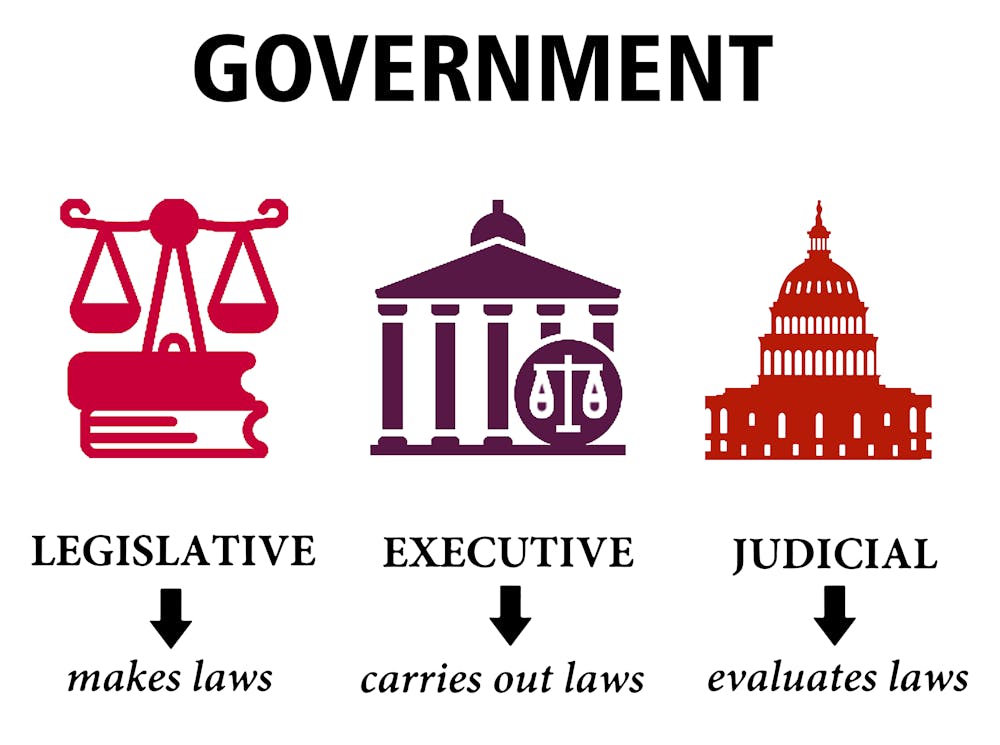
    The concept of separation of powers is incorporated into just about every democratic constitution. It rests on the principle of the separation of powers between the three fundamental branches of government: executive, legislature and judiciary.

    It’s what enables the political ecosystem of checks and balances to create the conditions for democracy to exist and freedom to flourish. But if one of the three branches of government dominates the other two, the equilibrium is shattered and democracy collapses.

    We owe this idea of constitutional democracy as a tripartite division of power to an 18th-century French political philosopher, Charles de Montesquieu. He was the author of one of the most influential books to come out of the Enlightenment period, The Spirit of the Laws.

    Published in 1748, this work gradually reshaped every political system in Europe, and had a powerful influence on America’s Founding Fathers. The 1787 US constitution was drafted in the spirit of Montesquieu’s recommendations.

    Modern democracies are more complex than those of the 18th century – and new institutions have developed to keep up with the times. These include specialised tribunals, autonomous regulatory agencies, central banks, audit bodies, ombudsmen, electoral commissions and anti-corruption bodies.

    What all these institutions have in common is that they operate with a considerable degree of independence from the three aforementioned arms of government. In other words, more checks and balances.

    Notwithstanding his immense influence, the idea of a separation of powers at the heart of democracy predates Montesquieu by many centuries. One of the earliest formulations of this idea can be found in Aristotle’s work, the Politics. This includes the argument that “the best constitution is made up of all existing forms”. By this Aristotle meant a mixed government of monarchy, aristocracy and democracy.

    But it was the Romans who developed a working model of checks and balances. The constitution of the Roman republic was characterised by the separation of powers between the tribune of the plebs, the senate of the patricians, and the elected consuls.

    The consuls held the highest political office, akin to a president or prime minister. But since the Romans did not trust anyone to have too much power, they elected two consuls at a time, for a period of 12 months. Each consul had veto power over the actions of the other consul. Checks and balances.

    The greatest advocate of the Roman republic and its constitutional mechanisms, was the Roman philosopher, lawyer and statesman Marcus Tullius Cicero. It was Cicero who inspired Montesquieu’s work – as well as influencing John Adams, James Madison and Alexander Hamilton in the US.

    The Roman republic had lasted for approximately 500 years but came to an end following the violent death of Cicero in 43BC. He had devoted his life resisting authoritarian populists from undermining the Roman republic and establishing themselves as sole despots. His death (on top of the assassination of Julius Ceasar the previous year) are seen as key moments in Rome’s transition from republic to empire.

    Democracy under threat

    Today our democracies are facing the same predicament. In many different parts of the world this simple institutional mechanism has come under increasing attack by individuals hell-bent on curbing the independent power of the judiciary and the legislative.

    In Europe, following in the footsteps of Hungarian prime minister Viktor Orbán, the Italian far-right premier Giorgia Meloni has been pushing for constitutional reforms that reinforce the executive branch of government at the expense of the other two branches.

    Checks and balances: the three branches of government.
    TREKPix/Shutterstock

    The assault on the system of checks and balances has also been identified in Washington. The use and abuse of presidential executive orders is an indication of this growing political cancer.

    During his time as 46th US president, from January 2021 to January 2025, Joe Biden signed 162 executive orders – an average of 41 executive orders per year. By comparison, during his first term Donald Trump’s annual average was 55 executive orders. Barack Obama before him was 35.

    In his first 20 days since returning to the White House Donald Trump has already signed 60 executive orders. This has included pardoning some 1,500 people who were involved in the January 6 insurrection at the US capitol.

    But of much greater concern is the Trump administration’s veiled threats to overturn the landmark decision of the US Supreme Court from 1803, Marbury v. Madison, the case that established the principle that the courts are the final arbiters of the law.

    In recent weeks Trump has openly criticised federal judges who have tried to block some of his most executive orders. He’s been supported by his vice-president, J.D. Vance, who has been quoted as saying that “judges aren’t allowed to control the executive’s legitimate power”.

    Meanwhile the president’s senior advisor, Elon Musk, accused a judge’s order to temporarily block the newly formed Department of Government Efficiency from accessing confidential treasury department data of being “a corrupt judge protecting corruption”.

    So democracy’s delicate balancing act is under serious pressure. If the separation of powers does not hold, and the checks and balances prove to be ineffective, democracy will be threatened.

    The next few months and years will determine whether the rule of law will be displaced by the rule of the strongest. At the moment the odds don’t look good for Cicero, Montesquieu and Madison.

    It takes a brave person to bet on democracy to win this contest, but we live in hope that America will remain the land of the free and the home of the brave.

    Vittorio Bufacchi is affiliated with the Labour Party in Ireland.

    ref. A short history of the separation of powers: from Cicero’s Rome to Trump’s America – https://theconversation.com/a-short-history-of-the-separation-of-powers-from-ciceros-rome-to-trumps-america-249819

    MIL OSI – Global Reports

  • MIL-OSI United Kingdom: The UK condemns attacks on displaced civilians in Sudan: UK statement at the UN Security Council

    Source: United Kingdom – Executive Government & Departments

    Explanation of vote by Ambassador Barbara Woodward, UK Permanent Representative to the UN, following the vote on the UN Security Council resolution renewing the mandate of the 1591 Committee Panel of Experts.

    We voted in favour of this resolution renewing the 1591 Panel of Experts and we thank the US for leading the negotiations.

    I’ll make two points. 

    First, I want to highlight the catastrophic situation currently faced by thousands of displaced people at Zamzam Camp in Darfur. 

    We’ve seen reports that the Rapid Support Forces have launched a further assault contrary to this council’s demands in Resolution 2736. 

    There are harrowing accounts of shelling and targeting of civilians. 

    It’s reported that at least 40 civilians have been killed and shelters have been razed to the ground. 

    These are people who were already facing devastating levels of humanitarian need, including famine. 

    So we condemn these attacks. 

    We underscore the need for the protection of civilians in line with international law and the commitments made by the warring parties in the 2023 Jeddah Declaration. 

    The situation underscores the continued importance of the Panel’s reporting to support the Council’s work on Sudan. 

    And once again, we call on all Member States to refrain from external interference, which foments conflict and instability, and instead to support mediation efforts for a durable peace. 

    Second, we note that while the UK welcomes the renewal of the Panel’s mandate for a further 12 months, we would have preferred to maintain previous language which, among other things, called for the parties to the conflict to cease violations of international humanitarian law and abuses and violations of international human rights law, and strongly condemned attacks against civilians, including sexual and gender based violence. 

    President, it is vital that this Council remain focused on protecting civilians in Sudan given the violence being committed against so many. 

    The UK will continue to press for a much more urgent and more effective international response to the crisis, including a reinvigorated mediation process.

    Updates to this page

    Published 17 February 2025

    MIL OSI United Kingdom

  • MIL-OSI United Kingdom: UK Government to Invest £2.6 Million in V&A Dundee

    Source: United Kingdom – Government Statements

    Scottish Secretary confirms £2.6 million for V&A Dundee – investment on top of £20 million for Dundee regeneration projects.

    V&A Dundee is to receive £2.6 million in UK Government capital funding. The investment, to remodel and extend the Scottish Design Galleries, was announced today [17 February 2025] by the Scottish Secretary on a visit to Scotland’s design museum. 

    Speaking after his visit, Scottish Secretary Ian Murray said: 

    It’s fantastic news that the UK Government is investing £2.6 million in V&A Dundee. It is a great attraction, right at the heart of Dundee’s waterfront, bringing great benefits to the city. This funding will help the museum celebrate the very best of Scottish design and make the experience for visitors even better. 

    We have taken the necessary steps to mend our public finances in order to provide this funding and a record settlement for the Scottish Government, and I am very pleased that we are delivering this investment in this important national institution.  

    At the Autumn Budget the Chancellor also confirmed £20 million for regeneration and growth projects in Dundee. In all, the UK Government is investing £1.4 billion in dozens of important local growth projects across Scotland over the next 10 years. This is a key part of the UK Government’s Plan for Change, growing our economy and improving living standards in all parts of the UK.

    Director of V&A Dundee, Leonie Bell, said

    We are delighted the UK Government has confirmed £2.6 million of funding for V&A Dundee, Scotland’s design museum, to undertake a bold transformation of the Scottish Design Galleries that will bring design to life for visitors, enabling even more people to engage with Scotland’s innovative design history and its continuing influence around the world. 

    V&A Dundee is an incredible resource for people living in Dundee and Scotland, drawing visitors to the region, championing design and designers and helping to change the face of the city and contributing to economic, cultural and social growth.   

    This new funding means we can expand the story of design from Scotland and celebrate the worldwide influence of Scottish design and designers, further enhancing the visitor experience at V&A Dundee.

    The Scottish Design Galleries are the heart of V&A Dundee. They feature more than 300 objects spanning around 500 years, telling the story of Scottish design’s enduring influence around the world. This additional investment, ahead of the museum’s 10-year anniversary in 2028, will help V&A Dundee boost its contribution to local economic growth, supporting jobs and driving visitors to Tayside.

    In 2023 Dundee welcomed 1.35 million visits, an increase of more 50 per cent since before V&A Dundee opened. V&A Dundee is engaging with every school in the city and welcomed its two millionth visitor in 2024. The museum has created very significant economic impacts for the city.

    Updates to this page

    Published 17 February 2025

    MIL OSI United Kingdom

  • MIL-OSI: Baltic Horizon Fund consolidated unaudited results for Q1-Q4 2024

    Source: GlobeNewswire (MIL-OSI)

    Management Board of Northern Horizon Capital AS has approved the unaudited financial results of Baltic Horizon Fund (the Fund) for the twelve months of 2024.

    Our strategic ambitions
    In 2024, the Fund’s management team made the strategic decision to implement key performance indicators (KPIs) as a means to effectively measure and track performance. This decision stems from the recognition that clear and measurable benchmarks are essential for evaluating progress towards the Fund’s objectives. By defining specific KPIs, the team aims to enhance transparency, accountability, and facilitate decision-making processes.

    The focus of the Fund management team is and will be on these major objectives:

    • Portfolio occupancy of at least 95% by end of June 2025;
    • Loan-to-Value target at 50% or lower;
    • To consider disposing of non-strategic assets over the next 18 months;
    • Clear ESG and refurbishment strategy for the next 1-2 years with an aim to reach the portfolio’s NOI potential of EUR 18 million by 2027;
    • Maintaining 100% BREEAM or LEED certified portfolio;
    • Achieving not less than 4 stars from GRESB assessment.

    As we recap our goals for 2024, we can report the following achievements:

    We have successfully achieved 100% portfolio certification.

    Despite receiving a 3-star GRESB rating in 2024, we have thoroughly analysed the assessment results and developed an action plan to secure a 4-star GRESB rating in 2025.

    Although we did not reach our target of 90% portfolio occupancy by the end of 2024, we made significant progress, achieving an 86.5% occupancy rate based on lease signing date.

    We have recently announced our disposal strategy to reduce LTV level to the target level. Several disposal processes have already commenced as of February 2025, with the closing of transactions planned for later in the year.

    Looking ahead to 2025, we will continue with the same solid strategy and goals that will stabilize the Fund’s financial position and maximize the potential of its portfolio.

    Leasing performance

    In a challenging environment characterized by increasing real estate market vacancies across all Baltic states in recent periods, the Fund also faced outflows of some tenants, however it has demonstrated its adaptability and the attractiveness of its properties by renewing a significant amount of existing leases and signing a substantial number of new leases in 2024. This success was primarily attributable to significant deals with prominent anchor tenants such as Narbutas in Meraki (3,200 sq. m) and Apollo Group in Coca-Cola Plaza (2,200 sq. m), International School of Riga in S27 (3,680 sq. m) and significant leases in Galerija Centrs  signed with My Fitness (2,000 sq. m) and Expo GROUP (2,000 sq. m).

    The Fund team has been diligently negotiating with current tenants to extend lease agreements, while also actively engaging with new tenants to fill the vacancies.  These efforts have resulted in lease renewals of approximately 23,800 sq. m and a net lease inflow of approximately 4,800 sq. m

    During 2024, the Fund signed new leases for 22,743 sq. m, securing an annual rental income of EUR 2,945 thousand for future periods. Furthermore, 61 new tenants have been attracted to our buildings, while 69 existing tenants have decided to continue their cooperation with us.

    By the end of December 2024, the occupancy of the portfolio increased to 82.1%. Calculating based on the lease signing date, the occupancy already exceeds 86%. Signed premises will be handed over to tenants in 2025.

    Notably, less than 20% of the leases are set to expire during 2025, while the vast majority expire in 2026 and later. We aim to spread our lease terms evenly so that no more than 20% of our leases expire each year.  Recent successful leasing activity is reflected in the increase in the weighted average unexpired lease term until the first break option, which was 3.3 years as of 31 December 2024 (compared to 2.9 years as of 31 December 2023).

    Outlook
    In 2025 the Fund will focus on flexible and sustainable solutions to meet tenant demands and market conditions.

    Our key goals are increasing the occupancy of the portfolio and decreasing the LTV by way of repaying part of the bonds.

    In 2025, the Baltic commercial real estate market is anticipated to navigate both considerable challenges and emerging opportunities. Persisting economic uncertainty is expected to keep demand for commercial spaces subdued. Key factors influencing this trend include evolving consumer preferences, the continued expansion of e-commerce, and the sustained shift toward remote work, all of which are reshaping the need for office and retail properties.

    While economic forecasts cautiously suggest potential market stabilization in the coming year, a rapid recovery remains unlikely due to geopolitical uncertainties and evolving tenant and consumer needs. Recognizing these challenges, the Fund’s management strives to enhance financial stability by reducing leverage through partial bond repayment. This strategy aims to alleviate financial pressure, positioning the Fund for more sustainable financial performance.

    As part of this initiative, the Fund has announced a strategic plan to divest select assets, with the objective of reducing the LTV ratio to below 50% and fostering a more stable recovery. Up to three assets have been identified for potential disposal based on their life cycle, optimization potential, and alignment with the Fund’s long-term strategy. Among these, the Postimaja and CC Plaza complex in Tallinn has been introduced to the market, following the Fund’s successful achievement of 100% occupancy and WALT exceeding five years. Given limited opportunities for further value enhancement beyond its development potential—an avenue the Fund does not intend to pursue in the short term—the asset has been prioritized for sale. To facilitate the divestment process, the Fund has engaged Newsec Advisers UAB and Redgate Capital AS as financial advisors. The sales process was commenced in February, with the aim of closing later in the year.

    As of the date of release of this report, the Fund has a Letter of Intent (LOI) with a potential buyer and DD is in progress with Meraki property. According to LOI, the transaction would be finalized in spring 2025. At the end of 2024, the property had an occupancy of 86% and WAULT of 4.3 years. Due to anticipated vacancies in the office sector and an increasing supply, the Fund has decided not to proceed with the development of a second tower, for which the permit remains valid. The current market conditions, characterized by recovering investor activity, present an improved opportunity to sell the property. Potential buyers have also shown preliminary interest in Lincona and Pirita Center.

    If the divestment plan proceeds as anticipated, the Fund will be positioned to repay a significant portion of its bonds while continuing to invest in its remaining property portfolio. This will enable the Fund to concentrate on its core assets in alignment with its strategic objectives, providing a solid foundation for future growth.

    To achieve our goal of increasing portfolio occupancy, we are adapting to the evolving needs of our tenants and customers. The rise of e-commerce and online shopping has transformed the traditional concept of shopping centres. Visitors now seek not only to try on and purchase goods but also to enjoy entertainment and experiences.

    This trend is evident in the success of our food courts, such as Burzma and Dialogai, as well as the interactive exhibition Kosmopark, which attracted a significant number of visitors in Europa and now operates in Galerija Centrs. Following this success, we have signed a new 3-year lease with an entertainment operator to open a Danger Park on the second floor of Europa shopping centre in May 2025. We are also considering various entertainment concepts for Galerija Centrs. Additionally, we will continue to offer the community a variety of events and temporary pop-ups in both shopping centres.

    In line with our strategic goal to increase occupancy, we are reviewing the concept in Europa and seeking the best tenant mix. We are currently negotiating a lease with a 700 sq m. anchor fashion leader and have advanced discussions with several coworking operators who find the shopping centre and its location ideal for their concept, one of them has already signed a LOI for 1,300 sq m. We believe that the combination of entertainment and a wide range of catering options, which will expand from the food court to a newly planned restaurant zone on the first floor facing Konstitucijos Avenue, along with strategic changes to the tenant mix on the second and third floors, will maximize visitor flow and fully exploit the potential of the shopping centre.

    While the traditional shopping centre concept remains effective for Galerija, as evidenced by increasing foot flow and turnover, we are exploring additional concepts for currently vacant premises to complement our existing tenants and expand the range of services offered to visitors.

    Office tenants are currently looking not just for a place to work during the day, but rather for hybrid working spaces or built-to-suit solutions with increased expectation over ESG, workplace wellbeing features and easily reachable services, which become increasingly important. During the last year, we witnessed a higher demand for mixed-use projects that combine commercial spaces with services, including catering, medical clinics and fitness centres. We believe, that in the upcoming years demand for such concepts will grow further and will add value to the properties.

    We continue to adapt to market demands by diversifying our office tenant mix beyond traditional occupiers, integrating catering operators, medical clinics, and even kindergartens into our office buildings. This approach not only enhances tenant diversification but also meets the needs of both our customers and the surrounding communities.

    In the office sector, our primary challenge and focus in 2025 will be addressing the remaining vacancies in S27 and Upmalas. A significant milestone in 2024 was securing a lease agreement for approximately 3,680 sq. m. in S27 with the International School of Riga, a leading provider of international education serving students from preschool through high school, set to open at the end of 2025. Even in the current market conditions we are confident that the International School of Riga coming into the building together with the renovation and improvements that are being done will enable us to attract new tenant segments that recognise the value of synergy.

    Our commitment to supporting existing and prospective tenants, along with our ability to tailor office spaces to individual requirements, positions us well to lease the remaining areas in North Star and Meraki in the coming quarters.

     Our investments in green energy projects remain a key priority, and from Q1 2025, all our properties in Latvia and Lithuania will transition to using energy from remote solar panels. In Estonia, we are actively exploring solutions in our properties to reduce the reliance to gas. Additionally, we are evaluating new technologies and sustainability initiatives that align with our ESG strategy while enhancing energy efficiency, optimizing property performance, and reducing operational costs.

    Simultaneously, to reinforce its financial position, the Fund is committed to improving its debt service ratio and reducing loan-to-value levels. By focusing on increasing occupancy rates and optimizing property concepts, we aim to enhance asset performance and maximize net operating income. Adaptive leasing strategies, property repositioning, and targeted investments in high-demand segments will remain key priorities. These initiatives are designed to create long-term value for investors while ensuring the Fund remains resilient in a dynamic market environment.

    Baltic Horizon achieves a 100% BREEAM certified portfolio
    In 2025, we will continue advancing our social and environmental commitments. All our assets have been BREEAM-certified, and by the end of 2024, we achieved 98% green leases across our portfolio, with a target to further increase this share in the coming year.

    GRESB benchmarking
    Recently, we announced a 3-star GRESB rating of 80 points, falling 1.5 points short of the 4-star threshold. This decline, compared to previous years, reflects increasing industry-wide commitments, heightened requirements, and evolving best practices. The management team has conducted a thorough analysis of the assessment results and developed an action plan aimed at restoring the Fund’s 4-star rating in 2025.

    Net result and net rental income
    In 2024, the Group recorded a net loss of EUR 16.8 million compared with a net loss of EUR 23.0 million for 2023. The result was mainly driven by the property valuation loss. Earnings per unit for 2024 were negative at EUR 0.13 (2023: negative at EUR 0.19).

    The Group earned consolidated net rental income of EUR 11.6 million in 2024 (2023: 14.6 million). The results for 2023 include two months’ net rental income of the Domus Pro Retail and Office property (EUR 0.3 million) and five months’ net rental income of the Duetto properties (EUR 1.2 million), which were sold in February and May 2023, respectively.

    On an EPRA like-for-like basis, the portfolio net rental income in 2024 was 11.8% lower than in 2023, mainly due to vacancies in office properties in Latvia due to the expiry of the agreement with the main tenant in Upmalas Biroji BC and 100% vacancy of S27, as well as lower rental income in Europa due to the new anchor tenant IKI equipping the premises and opening in March.

    Portfolio properties in the retail segment contributed 53.3% (like-for-like 2023: 43.6%) of net rental income in 2024, followed by the office segment with 41.7% (like-for-like 2023: 50.9%) and the leisure segment with 5.0% (2023: 5.5%). 
    Retail assets located in the central business districts (Postimaja, Europa and Galerija Centrs) accounted for 42.2% of total portfolio net rental income in 2024. Total net rental income attributable to neighbourhood shopping centres was 11.1% in 2024.

    In 2024, investment properties in Latvia and Lithuania contributed 44.4% (like-for-like 2023: 41.8%) and 22.8% (like-for-like 2023: 31.1%) of net rental income, respectively, while investment properties in Estonia contributed 32.8% (like-for-like 2023: 27.1%).

    Investment properties
    At the end of Q4 2024, the Baltic Horizon Fund portfolio consisted of 12 cash flow generating investment properties in the Baltic capitals. The fair value of the Fund’s portfolio was EUR 241.2 million at the end of December 2024 (31 December 2023: EUR 250.4 million) and incorporated a total net leasable area of 118.3 thousand sq. m. The change in portfolio value was mainly driven by the changes in exit yields and upward adjustments of the weighted average cost of capital (WACC). During 2024 the Group invested approximately EUR 6.0 million in tenant fit-outs.

    Gross Asset Value (GAV)
    As of 31 December 2024, the Fund’s GAV was EUR 256.0 million (31 December 2023: EUR 261.1 million). The decrease compared to the prior year was mainly related to the negative revaluation of the Fund’s investment properties of approx. EUR 9.5 million and was partly offset by the private placement of new units which took place in September and resulted in a cash increase of approx. EUR 6.29 million.

    Net Asset Value (NAV)
    As of 31 December 2024, the Fund’s NAV was EUR 98.1 million (31 December 2023: EUR 109.5 million). The NAV decrease was mainly due to the revaluation of investment properties. At the end of September 2024 new units were issued resulting in approx. EUR 6.29 million of new equity. As of 31 December 2024, IFRS NAV per unit amounted to EUR 0.6833 (31 December 2023: EUR 0.9156), while EPRA net tangible assets and EPRA net reinstatement value were EUR 0.7267 per unit (31 December 2023: EUR 0.9546). EPRA net disposal value was EUR 0.6797 per unit (31 December 2023: EUR 0.9122).

    Interest-bearing loans and bonds
    As of 31 December 2024, interest-bearing loans and bonds (excluding lease liabilities) were EUR 149.0 million (31 December 2023: EUR 143.5 million). Annual loan amortisation accounted for 1.5% of total debt outstanding. In July 2024, the Fund successfully signed the Meraki loan with Bigbank for a total amount of EUR 10.3 million. A major part of the loan was used to repay short term bonds in the amount of EUR 8.0 million maturing in July 2024.

    As of 31 December 2024, the Fund’s consolidated cash and cash equivalents amounted to EUR 10.1 million (31 December 2023: EUR 6.2 million).

    Cash flow
    Cash inflow from core operating activities in 2024 amounted to EUR 9.9 million (2023: cash inflow of EUR 11.4 million).  Cash inflow from core operating activities decreased mainly due to the sale of Duetto and Domus Pro properties in H1 2023 and higher vacancies, mostly in S27 and Upmalas Biroji. Cash outflow from investing activities was EUR 7.0 million due to investments in existing properties and transaction costs (2023: cash inflow of EUR 19.9 million due to sales of assets). Cash inflow from financing activities was EUR 1.0 million (2023: cash outflow of EUR 30.5 million). In Q4 2024, the Fund prepaid loans in the amount of EUR 2.7 million and paid regular amortisation and interest on bank loans and bonds.

    Key earnings figures 

    EUR ‘000 Q1-Q4 2024 Q1-Q4 2023 Change (%)
    Net rental income 11,588 14,617 (20.7%)
    Administrative expenses (2,373) (2,617) (9.3%)
    Net other operating income 18 44 (59.1%)
    Losses on disposal of investment properties (863) (4,047) (78.7%)
    Valuation gains (losses) on investment properties (15,581) (21,876) (28.8%)
    Operating profit (loss) (7,211) (13,879) (48.0%)
    Net financial expenses (10,344) (9,750) 6.1%
    Profit (loss) before tax (17,555) (23,629) (25.7%)
    Income tax 774 656 18.0%
    Net profit (loss) for the period (16,781) (22,973) (27.0%)
           
    Weighted average number of units outstanding (units) 143,562,514 119,635,429 20.0%
    Earnings per unit (EUR) (0.12) (0.19) (39.1%)

    Key financial position figures

    EUR ‘000 31.12.2024 31.12.2023 Change (%)
    Investment properties 241,158 250,385 (3.7%)
    Gross asset value (GAV) 256,048 261,138 (1.9%)
           
    Interest-bearing loans and bonds 148,989 143,487 3.8%
    Total liabilities 157,953 151,606 4.2%
           
    IFRS NAV 98,095 109,532 (10.4%)
    EPRA NRV 104,333 114,205 (8.6%)
           
    Number of units outstanding (units) 143,562,514 119,635,429 20.0%
    IFRS NAV per unit (EUR) 0.6833 0.9156 (25.4%)
    EPRA NRV per unit (EUR) 0.7267 0.9546 (23.9%)
           
    Loan-to-Value ratio (%) 61.8% 57.3%
    Average effective interest rate (%) 6.7% 5.2%

    During Q4 2024, the average actual occupancy of the portfolio was 81.0% (Q3 2024: 80.1%). The occupancy rate increased to 82.1% as of 31 December 2024 (30 September 2024: 80.5%).

    Overview of the Fund’s investment properties as of 31 December 2024

    Property name Sector Fair value1 NLA Direct property yield Net initial yield Occupancy rate
    (EUR ‘000) (sq. m) 20242 20243
    Vilnius, Lithuania            
    Europa SC Retail 35,946 17,092 2.3% 2.8% 80.6%
    North Star Office 19,548 10,734 6.5% 7.0% 91.8%
    Meraki Office 16,3804 7,833 1.2% 1.5% 86.3%
    Total Vilnius   71,874 35,659 3.0% 3.6% 85.2%
    Riga, Latvia            
    Upmalas Biroji BC Office 19,224 11,203 3.7% 4.2% 64.1%
    Vainodes I Office 15,900 8,128 8.8% 8.8% 100.0%
    S27 Office 11,360 7,303 (0.6%) (0.9%)
    Sky SC Retail 4,900 3,260 8.6% 8.5% 100.0%
    Galerija Centrs Retail 60,020 19,423 3.2% 4.1% 84.7%
    Total Riga   111,404 49,317 3.7% 4.5% 71.0%
    Tallinn, Estonia            
    Postimaja & CC Plaza complex Retail 21,800 9,232 3.7% 6.7% 100.0%
    Postimaja & CC Plaza complex Leisure 13,190 7,869 4.8% 4.3% 97.7%
    Lincona Office 13,100 10,767 6.4% 7.4% 88.5%
    Pirita SC Retail 9,790 5,425 6.7% 9.2% 97.1%
    Total Tallinn   57,880 33,293 4.9% 6.7% 95.3%
    Total active portfolio   241,158 118,269 3.8% 4.7% 82.1%
    1. Based on the latest valuation as of 31 December 2024 and recognised right-of-use assets.  
    2. Direct property yield (DPY) is calculated by dividing annualized NOI by the acquisition value and subsequent capital expenditure of the property.
    3. The net initial yield (NIY) is calculated by dividing annualized NOI by the market value of the property.
    4. Meraki value measured at disposal price. Market value according to independent property valuators Newsec is EUR 17,490,000.

    CONSOLIDATED STATEMENT OF PROFIT OR LOSS AND OTHER COMPREHENSIVE INCOME

    EUR ‘000 01.10.2024 01.10.2023 01.01.2024 01.01.2023
    31.12.2024 – 31.12.2023 – 31.12.2024 – 31.12.2023
    Rental income 3,779 3,755 15,136 17,743
    Service charge income 1,145 1,487 4,744 6,008
    Cost of rental activities (2,205) (2,348) (8,292) (9,134)
    Net rental income 2,719 2,894 11,588 14,617
             
    Administrative expenses (644) (631) (2,373) (2,617)
    Other operating income (expenses) 3 29 18 44
    Losses on disposal of investment properties (245) (237) (863) (4,047)
     Valuation losses on investment properties (3,052) (7,250) (15,581) (21,876)
    Operating profit (loss) (1,219) (5,195) (7,211) (13,879)
             
    Financial income 169 29 196 104
    Financial expenses (2,789) (2,538) (10,540) (9,854)
    Net financial expenses (2,620) (2,509) (10,344) (9,750)
             
    Profit (loss) before tax (3,839) (7,704) (17,555) (23,629)
    Income tax charge 457 (53) 774 656
    Profit (loss) for the period (3,382) (7,757) (16,781) (22,973)
           
    Other comprehensive income that is or may be reclassified to profit or loss in subsequent periods
    Net gain (loss) on cash flow hedges (446) (759) (1,003) (1,273)
    Income tax relating to net gain (loss) on cash flow hedges 1 64 52 123
    Other comprehensive income (expense), net of tax, that is or may be reclassified to profit or loss in subsequent periods (445) (695) (951) (1,150)
             
    Total comprehensive income (expense) for the period, net of tax (3,827) (8,452) (17,732) (24,123)
             
    Basic earnings per unit (EUR) (0.02) (0.06) (0.13) (0.19)
    Diluted earnings per unit (EUR) (0.12)
                 

    CONSOLIDATED STATEMENT OF FINANCIAL POSITION

    EUR ‘000 31.12.2024 31.12.2023
    Non-current assets    
    Investment properties 241,158 250,385
    Intangible assets 4 11
    Property, plant and equipment 5 4
    Derivative financial instruments 1 295
    Other non-current assets 1,225 647
    Total non-current assets 242,393 251,342
         
    Current assets    
    Trade and other receivables 2,800 2,591
    Prepayments 802 402
    Derivative financial instruments 621
    Cash and cash equivalents 10,053 6,182
    Total current assets 13,655 9,796
    Total assets 256,048 261,138
         
    Equity    
    Paid in capital 151,495 145,200
    Cash flow hedge reserve (420) 531
    Retained earnings (52,980) (36,199)
    Total equity 98,095 109,532
         
    Non-current liabilities    
    Interest-bearing loans and borrowings 98,491 64,158
    Deferred tax liabilities 1,898 2,774
    Other non-current liabilities 1,446 1,079
    Total non-current liabilities 101,835 68,011
         
    Current liabilities    
    Interest-bearing loans and borrowings 50,736 79,584
    Trade and other payables 4,473 3,343
    Income tax payable 14 6
    Other current liabilities 895 662
    Total current liabilities 56,118 83,595
    Total liabilities 157,953 151,606
    Total equity and liabilities 256,048 261,138

    For additional information, please contact:

    Tarmo Karotam
    Baltic Horizon Fund manager
    E-mail tarmo.karotam@nh-cap.com
    www.baltichorizon.com

    The Fund is a registered contractual public closed-end real estate fund that is managed by Alternative Investment Fund Manager license holder Northern Horizon Capital AS. 

    Distribution: GlobeNewswire, Nasdaq Tallinn, Nasdaq Stockholm, www.baltichorizon.com

    To receive Nasdaq announcements and news from Baltic Horizon Fund about its projects, plans and more, register on www.baltichorizon.com. You can also follow Baltic Horizon Fund on www.baltichorizon.com and on LinkedIn, FacebookX and YouTube.

    This announcement contains information that the Management Company is obliged to disclose pursuant to the EU Market Abuse Regulation. The information was submitted for publication, through the agency of the above distributors, at 19:30 EET on 17 February 2024.

    Attachment

    The MIL Network

  • MIL-OSI: Societe Generale: Information regarding executed transactions within the framework of a share buyback program (outside the liquidity agreement)

    Source: GlobeNewswire (MIL-OSI)

    INFORMATION REGARDING EXECUTED TRANSACTIONS WITHIN THE FRAMEWORK OF A SHARE BUYBACK PROGRAM (OUTSIDE THE LIQUIDITY AGREEMENT)

    Regulated Information

    Paris, 17 February 2025

    (In accordance with article 5 of Regulation (EU) No 596/2014 on Market Abuse Regulation and article 3(3) of Delegated Regulation (EU) 2016/1052 supplementing Regulation (EU) No 596/2014 through regulatory technical standards concerning the conditions applicable to buyback programs and stabilization measures)

    As announced on Thursday 6 February 2025, Societe Generale started on Monday 10 February 2025, an ordinary share buyback program for EUR 872 million for the purpose of shares cancellation.

    Societe Generale received all necessary authorizations from supervisory authorities. These buybacks will be carried out in compliance with the conditions, notably regarding the maximum price, set forth by the General Meeting of 22 May 2024 and presented in the description released on 17 May 2024, as well as in accordance with the Market Abuse Regulation. They are performed on the trading platforms on which Societe Generale shares are listed for trading or are traded, including the regulated market of Euronext Paris.

    Purchases performed during the period from 10 to 14 February 2025 are described below. As of February 14, 2025, Societe Generale has completed 12% of its share buyback program, representing 0.4%* of its share capital.

    The liquidity contract concluded with Rothschild has also temporarily been suspended throughout the buyback period.

    Issuer name: Societe Generale – LEI O2RNE8IBXP4R0TD8PU41

    Reference of the financial instrument: ISIN FR0000130809

    Period: From 10 to 14 February 2025

    * Ratio between the number of shares repurchased and the 800,316,777 shares comprising the current share capital.

    Purchases performed by Societe Generale during the period

    Aggregated presentation by day and market

    Issuer name Issuer code (LEI) Transaction date ISIN Code Daily total volume (in number of shares) Daily weighted average price of shares acquired Platform
    SOCIETE GENERALE O2RNE8IBXP4R0TD8PU41 10-Feb-25 FR0000130809 362 124 35,7689 XPAR
    SOCIETE GENERALE O2RNE8IBXP4R0TD8PU41 10-Feb-25 FR0000130809 199 120 35,7415 CEUX
    SOCIETE GENERALE O2RNE8IBXP4R0TD8PU41 10-Feb-25 FR0000130809 25 000 35,7473 TQEX
    SOCIETE GENERALE O2RNE8IBXP4R0TD8PU41 10-Feb-25 FR0000130809 15 000 35,7792 AQEU
    SOCIETE GENERALE O2RNE8IBXP4R0TD8PU41 11-Feb-25 FR0000130809 398 546 36,1667 XPAR
    SOCIETE GENERALE O2RNE8IBXP4R0TD8PU41 11-Feb-25 FR0000130809 165 000 36,1551 CEUX
    SOCIETE GENERALE O2RNE8IBXP4R0TD8PU41 11-Feb-25 FR0000130809 19 000 36,1305 TQEX
    SOCIETE GENERALE O2RNE8IBXP4R0TD8PU41 11-Feb-25 FR0000130809 12 000 36,1520 AQEU
    SOCIETE GENERALE O2RNE8IBXP4R0TD8PU41 12-Feb-25 FR0000130809 345 676 37,1056 XPAR
    SOCIETE GENERALE O2RNE8IBXP4R0TD8PU41 12-Feb-25 FR0000130809 150 000 37,0716 CEUX
    SOCIETE GENERALE O2RNE8IBXP4R0TD8PU41 12-Feb-25 FR0000130809 19 000 37,0939 TQEX
    SOCIETE GENERALE O2RNE8IBXP4R0TD8PU41 12-Feb-25 FR0000130809 11 000 37,0842 AQEU
    SOCIETE GENERALE O2RNE8IBXP4R0TD8PU41 13-Feb-25 FR0000130809 305 947 37,2202 XPAR
    SOCIETE GENERALE O2RNE8IBXP4R0TD8PU41 13-Feb-25 FR0000130809 202 000 37,2104 CEUX
    SOCIETE GENERALE O2RNE8IBXP4R0TD8PU41 13-Feb-25 FR0000130809 28 000 37,1090 TQEX
    SOCIETE GENERALE O2RNE8IBXP4R0TD8PU41 13-Feb-25 FR0000130809 15 000 37,1341 AQEU
    SOCIETE GENERALE O2RNE8IBXP4R0TD8PU41 14-Feb-25 FR0000130809 347 390 36,9117 XPAR
    SOCIETE GENERALE O2RNE8IBXP4R0TD8PU41 14-Feb-25 FR0000130809 176 000 36,9096 CEUX
    SOCIETE GENERALE O2RNE8IBXP4R0TD8PU41 14-Feb-25 FR0000130809 20 000 36,9106 TQEX
    SOCIETE GENERALE O2RNE8IBXP4R0TD8PU41 14-Feb-25 FR0000130809 12 000 36,9131 AQEU
          TOTAL 2 827 803 36,6008  

    Press contacts:

    Jean-Baptiste Froville_+33 1 58 98 68 00_ jean-baptiste.froville@socgen.com
    Fanny Rouby_+33 1 57 29 11 12_ fanny.rouby@socgen.com

    Societe Generale

    Societe Generale is a top tier European Bank with more than 126,000 employees serving about 25 million clients in 65 countries across the world. We have been supporting the development of our economies for 160 years, providing our corporate, institutional, and individual clients with a wide array of value-added advisory and financial solutions. Our long-lasting and trusted relationships with the clients, our cutting-edge expertise, our unique innovation, our ESG capabilities and leading franchises are part of our DNA and serve our most essential objective – to deliver sustainable value creation for all our stakeholders.

    The Group runs three complementary sets of businesses, embedding ESG offerings for all its clients:

    • French Retail, Private Banking and Insurance, with leading retail bank SG and insurance franchise, premium private banking services, and the leading digital bank BoursoBank.
    • Global Banking and Investor Solutions, a top tier wholesale bank offering tailored-made solutions with distinctive global leadership in equity derivatives, structured finance and ESG.
    • Mobility, International Retail Banking and Financial Services, comprising well-established universal banks (in Czech Republic, Romania and several African countries), Ayvens (the new ALD I LeasePlan brand), a global player in sustainable mobility, as well as specialized financing activities.

    Committed to building together with its clients a better and sustainable future, Societe Generale aims to be a leading partner in the environmental transition and sustainability overall. The Group is included in the principal socially responsible investment indices: DJSI (Europe), FTSE4Good (Global and Europe), Bloomberg Gender-Equality Index, Refinitiv Diversity and Inclusion Index, Euronext Vigeo (Europe and Eurozone), STOXX Global ESG Leaders indexes, and the MSCI Low Carbon Leaders Index (World and Europe).

    In case of doubt regarding the authenticity of this press release, please go to the end of the Group News page on societegenerale.com website where official Press Releases sent by Societe Generale can be certified using blockchain technology. A link will allow you to check the document’s legitimacy directly on the web page.

    For more information, you can follow us on Twitter/X @societegenerale or visit our website societegenerale.com.

    Attachment

    The MIL Network

  • MIL-OSI United Kingdom: UK Government awards grant to strengthen mangrove conservation in Belize

    Source: United Kingdom – Government Statements

    Award from Sustainable Blue Economies Programme Blue Social Challenge Fund reaffirms UK’s commitment to collaborating with Caribbean nations to safeguard vital ocean resources.

    The UK Government through its Sustainable Blue Economies Programme Blue Social Challenge Fund (BSCF) has awarded a grant of £99,191 (approximately BZD250,000) to MarAlliance for the project “Mangrove Habitat for Juvenile Fish Recruitment: Building Local Knowledge and Capacity.” This initiative reaffirms the UK’s commitment to collaborating with Caribbean nations to safeguard vital ocean resources.

    The Fund aims to enhance the resilience of Small Island Developing States (SIDS) like Belize and their economies to the impacts of climate change and economic shocks, through better ocean management, poverty reduction/improved livelihoods and greater use of nature-based solutions.

    High Commissioner Christine Rowlands stated:

    By funding this project, we are supporting work that enables local communities and fishers to contribute data needed for the sustainable management of Belize’s beautiful mangrove forests and juvenile fishes. This in turn contributes to improved livelihoods of fishers, sustainable fisheries, and builds climate resilience of coastal communities. This is the purpose of BSCF, to support vulnerable communities working together to address the adverse impacts of climate change on their livelihoods and we are happy to work with MarAlliance on this initiative.

    Belize’s mangrove ecosystems play a crucial role in mitigating coastal erosion, sequestering carbon, and providing essential nursery habitats for juvenile fish. However, extensive mangrove loss over the past two decades has posed a significant threat to coastal integrity and the livelihoods dependent on sustainable fisheries.

    This project seeks to bridge critical knowledge gaps by evaluating the contribution of mangroves to fish population recruitment. Leveraging advanced methodologies such as environmental DNA (eDNA) analysis, the initiative will generate valuable insights to enhance fisheries management in Belize. By actively engaging university students and local community members, the project aims to expand the scientific understanding of mangrove ecology while delivering direct economic benefits to stakeholders through training and fieldwork participation. The data collected will provide coastal communities and policymakers with robust evidence on the ecological and economic value of mangroves, facilitating informed conservation strategies in Belize.

    A key aspect of the project is its participatory approach of co-created scientific research with fishers and coastal communities. Through targeted training initiatives, local community members will be empowered to take an active role in resource stewardship, ensuring alignment between local practices and national fisheries objectives.

    Dr. Rachel Graham, Founder and Executive Director of MarAlliance highlighted that:

    Our mangrove based fisheries work illuminates the critical role of these ecosystems as vital nursery habitats, bridging scientific inquiry and community knowledge to quantify and protect juvenile fish populations. With profound gratitude to the British High Commission, MarAlliance is transforming local fishing insights into evidence-based strategies that support small-scale fishers adapting to unprecedented environmental challenges along Belize’s vulnerable coastal shorelines.

    The project’s outputs will include a publicly accessible scientific report informing of the contributions of mangroves to biodiversity and fisheries productivity. Ultimately, this initiative aims to have a cadre of trained local biologists and fishers, heighten awareness of mangroves as critical nursery habitats for sustained fisheries, strengthen community livelihoods, and drive policy actions to protect Belize’s coastal ecosystems, thereby enhancing resilience to climate change.

    Updates to this page

    Published 17 February 2025

    MIL OSI United Kingdom

  • MIL-OSI United Kingdom: Ukraine’s voice must be at the heart of any peace negotiations: UK statement at the UN Security Council

    Source: United Kingdom – Government Statements

    Statement by Ambassador Barbara Woodward, UK Permanent Representative to the UN, at the UN Security Council meeting on threats to international peace and security.

    President, Russia is once again using this meeting in an attempt to distort the truth behind its illegal war. I will make three points about lessons.

    First, the events of the last decade in Ukraine originate from a simple, sad reality: Russia’s imperialist ambition and failure to respect Ukraine’s sovereignty.

    Russia is a reliable party to agreements or treaties. 

    In freely signing up to the Minsk Agreements, Russia had the opportunity to ensure peace. 

    Russia and Ukraine were the sole parties to these agreements.  

    And this Council consistently called on all parties to implement their commitments in full, right up until the moment when President Putin decided that, on 22 February 2022, I quote the Minsk Agreement ‘no longer existed.’

    Second, Russia continues to violate the UN Charter and international law in multiple ways.

    In its war in Ukraine, Russia has targeted civilians and civilian infrastructure, hospitals, schools, energy infrastructure, it has abducted children, it has raped women, it has compromised nuclear safety and security, flouted international law, and tortured detainees. 

    For all these reasons, it is no surprise that the ICJ has issued an indictment on President Putin.

    We will not tolerate Russia’s attempts to spread disinformation and divert this Council’s attention away from its atrocities, or efforts to subjugate a sovereign state.

    Russia is the sole architect of the war in Ukraine and could end it now if it chose to by withdrawing its forces. 

    Third lesson is that the international community must stand firm in support of peace and security.

    No one wants this war to end more than Ukraine.

    But Putin’s so-called preconditions for talks – reaffirmed by his deputy Foreign Minister just a few days ago – have been that Ukraine withdraw from its own sovereign territory, and abandon its sovereign right to choose its alliances. 

    No country could or should accept this.

    We can and must create the conditions for a just and lasting peace, which protects Ukraine’s security, sovereignty and independence. 

    This will require robust security arrangements from the outset, which ensure that Russia is never able to invade again. 

    Putin has shown time and again that he will break a weak deal.

    The UK will continue to play our part. 

    We will continue to provide concrete support for Ukraine’s self-defence and security for as long as it is needed. 

    And we are clear that Ukraine’s voice must be at the heart of any negotiations.

    Let me conclude, President, by reminding Russia that the suffering of so many Ukrainians today simply would not exist if Russia fulfilled its most basic obligation as a member of the United Nations: to respect the principles of the UN Charter.

    Updates to this page

    Published 17 February 2025

    MIL OSI United Kingdom

  • MIL-OSI Global: A new theory explains how water first arrived on Earth

    Source: The Conversation – France – By Quentin Kral, Astrophysicien à l’observatoire de Paris-PSL, CNRS, Sorbonne Université, Université Paris Cité

    How did Earth become a blue planet? NASA, CC BY

    When Earth first formed, it was too hot to retain ice. This means all the water on our planet must have originated from extraterrestrial sources. Studies of ancient terrestrial rocks suggest liquid water existed on Earth as early as 100 million years after the Sun’s formation–practically “immediately” on an astrophysical timescale. This water, now over 4.5 billion years old, has been perpetually renewed through Earth’s water cycle. My research team has recently proposed a new theory to explain how water first arrived on Earth.

    A mystery billions of years in the making

    Astrophysicists have been grappling with the question of how water arrived on our young planet for decades. One of the earliest hypotheses suggested that Earth’s water was a direct byproduct of the planet’s formation, released via magma during volcanic eruptions, in which most of the emitted gas is water vapor.

    However, this hypothesis evolved in the 1990s following analysis of Earth’s water composition and the discovery of the potential role of icy comets, pointing to an extraterrestrial origin. Comets, which are mixtures of ice and rock formed in the distant reaches of the solar system, are sometimes ejected toward the Sun. When warmed by the Sun, they develop striking tails of dust and gas that are visible from Earth. Asteroids, located in the asteroid belt between Mars and Jupiter, were also proposed as potential progenitors of Earth’s water.

    The study of cometary and asteroid rocks via meteorites–small fragments of these bodies that have fallen to Earth–has provided key insights. By analyzing the D/H ratio–the proportion of heavy hydrogen (deuterium) to standard hydrogen–scientists found that Earth’s water more closely matches that of “carbonaceous” asteroids, which bear traces of past water. This shifted the focus of research toward these asteroids.

    The asteroid belt lies between Mars and Jupiter, while the Kuiper Belt extends beyond Neptune.
    Pline/Wikipedia, CC BY

    Recent studies have centered on identifying the celestial mechanisms that could have delivered these water-rich asteroids to the dry surface of early Earth. Numerous theories have emerged to explain the “perturbation” of planetesimals–large, icy bodies in the asteroid and Kuiper belts. These scenarios propose gravitational interactions that dislodged these objects, sending them hurtling toward Earth. Such events would have required a complex “gravitational billiards” process, suggesting a tumultuous history of the solar system.

    While it is evident that planetary formation involved significant upheavals and impacts, it is possible that Earth’s water delivery occurred in a more natural and less dramatic manner.

    A simpler hypothesis

    I started with the assumption that asteroids emerge icy from their formation cocoon, also known as the protoplanetary disk. This cocoon is a massive, hydrogen-rich disk filled with dust, where planets and initial belts form. It envelops the entire nascent planetary system. Once this protective cocoon dissipates–after a few million years–the asteroids warm up, causing their ice to melt or, more precisely, to sublimate. In space, where pressure is nearly zero, the water remains in vapor form after this process.

    A disk of water vapour is then superimposed on the asteroid belt orbiting the Sun. As the ice sublimates, the disk fills with vapor, which spreads inward toward the Sun due to complex dynamic processes. Along the way, this vapor disk encounters the inner planets, immersing them in a kind of “bath”. In a way, the disk “waters” the terrestrial planets: Mars, Earth, Venus and Mercury. Most of this water capture occurred 20 to 30 million years after the Sun’s formation, during a period when the Sun’s luminosity increased dramatically over a brief period of time, increasing the degassing rate of asteroids.

    Step-by-step illustration of a new model for water distribution on the inner planets of the solar system, including Earth. Five million years after the Sun’s birth, asteroids in the main belt release water vapor due to solar energy. This vapor gradually spreads into the inner solar system, eventually enveloping the planets, which capture part of it to form oceans between 10 and 100 million years later.
    Sylvain Cnudde/Observatoire de Paris — PSL/LESIA, Fourni par l’auteur

    Once water is captured by a planet’s gravitational pull, many processes can occur. On Earth, however, a protective mechanism ensures the total mass of water has remained relatively constant from the end of the capture period until today. If water rises too high into the atmosphere, it condenses into clouds, which eventually return to the surface as rain–a process known as the water cycle.

    The quantities of water on Earth, both past and present, are well documented. Our model, which begins with the degassing of ice from the original asteroid belt, successfully accounts for the amount of water needed to form oceans, rivers and lakes, and even the water buried deep within Earth’s mantle. Precise measurements of the D/H ratio of water in the oceans also align with our model. Moreover, the model explains the quantities of water present in the past on other planets–and even on the Moon.

    You might wonder how I arrived at this new theory. It stems from recent observations, particularly those made with ALMA, a radio telescope array of over 60 antennae located in Chile, on a plateau five kilometres above sea level. Observations of extrasolar systems with belts similar to the Kuiper Belt reveal that planetesimals in these belts sublimate carbon monoxide (CO). For belts closer to their star, such as the asteroid belt, CO is too volatile to be present, and water is more likely to be released.

    Building the model

    It was from these findings that the initial idea for the theory began to take shape. Moreover, recent data from the Hayabusa 2 and OSIRIS-REx missions, which explored asteroids similar to those that might have contributed to the formation of the initial water vapor disk, provided key confirmation. These missions, along with long-standing observations from ground-based telescopes, revealed substantial amounts of hydrated minerals on these asteroids–minerals that can only form through contact with water. This supports the premise that these asteroids were initially icy, even though most have since lost their ice (except for larger bodies like Ceres).

    With the foundation of the model in place, the next step was to develop a numerical simulation to track the degassing of ice, the dispersion of water vapor, and its eventual capture by planets. During these simulations, it quickly became clear that the model could account for Earth’s water supply. Additional research on past water quantities for Mars and other terrestrial planets confirmed the model’s applicability to them as well. It all fit, and the results were ready for publication!

    As researchers, it’s not enough to design a model that works and seems to explain everything. The theory must be tested on a larger scale. While it’s now impossible to detect the initial water vapor disk that “watered” the terrestrial planets, we can look to extrasolar systems with young asteroid belts to see if such water vapor disks exist. According to our calculations, these disks, though faint, should be detectable with ALMA. Our team has just secured time on ALMA to investigate specific systems for evidence of them.

    We may be at the dawn of a new era in understanding the origins of Earth’s water.

    Quentin Kral ne travaille pas, ne conseille pas, ne possède pas de parts, ne reçoit pas de fonds d’une organisation qui pourrait tirer profit de cet article, et n’a déclaré aucune autre affiliation que son organisme de recherche.

    ref. A new theory explains how water first arrived on Earth – https://theconversation.com/a-new-theory-explains-how-water-first-arrived-on-earth-246516

    MIL OSI – Global Reports

  • MIL-OSI Europe: Minister welcomes record goods exports from Ireland in 2024

    Source: Government of Ireland – Department of Jobs Enterprise and Innovation

    The Minister for Enterprise, Tourism and Employment, Peter Burke, today welcomed the latest Goods Exports and Imports release from the CSO which shows that goods exports rose to €224 billion in 2024.

    This was an increase of € 28 billion or + 14% when compared with 2023. 

    Commenting on today’s figures, Minister Peter Burke said: 

    I am delighted to welcome the publication of this trade data today which shows that the highest value of goods exports from Ireland was achieved in 2024. These export figures show a significant positive 14% growth when compared to 2023.  This performance is testament to the strength of exporting companies in Ireland and to their efforts in growing business, reaching new markets and delivering this record performance.”

    The EU continues to be Ireland’s largest market, with €88.5 billion of goods exports in 2024, an increase of € 7.4m (9 %) in 2023.

    This is followed by the US, accounting for €72.6 billion of exports in 2024, another increase year on year, by a total of €18.6 billion on 2023.

     Of this, € 20,131 billion went to Germany, € 22,993 billion went to the Netherlands and €17,031 billion went to Belgium.

    The value of goods exports to Great Britain fell in 2024 to € 15.7 billion.  This is a fall of € 1.7 billion or – 10% compared to 2023.   

    The highest category of exports where Medical and Pharmaceutical Products which rose by €22.4 billion to €99.9 billion which accounted for 45 % of goods exports in 2024. 

    The Minister commented further:

    “The Government is committed to supporting companies competing and growing on a global scale and the work of our enterprise and development agencies Enterprise Ireland and IDA Ireland, is working to expand Ireland’s global trade links and enhance our competitiveness as a top location for business and talent.”

    ENDS

    MIL OSI Europe News

  • MIL-OSI United Kingdom: expert reaction to four papers trialling treatments for ALS within the HEALEY ALS Platform Trial

    Source: United Kingdom – Executive Government & Departments

    Four papers published in JAMA, JAMA Neurology and JAMA Network Open look at Amyotrophic Lateral Sclerosis (ALS) treatment results from the HEALY ALS Platform Trial. 

    Dr Ahmad Al Khleifat, Senior Research Fellow, King’s College London, said:

    “Currently, only a few disease-modifying drugs, such as riluzole and edaravone, are approved for ALS, but their benefits are limited. Platform trials, like the HEALEY ALS Platform Trial, provide a faster and more cost-effective way to test multiple treatments simultaneously, cutting the time to identify effective therapies in half and reducing costs by a third. The latest studies from the HEALEY ALS Platform Trial highlight the efficiency of this approach in accelerating drug testing, laying the groundwork for future breakthroughs despite the initial negative results.

    “While these outcomes may seem discouraging, they provide critical insights. Randomised clinical trials remain the gold standard for evaluating new treatments, ensuring that observed effects are real rather than influenced by external factors. However, patient recruitment bias can be a challenge, when only a few trials are available, longer-term survivors may be overrepresented, potentially affecting trial design and interpretation.

    “Another consideration is the reliance on survival and functional scores as primary outcome measures, rather than biomarkers like neurofilament, which offer a more precise way to track disease progression. Some treatments, such as riluzole and tofersen, have shown benefits only in later stages, meaning shorter trials may overlook their full impact. Extending trial durations or incorporating post-trial follow-ups could help capture these delayed effects and provide a clearer picture of treatment efficacy.

    “Despite these challenges, platform trials continue to revolutionise ALS research, they hold immense potential to accelerate the discovery of effective therapies and bring new hope to the ALS community.”

    Verdiperstat in Amyotrophic Lateral Sclerosis’ by the Writing Committee for the HEALEY ALS Platform Trial was published in JAMA Neurology at 16:00 UK time on Monday 17th February.

    DOI: 10.1001/jamaneurol.2024.5249


    Pridopidine in ALS’ by the Writing Committee for the HEALEY ALS Platform Trial was published in JAMA at 16:00 UK time on Monday 17th February. 

    DOI: 10.1001/jama.2024.26429


    CNM-Au8 in Amyotrophic Lateral Sclerosis’ by the Writing Committee for the HEALEY ALS Platform Trial was published in JAMA at 16:00 UK time on Monday 17th February. 

    DOI: 10.1001/jama.2024.27643


    Efficacy and Safety of Zilucoplan in Amyotrophic Lateral Sclerosis’ by Paganoni et al., was published in JAMA Network Open at 16:00 UK time on Monday 17th February. 

    DOI: 10.1001/jamanetworkopen.2024.59058

    Declared interests:

    Dr Ahmad Al Khleifat “I am a consultant for NESTA (innovation agency for social good).”

    MIL OSI United Kingdom

  • MIL-OSI United Kingdom: Urge your MP to support Wales’ right to control natural resources

    Source: Party of Wales

    On Monday 24 February, the Crown Estate Bill will be debated in the House of Commons at its Report Stage.

    Llinos Medi MP’s amendment is the last chance to demand fairness for Wales in this Bill.

    Urge your MP to support Plaid Cymru’s amendment.

    Find your MP here

    Draft letter:

    Dear MP,

    I am writing to urge you to support the amendment to the Crown Estate Bill, tabled by Llinos Medi MP, which will be debated on 24th February.

    This amendment calls for the transfer of Crown Estate management in Wales to the Welsh Government within two years, allowing Wales to control the profits from its own natural resources. Currently, millions of pounds generated in Wales go directly to the UK Treasury, leaving our communities with no benefit. In contrast, Scotland has seen significant benefits since the devolution of its Crown Estate.

    The devolution of the Crown Estate has widespread support in Wales, and MPs should represent the interests of their constituents. I urge you to sign the amendment and support Wales’ right to control its own resources.


    Kind regards,

    [Your name]

    MIL OSI United Kingdom

  • MIL-OSI Global: Deeply religious African countries (surprisingly) provide little state support to religion – unlike countries in Europe

    Source: The Conversation – Africa – By David Jeffery-Schwikkard, PhD Candidate (Theology and Religious Studies), King’s College London

    In most of the world, countries with religious populations are more likely to have governments that support religion through laws and policies. These laws might include religious education, funding for religious institutions, and laws based on religious values. Not so in sub-Saharan Africa.

    In a recently published research paper, David Jeffery-Schwikkard, who studies secularism, argues that sub-Saharan African countries provide little state support for religion, even though their populations are among the most devout globally.

    These findings unsettle many common misconceptions about the role of religion in politics. The Conversation Africa asked him a few questions.


    How prevalent is religion in countries in sub-Saharan Africa?

    A population is normally considered very religious if most people say religion is “very important” in their lives or report attending religious services at least once a week.

    In surveys conducted between 2007 and 2018 by the Pew Research Centre, 46% of respondents outside sub-Saharan Africa said religion was very important in their lives. Within sub-Saharan Africa, the average is nearly twice that: 89%. Ethiopia and Senegal are among the most religious countries in the world. In both cases, 98% of people said religion was very important. Of the 20 countries in sub-Saharan Africa for which Pew has data, Botswana (71%) and South Africa (75%) are the least religious. Yet even these countries are far above the global average.

    What does this matter for how states are run?

    Generally, countries with religious populations have states that provide a lot of support to religion. This is what you would expect, since religious citizens probably want more state support for their religions.

    What this means, though, is that commentators often assume that religious citizens are a threat to secular states. This then shapes how analysts make sense of public displays of religion. One example of this is in South Africa, where many people assumed that former president Jacob Zuma, who often used religious rhetoric, would pursue religious laws and policies.


    Read more:
    TB Joshua scandal: the forces that shaped Nigeria’s mega pastor and made him untouchable


    These assumptions are especially common in analyses of religion and politics in Africa. Yet, while it is easy to identify laws or policies in sub-Saharan Africa that are religious, one can easily overlook the fact that having some of these laws is not unusual globally. In other words, having some pro-religion laws and policies doesn’t necessarily mean that countries are governed by religious beliefs.

    Thus one might focus on Ghana’s support for Hajj, while forgetting that the UK reserves seats in the House of Lords for the Church of England, and that Germany collects taxes on behalf of churches. Yet the UK and Germany are rarely seen as religious states. Some level of state support for religion does not mean that a country is governed by religious beliefs.

    Why are African countries different?

    Contrary to the global trend, countries in sub-Saharan Africa provide very little state support to religion – less than half the global average. This is as measured by the Religion and State Project at Bar Ilan University, based on the number of different types of support provided, such as reserving political positions for religious leaders or funding religious schools.

    One of the most popular explanations for the scant support for religion is that states in sub-Saharan Africa lack the necessary financial and administrative capacity. These states, the argument goes, would provide more support if only they had more money and were better able to implement their policies.

    However, data from the World Bank shows that this is not the case: overall, there is no relationship between state capacity and support for religion.


    Read more:
    Catholic synod: the voices of church leaders in Africa are not being heard – 3 reasons why


    A more plausible explanation is that religious actors in these countries tend to lack moral authority. Moral authority, as theorised by American political scientist Anna Grzymala-Busse, is the extent to which people see religious actors as defenders of the nation.

    Several factors are conducive to moral authority. These include whether people share the same ethnicity or religion, whether religious actors have control over education, and whether they have sided with the “right side” in moments of national crisis.

    Can you give an example?

    Consider Rwanda and Mozambique.

    Until 1994, the Roman Catholic Church in Rwanda enjoyed moral prestige. The church controlled a significant share of the education system and had supported the independence movement against Belgium. Most Rwandans were Catholic. And indeed, the church maintained a very close relationship with the state after independence in 1962.

    Yet this moral authority was forfeited after the church was seen to be complicit in the Rwandan Genocide in 1994, which claimed about 800,000 lives. Today, the government keeps a careful distance from religion, despite 90% of Rwandans reporting that religion is very important in their lives.


    Read more:
    Rwanda’s genocide could have been prevented: 3 things the international community should have done – expert


    Mozambique provides a contrast to Rwanda, yet with similar outcomes. The Roman Catholic Church denounced the liberation movement’s struggle against Portugal. The country has no religious or ethnic majority. At independence, formal education was scarce.

    There was therefore little reason for Mozambicans to see the church as a defender of the nation. On the contrary, religious institutions were persecuted after independence. Like Rwanda, Mozambique provides extremely little state support for religion, despite being one of the most religious countries internationally.


    Read more:
    Between state and mosque: new book explores the turbulent history of Islamic politics in Mozambique


    These factors – religious diversity, limited enrolment in schools controlled by religious organisations, and moments of political crisis in which those organisations can misstep – make it less likely that religious actors are held by citizens as integral to national identity. And while sub-Saharan Africa is extremely varied, common historical influences, such as the legacies of colonialism, may make these factors more likely.

    What can we learn from this?

    Clearly, we need to be more careful in how we interpret the role of religion in politics. While it might be tempting to see religious fervour as a threat to secular democracy, it is not necessarily so. A politician might use religious rhetoric, but this does not mean that it will translate into religious laws. Equally, some state support for religion is not unusual globally. Analyses of single policies need to keep this in mind.


    Read more:
    Christianity is changing in South Africa as pentecostal and indigenous churches grow – what’s behind the trend


    This research also upends the way many people normally think about secularism. Many people in Europe have become less religious. Consequently, European states are offered as models of secularism. However, this has it backwards.

    Despite their electorates being less religious, European states are more involved in religion than their counterparts in sub-Saharan African. If secularism is the separation of religion and the state, then countries in sub-Saharan Africa – which maintain a secular state despite widespread religion – are in fact the exemplar.

    David Jeffery-Schwikkard does not work for, consult, own shares in or receive funding from any company or organisation that would benefit from this article, and has disclosed no relevant affiliations beyond their academic appointment.

    ref. Deeply religious African countries (surprisingly) provide little state support to religion – unlike countries in Europe – https://theconversation.com/deeply-religious-african-countries-surprisingly-provide-little-state-support-to-religion-unlike-countries-in-europe-245490

    MIL OSI – Global Reports

  • MIL-OSI Africa: Deeply religious African countries (surprisingly) provide little state support to religion – unlike countries in Europe

    Source: The Conversation – Africa – By David Jeffery-Schwikkard, PhD Candidate (Theology and Religious Studies), King’s College London

    In most of the world, countries with religious populations are more likely to have governments that support religion through laws and policies. These laws might include religious education, funding for religious institutions, and laws based on religious values. Not so in sub-Saharan Africa.

    In a recently published research paper, David Jeffery-Schwikkard, who studies secularism, argues that sub-Saharan African countries provide little state support for religion, even though their populations are among the most devout globally.

    These findings unsettle many common misconceptions about the role of religion in politics. The Conversation Africa asked him a few questions.


    How prevalent is religion in countries in sub-Saharan Africa?

    A population is normally considered very religious if most people say religion is “very important” in their lives or report attending religious services at least once a week.

    In surveys conducted between 2007 and 2018 by the Pew Research Centre, 46% of respondents outside sub-Saharan Africa said religion was very important in their lives. Within sub-Saharan Africa, the average is nearly twice that: 89%. Ethiopia and Senegal are among the most religious countries in the world. In both cases, 98% of people said religion was very important. Of the 20 countries in sub-Saharan Africa for which Pew has data, Botswana (71%) and South Africa (75%) are the least religious. Yet even these countries are far above the global average.

    What does this matter for how states are run?

    Generally, countries with religious populations have states that provide a lot of support to religion. This is what you would expect, since religious citizens probably want more state support for their religions.

    What this means, though, is that commentators often assume that religious citizens are a threat to secular states. This then shapes how analysts make sense of public displays of religion. One example of this is in South Africa, where many people assumed that former president Jacob Zuma, who often used religious rhetoric, would pursue religious laws and policies.


    Read more: TB Joshua scandal: the forces that shaped Nigeria’s mega pastor and made him untouchable


    These assumptions are especially common in analyses of religion and politics in Africa. Yet, while it is easy to identify laws or policies in sub-Saharan Africa that are religious, one can easily overlook the fact that having some of these laws is not unusual globally. In other words, having some pro-religion laws and policies doesn’t necessarily mean that countries are governed by religious beliefs.

    Thus one might focus on Ghana’s support for Hajj, while forgetting that the UK reserves seats in the House of Lords for the Church of England, and that Germany collects taxes on behalf of churches. Yet the UK and Germany are rarely seen as religious states. Some level of state support for religion does not mean that a country is governed by religious beliefs.

    Why are African countries different?

    Contrary to the global trend, countries in sub-Saharan Africa provide very little state support to religion – less than half the global average. This is as measured by the Religion and State Project at Bar Ilan University, based on the number of different types of support provided, such as reserving political positions for religious leaders or funding religious schools.

    One of the most popular explanations for the scant support for religion is that states in sub-Saharan Africa lack the necessary financial and administrative capacity. These states, the argument goes, would provide more support if only they had more money and were better able to implement their policies.

    However, data from the World Bank shows that this is not the case: overall, there is no relationship between state capacity and support for religion.


    Read more: Catholic synod: the voices of church leaders in Africa are not being heard – 3 reasons why


    A more plausible explanation is that religious actors in these countries tend to lack moral authority. Moral authority, as theorised by American political scientist Anna Grzymala-Busse, is the extent to which people see religious actors as defenders of the nation.

    Several factors are conducive to moral authority. These include whether people share the same ethnicity or religion, whether religious actors have control over education, and whether they have sided with the “right side” in moments of national crisis.

    Can you give an example?

    Consider Rwanda and Mozambique.

    Until 1994, the Roman Catholic Church in Rwanda enjoyed moral prestige. The church controlled a significant share of the education system and had supported the independence movement against Belgium. Most Rwandans were Catholic. And indeed, the church maintained a very close relationship with the state after independence in 1962.

    Yet this moral authority was forfeited after the church was seen to be complicit in the Rwandan Genocide in 1994, which claimed about 800,000 lives. Today, the government keeps a careful distance from religion, despite 90% of Rwandans reporting that religion is very important in their lives.


    Read more: Rwanda’s genocide could have been prevented: 3 things the international community should have done – expert


    Mozambique provides a contrast to Rwanda, yet with similar outcomes. The Roman Catholic Church denounced the liberation movement’s struggle against Portugal. The country has no religious or ethnic majority. At independence, formal education was scarce.

    There was therefore little reason for Mozambicans to see the church as a defender of the nation. On the contrary, religious institutions were persecuted after independence. Like Rwanda, Mozambique provides extremely little state support for religion, despite being one of the most religious countries internationally.


    Read more: Between state and mosque: new book explores the turbulent history of Islamic politics in Mozambique


    These factors – religious diversity, limited enrolment in schools controlled by religious organisations, and moments of political crisis in which those organisations can misstep – make it less likely that religious actors are held by citizens as integral to national identity. And while sub-Saharan Africa is extremely varied, common historical influences, such as the legacies of colonialism, may make these factors more likely.

    What can we learn from this?

    Clearly, we need to be more careful in how we interpret the role of religion in politics. While it might be tempting to see religious fervour as a threat to secular democracy, it is not necessarily so. A politician might use religious rhetoric, but this does not mean that it will translate into religious laws. Equally, some state support for religion is not unusual globally. Analyses of single policies need to keep this in mind.


    Read more: Christianity is changing in South Africa as pentecostal and indigenous churches grow – what’s behind the trend


    This research also upends the way many people normally think about secularism. Many people in Europe have become less religious. Consequently, European states are offered as models of secularism. However, this has it backwards.

    Despite their electorates being less religious, European states are more involved in religion than their counterparts in sub-Saharan African. If secularism is the separation of religion and the state, then countries in sub-Saharan Africa – which maintain a secular state despite widespread religion – are in fact the exemplar.

    – Deeply religious African countries (surprisingly) provide little state support to religion – unlike countries in Europe
    – https://theconversation.com/deeply-religious-african-countries-surprisingly-provide-little-state-support-to-religion-unlike-countries-in-europe-245490

    MIL OSI Africa

  • MIL-OSI: Ress Life Investments A/S publishes Net Asset Value (NAV).

    Source: GlobeNewswire (MIL-OSI)

    Ress Life Investments
    Nybrogade 12
    DK-1203 Copenhagen K
    Denmark
    CVR nr. 33593163
    www.resslifeinvestments.com

    To: Nasdaq Copenhagen
    Date: 17 February 2025

    Corporate Announcement 06/2025

    Ress Life Investments A/S publishes Net Asset Value (NAV).

    Ress Life Investments A/S publishes the Net Asset Value (NAV) per share as of 31 January 2025.

    NAV per share in USD: 2594.43

    The performance during January is -0.03% in USD. The year-to-date net performance is        -0.03% in USD.

    Assets under management (AUM) are 284.6 million USD.     

    The NAV per share in EUR is from 5 February 2025 published on a daily basis. The NAV in EUR is published on the website of Nasdaq Copenhagen under the section AIF Companies and Funds, where the bid and ask prices are published. The daily NAV in EUR is calculated as the most recently published NAV in USD divided by the European Central Bank’s EUR/USD reference rate on the relevant day.

    Questions related to this announcement can be made to the company’s AIF-manager, Resscapital AB.

    Contact person:
    Gustaf Hagerud
    gustaf.hagerud@resscapital.com
    Tel + 46 8 545 282 27

    Note: The terms for subscription of shares, minimum subscription amount and redemption of shares are provided in the Articles of Association, Information Brochure and in the Key Information Document available on the Company’s website, www.resslifeinvestments.com.

    Attachment

    The MIL Network

  • MIL-OSI United Kingdom: Leuchars Station medical and dental centre marks major construction milestone

    Source: United Kingdom – Government Statements

    Around 3,700 armed forces personnel and their families will benefit from the new building at Leuchars Station.

    The project team celebrate at a topping out ceremony. (Crown Copyright)

    A ceremony has been held to mark the topping out of a new medical and dental centre at Leuchars Station in Fife. 

    The Defence Infrastructure Organisation (DIO) is managing the build on behalf of the British Army, and contracted the £22 million facility to Graham Building North who began construction in October. 

    The new building will replace the current medical and dental centre which was built in 1936. Around 3,700 personnel at the British Army establishment and their dependents will benefit from the new building, which will house physical rehabilitation and mental health facilities as well as GP and dental services. Leuchars Station is to become the army’s hub in Scotland, and the new building has been designed to cater for this increase in personnel .

    The building has been carefully designed to be as sustainable as possible, including through thermal efficiency, solar panels, air source heat pumps and 4 electric vehicle charging stations. Building materials have been selected not only on the basis of suitability but also to reduce carbon impact on the environment. It is hoped that the building can be an example of sustainability in construction of future MOD medical and dental centres. 

    Shaun Purdy, DIO’s Project Manager, said: 

    Reaching this milestone, with completion of the structure, means it’s easy for both the medical staff and other personnel at Leuchars to see the scale of this new facility and how well-suited it will be for their needs. Our focus now moves to the interior of the building as we look forward to the completion of the building in the coming months.

    Lt Col Christopher Stewart, Senior Medical Officer, said: 

    The East of Scotland Medical Practice team is thrilled to see the new medical and dental centre taking shape at speed. This state-of-the-art facility will provide us considerably more clinical space and allow us to deliver a greater number of services simultaneously, whilst supporting our outputs as a training practice.  

    Our mission is to deliver an exceptional level of care to the service personnel and families we serve and this new facility will help us to achieve this.

    Commander Defence Primary Healthcare, Surgeon Commodore (RN) Andy Nelstrop, said: 

    Seeing this facility take shape at such speed is remarkable. Providing expert healthcare to armed forces personnel is a priority within the Defence Medical Services (DMS), and this facility will provide a modern environment for both Defence Primary Healthcare staff and patients based at Leuchars, improving access to services, making the patient and staff experience better and enabling the best clinical outcomes.  

    This brand new, purpose-built building, highlights the value and importance that we place on protecting the health of our armed forces and ensuring they are fit to fight. It builds on the successes of previous work to make it easier for personnel to see the right medical professional as quickly as possible.

    Chris MacLeod, Graham Building North’s Regional Director, said: 

    Our team have been working diligently to deliver this medical and dental facility for our longstanding client, the Defence Infrastructure Organisation. With the frame completed, we can now visualise this sustainable, state of the art building and the services it will provide for the military personnel and their families at Leuchars and in the wider region. 

    With the structure built to its full height, attention now turns to interior works. Once the replacement facility is complete, medical personnel and patients will transition over to the new medical and dental centre and Graham will demolish the old building. 

    Updates to this page

    Published 17 February 2025

    MIL OSI United Kingdom

  • MIL-OSI United Kingdom: Nemolizumab approved to treat prurigo nodularis and atopic dermatitis (eczema) for patients in the UK

    Source: United Kingdom – Government Statements

    This national approval was granted after an Access Consortium new active substance work-sharing initiative (NASWSI) procedure.

    The Medicines and Healthcare products Regulatory Agency (MHRA) has today, 17  February 2025, approved the medicine nemolizumab (brand name Nemluvio) for the treatment of two skins conditions – moderate to severe prurigo nodularis for adults aged 18 and above, and moderate-to-severe atopic dermatitis (eczema) for adults and adolescents aged 12 and above.  

    Prurigo nodularis is a chronic skin condition that causes hard, itchy bumps called nodules.  The safety and efficacy of nemolizumab for this condition were demonstrated in two clinical trials in adults (aged 18 yrs and over). The safety and efficacy of nemolizumab have not been established in patients below the age of 18 years with prurigo nodularis.  

    Nemolizumab has also been approved for both adults and adolescent patients (from aged 12 years and with a body weight of at least 30kg) for the treatment of moderate-to-severe atopic dermatitis. It has been approved for use in combination with therapies used on the skin (topical) when the atopic dermatitis is not well controlled by topical therapies alone. Efficacy and safety were demonstrated in two clinical trials in adolescents and adults with moderate-to-severe atopic dermatitis which was not adequately controlled by topical treatments. 

    Julian Beach, MHRA Interim Executive Director of Healthcare Quality and Access, said: 

    “Keeping patients safe and enabling their access to high quality, safe and effective medical products are key priorities for us.  

    “We’re assured that the appropriate regulatory standards for the approval of this medicine have been met. As with all products, we will keep its safety under close review.” 

    Nemolizumab’s recommended dosage is 30 mg and it is administered as an injection in a pre-filled pen or pre-filled syringe.  

    The most common side effects with Nemluvio in prurigo nodularis and atopic dermatitis are hypersensitivity and injection site reactions. For the full list of all side effects reported with this medicine, see Section 4 of the Patient Information Leaflet (PIL) or the SmPC available on the MHRA website.  As with any medicine, the MHRA will keep the safety and effectiveness of nemolizumab’s under close review.  Anyone who suspects they are having a side effect from this medicine are encouraged to talk to their doctor, pharmacist or nurse and report it directly to the MHRA Yellow Card scheme, either through the website (https://yellowcard.mhra.gov.uk/) or by searching the Google Play or Apple App stores for MHRA Yellow Card.     

    Notes to editors   

    • The new marketing authorisation was granted on 17 February 2025 to Galderma (U.K.) Limited 

    • This national approval was granted after an Access Consortium new active substance work-sharing initiative (NASWSI) procedure. 

    • More information can be found in the Summary of Product Characteristics and Patient Information leaflets which will be published on the MHRA Products website within 7 days of approval.   

    • The Medicines and Healthcare products Regulatory Agency (MHRA) is responsible for regulating all medicines and medical devices in the UK by ensuring they work and are acceptably safe.  All our work is underpinned by robust and fact-based judgements to ensure that the benefits justify any risks.   

    • The MHRA is an executive agency of the Department of Health and Social Care.   

    • For media enquiries, please contact the newscentre@mhra.gov.uk, or call on 020 3080 7651.

    Updates to this page

    Published 17 February 2025

    MIL OSI United Kingdom

  • MIL-OSI USA: Bowman, Brief Remarks on the Economy and Accountability in Supervision, Applications, and Regulation

    Source: US State of New York Federal Reserve

    Thank you for the invitation to join you here in Phoenix at the ABA’s Conference for Community Bankers.1 For the past seven years, this conference provided an excellent forum for me and bankers to meet and interact with a range of state and federal regulators, policymakers, service providers, and other stakeholders. Today I would like to share a brief update on my views on monetary policy and the economy, before I turn to bank regulatory issues, and describe how I think that regulators should approach the important work of “maintenance” of the regulatory framework.
    Economic Outlook and Monetary PolicyToward the end of last year, the Federal Open Market Committee (FOMC) began the process of moving the target range for the federal funds rate to a more neutral setting to reflect the progress made since 2023 on lowering inflation and cooling the labor market. At our September meeting, the FOMC voted to lower the target range, for the first time since we began tightening monetary policy to combat inflation, by 50 basis points to 4-3/4 to 5 percent.
    You may remember that I dissented from that decision, the first time a Fed Governor dissented from an FOMC rate decision in nearly 20 years. I preferred a smaller initial cut to begin the policy recalibration phase. I explained my reasoning in a statement published after the meeting noting that the strong economy and a healthy labor market did not warrant a larger cut. In addition, moving the policy rate down too quickly could unnecessarily risk stoking demand, potentially reigniting inflationary pressures, and could be interpreted as a premature “declaration of victory” on our price-stability mandate.
    At the most recent FOMC meeting last month, my colleagues and I voted to hold the federal funds rate target range at 4-1/4 to 4‑1/2 percent and to continue to reduce the Federal Reserve’s securities holdings. I supported this action because, after recalibrating the policy rate by 100 basis points through the December meeting, I think that policy is now in a good place, allowing the Committee to be patient and pay closer attention to the inflation data as it evolves.
    In my view, the current policy stance also provides the opportunity to review further indicators of economic activity and get further clarity on the administration’s policies and their effects on the economy. It will be very important to have a better sense of these policies, how they will be implemented, and establish greater confidence about how the economy will respond in the coming weeks and months.
    For now, the U.S. economy remains strong, with solid growth in economic activity and a labor market near full employment. Core inflation is still somewhat elevated, but has appeared to resume its downward path, and my baseline expectation has been that it will moderate further this year. Even with this outlook, there are upside risks to my baseline expectation for the inflation path.
    In 2023, the rate of inflation declined significantly, but it has taken longer to see further meaningful declines since that time. The latest consumer and producer price index reports suggest that the 12-month measure of core personal consumption expenditures inflation—which excludes food and energy prices—likely moved down to around 2.6 percent in January, which would represent a noticeable stepdown from its 2.8 percent reading in December and 3.0 percent at the end of 2023. Progress had been especially slow and uneven since the spring of last year mostly due to rising core goods price inflation.
    After increasing at a solid pace, on average, over the first nine months of last year, gross domestic product appears to have risen a bit more moderately in the fourth quarter, reflecting a large drop in the volatile category of inventory investment. In contrast, private domestic final purchases, which provide a better signal about underlying growth in economic activity, maintained its strong momentum from earlier in the year, as personal consumption rose robustly again in the fourth quarter. Following strong readings in December, retail sales and sales of motor vehicles softened in January. However, these data can be noisy around this time of the year and sales were likely affected by the cold and wintery weather last month.
    Payroll employment gains have picked up since the summer of last year and averaged a strong pace of about 240,000 per month over the past three months, with last month’s gains likely held back by the Los Angeles wildfires and the harsh winter weather. The unemployment rate edged down further to 4.0 percent in January and has moved sideways since the middle of last year, remaining below my estimate of full employment.
    The labor market appears to have stabilized in the second half of last year, after it loosened from extremely tight conditions. The rise in the unemployment rate since mid-2023 largely reflects weaker hiring, as job seekers entering or re-entering the labor force are taking longer to find work, while layoffs have remained low. The ratio of job vacancies to unemployed workers has remained close to the pre-pandemic level in recent months, and there are still more available jobs than available workers. The labor market no longer appears to be especially tight, but wage growth remains somewhat above the pace consistent with our inflation goal.
    The recent revision of the Bureau of Labor Statistics labor data further vindicates my view that the labor market was not weakening in a concerning way during the summer of last year. Although payroll employment gains were revised down considerably in the 12 months through March 2024, job gains were little revised, on net, over the remainder of last year. It is crucial that U.S. official data more accurately capture structural changes in labor markets in real time, so we can confidently rely on these data for monetary and economic policymaking. But in the meantime, given conflicting economic signals, measurement challenges, and significant data revisions in recent years, I remain cautious about taking signal from only a limited set of real-time data releases.
    Assuming the economy evolves as I expect, I think that inflation will slow further this year. As the inflation data since the spring of last year show, its progress may be bumpy and uneven, and progress on disinflation may take longer than we would hope. I continue to see greater risks to price stability, especially while the labor market remains strong.
    With encouraging signs that geopolitical tensions may be abating in the Middle East, Eastern Europe, and in Asia, I will be monitoring global supply chains which could continue to be susceptible to disruptions, and lead to inflationary effects on food, energy, and other commodity markets. In addition, the release of pent-up demand following the election could lead to stronger economic activity, which could also influence inflationary pressures.
    Having entered a new phase in the process of moving the federal funds rate toward a more neutral policy stance, there are a few considerations that lead me to prefer a cautious and gradual approach to adjusting policy, as it provides us time to assess progress in achieving our inflation and employment goals.
    Given the current policy stance, I think that easier financial conditions from higher equity prices over the past year may have slowed progress on disinflation. And I am watching the increase in longer-term Treasury yields that has occurred since the start of policy recalibration at the September meeting. Some have interpreted it as a reflection of investors’ concerns about inflation risks and the possibility of tighter-than-expected policy that may be required to address inflationary pressures.
    There is still more work to be done to bring inflation closer to our 2 percent goal. I would like to gain greater confidence that progress in lowering inflation will continue as we consider making further adjustments to the target range. We need to keep inflation in focus while the labor market appears to be in balance and the unemployment rate remains at historically low levels. Before our March meeting, we will have received one additional month of inflation and employment data.
    Looking forward, it is important to note that monetary policy is not on a preset course. At each FOMC meeting, my colleagues and I will make our decisions based on the incoming data and the implications for and risks to the outlook and guided by the Fed’s dual-mandate goals of maximum employment and stable prices. I will also continue to meet with a broad range of contacts to help me interpret the signals provided by real-time data and as I assess the appropriateness of our monetary policy stance.
    Bringing inflation in line with our price stability goal is essential for sustaining a healthy labor market and fostering an economy that works for everyone in the longer run.
    Maintenance of the Regulatory FrameworkI will now turn to bank supervision, the bank applications process, and regulation. Community banks experience the burden of the regulatory framework most acutely when it is not appropriately tailored to their size, risk, complexity, and business model. While promoting safety and soundness in the banking system—particularly among community banks—is an important and necessary regulatory objective, we must also be cautious to ensure that the framework does not become an impediment to their operations, preventing them from providing competitive products and services, innovating, and engaging in appropriate risk-taking.
    During my tenure at the Board, I have laid out a wide range of issues and concerns that I see as critical components that are necessary to build and maintain an effective regulatory framework.2 While I will only address a subset of these issues today, I’d like to begin by clarifying what I mean by this.
    Our work to maintain an effective framework is never really complete. Just as complacency can be fatal to the business of a bank, complacency can also prevent regulators from meeting their statutory obligation to promote a safe and sound banking system that enables banks to serve their customers effectively and efficiently.
    System maintenance is not something that we should shy away from. In our everyday lives, we invest significant time in maintenance. We schedule regular oil changes for our cars, and we invest in the infrastructure that allows our economy to function. Devoting resources to maintenance often prevents more costly issues down the road—it’s easier to get oil changes than it is to rebuild an engine.
    So, what does maintenance look like in practice? To address this question, I think it’s helpful to look at three core areas in the bank regulatory framework: Supervision, Bank applications, and Regulation.
    Approach to SupervisionLet’s start with supervision. Supervision operates almost entirely outside of the public view. Much of the work involves the review of proprietary business information from banks, and the preparation of examination reports shielded from public scrutiny under the auspices of protecting confidential supervisory information. But confidentiality should not be used to prevent scrutiny and accountability in the assignment of ratings.
    So, today, I am going to dig a bit deeper into the realm of supervision to discuss supervisory ratings, accountability, and the troubling trend of inaction and opacity within the supervisory toolkit.
    Rational Standards & RatingsWhile there is some public disclosure of supervisory information, it is often difficult to get a true understanding of supervision based on data that may be released. In fact, this data often sends confusing and conflicting signals. For example, the Board’s Supervision and Regulation Report presented information stating that only one-third of large financial institutions maintained satisfactory ratings across all relevant ratings components in the first half of 2024.3 At the same time, this report noted that most large financial institutions met supervisory expectations with respect to capital and liquidity.4
    The odd mismatch between financial condition and overall supervisory condition as assessed by the prudential regulators raises a more significant issue, whether subjective examiner judgment—those evaluations based on subjective, examiner-driven, non-financial concerns—is driving the firm’s overall rating. Are ratings trends based on the materiality of the identified issues, or do they imply that the regulators see widespread fragility in the banking system?
    While this example highlights a large bank ratings framework issue, it is symptomatic of a broader issue that warrants scrutiny—whether the approach to supervision has led to a world in which core financial risks have been de-prioritized, and non-core and non-financial risks—things like IT, operational risk, management, risk management, internal controls, and governance—have been over-emphasized. These issues are important, and certainly worthwhile topics for examiners to consider, but their review should not come at the expense of more material financial risk considerations—and they should not drive the overall assessment of a firm’s condition. There is evidence that supervision has undergone such a shift, not only among large banks, but among regional and community banks as well.5 For all institutions, financial metrics are not among the primary findings determined from the examination process, and arguably they have been de-emphasized when assigning supervisory ratings.
    Prioritization is valuable in the supervisory process, both to inform how examiners allocate their time, but also in helping banks allocate resources to remediate issues identified during the supervisory process. The frequency of supervisory findings related to non-financial metrics may be a byproduct of how long it takes to remediate these issues, like longstanding issues with IT systems that have not been enhanced over many years of growth. However, we should also be vigilant and deliberate about any shift in supervisory focus from financial risk toward non-financial risks and internal processes, as this shift is not focused on fundamental safety and soundness issues and it is not cost-free.
    We should also not expect every firm to coalesce around a single set of products, internal processes, and risk-management practices. Variety in banking models is a strength and a necessity of the U.S. banking system, relying on management and boards of directors to determine bank strategy, rather than a bank’s business model effectively being set by supervisory directives.
    Supervisory practices like horizontal reviews can create examiner incentives to expect uniformity and “grade on a curve,” but this approach perversely punishes variation among bank practices, stifling competition and innovation. Supervisory findings also inform bank ratings, which can have follow-on effects like limiting options for mergers and acquisitions (M&A); raising the cost of liquidity; or diverting resources away from other, more important bank management priorities.
    Diagnostic AccountabilityTo maintain strong and appropriate supervisory standards and practices, we need to take a step back and diagnose the bank regulatory system in its entirety: what is working, what is broken, and what needs to be updated. When things go wrong, having an impartial check on subjective judgments can lead to a better diagnosis. Of course, a better diagnosis can produce more efficient and targeted improvements, and better promote accountability. Accountability is critical to maintaining an effective regulatory system, and yet it can be difficult to establish a regulatory culture that includes mechanisms to promote accountability for supervisors and regulators.6
    At every organizational level, from examiners to agency leadership, judgments are made that contribute to the overall effectiveness of the supervisory process. Reserve Bank examiners play a critical role in examining Fed-regulated institutions, both banks and holding companies. The Federal Reserve exercises its supervisory responsibilities by supervisory portfolio, with each portfolio relying on a combination of Board and Reserve Bank staff.7 But this split allocation of responsibility should not diminish the accountability for supervisory decision making. Responsibility for supervisory decisions must be coupled with accountability for these decisions. The misalignment of responsibility and accountability limits our ability to conduct effective supervision.
    This division of responsibility can pose a challenge to accountability. In the aftermath of the bank failures in 2023 and the broader stress to the banking system, the Board and other agencies proposed a variety of regulatory reform measures to remediate and address identified issues, based on internal reviews of the failures and banking stress. While I applaud efforts to hold ourselves accountable, we must ensure that self-reviews are credible, both in the causes they identify and in the reform agenda that they are used to support. An internal review process poses the temptation to avoid responsibility by assigning blame elsewhere, even when the review may be motivated by good intentions and with the outward appearance of impartiality.
    Many of the core problems in the lead-up to the bank failures involved well-known, core banking risks—interest rate risk, liquidity risk, and poor risk management. But if we look at the subsequent reform agenda, we see that the policy emphasis has been on broader regulatory changes rather than addressing supervisory program deficiencies. In my mind, this highlights the need to have a process that challenges the subjective judgments of those that were involved in oversight, not only in performing the diagnostics, but evaluating how identified issues can best be remediated.
    Purging Inaction and Opacity from the Supervisory ToolkitSupervision differs significantly from the regulatory process. Implementing new regulations, or amending existing ones, requires a public notice and comment process established by the Administrative Procedure Act. When done appropriately, regulations require regulators to “show their work” by providing extensive analytical and factual support for proposals and final rules and soliciting comment from the public and addressing those comments before finalizing a regulation. In contrast, the execution of bank examinations and the issuance of supervisory guidance lack these procedural safeguards, instead relying heavily on discretion and judgment with far lower standards for justifying actions taken with factual and analytical support under the veil of confidential supervisory information. The greater flexibility afforded in the supervisory process can lead to poor outcomes, often caused by the temptation to use inaction and opacity as supervisory tools. In my view, these tools, inaction and opacity, are not appropriate and must be subject to appropriate scrutiny or purged from the toolkit altogether.
    First let’s consider inaction. The exam process requires open communication between examiners and banks. Often interpretive questions arise during the exam process; how do existing rules and statutes apply in a particular circumstance? These questions arise when existing rules and guidance are unclear, which is a frequent occurrence. For example, how can a bank operate in a safe and sound manner while offering a new product or service, or when serving customers in particular business lines with unique needs? Banks go to great effort to meet all applicable requirements and regulatory expectations, and regulators should welcome banks seeking supervisory input and relying on a compliance-focused mindset.
    Open communication with regulated banks is a hallmark of good supervision, but regulators must live up to their end of the bargain by not leaving banks in “limbo” for extended periods of time. When a bank requests feedback and engages in good faith to provide information and respond to reasonable questions, regulators have an obligation to provide a clear response. Banks should not be left to wonder whether an interpretation of existing laws, regulations, and guidance is consistent with the understanding of regulators.
    Next, let’s consider opacity. Questions raised in the supervisory channel often result from supervisory expectations that lack sufficient clarity or the application of rules and regulations to new and emerging products and services. While regulators should not form an opinion without understanding the relevant facts and circumstances, they must also strive to provide clarity—not just to the bank being examined, but to all banks. Supervisory expectations should not surprise regulated firms, and yet transparency around expectations is often challenging to achieve.8
    The problem of opacity in supervisory expectations is exacerbated by the umbrella of confidential supervisory information, or CSI, which is the label given to most materials developed in the examination process. The rules designed to protect CSI limit the public’s visibility into shifting priorities and expectations in the supervisory process.9 Changes in supervisory expectations frequently come without the benefit of guidance, advance notice, or published rulemaking. In the worst-case scenario these shifts, cloaked by the veil of supervisory opacity, can have significant financial and reputational impacts or can disrupt the management and operations of affected banks.
    Opacity in supervisory expectations, or in the interpretation of applicable laws and regulations, should not be discovered only at the conclusion of an examination with the issuance of deficiencies, matters requiring attention, matters requiring immediate attention, or other shortcomings.
    Approach to ApplicationsSunshine is the best disinfectant when it comes to an approach that fosters transparency and accountability. So, I would like to spend a few minutes discussing how we can better shine a light into the dark corners of the bank applications process.
    De Novo FormationDe novo formation has essentially stagnated over the past several years. While many factors have contributed to the decline in the aggregate number of banks in the United States, one key factor has been the lack of new bank formation to replace banks that have been acquired or closed their doors. This lack of de novo bank approvals does not necessarily indicate a lack of demand for new charters though, particularly in light of ongoing demand for bank “charter strip” acquisitions where banks have been acquired just for their charters, the growing demand for banking-as-a-service partnerships, and the shift of activities outside of the banking sector into the non-bank financial system.10 We should consider whether the applications process itself has become an unnecessary impediment to de novo formation.
    How can we improve the process of de novo formation? As fewer applications come in, institutional muscle memory for how to deal with new bank charters erodes, and it becomes difficult to navigate and ultimately to overcome institutional inertia. A few steps like developing specialized expertise, streamlining the application process, and improving transparency can yield significant improvements.
    First, de novo formations are very different from other bank applications where there are existing institutions with established supervisory ratings and examination records. A de novo formation has no supervisory record of performance on which to base a decision or inform judgments about whether an application is consistent with approval. Instead, regulators must evaluate the proposal based on applicable statutory requirements: Is the business plan sound? Is appropriate bank leadership in place? Does the bank have a viable business plan and strategy? Is the bank’s proposal supported by sufficient capital? Should there be an expectation that all of these questions are answered exhaustively often well over a year before the bank would be formed, if it is approved?
    In recent years de novo formations have been rare, and therefore staff tasked with evaluating these proposals do not have a recent perspective or deep well of experience from which to draw. Under our current approach, regional Reserve Banks are the primary point of contact for de novo applicants. We should consider creating a specialized resource that can be utilized by any reserve bank to assist them during the pre-filing conversations with de novo applicants. Our goal should be to facilitate new bank creation—identifying and finding achievable pathways to yes, instead of expecting and insisting on increasing requirements to unachievable levels or those that are intended to deter applicants from filing or moving forward.
    We should also consider whether there are ways to streamline the application process, including, if needed, by recommending statutory changes. While the agencies use some common forms, de novo formations currently involve a range of regulatory approvals. A de novo applicant must apply for a bank charter from the Office of the Comptroller of the Currency or a state banking authority, deposit insurance from the Federal Deposit Insurance Corporation, and potentially membership or a parallel holding company formation application with the Federal Reserve.
    Each regulator may be focused on different aspects of the application, and each has the right to ask for additional information as part of the application review and analysis potentially significantly extending the review timeframe. We should have clear standards of review and approval—and coordinated actions—among the state and federal regulators involved in any application. This should include clear timelines for the point at which a regulator forfeits their opportunity to object due to inaction, delay, or stalling tactics.
    But standards for de novo approval are not always clear to applicants, which can lead to lengthy back-and-forth discussions with banking agency staff even after an applicant has prepared the information required by the appropriate application forms. The need for extensive additional information from de novo applicants can be caused by a failure to provide information requested in the application form, but I suspect the submission of incomplete information is often a product of forms that do not include all necessary information.
    We should not need to constantly supplement application forms with ad hoc information requests. If additional information is needed, we should modify the required application forms. One area where the lack of transparent and clear standards is most evident is with the amount of capital required to establish a de novo bank. Discussions around required capital often hinge on subjective assessments based on planned business model and growth, but they rarely involve regulators providing a minimum required capital amount. Standards for approval should not be shrouded in mystery.
    Reform of the de novo applications process should not be thought of as a deregulatory exercise. Clear and transparent standards do not imply “low” or inadequate standards. At the same time, if we want to encourage a pipeline of de novo bank formations, we should also be comfortable with the uncertainty that accompanies any new business, including the risk that some de novo banks will not succeed.
    The cost of eliminating the failure of de novo banks—or really of any banks at any time—is simply too great. Banking is fundamentally about appropriately managed risks, and regulators play a key role in promoting a system that is safe and sound while also serving to support the banking needs of customers and broader economic growth. Our goal should not be to create a banking system that is safe, sound, and ultimately irrelevant.
    Mergers and AcquisitionsThe issues with the banking applications process extend beyond de novo formations, but involve some of the same concerns, whether there are clear standards, and we are able to act in a timely manner. As a threshold matter, if regulators are clear about the information they need to process an application—for example, by updating applications forms to include the full set of information needed to analyze each statutory approval requirement—then we should also hold ourselves to fixed approval timelines. In my view, the purgatory of a long application process is another form of regulatory “inaction” that must be eliminated.
    We should also address aspects of the applications process that contribute to delay, including both the approach to competition and the public comment process.
    The banking agencies have long relied on competitive “screens” to evaluate the pro forma effect of a merger. This process looks at the standalone institutions, imagines a merger in which their operations are combined, and then looks at how measures of competition will change in the areas served by the merged institutions. Where there is overlap in markets served, there is the potential for tripping competitive screens and triggering additional scrutiny. At the Federal Reserve, when a competitive screen is triggered the application process takes more time, as staff reviews the conflict, and the matter is removed from the Reserve Bank-delegated processing track.
    Perversely, many banks that trigger additional scrutiny operate in rural markets and have less aggregate banking business over which institutions can compete. In these concentrated markets, the analytical approach may involve a counterfactual in which only two future states of the world exist—the banks continue to operate on a standalone basis, or the banks merge and operate as a consolidated whole. However, this framing ignores a possible third option, that one or both of the institutions will cease being viable and shut its doors, or be acquired by a credit union, similarly leading to an erosion of market competition and potentially greater disruption to the communities served. This analytical approach to evaluating competition no longer remains appropriate, and it needs to be reformed to better reflect actual market realities. This must include competition from credit unions, the farm credit system, internet banks, financial technology firms and other non-banks.
    Finally, many M&A applications come to the Board due to the receipt of an adverse comment from the public about the past supervisory record of one or both of the institutions involved in a merger. The receipt of an adverse comment causes substantial delays in the processing of an application, as this too removes an application from the “delegated” processing by the local Federal Reserve Bank, escalating the matter to the Board of Governors in D.C. While it is important that regulators take into account public feedback—and indeed, is required by applicable law—we should also be concerned about comments that may lack factual support or may solely rely on matters always considered in the review of a proposal, like the existing supervisory records of the acquirer and the target institution, and may be negated by the regulator’s own examination report.
    Approach to Regulation – Cleanup and the Statutory Regulatory ReviewSince the passage of the Dodd-Frank Act nearly 15 years ago, the body of regulations that all banks are subject to has increased dramatically. Many of the reforms made after the 2008 financial crisis were important and essential to ensuring a stronger and more resilient banking system. Yet, a number of the changes are backward looking—responding only to that mortgage crisis—not fully considering the potential future unintended consequences or future states of the world.
    With well over a decade of change in the banking system now behind us post-implementation, it is time to evaluate whether all these changes continue to be relevant. Some of the regulations put in place immediately after that financial crisis resulted in pushing foundational banking activities out of the banking system into less regulated corners of the financial system. We need to ask whether this is appropriate. These tradeoffs are complicated, and we must consider not only the changes that were made but also the evolution of and differences in the banking system today.
    Driving all risk out of the banking system is at odds with the fundamental nature of the business of banking. Banks, after all, are businesses. And they must be able to earn a profit and grow while also managing their risks. Adding requirements that impose more costs must be balanced with whether the new requirements make the correct tradeoffs between safety and soundness and enabling banks to serve their customers and run their businesses. The task of policymakers and regulators is not to eliminate risk from the banking system, but rather to ensure that risk is appropriately and effectively managed.
    In a well-functioning and appropriately regulated banking system, banks serve an indispensable role in credit provision and economic stability. The goal is to create and maintain a system that supports safe and sound banking practices, and results in the implementation of appropriate risk management. No efficient banking system can eliminate all bank failures. But well-designed and well-maintained systems can limit bank failures and mitigate the harm caused by any that occur.
    Maintenance of the regulatory framework is necessary to ensure that our regulations continue to strike the right balance between encouraging growth and innovation, and safety and soundness. One easily identifiable way to achieve this is using the Economic Growth and Regulatory Paperwork Reduction Act (EGRPRA) review process, which the agencies initiated in February last year.
    Although to-date it has not done so, the EGRPRA review requires the federal banking agencies to identify any outdated, unnecessary, or overly burdensome regulations and eliminate unnecessary regulations and take other steps to address the regulatory burdens associated with outdated or overly burdensome regulations. As I noted, prior iterations of the EGRPRA process have been underwhelming in their ability to result in meaningful change, but it is my expectation that this review, and eventually the accompanying report to Congress, will provide a meaningful process for stakeholders and the public to engage with the banking agencies in identifying regulations that are no longer necessary or are overly burdensome. It is also my expectation that regulators will be responsive to concerns raised by the public.
    Another area that is ripe for review are several of the Board’s rules that address core banking issues—from loans to insiders, to transactions with affiliates, to state member bank activities, and holding company requirements. Many of the Board’s regulations have not been comprehensively reviewed or updated in more than 20 years. Given the dynamic nature of the banking system and how the economy and banking and financial services industries have evolved over that period, it is imperative that we update and simplify many of the Board’s regulations, including thresholds for applicability and benchmarks.
    Finally, I want to address the unintended consequences of anti-money laundering requirements in the provision of banking services. I think we can agree that fighting money laundering, terrorist financing, and other illicit activities is not only a statutory responsibility of the banking system but it also serves important public policy goals. But while the regulatory framework prescribing how banks fulfill this role is not within the Federal Reserve’s responsibilities, it is important to consider how these requirements affect the ability of banks to serve customers. For example, the threshold for currency transaction reports (CTR) was established more than 50 years ago and has not been updated or indexed to inflation during that time. Just as an example, at the time it was implemented, a fully loaded Cadillac cost less than the CTR threshold. We’ve come a long way since 1972.
    It has also created a regime of more extensive and invasive reporting of customers’ transactions that may pose little actual risks related to tracking illicit activities. This reporting regime is also not cost-free, as banks may opt to avoid banking customers that trigger high volumes of CTR reporting, or that otherwise trigger the filing of suspicious activity reports. The calibration of reporting requirements, their effect on bank customers, and the growing problem of customer “de-banking,” warrant greater public attention.
    The Federal Reserve should review the supervisory messages given to banks and their holding companies about how supervisors will evaluate and consider the bank’s risks associated with customers that are caught in the Bank Secrecy Act or Anti-Money Laundering reporting web. I am concerned that this framework is being used to downgrade a bank’s condition based on a disproportionate weighting of its compliance with these requirements in comparison to its overall condition. There are separate examinations conducted for this purpose, and they should be viewed separately, not as a cudgel for downgrading a bank’s condition through the governance and controls mechanism or management assessment.
    Closing ThoughtsThe banking system can be an engine of economic growth and opportunity, particularly when it is supported by a bank regulatory framework that is rational and well-maintained. The work of rationalizing and maintaining this system is an ongoing cycle. While my remarks today have touched on a wide range of issues that require rationalization and “maintenance,” this is by no means an exhaustive list.
    Maintaining an effective framework is not only about ensuring the existing plumbing continues to work (and making it more efficient where possible) but it also must include promoting a system that is responsive to emerging threats and the needs of the banking system. As an example, the significant increase in fraud over the past few years has not generated the strong regulatory and governmental response necessary, even though fraud can become a source of material financial risk, particularly to smaller institutions.
    Thank you again for the opportunity to share my thoughts with you today. As always, it is a pleasure to be with you!

    1. The views expressed in these remarks are my own and do not necessarily reflect those of my colleagues on the Board of Governors of the Federal Reserve System or the Federal Open Market Committee. Return to text
    2. See, e.g., Michelle W. Bowman, “Bank Regulation in 2025 and Beyond (PDF)” (speech at the Kansas Bankers Association Government Relations Conference, Topeka, Kansas, February 5, 2025); Michelle W. Bowman, “Approaching Policymaking Pragmatically (PDF)” (speech at the Forum Club of the Palm Beaches, West Palm Beach, Florida, November 20, 2024); Michelle W. Bowman, “Building a Community Banking Framework for the Future (PDF)” (speech at the 2024 Community Banking Research Conference, St. Louis, Missouri, October 2, 2024); Michelle W. Bowman, “The Future of Stress Testing and the Stress Capital Buffer Framework (PDF)” (speech at the Executive Council of the Banking Law Section of the Federal Bar Association, Washington, D.C., September 10, 2024); Michelle W. Bowman, “Liquidity, Supervision, and Regulatory Reform (PDF)” (speech at “Exploring Conventional Bank Funding Regimes in an Unconventional World,” Dallas, Texas, July 18, 2024); Michelle W. Bowman, “The Consequences of Bank Capital Reform (PDF)” (speech to the ISDA Board of Directors, London, England, June 26, 2024); Michelle W. Bowman, “Innovation in the Financial System (PDF)” (speech at the Salzburg Global Seminar on Financial Technology Innovation, Social Impact, and Regulation: Do We Need New Paradigms?, Salzburg, Austria, June 17, 2024); Michelle W. Bowman, “Bank Mergers and Acquisitions, and De Novo Bank Formation: Implications for the Future of the Banking System (PDF)” (remarks at A Workshop on the Future of Banking, Kansas City, Missouri, April 2, 2024); Michelle W. Bowman, “Tailoring, Fidelity to the Rule of Law, and Unintended Consequences (PDF)” (speech at the Harvard Law School Faculty Club, Cambridge, Massachusetts, March 5, 2024); Michelle W. Bowman, “The Role of Research, Data, and Analysis in Banking Reforms (PDF)” (speech at the 2023 Community Banking Research Conference, St. Louis, Missouri, October 4, 2023). Return to text
    3. See Board of Governors of the Federal Reserve System, Supervision and Regulation Report (PDF) at 16-17 (Washington: Board of Governors, November 2024), (describing data for the first half of 2024, the most recent period for which data is available). Return to text
    4. Board of Governors of the Federal Reserve System, Supervision and Regulation Report. Return to text
    5. Board of Governors of the Federal Reserve System, Supervision and Regulation Report at 17, 20. Return to text
    6. See Michelle W. Bowman, “Accountability for Banks, Accountability for Regulators (PDF)” (Essay published in Starling Insights, February 13, 2024). Return to text
    7. “Understanding Federal Reserve Supervision,” Board of Governors of the Federal Reserve System, last modified April 27, 2023. Return to text
    8. See Michelle W. Bowman, “Approaching Policymaking Pragmatically (PDF)” (speech at the Forum Club of the Palm Beaches, West Palm Beach, Florida, November 20, 2024). Return to text
    9. See Michelle W. Bowman, “Reflections on the Economy and Bank Regulation (PDF)” (speech at the New Jersey Bankers Association Annual Economic Leadership Forum, Somerset, New Jersey, March 7, 2024). Return to text
    10. See Michelle W. Bowman, “The Consequences of Fewer Banks in the U.S. Banking System (PDF)” (speech at the Wharton Financial Regulation Conference, Philadelphia, Pennsylvania, April 14, 2023). Return to text

    MIL OSI USA News

  • MIL-OSI Europe: OSCE welcomes Spain’s anti-trafficking efforts, urges a comprehensive law and better victim identification and protection

    Source: Organization for Security and Co-operation in Europe – OSCE

    Headline: OSCE welcomes Spain’s anti-trafficking efforts, urges a comprehensive law and better victim identification and protection

    OSCE welcomes Spain’s anti-trafficking efforts, urges a comprehensive law and better victim identification and protection | OSCE
    Skip navigation

    Navigation

    Navigation

    Home Newsroom News and press releases OSCE welcomes Spain’s anti-trafficking efforts, urges a comprehensive law and better victim identification and protection

    MIL OSI Europe News

  • MIL-OSI United Kingdom: John Flint to step down as National Wealth Fund CEO in the summer

    Source: United Kingdom – Executive Government & Departments

    John Flint to step down from his role as CEO of the National Wealth Fund (NWF) in the summer, after four years of public service.

    • Flint has successfully led the NWF through its recent transformation, building on his leadership of the UK Infrastructure Bank (UKIB).
    • Since launch the NWF has unlocked £1.6 billion of investment in support of the government’s growth and clean energy missions, as part of the Plan for Change.
    • The recruitment process for his successor will start shortly.

    John Flint is to step down from the role of the CEO of the National Wealth Fund (NWF) in the summer after seeing through the transition from the UK Infrastructure Bank (UKIB). 

    Appointed as CEO of UKIB in 2021, Flint led the organisation from a start-up to an established feature of the UK investment and policy landscape.

    In October 2024, UKIB was transformed into the NWF with Flint taking on the role of CEO of the new organisation. Since then, Flint has driven forward the transformation of the institution, with its broader mandate to support the government’s growth and clean energy missions through its partnership with the private sector and local government.

    Since its launch the NWF has invested in 11 deals, securing 8,600 jobs and unlocking £1.6 billion in investment spread right across the industries that turbocharge growth in our economy as government’s number one mission – from clean energy to digital infrastructure.

    Backed by capitalisation of £27.8 billion, the NWF has been established to mobilise over £70 billion of business investment and help kickstart economic growth as part of the government’s Plan for Change.

    The NWF has also recently committed to trialling strategic partnerships with local government, starting in Greater Manchester, West Yorkshire, West Midlands, and the Glasgow City Region. These partnerships will provide enhanced, hands-on support with tailored commercial and financial advice to help regions develop and secure long-term investment opportunities.

    Chancellor of the Exchequer Rachel Reeves said: 

    John Flint has been an outstanding CEO of UKIB and the NWF. He will leave behind a considerable legacy – having led the scale-up of UKIB and its transformation into the NWF. I would like to thank him and wish him well.

    His successor will be required to build on his work by backing businesses and our local leaders to invest in the industries of the future. In doing so we can get Britain building the infrastructure we need to grow as part of our Plan for Change.

    John Flint said:  

    It has been a huge privilege to lead UKIB and NWF, working with some of the brightest and best of the public and private sectors. After successfully leading the transformation of UKIB into the NWF, this summer will be the right moment to hand over to a successor and look for a new challenge.

    I will do so feeling confident that the NWF is well positioned to mobilise billions of pounds of investment and play a leading role in supporting the government’s ambitions on growth and clean energy. I will follow its future activities with interest.

    A recruitment process to identify Flint’s replacement will launch shortly. Flint will remain as CEO until the summer to support an orderly transition to a new CEO and to ensure that momentum is maintained. 

    John Flint biography

    As Chief Executive Officer of the NWF, Flint chaired the Fund’s Executive Committee, is a member of the Board of Directors, and chairs the Investment Committee, which makes decisions on investments. 

    Previously Flint was Group Chief Executive of HSBC. During his 30-year career with HSBC, Flint built a range of skills in wholesale banking, retail banking, and Treasury and risk management. He represented HSBC in nine countries, spending much of his career in Asia. He progressed through the roles of Group Treasurer, Deputy Head of Global Markets, Chief Executive of HSBC Asset Management, and Chief Executive of Retail Banking and Wealth Management, before being appointed Group Chief Executive.

    Updates to this page

    Published 17 February 2025

    MIL OSI United Kingdom

  • MIL-OSI United Kingdom: Gallery presents Rhea Storr’s ‘Subjects of State, Labours of Love’

    Source: City of Wolverhampton

    Subjects of State, Labours of Love (2025) is a 2 part film, shot on 16mm film. The works forms an intimate portrait of Caribbean Associations in Wolverhampton from the 1980s onwards, and present day Sheffield African and Caribbean Community Association SADACCA.

    Opening on Saturday 8 March, Subjects of State, Labours of Love is presented as an immersive video installation and exhibition that captures the shared joys, celebrations, struggles, oppressions and complexities experienced by Caribbean heritage communities.

    The film captures a discussion among key people involved in Black/Caribbean community organising during the 1980s through to the present day in Wolverhampton, a turbulent time marked by race riots in major British cities, the brutal policing of Black communities and the rise of far right groups like the National Front.

    Against this backdrop, Black/Caribbean organisers provided vital community spaces at a time when Black people faced widespread discrimination and inequality in education, housing, and the job market. In the conversation, the members share their experiences of organising, the challenges they encountered, particularly related to British politician Enoch Powell’s lasting racist rhetoric, and the joys of solidarity and community.

    The second chapter of the film is an observational portrait of present day Sheffield and District African Caribbean Community Association, SADACCA. The work highlights how SADACCA, which used to be a manufacturing site, now serves as a valuable resource for the community and a central part of the social fabric of the city. This chapter also looks at the importance of archiving from the perspective of what future generations of Black people living in the UK might need, and how their changing position in UK society influences the viability of the space.

    Councillor Chris Burden, the City of Wolverhampton Council’s Cabinet Member for City Development, Jobs and Skills. said, “Subjects of State, Labours of Love is a stunning exploration of Caribbean heritage and community resilience.

    “Through Rhea Storr’s evocative 16mm film installation, visitors will be able to uncover the power of shared stories, celebrations, and struggles that shape identity and inspire connection.

    “It is a must see journey through memory, history, and cultural pride.”

    Jenny Waldman, Art Fund Director, said: “Rhea Storr’s powerful new work, Subjects of State, Labours of Love, sheds new light on the rich history and important contributions of Caribbean communities in the UK. Commissioning contemporary artists to create new work helps keep museum collections dynamic and engaging. We’re delighted to support the commissioning of this new work and its acquisition for Wolverhampton Art Gallery’s collection.”

    Commissioned by Film and Video Umbrella, Site Gallery and Wolverhampton Art Gallery, the commission and its acquisition by Wolverhampton Art Gallery are made possible with Art Fund support. It is supported using public funding by Arts Council England.

    The exhibition is open from Saturday 8 March until Sunday 8 June 2025 and entry is free. Wolverhampton Art Gallery is open Monday to Saturday from 10.30am to 4.30pm and Sunday from 11am to 4pm. For more information, please visit Wolverhampton Arts and Culture.

    MIL OSI United Kingdom

  • MIL-OSI United Kingdom: Response to international conflict shaped by University Assembly How the University of Aberdeen should respond to international conflict was the subject of in-depth debate at a groundbreaking event on campus last week.

    Source: University of Aberdeen

    Professor Paul Gready, Claire Hajaj, Dr Rebekah Widdowfield and Professor Jo-Anne Murray at the Aberdeen University Assembly on International ConflictHow the University of Aberdeen should respond to international conflict was the subject of in-depth debate at a groundbreaking event on campus last week.
    A University Assembly was held on Friday, 14 February which saw more than 30 delegates, comprising both students and staff, discuss possible University responses to international conflict.
    The Assembly, held at King’s Pavillion, was announced last year following discussions in Senate around conflict issues and the encampment on Elphinstone Lawn to seek input and guidance from students and staff on this challenging issue facing the University and our community.
    During the half-day event, which was hosted by Professor Jo-Anne Murray, Vice-Principal (Education), delegates heard from speakers Claire Hajaj, a specialist in conflict and post-conflict dynamics, and Professor Paul Gready, Co-Director of the Centre for Applied Human Rights (CAHR) at the University of York.
    Dr Rebekah Widdowfield, Vice-Principal for People & Diversity at the University of St Andrews, facilitated a broad-ranging discussion for delegates in the final session.
    Professor Jo-Anne Murray commented: “The University Assembly was a very special and positive event which allowed students and staff to express their views on how we can respond to international conflicts and what we can do to address them at a local level.
    “The delegates participated in a constructive way to discuss a very challenging and sensitive topic, sometimes with opposing views but always with the aim of finding common ground and it was pleasing to see the emergence of actions the University can take forward.”

    We’re pleased that the University is taking this approach and is open to collaboration, allowing for a lively and meaningful discussion. This event and the next steps will give everyone the opportunity to share their views and have a direct influence on the University’s response to international conflicts.” Christina Schmid, Student President

    A report summarising the outcomes of the Assembly, and proposed next steps, will be published shortly, with a review on progress in a year’s time.
    The Assembly format originated in Ireland as a form of participative democracy to provide real insights into complex issues.  The model has also been applied, including at Aberdeen, in the form of Climate Assemblies.  Professor David Farrell, University College Dublin, provided expert guidance in designing the event based on his experience of delivering and researching the Irish Citizens’ Assembly model.  Although he was unable to attend the event, he provided valuable advice to delegates on creating a ‘safe space’ within which views can be shared via a recorded video message.
    Nick Edwards, Assembly Co-Lead, Deputy Director of People, said: “International conflicts affect all of us in many ways and social media brings it into our homes in a way that was not possible before.
    “The Assembly format encourages all participants to express their views and help to shape the University’s response. For me, the strength of this approach is allowing members of our community to directly engage in discussions on these important topics, and I hope it is an approach we can refine and use again in the future.”
    A key part of the Assembly was the involvement of students in the design, delivery and support of the event over several months.
    Christina Schmid, Student President, Aberdeen University Students’ Association, said: “The Assembly was an important event, and it was encouraging to see students at the heart of its planning and delivery. We’ve always believed it’s crucial that students’ voices are not just heard but genuinely respected and valued in these discussions—not just as a token gesture.
    “We’re pleased that the University is taking this approach and is open to collaboration, allowing for a lively and meaningful discussion. This event and the next steps will give everyone the opportunity to share their views and have a direct influence on the University’s response to international conflicts.”
    Related Content

    MIL OSI United Kingdom