Category: European Union

  • MIL-OSI United Kingdom: NDA supply chain award winners 2024 revealed

    Source: United Kingdom – Executive Government & Departments

    The Nuclear Decommissioning Authority group have announced five organisations as winners of this year’s supply chain awards.

    NDA supply chain award winners revealed

    Morgan Sindall Infrastructure, The Decommissioning Delivery Partnership, PA Consulting, Antech and The Higher Activity Waste Thermal Treatment Tranche 1 Team are the big winners in this year’s supply chain awards.

    The awards recognise the vital role that supply chain companies play in helping the NDA group deliver its nationally important mission and clean-up its 17 nuclear sites across the UK.

    NDA Group Chief Commercial and Business Development Officer, Emma Ferguson-Gould, said:

    These awards not only recognise how important the supply chain is to our mission, but they also showcase the variety of innovative work being delivered by businesses throughout the UK and beyond on our behalf.

    We’re looking forward to presenting the winners with their awards at the event in January.

    The event is a fantastic opportunity to see pioneering work from our mission critical supply chain, who the NDA group are committed to encouraging, supporting, and developing, not just for today, but for the future.

    NDA’s supply chain conference, which usually attracts around 1,700 delegates and 300 exhibitors, will take place on 16 January 2025 at The International Centre in Telford. Registration is open now with full details available on the supply chain event website.

    The full list of winners is below. Visit our LinkedIn page to view the films explaining more about each category and those shortlisted:

    Best approach to achieving social value
    Winner: The Decommissioning Delivery Partnership

    Best approach to environmental sustainability
    Winner: Morgan Sindall Infrastructure

    Best example of applying creative and innovative solutions
    Winner: PA Consulting for harnessing AI at Sellafield Ltd

    Best example of delivering excellence through collaboration
    Winner: The Higher Activity Waste Thermal Treatment Tranche 1 Team

    Best small and medium enterprise
    Winner: Antech

    Updates to this page

    Published 4 November 2024

    MIL OSI United Kingdom

  • MIL-OSI: GraniteShares Financial Plc (the Issuer) Early Redemption Event of certain classes of ETP Securities

    Source: GlobeNewswire (MIL-OSI)

    LONDON, Nov. 04, 2024 (GLOBE NEWSWIRE) — GraniteShares announces changes in product offerings.

    Issuer Call Redemption Event

    The Issuer gives notice pursuant to Condition 8 (c) of the Conditions that all ETP Securities of the classes specified in Exhibit A are to be compulsorily redeemed and that the Issuer has nominated 09 December 2024 to be the Early Redemption Date in respect of all such classes. The Early Termination Amount for a particular class will be determined on the Early Redemption Date.

    The Securityholders of each class of ETP Securities will be entitled to the Value per ETP Securities for such class as determined on the Early Redemption Date and multiplied by the number of ETP Securities held on record day. The payment will be made via Euroclear Bank.

    It is expected that the ETP Securities subject to this Early Redemption Event will stop trading on the exchange venue listed in Exhibit A after the close of trading on 06 December 2024. The Issuer submitted the exchange venue with a notice for the ETP Securities to be delisted. If you wish to sell your securities before the compulsory redemption of these securities, you should do so by the close of trading on this date.

    Capitalised terms not defined herein shall have the meaning given to them in the Issue Deed relating to the ETP Securities.

    This Notice is given by the Issuer.

    GRANITESHARES FINANCIAL PLC

    By: __ /s/ Aileen Mannion___________

    Name: Aileen Mannion

    Title: Director

    Ground Floor, Two Dockland Central

    Guild Street

    North Dock

    Dublin 1

    Ireland

    Exhibit A List of ETP Securities subject to the Early Redemption Event

    GraniteShares Financial Plc

    LEI: 635400MFOIY6BX1JUC92

    ETP Securities Exchange
    venue
    Ticker SEDOL ISIN Last trading
    day
    Early
    Redemption
    Date
    Record day Expected
    payment day
    To Euroclear
    Bank
    GraniteShares 3x Long Enel Daily ETP Securities Borsa Italiana – ETF Plus 3LNL BP0BGQ5 XS2435552216 06 Dec 2024 09 Dec 2024 10 Dec 2024 13 Dec 2024
    GraniteShares 3x Short Enel Daily ETP Securities Borsa Italiana – ETF Plus 3SNL BP0BGJ8 XS2435552729 06 Dec 2024 09 Dec 2024 10 Dec 2024 13 Dec 2024
    GraniteShares 3x Long Eni Daily ETP Securities Borsa Italiana – ETF Plus 3LEN BP0BGS7 XS2435551242 06 Dec 2024 09 Dec 2024 10 Dec 2024 13 Dec 2024
    GraniteShares 3x Short Eni Daily ETP Securities Borsa Italiana – ETF Plus 3SEN BSY12G4 XS2846983471 06 Dec 2024 09 Dec 2024 10 Dec 2024 13 Dec 2024
    GraniteShares 3x Long MIB Daily ETF Securities Borsa Italiana – ETF Plus 3MIB BQKW8K3 XS2531766363 06 Dec 2024 09 Dec 2024 10 Dec 2024 13 Dec 2024
    GraniteShares 3x Short MIB Daily ETF Securities Borsa Italiana – ETF Plus 3SIT BQKW8J2 XS2531766447 06 Dec 2024 09 Dec 2024 10 Dec 2024 13 Dec 2024

    EuropeanTeam@graniteshares.com

    +44 (0)20 3950 1442

    The MIL Network

  • MIL-OSI Economics: Thales’s Naval DRAKON solution enhances interoperability and secure connectivity for naval forces

    Source: Thales Group

    Headline: Thales’s Naval DRAKON solution enhances interoperability and secure connectivity for naval forces

    • With the return of high-intensity conflicts and an increasingly complex threat environment, naval forces must be prepared to take part in allied operations involving the coordinated deployment of multiple platform types including surface ships, submarines, aircraft and unmanned platforms.
    • Thales has developed Naval DRAKON to meet these new requirements, providing a cybersecure, interoperable connectivity solution for deployed forces by tying together multiple communication systems (military and commercial satcoms, VLF/LF, HF, V/UHF, etc.).
    • The new solution enables naval forces to control their electromagnetic footprint at sea and adapt communications to the operational tempo of the mission by prioritising data rate, discretion, resilience or low latency.
    @Thales

    “With Naval DRAKON, Thales is opening a new chapter in naval communications by guaranteeing secure, seamless communications for all the platforms deployed on collaborative combat operations, whatever the circumstances,” said Alexandre Bottero, Vice President, Networks and Infrastructure Systems, Thales.

    With the growing number of platform types deployed (allied naval formations, unmanned surface vessels, unmanned air systems, etc.), the broad array of communication systems available and the multitude of threats (missiles, torpedoes, drones, etc.), naval force coordination is becoming increasingly complex.

    Naval DRAKON was specifically developed to provide high-data-rate, robust and secure communications between naval vessels, airborne sensors and command centres. It is designed around an open architecture to support all the latest and most advanced communications technologies such as wideband HF (HF XL), ultra-compact multi-orbit satcom terminals, high-data-rate LOS radio and software-defined V/UHF.

    This sea-proven solution enables naval forces to control their electromagnetic footprint at sea and adapt communications to the operational tempo of the mission by prioritising data rate, discretion, resilience or low latency.

    Naval DRAKON is the naval version of Thales’s DRAKON solution for land forces, which was presented at Eurosatory in June 2024, and draws on the same operational expertise and proven capabilities.

    Naval DRAKON: integrated connectivity management for collaborative naval combat operations ©Thales” id=”image-4614590f-5154-4c21-9110-0a39ef6080f1″ data-id=”4614590f-5154-4c21-9110-0a39ef6080f1″ data-original=”https://cdn.uc.assets.prezly.com/4614590f-5154-4c21-9110-0a39ef6080f1/-/inline/no/A4+DRAKON+FRESQUE.png” data-mfp-src=”https://cdn.uc.assets.prezly.com/4614590f-5154-4c21-9110-0a39ef6080f1/-/resize/1200x/-/format/auto/” alt=”Naval DRAKON: integrated connectivity management for collaborative naval combat operations ©Thales”/>
    Naval DRAKON: integrated connectivity management for collaborative naval combat operations ©Thales

    Thales is a recognised leader in critical systems integration, working with more than 20 naval shipyards around the world and equipping more than 400 naval platforms, including about 100 submarines, over the last 40 years. Earlier this year, the Jacques Chevallier, the first of France’s new fleet replenishment tankers, completed a deployment of several months equipped with the COMTICS voice distribution system and the PARTNER-C communications management system.

    The other fleet replenishment tankers in the Jacques Chevallier class, as well as the FDI defence and intervention frigates for France and Greece and the UK Royal Navy’s T31 frigates, will be the first vessels to be equipped with this new, scalable solution, which will support advanced functionalities such as spectrum management, decision support, flow management, cybersecurity management and smart maintenance.

    Naval DRAKON will tie together all these services and functionalities to provide a fully integrated solution for naval forces.

    About Thales

    Thales (Euronext Paris: HO) is a global technology leader serving the Defence & Security, Aerospace & Space and Cybersecurity & Digital Identity markets.

    The Group develops products and solutions that help make the world safer, greener and more inclusive.

    Thales invests close to €4 billion a year in Research & Development, particularly in key areas such as AI, cybersecurity, quantum technologies, cloud technologies and 6G.

    Thales has 81,000 employees in 68 countries. In 2023, the Group generated sales of €18.4 billion.

    MIL OSI Economics

  • MIL-OSI United Kingdom: Council pledge to improve public transport means more buses on the road

    Source: City of Stoke-on-Trent

    Published: Monday, 4th November 2024

    Seven new bus routes have been introduced in Stoke-on-Trent to make it easier for residents to get around the city.

    Some of the additional services are completely new and some are existing routes which will now run into the evenings and at weekends. They are in addition to the service improvements which were introduced by the city council in May.

    The new routes are:

    • Service 6A (Blythe Bridge – Meir Park – Meir – Longton – City Centre) – additional early morning buses on weekdays, operated by First Potteries.
    • Service 9A (Tunstall – Mill Hill – Bradeley – City Centre) – a new service operating every 30 minutes during the daytime Monday to Saturday, operated by D&G Bus, starting on 11 November. 
    • Service 11 (Longton – Stoke – Newcastle) – later evening buses on the Longton to Newcastle section of route on Mondays to Saturdays, operated by D&G Bus.
    • Service 19/19A (City Centre – Sneyd Green) – new routes serving Cobridge Health Centre, providing a direct link along Leek New Road to and from the Sneyd Green area, operated by Stanton’s of Stoke.
    • Service 21 (City Centre – Stoke – Trentham) – new hourly Sunday service operated by First Potteries.
    • Service 22 (Longton – Blurton – Trentham – Royal Stoke University Hospital – Newcastle) – a new hourly Sunday service, operated by First Potteries, and further buses operating later into the evenings on Mondays to Saturdays, operated by D&G Bus.
    • Service 43 (City Centre – Milton – Baddeley Green) – new hourly Sunday service operated by First Potteries.

    Councillor Finlay Gordon-McCusker, cabinet member for transport, infrastructure and regeneration, said: “Improving the city’s transport links is a key priority for Stoke-on-Trent City Council and is part of our wider vision of creating a healthier, wealthier and greener city for all.

    “Now we want to build on our commitment to improving public transport in the city by putting on even more new services which will make it easier for residents to get to work, college, their jobs and our city centre.”

    Cllr Gordon-McCusker added: “Earlier this year, we announced new routes which run more frequently and operate at the weekends. We also recently helped to introduce routes like the number 42 bus in Norton after listening to residents who say they have been cut off for many years.

    “We want to see these services continue for as long as possible, so I encourage all residents across the city to make use of our buses and ensure that these routes are sustainable for the long term.”

    David Brookes, managing director of D&G Bus, said: “The bus operators of Stoke-on-Trent, in collaboration with the city council, have worked together as part of the Enhanced Partnership to introduce these new routes, funded through the Bus Service Improvement Plan.

    “The partnership has been a tremendous success, and we are proud to have been part of it. The introduction of these routes, alongside the Affordable Fares scheme and other improvements, such as enhanced bus stop infrastructure, are all positive outcomes from the partnership that will further elevate and improve public transport in Stoke-on-Trent.”

    The new bus routes are part of the city council’s Bus Service Enhancement Scheme, part of the wider Bus Service Improvement Plan (BSIP) which is being funded by £31.6 million from the Department for Transport (DfT).

    Already, BSIP has seen the launch of the incredibly successful Affordable Fares scheme, which offers discounted bus tickets to adults and young people, and improvements to more than 180 bus stops around the city.

    The next phase of the Bus Service Enhancement Scheme will see a tender produced for more new bus routes in the city, including proposals for daytime buses to the Middleport area and later, evening buses for Abbey Hulton, Blurton, Chell and Norton.

    MIL OSI United Kingdom

  • MIL-OSI United Kingdom: Satellite deal signed for advanced military tech

    Source: United Kingdom – Executive Government & Departments 3

    New Juno satellite to support military operations will be designed and built in the UK.

    Artist impression of Juno

    Armed forces personnel are to have access to the latest space technology for military operations, following a deal signed for a new satellite.

    The £40 million project with Surrey Satellite Technology Ltd will support around 200 skilled jobs, boosting the UK’s space sector and helping to grow the economy.

    Named Juno, the satellite will be able to capture daytime images of the Earth’s surface, strengthening the UK’s Intelligence, Surveillance, and Reconnaissance (ISR) capabilities. Expected to launch in 2027, Juno will have advanced imagery sensors, building on the capabilities of Tyche, UK Space Command’s first satellite which successfully launched in August this year.

    Both satellites form part of the Ministry of Defence’s space-based Intelligence, Surveillance, and Reconnaissance programme, which will deliver a constellation of satellites and supporting ground systems by 2031.

    These satellites will support military operations, for instance by monitoring adversary activities, and also contribute to other government tasks, including natural disaster monitoring, the development of mapping information, environmental monitoring and tracking the impact of climate change around the world.   

    Minister for Defence Procurement and Industry Maria Eagle said: 

    “The contract for Juno shows the UK’s commitment to grow one of the most innovative and attractive space economies in the world and keep our competitive edge in space science and technology. 

    “Juno will not only support Armed Forces personnel deployed globally, but also support highly skilled jobs, delivering on the government’s growth mission.” 

    Air Chief Marshal Sir Rich Knighton said:

    “With Tyche in space, and Juno now on contract, UK Space Command’s ISTARI programme is making great strides, showcasing innovation and collaboration across government and industry.

    “With these Earth Observation satellites on orbit, UK Space Command and defence will be better equipped to conduct all-domain military operations and deliver assured space-based intelligence, surveillance, and reconnaissance to the joint force and our allies.”

    The contract for Juno was awarded via competitive procurement to Surrey Satellite Technology Ltd (SSTL), the same company that manufactured Tyche. 

    SSTL employs around 400 engineers, technicians and support staff across its two sites in Guildford, Surrey, and Bordon, Hampshire. With around half of these employees expected to work on the project, Juno will play a key part in securing critical UK skills in the growing global space sector. The project will also help inform the procurement strategy for future space capability requirements.

    Andrew Cawthorne, Managing Director, SSTL, said:

    “We’re incredibly proud that the Ministry of Defence has again placed its trust in SSTL to deliver the UK’s next sovereign intelligence, surveillance, and reconnaissance spacecraft.

    “Juno will offer a step change in imaging capability over Tyche, SSTL’s demonstrator spacecraft which launched in August and is now being operated for UK Space Command. We look forward to continuing our successful relationship with UK Space Command, DE&S, and Dstl, and playing a leading role in delivering the UK Defence Space Strategy.”

    Paul Russell, Space team leader at DE&S said:

    “Placing contracts and managing delivery of a new generation of UK military capabilities for use in a complex and critical environment takes incredible focus and collaborative working with our defence and industry partners. These efforts are key in ensuring the UK Armed Forces have access to the surveillance and intelligence information they need to maintain a competitive edge.”

    Updates to this page

    Published 4 November 2024

    MIL OSI United Kingdom

  • MIL-OSI Global: Maia Sandu’s victory in second round of Moldovan election show’s limits to Moscow’s meddling

    Source: The Conversation – UK – By Stefan Wolff, Professor of International Security, University of Birmingham

    Following a campaign marred by widespread and credible allegations of massive interference by Russia and pro-Russian proxies, Moldova’s incumbent president, Maia Sandu, has won another term in the second round of presidential elections.

    According to preliminary results published by the country’s central electoral commission on November 3, Sandu beat her second-round challenger, Alexandr Stoianoglo, with 55% of the vote and on a higher turnout than in the first round of elections on October 20.

    There were more than 180,000 votes between the incumbent and her challenger. In a country with an electorate of just over three million people, this is a significant margin, especially when compared with the razor-thin yes vote in the EU referendum that was on the same day as the first round of the presidential election two weeks ago. In that election, Sandu came first with 42%, compared to Staionoglo’s 26%, but in the EU poll, just 10,000 votes separated the yes and the no votes.

    Sandu, who campaigned on a strongly pro-European platform, prevailed despite pro-Russian interference and fearmongering and a campaign by Stoianoglo that emphasised the importance of good relations with both Moscow and Brussels.

    Moldova’s election result will certainly have come as a relief not only to Sandu and her supporters but also to Moldova’s western partners. It is the first time that a popularly elected president has won a second term in the tiny landlocked former Soviet satellite. The country borders Romania and Ukraine and has a small but significant Russian breakaway region, Transnistria, as a constant reminder of Moscow’s influence in the region.

    Moldova’s election presents a clear difference to the Georgian parliamentary election results on October 26, which saw an openly pro-Russian Georgian Dream party win an election considered as neither particularly free nor fair, in results that the Georgia’s opposition-aligned president and western pollsters allege have been rigged.

    Sandu’s win, by contrast, demonstrates both the appeal of the idea of a European future and the limits of Russian interference. Yet the understandable enthusiasm about the result in Moldova also needs to be tempered by a more careful analysis of some of the deeply entrenched societal cleavages that the elections have all but confirmed and the difficulties that lie ahead.

    Deep divisions

    Sandu’s win overall looks impressive. But she did not win the vote in Moldova itself, where Stoianoglo beat her by some 30,000 votes. What saved Sandu, like the EU referendum, was the strong support for her among voters in the diaspora, where she captured almost five times as many votes as Stoianoglo.

    Just over 270,000 votes (83%) of the votes cast by Moldovans living abroad, predominantly in western Europe and north America, saw her comfortably across the finishing line. There may be good reasons not to distinguish between votes from inside and outside Moldova – but the optics are not good.

    Nor can the overall margin of Sandu’s victory gloss over the fact that her supporters inside the country are predominantly concentrated in the capital and the centre of the country. In the capital Chisinau, in the centre of Moldova, Sandu won with 57%, representing almost one-third of her total vote inside the country. In the north and south of the country, Stoianoglo generally took the largest vote share.

    In the country’s second-largest city, Balti in the north, he won 70% of the vote, compared to Sandu’s 30%. In the southern autonomous region of Gagauzia, a hotbed of pro-Russian, anti-European activism, Sandu obtained less than 3%. In Transnistria, Sandu came away with just 20% of the vote.

    Map of Moldova showing the breakaway regions of Transnistria and Gaugazia.
    Institute for the Study of War

    These results are not surprising, given the outcome of the first round of the elections. But they represent fall in support for Sandu compared to in 2020, when she beat the then incumbent, socialist party leader Igor Dodon. Four years ago, Sandu obtained over 250,000 votes more than Dodon, winning almost 58% of the total vote. While she took the overwhelming share of the diaspora vote then as well, she also bested Dodon in most constituencies in the south.

    Dodon campaigned for Stoianoglo in this election, but much of the challenger’s support was very probably due to a massive pro-Russian interference campaign that capitalised on many Moldovans’ fears and frustrations. Pro-Moscow messages aimed to capitalise on fears about being dragged into Russia’s war against Ukraine.

    But there was also frustration with a government that has made little progress on much needed anti-corruption reforms and presided over a serious cost-of-living crisis in the aftermath of the Covid-19 pandemic and made worse by the war on Moldova’s eastern neighbour. Sandu’s party, the Party of Action and Solidarity (PAS) won a commanding majority in the 2021 elections – so failures of the government are seen as failures of Sandu and her agenda.

    Challenges ahead

    That Sandu won the presidency again, and against these odds, demonstrates her resilience. But it can’t be taken for granted that her party will similarly prevail in parliamentary elections due by the autumn of 2025. She may well be forced into a difficult cohabitation with a potentially socialist-led government next year. In a parliamentary democracy, in which the powers of the government by far exceed those of the president, this could significantly slow down Moldova’s EU accession negotiations.

    But there are also some silver linings on the horizon. That Sandu won clearly demonstrates the limits of Russian interference. There is a core part of the Moldovan electorate that cannot be swayed by Russian misinformation or vote buying. This is a basis on which Sandu and PAS can build.

    Perhaps more importantly, Sandu and Stoianoglo both sent conciliatory signals on election eve. Stoianoglo emphasised the importance of respecting the outcome of the democratic process and expressed the hope that Moldovans would now move beyond hatred and division. Sandu acknowledged the concerns of those who had not voted for her and promised to serve as the president of all Moldovans and to work for the country’s further development.

    If they both stay true to their word, Moldova may finally break with a past of repeated political crises and economic stagnation.

    Stefan Wolff is a past recipient of grant funding from the Natural Environment Research Council of the UK, the United States Institute of Peace, the Economic and Social Research Council of the UK, the British Academy, the NATO Science for Peace Programme, the EU Framework Programmes 6 and 7 and Horizon 2020, as well as the EU’s Jean Monnet Programme. He is a Trustee and Honorary Treasurer of the Political Studies Association of the UK and a Senior Research Fellow at the Foreign Policy Centre in London.

    ref. Maia Sandu’s victory in second round of Moldovan election show’s limits to Moscow’s meddling – https://theconversation.com/maia-sandus-victory-in-second-round-of-moldovan-election-shows-limits-to-moscows-meddling-242796

    MIL OSI – Global Reports

  • MIL-OSI Europe: Statement by Sweden at the 34th International Conference of the Red Cross and Red Crescent

    Source: Government of Sweden

    Thank you Chair,

    We align ourselves with the statement made by the European Union.

    As we commemorate the 75th anniversary of the Geneva Conventions, the need to reaffirm the vital rules and principles enshrined in these conventions and their continued relevance is, sadly, more acute than ever. 

    The ICRC’s Challenges report paints a partly gloomy picture. It reminds us of the need to continuously reaffirm our support for international humanitarian law and the central imperative of protecting civilians, who too often have to pay the highest price in situations of war. 

    As also pointed out in the Challenges report, new technologies present both opportunities and risks. IHL is as relevant here as in other areas. International law, including international humanitarian law, applies in cyberspace, as it does elsewhere. 

    Lack of respect for International Humanitarian Law – increasingly as a deliberate strategy of war – continues to be the single most important challenge for protecting people in armed conflict. Respect for these rules must be improved. Accountability is key to ensure compliance, but also to prevent and deter future violations. The work to strengthen the compliance and implementation of International Humanitarian Law therefore requires effective measures to ensure accountability.

    To ensure the effective protection of all civilians under IHL we must acknowledge that different groups are affected in different ways. All persons, including women and men, girls and boys, experience armed conflicts differently. Sweden welcomes that the resolutions include clear gender perspectives. Recognizing the distinct needs, vulnerabilities and capacities is essential for both a fair and effective implementation of international humanitarian law and for delivering humanitarian assistance to those in greatest need. This includes investing in women’s leadership in emergency response.

    We must also acknowledge the importance of integrating a climate perspective, not least in our work with disaster risk reduction and anticipatory action.

    We support the mandate of the ICRC and express our gratitude for their invaluable work., Serving as the guardian of International Humanitarian Law and acting as a neutral intermediary, the ICRC continues to play a pivotal role in current conflicts. We also commend the IFRC, and the national societies for their essential and locally led efforts in prevention, protection, and humanitarian assistance.

    MIL OSI Europe News

  • MIL-OSI United Kingdom: Planning approval paves way for new Wolverhampton city centre leisure hub anchored by Superbowl UK

    Source: City of Wolverhampton

    It will enable an estimated £500,000 of landlord works to be completed by Catella APAM’s sustainable retrofit and principal contracting business, Vantage, on the 17,000 sq. ft. space across multiple units.

    Superbowl UK, renowned for its premier entertainment and leisure experiences, will establish a new mixed use concept venue, featuring 12 bowling lanes, Crazy Club Soft Play area, interactive darts, a bar and diner, and SEGA Prize Zone Arcade, which will open in early 2025.

    Superbowl UK’s new mixed use concept creates a vibrant leisure hub on Victoria Arcade and Victoria Street, building on the council’s recent transformation works to pedestrianise Victoria Street.

    Superbowl UK’s exciting plans to bring this empty retail space back to life align to the council’s vision for the city centre – based on better connectivity, more homes, jobs, skills and learning opportunities and investment in the visitor economy – and demonstrates how town and city centre retail can be adapted to create a more vibrant city centre.

    The benefits of this approach are already showing with independent tourism STEAM data highlighting an increase of visitors to the city from 9.8 million to over 10 million last year.

    Councillor Chris Burden, City of Wolverhampton Council Cabinet Member for City Development, Jobs and Skills, said: “This is exactly the type of new development our extensive works on Victoria Street were designed to attract and it will be great to see works starting on site soon now that planning approval has been granted.

    “The scheme provides a major boost to the city centre’s leisure offer for residents and visitors, creates jobs for local people, increases footfall and dwell time to support current and emerging businesses, and complements plans coming forward for major regeneration around the Market Square area in partnership with the ECF.

    “The Superbowl UK investment, will ensure the currently vacant retail space will be occupied, boosting the local economy, and creating 30 new job opportunities for residents, including management positions and guest experience hosts.

    “The development will also serve as a catalyst for further investment, and the council continues to work with Catella APAM on attracting other new leisure and food and beverage occupiers, to capitalise on their confidence in the city.”

    Harry Wilce, Asset Manager at Catella APAM, said: “We are delighted to welcome Superbowl UK to the Mander Centre as the main anchor for our leisure offer to improve the customer offer at the centre and extend the operating hours, generating significant increase in footfall for the city centre.”

    MIL OSI United Kingdom

  • MIL-OSI United Kingdom: Government incentive for second-hand electric business vans closed04 November 2024 An incentive to encourage local businesses to switch to second-hand electric vans has seen all 25 available incentives successfully applied for in just six weeks. When the scheme launched on 16 September,… Read more

    Source: Channel Islands – Jersey

    04 November 2024

    An incentive to encourage local businesses to switch to second-hand electric vans has seen all 25 available incentives successfully applied for in just six weeks. 

    When the scheme launched on 16 September, local businesses had an opportunity to apply for funding towards the purchase of a second-hand electric van on a first-come, first served basis, as part of the Government of Jersey’s incentive to reduce the Island’s transport emissions. 

    The Minister for the Environment, Deputy Steve Luce, said: “I’m pleased to see such an immediate and positive response from local businesses to the second-hand electric van incentive. This shows a real desire from businesses to switch to electric and support Jersey’s decarbonisation efforts. 

    “Business transport vehicles are responsible for a significant proportion of our transport emissions, so by making the switch to electric, businesses are supporting with the Island’s transition towards a more sustainable transport future.” 

    A separate Electric Vehicle Purchase Incentive (EVPI) continues to be available to both individuals and businesses; at a value of up to £3,500 towards the cost of an electric car or van, or up to £300 towards the cost of an electric moped or motorcycle. 

    Due to the successful uptake of this to date, it is likely to close by the end of 2024. For more information about the Electric Vehicle Purchase Incentive, visit: gov.je/GoElectric​.

    MIL OSI United Kingdom

  • MIL-OSI United Kingdom: Derry community organisations honoured at 2024 Pride of Place Awards

    Source: Northern Ireland – City of Derry

    Derry community organisations honoured at 2024 Pride of Place Awards

    4 November 2024

    Eglinton’s Aspace2 and DEEDS (Dementia Engaged and Empowered Derry and Strabane) in Creggan were celebrating at the weekend as they received national recognition for their key role in the community.
    Both organisations received runners up awards at the prestigious IPB Pride of Placer Awards which were announced in the Hillgrove Hotel in County Monaghan on Saturday night.  

    Aspace2, who support adults with additional needs in learning additional skills to allow them to fulfil their potential, received the runners up award in the Community Wellbeing Initiative category of the Main Competition.
    DEEDS, a community based model of support for people living with dementia, their carers and families, finished runners up in the Community Wellbeing Initiative city category.
    Mayor of Derry City and Strabane District Council, Councillor Lilian Seenoi-Barr, represented the Council area at the awards where she was joined by representatives of both organisations.
    “I am so proud to see these two brilliant local initiatives recognised on the national stage,” she said.
    “These awards rightly celebrate and recognise the selfless efforts of people to make their local neighbourhoods better places to live, work and socialise and these two projects embody that spirit.

    “I appreciated the opportunity to spend the evening with their teams and acknowledge the key work they do to give people with additional needs the support and guidance they need to get the most out of life.”
    The DEEDS Project has grown immensely over the last ten years thanks to the support from the National Lottery Community Fund.
    From one single memory group based in Creggan it has expanded into an organisation that boasts six social groups, two activity groups, a choir, carers education, carers drop in, intergenerational work, connection to the community, large scale Dementia friendly events and trips, and a suite of training and education courses.
    More recently it launched a pre-diagnosis programme in partnership with the Western Health and Social Care Trust, the first of its kind in Northern Ireland.
    DEEDS offer members a chance to meet other people in a friendly and relaxed environment and in a weekly social group in their own community or join an activity group where they can take part in different activities, learn new skills or practice old ones.
    Aspace2 is a Community Interest Company (CIC) and Aspace2 Multisensory Centre is a registered charity located in the rural community of Campsie.
    The building at Aspace2 has been customised to an extremely high standard to meet the accessibility needs of all attending the centre.
    The vision of Aspace2 is to provide a service that supports adults with additional needs to learn the skills necessary to live an independent, purposeful lifestyle and grow to make informed, fulfilling life choices in an age appropriate, respectful, and inclusive manner. 
    Training is user-led, trainees’ individual pathways are chosen to reflect their future learning and or employability choices.
    Employability Training is offered in the catering school and factory floor coffee shop, retail training is offered in the Artspace shop and creative opportunities are provided in the art rooms and upcycling studio.
    Aspace2 strives to nurture the potential of people with a disability to thrive in a socially inclusive society.
    For further details of all the nominees for the Pride of Place Awards and to watch the awards back visit the Pride of Place Awards at prideofplace.ie

    MIL OSI United Kingdom

  • MIL-OSI USA: U.S. exports of ethane and ethane-based petrochemicals rose 135% from 2014 to 2023

    Source: US Energy Information Administration

    In-depth analysis

    November 4, 2024

    Data source: U.S. Energy Information Administration, Petroleum Supply Monthly; and the U.S. Census Bureau
    Note: Ethylene derivatives include high-density polyethylene (HDPE), low-density polyethylene (LDPE), ethylene vinyl acetate, polyvinyl chloride (PVC), and other polymers of ethylene not elsewhere specified or included.

    U.S. exports of ethane and ethane-based petrochemicals reached an all-time high of 21.6 million metric tons (MMmt) in 2023, up 135% since the United States began exporting ethane in 2014 and 17% more than in 2022, according to data from the U.S. Census Bureau. The rapid expansion of U.S. ethane and ethane-based petrochemical exports has been fueled by the growth in domestic ethane production, which has increased with the country’s natural gas production and the buildout of export and production infrastructure.

    Ethane is a natural gas liquid that’s primarily extracted from raw natural gas during processing. It’s mainly used as a feedstock for ethylene production, one of the most important building blocks in the petrochemical industry. Ethylene is a gas used to produce a wide range of products, including plastics, resins, and synthetic rubber.

    All elements of the ethane value chain are produced in, consumed in, and exported from the United States, including ethane, ethylene, polyethylene, and other ethylene derivatives. We publish data on U.S. ethane production, exports, and product supplied (deliveries to domestic consumers); the U.S. Census Bureau publishes export data for ethane and ethane-derived products.

    The volume of exports of U.S. ethane, ethylene, and various ethylene derivatives is affected by:

    • U.S. demand
    • U.S. production capacity and production costs
    • Importing countries’ downstream processing capacity
    • Availability of infrastructure necessary to move these products, which in some cases may require special handling such as cryogenic refrigeration

    U.S. ethane exports

    The United States started exporting ethane in 2014 via pipeline to petrochemical plants in Canada. In 2016, the United States began exporting ethane to countries in Europe from marine export terminals. U.S. ethane export capacity has increased since 2016 with the completion of two new pipelines and three more marine export terminals—Marcus Hook, Pennsylvania; Morgan’s Point, Texas; and Nederland, Texas. In addition, the number of destination countries continued to grow along with the fleet of specially built tankers.

    Data source: U.S. Census Bureau


    U.S. ethane exports increased to a record high of 3.0 MMmt in 2023, up 12% from 2022. In 2023, U.S. ethane was mostly exported to China, which accounted for 45% (1.4 MMmt) of U.S. ethane exports, followed by India (16%), Canada (14%), Norway (9%), and the United Kingdom (7%).

    U.S. ethane exports to China increased fastest between 2022 and 2023, rising 35% last year. China’s Satellite Petrochemical has begun ethylene production at two new ethane crackers since 2021, which has increased domestic ethane demand in China. Ethane exports to Norway rose the second fastest, rising 32% to 288,000 metric tons in 2023. Other importers of U.S. ethane include Belgium, Brazil, Canada, Mexico, and Sweden.

    Data source: Bloomberg L.P.
    Note: Ethylene feedstock margins account for coproduct credits, which mainly include propylene, butadiene, benzene, and xylene. Ethane feedstock advantage represents the relative profitability of ethane over naphtha.


    Ethane’s high ethylene yields and cost advantages over naphtha in ethylene production have driven export volumes of ethane higher since 2014. Most petrochemical crackers have some flexibility in switching between ethane and naphtha as a feedstock, depending on the relative profitability of each feedstock. In the United States, cracking ethane to produce ethylene has historically generated higher profit margins compared with the margins from cracking naphtha, the most common feedstock in Western Europe and East Asia. Global petrochemical manufacturers looking to secure low-cost ethane feedstock to produce ethylene are developing new petrochemical crackers and associated infrastructure.

    U.S. ethylene exports

    Data source: U.S. Census Bureau


    In the United States, ethane is heated in a steam cracker to break (crack) the ethane molecule to produce ethylene. Ethylene, like ethane, is exported in specialized tankers after being cryogenically cooled. The United States has two ethylene export terminals—Galena Park and Morgan’s Point—both located in Texas on the Houston Ship Channel.

    Ethylene export volumes fell 9% from 2022 to 2023 to 1.1 MMmt. In 2023, 36 nations imported U.S. ethylene. China was the largest importer of ethylene from the United States in 2023, accounting for 38% (419,000 metric tons) of all exports. Belgium (19%), Indonesia (16%), Taiwan (6%), and France (5%) rounded out the top five.

    As with ethane exports, China was also the fastest-growing destination for ethylene exports. In general, ethylene exports to Asia grew 77% from 2022 to 2023, while exports to Europe fell by more than 50% during the same period amid a weak macroeconomic environment.

    U.S. ethylene prices remain at a discount to international prices on average, providing U.S. ethylene producers with a long-term cost advantage and resulting in expanded manufacturing capacity along the U.S. Gulf Coast.

    U.S. ethylene-derivative exports

    After ethylene is processed by a polymerization reactor or another production unit, petrochemical manufacturers can develop intermediate products such as:

    • Low-density polyethylene (LDPE): a thermoplastic used for more flexible plastic products such as dispensing bottles, plastic bags, and trays
    • High-density polyethylene (HDPE): a thermoplastic used for more rigid plastic products such as piping, water gallon jugs, cutting boards, and motor oil jugs
    • Ethylene alpha olefins: used for products such as flexible packaging, molding, and car applications

    The United States exported ethylene derivatives to over 100 nations in 2023. Unlike ethane and ethylene, which require cryogenic cooling to turn them from a gas to a liquid, ethylene derivatives do not require special handling and can be exported or imported through any port or overland route capable of handling containerized traffic.

    Data source: U.S. Census Bureau


    Total U.S. ethylene-derivative exports grew 20% to 16.9 MMmt from 2022 to 2023, led by a 69% increase (2.2 MMmt) in exports to Asia. U.S. exports to Canada fell by 10% to 1.5 MMmt; exports to Mexico grew 3% to 2.4 MMmt in 2023. Until 2017, North American destinations, particularly Canada and Mexico, accounted for the largest share of U.S. polyethylene and other ethylene-derivative exports.

    Canada and Mexico do not impose tariffs on exports of U.S. ethane-derived chemicals because of reciprocal free-trade agreements. These countries also benefit from proximity and being able to import these products over land at lower cost compared with waterborne imports. However, exports to overseas destinations have also grown since 2017, with the exception of 2021 when the global pandemic led to lower demand.

    Principal contributors: Jordan Young, Josh Eiermann

    MIL OSI USA News

  • MIL-OSI: Enphase Energy Launches New Home Energy Systems in Romania with IQ Battery 5P and IQ8 Microinverters

    Source: GlobeNewswire (MIL-OSI)

    FREMONT, Calif., Nov. 04, 2024 (GLOBE NEWSWIRE) — Enphase Energy, Inc. (NASDAQ: ENPH), a global energy technology company and the world’s leading supplier of microinverter-based solar and battery systems, today announced the launch of its most powerful Enphase® Energy System to-date, featuring the new IQ® Battery 5P and IQ8™ Microinverters, for customers in Romania.

    The new Enphase Energy System with the IQ Battery 5P offers a significantly improved experience for homeowners and installers. It enables configurations ranging from 5 to 60 kWh with more power, resilient wired communication, and an improved commissioning experience. Homeowners can also use the Enphase® App to monitor performance and intelligently manage their battery systems, including the self-consumption feature to help minimize the use of electricity from the grid.

    “The Enphase IQ8 Microinverters and IQ Battery 5P are setting a new standard for efficiency and reliability in the Romanian market,” said Stefan Sandu, founder and CEO of Pamasa Construct srl, an installer of Enphase products in Romania. “These innovative solutions empower Romanian homeowners to maximize their solar energy potential. We’re excited to be part of this energy transformation.”

    IQ8 Microinverters help maximize energy production and can manage a continuous DC current of 14 amperes, supporting higher-powered solar modules up to 560 W DC. The three newest microinverters – IQ8MC™, IQ8AC™, and IQ8HC™ – feature a peak output power of 330 W, 366 W, and 384 W, respectively. All IQ8 Series Microinverters activated in Romania come with a 15-year warranty.

    “We are thrilled to expand our product lineup with Enphase IQ8 Microinverters,” said dr. Nelu Mihai, co-founder of Solaris Romana Americana, a distributor of Enphase products in Romania. “These state-of-the-art solar products, promoting distributed solar based on AC, enhance safely and secure energy independence for customers using Enphase solar systems. We believe that, paired with Enphase’s high quality, strong cybersecurity and warranty, they will provide outstanding value for installers, homeowners, and business owners in Romania. Enphase with its advanced technology has been the essential innovation pioneer of the world’s solar industry since 2006 and will become essential for Romania, as well.“

    “The introduction of the IQ8 Microinverters and IQ Battery 5P in Romania highlights Enphase’s strong commitment to providing innovative energy solutions tailored for homeowners worldwide,” said Sabbas Daniel, senior vice president of sales at Enphase Energy. “With exceptional reliability and versatility, the IQ8 Microinverters and IQ Battery 5P establish a new benchmark in home energy innovation, enabling Romanian residents to take charge of their energy independence.”

    Enphase provides 24/7 customer support and a 15-year warranty on IQ8 Microinverters and IQ Batteries activated in Romania. For more information about IQ8 Microinverters and IQ Battery 5P in Romania, please visit the website.

    About Enphase Energy, Inc.

    Enphase Energy, a global energy technology company based in Fremont, CA, is the world’s leading supplier of microinverter-based solar and battery systems that enable people to harness the sun to make, use, save, and sell their own power—and control it all with a smart mobile app. The company revolutionized the solar industry with its microinverter-based technology and builds all-in-one solar, battery, and software solutions. Enphase has shipped approximately 78.0 million microinverters, and over 4.5 million Enphase-based systems have been deployed in more than 160 countries. For more information, visit https://enphase.com/.

    ©2024 Enphase Energy, Inc. All rights reserved. Enphase Energy, Enphase, the “e” logo, IQ, and certain other marks listed at https://enphase.com/trademark-usage-guidelines are trademarks or service marks of Enphase Energy, Inc. Other names are for informational purposes and may be trademarks of their respective owners.

    Forward-Looking Statements

    This press release may contain forward-looking statements, including statements related to the expected capabilities and performance of Enphase Energy’s technology and products, including safety, quality, and reliability; and ability to maximize energy production and minimize the use of electricity from the grid. These forward-looking statements are based on Enphase Energy’s current expectations and inherently involve significant risks and uncertainties. Actual results and the timing of events could differ materially from those contemplated by these forward-looking statements as a result of such risks and uncertainties including those risks described in more detail in Enphase Energy’s most recently filed Quarterly Report on Form 10-Q, Annual Report on Form 10-K, and other documents filed by Enphase Energy from time to time with the SEC. Enphase Energy undertakes no duty or obligation to update any forward-looking statements contained in this release as a result of new information, future events or changes in its expectations, except as required by law.

    Contact:

    Enphase Energy

    press@enphaseenergy.com

    This press release was published by a CLEAR® Verified individual.

    The MIL Network

  • MIL-OSI: CrytocoinMiner receives $100 million in strategic financing, bringing better profits to investors

    Source: GlobeNewswire (MIL-OSI)

    SLOUGH, United Kingdom, Nov. 04, 2024 (GLOBE NEWSWIRE) — CrytocoinMiner, a leading decentralized cloud mining platform, announced the completion of a $100 million strategic financing round with participation from Nomad Capital, No Limit Holdings, Sky9 Capital, UOB-Signum Blockchain Fund, Interop Ventures and nine other well-known institutional investors.

    The funding will accelerate decentralized governance for public goods financing and the adoption and strategic expansion of the CrytocoinMiner mining technology stack.

    CrytocoinMiner is a leading cloud mining infrastructure in the field of decentralized governance and public product technology. Its core products include the flagship public product equity infrastructure that enables blockchain-based incentive-based ecological financing; the application chain of the CrytocoinMiner escrow contract protocol; and the contract mechanism that protects privacy and democratizes public product financing.

    How to start cloud mining

    Step 1: Choose a Cloud Mining Provider
    CrytocoinMiner is a powerful cryptocurrency mining platform that allows you to passively earn Bitcoins without any restrictions, regardless of technical knowledge or financial resources. Once you have mined $100 worth of Bitcoins, you can transfer it to your account and trade it. Any profit is yours and you can withdraw it to your personal wallet.

    Step 2. Account Registration
    CrytocoinMiner offers a simple registration process: just enter your email address. Register now and you will get $10 for free to start mining Bitcoin.

    Step 3. Purchase a mining contract
    CrytocoinMiner offers a variety of efficient mining contracts: contract prices range from $100 to $10,000, and each package has its own return on investment and a certain contract validity period.

    Step 4: Earn Passive Income
    Cloud mining is a great way to increase your passive income. You can earn passive income the day after purchasing the contract. Passive income is the goal of every investor and trader, and CrytocoinMiner is the best choice to achieve this goal.

    Platform advantages:
    Get $10 for free immediately after registration, and get $0.3 for signing in every day. The profit level is very high, and it is not a problem to make 1,000 yuan a day. No additional service fees are required; Cloudflare® security protection; technical support 24/7.

    In a nutshell
    As the cryptocurrency market continues to grow, CrytocoinMiner remains a pioneer in the industry, providing an easy path to profitability. Whether you are a crypto enthusiast or a newbie, CrytocoinMiner invites you to join the ranks of easy passive income.

    Overall, CrytocoinMiner demonstrates the power of simplicity in the world of cryptocurrency. It emphasizes ease of use, security, and the potential for excess income every day, providing unique opportunities for beginners and experts alike. Join CrytocoinMiner today and embark on the easiest and most rewarding journey to online wealth.

    If you want to learn more about CrytocoinMiner, please visit its official website: https://crytocoinminer.com/

    Contact:
    Audrey Doreen
    info@crytocoinminer.com

    Disclaimer: This content is provided by the CrytocoinMiner. The statements, views, and opinions expressed are solely those of the content provider and do not represent those of any affiliated parties. This information does not constitute financial, investment, or trading advice and should not be taken as a recommendation or endorsement of any mining platform or cryptocurrency investment. Cryptocurrency mining involves significant financial risk, including potential loss of capital, and may not be suitable for all investors. We strongly advise that you conduct your own research, assess the associated risks, and consult with a qualified financial advisor before making any mining or investment decisions.

    Photos accompanying this announcement are available at
    https://www.globenewswire.com/NewsRoom/AttachmentNg/f5d8cece-9c85-42fc-8e0d-fcae58412607

    https://www.globenewswire.com/NewsRoom/AttachmentNg/4e2baf39-3503-43f1-a682-6d929f06b1ea

    https://www.globenewswire.com/NewsRoom/AttachmentNg/ce57cd4c-c6a2-4dfc-ba2a-a9bdb0cdafec

    The MIL Network

  • MIL-OSI Economics: Leong Sing Chiong: Tokenisation in financial services – pathways to scale

    Source: Bank for International Settlements

    Ladies and Gentlemen, Good Morning.

    Introduction

    It gives me great pleasure to join you at the inaugural Layer One Summit. 

    In 2023, at the Singapore FinTech Festival, MAS held up a possible future state of financial services, where financial assets can be transacted seamlessly across multiple trading venues through digital assets, digital money and interoperable digital networks.  

    Benefits of tokenisation 

    We saw the potential for tokenisation in financial services, where tokenised financial assets, can be exchanged directly on a programmable platform without the need for intermediaries.

    In allowing for the simultaneous exchange of two assets in real-time, and enabling the exchange of information and value to happen in a single step, this can help eliminate settlement risk, duplicative reconciliation, and increase the efficiency of transaction processing. 

    With a programmable platform that allows for pre-determined conditions to be encoded with the tokenised asset(s), this can also facilitate greater straight-through processing in capital market transactions, and greater efficiency in asset servicing.  

    Industry showcase of benefits of asset tokenisation

    We are seeing greater momentum towards tokenisation in financial services. Let me provide some examples of industry pilots which have been progressing well under MAS’ asset tokenisation initiative, or Project Guardian. 

    First, on FX, 

    • Imagine a scenario where a corporate treasury can initiate and receive payments around the clock (24/7), seamlessly bridging across multiple locations in an increasingly global business landscape. This is precisely what Ant International is striving to achieve through tokenisation to serve their 1.2 billion buyers and 2 million sellers across 200 countries.
    • Ant International is leveraging tokenised deposits of its partner banks such as HSBC and DBS, for real-time payments, across various currencies.
    • The beneficiary within Ant International’s network can receive its funds in its domiciled currency, for instance US Dollar, in the form of a tokenised deposit.
    • This is made possible through an FX provider which provides a price quote and liquidity for the currency pair.
    • The originating currency, for instance Singapore dollar, is then swapped instantaneously through a smart contract to US Dollar. The smart contract also incorporates an automatic anti-money laundering check to meet regulatory compliance requirements.
    • This illustrates how tokenisation can transform how corporate treasuries manage multi-currency assets while offering the promise of faster, more seamless treasury position management, eliminating delays and significantly enhancing overall operational efficiency.

    For Funds, 

    • UBS and Swift, in partnership with Chainlink, are collaborating on an end-to-end payment orchestration capability to automate fund subscription and redemption processes.
    • This industry trial showcases that tokenisation can automate payment initiation and confirmation processes, provide real-time update on payment status, while riding on existing processes and standards for Fund Distributors and Fund Administrators. This can greatly reduce operational risks and costs. 

    Bringing both Funds and FX together, 

    • A solution developed by Citi and Fidelity International combined the properties of two distinct asset classes –  tokenised Money Market Funds (MMFs) and FX swaps. 
    • This solution seamlessly combined yield generation of tokenised MMF tokens with real-time digital currency risk hedging. Today, FX hedging is generally carried out separately from the money market fund investments. 

    Central banks have also been particularly active in exploring the use and development of central bank digital currencies (CBDCs). Central bank pilots have ranged from multi-CBDC arrangements, programming compliance for cross-border use cases, and the use of wholesale CBDCs in the settlement of tokenised securities.

    All these efforts point to the fact that interest and investment in asset tokenisation is deepening across asset classes, jurisdictions and currencies. 

    However, my sense is that we have reached an inflexion point.  Notwithstanding the significant efforts of various players to push the boundaries of tokenisation in financial services, no one has really succeeded in achieving scale.  Many promising use cases have not yet gained industry wide traction.  Further, there is a need for supporting infrastructure to enable good use cases to scale beyond individual networks.

    Pathways to scale

    For tokenisation to scale and achieve industry wide adoption, we need to see tokenised activity span across assets, across key currencies, across networks, and also to interoperate with existing systems. 

    We think there are four jigsaw puzzle pieces that need to come together to support industry-wide deployment of tokenised assets: 1) Liquidity, 2) Foundational Infrastructure 3) Standardised Frameworks and Protocols 4) Common Settlement Assets.

    First, enhancing liquidity.

    When we survey the current digital and tokenisation landscape, we see a real dichotomy. On the one hand, there are good reasons to believe in the potential for leveraging this technology to reap efficiency benefits for wholesale markets. On the other hand, the proliferation of disparate tokenisation efforts has resulted in market fragmentation, and increased funding and opportunity costs. To ensure that tokenisation is viable, we need deeper liquidity across primary and secondary markets.

    To address this, MAS is facilitating industry’s efforts to establish commercial networks for payments, capital raising, and secondary trading of tokenised assets. 

    • An example of this is the formation of the Guardian Wholesale Network Industry Group by Citi, HSBC, Schroders, Standard Chartered and UOB. They are collaborating on the development of a multi-member network to scale their respective asset tokenisation trials. 
    • The involvement of multiple participants, support for multi-asset and multi-currency transactions can engender deeper liquidity across primary and secondary markets for tokenised asset transactions.

    We welcome more commercial networks to be set up to drive greater activity in tokenised assets and payments. 

    Second, developing foundational digital infrastructure.

    To support the formation of commercial networks, and to enable seamless transactions of tokenised assets across such networks, there is a need for a base layer foundational digital infrastructure that can meet the needs of regulated financial institutions. Today, such foundational digital infrastructures lie on a spectrum:

    • At one end, public permissionless blockchains have attracted many types of users and applications.  But the overall governance of such structures suffers from the lack of accountability, anonymity of service providers, and legal uncertainty over who’s responsible for the blockchain performance and resiliency. 
    • Some financial institutions have developed their own private permissioned blockchains to offer digital asset services to their customers. These set-ups are generally designed to meet the applicable legal and regulatory frameworks. But they suffer from a lack of interoperability, leading to fragmentation.
    • So, if not public blockchain, nor private permissioned networks, then what? We think the answer perhaps lies in between: public, permissioned networks. 
      • Public permissioned networks are built on similar principles of openness and accessibility as the public internet, but with robust built-in safeguards for its use as a network for value exchange. 
      • For example, while the network may be accessible to financial institutions that meet eligible criteria, the governing rule may restrict membership to regulated financial institutions only.  This means developing a public blockchain equivalent infrastructure, but serving regulated wholesale financial markets.

    With this objective in mind, MAS launched the Global Layer One (GL1) initiative last year, to foster the development of a public permissioned foundational digital infrastructure, upon which commercial networks could be deployed. 

    Since the launch, MAS and a core group of global banks, namely BNY, Citi, J.P. Morgan, MUFG and Societe Generale-FORGE, have been leading efforts to define the business, governance, risk, legal and technology requirements of the GL1 Platform. These 5 banks represent participation from the G3 currencies, for a start.  

    Beyond global banks, foundational digital infrastructures can also support today’s global market infrastructure players, including global exchanges and custodians, on which high volumes of financial assets are traded, settled and custodised.  This will enable a larger universe of tokenised assets to be traded seamlessly across borders.

    • In this regard, I would like to welcome Euroclear and HSBC as new industry participants to the GL1 initiative.  

    With these new participants, GL1 will also expand its scope of work in the coming year to encompass the following areas: 

    • Developing platform requirements to deploy financial applications such as cross-border payments and collateral management.  It will also design an appropriate business model to ensure that the GL1 platform can be financially sustainable. 
    • Ecosystem development, which includes (i) the development of risk and governance principles, and settlement arrangements on market infrastructures and (ii), asset lifecycle specifications and programmable compliance templates for tokenised assets. 

    As we make further progress on advancing the GL1, we welcome broader participation from other banks, custodians, financial market infrastructure service providers and policymakers who are able and keen to contribute to this endeavour.

    Third, there is a need for common industry standards to facilitate broad based industry adoption of tokenised assets. 

    The absence of globally accepted taxonomies and standards in relation to digital assets, increases the costs of adoption as financial institutions would need to invest and support different types of technologies.

    This can be addressed through industry frameworks.

    • For instance, in fixed Income, MAS has worked with global industry associations such as International Capital Market Association (ICMA), Capital Market and Technology Association (CMTA) and the Global Financial Markets Association (GFMA), to develop a Guardian Fixed Income Framework which we are publishing today.
      • The framework integrates the bond data taxonomy, token standards and design principles for tokenised securities, allowing for a standardised approach towards tokenisation in the fixed income market. 
    • In Asset and Wealth Management, MAS is also publishing today a non-prescriptive set of standards and industry best practices for tokenised funds, or the Guardian Funds Framework. 
      • The report provides recommendations for establishing a framework for the tokenisation of the fund lifecycle and activities, including asset servicing, and on-chain share register archetypes and data. 
      • The framework also proposes a composable technical standard, which demonstrates how new tokenised assets, which are a composite of multiple asset classes, can be readily created. This gives fund managers the ability to provide investors with more customised investment options at lower cost and greater flexibility.

    The final piece of the jigsaw puzzle is developing common settlement assets. 

    To ensure settlement of tokenised assets in financial markets, regulated and credible forms of tokenised money is needed.

    • The cash leg of most tokenised asset transactions generally involves tokenised commercial bank money, or tokenised bank liabilities. These are issued by commercial banks and carry the credit risks of the issuing bank. 
    • Apart from tokenised bank liabilities, common settlement assets can also be used to settle tokenised asset transactions. A common settlement asset is one that is agreed by transacting parties, and can be credit-risk free such as a wholesale CBDC. The use of such common settlement assets can help to reduce settlement risk and market fragmentation.
    • Our view is that when asset tokenisation activity grows and eventually hits critical mass in key asset classes, this will drive demand for wholesale CBDCs as a common settlement asset.

    Hence, MAS will be launching a Singapore Dollar (SGD) Testnet, to enable financial institutions’ access to common settlement assets for market testing purposes.

    • The SGD Testnet will offer three features, namely 
      • A Settlement facility where wholesale CBDC can be issued, transferred and redeemed by financial institutions
      • Programmability to automate and programme conditional triggers for transactions involving tokenised assets 
      • Interoperability which facilitates linkages with existing financial market infrastructures 
    • The SGD Testnet will be made available to eligible financial institutions participating in MAS’ digital asset and digital money initiatives, including Project Guardian and Project Orchid. 
    • The first set of participating FIs to access the SGD Testnet includes DBS, OCBC, Standard Chartered and UOB.
    • We welcome more FIs to come forward with interesting use cases and utilise the SGD Testnet.

    Conclusion

    In conclusion, asset tokenisation can deliver significant efficiency gains to be reaped in the financial services industry, particularly in wholesale financial markets. 

    Increasingly, we are seeing more FIs which are keen to deploy asset tokenisation solutions commercially. This augurs well for future growth. 

    Given this growing interest, it is imperative that we develop pathways and tools to scale the adoption of asset tokenisation to reap network effects. 

    The initiatives that I have mentioned today are important steps that we see in helping the industry to achieve scale, namely 

    • Wholesale commercial networks 
    • Foundational digital infrastructure 
    • Common industry tokenisation standards and taxonomies 
    • Common settlement assets 

    These initiatives represent pathways to help to scale vertically, from an asset class perspective, as well as horizontally, at a digital foundational infrastructure level. 

    Viewed holistically, we see a possible future architecture of a globally scalable tokenised asset infrastructure that can enable interoperability across commercial networks, while powering tokenised asset transactions seamlessly across borders and markets. 

    This will not be an overnight phenomenon, and will require a whole-of-industry effort and commitment. It will also require close collaboration with policymakers: 

    • Through Guardian and GL1, we engaged early on central banks, regulatory bodies, international standards setting bodies, including the Banque de France, European Central Bank, Japan Financial Services Agency (FSA), Swiss Financial Market Supervisory Authority (FINMA), the UK Financial Conduct Authority (FCA), and staff of the IMF early on to incorporate their insights and experience in this space. 
    • Today, I would like to take the opportunity to also welcome staff of the World Bank and Deutsche Bundesbank to the Project Guardian Policymaker Group.
    • The role of this policymaker group is important as they help provide inputs on governance arrangements, guidance on how GL1 infrastructures can be developed in line with global standards, and advice on appropriate regulatory guardrails for tokenised asset transactions. 

    While this conference is called the Layer One Summit, we are in some ways only really at Everest base camp. There is still some way to go before we get from base camp to the Summit.  But with these building blocks in place, we hope that they serve as the necessary tools for the industry achieve tokenisation at scale, and scale the Summit.

    I look forward to the sharing of great insights these two days, and wish you all a fantastic Singapore FinTech Festival week. Thanks very much!

    MIL OSI Economics

  • MIL-OSI Economics: Tuomas Välimäki: Opening remarks – Nordic Cyber in Finance Conference

    Source: Bank for International Settlements

    Dear colleagues, dear friends,

    A very warm welcome to the seventh Nordic Cyber in Finance conference, hosted by Suomen Pankki, the Bank of Finland. In Finland, we hold resilience and preparedness in high regard, and I am no exception to this. It is a privilege and an honor to open this highly topical event today.

    Over the course of the day, we will explore different themes centered on resilience and preparedness. We will deal with hybrid threats in cyber space – critical infrastructure protection, information manipulation and cyber defense tools. These topics will be covered by a distinguished line-up of speakers ranging from cyber security industry to financial institutions as well as authorities. I will now provide you with an overview of what lies ahead and, more importantly, emphasize why these topics matter.

    Network Effects, Interconnectedness, and Collaboration

    The financial industry prospers on increasing network effects. This creates an inherent drive for growth, where often the largest players dominate the market. As businesses scale, the dependency within the industry deepens, making individual entities critical to the overall network. While this growth may benefit business, it also magnifies the importance of preparedness, as failures can become too large to bear.

    This is true not only for payment systems and commercial banks but also for central banks. For instance, over the last two decades, TARGET services have evolved into one of the most efficient settlement systems globally, a testament to the power of scale. Today we will learn how Eurosystem secures Europe’s financial backbone, i.e. the TARGET services. Ensuring the security of such a critical infrastructure is a mission that demands relentless efforts. We must maintain and strengthen community wide partnerships to safeguard this backbone.

    Critical Infrastructure and Path Dependency

    The interdependencies within critical infrastructure extend beyond finance. Consider the electrical grid, which the financial sector heavily relies on. If a major electricity producer or distributor fails, the consequences can be swift and severe for the whole electric system – much like the systemic impact that we’ve witnessed also in financial crises. These interconnected systems highlight that path dependencies are not industry-specific; they are intertwined across multiple sectors, systems, agreements and customers. 

    While banks are generally well-prepared for major disruptions, the same cannot always be said for the average citizen or business. For example, large banking institutions are likely to sustain operations during a power outage, but the same cannot be expected for the average citizen or a small firm. The combination of systemic risk and contagion is a central concern for central banks. It underscores the need for a holistic approach to resilience – one that draws lessons also from other sectors. Today, we will hear from a power system network operator on how they as a critical service providers approach disruptions like geopolitics and green transition. 

    Hearts and Minds

    Hybrid warfare isn’t limited to physical infrastructure; it also targets our hearts and minds. Some might argue – and I expect some of today’s speakers will – that safeguarding our mental processes is even more crucial than securing infrastructure. While I won’t take sides, I do believe both are essential. 

    The way people think and form opinions can have profound impact on societal order. There is ample evidence throughout the history, how minds have been influenced and opinions shaped. Without listing historical nor recent examples, I trust we can all agree on this point. I also believe social media and new technologies have evidenced their capabilities for spreading misinformation at hyper speed and sowing widespread distrust.

    The importance of this issue is especially true in the financial sector, where trust is paramount. Lose trust, and customers will leave. Lose trust at the systemic level, and civil order can quickly unravel.

    Loss of confidence is central to all systemic crises. Even if not the initial cause, it accelerates crises to new levels. Financial crises have demonstrated how liquidity position of an institution is not only depending on the institution in question but also on the confidence of others. Trust can deteriorate through contagion – even if the crisis begins with another institution.

    While technical problems can often be resolved, a coordinated attack on both technology and public trust poses a far greater threat.

    Now, imagine a hybrid scenario where critical infrastructure is compromised or even damaged. For this example, the exact location of the damage is irrelevant, as we normally have robust measures in place across sectors to compensate for lost capabilities. We can re-route telecommunications, implement temporary solutions within the power grid, and even deploy backup clearing systems if necessary. Next, imagine that a second or third element in this scenario involves eroding overall trust in the financial system. Suddenly, the issue becomes contagious, escalates rapidly, and becomes much harder to contain – a textbook example of how systemic risks emerge. This is a fascinating topic, and fortunately, we have an entire session dedicated to it today.

    Facilitating the Discussion

    The financial industry is well-positioned to lead discussions on hybrid threats. Our existence depends on trust, and our interconnectedness means that threats can have a clear and wide-reaching impact. We engage in these conversations not to seek trouble but to emphasize the importance of proactive, coordinated responses in a highly networked world.

    While time may be on the attacker’s side, we must remain vigilant and learn when and how to respond effectively. In this learning process acting together is vital. Cyber threats don’t follow a zero-sum game. If one institution’s trust is compromised, the effects ripple industry wide. Indeed, when it comes to fighting cyber-crime or hybrid warfare, two plus two definitely equals much more than four. I am confident that today’s event is a step toward building a stronger, more resilient industry and society.

    I sincerely hope you find the topics we discuss today both engaging and thought-provoking. With ten presentations and two panel discussions ahead, let’s make the most of this opportunity to collaborate and learn from one another.

    Thank you for your attention and once again, a warm welcome to this year’s Nordic Cyber in Finance conference! 

    MIL OSI Economics

  • MIL-OSI Europe: Letter of Intent (LOI) on expanded defence cooperation between Sweden and Hungary

    Source: Government of Sweden

    Letter of Intent (LOI) on expanded defence cooperation between Sweden and Hungary – Government.se

    Please enable javascript in your browser

    Swedish Treaty Series from Ministry of Defence

    Published

    On 16 October 2024, Minister for Defence Pål Jonson and Hungarian Minister of Defence Kristóf Szalay-Bobrovniczky signed a Letter of Intent (LOI). This LOI is a bilateral declaration on expanded defence cooperation between Sweden and Hungary.

    Download:

    This follows from the agreement concluded between Sweden and Hungary on 23 February 2024 in Budapest to sign an LOI on expanded cooperation on defence and JAS Gripen fighter aircraft.

    MIL OSI Europe News

  • MIL-OSI: Metal Sky Star Acquisition Corporation Announces LOI with Fedilco Group Limited

    Source: GlobeNewswire (MIL-OSI)

    NEW YORK, Nov. 04, 2024 (GLOBE NEWSWIRE) — Metal Sky Star Acquisition Corporation, a Cayman Islands exempted company (NASDAQ: MSSA) (“Metal Sky Star” or the “Company”), announced today that it has entered into a letter of intent (the “LOI”) with Fedilco Group Limited, a Cyprus-based company (“Fedilco”) holding an 80% equity interest in Viva Armenia Closed Joint-Stock Company, an Armenia-based telecom company (“Viva”). Pursuant to the LOI, Metal Sky Star expresses interest in acquiring all the issued and outstanding shares of Fedilco. The parties will seek necessary permissions and/or approvals from the Republic of Armenia’s state authorities for the proposed transaction.

    Viva stands out as the sole telecom company in Armenia included in the country’s Top 10 taxpayers list, underscoring its economic impact and significant contributions to national development. Viva currently has over 2.3 million unique subscribers (2,327,684) and holds a 61% share by active subscribers and 58.18% by total revenue in Armenia’s telecom market. Viva’s team comprises 1,132 employees who support Viva’s mission to make mobile services widely accessible, ensuring subscribers stay connected both locally and globally.

    Viva has established roaming partnerships with 529 operators across 192 countries, demonstrating a strong commitment to maintaining connections for its customers worldwide. It also pioneered corporate social responsibility (“CSR”) as a management model in Armenia’s telecom industry, guided by ISO 26000 standards on community impact and sustainability.

    “We are excited to announce this LOI with Fedilco,” said Wenxi He, CEO of Metal Sky Star. “Viva is recognized as a trusted telecom market leader across Armenia, celebrated for its extensive reach and customer-first approach. We are confident that this partnership will position us well to capture Armenia’s economic growth trajectory and create added value for our shareholders.”

    About Metal Sky Star Acquisition Corporation

    Metal Sky Star Acquisition Corporation is a blank check company formed under Cayman Islands law to effect mergers, share exchanges, asset acquisitions, stock purchases, reorganizations, or similar business combinations with one or more businesses.

    About Fedilco Group Limited

    Fedilco Group Limited, incorporated in Cyprus, is the controlling shareholder of Viva, the most valuable company in Armenia’s telecom sector and a model of innovation in the telecom industry.

    Forward-Looking Statements

    This press release includes “forward-looking statements” concerning the proposed transaction with Fedilco. Forward-looking statements are subject to numerous risks and uncertainties, many of which are beyond the control of the Company, as outlined in the Company’s annual report for the fiscal year ending December 31, 2023, filed with the SEC on August 30, 2024, and available at www.sec.gov. The Company is under no obligation to update these statements for revisions or changes after the release date unless required by law.

    Company Contacts:

    Wenxi He
    Chief Executive Officer
    221 River Street, 9th Floor,
    Hoboken, New Jersey
    (201) 721-8789
    Email: olivia.he@gmail.com
    olivia@metalskystar.com

    Source: Metal Sky Star Acquisition Corporation

    The MIL Network

  • MIL-OSI United Kingdom: PM announces further funding for the National Crime Agency (NCA) and new migration returns figures

    Source: United Kingdom – Executive Government & Departments

    The PM has announced two new elements of this government’s approach to boost border security and restore order to the asylum system.

    The Prime Minister has announced two new elements of this government’s approach to boost border security and restore order to the asylum system – a £58 million boost for the National Crime Agency (NCA) and new figures showing 9,400 people with no right to be here have been returned since the government took power.

    The NCA will receive a £58 million increase in its core budget for the 2025/26 financial year, representing a 9% rise compared to 2024/25. 

     This uplift in funding will:  

    • Deliver specialist operational equipment such as covert audio/video tools and covert tracking capabilities (including in the maritime domain).

    • Increase the amount of leads we generate through analysis of data to stop criminals in their tracks.  

    • Allow us to keep pace with the ever more sophisticated ways online criminals hide their tracks by bringing in threat specific data from international partners, industry and covert sources. 

    • Expand access to datasets and systems to NCA intelligence and investigative teams, borders staff and policing partners to give them direct access to the single intelligence picture. 

    • Increase the skills and tools available to forensic officers.  

    • Increase the technology available to officers to allow them to collaborate and work more productively. 

    The PM has also announced new returns figures following an ad-hoc statistical release from the Home Office today. 

    • Since this government took power (up to 28 October), a total of 9,400 returns were recorded (including both enforced and voluntary returns).  

    • There were 2,590 enforced returns of people with no legal right to remain in the UK. This compares with 2,170 enforced returns over the same period in 2023, an increase of 19%.   

    • Of the total returns, 1,520 enforced and voluntary returns were of foreign national offenders (FNOs), this is an increase of 14% compared to 1,330 FNO returns in the same period of 2023.

    Updates to this page

    Published 4 November 2024

    MIL OSI United Kingdom

  • MIL-OSI Banking: diamondwhale.pro: BaFin warns consumers about website

    Source: Bundesanstalt für Finanzdienstleistungsaufsicht – In English

    The Federal Financial Supervisory Authority (BaFin) warns consumers about the website diamondwhale.pro. According to information available to BaFin, financial and investment services are being provided on this website without the required authorisation.

    The website operator is simply referred to as “DiamondWhale”, and there is no information regarding its legal form. They give no specific business address.

    BaFin has recently become aware of a number of websites with almost identical content and has also warned consumers about them. In each case, the website’s homepage displays the phrase: “Step Up Your Trading with [name of operator]“.

    Anyone providing financial or investment services in Germany may do so only with authorisation from BaFin. However, some companies offer these services without the necessary authorisation. Information on whether a particular company has been granted authorisation by BaFin can be found in database of companies.

    Theinformation provided by BaFin is based on section 37 (4) of the German Banking Act (KreditwesengesetzKWG).

    Please be aware:

    BaFin, the German Federal Criminal Police Office (BundeskriminalamtBKA) and the German state criminal police offices (Landeskriminalämter) recommend that consumers seeking to invest money online should exercise the utmost caution and do the necessary research beforehand in order to identify fraud attempts at an early stage.

    MIL OSI Global Banks

  • MIL-OSI Economics: diamondwhale.pro: BaFin warns consumers about website

    Source: Bundesanstalt für Finanzdienstleistungsaufsicht – In English

    The Federal Financial Supervisory Authority (BaFin) warns consumers about the website diamondwhale.pro. According to information available to BaFin, financial and investment services are being provided on this website without the required authorisation.

    The website operator is simply referred to as “DiamondWhale”, and there is no information regarding its legal form. They give no specific business address.

    BaFin has recently become aware of a number of websites with almost identical content and has also warned consumers about them. In each case, the website’s homepage displays the phrase: “Step Up Your Trading with [name of operator]“.

    Anyone providing financial or investment services in Germany may do so only with authorisation from BaFin. However, some companies offer these services without the necessary authorisation. Information on whether a particular company has been granted authorisation by BaFin can be found in database of companies.

    Theinformation provided by BaFin is based on section 37 (4) of the German Banking Act (KreditwesengesetzKWG).

    Please be aware:

    BaFin, the German Federal Criminal Police Office (BundeskriminalamtBKA) and the German state criminal police offices (Landeskriminalämter) recommend that consumers seeking to invest money online should exercise the utmost caution and do the necessary research beforehand in order to identify fraud attempts at an early stage.

    MIL OSI Economics

  • MIL-OSI United Kingdom: Press release: PM announces further funding for the National Crime Agency (NCA) and new migration returns figures

    Source: United Kingdom – Prime Minister’s Office 10 Downing Street

    The PM has announced two new elements of this government’s approach to boost border security and restore order to the asylum system.

    The Prime Minister has announced two new elements of this government’s approach to boost border security and restore order to the asylum system – a £58 million boost for the National Crime Agency (NCA) and new figures showing 9,400 people with no right to be here have been returned since the government took power.

    The NCA will receive a £58 million increase in its core budget for the 2025/26 financial year, representing a 9% rise compared to 2024/25. 

     This uplift in funding will:  

    • Deliver specialist operational equipment such as covert audio/video tools and covert tracking capabilities (including in the maritime domain).

    • Increase the amount of leads we generate through analysis of data to stop criminals in their tracks.  

    • Allow us to keep pace with the ever more sophisticated ways online criminals hide their tracks by bringing in threat specific data from international partners, industry and covert sources. 

    • Expand access to datasets and systems to NCA intelligence and investigative teams, borders staff and policing partners to give them direct access to the single intelligence picture. 

    • Increase the skills and tools available to forensic officers.  

    • Increase the technology available to officers to allow them to collaborate and work more productively. 

    The PM has also announced new returns figures following an ad-hoc statistical release from the Home Office today. 

    • Since this government took power (up to 28 October), a total of 9,400 returns were recorded (including both enforced and voluntary returns).  

    • There were 2,590 enforced returns of people with no legal right to remain in the UK. This compares with 2,170 enforced returns over the same period in 2023, an increase of 19%.   

    • Of the total returns, 1,520 enforced and voluntary returns were of foreign national offenders (FNOs), this is an increase of 14% compared to 1,330 FNO returns in the same period of 2023.

    Updates to this page

    Published 4 November 2024

    MIL OSI United Kingdom

  • MIL-OSI Banking: SafeTrades: BaFin warns about website safetrades.com

    Source: Bundesanstalt für Finanzdienstleistungsaufsicht – In English

    The Federal Financial Supervisory Authority (BaFin) warns consumers about services offered by SafeTrades, London, UK, on its website safetrades.com. BaFin has information that the company is offering financial services without the required authorisation. The company does not provide its full company name or legal form.

    Financial services may only be offered in Germany if the company providing these services has the necessary authorisation from BaFin to do this. However, some companies offer these services without the required authorisation. Information on whether particular companies have been authorised by BaFin can be found in BaFin’s database of companies.

    Theinformation provided by BaFin is based on section 37 (4) of the German Banking Act (KreditwesengesetzKWG).

    Please be aware:

    BaFin, the German Federal Criminal Police Office (BundeskriminalamtBKA) and the German state criminal police offices (Landeskriminalämter) recommend that consumers seeking to invest money online should exercise the utmost caution and do the necessary research beforehand in order to identify fraud attempts at an early stage.

    MIL OSI Global Banks

  • MIL-OSI Economics: SafeTrades: BaFin warns about website safetrades.com

    Source: Bundesanstalt für Finanzdienstleistungsaufsicht – In English

    The Federal Financial Supervisory Authority (BaFin) warns consumers about services offered by SafeTrades, London, UK, on its website safetrades.com. BaFin has information that the company is offering financial services without the required authorisation. The company does not provide its full company name or legal form.

    Financial services may only be offered in Germany if the company providing these services has the necessary authorisation from BaFin to do this. However, some companies offer these services without the required authorisation. Information on whether particular companies have been authorised by BaFin can be found in BaFin’s database of companies.

    Theinformation provided by BaFin is based on section 37 (4) of the German Banking Act (KreditwesengesetzKWG).

    Please be aware:

    BaFin, the German Federal Criminal Police Office (BundeskriminalamtBKA) and the German state criminal police offices (Landeskriminalämter) recommend that consumers seeking to invest money online should exercise the utmost caution and do the necessary research beforehand in order to identify fraud attempts at an early stage.

    MIL OSI Economics

  • MIL-OSI Global: I research sexual perversions and paraphilias – here’s what we’ve learned about them

    Source: The Conversation – UK – By Mark Griffiths, Director of the International Gaming Research Unit and Professor of Behavioural Addiction, Nottingham Trent University

    Hollywood actor Armie Hammer was accused of sending messages detailing cannibalistic fantasies in 2021. DFree/Shutterstock

    After allegedly sending messages detailing cannibalistic fetishes, Hollywood actor Armie Hammer hopes to relaunch his career with a new podcast and movie.

    Following the 2021 social media cannibal scandal, Hammer was also accused of rape and abuse by various women, but consistently denied any criminal behaviour and was not charged.

    Now, it seems, Hammer is laughing off the cannibalism allegations. Speaking to his first podcast guest, Tom Arnold, Hammer says, “I’m not gonna lie. I’m just like, Hey, I’m a cannibal!”

    But being sexually aroused by the fantasy – or reality – of cannibalism is real. I should know, as it’s one of the subjects I discuss in my latest book Sexual Perversions and Paraphilias: An A-Z

    Paraphilias are uncommon types of sexual expression often described as sexual deviations, sexual perversions or disorders of sexual preference.

    They are typically accompanied by intense sexual arousal to unconventional or non-sexual stimuli such as enemas (klismaphilia), statues (agalmatophilia), teeth (odontophilia) and vomit (emetophilia).

    To many people paraphilias may seem bizarre or socially unacceptable, representing the extreme end of the sexual continuum – and in some cases, such as zoophilia (having sex with animals) and necrophilia (having sex with dead people), may be illegal.

    Paraphilias may be laughed off, dismissed or leave some people disgusted, but there’s a pressing need for more research into uncommon sexual behaviour given how little we know.

    Sexual fantasies and behaviour are a fundamental part of the human experience. What is considered immoral or even illegal changes according to the social and temporal context. But whatever sexual desires are considered illicit or depraved in a particular time and place are also stigmatised.

    Researching paraphilias, even the most distasteful or criminal, is essential to help safeguard vulnerable groups. Research can also help minimise the discrimination faced by those with uncommon sexual interests, helping ensure their access to sexual health care and psychological support, which can be lacking.

    Vorarephilia

    Vorarephilia – or “vore” – refers to being sexually aroused by the idea of being eaten, eating another person or observing this process for sexual gratification.

    Most of the fantasies of vorarephiliacs involve being the ones eaten. Devouring someone could be viewed as the ultimate act of dominance by a predator and the ultimate act of submission by the prey.

    The most infamous vorarephiliac is arguably Armin Meiwes from Germany.

    Meiwes had allegedly been fantasising about cannibalism since his childhood and frequented cannibal fetish websites. He posted around 60 online adverts asking if anyone would like to be eaten by him.

    In March 2002, Bernd Jürgen Brandes responded to Meiwes. They met up only once. Meiwes bit off Brandes’ penis, which the two of them cooked and ate.

    Brandes was videotaped being stabbed to death by Meiwes in his bath. The body was then stored for Meiwes to eat.

    Meiwes was eventually convicted of murder and imprisoned for life. However, it’s worth nothing that although some paraphilias are illegal, most cause no psychological or behavioural problems when they are engaged by consenting adults.

    Dacryphilia

    Dacryphilia is getting sexual arousal from seeing someone cry.

    I have published a number of studies on dacryphilia. One involved interviews with eight dacryphiles: six women and two men, from the US, UK, Romania and Belgium.

    It showed there were sub-types of dacryphilia, even among such a small group. Based on the interviews, I identified three types of dacryphile.

    Compassionate dacryphiles are sexually aroused by the compassion of comforting a crier.

    Dominant or submissive dacryphiles are sexually aroused by either causing tears in a consenting submissive partner or by being made to cry by a consenting dominant partner.

    “Curled lip” dacryphiles are sexually aroused by the curling of a protruded bottom lip during crying.

    Eproctophilia

    Eproctophilia involves being sexually aroused by flatulence.

    In 2013, I published the first case study of an eproctophile. The case concerned a 22-year-old single man, Brad*, an American from Illinois.

    Brad recalled that in middle school he had a crush on a girl who had farted in the class. Brad said:

    This blew my mind [I] knew by simple biology that girls farted, but hearing that the girl I had been fawning over was capable of such a thing sparked a strange interest in me.

    Brad first engaged in an eproctophilic act with a male friend in his mid-teens. Up to that point he had considered himself heterosexual. However, this changed when he heard his male friend fart.

    Brad said it was “appealing in sound” and that he began fixating on it. He set up a bet with the wager being the right to fart in the loser’s face for a week. He continued to lose such bets once every few weeks for about two years.

    Apotemnophilia

    Apotemnophilia refers to being sexually aroused by the fantasy or reality of being an amputee.

    Some apotemnophiles may pretend to be amputees but, for a minority, the behaviour involves obsessive scheming to convince a surgeon to perform a medically unnecessary amputation.

    To most people, this might seem like a type of masochism, but case studies suggest that there is no erotisation of pain – only of the healed amputated stump.

    Salirophilia

    Salirophilia is sexual arousal from soiling or dishevelling someone attractive, which can include tearing or damaging the desired person’s clothing, covering them in mud or filth or messing up their hair or make-up.

    My 2019 case study involved Jeff*, a 58-year-old Australian heterosexual. Jeff recounted that when he was young he wanted to masturbate in strange places such as lying under a cabinet in a dirty garage.

    Jeff said that he engaged in solitary salirophilic practices regularly but very infrequently with female partners because it was difficult to find like-minded women.

    He was also a fan of the television show Fear Factor in which contestants perform revolting tasks for prize money, such as eating rotting food or being submerged in foul fluids. These were a source of sexual arousal for Jeff. He told me: “I just find the defilement of an attractive woman’s body erotic.”

    *The names of case study participants in this article have been changed.

    Dr. Mark Griffiths has received research funding from a wide range of organizations including the Economic and Social Research Council, the British Academy and the Responsibility in Gambling Trust. He has also carried out consultancy for numerous gambling companies in the area of player protection, social responsibility and responsible gaming.. Views expressed here are his own and not those of these funding bodies.

    ref. I research sexual perversions and paraphilias – here’s what we’ve learned about them – https://theconversation.com/i-research-sexual-perversions-and-paraphilias-heres-what-weve-learned-about-them-238446

    MIL OSI – Global Reports

  • MIL-OSI Europe: Celebrations for National Unity and Armed Forces Day

    Source: Government of Italy (English)

    4 Novembre 2024

    The President of the Council of Ministers, Giorgia Meloni, attended this morning’s ceremony in Rome where the Head of State laid a wreath at the Tomb of the Unknown Soldier to mark National Unity and Armed Forces Day.

    MIL OSI Europe News

  • MIL-OSI United Kingdom: PM speech to the INTERPOL General Assembly: 4 November 2024

    Source: United Kingdom – Executive Government & Departments

    Prime Minister Keir Starmer makes a speech to the INTERPOL General Assembly in Glasgow.

    It’s great to welcome you all to Glasgow.

    It was right here, in this conference centre, exactly three years ago that over 190 countries came together at COP26 to agree the Glasgow Climate Pact. 

    That was the first global commitment to phase down the use of coal. And a vital step in the fight against climate change – a challenge that no country can meet on its own.

    So it’s fantastic that once again today, we have over 190 countries here working together to meet another global challenge: the threat of serious organised crime. 

    And it’s particularly fitting to be here in Glasgow: a place that was once home to what many consider to be the first professional City Police Force.

    And a place that is today home to our state-of-the-art Scottish Crime Campus, just down the road in Gartcosh.

    18 different organisations working together, under one roof, co-operating for a common cause. Precisely the kind of co-operation that is so essential to the missions of my government, and the foundation we rest everything upon.

    Greater security for our people. Security rooted in our values, in respect for human rights and upholding the rule of law. 

    Now, I was a prosecutor myself. I served as the Director of Public Prosecutions in England and Wales. Not here in Scotland – we have a complicated set of arrangements across these countries. 

    But what we know from being a country of four nations – what I know having served in that role – having seen the complexity of operations that fight organised crime, first-hand, is that crime is global. 

    Criminals do not respect borders. And so I want to start today by thanking you – all of you here in this conference centre. And the thousands that you represent. Those who serve in police, in intelligence, and security services right across the world. Because too often – what you do goes unrecognised. 

    Some of it necessarily unknown. But just look at some of the operations we can talk about – they tell the story. 

    The UK working with the US and Ecuador to seize 19 tonnes of cocaine. The global identification of over 40,000 victims of child sexual abuse online, and more than 70 countries working together to save them. 

    60 countries working together to tackle online scams, resulting in almost 4,000 arrests, and more than $250 million of assets seized. 

    And of course, the operation which infiltrated and seized the online platform used by LockBit, the world’s most harmful cyber-crime group.

    I know the hard work that goes into this. I know how many things have to come together, almost instantly. And most importantly – I know what would happen without you.

    The extra lives destroyed by drugs and violence. The unspeakable horrors of child sexual abuse. Gangs forcing the vulnerable into modern slavery or prostitution. People having their life savings stolen through online fraud.

    It’s your work, your service, that protects people from these threats. And because so much of your work is done in private, I’m grateful for this opportunity in public to say a huge and heartfelt thank you. 

    Now, of course INTERPOL is absolutely central to these efforts. As I say – I have seen the importance of global co-operation first-hand. I sent British prosecutors in Pakistan so we could work together on counter-terrorism. In West Africa – to disrupt the flow of drugs from South America to Europe, and ultimately to the UK. 

    So I understand the power of what INTERPOL does, and why the UK makes great use of those resources… 

    Handling thousands of enquiries every week from around the world, from intelligence sharing to managing direct threats to life. 

    So I am pleased to say today that the UK is increasing its funding for INTERPOL projects, investing £6 million this financial year.

    This will include support for improved data-sharing, and faster communications capabilities. The first ever Global Fraud Threat Assessment, and new regional networks. From strengthening co-operation across the Pacific to tackling drug and gun smuggling networks in the Caribbean.

    Because together, we want to send a clear message to the world’s most hardened criminals: there is no safe haven. There is no place that you can hide from justice.  Together – we’ve got the whole world covered. And together – we will defeat you.  

    And look – there is a particular group of organised criminals that urgently need to hear this message: the vile people smugglers, who think that human life can be trafficked, that borders can be ignored.

    And that desperation, misery and hope – they prey on that too – are all emotions that are ripe for exploitation. 

    Make no mistake – people smuggling needs a global response. And on a scale – way beyond where we are now. We need to unlock the power of that co-operation – across borders, agencies, continents – even. 

    And look – I know many people in this room are already working hard on this. So I accept that my argument here is a political one, first and foremost. 

    But I’m afraid we’re still at the stage where the world needs to wake up to the severity of this challenge. It goes back to security. 

    I was elected to deliver security for the British people. And strong borders are a part of that – of course they are. But I say it again – security doesn’t stop at our borders.  

    And illegal migration is, without question, a massive driver of global insecurity. There is nothing progressive about turning a blind eye as men, women and children die in the Channel. 

    And you don’t advance the cause of global justice – or compassion for those individuals – to pretend that there is. 

    This is a vile trade that must be stamped out – wherever it thrives. And it exploits the cracks between our institutions, pits nations against one another, profits from our inability – at the political level – to come together. 

    That’s part of the business model. And so I will work with anyone serious who can offer solutions on this – anyone.

    Because without co-ordinated, global action, it will not go away. 

    And unless we bring all the powers we have to bear on this, in much the same way as we do for terrorism, then we will struggle to bring these criminals to justice.  

    And that in a sense is my message here today. People-smuggling should be viewed as a global security threat similar to terrorism.

    We’ve got to combine resources, share intelligence and tactics, and tackle the problem upstream, working together to shut down the smuggling routes.

    We do that with terrorism. When I was the Director of Public Prosecutions, it was my personal mission to smash the terrorist gangs. And we worked across borders to ensure the safety of citizens, across Europe and across the world.  

    Now, as the UK’s Prime Minister, it is my personal mission to smash the people smuggling gangs. And look, that starts here in the UK. 

    This Labour government is resetting the UK’s whole approach to this challenge. No more gimmicks. No more gesture politics. No more irresponsible, undeliverable promises that almost by design – seek conflict with other countries.  

    We have turned the page on all of that. Because such promises are not worth the paper they are written on. All they do is waste taxpayer money, destroy people’s trust in politics as a force for good.

    Instead, we are approaching this issue with humanity, and with profound respect for international law.

    We will never withdraw from the European Convention on Human Rights. Indeed, we’re proud of the role the UK played in creating that Convention. Respecting international treaties also makes international co-operation easier, because it shows that the UK is a reliable partner.

    So our approach is different. As I say – we’re going to treat people smugglers like terrorists. So we’re taking our approach to counter-terrorism – which we know works – and applying it to the gangs, with our new Border Security Command.

    We’re ending the fragmentation between policing, Border Force and our intelligence agencies. Recruiting hundreds of specialist investigators. They are best of the best – from our National Crime Agency, Border Force, Immigration Enforcement, the CPS and our intelligence agencies – all working together. 

    We’re making border protection an elite border force. And not just within our country. We’re also working together with international partners, sharing intelligence and tactics.

    Earlier this year I visited the Headquarters of our National Crime Agency. I saw first-hand the ways we are already collaborating, and what it takes to intercept, to disrupt, and destroy these networks. There are so many tools at our disposal.

    We can seize their phones at the border, identifying and tracing smugglers wiring payments. We’ve already trained sniffer dogs to detect the smell of dinghy rubber and working with Bulgaria stopped more than 100 small boats upstream, long before they made it to the Channel. 

    And as we understand how these gangs work, we can invest in new capabilities and enhanced powers to smash them.

    So we’re giving our new Border Security Command an additional £75 million of new funding on top of the of £75 million we’ve already committed.

    This will support a new Organised Immigration Crime Intelligence Unit, hundreds of new investigators and intelligence officers, backed by state-of-the-art technology.

    We’re also investing a further £58 million in our National Crime Agency, including strengthening its data analysis and intelligence capabilities.

    And we’ll also legislate to give those fighting these gangs enhanced powers too. Again, look what we’ve done with counter-terrorism. We have the powers to trace suspects’ movements using information from the intelligence services.

    We can shut down their bank accounts, cut off their internet access, and arrest them for making preparations to act, before an attack has taken place.

    We don’t wait for them to act – we stop them before they act. And we need to stop people smuggling gangs before they act too.

    Now, as with any crime – smuggling does not operate in an institutional vacuum, so we also need to rebuild our broken asylum system, process claims swiftly and humanely.

    That will make law enforcement’s job much easier.  So we’re recruiting hundreds of additional people into asylum case working.

    Overall returns since this government came to office are now 9,400 – up almost 6,000 since the end of August. 

    Enforced returns are up almost a fifth on the same period last year. And returns of Foreign National Offenders are up 14 per cent.

    But look, the only way to defeat this vile trade and save lives is to stop people being smuggled here in the first place.

    And that means doing everything possible to deepen our cross-border co-operation. So international agreements matter.

    We have to use every tool we have – operational, diplomatic, political – to join up our response.

    President Macron and I have already agreed to increase intelligence sharing and do more to dismantle smuggling routes further upstream. This is also a priority for the bi-lateral co-operation treaty we are working on with Germany. 

    We’re also working with Italy to dismantle the supply chains of maritime equipment, combat illicit financial flows, and strengthen our investigative capacities and our data sharing. And as part of the UK’s wider reset with the European Union, we are seeking a new security pact, including restoring access to real-time intelligence sharing networks. And at the European Political Community this Thursday in Hungary, I’ll be putting this issue at the top of the international agenda once again. 

    But we need your help also.  This is the General Assembly of the world’s security experts. It’s your co-operation across borders that saves lives, time and again. It’s your collective efforts that bring organised criminals to justice, wherever they seek to hide.

    And it’s your leadership today that can help make a decisive breakthrough against this vile trade in human life. 

    Because if together we can win this war against the people smugglers, then this gathering will have achieved a victory for humanity – every bit as significant as the Glasgow Climate Pact.

    Because you will have helped to smash the gangs, secure our borders, and save countless lives.  And it is with that hope, and in that spirit, that I declare the 92nd General Assembly open. 

    Thank you so much.
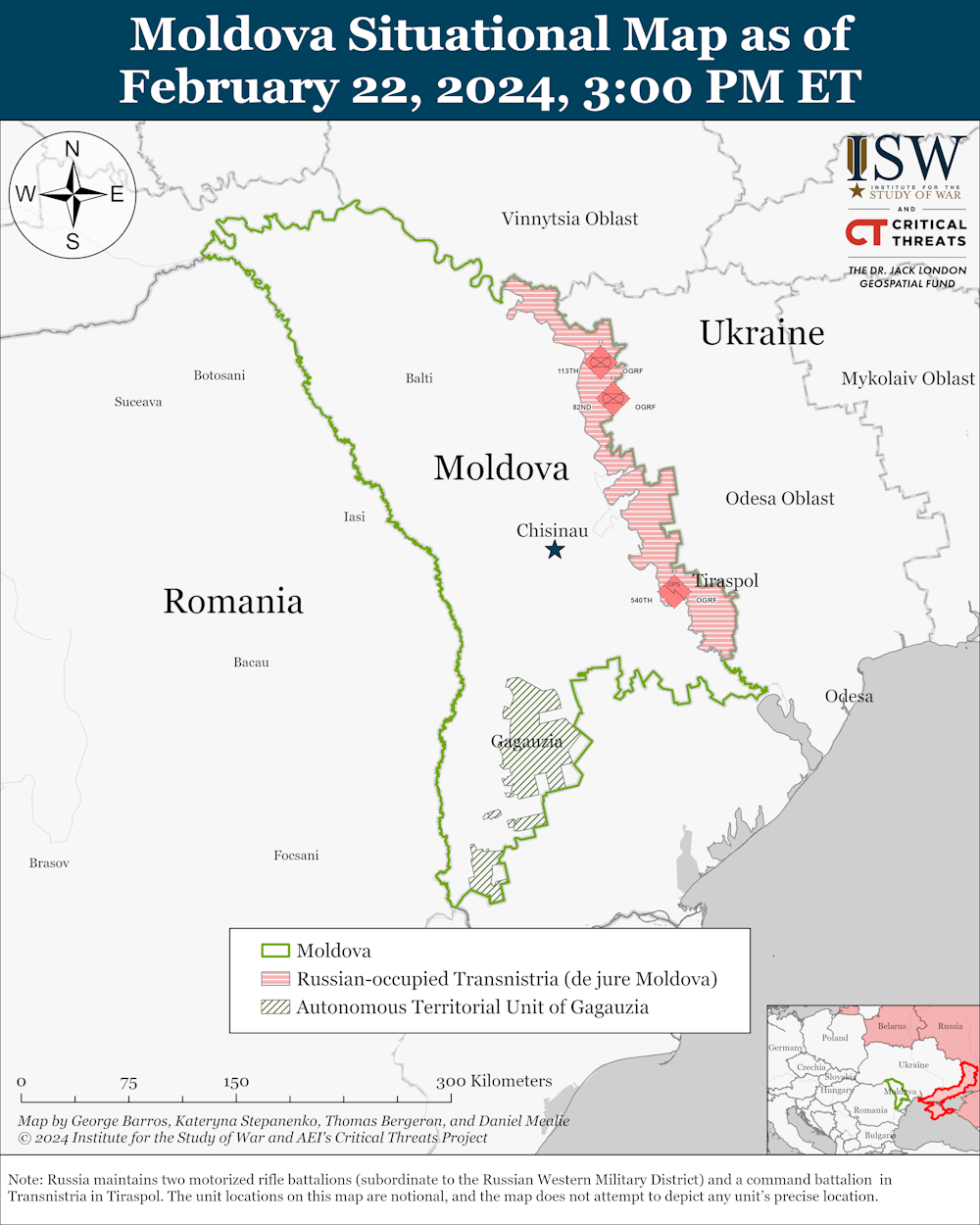
    Updates to this page

    Published 4 November 2024

    MIL OSI United Kingdom

  • MIL-OSI United Kingdom: Speech: PM speech to the INTERPOL General Assembly: 4 November 2024

    Source: United Kingdom – Prime Minister’s Office 10 Downing Street

    Prime Minister Keir Starmer makes a speech to the INTERPOL General Assembly in Glasgow.

    It’s great to welcome you all to Glasgow.

    It was right here, in this conference centre, exactly three years ago that over 190 countries came together at COP26 to agree the Glasgow Climate Pact. 

    That was the first global commitment to phase down the use of coal. And a vital step in the fight against climate change – a challenge that no country can meet on its own.

    So it’s fantastic that once again today, we have over 190 countries here working together to meet another global challenge: the threat of serious organised crime. 

    And it’s particularly fitting to be here in Glasgow: a place that was once home to what many consider to be the first professional City Police Force.

    And a place that is today home to our state-of-the-art Scottish Crime Campus, just down the road in Gartcosh.

    18 different organisations working together, under one roof, co-operating for a common cause. Precisely the kind of co-operation that is so essential to the missions of my government, and the foundation we rest everything upon.

    Greater security for our people. Security rooted in our values, in respect for human rights and upholding the rule of law. 

    Now, I was a prosecutor myself. I served as the Director of Public Prosecutions in England and Wales. Not here in Scotland – we have a complicated set of arrangements across these countries. 

    But what we know from being a country of four nations – what I know having served in that role – having seen the complexity of operations that fight organised crime, first-hand, is that crime is global. 

    Criminals do not respect borders. And so I want to start today by thanking you – all of you here in this conference centre. And the thousands that you represent. Those who serve in police, in intelligence, and security services right across the world. Because too often – what you do goes unrecognised. 

    Some of it necessarily unknown. But just look at some of the operations we can talk about – they tell the story. 

    The UK working with the US and Ecuador to seize 19 tonnes of cocaine. The global identification of over 40,000 victims of child sexual abuse online, and more than 70 countries working together to save them. 

    60 countries working together to tackle online scams, resulting in almost 4,000 arrests, and more than $250 million of assets seized. 

    And of course, the operation which infiltrated and seized the online platform used by LockBit, the world’s most harmful cyber-crime group.

    I know the hard work that goes into this. I know how many things have to come together, almost instantly. And most importantly – I know what would happen without you.

    The extra lives destroyed by drugs and violence. The unspeakable horrors of child sexual abuse. Gangs forcing the vulnerable into modern slavery or prostitution. People having their life savings stolen through online fraud.

    It’s your work, your service, that protects people from these threats. And because so much of your work is done in private, I’m grateful for this opportunity in public to say a huge and heartfelt thank you. 

    Now, of course INTERPOL is absolutely central to these efforts. As I say – I have seen the importance of global co-operation first-hand. I sent British prosecutors in Pakistan so we could work together on counter-terrorism. In West Africa – to disrupt the flow of drugs from South America to Europe, and ultimately to the UK. 

    So I understand the power of what INTERPOL does, and why the UK makes great use of those resources… 

    Handling thousands of enquiries every week from around the world, from intelligence sharing to managing direct threats to life. 

    So I am pleased to say today that the UK is increasing its funding for INTERPOL projects, investing £6 million this financial year.

    This will include support for improved data-sharing, and faster communications capabilities. The first ever Global Fraud Threat Assessment, and new regional networks. From strengthening co-operation across the Pacific to tackling drug and gun smuggling networks in the Caribbean.

    Because together, we want to send a clear message to the world’s most hardened criminals: there is no safe haven. There is no place that you can hide from justice.  Together – we’ve got the whole world covered. And together – we will defeat you.  

    And look – there is a particular group of organised criminals that urgently need to hear this message: the vile people smugglers, who think that human life can be trafficked, that borders can be ignored.

    And that desperation, misery and hope – they prey on that too – are all emotions that are ripe for exploitation. 

    Make no mistake – people smuggling needs a global response. And on a scale – way beyond where we are now. We need to unlock the power of that co-operation – across borders, agencies, continents – even. 

    And look – I know many people in this room are already working hard on this. So I accept that my argument here is a political one, first and foremost. 

    But I’m afraid we’re still at the stage where the world needs to wake up to the severity of this challenge. It goes back to security. 

    I was elected to deliver security for the British people. And strong borders are a part of that – of course they are. But I say it again – security doesn’t stop at our borders.  

    And illegal migration is, without question, a massive driver of global insecurity. There is nothing progressive about turning a blind eye as men, women and children die in the Channel. 

    And you don’t advance the cause of global justice – or compassion for those individuals – to pretend that there is. 

    This is a vile trade that must be stamped out – wherever it thrives. And it exploits the cracks between our institutions, pits nations against one another, profits from our inability – at the political level – to come together. 

    That’s part of the business model. And so I will work with anyone serious who can offer solutions on this – anyone.

    Because without co-ordinated, global action, it will not go away. 

    And unless we bring all the powers we have to bear on this, in much the same way as we do for terrorism, then we will struggle to bring these criminals to justice.  

    And that in a sense is my message here today. People-smuggling should be viewed as a global security threat similar to terrorism.

    We’ve got to combine resources, share intelligence and tactics, and tackle the problem upstream, working together to shut down the smuggling routes.

    We do that with terrorism. When I was the Director of Public Prosecutions, it was my personal mission to smash the terrorist gangs. And we worked across borders to ensure the safety of citizens, across Europe and across the world.  

    Now, as the UK’s Prime Minister, it is my personal mission to smash the people smuggling gangs. And look, that starts here in the UK. 

    This Labour government is resetting the UK’s whole approach to this challenge. No more gimmicks. No more gesture politics. No more irresponsible, undeliverable promises that almost by design – seek conflict with other countries.  

    We have turned the page on all of that. Because such promises are not worth the paper they are written on. All they do is waste taxpayer money, destroy people’s trust in politics as a force for good.

    Instead, we are approaching this issue with humanity, and with profound respect for international law.

    We will never withdraw from the European Convention on Human Rights. Indeed, we’re proud of the role the UK played in creating that Convention. Respecting international treaties also makes international co-operation easier, because it shows that the UK is a reliable partner.

    So our approach is different. As I say – we’re going to treat people smugglers like terrorists. So we’re taking our approach to counter-terrorism – which we know works – and applying it to the gangs, with our new Border Security Command.

    We’re ending the fragmentation between policing, Border Force and our intelligence agencies. Recruiting hundreds of specialist investigators. They are best of the best – from our National Crime Agency, Border Force, Immigration Enforcement, the CPS and our intelligence agencies – all working together. 

    We’re making border protection an elite border force. And not just within our country. We’re also working together with international partners, sharing intelligence and tactics.

    Earlier this year I visited the Headquarters of our National Crime Agency. I saw first-hand the ways we are already collaborating, and what it takes to intercept, to disrupt, and destroy these networks. There are so many tools at our disposal.

    We can seize their phones at the border, identifying and tracing smugglers wiring payments. We’ve already trained sniffer dogs to detect the smell of dinghy rubber and working with Bulgaria stopped more than 100 small boats upstream, long before they made it to the Channel. 

    And as we understand how these gangs work, we can invest in new capabilities and enhanced powers to smash them.

    So we’re giving our new Border Security Command an additional £75 million of new funding on top of the of £75 million we’ve already committed.

    This will support a new Organised Immigration Crime Intelligence Unit, hundreds of new investigators and intelligence officers, backed by state-of-the-art technology.

    We’re also investing a further £58 million in our National Crime Agency, including strengthening its data analysis and intelligence capabilities.

    And we’ll also legislate to give those fighting these gangs enhanced powers too. Again, look what we’ve done with counter-terrorism. We have the powers to trace suspects’ movements using information from the intelligence services.

    We can shut down their bank accounts, cut off their internet access, and arrest them for making preparations to act, before an attack has taken place.

    We don’t wait for them to act – we stop them before they act. And we need to stop people smuggling gangs before they act too.

    Now, as with any crime – smuggling does not operate in an institutional vacuum, so we also need to rebuild our broken asylum system, process claims swiftly and humanely.

    That will make law enforcement’s job much easier.  So we’re recruiting hundreds of additional people into asylum case working.

    Overall returns since this government came to office are now 9,400 – up almost 6,000 since the end of August. 

    Enforced returns are up almost a fifth on the same period last year. And returns of Foreign National Offenders are up 14 per cent.

    But look, the only way to defeat this vile trade and save lives is to stop people being smuggled here in the first place.

    And that means doing everything possible to deepen our cross-border co-operation. So international agreements matter.

    We have to use every tool we have – operational, diplomatic, political – to join up our response.

    President Macron and I have already agreed to increase intelligence sharing and do more to dismantle smuggling routes further upstream. This is also a priority for the bi-lateral co-operation treaty we are working on with Germany. 

    We’re also working with Italy to dismantle the supply chains of maritime equipment, combat illicit financial flows, and strengthen our investigative capacities and our data sharing. And as part of the UK’s wider reset with the European Union, we are seeking a new security pact, including restoring access to real-time intelligence sharing networks. And at the European Political Community this Thursday in Hungary, I’ll be putting this issue at the top of the international agenda once again. 

    But we need your help also.  This is the General Assembly of the world’s security experts. It’s your co-operation across borders that saves lives, time and again. It’s your collective efforts that bring organised criminals to justice, wherever they seek to hide.

    And it’s your leadership today that can help make a decisive breakthrough against this vile trade in human life. 

    Because if together we can win this war against the people smugglers, then this gathering will have achieved a victory for humanity – every bit as significant as the Glasgow Climate Pact.

    Because you will have helped to smash the gangs, secure our borders, and save countless lives.  And it is with that hope, and in that spirit, that I declare the 92nd General Assembly open. 

    Thank you so much.

    Updates to this page

    Published 4 November 2024

    MIL OSI United Kingdom

  • MIL-OSI United Kingdom: Talk Money fortnight is here to help you get more and spend less

    Source: City of York

    Published Monday, 4 November 2024

    The week after the Budget is announced, City of York Council and partners are holding a fortnight of events and activities to help residents with their own finances.

    Talk Money Fortnight starts today and runs from 4-15 November. Drop-in events and advice sessions will be held for any residents facing financial struggles. All are welcome to get impartial, free and discreet information and support to maximise their household income, spend less and get good advice.

    Residents are urged to use an online, confidential and impartial benefits calculator so they can claim what they’re eligible for and don’t miss out on the millions of pounds in unclaimed benefits nationally.

    Those of State Pension age can check if they’re eligible for and claim Pension Credit which unlocks other benefits – even if they own their home and have savings, and any residents struggling to pay Council Tax can get advice on claiming Council Tax Support. For those worried about rising fuel bills, there’s information on grants for energy saving measures, and how to stay online by accessing lower broadband and phone tariffs.

    Eligible families can get help with childcare and claim free school meals which bring further help with uniforms and extra money to support the child’s schooling.

    Pauline Stuchfield, Director of Housing and Communities at City of York Council, said:

    It’s never too late to see if there are ways to boost your income and claim all you’re entitled to: we’re here to help you do that during Talk Money fortnight and year-round.”

    Talk Money Week is a national initiative that promotes discussions about money matters, such as budgeting, saving, debt management, and financial planning.

    Check out and visit the drop-in events listed here and a wealth of year-round advice, ideas and information from partners at www.livewellyork.co.uk/talkmoney

    MIL OSI United Kingdom

  • MIL-OSI USA: UConn Named Fulbright HSI Leader for First Time

    Source: US State of Connecticut

    The University of Connecticut has been named as a Fulbright HSI (Hispanic-Serving Institution) Leader for 2024. Each year, the U.S. Department of State’s Bureau of Educational and Cultural Affairs (ECA) recognizes select HSIs for their strong engagement of with the Fulbright Program, the U.S. government’s flagship international academic exchange program.

    Fulbright HSI Leaders demonstrate noteworthy support for Fulbright exchange participants and encourage administrators, faculty, and students at HSIs to engage with Fulbright on campus.  The Fulbright HSI Leaders Initiative also highlights the strength of HSIs as destinations for international students and scholars

    This marks the first time that UConn has earned this distinction and is just one of 51 institutions nationally to be recognized in 2024.

    The Fulbright HSI Leaders were announced during the International Plenary Session of the annual conference of the Hispanic Association of Colleges and Universities (HACU).

    “Fulbrighters from HSIs contribute to the Program’s goal of reflecting the full diversity, perspectives, and talents of the American people,” says Scott Weinhold, Senior Bureau Official for the Bureau of Educational and Cultural Affairs.

    “This recognition affirms our commitment to supporting current students and recent graduates from all backgrounds, majors, and campuses as they pursue a Fulbright award,” says Michael Cunnigham, the Assistant Director of the Office of National Scholarships and Fellowships.

    UConn’s current representatives in the Fulbright U.S. Student Program include Lizzy Irizarry ’23 (CLAS), ’24 MPA. Irizarry earned her undergraduate degree in Latino studies with a minor in Africana studies before attaining her master’s in public administration. She is currently in the southern part of Italy for her Fulbright experience.

    Since its founding in 1946, the Fulbright Program has provided over 400,000 talented and accomplished students, scholars, teachers, artists, and professionals of all backgrounds and in all fields with the opportunity to study, teach, and conduct research abroad.  Fulbrighters exchange ideas, build people-to-people connections, and work to address complex address global challenges.  Fulbright is a program of the U.S. Department of State, with funding provided by the U.S. Government. Participating governments and host institutions, corporations, and foundations around the world also provide direct and indirect support to the program.

    The Fulbright Program implements a wide range of initiatives to ensure that its participants reflect all aspects of the diversity of U.S. society and societies abroad. In addition to HACU, the Fulbright Program also cultivates relationships with external stakeholders, including the White House Initiative on HBCUs, Diversity Abroad, UNCF, the National Clearinghouse on Disability and Exchange, the American Association of Community Colleges, and Mobility International, among many others.

    MIL OSI USA News

  • MIL-OSI United Kingdom: New skills programme seeks to link employers and students

    Source: City of Manchester

    Talented students at schools and colleges in Manchester are being connected to future employers helping to cultivate new opportunities as they look to enter the workforce.

    The BREE (Building Relationships with Employers and Educators) project has been launched by Manchester City Council to bring together employers, educators and students to help them succeed in their future career path. 

    The first opening event was held in the city on Wednesday, 30 October, where representatives from businesses, schools and colleges were present to celebrate the initiative alongside the Council Leader Cllr Bev Craig, as well as partner organisations and stakeholders. 

    As the Council works towards Manchester becoming accredited as a Child Friendly City, it is important the city develops these relationships to give young people the best possible start in life, helping to develop skills and talent that will help them succeed in the years to come. 

    Businesses across Manchester are being called to join the project and lend their expertise and voice to growing this community, and establish strong bonds between the education sector and further work and training. It is a simple process, completed via a form on the Council’s website. 

    Councillor John Hacking, Executive Member for Skills, Employment and Leisure said: “We know how important it is to provide young people the options and pathways to a future career. Whether it is sparking interest in a trade or sector, to showing what extra training is on offer for them we want to ensure there are no doors left unopened for school and university leavers. 

    “Work and Skills is a hugely important part of the work the Council does, working in tandem with our wider economic strategy, we want to see more people getting into well-paying jobs, helping to grow our city and economy in an inclusive and progressive way.” 

    MIL OSI United Kingdom