Category: Evening Report

  • MIL-Evening Report: If NZ wants to decarbonise energy, we need to know which renewables deliver the best payback

    Source: The Conversation (Au and NZ) – By Alan Brent, Professor and Chair in Sustainable Energy Systems, Te Herenga Waka — Victoria University of Wellington

    Getty Images

    A national energy strategy for Aotearoa New Zealand was meant to be ready at the end of last year. As it stands, we’re still waiting for a cohesive, all-encompassing plan to meet the country’s energy demand today and in the future.

    One would expect such a plan to first focus on reducing energy demand through improved energy efficiency across all sectors.

    The next step should be greater renewable electrification of all sectors. However, questions remain about the cradle-to-grave implications of investments in these renewable resources.

    We have conducted life-cycle assessments of several renewable electricity generation technologies, including wind and solar, that the country is investing in now. We found the carbon and energy footprints are quite small and favourably complement our current portfolio of renewable electricity generation assets.

    Meeting future demand

    The latest assessments provided by the Ministry of Business, Employment and Innovation echo earlier work by the grid operator Transpower. Both indicate that overall demand for electricity could nearly double by 2050.

    Many researchers believe these scenarios are an underestimate. One study suggests the power generation capacity will potentially need to increase threefold over this period. Other modelling efforts project current capacity will need to increase 13 times, especially if we want to decarbonise all sectors and export energy carriers such as hydrogen.

    This is, of course, because we want all new generation to come from renewable resources, with much lower capacity factors (the percentage of the year they deliver power) associated with their variability.

    Additional storage requirements will also be enormous. Following the termination of work on a proposed pumped hydro project, other options need investigating.

    Wind and solar are becoming the primary renewable technologies.
    Shutterstock/Kyohei Miyazaki

    Building renewable generation

    The latest World Energy Outlook published by the International Energy Agency (IEA) shows that wind and solar, primarily photovoltaic panels, are quickly taking over as the primary renewable technologies.

    This is also true in Aotearoa New Zealand. An updated version of the generation investment survey, commissioned by the Electricity Authority, shows most of the committed and actively pursued projects (to be commissioned by 2030) are solar photovoltaic and onshore wind farms.

    Offshore wind projects are on the horizon, too, but have been facing challenges such as proposed seabed mining in the same area and a lack of price stabilisation measures typical in other jurisdictions. New legislation aims to address some of these challenges.

    Distributed solar power (small-scale systems to power homes, buildings and communities) has seen near-exponential growth. Our analysis indicates wind (onshore and offshore) and distributed solar will make an almost equal contribution to power generation by 2050, with a slightly larger share by utility-scale solar.

    Cradle-to-grave analyses

    The main goal is to maintain a stable grid with secure and affordable electricity supply. But there are other sustainability considerations associated with what happens at the end of renewable technologies’ use and where their components come from.

    The IEA’s Global Critical Minerals Outlook shows the fast-growing global demand for a suite of materials with complex supply chains. We have also investigated the materials intensity of taking up these technologies in Aotearoa New Zealand, and discussed the greater dependence on those supply chains.

    The challenges in securing these metals in a sustainable manner include environmental and social impacts associated with the mining and processing of the materials and the manufacturing of different components that need to be transported for implementation here. There are also operating and maintenance requirements, including the replacement of components, and the dismantling of the assets in a responsible manner.

    We have undertaken comprehensive life-cycle assessments, based on international standards, of the recently commissioned onshore Harapaki wind farm, a proposed offshore wind farm in the South Taranaki Bight, a utility-scale solar farm in Waikato and distributed solar photovoltaic systems, with and without batteries, across the country.

    The usual metrics are energy inputs and carbon emissions because they describe the efficiency of these technologies. They are considered a first proxy of whether a technology is appropriate for a given context.

    Beyond that, we used the following specific metrics, as summarised in the table below:

    • GWP: global warming potential (carbon emissions during a technology’s life cycle per energy unit delivered).

    • CPBT: carbon payback time (how long a technology needs to be operational before its life cycle emissions equal the avoided emissions, either using the grid and its associated emissions or conventional natural gas turbines).

    • CED: cumulative energy demand over the life cycle of a technology.

    • EPBT: energy payback time (how long a technology needs to be operational before the electricity it generates equals the CED).

    • EROI: energy return on investment (the amount of usable energy delivered from an energy source compared to the energy required to extract, process and distribute that source, essentially quantifying the “profit” from energy production).

    There is much debate about the minimum energy return on investment that makes an energy source acceptable. A value of more than ten is generally viewed as positive.

    Life cycle assessment metrics of wind and solar power in Aotearoa New Zealand.
    Te Herenga Waka Victoria University of Wellington, CC BY-SA

    For all technologies we assessed, the overall greenhouse gas emissions are lower than the grid emissions factor. Because of New Zealand’s already low-emissions grid, the carbon payback time is around three to seven years for utility-scale generation. But for small-scale, distributed generation it can be up to 13 years. If the displacement of gas turbines is considered, the payback is halved.

    Energy return on investment is above ten for all technologies, but utility-scale generation is better than distributed solar, with values of between 30 and 75.

    To put this into perspective, the energy return on investment for hydropower, if operated for 100 years, is reported to be 110. Utility-scale wind and solar being commissioned now have an operational life of 30 years but are typically expected to be refurbished.

    This means their energy return on investment is becoming comparable to hydropower.

    The authors do not work for, consult, own shares in or receive funding from any company or organisation that would benefit from this article, and have disclosed no relevant affiliations beyond their academic appointment.

    ref. If NZ wants to decarbonise energy, we need to know which renewables deliver the best payback – https://theconversation.com/if-nz-wants-to-decarbonise-energy-we-need-to-know-which-renewables-deliver-the-best-payback-251819

    MIL OSI AnalysisEveningReport.nz

  • MIL-Evening Report: You can catch the ‘nocebo’ effect from family, friends – even social media. But what is it, actually?

    Source: The Conversation (Au and NZ) – By Cosette Saunders, PhD candidate, Sydney Placebo Lab, University of Sydney

    Pixel-Shot/Shutterstock

    In 1998, shortly after arriving for work, a Tennessee high-school teacher reported a “gasoline-like smell” and feeling dizzy. Soon after, many students and staff began reporting symptoms of chemical poisoning. Some 38 people had such extreme symptoms they were kept in hospital overnight.

    Yet investigators didn’t find any evidence the school had been contaminated.

    How could staff and students of this United States high school have had such extreme reactions without being exposed to a toxic agent?

    The answer is the “nocebo effect”.

    What is the nocebo effect?

    Most people have heard of the placebo effect, where a fake treatment can improve someone’s health because they believe it will help them.

    The nocebo effect is the opposite. It occurs when someone expects a negative outcome from a harmless treatment or situation, and this triggers worse health.

    The staff and students at the Tennessee high school believed they had been exposed to a toxic gas leak and expected symptoms. These negative expectations caused them to feel sick even though there was no gas leak.

    How is this relevant today?

    When a doctor prescribes you a new medicine, they need to warn about possible side effects, as part of you giving your informed consent.

    But knowing the side effects can cause you to expect them, and therefore lead you to experience more side effects.

    A large-scale review found nearly 73% of people in drug trials given a placebo and told about possible side-effects reported side effects despite taking no active treatment – an example of the nocebo effect.

    Placebo and nocebo effects can also affect the efficacy of real medical treatments.

    For example, in one study, participants who were led to expect a powerful painkiller would give them
    strong pain relief reported roughly twice as much pain relief compared to those who received the same drug without being told it was a painkiller. However, when participants were led to expect the same painkiller would worsen their pain, they had no pain relief – as if they hadn’t received the drug at all.

    Knowing the side effects can cause you to expect side effects and therefore experience more side effects.
    SpeedKingz/Shutterstock

    How do nocebo effects develop?

    We already know that simply warning people about possible side effects can make them more likely. We also know that past experiences with treatments shape what we expect and experience. If we have experienced pain from a treatment in the past, this can cause us to expect and experience more pain when we receive that treatment again.

    Now there’s growing evidence nocebo effects can also be transmitted socially between peers. In other words, we can “catch” them from other people like a cold, except the transmission happens simply by observing others.

    Negative expectations can spread from person to person, as shown in one experiment. Observing someone experience more pain in response to a treatment made the observer feel more pain in response to the same treatment when it was their turn, even though the treatment the observer experienced was fake.

    Social media amplifies this, carrying personal tales of woe much further than once possible, regardless of the accuracy.

    For example, a tweet by singer Nicki Minaj in 2021 claimed “the vaccine” (presumably the COVID vaccine) gave her cousin’s friend swollen testicles and made him “impotent”. This went out to her millions of followers, and generated more than 100,000 likes. It was debunked days later.

    One study found that negative stories about COVID vaccine side effects – especially from friends or social media – were linked to stronger expectations of having those same symptoms. These expectations, in turn, predicted the actual side effects people reported after vaccination.

    An Australian study found this effect was amplified among individuals who already worried a lot about side effects, felt anxious or stressed, or looked primarily to social media (instead of mainstream sources) for health information.

    If you hear about COVID vaccine side effects on social media, you’re more likely to expect side effects and report you have them.
    Jo Panuwat D/Shutterstock

    The effects can be serious

    For individuals, nocebo effects can lead to unnecessary suffering with genuine pain and discomfort. Unpleasant side effects can also contribute to people not continuing their treatment as prescribed or abandoning it altogether.

    On a broader public health level, the nocebo effect can make it hard to evaluate the safety of new technologies and public health interventions. For example, health concerns have surfaced around the safety of electromagnetic fields from wireless signals and 5G towers, supposedly causing a range of physical symptoms like headache and insomnia.

    In the laboratory, these symptoms have been attributed to nocebo responses rather than properties of the technology itself.

    When unfounded negative information takes hold, people suffer genuine health effects, businesses face pushback, and the wider community may grow suspicious of technologies that are generally considered safe based on available evidence.

    What can we do about it?

    Individuals can reduce their likelihood of experiencing nocebo-driven symptoms by seeking reliable information from credible medical sources or reputable health organisations instead of relying on social media.

    But even the way side effect information is communicated contributes to the nocebo effect. So health professionals may be able to help by framing discussions of potential side effects in a more positive way and – when appropriate – emphasising that most patients experience no problems.

    Negative expectations can physically hurt us, and thanks to social media, they can spread widely, fast. However, by staying informed, being mindful of our own beliefs, and insisting on thoughtful communication from health professionals and public health campaigns, we can keep the nocebo effect in check.

    Ben Colagiuri receives funding from the Australian Research Council.

    Cosette Saunders does not work for, consult, own shares in or receive funding from any company or organisation that would benefit from this article, and has disclosed no relevant affiliations beyond their academic appointment.

    ref. You can catch the ‘nocebo’ effect from family, friends – even social media. But what is it, actually? – https://theconversation.com/you-can-catch-the-nocebo-effect-from-family-friends-even-social-media-but-what-is-it-actually-249844

    MIL OSI AnalysisEveningReport.nz

  • MIL-Evening Report: More young people are caring for a loved one with dementia. It takes a unique toll

    Source: The Conversation (Au and NZ) – By Katya Numbers, Postdoctoral Research Fellow & Lecturer, Centre for Healthy Brain Ageing, UNSW Sydney

    Miljan Zivkovic/Shutterstock

    Dementia is a growing health problem, affecting more than 55 million people around the world.

    In Australia, an estimated 433,300 people are living with dementia. This figure is projected to rise to 812,500 by 2054.

    Dementia refers to brain disorders that are not a normal part of ageing. These disorders, including Alzheimer’s disease, cause a decline in cognitive function and changes in mood, memory, thinking and behaviour. Ultimately they affect a person’s ability to carry out everyday tasks.

    In Australia, around 75% of people with dementia live at home.

    While dementia care at home has traditionally been associated with older spouses or middle-aged children, it seems an increasing number of young adults in their 20s and 30s, and even teenagers, are stepping into this role to care for grandparents, parents or other loved ones.

    In Australia, 3 million people (11.9% of the population) are carers. This includes 391,300 under 25 – a sharp rise from 235,300 in 2018.

    How many young carers are specifically caring for a loved one with dementia is unclear, and something we need more data on. Young dementia carers remain largely invisible, with minimal recognition or support.

    Unique challenges and the burden of responsibility

    Unlike older carers, who may have more financial stability and free time, young carers often must balance caregiving with university, early-career pressures, and personal development, including maintaining social relationships, pursuing hobbies, and prioritising mental welling.

    In Australia, where 51% of men and 43% of women aged 20–24 still live with their parents, many young carers will have limited experience in managing a household independently.

    They’re often thrust into complex responsibilities such as cooking, housework, managing the family budget, coordinating medical appointments and administering medications.

    Beyond that, they may need to provide physical care such as lifting or helping their loved one move around, and personal care such as dressing, washing, and helping with toileting.

    Young carers often must balance caregiving with other responsibilities.
    Iris Wang/Unsplash

    All this can leave young carers feeling unprepared, overwhelmed and isolated.

    While general support groups exist for dementia carers and young carers more broadly, few cater specifically to young adults caring for someone with dementia.

    This lack of targeted support is likely to heighten feelings of isolation, as the young person’s friends struggle to relate to the emotional and practical burdens young carers face.

    The demanding nature of caregiving, combined with the difficulty of sharing these experiences with peers, means young dementia carers can become disconnected socially.

    The psychological toll

    These challenges take a profound psychological toll on young carers.

    Research shows young carers are 35% more likely to report mental health issues than their non-caregiving peers. These can include depression, anxiety and burnout.

    Again, we don’t have data on mental health outcomes among young dementia carers specifically. But in Australia, 75% of dementia carers reported being affected physically or emotionally by their caring role. Some 41% felt weary or lacked energy, and 31% felt worried or depressed.

    Also, there are negative stereotypes about ageing – that people turn forgetful, frail, and need constant care. For young carers whose loved ones have dementia, these stereotypes can be reinforced by their experience. This could shape young carers’ perceptions of their own future health and wellbeing and increase anxiety about ageing.

    Caregiving may also affect physical health. Research suggests carers often sacrifice healthy habits such as exercise and a balanced diet. What’s more, carers report symptoms including poor sleep, fatigue, headaches and back pain due to the physical demands of caregiving.

    Caring for a parent – a role reversal

    This emotional burden is particularly acute for those caring for a parent. These young carers are likely to experience the progressive loss of parental support, while simultaneously assuming the demanding role of caregiver.

    A significant portion of young dementia carers support parents with young-onset dementia, a form of dementia diagnosed before age 65. These young carers face the shock of a diagnosis that defies typical expectations of ageing.

    The burden may be compounded by fears of genetic inheritance. Young onset dementia often has a hereditary component.

    This means young carers may have a higher risk of developing the condition themselves – a concern spousal carers don’t have. This fear can fuel health anxiety, alter life planning, and create a pervasive sense of vulnerability.

    A significant portion of young dementia carers support parents with young-onset dementia.
    VisualProduction/Shutterstock

    How we can better support young dementia carers

    Despite their growing numbers, young dementia carers remain largely overlooked in research, policy and support services. This is partly due to the challenges in engaging this demographic in research, as these young people juggle busy lives balancing caregiving with education and work.

    Many young carers also don’t self-identify as carers, hindering their access to support and resources. This could be because of the stigmatising label, or a feeling they’re not doing enough to qualify as a carer. It could even be because of cultural norms which can frame caregiving as a family obligation, rather than a distinct role.

    Nonetheless, young dementia carers require targeted support beyond generic caregiving resources.

    This support might include specialised peer networks, educational programs, and practical skills training. Tailored programs and resources should ideally be co-designed with young dementia carers to ensure they meet their unique needs and preferences.

    With dementia cases in Australia and elsewhere projected to increase, the demand for informal carers – including young adults – will continue to grow.

    Without intervention, these young carers risk burnout, social isolation, and long-term health consequences. We must ensure flexible, age-appropriate support for this often invisible group. Investing in young dementia carers is not just a moral imperative – it’s a crucial step toward a sustainable, compassionate care system for the future.

    Dementia Australia offers a national helpline, information sessions, and a peer-to-peer connection platform for carers.

    The Young Carers Network, run by Carers Australia, offers mental health resources, financial guidance, and respite care information, plus bursaries young carers can apply for to reduce financial pressure.

    Katya is a co-founder of Y-Care of Dementia, a support network for Australians in their 20s and 30s who are caring for someone living with dementia.

    Serena Sabatini does not work for, consult, own shares in or receive funding from any company or organisation that would benefit from this article, and has disclosed no relevant affiliations beyond their academic appointment.

    ref. More young people are caring for a loved one with dementia. It takes a unique toll – https://theconversation.com/more-young-people-are-caring-for-a-loved-one-with-dementia-it-takes-a-unique-toll-249361

    MIL OSI AnalysisEveningReport.nz

  • MIL-Evening Report: Trump is ignoring the power of nationalism at his own peril

    Source: The Conversation (Au and NZ) – By David Smith, Associate Professor in American Politics and Foreign Policy, US Studies Centre, University of Sydney

    US President Donald Trump has exploited American nationalism as effectively as anyone in living memory. What sets him apart is his use of national humiliation as a political emotion. Any presidential candidate can talk their country up, but Trump knows how to talk his country down.

    Trump’s consistent message has been that American problems – trade deficits, job losses, illegal immigration, crime and even drug addiction – are the result of deliberate acts by other countries. The really humiliating part is that American politicians let it happen.

    Many Americans have welcomed Trump’s message that their country’s problems can be solved by reestablishing international dominance. They see this nationalist approach as an overdue corrective to the “globalist” foreign policies of the post-second world war era.

    But people in other countries also have feelings of national pride and aspire to be free from foreign domination. This should be obvious, but so far Trump is ignoring the power of nationalism in other countries even as he harnesses it in his own. This makes his foreign policy job a lot harder.

    How Canadians have rallied against Trump

    Take the example of Canada.

    When Trump was elected to his second term in November 2024, it seemed certain there would soon be a Canadian prime minister who was more aligned with him than Justin Trudeau. Trudeau’s unpopularity had dragged the Liberal Party down, and the populist Conservative leader Pierre Poilievre looked set to win the this year’s election.

    As he prepared for a trade war with Canada, Trump could have concentrated his fire on his enemies in the doomed Liberal government. Instead, he spent months insulting Canada’s national identity. He repeatedly said Canada should be the “51st state of the US”, calling Trudeau “governor”.

    Trump says ‘Canada was meant to be our 51st state’ in a Fox News interview.

    Americans can dismiss Trump’s talk of annexing Canada as a joke, but Canadians can’t. Regardless of whether Trump would ever follow through with attempting an annexation, his language is an attack on Canadian sovereignty. No one with any sense of national pride would tolerate it.

    An Angus Reid poll found the number of people saying they had a “deep emotional attachment” to Canada rose from 49% to 59% from December 2024 to February 2025. That emotional attachment is visible in everything from “buy Canadian” campaigns to Canadians booing the US national anthem at hockey games.

    The Liberals, under new leader Mark Carney, are also experiencing a remarkable bounce-back in the polls.

    Another Angus Reid poll shows that voting intention for the Liberals has surged from 16% in December to 42% now. They are now leading the Conservatives, who have 37% support. Some are now anticipating a snap election could be called in days.

    Ontario Premier Doug Ford, who has sometimes been likened to Trump, has also led a ferocious pro-Canadian resistance to American tariffs, getting his own re-election boost.

    Trump’s defenders often claim his chaotic bluster is simply a negotiating tactic, a way of spooking others into accepting terms more favourable to him. If so, this tactic is backfiring in Canada.

    Trade wars require sacrifices. Citizens must pay more for the sake of protecting their countries’ industries. Canadians seem a lot more willing to make that sacrifice than Americans, who are mostly confused that their friendly neighbour has suddenly been recast as an enemy.

    The importance of national identity

    Other countries have shown they will not cave easily, either, as Trump puts their national identity at stake.

    Demanding to buy another country’s territory, as Trump keeps doing with Greenland, a self-governing territory under Danish control, may be even more insulting than threatening to take it, as he keeps doing with Panama. Each time Greenlanders, Danes and Panamanians refuse Trump, his credibility erodes further.

    Trump talks about the territory of other countries in terms of “real estate”, even suggesting the United States should “redevelop” Gaza after evicting the Palestinians.

    But sovereign land is not real estate. In a world of nation-states defined by territory, even sparsely inhabited territory has “sacred value”. This is particularly true for peoples seeking statehood on their land.

    Sacred values” are things people see as non-negotiable because they are linked to their sense of identity and moral order in the world. Researchers warn that offering money in exchange for sacred values is deeply offensive, and likely to harm, rather than help, negotiations.

    There is a reason why governments hardly ever sell their territory to other countries anymore. Empires may have done in this in the past, but not nations. They view their lands, and the people who live on them, as inalienable from the nation.

    Trump clearly doesn’t understand this concept. He has shown no empathy for Ukraine, a country whose territory actually has been invaded. He accused Ukrainian President Volodomyr Zelenskyy of wanting to prolong the war so he could “keep the gravy train going”, as if harvesting US aid dollars was the real reason Ukrainians were fighting for their country’s existence.

    Trump’s contempt for Ukraine, Canada, Greenland, Gaza, Denmark and Panama has reverberations far beyond these places. It signals that his brand of American nationalism has no place for anyone else’s national aspirations or sovereignty.

    This will not promote the deal-making Trump wants because no one trusts an unstable, imperial power to stick to its agreements. It would be painful for many countries to reduce their dependence on the United States, but it would be more painful to give away their national dignity.

    David Smith does not work for, consult, own shares in or receive funding from any company or organisation that would benefit from this article, and has disclosed no relevant affiliations beyond their academic appointment.

    ref. Trump is ignoring the power of nationalism at his own peril – https://theconversation.com/trump-is-ignoring-the-power-of-nationalism-at-his-own-peril-252299

    MIL OSI AnalysisEveningReport.nz

  • MIL-Evening Report: Rain gave Australia’s environment a fourth year of reprieve in 2024 – but this masks deepening problems: report

    Source: The Conversation (Au and NZ) – By Albert Van Dijk, Professor, Water and Landscape Dynamics, Fenner School of Environment & Society, Australian National University

    Lauren Henderson/Shutterstock

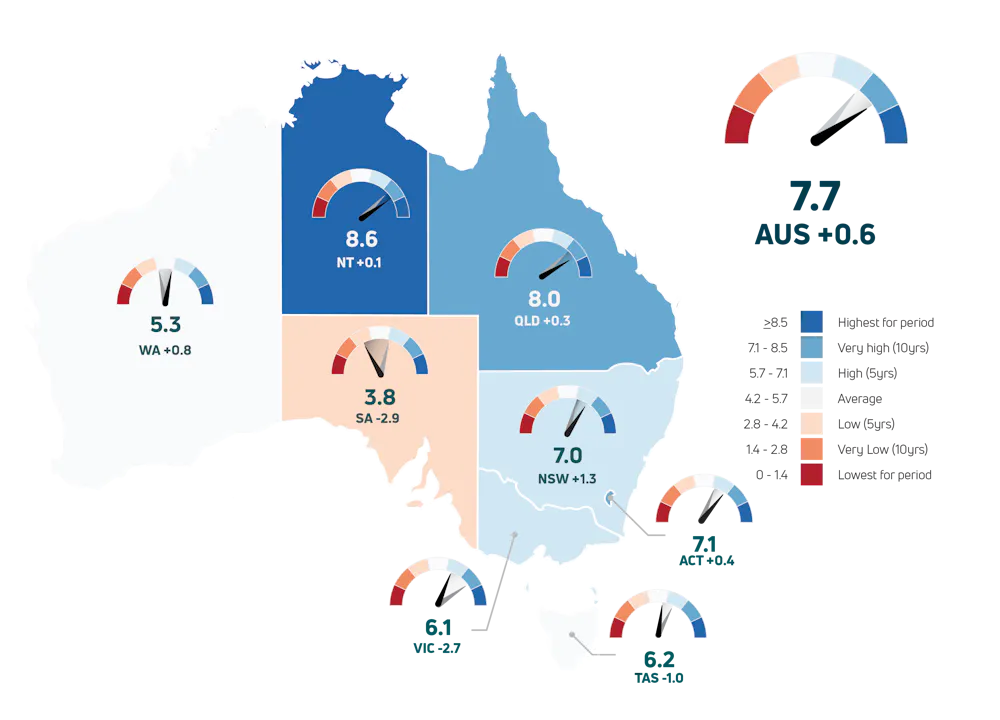
    For the fourth year running, the condition of Australia’s environment has been relatively good overall. Our national environment scorecard released today gives 2024 a mark of 7.7 out of 10.

    You might wonder how this can be. After all, climate change is intensifying and threatened species are still in decline.

    The main reason: good rainfall partly offset the impact of global warming. In many parts of Australia, rainfall, soil water and river flows were well above average, there were fewer large bushfires, and vegetation continued to grow. Overall, conditions were above average in the wetter north and east of Australia, although parts of the south and west were very dry.

    But this is no cause for complacency. Australia’s environment remains under intense pressure. Favourable conditions have simply offered a welcome but temporary reprieve. As a nation we must grasp the opportunity now to implement lasting solutions before the next cycle of drought and fire comes around.

    This snapshot shows the environmental score for a range of indicators in Australia.
    Australia’s Environment Report 2024, CC BY-NC-ND

    Preparing the national scorecard

    For the tenth year running, we have trawled through a huge amount of data from satellites, weather and water measuring stations, and ecological surveys.

    We gathered information about climate change, oceans, people, weather, water, soils, plants, fire and biodiversity.

    Then we analysed the data and summarised it all in a report that includes an overall score for the environment. This score (between zero and ten) gives a relative measure of how favourable conditions were for nature, agriculture and our way of life over the past year in comparison to all years since 2000. This is the period we have reliable records for.

    While it is a national report, conditions vary enormously between regions and so we also prepare regional scorecards. You can download the scorecard for your region at our website.

    Different jurisdictions had quite different environmental scores in 2024.
    Australia’s Environment Report 2024, CC BY-NC-ND

    Welcome news, but alarming trends continue

    Globally, 2024 was the world’s hottest year on record. It was Australia’s second hottest year, with the record warmest sea surface temperatures. As a result, the Great Barrier Reef experienced its fifth mass bleaching event since 2016, while Ningaloo Reef in Western Australia also experienced bleaching.

    Yet bushfire activity was low despite high temperatures, thanks to regular rainfall.

    National rainfall was 18% above average, improving soil condition and increasing tree canopy cover.

    States such as New South Wales saw notable improvements in environmental conditions, while conditions also improved somewhat in Western Australia. Others experienced declines, particularly South Australia, Victoria, and Tasmania. These regional contrasts were largely driven by rainfall – good rains can hide some underlying environmental degradation trends.

    Favourable weather conditions bumped up the nation’s score this year, rather than sustained environmental improvements.

    Mapping the environmental condition score to local government areas reveals poor (red) conditions in the west and the south, with good scores (blue) in the east and north. White is neutral.
    Australia’s Environment Explorer, CC BY-NC-ND

    A temporary respite?

    The past four years show Australia’s environment is capable of bouncing back from drought and fire when conditions are right.

    But the global climate crisis continues to escalate, and Australia remains highly vulnerable. Rising sea levels, more extreme weather and fire events continue to threaten our environment and livelihoods. The consequences of extreme events can persist for many years, like we have seen for the Black Summer of 2019–20.

    To play our part in limiting global warming, Australia needs to reduce its greenhouse gas emissions. Progress is stalling: last year, national emissions fell slightly (0.6%) below 2023 levels but were still higher than in 2022. Australia’s greenhouse gas emissions per person remain among the highest in the world.

    Biodiversity loss remains an urgent issue. The national threatened species list grew by 41 species in 2024. While this figure is much lower than the record of 130 species added in 2023, it remains well above the long-term average of 25 species added per year.

    More than half of the newly listed or uplisted species were directly affected by the Black Summer fires. Meanwhile, habitat destruction and invasive species continue to put pressure on native ecosystems and species.

    The Threatened Species Index captures data from long-term threatened species monitoring. The index is updated annually but with a three-year lag due largely to delays in data processing and sharing. This means the 2024 index includes data up to 2021.

    The index revealed the abundance of threatened birds, mammals, plants, and frogs has fallen an average of 58% since 2000.

    But there may be some good news. Between 2020 and 2021, the overall index increased slightly (2%) suggesting the decline has stabilised and some recovery is evident across species groups. We’ll need further monitoring to confirm whether this represents a lasting turnaround or a temporary pause in declines.

    This graph shows the relative abundance of different categories of species listed as threatened under the EPBC Act since 2000, as collated by the Threatened Species Index.
    Australia’s Environment Report 2024, CC BY-NC-ND

    What needs to happen?

    The 2024 Australia’s Environment Report offers a cautiously optimistic picture of the present. Without intervention, the future will look a lot worse.

    Australia must act decisively to secure our nation’s environmental future. This includes reducing greenhouse gas emissions, introducing stronger land management policies and increasing conservation efforts to maintain and restore our ecosystems.

    Without redoubling our efforts, the apparent environmental improvements will not be more than a temporary pause in a long-term downward trend.

    Australia’s Environment Report is produced by the ANU Fenner School for Environment & Society and the Terrestrial Ecosystem Research Network (TERN), which is enabled by the National Collaborative Research Infrastructure Strategy.

    Albert Van Dijk receives or has previously received funding from several government-funded agencies, grant schemes and programs.

    Shoshana Rapley is a Research Assistant and PhD candidate at the Australian National University and has received funding from the Ecological Society of Australia and BirdLife Australia.

    Tayla Lawrie is a current employee of the Terrestrial Ecosystem Research Network (TERN), funded by the National Collaborative Research Infrastructure Strategy.

    ref. Rain gave Australia’s environment a fourth year of reprieve in 2024 – but this masks deepening problems: report – https://theconversation.com/rain-gave-australias-environment-a-fourth-year-of-reprieve-in-2024-but-this-masks-deepening-problems-report-252183

    MIL OSI AnalysisEveningReport.nz

  • MIL-Evening Report: Southern elephant seals are adaptable – but they struggle when faced with both rapid climate change and human impacts

    Source: The Conversation (Au and NZ) – By Nic Rawlence, Associate Professor in Ancient DNA, University of Otago

    Wikimedia Commons/Antoine Lamielle, CC BY-SA

    Southern elephant seals (Mirounga leonina) are an iconic species of the Southern Ocean. But with rapid environmental changes in their ocean home, the seals’ population range has been shifting.

    Once spread across vast areas of the southern hemisphere, these apex predators are facing challenges from both climate shifts and human activities.

    Our new research examines ancient and modern DNA, archaeological records and ecological data.

    It reveals how these large marine mammals have adapted – and sometimes failed to adapt – to such pressures since the height of the last Ice Age thousands of years ago.

    A dynamic evolutionary history

    Today, the largest southern elephant seal populations are found on subantarctic islands, including South Georgia, Macquarie Island and the Falkland Islands. These colonies act as global strongholds for the species.

    Yet in the past, until just a few hundred years ago, many smaller populations existed on the Victoria Land Coast in Antarctica and closer to temperate zones, on mainland Australia and New Zealand.

    Our study focused on the Australasian lineage of southern elephant seals, drawing on samples from these ancient colonies. By analysing their genetic makeup, we pieced together a timeline of their biological heritage, including population expansions and contractions.

    This has crucial implications for understanding the resilience of elephant seals in the face of climate change.

    Subantarctic islands such as the Kerguelen islands remain strongholds for southern elephant seals.
    Antoine Lamielle, CC BY-SA

    From genetic clues in subfossil and archaeological remains, some thousands of years old, we found evidence of repeated population cycles. Expanding sea ice during cold glacial periods forced the seals northward, only for them to recolonise the Southern Ocean as sea ice retreated during warm interglacials.

    This history was particularly dynamic after the height of the last Ice Age 21,000 years ago. The planet started warming then, which led to dramatic ecological shifts.

    A mummified southern elephant seal found on the Victoria Land Coast in Antarctica.
    Brenda Hall, CC BY-SA

    Elephant seals likely expanded from ice-free refuges in temperate regions such as Tasmania and New Zealand into newly available subantarctic and Antarctic coastlines.

    However, this range expansion wasn’t permanent. As the current warm interglacial (the Holocene) progressed, new challenges arose: Indigenous hunting and, later, extensive European industrial sealing.

    For Indigenous communities in New Zealand and Australia, elephant seals were a part of their diet.

    We know this from seal remains in middens (rubbish dumps) and material culture, including necklaces made from elephant seal teeth which have been found in early Māori archaeological sites.

    Archaeological remains from coastal sites in New Zealand and Tasmania indicate significant hunting and reliance on seals by Indigenous populations. Along with human-driven environmental changes, this led to local extinctions.

    Impacts of humans and climate change

    Genetically, the seals from these ancient Australasian and Antarctic colonies were distinct but related. They formed a unique lineage in the Pacific that included Macquarie Island. This genetic diversity likely resulted from periods of isolation in separate refuges at the height of the last Ice Age.

    However, with modern climate shifts and human exploitation, much of this genetic diversity has been lost. The colonies that once thrived on the Victoria Land Coast in Antarctica are now extinct.

    Meanwhile, Macquarie Island is home to a significant breeding colony facing its own challenges. Changes in Antarctic sea ice are increasing the distance between breeding grounds on the island and feeding grounds at sea. This has affected the colony’s stability in recent decades.

    One of the most striking outcomes of our research is how quickly these large, long-lived animals can respond to environmental pressures. Seals adapted to a shifting climate by expanding their range in response to new habitats and retracting when conditions became unsuitable.

    This ability to move and adapt, however, was limited when confronted by the dual pressures of rapid climate change and human exploitation, which reduced their numbers and genetic diversity drastically over a short period.

    This schematic shows living (solid circles) and extinct (opaque circles) southern elephant seal populations and the extent of sea ice around Antarctica (opaque blue-grey) at the height of the last Ice Age.
    Berg et al (2025), CC BY-SA

    Can the Southern Ocean ecosystem adapt?

    As human-driven climate change continues, the Southern Ocean is expected to continue warming. This will cause further habitat loss for species that depend on sea ice and are affected by shifts in the availability of prey.

    The elephant seals’ history offers a window into how marine mammals may respond to these changes. But it also serves as a warning: human impacts, coupled with environmental pressures, can lead to swift, sometimes irreversible declines.

    Our research underscores the importance of conserving the genetic diversity and habitats of southern elephant seals. These seals are not just a testament to adaptability in a changing world; they are reminders of the vulnerability of even the most resilient species.

    Protecting their remaining strongholds and minimising human impacts on their food sources and breeding grounds will be crucial if we hope to avoid further contractions in their population.

    The story of the southern elephant seal is one of survival, adaptation and loss. As we face our own climate challenges, we must consider the lessons embedded in their genetic and ecological history.

    It’s a reminder that while nature often adapts to change and can weather some ecosystem threats, human-driven impacts can push even the most adaptable species beyond the point of recovery.

    Nic Rawlence receives funding from the Marsden Fund.

    Mark de Bruyn received funding from a Griffith University New Investigator grant.

    Michael Knapp does not work for, consult, own shares in or receive funding from any company or organisation that would benefit from this article, and has disclosed no relevant affiliations beyond their academic appointment.

    ref. Southern elephant seals are adaptable – but they struggle when faced with both rapid climate change and human impacts – https://theconversation.com/southern-elephant-seals-are-adaptable-but-they-struggle-when-faced-with-both-rapid-climate-change-and-human-impacts-251820

    MIL OSI AnalysisEveningReport.nz

  • MIL-Evening Report: Figs, meat – and not too much sex. A good diet in ancient times was more than what you ate

    Source: The Conversation (Au and NZ) – By Konstantine Panegyres, Lecturer in Classics and Ancient History, The University of Western Australia

    The Feast of Acheloüs by Peter Paul Rubens and Jan Brueghel the Elder, ca. 1615 The Metropolitan Museum of Art

    In the modern world, we know good nutrition is essential for our health.

    Doctors in ancient Greece and Rome knew this too – in fact diet advice was a mainstay of medical practice and health routines. There were extensive and intricate discussions of how to regulate food and drink to stay healthy.

    Some of their ideas – such as eating fish and vegetables as a healthy way to lose weight – make sense today. But others may raise eyebrows, such a fig-only diet for Olympic athletes.

    So, what did diet and nutrition look like in ancient times? And is there anything we can learn today?

    An expansive diet

    In modern times, diet refers to food and drink. In ancient times, however, the idea of diet was more expansive.

    Our word “diet” comes from the ancient Greek word diaita. This could refer to what we eat and drink, but it could also refer to our lifestyle as a whole – including exercise, sleep, sex and other activities.

    When prescribing a diaita, ancient doctors did not just tell patients what to eat and drink. They also advised them on what sorts of other activities they should be doing, like exercising or even going to the theatre.

    For instance, in the sixth book of the Epidemics, a medical text written in the late fifth century BC, the author calls for moderation not just in what we eat and drink, but also in exercise, sleep and sex.

    Ancient doctors believed balance was important for health.

    Extreme dieting

    However, not all ancient texts advocate moderation. There are some extreme cases of dieting. For example, the historian Hegesander of Delphi (2nd century BC) wrote:

    Anchimolus and Moschus, who were sophistic teachers in Elis, drank nothing but water all their lives and ate nothing but figs, but were no less physically vigorous than anyone else. Their sweat, however, smelled so bad that everyone tried to avoid them in the baths.

    Some ancient athletes swore by a fig-only diet.
    Wikimedia Commons

    In the seventh century BC, athletic trainers also focused on diet as a way to improve their athletes’ physical condition. Trainers such as Iccus of Tarentum introduced strict diets for their athletes to try and gain a competitive edge.

    However, their methods were often questionable, according to today’s standards and our knowledge about nutrition.

    For example, the Olympic runner Chionis of Laconia apparently also had a strict diet of figs when he was training for his competitions. He won in his event at the Olympics in 668, 664, 660, and 656BC, a remarkable record. Other athletes, such as Eurymenes of Samos (sixth century BC), opted for a diet entirely comprised of meat.

    However, there is no evidence to show these restricted diets would have improved athletic performance – and would not be recommended today.

    The physician Galen.
    Pierre-Roch Vigneron/Wikimedia Commons

    An ancient doctor’s perspective

    Greek and Roman doctors could not conduct controlled trials as scientists do today.

    Nevertheless, they were keen observers of the effects of certain foods on their patients – and saw with their own eyes that a bad diet is not good for us.

    For example, the physician Galen of Pergamum (129-216AD) in his work Hygiene attributes his patients’ ill health to poor diet.

    He observed

    some who are continuously diseased, not due to the intrinsic constitution of the body, but through a bad regimen, or living an idle life, or working too hard, or being in error regarding the qualities, quantities or times of foods, or practicing some exercise that is harmful, or erring in regard to the amount of sleep, or excessive indulgence in sex, or needlessly tormenting themselves with grief and anxiety. Every year I see very many who are sick through such a cause.

    Galen thought hard about how certain foods and drinks affect our health and wrote various books on the subject, such as On the Powers of Foods.

    This work contains many anecdotes. For instance, one young man drank the juice of the scammony plant, “to cleanse his system” (presumably as a laxative). However

    five hours after the dose no evacuation had taken place, and he complained that his stomach felt compressed, his belly was heavy and swollen, consequently he was pale and anxious.

    Galen also recognised different diets affect people in different ways:

    some people are harmed and some are benefited by the same things and similarly with opposites. […] I know of some who immediately become sick, if they remain three days without exercise, and others who continue indefinitely without exercise and yet are healthy.

    Nutrition and balance

    Galen’s advice for overweight or obese patients may sound familiar: a “thinning” diet and a lot of fast running. So, exercise, combined with foods that fill you up but don’t make you gain weight.

    According to Galen this meant eating vegetables and fish and avoiding wheat, red meat, fruit and wine.

    A lot has changed in the world of diet and nutrition. We now have professional dietiticians and empirical methods to measure the nutritional values of foods.

    However in their broader definition of “diet”, ancient doctors identified something that remains as true today: the importance of eating well as part of a healthy lifestyle, one that takes care of body and mind and includes exercise, sleep and pleasure.

    Konstantine Panegyres does not work for, consult, own shares in or receive funding from any company or organisation that would benefit from this article, and has disclosed no relevant affiliations beyond their academic appointment.

    ref. Figs, meat – and not too much sex. A good diet in ancient times was more than what you ate – https://theconversation.com/figs-meat-and-not-too-much-sex-a-good-diet-in-ancient-times-was-more-than-what-you-ate-249571

    MIL OSI AnalysisEveningReport.nz

  • MIL-Evening Report: Long before debates over ‘wokeness’, Epicurus built a philosophy that welcomed slaves, women and outsiders

    Source: The Conversation (Au and NZ) – By Thomas Moran, Lecturer in the Department of English, Creative Writing and Film, University of Adelaide

    German Vizulis/Shutterstock

    If you peruse the philosophy section of your local bookshop, you’ll probably find a number of books on Stoicism – an ancient philosophy enjoying a renaissance today. But where are the Epicureans?

    Both philosophical schools were popular in the ancient world. However, while stoic works such as Meditations by Marcus Aurelius and Seneca’s letters still fill the shelves, alongside contemporary takes such as The Daily Stoic (2016), Epicureanism largely remains a historical curiosity.

    Today, the Greek thinker Epicurus (341–270 BCE) is mostly remembered as the originator of the term “epicurean”, which describes someone devoted to sensual enjoyment, particularly of fine food and drink.

    And while it’s true Epicurus argued pleasure is the highest human good, there’s a lot more to Epicureanism than merely savouring a glass of Shiraz with haute cuisine.

    Philosophers in the garden

    Epicurus was born on the island of Samos to Athenian parents. He studied philosophy in Athens before travelling to the island of Lesbos to establish a philosophical academy.

    Epicurus was born on the island Samos, a birthplace he shares with the famous polymath Pythagoras.
    Wikimedia

    Upon returning to Athens in 306 BCE, he bought a tract of land and began a philosophical community known as the Garden.

    The Garden was radically different from other philosophical communities at the time. While Plato’s Academy generally trained the children of the Athenian elite, and Aristotle tutored nobles such as Alexander the Great, Epicurus’ Garden was far more inclusive. Women and slaves were welcome to join the dialogue.

    The community led a frugal life and practised total equality between men and women, which was uncommon at the time. In this atmosphere, noblewomen and courtesans, senators and slaves, all engaged in philosophical debate.

    While many early Epicureans have disappeared from the annals of history, we know of some women, such as Leontion and Nikidion, who were early proponents of Epicurean thought.

    Away from the main city of Athens, Epicurus’ Garden became a space for his followers to seek relief.
    gka photo/Shutterstock

    Philosophy as a way of life

    It isn’t just the Garden’s inclusivity that gives it contemporary appeal, but its entirely unique notion of what constitutes a philosophical life.

    According to Epicurus, a philosopher wasn’t someone who taught or wrote philosophical tracts. A philosopher was someone who practised what the French philosopher Pierre Hadot describes, in his work on Epicureanism, as “a certain style of life”.

    Epicureanism was a daily practice, rather than an academic discipline. Anyone who strove to live a philosophical life was part of the Epicurean community and was considered a philosopher.

    The concept of philosophy Epicurus promoted was more egalitarian and all-encompassing than the narrow definition we often see used today.

    The pursuit of pleasure

    But what did it mean to be a practising Epicurean? Epicurus conceived of philosophy as a therapeutic practice. “We must concern ourselves with the healing of our own lives,” he wrote.

    This process of healing involves developing an inner attitude of relaxation and tranquillity known as anesis in Ancient Greek. To do this, Epicureans sought to turn their minds away from the worries of life and focus instead on the simple joy of existence.

    Epicurus distinguished between different types of pleasure and advocated for a life of moderate pleasure, rather than excessive indulgence.
    Wikimedia

    According to Epicurus, unhappiness comes because we are afraid of things which should not be feared, and desire things which are not necessary and are beyond our control.

    Most notably, he rejected the idea of an afterlife, arguing the soul did not continue to exist after death. He also argued it was wrong to fear death as it

    gives no trouble when it comes [and] is but an empty pain in anticipation.

    Instead of fearing punishment in the beyond, he said we should focus on the possibilities for pleasure in the here and now. But that doesn’t mean chasing every pleasure which comes our way; the task of the Epicurean is to understand which pleasures are worth pursuing.

    The highest pleasures are not those which yield the highest intensity or last the longest, but those which are the least mixed with worry and the most likely to ensure peace of mind. In this vein, Epicurus sought to cultivate feelings of gratitude and appreciation for even the simplest everyday experiences.

    While his critics cast him and his followers as unrestrained hedonists, he wrote in one letter that a single piece of cheese was as pleasurable as an entire feast.

    For Epicureans, it is precisely the brevity of life that gives us such an exquisite capacity for pleasure. As one Epicurean Philodemus wrote:

    Receive each additional moment of time in a manner appropriate to its value; as if one were having an incredible stroke of luck.

    A philosophy for outsiders

    Epicurus’ perennial appeal resides in how his philosophy gave strength and inspiration to outsiders. In the late 19th century, aesthetes such as critic Walter Pater and playwright Oscar Wilde praised Epicureanism as a way of life.

    In Wilde’s letter De Profundis (From the depths) – written in 1897 while imprisoned in Reading Gaol on charges of indecency – he wrote that Pater’s novel Marius the Epicurean (1885) had given him both intellectual and spiritual solace during his trial.

    Pater, too, had faced discrimination at Oxford for having homosexual relationships. His novel is an evocative celebration of the possibilities of a life lived in the pursuit of sensual and spiritual beauty.

    In one of his earlier texts, The Renaissance (1873), Pater paraphrases Victor Hugo, writing

    we are all under a sentence of death but with a sort of indefinite reprieve […] we have an interval, and then our place knows us no more. […] Our one chance lies in expanding that interval, in getting as many pulsations as possible into the given time.

    This profoundly Epicurean sentiment, of a life lived in the interval, remains appealing to those who seek to turn their lives into a work of art.

    Thomas Moran does not work for, consult, own shares in or receive funding from any company or organisation that would benefit from this article, and has disclosed no relevant affiliations beyond their academic appointment.

    ref. Long before debates over ‘wokeness’, Epicurus built a philosophy that welcomed slaves, women and outsiders – https://theconversation.com/long-before-debates-over-wokeness-epicurus-built-a-philosophy-that-welcomed-slaves-women-and-outsiders-250772

    MIL OSI AnalysisEveningReport.nz

  • MIL-Evening Report: The Australian economy has changed dramatically since 2000 – the way we work now is radically different

    Source: The Conversation (Au and NZ) – By John Quiggin, Professor, School of Economics, The University of Queensland

    The most striking feature of the Australian economy in the 21st century has been the exceptionally long period of fairly steady, though not rapid, economic growth.

    The deep recession of 1989–91, and the painfully slow recovery that followed, led most observers to assume another recession was inevitable sooner or later.

    And nearly everywhere in the developed world, the Global Financial Crisis of 2007–08 did lead to recessions comparable in length and severity to the Great Depression of the 1930s.

    Through a combination of good luck and good management, Australia avoided recession, at least as measured by the commonly used criterion of two successive quarters of negative GDP growth.


    Recessions cause unemployment to rise in the short run. Even after recessions end, the economy often remains on a permanently lower growth path.

    Good management – and good luck

    The crucial example of good management was the use of expansionary fiscal policy in response to both the financial crisis and the COVID pandemic. Governments supported households with cash payments as well as increasing their own spending.

    The most important piece of good luck was the rise of China and its appetite for Australian mineral exports, most notably iron ore.


    This demand removed the concerns about trade deficits that had driven policy in the 1990s, and has continued to provide an important source of export income. Mining is also an important source of government revenue, though this is often overstated.

    Still more fortunately, the Chinese response to the Global Financial Crisis, like that in Australia, was one of massive fiscal stimulus. The result was that both domestic demand and export demand were sustained through the crisis.

    The shift to an information economy

    The other big change, shared with other developed countries, has been the replacement of the 20th century industrial economy with an economy dominated by information and information-intensive services.

    The change in the industrial makeup of the economy can be seen in occupational data.

    In the 20th century, professional and managerial workers were a rarefied elite. Now they are the largest single occupational group at nearly 40% of all workers. Clerical, sales and other service workers account for 33% and manual workers (trades, labourers, drivers and so on) for only 28%.

    The results are evident in the labour market. First, the decline in the relative share of the male-dominated manual occupations has been reflected in a gradual convergence in the labour force participation rates of men (declining) and women (increasing).

    Suddenly, work from home was possible

    Much more striking than this gradual trend was the (literally) overnight shift to remote work that took place with the arrival of COVID lockdowns.

    Despite the absence of any preparation, it turned out the great majority of information work could be done anywhere workers could find a desk and an internet connection.

    The result was a massive benefit to workers. They were freed from their daily commute, which has been estimated as equivalent to an 8–10% increase in wages, and better able to juggle work and family commitments.

    Despite strenuous efforts by managers, remote or hybrid work has remained common among information workers.


    CEOs regularly demand a return to full-time office work. But few if any have been prepared to pay the wage premium that would be required to retain their most valuable (and mobile) employees without the flexibility of hybrid or remote work.

    The employment miracle

    The confluence of all these trends has produced an outcome that seemed unimaginable in the year 2000: a sustained period of near-full employment. That is defined by a situation in which almost anyone who wants a job can get one.

    The unemployment rate has dropped from 6.8% in 2000 to around 4%. While this is higher than in the post-war boom of the 1950s and 1960s, this is probably inevitable given the greater diversity of both the workforce and the range of jobs available.

    Matching workers to jobs was relatively easy in an industrial economy where large factories employed thousands of workers. It’s much harder in an information economy where job categories include “Instagram influencer” and “search engine optimiser”.

    As we progress through 2025, it is possible all this may change rapidly, for better or for worse.

    The chaos injected into the global economy by the Trump Administration will radically reshape patterns of trade.

    Meanwhile the rise of artificial intelligence holds out the promise of greatly increased productivity – but also the threat of massive job destruction. Economists, at least, will be busy for quite a while to come.

    John Quiggin does not work for, consult, own shares in or receive funding from any company or organisation that would benefit from this article, and has disclosed no relevant affiliations beyond their academic appointment.

    ref. The Australian economy has changed dramatically since 2000 – the way we work now is radically different – https://theconversation.com/the-australian-economy-has-changed-dramatically-since-2000-the-way-we-work-now-is-radically-different-249942

    MIL OSI AnalysisEveningReport.nz

  • MIL-Evening Report: In 2000, Australia was defined by the Olympics, border politics and reconciliation. So what really has changed?

    Source: The Conversation (Au and NZ) – By Joshua Black, Visitor, School of History, Australian National University

    The world had its eyes on Sydney in 2000. A million people lined the harbour to ring in the new millennium (though some said it was actually the final year of the old one) on January 1.

    US television reporters called it “the biggest party in Australian history”. Bill Gates, chairman of Microsoft, whose corporation seemed to represent the coming age, was among those watching on.

    Sydney offered not only a world-leading party, but also a litmus test for the much-feared Y2K bug, which threatened to knock planes out of the sky and bring the global economy to a halt. Australia and New Zealand were said to be the “tripwire for the world’s computer systems”.

    It was fine in the end, although plenty of work had in fact been undertaken behind the scenes to make Australia’s systems more millennium-proof than they might have been.

    This was arguably the defining feature of Australia in the year 2000: a confident display for the world concealing a lot of angst and uncertainty. Australia was the “oldest continent on Earth”, the US broadcasters told their viewers, but it was “much more of an Asian nation”, and much closer to the rest of the world “thanks to technology”.

    Those confident claims would probably have surprised many Australians. Theirs was an old country trying to keep up with a new, interconnected world, and also a relatively young one trying to reconcile itself with the ancient cultures that its settler forebears had dispossessed.

    A curated Australia

    In September, the world’s sporting and political elite, followed by a train of journalists, arrived in Sydney for the 2000 Olympic Games. It had been years in the making, and every level of government was involved. There were no fewer than 47,000 volunteers.

    There was something for everyone in the well-curated opening ceremony. The event opened with the crack of a stockman’s whip and a fleet of flag-waving bushmen on horseback. There were highly sanitised displays of European arrival, pastoral settlement and a tribute to an armour-clad colonial Victorian bushranger that must have baffled those viewers watching from abroad who had not seen a Sidney Nolan painting before.

    Ancient stories and new cultural sensibilities were on display too. There were stylised performances of the Dreaming, striking First Nations dances and the distinctive sounds of the didgeridoo. A section entitled “Arrivals” recognised the importance of migration in the nation’s story.

    A young Aboriginal sprinter, Cathy Freeman, lit the cauldron in what became one of the iconic images of the year. The cauldron’s hydraulics unfortunately got stuck as it ascended, and the flame was mere seconds from snuffing out in what could have been a global embarrassment. But big ambitions incur big risks.

    This global performance of Australian-ness was arrestingly simple: that of a nation confident in its own diversity and capable of catering to everyone’s tastes.

    Even the musical selections seemed to reconcile the needs of the youth (with performances from a young Vanessa Amorosi and even younger Nikki Webster), and the more mature (represented by John Farnham and Olivia Newton-John).

    Australia’s athletes had their best ever showing with 58 medals, including Freeman’s own gold.

    Not quite comfortable, not quite relaxed

    The Olympics masked as much as they revealed.

    In 2000, many white Australians still weren’t sure if theirs was, or should be, a multicultural society.

    The reactionary Pauline Hanson was out of parliament for the time being, but her One Nation Party had won 7.5% of the vote in New South Wales in the March 1999 state election, and nearly 23% of the vote in Queensland the year before.

    Eight weeks before millennium day, Australians had roundly rejected two referendum proposals, one to become a republic, and for a Constitutional preamble that, among other things, recognised Indigenous Australians as “the nation’s first people”.

    But whether Hanson liked it or not, her lifetime had coincided with great demographic and social change.

    In 1976, roughly 1.8% of the population said they were born in Asia or the Middle East. In the 2001 census, 1.6% of the population were born in China or Vietnam alone, and many more were the descendants of migrants from these places.

    The Aboriginal and Torres Strait Islander population had more than doubled over the same period, while those identifying as Christian decreased from nearly 79% in 1976 to 56% in 2001.

    This increasingly diverse Australia claimed to be on a journey to “reconciliation”. That process had been sorely tested during the nasty debates about land rights and the Stolen Generations.

    Corroboree 2000, held on May 27 in Sydney, saw the Council for Aboriginal Reconciliation and the nation’s political leaders present their visions for the next phase of national healing. The leaders symbolically left their handprints on a “reconciliation canvas”.

    The following day, 250,000 Australians walked across the Sydney Harbour Bridge in a moving display of togetherness. John Howard, the prime minister, declined to participate.

    But his treasurer, Peter Costello, made a point of showing up for a similar event in Melbourne that December, leading Victorian Liberals and another 200,000 or so Australians.

    Their different approaches showed that the past was still a troubling present. Howard rebuffed suggestions of a treaty between Indigenous and settler Australians and maintained his refusal to apologise on behalf of the Commonwealth to the Stolen Generations, though all the states had done so by this time.

    The idea of such an apology was not as popular then as it seemed later on. The prime minister was sensitive to the fact that his was “an unpopular view with a lot of people”, but an opinion poll in The Australian newspaper showed a majority of voters were opposed to a national apology.

    Two survivors of the Stolen Generations, Peter Gunner and Lorna Cubillo, sued the Commonwealth for damages in 2000, giving their opponents the chance to challenge the legitimacy of their experiences. None of this looked like a nation that was as “comfortable and relaxed” as Howard had hoped it would be under his watch.

    Border politics

    Australian collective memory often gravitates toward 2001, the year of the Tampa affair and the September 11 terrorist attacks in New York.

    But Australia’s border was already highly politicised in 2000.

    In January, a boat arrived from Indonesia carrying 54 Christians fleeing religious conflict. They spent ten weeks at Port Hedland Immigration Detention facility, from which 39 went back to Indonesia and only 15 moved on to Adelaide to build new lives.

    Port Hedland and other detention centres made the news for all the wrong reasons. There were riots, hunger strikes and multiple breakouts. Authorities responded with upgraded security perimeters, character checks, and strip searches without warrants.

    Frustrated refugees set fire to South Australia’s Woomera facility, which former prime minister Malcolm Fraser publicly condemned as a “hell-hole”.

    In an end-of-year reflection for The Age newspaper, Gary Tippet said there had been a “touch of mean-spiritedness” about the handling of it all. Chris Wallace rightly suggests 2000 was a crucial moment in the “march towards an absolute offshore, extraterritorial approach” to refugees in Australia.

    In the intervening quarter-century, Australian officials have made mean-spiritedness an art form at the border and on the seas.

    First-rate democracy, third-rate economy

    Compared to the many legal challenges that came out of the US presidential contest in November 2000, Australia’s elections looked pretty smooth and sensible. The US seemed to have a backward democracy grafted onto its world-leading, information-age economy.

    Australia looked the opposite: a first-rate democracy with what looked increasingly like a “branch-office economy”.

    Reformers had tried for 20 years to make Australia efficient and competitive, but as one editorial in The Australian Financial Review explained, the country still suffered from its “old economy image”.

    The tech boom would soon become the tech wreck.
    Robert Cianflone/Getty Images

    Certainly, Australia still sold its minerals and farm products to the world in exchange for quality cars and cutting-edge computers.

    With global capitalists still enthralled by the global tech boom (though it was soon to become the “tech wreck”), they had little need for the Aussie dollar.

    The currency’s value declined through the year to just 50 US cents, and it would fall further in the following months. On its own, this mattered little, but a quarter of negative growth at the end of the year meant, as Paul Kelly later wrote, an “election-year recession” seemed a “real threat”.

    In the meantime, the much-debated Goods and Services Tax took effect around midnight on June 30 (a few hours later for businesses trading through the night).

    The 10% consumption tax was a big deal. Costello said in his memoir the “prices of three billion products were to change all at the same time”.

    The measure was politically brave, but soon became unpopular, helping raise petrol prices and alienate small business owners.

    The punters were pretty confident the Howard government was heading for defeat in 2001. They were wrong.

    Between the old and new

    The pace of social change accelerated from 2000.

    In the 2021 census, 2.6% of the population said they were born in India, and a further 3.2% in China and Vietnam. Aboriginal and Torres Strait Islander Australians had more than doubled over two decades, such that they made up 3.2% of the total population in 2021.

    People increasingly related to their economy differently, too. Half of the workforce had been unionised in the 1980s, but coverage fell to roughly a quarter in 2000 and just 12.5% in 2022.

    These and other changes make our politics look different from that of 25 years ago. Nailbiter elections are now more common than thumping majorities and attitudes toward the once-feared “minority government” have softened.

    For all that, many of the challenges of 2000 are still with us.

    Many Australians are less tolerant of overt racism than they once were, but the 2023 Voice referendum and our offshore detention regime remind us that race still matters in this country.

    Kevin Rudd apologised to the Stolen Generations in 2008, but Treaty and Truth-Telling are left unresolved.

    And for all our talk about human capital and the digital economy, resources make up a much higher share of our total export mix today than in 2000.

    A quarter-century on, Australia is still caught between the old and the new.

    Dr Joshua Black is a Postdoctoral Research Fellow at The Australia Institute.

    ref. In 2000, Australia was defined by the Olympics, border politics and reconciliation. So what really has changed? – https://theconversation.com/in-2000-australia-was-defined-by-the-olympics-border-politics-and-reconciliation-so-what-really-has-changed-250791

    MIL OSI AnalysisEveningReport.nz

  • MIL-Evening Report: We found the only kangaroo that doesn’t hop – and it can teach us how roos evolved their quirky gait

    Source: The Conversation (Au and NZ) – By Aaron Camens, Lecturer in Palaeontology, Flinders University

    Musky rat-kangaroo. Amy Tschirn

    In the remnant rainforests of coastal far-north Queensland, bushwalkers may be lucky enough to catch a glimpse of a diminutive marsupial that’s the last living representative of its family.

    The musky rat-kangaroo (Hypsiprymnodon moschatus) weighs only 500 grams and looks a bit like a potoroo. It’s part of a lineage that extends back to before kangaroos evolved their distinctive hopping gait.

    Unlike their bigger relatives, muskies can be seen out and about during the day, foraging in the forest litter for fruits, fungi and invertebrates.

    As the only living macropodoid (the group that includes kangaroos, wallabies, potoroos and bettongs) that doesn’t hop, they can provide a crucial insight into how and when this iconic form of locomotion evolved in Australia.

    Our study, published in Australian Mammalogy today, aimed to observe muskies in their native habitat in order to better understand how they move.

    Muskies can shed light on the evolution of kangaroo hops, but they haven’t been studied in detail.
    Amy Tschirn

    Why kangaroos are special

    If we look around the world, hopping animals are quite rare. Hopping evolved once in macropodoids, four times in rodents, and probably once in an extinct group of South American marsupials known as argyrolagids.

    In animals heavier than five kilograms, hopping is an incredibly efficient form of locomotion, in large part thanks to energy being stored in the Achilles tendon at the back of the heel.

    However, the vast majority of animals that hop are really small. The only hopping animals with body masses over 500 grams are kangaroos. And Australia used to have a lot more kangaroo species, many of them quite large.

    Despite the abundance of fossil kangaroos, we still don’t really know why they evolved their hopping gait, especially given it only really becomes more efficient at body masses over five kilograms. Hypotheses range from predator escape, to energy preservation, to the opening of vegetation as Australia shifted to a drier climate.

    Researchers looking at limb proportions have suggested that fossil kangaroos also hopped. But it’s likely the ways that extinct roos moved were much more diverse than has previously been suggested.

    Muskies can sometimes be seen foraging for fallen fruit in the leaf litter in the dense rainforests of far northern Queensland.
    Aaron Camens

    Why muskies are key in roo evolution

    Muskies are the last living member of the Hypsiprymnodontidae, a macropodoid family that branched off early in kangaroo evolution. For this reason, it is thought muskies may move in a similar way to early kangaroo ancestors.

    Studies on kangaroo evolution will often mention locomotion in muskies, but only in passing. And only a single, brief, first-hand description of locomotor behaviour in muskies has actually been published, in 1982. The authors observed that muskies moved their hindlimbs together in a bound and that all four limbs were used, even at fast speeds.

    So, we set out to answer the question: can H. moschatus hop? And if not, what form of locomotion does it use?

    Using high-speed video recordings, we studied the sequence in which muskies place their four feet on the ground, and the relative timing and duration of each footfall.

    The musky rat-kangaroo (Hypsiprymnodon moschatus) is the only macropodoid not to hop; instead, it bounds over obstacles on the forest floor.
    Amy Tschirn

    Through this gait analysis, we determined that muskies predominantly use what is called a “bound” or “half-bound” gait. Bounding gaits are characterised by the hindfeet moving together in synchrony – just like when bipedal kangaroos hop. In the case of muskies, the forefeet (or “hands”) also generally move together in close synchrony.

    No other marsupial that moves on all fours is known to use this distinctive style of movement to the same extent as muskies. Rather, other species tend to use a combination of the half-bound and some form of galloping (the gait that horses, cats and dogs use) or hopping.

    From all fours to hopping

    We were also able to confirm that tantalisingly brief observation from the 1980s: even when travelling at high speeds, muskies always use quadrupedal gaits, never rearing up on just their back legs.

    They are, therefore, the only living kangaroo that doesn’t hop.

    Combined with further investigation of their anatomy, these observations help us get closer to understanding how and why kangaroos adopted their distinctive bipedal hopping behaviours.

    These results also signal a potential pathway to how bipedal hopping evolved in kangaroos. Perhaps it started with an ancestor that moved about on all fours like other marsupials, such as brush-tail possums, then an animal that bounded like the muskies, and finally evolved into the iconic hopping kangaroos we see in Australia today.

    However, we are no clearer on how the remarkable energy economy of kangaroo movement evolved, or why hopping kangaroos got so much bigger than hopping rodents.

    The next part of the research needs to focus on that and will be informed by key fossil discoveries from early periods in kangaroo evolution.

    There’s more research to be done, but understanding musky gait in detail is a great first step.
    Amy Tschirn

    Amy Tschirn received funding from an Australian Government Research Training Program Scholarship and an Australian Research Council Discovery Grant (to G.J.P) during this project.

    Aaron Camens and Peter Bishop do not work for, consult, own shares in or receive funding from any company or organisation that would benefit from this article, and have disclosed no relevant affiliations beyond their academic appointment.

    ref. We found the only kangaroo that doesn’t hop – and it can teach us how roos evolved their quirky gait – https://theconversation.com/we-found-the-only-kangaroo-that-doesnt-hop-and-it-can-teach-us-how-roos-evolved-their-quirky-gait-251373

    MIL OSI AnalysisEveningReport.nz

  • MIL-Evening Report: Swarbrick pleads for NZ cross-party support for sanctions on Israel

    By Russell Palmer, RNZ News political reporter

    Green Party co-leader Chlöe Swarbrick says the need for Aotearoa New Zealand to impose sanctions against Israel has grown more urgent after airstrikes on Gaza resumed, killing more than 400 people.

    Swarbrick lodged a member’s bill in December and said that with all opposition parties backing it, the support of just six backbench government MPs would mean it could skip the “biscuit tin” and be brought to Parliament for a first reading.

    “I feel as though every other day there is something else which adds urgency, but yes — I think as a result of the most recent round of atrocities and particularly the public focus, attention, energy and effort that is being that has been put on them, that, yes, parliamentarians desperately need to act.

    Swarbrick claimed there were government MPs who were keen to support her bill, saying it was why her party was publicly pushing the numbers needed to get it across the line.

    “We have the most whipped Parliament in the Western world,” she said. “We would hope that parliamentarians would live up to all of those statements that they make about their values and principles when they do their bright-eyed and bushy-tailed maiden speeches.

    “The time is now, people cannot hide behind party lines anymore.

    “I know for a fact that there are government MPs that are keen to support this kaupapa.”

    Standing order allowance
    Standing Order 288 allows MPs who are not ministers or undersecretaries to indicate their support for a member’s bill.

    If at least 61 MPs get behind it, the legislation skips the “biscuit tin” ballot.

    If answered, Swarbrick’s call would be the first time this process is followed.

    Labour confirmed its support for the bill last week.

    A coalition spokesperson said the government’s policy position on the matter remained unchanged, including in response to Swarbrick’s bill.

    New Zealand has consistently advocated for a two-state solution to the Middle East conflict.

    Swarbrick pointed to New Zealand’s support — alongside 123 other countries — of a UN resolution calling for sanctions against those responsible for Israel’s presence in the occupied Palestinian territories, including in relation to settler violence.

    Conditional support
    The government’s support for the resolution was conditional and included several caveats — including that the 12-month timeframe for Israel to withdraw from the occupied territories was “unrealistic”, and noted the resolution went beyond what was initially proposed.

    None of the other 123 countries which supported the resolution have yet brought sanctions against Israel.

    “Unfortunately, in the several months following that resolution in September of last year, our government has done nothing to fulfil that commitment,” Swarbrick said.

    The Ministry of Foreign Affairs’ permanent representative to the UN Carolyn Schwalger in September noted that the Resolution imposed no obligations on New Zealand beyond what already existed under international law, but “New Zealand stands ready to implement any measures adopted by the UN Security Council”.

    NZ ambassador to the UN Carolyn Schwalger speaking at the UN General Assembly . . . “New Zealand stands ready to implement any measures adopted by the UN Security Council.” Image: Screenshot/UN General Assembly livestream/RNZ

    Prime Minister Christopher Luxon in December said the government had a long-standing position of travel bans on extremist Israeli settlers in the occupied territories, and wanted to see a two-state solution developed.

    Israel’s Prime Minister Benjamin Netanyahu said its military pressure against Hamas was to secure the release of the remaining hostages taken by Hamas during the October 7 attack, and “this is just the beginning”.

    Israel continues to deny accusations of genocide, war crimes and crimes against humanity.

    South African genocide case against Israel
    However, South Africa has taken a case of genocide against Israel to the International Court of Justice (ICJ) and the trial remains ongoing with 14 countries having confirmed that they are intervening in support of South Africa.

    The attack on Israel in 2023 left 1139 people dead, with about 250 hostages taken.

    UN Secretary General António Guterres said in a tweet he was “outraged” by the Israeli airstrikes.

    “I strongly appeal for the ceasefire to be respected, for unimpeded humanitarian assistance to be re-established and for the remaining hostages to be released unconditionally,” he said.

    This article is republished under a community partnership agreement with RNZ.

    MIL OSI AnalysisEveningReport.nz

  • MIL-Evening Report: Labor promises PBS scripts will cost no more than $25, under latest health pitch for election

    Source: The Conversation (Au and NZ) – By Michelle Grattan, Professorial Fellow, University of Canberra

    The Albanese government will make another pre-election offer in health, promising that if re-elected it will legislate to ensure people pay no more than $25 for a script under the Pharmaceutical Benefits Scheme.

    The measure, to be announced by Prime Minister Anthony Albanese on Thursday, would start on January 1 next year.

    The government says it represents a cut of more than 20% in the maximum cost of PBS medicines, and would save Australians more than $200 million a year. Four out of five medicines would become cheaper.

    The measure, included in next week’s budget, costs the government $689 million over the forward estimates.

    Pensioners and concession card holders will continue to have the cost of their PBS medicines frozen at $7.70 until 2030.

    This is the latest in a range of initiatives the government has taken in health, including promising billions of dollars to expand bulk billing and adding a number of drugs for women’s health to the PBS. The opposition, which matched the government’s bulk billing policy, will be under pressure to do the same with this latest measure.

    Anthony Albanese said: “With cheaper medicines, more free GP visits and a stronger Medicare, we say to Australians, we’ve got your back”.

    Health Minister Mark Butler said the last time Australians paid no more than $25 for a PBS medicine was more than 20 years ago.

    Butler said when Peter Dutton was health minister in the Abbott government “he tried to make medicines cost more”.

    “The contrast in this election is clear: cheaper medicines with a re-elected Albanese government or the frankly terrifying legacy of Peter Dutton, who wants medicines to cost more, not less.”

    Michelle Grattan does not work for, consult, own shares in or receive funding from any company or organisation that would benefit from this article, and has disclosed no relevant affiliations beyond their academic appointment.

    ref. Labor promises PBS scripts will cost no more than $25, under latest health pitch for election – https://theconversation.com/labor-promises-pbs-scripts-will-cost-no-more-than-25-under-latest-health-pitch-for-election-252510

    MIL OSI AnalysisEveningReport.nz

  • MIL-Evening Report: If your tween or teen doesn’t know how to swim, it’s not too late for lessons

    Source: The Conversation (Au and NZ) – By Amy Peden, NHMRC Research Fellow, School of Population Health & co-founder UNSW Beach Safety Research Group, UNSW Sydney

    Marcos Castillo/ Shutterstock

    New figures show shocking numbers of Australian kids are not achieving basic swimming skills.

    Royal Life Saving Australia data estimates 48% of Year 6 students cannot swim 50 metres and tread water for two minutes. For those in high school, the results are even more worrying. Teachers estimate 39% of Year 10 students still cannot meet the same benchmark.

    These skills are based on minimum swimming and water safety standards children should achieve to have fun and stay safe in the water. They are a key strategy to reduce the risk of drowning.

    While this research indicates we may no longer be a nation of swimmers, there’s still plenty parents, schools and governments can do. And if your child’s lessons have fallen behind, it is not too late to catch up.


    Read more:
    Thinking of quitting your child’s swimming lessons over winter? Read this first


    Why are we seeing this?

    This latest research builds on previous worries about Australian children’s swimming skills. During COVID, there were concerns children would not come back to lessons after lockdowns.

    While participation in lessons post-lockdowns has been promising, some pools have had difficulty finding qualified staff.

    In 2023, Royal Life Saving Australia also cautioned about 100,000 children in late primary school were unlikely to return to swimming lessons before they started high school.

    It’s not too late

    If you have stopped lessons with your children – or if you never started – it is not too late to go to the pool.

    Research comparing children between the ages of three and eight indicates the optimum age to begin formal swimming lessons is around five to seven years.

    But children can still learn to become safe and competent swimmers in later primary years and into high school. We know this because adults can, and do learn to swim later in life.

    Research also suggests older children may learn to swim more quickly than younger children, so they may need fewer lessons to attain skills than their younger counterparts.

    Children can learn to swim in later primary school and beyond.
    Andrii Medvednikov/ Shutterstock

    Make sure lessons are regular

    If you have an older child starting swimming lessons it’s important to maintain regular classes.

    For example, a 2018 study on a group of 149 Latino children in the United States aged three to 14 showed those who had learned the most skills had the highest attendance – attending at least ten lessons over an eight-week period.

    If weekly lessons are too difficult, you could consider holiday intensive programs and supplement this with informal practice in the water. Research shows informal swimming – such as playing – can help children build their swimming skills if they are also having lessons.

    There are barriers to regular lessons

    We know some families find it difficult to commit to swimming lessons. On top of the cost, there may not be a local pool available or enough instructors.

    These barriers disproportionately impact people from low-socioeconomic backgrounds and those living in rural and remote areas. Royal Life Saving survey respondents from these groups were more likely to report their school-aged children had never attended swimming lessons.

    Some communities don’t have easy access to a local pool.
    CoolR/Shutterstock

    Schools also find it hard

    Schools can help by offering swimming lessons at key points. For example, two weeks of daily lessons when children are in Year 2 is a common model in New South Wales public schools.

    In Tasmania, children in Years 3, 4 and 5 have a mandatory requirement to attend swimming lessons. There is optional attendance for those in Year 6 if they are identified as being at high risk.

    But schools also report challenges in teaching kids how to swim.

    Swimming lessons are expensive, schools are short-staffed and dealing with a crowded curriculum. This is why 31% of surveyed schools don’t offer swimming education.

    For some children, who are behind in their swimming skills – or who cannot swim at all – a short burst of school lessons may not be enough to catch them up.

    We need to do more

    Schools still have a vital role to play in ensuring children are not missing out on developing these minimum, lifesaving skills. So Australian governments need to prioritise swimming as one of the few sports you can learn that will help to save your life.

    Royal Life Saving Australia says the following four measures would help prevent drownings:

    1. increased funding for existing school and vacation swimming programs

    2. increased grants targeting people with vulnerabilities to drowning, including those from refugee, migrant, and regional communities, as well as for Aboriginal and Torres Strait Islander peoples

    3. increased access to lifesaving programs in high schools

    4. building and refurbishing public swimming pools and swim schools.

    Rates of fatal drowning in Australia are increasing. They were up 16% on the ten-year average in 2024. We have just had a particularly horrific summer where 104 people drowned, a number that is higher than both last summer and the five-year average. Swimming skills are more important than ever.

    Amy Peden receives funding from the National Health and Medical Research Council. She maintains an honorary affiliation as a Senior Research Fellow with Royal Life Saving Society – Australia.

    ref. If your tween or teen doesn’t know how to swim, it’s not too late for lessons – https://theconversation.com/if-your-tween-or-teen-doesnt-know-how-to-swim-its-not-too-late-for-lessons-252504

    MIL OSI AnalysisEveningReport.nz

  • MIL-Evening Report: Netanyahu commits a new ‘bloodbath in Gaza’ to save himself

    Asia Pacific Report

    At least 400 people have been killed after a surprise Israeli attack on Gaza in the early hours of Tuesday.

    The Israeli government vows to continue escalating these military attacks, claiming it is in response to Hamas’ refusal to extend the ceasefire, which has been in place since January 19.

    But is this the real reason for pre-dawn attack? Or is there a much more cynical explanation — one tied to the political fate of Prime Minister Benjamin Netanyahu?

    This week, New Zealand journalist Mohamed Hassan, host of the Middle East Eye’s weekly Big Picture podcast, speaks to Daniel Levy, the president of the US/Middle East Project and a former Israeli peace negotiator.


    Ceasefire broken: Netanyahu is exposed.   Video: Middle East Eye

    MIL OSI AnalysisEveningReport.nz

  • MIL-Evening Report: Putin made Trump wait, then strung him along – it’s clear his war aims in Ukraine have not changed

    Source: The Conversation (Au and NZ) – By Jon Richardson, Visiting Fellow, Centre for European Studies, Australian National University

    US President Donald Trump’s phone call with his Russian counterpart, Vladimir Putin, didn’t take a tangible step towards ending the hostilities in Ukraine, let alone finding an enduring peace. Rather, it provided further evidence of Putin’s ability to string along and outsmart Trump.

    For starters, Putin sent a signal by making Trump wait for more than an hour to talk. Putin was speaking at a televised conference with Russian businesspeople and even made a joke about the delay when told the time for his call was approaching.

    This was clearly designed to show his alpha status, both to Trump and the Russian public. Steve Witkoff, Trump’s special envoy, was reportedly made to wait eight hours by Putin when he arrived in Moscow last week for talks.

    And after Tuesday’s call, Putin only agreed to pause attacks on Ukraine’s energy infrastructure for 30 days, rather than the total ceasefire proposed by Trump and agreed to by Ukrainian President Volodymyr Zelensky.

    And even this agreement lacked clarity. The lengthy Kremlin statement on the call said the pause would only apply to attacks on energy infrastructure, while the vaguer White House read-out said it included a much broader “energy and infrastructure” agreement. The Kremlin will doubtless stick to the narrow concept.

    The Kremlin’s statement also said Trump proposed this idea and Putin reacted positively. This seems implausible given that pausing attacks on energy infrastructure would be the least costly partial ceasefire for Russia to agree to.

    It seems more likely this proposal came from Putin as a “compromise”, even though Trump was earlier threatening fire and brimstone if Russia did not agree to a proper ceasefire.

    Russia will still be able to continue its ground offensive in Ukraine, where it has the upper hand thanks to Ukrainian manpower shortages (despite its own horrendous losses). It will also be able to maintain its bombardment of Ukrainian civilian targets that has already cost possibly as many as 100,000 civilian lives and half a trillion US dollars in mooted reconstruction costs.

    Ukraine, meanwhile, has only rarely hit residential areas in Russia. However, it has achieved considerable success with long-distance drone attacks on Russian oil refineries and energy infrastructure, threatening one of the main funding sources of Moscow’s war effort.

    Putin’s war aims remain unchanged

    The Kremlin’s read-out of the call also noted that various sticking points remain to achieve a full ceasefire in Ukraine.

    These included the Kyiv regime’s “inability to negotiate in good faith”, which has “repeatedly sabotaged and violated the agreements reached.” The Kremlin also accused Ukrainian militants of “barbaric terrorist crimes” in the Kursk region of Russia that Ukraine briefly occupied.

    This is not new language, but shows breathtaking chutzpah. It’s Russia, in fact, that has broken several agreements vowing to respect Ukraine’s borders, as well as numerous provisions of the Geneva Conventions on treatment of civilian populations and prisoners of war. It has even violated the Genocide Convention in the eyes of some scholars.

    That a US president could let this kind of statement go unchallenged underscores the extent of the White House’s volte-face on Ukraine.

    The Kremlin also asserted that a “key principle” for further negotiations must be the cessation of foreign military aid and intelligence to Ukraine.

    Given Trump has already frozen arms and intelligence support to Ukraine to make Zelensky more compliant, Putin no doubt thinks he might do so again. This, in turn, would strengthen Russia’s leverage in negotiations.

    Trump has already given away huge bargaining chips that could have been used to pressure Russia towards a just and enduring outcome. These include:

    • holding talks with Russia without Ukraine present
    • ruling out security guarantees for Ukraine and NATO membership in the longer term, and
    • foreshadowing that Ukraine should cede its sovereign territory in defiance of international law.

    Putin may be content to string out the ceasefire talks as long as he can in the hopes Russian troops can consolidate their hold on Ukrainian territory and completely expel Ukrainian forces from the Kursk region inside Russia.

    He shows no sign of resiling from his key aims since the beginning of the war – to reimpose Russian dominance over Ukraine and its foreign and domestic policies, and to retain the territories it has illegally annexed.

    The fact Moscow has signed treaties to formally incorporate and assimilate these Ukrainian regions fully into Russia – rather than merely occupying them – underlines how this has always been a war of imperial reconquest rather than a response to perceived military threat.

    At the same time, if he can get much of what he wants, Putin may just be tempted to end the war to further a more business-as-usual relationship with the US. Trump has dangled various carrots to encourage Putin to do this, from renewed US investment in Russia to easing sanctions to ice hockey games.

    Ukraine’s lines in the sand

    Ukraine’s immediate reaction to the Trump-Putin call appears to be cautiously accepting of a limited ceasefire on energy infrastructure. This is no doubt to avoid incurring Trump’s wrath.

    At the same time, Ukraine’s bottom line remains firm:

    • Ukraine’s territorial integrity and sovereignty are non-negotiable
    • it must be able to choose its own foreign alliances and partnerships, and
    • it must be able to defend itself, without limits on the size of its army or its weaponry.

    The only way to square the circle would be to freeze the conflict at the current front lines in Ukraine and leave the status of the annexed Ukrainian regions to be resolved in future negotiations.

    But even this would have little credibility unless Russia revoked its annexations and allowed international organisations and observers to enter the region to encourage a modicum of compliance with international law.

    Jon Richardson does not work for, consult, own shares in or receive funding from any company or organisation that would benefit from this article, and has disclosed no relevant affiliations beyond their academic appointment.

    ref. Putin made Trump wait, then strung him along – it’s clear his war aims in Ukraine have not changed – https://theconversation.com/putin-made-trump-wait-then-strung-him-along-its-clear-his-war-aims-in-ukraine-have-not-changed-252497

    MIL OSI AnalysisEveningReport.nz

  • MIL-Evening Report: Do eggs really make you constipated? A gut expert on what the evidence says

    Source: The Conversation (Au and NZ) – By Vincent Ho, Associate Professor and clinical academic gastroenterologist, Western Sydney University

    Popovo Bros/Shutterstock

    You might’ve heard too many eggs make you constipated. Influencers on Instagram claim it too. The United Kingdom has slang for it – being “egg bound”.

    Eggs were once blamed for raising blood cholesterol levels, which turned out to be false. Did we get it wrong about eggs and constipation too?

    Here’s what the mixed bag of evidence tells us.

    Starting with constipation

    Constipation means different things to different people, and there are many different types.

    Let’s focus on “functional constipation”, when people have hard, infrequent and often difficult-to-pass bowel movements. This constipation isn’t due to a physical blockage of the bowel or from disease.

    Functional constipation is very common. Globally, about one in ten adults (10.1%) and one in seven children (14.4%) have it at any one time.

    Is eating eggs to blame?

    Several studies link eating eggs with constipation, but not necessarily how you’d think.

    A 2002 study of 1,699 Japanese residents over 40 found Japanese women who ate eggs at least five times a week were less likely to be constipated. Eating eggs didn’t affect constipation rates in men. The researchers couldn’t explain the difference.

    A later study involved 3,770 female Japanese university students who filled in a questionnaire about what they’d eaten over the past month. A Western diet high in foods such as processed meats and eggs was linked to more constipation than a traditional Japanese diet (which has lots of rice but not much bread or confectionary).

    Another study looked at middle-aged adults in southern China who ate duck or chicken eggs as part of a Western diet. This was linked to a higher risk of constipation compared with the traditional southern Chinese diet, which has lots of refined grains, vegetables, fruits, pickled vegetables, fish and prawns.

    However, such dietary studies mostly rely on participants remembering what they ate. People also don’t always fill in dietary questionnaires truthfully, and tend to under-report eating unhealthy food and over-report eating healthy food. So dietary questionnaires aren’t always accurate.

    They also rarely look at a single food item (such as eggs) in isolation.

    Even if these studies mention eggs, the population studied can vary in age, gender and ethnicity. So the findings may not apply universally.

    How about other evidence?

    Laboratory based experiments looking at how egg proteins are digested in the bowel may offer some clues.

    When researchers fed constipated rats protein from egg yolk, their constipation improved. This could be due to an egg yolk protein called phosvitin. This retains water around itself in the colon (the large intestine) and makes the stool bulkier and easier to pass.

    We’re learning more about how the gut handles eggs.
    Christos Georghiou/Shutterstock

    How about humans? As far as I’m aware, no specific research involved feeding people eggs to see if this cured their constipation or made it worse. But we know a little about what happens in the gut when people eat eggs.

    Although eggs are quite a digestible food for humans, research shows even cooked egg proteins are not completely digested and absorbed in the small intestine.

    A small amount reaches the colon where it is linked to increased numbers of good bacteria, such as Bifidobacterium and Prevotella. There’s often more Prevotella, in particular, in people with looser stools.

    So some research supports the idea eating eggs improves constipation.

    What about eating lots of protein?

    Eggs are rich in protein. Could a diet with lots of protein cause constipation?

    No, protein itself is not to blame, according to research involving adults and children in the United States.

    That study found someone eating a diet low in carbohydrate was more likely to be constipated after eating extra protein (the equivalent of an extra two small eggs a day). That’s compared with someone eating a moderate amount of carbohydrate.

    Why the difference? The researchers said low carbohydrate intake could be linked to less Prevotella in their stools, potentially making the stools firmer.

    This makes sense. Fibre is a type of carbohydrate the body can’t readily digest. Low dietary fibre is linked to constipation.

    If we have adequate fibre in our diet then eat extra protein, this won’t worsen constipation. It may actually improve it.

    However, not eating enough fibre on a high-protein diet is very likely to increase the risk of constipation.

    Adding fibre to your high-protein diet could help.
    Daniil Demin/Shutterstock

    Kids with allergies

    There’s also a type of functional constipation associated with kids’ food allergies.

    A study from Greece tested children with chronic (long-term) constipation to see if they had food allergies.

    The children found to have food allergies ate a diet without these foods (including eggs) for eight weeks. Constipation improved in most of these children.

    How are food allergies in children and constipation related? A type of immune cell found in people with allergies – known as mast cells – can affect the bowels. These cells can contribute to bowel muscles not contracting well. Food is less able to move along, leading to constipation.

    So if all other causes of a child’s constipation have been ruled out, and they have a food allergy, their constipation may be allergy-related.

    However, it’s recommended to try healthy eating, with enough fluid and fibre first. If that doesn’t resolve the constipation, the child could try an elimination diet, under medical supervision.

    What are we to make of all this?

    Overall, there’s no firm evidence that eating more eggs leads to constipation.

    Provided you eat a diverse diet containing fibre along with your eggs there should be no increased risk of constipation.

    If chronic constipation doesn’t get better with extra fluids and fibre, talk to your doctor.

    Vincent Ho does not work for, consult, own shares in or receive funding from any company or organisation that would benefit from this article, and has disclosed no relevant affiliations beyond their academic appointment.

    ref. Do eggs really make you constipated? A gut expert on what the evidence says – https://theconversation.com/do-eggs-really-make-you-constipated-a-gut-expert-on-what-the-evidence-says-249370

    MIL OSI AnalysisEveningReport.nz

  • MIL-Evening Report: Flooding in the Sahara, Amazon tributaries drying and warming tipping over 1.5°C – 2024 broke all the wrong records

    Source: The Conversation (Au and NZ) – By Andrew King, Associate Professor in Climate Science, ARC Centre of Excellence for 21st Century Weather, The University of Melbourne

    Climate change is the most pressing problem humanity will face this century. Tracking how the climate is actually changing has never been more critical.

    Today, the World Meteorological Organization (WMO) published its annual State of the Climate report, which found heat records kept being broken in 2024. It’s likely 2024 was the first year to be more than 1.5°C above the Earth’s pre-industrial average temperature. In 2024, levels of greenhouse gases in the atmosphere hit the highest point in the last 800,000 years.

    The combination of heat and unchecked emissions, the organisation points out, had serious consequences. Attribution studies found a link between climate change and disasters such as Hurricane Helene, which left a trail of destruction in the southeastern United States, and the unprecedented flooding in Africa’s arid Sahel region.

    Slowing these increasingly dangerous changes to Earth’s climate will require a rapid shift from fossil fuels to clean energy.

    The record heat of 2024

    From the North Pole to the South Pole, the oceans and our land masses, the report catalogues alarm bells ringing ever louder for Earth’s vital signs.

    Steadily rising global average temperatures show us the influence of the extra heat we are trapping by emitting greenhouse gases. The ten warmest years on record have all happened in the past ten years.

    The report shows 2024 was the warmest year since comprehensive global records began 175 years ago. The planet was an estimated 1.55°C (plus or minus 0.13°C) warmer than it was between 1850 and 1900.

    Together, 2023 and 2024 marked a jump in global mean temperature from previous years. There was a jump of about 0.15°C between the previous record year (2016 or 2020 depending on the dataset) and 2023. Last year was even warmer – about 0.1°C above 2023.

    Last year was the first year the planet was likely more than 1.5°C above pre-industrial levels. This doesn’t mean we have broken the 2015 Paris Agreement goal of holding warming under 1.5°C – temperatures would need to be sustained over a number of years to formally lose that fight. But it’s not good news.

    There are a few extra factors at play in this record-breaking global temperature, including an El Niño event boosting eastern Pacific Ocean temperatures in the first part of 2024, falling pollution from shipping leading to less cloud over the ocean, and a more active sun as well.

    Researchers are hard at work unpicking why the Earth’s average temperature jumped in 2023 and 2024. But it is clear the 2024 record-breaking warmth and most other damning statistics in the report would not have occurred if it wasn’t for human-induced climate change.

    Much of the Northern Hemisphere was more than 2°C warmer in 2024 than 1951-1980 levels and many equatorial areas saw new annual temperature records.
    NASA GISS, CC BY-NC-ND

    Carbon dioxide up, glacial melt up, sea ice down

    It’s not just global temperatures breaking records.

    Carbon dioxide concentrations in the atmosphere reached 427 parts per million last year. Sea level rise has accelerated and is now about 11 centimetres above early 1990s levels, and the oceans are at their highest temperatures on record.

    Seasonal sea-ice in the Arctic and around Antarctica shrank to low levels (albeit short of record lows) in 2024, while preliminary data shows glacial melt and ocean acidification continued at a rapid pace.

    Almost all parts of the world were much warmer in 2024 than even recent averages (1991–2020) and much of the tropics experienced record heat.

    From cyclones to heatwaves, another year of extreme events

    In the English-speaking media, extreme events affecting North America, Europe and Australia are well covered, such as the devastating Hurricane Helene in the US and the lethal flash flooding in Spain.

    By contrast, extreme weather and its fallout in Africa, South America and Southeast Asia get less coverage.

    In September 2024, Super Typhoon Yagi killed hundreds and caused widespread damage through the Philippines, China and Vietnam. Later in the year, Cyclone Chido struck Mayotte and Mozambique causing more than 100,000 people to be displaced. Hundreds died in Afghanistan, Iran and Pakistan due to spring floods following an unusual cold wave.

    Unusual flooding hit parts of the arid Sahel and even the Sahara Desert. Meanwhile the worst drought in a century hit southern Africa, devastating small farmers and leading to rising hunger.

    Much of South and Central America was hit by significant drought. Huge tributaries to the Amazon River all but dried up for the first time on record. Severe summer heat hit much of the Northern Hemisphere, while more than 1,300 pilgrims died during the Hajj pilgrimage in Mecca as heat and humidity pushed past survivable limits.

    Globally, extreme weather forced more people from their homes than any other year since 2008, which had widespread floods and fires.

    Did climate change play a role in these extreme events? The answer ranges from a resounding yes in some cases to a likely small role in others.

    Scientists at World Weather Attribution found the fingerprints of climate change in Hurricane Helene’s large-scale rain and winds as well as the flooding rains in the eastern Sahel.

    Paying the price for decades of inaction

    This report is a dire score card. The numbers are sobering, scary but sadly, not surprising.

    We have known the basic mechanism by which greenhouse gases warm the planet for over 100 years. The science behind climate change has been around a long time.

    But our response is still not up to the task.

    Currently, our activities are producing ever more greenhouse gas emissions, trapping more heat and causing more and more problems for people and the planet. Every fraction of a degree of global warming matters. The damage done will keep worsening until we end our reliance on fossil fuels and reach net zero.

    Andrew King receives funding from the ARC Centre of Excellence for 21st Century Weather and the National Environmental Science Program.

    Linden Ashcroft has received funding from the Australian Research Council and is affiliated with the ARC Centre of Excellence for 21st Century Weather

    ref. Flooding in the Sahara, Amazon tributaries drying and warming tipping over 1.5°C – 2024 broke all the wrong records – https://theconversation.com/flooding-in-the-sahara-amazon-tributaries-drying-and-warming-tipping-over-1-5-c-2024-broke-all-the-wrong-records-252490

    MIL OSI AnalysisEveningReport.nz

  • MIL-Evening Report: How Jia Zhangke’s film Caught by the Tides uses 20 years of footage to capture a changing China

    Source: The Conversation (Au and NZ) – By Thomas Moran, Lecturer in the Department of English, Creative Writing and Film, University of Adelaide

    MK2 Films

    Chinese independent director Jia Zhangke’s new film Caught by the Tides, now in select Australian cinemas, provides a unique vision of China’s rapid social transformation in the 21st century.

    Using a combination of documentary footage and scenes shot by Jia over the past 20 years during the making of his earlier films, Caught by the Tides follows Qiaoqiao (Zhao Tao) and her boyfriend, small-time hustler Bin (Li Zhubin).

    Bin leaves their small town to make his fortune working on the Three Gorges Dam and Qiaoqiao goes to find him, taking her on a journey through the changing landscape of contemporary China.

    The film not only registers monumental changes, like the building of the dam, but the minutiae of everyday details from changing fashion to altered streetscapes.

    Jia’s film is a quiet and meditative affair which dwells on the passage of time in a fast-paced world. The film not only captures 20 years in a rapidly changing China, but also offers a reflection on Jia’s career as a filmmaker.

    Framing the provinces

    Jia was born in 1970. He grew up in the city of Fenyang, Shanxi province, and came of age during Deng Xiaoping’s economic liberalisation and “opening up” of the 1980s.

    He studied at the Beijing Film Academy before returning home to shoot his first feature Xiao Wu (Pickpocket) in 1997.

    The films he made in Shanxi – Xiao Wu, Platform (2000) and Unknown Pleasures (2002) – have been dubbed his “hometown trilogy”.

    Shanxi is known for its notoriously dangerous coal mining industry. Jia focused on the lives of those left behind by China’s “economic miracle” and life outside of the metropolis. His use of non-actors, preference for street shooting and slow minimalist style set his work apart from commercial Chinese cinema.

    The second film in the trilogy, Platform, includes a mesmerising performance from Zhao Tao, then an unknown actor who has since starred in all of Jia’s later films. Zhao and Jia were married in 2012. Zhao is a key artistic collaborator whose portrayal of strong female protagonists is central to all the director’s later work.

    Cinema and cultural memory

    Jia’s international breakthrough came with Still Life (2006), shot in the ancient area of Fengjie on the banks of the Yangtze while cities were being demolished and thousands displaced to make way for the Three Gorges Dam.

    Working on Still Life confirmed Jia’s belief in “cinema’s function as memory” which captures the present before it disappears. Still Life combined Jia’s early realist style with a new surreal approach, including a building taking off and a mysterious flying saucer zooming into the distance.

    To Jia, this blend of realism and surrealism is essential for portraying China’s rapid historical transformation. He says the speed of development in China “has had an unsettling surreal effect”.

    To represent this, he has experimented with all the possibilities of cinema blending documentary, fiction, animation, pop music, Chinese opera and digital images to create a stunning body of work.

    Caught by the tides of history

    Caught by the Tides continues Jia’s experimentation with cinema and history in his most ambitious work to date.

    Production was influenced by the COVID pandemic, when Jia was unable to start work on a new film. Instead, he began to review footage he and his director of photography Yu Lik-Wai had shot since 2001.

    Jia describes the process of reviewing the footage as “like time-travelling” as he returned to the beginning of the 21st century and his youth.

    The film is partly composed of a collage of documentary footage which Jia and his collaborators spent over two years editing. We see excitement in the streets when Beijing is announced as the host city of the 2008 Olympic Games, before cutting to a montage of young people dancing in strobe-lit underground nightclubs.

    This kaleidoscope of documentary footage is combined with scenes shot during the making of Jia’s earlier films. From this combination of archival footage featuring Jia’s regular stars Zhao and Li Zubin, a story emerges about China’s rapid change.

    Jia began work on Caught by the Tides during COVID.
    MK2 Films

    As Qiaoqiao guides the viewer through the chaotic transformations taking place in the country, there is something particularly arresting about seeing places and actors change before our very eyes.

    The final scenes, shot with modern digital cameras, have a sleek and cold aesthetic in contrast to the pixelated early footage. It is in part a reflection of Jia’s own melancholic view of historical change in which the past is forgotten, and the everyday lives of ordinary people disappear from view. Yet as a whole, the film suggests cinema can preserve the past and give dignity and beauty to everyday experiences.

    Caught By the Tides provides viewers with a refreshing glimpse of Chinese life from within. Cinema like Jia’s remains in a unique position to promote a more nuanced view of China’s complex and ever-evolving history.

    Thomas Moran does not work for, consult, own shares in or receive funding from any company or organisation that would benefit from this article, and has disclosed no relevant affiliations beyond their academic appointment.

    ref. How Jia Zhangke’s film Caught by the Tides uses 20 years of footage to capture a changing China – https://theconversation.com/how-jia-zhangkes-film-caught-by-the-tides-uses-20-years-of-footage-to-capture-a-changing-china-252392

    MIL OSI AnalysisEveningReport.nz

  • MIL-Evening Report: Cardio and strength training boost health as you age. But don’t forget balance exercises to reduce your chance of falls

    Source: The Conversation (Au and NZ) – By Anne Tiedemann, Professor of Physical Activity and Health, University of Sydney

    shurkin_son/Shutterstock

    We all recognise the benefits of regular aerobic or cardiovascular exercise to support our heart and lung health. Being active is also good for our social and mental health. And strength training promotes strong bones and muscles.

    But as we age, we also need to train our balance to avoid falls.

    Around one in three people aged 65 and over have a fall each year.

    Falls are a common cause of disability and loss of independence in older age and can lead to an older person moving from living independently into living in a residential aged care facility. More than 6,000 older Australians die each year from falls.

    But many falls are preventable. So exercise that targets balance and strength is crucial.

    How much do we need to do?

    International guidelines recommend all older people exercise to prevent falls, even if they’ve never fallen. Prevention is far better than cure.

    Other guidelines recommend people aged 65 and over do “functional balance and strength training” on three or more days a week, to improve their ability to do day-to-day activities, stay independent, and prevent falls.

    Since balance starts to decline at around age 50, it’s even better to start training balance before the age of 65.

    In order to increase our muscle strength, we need to progressively lift heavier weights. Similarly, to boost our balance, we need to practise activities that progressively challenge it. This improves our ability to stay steady in difficult situations and avoid falling.

    Functional training means doing a physical activity that imitates everyday activities, such as standing up out of a chair, or stepping onto a step.

    When you practise the everyday activities necessary for living independently, you improve your ability to perform them. This reduces the likelihood of falling when doing those activities, and therefore helps you maintain your independence for longer.

    What exercises can you do?

    The best exercises to challenge our balance system and reduce the risk of falling are performed while standing, rather than seated.

    For example, you can stand with your feet close together or on one leg (if it’s safe to do so) while also performing controlled upper-body movements, such as leaning and reaching. This is a functional balance exercise and it can be made progressively more challenging as your balance improves.

    Here are some exercises you can practise at home:

    Sit to stand

    Practise standing up from a seated position ten times every hour or so. See if you can do it without using your arms for support. To increase the balance challenge, place a cushion under the feet.

    Heel-raises

    Rise up onto your toes and hold the position for a few seconds. Hold on to a bench or wall for support if you need to but gradually remove the support as your balance improves. To increase the balance challenge, try doing this with your eyes closed.

    You can make heel-raises progressively harder.
    Mary Rice/Shutterstock

    Heel-toe walking

    Practise walking along an imaginary line, with one foot placed in front of the other. Hold on to a bench or wall for support if you need to but gradually remove the support as your balance improves.

    Stepping in different directions

    Practise quickly stepping forwards, sideways and backwards. Being able to move our feet quickly can help avoid a fall if you trip on something. If you are able, more challenging activities include stepping up or jumping onto a box.

    Squats and lunges

    Squats and lunges improve balance and leg strength. Add some hand weights to increase the challenge.

    Squats improve balance and leg strength.
    LightField Studios/Shutterstock

    These examples and others can be found on the Safe Exercise at Home website.

    Make it regular – and tailor it to your needs

    It’s important that balance challenging exercises are performed regularly, at least three times per week. The benefits of exercise are lost if you stop doing them, so ongoing practice is important.

    People of all abilities can safely undertake balance training exercise, however extra guidance and support is recommended for people who have physical limitations, are frail, or who are at a higher risk of falls.

    For younger or fitter people, agility activities such as rapid stepping, dancing and running are likely to improve co-ordination and balance too.

    So next time you are carrying out your exercise routine, ask yourself: what am I doing to improve my balance? Investing in balance training now can help you avoid falls, and lead to greater independence in older age.

    Anne Tiedemann receives research funding from the National Health and Medical Research Council of Australia and from the Medical Research Future Fund of Australia. She has voluntary roles with the World Falls Prevention Society and with the Australia and New Zealand Falls Prevention Society.

    Cathie Sherrington receives funding from the National Health and Medical Research Council and the Medical Research Future Fund of Australia. She has voluntary roles with the Australian and New Zealand Fall Prevention Society, the International Society for Physical Activity and Health, the International Society for Behavioural Nutrition and Physical Activity, the Fragility Fracture Network.

    Geraldine Wallbank does not work for, consult, own shares in or receive funding from any company or organisation that would benefit from this article, and has disclosed no relevant affiliations beyond their academic appointment.

    ref. Cardio and strength training boost health as you age. But don’t forget balance exercises to reduce your chance of falls – https://theconversation.com/cardio-and-strength-training-boost-health-as-you-age-but-dont-forget-balance-exercises-to-reduce-your-chance-of-falls-249375

    MIL OSI AnalysisEveningReport.nz

  • MIL-Evening Report: Hipkins accuses PM of undermining NZ’s nuclear-free stance in India memo

    RNZ News

    New Zealand opposition Labour leader Chris Hipkins is accusing the prime minister of reversing a long-held foreign policy during his current trip to India to help secure a free trade agreement between the two countries.

    “It seems our foreign policy is up for grabs at the moment,” he said, citing Prime Minister Christopher Luxon’s seeming endorsement of India’s bid to join the Nuclear Suppliers Group despite New Zealand’s previous long-standing objection.

    “I think these are bad moves for New Zealand. We should continue to be independent and principled in our foreign policy.”

    Hipkins was commenting to RNZ Morning Report on a section of the joint statement issued after Luxon met with India’s Prime Minister Narendra Modi on Monday.

    It included a reference to India’s hopes of joining the Nuclear Suppliers Group.

    NZ Prime Minister Christopher Luxon and Indian PM Narendra Modi at the Sikh temple Gurdwara Rakab Ganj Sahib . . . “both acknowledged the value of India joining the Nuclear Suppliers Group (NSG).” Image: RNZ

    “Both leaders acknowledged the importance of upholding the global nuclear disarmament and non-proliferation regime and acknowledged the value of India joining the Nuclear Suppliers Group (NSG) in context of predictability for India’s clean energy goals and its non-proliferation credentials,” the statement said, as reported by StratNews Global.

    The NSG was set up in 1974 as the US response to India’s “peaceful nuclear test” that year. Comprising 48 countries, the aim was to ensure that nuclear trade for peaceful purposes does not contribute to the proliferation of atomic weapons, the report said.

    India is not a signatory of the Nuclear Non-Proliferation Treaty which is one of the pre-requisites of joining the NSG.

    NZ objected to India
    In the past New Zealand has objected to India joining the NSG because of concern access to those nuclear materials could be used for nuclear weapons.

    “So it’s a principled stance New Zealand has taken. Christopher Luxon signed that away yesterday,” Hipkins said.

    “He basically signed a memo that basically said that we supported India joining the Nuclear Suppliers Group despite the fact that India has consistently refused to sign the Non-Proliferation Treaty.”

    It was “a reversal” of previous policy, Hipkins said, and undermined New Zealand’s nuclear-free stance.

    But a spokesperson for Foreign Minister Winston Peters denied there had been a change.

    “New Zealand’s position on the Nuclear Suppliers Group has not changed, contrary to what Mr Hipkins claims. The joint statements released by the New Zealand and Indian Prime Ministers in 2016 and 2025 make that abundantly clear,” he said.

    “If Mr Hipkins or his predecessor Jacinda Ardern had travelled to India during their six years as Prime Minister, the Labour Party might understand this issue and the New Zealand-India relationship a bit better.”

    Opposed to ‘selling out’
    Peters was also Foreign Minister during the first three years of the Ardern government.

    On a possible free trade deal with India, Hipkins said he did not want to see it achieved at the expense of “selling out large parts of New Zealand’s economy and potentially New Zealand’s principled foreign policy stance” which would not be good for this country.

    “The endorsement of India joining the Nuclear Suppliers Group is a real departure.”

    Comment has been requested from the Prime Minister’s office.

    This article is republished under a community partnership agreement with RNZ.

    MIL OSI AnalysisEveningReport.nz

  • MIL-Evening Report: Peter Dutton wants to deport criminal dual citizens. We already have laws for that

    Source: The Conversation (Au and NZ) – By Luke Beck, Professor of Constitutional Law, Monash University

    Opposition Leader Peter Dutton has floated the idea of amending the Australian Constitution to allow government ministers to strip dual citizens of their Australian citizenship if they commit serious crimes related to terrorism.

    Almost immediately, Dutton’s coalition colleague and Shadow Attorney-General Michaelia Cash walked back the idea, saying the Coalition had “no plan” for a referendum.

    Dual citizens can already lose their Australian citizenship if they commit terrorism offences.

    So what does the Constitution say about the issue?

    Citizenship cessation

    Under the Australian Citizenship Act, there are three main ways an Australian citizen can cease their Australian citizenship.

    First, a dual citizen can voluntarily renounce their Australian citizenship. Some people choose to do this if they move overseas and don’t intend to return to Australia.

    Second, the government can revoke a dual citizen’s Australian citizenship if they obtained it by fraud. The logic here is that the person was never really eligible for Australian citizenship in the first place.


    Read more:
    View from The Hill: Dutton’s talk about a citizenship referendum is personal over-reach and political folly


    Third, and most seriously, a court can – if the government asks it to – strip a dual citizen of their Australian citizenship as part of the sentencing process for serious crimes such as terrorism and foreign incursions.

    In deciding whether to impose this punishment, the court must be satisfied the person’s crime was “so serious and significant that it demonstrates that the person has repudiated their allegiance to Australia”.

    In other words, dual citizen terrorists can already lose their Australian citizenship.

    What does the Constitution say?

    Federal parliament can make laws only on certain subject matters, as listed in the Constitution. One of those subject matters is “naturalisation and aliens”.

    In a 2022 case called Alexander, the High Court confirmed the naturalisation and aliens power allows the federal parliament to pass laws taking away a person’s citizenship if the person has done something that shows they had repudiated their allegiance to Australia.

    That case concerned an Australian-Turkish dual citizen who travelled to Syria to fight with the Islamic State militant group. That kind of voluntary conduct clearly repudiates allegiance to Australia.

    The High Court has made a series of rulings against government attempts to strip citizenship.
    Shutterstock

    But to be valid, a federal law must not only fall under one of the listed subject matters such as “naturalisation and aliens”, it also must not breach any limitation on the federal parliament’s power.

    An important limitation on the federal parliament’s lawmaking power is keeping federal judicial power separate from the power of the parliament and the executive. This is called the “separation of powers”.

    The separation of federal judicial power is an important constitutional concept. The idea is that it prevents the parliament or government ministers interfering in the role of the courts or usurping the role of the courts.

    Attempts at legislation

    Only courts can exercise federal judicial power. Judicial power includes things like imposing punishments on people for criminal conduct. This is where past citizenship stripping laws have run into trouble.

    The problem with the law in the Alexander case was that it allowed a government minister to take away the terrorist’s Australian citizenship, rather than a court, and even if the person had not been first convicted by a court.

    So while the High Court ruled the parliament could legislate under the aliens power, it found ministers cannot decide guilt or punishment.

    The government thought the problem with the law was simply the lack of criminal conviction. So the parliament passed a new law allowing a government minister to strip dual citizen terrorists of their Australian citizenship, but only if they had first been convicted by a court.

    But the High Court struck down that law in a 2023 case called Benbrika.


    Read more:
    Is a terrorist’s win in the High Court bad for national security? Not necessarily


    Benbrika had been convicted of terrorism offences in the courts, then a government minister made an order taking away his citizenship.

    The problem with the law, the High Court said, was that a government minister was imposing a punishment. Only courts can impose punishment under the separation of powers.

    So in response to that decision, the federal parliament passed another law. This time the new law allowed the courts to strip a dual citizen of their Australian citizenship as a punishment as part of the sentencing process for serious crimes like terrorism.

    This is the law that’s currently in place. It avoids the separation of powers issue. There is no constitutional problem with courts imposing punishment for crimes.

    So what does Peter Dutton want to do?

    Peter Dutton’s comments suggest he wants government ministers – rather than courts – to impose the punishment of removing citizenship. He hasn’t said why or what purpose this would serve, apart from “keeping our country safe”.

    The only way to allow federal ministers to impose punishments is to change the Constitution through a referendum that inserts a new provision overriding separation of powers rules.

    Given Australia’s long history of defeated referendums, such a vote is unlikely to succeed.

    That’s if it makes it out of the gate. Reported tensions within the Liberal party suggest it may not get off the ground to become official Coalition policy.

    Luke Beck is a rank and file member of the ALP. The views expressed in this piece are his own.

    ref. Peter Dutton wants to deport criminal dual citizens. We already have laws for that – https://theconversation.com/peter-dutton-wants-to-deport-criminal-dual-citizens-we-already-have-laws-for-that-252507

    MIL OSI AnalysisEveningReport.nz

  • MIL-Evening Report: Massacre at 2 am – Israel resumes indiscriminate attacks against Gaza, killing 400+ people

    Israel says President Donald Trump green lit a scorched-earth bombing of Gaza that wiped out entire families and killed dozens of infants and other children.

    By Abubaker Abed in Deil Al-Balah, Gaza, and Jeremy Scahill of Drop Site News

    The US-backed Israeli government resumed its intense genocidal attacks on Gaza early yesterday morning, unleashing a massive wave of indiscriminate military strikes across the Strip and killing more than 410 people, including scores of children and women, according to local health officials.

    The massacre resulted in one of the largest single-day death tolls of the past 17 months, and also killed several members of Gaza’s government and a member of Hamas’s political bureau.

    The Trump administration said it was briefed ahead of the strikes, which began at approximately 2 am local time, and that the US fully supported Israel’s attacks.

    “The sky was filled with drones, quadcopters, helicopters, F-16 and F-35 warplanes. The firing from the tanks and vehicles didn’t stop,” said Abubaker Abed, a contributing journalist for Drop Site News who reports from Deir al-Balah, Gaza.

    “I didn’t sleep last night. I had a pang in my heart that something awful would happen. At 2 am, I tried to close my eyes. Once it happened, four explosions shook my home. The sky turned red and became heavily shrouded with plumes of smoke.”

    Abubaker said Israel’s attacks began with four strikes in Deir al-Balah.

    “Mothers’ wails and children’s screams echoed painfully in my ears. They struck a house near us. I didn’t know who to call. I couldn’t feel my knees. I was shivering with fear, and my family were harshly awakened,” he said.

    ‘My mother couldn’t breathe’
    “My mother couldn’t take a breath. My father searched around for me. We gathered in the middle of our home, knowing our end may be near. That’s the same feeling we have had for the 16 months of intense bombings and attacks.

    “The nightmare has chased us again.”

    The Israeli attacks pummeled cities across Gaza — from Rafah and Khan Younis in the south to Deir al-Balah in the center, and Gaza City in the north, where Israel carried out some of the heaviest bombing in areas already reduced to an apocalyptic landscape.

    Since the “ceasefire” took effect in January, more than half a million Palestinians returned to the north and many of them have been living in makeshift shelters or on the rubble of their former homes.

    Hospitals that already suffer from catastrophic damage from 16 months of relentless Israeli attacks and a dire lack of medical supplies struggled to handle the influx of wounded people, and local authorities issued an emergency call for blood donations.

    Late Tuesday morning, Dr Abdul-Qader Weshah, a senior emergency doctor at Al-Awda Hospital in Al-Nuseirat camp in central Gaza, described the situation.

    “We’ve just received another influx of injuries following a nearby strike. We’ve dealt with them. We are just preparing ourselves for more casualties as more bombings are expected to happen,” he told Drop Site News.

    ‘Horrified . . . awoke to screams’
    “Since the morning, we were horrified and awoke to the screams and pain of people. We’ve been treating many people, children and women in particular.”

    Weshah said they have had to transfer some of the wounded to other hospitals because of a lack of medical supplies.

    “We don’t have the means. Gaza’s hospitals are devoid of everything. Here at the hospital, we lack everything, including basic necessities like disinfectants and gauze. We don’t have enough beds for the casualties.

    We don’t have the capacity to treat the wounded. X-ray devices, magnetic resonance imaging, and simple things like stitches are not available. The hospital is in an unprecedented state of chaos.

    “The number of medical crews is not enough. Overwhelmed with injuries, we’re horrified and we don’t know why we are speaking to the world.

    “We’re working with less than the bare minimum in our hands. We need doctors, devices and supplies, and circumstances to do our job.”

    Al-Shifa hospital director Muhammad Abu Salmiya told Al Jazeera Arabic: “Every minute, a wounded person dies due to a lack of resources.”

    The Indonesia Hospital morgue in Beit Lahia, Gaza on March 18, 2025. Image: Abdalhkem Abu Riash/Anadolu

    Rising death toll
    Dr Zaher Al-Wahidi, the Director of the Information Unit at the Ministry of Health in Gaza, told Drop Site Tuesday afternoon that 174 children and 89 women were killed in the Israeli attacks. [Editors: Latest figures are 404 killed, including many children, and the toll is expected to rise as many are still buried beneath rubble.]

    Local health officials and witnesses said that the death toll was expected to rise dramatically because dozens of people are believed to be buried under the rubble of the structures where they were sleeping when the bombing began.

    “We can hear the voices of the victims under the rubble, but we can’t save them,” said a medical official at Al-Shifa Hospital in Gaza City.

    Video posted on social media by Palestinians inside Gaza portrayed unspeakable scenes of the lifeless bodies of infants and small children killed in the bombings.

    Zinh Dahdooh, a dental student from Gaza City, posted an audio recording she said was of her neighbours screaming as their shelter was bombed, trapping them in the destruction.

    “Tonight, they bombed our neighbors,” she wrote on the social media site X. “They kept screaming until they died, and no ambulance came for them. How long are we supposed to live in this fear? How long!”

    According to local health officials, many strikes hit buildings or homes housing multiple generations of families.

    ‘Wiped out six families’
    “Israel in its strikes has wiped out at least six families. One in my hometown. The others are from Khan Younis, Rafah, and Gaza City. Some families have lost five or 10 members. Others have lost around 20,” Abubaker reported.

    “We talk about families killed from the children to the old. The Gharghoon family was bombed today in Rafah. The strikes have killed the father and his two daughters. Their mom and grandparents along with their uncles and aunts were also murdered, erasing the entire family from the civil registry.

    “We are talking about the erasure of entire families. Among Israel’s attacks in Deir al-Balah, Israel bombed the homes of the Mesmeh, Daher, and Sloot families.

    “More than 10 people, including seven women, from the Sloot family were killed, wiping them out entirely. The same has happened to the Abu-Teer, Barhoom, and other families.

    “This is extermination by design. This is genocide.”

    On Tuesday, Palestinian Islamic Jihad confirmed that “Abu Hamza,” the spokesman of its military wing, Al Quds Brigades, had been killed along with his wife and other family members.

    A hellish scene
    Israeli officials said they had been given a “green light” by President Donald Trump to resume heavy bombing of Gaza because of Hamas’s refusal to obey Trump’s directive to release all Israeli captives immediately.

    “All those who seek to terrorise not just Israel but also the United States of America, will see a price to pay,” White House spokesperson Karoline Leavitt said on Fox News.

    “All hell will break loose.”

    Prime Minister Benjamin Netanyahu released a statement asserting that “Israel will, from now on, act against Hamas with increasing military strength”.

    Israeli media reported that the decision to resume heavy strikes against Gaza was made a week ago and was not in response to any imminent threat posed by Hamas.

    Israel, which has repeatedly violated the ceasefire that went into effect January 19, has sought to create new terms in a transparent effort to justify blowing up the deal entirely.

    “This is unconscionable,” said Muhannad Hadi, the UN Humanitarian Coordinator for the Occupied Palestinian Territories.

    “A cease-fire must be reinstated immediately. People in Gaza have endured unimaginable suffering.”

    Compounding the crisis in Gaza’s hospitals, Israel recently began blocking the entry of international medical workers to the Strip at unprecedented rates as part of a sweeping new policy that severely limits the number of aid organisations Israel will permit to operate in Gaza.

    Plumes of smoke from central Gaza just as Israel began its heavy bombing on Monday night. Image: Abubaker Abed/Drop Site News

    Editor’s note: Due to the ongoing Israeli attacks, Abubaker Abed relayed his reporting and eyewitness account to Jeremy Scahill by phone and text messages. This article is republished from Drop Site News under Creative Commons.

    MIL OSI AnalysisEveningReport.nz

  • MIL-Evening Report: A stronger neck can help young athletes reduce their risk of concussion

    Source: The Conversation (Au and NZ) – By Chris Gaviglio, Lecturer Strength and Conditioning, University of Southern Queensland

    Dziurek/Shutterstock

    During Australia’s winter sports seasons, hundreds of thousands of children will take to the field in contact sports like rugby league, rugby union, Australian rules and soccer.

    With this comes the ever-present risk of concussions, which can have serious short and long-term effects – especially for younger athletes.

    While concussion protocols in professional sports are now common practice, with detailed return-to-play guidelines following head knocks, junior sports often lack comprehensive prevention strategies.

    Despite growing awareness and rule changes aimed at increasing safety, concussion rates in junior sport remain concerning.

    Despite growing awareness and rule changes in some sports, concussion is still a risk to many athletes.

    How bad is the problem?

    Sports-related concussions account for a significant portion of emergency department visits and hospitalisations.

    One in five concussion hospitalisations involve sport but this figure does not capture the full scope of concussions that are managed outside hospitals, such as those treated in general practice, by physiotherapists, or that go unreported.

    The 2021–22 Australian Institute of Health and Welfare report on concussions in Australia over the past decade highlighted:

    • children and adolescents are particularly vulnerable. Boys aged 5–14 had the highest rates of emergency department presentations for concussions, suggesting sports and recreational activities play a significant role in injury occurrence at these ages.

    • young men are at highest risk of severe concussion requiring hospitalisation. Males aged 15–24 had nearly double the hospitalisation rate for concussion compared to females in the same age group.

    • although men had more concussions, when adjusted for participation numbers, women had higher concussion rates in contact sports such as rugby and Australian rules football. This means women proportionally experience concussions at a higher rate than men.


    Read more:
    Should I get my child a baseline concussion test before they start junior sports?


    Why children are more vulnerable to concussions

    Children and adolescents are particularly susceptible to concussions as their brains are still developing. This makes them more vulnerable to the effects of head trauma.

    Most young athletes also have significantly lower neck strength compared to adults. This weakness, combined with a proportionally larger head size relative to their neck, leads to greater forces transmitted to the brain when an impact occurs.

    Youth athletes often also need longer recovery periods after concussions. Symptoms can affect their schoolwork, mental health and ability to return to sport.

    While many sports have tried to lower concussion risks by implementing simplified gameplay and modifications to player-to-player contact, these approaches don’t directly boost an athlete’s physical capacity to withstand impacts.

    Can neck strength reduce concussion risk?

    One crucial yet often overlooked protective factor is neck strength.

    Research suggests stronger necks can significantly reduce concussion risk by helping to stabilise the head during impact.

    The reason appears obvious: a stronger neck helps stabilise the head during impact, reducing the acceleration forces transmitted to the brain.

    Data from high school sports suggests athletes with stronger neck muscles can better control head movement during a collision. This essentially creates a more effective “shock absorber” system.

    In soccer players, adolescents who performed neuromuscular neck exercises reported fewer concussions and possible concussive events. They also had less pain when heading the ball compared to those who didn’t perform the exercises.

    A landmark study, which examined concussions in 6,662 high school athletes across multiple sports, discovered a direct relationship between neck strength and concussion risk. It found that if athletes developed stronger neck muscles, it reduced their risk of concussion.

    This finding suggests even modest improvements in neck strength could yield significant protective benefits.

    Why neck strength matters

    Strengthening junior athletes’ necks extends beyond injury prevention.

    Fewer concussions mean less time away from sport, potentially reducing dropout rates and encouraging long-term participation.

    This has implications not just for athletic development but for public health more broadly, as lifelong sport participation contributes to better physical and mental wellbeing.

    Cognitive protection is equally important.

    By reducing concussion risk, we help safeguard young athletes’ academic performance and cognitive development.

    For sporting organisations, implementing neck strength training represents a low-cost, effective intervention that demonstrates commitment to player welfare.

    How to develop a stronger neck

    Effective neck strengthening doesn’t require expensive equipment or extensive time commitments.

    Simple exercises can be easily integrated into training sessions or warm-ups.

    Isometric neck holds are a great starting point. Athletes place their hand against their forehead, temple, or the back of their head and push gently against resistance for 5–10 seconds. These exercises activate key neck muscles without requiring any equipment.

    Over time, these exercises can be progressed using minimal equipment to increase the complexity and better mimic sports-specific movements.

    The key is consistency. Performing these exercises two to four times weekly can produce meaningful improvements in neck strength and function.

    An easy win

    As the evidence mounts, one thing becomes increasingly clear: neck strength training represents a simple, effective strategy that may reduce the effects of concussion in junior athletes.

    The minimal time and equipment requirements make it an accessible option in sports where head and neck injuries are a concern.

    Parents, coaches and sporting bodies should consider making neck strengthening exercises a standard component of junior athlete training programs.

    By doing so, we can help ensure our young athletes enjoy safer sporting experiences and healthier futures both on and off the field.

    The authors do not work for, consult, own shares in or receive funding from any company or organisation that would benefit from this article, and have disclosed no relevant affiliations beyond their academic appointment.

    ref. A stronger neck can help young athletes reduce their risk of concussion – https://theconversation.com/a-stronger-neck-can-help-young-athletes-reduce-their-risk-of-concussion-251250

    MIL OSI AnalysisEveningReport.nz

  • MIL-Evening Report: Married At First Sight should be a platform to talk about domestic violence – too much is left unsaid

    Source: The Conversation (Au and NZ) – By Kate Toone, Lecturer in Social Work, University of South Australia

    Nine

    Married at First Sight Australia (colloquially known as “MAFS”) is one of Australia’s most popular reality TV shows, averaging two million viewers an episode. But this year’s season has come under fire for multiple narratives plagued by domestic violence.

    In particular, one episode brought up three troubling facets of violence: physical violence, coercive control, and expectations of male dominance. Parallels between these three relationships are evident to those of us who work with gendered violence.

    Disappointingly, the show has only directly addressed physical violence. By failing to address properly these other facets of violence, MAFS missed an opportunity to examine the way men’s violence against women exists on a continuum.

    How does the show work?

    The premise of the show is simple: individuals who are unlucky in love are matched by three relationship “experts”. The first time they meet is at the end of the aisle.

    The spouses move in together and are put through a series of exercises designed to “fast track” their connection – although success rates are quite low.

    In weekly commitment ceremonies, each couple, in front of the group, receives relationship therapy from the show’s expert panel: registered psychologist John Aiken, relationship coach Mel Schilling, and sexologist Alessandra Rampolla.

    Each week, each member of the couple chooses to stay or leave. If only one member of a couple wants to leave, both must stay.

    ‘This is deeply troubling’

    At the commitment ceremony in the episode that aired on March 2, groom Paul Antoine confessed he punched a hole in a door during an argument with his wife Carina Mirabile.

    The experts appear to take Antoine’s violence seriously. They threaten to expel him from the show. Other grooms speak directly to camera about the seriousness of physical violence.

    Mirabile downplays his behaviour. She says the incident happened after she talked about a previous relationship, and Antoine’s actions show “he does have strong feelings towards me” and it is “a real relationship”.

    Expert Schilling responds, saying:

    I cannot sit here and listen to this justification from you […] This is not normal behaviour, sweetheart […] This is deeply troubling.

    The incident is being investigated by New South Wales Police. At the time of writing, the couple remain in the series.

    A difficult relationship

    Before the season began airing, it came to light that a member of one couple, Adrian Araouzou, was previously charged with domestic assault, before being acquitted. At the time of writing, this history has not been addressed on screen.

    At the same commitment ceremony, Araouzou whispers requests to his wife, Awhina Rutene, that she not talk about an argument between his sisters and Rutene’s sister.

    Another groom, Dave Hand, criticises Araouzeou’s behaviour, saying

    let her say how she really feels […] She looks at you for permission to speak, mate.

    Aiken says this is a “serious statement”. Rutene says she doesn’t need permission, although she sometimes feels speaking will cause “a rift between us” and she does not want to “hurt Adrian’s feelings”.

    Rutene votes to leave. Because Araouzeou chooses to stay, she is also compelled to stay.

    Looking for ‘domination’

    In the same episode, bride Lauren Hall says she was horrified to come home and find her husband, Clint Rice, cleaning. Hall says she expects a husband to be “very dominating”.

    Sexologist Rampolla suggests Rice embracing domination could “grow the spark” within the relationship. The experts ask Rice whether he feels he can live up to Hall’s gendered expectations. He agrees to try.

    A national emergency

    Given the national platform of the show, and the “national emergency” of domestic and family violence, the failure to seize any opportunity to send a strong message about gender equality to the public is deeply disappointing.

    A 2021 survey found 23% of Australians believe domestic violence is a normal reaction to stress. This points to a mainstream acceptance of violence within intimate relationships. There is a need for further public discourse – and MAFS is very well positioned to contribute to it.

    When MAFS allows people to stay on the show after they have enacted violence, the show sends the message that violence is not enough of a reason to leave a relationship. A 2016 survey from the Australian Bureau of Statistics found that 46% of women who have experienced violence from their partner and have never separated have wanted to leave the relationship.

    People should be able to leave a relationship at any time, and for any reason. It is estimated it takes seven attempts for a woman to leave a relationship characterised by violence. In MAFS, one member of a couple can effectively force the other to stay. This suggests the ultimate goal of marriage is lasting commitment, rather than happiness, fulfilment and safety.

    While the experts openly addressed Antione’s violence in the March 2 episode, there has been no further discussion of the incident since. This sends the message intimate partner violence is easily solved, and not important enough for ongoing attention.

    When the experts supported the idea that Rice should be “dominant” in a relationship, they missed an opportunity to explore the intricate ways patriarchal expectations play out in intimate relationships. Research shows relationships characterised by dominant forms of masculinity are precursors for male violence against women.

    Had MAFS seized this opportunity to open up this discussion (perhaps in a group therapy session with all of the grooms, including with quietly supportive Rice, and strong and respectful Hand) they could have used their platform to push back on the idealised image of a dominating man.

    Research from 2020 found most representations of masculinity on Australian television show men as “inherently chauvinistic, sexist, and misogynist”. MAFS has an opportunity to delve into Australian masculinity and question these stereotypes. What a shame this opportunity has been missed.

    Kate Toone is a member of the Australian Association of Social Workers.

    ref. Married At First Sight should be a platform to talk about domestic violence – too much is left unsaid – https://theconversation.com/married-at-first-sight-should-be-a-platform-to-talk-about-domestic-violence-too-much-is-left-unsaid-251485

    MIL OSI AnalysisEveningReport.nz

  • MIL-Evening Report: Dozens of surfers fell ill after swimming in seas that turned into a ‘bacterial smoothie’ of sea foam. What was in it?

    Source: The Conversation (Au and NZ) – By Ipek Kurtböke, Associate Professor in Microbiology, University of the Sunshine Coast

    Anthony Rowland

    Two windswept beaches 80km south of Adelaide have been closed to the public after locals reported “more than 100” surfers fell ill on the weekend. Their symptoms included “a sore throat, dry cough and irritated eyes” or blurred vision. Dead sea dragons, fish and octopuses have also washed up on the beaches.

    Water samples have been taken for testing and health authorities suspect toxins from an algal bloom may be to blame.

    But the “mysterious foam” in the water is a health hazard in its own right.

    My research shows people should not go in the sea when it is foaming. These bacterial smoothies can contain more harmful pathogens than a sewage treatment plant – and you wouldn’t go swimming in sewage.

    Beware of sea foam

    Sea foam doesn’t look dangerous. But looks can be deceiving. This foam is likely to contain a mixture of many different types of microbes and pollutants.

    On beaches with lots of sea foam, people should avoid all contact with the water – and definitely avoid surfing or breathing in the contaminated water droplets in the air.

    I have been studying sea foams since 2003. In 2021, my PhD student Luke Wright and I published research on our discovery of infectious disease-causing microbes in the sea foams of the Sunshine Coast in Queensland.

    Named Nocardiae, these microbes are filamentous bacteria that can cause foaming in wastewater treatment plants, particularly when there’s a high load of fats, oils and greases. We now know the bacteria can cause foaming in the sea too.

    We detected 32 strains of Nocardiae in samples of sea foam from beaches at Noosa and south to Caloundra.

    Some of these species were new to science. So we named them Nocardia australiensis and Nocardia spumea (“spumea” meaning froth or foam).

    Nocardiae bacteria are known to cause skin, lung and central nervous system infections in both humans and animals. But the infection usually only takes hold in people with weakened immune systems. The bacteria can cause abscesses in the brain, lungs and liver.

    The incubation time can range between one and six months, depending on the strain of bacteria and the health status of the person involved.

    This means it will take some time for people to get infected and show symptoms. Long-term medical monitoring is required to detect the condition, as it can be masked by other disease-causing microbes such as the infectious agent that causes tuberculosis.

    Where is the sea foam coming from?

    During heavy winds, microbial spores from the soil can end up on the surface of the ocean.

    If the water is polluted with floating fats and grease as well as asphaltene, motor oil and hydrocarbons, these spores soon form bacterial colonies or biofilms that go forth and multiply.

    That’s because these microbes use pollution as a food source. Seawater is increasingly polluted by runoff from farmland or hard surfaces such as roads. Everything washed into the stormwater drains out to sea. During heavy storms accidental overflow from sewage systems can also occur, as Rockhampton has experienced in the past.

    Algae is another food source for these microbes, as they can crack open algae cells to access the nutritious oils inside. Sea foams have been observed in northern France during algal blooms.

    Warm water makes matters worse, as the warmth increases the survival rate for Nocardiae. In our laboratory on the Sunshine Coast, we were able to replicate a foaming event. We found foaming started at water temperatures of 24°C and above.

    What can be done about it?

    Reducing stormwater pollution will reduce the growth of sea foams. Any potential incident of infections of these surfers can raise awareness of the problem.

    But sea foam can also be found in pristine environments such as national parks, where it is mostly due to oils leached from trees. We proved this fact at Noosa National Park.

    In my experience on the Sunshine Coast, the council and other local authorities have been very receptive to advice on how to fix the problem. They have supported our research and also completed major upgrades at sewage treatment plants over the last 20 years.

    Once there’s an outbreak in the environment it is very difficult to control. That’s because ocean is an open system, as opposed to the closed system of a sewage treatment plant, where operators can use special chemicals or mechanical equipment to break the foam down. In open sea it’s impossible. So we just have to wait for it to go away.

    In this case, teams of researchers from different disciplines should come together to explore the issue. Microbiologists, marine scientists, meteorologists and chemists should team up to find out what’s going on. Ocean currents should be followed to determine where the pollutants end up.

    Sea foam is a global issue

    Earlier this month Tropical Cyclone Alfred whipped up sea foam all the way along the coast from South East Queensland to northern New South Wales. I was horrified to see footage of people playing in the thick, sticky sea foam, blissfully unaware of the dangers.

    But the problem is not confined to Australia, sea foam can be found at polluted beaches all over the world. Examples include India and Turkey.

    I have been telling this story ever since I first observed it on the Sunshine Coast in 2003. Every time there’s a major sea foam event, the media is interested. But research support is also needed in the gaps in between. We scientists need to monitor the shorelines continuously.

    As long as humanity continues to produce pollution, the problem will increase. It will also worsen as the world warms, because sea foams like it hot.

    Ipek Kurtböke does not work for, consult, own shares in or receive funding from any company or organisation that would benefit from this article, and has disclosed no relevant affiliations beyond their academic appointment.

    ref. Dozens of surfers fell ill after swimming in seas that turned into a ‘bacterial smoothie’ of sea foam. What was in it? – https://theconversation.com/dozens-of-surfers-fell-ill-after-swimming-in-seas-that-turned-into-a-bacterial-smoothie-of-sea-foam-what-was-in-it-252506

    MIL OSI AnalysisEveningReport.nz

  • MIL-Evening Report: Sand-sized fossils hold secrets to the history of climate change

    Source: The Conversation (Au and NZ) – By Yuhao Dai, Research Fellow in Earth Sciences, Australian National University

    N-2-s/Shutterstock

    Between 18,000 and 11,000 years ago, the amount of carbon dioxide in the atmosphere suddenly shot up. This caused rapid global warming, the mass melting of glaciers, and the end of the last ice age.

    Much of this sudden influx of atmospheric CO₂ came from the Southern Ocean around Antarctica, highlighting the key role this body of water plays in regulating the global climate.

    However, we have a poor understanding of how and why CO₂ release from this region changed during periods such as the end of the last ice age. But our new study, published in Nature Communications, reveals how much CO₂ was released to the atmosphere from the polar Southern Ocean during this period – and what factors were responsible.

    We reached these conclusions by examining the chemistry of sand-sized fossils, called foraminifera, from the seafloor south of Tasmania.

    Tiny shells preserved in mud

    Foraminifera are tiny single-celled organisms, either floating in the ocean surface or living on the seabed. Most of them build shells made of calcium carbonate to protect themselves. After death, these foraminifera shells are preserved in the mud on the seabed.

    Newer generations of foraminifera shells stack over older ones, like adding new pages to a book. Over time, these foraminifera shells form a book on the seabed that can be dated back to millions of years ago.

    Even more fascinating, trace amounts of elements in the seawater are incorporated into the calcium carbonate shells of foraminifera. In some foraminifera species, the amount of these elements is sensitive to the environment they live in.

    For example, the amount of boron in a species called Cibicidoides wuellerstorfi is sensitive to carbonate ion concentrations, and the amount of cadmium in another species (Hoeglundina elegans) is sensitive to phosphate concentrations.

    By looking at trace elements in these foraminifera shells found in the sequence of mud on the seabed, we can decipher mysteries about the past seawater condition in the book left by foraminifera on the seabed.

    In some species of foraminifera, such as Cibicidoides wuellerstorfi (pictured here), the trace amount of elements found in their shells is sensitive to their environment.
    Le Coze, François/WoRMS, CC BY-SA

    A giant metal straw

    How do scientists do this? First we go out to the ocean to collect mud.

    In this process, a giant metal straw is dropped to the seabed and then raised to our research ships, fully filled with mud. We take these mud samples back to our lab. There, we slice them into pieces and examine them separately.

    This allows us to extract information from each page of the book in chronological order. Foraminifera shells are washed out of the mud, and specific shells are picked out under a microscope, cleaned, and finally analysed for their chemical composition.

    Foraminifera have lived almost everywhere in the ocean for millions of years. Based on their chemical composition, scientists have reconstructed a continuous record of seawater temperature during the past 66 million years in great detail.

    Among a few places in the ocean where you cannot find foraminifera is the polar Southern Ocean. Although some foraminifera live there, seawater in this region is often too corrosive for their shells to preserve on the seabed. The lack of foraminifera in the polar Southern Ocean brings a huge challenge for scientists eager to understand past changes in CO₂ exchanges between the ocean and the atmosphere.

    Among a few places in the ocean where you cannot find foraminifera is the polar Southern Ocean.
    Mathias Berlin/Shutterstock

    From Antarctica to Tasmania

    We decided to tackle the problem using mud on the seabed 3,300 metres below the surface just south of Tasmania.

    Seawater at that depth near Tasmania is ideal for studying the chemistry of the polar Southern Ocean. That’s because seawater from the polar Southern Ocean sinks to the bottom of the ocean, moves northwards, and eventually occupies the seabed south of Tasmania.

    Seawater chemistry – including concentrations of carbon, phosphate and oxygen – does change along its way at the bottom of the ocean.

    These changes are, however, generally proportional to each other. So if all these concentrations are known for seawater at depth near Tasmania, we can work out their concentrations in the polar Southern Ocean.

    Fortunately, there were plenty of foraminifera shells in the mud for all these reconstructions at the site we examined near Tasmania.

    Reconstructing ancient chemical concentrations

    Using the chemistry of foraminifera, we reconstructed changes in concentrations of carbonate ion (which is largely related to carbon), phosphate and oxygen at the bottom of the ocean near Tasmania during the end of the last ice age roughly 20,000–10,000 years ago. This period is known as the last deglaciation.

    Based on these reconstructions, we calculated the amount of CO₂ released from the polar Southern Ocean during the last deglaciation. Some of this CO₂ came from biological processes – changes in the amount of carbon used by microscopic organisms living near the ocean surface. The rest was from physical processes – CO₂ molecules escaping from seawater directly to the air.

    We found that biological processes were more important for CO₂ releases during the earlier stages of the deglaciation, while the physical processes contributed more during the later stages.

    From the polar Southern Ocean, seawater sinks to the bottom of the ocean and moves northwards to reach the seabed south of Tasmania.
    Steve Todd/Shutterstock

    So why is this important?

    Scientists use climate models to predict future climate and to reproduce past atmospheric CO₂ changes.

    Our results provide testing targets for climate models to reproduce.

    Better reproduction of past changes will improve climate model design for predicting future changes.

    This will help us understand how future changes in the polar Southern Ocean can affect atmospheric CO₂, contributing to making effective plans to mitigate CO₂ emissions.

    Yuhao Dai receives funding from the Australian Research Council Special Research Initiative, Australian Centre for Excellence in Antarctic Science.

    ref. Sand-sized fossils hold secrets to the history of climate change – https://theconversation.com/sand-sized-fossils-hold-secrets-to-the-history-of-climate-change-250928

    MIL OSI AnalysisEveningReport.nz

  • MIL-Evening Report: West Papua liberation group demands Indonesia releases 12 arrested activists

    Asia Pacific Report

    A West Papuan liberation advocacy group has condemned the arrest of 12 activists by Indonesian police and demanded their immediate release.

    The West Papuan activists from the West Papua People’s Liberation Movement (GR-PWP) were arrested for handing out pamphlets supporting the new “Boycott Indonesia” campaign.

    The GR-PWP activists were arrested in Sentani and taken to Jayapura police station yesterday.

    In a statement by the United Liberation Movement for West Papua (ULMWP), interim president Benny Wenda, said the activists were still “in the custody of the brutal Indonesian police”.

    The arrested activists were named as:

    Ones M. Kobak, GR-PWP leader, Sentani District
    Elinatan Basini, deputy secretary, GR-PWP Central
    Dasalves Suhun, GR-PWP member
    Matikel Mirin, GR-PWP member
    Apikus Lepitalen, GR-PWP member
    Mane Kogoya, GR-PWP member
    Obet Dogopia, GR-PWP member
    Eloy Weya, GR-PWP member
    Herry Mimin, GR-PWP member
    Sem. R Kulka, GR-PWP member
    Maikel Tabo, GR-PWP member
    Koti Moses Uropmabin, GR-PWP member

    “I demand that the Head of Police release the Sentani 12 from custody immediately,” Wenda said.

    “This was an entirely peaceful action mobilising support for a peaceful campaign.

    “The boycott campaign has won support from more than 90 tribes, political organisations, religious and customary groups — people from every part of West Papua are demanding a boycott of products complicit in the genocidal Indonesian occupation.”

    Wenda said the arrest demonstrated the importance of the Boycott for West Papua campaign.

    “By refusing to buy these blood-stained products, ordinary people across the world can take a stand against this kind of repression,” he said.

    “I invite everyone to hear the West Papuan cry and join our boycott campaign. No profit from stolen land.”

    Source: ULMWP

    The arrested Sentani 12 activists holding leaflets for the Boycott for West Papua campaign. Image: ULMWP

    MIL OSI AnalysisEveningReport.nz

  • MIL-Evening Report: As the rescued astronauts return, space law is still in orbit over who’s responsible when missions go wrong

    Source: The Conversation (Au and NZ) – By Anna Marie Brennan, Senior Lecturer in Law, University of Waikato

    Getty Images

    Now back on Earth thanks to Space X’s Dragon capsule, astronauts Suni Williams and Butch Wilmore will be breathing fresh air again after a gruelling nine months onboard the International Space Station.

    Stranded in June 2024 after their experimental Boeing Starliner spacecraft malfunctioned and was deemed too risky to carry passengers back to Earth, their stay was further extended last week when the recovery mission was postponed due to launchpad problems.

    A successful rescue mission will be a relief to NASA, which had the unprecedented task of figuring out how to get the astronauts home. But the crisis has also raised difficult questions about space missions and what happens if they don’t go to plan.

    This is complicated by civilians now going into space, including actor William Shatner and business tycoons Jeff Bezos and Richard Branson. Later this year, pop star Katy Perry and talk show host Gayle King will blast off on board Blue Origin’s NS-31 Mission.

    Corporations such as SpaceX, Blue Origin, Rocket Lab and Virgin Galactic are increasingly at the forefront of the new space race, but they operate in a legal vacuum as well as an atmospheric one.

    With the law not keeping pace with this rapid rise in commercial space exploration and exploitation, just who has a duty to rescue so-called space tourists and astronauts is unclear. Urgent legal reform is needed.

    Privatisation of space

    International space law contains a special duty for countries to rescue astronauts, regardless of their nationality.

    According to the United Nations Agreement on the Rescue of Astronauts, all member countries of the treaty, not just the country that launched the mission, have a duty to take “all necessary steps” to assist spacecraft crew in distress.

    This includes missions still in space as well as spacecraft that crash land in another state’s territory or at sea. The state conducting the rescue mission must safely return the astronauts to Earth – and to the country they originally launched from.

    But it’s not clear whether private space companies will have a similar duty. Some experts worry space tourists may have no real legal protection.

    Space law dates from the 20th century, when the 1967 Outer Space Treaty was adopted. But the original space race involved superpowers, and the possibility of corporations one day crossing the “final frontier” wasn’t even considered.

    So, if space tourists become stranded like Williams and Wilmore have been, there’s a possibility – in law at least – they could be left to fend for themselves.

    NASA’s Butch Wilmore and Suni Williams on their way to the launch craft of the ill-fated mission in June 2024.
    Getty Images

    Who is an ‘astronaut’?

    Space policy experts are now calling on the international community to adopt a broad interpretation of the term “astronaut” to ensure anyone has a right to be rescued regardless of their legal status.

    They’re also calling for new rules to determine who is responsible for rescuing private citizens if they get into trouble. Despite the several treaties and conventions regulating space activity, none address space tourism.

    Currently, space tourism involves lower atmosphere travel, but SpaceX’s Elon Musk has talked about sending tourists to Mars. However realistic that is, space law is struggling to keep up with such ambitions.

    With the rise of private space missions, there is now a strong argument for the companies involved being required to shoulder or share the associated costs and responsibilities.

    Described by the UN Office of Outer Space Affairs as “envoys of humankind”, astronauts undergo years of arduous training before taking part in space missions. They are acutely aware of the risks of space travel – but have embraced it.

    The same can’t be said for civilians. Space tourism is still in its early days, but the companies promoting it will need to act responsibly and sustainably. This means making their customers aware of the dangers and implementing rescue procedures and protocols.

    Without proper regulatory oversight, however, space tourism companies could require prospective customers to sign legal agreements waiving their right to rescue if they are in danger.

    The challenge for space law now is to find a workable compromise between human safety and corporate profit motives.

    Anna Marie Brennan does not work for, consult, own shares in or receive funding from any company or organisation that would benefit from this article, and has disclosed no relevant affiliations beyond their academic appointment.

    ref. As the rescued astronauts return, space law is still in orbit over who’s responsible when missions go wrong – https://theconversation.com/as-the-rescued-astronauts-return-space-law-is-still-in-orbit-over-whos-responsible-when-missions-go-wrong-252594

    MIL OSI AnalysisEveningReport.nz

  • MIL-Evening Report: Laws governing space are 50 years old. New ones are needed to prevent it becoming a ‘wild west’

    Source: The Conversation (Au and NZ) – By Yucong Wang, Lecturer, School of Law and Justice, University of Newcastle

    In the first few months of 2025, there’s been a flurry of private venture space missions. Some have been successful, such as American company Firefly Aerospace landing its spacecraft Blue Ghost Mission 1 on the Moon. This was the first successful lunar landing of a privately owned spacecraft.

    But there have also been several recent failures. None have been more spectacular than the repeated explosions of tech billionaire Elon Musk’s SpaceX Starship rockets in January and March.

    In theory, there are a range of international laws governing these activities. However, most were established roughly half a century ago, before space was within reach of private companies eager to explore it and exploit its untapped resources.

    With this development, there is an urgent need to update laws governing what happens in space, in order to prevent it becoming a kind of “wild west” where tech billionaires and the companies they own can do as they please with little to no accountability, consequence or regard for the public good.

    Laws as old as the Cold War

    Space activities are mainly governed by United Nations treaties. These include the 1967 Outer Space Treaty, the 1972 Liability Convention, and the 1979 Moon Agreement.

    But these agreements were created during the Cold War, when space exploration was shaped by military sensitivities and mainly conducted by nation states.

    Yet private companies are now major players in space. They can bring the allure of space to the masses, for a pretty penny. For example, most of the roughly 11,000 active satellites orbiting Earth are privately owned.

    NASA now relies on partnerships with companies to combine expertise and save costs. The European Space Agency does the same, as do many of the 77 countries with space programs

    Elon Musk has expertly tapped into this trend, securing US$22.6 billion in United States government funding for SpaceX.

    Private spacecraft journeys may combine commercial and national goals. For example, the Blue Ghost Mission 1 was contracted by NASA through its Commercial Lunar Payloads initiative. It carried a suite of NASA science and technology instruments.

    Just days later, another company put a spacecraft on the Moon. Yet the Intuitive Machines Athena spacecraft landed awkwardly. It toppled over and was soon declared dead. It too was carrying expensive NASA cargo.

    National space agencies will continue to rely on company partners in more ambitious ventures. But what happens when things go wrong? How can private companies be held accountable if they damage the property of others, or cause environmental harm on celestial bodies?

    Space traffic

    There is an increasing risk of collisions among satellites, spacecrafts and space debris. And while there are some mechanisms for collision warnings, there is no global approach to assess the risk of collisions.

    The 1972 Liability Convention provides guidance about addressing liability after satellite collisions. However, it only directly applies to states, not private companies.

    If a private company’s spacecraft causes damage, the affected party can only initiate a claim via diplomatic channels against the launching state, not the company itself. The claims pathway can be complex, slow and subject to diplomatic negotiations.

    Also, some satellite operators purchase insurance to cover damage from collisions, wisely bypassing the convention. Insurance creates an efficient private mechanism to address damages, avoiding the need to involve states or navigate the diplomatic processes required under the Convention.

    But space insurance is incredibly expensive, so most satellites are not insured.

    The Outer Space Treaty says countries must avoid contamination of space. But it does not specifically address the problem of accumulated space debris.

    The long-term sustainablity of space activities, including the build up of debris, was not the pressing issue for the treaty’s drafters. Moreover, the treaty’s language is vague, requiring states to act with “due regard” for others’ interests and conduct “appropriate” consultation before undertaking potentially harmful activities. However, it does not define what these terms mean.

    Who owns the resources in space?

    The prospect that humans will be able to collect and sell mineral resources from astronomical objects is edging closer to reality. Initial focus is on the Moon. But who owns the resources on the Moon?

    There is no internationally agreed-upon property rights regime beyond Earth. The US is trying to achieve private ownership of space resources through its 2020 “Artemis Accords”.

    This effort is a big boost to the privatisation of space. But it contrasts with the “common heritage of mankind” concept – the cornerstone of the 1979 Moon Agreement.

    So far 53 countries have signed the Artemis Accords. But only 17 countries are parties to the Moon Agreement. Without clear rules applicable to all space players, lunar exploration and mining by private entities may run into trouble.

    There are many worrying scenarios. A private spacecraft might crash into a country’s lunar accommodation facility due to a lack of “rules of the road” on the Moon. Lunar traffic and mining might cause damage to the Moon’s surface.

    Can private entities be held accountable for this damage? The current space law regime does not address such hypothetical problems that may become real in coming years.

    NASA now relies on partnerships with private companies such as SpaceX to combine expertise and save costs.
    SpaceX/Flickr, CC BY-NC

    Safe and sustainable space exploration

    Space law must evolve to ensure safe and sustainable commercial space travel and lunar exploration. This can only be achieved by building international consensus on new rules for space missions.

    This requires many challenging discussions.

    What types of damage to the Moon should be remediated, and by who? What is the most suitable avenue for affected entities to apply for compensation? What rules should be in place to manage the increased traffic volume in outer space? How can countries be incentivised to strengthen their oversight of their private entity partners in joint missions?

    Perhaps the easiest issue to solve is which side of future lunar highways to drive on. With the US and China leading the way at the moment, it would be on the right side.

    The authors do not work for, consult, own shares in or receive funding from any company or organisation that would benefit from this article, and have disclosed no relevant affiliations beyond their academic appointment.

    ref. Laws governing space are 50 years old. New ones are needed to prevent it becoming a ‘wild west’ – https://theconversation.com/laws-governing-space-are-50-years-old-new-ones-are-needed-to-prevent-it-becoming-a-wild-west-252014

    MIL OSI AnalysisEveningReport.nz