Source: The Conversation (Au and NZ) – By Pandanus Petter, Postdoctoral Research Fellow, School of Politics and International Relations, Australian National University
The upcoming federal election will see the incumbent Labor prime minister, Anthony Albanese, face off against Liberal opposition leader, Peter Dutton. We’ll likely see a strong focus on the personal qualities and performance of the two leaders.
We tend to think a popular leader can win an election for their party while an unpopular one can lose it. Much of the commentary on the Coalition’s 2022 election loss, for example, centred on the widespread dislike of Scott Morrison.
But how much do party leaders actually affect their party’s vote share, and ultimately, the outcome of an election? We looked at 40 years of opinion polling to find out.
Our research
Opinion polls in Australia have been conducted since the 1940s, but it was not until the 1980s that they began to regularly ask questions about leader satisfaction and voting intention. In recent decades, the proliferation of polls has seen a greater consistency in question wording and protocols.
We have been analysing the polling data on government popularity and responsiveness in Australia. This enables us to track and compare leaders over an extended period.
We’ve crunched the numbers on voter intention and leader satisfaction from September 1985 until December 2024.
We can cross-reference these statistics to show which prime ministers and opposition leaders were a net benefit to their party (more popular than their party overall) and which were a net drag (less popular than their party).
Prime ministers: who helped and who hindered?
By this measure, the prime minister who provided the most electoral benefit to their party was Kevin Rudd between 2007 and 2010.
Rudd achieved some of the highest levels of voter satisfaction recorded since the early Bob Hawke years, averaging 60% satisfaction, a 14-point net benefit for his party.
His popularity declined considerably just before his replacement by Julia Gillard in 2010, and never fully recovered when he became prime minister again in 2013.
John Howard ranks second, with Morrison and Albanese (so far) sharing third place in terms of satisfaction. However, there’s a larger difference between Albanese’s personal popularity and his party’s vote intention.
Morrison’s tenure in office was skewed by the COVID pandemic, which saw a “rally around the flag” effect, seeing a spike in voters’ trust in government.
Paul Keating comes at the bottom of the list. His personal popularity trailed his party’s by eight percentage points on average, with an upset victory in 1993 not enough to win over the public to defeat a resurgent Howard in 1996.
Similiarly, Tony Abbott, although party leader when the Coalition returned to power after the Rudd-Gillard-Rudd years, was consistently less popular than his party – by seven points in opposition and four as prime minister.
What about opposition leaders?
Among opposition leaders, Rudd again tops the list. He was more popular than Labor overall in the year prior to winning the election in December 2007, peaking at 65.5% satisfaction.
The opposition leader who represents the greatest drag on their party was Andrew Peacock in the late 1980s, in what was his second incarnation as Liberal leader.
Overall, prime ministers have a greater impact on their party’s fortunes than opposition leaders. This is expected as incumbency has advantages, with prime ministers usually given more opportunity for media attention, greater recognition with the public, and hopefully a record of achievements in government to point to.
Prime ministers register a net gain to their party of about four percentage points, compared with minus three points for opposition leaders.
Labor leaders show a net gain to their party of two points, compared to minus four points for their Liberal counterparts.
The personalisation of politics
Since at least the 1970s, political leaders have attracted increasing attention in democratic elections around the world.
This trend has not been restricted to countries with presidential systems, such as the United States. It’s also playing out in parliamentary systems such as Australia’s and the United Kingdom’s. This is despite the fact voters elect local members to parliament, rather than voting for the prime minister directly.
This profound shift in democratic politics has been based on several social changes.
First, the rise of television, and more recently social media, has provided the visual images that direct voters’ attention towards the leader.
While television’s heyday has passed – in both the 2019 and 2022 elections, the Australian Election Study surveys show more people followed the election on the internet than on television – visual images of the leaders dominate the media, both traditional and social.
Second, party de-alignment has seen voters moving away from their traditional party loyalties, with the personalities of the leaders filling this gap.
In the 1960s, around one in ten voters said they did not identify with a party, compared with one in four in the 2022 election.
Third, the unprecedented expansion in university education has produced critical voters who are more volatile in their voting than any groups in the past.
One factor that can sway their vote is policies, but another is the leader they find most competent.
What does this mean for the next election?
For Australian voters, leaders matter, rightly or wrongly, for evaluating the performance of a government and choosing which party to vote for.
As we close in on an election in 2025, voters will be looking to Albanese and Dutton. In the chart below, we can see that while on average Dutton has been only marginally beneficial for his party compared with Albanese, this gap has narrowed in the latter half of 2024.
Although Albanese started at a historically very strong position, it appears his popularity began to decline in May 2023. The defeat of the Voice to Parliament Referendum in November sped up the decline.
Dutton received a short-term boost after the result, after which his popularity declined and then has steadily built over time. Current projections indicate the next election will likely be close-run.
It also appears the two current leaders, whatever their other merits, have fallen short of the levels reached by the most popular prime ministers and opposition leaders of the past.
Albanese’s early popularity has waned, while the Coalition and Dutton’s fortunes rise in step with one another.
This reflects a return to a normal vote share for the party after their loss in 2022. While it may prove problematic for the government, it doesn’t necessarily indicate a meteoric increase in Dutton’s personal popularity.
Pandanus Petter is employed at the Australian National University with funding from The Australian Research Council.
Ian McAllister receives funding from the Australian Research Council.
Source: The Conversation (Au and NZ) – By Michael Jensen, Associate professor, Institute for Governance and Policy Analysis, University of Canberra, University of Canberra
Hate speech on X was consistently 50% higher for at least eight months after tech billionaire Elon Musk bought the social media platform, new research has found.
The research looked at the prevalence of overt hate speech including a wide range of racist, homophobic and transphobic slurs.
The study, published today in PLOS ONE, was conducted by a team of researchers led by Daniel Hickney from the University of California, Berkeley.
On October 27 2022, Musk officially purchased X (then known as Twitter) for US$44 billion and became its CEO. His takeover was accompanied by promises to reduce hate speech on the platform and tackle bots and other inauthentic accounts.
But after he bought X, Musk made several changes to the platform to reduce content moderation. For example, in November 2022 he fired much of the company’s full time workforce. He also fired outsourced content moderators who tracked abuse on X, despite research showing social medial platforms with high levels of content moderation contain less hate speech.
This new study is the first to show that this wasn’t an anomaly.
Hate speech including homophobic, racist and transphobic slurs was significantly higher on X after Elon Musk bought the platform. The black lines represent standard errors. Hickey et al., 2025 / PLOS One
More than 4 million posts
The study examined 4.7 million English language posts on X from the beginning of 2022 through to June 9 2023. This period includes the ten months before Musk bought X and the eight months afterwards.
The study measured overt hate speech, the meaning of which was clear to anyone who saw it – speech attacking identity groups or using toxic language. It did not measure covert types of hate speech, such as coded language used by some extremist groups to spread hate but plausibly deny doing so.
As well as measuring the amount of hate speech on X, the study also measured how much other users engaged with this material by liking it.
The researchers’ access to X data was cut off during the study due to a policy change by the platform, replacing free access to approved academic researchers with payment options which are generally unaffordable. This significantly hampered their ability to collect sample posts. But they don’t mention whether it affected their results.
A clear increase in hate
The study found “a clear increase” in the average number of posts containing hate speech following Musk’s purchase of X. Specifically, the volume of posts containing hate speech was “consistently” 50% higher after Musk took over X compared to beforehand – a jump from an estimated average of 2,179 to 3,246 posts containing hate speech per week.
Transphobic slurs saw the highest increase, rising from an average of roughly 115 posts per week before Musk’s acquisition to an average of 418 afterwards.
The level of user engagement with posts containing hate speech also increased under Musk’s watch. For example, the weekly rate at which hate speech content was liked by users jumped by 70%.
The researchers say these results suggest either hate speech wasn’t taken down, hateful users became more active, the platform’s algorithm unintentionally promoted hate speech to users who like such content – or a combination of these possibilities.
The study also detected no decrease in the activity of inauthentic accounts on X. In fact, it found a “potential increase” in the number of bot accounts partly based on a large upswing in posts promoting cryptocurrency, which are typically associated with bots.
An important data-driving deep dive
There were a number of limitations to the study. For example, it only measured hate speech posts in English, which accounts for only 31% of posts on the platform.
Even so, the study is an important, data-driven deep dive into the state of X. It shows it is a platform where hate speech is prolific. It also shows Musk has failed to fulfil his earlier promises to address problems on X such as hate speech and bot activity.
As Musk himself said at the White House earlier this week: “Some of the things I say will be incorrect and should be corrected”.
Michael Jensen receives funding from the Australian Research Council, Bayer, and the Australian Department of Defence Science and Technology Group.
An artist’s impression of a high-energy particle travelling through the KM3NeT neutrino telescope.KM3NeT
Three and a half kilometres beneath the Mediterranean Sea, around 80km off the coast of Sicily, lies half of a very unusual telescope called KM3NeT.
The enormous device is still under construction, but today the telescope’s scientific team announced they have already detected a particle from outer space with a staggering amount of energy.
In fact, as the team report in Nature, they found the most energetic neutrino anyone has ever seen – and it represents a tremendous leap forward in exploring the uncharted waters of the extreme universe.
To explain why it’s such a remarkable discovery, we need to understand what KM3NeT is, what it’s looking for, and what it saw.
What is KM3NeT?
KM3NeT is a gigantic deep sea telescope being built by an international collaboration of more than 300 scientists and engineers from 21 countries.
At the site off Sicily, and another off the coast of Provence in France, KM3NeT will be made up of more than 6,000 light detectors hanging in the pitch-black depths. When the telescope is complete, it will cover about a cubic kilometre of sea.
The KM3NeT telescope will eventually have more than 6,000 detectors like this one floating in the depths of the Mediterranean watching for tell-tale flashed of blue light. N Busser / CNRS
Down deep, KM3NeT is shielded from ordinary sources of light, such as the Sun. It is also shielded from other particles like electrons and protons, which are absorbed by the water long before they reach the detectors. So what does it see?
What is KM3NeT looking for?
Of all the particles that physicists have discovered, only the elusive neutrino can reach all the way down to KM3NeT.
The neutrino is an elementary particle with no electric charge and only a very tiny mass. It interacts with matter so weakly that it can pass through kilometres of ocean – and even thousands of kilometres of Earth itself – to reach the detector. That’s why KM3NeT is at the bottom of the sea: to see neutrinos, and only neutrinos.
But won’t the neutrinos pass through the detector, too? Yes, almost all of them.
When a high-energy particle passes through KM3NeT, the detectors register the tell-tale blue flashes and allow scientists to figure out how fast the particle was going and where it came from. KM3NeT
But very rarely, a neutrino will crash right into a water molecule. When it does, it can pack an enormous punch.
The energy of the neutrino can create many more particles. As these particles blast through the water, they create a bluish glow. That’s what KM3NeT detectors see.
By analysing this bluish light, and by timing each flash, scientists can reconstruct the original energy of the neutrino, and the direction from which it came. (Either that, or they’ve just clocked one of those deep-sea glowing fish travelling at nearly the speed of light.)
The most energetic neutrino ever detected
On February 13 2023, KM3NeT detected a neutrino travelling so fast it had 30 times more energy than any previously detected.
The amount of energy is 220 petaelectronvolts, but that doesn’t mean much to a non-particle physicist. It’s hard to imagine, but let’s try.
The neutrino had 100 trillion times more energy than a typical particle at the centre of the Sun. It’s a trillion times more energy than medical X-rays, and ten billion times more than the most dangerous radioactive particles. Earth’s biggest particle accelerators can’t produce a particle with even one ten thousandth of this energy.
Short story: it’s a lot of energy for one particle.
Making neutrinos in space
Neutrinos interact with matter very weakly, so how could a single neutrino have been given so much energy? What sort of cosmic event could create such a particle?
That’s the exciting part: we don’t know.
We know there are colossal explosions in the universe, such as supernovas: when a star exhausts its fuel and collapses. And there are gamma ray bursts, which are even more energetic explosions of supermassive stars, or collisions of neutron stars. These create extremely energetic neutrinos.
But there are other candidates. Supermassive black holes at the centre of galaxies have millions to billions of times as much mass as the Sun.
As matter is swallowed by these black holes, it is accelerated to extreme speeds, and becomes wrapped around intense magnetic fields. The particles that aren’t swallowed can be shot out at extreme speeds. These “active galactic nuclei” are another way that the universe could create extreme neutrinos.
Third, the neutrinos could be created more locally (cosmically speaking). Explosions and active galactic nuclei also create cosmic rays: extremely energetic protons and electrons.
These could stream across the universe towards us, before colliding with a particle of light along the way. That collision can create an energetic neutrino.
How can we find the source?
Here’s where the Australian connection comes in. KM3NeT tells us this neutrino came from a particular spot in the southern sky.
If it came from an extreme explosion or an active galactic nucleus, we might hope to spot the source with other telescopes. In particular, both supernova remnants and active galactic nuclei can be spotted using radio waves.
Australia has the biggest radio telescopes in the southern hemisphere. The Australian Square Kilometre Array Pathfinder (ASKAP) has mapped a lot of the southern sky, and found many supernova remnants and active galactic nuclei.
My colleagues and I at Western Sydney University are using ASKAP to follow up on KM3NeT detections like this one. For this particular neutrino, there are no obvious candidates in the radio sky that it came from.
However, KM3NeT doesn’t provide a very accurate position, so we can’t be completely sure. We’ll keep looking.
KM3NeT is still under construction, and ASKAP continues to survey the sky. Our window on the extreme universe is just opening up.
Luke Barnes does not work for, consult, own shares in or receive funding from any company or organisation that would benefit from this article, and has disclosed no relevant affiliations beyond their academic appointment.
Prime Minister Christopher Luxon wants New Zealand to “go for growth”.
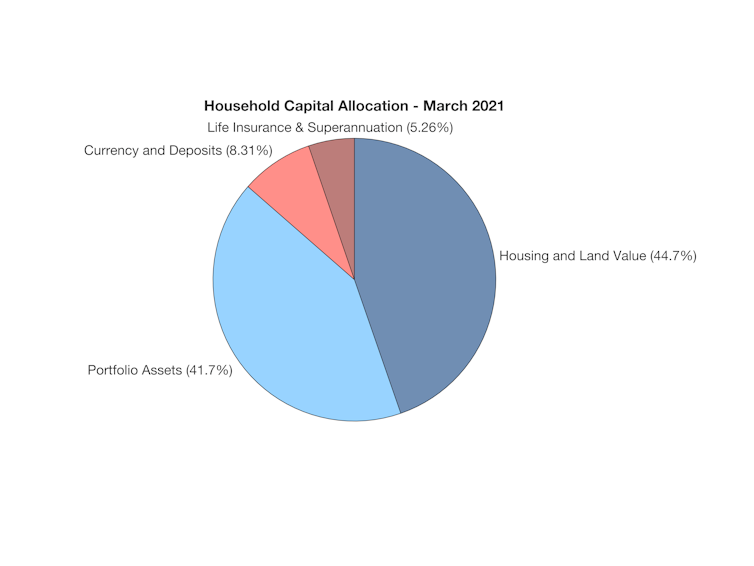
But his plan, focused on reforming foreign investment, planning and competition laws, as well as boosting the tourism and mining sectors, is hampered by a fundamental reality of New Zealand’s economy: much of the country’s capital is tied up in unproductive (and expensive) housing.
While this issue is not new, with New Zealand’s economy once described as “a housing market with bits tacked on”, the solution may lie in making housing more readily available through deregulation and policy reform. This would free up capital for drivers of growth such as infrastructure and business investment.
Household capital allocation March, 2021. Data source: RBNZ Household Balance Sheet. Author provided
The temptation of housing
Rapidly growing house prices over the past two decades have provided strong incentives to direct investment to the housing market.
On average, the price of a typical house has grown by around 8% per year, far outpacing household income growth. For example, in 2005 the median house price was roughly five times the average household income. By the middle of the pandemic house values had ballooned to nine times the average income.
Soaring prices have made residential investment extremely profitable for a long time. This means savings and investments have tended to flow into residential property rather than other productive sectors of the economy.
Constraints on housing supply
The problem is that in recent decades additional residential investment has not led to a substantial increase in new homes.
Local and central government rules and regulations have long hampered the construction of new houses. Instead, more investment in real estate has generally led to even higher prices.
As concerning as this is, it does not mean investments in housing have been misplaced. Rather, high prices and profits are what the market required in order to encourage those willing to build (few that there are) despite the costs, delays and uncertainties associated with bureaucratic battles with councils, planners and local NIMBY groups.
Banning property speculation might have kept prices down and reallocated investment to other productive uses. But in the absence of those speculators, the supply constraints would not have been any looser. Lower prices mean lower returns over building costs, leading to even fewer houses built.
Shifting capital out of the housing market in this way would not have benefited the country – we might have produced more and goods and services but fewer homes in which to live.
Christopher Luxon is pushing forward his plan for growth focused on reforming foreign investment, planning and competition laws, as well as boosting the tourism and mining sectors. Hagen Hopkins/Getty Images
Reforming housing supply
Fortunately, New Zealand has made meaningful progress on housing supply recently. For example, Auckland and Lower Hutt changed zoning laws in the 2010s making it easier to build, and Wellington City has recently followed suit.
These changes have led to local construction booms and, crucially, lower house prices and rents.
These reforms make it easier to build, reduce house prices and mean less investment capital is required for each new house built. So these policies have the dual benefit of improving housing affordability and freeing up capital for other productive sectors of the economy.
As prices come down, New Zealanders will no longer need to pour nine times their income into a home.
That will free up funds for investments in new bridges and tunnels, small businesses, and exciting new startups that will help drive innovation and generate the long-run growth we seek.
New Zealand need not give up its housing dreams in order to get business moving. Rather, it can do both.
All that requires is for local and central government to continue to let people build the housing they want so that we can free up the capital our infrastructure and businesses need.
James Graham has received research funding from the Australian Housing and Urban Research Institute and is a member of Sydney YIMBY.
Source: The Conversation (Au and NZ) – By Stephen Appiah Takyi, Senior Lecturer, Department of Planning, Kwame Nkrumah University of Science and Technology (KNUST)
Street vending is a major economic activity in most of Ghana’s urban areas. The vendors bring everyday goods to residents and commuters at affordable prices in places convenient to them. However, the growing intensity of street vending activities in Ghanaian cities such as Accra and Kumasi is creating management problems for city authorities. Vendors are being removed as cities aim to “clean up” and modernise the urban landscape.
City authorities haven’t created ways to support street vendors. Instead, they treat them as a nuisance and use stringent regulations aimed at displacing them. This approach overlooks the potential benefits that the thriving street economy could bring to the local economy and social fabric. In contrast, for example, South Africa’s policy supports informal economic activities by providing vending spaces for street traders.
As academics who specialise in urban planning, we set out to investigate the rules around street vending in Ghana. Our study was conducted in Kumasi, the capital of the Ashanti region and the second most important city in Ghana. We found that the regulation of street vending in Ghana is unclear, contradictory and ineffective. It fails to provide a clear policy direction and adequate planning tools for integrating street vending into urban areas.
Our research reinforces the argument that the regulation of street vending is often ambiguous. We argue that these policy inconsistencies create loopholes for the hostile attitude of city authorities towards street vendors.
We call for policies that recognise the socioeconomic value of street vending and make urban spaces more inclusive.
The National Urban Policy recognises and promotes street vending as part of the urban economy. It calls for local government authorities to recognise and include the informal sector.
But the overarching law regulating street vending in Ghana is the Local Governance Act. It authorises local government bodies (city authorities) to pass by-laws that forbid street vending. This is in conflict with the national policy.
The gaps
Our study revealed that in the Kumasi Metropolitan Area, the authorities seem to want to help street vendors in some ways – to strengthen the capacity of informal economic actors. But they don’t make plans or take actions to do so in the medium term development plan. Local government authorities sometimes evict street vendors from the central business district.
In Kumasi, urban policy, regulations and local development planning do not include street vending in the urban development process even though vendors are the largest group of business people in the city. Instead of building stalls and facilities to accommodate these economic operators, the authorities rather expropriate urban space from them to develop modern structures which are expensive for street vendors to occupy.
There is conflict over the use of urban public spaces. City authorities view the activities of street vendors as illegal, while the vendors see them as legitimate sources of livelihood. Authorities control vending through eviction and relocation.
In recent years, city authorities have adopted urban infrastructural planning and development as a strategy to remove street vendors. Take the case of the new Kejetia Market Redevelopment Project, which replaced the largest traditional market in west Africa with a modern urban market structure in Kumasi. Over 10,000 street vendors and 4,000 market traders were displaced.
The neglect of street vending in the design means vendors will have to earn a living informally – which simply adds to the “problem” as the city sees it.
What next?
Policies and practices that try to exclude people are not a solution to the problems of street vending. They are often counter productive. Regulating street vending requires inclusive policy measures and a clear policy direction to manage these activities. At present, Ghana, like many other African countries, lacks effective planning strategies to manage the activities of street vending.
Our recommendations include:
coherent and inclusive policies that recognise the socioeconomic value of street vending and give vendors a rightful place in cities
reforming urban governance to support the informal economy
coherent and precise policies that give street vendors more security.
The current policy vacuum fuels repressive regulation and excludes street vendors from urban development processes.
To develop effective policy models, it is critical to learn from the experiences of street vendors and involve them in urban development processes. This starts with a change of attitude among city authorities.
The authors do not work for, consult, own shares in or receive funding from any company or organisation that would benefit from this article, and have disclosed no relevant affiliations beyond their academic appointment.
The United States shares the pathologies of all dying empires with their mixture of buffoonery, rampant corruption, military fiascos, economic collapse and savage state repression.
ANALYSIS: By Chris Hedges
The billionaires, Christian fascists, grifters, psychopaths, imbeciles, narcissists and deviants who have seized control of Congress, the White House and the courts, are cannibalising the machinery of state. These self-inflicted wounds, characteristic of all late empires, will cripple and destroy the tentacles of power. And then, like a house of cards, the empire will collapse.
Blinded by hubris, unable to fathom the empire’s diminishing power, the mandarins in the Trump administration have retreated into a fantasy world where hard and unpleasant facts no longer intrude. They sputter incoherent absurdities while they usurp the Constitution and replace diplomacy, multilateralism and politics with threats and loyalty oaths.
Agencies and departments, created and funded by acts of Congress, are going up in smoke.
The rulers of all late empires, including the Roman emperors Caligula and Nero or Charles I, the last Habsburg ruler, are as incoherent as the Mad Hatter, uttering nonsensical remarks, posing unanswerable riddles and reciting word salads of inanities. They, like Donald Trump, are a reflection of the moral, intellectual and physical rot that plague a diseased society. Cartoon: Mr Fish/The Chris Hedges Report
They are removing government reports and data on climate change and withdrawing from the Paris Climate Agreement,. They are pulling out of the World Health Organisation.
They are sanctioning officials who work at the International Criminal Court — which issued arrest warrants for Israeli Prime Minister Benjamin Netanyahu and former defence minister Yoav Gallant over war crimes in Gaza.
They suggested Canada become the 51st state. They have formed a task force to “eradicate anti-Christian bias.” They call for the annexation of Greenland and the seizure of the Panama Canal.
They propose the construction of luxury resorts on the coast of a depopulated Gaza under US control which, if it takes place, would bring down the Arab regimes propped up by the US.
Uttering nonsensical remarks The rulers of all late empires, including the Roman emperors Caligula and Nero or Charles I, the last Habsburg ruler, are as incoherent as the Mad Hatter, uttering nonsensical remarks, posing unanswerable riddles and reciting word salads of inanities. They, like Donald Trump, are a reflection of the moral, intellectual and physical rot that plague a diseased society.
These Christian fascists, who define the core ideology of the Trump administration, are unapologetic about their hatred for pluralistic, secular democracies. They seek, as they exhaustively detail in numerous “Christian” books and documents such as the Heritage Foundation’s Project 2025, to deform the judiciary and legislative branches of government, along with the media and academia, into appendages to a “Christianised” state led by a divinely anointed leader.
They openly admire Nazi apologists such as Rousas John Rushdoony, a supporter of eugenics who argues that education and social welfare should be handed over to the churches and Biblical law must replace the secular legal code, and Nazi party theorists such as Carl Schmitt.
They are avowed racists, misogynists and homophobes. They embrace bizarre conspiracy theories from the white replacement theory to a shadowy monster they call “the woke.” Suffice it to say, they are not grounded in a reality based universe.
Christian fascists come out of a theocratic sect called Dominionism. This sect teaches that American Christians have been mandated to make America a Christian state and an agent of God. Political and intellectual opponents of this militant Biblicalism are condemned as agents of Satan.
“Under Christian dominion, America will no longer be a sinful and fallen nation but one in which the 10 Commandments form the basis of our legal system, creationism and ‘Christian values’ form the basis of our educational system, and the media and the government proclaim the Good News to one and all,” I noted in my book.
“Labour unions, civil-rights laws and public schools will be abolished. Women will be removed from the workforce to stay at home, and all those deemed insufficiently Christian will be denied citizenship. Aside from its proselytising mandate, the federal government will be reduced to the protection of property rights and ‘homeland’ security.”
Chris Hedges talks to Marc Lamont Hill on Up Front on why “democracy doesn’t exist in the United States” today. Video: Al Jazeera
Comforting to most Americans The Christian fascists and their billionaire funders, I noted, “speak in terms and phrases that are familiar and comforting to most Americans, but they no longer use words to mean what they meant in the past.”
They commit logocide, killing old definitions and replacing them with new ones. Words — including truth, wisdom, death, liberty, life and love — are deconstructed and assigned diametrically opposed meanings.Life and death, for example, mean life in Christ or death to Christ, a signal of belief of unbelief. Wisdom refers to the level of commitment and obedience to the doctrine.
Liberty is not about freedom, but the liberty that comes from following Jesus Christ and being liberated from the dictates of secularism. Love is twisted to mean an unquestioned obedience to those, such as Trump, who claim to speak and act for God.As the death spiral accelerates, phantom enemies, domestic and foreign, will be blamed for the demise, persecuted and slated for obliteration.
Once the wreckage is complete, ensuring the immiseration of the citizenry, a breakdown in public services and engendering an inchoate rage, only the blunt instrument of state violence will remain. A lot of people will suffer, especially as the climate crisis inflicts with greater and greater intensity its lethal retribution.
The near-collapse of our constitutional system of checks and balances took place long before the arrival of Trump. Trump’s return to power represents the death rattle of the Pax Americana. The day is not far off when, like the Roman Senate in 27 BC, Congress will take its last significant vote and surrender power to a dictator. The Democratic Party, whose strategy seems to be to do nothing and hope Trump implodes, have already acquiesced to the inevitable.
The question is not whether we go down, but how many millions of innocents we will take with us. Given the industrial violence our empire wields, it could be a lot, especially if those in charge decide to reach for the nukes.
Foreign aid is not benevolent. It is weaponised to maintain primacy over the United Nations and remove governments the empire deems hostile. Those nations in the UN and other multilateral organisations who vote the way the empire demands, who surrender their sovereignty to global corporations and the US military, receive assistance. Those who don’t do not.
Foreign aid builds infrastructure projects so corporations can operate global sweatshops and extract resources. It funds “democracy promotion” and “judicial reform” that thwart the aspirations of political leaders and governments that seek to remain independent from the grip of the empire.
USAID, for example, paid for a “political party reform project” that was designed “as a counterweight” to the “radical” Movement Toward Socialism (Movimiento al Socialismo) and sought to prevent socialists like Evo Morales from being elected in Bolivia. It then funded organisations and initiatives, including training programmes so Bolivian youth could be taught the American business practices, once Morales assumed the presidency, to weaken his hold on power.
Kennard in his book, The Racket: A Rogue Reporter vs The American Empire, documents how US institutions such as the National Endowment for Democracy, the World Bank, the International Monetary Fund, the Inter-American Development Bank, USAID and the Drug Enforcement Administration, work in tandem with the Pentagon and Central Intelligence Agency to subjugate and oppress the Global South.
Client states that receive aid must break unions, impose austerity measures, keep wages low and maintain puppet governments. The heavily funded aid programmes, designed to bring down Morales, eventually led the Bolivian president to throw USAID out of the country.
The lie peddled to the public is that this aid benefits both the needy overseas and us at home. But the inequality these programmes facilitate abroad replicates the inequality imposed domestically. The wealth extracted from the Global South is not equitably distributed. It ends up in the hands of the billionaire class, often stashed in overseas bank accounts to avoid taxation.
Our US tax dollars, meanwhile, disproportionately funds the military, which is the iron fist that sustains the system of exploitation. The 30 million Americans who were victims of mass layoffs and deindustrialisation lost their jobs to workers in sweatshops overseas. As Kennard notes, both home and abroad, it is a vast “transfer of wealth from the poor to the rich globally and domestically”.
Legitimises theft at home “The same people that devise the myths about what we do abroad have also built up a similar ideological system that legitimises theft at home; theft from the poorest, by the richest,” he writes. “The poor and working people of Harlem have more in common with the poor and working people of Haiti than they do with their elites, but this has to be obscured for the racket to work.”
Foreign aid maintains sweatshops or “special economic zones” in countries such as Haiti, where workers toil for pennies an hour and often in unsafe conditions for global corporations.
“One of the facets of special economic zones, and one of the incentives for corporations in the US, is that special economic zones have even less regulations than the national state on how you can treat labour and taxes and customs,” Kennard told me in an interview.
“You open these sweatshops in the special economic zones. You pay the workers a pittance. You get all the resources out without having to pay customs or tax. The state in Mexico or Haiti or wherever it is, where they’re offshoring this production, doesn’t benefit at all. That’s by design. The coffers of the state are always the ones that never get increased. It’s the corporations that benefit.”
These same US institutions and mechanisms of control, Kennard writes in his book, were employed to sabotage the electoral campaign of Jeremy Corbyn, a fierce critic of the US empire, for prime minister in Britain.
The US disbursed nearly $72 billion in foreign aid in fiscal year 2023. It funded clean water initiatives, HIV/Aids treatments, energy security and anti-corruption work. In 2024, it provided 42 percent of all humanitarian aid tracked by the United Nations.
Humanitarian aid, often described as “soft power,” is designed to mask the theft of resources in the Global South by US corporations, the expansion of the footprint of the US military, the rigid control of foreign governments, the devastation caused by fossil fuel extraction, the systemic abuse of workers in global sweatshops and the poisoning of child labourers in places like the Congo, where they are used to mine lithium.
The demise of American power I doubt Musk and his army of young minions in the Department of Government Efficiency (DOGE) — which isn’t an official department within the federal government — have any idea about how the organisations they are destroying work, why they exist or what it will mean for the demise of American power.
The seizure of government personnel records and classified material, the effort to terminate hundreds of millions of dollars worth of government contracts — mostly those which relate to Diversity, Equity and Inclusion (DEI), the offers of buyouts to “drain the swamp” including a buyout offer to the entire workforce of the Central Intelligence Agency — now temporarily blocked by a judge — the firing of 17 or 18 inspectors generals and federal prosecutors, the halting of government funding and grants, sees them cannibalise the leviathan they worship.
They plan to dismantle the Environmental Protection Agency, the Department of Education and the US Postal Service, part of the internal machinery of the empire. The more dysfunctional the state becomes, the more it creates a business opportunity for predatory corporations and private equity firms. These billionaires will make a fortune “harvesting” the remains of the empire. But they are ultimately slaying the beast that created American wealth and power.
Once the dollar is no longer the world’s reserve currency, something the dismantling of the empire guarantees, the US will be unable to pay for its huge deficits by selling Treasury bonds. The American economy will fall into a devastating depression. This will trigger a breakdown of civil society, soaring prices, especially for imported products, stagnant wages and high unemployment rates.
The funding of at least 750 overseas military bases and our bloated military will become impossible to sustain. The empire will instantly contract. It will become a shadow of itself. Hypernationalism, fueled by an inchoate rage and widespread despair, will morph into a hate-filled American fascism.
Despite the aura of omnipotence empires often project, most are surprisingly fragile, lacking the inherent strength of even a modest nation-state. Indeed, a glance at their history should remind us that the greatest of them are susceptible to collapse from diverse causes, with fiscal pressures usually a prime factor. For the better part of two centuries, the security and prosperity of the homeland has been the main objective for most stable states, making foreign or imperial adventures an expendable option, usually allocated no more than 5 percent of the domestic budget. Without the financing that arises almost organically inside a sovereign nation, empires are famously predatory in their relentless hunt for plunder or profit — witness the Atlantic slave trade, Belgium’s rubber lust in the Congo, British India’s opium commerce, the Third Reich’s rape of Europe, or the Soviet exploitation of Eastern Europe.
When revenues shrink or collapse, McCoy points out, “empires become brittle.”
“So delicate is their ecology of power that, when things start to go truly wrong, empires regularly unravel with unholy speed: just a year for Portugal, two years for the Soviet Union, eight years for France, 11 years for the Ottomans, 17 for Great Britain, and, in all likelihood, just 27 years for the United States, counting from the crucial year 2003 [when the US invaded Iraq],” he writes.
The array of tools used for global dominance — wholesale surveillance, the evisceration of civil liberties, including due process, torture, militarised police, the massive prison system, militarised drones and satellites — will be employed against a restive and enraged population.
The devouring of the carcass of the empire to feed the outsized greed and egos of these scavengers presages a new dark age.
The Albanese government has secured bipartisan support for a major new regime covering political donations and spending, after making significant concessions.
The government agreed to increase the proposed threshold above which donations must be disclosed from $1000 to $5000. The present disclosure threshold is $16,900.
In addition, it has boosted the cap on individual donations to a candidate or party from the earlier proposed $20,000 to $50,000.
The deal was sealed on Wednesday when Special Minister of State Don Farrell had separate meetings on the final package with Prime Minister Anthony Albanese and Opposition leader Peter Dutton.
The legislation had been expected to pass late last year but negotiations between the government and opposition stalled at the final moment.
The government concessions were to accommodate not just the Coalition but also to respond to a degree to criticism from crossbenchers and some stakeholders outside parliament.
The government needed to get opposition backing to ensure the legislation’s passage before parliament rises this week. If the PM called an April election this would be the last parliamentary sitting.
Also, it wanted to pass the measures with the support of the alternative government so the new regime would not be undone in the future.
The reforms are the most comprehensive changes to the electoral system in four decades. The government says they will stop big money coming to dominate politics. But they have been under attack from teal MPs and other critics, including Simon Holmes à Court from Climate 200, which has funded community independents. The critics say they favour the major parties and disadvantage new and small players.
The new regime will not come into operation until the next parliamentary term and so does not affect this election.
The changes include disclosure of donations in real time or near-real time, and a series of caps on spending, The cap on each candidate in an electorate would be $800,000, while a party’s national spending would also be capped. At the moment there are no spending caps.
The legislation increases public funding for elections from under $3.50 per vote to about $5.
Farrell has not proceeded with a separate measure on truth in advertising, saying there was not enough support for it.
The Greens described the deal as “a fix”. “Labor and the Coalition are agreeing on rigging the system to lock out their competitors.”
Independent Zoe Daniel, a teal, said the legislation “entrenches the dominance of the major parties and locks out independents and new competitors”.
She said it imposed “strict campaign spending caps on Independents while
allowing major parties to exploit loopholes to pour millions into key
electorates.
“Under the new rules, all an independent’s campaign materials – posters, ads, or billboards – would count towards the cap, while major party branding on billboards, leaflets and ads would not. This deliberate imbalance ensures that Labor and the Coalition maintain a financial stranglehold over elections,” Daniel said.
Michelle Grattan does not work for, consult, own shares in or receive funding from any company or organisation that would benefit from this article, and has disclosed no relevant affiliations beyond their academic appointment.
Ageing is a normal part of the life course. It doesn’t matter how many green smoothies you drink, or how many “anti-ageing” skin care products you use, you can’t stop the ageing process.
But while we’re all getting older, not everyone who ages will necessarily become frail. Ageing and frailty are closely related, but they’re not the same thing.
But what is it about ageing we are so afraid of? When it comes down to it, many people are probably less afraid of ageing, and more afraid of becoming frail.
Frailty is defined as a state of vulnerability characterised by a loss of reserve across multiple parts of the body.
Frailty is generally characterised by several physical symptoms, such as weakness, slow walking speed, exhaustion, unintentional weight loss, and low activity level.
Notably, someone who is frail is less able to “bounce back” (or recover) after a stressor event compared to someone who is not frail. A stressor event could be, for example, having a fall, getting a urinary infection, or even being admitted to hospital.
Frailty is more common in older people. But in some cases, frailty can affect younger people too. For example, people with advanced chronic diseases, such as heart failure, can develop frailty much younger.
Frailty is dynamic. While it can get worse over time, in some cases frailty can also be reversed or even prevented through health and lifestyle changes.
Exercise more, including resistance training (such as squats and lunges, or grab some stretchy resistance bands). Many of these sorts of exercises can be done at home. YouTube has some great resources.
You might also consider joining a gym, or asking your GP about seeing an accredited exercise physiologist or physiotherapist. Medicare subsidies may be available for these specialists.
The physical activity guidelines for older Australians recommend at least 30 minutes of moderate intensity physical activity on most days or preferably every day.
The guidelines also highlight the importance of incorporating different types of activities (such as resistance, balance or flexibility exercises) and reducing the time you spend sitting down.
2. Stay socially active
Social isolation and loneliness can contribute to the progression of frailty. Reach out to friends and family for support or contact local community groups that you may be able to join. This might include your local Zumba class or bridge club.
3. Ask your doctor or pharmacist to regularly check your medications
Always consult your doctor before making any changes to your current medications.
4. Eat a protein-rich diet with plenty of fruit and vegetables
Low nutrient intake can negatively impact physical function and may increase your risk of becoming frail. There’s some evidence to suggest eating more protein may delay the onset of frailty.
A food-first approach is best when looking to increase the protein in your diet. Protein is found in foods such as lean meats, poultry, seafood, eggs, dairy products, legumes and nuts.
Adults over 50 should aim to eat 64 grams of protein per day for men and 46g per day for women. Adults over 70 should aim for 81g per day for men and 57g per day for women.
Ask your GP for a referral to a dietitian who can provide advice on a dietary regime that is best for you.
Supplements may be recommended if you are struggling to meet your protein needs from diet alone.
Dr Julee McDonagh receives funding from the National Health and Medical Research Council and the NSW Office of Health and Medical Research. She is also a member of the executive committee of the Cardiovascular Nursing Council of the Cardiac Society of Australia and New Zealand and the Emerging Leaders Committee of the Australian Cardiovascular Alliance.
Professor Caleb Ferguson receives funding from the National Health and Medical Research Council, Medical Research Future Fund, Heart Foundation (Australia) and Stroke Foundation (Australia). He is a Board Director of the Cardiac Society of Australia and New Zealand and Chair of the Cardiovascular Nursing Council. He is Associate Editor for European Journal of Cardiovascular Nursing and Heart Lung and Circulation. He was a co-author of the Australian Heart Foundation & Cardiac Society of Australia and New Zealand clinical guidelines for the management of atrial fibrillation. He is co-leads the Western Sydney Clinical Frailty Registry, a clinical quality registry of older adults.
With the election only months away, the Labor government finds itself suddenly battling with the Trump administration for an exemption from new US tariffs on steel and aluminium.
The opposition has supported the effort, but it also claims a Coalition government would be better place to deal with Donald Trump.
Joining us on this podcast, Nationals leader David Littleproud says if Labor fails to get an exemption on the tariffs, a Dutton government would try again:
Of course we will and I think that the relationship that Peter Dutton had and still has in Washington will play very much towards that. In fact, I was in Washington with Peter in July last year and so he can walk the halls of Washington with authority and confidence. And I think it’s important that we want this solved and it doesn’t matter who’s in power. This is team Australia, and we’ve got to have a bipartisan approach and I think Pete has shown that leadership.
On net zero, while Littleproud firmly backs the target as in Australai’s national interest, he also says if the world walked away from it, so would we.
What everyone’s trying to do is protect regional Australia. But, just so everyone appreciates, if we’re not signed up to net zero by 2050, the people are hurt the most are the people in regional Australia, our farmers and our miners, because if we don’t sign up to what the rest of the world has, the world gets to impose on us a border adjustment mechanism. That’s a tariff and that means we get less for what we produce in regional Australia.
Now if the world changes and walks away from net zero, then we walk away with it. But we’re not the United States, we’re not the biggest economy in the world. You got to understand your place in the world, and you’ve got to understand the unintended consequences.
The government this week announced it would be willing to take over Rex Airlines if it can’t be sold. Littleproud is sceptical:
Well, I think we’ve spent over $130 million of Australian taxpayer’s money and don’t have a lot to show for it. I think what we’ve got to also look at is that Rex was a viable regional airline before they had a dalliance into competing with Qantas and Virgin in the golden triangle between Brisbane, Sydney and Melbourne. They couldn’t compete and instead of spending money on that, they should have upgraded their fleet.
The government has wasted enough time. They should open up conversation with the broader regional aviation sector, which they haven’t done, to find a solution, whether that be one in totality of a purchaser for Rex or whether that be a carve out of players and with policy levers is being pulled, rather than the Australian taxpayer having to cut the check in entirety. So I think we haven’t exhausted all the options.
On the coming election campaign, Littleproud stresses the closeness between the Nationals and the Liberals, rather than seeking to emphasise a separate Nationals’ pitch.
Peter and I, I think, have the tightest coalition that we’ve ever had. There’s not a piece of paper between us. We’re literally joined at the hip and our campaigns will complement one another and in fact, they’ll intertwine in many places. I think that’s important that the people of Australia understand that the only coalition that they can trust to form government is the Nationals and Liberals, not Labor, Greens and teals – that that is the only coalition that’ll give them stability, not chaos.
Michelle Grattan does not work for, consult, own shares in or receive funding from any company or organisation that would benefit from this article, and has disclosed no relevant affiliations beyond their academic appointment.
Some, often more quietly, will welcome it from an anti-imperialist or “Southern” perspective, believing that the agency was at worst a blunt instrument of US hegemony or at least a bastion of Western saviourism.
I want to come at this topic from a different angle, by providing a brief personal perspective on USAID as an organisation, based on several decades of occasional interaction with it during my time as an Australian aid official.
Essentially, I view USAID as a harried, hamstrung and traumatised organisation, not as a rogue agency or finely-tuned vehicle of US statecraft.
Peer country representative My own experience with USAID began when I participated as a peer country representative in an OECD Development Assistance Committee (DAC) peer review of the US’s foreign assistance programme in the early 1990s, which included visits to US assistance programmes in Bangladesh and the Philippines, as well as to USAID headquarters in Washington DC.
I later dealt with the agency in many other roles, including during postings to the OECD and Indonesia and through my work on global and regional climate change and health programmes, up to and including the pandemic years.
An image is firmly lodged in my mind from that DAC peer review visit to Washington. We had had days of back-to-back meetings in USAID headquarters with a series of exhausted-looking, distracted and sometimes grumpy executives who didn’t have much reason to care what the OECD thought about the US aid effort.
It was a muggy summer day. At one point a particularly grumpy meeting chair, who now rather reminds of me of Gary Oldman’s character in Slow Horses, mopped the sweat from his forehead with his necktie without appearing to be aware of what he was doing. Since then, that man has been my mental model of a USAID official.
But why so exhausted, distracted and grumpy?
Precisely because USAID is about the least freewheeling workplace one could construct. Certainly it is administratively independent, in the sense that it was created by an act of Congress, but it also receives its budget from the President and Congress — and that budget comes with so many strings attached, in the form of country- or issue-related “earmarks” or other directives that it might be logically impossible to allocate the funds as instructed.
Some of these earmarks are broad and unsurprising (for example, specific allocations for HIV/AIDS prevention and treatment under the Bush-era PEPFAR program) while others represent niche interests (Senator John McCain once ridiculed earmarks pertaining to “peanuts, orangutans, gorillas, neotropical raptors, tropical fish and exotic plants”) — but none originates within USAID.
Informal earmarks calculation I recall seeing an informal calculation showing that one could only satisfy all the percentage-based earmarks by giving most of the dollars several quite different jobs to do. A 2002 DAC peer review noted with disapproval some 270 earmarks or other directive provisions in aid legislation; by the time of the most recent peer review in 2022, this number was more like 700.
Related in part to this congressional micro-management of its budget — along with the usual distrust of organisations that “send” money overseas — USAID labours under particularly gruelling accountability and reporting requirements.
Andew Natsios — a former USAID Administrator and lifelong Republican who has recently come to USAID’s defence (albeit with arguments that not everybody would deem helpful) — wrote about this in 2010. In terms reminiscent of current events, he described the reign of terror of Lieutenant-General Herbert Beckington, a former Marine Corps officer who led USAID‘s Office of the Inspector General (OIG) from 1977 to 1994.
He was a powerful iconic figure in Washington, and his influence over the structure of the foreign aid programME remains with USAID today. … Known as “The General” at USAID, Beckington was both feared and despised by career officers. Once referred to by USAID employees as “the agency’s J. Edgar Hoover — suspicious, vindictive, eager to think the worst” …
At one point, he told the Washington Post that USAID’s white-collar crime rate was “higher than that of downtown Detroit.” … In a seminal moment in this clash between OIG and USAID, photographs were published of two senior officers who had been accused of some transgression being taken away in handcuffs by the IG investigators for prosecution, a scene that sent a broad chill through the career staff and, more than any other single event, forced a redirection of aid practice toward compliance.
Labyrinthine accountability systems On top of the burdens of logically impossible programming and labyrinthine accountability systems is the burden of projecting American generosity. As far as humanly possible, and perhaps a little further, ways must be found of ensuring that American aid is sourced from American institutions, farms or factories and, if it is in the form of commodities, that it is transported on American vessels.
Failing that, there must be American flags. I remember a USAID officer stationed in Banda Aceh after the 2004 Indian Ocean tsunami spending a non-trivial amount of his time seeking to attach sizeable flags to the front of trucks transporting US (but also non-US) emergency supplies around the province of Aceh.
President Trump’s adviser Stephen Miller has somehow determined to his own satisfaction that the great majority (in fact 98 percent) of USAID personnel are donors to the Democratic Party. Whether or not that is true, let alone relevant, Democrat administrations have arguably been no kinder to USAID than Republican ones over the years.
Natsios, in the piece cited above, notes that The General was installed under Carter, who ran on anti-Washington ticket, and that there were savage cuts — over 400 positions — to USAID senior career service staffing under Clinton. USAID gets battered no matter which way the wind blows.
Which brings me back to necktie guy. It has always seemed to me that the platonic form of a USAID officer, while perhaps more likely than not to vote Democrat, is a tired and dispirited person, weary of politicians of all stripes, bowed under his or her burdens, bound to a desk and straitjacketed by accountability requirements, regularly buffeted by new priorities and abrupt restructures, and put upon by the ignorant and suspicious.
Radical-left Marxists and vipers probably wouldn’t tolerate such an existence for long. Who would? I guess it’s either thieves and money-launderers or battle-scarred professionals intent on doing a decent job against tall odds.
Robin Davies is an honorary professor at the Australian National University’s (ANU) Crawford School of Public Policy and managing editor of the Devpolicy Blog. He previously held senior positions at Australia’s Department of Foreign Affairs and Trade (DFAT) and AusAID.
Source: The Conversation (Au and NZ) – By Bronwyn Carlson, Professor, Critical Indigenous Studies and Director of The Centre for Global Indigenous Futures, Macquarie University
Aboriginal and Torres Strait Islander readers are advised this article contains names and images of deceased people.
Colonial commemorations such as the statues of James Cook or Lachlan Macquarie have become the focus of much contestation, particularly in the annual lead up to January 26.
Such statues create controversy because they often honour people who have dubious histories. Journalist Paul Daley has described such statues as “assorted bastards” who have profited from the dispossession and exploitation of Aboriginal and Torres Strait Islander peoples.
The problem with many statues is they do not represent a shared history. They either represent colonial figures who have harmed Aboriginal and Torres Strait Islander peoples, or they represent a one-sided perspective that erases the other.
This year we were asked to respond to a different kind of monument: a statue of music legends Archie Roach and Ruby Hunter, newly erected in the Melbourne suburb of Fitzroy in November 2024.
An inspirational, unifying force
Archie Roach, a Gunditjmara (Kirrae Whurrong/Djab Wurrung), Bundjalung senior Elder, songwriter and storyteller sadly died in 2022 aged only 66. Anthony Albanese described him as a “brilliant talent, a powerful and prolific national truth teller”.
His partner Ruby Hunter was a Ngarrindjeri woman and pioneering singer-songwriter. She was the first Indigenous woman to be signed to a major record label, and sadly died in 2010.
Both were members of the Stolen Generations – Aboriginal children who were forcibly removed from their families by Australian government authorities as part of the assimilation policy. They met on the street as homeless teenagers.
Their award-winning music took them around the world together. They performed alongside musical greats such as Tracy Chapman, Paul Kelly and Bob Dylan.
They have been described as an inspiration to many, and a unifying force who altered the way white Australia saw itself.
A statue that sits in conversation with community
The statue of Archie Roach and Ruby Hunter was commissioned by the Yarra City Council in partnership with the Wurundjeri Woi-wurrung Cultural Heritage Aboriginal Corporation and Victorian government.
The statue was made by local artist Darien Pullen. The surrounding park space was designed by Melbourne-based architect Jefa Greenaway (Wailwan/Kamilaroi) and landscape architect Paul Herzich (Kaurna/Ngarrindjeri).
Fitzroy’s Atherton Gardens is a culturally significant site that once served as a traditional meeting place. It later became a hub of political activism and resistance for Victoria’s Aboriginal community.
This monument stands in a place rich with history. It is where Archie and Ruby spent meaningful time with their family, and where Archie was reunited with his biological family.
Their son, Amos Roach, emphasised the deep cultural significance of the location: “it’s a place of cultural significance because it was a meeting place, it’s an old camp”.
He also reflected on his personal connection to the park, saying, “I was a parkie baby when I was born … and I still come here”.
The statue stands at street level, embodying an ongoing presence. They are casual, approachable and engaged, as if in conversation with the community.
Positioned to invite interaction, the statue forms a dynamic relationship with both the people who pass by and the place it inhabits.
It is embraced rather than imposed, welcomed and wanted.
The statue stands at street level, in conversation with the community. The Conversation, CC BY-SA
While these figures are Aboriginal icons, they are also remarkable individuals who made significant contributions to Australia. Their commemoration carries meaning and connection for all.
Compare it to the Cook statue in Hyde Park on Gadigal Country (Sydney). He is perched high above the observer, arm raised to the heavens in a theatrical “ta-daa”.
Positioned in a location where the man himself never set foot, the text at the base of the statue? make the historically incorrect allegation that he “DISCOVERED THIS TERRITORY, 1770” – something Cook never personally claimed.
A shared future
Rather than erecting monuments to colonial figures who oppressed Aboriginal and Torres Strait Islander peoples, reinforcing a history of injustice and loss, we should instead celebrate a shared vision for the future.
This vision should be built on recognition, respect and the commemoration of those who have made meaningful contributions to Australia.
This statue of Archie Roach and Ruby Hunter honours two individuals who, despite being shaped by the very colonial histories commemorated by other monuments, have profoundly enriched contemporary Australia through their resilience, talent and contributions.
Until recently, commemorations of Aboriginal people were largely confined to the realm of prehistory — portraying them as nameless “Natives” in conflict with settlers, as loyal guides and servants, or as tragic figures labelled “the last of their tribe”.
It is a powerful recognition of their enduring impact in shaping this nation – one that calls for acknowledgement, respect and inclusion from us all.
The authors do not work for, consult, own shares in or receive funding from any company or organisation that would benefit from this article, and have disclosed no relevant affiliations beyond their academic appointment.
In some overseas countries, pets can travel with their owners in a plane’s cabin, in a carrier under a seat.
In Australia, pets must travel in the luggage hold of aircraft. But this may soon change. Virgin Australia last year announced it would allow small dogs and cats into the cabin from 2025. Now the plan has progressed further. The Australian newspaper this week reported two rows of Virgin aircraft will be designated as “pet friendly” on selected flights, although more work is needed before a trial begins.
Only small dogs or cats would be allowed in the cabin. They would have to be contained in a carrier and placed under the seat in front of their owner. The combined weight of pet and carrier must be no more than 8 kilograms.
Australians love their pets, and increasingly holiday with them. But the “pets on planes” policy is not without challenges. So how can the experience be made as smooth as possible for pets, pet owners and other passengers?
Many Australians want to take their pets onto the plane cabin with them. Pixel-Shot/Shutterstock
What are the potential negatives for pets?
Research shows pets kept in the luggage or cargo areas of planes face risks. These include being deprived of food and water and being exposed to extreme temperatures. Pet owners may also give their pets sedatives or other drugs to calm them down, which can cause harm.
Allowing pets to travel in a plane’s cabin, close to their owner, is likely to reduce these risks.
But the plane’s cabin is still an unfamiliar environment with strange smells, sounds and people. So, some dogs and cats may still find the experience stressful.
There are ways to minimise this. They include getting pets used to being in containers (a process known as “habituation”) and using positive reinforcement training to encourage pets to remain calm.
If a dog or cat is already anxious and you want to travel with them, it’s best to consult a vet well before you fly.
Some dogs and cats may benefit from a sedative or medication that reduces anxiety. This must be done in consultation with your vet, because these drugs may be dangerous for animals with certain health conditions.
Pets can die on flights
One study on dogs transported by air into the United States (many of which travelled in the cabin as “hand luggage”) found that every year, some pets die.
One risk factor occurs when the pet is a “brachycephalic” breed. These are dogs or cats with flat and shortened noses, such as pugs and the Boston terrier.
These animals have abnormal airways, meaning they are at higher risk of hyperthermia if the temperature is high, and can also have breathing difficulties.
Should the “pets on planes” policy at Virgin Australia come to pass, it’s still not clear how exactly practicalities such as offering food, water or managing toileting will work. The airline is yet to release these details.
It’s possible you would need to “fast” your pet before arriving at the airport – in other words, refrain from feeding them for a period of time, to reduce the chance they will vomit or need to defecate.
Guide and assistance dogs that currently use these facilities will always have priority. These dogs are trained to toilet on cue, making it much easier to travel with them.
If you and your pet would like to be frequent flyers, consider getting this type of training.
Virgin Australia is still consulting doctors and vets on their policy, including about risks to passengers with dog or cat allergies.
Clearly, the allergy risk to humans must be well managed – especially when in the air, isolated from medical services.
Air is filtered more frequently in plane cabins than in homes. However, even very low levels of an allergen can trigger severe reactions such as anaphylaxis or asthma attacks in some people. Also, pet dander (from shed skin cells) can remain on seats long after a pet has gone.
What’s more, some people may be frightened of, or have a phobia relating to dogs or cats. Phobia to dogs may be linked to a direct traumatic event. People with serious phobias may not be able to enter a plane if they need to walk past a dog or cat. So, placement of the pets in cabins will need to be carefully considered.
Pets are part of human lives and will likely be integrated more into transport in future, including planes. Careful planning will allow us to maximise the benefits for all: people travelling with and without pets, and the animals themselves.
Susan Hazel is affiliated with the Dog & Cat Management Board of South Australia and the RSPCA South Australia.
French Minister for Overseas Manuel Valls has announced he will travel to New Caledonia later this month to pursue talks on the French territory’s political future.
These discussions on February 22 follow preliminary talks held last week in Paris in “bilateral” mode with a wide range of political stakeholders.
The talks, which included pro-independence and pro-France parties, were said to have “allowed to restore a climate of trust between France and New Caledonia’s politicians”.
Those meetings contributed to “a better understanding” of “everyone’s expectations” and “clarify everyone’s respective projects”, Valls said.
Between February 4 and 9, Valls said he had met “at least twice” with delegations from all six parties and movements represented in New Caledonia’s Congress.
The main goal was to resume the political process and allow everyone to “project themselves into the future” after the May 2024 riots.
The riots caused 14 dead, hundreds of injured, arson and looting of hundreds of businesses and an estimated damage of some 2.2 billion euros (NZ$4 billion).
‘Touched all topics’ “We have touched on all topics, extensively and without any taboo, including the events related to the riots that broke out in New Caledonia in May 2024.”
Valls said in this post-riot situation, “everyone bears their own responsibilities, but the French State may also have a part of responsibility for what happened a few months ago”.
New Caledonia’s key economic leaders Mimsy Daly and David Guyenne with French Minister for Overseas Manuel Valls. Image: MEDEF NC/RNZ
At the weekend, as part of the week-long talks, Valls and French Public Accounts Minister Amélie de Montchalin hosted a three-hour session dedicated to New Caledonia’s “devastated” economy.
High on the agenda of the conference were crucial subjects, such as France’s assistance package, the need to reform and reduce costs in New Caledonia (including in the public service workforce) — as well as key sectors such as the health, tourism sectors and the nickel mining and processing industry — which has been facing an unprecedented crisis for the past two years.
Unemployment benefits There was also a significant chapter dedicated to the duration of special unemployment benefits for those who have lost their jobs due to the riots’ destruction.
Another sensitive point raised was the long and difficult process for businesses (especially very small, small and medium) damaged and destroyed for the same reasons to get insurance companies to pay compensation.
Most insurance companies represented in New Caledonia have, since the May 2024 riots, cancelled the “riot risk” from their insurance coverage.
This has so far made it impossible for riot-damaged businesses to renew their insurance cover under the same terms as before.
French assistance to post-riot recovery in New Caledonia includes a 1 billion euros (NZ$1.8 billion) loan ceiling and a special fund of some 192 million euros (NZ$350 million) dedicated to the reconstruction of public buildings, mainly schools.
New Caledonia’s students are returning to school next week as part of the new academic year.
French Public Accounts Minister Amélie de Montchalin speaking from Paris to New Caledonia audience via a vision conference during the Economic Forum last Saturday. Image: NC la 1ère TV/RNZ
Economy and politics closely intertwined Valls stressed once again that “there cannot be an economic recovery without a political compromise, just like there cannot be any lasting political solution without economic recovery”.
“(France) needs to be there so that the economic slump (caused by the riots) does not turn into a social disaster which, in turn, would exacerbate political fractures”.
“The government of France will be on your side. No matter what happens. We are absolutely taking charge of our responsibilities.”
The “economic Forum” was also the first time delegations from all political tendencies, even though they did not talk to each other directly, were at least sitting in the same room.
“Thank you all for being here, this is a beautiful picture of New Caledonia. Maybe the economy can do more than politics”, Valls told the Economic Forum last Saturday.
Next step: ‘trilateral’ meetings The next step, in New Caledonia, is for Valls to attempt holding “trilateral” meetings (involving all parties, pro and anti-independence and France) around the same table, which was not the case in Paris last week.
The format of those Nouméa talks, however, “remains to be determined”.
Valls said he could stay in New Caledonia for as long as one week because, he said, “I want to take time”, including to not only meet politicians, but also economic and civil society stakeholders.
The 62-year-old French minister, who is also a former Prime Minister, as a political adviser to the then French Socialist Prime Minister Michel Rocard, was involved in the signing of the Matignon Accord, signed in 1988 between France, pro-independence and pro-France parties, which effectively put an end to half a decade of quasi civil war in the French Pacific archipelago.
He also stressed that any future discussion would be based on the “foundation and basis” of the Matignon and Nouméa Accords which, he said, was “the only possible way”.
The Nouméa Accord, signed in 1998 between the same parties, paved the way for a gradual transfer of powers from France to New Caledonia as well as a status of wider autonomy, often described in the legal jargon as “sui generis”.
Until now, under the Nouméa Accord, the key powers remaining to be transferred by France were foreign affairs (shared with New Caledonia), currency, law and order, defence and justice.
New Caledonia’s authorities have not requested the implementation of the transfer for another three portfolios: higher education, research, audiovisual communication and the administration of communes.
An exit protocol But the 1998 deal also included an exit protocol, depending on the results of three referendums on self-determination.
Those referendums were held in 2018, 2020 and 2021 and they all yielded a majority of votes against independence.
However, New Caledonia’s pro-independence movement largely boycotted the third poll and has since contested its validity.
Pro-France and pro-independence camps hold radically different views on how New Caledonia should evolve in its post-Nouméa Accord (1998) future status.
The options mentioned so far by local parties range from a quick independence (a five-year process to begin in September 2025 following the anticipated signature of a “Kanaky Accord”) to some sort of yet undefined “shared sovereignty” that could imply an “independence-association”, or a status of “associated state” for New Caledonia.
Pro-France parties, however, have previously stated they were determined to push for New Caledonia to remain part of France and, in corollary, that New Caledonia’s three provinces (North, South and Loyalty Islands) should be granted more separate powers, a formula sometimes described as “internal federalism” but criticised by pro-independence parties as a form of “apartheid”.
Complicating factor Another complicating factor is that both sides — pro-independence and pro-France camps — are also divided between moderate and radical components.
Last week, during question time in Parliament, Valls expressed concern at the current polarised situation: “People talk about racism, civil war. A common and shared project can only be built through dialogue.
“The (previously signed, respectively in 1988 and 1998) Matignon and Nouméa Accords, both bearing the prospect of a decolonisation process, are the foundation of our discussions. I would even say they are part of my DNA,” the minister said.
Referring to any future outcome of the current talks, he said they will have to be “inventive, ambitious, bold in order to build a compromise and do away with any radical position, all radical positions, in order to offer a common project for New Caledonia, for its youth, for concord and for peace”.
This article is republished under a community partnership agreement with RNZ.
Source: The Conversation (Au and NZ) – By Lee Morgenbesser, Associate Professor, School of Government and International Relations, Griffith University, Griffith University
Many Americans have watched in horror as Elon Musk, the world’s richest person, has been permitted to tear through various offices of the United States government in recent weeks. Backed by President Donald Trump, and supported by a small team of true believers, he has successfully laid siege to America’s vast federal bureaucracy.
On Tuesday, Trump signed an executive order giving Musk even more power. It requires federal agencies to cooperate with his “Department of Government Efficiency” (known as DOGE) in cutting their staffing levels and restricting new hires.
In his first comments to the media since joining the Trump administration as a “special” government employee, Musk also responded to criticism that he’s launching a “hostile takeover” of the US government.
The people voted for major government reform, and that’s what people are going to get.
Are Musk’s actions akin to a “hostile takeover” of government, or a coup? I argue it’s more a form of “state capture”. Here’s what that means.
Why it’s not a coup or self-coup
Under the pretence of maximising government efficiency and productivity, DOGE has amassed quite a bit of power. It has:
penetrated the massive system responsible for virtually all government payments
A popular argument, supported by some historians and commentators, is that Musk’s actions amount to a coup. They argue this is not a coup in the classic sense of a takeover of the physical centres of power. Rather, it’s a seizure of digital infrastructure by an unelected group seeking to undo democratic practices and violate human rights.
This term, however, is not technically correct. The most widely accepted definition of a coup is:
an overt attempt by the military or other elites within the state apparatus to unseat the sitting head of state using unconstitutional means.
Since Musk and Trump are bedfellows in this plot, the tech billionaire is clearly not trying to violently unseat the president.
Another possible explanation: this is a self-coup. This describes a situation in which
the sitting national leader takes decisive illegitimate action against countervailing institutions and elites to perpetuate the incumbent’s power.
In December, South Korean President Yoon Suk Yeol attempted a self-coup when he declared martial law in order to ostensibly protect the country from opposition forces. He quickly reversed his decision amid elite defections and mass public demonstrations.
Though self-coups are becoming more common, Musk is doing the dirty work in the US – not Trump. Also, Musk’s chief target – the bureaucracy – does not nominally offset presidential power (except in conspiracy theories).
What is ‘state capture’?
More accurately, Musk’s siege amounts to a form of “state capture”. This refers to:
the appropriation of state resources by political actors for their own ends: either private or political.
By this logic, Musk’s aim could be to capture different pieces of the US government and turn the state into a tool for wealth extraction.
State capture is a relatively simple but extremely destructive process. This is how it has played out in countries like Indonesia, Hungary, Nigeria, Russia, Sri Lanka and South Africa (Musk’s birthplace):
First, political and corporate elites gain control of formal institutions, information systems and bureaucratic policy-making processes.
Then, they use this power to apply rules selectively, make biased decisions and allocate resources based on private interests (rather than the public good).
In captured states, strongman leaders often use economic policy and regulatory decisions to reward their political friends. For instance, Hungarian Prime Minister Viktor Orbán, Russian President Vladimir Putin and former South African President Jacob Zuma have helped their allies by:
making government anti-trust decisions
issuing permits and licenses
awarding government contracts and concessions
waiving regulations or tariffs
conferring tax exempt status.
State capture is fundamentally a predatory process.
By taking over how the American government does business, Musk could be seeking to enrich a small but powerful network of allies.
The first beneficiary would be Trump, who is no stranger to using his office to expand his family’s business empire. With a more fully captured state, Trump can take an active role in determining how public wealth is dispersed among corporate and political elites. This decision-making power often goes hand-in-hand with “personalist” regimes, in which everything is a transaction with the leader.
The second beneficiary would be Musk himself and other Silicon Valley mega-billionaires who have bent a knee to Trump. By positioning their tech companies as the solution to what allegedly ails the federal government, particularly when it comes to the use of artificial intelligence, they stand to secure lucrative contracts handed out by the “new” state.
The third beneficiary would be the small army of engineers and technicians working with Musk to upend the American government. As loyal foot soldiers, these individuals will be compensated with career advancement, financial gains and networking opportunities, while also enjoying legal impunity. This kind of quid pro quo is how authoritarian regimes work.
What this could mean for the US
As Musk continues his assault on the federal bureaucracy, the American people will suffer the consequences.
The most immediate impact of state capture: worse decisions are made. By purging experienced civil servants, cancelling government contracts and accessing sensitive information systems, Musk’s actions will likely degrade the standard of living at home and endanger American lives abroad.
State capture also means there would be less accountability for the Trump administration’s public policy decisions. With a lack of congressional and independent oversight, key decisions over the distribution of economic benefits could be made informally behind closed doors.
Finally, state capture is inseparable from corruption. Doing business with the US federal government could soon require one to pass a loyalty test rather than a public interest test.
Trump’s enemies will encounter more hurdles, while his allies will have a seat at the table.
Lee Morgenbesser receives funding from the Australian Research Council (DP220103214). He is also a member of the Australian Labor Party.
The oral contraceptive pills Yaz and Yasmin will be listed on the Pharmaceutical Benefits Scheme (PBS) from March 1 2025, meaning Australian women will pay less for them.
This listing follows advice from the Australian Pharmaceutical Benefits Advisory Committee, which recommended adding these pills to the PBS so women who find other contraceptive pills unsuitable have more options. These contraceptives also help manage acne and some other hormone-related conditions.
So how do Yaz and Yasmin work? And how much will they cost once they’re on the PBS?
What makes Yaz and Yasmin different?
From March, a three-month box of Yaz or Yasmin will cost $31.60 (or $7.70 with a concession card). Nial Wheate
Oral contraceptive pills prevent pregnancy primarily by stopping ovulation – the release of an egg from the ovaries.
They also thicken mucus in the cervix, making it harder for sperm to reach an egg. And they thin the lining of the uterus, reducing the likelihood of implantation.
Most combination oral contraceptive pills contain an oestrogen-based hormone (typically ethinylestradiol) and a progestogen hormone.
Both Yaz and Yasmin contain ethinylestradiol and a synthetic progestogen, called drospirenone. They both contain 3 milligrams of drospirenone.
They differ from each other in the amount of ethinylestradiol they contain. Yaz has 20 micrograms and Yasmin has 30 micrograms of the hormone. They also differ in the number of active and placebo pills a pack contains. Yaz has 24 active pills and 4 placebo pills while Yasmin has 21 active pills and 7 placebos.
Both contraceptives are just as effective in preventing pregnancies as other oral contraceptives. The chance of getting pregnant while taking either medication is around 9%.
In deciding which one is most suitable, a doctor will consider how their patient has responded to hormone treatment in the past and any other hormone-related conditions they have.
Both Yaz and Yasmin have benefits beyond birth control. Drospirenone is thought to help reduce hormone-related acne and hirsutism (excessive facial hair growth).
Premenstrual dysphoric disorder (PMDD) is a severe form of premenstrual syndrome that causes intense mood swings, depression, anxiety, and irritability before menstruation. The hormonal stability provided by Yaz, with its short hormone-free interval, can help alleviate PMDD symptoms.
Things to look out for if taking them
All combined oral contraceptive pills have common side effects that women may experience, including nausea, vomiting, break-through bleeding, absent or missed periods, headaches, irritability and breast tenderness.
There are some additional risks for the Yaz and Yasmin products. The drospirenone in the contraceptives has been associated with a slightly higher risk of blood clots when compared with other progestogens. The risk is low but may be higher in women who smoke, are over 35, or have other risk factors for clots.
All contraceptive pills can cause side effects such as nausea, headaches and irritability. Mart Production/Pexels
Drospirenone can also cause a build up of potassium in the blood. This is a particular risk for women with kidney problems, and for those who also take diuretics or blood pressure medications, which can also raise potassium levels.
Elevated potassium can cause symptoms such as muscle weakness, fatigue, dizziness and an irregular heart rhythm.
What’s changing? How much will they cost?
These approvals are the first contraceptive pills to be added to the PBS in 30 years and are part of a larger package of women’s health measures the government announced on the weekend.
The government will also provide incentives for doctors and nurses to bulk bill services for implanting long-term contraceptives such as IUDs (intrauterine devices).
Currently, pharmacies advertise three-months’ supply of Yaz and Yasmin for around A$79 dollars ($316 per year).
Come March, the price women will pay will drop to $31.60 per box, or $126.40 per year. Concession card holders will pay $7.70 per box, or $30.80 per year.
But the price of Yaz and Yasmin will still be higher than other combined oral contraceptives (containing the hormones levonorgestrel and ethinylestradiol) on the PBS, which start at $22 for a four-month supply or $66 per year.
How can you switch?
If you are considering Yaz or Yasmin, speak to your doctor. They will take your medical history and discuss your lifestyle and any other specific health needs.
They will also explain the potential side effects to watch out for and any precautions you may need to take.
If you proceed, your doctor will outline a process for transitioning to the new medication, including timing and where to start in the pill sequence.
Nial Wheate in the past has received funding from the ACT Cancer Council, Tenovus Scotland, Medical Research Scotland, Scottish Crucible, and the Scottish Universities Life Sciences Alliance. He is a fellow of the Royal Australian Chemical Institute, a member of the Australasian Pharmaceutical Science Association and a member of the Australian Institute of Company Directors. Nial is the chief scientific officer of Vaihea Skincare LLC, a director of SetDose Pty Ltd (a medical device company) and was previously a Standards Australia panel member for sunscreen agents. Nial regularly consults to industry on issues to do with medicine risk assessments, manufacturing, design, and testing.
Shoohb Alassadi does not work for, consult, own shares in or receive funding from any company or organisation that would benefit from this article, and has disclosed no relevant affiliations beyond their academic appointment.
As Benjamin Netanyahu threatens to resume war, Hamas outlines widespread Israeli ceasefire violations in document sent to the mediators.
By Jeremy Scahill and Sharif Abdel Kouddous of Dropsite News
Hamas officials submitted a two-page report to mediators yesterday listing a wide range of Israeli violations of the Gaza ceasefire since the agreement went into effect on January 19 — including the killing of civilians, repeated ground and air incursions, the beating and humiliation of Palestinian captives during their release and the deportation of some without their consent, and the denial of humanitarian aid.
Drop Site News obtained a copy of the report delivered to mediators from Qatar and Egypt.
“Hamas is committed to the ceasefire agreement if the occupation is committed to the agreement,” Hamas said in a statement.
“We confirm that the occupation is the party that did not abide by its commitments, and it bears responsibility for any complications or delays.”
The move comes in response to accusations by US President Donald Trump and Israeli Prime Minister Benjamin Netanyahu that Hamas had violated the agreement, threatening a full resumption of the war — yet it was Israel’s nearly daily breaches of the deal that prompted Hamas to announce it would postpone the next release of Israeli captives.
On Monday, Abu Obeida, the spokesperson for the Al Qassam Brigades, Hamas’s military wing, announced the next planned release of three Israeli captives, scheduled for Saturday, would be “postponed indefinitely”.
Abu Obeida cited “delays in allowing displaced Palestinians to return to northern Gaza, targeting them with airstrikes and gunfire across various areas of the Strip, and failing to facilitate the entry of humanitarian aid as agreed”.
Israel violating ceasefire agreement Hamas issued a statement soon afterwards reiterating that Israel was violating the agreement by blocking aid, attacking civilians, and restricting movement in Gaza, and warning that the next release of captives would be postponed until it complied.
“By issuing this statement five full days ahead of the scheduled prisoner handover, Hamas aims to grant mediators sufficient time to pressure the occupation to fulfill its obligations,” the statement said.
Three Israeli officials and two mediators speaking anonymously to The New York Times confirmed that Israel had not fulfilled its obligations to send humanitarian aid into Gaza. This fact was mentioned in the 9th paragraph of the Times story.
In response, President Trump, on Monday told reporters that the ceasefire should be cancelled if Hamas did not release all the remaining captives it was holding in Gaza by midday Saturday, warning “all hell is going to break out”.
Yesterday, Israeli Prime Minister Benjamin Netanyahu doubled down on Trump’s comments.
“If Hamas does not return our hostages by Saturday noon,” Netanyahu said in a video statement, “the ceasefire will end, and the IDF will return to intense fighting until Hamas is finally defeated.”
Netanyahu reportedly ordered the military to add more troops in and around Gaza to prepare for “every scenario” if the captives were not released.
It was not immediately clear if he was referring to the three Israelis originally scheduled for release Saturday, all remaining captives, or all living Israelis slated for release in Phase 1.
Document submitted to mediators The two-page document submitted by Hamas to mediators yesterday divided the violations into five separate categories: Field Violations, Prisoners, Humanitarian Aid, Denial of Essential Supplies, and Political Violations.
Israel has repeatedly violated the ceasefire deal since it came into effect, targeting Palestinians in Gaza on an almost daily basis. The document outlines 269 “field violations” by the Israeli military, including the killing of 26 Palestinians and the wounding of 59 others.
Page 1 of the Hamas report of ceasefire violations by Israel. Image: Hamas screenshot APR/DDN
The number of people killed appears to be a dramatic undercount compared to the official toll documented by the Ministry of Health in Gaza.
The report also lists repeated ground incursions into Gaza beyond the designated buffer zone, particularly in the Philadelphi corridor — the 14km strip of land that runs along the border of Egypt.
These incursions “were accompanied by gunfire and resulted in the deaths of citizens and the demolition of homes,” the report said.
It also accused Israeli authorities of subjecting Palestinian captives to beatings and humiliation during their release, forcibly deporting released captives to Gaza without their coordination or consent, preventing families of deported prisoners from leaving the West Bank to join them, and delaying prisoner releases by several hours.
The report also says that fewer than 25 fuel trucks per day have been allowed into Gaza, which is half of the allotted 50 fuel trucks per day, as outlined in the deal. The entry of commercial fuel was blocked entirely, the report says, again in violation of the agreement.
Only 53,000 tents allowed Just over 53,000 tents were allowed into Gaza, the reports says, out of the 200,000 allotted and no mobile housing units out of the 60,000 agreed on.
Heavy machinery for the removal of massive amounts of debris and retrieval of bodies was similarly blocked, with only four machines allowed in.
Israel also blocked the entry of supplies to repair and operate the power plant and electrical grid, the report said.
No medical supplies, ambulances have been allowed in and no equipment for civil defense teams. Meanwhile banks were not allowed to receive cash to replenish a severe currency shortage.
The report ends on “Political Violations” criticising statements by the “Israeli Prime Minister and ministers openly calling for the expulsion of Gaza’s population, sending a clear message that the occupation does not wish to honour the agreement and aims to implement Trump’s plan to displace Gaza’s residents”.
It also criticises the “deliberate delay” in starting the negotiations on Phase 2 of the ceasefire and “the introduction of impossible conditions.”
A summary of the Israeli ceasefire violations. Image: QudsNews
A federal parliamentary inquiry has just recommended civics and citizenship become a compulsory part of the Australian Curriculum, which covers the first year of school to Year 10.
The committee also recommended a mandatory civics and citizenship course for all Year 11 and 12 students to prepare them to vote.
This is not the first time there have been calls to improve the quality of civics education in Australia – such calls have been made as far back as 1994.
As a researcher in political education, I argue we need to make sure civics education is relevant, engaging and given adequate space in the curriculum.
What is civics?
At the moment, civics and citizenship is included in the national Australian Curriculum. But it is not mandatory and many states only make passing reference to it in primary school. Some states provide more opportunities in high school.
The topics covered include how governments and democracy work, how laws work, the rights of individuals, diversity and national identity, and how to critically evaluate different sources of information.
Every three years since 2004, a national sample of Year 6 and Year 10 students are assessed on their civics knowledge, skills and attitudes through a national test.
In the most recent results from 2019, 53% of Year 6 students were at or above the national proficient standard for civics, while only 38% of Year 10 students were at or above the standard. Year 10 students’ results have shown a substantial decline since 2004.
This suggests many young people are leaving school without the knowledge, skills and values to sustain our democracy.
Both Australian and international studies have repeatedly shown civics and citizenship education makes a positive difference to young people’s political participation (including the likelihood they will vote), understanding of democracy and support for democratic values.
What does good civics education look like?
1. Make sure it has its own subject
At the moment, civics education might be included as part of students’ work in history or other humanities subjects. But research shows it should be taught as a separate subject, otherwise it can get lost among other material.
While Year 11 and 12 are times when students get to pick most of their subjects for major exams, it is important they also study how the electoral system works. Many will vote in elections before they even leave school.
3. Make it relevant to young people
As important as they are, some aspects of civics – such as lawmaking or how parliament works – may seem dry to young people.
For example, a lesson on how parliament works could focus on the passage of contentious legislation such as banning social media for young people. Or lessons on misinformation could look at how social media had an impact on a particular issue or election.
4. Have class discussions
Research also shows students need to learn civics knowledge, skills and values in various ways, including role play, problem-solving, simulations and direct instruction.
Students should be encouraged to ask questions in an open classroom environment. Class discussions are important for controversial issues so both sides of issues can be discussed in a supervised environment.
5. Have school elections
My research has found school elections (for school captains or a student council) can engage students in democratic processes. This way, they see first-hand how elections work and how voting can have an impact on their lives.
6. Train teachers in law and government
It is also important for teachers to have specific training in law, government or politics. Research shows teachers with these backgrounds have a greater impact on students’ civic knowledge – students come away knowing more. Similarly, teachers with these backgrounds achieve better results with students’ civic media literacy – or ability to handle misinformation and “outrage” online.
This means existing teachers need to have professional opportunities to upgrade their civic knowledge and skills.
Ultimately, it will take well-trained teachers, teaching a compulsory subject, to see Australian students appropriately educated about our democracy and how to participate in it.
Murray Print receives funding from the Australian Research Council. An ARC grant was conducted in association with the Australian Electoral Commission.
OpenAI’s “deep research” is the latest artificial intelligence (AI) tool making waves and promising to do in minutes what would take hours for a human expert to complete.
Bundled as a feature in ChatGPT Pro and marketed as a research assistant that can match a trained analyst, it autonomously searches the web, compiles sources and delivers structured reports. It even scored 26.6% on Humanity’s Last Exam (HLE), a tough AI benchmark, outperforming many models.
But deep research doesn’t quite live up to the hype. While it produces polished reports, it also has serious flaws. According to journalistswho’ve tried it, deep research can miss key details, struggle with recent information and sometimes invents facts.
OpenAI flags this when listing the limitations of its tool. The company also says it “can sometimes hallucinate facts in responses or make incorrect inferences, though at a notably lower rate than existing ChatGPT models, according to internal evaluations”.
It’s no surprise that unreliable data can slip in, since AI models don’t “know” things in the same way humans do.
The idea of an AI “research analyst” also raises a slew of questions. Can a machine – no matter how powerful – truly replace a trained expert? What would be the implications for knowledge work? And is AI really helping us think better, or just making it easier to stop thinking altogether?
What is ‘deep research’ and who is it for?
Marketed towards professionals in finance, science, policy, law and engineering, as well as academics, journalists and business strategists, deep research is the latest “agentic experience” OpenAI has rolled out in ChatGPT. It promises to do the heavy lifting of research in minutes.
Currently, deep research is only available to ChatGPT Pro users in the United States, at a cost of US$200 per month. OpenAI says it will roll out to Plus, Team and Enterprise users in the coming months, with a more cost-effective version planned for the future.
Unlike a standard chatbot that provides quick responses, deep research follows a multi-step process to produce a structured report:
The user submits a request. This could be anything from a market analysis to a legal case summary.
The AI clarifies the task. It may ask follow-up questions to refine the research scope.
The agent searches the web. It autonomously browses hundreds of sources, including news articles, research papers and online databases.
It synthesises its findings. The AI extracts key points, organises them into a structured report and cites its sources.
The final report is delivered. Within five to 30 minutes, the user receives a multi-page document – potentially even a PhD-level thesis – summarising the findings.
At first glance, it sounds like a dream tool for knowledge workers. A closer look reveals significant limitations.
It lacks context. AI can summarise, but it doesn’t fully understand what’s important.
It ignores new developments. It has missed major legal rulings and scientific updates.
It makes things up. Like other AI models, it can confidently generate false information.
It can’t tell fact from fiction. It doesn’t distinguish authoritative sources from unreliable ones.
While OpenAI claims its tool rivals human analysts, AI inevitably lacks the judgement, scrutiny and expertise that make good research valuable.
What AI can’t replace
ChatGPT isn’t the only AI tool that can scour the web and produce reports with just a few prompts. Notably, a mere 24 hours after OpenAI’s release, Hugging Face released a free, open-source version that nearly matches its performance.
The biggest risk of deep research and other AI tools marketed for “human-level” research is the illusion that AI can replace human thinking. AI can summarise information, but it can’t question its own assumptions, highlight knowledge gaps, think creatively or understand different perspectives.
And AI-generated summaries don’t match the depth of a skilled human researcher.
Any AI agent, no matter how fast, is still just a tool, not a replacement for human intelligence. For knowledge workers, it’s more important than ever to invest in skills that AI can’t replicate: critical thinking, fact-checking, deep expertise and creativity.
If you do want to use AI research tools, there are ways to do so responsibly. Thoughtful use of AI can enhance research without sacrificing accuracy or depth. You might use AI for efficiency, like summarising documents, but retain human judgement for making decisions.
Always verify sources, as AI-generated citations can be misleading. Don’t trust conclusions blindly, but apply critical thinking and cross-check information with reputable sources. For high-stakes topics — such as health, justice and democracy — supplement AI findings with expert input.
Despite prolific marketing that tries to tell us otherwise, generative AI still has plenty of limitations. Humans who can creatively synthesise information, challenge assumptions and think critically will remain in demand – AI can’t replace them just yet.
Raffaele F Ciriello does not work for, consult, own shares in or receive funding from any company or organisation that would benefit from this article, and has disclosed no relevant affiliations beyond their academic appointment.
Known as gestational diabetes, this is the most common metabolic disorder in pregnancy and affects one in seven women worldwide and one in sixteen in New Zealand.
Gestational diabetes is associated with complications during pregnancy. This includes high blood pressure, giving birth to a big baby (which increases the risk of vaginal birth complications) and increased rates of Caesarean section. It can also significantly affect the mother’s mental health and wellbeing.
Worryingly, more women are being diagnosed with gestational diabetes than ever before. Our new review of later health impacts for these women suggests they could be receiving better care after birth and in the long term.
These mothers may also suffer from mental health problems, including depression, particularly in high-risk groups such as women of non-European ethnicity and those with a previous history of gestational diabetes.
For these reasons, care after birth for these women is important. This should include regular screening for blood sugar levels, cardiovascular problems and mental wellbeing after birth. It is also important women receive advice on diet and exercise.
Support for continued breastfeeding is also important as women who get gestational diabetes may experience a delay in milk flow and generally have lower breastfeeding rates compared to others. Breastfeeding may even reduce the risk of progression to type 2 diabetes.
Gestational diabetes can delay the flow of milk and make breastfeeding more difficult. Shutterstock/Pixel Shot
Screening should continue for more than the first year after giving birth. Best practice would see women who had gestational diabetes being provided with long-term follow-up care, given their high risk for type 2 diabetes and heart problems.
Current evidence, however, suggests this isn’t necessarily happening. In a 2018 British study across several general practice centres, women who had gestational diabetes reported their levels of care during pregnancy dropped sharply after birth – to the point where they felt abandoned by the health system.
In a 2024 New Zealand study, mothers who had had gestational diabetes were interviewed five years after birth and expressed the need for more support from the health system.
While this study involved mothers’ perceptions about the optimal health and wellbeing for their children who were exposed to gestational diabetes, the findings also suggest room for improvement in care for the women themselves.
Gaps in clinical guidelines
Following on from this, our research team reviewed existing clinical practice guidelines to see if there were any gaps. These guidelines play an important role in contributing to quality care because they summarise research findings to provide recommendations for healthcare professionals to optimise health and reduce harm.
We looked at recommendations from 26 clinical practice guidelines published in the past decade in 22 countries, including New Zealand. The findings showed we could be doing better for women who have experienced gestational diabetes.
A key example relates to screening for diabetes after birth. It is common practice to check the blood sugar levels of women within three months of giving birth to see if they have gone back to normal.
This testing ensures any abnormalities (like high blood glucose, which may suggest diabetes) are detected so that appropriate management begins early on. Sadly, a nationwide study reported only about half of women receive this screening within six months after birth in New Zealand.
Sending reminders and combining these tests with other postnatal baby health checks and care procedures might encourage more women to check their blood sugar levels. However, very few guidelines we assessed recommend ways to raise the number of women who attend this screening.
Even fewer guidelines talk about screening for poor mental health, despite an increased chance these women could experience depression after birth.
Research we carried out in 2022, using randomised trial data of women with a previous history of gestational diabetes, revealed that around one in five self-reported symptoms of anxiety, depression or poor mental functioning at six months after birth.
Postnatal screening for mental health problems for all women who had gestational diabetes should be recommended to help improve quality of care.
Encouraging women who have had gestational diabetes to attend screening tests, continue breastfeeding and adopt healthy dietary choices and physical exercise requires health professionals to provide adequate counselling on the long-term risks of this condition. This will help women stick with their care plan after birth.
Phyllis Ohene-Agyei. does not work for, consult, own shares in or receive funding from any company or organisation that would benefit from this article, and has disclosed no relevant affiliations beyond their academic appointment.
This week, France hosted an AI Action Summit in Paris to discuss burning questions around artificial intelligence (AI), such as how people can trust AI technologies and how the world can govern them.
Sixty countries, including France, China, India, Japan, Australia and Canada, signed a declaration for “inclusive and sustainable” AI. The United Kingdom and United States notably refused to sign, with the UK saying the statement failed to address global governance and national security adequately, and US Vice President JD Vance criticising Europe’s “excessive regulation” of AI.
Last week, I attended the inaugural AI safety conference held by the International Association for Safe & Ethical AI, also in Paris, where I heard talks by AI luminaries Geoffrey Hinton, Yoshua Bengio, Anca Dragan, Margaret Mitchell, Max Tegmark, Kate Crawford, Joseph Stiglitz and Stuart Russell.
As I listened, I realised the disregard for AI safety concerns among governments and the public rests on a handful of comforting myths about AI that are no longer true – if they ever were.
1: Artificial general intelligence isn’t just science fiction
The most severe concerns about AI – that it could pose a threat to human existence – typically involve so-called artificial general intelligence (AGI). In theory, AGI will be far more advanced than current systems.
AGI systems will be able to learn, evolve and modify their own capabilities. They will be able to undertake tasks beyond those for which they were originally designed, and eventually surpass human intelligence.
AGI does not exist yet, and it is not certain it will ever be developed. Critics often dismiss AGI as something that belongs only in science fiction movies. As a result, the most critical risks are not taken seriously by some and are seen as fanciful by others.
However, many experts believe we are close to achieving AGI. Developers have suggested that, for the first time, they know what technical tasks are required to achieve the goal.
AGI will not stay solely in sci-fi forever. It will eventually be with us, and likely sooner than we think.
2: We already need to worry about current AI technologies
However, current AI technologies are already causing significant harm to humans and society. This includes through obvious mechanisms such as fatal road and aviation crashes, warfare, cyber incidents, and even encouraging suicide.
According to MIT’s AI Incident Tracker, the harms caused by current AI technologies are on the rise. There is a critical need to manage current AI technologies as well as those that might appear in future.
3: Contemporary AI technologies are ‘smarter’ than we think
A third myth is that current AI technologies are not actually that clever and hence are easy to control. This myth is most often seen when discussing the large language models (LLMs) behind chatbots such as ChatGPT, Claude and Gemini.
There is plenty of debate about exactly how to define intelligence and whether AI technologies truly are intelligent, but for practical purposes these are distracting side issues.
It is enough that AI systems behave in unexpected ways and create unforeseen risks.
Several AI chatbots appear to display surprising behaviours, such as attempts at ‘scheming’ to ensure their own preservation. Apollo Research
For example, existing AI technologies have been found to engage in behaviours that most people would not expect from non-intelligent entities. These include deceit, collusion, hacking, and even acting to ensure their own preservation.
Whether these behaviours are evidence of intelligence is a moot point. The behaviours may cause harm to humans either way.
What matters is that we have the controls in place to prevent harmful behaviour. The idea that “AI is dumb” isn’t helping anyone.
Last year the European Union’s AI Act, representing the world’s first AI law, was widely praised. It built on already established AI safety principles to provide guidance around AI safety and risk.
While regulation is crucial, it is not all that’s required to ensure AI is safe and beneficial. Regulation is only part of a complex network of controls required to keep AI safe.
These controls will also include codes of practice, standards, research, education and training, performance measurement and evaluation, procedures, security and privacy controls, incident reporting and learning systems, and more. The EU AI act is a step in the right direction, but a huge amount of work is still required to develop the appropriate mechanisms required to ensure it works.
5: It’s not just about the AI
The fifth and perhaps most entrenched myth centres around the idea that AI technologies themselves create risk.
AI technologies form one component of a broader “sociotechnical” system. There are many other essential components: humans, other technologies, data, artefacts, organisations, procedures and so on.
Safety depends on the behaviour of all these components and their interactions. This “systems thinking” philosophy demands a different approach to AI safety.
Instead of controlling the behaviour of individual components of the system, we need to manage interactions and emergent properties.
With AI agents on the rise – AI systems with more autonomy and the ability to carry out more tasks – the interactions between different AI technologies will become increasingly important.
At present, there has been little work examining these interactions and the risks that could arise in the broader sociotechnical system in which AI technologies are deployed. AI safety controls are required for all interactions within the system, not just the AI technologies themselves.
AI safety is arguably one of the most important challenges our societies face. To get anywhere in addressing it, we will need a shared understanding of what the risks really are.
Paul Salmon receives funding from the Australian Research Council.
A London court has found Sam Kerr not guilty of the racially aggravated harassment of Metropolitan Police officer Stephen Lovell.
As captain of the Australian women’s national soccer team, Kerr was widely condemned when news broke she had used a “racial slur” against an officer during an altercation.
The high-profile incident sparked debate across the globe.
Initially, former Australian soccer player Craig Foster criticised Kerr’s behaviour before retracting it and publicly apologising to her.
Meanwhile, politicians and academics argued her comments did not amount to racism given the power dynamics at play: not only is Kerr of Indian descent, but official inquiries have found the Metropolitan Police to be institutionally racist.
Kerr has maintained she and her partner – United States’ women’s national team player Kristie Mewis – believed they were being kidnapped by a cab driver.
He refused to let them out of the cab after Kerr vomited, taking them to Twickenham police station instead of their destination.
There, Mewis broke the cab window in an attempt to get out of the vehicle.
At the station, Kerr reportedly appealed to officers to “understand the emergency that both of us felt”, referencing the 2021 abduction, rape and murder of Sarah Everard by a Metropolitan Police officer.
However, Kerr soon faced an allegation of racism after becoming distressed and antagonistic towards the officers.
Believing they were siding with the cab driver after forming negative preconceptions because of her skin colour, she repeated “you guys are stupid and white, you guys are fucking stupid and white”.
What are the legal ramifications in the UK?
Kerr pleaded not guilty to the offence of intentionally causing harassment, alarm, or distress to another by using threatening, abusive, or insulting words under Section 4A of the Public Order Act 1986, and to the racial aggravation of the offence per the Crime and Disorder Act 1998.
She faced a maximum sentence of two years’ imprisonment and an unlimited fine.
Kerr accepted she used the words “fucking stupid and white”. But it still had to be proven she intended and caused harassment, alarm, or distress to Lovell and that the offence was racially motivated.
Initially, the Crown Prosecution Service concluded there was not enough evidence to charge Kerr.
But after receiving a request from the Metropolitan Police to review the case, and a new statement from Lovell about Kerr’s words making him feel “belittled” and “upset”, they authorised police to charge the athlete.
A jury found her not guilty after a seven-day trial.
Broadly speaking, public order offences criminalise words and behaviour that might breach the peace. Police have significant discretion to use these offences as tools to regulate people’s uses of public space.
In Australia and the UK, police have been shown to use these powers in discriminatory ways.
Kerr has conceded her behaviour was regrettable but the charge against her is difficult to align with the purpose of public order legislation.
What does it mean for Kerr’s soccer career?
It is unclear what this verdict means for Kerr’s career.
Her English club, Chelsea, is anticipating she will return from a long-term knee injury soon.
It is possible the club was kept in the loop about Kerr’s altercation with police from the beginning, as she reportedly threatened to involve its lawyers in the body-cam footage shown at trial.
The club is yet to make a statement about the trial or verdict.
Football Australia is in a different position though, having been blindsided by the news Kerr had been charged by police.
The fact Kerr is the captain of the Matildas, and the sport’s highest-profile marketing asset, adds layers of complexity to Football Australia’s decision-making.
CEO of Football Australia James Johnson declined to weigh in on Kerr’s captaincy until her trial concluded.
It is possible the governing body will impose a sanction, with Kerr falling afoul of clause 2.14 of their national code of conduct and ethics after being charged with a criminal offence.
Kerr could return to the pitch later this month, but has been left out of the Matildas squad for the SheBelieves Cup in the US because of her fitness.
With the AFC Women’s Asian Cup on the horizon, interim Matildas head coach Tom Sermanni no doubt hopes her recovery stays on track.
Meanwhile, Kerr is yet to play under Chelsea manager Sonia Bompastor. She could prove crucial as the club chases an elusive UEFA Women’s Champions League title, but faces competition for her spot.
Megan McElhone does not work for, consult, own shares in or receive funding from any company or organisation that would benefit from this article, and has disclosed no relevant affiliations beyond their academic appointment.
Source: The Conversation (Au and NZ) – By Luis Gómez Romero, Senior Lecturer in Human Rights, Constitutional Law and Legal Theory, University of Wollongong
Oscar frontrunner Emilia Pérez has received mixed reactions from the film industry, critics and general audiences. On Rotten Tomatoes it holds a 72% critic score – but a dismal 17% from viewers.
Mexican audiences have been particularly harsh. On its opening weekend in Mexico, the film grossed only US$74,000. Scores of moviegoers even demanded refunds.
French director Jacques Audiard presents Emilia Pérez as his bold yet compassionate take on Mexico’s drug war and the resulting enforced disappearances. The film, however, has been criticised for how it pities and condescends to Mexicans while lacking real understanding of the violence it claims to represent.
Those seeking to understand the suffering caused by enforced disappearances in Mexico would do well to look beyond Emilia Pérez. Here are five films you should watch.
Tempestad
The 2016 documentary Tempestad (Tempest), directed by Mexican-Salvadoran filmmaker Tatiana Huezo, genuinely engages with suffering and atonement in Mexico’s violent landscape. It follows the experiences of two women with organised crime and the Mexican justice system.
Miriam Carvajal, a former customs official and mother of a young child, is wrongfully convicted on spurious charges of human trafficking and sent to a prison run by a criminal organisation. To survive, she becomes complicit in the brutal violence inflicted on the most vulnerable inmates, such as migrants.
Adela Alvarado is a professional clown. She has been searching for her daughter, who disappeared a decade before filming. Despite threats to her life from police officers likely involved in the disappearance, Adela continues her relentless quest to find her child against all odds.
Both women are driven by love for their children. Miriam is heard but never seen; Adela’s life among circus folk unfolds on camera. This visually highlights that their stories mirror each other yet are not identical.
Huezo recognises perpetrators can also be victims, but refuses to turn the harm they have caused into an instrument for their redemption.
Devil’s Freedom
Everardo González’s 2017 documentary La Libertad del Diablo (Devil’s Freedom) also explores the theme of atonement for perpetrators alongside the suffering of their victims.
González presents a choral narrative of Mexico’s drug wars. Testimonies come from crime syndicate hitmen, soldiers involved in law enforcement, a mother whose children disappeared, young women whose mothers were taken, and a man tortured by police.
Victims and perpetrators wear compression masks made for burn treatment, ostensibly to protect their identities. These masks, however, also serve as a haunting equaliser that exposes a society scarred by violence.
In one powerful scene, a victim recalls pitying her children’s murderer after sensing his shame. She removes the mask following her account of forgiveness and hesitantly smiles at the camera – her trembling lips raising fundamental questions about Mexico’s struggle to heal from the wounds of its drug wars.
Identifying Features
Mexican filmmakers have long used fiction to “exorcise the pain” of enforced disappearances, as Mexican actor Giovanna Zacarías puts it. Fernanda Valadez’s debut film, Sin Señas Particulares (Identifying Features, 2020) exemplifies this powerfully.
Valadez’s restrained narrative avoids the stereotypical passion often attributed to Latin Americans.
Magdalena (Mercedes Hernández), a modest rural woman, searches for her missing son, Jesús (Juan Jesús Varela), who vanished en route to the United States. Magdalena’s soft voice and timid demeanour conceal quiet defiance – she refuses to be sidelined. We never see those she questions. We witness only the pain on her face and her stoic resolve.
Mexico is no fairy tale. In the agonising final minutes, Magdalena gains a son even as she loses another – though she cannot be with any of them. Life goes on in Mexico: Magdalena has found a grave to mourn at, and we mourn with her.
Prayers for the Stolen
Noche de Fuego (Prayers for the Stolen, 2021) marked Tatiana Huezo’s first foray into fiction filmmaking. The film follows the story of three friends growing up together in the mountains of Mexico, amid normalised violence and enforced disappearances.
The girls’ world is shaped by strategies for survival, with danger looming from both criminal organisations and the state, embodied by the army. Yet, even in this tense environment, they still experience the everyday joys and struggles of childhood and adolescence.
Drug violence contextualises the girls’ world – but does not define them. Huezo does not portray them as mere victims. As they grow, we witness how their rural teachers and mothers have provided them with the necessary tools to foster critical thinking.
Even though local criminals disappear one of the girls, we glimpse a future where her two friends may one day challenge the silence and brutality of the adult world. Despite the premature loss of many childhoods in Mexico, Huezo leaves room for hope.
Noise
Natalia Beristain’s Ruido (Noise, 2022) follows Julia (Julieta Egurrola), a middle-class woman in her late 60s. She is the mother of Gertrudis, “Ger,” a student who vanished while on vacation with friends. Confronted with bureaucratic inefficiency and state indifference, Julia is forced to “do the work of others” and investigate Ger’s disappearance herself.
On her journey, she finds women willing to risk everything for the truth. Among them, she discovers compassion and solidarity, from young feminists demanding justice, to mothers who, having also lost loved ones, guide her through the legal and forensic processes involved in searching for clandestine graves.
“You are not alone”, the women repeat like a mantra. As Pulitzer Prize-winning Mexican author Cristina Rivera Garza reminds us, grief indeed is never a solitary. We always grieve for and with someone.
The authors do not work for, consult, own shares in or receive funding from any company or organisation that would benefit from this article, and have disclosed no relevant affiliations beyond their academic appointment.
As we head towards the federal election, both sides of politics are making a point of criticising universities and questioning their role in the community.
Opposition Leader Peter Dutton has accused unis of focusing on “woke” issues that “just aren’t cutting it around kitchen tables”.
The Albanese government has also accused universities of being out of touch. A Labor-chaired Senate committee has just set up an inquiry into university governance, pointing to “an extraordinary range” of issues, including executive pay.
Both the Coalition and Labor want to clamp down on international student numbers, arguing they drive up city rents and threaten the integrity of Australian higher education.
The criticism goes beyond politics. Recent media coverage called the sector a “mess” and asked “is a university degree still worth it?”
No wonder newsletter Future Campus says the “hottest topic” in Australian higher education is whether universities have lost their social licence.
What is social licence?
A social licence means a community has given tacit permission for an organisation to operate. It goes beyond simple laws or regulations, and extends to the idea that a community implicitly trusts and has confidence in an organisation.
A social licence means businesses, in particular, should not ignore their responsibility to provide a social benefit to their communities. This needs to go beyond providing commodities or generating profits.
In December 2024, a state parliament review expressed concern the University of Tasmania was prioritising “commercial over community interests in its core functions”.
So there are many reasons to ask how well our universities benefit the national community, beyond their economic outputs.
But while our politicians readily line up to express concern, it is highly disingenuous to only blame universities for their standing in the community.
The situation politicians now lament is the result of a long-term, bipartisan political project, prosecuted by successive federal governments.
As a 2023 Australia Institute report found, federal government funding for universities (excluding HECS/HELP) has fallen from 0.9% of GDP in 1995 to 0.6% of GDP in 2021. Both Coalition and Labor governments have sought to reduce the sector’s costs to the budget.
The federal policy settings have shown them the way to go.
Teaching foreign students is more profitable than teaching domestic students, research collaborations with business and industry are more profitable than collaboration with communities. Increasingly, in the search for new income sources, commercial, rather than academic, considerations have driven institutional decisions.
In a competitive market, the interests of individual institutions rather than those of the nation inevitably prevail.
There has been a succession of redundancies and knowledge, learning and personnel have been lost. The losses have wound back generations of accrued cultural and educational capital for the nation.
It is no surprise public confidence in universities’ utility and legitimacy has diminished.
The most significant problem
This is not to say universities are blameless. University leaders and academics acknowledge there has been a loss of public confidence. There is also acknowledgement some of the damage is due to internal issues – such as governance failures.
But the most significant problem is the corrosive effect of several decades of commercialisation, underpinned by a political disregard for the sector’s contribution to the public good.
If political leaders are serious about arresting the erosion of our universities’ social licence, it would be helpful if they stopped behaving as if it has nothing to do with them.
Graeme Turner’s book, Broken: Universities, politics and the public good, will be published by Monash University Press in July as part of its In the National Interest series.
Graeme Turner does not work for, consult, own shares in or receive funding from any company or organisation that would benefit from this article, and has disclosed no relevant affiliations beyond their academic appointment.
Source: The Conversation (Au and NZ) – By Quentin Grafton, Australian Laureate Professor of Economics, Crawford School of Public Policy, Australian National University
Water is now a contested resource around the world. Nowhere is this more evident than in the fight playing out over the Northern Territory’s Roper River – one of the last free-flowing rivers in Australia, nurtured by the enduring presence of First Nations custodians.
The territory government recently doubled water extraction allowances from the aquifer that feeds the Roper River, making billions of litres available to irrigators, for free. The change risks permanent damage not just to the river but to world-famous springs and sacred sites fundamentally important to Traditional Owners.
Australia has a very poor track record on maintaining healthy river systems, and on respecting First Nations rights to access and use water.
The Roper River represents a chance to change course on decades of water policy failure. It also shows we must transform how Australia’s water is valued, who uses it, and who decides how vital rivers should be managed.
What’s happening on the Roper River?
The Roper River runs east for 400 kilometres from the Katherine region to the Gulf of Carpentaria.
First Nations people comprise 73% of the population in the Roper River area. Amid socioeconomic challenges, Country sustains them as it has done for 65,000 years. It is integral to maintaining cultural knowledge, as well as ceremonial practices, environmental care and traditional food systems. Traditional Owners’ rights are recognised through Aboriginal freehold land and native title across the area.
Irrigated crops including melons, mangoes and cotton are grown over a small part of the river catchment.
In a string of recent decisions – mainly the designation of regional “water allocation plans” – the territory government has vastly increased potential extraction from underground aquifers. This could allow agriculture and other industries to expand.
The decision came despite staunch opposition from Traditional Owners. As Northern Land Council chair Matthew Ryan told SBS:
Both the previous and the current NT Government have ignored the voices of Traditional Owners, who have repeatedly said that the health and viability of the Roper River and the springs at Mataranka are at great risk.
Water is life. It is our most valuable resource and Traditional Owners have an obligation to take care of the land and areas of cultural significance.
The Baaka: a sad story of degradation
Sadly, this story is not new to Australia. We need only look to the Baaka (Lower Darling River) in New South Wales as a cautionary tale.
More than a century of water extraction has left the river and its wetlands degraded. This was demonstrated in 2023 when up to 30 million fish died due to low levels of dissolved oxygen, caused by, among other factors, too much water extracted upstream.
The ecological damage has harmed the health and wellbeing of river communities – especially Traditional Owners such as the Barkandji people, who have long relied on the river for sustenance.
The problem is getting worse. As research late last year showed, an investment of more than A$8 billion to date has failed to prevent a stark decline in the health of the Murray-Darling Basin river system.
Traditional knowledge indicates climate change – among other harms – is threatening the Martuwarra. Ecological and ground water systems are drying up, making traditional food and medicine harder to find.
This harms Indigenous custodians reliant on the Martuwarra for their lifeways and livelihoods.
But there is hope. The Indigenous-led Martuwarra Fitzroy River Council has united West Kimberley people, First Peoples and others, along with stakeholders. It seeks to foster joint decision-making on planning and management to take full account of the social, cultural, spiritual and environmental impacts of water allocation across the catchment.
This world-leading example shows what can be achieved when Traditional Owners and their partners unite to defend nature, water and Country as sources of life, not just resources to be exploited.
Community members, researchers, Elders, advocates and decision-makers gathered to share stories from Argentina, Australia, India, Kenya, Brazil and Mexico.
Each tale described people working together to push back against water injustice, whether it involved unequal access, theft, dispossession, pollution or post-truth claims about water.
Participants also watched the premiere screening of the short film EveryOne, EveryWhere, EveryWhen. It highlights what is at stake for Australia’s living rivers – Baaka, Roper and Martuwarra – and tells of the struggle to bring justice to these rivers and their people.
A trailer for the film EveryOne, EveryWhere, EveryWhen.
A fork in the river
Clearly, the time for water reform is now. So what does this mean in practice?
First, the precautionary principle must be deeply embedded in all government decisions. This means the potential for serious environmental damage must be properly considered, and actions taken to avoid it, even when science is not certain.
Second, permission from First Peoples should be obtained for any activity affecting their land or waters, following the principles of “free, prior and informed consent”.
And finally, both Indigenous knowledge and Western science must be brought together to plan, monitor and regulate all water extraction, to ensure our precious rivers are managed for both the present and the future.
Australians face a stark choice.
We can keep gifting valuable water resources to powerful commercial interests, while ignoring the warning signs our rivers are sending.
Or we can follow First Nations leaders and listen to what Country is telling us: to safeguard water for everyone, including non-human kin, to secure a liveable and thriving future for all.
In response to issues raised in this article, the NT’s Minister for Lands, Planning and Environment, Joshua Burgoyne, said the Mataranka water allocation plan provides certainty to the environment and the community and supports regional economic development.
He said the plan was “precautionary, evidenced based, and developed with considered involvement from local community representatives” including Traditional Owners, and preserves more than 90% of dry season flows to the Roper River.
Quentin Grafton receives funding from the Australian Research Council and is the Convenor of the Water Justice Hub.
Anne Poelina is Chair, Martuwarra Fitzroy River Council. She is Professor, Chair and Senior Research Fellow Indigenous Knowledges and affiliated with Nulungu Research Institute, University of Notre Dame, Broome. She is Project Lead for an Australian Research Council Funded Project.
Sarah Milne has received funding from the Australian Research Council.
Have you ever asked someone how their day was, or been chatting casually with a friend, only to have them tell you a horrific story that has left you feeling distressed or emotionally exhausted yourself?
This is called “trauma dumping”. It’s when someone shares something traumatic or distressing without checking in first if the person they’re talking to has the capacity or willingness to take on that information.
Trauma dumping is not new, and you’ve probably experienced it (or inadvertently done it yourself) at some stage in your life.
But now, with the rise of social media platforms such as TikTok, the risk of experiencing trauma dumping has increased exponentially.
People often turn to TikTok for support or validation. And because TikTok’s algorithm is based on attention, it’s not uncommon for highly emotional stories to gather traction and go viral.
My colleagues and I wanted to understand more about trauma dumping on TikTok. In a recent study, we found people often share their trauma on TikTok. And this is usually done without a trigger warning.
TikTok and mental health
It’s estimated around 75% of the population have experienced a traumatic event at some point in their lives. This could include exposure to abuse or neglect in childhood, violence, natural disasters, the death of a loved one, or any other event which is unexpected, distressing, and causes long-term impacts on physical or mental health.
TikTok can be an important source of support and validation, especially for young people who have faced trauma, and who may not have sufficient support offline.
But while TikTok can be a great place for community, support and validation, at the same time it can be a hotbed for trauma dumping.
Importantly, sharing trauma on social media runs the risk of exposing other users to vicarious traumatisation, which is when a person is traumatised by someone else’s trauma.
Vicarious trauma is most common in people who work in “frontline” jobs, such as paramedics or therapists, who deal with trauma regularly. However, anyone can be at risk. Factors including personal experiences, personality traits (such as empathy), support systems and coping strategies all play a role in whether someone might experience vicarious trauma.
Many people who use TikTok and other social media platforms will be exposed to ‘trauma dumping’. Prostock-studio/Shutterstock
In our study, we set out to explore the top videos on TikTok with one or more of five hashtags related to trauma: #traumatok, #trauma, #traumatized, #traumatic and #traumabond.
We looked the most viewed 50 videos from each hashtag. At the time we carried out our analysis in December 2022, these 250 videos had a total of 296.6 million likes, 2.3 million comments and 4.6 million shares.
#TraumaTok
We found the majority of videos (about 67%) were from people sharing their trauma. In many cases severe trauma was discussed, including child maltreatment, violence and death.
Our study also showed some videos (about 22%) were from people who claimed to be “experts” in trauma. They were using the platform to speak about the symptoms and treatment for trauma-related mental health conditions.
Worryingly, most “experts” (84%) did not disclose their credentials. And only a small proportion (2%) said they were licensed psychologists, counsellors or medical professionals (who are trained to provide evidence-based treatment or advice for mental health).
The remaining videos were either more general mental health content with a mix of hashtags such as “anxiety” and “depression”, or were meant to be humorous, using memes or jokes about trauma.
One of the most concerning things we found in our study was that only 3.7% of videos had some form of trigger warning. A trigger warning, often a verbal statement by the creator, text within the video or a caption, is meant to alert the audience that potentially distressing content is discussed in the video.
One of the limitations of our study was that we didn’t look at users’ experiences of viewing these videos. We also didn’t explore discourse on the app, such as comments and video replies.
We can’t say for sure what it’s like for people, especially young people or people with lived experience of trauma, to watch and interact with these videos. Exploring this should be a focus for future research.
Trigger warnings are important
None of this is to say that sharing stories, even traumatic ones, should never happen. In fact, we know support from others is essential for healing from trauma. This can be facilitated, among other avenues, through sharing stories on social media.
But to make this safer for everyone, TikTok should encourage trigger warnings, and creators should use them on videos where trauma is shared. This can give users the option to “opt out” and scroll on if they think they might not have the capacity to listen at that time.
For people consuming videos on TikTok and other platforms, it’s important to be wary of misinformation and think critically about the information they see, seeking further advice from other sources.
If you feel distressed by content you see on social media, seek support from a health-care professional.
If this article has raised issues for you, or if you’re concerned about someone you know, call Lifeline on 13 11 14.
Alix Woolard receives funding from Embrace at The Kids.
Source: The Conversation (Au and NZ) – By Kirsten Banks, Lecturer, School of Science, Computing and Engineering Technologies, Swinburne University of Technology
Debris on the surface of Mars from the Perseverance mission, captured on April 19 2022. NASA/JPL-Caltech
In his inauguration speech in January, United States President Donald Trump declared the US would “plant the stars and stripes on the planet Mars”.
This shouldn’t come as a surprise. In 2017, in Trump’s previous term of office, he promised to “establish a foundation for an eventual mission to Mars”. And his billionaire adviser Elon Musk is famously obsessed with colonising the red planet.
The first spacecraft to successfully explore another planet was NASA’s Mariner 2 mission. It passed within 35,000km of Venus on December 14 1962. Since then, there have been many successful missions to explore various planets, moons, asteroids and comets in the Solar System.
But in our quest to explore celestial bodies, we risk contaminating them. And if we were to inadvertently contaminate a world that has the potential to host life – either now or in the past – that could compromise all future scientific investigations. It could also affect any life that may currently exist there.
Because of this, space agencies such as NASA take the issue of interplanetary contamination very seriously. To decrease the risk, it uses a range of methods. And scientists are developing new ways to ensure biological material from Earth doesn’t make its way onto another planet.
Two types of contamination
Interplanetary contamination refers to a scenario in which a spacecraft carries biological material from one planetary object to another. Research indicates previous missions to Mars may have contaminated it with bacterial spores from Earth.
There are two types of interplanetary contamination.
The first is when biological material from Earth is transported to another planetary object, resulting in contamination. This is known as forward contamination.
The second type is when biological material from an extraterrestrial source is brought back to Earth and contaminates Earth’s environment. This is known as back contamination.
Even before the first successful launch of a human-made object to space, scientists were talking about the importance of mitigating interplanetary contamination.
For example, at the Seventh Congress of the International Astronautical Federation in Rome in September 1956, one year before the launch of Sputnik 1, concerns were raised about the possibility of contaminating the Moon and other planetary bodies in the Solar System.
Since then, space agencies across the world have implemented strategies to safeguard missions against interplanetary contamination.
High temperatures, clean rooms and death plunges
There are several strategies to minimise forward contamination – for example, using high temperatures or chemicals to sterilise the components of a spacecraft.
Scientists and engineers also assemble spacecraft in clean rooms before launching them into space.
However, these methods have limitations. In particular, spacecraft materials can be sensitive to high temperatures. Chemicals can also tarnish metals and break down essential coatings.
Strategies are also employed at the end of planetary missions to minimise the potential for forward contamination.
For example, at the end of its 13-year journey exploring the environment around Saturn and its moons, the Cassini space probe plunged into the depths of Saturn’s atmosphere.
This so-called “death plunge” alleviated the risks of contaminating moons that could potentially host life, such as Titan and Enceladus. The extreme heat experienced by Cassini essentially incinerated the probe. This likely sterilised any potential contaminants carried by the probe from Earth.
Biological barriers
Scientists must also reduce the risk of potential back contamination on sample return missions.
For example, in the recent OSIRIS-REx sample return mission, a sample collected from near-Earth asteroid Bennu was sealed in an airtight container on its return to Earth.
This ensured no extraterrestrial material could be released into Earth’s environment in an uncontrolled way. Once scientists retrieved the return capsule from the Utah desert, they carefully transported it to a specialised facility designed for handling potentially hazardous materials.
Facilities such as these are designed with biological barriers to prevent the escape of materials or organisms into Earth’s environment.
They also function as “cleanrooms” to prevent potential forward contamination of the samples from Earth-based organisms.
The sample return capsule from NASA’s OSIRIS-REx mission pictured at the Utah Test and Training Range shortly after returning to Earth. NASA/Keegan Barber
New methods
Scientists are also developing new methods to reduce the risk of interplanetary contamination.
For example, a recent paper in Nature described a method known as the “active plasma steriliser”.
This system uses plasma at low temperatures to effectively decontaminate materials in as little as 45 minutes.
This novel technology works on short timescales. And unlike previous methods that use high temperatures, it can be used on materials and spacecraft components sensitive to temperature.
We can learn a lot about the potential impact of interplanetary contamination from present and future space missions by looking at our own backyard here in Australia.
European colonisation led to the introduction of numerous invasive species, such as European rabbits in the 1800s. In turn, this led to widespread environmental damage.
Similarly, the arrival of foreign diseases following colonisation caused devastating losses among Aboriginal communities.
This demonstrates why mitigating interplanetary contamination is so important – not only to advance our understanding of the origins of life, but to protect any extraterrestrial environments that could harbour life.
Kirsten Banks does not work for, consult, own shares in or receive funding from any company or organisation that would benefit from this article, and has disclosed no relevant affiliations beyond their academic appointment.
Australia’s road tax system has a problem. Revenue from the fuel excise – the primary way we tax motoring – has been declining steadily as a proportion of government revenue over the past two decades.
Politicians, policy experts and business leaders have all long called for reform. Now, change could be on the horizon.
The Australian Financial Review reports that at a closed-door dinner with business leaders in Canberra last week, Treasurer Jim Chalmers hinted that addressing falling fuel excise revenue would be a tax reform priority if Labor is re-elected.
One option would be a road user charge on electric vehicles (EVs), which obviously don’t pay fuel excise. But singling them out would undermine the government’s own efforts in promoting EVs to help meet the nation’s emissions reduction targets.
There are also other inequities in the way the current fuel excise works. Our previous research has shown Australia is ready for a rational and transparent discussion about road-user charging on all vehicles, not just electric ones.
How we tax roads today
Currently, Australian motorists pay several government taxes and other fees on their vehicles.
One is the fuel excise. This tax, collected by the Commonwealth, is paid per litre of fuel purchased and is indexed every six months to account for inflation.
Then there are registration fees, typically paid every six or 12 months and collected by state and territory governments.
Vehicle owners also have to pay compulsory third-party insurance, which in some states is bundled with registration fees.
When buying or transferring ownership of a vehicle, other fees can apply. These include stamp duty as well as the luxury car tax on vehicles priced above a certain threshold.
The system isn’t working
As a proportion of Australian taxation revenue, revenue from the fuel excise has dwindled from 7.4% in 2000 to 3.9% in 2025.
It might be tempting to blame electric cars for this decline. But this share began declining steadily long before EVs were introduced in Australia, and is projected to fall further.
Falling fuel excise revenue can be attributed to a range of other factors. Improvements in engine fuel consumption have had a substantial impact on the number of litres used to travel the same distances.
In Australia, the average fuel consumption of passenger cars in 2005 was 11.3 litres per 100 kilometres. In 2024, this figure was around 6.9 litres.
Fuel consumption rates are expected to improve further and match those in other nations with the introduction of the New Vehicle Efficiency Standard, which came into effect at the start of this year.
Public transport usage has also been trending upwards in many of Australia’s major cities since the turn of the millennium, reducing reliance on private cars.
The fuel excise, for example, does not properly account for traffic congestion or emissions. A driver who travels in regional Victoria or in an outer suburb of Sydney for local shopping or school drop-offs will pay the same excise as a driver who contributes to congestion by travelling into the city centre.
Similarly, car registration fees are not related to the number of kilometres travelled, congestion created, or emissions produced by driving.
One of the most widely known alternatives alternatives to a fuel excise tax is a pay-per-distance road user charge. Such charges work by charging vehicles a fee per kilometre travelled.
This would not be a new tax on top of existing taxes – it would replace current fuel excise and car registration fees.
Adjustments to this model can include exempting some groups from the charges (such as low-income families, taxis and emergency service vehicles), adjusting charges for different categories of vehicles, and applying congestion charges under certain conditions.
Failed attempts
Targeting electric vehicles with a road user charge has been an acute priority for many states, as they are currently completely exempt from paying the fuel excise.
In 2021, the Victorian government introduced a controversial distance-based charge for EVs. But this scheme was challenged in the High Court and ruled unconstitutional.
Victoria’s measure was found to be a form of excise, and only the Commonwealth can impose such a tax.
Following the ruling, the treasurer asked state and territory treasurers to look into the design of a national scheme in December 2023. But this process reportedly stalled.
Support for reform
Today, there are about 300,000 EVs on Australian roads (including around 248,000 battery electric cars and 53,500 plug-in hybrids).
That’s only a tiny fraction of the 21 million cars registered across the nation. Over coming decades, as EVs take a greater share of total vehicles on the road, the hit to already flagging fuel excise revenue will become acute.
In the meantime, our own previous research and public surveys show Australia is ready for a rational and transparent discussion about road-user charging on all vehicles, not only electric vehicles.
We found most respondents would support such charges if they were transparent, equitable and replace or reduce other road taxes.
There have already been several Australian studies around the shape and form of road user charges that can inform the discussions and public consultations.
We also found willingness to pay a road-user charge varies with the level of expected savings. Most respondents were willing to pay a road-user charge if it saved them on registration fees and fuel taxes.
If well planned and implemented, a national approach to road-user charges can raise enough revenue to replace the fuel excise tax. It will also ease congestion, promote sustainable transport and help achieve Australia’s targets for cutting transport emissions.
Hussein Dia receives funding from the Australian Research Council, the iMOVE Australia Cooperative Research Centre, Transport for New South Wales, Queensland Department of Transport and Main Roads, Victorian Department of Transport and Planning, and Department of Infrastructure, Transport, Regional Development, Communications and the Arts.
Hadi Ghaderi receives funding from the iMOVE Cooperative Research Centre, Transport for New South Wales, Queensland Department of Transport and Main Roads, Victorian Department of Transport and Planning, Department of Infrastructure, Transport, Regional Development, Communications and the Arts, IVECO Trucks Australia limited, Innovative Manufacturing Cooperative Research Centre, Victoria Department of Education and Training, Australia Post, Bondi Laboratories, Innovative Manufacturing Cooperative Research Centre, Sphere for Good, Australian Meat Processor Corporation, City of Casey, 460degrees and Passel.
When Married at First Sight Australia bride Lauren Hall said her main goal was to “serve” her man, the reality show contestant was reflecting a growing trend in western culture – the so-called tradwife lifestyle.
Tradwives are women who choose to take up traditional gendered roles within the home, centred around serving their husband and children. This version of wifehood is underpinned by a deference to one’s husband.
Because of this, tradwives tend to be financially dependent on their husbands and many also give over decision-making rights to their husbands. In essence, the tradwife lifestyle rejects the past seven decades of feminism.
But why is being a tradwife growing in popularity in 2025, and how has it become so marketable?
The rise (or return) of tradwives
Social media is partly to blame. The tradwife trend has risen in visibility across platforms such as Instagram and TikTok.
Influencer Hannah Neeleman from Ballerina Farm is one of the most prolific tradwife influencers, topping ten-million followers on her Instagram page.
Other Instagram accounts such as Ekaterina Anderson and Aria Lewis are popular in their own right, with followers ranging from 100,000 to 200,000.
All promote a joy of domesticity. They post about their daily tasks of baking, preparing meals, raising children and, for many, connecting to the land and living sustainably.
However, underneath this joy of domesticity is often an advocation of subservience. Many tradwives openly promote the daily pleasure they get from serving their husbands, who they argue are the “natural” head of the household.
Marketing a romanticised lifestyle
Why, then, is this version of femininity so desirable?
For one, tradwives market a romanticised lifestyle. Theirs is reminiscent of the 1950s: a golden age economically, where employment was high, consumables were affordable and the male breadwinner was supported at home by a subservient wife.
The tradwife lifestyle also promotes a pioneering domesticity. Tradwife influencers often post about baking their own bread, make their own preserves and mending their family’s clothes.
Many also wear pioneering-type clothing – blouses and long skirts with the signature tradwife apron. A number of tradwives such as Aria Lewis also have their own clothing and merchandise lines for their followers to buy.
People’s need for “ontological security” (security of the self) – a term coined in 1984 by sociologist Anthony Giddens – is another reason why the tradwife lifestyle is followed by so many women today.
Broadly speaking, ontological security denotes a desire for a stable identity. Academics Catarina Kinnvall and Jennifer Mitzen offer this explanation:
As the world is becoming more fragile, contentious, and conflictual, we are, Giddens argues, prone to seek a sense of security, a “protective cocoon”, in established norms and routines and in beliefs about particular narratives of home and secure pasts.
The tradwife identity offers women this security: a stable, strictly defined and seemingly uncomplicated identity that is predicated solely on serving one’s husband and children. The nostalgia for the 1950s and the pioneering “return to basics” life feeds this sense of security.
A double entanglement
It also seems women are desiring the tradwife lifestyle due to the damaging effects of “double entanglement”.
Society constantly tells women they can “have it all”: sexual freedom, any career they desire and an ability to choose whether or not to become mothers.
In reality, however, this is an empty promise. Sexually assertive women, women who appear overly dominant in the workplace, and women who choose not to mother are often heavily shamed in society.
Herein lies the double-entanglement. Women are told they can choose how to live their lives but are then shamed for choosing ways of living that are actually seen as unfeminine.
It is possible the tradwife identity offers women a version of femininity that provides safe haven from being shamed as “pariahs” in society.
Sadly, though, there is no safe haven. When you strip away the romanticism of domesticity, the tradwife lifestyle only furthers the difficulties women face today by breeding a deep misogyny that is based on an intense subjugation of women.
The new female right
This misogyny is further entrenched by many tradwives’ association with the far-right women’s movement, which is gaining popularity within the United States.
The BBC’s America’s New Female Right documentary explores the rise of this movement and how it further feeds into narratives that femininity ought to be based on submission to men.
It seems this version of womanhood will only gain momentum as the world veers even farther to the far right. The uncertainty of today – with frequent economic crises, climate emergencies and other crises of humanity – will only fuel the need for a nostalgic, seemingly simpler life.
On the surface, this is what many feel a traditional return to womanhood offers. But the costs of giving up the gains of feminism are not clear.
Christina Vogels does not work for, consult, own shares in or receive funding from any company or organisation that would benefit from this article, and has disclosed no relevant affiliations beyond their academic appointment.
I watched US President Donald Trump’s joint press conference with Israeli Prime Minister Benjamin Netanyahu last week in utter disbelief. Not that the idea, or indeed the practice, of ethnic cleansing of Palestine is new.
But at that press conference the mask has fallen. Recently, fascism has been on the march everywhere, but that press conference seemed to herald an age of naked fascism.
So the Palestinians have just been “unlucky” for decades.
“Their lives have been made hell.” Thank God for grammar’s indirect speech. Their lives have been made hell. We do not know who made their lives hell. Nothing to see here.
Trump says of Gaza: “We’ll own it and be responsible for dismantling all of the dangerous unexploded bombs and other weapons on the site, level the site, and get rid of the destroyed buildings — level it out and create an economic development that will supply unlimited numbers of jobs and housing for the people of the area . . . ”
I wonder who are those lucky “people of the area” he has in mind, once those “unlucky” Palestinians have been “transferred” out of their homeland.
Trump speaks of transforming Gaza into a magnificent “Riviera of the Middle East”. Obviously, the starved amputees of Gaza do not fit his image of the classy people he wants to see in the Riviera he wants to build, on stolen Palestinian land.
No ethnic cleansing questions After the press conference, I did not hear a single question about ethnic cleansing, genocide, occupation or international law.
Under the new fascist leaders, just like under the old ones, those words have become old-fashioned and are to be expunged from the lexicon.
The difference has never been more striking between the meek who officially hold the title “journalist” and the brave who actually work to hold the powerful to account.
Now, more than ever, independent journalists are a threatened species. We should treasure them, support them and protest every attempt to silence them.
Gaza is now the prototype. We can forget international laws and international organisations. We have the bombs. You do as we wish or you will be obliterated.
Who now dares say that the forced transfer of a population by an occupying power is a war crime under the Geneva Convention? But then again, Trump and Netanyahu are not really talking about “forced transfer”. They are talking about “voluntary transfer”.
Once the remaining Israeli hostages have been freed, and water and food have been cut off again, those unlucky Palestinians will climb voluntarily onto the buses waiting to transport them to happiness and prosperity in Egypt and Jordan.
Or to whatever other client state Trump manages to threaten or bribe.
Can the International Criminal Court (ICC) command a shred of respect when Netanyahu is sharing the podium with Trump? Or indeed when Trump is at the podium?
Dismantling the international order Recently, fascist leaders have been dismantling the international order by accusing its organisations and officials of being “antisemitic” or “working with terrorists”. Tomorrow they will defund and delegitimise these organisations without the need for an excuse.
I listen to Trump speak of combatting antisemitism and deporting Hamas sympathisers and I hear, “We will combat anti-Israel views and we will deport those who protest Israel’s crimes.
“And we will continue to conflate antisemitism and anti-Israel’s views in order to silence pro-Palestinian voices.”
I watch Trump and Netanyahu, the former reading the thoughts of a real estate developer turned into a president’s speech and the latter grinning like a Cheshire cat — and I am gripped by fear. Not just for the Palestinians, but for all humanity.
If we think fascism is only coming for people on a distant shore, we ought to think again.
I watch Netanyahu repeating lies that investigative journalists have spent months debunking. Why would he care? The truth about his lies will not make it to mainstream media and the consciousness of the majority of people.
Hamas suspends the release of Gaza captives, accusing Israel of violating the ceasefire by continuing to kill Palestinians and blocking humanitarian aid.
Lies taking hold, enduring And the more he repeats those lies, the more they take hold and endure.
I wonder how our political leaders will spin our allies’ new, illegal and immoral plans. For years, they have clung to the mantra of the two-state solution while Israel continued to make every effort to render this solution unfeasible.
What will they say now? With what weasel words will they stay on the same page as our friends in the US and Israel?
Netanyhu praises Trump for thinking outside the box. Here is an idea that Israel has spent billions on arms and propaganda to persuade people that it is dangerously outside the box.
Instead of asking Egypt and Jordan to take the Palestinians, why not make Israel end the occupation and give Palestinians equal rights in their own homeland?
Sawsan Madina is former head of Australia’s SBS Television. This article was first published by John Menadue’s public policy journal Pearls and Irritations and is republished with permission.
The Albanese government will on Wednesday announce it is willing, as a last resort, to purchase the collapsed Rex Airlines, in its latest bid to prop up aviation services to regional and remote areas.
As the administrators work on the second attempt to sell Rex, the government will say that, in the first instance, it will work with shortlisted bidders on potential support to maximise the prospects of a sale. The initial attempt to sell Rex failed last year.
What support will be offered will be conditional on bidders committing to provide an “ongoing, reasonable level of service to regional and remote communities”. Assistance must also represent value for taxpayers’ money and there would have to be assurances from the potential buyer of good governance.
While the government is not a bidder in the sale process now underway and hopes that will be successful, if there is no result, it will go down an alternative route.
“In the event there is no sale, the Albanese government will undertake necessary work, in consultation with relevant state governments, on contingency options, including preparations necessary for potential Commonwealth acquisition.”
The government is also providing an extension to the exemption from the “use it or lose it” test for REX regional flight slots at Sydney airport. This will ensure its access to those slots until October 24 next year.
REX went into voluntary administration last year. An attempt (now abandoned) to compete on capital city routes had proved disastrous for it.
The Federal government has provided it with extensive support to keep it in the air on regional routes while its future is being determined.
This has included $80 million in a loan to the administrator to keep regional flights operating until June 30, as well as a buyout of $50 million debt from its biggest creditor, PAGAC Regulus Holdings Limited. The government is now Rex’s largest creditor.
Prime Minister Albanese said: “We are working collaboratively with the administrators of REX to ensure that regional services continue beyond June 2025, including looking at what support the Commonwealth can provide.
“Regional Australians can be assured that our government will continue to fight to ensure these regional airfare remain available.”
Transport minister Catherine King said: “When markets fail or struggle to deliver for regional communities the government has a role to ensure people do not miss out on opportunities, education and critical connections.”
When speaking about the future of the airline last month, opposition transport spokeswoman Bridget McKenzie declined to say whether the Coalition would support nationalisation of Rex.
Until the 1990s the federal government owned Qantas and one of the two major domestic airlines.
Michelle Grattan does not work for, consult, own shares in or receive funding from any company or organisation that would benefit from this article, and has disclosed no relevant affiliations beyond their academic appointment.